AB 1939: Crime victims: compensation: relocation costs: pets.
- Session Year: 2017-2018
- House: Assembly
- Latest Version Date: 2018-08-31
Existing law generally provides for the compensation of victims and derivative victims of specified types of crimes by the California Victim Compensation Board from the Restitution Fund, a continuously appropriated fund, for specified losses suffered as a result of those crimes. Existing law sets forth eligibility requirements and limits on the amount of compensation the board may award.
Existing law authorizes the board to grant a victim, for pecuniary loss, a cash payment or reimbursement not exceeding $2,000 for expenses incurred in relocating, if the expenses are determined necessary for the victims personal safety or emotional well-being, as specified.
This bill would authorize expenses incurred in relocating, as described above, to include the costs of temporary housing for the victims pets, as specified. By expanding the authorization for use of continuously appropriated funds, the bill would make an appropriation.
This bill would incorporate additional changes to Section 13957 of the Government Code proposed by AB 900, AB 1865, and SB 1005 to be operative only if this bill and any or all of those bills are enacted and this bill is enacted last.
Existing law generally provides for the compensation of victims and derivative victims of specified types of crimes by the California Victim Compensation Board from the Restitution Fund, a continuously appropriated fund, for specified losses suffered as a result of those crimes. Existing law sets forth eligibility requirements and limits on the amount of compensation the board may award.
Existing law authorizes the board to grant a victim, for pecuniary loss, a cash payment or reimbursement not exceeding $2,000 for expenses incurred in relocating, if the expenses are determined necessary for the victims personal safety or emotional well-being, as specified.
This bill would authorize expenses incurred in relocating, as described above, to include the costs of temporary housing for the victims pets upon immediate relocation. pets, as specified. By expanding the authorization for use of continuously appropriated funds, the bill would make an appropriation.
Existing law generally provides for the compensation of victims and derivative victims of specified types of crimes by the California Victim Compensation Board from the Restitution Fund, a continuously appropriated fund, for specified losses suffered as a result of those crimes. Existing law sets forth eligibility requirements and limits on the amount of compensation the board may award.
Existing law authorizes the board to grant a victim, for pecuniary loss, a cash payment or reimbursement not exceeding $2,000 for expenses incurred in relocating, if the expenses are determined necessary for the victims personal safety or emotional well-being, as specified.
This bill would authorize expenses incurred in relocating, as described above, to include the costs of temporary housing for the victims pets upon immediate relocation. By expanding the authorization for use of continuously appropriated funds, the bill would make an appropriation.
Existing law establishes various crimes that constitute domestic violence, including willfully inflicting corporal injury resulting in a traumatic condition, as defined, upon a person with whom the defendant has been in a specified domestic relationship. Existing law provides for the funding of county domestic violence shelter-based programs to assist victims of domestic violence. Existing law also makes it a crime, punishable as specified, to commit various forms of animal abuse, including, among others, maliciously or intentionally maiming or killing an animal and dogfighting.This bill would declare the intent of the Legislature to enact legislation relating to domestic violence and animal abuse, including legislation to create a framework for public domestic violence shelters to provide temporary housing solutions for pets of domestic violence victims at local animal shelters.Existing law establishes various crimes that constitute domestic violence, including willfully inflicting corporal injury resulting in a traumatic condition, as defined, upon a person with whom the defendant has been in a specified domestic relationship. Existing law provides for the funding of county domestic violence shelter-based programs to assist victims of domestic violence. Existing law also makes it a crime, punishable as specified, to commit various forms of animal abuse, including, among others, maliciously or intentionally maiming or killing an animal and dogfighting.
This bill would declare the intent of the Legislature to enact legislation relating to domestic violence and animal abuse, including legislation to create a framework for public domestic violence shelters to provide temporary housing solutions for pets of domestic violence victims at local animal shelters.
(a)The board may grant for pecuniary loss, when the board determines it will best aid the person seeking compensation, as follows:
(1)Subject to the limitations set forth in Section 13957.2, reimburse the amount of medical or medical-related expenses incurred by the victim for services that were provided by a licensed medical provider, including, but not limited to, eyeglasses, hearing aids, dentures, or any prosthetic device taken, lost, or destroyed during the commission of the crime, or the use of which became necessary as a direct result of the crime.
(2)Subject to the limitations set forth in Section 13957.2, reimburse the amount of outpatient psychiatric, psychological, or other mental health counseling-related expenses incurred by the victim or derivative victim, including peer counseling services provided by a rape crisis center as defined by Section 13837 of the Penal Code, and including family psychiatric, psychological, or mental health counseling for the successful treatment of the victim provided to family members of the victim in the presence of the victim, whether or not the family member relationship existed at the time of the crime, that became necessary as a direct result of the crime, subject to the following conditions:
(A)The following persons may be reimbursed for the expense of their outpatient mental health counseling in an amount not to exceed ten thousand dollars ($10,000):
(i)A victim.
(ii)A derivative victim who is the surviving parent, grandparent, sibling, child, grandchild, spouse, fiance, or fiancee of a victim of a crime that directly resulted in the death of the victim.
(iii)A derivative victim, as described in paragraphs (1) to (4), inclusive, of subdivision (c) of Section 13955, who is the primary caretaker of a minor victim whose claim is not denied or reduced pursuant to Section 13956 in a total amount not to exceed ten thousand dollars ($10,000) for not more than two derivative victims.
(B)The following persons may be reimbursed for the expense of their outpatient mental health counseling in an amount not to exceed five thousand dollars ($5,000):
(i)A derivative victim not eligible for reimbursement pursuant to subparagraph (A), provided that mental health counseling of a derivative victim described in paragraph (5) of subdivision (c) of Section 13955, shall be reimbursed only if that counseling is necessary for the treatment of the victim.
(ii)A minor who suffers emotional injury as a direct result of witnessing a violent crime and who is not eligible for reimbursement of the costs of outpatient mental health counseling under any other provision of this chapter. To be eligible for reimbursement under this clause, the minor must have been in close proximity to the victim when he or she witnessed the crime.
(C)The board may reimburse a victim or derivative victim for outpatient mental health counseling in excess of that authorized by subparagraph (A) or (B) or for inpatient psychiatric, psychological, or other mental health counseling if the claim is based on dire or exceptional circumstances that require more extensive treatment, as approved by the board.
(D)Expenses for psychiatric, psychological, or other mental health counseling-related services may be reimbursed only if the services were provided by either of the following individuals:
(i)A person who would have been authorized to provide those services pursuant to former Article 1 (commencing with Section 13959) as it read on January 1, 2002.
(ii)A person who is licensed in California to provide those services, or who is properly supervised by a person who is licensed in California to provide those services, subject to the boards approval and subject to the limitations and restrictions the board may impose.
(3)Subject to the limitations set forth in Section 13957.5, authorize compensation equal to the loss of income or loss of support, or both, that a victim or derivative victim incurs as a direct result of the victims or derivative victims injury or the victims death. If the victim or derivative victim requests that the board give priority to reimbursement of loss of income or support, the board may not pay medical expenses, or mental health counseling expenses, except upon the request of the victim or derivative victim or after determining that payment of these expenses will not decrease the funds available for payment of loss of income or support.
(4)Authorize a cash payment to or on behalf of the victim for job retraining or similar employment-oriented services.
(5)Reimburse the expense of installing or increasing residential security, not to exceed one thousand dollars ($1,000). Installing or increasing residential security may include, but need not be limited to, both of the following:
(A)Home security device or system.
(B)Replacing or increasing the number of locks.
(6)Reimburse the expense of renovating or retrofitting a victims residence, or the expense of modifying or purchasing a vehicle, to make the residence or the vehicle accessible or operational by a victim upon verification that the expense is medically necessary for a victim who is permanently disabled as a direct result of the crime, whether the disability is partial or total.
(7)(A)Authorize a cash payment or reimbursement not to exceed two thousand dollars ($2,000) to a victim for expenses incurred in relocating, if the expenses are determined by law enforcement to be necessary for the personal safety of the victim or by a mental health treatment provider to be necessary for the emotional well-being of the victim. For purposes of this paragraph, expenses incurred in relocating may include the costs of temporary housing for pets of the victim, limited to three days of pet boarding at a maximum cost of forty dollars ($40) per day for all of the victims pets.
(B)The cash payment or reimbursement made under this paragraph shall only be awarded to one claimant per crime giving rise to the relocation. The board may authorize more than one relocation per crime if necessary for the personal safety or emotional well-being of the claimant. However, the total cash payment or reimbursement for all relocations due to the same crime shall not exceed two thousand dollars ($2,000). For purposes of this paragraph a claimant is the crime victim, or, if the victim is deceased, a person who resided with the deceased at the time of the crime.
(C)The board may, under compelling circumstances, award a second cash payment or reimbursement to a victim for another crime if both of the following conditions are met:
(i)The crime occurs more than three years from the date of the crime giving rise to the initial relocation cash payment or reimbursement.
(ii)The crime does not involve the same offender.
(D)When a relocation payment or reimbursement is provided to a victim of sexual assault or domestic violence and the identity of the offender is known to the victim, the victim shall agree not to inform the offender of the location of the victims new residence and not to allow the offender on the premises at any time, or shall agree to seek a restraining order against the offender. A victim may be required to repay the relocation payment or reimbursement to the board if he or she violates the terms set forth in this paragraph.
(E)Notwithstanding subparagraphs (A) and (B), the board may increase the cash payment or reimbursement for expenses incurred in relocating to an amount greater than two thousand dollars ($2,000), if the board finds this amount is appropriate due to the unusual, dire, or exceptional circumstances of a particular claim.
(F)If a security deposit is required for relocation, the board shall be named as the recipient and receive the funds upon expiration of the victims rental agreement.
(8)When a victim dies as a result of a crime, the board may reimburse any individual who voluntarily, and without anticipation of personal gain, pays or assumes the obligation to pay any of the following expenses:
(A)The medical expenses incurred as a direct result of the crime in an amount not to exceed the rates or limitations established by the board.
(B)The funeral and burial expenses incurred as a direct result of the crime, not to exceed seven thousand five hundred dollars ($7,500). The board shall not create or comply with a regulation or policy that mandates a lower maximum potential amount of an award pursuant to this subparagraph for less than seven thousand five hundred dollars ($7,500).
(9)When the crime occurs in a residence or inside a vehicle, the board may reimburse any individual who voluntarily, and without anticipation of personal gain, pays or assumes the obligation to pay the reasonable costs to clean the scene of the crime in an amount not to exceed one thousand dollars ($1,000). Services reimbursed pursuant to this subdivision shall be performed by persons registered with the State Department of Public Health as trauma scene waste practitioners in accordance with Chapter 9.5 (commencing with Section 118321) of Part 14 of Division 104 of the Health and Safety Code.
(10)When the crime is a violation of Section 600.2 or 600.5 of the Penal Code, the board may reimburse the expense of veterinary services, replacement costs, or other reasonable expenses, as ordered by the court pursuant to Section 600.2 or 600.5 of the Penal Code, in an amount not to exceed ten thousand dollars ($10,000).
(11)An award of compensation pursuant to paragraph (5) of subdivision (f) of Section 13955 shall be limited to compensation to provide mental health counseling and shall not limit the eligibility of a victim for an award that he or she may be otherwise entitled to receive under this part. A derivative victim shall not be eligible for compensation under this provision.
(b)The total award to or on behalf of each victim or derivative victim may not exceed thirty-five thousand dollars ($35,000), except that this award may be increased to an amount not exceeding seventy thousand dollars ($70,000) if federal funds for that increase are available.
SEC. 1.1.Section 13957 of the Government Code is amended to read:13957.(a)The board may grant for pecuniary loss, when the board determines it will best aid the person seeking compensation, as follows:
(1)Subject to the limitations set forth in Section 13957.2, reimburse the amount of medical or medical-related expenses incurred by the victim for services that were provided by a licensed medical provider, including, but not limited to, eyeglasses, hearing aids, dentures, or any prosthetic device taken, lost, or destroyed during the commission of the crime, or the use of which became necessary as a direct result of the crime.
(2)Subject to the limitations set forth in Section 13957.2, reimburse the amount of outpatient psychiatric, psychological, or other mental health counseling-related expenses incurred by the victim or derivative victim, including peer counseling services provided by a rape crisis center as defined by Section 13837 of the Penal Code, and including family psychiatric, psychological, or mental health counseling for the successful treatment of the victim provided to family members of the victim in the presence of the victim, whether or not the family member relationship existed at the time of the crime, that became necessary as a direct result of the crime, subject to the following conditions:
(A)The following persons may be reimbursed for the expense of their outpatient mental health counseling in an amount not to exceed ten thousand dollars ($10,000):
(i)A victim.
(ii)A derivative victim who is the surviving parent, grandparent, sibling, child, grandchild, spouse, fiance, or fiancee of a victim of a crime that directly resulted in the death of the victim.
(iii)A derivative victim, as described in paragraphs (1) to (4), inclusive, of subdivision (c) of Section 13955, who is the primary caretaker of a minor victim whose claim is not denied or reduced pursuant to Section 13956 in a total amount not to exceed ten thousand dollars ($10,000) for not more than two derivative victims.
(B)The following persons may be reimbursed for the expense of their outpatient mental health counseling in an amount not to exceed five thousand dollars ($5,000):
(i)A derivative victim not eligible for reimbursement pursuant to subparagraph (A), provided that mental health counseling of a derivative victim described in paragraph (5) of subdivision (c) of Section 13955, shall be reimbursed only if that counseling is necessary for the treatment of the victim.
(ii)A minor who suffers emotional injury as a direct result of witnessing a violent crime and who is not eligible for reimbursement of the costs of outpatient mental health counseling under any other provision of this chapter. To be eligible for reimbursement under this clause, the minor must have been in close proximity to the victim when he or she witnessed the crime.
(C)The board may reimburse a victim or derivative victim for outpatient mental health counseling in excess of that authorized by subparagraph (A) or (B) or for inpatient psychiatric, psychological, or other mental health counseling if the claim is based on dire or exceptional circumstances that require more extensive treatment, as approved by the board.
(D)Expenses for psychiatric, psychological, or other mental health counseling-related services may be reimbursed only if the services were provided by either of the following individuals:
(i)A person who would have been authorized to provide those services pursuant to former Article 1 (commencing with Section 13959) as it read on January 1, 2002.
(ii)A person who is licensed in California to provide those services, or who is properly supervised by a person who is licensed in California to provide those services, subject to the boards approval and subject to the limitations and restrictions the board may impose.
(3)Subject to the limitations set forth in Section 13957.5, authorize compensation equal to the loss of income or loss of support, or both, that a victim or derivative victim incurs as a direct result of the victims or derivative victims injury or the victims death. If the qualifying crime is a violation of Section 236.1 of the Penal Code, the board may authorize compensation equal to loss of income or support that a victim incurs as a direct result of the victims deprivation of liberty during the crime, but not exceeding the amount set forth in Section 13957.5. If the victim or derivative victim requests that the board give priority to reimbursement of loss of income or support, the board may not pay medical expenses, or mental health counseling expenses, except upon the request of the victim or derivative victim or after determining that payment of these expenses will not decrease the funds available for payment of loss of income or support.
(4)Authorize a cash payment to or on behalf of the victim for job retraining or similar employment-oriented services.
(5)Reimburse the expense of installing or increasing residential security, not to exceed one thousand dollars ($1,000). Installing or increasing residential security may include, but need not be limited to, both of the following:
(A)Home security device or system.
(B)Replacing or increasing the number of locks.
(6)Reimburse the expense of renovating or retrofitting a victims residence, or the expense of modifying or purchasing a vehicle, to make the residence or the vehicle accessible or operational by a victim upon verification that the expense is medically necessary for a victim who is permanently disabled as a direct result of the crime, whether the disability is partial or total.
(7)(A)Authorize a cash payment or reimbursement not to exceed two thousand dollars ($2,000) to a victim for expenses incurred in relocating, if the expenses are determined by law enforcement to be necessary for the personal safety of the victim or by a mental health treatment provider to be necessary for the emotional well-being of the victim. For purposes of this paragraph, expenses incurred in relocating may include the costs of temporary housing for pets of the victim, limited to three days of pet boarding at a maximum cost of forty dollars ($40) per day for all of the victims pets.
(B)The cash payment or reimbursement made under this paragraph shall only be awarded to one claimant per crime giving rise to the relocation. The board may authorize more than one relocation per crime if necessary for the personal safety or emotional well-being of the claimant. However, the total cash payment or reimbursement for all relocations due to the same crime shall not exceed two thousand dollars ($2,000). For purposes of this paragraph, a claimant is the crime victim, or, if the victim is deceased, a person who resided with the deceased at the time of the crime.
(C)The board may, under compelling circumstances, award a second cash payment or reimbursement to a victim for another crime if both of the following conditions are met:
(i)The crime occurs more than three years from the date of the crime giving rise to the initial relocation cash payment or reimbursement.
(ii)The crime does not involve the same offender.
(D)When a relocation payment or reimbursement is provided to a victim of sexual assault or domestic violence and the identity of the offender is known to the victim, the victim shall agree not to inform the offender of the location of the victims new residence and not to allow the offender on the premises at any time, or shall agree to seek a restraining order against the offender. A victim may be required to repay the relocation payment or reimbursement to the board if he or she violates the terms set forth in this paragraph.
(E)Notwithstanding subparagraphs (A) and (B), the board may increase the cash payment or reimbursement for expenses incurred in relocating to an amount greater than two thousand dollars ($2,000), if the board finds this amount is appropriate due to the unusual, dire, or exceptional circumstances of a particular claim.
(F)If a security deposit is required for relocation, the board shall be named as the recipient and receive the funds upon expiration of the victims rental agreement.
(8)When a victim dies as a result of a crime, the board may reimburse any individual who voluntarily, and without anticipation of personal gain, pays or assumes the obligation to pay any of the following expenses:
(A)The medical expenses incurred as a direct result of the crime in an amount not to exceed the rates or limitations established by the board.
(B)The funeral and burial expenses incurred as a direct result of the crime, not to exceed seven thousand five hundred dollars ($7,500). The board shall not create or comply with a regulation or policy that mandates a lower maximum potential amount of an award pursuant to this subparagraph for less than seven thousand five hundred dollars ($7,500).
(9)When the crime occurs in a residence or inside a vehicle, the board may reimburse any individual who voluntarily, and without anticipation of personal gain, pays or assumes the obligation to pay the reasonable costs to clean the scene of the crime in an amount not to exceed one thousand dollars ($1,000). Services reimbursed pursuant to this subdivision shall be performed by persons registered with the State Department of Public Health as trauma scene waste practitioners in accordance with Chapter 9.5 (commencing with Section 118321) of Part 14 of Division 104 of the Health and Safety Code.
(10)When the crime is a violation of Section 600.2 or 600.5 of the Penal Code, the board may reimburse the expense of veterinary services, replacement costs, or other reasonable expenses, as ordered by the court pursuant to Section 600.2 or 600.5 of the Penal Code, in an amount not to exceed ten thousand dollars ($10,000).
(11)An award of compensation pursuant to paragraph (5) of subdivision (f) of Section 13955 shall be limited to compensation to provide mental health counseling and shall not limit the eligibility of a victim for an award that he or she may be otherwise entitled to receive under this part. A derivative victim shall not be eligible for compensation under this provision.
(b)The total award to or on behalf of each victim or derivative victim may not exceed thirty-five thousand dollars ($35,000), except that this award may be increased to an amount not exceeding seventy thousand dollars ($70,000) if federal funds for that increase are available.
SEC. 1.2.Section 13957 of the Government Code is amended to read:13957.(a)The board may grant for pecuniary loss, when the board determines it will best aid the person seeking compensation, as follows:
(1)Subject to the limitations set forth in Section 13957.2, reimburse the amount of medical or medical-related expenses incurred by the victim for services that were provided by a licensed medical provider, including, but not limited to, eyeglasses, hearing aids, dentures, or any prosthetic device taken, lost, or destroyed during the commission of the crime, or the use of which became necessary as a direct result of the crime.
(2)Subject to the limitations set forth in Section 13957.2, reimburse the amount of outpatient psychiatric, psychological, or other mental health counseling-related expenses incurred by the victim or derivative victim, including peer counseling services provided by a rape crisis center as defined by Section 13837 of the Penal Code, and including family psychiatric, psychological, or mental health counseling for the successful treatment of the victim provided to family members of the victim in the presence of the victim, whether or not the family member relationship existed at the time of the crime, that became necessary as a direct result of the crime, subject to the following conditions:
(A)The following persons may be reimbursed for the expense of their outpatient mental health counseling in an amount not to exceed ten thousand dollars ($10,000):
(i)A victim.
(ii)A derivative victim who is the surviving parent, grandparent, sibling, child, grandchild, spouse, fiance, or fiancee of a victim of a crime that directly resulted in the death of the victim.
(iii)A derivative victim, as described in paragraphs (1) to (4), inclusive, of subdivision (c) of Section 13955, who is the primary caretaker of a minor victim whose claim is not denied or reduced pursuant to Section 13956 in a total amount not to exceed ten thousand dollars ($10,000) for not more than two derivative victims.
(B)The following persons may be reimbursed for the expense of their outpatient mental health counseling in an amount not to exceed five thousand dollars ($5,000):
(i)A derivative victim not eligible for reimbursement pursuant to subparagraph (A), provided that mental health counseling of a derivative victim described in paragraph (5) of subdivision (c) of Section 13955, shall be reimbursed only if that counseling is necessary for the treatment of the victim.
(ii)A minor who suffers emotional injury as a direct result of witnessing a violent crime and who is not eligible for reimbursement of the costs of outpatient mental health counseling under any other provision of this chapter. To be eligible for reimbursement under this clause, the minor must have been in close proximity to the victim when he or she witnessed the crime.
(C)The board may reimburse a victim or derivative victim for outpatient mental health counseling in excess of that authorized by subparagraph (A) or (B) or for inpatient psychiatric, psychological, or other mental health counseling if the claim is based on dire or exceptional circumstances that require more extensive treatment, as approved by the board.
(D)Expenses for psychiatric, psychological, or other mental health counseling-related services may be reimbursed only if the services were provided by either of the following individuals:
(i)A person who would have been authorized to provide those services pursuant to former Article 1 (commencing with Section 13959) as it read on January 1, 2002.
(ii)A person who is licensed in California to provide those services, or who is properly supervised by a person who is licensed in California to provide those services, subject to the boards approval and subject to the limitations and restrictions the board may impose.
(3)Subject to the limitations set forth in Section 13957.5, authorize compensation equal to the loss of income or loss of support, or both, that a victim or derivative victim incurs as a direct result of the victims or derivative victims injury or the victims death. If the victim or derivative victim requests that the board give priority to reimbursement of loss of income or support, the board may not pay medical expenses, or mental health counseling expenses, except upon the request of the victim or derivative victim or after determining that payment of these expenses will not decrease the funds available for payment of loss of income or support.
(4)Authorize a cash payment to or on behalf of the victim for job retraining or similar employment-oriented services.
(5)Reimburse the expense of installing or increasing residential security, not to exceed one thousand dollars ($1,000). Installing or increasing residential security may include, but need not be limited to, both of the following:
(A)Home security device or system.
(B)Replacing or increasing the number of locks.
(6)Reimburse the expense of renovating or retrofitting a victims residence, or the expense of modifying or purchasing a vehicle, to make the residence or the vehicle accessible or operational by a victim upon verification that the expense is medically necessary for a victim who is permanently disabled as a direct result of the crime, whether the disability is partial or total.
(7)(A)Authorize a cash payment or reimbursement not to exceed two thousand dollars ($2,000) to a victim for expenses incurred in relocating, if the expenses are determined by law enforcement to be necessary for the personal safety of the victim or by a mental health treatment provider to be necessary for the emotional well-being of the victim. For purposes of this paragraph, expenses incurred in relocating may include the costs of temporary housing for pets of the victim, limited to three days of pet boarding at a maximum cost of forty dollars ($40) per day for all of the victims pets.
(B)The cash payment or reimbursement made under this paragraph shall only be awarded to one claimant per crime giving rise to the relocation. The board may authorize more than one relocation per crime if necessary for the personal safety or emotional well-being of the claimant. However, the total cash payment or reimbursement for all relocations due to the same crime shall not exceed two thousand dollars ($2,000). For purposes of this paragraph a claimant is the crime victim, or, if the victim is deceased, a person who resided with the deceased at the time of the crime.
(C)The board may, under compelling circumstances, award a second cash payment or reimbursement to a victim for another crime if both of the following conditions are met:
(i)The crime occurs more than three years from the date of the crime giving rise to the initial relocation cash payment or reimbursement.
(ii)The crime does not involve the same offender.
(D)When a relocation payment or reimbursement is provided to a victim of sexual assault or domestic violence and the identity of the offender is known to the victim, the victim shall agree not to inform the offender of the location of the victims new residence and not to allow the offender on the premises at any time, or shall agree to seek a restraining order against the offender. A victim may be required to repay the relocation payment or reimbursement to the board if he or she violates the terms set forth in this paragraph.
(E)Notwithstanding subparagraphs (A) and (B), the board may increase the cash payment or reimbursement for expenses incurred in relocating to an amount greater than two thousand dollars ($2,000), if the board finds this amount is appropriate due to the unusual, dire, or exceptional circumstances of a particular claim.
(F)If a security deposit is required for relocation, the board shall be named as the recipient and receive the funds upon expiration of the victims rental agreement.
(8)When a victim dies as a result of a crime, the board may reimburse any individual who voluntarily, and without anticipation of personal gain, pays or assumes the obligation to pay any of the following expenses:
(A)The medical expenses incurred as a direct result of the crime in an amount not to exceed the rates or limitations established by the board.
(B)The funeral and burial expenses incurred as a direct result of the crime, not to exceed seven thousand five hundred dollars ($7,500). The board shall not create or comply with a regulation or policy that mandates a lower maximum potential amount of an award pursuant to this subparagraph for less than seven thousand five hundred dollars ($7,500).
(9)When the crime occurs in a residence or inside a vehicle, the board may reimburse any individual who voluntarily, and without anticipation of personal gain, pays or assumes the obligation to pay the reasonable costs to clean the scene of the crime in an amount not to exceed one thousand dollars ($1,000). Services reimbursed pursuant to this subdivision shall be performed by persons registered with the State Department of Public Health as trauma scene waste practitioners in accordance with Chapter 9.5 (commencing with Section 118321) of Part 14 of Division 104 of the Health and Safety Code.
(10)When the crime is a violation of Section 600.2 or 600.5 of the Penal Code, the board may reimburse the expense of veterinary services, replacement costs, medical or medical-related expenses of, and loss of wages or income incurred by, the disabled person, or other reasonable expenses, as ordered by the court pursuant to Section 600.2 or 600.5 of the Penal Code, in an amount not to exceed ten thousand dollars ($10,000).
(11)An award of compensation pursuant to paragraph (5) of subdivision (f) of Section 13955 shall be limited to compensation to provide mental health counseling and shall not limit the eligibility of a victim for an award that he or she may be otherwise entitled to receive under this part. A derivative victim shall not be eligible for compensation under this provision.
(b)The total award to or on behalf of each victim or derivative victim may not exceed thirty-five thousand dollars ($35,000), except that this award may be increased to an amount not exceeding seventy thousand dollars ($70,000) if federal funds for that increase are available.
SEC. 1.3.Section 13957 of the Government Code is amended to read:13957.(a)The board may grant for pecuniary loss, when the board determines it will best aid the person seeking compensation, as follows:
(1)Subject to the limitations set forth in Section 13957.2, reimburse the amount of medical or medical-related expenses incurred by the victim for services that were provided by a licensed medical provider, including, but not limited to, eyeglasses, hearing aids, dentures, or any prosthetic device taken, lost, or destroyed during the commission of the crime, or the use of which became necessary as a direct result of the crime.
(2)Subject to the limitations set forth in Section 13957.2, reimburse the amount of outpatient psychiatric, psychological, or other mental health counseling-related expenses incurred by the victim or derivative victim, including peer counseling services provided by a sexual assault services program, as defined by Section 13837 of the Penal Code, and including family psychiatric, psychological, or mental health counseling for the successful treatment of the victim provided to family members of the victim in the presence of the victim, whether or not the family member relationship existed at the time of the crime, that became necessary as a direct result of the crime, subject to the following conditions:
(A)The following persons may be reimbursed for the expense of their outpatient mental health counseling in an amount not to exceed ten thousand dollars ($10,000):
(i)A victim.
(ii)A derivative victim who is the surviving parent, grandparent, sibling, child, grandchild, spouse, fiance, or fiancee of a victim of a crime that directly resulted in the death of the victim.
(iii)A derivative victim, as described in paragraphs (1) to (4), inclusive, of subdivision (c) of Section 13955, who is the primary caretaker of a minor victim whose claim is not denied or reduced pursuant to Section 13956 in a total amount not to exceed ten thousand dollars ($10,000) for not more than two derivative victims.
(B)The following persons may be reimbursed for the expense of their outpatient mental health counseling in an amount not to exceed five thousand dollars ($5,000):
(i)A derivative victim not eligible for reimbursement pursuant to subparagraph (A), provided that mental health counseling of a derivative victim described in paragraph (5) of subdivision (c) of Section 13955, shall be reimbursed only if that counseling is necessary for the treatment of the victim.
(ii)A minor who suffers emotional injury as a direct result of witnessing a violent crime and who is not eligible for reimbursement of the costs of outpatient mental health counseling under any other provision of this chapter. To be eligible for reimbursement under this clause, the minor must have been in close proximity to the victim when he or she witnessed the crime.
(C)The board may reimburse a victim or derivative victim for outpatient mental health counseling in excess of that authorized by subparagraph (A) or (B) or for inpatient psychiatric, psychological, or other mental health counseling if the claim is based on dire or exceptional circumstances that require more extensive treatment, as approved by the board.
(D)Expenses for psychiatric, psychological, or other mental health counseling-related services may be reimbursed only if the services were provided by either of the following individuals:
(i)A person who would have been authorized to provide those services pursuant to former Article 1 (commencing with Section 13959) as it read on January 1, 2002.
(ii)A person who is licensed in California to provide those services, or who is properly supervised by a person who is licensed in California to provide those services, subject to the boards approval and subject to the limitations and restrictions the board may impose.
(3)Subject to the limitations set forth in Section 13957.5, authorize compensation equal to the loss of income or loss of support, or both, that a victim or derivative victim incurs as a direct result of the victims or derivative victims injury or the victims death. If the victim or derivative victim requests that the board give priority to reimbursement of loss of income or support, the board may not pay medical expenses, or mental health counseling expenses, except upon the request of the victim or derivative victim or after determining that payment of these expenses will not decrease the funds available for payment of loss of income or support.
(4)Authorize a cash payment to or on behalf of the victim for job retraining or similar employment-oriented services.
(5)Reimburse the expense of installing or increasing residential security, not to exceed one thousand dollars ($1,000). Installing or increasing residential security may include, but need not be limited to, both of the following:
(A)Home security device or system.
(B)Replacing or increasing the number of locks.
(6)Reimburse the expense of renovating or retrofitting a victims residence, or the expense of modifying or purchasing a vehicle, to make the residence or the vehicle accessible or operational by a victim upon verification that the expense is medically necessary for a victim who is permanently disabled as a direct result of the crime, whether the disability is partial or total.
(7)(A)Authorize a cash payment or reimbursement not to exceed two thousand dollars ($2,000) to a victim for expenses incurred in relocating, if the expenses are determined by law enforcement to be necessary for the personal safety of the victim or by a mental health treatment provider to be necessary for the emotional well-being of the victim. For purposes of this paragraph, expenses incurred in relocating may include the costs of temporary housing for pets of the victim, limited to three days of pet boarding at a maximum cost of forty dollars ($40) per day for all of the victims pets, and may include a pet deposit and additional rent required if the victim has a pet.
(B)The cash payment or reimbursement made under this paragraph shall only be awarded to one claimant per crime giving rise to the relocation. The board may authorize more than one relocation per crime if necessary for the personal safety or emotional well-being of the claimant. However, the total cash payment or reimbursement for all relocations due to the same crime shall not exceed two thousand dollars ($2,000). For purposes of this paragraph a claimant is the crime victim, or, if the victim is deceased, a person who resided with the deceased at the time of the crime.
(C)The board may, under compelling circumstances, award a second cash payment or reimbursement to a victim for another crime if both of the following conditions are met:
(i)The crime occurs more than three years from the date of the crime giving rise to the initial relocation cash payment or reimbursement.
(ii)The crime does not involve the same offender.
(D)When a relocation payment or reimbursement is provided to a victim of sexual assault or domestic violence and the identity of the offender is known to the victim, the victim shall agree not to inform the offender of the location of the victims new residence and not to allow the offender on the premises at any time, or shall agree to seek a restraining order against the offender. A victim may be required to repay the relocation payment or reimbursement to the board if he or she violates the terms set forth in this paragraph.
(E)Notwithstanding subparagraphs (A) and (B), the board may increase the cash payment or reimbursement for expenses incurred in relocating to an amount greater than two thousand dollars ($2,000), if the board finds this amount is appropriate due to the unusual, dire, or exceptional circumstances of a particular claim.
(F)If a security deposit or pet deposit, or both, is required for relocation, the board shall be named as the recipient and receive the funds upon expiration of the victims rental agreement.
(8)When a victim dies as a result of a crime, the board may reimburse an individual who voluntarily, and without anticipation of personal gain, pays or assumes the obligation to pay any of the following expenses:
(A)The medical expenses incurred as a direct result of the crime in an amount not to exceed the rates or limitations established by the board.
(B)The funeral and burial expenses incurred as a direct result of the crime, not to exceed seven thousand five hundred dollars ($7,500). The board shall not create or comply with a regulation or policy that mandates a lower maximum potential amount of an award pursuant to this subparagraph for less than seven thousand five hundred dollars ($7,500).
(9)When the crime occurs in a residence or inside a vehicle, the board may reimburse an individual who voluntarily, and without anticipation of personal gain, pays or assumes the obligation to pay the reasonable costs to clean the scene of the crime in an amount not to exceed one thousand dollars ($1,000). Services reimbursed pursuant to this subdivision shall be performed by persons registered with the State Department of Public Health as trauma scene waste practitioners in accordance with Chapter 9.5 (commencing with Section 118321) of Part 14 of Division 104 of the Health and Safety Code.
(10)When the crime is a violation of Section 600.2 or 600.5 of the Penal Code, the board may reimburse the expense of veterinary services, replacement costs, or other reasonable expenses, as ordered by the court pursuant to Section 600.2 or 600.5 of the Penal Code, in an amount not to exceed ten thousand dollars ($10,000).
(11)An award of compensation pursuant to paragraph (5) of subdivision (f) of Section 13955 shall be limited to compensation to provide mental health counseling and shall not limit the eligibility of a victim for an award that he or she may be otherwise entitled to receive under this part. A derivative victim shall not be eligible for compensation under this provision.
(b)The total award to or on behalf of each victim or derivative victim may not exceed thirty-five thousand dollars ($35,000), except that this award may be increased to an amount not exceeding seventy thousand dollars ($70,000) if federal funds for that increase are available.
SEC. 1.4.Section 13957 of the Government Code is amended to read:13957.(a)The board may grant for pecuniary loss, when the board determines it will best aid the person seeking compensation, as follows:
(1)Subject to the limitations set forth in Section 13957.2, reimburse the amount of medical or medical-related expenses incurred by the victim for services that were provided by a licensed medical provider, including, but not limited to, eyeglasses, hearing aids, dentures, or any prosthetic device taken, lost, or destroyed during the commission of the crime, or the use of which became necessary as a direct result of the crime.
(2)Subject to the limitations set forth in Section 13957.2, reimburse the amount of outpatient psychiatric, psychological, or other mental health counseling-related expenses incurred by the victim or derivative victim, including peer counseling services provided by a rape crisis center as defined by Section 13837 of the Penal Code, and including family psychiatric, psychological, or mental health counseling for the successful treatment of the victim provided to family members of the victim in the presence of the victim, whether or not the family member relationship existed at the time of the crime, that became necessary as a direct result of the crime, subject to the following conditions:
(A)The following persons may be reimbursed for the expense of their outpatient mental health counseling in an amount not to exceed ten thousand dollars ($10,000):
(i)A victim.
(ii)A derivative victim who is the surviving parent, grandparent, sibling, child, grandchild, spouse, fiance, or fiancee of a victim of a crime that directly resulted in the death of the victim.
(iii)A derivative victim, as described in paragraphs (1) to (4), inclusive, of subdivision (c) of Section 13955, who is the primary caretaker of a minor victim whose claim is not denied or reduced pursuant to Section 13956 in a total amount not to exceed ten thousand dollars ($10,000) for not more than two derivative victims.
(B)The following persons may be reimbursed for the expense of their outpatient mental health counseling in an amount not to exceed five thousand dollars ($5,000):
(i)A derivative victim not eligible for reimbursement pursuant to subparagraph (A), provided that mental health counseling of a derivative victim described in paragraph (5) of subdivision (c) of Section 13955, shall be reimbursed only if that counseling is necessary for the treatment of the victim.
(ii)A minor who suffers emotional injury as a direct result of witnessing a violent crime and who is not eligible for reimbursement of the costs of outpatient mental health counseling under any other provision of this chapter. To be eligible for reimbursement under this clause, the minor must have been in close proximity to the victim when he or she witnessed the crime.
(C)The board may reimburse a victim or derivative victim for outpatient mental health counseling in excess of that authorized by subparagraph (A) or (B) or for inpatient psychiatric, psychological, or other mental health counseling if the claim is based on dire or exceptional circumstances that require more extensive treatment, as approved by the board.
(D)Expenses for psychiatric, psychological, or other mental health counseling-related services may be reimbursed only if the services were provided by either of the following individuals:
(i)A person who would have been authorized to provide those services pursuant to former Article 1 (commencing with Section 13959) as it read on January 1, 2002.
(ii)A person who is licensed in California to provide those services, or who is properly supervised by a person who is licensed in California to provide those services, subject to the boards approval and subject to the limitations and restrictions the board may impose.
(3)Subject to the limitations set forth in Section 13957.5, authorize compensation equal to the loss of income or loss of support, or both, that a victim or derivative victim incurs as a direct result of the victims or derivative victims injury or the victims death. If the qualifying crime is a violation of Section 236.1 of the Penal Code, the board may authorize compensation equal to loss of income or support that a victim incurs as a direct result of the victims deprivation of liberty during the crime, but not exceeding the amount set forth in Section 13957.5. If the victim or derivative victim requests that the board give priority to reimbursement of loss of income or support, the board may not pay medical expenses, or mental health counseling expenses, except upon the request of the victim or derivative victim or after determining that payment of these expenses will not decrease the funds available for payment of loss of income or support.
(4)Authorize a cash payment to or on behalf of the victim for job retraining or similar employment-oriented services.
(5)Reimburse the expense of installing or increasing residential security, not to exceed one thousand dollars ($1,000). Installing or increasing residential security may include, but need not be limited to, both of the following:
(A)Home security device or system.
(B)Replacing or increasing the number of locks.
(6)Reimburse the expense of renovating or retrofitting a victims residence, or the expense of modifying or purchasing a vehicle, to make the residence or the vehicle accessible or operational by a victim upon verification that the expense is medically necessary for a victim who is permanently disabled as a direct result of the crime, whether the disability is partial or total.
(7)(A)Authorize a cash payment or reimbursement not to exceed two thousand dollars ($2,000) to a victim for expenses incurred in relocating, if the expenses are determined by law enforcement to be necessary for the personal safety of the victim or by a mental health treatment provider to be necessary for the emotional well-being of the victim. For purposes of this paragraph, expenses incurred in relocating may include the costs of temporary housing for pets of the victim, limited to three days of pet boarding at a maximum cost of forty dollars ($40) per day for all of the victims pets.
(B)The cash payment or reimbursement made under this paragraph shall only be awarded to one claimant per crime giving rise to the relocation. The board may authorize more than one relocation per crime if necessary for the personal safety or emotional well-being of the claimant. However, the total cash payment or reimbursement for all relocations due to the same crime shall not exceed two thousand dollars ($2,000). For purposes of this paragraph, a claimant is the crime victim, or, if the victim is deceased, a person who resided with the deceased at the time of the crime.
(C)The board may, under compelling circumstances, award a second cash payment or reimbursement to a victim for another crime if both of the following conditions are met:
(i)The crime occurs more than three years from the date of the crime giving rise to the initial relocation cash payment or reimbursement.
(ii)The crime does not involve the same offender.
(D)When a relocation payment or reimbursement is provided to a victim of sexual assault or domestic violence and the identity of the offender is known to the victim, the victim shall agree not to inform the offender of the location of the victims new residence and not to allow the offender on the premises at any time, or shall agree to seek a restraining order against the offender. A victim may be required to repay the relocation payment or reimbursement to the board if he or she violates the terms set forth in this paragraph.
(E)Notwithstanding subparagraphs (A) and (B), the board may increase the cash payment or reimbursement for expenses incurred in relocating to an amount greater than two thousand dollars ($2,000), if the board finds this amount is appropriate due to the unusual, dire, or exceptional circumstances of a particular claim.
(F)If a security deposit is required for relocation, the board shall be named as the recipient and receive the funds upon expiration of the victims rental agreement.
(8)When a victim dies as a result of a crime, the board may reimburse any individual who voluntarily, and without anticipation of personal gain, pays or assumes the obligation to pay any of the following expenses:
(A)The medical expenses incurred as a direct result of the crime in an amount not to exceed the rates or limitations established by the board.
(B)The funeral and burial expenses incurred as a direct result of the crime, not to exceed seven thousand five hundred dollars ($7,500). The board shall not create or comply with a regulation or policy that mandates a lower maximum potential amount of an award pursuant to this subparagraph for less than seven thousand five hundred dollars ($7,500).
(9)When the crime occurs in a residence or inside a vehicle, the board may reimburse any individual who voluntarily, and without anticipation of personal gain, pays or assumes the obligation to pay the reasonable costs to clean the scene of the crime in an amount not to exceed one thousand dollars ($1,000). Services reimbursed pursuant to this subdivision shall be performed by persons registered with the State Department of Public Health as trauma scene waste practitioners in accordance with Chapter 9.5 (commencing with Section 118321) of Part 14 of Division 104 of the Health and Safety Code.
(10)When the crime is a violation of Section 600.2 or 600.5 of the Penal Code, the board may reimburse the expense of veterinary services, replacement costs, medical or medical-related expenses of, and loss of wages or income incurred by, the disabled person, or other reasonable expenses, as ordered by the court pursuant to Section 600.2 or 600.5 of the Penal Code, in an amount not to exceed ten thousand dollars ($10,000).
(11)An award of compensation pursuant to paragraph (5) of subdivision (f) of Section 13955 shall be limited to compensation to provide mental health counseling and shall not limit the eligibility of a victim for an award that he or she may be otherwise entitled to receive under this part. A derivative victim shall not be eligible for compensation under this provision.
(b)The total award to or on behalf of each victim or derivative victim may not exceed thirty-five thousand dollars ($35,000), except that this award may be increased to an amount not exceeding seventy thousand dollars ($70,000) if federal funds for that increase are available.
SEC. 1.5.Section 13957 of the Government Code is amended to read:13957.(a)The board may grant for pecuniary loss, when the board determines it will best aid the person seeking compensation, as follows:
(1)Subject to the limitations set forth in Section 13957.2, reimburse the amount of medical or medical-related expenses incurred by the victim for services that were provided by a licensed medical provider, including, but not limited to, eyeglasses, hearing aids, dentures, or any prosthetic device taken, lost, or destroyed during the commission of the crime, or the use of which became necessary as a direct result of the crime.
(2)Subject to the limitations set forth in Section 13957.2, reimburse the amount of outpatient psychiatric, psychological, or other mental health counseling-related expenses incurred by the victim or derivative victim, including peer counseling services provided by a sexual assault services program, as defined by Section 13837 of the Penal Code, and including family psychiatric, psychological, or mental health counseling for the successful treatment of the victim provided to family members of the victim in the presence of the victim, whether or not the family member relationship existed at the time of the crime, that became necessary as a direct result of the crime, subject to the following conditions:
(A)The following persons may be reimbursed for the expense of their outpatient mental health counseling in an amount not to exceed ten thousand dollars ($10,000):
(i)A victim.
(ii)A derivative victim who is the surviving parent, grandparent, sibling, child, grandchild, spouse, fiance, or fiancee of a victim of a crime that directly resulted in the death of the victim.
(iii)A derivative victim, as described in paragraphs (1) to (4), inclusive, of subdivision (c) of Section 13955, who is the primary caretaker of a minor victim whose claim is not denied or reduced pursuant to Section 13956 in a total amount not to exceed ten thousand dollars ($10,000) for not more than two derivative victims.
(B)The following persons may be reimbursed for the expense of their outpatient mental health counseling in an amount not to exceed five thousand dollars ($5,000):
(i)A derivative victim not eligible for reimbursement pursuant to subparagraph (A), provided that mental health counseling of a derivative victim described in paragraph (5) of subdivision (c) of Section 13955, shall be reimbursed only if that counseling is necessary for the treatment of the victim.
(ii)A minor who suffers emotional injury as a direct result of witnessing a violent crime and who is not eligible for reimbursement of the costs of outpatient mental health counseling under any other provision of this chapter. To be eligible for reimbursement under this clause, the minor must have been in close proximity to the victim when he or she witnessed the crime.
(C)The board may reimburse a victim or derivative victim for outpatient mental health counseling in excess of that authorized by subparagraph (A) or (B) or for inpatient psychiatric, psychological, or other mental health counseling if the claim is based on dire or exceptional circumstances that require more extensive treatment, as approved by the board.
(D)Expenses for psychiatric, psychological, or other mental health counseling-related services may be reimbursed only if the services were provided by either of the following individuals:
(i)A person who would have been authorized to provide those services pursuant to former Article 1 (commencing with Section 13959) as it read on January 1, 2002.
(ii)A person who is licensed in California to provide those services, or who is properly supervised by a person who is licensed in California to provide those services, subject to the boards approval and subject to the limitations and restrictions the board may impose.
(3)Subject to the limitations set forth in Section 13957.5, authorize compensation equal to the loss of income or loss of support, or both, that a victim or derivative victim incurs as a direct result of the victims or derivative victims injury or the victims death. If the qualifying crime is a violation of Section 236.1 of the Penal Code, the board may authorize compensation equal to loss of income or support that a victim incurs as a direct result of the victims deprivation of liberty during the crime, but not exceeding the amount set forth in Section 13957.5. If the victim or derivative victim requests that the board give priority to reimbursement of loss of income or support, the board may not pay medical expenses, or mental health counseling expenses, except upon the request of the victim or derivative victim or after determining that payment of these expenses will not decrease the funds available for payment of loss of income or support.
(4)Authorize a cash payment to or on behalf of the victim for job retraining or similar employment-oriented services.
(5)Reimburse the expense of installing or increasing residential security, not to exceed one thousand dollars ($1,000). Installing or increasing residential security may include, but need not be limited to, both of the following:
(A)Home security device or system.
(B)Replacing or increasing the number of locks.
(6)Reimburse the expense of renovating or retrofitting a victims residence, or the expense of modifying or purchasing a vehicle, to make the residence or the vehicle accessible or operational by a victim upon verification that the expense is medically necessary for a victim who is permanently disabled as a direct result of the crime, whether the disability is partial or total.
(7)(A)Authorize a cash payment or reimbursement not to exceed two thousand dollars ($2,000) to a victim for expenses incurred in relocating, if the expenses are determined by law enforcement to be necessary for the personal safety of the victim or by a mental health treatment provider to be necessary for the emotional well-being of the victim. For purposes of this paragraph, expenses incurred in relocating may include the costs of temporary housing for pets of the victim, limited to three days of pet boarding at a maximum cost of forty dollars ($40) per day for all of the victims pets, and may include a pet deposit and additional rent required if the victim has a pet.
(B)The cash payment or reimbursement made under this paragraph shall only be awarded to one claimant per crime giving rise to the relocation. The board may authorize more than one relocation per crime if necessary for the personal safety or emotional well-being of the claimant. However, the total cash payment or reimbursement for all relocations due to the same crime shall not exceed two thousand dollars ($2,000). For purposes of this paragraph, a claimant is the crime victim, or, if the victim is deceased, a person who resided with the deceased at the time of the crime.
(C)The board may, under compelling circumstances, award a second cash payment or reimbursement to a victim for another crime if both of the following conditions are met:
(i)The crime occurs more than three years from the date of the crime giving rise to the initial relocation cash payment or reimbursement.
(ii)The crime does not involve the same offender.
(D)When a relocation payment or reimbursement is provided to a victim of sexual assault or domestic violence and the identity of the offender is known to the victim, the victim shall agree not to inform the offender of the location of the victims new residence and not to allow the offender on the premises at any time, or shall agree to seek a restraining order against the offender. A victim may be required to repay the relocation payment or reimbursement to the board if he or she violates the terms set forth in this paragraph.
(E)Notwithstanding subparagraphs (A) and (B), the board may increase the cash payment or reimbursement for expenses incurred in relocating to an amount greater than two thousand dollars ($2,000), if the board finds this amount is appropriate due to the unusual, dire, or exceptional circumstances of a particular claim.
(F)If a security deposit or pet deposit, or both, is required for relocation, the board shall be named as the recipient and receive the funds upon expiration of the victims rental agreement.
(8)When a victim dies as a result of a crime, the board may reimburse an individual who voluntarily, and without anticipation of personal gain, pays or assumes the obligation to pay any of the following expenses:
(A)The medical expenses incurred as a direct result of the crime in an amount not to exceed the rates or limitations established by the board.
(B)The funeral and burial expenses incurred as a direct result of the crime, not to exceed seven thousand five hundred dollars ($7,500). The board shall not create or comply with a regulation or policy that mandates a lower maximum potential amount of an award pursuant to this subparagraph for less than seven thousand five hundred dollars ($7,500).
(9)When the crime occurs in a residence or inside a vehicle, the board may reimburse an individual who voluntarily, and without anticipation of personal gain, pays or assumes the obligation to pay the reasonable costs to clean the scene of the crime in an amount not to exceed one thousand dollars ($1,000). Services reimbursed pursuant to this subdivision shall be performed by persons registered with the State Department of Public Health as trauma scene waste practitioners in accordance with Chapter 9.5 (commencing with Section 118321) of Part 14 of Division 104 of the Health and Safety Code.
(10)When the crime is a violation of Section 600.2 or 600.5 of the Penal Code, the board may reimburse the expense of veterinary services, replacement costs, or other reasonable expenses, as ordered by the court pursuant to Section 600.2 or 600.5 of the Penal Code, in an amount not to exceed ten thousand dollars ($10,000).
(11)An award of compensation pursuant to paragraph (5) of subdivision (f) of Section 13955 shall be limited to compensation to provide mental health counseling and shall not limit the eligibility of a victim for an award that he or she may be otherwise entitled to receive under this part. A derivative victim shall not be eligible for compensation under this provision.
(b)The total award to or on behalf of each victim or derivative victim may not exceed thirty-five thousand dollars ($35,000), except that this award may be increased to an amount not exceeding seventy thousand dollars ($70,000) if federal funds for that increase are available.
SEC. 1.6.Section 13957 of the Government Code is amended to read:13957.(a)The board may grant for pecuniary loss, when the board determines it will best aid the person seeking compensation, as follows:
(1)Subject to the limitations set forth in Section 13957.2, reimburse the amount of medical or medical-related expenses incurred by the victim for services that were provided by a licensed medical provider, including, but not limited to, eyeglasses, hearing aids, dentures, or any prosthetic device taken, lost, or destroyed during the commission of the crime, or the use of which became necessary as a direct result of the crime.
(2)Subject to the limitations set forth in Section 13957.2, reimburse the amount of outpatient psychiatric, psychological, or other mental health counseling-related expenses incurred by the victim or derivative victim, including peer counseling services provided by a sexual assault services program, as defined by Section 13837 of the Penal Code, and including family psychiatric, psychological, or mental health counseling for the successful treatment of the victim provided to family members of the victim in the presence of the victim, whether or not the family member relationship existed at the time of the crime, that became necessary as a direct result of the crime, subject to the following conditions:
(A)The following persons may be reimbursed for the expense of their outpatient mental health counseling in an amount not to exceed ten thousand dollars ($10,000):
(i)A victim.
(ii)A derivative victim who is the surviving parent, grandparent, sibling, child, grandchild, spouse, fiance, or fiancee of a victim of a crime that directly resulted in the death of the victim.
(iii)A derivative victim, as described in paragraphs (1) to (4), inclusive, of subdivision (c) of Section 13955, who is the primary caretaker of a minor victim whose claim is not denied or reduced pursuant to Section 13956 in a total amount not to exceed ten thousand dollars ($10,000) for not more than two derivative victims.
(B)The following persons may be reimbursed for the expense of their outpatient mental health counseling in an amount not to exceed five thousand dollars ($5,000):
(i)A derivative victim not eligible for reimbursement pursuant to subparagraph (A), provided that mental health counseling of a derivative victim described in paragraph (5) of subdivision (c) of Section 13955, shall be reimbursed only if that counseling is necessary for the treatment of the victim.
(ii)A minor who suffers emotional injury as a direct result of witnessing a violent crime and who is not eligible for reimbursement of the costs of outpatient mental health counseling under any other provision of this chapter. To be eligible for reimbursement under this clause, the minor must have been in close proximity to the victim when he or she witnessed the crime.
(C)The board may reimburse a victim or derivative victim for outpatient mental health counseling in excess of that authorized by subparagraph (A) or (B) or for inpatient psychiatric, psychological, or other mental health counseling if the claim is based on dire or exceptional circumstances that require more extensive treatment, as approved by the board.
(D)Expenses for psychiatric, psychological, or other mental health counseling-related services may be reimbursed only if the services were provided by either of the following individuals:
(i)A person who would have been authorized to provide those services pursuant to former Article 1 (commencing with Section 13959) as it read on January 1, 2002.
(ii)A person who is licensed in California to provide those services, or who is properly supervised by a person who is licensed in California to provide those services, subject to the boards approval and subject to the limitations and restrictions the board may impose.
(3)Subject to the limitations set forth in Section 13957.5, authorize compensation equal to the loss of income or loss of support, or both, that a victim or derivative victim incurs as a direct result of the victims or derivative victims injury or the victims death. If the victim or derivative victim requests that the board give priority to reimbursement of loss of income or support, the board may not pay medical expenses, or mental health counseling expenses, except upon the request of the victim or derivative victim or after determining that payment of these expenses will not decrease the funds available for payment of loss of income or support.
(4)Authorize a cash payment to or on behalf of the victim for job retraining or similar employment-oriented services.
(5)Reimburse the expense of installing or increasing residential security, not to exceed one thousand dollars ($1,000). Installing or increasing residential security may include, but need not be limited to, both of the following:
(A)Home security device or system.
(B)Replacing or increasing the number of locks.
(6)Reimburse the expense of renovating or retrofitting a victims residence, or the expense of modifying or purchasing a vehicle, to make the residence or the vehicle accessible or operational by a victim upon verification that the expense is medically necessary for a victim who is permanently disabled as a direct result of the crime, whether the disability is partial or total.
(7)(A)Authorize a cash payment or reimbursement not to exceed two thousand dollars ($2,000) to a victim for expenses incurred in relocating, if the expenses are determined by law enforcement to be necessary for the personal safety of the victim or by a mental health treatment provider to be necessary for the emotional well-being of the victim. For purposes of this paragraph, expenses incurred in relocating may include the costs of temporary housing for pets of the victim, limited to three days of pet boarding at a maximum cost of forty dollars ($40) per day for all of the victims pets, and may include a pet deposit and additional rent required if the victim has a pet.
(B)The cash payment or reimbursement made under this paragraph shall only be awarded to one claimant per crime giving rise to the relocation. The board may authorize more than one relocation per crime if necessary for the personal safety or emotional well-being of the claimant. However, the total cash payment or reimbursement for all relocations due to the same crime shall not exceed two thousand dollars ($2,000). For purposes of this paragraph a claimant is the crime victim, or, if the victim is deceased, a person who resided with the deceased at the time of the crime.
(C)The board may, under compelling circumstances, award a second cash payment or reimbursement to a victim for another crime if both of the following conditions are met:
(i)The crime occurs more than three years from the date of the crime giving rise to the initial relocation cash payment or reimbursement.
(ii)The crime does not involve the same offender.
(D)When a relocation payment or reimbursement is provided to a victim of sexual assault or domestic violence and the identity of the offender is known to the victim, the victim shall agree not to inform the offender of the location of the victims new residence and not to allow the offender on the premises at any time, or shall agree to seek a restraining order against the offender. A victim may be required to repay the relocation payment or reimbursement to the board if he or she violates the terms set forth in this paragraph.
(E)Notwithstanding subparagraphs (A) and (B), the board may increase the cash payment or reimbursement for expenses incurred in relocating to an amount greater than two thousand dollars ($2,000), if the board finds this amount is appropriate due to the unusual, dire, or exceptional circumstances of a particular claim.
(F)If a security deposit or pet deposit, or both, is required for relocation, the board shall be named as the recipient and receive the funds upon expiration of the victims rental agreement.
(8)When a victim dies as a result of a crime, the board may reimburse an individual who voluntarily, and without anticipation of personal gain, pays or assumes the obligation to pay any of the following expenses:
(A)The medical expenses incurred as a direct result of the crime in an amount not to exceed the rates or limitations established by the board.
(B)The funeral and burial expenses incurred as a direct result of the crime, not to exceed seven thousand five hundred dollars ($7,500). The board shall not create or comply with a regulation or policy that mandates a lower maximum potential amount of an award pursuant to this subparagraph for less than seven thousand five hundred dollars ($7,500).
(9)When the crime occurs in a residence or inside a vehicle, the board may reimburse an individual who voluntarily, and without anticipation of personal gain, pays or assumes the obligation to pay the reasonable costs to clean the scene of the crime in an amount not to exceed one thousand dollars ($1,000). Services reimbursed pursuant to this subdivision shall be performed by persons registered with the State Department of Public Health as trauma scene waste practitioners in accordance with Chapter 9.5 (commencing with Section 118321) of Part 14 of Division 104 of the Health and Safety Code.
(10)When the crime is a violation of Section 600.2 or 600.5 of the Penal Code, the board may reimburse the expense of veterinary services, replacement costs, medical or medical-related expenses of, and loss of wages or income incurred by, the disabled person, or other reasonable expenses, as ordered by the court pursuant to Section 600.2 or 600.5 of the Penal Code, in an amount not to exceed ten thousand dollars ($10,000).
(11)An award of compensation pursuant to paragraph (5) of subdivision (f) of Section 13955 shall be limited to compensation to provide mental health counseling and shall not limit the eligibility of a victim for an award that he or she may be otherwise entitled to receive under this part. A derivative victim shall not be eligible for compensation under this provision.
(b)The total award to or on behalf of each victim or derivative victim may not exceed thirty-five thousand dollars ($35,000), except that this award may be increased to an amount not exceeding seventy thousand dollars ($70,000) if federal funds for that increase are available.
SEC. 1.7.Section 13957 of the Government Code is amended to read:13957.(a)The board may grant for pecuniary loss, when the board determines it will best aid the person seeking compensation, as follows:
(1)Subject to the limitations set forth in Section 13957.2, reimburse the amount of medical or medical-related expenses incurred by the victim for services that were provided by a licensed medical provider, including, but not limited to, eyeglasses, hearing aids, dentures, or any prosthetic device taken, lost, or destroyed during the commission of the crime, or the use of which became necessary as a direct result of the crime.
(2)Subject to the limitations set forth in Section 13957.2, reimburse the amount of outpatient psychiatric, psychological, or other mental health counseling-related expenses incurred by the victim or derivative victim, including peer counseling services provided by a sexual assault services program, as defined by Section 13837 of the Penal Code, and including family psychiatric, psychological, or mental health counseling for the successful treatment of the victim provided to family members of the victim in the presence of the victim, whether or not the family member relationship existed at the time of the crime, that became necessary as a direct result of the crime, subject to the following conditions:
(A)The following persons may be reimbursed for the expense of their outpatient mental health counseling in an amount not to exceed ten thousand dollars ($10,000):
(i)A victim.
(ii)A derivative victim who is the surviving parent, grandparent, sibling, child, grandchild, spouse, fiance, or fiancee of a victim of a crime that directly resulted in the death of the victim.
(iii)A derivative victim, as described in paragraphs (1) to (4), inclusive, of subdivision (c) of Section 13955, who is the primary caretaker of a minor victim whose claim is not denied or reduced pursuant to Section 13956 in a total amount not to exceed ten thousand dollars ($10,000) for not more than two derivative victims.
(B)The following persons may be reimbursed for the expense of their outpatient mental health counseling in an amount not to exceed five thousand dollars ($5,000):
(i)A derivative victim not eligible for reimbursement pursuant to subparagraph (A), provided that mental health counseling of a derivative victim described in paragraph (5) of subdivision (c) of Section 13955, shall be reimbursed only if that counseling is necessary for the treatment of the victim.
(ii)A minor who suffers emotional injury as a direct result of witnessing a violent crime and who is not eligible for reimbursement of the costs of outpatient mental health counseling under any other provision of this chapter. To be eligible for reimbursement under this clause, the minor must have been in close proximity to the victim when he or she witnessed the crime.
(C)The board may reimburse a victim or derivative victim for outpatient mental health counseling in excess of that authorized by subparagraph (A) or (B) or for inpatient psychiatric, psychological, or other mental health counseling if the claim is based on dire or exceptional circumstances that require more extensive treatment, as approved by the board.
(D)Expenses for psychiatric, psychological, or other mental health counseling-related services may be reimbursed only if the services were provided by either of the following individuals:
(i)A person who would have been authorized to provide those services pursuant to former Article 1 (commencing with Section 13959) as it read on January 1, 2002.
(ii)A person who is licensed in California to provide those services, or who is properly supervised by a person who is licensed in California to provide those services, subject to the boards approval and subject to the limitations and restrictions the board may impose.
(3)Subject to the limitations set forth in Section 13957.5, authorize compensation equal to the loss of income or loss of support, or both, that a victim or derivative victim incurs as a direct result of the victims or derivative victims injury or the victims death. If the qualifying crime is a violation of Section 236.1 of the Penal Code, the board may authorize compensation equal to loss of income or support that a victim incurs as a direct result of the victims deprivation of liberty during the crime, but not exceeding the amount set forth in Section 13957.5. If the victim or derivative victim requests that the board give priority to reimbursement of loss of income or support, the board may not pay medical expenses, or mental health counseling expenses, except upon the request of the victim or derivative victim or after determining that payment of these expenses will not decrease the funds available for payment of loss of income or support.
(4)Authorize a cash payment to or on behalf of the victim for job retraining or similar employment-oriented services.
(5)Reimburse the expense of installing or increasing residential security, not to exceed one thousand dollars ($1,000). Installing or increasing residential security may include, but need not be limited to, both of the following:
(A)Home security device or system.
(B)Replacing or increasing the number of locks.
(6)Reimburse the expense of renovating or retrofitting a victims residence, or the expense of modifying or purchasing a vehicle, to make the residence or the vehicle accessible or operational by a victim upon verification that the expense is medically necessary for a victim who is permanently disabled as a direct result of the crime, whether the disability is partial or total.
(7)(A)Authorize a cash payment or reimbursement not to exceed two thousand dollars ($2,000) to a victim for expenses incurred in relocating, if the expenses are determined by law enforcement to be necessary for the personal safety of the victim or by a mental health treatment provider to be necessary for the emotional well-being of the victim. For purposes of this paragraph, expenses incurred in relocating may include the costs of temporary housing for pets of the victim, limited to three days of pet boarding at a maximum cost of forty dollars ($40) per day for all of the victims pets, and may include a pet deposit and additional rent required if the victim has a pet.
(B)The cash payment or reimbursement made under this paragraph shall only be awarded to one claimant per crime giving rise to the relocation. The board may authorize more than one relocation per crime if necessary for the personal safety or emotional well-being of the claimant. However, the total cash payment or reimbursement for all relocations due to the same crime shall not exceed two thousand dollars ($2,000). For purposes of this paragraph, a claimant is the crime victim, or, if the victim is deceased, a person who resided with the deceased at the time of the crime.
(C)The board may, under compelling circumstances, award a second cash payment or reimbursement to a victim for another crime if both of the following conditions are met:
(i)The crime occurs more than three years from the date of the crime giving rise to the initial relocation cash payment or reimbursement.
(ii)The crime does not involve the same offender.
(D)When a relocation payment or reimbursement is provided to a victim of sexual assault or domestic violence and the identity of the offender is known to the victim, the victim shall agree not to inform the offender of the location of the victims new residence and not to allow the offender on the premises at any time, or shall agree to seek a restraining order against the offender. A victim may be required to repay the relocation payment or reimbursement to the board if he or she violates the terms set forth in this paragraph.
(E)Notwithstanding subparagraphs (A) and (B), the board may increase the cash payment or reimbursement for expenses incurred in relocating to an amount greater than two thousand dollars ($2,000), if the board finds this amount is appropriate due to the unusual, dire, or exceptional circumstances of a particular claim.
(F)If a security deposit or pet deposit, or both, is required for relocation, the board shall be named as the recipient and receive the funds upon expiration of the victims rental agreement.
(8)When a victim dies as a result of a crime, the board may reimburse an individual who voluntarily, and without anticipation of personal gain, pays or assumes the obligation to pay any of the following expenses:
(A)The medical expenses incurred as a direct result of the crime in an amount not to exceed the rates or limitations established by the board.
(B)The funeral and burial expenses incurred as a direct result of the crime, not to exceed seven thousand five hundred dollars ($7,500). The board shall not create or comply with a regulation or policy that mandates a lower maximum potential amount of an award pursuant to this subparagraph for less than seven thousand five hundred dollars ($7,500).
(9)When the crime occurs in a residence or inside a vehicle, the board may reimburse an individual who voluntarily, and without anticipation of personal gain, pays or assumes the obligation to pay the reasonable costs to clean the scene of the crime in an amount not to exceed one thousand dollars ($1,000). Services reimbursed pursuant to this subdivision shall be performed by persons registered with the State Department of Public Health as trauma scene waste practitioners in accordance with Chapter 9.5 (commencing with Section 118321) of Part 14 of Division 104 of the Health and Safety Code.
(10)When the crime is a violation of Section 600.2 or 600.5 of the Penal Code, the board may reimburse the expense of veterinary services, replacement costs, medical or medical-related expenses of, and loss of wages or income incurred by, the disabled person, or other reasonable expenses, as ordered by the court pursuant to Section 600.2 or 600.5 of the Penal Code, in an amount not to exceed ten thousand dollars ($10,000).
(11)An award of compensation pursuant to paragraph (5) of subdivision (f) of Section 13955 shall be limited to compensation to provide mental health counseling and shall not limit the eligibility of a victim for an award that he or she may be otherwise entitled to receive under this part. A derivative victim shall not be eligible for compensation under this provision.
(b)The total award to or on behalf of each victim or derivative victim may not exceed thirty-five thousand dollars ($35,000), except that this award may be increased to an amount not exceeding seventy thousand dollars ($70,000) if federal funds for that increase are available.
SEC. 2.(a)Section 1.1 of this bill incorporates amendments to Section 13957 of the Government Code proposed by both this bill and Assembly Bill 900. That section of this bill shall only become operative if (1) both bills are enacted and become effective on or before January 1, 2019, (2) each bill amends Section 13957 of the Government Code, and (3) Assembly Bill 1865 and Senate Bill 1005 are not enacted or as enacted do not amend that section, and (4) this bill is enacted after Assembly Bill 900, in which case Sections 1, 1.2, 1.3, 1.4, 1.5, 1.6, and 1.7 of this bill shall not become operative.
(b)Section 1.2 of this bill incorporates amendments to Section 13957 of the Government Code proposed by both this bill and Assembly Bill 1865. That section of this bill shall only become operative if (1) both bills are enacted and become effective on or before January 1, 2019, (2) each bill amends Section 13957 of the Government Code, and (3) Assembly Bill 900 and Senate Bill 1005 are not enacted or as enacted do not amend that section, and (4) this bill is enacted after Assembly Bill 1865, in which case Sections 1, 1.1, 1.3, 1.4, 1.5, 1.6, and 1.7 of this bill shall not become operative.
(c)Section 1.3 of this bill incorporates amendments to Section 13957 of the Government Code proposed by both this bill and Senate Bill 1005. That section of this bill shall only become operative if (1) both bills are enacted and become effective on or before January 1, 2019, (2) each bill amends Section 13957 of the Government Code, (3) Assembly Bill 900 and Assembly Bill 1865 are not enacted or as enacted do not amend that section, and (4) this bill is enacted after Senate Bill 1005 in which case Sections 1, 1.1, 1.2, 1.4, 1.5, 1.6, and 1.7 of this bill shall not become operative.
(d)Section 1.4 of this bill incorporates amendments to Section 13957 of the Government Code proposed by this bill, Assembly Bill 900, and Assembly Bill 1865. That section of this bill shall only become operative if (1) all three bills are enacted and become effective on or before January 1, 2019, (2) all three bills amend Section 13957 of the Government Code, (3) Senate Bill 1005 is not enacted or, as enacted, does not amend that section, and (4) this bill is enacted after Assembly Bill 900 and Assembly Bill 1865, in which case Sections 1, 1.1, 1.2, 1.3, 1.5, 1.6, and 1.7 of this bill shall not become operative.
(e)Section 1.5 of this bill incorporates amendments to Section 13957 of the Government Code proposed by this bill, Assembly Bill 900, and Senate Bill 1005. That section of this bill shall only become operative if (1) all three bills are enacted and become effective on or before January 1, 2019, (2) all three bills amend Section 13957 of the Government Code, (3) Assembly Bill 1865 is not enacted or, as enacted, does not amend that section, and (4) this bill is enacted after Assembly Bill 900 and Senate Bill 1005, in which case Sections 1, 1.1, 1.2, 1.3, 1.4, 1.6, and 1.7 of this bill shall not become operative.
(f)Section 1.6 of this bill incorporates amendments to Section 13957 of the Government Code proposed by this bill, Assembly Bill 1865, and Senate Bill 1005. That section of this bill shall only become operative if (1) all three bills are enacted and become effective on or before January 1, 2019, (2) all three bills amend Section 13957 of the Government Code, (3) Assembly Bill 900 is not enacted or, as enacted, does not amend that section, and (4) this bill is enacted after Assembly Bill 1865 and Senate Bill 1005, in which case Sections 1, 1.1, 1.2, 1.3, 1.4, 1.5, and 1.7 of this bill shall not become operative.
(g)Section 1.7 of this bill incorporates amendments to Section 13957 of the Government Code proposed by this bill, Assembly Bill 900, Assembly Bill 1865, and Senate Bill 1005. That section of this bill shall only become operative if (1) all four bills are enacted and become effective on or before January 1, 2019, (2) all four bills amend Section 13957 of the Government Code, and (3) this bill is enacted after Assembly Bill 900, Assembly Bill 1865, and Senate Bill 1005, in which case Sections 1, 1.1, 1.2, 1.3, 1.4, 1.5, and 1.6 of this bill shall not become operative.
(a)The board may grant for pecuniary loss, when the board determines it will best aid the person seeking compensation, as follows:
(1)Subject to the limitations set forth in Section 13957.2, reimburse the amount of medical or medical-related expenses incurred by the victim for services that were provided by a licensed medical provider, including, but not limited to, eyeglasses, hearing aids, dentures, or any prosthetic device taken, lost, or destroyed during the commission of the crime, or the use of which became necessary as a direct result of the crime.
(2)Subject to the limitations set forth in Section 13957.2, reimburse the amount of outpatient psychiatric, psychological, or other mental health counseling-related expenses incurred by the victim or derivative victim, including peer counseling services provided by a rape crisis center as defined by Section 13837 of the Penal Code, and including family psychiatric, psychological, or mental health counseling for the successful treatment of the victim provided to family members of the victim in the presence of the victim, whether or not the family member relationship existed at the time of the crime, that became necessary as a direct result of the crime, subject to the following conditions:
(A)The following persons may be reimbursed for the expense of their outpatient mental health counseling in an amount not to exceed ten thousand dollars ($10,000):
(i)A victim.
(ii)A derivative victim who is the surviving parent, grandparent, sibling, child, grandchild, spouse, fiance, or fiancee of a victim of a crime that directly resulted in the death of the victim.
(iii)A derivative victim, as described in paragraphs (1) to (4), inclusive, of subdivision (c) of Section 13955, who is the primary caretaker of a minor victim whose claim is not denied or reduced pursuant to Section 13956 in a total amount not to exceed ten thousand dollars ($10,000) for not more than two derivative victims.
(B)The following persons may be reimbursed for the expense of their outpatient mental health counseling in an amount not to exceed five thousand dollars ($5,000):
(i)A derivative victim not eligible for reimbursement pursuant to subparagraph (A), provided that mental health counseling of a derivative victim described in paragraph (5) of subdivision (c) of Section 13955, shall be reimbursed only if that counseling is necessary for the treatment of the victim.
(ii)A minor who suffers emotional injury as a direct result of witnessing a violent crime and who is not eligible for reimbursement of the costs of outpatient mental health counseling under any other provision of this chapter. To be eligible for reimbursement under this clause, the minor must have been in close proximity to the victim when he or she witnessed the crime.
(C)The board may reimburse a victim or derivative victim for outpatient mental health counseling in excess of that authorized by subparagraph (A) or (B) or for inpatient psychiatric, psychological, or other mental health counseling if the claim is based on dire or exceptional circumstances that require more extensive treatment, as approved by the board.
(D)Expenses for psychiatric, psychological, or other mental health counseling-related services may be reimbursed only if the services were provided by either of the following individuals:
(i)A person who would have been authorized to provide those services pursuant to former Article 1 (commencing with Section 13959) as it read on January 1, 2002.
(ii)A person who is licensed in California to provide those services, or who is properly supervised by a person who is licensed in California to provide those services, subject to the boards approval and subject to the limitations and restrictions the board may impose.
(3)Subject to the limitations set forth in Section 13957.5, authorize compensation equal to the loss of income or loss of support, or both, that a victim or derivative victim incurs as a direct result of the victims or derivative victims injury or the victims death. If the victim or derivative victim requests that the board give priority to reimbursement of loss of income or support, the board may not pay medical expenses, or mental health counseling expenses, except upon the request of the victim or derivative victim or after determining that payment of these expenses will not decrease the funds available for payment of loss of income or support.
(4)Authorize a cash payment to or on behalf of the victim for job retraining or similar employment-oriented services.
(5)Reimburse the expense of installing or increasing residential security, not to exceed one thousand dollars ($1,000). Installing or increasing residential security may include, but need not be limited to, both of the following:
(A)Home security device or system.
(B)Replacing or increasing the number of locks.
(6)Reimburse the expense of renovating or retrofitting a victims residence, or the expense of modifying or purchasing a vehicle, to make the residence or the vehicle accessible or operational by a victim upon verification that the expense is medically necessary for a victim who is permanently disabled as a direct result of the crime, whether the disability is partial or total.
(7)(A)Authorize a cash payment or reimbursement not to exceed two thousand dollars ($2,000) to a victim for expenses incurred in relocating, if the expenses are determined by law enforcement to be necessary for the personal safety of the victim or by a mental health treatment provider to be necessary for the emotional well-being of the victim. For purposes of this paragraph, expenses incurred in relocating may include the costs of temporary housing for pets of the victim, limited to three days of pet boarding at a maximum cost of forty dollars ($40) per day for all of the victims pets.
(B)The cash payment or reimbursement made under this paragraph shall only be awarded to one claimant per crime giving rise to the relocation. The board may authorize more than one relocation per crime if necessary for the personal safety or emotional well-being of the claimant. However, the total cash payment or reimbursement for all relocations due to the same crime shall not exceed two thousand dollars ($2,000). For purposes of this paragraph a claimant is the crime victim, or, if the victim is deceased, a person who resided with the deceased at the time of the crime.
(C)The board may, under compelling circumstances, award a second cash payment or reimbursement to a victim for another crime if both of the following conditions are met:
(i)The crime occurs more than three years from the date of the crime giving rise to the initial relocation cash payment or reimbursement.
(ii)The crime does not involve the same offender.
(D)When a relocation payment or reimbursement is provided to a victim of sexual assault or domestic violence and the identity of the offender is known to the victim, the victim shall agree not to inform the offender of the location of the victims new residence and not to allow the offender on the premises at any time, or shall agree to seek a restraining order against the offender. A victim may be required to repay the relocation payment or reimbursement to the board if he or she violates the terms set forth in this paragraph.
(E)Notwithstanding subparagraphs (A) and (B), the board may increase the cash payment or reimbursement for expenses incurred in relocating to an amount greater than two thousand dollars ($2,000), if the board finds this amount is appropriate due to the unusual, dire, or exceptional circumstances of a particular claim.
(F)If a security deposit is required for relocation, the board shall be named as the recipient and receive the funds upon expiration of the victims rental agreement.
(8)When a victim dies as a result of a crime, the board may reimburse any individual who voluntarily, and without anticipation of personal gain, pays or assumes the obligation to pay any of the following expenses:
(A)The medical expenses incurred as a direct result of the crime in an amount not to exceed the rates or limitations established by the board.
(B)The funeral and burial expenses incurred as a direct result of the crime, not to exceed seven thousand five hundred dollars ($7,500). The board shall not create or comply with a regulation or policy that mandates a lower maximum potential amount of an award pursuant to this subparagraph for less than seven thousand five hundred dollars ($7,500).
(9)When the crime occurs in a residence or inside a vehicle, the board may reimburse any individual who voluntarily, and without anticipation of personal gain, pays or assumes the obligation to pay the reasonable costs to clean the scene of the crime in an amount not to exceed one thousand dollars ($1,000). Services reimbursed pursuant to this subdivision shall be performed by persons registered with the State Department of Public Health as trauma scene waste practitioners in accordance with Chapter 9.5 (commencing with Section 118321) of Part 14 of Division 104 of the Health and Safety Code.
(10)When the crime is a violation of Section 600.2 or 600.5 of the Penal Code, the board may reimburse the expense of veterinary services, replacement costs, or other reasonable expenses, as ordered by the court pursuant to Section 600.2 or 600.5 of the Penal Code, in an amount not to exceed ten thousand dollars ($10,000).
(11)An award of compensation pursuant to paragraph (5) of subdivision (f) of Section 13955 shall be limited to compensation to provide mental health counseling and shall not limit the eligibility of a victim for an award that he or she may be otherwise entitled to receive under this part. A derivative victim shall not be eligible for compensation under this provision.
(b)The total award to or on behalf of each victim or derivative victim may not exceed thirty-five thousand dollars ($35,000), except that this award may be increased to an amount not exceeding seventy thousand dollars ($70,000) if federal funds for that increase are available.
SEC. 1.1.Section 13957 of the Government Code is amended to read:13957.(a)The board may grant for pecuniary loss, when the board determines it will best aid the person seeking compensation, as follows:
(1)Subject to the limitations set forth in Section 13957.2, reimburse the amount of medical or medical-related expenses incurred by the victim for services that were provided by a licensed medical provider, including, but not limited to, eyeglasses, hearing aids, dentures, or any prosthetic device taken, lost, or destroyed during the commission of the crime, or the use of which became necessary as a direct result of the crime.
(2)Subject to the limitations set forth in Section 13957.2, reimburse the amount of outpatient psychiatric, psychological, or other mental health counseling-related expenses incurred by the victim or derivative victim, including peer counseling services provided by a rape crisis center as defined by Section 13837 of the Penal Code, and including family psychiatric, psychological, or mental health counseling for the successful treatment of the victim provided to family members of the victim in the presence of the victim, whether or not the family member relationship existed at the time of the crime, that became necessary as a direct result of the crime, subject to the following conditions:
(A)The following persons may be reimbursed for the expense of their outpatient mental health counseling in an amount not to exceed ten thousand dollars ($10,000):
(i)A victim.
(ii)A derivative victim who is the surviving parent, grandparent, sibling, child, grandchild, spouse, fiance, or fiancee of a victim of a crime that directly resulted in the death of the victim.
(iii)A derivative victim, as described in paragraphs (1) to (4), inclusive, of subdivision (c) of Section 13955, who is the primary caretaker of a minor victim whose claim is not denied or reduced pursuant to Section 13956 in a total amount not to exceed ten thousand dollars ($10,000) for not more than two derivative victims.
(B)The following persons may be reimbursed for the expense of their outpatient mental health counseling in an amount not to exceed five thousand dollars ($5,000):
(i)A derivative victim not eligible for reimbursement pursuant to subparagraph (A), provided that mental health counseling of a derivative victim described in paragraph (5) of subdivision (c) of Section 13955, shall be reimbursed only if that counseling is necessary for the treatment of the victim.
(ii)A minor who suffers emotional injury as a direct result of witnessing a violent crime and who is not eligible for reimbursement of the costs of outpatient mental health counseling under any other provision of this chapter. To be eligible for reimbursement under this clause, the minor must have been in close proximity to the victim when he or she witnessed the crime.
(C)The board may reimburse a victim or derivative victim for outpatient mental health counseling in excess of that authorized by subparagraph (A) or (B) or for inpatient psychiatric, psychological, or other mental health counseling if the claim is based on dire or exceptional circumstances that require more extensive treatment, as approved by the board.
(D)Expenses for psychiatric, psychological, or other mental health counseling-related services may be reimbursed only if the services were provided by either of the following individuals:
(i)A person who would have been authorized to provide those services pursuant to former Article 1 (commencing with Section 13959) as it read on January 1, 2002.
(ii)A person who is licensed in California to provide those services, or who is properly supervised by a person who is licensed in California to provide those services, subject to the boards approval and subject to the limitations and restrictions the board may impose.
(3)Subject to the limitations set forth in Section 13957.5, authorize compensation equal to the loss of income or loss of support, or both, that a victim or derivative victim incurs as a direct result of the victims or derivative victims injury or the victims death. If the qualifying crime is a violation of Section 236.1 of the Penal Code, the board may authorize compensation equal to loss of income or support that a victim incurs as a direct result of the victims deprivation of liberty during the crime, but not exceeding the amount set forth in Section 13957.5. If the victim or derivative victim requests that the board give priority to reimbursement of loss of income or support, the board may not pay medical expenses, or mental health counseling expenses, except upon the request of the victim or derivative victim or after determining that payment of these expenses will not decrease the funds available for payment of loss of income or support.
(4)Authorize a cash payment to or on behalf of the victim for job retraining or similar employment-oriented services.
(5)Reimburse the expense of installing or increasing residential security, not to exceed one thousand dollars ($1,000). Installing or increasing residential security may include, but need not be limited to, both of the following:
(A)Home security device or system.
(B)Replacing or increasing the number of locks.
(6)Reimburse the expense of renovating or retrofitting a victims residence, or the expense of modifying or purchasing a vehicle, to make the residence or the vehicle accessible or operational by a victim upon verification that the expense is medically necessary for a victim who is permanently disabled as a direct result of the crime, whether the disability is partial or total.
(7)(A)Authorize a cash payment or reimbursement not to exceed two thousand dollars ($2,000) to a victim for expenses incurred in relocating, if the expenses are determined by law enforcement to be necessary for the personal safety of the victim or by a mental health treatment provider to be necessary for the emotional well-being of the victim. For purposes of this paragraph, expenses incurred in relocating may include the costs of temporary housing for pets of the victim, limited to three days of pet boarding at a maximum cost of forty dollars ($40) per day for all of the victims pets.
(B)The cash payment or reimbursement made under this paragraph shall only be awarded to one claimant per crime giving rise to the relocation. The board may authorize more than one relocation per crime if necessary for the personal safety or emotional well-being of the claimant. However, the total cash payment or reimbursement for all relocations due to the same crime shall not exceed two thousand dollars ($2,000). For purposes of this paragraph paragraph, a claimant is the crime victim, or, if the victim is deceased, a person who resided with the deceased at the time of the crime.
(C)The board may, under compelling circumstances, award a second cash payment or reimbursement to a victim for another crime if both of the following conditions are met:
(i)The crime occurs more than three years from the date of the crime giving rise to the initial relocation cash payment or reimbursement.
(ii)The crime does not involve the same offender.
(D)When a relocation payment or reimbursement is provided to a victim of sexual assault or domestic violence and the identity of the offender is known to the victim, the victim shall agree not to inform the offender of the location of the victims new residence and not to allow the offender on the premises at any time, or shall agree to seek a restraining order against the offender. A victim may be required to repay the relocation payment or reimbursement to the board if he or she violates the terms set forth in this paragraph.
(E)Notwithstanding subparagraphs (A) and (B), the board may increase the cash payment or reimbursement for expenses incurred in relocating to an amount greater than two thousand dollars ($2,000), if the board finds this amount is appropriate due to the unusual, dire, or exceptional circumstances of a particular claim.
(F)If a security deposit is required for relocation, the board shall be named as the recipient and receive the funds upon expiration of the victims rental agreement.
(8)When a victim dies as a result of a crime, the board may reimburse any individual who voluntarily, and without anticipation of personal gain, pays or assumes the obligation to pay any of the following expenses:
(A)The medical expenses incurred as a direct result of the crime in an amount not to exceed the rates or limitations established by the board.
(B)The funeral and burial expenses incurred as a direct result of the crime, not to exceed seven thousand five hundred dollars ($7,500). The board shall not create or comply with a regulation or policy that mandates a lower maximum potential amount of an award pursuant to this subparagraph for less than seven thousand five hundred dollars ($7,500).
(9)When the crime occurs in a residence or inside a vehicle, the board may reimburse any individual who voluntarily, and without anticipation of personal gain, pays or assumes the obligation to pay the reasonable costs to clean the scene of the crime in an amount not to exceed one thousand dollars ($1,000). Services reimbursed pursuant to this subdivision shall be performed by persons registered with the State Department of Public Health as trauma scene waste practitioners in accordance with Chapter 9.5 (commencing with Section 118321) of Part 14 of Division 104 of the Health and Safety Code.
(10)When the crime is a violation of Section 600.2 or 600.5 of the Penal Code, the board may reimburse the expense of veterinary services, replacement costs, or other reasonable expenses, as ordered by the court pursuant to Section 600.2 or 600.5 of the Penal Code, in an amount not to exceed ten thousand dollars ($10,000).
(11)An award of compensation pursuant to paragraph (5) of subdivision (f) of Section 13955 shall be limited to compensation to provide mental health counseling and shall not limit the eligibility of a victim for an award that he or she may be otherwise entitled to receive under this part. A derivative victim shall not be eligible for compensation under this provision.
(b)The total award to or on behalf of each victim or derivative victim may not exceed thirty-five thousand dollars ($35,000), except that this award may be increased to an amount not exceeding seventy thousand dollars ($70,000) if federal funds for that increase are available.
SEC. 1.2.Section 13957 of the Government Code is amended to read:13957.(a)The board may grant for pecuniary loss, when the board determines it will best aid the person seeking compensation, as follows:
(1)Subject to the limitations set forth in Section 13957.2, reimburse the amount of medical or medical-related expenses incurred by the victim for services that were provided by a licensed medical provider, including, but not limited to, eyeglasses, hearing aids, dentures, or any prosthetic device taken, lost, or destroyed during the commission of the crime, or the use of which became necessary as a direct result of the crime.
(2)Subject to the limitations set forth in Section 13957.2, reimburse the amount of outpatient psychiatric, psychological, or other mental health counseling-related expenses incurred by the victim or derivative victim, including peer counseling services provided by a rape crisis center as defined by Section 13837 of the Penal Code, and including family psychiatric, psychological, or mental health counseling for the successful treatment of the victim provided to family members of the victim in the presence of the victim, whether or not the family member relationship existed at the time of the crime, that became necessary as a direct result of the crime, subject to the following conditions:
(A)The following persons may be reimbursed for the expense of their outpatient mental health counseling in an amount not to exceed ten thousand dollars ($10,000):
(i)A victim.
(ii)A derivative victim who is the surviving parent, grandparent, sibling, child, grandchild, spouse, fiance, or fiancee of a victim of a crime that directly resulted in the death of the victim.
(iii)A derivative victim, as described in paragraphs (1) to (4), inclusive, of subdivision (c) of Section 13955, who is the primary caretaker of a minor victim whose claim is not denied or reduced pursuant to Section 13956 in a total amount not to exceed ten thousand dollars ($10,000) for not more than two derivative victims.
(B)The following persons may be reimbursed for the expense of their outpatient mental health counseling in an amount not to exceed five thousand dollars ($5,000):
(i)A derivative victim not eligible for reimbursement pursuant to subparagraph (A), provided that mental health counseling of a derivative victim described in paragraph (5) of subdivision (c) of Section 13955, shall be reimbursed only if that counseling is necessary for the treatment of the victim.
(ii)A minor who suffers emotional injury as a direct result of witnessing a violent crime and who is not eligible for reimbursement of the costs of outpatient mental health counseling under any other provision of this chapter. To be eligible for reimbursement under this clause, the minor must have been in close proximity to the victim when he or she witnessed the crime.
(C)The board may reimburse a victim or derivative victim for outpatient mental health counseling in excess of that authorized by subparagraph (A) or (B) or for inpatient psychiatric, psychological, or other mental health counseling if the claim is based on dire or exceptional circumstances that require more extensive treatment, as approved by the board.
(D)Expenses for psychiatric, psychological, or other mental health counseling-related services may be reimbursed only if the services were provided by either of the following individuals:
(i)A person who would have been authorized to provide those services pursuant to former Article 1 (commencing with Section 13959) as it read on January 1, 2002.
(ii)A person who is licensed in California to provide those services, or who is properly supervised by a person who is licensed in California to provide those services, subject to the boards approval and subject to the limitations and restrictions the board may impose.
(3)Subject to the limitations set forth in Section 13957.5, authorize compensation equal to the loss of income or loss of support, or both, that a victim or derivative victim incurs as a direct result of the victims or derivative victims injury or the victims death. If the victim or derivative victim requests that the board give priority to reimbursement of loss of income or support, the board may not pay medical expenses, or mental health counseling expenses, except upon the request of the victim or derivative victim or after determining that payment of these expenses will not decrease the funds available for payment of loss of income or support.
(4)Authorize a cash payment to or on behalf of the victim for job retraining or similar employment-oriented services.
(5)Reimburse the expense of installing or increasing residential security, not to exceed one thousand dollars ($1,000). Installing or increasing residential security may include, but need not be limited to, both of the following:
(A)Home security device or system.
(B)Replacing or increasing the number of locks.
(6)Reimburse the expense of renovating or retrofitting a victims residence, or the expense of modifying or purchasing a vehicle, to make the residence or the vehicle accessible or operational by a victim upon verification that the expense is medically necessary for a victim who is permanently disabled as a direct result of the crime, whether the disability is partial or total.
(7)(A)Authorize a cash payment or reimbursement not to exceed two thousand dollars ($2,000) to a victim for expenses incurred in relocating, if the expenses are determined by law enforcement to be necessary for the personal safety of the victim or by a mental health treatment provider to be necessary for the emotional well-being of the victim. For purposes of this paragraph, expenses incurred in relocating may include the costs of temporary housing for pets of the victim, limited to three days of pet boarding at a maximum cost of forty dollars ($40) per day for all of the victims pets.
(B)The cash payment or reimbursement made under this paragraph shall only be awarded to one claimant per crime giving rise to the relocation. The board may authorize more than one relocation per crime if necessary for the personal safety or emotional well-being of the claimant. However, the total cash payment or reimbursement for all relocations due to the same crime shall not exceed two thousand dollars ($2,000). For purposes of this paragraph a claimant is the crime victim, or, if the victim is deceased, a person who resided with the deceased at the time of the crime.
(C)The board may, under compelling circumstances, award a second cash payment or reimbursement to a victim for another crime if both of the following conditions are met:
(i)The crime occurs more than three years from the date of the crime giving rise to the initial relocation cash payment or reimbursement.
(ii)The crime does not involve the same offender.
(D)When a relocation payment or reimbursement is provided to a victim of sexual assault or domestic violence and the identity of the offender is known to the victim, the victim shall agree not to inform the offender of the location of the victims new residence and not to allow the offender on the premises at any time, or shall agree to seek a restraining order against the offender. A victim may be required to repay the relocation payment or reimbursement to the board if he or she violates the terms set forth in this paragraph.
(E)Notwithstanding subparagraphs (A) and (B), the board may increase the cash payment or reimbursement for expenses incurred in relocating to an amount greater than two thousand dollars ($2,000), if the board finds this amount is appropriate due to the unusual, dire, or exceptional circumstances of a particular claim.
(F)If a security deposit is required for relocation, the board shall be named as the recipient and receive the funds upon expiration of the victims rental agreement.
(8)When a victim dies as a result of a crime, the board may reimburse any individual who voluntarily, and without anticipation of personal gain, pays or assumes the obligation to pay any of the following expenses:
(A)The medical expenses incurred as a direct result of the crime in an amount not to exceed the rates or limitations established by the board.
(B)The funeral and burial expenses incurred as a direct result of the crime, not to exceed seven thousand five hundred dollars ($7,500). The board shall not create or comply with a regulation or policy that mandates a lower maximum potential amount of an award pursuant to this subparagraph for less than seven thousand five hundred dollars ($7,500).
(9)When the crime occurs in a residence or inside a vehicle, the board may reimburse any individual who voluntarily, and without anticipation of personal gain, pays or assumes the obligation to pay the reasonable costs to clean the scene of the crime in an amount not to exceed one thousand dollars ($1,000). Services reimbursed pursuant to this subdivision shall be performed by persons registered with the State Department of Public Health as trauma scene waste practitioners in accordance with Chapter 9.5 (commencing with Section 118321) of Part 14 of Division 104 of the Health and Safety Code.
(10)When the crime is a violation of Section 600.2 or 600.5 of the Penal Code, the board may reimburse the expense of veterinary services, replacement costs, medical or medical-related expenses of, and loss of wages or income incurred by, the disabled person, or other reasonable expenses, as ordered by the court pursuant to Section 600.2 or 600.5 of the Penal Code, in an amount not to exceed ten thousand dollars ($10,000).
(11)An award of compensation pursuant to paragraph (5) of subdivision (f) of Section 13955 shall be limited to compensation to provide mental health counseling and shall not limit the eligibility of a victim for an award that he or she may be otherwise entitled to receive under this part. A derivative victim shall not be eligible for compensation under this provision.
(b)The total award to or on behalf of each victim or derivative victim may not exceed thirty-five thousand dollars ($35,000), except that this award may be increased to an amount not exceeding seventy thousand dollars ($70,000) if federal funds for that increase are available.
SEC. 1.3.Section 13957 of the Government Code is amended to read:13957.(a)The board may grant for pecuniary loss, when the board determines it will best aid the person seeking compensation, as follows:
(1)Subject to the limitations set forth in Section 13957.2, reimburse the amount of medical or medical-related expenses incurred by the victim for services that were provided by a licensed medical provider, including, but not limited to, eyeglasses, hearing aids, dentures, or any prosthetic device taken, lost, or destroyed during the commission of the crime, or the use of which became necessary as a direct result of the crime.
(2)Subject to the limitations set forth in Section 13957.2, reimburse the amount of outpatient psychiatric, psychological, or other mental health counseling-related expenses incurred by the victim or derivative victim, including peer counseling services provided by a rape crisis center sexual assault services program, as defined by Section 13837 of the Penal Code, and including family psychiatric, psychological, or mental health counseling for the successful treatment of the victim provided to family members of the victim in the presence of the victim, whether or not the family member relationship existed at the time of the crime, that became necessary as a direct result of the crime, subject to the following conditions:
(A)The following persons may be reimbursed for the expense of their outpatient mental health counseling in an amount not to exceed ten thousand dollars ($10,000):
(i)A victim.
(ii)A derivative victim who is the surviving parent, grandparent, sibling, child, grandchild, spouse, fiance, or fiancee of a victim of a crime that directly resulted in the death of the victim.
(iii)A derivative victim, as described in paragraphs (1) to (4), inclusive, of subdivision (c) of Section 13955, who is the primary caretaker of a minor victim whose claim is not denied or reduced pursuant to Section 13956 in a total amount not to exceed ten thousand dollars ($10,000) for not more than two derivative victims.
(B)The following persons may be reimbursed for the expense of their outpatient mental health counseling in an amount not to exceed five thousand dollars ($5,000):
(i)A derivative victim not eligible for reimbursement pursuant to subparagraph (A), provided that mental health counseling of a derivative victim described in paragraph (5) of subdivision (c) of Section 13955, shall be reimbursed only if that counseling is necessary for the treatment of the victim.
(ii)A minor who suffers emotional injury as a direct result of witnessing a violent crime and who is not eligible for reimbursement of the costs of outpatient mental health counseling under any other provision of this chapter. To be eligible for reimbursement under this clause, the minor must have been in close proximity to the victim when he or she witnessed the crime.
(C)The board may reimburse a victim or derivative victim for outpatient mental health counseling in excess of that authorized by subparagraph (A) or (B) or for inpatient psychiatric, psychological, or other mental health counseling if the claim is based on dire or exceptional circumstances that require more extensive treatment, as approved by the board.
(D)Expenses for psychiatric, psychological, or other mental health counseling-related services may be reimbursed only if the services were provided by either of the following individuals:
(i)A person who would have been authorized to provide those services pursuant to former Article 1 (commencing with Section 13959) as it read on January 1, 2002.
(ii)A person who is licensed in California to provide those services, or who is properly supervised by a person who is licensed in California to provide those services, subject to the boards approval and subject to the limitations and restrictions the board may impose.
(3)Subject to the limitations set forth in Section 13957.5, authorize compensation equal to the loss of income or loss of support, or both, that a victim or derivative victim incurs as a direct result of the victims or derivative victims injury or the victims death. If the victim or derivative victim requests that the board give priority to reimbursement of loss of income or support, the board may not pay medical expenses, or mental health counseling expenses, except upon the request of the victim or derivative victim or after determining that payment of these expenses will not decrease the funds available for payment of loss of income or support.
(4)Authorize a cash payment to or on behalf of the victim for job retraining or similar employment-oriented services.
(5)Reimburse the expense of installing or increasing residential security, not to exceed one thousand dollars ($1,000). Installing or increasing residential security may include, but need not be limited to, both of the following:
(A)Home security device or system.
(B)Replacing or increasing the number of locks.
(6)Reimburse the expense of renovating or retrofitting a victims residence, or the expense of modifying or purchasing a vehicle, to make the residence or the vehicle accessible or operational by a victim upon verification that the expense is medically necessary for a victim who is permanently disabled as a direct result of the crime, whether the disability is partial or total.
(7)(A)Authorize a cash payment or reimbursement not to exceed two thousand dollars ($2,000) to a victim for expenses incurred in relocating, if the expenses are determined by law enforcement to be necessary for the personal safety of the victim or by a mental health treatment provider to be necessary for the emotional well-being of the victim. For purposes of this paragraph, expenses incurred in relocating may include the costs of temporary housing for pets of the victim, limited to three days of pet boarding at a maximum cost of forty dollars ($40) per day for all of the victims pets, and may include a pet deposit and additional rent required if the victim has a pet.
(B)The cash payment or reimbursement made under this paragraph shall only be awarded to one claimant per crime giving rise to the relocation. The board may authorize more than one relocation per crime if necessary for the personal safety or emotional well-being of the claimant. However, the total cash payment or reimbursement for all relocations due to the same crime shall not exceed two thousand dollars ($2,000). For purposes of this paragraph a claimant is the crime victim, or, if the victim is deceased, a person who resided with the deceased at the time of the crime.
(C)The board may, under compelling circumstances, award a second cash payment or reimbursement to a victim for another crime if both of the following conditions are met:
(i)The crime occurs more than three years from the date of the crime giving rise to the initial relocation cash payment or reimbursement.
(ii)The crime does not involve the same offender.
(D)When a relocation payment or reimbursement is provided to a victim of sexual assault or domestic violence and the identity of the offender is known to the victim, the victim shall agree not to inform the offender of the location of the victims new residence and not to allow the offender on the premises at any time, or shall agree to seek a restraining order against the offender. A victim may be required to repay the relocation payment or reimbursement to the board if he or she violates the terms set forth in this paragraph.
(E)Notwithstanding subparagraphs (A) and (B), the board may increase the cash payment or reimbursement for expenses incurred in relocating to an amount greater than two thousand dollars ($2,000), if the board finds this amount is appropriate due to the unusual, dire, or exceptional circumstances of a particular claim.
(F)If a security deposit or pet deposit, or both, is required for relocation, the board shall be named as the recipient and receive the funds upon expiration of the victims rental agreement.
(8)When a victim dies as a result of a crime, the board may reimburse any an individual who voluntarily, and without anticipation of personal gain, pays or assumes the obligation to pay any of the following expenses:
(A)The medical expenses incurred as a direct result of the crime in an amount not to exceed the rates or limitations established by the board.
(B)The funeral and burial expenses incurred as a direct result of the crime, not to exceed seven thousand five hundred dollars ($7,500). The board shall not create or comply with a regulation or policy that mandates a lower maximum potential amount of an award pursuant to this subparagraph for less than seven thousand five hundred dollars ($7,500).
(9)When the crime occurs in a residence or inside a vehicle, the board may reimburse any an individual who voluntarily, and without anticipation of personal gain, pays or assumes the obligation to pay the reasonable costs to clean the scene of the crime in an amount not to exceed one thousand dollars ($1,000). Services reimbursed pursuant to this subdivision shall be performed by persons registered with the State Department of Public Health as trauma scene waste practitioners in accordance with Chapter 9.5 (commencing with Section 118321) of Part 14 of Division 104 of the Health and Safety Code.
(10)When the crime is a violation of Section 600.2 or 600.5 of the Penal Code, the board may reimburse the expense of veterinary services, replacement costs, or other reasonable expenses, as ordered by the court pursuant to Section 600.2 or 600.5 of the Penal Code, in an amount not to exceed ten thousand dollars ($10,000).
(11)An award of compensation pursuant to paragraph (5) of subdivision (f) of Section 13955 shall be limited to compensation to provide mental health counseling and shall not limit the eligibility of a victim for an award that he or she may be otherwise entitled to receive under this part. A derivative victim shall not be eligible for compensation under this provision.
(b)The total award to or on behalf of each victim or derivative victim may not exceed thirty-five thousand dollars ($35,000), except that this award may be increased to an amount not exceeding seventy thousand dollars ($70,000) if federal funds for that increase are available.
SEC. 1.4.Section 13957 of the Government Code is amended to read:13957.(a)The board may grant for pecuniary loss, when the board determines it will best aid the person seeking compensation, as follows:
(1)Subject to the limitations set forth in Section 13957.2, reimburse the amount of medical or medical-related expenses incurred by the victim for services that were provided by a licensed medical provider, including, but not limited to, eyeglasses, hearing aids, dentures, or any prosthetic device taken, lost, or destroyed during the commission of the crime, or the use of which became necessary as a direct result of the crime.
(2)Subject to the limitations set forth in Section 13957.2, reimburse the amount of outpatient psychiatric, psychological, or other mental health counseling-related expenses incurred by the victim or derivative victim, including peer counseling services provided by a rape crisis center as defined by Section 13837 of the Penal Code, and including family psychiatric, psychological, or mental health counseling for the successful treatment of the victim provided to family members of the victim in the presence of the victim, whether or not the family member relationship existed at the time of the crime, that became necessary as a direct result of the crime, subject to the following conditions:
(A)The following persons may be reimbursed for the expense of their outpatient mental health counseling in an amount not to exceed ten thousand dollars ($10,000):
(i)A victim.
(ii)A derivative victim who is the surviving parent, grandparent, sibling, child, grandchild, spouse, fiance, or fiancee of a victim of a crime that directly resulted in the death of the victim.
(iii)A derivative victim, as described in paragraphs (1) to (4), inclusive, of subdivision (c) of Section 13955, who is the primary caretaker of a minor victim whose claim is not denied or reduced pursuant to Section 13956 in a total amount not to exceed ten thousand dollars ($10,000) for not more than two derivative victims.
(B)The following persons may be reimbursed for the expense of their outpatient mental health counseling in an amount not to exceed five thousand dollars ($5,000):
(i)A derivative victim not eligible for reimbursement pursuant to subparagraph (A), provided that mental health counseling of a derivative victim described in paragraph (5) of subdivision (c) of Section 13955, shall be reimbursed only if that counseling is necessary for the treatment of the victim.
(ii)A minor who suffers emotional injury as a direct result of witnessing a violent crime and who is not eligible for reimbursement of the costs of outpatient mental health counseling under any other provision of this chapter. To be eligible for reimbursement under this clause, the minor must have been in close proximity to the victim when he or she witnessed the crime.
(C)The board may reimburse a victim or derivative victim for outpatient mental health counseling in excess of that authorized by subparagraph (A) or (B) or for inpatient psychiatric, psychological, or other mental health counseling if the claim is based on dire or exceptional circumstances that require more extensive treatment, as approved by the board.
(D)Expenses for psychiatric, psychological, or other mental health counseling-related services may be reimbursed only if the services were provided by either of the following individuals:
(i)A person who would have been authorized to provide those services pursuant to former Article 1 (commencing with Section 13959) as it read on January 1, 2002.
(ii)A person who is licensed in California to provide those services, or who is properly supervised by a person who is licensed in California to provide those services, subject to the boards approval and subject to the limitations and restrictions the board may impose.
(3)Subject to the limitations set forth in Section 13957.5, authorize compensation equal to the loss of income or loss of support, or both, that a victim or derivative victim incurs as a direct result of the victims or derivative victims injury or the victims death. If the qualifying crime is a violation of Section 236.1 of the Penal Code, the board may authorize compensation equal to loss of income or support that a victim incurs as a direct result of the victims deprivation of liberty during the crime, but not exceeding the amount set forth in Section 13957.5. If the victim or derivative victim requests that the board give priority to reimbursement of loss of income or support, the board may not pay medical expenses, or mental health counseling expenses, except upon the request of the victim or derivative victim or after determining that payment of these expenses will not decrease the funds available for payment of loss of income or support.
(4)Authorize a cash payment to or on behalf of the victim for job retraining or similar employment-oriented services.
(5)Reimburse the expense of installing or increasing residential security, not to exceed one thousand dollars ($1,000). Installing or increasing residential security may include, but need not be limited to, both of the following:
(A)Home security device or system.
(B)Replacing or increasing the number of locks.
(6)Reimburse the expense of renovating or retrofitting a victims residence, or the expense of modifying or purchasing a vehicle, to make the residence or the vehicle accessible or operational by a victim upon verification that the expense is medically necessary for a victim who is permanently disabled as a direct result of the crime, whether the disability is partial or total.
(7)(A)Authorize a cash payment or reimbursement not to exceed two thousand dollars ($2,000) to a victim for expenses incurred in relocating, if the expenses are determined by law enforcement to be necessary for the personal safety of the victim or by a mental health treatment provider to be necessary for the emotional well-being of the victim. For purposes of this paragraph, expenses incurred in relocating may include the costs of temporary housing for pets of the victim, limited to three days of pet boarding at a maximum cost of forty dollars ($40) per day for all of the victims pets.
(B)The cash payment or reimbursement made under this paragraph shall only be awarded to one claimant per crime giving rise to the relocation. The board may authorize more than one relocation per crime if necessary for the personal safety or emotional well-being of the claimant. However, the total cash payment or reimbursement for all relocations due to the same crime shall not exceed two thousand dollars ($2,000). For purposes of this paragraph paragraph, a claimant is the crime victim, or, if the victim is deceased, a person who resided with the deceased at the time of the crime.
(C)The board may, under compelling circumstances, award a second cash payment or reimbursement to a victim for another crime if both of the following conditions are met:
(i)The crime occurs more than three years from the date of the crime giving rise to the initial relocation cash payment or reimbursement.
(ii)The crime does not involve the same offender.
(D)When a relocation payment or reimbursement is provided to a victim of sexual assault or domestic violence and the identity of the offender is known to the victim, the victim shall agree not to inform the offender of the location of the victims new residence and not to allow the offender on the premises at any time, or shall agree to seek a restraining order against the offender. A victim may be required to repay the relocation payment or reimbursement to the board if he or she violates the terms set forth in this paragraph.
(E)Notwithstanding subparagraphs (A) and (B), the board may increase the cash payment or reimbursement for expenses incurred in relocating to an amount greater than two thousand dollars ($2,000), if the board finds this amount is appropriate due to the unusual, dire, or exceptional circumstances of a particular claim.
(F)If a security deposit is required for relocation, the board shall be named as the recipient and receive the funds upon expiration of the victims rental agreement.
(8)When a victim dies as a result of a crime, the board may reimburse any individual who voluntarily, and without anticipation of personal gain, pays or assumes the obligation to pay any of the following expenses:
(A)The medical expenses incurred as a direct result of the crime in an amount not to exceed the rates or limitations established by the board.
(B)The funeral and burial expenses incurred as a direct result of the crime, not to exceed seven thousand five hundred dollars ($7,500). The board shall not create or comply with a regulation or policy that mandates a lower maximum potential amount of an award pursuant to this subparagraph for less than seven thousand five hundred dollars ($7,500).
(9)When the crime occurs in a residence or inside a vehicle, the board may reimburse any individual who voluntarily, and without anticipation of personal gain, pays or assumes the obligation to pay the reasonable costs to clean the scene of the crime in an amount not to exceed one thousand dollars ($1,000). Services reimbursed pursuant to this subdivision shall be performed by persons registered with the State Department of Public Health as trauma scene waste practitioners in accordance with Chapter 9.5 (commencing with Section 118321) of Part 14 of Division 104 of the Health and Safety Code.
(10)When the crime is a violation of Section 600.2 or 600.5 of the Penal Code, the board may reimburse the expense of veterinary services, replacement costs, medical or medical-related expenses of, and loss of wages or income incurred by, the disabled person, or other reasonable expenses, as ordered by the court pursuant to Section 600.2 or 600.5 of the Penal Code, in an amount not to exceed ten thousand dollars ($10,000).
(11)An award of compensation pursuant to paragraph (5) of subdivision (f) of Section 13955 shall be limited to compensation to provide mental health counseling and shall not limit the eligibility of a victim for an award that he or she may be otherwise entitled to receive under this part. A derivative victim shall not be eligible for compensation under this provision.
(b)The total award to or on behalf of each victim or derivative victim may not exceed thirty-five thousand dollars ($35,000), except that this award may be increased to an amount not exceeding seventy thousand dollars ($70,000) if federal funds for that increase are available.
SEC. 1.5.Section 13957 of the Government Code is amended to read:13957.(a)The board may grant for pecuniary loss, when the board determines it will best aid the person seeking compensation, as follows:
(1)Subject to the limitations set forth in Section 13957.2, reimburse the amount of medical or medical-related expenses incurred by the victim for services that were provided by a licensed medical provider, including, but not limited to, eyeglasses, hearing aids, dentures, or any prosthetic device taken, lost, or destroyed during the commission of the crime, or the use of which became necessary as a direct result of the crime.
(2)Subject to the limitations set forth in Section 13957.2, reimburse the amount of outpatient psychiatric, psychological, or other mental health counseling-related expenses incurred by the victim or derivative victim, including peer counseling services provided by a rape crisis center sexual assault services program, as defined by Section 13837 of the Penal Code, and including family psychiatric, psychological, or mental health counseling for the successful treatment of the victim provided to family members of the victim in the presence of the victim, whether or not the family member relationship existed at the time of the crime, that became necessary as a direct result of the crime, subject to the following conditions:
(A)The following persons may be reimbursed for the expense of their outpatient mental health counseling in an amount not to exceed ten thousand dollars ($10,000):
(i)A victim.
(ii)A derivative victim who is the surviving parent, grandparent, sibling, child, grandchild, spouse, fiance, or fiancee of a victim of a crime that directly resulted in the death of the victim.
(iii)A derivative victim, as described in paragraphs (1) to (4), inclusive, of subdivision (c) of Section 13955, who is the primary caretaker of a minor victim whose claim is not denied or reduced pursuant to Section 13956 in a total amount not to exceed ten thousand dollars ($10,000) for not more than two derivative victims.
(B)The following persons may be reimbursed for the expense of their outpatient mental health counseling in an amount not to exceed five thousand dollars ($5,000):
(i)A derivative victim not eligible for reimbursement pursuant to subparagraph (A), provided that mental health counseling of a derivative victim described in paragraph (5) of subdivision (c) of Section 13955, shall be reimbursed only if that counseling is necessary for the treatment of the victim.
(ii)A minor who suffers emotional injury as a direct result of witnessing a violent crime and who is not eligible for reimbursement of the costs of outpatient mental health counseling under any other provision of this chapter. To be eligible for reimbursement under this clause, the minor must have been in close proximity to the victim when he or she witnessed the crime.
(C)The board may reimburse a victim or derivative victim for outpatient mental health counseling in excess of that authorized by subparagraph (A) or (B) or for inpatient psychiatric, psychological, or other mental health counseling if the claim is based on dire or exceptional circumstances that require more extensive treatment, as approved by the board.
(D)Expenses for psychiatric, psychological, or other mental health counseling-related services may be reimbursed only if the services were provided by either of the following individuals:
(i)A person who would have been authorized to provide those services pursuant to former Article 1 (commencing with Section 13959) as it read on January 1, 2002.
(ii)A person who is licensed in California to provide those services, or who is properly supervised by a person who is licensed in California to provide those services, subject to the boards approval and subject to the limitations and restrictions the board may impose.
(3)Subject to the limitations set forth in Section 13957.5, authorize compensation equal to the loss of income or loss of support, or both, that a victim or derivative victim incurs as a direct result of the victims or derivative victims injury or the victims death. If the qualifying crime is a violation of Section 236.1 of the Penal Code, the board may authorize compensation equal to loss of income or support that a victim incurs as a direct result of the victims deprivation of liberty during the crime, but not exceeding the amount set forth in Section 13957.5. If the victim or derivative victim requests that the board give priority to reimbursement of loss of income or support, the board may not pay medical expenses, or mental health counseling expenses, except upon the request of the victim or derivative victim or after determining that payment of these expenses will not decrease the funds available for payment of loss of income or support.
(4)Authorize a cash payment to or on behalf of the victim for job retraining or similar employment-oriented services.
(5)Reimburse the expense of installing or increasing residential security, not to exceed one thousand dollars ($1,000). Installing or increasing residential security may include, but need not be limited to, both of the following:
(A)Home security device or system.
(B)Replacing or increasing the number of locks.
(6)Reimburse the expense of renovating or retrofitting a victims residence, or the expense of modifying or purchasing a vehicle, to make the residence or the vehicle accessible or operational by a victim upon verification that the expense is medically necessary for a victim who is permanently disabled as a direct result of the crime, whether the disability is partial or total.
(7)(A)Authorize a cash payment or reimbursement not to exceed two thousand dollars ($2,000) to a victim for expenses incurred in relocating, if the expenses are determined by law enforcement to be necessary for the personal safety of the victim or by a mental health treatment provider to be necessary for the emotional well-being of the victim. For purposes of this paragraph, expenses incurred in relocating may include the costs of temporary housing for pets of the victim, limited to three days of pet boarding at a maximum cost of forty dollars ($40) per day for all of the victims pets, and may include a pet deposit and additional rent required if the victim has a pet.
(B)The cash payment or reimbursement made under this paragraph shall only be awarded to one claimant per crime giving rise to the relocation. The board may authorize more than one relocation per crime if necessary for the personal safety or emotional well-being of the claimant. However, the total cash payment or reimbursement for all relocations due to the same crime shall not exceed two thousand dollars ($2,000). For purposes of this paragraph paragraph, a claimant is the crime victim, or, if the victim is deceased, a person who resided with the deceased at the time of the crime.
(C)The board may, under compelling circumstances, award a second cash payment or reimbursement to a victim for another crime if both of the following conditions are met:
(i)The crime occurs more than three years from the date of the crime giving rise to the initial relocation cash payment or reimbursement.
(ii)The crime does not involve the same offender.
(D)When a relocation payment or reimbursement is provided to a victim of sexual assault or domestic violence and the identity of the offender is known to the victim, the victim shall agree not to inform the offender of the location of the victims new residence and not to allow the offender on the premises at any time, or shall agree to seek a restraining order against the offender. A victim may be required to repay the relocation payment or reimbursement to the board if he or she violates the terms set forth in this paragraph.
(E)Notwithstanding subparagraphs (A) and (B), the board may increase the cash payment or reimbursement for expenses incurred in relocating to an amount greater than two thousand dollars ($2,000), if the board finds this amount is appropriate due to the unusual, dire, or exceptional circumstances of a particular claim.
(F)If a security deposit or pet deposit, or both, is required for relocation, the board shall be named as the recipient and receive the funds upon expiration of the victims rental agreement.
(8)When a victim dies as a result of a crime, the board may reimburse any an individual who voluntarily, and without anticipation of personal gain, pays or assumes the obligation to pay any of the following expenses:
(A)The medical expenses incurred as a direct result of the crime in an amount not to exceed the rates or limitations established by the board.
(B)The funeral and burial expenses incurred as a direct result of the crime, not to exceed seven thousand five hundred dollars ($7,500). The board shall not create or comply with a regulation or policy that mandates a lower maximum potential amount of an award pursuant to this subparagraph for less than seven thousand five hundred dollars ($7,500).
(9)When the crime occurs in a residence or inside a vehicle, the board may reimburse any an individual who voluntarily, and without anticipation of personal gain, pays or assumes the obligation to pay the reasonable costs to clean the scene of the crime in an amount not to exceed one thousand dollars ($1,000). Services reimbursed pursuant to this subdivision shall be performed by persons registered with the State Department of Public Health as trauma scene waste practitioners in accordance with Chapter 9.5 (commencing with Section 118321) of Part 14 of Division 104 of the Health and Safety Code.
(10)When the crime is a violation of Section 600.2 or 600.5 of the Penal Code, the board may reimburse the expense of veterinary services, replacement costs, or other reasonable expenses, as ordered by the court pursuant to Section 600.2 or 600.5 of the Penal Code, in an amount not to exceed ten thousand dollars ($10,000).
(11)An award of compensation pursuant to paragraph (5) of subdivision (f) of Section 13955 shall be limited to compensation to provide mental health counseling and shall not limit the eligibility of a victim for an award that he or she may be otherwise entitled to receive under this part. A derivative victim shall not be eligible for compensation under this provision.
(b)The total award to or on behalf of each victim or derivative victim may not exceed thirty-five thousand dollars ($35,000), except that this award may be increased to an amount not exceeding seventy thousand dollars ($70,000) if federal funds for that increase are available.
SEC. 1.6.Section 13957 of the Government Code is amended to read:13957.(a)The board may grant for pecuniary loss, when the board determines it will best aid the person seeking compensation, as follows:
(1)Subject to the limitations set forth in Section 13957.2, reimburse the amount of medical or medical-related expenses incurred by the victim for services that were provided by a licensed medical provider, including, but not limited to, eyeglasses, hearing aids, dentures, or any prosthetic device taken, lost, or destroyed during the commission of the crime, or the use of which became necessary as a direct result of the crime.
(2)Subject to the limitations set forth in Section 13957.2, reimburse the amount of outpatient psychiatric, psychological, or other mental health counseling-related expenses incurred by the victim or derivative victim, including peer counseling services provided by a rape crisis center sexual assault services program, as defined by Section 13837 of the Penal Code, and including family psychiatric, psychological, or mental health counseling for the successful treatment of the victim provided to family members of the victim in the presence of the victim, whether or not the family member relationship existed at the time of the crime, that became necessary as a direct result of the crime, subject to the following conditions:
(A)The following persons may be reimbursed for the expense of their outpatient mental health counseling in an amount not to exceed ten thousand dollars ($10,000):
(i)A victim.
(ii)A derivative victim who is the surviving parent, grandparent, sibling, child, grandchild, spouse, fiance, or fiancee of a victim of a crime that directly resulted in the death of the victim.
(iii)A derivative victim, as described in paragraphs (1) to (4), inclusive, of subdivision (c) of Section 13955, who is the primary caretaker of a minor victim whose claim is not denied or reduced pursuant to Section 13956 in a total amount not to exceed ten thousand dollars ($10,000) for not more than two derivative victims.
(B)The following persons may be reimbursed for the expense of their outpatient mental health counseling in an amount not to exceed five thousand dollars ($5,000):
(i)A derivative victim not eligible for reimbursement pursuant to subparagraph (A), provided that mental health counseling of a derivative victim described in paragraph (5) of subdivision (c) of Section 13955, shall be reimbursed only if that counseling is necessary for the treatment of the victim.
(ii)A minor who suffers emotional injury as a direct result of witnessing a violent crime and who is not eligible for reimbursement of the costs of outpatient mental health counseling under any other provision of this chapter. To be eligible for reimbursement under this clause, the minor must have been in close proximity to the victim when he or she witnessed the crime.
(C)The board may reimburse a victim or derivative victim for outpatient mental health counseling in excess of that authorized by subparagraph (A) or (B) or for inpatient psychiatric, psychological, or other mental health counseling if the claim is based on dire or exceptional circumstances that require more extensive treatment, as approved by the board.
(D)Expenses for psychiatric, psychological, or other mental health counseling-related services may be reimbursed only if the services were provided by either of the following individuals:
(i)A person who would have been authorized to provide those services pursuant to former Article 1 (commencing with Section 13959) as it read on January 1, 2002.
(ii)A person who is licensed in California to provide those services, or who is properly supervised by a person who is licensed in California to provide those services, subject to the boards approval and subject to the limitations and restrictions the board may impose.
(3)Subject to the limitations set forth in Section 13957.5, authorize compensation equal to the loss of income or loss of support, or both, that a victim or derivative victim incurs as a direct result of the victims or derivative victims injury or the victims death. If the victim or derivative victim requests that the board give priority to reimbursement of loss of income or support, the board may not pay medical expenses, or mental health counseling expenses, except upon the request of the victim or derivative victim or after determining that payment of these expenses will not decrease the funds available for payment of loss of income or support.
(4)Authorize a cash payment to or on behalf of the victim for job retraining or similar employment-oriented services.
(5)Reimburse the expense of installing or increasing residential security, not to exceed one thousand dollars ($1,000). Installing or increasing residential security may include, but need not be limited to, both of the following:
(A)Home security device or system.
(B)Replacing or increasing the number of locks.
(6)Reimburse the expense of renovating or retrofitting a victims residence, or the expense of modifying or purchasing a vehicle, to make the residence or the vehicle accessible or operational by a victim upon verification that the expense is medically necessary for a victim who is permanently disabled as a direct result of the crime, whether the disability is partial or total.
(7)(A)Authorize a cash payment or reimbursement not to exceed two thousand dollars ($2,000) to a victim for expenses incurred in relocating, if the expenses are determined by law enforcement to be necessary for the personal safety of the victim or by a mental health treatment provider to be necessary for the emotional well-being of the victim. For purposes of this paragraph, expenses incurred in relocating may include the costs of temporary housing for pets of the victim, limited to three days of pet boarding at a maximum cost of forty dollars ($40) per day for all of the victims pets, and may include a pet deposit and additional rent required if the victim has a pet.
(B)The cash payment or reimbursement made under this paragraph shall only be awarded to one claimant per crime giving rise to the relocation. The board may authorize more than one relocation per crime if necessary for the personal safety or emotional well-being of the claimant. However, the total cash payment or reimbursement for all relocations due to the same crime shall not exceed two thousand dollars ($2,000). For purposes of this paragraph a claimant is the crime victim, or, if the victim is deceased, a person who resided with the deceased at the time of the crime.
(C)The board may, under compelling circumstances, award a second cash payment or reimbursement to a victim for another crime if both of the following conditions are met:
(i)The crime occurs more than three years from the date of the crime giving rise to the initial relocation cash payment or reimbursement.
(ii)The crime does not involve the same offender.
(D)When a relocation payment or reimbursement is provided to a victim of sexual assault or domestic violence and the identity of the offender is known to the victim, the victim shall agree not to inform the offender of the location of the victims new residence and not to allow the offender on the premises at any time, or shall agree to seek a restraining order against the offender. A victim may be required to repay the relocation payment or reimbursement to the board if he or she violates the terms set forth in this paragraph.
(E)Notwithstanding subparagraphs (A) and (B), the board may increase the cash payment or reimbursement for expenses incurred in relocating to an amount greater than two thousand dollars ($2,000), if the board finds this amount is appropriate due to the unusual, dire, or exceptional circumstances of a particular claim.
(F)If a security deposit or pet deposit, or both, is required for relocation, the board shall be named as the recipient and receive the funds upon expiration of the victims rental agreement.
(8)When a victim dies as a result of a crime, the board may reimburse any an individual who voluntarily, and without anticipation of personal gain, pays or assumes the obligation to pay any of the following expenses:
(A)The medical expenses incurred as a direct result of the crime in an amount not to exceed the rates or limitations established by the board.
(B)The funeral and burial expenses incurred as a direct result of the crime, not to exceed seven thousand five hundred dollars ($7,500). The board shall not create or comply with a regulation or policy that mandates a lower maximum potential amount of an award pursuant to this subparagraph for less than seven thousand five hundred dollars ($7,500).
(9)When the crime occurs in a residence or inside a vehicle, the board may reimburse any an individual who voluntarily, and without anticipation of personal gain, pays or assumes the obligation to pay the reasonable costs to clean the scene of the crime in an amount not to exceed one thousand dollars ($1,000). Services reimbursed pursuant to this subdivision shall be performed by persons registered with the State Department of Public Health as trauma scene waste practitioners in accordance with Chapter 9.5 (commencing with Section 118321) of Part 14 of Division 104 of the Health and Safety Code.
(10)When the crime is a violation of Section 600.2 or 600.5 of the Penal Code, the board may reimburse the expense of veterinary services, replacement costs, medical or medical-related expenses of, and loss of wages or income incurred by, the disabled person, or other reasonable expenses, as ordered by the court pursuant to Section 600.2 or 600.5 of the Penal Code, in an amount not to exceed ten thousand dollars ($10,000).
(11)An award of compensation pursuant to paragraph (5) of subdivision (f) of Section 13955 shall be limited to compensation to provide mental health counseling and shall not limit the eligibility of a victim for an award that he or she may be otherwise entitled to receive under this part. A derivative victim shall not be eligible for compensation under this provision.
(b)The total award to or on behalf of each victim or derivative victim may not exceed thirty-five thousand dollars ($35,000), except that this award may be increased to an amount not exceeding seventy thousand dollars ($70,000) if federal funds for that increase are available.
SEC. 1.7.Section 13957 of the Government Code is amended to read:13957.(a)The board may grant for pecuniary loss, when the board determines it will best aid the person seeking compensation, as follows:
(1)Subject to the limitations set forth in Section 13957.2, reimburse the amount of medical or medical-related expenses incurred by the victim for services that were provided by a licensed medical provider, including, but not limited to, eyeglasses, hearing aids, dentures, or any prosthetic device taken, lost, or destroyed during the commission of the crime, or the use of which became necessary as a direct result of the crime.
(2)Subject to the limitations set forth in Section 13957.2, reimburse the amount of outpatient psychiatric, psychological, or other mental health counseling-related expenses incurred by the victim or derivative victim, including peer counseling services provided by a rape crisis center sexual assault services program, as defined by Section 13837 of the Penal Code, and including family psychiatric, psychological, or mental health counseling for the successful treatment of the victim provided to family members of the victim in the presence of the victim, whether or not the family member relationship existed at the time of the crime, that became necessary as a direct result of the crime, subject to the following conditions:
(A)The following persons may be reimbursed for the expense of their outpatient mental health counseling in an amount not to exceed ten thousand dollars ($10,000):
(i)A victim.
(ii)A derivative victim who is the surviving parent, grandparent, sibling, child, grandchild, spouse, fiance, or fiancee of a victim of a crime that directly resulted in the death of the victim.
(iii)A derivative victim, as described in paragraphs (1) to (4), inclusive, of subdivision (c) of Section 13955, who is the primary caretaker of a minor victim whose claim is not denied or reduced pursuant to Section 13956 in a total amount not to exceed ten thousand dollars ($10,000) for not more than two derivative victims.
(B)The following persons may be reimbursed for the expense of their outpatient mental health counseling in an amount not to exceed five thousand dollars ($5,000):
(i)A derivative victim not eligible for reimbursement pursuant to subparagraph (A), provided that mental health counseling of a derivative victim described in paragraph (5) of subdivision (c) of Section 13955, shall be reimbursed only if that counseling is necessary for the treatment of the victim.
(ii)A minor who suffers emotional injury as a direct result of witnessing a violent crime and who is not eligible for reimbursement of the costs of outpatient mental health counseling under any other provision of this chapter. To be eligible for reimbursement under this clause, the minor must have been in close proximity to the victim when he or she witnessed the crime.
(C)The board may reimburse a victim or derivative victim for outpatient mental health counseling in excess of that authorized by subparagraph (A) or (B) or for inpatient psychiatric, psychological, or other mental health counseling if the claim is based on dire or exceptional circumstances that require more extensive treatment, as approved by the board.
(D)Expenses for psychiatric, psychological, or other mental health counseling-related services may be reimbursed only if the services were provided by either of the following individuals:
(i)A person who would have been authorized to provide those services pursuant to former Article 1 (commencing with Section 13959) as it read on January 1, 2002.
(ii)A person who is licensed in California to provide those services, or who is properly supervised by a person who is licensed in California to provide those services, subject to the boards approval and subject to the limitations and restrictions the board may impose.
(3)Subject to the limitations set forth in Section 13957.5, authorize compensation equal to the loss of income or loss of support, or both, that a victim or derivative victim incurs as a direct result of the victims or derivative victims injury or the victims death. If the qualifying crime is a violation of Section 236.1 of the Penal Code, the board may authorize compensation equal to loss of income or support that a victim incurs as a direct result of the victims deprivation of liberty during the crime, but not exceeding the amount set forth in Section 13957.5. If the victim or derivative victim requests that the board give priority to reimbursement of loss of income or support, the board may not pay medical expenses, or mental health counseling expenses, except upon the request of the victim or derivative victim or after determining that payment of these expenses will not decrease the funds available for payment of loss of income or support.
(4)Authorize a cash payment to or on behalf of the victim for job retraining or similar employment-oriented services.
(5)Reimburse the expense of installing or increasing residential security, not to exceed one thousand dollars ($1,000). Installing or increasing residential security may include, but need not be limited to, both of the following:
(A)Home security device or system.
(B)Replacing or increasing the number of locks.
(6)Reimburse the expense of renovating or retrofitting a victims residence, or the expense of modifying or purchasing a vehicle, to make the residence or the vehicle accessible or operational by a victim upon verification that the expense is medically necessary for a victim who is permanently disabled as a direct result of the crime, whether the disability is partial or total.
(7)(A)Authorize a cash payment or reimbursement not to exceed two thousand dollars ($2,000) to a victim for expenses incurred in relocating, if the expenses are determined by law enforcement to be necessary for the personal safety of the victim or by a mental health treatment provider to be necessary for the emotional well-being of the victim. For purposes of this paragraph, expenses incurred in relocating may include the costs of temporary housing for pets of the victim, limited to three days of pet boarding at a maximum cost of forty dollars ($40) per day for all of the victims pets, and may include a pet deposit and additional rent required if the victim has a pet.
(B)The cash payment or reimbursement made under this paragraph shall only be awarded to one claimant per crime giving rise to the relocation. The board may authorize more than one relocation per crime if necessary for the personal safety or emotional well-being of the claimant. However, the total cash payment or reimbursement for all relocations due to the same crime shall not exceed two thousand dollars ($2,000). For purposes of this paragraph paragraph, a claimant is the crime victim, or, if the victim is deceased, a person who resided with the deceased at the time of the crime.
(C)The board may, under compelling circumstances, award a second cash payment or reimbursement to a victim for another crime if both of the following conditions are met:
(i)The crime occurs more than three years from the date of the crime giving rise to the initial relocation cash payment or reimbursement.
(ii)The crime does not involve the same offender.
(D)When a relocation payment or reimbursement is provided to a victim of sexual assault or domestic violence and the identity of the offender is known to the victim, the victim shall agree not to inform the offender of the location of the victims new residence and not to allow the offender on the premises at any time, or shall agree to seek a restraining order against the offender. A victim may be required to repay the relocation payment or reimbursement to the board if he or she violates the terms set forth in this paragraph.
(E)Notwithstanding subparagraphs (A) and (B), the board may increase the cash payment or reimbursement for expenses incurred in relocating to an amount greater than two thousand dollars ($2,000), if the board finds this amount is appropriate due to the unusual, dire, or exceptional circumstances of a particular claim.
(F)If a security deposit or pet deposit, or both, is required for relocation, the board shall be named as the recipient and receive the funds upon expiration of the victims rental agreement.
(8)When a victim dies as a result of a crime, the board may reimburse any an individual who voluntarily, and without anticipation of personal gain, pays or assumes the obligation to pay any of the following expenses:
(A)The medical expenses incurred as a direct result of the crime in an amount not to exceed the rates or limitations established by the board.
(B)The funeral and burial expenses incurred as a direct result of the crime, not to exceed seven thousand five hundred dollars ($7,500). The board shall not create or comply with a regulation or policy that mandates a lower maximum potential amount of an award pursuant to this subparagraph for less than seven thousand five hundred dollars ($7,500).
(9)When the crime occurs in a residence or inside a vehicle, the board may reimburse any an individual who voluntarily, and without anticipation of personal gain, pays or assumes the obligation to pay the reasonable costs to clean the scene of the crime in an amount not to exceed one thousand dollars ($1,000). Services reimbursed pursuant to this subdivision shall be performed by persons registered with the State Department of Public Health as trauma scene waste practitioners in accordance with Chapter 9.5 (commencing with Section 118321) of Part 14 of Division 104 of the Health and Safety Code.
(10)When the crime is a violation of Section 600.2 or 600.5 of the Penal Code, the board may reimburse the expense of veterinary services, replacement costs, medical or medical-related expenses of, and loss of wages or income incurred by, the disabled person, or other reasonable expenses, as ordered by the court pursuant to Section 600.2 or 600.5 of the Penal Code, in an amount not to exceed ten thousand dollars ($10,000).
(11)An award of compensation pursuant to paragraph (5) of subdivision (f) of Section 13955 shall be limited to compensation to provide mental health counseling and shall not limit the eligibility of a victim for an award that he or she may be otherwise entitled to receive under this part. A derivative victim shall not be eligible for compensation under this provision.
(b)The total award to or on behalf of each victim or derivative victim may not exceed thirty-five thousand dollars ($35,000), except that this award may be increased to an amount not exceeding seventy thousand dollars ($70,000) if federal funds for that increase are available.
SEC. 2.(a)Section 1.1 of this bill incorporates amendments to Section 13957 of the Government Code proposed by both this bill and Assembly Bill 900. That section of this bill shall only become operative if (1) both bills are enacted and become effective on or before January 1, 2019, (2) each bill amends Section 13957 of the Government Code, and (3) Assembly Bill 1865 and Senate Bill 1005 are not enacted or as enacted do not amend that section, and (4) this bill is enacted after Assembly Bill 900, in which case Sections 1, 1.2, 1.3, 1.4, 1.5, 1.6, and 1.7 of this bill shall not become operative.
(b)Section 1.2 of this bill incorporates amendments to Section 13957 of the Government Code proposed by both this bill and Assembly Bill 1865. That section of this bill shall only become operative if (1) both bills are enacted and become effective on or before January 1, 2019, (2) each bill amends Section 13957 of the Government Code, and (3) Assembly Bill 900 and Senate Bill 1005 are not enacted or as enacted do not amend that section, and (4) this bill is enacted after Assembly Bill 1865, in which case Sections 1, 1.1, 1.3, 1.4, 1.5, 1.6, and 1.7 of this bill shall not become operative.
(c)Section 1.3 of this bill incorporates amendments to Section 13957 of the Government Code proposed by both this bill and Senate Bill 1005. That section of this bill shall only become operative if (1) both bills are enacted and become effective on or before January 1, 2019, (2) each bill amends Section 13957 of the Government Code, (3) Assembly Bill 900 and Assembly Bill 1865 are not enacted or as enacted do not amend that section, and (4) this bill is enacted after Senate Bill 1005 in which case Sections 1, 1.1, 1.2, 1.4, 1.5, 1.6, and 1.7 of this bill shall not become operative.
(d)Section 1.4 of this bill incorporates amendments to Section 13957 of the Government Code proposed by this bill, Assembly Bill 900, and Assembly Bill 1865. That section of this bill shall only become operative if (1) all three bills are enacted and become effective on or before January 1, 2019, (2) all three bills amend Section 13957 of the Government Code, (3) Senate Bill 1005 is not enacted or, as enacted, does not amend that section, and (4) this bill is enacted after Assembly Bill 900 and Assembly Bill 1865, in which case Sections 1, 1.1, 1.2, 1.3, 1.5, 1.6, and 1.7 of this bill shall not become operative.
(e)Section 1.5 of this bill incorporates amendments to Section 13957 of the Government Code proposed by this bill, Assembly Bill 900, and Senate Bill 1005. That section of this bill shall only become operative if (1) all three bills are enacted and become effective on or before January 1, 2019, (2) all three bills amend Section 13957 of the Government Code, (3) Assembly Bill 1865 is not enacted or, as enacted, does not amend that section, and (4) this bill is enacted after Assembly Bill 900 and Senate Bill 1005, in which case Sections 1, 1.1, 1.2, 1.3, 1.4, 1.6, and 1.7 of this bill shall not become operative.
(f)Section 1.6 of this bill incorporates amendments to Section 13957 of the Government Code proposed by this bill, Assembly Bill 1865, and Senate Bill 1005. That section of this bill shall only become operative if (1) all three bills are enacted and become effective on or before January 1, 2019, (2) all three bills amend Section 13957 of the Government Code, (3) Assembly Bill 900 is not enacted or, as enacted, does not amend that section, and (4) this bill is enacted after Assembly Bill 1865 and Senate Bill 1005, in which case Sections 1, 1.1, 1.2, 1.3, 1.4, 1.5, and 1.7 of this bill shall not become operative.
(g)Section 1.7 of this bill incorporates amendments to Section 13957 of the Government Code proposed by this bill, Assembly Bill 900, Assembly Bill 1865, and Senate Bill 1005. That section of this bill shall only become operative if (1) all four bills are enacted and become effective on or before January 1, 2019, (2) all four bills amend Section 13957 of the Government Code, and (3) this bill is enacted after Assembly Bill 900, Assembly Bill 1865, and Senate Bill 1005, in which case Sections 1, 1.1, 1.2, 1.3, 1.4, 1.5, and 1.6 of this bill shall not become operative.
(a)The board may grant for pecuniary loss, when the board determines it will best aid the person seeking compensation, as follows:
(1)Subject to the limitations set forth in Section 13957.2, reimburse the amount of medical or medical-related expenses incurred by the victim for services that were provided by a licensed medical provider, including, but not limited to, eyeglasses, hearing aids, dentures, or any prosthetic device taken, lost, or destroyed during the commission of the crime, or the use of which became necessary as a direct result of the crime.
(2)Subject to the limitations set forth in Section 13957.2, reimburse the amount of outpatient psychiatric, psychological, or other mental health counseling-related expenses incurred by the victim or derivative victim, including peer counseling services provided by a rape crisis center as defined by Section 13837 of the Penal Code, and including family psychiatric, psychological, or mental health counseling for the successful treatment of the victim provided to family members of the victim in the presence of the victim, whether or not the family member relationship existed at the time of the crime, that became necessary as a direct result of the crime, subject to the following conditions:
(A)The following persons may be reimbursed for the expense of their outpatient mental health counseling in an amount not to exceed ten thousand dollars ($10,000):
(i)A victim.
(ii)A derivative victim who is the surviving parent, grandparent, sibling, child, grandchild, spouse, fiance, or fiancee of a victim of a crime that directly resulted in the death of the victim.
(iii)A derivative victim, as described in paragraphs (1) to (4), inclusive, of subdivision (c) of Section 13955, who is the primary caretaker of a minor victim whose claim is not denied or reduced pursuant to Section 13956 in a total amount not to exceed ten thousand dollars ($10,000) for not more than two derivative victims.
(B)The following persons may be reimbursed for the expense of their outpatient mental health counseling in an amount not to exceed five thousand dollars ($5,000):
(i)A derivative victim not eligible for reimbursement pursuant to subparagraph (A), provided that mental health counseling of a derivative victim described in paragraph (5) of subdivision (c) of Section 13955, shall be reimbursed only if that counseling is necessary for the treatment of the victim.
(ii)A minor who suffers emotional injury as a direct result of witnessing a violent crime and who is not eligible for reimbursement of the costs of outpatient mental health counseling under any other provision of this chapter. To be eligible for reimbursement under this clause, the minor must have been in close proximity to the victim when he or she witnessed the crime.
(C)The board may reimburse a victim or derivative victim for outpatient mental health counseling in excess of that authorized by subparagraph (A) or (B) or for inpatient psychiatric, psychological, or other mental health counseling if the claim is based on dire or exceptional circumstances that require more extensive treatment, as approved by the board.
(D)Expenses for psychiatric, psychological, or other mental health counseling-related services may be reimbursed only if the services were provided by either of the following individuals:
(i)A person who would have been authorized to provide those services pursuant to former Article 1 (commencing with Section 13959) as it read on January 1, 2002.
(ii)A person who is licensed in California to provide those services, or who is properly supervised by a person who is licensed in California to provide those services, subject to the boards approval and subject to the limitations and restrictions the board may impose.
(3)Subject to the limitations set forth in Section 13957.5, authorize compensation equal to the loss of income or loss of support, or both, that a victim or derivative victim incurs as a direct result of the victims or derivative victims injury or the victims death. If the victim or derivative victim requests that the board give priority to reimbursement of loss of income or support, the board may not pay medical expenses, or mental health counseling expenses, except upon the request of the victim or derivative victim or after determining that payment of these expenses will not decrease the funds available for payment of loss of income or support.
(4)Authorize a cash payment to or on behalf of the victim for job retraining or similar employment-oriented services.
(5)Reimburse the expense of installing or increasing residential security, not to exceed one thousand dollars ($1,000). Installing or increasing residential security may include, but need not be limited to, both of the following:
(A)Home security device or system.
(B)Replacing or increasing the number of locks.
(6)Reimburse the expense of renovating or retrofitting a victims residence, or the expense of modifying or purchasing a vehicle, to make the residence or the vehicle accessible or operational by a victim upon verification that the expense is medically necessary for a victim who is permanently disabled as a direct result of the crime, whether the disability is partial or total.
(7)(A)Authorize a cash payment or reimbursement not to exceed two thousand dollars ($2,000) to a victim for expenses incurred in relocating, if the expenses are determined by law enforcement to be necessary for the personal safety of the victim or by a mental health treatment provider to be necessary for the emotional well-being of the victim. For purposes of this paragraph, expenses incurred in relocating may include the costs of temporary housing for pets of the victim upon immediate relocation. victim, limited to three days of pet boarding at a maximum cost of forty dollars ($40) per day for all of the victims pets.
(B)The cash payment or reimbursement made under this paragraph shall only be awarded to one claimant per crime giving rise to the relocation. The board may authorize more than one relocation per crime if necessary for the personal safety or emotional well-being of the claimant. However, the total cash payment or reimbursement for all relocations due to the same crime shall not exceed two thousand dollars ($2,000). For purposes of this paragraph a claimant is the crime victim, or, if the victim is deceased, a person who resided with the deceased at the time of the crime.
(C)The board may, under compelling circumstances, award a second cash payment or reimbursement to a victim for another crime if both of the following conditions are met:
(i)The crime occurs more than three years from the date of the crime giving rise to the initial relocation cash payment or reimbursement.
(ii)The crime does not involve the same offender.
(D)When a relocation payment or reimbursement is provided to a victim of sexual assault or domestic violence and the identity of the offender is known to the victim, the victim shall agree not to inform the offender of the location of the victims new residence and not to allow the offender on the premises at any time, or shall agree to seek a restraining order against the offender. A victim may be required to repay the relocation payment or reimbursement to the board if he or she violates the terms set forth in this paragraph.
(E)Notwithstanding subparagraphs (A) and (B), the board may increase the cash payment or reimbursement for expenses incurred in relocating to an amount greater than two thousand dollars ($2,000), if the board finds this amount is appropriate due to the unusual, dire, or exceptional circumstances of a particular claim.
(F)If a security deposit is required for relocation, the board shall be named as the recipient and receive the funds upon expiration of the victims rental agreement.
(8)When a victim dies as a result of a crime, the board may reimburse any individual who voluntarily, and without anticipation of personal gain, pays or assumes the obligation to pay any of the following expenses:
(A)The medical expenses incurred as a direct result of the crime in an amount not to exceed the rates or limitations established by the board.
(B)The funeral and burial expenses incurred as a direct result of the crime, not to exceed seven thousand five hundred dollars ($7,500). The board shall not create or comply with a regulation or policy that mandates a lower maximum potential amount of an award pursuant to this subparagraph for less than seven thousand five hundred dollars ($7,500).
(9)When the crime occurs in a residence or inside a vehicle, the board may reimburse any individual who voluntarily, and without anticipation of personal gain, pays or assumes the obligation to pay the reasonable costs to clean the scene of the crime in an amount not to exceed one thousand dollars ($1,000). Services reimbursed pursuant to this subdivision shall be performed by persons registered with the State Department of Public Health as trauma scene waste practitioners in accordance with Chapter 9.5 (commencing with Section 118321) of Part 14 of Division 104 of the Health and Safety Code.
(10)When the crime is a violation of Section 600.2 or 600.5 of the Penal Code, the board may reimburse the expense of veterinary services, replacement costs, or other reasonable expenses, as ordered by the court pursuant to Section 600.2 or 600.5 of the Penal Code, in an amount not to exceed ten thousand dollars ($10,000).
(11)An award of compensation pursuant to paragraph (5) of subdivision (f) of Section 13955 shall be limited to compensation to provide mental health counseling and shall not limit the eligibility of a victim for an award that he or she may be otherwise entitled to receive under this part. A derivative victim shall not be eligible for compensation under this provision.
(b)The total award to or on behalf of each victim or derivative victim may not exceed thirty-five thousand dollars ($35,000), except that this award may be increased to an amount not exceeding seventy thousand dollars ($70,000) if federal funds for that increase are available.
(a)The board may grant for pecuniary loss, when the board determines it will best aid the person seeking compensation, as follows:
(1)Subject to the limitations set forth in Section 13957.2, reimburse the amount of medical or medical-related expenses incurred by the victim for services that were provided by a licensed medical provider, including, but not limited to, eyeglasses, hearing aids, dentures, or any prosthetic device taken, lost, or destroyed during the commission of the crime, or the use of which became necessary as a direct result of the crime.
(2)Subject to the limitations set forth in Section 13957.2, reimburse the amount of outpatient psychiatric, psychological, or other mental health counseling-related expenses incurred by the victim or derivative victim, including peer counseling services provided by a rape crisis center as defined by Section 13837 of the Penal Code, and including family psychiatric, psychological, or mental health counseling for the successful treatment of the victim provided to family members of the victim in the presence of the victim, whether or not the family member relationship existed at the time of the crime, that became necessary as a direct result of the crime, subject to the following conditions:
(A)The following persons may be reimbursed for the expense of their outpatient mental health counseling in an amount not to exceed ten thousand dollars ($10,000):
(i)A victim.
(ii)A derivative victim who is the surviving parent, grandparent, sibling, child, grandchild, spouse, fiance, or fiancee of a victim of a crime that directly resulted in the death of the victim.
(iii)A derivative victim, as described in paragraphs (1) to (4), inclusive, of subdivision (c) of Section 13955, who is the primary caretaker of a minor victim whose claim is not denied or reduced pursuant to Section 13956 in a total amount not to exceed ten thousand dollars ($10,000) for not more than two derivative victims.
(B)The following persons may be reimbursed for the expense of their outpatient mental health counseling in an amount not to exceed five thousand dollars ($5,000):
(i)A derivative victim not eligible for reimbursement pursuant to subparagraph (A), provided that mental health counseling of a derivative victim described in paragraph (5) of subdivision (c) of Section 13955, shall be reimbursed only if that counseling is necessary for the treatment of the victim.
(ii)A minor who suffers emotional injury as a direct result of witnessing a violent crime and who is not eligible for reimbursement of the costs of outpatient mental health counseling under any other provision of this chapter. To be eligible for reimbursement under this clause, the minor must have been in close proximity to the victim when he or she witnessed the crime.
(C)The board may reimburse a victim or derivative victim for outpatient mental health counseling in excess of that authorized by subparagraph (A) or (B) or for inpatient psychiatric, psychological, or other mental health counseling if the claim is based on dire or exceptional circumstances that require more extensive treatment, as approved by the board.
(D)Expenses for psychiatric, psychological, or other mental health counseling-related services may be reimbursed only if the services were provided by either of the following individuals:
(i)A person who would have been authorized to provide those services pursuant to former Article 1 (commencing with Section 13959) as it read on January 1, 2002.
(ii)A person who is licensed in California to provide those services, or who is properly supervised by a person who is licensed in California to provide those services, subject to the boards approval and subject to the limitations and restrictions the board may impose.
(3)Subject to the limitations set forth in Section 13957.5, authorize compensation equal to the loss of income or loss of support, or both, that a victim or derivative victim incurs as a direct result of the victims or derivative victims injury or the victims death. If the victim or derivative victim requests that the board give priority to reimbursement of loss of income or support, the board may not pay medical expenses, or mental health counseling expenses, except upon the request of the victim or derivative victim or after determining that payment of these expenses will not decrease the funds available for payment of loss of income or support.
(4)Authorize a cash payment to or on behalf of the victim for job retraining or similar employment-oriented services.
(5)Reimburse the expense of installing or increasing residential security, not to exceed one thousand dollars ($1,000). Installing or increasing residential security may include, but need not be limited to, both of the following:
(A)Home security device or system.
(B)Replacing or increasing the number of locks.
(6)Reimburse the expense of renovating or retrofitting a victims residence, or the expense of modifying or purchasing a vehicle, to make the residence or the vehicle accessible or operational by a victim upon verification that the expense is medically necessary for a victim who is permanently disabled as a direct result of the crime, whether the disability is partial or total.
(7)(A)Authorize a cash payment or reimbursement not to exceed two thousand dollars ($2,000) to a victim for expenses incurred in relocating, if the expenses are determined by law enforcement to be necessary for the personal safety of the victim or by a mental health treatment provider to be necessary for the emotional well-being of the victim. For purposes of this paragraph, expenses incurred in relocating may include the costs of temporary housing for pets of the victim upon immediate relocation.
(B)The cash payment or reimbursement made under this paragraph shall only be awarded to one claimant per crime giving rise to the relocation. The board may authorize more than one relocation per crime if necessary for the personal safety or emotional well-being of the claimant. However, the total cash payment or reimbursement for all relocations due to the same crime shall not exceed two thousand dollars ($2,000). For purposes of this paragraph a claimant is the crime victim, or, if the victim is deceased, a person who resided with the deceased at the time of the crime.
(C)The board may, under compelling circumstances, award a second cash payment or reimbursement to a victim for another crime if both of the following conditions are met:
(i)The crime occurs more than three years from the date of the crime giving rise to the initial relocation cash payment or reimbursement.
(ii)The crime does not involve the same offender.
(D)When a relocation payment or reimbursement is provided to a victim of sexual assault or domestic violence and the identity of the offender is known to the victim, the victim shall agree not to inform the offender of the location of the victims new residence and not to allow the offender on the premises at any time, or shall agree to seek a restraining order against the offender. A victim may be required to repay the relocation payment or reimbursement to the board if he or she violates the terms set forth in this paragraph.
(E)Notwithstanding subparagraphs (A) and (B), the board may increase the cash payment or reimbursement for expenses incurred in relocating to an amount greater than two thousand dollars ($2,000), if the board finds this amount is appropriate due to the unusual, dire, or exceptional circumstances of a particular claim.
(F)If a security deposit is required for relocation, the board shall be named as the recipient and receive the funds upon expiration of the victims rental agreement.
(8)When a victim dies as a result of a crime, the board may reimburse any individual who voluntarily, and without anticipation of personal gain, pays or assumes the obligation to pay any of the following expenses:
(A)The medical expenses incurred as a direct result of the crime in an amount not to exceed the rates or limitations established by the board.
(B)The funeral and burial expenses incurred as a direct result of the crime, not to exceed seven thousand five hundred dollars ($7,500). The board shall not create or comply with a regulation or policy that mandates a lower maximum potential amount of an award pursuant to this subparagraph for less than seven thousand five hundred dollars ($7,500).
(9)When the crime occurs in a residence or inside a vehicle, the board may reimburse any individual who voluntarily, and without anticipation of personal gain, pays or assumes the obligation to pay the reasonable costs to clean the scene of the crime in an amount not to exceed one thousand dollars ($1,000). Services reimbursed pursuant to this subdivision shall be performed by persons registered with the State Department of Public Health as trauma scene waste practitioners in accordance with Chapter 9.5 (commencing with Section 118321) of Part 14 of Division 104 of the Health and Safety Code.
(10)When the crime is a violation of Section 600.2 or 600.5 of the Penal Code, the board may reimburse the expense of veterinary services, replacement costs, or other reasonable expenses, as ordered by the court pursuant to Section 600.2 or 600.5 of the Penal Code, in an amount not to exceed ten thousand dollars ($10,000).
(11)An award of compensation pursuant to paragraph (5) of subdivision (f) of Section 13955 shall be limited to compensation to provide mental health counseling and shall not limit the eligibility of a victim for an award that he or she may be otherwise entitled to receive under this part. A derivative victim shall not be eligible for compensation under this provision.
(b)The total award to or on behalf of each victim or derivative victim may not exceed thirty-five thousand dollars ($35,000), except that this award may be increased to an amount not exceeding seventy thousand dollars ($70,000) if federal funds for that increase are available.
SECTION 1.It is the intent of the Legislature to enact legislation to do all of the following:(a)Promote the safety of domestic violence victims and prevent animal abuse.(b)Create a framework for public domestic violence shelters to provide temporary housing solutions for pets of domestic violence victims at local animal shelters.(c)Develop partnerships between public domestic violence shelters and public and nonprofit animal shelters. REVISIONS: HeadingLine 2.It is the intent of the Legislature to enact legislation to do all of the following:
(a)Promote the safety of domestic violence victims and prevent animal abuse.
(b)Create a framework for public domestic violence shelters to provide temporary housing solutions for pets of domestic violence victims at local animal shelters.
(c)Develop partnerships between public domestic violence shelters and public and nonprofit animal shelters.
|
Date
|
Status
|
|---|---|
| Sep 30, 2018 | Vetoed by Governor. |
| Sep 6, 2018 | Enrolled and presented to the Governor at 3 p.m. |
| Aug 29, 2018 | Senate amendments concurred in. To Engrossing and Enrolling. |
| Aug 27, 2018 | In Assembly. Concurrence in Senate amendments pending. May be considered on or after August 29 pursuant to Assembly Rule 77. |
| Aug 27, 2018 | Read third time. Passed. Ordered to the Assembly. |
| Aug 23, 2018 | Read second time. Ordered to third reading. |
| Aug 22, 2018 | Read third time and amended. Ordered to second reading. |
| Aug 20, 2018 | Read second time. Ordered to third reading. |
| Aug 17, 2018 | From committee: Amend, and do pass as amended. (Ayes 7. Noes 0.) (August 16). |
| Jul 2, 2018 | In committee: Referred to APPR. suspense file. |
| Jun 20, 2018 | From committee: Do pass and re-refer to Com. on APPR. (Ayes 7. Noes 0.) (June 19). Re-referred to Com. on APPR. |
| Jun 7, 2018 | Referred to Com. on PUB. S. |
| May 31, 2018 | In Senate. Read first time. To Com. on RLS. for assignment. |
| May 30, 2018 | Read third time. Passed. Ordered to the Senate. |
| May 25, 2018 | From committee: Do pass. (Ayes 15. Noes 0.) (May 25). |
| Apr 11, 2018 | In committee: Set, first hearing. Referred to APPR. suspense file. |
| Apr 4, 2018 | Coauthors revised. |
| Mar 20, 2018 | Re-referred to Com. on PUB. S. |
| Mar 19, 2018 | From committee chair, with author's amendments: Amend, and re-refer to Com. on PUB. S. Read second time and amended. |
| Mar 19, 2018 | Referred to Com. on PUB. S. |
| Jan 26, 2018 | From printer. May be heard in committee February 25. |
| Jan 25, 2018 | Read first time. To print. |
|
Date
|
Description
|
Location
|
Votes
|
|
|---|---|---|---|---|
| Aug 29, 2018 | AB 1939 STEINORTH Concurrence in Senate Amendments | Assembly Floor |
Passed |
|
| Aug 27, 2018 | Assembly 3rd Reading AB1939 Steinorth et al. By Roth | Senate Floor |
Passed |
|
| Aug 16, 2018 | Do pass as amended | Senate Standing Committee on Appropriations |
Passed |
|
| Jul 2, 2018 | Placed on suspense file | Senate Standing Committee on Appropriations |
Passed |
|
| Jun 19, 2018 | Do pass, but first be re-referred to the Committee on [Appropriations] | Senate Standing Committee on Public Safety |
Passed |
|
| May 30, 2018 | AB 1939 STEINORTH Assembly Third Reading | Assembly Floor |
Passed |
|
| May 25, 2018 | Do pass. | Assembly Standing Committee on Appropriations |
Passed |
|
| Apr 3, 2018 | Do pass and be re-referred to the Committee on [Appropriations] | Assembly Standing Committee on Public Safety |
Passed |
This list shows positions taken on this bill by organizations on the date displayed, which is linked to the original source.
Positions by individuals are not included.
|
Organization
|
Position
|
Date
|
|---|---|---|
| California Animal Welfare Association | ** Support | Aug 23, 2018 |
| California Partnership To End Domestic Violence | ** Support | Aug 23, 2018 |
GOVERNOR'S VETO
GV Bill Id:AB 1939
Author:(Steinorth)
As Enrolled Ver:September 6, 2018
2/3 vote
ASSEMBLY: | 75-1 | (May 30, 2018) | SENATE: | 39-0 | (August 27, 2018) |
ASSEMBLY: | 78-2 | (August 29, 2018) |
|
|
Original Committee Reference: PUB. S.
SUMMARY: Includes temporary housing for the victim's pets as part of relocation expenses which are reimbursable by the California Victim Compensation Board (board).
The Senate amendments:
- Limit reimbursable costs to $40 per day for all of the victim's pets.
- Double joint this bill with AB 900 (Gonzalez Fletcher), AB 1865 (Lackey), and SB 1005 (Atkins), all of the current legislative session, to avoid chaptering issues.
EXISTING LAW:
- Establishes the board to operate the California Victim Compensation Program (CalVCP).
- Provides than an application for compensation shall be filed with the board in the manner determined by the board.
- Authorizes the board to reimburse for pecuniary loss for the following types of losses:
- Medical or medical-related expenses incurred by the victim for services provided by a licensed medical provider;
- Out-patient psychiatric, psychological or other mental health counseling-related expenses incurred by the victim or derivative victim, including peer counseling services;
- Compensation equal to the loss of income or loss of support, or both, that a victim or derivative victim incurs as a direct result of the victim's injury or the victim's death,
- Cash payment to, or on behalf of, the victim for job retraining or similar employment-oriented services;
- The expense of installing or increasing residential security, not to exceed $1,000;
- The expense of renovating or retrofitting a victim's residence or vehicle to make them accessible or operational, if it is medically necessary;
- Relocation expenses up to $2,000 if the expenses are determined by law enforcement to be necessary for the victim's personal safety, or by a mental health treatment provider to be necessary for the emotional well-being of the victim; and,
- Funeral or burial expenses.
- Limits the total award to or on behalf of each victim or derivative victim to $70,000.
AS PASSED BY THE ASSEMBLY, this bill stated that, for purposes of compensation by the board, "expenses incurred in relocating" may include the costs of temporary housing for pets of the victim upon immediate relocation.
FISCAL EFFECT: According to the Senate Appropriations Committee, unknown, likely-significant costs in the hundreds of thousands of dollars to the board to compensate temporary housing expenses for pets. (Special fund*)
*Restitution Fund
COMMENTS: According to the author, ''AB 1939 will help survivors of domestic violence remove themselves from abusive situations while maintaining financial security and the safety of their pets. By expanding the authorized use of funds given to victims by the California Victim Compensation Board to also include temporary housing for pets of victims of domestic violence, survivors will have an easier pathway to escape abusive situations.
''The California Victim Compensation Board uses the Restitution Fund to grant reimbursement up to $2,000 for economic loss. For victims of domestic violence, this reimbursement can be applied toward expenses incurred during relocation or removal from a violent environment. While domestic violence shelters work to accommodate survivors and their needs, many are unable to accommodate their pets. Providing an opportunity to temporarily house pets in a safe environment while a survivor enters a domestic violence shelter could be the ultimate difference for a victim.
''AB 1939 seeks to expand the Victim Compensation authorized reimbursements to include expenses for temporarily housing pets at a participating animal shelter or facility while the victim enters a domestic violence shelter. Survivors should not feel that they must delay leaving a violent situation because they cannot afford to house their pets while entering a domestic violence shelter.''
This bill would require that compensation provided by the California Victims Compensation Board for relocation expenses include the costs of temporary housing for a victim's pet for a maximum of three days at a cost of under $40 per day.
While this bill is well intended, a victim staying in a domestic violence shelter or other temporary housing situation will likely need much more assistance than this bill provides. It would be more appropriate to seek a different funding source which can provide a more comprehensive benefit that would truly complement the services that are now available.
Analysis Prepared by: Sandy Uribe / PUB. S. / (916) 319-3744 FN: 0005347
CONCURRENCE IN SENATE AMENDMENTS
CSA1 Bill Id:AB 1939
Author:(Steinorth)
As Amended Ver:August 22, 2018
2/3 vote
ASSEMBLY: | 75-1 | (May 30, 2018) | SENATE: | 39-0 | (August 27, 2018) |
Original Committee Reference: PUB. S.
SUMMARY: Includes temporary housing for the victim's pets as part of relocation expenses which are reimbursable by the California Victim Compensation Board (board).
The Senate amendments:
- Limit reimbursable costs to $40 per day for all of the victim's pets.
- Double joint this bill with AB 900 (Gonzalez Fletcher), AB 1865 (Lackey), and SB 1005 (Atkins), all of the current legislative session, to avoid chaptering issues.
EXISTING LAW:
- Establishes the board to operate the California Victim Compensation Program (CalVCP).
- Provides than an application for compensation shall be filed with the board in the manner determined by the board.
- Authorizes the board to reimburse for pecuniary loss for the following types of losses:
- Medical or medical-related expenses incurred by the victim for services provided by a licensed medical provider;
- Out-patient psychiatric, psychological or other mental health counseling-related expenses incurred by the victim or derivative victim, including peer counseling services;
- Compensation equal to the loss of income or loss of support, or both, that a victim or derivative victim incurs as a direct result of the victim's injury or the victim's death,
- Cash payment to, or on behalf of, the victim for job retraining or similar employment-oriented services;
- The expense of installing or increasing residential security, not to exceed $1,000;
- The expense of renovating or retrofitting a victim's residence or vehicle to make them accessible or operational, if it is medically necessary;
- Relocation expenses up to $2,000 if the expenses are determined by law enforcement to be necessary for the victim's personal safety, or by a mental health treatment provider to be necessary for the emotional well-being of the victim; and,
- Funeral or burial expenses.
- Limits the total award to or on behalf of each victim or derivative victim to $70,000.
AS PASSED BY THE ASSEMBLY, this bill stated that, for purposes of compensation by the board, "expenses incurred in relocating" may include the costs of temporary housing for pets of the victim upon immediate relocation.
FISCAL EFFECT: According to the Senate Appropriations Committee, unknown, likely-significant costs in the hundreds of thousands of dollars to the board to compensate temporary housing expenses for pets. (Special fund*)
*Restitution Fund
COMMENTS: According to the author, ''AB 1939 will help survivors of domestic violence remove themselves from abusive situations while maintaining financial security and the safety of their pets. By expanding the authorized use of funds given to victims by the California Victim Compensation Board to also include temporary housing for pets of victims of domestic violence, survivors will have an easier pathway to escape abusive situations.
''The California Victim Compensation Board uses the Restitution Fund to grant reimbursement up to $2,000 for economic loss. For victims of domestic violence, this reimbursement can be applied toward expenses incurred during relocation or removal from a violent environment. While domestic violence shelters work to accommodate survivors and their needs, many are unable to accommodate their pets. Providing an opportunity to temporarily house pets in a safe environment while a survivor enters a domestic violence shelter could be the ultimate difference for a victim.
''AB 1939 seeks to expand the Victim Compensation authorized reimbursements to include expenses for temporarily housing pets at a participating animal shelter or facility while the victim enters a domestic violence shelter. Survivors should not feel that they must delay leaving a violent situation because they cannot afford to house their pets while entering a domestic violence shelter.''
Analysis Prepared by: Sandy Uribe / PUB. S. / (916) 319-3744 FN: 0004701
Office of Senate Floor Analyses (916) 651-1520 Fax: (916) 327-4478 | AB |
THIRD READING
Bill No: AB 1939
Amended: 8/22/18 in Senate
SENATE PUBLIC SAFETY COMMITTEE: 7-0, 6/19/18
AYES: Skinner, Anderson, Bradford, Jackson, Mitchell, Stone, Wiener
SENATE APPROPRIATIONS COMMITTEE: 7-0, 8/16/18
AYES: Portantino, Bates, Beall, Bradford, Hill, Nielsen, Wiener
ASSEMBLY FLOOR: 75-1, 5/30/18 - See last page for vote
SOURCE: American Society for the Prevention of Cruelty to Animals
California Partnership to End Domestic Violence
DIGEST:
This bill authorizes the California Victim Compensation Board (board) to reimburse victims for the costs of temporary housing for the victims’ pets upon immediate relocation.
Senate Floor Amendments of 8/22/18 add double-jointing language to address possible chaptering issues between this bill and three other bills.
Existing law:
- Establishes the board to operate the California Victim Compensation Program (CalVCP). (Gov. Code, § 13950 et. seq.)
- Provides than an application for compensation shall be filed with the board in the manner determined by the board. (Gov. Code, § 13952, subd. (a).)
- Authorizes the board to reimburse for pecuniary loss for the following types of losses:
- Medical or medical-related expenses incurred by the victim for services provided by a licensed medical provider;
- Out-patient psychiatric, psychological or other mental health counseling-related expenses incurred by the victim or derivative victim, including peer counseling services;
- Compensation equal to the loss of income or loss of support, or both, that a victim or derivative victim incurs as a direct result of the victim’s injury or the victim’s death;
- Cash payment to, or on behalf of, the victim for job retraining or similar employment-oriented services;
- The expense of installing or increasing residential security, not to exceed $1,000;
- The expense of renovating or retrofitting a victim’s residence or vehicle to make them accessible or operational, if it is medically necessary;
- Relocation expenses up to $2,000 if the expenses are determined by law enforcement to be necessary for the victim's personal safety, or by a mental health treatment provider to be necessary for the emotional well-being of the victim; and,
- Funeral or burial expenses. (Gov. Code, §§ 13957, subd. (a) & 13957.5, subd. (a).)
- Limits the total award to or on behalf of each victim or derivative victim to $70,000. (Gov. Code, §§ 13957, subd. (b), & 13957.5, subd. (b).)
This bill includes costs of three days of temporary housing for pets of the victim as part of “expenses incurred in relocating.”
Comments
According to the author:
Domestic violence is often not limited to a single victim. Studies have shown that over 49% of female survivors of domestic violence reported threat or hard to their pets. The looming fear of abuse to a victim’s pet has caused up to 48% of female survivors to delay leaving an abusive environment due to concern for their pet’s safety.
AB 1939 will help survivors of domestic violence remove themselves from abusive situations while maintaining financial security and the safety of their pets. By expanding the authorized use of funds given to victims by the California Victim Compensation Board to also include temporary housing for pets of victims of domestic violence, survivors will have an easier pathway to escape abusive situations.
The California Victim Compensation Board uses the Restitution Fund to grant reimbursement up to $2,000 for economic loss. For victims of domestic violence, this reimbursement can be applied toward expenses incurred during relocation or removal from a violent environment. While domestic violence shelters work to accommodate survivors and their needs, many are unable to accommodate their pets. Providing an opportunity to temporarily house pets in a safe environment while a survivor enters a domestic violence shelter could be the ultimate difference for a victim.
AB 1939 seeks to expand the Victim Compensation authorized reimbursements to include expenses for temporarily housing pets at a participating animal shelter or facility while the victim enters a domestic violence shelter. Survivors should not feel that they must delay leaving a violent situation because they cannot afford to house their pets while entering a domestic violence shelter.
FISCAL EFFECT: Appropriation: Fiscal Com.: Local:
According to the Senate Appropriations Committee, unknown, likely-significant costs in the hundreds of thousands of dollars to the board to compensate temporary housing expenses for pets. (Special fund*)
*Restitution Fund
American Society for the Prevention of Cruelty to Animals (co-source)
California Partnership to End Domestic Violence (co-source)
California Animal Welfare Association
OPPOSITION: (Verified 8/21/18)
None received
ASSEMBLY FLOOR: 75-1, 5/30/18
AYES: Acosta, Aguiar-Curry, Travis Allen, Arambula, Baker, Berman, Bigelow, Bloom, Bonta, Brough, Burke, Caballero, Calderon, Carrillo, Cervantes, Chau, Chávez, Chen, Chiu, Choi, Chu, Cooley, Cooper, Cunningham, Dahle, Daly, Eggman, Flora, Fong, Friedman, Gallagher, Cristina Garcia, Eduardo Garcia, Gipson, Gloria, Gonzalez Fletcher, Gray, Grayson, Harper, Holden, Irwin, Jones-Sawyer, Kalra, Kamlager-Dove, Kiley, Lackey, Levine, Limón, Low, Maienschein, Mathis, Mayes, McCarty, Medina, Mullin, Muratsuchi, Nazarian, O'Donnell, Patterson, Quirk, Quirk-Silva, Reyes, Rodriguez, Rubio, Salas, Santiago, Steinorth, Mark Stone, Thurmond, Ting, Voepel, Waldron, Weber, Wood, Rendon
NOES: Melendez
NO VOTE RECORDED: Frazier, Obernolte
8/23/18 16:04:26
**** END ****
Office of Senate Floor Analyses (916) 651-1520 Fax: (916) 327-4478 | AB |
THIRD READING
Bill No: AB 1939
Amended: 8/17/18 in Senate
SENATE PUBLIC SAFETY COMMITTEE: 7-0, 6/19/18
AYES: Skinner, Anderson, Bradford, Jackson, Mitchell, Stone, Wiener
SENATE APPROPRIATIONS COMMITTEE: 7-0, 8/16/18
AYES: Portantino, Bates, Beall, Bradford, Hill, Nielsen, Wiener
ASSEMBLY FLOOR: 75-1, 5/30/18 - See last page for vote
SOURCE: American Society for the Prevention of Cruelty to Animals
California Partnership to End Domestic Violence
DIGEST:
This bill authorizes the California Victim Compensation Board (board) to reimburse victims for the costs of temporary housing for the victims’ pets upon immediate relocation.
Existing law:
- Establishes the board to operate the California Victim Compensation Program (CalVCP). (Gov. Code, § 13950 et. seq.)
- Provides than an application for compensation shall be filed with the board in the manner determined by the board. (Gov. Code, § 13952, subd. (a).)
- Authorizes the board to reimburse for pecuniary loss for the following types of losses:
- Medical or medical-related expenses incurred by the victim for services provided by a licensed medical provider;
- Out-patient psychiatric, psychological or other mental health counseling-related expenses incurred by the victim or derivative victim, including peer counseling services;
- Compensation equal to the loss of income or loss of support, or both, that a victim or derivative victim incurs as a direct result of the victim’s injury or the victim’s death;
- Cash payment to, or on behalf of, the victim for job retraining or similar employment-oriented services;
- The expense of installing or increasing residential security, not to exceed $1,000;
- The expense of renovating or retrofitting a victim’s residence or vehicle to make them accessible or operational, if it is medically necessary;
- Relocation expenses up to $2,000 if the expenses are determined by law enforcement to be necessary for the victim's personal safety, or by a mental health treatment provider to be necessary for the emotional well-being of the victim; and,
- Funeral or burial expenses. (Gov. Code, §§ 13957, subd. (a) & 13957.5, subd. (a).)
- Limits the total award to or on behalf of each victim or derivative victim to $70,000. (Gov. Code, §§ 13957, subd. (b), & 13957.5, subd. (b).)
This bill includes costs of three days of temporary housing for pets of the victim as part of “expenses incurred in relocating.”
Comments
According to the author:
Domestic violence is often not limited to a single victim. Studies have shown that over 49% of female survivors of domestic violence reported threat or hard to their pets. The looming fear of abuse to a victim’s pet has caused up to 48% of female survivors to delay leaving an abusive environment due to concern for their pet’s safety.
AB 1939 will help survivors of domestic violence remove themselves from abusive situations while maintaining financial security and the safety of their pets. By expanding the authorized use of funds given to victims by the California Victim Compensation Board to also include temporary housing for pets of victims of domestic violence, survivors will have an easier pathway to escape abusive situations.
The California Victim Compensation Board uses the Restitution Fund to grant reimbursement up to $2,000 for economic loss. For victims of domestic violence, this reimbursement can be applied toward expenses incurred during relocation or removal from a violent environment. While domestic violence shelters work to accommodate survivors and their needs, many are unable to accommodate their pets. Providing an opportunity to temporarily house pets in a safe environment while a survivor enters a domestic violence shelter could be the ultimate difference for a victim.
AB 1939 seeks to expand the Victim Compensation authorized reimbursements to include expenses for temporarily housing pets at a participating animal shelter or facility while the victim enters a domestic violence shelter. Survivors should not feel that they must delay leaving a violent situation because they cannot afford to house their pets while entering a domestic violence shelter.
FISCAL EFFECT: Appropriation: Fiscal Com.: Local:
According to the Senate Appropriations Committee, unknown, likely-significant costs in the hundreds of thousands of dollars to the board to compensate temporary housing expenses for pets. (Special fund*)
*Restitution Fund
American Society for the Prevention of Cruelty to Animals (co-source)
California Partnership to End Domestic Violence (co-source)
California Animal Welfare Association
OPPOSITION: (Verified 8/16/18)
None received
ASSEMBLY FLOOR: 75-1, 5/30/18
AYES: Acosta, Aguiar-Curry, Travis Allen, Arambula, Baker, Berman, Bigelow, Bloom, Bonta, Brough, Burke, Caballero, Calderon, Carrillo, Cervantes, Chau, Chávez, Chen, Chiu, Choi, Chu, Cooley, Cooper, Cunningham, Dahle, Daly, Eggman, Flora, Fong, Friedman, Gallagher, Cristina Garcia, Eduardo Garcia, Gipson, Gloria, Gonzalez Fletcher, Gray, Grayson, Harper, Holden, Irwin, Jones-Sawyer, Kalra, Kamlager-Dove, Kiley, Lackey, Levine, Limón, Low, Maienschein, Mathis, Mayes, McCarty, Medina, Mullin, Muratsuchi, Nazarian, O'Donnell, Patterson, Quirk, Quirk-Silva, Reyes, Rodriguez, Rubio, Salas, Santiago, Steinorth, Mark Stone, Thurmond, Ting, Voepel, Waldron, Weber, Wood, Rendon
NOES: Melendez
NO VOTE RECORDED: Frazier, Obernolte
8/20/18 9:57:50
**** END ****
SENATE COMMITTEE ON APPROPRIATIONS
Senator Anthony Portantino, Chair
2017 - 2018 Regular Session
AB 1939 (Steinorth) - Crime victims: compensation: relocation costs: pets
Version: March 19, 2018 | Policy Vote: PUB. S. 7 - 0 |
Urgency: No | Mandate: No |
Hearing Date: August 16, 2018 | Consultant: Shaun Naidu |
Bill Summary:
AB 1939 would allow the California Victim Compensation Board (VCB) to reimburse victims for the costs of temporary housing for the victims’ pets upon immediate relocation.
*********** ANALYSIS ADDENDUM – SUSPENSE FILE ***********
The following information is revised to reflect amendments
adopted by the committee on August 16, 2018
Fiscal Impact:
Unknown, likely-significant costs in the hundreds of thousands of dollars to VCB to compensate temporary housing expenses for pets. (Special fund*)
*Restitution Fund
Author Amendments:
Set a limit on the amount of compensation authorized for the costs of temporarily housing pets.
-- END --
SENATE COMMITTEE ON
Senator Anthony Portantino, Chair
2017 - 2018 Regular Session
AB 1939 (Steinorth) - Crime victims: compensation: relocation costs: pets
Version: | Policy Vote: |
Urgency: | Mandate: |
Hearing Date: | Consultant: |
This bill meets the criteria for referral to the Suspense File.
Bill Summary:
AB 1939 would allow the California Victim Compensation Board (VCB) to reimburse victims for the costs of temporary housing for the victims’ pets upon immediate relocation.
Fiscal Impact:
Unknown, likely-significant costs in the hundreds of thousands of dollars to VCB to compensate temporary housing expenses for pets. (Special Fund*)
*Restitution Fund
Background:
Generally, victims and derivative victims of specified types of crimes may apply to VCB for compensation from the Restitution Fund, a continuously appropriated fund, for specified losses suffered as a result of those crimes. Included within the expenses for which VCB may compensate are expenses incurred in relocating, up to $2,000, if the expenses are determined necessary for the victim’s personal safety or emotional well-being, as specified.
Proposed Law:
This bill would include the costs of temporary housing for a victim’s pet upon immediate relocation as relocating expenses eligible for compensation by VCB.
Related Legislation:
- AB 2100 (Bonta, 2018) would have extend the limitation on reimbursement for peer counseling services from ten weeks of counseling services to twenty weeks of counseling services and increases the reimbursement rate for the providers of these services. AB 2100 was held on the Suspense File of the Assembly Committee on Appropriations.
AB 2226 (Patterson, 2018) would increase the allowable restitution for installing a residential security system from $1,000 to $5,000. AB 2226 is pending on the Senate floor.
SB 1005 (Atkins, 2018) would allow VCB to compensate a crime victim for a pet deposit and additional rent required if the victim has a pet. SB 1005 is on the Suspense File of the Assembly Committee on Appropriations.
Staff Comments:
The number of victims who may seek compensation for temporary housing of their pets is unknown. Currently, VCB reimburses approximately 2,300 relocation claims per year, at an average of approximately $1,750 per claim, which is $250 below the limit. Under this bill, the pet sheltering expenses would be included within the $2,000 limit, along with any other expenses of relocation. If we assume that half of the current claimants (1,150), on average, would seek compensation for temporary housing costs for their pets using the remaining $250, the total payments would be $287,500 per year. Additionally, victims who currently may refrain from relocating due to concerns about pets may use relocation benefits if pet housing expenses are included.
The Restitution Fund receives funding from restitution fines, fees, and penalties paid by defendants convicted of crimes. Similar to many funds supported by criminal fines and fees, the Restitution Fund has experienced declining revenues in recent years. In 2015-16, the Restitution Fund developed a structural shortfall—a situation where expenditures from the account exceed revenues. This shortfall has persisted since that time and is projected to continue into the future. If the operating shortfall continues, the Restitution Fund will face insolvency in the coming years, which will require either increased revenues or reduced expenditures.
-- END --
SENATE COMMITTEE ON PUBLIC SAFETY
Senator Nancy Skinner, Chair
2017 - 2018 Regular
Bill No: AB 1939 Hearing Date: June 19, 2018
Author: | Steinorth | ||
Version: | March 19, 2018 | ||
Urgency: | No | Fiscal: | Yes |
Consultant: | SC | ||
Subject: Crime Victims: Compensation: Relocation Costs: Pets
HISTORY
Source: American Society for the Prevention of Cruelty to Animals (ASPCA)
California Partnership to End Domestic Violence
Prior Legislation: AB 1061 (Gloria), 2017, held in Assembly Appropriations Comm.
AB 2160 (Bonta), 2016, held in Assembly Appropriations Comm.
AB 1140 (Bonta), Ch. 569, Stats. 2015
Support: California Animal Welfare Association
Opposition: None known
Assembly Floor Vote: 75 - 1
PURPOSE
The purpose of this bill is to authorize the California Victim Compensation Board (board) to reimburse victims for the costs of temporary housing for the victims’ pets upon immediate relocation.
Existing law establishes the board to operate the California Victim Compensation Program (CalVCP). (Gov. Code, § 13950 et. seq.)
Existing law provides than an application for compensation shall be filed with the board in the manner determined by the board. (Gov. Code, § 13952, subd. (a).)
Existing law authorizes the board to reimburse for pecuniary loss for the following types of losses:
- Medical or medical-related expenses incurred by the victim for services provided by a licensed medical provider;
- Out-patient psychiatric, psychological or other mental health counseling-related expenses incurred by the victim or derivative victim, including peer counseling services;
- Compensation equal to the loss of income or loss of support, or both, that a victim or derivative victim incurs as a direct result of the victim’s injury or the victim’s death;
- Cash payment to, or on behalf of, the victim for job retraining or similar employment-oriented services;
- The expense of installing or increasing residential security, not to exceed $1,000;
- The expense of renovating or retrofitting a victim’s residence or vehicle to make them accessible or operational, if it is medically necessary;
- Relocation expenses up to $2,000 if the expenses are determined by law enforcement to be necessary for the victim's personal safety, or by a mental health treatment provider to be necessary for the emotional well-being of the victim; and,
- Funeral or burial expenses. (Gov. Code, §§ 13957, subd. (a) & 13957.5, subd. (a).)
Existing law limits the total award to or on behalf of each victim or derivative victim to $70,000. (Gov. Code, §§ 13957, subd. (b), & 13957.5, subd. (b).)
This bill includes costs of temporary housing for pets of the victim upon immediate relocation as part of “expenses incurred in relocating.”
COMMENTS
- Need for This Bill
According to the author of this bill:
Domestic violence is often not limited to a single victim. Studies have shown that over 49% of female survivors of domestic violence reported threat or hard to their pets. The looming fear of abuse to a victim’s pet has caused up to 48% of female survivors to delay leaving an abusive environment due to concern for their pet’s safety.
AB 1939 will help survivors of domestic violence remove themselves from abusive situations while maintaining financial security and the safety of their pets. By expanding the authorized use of funds given to victims by the California Victim Compensation Board to also include temporary housing for pets of victims of domestic violence, survivors will have an easier pathway to escape abusive situations.
The California Victim Compensation Board uses the Restitution Fund to grant reimbursement up to $2,000 for economic loss. For victims of domestic violence, this reimbursement can be applied toward expenses incurred during relocation or removal from a violent environment. While domestic violence shelters work to accommodate survivors and their needs, many are unable to accommodate their pets. Providing an opportunity to temporarily house pets in a safe environment while a survivor enters a domestic violence shelter could be the ultimate difference for a victim.
AB 1939 seeks to expand the Victim Compensation authorized reimbursements to include expenses for temporarily housing pets at a participating animal shelter or facility while the victim enters a domestic violence shelter. Survivors should not feel that they must delay leaving a violent situation because they cannot afford to house their pets while entering a domestic violence shelter.
- Purpose and History of CalVCP
The victim compensation program was created in 1965, the first such program in the country. The board provides compensation for victims of violent crime. It reimburses eligible victims for many crime-related expenses, such as counseling and medical fees. Funding for the board comes from restitution fines and penalty assessments paid by criminal offenders, as well as federal matching funds. (See the California Victim Compensation Board’s website <http://www.vcgcb.ca.gov/board/> [as of Mar. 26, 2018].)
- Board’s Gap Analysis Report
In July 2015, the board issued the third in a series of reports which sought to determine the unmet needs of crime victims and barriers to services for crime victims. This final report outlined gaps in current services and compensation provided under CalVCP. (See Gap Analysis Report: California's Underserved Crime Victims and their Access to Victim Services and Compensation, July 2015, <http://vcgcb.ca.gov/victims/ovcgrant2013/deliverables/CalVCPGapAnalysis-OVCGrant2013.pdf >.)
The report noted that the following unmet financial needs were among the more commonly identified by victims:
- Victims who received funeral and burial compensation stated that the actual cost of the services exceeded the CalVCP reimbursement limit.
- Victims stated that the amounts for relocation expenses were inadequate to cover the actual costs of relocation.
- Mental health providers stated that victims’ lack of access to transportation creates difficulty accessing mental health treatment.
- Victims and advocates noted that lack of access to transportation was a barrier to obtaining other needed services.
- Childcare expenses are not currently reimbursed by CalVCP, further limiting some victims’ access to medical or mental health services.
- Victims need to be reimbursed for lost wages for time taken from work to access services or attend crime-related appointments. (Id. at p. 7.)
This bill would provide that as part of relocation expenses, a victim may seek reimbursement for costs of temporary housing for a pet.
- Similar Legislation
SB 1005 (Atkins) would include a pet deposit and additional rent required if the victim has a pet in “relocation expenses” reimbursable by the board. SB 1005 is pending in the Assembly Committee on Public Safety.
- Argument in Support
According to the ASPCA and the California Partnership to End Domestic Violence, the sponsors of this bill:
In order to escape abuse, while protecting their pets, survivors of domestic abuse must necessarily identify alternative housing, but the short term urgency and a lack of financial resources may significantly limit the alternatives available to the individual. In a time of crisis, the urgency of the situation may limit the ability of a victim to identify suitable emergency housing to locate with their pet on a temporary basis. Studies have shown that nearly 50% of female survivors reported threat or harm to their pets and the looming fear of abuse to a victim’s pet has caused up to 48% of these survivors to delay leaving an abusive environment due to concern for their pets’ safety. While domestic violence shelters work to accommodate domestic violence survivors and their needs, many are unable to accommodate survivors’ pets due to lack of space. Even in shelters where pets are allowed, there is often limited space available.
AB 1939 would enhance support for domestic violence survivors, and all eligible crime survivors, with pets seeking alternative housing. By allowing the California Victim Compensation Board to pay for emergency pet-boarding costs, survivors of crime will be able to immediately extricate themselves from a dangerous situation with their pets and ensure safety for both while the survivor seeks long-term housing options.
-- END –
ASSEMBLY THIRD READING
ATR Bill Id:AB 1939
Author:(Steinorth)
As Amended Ver:March 19, 2018
2/3 vote
Committee | Votes | Ayes | Noes |
Public Safety | 6-0 | Jones-Sawyer, Lackey, Carrillo, Gonzalez Fletcher, Kiley, Quirk | |
Appropriations | 15-0 | Gonzalez Fletcher, Bigelow, Bloom, Bonta, Calderon, Carrillo, Chau, Eggman, Fong, Friedman, Gallagher, Eduardo Garcia, Nazarian, Quirk, Reyes |
|
SUMMARY: Includes temporary housing for the victim's pets as part of relocation expenses which are reimbursable by the California Victim Compensation Board (board). Specifically, this bill: States that, for purposes of compensation by the board, "expenses incurred in relocating" may include the costs of temporary housing for pets of the victim upon immediate relocation.
EXISTING LAW:
- Establishes the board to operate the California Victim Compensation Program (CalVCP).
- Provides than an application for compensation shall be filed with the board in the manner determined by the board.
- Authorizes the board to reimburse for pecuniary loss for the following types of losses:
- Medical or medical-related expenses incurred by the victim for services provided by a licensed medical provider;
- Out-patient psychiatric, psychological or other mental health counseling-related expenses incurred by the victim or derivative victim, including peer counseling services;
- Compensation equal to the loss of income or loss of support, or both, that a victim or derivative victim incurs as a direct result of the victim's injury or the victim's death,
- Cash payment to, or on behalf of, the victim for job retraining or similar employment-oriented services;
- The expense of installing or increasing residential security, not to exceed $1,000;
- The expense of renovating or retrofitting a victim's residence or vehicle to make them accessible or operational, if it is medically necessary;
- Relocation expenses up to $2,000 if the expenses are determined by law enforcement to be necessary for the victim's personal safety, or by a mental health treatment provider to be necessary for the emotional well-being of the victim; and,
- Funeral or burial expenses.
- Limits the total award to or on behalf of each victim or derivative victim to $70,000.
FISCAL EFFECT: According to the Assembly Appropriations Committee, unknown, likely significant costs (Restitution Fund and federal funds) to CalVCB to pay relocations expenses related to pets, as authorized by this bill. For example, if 1,150 victims (half of the current claimants for relocation expenses) are reimbursed $250 each, total reimbursement for pet relocation will be $287,500 annually. In addition, it is possible some victims choose not to relocate because of difficulties relocating with a pet. To the extent more victims with pets choose to relocate as a result of this bill, costs will be higher.
COMMENTS: According to the author, ''AB 1939 will help survivors of domestic violence remove themselves from abusive situations while maintaining financial security and the safety of their pets. By expanding the authorized use of funds given to victims by the California Victim Compensation Board to also include temporary housing for pets of victims of domestic violence, survivors will have an easier pathway to escape abusive situations.
''The California Victim Compensation Board uses the Restitution Fund to grant reimbursement up to $2,000 for economic loss. For victims of domestic violence, this reimbursement can be applied toward expenses incurred during relocation or removal from a violent environment. While domestic violence shelters work to accommodate survivors and their needs, many are unable to accommodate their pets. Providing an opportunity to temporarily house pets in a safe environment while a survivor enters a domestic violence shelter could be the ultimate difference for a victim.
''AB 1939 seeks to expand the Victim Compensation authorized reimbursements to include expenses for temporarily housing pets at a participating animal shelter or facility while the victim enters a domestic violence shelter. Survivors should not feel that they must delay leaving a violent situation because they cannot afford to house their pets while entering a domestic violence shelter.''
Please see the policy committee analysis for a full discussion of this bill.
Analysis Prepared by: Sandy Uribe / PUB. S. / (916) 319-3744 FN: 0003091
Date of Hearing: April 11, 2018
ASSEMBLY COMMITTEE ON APPROPRIATIONS
Lorena Gonzalez Fletcher, Chair
ABPCA Bill Id:AB 1939
Author:(Steinorth) – As Amended Ver:March 19, 2018
Policy Committee: | Public Safety | Vote: | 6 - 0 |
Urgency: No State Mandated Local Program: No Reimbursable: No
SUMMARY:
This bill adds temporary housing for a victim’s pets as part of the relocation expenses that are reimbursable by the California Victim Compensation Board (CalVCB)’s victim compensation program. Reimbursements authorized by this bill are included in the existing limit of $2,000 on relocation expenses.
FISCAL EFFECT:
Unknown, likely significant costs (Restitution Fund and federal funds) to CalVCB to pay relocations expenses related to pets, as authorized by this bill. For example, if 1,150 victims (half of the current claimants for relocation expenses) are reimbursed $250 each, total reimbursement for pet relocation will be $287,500 annually. In addition, it is possible some victims choose not to relocate because of difficulties relocating with a pet. To the extent more victims with pets choose to relocate as a result of this bill, costs will be higher.
COMMENTS:
- Background. Victims of domestic violence are often threatened by their abusers with harm to themselves or their loved ones, including pets. Roughly half of all female victims report threats made against their pets. Currently, CalVCB will reimburse relocations expenses for a victim, up to $2,000 each. However, under existing law the allowable reimbursement expenses do not include additional costs for relocating a victim who has a pet.
- Purpose. According to the author:
AB 1939 will help survivors of domestic violence remove themselves from abusive situations while maintaining financial security and the safety of their pets. By expanding the authorized use of funds given to victims by the California Victim Compensation Board to also include temporary housing for pets of victims of domestic violence, survivors will have an easier pathway to escape abusive situations.
- Restitution Fund experiencing shortfall. The Restitution Fund receives funding from restitution funds, fees, and penalties paid by criminal offenders. Similar to many funds supported by criminal fines and fees, the Restitution Fund has experienced declining revenues in recent years. In 2015-16, the Restitution Fund developed a structural shortfall—a situation where expenditures from the account exceed revenues. This shortfall has persisted since that time and is projected to continue into the future. If the operating shortfall continues, the Restitution Fund will face insolvency in the coming years, which will require either increased revenues or reduced expenditures.
- Related Legislation. There are several bills in the current legislative session that will increase costs to CalVCB by generally expanding the items eligible for reimbursement through the victim compensation program.
AB 2100 (Bonta) will extend the limitation on reimbursement for peer counseling services from 10 weeks of counseling services to 20 weeks of counseling services and increases the reimbursement rate for the providers of these services. AB 2100 is on this committee’s suspense file.
AB 2226 (Patterson) will increase the allowable reimbursement by CalVCB for installing a residential security system $1,000 to $5,000. AB 2226 is pending hearing in this committee.
SB 1005 (Atkins) will include a pet deposit and additional rent required if the victim has a pet in relocation expenses reimbursable by the board. SB 1005 is pending hearing in the Senate Appropriations Committee.
Analysis Prepared by: Jessica Peters / APPR. / (916) 319-2081
Date of Hearing: April 3, 2018
Counsel: Sandra Uribe
ASSEMBLY COMMITTEE ON
Reginald Byron Jones-Sawyer, Sr., Chair
ABPCA Bill Id:
Author:() – As Ver:
SUMMARY:
Includes temporary housing for the victim’s pets as part of relocation expenses which are reimbursable by the California Victim Compensation Board (board). Specifically, this bill: States that, for purposes of compensation by the board, “expenses incurred in relocating” may include the costs of temporary housing for pets of the victim upon immediate relocation.
EXISTING LAW:
- Establishes the board to operate the California Victim Compensation Program (CalVCP). (Gov. Code, § 13950 et. seq.)
- Provides than an application for compensation shall be filed with the board in the manner determined by the board. (Gov. Code, § 13952, subd. (a).)
- Authorizes the board to reimburse for pecuniary loss for the following types of losses:
- Medical or medical-related expenses incurred by the victim for services provided by a licensed medical provider;
- Out-patient psychiatric, psychological or other mental health counseling-related expenses incurred by the victim or derivative victim, including peer counseling services;
- Compensation equal to the loss of income or loss of support, or both, that a victim or derivative victim incurs as a direct result of the victim’s injury or the victim’s death,
- Cash payment to, or on behalf of, the victim for job retraining or similar employment-oriented services;
- The expense of installing or increasing residential security, not to exceed $1,000;
- The expense of renovating or retrofitting a victim’s residence or vehicle to make them accessible or operational, if it is medically necessary;
- Relocation expenses up to $2,000 if the expenses are determined by law enforcement to be necessary for the victim's personal safety, or by a mental health treatment provider to be necessary for the emotional well-being of the victim; and,
- Funeral or burial expenses. (Gov. Code, §§ 13957, subd. (a) & 13957.5, subd. (a).)
- Medical or medical-related expenses incurred by the victim for services provided by a licensed medical provider;
- Limits the total award to or on behalf of each victim or derivative victim to $70,000. (Gov. Code, §§ 13957, subd. (b), & 13957.5, subd. (b).)
FISCAL EFFECT:
Unknown
COMMENTS:
- Author's Statement: According to the author, “AB 1939 will help survivors of domestic violence remove themselves from abusive situations while maintaining financial security and the safety of their pets. By expanding the authorized use of funds given to victims by the California Victim Compensation Board to also include temporary housing for pets of victims of domestic violence, survivors will have an easier pathway to escape abusive situations.
“The California Victim Compensation Board uses the Restitution Fund to grant reimbursement up to $2,000 for economic loss. For victims of domestic violence, this reimbursement can be applied toward expenses incurred during relocation or removal from a violent environment. While domestic violence shelters work to accommodate survivors and their needs, many are unable to accommodate their pets. Providing an opportunity to temporarily house pets in a safe environment while a survivor enters a domestic violence shelter could be the ultimate difference for a victim.
“AB 1939 seeks to expand the Victim Compensation authorized reimbursements to include expenses for temporarily housing pets at a participating animal shelter or facility while the victim enters a domestic violence shelter. Survivors should not feel that they must delay leaving a violent situation because they cannot afford to house their pets while entering a domestic violence shelter.” - CalVCP: The CalVCP provides compensation for victims of violent crime, or more specifically those who have been physically injured or threatened with injury. It reimburses eligible victims for many crime-related expenses, such as medical treatment, mental health services, funeral expenses, and home security. Funding for the board comes from restitution fines and penalty assessments paid by criminal offenders, as well as from federal matching funds. (See board Website <http://www.vcgcb.ca.gov/board>.)
- Gap Analysis Report: In July 2015, the board issued the third in a series of reports which sought to determine the unmet needs of crime victims and barriers to services for crime victims. This final report outlined gaps in current services and compensation provided under CalVCP. (See Gap Analysis Report: California's Underserved Crime Victims and their Access to Victim Services and Compensation, July 2015, <http://vcgcb.ca.gov/victims/ovcgrant2013/deliverables/CalVCPGapAnalysis-OVCGrant2013.pdf >.) The report noted that the following unmet financial needs were among the more commonly identified by victims:
- Victims who received funeral and burial compensation stated that the actual cost of the services exceeded the CalVCP reimbursement limit.
- Victims stated that the amounts for relocation expenses were inadequate to cover the actual costs of relocation.
- Mental health providers stated that victims’ lack of access to transportation creates difficulty accessing mental health treatment.
- Victims and advocates noted that lack of access to transportation was a barrier to obtaining other needed services.
- Childcare expenses are not currently reimbursed by CalVCP, further limiting some victims’ access to medical or mental health services.
- Victims need to be reimbursed for lost wages for time taken from work to access services or attend crime-related appointments. (Id. at p. 7.)
This bill would provide that as part of relocation expenses, a victim may seek reimbursement for costs of temporary housing for a pet.
- Financial Condition of the CalVCP: The Legislative Analyst’s Office (LAO) has informed this committee that restitution fund revenue is depleting and that the fund is facing insolvency. Based on budget documents the LAO has provided this committee with the following figures regarding the financial status of the CalVCP[1]:
Restitution Fund (in thousands) | FY 2014-15 | FY 2015-16 | FY 2016-17 | FY 2017-18 (estimated) | FY 2018-19 (projected) |
Adjusted Beginning Balance | $76,765 | $85,759 | $86,789 | $68,530 | $48,434 |
Revenues | $102,292 | $96,433 | $87,177 | $70,704 | $68,138 |
Expenditures | $93,301 | $122,092 | $105,439 | $90,801 | $90,823 |
Net Revenue | $8,991 | ($25,659) | ($18,262) | ($20,097) | ($22,685) |
Fund Balance | $85,756 | $60,100 | $68,527 | $48,433 | $25,749 |
While this bill does not increase the total amount a victim can be reimbursed by CalVCP ($70,000), it does provide for payment by the board for a new type of expense. Does it make sense to increase services while revenue is depleting and there are concerns about insolvency?
- Related Legislation:
- AB 2100 (Bonta), would extend the limitation on reimbursement for peer counseling services from10 weeks of counseling services to 26 weeks of counseling services and establishes a reimbursement rate for the providers of these services. AB 2100 is pending in the Assembly Appropriations Committee.
- AB 2226 (Patterson) would increase the allowable reimbursement by CalVCP for installing a residential security system $1,000 to $5,000. AB 2226 will be heard in this committee today.
- SB 1005 (Atkins) would include a pet deposit and additional rent required if the victim has a pet in relocation expenses reimbursable by the board. SB 1005 will be heard in the Senate Public Safety Committee today.
- SB 1232 (Bradford) would require an application for compensation under CalVCP to be filed within 3 years after the victim attains 21 years of age, instead of 18, except as specified. SB 1232 is pending in the Senate Public Safety Committee.
- Prior Legislation:
- AB 1061 (Gloria) would have expanded eligibility for compensation under the CalVCP and increases compensation limits for specified losses which are already reimbursed, including increasing limits for reimbursement of installing or increasing residential security from $1,000 to $2,000. AB 1061 was held in the Assembly Appropriations Committee.
- AB 2160 (Bonta), of the 2015-2016 Legislative Session, was substantially similar AB 1061 (Gloria). AB 2160 was held in the Assembly Appropriations Committee.
- AB 1140 (Bonta), Chapter 569, statutes of 2015, revised standards for involvement in a crime and for cooperation with the board in various circumstances; authorized compensation for non-consensual distribution of sexual images of minors, and revised various other rules governing the CalVCP.
- AB 1061 (Gloria) would have expanded eligibility for compensation under the CalVCP and increases compensation limits for specified losses which are already reimbursed, including increasing limits for reimbursement of installing or increasing residential security from $1,000 to $2,000. AB 1061 was held in the Assembly Appropriations Committee.
REGISTERED SUPPORT / OPPOSITION:
Support
None
Opposition
None
Analysis Prepared by:
The figures are represented are in thousands. So, for example, the projected fund balance for FY 2018-2019 is $25,749,000. ↑
Discussed in Hearing
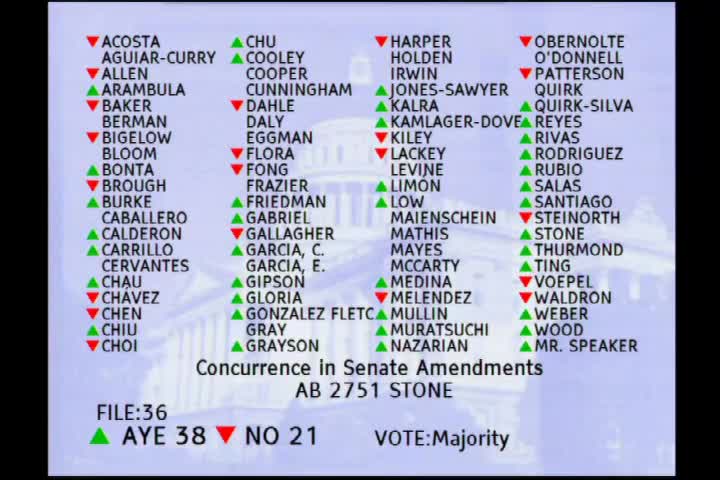 51SEC
Assembly Floor
 2MIN
Senate Floor
 1H
Senate Standing Committee on Appropriations
 3MIN
Senate Standing Committee on Public Safety
 5MIN
Assembly Floor
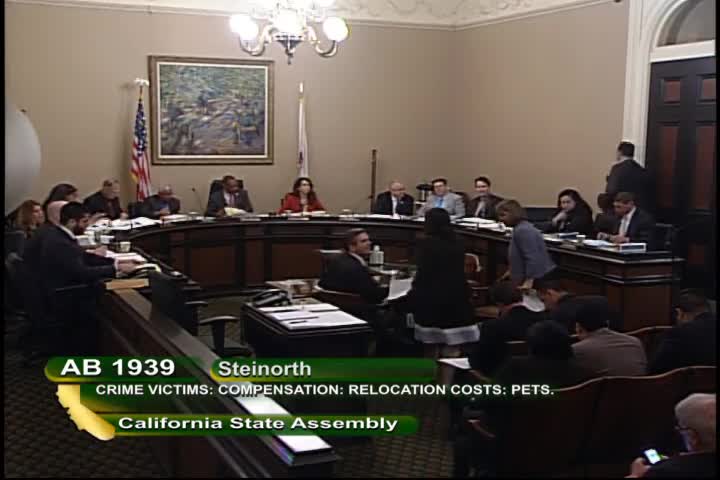 2MIN
Assembly Standing Committee on Public Safety
Bill Author

Bill Co-Author(s):
