AB 1942: California Earned Income Tax Credit: Earned Income Tax Credit Information Act.
- Session Year: 2017-2018
- House: Assembly
- Latest Version Date: 2018-04-30
The Personal Income Tax Law allows various credits against the taxes imposed by that law, including certain credits that are allowed in modified conformity to credits allowed by federal income tax laws. Federal income tax laws allow a refundable earned income tax credit (EITC) for certain low-income individuals who have earned income, as specified and who meet certain other requirements.
The Personal Income Tax Law, in modified conformity with federal income tax laws, allows an earned income credit against personal income tax, and a payment in excess of that credit amount, to an eligible individual that is equal to that portion of the EITC allowed by federal law as determined by the EITC adjustment factor as set forth in the annual Budget Act which, unless otherwise specified in that act, is 0%.
This bill would require the Franchise Tax Board to revise the Form 540 to include specified language relating to claiming the California EITC on the Form 3514 and to revise the Form 540 2EZ to attach the Form 3514.
Existing law, the Earned Income Tax Credit Information Act, requires state departments and agencies that serve those who may qualify for the federal EITC and the California EITC to notify their program recipients that they may be eligible for the federal EITC and the California EITC, as provided. Existing law defines state departments and agencies that serve those who may qualify for the federal EITC and the California EITC to mean certain programs in the State Department of Education, the Employment Development Department, and the State Department of Health Care Services.
This bill would expand the definition of state departments and agencies that serve those who may qualify for the federal EITC and the California EITC to include the California Work Opportunity and Responsibility to Kids (CalWORKs) program in the State Department of Social Services and would require those state departments and agencies that serve those who may qualify for the federal EITC and the California EITC to additionally provide the Internet Web site address of the Form 540 2EZ and a physical paper copy of the Form 540 2EZ to those program recipients who may be eligible for the federal EITC and the California EITC.
The Personal Income Tax Law allows various credits against the taxes imposed by that law, including certain credits that are allowed in modified conformity to credits allowed by federal income tax laws. Federal income tax laws allow a refundable earned income tax credit (EITC) for certain low-income individuals who have earned income, as specified and who meet certain other requirements.
The Personal Income Tax Law, in modified conformity with federal income tax laws, allows an earned income credit against personal income tax, and a payment in excess of that credit amount, to an eligible individual that is equal to that portion of the EITC allowed by federal law as determined by the EITC adjustment factor as set forth in the annual Budget Act which, unless otherwise specified in that act, is 0%.
This bill would require the Franchise Tax Board to revise the Form 540 to include all of the information necessary for a taxpayer to claim the California EITC. specified language relating to claiming the California EITC on the Form 3514 and to revise the Form 540 2EZ to attach the Form 3514.
Existing law, the Earned Income Tax Credit Information Act, requires state departments and agencies that serve those who may qualify for the federal EITC and the California EITC to notify their program recipients that they may be eligible for the federal EITC and the California EITC, as provided. Existing law defines state departments and agencies that serve those who may qualify for the federal EITC and the California EITC to mean certain programs in the State Department of Education, the Employment Development Department, and the State Department of Health Care Services.
This bill would expand the definition of state departments and agencies that serve those who may qualify for the federal EITC and the California EITC to include the California Work Opportunity and Responsibility to Kids (CalWORKs) program in the State Department of Social Services. Services and would require those state departments and agencies that serve those who may qualify for the federal EITC and the California EITC to additionally provide the Internet Web site address of the Form 540 2EZ and a physical paper copy of the Form 540 2EZ to those program recipients who may be eligible for the federal EITC and the California EITC.
The Personal Income Tax Law allows various credits against the taxes imposed by that law, including certain credits that are allowed in modified conformity to credits allowed by federal income tax laws. Federal income tax laws allow a refundable earned income tax credit (EITC) for certain low-income individuals who have earned income, as specified and who meet certain other requirements.
The Personal Income Tax Law, in modified conformity with federal income tax laws, allows an earned income credit against personal income tax, and a payment in excess of that credit amount, to an eligible individual that is equal to that portion of the EITC allowed by federal law as determined by the EITC adjustment factor as set forth in the annual Budget Act which, unless otherwise specified in that act, is 0%.
This bill would require the Franchise Tax Board to revise the Form 540 to include all of the information necessary for a taxpayer to claim the California EITC.
Existing law, the Earned Income Tax Credit Information Act, requires state departments and agencies that serve those who may qualify for the federal EITC and the California EITC to notify their program recipients that they may be eligible for the federal EITC and the California EITC, as provided. Existing law defines state departments and agencies that serve those who may qualify for the federal EITC and the California EITC to mean certain programs in the State Department of Education, the Employment Development Department, and the State Department of Health Care Services.
This bill would expand the definition of state departments and agencies that serve those who may qualify for the federal EITC and the California EITC to include the California Work Opportunity and Responsibility to Kids (CalWORKs) program in the State Department of Social Services.
(a)The Franchise Tax Board shall revise line 75 of the line for the California Earned Income Tax Credit on the Form 540 to include the following language: Must complete Franchise Tax Board Form Form FTB 3514. See Instructions.
(b)The Franchise Tax Board shall revise the Form 540 2EZ to attach the Form 3514 to the end of the Form 540 2EZ.
SEC. 2.Section 19852 of the Revenue and Taxation Code is amended to read:19852.For purposes of this part, the following terms have the following meanings:
(a)Employer means any California employer who is subject to, and is required to provide, unemployment insurance to his or her employees, under the Unemployment Insurance Code.
(b)Employee means any person who is covered by unemployment insurance by his or her employer, pursuant to the Unemployment Insurance Code.
(c)Federal EITC means the federal earned income tax credit, as defined in Section 32 of the Internal Revenue Code.
(d)California EITC means the California earned income tax credit, as defined in Section 17052 of the Revenue and Taxation Code.
(e)State departments and agencies that serve those who may qualify for the federal EITC and the California EITC means the following programs in the specified departments and agencies:
(1)The State Department of Education: free or reduced-price meal program and National School Lunch Program.
(2)Employment Development Department: California Unemployment Insurance.
(3)State Department of Health Care Services: the Medi-Cal program.
(4)State Department of Social Services: California Work Opportunity and Responsibility to Kids (CalWORKs) program.
(f)The amendments made to this section by Chapter 294 of the Statutes of 2016 shall apply to notices required pursuant to Section 19853 furnished on or after January 1, 2017.
(g)The amendments made to this section by the act adding this subdivision shall apply to notices required pursuant to Section 19853 furnished on or after the effective date of that act.
SEC. 3.Section 19853 of the Revenue and Taxation Code is amended to read:19853.(a)An employer shall notify all employees that they may be eligible for the federal and the California EITC within one week before or after, or at the same time, that the employer provides an annual wage summary, including, but not limited to, a Form W-2 or a Form 1099, to any employee.
(b)(1)The state departments and agencies that serve those who may qualify for the federal and the California EITC, as defined in subdivision (e) of Section 19852, shall notify their program recipients that they may be eligible for the federal and the California EITC, at least once a year during the months of January through April, or alternatively, shall provide this annual notification during a regularly scheduled contact with a recipient by telephone, mail, or electronic communication, or by an in-person communication. State departments or agencies that do not directly communicate with persons or households with persons who may qualify for the federal and the California EITC may communicate indirectly through agencies, districts, or regulated entities that serve eligible persons or households with eligible persons. Departments, agencies, and programs are encouraged to develop the most effective method to provide notice to recipients of federal and California EITC eligibility, as long as the notice contains substantially the same language as the notice described in Section 19854.
(2)In addition to paragraph (1), state departments and agencies that serve those who may qualify for the federal EITC and the California EITC shall provide their program recipients who may be eligible for the federal and the California EITC with both of the following:
(A)The Internet Web site address to the Form 540 2EZ.
(B)A physical paper copy of the Form 540 2EZ.
(c)The employer shall provide the notification required by subdivision (a) by handing directly to the employee or mailing to the employees last known address either of the following:
(1)Instructions on how to obtain any notices available from the Internal Revenue Service and the Franchise Tax Board for this purpose, including, but not limited to, the IRS Notice 797 and information on the California EITC at the Web site www.ftb.ca.gov.
(2)Any notice created by the employer, as long as it contains substantially the same language as the notice described in paragraph (1) or in Section 19854.
(d)The employer shall not satisfy the notification required by subdivision (a) by posting a notice on an employee bulletin board or sending it through office mail. However, these methods of notification are encouraged to help inform all employees of the federal and the California EITC.
(e)The amendments made to this section by Chapter 294 of the Statutes of 2016 shall apply to notices furnished on or after January 1, 2017.
(f)The amendments made to this section by the act adding this subdivision shall apply to notices furnished on or after the effective date of that act.
(a)The Franchise Tax Board shall revise line 75 of the Form 540 to include all of the information necessary for a taxpayer to claim the California Earned Income Tax Credit. the following language: Must complete Franchise Tax Board Form 3514. See Instructions.
(b)The Franchise Tax Board shall revise the Form 540 2EZ to attach the Form 3514 to the end of the Form 540 2EZ.
SEC. 2.Section 19852 of the Revenue and Taxation Code is amended to read:19852.For purposes of this part, the following terms have the following meanings:
(a)Employer means any California employer who is subject to, and is required to provide, unemployment insurance to his or her employees, under the Unemployment Insurance Code.
(b)Employee means any person who is covered by unemployment insurance by his or her employer, pursuant to the Unemployment Insurance Code.
(c)Federal EITC means the federal earned income tax credit, as defined in Section 32 of the Internal Revenue Code.
(d)California EITC means the California earned income tax credit, as defined in Section 17052 of the Revenue and Taxation Code.
(e)State departments and agencies that serve those who may qualify for the federal EITC and the California EITC means the following programs in the specified departments and agencies:
(1)The State Department of Education: free or reduced-price meal program and National School Lunch Program.
(2)Employment Development Department: California Unemployment Insurance.
(3)State Department of Health Care Services: the Medi-Cal program.
(4)State Department of Social Services: California Work Opportunity and Responsibility to Kids (CalWORKs) program.
(f)The amendments made to this section by Chapter 294 of the Statutes of 2016 shall apply to notices required pursuant to Section 19853 furnished on or after January 1, 2017.
(g)The amendments made to this section by the act adding this subdivision shall apply to notices required pursuant to Section 19853 furnished on or after the effective date of that act.
SEC. 3.Section 19853 of the Revenue and Taxation Code is amended to read:19853.(a)An employer shall notify all employees that they may be eligible for the federal and the California EITC within one week before or after, or at the same time, that the employer provides an annual wage summary, including, but not limited to, a Form W-2 or a Form 1099, to any employee.
(b)(1)The state departments and agencies that serve those who may qualify for the federal and the California EITC, as defined in subdivision (e) of Section 19852, shall notify their program recipients that they may be eligible for the federal and the California EITC, at least once a year during the months of January through April, or alternatively, shall provide this annual notification during a regularly scheduled contact with a recipient by telephone, mail, or electronic communication, or by an in-person communication. State departments or agencies that do not directly communicate with persons or households with persons who may qualify for the federal and the California EITC may communicate indirectly through agencies, districts, or regulated entities that serve eligible persons or households with eligible persons. Departments, agencies, and programs are encouraged to develop the most effective method to provide notice to recipients of federal and California EITC eligibility, as long as the notice contains substantially the same language as the notice described in Section 19854.
(2)In addition to paragraph (1), state departments and agencies that serve those who may qualify for the federal EITC and the California EITC shall provide their program recipients who may be eligible for the federal and the California EITC with both of the following:
(A)The Internet Web site address to the Form 540 2EZ.
(B)A physical paper copy of the Form 540 2EZ.
(c)The employer shall provide the notification required by subdivision (a) by handing directly to the employee or mailing to the employees last known address either of the following:
(1)Instructions on how to obtain any notices available from the Internal Revenue Service and the Franchise Tax Board for this purpose, including, but not limited to, the IRS Notice 797 and information on the California EITC at the Web site www.ftb.ca.gov.
(2)Any notice created by the employer, as long as it contains substantially the same language as the notice described in paragraph (1) or in Section 19854.
(d)The employer shall not satisfy the notification required by subdivision (a) by posting a notice on an employee bulletin board or sending it through office mail. However, these methods of notification are encouraged to help inform all employees of the federal and the California EITC.
(e)The amendments made to this section by the act adding this subdivision Chapter 294 of the Statutes of 2016 shall apply to notices furnished on or after the effective date of that act. January 1, 2017.
(f)The amendments made to this section by the act adding this subdivision shall apply to notices furnished on or after the effective date of that act.
The Franchise Tax Board shall revise the Form 540 to include all of the information necessary for a taxpayer to claim the California Earned Income Tax Credit.
SEC. 2.Section 19852 of the Revenue and Taxation Code is amended to read:19852.For purposes of this part, the following terms have the following meanings:
(a)Employer means any California employer who is subject to, and is required to provide, unemployment insurance to his or her employees, under the Unemployment Insurance Code.
(b)Employee means any person who is covered by unemployment insurance by his or her employer, pursuant to the Unemployment Insurance Code.
(c)Federal EITC means the federal earned income tax credit, as defined in Section 32 of the Internal Revenue Code.
(d)California EITC means the California earned income tax credit, as defined in Section 17052 of the Revenue and Taxation Code.
(e)State departments and agencies that serve those who may qualify for the federal EITC and the California EITC means the following programs in the specified departments and agencies:
(1)The State Department of Education: free or reduced-price meal program and National School Lunch Program.
(2)Employment Development Department: California Unemployment Insurance.
(3)State Department of Health Care Services: the Medi-Cal program.
(4)State Department of Social Services: California Work Opportunity and Responsibility to Kids (CalWORKs) program.
(f)The amendments made to this section by the act adding this subdivision Chapter 294 of the Statutes of 2016 shall apply to notices required pursuant to Section 19853 furnished on or after the effective date of that act. January 1, 2017.
(g)The amendments made to this section by the act adding this subdivision shall apply to notices required pursuant to Section 19853 furnished on or after the effective date of that act.
|
Date
|
Status
|
|---|---|
| May 25, 2018 | In committee: Held under submission. |
| May 9, 2018 | In committee: Set, first hearing. Referred to APPR. suspense file. |
| May 1, 2018 | Re-referred to Com. on APPR. |
| Apr 30, 2018 | Read second time and amended. |
| Apr 26, 2018 | From committee: Amend, and do pass as amended and re-refer to Com. on APPR. (Ayes 7. Noes 0.) (April 23). |
| Apr 12, 2018 | Re-referred to Com. on REV. & TAX. |
| Apr 11, 2018 | From committee chair, with author's amendments: Amend, and re-refer to Com. on REV. & TAX. Read second time and amended. |
| Mar 19, 2018 | In committee: Set, second hearing. Hearing canceled at the request of author. |
| Mar 12, 2018 | In committee: Set, first hearing. Hearing canceled at the request of author. |
| Feb 8, 2018 | Referred to Com. on REV. & TAX. |
| Jan 30, 2018 | From printer. May be heard in committee March 1. |
| Jan 29, 2018 | Read first time. To print. |
|
Date
|
Description
|
Location
|
Votes
|
|
|---|---|---|---|---|
| Apr 23, 2018 | Do pass as amended and be re-referred to the Committee on [Appropriations] | Assembly Standing Committee on Revenue and Taxation |
Passed |
This list shows positions taken on this bill by organizations on the date displayed, which is linked to the original source.
Positions by individuals are not included.
|
Organization
|
Position
|
Date
|
|---|---|---|
| California Alternative Payment Program Association | * Support | Apr 23, 2018 |
| United Ways Of California | * Support | Apr 23, 2018 |
Date of Hearing: May 9, 2018
ASSEMBLY COMMITTEE ON APPROPRIATIONS
Lorena Gonzalez Fletcher, Chair
ABPCA Bill Id:AB 1942
Author:(Santiago) – As Amended Ver:April 30, 2018
Policy Committee: | Revenue and Taxation | Vote: | 7 - 0 |
|
| ||
|
|
Urgency: No State Mandated Local Program: No Reimbursable: No
SUMMARY:
This bill requires the Franchise Tax Board (FTB) to revise specified forms related to the California Earned Income Tax Credit (CalEITC) and requires additional outreach by specified state agencies. Specifically, this bill:
- Require FTB to revise a specified line on Form 540 and revise Form 540 2EZ to include an attached Form 3514, which taxpayer use to claim the CalEITC.
- Adds the State Department of Social Services (DSS) to the list of state agencies that must conduct specified CalEITC outreach to certain program recipients. Requires DSS to conduct outreach to California Opportunity and Responsibility to Kids (CalWORKS) program recipients.
- Requires all state departments and agencies covered by existing CalEITC outreach requirements, in addition to DSS, to provide program recipients a pyshical copy of the Form 540 2EZ.
FISCAL EFFECT:
- Administrative costs, likely in excess of $100,000 General Fund (GF), for FTB to update forms and information systems.
- Unknown costs for DSS as a result of the mandate to notify CalWORKS recipients of the CalEITC in a prescribed manner. DSS currently encourages county welfare departments (CWDs) to conduct CalEITC outreach. It is unclear if AB 1942’s new requirements could be done by CWDs and what the costs would be from those requirements.
- Printing costs in excess of $500,000 GF/special fund across all affected state agencies to print additional paper returns to include in their outreach materials
COMMENTS:
- Background. The CalEITC is a state refundable income tax credit that is modeled after the federal EITC. Similar to the federal credit, the state credit amount is based on a percentage of the taxpayer’s earned income. That percentage is determined by income levels and the size of the household. The state credit phases in at low levels of income until it reaches its maximum size at a specified income threshold, after which it phases out gradually until it reaches zero. The credit phases in so as to reward work: the more someone earns, the bigger the tax credit. The credit phases out so as to not discourage work by immediately taking away the credit when earned income reaches a certain threshold.
- How to claim the CalEITC. Taxpayers claiming the CalEITC must first fill out Form 3514 and include it with their income tax return, which in most cases will be Form 540 2EZ.
- Paper returns and CalEITC. AB 1942 requires the administrators of Unemployment Insurance, Medi-Cal, the free or reduced meal program, and CalWORKS to send a physical copy of form 540 2EZ to program recipients who may be eligible for CalEITC. However, a very small percentage of CalEITC claims come from paper returns. In 2017, just 9.2% of all CalEITC filers used paper returns compared to 90.8% who filed electronically. This paper requirement results in unnecessary paper and costs, and may even confuse taxpayers since they must also use Form 3514 to claim a CalEITC.
Analysis Prepared by: Luke Reidenbach / APPR. / (916) 319-2081
Date of Hearing: April 23, 2018
ASSEMBLY COMMITTEE ON REVENUE AND TAXATION
Autumn R. Burke, Chairwoman
ABPCA Bill Id:AB 1942 (
Author:Santiago) – As Amended Ver:April 11, 2018
Majority vote. Fiscal committee.
SUBJECT: California Earned Income Tax Credit: Earned Income Tax Credit Information Act
SUMMARY: Requires the Franchise Tax Board (FTB) to revise specified forms to increase utilization of the California Earned Income Tax Credit (EITC). Specifically, this bill:
- Requires the FTB to revise line 75 of the Form 540 to include the following instructions for claiming the California EITC: "Must complete Franchise Tax Board Form 3514. See Instructions."
- Requires the FTB to revise the Form 540 2EZ to attach Form 3514 (i.e., the EITC claim form) to the end of the Form 540 2EZ.
- Expands the definition of "state departments and agencies that serve those who may qualify for the federal EITC and the California EITC" to include the California Work Opportunity and Responsibility to Kids (CalWORKs) program in the State Department of Social Services.
- Requires "state departments and agencies that serve those who may qualify for the federal EITC and the California EITC" to provide their potentially eligible program recipients with both of the following:
- The Web site address to the Form 540 2EZ; and,
- A physical paper copy of the Form 540 2EZ.
EXISTING FEDERAL LAW allows a refundable EITC for certain low-income individuals who have earned income and who meet certain other requirements. (Internal Revenue Code Section 32.)
EXISTING STATE LAW:
- Allows various credits against the taxes imposed by the Personal Income Tax (PIT) Law.
- Allows, in modified conformity with federal law, an EITC against the PIT, and a payment in excess of that credit amount, to an eligible individual that is equal to that portion of the EITC allowed by federal law as determined by the EITC adjustment factor set forth in the annual Budget Act which, unless otherwise specified in that act, is 0%.
- Requires, under the EITC Information Act (the "Act"), state departments and agencies that serve those who may qualify for the federal EITC and the California EITC to notify their program recipients that they may be eligible for the federal EITC and the California EITC, as specified.
- Defines "state departments and agencies that serve those who may qualify for the federal EITC and the California EITC" to mean certain programs in the State Department of Education, the Employment Development Department, and the State Department of Health Care Services.
FISCAL EFFECT: The FTB estimates that this bill would not impact state income or franchise tax revenue.
COMMENTS:
- The author has provided the following statement in support of this bill:
The California Earned Income Tax Credit has proven to be one of the most instrumental tools we have at our disposal to combat extreme poverty among Californian families. Currently, there is a significant gap between the 2 billion people who are eligible to receive this tax credit and those who actually apply for it. We have an obligation to do everything in our power to facilitate the application process for the poorest among us and inform the public of their potential eligibility for this benefit.
- This bill is supported by the California Alternative Payment Program Association, which notes the following:
The California [Earned] Income Tax Credit, as implemented in 2016, was created for low income families and individuals. The tax credit boosts the earnings for low income households and decreases poverty levels across the state while incentivizing individuals to file their taxes. The CalEITC gives cash refunds to part-time and full-time working individuals and families. Since its implementation, the state has added $200 million to local economies and alleviated the [effects of] poverty. In comparison to the federal EITC, CalEITC has boosted the total tax credit amounts received by 3%.
- The FTB has identified the following implementation and policy concerns in its staff analysis of this bill:
- "Implementing this provision would require substantial changes to the Form 540 2EZ and instructions and information systems. The Form 540 2EZ would increase by at least two pages to 'attach' the Form 3514 California Earned Income Tax Credit, and the Form 540 2EZ instructions would likely be increased several pages to incorporate the instructions for Form 3514."
- "The required revisions would apply only to the Forms 540 and 540 2EZ. If the author intends to revise all personal income tax forms on which the California EITC may be claimed, this provision should be amended."
- "This provision is silent on the applicable taxable years the revision would apply. To alleviate this concern, the author may wish to specify that this provision would apply to personal income tax returns required to be filed for taxable years beginning on or after January 1, 2019."
- "The EITC Information Act currently requires departments and state agencies that serve those who may qualify for the federal and state EITC to provide information on claiming the California EITC including the FTB's website (www.ftb.ca.gov) where all personal income tax returns and the Form FTB 3514 may be accessed. Thus, Provision 2 would create a substantially similar notification requirement (Page 4, paragraph (2) of subdivision (b)) for such state departments and agencies, and could result in taxpayers claiming the California EITC on the incorrect income tax return."
- Committee Staff Comments
- The EITC: Congress established the federal EITC in 1975 to offset the adverse effects of the Medicare and Social Security payroll taxes on working poor families and to encourage low-income workers to seek employment. Unlike most other credits, the federal EITC is a refundable credit, meaning that if the credit amount completely eliminates a taxpayer's tax liability, the remaining credit amount is refunded to the taxpayer. The federal EITC is calculated as a percentage of a taxpayer's earned income and is phased out as income increases. The federal credit rate varies from 7.65% to 45%, depending on the number of qualifying children.
In 2015, California authorized a state EITC with the stated goal of amplifying the poverty-reducing effects of the federal EITC for the poorest working Californians. Specifically, this refundable tax credit is designed to put money back in the pockets of California's working families and individuals. For 2017, the California EITC is available to households with adjusted gross income of up to:
- $15,008, if there are no qualifying children;
- $22,322 if there is one qualifying child;
- $22,309 if there are two qualifying children; and,
- $22,302 if there are three or more qualifying children.
To claim the California EITC, eligible taxpayers must currently file a California PIT return and attach Form 3514, California Earned Income Tax Credit. The FTB notes that individuals were offered free help filing a 2017 PIT return through Tax Day (April 17, 2018) by visiting http://www.caleitc4me.org.
- The EITC Information Act: The Act notes that a relatively low percentage of eligible individuals actually participate in the federal EITC program. This, in turn, results in hundreds of millions of federal dollars going unclaimed by the working poor of California. To address this issue, the Legislature enacted the Act to facilitate the furnishing of information to working poor individuals and families regarding the availability of the federal and state EITCs. It is the Act's intent to offer the most cost-effective assistance to eligible taxpayers through the following: (i) notices provided by their employers; (ii) notices provided by state departments and agencies that serve those who may qualify for the EITC; and, (iii) by taking other steps to ensure that eligible Californians claim both the federal and state EITC.
The Act defines "state departments and agencies that serve those who may qualify for the federal EITC and the California EITC" as the following: (i) the free or reduced-price meal program and National School Lunch Program administered by the State Department of Education; (ii) the California Unemployment Insurance program administered by the Employment Development Department; and, (iii) The Medi-Cal program administered by the State Department of Health Care Services. These departments and agencies, in turn, must notify their program recipients that they may be eligible for the federal and the California EITC, at least once per year during the months of January through April. Alternatively, they must provide this annual notification during a regularly scheduled contact with a recipient by telephone, mail, or electronic communication, or by an in-person communication. Departments or agencies that do not directly communicate with individuals may communicate indirectly through agencies, districts, or regulated entities that serve eligible persons or households with eligible persons.
- What would this bill do? This bill has four main provisions. Each, in turn, is discussed below:
- This bill's first provision would require the FTB to revise line 75 of the Form 540 to include the following language: "Must complete Franchise Tax Board Form 3514. See Instructions." The Form 540 is California's resident income tax return. Currently, line 75 of the form is reserved for imputing an EITC amount, but no additional information or instructions are provided. Thus, this provision seeks to provide Form 540 filers with a reference to the specific form they would need to complete and submit to claim an EITC (i.e., Form 3514). Taxpayers could then go to the FTB's Web site, type "Form 3514" in the search field, and bring up the two-page document.
- This bill's second provision would require the FTB to revise the Form 540 2EZ by attaching Form 3514 to the end of the Form 540 2EZ. The Form 540 2EZ is also a California resident income tax return, but it is designed to be the FTB's simplest filing option. As such, it is currently only four pages long and is only available to certain filers. For example, if a person is married and files a separate tax return, that person is ineligible for the form. Likewise, a person may not use Form 540 2EZ if that person has income from a source not listed on the return or from a source outside of California.
- What would this bill do? This bill has four main provisions. Each, in turn, is discussed below:
While this provision is motivated by an understandable desire to increase the California EITC's utilization, it does raise certain questions. Namely, the Committee may wish to consider whether it makes sense to add two additional pages to the Form 540 2EZ, which again, is supposed to be California's simplest and most straightforward filing option. In addition, it bears noting that the vast majority of EITC claims are not filed using the Form 540 2EZ. Out of 929,870 EITCs claimed so far in 2018, only 27,090 (or 2.91%) have been claimed on a Form 540 2EZ. Thus, even if one is untroubled by making the Form 540 2EZ significantly longer and more complex for all filers, it is not clear how much benefit would actually be gained by adding the EITC form to the return.
- This bill's third provision would amend the Act's definition of "state departments and agencies that serve those who may qualify for the federal EITC and the California EITC" to include the Department of Social Services' administration of the CalWORKs program. Thus, under this provision, the Department of Social Services would be responsible for notifying CalWORKs participants of their potential eligibility for the federal and California EITC.
- This bill's final provision would require all "state departments and agencies that serve those who may qualify for the federal EITC and the California EITC" to provide their potentially eligible program recipients with both of the following:
- The Web site address to the Form 540 2EZ; and,
- A physical paper copy of the Form 540 2EZ.
This last provision also raises certain questions. Namely, the identified departments are already required to notify their program recipients of their potential eligibility for the EITC. As noted above, however, the vast majority of EITCs are claimed using a form other than the Form 540 2EZ. Moreover, some individuals who are eligible for the EITC may not even be eligible to use a Form 540 2EZ. In addition, the Committee may wish to consider whether it makes sense to require state departments to provide their program recipients with a physical copy of this tax return form, given the attendant costs, potential environmental waste, and the fact that the vast majority of EITCs are claimed using electronic filing.[1]
- The CalWORKs program: The Department of Social Services notes that CalWORKs is a public assistance program that provides cash aid and services to eligible families with children in the home. The program serves all 58 counties and is operated locally by county welfare departments. Families that apply and qualify for ongoing assistance receive money each month to help pay for housing, food, and other necessary expenses. The amount of a family's monthly assistance payment depends on a host of factors, including the number of individuals who are eligible and the special needs of any of those family members. The income of the family is also considered in calculating the amount of cash aid the family receives. Generally, services are available to the following: (i) families that have a child in the home who has been deprived of parental support or care because of the absence, disability, or death of a parent; (ii) families with a child when both parents are in the home but the principal earner is unemployed; and, (iii) needy caretaker relatives of a foster child.
- Suggested technical amendments: Committee staff suggests adoption of the following technical amendments to this bill:
- On page 2, line 3, strike "line 75 of" and insert "the line for the California Earned Income Tax Credit on"; and,
- On page 2, lines 6 and 7, strike "Franchise Tax Board Form 3514" and insert "Form FTB 3514".
REGISTERED SUPPORT / OPPOSITION:
Support
California Alternative Payment Program Association
Opposition
None on file
Analysis Prepared by: M. David Ruff / REV. & TAX. / (916) 319-2098
According to the FTB, for filings in 2018, over 90% of individuals claiming the California EITC have done so by filing electronically. ↑
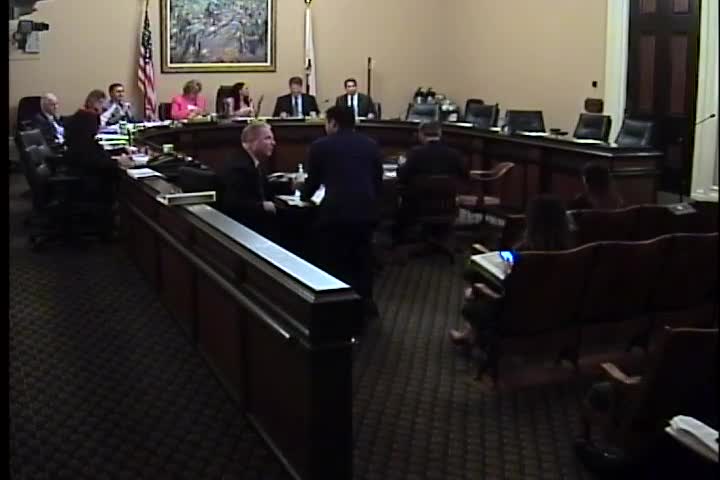
Discussed in Hearing
 3MIN
Assembly Standing Committee on Revenue and Taxation
Bill Author