AB 1956: Fire prevention activities: local assistance grant program.
- Session Year: 2017-2018
- House: Assembly
- Latest Version Date: 2018-09-21
Existing law requires the Director of Forestry and Fire Protection to establish a working group, consisting of specified members, to identify potential incentives for landowners to implement prefire activities, as defined, in state responsibility areas and urban wildland communities and to identify all federal, state, or local programs, private programs, and any other programs requiring a cost share that involves prefire activities.
This bill would repeal this law.
Existing law requires the State Board of Forestry and Fire Protection to establish a local assistance grant program using funds collected from a specified fire prevention fee for purposes of fire prevention activities designed to benefit habitable structures within state responsibility areas, as provided.
This bill would require the department to establish a local assistance grant program, funded upon appropriation by the Legislature, for fire prevention activities, as defined. The bill would require the department to prioritize projects that are multiyear efforts. The bill would also require, contingent on the enactment of AB 3160 of the 201718 Regular Session, the department to prioritize local assistance grant funding applications from local agencies based on the Fire Adapted Community list, as provided. The bill would authorize the director, until January 1, 2024, to authorize advance payments from a grant, not to exceed 25% of the total grant award, as provided. The bill would require the director, on or before January 31, 2022, to hold a public workshop to, among other things, review activities funded by the local assistance grant program and program outcomes, and discuss and recommend possible improvements to the program. The bill would require the department to report a summary of the findings of the public workshop to the appropriate committees of the Legislature on or before July 1, 2022.
Existing law requires the Director of Forestry and Fire Protection to establish a working group, consisting of specified members, to identify potential incentives for landowners to implement prefire activities, as defined, in state responsibility areas and urban wildland communities and to identify all federal, state, or local programs, private programs, and any other programs requiring a cost share that involves prefire activities.
This bill would repeal this law.
Existing law requires the State Board of Forestry and Fire Protection to establish a local assistance grant program using funds collected from a specified fire prevention fee for purposes of fire prevention activities designed to benefit habitable structures within state responsibility areas, as provided.
This bill would require the department, on or before July 1, 2019, department to establish a local assistance grant program, funded upon appropriation by the Legislature, for fire prevention activities, as defined. The bill would require the department to prioritize projects that are multiyear efforts to, among other things, improve resiliency on the landscape and adapt landscapes to withstand increased frequency and intensity of large wildfires. efforts. The bill would also require, contingent on the enactment of AB 3160 of the 201718 Regular Session, the department to prioritize local assistance grant funding applications from local agencies based on the Fire Adapted Community list, as provided. The bill would authorize the director, until January 1, 2024, to authorize advance payments from a grant, not to exceed 25% of the total grant award, as provided. The bill would require the director, on or before July 1, 2021, January 31, 2022, to hold a public workshop to, among other things, review activities funded by the local assistance grant program and program outcomes, and discuss and recommend possible improvements to the program. The bill would require the department to report a summary of the findings of the public workshop to the appropriate committees of the Legislature on or before September 1, 2021. July 1, 2022.
Existing law requires the Director of Forestry and Fire Protection to establish a working group, consisting of specified members, to identify potential incentives for landowners to implement prefire activities, as defined, in state responsibility areas and urban wildland communities and to identify all federal, state, or local programs, private programs, and any other programs requiring a cost share that involves prefire activities.
This bill would repeal this law.
Existing law requires the State Board of Forestry and Fire Protection to establish a local assistance grant program using funds collected from a specified fire prevention fee for purposes of fire prevention activities designed to benefit habitable structures within state responsibility areas, as provided.
This bill would require the department, on or before July 1, 2019, to establish a local assistance grant program, funded upon appropriation by the Legislature, for fire prevention activities, as defined. The bill would require the department to prioritize projects that are multiyear efforts to, among other things, improve resiliency on the landscape and adapt landscapes to withstand increased frequency and intensity of large wildfires. The bill would also require, contingent on the enactment of AB 3160 of the 201718 Regular Session, the department to prioritize local assistance grant funding applications from local agencies based on the Fire Adapted Community list, as provided. The bill would authorize the director, until January 1, 2024, to authorize advance payments from a grant, not to exceed 25% of the total grant award, as provided. The bill would require the director, on or before July 1, 2021, to hold a public workshop to, among other things, review activities funded by the local assistance grant program and program outcomes, and discuss and recommend possible improvements to the program. The bill would require the department to report a summary of the findings of the public workshop to the appropriate committees of the Legislature on or before September 1, 2021.
Existing law requires the director of the Department Director of Forestry and Fire Protection to establish a working group, consisting of specified members, to identify potential incentives for landowners to implement prefire activities, as defined, in state responsibility areas and urban wildland communities and to identify all federal, state, or local programs, private programs, and any other programs requiring a cost share that involves prefire activities.
This bill would repeal this law.
Existing law requires the State Board of Forestry and Fire Protection to establish a local assistance grant program using funds collected from a specified fire prevention fee for purposes of fire prevention activities designed to benefit habitable structures within state responsibility areas, as provided.
This bill would require the department, on or before July 1, 2019, to establish a local assistance grant program, funded upon appropriation by the Legislature, for fire prevention activities, as defined. The bill would require the department to prioritize projects that are multiyear efforts to, among other things, improve resiliency on the landscape and adapt landscapes to withstand increased frequency and intensity of large wildfires. The bill would authorize the director, until January 1, 2024, to authorize advance payments from a grant, not to exceed 25% of the total grant award, as provided. The bill would require the Director of Forestry and Fire Prevention, director, on or before July 1, 2021, to hold a public workshop to, among other things, review activities funded by the local assistance grant program and program outcomes, and discuss and recommend possible improvements to the program. The bill would require the department to report a summary of the findings of the public workshop to the appropriate committees of the Legislature on or before September 1, 2021.
Existing law requires the director of the Department of Forestry and Fire Protection to establish a working group, consisting of specified members, to identify potential incentives for landowners to implement prefire activities, as defined, in state responsibility areas and urban wildland communities and to identify all federal, state, or local programs, private programs, and any other programs requiring a cost share that involves prefire activities.
This bill would repeal this law.
Existing law requires the State Board of Forestry and Fire Protection to establish a local assistance grant program using funds collected from a specified fire prevention fee for purposes of fire prevention activities designed to benefit habitable structures within state responsibility areas, as provided.
This bill would require the department, on or before July 1, 2019, to establish a local assistance grant program, funded upon appropriation by the Legislature, for fire prevention activities, as defined. The bill would require the department to prioritize projects that are multiyear efforts to, among other things, improve resiliency on the landscape and adapt landscapes to withstand increased frequency and intensity of large wildfires. The bill would require the Director of Forestry and Fire Prevention, on or before July 1, 2021, to hold a public workshop to, among other things, review activities funded by the local assistance grant program and program outcomes, and discuss and recommend possible improvements to the program. The bill would require the department to report a summary of the findings of the public workshop to the appropriate committees of the Legislature on or before September 1, 2021.
Existing law requires the director of the Department of Forestry and Fire Protection to establish a working group, consisting of specified members, to identify potential incentives for landowners to implement prefire activities, as defined, in state responsibility areas and urban wildland communities and to identify all federal, state, or local programs, private programs, and any other programs requiring a cost share that involves prefire activities.
This bill would revise and recast this law to, among other things, revise the membership and duties of the working group.
Existing law requires the State Board of Forestry and Fire Protection to establish a local assistance grant program using funds collected from a specified fire prevention fee for purposes of fire prevention activities designed to benefit habitable structures within state responsibility areas, as provided.
This bill would require the department, on or before July 1, 2019, to establish a local assistance grant program, funded upon appropriation by the Legislature, for fire prevention activities, as defined. The bill would require the department to prioritize projects that are multiyear efforts to, among other things, improve resiliency on the landscape and adapt landscapes to withstand increased frequency and intensity of large wildfires.
Existing law requires the director of the Department of Forestry and Fire Protection to establish a working group, consisting of specified members, to identify potential incentives for landowners to implement prefire activities, as defined, in state responsibility areas and urban wildland communities and to identify all federal, state, or local programs, private programs, and any other programs requiring a cost share that involves prefire activities.
This bill would revise and recast this law to, among other things, revise the membership and duties of the working group.
Existing law requires the State Board of Forestry and Fire Protection to establish a local assistance grant program using funds collected from a specified fire prevention fee for purposes of fire prevention activities designed to benefit habitable structures within state responsibility areas, as provided.
This bill would require the department, on or before July 1, 2019, to establish a local assistance grant program, funded upon appropriation by the Legislature, for fire prevention activities, as defined. The bill would require the department to prioritize projects that are multiyear efforts to to, among other things, improve resiliency on the landscape and adapt landscapes to withstand increased frequency and intensity of large wildfires.
Existing law requires the director of the Department of Forestry and Fire Protection to establish a working group, consisting of specified members, to identify potential incentives for landowners to implement prefire activities, as defined, in state responsibility areas and urban wildland communities and to identify all federal, state, or local programs, private programs, and any other programs requiring a cost share that involves prefire activities.
This bill would revise and recast this law to, among other things, revise the membership and duties of the working group.
Existing law requires the State Board of Forestry and Fire Protection to establish a local assistance grant program using funds collected from a specified fire prevention fee for purposes of fire prevention activities designed to benefit habitable structures within state responsibility areas, as provided.
This bill would require the department, on or before July 1, 2019, to establish a local assistance grant program, funded upon appropriation by the Legislature, for fire prevention activities, as defined. The bill would require the department to prioritize projects that are multiyear efforts to improve resiliency on the landscape and adapt to increased frequency and intensity of large wildfires.
(a)The Legislature finds and declares all of the following:
(1)The 2017 fire season was devastating. Over 1.3 million acres burned in high-severity wildfires and over 10,000 structures were destroyed by wildfires across the state.
(2)Forty-four people died in the 2017 fire season, more than in the last 10 years combined.
(3)During 2017 and 2018, California experienced the largest fires ever recorded in its history.
(4)CAL-FIRE and the Board of Forestry and Fire Protection have recognized that California now often experiences a year-round fire season, with an increase in both the number and the intensity of large, damaging wildfires.
(5)The increased frequency and intensity of large wildfires is due to a century of fire exclusion and the impacts of climate change.
(6)Governor Brown has declared these wildfire threats as the new normal in California.
(b)It is therefore the intent of the Legislature to increase the scale and pace of fire prevention activities and to ensure that fire prevention activities happen year round.
SEC. 2.Section 4123 of the Public Resources Code is repealed.SEC. 3.Article 2.5 (commencing with Section 4124) is added to Chapter 1 of Part 2 of Division 4 of the Public Resources Code, to read:2.5.Fire Prevention Grants Program4124.For the purposes of this article, fire prevention activities means those lawful activities that reduce the risk of wildfire in California, including, but not limited to, mechanical vegetation management, grazing, prescribed burns, creation of defensible space, and retrofitting of structures to increase fire resistance.
4124.5.(a)The department shall establish a local assistance grant program for fire prevention activities in California. Groups eligible for grants shall include, but are not limited to, local agencies, resource conservation districts, fire safe councils, the California Conservation Corps, certified local conservation corps, University of California Cooperative Extension, Native American tribes, and qualified nonprofit organizations. The department may establish a cost-share requirement for one or more categories of projects.
(b)The local assistance grant program shall establish a robust year-round fire prevention effort in and near fire threatened communities. The department shall prioritize, to the extent feasible, projects that are multiyear efforts.
(c)Eligible activities shall include, but not be limited to, all of the following:
(1)Development and implementation of public education and outreach programs. Programs may include technical assistance, workforce recruitment and training, and equipment purchases.
(2)Fire prevention activities as defined in Section 4124.
(3)Projects to improve compliance with defensible space requirements as required by Section 4291 through increased inspections and assistance for low-income residents.
(4)Technical assistance to local agencies to improve fire prevention and reduce fire hazards.
(5)Creation of additional Firewise USA communities in the state or other community planning or certification programs deemed as appropriate by the department.
(6)Projects to improve public safety, including, but not limited to, access to emergency equipment and improvements to public evacuation routes.
(d)The department may consider the fire risk of an area, the geographic balance of projects, and whether the project is complementary to other fire prevention or forest health activities when awarding local assistance grants.
(e)(1)Until January 1, 2024, the director may authorize advance payments from a grant awarded pursuant to this section. The advance shall not exceed 25 percent of the total grant award.
(2)The grantee shall expend the funds from the advance payment within six months of receipt, unless the department waives this requirement.
(3)The grantee shall file an accountability report with the department four months from the date of receiving the funds and every four months thereafter.
(f)The department may expand or amend an existing grant program to meet the requirements of this section.
(g)Funding for the local assistance grant program created pursuant to this section shall be made upon appropriation by the Legislature.
4124.6.(a)On or before January 31, 2022, the director shall hold a public workshop to do all of the following:
(1)Review activities funded by the local assistance grant program established in Section 4124.5 and program outcomes, and discuss and recommend possible improvements to the program.
(2)Identify new sources and methods of financing fire prevention activities.
(3)Review new activities or methods of fire prevention that could protect life and property including, but not limited to, the prevention of high wind grass fires.
(b)(1)The department shall report a summary of the findings of the public workshop to the appropriate policy committees of the Legislature on or before July 1, 2022. The department shall include in the report any recommendations it has developed for improving the local assistance grant program established in Section 4124.5, for consideration by the Legislature.
(2)The requirement for submitting a report imposed under paragraph (1) is inoperative on July 1, 2026, pursuant to Section 10231.5 of the Government Code.
4124.7.(a)The department shall, except for activities described in paragraph (5) of subdivision (c) of Section 4124.5, prioritize local assistance grant funding applications from local agencies based on the Fire Adapted Community list, upon development of the list, pursuant to Section 4290.1.
(b)The prioritization required in subdivision (a) shall not affect applications from entities that are not local agencies.
(c)This section shall become operative only if Assembly Bill 3160 of the 201718 Regular Session is chaptered and becomes effective on or before January 1, 2019.
(a)The Legislature finds and declares all of the following:
(1)The 2017 fire season was devastating. Over 1.3 million acres burned in high-severity wildfires and over 10,000 structures were destroyed by wildfires across the state.
(2)Forty-four people died in the 2017 fire season, more than in the last 10 years combined.
(3)Last years Thomas Fire in the Counties of Ventura and Santa Barbara was the largest recorded fire in California history, only to be eclipsed by this years Mendocino Complex Fire in the Counties of Lake and Mendocino. There were also significant fires throughout the state, including in the Counties of Los Angeles, Napa, and Sonoma.(3)During 2017 and 2018, California experienced the largest fires ever recorded in its history.
(4)CAL-FIRE and the Board of Forestry and Fire Protection have recognized that California now often experiences a year-round fire season, with an increase in both the number and the intensity of large, damaging wildfires.
(5)The increased frequency and intensity of large wildfires is due to a century of fire exclusion and the impacts of climate change.
(6)Governor Brown has declared these wildfire threats as the new normal in California.
(b)It is therefore the intent of the Legislature to increase the scale and pace of fire prevention activities and to ensure that fire prevention activities happen year round.
SEC. 2.Section 4123 of the Public Resources Code is repealed.SEC. 3.Article 2.5 (commencing with Section 4124) is added to Chapter 1 of Part 2 of Division 4 of the Public Resources Code, to read:2.5.Year-Round Fire Prevention Act of 2018 Grants Program4124.For the purposes of this article, fire prevention activities means those lawful activities that reduce the risk of wildfire in California, including including, but not limited to, mechanical vegetation management, grazing, prescribed burns, creation of defensible space, and retrofitting of structures to increase fire resistance.
4124.5.(a)On or before July 1, 2019, the The department shall establish a local assistance grant program for fire prevention activities in California. Groups eligible for grants shall include include, but are not limited to, local agencies, resource conservation districts, fire safe councils, the California Conservation Corps, certified local conservation corps, University of California Cooperative Extension, Native American tribes, and qualified nonprofit organizations. The department may establish a cost-share requirement for one or more categories of projects.
(b)The local assistance grant program shall establish a robust year-round fire prevention effort in and near fire threatened communities. The department shall prioritize projects that are multiyear efforts that do any of the following: prioritize, to the extent feasible, projects that are multiyear efforts.
(1)Improve resiliency on the landscape and establish durable carbon sequestration benefits in forested landscapes.(2)Adapt landscapes to withstand increased frequency and intensity of large wildfires.(3)Provide improved ecological outcomes, including, but not limited to, restoring watershed health and function and supporting biodiversity and adaption to climate change.(c)Eligible activities shall include, but not be limited to, all of the following:
(1)Development and implementation of public education and outreach programs. Programs may include technical assistance, workforce recruitment and training, and equipment purchases.
(2)Fire prevention activities as defined in Section 4124.
(3)Projects to improve compliance with defensible space requirements as required by Section 4291 through increased inspections and assistance for low-income residents.
(4)Technical assistance to local agencies to improve fire prevention and reduce fire hazards.
(5)Creation of additional Firewise USA communities in the state or other community planning or certification programs deemed as appropriate by the department.
(6)Projects to improve public safety, including, but not limited to, access to emergency equipment and improvements to public evacuation routes.
(d)The department shall work cooperatively with grant recipients to ensure their projects are compatible and complementary with the departments fire prevention activities, any other fire prevention grant program administered by the department, and the forest health grant program described in Section 4799.05.(e)(d)The department shall may consider the fire risk of an area and area, the geographic balance of projects projects, and whether the project is complementary to other fire prevention or forest health activities when awarding local assistance grants.
(f)(e)(1)Until January 1, 2024, the director may authorize advance payments from a grant awarded pursuant to this section. The advance shall not exceed 25 percent of the total grant award.
(2)The grantee shall expend the funds from the advance payment within six months of receipt, unless the department waives this requirement.
(3)The grantee shall file an accountability report with the department four months from the date of receiving the funds and every four months thereafter.
(g)(f)The department may expand or amend an existing grant program to meet the requirements of this section.
(h)(g)Funding for the local assistance grant program created pursuant to this section shall be made upon appropriation by the Legislature.
4124.6.(a)On or before July 1, 2021, January 31, 2022, the director shall hold a public workshop to do all of the following:
(1)Review activities funded by the local assistance grant program established in Section 4124.5 and program outcomes, and discuss and recommend possible improvements to the program.
(2)Identify new sources and methods of financing fire prevention activities.
(3)Review new activities or methods of fire prevention that could protect life and property including, but not limited to, the prevention of high wind grass fires.
(b)(1)The department shall report a summary of the findings of the public workshop to the appropriate policy committees of the Legislature on or before September 1, 2021. July 1, 2022. The department shall include in the report any recommendations it has developed for improving the local assistance grant program established in Section 4124.5, for consideration by the Legislature.
(2)The requirement for submitting a report imposed under paragraph (1) is inoperative on September 1, 2025, July 1, 2026, pursuant to Section 10231.5 of the Government Code.
4124.7.(a)The department shall, except for activities described in paragraph (5) of subdivision (c) of Section 4124.5, prioritize local assistance grant funding applications from local agencies based on the Fire Adapted Community list, upon development of the list, pursuant to Section 4290.1.
(b)The prioritization required in subdivision (a) shall not affect applications from entities that are not local agencies.
(c)This section shall become operative only if Assembly Bill 3160 of the 201718 Regular Session is chaptered and becomes effective on or before January 1, 2019.
(a)The Legislature finds and declares all of the following:
(1)The 2017 fire season was devastating. Over 1.3 million acres burned in high-severity wildfires and over 10,000 structures were destroyed by wildfires across the state.
(2)Forty-four people died in the 2017 fire season, more than in the last 10 years combined.
(3)Last years Thomas Fire in the Counties of Ventura and Santa Barbara was the largest recorded fire in California history. history, only to be eclipsed by this years Mendocino Complex Fire in the Counties of Lake and Mendocino. There were also significant fires throughout the state, including in the Counties of Los Angeles, Napa, and Sonoma.
(4)CAL-FIRE and the Board of Forestry and Fire Protection have recognized that California now often experiences a year-round fire season, with an increase in both the number and the intensity of large, damaging wildfires.
(5)The increased frequency and intensity of large wildfires is due to a century of fire exclusion and the impacts of climate change.
(6)Governor Brown has declared these wildfire threats as the new normal in California.
(b)It is therefore the intent of the Legislature to increase the scale and pace of fire prevention activities and to ensure that fire prevention activities happen year round.
SEC. 2.Section 4123 of the Public Resources Code is repealed.SEC. 3.Article 2.5 (commencing with Section 4124) is added to Chapter 1 of Part 2 of Division 4 of the Public Resources Code, to read:2.5.Year-Round Fire Prevention Act of 20184124.For the purposes of this article, fire prevention activities means those lawful activities that reduce the risk of wildfire in California, including mechanical vegetation management, grazing, prescribed burns, creation of defensible space, and retrofitting of structures to increase fire resistance.
4124.5.(a)On or before July 1, 2019, the department shall establish a local assistance grant program for fire prevention activities in California. Groups eligible for grants shall include local agencies, resource conservation districts, fire safe councils, the California Conservation Corps, certified local conservation corps, University of California Cooperative Extension, Native American tribes, and qualified nonprofit organizations. The department may establish a cost-share requirement for one or more categories of projects.
(b)The local assistance grant program shall establish a robust year-round fire prevention effort in and near fire threatened communities. The department shall prioritize projects that are multiyear efforts that do any of the following:
(1)Improve resiliency on the landscape and establish durable carbon sequestration benefits in forested landscapes.
(2)Adapt landscapes to withstand increased frequency and intensity of large wildfires.
(3)Provide improved ecological outcomes, including, but not limited to, restoring watershed health and function and supporting biodiversity and adaption to climate change.
(c)Eligible activities shall include, but not be limited to, all of the following:
(1)Development and implementation of public education and outreach programs. Programs may include technical assistance, workforce recruitment and training, and equipment purchases.
(2)Fire prevention activities as defined in Section 4124.
(3)Projects to improve compliance with defensible space requirements as required by Section 4291 through increased inspections and assistance for low-income residents.
(4)Technical assistance to local agencies to improve fire prevention and reduce fire hazards.
(5)Creation of additional Firewise USA communities in the state. state or other community planning or certification programs deemed as appropriate by the department.
(6)Projects to improve public safety, including, but not limited to, access to emergency equipment and improvements to public evacuation routes.
(d)The department shall work cooperatively with grant recipients to ensure their projects are compatible and complementary with the departments fire prevention activities, any other fire prevention grant program administered by the department, and the forest health grant program described in Section 4799.05.
(e)The department shall consider the fire risk of an area and the geographic balance of projects when awarding local assistance grants.
(f)(1)Until January 1, 2024, the director may authorize advance payments from a grant awarded pursuant to this section. The advance shall not exceed 25 percent of the total grant award.
(2)The grantee shall expend the funds from the advance payment within six months of receipt, unless the department waives this requirement.
(3)The grantee shall file an accountability report with the department four months from the date of receiving the funds and every four months thereafter.
(g)The department may expand or amend an existing grant program to meet the requirements of this section.
(h)Funding for the local assistance grant program created pursuant to this section shall be made upon appropriation by the Legislature.
4124.6.(a)On or before July 1, 2021, the director shall hold a public workshop to do all of the following:
(1)Review activities funded by the local assistance grant program established in Section 4124.5 and program outcomes, and discuss and recommend possible improvements to the program.
(2)Identify new sources and methods of financing fire prevention activities.
(3)Review new activities or methods of fire prevention that could protect life and property including, but not limited to, the prevention of high wind grass fires.
(b)(1)The department shall report a summary of the findings of the public workshop to the appropriate policy committees of the Legislature on or before September 1, 2021. The department shall include in the report any recommendations it has developed for improving the local assistance grant program established in Section 4124.5, for consideration by the Legislature.
(2)The requirement for submitting a report imposed under paragraph (1) is inoperative on September 1, 2025, pursuant to Section 10231.5 of the Government Code.
4124.7.(a)The department shall, except for activities described in paragraph (5) of subdivision (c) of Section 4124.5, prioritize local assistance grant funding applications from local agencies based on the Fire Adapted Community list, upon development of the list, pursuant to Section 4290.1.
(b)The prioritization required in subdivision (a) shall not affect applications from entities that are not local agencies.
(c)This section shall become operative only if Assembly Bill 3160 of the 201718 Regular Session is chaptered and becomes effective on or before January 1, 2019.
(a)The Legislature finds and declares all of the following:
(1)The 2017 fire season was devastating. Over 1.3 million acres burned in high-severity wildfires and over 10,000 structures were destroyed by wildfires across the state.
(2)Forty-four people died in the 2017 fire season, more than in the last 10 years combined.
(3)Last years Thomas Fire in the Counties of Ventura and Santa Barbara was the largest recorded fire in California history. There were also significant fires throughout the state, including in the Counties of Los Angeles, Napa, and Sonoma.
(4)CAL-FIRE and the Board of Forestry and Fire Protection have recognized that California now often experiences a year-round fire season, with an increase in both the number and the intensity of large, damaging wildfires.
(5)The increased frequency and intensity of large wildfires is due to a century of fire exclusion and the impacts of climate change.
(6)Governor Brown has declared these wildfire threats as the new normal in California.
(b)It is therefore the intent of the Legislature to increase the scale and pace of fire prevention activities and to ensure that fire prevention activities happen year round.
SEC. 2.Section 4123 of the Public Resources Code is repealed.SEC. 3.Article 2.5 (commencing with Section 4124) is added to Chapter 1 of Part 2 of Division 4 of the Public Resources Code, to read:2.5.Year-Round Fire Prevention Act of 20184124.For the purposes of this article, fire prevention activities means those lawful activities that reduce the risk of wildfire in California, including mechanical vegetation management, grazing, prescribed burns, creation of defensible space, and retrofitting of structures to increase fire resistance.
4124.5.(a)On or before July 1, 2019, the department shall establish a local assistance grant program for fire prevention activities in California. Groups eligible for grants shall include local agencies, resource conservation districts, fire safe councils, the California Conservation Corps, certified local conservation corps, University of California Cooperative Extension, and qualified nonprofit organizations. The department may establish a cost-share requirement for one or more categories of projects.
(b)The local assistance grant program shall establish a robust year-round fire prevention effort in and nearby near fire threatened communities. The department shall prioritize projects that are multiyear efforts that do any of the following:
(1)Improve resiliency on the landscape and establish durable carbon sequestration benefits in forested landscapes.
(2)Adapt landscapes to withstand increased frequency and intensity of large wildfires.
(3)Provide improved ecological outcomes, including, but not limited to, restoring watershed health and function and supporting biodiversity and adaption to climate change.
(c)Eligible activities shall include, but not be limited to, all of the following:
(1)Development and implementation of public education and outreach programs. Programs may include technical assistance, workforce recruitment and training, and equipment purchases.
(2)Fire prevention activities as defined in Section 4124.
(3)Projects to improve compliance with defensible space requirements as required by Section 4291 through increased inspections and assistance for low-income residents.
(4)Technical assistance to local agencies to improve fire prevention and reduce fire hazards.
(5)Creation of additional Firewise USA communities in the state.
(6)Projects to improve public safety, including, but not limited to, access to emergency equipment and improvements to public evacuation routes.
(d)The department shall work cooperatively with grant recipients to ensure their projects are compatible and complementary with the departments fire prevention activities activities, any other fire prevention grant program administered by the department, and the forest health grant program described in Section 4799.05.
(e)The department shall consider the fire risk of an area and the geographic balance of projects when awarding local assistance grants.
(f)The (1)Until January 1, 2024, the director may authorize advance payments from a grant awarded pursuant to this section. The advance shall not exceed 25 percent of the total grant award.
(2)The grantee shall expend the funds from the advance payment within six months of receipt, unless the department waives this requirement.
(3)The grantee shall file an accountability report with the department four months from the date of receiving the funds and every four months thereafter.
(g)The department may expand or amend an existing grant program to meet the requirements of this section.
(h)Funding for the local assistance grant program created pursuant to this section shall be made upon appropriation by the Legislature.
4124.6.(a)On or before July 1, 2021, the director shall hold a public workshop to do all of the following:
(1)Review activities funded by the local assistance grant program established in Section 4124.5 and program outcomes, and discuss and recommend possible improvements to the program.
(2)Identify new sources and methods of financing fire prevention activities.
(3)Review new activities or methods of fire prevention that could protect life and property including, but not limited to, the prevention of high wind grass fires.
(b)(1)The department shall report a summary of the findings of the public workshop to the appropriate policy committees of the Legislature on or before September 1, 2021. The department shall include in the report any recommendations it has developed for improving the local assistance grant program established in Section 4124.5, for consideration by the Legislature.
(2)The requirement for submitting a report imposed under paragraph (1) is inoperative on September 1, 2025, pursuant to Section 10231.5 of the Government Code.
(a)The Legislature finds and declares all of the following:
(1)The 2017 fire season was devastating. Over 1.3 million acres burned in high-severity wildfires and over 10,000 structures were destroyed by wildfires across the state.
(2)Forty-four people died in the 2017 fire season, higher more than in the last 10 years combined.
(3)Last years Thomas Fire in the Counties of Ventura and Santa Barbara was the largest recorded fire in California history. There were also significant fires throughout the state, including in the Counties of Los Angeles, Napa, and Sonoma.
(4)CAL-FIRE and the Board of Forestry and Fire Protection have recognized that California now often experiences a year-round fire season, with an increase in both the number and the intensity of large, damaging wildfires.
(5)The increased frequency and intensity of large wildfires is due to a century of fire exclusion and the impacts of climate change.
(6)Governor Brown has declared these wildfire threats as the new normal in California.
(b)It is therefore the intent of the Legislature to increase the scale and pace of fire prevention activities and to ensure that fire prevention activities happen year round.
SEC. 2.Section 4123 of the Public Resources Code is repealed.SEC. 3.Article 2.5 (commencing with Section 4124) is added to Chapter 1 of Part 2 of Division 4 of the Public Resources Code, to read:2.5.Year-Round Fire Prevention Act of 20184124.For the purposes of this article, fire prevention activities means those lawful activities that reduce the risk of wildfire, wildfire in California, including mechanical vegetation management, grazing, prescribed burns, creation of defensible space, and retrofitting of structures to increase fire resistance.
4124.5.(a)On or before July 1, 2019, the department shall establish a local assistance grant program for fire prevention activities. activities in California. Groups eligible for grants shall include local agencies, resource conservation districts, fire safe councils, the California Conservation Corps, certified local conservation corps, University of California Cooperative Extension, and qualified nonprofit organizations. The department may establish a cost-share requirement for one or more categories of projects.
(b)The local assistance grant program shall establish a robust year-round fire prevention effort in and nearby fire threatened communities. The department shall prioritize projects that are multiyear efforts that do any of the following:
(1)Improve resiliency on the landscape. landscape and establish durable carbon sequestration benefits in forested landscapes.
(2)Adapt landscapes to withstand increased frequency and intensity of large wildfires.
(3)Provide improved ecological outcomes, including, but not limited to, restoring watershed health and function and supporting biodiversity and wildlife adaption to climate change.
(c)Eligible activities shall include, but not be limited to, all of the following:
(1)Development and implementation of public education and outreach programs. Programs may include technical assistance, workforce recruitment and training, and equipment purchases.
(2)Fire prevention activities as defined in Section 4124.
(3)Projects to improve compliance with defensible space requirements as required by Section 4291 through increased inspections and assistance for low-income residents.
(4)Technical assistance to local agencies to improve fire prevention and reduce fire hazards.
(5)Creation of additional Firewise USA communities in the state.
(6)Projects to improve public safety, including, but not limited to, access to emergency equipment and improvements to public evacuation routes.
(d)The department shall work cooperatively with grant recipients to ensure their projects are compatible and complementary with the departments fire prevention activities and the forest health grant program pursuant to described in Section 4799.05.
(e)The department shall consider the fire risk of an area and the geographic balance of projects when awarding local assistance grants.
(f)The director may authorize advance payments from a grant awarded pursuant to this section. The advance shall not exceed 25 percent of the total grant award.
(g)The department may expand or amend an existing grant program to meet the requirements of this section.
(h)Funding for the local assistance grant program created pursuant to this section shall be made upon appropriation by the Legislature.
4124.6.(a)On or before July 1, 2021, the director shall hold a public workshop to do all of the following:
(1)Review activities funded by the local assistance grant program established in Section 4124.5 and program outcomes, and discuss and recommend possible improvements to the program.
(2)Identify new sources and methods of financing fire prevention activities.
(3)Review new activities or methods of fire prevention that could protect life and property including, but not limited to, the prevention of high wind grass fires.
(b)(1)The department shall report a summary of the findings of the public workshop to the appropriate policy committees of the Legislature on or before September 1, 2021. The department shall include in the report any recommendations it has developed for improving the local assistance grant program established in Section 4124.5, for consideration by the Legislature.
(2)The requirement for submitting a report imposed under paragraph (1) is inoperative on September 1, 2025, pursuant to Section 10231.5 of the Government Code.
(a)The Legislature finds and declares all of the following:
(1)The 2017 fire season was devastating. Over 1.3 million acres burned in high-severity wildfires and over 10,000 structures were destroyed by wildfires across the state.
(2)Forty-four people died in the 2017 fire season, higher than the last 10 years combined.
(3)Last years Thomas Fire in the Counties of Ventura and Santa Barbara was the largest recorded fire in California history. There were also significant fires throughout the state, including in the Counties of Los Angeles, Napa, and Sonoma.
(4)CAL-FIRE and the Board of Forestry and Fire Protection have recognized that California now often experiences a year-round fire season, with an increase in both the number and the intensity of large, damaging wildfires.
(5)The increased frequency and intensity of large wildfires is due to a century of fire exclusion and the impacts of climate change.
(6)Governor Brown has declared these wildfire threats as the new normal in California.
(b)It is therefore the intent of the Legislature to increase the scale and pace of fire prevention activities and to ensure that fire prevention activities happen year round.
SEC. 2.Section 4123 of the Public Resources Code is repealed.SEC. 3.Article 2.5 (commencing with Section 4124) is added to Chapter 1 of Part 2 of Division 4 of the Public Resources Code, to read:2.5.Year-Round Fire Prevention Act of 20184124.(a)On or before July 1, 2019, the director shall establish a working group that consists of the following members:(1)The director or his or her designee.(2)The chair of the board or his or her designee.(3)Two members representing the state conservancies, appointed by the Secretary of the Natural Resources Agency.(4)Three representatives from local governments including from a county, a city, and a resource conservation district.(5)Two representatives from the University of California Cooperative Extension.(6)Two representatives of industries with experience in state forestry and fire prevention policy.(7)Three representatives from nongovernmental conservation groups with experience in fire prevention policy.(b)The director shall appoint the members designated in paragraphs (4) to (7), inclusive, of subdivision (a). The members of the working group shall serve at the pleasure of their respective appointing powers.(c)The members shall serve without compensation, except that each of the members shall be reimbursed for his or her actual and necessary expenses incurred in the performance of his or her duties.(d)The chairperson of the working group shall be the director or his or her designee.(e)The working group established pursuant to subdivision (a) shall do all of the following:(1)Identify potential incentives for landowners to implement fire prevention activities in state responsibility areas and other areas identified by the director as very high fire hazard severity zones pursuant to Section 51178 of the Government Code.(2)Identify all federal, state, local, or private programs that involve fire prevention activities.(3)Identify new methods of fire prevention that protect life and property or improve ecosystem resiliency.(4)Review activities funded by the local assistance grant program, established in Section 4124.5, and its outcomes, and discuss and recommend possible improvements to the program.(5)Identify new sources and methods of financing fire prevention activities.(f)(1)The department shall report the findings of the working group to the appropriate policy committees of the Legislature on or before July 1, 2021. The department shall include in the report any recommendations identified by the working group for consideration by the Legislature.(2)The requirement for submitting a report imposed under paragraph (1) is inoperative on July 1, 2025, pursuant to Section 10231.5 of the Government Code.(g)4124.For the purposes of this section, article, fire prevention activities means those lawful activities that reduce the risk of wildfire, including mechanical vegetation management, grazing, prescribed burns, creation of defensible space, and retrofitting of structures to increase fire resistance.
4124.5.(a)On or before July 1, 2019, the department shall establish a local assistance grant program for fire prevention activities. Groups eligible for grants shall include local agencies, resource conservation districts, fire safe councils, the California Conservation Corps, certified local conservation corps, University of California Cooperative Extension, and qualified nonprofit organizations.
(b)The local assistance grant program shall establish a robust year-round fire prevention effort in and nearby fire threatened communities. The department shall prioritize projects that are multiyear efforts that do any of the following:
(1)Improve resiliency on the landscape.
(2)Adapt landscapes to withstand increased frequency and intensity of large wildfires.
(3)Provide improved ecological outcomes, including, but not limited to, restoring watershed health and function and supporting biodiversity and wildlife adaption to climate change.
(c)Eligible activities shall include, but not be limited to, all of the following:
(1)Development and implementation of public education and outreach programs. Programs may include technical assistance, workforce recruitment and training, and equipment purchases.
(2)Fire prevention activities as defined in Section 4124.
(3)Projects to improve compliance with defensible space requirements as required by Section 4291 through increased inspections and assistance for low-income residents.
(4)Technical assistance to local agencies to improve fire prevention and reduce fire hazards.
(5)Creation of additional Firewise USA communities in the state.
(d)The department shall work cooperatively with grant recipients to ensure their projects are compatible and complementary with the departments fire prevention activities and the forest health grant program pursuant to Section 4799.05.
(e)The department shall consider the fire risk of an area and the geographic balance of projects when awarding local assistance grants.
(f)The director may authorize advance payments from a grant awarded pursuant to this section. The advance shall not exceed 25 percent of the total grant award.
(g)The department may expand or amend an existing grant program to meet the requirements of this section.
(h)Funding for the local assistance grant program created pursuant to this section shall be made upon appropriation by the Legislature.
4124.6.(a)On or before July 1, 2021, the director shall hold a public workshop to do all of the following:
(1)Review activities funded by the local assistance grant program established in Section 4124.5 and program outcomes, and discuss and recommend possible improvements to the program.
(2)Identify new sources and methods of financing fire prevention activities.
(3)Review new activities or methods of fire prevention that could protect life and property including, but not limited to, the prevention of high wind grass fires.
(b)(1)The department shall report a summary of the findings of the public workshop to the appropriate policy committees of the Legislature on or before September 1, 2021. The department shall include in the report any recommendations it has developed for improving the local assistance grant program established in Section 4124.5, for consideration by the Legislature.
(2)The requirement for submitting a report imposed under paragraph (1) is inoperative on September 1, 2025, pursuant to Section 10231.5 of the Government Code.
(a)The Legislature finds and declares all of the following:
(1)The 2017 fire season was devastating. Over 1.3 million acres burned in high-severity wildfires and over 10,000 structures were destroyed by wildfires across the state.
(2)Forty-three Forty-four people died in the 2017 fire season, higher than the last 10 years combined.
(3)Last years Thomas Fire in the Counties of Ventura and Santa Barbara was the largest recorded fire in California history. There were also significant fires throughout the state, including in the Counties of Los Angeles, Napa, and Sonoma.
(4)CAL-FIRE and the Board of Forestry and Fire Protection have recognized that California now often experiences a year-round fire season, with an increase in both the number and the intensity of large, damaging wildfires.
(5)The increased frequency and intensity of large wildfires is due to a century of fire exclusion and the impacts of climate change.
(6)Governor Brown has declared these wildfire threats as the new normal in California.
(b)It is therefore the intent of the Legislature to increase the scale and pace of fire prevention activities and to ensure that fire prevention activities happen year round.
SEC. 2.Section 4123 of the Public Resources Code is repealed.SEC. 3.Article 2.5 (commencing with Section 4124) is added to Chapter 1 of Part 2 of Division 4 of the Public Resources Code, to read:2.5.Year-Round Fire Prevention Act of 20184124.(a)On or before July 1, 2019, the director shall establish a working group that consists of the following members:
(1)The director or his or her designee.
(2)The chair of the board or his or her designee.
(3)Two members representing the state conservancies, appointed by the Secretary of the Natural Resources Agency.
(4)Three representatives from local governments including from a county, a city, and a resource conservation district.
(5)Two representatives from the University of California Cooperative Extension.
(6)Two representatives of industries with experience in state forestry and fire prevention policy.
(7)Three representatives from nongovernmental conservation groups with experience in fire prevention policy.
(b)The director shall appoint the members designated in paragraphs (4) to (7), inclusive, of subdivision (a). The members of the committee working group shall serve at the pleasure of their respective appointing powers.
(c)The members shall serve without compensation, except that each of the members shall be reimbursed for his or her actual and necessary expenses incurred in the performance of his or her duties.
(d)The chairperson of the working group shall be the director or his or her designee.
(e)The working group established pursuant to subdivision (a) shall do all of the following:
(1)Identify potential incentives for landowners to implement fire prevention activities in state responsibility areas and other areas identified by the director as very high fire hazard severity zones pursuant to Section 51178 of the Government Code.
(2)Identify all federal, state, local, or private programs that involve fire prevention activities.
(3)Identify new methods of fire prevention that protect life and property or improve ecosystem resiliency.
(4)Review activities funded by the local assistance grant program, established in Section 4124.5, and its outcomes, and discuss and recommend possible improvements to the program.
(5)Identify new sources and methods of financing fire prevention activities.
(f)(1)The department shall report the findings of the working group to the appropriate policy committees of the Legislature on or before July 1, 2021. The department shall include in the report any recommendations identified by the working group for consideration by the Legislature.
(2)The requirement for submitting a report imposed under paragraph (1) is inoperative on July 1, 2025, pursuant to Section 10231.5 of the Government Code.
(g)For the purposes of this section, fire prevention activities means those lawful activities that reduce the risk of wildfire, including mechanical vegetation management, grazing, prescribed burns, creation of defensible space, and retrofitting of structures to increase fire resistance.
4124.5.(a)On or before July 1, 2019, the department shall establish a local assistance grant program for fire prevention activities. Groups eligible for grants shall include local agencies, resource conservation districts, fire safe councils, the California Conservation Corps, certified local conservation corps, University of California Cooperative Extension, and qualified nonprofit organizations.
(b)The local assistance grant program shall establish a robust year-round fire prevention effort in and nearby fire threatened communities. The department shall prioritize projects that are multiyear efforts that do any of the following:
(1)Improve resiliency on the landscape.
(2)Adapt landscapes to withstand increased frequency and intensity of large wildfires.
(3)Provide improved ecological outcomes, including, but not limited to, restoring watershed health and function and supporting biodiversity and wildlife adaption to climate change.
(c)Eligible activities shall include, but not be limited to, all of the following:
(1)Public Development and implementation of public education and outreach programs. Programs may include technical assistance, workforce recruitment and training, and equipment purchases.
(2)Fire prevention activities as defined in Section 4124.
(3)Projects to improve compliance with defensible space requirements as required by Section 4291 through increased inspections and assistance for low-income residents.
(4)Technical assistance to local agencies to improve fire prevention and reduce fire hazards.
(5)Creation of additional Firewise USA communities in the state.
(d)The department shall work cooperatively with grant recipients to ensure their projects are compatible and complementary with the departments fire prevention activities and the forest health grant program pursuant to Section 4799.05.
(e)The department shall consider the fire risk of an area and the geographic balance of projects when awarding local assistance grants.
(f)The director may authorize advance payments from a grant awarded pursuant to this section. The advance shall not exceed 25 percent of the total grant award.
(g)The department may expand or amend an existing grant program to meet the requirements of this section.
(h)Funding for the local assistance grant program created pursuant to this section shall be made upon appropriation by the Legislature.
(a)The Legislature finds and declares all of the following:
(1)The 2017 fire season was devastating. Over 1.3 million acres burned in high-severity wildfires and over 10,000 structures were destroyed from by wildfires across the state.
(2)Forty-three people died in the 2017 fire season, higher than the last 10 years combined.
(3)Last years Thomas Fire in the Counties of Ventura and Santa Barbara was the largest recorded fire in California history. There were also significant fires throughout the state, including in the Counties of Los Angeles, Napa, and Sonoma.
(4)CAL-FIRE and the Board of Forestry and Fire Protection have recognized that California now often experiences a year-round fire season, with an increase in both the number and the intensity of large, damaging wildfires.
(5)The increased frequency and intensity of large wildfires is due to a century of fire exclusion and the impacts of climate change.
(6)Governor Brown has declared these wildfire threats as the new normal in California.
(b)It is therefore the intent of the Legislature to increase the scale and pace of fire prevention activities and to ensure that fire prevention activities happen year-round. year round.
SEC. 2.Section 4123 of the Public Resources Code is repealed.SEC. 3.Article 2.5 (commencing with Section 4124) is added to Chapter 1 of Part 2 of Division 4 of the Public Resources Code, to read:2.5.Year-Round Fire Prevention Act of 20184124.(a)On or before July 1, 2019, the director shall establish a working group that consists of the following members:
(1)The director or his or her designee.
(2)The chair of the board or his or her designee.
(3)Two members representing the state conservancies, appointed by the Secretary of the Natural Resources Agency.
(4)Three representatives from local governments including from a county, a city, and a resource conservation district.
(5)Two representatives from the University of California Cooperative Extension.
(6)Two representative representatives of industries with experience in state forestry and fire prevention policy.
(7)Three representatives from nongovernmental conservation groups with experience in fire prevention policy.
(b)The director shall appoint the members designated in paragraphs (4) to (7), inclusive, of subdivision (a). The members of the committee shall serve at the pleasure of their respective appointing powers.
(c)The members shall serve without compensation, except that each of the members shall be reimbursed for his or her actual and necessary expenses incurred in the performance of his or her duties.
(d)The chairperson of the working group shall be the director or his or her designee.
(e)The working group established pursuant to subdivision (a) shall do all of the following:
(1)Identify potential incentives for landowners to implement fire prevention activities in state responsibility areas and urban wildland interface communities. other areas identified by the director as very high fire hazard severity zones pursuant to Section 51178 of the Government Code.
(2)Identify all federal, state, local, or private programs that involve fire prevention activities.
(3)Identify new methods of fire prevention that protect life and property or improve ecosystem resiliency.
(4)Review activities funded by the local assistance grant program, established in Section 4124.5, and its outcomes, and discuss and recommend possible improvements to the program.
(5)Identify new sources and methods of financing fire prevention activities.
(f)(1)The department shall report the findings of the working group to the appropriate policy committees of the Legislature on or before July 1, 2021. The department shall include in the report any recommendations identified by the working group for consideration by the Legislature.
(2)The requirement for submitting a report imposed under paragraph (1) is inoperative on July 1, 2025, pursuant to Section 10231.5 of the Government Code.
(g)For the purposes of this section, the following definitions apply:
(1)Fire fire prevention activities means those lawful activities that reduce the risk of wildfire, including precommercial thinning, selective harvesting, shaded fuel breaks, brush treatments, grazing, defensible space inspections and compliance, and prescribed burns, and including public education and outreach. mechanical vegetation management, grazing, prescribed burns, creation of defensible space, and retrofitting of structures to increase fire resistance.
(2)Urban wildland interface community means an area that is identified by the United States Department of Agriculture and the United States Department of the Interior as an urban wildland interface community at high risk from wildfire and listed in the List of fire threatened communities in California, Appendix A, issued by the Department of Forestry and Fire Protection.4124.5.(a)On or before July 1, 2019, the department shall establish a local assistance grant program for fire prevention activities. Groups eligible for grants shall include local agencies, resource conservation districts, fire safe councils, the California Conservation Corps, certified local conservation corps, University of California Cooperative Extension, and qualified nonprofit organizations.
(b)The local assistance grant program shall establish a robust year-round fire prevention effort. The department shall prioritize projects that are multiyear efforts to improve resiliency on the landscape and adapt to increased frequency and intensity of large wildfires. that do any of the following:
(1)Improve resiliency on the landscape.
(2)Adapt landscapes to withstand increased frequency and intensity of large wildfires.
(3)Provide improved ecological outcomes, including, but not limited to, restoring watershed health and function and supporting biodivesity and wildlife adaption to climate change.
(c)Eligible activities shall include, but not be limited to, all of the following:
(1)Public education and outreach.
(2)Fire prevention activities as defined in Section 4124.
(3)Projects to improve compliance with defensible space requirements as required by Section 4291. 4291 through increased inspections and assistance for low-income residents.
(4)Technical assistance to local agencies to improve fire prevention and reduce fire hazards.
(5)Creation of additional Firewise USA communities in the state.
(d)The department shall work cooperatively with grant recipients to ensure their projects are compatible with the departments fire prevention activities.
(e)The department shall consider the fire risk of an area and the geographic balance of projects when awarding local assistance grants.
(f)The director may authorize advance payments from a grant awarded pursuant to this section. The advance shall not exceed 25 percent of the total grant award.
(e)(g)The department may expand or amend an existing grant program to meet the requirements of this section.
(f)(h)Funding for the local assistance grant program created pursuant to this section shall be made upon appropriation by the Legislature.
(a)The Legislature finds and declares all of the following:
(1)The 2017 fire season was devastating. Over 1.3 million acres burned and over 10,000 structures were destroyed from wildfires across the state.
(2)Forty-three people died in the 2017 fire season, higher than the last 10 years combined.
(3)Last years Thomas Fire in the Counties of Ventura and Santa Barbara was the largest recorded fire in California history. There were also significant fires throughout the state, including in the Counties of Los Angeles, Napa, and Sonoma.
(4)CAL-FIRE and the Board of Forestry and Fire Protection have recognized that California now often experiences a year-round fire season, with an increase in both the number and the intensity of large, damaging wildfires.
(5)The increased frequency and intensity of large wildfires is due to the impacts of climate change.
(6)Governor Brown has declared these wildfire threats as the new normal in California.
(b)It is therefore the intent of the Legislature to increase the scale and pace of fire prevention activities and to ensure that fire prevention activities happen year-round.
SEC. 2.Section 4123 of the Public Resources Code is repealed.4123.(a)The director of the department shall establish a working group that consists of the following members:(1)Four representatives from either state or local government, or both.(2)Three representatives of industries with experience in state forestry and fire suppression policy.(3)Three representatives of environmental groups with experience in state forestry and fire suppression policy.(4)Two representatives with experience in state forestry and fire suppression policy from sectors of the public that are not otherwise represented in the working group.(b)The working group established pursuant to subdivision (a) shall do both of the following:(1)Identify potential incentives for landowners to implement prefire activities in state responsibility areas and urban wildland interface communities.(2)Identify all federal, state, or local programs, private programs, and any other programs requiring a cost share that involves prefire activities.(c)The department shall report the findings of the working group to the Legislature on or before January 1, 2004. The department shall include in the report any recommendations identified by the working group to provide potential incentives for consideration by the Legislature.(d)For the purposes of this section, the following terms mean:(1)Prefire activities means those lawful activities that reduce the risk of wildfire, including precommercial thinning, selective harvesting, shaded fuel breaks, brush treatments, grazing, and prescribed burns.(2)Urban wildland interface community means an area that is identified by the United States Department of Agriculture and the United States Department of the Interior as an urban wildland interface community at high risk from wildfire and listed in the List of fire threatened communities in California, Appendix A, issued by the Department of Forestry and Fire Protection.SEC. 3.Article 2.5 (commencing with Section 4124) is added to Chapter 1 of Part 2 of Division 4 of the Public Resources Code, to read:2.5.Year-Round Fire Prevention Act of 20184124.(a)On or before July 1, 2019, the director shall establish a working group that consists of the following members:
(1)The director or his or her designee.
(2)The chair of the board or his or her designee.
(3)Two members representing the state conservancies, appointed by the Secretary of the Natural Resources Agency.
(4)Three representatives from local governments including from a county, a city, and a resource conservation district.
(5)Two representatives from the University of California Cooperative Extension.
(6)Two representative of industries with experience in state forestry and fire prevention policy.
(7)Three representatives from nongovernmental conservation groups with experience in fire prevention policy.
(b)The director shall appoint the members designated in paragraphs (4) to (7), inclusive, of subdivision (a). The members of the committee shall serve at the pleasure of their respective appointing powers.
(c)The members shall serve without compensation, except that each of the members shall be reimbursed for his or her actual and necessary expenses incurred in the performance of his or her duties.
(d)The chairperson of the working group shall be the director or his or her designee.
(e)The working group established pursuant to subdivision (a) shall do all of the following:
(1)Identify potential incentives for landowners to implement fire prevention activities in state responsibility areas and urban wildland interface communities.
(2)Identify all federal, state, local, or private programs that involve fire prevention activities.
(3)Identify new methods of fire prevention that protect life and property or improve ecosystem resiliency.
(4)Review activities funded by the local assistance grant program, established in Section 4124.5, and its outcomes, and discuss and recommend possible improvements to the program.
(f)(1)The department shall report the findings of the working group to the appropriate policy committees of the Legislature on or before July 1, 2021. The department shall include in the report any recommendations identified by the working group for consideration by the Legislature.
(2)The requirement for submitting a report imposed under paragraph (1) is inoperative on July 1, 2025, pursuant to Section 10231.5 of the Government Code.
(g)For the purposes of this section, the following definitions apply:
(1)Fire prevention activities means those lawful activities that reduce the risk of wildfire, including precommercial thinning, selective harvesting, shaded fuel breaks, brush treatments, grazing, defensible space inspections and compliance, and prescribed burns, and including public education and outreach.
(2)Urban wildland interface community means an area that is identified by the United States Department of Agriculture and the United States Department of the Interior as an urban wildland interface community at high risk from wildfire and listed in the List of fire threatened communities in California, Appendix A, issued by the Department of Forestry and Fire Protection.
4124.5.(a)On or before July 1, 2019, the department shall establish a local assistance grant program for fire prevention activities. Groups eligible for grants shall include local agencies, resource conservation districts, fire safe councils, the California Conservation Corps, certified local conservation corps, and qualified nonprofit organizations.
(b)The local assistance grant program shall establish a robust year-round fire prevention effort. The department shall prioritize projects that are multiyear efforts to improve resiliency on the landscape and adapt to increased frequency and intensity of large wildfires.
(c)Eligible activities shall include, but not be limited to, all of the following:
(1)Public education and outreach.
(2)Fire prevention activities as defined in Section 4124.
(3)Projects to improve compliance with defensible space requirements as required by Section 4291.
(4)Technical assistance to local agencies to improve fire prevention and reduce fire hazards.
(d)The department shall work cooperatively with grant recipients to ensure their projects are compatible with the departments fire prevention activities.
(e)The department may expand or amend an existing grant program to meet the requirements of this section.
(f)Funding for the local assistance grant program created pursuant to this section shall be made upon appropriation by the Legislature.
|
Date
|
Status
|
|---|---|
| Sep 21, 2018 | Chaptered by Secretary of State - Chapter 632, Statutes of 2018. |
| Sep 21, 2018 | Approved by the Governor. |
| Sep 10, 2018 | Enrolled and presented to the Governor at 3:30 p.m. |
| Aug 30, 2018 | Senate amendments concurred in. To Engrossing and Enrolling. |
| Aug 29, 2018 | In Assembly. Concurrence in Senate amendments pending. |
| Aug 29, 2018 | Read third time. Passed. Ordered to the Assembly. |
| Aug 24, 2018 | Read second time. Ordered to third reading. |
| Aug 23, 2018 | Read third time and amended. Ordered to second reading. |
| Aug 20, 2018 | Read second time. Ordered to third reading. |
| Aug 17, 2018 | From committee: Amend, and do pass as amended. (Ayes 7. Noes 0.) (August 16). |
| Aug 13, 2018 | In committee: Referred to APPR. suspense file. |
| Aug 6, 2018 | In committee: Hearing postponed by committee. |
| Aug 6, 2018 | From committee chair, with author's amendments: Amend, and re-refer to committee. Read second time, amended, and re-referred to Com. on APPR. |
| Jul 3, 2018 | Read second time and amended. Re-referred to Com. on APPR. |
| Jul 2, 2018 | From committee: Amend, and do pass as amended and re-refer to Com. on APPR. (Ayes 9. Noes 0.) (June 26). |
| Jun 13, 2018 | From committee chair, with author's amendments: Amend, and re-refer to committee. Read second time, amended, and re-referred to Com. on N.R. & W. |
| Jun 7, 2018 | Referred to Com. on N.R. & W. |
| May 30, 2018 | In Senate. Read first time. To Com. on RLS. for assignment. |
| May 29, 2018 | Read third time. Passed. Ordered to the Senate. |
| May 25, 2018 | From committee: Do pass. (Ayes 16. Noes 0.) (May 25). |
| May 25, 2018 | Joint Rule 62(a), file notice suspended. |
| May 23, 2018 | In committee: Set, first hearing. Referred to APPR. suspense file. |
| May 16, 2018 | In committee: Hearing postponed by committee. |
| May 2, 2018 | In committee: Hearing postponed by committee. |
| Apr 17, 2018 | Re-referred to Com. on APPR. |
| Apr 16, 2018 | Read second time and amended. |
| Apr 12, 2018 | From committee: Amend, and do pass as amended and re-refer to Com. on APPR. (Ayes 10. Noes 0.) (April 9). |
| Mar 6, 2018 | Re-referred to Com. on NAT. RES. |
| Mar 5, 2018 | From committee chair, with author's amendments: Amend, and re-refer to Com. on NAT. RES. Read second time and amended. |
| Feb 8, 2018 | Referred to Com. on NAT. RES. |
| Jan 30, 2018 | From printer. May be heard in committee March 1. |
| Jan 29, 2018 | Read first time. To print. |
|
Date
|
Description
|
Location
|
Votes
|
|
|---|---|---|---|---|
| Aug 30, 2018 | AB 1956 LIMÓN Concurrence in Senate Amendments | Assembly Floor |
Passed |
|
| Aug 29, 2018 | Assembly 3rd Reading AB1956 Limón By Jackson | Senate Floor |
Passed |
|
| Aug 16, 2018 | Do pass as amended | Senate Standing Committee on Appropriations |
Passed |
|
| Aug 13, 2018 | Placed on suspense file | Senate Standing Committee on Appropriations |
Passed |
|
| Jun 26, 2018 | Do pass as amended, but first amend, and re-refer to the Committee on [Appropriations] | Senate Standing Committee on Natural Resources and Water |
Passed |
|
| May 29, 2018 | AB 1956 LIMÓN Assembly Third Reading | Assembly Floor |
Passed |
|
| May 25, 2018 | Do pass. | Assembly Standing Committee on Appropriations |
Passed |
|
| Apr 9, 2018 | Do pass as amended and be re-referred to the Committee on [Appropriations] | Assembly Standing Committee on Natural Resources |
Passed |
This list shows positions taken on this bill by organizations on the date displayed, which is linked to the original source.
Positions by individuals are not included.
|
Organization
|
Position
|
Date
|
|---|---|---|
| American Insurance Association | ** Support | Aug 24, 2018 |
| Association Of California Cities - Orange County Acc-Oc | * Support | Apr 9, 2018 |
| Big Sur Land Trust | ** Support | Aug 24, 2018 |
| Bolsa Chica Land Trust A Non-Profit Corporation | * Support | Apr 9, 2018 |
| Calforests | ** Support | Aug 24, 2018 |
| California Association Of Resource Conservation Districts | ** Support | Aug 24, 2018 |
| California Biomass Energy Alliance | ** Support | Aug 24, 2018 |
| California Forestry Association | * Support | Apr 9, 2018 |
| California Licensed Foresters Association | ** Support | Aug 24, 2018 |
| California Municipal Utilities Association | ** Support | Aug 24, 2018 |
| California Tahoe Alliance | ** Support | Aug 24, 2018 |
| County of Santa Barbara | ** Support | Aug 24, 2018 |
| Forest Landowners Of California | ** Support | Aug 24, 2018 |
| Little Hoover Commission | ** Support | Aug 24, 2018 |
| National Association of Mutual Insurance Companies | ** Support | Aug 24, 2018 |
| Pacific Association Of Domestic Insurance Companies | ** Support | Aug 24, 2018 |
| Pacific Forest Trust | ** Support | Aug 24, 2018 |
| Peninsula Open Space Trust | * Support | Apr 9, 2018 |
| Personal Insurance Federation Of California | ** Support | Aug 24, 2018 |
| Property Casualty Insurers Association of America | ** Support | Aug 24, 2018 |
| Rural County Representatives of California | ** Support | Aug 24, 2018 |
| Save the Redwoods League | ** Support | Aug 24, 2018 |
| Sonoma County Agricultural Preservation And Open Space District | ** Support | Aug 24, 2018 |
| Southern California Edison | ** Support | Aug 24, 2018 |
| The Little Hoover Commission | ** Support | Apr 6, 2018 |
| The Nature Conservancy | ** Support | Aug 24, 2018 |
| The Wildlands Conservancy | ** Support | Aug 24, 2018 |
CONCURRENCE IN SENATE AMENDMENTS
CSA1 Bill Id:AB 1956
Author:(Limón)
As Amended Ver:August 23, 2018
Majority vote
ASSEMBLY: | 78-0 | (May 29, 2018) | SENATE: | 39-0 | (August 29, 2018) |
Original Committee Reference: NAT. RES.
SUMMARY: Establishes a local assistance grant program to improve fire prevention in California and ensure that fire prevention activities happen year round. Specifically, this bill:
- Defines fire prevention activities to mean lawful activities that reduce the risk of wildfire in California including, but not limited to, mechanical vegetation management, grazing, prescribed burns, creation of defensible space, and retrofitting of structures to increase fire resistance.
- Requires Department of Forestry and Fire Protection (CAL FIRE) to establish a local assistance grant program for fire prevention activities in and nearby fire threatened communities. Requires local agencies, resource conservation districts, fire safety councils, the California Conservation Corps, certified local conservation corps, University of California (UC) Cooperative Extension, Native American tribes, and qualified nonprofit organizations to be eligible for grants.
- Requires that the local assistance grant program establishes a robust year-round fire prevention effort. Requires CAL FIRE to prioritize projects that are multiyear efforts.
- Requires eligible activities to include, but not be limited to, all of the following:
- Development and implementation of public education and outreach programs. Programs may include technical assistance, workforce recruitment and training, and equipment purchases;
- Fire prevention activities;
- Projects to improve compliance with defensible space requirements through increased inspections and assistance for low-income residents;
- Technical assistance to local agencies to improve fire prevention and reduce fire hazards; and,
- Creation of additional "Firewise USA" communities in the state or other community planning or certification programs deemed as appropriate by CAL FIRE.
- Authorizes CAL FIRE to consider fire risk, the geographic balance of projects, and whether the project is complementary to other fire prevention activities and forest health activities when awarding local assistance grants.
- Authorizes, until January 1, 2024, CAL FIRE to make advanced payments for local assistance grants of up to 25% of the total grant award. Authorizes CAL FIRE to expand or amend an existing grant program to meet the requirements of this bill.
- Requires, on or before January 31, 2022, CAL FIRE to hold a public workshop to review activities funded by the local assistance grant program.
The Senate amendments make various revisions to this bill including:
- Delete the requirement for CAL FIRE to develop a fire prevention working group and instead required one workshop on the local assistance grant program.
- Specify that fire prevention activities occur in California and reduce the risk of wildfire in California.
- Authorize CAL FIRE to establish a cost-share requirement for one or more category of projects.
- Limit prioritization, to the extent feasible, to multiyear efforts.
EXISTING LAW:
- Requires the Board to classify all lands within the state for the purpose of determining areas in which the financial responsibility of preventing and suppressing fires is primarily the responsibility of the state.
- Requires CAL FIRE to establish a working group, consisting of specified members, to identify potential incentives and current programs for landowners to implement prefire activities in the State Responsibility Area (SRA) and the urban wildland communities.
- Required from 2011 until July 2017 the Board to adopt regulations to establish the fee in an amount not to exceed $150, and allows the Board to adjust the fee every year for inflation. Required the fee to be charged on each "structure" on a parcel that is within the SRA. Defined "structure" as a building used or intended to be used for human habitation, including a mobile home or manufactured home. Reduced the fire prevention fee by $35 if the structure is also within the boundaries of a local agency that provides fire protection services. Defined "owner of a habitable structure" as the person that is the owner of record of a habitable structure in the county tax assessor rolls or as recorded by the Department of Housing and Community Development on July 1 of the state fiscal year for which the fee is due. Required the Board of Equalization to collect the fee.
- Required from 2011 until July 2017 the fee to be deposited in the SRA Fire Prevention Fund, which is available to the Board and CAL FIRE to expend for fire prevention activities that benefit the owners of structures within the SRA. Limited fire prevention activities to the following:
- Local assistance grants established by the Board;
- Grants to Fire Safe Councils, the California Conservation Corps, or certified local conservation corps for fire prevention projects and activities in the SRA;
- Grants to a qualified nonprofit organization with a demonstrated ability to satisfactorily plan, implement, and complete a fire prevention project applicable to the SRA;
- Inspections by CAL FIRE for compliance with defensible space requirements around structures in the SRA;
- Public education to reduce fire risk in the SRA;
- Fire severity and fire hazard mapping by CAL FIRE in the SRA; and,
g) Other fire prevention projects in the SRA that are authorized by the Board.
- Suspends the SRA fee effective July 1, 2017. Requires any moneys held in reserve in the SRA Fire Responsibility Fund to be appropriated by the Legislature in a manner consistent with fire prevention activities. Repeals the SRA fee effective January 1, 2031.
FISCAL EFFECT: According to the Senate Appropriations Committee:
- Unknown costs, likely in the hundreds of thousands of dollars (General Fund), for CAL FIRE to develop grant guidelines and administer a new grant program should grant funding be appropriated.
- Unknown cost pressures (General Fund or special funds) to provide grant funding through the program that this bill would establish.
COMMENTS:
- Background. The 2017 fire season was devastating. Over 1.3 million acres burned in high-severity wildfires and over 10,000 structures were destroyed. Fire has always been present in California landscapes either occurring by lightning strikes or used by Native American tribes to preserve certain useful plants and prevent larger fires. Low-intensity fires have clear ecological benefits such as creating habitat and assisting in the regeneration of certain species of plants and trees. Low-intensity fire also reduces surface fuel, which decreases future wildfire intensity. However, after a century of fire exclusion, logging of older growth and more fire-resistant trees, and a significant five-year drought, the size and severity of California's fires has increased dramatically. Climate change has also contributed to wildfire risk by reducing humidity and precipitation and increasing temperatures.
California's forests have become overstocked and unhealthy. In the Stanislaus National Forest, a team of UC Berkeley researchers found a density of 400 trees per acre in 2013, compared with 60 to 90 trees per acre found in historical reports from 1911. In addition, the researchers found more undergrowth species, and a smaller average tree size than in 1911. From 2014 to 2017 over 129 million trees have died due to a combination of drought and bark beetles. New research by UC Berkeley states "these dead trees have created unprecedented levels of fuel, which could create dangerous wildfires in the near future that are beyond the predictive capacity of current fire models."
In 2016-17 California experienced a record level of precipitation, which caused an unprecedented growth in grasses and shrubs throughout California. During the summer of 2017 extended heat waves dried out the newly grown vegetation. In the fall and winter of 2017 high winds and low humidity created the conditions that led to major fires in Butte, Lake, Los Angeles, Mendocino, Napa, Nevada, Riverside, San Diego, Solano, Sonoma, Ventura, and Yuba counties. Between October and December wildfires caused the tragic loss of 44 lives, which is more than the last 10 years combined. Many places in California experienced the worst air quality on record, including for deadly particulate matter 2.5. These massive fires also created significant amounts of greenhouse gas (GHG) emissions. The 2017 wildfires produced more GHG emissions than every car, truck, and big rig on the state's roads in one year.
Reports on forest health have also been released by the Public Policy Institute and the Little Hoover Commission. Both advocate for more active management of California's forests, including increased use of prescribed fire. Last year, CAL FIRE received a $200 million appropriation from the Greenhouse Gas Reduction Fund (GGRF) for forest health and fire prevention, a significant increase from the prior year. CAL FIRE is in the process of reviewing proposals for landscape level forest health projects and developing guidelines for a local assistance fire prevention program. Even with these additional resources and attention, high-severity wildfires are an increasing threat in California. In 2018 there have also been record breaking wildfires.
- Executive Order. In May of this year, Governor Brown issued Executive Order (EO) B-52-18 to combat dangerous tree mortality, increase the ability of our forests to capture carbon and systematically improve forest management.
Key elements of the EO include:
- Doubling the land actively managed through vegetation thinning, controlled fires and reforestation from 250,000 acres to 500,000 acres;
- Launching new training and certification programs to help promote forest health through prescribed burning;
- Boosting education and outreach to landowners on the most effective ways to reduce vegetation and other forest-fire fuel sources on private lands;
- Streamlining permitting for landowner-initiated projects that improve forest health and reduce forest-fire fuels on their properties;
- Supporting the innovative use of forest products by the building industry; and,
- Expanding grants, training, and other incentives to improve watersheds.
Analysis Prepared by: Michael Jarred / NAT. RES. / FN: 0004800
Office of Senate Floor Analyses (916) 651-1520 Fax: (916) 327-4478 | AB |
THIRD READING
Bill No: AB 1956
:
SENATE NATURAL RES. & WATER COMMITTEE: 9-0, 6/26/18
AYES: Hertzberg, Stone, Allen, Hueso, Jackson, McGuire, Monning, Stern, Vidak
SENATE APPROPRIATIONS COMMITTEE: 7-0, 8/16/18
AYES: Portantino, Bates, Beall, Bradford, Hill, Nielsen, Wiener
ASSEMBLY FLOOR: 78-0, 5/29/18 - See last page for vote
DIGEST:
This bill requires the Department of Forestry and Fire Protection (CalFire) to establish a local grants program and establishes the criteria for those grants, including prioritizing projects that are multi-year. Grants to local public entities would be prioritized based on those entities’ activities that result in being considered “fire adapted communities” on a list maintained by CalFire. This bill also allows advance payments, as specified.
Senate Floor Amendments of 8/23/18 make technical and clarifying changes.
Existing law:
- Requires the Board of Forestry and Fire Protection (Board) to classify all lands within the state for the purpose of determining areas in which the financial responsibility of preventing and suppressing fires is primarily the responsibility of the state [known as the State Responsibility Area (SRA)].
- Requires CalFire to establish a working group, consisting of specified members, to identify potential incentives and current programs for landowners to implement prefire activities in the SRA and the urban wildland communities.
- Requires CalFire to identify certain areas outside the SRA as very high fire hazard severity zones based on consistent statewide criteria and based on the severity of fire hazard that is expected to prevail in those areas.
- Required, from 2011 until July 2017, the Board to adopt regulations to establish a SRA fee in an amount not to exceed $150, and allows the Board to adjust the fee every year for inflation. Required the fee to be charged on each “structure” on a parcel that is within the SRA. Defined “structure” as a building used or intended to be used for human habitation, including a mobile home or manufactured home. Reduced the fire prevention fee by $35 if the structure is also within the boundaries of a local agency that provides fire protection services. Defined “owner of a habitable structure” as the person that is the owner of record of a habitable structure in the county tax assessor rolls or as recorded by the Department of Housing and Community Development on July 1 of the state fiscal year for which the fee is due. Required the Board of Equalization to collect the fee.
- Required, from 2011 until July 2017, the fee to be deposited in the SRA Fire Prevention Fund, which is available to the Board and CalFire to expend for fire prevention activities that benefit the owners of structures within the SRA. Limited fire prevention activities to the following:
- Local assistance grants established by the Board;
- Grants to Fire Safe Councils, the California Conservation Corps, or certified local conservation corps for fire prevention projects and activities in the SRA;
- Grants to a qualified nonprofit organization with a demonstrated ability to satisfactorily plan, implement, and complete a fire prevention project applicable to the SRA;
- Inspections by CalFire for compliance with defensible space requirements around structures in the SRA;
- Public education to reduce fire risk in the SRA;
- Fire severity and fire hazard mapping by CalFire in the SRA; and,
- Other fire prevention projects in the SRA that are authorized by the Board.
- Suspends the SRA fee effective July 1, 2017. Requires any moneys held in reserve in the SRA Fire Responsibility Fund to be appropriated by the Legislature in a manner consistent with fire prevention activities. Repeals the SRA fee effective January 1, 2031.
This bill:
- Declares it is the intent of the Legislature to increase the scale and pace of fire prevention activities and to ensure that fire prevention activities happen year round.
- Defines “fire prevention activities” as activities that reduce the risk of wildfire including mechanical vegetation management, grazing, prescribed burns, creation of defensible space, and retrofitting of structures to fire resistance.
- Requires CalFire to establish a local assistance grant program for fire prevention activities. Authorizes local agencies, resource conservation districts, fire safety councils, the California Conservation Corps, certified local conservation corps, UC Cooperative Extension, Native American tribes, and qualified nonprofit organizations to be eligible for grants.
- Requires that the local assistance grant program establishes a robust year-round fire prevention effort. Requires CalFire to prioritize projects that are multiyear efforts that do any of the following:
- Improve resiliency on the landscape;
- Adapt landscapes to withstand increased frequency and intensity of large wildfires; and,
- Provide improved ecological outcomes, including, but not limited to, restoring watershed health and function and supporting biodiversity, and wildlife adaptation to climate change.
- Requires eligible activities to include, but not be limited to, all of the following:
- Public education and outreach;
- Fire prevention activities;
- Projects to improve compliance with defensible space requirements through increased inspections and assistance for low-income residents;
- Technical assistance to local agencies to improve fire prevention and reduce fire hazards; and,
- Creation of additional “Firewise USA” communities in the state or similar efforts approved by the department.
- Requires CalFire to work cooperatively with grant recipients to ensure their projects are compatible with CalFire’s fire prevention activities.
- Requires CalFire to consider the fire risk of an area and the geographic balance of projects when awarding local assistance grants.
- Authorizes CalFire to make advanced payments for local assistance grants of up to 25% of the total grant award.
- Authorizes CalFire to expand or amend an existing grant program to meet the requirements of this bill.
- Requires the director to hold a public workshop on or before January 31, 2022, to assess the grants program and to recommend possible improvements to the program, and to report to the Legislature subsequently.
- Requires CalFire to prioritize local assistance grant funding to local agencies based on the “fire adapted community” list pursuant to Section 4290.1 of the Public Resources Code. This provision does not apply to entities that are not local agencies.
FISCAL EFFECT: Appropriation: Fiscal Com.: Local: No
According to the Senate Appropriations Committee, unknown costs, likely in the hundreds of thousands of dollars (General Fund), for CalFire to develop grant guidelines and administer a new grant program should grant funding be appropriated. Unknown cost pressures (General Fund or special funds) to provide grant funding through the program that this bill would establish.
American Insurance Association
Big Sur Land Trust
Calforests
California Association of Resource Conservation Districts
California Biomass Energy Alliance
California Licensed Foresters Association
California Municipal Utilities Association
California Tahoe Alliance
County of Santa Barbara
Forest Landowners of California
Little Hoover Commission
National Association of Mutual Insurance Companies
Pacific Association of Domestic Insurance Companies
Pacific Forest Trust
Personal Insurance Federation of California
Property Casualty Insurers Association of America
Rural County Representatives of California
Save the Redwoods League
Sonoma County Agricultural Preservation and Open Space District
Southern California Edison
The Nature Conservancy
The Wildlands Conservancy
OPPOSITION: (Verified 8/24/18)
None received
ARGUMENTS IN SUPPORT: According to the author, the 2017 California wildfires season was the most destructive and costly on record. CalFire estimates that a total of 9,054 out of control wildfires burned 1,381,405 acres. A staggering 10,780 structures were destroyed by fires in 2017, while over 15,000 residential properties were listed as partial losses. Forty-three lives were lost in the fires, higher than the last 10 years combined. The scale of greenhouse gas emissions due to fires is undermining the state’s emissions goals. For example, the fires in Northern California discharged harmful emissions equal to that of every car, truck, and big rig on the state’s roads in a year.
AB 2993 (Firebaugh, Chapter 596, Statutes of 2002) required CalFire to establish a working group to study fire prevention, suppression, and to provide recommendations. A report of the findings of the working group was never filed and it was disbanded. CalFire and the Board have recognized that California now often experiences a year-round fire season, with an increase in both the number and the intensity of large, damaging wildfires. Weather scientists have also reported the increased frequency and intensity of large wildfires is due to the impacts of climate change. Excessive wildfire destroys homes, exposes slopes to erosion and landslides, threatens public health, and causes economic damage.
Local agencies, resource conservation districts, fire safe councils, and qualified nonprofit organizations, among others, provide a key role in improving fire prevention and reducing hazards. Examples include vegetation management, education and outreach, creation of defensible space, and retrofitting of structures to increase fire resistance.
AB 1956 is needed to reorient California to the reality of a year-round fire season, and to make targeted investments into local programs that play a key role in preventing future fires.
It is noteworthy that several insurance industry associations are in support because the activities proposed in this bill will reduce future risk and increase resilience the next time disaster strikes. Improved forest management, increased home and community mitigation efforts, and enhanced emergency response systems are key components to address and to recover from disasters.
ASSEMBLY FLOOR: 78-0, 5/29/18
AYES: Acosta, Aguiar-Curry, Travis Allen, Arambula, Baker, Berman, Bigelow, Bloom, Bonta, Brough, Burke, Caballero, Calderon, Carrillo, Cervantes, Chau, Chávez, Chen, Chiu, Choi, Chu, Cooley, Cooper, Cunningham, Dahle, Daly, Eggman, Flora, Fong, Frazier, Friedman, Gallagher, Cristina Garcia, Eduardo Garcia, Gipson, Gloria, Gonzalez Fletcher, Gray, Grayson, Harper, Holden, Irwin, Jones-Sawyer, Kalra, Kamlager-Dove, Kiley, Lackey, Levine, Limón, Low, Maienschein, Mathis, Mayes, McCarty, Medina, Melendez, Mullin, Muratsuchi, Nazarian, Obernolte, O'Donnell, Patterson, Quirk, Quirk-Silva, Reyes, Rodriguez, Rubio, Salas, Santiago, Steinorth, Mark Stone, Thurmond, Ting, Voepel, Waldron, Weber, Wood, Rendon
8/24/18 16:18:22
**** END ****
Office of Senate Floor Analyses (916) 651-1520 Fax: (916) 327-4478 | AB |
THIRD READING
Bill No: AB 1956
Amended: 8/17/18 in Senate
SENATE NATURAL RES. & WATER COMMITTEE: 9-0, 6/26/18
AYES: Hertzberg, Stone, Allen, Hueso, Jackson, McGuire, Monning, Stern, Vidak
SENATE APPROPRIATIONS COMMITTEE: 7-0, 8/16/18
AYES: Portantino, Bates, Beall, Bradford, Hill, Nielsen, Wiener
ASSEMBLY FLOOR: 78-0, 5/29/18 - See last page for vote
DIGEST:
This bill establishes a local assistance grant program for fire prevention activities and authorizes the Department of Forestry and Fire Protection (CAL FIRE) to make some advanced payments to grant recipients, as specified.
Existing law:
- Requires the Board of Forestry and Fire Protection (Board) to classify all lands within the state for the purpose of determining areas in which the financial responsibility of preventing and suppressing fires is primarily the responsibility of the state [known as the State Responsibility Area (SRA)].
- Requires CAL FIRE to establish a working group, consisting of specified members, to identify potential incentives and current programs for landowners to implement prefire activities in the SRA and the urban wildland communities.
- Requires CAL FIRE to identify certain areas outside the SRA as very high fire hazard severity zones based on consistent statewide criteria and based on the severity of fire hazard that is expected to prevail in those areas.
- Required from 2011 until July 2017 the Board to adopt regulations to establish the fee in an amount not to exceed $150, and allows the Board to adjust the fee every year for inflation. Required the fee to be charged on each “structure” on a parcel that is within the SRA. Defined “structure” as a building used or intended to be used for human habitation, including a mobile home or manufactured home. Reduced the fire prevention fee by $35 if the structure is also within the boundaries of a local agency that provides fire protection services. Defined “owner of a habitable structure” as the person that is the owner of record of a habitable structure in the county tax assessor rolls or as recorded by the Department of Housing and Community Development on July 1 of the state fiscal year for which the fee is due. Required the Board of Equalization to collect the fee.
- Required from 2011 until July 2017 the fee to be deposited in the SRA Fire Prevention Fund, which is available to the Board and CAL FIRE to expend for fire prevention activities that benefit the owners of structures within the SRA. Limited fire prevention activities to the following:
- Local assistance grants established by the Board;
- Grants to Fire Safe Councils, the California Conservation Corps, or certified local conservation corps for fire prevention projects and activities in the SRA;
- Grants to a qualified nonprofit organization with a demonstrated ability to satisfactorily plan, implement, and complete a fire prevention project applicable to the SRA;
- Inspections by CAL FIRE for compliance with defensible space requirements around structures in the SRA;
- Public education to reduce fire risk in the SRA;
- Fire severity and fire hazard mapping by CAL FIRE in the SRA; and,
- Other fire prevention projects in the SRA that are authorized by the Board.
- Local assistance grants established by the Board;
- Suspends the SRA fee effective July 1, 2017. Requires any moneys held in reserve in the SRA Fire Responsibility Fund to be appropriated by the Legislature in a manner consistent with fire prevention activities. Repeals the SRA fee effective January 1, 2031.
This bill:
- Declares it is the intent of the Legislature to increase the scale and pace of fire prevention activities and to ensure that fire prevention activities happen year round.
- Defines “fire prevention activities” as activities that reduce the risk of wildfire including mechanical vegetation management, grazing, prescribed burns, creation of defensible space, and retrofitting of structures to fire resistance.
- Requires CAL FIRE, on or before July 1, 2019, to establish a local assistance grant program for fire prevention activities. Authorizes local agencies, resource conservation districts, fire safety councils, the California Conservation Corps, certified local conservation corps, UC Cooperative Extension, Native American tribes, and qualified nonprofit organizations to be eligible for grants.
- Requires that the local assistance grant program establishes a robust year-round fire prevention effort. Requires CAL FIRE to prioritize projects that are multiyear efforts that do any of the following:
- Improve resiliency on the landscape;
- Adapt landscapes to withstand increased frequency and intensity of large wildfires; and,
- Provide improved ecological outcomes, including, but not limited to, restoring watershed health and function and supporting biodiversity, and wildlife adaptation to climate change.
- Improve resiliency on the landscape;
- Requires eligible activities to include, but not be limited to, all of the following:
- Public education and outreach;
- Fire prevention activities;
- Projects to improve compliance with defensible space requirements through increased inspections and assistance for low-income residents;
- Technical assistance to local agencies to improve fire prevention and reduce fire hazards; and,
- Creation of additional “Firewise USA” communities in the state or similar efforts approved by the department.
- Public education and outreach;
- Requires CAL FIRE to work cooperatively with grant recipients to ensure their projects are compatible with CAL FIRE’s fire prevention activities.
- Requires CAL FIRE to consider the fire risk of an area and the geographic balance of projects when awarding local assistance grants.
- Authorizes CAL FIRE to make advanced payments for local assistance grants of up to 25% of the total grant award.
- Authorizes CAL FIRE to expand or amend an existing grant program to meet the requirements of this bill.
- Requires the director to hold a public workshop on or before July 1, 2021, to assess the grants program and to recommend possible improvements to the program, and to report to the Legislature.
- Requires CAL FIRE to priority local assistance grant funding to local agencies based on the “fire adapted community” list pursuant to Section 4290.1 of the Public Resources Code. This provision does not apply to entities that are not local agencies.
FISCAL EFFECT: Appropriation: Fiscal Com.: Local:
According to the Senate Appropriations Committee, unknown costs, likely in the hundreds of thousands of dollars (General Fund), for CAL FIRE to develop grant guidelines and administer a new grant program should grant funding be appropriated. Unknown cost pressures (General Fund or special funds) to provide grant funding through the program that this bill would establish.
American Insurance Association
Big Sur Land Trust
Calforests
California Association of Resource Conservation Districts
California Biomass Energy Alliance
California Licensed Foresters Association
California Municipal Utilities Association
California Tahoe Alliance
County of Santa Barbara
Forest Landowners of California
Little Hoover Commission
National Association of Mutual Insurance Companies
Pacific Association of Domestic Insurance Companies
Pacific Forest Trust
Personal Insurance Federation of California
Property Casualty Insurers Association of America
Rural County Representatives of California
Save the Redwoods League
Sonoma County Agricultural Preservation and Open Space District
Southern California Edison
The Nature Conservancy
The Wildlands Conservancy
OPPOSITION: (Verified 8/17/18)
None received
ARGUMENTS IN SUPPORT: According to the author, the 2017 California wildfires season was the most destructive and costly on record. CAL FIRE estimates that a total of 9,054 out of control wildfires burned 1,381,405 acres. A staggering 10,780 structures were destroyed by fires in 2017, while over 15,000 residential properties were listed as partial losses. Forty-three lives were lost in the fires, higher than the last 10 years combined. The scale of greenhouse gas emissions due to fires is undermining the state’s emissions goals. For example, the fires in Northern California discharged harmful emissions equal to that of every car, truck, and big rig on the state’s roads in a year.
AB 2993 (Firebaugh, Chapter 596, Statutes of 2002) required CAL FIRE to establish a working group to study fire prevention, suppression, and to provide recommendations. A report of the findings of the working group was never filed and it was disbanded. CAL FIRE and the Board have recognized that California now often experiences a year-round fire season, with an increase in both the number and the intensity of large, damaging wildfires. Weather scientists have also reported the increased frequency and intensity of large wildfires is due to the impacts of climate change. Excessive wildfire destroys homes, exposes slopes to erosion and landslides, threatens public health, and causes economic damage.
Local agencies, resource conservation districts, fire safe councils, and qualified nonprofit organizations, among others, provide a key role in improving fire prevention and reducing hazards. Examples include vegetation management, education and outreach, creation of defensible space, and retrofitting of structures to increase fire resistance.
AB 1956 is needed to reorient California to the reality of a year-round fire season, and to make targeted investments into local programs that play a key role in preventing future fires.
It is noteworthy that several insurance industry associations are in support because the activities proposed in this bill will reduce future risk and increase resilience the next time disaster strikes. Improved forest management, increased home and community mitigation efforts, and enhanced emergency response systems are key components to address and to recover from disasters.
ASSEMBLY FLOOR: 78-0, 5/29/18
AYES: Acosta, Aguiar-Curry, Travis Allen, Arambula, Baker, Berman, Bigelow, Bloom, Bonta, Brough, Burke, Caballero, Calderon, Carrillo, Cervantes, Chau, Chávez, Chen, Chiu, Choi, Chu, Cooley, Cooper, Cunningham, Dahle, Daly, Eggman, Flora, Fong, Frazier, Friedman, Gallagher, Cristina Garcia, Eduardo Garcia, Gipson, Gloria, Gonzalez Fletcher, Gray, Grayson, Harper, Holden, Irwin, Jones-Sawyer, Kalra, Kamlager-Dove, Kiley, Lackey, Levine, Limón, Low, Maienschein, Mathis, Mayes, McCarty, Medina, Melendez, Mullin, Muratsuchi, Nazarian, Obernolte, O'Donnell, Patterson, Quirk, Quirk-Silva, Reyes, Rodriguez, Rubio, Salas, Santiago, Steinorth, Mark Stone, Thurmond, Ting, Voepel, Waldron, Weber, Wood, Rendon
8/20/18 9:15:27
**** END ****
SENATE COMMITTEE ON APPROPRIATIONS
Senator Anthony Portantino, Chair
2017 - 2018 Regular Session
AB 1956 (Limón) - Fire prevention activities: local assistance grant program
Version: August 6, 2018 | Policy Vote: N.R. & W. 9 - 0 |
Urgency: No | Mandate: No |
Hearing Date: August 16, 2018 | Consultant: Ashley Ames |
Bill Summary:
This bill would establish a local assistance grant program for fire prevention activities and authorize the Department of Forestry and Fire Protection (CalFire) to make some advanced payments to grant recipients, as specified.
*********** ANALYSIS ADDENDUM – SUSPENSE FILE ***********
The following information is revised to reflect amendments
adopted by the committee on August 16, 2018
Fiscal Impact:
- Unknown costs, likely in the hundreds of thousands of dollars (General Fund), for CalFire to develop grant guidelines and administer a new grant program should grant funding be appropriated.
- Unknown cost pressures (General Fund or special funds) to provide grant funding through the program that this bill would establish.
Author Amendments:
Expand eligible grant recipients, update legislative findings, and give grant prioritization to “Fire Adapted Communities,” as defined.
-- END --
SENATE COMMITTEE ON APPROPRIATIONS
Senator Anthony Portantino, Chair
2017 - 2018 Regular Session
AB 1956 (Limón) - Fire prevention activities: local assistance grant program
Version: August 6, 2018 | Policy Vote: N.R. & W. 9 - 0 |
Urgency: No | Mandate: No |
Hearing Date: August 13, 2018 | Consultant: Ashley Ames |
This bill meets the criteria for referral to the Suspense File.
Bill Summary:
This bill would establish a local assistance grant program for fire prevention activities and authorize the Department of Forestry and Fire Protection (CalFire) to make some advanced payments to grant recipients, as specified.
Fiscal Impact:
- Unknown costs, likely in the hundreds of thousands of dollars (General Fund), for CalFire to develop grant guidelines and administer a new grant program should grant funding be appropriated.
- Unknown cost pressures (General Fund or special funds) to provide grant funding through the program that this bill would establish.
Background:
Roughly one‑third of California is forested, including the majority of the watersheds that serve as the key originating water source for millions of people across the state. These forests also provide critical air, wildlife, climate, and recreational benefits. However, a combination of factors has resulted in poor conditions across these forests and watersheds, including excessive vegetation density and an overabundance of small trees and brush. Such conditions have contributed to more prevalent and severe wildfires and unprecedented tree mortality in recent years, and experts are concerned these trends will continue if steps are not taken to significantly improve the health of the state’s forests.
While broad consensus exists about both the problematic conditions of the state’s forests and the types of activities needed to address them, the pace of making the needed improvements has been slow.
Proposed Law: This bill would establish a local assistance grant program for fire prevention activities and authorize CalFire to make some advanced payments to grant recipients, as specified.
Specifically, this bill would:
- Require CalFire, on or before July 1, 2019, to establish a local assistance grant program for fire prevention activities and authorize local agencies, resource conservation districts, fire safety councils, the California Conservation Corps, certified local conservation corps, UC Cooperative Extension, and qualified nonprofit organizations to be eligible for grants.
- Authorize CalFire to make advanced payments for local assistance grants of up to 25% of the total grant award.
- Declare it is the intent of the Legislature to increase the scale and pace of fire prevention activities and to ensure that fire prevention activities happen year round.
- Define “fire prevention activities” as activities that reduce the risk of wildfire including mechanical vegetation management, grazing, prescribed burns, creation of defensible space, and retrofitting of structures to fire resistance.
- Define fire prevention activities to mean lawful activities that reduce the risk of wildfire including mechanical vegetation management, grazing, prescribed burns, creation of defensible space, and retrofitting of structures to increase fire resistance.
- Require CalFire to consider the fire risk of an area and the geographic balance of projects when awarding local assistance grants.
- Require the director to hold a public workshop on or before July 1, 2021, to assess the grants program and to recommend possible improvements to the program, and to report to the Legislature.
Related Legislation:
SB 901 (Jackson) includes a variety of measures intended to address wildfires and is currently being taken up in a Conference Committee.
Staff Comments:
The state currently funds programs in several different state departments that are intended to encourage activities that support California’s forests, including projects or activities to reduce wildfire risk. Many of these programs are designed to assist private landowners in effectively managing their lands, given they own a significant portion of the state’s forests. Currently, many landowner assistance programs are reimbursement-based, meaning that private landowners enter into an agreement with CalFire and undertake work on their lands, and then receive payment for a share of the costs once the work is completed. Many small landowners, however, do not have the necessary money, equipment, or personnel on hand to cover the full upfront costs of the. This limits the number of landowners who are able to participate, and potentially also the acreage of private forestland being actively managed.
-- END --
SENATE COMMITTEE ON NATURAL RESOURCES AND WATER
Senator Robert Hertzberg, Chair
2017 - 2018 Regular
Bill No: AB 1956 Hearing Date: June 26, 2018
Author: | |||
Version: |
| ||
Urgency: | Fiscal: | ||
Consultant: | |||
Subject: Fire prevention activities: local assistance grant program
BACKGROUND AND EXISTING LAW
- Requires the Board of Forestry and Fire Protection (Board) to classify all lands within the state for the purpose of determining areas in which the financial responsibility of preventing and suppressing fires is primarily the responsibility of the state [known as the State Responsibility Area (SRA)].
- Requires the Department of Forestry and Fire Protection (CAL FIRE) to establish a working group, consisting of specified members, to identify potential incentives and current programs for landowners to implement prefire activities in the SRA and the urban wildland communities.
- Requires CAL FIRE to identify certain areas outside the SRA as very high fire hazard severity zones based on consistent statewide criteria and based on the severity of fire hazard that is expected to prevail in those areas.
- Required from 2011 until July 2017 the Board to adopt regulations to establish the fee in an amount not to exceed $150, and allows the Board to adjust the fee every year for inflation. Required the fee to be charged on each “structure” on a parcel that is within the SRA. Defined “structure” as a building used or intended to be used for human habitation, including a mobile home or manufactured home. Reduced the fire prevention fee by $35 if the structure is also within the boundaries of a local agency that provides fire protection services. Defined “owner of a habitable structure” as the person that is the owner of record of a habitable structure in the county tax assessor rolls or as recorded by the Department of Housing and Community Development on July 1 of the state fiscal year for which the fee is due. Required the Board of Equalization to collect the fee.
- Required from 2011 until July 2017 the fee to be deposited in the SRA Fire Prevention Fund, which is available to the Board and CAL FIRE to expend for fire prevention activities that benefit the owners of structures within the SRA. Limited fire prevention activities to the following:
a) Local assistance grants established by the Board;
b) Grants to Fire Safe Councils, the California Conservation Corps, or certified local conservation corps for fire prevention projects and activities in the SRA;
c) Grants to a qualified nonprofit organization with a demonstrated ability to satisfactorily plan, implement, and complete a fire prevention project applicable to the SRA;
d) Inspections by CAL FIRE for compliance with defensible space requirements around structures in the SRA;
e) Public education to reduce fire risk in the SRA;
f) Fire severity and fire hazard mapping by CAL FIRE in the SRA; and,
g) Other fire prevention projects in the SRA that are authorized by the Board.
- Suspends the SRA fee effective July 1, 2017. Requires any moneys held in reserve in the SRA Fire Responsibility Fund to be appropriated by the Legislature in a manner consistent with fire prevention activities. Repeals the SRA fee effective January 1, 2031.
PROPOSED LAW
- Declares it is the intent of the Legislature to increase the scale and pace of fire prevention activities and to ensure that fire prevention activities happen year round.
- Defines “fire prevention activities” as activities that reduce the risk of wildfire including mechanical vegetation management, grazing, prescribed burns, creation of defensible space, and retrofitting of structures to fire resistance.
- Defines fire prevention activities to mean lawful activities that reduce the risk of wildfire including mechanical vegetation management, grazing, prescribed burns, creation of defensible space, and retrofitting of structures to increase fire resistance.
- Requires CAL FIRE, on or before July 1, 2019, to establish a local assistance grant program for fire prevention activities. Authorizes local agencies, resource conservation districts, fire safety councils, the California Conservation Corps, certified local conservation corps, UC Cooperative Extension, and qualified nonprofit organizations to be eligible for grants.
- Requires that the local assistance grant program establishes a robust year-round fire prevention effort. Requires CAL FIRE to prioritize projects that are multiyear efforts that do any of the following:
- Improve resiliency on the landscape;
- Adapt landscapes to withstand increased frequency and intensity of large wildfires; and,
- Provide improved ecological outcomes, including, but not limited to, restoring watershed health and function and supporting biodiversity, and wildlife adaptation to climate change.
- Improve resiliency on the landscape;
- Requires eligible activities to include, but not be limited to, all of the following:
- Public education and outreach;
- Fire prevention activities;
- Projects to improve compliance with defensible space requirements through increased inspections and assistance for low-income residents;
- Technical assistance to local agencies to improve fire prevention and reduce fire hazards; and,
- Creation of additional “Firewise USA” communities in the state.
- Public education and outreach;
- Requires CAL FIRE to work cooperatively with grant recipients to ensure their projects are compatible with CAL FIRE’s fire prevention activities.
- Requires CAL FIRE to consider the fire risk of an area and the geographic balance of projects when awarding local assistance grants.
- Authorizes CAL FIRE to make advanced payments for local assistance grants of up to 25% of the total grant award.
- Authorizes CAL FIRE to expand or amend an existing grant program to meet the requirements of this bill.
- Requires the director to hold a public workshop on or before July 1, 2021, to assess the grants program and to recommend possible improvements to the program, and to report to the Legislature.
ARGUMENTS IN SUPPORT
According to the author, the 2017 California wildfires season was the most destructive and costly on record. CAL FIRE estimates that a total of 9,054 out of control wildfires burned 1,381,405 acres. A staggering 10,780 structures were destroyed by fires in 2017, while over 15,000 residential properties were listed as partial losses. Forty-three lives were lost in the fires, higher than the last 10 years combined. The scale of greenhouse gas emissions due to fires is undermining the state’s emissions goals. For example, the fires in Northern California discharged harmful emissions equal to that of every car, truck, and big rig on the state’s roads in a year.
Assembly Bill 2993 (Firebaugh, Chapter 596, 2002) required CAL FIRE to establish a working group to study fire prevention, suppression, and to provide recommendations. A report of the findings of the working group was never filed and it was disbanded. CAL FIRE and the Board have recognized that California now often experiences a year-round fire season, with an increase in both the number and the intensity of large, damaging wildfires. Weather scientists have also reported the increased frequency and intensity of large wildfires is due to the impacts of climate change. Excessive wildfire destroys homes, exposes slopes to erosion and landslides, threatens public health, and causes economic damage.
Local agencies, resource conservation districts, fire safe councils, and qualified nonprofit organizations, among others, provide a key role in improving fire prevention and reducing hazards. Examples include vegetation management, education and outreach, creation of defensible space, and retrofitting of structures to increase fire resistance.
AB 1956 is needed to reorient California to the reality of a year-round fire season, and to make targeted investments into local programs that play a key role in preventing future fires.
It is noteworthy that several insurance industry associations are in support because the activities proposed in this bill will reduce future risk and increase resilience the next time disaster strikes. Improved forest management, increased home and community mitigation efforts, and enhanced emergency response systems are key components to address and to recover from disasters.
ARGUMENTS IN OPPOSITION
None received.
COMMENTS
- A similar local grants program was suggested in SB 1260 (Jackson). However, Senator Jackson has agreed to defer to this author on that item from her omnibus fire prevention bill that is currently in the Assembly.
- Staff recommends two amendments. First, it should be clarified that the grants program may cover lands across the entire state. Currently, the bill is silent on that matter, and it should be stated affirmatively. (Amendment 1).
- SB 1260 would have authorized, but not required, CalFire to require a cost-share for these grants. That should be retained in AB 1956. Also, SB 1260 had categories for grants to enhance public safety (such as evacuation routes) and to establish carbon sequestration benefits on forested landscapes. Also, adaptation to climate change should not be limited to wildlife. Staff recommends conforming amendments. (Amendment 2)
SUGGESTED AMENDMENTS
AMENDMENT 1
Page 4, line 21, after “wildfire” add “in California.”
Page 4, line 26, after “activities” add “in California.”
AMENDMENT 2
Page 4, line 30. At end, add: “The department may establish a cost-share requirement for one or more categories of projects.”
Page 4, line 35. At end, add: “establishing durable carbon sequestration benefits in forested landscapes.”
Page 4, line 40. Delete “wildlife.”
Page 5, line 13. Add new (6): Projects to improve public safety including but not limited to access of emergency equipment and improvements to public evacuation routes.
SUPPORT
American Insurance Association
Big Sur Land Trust
Calforests
California Association of Resource Conservation Districts
California Biomass Energy Alliance
California Licensed Foresters Association
California Municipal Utilities Association
California Tahoe Alliance
County of Santa Barbara
Forest Landowners of California
Little Hoover Commission
National Association of Mutual Insurance Companies
Pacific Association of Domestic Insurance Companies
Pacific Forest Trust
Personal Insurance Federation of California
Property Casualty Insurers Association of America
Rural County Representatives of California
Save the Redwoods League
Sonoma County Agricultural Preservation and Open Space District
Southern California Edison
The Nature Conservancy
The Wildlands Conservancy
OPPOSITION
None Received
-- END --
ASSEMBLY THIRD READING
ATR Bill Id:AB 1956
Author:(Limón)
As Amended Ver:April 16, 2018
Majority vote
Committee | Votes | Ayes | Noes |
Natural Resources | 10-0 | Muratsuchi, Acosta, Chau, Eggman, Flora, Limón, McCarty, Melendez, Mark Stone, Bloom | |
Appropriations | 16-0 | Gonzalez Fletcher, Bigelow, Bloom, Bonta, Calderon, Carrillo, Chau, Eggman, Fong, Friedman, Gallagher, Eduardo Garcia, Nazarian, Obernolte, Quirk, Reyes |
|
SUMMARY: Establishes a fire prevention working group and a local assistance grant program to improve fire prevention in California and ensure that fire prevention activities happen year round. Specifically, this bill:
- Repeals an out-of-date prefire working group and replaces it with a fire prevention working group consisting of the following members:
- The director of the Department of Forestry and Fire Protection (CAL FIRE);
- Chair of the Board of Forestry and Fire Protection (Board);
- Two members representing the state conservancies appointed by the Secretary of the Natural Resources Agency;
- Three representatives from local governments including from a county, a city, and resource conservation district;
- Two representatives from the University of California (UC) Cooperative Extension;
- Two representatives of industries with experience in state forestry and fire prevention policy; and,
- Three representatives from nongovernmental conservation groups with experience in fire prevention policy.
- Requires the working group to do all of the following:
- Identify potential incentives for landowners to implement fire prevention activities in the State Responsibility Area (SRA) and very high fire hazard severity zones;
- Identify all federal, state, local, or private programs that involve fire prevention activities;
- Identify new methods of fire prevention that protect life and property or improve ecosystem resiliency;
- Review activities funded by the local assistance grant program, and its outcome, and discuss and recommend possible improvements to the program; and,
- Identify new sources and methods of financing fire prevention activities.
- Requires, on or before July 1, 2021, CAL FIRE to report the findings of the working group to the appropriate policy committees of the Legislature. Requires the report to include any recommendations identified by the working group for consideration by the Legislature.
- Defines fire prevention activities to mean lawful activities that reduce the risk of wildfire including mechanical vegetation management, grazing, prescribed burns, creation of defensible space, and retrofitting of structures to increase fire resistance.
- Requires CAL FIRE, on or before July 1, 2019, to establish a local assistance grant program for fire prevention activities in and nearby fire threatened communities. Requires local agencies, resource conservation districts, fire safety councils, the California Conservation Corps, certified local conservation corps, UC Cooperative Extension, and qualified nonprofit organizations to be eligible for grants.
- Requires that the local assistance grant program establishes a robust year-round fire prevention effort. Requires CAL FIRE to prioritize projects that are multiyear efforts that do any of the following:
- Improve resiliency on the landscape;
- Adapt landscapes to withstand increased frequency and intensity of large wildfires; and,
- Provide improved ecological outcomes, including, but not limited to, restoring watershed health and function and supporting biodiversity, and wildlife adaptation to climate change.
- Requires eligible activities to include, but not be limited to, all of the following:
- Development and implementation of public education and outreach programs. Programs may include technical assistance, workforce recruitment and training, and equipment purchases;
- Fire prevention activities;
- Projects to improve compliance with defensible space requirements through increased inspections and assistance for low-income residents;
- Technical assistance to local agencies to improve fire prevention and reduce fire hazards; and,
- Creation of additional "Firewise USA" communities in the state.
- Requires CAL FIRE to work cooperatively with grant recipients to ensure their projects are compatible and complementary with CAL FIRE's fire prevention activities and forest health grants.
- Authorizes CAL FIRE to make advanced payments for local assistance grants of up to 25% of the total grant award. Authorizes CAL FIRE to expand or amend an existing grant program to meet the requirements of this bill.
EXISTING LAW:
- Requires the Board to classify all lands within the state for the purpose of determining areas in which the financial responsibility of preventing and suppressing fires is primarily the responsibility of the state.
- Requires CAL FIRE to establish a working group, consisting of specified members, to identify potential incentives and current programs for landowners to implement prefire activities in the SRA and the urban wildland communities.
- Required from 2011 until July 2017 the Board to adopt regulations to establish the fee in an amount not to exceed $150, and allows the Board to adjust the fee every year for inflation. Required the fee to be charged on each "structure" on a parcel that is within the SRA. Defined "structure" as a building used or intended to be used for human habitation, including a mobile home or manufactured home. Reduced the fire prevention fee by $35 if the structure is also within the boundaries of a local agency that provides fire protection services. Defined "owner of a habitable structure" as the person that is the owner of record of a habitable structure in the county tax assessor rolls or as recorded by the Department of Housing and Community Development on July 1 of the state fiscal year for which the fee is due. Required the Board of Equalization to collect the fee.
- Required from 2011 until July 2017 the fee to be deposited in the SRA Fire Prevention Fund, which is available to the Board and CAL FIRE to expend for fire prevention activities that benefit the owners of structures within the SRA. Limited fire prevention activities to the following:
- Local assistance grants established by the Board;
- Grants to Fire Safe Councils, the California Conservation Corps, or certified local conservation corps for fire prevention projects and activities in the SRA;
- Grants to a qualified nonprofit organization with a demonstrated ability to satisfactorily plan, implement, and complete a fire prevention project applicable to the SRA;
- Inspections by CAL FIRE for compliance with defensible space requirements around structures in the SRA;
- Public education to reduce fire risk in the SRA;
- Fire severity and fire hazard mapping by CAL FIRE in the SRA; and,
g) Other fire prevention projects in the SRA that are authorized by the Board.
- Suspends the SRA fee effective July 1, 2017. Requires any moneys held in reserve in the SRA Fire Responsibility Fund to be appropriated by the Legislature in a manner consistent with fire prevention activities. Repeals the SRA fee effective January 1, 2031.
FISCAL EFFECT: According to the Assembly Appropriations Committee:
- According to CAL FIRE, the department would require 27 local PYs, 2 Region PYs, and 3 State PYs for a total of $5.4 million the first-year and $4.7 million ongoing (California Climate Investment Fund). This estimate presumes CAL FIRE will assume responsibility for the workload of the working group, including activities to analyze data, create GIS information, and research study improvements to fire safety regulations and building codes.
- The grant program created by this bill is likely consistent with the existing California Climate Investments Preventions Grant Program. The 2017-2018 budget allocated up to $195 million for this program to improve resiliency of forested and forest-adjacent communities and upper watershed forests while achieving climate goals (California Climate Investment Fund).
COMMENTS: The 2017 fire season was devastating and considered to be the worst wildfires in California's history. Over 1.3 million acres burned in high-severity wildfires and over 10,000 structures were destroyed. Last winter's Thomas Fire in Ventura and Santa Barbara counties was the largest in recorded history. California has also experienced a tree mortality crisis. There are at least 129 million dead trees in the state. Since 2015, more than 1.2 million dead trees have been removed from the state's forests. Governor Brown issued Executive Order (E.O.) B-52-18 to combat dangerous tree mortality, increase the ability of our forests to capture carbon and systematically improve forest management.
Key elements of the E.O. include:
- Doubling the land actively managed through vegetation thinning, controlled fires and reforestation from 250,000 acres to 500,000 acres;
- Launching new training and certification programs to help promote forest health through prescribed burning;
- Boosting education and outreach to landowners on the most effective ways to reduce vegetation and other forest-fire fuel sources on private lands;
- Streamlining permitting for landowner-initiated projects that improve forest health and reduce forest-fire fuels on their properties;
- Supporting the innovative use of forest products by the building industry; and,
- Expanding grants, training and other incentives to improve watersheds.
The Governor's May budget revision also includes $96 million in new funding from the Greenhouse Gas Reduction Fund, Proposition 68, Environmental License Plate Fund, and the Timber Regulation and Forest Restoration Fund to support actions called for in the E.O. This $96 million comes in addition to $160 million proposed in January's Cap and Trade expenditure plan to support forest improvements and fire prevention The May revision proposal appropriates funding for forest health initiatives, prescribed fire, fuel reduction work, and development of markets for wood products. In addition to the funding, a Forest Management Task Force will be convened to help implement the E.O. The Forest Carbon Plan (FCP) was also recently released by the Forest Climate Action Team. The FCP lays out recommended actions to achieve healthy and resilient forests based on what we know today about our forests and how climate change will evolve in California. Recommendations include a call for significantly increasing the number of acres of forestland receiving fuels treatments and restoration.
Analysis Prepared by: Michael Jarred / NAT. RES. / (916) 319-2092 FN: 0003171
Date of Hearing: May 23, 2018
ASSEMBLY COMMITTEE ON APPROPRIATIONS
Lorena Gonzalez Fletcher, Chair
ABPCA Bill Id:AB 1956
Author:(Limón) – As Amended Ver:April 16, 2018
Policy Committee: | Natural Resources | Vote: | 10 - 0 |
|
| ||
|
|
Urgency: No State Mandated Local Program: No Reimbursable: No
SUMMARY:
This bill requires CAL FIRE to establish a working group and local assistance grant program for fire prevention activities. Specifically, this bill:
- Repeals an out-of-date pre-fire working group and replaces it with a fire prevention working group consisting specified members.
- Requires CAL FIRE, on or before July 1, 2021, to report the findings of the working group to the appropriate policy committees of the Legislature. Requires the report to include any recommendations identified by the working group for consideration by the Legislature.
- Requires CAL FIRE, on or before July 1, 2019, to establish a local assistance grant program for fire prevention activities. Requires the following to be eligible for grants: local agencies, resource conservation districts, fire safety councils, the California Conservation Corps, certified local conservation corps, UC Cooperative Extension, and qualified nonprofit organizations.
- Requires CAL FIRE to work cooperatively with grant recipients to ensure their projects are compatible with CAL FIRE’s fire prevention activities.
- Requires CAL FIRE to consider the fire risk of an area and the geographic balance of projects when awarding local assistance grants.
- Authorizes CAL FIRE to make advanced payments for local assistance grants of up to 25% of the total grant award.
- Authorizes CAL FIRE to expand or amend an existing grant program to meet the requirements of this bill.
FISCAL EFFECT:
- According to CAL FIRE, the department would require 27 local PYs, 2 Region PYs, and 3 State PYs for a total of $5.4 million the first-year and $4.7 million ongoing (California Climate Investment Fund). This estimate presumes CAL FIRE will assume responsibility for the workload of the working group, including activities to analyze data, create GIS information, and research study improvements to fire safety regulations and building codes.
The author may wish to modify this provision to reduce costs.
- The grant program created by this bill is likely consistent with the existing California Climate Investments Preventions Grant Program. The 2017-2018 budget allocated up to $195 million for this program to improve resiliency of forested and forest-adjacent communities and upper watershed forests while achieving climate goals (California Climate Investment Fund).
COMMENTS:
- Purpose. According to the author:
Local agencies, resource conservation districts, fire safe councils, and qualified nonprofit organizations, among others, provide a key role in improving fire prevention and reducing hazards. Examples include vegetation management, education and outreach, creation of defensible space, and retrofitting of structures to increase fire resistance.
AB 1956 is needed to reorient California to the reality of a year-round fire season, and to make targeted investments into local programs that play a key role in preventing future fires.
- Background. CAL FIRE and the Board of Forestry and Fire Protection have recognized that California now often experiences a year-round fire season, with an increase in both the number and the intensity of large, damaging wildfires. It is estimated that CAL FIRE will spend over $2.5 billion on fire protection for the 2017-18 budget year. It is the largest expenditure in the Natural Resources Agency. Meanwhile since 2011, CAL FIRE has spent nearly $500 million on fire prevention activities.
This bill creates a working group to generate new methods and ideas to improve fire prevention. The bill also creates a local assistance grant program to build local capacity to do community-based fire prevention work. The intention of these grants is to ensure that there is both a state and community-based robust fire prevention effort that is year round.
- May Revise. The 2017 fire season was devastating and considered the worst wildfires season in California’s history. Over 1.3 million acres burned in high-severity wildfires and over 10,000 structures were destroyed. Last winter’s Thomas Fire in Ventura and Santa Barbara counties was the largest in recorded history. California has also experienced a tree mortality crisis. There are at least 129 million dead trees in the state. Since 2015, more than 1.2 million dead trees have been removed from the state's forests. On May 11, 2018, Governor Brown issued Executive Order (E.O.) B-52-18 to combat dangerous tree mortality, increase the ability of our forests to capture carbon and systematically improve forest management.
Key elements of the E.O. include:
- Doubling the land actively managed through vegetation thinning, controlled fires and reforestation from 250,000 acres to 500,000 acres.
- Launching new training and certification programs to help promote forest health through prescribed burning.
- Boosting education and outreach to landowners on the most effective ways to reduce vegetation and other forest-fire fuel sources on private lands.
- Streamlining permitting for landowner-initiated projects that improve forest health and reduce forest-fire fuels on their properties.
- Supporting the innovative use of forest products by the building industry.
- Expanding grants, training and other incentives to improve watersheds.
The Governor’s May budget revision also includes $96 million in new funding from the Greenhouse Gas Reduction Fund, Proposition 68, Environmental License Plate Fund, and the Timber Regulation and Forest Restoration Fund to support actions called for in the E.O. This $96 million comes in addition to $160 million proposed in January’s cap and trade expenditure plan to support forest improvements and fire prevention
The May revision proposal appropriates funding for forest health initiatives, prescribed fire, fuel reduction work, and development of markets for wood products. In addition to the funding, a Forest Management Task Force will be convened to help implement the E.O. The Forest Carbon Plan (FCP) was also recently released by the Forest Climate Action Team. The FCP lays out recommended actions to achieve healthy and resilient forests based on what we know today about our forests and how climate change will evolve in California. Recommendations include a call for significantly increasing in the number of acres of forestland receiving fuels treatments and restoration.
Analysis Prepared by: Jennifer Galehouse / APPR. / (916) 319-2081
Date of Hearing: April 9, 2018
ASSEMBLY COMMITTEE ON NATURAL RESOURCES
Al Muratsuchi, Acting Chair
ABPCA Bill Id:AB 1956 (
Author:Limón) – As Amended Ver:March 5, 2018
SUBJECT: Fire prevention activities
SUMMARY: Establishes a fire prevention working group and a local assistance grant program to improve fire prevention in California and ensure that fire prevention activities happen year round.
EXISTING LAW:
- Requires the Board of Forestry and Fire Protection (Board) to classify all lands within the state for the purpose of determining areas in which the financial responsibility of preventing and suppressing fires is primarily the responsibility of the state [known as the State Responsibility Area (SRA)].
- Requires the Department of Forestry and Fire Protection (CAL FIRE) to establish a working group, consisting of specified members, to identify potential incentives and current programs for landowners to implement prefire activities in the SRA and the urban wildland communities.
- Requires CAL FIRE to identify certain areas outside the SRA as very high fire hazard severity zones based on consistent statewide criteria and based on the severity of fire hazard that is expected to prevail in those areas.
- Required from 2011 until July 2017 the Board to adopt regulations to establish the fee in an amount not to exceed $150, and allows the Board to adjust the fee every year for inflation. Required the fee to be charged on each “structure” on a parcel that is within the SRA. Defined “structure” as a building used or intended to be used for human habitation, including a mobile home or manufactured home. Reduced the fire prevention fee by $35 if the structure is also within the boundaries of a local agency that provides fire protection services. Defined “owner of a habitable structure” as the person that is the owner of record of a habitable structure in the county tax assessor rolls or as recorded by the Department of Housing and Community Development on July 1 of the state fiscal year for which the fee is due. Required the Board of Equalization to collect the fee.
- Required from 2011 until July 2017 the fee to be deposited in the SRA Fire Prevention Fund, which is available to the Board and CAL FIRE to expend for fire prevention activities that benefit the owners of structures within the SRA. Limited fire prevention activities to the following:
a) Local assistance grants established by the Board;
b) Grants to Fire Safe Councils, the California Conservation Corps, or certified local conservation corps for fire prevention projects and activities in the SRA;
c) Grants to a qualified nonprofit organization with a demonstrated ability to satisfactorily plan, implement, and complete a fire prevention project applicable to the SRA;
d) Inspections by CAL FIRE for compliance with defensible space requirements around structures in the SRA;
e) Public education to reduce fire risk in the SRA;
f) Fire severity and fire hazard mapping by CAL FIRE in the SRA; and,
g) Other fire prevention projects in the SRA that are authorized by the Board.
- Suspends the SRA fee effective July 1, 2017. Requires any moneys held in reserve in the SRA Fire Responsibility Fund to be appropriated by the Legislature in a manner consistent with fire prevention activities. Repeals the SRA fee effective January 1, 2031.
THIS BILL:
- Declares it is the intent of the Legislature to increase the scale and pace of fire prevention activities and to ensure that fire prevention activities happen year round.
- Repeals an out-of-date prefire working group and replaces it with a fire prevention working group consisting of the following members:
- The director of CAL FIRE;
- Chair of the Board;
- Two members representing the state conservancies appointed by the Secretary of the Natural Resources Agency;
- Three representatives from local governments including from a county, a city, and resource conservation district;
- Two representatives from the University of California (UC) Cooperative Extension;
- Two representatives of industries with experience in state forestry and fire prevention policy;
- Three representatives from nongovernmental conservation groups with experience in fire prevention policy;
- The director of CAL FIRE;
- Requires the director of CAL FIRE to appoint local government, UC Cooperative Extension, industry, and conservation working group members. Specifies members serve without compensation and that the director is the chairperson of the working group.
- Requires the working group to do all of the following:
- Identify potential incentives for landowners to implement fire prevention activities in the SRA and very high fire hazard severity zones;
- Identify all federal, state, local, or private programs that involve fire prevention activities;
- Identify new methods of fire prevention that protect life and property or improve ecosystem resiliency;
- Review activities funded by the local assistance grant program, and its outcome, and discuss and recommend possible improvements to the program; and,
- Identify new sources and methods of financing fire prevention activities.
- Identify potential incentives for landowners to implement fire prevention activities in the SRA and very high fire hazard severity zones;
- Requires, on or before July 1, 2021, CAL FIRE to report the findings of the working group to the appropriate policy committees of the Legislature. Requires the report to include any recommendations identified by the working group for consideration by the Legislature.
- Defines fire prevention activities to mean lawful activities that reduce the risk of wildfire including mechanical vegetation management, grazing, prescribed burns, creation of defensible space, and retrofitting of structures to increase fire resistance.
- Requires CAL FIRE, on or before July 1, 2019, to establish a local assistance grant program for fire prevention activities. Requires local agencies, resource conservation districts, fire safety councils, the California Conservation Corps, certified local conservation corps, UC Cooperative Extension, and qualified nonprofit organizations to be eligible for grants.
- Requires that the local assistance grant program establishes a robust year-round fire prevention effort. Requires CAL FIRE to prioritize projects that are multiyear efforts that do any of the following:
- Improve resiliency on the landscape;
- Adapt landscapes to withstand increased frequency and intensity of large wildfires; and,
- Provide improved ecological outcomes, including, but not limited to, restoring watershed health and function and supporting biodiversity, and wildlife adaptation to climate change.
- Improve resiliency on the landscape;
- Requires eligible activities to include, but not be limited to, all of the following:
- Public education and outreach;
- Fire prevention activities;
- Projects to improve compliance with defensible space requirements through increased inspections and assistance for low-income residents;
- Technical assistance to local agencies to improve fire prevention and reduce fire hazards; and,
- Creation of additional “Firewise USA” communities in the state.
- Public education and outreach;
- Requires CAL FIRE to work cooperatively with grant recipients to ensure their projects are compatible with CAL FIRE’s fire prevention activities.
- Requires CAL FIRE to consider the fire risk of an area and the geographic balance of projects when awarding local assistance grants.
- Authorizes CAL FIRE to make advanced payments for local assistance grants of up to 25% of the total grant award.
- Authorizes CAL FIRE to expand or amend an existing grant program to meet the requirements of this bill.
FISCAL EFFECT: Unknown
COMMENTS:
- Author’s statement:
The 2017 California wildfires season was the most destructive and costly on record. CAL FIRE estimates that a total of 9,054 out of control wildfires burned 1,381,405 acres. A staggering 10,780 structures were destroyed by fires in 2017, while over 15,000 residential properties were listed as partial losses. Forty-three lives were lost in the fires, higher than the last 10 years combined. The scale of greenhouse gas emissions due to fires is undermining the state’s emissions goals. For example, the fires in Northern California discharged harmful emissions equal to that of every car, truck, and big rig on the state’s roads in a year.
Assembly Bill 2993 (Firebaugh, Chapter 596, 2002) required CAL FIRE to establish a working group to study fire prevention, suppression, and to provide recommendations. A report of the findings of the working group was never filed and it was disbanded. CAL FIRE and the Board have recognized that California now often experiences a year-round fire season, with an increase in both the number and the intensity of large, damaging wildfires. Weather scientists have also reported the increased frequency and intensity of large wildfires is due to the impacts of climate change. Excessive wildfire destroys homes, exposes slopes to erosion and landslides, threatens public health, and causes economic damage.
Local agencies, resource conservation districts, fire safe councils, and qualified nonprofit organizations, among others, provide a key role in improving fire prevention and reducing hazards. Examples include vegetation management, education and outreach, creation of defensible space, and retrofitting of structures to increase fire resistance.
AB 1956 is needed to reorient California to the reality of a year-round fire season, and to make targeted investments into local programs that play a key role in preventing future fires.
- Background. The 2017 fire season was devastating. Over 1.3 million acres burned in high-severity wildfires and over 10,000 structures were destroyed. Fire has always been present in California landscapes either occurring by lightning strikes or used by Native American tribes to preserve certain useful plants and prevent larger fires. Low-intensity fires have clear ecological benefits such as creating habitat and assisting in the regeneration of certain species of plants and trees. Low-intensity fire also reduces surface fuel, which decreases future wildfire intensity. However, after a century of fire exclusion, logging of older growth and more fire-resistant trees, and a significant five-year drought, the size and severity of California’s fires has increased dramatically. Climate change has also contributed to wildfire risk by reducing humidity and precipitation and increasing temperatures.
California’s forests have become overstocked and unhealthy. In the Stanislaus National Forest, a team of UC Berkeley researchers found a density of 400 trees per acre in 2013, compared with 60-90 trees per acre found in historical reports from 1911. In addition, the researchers found more undergrowth species, and a smaller average tree size than in 1911. From 2014 to 2017 over 129 million trees have died due to a combination of drought and bark beetles. New research by UC Berkeley states “these dead trees have created unprecedented levels of fuel, which could create dangerous wildfires in the near future that are beyond the predictive capacity of current fire models.”
In 2016-17 California experienced a record level of precipitation, which caused an unprecedented growth in grasses and shrubs throughout California. During the summer of 2017 extended heat waves dried out the newly grown vegetation. In the fall and winter of 2017 high winds and low humidity created the conditions that led to major fires in Butte, Lake, Los Angeles, Mendocino, Napa, Nevada, Riverside, San Diego, Solano, Sonoma, Ventura, and Yuba counties. This included the Thomas fire, which was the largest wildfire in California history. Between October and December wildfires caused the tragic loss of 44 lives, which is more than the last 10 years combined. Many places in California experienced the worst air quality on record, including for deadly particulate matter 2.5. These massive fires also created significant amounts of greenhouse gas (GHG) emissions. The 2017 wildfires produced more GHG emissions than every car, truck, and big rig on the state’s roads in one year.
There are many efforts by the Administration and the Legislature to address the forest health and the wildfire crisis. In Governor Brown’s State of the State Address he said, “I will convene a task force composed of scientists and knowledgeable forest practitioners to review thoroughly the way our forests are managed and suggest ways to reduce the threat of devastating fires. They will also consider how California can increase resiliency and carbon storage capacity. Trees in California should absorb CO2, not generate huge amounts of black carbon and GHGs as they do today when forest fires rage across the land.” Reports on forest health have also been released by the Public Policy Institute and the Little Hoover Commission. Both advocate for more active management of California’s forests, including increased use of prescribed fire. Last year, CAL FIRE received a $200 million appropriation from the Greenhouse Gas Reduction Fund (GGRF) for forest health and fire prevention, a significant increase from the prior year. CAL FIRE is in the process of reviewing proposals for landscape level forest health projects and developing guidelines for a local assistance fire prevention program. Even with these additional resources and attention, high-severity wildfires are an increasing threat in California.
- SRA Fee. In early 2011, the state was facing a $26.6 billion budget deficit, and an annual structural deficit of up to $21.5 billion was projected into the future. In March 2011, the Legislature passed $13.4 billion in budget solutions (consisting mostly of spending cuts) to address the deficit; however, there was still a shortfall of $10.8 billion. To assist in addressing the budget shortfall, the Legislature passed ABX1 29 (Blumenfield), Chapter 8, Statutes of 2011-12 First Extraordinary Session, which required the Board to adopt emergency regulations to establish a “fire prevention fee” not to exceed $150 for each structure on a parcel that is within the SRA. The fee was intended to fill a hole created by a $50 million General Fund cut to CAL FIRE in the 2011 budget bill. The fee generates approximately $80 million a year in revenues, which is used to enhance statewide fire prevention work, including local assistance grants. Recent local assistance grant awards have focused on responding to the tree mortality crisis in California where over 100 million trees have died. The local assistance grants help locals reduce wildfire and tree fall risks near homes in high tree mortality areas. AB 398 (E. Garcia), Chapter 135, Statutes of 2017, suspended the SRA fee and stated that it was the intent of the Legislature that the SRA fee revenue be replaced with cap and trade auction revenues. AB 398 also declared forest health as a priority for cap and trade auction revenues expenditures. AB 109 (Ting) Chapter 249, Statutes of 2017, did replace the SRA revenue with cap and trade auction revenues and provided $200 million for forest health and fire prevention grants from GGRF.
- This bill. CAL FIRE and the Board have recognized that California now often experiences a year-round fire season, with an increase in both the number and the intensity of large, damaging wildfires. It is estimated that CAL FIRE will spend over $2.5 billion on fire protection for the 2017-18 budget year. It is the largest expenditure in the Natural Resources Agency. Meanwhile since 2011, CAL FIRE has spent nearly $500 million on fire prevention activities. Many believe that a greater emphasis on fire prevention would save lives, property, protect natural resources, and reduce fire suppression costs. While CAL FIRE does important fire prevention work, they are also increasingly doing fire suppression activities year round, which can make it more difficult to meet their fire prevention goals. This bill creates a working group to generate new methods and ideas to improve fire prevention. The bill also creates a local assistance grant program to build local capacity to do community-based fire prevention work. The intention of these grants is to ensure that there is both a state and community-based robust fire prevention effort that is year round.
- Amendments. The author and committee may wish to consider the following technical amendments:
- Specify that grants may be given to fund public education and outreach programs;
- Clarify that the local assistance grant program created by this bill is separate from CAL FIRE’s forest health program; and,
- Other technical and non-substantive corrections.
- Related legislation.
AB 2518 (Aguiar-Curry) requires CAL FIRE, in collaboration with the Board to explore markets, including export markets, for milling, development, and expansion of innovative forest products and mass timber, as defined, that are consistent with the state’s climate objectives on forest lands. This bill is awaiting hearing in this committee.
AB 2551 (Wood) requires CAL FIRE to establish, implement, and administer the Forest and Wildland Health Improvement and Fire Prevention Program (Program). The bill requires CAL FIRE to implement the Program to promote forest and wildland health, restoration, and resilience, and improve fire prevention and preparedness throughout the state. The bill would also require that not less than 18% of all moneys in the GGRF be made available annually, upon appropriation in the annual budget act, to CAL FIRE for projects implementing the Program. This bill is awaiting hearing in this committee.
AB 2645 (Patterson) continuously appropriates $74.8 million from the GGRF annually to CAL FIRE for purposes of fire prevention activities that reduce GHG emissions. This bill also, beginning in the 2019–20 Fiscal Year, continuously appropriates $450 million from the GGRF annually to CAL FIRE for state and local healthy forest and fire prevention programs and projects that improve forest health and reduce GHG emissions. This bill is awaiting hearing in this committee.
AB 2911 (Friedman) requires the State Fire Marshal to recommend updating building standards for site and structure fire risk reduction. This bill extends and clarifies the Board’s review process of local government’s safety elements to strengthen state and local collaboration on fire risk reduction. This bill authorizes CAL FIRE to permit any property owner to construct a fire break if deemed necessary to protect life, property, and natural resources. This bill extends the distances and types of vegetation management required for power lines in the SRA. This bill is awaiting hearing in this committee.
SB 1260 (Jackson) is an omnibus fire prevention and forestry management bill intended to promote long-term forest health and wildfire resiliency. This bill is awaiting hearing in Senate Natural Resources and Water Committee.
REGISTERED SUPPORT / OPPOSITION:
Support
California Association of Resource Conservation Districts
California Biomass Energy Alliance
California Forestry Association
California Licensed Foresters Association
County of Santa Barbara
Forest Landowners of California
Pacific Forest Trust
Rural County Representatives of California
Save the Redwoods League
Sonoma County Agricultural Preservation and Open Space District
The Little Hoover Commission
The Nature Conservancy
The Wildlands Conservancy
Opposition
None on file
Analysis Prepared by: Michael Jarred / NAT. RES. /
Discussed in Hearing
 10SEC
Assembly Floor
 1MIN
Senate Floor
 1H
Senate Standing Committee on Appropriations
 8SEC
Senate Standing Committee on Natural Resources and Water
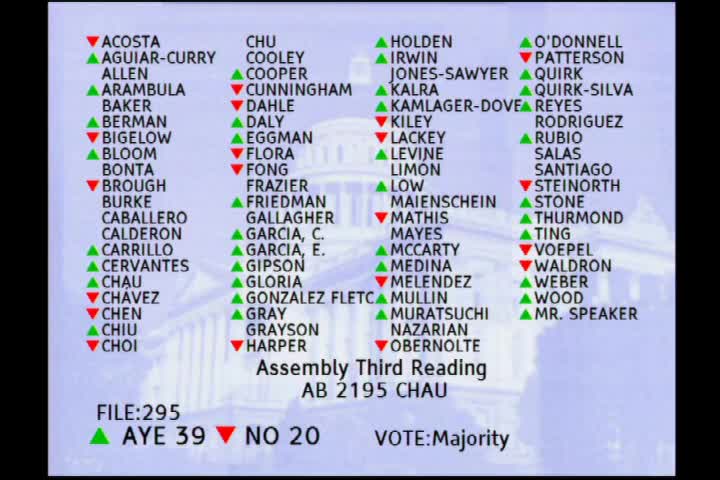 1MIN
Assembly Floor
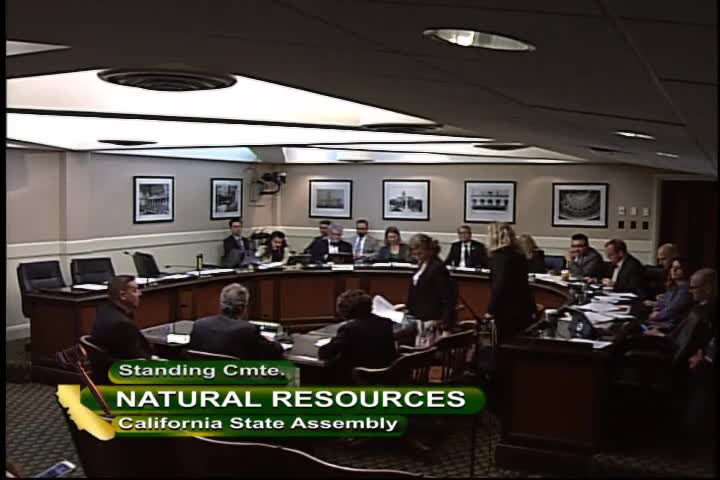 6MIN
Assembly Standing Committee on Natural Resources
Bill Author

Bill Co-Author(s):