AB 196: Greenhouse Gas Reduction Fund: water supply and wastewater systems.
- Session Year: 2017-2018
- House: Assembly
- Latest Version Date: 2017-03-06
The California Global Warming Solutions Act of 2006 designates the State Air Resources Board as the state agency charged with monitoring and regulating sources of emissions of greenhouse gases. The act authorizes the state board to include the use of market-based compliance mechanisms. Existing law requires all moneys, except for fines and penalties, collected by the state board as part of a market-based compliance mechanism to be deposited in the Greenhouse Gas Reduction Fund and to be available upon appropriation. Existing law requires the Department of Finance, in consultation with the state board and any other relevant state agency, to develop, as specified, a 3-year investment plan for the moneys deposited in the Greenhouse Gas Reduction Fund. Existing law requires moneys from the fund to be allocated for the purpose of reducing greenhouse gas emissions in this state and satisfying other purposes. Existing law authorizes specified investments, including water use and supply, if the investment furthers the regulatory purposes of the act and is consistent with law.
This bill would authorize the use of the moneys in the fund for water supply repairs electric pump efficiency, water and wastewater systems, pump and pump motor efficiency improvements, and drinking water transmission and distribution systems water loss if the investment furthers the regulatory purposes of the act and is consistent with law.
The California Global Warming Solutions Act of 2006 designates the State Air Resources Board as the state agency charged with monitoring and regulating sources of emissions of greenhouse gases. The act authorizes the state board to include the use of market-based compliance mechanisms. Existing law requires all moneys, except for fines and penalties, collected by the state board as part of a market-based compliance mechanism to be deposited in the Greenhouse Gas Reduction Fund and to be available upon appropriation. Existing law requires the Department of Finance, in consultation with the state board and any other relevant state agency, to develop, as specified, a 3-year investment plan for the moneys deposited in the Greenhouse Gas Reduction Fund. Existing law requires moneys from the fund to be allocated for the purpose of reducing greenhouse gas emissions in this state and satisfying other purposes. Existing law authorizes specified investments, including water use and supply, if the investment furthers the regulatory purposes of the act and is consistent with law.
This bill would authorize the use of the moneys in the fund for water supply repairs if the investment furthers the regulatory purposes of the act and is consistent with law.
(a)(1)It is the intent of the Legislature that moneys shall be appropriated from the fund only in a manner consistent with the requirements of this chapter and Article 9.7 (commencing with Section 16428.8) of Chapter 2 of Part 2 of Division 4 of Title 2 of the Government Code.
(2)The state shall not approve allocations for a measure or program using moneys appropriated from the fund except after determining, based on the available evidence, that the use of those moneys furthers the regulatory purposes of Division 25.5 (commencing with Section 38500) and is consistent with law. If any expenditure of moneys from the fund for any measure or project is determined by a court to be inconsistent with law, the allocations for the remaining measures or projects shall be severable and shall not be affected.
(b)Moneys shall be used to facilitate the achievement of reductions of greenhouse gas emissions in this state consistent with Division 25.5 (commencing with Section 38500) and, where applicable and to the extent feasible:
(1)Maximize economic, environmental, and public health benefits to the state.
(2)Foster job creation by promoting in-state greenhouse gas emissions reduction projects carried out by California workers and businesses.
(3)Complement efforts to improve air quality.
(4)Direct investment toward the most disadvantaged communities and households in the state.
(5)Provide opportunities for businesses, public agencies, Native American tribes in the state, nonprofits, and other community institutions to participate in and benefit from statewide efforts to reduce greenhouse gas emissions.
(6)Lessen the impacts and effects of climate change on the states communities, economy, and environment.
(c)Moneys appropriated from the fund may be allocated, consistent with subdivision (a), for the purpose of reducing greenhouse gas emissions in this state through investments that may include, but are not limited to, any of the following:
(1)Funding to reduce greenhouse gas emissions through energy efficiency, electric pump efficiency, clean and renewable energy generation, distributed renewable energy generation, transmission and storage, and other related actions, including, but not limited to, at public universities, state and local public buildings, water and wastewater systems, and industrial and manufacturing facilities.
(2)Funding to reduce greenhouse gas emissions through the development of stateoftheart systems to move goods and freight, advanced technology vehicles and vehicle infrastructure, advanced biofuels, and lowcarbon and efficient public transportation.
(3)Funding to reduce greenhouse gas emissions associated with water use and supply, water supply repairs, supply, including, but not limited to, pump and pump motor efficiency improvements, drinking water transmission and distribution systems water loss; land and natural resource conservation and management, forestry, management; forestry; and sustainable agriculture.
(4)Funding to reduce greenhouse gas emissions through strategic planning and development of sustainable infrastructure projects, including, but not limited to, transportation and housing.
(5)Funding to reduce greenhouse gas emissions through increased in-state diversion of municipal solid waste from disposal through waste reduction, diversion, and reuse.
(6)Funding to reduce greenhouse gas emissions through investments in programs implemented by local and regional agencies, local and regional collaboratives, Native American tribes in the state, and nonprofit organizations coordinating with local governments.
(7)Funding research, development, and deployment of innovative technologies, measures, and practices related to programs and projects funded pursuant to this chapter.
(a)(1)It is the intent of the Legislature that moneys shall be appropriated from the fund only in a manner consistent with the requirements of this chapter and Article 9.7 (commencing with Section 16428.8) of Chapter 2 of Part 2 of Division 4 of Title 2 of the Government Code.
(2)The state shall not approve allocations for a measure or program using moneys appropriated from the fund except after determining, based on the available evidence, that the use of those moneys furthers the regulatory purposes of Division 25.5 (commencing with Section 38500) and is consistent with law. If any expenditure of moneys from the fund for any measure or project is determined by a court to be inconsistent with law, the allocations for the remaining measures or projects shall be severable and shall not be affected.
(b)Moneys shall be used to facilitate the achievement of reductions of greenhouse gas emissions in this state consistent with Division 25.5 (commencing with Section 38500) and, where applicable and to the extent feasible:
(1)Maximize economic, environmental, and public health benefits to the state.
(2)Foster job creation by promoting in-state greenhouse gas emissions reduction projects carried out by California workers and businesses.
(3)Complement efforts to improve air quality.
(4)Direct investment toward the most disadvantaged communities and households in the state.
(5)Provide opportunities for businesses, public agencies, Native American tribes in the state, nonprofits, and other community institutions to participate in and benefit from statewide efforts to reduce greenhouse gas emissions.
(6)Lessen the impacts and effects of climate change on the states communities, economy, and environment.
(c)Moneys appropriated from the fund may be allocated, consistent with subdivision (a), for the purpose of reducing greenhouse gas emissions in this state through investments that may include, but are not limited to, any of the following:
(1)Funding to reduce greenhouse gas emissions through energy efficiency, clean and renewable energy generation, distributed renewable energy generation, transmission and storage, and other related actions, including, but not limited to, at public universities, state and local public buildings, and industrial and manufacturing facilities.
(2)Funding to reduce greenhouse gas emissions through the development of stateoftheart systems to move goods and freight, advanced technology vehicles and vehicle infrastructure, advanced biofuels, and lowcarbon and efficient public transportation.
(3)Funding to reduce greenhouse gas emissions associated with water use and supply, water supply repairs, land and natural resource conservation and management, forestry, and sustainable agriculture.
(4)Funding to reduce greenhouse gas emissions through strategic planning and development of sustainable infrastructure projects, including, but not limited to, transportation and housing.
(5)Funding to reduce greenhouse gas emissions through increased in-state diversion of municipal solid waste from disposal through waste reduction, diversion, and reuse.
(6)Funding to reduce greenhouse gas emissions through investments in programs implemented by local and regional agencies, local and regional collaboratives, Native American tribes in the state, and nonprofit organizations coordinating with local governments.
(7)Funding research, development, and deployment of innovative technologies, measures, and practices related to programs and projects funded pursuant to this chapter.
|
Date
|
Status
|
|---|---|
| Sep 1, 2017 | In committee: Held under submission. |
| Jul 17, 2017 | In committee: Referred to APPR. suspense file. |
| Jul 6, 2017 | From committee: Do pass and re-refer to Com. on APPR. (Ayes 6. Noes 0.) (July 5). Re-referred to Com. on APPR. |
| Jun 14, 2017 | Referred to Com. on EQ. |
| Jun 1, 2017 | In Senate. Read first time. To Com. on RLS. for assignment. |
| May 31, 2017 | Read third time. Passed. Ordered to the Senate. (Ayes 77. Noes 0. Page 1891.) |
| May 26, 2017 | From committee: Do pass. (Ayes 17. Noes 0.) (May 26). |
| May 3, 2017 | In committee: Set, first hearing. Referred to APPR. suspense file. |
| Apr 18, 2017 | From committee: Do pass and re-refer to Com. on APPR. (Ayes 10. Noes 0.) (April 17). Re-referred to Com. on APPR. |
| Mar 21, 2017 | From committee: Do pass and re-refer to Com. on NAT. RES. (Ayes 14. Noes 0.) (March 21). Re-referred to Com. on NAT. RES. |
| Mar 7, 2017 | Re-referred to Com. on W.,P., & W. |
| Mar 6, 2017 | From committee chair, with author's amendments: Amend, and re-refer to Com. on W.,P., & W. Read second time and amended. |
| Jan 30, 2017 | Referred to Coms. on W.,P., & W. and NAT. RES. |
| Jan 20, 2017 | From printer. May be heard in committee February 19. |
| Jan 19, 2017 | Read first time. To print. |
|
Date
|
Description
|
Location
|
Votes
|
|
|---|---|---|---|---|
| Jul 17, 2017 | Placed on suspense file | Senate Standing Committee on Appropriations |
Passed |
|
| Jul 5, 2017 | Do pass, but first be re-referred to the Committee on [Appropriations] | Senate Standing Committee on Environmental Quality |
Passed |
|
| May 31, 2017 | AB 196 BIGELOW Assembly Third Reading | Assembly Floor |
Passed |
|
| May 26, 2017 | Do pass. | Assembly Standing Committee on Appropriations |
Passed |
|
| Apr 17, 2017 | Do pass and be re-referred to the Committee on [Appropriations] | Assembly Standing Committee on Natural Resources |
Passed |
|
| Mar 21, 2017 | Do pass and be re-referred to the Committee on [Natural Resources] | Assembly Standing Committee on Water, Parks, and Wildlife |
Passed |
This list shows positions taken on this bill by organizations on the date displayed, which is linked to the original source.
Positions by individuals are not included.
|
Organization
|
Position
|
Date
|
|---|---|---|
| Association Of California Water Agencies | ** Support | Jul 3, 2017 |
| California Municipal Utilities Association | ** Support | Jul 3, 2017 |
| California Water Association | ** Support | Apr 14, 2017 |
| CalTax | ** Against | Jul 3, 2017 |
| El Dorado Irrigation District | ** Support | Jul 3, 2017 |
| Fresno Chamber of Commerce | ** Support | Jul 3, 2017 |
| Nexus eWater | ** Support | Apr 14, 2017 |
| Olivenhain Municipal Water District | ** Support | Jul 3, 2017 |
| Royal County Representatives | * Support | Apr 17, 2017 |
| Rural County Representatives of California | ** Support | Jul 3, 2017 |
| San Diego County Water Authority | ** Support | Jul 3, 2017 |
| Western Electrical Contractors Association Western Growers Association | * Support | Apr 17, 2017 |
SENATE COMMITTEE ON APPROPRIATIONS
Senator Ricardo Lara, Chair
2017 - 2018 Regular Session
AB 196 (Bigelow) - Greenhouse Gas Reduction Fund: water supply and wastewater systems
Version: March 6, 2017 | Policy Vote: E.Q. 6 - 0 |
Urgency: No | Mandate: No |
Hearing Date: July 17, 2017 | Consultant: Narisha Bonakdar |
This bill meets the criteria for referral to the Suspense File.
Bill Summary:
AB 196 allows the use of Greenhouse Gas Reduction Fund (GGRF) monies for water pump and water distribution systems that reduce the greenhouse gas emissions (GHG) associated with water use.
Fiscal Impact:
- Unknown annual cost pressures, potentially in the tens of millions (GGRF) to fund newly eligible activities.
- One-time costs of approximately $800,000 (GGRF) over three-years for Air Resources Board (ARB) to contract for or conduct research necessary to implement the program.
- Ongoing costs of approximately $700,000 annually (GGRF) for ARB to develop quantification methodologies and guidelines and to conduct reporting, tracking, and legal review activities.
Background:
- The California Global Warming Solutions Act of 2006 (AB 32) requires ARB to adopt a statewide GHG emissions limit equivalent to 1990 levels by 2020 and adopt regulations, including market-based compliance mechanisms, to achieve maximum technologically feasible and cost-effective GHG emission reductions.
As part of the implementation of AB 32 market-based compliance measures, ARB adopted a cap-and-trade program that caps the allowable statewide emissions and provides for the auctioning of emission credits, the proceeds of which are quarterly deposited into the GGRF available for appropriation by the Legislature.
The 2014-15 Budget Act allocated cap-and-trade revenues for the 2014-15 fiscal year and established a long-term plan for the allocation of cap-and-trade revenues beginning in fiscal year 2015-16.
The Budget continuously appropriates 35% of cap-and-trade funds for investments in transit, affordable housing, and sustainable communities. Twenty-five percent of the revenues are continuously appropriated to continue the construction of high-speed rail. The remaining 40% are to be appropriated annually by the Legislature for investments in programs that include low-carbon transportation, energy efficiency and renewable energy, and natural resources and waste diversion.
State Water Efficiency and Enhancement Program (SWEEP). SB 103 (Committee on Budget and Fiscal Review, Chapter 2, Statutes of 2014), appropriated $1 million from GGRF to the California Department of Food and Agriculture (CDFA) to administer a grant program for local agencies, joint powers authorities, or nonprofit organizations to implement residential, commercial, or institutional water efficiency programs or projects that reduce GHG emissions, and also reduce water and energy use. CDFA established this program, called it the State Water Efficiency and Enhancement Program (SWEEP), and gave it the goal to provide financial assistance in the form of grants to implement irrigation systems that reduce greenhouse gases and save water on California agricultural operations.
Proposed Law:
This bill allows the use of GGRF monies for water pump and water distribution systems that reduce the GHG associated with water use.
Related Legislation:
AB 388 (Mullin) amends the same paragraph in statute to authorize GGRF funds for the beneficial reuse of dredged materials. AB 388 was heard in the Senate Environmental Quality Committee on June 21, 2017 and was passed as amended to the Senate Natural Resources and Water Committee.
Staff Comments:
Purpose of the bill. According to the author, up to 10% of water is estimated to be lost through the distribution system. The author further contends that this bill simply allows water supply repairs, such as electric pump efficiency, water and wastewater systems, pump and pump motor efficiency improvements, and drinking water transmission and distribution systems' water loss to be considered when allocating GGRF moneys.
Funding Source. As noted in the background, the SWEEP program is already funded by GGRF moneys for the purposes of providing financial assistance in the form of grants to implement irrigation systems that reduce greenhouse gases and save water on California agricultural operations. This program already funds the types of projects proposed in AB 196. The changes made by AB 196 in reference to agricultural pumping are, therefore, only declaratory of existing law.
SENATE COMMITTEE ON ENVIRONMENTAL QUALITY
Senator Wieckowski, Chair
2017 - 2018 Regular
Bill No: AB 196
Author: | Bigelow | ||
Version: | 3/6/2017 | Hearing Date: | 7/5/2017 |
Urgency: | No | Fiscal: | Yes |
Consultant: | David Ernest García | ||
SUBJECT: Greenhouse Gas Reduction Fund: water supply and wastewater systems.
ANALYSIS:
Existing law:
- Requires, under the California Global Warming Solutions Act of 2006 (also known as AB 32), the Air Resources Board (ARB) to determine the 1990 statewide greenhouse gas (GHG) emissions level and approve a statewide GHG emissions limit that is equivalent to that level to be achieved by 2020. (Health and Safety Code (HSC) §38500 et seq.)
- Allows the ARB until December 31, 2020, under certain circumstances, to adopt regulations that utilize market-based compliance mechanisms. (HSC §38562)
- Requires ARB to ensure that statewide GHG emissions are reduced to at least 40% below the 1990 level by December 31, 2030 (known as the SB 32 cap). (HSC §38566)
- Establishes the Greenhouse Gas Reduction Fund (GGRF) in the State Treasury, requires all moneys, except for fines and penalties, collected pursuant to a market-based mechanism be deposited in the fund. (Government Code (GOV) §16428.8)
- Authorizes, among other things, the use of GGRF funds for the purposes of reducing GHG emissions associated with water use and supply, land and natural resource conservation and management, forestry, and sustainable agriculture. (HSC §39712)
This bill:
Would add authorization for the use of GGRF funds for the purposes of GHG reducing water use and supply projects that may include pump or pump motor efficiency improvements, water loss in drinking water transmission and distribution systems.
Background
- Agriculture and GHG reductions. According to ARB’s proposed update to the Scoping Plan Update, methane is the second most important GHG in California, accounting for 9% of California’s 2014 GHG emissions in carbon dioxide equivalent units. Agriculture accounts for the majority of methane emissions, primarily from livestock enteric fermentation and manure management. Agriculture also accounts for the majority of nitrous oxide emissions, primarily from fertilizer and manure added to soil. Other agricultural sources of air pollution and GHG emissions include rice cultivation, energy use (including fuel combustion), and crop residue burning.
However, various agricultural practices can significantly reduce GHG emissions, and sequester carbon as well. GHG reduction and sequestration strategies in the agricultural sector include reduced energy usage through more efficient watering systems, such as drip irrigation; reduced nitrogen fertilizer usage; shifting tilling practices to improve soil carbon retention; changing livestock feed and practices to reduce livestock enteric rumination, manure management where manure is converted to alternative fuels; and establishing perennial vegetation on land retired from agriculture production to sequester carbon in the plants and soil. In addition, recent research also suggests that applications of compost may result in greater carbon sequestration in soils.
Many of these land management practices to reduce or sequester GHGs also result in significant environmental co-benefits, such as improved water efficiency, improved air and water quality, and greater resiliency of agricultural land to climate change. - State Water Efficiency and Enhancement Program (SWEEP). SB 103 (Committee on Budget and Fiscal Review, Chapter 2, Statutes of 2014), appropriated $1 million from GGRF to the California Department of Food and Agriculture (CDFA) to administer a grant program for local agencies, joint powers authorities, or nonprofit organizations to implement residential, commercial, or institutional water efficiency programs or projects that reduce GHG emissions, and also reduce water and energy use. CDFA established this program, called it the State Water Efficiency and Enhancement Program (SWEEP), and gave it the goal to provide financial assistance in the form of grants to implement irrigation systems that reduce greenhouse gases and save water on California agricultural operations.
- Use of Cap-and-Trade Auction Revenue. Since November 2012, ARB has conducted eight California-only and 11 joint California-Québec cap-and-trade auctions. To date, $3.4 billion has been appropriated by the Legislature to 12 state agencies that have distributed $1.2 billion to projects that have been completed or are under way.
State law specifies that the auction revenues must be used to facilitate the achievement of measurable GHG emissions reductions and outlines various categories of allowable expenditures. Statute further requires the Department of Finance, in consultation with ARB and any other relevant state agency, to develop a three-year investment plan for the auction proceeds, which are deposited in the GGRF. ARB is required to develop guidance for administering agencies on reporting and quantifying methodologies for programs and projects funded through the GGRF to ensure the investments further the regulatory purposes of AB 32.
Proceeds from cap-and-trade auctions provide an opportunity for the state to invest in projects that help California achieve its climate goals and provide benefits to disadvantaged communities. Several bills in 2012, one in 2014, and one in 2016 provide legislative direction for the expenditure of auction proceeds including SB 535 (de León, Chapter 830, Statutes of 2012), AB 1532 (J. Pérez, Chapter 807, Statutes of 2012), SB 1018 (Committee on Budget and Fiscal Review, Chapter 39, Statutes of 2012), SB 862 (Committee on Budget and Fiscal Review, Chapter 36, Statutes of 2014), and AB 1550 (Gomez, Chapter 369, Statutes of 2016).
SB 535 (de León, Chapter 830, Statutes of 2012) requires that 25% of auction revenue be used to benefit disadvantaged communities and requires that 10% of auction revenue be invested in disadvantaged communities.
AB 1532 (J. Pérez, Chapter 807, Statutes of 2012) directs the Department of Finance to develop and periodically update a three-year investment plan that identifies feasible and cost-effective GHG emission reduction investments to be funded with cap-and-trade auction revenues and specifies that reduction of GHG emissions through strategic planning and development of sustainable infrastructure projects, are eligible investments of GGRF.
SB 1018 (Committee on Budget and Fiscal Review, Chapter 39, Statutes of 2012) created the GGRF, into which all auction revenue is to be deposited. The legislation requires that before departments can spend moneys from the GGRF, they must prepare a record specifying: (1) how the expenditures will be used, (2) how the expenditures will further the purposes of AB 32 (Núñez and Pavley, Chapter 488, Statutes of 2006), (3) how the expenditures will achieve GHG emission reductions, (4) how the department considered other non-GHG-related objectives, and (5) how the department will document the results of the expenditures.
SB 862 (Committee on Budget and Fiscal Review, Chapter 36, Statutes of 2014) established a long-term cap-and-trade expenditure plan by continuously appropriating portions of the funds for designated programs or purposes. The legislation appropriates 25% for the state’s high-speed rail project, 20% for affordable housing and sustainable communities grants, 10% to the Transit and Intercity Rail Capital Program, and 5% for low-carbon transit operations. The remaining 40% is available for annual appropriation by the Legislature.
AB 1550 (Gomez, Chapter 369, Statutes of 2016) requires a minimum of 25% of GGRF moneys be spent on projects located within and benefiting disadvantaged communities and an additional minimum of 10% of GGRF moneys be spent on projects that benefit low-income households or are within, and benefit low-income communities.
These statutes also require a state agency, prior to expending any money appropriated to it by the Legislature from the fund, to prepare a description of 1) proposed expenditures, 2) how they will further the regulatory purposes of AB 32, 3) how they will achieve specified greenhouse gas emission reductions, 4) how the agency considered other objectives of that act, and 5) how the agency will document expenditure results.
- Fees versus Taxes: Legal Consideration of Cap-and-Trade Auction Revenues. Regulatory fees established prior to 2010 (due to Proposition 26) are subject to the Sinclair Paint test, which helps determine whether a levy is a fee or a tax.
Sinclair Paint Co. v. State Board of Equalization, 15 Cal. 4th 866 (1997) considered the legitimacy of a fee levied to support the implementation of the Childhood Lead Poisoning Prevention Act, which provided evaluation, screening, and medical follow-up services to children at risk of lead poisoning. The program was entirely supported by fees imposed on former and current manufacturers of lead or products containing lead, based on the manufacturers “market share” responsibility for the contamination. The California Supreme Court in Sinclair Paint found that a levy is a legitimate fee as long as the revenue of the levy does not exceed the costs of the regulatory activity and the levy is not imposed for an unrelated revenue purpose, and the levy allocated to the payer bears a fair or reasonable relationship to the payer’s burdens on or benefits from the regulatory activity. The Sinclair Paint test is a two-part test: 1) nexus and 2) proportionality.
Nexus. The Sinclair Paint nexus test, which is derived from the case above, requires that a clear nexus must exist between an activity for which a fee is used and the adverse effects related to the activity on which that fee is levied. In order to use a fee imposed to pay for remediation of the harm created by the release of GHGs, it appears that the funds should be used only to decrease the emissions or the harms directly caused by those activities that release GHGs.
Proportionality. The Sinclair Paint test also has a proportionality component, which requires those burdened with the fee proportionally benefit from the fee – if assessing a fee to reduce GHG emissions on industry, then 100% of those funds are from industry. However, not all of the revenue from the fee is used to fund industrial projects. Some of those funds are used to pay for reducing emissions from other sources, such as wetlands restoration and stationary agriculture equipment, which are not assessed the fee.
The 2012-13 Budget analysis of cap-and-trade auction revenue by the Legislative Analyst’s Office (LAO) noted that, based on an opinion from the Office of Legislative Counsel, the auction revenues should be considered “mitigation” fee revenues, subject to the Sinclair Paint test. The LAO concluded, based on the opinion, that in order for their use to be valid as mitigation fees, revenues from the cap-and-trade auction must be used to mitigate GHG emissions or the harms caused by GHG emissions.
In 2012, the California Chamber of Commerce filed a lawsuit against the ARB claiming that cap-and-trade auction revenues constitute illegal tax revenue. In November 2013, the superior court ruling declined to hold the auction a tax, concluding that it is more akin to a regulatory fee. In February of 2014, the plaintiffs filed an appeal with the 3rd District Court of Appeal in Sacramento. Arguments were heard before the Appellate Court in January of 2017.
On April 6, 2017, the appellate court issued a ruling that again declined to hold that the cap-and-trade auctions are a tax.
- Third Appellate Court District Ruling. The appellate court ruled that ARB did not exceed its authority in creating the cap-and-trade program, stating that “the Legislature gave broad discretion to the Board to design a distribution system, and a system including the auction of some allowances did not exceed the scope of legislative delegation. Further, the Legislature later ratified the auction system by specifying how to use the proceeds derived therefrom.”
The appellate court also stated clearly “that the auction sales do not equate to a tax” explaining that “the hallmarks of a tax are: 1) that it is compulsory; and 2) that the payor receives nothing of particular value for payment of the tax, that is, the payor receives nothing of specific value for the tax itself. Contrary to plaintiffs’ view, the purchase of allowances is a voluntary decision driven by business judgments as to whether it is more beneficial to the company to make the purchase than to reduce emissions …these twin aspects of the auction system, voluntary participation and purchase of a specific thing of value, preclude a finding that the auction system has the hallmarks of a tax.”
Going further than the superior court, the appellate court also found that “the purchase of emissions allowances, whether directly from the Board at auction or on the secondary market, is a business driven decision, not a governmentally compelled decision [and] unlike any other tax … the purchase of an emissions allowance conveys a valuable property interest—the privilege to pollute California’s air—that may be freely sold or traded on the secondary market.”
As a result, the appellate court found that “the Sinclair Paint test is not applicable [to the cap-and-trade program], because the auction system is unlike other governmental charges that may raise the “tax or fee” question resolved thereby. The system is the voluntary purchase of a valuable commodity and not a tax under any test.” - Budget Allocations. SB 862 (Committee on Budget and Fiscal Review, Chapter 36, Statutes of 2014) established a long-term cap-and-trade expenditure plan by continuously appropriating portions of the funds for designated programs or purposes. The legislation appropriates 25% for the state’s high-speed rail project, 20% for affordable housing and sustainable communities grants, 10% to the Transit and Intercity Rail Capital Program, and 5% for low-carbon transit operations. The remaining 40% is available for annual appropriation by the Legislature.
The Governor’s 2017-18 proposed budget proposes the following $2.2 billion expenditure plan: (1) $900 million continuously appropriated for state transit assistance ($75 million), transit and intercity rail ($150 million), the Sustainable Communities Strategy ($300 million), and the state’s high-speed rail project ($375 million), and; (2) $1.3 billion in discretionary funding for a variety of projects. This includes $500 million for public transit and active transportation projects and $363 million for clean transportation and petroleum use reduction, as well as $392 million for a variety of other greenhouse gas reducing programs.
The Governor’s 2017-18 proposed budget makes the aforementioned funding for discretionary spending contingent on the Legislature reauthorizing ARB to utilize a market-based compliance mechanism to reduce GHG emissions (specifically, referencing a cap-and-trade program) beyond 2020 with a two-thirds vote. The budget approved by the Legislature on June 15, 2017 did not include any discretionary GGRF expenditures since the Legislature did not reauthorize ARB to utilize a market-based compliance mechanism to reduce GHG emissions.
Comments
- Purpose of Bill. According to the author, “this legislation would simply allow water supply repairs to be considered when allocating GGRF monies.”
- Funding Source.
As noted in the background, the SWEEP program is already funded by GGRF moneys for the purposes of providing financial assistance in the form of grants to implement irrigation systems that reduce greenhouse gases and save water on California agricultural operations. This program already funds the types of projects proposed in AB 196. The changes made by AB 196 in reference to agricultural pumping are, therefore, only declaratory of existing law.
The addition of using GGRF moneys for GHG emission reducing projects relating to water and waste water systems may be appropriate, but it is worth noting that under the Governor’s proposed budget no GGRF moneys will be allocated because the Legislature has not reauthorized a market-based compliance mechanism for GHG emissions reductions post 2020. - Conflict Resolution. AB 388 (Mullin, 2017) amends the same paragraph in statute to authorize GGRF funds for the beneficial reuse of dredged materials.
As AB 388 and AB 196 progress through the Legislature, the authors will need to decide whether they want to move forward with two bills and include chaptering out amendments, or if one bill is sufficient to accomplish the goals of both bills.
Related/Prior Legislation
AB 388 (Mullin) amends the same paragraph in statute to authorize GGRF funds for the beneficial reuse of dredged materials. AB 388 was heard in the Senate Environmental Quality Committee on June 21, 2017 and was passed as amended to the Senate Natural Resources and Water Committee.
SOURCE:
Author
SUPPORT:
Association of California Water Agencies
California Municipal Utilities Association
El Dorado Irrigation District
Fresno Chamber of Commerce
Olivenhain Municipal Water District
Rural County Representatives of California
San Diego County Water Authority
OPPOSITION:
CalTax
-- END --
ASSEMBLY THIRD READING
ATR Bill Id:AB 196
Author:(Bigelow)
As Amended Ver:March 6, 2017
Majority vote
Committee | Votes | Ayes | Noes |
Water | 14-0 | Eduardo Garcia, Gallagher, Bigelow, Choi, Chu, Friedman, Gloria, Gomez, Harper, Levine, Mathis, Rubio, Salas, Wood | |
Natural Resources | 10-0 | Cristina Garcia, Acosta, Travis Allen, Chau, Eggman, Harper, Limón, McCarty, Muratsuchi, Mark Stone | |
Appropriations | 17-0 | Gonzalez Fletcher, Bigelow, Bloom, Bocanegra, Bonta, Brough, Calderon, McCarty, Quirk, Fong, Friedman, Gallagher, Eduardo Garcia, Gray, Muratsuchi, Obernolte, Reyes |
|
SUBJECT: Greenhouse Gas Reduction Fund: water supply and wastewater systems
SUMMARY: Provides clarity for specified water supply and wastewater systems from greenhouse gas reduction funds.
Specifically, this bill: Authorizes the use of Greenhouse Gas Reduction Funds (GGRF) for water and wastewater systems if the investment furthers the regulatory purposes of the act and is consistent with law. With this bill, water supply investments, including repairs, pump and motor efficiency improvements, drinking water transmission and distribution system water loss, and wastewater systems, would be specifically eligible for funding.
EXISTING LAW:
- Requires the Air Resources Board (ARB), pursuant to the California Global Warming Solutions Act of 2006 [AB 32 (Nunez), Chapter 488, Statutes of 2006], to adopt a statewide greenhouse gas (GHG) emissions limit equivalent to 1990 levels by 2020, and adopt regulations to achieve maximum technologically feasible and cost-effective GHG emission reductions. AB 32 authorizes the ARB to permit the use of market-based compliance mechanisms to comply with GHG reduction regulations, once specified conditions are met.
- Establishes the GGRF and requires all moneys, except for fines and penalties, collected by the ARB from the auction or sale of allowances pursuant to a market-based compliance mechanism (i.e., the cap-and-trade program adopted by the ARB under AB 32), to be deposited in the GGRF and available for appropriation by the Legislature.
- Continuously appropriates funds for various housing and transportation programs.
- Authorizes a range of investments related to greenhouse gas reductions that meet several policy objectives related to air quality, job creation, public health benefits, and water/energy efficiency. Specifically, Section 39712 of the Health and Safety Code allows for the use of the GGRF for water use and supply.
FISCAL EFFECT: According to the Assembly Appropriations Committee, unknown annual cost pressures, potentially in the tens of millions (GGRF), and:
- Increased one-time Air Resources Board (ARB) contract costs of $800,000 (GGRF) over a three-year period to develop the body of research necessary to implement the program.
- Increased ongoing ARB costs of approximately $700,000 for the development of quantification methodologies and guidelines, reporting, tracking and legal review (GGRF).
COMMENTS:
- Purpose. According to the author, up to 10% of water is estimated to be lost through the distribution system. The author further contends that this bill simply allows water supply repairs, such as electric pump efficiency, water and wastewater systems, pump and pump motor efficiency improvements, and drinking water transmission and distribution systems' water loss to be considered when allocating GGRF moneys.
- Background. The California Global Warming Solutions Act of 2006 (AB 32) requires the ARB to adopt a statewide GHG emissions limit equivalent to 1990 levels by 2020 and adopt regulations, including market-based compliance mechanisms, to achieve maximum technologically feasible and cost-effective GHG emission reductions.
As part of the implementation of AB 32 market-based compliance measures, the ARB adopted a cap-and-trade program that caps the allowable statewide emissions and provides for the auctioning of emission credits, the proceeds of which are quarterly deposited into the GGRF available for appropriation by the Legislature.
The 2014-15 Budget Act allocated cap-and-trade revenues for the 2014-15 fiscal year and established a long-term plan for the allocation of cap-and-trade revenues beginning in fiscal year 2015-16.
The Budget continuously appropriates 35% of cap-and-trade funds for investments in transit, affordable housing, and sustainable communities. Twenty-five percent of the revenues are continuously appropriated to continue the construction of high-speed rail. The remaining 40% are to be appropriated annually by the Legislature for investments in programs that include low-carbon transportation, energy efficiency and renewable energy, and natural resources and waste diversion.
- GGRF and water supply. According to the 2016 California Climate Investments report by the ARB, $18.1 million of GGRF dollars were invested through the California Department of Food and Agriculture State Water Efficiency and Enhancement Program (SWEEP). The program provides for investment in irrigation and water pumping systems that reduce water use, energy use, and GHG emissions from agricultural operations. Co-benefits of the program include water savings, reduced energy costs, improved water quality, and protection of water quality. Examples of projects funded include replacement of inefficient water pumps, and replacement and upgrade of irrigation systems.
Funds have also been invested through the Department of Water Resources Water Energy Efficiency Program. The program provides funds to implement residential, commercial, or institutional water efficiency programs or projects that reduce GHG emissions, water use, and energy use. Co-benefits include water and energy savings. The program has been awarded $70 million from the GGRF.
Water supply repairs have the potential to significantly reduce GHG emissions. According to a 2014 report on cost-effectiveness of greenhouse gas reduction solutions in water distribution systems (Hendrickson and Horvath, UC Berkeley), for California, annual GHG savings from reducing leaks alone (3.4 million tons of CO2) are found to exceed California Air Resources Board's estimate for energy efficiency improvements in the state's water infrastructure.
Analysis Prepared by: Catherine Freeman / W., P., & W. / (916) 319-2096 FN: 0000570
Date of Hearing: May 3, 2017
ASSEMBLY COMMITTEE ON APPROPRIATIONS
Lorena Gonzalez Fletcher, Chair
ABPCA Bill Id:AB 196
Author:(Bigelow) – As Amended Ver:March 6, 2017
Policy Committee: | Water, Parks and Wildlife | Vote: | 14 - 0 |
Natural Resources | 10 - 0 | ||
|
|
Urgency: No State Mandated Local Program: No Reimbursable: No
SUMMARY:
This bill allows the use of Greenhouse Gas Reduction Fund (GGRF) monies for water pump and water distribution systems that reduce the greenhouse gas emissions (GHG) associated with water use.
FISCAL EFFECT:
- Unknown annual cost pressures, potentially in the tens of millions (GGRF).
- Increased one-time Air Resources Board (ARB) contract costs of $800,000 (GGRF) over a three-year period to develop the body of research necessary to implement the program.
- Increased ongoing ARB costs of approximately $700,000 for the development of quantification methodologies and guidelines, reporting, tracking and legal review (GGRF).
COMMENTS:
- Purpose. According to the author, up to 10% of water is estimated to be lost through the distribution system. The author further contends that this bill simply allows water supply repairs, such as electric pump efficiency, water and wastewater systems, pump and pump motor efficiency improvements, and drinking water transmission and distribution systems' water loss to be considered when allocating GGRF moneys.
- Background. The California Global Warming Solutions Act of 2006 (AB 32) requires ARB to adopt a statewide GHG emissions limit equivalent to 1990 levels by 2020 and adopt regulations, including market-based compliance mechanisms, to achieve maximum technologically feasible and cost-effective GHG emission reductions.
As part of the implementation of AB 32 market-based compliance measures, ARB adopted a cap-and-trade program that caps the allowable statewide emissions and provides for the auctioning of emission credits, the proceeds of which are quarterly deposited into the GGRF available for appropriation by the Legislature.
The 2014-15 Budget Act allocated cap-and-trade revenues for the 2014-15 fiscal year and established a long-term plan for the allocation of cap-and-trade revenues beginning in fiscal year 2015-16.
The Budget continuously appropriates 35% of cap-and-trade funds for investments in transit, affordable housing, and sustainable communities. Twenty-five percent of the revenues are continuously appropriated to continue the construction of high-speed rail. The remaining 40% are to be appropriated annually by the Legislature for investments in programs that include low-carbon transportation, energy efficiency and renewable energy, and natural resources and waste diversion.
- GGRF and water supply. According to the 2016 California Climate Investments report by ARB, $18.1 million of GGRF funds were invested through the California Department of Food and Agriculture State Water Efficiency and Enhancement Program (SWEEP). The program provides for investment in irrigation and water pumping systems that reduce water use, energy use, and GHG emissions from agricultural operations. Co-benefits of the program include water savings, reduced energy costs, improved water quality, and protection of water quality. Examples of projects funded include replacement of inefficient water pumps, and replacement and upgrade of irrigation systems.
Funds have also been invested through the Department of Water Resources Water Energy Efficiency Program. The program provides funds to implement residential, commercial, or institutional water efficiency programs or projects that reduce GHGs, water use, and energy use. Co-benefits include water and energy savings. The program has been awarded $70 million from the GGRF.
Water supply repairs have the potential to significantly reduce GHG emissions. According to a 2014 report on cost-effectiveness of greenhouse gas reduction solutions in water distribution systems (Hendrickson and Horvath, UC Berkeley), “for California, annual GHG savings from reducing leaks alone (3.4 million tons of CO2) are found to exceed California Air Resources Board’s estimate for energy efficiency improvements in the state’s water infrastructure.
Analysis Prepared by: Jennifer Galehouse / APPR. / (916) 319-2081
Date of Hearing: April 17, 2017
ASSEMBLY COMMITTEE ON NATURAL RESOURCES
Cristina Garcia, Chair
ABPCA Bill Id:AB 196 (
Author:Bigelow) – As Amended Ver:March 6, 2017
SUBJECT: Greenhouse Gas Reduction Fund: water supply and wastewater systems
SUMMARY: Specifies that water pump and water distribution systems are eligible for Greenhouse Gas Reduction Fund (GGRF) moneys.
EXISTING LAW:
- Requires the Air Resources Board (ARB), pursuant to California Global Warming Solutions Act of 2006 [AB 32 (Nunez), Chapter 488, Statutes of 2006], to adopt a statewide greenhouse gas (GHG) emissions limit equivalent to 1990 levels by 2020 and adopt regulations to achieve maximum technologically feasible and cost-effective greenhouse gas (GHG) emission reductions. AB 32 authorizes ARB to permit the use of market-based compliance mechanisms to comply with GHG reduction regulations once specified conditions are met.
- Establishes the GGRF and requires all moneys, except for fines and penalties, collected by ARB from the auction or sale of allowances pursuant to a market-based compliance mechanism (i.e., the cap-and-trade program adopted by ARB under AB 32) to be deposited in the GGRF and available for appropriation by the Legislature.
- Establishes the GGRF Investment Plan and Communities Revitalization Act (Act) to set procedures for the investment of GHG allowance auction revenues. Authorizes a range of GHG reduction investments and establishes several policy objectives:
- Maximize economic, environmental, and public health benefits;
- Foster job creation;
- Complement efforts to improve air quality;
- Direct investment toward the most disadvantaged communities and households in the state;
- Provide opportunities for businesses, public agencies, nonprofits, and other community institutions to participate in and benefit from statewide efforts to reduce GHG emissions; and,
- Lessen the impacts and effects of climate change on the state's communities, economy, and environment.
- Maximize economic, environmental, and public health benefits;
- Specifies that moneys appropriated from the GGRF through investments that may include funding to reduce GHG emissions through:
- Energy efficiency, clean and renewable energy generation, distributed renewable energy generation, transmission and storage, and other related actions;
- The development of state-of-the-art systems to move goods and freight, advanced technology vehicles and vehicle infrastructure, advanced biofuels, and low-carbon and efficient public transportation;
- Water use and water supply, land and natural resource conservation and management, forestry, and sustainable agriculture projects;
- Strategic planning and development of sustainable infrastructure projects;
- In-state diversion of municipal solid waste from disposal through waste reduction, diversion, and reuse;
- Investments in programs implemented by local and regional agencies, local and regional collaboratives, and nonprofit organizations coordinating with local governments; and,
- Funding research, development, and deployment of innovative technologies, measures, and practices related to programs and projects funded pursuant to the Act.
- Energy efficiency, clean and renewable energy generation, distributed renewable energy generation, transmission and storage, and other related actions;
- Requires the investment plan to allocate:
- A minimum of 25% of the available moneys in the GGRF to projects located within, and that provide benefits to individuals living in, disadvantaged communities;
- A minimum of 5% of the available moneys in the GGRF to projects that benefit low-income households or to projects located within, and benefiting individuals living in, low-income communities; and,
- A minimum of 5% of the available moneys in the GGRF to projects that benefit low-income households that are outside of, but within ½ mile of, disadvantaged communities, or to projects located within the boundaries of, and benefiting individuals living in, low-income communities that are outside of, but within ½ mile of, disadvantaged communities.
- A minimum of 25% of the available moneys in the GGRF to projects located within, and that provide benefits to individuals living in, disadvantaged communities;
THIS BILL:
- Adds "electric pump efficiency" and "water and wastewater systems" to a list of energy projects eligible for GGRF;
- Clarifies that water use and water supply projects eligible for GGRF include, but are not limited to, pump and pump motor efficiency improvements, drinking water transmission, and distribution systems' water loss.
FISCAL EFFECT: Unknown
COMMENTS:
- Author's statement:
While current law allows for the use of GGRF moneys to be used on water use and supply, it is not explicitly stated that these funds can be used to repair infrastructure utilized for water use and supply. Unfortunately, the more water lost through the distribution process, the more water that must be pumped and distributed to make up for the loss. This uses a greater amount of energy, ultimately producing more [GHG emissions]. If the amount of water lost to the system is reduced, the amount of GHG's emitted through the water system is likewise reduced.
AB 196 would simply allow water supply repairs, such as electric pump efficiency, water and wastewater systems, pump and pump motor efficiency improvements, and drinking water transmission and distribution systems' water loss to be considered when allocating GGRF moneys. Up to 10% of water is estimated to be lost through the distribution system. This measure would enable water system repairs to tap into cap and trade revenues, upon appropriation by the Legislature, to pay for those projects.
- Existing GGRF funding and programs. The 2014-15 Budget Act allocated GGRF revenues for the 2014-15 fiscal year and established a long-term plan for the allocation of GGRF revenues beginning in fiscal year 2015-16. Thirty-five percent of GGRF is continuously appropriated for investments in transit, affordable housing, and sustainable communities. Twenty-five percent is continuously appropriated to continue the construction of the high-speed rail project. The remaining 40% is subject to annual appropriation by the Legislature for investments in programs that include low-carbon transportation, energy efficiency and renewable energy, and natural resources and waste diversion.
The 2017 Annual Report of Cap and Trade Auction Proceeds includes an analysis of funds spent within and benefiting disadvantaged communities, excluding high speed rail spending. According to the report, 34% of expenditures were for projects located within disadvantaged communities and 50% of the overall funding benefited disadvantaged communities.
Listed below are the major GGRF program areas and funding to date, totaling $3.385 billion:
- Sustainable Communities and Clean Transportation:
- High Speed Rail Authority, High Speed Rail Project, $800 million
- State Transit Assistance, Low-Carbon Transit Operations, $135 million
- Transportation Agency, Transit and Intercity Rail Capital Program, $381 million
- Strategic Growth Council, Affordable Housing and Sustainable Communities Program, $570 million
- Department of Transportation, Active Transportation, $10 million
- Strategic Growth Council, Transformative Climate Communities Program and Technical Assistance, $142 million
- Air Resources Board, Low Carbon Transportation, $695 million
- Short-Lived Climate Pollutants:
- Air Resources Board, Black Carbon Woodsmoke, $5 million
- Department of Resources Recycling and Recovery, Waste Diversion, $71 million
- Department of Food and Agriculture, Dairy Digesters and Alternative Fuels, $65 million
- Department of Food and Agriculture, Healthy Soils, $8 million
- Carbon Sequestration:
- Department of Forestry and Fire Protection, Healthy Forests, $49 million
- Department of Forestry and Fire Protection, Urban and Community Forestry, $33 million
- Department of Fish and Wildlife, Wetlands and Watershed Restoration, $30 million
- Natural Resources Agency, Urban Greening, $80 million
- Energy Efficiency/Renewable Energy:
- Department of Community Services and Development, Energy Efficiency Upgrades/Weatherization, $174 million
- Department of Water Resources, Water Use Efficiency, $70 million
- Department of Food and Agriculture, State Water Efficiency and Enhancement Program, $68 million
- Sustainable Communities and Clean Transportation:
The Governor's 2017-18 Budget proposes $2.155 billion in expenditures:
- Continuous Appropriations:
- High Speed Rail, Authority, $375 million
- Low Carbon Transit Operations, State Transit Assistance, $75 million
- Transit and Intercity Rail Capital Program, Transportation Agency, $150 million
- Affordable Housing and Sustainable Communities Program, Strategic Growth Council, $300 million
- Transportation Package, $500 million:
- Transportation Agency, Transit and Intercity Rail Capital Program
- Department of Transportation, Active Transportation
- Fifty Percent Reduction in Petroleum Use:
- Air Resources Board, Low Carbon Transportation, $363 million
- Transformational Climate Communities:
- Strategic Growth Council, Transformative Climate Communities and Technical Assistance and Outreach, $142 million
- Short-Lived Climate Pollutants, $95 million:
- Air Resources Board, Black Carbon Woodsmoke
- Department of Resources Recycling and Recovery, Waste Diversion
- Department of Food and Agriculture, Dairy Digesters
- Carbon Sequestration, $127.5 million:
- Department of Forestry and Fire Protection, Healthy Forests and Urban Greening
- Department of Food and Agriculture, Climate Smart Agriculture and Healthy Soils
- Natural Resources Agency, Urban Greening
- Energy Efficiency/Renewable Energy, $27.5 million:
- Department of Community Services and Development, Energy Efficiency Upgrades/Weatherization
- Department of Food and Agriculture, State Water Efficiency and Enhancement Program
- Continuous Appropriations:
- GGRF and water supply. According to the 2016 California Climate Investments report by ARB, $18.1 million of GGRF funds were invested through the California Department of Food and Agriculture State Water Efficiency and Enhancement Program (SWEEP). The program provides for investment in irrigation and water pumping systems that reduce water use, energy use, and GHG emissions from agricultural operations. Co-benefits of the program include water savings, reduced energy costs, improved water quality, and protection of water quality. Examples of projects funded include replacement of inefficient water pumps, and replacement and upgrade of irrigation systems.
Funds have also been invested through the Department of Water Resources Water Energy Efficiency Program. The program provides funds to implement residential, commercial, or institutional water efficiency programs or projects that reduce GHGs, water use, and energy use. Co-benefits include water and energy savings. The program has been awarded $70 million from the GGRF.
Water supply repairs have the potential to significantly reduce GHG emissions. According to a 2014 report on cost-effectiveness of greenhouse gas reduction solutions in water distribution systems (Hendrickson and Horvath, UC Berkeley), “for California, annual GHG savings from reducing leaks alone (3.4 million tons of CO2) are found to exceed California Air Resources Board’s estimate for energy efficiency improvements in the state’s water infrastructure.
- Double referral. This bill was heard by the Assembly Water Parks and Wildlife Committee on March 21; it passed with a vote of 14-0.
REGISTERED SUPPORT / OPPOSITION:
Support
Association of California Water Agencies
California Municipal Utilities Association
California Water Association
El Dorado Irrigation District
Fresno Chamber of Commerce
Nexus eWater
Rural County Representatives of California
Opposition
CalTax
Analysis Prepared by: Elizabeth MacMillan / NAT. RES. /
Date of Hearing: March 21, 2017
ASSEMBLY COMMITTEE ON WATER, PARKS, AND WILDLIFE
Eduardo Garcia, Chair
ABPCA Bill Id:AB 196 (
Author:Bigelow) – As Amended Ver:March 6, 2017
SUBJECT: Greenhouse Gas Reduction Fund: water supply and wastewater systems
SUMMARY: Provides clarity for specified water supply and wastewater systems from greenhouse gas reduction funds.
Specifically, this bill: Authorizes the use of Greenhouse Gas Reduction Funds (GGRF) for water and wastewater systems if the investment furthers the regulatory purposes of the act and is consistent with law. With this bill, water supply investments, including repairs, pump and motor efficiency improvements, drinking water transmission and distribution system water loss, and wastewater systems, would be specifically eligible for funding.
EXISTING LAW:
- Requires the Air Resources Board (ARB), pursuant to California Global Warming Solutions Act of 2006 [AB 32 (Nunez), Chapter 488, Statutes of 2006], to adopt a statewide greenhouse gas (GHG) emissions limit equivalent to 1990 levels by 2020, and adopt regulations to achieve maximum technologically feasible and cost-effective GHG emission reductions. AB 32 authorizes ARB to permit the use of market-based compliance mechanisms to comply with GHG reduction regulations, once specified conditions are met.
- Establishes the GGRF and requires all moneys, except for fines and penalties, collected by the ARB from the auction or sale of allowances pursuant to a market-based compliance mechanism (i.e., the cap-and-trade program adopted by the ARB under AB 32), to be deposited in the GGRF and available for appropriation by the Legislature.
- Continuously appropriates funds for various housing and transportation programs.
- Authorizes a range of investments related to greenhouse gas reductions that meet several policy objectives related to air quality, job creation, public health benefits, and water/energy efficiency. Specifically, Section 39712 of the Health and Safety Code allows for the use of the GGRF for water use and supply.
FISCAL EFFECT: Unknown.
COMMENTS:
According to the 2016 California Climate Investments report by the Air Resources Board, $18.1 million of GGRF funds were invested through the California Department of Food and Agriculture State Water Efficiency and Enhancement Program (SWEEP). The program provides for investment in irrigation and water pumping systems that reduce water use, energy use, and GHG emissions from agricultural operations. Co-benefits of the program include water savings, reduced energy costs, improved water quality, and protection of water quality. Examples of projects funded include replacement of inefficient water pumps, and replacement and upgrade of irrigation systems.
Funds have also been invested through the Department of Water Resources Water Energy Efficiency Program. The program provides funds to implement residential, commercial, or institutional water efficiency programs or projects that reduce GHGs, water use, and energy use. Co-benefits include water and energy savings. The program has been awarded $50 million, with $27.8 award prior to the 2016 report.
According to the author, this bill would allow water supply and wastewater systems to be considered when allocating GGRF monies. The author specifically clarifies that electric pump efficiency, water and wastewater systems, and water supply repairs including pump and pump motor efficiency improvements, and drinking water transmission and distribution system water loss, are all eligible. Water treatment, especially of drinking water and wastewater, is energy intensive and expensive to upgrade. Previous legislation did not make clear that water agencies would be eligible for GGRF monies for water supply repairs, specific types of water supply efficiency, or wastewater systems. Up to ten percent of water is estimated to be lost through the distribution system, and this bill would enable water system repairs to access GGRF monies (through appropriation by the Legislature), to pay for those projects.
Those in support would acknowledge that water supply repairs are eligible under various GGRF programs but that it is not clear if this is the highest priority for funding. They cite increased costs to upgrade systems to treat water (both for water supply and wastewater) and an aging infrastructure that has many inefficiencies. According to a 2014 report on cost-effectiveness of greenhouse gas reduction solutions in water distribution systems (Hendrickson and Horvath, UC Berkeley), “for California, annual GHG savings from reducing leaks alone (3.4 million tons of CO2) are found to exceed California Air Resources Board’s estimate for energy efficiency improvements in the state’s water infrastructure.
The law regarding the use of greenhouse gas emission reduction funds for water supply and wastewater is fairly nonspecific to the types of infrastructure that are eligible for funding. Rather, this determination has been addressed through the Air Resources Board’s scoping plan process and the annual budget process negotiations.
REGISTERED SUPPORT / OPPOSITION:
Support
El Dorado Irrigation District
Opposition
None received.
Analysis Prepared by: Catherine Freeman / W., P., & W. /
Discussed in Hearing
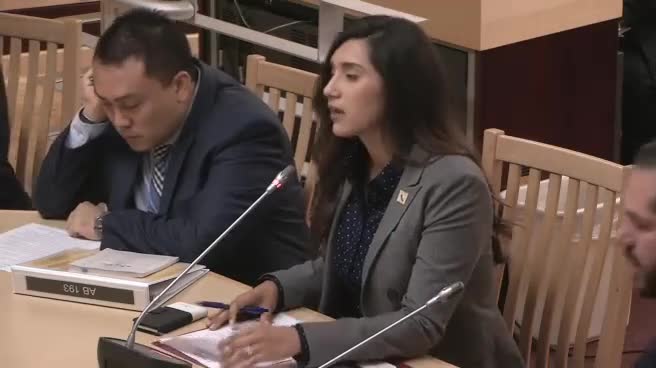 4MIN
Senate Standing Committee on Environmental Quality
 44SEC
Assembly Floor
 1H
Assembly Standing Committee on Appropriations
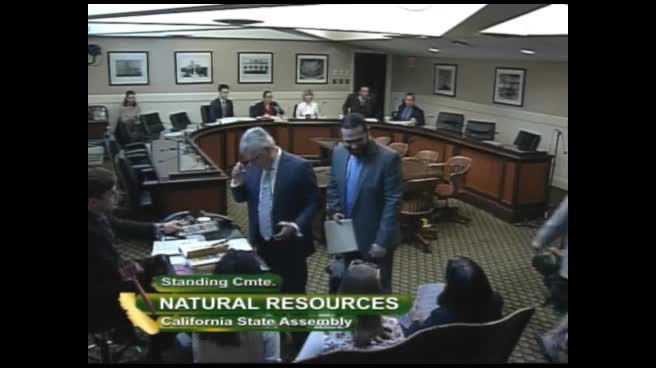 2MIN
Assembly Standing Committee on Natural Resources
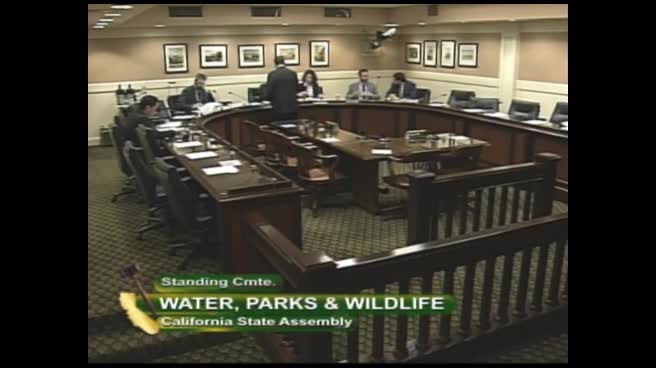 5MIN
Assembly Standing Committee on Water, Parks, and Wildlife
Bill Author

Bill Co-Author(s):