AB 1963: Medi-Cal: reimbursement: opioid addiction treatment.
- Session Year: 2017-2018
- House: Assembly
- Latest Version Date: 2018-02-20
Existing law establishes the Medi-Cal program, which is administered by the State Department of Health Care Services and under which qualified low-income individuals receive health care services. The Medi-Cal program is, in part, governed and funded by federal Medicaid Program provisions. Existing law establishes the Drug Medi-Cal Treatment Program (Drug Medi-Cal), under which the department is authorized to enter into contracts with each county, or enter into contracts directly with certified providers, for the provision of various alcohol and drug use treatment services, including substance use disorder services, narcotic treatment program services, naltrexone services, and outpatient drug-free services, to Medi-Cal beneficiaries.
This bill would require the department to increase the Medi-Cal provider reimbursement rates, as specified, for medication-assisted treatments, buprenorphine/naloxone combination treatment, or similar treatment services, methadone treatment, and naltrexone treatment, provided by certified providers, for opioid addiction.
Existing law establishes the Medi-Cal program, which is administered by the State Department of Health Care Services and under which qualified low-income individuals receive health care services. The Medi-Cal program is, in part, governed and funded by federal Medicaid Program provisions. Existing law establishes the Drug Medi-Cal Treatment Program (Drug Medi-Cal), under which the department is authorized to enter into contracts with each county, or enter into contracts directly with certified providers, for the provision of various alcohol and drug use treatment services, including substance use disorder services, narcotic treatment program services, naltrexone services, and outpatient drug-free services, to Medi-Cal beneficiaries.
This bill would require the department to increase the Medi-Cal provider reimbursement rates, as specified, for buprenorphine/naloxone combination treatment, or similar treatment services, provided by certified providers, for opioid addiction.
The department shall increase the Medi-Cal provider reimbursement rates, by __ percent of the corresponding average rates established in the 201718 fiscal year, for medication-assisted treatments, buprenorphine/naloxone combination treatment, classified in Schedule III pursuant to the California Uniform Controlled Substances Act (Division 10 (commencing with Section 11000) of the Health and Safety Code), or similar treatment services, methadone treatment, and naltrexone treatment, provided by certified providers, for opioid addiction.
REVISIONS: HeadingLine 2.The department shall increase the Medi-Cal provider reimbursement rates, by __ percent of the corresponding average rates established in the 201718 fiscal year, for buprenorphine/naloxone combination treatment, classified in Schedule III pursuant to the California Uniform Controlled Substances Act (Division 10 (commencing with Section 11000) of the Health and Safety Code), or similar treatment services, provided by certified providers, for opioid addiction.
|
Date
|
Status
|
|---|---|
| May 25, 2018 | In committee: Held under submission. |
| May 2, 2018 | In committee: Set, first hearing. Referred to APPR. suspense file. |
| Apr 11, 2018 | From committee: Do pass and re-refer to Com. on APPR. (Ayes 15. Noes 0.) (April 10). Re-referred to Com. on APPR. |
| Mar 6, 2018 | Coauthors revised. |
| Feb 21, 2018 | Re-referred to Com. on HEALTH. |
| Feb 20, 2018 | From committee chair, with author's amendments: Amend, and re-refer to Com. on HEALTH. Read second time and amended. |
| Feb 8, 2018 | Referred to Com. on HEALTH. |
| Jan 31, 2018 | From printer. May be heard in committee March 2. |
| Jan 30, 2018 | Read first time. To print. |
|
Date
|
Description
|
Location
|
Votes
|
|
|---|---|---|---|---|
| Apr 10, 2018 | Do pass and be re-referred to the Committee on [Appropriations] | Assembly Standing Committee on Health |
Passed |
This list shows positions taken on this bill by organizations on the date displayed, which is linked to the original source.
Positions by individuals are not included.
|
Organization
|
Position
|
Date
|
|---|---|---|
| Alkermes | * Support | Apr 10, 2018 |
| Biocom | * Support | Apr 10, 2018 |
| California Academy Of Family Physicians | * Support | Apr 10, 2018 |
| California Consortium of Addiction Programs and Professionals | * Support | Apr 10, 2018 |
| California Life Sciences Association | * Support | Apr 10, 2018 |
| California Medical Association | * Support | Apr 10, 2018 |
| California Pharmacists Association | * Support | Apr 10, 2018 |
| California Psychiatric Association | * Support | Apr 10, 2018 |
| California Special Districts Association | ** Support | Apr 6, 2018 |
| County Behavioral Health Directors Association | * Support | Apr 10, 2018 |
| Union of America Physicians and Dentists | * Support | Apr 10, 2018 |
Date of Hearing: May 2, 2018
ASSEMBLY COMMITTEE ON APPROPRIATIONS
Lorena Gonzalez Fletcher, Chair
ABPCA Bill Id:AB 1963
Author:(Waldron) – As Amended Ver:February 20, 2018
Policy Committee: | Health | Vote: | 15 - 0 |
Urgency: No State Mandated Local Program: No Reimbursable: No
SUMMARY:
This bill requires the Department of Health Care Services (DHCS) to increase Medi-Cal provider reimbursement rates for opioid addiction treatment by an unspecified percentage of the corresponding average rates established in the 2017-18 fiscal year. Specifically, this bill specifies rate increases for "medication-assisted treatments (MAT), buprenorphine/naloxone combination treatment, methadone treatment, and naltrexone treatments provided by certified providers for opioid addiction."
FISCAL EFFECT:
Assuming this bill applies only to rates for methadone provided through directly through the state Medi-Cal program and not to services in counties participating in the Drug Medi-Cal Organized Delivery System (DMC-ODS) waiver, costs of about $2.3 million for each percentage point increase in MAT rates (about 25% GF, 75% federal) given a base of about $230 million in projected spending annually for narcotic treatment program services. For instance, a 5% increase would cost $11.5 million. Cost would grow beyond this to the extent a larger number of beneficiaries access treatment due to greater provider availability. This estimate also assumes the state bears the entire non-federal share of costs for this rate increase pursuant to Proposition 30 (discussed further below). It is unclear that this bill applies only to services provided directly through the state Medi-Cal program.
COMMENTS:
- Purpose. Statute requires health care providers be trained and certified to prescribe MAT for opioid addiction. Given a small number of providers meet this criterion, this bill is intended to provide a financial incentive sufficient to increase the number of providers.
- MAT in Medi-Cal. Counties are responsible for providing drug treatment to eligible Medi-Cal beneficiaries. Forty counties participate in the DMC-ODS waiver, a program to organize and make more comprehensive drug treatment services that had previously lacked comprehensiveness and integration. Rates for MAT services in counties participating in the DMC-ODS waiver are paid at county-established rate, not the state rates. For counties not participating in the waiver, the state administers the Drug Medi-Cal program and pays at the state-established rate.
- Cost protections for realigned programs. Although programmatic responsibility and funding for drug treatment services are realigned to counties, Proposition 30 (2012) provides protection against rising costs for such services. It specifies that:
Legislation enacted after September 30, 2012, that the costs already borne by a local agency for programs or levels of service mandated by the 2011 Realignment Legislation shall apply to local agencies only to the extent that the State provides annual funding for the cost increase.
Thus, as this bill increases costs in a realigned program that is protected by the Proposition 30 structure, this bill only applies to the extent sufficient GF funding is provided.
- Staff Comments. There exist a number of barriers to getting more providers certified and trained to prescribe MAT. Financial incentives, if sufficiently large, could help, but it is not clear that simply increasing rates somewhat is the most cost-efficient means to further the goal of increasing the number of providers. In addition to the DMC-ODS waiver, pursuant to a federal grant, the state is focusing on delivery systems change by promoting a "hub-and-spoke" treatment model that provides primary care providers (spokes) training and support from specialists (hubs) in order to address drug treatment access concerns. This bill also does not specify a percentage by which rates will be increased. Finally, this bill is unclear whether it is intended to apply to services provided by counties participating in the DMC-ODS waiver. Some of the treatments listed are only available through the DMC-ODS waiver.
Analysis Prepared by: Lisa Murawski / APPR. / (916) 319-2081
Date of Hearing: April 10, 2018
ASSEMBLY COMMITTEE ON HEALTH
Jim Wood, Chair
ABPCA Bill Id:AB 1963
Author:(Waldron) – As Amended Ver:February 20, 2018
SUBJECT: Medi-Cal: reimbursement: opioid addiction treatment.
SUMMARY: Requires the Department of Health Care Services (DHCS) to increase the Medi-Cal provider reimbursement rates by an unspecified percentage of the corresponding average rates established in the 2017-18 fiscal year, for medication-assisted treatments (MAT), buprenorphine/naloxone combination treatment, methadone treatment, and naltrexone treatments provided by certified providers, for opioid addiction.
EXISTING LAW:
- Establishes the Medi-Cal program, administered by DHCS which provides health benefits to low-income individuals who meet specific eligibility criteria.
- Establishes the Drug Medi-Cal (DMC) program that provides medically necessary substance use disorder (SUD) treatment services to eligible Medi-Cal beneficiaries for specific, approved services. Permits DHCS to enter into contracts with each county, or enter into contracts directly with certified MAT providers, for the provision of various alcohol and drug use treatment services, including SUD services.
- Establishes the Drug Addiction Treatment Act (DATA 2000) which permits qualified physicians to provide MAT for narcotic dependence with Schedules III-V narcotic controlled substances that have been approved by the federal Food and Drug Administration (FDA) for that indication.
FISCAL EFFECT: This bill has not yet been analyzed by a fiscal committee.
COMMENTS:
- PURPOSE OF THIS BILL. According to the author, 174 people die each day from opioid overdoses and opioid overdoses have surpassed car accidents as the number one accidental killer in the United States. Despite the success of MAT for opioid abuse, access to treatment is a desperate need, as less than two percent of California medical providers are certified to prescribe MAT. The author states that it is essential for the state to go beyond the rhetoric to increase access by funding opioid abuse treatments in California and this bill will do just that.
- BACKGROUND.
- MAT. MAT is the use of medications, in combination with counseling and behavioral therapies, to provide a “whole-patient” approach to the treatment of SUDs. Research shows that a combination of medication and therapy can successfully treat these disorders, and for some people struggling with addiction, MAT can help sustain recovery.
MAT is primarily used for the treatment of addiction to opioids such as heroin and prescription pain relievers that contain opiates. The prescribed medication operates to normalize brain chemistry, block the euphoric effects of alcohol and opioids, relieve physiological cravings, and normalize body functions without the negative effects of the abused drug. Medications used in MAT are approved by the FDA, and MAT programs are clinically driven and tailored to meet each patient’s needs.
MAT is proven to be clinically effective and to significantly reduce the need for inpatient detoxification services for these individuals. MAT provides a more comprehensive, individually tailored program of medication and behavioral therapy. MAT also includes support services that address the needs of most patients. The ultimate goal of MAT is full recovery including the ability to live a self-directed life.
- Medi-Cal MAT. Individuals eligible for Medi-Cal may obtain medication assisted treatment through the DMC-Organized Delivery System (DMC-ODS) where counties have opted in or through the DMC Program for all other counties. 40 counties have opted into the DMC-ODS and have DHCS-approved implementation plans, and 10 of those counties have begun implementation of the program. DMC-ODS is a pilot program to test a new paradigm for the organized delivery of health care services for Medicaid eligible individuals with SUD. The goal of the DMC-ODS is to demonstrate how organized SUD care improves beneficiary health outcomes, while decreasing system-wide health care costs. Counties that opt into the DMC-ODS waiver are required to provide methadone, buprenorphine, disulfiram and naloxone in the narcotic treatment program (NTP) setting and may also offer additional MAT, such as buprenorphine and naltrexone (Vivitrol) at DMC facilities. Reimbursement rates for these services are set by contracts agreed upon by the counties and DHCS. All other counties are part of the DMC Program which operates as a “carved-out” of the broader Medi-Cal program and is administered by DHCS and operated under federal waivers approved by the Centers for Medicine and Medicaid Services. Authorized narcotic replacement medications are methadone, buprenorphine, naltrexone, and levo-alpha-acetylmethadol and are available to patients receiving treatment in a licensed NTP. The rates for services provided in DMC are set by DHCS.
- MAT Certification. In California, MAT is commonly provided through NTPs licensed by DHCS. Physicians must be certified by the Substance Abuse and Mental Health Administration Services (SAMHSA) as a MAT provider. Under DATA 2000, qualified physicians may apply for waivers to treat opioid dependency with approved medications in any settings in which they are qualified to practice, including an office, community hospital, health department, or correctional facility. Qualified physicians are permitted to dispense or prescribe specifically approved Schedule III, IV, and V narcotic medications (medications that have a lower risk for abuse, like buprenorphine) in settings other than an NTP, such as a methadone clinic. A “qualifying physician” is specifically defined in DATA 2000 as one who is:
- Licensed under state law;
- Registered with the Drug Enforcement Administration to dispense controlled substances;
- Required to treat no more than 30 patients at a time within the first year; and,
- Qualified by training and/or certification.
In order to maintain a waiver, a physician must be capable of referring patients to counseling and other services. Initially a physician is limited to providing MAT to no more than 30 patients at a time within the first year. Following the first year, physicians may apply to increase the number of patients to 100 and up to 275 per year in subsequent years. Physicians must apply to SAMHSA to increase their patient limits.
d) Availability of MAT in California. More than 900,000 physicians in the U.S. can write a prescription for painkillers but fewer than 32,000 physicians are authorized to prescribe buprenorphine. Currently, there are only a little over 1,000 authorized MAT providers in California. In 2016, 48% of the counties in California did not have NTPs. The top eight counties in terms of opioid overdoses have zero NTPs. In 36 California counties, opioid prescriptions exceed the national average of 640 morphine milligram equivalents per resident, which are enough opioids to medicate every resident around the clock for almost three weeks every year.
According to SAMHSA, in California the number of physicians eligible to provide buprenorphine treatment has gone up by 493% for certified physicians with 30 patients from 77 in 2002 to 457 in 2017. However, between 2009 and 2014 the number of certified physicians with 100 patients was between 39 and 82, increasing to 106 in 2015 and declining to 39 in 2017.
e) The Federal Comprehensive Addiction and Recovery Act (CARA). On July 22, 2016, CARA was signed into law. One of CARA’s important previsions expanded access to SUD treatment services and overdose reversal medications including the full spectrum of services from prevention to MAT and recovery support by extending the privilege of prescribing buprenorphine in office-based settings to qualifying nurse practitioners (NP) and physician assistants (PA). SB 554 (Stone), Chapter 242, Statutes of 2017, established the buprenorphine prescribing privileges of CARA to the California NP and PA practice acts. SB 554 did not alter current state requirements that NPs and PAs only furnish or order prescription drugs under the supervision of a physician.
f) California's MAT Expansion Project. On April 21, 2017, the Department of Health and Human Services announced funding through the 21st Century Cures Act to address the national opioid crisis. California will receive $90 million over a period of two years (May 2017 through May 2019) to implement the California MAT Expansion Project. The MAT Expansion Project aims to serve over 20,000 individuals with Opioid Use Disorders (OUD), prevent drug overdoses, and treat OUD as a chronic disease. The project focuses on populations with limited MAT access, including rural areas, American Indian and Alaskan Native tribal communities, and statewide access to buprenorphine.
3) SUPPORT. The California Academy of Family Physicians (CAFP) states in support that despite the increasing success of medication-assisted treatments for opioid abuse, less than 2% California medical providers are certified to prescribe buprenorphine/naloxone treatment and even less are certified to administer naltrexone. Providing access to MAT drugs to rural areas is pivotal in managing the opioid epidemic. Naltrexone reduces cravings and blocks the opiate high for up to 30 days. Other MAT drugs may be prescribed by certified physicians for at home use. Increasing access to medication that can be taken at home significantly increases accessibility of treatment in rural communities. CAFP goes on to state, however that the number of certified providers in California is far less than what is needed to combat opioid abuse. The California Special District Association states that opioid abuse has a significant impact on the workplace. Dependence on opioids has hindered workers’ ability to remain engaged and safe members of the workforce. Individuals under the influence of opioids at work are at a significantly higher risk of bringing injury to themselves and others. This bill will provide those suffering from opioid addiction the ability to obtain the necessary relief through MAT.
4) RELATED LEGISLATION.
- AB 2384 (Arambula) of 2018 would require a drug formulary maintained by a health care service plan, including a Medi-Cal managed plan, or health insurer to include, at a minimum, specified prescription drugs for the MAR of substance abuse disorders. AB 2384 would provide that MAT is presumed to be medically necessary, and is not subject to specified requirements of a health care service plan or policy of health insurance. AB 2384 is pending in Assembly Health Committee.
- AB 2804 (Waldron) of 2018 would state the Legislature’s long-range goals related to expansion of the SUD treatment workforce in California through the creation of one-year and five-year plans. AB 2804 passed out of Assembly Health Committee with a vote of 15-0 and is pending in Assembly Appropriations Committee.
- AB 2487 (McCarty) of 2018 would require the application for a physician’s and surgeon’s certificate to include proof of satisfactory completion of a course on opiate-dependent patient treatment and management that meets the requirement, at a minimum, of CARA and also includes at least eight hours of instruction in buprenorphine treatment of opioid use disorders. AB 2487 would also require a licensed physician and surgeon to complete a continuing education course on opiate-dependent patient treatment and management unless the physician and surgeon meets the requirements of a qualifying physician within CARA. AB 2487 is pending in Assembly Business and Professions Committee.
5) PREVIOUS LEGISLATION.
a) AB 395 (Bocanegra), Chapter 223, Statutes of 2017, added the use of MAT as an authorized service by NTPs licensed by DHCS, and made legislative findings and declarations that it is in the best interest of the health and welfare of the people of this state to also coordinate MAT for SUDs. AB 395 modified the specific controlled substances authorized for use by licensed NTPs for narcotic replacement therapy MAT to instead allow medications approved by the FDA for the purpose of narcotic replacement treatment or MAT for SUDs, and refer to medications, rather than controlled substances.
b) SB 554 (Stone), Chapter 242, Statutes of 2017, established the buprenorphine prescribing privileges of CARA in the NP and PA practice acts. NPs and PAs who have completed the 24 hours of required training may seek a waiver for up to 30 patients.
c) AB 417 (Beall) of 2009 would have established a buprenorphine MAT pilot program under DMC, commencing January 1, 2011, and concluding December 31, 2016, for the purpose of determining the efficacy of buprenorphine in treating opioid addiction. AB 417 would have required all narcotic treatment programs participating in the pilot program to operate in accordance with prescribed requirements. AB 417 would also have authorized the use of buprenorphine and any other federally approved controlled substances used for the purpose of narcotic replacement treatment. AB 417 was held on the Senate Appropriations Committee suspense file.
6) PENDING ISSUE. As written, this bill does not specify the percentage of the increase in provider reimbursement rates. As the bill moves forward, the author may wish to specify this.
REGISTERED SUPPORT / OPPOSITION:
Support
Biocom
California Academy of Family Physicians
California Pharmacists Association
California Special Districts Association
County Behavioral Health Directors Association
Opposition
None on file.
Analysis Prepared by: Judith Babcock / HEALTH / (916) 319-2097
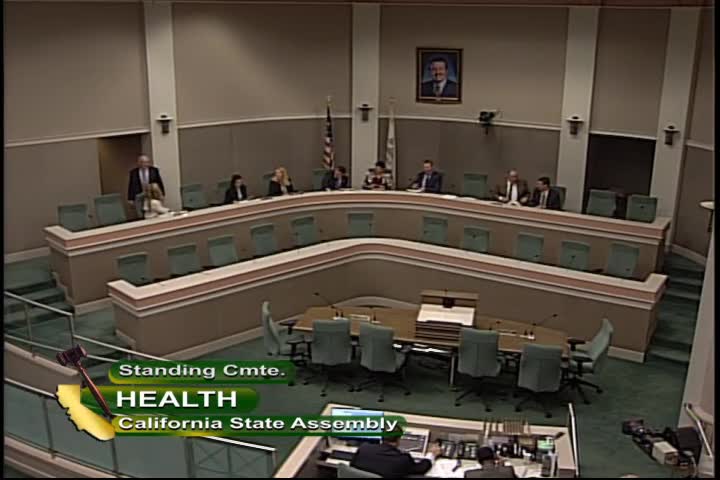
Bill Author