AB 1974: Pupils: collection of debt.
- Session Year: 2017-2018
- House: Assembly
- Latest Version Date: 2018-09-20
Existing law provides that a pupil enrolled in a public school is prohibited from being required to pay a pupil fee, as defined, for participation in an educational activity, as defined.
The Child Hunger Prevention and Fair Treatment Act of 2017 prohibits certain local educational agencies, as defined, that provide school meals through the federal National School Lunch Program or the federal School Breakfast Program from taking any action directed at a pupil to collect unpaid school meal fees. The act authorizes a local educational agency to attempt to collect unpaid school meal fees from a parent or guardian, but prohibits the local educational agency from using a debt collector, as defined.
This bill would enact the Public School Fair Debt Collection Act. The act would provide that a pupil or former pupil, unless emancipated at the time the debt is incurred, can never owe or be billed for a debt owed to a public school or school district, county office of education, charter school, or state special school. The act would prohibit those educational entities from taking negative actions against a pupil or former pupil because of a debt owed to the educational entity, including, among other things, denying or withholding grades or transcripts, or denying or withholding a diploma. The act would require those educational entities to provide an itemized invoice, including specified information, for any amount owed by the parent or guardian on behalf of a pupil or former pupil before pursuing payment of the debt and to provide a receipt to a parent or guardian for each payment made to the educational entity for any amount owed by the parent or guardian on behalf of the pupil or former pupil. The act would prohibit a debt collector, as defined, from reporting debt owed by a parent or guardian to a credit reporting agency if the debt collector is contracted with one of those educational entities for the purpose of pursuing repayment of any debt owed by a parent or guardian of a pupil or former pupil, and the bill would prohibit those educational entities from selling debt owed by a parent or guardian of a pupil or former pupil. The bill would provide that any waiver by a parent, guardian, pupil, or former pupil of the these provisions is contrary to public policy and is unenforceable and void. The bill would provide that these provisions do not apply to debt owed as a result of vandalism or to cover the replacement cost of public school or school district books, supplies, or property loaned to a pupil that the pupil fails to return or that are willfully cut, defaced, or otherwise injured, except if the pupil is a current or former homeless child or youth, as defined, or a current or former foster youth, as defined, and would authorize a public school or school district to offer a pupil or former pupil, with the permission of the parent or guardian of the pupil or former pupil, alternative, nonmonetary forms of compensation to settle such debt, as provided. By imposing additional duties on school districts, charter schools, and county offices of education, this bill would impose a state-mandated local program.
The California Constitution requires the state to reimburse local agencies and school districts for certain costs mandated by the state. Statutory provisions establish procedures for making that reimbursement.
This bill would provide that, if the Commission on State Mandates determines that the bill contains costs mandated by the state, reimbursement for those costs shall be made pursuant to the statutory provisions noted above.
Existing law provides that a pupil enrolled in a public school is prohibited from being required to pay a pupil fee, as defined, for participation in an educational activity, as defined.
The Child Hunger Prevention and Fair Treatment Act of 2017 prohibits certain local educational agencies, as defined, that provide school meals through the federal National School Lunch Program or the federal School Breakfast Program from taking any action directed at a pupil to collect unpaid school meal fees. The act authorizes a local educational agency to attempt to collect unpaid school meal fees from a parent or guardian, but prohibits the local educational agency from using a debt collector, as defined.
This bill would enact the Public School Fair Debt Collection Act. The act would provide that a pupil or former pupil, unless emancipated at the time the debt is incurred, can never owe or be billed for a debt owed to a public school or school district, county office of education, charter school, or state special school. The act would prohibit those educational entities from taking negative actions against a pupil or former pupil because of a debt owed to the educational entity, including, among other things, denying or withholding grades or transcripts, or denying or withholding a diploma. The act would require those educational entities to provide an itemized invoice, including specified information, for any amount owed by the parent or guardian on behalf of a pupil or former pupil before pursuing payment of the debt and to provide a receipt to a parent or guardian for each payment made to the educational entity for any amount owed by the parent or guardian on behalf of the pupil or former pupil. The act would prohibit a debt collector, as defined, from reporting debt owed by a parent or guardian to a credit reporting agency if the debt collector is contracted with one of those educational entities for the purpose of pursuing repayment of any debt owed by a parent or guardian of a pupil or former pupil, and the bill would prohibit those educational entities from selling debt owed by a parent or guardian of a pupil or former pupil. The bill would provide that any waiver by a parent, guardian, pupil, or former pupil of the these provisions is contrary to public policy and is unenforceable and void. The bill would provide that these provisions do not apply to debt owed as a result of vandalism or to cover the replacement cost of public school or school district books, supplies, or property loaned to a pupil that the pupil fails to return or that are willfully cut, defaced, or otherwise injured, except if the pupil is a current or former homeless child or youth, as defined, or a current or former foster youth, as defined, and would authorize a public school or school district to request offer a pupil or former pupil, with the permission of the parent or guardian of the pupil or former pupil, alternative, nonmonetary forms of compensation to settle such debt. debt, as provided. By imposing additional duties on school districts, charter schools, and county offices of education, this bill would impose a state-mandated local program.
The California Constitution requires the state to reimburse local agencies and school districts for certain costs mandated by the state. Statutory provisions establish procedures for making that reimbursement.
This bill would provide that, if the Commission on State Mandates determines that the bill contains costs mandated by the state, reimbursement for those costs shall be made pursuant to the statutory provisions noted above.
Existing law provides that a pupil enrolled in a public school is prohibited from being required to pay a pupil fee, as defined, for participation in an educational activity, as defined.
The Child Hunger Prevention and Fair Treatment Act of 2017 prohibits certain local educational agencies, as defined, that provide school meals through the federal National School Lunch Program or the federal School Breakfast Program from taking any action directed at a pupil to collect unpaid school meal fees. The act authorizes a local educational agency to attempt to collect unpaid school meal fees from a parent or guardian, but prohibits the local educational agency from using a debt collector, as defined.
This bill would enact the Public School Fair Debt Collection Act. The act would provide that a pupil or former pupil, unless emancipated at the time the debt is incurred, can never owe or be billed for a debt owed to a public school or school district, county office of education, charter school, or state special school. The act would prohibit those educational entities from taking negative actions against a pupil or former pupil because of a debt owed to the educational entity, including, among other things, denying or withholding grades or transcripts, or denying or withholding a diploma. The act would require those educational entities to provide a receipt to a parent or guardian for each payment made to the educational entity for any amount owed by the parent or guardian on behalf of the pupil or former pupil. The act would prohibit a debt collector, as defined, from reporting debt owed by a parent or guardian to a credit reporting agency if the debt collector is contracted with one of those educational entities for the purpose of pursuing repayment of any debt owed by a parent or guardian of a pupil or former pupil, and the bill would prohibit those educational entities from selling debt owed by a parent or guardian of a pupil or former pupil. The bill would provide that any waiver by a parent, guardian, pupil, or former pupil of the these provisions is contrary to public policy and is unenforceable and void. The bill would provide that these provisions do not apply to debt owed as a result of vandalism or to cover the replacement cost of public school or school district books, supplies, or property loaned to a pupil that the pupil fails to return or that are willfully cut, defaced, or otherwise injured, except if the pupil is a current or former homeless child or youth, as defined, or a current or former foster youth, as defined, and would authorize a public school or school district to request alternative, nonmonetary forms of compensation to settle such debt. By imposing additional duties on school districts, charter schools, and county offices of education, this bill would impose a state-mandated local program.
The California Constitution requires the state to reimburse local agencies and school districts for certain costs mandated by the state. Statutory provisions establish procedures for making that reimbursement.
This bill would provide that, if the Commission on State Mandates determines that the bill contains costs mandated by the state, reimbursement for those costs shall be made pursuant to the statutory provisions noted above.
Existing law provides that a pupil enrolled in a public school is prohibited from being required to pay a pupil fee, as defined, for participation in an educational activity, as defined.
The Child Hunger Prevention and Fair Treatment Act of 2017 prohibits certain local educational agencies, as defined, that provide school meals through the federal National School Lunch Program or the federal School Breakfast Program from taking any action directed at a pupil to collect unpaid school meal fees. The act authorizes a local educational agency to attempt to collect unpaid school meal fees from a parent or guardian, but prohibits the local educational agency from using a debt collector, as defined.
This bill would enact the Public School Fair Debt Collection Act. The act would provide that a pupil or former pupil, unless emancipated at the time the debt is incurred, can never owe or be billed for a debt owed to a public school or school district, county office of education, charter school, or state special school. The act would prohibit those educational entities from taking negative actions against a pupil or former pupil because of a debt owed to the educational entity, including, among other things, denying or withholding grades or transcripts, or denying or withholding a diploma. The act would require those educational entities to provide a receipt to a parent or guardian for each payment made to the educational entity for any amount owed by the parent or guardian on behalf of the pupil or former pupil. The act would prohibit those educational entities from using a debt collector, as defined, to pursue from reporting debt owed by a parent or guardian to a credit reporting agency if the debt collector is contracted with one of those educational entities for the purpose of pursuing repayment of any debt owed by a parent or guardian of a pupil or former pupil, or and the bill would prohibit those educational entities from selling or assigning debt owed by a parent or guardian of a pupil or former pupil. The bill would provide that any waiver by a parent, guardian, pupil, or former pupil of the these provisions is contrary to public policy and is unenforceable and void. The bill would provide that these provisions do not apply to debt owed as a result of vandalism or to cover the replacement cost of public school or school district books, supplies, or property loaned to a pupil that the pupil fails to return or that are willfully cut, defaced, or otherwise injured, except if the pupil is a homeless child or youth, as defined, and would authorize a public school or school district to request alternative, nonmonetary forms of compensation to settle such debt. By imposing additional duties on school districts, charter schools, and county offices of education, this bill would impose a state-mandated local program.
The California Constitution requires the state to reimburse local agencies and school districts for certain costs mandated by the state. Statutory provisions establish procedures for making that reimbursement.
This bill would provide that, if the Commission on State Mandates determines that the bill contains costs mandated by the state, reimbursement for those costs shall be made pursuant to the statutory provisions noted above.
Existing law provides that a pupil enrolled in a public school is prohibited from being required to pay a pupil fee, as defined, for participation in an educational activity, as defined.
The Child Hunger Prevention and Fair Treatment Act of 2017 prohibits certain local educational agencies, as defined, that provide school meals through the federal National School Lunch Program or the federal School Breakfast Program from taking any action directed at a pupil to collect unpaid school meal fees. The act authorizes a local educational agency to attempt to collect unpaid school meal fees from a parent or guardian, but prohibits the local educational agency from using a debt collector, as defined.
This bill would enact the Public School Fair Debt Collection Act. The act would provide that a pupil or former pupil, unless emancipated at the time the debt is incurred, can never owe or be billed for a debt owed to a public school or school district, county office of education, charter school, or state special school. The act would prohibit those educational entities from taking negative actions against a pupil or former pupil because of a debt owed to the educational entity, including, among other things, denying or withholding grades or transcripts, or denying or withholding a diploma. The act would require those educational entities to provide a receipt to a parent or guardian for each payment made to the educational entity for any amount owed by the parent or guardian on behalf of the pupil or former pupil. The act would prohibit those educational entities from using a debt collector, as defined, to pursue repayment of any debt owed by a parent or guardian of a pupil or former pupil, or from selling or assigning debt owed by a parent or guardian of a pupil or former pupil. The bill would provide that any waiver by a parent, guardian, pupil, or former pupil of the these provisions is contrary to public policy and is unenforceable and void. The bill would provide that these provisions do not apply to debt owed as a result of vandalism or to cover the replacement cost of public school or school district books, supplies, or property loaned to a pupil that the pupil fails to return or that are willfully cut, defaced, or otherwise injured, and would authorize a public school or school district to request alternative, nonmonetary forms of compensation to settle such debt. By imposing additional duties on school districts, charter schools, and county offices of education, this bill would impose a state-mandated local program.
The California Constitution requires the state to reimburse local agencies and school districts for certain costs mandated by the state. Statutory provisions establish procedures for making that reimbursement.
This bill would provide that, if the Commission on State Mandates determines that the bill contains costs mandated by the state, reimbursement for those costs shall be made pursuant to the statutory provisions noted above.
Existing law provides that a pupil enrolled in a public school is prohibited from being required to pay a pupil fee, as defined, for participation in an educational activity, as defined.
The Child Hunger Prevention and Fair Treatment Act of 2017 prohibits certain local educational agencies, as defined, that provide school meals through the federal National School Lunch Program or the federal School Breakfast Program from taking any action directed at a pupil to collect unpaid school meal fees. The act authorizes a local educational agency to attempt to collect unpaid school meal fees from a parent or guardian, but prohibits the local educational agency from using a debt collector, as defined.
This bill would enact the Primary Education Public School Fair Debt Collection Act. The act would provide that a pupil or former pupil, unless emancipated, emancipated at the time the debt is incurred, can never owe or be billed for a debt by owed to a public school or school district, county office of education, charter school, or state special school. The act would prohibit those educational entities from, from taking negative actions against a pupil or former pupil because of a debt owed to the educational entity, including, among other things, denying or withholding grades or transcripts, or denying or withholding a diploma, or in any other way taking action against a pupil or former pupil because their parent or guardian owes money to the educational entity. diploma. The act would require those educational entities to provide a receipt to a parent or guardian when they make a for each payment made to the educational entity for any amount that they owe owed by the parent or guardian on behalf of their the pupil or former pupil. The act would prohibit those educational entities from using a debt collector, as defined, to pursue repayment of any debt owed by a parent or guardian of a pupil or former pupil. The act would require an educational entity, if the educational entity has already sent a debt owed by a parent or guardian of a pupil or former pupil to a debt collector before January 1, 2019, to be responsible for any breaches of security that have or will impact the private information of the pupil or former pupil. pupil, or from selling or assigning debt owed by a parent or guardian of a pupil or former pupil. The bill would provide that any waiver by a parent, guardian, pupil, or former pupil of the these provisions is contrary to public policy and is unenforceable and void. By imposing additional duties on school districts districts, charter schools, and county offices of education, this bill would impose a state-mandated local program.
The California Constitution requires the state to reimburse local agencies and school districts for certain costs mandated by the state. Statutory provisions establish procedures for making that reimbursement.
This bill would provide that, if the Commission on State Mandates determines that the bill contains costs mandated by the state, reimbursement for those costs shall be made pursuant to the statutory provisions noted above.
Existing law provides that a pupil enrolled in a public school is prohibited from being required to pay a pupil fee, as defined, for participation in an educational activity, as defined.
The Child Hunger Prevention and Fair Treatment Act of 2017 prohibits certain local educational agencies, as defined, that provide school meals through the federal National School Lunch Program or the federal School Breakfast Program from taking any action directed at a pupil to collect unpaid school meal fees. The act authorizes a local educational agency to attempt to collect unpaid school meal fees from a parent or guardian, but prohibits the local educational agency from using a debt collector, as defined.
This bill would enact the Primary Education Fair Debt Collection Act. The act would provide that a pupil, unless emancipated, can never owe or be billed for a debt by a public school or school district, county office of education, or state special school. The act would prohibit those educational entities from, among other things, withholding grades or transcripts, denying or withholding a diploma, or in any other way taking action against a pupil or former pupil because their parent or guardian owes money to the educational entity. The act would require those educational entities to provide a receipt to a parent or guardian when they make a payment for any amount that they owe on behalf of their pupil or former pupil. The act would prohibit those educational entities from using a debt collector, as defined, to pursue repayment of any debt owed by a parent or guardian of a pupil or former pupil. The act would require an educational entity, if the educational entity has already sent a debt owed by a parent or guardian of a pupil or former pupil to a debt collector before January 1, 2019, to be responsible for any breaches of security that have or will impact the private information of the pupil or former pupil. By imposing additional duties on school districts and county offices of education, this bill would impose a state-mandated local program.
The California Constitution requires the state to reimburse local agencies and school districts for certain costs mandated by the state. Statutory provisions establish procedures for making that reimbursement.
This bill would provide that, if the Commission on State Mandates determines that the bill contains costs mandated by the state, reimbursement for those costs shall be made pursuant to the statutory provisions noted above.
This act shall be known, and may be cited, as the Public School Fair Debt Collection Act.
SEC. 2.Section 49014 is added to the Education Code, to read:49014.(a)A pupil or former pupil, unless emancipated at the time the debt is incurred, shall not owe or be billed for a debt owed to a public school or school district.
(b)A public school or school district shall not, because of a debt owed to the public school or school district, take negative action against a pupil or former pupil, including, but not limited to, all of the following:
(1)Denying full credit for any assignments for a class.
(2)Denying full and equal participation in classroom activity.
(3)Denying access to on-campus educational facilities, including, but not limited to, the library.
(4)Denying or withholding grades or transcripts.
(5)Denying or withholding a diploma.
(6)Limiting or barring participation in an extracurricular activity, club, or sport.
(7)Limiting or excluding from participation in an educational activity, field trip, or school ceremony.
(c)(1)A public school or school district shall provide an itemized invoice for any amount owed by the parent or guardian on behalf of a pupil or former pupil before pursuing payment of the debt and shall provide a receipt to the parent or guardian of a pupil or former pupil for each payment made to the public school or school district for any amount owed by the parent or guardian on behalf of the pupil or former pupil.
(2)The invoice required in paragraph (1) shall include references to school policies relating to debt collection and the rights established in this section and Section 49557.5.
(d)Except as provided in subdivision (g), a debt collector, as defined in Section 803 of the federal Fair Debt Collection Practices Act (15 U.S.C. Sec. 1692a), shall not report a debt owed by a parent or guardian to a credit reporting agency if the debt collector is contracted with a public school or school district for the purpose of pursuing the repayment of a debt owed by a parent or guardian of a pupil or former pupil.
(e)A public school or school district shall not sell debt owed by a parent or guardian of a pupil or former pupil.
(f)Any waiver by a parent, guardian, pupil, or former pupil of the provisions of this section is contrary to public policy and shall be unenforceable and void.
(g)(1)This section shall not apply to debt owed as a result of vandalism or to cover the replacement cost of public school or school district books, supplies, or property loaned to a pupil that the pupil fails to return or that are willfully cut, defaced, or otherwise injured. A public school or school district may offer a pupil or former pupil, with the permission of the parent or guardian of the pupil or former pupil, alternative, nonmonetary forms of compensation to settle debt described in this paragraph. Alternatives that include service or work in exchange for repayment of a debt shall comply with all provisions of the Labor Code, including those sections relating to youth employment.
(2)Paragraph (1) shall not apply if the pupil is a current or former homeless child or youth or a current or former foster youth.
(h)For purposes of this section, the following terms have the following meanings:
(1)Foster youth has the same meaning as in Section 42238.01.
(2)Homeless child or youth has the same meaning as homeless children and youths in Section 11434a(2) of Title 42 of the United States Code.
(3)Public school includes the state special schools, as described in subdivision (a) of Section 48927, charter schools, schools operated by a county office of education, and schools within a school district.
(4)School district means a school district or county office of education.
SEC. 3.If the Commission on State Mandates determines that this act contains costs mandated by the state, reimbursement to local agencies and school districts for those costs shall be made pursuant to Part 7 (commencing with Section 17500) of Division 4 of Title 2 of the Government Code.
This act shall be known, and may be cited, as the Public School Fair Debt Collection Act.
SEC. 2.Section 49014 is added to the Education Code, to read:49014.(a)A pupil or former pupil, unless emancipated at the time the debt is incurred, shall not owe or be billed for a debt owed to a public school or school district.
(b)A public school or school district shall not, because of a debt owed to the public school or school district, take negative action against a pupil or former pupil, including, but not limited to, all of the following:
(1)Denying full credit for any assignments for a class.
(2)Denying full and equal participation in classroom activity.
(3)Denying access to on-campus educational facilities, including, but not limited to, the library.
(1)(4)Denying or withholding grades or transcripts.
(2)(5)Denying or withholding a diploma.
(3)(6)Limiting or barring participation in an extracurricular activity, club, or sport.
(4)(7)Limiting or excluding from participation in an educational activity or field trip. activity, field trip, or school ceremony.
(c)(1)A public school or school district shall provide a an itemized invoice for any amount owed by the parent or guardian on behalf of a pupil or former pupil before pursuing payment of the debt and shall provide a receipt to the parent or guardian of a pupil or former pupil for each payment made to the public school or school district for any amount owed by the parent or guardian on behalf of the pupil or former pupil.
(2)The invoice required in paragraph (1) shall include references to school policies relating to debt collection and the rights established in this section and Section 49557.5.
(d)Except as provided in subdivision (g), a debt collector, as defined in Section 803 of the federal Fair Debt Collection Practices Act (15 U.S.C. Sec. 1692a), shall not report a debt owed by a parent or guardian to a credit reporting agency if the debt collector is contracted with a public school or school district for the purpose of pursuing the repayment of a debt owed by a parent or guardian of a pupil or former pupil.
(e)A public school or school district shall not sell debt owed by a parent or guardian of a pupil or former pupil.
(f)Any waiver by a parent, guardian, pupil, or former pupil of the provisions of this section is contrary to public policy and shall be unenforceable and void.
(g)(1)This section shall not apply to debt owed as a result of vandalism or to cover the replacement cost of public school or school district books, supplies, or property loaned to a pupil that the pupil fails to return or that are willfully cut, defaced, or otherwise injured. A public school or school district may request offer a pupil or former pupil, with the permission of the parent or guardian of the pupil or former pupil, alternative, nonmonetary forms of compensation to settle debt described in this paragraph. Alternatives that include service or work in exchange for repayment of a debt shall comply with all provisions of the Labor Code, including those sections relating to youth employment.
(2)Paragraph (1) shall not apply if the pupil is a current or former homeless child or youth or a current or former foster youth.
(h)For purposes of this section, the following terms have the following meanings:
(1)Foster youth has the same meaning as in Section 42238.01.
(2)Homeless child or youth has the same meaning as homeless children and youths in Section 11434a(2) of Title 42 of the United States Code.
(3)Public school includes the state special schools, as described in subdivision (a) of Section 48927, charter schools, schools operated by a county office of education, and schools within a school district.
(4)School district means a school district or county office of education.
SEC. 3.If the Commission on State Mandates determines that this act contains costs mandated by the state, reimbursement to local agencies and school districts for those costs shall be made pursuant to Part 7 (commencing with Section 17500) of Division 4 of Title 2 of the Government Code.
This act shall be known, and may be cited, as the Public School Fair Debt Collection Act.
SEC. 2.Section 49014 is added to the Education Code, to read:49014.(a)A pupil or former pupil, unless emancipated at the time the debt is incurred, shall not owe or be billed for a debt owed to a public school or school district.
(b)A public school or school district shall not, because of a debt owed to the public school or school district, take negative action against a pupil or former pupil, including, but not limited to, all of the following:
(1)Denying or withholding grades or transcripts.
(2)Denying or withholding a diploma.
(3)Limiting or barring participation in an extracurricular activity, club, or sport.
(4)Limiting or excluding from participation in an educational activity or field trip.
(c)A public school or school district shall provide a receipt to the parent or guardian of a pupil or former pupil for each payment made to the public school or school district for any amount owed by the parent or guardian on behalf of the pupil or former pupil.
(d)Except as provided in subdivision (g), a debt collector, as defined in Section 803 of the federal Fair Debt Collection Practices Act (15 U.S.C. Sec. 1692a), shall not report a debt owed by a parent or guardian to a credit reporting agency if the debt collector is contracted with a public school or school district for the purpose of pursuing the repayment of a debt owed by a parent or guardian of a pupil or former pupil.
(e)A public school or school district shall not sell debt owed by a parent or guardian of a pupil or former pupil.
(f)Any waiver by a parent, guardian, pupil, or former pupil of the provisions of this section is contrary to public policy and shall be unenforceable and void.
(g)(1)This section shall not apply to debt owed as a result of vandalism or to cover the replacement cost of public school or school district books, supplies, or property loaned to a pupil that the pupil fails to return or that are willfully cut, defaced, or otherwise injured. A public school or school district may request alternative, nonmonetary forms of compensation to settle debt described in this paragraph.
(2)Paragraph (1) shall not apply if the pupil is a current or former homeless child or youth or a current or former foster youth.
(h)For purposes of this section, the following terms have the following meanings:
(1)Foster youth has the same meaning as in Section 42238.01.
(1)(2)Homeless child or youth has the same meaning as homeless children and youths in Section 11434a(2) of Title 42 of the United States Code.
(2)(3)Public school includes the state special schools, as described in subdivision (a) of Section 48927, charter schools, schools operated by a county office of education, and schools within a school district.
(3)(4)School district means a school district or county office of education.
SEC. 3.If the Commission on State Mandates determines that this act contains costs mandated by the state, reimbursement to local agencies and school districts for those costs shall be made pursuant to Part 7 (commencing with Section 17500) of Division 4 of Title 2 of the Government Code.
This act shall be known, and may be cited, as the Public School Fair Debt Collection Act.
SEC. 2.Section 49014 is added to the Education Code, to read:49014.(a)A pupil or former pupil, unless emancipated at the time the debt is incurred, shall not owe or be billed for a debt owed to a public school or school district.
(b)A public school or school district shall not, because of a debt owed to the public school or school district, take negative action against a pupil or former pupil, including, but not limited to, all of the following:
(1)Denying or withholding grades or transcripts.
(2)Denying or withholding a diploma.
(3)Limiting or barring participation in an extracurricular activity, club, or sport.
(4)Limiting or excluding from participation in an educational activity or field trip.
(c)A public school or school district shall provide a receipt to the parent or guardian of a pupil or former pupil for each payment made to the public school or school district for any amount owed by the parent or guardian on behalf of the pupil or former pupil.
(d)A public school or school district shall not use a Except as provided in subdivision (g), a debt collector, as defined in Section 803 of the federal Fair Debt Collection Practices Act (15 U.S.C. Sec. 1692a), to pursue shall not report a debt owed by a parent or guardian to a credit reporting agency if the debt collector is contracted with a public school or school district for the purpose of pursuing the repayment of a debt owed by a parent or guardian of a pupil or former pupil.
(e)A public school or school district shall not sell or assign debt owed by a parent or guardian of a pupil or former pupil.
(f)Any waiver by a parent, guardian, pupil, or former pupil of the provisions of this section is contrary to public policy and shall be unenforceable and void.
(g)(1)This section shall not apply to debt owed as a result of vandalism or to cover the replacement cost of public school or school district books, supplies, or property loaned to a pupil that the pupil fails to return or that are willfully cut, defaced, or otherwise injured. A public school or school district may request alternative, nonmonetary forms of compensation to settle debt described in this subdivision. paragraph.
(2)Paragraph (1) shall not apply if the pupil is a homeless child or youth.
(h)For purposes of this section, the following terms have the following meanings:
(1)Homeless child or youth has the same meaning as homeless children and youths in Section 11434a(2) of Title 42 of the United States Code.
(1)(2)Public school includes the state special schools, as described in subdivision (a) of Section 48927, charter schools, schools operated by a county office of education, and schools within a school district.
(2)(3)School district means a school district or county office of education.
SEC. 3.If the Commission on State Mandates determines that this act contains costs mandated by the state, reimbursement to local agencies and school districts for those costs shall be made pursuant to Part 7 (commencing with Section 17500) of Division 4 of Title 2 of the Government Code.
This act shall be known, and may be cited, as the Public School Fair Debt Collection Act.
SEC. 2.Section 49014 is added to the Education Code, to read:49014.(a)A pupil or former pupil, unless emancipated at the time the debt is incurred, shall not owe or be billed for a debt owed to a public school or school district.
(b)A public school or school district shall not, because of a debt owed to the public school or school district, take negative action against a pupil or former pupil, including, but not limited to, all of the following:
(1)Denying or withholding grades or transcripts.
(2)Denying or withholding a diploma.
(3)Limiting or barring participation in an extracurricular activity, club, or sport.
(4)Limiting or excluding from participation in an educational activity or field trip.
(c)A public school or school district shall provide a receipt to the parent or guardian of a pupil or former pupil for each payment made to the public school or school district for any amount owed by the parent or guardian on behalf of the pupil or former pupil.
(d)A public school or school district shall not use a debt collector, as defined in Section 803 of the federal Fair Debt Collection Practices Act (15 U.S.C. Sec. 1692a), to pursue repayment of a debt owed by a parent or guardian of a pupil or former pupil.
(e)A public school or school district shall not sell or assign debt owed by a parent or guardian of a pupil or former pupil.
(f)Any waiver by a parent, guardian, pupil, or former pupil of the provisions of this section is contrary to public policy and shall be unenforceable and void.
(g)This section shall not apply to debt owed as a result of vandalism or to cover the replacement cost of public school or school district books, supplies, or property loaned to a pupil that the pupil fails to return or that are willfully cut, defaced, or otherwise injured. A public school or school district may request alternative, nonmonetary forms of compensation to settle debt described in this subdivision.
(g)(h)For purposes of this section, the following terms have the following meanings:
(1)Public school includes the state special schools, as described in subdivision (a) of Section 48927, charter schools, schools operated by a county office of education, and schools within a school district.
(2)School district means a school district or county office of education.
SEC. 3.If the Commission on State Mandates determines that this act contains costs mandated by the state, reimbursement to local agencies and school districts for those costs shall be made pursuant to Part 7 (commencing with Section 17500) of Division 4 of Title 2 of the Government Code.
This act shall be known, and may be cited, as the Primary Education Public School Fair Debt Collection Act.
SEC. 2.Section 49014 is added to the Education Code, to read:49014.(a)A pupil or former pupil, unless emancipated, emancipated at the time the debt is incurred, shall not owe or be billed for a debt by owed to a public school or school district.
(b)A public school or school district shall not withhold grades or transcripts, deny or withhold a diploma, bar participation in an extracurricular club or sport, exclude from participation in an educational activity or field trip, or in any other way take action against a pupil or former pupil because their parent or guardian owes money to the school or school district. not, because of a debt owed to the public school or school district, take negative action against a pupil or former pupil, including, but not limited to, all of the following:
(1)Denying or withholding grades or transcripts.
(2)Denying or withholding a diploma.
(3)Limiting or barring participation in an extracurricular activity, club, or sport.
(4)Limiting or excluding from participation in an educational activity or field trip.
(c)A public school or school district shall provide a receipt whenever a to the parent or guardian of a pupil or former pupil make a for each payment made to the public school or school district for any amount that they owe owed by the parent or guardian on behalf of their the pupil or former pupil.
(d)A public school or school district shall not use a debt collector, as defined in Section 803 of the federal Consumer Credit Protection Fair Debt Collection Practices Act (15 U.S.C. Sec. 1692a), to pursue repayment of a debt owed by a parent or guardian of a pupil or former pupil.
(e)If the public school or school district has already sent a debt owed by a parent or guardian of a pupil or former pupil to a debt collector before January 1, 2019, the school or school district shall be responsible for any breaches of security that have or will impact the private information of the pupil or former pupil.(f)This section applies to the state special schools, as described in subdivision (a) of Section 48927.(g)For purposes of this section, school district means a school district or county office of education.(e)A public school or school district shall not sell or assign debt owed by a parent or guardian of a pupil or former pupil.
(f)Any waiver by a parent, guardian, pupil, or former pupil of the provisions of this section is contrary to public policy and shall be unenforceable and void.
(g)For purposes of this section, the following terms have the following meanings:
(1)Public school includes the state special schools, as described in subdivision (a) of Section 48927, charter schools, schools operated by a county office of education, and schools within a school district.
(2)School district means a school district or county office of education.
SEC. 3.If the Commission on State Mandates determines that this act contains costs mandated by the state, reimbursement to local agencies and school districts for those costs shall be made pursuant to Part 7 (commencing with Section 17500) of Division 4 of Title 2 of the Government Code.
This act shall be known, and may be cited, as the Primary Education Fair Debt Collection Act.
SEC. 2.Section 49014 is added to the Education Code, to read:49014.(a)A pupil, unless emancipated, shall not owe or be billed for a debt by a public school or school district.
(b)A public school or school district shall not withhold grades or transcripts, deny or withhold a diploma, bar participation in an extracurricular club or sport, exclude from participation in an educational activity or field trip, or in any other way take action against a pupil or former pupil because their parent or guardian owes money to the school or school district.
(c)A public school or school district shall provide a receipt whenever a parent or guardian of a pupil or former pupil make a payment to the school or school district for any amount that they owe on behalf of their pupil or former pupil.
(d)A public school or school district shall not use a debt collector, as defined in Section 803 of the federal Consumer Credit Protection Act (15 U.S.C. Sec. 1692a), to pursue repayment of a debt owed by a parent or guardian of a pupil or former pupil.
(e)If the public school or school district has already sent a debt owed by a parent or guardian of a pupil or former pupil to a debt collector before January 1, 2019, the school or school district shall be responsible for any breaches of security that have or will impact the private information of the pupil or former pupil.
(f)This section applies to the state special schools, as described in subdivision (a) of Section 48927.
(g)For purposes of this section, school district means a school district or county office of education.
SEC. 3.If the Commission on State Mandates determines that this act contains costs mandated by the state, reimbursement to local agencies and school districts for those costs shall be made pursuant to Part 7 (commencing with Section 17500) of Division 4 of Title 2 of the Government Code.
|
Date
|
Status
|
|---|---|
| Sep 20, 2018 | Chaptered by Secretary of State - Chapter 577, Statutes of 2018. |
| Sep 20, 2018 | Approved by the Governor. |
| Sep 6, 2018 | Enrolled and presented to the Governor at 3 p.m. |
| Aug 29, 2018 | Senate amendments concurred in. To Engrossing and Enrolling. |
| Aug 27, 2018 | In Assembly. Concurrence in Senate amendments pending. May be considered on or after August 29 pursuant to Assembly Rule 77. |
| Aug 27, 2018 | Read third time. Passed. Ordered to the Assembly. |
| Aug 20, 2018 | Read second time. Ordered to third reading. |
| Aug 17, 2018 | From committee: Amend, and do pass as amended. (Ayes 6. Noes 0.) (August 16). |
| Jul 2, 2018 | In committee: Referred to APPR. suspense file. |
| Jun 20, 2018 | Read second time and amended. Re-referred to Com. on APPR. |
| Jun 19, 2018 | From committee: Amend, and do pass as amended and re-refer to Com. on APPR. (Ayes 7. Noes 0.) (June 13). |
| Jun 7, 2018 | Referred to Com. on ED. |
| May 30, 2018 | In Senate. Read first time. To Com. on RLS. for assignment. |
| May 29, 2018 | Read third time. Passed. Ordered to the Senate. |
| May 25, 2018 | From committee: Do pass. (Ayes 12. Noes 4.) (May 25). |
| May 9, 2018 | In committee: Set, first hearing. Referred to APPR. suspense file. |
| May 3, 2018 | Re-referred to Com. on APPR. |
| May 2, 2018 | From committee chair, with author's amendments: Amend, and re-refer to Com. on APPR. Read second time and amended. |
| Apr 4, 2018 | Re-referred to Com. on APPR. |
| Apr 3, 2018 | Read second time and amended. |
| Apr 2, 2018 | From committee: Amend, and do pass as amended and re-refer to Com. on APPR. (Ayes 4. Noes 2.) (March 21). |
| Mar 13, 2018 | Re-referred to Com. on ED. |
| Mar 12, 2018 | From committee chair, with author's amendments: Amend, and re-refer to Com. on ED. Read second time and amended. |
| Feb 8, 2018 | Referred to Com. on ED. |
| Feb 1, 2018 | From printer. May be heard in committee March 3. |
| Jan 31, 2018 | Read first time. To print. |
|
Date
|
Description
|
Location
|
Votes
|
|
|---|---|---|---|---|
| Aug 29, 2018 | AB 1974 GONZALEZ FLETCHER Concurrence in Senate Amendments | Assembly Floor |
Passed |
|
| Aug 27, 2018 | Assembly 3rd Reading AB1974 Gonzalez Fletcher et al. By Hertzberg | Senate Floor |
Passed |
|
| Aug 16, 2018 | Do pass as amended | Senate Standing Committee on Appropriations |
Passed |
|
| Jul 2, 2018 | Placed on suspense file | Senate Standing Committee on Appropriations |
Passed |
|
| Jun 13, 2018 | Do pass as amended, but first amend, and re-refer to the Committee on [Appropriations] | Senate Standing Committee on Education |
Passed |
|
| May 29, 2018 | AB 1974 GONZALEZ FLETCHER Assembly Third Reading | Assembly Floor |
Passed |
|
| May 25, 2018 | Do pass. | Assembly Standing Committee on Appropriations |
Passed |
|
| Mar 21, 2018 | Do pass as amended and be re-referred to the Committee on [Appropriations] | Assembly Standing Committee on Education |
Passed |
This list shows positions taken on this bill by organizations on the date displayed, which is linked to the original source.
Positions by individuals are not included.
|
Organization
|
Position
|
Date
|
|---|---|---|
| Alliance for Boys and Men of Color | ** Support | Aug 20, 2018 |
| American Academy Of Pediatrics, California | ** Support | Aug 20, 2018 |
| American Civil Liberties Union of California | * Support | Mar 21, 2018 |
| Association Of California School Administrators | * Support | Mar 21, 2018 |
| California Association Of Collectors Inc | * Against | Mar 21, 2018 |
| California Association Of Food Banks | ** Support | Aug 20, 2018 |
| California Association Of School Business Officials | * Against Unless Amend | Mar 21, 2018 |
| California Teachers Association | ** Support | Aug 20, 2018 |
| Coalition of California Welfare Rights Organizations | ** Support | Aug 20, 2018 |
| Common Sense Kids Action | ** Support | Aug 20, 2018 |
| East Bay Community Law Center | ** Support | Aug 20, 2018 |
| Feeding San Diego | ** Support | Aug 20, 2018 |
| Food For The People | ** Support | Mar 19, 2018 |
| National Association Of Social Workers, California Chapter | ** Support | Aug 20, 2018 |
| National Center for Youth Law | ** Support | Aug 20, 2018 |
| PolicyLink | ** Support | Aug 20, 2018 |
| western center on law & poverty | ** Support | Aug 20, 2018 |
| Women Organizing Resources, Knowledge and Services | ** Support | Aug 20, 2018 |
CONCURRENCE IN SENATE AMENDMENTS
CSA1 Bill Id:AB 1974
Author:(Gonzalez Fletcher and Quirk-Silva)
As Amended Ver:August 17, 2018
Majority vote
ASSEMBLY: | 56-20 | (May 29, 2018) | SENATE: | 33-6 | (August 27, 2018) |
Original Committee Reference: ED.
SUMMARY: Prohibits a student or former student, unless emancipated at the time the debt is incurred, from owing or being billed for a debt owed to a public school or school district; and prohibits a public school or school district from taking negative action against a student or former student because of a debt owed. Provides that these prohibitions shall not apply to debt owed as a result of vandalism or to cover the replacement cost of public school or school district books, supplies, or property loaned to a pupil that the pupil fails to return or that are willfully cut, defaced, or otherwise injured unless the pupil is homeless or a foster youth.
The Senate amendments
- Specify that "homeless child" and "foster youth" means "current or former homeless child" and "current or former foster youth," respectively.
- Specify that "foster youth" has the same meaning as in Education Code Section 42238.01
- Adds the following to the list of "negative actions:"
- Denying full credit for any assignments for a class;
- Denying full and equal participation in classroom activity;
- Denying access to on-campus educational facilities, including, but not limited to, the library; and
- Denying participation in a school ceremony.
- Require that an itemized invoice for any amount owed be provided before pursuing payment.
- Require the invoice to include references to school policies relating to debt collection and the rights of parents and guardians.
- Provides that a school may offer, rather than request, alternative, nonmonetary forms of compensation with the permission of the pupil's parent or guardian.
- Stipulates that alternatives that include service or work in exchange for repayment of a debt shall comply with all provisions of the Labor Code, including those sections related to youth employment.
EXISTING LAW: Prohibits the assessment of pupil fees for any activity offered by a school district, charter school, or county office of education that constitutes an integral fundamental part of elementary and secondary education, but permits the assessment of fees for services, activities, and materials specified in statute.
FISCAL EFFECT: According to the Senate Appropriations Committee:
- School districts could incur significant costs, potentially in the high hundreds of thousands to low millions of dollars annually, to absorb the costs of unpaid fee debt. These costs would vary by school district depending on the amount of debt currently owed, the fees charged, and the extent to which this bill limits a school district's ability to retrieve debt. For example, one school district alone reported losses of about $700,000 over a seven-year period. If each district were to absorb an average of $500 worth of debt each year, the statewide costs would be $500,000. To the extent that the Commission on State Mandates determines the bill's requirements to be a mandate, the state would need to reimburse these costs.
- There may also be additional costs, likely to be minor, for schools to track and provide a receipt to parents when they make debt payments.
COMMENTS:
Background on pupil fees. Constitutional and statutory law prohibits the assessment of pupil fees for any "educational activity," defined as "an activity offered by a school, school district, charter school, or county office of education that constitutes an integral fundamental part of elementary and secondary education, including, but not limited to, curricular and extracurricular activities" (Education Code Section 49010). Existing law defines pupil fees to include, but not be limited to, the following:
- A fee charged to a pupil as a condition for registering for school or classes, or as a condition for participation in a class or an extracurricular activity, regardless of whether the class or activity is elective or compulsory, or is for credit;
- A security deposit, or other payment, that a pupil is required to make to obtain a lock, locker, book, class apparatus, musical instrument, uniform, or other materials or equipment; and
- A purchase that a pupil is required to make to obtain materials, supplies, equipment, or uniforms associated with an educational activity.
Some fees are permissible. Existing law permits the assessment of fees for specific purposes such as certain materials and equipment, transportation, food, and field trips. However, there are restrictions against charging permissible fees to low income families. For example, while schools may charge a fee for transportation, they must provide waivers based on financial need. Similarly, schools may charge a fee for field trips, but are prohibited from excluding from a field trip a pupil whose family cannot afford the fee. Schools may also charge a fee for the replacement cost for books, supplies, or property that were loaned to a pupil and not returned or that has been willfully damaged. In general, existing law attempts to strike a balance between the ability of a district to assess those fees that are not prohibited and the need to avoid imposing a financial burden on families that cannot afford them.
Reason for the bill. According to the author's office, this bill is in response to a news story about the use of debt collectors by the San Diego Unified School District (SDUSD) to collect unpaid home-to-school transportation fees. In 2016-17, the district bused approximately 9,841 pupils, of which only 936 (9.5%) were charged a fee, suggesting a rather liberal waiver policy. In 2014-15, the author's office reports the district recovered only about 15% of the $166,487 sent to a collection agency. According to the author's office the small percentage of fees recovered in that year is evidence of the "inefficacy of this practice," and "the ineffectiveness of collecting these debts through a third party collector show [sic] a need to prohibit schools and districts from using these collection agencies." However, it is not known whether an alternative collection method would have been more effective.
Analysis Prepared by: Rick Pratt / ED. / (916) 319-2087 FN: 0004538
Office of Senate Floor Analyses (916) 651-1520 Fax: (916) 327-4478 | AB |
THIRD READING
Bill No: AB 1974
:
SENATE EDUCATION COMMITTEE: 7-0, 6/13/18
AYES: Allen, Wilk, Galgiani, Leyva, McGuire, Pan, Vidak
SENATE APPROPRIATIONS COMMITTEE: 6-0, 8/16/18
AYES: Portantino, Beall, Bradford, Hill, Nielsen, Wiener
NO VOTE RECORDED: Bates
ASSEMBLY FLOOR: 56-20, 5/29/18 - See last page for vote
SOURCE: Western Center on Law & Poverty
DIGEST:
This bill prohibits public schools from billing a student or former student for a debt owed to the school.
Existing law:
- Prohibits a public school from requiring a student to pay a student fee for participation in an educational activity, and provides for the following:
- Requires that all supplies, materials, and equipment needed to participate in educational activities are to be provided to student free of charge.
- Prohibits a fee waiver policy from making a student fee permissible.
- Prohibits school districts and schools from establishing a two-tier educational system by requiring a minimal educational standard and also offering a second, higher educational standard that students may only obtain through payment of a fee or purchase of additional supplies that the school district or school does not provide.
- Prohibits a school district or school from offering course credit or privileges related to educational activities in exchange for money or donations of goods or services from a student or a student’s parents or guardians, and prohibits a school district or school from removing course credit or privileges related to educational activities, or otherwise discriminate against a student, because the student or the student’s parents or guardians did not or will not provide money or donations of goods or services to the school district or school. (Education Code § 49011)
- Requires that all supplies, materials, and equipment needed to participate in educational activities are to be provided to student free of charge.
- Applies these provisions to all public schools, including but not limited to charter schools and alternative schools. (EC § 49011)
- Provides that the parent or guardian of a minor who willfully cuts, defaces, or otherwise injures any property belonging to a school district to be liable for all damages, as well as for all property belonging to the school district loaned to the minor and not returned. Existing law authorizes a school district to withhold the grades, diploma, and transcripts of a student who is responsible for the damage. Existing law requires the school district to provide a program of voluntary work for the minor in lieu of the payment of monetary damages, if the minor and parent are unable to pay. (EC § 48904)
- Defines a “pupil fee” as a fee, deposit, or other charge imposed on students, or a student’s parents or guardians, in violation of Section 49011 and Section 5 of Article IX of the California Constitution, which require educational activities to be provided free of charge to all students without regard to their families’ ability or willingness to pay fees or request special waivers, as provided for in Hartzell v. Connell (1984) 35 Cal.3d 899. A student fee includes but is not limited to all of the following:
- A fee charged to a student as a condition for registering for school or classes, or as a condition for participation in a class or an extracurricular activity, regardless of whether the class or activity is elective or compulsory, or is for credit.
- A security deposit, or other payment, that a student is required to make to obtain a lock, locker, book, class apparatus, musical instrument, uniform, or other materials or equipment.
- A purchase that a student is required to make to obtain materials, supplies, equipment, or uniforms associated with an educational activity. (EC § 49010)
- A fee charged to a student as a condition for registering for school or classes, or as a condition for participation in a class or an extracurricular activity, regardless of whether the class or activity is elective or compulsory, or is for credit.
- Defines “educational activity” as an activity offered by a school, school district, charter school, or county office of education that constitutes an integral fundamental part of elementary and secondary education, including but not limited to, curricular and extracurricular activities.
- Prohibits certain schools that provide school meals through the federal National School Lunch Program or the federal School Breakfast Program from taking any action directed at a student to collect unpaid school meal fees. Existing law authorizes schools to attempt to collect unpaid school meal fees from a parent or guardian, but prohibits the school from using a debt collector. (EC § 49557.5)
This bill:
- Prohibits a student or former student, unless emancipated at the time the debt is incurred, from owing or being billed for a debt owed to a public school or school district.
- Prohibits a public school or school district from taking negative action against a student or former student because of a debt owed, including but not limited to all of the following:
- Denying full credit for any assignments for a class.
- Denying full and equal participation in classroom activity.
- Denying access to on-campus educational facilities, including but not limited to the library.
- Denying or withholding grades or transcripts.
- Denying or withholding a diploma.
- Limiting or barring participation in an extracurricular activity, club, or sport.
- Limiting or excluding from participation in an educational activity, field trip, or school ceremony.
- Denying full credit for any assignments for a class.
- Requires a public school or school district to provide an itemized invoice for any amount owed by the parent or guardian on behalf of a student or former student before pursuing payment of the debt. This bill also requires a public school or school district to provide a receipt to the parent or guardian or former student for each payment made to the school or district for any amount owed by the parent or guardian on behalf of the student or former student. This bill requires the invoice to include references to school policies relating to debt collection.
- Prohibits a debt collector from reporting a debt owed by a parent or guardian to a credit reporting agency if the debt collector is contracted with a public school or school district for the purpose of pursuing the repayment of a debt owed by a parent or guardian.
- Exempts from these provisions a debt owed as a result of vandalism or to cover the replacement cost of public school or school district books, supplies, or property loaned to a student that the student fails to return or that are willfully, cut, defaced, or otherwise injured. This bill authorizes a school or district to offer a student or former student, with the permission of the parent or guardian, alternative, non-monetary forms of compensation to settle this type of debt. This bill provides that alternatives that include service or work in exchange for repayment of a debt comply with all provisions of the Labor Code, including those sections relating to youth employment.
- Prohibits the collection of debt described in 5) above from a student who is a current or former homeless youth, or current or former foster youth.
- Prohibits a school or school district from selling debt owed by a parent or guardian.
- Provides that any waiver by a parent, guardian, student or former student of these provisions is contrary to public policy and is unenforceable and void.
- Provides the following definitions:
- “Homeless child or youth” as defined by the federal McKinney-Vento Homeless Assistance Act.
- “Public school” to include the state special schools, charter schools, school operated by a county office of education, and schools within a school district.
- “School district” as a school district or county office of education.
- “Homeless child or youth” as defined by the federal McKinney-Vento Homeless Assistance Act.
Comments
Does not prohibit schools from collecting debt from parents. This bill prohibits schools from collecting debt from students and from taking negative actions against students for unpaid debt. This bill does not prohibit schools from collecting debt from parents, other than this bill’s prohibition against reporting a debt owed by a parent or guardian to a credit reporting agency.
Still allows withholding grades, transcripts, and diplomas for willful damage. This bill exempts from its provisions a debt owed as a result of vandalism or to cover the replacement cost of public school or school district books, supplies, or property loaned to a student that the student fails to return or that are willfully, cut, defaced, or otherwise injured. A separate section of the Education Code specifically authorizes schools to withhold the grades, diploma, and transcripts of a student who is responsible for such damage (after affording the student due process rights and after notifying the parent in writing). This bill does not affect this authority.
Some fees are permissible. Existing law permits the assessment of fees for specific purposes such as certain materials and equipment, transportation, food, and field trips. However, there are restrictions against charging permissible fees to low-income families. For example, while schools may charge a fee for transportation, they must provide waivers based on financial need. Similarly, schools may charge a fee for field trips, but are prohibited from excluding from a field trip a pupil whose family cannot afford the fee. Schools may also charge a fee for the replacement cost for books, supplies, or property that were loaned to a pupil and not returned or that has been willfully damaged. In general, existing law attempts to strike a balance between the ability of a district to assess those fees that are not prohibited and the need to avoid imposing a financial burden on families that cannot afford them.
FISCAL EFFECT: Appropriation: Fiscal Com.: Local:
According to the Senate Appropriations Committee:
- School districts could incur significant costs, potentially in the high hundreds of thousands to low millions of dollars annually, to absorb the costs of unpaid fee debt. These costs would vary by school district depending on the amount of debt currently owed, the fees charged, and the extent to which this bill limits a school district's ability to retrieve debt. For example, one school district alone reported losses of about $700,000 over a seven-year period. If each district were to absorb an average of $500 worth of debt each year, the statewide costs would be $500,000. To the extent that the Commission on State Mandates determines the bill's requirements to be a mandate, the state would need to reimburse these costs.
- There may also be additional costs, likely to be minor, for schools to track and provide a receipt to parents when they make debt payments.
Western Center on Law & Poverty (source)
Alliance for Boys and Men of Color
American Academy of pediatrics, California
California Association of Food Banks
California Teachers Association
Coalition of California Welfare Rights Organizations
Common Sense Kids Action
East Bay Community Law Center
Feeding San Diego
Food for People, the Food Bank for Humboldt County
National Association of Social Workers, California Chapter
National Center for Youth Law
PolicyLink
Women Organizing Resources, Knowledge and Services
OPPOSITION: (Verified 8/16/18)
None received
ASSEMBLY FLOOR: 56-20, 5/29/18
AYES: Aguiar-Curry, Arambula, Baker, Berman, Bloom, Bonta, Burke, Caballero, Calderon, Carrillo, Cervantes, Chau, Chiu, Chu, Cooley, Cooper, Daly, Eggman, Frazier, Friedman, Cristina Garcia, Eduardo Garcia, Gipson, Gloria, Gonzalez Fletcher, Gray, Grayson, Holden, Irwin, Jones-Sawyer, Kalra, Kamlager-Dove, Lackey, Levine, Limón, Low, Maienschein, McCarty, Medina, Mullin, Muratsuchi, Nazarian, O'Donnell, Quirk, Quirk-Silva, Reyes, Rodriguez, Rubio, Salas, Santiago, Mark Stone, Thurmond, Ting, Weber, Wood, Rendon
NOES: Travis Allen, Bigelow, Brough, Chávez, Chen, Choi, Cunningham, Dahle, Flora, Fong, Gallagher, Harper, Kiley, Mathis, Melendez, Obernolte, Patterson, Steinorth, Voepel, Waldron
NO VOTE RECORDED: Acosta, Mayes
8/20/18 9:15:26
**** END ****
SENATE COMMITTEE ON APPROPRIATIONS
Senator Anthony Portantino, Chair
2017 - 2018 Regular Session
AB 1974 (Gonzalez Fletcher) - Pupils: collection of debt
Version: June 20, 2018 | Policy Vote: ED. 7 - 0 |
Urgency: No | Mandate: Yes |
Hearing Date: August 16, 2018 | Consultant: Lenin Del Castillo |
Bill Summary:
This bill prohibits public schools from billing a student or former student for a debt owed to the school.
*********** ANALYSIS ADDENDUM – SUSPENSE FILE ***********
The following information is revised to reflect amendments
adopted by the committee on August 16, 2018
Fiscal Impact:
- School districts could incur significant costs, potentially in the high hundreds of thousands to low millions of dollars annually, to absorb the costs of unpaid fee debt. These costs would vary by school district depending on the amount of debt currently owed, the fees charged, and the extent to which this bill limits a school district's ability to retrieve debt. For example, one school district alone reported losses of about $700,000 over a seven-year period. If each district were to absorb an average of $500 worth of debt each year, the statewide costs would be $500,000. To the extent that the Commission on State Mandates determines the bill's requirements to be a mandate, the state would need to reimburse these costs.
- There may also be additional costs, likely to be minor, for schools to track and provide a receipt to parents when they make debt payments.
Author Amendments:
Expand the list of actions that schools would be prohibited from taking against students for debts owed to the school and provide that alternatives that include service or work in exchange for repayment of a debt shall comply with all provisions of the Labor Code.
-- END --
SENATE COMMITTEE ON
Senator Anthony Portantino, Chair
2017 - 2018 Regular Session
AB 1974 (Gonzalez Fletcher) - Pupils: collection of debt
Version: | Policy Vote: |
Urgency: | Mandate: |
Hearing Date: | Consultant: |
This bill meets the criteria for referral to the Suspense File.
Bill Summary:
This bill prohibits public schools from billing a student or former student for a debt owed to the school.
Fiscal Impact:
- School districts could incur significant costs, potentially in the high hundreds of thousands to low millions of dollars annually, to absorb the costs of unpaid fee debt. These costs would vary by school district depending on the amount of debt currently owed, the fees charged, and the extent to which this bill limits a school district's ability to retrieve debt. For example, one school district alone reported losses of about $700,000 over a seven-year period. If each district were to absorb an average of $500 worth of debt each year, the statewide costs would be $500,000. To the extent that the Commission on State Mandates determines the bill's requirements to be a mandate, the state would need to reimburse these costs.
- There may also be additional costs, likely to be minor, for schools to track and provide a receipt to parents when they make debt payments.
Background:
Existing law prohibits a public school from requiring a student to pay a student fee for participation in an educational activity. Specifically, it requires that all supplies, materials, and equipment needed to participate in educational activities are to be provided to student free of charge and prohibits a fee waiver policy from making a student fee permissible. Existing law also prohibits school districts and schools from establishing a two-tier educational system by requiring a minimal educational standard and also offering a second, higher educational standard that students may only obtain through payment of a fee or purchase of additional supplies that the school district or school does not provide.
Existing law prohibits a school district or school from offering course credit or privileges related to educational activities in exchange for money or donations of goods or services from a student or a student’s parents or guardians, and prohibits a school district or school from removing course credit or privileges related to educational activities, or otherwise discriminate against a student, because the student or the student’s parents or guardians did not or will not provide money or donations of goods or services to the school district or school.
Existing law provides that the parent or guardian of a minor who willfully cuts, defaces, or otherwise injures any property belonging to a school district to be liable for all damages, as well as for all property belonging to the school district loaned to the minor and not returned. Existing law authorizes a school district to withhold the grades, diploma, and transcripts of a student who is responsible for the damage. Existing law also requires the school district to provide a program of voluntary work for the minor in lieu of the payment of monetary damages, if the minor and parent are unable to pay.
Existing law prohibits certain schools that provide school meals through the federal National School Lunch Program or the federal School Breakfast Program from taking any action directed at a student to collect unpaid school meal fees. Existing law authorizes schools to attempt to collect unpaid school meal fees from a parent or guardian, but prohibits the school from using a debt collector.
Proposed Law:
This bill prohibits a student or former student, unless emancipated at the time the debt is incurred, from owing or being billed for a debt owed to a public school or school district. This bill also prohibits a public school or school district from taking negative action against a student or former student because of a debt owed, including but not limited to denying or withholding grades or transcripts, denying or withholding a diploma, limiting or barring participation in an extracurricular activity, club, or sport, or limiting or excluding from participation in an educational activity or field trip.
This bill requires a public school or school district to provide a receipt to the parent or guardian or former student for each payment made to the school or district for any amount owed by the parent or guardian on behalf of the student or former student.
This bill prohibits a debt collector from reporting a debt owed by a parent or guardian to a credit reporting agency if the debt collector is contracted with a public school or school district for the purpose of pursuing the repayment of a debt owed by a parent or guardian.
This bill exempts from these provisions a debt owed as a result of vandalism or to cover the replacement cost of public school or school district books, supplies, or property loaned to a student that the student fails to return or that are willfully, cut, defaced, or otherwise injured. This bill authorizes a school or district to request alternative, non-monetary forms of compensation to settle this type of debt.
This bill prohibits the collection of debt from a student who is homeless or who is a foster youth, as specified, and also prohibits a school or school district from selling debt owed by a parent or guardian. This bill provides that any waiver by a parent, guardian, student or former student of these provisions is contrary to public policy and is unenforceable and void.
-- END --
SENATE COMMITTEE ON EDUCATION
Senator Benjamin Allen, Chair
2017 - 2018 Regular
Bill No: AB 1974 Hearing Date: June 13, 2018
Author: | |||
Version: | May 2, 2018 | ||
Urgency: | No | Fiscal: | Yes |
Consultant: | Lynn Lorber | ||
Subject: Pupils: collection of debt.
SUMMARY
This bill prohibits public schools from billing a student or former student for a debt owed to the school.
BACKGROUND
Existing law:
- Prohibits a public school from requiring a student to pay a student fee for participation in an educational activity, and provides for the following:
- Requires that all supplies, materials, and equipment needed to participate in educational activities are to be provided to student free of charge.
- Prohibits a fee waiver policy from making a student fee permissible.
- Prohibits school districts and schools from establishing a two-tier educational system by requiring a minimal educational standard and also offering a second, higher educational standard that students may only obtain through payment of a fee or purchase of additional supplies that the school district or school does not provide.
- Prohibits a school district or school from offering course credit or privileges related to educational activities in exchange for money or donations of goods or services from a student or a student’s parents or guardians, and prohibits a school district or school from removing course credit or privileges related to educational activities, or otherwise discriminate against a student, because the student or the student’s parents or guardians did not or will not provide money or donations of goods or services to the school district or school. (Education Code § 49011)
- Requires that all supplies, materials, and equipment needed to participate in educational activities are to be provided to student free of charge.
- Applies these provisions to all public schools, including but not limited to charter schools and alternative schools. (EC § 49011)
- Provides that the parent or guardian of a minor who willfully cuts, defaces, or otherwise injures any property belonging to a school district to be liable for all damages, as well as for all property belonging to the school district loaned to the minor and not returned. Existing law authorizes a school district to withhold the grades, diploma, and transcripts of a student who is responsible for the damage. Existing law requires the school district to provide a program of voluntary work for the minor in lieu of the payment of monetary damages, if the minor and parent are unable to pay. (EC § 48904)
- Defines a “pupil fee” as a fee, deposit, or other charge imposed on students, or a student’s parents or guardians, in violation of Section 49011 and Section 5 of Article IX of the California Constitution, which require educational activities to be provided free of charge to all students without regard to their families’ ability or willingness to pay fees or request special waivers, as provided for in Hartzell v. Connell (1984) 35 Cal.3d 899. A student fee includes but is not limited to all of the following:
- A fee charged to a student as a condition for registering for school or classes, or as a condition for participation in a class or an extracurricular activity, regardless of whether the class or activity is elective or compulsory, or is for credit.
- A security deposit, or other payment, that a student is required to make to obtain a lock, locker, book, class apparatus, musical instrument, uniform, or other materials or equipment.
- A purchase that a student is required to make to obtain materials, supplies, equipment, or uniforms associated with an educational activity. (EC § 49010)
- A fee charged to a student as a condition for registering for school or classes, or as a condition for participation in a class or an extracurricular activity, regardless of whether the class or activity is elective or compulsory, or is for credit.
- Defines “educational activity” as an activity offered by a school, school district, charter school, or county office of education that constitutes an integral fundamental part of elementary and secondary education, including but not limited to, curricular and extracurricular activities.
- Prohibits certain schools that provide school meals through the federal National School Lunch Program or the federal School Breakfast Program from taking any action directed at a student to collect unpaid school meal fees. Existing law authorizes schools to attempt to collect unpaid school meal fees from a parent or guardian, but prohibits the school from using a debt collector. (EC § 49557.5)
ANALYSIS
This bill prohibits public schools from billing a student or former student for a debt owed to the school. Specifically, this bill:
- Prohibits a student or former student, unless emancipated at the time the debt is incurred, from owing or being billed for a debt owed to a public school or school district.
- Prohibits a public school or school district from taking negative action against a student or former student because of a debt owed, including but not limited to all of the following:
- Denying or withholding grades or transcripts.
- Denying or withholding a diploma.
- Limiting or barring participation in an extracurricular activity, club, or sport.
- Limiting or excluding from participation in an educational activity or field trip.
- Denying or withholding grades or transcripts.
- Requires a public school or school district to provide a receipt to the parent or guardian or former student for each payment made to the school or district for any amount owed by the parent or guardian on behalf of the student or former student.
- Prohibits a debt collector from reporting a debt owed by a parent or guardian to a credit reporting agency if the debt collector is contracted with a public school or school district for the purpose of pursuing the repayment of a debt owed by a parent or guardian.
- Exempts from these provisions a debt owed as a result of vandalism or to cover the replacement cost of public school or school district books, supplies, or property loaned to a student that the student fails to return or that are willfully, cut, defaced, or otherwise injured. This bill authorizes a school or district to request alternative, non-monetary forms of compensation to settle this type of debt.
- Prohibits the collection of debt described in # 5 from a student who is homeless.
- Prohibits a school or school district from selling debt owed by a parent or guardian.
- Provides that any waiver by a parent, guardian, student or former student of these provisions is contrary to public policy and is unenforceable and void.
- Provides the following definitions:
- “Homeless child or youth” as defined by the federal McKinney-Vento Homeless Assistance Act.
- “Public school” to include the state special schools, charter schools, school operated by a county office of education, and schools within a school district.
- “School district” as a school district or county office of education.
- “Homeless child or youth” as defined by the federal McKinney-Vento Homeless Assistance Act.
STAFF COMMENTS
- Need for the bill. According to the author’s office, “Increasingly, families are expected to pay more and more in order for their children to participate in school. From bus rides to physical education clothes, parents who lack the resources to keep up with bills from school have increasing opportunities to go into debt with the school district. When taking adverse action against a student for a school debt a parent owes, school districts are punishing students on an issue that they have little or no knowledge of, or control over. Furthermore, exclusions from co-curricular and ceremonial activities result in differential treatment amongst pupils that can affect an individual student’s social well-being.”
- Does not prohibit schools from collecting debt from parents. This bill prohibits schools from collecting debt from students and from taking negative actions against students for unpaid debt. This bill does not prohibit schools from collecting debt from parents, other than the bill’s prohibition against reporting a debt owed by a parent or guardian to a credit reporting agency. Does the possibility of being reported to a credit reporting agency motivate parents to pay their debts to schools?
- Still allows withholding grades, transcripts, and diplomas for willful damage. This bill exempts from its provisions a debt owed as a result of vandalism or to cover the replacement cost of public school or school district books, supplies, or property loaned to a student that the student fails to return or that are willfully, cut, defaced, or otherwise injured. A separate section of the Education Code specifically authorizes schools to withhold the grades, diploma, and transcripts of a student who is responsible for such damage (after affording the student due process rights and after notifying the parent in writing). This bill does not affect this authority. Does the possibility of having grades withheld for other types of debt motivate students to pay their debts to schools?
- Exemption for students who are homeless. This bill prohibits the collection of debt from a student who is homeless that is owed as a result of vandalism or to cover the replacement cost of public school or school district books, supplies, or property loaned to a student that the student fails to return or that are willfully, cut, defaced, or otherwise injured. Staff recommends an amendment to also exempt a student who is a foster youth, and to clarify that this exemption applies to current or former homeless or foster youth (these students are unlikely to have the ability to pay debt owed even if their status changes and they are no longer homeless or in foster care).
- Some fees are permissible. Existing law permits the assessment of fees for specific purposes such as certain materials and equipment, transportation, food, and field trips. However, there are restrictions against charging permissible fees to low-income families. For example, while schools may charge a fee for transportation, they must provide waivers based on financial need. Similarly, schools may charge a fee for field trips, but are prohibited from excluding from a field trip a pupil whose family cannot afford the fee. Schools may also charge a fee for the replacement cost for books, supplies, or property that were loaned to a pupil and not returned or that has been willfully damaged. In general, existing law attempts to strike a balance between the ability of a district to assess those fees that are not prohibited and the need to avoid imposing a financial burden on families that cannot afford them.
- Other forms of compensation. This bill exempts from its provisions a debt owed as a result of vandalism or to cover the replacement cost of public school or school district books, supplies, or property loaned to a student that the student fails to return or that are willfully, cut, defaced, or otherwise injured. This bill authorizes a school or district to request alternative, non-monetary forms of compensation to settle this type of debt. Should this bill also authorize the request for alternative, non-monetary forms of compensation to settle all types of debt?
- Unintended consequences? According to the Assembly Education Committee analysis of this bill, San Diego Unified School District sent $704,459 of unpaid transportation fees to debt collections between 2010-11 and 2016-17. This figure does not include unpaid fees (if any) for other purposes that were not sent to collections. This bill applies to the collection of debt for all permissible fees. As is noted in Comment # 8, this bill imposes potentially significant costs on school districts. Could this bill result in school districts choosing to stop providing opportunities that rely upon permissible fees, such as field trips?
- Fiscal impact. According to the Assembly Appropriations Committee, this bill would impose:
- Unknown, ongoing Proposition 98 general fund (GF) cost pressures, potentially in the high hundreds of thousands of dollars to low millions of dollars annually, for school districts to absorb the costs of certain unpaid fee debt. Costs would vary by school district depending on the debt currently owed, the fees charged, and the extent to which this bill limits a school district's ability to retrieve debt. (The state has over 1,000 school districts. Were each district to absorb $500 worth of fee debt annually, costs would be $500,000.) The state would need to reimburse these costs to schools, if the Commission on State Mandates determines the bill's requirements to be a reimbursable state mandate.
- Potential Proposition 98 GF, likely in the thousands of dollars annually, for schools to provide a recipient to parents when they make debt payments. The state would need to reimburse these costs to schools, if the Commission on State Mandates determines the bill's requirements to be a reimbursable state mandate.
- Unknown, ongoing Proposition 98 general fund (GF) cost pressures, potentially in the high hundreds of thousands of dollars to low millions of dollars annually, for school districts to absorb the costs of certain unpaid fee debt. Costs would vary by school district depending on the debt currently owed, the fees charged, and the extent to which this bill limits a school district's ability to retrieve debt. (The state has over 1,000 school districts. Were each district to absorb $500 worth of fee debt annually, costs would be $500,000.) The state would need to reimburse these costs to schools, if the Commission on State Mandates determines the bill's requirements to be a reimbursable state mandate.
SUPPORT
Western Center on Law & Poverty (sponsor)
Alliance for Boys and Men of Color
California Association of Food Banks
Coalition of California Welfare Rights Organizations
East Bay Community Law Center
Feeding San Diego
Food for People, the Food Bank for Humboldt County
National Center for Youth Law
PolicyLink
Women Organizing Resources, Knowledge and Services (WORKS)
OPPOSITION
None received
-- END --
ASSEMBLY THIRD READING
ATR Bill Id:AB 1974
Author:(Gonzalez Fletcher)
As Amended Ver:May 2, 2018
Majority vote
Committee | Votes | Ayes | Noes |
Education | 4-2 | O'Donnell, Kalra, McCarty, Weber | Kiley, Lackey |
Appropriations | 12-4 | Gonzalez Fletcher, Bloom, Bonta, Calderon, Carrillo, Chau, Eggman, Friedman, Eduardo Garcia, Nazarian, Quirk, Reyes | Bigelow, Fong, Gallagher, Obernolte |
SUMMARY: Establishes prohibitions and requirements on the collection of debt related to K-12 student fees. Specifically, this bill does not allow a student to be billed for debt owed to their public school, prohibits a debt collector employed by a school to report debt owed by parents to a credit reporting agency, requires a school to provide receipts when parents make debt payments, and prohibits a school from taking other actions if a student has debt, including withholding grades or transcripts, denying or withholding a diploma, or limiting or barring participation in an extracurricular club or sport. This bill specifies that these provisions may not apply in all circumstances, such as when the debt owed is a result of vandalism or to cover the replacement costs of school books or other property loaned to a student, except in the case of homeless students.
FISCAL EFFECT: According to the Assembly Appropriations Committee:
- Unknown, ongoing Proposition 98 general fund (GF) cost pressures, potentially in the high hundreds of thousands of dollars to low millions of dollars annually, for school districts to absorb the costs of certain unpaid fee debt. Costs would vary by school district depending on the debt currently owed, the fees charged, and the extent to which this bill limits a school district's ability to retrieve debt. (The state has over 1,000 school districts. Were each district to absorb $500 worth of fee debt annually, costs would be $500,000.) The state would need to reimburse these costs to schools, if the Commission on State Mandates determines the bill's requirements to be a reimbursable state mandate.
- Potential Proposition 98 GF, likely in the thousands of dollars annually, for schools to provide a recipient to parents when they make debt payments. The state would need to reimburse these costs to schools, if the Commission on State Mandates determines the bill's requirements to be a reimbursable state mandate.
COMMENTS:
Fees are generally prohibited, but some are allowed, with restrictions. While current law prohibits the assessment of student fees for activities that are deemed to be an integral part of education, it permits fees for specific purposes such as certain materials and equipment, transportation, food, and field trips. However, there are restrictions against charging permissible fees to low income families. For example, while schools may charge a fee for transportation, they must provide waivers based on financial need. Similarly, schools may charge a fee for field trips, but are prohibited from excluding from a field trip a pupil whose family cannot afford the fee. Schools may also charge a fee for the replacement cost for books, supplies, or property that were loaned to a pupil and not returned or that has been willfully damaged.
No state wide data on unpaid fees. The state does not collect data about the amount of debt owed to school districts and fee-and-debt collection policies vary by district. School districts report the largest debts owed tends to be related to loss or damage of school books, which this bill would not apply to. Districts report transportation fees as another major debt owed, however, only a subset of school districts provide transportation to students.
Related legislation. SB 250 (Hertzberg), Chapter 726, Statutes of 2017, prohibits certain schools that provide school meals through the federal National School Lunch Program or the federal School Breakfast Program from taking any action directed at a student to collect unpaid school meal fees. The act authorizes schools to attempt to collect unpaid school meal fees from a parent or guardian, but prohibits the school from using a debt collector.
Analysis Prepared by: Rick Pratt / ED. / (916) 319-2087 FN: 0003202
Date of Hearing: May 9, 2018
ASSEMBLY COMMITTEE ON APPROPRIATIONS
Lorena Gonzalez Fletcher, Chair
ABPCA Bill Id:AB 1974
Author:(Gonzalez Fletcher) – As Amended Ver:May 2, 2018
Policy Committee: | Education | Vote: | 4 - 2 |
|
| ||
|
|
Urgency: No State Mandated Local Program: Yes Reimbursable: Yes
SUMMARY: This bill establishes prohibitions and requirements on the collection of debt related to K-12 student fees. Specifically, it does not allow a student to be billed for debt owed to their public school, prohibits a debt collector employed by a school to report debt owed by parents to a credit reporting agency, requires a school to provide receipts when parents make debt payments, and prohibits a school from taking other actions if a student has debt, including withholding grades or transcripts, denying or withholding a diploma, or limiting or barring participation in an extracurricular club or sport. The bill specifies that these provisions may not apply in all circumstances, such as when the debt owed is a result of vandalism or to cover the replacement costs of school books or other property loaned to a student, except in the case of homeless students.
FISCAL EFFECT:
- Unknown, ongoing Proposition 98 GF cost pressures, potentially in the high hundreds of thousands of dollars to low millions of dollars annually, for school districts to absorb the costs of certain unpaid fee debt. Costs would vary by school district depending on the debt currently owed, the fees charged, and the extent to which this bill limits a school district’s ability to retrieve debt. (The state has over 1,000 school districts. Were each district to absorb $500 worth of fee debt annually, costs would be $500,000.) The state would need to reimburse these costs to schools, if the Commission on State Mandates determines the bill’s requirements to be a reimbursable state mandate.
- Potential Proposition 98 GF, likely in the thousands of dollars annually, for schools to provide a recipient to parents when they make debt payments. The state would need to reimburse these costs to schools, if the Commission on State Mandates determines the bill’s requirements to be a reimbursable state mandate.
COMMENTS:
- Current Law. While current law prohibits the assessment of student fees for activities that are deemed to be an integral part of education, it permits fees for specific purposes such as certain materials and equipment, transportation, food, and field trips. However, there are restrictions against charging permissible fees to low income families. For example, while schools may charge a fee for transportation, they must provide waivers based on financial need. Similarly, schools may charge a fee for field trips, but are prohibited from excluding from a field trip a pupil whose family cannot afford the fee. Schools may also charge a fee for the replacement cost for books, supplies, or property that were loaned to a pupil and not returned or that has been willfully damaged.
- Debt Owed. The state does not collect data about the amount of debt owed to school districts and fee-and-debt collection policies vary by district. School districts report the largest debts owed tends to be related to loss or damage of school books, which this bill would not apply to. Districts report transportation fees as another major debt owed, however, only a subset of school districts provide transportation to students.
- Child Hunger Prevention and Fair Treatment Act of 2017. SB 250 (Hertzberg), of the 2017-18 Legislative Session, prohibits certain schools that provide school meals through the federal National School Lunch Program or the federal School Breakfast Program from taking any action directed at a student to collect unpaid school meal fees. The act authorizes schools to attempt to collect unpaid school meal fees from a parent or guardian, but prohibits the school from using a debt collector.
Analysis Prepared by: Natasha Collins / APPR. / (916) 319-2081
Date of Hearing: March 21, 2018
ASSEMBLY COMMITTEE ON EDUCATION
Patrick O'Donnell, Chair
ABPCA Bill Id:AB 1974 (
Author:Gonzalez Fletcher) – As Amended Ver:March 12, 2018
SUBJECT: Pupils: collection of debt
SUMMARY: Establishes prohibitions and requirements related to the collection of pupil debt. Specifically, this bill:
- Provides that a pupil or former pupil, unless emancipated at the time the debt is incurred, shall not owe or be billed for a debt by a public school or school district.
- Prohibits a public school from withholding grades or transcripts, denying or withholding a diploma, limiting or barring participation in an extracurricular club or sport, limiting or excluding from participation in an educational activity or field trip, or in any other way taking action against a pupil or former pupil because their parent or guardian owes money to the school or school district.
- Requires a public school or school district, to provide a receipt whenever a parent or guardian of a pupil or former pupil makes a payment to the school or school district for any amount that they owe on behalf of their pupil or former pupil.
- Prohibits a public school or school district from using a debt collector, as defined in Section 803 of the federal Consumer Credit Protection Act (15 U.S.C. Sec. 1692a), to pursue repayment of a debt owed by a parent or guardian of a pupil or former pupil.
- Prohibits a public school or school district from selling or assigning debt owed by a parent or guardian of a pupil or former pupil.
- Provides that any waiver by a parent, guardian, pupil, or former pupil of the provisions of this bill in contrary to public policy and shall be unenforceable and void.
- Defines "public school" to include the state special schools, charter schools, schools operated by a county office of education, and schools within a school district.
- Defines "school district" to mean a school district or county office of education.
EXISTING LAW: Prohibits the assessment of pupil fees for any activity offered by a school district, charter school, or county office of education that constitutes an integral fundamental part of elementary and secondary education, but permits the assessment of fees for services, activities, and materials specified in statute.
FISCAL EFFECT: Legislative Counsel has keyed this a state-mandated local program
COMMENTS:
Background on pupil fees. Constitutional and statutory law prohibits the assessment of pupil fees for any "educational activity," defined as "an activity offered by a school, school district, charter school, or county office of education that constitutes an integral fundamental part of elementary and secondary education, including, but not limited to, curricular and extracurricular activities" (Education Code §49010). Existing law defines pupil fees to include, but not be limited to, the following:
- A fee charged to a pupil as a condition for registering for school or classes, or as a condition for participation in a class or an extracurricular activity, regardless of whether the class or activity is elective or compulsory, or is for credit;
- A security deposit, or other payment, that a pupil is required to make to obtain a lock, locker, book, class apparatus, musical instrument, uniform, or other materials or equipment; and
- A purchase that a pupil is required to make to obtain materials, supplies, equipment, or uniforms associated with an educational activity.
Some fees are permissible. Existing law permits the assessment of fees for specific purposes such as certain materials and equipment, transportation, food, and field trips. However, there are restrictions against charging permissible fees to low income families. For example, while schools may charge a fee for transportation, they must provide waivers based on financial need. Similarly, schools may charge a fee for field trips, but are prohibited from excluding from a field trip a pupil whose family cannot afford the fee. Schools may also charge a fee for the replacement cost for books, supplies, or property that were loaned to a pupil and not returned or that has been willfully damaged. In general, existing law attempts to strike a balance between the ability of a district to assess those fees that are not prohibited and the need to avoid imposing a financial burden on families that cannot afford them.
Reason for the bill. According to the author's office, this bill is in response to a news story about the use of debt collectors by the San Diego Unified School District (SDUSD) to collect unpaid home-to-school transportation fees. In 2016-17, the district bused approximately 9,841 pupils, of which only 936 (9.5%) were charged a fee, suggesting a rather liberal waiver policy. In 2014-15, the author's office reports the district recovered only about 15% of the $166,487 sent to a collection agency. According to the author's office the small percentage of fees recovered in that year is evidence of the "inefficacy of this practice," and "the ineffectiveness of collecting these debts through a third party collector show [sic] a need to prohibit schools and districts from using these collection agencies." However, it is not known whether an alternative collection method would have been more effective.
Unintended consequences. As data provided by the author's office show, unpaid debt can be large. Between 2010-11 and 2016-17, SDUSD sent $704,459 of unpaid transportation fees to debt collections. This does not include unpaid fees (if any) for other purposes that were not sent to collections. Having to absorb this amount of unpaid debt takes resources away from instructional programs or pupil support services. Because this bill applies to the collection of debt for all permissible fees, it can have more direct consequences of programs directly affecting pupils. For example, the inability to collect unpaid fees for field trips may cause a district to stop providing them; or the inability to collect unpaid fees to cover the cost of materials for a project that a pupil is allowed to take home and keep (such as a bookshelf made in shop class or an object made with a 3-D printer) may cause a district to discontinue or limit those opportunities.
Arguments in support. Supporters of the bill argue that "families are expected to pay more and more for their children to participate in school" and that "parents who lack the resources to keep up with bills from school have increasing opportunities to go into debt with the school district." In addition, supporters object to some of the actions that have been taken against a pupil when his or her parent owes the school a debt, including:
- Denying an honor's certificate;
- Denying transcripts;
- Denying access to the school library;
- Banning participation in a graduation ceremony; and
- Preventing participation in field trips.
Supporters also argue that the use of debt collectors may result in an unlawful disclosure of pupil information under the federal Family Educational Rights and Privacy Act (FERPA). FERPA protects the privacy of pupil information by prohibiting education agencies from disclosing certain information in pupil records, such as grade point average and disciplinary history, without the prior written approval of a pupil's parent or guardian. However, FERPA specifically allows the disclosure of "directory" information without prior consent. Directory information includes a pupil's name, address, phone number, and dates of attendance. FERPA is silent on debt—it is not included in the definition of directory information, nor is the disclosure of debt without prior consent specifically prohibited. In addition, because debt is owed by the parent and not by the pupil, it may not a part of the pupil information that is covered by FERPA.
Arguments in opposition. Opponents do not object to the prohibition against taking negative actions against pupils, such as barring them from participating in school activities. But they oppose the prohibition against withholding transcripts or diplomas until unpaid bills are paid. They argue that this is the only leverage districts have to ensure payment, and fear
that "the impact of this bill will be that future students will go without technological equipment and tools, athletic and/or activity materials, and updated educational resources should LEAs experience an increase [sic] challenge to recall school property or collect payments for services rendered."
Other opponents object to the prohibition against using collection agencies to collect unpaid debt. They argue that it "unfairly and unjustifiably stigmatizes a lawful industry that is essential to the economy."
Recommended amendment. In attempting to protect pupils and their families against aggressive collection tactics, this bill removes virtually all of the leverage that districts have to collect any kind of debt. However, debt for services like transportation is not the same as debt to compensate a school for loss, theft, or vandalism. The former may be consider a normal cost of business for a school district, even if it does not fall within the statutory definition of "educational activity." However, compensating a district for loss, damage, or vandalism does not fall into this category, and arguably is a personal responsibility that should not be subsidized by taxpayers and the school community at large. According, staff recommends that the bill be amended to exempt from its provisions compensation owed for the loss or willful damage of books, computers, and other tangible products and vandalism.
REGISTERED SUPPORT / OPPOSITION:
Support
Alliance for Boys and Men of Color
American Civil Liberties Union of California
California Association of Food Banks
Coalition of California Welfare Rights Organizations, Inc.
Common Sense Kids Action
East Bay Community Law Center
Feeding San Diego
Food for the People
National Center for Youth Law
PolicyLink
Western Center on Law and Poverty
Women Organizing Resources, Knowledge and Services
Opposition
None on file
Analysis Prepared by: Rick Pratt / ED. / (916) 319-2087
Discussed in Hearing
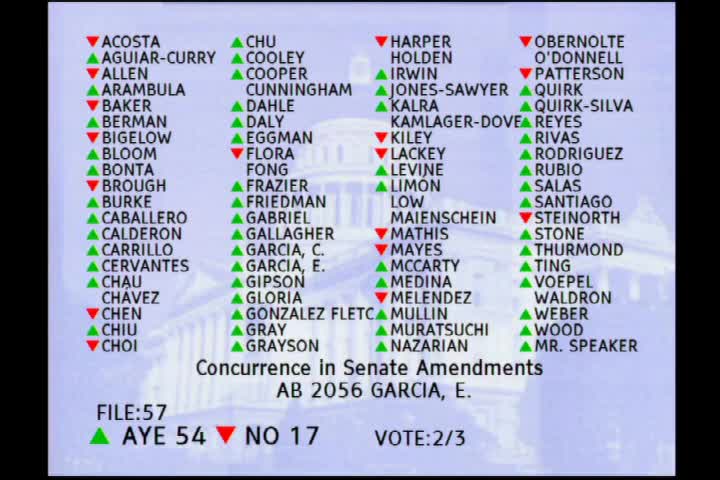 49SEC
Assembly Floor
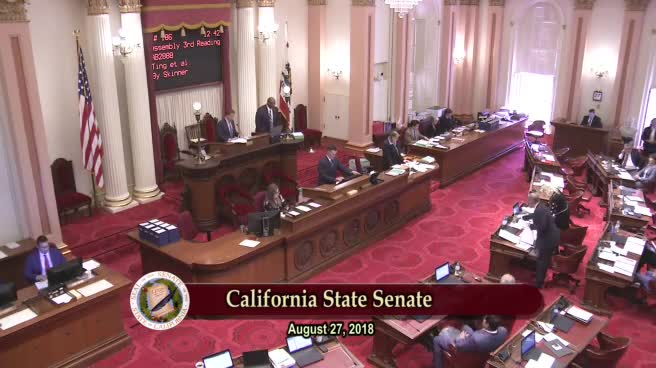 5MIN
Senate Floor
 1H
Senate Standing Committee on Appropriations
 3MIN
Senate Standing Committee on Education
 2MIN
Assembly Floor
 20MIN
Assembly Standing Committee on Education


Bill Co-Author(s):
