AB 1976: Employment: lactation accommodation.
- Session Year: 2017-2018
- House: Assembly
- Latest Version Date: 2018-09-30
Existing law requires every employer to provide a reasonable amount of break time to accommodate an employee desiring to express breast milk for the employees infant child and requires an employer to make reasonable efforts to provide the employee with the use of a room or other location, other than a toilet stall, in close proximity to the employees work area for the employee to express milk in private. Existing law makes a violation of these provisions subject to a civil penalty and makes the Labor Commissioner responsible for enforcement.
This bill would instead require an employer to make reasonable efforts to provide an employee with use of a room or other location, other than a bathroom, for these purposes. The bill would deem an employer to be in compliance with the requirement of providing a lactation location if the employer makes available a temporary lactation location that meets specified conditions, including that the temporary lactation location be used only for lactation purposes while an employee expresses milk. The bill would deem an agricultural employer to be in compliance with the requirement of providing a lactation location if the agricultural employer provides an employee with a private, enclosed, and shaded space, as specified. If the employer can demonstrate to the Department of Industrial Relations that this requirement would impose an undue hardship, the bill would require that employer to make reasonable efforts to provide a room or location for expressing milk that is not a toilet stall.
Existing law requires every employer to provide a reasonable amount of break time to accommodate an employee desiring to express breast milk for the employees infant child and requires an employer to make reasonable efforts to provide the employee with the use of a room or other location, other than a toilet stall, in close proximity to the employees work area for the employee to express milk in private. Existing law makes a violation of these provisions subject to a civil penalty and makes the Labor Commissioner responsible for enforcement.
This bill would instead require an employer to make reasonable efforts to provide an employee with use of a room or other location, other than a bathroom, for these purposes. The bill would deem an employer to be in compliance with the requirement of providing a lactation location if the employer makes available a temporary lactation location that meets specified conditions, including that the temporary lactation location be used only for lactation purposes while an employee expresses milk. The bill would deem an agricultural employer to be in compliance with the requirement of providing a lactation location if the agricultural employer provides an employee with a private, enclosed, shaded, and air-conditioned and shaded space, as specified. The bill would exempt an employer from the requirement to provide a room or location other than a bathroom for expressing milk, if If the employer can demonstrate to the Department of Industrial Relations that this requirement would impose an undue hardship, but the bill would require that employer to ensure that the make reasonable efforts to provide a room or location utilized for expressing milk that is not a bathroom toilet stall.
Existing law requires every employer to provide a reasonable amount of break time to accommodate an employee desiring to express breast milk for the employees infant child and requires an employer to make reasonable efforts to provide the employee with the use of a room or other location, other than a toilet stall, in close proximity to the employees work area for the employee to express milk in private. Existing law makes a violation of these provisions subject to a civil penalty and makes the Labor Commissioner responsible for enforcement.
This bill would instead require an employer to make reasonable efforts to provide an employee with use of a room or other location, other than a bathroom, for these purposes. The bill would deem an employer to be in compliance with the requirement of providing a lactation location if the employer makes available a temporary lactation location that meets specified conditions, including that the temporary lactation location be used only for lactation purposes. purposes while an employee expresses milk. The bill would deem an agricultural employer to be in compliance with the requirement of providing a lactation location if the agricultural employer provides an employee with a private, enclosed, shaded, and air conditioned air-conditioned space, as specified. The bill would exempt an employer from the requirement to provide a room or location other than a bathroom for expressing milk, if the employer can demonstrate to the Department of Industrial Relations that this requirement would impose an undue hardship, but would require that employer to ensure that the room or location utilized for expressing milk is not a bathroom stall.
Existing law requires every employer to provide a reasonable amount of break time to accommodate an employee desiring to express breast milk for the employees infant child and requires an employer to make reasonable efforts to provide the employee with the use of a room or other location, other than a toilet stall, in close proximity to the employees work area for the employee to express milk in private. Existing law makes a violation of these provisions subject to a civil penalty and makes the labor commissioner Labor Commissioner responsible for enforcement.
This bill would instead require an employer to make reasonable efforts to provide an employee with use of a room or other location, other than a bathroom, for these purposes. The bill would deem an employer to be in compliance with the requirement of providing a lactation location if the employer makes available a temporary lactation location that meets specified conditions, including that the temporary lactation location be used only for lactation purposes. The bill would deem an agricultural employer to be in compliance with the requirement of providing a lactation location if the agricultural employer provides an employee with a private, enclosed, shaded, and air conditioned space, as specified.
Existing law requires every employer to provide a reasonable amount of break time to accommodate an employee desiring to express breast milk for the employees infant child and requires an employer to make reasonable efforts to provide the employee with the use of a room or other location, other than a toilet stall, in close proximity to the employees work area for the employee to express milk in private. Existing law makes a violation of these provisions subject to a civil penalty and makes the labor commissioner responsible for enforcement.
This bill would instead require an employer to make reasonable efforts to provide an employee with use of a room or other location, other than a bathroom, for these purposes.
(a)An employer shall make reasonable efforts to provide an employee with the use of a room or other location, other than a bathroom, in close proximity to the employees work area, for the employee to express milk in private. The room or location may include the place where the employee normally works if it otherwise meets the requirements of this section.
(b) An employer who makes a temporary lactation location available to an employee shall be deemed to be in compliance with this section if all of the following conditions are met:
(1) The employer is unable to provide a permanent lactation location because of operational, financial, or space limitations.
(2) The temporary lactation location is private and free from intrusion while an employee expresses milk.
(3) The temporary lactation location is used only for lactation purposes while an employee expresses milk.
(4) The temporary lactation location otherwise meets the requirements of state law concerning lactation accommodation.
(c)An agricultural employer, as defined in Section 1140.4, shall be deemed to be in compliance with this section if the agricultural employer provides an employee wanting to express milk with a private, enclosed, and shaded space, including, but not limited to, an air-conditioned cab of a truck or tractor.
(d)If an employer can demonstrate to the department that the requirement to provide the employee with the use of a room or other location, other than a bathroom would impose an undue hardship when considered in relation to the size, nature, or structure of the employers business, an employer shall make reasonable efforts to provide an employee with the use of a room or other location, other than a toilet stall, in close proximity to the employees work area, for the employee to express milk in private.
(a)An employer shall make reasonable efforts to provide an employee with the use of a room or other location, other than a bathroom, in close proximity to the employees work area, for the employee to express milk in private. The room or location may include the place where the employee normally works if it otherwise meets the requirements of this section.
(b) An employer who makes a temporary lactation location available to an employee shall be deemed to be in compliance with this section if all of the following conditions are met:
(1) The employer is unable to provide a permanent lactation location because of operational, financial, or space limitations.
(2) The temporary lactation location is private and free from intrusion while an employee expresses milk.
(3) The temporary lactation location is used only for lactation purposes while an employee expresses milk.
(4) The temporary lactation location otherwise meets the requirements of state law concerning lactation accommodation.
(c)An agricultural employer, as defined in Section 1140.4, shall be deemed to be in compliance with this section if the agricultural employer provides an employee wanting to express milk with a private, enclosed, shaded, and air-conditioned and shaded space, including, but not limited to, the an air-conditioned cab of a truck or tractor.
(d)(1)An employer shall not be subject to the amendments made to subdivision (a) by the act adding this paragraph if that employer can demonstrate to the department that the requirement of those amendments would impose an undue hardship when considered in relation to the size, nature, or structure of the employers business.(2)Notwithstanding paragraph (1), an employer that is not subject to those amendments shall ensure that the room or location utilized for expressing milk is not a bathroom stall.(d)If an employer can demonstrate to the department that the requirement to provide the employee with the use of a room or other location, other than a bathroom would impose an undue hardship when considered in relation to the size, nature, or structure of the employers business, an employer shall make reasonable efforts to provide an employee with the use of a room or other location, other than a toilet stall, in close proximity to the employees work area, for the employee to express milk in private.
(a)An employer shall make reasonable efforts to provide an employee with the use of a room or other location, other than a bathroom, in close proximity to the employees work area, for the employee to express milk in private. The room or location may include the place where the employee normally works if it otherwise meets the requirements of this section.
(b) An employer who makes a temporary lactation location available to an employee shall be deemed to be in compliance with this section if all of the following conditions are met:
(1) The employer is unable to provide a permanent lactation location because of operational, financial, or space limitations.
(2) The temporary lactation location is private and free from intrusion while an employee expresses milk.
(3) The temporary lactation location is used only for lactation purposes. purposes while an employee expresses milk.
(4) The temporary lactation location otherwise meets the requirements of state law concerning lactation accommodation.
(c)An agricultural employer, as defined in Section 1140.4, shall be deemed to be in compliance with this section if the agricultural employer provides an employee wanting to express milk with a private, enclosed, shaded, and air conditioned air-conditioned space, including, but not limited to, the cab of a truck or tractor.
(d)(1)An employer shall not be subject to the amendments made to subdivision (a) by the act adding this paragraph if that employer can demonstrate to the department that the requirement of those amendments would impose an undue hardship when considered in relation to the size, nature, or structure of the employers business.
(2)Notwithstanding paragraph (1), an employer that is not subject to those amendments shall ensure that the room or location utilized for expressing milk is not a bathroom stall.
The (a)An employer shall make reasonable efforts to provide the an employee with the use of a room or other location, other than a bathroom, in close proximity to the employees work area, for the employee to express milk in private. The room or location may include the place where the employee normally works if it otherwise meets the requirements of this section.
(b) An employer who makes a temporary lactation location available to an employee shall be deemed to be in compliance with this section if all of the following conditions are met:
(1) The employer is unable to provide a permanent lactation location because of operational, financial, or space limitations.
(2) The temporary lactation location is private and free from intrusion while an employee expresses milk.
(3) The temporary lactation location is used only for lactation purposes.
(4) The temporary lactation location otherwise meets the requirements of state law concerning lactation accommodation.
(c)An agricultural employer, as defined in Section 1140.4, shall be deemed to be in compliance with this section if the agricultural employer provides an employee wanting to express milk with a private, enclosed, shaded, and air conditioned space, including, but not limited to, the cab of a truck or tractor.
The employer shall make reasonable efforts to provide the employee with the use of a room or other location, other than a toilet stall, bathroom, in close proximity to the employees work area, for the employee to express milk in private. The room or location may include the place where the employee normally works if it otherwise meets the requirements of this section.
REVISIONS: HeadingLine 2.|
Date
|
Status
|
|---|---|
| Sep 30, 2018 | Chaptered by Secretary of State - Chapter 940, Statutes of 2018. |
| Sep 30, 2018 | Approved by the Governor. |
| Sep 10, 2018 | Enrolled and presented to the Governor at 3:30 p.m. |
| Aug 30, 2018 | Senate amendments concurred in. To Engrossing and Enrolling. |
| Aug 29, 2018 | In Assembly. Concurrence in Senate amendments pending. |
| Aug 29, 2018 | Read third time. Passed. Ordered to the Assembly. |
| Aug 27, 2018 | Read second time. Ordered to third reading. |
| Aug 24, 2018 | Read third time and amended. Ordered to second reading. |
| Aug 14, 2018 | Read second time. Ordered to third reading. |
| Aug 13, 2018 | From committee: Do pass. (Ayes 6. Noes 0.) (August 13). |
| Aug 6, 2018 | In committee: Hearing postponed by committee. |
| Aug 6, 2018 | From committee chair, with author's amendments: Amend, and re-refer to committee. Read second time, amended, and re-referred to Com. on APPR. |
| Jun 28, 2018 | In committee: Set, first hearing. Hearing canceled at the request of author. |
| Jun 26, 2018 | From committee chair, with author's amendments: Amend, and re-refer to committee. Read second time, amended, and re-referred to Com. on APPR. |
| Jun 21, 2018 | In committee: Hearing postponed by committee. |
| Jun 13, 2018 | From committee: Do pass and re-refer to Com. on APPR. (Ayes 4. Noes 1.) (June 13). Re-referred to Com. on APPR. |
| Apr 19, 2018 | Referred to Com. on L. & I.R. |
| Apr 9, 2018 | In Senate. Read first time. To Com. on RLS. for assignment. |
| Apr 9, 2018 | Read third time. Passed. Ordered to the Senate. |
| Apr 5, 2018 | Read second time. Ordered to third reading. |
| Apr 4, 2018 | Coauthors revised. |
| Mar 14, 2018 | From committee: Do pass and re-refer to Com. on APPR. (Ayes 6. Noes 0.) (March 14). Re-referred to Com. on APPR. |
| Feb 8, 2018 | Referred to Com. on L. & E. |
| Feb 1, 2018 | From printer. May be heard in committee March 3. |
| Jan 31, 2018 | Read first time. To print. |
|
Date
|
Description
|
Location
|
Votes
|
|
|---|---|---|---|---|
| Aug 30, 2018 | AB 1976 LIMÓN Concurrence in Senate Amendments | Assembly Floor |
Passed |
|
| Aug 29, 2018 | Assembly 3rd Reading AB1976 Limón et al. By Wiener | Senate Floor |
Passed |
|
| Aug 13, 2018 | Do pass | Senate Standing Committee on Appropriations |
Passed |
|
| Jun 13, 2018 | Do pass, but first be re-referred to the Committee on [Appropriations] | Senate Standing Committee on Labor and Industrial Relations |
Passed |
|
| Apr 9, 2018 | AB 1976 LIMÓN Assembly Third Reading | Assembly Floor |
Passed |
|
| Apr 4, 2018 | Do pass. | Assembly Standing Committee on Appropriations |
Passed |
|
| Mar 14, 2018 | Do pass and be re-referred to the Committee on [Appropriations] | Assembly Standing Committee on Labor and Employment |
Passed |
This list shows positions taken on this bill by organizations on the date displayed, which is linked to the original source.
Positions by individuals are not included.
|
Organization
|
Position
|
Date
|
|---|---|---|
| ACLU of California | ** Support | Aug 27, 2018 |
| American Academy Of Pediatrics, California | ** Support | Mar 12, 2018 |
| American College of Obstetricians and Gynecologists | ** Support | Aug 27, 2018 |
| Association of California Healthcare Districts | ** Support | Mar 12, 2018 |
| BizFed | ** Against | Aug 27, 2018 |
| California Association Of Joint Powers Authorities | ** Against | Aug 22, 2018 |
| California Association Of Winegrape Growers | ** Against | Aug 14, 2018 |
| California Business Properties Association | ** Against | Aug 22, 2018 |
| California Chamber Of Commerce | ** Against | Aug 22, 2018 |
| California Employment Lawyers Association | ** Support | Aug 27, 2018 |
| California Farm Bureau Federation | ** Against | Aug 22, 2018 |
| California Lodging Industry Association | ** Against | Aug 22, 2018 |
| California Manufacturers And Technology Association | ** Against | Aug 22, 2018 |
| California Medical Association | ** Support | Aug 27, 2018 |
| California Restaurant Association | ** Against | Aug 22, 2018 |
| California Retailers Association | ** Against | Aug 22, 2018 |
| California Special Districts Association | ** Against | Mar 12, 2018 |
| California State Association Of Counties | ** Against | Aug 22, 2018 |
| California Travel Association | ** Against | Aug 27, 2018 |
| California Trucking Association | ** Against | Aug 22, 2018 |
| California Wic | ** Support | Aug 27, 2018 |
| Citizens Against Lawsuit Abuse | ** Against | Aug 22, 2018 |
| Civil Justice Association Of California | ** Against | Aug 22, 2018 |
| First 5 California | ** Support | Aug 27, 2018 |
| Health Officers Association Of California | ** Support | Aug 27, 2018 |
| March of Dimes | ** Support | Aug 27, 2018 |
| National Federation Of Independent Business | ** Against | Aug 22, 2018 |
| San Francisco Unified School District | ** Support | Aug 27, 2018 |
| San Fransisco Unified School District | * Support | Mar 14, 2018 |
| School Employees Association of California | ** Support | Aug 27, 2018 |
| United Chamber Advocacy Network Of California | ** Against | Aug 27, 2018 |
| Unless Amended | ** Against | Mar 12, 2018 |
| Western Growers Association | ** Against | Aug 22, 2018 |
CONCURRENCE IN SENATE AMENDMENTS
CSA1 Bill Id:AB 1976
Author:(Limón)
As Amended Ver:August 24, 2018
Majority vote
ASSEMBLY: | 57-1 | (April 9, 2018) | SENATE: | 35-0 | (August 29, 2018) |
Original Committee Reference: L. & E.
SUMMARY: Requires employers to make reasonable efforts to provide an employee wishing to express breast milk in private with an area in close proximity to their workspace that is not a bathroom.
The Senate amendments
- Provide an exemption for an employer who is able to show the Department of Industrial Relations that the requirements of the bill would impose an undue hardship when considered in relation to the size, nature, or structure of the employer's business.
- Ensure at a minimum that employers ensure that the location designated for expressing milk is not a bathroom stall.
EXISTING LAW:
- Requires that every employer provide a reasonable amount of break time to accommodate an employee desiring to express breast milk for the employee's infant child. The break time must, if possible, run concurrently with any break time already provided to the employee and any additional break time required is unpaid.
- Allows an employer to withhold break time for expressing milk if allowing the employee to take a lactation break would seriously disrupt the operations of the employer.
- Stipulates that the employer shall make reasonable efforts to provide the employee with the use of a room or other location, other than a toilet stall, in close proximity to the employee's work area, for the employee to express milk in private.
- Orders that an employer who violates any of the above provisions shall be subject to a civil penalty in the amount of $100 for each violation.
- Establishes the Private Attorneys General Act and allows an aggrieved employee to recover a civil penalty normally assessed and collected by the Labor and Workforce Development Agency through a civil action.
FISCAL EFFECT: According to the Senate Appropriations Committee, the Department of Industrial Relations (DIR) indicates that it would incur first-year costs of $120,000, and $110,000 annually thereafter, to implement the provisions of the bill (Labor Enforcement and Compliance Fund).
COMMENTS: The author argues, "This bill would codify federal Affordable Care Act (ACA) protections in state statute by requiring that employers provide nursing mothers with a space other than a bathroom to express breast milk." The author continues, "While California law does make certain requirements of employers as it relates to the location of a workplace lactation space, it only requires that the space not be a toilet stall. As a result, an employer could choose to make the bathroom a designated space for women to express breast milk, which is neither comfortable nor sanitary."
In 2010, the ACA amended the federal Fair Labor Standards Act to add new workplace protections for nursing mothers. These protections apply to non-exempt employees and require the provision of a location to express breast milk other than a bathroom, that is near the employee's work area, shielded from view, and free from the intrusion of co-workers and the public.
In contrast, California Labor Code applies to all employees rather than only to non-exempt employees; however, in terms of the lactation space, it only requires that employers "make reasonable efforts to provide the employee with the use of a room or other location, other than a toilet stall." While California law does make certain requirements of employers as it relates to the location of a workplace lactation space, it only requires that the space not be a toilet stall.
Analysis Prepared by: Jennifer Richard / L. & E. / (916) 319-2091 FN: 0004021
Office of Senate Floor Analyses (916) 651-1520 Fax: (916) 327-4478 | AB |
THIRD READING
Bill No: AB 1976
Amended: 8/24/18 in Senate
SENATE LABOR & IND. REL. COMMITTEE: 4-1, 6/13/18
AYES: Lara, Jackson, Mitchell, Wieckowski
NOES: Stone
SENATE APPROPRIATIONS COMMITTEE: 6-0, 8/13/18
AYES: Portantino, Bates, Beall, Bradford, Hill, Wiener
NO VOTE RECORDED: Nielsen
ASSEMBLY FLOOR: 57-1, 4/9/18 - See last page for vote
SOURCE: California Medical Association
DIGEST:
This bill requires that an employer make reasonable efforts to provide an employee wishing to express breast milk in private with an area in close proximity to their workspace that is not a bathroom.
Senate Floor Amendments of 8/24/18 (1) allow agricultural employers, as defined, to be in compliance with the stipulations of this bill if they provide an employee wishing to express breast milk with a private, enclosed and shaded space, removing the requirement that the temporary lactation accommodation space be air-conditioned; and (2) allow employers who show that providing an employee with a lactation space that is not a bathroom would constitute an undue hardship to that business to provide a lactation space that is not a bathroom stall.
Existing law:
- Requires that every employer provide a reasonable amount of break time to accommodate an employee desiring to express breast milk for the employee’s infant child. The break time must, if possible, run concurrently with any break time already provided to the employee and any additional break time required is unpaid. (Labor Code §1030)
- Allows an employer to withhold break time for expressing milk if allowing the employee to take a lactation break would seriously disrupt the operations of the employer. (Labor Code §1032)
- Stipulates that the employer shall make reasonable efforts to provide the employee with the use of a room or other location, other than a toilet stall, in close proximity to the employee’s work area, for the employee to express milk in private. (Labor Code §1031)
- Orders that an employer who violates any of the above provisions shall be subject to a civil penalty in the amount of $100 for each violation. (Labor Code §1033)
- Establishes the Private Attorneys General Act and allows an aggrieved employee to recover a civil penalty normally assessed and collected by the Labor and Workforce Development Agency through a civil action. (Labor Code §2699)
This bill:
- Requires that the space provided by an employer for lactation accommodation not be a bathroom.
- Allows an employer to apply for an undue hardship exemption if that employer can show that accommodating an employee’s wish to express breast milk would constitute an undue hardship when considered in relation to the size, nature, or structure of the employer’s business. If an employer qualifies, the lactation accommodation space would be required instead to not be a bathroom stall.
- Allows an agricultural employer to be in compliance with this bill if they provide an employee wishing to express breast milk with a private, enclosed and shaded space.
Comments
- Need for this bill. According to the author:
“Despite the expert recommendations of the World Health Organization, the American Academy of Pediatrics, and the Surgeon General of the United States, the percentage of American women that exclusively breastfeed their babies for the first six months remains low, with only 24 percent of children born in 2014 falling into this category. Moreover, according to the Centers for Disease Control, women who work outside of the home are less likely to initiate breastfeeding and tend to breastfeed for a shorter length of time than women who are not employed outside of the home. Women frequently cite an unsupportive work environment, including a lack of privacy, as a reason for discontinuing breastfeeding.”
AB 1976 makes a change to existing law to require that lactation accommodation rooms must not be a bathroom. This expands the ability of working mothers to express breast milk in a cleaner and safer environment, which is beneficial to both the mother and her young child.
- Senate Labor & Industrial Relations Committee Staff Comments
Impact on Small Businesses
Some stakeholders note that AB 1976 is especially concerning when it comes to small businesses. Small businesses, especially in more urban areas, are already facing serious space constraints and would be hard-pressed to accommodate a lactation room outside of a bathroom. Amendments taken by the author to allow for undue hardship exemptions certainly ease this burden, but applying for this exemption still requires time and resources to be spent and even once an exemption is granted, lactation accommodation space is still required to be not a bathroom stall. Because of this, small businesses could potentially struggle with compliance with this bill.
Agricultural Employer Lactation Accommodation
Amendments taken on the Senate Floor make changes to provisions of this bill dealing with lactation accommodation for Agricultural Employers, as defined. These changes remove a requirement that the temporary lactation accommodation spaces provided by agricultural employers be air-conditioned. While air-conditioned spaces could be difficult to provide for these employers, given the mobile nature of their employees on a given day of work, requiring that the space merely be shaded raises concerns of heat abatement and whether shading does enough to protect an employee wishing to express breast milk.
Other Policies of Note
The Office of the Surgeon General emphasizes employment concerns as one of the major barriers new mothers’ ability to breastfeed. Lactation accommodation is among the preferred options stated to alleviate this, in addition to increased maternity and paternity leave. An expansion of new parent leave would allow new mothers to breastfeed in their own homes rather than in a workplace. Requiring lactation accommodation on a wider scale would most probably make breastfeeding more feasible for new working mothers, but supplementary policy changes could offer further benefits beyond enacting stricter lactation accommodation rules.
Related/Prior Legislation
SB 937 (Wiener, 2018) requires that employers provide a space that meets certain technical specifications for employees that wish to express breast in private and mandates that tenant improvement projects of a specified cost and size include construction of lactation accommodation spaces in projects that include employee workspace.
FISCAL EFFECT: Appropriation: Fiscal Com.: Local:
According to the Senate Appropriations Committee, the Department of Industrial Relations indicates that it would incur first-year costs of $120,000, and $110,000 annually thereafter, to implement the provisions of the bill (Labor Enforcement and Compliance Fund).
California Medical Association (source)
ACLU of California
American College of Obstetricians and Gynecologists
California Employment Lawyers Association
California WIC
First 5 California
Health Officers Association of California
March of Dimes
San Francisco Unified School District
School Employees Association of California
OPPOSITION: (Verified 8/24/18)
BizFed
California Travel Association
United Chamber Advocacy Network of California
ARGUMENTS IN SUPPORT: Proponents argue that this minor change to the existing state Labor Code provides additional support for working mothers, safeguarding this important protection against any changes to the ACA. Proponents further argue that this bill reduces a significant barrier that prevents women from continuing to breastfeed upon returning to work by ensuring that there is a private clean space available to express breast milk.
ARGUMENTS IN OPPOSITION: Opponents argue that AB 1976 is too onerous for employers. Opponents also point out that a lack of definition of bathroom might make previously acceptable lactation accommodation spaces, such as single-stall bathrooms or a lounge area inside a bathroom, illegal and create misunderstandings that lead to non-compliance.
ASSEMBLY FLOOR: 57-1, 4/9/18
AYES: Acosta, Aguiar-Curry, Arambula, Baker, Berman, Bigelow, Bloom, Bonta, Burke, Calderon, Carrillo, Cervantes, Chau, Chávez, Chiu, Chu, Cooley, Cooper, Cunningham, Dahle, Daly, Eggman, Frazier, Friedman, Gallagher, Eduardo Garcia, Gipson, Gloria, Gonzalez Fletcher, Gray, Grayson, Holden, Irwin, Kalra, Lackey, Levine, Limón, Low, Maienschein, McCarty, Medina, Mullin, Muratsuchi, Nazarian, O'Donnell, Quirk, Quirk-Silva, Reyes, Rodriguez, Rubio, Steinorth, Mark Stone, Thurmond, Ting, Waldron, Weber, Rendon
NOES: Travis Allen
NO VOTE RECORDED: Brough, Caballero, Chen, Choi, Flora, Fong, Cristina Garcia, Harper, Jones-Sawyer, Kiley, Mathis, Mayes, Melendez, Obernolte, Patterson, Salas, Santiago, Voepel, Wood
8/27/18 20:37:44
**** END ****
Office of Senate Floor Analyses (916) 651-1520 Fax: (916) 327-4478 | AB |
THIRD READING
Bill No: AB 1976
:
SENATE LABOR & IND. REL. COMMITTEE: 4-1, 6/13/18
AYES: Lara, Jackson, Mitchell, Wieckowski
NOES: Stone
SENATE APPROPRIATIONS COMMITTEE: 6-0, 8/13/18
AYES: Portantino, Bates, Beall, Bradford, Hill, Wiener
NOES:
NO VOTE RECORDED: Nielsen
ASSEMBLY FLOOR: 57-1, 4/9/18 - See last page for vote
SOURCE: California Medical Association
DIGEST:
This bill requires that an employer make reasonable efforts to provide an employee wishing to express breast milk in private with an area in close proximity to their workspace that is not a bathroom.
Existing law:
- Requires that every employer provide a reasonable amount of break time to accommodate an employee desiring to express breast milk for the employee’s infant child. The break time must, if possible, run concurrently with any break time already provided to the employee and any additional break time required is unpaid. (Labor Code §1030)
- Allows an employer to withhold break time for expressing milk if allowing the employee to take a lactation break would seriously disrupt the operations of the employer. (Labor Code §1032)
- Stipulates that the employer shall make reasonable efforts to provide the employee with the use of a room or other location, other than a toilet stall, in close proximity to the employee’s work area, for the employee to express milk in private. (Labor Code §1031)
- Orders that an employer who violates any of the above provisions shall be subject to a civil penalty in the amount of $100 for each violation. (Labor Code §1033)
- Establishes the Private Attorneys General Act and allows an aggrieved employee to recover a civil penalty normally assessed and collected by the Labor and Workforce Development Agency through a civil action. (Labor Code §2699)
This bill requires that the space provided by an employer for lactation accommodation not be a bathroom.
Comments
- Need for this bill
According to the author, “Despite the expert recommendations of the World Health Organization, the American Academy of Pediatrics, and the Surgeon General of the United States, the percentage of American women that exclusively breastfeed their babies for the first six months remains low, with only 24 percent of children born in 2014 falling into this category. Moreover, according to the Centers for Disease Control, women who work outside of the home are less likely to initiate breastfeeding and tend to breastfeed for a shorter length of time than women who are not employed outside of the home. Women frequently cite an unsupportive work environment, including a lack of privacy, as a reason for discontinuing breastfeeding.”
AB 1976 makes a change to existing law to require that lactation accommodation rooms must not be a bathroom. This expands the ability of working mothers to express breast milk in a cleaner and safer environment, which is beneficial to both the mother and her young child.
- Senate Labor and Industrial Relations Committee Staff Comments
- Impact on Small Businesses
Some stakeholders note that AB 1976 is especially concerning when it comes to small businesses. Small businesses, especially in more urban areas, are already facing serious space constraints and would be hard-pressed to accommodate a lactation room outside of a bathroom. Opponents point out that small businesses struggle with time and resource availability and compliance with these provisions would prove very challenging. The author has taken amendments allowing for an undue hardship exemption in the case that an employer can prove that the stipulations of this bill constitute an unreasonably large imposition on their business. While these amendments could ease the burden on small businesses, there is no reference in this bill to current standards by which an employer might prove their undue hardship, potentially leading to inconsistent rulings by the Department of Industrial Relations. The author might consider clarifying language that lays out exactly what standards constitute undue hardship.
- Other Policies of Note
The Office of the Surgeon General emphasizes employment concerns as one of the major barriers new mothers’ ability to breastfeed. Lactation accommodation is among the preferred options stated to alleviate this, in addition to increased maternity and paternity leave. An expansion of new parent leave would allow new mothers to breastfeed in their own homes rather than in a workplace. Requiring lactation accommodation on a wider scale would most probably make breastfeeding more feasible for new working mothers, but supplementary policy changes could offer further benefits beyond enacting stricter lactation accommodation rules.
Related/Prior Legislation
SB 937 (Wiener, 2018) requires that employers provide a space that meets certain technical specifications for employees that wish to express breast in private and mandates that tenant improvement projects of a specified cost and size include construction of lactation accommodation spaces in projects that include employee workspace.
FISCAL EFFECT: Appropriation: Fiscal Com.: Local:
According to the Senate Appropriations Committee, DIR indicates that it would incur first-year costs of $120,000, and $110,000 annually thereafter, to implement the provisions of this bill (Labor Enforcement and Compliance Fund).
California Medical Association (source)
ACLU of California
American College of Obstetricians and Gynecologists
California Employment Lawyers Association
California WIC
First 5 California
Health Officers Association of California
March of Dimes
San Francisco Unified School District
School Employees Association of California
OPPOSITION: (Verified 8/22/18)
BizFed
California Association of Joint Powers Authorities
California Business Properties Association
California Chamber of Commerce
California Farm Bureau Federation
California Lodging Industry Association
California Manufacturers and Technology Association
California Restaurant Association
California Retailers Association
California State Association of Counties
California Travel Associaiton
California Trucking Association
Citizens Against Lawsuit Abuse
Civil Justice Association of California
National Federation of Independent Business
United Chamber Advocacy Network of California
Western Growers Association
ARGUMENTS IN SUPPORT: Proponents argue that this minor change to the existing state Labor Code provides additional support for working mothers, safeguarding this important protection against any changes to the Affordable Care Act. Proponents further argue that this bill reduces a significant barrier that prevents women from continuing to breastfeed upon returning to work by ensuring that there is a private clean space available to express breast milk.
ARGUMENTS IN OPPOSITION: Opponents argue that AB 1976 is too onerous for employers. Opponents also point out that a lack of definition of bathroom might make previously acceptable lactation accommodation spaces, such as single-stall bathrooms or a lounge area inside a bathroom, illegal and create misunderstandings that lead to non-compliance.
ASSEMBLY FLOOR: 57-1, 4/9/18
AYES: Acosta, Aguiar-Curry, Arambula, Baker, Berman, Bigelow, Bloom, Bonta, Burke, Calderon, Carrillo, Cervantes, Chau, Chávez, Chiu, Chu, Cooley, Cooper, Cunningham, Dahle, Daly, Eggman, Frazier, Friedman, Gallagher, Eduardo Garcia, Gipson, Gloria, Gonzalez Fletcher, Gray, Grayson, Holden, Irwin, Kalra, Lackey, Levine, Limón, Low, Maienschein, McCarty, Medina, Mullin, Muratsuchi, Nazarian, O'Donnell, Quirk, Quirk-Silva, Reyes, Rodriguez, Rubio, Steinorth, Mark Stone, Thurmond, Ting, Waldron, Weber, Rendon
NOES: Travis Allen
NO VOTE RECORDED: Brough, Caballero, Chen, Choi, Flora, Fong, Cristina Garcia, Harper, Jones-Sawyer, Kiley, Mathis, Mayes, Melendez, Obernolte, Patterson, Salas, Santiago, Voepel, Wood
8/22/18 10:45:59
SENATE COMMITTEE ON
Senator Anthony Portantino, Chair
2017 - 2018 Regular Session
AB 1976 (Limón) - Employment: lactation accommodation
Version: | Policy Vote: |
Urgency: | Mandate: |
Hearing Date: | Consultant: |
This bill does not meet the criteria for referral to the Suspense File.
Bill Summary:
AB 1976 would require that an employer make reasonable efforts to provide an employee wishing to express breast milk in private with an area in close proximity to their workspace that is not a bathroom, as specified.
Fiscal Impact:
The Department of Industrial Relations (DIR) indicates that it would incur first-year costs of $120,000, and $110,000 annually thereafter, to implement the provisions of the bill (Labor Enforcement and Compliance Fund).
Background:
Research indicates that about half of new mothers enter the workforce before their child is one year old. Consequently, many women stop breastfeeding before the American Academy of Pediatrics recommended 6 months of age, at a cost to the employee, the employer and the child. The Office of the Surgeon General additionally highlights workplace concerns to be a major barrier to new mothers breastfeeding, with only 25 percent of surveyed employers reporting a company program to accommodate expressing breast milk.
Proposed Law:
This bill would require that employers make reasonable efforts to provide an employee with space for lactation accommodation that is not a bathroom. An employer who makes a temporary lactation location available to an employee would be deemed to be in compliance if specified conditions are met. Employers that can demonstrate to DIR that the bill’s requirements would impose an undue hardship would be exempt; however, such employers would be required to ensure that the room or location utilized for expressing milk is not a bathroom stall.
Related Legislation:
SB 937 (Wiener) would mandate that all employers provide a space that meets certain specifications for employees with a desire to express breast milk in private. The bill is currently pending in the Assembly Appropriations Committee.
Staff Comments:
Under the federal Affordable Care Act, employers must provide a space, other than a bathroom, for employees to express breast milk. These protections also require this space to be (1) near the employee’s work area, (2) shielded from view, and (3) free from the intrusion of co-workers and the public. Current state law requires employers to make a reasonable effort to offer similar accommodations; however, the private lactation room must be space other than a toilet stall. In other words, it does permit that lactation space to be in a bathroom.
-- END --
SENATE COMMITTEE ON LABOR AND INDUSTRIAL RELATIONS
Senator Ricardo Lara, Chair
2017 - 2018 Regular
Bill No: AB 1976 Hearing Date: June 13, 2018
Author: | Limón | ||
Version: | January 31, 2018 | ||
Urgency: | No | Fiscal: | Yes |
Consultant: | Jake Ferrera | ||
Subject: Employment: lactation accommodation
KEY ISSUE
Should the Legislature require that an employer make reasonable efforts to provide an employee wishing to express breast milk in private with an area in close proximity to their workspace that is not a bathroom?
ANALYSIS
Existing law
- Requires that every employer provide a reasonable amount of break time to accommodate an employee desiring to express breast milk for the employee’s infant child. The break time must, if possible, run concurrently with any break time already provided to the employee and any additional break time required is unpaid. (Labor Code §1030)
- Allows an employer to withhold break time for expressing milk if allowing the employee to take a lactation break would seriously disrupt the operations of the employer.
(Labor Code §1032)
- Stipulates that the employer shall make reasonable efforts to provide the employee with the use of a room or other location, other than a toilet stall, in close proximity to the employee’s work area, for the employee to express milk in private. (Labor Code §1031)
- Orders that an employer who violates any of the above provisions shall be subject to a civil penalty in the amount of $100 for each violation. (Labor Code §1033)
- Establishes the Private Attorneys General Act and allows an aggrieved employee to recover a civil penalty normally assessed and collected by the Labor and Workforce Development Agency through a civil action. (Labor Code §2699)
This Bill requires that the space provided by an employer for lactation accommodation not be a bathroom.
COMMENTS
1. Need for this bill?
According to the Author:
“Despite the expert recommendations of the World Health Organization, the American Academy of Pediatrics, and the Surgeon General of the United States, the percentage of American women that exclusively breastfeed their babies for the first six months remains low, with only 24 percent of children born in 2014 falling into this category. Moreover, according to the Centers for Disease Control, women who work outside of the home are less likely to initiate breastfeeding and tend to breastfeed for a shorter length of time than women who are not employed outside of the home. Women frequently cite an unsupportive work environment, including a lack of privacy, as a reason for discontinuing breastfeeding.”
AB 1976 makes a change to existing law to require that lactation accommodation rooms must not be a bathroom. This expands the ability of working mothers to express breast milk in a cleaner and safer environment, which is beneficial to both the mother and her young child.
2. Staff Comments
Impact on Small Businesses
Some stakeholders note that AB 1976 is especially concerning when it comes to small businesses. Small businesses, especially in more urban areas, are already facing serious space constraints and would be hard-pressed to accommodate a lactation room outside of a bathroom. Opponents point out that small businesses struggle with time and resource availability and compliance with these provisions would prove very challenging. The author might consider including language allowing for an undue hardship exemption that specifies how and to whom a small business would prove their difficulty in complying with the provisions of this bill. It is the recommendation of this committee to limit such an exemption to employers of 5 or less, to align with Fair Employment and Housing Act standards.
Impact on Agricultural Sector
Stakeholders have concerns about the ability of members of the agricultural sector to comply with the provisions of this bill, given the fact that farm laborers must move locations and the lack of privacy provided by shade tents. The author has engaged with stakeholders in this area and talks are ongoing to come to a solution on these concerns.
Other Policies of Note
The Office of the Surgeon General emphasizes employment concerns as one of the major barriers new mothers’ ability to breastfeed. Lactation accommodation is among the preferred options stated to alleviate this, in addition to increased maternity and paternity leave. An expansion of new parent leave would allow new mothers to breastfeed in their own homes rather than in a workplace. Requiring lactation accommodation on a wider scale would most probably make breastfeeding more feasible for new working mothers, but supplementary policy changes could offer further benefits beyond enacting stricter lactation accommodation rules.
3. Proponent Arguments:
Proponents argue that this minor change to the existing state Labor Code provides additional support for working mothers, safeguarding this important protection against any changes to the ACA. Proponents further argue that this bill reduces a significant barrier that prevents women from continuing to breastfeed upon returning to work by ensuring that there is a private clean space available to express breast milk.
4. Opponent Arguments:
Opponents argue that AB 1976 is too onerous for employers, especially given the lack of an undue hardship exemption that would allow small businesses without space or resources to comply with the law. Opponents also point out that a lack of definition of bathroom might make previously acceptable lactation accommodation spaces, such as single-stall bathrooms or a lounge area inside a bathroom, illegal and create misunderstandings that lead to non-compliance.
5. Pending Legislation:
SB 937 (Wiener) Assembly Labor and Employment Committee requires that employers provide a space that meets certain technical specifications for employees that wish to express breast in private and mandates that tenant improvement projects of a specified cost and size include construction of lactation accommodation spaces in projects that include employee workspace.
SUPPORT
California Medical Association (Sponsor)
ACLU of California
American College of Obstetricians and Gynecologists
California Employment Lawyers Association
California WIC
First 5 California
Health Officers Association of California
San Francisco Unified School District
School Employees Association of California
OPPOSITION
BizFed
California Association of Joint Powers Authorities
California Association of Winegrape Growers
California Business Properties Association
California Chamber of Commerce
California Farm Bureau Federation
California Lodging Industry Association
California Manufacturers and Technology Association
California Restaurant Association
California Retailers Association
California State Association of Counties
California Travel Association
California Trucking Association
Citizens Against Lawsuit Abuse
Civil Justice Association of California
National Federation of Independent Business
Western Growers Association
-- END --
ASSEMBLY THIRD READING
ATR Bill Id:AB 1976
Author:(Limón)
As Introduced Ver:January 31, 2018
Majority vote
Committee | Votes | Ayes | Noes |
Labor | 6-0 | Thurmond, Flora, Gonzalez Fletcher, Jones-Sawyer, Kalra, McCarty | |
Appropriations | 13-0 | Gonzalez Fletcher, Bigelow, Bloom, Bonta, Calderon, Carrillo, Chau, Eggman, Friedman, Eduardo Garcia, Obernolte, Quirk, Reyes |
|
SUMMARY: Requires an employer to make reasonable efforts to provide an employee with use of a room or other location, other than a bathroom, in close proximity to the employee's work area for the employee to express milk in private.
EXISTING LAW:
- Requires an employer to make reasonable efforts to provide the employee with the use of a room or other location, other than a toilet stall, in close proximity to the employee's work area for the employee to express milk in private.
- Requires every employer to provide a reasonable amount of break time to accommodate an employee desiring to express milk for the employee's infant child.
- Makes a violation of these provisions subject to a civil penalty and makes the Labor Commissioner (LC) responsible for enforcement.
FISCAL EFFECT: According to Assembly Appropriations Committee, minor and absorbable costs for the Department of Industrial Relations (DIR).
COMMENTS: The author argues, "This bill would codify federal Affordable Care Act (ACA) protections in state statute by requiring that employers provide nursing mothers with a space other than a bathroom to express breast milk." The author continues, "While California law does make certain requirements of employers as it relates to the location of a workplace lactation space, it only requires that the space not be a toilet stall. As a result, an employer could choose to make the bathroom a designated space for women to express breast milk, which is neither comfortable nor sanitary."
In 2010, the ACA amended the federal Fair Labor Standards Act to add new workplace protections for nursing mothers. These protections apply to non-exempt employees and require the provision of a location to express breast milk other than a bathroom, that is near the employee's work area, shielded from view, and free from the intrusion of co-workers and the public.
In contrast, California Labor Code applies to all employees rather than only to non-exempt employees; however, in terms of the lactation space, it only requires that employers "make reasonable efforts to provide the employee with the use of a room or other location, other than a toilet stall." While California law does make certain requirements of employers as it relates to the location of a workplace lactation space, it only requires that the space not be a toilet stall.
Arguments in Support
The California Medical Association, who is sponsoring this legislation, argues, "The consensus among experts, including the World Health Organization, the American Academy of Pediatrics, and the Surgeon General of the United States, is that the optimal timeframe for women to exclusively breastfeed is the first six months of their baby's life." They argue, "breastfeeding has numerous health benefits for both mother and baby" and "studies have shown that breastfeeding has a positive impact on a child's cognitive development, reduces a child's risk of developing chronic diseases in the future, and reduces a woman's risk of breast and ovarian cancer."
Arguments in Opposition
The California Chamber of Commerce and others, oppose this measure unless amended, arguing the measure "does not contain a hardship exemption or small business exemption for employers that simply cannot provide a private location for employees to express breastmilk other than a bathroom." They also argue that the bill does not include a definition of a bathroom, which might unintentionally exclude the use of spaces that they believe would likely be suitable for expressing milk.
Related Prior and Current Legislation
SB 937 (Wiener) of the current legislative session. Would require a lactation room or location to include prescribed features and would require an employer to provide access to a sink and refrigerator in close proximity to the employee's work space. Would also establish a procedure for an employer with fewer than five employees to apply to the Division of Labor Standards Enforcement (DLSE) for an undue hardship exemption from the lactation room or location requirement.
Would impose a number of requirements including - requiring an employer to develop and implement a policy regarding lactation accommodation, as specified; requiring an employer to maintain records of requests for lactation accommodation for three years and to give the LC access to those records; requiring the DLSE to create a model lactation accommodation policy and a model lactation accommodation request form; and requiring the California Building Standards Commission to adopt prescribed mandatory building standards for the installation of lactation space for employees in nonresidential buildings newly constructed or remodeled for workplace occupancy. Lastly, authorizes a civil action to enforce these provisions and prohibit retaliation.
AB 1025 (Frommer), Chapter 821, Statutes of 2001. Requires employers to provide reasonable unpaid break time and to make reasonable efforts to provide the use of an appropriate room for an employee to express breast milk for the employee's infant child.
Analysis Prepared by: Jennifer Richard / L. & E. / (916) 319–2091 FN: 0002639
Date of Hearing: April 4, 2018
ASSEMBLY COMMITTEE ON APPROPRIATIONS
Lorena Gonzalez Fletcher, Chair
ABPCA Bill Id:AB 1976
Author:(Limón) – As Introduced Ver:January 31, 2018
Policy Committee: | Labor and Employment | Vote: | 6 - 0 |
|
| ||
|
|
Urgency: No State Mandated Local Program: No Reimbursable: No
SUMMARY:
This bill modifies workplace standards around the availability of a private lactation space. Specifically, this bill requires an employer to make reasonable efforts to provide an employee with a room, other than a bathroom, to express breast milk in private.
FISCAL EFFECT:
Minor and absorbable costs for the Department of Industrial Relations (DIR).
COMMENTS:
- Background. Under federal protections created by the Affordable Care Act (ACA), employers must provide a space, other than a bathroom, for employees to express breast milk. These protections also require this space to be near the employee’s work area, shielded from view, and free from the intrusion of co-workers and the public. Current California law requires employers to make a reasonable effort to offer similar accommodations, but the private lactation room must be space other than a toilet stall. Current California law allows that lactation space to be in a bathroom.
- Purpose. According to the author, AB 1976 will codify ACA protections and provide employees with a designated space that is more comfortable and more sanitary than a bathroom. The author’s office notes that given the uncertainty around the ACA, it is important to safeguard these protections.
- Related legislation. SB 937 (Wiener), of the 2017-18 Legislative Session, proposes new workplace standards around the availability of a lactation room, including requiring an employer to develop and implement a policy regarding lactation accommodation and requiring Division of Labor Standards Enforcement (DLSE) to create a model policy. SB 937 also allows employers with fewer than five employees to apply for an undue hardship exemption. SB 937 is currently pending in the Senate Labor and Industrial Relations Committee.
Analysis Prepared by: Luke Reidenbach / APPR. / (916) 319-2081
Date of Hearing: March 14, 2018
ASSEMBLY COMMITTEE ON LABOR AND EMPLOYMENT
Tony Thurmond, Chair
ABPCA Bill Id:AB 1976 (
Author:Limón) – As Introduced Ver:January 31, 2018
SUBJECT: Employment: lactation accommodation
SUMMARY: Requires an employer to make reasonable efforts to provide an employee with use of a room or other location, other than a bathroom, in close proximity to the employee’s work area for the employee to express milk in private.
EXISTING LAW:
- Requires an employer to make reasonable efforts to provide the employee with the use of a room or other location, other than a toilet stall, in close proximity to the employee’s work area for the employee to express milk in private.
- Requires every employer to provide a reasonable amount of break time to accommodate an employee desiring to express milk for the employee’s infant child.
- Makes a violation of these provisions subject to a civil penalty and makes the Labor Commissioner (LC) responsible for enforcement.
FISCAL EFFECT: Unknown
COMMENTS: The author argues, “This bill would codify federal Affordable Care Act (ACA) protections in state statute by requiring that employers provide nursing mothers with a space other than a bathroom to express breast milk.” The author continues, “While California law does make certain requirements of employers as it relates to the location of a workplace lactation space, it only requires that the space not be a toilet stall. As a result, an employer could choose to make the bathroom a designated space for women to express breast milk, which is neither comfortable nor sanitary.”
In 2010, the ACA amended the federal Fair Labor Standards Act to add new workplace protections for nursing mothers. These protections apply to non-exempt employees and require the provision of a location to express breast milk other than a bathroom, that is near the employee’s work area, shielded from view, and free from the intrusion of co-workers and the public.
In contrast, California Labor Code applies to all employees rather than only to non-exempt employees; however, in terms of the lactation space, it only requires that employers “make reasonable efforts to provide the employee with the use of a room or other location, other than a toilet stall.” While California law does make certain requirements of employers as it relates to the location of a workplace lactation space, it only requires that the space not be a toilet stall.
Arguments in Support
The California Medical Association, who is sponsoring this legislation, argues, “The consensus among experts, including the World Health Organization, the American Academy of Pediatrics, and the Surgeon General of the United States, is that the optimal timeframe for women to exclusively breastfeed is the first six months of their baby’s life.” They argue, “breastfeeding has numerous health benefits for both mother and baby” and “studies have shown that breastfeeding has a positive impact on a child’s cognitive development, reduces a child’s risk of developing chronic diseases in the future, and reduces a woman’s risk of breast and ovarian cancer.”
Arguments in Opposition
The California Chamber of Commerce and others, oppose this measure unless amended, arguing the measure “does not contain a hardship exemption or small business exemption for employers that simply cannot provide a private location for employees to express breastmilk other than a bathroom.” They also argue that the bill does not include a definition of a bathroom, which might unintentionally exclude the use of spaces that they believe would likely be suitable for expressing milk.
Related Prior and Current Legislation
SB 937 (Wiener) of 2018. Would require a lactation room or location to include prescribed features and would require an employer to provide access to a sink and refrigerator in close proximity to the employee’s work space. Would also establish a procedure for an employer with fewer than five employees to apply to the Division of Labor Standards Enforcement (DLSE)for an undue hardship exemption from the lactation room or location requirement.
Would impose a number of requirements including - requiring an employer to develop and implement a policy regarding lactation accommodation, as specified; requiring an employer to maintain records of requests for lactation accommodation for three years and to give the LC access to those records; requiring the DLSE to create a model lactation accommodation policy and a model lactation accommodation request form; and requiring the California Building Standards Commission to adopt prescribed mandatory building standards for the installation of lactation space for employees in nonresidential buildings newly constructed or remodeled for workplace occupancy. Lastly, authorizes a civil action to enforce these provisions and prohibit retaliation.
AB 1025 (Frommer) Chapter 821, Statutes of 2001. Requires employers to provide reasonable unpaid break time and to make reasonable efforts to provide the use of an appropriate room for an employee to express breast milk for the employee's infant child.
REGISTERED SUPPORT / OPPOSITION:
Support
American Academy of Pediatrics, California
American Civil Liberties Union of California Center for Advocacy and Policy
Association of California Healthcare Districts
California Employment Lawyers Association
California Medical Association (sponsor)
Oppose Unless Amended
California Association of Joint Powers Authorities
California Association of Winegrape Growers
California Business Properties Association
California Chamber of Commerce
California Farm Bureau Federation
California Lodging Industry Association
California Manufacturers and Technology Association
California Restaurant Association
California Retailers Association
California Special Districts Association
California State Association of Counties
California Trucking Association
Citizens Against Lawsuit Abuse
Civil Justice Association of California
National Federation of Independent Business
Western Growers Association
Analysis Prepared by: Jennifer Richard / L. & E. /
Discussed in Hearing
 1MIN
Assembly Floor
 1MIN
Senate Floor
 2MIN
Senate Standing Committee on Appropriations
 9MIN
Senate Standing Committee on Labor and Industrial Relations
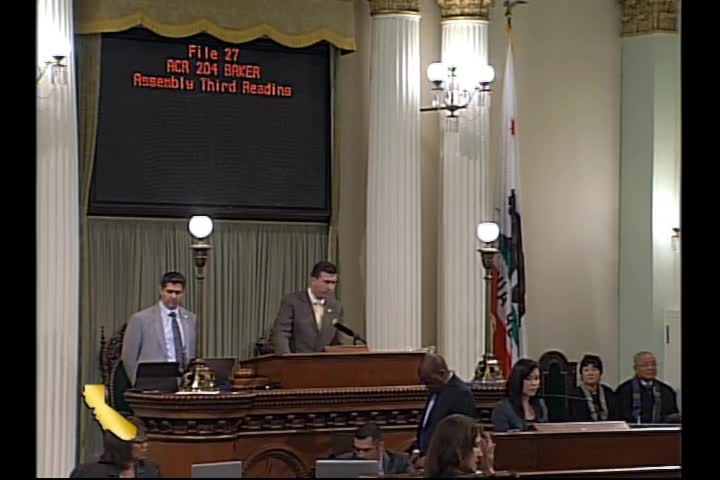 3MIN
Assembly Floor
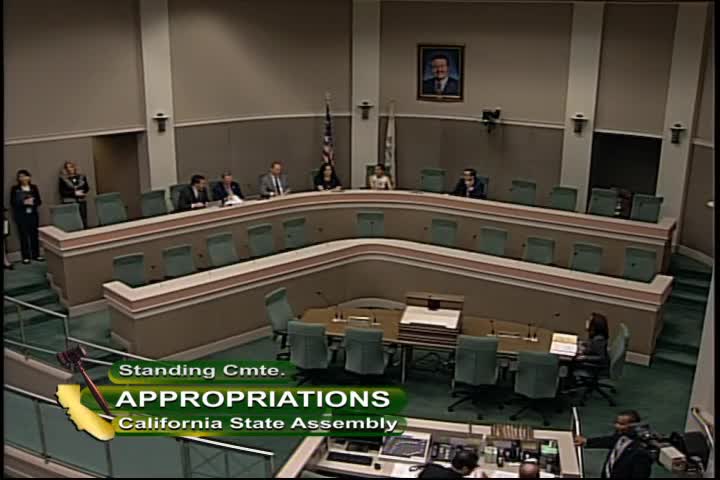 4MIN
Assembly Standing Committee on Appropriations
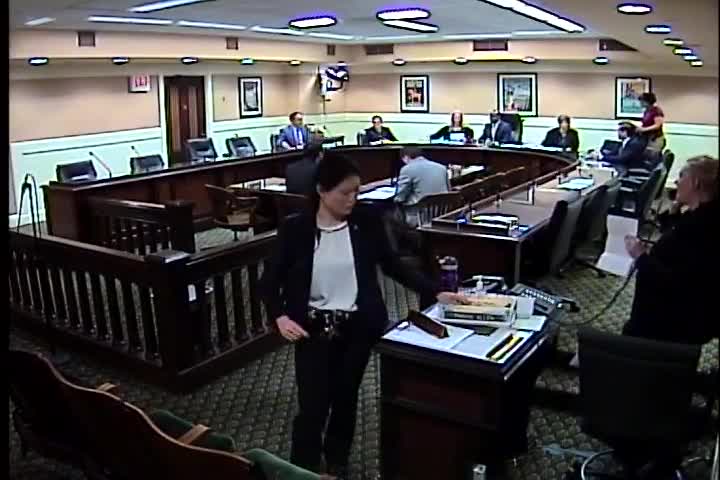 12MIN
Assembly Standing Committee on Labor and Employment
Bill Author



