AB 2014: Vehicle accidents: fleeing the scene of an accident.
- Session Year: 2017-2018
- House: Assembly
- Latest Version Date: 2018-02-05
Existing law requires the driver of a vehicle involved in an accident resulting in injury to a person, other than himself or herself, or in the death of a person to immediately stop the vehicle at the scene of the accident and provide specified personal information to the injured person or the occupants of the other vehicle and to any traffic or police officer at the scene of the accident. A violation of these provisions is a crime.
Existing law specifies that if an accident results in death or permanent, serious injury, a person who violates the provisions described above shall be punished by imprisonment in a state prison for two, three, or four years, or in a county jail for not less than 90 days nor more than one year, or by a fine, as specified, or both. Existing law authorizes the court, in the interests of justice and for other reasons stated in the record, to reduce or eliminate the minimum imprisonment or fine requirements.
This bill would increase the terms for imprisonment in a state prison to two, four, or six years.
(a)The driver of a vehicle involved in an accident resulting in injury to a person, other than himself or herself, or in the death of a person shall immediately stop the vehicle at the scene of the accident and shall fulfill the requirements of Sections 20003 and 20004.
(b)(1)Except as provided in paragraph (2), a person who violates subdivision (a) shall be punished by imprisonment in the state prison, or in a county jail for not more than one year, or by a fine of not less than one thousand dollars ($1,000) nor more than ten thousand dollars ($10,000), or by both that imprisonment and fine.
(2)If the accident described in subdivision (a) results in death or permanent, serious injury, a person who violates subdivision (a) shall be punished by imprisonment in the state prison for two, three, or four years, two, four, or six years, or in a county jail for not less than 90 days nor more than one year, or by a fine of not less than one thousand dollars ($1,000) nor more than ten thousand dollars ($10,000), or by both that imprisonment and fine. However, the court, in the interests of justice and for reasons stated in the record, may reduce or eliminate the minimum imprisonment required by this paragraph.
(3)In imposing the minimum fine required by this subdivision, the court shall take into consideration the defendants ability to pay the fine and, in the interests of justice and for reasons stated in the record, may reduce the amount of that minimum fine to less than the amount otherwise required by this subdivision.
(c)A person who flees the scene of the crime after committing a violation of Section 191.5 of, or paragraph (1) of subdivision (c) of Section 192 of the Penal Code, upon conviction of any of those sections, in addition and consecutive to the punishment prescribed, shall be punished by an additional term of imprisonment of five years in the state prison. This additional term shall not be imposed unless the allegation is charged in the accusatory pleading and admitted by the defendant or found to be true by the trier of fact. The court shall not strike a finding that brings a person within the provisions of this subdivision or an allegation made pursuant to this subdivision.
(d)As used in this section, permanent, serious injury means the loss or permanent impairment of function of a bodily member or organ.
|
Date
|
Status
|
|---|---|
| Apr 26, 2018 | From committee: Without further action pursuant to Joint Rule 62(a). |
| Apr 24, 2018 | In committee: Set, final hearing. Hearing canceled at the request of author. |
| Apr 11, 2018 | In committee: Hearing for testimony only. |
| Apr 3, 2018 | In committee: Set, second hearing. Hearing canceled at the request of author. |
| Mar 20, 2018 | In committee: Set, first hearing. Hearing canceled at the request of author. |
| Feb 12, 2018 | Referred to Com. on PUB. S. |
| Feb 6, 2018 | From printer. May be heard in committee March 8. |
| Feb 5, 2018 | Read first time. To print. |
This list shows positions taken on this bill by organizations on the date displayed, which is linked to the original source.
Positions by individuals are not included.
|
Organization
|
Position
|
Date
|
|---|---|---|
| American Civil Liberties Union | ** Against | Apr 23, 2018 |
| Black Lives Matter Imperial Valley | ** Support | Apr 23, 2018 |
| California Attorneys For Criminal Justice | ** Against | Apr 23, 2018 |
| California District Attorneys Association | ** Support | Apr 23, 2018 |
| California Police Chiefs Association | ** Support | Apr 23, 2018 |
| California Public Defenders Association | ** Against | Apr 23, 2018 |
| California State Sheriff's Association | ** Support | Apr 23, 2018 |
| California State Sherrif's Association | * Support | Apr 10, 2018 |
| California Transit Criminal Justice | * Against | Apr 10, 2018 |
| Imperial County Probation Department | ** Support | Apr 23, 2018 |
| Peace Officer Research Association of California | ** Support | Apr 23, 2018 |
Date of Hearing:
Chief Counsel: Gregory Pagan
ASSEMBLY COMMITTEE ON PUBLIC SAFETY
Reginald Byron Jones-Sawyer, Sr., Chair
ABPCA Bill Id:AB 2014
Author:(Eduardo Garcia) – As Introduced Ver:February 5, 2018
VOTE ONLY
SUMMARY: Increases the penalty for fleeing the scene of an accident resulting in serious bodily injury or death from 16 months, two, or three years in the state prison to two, four, or six years in the state prison.
EXISTING LAW:
- Requires the driver of any vehicle involved in an accident resulting in injury to any person, other than himself or herself, to immediately stop the vehicle at the scene of the accident and to fulfill specified requirements. The failure to comply is a punishable by imprisonment in the state prison for16 months, two, or three years or, by imprisonment in a county jail not to exceed one year, or by a fine of not less than $1,000 nor more than $10,000, or by both a fine and imprisonment. (Veh. Code, § 20001, subd. (a).)
- Requires the driver of any vehicle involved in an accident resulting in death or permanent, serious injury to any person, other than himself or herself, to immediately stop and provide specified information. The failure to comply is punishable by imprisonment in the state prison for two, three, or four years, or in a county jail for not less than 90 days nor more than one year, or by a fine of not less than $1,000 nor more than $10,000, or by both a fine and imprisonment. (Veh. Code, § 20001, subd. (b).)
- Provides that a person who flees the scene of the crime after committing vehicular manslaughter with gross negligence or gross vehicular manslaughter while intoxicated, upon conviction for that offense, in addition and consecutive to the punishment prescribed, shall be punished by an additional term of imprisonment of five years in the state prison. Existing law provides that this additional term shall not be imposed unless the allegation is charged in the accusatory pleading and admitted by the defendant or found to be true by the trier of fact. (Veh. Code, § 20001, subd. (c).)
- Provides that the driver of any vehicle involved in an accident resulting in damage to any property, including a vehicle, shall immediately stop the vehicle and exchange information, as specified, or leave in a conspicuous place on the vehicle or other property damaged written notice giving the name and address of the driver of the vehicle involved. The failure to comply with these requirements is a misdemeanor punishable by imprisonment in a county jail not to exceed six months, or by a fine not to exceed $1,000, or by both a fine and imprisonment. (Veh. Code, § 20002.)
- States that gross vehicular manslaughter while intoxicated is the unlawful killing of a human being without malice aforethought, in the driving of a vehicle, where the driver was under the influence of drugs or alcohol, and the killing was either the proximate result of an unlawful act not amounting to a felony, and with gross negligence, or the proximate result of a lawful act that might produce death, in an unlawful manner, and with gross negligence. Gross vehicle manslaughter while intoxicated is punishable by imprisonment in the state prison for four, six, or ten years. (Pen. Code, § 191.5, subd. (a).)
- Provides that gross vehicular manslaughter is the unlawful killing of a human being, in the driving of a vehicle in the commission of an unlawful act, not amounting to a felony, and with gross negligence; or with driving a vehicle in the commission of a lawful act which might produce death, in an unlawful act, and with gross negligence. Gross vehicular manslaughter is punishable by either imprisonment in a county jail for not more than one year, or in the state prison for two, four, or six years. (Pen Code, § 191, subd. (c)(1).)
FISCAL EFFECT: Unknown
COMMENTS:
- Author's Statement: According to the author, "AB 2014 is designed to bring justice to a senseless act of violence and provide closure for a family that had their young son taken away from them. This bill would change the terms of imprisonment for fleeing the scene of a vehicular accident that results in death or serious permanent injury to two, four, or six years.
- Prison Overcrowding: In January 2010, a three-judge panel issued a ruling ordering the State of California to reduce its prison population to 137.5% of design capacity because overcrowding was the primary reason that CDCR was unable to provide inmates with constitutionally adequate healthcare. (Coleman/Plata vs. Schwarzenegger (2010) No. Civ S-90-0520 LKK JFM P/NO. C01-1351 THE.) The United State Supreme Court upheld the decision, declaring that “without a reduction in overcrowding, there will be no efficacious remedy for the unconstitutional care of the sick and mentally ill” inmates in California’s prisons. (Brown v. Plata (2011) 131 S.Ct. 1910, 1939; 179 L.Ed.2d 969, 999.)
After continued litigation, on February 10, 2014, the federal court ordered California to reduce its in-state adult institution population to 137.5% of design capacity by February 28, 2016, as follows: 143% of design bed capacity by June 30, 2014; 141.5% of design bed capacity by February 28, 2015; and, 137.5% of design bed capacity by February 28, 2016.
CDCR’s February 2017 monthly report on the prison population notes that the in-state adult institution population is currently 114,124 inmates, which amounts to 134.1% of design capacity. This is an increase of 1.1% from February of the previous year. Additionally, there are still 4,400 prisoners being housed out of state. (http://www.cdcr.ca.gov/Reports_Research/Offender_Information_Services_Branch/Monthly/TPOP1A/TPOP1Ad1702.pdf )
The Governor’s January proposed budget for 2017-2018 anticipates that “[t]he adult inmate average daily population is projected to decrease from 129,015 in 2016-17 to 128,159 in 2017-18, a decrease of 856 inmates, or 0.7 percent. The average daily parolee population is projected to increase from 43,686 in 2016-17 to 44,761 in 2017-18, an increase of 1,075 parolees, or 2.5 percent. The decrease in the adult inmate population is due to a projected reduction related to the implementation of Proposition 57, the Public Safety and Rehabilitation Act of 2016, which offsets a projected increase in felon admissions.” (http://ebudget.ca.gov/budget/2017-18/#/Department/5225)
Thus, while CDCR is currently in compliance with the three-judge panel’s order on the prison population, the state needs to maintain a “durable solution” to prison overcrowding “consistently demanded” by the court. (Opinion Re: Order Granting in Part and Denying in Part Defendants’ Request For Extension of December 31, 2013 Deadline, NO. 2:90-cv-0520 LKK DAD (PC), 3-Judge Court, Coleman v. Brown, Plata v. Brown (2-10-14).) According to CDCR in 2017 there were 232 new admissions to CDCR of persons convicted of a felony violation of Penal Code Section 20001 (b) (1), and the total inmate population of persons convicted of a violation of Penal Code Section 20001 (b) was 499. Obviously, increasing the penalty for fleeing the scene of an accident resulting in great bodily injury or death from two, three, or four years in the state prison to two, four, or six years in the state prison will aggravate the prison overcrowding problem and is inconsistent with the three-judge panel's requirement that the state maintain a durable solution to prison overcrowding. - Argument in Support: According to the Peace Officer Research Association of California, "Current law requires the driver of a vehicle involved in an accident resulting in injury to a person, other than himself or herself, or in the death of a person to immediately stop the vehicle at the scene of the accident and provide specified personal information to the injured person or the occupants of the other vehicle and to any traffic or police officer at the scene of the accident.
“Current law specifies that if an accident results in death or permanent, serious injury, a person who violates the provisions described above shall be punished by imprisonment in a state prison for two, three, or four years, or in a county jail for not less than 90 days nor more than one year, or by a fine, as specified, or both. This bill would increase the terms for imprisonment in a state prison to two, four, or six years.” - Argument in Opposition: According to the American Civil Liberties Union, "We understand the tragic consequences that can result from car accidents, as in the death of the young boy in your district that was the impetus for the introduction of this bill. Our hearts go out to his family, friends and community. However, increasing the term of imprisonment for leaving the scene of an accident will do nothing to prevent future accidents or even to deter drivers from leaving the scene. Research has shown that the severity of punishment does not generally have an increased effect on deterrence. Rather, studies have concluded that certainty of punishment – that someone will be punished for a particular crime – has a greater deterrent effect than the severity of the punishment itself. An increased sentence will only unnecessarily send people to prison for longer periods of time, requiring increased state spending with no benefit to public safety.”
- Prior Legislation:
- AB 2088 (Linder), of the 2015-2016 Legislative Session, would have required the court to suspend the driving privilege for six months or impose an appropriate period of community service for any person who pleads guilty or nolo contendere to hit and run with property damage if the charge is a substitute or in satisfaction of the charge of hit and run resulting in injury or death. AB 2088 was vetoed by the Governor.
- AB 534 (Linder), of the 2015 -2016 Legislative Session, would have required the court to suspend the driving privilege for six months of any person who pleads guilty or nolo contendere to hit and run with property damage if the charge is a substitute or in satisfaction of the charge of hit and run resulting in injury or death. AB 534 failed passage in the Assembly Public Safety Committee.
- AB 1532 (Gatto), of the 2013 -2014 Legislative Session, would have required that the privilege to operate a motor vehicle shall be suspended for six months for any person convicted of being a driver of a vehicle involved in an accident where a person is struck, but not injured, and the driver of the vehicle leaves the scene of the accident without exchanging required information, as specified. AB 1532 was vetoed by the Governor.
- AB 956 (Mansoor), of the 2013-2014 Legislative Session, would have expanded the five year enhancement for fleeing the scene of an accident resulting in death or serious bodily injury to include misdemeanor vehicular manslaughter. AB 956 failed passage in the Assembly Public Safety Committee.
- AB 2088 (Linder), of the 2015-2016 Legislative Session, would have required the court to suspend the driving privilege for six months or impose an appropriate period of community service for any person who pleads guilty or nolo contendere to hit and run with property damage if the charge is a substitute or in satisfaction of the charge of hit and run resulting in injury or death. AB 2088 was vetoed by the Governor.
REGISTERED SUPPORT / OPPOSITION:
Support
Black Lives Matter Imperial Valley
California Police Chiefs Association
California State Sheriff's Association
California District Attorneys Association
Imperial County Probation Department
Peace Officer Research Association of California
Opposition
American Civil Liberties Union
California Public Defenders Association
California Attorneys for Criminal Justice
Analysis Prepared by:
Gregory Pagan / PUB. S. / (916) 319-3744
Date of Hearing:
Chief Counsel: Gregory Pagan
ASSEMBLY COMMITTEE ON PUBLIC SAFETY
Reginald Byron Jones-Sawyer, Sr., Chair
ABPCA Bill Id:AB 2014
Author:(Eduardo Garcia) – As Introduced Ver:February 5, 2018
SUMMARY: Increases the penalty for fleeing the scene of an accident resulting in serious bodily injury or death from 16 months, two, or three years in the state prison to two, four, or six years in the state prison.
EXISTING LAW:
- Requires the driver of any vehicle involved in an accident resulting in injury to any person, other than himself or herself, to immediately stop the vehicle at the scene of the accident and to fulfill specified requirements. The failure to comply is a punishable by imprisonment in the state prison for16 months, two, or three years or, by imprisonment in a county jail not to exceed one year, or by a fine of not less than $1,000 nor more than $10,000, or by both a fine and imprisonment. (Veh. Code, § 20001, subd. (a).)
- Requires the driver of any vehicle involved in an accident resulting in death or permanent, serious injury to any person, other than himself or herself, to immediately stop and provide specified information. The failure to comply is punishable by imprisonment in the state prison for two, three, or four years, or in a county jail for not less than 90 days nor more than one year, or by a fine of not less than $1,000 nor more than $10,000, or by both a fine and imprisonment. (Veh. Code, § 20001, subd. (b).)
- Provides that a person who flees the scene of the crime after committing vehicular manslaughter with gross negligence or gross vehicular manslaughter while intoxicated, upon conviction for that offense, in addition and consecutive to the punishment prescribed, shall be punished by an additional term of imprisonment of five years in the state prison. Existing law provides that this additional term shall not be imposed unless the allegation is charged in the accusatory pleading and admitted by the defendant or found to be true by the trier of fact. (Veh. Code, § 20001, subd. (c).)
- Provides that the driver of any vehicle involved in an accident resulting in damage to any property, including a vehicle, shall immediately stop the vehicle and exchange information, as specified, or leave in a conspicuous place on the vehicle or other property damaged written notice giving the name and address of the driver of the vehicle involved. The failure to comply with these requirements is a misdemeanor punishable by imprisonment in a county jail not to exceed six months, or by a fine not to exceed $1,000, or by both a fine and imprisonment. (Veh. Code, § 20002.)
- States that gross vehicular manslaughter while intoxicated is the unlawful killing of a human being without malice aforethought, in the driving of a vehicle, where the driver was under the influence of drugs or alcohol, and the killing was either the proximate result of an unlawful act not amounting to a felony, and with gross negligence, or the proximate result of a lawful act that might produce death, in an unlawful manner, and with gross negligence. Gross vehicle manslaughter while intoxicated is punishable by imprisonment in the state prison for four, six, or ten years. (Pen. Code, § 191.5, subd. (a).)
- Provides that gross vehicular manslaughter is the unlawful killing of a human being, in the driving of a vehicle in the commission of an unlawful act, not amounting to a felony, and with gross negligence; or with driving a vehicle in the commission of a lawful act which might produce death, in an unlawful act, and with gross negligence. Gross vehicular manslaughter is punishable by either imprisonment in a county jail for not more than one year, or in the state prison for two, four, or six years. (Pen Code, § 191, subd. (c)(1).)
FISCAL EFFECT: Unknown
COMMENTS:
- Author's Statement: According to the author, "AB 2014 is designed to bring justice to a senseless act of violence and provide closure for a family that had their young son taken away from them. This bill would change the terms of imprisonment for fleeing the scene of a vehicular accident that results in death or serious permanent injury to two, four, or six years.
- Prison Overcrowding: In January 2010, a three-judge panel issued a ruling ordering the State of California to reduce its prison population to 137.5% of design capacity because overcrowding was the primary reason that CDCR was unable to provide inmates with constitutionally adequate healthcare. (Coleman/Plata vs. Schwarzenegger (2010) No. Civ S-90-0520 LKK JFM P/NO. C01-1351 THE.) The United State Supreme Court upheld the decision, declaring that “without a reduction in overcrowding, there will be no efficacious remedy for the unconstitutional care of the sick and mentally ill” inmates in California’s prisons. (Brown v. Plata (2011) 131 S.Ct. 1910, 1939; 179 L.Ed.2d 969, 999.)
After continued litigation, on February 10, 2014, the federal court ordered California to reduce its in-state adult institution population to 137.5% of design capacity by February 28, 2016, as follows: 143% of design bed capacity by June 30, 2014; 141.5% of design bed capacity by February 28, 2015; and, 137.5% of design bed capacity by February 28, 2016.
CDCR’s February 2017 monthly report on the prison population notes that the in-state adult institution population is currently 114,124 inmates, which amounts to 134.1% of design capacity. This is an increase of 1.1% from February of the previous year. Additionally, there are still 4,400 prisoners being housed out of state. (http://www.cdcr.ca.gov/Reports_Research/Offender_Information_Services_Branch/Monthly/TPOP1A/TPOP1Ad1702.pdf )
The Governor’s January proposed budget for 2017-2018 anticipates that “[t]he adult inmate average daily population is projected to decrease from 129,015 in 2016-17 to 128,159 in 2017-18, a decrease of 856 inmates, or 0.7 percent. The average daily parolee population is projected to increase from 43,686 in 2016-17 to 44,761 in 2017-18, an increase of 1,075 parolees, or 2.5 percent. The decrease in the adult inmate population is due to a projected reduction related to the implementation of Proposition 57, the Public Safety and Rehabilitation Act of 2016, which offsets a projected increase in felon admissions.” (http://ebudget.ca.gov/budget/2017-18/#/Department/5225)
Thus, while CDCR is currently in compliance with the three-judge panel’s order on the prison population, the state needs to maintain a “durable solution” to prison overcrowding “consistently demanded” by the court. (Opinion Re: Order Granting in Part and Denying in Part Defendants’ Request For Extension of December 31, 2013 Deadline, NO. 2:90-cv-0520 LKK DAD (PC), 3-Judge Court, Coleman v. Brown, Plata v. Brown (2-10-14).) According to CDCR in 2017 there were 232 new admissions to CDCR of persons convicted of a felony violation of Penal Code Section 20001 (b) (1), and the total inmate population of persons convicted of a violation of Penal Code Section 20001 (b) was 499. Obviously, increasing the penalty for fleeing the scene of an accident resulting in great bodily injury or death from two, three, or four years in the state prison to two, four, or six years in the state prison will aggravate the prison overcrowding problem and is inconsistent with the three-judge panel's requirement that the state maintain a durable solution to prison overcrowding. - Argument in Support: According to the Peace Officer Research Association of California, "Current law requires the driver of a vehicle involved in an accident resulting in injury to a person, other than himself or herself, or in the death of a person to immediately stop the vehicle at the scene of the accident and provide specified personal information to the injured person or the occupants of the other vehicle and to any traffic or police officer at the scene of the accident.
“Current law specifies that if an accident results in death or permanent, serious injury, a person who violates the provisions described above shall be punished by imprisonment in a state prison for two, three, or four years, or in a county jail for not less than 90 days nor more than one year, or by a fine, as specified, or both. This bill would increase the terms for imprisonment in a state prison to two, four, or six years.” - Argument in Opposition: According to the American Civil Liberties Union, "We understand the tragic consequences that can result from car accidents, as in the death of the young boy in your district that was the impetus for the introduction of this bill. Our hearts go out to his family, friends and community. However, increasing the term of imprisonment for leaving the scene of an accident will do nothing to prevent future accidents or even to deter drivers from leaving the scene. Research has shown that the severity of punishment does not generally have an increased effect on deterrence. Rather, studies have concluded that certainty of punishment – that someone will be punished for a particular crime – has a greater deterrent effect than the severity of the punishment itself. An increased sentence will only unnecessarily send people to prison for longer periods of time, requiring increased state spending with no benefit to public safety.”
- Prior Legislation:
- AB 2088 (Linder), of the 2015-2016 Legislative Session, would have required the court to suspend the driving privilege for six months or impose an appropriate period of community service for any person who pleads guilty or nolo contendere to hit and run with property damage if the charge is a substitute or in satisfaction of the charge of hit and run resulting in injury or death. AB 2088 was vetoed by the Governor.
- AB 534 (Linder), of the 2015 -2016 Legislative Session, would have required the court to suspend the driving privilege for six months of any person who pleads guilty or nolo contendere to hit and run with property damage if the charge is a substitute or in satisfaction of the charge of hit and run resulting in injury or death. AB 534 failed passage in the Assembly Public Safety Committee.
- AB 1532 (Gatto), of the 2013 -2014 Legislative Session, would have required that the privilege to operate a motor vehicle shall be suspended for six months for any person convicted of being a driver of a vehicle involved in an accident where a person is struck, but not injured, and the driver of the vehicle leaves the scene of the accident without exchanging required information, as specified. AB 1532 was vetoed by the Governor.
- AB 956 (Mansoor), of the 2013-2014 Legislative Session, would have expanded the five year enhancement for fleeing the scene of an accident resulting in death or serious bodily injury to include misdemeanor vehicular manslaughter. AB 956 failed passage in the Assembly Public Safety Committee.
- AB 2088 (Linder), of the 2015-2016 Legislative Session, would have required the court to suspend the driving privilege for six months or impose an appropriate period of community service for any person who pleads guilty or nolo contendere to hit and run with property damage if the charge is a substitute or in satisfaction of the charge of hit and run resulting in injury or death. AB 2088 was vetoed by the Governor.
REGISTERED SUPPORT / OPPOSITION:
Support
California Police Chiefs Association
California State Sheriff's Association
California District Attorneys Association
Imperial County Probation Department
Peace Officer Research Association of California
Black Lives Matter
Opposition
American Civil Liberties Union
California Public Defenders Association
California Attorneys for Criminal Justice
Analysis Prepared by:
Gregory Pagan / PUB. S. / (916) 319-3744
Discussed in Hearing
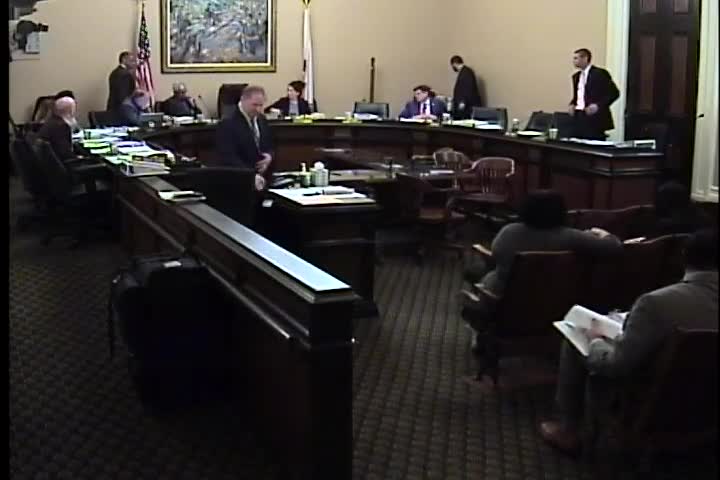 14MIN
Assembly Standing Committee on Public Safety
Bill Author

Bill Co-Author(s):