AB 2042: Personal income tax credits: residential graywater reuse systems.
- Session Year: 2017-2018
- House: Assembly
- Latest Version Date: 2018-05-01
The Personal Income Tax Law allows various credits against the taxes imposed by that law. Existing law requires any bill authorizing a new tax credit to contain, among other things, specific goals, purposes, and objectives that the tax credit will achieve, detailed performance indicators, and data collection requirements.
This bill, for taxable years beginning on or after January 1, 2019, and before January 1, 2024, would allow as a credit against the taxes net tax imposed by that law equal to 25% of the cost of installing a residential graywater reuse system during the taxable year in the taxpayers residence located in this state. The bill would limit the cumulative amount of the credit to $1,000 for the same residence. The bill would require the Franchise Tax Board to receive and evaluate applications that are submitted by taxpayers to receive a residential graywater reuse system credit and to certify to the taxpayer the amount of the credit that is authorized. The bill would prohibit the board from certifying tax credits exceeding the sum of $250,000 for any calendar year. The bill also would include additional information required for any bill authorizing a new income tax credit.
This bill would take effect immediately as a tax levy.
The Personal Income Tax Law allows various credits against the taxes imposed by that law. Existing law requires any bill authorizing a new tax credit to contain, among other things, specific goals, purposes, and objectives that the tax credit will achieve, detailed performance indicators, and data collection requirements.
This bill, for taxable years beginning on or after January 1, 2019, and before January 1, 2024, would allow a credit against the taxes imposed by that law equal to 25% of the cost of installing a residential graywater reuse system during the taxable year in the taxpayers residence located in this state. The bill would limit the cumulative amount of the credit to $1,000 for the same residence. The bill would require the Franchise Tax Board to receive and evaluate applications that are submitted by taxpayers to receive a residential graywater reuse system credit and to certify to the taxpayer the amount of the credit that is authorized. The bill would prohibit the board from certifying tax credits exceeding the sum of $250,000 for any calendar year. The bill also would include additional information required for any bill authorizing a new income tax credit.
This bill would take effect immediately as a tax levy.
Under existing law, graywater is defined as untreated wastewater that has not been contaminated by any toilet discharge, has not been affected by infectious, contaminated, or unhealthy bodily wastes, and does not present a threat from contamination, as specified. Existing law requires the Department of Water Resources, in consultation with specified entities, to adopt standards for the installation of graywater systems for, among other things, residential buildings.This bill would express the intent of the Legislature to enact legislation to extend financial incentives to single-family and multi-family homeowners to incentivize the purchase of residential graywater reuse systems.Under existing law, graywater is defined as untreated wastewater that has not been contaminated by any toilet discharge, has not been affected by infectious, contaminated, or unhealthy bodily wastes, and does not present a threat from contamination, as specified. Existing law requires the Department of Water Resources, in consultation with specified entities, to adopt standards for the installation of graywater systems for, among other things, residential buildings.
This bill would express the intent of the Legislature to enact legislation to extend financial incentives to single-family and multi-family homeowners to incentivize the purchase of residential graywater reuse systems.
(a)Subject to subdivisions (h) and (i), (g) and (h), for each taxable year beginning on or after January 1, 2019, and ending before January 1, 2024, a credit shall be allowed against the taxes imposed by this part for each resident who is not a dependent of another taxpayer for against the net tax, as defined in Section 17039, to a taxpayer for the costs of installing a residential graywater reuse system during the taxable year in the taxpayers residence located in this state.
(b)The credit allowed under this section shall be in an amount equal to 25 percent of the cost of the residential graywater reuse system and shall not exceed one thousand dollars ($1,000) as evidenced by the receipt issued by the Franchise Tax Board pursuant to subdivision (h). (g). The person who provides the residential graywater reuse system shall furnish the taxpayer with an accounting of the cost to the taxpayer. A taxpayer may claim the credit under this section only once in a taxable year and shall not cumulate over different taxable years tax credits under this section exceeding, in the aggregate, one thousand dollars ($1,000) for the same residence.
(c)In the case where the credit allowed under this section exceeds the net tax, as defined by Section 17039, for a taxable year, the excess credit may be carried over to reduce the net tax in the following taxable year, and succeeding five taxable years, if necessary, until the credit has been exhausted.
(d)Taxpayers who file separate returns for a taxable year in which they could have filed a joint return may each claim only one-half of the tax credit that would have been allowed for a joint return.
(e)The credit allowed under this section is in lieu of any depreciation deduction for exhaustion or wear and tear of the residential graywater reuse system under Section 167 of the Internal Revenue Code, relating to depreciation.(f)(e)To qualify for the credit under this section a residential graywater reuse system and its installation shall comply with rules that are adopted by the State Water Resources Control Board Department of Housing and Community Development and that relate to the recovery and disposal of graywater.
(g)(f)A graywater stub out that was installed by the builder of a house or dwelling unit before title was conveyed to the taxpayer does not qualify for a credit under this section.
(h)(g)Beginning on On and after January 1, 2019, the Franchise Tax Board shall receive and evaluate applications that are submitted by taxpayers to receive a residential graywater reuse system credit under this section. A taxpayer shall apply for the credit to the Franchise Tax Board on a form prescribed by the Franchise Tax Board. The application shall be filed with the Franchise Tax Board and the Franchise Tax Board shall issue a receipt to the applicant. The application shall include all of the following:
(1)The name, address, and social security number or federal employer identification number of the applicant.
(2)The amount of the cost of the residential graywater reuse system and the amount for which the credit is claimed.
(3)Any additional information that the Franchise Tax Board requires.
(i)(h)The Franchise Tax Board shall review each application under subdivision (h) (g) and certify to the taxpayer the amount of the credit that is authorized. The Franchise Tax Board shall not certify tax credits under this subdivision exceeding the sum of two hundred fifty thousand dollars ($250,000) for any calendar year. If qualifying applications exceed the limit of two hundred fifty thousand dollars ($250,000), the Franchise Tax Board shall authorize credits in the order of the date that the applications are received by the Franchise Tax Board. If an application is received that, if authorized, would require the Franchise Tax Board to exceed the two hundred fifty thousand dollar ($250,000) limit, the Franchise Tax Board shall grant the applicant only the remaining credit amount that would not exceed the limit. After the Franchise Tax Board authorizes two hundred fifty thousand dollars ($250,000) in tax credits, the Franchise Tax Board shall deny any subsequent applications that are received in that calendar year. The Franchise Tax Board shall not authorize any additional tax credits that exceed the two hundred fifty thousand dollar ($250,000) limit even if the amounts that have been certified to any taxpayer were not claimed or a taxpayer otherwise fails to meet the requirements to claim the additional credit.
(j)(i)The Franchise Tax Board may verify that a residential graywater reuse system has been installed in the taxpayers residence.
(k)(j)For the purposes of this section, residential graywater reuse system means a system or a series of components or mechanisms that are designed to provide for the collection of residential graywater and includes a system that is capable of storing residential graywater for future use and reusing the collected water for the same residential property.
(l)(k)This section shall remain in effect only until December 1, 2024, and as of that date is repealed.
SEC. 2.For the purposes of complying with Section 41 of the Revenue and Taxation Code, the Legislature finds and declares that the following applies to Section 17053.37 of the Revenue and Taxation Code:
(a)The specific goals, purposes, and objectives of the tax credit are to increase residential use of graywater reuse systems and to decrease the total water use of households throughout California.
(b)The performance indicators for the tax credit are increasing numbers of residential graywater reuse systems installed and the residents taxpayers self-reported decreasing amounts of household water use at those residences.
(c)The specific data to be used to determine whether the tax credit is effective at meeting the goals described in subdivision (a) are the number of households that claim the tax credit to subsidize the installation of residential graywater reuse systems and the households change in water consumption. The Legislative Analysts Office shall collect and remit the data to the Legislature.
SEC. 3.This act provides for a tax levy within the meaning of Article IV of the California Constitution and shall go into immediate effect.
(a)Subject to subdivisions (h) and (i), for each taxable year beginning on or after January 1, 2019, and ending before January 1, 2024, a credit shall be allowed against the taxes imposed by this part for each resident who is not a dependent of another taxpayer for installing a residential graywater reuse system during the taxable year in the taxpayers residence located in this state.
(b)The credit allowed under this section shall be in an amount equal to 25 percent of the cost of the residential graywater reuse system and shall not exceed one thousand dollars ($1,000) as evidenced by the receipt issued by the Franchise Tax Board pursuant to subdivision (h). The person who provides the residential graywater reuse system shall furnish the taxpayer with an accounting of the cost to the taxpayer. A taxpayer may claim the credit under this section only once in a taxable year and shall not cumulate over different taxable years tax credits under this section exceeding, in the aggregate, one thousand dollars ($1,000) for the same residence.
(c)In the case where the credit allowed under this section exceeds the net tax, as defined by Section 17039, for a taxable year, the excess credit may be carried over to reduce the net tax in the following taxable year, and succeeding five taxable years, if necessary, until the credit has been exhausted.
(d)Taxpayers who file separate returns for a taxable year in which they could have filed a joint return may each claim only one-half of the tax credit that would have been allowed for a joint return.
(e)The credit allowed under this section is in lieu of any depreciation deduction for exhaustion or wear and tear of the residential graywater reuse system under Section 167 of the Internal Revenue Code, relating to depreciation.
(f)To qualify for the credit under this section a residential graywater reuse system and its installation shall comply with rules that are adopted by the State Water Resources Control Board and that relate to the recovery and disposal of graywater.
(g)A graywater stub out that was installed by the builder of a house or dwelling unit before title was conveyed to the taxpayer does not qualify for a credit under this section.
(h)Beginning on and after January 1, 2019, the Franchise Tax Board shall receive and evaluate applications that are submitted by taxpayers to receive a residential graywater reuse system credit under this section. A taxpayer shall apply for the credit to the Franchise Tax Board on a form prescribed by the Franchise Tax Board. The application shall be filed with the Franchise Tax Board and the Franchise Tax Board shall issue a receipt to the applicant. The application shall include all of the following:
(1)The name, address, and social security number or federal employer identification number of the applicant.
(2)The amount of the cost of the residential graywater reuse system and the amount for which the credit is claimed.
(3)Any additional information that the Franchise Tax Board requires.
(i)The Franchise Tax Board shall review each application under subdivision (h) and certify to the taxpayer the amount of the credit that is authorized. The Franchise Tax Board shall not certify tax credits under this subdivision exceeding the sum of two hundred fifty thousand dollars ($250,000) for any calendar year. If qualifying applications exceed the limit of two hundred fifty thousand dollars ($250,000), the Franchise Tax Board shall authorize credits in the order of the date that the applications are received by the Franchise Tax Board. If an application is received that, if authorized, would require the Franchise Tax Board to exceed the two hundred fifty thousand dollar ($250,000) limit, the Franchise Tax Board shall grant the applicant only the remaining credit amount that would not exceed the limit. After the Franchise Tax Board authorizes two hundred fifty thousand dollars ($250,000) in tax credits, the Franchise Tax Board shall deny any subsequent applications that are received in that calendar year. The Franchise Tax Board shall not authorize any additional tax credits that exceed the two hundred fifty thousand dollar ($250,000) limit even if the amounts that have been certified to any taxpayer were not claimed or a taxpayer otherwise fails to meet the requirements to claim the additional credit.
(j)The Franchise Tax Board may verify that a residential graywater reuse system has been installed in the taxpayers residence.
(k)For the purposes of this section, residential graywater reuse system means a system or a series of components or mechanisms that are designed to provide for the collection of residential graywater and includes a system that is capable of storing residential graywater for future use and reusing the collected water for the same residential property.
(l)This section shall remain in effect only until December 1, 2024, and as of that date is repealed.
SEC. 2.For the purposes of complying with Section 41 of the Revenue and Taxation Code, the Legislature finds and declares that the following applies to Section 17053.37 of the Revenue and Taxation Code:
(a)The specific goals, purposes, and objectives of the tax credit are to increase residential use of graywater reuse systems and to decrease the total water use of households throughout California.
(b)The performance indicators for the tax credit are increasing numbers of residential graywater reuse systems installed and the residents self-reported decreasing amounts of household water use at those residences.
(c)The specific data to be used to determine whether the tax credit is effective at meeting the goals described in subdivision (a) are the number of households that claim the tax credit to subsidize the installation of residential graywater reuse systems and the households change in water consumption. The Legislative Analysts Office shall collect and remit the data to the Legislature.
SEC. 3.This act provides for a tax levy within the meaning of Article IV of the California Constitution and shall go into immediate effect.
SECTION 1.It is the intent of the Legislature to enact legislation to extend financial incentives to single-family and multi-family homeowners to incentivize the purchase of residential graywater reuse systems. CORRECTIONS: TextPage 2.It is the intent of the Legislature to enact legislation to extend financial incentives to single-family and multi-family homeowners to incentivize the purchase of residential graywater reuse systems.
|
Date
|
Status
|
|---|---|
| May 25, 2018 | In committee: Held under submission. |
| May 9, 2018 | In committee: Set, first hearing. Referred to APPR. suspense file. |
| May 2, 2018 | Re-referred to Com. on APPR. |
| May 1, 2018 | Read second time and amended. |
| Apr 30, 2018 | From committee: Amend, and do pass as amended and re-refer to Com. on APPR. (Ayes 9. Noes 1.) (April 23). |
| Apr 16, 2018 | In committee: Set, first hearing. Hearing canceled at the request of author. |
| Mar 20, 2018 | Re-referred to Com. on REV. & TAX. |
| Mar 19, 2018 | From committee chair, with author's amendments: Amend, and re-refer to Com. on REV. & TAX. Read second time and amended. |
| Mar 15, 2018 | Referred to Com. on REV. & TAX. |
| Feb 7, 2018 | From printer. May be heard in committee March 9. |
| Feb 6, 2018 | Read first time. To print. |
|
Date
|
Description
|
Location
|
Votes
|
|
|---|---|---|---|---|
| Apr 23, 2018 | Do pass as amended and be re-referred to the Committee on [Appropriations] | Assembly Standing Committee on Revenue and Taxation |
Passed |
This list shows positions taken on this bill by organizations on the date displayed, which is linked to the original source.
Positions by individuals are not included.
Date of Hearing: May 9, 2018
ASSEMBLY COMMITTEE ON APPROPRIATIONS
Lorena Gonzalez Fletcher, Chair
ABPCA Bill Id:AB 2042
Author:(Steinorth) – As Amended Ver:May 1, 2018
Policy Committee: | Revenue and Taxation | Vote: | 9 - 1 |
|
| ||
|
|
Urgency: No State Mandated Local Program: No Reimbursable: No
SUMMARY:
This bill allows, for taxable years 2019 through 2023, a Personal Income Tax (PIT) credit to a resident who installs a residential graywater use system, as defined. The credit is equal to 25% of the system cost but no more than $1,000, and no more than $250,000 in credits may be allocated each taxable year.
FISCAL EFFECT:
Annual General Fund revenue loss of $100,000 in 2018-19, $200,000 in 2019-20, and $250,000 in 2020-21.
COMMENTS:
- Purpose. According to the author, AB 2042 will promote water conservation and reduce water bills by incentivizing the adoption of graywater systems.
- Background. Graywater is untreated wastewater that has not been contaminated by any toilet discharge and not affected by infectious, contaminated, or unhealthy bodily wastes. Under California law, graywater includes wastewater from bathtubs, showers, bathroom washbasins, clothes washing machines, and laundry tubs, but does not include wastewater from kitchen sinks or dishwashers.
- Fiscal implications of tax expenditures. Existing law allows for various tax expenditures such as credits, deductions, exclusions, and exemptions for particular taxpayer groups. These features of the tax code can result in significant state costs through foregone tax revenue and, in many cases, policymakers have little control over the revenue loss that occurs in any given year. As a result, many tax expenditure bills now include provisions designed to give the Legislature more control over costs. Examples of such provisions include placing a sunset date or making a bill’s provisions contingent upon a separate budget appropriation. AB 2042 contains a sunset and a $250,000 cap on the total amount of credits that may be allocated each year.
Analysis Prepared by: Luke Reidenbach / APPR. / (916) 319-2081
Date of Hearing: April 23, 2018
ASSEMBLY COMMITTEE ON REVENUE AND TAXATION
Autumn R. Burke, Chairwoman
ABPCA Bill Id:AB 2042 (
Author:Steinorth) – As Amended Ver:March 19, 2018
Majority vote. Tax levy. Fiscal committee.
SUBJECT: Personal income tax credits: residential graywater reuse systems
SUMMARY: Allows a tax credit under the Personal Income Tax (PIT) Law to a resident who installs a residential graywater reuse system. Specifically, this bill:
- Allows a tax credit for taxable years beginning on or after January 1, 2019, and before January 1, 2024, to each "resident" who is not a dependent of another taxpayer and who installs a "residential graywater reuse system" (system) during the taxable year in the taxpayer's residence located in this state.
- Defines a "residential graywater reuse system" as a system or a series of components or mechanisms that are designed to provide for the collection of residential graywater and includes a system that is capable of storing residential graywater for future use and reusing the collected water for the same residential property.
- Requires taxpayers to apply for the credit with the Franchise Tax Board (FTB).
- Sets the credit amount equal to 25% of the system cost, but capped at $1,000. Additionally, creates a per residence cap of $1,000, by prohibiting filing cumulative tax credit claims over different tax years for the same residence. Also, limits taxpayers to filing one tax credit claim per taxable year with the FTB.
- Allows the credit to be carried forward for six years.
- Requires taxpayers who file separate returns for a taxable year in which they could have filed a joint return, to claim only one-half of the allowable tax credit.
- Requires the FTB, beginning on and after January 1, 2019, to receive and evaluate taxpayer credit applications on a FTB-prescribed form that includes:
- The applicant's name, address, and social security number or federal employer identification;
- The system cost and the amount for which the credit is claimed; and,
- Any other FTB-required information.
- Requires the FTB to review each application and certify to the taxpayer the credit amount authorized.
- Prohibits the FTB from certifying tax credits in excess of $250,000 for any calendar year. Specifically related to the $250,000 limit:
- Requires the FTB to authorize credits in order of the date received if the qualifying applications exceed the limit;
- Allows a partial credit up to the remaining amount available for the last application that can be granted;
- Requires the FTB to deny subsequent applications once the limit is reached; and,
- Prohibits the FTB from authorizing credits exceeding the limit, even if previously certified credits are unclaimed or, if a taxpayer fails to meet the requirements to claim the additional credit.
- Allows the FTB to verify a system was installed in the taxpayer's residence.
- Excludes builder-installed graywater stub outs in a dwelling prior to conveyance of title to the dwelling.
- Requires the person who furnishes the system to provide the taxpayer with an accounting of the system's cost.
- Repeals the credit's statutory provisions on December 1, 2024.
- Contains the following findings and declarations for purposes of complying with Revenue and Taxation Code (R&TC) Section 41:
- The tax credit's goal is to increase residential use of graywater systems and to decrease total water household use throughout California.
- The tax credit's performance indicators are increased installation of graywater systems and resident self-reported decreased household water use.
- The tax credit's effectiveness is measured by the number of tax credit claims for graywater system installations and household changes in water consumption.
- Requires the Legislative Analyst to collect and remit the data.
- Takes immediate effect as a tax levy.
EXISTING LAW:
- Allows various tax credits under the PIT Law. These credits are generally designed to encourage socially beneficial behavior or to provide relief to taxpayers who incur specified expenses.
- Defines "graywater" as "untreated wastewater that has not been contaminated by any toilet discharge, has not been affected by infectious, contaminated, or unhealthy bodily wastes, and does not present a threat from contamination by unhealthful processing, manufacturing, or operating wastes." Specifies that "graywater" includes wastewater from bathtubs, showers, bathroom washbasins, clothes washing machines, and laundry tubs, but does not include wastewater from kitchen sinks or dishwashers. (Water Code (WC) Section 14876 and Health and Safety Code (H&SC) Section 17922.12.)
- Defines "graywater system" as a system and devices attached to the plumbing system for the sanitary distribution of graywater. (WC Section 14877).
- Requires the Department of Housing and Community Development (HCD)/California Building Standards Commission (BSC) to conduct research and propose for the 2019 building code mandatory building standards for the installation of recycled water infrastructure in newly constructed single-family and multifamily residential buildings.
- Authorizes HCD to revise and update graywater standards at any time, and requires the department to reconsider graywater standards at the next triennial rulemaking that commences after their adoption. (H&SC Section 17922.12 (d).)
- Establishes minimum requirements for the installation of graywater systems in occupancies regulated by HCD. (CCR Title 24, Part 5, Chapter 16A, Part I (California Plumbing Code).)
- Requires any bill authorizing a new credit to contain all of the following:
- Specific goals, purposes, and objectives that the tax credit will achieve;
- Detailed performance indicators for the Legislature to use when measuring whether the tax credit meets the goals, purposes, and objectives stated in the bill; and,
- Data collection requirements to enable the Legislature to determine whether the tax credit is meeting, failing to meet, or exceeding those specific goals, purposes, and objectives. The requirements shall include the specific data and baseline measurements to be collected and remitted in each year the credit is in effect, for the Legislature to measure the change in performance indicators, and the specific taxpayers, state agencies, or other entities required to collect and remit data. (R&TC Section 41.)
FISCAL EFFECT: The FTB estimates that this bill would reduce General Fund revenues by $100,000 in Fiscal Year (FY) 2018-19, $200,000 in FY 2019-20, and $250,000 in FY 2020-21.
COMMENTS:
- The author has provided the following statement in support of this bill:
California continues to endure seasons of severe drought. Assembly Bill 2042 is a simple yet powerful solution that will promote water conservation and reduce homeowners' water bills by incentivizing the purchase of graywater reuse systems.
- Proponents of this bill state:
California is in a near-perpetual state of drought. Graywater reuse systems have proven to be a vital tool in fighting drought. However, there are significant financial barriers for families who want to purchase these systems. As described by Professor J.R. DeShazo of UCLA's Public Policy and Urban Planning: "paying for the treatment can be a financial hurdle for most homeowners." DeShazo outlines graywater reuse as an untapped option that is only missing an incentive program to spur growth.
- The FTB has identified the following implementation concerns in its analysis of this bill:
- "This bill uses terms that are undefined, i.e., ‘resident,’ ‘residence,’ and ‘receipt.’ The absence of definitions to clarify these terms could lead to disputes with taxpayers and would complicate the administration of this bill. The author may want to amend the bill to clearly define the terms."
- "Because the bill fails to specify otherwise, the credit could be reported on either an originally filed return or an amended return, thus allowing taxpayers to file an amended return, as allowed by statute, to modify the claimed credit. As a result, the aggregate use of the credit could fall below the annual allocation limit."
- "Because this bill is silent on the applicability of the underpayment penalties, a taxpayer denied the credit because the aggregate credit limit had been reached would be subject to these penalties. If this is contrary to the author's intent, this bill should be amended."
- "The credit would be allowed to each resident, as specified. Generally income tax credits are allowed to a ‘taxpayer’ or ‘qualified taxpayer’ as defined. For clarity and internal harmony within the R&TC, it is recommended that the bill be amended to use one of the more commonly used terms."
- "The credit would be allowed ‘against the taxes imposed by this part’ which includes all taxes imposed under the PITL. For example, the annual tax or fee imposed on certain business entities subject to tax is imposed under the PITL. If the author intends that this credit be allowed to individual taxpayers that are subject to the income tax imposed under the PITL, this bill should be amended to replace ‘against the taxes imposed by this part’ with "as a credit against the ‘net tax,’ as defined in Section 17039."
- "The provision that would limit the credit to installations in ‘the taxpayer's residence located in this state’ is inconsistent with the provision that would allow the credit in lieu of depreciation. If the author intends that the credit would be available based on installations of residential graywater reuse systems in rental properties, this bill should be amended."
- "This bill would require the FTB to receive, evaluate, and certify applications for the credit allowed under its terms. The department lacks expertise with regard to residential graywater reuse systems and installation rules adopted by the State Water Resources Control Board. Typically, credits involving areas for which the department lacks expertise are certified by another agency or agencies that possess the relevant expertise. The certification language would specify the responsibilities of both the certifying agency and the taxpayer."
- "For speed and ease of administration and taxpayer certainty, the author may wish to consider amending this bill to:
- “Limit the credit to amounts claimed on a timely original return;
- “Exclude the FTB's determinations from any administrative or judicial review process. For example, the determination of ‘first-to-file’;
- “Specify that a disallowance of the credit shall be treated as a math error;
- “Specify that the FTB may prescribe rules, guidelines, or procedures necessary and appropriate; and
- “Exclude the rules, guidelines, or procedures regulations from the Administrative Procedures Act."
- Committee Staff Comments:
- What is a "tax expenditure"? Existing law provides various credits, deductions, exclusions, and exemptions for particular taxpayer groups. In the late 1960s, U.S. Treasury officials began arguing that these features of the tax law should be referred to as "expenditures" since they are generally enacted to accomplish some governmental purpose and there is a determinable cost associated with each (in the form of foregone revenues).
- How is a tax expenditure different from a direct expenditure? As the Department of Finance notes in its annual Tax Expenditure Report, there are several key differences between tax expenditures and direct expenditures. First, tax expenditures are typically reviewed less frequently than direct expenditures. Second, there is generally no control over the amount of revenue losses associated with any given tax expenditure. Finally, it should also be noted that, once enacted, it takes a two-thirds vote to rescind an existing tax expenditure absent a sunset date. This effectively results in a "one-way ratchet" whereby tax expenditures can be conferred by majority vote, but cannot be rescinded, irrespective of their efficacy or cost, without a supermajority vote.
- What would this bill do? This bill would establish a new tax expenditure program in the form of a credit available to a taxpayer who installs a residential graywater reuse system in his/her residence. This bill's idea came from the author's winner of "There Ought to be a Law" contest.
- Picking a percentage, placing caps, and providing a sunset date: This bill allows a credit equal to 25% of the cost to install a system, but the credit itself would be capped at $1,000 per residence. Typically, state law specifies a credit percentage of 50% or less to ensure that the taxpayer is bearing at least one-half the cost of the underlying expenses. Additionally, this bill caps the overall credit program at $250,000 per year to control the revenue loss resulting from the credit. Finally, this bill includes a five-year sunset consistent with this Committee's policy to include a sunset to periodically re-evaluate tax expenditure programs.
- What exactly is graywater? In California, graywater is defined as, "untreated wastewater that has not been contaminated by any toilet discharge, has not been affected by infectious, contaminated, or unhealthy bodily wastes, and does not present a threat from contamination by unhealthful processing, manufacturing, or operating wastes."
Under California law, graywater includes wastewater from bathtubs, showers, bathroom washbasins, clothes washing machines, and laundry tubs, but does not include wastewater from kitchen sinks or dishwashers.
Blackwater is wastewater from toilets, kitchen sinks or dishwashers, which have come in contact with human waste.
- California graywater regulation: Since the 1990s, California's Building Code has included provisions that authorized the installation and use of graywater systems, but the regulations were seen to be restrictive and complicated.
In 2008, California revised its approach to graywater regulation by enacting SB 1258 (Lowenthal), Chapter 172, Statutes of 2008, the "Showers to Flowers" bill, which shifted responsibility for regulating residential graywater systems from the Department of Water Resources (DWR) to HCD. SB 1258 required the HCD to revise building standards for the construction, installation, and alteration of graywater systems for indoor and outdoor uses.
HCD promulgated the new residential graywater standard, incorporated into the 2007 California Plumbing Code (Title 24, Part 5, Chapter 16A), which is intended to conserve water by facilitating greater reuse of laundry, shower, lavatory and similar sources of discharge for irrigation and/or indoor use; reduce the number of non-compliant graywater systems by making legal compliance more easily achievable; provide guidance for avoiding potentially unhealthful conditions; and, provide an alternative way to relieve stress on a private sewage disposal system by diverting the graywater.
This bill requires an eligible graywater system to be consistent with the DWR rather than the HCD rules, which regulate graywater standards in residences and multi-residential dwellings. Corrective amendments are suggested below.
- Upcoming 2019 building codes and recycled water: HCD/BSC are required to conduct research and propose for the 2019 building code mandatory building standards for the installation of recycled water infrastructure in newly constructed single-family and multifamily residential buildings.
- An incentive or a reward? Typically, tax credits are provided as a matter of legislative grace to encourage taxpayers to behave in ways they might not absent a financial incentive. This bill provides a tax credit for taxable years beginning on or after January 1, 2019. Upcoming building code changes could spur more recycled water use, such as graywater systems. Additionally, to the extent infrastructure for recycled water becomes a standard feature of newly built residential property, this bill excludes builder-installed graywater stub outs in a dwelling prior to conveying title from credit eligibility.
- Local rebates: Several local water agencies offer graywater-related rebates of up to several hundred dollars for their residential customers under the agencies' various "laundry-to-landscape" or "shower-to-flower" water conservation programs.
- Rebates/grants vs. tax credits: The most needy Californians have no income tax liability to which a tax credit could apply. Thus, the use of the tax code as a means to defray the cost to install a desired system ultimately helps those in a more secure financial position such that a state income tax obligation exists. If the primary barrier to installing systems is cost, a $250,000 direct expenditure to provide grants or rebates may be more effectual. Moreover, this would allow expanding the incentive program's reach to include those individuals with fewer resources, and thereby amplify its financial impact to those persons by reducing their monthly water bill through water reuse.
- Limiting a tax credit to "residents": The FTB notes that limiting the tax credit to residents may be unconstitutional under the Commerce Clause of the U.S. Constitution. Correcting the definitions to instead allow this credit to a "taxpayer" rather than a "resident" avoids this possibility.
- Suggested amendments: Committee staff suggests adoption of the following amendments to address several concerns. First, substitute the term "taxpayer" for "resident" since limiting the credit to residents may be unconstitutional under the Commerce Clause of the U.S. Constitution. Second, delete the dependent exclusion language since the credit is capped per residence. Third, limit the tax credit to individual taxpayers who are subject to the PIT. Fourth, delete the inconsistent depreciation provision, since this is a credit for a taxpayer's residence. Fifth, identify HCD as the agency that adopts residential-graywater system rules. Specifically:
- On page 2, line 6, strike "against the taxes imposed by this part for each resident who is not a dependent of another taxpayer" and insert "as a credit against the "net tax," as defined in Section 17039 for each taxpayer";
- On page 3, line 10, strike "(e) The credit allowed under this section is in lieu of any depreciation for exhaustion or wear and tear of the residential graywater reuse system under Section 167 of the Internal Revenue Code, relating to depreciation.";
- On page 3, line 16, strike "State Water Resources Control Board" and insert "Housing and Community Development Department."; and,
- On page 4, line 36, strike "resident's" and insert "taxpayer's".
- Related legislation: SCA 9 (Glazer), Resolution Chapter 1, Statutes of 2018, places Proposition 72 on June 5, 2018, ballot. If voter approved, Proposition 72 would ensure installing a rainwater recapture system does not result in a property tax increase by creating a "new construction" exclusion.
- Prior legislation:
- AB 2537 (Grove), of the 2013-14 Legislative Session, would have allowed an income tax credit equal to 25% of the costs to install water-conserving plumbing fixtures, not to exceed $2500. AB 2527 was held on this Committee's Suspense File.
- AB 1132 (Berryhill and Huffman), of the 2007-08 Legislative Session, would have allowed an income tax credit to install graywater irrigation systems. AB 1132 was never heard by this Committee and returned to the Chief Clerk.
REGISTERED SUPPORT / OPPOSITION:
Support
None on file
Opposition
None on file
Analysis Prepared by: Rose Marie Kinnee / REV. & TAX. / (916) 319-2098
Discussed in Hearing
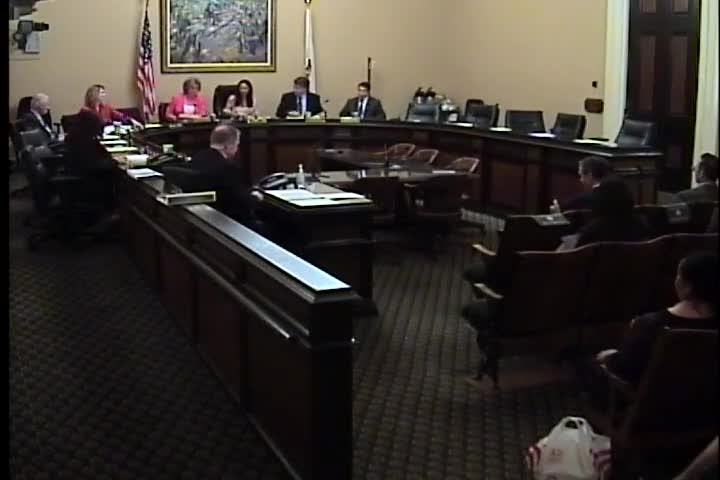 6MIN
Assembly Standing Committee on Revenue and Taxation
Bill Author

Bill Co-Author(s):