AB 2048: Collective bargaining: Legislature.
- Session Year: 2017-2018
- House: Assembly
- Latest Version Date: 2018-04-12
Existing law, the Ralph C. Dills Act (Dills Act), governs collective bargaining between the state and recognized state public employee organizations. Existing law excludes certain employees from coverage under the Dills Act, including, among others, managerial employees, supervisory employees, and confidential employees, as defined. Existing law creates the Public Employment Relations Board and authorizes it, among other things, to determine appropriate state employee bargaining units, as specified.
This bill would enact the Legislature Employer-Employee Relations Act, to provide employees of the Legislature, including some supervisory and managerial employees, the right to form, join, and participate in the activities of employee organizations of their own choosing for the purpose of representation on all matters of employer-employee relations. The bill would prescribe rights, duties, and prohibitions in this context that parallel those in the Dills Act. The bill would prohibit the Public Employment Relations Board from including employees of the Legislature in a bargaining unit that includes employees other than those of the Legislature. The bill would make it a misdemeanor for any person to willfully resist, prevent, impede, or interfere with any member of the board, or any of its agents, in the performance of duties pursuant to its provisions. By expanding the definition of a crime, this bill would impose a state-mandated local program. The bill would provide that the provisions of the Legislature Employer-Employee Relations Act are severable.
The California Constitution requires the state to reimburse local agencies and school districts for certain costs mandated by the state. Statutory provisions establish procedures for making that reimbursement.
This bill would provide that no reimbursement is required by this act for a specified reason.
Existing law, the Ralph C. Dills Act, grants to state employees the right to form employee organizations for the purpose of representing their members in negotiating terms and conditions of employment with the state and prescribes definitions and procedures in this regard. The act prescribes various definitions for its purposes, including that of employee, from which certain groups of civil service employees are excepted.This bill would make a nonsubstantive change to the definition of employee in the Ralph C. Dills Act.Existing law, the Ralph C. Dills Act, grants to state employees the right to form employee organizations for the purpose of representing their members in negotiating terms and conditions of employment with the state and prescribes definitions and procedures in this regard. The act prescribes various definitions for its purposes, including that of employee, from which certain groups of civil service employees are excepted.
This bill would make a nonsubstantive change to the definition of employee in the Ralph C. Dills Act.
This chapter shall be known and may be cited as the Legislature Employer-Employee Relations Act.
3599.51.The Legislature finds and declares that it is the purpose of this chapter to promote full communication between the Legislature and its employees by providing a reasonable method of resolving disputes regarding wages, hours, and other terms and conditions of employment between the Legislature and public employee organizations. It is also the purpose of this chapter to promote the improvement of personnel management and employer-employee relations within the Legislature by providing a uniform basis for recognizing the right of employees of the Legislature to join organizations of their own choosing and be represented by those organizations in their employment relations with the Legislature. It is further the purpose of this chapter, in order to foster peaceful employer-employee relations, to allow employees of the Legislature to select one employee organization as the exclusive representative of the employees in an appropriate unit and to permit the exclusive representative to receive financial support from those employees who receive the benefits of this representation.
3599.52.For purposes of this chapter:
(a)Board means the Public Employment Relations Board. The powers and duties of the board described in Section 3541.3 shall also apply, as appropriate, to this chapter.
(b)Employee of the Legislature or employee means any employee of either house of the Legislature, except all of the following:
(1)Members of the Legislature.
(2)Appointed officers of the Legislature, such as the Secretary of the Senate and the Chief Clerk of the Assembly.
(3)Department or office leaders, such as chief-of-staffs, staff directors, and chief consultants.
(c)Employee organization means any organization that includes employees of the Legislature and that has as one of its primary purposes representing these employees in their relations with the Legislature.
(d)Fair share fee means the fee deducted by the Legislature from the salary or wages of an employee of the Legislature in an appropriate unit who does not become a member of, and financially support, the recognized employee organization. The fair share fee shall be used to defray the costs incurred by the recognized employee organization in fulfilling its duty to represent the employees in their employment relations with the Legislature, and shall not exceed the standard initiation fee, membership dues, and general assessments of the recognized employee organization.
(e)Legislature or employer, means the Assembly and the Senate, except that, for the purposes of bargaining or meeting and conferring in good faith, Legislature or employer means the Speaker of the Assembly and the President pro Tempore of the Senate, or their designated representatives, acting with the authorization of their respective houses.
(f)Maintenance of membership means that all employees who voluntarily are, or who voluntarily become, members of a recognized employee organization shall remain members of that employee organization in good standing for a period as agreed to by the parties pursuant to a memorandum of understanding, commencing with the effective date of the memorandum of understanding. A maintenance of membership provision shall not apply to any employee who within 30 days prior to the expiration of the memorandum of understanding withdraws from the employee organization by sending a signed withdrawal letter to the employee organization and a copy to the Controllers office.
(g)Mediation means effort by an impartial third party to assist in reconciling a dispute regarding wages, hours, and other terms and conditions of employment between representatives of the public agency and the recognized employee organization or recognized employee organizations through interpretation, suggestion, and advice.
(h)Recognized employee organization means an employee organization that has been recognized by the Legislature as the exclusive representative of the employees in an appropriate unit.
3599.54.Any person who willfully resists, prevents, impedes, or interferes with any member of the board, or any of its agents, in the performance of duties pursuant to this chapter, shall be guilty of a misdemeanor, and, upon conviction thereof, shall be sentenced to pay a fine of not more than one thousand dollars ($1,000).
3599.55.The initial determination as to whether charges of unfair practices are justified, and, if so, what remedy is necessary to effectuate the purposes of this chapter shall be a matter within the exclusive jurisdiction of the board, except that, in an action to recover damages due to an unlawful strike, the board shall have no authority to award strike-preparation expenses as damages, and shall have no authority to award damages for costs, expenses, or revenue losses incurred during, or as a consequence of, an unlawful strike. Procedures for investigating, hearing, and deciding these cases shall be devised and promulgated by the board and shall include all of the following:
(a)Any employee, employee organization, or employer shall have the right to file an unfair practice charge, except that the board shall not do either of the following:
(1)Issue a complaint respecting a charge based upon an alleged unfair practice that occurred more than six months prior to the filing of the charge.
(2)Issue a complaint respecting conduct also prohibited by the provisions of the agreement between the parties until the grievance machinery of the agreement, if it exists and covers the matter at issue, has been exhausted, either by settlement or binding arbitration. However, when the charging party demonstrates that resort to contract grievance procedures would be futile, their exhaustion shall not be necessary. The board shall have discretionary jurisdiction to review a settlement or arbitration award reached pursuant to the grievance machinery solely for the purpose of determining whether it is repugnant to the purposes of this chapter. If the board finds that the settlement or arbitration award is repugnant to the purposes of this chapter, it shall issue a complaint on the basis of a timely filed charge, and hear and decide the case on the merits; otherwise, it shall dismiss the charge. The board shall, in determining whether the charge was timely filed, consider the six-month limitation set forth in paragraph (1) of this subdivision to have been tolled during the time it took the charging party to exhaust the grievance machinery.
(b)The board shall not have authority to enforce agreements between the parties, and shall not issue a complaint on any charge based on an alleged violation of an agreement that would not also constitute an unfair practice under this chapter.
(c)The board shall have the power to issue a decision and order directing an offending party to cease and desist from the unfair practice and to take such affirmative action, including, but not limited to, the reinstatement of employees with or without backpay, as will effectuate the policies of this chapter.
3599.56.Employees of the Legislature shall have the right to form, join, and participate in the activities of employee organizations of their own choosing for the purpose of representation on all matters of employer-employee relations. Employees of the Legislature also shall have the right to refuse to join or participate in the activities of employee organizations, except that nothing shall preclude the parties from agreeing to a maintenance of membership provision or a fair share fee provision pursuant to a memorandum of understanding. In any event, employees of the Legislature shall have the right to represent themselves individually in their employment relations with the Legislature.
3599.57.Employee organizations shall have the right to represent their members in their employment relations with the Legislature, except that once an employee organization is recognized as the exclusive representative of an appropriate unit, the recognized employee organization is the only organization that may represent that unit in employment relations with the Legislature. Employee organizations may establish reasonable restrictions regarding who may join and may make reasonable provisions for the dismissal of individuals from membership. This section shall not prohibit any employee from appearing in his or her own behalf in his or her employment relations with the Legislature.
3599.58.All employee organizations shall have the right to have membership dues, initiation fees, membership benefit programs, and general assessments deducted pursuant to subdivision (a) of Section 1152 and Section 1153 until an employee organization is recognized as the exclusive representative for employees in an appropriate unit, and then any deductions as to any employee in the negotiating unit shall not be permissible except to the exclusive representative.
3599.59.(a)Once an employee organization is recognized as the exclusive representative of an appropriate unit, it may enter into an agreement with the Legislature, collectively, providing for organizational security in the form of maintenance of membership or fair share fee deduction.
(b)The Legislature shall furnish the recognized employee organization with sufficient employment data to allow the organization to calculate membership fees and the appropriate fair share fees, and shall deduct the amount specified by the recognized employee organization from the salary or wages of every employee for the membership fee or the fair share fee. These fees shall be remitted monthly to the recognized employee organization along with an adequate itemized record of the deductions, including, if required by the recognized employee organization, machine readable data. Fair share fee deductions shall continue until the effective date of a successor agreement or implementation of the Legislatures last, best, and final offer, whichever occurs first. The Controller shall retain, from the fair share fee deduction, an amount equal to the cost of administering this section. The Legislature shall not be liable in any action by an employee seeking recovery of, or damages for, improper use or calculation of fair share fees.
(c)Notwithstanding subdivision (b), any employee who is a member of a religious body whose traditional tenets or teachings include objections to joining or financially supporting employee organizations shall not be required to financially support the recognized employee organization. That employee, in lieu of a membership fee or a fair share fee deduction, shall instruct the employer to deduct and pay sums equal to the fair share fee to a nonreligious, nonlabor organization, charitable fund approved by the Department of General Services for receipt of charitable contributions by payroll deductions.
(d)Every recognized employee organization that has agreed to a fair share fee provision shall keep an adequate itemized record of its financial transactions and shall make available annually, to the board and to the employees in the unit, within 90 days after the end of its fiscal year, a detailed written financial report thereof in the form of a balance sheet and an operating statement, certified as to accuracy by its president and treasurer or comparable officers. In the event of a failure to comply with this section, any employee in the unit may petition the board for an order compelling compliance, or the board may issue a compliance order on its own motion.
(e)If an employee who holds conscientious objections pursuant to subdivision (c) requests individual representation in a grievance, arbitration, or administrative hearing from the recognized employee organization, the recognized employee organization is authorized to charge the employee for the reasonable cost of the representation.
(f)An employee who pays a fair share fee shall be entitled to fair and impartial representation by the recognized employee organization. A breach of this duty shall be deemed to have occurred if the employee organizations conduct in representation is arbitrary, discriminatory, or in bad faith.
3599.60.Any employee who pays a fair share fee shall have the right to demand and receive from the recognized employee organization, under procedures established by the recognized employee organization, a return of any part of that fee paid by him or her which represents the employees additional pro rata share of expenditures by the recognized employee organization that is either in aid of activities or causes of a partisan political or ideological nature only incidentally related to the terms and conditions of employment, or applied towards the cost of any other benefits available only to members of the recognized employee organization. The pro rata share subject to refund shall not reflect, however, the costs of support of lobbying activities designed to foster policy goals and collective negotiations and contract administration, or to secure for the employees represented advantages in wages, hours, and other conditions of employment in addition to those secured through meeting and conferring with the Legislature. The board may compel the recognized employee organization to return that portion of a fair share fee that the board may determine to be subject to refund under the provisions of this section.
3599.61.The scope of representation shall be limited to wages, hours, and other terms and conditions of employment, except, however, that the scope of representation shall not include consideration of the merits, necessity, or organization of any service or activity provided by law.
3599.62.(a)Except in cases of emergency as provided in subdivision (b), the employer shall give reasonable written notice to each recognized employee organization affected by any law, rule, or resolution directly relating to matters within the scope of representation proposed to be adopted by the employer, and shall give such recognized employee organizations the opportunity to meet and confer with the administrative officials or their delegated representatives as may be properly designated by law.
(b)In cases of emergency when the employer determines that a law, rule, or resolution must be adopted immediately without prior notice or meeting with a recognized employee organization, the administrative officials or their delegated representatives as may be properly designated by law shall provide notice and opportunity to meet and confer in good faith at the earliest practical time following the adoption of the law, rule, or resolution.
3599.63.The Speaker of the Assembly and the President pro Tempore of the Senate, or their designated representatives, acting with the authorization of their respective houses shall meet and confer in good faith regarding wages, hours, and other terms and conditions of employment with representatives of recognized employee organizations, and shall consider fully such presentations as are made by the employee organization on behalf of its members prior to arriving at a determination of policy or course of action. For purposes of this section, the term meet and confer in good faith means that the Speaker of the Assembly and the President pro Tempore of the Senate, or their designated representatives, and representatives of recognized employee organizations shall have the mutual obligation to personally meet and confer promptly upon request by either party and continue to meet and confer for a reasonable period of time in order to exchange freely information, opinions, and proposals, and to endeavor to reach agreement on matters within the scope of representation prior to the adoption by the state of its final budget for the ensuing year. The process should include adequate time for the resolution of impasses.
3599.64.If an agreement is reached between the Speaker of the Assembly and the President pro Tempore of the Senate, or their designated representatives, and the recognized employee organization, the parties shall jointly prepare a written memorandum of understanding reflecting the terms of the agreement, which shall be presented, when appropriate, to the Legislature for adoption of a statute providing for appropriation of funding and amendment of any related statutes.
3599.65.(a)Any side letter, appendix, or other addendum to a properly ratified memorandum of understanding that requires the expenditure of two hundred fifty thousand dollars ($250,000) or more related to salary and benefits and that is not already contained in the original memorandum of understanding or the Budget Act shall be reviewed by the Joint Legislative Budget Committee. The Joint Legislative Budget Committee shall determine within 30 days after receiving the side letter, appendix, or other addendum whether it presents substantial additions that are not reasonably within the parameters of the original memorandum of understanding and thereby requires legislative action to adopt a statute to ratify the side letter, appendix, or other addendum.
(b)A side letter, appendix, or other addendum to a properly ratified memorandum of understanding that does not require the expenditure of funds shall be expressly identified by the parties if that side letter, appendix, or other addendum is to be incorporated in a subsequent memorandum of understanding submitted to the Legislature for adoption of a statute providing for appropriation or statutory amendment.
3599.66.If the Legislature does not adopt a statute to fully fund any provision of the memorandum of understanding that requires the expenditure of funds, either party may reopen negotiations on all or part of the memorandum of understanding. Nothing herein shall prevent the parties from agreeing and effecting those provisions of the memorandum of understanding which do not require legislative action for adoption of a statute.
3599.67.(a)If a memorandum of understanding has expired, and the Speaker of the Assembly and the President pro Tempore of the Senate, or their designated representatives, and the recognized employee organization have not agreed to a new memorandum of understanding and have not reached an impasse in negotiations, subject to subdivision (b), the parties to the agreement shall continue to give effect to the provisions of the expired memorandum of understanding, including provisions that supersede existing law, arbitration provisions, no-strike provisions, agreements regarding matters covered in the Fair Labor Standards Act of 1938 (29 U.S.C. Sec. 201 et seq.), and provisions covering fair share fee deduction consistent with Section 3515.7.
(b)If the Speaker of the Assembly and the President pro Tempore of the Senate, or their designated representatives, and the recognized employee organization reach an impasse in negotiations for a new memorandum of understanding, the Legislature may implement any or all of its last, best, and final offer. Any proposal in the Legislatures last, best, and final offer that, if implemented, would conflict with existing statutes or require the expenditure of funds shall be presented to the Legislature, collectively, for adoption of a statute providing for appropriation of funding, and any related statutory changes shall be controlling without further legislative action. Implementation of the last, best, and final offer does not relieve the parties of the obligation to bargain in good faith and reach an agreement on a memorandum of understanding if circumstances change, and does not waive rights that the recognized employee organization has under this chapter.
3599.68.If after a reasonable period of time, the Speaker of the Assembly and the President pro Tempore of the Senate, or their designated representatives, and the recognized employee organization fail to reach an agreement, the Speaker of the Assembly and the President pro Tempore of the Senate, or their designated representatives, and the recognized employee organization may agree upon the appointment of a mediator mutually agreeable to the parties, or either party may request the board to appoint a mediator. When both parties mutually agree upon a mediator, costs of mediation shall be divided one-half to the Legislature and one-half to the recognized employee organization. If the board appoints the mediator, the costs of mediation shall be paid by the board.
3599.69.A reasonable number of employee representatives of recognized employee organizations shall be granted reasonable time off without loss of compensation or other benefits when formally meeting and conferring with the Legislature on matters within the scope of representation. This section shall apply only to employees, as defined by Section 3599.52, and only for periods when a memorandum of understanding is not in effect.
3599.71.It shall be unlawful for the Legislature to do any of the following:
(a)Impose or threaten to impose reprisals on employees, to discriminate or threaten to discriminate against employees, or otherwise to interfere with, restrain, or coerce employees because of their exercise of rights guaranteed by this chapter. For purposes of this subdivision, employee includes an applicant for employment or reemployment.
(b)Deny to employee organizations rights guaranteed to them by this chapter.
(c)Refuse or fail to meet and confer in good faith with a recognized employee organization.
(d)Dominate or interfere with the formation or administration of any employee organization, or contribute financial or other support to it, or in any way encourage employees to join any organization in preference to another.
(e)Refuse to participate in good faith in the mediation procedure set forth in Section 3599.68.
3599.72.It shall be unlawful for an employee organization to do any of the following:
(a)Cause or attempt to cause the Legislature to violate Section 3599.71.
(b)Impose or threaten to impose reprisals on employees, to discriminate or threaten to discriminate against employees, or otherwise to interfere with, restrain, or coerce employees because of their exercise of rights guaranteed by this chapter.
(c)Refuse or fail to meet and confer in good faith with the Legislature in relation to the employees for whom it is the recognized employee organization.
(d)Refuse to participate in good faith in the mediation procedure set forth in Section 3599.68.
3599.73.(a)Judicial review of a unit determination shall only be allowed under either of the following circumstances:
(1)When the board, in response to a petition from the Legislature or an employee organization, agrees that the case is one of special importance and joins in the request for the review.
(2)When the issue is raised as a defense to an unfair practice complaint. A board order directing an election shall not be stayed pending judicial review.
Upon receipt of a board order joining in the request for judicial review, a party to the case may petition for a writ of extraordinary relief from the unit determination decision or order.
(b)Any charging party, respondent, or intervenor aggrieved by a final decision or order of the board in an unfair practice case, except a decision of the board not to issue a complaint in such a case, may petition for a writ of extraordinary relief from the decision or order.
(c)The petition shall be filed in the district court of appeal in the appellate district where the unit determination or unfair practice dispute occurred. The petition shall be filed within 30 days after issuance of the boards final order, order denying reconsideration, or order joining in the request for judicial review, as applicable. Upon the filing of the petition, the court shall cause notice to be served upon the board and thereupon shall have jurisdiction of the proceeding. The board shall file in the court the record of the proceeding, certified by the board, within 10 days after the clerks notice unless the time is extended by the court for good cause shown. The court shall have jurisdiction to grant to the board any temporary relief or restraining order it deems just and proper and in like manner to make and enter a decree enforcing, modifying, or setting aside the order of the board. The findings of the board with respect to questions of fact, including ultimate facts, if supported by substantial evidence on the record considered as a whole, shall be conclusive. The provisions of Title 1 (commencing with Section 1067) of Part 3 of the Code of Civil Procedure relating to writs shall, except where specifically superseded herein, apply to proceedings pursuant to this section.
(d)If the time to petition for extraordinary relief from a board decision has expired, the board may seek enforcement of any final decision or order in a district court of appeal or a superior court in the district where the unit determination or unfair practice case occurred. If, after a hearing, the court determines that the order was issued pursuant to procedures established by the board and that the person or entity refuses to comply with the order, the court shall enforce the order by writ of mandamus. The court shall not review the merits of the order.
3599.74.(a)The Legislature shall grant exclusive recognition to employee organizations designated or selected pursuant to rules established by the board for employees of the Legislature or an appropriate unit thereof, subject to the right of an employee to represent himself or herself.
(b)The board shall establish reasonable procedures for petitions and for holding elections and determining appropriate units pursuant to subdivision (a).
(c)The board, as it determines appropriate bargaining units, shall not include employees of the Legislature in a bargaining unit that includes employees other than those of the Legislature.
(d)The board shall also establish procedures whereby recognition of employee organizations formally recognized as exclusive representatives pursuant to a vote of the employees may be revoked by a majority vote of the employees only after a period of not less than 12 months following the date of such recognition.
3599.75.The Legislature shall adopt reasonable rules for all of the following:
(a)Registering employee organizations, as defined by subdivision (c) of Section 1150, and bona fide associations, as defined by subdivision (d) of Section 1150.
(b)Determining the status of organizations and associations as employee organizations or bona fide associations.
(c)Identifying the officers and representatives who officially represent employee organizations and bona fide associations.
3599.76.Notwithstanding any other law, if a decision by an administrative law judge regarding the recognition or certification of an employee organization is appealed, the decision shall be deemed the final order of the board if the board does not issue a ruling that supersedes the decision on or before 180 days after the appeal is filed.
3599.77.(a)In determining an appropriate unit, the board shall be governed by the criteria in subdivision (b). However, the board shall not direct an election in a unit unless one or more of the employee organizations involved in the proceeding is seeking or agrees to an election in the unit.
(b)In determining an appropriate unit, the board shall take into consideration all of the following criteria:
(1)The internal and occupational community of interest among the employees, including, but not limited to, all of the following:
(A)The extent to which they perform functionally related services or work toward established common goals.
(B)The history of employee representation in state government and in similar employment.
(C)The extent to which the employees have common skills, working conditions, job duties, or similar educational or training requirements.
(2)The effect that the projected unit will have on the meet and confer relationships, emphasizing the availability and authority of employer representatives to deal effectively with employee organizations representing the unit, and taking into account such factors as work location, the numerical size of the unit, the relationship of the unit to organizational patterns of the Legislature, and the effect on the existing classification structure or existing classification schematic of dividing a single class or single classification schematic among two or more units.
(3)The effect of the proposed unit on efficient operations of the employer and the compatibility of the unit with the responsibility of the Legislature and its employees to serve the public.
(4)The number of employees and classifications in a proposed unit and its effect on the operations of the employer, on the objectives of providing the employees the right to effective representation, and on the meet and confer relationship.
(5)The impact on the meet and confer relationship created by fragmentation of employees or any proliferation of units among the employees of the employer.
3599.78.(a)(1)All initial meet and confer proposals of recognized employee organizations shall be presented to the employer at a public meeting, and those proposals thereafter shall be a public record.
(2)All initial meet and confer proposals or counterproposals of the employer shall be presented to the recognized employee organization at a public meeting, and those proposals or counterproposals thereafter shall be a public record.
(b)Except in cases of emergency as provided in subdivision (d), no meeting and conferring shall take place on any proposal subject to subdivision (a) until not less than seven consecutive days have elapsed to enable the public to become informed, and to publicly express itself regarding the proposals, as well as regarding other possible subjects of meeting and conferring, and thereafter, the employer shall, in an open meeting, hear public comment on all matters related to the meet and confer proposals.
(c)Forty-eight hours after any proposal that includes any substantive subject that has not first been presented as proposals for public reaction pursuant to this section is offered during any meeting and conferring session, those proposals and the position, if any, taken by the representatives of the employer shall be a public record.
(d)Subdivision (b) shall not apply when the employer determines that, due to an act of God, natural disaster, or other emergency or calamity affecting the state, and that is beyond the control of the employer or recognized employee organization, it must meet and confer and take action upon a proposal immediately and without sufficient time for the public to become informed and to publicly express itself. In those cases, the results of the meeting and conferring shall be made public as soon as reasonably possible.
3599.79.This chapter shall not be construed to apply Section 923 of the Labor Code to employees of the Legislature.
3599.80.Nothing in this chapter shall be construed as modifying or eliminating any existing wages, hours, or terms and conditions of employment for employees of the Legislature. All existing wages, hours, and terms and conditions of employment for employees of the Legislature shall remain in effect unless and until changed in accordance with the Legislatures procedures or pursuant to a memorandum of understanding or agreement between the Legislature and a recognized employee organization.
3599.81.If any provision of this chapter, or the application thereof, to any person or circumstances, is held invalid, the invalidity shall not affect any other provision or application of this chapter that can be given effect without the invalid provision or application and, to this end, the provisions of this chapter are severable.
SEC. 2.No reimbursement is required by this act pursuant to Section 6 of Article XIIIB of the California Constitution because the only costs that may be incurred by a local agency or school district will be incurred because this act creates a new crime or infraction, eliminates a crime or infraction, or changes the penalty for a crime or infraction, within the meaning of Section 17556 of the Government Code, or changes the definition of a crime within the meaning of Section 6 of Article XIIIB of the California Constitution.
SECTION 1.Section 3513 of the Government Code is amended to read:3513.As used in this chapter:(a)Employee organization means any organization that includes employees of the state and that has as one of its primary purposes representing these employees in their relations with the state.(b)Recognized employee organization means an employee organization that has been recognized by the state as the exclusive representative of the employees in an appropriate unit.(c)State employee means a civil service employee of the state, and the teaching staff of schools under the jurisdiction of the State Department of Education or the Superintendent of Public Instruction, except managerial employees, confidential employees, supervisory employees, employees of the Department of Human Resources, professional employees of the Department of Finance engaged in technical or analytical state budget preparation other than the auditing staff, professional employees in the Personnel/Payroll Services Division of the Controllers office engaged in technical or analytical duties in support of the states personnel and payroll systems other than the training staff, employees of the Legislative Counsel Bureau, employees of the Bureau of State Audits, employees of the office of the Inspector General, employees of the board, conciliators employed by the California State Mediation and Conciliation Service, employees of the Office of the State Chief Information Officer except as otherwise provided in Section 11546.5, and intermittent athletic inspectors who are employees of the State Athletic Commission.(d)Mediation means effort by an impartial third party to assist in reconciling a dispute regarding wages, hours, and other terms and conditions of employment between representatives of the public agency and the recognized employee organization or recognized employee organizations through interpretation, suggestion, and advice.(e)Managerial employee means any employee having significant responsibilities for formulating or administering agency or departmental policies and programs or administering an agency or department.(f)Confidential employee means any employee who is required to develop or present management positions with respect to employer-employee relations or whose duties normally require access to confidential information contributing significantly to the development of management positions.(g)Supervisory employee means any individual, regardless of the job description or title, having authority, in the interest of the employer, to hire, transfer, suspend, lay off, recall, promote, discharge, assign, reward, or discipline other employees, or responsibility to direct them, or to adjust their grievances, or effectively to recommend this action, if, in connection with the foregoing, the exercise of this authority is not of a merely routine or clerical nature, but requires the use of independent judgment. Employees whose duties are substantially similar to those of their subordinates shall not be considered to be supervisory employees.(h)Board means the Public Employment Relations Board. The Educational Employment Relations Board shall be renamed the Public Employment Relations Board as provided in Section 3540. The powers and duties of the board described in Section 3541.3 shall also apply, as appropriate, to this chapter.(i)Maintenance of membership means that all employees who voluntarily are, or who voluntarily become, members of a recognized employee organization shall remain members of that employee organization in good standing for a period as agreed to by the parties pursuant to a memorandum of understanding, commencing with the effective date of the memorandum of understanding. A maintenance of membership provision shall not apply to any employee who within 30 days prior to the expiration of the memorandum of understanding withdraws from the employee organization by sending a signed withdrawal letter to the employee organization and a copy to the Controllers office.(j)State employer, or employer, for the purposes of bargaining or meeting and conferring in good faith, means the Governor or his or her designated representatives.(k)Fair share fee means the fee deducted by the state employer from the salary or wages of a state employee in an appropriate unit who does not become a member of and financially support the recognized employee organization. The fair share fee shall be used to defray the costs incurred by the recognized employee organization in fulfilling its duty to represent the employees in their employment relations with the state, and shall not exceed the standard initiation fee, membership dues, and general assessments of the recognized employee organization.As used in this chapter:
(a)Employee organization means any organization that includes employees of the state and that has as one of its primary purposes representing these employees in their relations with the state.
(b)Recognized employee organization means an employee organization that has been recognized by the state as the exclusive representative of the employees in an appropriate unit.
(c)State employee means any a civil service employee of the state, and the teaching staff of schools under the jurisdiction of the State Department of Education or the Superintendent of Public Instruction, except managerial employees, confidential employees, supervisory employees, employees of the Department of Human Resources, professional employees of the Department of Finance engaged in technical or analytical state budget preparation other than the auditing staff, professional employees in the Personnel/Payroll Services Division of the Controllers office engaged in technical or analytical duties in support of the states personnel and payroll systems other than the training staff, employees of the Legislative Counsel Bureau, employees of the Bureau of State Audits, employees of the office of the Inspector General, employees of the board, conciliators employed by the California State Mediation and Conciliation Service, employees of the Office of the State Chief Information Officer except as otherwise provided in Section 11546.5, and intermittent athletic inspectors who are employees of the State Athletic Commission.
(d)Mediation means effort by an impartial third party to assist in reconciling a dispute regarding wages, hours, and other terms and conditions of employment between representatives of the public agency and the recognized employee organization or recognized employee organizations through interpretation, suggestion, and advice.
(e)Managerial employee means any employee having significant responsibilities for formulating or administering agency or departmental policies and programs or administering an agency or department.
(f)Confidential employee means any employee who is required to develop or present management positions with respect to employer-employee relations or whose duties normally require access to confidential information contributing significantly to the development of management positions.
(g)Supervisory employee means any individual, regardless of the job description or title, having authority, in the interest of the employer, to hire, transfer, suspend, lay off, recall, promote, discharge, assign, reward, or discipline other employees, or responsibility to direct them, or to adjust their grievances, or effectively to recommend this action, if, in connection with the foregoing, the exercise of this authority is not of a merely routine or clerical nature, but requires the use of independent judgment. Employees whose duties are substantially similar to those of their subordinates shall not be considered to be supervisory employees.
(h)Board means the Public Employment Relations Board. The Educational Employment Relations Board shall be renamed the Public Employment Relations Board as provided in Section 3540. The powers and duties of the board described in Section 3541.3 shall also apply, as appropriate, to this chapter.
(i)Maintenance of membership means that all employees who voluntarily are, or who voluntarily become, members of a recognized employee organization shall remain members of that employee organization in good standing for a period as agreed to by the parties pursuant to a memorandum of understanding, commencing with the effective date of the memorandum of understanding. A maintenance of membership provision shall not apply to any employee who within 30 days prior to the expiration of the memorandum of understanding withdraws from the employee organization by sending a signed withdrawal letter to the employee organization and a copy to the Controllers office.
(j)State employer, or employer, for the purposes of bargaining or meeting and conferring in good faith, means the Governor or his or her designated representatives.
(k)Fair share fee means the fee deducted by the state employer from the salary or wages of a state employee in an appropriate unit who does not become a member of and financially support the recognized employee organization. The fair share fee shall be used to defray the costs incurred by the recognized employee organization in fulfilling its duty to represent the employees in their employment relations with the state, and shall not exceed the standard initiation fee, membership dues, and general assessments of the recognized employee organization.
|
Date
|
Status
|
|---|---|
| May 23, 2018 | From committee: Without further action pursuant to Joint Rule 62(a). |
| Apr 18, 2018 | In committee: Set, first hearing. Failed passage. |
| Apr 12, 2018 | From committee chair, with author's amendments: Amend, and re-refer to Com. on P.E., R., & S.S. Read second time and amended. |
| Apr 16, 2018 | Re-referred to Com. on P.E., R., & S.S. |
| Apr 12, 2018 | Referred to Com. on P.E., R., & S.S. |
| Feb 7, 2018 | From printer. May be heard in committee March 9. |
| Feb 6, 2018 | Read first time. To print. |
|
Date
|
Description
|
Location
|
Votes
|
|
|---|---|---|---|---|
| Apr 18, 2018 | Do pass and be re-referred to the Committee on [Appropriations] | Assembly Standing Committee on Public Employees, Retirement, and Social Security |
Passed |
This list shows positions taken on this bill by organizations on the date displayed, which is linked to the original source.
Positions by individuals are not included.
|
Organization
|
Position
|
Date
|
|---|---|---|
| american federation of state county and municipal employees | * Indeterminate | Apr 18, 2018 |
| California Labor Federation | * Support | Apr 18, 2018 |
| California Professional Firefighters | * Indeterminate | Apr 18, 2018 |
Date of Hearing: April 18, 2018
ASSEMBLY COMMITTEE ON PUBLIC EMPLOYEES, RETIREMENT, AND SOCIAL SECURITY
Freddie Rodriguez, Chair
ABPCA Bill Id:AB 2048 (
Author:Gonzalez Fletcher) – As Introduced Ver:February 6, 2018
SUBJECT: State public employee labor relations
SUMMARY: Establishes the Legislative Employer-Employee Relations Act (LEERA) that would grant collective bargaining rights to certain employees of the Legislature; thereby, governing the employer-employee relationship, and confers certain rights to these employees regarding joining an employee organization, and rights to the employee organization representing these employees, among other provisions. Specifically, this bill:
- Includes legislative findings and declarations regarding the purpose of this measure which includes to promote full communication between the Legislature and its employees by providing a reasonable method of resolving disputes regarding wages, hours, and other terms and conditions of employment between the Legislature and public employee organizations; and, to limit labor strife by fostering peaceful employer-employee relations
- Is substantially and similarly modeled after provisions provided for in several existing employer-employee relations acts, but made applicable to each house (i.e., the Assembly and the Senate) of the Legislature.
Provisions contained in the LEERA include rights, obligations, and limitations of individuals and parties involved in a collective bargaining and representation process for the Legislature and legislative employees, as defined. More specifically, these provisions provide for the following:
3) Defines the following terms:
- “Board” to mean the Public Employment Relations Board (PERB).
b) “Employee of the Legislature” or “employee” to mean any employee of either House of the Legislature, but excepts from this definition, Members and appointed officers of the Legislature such as the Secretary of the Senate and the Chief Clerk of the Assembly, department or office leaders such as chiefs-of-staffs, staff directors, and chief consultants.
c) “Employee organization” to mean any organization that includes employees of the Judicial Council and that, among one its primary purposes, is to represent these employees in their relations with the Legislature.
d) “Fair share fee” to mean the fee deducted by the Legislature from the salary or wages of a legislative employee in an appropriate unit who does not become a member of, and financially support, the recognized employee organization.
This definition also provides that this fee is to defray to costs incurred by the recognized employee organization in fulfilling its representation duties, and must not exceed the standard initiation fee, membership dues and general assessments of the recognized employee organization.
e) “Legislature” or “employer” to mean the Assembly and the Senate, except that for purposes of these terms, mean the Speaker of the Assembly and the President pro Tempore of the Senate, or their designated representatives, acting with the authorization of the respective Houses of the Legislature.
f) “Maintenance of membership” to mean all employees who voluntarily are, or become members of a recognized employee organization must remain good-standing members of that organization for a period as agreed to by the parties pursuant to a memorandum of understanding (MOU). This definition also provides that a maintenance of membership provision does not apply to any employee who withdraws from the employee organization within 30 days prior to the expiration of the MOU, and sends a signed withdrawal letter to the employee organization and a copy to the State Controller’s office.
g) “Mediation” to mean effort by an impartial third party to assist in reconciling a dispute regarding wages, hours, and other terms and conditions of employment between representatives of the public agency and the recognized employee organization or organizations through interpretation, suggestion and advice.
h) “Recognized employee organization” to mean an employee organization that has been recognized by the Legislature as the exclusive representative of the employees in an appropriate unit.
4) Provides that any person who willfully resists, prevents, impedes, or interferes with any member of the PERB or its agents in performing its duties pursuant to the LEERA, is guilty of a misdemeanor, and upon conviction, must pay a fine not to exceed $1,000.
5) Provides that the parties to negotiate through a meet and confer in good-faith process with an employee organization to be the Speaker of the Assembly and the President pro Tempore of the Senate, or their respective designees.
6) Provides the PERB exclusive jurisdiction over the initial determination as to whether the charges of unfair practices are justified and the appropriate remedy, except awards for certain expenses as damages, damages for costs, expenses or revenue losses relating to an unlawful strike.
Also, grants to the PERB the authority to establish procedures for investigating, hearing, and deciding cases regarding the LEERA and requires certain specified procedures regarding issuance of complaints; alleged unfair practices; grievances; and, provides that PERB has discretionary jurisdiction to review a settlement or arbitration award, as specified.
7) Provides that the PERB does not have the authority to enforce agreements between the parties, issue a complaint regarding an unfair practice charge, as specified, or issue a complaint relating to conduct prohibited by provisions of an agreement between the parties, as specified.
However, the PERB does have power to issue a decision and order directing an offending party to cease and desist from the unfair practice and to take affirmative action, including, but not limited to, the reinstatement of employees with or without backpay, to effectuate the policies pursuant to the LEERA.
8) Grants employees of the Legislature the right to form, join, and participate in the activities of an employee organization of their own choosing, including the right to refuse to join or participate in the activities of such organizations, and permits the parties to agree to a maintenance of membership provision or fair share fee provision pursuant to an MOU, and allows legislative employees the right to self-representation their employment relations with the Legislature.
9) Grants employee organizations the right to represent their members in their employment relations with the Legislature until recognized as the exclusive representative of an appropriate bargaining unit. At that time, the recognized employee organization is the only organization that may represent that unit in its employment relationship with the Judicial Council.
Also, establishes that employee organizations may establish reasonable restrictions on membership, including reasonable provisions for dismissal from membership, and that an employee is not prohibited from self-representation in his or her employment relations with the Legislature.
10) Grants employee organizations the right to have membership dues, initiation fees, membership benefit programs, and general assessments deducted, as specified, until an employee organization is recognized as the exclusive representative, and upon that recognition, any deductions as to any employee in the negotiating unit are not permissible, except to the exclusive representative.
- Provides that an employee organization recognized as the exclusive representative of an appropriate unit may enter into an agreement with the Legislature providing for organizational security in the form of maintenance of membership or fair share fee deduction.
- Requires the Legislature to provide the recognized employee organization with sufficient employment data that would allow the organization to calculate membership and appropriate fair share fees, and to deduct the amount from the salary or wages of the employee. Fees are to be remitted monthly to the recognized employee organization along with an itemized record of the deductions.
Specifies that fair share fee deductions must continue until the effective date of a successor agreement or implementation of the Legislature’s last, best, and final offer, whichever is first; requires the Controller to retain an amount equal to administrative cost, from the fair share fee deduction; and, that the Legislature is not liable in any action by an employee seeking recovery of, or damages for, improper use or calculation of fair share fees.
- Includes a religious conscientious objector clause, and if exercised by the employee, requires the employee, in lieu of a membership or fair share fee deduction, to instruct the employer to deduct and pay a sum equal to the fair share fee to a nonreligious, nonlabor organization, or charitable fund approved by the Department of General Services (DGS) for receipt of charitable contributions by payroll deduction.
Also, provides that if an employee who holds conscientious objections requests individual representation in a grievance, arbitration, or administrative hearing from the recognized employee organization, the organization is authorized to charge the employee for the reasonable cost of the representation.
And, provides that every recognized employee organization that has agreed to a fair share fee provision to keep an itemized record of its financial transactions and make them annually available to the PERB and employees in the unit, as specified.
- Specifies that an employee who pays a fair share fee is entitled to fair and impartial representation by the recognized employee organization, and establishes that a breach of this duty is deemed to have occurred if the employee organization’s conduct in representation is arbitrary, discriminatory, or in bad faith.
- Grant an employee who pays a fair share fee, the right to demand and receive from the recognized employee organization, under procedures established by the organization, a return of any part of the fee paid which represents the employee’s additional pro rata share of expenditures by the organization that is either in aid of activities or causes of a partisan political or ideological nature only incidentally related to the terms or conditions of employment, or applied towards the cost of any other benefits available only to members of the organization.
Further specifies that the pro rata share that is subject to refund must not reflect the costs of support of lobbying activities designed to foster policy goals and collective negotiations, contract administration, or to secure for represented employees, advantages in wages, hours, or other terms and conditions of employment in addition to those secured through the meet- and-confer process with the Judicial Council. The PERB is granted authority to compel return of the portion of the fair share fee which it determines to be subject to refund.
- Establishes that the scope of representation is limited to wages, hours, and other terms and conditions of employment, excluding consideration of merits, necessity, or organization of any service or activity provided by law or executive order.
- Requires, except in cases of emergency, the employer to give reasonable written notice to each recognized employee organization affected by any law, rule, resolution, or regulation directly relating to matters within the scope of representation proposed or adopted by the employer, and to give each organization the opportunity to meet and confer with the administrative officers or their designated representatives.
In the case of emergency, when the employer determines that a law, rule, resolution, or regulation must immediately be adopted without prior notice or meeting with the organization, the administrative officials or their designee must provide notice and opportunity to meet and confer in good faith at the earliest practical time following adoption of law, rule, resolution, or regulation.
- Requires the Speaker of the Assembly and the President pro Tempore of the Senate, or their designees, to meet and confer in good faith regarding wages, hours, and other terms and conditions of employment with representatives of recognized employee organizations, and to fully consider the representations made by the organization on behalf of its members prior to arriving at a determination of a policy or course of action.
Defines “meet and confer in good faith” to mean that the Speaker of the Assembly and the President pro Tempore of the Senate, or their designees, and representatives of a recognized employee organization to have the mutual obligation personally to meet and confer promptly upon request by either party and continue to meet and confer for a reasonable period of time to freely exchange information, opinions, proposals, and endeavor to reach agreement on matters within the scope of representation prior to the adoption by the state of its final budget for the ensuing year. This process also includes adequate time for the resolution of impasses.
- Includes provisions related to presentation of a MOU to the Legislature, approval by the Legislature, and appropriation of funds, including subsequent side letters, appendices, or other addendum to a properly ratified MOU. Also include provisions related to reopening negotiations in the event that the Legislature does not fully fund any provision in the MOU that requires the expenditure of funds.
- Provides the reason and process to be followed if the Legislature does not fully fund a provision of an MOU, and that if a MOU has expired and during negotiations that have not reached an impasse, in the absence of a new MOU, the provisions of the expired MOU will continue to have effect, as specified.
- Provides a process for impasse in negotiations for a new MOU, including sharing of costs for a mediator, unless the mediator is appointed by the PERB, similar to other state collective bargaining statutes
- Permits a reasonable number of employee representatives of recognized employee organizations to be granted reasonable time off without loss of compensation or other benefits when formally meeting and conferring with representatives of the Legislature on matters within the scope of representation.
- Includes provisions that prohibit the Legislature from engaging in activities that:
- Impose or threaten to impose reprisals on employees; discriminate or threaten to discriminate against employees; and, interfere with, restrain, or coerce employees because of their exercise of rights guaranteed pursuant to the LEERA.
- Deny rights pursuant to the LEERA granted to employee organizations.
- Refuse or fail to meet and confer in good faith with a recognized employee organization.
- Dominate or interfere with the formation or administration of any employee organization, or contribute financial or other support to it, or in any way encourage employees to join any organization in preference to another.
- Refuse to participate in good faith in the mediation process.
- Specifies for these purposes, that “employee” also includes an applicant for employment or reemployment.
- Includes provisions that prohibit an employee organization from engaging in activities that:
- Cause or attempt to cause the Legislature to violate its obligations pursuant to the LEERA.
- Impose or threaten to impose reprisals on employees; discriminate, or threaten to discriminate against employees; and, interfere with, restrain, or coerce employees because of their exercise of rights pursuant to the LEERA.
- Refuse or fail to meet and confer in good faith with the Legislature in relation to the employees for whom it is the recognized employee organization.
- Refuse to participate in good faith in the mediation process.
- Permits judicial review of a unit determination under specified circumstances, and establishes the process of, and for, judicial review of an unfair practice charge.
- Requires the Legislature to grant exclusive recognition to employee organizations designated or selected pursuant to PERB rules for employees of the Legislature or an appropriate unit thereof, subject to the right of self-representation by an employee; requires the PERB to establish reasonable procedures for petitions and for holding elections and determining appropriate units; and, prohibits the PERB from including employees in a bargaining unit that includes nonlegislative employees.
- Requires the Legislature to adopt reasonable rules regarding registering employee organizations; determining the status of organizations and associations as employee organizations or bona fide associations; and, identifying the officers and representatives who officially represent such organizations or associations.
- Provides that if the decision of an administrative law judge regarding the recognition or certification of an employee organization shall be deemed PERB’s final order if the decision is appealed, the decision must be deemed the final order of the PERB if the board does not issue a ruling that supersedes the decision on or before 180 days after the appeal is filed.
- Requires the PERB to be governed by specified criteria in determining an appropriate bargaining unit, except that the PERB shall not direct an election in a unit unless one or more of the employee organizations involved in the proceeding is seeking or agrees to an election in such a unit.
- Requires all initial meet and confer proposals of recognized employee organizations to be presented to the employer at a public meeting, and those proposals thereafter shall be a public record, and that all initial meet and confer proposals or counterproposals of the employer to be presented to the recognized employee organization at a public meeting, and those proposals or counterproposals to be a public record.
- Establishes, except in cases of emergency, that no meeting and conferring are to occur on a proposal until a period for public review and comment, as specified, has elapsed. This includes any proposal that includes any substantive subject that was not first presented as proposals offered during any meet and confer session for public reaction. Those proposals and the position, if any, taken by the representatives of the employer must also be a public record.
Also, provides that the requirement to wait the specified period for public review and comment before meeting and conferring does not apply when the employer determines that, due to an act of God, natural disaster, or other emergency or calamity affecting the state, and that is beyond the control of the employer or recognized employee organization, the parties must meet and confer and take action upon a proposal immediately and without sufficient time for the public to become informed and to publicly express itself. In those cases, the results of the meeting and conferring shall be made public as soon as reasonably possible.
- Provides that the LEERA is not to be construed to apply Section 923 of the Labor Code to employees of the Legislature. Section 923 of the Labor Code provides it is necessary that the individual working have full freedom of association, self-organization and designation of representatives of his own choosing, to negotiate the terms and conditions of his employment, and shall be free from the interference, restraint or coercion of employers of labor, or their agents, in the designation of such representatives or in self-organization or in other concerted activities for the purpose of collective bargaining or other mutual aid or protection.
- Includes a severability clause.
- Provides that nothing in the LEERA is to be construed as modifying or eliminating any existing wages, hours, or terms and conditions of employment for employees of the Legislature, and that all existing wages, hours, and terms and conditions of employment for employees of the Legislature remain in effect unless and until changed in accordance with the Legislature’s procedures or pursuant to a MOU between the Legislature and a recognized employee organization.
- Provides that no reimbursement is required by this act pursuant to Section 6 of Article XIII B of the California Constitution because the only costs that may be incurred by a local agency or school district will be incurred because this act creates a new crime or infraction, eliminates a crime or infraction, or changes the penalty for a crime or infraction, within the meaning of Section 17556 of the Government Code, or changes the definition of a crime within the meaning of Section 6 of Article XIII B of the California Constitution.
EXISTING LAW:
- Exempts from the civil service, pursuant to Section 4 of Article VII of the California Constitution, officers and employees appointed or employed by the Legislature, either house, or legislative employees.
- Establishes several statutory frameworks which provide for state and local public employer-employee relations by providing a reasonable method of resolving disputes regarding wages, hours, and other terms and conditions of employment between public employers and recognized employee organizations or their exclusive representatives. These include the:
- Meyers-Milias Brown Act governing employer-employee relations at local public agencies.
- Ralph C. Dills Act (Dills Act) governing state employer-employee relations.
- Educational Employer-Employee Relations Act governing employer-employee relations for public schools (K-12) and community colleges.
- Higher Education Employer-Employee Relations Act governing employer-employee relations for the California State University, University of California, and Hastings College of Law.
- Trial Court Employment Protection and Governance Act governing employer-employee relations for trial court employees.
- Trial Court Interpreter and Labor Relations Act establishing employer-employee relations for trial court interpreters.
- Judicial Council Employer-Employee Relations Act governing employer-employee relations for specified employees of the Judicial Council.
- Transit Employer-Employee Relations Act governing employer-employee relations for supervisory employees of the Los Angeles Metropolitan Transportation Authority.
- Delegates jurisdiction over the public employer-employee relationship to the PERB and charges PERB with resolving disputes and enforcing statutory duties and rights of state and local public agency employers and employee organizations, but provides the City and County of Los Angeles a local alternative to PERB oversight.
FISCAL EFFECT: Unknown. This bill has been flagged fiscal by Legislative Counsel.
COMMENTS: According to the author, “[c]ollective bargaining opens the door for employees to come together and let their voices be heard in the workplace. Employees of the Legislature deserve the same right to collectively discuss workplace issues and bargain for workplace protections with their employer that public employees in the state’s Executive and Judicial branches enjoy.
‘Collective bargaining provides a forum where employers and employees can join together to tackle problems. It is a two-way street that does not require the Legislature, or its employees, to agree to any terms and conditions they cannot live with. Bargaining brings consistency to personnel issues and most importantly, provides fairness and well-overdue protections in the workplace through mutually agreed upon rights and obligations.
‘The #MeToo movement has shed a spotlight on legislative employees’ lack of tangible workplace protections due to their at-will status. Collective bargaining can ensure that employees do not remain powerless against issues such as sexual harassment and exploitation and guarantees that they have a clear means to bargain for improved working conditions.”
1) Prior Effort to Offer Representation and Collective Bargaining Rights to Legislative Employees in California
As stated under “Related/Prior Legislation” below, a legislative measure previously was introduced that would have afforded legislative employees representation and collective bargaining rights pursuant to the Dills Act which governs the employer-employee relationship for state employees.
However, legislative employees are specifically exempted from state civil service; whereas, the Dills Act covers specified state employees who are members of the civil service. Thus, if enacted and signed into law, that measure likely would have been deemed ineffective because its provisions were in violation of, and prohibited by, the State Constitution.
2) Assembly Bill 2048 in Comparison to the Prior Effort for Legislative Employees
While the prior effort to afford California’s legislative employees representation and collective bargaining rights failed in part to state constitutional prohibition of these employees becoming part of the civil service, the current measure offers an entirely different approach.
Assembly Bill (AB) 2048 establishes a separate statutory framework, similar to other existing statutory collective bargaining frameworks under the jurisdiction of the PERB, for representation and collective bargaining for specified employees of the Legislature. Thus, this measure is external to, and independent of, the state’s statutes and constitutional provisions governing the civil service. As such, it could be construed to be permissible under law.
3) At-Will Employment of Legislative Employees
The respective Rules of the Assembly and Senate are memorialized by the action of, and for, the respective house by Resolution. Generally, provisions regarding the employment status of legislative employees remain the same among the successive Regular Sessions of the Legislature.
Pursuant to House Resolution 1 (Cooley) for the 2017-18 Regular Session, Assembly Rule 24 provides in part, that “[e]very employee who works for a committee of the Assembly or a subcommittee of a committee, for a Member of the Assembly, for the Chief Clerk’s office, or for the Sergeant at Arms, is an employee of the Assembly. All employees of the Assembly serve at the pleasure of the Assembly and the terms and conditions of their employment may be modified, or their employment may be terminated at will, at any time and without notice, by the Committee on Rules.”
Pursuant to Senate Resolution 13 (De León) for the 2017-18 Regular Session, Senate Rule 13(e)(1) provides that “[a]ll employees on the payroll of the Senate are employees of the Senate and not of individual members, and they are under the direct control of the Committee on Rules. The Committee on Rules has general supervisions over all employees of the Senate and the powers and duties to suspend, discipline or discharge any employees when necessary. Any insubordination or inefficiency on the part of any employee shall be reported to the Committee on Rules.”
4) The Dichotomy of Preference: Employees Who Might Prefer to Be Represented and Those Who Might Not
It is not within this committee’s jurisdiction to determine whether legislative employees are interested in employee representation. However, given the number of employees of the Legislature as a whole, there are likely employees who prefer to be represented to collectively bargain for employment-related matters, and those who would prefer not to be represented.
Given the number of legislative employees who would be covered by this measure and the likelihood that this dichotomy exists, there is the potential that challenges would ensue related to representation, notwithstanding others expressed by the author.
5) Efforts by the Legislature Regarding the Employment Rights of its Employees
Information publicly available by the Legislature regarding its handling of certain workplace violations (i.e., sexual harassment), are documented and accordingly addressed. However, as the Legislature continues its work relating to this issue, internal policies and procedures exist. The internet website of the State Assembly includes a feature that permits legislative employees and others to submit suggestions about the Assembly’s process for addressing sexual harassment complaints. This feature is not provided to make specific complaints or accusations of sexual harassment or other improper conduct.
Recently effective, Chapter 2, Statutes of 2018 (AB 403, Melendez) establishes the Legislative Employee Whistleblower Protection Act that protects legislative employees who make disclosures about specified misconduct by Members and fellow employees of the Legislature by prohibiting interference with an employee making a “protected disclosure,” as defined, and prohibiting retaliation in response to such a disclosure.
6) Related/Prior Legislation
Assembly Bill 2350 (Floyd, 2000) would have included nonsupervisory employees of the Legislature as "state employees" for purposes of the Dills Act. This measure failed passage by the Assembly Committee on Public Employees, Retirement, and Social Security.
REGISTERED SUPPORT / OPPOSITION:
Support
None on file.
Opposition
None on file.
Analysis Prepared by: Michael Bolden / P.E.,R., & S.S. / (916) 319-3957
Discussed in Hearing
 19MIN
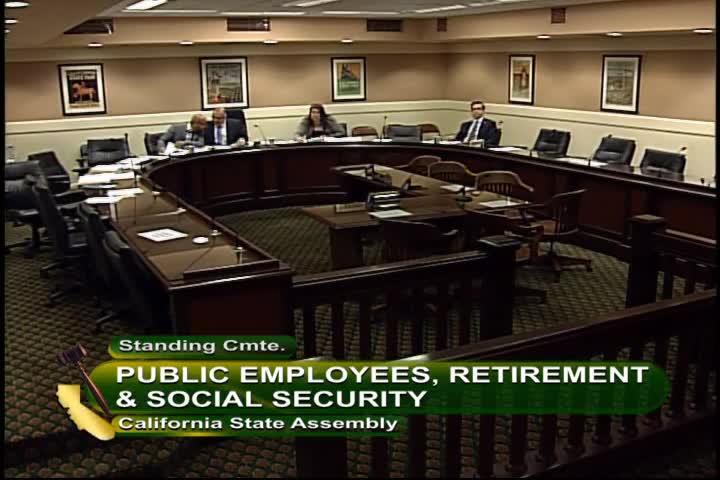
Assembly Standing Committee on Public Employees, Retirement, and Social Security
Bill Author

Bill Co-Author(s):