AB 2051: Candidate’s statement.
- Session Year: 2017-2018
- House: Assembly
- Latest Version Date: 2018-04-18
Existing law authorizes each candidate for nonpartisan elective office in any local agency, including any city, county, city and county, or district, to prepare a candidates statement on an appropriate form provided by the elections official. Existing law permits the statement to be withdrawn, but prohibits the statement from being changed, during the period for filing nomination papers and until 5 p.m. of the next working day after the close of the nomination period. Existing law requires the elections official to send to each voter a county voter information guide that contains the written statements of each candidate.
The Political Reform Act of 1974 provides for the comprehensive regulation of campaign financing and related matters, including voluntary expenditure ceilings for candidates for statewide elective office and for state Senate and Assembly. A candidate for statewide elective office who accepts the voluntary expenditure limits may purchase the space to place a statement in a state voter information guide and may submit the statement in accordance with the timeframes and procedures set forth by the Secretary of State. Under existing law, a candidate for state Senate or Assembly who accepts the voluntary expenditure limits may purchase the space to place a statement in the voter information portion of the county voter information guide and may submit the statement in accordance according to the timeframes and procedures set forth in the Elections Code.
This bill would instead permit the statement for each candidate for nonpartisan elective office in a local agency, and the statement for each candidate for statewide elective office or for state Senate and Assembly who accepts the voluntary expenditure limits, to be changed withdrawn or revised during the period for filing nomination papers and until 5 p.m. of the next working day after the close of the nomination period. papers. The bill would also make technical, nonsubstantive changes.
The Political Reform Act of 1974, an initiative measure, provides that the Legislature may amend the act to further the acts purposes upon a 2/3 vote of each house of the Legislature and compliance with specified procedural requirements.
This bill would declare that it furthers the purposes of the act.
Existing law authorizes each candidate for nonpartisan elective office in any local agency, including any city, county, city and county, or district, to prepare a candidates statement on an appropriate form provided by the elections official. Existing law permits the statement to be withdrawn, but prohibits the statement from being changed, during the period for filing nomination papers and until 5 p.m. of the next working day after the close of the nomination period. Existing law requires the elections official to send to each voter a county voter information guide that contains the written statements of each candidate.
The Political Reform Act of 1974 provides for the comprehensive regulation of campaign financing and related matters, including voluntary expenditure ceilings for candidates for statewide elective office and for state Senate and Assembly. A candidate for statewide elective office who accepts the voluntary expenditure limits may purchase the space to place a statement in a state voter information guide and may submit the statement in accordance with the timeframes and procedures set forth by the Secretary of State. Under existing law, a candidate for state Senate or Assembly who accepts the voluntary expenditure limits may purchase the space to place a statement in the voter information portion of the county voter information guide and may submit the statement in accordance the timeframes and procedures set forth in the Elections Code.
This bill would permit the statement for each candidate for nonpartisan elective office in a local agency, and the statement for each candidate for statewide elective office or for state Senate and Assembly who accepts the voluntary expenditure limits, to be changed during the period for filing nomination papers and until 5 p.m. of the next working day after the close of the nomination period. The bill would also make technical, nonsubstantive changes.
The Political Reform Act of 1974, an initiative measure, provides that the Legislature may amend the act to further the acts purposes upon a 2/3 vote of each house of the Legislature and compliance with specified procedural requirements.
This bill would declare that it furthers the purposes of the act.
(a)(1)Each candidate for nonpartisan elective office in any local agency, including any city, county, city and county, or district, may prepare a candidates statement on an appropriate form provided by the elections official. The statement may include the name, age, and occupation of the candidate and a brief description, of no more than 200 words, of the candidates education and qualifications expressed by the candidate himself or herself. However, the governing body of the local agency may authorize an increase in the limitations on words for the statement from 200 to 400 words. The statement shall not include the party affiliation of the candidate, nor membership or activity in partisan political organizations.
(2)The statement authorized by this subdivision shall be filed in the office of the elections official when the candidates nomination papers are returned for filing, if it is for a primary election, or for an election for offices for which there is no primary. The statement shall be filed in the office of the elections official no later than the 88th day before the election, if it is for an election for which nomination papers are not required to be filed. If a runoff election or general election occurs within 88 days of the primary or first election, the statement shall be filed with the elections official by the third day following the governing bodys declaration of the results from the primary or first election.
(3)Except as provided in Section 13309, the statement may be withdrawn or changed during the period for filing nomination papers and until 5 p.m. of the next working day after the close of the nomination period. papers. A candidate who withdraws his or her statement may file a revised statement during the period for filing nomination papers.
(b)(1)The elections official shall send to each voter a county voter information guide that contains the written statements of each candidate that is prepared pursuant to subdivision (a). The statement of each candidate shall be printed in type of uniform size and darkness, and with uniform spacing.
(2)The elections official shall provide a Spanish translation to those candidates who wish to have one, and shall select a person to provide that translation who is one of the following:
(A)A certified and registered interpreter on the Judicial Council Master List.
(B)An interpreter categorized as certified or professionally qualified by the Administrative Office of the United States Courts.
(C)From an institution accredited by a regional or national accrediting agency recognized by the United States Secretary of Education.
(D)A current voting member in good standing of the American Translators Association.
(E)A current member in good standing of the American Association of Language Specialists.
(c)(1)In addition to the statement prepared pursuant to subdivision (a), if the elections official who is conducting the election permits electronic distribution of a candidates statement, the governing body of a local agency may permit each candidate for nonpartisan elective office in the local agency to prepare a candidates statement for the purpose of electronic distribution pursuant to this subdivision.
(2)A statement prepared pursuant to this subdivision shall be posted on the Internet Web site of the elections official, and may be included in a voters pamphlet that is electronically distributed by the elections official pursuant to Section 13300.7, but shall not be included in a voters pamphlet that is printed and mailed to voters pursuant to subdivision (b).
(3)A statement that is printed in the voters pamphlet and mailed to voters pursuant to subdivision (b) shall be included with the statement that is prepared and electronically distributed pursuant to this subdivision.
(4)A statement that is prepared and electronically distributed pursuant to this subdivision shall be displayed in type of uniform size and darkness, and with uniform spacing.
(5)The elections official shall provide a Spanish translation to those candidates who wish to have one, and shall select a person to provide that translation who is one of the persons listed in paragraph (2) of subdivision (b).
(d)The local agency may estimate the total cost of printing, handling, translating, mailing, and electronically distributing candidates statements filed pursuant to this section, including costs incurred as a result of complying with the federal Voting Rights Act of 1965, as amended. The local agency may require each candidate filing a statement to pay in advance to the local agency his or her estimated pro rata share as a condition of having his or her statement included in the county voter information guide or electronically distributed. In the event the estimated payment is required, the receipt for the payment shall include a written notice that the estimate is just an approximation of the actual cost that varies from one election to another election and may be significantly more or less than the estimate, depending on the actual number of candidates filing statements. Accordingly, the local agency is not bound by the estimate and may, on a pro rata basis, bill the candidate for additional actual expense or refund any excess paid depending on the final actual cost. In the event of underpayment, the local agency may require the candidate to pay the balance of the cost incurred. In the event of overpayment, the local agency that, or the elections official who, collected the estimated cost shall prorate the excess amount among the candidates and refund the excess amount paid within 30 days of the election.
(e)This section shall not be deemed to make any statement, or the authors of any statement, free or exempt from any civil or criminal action or penalty because of any false, slanderous, or libelous statements offered for printing electronic distribution pursuant to this section or contained in the county voter information guide.
(f)Before the nominating period opens, the local agency for that election shall determine whether a charge shall be levied against that candidate for the candidates statement sent to each voter and, if authorized pursuant to subdivision (c), for the electronically distributed candidates statement. This decision shall not be revoked or modified after the seventh day before the opening of the nominating period. A written statement of the regulations with respect to charges for handling, packaging, mailing, and electronic distribution shall be provided to each candidate or his or her representative, at the time he or she picks up the nomination papers.
(g)For purposes of this section and Section 13310, the board of supervisors is the governing body of judicial elections.
SEC. 2.Section 85601 of the Government Code is amended to read:85601.(a)A candidate for statewide elective office, as defined in Section 82053, who accepts the voluntary expenditure limits set forth in Section 85400 may purchase the space to place a statement in the state voter information guide that does not exceed 250 words. The statement shall not make any reference to any opponent of the candidate. The statement shall be submitted in accordance with timeframes and procedures set forth by the Secretary of State for the preparation of the state voter information guides. The statement may be withdrawn or changed during the period for filing nomination papers and until 5 p.m. of the next working day after the close of the nomination period. papers. A candidate who withdraws his or her statement may file a revised statement during the period for filing nomination papers.
(b)Notwithstanding subdivision (e) of Section 88001 of this code or subdivision (e) of Section 9084 of the Elections Code, on and after November 6, 2002, the Secretary of State shall not include in the state voter information guide a statement from a candidate who has not voluntarily agreed to the expenditure limitations set forth in Section 85400.
(c)A candidate for State Senate or Assembly who accepts the voluntary expenditure limits set forth in Section 85400 may purchase the space to place a statement in the voter information portion of the county voter information guide that does not exceed 250 words. The statement shall not make any reference to any opponent of the candidate. The statement shall be submitted in accordance with the timeframes and procedures set forth in the Elections Code for the preparation of the voter information portion of the county voter information guide. The statement may be withdrawn or changed during the period for filing nomination papers and until 5 p.m. of the next working day after the close of the nomination period. papers. A candidate who withdraws his or her statement may file a revised statement during the period for filing nomination papers.
SEC. 3.The Legislature finds and declares that this bill furthers the purposes of the Political Reform Act of 1974 within the meaning of subdivision (a) of Section 81012 of the Government Code.
(a)(1)Each candidate for nonpartisan elective office in any local agency, including any city, county, city and county, or district, may prepare a candidates statement on an appropriate form provided by the elections official. The statement may include the name, age, and occupation of the candidate and a brief description, of no more than 200 words, of the candidates education and qualifications expressed by the candidate himself or herself. However, the governing body of the local agency may authorize an increase in the limitations on words for the statement from 200 to 400 words. The statement shall not include the party affiliation of the candidate, nor membership or activity in partisan political organizations.
(2)The statement authorized by this subdivision shall be filed in the office of the elections official when the candidates nomination papers are returned for filing, if it is for a primary election, or for an election for offices for which there is no primary. The statement shall be filed in the office of the elections official no later than the 88th day before the election, if it is for an election for which nomination papers are not required to be filed. If a runoff election or general election occurs within 88 days of the primary or first election, the statement shall be filed with the elections official by the third day following the governing bodys declaration of the results from the primary or first election.
(3)Except as provided in Section 13309, the statement may be withdrawn, but not changed, withdrawn or changed during the period for filing nomination papers and until 5 p.m. of the next working day after the close of the nomination period.
(b)(1)The elections official shall send to each voter a county voter information guide that contains the written statements of each candidate that is prepared pursuant to subdivision (a). The statement of each candidate shall be printed in type of uniform size and darkness, and with uniform spacing.
(2)The elections official shall provide a Spanish translation to those candidates who wish to have one, and shall select a person to provide that translation who is one of the following:
(A)A certified and registered interpreter on the Judicial Council Master List.
(B)An interpreter categorized as certified or professionally qualified by the Administrative Office of the United States Courts.
(C)From an institution accredited by a regional or national accrediting agency recognized by the United States Secretary of Education.
(D)A current voting member in good standing of the American Translators Association.
(E)A current member in good standing of the American Association of Language Specialists.
(c)(1)In addition to the statement prepared pursuant to subdivision (a), if the elections official who is conducting the election permits electronic distribution of a candidates statement, the governing body of a local agency may permit each candidate for nonpartisan elective office in the local agency to prepare a candidate's statement for the purpose of electronic distribution pursuant to this subdivision.
(2)A statement prepared pursuant to this subdivision shall be posted on the Internet Web site of the elections official, and may be included in a voter's pamphlet that is electronically distributed by the elections official pursuant to Section 13300.7, but shall not be included in a voter's pamphlet that is printed and mailed to voters pursuant to subdivision (b).
(3)A statement that is printed in the voter's pamphlet and mailed to voters pursuant to subdivision (b) shall be included with the statement that is prepared and electronically distributed pursuant to this subdivision.
(4)A statement that is prepared and electronically distributed pursuant to this subdivision shall be displayed in type of uniform size and darkness, and with uniform spacing.
(5)The elections official shall provide a Spanish translation to those candidates who wish to have one, and shall select a person to provide that translation who is one of the persons listed in paragraph (2) of subdivision (b).
(d)The local agency may estimate the total cost of printing, handling, translating, mailing, and electronically distributing candidates statements filed pursuant to this section, including costs incurred as a result of complying with the federal Voting Rights Act of 1965, as amended. The local agency may require each candidate filing a statement to pay in advance to the local agency his or her estimated pro rata share as a condition of having his or her statement included in the county voter information guide or electronically distributed. In the event the estimated payment is required, the receipt for the payment shall include a written notice that the estimate is just an approximation of the actual cost that varies from one election to another election and may be significantly more or less than the estimate, depending on the actual number of candidates filing statements. Accordingly, the local agency is not bound by the estimate and may, on a pro rata basis, bill the candidate for additional actual expense or refund any excess paid depending on the final actual cost. In the event of underpayment, the local agency may require the candidate to pay the balance of the cost incurred. In the event of overpayment, the local agency that, or the elections official who, collected the estimated cost shall prorate the excess amount among the candidates and refund the excess amount paid within 30 days of the election.
(e)This section shall not be deemed to make any statement, or the authors of any statement, free or exempt from any civil or criminal action or penalty because of any false, slanderous, or libelous statements offered for printing electronic distribution pursuant to this section or contained in the county voter information guide.
(f)Before the nominating period opens, the local agency for that election shall determine whether a charge shall be levied against that candidate for the candidates statement sent to each voter and, if authorized pursuant to subdivision (c), for the electronically distributed candidates statement. This decision shall not be revoked or modified after the seventh day before the opening of the nominating period. A written statement of the regulations with respect to charges for handling, packaging, mailing, and electronic distribution shall be provided to each candidate or his or her representative, at the time he or she picks up the nomination papers.
(g)For purposes of this section and Section 13310, the board of supervisors is the governing body of judicial elections.
SEC. 2.Section 85601 of the Government Code is amended to read:85601.(a)A candidate for statewide elective office, as defined in Section 82053, who accepts the voluntary expenditure limits set forth in Section 85400 may purchase the space to place a statement in the state ballot pamphlet voter information guide that does not exceed 250 words. The statement may shall not make any reference to any opponent of the candidate. The statement shall be submitted in accordance with timeframes and procedures set forth by the Secretary of State for the preparation of the state ballot pamphlets. voter information guides. The statement may be withdrawn or changed during the period for filing nomination papers and until 5 p.m. of the next working day after the close of the nomination period.
(b)Notwithstanding subdivision (e) of Section 88001 of this code or subdivision (e) of Section 9084 of the Elections Code, on and after November 6, 2002, the Secretary of State may shall not include in the state ballot pamphlet voter information guide a statement from a candidate who has not voluntarily agreed to the expenditure limitations set forth in Section 85400.
(c)A candidate for State Senate or Assembly who accepts the voluntary expenditure limits set forth in Section 85400 may purchase the space to place a statement in the voter information portion of the sample ballot county voter information guide that does not exceed 250 words. The statement may shall not make any reference to any opponent of the candidate. The statement shall be submitted in accordance with the timeframes and procedures set forth in the Elections Code for the preparation of the voter information portion of the sample ballot. county voter information guide. The statement may be withdrawn or changed during the period for filing nomination papers and until 5 p.m. of the next working day after the close of the nomination period.
SEC. 3.The Legislature finds and declares that this bill furthers the purposes of the Political Reform Act of 1974 within the meaning of subdivision (a) of Section 81012 of the Government Code.
|
Date
|
Status
|
|---|---|
| May 23, 2018 | From committee: Without further action pursuant to Joint Rule 62(a). |
| Apr 25, 2018 | In committee: Set, second hearing. Failed passage. |
| Apr 19, 2018 | Re-referred to Com. on E. & R. |
| Apr 18, 2018 | From committee chair, with author's amendments: Amend, and re-refer to Com. on E. & R. Read second time and amended. |
| Apr 11, 2018 | In committee: Set, first hearing. Hearing canceled at the request of author. |
| Feb 16, 2018 | Referred to Com. on E. & R. |
| Feb 7, 2018 | From printer. May be heard in committee March 9. |
| Feb 6, 2018 | Read first time. To print. |
|
Date
|
Description
|
Location
|
Votes
|
|
|---|---|---|---|---|
| Apr 25, 2018 | Do pass and be re-referred to the Committee on [Appropriations] | Assembly Standing Committee on Elections and Redistricting |
Failed |
This list shows positions taken on this bill by organizations on the date displayed, which is linked to the original source.
Positions by individuals are not included.
|
Organization
|
Position
|
Date
|
|---|---|---|
| California Association of Clerks and Election Officials | * Indeterminate | Apr 25, 2018 |
| Placer County Clerk Recorder Elections Office | * Indeterminate | Apr 25, 2018 |
Date of Hearing: April 25, 2018
ASSEMBLY COMMITTEE ON ELECTIONS AND REDISTRICTING
Marc Berman, Chair
ABPCA Bill Id:AB 2051 (
Author:Choi) – As Amended Ver:April 18, 2018
SUBJECT: Candidate’s statement.
SUMMARY: Permits a candidate for local nonpartisan elective office, or a candidate for statewide office or for state Assembly or Senate who accepts the voluntary expenditure limits, to change his or her candidate statement, as specified. Specifically, this bill:
- Allows the candidate statement for a candidate for local nonpartisan office to be changed during the period for filing the nomination papers. Permits a candidate who withdraws his or her statement to file a revised statement during the period for filing nomination papers.
- Permits the candidate statement for a candidate for statewide elective office or a candidate for state Senate or Assembly who accepts the voluntary expenditure limits set forth in existing law to be changed during the period for filing the nomination papers. Permits a candidate who withdraws his or her statement to file a revised statement during the period for filing nomination papers.
EXISTING LAW:
- Permits candidates for local nonpartisan offices to prepare and file a candidate statement on a form provided by the elections official. Permits the statement to include the name, age, and occupation of the candidate and a brief description, of no more than 200 words, of the candidate's education and qualifications expressed by the candidate.
- Permits a candidate for statewide elective office or a candidate for state Senate or Assembly who accepts the voluntary expenditure limits set forth in the Political Reform Act (PRA) to purchase space to place a statement in the voter information guide that does not exceed 250 words. Prohibits the candidate statement from making any reference to any opponent of the candidate.
- Prohibits a candidate statement for a nonpartisan elective office from including the party affiliation of the candidate, or membership or activity in partisan political organizations. Prohibits a candidate statement from making reference to other candidates for that office or to another candidate's qualifications, character, or activities.
- Requires the candidate statement for a nonpartisan elective office to be filed in the office of the elections official when the candidate's nomination papers are returned for filing. Requires the statement to be filed no later than the 88th day before the election, as specified.
- Allows a candidate statement for a nonpartisan elective office to be withdrawn, but not changed, during the period for filing nominations papers and until 5 pm of the next working day after the close of the nomination period.
- Requires a candidate statement to remain confidential until the expiration of the filing deadline.
- Requires a copy of the candidate’s statements be made available for public examination not less than ten calendar days before county voter guides and other specified election materials are submitted for printing. Permits any voter, during the ten calendar day examination period, to seek a writ of mandate or an injunction, upon specified grounds, requiring the amendment or deletion of any or all of the material in the candidate statement. Requires the peremptory writ of mandate or injunction to be issued upon clear and convincing proof that the material in question is false, misleading, or inconsistent with current law.
FISCAL EFFECT: Unknown
COMMENTS:
- Purpose of the Bill: According to the author:
Current law allows for a statement to be withdrawn, but not changed, during the period for filing Nomination Papers and until 5:00 p.m. of the next working day after the close of the nomination period. Though the conventional response to resume puffing is exposure by the press or political attack by the opposition, a reasonable middle-ground in cases of accidental omission or mistake would be to allow for self-correction on mostly accurate candidate statements when an error was found before the deadline.
AB 2051 would allow the candidate statement for each candidate for elective office in a local agency, statewide office, or state Senate and Assembly to be changed during the period for filing nomination papers…
- Logistical Issues: As mentioned above, current law allows a candidate statement to be withdrawn, but not changed, during the period for filing nomination papers and until 5 pm of the next working day after the close of the nominations papers. This bill instead permits a candidate statement for a candidate for local nonpartisan office to be changed during the period for filing the nomination papers and allows a candidate who withdraws his or her statement to file a revised statement during the period for filing nomination papers. This bill, however, does not place a limit on how many times a candidate statement may be revised and re-submitted. Theoretically, a candidate could submit, withdraw, and resubmit multiple candidate statements as long as it is done before the deadline for filing nomination papers. The author and the committee may wish to consider amending the bill to prohibit a candidate statement from being revised more than once.
- Is There a Statewide Problem? The author's office provided the committee staff with one example of an error made in 2015. While committee staff has requested more examples none have been received. Committee staff has reviewed a handful of candidate guides from various counties and most guides clearly state in bold and/or underlined to check the candidate statement carefully for errors in spelling, punctuation and grammar before filing because errors will not be corrected and the statement will be printed exactly as submitted, with the exception of formatting requirements.
- Concerns: The California Association of Clerks and Election Officials wrote a letter outlining the following concerns:
• Timing: Counties begin to layout and proof their voter information guides as documents are filed. After the close of the nomination period, many counties use that following weekend to finalize their guides to send to the printer on Monday after determining if any statements are being withdrawn. Removing a statement from the guide is easier than making changes. Our concern about timing is two-fold: first, there may be a greater chance for the wrong statement to be printed in the guide, and secondly, there will likely be an increase in the cost to the candidates for printing their statements because of the increase in staff time to change, layout and proof the last minute amended statements.
• Increase in statement costs: All of California’s 58 counties are required to allow candidates to have their statement printed in English and in Spanish. Many of the counties also have other language requirements specific to their population. Because of the number of statements being translated, counties send their documents once filed to the certified translators for a timely return in order to place into the voter information guide. If counties need to submit a candidate statement more than once, or if the county waits until the close of the nomination period to send statements for translation, there will be in increase in the statement’s cost. Candidate statement costs are not borne by the county or the state, by Election Code they are paid either by the candidate themselves or the special district, so this extra expense will be passed to them.
• Court process already exists: Any member of the public already has the ability to challenge any election material, such as statements, arguments, rebuttals, measure text and ballot designations in court. Superior Courts recognize the need for an expeditious hearing due to election deadlines and these election related court issues take precedence in the judicial queue.
- Political Reform Act of 1974: California voters passed an initiative, Proposition 9, in 1974 that created the Fair Political Practices Commission and codified significant restrictions and prohibitions on candidates, officeholders, and lobbyists. That initiative is commonly known as the PRA. Amendments to the PRA that are not submitted to the voters, such as those contained in this bill, must further the purposes of the proposition and require a two-thirds vote of each house of the Legislature.
REGISTERED SUPPORT / OPPOSITION:
Support
None on file.
Opposition
None on file.
Analysis Prepared by: Nichole Becker / E. & R. / (916) 319-2094
Date of Hearing: April 11, 2018
ASSEMBLY COMMITTEE ON ELECTIONS AND REDISTRICTING
Marc Berman, Chair
ABPCA Bill Id:AB 2051 (
Author:Choi) – As Introduced Ver:February 6, 2018
SUBJECT: Candidate’s statement.
SUMMARY: Permits a candidate for local nonpartisan elective office, or a candidate for statewide office or for state Assembly and the Senate who accepts the voluntary expenditure limits, to change his or her candidate statement after it has been filed. Specifically, this bill:
- Allows the candidate statement for a candidate for local nonpartisan office to be changed during the period for filing the nomination papers and until 5pm of the next working day after the close of the nomination period.
- Permits the candidate statement for a candidate for statewide elective office or a candidate for state Senate or Assembly who accepts the voluntary expenditure limits to be changed during the period for filing the nomination papers and until 5 pm of the next working day after the close of the nomination period.
EXISTING LAW:
- Permits candidates for local nonpartisan offices to prepare and file a candidate statement on a form provided by the elections official. Permits the statement to include the name, age, and occupation of the candidate and a brief description, of no more than 200 words, of the candidate's education and qualifications expressed by the candidate.
- Permits a candidate for statewide elective office or a candidate for state Senate or Assembly who accepts the voluntary expenditure limits set forth in the Political Reform Act (PRA) to purchase space to place a statement in the voter information guide that does not exceed 250 words. Prohibits the candidate statement from making any reference to any opponent of the candidate.
- Prohibits a candidate statement for a nonpartisan elective office from including the party affiliation of the candidate, or membership or activity in partisan political organizations. Prohibits a candidate statement from making reference to other candidates for that office or to another candidate's qualifications, character, or activities.
- Requires the candidate statement for a nonpartisan elective office to be filed in the office of the elections official when the candidate's nomination papers are returned for filing. Requires the statement to be filed no later than the 88th day before the election, as specified.
- Allows a candidate statement for a nonpartisan elective office to be withdrawn, but not changed, during the period for filing nominations papers and until 5 pm of the next working day after the close of the nomination period.
- Requires a candidate statement to remain confidential until the expiration of the filing deadline.
- Requires a copy of the candidate statements be made available for public examination, not less than ten calendar days before county voter guides and other specified election materials are submitted for printing. Permits any voter, during the ten calendar day examination period, to seek a writ of mandate or an injunction, upon specified grounds, requiring the amendment or deletion of any or all of the material in the candidate statement. Requires the peremptory writ of mandate or injunction to be issued upon clear and convincing proof that the material in question is false, misleading, or inconsistent with current law.
FISCAL EFFECT: Unknown
COMMENTS:
- Purpose of the Bill: According to the author:
Current law allows for a statement to be withdrawn, but not changed, during the period for filing Nomination Papers and until 5:00 p.m. of the next working day after the close of the nomination period. Though the conventional response to resume puffing is exposure by the press or political attack by the opposition, a reasonable middle-ground in cases of accidental omission or mistake would be to allow for self-correction on mostly accurate candidate statements when an error was found before the deadline.
AB 2051 would allow the candidate statement for each candidate for elective office in a local agency, statewide office, or state Senate and Assembly to be changed during the period for filing nomination papers and until 5 p.m. of the next working day after the close of the nomination period.
- Game Playing? As mentioned above, current law allows a candidate statement to be withdrawn, but not changed, during the period for filing nomination papers and until 5 pm of the next working day after the close of the nomination period. This bill instead permits a candidate statement to be changed after the deadline. Existing law requires a candidate statement to remain confidential until the expiration of the filing deadline and according to county elections officials, candidate statements become public at 5 pm on the last day of filing. Theoretically, a candidate could submit a generic candidate statement, review his or her opponent's statement once it is public, and decide to make changes and resubmit a completely different candidate statement to counteract his or her opponent's statement.
- Is There a Statewide Problem? The author's office provided the committee staff with one example of an error made in 2015. While committee staff has requested more examples, the author has indicated that they do not have more examples. Committee staff has reviewed a handful of candidate guides from various counties and most guides clearly state in bold and/or underlined to check the candidate statement carefully for errors in spelling, punctuation, and grammar before filing because errors will not be corrected and the statement will be printed exactly as submitted, with the exception of formatting requirements.
- Political Reform Act of 1974: California voters passed an initiative, Proposition 9, in 1974 that created the Fair Political Practices Commission and codified significant restrictions and prohibitions on candidates, officeholders, and lobbyists. That initiative is commonly known as the PRA. Amendments to the PRA that are not submitted to the voters, such as those contained in this bill, must further the purposes of the proposition and require a two-thirds vote of each house of the Legislature.
REGISTERED SUPPORT / OPPOSITION:
Support
None on file.
Opposition
None on file.
Analysis Prepared by: Nichole Becker / E. & R. / (916) 319-2094
Discussed in Hearing
 9MIN
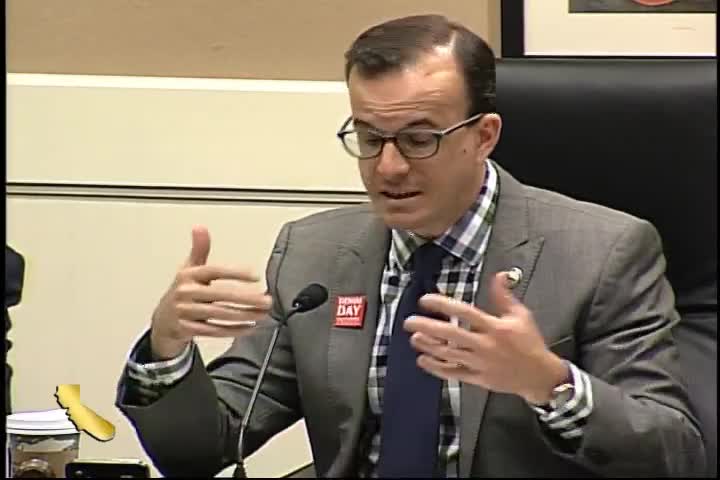
Assembly Standing Committee on Elections and Redistricting
Bill Author

Bill Co-Author(s):