AB 2056: Mobilehomes.
- Session Year: 2017-2018
- House: Assembly
- Latest Version Date: 2018-09-26
Existing law authorizes the Department of Housing and Community Development to make loans from the Mobilehome Park Rehabilitation and Purchase Fund, a continuously appropriated fund, including loans to qualified nonprofit housing sponsors or local public entities to acquire a mobilehome park where no less than 30% of residents at the time of acquisition are low income or to make loans to a resident organization or nonprofit housing sponsor to assist park residents with needed repairs or accessibility upgrades to the mobilehomes if specified criteria are met. Existing law authorizes the department to adopt related regulations.
This bill would authorize the department to make loans from the fund to a qualified nonprofit housing sponsor or a local public entity to acquire or rehabilitate a mobilehome park where no less than 30% of residents at the time that the loan application is filed are low income. The bill would also authorize the department to make loans or grants from the fund to a resident organization, nonprofit housing sponsor, or public local entity to assist park residents with needed repairs or accessibility upgrades. The bill would also require, for those loans issued on or after January 1, 2019, loan payments to be deferred for the full term of the loans, except as specified. The bill would require the department to charge a certain transaction fee related to the loan. The bill would delete the express authority to adopt related regulations.
This bill would also authorize the department to make development loans, as defined in existing law, from the fund to a qualified nonprofit housing sponsor, resident organization, or local public entity for the development of a new mobilehome park to replace a mobilehome park that has been destroyed by a natural disaster, as provided, and is located within 20 miles of the destroyed mobilehome park. The bill would also require, for those loans, loan principal payments to be deferred for the full term of the loans, except as specified. The bill would require the department to charge a certain transaction fee related to the loan.
By expanding the purposes of, and increasing amounts deposited into, a continuously appropriated fund, this bill would make an appropriation.
Existing law authorizes the Department of Housing and Community Development to make loans from the Mobilehome Park Rehabilitation and Purchase Fund, a continuously appropriated fund, including loans to qualified nonprofit housing sponsors or local public entities to acquire a mobilehome park where no less than 30% of residents at the time of acquisition are low income or to make loans to a resident organization or nonprofit housing sponsor to assist park residents with needed repairs or accessibility upgrades to the mobilehomes if specified criteria are met. Existing law authorizes the department to adopt related regulations.
This bill would authorize the department to make loans from the fund to a qualified nonprofit housing sponsor or a local public entity to acquire or rehabilitate a mobilehome park where no less than 30% of residents at the time that the loan application is filed are low income. The bill would also authorize the department to make loans or grants from the fund to a resident organization, nonprofit housing sponsor, or public local entity to assist park residents with needed repairs or accessibility upgrades. The bill would also require, for those loans issued on or after January 1, 2019, loan payments to be deferred for the full term of the loans, except as specified. The bill would require the department to charge a certain transaction fee related to the loan. The bill would delete the express authority to adopt related regulations.
This bill would also authorize the department to make loans development loans, as defined in existing law, from the fund to a qualified nonprofit housing sponsor sponsor, resident organization, or local public entity for the acquisition and construction development of a new mobilehome park to replace a mobilehome park located within the same county that has been destroyed by a natural disaster, as provided. provided, and is located within 20 miles of the destroyed mobilehome park. The bill would also require, for those loans, loan principal payments to be deferred for the full term of the loans, except as specified. The bill would require the department to charge a certain transaction fee related to the loan.
By expanding the purposes of, and increasing amounts deposited into, a continuously appropriated fund, this bill would make an appropriation.
Existing law authorizes the Department of Housing and Community Development to make loans from the Mobilehome Park Rehabilitation and Purchase Fund, a continuously appropriated fund, including loans to qualified nonprofit housing sponsors or local public entities to acquire a mobilehome park where no less than 30% of residents at the time of acquisition are low income or to make loans to a resident organization or nonprofit housing sponsor to assist park residents with needed repairs or accessibility upgrades to the mobilehomes if specified criteria are met. Existing law provides definitions for the purposes of this loan program.
This bill would authorize the department to make loans from the fund to a qualified nonprofit housing sponsor or a local public entity to acquire or rehabilitate a mobilehome park where no less than 30% of residents at the time that the loan application is filed are low income. The bill would also authorize the department to make grants from the fund to a resident organization or organization, nonprofit housing sponsor sponsor, or public local entity to assist park residents with needed repairs or accessibility upgrades. The bill would also require, for those loans issued on or after January 1, 2019, loan payments to be deferred for the full term of the loans, except as specified. The bill would authorize require the department to charge a certain transaction fee related to the loan. By expanding the purposes of, and increasing amounts deposited into, a continuously appropriated fund, this bill would make an appropriation.
This bill would also authorize the department to make loans from the fund to a qualified nonprofit housing sponsor or local public entity for the acquisition and construction of a new mobilehome park to replace a mobilehome park located within the same county that has been destroyed by a natural disaster, as provided. The bill would also require, for those loans, loan payments to be deferred for the full term of the loans, except as specified. The bill would require the department to charge a certain transaction fee related to the loan.
By expanding the purposes of, and increasing amounts deposited into, a continuously appropriated fund, this bill would make an appropriation.
Existing law authorizes the Department of Housing and Community Development to make loans from the Mobilehome Park Rehabilitation and Purchase Fund, a continuously appropriated fund, to qualified mobilehome park residents, resident organizations, and nonprofit housing sponsors or local public entities to finance conversion of the parks to resident ownership to make monthly housing costs more affordable acquire a mobilehome park where no less than 30% of residents at the time of acquisition are low income or to make loans to a resident organization or nonprofit housing sponsor to assist park residents with needed repairs or accessibility upgrades to the mobilehomes if specified criteria are met. Existing law provides definitions for the purposes of this loan program.
This bill would authorize the department to make loans from the fund to a qualified nonprofit housing sponsor or a local public entity to acquire or rehabilitate a mobilehome park where no less than 30% of residents at the time that the loan application is filed are low income. The bill would also authorize the department to make grants from the fund to a resident organization or nonprofit housing sponsor to assist park residents with needed repairs or accessibility upgrades. The bill would also require, for those loans issued on or after January 1, 2019, loan payments to be deferred for the full term of the loans, except as specified. The bill would authorize the department to charge a certain transaction fee related to the loan. By expanding the purposes of, and increasing amounts deposited into, a continuously appropriated fund, this bill would make an appropriation.
This bill would make nonsubstantive changes to those definitions.Existing law authorizes the Department of Housing and Community Development to make loans from the Mobilehome Park Rehabilitation and Purchase Fund, a continuously appropriated fund, to qualified mobilehome park residents, resident organizations, and nonprofit housing sponsors or local public entities to finance conversion of the parks to resident ownership to make monthly housing costs more affordable or loans to a resident organization or nonprofit housing sponsor to assist park residents with needed repairs or accessibility upgrades to the mobilehomes if specified criteria are met. Existing law provides definitions for the purposes of this loan program.
This bill would make nonsubstantive changes to those definitions.
(a)The department may make loans from the Mobilehome Park Rehabilitation and Purchase Fund to a qualified nonprofit housing sponsor or a local public entity to acquire or rehabilitate a mobilehome park, provided that no less than 30 percent of residents at the time that the loan application is filed are low income.
(b)Loans may be provided pursuant to this section where either of the following applies:
(1)The park to be acquired has significant outstanding violations of the Mobilehome Parks Act (Part 2.1 (commencing with Section 18200)) that threaten the long-term viability of the park and that will be remedied by the purchaser.
(2)The department determines that the acquisition or rehabilitation of the park will have a substantial benefit to low- and moderate-income homeowners and that the nonprofit housing sponsor or local public entity agrees to maintain rents at levels affordable to lower income households.
(c)(1)Any mobilehome park purchased by a local public entity with a loan pursuant to this section shall be transferred to a qualified nonprofit housing sponsor or to a resident organization that plans to convert the park to resident ownership no later than three years from the date of loan closing, with all obligations under the loan assumed by the nonprofit organization or resident organization.
(2)If a local public entity has made a good faith effort, but has not been able, to transfer the park by the end of the three-year period, the entity may apply to the department for an additional three-year extension. Upon a determination by the department that the local public entity has made a good faith effort to transfer the park in accordance with paragraph (1), it shall have an additional three years from the expiration date of the first three-year period to consummate the transfer. The three-year extension shall only be granted once by the department for each loan to a local public entity.
(3)If a local public entity fails to make a good faith effort to transfer the park within the first three-year period, as determined by the department, or fails to transfer the park by the expiration date of the extended three-year period, it shall repay the loan in full to the department.
(d)All of the following shall apply to loans provided pursuant to this section:
(1)Loans shall be for a term of no more than 40 years and shall bear interest at a rate of 3 percent per annum unless the department finds that a lower interest rate is necessary and will not jeopardize the financial stability of the fund.
(2)The department may establish flexible repayment terms for loans provided pursuant to this section if the terms do not represent an unacceptable risk to the security of the fund.
(3)Loans shall be for the minimum amount necessary to bring the park into compliance with all applicable health and safety standards and to maintain the monthly housing costs of lower income residents at an affordable level.
(4)The total secured debt in a superior position to the departments loan plus the departments loan shall not exceed 115 percent of the value of the collateral securing the loan plus the amount of costs incidentally, but directly, related to the acquisition and rehabilitation of the park.
(5)For loans issued on and after January 1, 2019, notwithstanding paragraphs (1) and (2), loan repayments shall be deferred for the full term of the loan. The department shall charge a transaction fee to cover its costs for processing these restructuring transactions. The department may waive or defer some or all of this fee if it determines that the residents of the mobilehome park do not have the ability to make these payments.
(6)For loans issued on and after January 1, 2019, principal and accumulated interest is due and payable upon completion of the term of the loan. The loan shall bear simple interest at the rate of 3 percent per annum on the unpaid principal balance. The department shall require annual loan payments in the minimum amount necessary to cover the costs of project monitoring.
(e)In determining the eligibility for and amount of loans pursuant to this section, the department shall take into consideration, among other factors, all of the following:
(1)The current health and safety conditions in the park and the likelihood that conditions would be remedied without the loan.
(2)The degree to which the loan will benefit lower income homeowners.
(3)The age of the park and the age of the infrastructure that will be rehabilitated with the loan proceeds.
(f)Before providing financing pursuant to this section, the department shall require provision of, and approve, at least all of the following:
(1)Verification that either no park residents shall be involuntarily displaced as a result of the purchase or that the impacts of the displacement shall be mitigated as required under state and local law. For purposes of this requirement, compliance with Section 66427.5 of the Government Code shall be conclusively presumed to have mitigated economic displacement.
(2)Projected costs and sources of funds for all purchase and rehabilitation activities.
(3)Projected operating budget for the park after the purchase.
(4)A management plan for the operation of the park.
SEC. 2.Section 50784.6 is added to the Health and Safety Code, to read:50784.6.(a)The department may make development loans from the Mobilehome Park Rehabilitation and Purchase Fund to a qualified nonprofit housing sponsor, resident organization, or a local public entity for the acquisition and construction of a new mobilehome park if all of the following apply:
(1)The mobilehome park is to replace a mobilehome park that was destroyed by a natural disaster and is located within 20 miles from the destroyed mobilehome park.
(2)No less than 50 percent of the residents of the destroyed mobilehome park at the time of the disaster occurred were low-income residents.
(3)(A)The low-income residents of the destroyed mobilehome park that were displaced by the natural disaster are provided the right of first refusal to occupy mobilehomes in the new mobilehome park. The right of first refusal shall be at least for a 180-day period prior to the offering of leases or rentals at the newly constructed mobilehome park to the public. The terms and conditions of the right of first refusal shall be subject to department approval to protect displaced residents.
(B)The low-income residents of the destroyed mobilehome park that were displaced by the natural disaster are provided lease or rental terms equivalent to those in effect at the destroyed mobilehome park.
(4)No less than 50 percent of the spaces in the mobilehome park are restricted to occupancy by households with incomes not exceeding 50 percent of the area median income of the county in which the destroyed park was located.
(b)(1)For loans issued pursuant to this section, loan principal repayments shall be deferred for the full term of the loan. The department shall charge a transaction fee to cover its costs for processing these transactions. The department may waive or defer some or all of this fee if it determines that the residents of the mobilehome park do not have the ability to make these payments.
(2)For loans issued pursuant to this section, principal and accumulated interest is due and payable upon completion of the term of the loan. The loan shall bear simple interest at the rate of 3 percent per annum on the unpaid principal balance. The department shall require annual loan payments in the minimum amount necessary to cover the costs of project monitoring.
(c)Before providing financing pursuant to this section, the department shall require the provision of all of the following from an applicant for a loan:
(1)Verification that rents at the mobilehome park to be constructed shall be set at a level that does not exceed what is affordable for a household earning 50 percent of the area median income or below.
(2)Verification that the qualified nonprofit housing sponsor or local public entity shall comply with all state and local laws protecting mobilehome park residents, including, but not limited to, any local rental control ordinances and Section 65863.7 of the Government Code.
(d)Natural disaster means a natural disaster for which a state of emergency is declared by the Governor, pursuant to Chapter 7 (commencing with Section 8550) of Division 1 of Title 2 of the Government Code.
SEC. 3.Section 50784.7 of the Health and Safety Code is amended to read:50784.7.(a)The department may make loans or grants to a resident organization, qualified nonprofit housing sponsor, or local public entity from the fund for the purpose of assisting lower income homeowners to do any of the following:
(1)Make repairs to their mobilehomes.
(2)Make accessibility-related upgrades to their mobilehomes.
(3)Replace their mobilehomes.
(b)Loans and grants made pursuant to subdivision (a) shall meet both of the following requirements:
(1)The applicant entity has received a loan or loans pursuant to Section 50783, 50784, or 50784.5 for the purpose of assisting homeowners within a park proposed for acquisition or conversion.
(2)The applicant entity demonstrates sufficient organizational stability and capacity to manage a portfolio of individual loans over an extended time period. This capacity may be demonstrated by substantial successful experience performing similar activities or through other means acceptable to the department.
(c)(1)For loans issued to an individual, lower-income homeowner pursuant to this section on and after January 1, 2019, loan repayments shall be deferred for the full term of the loans. The department shall charge a transaction fee to cover its costs for processing these restructuring transactions. The department may waive or defer some or all of this fee if it determines that the residents of the mobilehome park do not have the ability to make these payments.
(2)For loans issued to an individual, lower-income homeowner pursuant to paragraph (1), principal and accumulated interest is due and payable upon completion of the term of the loan. The loan shall bear simple interest at the rate of 3 percent per annum on the unpaid principal balance. The department shall require annual loan payments in the minimum amount necessary to cover the costs of project monitoring.
(a)The department may make loans from the Mobilehome Park Rehabilitation and Purchase Fund to a qualified nonprofit housing sponsor or a local public entity to acquire or rehabilitate a mobilehome park, provided that no less than 30 percent of residents at the time that the loan application is filed are low income.
(b)Loans may be provided pursuant to this section where either of the following applies:
(1)The park to be acquired has significant outstanding violations of the Mobilehome Parks Act (Part 2.1 (commencing with Section 18200)) that threaten the long-term viability of the park and that will be remedied by the purchaser.
(2)The department determines that the acquisition or rehabilitation of the park will have a substantial benefit to low- and moderate-income homeowners and that the nonprofit housing sponsor or local public entity agrees to maintain rents at levels affordable to lower income households.
(c)(1)Any mobilehome park purchased by a local public entity with a loan pursuant to this section shall be transferred to a qualified nonprofit housing sponsor or to a resident organization that plans to convert the park to resident ownership no later than three years from the date of loan closing, with all obligations under the loan assumed by the nonprofit organization or resident organization.
(2)If a local public entity has made a good faith effort, but has not been able, to transfer the park by the end of the three-year period, the entity may apply to the department for an additional three-year extension. Upon a determination by the department that the local public entity has made a good faith effort to transfer the park in accordance with paragraph (1), it shall have an additional three years from the expiration date of the first three-year period to consummate the transfer. The three-year extension shall only be granted once by the department for each loan to a local public entity.
(3)If a local public entity fails to make a good faith effort to transfer the park within the first three-year period, as determined by the department, or fails to transfer the park by the expiration date of the extended three-year period, it shall repay the loan in full to the department.
(d)All of the following shall apply to loans provided pursuant to this section:
(1)Loans shall be for a term of no more than 40 years and shall bear interest at a rate of 3 percent per annum unless the department finds that a lower interest rate is necessary and will not jeopardize the financial stability of the fund.
(2)The department may establish flexible repayment terms for loans provided pursuant to this section if the terms do not represent an unacceptable risk to the security of the fund.
(3)Loans shall be for the minimum amount necessary to bring the park into compliance with all applicable health and safety standards and to maintain the monthly housing costs of lower income residents at an affordable level.
(4)The total secured debt in a superior position to the departments loan plus the departments loan shall not exceed 115 percent of the value of the collateral securing the loan plus the amount of costs incidentally, but directly, related to the acquisition and rehabilitation of the park.
(5)For loans issued on and after January 1, 2019, notwithstanding paragraphs (1) and (2), loan repayments shall be deferred for the full term of the loan. The department shall charge a transaction fee to cover its costs for processing these restructuring transactions. The department may waive or defer some or all of this fee if it determines that the residents of the mobilehome park do not have the ability to make these payments.
(6)For loans issued on and after January 1, 2019, principal and accumulated interest is due and payable upon completion of the term of the loan. The loan shall bear simple interest at the rate of 3 percent per annum on the unpaid principal balance. The department shall require annual loan payments in the minimum amount necessary to cover the costs of project monitoring or, for the first 30 years of the loan term, the amount of the required loan payments shall not exceed forty-two hundredths of 1 percent (.42%) per annum. monitoring.
(e)In determining the eligibility for and amount of loans pursuant to this section, the department shall take into consideration, among other factors, all of the following:
(1)The current health and safety conditions in the park and the likelihood that conditions would be remedied without the loan.
(2)The degree to which the loan will benefit lower income homeowners.
(3)The age of the park and the age of the infrastructure that will be rehabilitated with the loan proceeds.
(f)Before providing financing pursuant to this section, the department shall require provision of, and approve, at least all of the following:
(1)Verification that either no park residents shall be involuntarily displaced as a result of the purchase or that the impacts of the displacement shall be mitigated as required under state and local law. For purposes of this requirement, compliance with Section 66427.5 of the Government Code shall be conclusively presumed to have mitigated economic displacement.
(2)Projected costs and sources of funds for all purchase and rehabilitation activities.
(3)Projected operating budget for the park after the purchase.
(4)A management plan for the operation of the park.
SEC. 2.Section 50784.6 is added to the Health and Safety Code, to read:50784.6.(a)The department may make development loans from the Mobilehome Park Rehabilitation and Purchase Fund to a qualified nonprofit housing sponsor sponsor, resident organization, or a local public entity for the acquisition and construction of a new mobilehome park if all of the following apply:
(1)The mobilehome park to be constructed is to replace a mobilehome park that was destroyed by a natural disaster and is located within the same county that has been destroyed by a natural disaster. The mobilehome park to be constructed may be at a different location within the same county. 20 miles from the destroyed mobilehome park.
(2)No less than 50 percent of the residents of the destroyed mobilehome park at the time of the disaster occurred were low-income residents.
(3)(A)The low-income residents of the destroyed mobilehome park that were displaced by the natural disaster are provided the right of first refusal to occupy mobilehomes in the new mobilehome park at lease or rental terms equivalent to those in effect at the destroyed mobilehome park. The right of first refusal shall be at least for a 180-day period prior to the offering of leases or rentals at the newly constructed mobilehome park to the public. The terms and conditions of the right of first refusal shall be subject to department approval to protect displaced residents.
(B)The low-income residents of the destroyed mobilehome park that were displaced by the natural disaster are provided lease or rental terms equivalent to those in effect at the destroyed mobilehome park.
(4)No less than 50 percent of the spaces in the mobilehome park are restricted to occupancy by households with incomes not exceeding 50 percent of the area median income of the county in which the destroyed park was located.
(b)(1)For loans issued pursuant to this section, loan principal repayments shall be deferred for the full term of the loan. The department shall charge a transaction fee to cover its costs for processing these restructuring transactions. The department may waive or defer some or all of this fee if it determines that the residents of the mobilehome park do not have the ability to make these payments.
(2)For loans issued pursuant to this section, principal and accumulated interest is due and payable upon completion of the term of the loan. The loan shall bear simple interest at the rate of 3 percent per annum on the unpaid principal balance. The department shall require annual loan payments in the minimum amount necessary to cover the costs of project monitoring or, for the first 30 years of the loan term, the amount of the required loan payments shall not exceed forty-two hundredths of 1 percent (.42%) per annum. monitoring.
(c)Before providing financing pursuant to this section, the department shall require the provision of all of the following from an applicant for a loan:
(1)Verification that rents at the mobilehome park to be constructed shall be set at a level that does not exceed what is affordable for a household earning 50 percent of the area median income or below.
(2)Verification that the qualified nonprofit housing sponsor or local public entity shall comply with all state and local laws protecting mobilehome park residents, including, but not limited to, any local rental control ordinances and Section 65863.7 of the Government Code.
(d)Natural disaster means a natural disaster for which a state of emergency is declared by the Governor, pursuant to Chapter 7 (commencing with Section 8550) of Division 1 of Title 2 of the Government Code.
SEC. 3.Section 50784.7 of the Health and Safety Code is amended to read:50784.7.(a)The department may make loans or grants to a resident organization, qualified nonprofit housing sponsor, or local public entity from the fund for the purpose of assisting lower income homeowners to do any of the following:
(1)Make repairs to their mobilehomes.
(2)Make accessibility-related upgrades to their mobilehomes.
(3)Replace their mobilehomes.
(b)Loans and grants made pursuant to subdivision (a) shall meet both of the following requirements:
(1)The applicant entity has received a loan or loans pursuant to Section 50783, 50784, or 50784.5 for the purpose of assisting homeowners within a park proposed for acquisition or conversion.
(2)The applicant entity demonstrates sufficient organizational stability and capacity to manage a portfolio of individual loans over an extended time period. This capacity may be demonstrated by substantial successful experience performing similar activities or through other means acceptable to the department.
(c)(1)For loans issued to an individual, lower-income homeowner pursuant to this section on and after January 1, 2019, loan repayments shall be deferred for the full term of the loans. The department shall charge a transaction fee to cover its costs for processing these restructuring transactions. The department may waive or defer some or all of this fee if it determines that the residents of the mobilehome park do not have the ability to make these payments.
(2)For loans issued to an individual, lower-income homeowner pursuant to paragraph (1), principal and accumulated interest is due and payable upon completion of the term of the loan. The loan shall bear simple interest at the rate of 3 percent per annum on the unpaid principal balance. The department shall require annual loan payments in the minimum amount necessary to cover the costs of project monitoring, or for the first 30 years of the loan term, the amount of the required loan payments shall not exceed forty-two hundredths of 1 percent (.42%) per annum. monitoring.
(d)The department may adopt guidelines to implement this section.(a)The department may make loans from the Mobilehome Park Rehabilitation and Purchase Fund to a qualified nonprofit housing sponsor or a local public entity to acquire or rehabilitate a mobilehome park, provided that no less than 30 percent of residents at the time that the loan application is filed are low income.
(b)Loans may be provided pursuant to this section where either of the following applies:
(1)The park to be acquired has significant outstanding violations of the Mobilehome Parks Act (Part 2.1 (commencing with Section 18200)) that threaten the long-term viability of the park and that will be remedied by the purchaser.
(2)The department determines that the acquisition or rehabilitation of the park will have a substantial benefit to low- and moderate-income homeowners and that the nonprofit housing sponsor or local public entity agrees to maintain rents at levels affordable to lower income households.
(c)(1)Any mobilehome park purchased by a local public entity with a loan pursuant to this section shall be transferred to a qualified nonprofit housing sponsor or to a resident organization that plans to convert the park to resident ownership no later than three years from the date of loan closing, with all obligations under the loan assumed by the nonprofit organization or resident organization.
(2)If a local public entity has made a good faith effort, but has not been able, to transfer the park by the end of the three-year period, the entity may apply to the department for an additional three-year extension. Upon a determination by the department that the local public entity has made a good faith effort to transfer the park in accordance with paragraph (1), it shall have an additional three years from the expiration date of the first three-year period to consummate the transfer. The three-year extension shall only be granted once by the department for each loan to a local public entity.
(3)If a local public entity fails to make a good faith effort to transfer the park within the first three-year period, as determined by the department, or fails to transfer the park by the expiration date of the extended three-year period, it shall repay the loan in full to the department.
(d)All of the following shall apply to loans provided pursuant to this section:
(1)Loans shall be for a term of no more than 40 years and shall bear interest at a rate of 3 percent per annum unless the department finds that a lower interest rate is necessary and will not jeopardize the financial stability of the fund.
(2)The department may establish flexible repayment terms for loans provided pursuant to this section if the terms do not represent an unacceptable risk to the security of the fund.
(3)Loans shall be for the minimum amount necessary to bring the park into compliance with all applicable health and safety standards and to maintain the monthly housing costs of lower income residents at an affordable level.
(4)The total secured debt in a superior position to the departments loan plus the departments loan shall not exceed 115 percent of the value of the collateral securing the loan plus the amount of costs incidentally, but directly, related to the acquisition and rehabilitation of the park.
(5)(A)For loans issued on and after January 1, 2019, notwithstanding paragraphs (1) and (2), loan repayments shall be deferred for the full term of the loan, except for residual receipts payments. These residual receipts payments shall be structured to avoid reducing the amount of payments on local public agency loans resulting solely from changes in the payment terms on the departments loan, and not resulting from fees or other payments to the borrower, and shall otherwise be consistent with the departments uniform multifamily regulations (Subchapter 19 (commencing with Section 8300) of Chapter 7 of Division 1 of Title 25 of the California Code of Regulations) or successor regulations. loan. The department may shall charge a transaction fee to cover its costs for processing these restructuring transactions. The department may waive or defer some or all of this fee if it determines that the residents of the mobilehome park do not have the ability to make these payments.
(B)(6)For loans issued pursuant to subparagraph (A), on and after January 1, 2019, principal and accumulated interest is due and payable upon completion of the term of the loan. The loan shall bear simple interest at the rate of 3 percent per annum on the unpaid principal balance. The department shall require annual loan payments in the minimum amount necessary to cover the costs of project monitoring. For monitoring or, for the first 30 years of the loan term, the amount of the required loan payments shall not exceed forty-two hundredths of 1 percent (.42%) per annum.
(e)In determining the eligibility for and amount of loans pursuant to this section, the department shall take into consideration, among other factors, all of the following:
(1)The current health and safety conditions in the park and the likelihood that conditions would be remedied without the loan.
(2)The degree to which the loan will benefit lower income homeowners.
(3)The age of the park and the age of the infrastructure that will be rehabilitated with the loan proceeds.
(f)Before providing financing pursuant to this section, the department shall require provision of, and approve, at least all of the following:
(1)Verification that either no park residents shall be involuntarily displaced as a result of the purchase or that the impacts of the displacement shall be mitigated as required under state and local law. For purposes of this requirement, compliance with Section 66427.5 of the Government Code shall be conclusively presumed to have mitigated economic displacement.
(2)Projected costs and sources of funds for all purchase and rehabilitation activities.
(3)Projected operating budget for the park after the purchase.
(4)A management plan for the operation of the park.
SEC. 2.Section 50784.6 is added to the Health and Safety Code, to read:50784.6.(a)The department may make loans from the Mobilehome Park Rehabilitation and Purchase Fund to a qualified nonprofit housing sponsor or a local public entity for the acquisition and construction of a new mobilehome park if all of the following apply:
(1)The mobilehome park to be constructed is to replace a mobilehome park located within the same county that has been destroyed by a natural disaster. The mobilehome park to be constructed may be at a different location within the same county.
(2)No less than 50 percent of the residents of the destroyed mobilehome park at the time of the disaster occurred were low-income residents.
(3)The low-income residents of the destroyed mobilehome park that were displaced by the natural disaster are provided the right of first refusal to occupy mobilehomes in the new mobilehome park at lease or rental terms equivalent to those in effect at the destroyed mobilehome park. The right of first refusal shall be at least for a 180-day period prior to the offering of leases or rentals at the newly constructed mobilehome park to the public.
(b)(1)For loans issued pursuant to this section, loan repayments shall be deferred for the full term of the loan. The department shall charge a transaction fee to cover its costs for processing these restructuring transactions. The department may waive or defer some or all of this fee if it determines that the residents of the mobilehome park do not have the ability to make these payments.
(2)For loans issued pursuant to this section, principal and accumulated interest is due and payable upon completion of the term of the loan. The loan shall bear simple interest at the rate of 3 percent per annum on the unpaid principal balance. The department shall require annual loan payments in the minimum amount necessary to cover the costs of project monitoring or, for the first 30 years of the loan term, the amount of the required loan payments shall not exceed forty-two hundredths of 1 percent (.42%) per annum.
(c)Before providing financing pursuant to this section, the department shall require the provision of all of the following from an applicant for a loan:
(1)Verification that rents at the mobilehome park to be constructed shall be set at a level that does not exceed what is affordable for a household earning 50 percent of the area median income or below.
(2)Verification that the qualified nonprofit housing sponsor or local public entity shall comply with all state and local laws protecting mobilehome park residents, including, but not limited to, any local rental control ordinances and Section 65863.7 of the Government Code.
(d)Natural disaster means a natural disaster for which a state of emergency is declared by the Governor, pursuant to Chapter 7 (commencing with Section 8550) of Division 1 of Title 2 of the Government Code.
SEC. 2.SEC. 3.Section 50784.7 of the Health and Safety Code is amended to read:50784.7.(a)The department may make loans or grants to resident organizations or qualified nonprofit sponsors a resident organization, qualified nonprofit sponsor, or local public entity from the fund for the purpose of assisting lower income homeowners to do any of the following:
(1)Make repairs to their mobilehomes.
(2)Make accessibility-related upgrades to their mobilehomes.
(3)Replace their mobilehomes.
(b)Loans made pursuant to subdivision (a) shall meet both of the following requirements:
(1)The applicant entity has received a loan or loans pursuant to Section 50783, 50784, or 50784.5 for the purpose of assisting homeowners within a park proposed for acquisition or conversion.
(2)The applicant entity demonstrates sufficient organizational stability and capacity to manage a portfolio of individual loans over an extended time period. This capacity may be demonstrated by substantial successful experience performing similar activities or through other means acceptable to the department.
(c)(1)For loans issued pursuant to this section on and after January 1, 2019, loan repayments shall be deferred for the full term of the loan, except for residual receipts payments. These residual receipts payments shall be structured to avoid reducing the amount of payments on local public agency loans resulting solely from changes in the payment terms on the departments loan, and not resulting from fees or other payments to the borrower, and shall otherwise be consistent with the departments uniform multifamily regulations (Subchapter 19 (commencing with Section 8300) of Chapter 7 of Division 1 of Title 25 of the California Code of Regulations) or successor regulations. loans. The department may shall charge a transaction fee to cover its costs for processing these restructuring transactions. The department may waive or defer some or all of this fee if it determines that the residents of the mobilehome park do not have the ability to make these payments.
(2)For loans issued pursuant to paragraph (1), principal and accumulated interest is due and payable upon completion of the term of the loan. The loan shall bear simple interest at the rate of 3 percent per annum on the unpaid principal balance. The department shall require annual loan payments in the minimum amount necessary to cover the costs of project monitoring. For monitoring, or for the first 30 years of the loan term, the amount of the required loan payments shall not exceed forty-two hundredths of 1 percent (.42%) per annum.
(d)The department may adopt guidelines to implement this section.
(a)The department may make loans from the Mobilehome Park Rehabilitation and Purchase Fund to a qualified nonprofit housing sponsor or a local public entity to acquire or rehabilitate a mobilehome park, provided that no less than 30 percent of residents at the time of acquisition that the loan application is filed are low income.
(b)Loans may be provided pursuant to this section where either of the following applies:
(1)The park to be acquired has significant outstanding violations of the Mobilehome Parks Act (Part 2.1 (commencing with Section 18200)) that threaten the long-term viability of the park and that will be remedied by the purchaser.
(2)The department determines that the acquisition or rehabilitation of the park will have a substantial benefit to low- and moderate-income homeowners and that the purchaser will nonprofit housing sponsor or local public entity agrees to maintain rents at levels affordable to lower income households.
(c)(1)Any mobilehome park purchased by a local public entity with a loan pursuant to this section shall be transferred to a qualified nonprofit housing sponsor or to a resident organization that plans to convert the park to resident ownership no later than three years from the date of loan closing, with all obligations under the loan assumed by the nonprofit organization or resident organization.
(2)If a local public entity has made a good faith effort, but has not been able, to transfer the park by the end of the three-year period, the entity may apply to the department for an additional three-year extension. Upon a determination by the department that the local public entity has made a good faith effort to transfer the park in accordance with paragraph (1), it shall have an additional three years from the expiration date of the first three-year period to consummate the transfer. The three-year extension shall only be granted once by the department for each loan to a local public entity.
(3)If a local public entity fails to make a good faith effort to transfer the park within the first three-year period, as determined by the department, or fails to transfer the park by the expiration date of the extended three-year period, it shall repay the loan in full to the department.
(d)All of the following shall apply to loans provided pursuant to this section:
(1)Loans shall be for a term of no more than 40 years and shall bear interest at a rate of 3 percent per annum unless the department finds that a lower interest rate is necessary and will not jeopardize the financial stability of the fund.
(2)The department may establish flexible repayment terms for loans provided pursuant to this section if the terms do not represent an unacceptable risk to the security of the fund.
(3)Loans shall be for the minimum amount necessary to bring the park into compliance with all applicable health and safety standards and to maintain the monthly housing costs of lower income residents at an affordable level.
(4)The total secured debt in a superior position to the departments loan plus the departments loan shall not exceed 115 percent of the value of the collateral securing the loan plus the amount of costs incidentally, but directly, related to the acquisition and rehabilitation of the park.
(5)(A)For loans issued on and after January 1, 2019, notwithstanding paragraphs (1) and (2), loan repayments shall be deferred for the full term of the loan, except for residual receipts payments. These residual receipts payments shall be structured to avoid reducing the amount of payments on local public agency loans resulting solely from changes in the payment terms on the departments loan, and not resulting from fees or other payments to the borrower, and shall otherwise be consistent with the departments uniform multifamily regulations (Subchapter 19 (commencing with Section 8300) of Chapter 7 of Division 1 of Title 25 of the California Code of Regulations) or successor regulations. The department may charge a transaction fee to cover its costs for processing these restructuring transactions. The department may waive or defer some or all of this fee if it determines that the residents of the mobilehome park do not have the ability to make these payments.
(B)For loans issued pursuant to subparagraph (A), principal and accumulated interest is due and payable upon completion of the term of the loan. The loan shall bear simple interest at the rate of 3 percent per annum on the unpaid principal balance. The department shall require annual loan payments in the minimum amount necessary to cover the costs of project monitoring. For the first 30 years of the loan term, the amount of the required loan payments shall not exceed forty-two hundredths of 1 percent (.42%) per annum.
(e)In determining the eligibility for and amount of loans pursuant to this section, the department shall take into consideration, among other factors, all of the following:
(1)The current health and safety conditions in the park and the likelihood that conditions would be remedied without the loan.
(2)The degree to which the loan will benefit lower income homeowners.
(3)The age of the park and the age of the infrastructure that will be rehabilitated with the loan proceeds.
(f)Before providing financing pursuant to this section, the department shall require provision of, and approve, at least all of the following:
(1)Verification that either no park residents shall be involuntarily displaced as a result of the purchase or that the impacts of the displacement shall be mitigated as required under state and local law. For purposes of this requirement, compliance with Section 66427.5 of the Government Code shall be conclusively presumed to have mitigated economic displacement.
(2)Projected costs and sources of funds for all purchase and rehabilitation activities.
(3)Projected operating budget for the park after the purchase.
(4)A management plan for the operation of the park.
SEC. 2.Section 50784.7 of the Health and Safety Code is amended to read:50784.7.(a)The department may make loans or grants to resident organizations or qualified nonprofit sponsors from the fund for the purpose of assisting lower income homeowners to do any of the following:
(1)Make repairs to their mobilehomes.
(2)Make accessibility-related upgrades to their mobilehomes.
(3)Replace their mobilehomes.
(b)Loans made pursuant to subdivision (a) shall meet both of the following requirements:
(1)The applicant entity has received a loan or loans pursuant to Section 50783, 50784, or 50784.5 for the purpose of assisting homeowners within a park proposed for acquisition or conversion.
(2)The applicant entity demonstrates sufficient organizational stability and capacity to manage a portfolio of individual loans over an extended time period. This capacity may be demonstrated by substantial successful experience performing similar activities or through other means acceptable to the department. (c)(1)For loans issued pursuant to this section on and after January 1, 2019, loan repayments shall be deferred for the full term of the loan, except for residual receipts payments. These residual receipts payments shall be structured to avoid reducing the
amount of payments on local public agency loans resulting solely from changes in the payment terms on the departments loan, and not resulting from fees or other payments to the borrower, and shall otherwise be consistent with the departments uniform multifamily regulations (Subchapter 19 (commencing with Section 8300) of Chapter 7 of Division 1 of Title 25 of the California Code of Regulations) or successor regulations. The department may charge a transaction fee to cover its costs for processing these restructuring transactions. The department may waive or defer some or all of this fee if it determines that the residents of the mobilehome park do not have the ability to make these payments. (2)For loans issued pursuant to paragraph (1), principal and accumulated interest is due and payable upon completion of the term of the loan. The loan shall bear simple interest at the rate of 3 percent per annum on the unpaid principal balance. The department shall require annual loan
payments in the minimum amount necessary to cover the costs of project monitoring. For the first 30 years of the loan term, the amount of the required loan payments shall not exceed forty-two hundredths of 1 percent (.42%) per annum.
(d)The department may adopt guidelines to implement this section.
SECTION 1.Section 50781 of the Health and Safety Code is amended to read:50781.Unless the context otherwise requires, the following definitions given in this section shall control construction of this chapter:(a)Affordable means that, where feasible, low-income residents should not pay more than 30 percent of their monthly income for housing costs.(b)Conversion costs includes the cost of acquiring the mobilehome park, the costs of planning and processing the conversion, the costs of any needed repairs or rehabilitation, and any expenditures required by a governmental agency or lender for the project.(c)Department means the Department of Housing and Community Development.(d)Fund means the Mobilehome Park Rehabilitation and Purchase Fund created pursuant to Section 50782.(e)Housing costs means the total cost of owning, occupying, and maintaining a mobilehome and a lot or space in a mobilehome park. The regulations of the department shall specify the factors included in these costs and may, for the purposes of calculating affordability, establish reasonable allowances.(f)Individual interest in a mobilehome park means any interest that is fee ownership or a lesser interest that entitles the holder to occupy a lot or space in a mobilehome park for a period of not less than either 15 years or the life of the holder. Individual interests in a mobilehome park include, but are not limited to, the following:(1)Ownership of a lot or space in a mobilehome park or subdivision.(2)A membership or shares in a stock cooperative, as defined in Section 11003.2 of the Business and Professions Code, or a limited equity housing cooperative, as defined in Section 817 of the Civil Code.(3)Membership in a nonprofit mutual benefit corporation that owns, operates, or owns and operates the mobilehome park.(g)Low-income resident means an individual or household that is a lower income household, as defined in Section 50079.5. However, personal assets shall not be considered in the calculation of income, except to the extent that they actually generate income.(h)Low-income spaces means those spaces in a mobilehome park operated by a resident organization, a qualified nonprofit housing sponsor, or a local public entity that are occupied by low-income residents.(i)Mobilehome park means a mobilehome park, as defined in Section 18214, or a manufactured home subdivision created by the conversion of a mobilehome park, as defined in Section 18214, including a senior park, to resident ownership or ownership by a qualified nonprofit housing sponsor or local public entity.(j)Program means the Mobilehome Park Rehabilitation and Resident Ownership Program.(k)Qualified nonprofit housing sponsor means a nonprofit public benefit corporation, as defined in Part 2 (commencing with Section 5110) of Division 2 of Title 1 of the Corporations Code, that (1) has received its tax-exempt status under Section 501(c)(3) of the Internal Revenue Code, (2) is not affiliated with or controlled by a for-profit organization or individual, (3) has extensive experience with the development and operation of publicly subsidized affordable housing, (4) the department determines is qualified by experience and capability to own and operate a mobilehome park that provides housing affordable to low-income households, and (5) has formal arrangements for ensuring resident participation or input in the management of the park that may include, but not be limited to, membership on the board of directors. Qualified nonprofit housing sponsor also means a limited partnership where all of the general partners are nonprofit mutual or public benefit corporations that meet the requirements of paragraphs (1) to (5), inclusive.(l)Resident organization means a group of mobilehome park residents who have formed a nonprofit corporation, cooperative corporation, or other entity or organization for the purpose of acquiring the mobilehome park in which they reside and converting the mobilehome park to resident ownership. The membership of a resident organization shall include at least two-thirds of the households residing in the mobilehome park, or in each park of a combination of parks where the residents of two or more parks combine to form a single resident organization. The two-thirds of households in the resident organization at the time of funding the park need not be the same households that were residing in the park when the application for assistance was submitted to the department. A households membership in the resident organization when the application was submitted to the department shall not be a requirement for that household to receive a loan or assistance under this chapter.(m)Resident ownership means, depending on the context, either the ownership by a resident organization of an interest in a mobilehome park that entitles the resident organization to control the operations of the mobilehome park for a term of no less than 15 years, or the ownership of individual interests in a mobilehome park, or both.Unless the context otherwise requires, the following definitions given in this section shall control construction of this chapter:
(a)Affordable means that, where feasible, low-income residents should not pay more than 30 percent of their monthly income for housing costs.
(b)Conversion costs includes the cost of acquiring the mobilehome park, the costs of planning and processing the conversion, the costs of any needed repairs or rehabilitation, and any expenditures required by a governmental agency or lender for the project.
(c)Department means the Department of Housing and Community Development.
(d)Fund means the Mobilehome Park Rehabilitation and Purchase Fund created pursuant to Section 50782.
(e)Housing costs means the total cost of owning, occupying, and maintaining a mobilehome and a lot or space in a mobilehome park. The departments regulations of the department shall specify the factors included in these costs and may, for the purposes of calculating affordability, establish reasonable allowances.
(f)Individual interest in a mobilehome park means any interest that is fee ownership or a lesser interest that entitles the holder to occupy a lot or space in a mobilehome park for a period of not less than either 15 years or the life of the holder. Individual interests in a mobilehome park include, but are not limited to, the following:
(1)Ownership of a lot or space in a mobilehome park or subdivision.
(2)A membership or shares in a stock cooperative, as defined in Section 11003.2 of the Business and Professions Code, or a limited equity housing cooperative, as defined in Section 817 of the Civil Code.
(3)Membership in a nonprofit mutual benefit corporation that owns, operates, or owns and operates the mobilehome park.
(g)Low-income resident means an individual or household that is a lower income household, as defined in Section 50079.5. However, personal assets shall not be considered in the calculation of income, except to the extent that they actually generate income.
(h)Low-income spaces means those spaces in a mobilehome park operated by a resident organization, a qualified nonprofit housing sponsor, or a local public entity that are occupied by low-income residents.
(i)Mobilehome park means a mobilehome park, as defined in Section 18214, or a manufactured home subdivision created by the conversion of a mobilehome park, as defined in Section 18214, including a senior park, to resident ownership or ownership by a qualified nonprofit housing sponsor or local public entity.
(j)Program means the Mobilehome Park Rehabilitation and Resident Ownership Program.
(k)Qualified nonprofit housing sponsor means a nonprofit public benefit corporation, as defined in Part 2 (commencing with Section 5110) of Division 2 of Title 1 of the Corporations Code, that (1) has received its tax-exempt status under Section 501(c)(3) of the Internal Revenue Code, (2) is not affiliated with or controlled by a for-profit organization or individual, (3) has extensive experience with the development and operation of publicly subsidized affordable housing, (4) the department determines is qualified by experience and capability to own and operate a mobilehome park that provides housing affordable to low-income households, and (5) has formal arrangements for ensuring resident participation or input in the management of the park that may include, but not be limited to, membership on the board of directors. Qualified nonprofit housing sponsor also means a limited partnership where all of the general partners are nonprofit mutual or public benefit corporations that meet the requirements of paragraphs (1) to (5), inclusive.
(l)Resident organization means a group of mobilehome park residents who have formed a nonprofit corporation, cooperative corporation, or other entity or organization for the purpose of acquiring the mobilehome park in which they reside and converting the mobilehome park to resident ownership. The membership of a resident organization shall include at least two-thirds of the households residing in the mobilehome park, or in each park of a combination of parks where the residents of two or more parks combine to form a single resident organization. The two-thirds of households in the resident organization at the time of funding the park need not be the same households that were residing in the park when the application for assistance was submitted to the department. A households membership in the resident organization when the application was submitted to the department shall not be a requirement for that household to receive a loan or assistance under this chapter.
(m)Resident ownership means, depending on the context, either the ownership by a resident organization of an interest in a mobilehome park that entitles the resident organization to control the operations of the mobilehome park for a term of no less than 15 years, or the ownership of individual interests in a mobilehome park, or both.
|
Date
|
Status
|
|---|---|
| Sep 26, 2018 | Chaptered by Secretary of State - Chapter 750, Statutes of 2018. |
| Sep 26, 2018 | Approved by the Governor. |
| Sep 6, 2018 | Enrolled and presented to the Governor at 3 p.m. |
| Aug 29, 2018 | Senate amendments concurred in. To Engrossing and Enrolling. |
| Aug 27, 2018 | In Assembly. Concurrence in Senate amendments pending. May be considered on or after August 29 pursuant to Assembly Rule 77. |
| Aug 27, 2018 | Read third time. Passed. Ordered to the Assembly. |
| Aug 20, 2018 | Read second time. Ordered to third reading. |
| Aug 17, 2018 | From committee: Amend, and do pass as amended. (Ayes 6. Noes 1.) (August 16). |
| Aug 6, 2018 | In committee: Referred to APPR. suspense file. |
| Jun 27, 2018 | From committee: Do pass and re-refer to Com. on APPR. (Ayes 9. Noes 3.) (June 26). Re-referred to Com. on APPR. |
| Jun 18, 2018 | From committee chair, with author's amendments: Amend, and re-refer to committee. Read second time, amended, and re-referred to Com. on T. & H. |
| Jun 13, 2018 | Referred to Com. on T. & H. |
| Jun 4, 2018 | In Senate. Read first time. To Com. on RLS. for assignment. |
| May 31, 2018 | Read third time. Passed. Ordered to the Senate. |
| May 25, 2018 | From committee: Do pass. (Ayes 13. Noes 2.) (May 25). |
| May 16, 2018 | In committee: Set, first hearing. Referred to APPR. suspense file. |
| Apr 25, 2018 | From committee: Do pass and re-refer to Com. on APPR. (Ayes 6. Noes 1.) (April 25). Re-referred to Com. on APPR. |
| Mar 20, 2018 | Re-referred to Com. on H. & C.D. |
| Mar 19, 2018 | From committee chair, with author's amendments: Amend, and re-refer to Com. on H. & C.D. Read second time and amended. |
| Mar 19, 2018 | Referred to Com. on H. & C.D. |
| Feb 7, 2018 | From printer. May be heard in committee March 9. |
| Feb 6, 2018 | Read first time. To print. |
|
Date
|
Description
|
Location
|
Votes
|
|
|---|---|---|---|---|
| Aug 29, 2018 | AB 2056 GARCIA, E. Concurrence in Senate Amendments | Assembly Floor |
Passed |
|
| Aug 27, 2018 | Assembly 3rd Reading AB2056 Eduardo Garcia By McGuire | Senate Floor |
Passed |
|
| Aug 16, 2018 | Do pass as amended | Senate Standing Committee on Appropriations |
Passed |
|
| Aug 6, 2018 | Placed on suspense file | Senate Standing Committee on Appropriations |
Passed |
|
| Jun 26, 2018 | Do pass, but first be re-referred to the Committee on [Appropriations] | Senate Standing Committee on Transportation and Housing |
Passed |
|
| May 31, 2018 | AB 2056 GARCIA, E. Assembly Third Reading | Assembly Floor |
Passed |
|
| May 25, 2018 | Do pass. | Assembly Standing Committee on Appropriations |
Passed |
|
| Apr 25, 2018 | Do pass and be re-referred to the Committee on [Appropriations] | Assembly Standing Committee on Housing and Community Development |
Passed |
This list shows positions taken on this bill by organizations on the date displayed, which is linked to the original source.
Positions by individuals are not included.
|
Organization
|
Position
|
Date
|
|---|---|---|
| According to the Senate Appropriations Committee: | ** Support | Aug 20, 2018 |
| Approps: 13-2 | ** Support | Jun 21, 2018 |
| Assembly Votes: | ** Support | Jun 21, 2018 |
| Burbank Housing Corporation | * Support | Jun 26, 2018 |
| California Coalition For Rural Housing | ** Support | Aug 20, 2018 |
| California Coalition of Rural Housing | * Support | Apr 25, 2018 |
| California NB | * Support | Jun 26, 2018 |
| California Rural Legal Assistance Foundation | ** Support | Aug 20, 2018 |
| fiscal effect: appropriation: yes fiscal com.: yes local: no | ** Support | Aug 20, 2018 |
| Floor: 60-17 | ** Support | Jun 21, 2018 |
| Golden State Manufactured Home Owners League | * Support | Jun 26, 2018 |
| H&Cd: 6-1 | ** Support | Jun 21, 2018 |
| June 20, 2018.) | ** Support | Jun 21, 2018 |
| Non-Profit Housing Association of Northern California | ** Support | Aug 20, 2018 |
| Nonprofit Housing Association Northern California | * Support | Jun 26, 2018 |
| PRIOR LEGISLATION | ** Support | Aug 20, 2018 |
| Rural Communities Assistance Coporation | * Support | Apr 25, 2018 |
| Support: | ** Support | Jun 21, 2018 |
| This bill: | ** Support | Aug 20, 2018 |
| Western Center for Law and Poverty | * Support | Jun 26, 2018 |
CONCURRENCE IN SENATE AMENDMENTS
CSA1 Bill Id:AB 2056
Author:(Eduardo Garcia)
As Amended Ver:August 17, 2018
2/3 vote
ASSEMBLY: | 60-17 | (May 31, 2018) | SENATE: | 28-11 | (August 27, 2018) |
Original Committee Reference: H. & C.D.
SUMMARY: Requires Mobilehome Park Rehabilitation and Resident Ownership Program (MPRROP) Fund loans issued after January 1, 2019 to be structured as deferred repayment loans, and allows loan funds to be used for rehabilitation of mobilehome parks, among other things. Specifically, this bill:
- Authorizes the Department of Housing and Community Development (HCD) to make MPRROP loans to nonprofit sponsors or local public entities for rehabilitation, as well as acquisition, of a mobilehome park.
- Authorizes HCD to make MPRROP development loans to nonprofit sponsors, resident organizations, or local public entities for construction of a new mobilehome park if all the of following apply:
- The park will replace a park that was destroyed by a natural disaster and is located within 20 miles of the destroyed park.
- At least 50% of the spaces in the new park are restricted to households with incomes not exceeding 50% of area median income.
- The low-income residents of the destroyed park are provided right of first refusal (with terms subject to HCD approval), for 180 days, to occupy mobilehomes in the new park.
- The low-income residents displaced from the destroyed park shall be provided lease or rental terms equivalent to those in effect at the destroyed park.
- Requires HCD, before providing financing for construction of a new park, to require a loan applicant to verify that:
- Rents at the park will be set at a level that is affordable to a household earning at or below 50% of area median income.
- The nonprofit sponsor or local public entity will comply with all state and local laws protecting mobilehome park residents, including but not limited to any local rent control ordinances.
- Authorizes HCD to make MPRROP loans, in addition to grants, to resident organizations, qualified nonprofit housing sponsors, or local public entities to help lower income homeowners make repairs, make accessibility upgrades, or replace their mobilehomes.
- Requires, for loans or grants issued on or after January 1, 2019, that loan repayments be deferred for the full term of the loan. Requires HCD to charge a transaction fee to cover costs but authorizes HCD to waive the fee if park residents cannot afford it. Requires for principal and accumulated interest to be due and payable at the end of the loan term. Requires the loan to bear a simple 3% annual interest rate on the unpaid principal balance. Requires HCD to require annual loan payments in the minimum amount necessary to cover the costs of project monitoring.
The Senate amendments:
- Authorizes HCD to make MPRROP development loans to nonprofit sponsors, resident organizations, or local public entities for construction of a new mobilehome park if all the of following apply:
- The park will replace a park that was destroyed by a natural disaster and is located within 20 miles of the destroyed park.
- At least 50% of the spaces in the new park are restricted to households with incomes not exceeding 50% of area median income.
- The low-income residents of the destroyed park are provided right of first refusal (with terms subject to HCD approval), for 180 days, to occupy mobilehomes in the new park.
- The low-income residents displaced from the destroyed park shall be provided lease or rental terms equivalent to those in effect at the destroyed park.
- Requires, for loans or grants issued on or after January 1, 2019, that loan repayments be deferred for the full term of the loan.
FISCAL EFFECT: According to the Assembly Committee on Appropriations, first year costs of $1.5 million General Fund (GF) and $1.4 million (GF) annually thereafter to HCD for nine additional positions to administer and monitor the MPRROP rehabilitation activities
COMMENTS:
Background: The residents of California's nearly 5,000 mobilehome parks typically own their mobilehomes and rent the spaces in the mobilehome park in which the homes are placed. For various reasons, mobilehome park residents in some parks have decided to join together and buy the park or their individual spaces within it. This is referred to as a conversion to resident ownership.
Historically, when mobilehome parks have converted to resident ownership, the residents have initiated the process and enlisted the help of a nonprofit organization. The nonprofit organization typically buys the entire park and sells lots to individual owners. In 1984, the Legislature created what was then known as the "Mobilehome Park Purchase Fund" to encourage and facilitate this process for converting mobilehome parks to resident ownership through low-interest loans to resident organizations, individual residents, qualified nonprofit housing sponsors, or local governments. The program is funded through a $5 fee that certain mobilehome owners pay along with their annual registration fee, as well as through loan repayment. HCD administers the fund.
MPRROP activity: Between 1985 and 2001, MPRROP provided loans to assist with the conversion of 66 mobilehome parks statewide to resident ownership. Since 2002, however, new loan activity under the program has slowed and activity continues to decline. In 2014, AB 225 expanded MPRROP to provide HCD greater flexibility in its administration of the fund, including allowing HCD to lend these funds for individuals to repair their mobilehomes and for nonprofit sponsors or local public entities to acquire mobilehome parks. These loans must either: 1) cure significant outstanding violations of state law governing health and safety in mobilehome parks; or 2) support a park acquisition that in the HCD's determination will substantially benefit low- and moderate-income homeowners, including maintaining an affordable space rent level.
Despite these revisions, demand has continued to stagnate. HCD issued its most recent Notice of Funding Availability for the program in January 2016, but has not received a single application to date, despite extending the application deadline several times. The increasing cost and complexity of park conversions are two of the primary reasons for the reduction in the number of successful applications. Last year, SB 136 (Leyva), Chapter 766, Statutes of 2017, further modified the MPRROP program to allow nonprofit intermediaries to provide technical assistance with the complex park conversion process, including locating gap financing for conversions.
This bill will allow HCD to make MPRROP loans to nonprofit sponsors or local public entities to rehabilitate (rather than only acquire) mobilehome parks, if: 1) rehabilitation will cure significant outstanding violations of state law governing health and safety in mobilehome parks; or 2) HCD determines that rehabilitation will substantially benefit low- and moderate-income homeowners and the sponsors or entities agree to keep rents affordable.
This bill will also allow HCD to make grants (rather than only loans) from the MPRROP Fund to resident organizations or nonprofit sponsors to assist lower income homeowners in making repairs or accessibility-related upgrades to their mobilehomes, or to replace them.
This bill modifies MPRROP loan repayment and interest provisions for loans issued starting January 1, 2019, by requiring the loans are deferred for the length of the loan. This change in loan structure may improve usage of the fund by limiting annual payments that would otherwise be made via significant rent increases at parks.
Finally, this bill was amended in the Senate to allow MPROP funds to be used to construct new mobilehome parks where a significant portion of the park was destroyed by a natural disaster.
Need for the bill: According to the author, "Mobilehome park acquisition and rehab can be expensive and complex. …One impediment is that in many parks in need of acquisition and rehab under this program, the lower-income residents are already paying significant portion of their income toward rent. Making one of these programs pencil is challenging because rents cannot support additional debt.
Another issue that stakeholders have identified is the MPRROP currently only funds rehabilitation of a park in conjunction with an acquisition. However, some resident-owned parks and some parks already owned by nonprofit entities are in need of rehab, and MPRROP is one of the few sources that can help rehab and preserve these parks."
Related legislation:
SB 136 (Leyva), Chapter 766, Statutes of 2017: Allowed HCD, as part of the MPRROP Fund, to contract directly with nonprofit corporations to deliver technical assistance to mobilehome park residents or community-based nonprofit corporations to assist mobilehome park residents in acquiring, financing, operating, and improving mobilehome parks occupied by low- and moderate-income households.
AB 225 (Chau), Chapter 493, Statutes of 2014: Gave HCD greater flexibility in its administration of the MPRROP Fund, including allowing HCD to lend these funds for individuals to repair their mobilehomes and for nonprofit sponsors or local public entities to acquire mobilehome parks.
Analysis Prepared by: Lisa Engel / H. & C.D. / (916) 319-2085 FN: 0004572
Office of Senate Floor Analyses (916) 651-1520 Fax: (916) 327-4478 | AB |
THIRD READING
Bill No: AB 2056
: 8/17/18
SENATE TRANS. & HOUSING COMMITTEE: 9-3, 6/26/18
AYES: Beall, Cannella, Allen, Dodd, Galgiani, McGuire, Roth, Skinner, Wiener
NOES: Gaines, Morrell, Vidak
NO VOTE RECORDED: Wieckowski
SENATE APPROPRIATIONS COMMITTEE: 6-1, 8/16/18
AYES: Portantino, Beall, Bradford, Hill, Nielsen, Wiener
NOES: Bates
ASSEMBLY FLOOR: 60-17, 5/31/18 - See last page for vote
SOURCE: California Coalition for Rural Housing,
California Rural Legal Assistance Foundation
DIGEST:
This bill revises the Mobilehome Park Rehabilitation and Resident Ownership Program (MPRROP) under the state Department of Housing and Community Development (HCD) to allow financing of rehabilitation of a mobilehome park that is already owned by a nonprofit entity, allow loans in addition to grants, and allow financing of new park construction to replace a park that has been destroyed by a natural disaster.
Existing law:
- Establishes the MPRROP. Authorizes HCD to make MPRROP loans to individual low-income residents of mobilehome parks that have converted to resident ownership, or to resident organizations that have converted or plan to convert a mobilehome park to resident ownership. These loans are intended to reduce the monthly housing costs for low-income residents to an affordable level.
- Allows HCD to make MPRROP loans to individuals to repair their mobilehomes and to nonprofit sponsors or local public entities to acquire mobilehome parks. These loans must either:
- Cure significant outstanding violations of state law governing health and safety in mobilehome parks, or
- Support a park acquisition that HCD determines will substantially benefit low- and moderate-income homeowners, including maintaining affordable space rent level.
- Authorizes HCD to contract directly with nonprofit corporations that have significant experience working with mobilehome park residents, or in acquiring, rehabilitating, and preserving affordable housing, and have statewide or regional capacity to deliver technical assistance to mobilehome park residents or community-based nonprofit organizations, to assist them in acquiring, financing, operating, and improving mobilehome parks occupied by low- and moderate-income households.
This bill:
- Authorizes HCD to make MPRROP loans to nonprofit sponsors or local public entities for rehabilitation, as well as acquisition, of a mobilehome park.
- Authorizes HCD to make MPRROP development loans to nonprofit sponsors, resident organizations, or local public entities for construction of a new mobilehome park if all the of following apply:
- The park will replace a park that was destroyed by a natural disaster and is located within 20 miles of the destroyed park.
- At least 50% of the spaces in the new park are restricted to households with incomes not exceeding 50% of area median income.
- The low-income residents of the destroyed park are provided right of first refusal (with terms subject to HCD approval), for 180 days, to occupy mobilehomes in the new park.
- The low-income residents displaced from the destroyed park shall be provided lease or rental terms equivalent to those in effect at the destroyed park.
- Requires HCD, before providing financing for construction of a new park, to require a loan applicant to verify that:
- Rents at the park will be set at a level that is affordable to a household earning at or below 50% of area median income.
- The nonprofit sponsor or local public entity will comply with all state and local laws protecting mobilehome park residents, including but not limited to any local rent control ordinances.
- Authorizes HCD to make MPRROP loans, in addition to grants, to resident organizations, qualified nonprofit housing sponsors, or local public entities to help lower income homeowners make repairs, make accessibility upgrades, or replace their mobilehomes.
- Requires, for loans or grants issued on or after January 1, 2019, that loan repayments be deferred for the full term of the loan. Requires HCD to charge a transaction fee to cover costs but authorizes HCD to waive the fee if park residents cannot afford it. Requires for principal and accumulated interest to be due and payable at the end of the loan term. Requires the loan to bear a simple 3% annual interest rate on the unpaid principal balance. Requires HCD to require annual loan payments in the minimum amount necessary to cover the costs of project monitoring.
Comments
- Purpose. The author states that although more than $40 million is available in MPRROP, demand has fallen in recent years as the complexity and novelty of acquiring a mobilehome park has seemingly deterred would-be users of the program. One impediment is that in many parks in need of acquisition and rehabilitation, lower-income residents are already paying a significant portion of their income toward rent. Making one of these projects pencil out is challenging because rents cannot support additional debt. Stakeholders also note that MPRROP currently only funds rehabilitation of a park in conjunction with acquisition. However, some resident-owned parks, as well as some parks already owned by nonprofit entities, are in need of rehabilitation, and MPRROP is one of the few funding sources available. In addition, the author cites the need to assist mobilehome residents who have been impacted by the recent wildfires.
- MPRROP history. The residents of California’s nearly 5,000 mobilehome parks typically own their mobilehomes and rent the spaces in the park in which the homes are placed. For various reasons, mobilehome park residents in some parks have decided to join together and buy the park or their individual spaces within it. This is referred to as a conversion to resident ownership.
Historically, when mobilehome parks have converted to resident ownership, the residents have initiated the process and enlisted the help of a nonprofit organization. The nonprofit organization typically buys the entire park and sells lots to individual owners. In 1984, the Legislature created the Mobilehome Park Purchase Fund under HCD to encourage and facilitate this process for converting mobilehome parks to resident ownership through low-interest loans to resident organizations, individual residents, qualified nonprofit housing sponsors, or local governments. This program is funded through a $5 fee that certain mobilehome owners pay along with their annual registration fee, as well as through loan repayment.
Between 1985 and 2001, the program provided loans to assist with the conversion of 66 mobilehome parks to resident ownership. Beginning in 2002, however, new loan activity under the program began to decline. In response, AB 225 (Chau, Chapter 493, Statutes of 2014) expanded (and renamed) the program to provide greater flexibility, including allowing HCD to lend funds to individuals to repair their mobilehomes and for nonprofit sponsors or local public entities to acquire mobilehome parks. These loans must either address health or safety violations or support a park acquisition that will benefit low- and moderate-income homeowners.
Despite the program expansion, however, HCD did not receive a single application for its $15 million notice of funding availability in January 2016. It should be noted that the maximum amount available to an eligible project under this program is $3.5 million. At an HCD workshop, attendees stated that MPRROP funds are not sufficient to complete a mobilehome park conversion. To help address these concerns, SB 136 (Leyva, Chapter 166, Statutes of 2017) allows HCD to contract directly with nonprofit corporations to provide technical assistance with acquiring, financing, operating, and improving mobilehome parks occupied by low- and moderate-income households.
- Appropriations amendments. This bill was amended in the Senate Appropriations Committee to delete the requirement that the amount of annual loan payments not exceed 0.42% per year for the first 30 years of the loan term; revise provisions regarding loans for parks destroyed by a natural disaster; delete the explicit authorization for HCD to adopt implementing guidelines; and make clarifying changes.
Related/Prior Legislation
AB 2562 (Mullin, 2018) authorizes HCD to adjust interest rates on loans issued to low-income rental housing projects and to provide flexibility on refinancing certain project loans. The bill is on the Senate Floor.
SB 136 (Leyva, Chapter 166, Statutes of 2017) permitted HCD, as part of MPRROP, to contract directly with nonprofit corporations to deliver technical assistance to mobilehome park residents or community-based nonprofit corporations in order to assist mobilehome park residents in acquiring, financing, operating, and improving mobilehome parks occupied by low- and moderate-income households.
AB 225 (Chau, Chapter 493, Statutes of 2014) gave HCD greater flexibility in its administration of the MPRROP fund, including allowing HCD to lend these funds for individuals to repair their mobilehomes and for nonprofit sponsors or local public entities to acquire mobilehome parks.
FISCAL EFFECT: Appropriation: Fiscal Com.: Local:
According to the Senate Appropriations Committee:
- HCD estimates ongoing costs of approximately $516,000 annually for 3 PY of staff to administer and monitor MPRROP rehabilitation activities, to the extent this bill stimulates demand for these activities. (Mobilehome Park Rehabilitation and Purchase Fund – MPRPF)
- HCD estimates costs of up to $427,000 annually for two years to develop and adopt regulations related to HCD authority to make loans for acquisition and construction of new mobilehome parks destroyed by natural disasters. (MPRPF)
- Unknown significant new expenditures related to the expansion of MPRROP to allow for park rehabilitation loans, loans for new parks to replace those destroyed in natural disasters, and grants for repairs, accessibility upgrades, and mobilehome replacement.
- Potentially significant foregone loan repayment revenues over the lifetime of loans that would be structured as deferred payment loans. (MPRPF)
California Coalition for Rural Housing (co-source)
California Rural Legal Assistance Foundation (co-source)
Non-Profit Housing Association of Northern California
OPPOSITION: (Verified 8/17/18)
None received
ARGUMENTS IN SUPPORT: The California Coalition for Rural Housing and the California Rural Legal Assistance Foundation state that this bill will help preserve at-risk, low-income housing in mobilehome parks.
ASSEMBLY FLOOR: 60-17, 5/31/18
AYES: Aguiar-Curry, Arambula, Berman, Bloom, Bonta, Burke, Caballero, Calderon, Carrillo, Cervantes, Chau, Chávez, Chiu, Chu, Cooley, Cooper, Cunningham, Dahle, Daly, Eggman, Frazier, Friedman, Gallagher, Cristina Garcia, Eduardo Garcia, Gipson, Gloria, Gonzalez Fletcher, Gray, Grayson, Holden, Irwin, Jones-Sawyer, Kalra, Kamlager-Dove, Levine, Limón, Low, Maienschein, McCarty, Medina, Mullin, Muratsuchi, Nazarian, O'Donnell, Quirk, Quirk-Silva, Reyes, Rodriguez, Rubio, Salas, Santiago, Steinorth, Mark Stone, Thurmond, Ting, Voepel, Weber, Wood, Rendon
NOES: Acosta, Travis Allen, Baker, Bigelow, Brough, Chen, Choi, Flora, Harper, Kiley, Lackey, Mathis, Mayes, Melendez, Obernolte, Patterson, Waldron
NO VOTE RECORDED: Fong
8/20/18 9:15:25
**** END ****
SENATE COMMITTEE ON
Senator Anthony Portantino, Chair
2017 - 2018 Regular Session
AB 2056 (Eduardo Garcia) - Mobilehomes
Version: | Policy Vote: |
Urgency: | Mandate: |
Hearing Date: | Consultant: |
Bill Summary:
AB 2056 would make the following changes to the Mobilehome Park Rehabilitation and Resident Ownership Program (MPRROP) and expand the uses of program funds:
- Authorize the Department of Housing and Community Development (HCD) to make MPRROP loans to rehabilitate a mobilehome park, in addition to acquisition loans.
- Require all MPRROP loans issued on or after January 1, 2019 to be structured as deferred repayment loans, in which loan repayments are deferred for the full term of the loan, except for minimum residual payments to cover HCD administrative costs.
- Authorize HCD to make MPRROP loans for the acquisition and construction of a new mobilehome park to replace a park destroyed by a natural disaster, as specified.
- Authorize HCD to make grants from program funds, in addition to loans, for the purpose of assisting lower income homeowners make repairs, accessibility-related upgrades, or replace their mobilehomes.
*********** ANALYSIS ADDENDUM – SUSPENSE FILE ***********
The following information is revised to reflect amendments
adopted by the committee on August 16, 2018
Fiscal Impact:
- HCD estimates ongoing costs of approximately $516,000 annually for 3 PY of staff to administer and monitor MPRROP rehabilitation activities, to the extent this bill stimulates demand for these activities. (Mobilehome Park Rehabilitation and Purchase Fund – MPRPF)
- HCD estimates costs of up to $427,000 annually for two years to develop and adopt regulations related to HCD authority to make loans for acquisition and construction of new mobilehome parks destroyed by natural disasters. (MPRPF)
- Unknown significant new expenditures related to the expansion of MPRROP to allow for park rehabilitation loans, loans for new parks to replace those destroyed in natural disasters, and grants for repairs, accessibility upgrades, and mobilehome replacement.
- Potentially significant foregone loan repayment revenues over the lifetime of loans that would be structured as deferred payment loans. (MPRPF)
Author Amendments:
As modified by the Committee, the amendments would:
- Delete the requirement that the amount of the annual loan payments not exceed 0.42% per annum for the first 30 years of the loan term.
- Revise provisions regarding loans for parks destroyed by a natural disaster as follows:
- Authorize specified development loans to be made to a resident organization, in addition to a nonprofit housing sponsor or local public entity.
- Require the new park to be located within 20 miles from the destroyed park, rather than in the same county.
- Require that at least 50% of the spaces in the new park be restricted to occupancy by households with incomes not exceeding 50% of the area median income of the county in which the destroyed park was located.
- Delete the requirement that the amount of the annual loan payments not exceed 0.42% per annum for the first 30 years of the loan term.
- Delete the explicit authorization for HCD to adopt implementing guidelines.
- Make clarifying changes.
-- END --
SENATE COMMITTEE ON
Senator Anthony Portantino, Chair
2017 - 2018 Regular Session
AB 2056 (Eduardo Garcia) - Mobilehomes
Version: | Policy Vote: |
Urgency: | Mandate: |
Hearing Date: | Consultant: |
This bill meets the criteria for referral to the Suspense File.
Bill Summary:
AB 2056 would make the following changes to the Mobilehome Park Rehabilitation and Resident Ownership Program (MPRROP) and expand the uses of program funds:
- Authorize the Department of Housing and Community Development (HCD) to make MPRROP loans to rehabilitate a mobilehome park, in addition to acquisition loans.
- Require all MPRROP loans issued on or after January 1, 2019 to be structured as deferred repayment loans, in which loan repayments are deferred for the full term of the loan, except for minimum residual payments to cover HCD administrative costs.
- Authorize HCD to make MPRROP loans for the acquisition and construction of a new mobilehome park to replace a park destroyed by a natural disaster, as specified.
- Authorize HCD to make grants from program funds, in addition to loans, for the purpose of assisting lower income homeowners make repairs, accessibility-related upgrades, or replace their mobilehomes.
Fiscal Impact:
- HCD estimates ongoing costs of approximately $516,000 annually for 3 PY of staff to administer and monitor MPRROP rehabilitation activities, to the extent this bill stimulates demand for these activities. (Mobilehome Park Rehabilitation and Purchase Fund – MPRPF)
- HCD estimates costs of up to $427,000 annually for two years to develop and adopt regulations related to HCD authority to make loans for acquisition and construction of new mobilehome parks destroyed by natural disasters. See staff comments. (MPRPF)
- Unknown significant new expenditures related to the expansion of MPRROP to allow for park rehabilitation loans, loans for new parks to replace those destroyed in natural disasters, and grants for repairs, accessibility upgrades, and mobilehome replacement. In addition, the bill would result in potentially significant foregone loan repayment revenues over the lifetime of loans that would be structured as deferred payment loans. (MPRPF)
Background:
Existing law establishes the MPRROP, which allows HCD to make loans to mobilehome park resident organizations, individual low-income residents of mobilehome parks, qualified nonprofit housing sponsors, and local public entities to finance mobilehome park conversions to resident ownership and reduce monthly housing costs for low-income residents. Funds may also be used for loans to qualified applicants for the purpose of assisting individual homeowners to make needed repairs or accessibility-related upgrades to their mobilehomes. Loans under certain provisions are for a maximum term of three years, and for a term of up to 40 years under other provisions, as specified, and interest rates must be three percent per annum. HCD may reduce the interest rate and establish flexible repayment terms for certain loans if the terms are necessary to reduce the monthly housing costs for low-income residents to an affordable level, and the rate and terms do not jeopardize the security of the Mobilehome Park Rehabilitation and Purchase Fund . Existing law also authorizes HCD to contract with, and provide grants to, specified nonprofit entities to provide technical assistance and up to three years of services to program applicants.
Between 1985 and 2001, the program provided loans to assist with the conversion 66 mobilehome parks statewide to resident ownership. Since 2002, however, new loan activity under the program has slowed and activity continues to decline. The program was revised in recent years to provide more flexible and favorable lending terms, and to expand eligibility for nonprofit sponsors to assist individual homeowners in making repairs and upgrades, but demand has continued to stagnate. HCD issued its most recent Notice of Funding Availability for the program in January 2016, but has not received a single application to date, despite extending the application deadline several times.
The MPRPF is a continuously appropriated fund that was originally capitalized with a $3 million transfer of funds from the Mobilehome-Manufactured Home Revolving Fund. The MPRPF currently has a balance of approximately $48.9 million and receives revenues from a $5 fee that owners of older mobilehomes pay with their annual registration fees (approximately $2.47 million in 2017-18), as well as loan repayments from the outstanding portfolio of loans (approximately $2.54 million in 2017-18). The maximum amount available to an eligible project under the program is $3.5 million.
Proposed Law:
AB 2056 would expand the allowable uses of MPPROP funds, and provide for new loans to be structured as deferred repayment loans. Specifically, this bill would:
- Authorize HCD to make loans from the MPRPF to a qualified nonprofit housing sponsor or a local public entity to rehabilitate a mobilehome park, if at least 30% of the residents are low income at the time of the loan application.
- Require, notwithstanding current requirements that loan terms must not jeopardize the financial stability to the MPRPF or represent an unacceptable risk to the security of the fund, all MPRROP acquisition and rehabilitation loans issued on or after January 1, 2019 to be structured as deferred repayment loans, in which loan repayments are deferred for the full term of the loan, except for specified minimum residual payments to cover HCD administrative costs.
- Require HCD to charge a transaction fee to cover the costs for loan processing, and authorize HCD to waive the transaction fee if it determines that park residents do not have the ability to make these payments.
- Authorize HCD to make MPRROP loans for the acquisition and construction of a new mobilehome park to replace a park destroyed by a natural disaster, if at least 50% of the park residents were low-income at the time of the disaster, and those displaced residents are given first right of refusal to occupy the new park at equivalent lease or rental terms in effect at the destroyed park, as specified.
- Authorize HCD to make grants to a resident organization, qualified nonprofit sponsor, or local public entity from program funds, in addition to loans to resident organizations or nonprofits, for the purpose of assisting lower income homeowners make repairs, accessibility-related upgrades, or replace their mobilehomes.
- Require any new loans issued for assisting lower income homeowners for mobilehome repairs, replacement, or accessibility upgrades be issued as deferred repayment loans under the same conditions noted above for acquisition and rehabilitation loans.
Related Legislation:
SB 136 (Leyva), Chap. 766/2017, authorized HCD to contract directly, and provide grants to, nonprofit corporations to provide technical assistance to mobilehome park residents or community-based nonprofits in the acquisition, financing, operation, or improvement of mobilehome parks occupied by low- and moderate-income residents.
AB 225 (Chau), Chap. 493/2014, made changes to the MPRROP to provide for more flexible loan terms and expand the allowable uses of program funds to include loans for assisting individual homeowners in making repairs and accessibility upgrades to their mobilehomes.
AB 1797 (Torres), Chap. 558/2012, authorized HCD to charge an interest rate of less than the standard three percent rate on loans for mobilehome park conversions, if the department finds that a lower rate is necessary and it will not jeopardize the financial stability of the MPRPF.
Staff Comments:
In recent years, the Legislature has made numerous changes to the MPRROP to provide more flexible loan terms, expand the uses for loan proceeds, allow HCD to make loans to nonprofit entities to assist individual homeowners with repairs and upgrades, and provide grants to nonprofits for technical assistance and other services. None of these changes has successfully created demand for the program. This bill would substantially expand the allowable uses of MPRROP funds and relax loan repayment terms in hopes of stimulating demand and preserving mobilehome parks as a source of affordable housing.
AB 2056 would expand the uses of MPRROP funds to allow a qualified nonprofit housing sponsor or a local public entity to acquire a loan for mobilehome park rehabilitation, as specified. HCD estimates that it would an additional three PY of staff to administer these provisions, at an ongoing annual cost of approximately $516,000. HCD also estimates it would incur costs of up to $427,000 annually for two years to develop and adopt regulations related to the new authority to make loans for the acquisition and construction of a new mobilehome park to replace a park destroyed in a natural disaster. It is unclear, however, that developing and adopting regulations would require two full-time positions dedicated solely to program changes directly associated with this bill. Staff notes that the MPRROP regulations have not been formally updated in the past decade. The regulations will need to be updated to reflect not only the changes to the program as a result of this bill, but also the statutory revisions enacted by the three measures noted above in “related legislation.” As such HCD’s cost estimates should be attributable to all four measures, rather than just this bill. Ultimately, any requests for new staff will be considered in budget discussions.
The changes to the MPRROP that are proposed in this bill could result in substantial increases in program expenditures. As noted above, the MPRPF currently has a balance of approximately $48.9 million, which appears to be sufficient to cover any increased demand for the program for the foreseeable future.
AB 2056 would also significantly relax MPRROP loan repayment terms by requiring any new loans for mobilehome park acquisition or rehabilitation, as well as loans to construct a replacement park for those destroyed in a disaster, to be structured as deferred payment loans. Specifically, loan recipients would not pay down any of the principal of the loan for the full term of up to 40 years, and would only be required to pay a one-time transaction fee (unless it is waived by HCD), and residual payments to cover HCD’s monitoring costs, or up to 0.42% per annum. Existing law requires HCD to obtain the best security available for MPRROP loans, which may include a note, deed of trust, assignment of lease, or other form of security. If loans are made to a qualifying nonprofit sponsor or local public entity, a regulatory agreement must be recorded against a mobilehome park. Staff notes that, unlike other forms of real estate, mobilehomes are a depreciating asset that may not have much residual value by the end of a 40-year loan term. This may ultimately result in loan defaults at the conclusion of the loan period, or the forced liquidation of mobilehome park assets to satisfy the loans, neither of which would be a desirable outcome. The Committee may wish to consider whether it is prudent to authorize MPRROP loans to be structured as deferred payment loans.
Recommended Amendments:
Section 3 of the bill should be amended to specify that grants for assisting low income residents with mobilehome replacement, repairs, or accessibility upgrades must meet the same requirements that apply to loans made for those purposes (i.e., the applicant must have an existing loan for park acquisition or conversion, and must demonstrate stability and capacity to manage a portfolio of homeowner loans).
The bill should also be amended to strike out “, notwithstanding paragraphs (1) and (2),” on page 4, line 5 of the bill to ensure that loans issued after January 1, 2019 will not jeopardize the financial stability of the MPRPF or represent an unacceptable risk to the financial stability of the fund, as specified in those paragraphs.
-- END --
SENATE COMMITTEE ON TRANSPORTATION AND HOUSING
Senator Jim Beall, Chair
2017 - 2018 Regular
Bill No: Hearing Date: 6/26/2018
Author: | Eduardo Garcia | ||
Version: | 6/18/18 Amended | ||
Urgency: | No | Fiscal: | Yes |
Consultant: | Erin Riches | ||
SUBJECT:
DIGEST: This bill revises the Mobilehome Park Rehabilitation and Resident Ownership Program (MPRROP) under the state Department of Housing and Community Development (HCD) to allow financing of rehabilitation of a mobilehome park that is already owned by a nonprofit entity, allow loans in addition to grants, and allow financing of new park construction to replace a park that has been destroyed by a natural disaster.
ANALYSIS:
Existing law:
- Establishes the Mobilehome Park Rehabilitation and Resident Ownership Program (MPRROP). Authorizes HCD to make MPPROP loans to individual low-income residents of mobilehome parks that have converted to resident ownership, or to resident organizations that have converted or plan to convert a mobilehome park to resident ownership. These loans are intended to reduce the monthly housing costs for low-income residents to an affordable level.
- Allows HCD to make MPRROP loans to individuals to repair their mobilehomes and to nonprofit sponsors or local public entities to acquire mobilehome parks. These loans must either:
- Cure significant outstanding violations of state law governing health and safety in mobilehome parks, or
- Support a park acquisition that HCD determines will substantially benefit low- and moderate-income homeowners, including maintaining affordable space rent level.
- Authorizes HCD to contract directly with nonprofit corporations that have significant experience working with mobilehome park residents, or in acquiring, rehabilitating, and preserving affordable housing, and have statewide or regional capacity to deliver technical assistance to mobilehome park residents or community-based nonprofit organizations, to assist them in acquiring, financing, operating, and improving mobilehome parks occupied by low- and moderate-income households.
This bill:
- Authorizes HCD to make MPRROP loans to nonprofit sponsors or local public entities for rehabilitation, as well as acquisition, of a mobilehome park.
- Authorizes HCD to make MPPROP loans to nonprofit sponsors or local public entities for construction of a new mobilehome park if all the of following apply:
- The park will replace a park located within the same county that was destroyed by a natural disaster.
- At least 50% of the residents of a destroyed park were low-income.
- The low-income residents of the destroyed park will be provided right of first refusal, for 180 days, to occupy mobilehomes in the new park at lease or rental terms equivalent to those in effect at the destroyed park.
- Requires HCD, before providing financing for construction of a new park, to require a loan applicant to verify that:
- Rents at the park will be set at a level that is affordable to a household earning at or below 50% of area median income (AMI).
- The nonprofit sponsor or local public entity will comply with all state and local laws protecting mobilehome park residents, including but not limited to any local rent control ordinances.
- Authorizes HCD to make MPRROP loans, in addition to grants, to resident organizations, qualified nonprofit housing sponsors, or local public entities to help lower income homeowners make repairs, make accessibility upgrades, or replace their mobilehomes.
- Requires, for loans issued on or after January 1, 2019, that loan repayments be deferred for the full term of the loan. Requires HCD to charge a transaction fee to cover costs but authorizes HCD to waive the fee if park residents cannot afford it. Requires for principal and accumulated interest to be due and payable at the end of the loan term. Requires the loan to bear a simple 3% annual interest rate on the unpaid principal balance. Requires HCD to require annual loan payments in the minimum amount necessary to cover the costs of project monitoring or, for the first 30 years of the loan term, the amount of the required loan payments shall not exceed 0.42% per year.
COMMENTS
- Purpose. The author states that although more than $40 million is available in MPRROP, demand has fallen in recent years as the complexity and novelty of acquiring a mobilehome park has seemingly deterred would-be users of the program. One impediment is that in many parks in need of acquisition and rehabilitation, lower-income residents are already paying a significant portion of their income toward rent. Making one of these projects pencil out is challenging because rents cannot support additional debt. Stakeholders also note that MPRROP currently only funds rehabilitation of a park in conjunction with acquisition. However, some resident-owned parks, as well as some parks already owned by nonprofit entities, are in need of rehabilitation, and MPRROP is one of the few funding sources available. In addition, the author cites the need to assist mobilehome residents who have been impacted by the recent wildfires.
- MPRROP history. The residents of California’s nearly 5,000 mobilehome parks typically own their mobilehomes and rent the spaces in the park in which the homes are placed. For various reasons, mobilehome park residents in some parks have decided to join together and buy the park or their individual spaces within it. This is referred to as a conversion to resident ownership.
Historically, when mobilehome parks have converted to resident ownership, the residents have initiated the process and enlisted the help of a nonprofit organization. The nonprofit organization typically buys the entire park and sells lots to individual owners. In 1984, the Legislature created the Mobilehome Park Purchase Fund under HCD to encourage and facilitate this process for converting mobilehome parks to resident ownership through low-interest loans to resident organizations, individual residents, qualified nonprofit housing sponsors, or local governments. This program is funded through a $5 fee that certain mobilehome owners pay along with their annual registration fee, as well as through loan repayment.
Between 1985 and 2001, the program provided loans to assist with the conversion of 66 mobilehome parks to resident ownership. Beginning in 2002, however, new loan activity under the program began to decline. In response, AB 225 (Chau, 2014) expanded (and renamed) the program to provide greater flexibility, including allowing HCD to lend funds to individuals to repair their mobilehomes and for nonprofit sponsors or local public entities to acquire mobilehome parks. These loans must either address health or safety violations or support a park acquisition that will benefit low- and moderate-income homeowners.
Despite the program expansion, however, HCD did not receive a single application for its $15 million notice of funding availability (NOFA) in January 2016. It should be noted that the maximum amount available to an eligible project under this program is $3.5 million. At an HCD workshop, attendees stated that MPRROP funds are not sufficient to complete a mobilehome park conversion. To help address these concerns, SB 136 (Leyva, 2017) allows HCD to contract directly with nonprofit corporations to provide technical assistance with acquiring, financing, operating, and improving mobilehome parks occupied by low- and moderate-income households.
Related Legislation:
AB 2562 (Mullin, 2018) — authorizes HCD to adjust interest rates on loans issued to low-income rental housing projects and to provide flexibility on refinancing certain project loans. This bill is also being heard in the Transportation and Housing Committee on June 26th.
SB 136 (Leyva, Chapter 166, Statutes of 2017) — permitted HCD, as part of MPRROP, to contract directly with nonprofit corporations to deliver technical assistance to mobilehome park residents or community-based nonprofit corporations in order to assist mobilehome park residents in acquiring, financing, operating, and improving mobilehome parks occupied by low- and moderate-income households.
AB 225 (Chau, Chapter 493, Statutes of 2014) — gave HCD greater flexibility in its administration of the MPRROP fund, including allowing HCD to lend these funds for individuals to repair their mobilehomes and for nonprofit sponsors or local public entities to acquire mobilehome parks.
Assembly Votes:
Floor: 60-17
Approps: 13-2
H&CD: 6-1
FISCAL EFFECT: Appropriation: Yes Fiscal Com.: Yes Local: No
POSITIONS: (Communicated to the committee before noon on Wednesday,
June 20, 2018.)
SUPPORT:
California Coalition for Rural Housing (co-sponsor)
California Rural Legal Assistance Foundation (co-sponsor)
Non-Profit Housing Association of Northern California
OPPOSITION:
None received.
-- END --
ASSEMBLY THIRD READING
ATR Bill Id:
Author:(Eduardo Garcia)
As Amended Ver:March 19, 2018
2/3 vote
Committee | Votes | Ayes | Noes |
Housing | 6-1 | Chiu, Maienschein, Chau, Gloria, Limón, Wood | Choi |
Appropriations | 13-2 | Gonzalez Fletcher, Bloom, Bonta, Calderon, Carrillo, Chau, Eggman, Friedman, Gallagher, Eduardo Garcia, Nazarian, Quirk, Reyes | Bigelow, Obernolte |
SUMMARY: Requires Mobilehome Park Rehabilitation and Resident Ownership Program (MPRROP) Fund loans issued after January 1, 2019 to be structured as deferred repayment loans, and allows loan funds to be used for rehabilitation of mobilehome parks, among other things. Specifically, this bill:
- Allows the Department of Housing and Community Development (HCD) to make loans from the MPRROP Fund to a qualified nonprofit housing sponsor or a local public entity to rehabilitate a mobilehome park, provided that no less than 30% of the residents at the time that the loan application is filed are low income.
- Requires that MPRROP Fund loans under this section must support a park acquisition or rehabilitation that HCD determines will substantially benefit low- and moderate-income homeowners and that the nonprofit housing sponsor or local public entity agrees to maintain rents at levels affordable to lower income households.
- Allows HCD to make grants to resident organizations or qualified nonprofit sponsors from the MPPROP Fund to assist lower income homeowners in making repairs or accessibility-related upgrades to their mobilehomes, or to replace their mobilehomes.
- Requires, for MPRROP loans issued on and after January 1, 2019, the following:
- Loan repayments must be deferred for the full term of the loan, except for residual receipts payments;
- Residual receipts payments must be structured to avoid reducing the amount of payments on local public agency loans resulting solely from changes in the payment terms on HCD's loan, and not resulting from fees or other payments to the borrower; and
- Residual receipt payments must also be consistent with HCD's current Uniform Multifamily Regulations or successor regulations.
- Allows HCD to charge a transaction fee to cover its costs for processing restructuring transactions, and to waive or defer some or all of the transaction fee if it determines the residents of the mobilehome park do not have the ability to make these payments.
- Specifies that for MPRROP loans issued on and after January 1, 2019, principal and accumulated interest is due and payable upon completion of the term of the loan, and the loan will have an annual interest rate of 3% on the unpaid principal balance.
- Requires HCD to collect annual loan payments in the minimum amount necessary to cover the costs of project monitoring.
- Specifies that for the first 30 years of the loan term, the amount of the required loan payments may not exceed 0.42% per year.
EXISTING LAW:
- Establishes the MPRROP Fund. HCD may make loans from the fund to individual low-income residents of mobilehome parks that have converted to resident ownership, or to resident organizations that have converted or plan to convert a mobilehome park to resident ownership. The purpose of providing loans from this fund is to reduce the monthly housing costs for low-income residents to an affordable level.
- Permits HCD to lend MPRROP funds to individuals to repair their mobilehomes and to nonprofit sponsors or local public entities to acquire mobilehome parks. These loans must either:
- Cure significant outstanding violations of state law governing health and safety in mobilehome parks; or
- Support a park acquisition that HCD determines will substantially benefit low- and moderate-income homeowners, including maintaining affordable space level rent.
- Authorizes HCD to contract directly with nonprofit corporations that have significant experience working with mobilehome park residents, or acquiring, rehabilitating, and preserving affordable housing, and have statewide or regional capacity to deliver technical assistance to mobilehome park residents or community-based nonprofit organizations to assist them in acquiring, financing, operating, and improving mobilehome parks occupied by low- and moderate-income households.
- Prohibits funds provided for technical assistance from being used for the purposes of taking a mobilehome park by the state, county, or city by eminent domain.
FISCAL EFFECT: According to the Assembly Committee on Appropriations, first year costs of $1.5 million General Fund (GF) and $1.4 million (GF) annually thereafter to HCD for nine additional positions to administer and monitor the MPRROP rehabilitation activities
COMMENTS:
Background: The residents of California's nearly 5,000 mobilehome parks typically own their mobilehomes and rent the spaces in the mobilehome park in which the homes are placed. For various reasons, mobilehome park residents in some parks have decided to join together and buy the park or their individual spaces within it. This is referred to as a conversion to resident ownership.
Historically, when mobilehome parks have converted to resident ownership, the residents have initiated the process and enlisted the help of a nonprofit organization. The nonprofit organization typically buys the entire park and sells lots to individual owners. In 1984, the Legislature created what was then known as the "Mobilehome Park Purchase Fund" to encourage and facilitate this process for converting mobilehome parks to resident ownership through low-interest loans to resident organizations, individual residents, qualified nonprofit housing sponsors, or local governments. The program is funded through a $5 fee that certain mobilehome owners pay along with their annual registration fee, as well as through loan repayment. HCD administers the fund.
MPRROP activity: Between 1985 and 2001, MPRROP provided loans to assist with the conversion of 66 mobilehome parks statewide to resident ownership. Since 2002, however, new loan activity under the program has slowed and activity continues to decline. In 2014, AB 225 (Chau), Chapter 493, expanded MPRROP to provide HCD greater flexibility in its administration of the fund, including allowing HCD to lend these funds for individuals to repair their mobilehomes and for nonprofit sponsors or local public entities to acquire mobilehome parks. These loans must either: 1) cure significant outstanding violations of state law governing health and safety in mobilehome parks; or 2) support a park acquisition that in the HCD's determination will substantially benefit low- and moderate-income homeowners, including maintaining an affordable space rent level.
Despite these revisions, demand has continued to stagnate. HCD issued its most recent Notice of Funding Availability for the program in January 2016, but has not received a single application to date, despite extending the application deadline several times. The increasing cost and complexity of park conversions are two of the primary reasons for the reduction in the number of successful applications. Last year, SB 136 (Leyva), Chapter 766, Statutes of 2017 further modified the MPRROP program to allow nonprofit intermediaries to provide technical assistance with the complex park conversion process, including locating gap financing for conversions.
This bill will allow HCD to make MPRROP loans to nonprofit sponsors or local public entities to rehabilitate (rather than only acquire) mobilehome parks, if: 1) rehabilitation will cure significant outstanding violations of state law governing health and safety in mobilehome parks; or 2) HCD determines that rehabilitation will substantially benefit low- and moderate-income homeowners and the sponsors or entities agree to keep rents affordable.
This bill will also allow HCD to make grants (rather than only loans) from the MPRROP Fund to resident organizations or nonprofit sponsors to assist lower income homeowners in making repairs or accessibility-related upgrades to their mobilehomes, or to replace them.
Lastly, this bill modifies MPRROP loan repayment and interest provisions for loans issued starting January 1, 2019, by requiring deferred repayment and interest-only annual payments on the loan, similar to other affordable housing loan programs and consistent with HCD's Uniform Multifamily Regulations. This change in loan structure may improve usage of the fund by limiting annual payments that would otherwise be made via significant rent increases at parks.
Need for the bill: According to the author, "Mobilehome park acquisition and rehab can be expensive and complex. … One impediment is that in many parks in need of acquisition and rehab under this program, the lower-income residents are already paying significant portion of their income toward rent. Making one of these programs pencil is challenging because rents cannot support additional debt.
Another issue that stakeholders have identified is the MPRROP currently only funds rehabilitation of a park in conjunction with an acquisition. However, some resident-owned parks and some parks already owned by nonprofit entities are in need of rehab, and MPRROP is one of the few sources that can help rehab and preserve these parks."
Related legislation:
SB 136 (Leyva), Chapter 766, Statutes of 2017: Allowed HCD, as part of the MPRROP Fund, to contract directly with nonprofit corporations to deliver technical assistance to mobilehome park residents or community-based nonprofit corporations to assist mobilehome park residents in acquiring, financing, operating, and improving mobilehome parks occupied by low- and moderate-income households.
AB 225 (Chau), Chapter 493, Statutes of 2014: Gave HCD greater flexibility in its administration of the MPRROP Fund, including allowing HCD to lend these funds for individuals to repair their mobilehomes and for nonprofit sponsors or local public entities to acquire mobilehome parks.
Analysis Prepared by: Lisa Engel / H. & C.D. / (916) 319-2085 FN: 0003082
Date of Hearing: May 16, 2018
ASSEMBLY COMMITTEE ON APPROPRIATIONS
Lorena Gonzalez Fletcher, Chair
ABPCA Bill Id:AB 2056
Author:(Eduardo Garcia) – As Amended Ver:March 19, 2018
Policy Committee: | Housing and Community Development | Vote: | 6 - 1 |
|
| ||
|
|
Urgency: No State Mandated Local Program: No Reimbursable: No
SUMMARY:
This bill requires Mobilehome Park Rehabilitation and Resident Ownership Program (MPRROP) Fund loans issued after January 1, 2019, to be structured as deferred repayment loans, and allows loan funds to be used for rehabilitation of mobilehome parks, among other things. Specifically, this bill:
- Allows the Department of Housing and Community Development (HCD) to make loans from the MPRROP Fund to a qualified nonprofit housing sponsor or a local public entity to rehabilitate a mobilehome park, provided that no less than 30% of the residents at the time the loan application is filed are low income.
- Requires MPRROP Fund loans support a park acquisition or rehabilitation that HCD determines will substantially benefit low- and moderate-income homeowners and that the loan recipient agrees to maintain rents at levels affordable to lower income households.
- Allows HCD to make grants to resident organizations or qualified nonprofit sponsors from the MPPROP Fund to assist lower-income homeowners in making repairs or accessibility-related upgrades to their mobilehomes, or to replace their mobilehomes.
- Requires, for MPRROP loans issued on and after January 1, 2019, that loan repayments be deferred for the full term of the loan, except for residual receipts payments.
FISCAL EFFECT:
First year costs of $1.5 million (GF) and $1.4 million (GF) annually thereafter to HCD for nine additional positions to administer and monitor the MPRROP rehabilitation activities.
COMMENTS:
- Purpose. This bill seeks to improve usage of the MPRROP Fund by expanding the authorized uses of the fund and restructuring the loan repayment provisions. According to the author:
Mobilehome park acquisition and rehab can be expensive and complex. MPRROP funds rehabilitation of a park only in conjunction with an acquisition. However, some resident-owned parks and some parks already owned by nonprofit entities are in need of rehab, and MPRROP is one of the few sources that can help rehab and preserve these parks.
- Background. Residents of California’s nearly 5,000 mobilehome parks typically own their mobilehomes and rent the spaces in the mobilehome parks in which their homes are placed. For various reasons, mobilehome park residents in some parks have decided to join together and buy the park or their individual spaces within it, referred to as a “conversion to resident ownership.”
Historically, when mobilehome parks have converted to resident ownership, the residents have enlisted the help of a nonprofit organization which typically buys the entire park and sells lots to individual owners. In 1984, the Legislature created what was then known as the "Mobilehome Park Purchase Fund" to encourage and facilitate converting mobilehome parks to resident ownership through low-interest loans to resident organizations, individual residents, qualified nonprofit housing sponsors, or local governments. The program, MPRROP today, is funded through loan repayments and a $5 fee that certain mobilehome owners pay with their annual registration fee. HCD administers the fund.
Between 1985 and 2001, MPRROP provided loans to convert 66 mobilehome parks statewide to resident ownership. Since 2002, however, new loan activity has slowed and continues to decline. In response, AB 225(Chau), Chapter 493, Statutes of 2014, expanded MPRROP to allow HCD to lend funds for individuals to repair their mobilehomes and for nonprofit sponsors or local public entities to acquire mobilehome parks.
Despite these revisions, demand for the fund continues to stagnate. HCD issued its most recent Notice of Funding Availability in January 2016, but has not received a single application to date, despite extending the application deadline several times. The increasing cost and complexity of park conversions are two of the primary reasons for the reduction in the number of applications. Last year, SB 136 (Leyva), Chapter 766, Statutes of 2017, further modified the MPRROP program to allow nonprofit intermediaries to provide technical assistance with the complex park conversion process, including locating gap financing for conversions.
This bill will allow HCD to make MPRROP loans to nonprofit sponsors or local public entities to rehabilitate (rather than acquire) mobilehome parks, if certain conditions are met. This bill will also allow HCD to make grants (rather than loans) from the MPRROP Fund to resident organizations or nonprofit sponsors to assist lower income homeowners in making repairs or accessibility-related upgrades to their mobilehomes, or to replace them.
Lastly, this bill modifies MPRROP loan repayment and interest provisions for loans issued starting January 1, 2019, by requiring deferred repayment and interest-only annual payments on the loan, similar to other affordable housing loan programs.
All of these provisions are intended to increase the use of the funds by expanding the allowable uses of the funds to better meet the needs of mobilehome park residents.
Analysis Prepared by: Jennifer Swenson / APPR. / (916) 319-2081
Date of Hearing: April 25, 2018
ASSEMBLY COMMITTEE ON HOUSING AND COMMUNITY DEVELOPMENT
David Chiu, Chair
ABPCA Bill Id:AB 2056 (
Author:Eduardo Garcia) – As Amended Ver:March 19, 2018
SUBJECT: Mobilehomes
SUMMARY: Requires Mobilehome Park Rehabilitation and Resident Ownership Program (MPRROP) Fund loans issued after January 1, 2019 to be structured as deferred repayment loans, and allows loan funds to be used for rehabilitation of mobilehome parks, among other things. Specifically, this bill:
- Allows the Department of Housing and Community Development (HCD) to make loans from the MPRROP Fund to a qualified nonprofit housing sponsor or a local public entity to rehabilitate a mobilehome park, provided that no less than 30 percent of the residents at the time that the loan application is filed are low income.
- Requires that MPRROP Fund loans under this section must support a park acquisition or rehabilitation that HCD determines will substantially benefit low- and moderate-income homeowners and that the nonprofit housing sponsor or local public entity agrees to maintain rents at levels affordable to lower income households.
- Allows HCD to make grants to resident organizations or qualified nonprofit sponsors from the MPPROP Fund to assist lower income homeowners in making repairs or accessibility-related upgrades to their mobilehomes, or to replace their mobilehomes.
- Requires, for MPRROP loans issued on and after January 1, 2019, the following:
- Loan repayments must be deferred for the full term of the loan, except for residual receipts payments;
- Residual receipts payments must be structured to avoid reducing the amount of payments on local public agency loans resulting solely from changes in the payment terms on HCD’s loan, and not resulting from fees or other payments to the borrower; and
- Residual receipt payments must also be consistent with HCD’s current Uniform Multifamily Regulations or successor regulations.
- Allows HCD to charge a transaction fee to cover its costs for processing restructuring transactions, and to waive or defer some or all of the transaction fee if it determines the residents of the mobilehome park do not have the ability to make these payments.
- Specifies that for MPRROP loans issued on and after January 1, 2019, principal and accumulated interest is due and payable upon completion of the term of the loan, and the loan will have an annual interest rate of 3% on the unpaid principal balance.
- Requires HCD to collect annual loan payments in the minimum amount necessary to cover the costs of project monitoring.
- Specifies that for the first 30 years of the loan term, the amount of the required loan payments may not exceed 0.42% per year.
EXISTING LAW:
- Establishes the MPRROP Fund. HCD may make loans from the fund to individual low-income residents of mobilehome parks that have converted to resident ownership, or to resident organizations that have converted or plan to convert a mobilehome park to resident ownership. The purpose of providing loans from this fund is to reduce the monthly housing costs for low-income residents to an affordable level.
- Permits HCD to lend MPRROP funds to individuals to repair their mobilehomes and to nonprofit sponsors or local public entities to acquire mobilehome parks. These loans must either:
- Cure significant outstanding violations of state law governing health and safety in mobilehome parks; or
- Support a park acquisition that HCD determines will substantially benefit low- and moderate-income homeowners, including maintaining affordable space level rent.
- Authorizes HCD to contract directly with nonprofit corporations that have significant experience working with mobilehome park residents, or acquiring, rehabilitating, and preserving affordable housing, and have statewide or regional capacity to deliver technical assistance to mobilehome park residents or community-based nonprofit organizations to assist them in acquiring, financing, operating, and improving mobilehome parks occupied by low- and moderate-income households.
- Prohibits funds provided for technical assistance from being used for the purposes of taking a mobilehome park by the state, county, or city by eminent domain.
FISCAL EFFECT: Unknown.
COMMENTS:
Background: The residents of California’s nearly 5,000 mobilehome parks typically own their mobilehomes and rent the spaces in the mobilehome park in which the homes are placed. For various reasons, mobilehome park residents in some parks have decided to join together and buy the park or their individual spaces within it. This is referred to as a conversion to resident ownership.
Historically, when mobilehome parks have converted to resident ownership, the residents have initiated the process and enlisted the help of a nonprofit organization. The nonprofit organization typically buys the entire park and sells lots to individual owners. In 1984, the Legislature created what was then known as the "Mobilehome Park Purchase Fund" to encourage and facilitate this process for converting mobilehome parks to resident ownership through low-interest loans to resident organizations, individual residents, qualified nonprofit housing sponsors, or local governments. The program is funded through a $5 fee that certain mobilehome owners pay along with their annual registration fee, as well as through loan repayment. HCD administers the fund.
MPRROP activity: Between 1985 and 2001, MPRROP provided loans to assist with the conversion of 66 mobilehome parks statewide to resident ownership. Since 2002, however, new loan activity under the program has slowed and activity continues to decline. In 2014, AB 225 expanded MPRROP to provide HCD greater flexibility in its administration of the fund, including allowing HCD to lend these funds for individuals to repair their mobilehomes and for nonprofit sponsors or local public entities to acquire mobilehome parks. These loans must either: 1) cure significant outstanding violations of state law governing health and safety in mobilehome parks; or 2) support a park acquisition that in the HCD's determination will substantially benefit low- and moderate-income homeowners, including maintaining an affordable space rent level.
Despite these revisions, demand has continued to stagnate. HCD issued its most recent Notice of Funding Availability for the program in January 2016, but has not received a single application to date, despite extending the application deadline several times. The increasing cost and complexity of park conversions are two of the primary reasons for the reduction in the number of successful applications. Last year, SB 136 (Leyva), Chapter 766, Statutes of 2017 further modified the MPRROP program to allow nonprofit intermediaries to provide technical assistance with the complex park conversion process, including locating gap financing for conversions.
This bill will allow HCD to make MPRROP loans to nonprofit sponsors or local public entities to rehabilitate (rather than only acquire) mobilehome parks, if: 1) rehabilitation will cure significant outstanding violations of state law governing health and safety in mobilehome parks; or 2) HCD determines that rehabilitation will substantially benefit low- and moderate-income homeowners and the sponsors or entities agree to keep rents affordable.
This bill will also allow HCD to make grants (rather than only loans) from the MPRROP Fund to resident organizations or nonprofit sponsors to assist lower income homeowners in making repairs or accessibility-related upgrades to their mobilehomes, or to replace them.
Lastly, this bill modifies MPRROP loan repayment and interest provisions for loans issued starting January 1, 2019, by requiring deferred repayment and interest-only annual payments on the loan, similar to other affordable housing loan programs and consistent with HCD’s Uniform Multifamily Regulations. This change in loan structure may improve usage of the fund by limiting annual payments that would otherwise be made via significant rent increases at parks.
Need for the bill: According to the author, “Mobilehome park acquisition and rehab can be expensive and complex. … One impediment is that in many parks in need of acquisition and rehab under this program, the lower-income residents are already paying significant portion of their income toward rent. Making one of these programs pencil is challenging because rents cannot support additional debt.
Another issue that stakeholders have identified is the MPRROP currently only funds rehabilitation of a park in conjunction with an acquisition. However, some resident-owned parks and some parks already owned by nonprofit entities are in need of rehab, and MPRROP is one of the few sources that can help rehab and preserve these parks.”
Related legislation:
SB 136 (Leyva), Chapter 766, Statutes of 2017: Allowed HCD, as part of the MPRROP Fund, to contract directly with nonprofit corporations to deliver technical assistance to mobilehome park residents or community-based nonprofit corporations to assist mobilehome park residents in acquiring, financing, operating, and improving mobilehome parks occupied by low- and moderate-income households.
AB 225 (Chau), Chapter 493, Statutes of 2014: Gave HCD greater flexibility in its administration of the MPRROP Fund, including allowing HCD to lend these funds for individuals to repair their mobilehomes and for nonprofit sponsors or local public entities to acquire mobilehome parks.
REGISTERED SUPPORT / OPPOSITION:
Support
California Coalition for Rural Housing (co-sponsor)
California Rural Legal Assistance Foundation (co-sponsor)
Non-Profit Housing Association of Northern California
Opposition
None on file
Analysis Prepared by: Nicole Restmeyer / H. & C.D. / (916) 319-2085
Discussed in Hearing
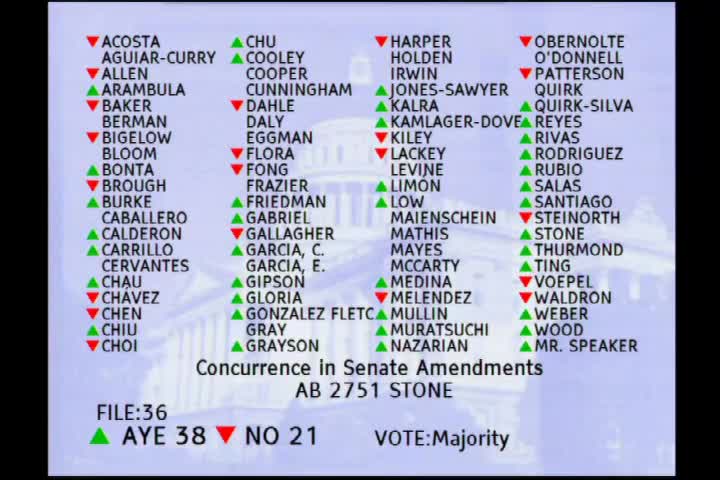 1MIN
Assembly Floor
 2MIN
Senate Floor
 1H
Senate Standing Committee on Appropriations
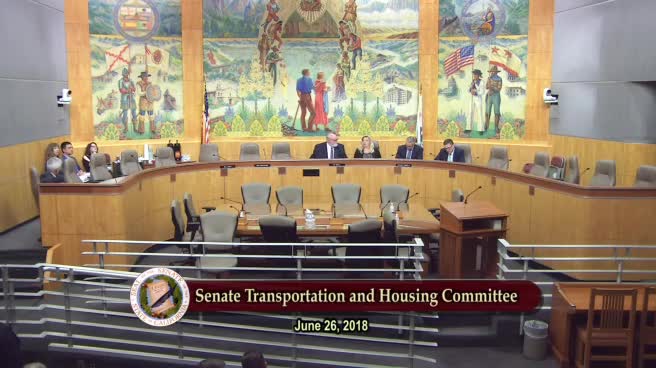 5MIN
Senate Standing Committee on Transportation and Housing
 2MIN
Assembly Floor
 5MIN
Assembly Standing Committee on Housing and Community Development
Bill Author

Bill Co-Author(s):