AB 2083: Foster youth: trauma-informed system of care.
- Session Year: 2017-2018
- House: Assembly
- Latest Version Date: 2018-09-27
Existing law, commonly known as Continuum of Care Reform (CCR), states the intent of the Legislature in adopting CCR to improve Californias child welfare system and its outcomes by using specified measures, including an increase in the use of home-based family care. Existing law, as part of CCR, provides for the implementation of the resource family approval process, which replaces the multiple processes for licensing foster family homes, certifying foster homes by foster family agencies, approving relatives and nonrelative extended family members as foster care providers, and approving guardians and adoptive families.
As part of the resource family approval process, a county is responsible for, among other things, ensuring that a resource family applicant completes specified training that includes certain courses, including one regarding the effects of trauma and child abuse and neglect on child development and behavior, and methods to behaviorally support children impacted by that trauma or child abuse and neglect. Existing law also establishes an intensive services foster care program, developed by the State Department of Social Services, that provides specialized programs to serve children with specific needs, and requires training for that program to include, among other things, information relating to working with children who have experienced trauma.
This bill would state the intent of the Legislature in adopting the bill to build upon the current CCR implementation effort by, among other things, developing a coordinated, timely, and trauma-informed system-of-care approach for children and youth in foster care who have experienced severe trauma. The bill would require each county to develop and implement a memorandum of understanding, as specified, setting forth the roles and responsibilities of agencies and other entities that serve children and youth in foster care who have experienced severe trauma.
This bill would require the memorandum of understanding (MOU) to include, at a minimum, provisions addressing, among other things, the establishment and operation of an interagency leadership team and an interagency placement committee. The bill would authorize members of the team, to the extent permitted by federal law, to disclose to, and exchange with, one another information or a writing that may be designated as confidential under state law if certain conditions are met, and would make any discussion concerning the disclosed or exchanged information or writing during a team meeting confidential and not open to public inspection. The bill would require members of an interagency placement committee, child abuse multidisciplinary personnel team, or child and family team, as defined, that is convened for the purpose of implementing the MOU, to comply with applicable statutory confidentiality provisions for that committee or team.
By creating new duties for county officials relating to foster care services, the bill would impose a state-mandated local program.
This bill would require the Secretary of California Health and Human Services and the Superintendent of Public Instruction, no later than June 1, 2019, to establish a joint interagency resolution team, consisting of representatives from specified state departments, whose primary roles would be to develop guidance and provide support and technical assistance to counties with regard to those children and youth and the memoranda of understanding, as specified. The bill would also require the team, no later than January 1, 2020, in consultation with specified entities and persons, to review the placement and service options available to county child welfare agencies and county probation departments for those children and youth, to develop and submit recommendations to the Legislature, regarding identified gaps in placement, needed services, and a centralized process for services, as specified, and, no later than June 1, 2020, to develop a multiyear plan for increasing the capacity and delivery of trauma-informed care to foster children and youth served by short-term residential therapeutic programs and other foster care and behavioral health providers. The bill would authorize the joint interagency resolution team, to the extent permitted by federal law, to disclose to, and exchange with, one another information or a writing that may be designated as confidential under state law, if certain conditions are met, and would make any discussion concerning the disclosed or exchanged information or writing during a team or committee meeting shall be confidential and shall not be open to public inspection.
Existing constitutional provisions require that a statute that limits the right of access to the meetings of public bodies or the writings of public officials and agencies be adopted with findings demonstrating the interest protected by the limitation and the need for protecting that interest.
This bill would make legislative findings to that effect.
The California Constitution requires the state to reimburse local agencies and school districts for certain costs mandated by the state. Statutory provisions establish procedures for making that reimbursement.
This bill would provide that no reimbursement is required by this act for a specified reason.
Existing law, commonly known as Continuum of Care Reform (CCR), states the intent of the Legislature in adopting CCR to improve Californias child welfare system and its outcomes by using specified measures, including an increase in the use of home-based family care. Existing law, as part of CCR, provides for the implementation of the resource family approval process, which replaces the multiple processes for licensing foster family homes, certifying foster homes by foster family agencies, approving relatives and nonrelative extended family members as foster care providers, and approving guardians and adoptive families.
As part of the resource family approval process, a county is responsible for, among other things, ensuring that a resource family applicant completes specified training that includes certain courses, including one regarding the effects of trauma and child abuse and neglect on child development and behavior, and methods to behaviorally support children impacted by that trauma or child abuse and neglect. Existing law also establishes an intensive services foster care program, developed by the State Department of Social Services, that provides specialized programs to serve children with specific needs, and requires training for that program to include, among other things, information relating to working with children who have experienced trauma.
This bill would state the intent of the Legislature in adopting the bill to build upon the current CCR implementation effort by, among other things, developing a coordinated, timely, and trauma-informed system-of-care approach for foster children and youth in foster care who have experienced severe trauma. The bill would require each county to develop and implement a memorandum of understanding, as specified, setting forth the roles and responsibilities of agencies and other entities that serve children and youth in foster care who have experienced severe trauma.
This bill would require the memorandum of understanding (MOU) to include, at a minimum, provisions addressing, among other things, the establishment and operation of an interagency leadership team and an interagency placement committee. The bill would authorize members of the team, to the extent permitted by federal law, to disclose to, and exchange with, one another information or a writing that may be designated as confidential under state law if certain conditions are met, and would make any discussion concerning the disclosed or exchanged information or writing during a team meeting confidential and not open to public inspection. The bill would require members of an interagency placement committee, child abuse multidisciplinary personnel team, or child and family team, as defined, that is convened for the purpose of implementing the MOU, to comply with applicable statutory confidentiality provisions for that committee or team.
By creating new duties for county officials relating to foster care services, the bill would impose a state-mandated local program.
This bill would require the Secretary of California Health and Human Services and the Superintendent of Public Instruction, no later than June 1, 2019, to establish a joint interagency resolution team, consisting of representatives from specified state departments, whose primary roles would be to develop guidance and provide support and technical assistance to counties with regard to those children and youth and the memoranda of understanding, as specified. The bill would also require the team, no later than January 1, 2020, in consultation with specified entities and persons, to review the placement and service options available to county child welfare agencies and county probation departments for those children and youth, to develop and submit recommendations to the Legislature, regarding identified gaps in placement, needed services, a statewide, pooled financing structure, and a centralized process for services, as specified, and, no later than June 1, 2020, to develop a multiyear plan for increasing the capacity and delivery of trauma-informed care to foster children and youth served by short-term residential therapeutic programs and other foster care and behavioral health providers. The bill would authorize the joint interagency resolution team, to the extent permitted by federal law, to disclose to, and exchange with, one another information or a writing that may be designated as confidential under state law, if certain conditions are met, and would make any discussion concerning the disclosed or exchanged information or writing during a team or committee meeting shall be confidential and shall not be open to public inspection.
Existing constitutional provisions require that a statute that limits the right of access to the meetings of public bodies or the writings of public officials and agencies be adopted with findings demonstrating the interest protected by the limitation and the need for protecting that interest.
This bill would make legislative findings to that effect.
The California Constitution requires the state to reimburse local agencies and school districts for certain costs mandated by the state. Statutory provisions establish procedures for making that reimbursement.
This bill would provide that no reimbursement is required by this act for a specified reason.
Existing law, commonly known as Continuum of Care Reform (CCR), states the intent of the Legislature in adopting CCR to improve Californias child welfare system and its outcomes by using specified measures, including an increase in the use of home-based family care. Existing law, as part of CCR, provides for the implementation of the resource family approval process, which replaces the multiple processes for licensing foster family homes, certifying foster homes by foster family agencies, approving relatives and nonrelative extended family members as foster care providers, and approving guardians and adoptive families.
As part of the resource family approval process, a county is responsible for, among other things, ensuring that a resource family applicant completes specified training that includes certain courses, including one regarding the effects of trauma and child abuse and neglect on child development and behavior, and methods to behaviorally support children impacted by that trauma or child abuse and neglect. Existing law also establishes an intensive services foster care program, developed by the State Department of Social Services, that provides specialized programs to serve children with specific needs, and requires training for that program to include, among other things, information relating to working with children who have experienced trauma.
This bill would state the intent of the Legislature in adopting the bill to build upon the current CCR implementation effort by, among other things, developing a coordinated, timely, and trauma-informed system-of-care approach for foster children and youth who have experienced severe trauma. The bill would require each county to develop and implement a memorandum of understanding, as specified, setting forth the roles and responsibilities of agencies and other entities that serve children and youth in foster care who have experienced severe trauma.
This bill would require the memorandum of understanding (MOU) to include, at a minimum, provisions addressing, among other things, the establishment and operation of an interagency leadership team and an interagency placement committee. The bill would authorize members of the team and committee, team, to the extent permitted by federal law, to disclose to, and exchange with, one another information or a writing that may be designated as confidential under state law if certain conditions are met, and would make any discussion concerning the disclosed or exchanged information or writing during a team or committee meeting confidential and not open to public inspection. The bill would require members of an interagency placement committee, child abuse multidisciplinary personnel team, or child and family team, as defined, that is convened for the purpose of implementing the MOU, to comply with applicable statutory confidentiality provisions for that committee or team.
By creating new duties for county officials relating to foster care services, the bill would impose a state-mandated local program.
This bill would require the Secretary of California Health and Human Services and the Superintendent of Public Instruction, no later than June 1, 2019, to establish a joint interagency resolution team, consisting of representatives from specified state departments, whose primary roles would be to develop guidance and provide support and technical assistance to counties with regard to those children and youth and the memoranda of understanding, as specified. The bill would also require the team, no later than January 1, 2020, in consultation with specified entities and persons, to review the placement and service options available to county child welfare agencies and county probation departments for those children and youth, to develop and submit recommendations to the Legislature, regarding identified gaps in placement, needed services, a statewide, pooled financing structure, and a centralized process for services, as specified, and, no later than June 1, 2020, to develop a multiyear plan for increasing the capacity and delivery of trauma-informed care to foster children and youth served by short-term residential therapeutic programs and other foster care and behavioral health providers. The bill would authorize the joint interagency resolution team, to the extent permitted by federal law, to disclose to, and exchange with, one another information or a writing that may be designated as confidential under state law, if certain conditions are met, and would make any discussion concerning the disclosed or exchanged information or writing during a team or committee meeting shall be confidential and shall not be open to public inspection.
Existing constitutional provisions require that a statute that limits the right of access to the meetings of public bodies or the writings of public officials and agencies be adopted with findings demonstrating the interest protected by the limitation and the need for protecting that interest.
This bill would make legislative findings to that effect.
The California Constitution requires the state to reimburse local agencies and school districts for certain costs mandated by the state. Statutory provisions establish procedures for making that reimbursement.
This bill would provide that no reimbursement is required by this act for a specified reason.
Existing law, commonly known as Continuum of Care Reform (CCR), states the intent of the Legislature in adopting CCR to improve Californias child welfare system and its outcomes by using specified measures, including an increase in the use of home-based family care. Existing law, as part of CCR, provides for the implementation of the resource family approval process, which replaces the multiple processes for licensing foster family homes, certifying foster homes by foster family agencies, approving relatives and nonrelative extended family members as foster care providers, and approving guardians and adoptive families.
As part of the resource family approval process, a county is responsible for, among other things, ensuring that a resource family applicant completes specified training that includes certain courses, including one regarding the effects of trauma and child abuse and neglect on child development and behavior, and methods to behaviorally support children impacted by that trauma or child abuse and neglect. Existing law also establishes an intensive services foster care program, developed by the State Department of Social Services, that provides specialized programs to serve children with specific needs, and requires training for that program to include, among other things, information relating to working with children who have experienced trauma.
This bill would state the intent of the Legislature in adopting the bill to build upon the current CCR implementation effort by, among other things, developing a coordinated, timely, and trauma-informed system-of-care approach for foster children and youth who have experienced severe trauma. The bill would require each county to develop and implement a memorandum of understanding, as specified, setting forth the roles and responsibilities of agencies and other entities that serve children and youth in foster care who have experienced severe trauma. By
This bill would require the memorandum of understanding to include, at a minimum, provisions addressing, among other things, the establishment and operation of an interagency leadership team and an interagency placement committee. The bill would authorize members of the team and committee, to the extent permitted by federal law, to disclose to, and exchange with, one another information or a writing that may be designated as confidential under state law if certain conditions are met, and would make any discussion concerning the disclosed or exchanged information or writing during a team or committee meeting confidential and not open to public inspection.
By creating new duties for county officials relating to foster care services, the bill would impose a state-mandated local program.
This bill would require the Secretary of California Health and Human Services and the Superintendent of Public Instruction, no later than June 1, 2019, to establish a joint interagency resolution team, consisting of representatives from specified state departments, whose primary roles would be to develop guidance and provide support and technical assistance to counties with regard to those children and youth and the memoranda of understanding, as specified. The bill would also require the team, no later than January 1, 2020, in consultation with specified entities and persons, to review the placement and service options available to county child welfare agencies and county probation departments for those children and youth, to develop and submit recommendations to the Legislature, regarding identified gaps in placement, needed services, a statewide, pooled financing structure, and a centralized process for services, as specified, and, no later than June 1, 2020, to develop a multiyear plan for increasing the capacity and delivery of trauma-informed care to foster children and youth served by short-term residential therapeutic programs and other foster care and behavioral health providers.
Existing constitutional provisions require that a statute that limits the right of access to the meetings of public bodies or the writings of public officials and agencies be adopted with findings demonstrating the interest protected by the limitation and the need for protecting that interest.
This bill would make legislative findings to that effect.
The California Constitution requires the state to reimburse local agencies and school districts for certain costs mandated by the state. Statutory provisions establish procedures for making that reimbursement.
This bill would provide that no reimbursement is required by this act for a specified reason.
Existing law, commonly known as Continuum of Care Reform (CCR), states the intent of the Legislature in adopting CCR to improve Californias child welfare system and its outcomes by using comprehensive initial child assessments, increasing the use of home-based family care and the provision of services and supports to home-based family care, reducing the use of congregate care placement settings, and creating faster paths to permanency resulting in shorter durations of involvement in the child welfare and juvenile justice systems. specified measures, including an increase in the use of home-based family care. Existing law, as part of CCR, provides for the implementation of the resource family approval process, which replaces the multiple processes for licensing foster family homes, certifying foster homes by foster family agencies, approving relatives and nonrelative extended family members as foster care providers, and approving guardians and adoptive families.
As part of the resource family approval process, a county is responsible for, among other things, ensuring that a resource family applicant completes specified training that includes certain courses, including one regarding the effects of trauma and child abuse and neglect on child development and behavior, and methods to behaviorally support children impacted by that trauma or child abuse and neglect. Existing law also establishes an intensive services foster care program, developed by the State Department of Social Services, that provides specialized programs to serve children with specific needs, and requires training for that program to include, among other things, information relating to working with children who have experienced trauma.
This bill would state the intent of the Legislature to enact legislation that would in adopting the bill to build upon the current CCR implementation effort by, among other things, developing a coordinated coordinated, timely, and trauma-informed system-of-care approach to better provide care for foster youth, requiring specified agencies to develop and implement local memoranda of understanding to provide care management coordination for child welfare-involved children, youth, and families, and establishing a joint state interagency resolution team to support counties, as specified. for foster children and youth who have experienced severe trauma. The bill would require each county to develop and implement a memorandum of understanding, as specified, setting forth the roles and responsibilities of agencies and other entities that serve children and youth in foster care who have experienced severe trauma. By creating new duties for county officials relating to foster care services, the bill would impose a state-mandated local program.
This bill would require the Secretary of California Health and Human Services and the Superintendent of Public Instruction, no later than June 1, 2019, to establish a joint interagency resolution team, consisting of representatives from specified state departments, whose primary roles would be to develop guidance and provide support and technical assistance to counties with regard to those children and youth and the memoranda of understanding, as specified. The bill would also require the team, no later than January 1, 2020, in consultation with specified entities and persons, to review the placement and service options available to county child welfare agencies and county probation departments for those children and youth, to develop and submit recommendations to the Legislature, as specified, and, no later than June 1, 2020, to develop a multiyear plan for increasing the capacity and delivery of trauma-informed care to foster children and youth served by short-term residential therapeutic programs and other foster care and behavioral health providers.
The California Constitution requires the state to reimburse local agencies and school districts for certain costs mandated by the state. Statutory provisions establish procedures for making that reimbursement.
This bill would provide that no reimbursement is required by this act for a specified reason.
Existing law, commonly known as Continuum of Care Reform (CCR), states the intent of the Legislature in adopting CCR to improve Californias child welfare system and its outcomes by using comprehensive initial child assessments, increasing the use of home-based family care and the provision of services and supports to home-based family care, reducing the use of congregate care placement settings, and creating faster paths to permanency resulting in shorter durations of involvement in the child welfare and juvenile justice systems. Existing law, as part of CCR, provides for the implementation of the resource family approval process, which replaces the multiple processes for licensing foster family homes, certifying foster homes by foster family agencies, approving relatives and nonrelative extended family members as foster care providers, and approving guardians and adoptive families.
This bill would state the intent of the Legislature to enact legislation that would build upon the current CCR implementation effort by, among other things, developing a coordinated and trauma-informed system-of-care approach to better provide care for foster youth, requiring specified agencies to develop and implement local memoranda of understanding to provide care management coordination for child welfare-involved children, youth, and families, and establishing a joint state interagency resolution team to support counties, as specified.
It is the intent of the Legislature in adopting this act to build upon the current Continuum of Care Reform implementation effort by developing a coordinated, timely, and trauma-informed system-of-care approach for children and youth in foster care who have experienced severe trauma, implementing related memoranda of understanding on the county level, and establishing a joint interagency resolution team on the state level to assist counties in serving those children and youth.
SEC. 2.Section 16521.6 is added to the Welfare and Institutions Code, to read:16521.6.To ensure that coordinated, timely, and trauma-informed services are provided to children and youth in foster care who have experienced severe trauma, all of the following shall be met:
(a)(1)Each county shall develop and implement a memorandum of understanding setting forth the roles and responsibilities of agencies and other entities that serve children and youth in foster care who have experienced severe trauma. Participants in the development and implementation of the memorandum of understanding shall include, but not be limited to, all of the following:
(A)The county child welfare agency.
(B)The county probation department.
(C)The county behavioral health departments.
(D)The county office of education.
(E)The regional center or centers that serve children and youth with developmental disabilities in the county.
(F)Foster care or other child welfare advocacy groups, as deemed appropriate by the organizations that will be parties to the memorandum, serving in an advisory capacity.
(2)The memorandum of understanding shall include, at a minimum, provisions addressing all of the following:
(A)Establishment and operation of an interagency leadership team.
(B)Establishment and operation of an interagency placement committee, as defined in Section 4096.
(C)Commitment to implementation of an integrated core practice model.
(D)Processes for screening, assessment, and entry to care.
(E)Processes for child and family teaming and universal service planning.
(F)Alignment and coordination of transportation and other foster youth services.
(G)Recruitment and management of resource families and delivery of therapeutic foster care services.
(H)Information and data sharing agreements.
(I)Staff recruitment, training, and coaching.
(J)Financial resource management and cost sharing.
(K)Dispute resolution.
(3)(A)Members of the interagency leadership team described in subparagraph (A) of paragraph (2), may, to the extent permitted by federal law, and subject to the limitations described in subparagraph (B), disclose to, and exchange with, one another information or a writing that may be designated as confidential under state law if the member of the team having that information or writing reasonably believes it is generally relevant to the identification, reduction, or elimination of barriers to services for, or to placement of, children and youth in foster care or to improve provision of those services or those placements.
(B)Members of the interagency leadership team who receive disclosed or exchanged information or a writing pursuant to subparagraph (A) shall destroy or return that information or writing once the purposes for which it was disclosed or exchanged are satisfied. The information or writing shall be used only for the purposes described in subparagraph (A). Any information or writing disclosed or exchanged pursuant to subparagraph (A) shall be confidential and shall not be open to public inspection, unless the information or writing is aggregated and deidentified in a manner that prevents the identification of an individual who is a subject of that information or writing. Any discussion concerning the disclosed or exchanged information or writing during a team meeting shall be confidential and shall not be open to public inspection.
(C)Members of an interagency placement committee, as defined in Section 4096, child abuse multidisciplinary personnel team, as defined in Section 18961.7, or child and family team, as defined in paragraph (4) of subdivision (a) of Section 16501, that is convened for the purpose of implementing the provisions of the memorandum of understanding developed pursuant to this subdivision shall comply with applicable statutory confidentiality provisions for that committee or team. Members of teams convened for purposes of implementing the memorandum of understanding shall comply with applicable records retention policies for their respective agencies or programs.
(4)To the extent possible, the implementation of the memorandum of understanding shall utilize existing processes and structures within and across the respective organizations that are parties to it.
(b)(1)(A)No later than June 1, 2019, the Secretary of California Health and Human Services and the Superintendent of Public Instruction shall establish a joint interagency resolution team consisting of representatives from the State Department of Social Services, the State Department of Health Care Services, the State Department of Developmental Services, and the State Department of Education.
(B)(i)The primary roles of the joint interagency resolution team shall be to develop guidance to counties, county offices of education, and regional centers with regard to developing the memoranda of understanding required by this section, to support the implementation of those memoranda of understanding, and to provide technical assistance to counties to identify and secure the appropriate level of services to meet the needs of children and youth in foster care who have experienced severe trauma.
(ii)The agencies shall ensure that a process is developed for counties and partner agencies that are parties to the memorandum of understanding to request interdepartmental technical assistance from the joint interagency resolution team.
(2)(A)No later than January 1, 2020, the joint interagency resolution team, in consultation with county agencies, service providers, and advocates for children and resource families, shall review the placement and service options available to county child welfare agencies and county probation departments for children and youth in foster care who have experienced severe trauma and shall develop and submit recommendations to the Legislature addressing any identified gaps in placement types or availability, needed services to resource families, or other identified issues.
(B)A report submitted to the Legislature pursuant to this paragraph shall be submitted in compliance with Section 9795 of the Government Code.
(3)No later than June 1, 2020, the joint interagency resolution team, in consultation with county agencies, service providers, behavioral health professionals, schools of social work, and advocates for children and resource families, shall develop a multiyear plan for increasing the capacity and delivery of trauma-informed care to children and youth in foster care served by short-term residential therapeutic programs and other foster care and behavioral health providers.
(4)(A)Members of the joint interagency resolution team described in this subdivision may, to the extent permitted by federal law, and subject to the limitations described in subparagraph (B), disclose to, and exchange with, one another information or a writing that may be designated as confidential under state law if the member of the team or committee having that information or writing reasonably believes it is generally relevant to the identification, reduction, or elimination of barriers to services for, or to placement of, children and youth in foster care or to improve provision of those services or those placements.
(B)Members of the joint interagency resolution team who receive disclosed or exchanged information, or a writing, pursuant to subparagraph (A), shall destroy or return that information or writing once the purposes for which it was disclosed or exchanged are satisfied. The information or writing shall be used only for the purposes described in subparagraph (A). Any information or writing disclosed or exchanged pursuant to subparagraph (A) shall be confidential and shall not be open to public inspection, unless the information or writing is aggregated and deidentified in a manner that prevents the identification of an individual who is a subject of that information or writing. Any discussion concerning the disclosed or exchanged information or writing during a team meeting shall be confidential and shall not be open to public inspection.
SEC. 3.The Legislature finds and declares that Section 2 of this act, which adds Section 16521.6 to the Welfare and Institutions Code, imposes a limitation on the publics right of access to the meetings of public bodies or the writings of public officials and agencies within the meaning of Section 3 of Article I of the California Constitution. Pursuant to that constitutional provision, the Legislature makes the following findings to demonstrate the interest protected by this limitation and the need for protecting that interest:
The Legislature finds and declares that in order to protect the privacy of children and youth in foster care, it is necessary that any discussion, during a meeting by a county interagency leadership team or joint interagency resolution team that is established pursuant to this act, concerning information or a writing disclosed or exchanged pursuant to this act by a member of the team or committee, be confidential.
SEC. 4.To the extent that this act has an overall effect of increasing the costs already borne by a local agency for programs or levels of service mandated by the 2011 Realignment Legislation within the meaning of Section 36 of Article XIII of the California Constitution, it shall apply to local agencies only to the extent that the state provides annual funding for the cost increase. Any new program or higher level of service provided by a local agency pursuant to this act above the level for which funding has been provided shall not require a subvention of funds by the state or otherwise be subject to Section 6 of Article XIIIB of the California Constitution.
It is the intent of the Legislature in adopting this act to build upon the current Continuum of Care Reform implementation effort by developing a coordinated, timely, and trauma-informed system-of-care approach for foster children and youth in foster care who have experienced severe trauma, implementing related memoranda of understanding on the county level, and establishing a joint interagency resolution team on the state level to assist counties in serving those children and youth.
SEC. 2.Section 16521.6 is added to the Welfare and Institutions Code, to read:16521.6.To ensure that coordinated, timely, and trauma-informed services are provided to children and youth in foster care who have experienced severe trauma, all of the following shall be met:
(a)(1)Each county shall develop and implement a memorandum of understanding setting forth the roles and responsibilities of agencies and other entities that serve children and youth in foster care who have experienced severe trauma. Participants in the development and implementation of the memorandum of understanding shall include, but not be limited to, all of the following:
(A)The county child welfare agency.
(B)The county probation department.
(C)The county behavioral health departments.
(D)The county office of education.
(E)The regional center or centers that serve children and youth with developmental disabilities in the county.
(F)Foster care or other child welfare advocacy groups, as deemed appropriate by the organizations that will be parties to the memorandum, serving in an advisory capacity.
(2)The memorandum of understanding shall include, at a minimum, provisions addressing all of the following:
(A)Establishment and operation of an interagency leadership team.
(B)Establishment and operation of an interagency placement committee, as defined in Section 4096.
(C)Commitment to implementation of an integrated core practice model.
(D)Processes for screening, assessment, and entry to care.
(E)Processes for child and family teaming and universal service planning.
(F)Alignment and coordination of transportation and other foster youth services.
(G)Recruitment and management of resource families and delivery of therapeutic foster care services.
(H)Information and data sharing agreements.
(I)Staff recruitment, training, and coaching.
(J)Financial resource management and cost sharing.
(K)Dispute resolution.
(3)(A)Members of the interagency leadership team described in subparagraph (A) of paragraph (2), may, to the extent permitted by federal law, and subject to the limitations described in subparagraph (B), disclose to, and exchange with, one another information or a writing that may be designated as confidential under state law if the member of the team having that information or writing reasonably believes it is generally relevant to the identification, reduction, or elimination of barriers to services for, or to placement of, children and youth in foster care or to improve provision of those services or those placements.
(B)Members of the interagency leadership team who receive disclosed or exchanged information or a writing pursuant to subparagraph (A) shall destroy or return that information or writing once the purposes for which it was disclosed or exchanged are satisfied. The information or writing shall be used only for the purposes described in subparagraph (A). Any information or writing disclosed or exchanged pursuant to subparagraph (A) shall be confidential and shall not be open to public inspection, unless the information or writing is aggregated and deidentified in a manner that prevents the identification of an individual who is a subject of that information or writing. Any discussion concerning the disclosed or exchanged information or writing during a team meeting shall be confidential and shall not be open to public inspection.
(C)Members of an interagency placement committee, as defined in Section 4096, child abuse multidisciplinary personnel team, as defined in Section 18961.7, or child and family team, as defined in paragraph (4) of subdivision (a) of Section 16501, that is convened for the purpose of implementing the provisions of the memorandum of understanding developed pursuant to this subdivision shall comply with applicable statutory confidentiality provisions for that committee or team. Members of teams convened for purposes of implementing the memorandum of understanding shall comply with applicable records retention policies for their respective agencies or programs.
(4)To the extent possible, the implementation of the memorandum of understanding shall utilize existing processes and structures within and across the respective organizations that are parties to it.
(b)(1)(A)No later than June 1, 2019, the Secretary of California Health and Human Services and the Superintendent of Public Instruction shall establish a joint interagency resolution team consisting of representatives from the State Department of Social Services, the State Department of Health Care Services, the State Department of Developmental Services, and the State Department of Education.
(B)(i)The primary roles of the joint interagency resolution team shall be to develop guidance to counties, county offices of education, and regional centers with regard to developing the memoranda of understanding required by this section, to support the implementation of those memoranda of understanding, and to provide technical assistance to counties to identify and secure the appropriate level of services to meet the needs of children and youth in foster care who have experienced severe trauma.
(ii)The roles described in clause (i) shall include, but not be limited to, development of a process for case-specific intervention in circumstances in which a county needs state-level assistance to meet the service or placement needs of a severely traumatized child or youth in foster care. That assistance shall be prioritized to maintain the children and youth in their communities of origin and in home-based placements whenever possible.(ii)The agencies shall ensure that a process is developed for counties and partner agencies that are parties to the memorandum of understanding to request interdepartmental technical assistance from the joint interagency resolution team.
(2)(A)No later than January 1, 2020, the joint interagency resolution team, in consultation with county agencies, service providers, and advocates for children and resource families, shall review the placement and service options available to county child welfare agencies and county probation departments for children and youth in foster care who have experienced severe trauma and shall develop and submit recommendations to the Legislature addressing any identified gaps in placement types or availability, needed services to resource families, or other identified issues.
(B)As part of the review and recommendation process described in subparagraph (A), the joint interagency resolution team shall also develop and submit to the Legislature, no later than January 1, 2020, options and recommendations for a statewide, pooled financing structure and a process for centralized entry, authorization, and access to services to ensure the provision of treatment and services to foster children and youth with intensive needs.(C)(B)A report submitted to the Legislature pursuant to this paragraph shall be submitted in compliance with Section 9795 of the Government Code.
(3)No later than June 1, 2020, the joint interagency resolution team, in consultation with county agencies, service providers, behavioral health professionals, schools of social work, and advocates for children and resource families, shall develop a multiyear plan for increasing the capacity and delivery of trauma-informed care to foster children and youth in foster care served by short-term residential therapeutic programs and other foster care and behavioral health providers.
(4)(A)Members of the joint interagency resolution team described in this subdivision may, to the extent permitted by federal law, and subject to the limitations described in subparagraph (B), disclose to, and exchange with, one another information or a writing that may be designated as confidential under state law if the member of the team or committee having that information or writing reasonably believes it is generally relevant to the identification, reduction, or elimination of barriers to services for, or to placement of, children and youth in foster care or to improve provision of those services or those placements.
(B)Members of the joint interagency resolution team who receive disclosed or exchanged information, or a writing, pursuant to subparagraph (A), shall destroy or return that information or writing once the purposes for which it was disclosed or exchanged are satisfied. The information or writing shall be used only for the purposes described in subparagraph (A). Any information or writing disclosed or exchanged pursuant to subparagraph (A) shall be confidential and shall not be open to public inspection, unless the information or writing is aggregated and deidentified in a manner that prevents the identification of an individual who is a subject of that information or writing. Any discussion concerning the disclosed or exchanged information or writing during a team meeting shall be confidential and shall not be open to public inspection.
SEC. 3.The Legislature finds and declares that Section 2 of this act, which adds Section 16521.6 to the Welfare and Institutions Code, imposes a limitation on the publics right of access to the meetings of public bodies or the writings of public officials and agencies within the meaning of Section 3 of Article I of the California Constitution. Pursuant to that constitutional provision, the Legislature makes the following findings to demonstrate the interest protected by this limitation and the need for protecting that interest:
The Legislature finds and declares that in order to protect the privacy of children and youth in foster care, it is necessary that any discussion, during a meeting by a county interagency leadership team or interagency placement committee joint interagency resolution team that is established pursuant to this act, concerning information or a writing disclosed or exchanged pursuant to this act by a member of the team or committee, be confidential.
SEC. 4.To the extent that this act has an overall effect of increasing the costs already borne by a local agency for programs or levels of service mandated by the 2011 Realignment Legislation within the meaning of Section 36 of Article XIII of the California Constitution, it shall apply to local agencies only to the extent that the state provides annual funding for the cost increase. Any new program or higher level of service provided by a local agency pursuant to this act above the level for which funding has been provided shall not require a subvention of funds by the state or otherwise be subject to Section 6 of Article XIIIB of the California Constitution.
It is the intent of the Legislature in adopting this act to build upon the current Continuum of Care Reform implementation effort by developing a coordinated, timely, and trauma-informed system-of-care approach for foster children and youth who have experienced severe trauma, implementing related memoranda of understanding on the county level, and establishing a joint interagency resolution team on the state level to assist counties in serving those children and youth.
SEC. 2.Section 16521.6 is added to the Welfare and Institutions Code, to read:16521.6.To ensure that coordinated, timely, and trauma-informed services are provided to children and youth in foster care who have experienced severe trauma, all of the following shall be met:
(a)(1)Each county shall develop and implement a memorandum of understanding setting forth the roles and responsibilities of agencies and other entities that serve children and youth in foster care who have experienced severe trauma. Participants in the development and implementation of the memorandum of understanding shall include, but not be limited to, all of the following:
(A)The county child welfare agency.
(B)The county probation department.
(C)The county behavioral health departments.
(D)The county office of education.
(E)The regional center or centers that serve children and youth with developmental disabilities in the county.
(2)The memorandum of understanding shall include, at a minimum, provisions addressing all of the following:
(A)Establishment and operation of an interagency leadership team.
(B)Establishment and operation of an interagency placement committee. committee, as defined in Section 4096.
(C)Commitment to implementation of an integrated core practice model.
(D)Processes for screening, assessment, and entry to care.
(E)Processes for child and family teaming and universal service planning.
(F)Alignment and coordination of transportation and other foster youth services.
(G)Recruitment and management of resource families and delivery of therapeutic foster care services.
(H)Information and data sharing agreements.
(I)Staff recruitment, training, and coaching.
(J)Financial resource management and cost sharing.
(K)Dispute resolution.
(3)Members of the interagency leadership team and the interagency placement committee described in subparagraphs (A) and (B) of paragraph (2), respectively, may, to the extent permitted by federal law, disclose to, and exchange with, one another information or a writing that may be designated as confidential under state law if the member of the team or committee having that information or writing reasonably believes it is generally relevant to the identification, reduction, or elimination of barriers to services for, or to placement of, children and youth in foster care or to improve provision of those services or those placements. Any discussion concerning the disclosed or exchanged information or writing during a team or committee meeting is confidential and shall not be open to public inspection.(3)(A)Members of the interagency leadership team described in subparagraph (A) of paragraph (2), may, to the extent permitted by federal law, and subject to the limitations described in subparagraph (B), disclose to, and exchange with, one another information or a writing that may be designated as confidential under state law if the member of the team having that information or writing reasonably believes it is generally relevant to the identification, reduction, or elimination of barriers to services for, or to placement of, children and youth in foster care or to improve provision of those services or those placements.
(B)Members of the interagency leadership team who receive disclosed or exchanged information or a writing pursuant to subparagraph (A) shall destroy or return that information or writing once the purposes for which it was disclosed or exchanged are satisfied. The information or writing shall be used only for the purposes described in subparagraph (A). Any information or writing disclosed or exchanged pursuant to subparagraph (A) shall be confidential and shall not be open to public inspection, unless the information or writing is aggregated and deidentified in a manner that prevents the identification of an individual who is a subject of that information or writing. Any discussion concerning the disclosed or exchanged information or writing during a team meeting shall be confidential and shall not be open to public inspection.
(C)Members of an interagency placement committee, as defined in Section 4096, child abuse multidisciplinary personnel team, as defined in Section 18961.7, or child and family team, as defined in paragraph (4) of subdivision (a) of Section 16501, that is convened for the purpose of implementing the provisions of the memorandum of understanding developed pursuant to this subdivision shall comply with applicable statutory confidentiality provisions for that committee or team. Members of teams convened for purposes of implementing the memorandum of understanding shall comply with applicable records retention policies for their respective agencies or programs.
(b)(1)(A)No later than June 1, 2019, the Secretary of California Health and Human Services and the Superintendent of Public Instruction shall establish a joint interagency resolution team consisting of representatives from the State Department of Social Services, the State Department of Health Care Services, the State Department of Developmental Services, and the State Department of Education.
(B)(i)The primary roles of the joint interagency resolution team shall be to develop guidance to counties, county offices of education, and regional centers with regard to developing the memoranda of understanding required by this section, to support the implementation of those memoranda of understanding, and to provide technical assistance to counties to identify and secure the appropriate level of services to meet the needs of children and youth in foster care who have experienced severe trauma.
(ii)The roles described in clause (i) shall include, but not be limited to, development of a process for case-specific intervention in circumstances in which a county needs state-level assistance to meet the service or placement needs of a severely traumatized child or youth in foster care. That assistance shall be prioritized to maintain the children and youth in their communities of origin and in home-based placements whenever possible.
(2)(A)No later than January 1, 2020, the joint interagency resolution team, in consultation with county agencies, service providers, and advocates for children and resource families, shall review the placement and service options available to county child welfare agencies and county probation departments for children and youth in foster care who have experienced severe trauma and shall develop and submit recommendations to the Legislature addressing any identified gaps in placement types or availability, needed services to resource families, or other identified issues.
(B)As part of the review and recommendation process described in subparagraph (A), the joint interagency resolution team shall also develop and submit to the Legislature, no later than January 1, 2020, options and recommendations for a statewide, pooled financing structure and a process for centralized entry, authorization, and access to services to ensure the provision of treatment and services to foster children and youth with intensive needs.
(C)A report submitted to the Legislature pursuant to this paragraph shall be submitted in compliance with Section 9795 of the Government Code.
(3)No later than June 1, 2020, the joint interagency resolution team, in consultation with county agencies, service providers, behavioral health professionals, schools of social work, and advocates for children and resource families, shall develop a multiyear plan for increasing the capacity and delivery of trauma-informed care to foster children and youth served by short-term residential therapeutic programs and other foster care and behavioral health providers.
(4)(A)Members of the joint interagency resolution team described in this subdivision may, to the extent permitted by federal law, and subject to the limitations described in subparagraph (B), disclose to, and exchange with, one another information or a writing that may be designated as confidential under state law if the member of the team or committee having that information or writing reasonably believes it is generally relevant to the identification, reduction, or elimination of barriers to services for, or to placement of, children and youth in foster care or to improve provision of those services or those placements.
(B)Members of the joint interagency resolution team who receive disclosed or exchanged information, or a writing, pursuant to subparagraph (A), shall destroy or return that information or writing once the purposes for which it was disclosed or exchanged are satisfied. The information or writing shall be used only for the purposes described in subparagraph (A). Any information or writing disclosed or exchanged pursuant to subparagraph (A) shall be confidential and shall not be open to public inspection, unless the information or writing is aggregated and deidentified in a manner that prevents the identification of an individual who is a subject of that information or writing. Any discussion concerning the disclosed or exchanged information or writing during a team meeting shall be confidential and shall not be open to public inspection.
SEC. 3.The Legislature finds and declares that Section 2 of this act, which adds Section 16521.6 to the Welfare and Institutions Code, imposes a limitation on the publics right of access to the meetings of public bodies or the writings of public officials and agencies within the meaning of Section 3 of Article I of the California Constitution. Pursuant to that constitutional provision, the Legislature makes the following findings to demonstrate the interest protected by this limitation and the need for protecting that interest:
The Legislature finds and declares that in order to protect the privacy of children and youth in foster care, it is necessary that any discussion, during a meeting by a county interagency leadership team or interagency placement committee that is established pursuant to this act, concerning information or a writing disclosed or exchanged pursuant to this act by a member of the team or committee, be confidential.
SEC. 4.To the extent that this act has an overall effect of increasing the costs already borne by a local agency for programs or levels of service mandated by the 2011 Realignment Legislation within the meaning of Section 36 of Article XIII of the California Constitution, it shall apply to local agencies only to the extent that the state provides annual funding for the cost increase. Any new program or higher level of service provided by a local agency pursuant to this act above the level for which funding has been provided shall not require a subvention of funds by the state or otherwise be subject to Section 6 of Article XIIIB of the California Constitution.
It is the intent of the Legislature in adopting this act to build upon the current Continuum of Care Reform implementation effort by developing a coordinated, timely, and trauma-informed system-of-care approach for foster children and youth who have experienced severe trauma, implementing related memoranda of understanding on the county level, and establishing a joint interagency resolution team on the state level to assist counties in serving those children and youth.
SEC. 2.Section 16521.6 is added to the Welfare and Institutions Code, to read:16521.6.To ensure that coordinated, timely, and trauma-informed services are provided to children and youth in foster care who have experienced severe trauma, all of the following shall be met:
(a)(1)Each county shall develop and implement a memorandum of understanding setting forth the roles and responsibilities of agencies and other entities that serve children and youth in foster care who have experienced severe trauma. Participants in the development and implementation of the memorandum of understanding shall include, but not be limited to, all of the following:
(A)The county child welfare agency.
(B)The county probation department.
(C)The county behavioral health departments.
(D)The county office of education.
(E)The regional center or centers that serve children and youth with developmental disabilities in the county.
(2)The memorandum of understanding shall include, at a minimum, provisions addressing all of the following:
(A)Establishment and operation of an interagency leadership team.
(B)Establishment and operation of an interagency placement committee.
(C)Commitment to implementation of an integrated core practice model.
(D)Processes for screening, assessment, and entry to care.
(E)Processes for child and family teaming and universal service planning.
(F)Alignment and coordination of transportation and other foster youth services.
(G)Recruitment and management of resource families and delivery of therapeutic foster care services.
(H)Information and data sharing agreements.
(I)Staff recruitment, training, and coaching.
(J)Financial resource management and cost sharing.
(K)Dispute resolution.
(3)Members of the interagency leadership team and the interagency placement committee described in subparagraphs (A) and (B) of paragraph (2), respectively, may, to the extent permitted by federal law, disclose to, and exchange with, one another information or a writing that may be designated as confidential under state law if the member of the team or committee having that information or writing reasonably believes it is generally relevant to the identification, reduction, or elimination of barriers to services for, or to placement of, children and youth in foster care or to improve provision of those services or those placements. Any discussion concerning the disclosed or exchanged information or writing during a team or committee meeting is confidential and shall not be open to public inspection.
(b)(1)(A)No later than June 1, 2019, the Secretary of California Health and Human Services and the Superintendent of Public Instruction shall establish a joint interagency resolution team consisting of representatives from the State Department of Social Services, the State Department of Health Care Services, the State Department of Developmental Services, and the State Department of Education.
(B)(i)The primary roles of the joint interagency resolution team shall be to develop guidance to counties, county offices of education, and regional centers with regard to developing the memoranda of understanding required by this section, to support the implementation of those memoranda of understanding, and to provide technical assistance to counties to identify and secure the appropriate level of services to meet the needs of children and youth in foster care who have experienced severe trauma.
(ii)The roles described in clause (i) shall include, but not be limited to, development of a process for case-specific intervention in circumstances in which a county needs state-level assistance to meet the service or placement needs of a severely traumatized child or youth in foster care. That assistance shall be prioritized to maintain the children and youth in their communities of origin and in home-based placements whenever possible.
(2)(A)No later than January 1, 2020, the joint interagency resolution team, in consultation with county agencies, service providers, and advocates for children and resource families, shall review the placement and service options available to county child welfare agencies and county probation departments for children and youth in foster care who have experienced severe trauma and shall develop and submit recommendations to the Legislature addressing any identified gaps in placement types or availability, needed services to resource families, or other identified issues. A
(B)As part of the review and recommendation process described in subparagraph (A), the joint interagency resolution team shall also develop and submit to the Legislature, no later than January 1, 2020, options and recommendations for a statewide, pooled financing structure and a process for centralized entry, authorization, and access to services to ensure the provision of treatment and services to foster children and youth with intensive needs.
(C)A report submitted to the Legislature pursuant to this paragraph shall be submitted in compliance with Section 9795 of the Government Code.
(3)No later than June 1, 2020, the joint interagency resolution team, in consultation with county agencies, service providers, behavioral health professionals, schools of social work, and advocates for children and resource families, shall develop a multiyear plan for increasing the capacity and delivery of trauma-informed care to foster children and youth served by short-term residential therapeutic programs and other foster care and behavioral health providers.
SEC. 3.The Legislature finds and declares that Section 2 of this act, which adds Section 16521.6 to the Welfare and Institutions Code, imposes a limitation on the publics right of access to the meetings of public bodies or the writings of public officials and agencies within the meaning of Section 3 of Article I of the California Constitution. Pursuant to that constitutional provision, the Legislature makes the following findings to demonstrate the interest protected by this limitation and the need for protecting that interest:
The Legislature finds and declares that in order to protect the privacy of children and youth in foster care, it is necessary that any discussion, during a meeting by a county interagency leadership team or interagency placement committee that is established pursuant to this act, concerning information or a writing disclosed or exchanged pursuant to this act by a member of the team or committee, be confidential.
SEC. 3.SEC. 4.To the extent that this act has an overall effect of increasing the costs already borne by a local agency for programs or levels of service mandated by the 2011 Realignment Legislation within the meaning of Section 36 of Article XIII of the California Constitution, it shall apply to local agencies only to the extent that the state provides annual funding for the cost increase. Any new program or higher level of service provided by a local agency pursuant to this act above the level for which funding has been provided shall not require a subvention of funds by the state or otherwise be subject to Section 6 of Article XIIIB of the California Constitution.
It is the intent of the Legislature in adopting this act to build upon the current Continuum of Care Reform implementation effort by developing a coordinated, timely, and trauma-informed system-of-care approach for foster children and youth who have experienced severe trauma, implementing related memoranda of understanding on the county level, and establishing a joint interagency resolution team on the state level to assist counties in serving those children and youth.
SEC. 2.Section 16521.6 is added to the Welfare and Institutions Code, to read:16521.6.To ensure that coordinated, timely, and trauma-informed services are provided to children and youth in foster care who have experienced severe trauma, all of the following shall be met:
(a)(1)Each county shall develop and implement a memorandum of understanding setting forth the roles and responsibilities of agencies and other entities that serve children and youth in foster care who have experienced severe trauma. Participants in the development and implementation of the memorandum of understanding shall include, but not be limited to, all of the following:
(A)The county child welfare agency.
(B)The county probation department.
(C)The county behavioral health departments.
(D)The county office of education.
(E)The regional center or centers that serve children and youth with developmental disabilities in the county.
(2)The memorandum of understanding shall include, at a minimum, provisions addressing all of the following:
(A)Establishment and operation of an interagency leadership team.
(B)Establishment and operation of an interagency placement committee.
(C)Commitment to implementation of an integrated core practice model.
(D)Processes for screening, assessment, and entry to care.
(E)Processes for child and family teaming and universal service planning.
(F)Alignment and coordination of transportation and other foster youth services.
(G)Recruitment and management of resource families and delivery of therapeutic foster care services.
(H)Information and data sharing agreements.
(I)Staff recruitment, training, and coaching.
(J)Financial resource management and cost sharing.
(K)Dispute resolution.
(b)(1)(A)No later than June 1, 2019, the Secretary of California Health and Human Services and the Superintendent of Public Instruction shall establish a joint interagency resolution team consisting of representatives from the State Department of Social Services, the State Department of Health Care Services, the State Department of Developmental Services, and the State Department of Education.
(B)(i)The primary roles of the joint interagency resolution team shall be to develop guidance to counties, county offices of education, and regional centers with regard to developing the memoranda of understanding required by this section, to support the implementation of those memoranda of understanding, and to provide technical assistance to counties to identify and secure the appropriate level of services to meet the needs of children and youth in foster care who have experienced severe trauma.
(ii)The roles described in clause (i) shall include, but not be limited to, development of a process for case-specific intervention in circumstances in which a county needs state-level assistance to meet the service or placement needs of a severely traumatized child or youth in foster care. That assistance shall be prioritized to maintain the children and youth in their communities of origin and in home-based placements whenever possible.
(2)No later than January 1, 2020, the joint interagency resolution team, in consultation with county agencies, service providers, and advocates for children and resource families, shall review the placement and service options available to county child welfare agencies and county probation departments for children and youth in foster care who have experienced severe trauma and shall develop and submit recommendations to the Legislature addressing any identified gaps in placement types or availability, needed services to resource families, or other identified issues. A report submitted to the Legislature pursuant to this paragraph shall be submitted in compliance with Section 9795 of the Government Code.
(3)No later than June 1, 2020, the joint interagency resolution team, in consultation with county agencies, service providers, behavioral health professionals, schools of social work, and advocates for children and resource families, shall develop a multiyear plan for increasing the capacity and delivery of trauma-informed care to foster children and youth served by short-term residential therapeutic programs and other foster care and behavioral health providers.
SEC. 3.To the extent that this act has an overall effect of increasing the costs already borne by a local agency for programs or levels of service mandated by the 2011 Realignment Legislation within the meaning of Section 36 of Article XIII of the California Constitution, it shall apply to local agencies only to the extent that the state provides annual funding for the cost increase. Any new program or higher level of service provided by a local agency pursuant to this act above the level for which funding has been provided shall not require a subvention of funds by the state or otherwise be subject to Section 6 of Article XIIIB of the California Constitution.
SECTION 1.It is the intent of the Legislature to enact legislation that would build upon the current Continuum of Care Reform implementation effort through the following actions:(a)Develop a coordinated and trauma-informed system-of-care approach at the state and local levels to better provide care for foster youth served by multiple agencies, including, but not limited to, behavioral health departments, probation departments, regional centers, and offices of education.(b)Require county child welfare agencies, probation departments, behavioral health departments, regional centers, and offices of education to develop and implement local memoranda of understanding to provide care management coordination for child welfare-involved children, youth, and families who are served by multiple agencies.(c)Require the Secretary of California Health and Human Services and the Superintendent of Public Instruction to convene representatives from the State Department of Social Services, the State Department of Health Care Services, the State Department of Developmental Services, and the State Department of Education to establish a joint interagency resolution team to provide guidance and support the implementation of the local memoranda of understanding described in subdivision (b), and to provide technical assistance to counties to identify and secure the appropriate level of services to meet the needs of foster children.(d)Require the State Department of Social Services and the State Department of Health Care Services to develop and submit a joint plan to the Legislature, with input from stakeholders, to improve the capacity and delivery of trauma-informed care to foster youth served by short-term residential therapeutic programs and other foster care providers.It is the intent of the Legislature to enact legislation that would build upon the current Continuum of Care Reform implementation effort through the following actions:
(a)Develop a coordinated and trauma-informed system-of-care approach at the state and local levels to better provide care for foster youth served by multiple agencies, including, but not limited to, behavioral health departments, probation departments, regional centers, and offices of education.
(b)Require county child welfare agencies, probation departments, behavioral health departments, regional centers, and offices of education to develop and implement local memoranda of understanding to provide care management coordination for child welfare-involved children, youth, and families who are served by multiple agencies.
(c)Require the Secretary of California Health and Human Services and the Superintendent of Public Instruction to convene representatives from the State Department of Social Services, the State Department of Health Care Services, the State Department of Developmental Services, and the State Department of Education to establish a joint interagency resolution team to provide guidance and support the implementation of the local memoranda of understanding described in subdivision (b), and to provide technical assistance to counties to identify and secure the appropriate level of services to meet the needs of foster children.
(d)Require the State Department of Social Services and the State Department of Health Care Services to develop and submit a joint plan to the Legislature, with input from stakeholders, to improve the capacity and delivery of trauma-informed care to foster youth served by short-term residential therapeutic programs and other foster care providers.
|
Date
|
Status
|
|---|---|
| Sep 27, 2018 | Chaptered by Secretary of State - Chapter 815, Statutes of 2018. |
| Sep 27, 2018 | Approved by the Governor. |
| Sep 6, 2018 | Enrolled and presented to the Governor at 3 p.m. |
| Aug 29, 2018 | Senate amendments concurred in. To Engrossing and Enrolling. |
| Aug 27, 2018 | In Assembly. Concurrence in Senate amendments pending. May be considered on or after August 29 pursuant to Assembly Rule 77. |
| Aug 27, 2018 | Read third time. Passed. Ordered to the Assembly. |
| Aug 20, 2018 | Read second time. Ordered to third reading. |
| Aug 17, 2018 | From committee: Amend, and do pass as amended. (Ayes 7. Noes 0.) (August 16). |
| Aug 6, 2018 | In committee: Referred to APPR. suspense file. |
| Jul 5, 2018 | Read second time and amended. Re-referred to Com. on APPR. |
| Jul 3, 2018 | From committee: Amend, and do pass as amended and re-refer to Com. on APPR. with recommendation: To Consent Calendar. (Ayes 7. Noes 0.) (June 26). |
| Jun 13, 2018 | From committee: Do pass and re-refer to Com. on JUD. (Ayes 6. Noes 0.) (June 12). Re-referred to Com. on JUD. |
| Jun 7, 2018 | Referred to Coms. on HUMAN S. and JUD. |
| May 31, 2018 | In Senate. Read first time. To Com. on RLS. for assignment. |
| May 30, 2018 | Read third time. Passed. Ordered to the Senate. |
| May 29, 2018 | Read second time. Ordered to third reading. |
| May 25, 2018 | From committee: Amend, and do pass as amended. (Ayes 12. Noes 0.) (May 25). |
| May 9, 2018 | In committee: Set, first hearing. Referred to APPR. suspense file. |
| Apr 11, 2018 | From committee: Do pass and re-refer to Com. on APPR. with recommendation: To Consent Calendar. (Ayes 7. Noes 0.) (April 10). Re-referred to Com. on APPR. |
| Mar 20, 2018 | Re-referred to Com. on HUM. S. |
| Mar 19, 2018 | From committee chair, with author's amendments: Amend, and re-refer to Com. on HUM. S. Read second time and amended. |
| Mar 15, 2018 | Referred to Com. on HUM. S. |
| Feb 8, 2018 | From printer. May be heard in committee March 10. |
| Feb 7, 2018 | Read first time. To print. |
|
Date
|
Description
|
Location
|
Votes
|
|
|---|---|---|---|---|
| Aug 29, 2018 | AB 2083 COOLEY Concurrence in Senate Amendments | Assembly Floor |
Passed |
|
| Aug 27, 2018 | Assembly 3rd Reading AB2083 Cooley By Leyva | Senate Floor |
Passed |
|
| Aug 16, 2018 | Do pass as amended | Senate Standing Committee on Appropriations |
Passed |
|
| Aug 6, 2018 | Placed on suspense file | Senate Standing Committee on Appropriations |
Passed |
|
| Jun 26, 2018 | Do pass as amended, but first amend, and re-refer to the Committee on [Appropriations] with the recommendation: To Consent Calendar | Senate Standing Committee on Judiciary |
Passed |
|
| Jun 12, 2018 | Do pass, but first be re-referred to the Committee on [Judiciary] | Senate Standing Committee on Human Services |
Passed |
|
| May 30, 2018 | AB 2083 COOLEY Assembly Third Reading | Assembly Floor |
Passed |
|
| May 25, 2018 | Do pass as amended. | Assembly Standing Committee on Appropriations |
Passed |
|
| Apr 10, 2018 | Do pass and be re-referred to the Committee on [Appropriations] with recommendation: To Consent Calendar | Assembly Standing Committee on Human Services |
Passed |
This list shows positions taken on this bill by organizations on the date displayed, which is linked to the original source.
Positions by individuals are not included.
|
Organization
|
Position
|
Date
|
|---|---|---|
| ARC | * Support | Jun 12, 2018 |
| Board of Supervisors San Francisco | * Support | Jun 12, 2018 |
| Butte County Department of Employment and Social Services | ** Support | Aug 19, 2018 |
| California Alliance of Caregivers | ** Support | Aug 19, 2018 |
| California State PTA | ** Support | Aug 19, 2018 |
| California Youth Connection | * Support | Jun 12, 2018 |
| Children Now | ** Support | Aug 19, 2018 |
| Children'S Law Center Of California | ** Support | Aug 19, 2018 |
| County of Santa Cruz Human Services Department | ** Support | Aug 19, 2018 |
| County of Yolo Board of Supervisors | ** Support | Apr 6, 2018 |
| County Welfare Directors Association | ** Support | Aug 19, 2018 |
| Monterey County Department of Social Services | ** Support | Aug 19, 2018 |
| National Association of Social Workers | * Support | Jun 12, 2018 |
| National Association of Social Workers, CA Chapter | ** Support | Apr 6, 2018 |
| Riverside County Board of Supervisors | ** Support | Aug 19, 2018 |
| San Bernadino County Board of Supervisors | * Support | Jun 12, 2018 |
| SCIU | * Support | Jun 12, 2018 |
| Seneca Family of Agencies | ** Support | Aug 19, 2018 |
| Sonoma County Human Services Department | ** Support | Aug 19, 2018 |
| Taxpayer For Improving Public Safety | ** Support | Aug 19, 2018 |
| Taxpayers for Improving Public Safety | ** Support | Apr 6, 2018 |
| Tehama County Department of Social Services | ** Support | Aug 19, 2018 |
| The Sonoma County Human Services Department | ** Support | Jun 8, 2018 |
| The Stronger California Coalition | ** Support | Aug 19, 2018 |
| Ventura County Board of Supervisors | ** Support | Aug 19, 2018 |
| Yolo County | * Support | Jun 12, 2018 |
CONCURRENCE IN SENATE AMENDMENTS
CSA1 Bill Id:AB 2083
Author:(Cooley)
As Amended Ver:August 17, 2018
Majority vote
ASSEMBLY: | 78-0 | (May 30, 2018) | SENATE: | 39-0 | (August 27, 2018) |
Original Committee Reference: HUM. S.
SUMMARY: Requires each county to develop a memorandum of understanding (MOU) to describe the roles and responsibilities certain entities that serve youth in foster care who have experienced severe trauma, and instructs the Secretary of California Health and Human Services, and the Superintendent of Public Instruction to establish a joint interagency resolution team to implement and review aspects of the MOU.
Specifically, this bill:
- States Legislative intent related to the development of a coordinated, timely, and trauma-informed system of care to further the ongoing efforts of Continuum of Care Reform (CCR) to better serve the needs of foster children and youth who have experienced severe trauma, as specified.
- Requires, in order to ensure that coordinated, timely, and trauma-informed services are provided to foster youth who have experienced severe trauma, each county, with the participation of specified stakeholders, to develop and implement a memorandum of understanding (MOU) enumerating the roles and responsibilities of certain entities, as specified, and further requires the MOU to include, at the least, provisions that address: establishment and operation of an interagency leadership team and interagency placement committee; commitment to implementation of an integrated core practice model; processes for screening, assessment, and entry to care; and information and data sharing agreements, among other duties and responsibilities, as specified.
- Allows members of the interagency leadership team and interagency placement committee to, to the extent permitted by federal law, disclose to, and exchange with, each other certain confidential information if there is a reasonable belief that the information or writing is generally relevant to the identification, reduction, or elimination of barriers to services for, or placement of, foster youth who have experienced severe trauma, as specified.
- Requires interagency leadership team and joint interagency resolution team members who receive and have used as intended disclosed or exchanged information to destroy or return that information or writing, and further limits the use of that information or writing to certain purposes. Further, requires all disclosed and exchanged information be confidential and not open to public inspection, and designates any discussion concerning the information as confidential, as specified.
- Requires members of an interagency placement committee, child abuse multidisciplinary team (MDT), or child and family team to comply with confidentiality statutes and applicable records retention policies for their respective agencies or programs, as specified.
- Requires the implementation of the MOU to utilize existing processes and structures within and across the respective organizations that are party to it.
- Instructs the Secretary of California Health and Human Services and the Superintendent of Public Instruction to, by June 1, 2019, establish a joint interagency resolution team consisting of representatives from the Department of Social Services (DSS), Department of Health Care Services (DHCS), Department of Developmental Services (DDS), and the Department of Education (CDE) to, as specified:
- Develop guidance to certain entities, with priority placed on maintaining youth in home-based placements in their communities of origin, regarding the development and implementation of the MOU, and to provide technical assistance to counties to identify and secure appropriate levels of services to youth in foster care who have experienced severe trauma;
- Review, no later than January 1, 2020, the placement and service options available to county child welfare agencies and county probation departments for youth in foster care who have experienced severe trauma, and further, to develop and submit recommendations to the Legislature to address any identified gaps in placement types or availability, needed services to resources families, or other identified issues; and
- Develop, no later than June 1, 2020, a multiyear plan for increasing the capacity and delivery of trauma-informed care to foster children and youth served by short-term residential therapeutic programs and other foster care and behavioral health providers.
- Permits members of the joint interagency resolution team to disclose to, and exchange with, one another information or writings that may be designated as confidential under state law if the member of the team or committee with the information reasonably believes it is relevant to the identification, reduction, or elimination of barriers to services for, or to placement of, youth in foster care, or to improve provision of services, as specified.
- Makes Legislative findings and declarations related to the confidential nature of information imposing a limitation on the public's right of access to the meetings of public bodies as necessitated by the provisions of this bill in order to protect the privacy of children and youth in foster care.
The Senate amendments:
- Add language to include foster care or other child welfare advocacy groups serving in an advisory capacity among the participants in the development and implementation of the MOU, as specified.
- Add language that requires interagency leadership team and joint interagency resolution team members who receive and have used as intended disclosed or exchanged information to destroy or return that information or writing, and further requires the information or writing be used for certain purposes, and requires all disclosed and exchanged information be confidential and not open to public inspection. Further, requires any discussion concerning the information be confidential, as specified.
- Add language that requires members of an interagency placement committee, child abuse MDT, or child and family team to comply with confidentiality statutes and applicable records retention policies for their respective agencies or programs, as specified.
- Add language that requires the implementation of the MOU to utilize existing processes and structures within and across the respective organizations that are party to it.
- Delete language that requires the roles of the joint interagency resolution team to include development of a process for case-specific intervention in which a county needs state level assistance to meet the services or placement needs of a severely traumatized youth, and instead requires agencies to ensure that a process is developed for counties and partner agencies that are parties to the MOU to request interdepartmental technical assistance from the joint interagency resolution team.
- Delete language that requires the joint interagency resolution team to report to the Legislature, no later than January 1, 2020, options and recommendations for a statewide, pooled financing structure and a process for centralized entry, authorization, and access to services to ensure treatment and services are provided to foster children who have intensive needs.
- Add language that permits members of the joint interagency resolution team to disclose to, and exchange with, one another information or writings that may be designated as confidential under state law if the member of the team or committee with the information reasonably believes it is relevant to the identification, reduction, or elimination of barriers to services for, or to placement of, youth in foster care, or to improve provision of services, as specified
- Make technical changes.
EXISTING LAW:
- States that the purpose of foster care law is to provide maximum safety and protection for children who are currently being physically, sexually, or emotionally abused, neglected, or exploited, and to ensure the safety, protection, and physical and emotional well-being of children who are at risk of harm. (Welfare and Institutions Code Section (WIC) 300.2)
- Declares the intent of the Legislature to, whenever possible, preserve and strengthen a child's family ties and, when a child must be removed from the physical custody of his or her parents, to give preferential consideration to placement with relatives. States the intent of the Legislature to reaffirm its commitment to children who are in out-of-home placement to live in the least restrictive family setting and as close to the child's family as possible, as specified. Further states the intent of the Legislature that all children live with a committed, permanent, nurturing family and states that services and supports should be tailored to meet the specific needs of the individual child and family being served, as specified. (WIC 16000)
- Provides for extended foster care funding for youth until age 21, as well as adopts other changes to conform to the federal Fostering Connections to Success Act. (WIC 241.1, 303, 366.3, 388, 391, 450, 11400, 11402, 11403)
- Establishes the Child Welfare Training Program with the purpose of developing and implementing statewide coordinated training programs designed to meet the needs of foster youth, as specified. (WIC 16206 et seq.)
- Requires county mental health departments to provide children served by county social services and probation departments, who meet the definition of medical necessity, with mental health screening, assessment, participation in multidisciplinary placement teams and specialty mental health treatment. (WIC 5867.5)
- Requires each local mental health plan to establish a procedure to ensure access to outpatient specialty mental health services, as required by Early and Periodic Screening, Diagnostic and Treatment (EPSDT) program standards, for any child in foster care who has been placed outside his or her county of adjudication. (WIC 14716)
- Establishes, under the terms of the federal 1915(b) Medicaid waiver, a managed care program providing Medi-Cal specialty mental health services for eligible low-income persons administered through local county mental health plans under contract with DHCS. (WIC 14021.4(b))
FISCAL EFFECT: According to the Senate Appropriations Committee on August 16, 2018, this bill may result in the following costs:
- Significant costs to CHHS, DHCS, DSS, DDS, and CDE increased workload to participate in the joint interagency resolution team and to prepare and submit the two reports to the Legislature. The total costs across departments would likely be in the hundreds of thousands of dollars. (General Fund (GF))
- One-time, potentially reimbursable costs, likely in the hundreds of thousands to low millions of dollars statewide for counties to develop and implement the required MOUs. (GF/local funds)
- Potential cost pressure to implement any recommendations submitted to the Legislature concerning identified gaps in placement types or availability and needed services to resource families.
COMMENTS:
Child Welfare Services: The primary objective of California's Child Welfare Services (CWS) system is to protect children from abuse and neglect while also providing for their health, safety, and overall well-being. When it is determined that a child is at risk of abuse, neglect, or abandonment, county juvenile courts hold legal jurisdiction and the CWS system appoints a social worker in order to best serve the needs of the child. Through CWS, multiple opportunities arise for the judicial system to evaluate, review, and determine the custody of the child, or determine the best out of home placement for the youth. Together, the judicial system and the child's social worker work to ensure that the best possible services are provided to the child. The CWS system also, when appropriate, works to reunite children who have been removed from the custody of their parents or guardians with individuals they consider to be family. California's child welfare system currently serves over 60,000 children and youth.
Continuum of Care Reform (CCR): In response to a growing consensus among child welfare advocates at both the national and state level, DSS sponsored AB 403 (Stone), Chapter 773, Statutes of 2015, which reformed placement and treatment options for youth in foster care. Called "Continuum of Care Reform," the legislation sought to improve outcomes for children and youth served by California's Child Welfare System by reducing the reliance on congregate care as a placement option for foster youth. CCR reforms work to ensure that youth in foster care have their day-to-day physical, mental, and emotional needs met, and that they have the opportunity to grow up in permanent and supportive homes in order to grow into self-sufficient and successful adults. In 2016, AB 1997 (Stone), Chapter 612, and in 2017, AB 404 (Stone), Chapter 732, were signed into law and adopted changes to further facilitate implementation of CCR efforts. AB 1930 (Stone) of the current legislative session, also sponsored by DSS and adopts changes to CCR, is currently awaiting hearing in the Assembly Human Services Committee.
Systems integration for traumatized youth: Foster youth face a number of challenges that their non-system-involved peers do not as a result of the often severe abuse and neglect they experience. Coupled with instability, a lack of sufficient care by adults, and the effects of environmental factors that may include poverty, foster youth are more likely to experience mental and emotional health issues that follow them into adulthood, and intervention by the child welfare system can be crucial. The American Academy of Pediatrics issued a report entitled "Helping Foster and Adoptive Families Cope with Trauma," which discusses the effects of abuse and neglect on a child. The report states, "Children who have experienced maltreatment often have developed different ways of perceiving and reacting to their world, ways that often prove maladaptive in a more normal environment…The lifetime consequences of early trauma are often severe. Researchers have found many of the most common life-threatening health conditions, including obesity, heart disease, alcoholism, and drug use, to be directly related to childhood adversity."
The National Child Traumatic Stress Network (NCTSN) issued a report that, while released in 2005 prior to the current and ongoing reforms in California's CWS, discussed the importance of system integration for the provision of services to foster youth with histories of trauma. Specifically related to the coordination of services, the report states, "The mental health needs of children and families in the child welfare system require consistent, ongoing attention of all of the systems that work with the child. The child welfare system, schools, and the network of community-based organizations serving the needs of maltreated children will be most effective by working both individually and jointly to respond to the unique mental health needs of children and youth with histories of abuse and trauma."
Need for this bill: According to the author, "There are approximately 60,000 children in California's foster care system. Most of these children are cared for in relative caregiver placements, or with resource families (previously known as foster families), but as of October 2017, about 3,600 children were placed in congregate care facilities, or group homes. In 2015, Governor Brown signed AB 403 (Stone) Chapter 773, which reformed and streamlined how we place foster youth with an emphasis on keeping these children out of group homes to the extent possible.
While progress has been made to reduce the use of congregate care settings, for some youth with extensive, complex, and persistent needs, finding a home and services in their community or origin continues to be a challenge for county agencies. These youth, due to their extensive trauma and needs, may require hard to find specialized placement, experience multiple placement disruptions, or frequently move between congregate care placements and home placements. Research shows that the more placements are disrupted, the harder it becomes to then find the appropriate placement for that child.
[This bill] seeks to address these issues for the most traumatized children by requiring interagency agreements at both the state and the county levels to help facilitate placements and appropriate services. The bill further seeks to identify gaps in services and placement options for these youth and drive to recommendations for future State or Legislative action to address these gaps."
Analysis Prepared by: FN: 0004582
Office of Senate Floor Analyses (916) 651-1520 Fax: (916) 327-4478 | AB |
THIRD READING
Bill No: AB 2083
:
SENATE HUMAN SERVICES COMMITTEE: 6-0, 6/12/18
AYES: Wiener, Glazer, Leyva, McGuire, Nguyen, Portantino
NO VOTE RECORDED: Berryhill
SENATE JUDICIARY COMMITTEE: 7-0, 6/26/18
AYES: Jackson, Moorlach, Anderson, Hertzberg, Monning, Stern, Wieckowski
SENATE APPROPRIATIONS COMMITTEE: 7-0, 8/16/18
AYES: Portantino, Bates, Beall, Bradford, Hill, Nielsen, Wiener
ASSEMBLY FLOOR: 78-0, 5/30/18 - See last page for vote
SOURCE: County Welfare Directors Association
DIGEST:
This bill requires each county to develop a memorandum of understanding (MOU) to describe the roles and responsibilities certain entities that serve youth in foster care who have experienced severe trauma, and instructs the Secretary of California Health and Human Services Agency (CHHS), and the Superintendent of Public Instruction to implement and review aspects of the MOUs.
This bill:
- Establishes a system of juvenile dependency for children who are, or are at risk of, being physically, sexually, or emotionally abused, being neglected or being exploited, to ensure their safety, protection, and physical and emotional well-being, as specified. (WIC 300 et seq.)
- States that the purpose of foster care law is to provide maximum safety and protection for children who are currently being physically, sexually, or emotionally abused, neglected or exploited, and to ensure the safety, protection, and physical and emotional well-being of children who are at risk of harm. (WIC 300.2)
- Provides for extended foster care funding for youth until age 21, as well as adopts other changes to conform to the federal Fostering Connections to Success Act. (WIC 241.1, 303, 366.3, 388, 391, 450, 11400, 11402, 11403)
- Requires out-of-home placement of a child in foster care to be based upon selection of a safe setting that is the least restrictive family setting that promotes normal childhood experiences and the most appropriate setting that meets the child’s individual needs, as specified. (WIC 16501.1)
- Establishes the Child Welfare Training Program with the purpose of developing and implementing statewide coordinated training programs designed to meet the needs of foster youth, as specified. (WIC 16206 et seq.)
- Requires each local mental health plan to establish a procedure to ensure access to outpatient specialty mental health services, as required by the child health component of Medicaid program standards, for any child in foster care who has been placed outside his or her county of adjudication. (WIC 14716)
- Establishes, under specified terms of federal Medicaid law and regulation, a managed care program providing Medi-Cal specialty mental health services for eligible low-income persons administered through local county mental health plans under contract with the California Department of Health Care Services (DHCS). (WIC 14021.4(b))
- Provides for intensive services foster care, which provides specialized programs to serve children with specific needs, including but not limited to intensive services and behavioral health needs, or specialized health care needs, as provided. (WIC 18360.05 et seq.)
This bill:
- States Legislative intent related to the development of a coordinated, timely, and trauma informed system of care to further the ongoing efforts of Continuum of Care Reform (CCR) to better serve the needs of foster children and youth who have experienced severe trauma, as specified.
- Requires, in order to ensure that coordinated, timely, and trauma-informed services are provided to foster youth who have experienced severe trauma, each county, with stakeholder participation as provided, develop and implement a MOU setting forth the roles and responsibilities of agencies and other entities, as specified, that serve children and youth in foster care who have experienced severe trauma.
- Requires, further, the MOU to include certain provisions that address: establishment and operation of an interagency leaderships team; establishment and operation of an interagency placement committee; commitment to implementation of an integrated core practice model; processes for screening, assessment, and entry to care; processes for child and family teaming and universal service planning; alignment and coordination of transportation and other foster youth services; recruitment and management of resource families and delivery of therapeutic foster care services; information and data sharing agreements; staff recruitment, training, and coaching; financial resource management and cost sharing; and dispute resolution.
- Provides for the sharing of confidential information, to the extent permitted by federal law, by the members of the interagency leadership team, as well as the Joint Interagency Resolution Team for the purposes of improving provision of services or placements to dependent children, provided certain conditions are met, as specified.
- Provides that to the extent possible, the implementation of the MOU shall utilize existing processes and structures within and across the respective organizations that are parties to it.
- Instructs the Secretary of California Health and Human Services and the Superintendent of Public Instruction to, by June 1, 2019, establish a Joint Interagency Resolution Team consisting of representatives from the State Department of Social Services (CDSS), the DHCS, the State Department of Developmental Services (DDS), and the State Department of Education (DOE), as specified.
- Requires that the Joint Interagency Resolution Team develop a process for counties and partner agencies that are parties to the MOU to request interdepartmental technical assistance.
- States Legislative findings and declarations related to the limitations imposed on the public’s right of access to the meetings of public bodies or the writings of public officials and agencies in order to protect the privacy of children and youth in foster care.
Background
The Continuum of Care Reform (CCR) Effort. For more than a decade, researchers have documented poor outcomes for foster children, especially for those who are placed in group care. CCR intends to reduce the numbers of foster children placed in congregate settings by improving assessments of children and families, emphasizing home-based family placements of foster children, and changing the goals of congregate care placements.
“Children should live in their communities in home-based family care settings,” according to a 2015 report by CDSS entitled “California’s Child Welfare Continuum of Care Reform,” which forms the basis of the CCR. In 2015, the Legislature passed the first of three CDSS-sponsored bills enacting the CCR, AB 403 (Mark Stone, Chapter 773, Statutes of 2015). Among the essential components of the CCR is the establishment a child and family team for each child in foster care, as well as the elimination of the group home category, and its replacement with STRTPs.
Short Term Residential Therapeutic Programs (STRTPs). AB 403 (Mark Stone, Chapter 773, Statutes of 2015) created the new STRTP licensure category to replace the eliminated group home category. Effective January 1, 2017, all STRTPs are required to obtain national accreditation from an entity identified by CDSS. The bill permitted two-year conditional extensions to individual group homes and an interim rate structure for group homes that were unable to transition to the new STRTC model within the given time frame. Many group homes are in the process of transitioning to STRTPs. AB 404 (Mark Stone, Chapter 732, Statutes of 2017) extended the interim rate available to STRTPs from January 1, 2018 to December 31, 2018.
Placement of a child into a STRTP is authorized only when the case plan indicates that the placement is to provide short-term, specialized and intensive treatment for the child, and the plan identifies why the treatment is needed, the nature of the treatment and expected duration. It must include a plan for transitioning the child to a less restrictive environment and the projected timeline for doing so. Placements lasting longer than six months must be approved by the deputy director or director of the county child welfare agency or probation department. An STRTP must obtain mental health approval from DHCS, and continued licensure by CDSS is contingent upon obtaining and maintaining the mental health approval.
As of January 1, 2018, the California Child Welfare Indicators Project (CCWIP), a collaborative venture between the University of California at Berkley and CDSS that engages in ongoing research projects and initiatives that utilizing state child welfare administrative data, was not yet counting children placed in STRTPs, but rather continuing to count group home placements. At that time, CCWIP reported 3,578 foster children were living in group home placements.
Intensive Services Foster Care (ISFC). AB 404 (Mark Stone, Chapter 732, Statutes of 2017) additionally created ISFC as a new category of licensure. ISFC may be a private nonprofit or a county-run program of home-based family care for children whose needs require specially trained resource parents and intensive professional and paraprofessional services in order to avoid congregate care, institutionalization or out-of-state placement. The IFSC category is intended to include both children with significant medical needs that require foster parents with training, as well as children with high behavioral or emotional needs.
ISFC expands on the existing Intensive Treatment Foster Care which is provided in a foster home setting for children or youth with serious emotional or behavioral issues. That model is intended to move children with high-level treatment needs from group home care to family-based care, by providing intensive in-home therapeutic and behavior-management services. In some cases, children may be placed in an intensive treatment home as an alternative to placement in group care. The intensive treatment home combines the “normalizing” features of foster family care with intensive counseling, case management, and support services. Foster parents are recruited, trained, and supported to become part of a treatment team.
Related/Prior Legislation
AB 2043 (Arambula, 2018) requires, by January 1, 2020, county child welfare, probation, and behavioral health agencies to establish county-based Family Urgent Response Systems for the provision of crisis-response services to current or former foster youth and their caregivers, and, by that same date, and requires CDSS to establish a statewide hotline, to be available 24 hours a day, seven days a week to respond to caregiver or youth calls when a crisis arises.
FISCAL EFFECT: Appropriation: Fiscal Com.: Local:
According to the Senate Appropriations Committee:
- Significant costs to CHHS, the Department of Health Care Services (DHCS), the CDSS, the DDS, and the DOE for increased workload to participate in the joint interagency resolution team and to prepare and submit the two reports to the Legislature. The total costs across departments would likely be in the hundreds of thousands of dollars. (GF)
- One-time, potentially reimbursable costs, likely in the hundreds of thousands to low millions of dollars statewide for counties to develop and implement the required MOUs. (GF/local funds)
- Potential cost pressure to implement any recommendations submitted to the Legislature concerning identified gaps in placement types or availability and needed services to resource families.
County Welfare Directors Association (source)
Butte County Department of Employment and Social Services
California Alliance of Caregivers
California State PTA
Children Now
Children’s Law Center of California
City and County of San Francisco Human Services Agency
County of Santa Cruz Human Services Department
Monterey County Department of Social Services
Riverside County Board of Supervisors
Seneca Family of Agencies
Sonoma County Human Services Department
Statewide Taskforce on Accessing Health Services for California Children in Foster Care
Taxpayer for Improving Public Safety
Tehama County Department of Social Services
The Stronger California Coalition
Ventura County Board of Supervisors
OPPOSITION: (Verified 8/17/18)
California Department of Finance
California Department of Social Services
ARGUMENTS IN SUPPORT: County Welfare Directors Association, sponsor, writes, “CCR enacted via AB 403 (Stone, 2015) and amended through subsequent clean up legislation, requires counties to reduce congregate care placements and increase family-based placements for children in foster care. For this shift in placements to work, however, a shift in services also must occur. While counties are having some success in moving children and youth out of group homes and into community-based placements, many are struggling to connect youth who have suffered the most severe trauma with the services and supports they need, which often cross multiple systems.
Youth with significant and persistent needs face a number of challenges. Untreated and unresolved trauma can present itself in the form of behavioral health issues, which in turn can lead to placement disruptions, refusals from caregivers and group homes to accept these youth for placement, placement out of state rather than in their communities, and law enforcement/juvenile just involvement. AB 2083 would take steps at the local, state and practitioner level to help address these issues – ideally before they arise.
The overarching goal of AB 2083 is to better serve youth who have experienced severe trauma by ensuring the services available to them are coordinated, trauma-informed and timely. Ensuring both local and state involvement, and by working with other stakeholders to address potential gaps in placements and services, should improve services to these youth and help the agencies at all levels who serve these youth realize the goals of CCR.
ARGUMENTS IN OPPOSITION: The California Department of Finance is opposed to the July 5, 2018 version of this bill for the following reasons:
- This bill creates new General Fund costs of up to $26.7 million in 2018-19. The additional funding needs associated with this bill were not included in the 2018 Budget Act, and this bill does not include an appropriation; therefore, the affected agencies would have to redirect existing resources from other statutorily-required activities in 2018-19 to comply with its provisions. Additionally, absent funding, it is unclear whether counties would be able to begin implementation efforts until 2019-20, assuming local assistance funding is included in the 2019 Budget Act.
- This bill creates unknown, but potentially significant General Fund costs and cost pressures in out years, which increases the risk to the state budget in future years when revenues decline.
- The provisions of this bill appear to be partially duplicative of the California Integrated Core Practice Model for Children, Youth and Families.
- The state has already made substantial new investments in the area of child welfare services to improve child and family outcomes, reduce congregate care placements, increase home-and family based placements, and improve access to necessary services and supports. For Continuum of Care Reform alone, the 2018 Budget Act included over $248 million General Fund
ASSEMBLY FLOOR: 78-0, 5/30/18
AYES: Acosta, Aguiar-Curry, Travis Allen, Arambula, Baker, Berman, Bigelow, Bloom, Bonta, Brough, Burke, Caballero, Calderon, Carrillo, Cervantes, Chau, Chávez, Chen, Chiu, Choi, Chu, Cooley, Cooper, Cunningham, Dahle, Daly, Eggman, Flora, Fong, Frazier, Friedman, Gallagher, Cristina Garcia, Eduardo Garcia, Gipson, Gloria, Gonzalez Fletcher, Gray, Grayson, Harper, Holden, Irwin, Jones-Sawyer, Kalra, Kamlager-Dove, Kiley, Lackey, Levine, Limón, Low, Maienschein, Mathis, Mayes, McCarty, Medina, Melendez, Mullin, Muratsuchi, Nazarian, Obernolte, O'Donnell, Patterson, Quirk, Quirk-Silva, Reyes, Rodriguez, Rubio, Salas, Santiago, Steinorth, Mark Stone, Thurmond, Ting, Voepel, Waldron, Weber, Wood, Rendon
8/19/18 13:37:34
**** END ****
SENATE COMMITTEE ON
Senator Anthony Portantino, Chair
2017 - 2018 Regular Session
AB 2083 (Cooley) - Foster youth: trauma-informed system of care
Version: | Policy Vote: |
Urgency: | Mandate: |
Hearing Date: | Consultant: |
Bill Summary:
AB 2083 would require each county to develop a memorandum of understanding (MOU) to describe the roles and responsibilities of certain entities that serve youth in foster care who have experienced severe trauma, and would instruct the Secretary of the California Health and Human Services Agency (CHHS) and the Superintendent of Public Instruction to implement and review aspects of the MOUs.
*********** ANALYSIS ADDENDUM – SUSPENSE FILE ***********
The following information is revised to reflect amendments
adopted by the committee on August 16, 2018
Fiscal Impact:
- Significant costs to CHHS, the Department of Health Care Services (DHCS), the California Department of Social Services (CDSS), the Department of Developmental Services (DDS), and the State Department of Education for increased workload to participate in the joint interagency resolution team and to prepare and submit the two reports to the Legislature. The total costs across departments would likely be in the hundreds of thousands of dollars. (GF)
- One-time, potentially reimbursable costs, likely in the hundreds of thousands to low millions of dollars statewide for counties to develop and implement the required MOUs. (GF/local funds)
- Potential cost pressure to implement any recommendations submitted to the Legislature concerning identified gaps in placement types or availability and needed services to resource families.
Author Amendments:
Delete the requirement to review recommendations for pooled financing. Clarify that the MOUs shall use organizations’ existing processes and structures and that a process shall be developed in the MOU for counties and partner agencies to request interdepartmental technical assistance from the joint interagency resolution team.
-- END --
SENATE COMMITTEE ON APPROPRIATIONS
Senator Anthony Portantino, Chair
2017 - 2018 Regular Session
AB 2083 (Cooley) - Foster youth: trauma-informed system of care
Version: July 5, 2018 | Policy Vote: HUMAN S. 6 - 0, JUD. 7 - 0 |
Urgency: No | Mandate: Yes |
Hearing Date: August 6, 2018 | Consultant: Debra Cooper |
This bill meets the criteria for referral to the Suspense File.
Bill Summary:
AB 2083 would require each county to develop a memorandum of understanding (MOU) to describe the roles and responsibilities of certain entities that serve youth in foster care who have experienced severe trauma, and would instruct the Secretary of the California Health and Human Services Agency (CHHS) and the Superintendent of Public Instruction to implement and review aspects of the MOUs.
Fiscal Impact:
- Significant costs to CHHS, the Department of Health Care Services (DHCS), the California Department of Social Services (CDSS), the Department of Developmental Services (DDS), and the State Department of Education for increased workload to participate in the joint interagency resolution team and to prepare and submit the two reports to the Legislature. The total costs across departments would likely be in the hundreds of thousands of dollars. (GF)
- One-time, potentially reimbursable costs, likely in the hundreds of thousands to low millions of dollars statewide for counties to develop and implement the required MOUs. (GF/local funds)
- Potential cost pressure to implement any recommendations submitted to the Legislature concerning identified gaps in placement types or availability, needed services to resource families, or a statewide, pooled financing structure and a process for centralized entry, authorization, and access to services.
Background:
California’s CWS system is an essential component of the state’s safety net. Social workers in each county receive reports of abuse or neglect, investigate and resolve those reports. Abused and neglected children who have been removed from their homes fall under the jurisdiction of the ounty’s juvenile dependency court. The dependency court holds legal jurisdiction over the child, while the child is served by the CWS system social worker. This system seeks to ensure the safety and protection of these children, and where possible, preserve and strengthen families through visitation and family reunification. The CWS system provides multiple opportunities for the custody of the child, or the child’s placement outside of the home, to be evaluated, reviewed, and determined by the judicial system, in consultation with the child’s social worker to help provide the best possible services to the child. It is the state’s goal to reunify a foster child or youth with their biological family whenever possible. In instances where reunification is not possible, it is the state’s goal to provide a permanent placement alternative, such as adoption or guardianship, with the second highest placement priority of the CWS system being to unite children with other relatives or nonrelative extended family members.
AB 404 (Mark Stone, Chapter 732, Statutes of 2017) created Intensive Services Foster Care (ISFC) as a new category of licensure. ISFC may be a private nonprofit or a county-run program of home-based family care for children whose needs require specially trained resource parents and intensive professional and paraprofessional services in order to avoid congregate care, institutionalization or out-of-state placement. The IFSC category is intended to include both children with significant medical needs that require foster parents with training, as well as children with high behavioral or emotional needs.
A child and family team is convened by the child welfare placing agency because the members are invested in the family’s success. Instead of relying on a single social worker to assess, plan and coordinate care, team members are tasked with identifying the strengths and needs of the child or youth and their family. Team members include the youth, the youth’s family and extended family members, current caregiver, placing agency social worker and other individuals who are identified by the family as being important.
Proposed Law:
This bill would:
- State legislative intent related to the development of a coordinated, timely, and trauma informed system of care to further the ongoing efforts of Continuum of Care Reform (CCR) to better serve the needs of foster children and youth who have experienced severe trauma, as specified;
- Require, in order to ensure that coordinated, timely, and trauma-informed services are provided to foster youth who have experienced severe trauma, each county develop and implement a MOU setting forth the roles and responsibilities of agencies and other entities, as specified, that serve children and youth in foster care who have experienced severe trauma;
- Require the MOU to include certain provisions that address: establishment and operation of an interagency leaderships team; establishment and operation of an interagency placement committee; commitment to implementation of an integrated core practice model; processes for screening, assessment, and entry to care; processes for child and family teaming and universal service planning; alignment and coordination of transportation and other foster youth services; recruitment and management of resource families and delivery of therapeutic foster care services; information and data sharing agreements; staff recruitment, training, and coaching; financial resource management and cost sharing; and dispute resolution;
- Provide for the sharing of confidential information, to the extent permitted by federal law, by the members of the interagency leadership team and the interagency placement committee if the member of the team or committee believes it is generally relevant to the identification, reduction, or elimination of barriers to services for, or to placement of, children and youth in foster care, or to improve provision of those services or those placements;
- Require members of the interagency leadership team who receive disclosed or exchanged information or a writing to destroy or return that information or writing once the purposes for which it was disclosed or exchanged are satisfied. This information shall be confidential and shall not be open to public inspection, unless the information or writing is aggregated and deidentified;
- Require members of an interagency placement committee to comply with applicable statutory confidentiality provisions for that committee or team;
- Require the Secretary of CHHS and the Superintendent of Public Instruction, by June 1, 2019, to establish a joint interagency resolution team consisting of representatives from CDSS, DHCS, DDS, and the State Department of Education to develop guidance to counties, county offices of education, and regional centers with regard to developing the MOU, to support the implementation of those memoranda of understanding, and to provide technical assistance to counties to identify and secure the appropriate level of services to meet the needs of children and youth in foster care who have experienced severe trauma;
- Require the joint interagency resolution team, by January 1, 2020, in consultation with county agencies, service providers, and advocates for children and resource families, to review the placement and service options available to county child welfare agencies and county probation departments for children and youth in foster care who have experienced severe trauma. The joint resolution team would be required to develop and submit recommendations to the Legislature addressing any identified gaps in placement types or availability, needed services to resource families, or other identified issues;
- Require the joint resolution interagency team, by January 1, 2020, to develop and submit to the Legislature options and recommendations for a statewide, pooled financing structure and a process for centralized entry, authorization, and access to services to ensure the provision of treatment and services to foster children and youth with intensive needs;
- Require the joint interagency resolution team, by June 1, 2020, in consultation with county agencies, service providers, behavioral health professionals, schools of social work, and advocates for children and resource families, to develop a multiyear plan for increasing the capacity and delivery of trauma-informed care to foster children and youth served by short-term residential therapeutic programs and other foster care and behavioral health providers;
- Authorize members of the joint interagency resolution team to disclose to, and exchange with, one another information or a writing that may be designated as confidential under state law if the member of the team or committee having that information or writing reasonably believes it is generally relevant to the identification, reduction, or elimination of barriers to services for, or to placement of, children and youth in foster care or to improve provision of those services or those placements;
- Require members of the joint interagency resolution team who receive disclosed or exchanged information, or a writing to destroy or return that information or writing once the purposes for which it was disclosed or exchanged are satisfied.
Related Legislation:
AB 2043 (Arambula, 2018) would require, by January 1, 2020, county child welfare, probation, and behavioral health agencies to establish county-based Family Urgent Response Systems for the provision of crisis-response services to current or former foster youth and their caregivers, and, by that same date, would require CDSS to establish a statewide hotline, to be available 24 hours a day, seven days a week to respond to caregiver or youth calls when a crisis arises. It is pending in the Senate Appropriations Committee.
AB 1006 (Maienschein, Chapter 714, Statutes of 2017) required the provision of information about mental health treatment information to prospective adoptive families or guardians of foster youth, and requires specialized permanency services be provided to certain youth.
AB 403 (Stone, Chapter 773, Statutes of 2015) began implementation of CCR by sunsetting existing licensure, rate setting and other provisions for group homes and creating new models of care. It also required implementation of child and family teams for every child in foster care statewide. AB 1997 (Stone, Chapter 612, Statutes of 2016), AB 404 (Stone, Chapter 732, Statutes of 2017), and AB 1930 (Stone, 2018) further CCR efforts made by AB 403.
-- END --
Senator Hannah-Beth Jackson, Chair
2017-2018 Regular Session
Bill No: AB 2083 (Author:Cooley)
Version: May 25, 2018
Hearing Date: June 26, 2018
Fiscal: Yes
Urgency: No
Consultant: MEC
SUBJECT
Foster youth: trauma-informed system of care
DESCRIPTION
This bill would require each county to develop and implement a memorandum of understanding (MOU) setting forth the roles and responsibilities of agencies and other entities that serve children and youth in foster care who have experienced severe trauma. This bill would require the MOU to include, at a minimum, provisions addressing, among other things, the establishment and operation of an interagency leadership team and an interagency placement committee. The bill would authorize members of the team and committee, to the extent permitted by federal law, to disclose to, and exchange with one another, information or a writing that may be designated as confidential under state law if certain conditions are met, and would make any discussion concerning the disclosed or exchanged information or writing during a team or committee meeting confidential and not open to public inspection.
For the purposes of the jurisdiction of this Committee, this analysis will focus on the portion of the bill that would authorize members of the team and committee to share and disclose information that may be designated as confidential under state law.
BACKGROUND
There are approximately 60,000 children in California’s foster care system. Although most of these children are cared for in relative caregiver placements or with resource families, according to the author, approximately 3,600 children are still living in congregate care facilities or group homes.
In 2015, AB 403 (Mark Stone, Ch. 773, Stats. 2015) began the enactment of California’s Continuum of Care Reform (CCR) effort. The Continuum of Care Reform effort resulted from the Department of Social Services’ (CDSS) “California’s Child Welfare Continuum of Care Reform” report which captured the results of a three-year workgroup process. The working group and report were required by a 2012 budget trailer bill (SB 1013, Ch. 25, Stats. 2012), which directed the work group to consider, at a minimum, ways to reform the programs and services provided by Foster Family Agencies (FFAs) and group homes, with a focus on how to ensure the provision of needed services in family-like settings.
The report linked group home care with the creation of lifelong institutionalized behaviors, an increased likelihood of being involved with the juvenile justice system and the adult correctional system, and low educational attainment. Furthermore, the report found that children who leave congregate care to return to live with their families are more likely than those who were placed in family-based care to return to the foster care system. (California’s Child Welfare Continuum of Care Reform (January 2015) <http://www.cdss.ca.gov/ cdssweb/entres/pdf/CCR_LegislativeReport.pdf> [as of July 2, 2017].)
AB 403 eliminated the group home licensure category and created the new Short Term Residential Therapeutic Programs (STRTPs) to replace them. Among other things, AB 403 provided that placement of a child into a STRTP is only authorized when the child’s case plan indicates that the placement is to provide short term, specialized and intensive treatment for the child and the plan identifies why the treatment is needed, the nature of the treatment, and the expected duration of the STRTP placement.
According to the author of the bill before this committee, since the enactment of the Continuum of Care Reform, for some youth with extensive, complex, and persistent needs, finding a home and services in their community of origin continues to be a challenge for county agencies. Because of extensive trauma and needs, these youth may require hard to find specialized placement, experience multiple placement disruptions, or frequently move between congregate care placements and home placements.
AB 2083 seeks to address the needs of the most traumatized children by requiring interagency agreements at both the state and the county levels to help facilitate placements and appropriate services. The bill further seeks to identify gaps in services and placement options for these youth and drive recommendations for future state or legislative action to address these gaps. Specifically, this bill would require each county to develop and implement a memorandum of understanding (MOU) setting for the roles and responsibilities of agencies and other entities that serve children and youth in foster care who have experienced severe trauma. The MOU would need to include, at a minimum, provisions addressing, among other things, the establishment and operation of an interagency leadership team and an interagency placement committee. The members of the team and committee would be authorized, to the extent permitted by federal law, to disclose to, and exchange with, one another information or a writing that may be designated as confidential under state law if certain conditions are met, and would make any discussion concerning the disclosed or exchanged information or writing during a team or committee meeting confidential and not open to public inspection. The jurisdiction of this Committee relates to the disclosure and protection of information about the youth and children.
This bill was heard in the Senate Committee on Human Services on June 13, 2018, and passed on a 6 to 0 vote.
CHANGES TO EXISTING LAW
Existing law establishes a system of juvenile dependency for children who are, or are at risk of, being physically, sexually, or emotionally abused, being neglected or being exploited, to ensure their safety, protection, and physical and emotional well-being, as specified. (Welf. & Inst. Code Sec. 300 et seq.)
Existing law provides that the purpose of foster care law is to provide maximum safety and protection for children who are currently being physically, sexually, or emotionally abused, neglected or exploited, and to ensure the safety, protection, and physical and emotional well-being of children who are at risk of harm. (Welf. & Inst. Code Sec.300.2.)
Existing law provides for extended foster care funding for youth until age 21, as well as adopts other changes to conform to the federal Fostering Connections to Success Act. (Welf. & Inst. Code Secs. 241.1, 303, 366.3, 388, 391, 450, 11400, 11402, & 11403.)
Existing law declares the intent of the Legislature, to whenever possible, preserve and strengthen a child’s family ties and, when a child must be removed from the physical custody of his or her parents, to give preferential consideration to placement with relatives. States the intent of the Legislature to reaffirm its commitment to children who are in out-of-home placements to live in the least restrictive family settings and as close to their family as possible, as specified. Further states the intent of the Legislature that all children live with a committed, permanent, nurturing family, and states that services and supports should be tailored to meet the specific needs of the individual child and family being served, as specified. (Welf. & Inst. Code Sec. 16000.)
Existing law requires out-of-home placement of a child in foster care to be based upon selection of a safe setting that is the least restrictive family setting that promotes normal childhood experiences and the most appropriate setting that meets the child’s individual needs, as specified. Further requires the selection of placement to consider, in order of priority, placement with: relatives, nonrelated extended family members, and tribal members; foster family homes, resource families, and nontreatment certified homes of foster family agencies; followed by treatment and intensive treatment certified homes of foster family agencies or multidimensional treatment foster care homes or therapeutic foster care homes; group care placements in the order of short-term residential treatment centers, group homes, community treatment facilities, and out-of-state residential treatment, as specified. (Welf. & Inst. Code Sec. 16501.1)
Existing law establishes the Child Welfare Training Program with the purpose of developing and implementing statewide coordinated training programs designed to meet the needs of foster youth, as specified. (Welf. & Inst. Code Sec. 16206 et seq.)
Existing law requires each local mental health plan to establish a procedure to ensure access to outpatient specialty mental health services, as required by the child health component of Medicaid program standards, for any child in foster care who has been placed outside his or her county of adjudication. (Welf. & Inst. Code Sec. 14716.)
Existing law establishes, under specified terms of federal Medicaid law and regulation, a managed care program providing Medi-Cal specialty mental health services for eligible low-income persons administered through local county mental health plans under contract with the California Department of Health Care Services. (Welf. & Inst. Code Sec. 314021.4(b).)
Existing law provides for intensive services foster care, which provides specialized programs to serve children with specific needs, including but not limited to intensive services and behavioral health needs, or specialized health care needs, as provided. (Welf. & Inst. Code Sec. 18360.05 et seq.)
This bill would state that the intent of the Legislature in adopting the bill is to build upon the current Continuum of Care Reform (CCR) implementation effort by, among other things, developing a coordinated, timely, and trauma-informed system-of-care approach for foster children and youth who have experienced severe trauma.
This bill would require each county to develop and implement a memorandum of understanding (MOU), as specified, setting forth the roles and responsibilities of agencies and other entities that serve children and youth in foster care who have experienced severe trauma.
This bill would require the MOU to include, at a minimum, provisions addressing, among other things, the establishment and operation of an interagency leadership team and an interagency placement committee.
This bill would authorize members of the interagency leadership team and the interagency placement committee, to the extent permitted by federal law, to disclose to, and exchange with, one another, information or a writing that may be designated as confidential under state law if the member of the team or committee having that information or writing reasonably believes it is generally relevant to the identification, reduction, or elimination of barriers to services for, or to placement of, children and youth in foster care or to improve provision of those services or those placements. Any discussion concerning the disclosed or exchanged information or writing during a team or committee meeting would be confidential and would not be open to public inspection.
This bill would require the Secretary of California Health and Human Services and the Superintendent of Public Instruction, no later than June 1, 2019, to establish a joint interagency resolution team, consisting of representatives from specified state departments, whose primary roles would be to develop guidance and provide support and technical assistance to counties with regard to those children and youth and the MOU, as specified.
This bill would also require the team, no later than January 1, 2020, in consultation with specified entities and persons, to review the placement and service options available to county child welfare agencies and county probation departments for those children and youth, to develop and submit recommendations to the Legislature, regarding identified gaps in placement, needed services, a statewide, pooled financing structure, and a centralized process for services, as specified, and, no later than June 1, 2020, to develop a multiyear plan for increasing the capacity and delivery of trauma-informed care to foster children and youth served by short-term residential therapeutic programs and other foster care and behavioral health providers.
COMMENT
1. Stated need for the bill
According to the author:
There are approximately 60,000 children in California’s foster care system. Most of these children are cared for in relative caregiver placements, or with resource families (previously known as foster families) but as of October 2017, about 3,600 children were placed in congregate care facilities, or group homes. In 2015, Governor Brown signed AB 403 (Stone) which reformed and streamlined how we place foster youth with an emphasis in keeping these children out of group homes to the extent possible.
While progress has been made to reduce the use of congregate care settings, for some youth with extensive, complex and persistent needs, finding a home and services in their community of origin continues to be a challenge for county agencies. These youth, due to their extensive trauma and needs, may require hard to find specialized placement, experience multiple placement disruptions, or frequently move between congregate care placements and home placements. Research shows that the more placements are disrupted the harder it becomes to then find the appropriate placement for that child.
AB 2083 seeks to address these issues for the most traumatized children by requiring interagency agreements at both the state and the county levels to help facilitate placements and appropriate services. The bill further seeks to identify gaps in services and placement options for these youth and drive to recommendations for future State or legislative action to address these gaps.
The County Welfare Directors Association of California, the sponsor of the bill writes:
While counties are having some success in moving children and youth out of group homes and into community-based placements, many are struggling to connect youth who have suffered the most severe trauma with the services and supports they need, which often cross multiple systems. [ . . . ]
Specifically, this legislation would:
- At the local level, require county agencies serving youth who have experienced severe trauma, as well as county offices of education and regional centers, to enter into Memorandums of Understanding to ensure coordinated entry into care and receipt of services.
- At the state level, establish a joint inter-agency placement resolution team, tasked with providing technical assistance to county agencies establishing MOUs, link youth to services, address cross-program policy inconsistencies, and assist at the case level when needed. The team would also be tasked with reviewing the availability of placements (from family homes to congregate care) for youth who have experienced severe trauma, and making recommendations to the Legislature for improvements in this area.
- Finally, at the practitioner level, the inter-agency team would consult with stakeholders (including practitioners) to develop a plan to increase the availability of trauma-informed services to youth in care.
2. Protecting information of vulnerable children and youth while allowing its use
among members of the interagency placement committee and interagency leadership
team
This Committee’s jurisdiction with regard to this bill pertains to the sharing of information about vulnerable children and youth. The bill would authorize members of the interagency placement committee and interagency leadership team to share and disclose information that may be designated as confidential under state law. The interagency placement committee and interagency leadership team who will be permitted to share information about vulnerable children and youth have not been established and it is unclear who the committee and team members will be. While there are confidentiality provisions with regard to the “discussion” during a team or committee meeting of the information that was shared, the bill in print contains no other provisions to protect information once it is shared between the team and committee members. While it is important to the success of the purposes behind the bill to allow team and committee members to share information about the individuals they are helping, it is equally important that the information be protected and not used for purposes outside of the bill.
The following amendment would protect information about vulnerable youth and children while allowing for information to be shared among members of the interagency leadership team and interagency placement committee to help eliminate barriers to service or placement of children and improve provision of the services or placements.
Amendment 1:
On page 4, line 14, strike: committee.
And replace with: committee, as defined in Section 4096.
Amendment 2:
On page 4, strike lines 28-40, inclusive, and replace with:
(3) (A) Members of the Interagency Leadership Team described in subparagraph (A) of paragraph (2), may, to the extent permitted by federal law, and subject to the limitations described in subparagraph (B), disclose to, and exchange with, one another information or a writing that may be designated as confidential under state law if the member of the team having that information or writing reasonably believes it is generally relevant to the identification, reduction, or elimination of barriers to services for, or to placement of, children and youth in foster care or to improve provision of those services or those placements.
(B) Members of the interagency leadership team who receive disclosed or exchanged information or a writing pursuant to subparagraph (A) shall destroy or return that information or writing once the purposes for which it was disclosed or exchanged are satisfied. The information or writing shall be used only for the purposes described in subparagraph (A). Any information or writing disclosed or exchanged pursuant to subparagraph (A) shall be confidential and shall not be open to public inspection, unless the information or writing is aggregated and deidentified in a manner that prevents the identification of an individual who is a subject of that information or writing. Any discussion concerning the disclosed or exchanged information or writing during a team meeting shall be confidential and shall not be open to public inspection.
(C) Members of an Interagency Placement Committee as defined in Section 4096, child abuse multidisciplinary personnel team as defined in Section 18961.7, or Child and Family Team as defined in as defined in paragraph (4) of subdivision (a) of Section 16501, that is convened for the purpose of implementing the provisions of the MOU developed pursuant to this subdivision shall comply with applicable statutory confidentiality provisions for that committee or team. Members of teams convened for purposes of implementing the MOU shall comply with applicable records retention policies for their respective agencies or programs.
The following amendment would provide privacy protections for information and writings exchanged by the joint interagency resolution team, which is a new state-level group.
Amendment 3:
On page 6, between lines 11 and 12, insert:
(4) (A) Members of the joint interagency resolution team described in this subdivision may, to the extent permitted by federal law, and subject to the limitations described in subparagraph (B), disclose to, and exchange with, one another information or a writing that may be designated as confidential under state law if the member of the team or committee having that information or writing reasonably believes it is generally relevant to the identification, reduction, or elimination of barriers to services for, or to placement of, children and youth in foster care or to improve provision of those services or those placements.
(B) Members of the joint interagency resolution team who receive disclosed or exchanged information or a writing pursuant to subparagraph (A) shall destroy or return that information or writing once the purposes for which it was disclosed or exchanged are satisfied. The information or writing shall be used only for the purposes described in subparagraph (A). Any information or writing disclosed or exchanged pursuant to subparagraph (A) shall be confidential and shall not be open to public inspection, unless the information or writing is aggregated and deidentified in a manner that prevents the identification of an individual who is a subject of that information or writing. Any discussion concerning the disclosed or exchanged information or writing during a team or committee meeting shall be confidential and shall not be open to public inspection.”
Support: Butte County Department of Employment and Social Services; California Alliance of Caregivers; California State PTA; Children Now; Children’s Law Center of California; County of San Bernardino; County of Santa Cruz Human Services Department; Monterey County Department of Social Services; Riverside County Board of Supervisors; San Francisco Human Services Agency; Seneca Family of Agencies; Sonoma County Human Services Department; Statewide Taskforce on Accessing Health Services for California Children in Foster Care; Stronger California Coalition; Taxpayer for Improving Public Safety; Tehama County Department of Social Services; Ventura County Board of Supervisors
Opposition: None Known
HISTORY
Source: County Welfare Directors Association of California
Related Pending Legislation:
AB 2043 (Arambula, 2018) would require, by January 1, 2020, county child welfare, probation, and behavioral health agencies to establish county-based Family Urgent Response Systems for the provision of crisis-response services to current or former foster youth and their caregivers, and, by that same date, would require CDSS to establish a statewide hotline, to be available 24 hours a day, seven days a week to respond to caregiver or youth calls when a crisis arises. It is currently scheduled to be heard in the Senate Human Services Committee on June 26, 2018.
AB 1930 (Mark Stone, 2018) would further CCR efforts made by AB 403, AB 1997, and AB 404. This bill is scheduled to be heard in the Senate Judiciary Committee on June 26, 2018.
Prior Legislation:
AB 404 (Stone, Ch. 732, Stats. 2017) made changes to the CCR effort, including requiring development of intensive services foster care.
AB 1006 (Maienschein, Ch. 714, Stats. 2017) requires the provision of information about mental health treatment information to prospective adoptive families or guardians of foster youth, and requires specialized permanency services be provided to certain youth.
AB 1997 (Stone, Ch. 612, Stats. 2016) clarifies requirements for STRTPs to obtain county mental health certifications, made changes to the rates paid to foster families, and other changes to the CCR.
AB 403 (Stone, Ch. 773, Stats. 2015) established the CCR by sunsetting existing licensure, rate setting and other provisions for group homes and creating new models of care. It required implementation of child and family teams for every child in foster care statewide.
Prior Vote:
Senate Human Services Committee (Ayes 6, Noes 0)
Assembly Floor (Ayes 78, Noes 0)
Assembly Appropriations Committee (Ayes 12, Noes 0)
Assembly Human Services Committee (Ayes 7, Noes 0)
**************
SENATE COMMITTEE ON HUMAN SERVICES
Senator Wiener, Chair
2017 - 2018 Regular
Bill No: AB 2083
Author: | Cooley | ||
Version: | May 25, 2018 | Hearing Date: | June 12, 2018 |
Urgency: | No | Fiscal: | Yes |
Consultant: | Marisa Shea | ||
Subject: Foster youth: trauma-informed system of care.
SUMMARY
This bill requires each county to develop a memorandum of understanding (MOU) to describe the roles and responsibilities certain entities that serve youth in foster care who have experienced severe trauma, and instructs the Secretary of California Health and Human Services Agency, and the Superintendent of Public Instruction to implement and review aspects of the MOUs.
ABSTRACT
Existing law:
- Establishes a system of juvenile dependency for children who are, or are at risk of, being physically, sexually, or emotionally abused, being neglected or being exploited, to ensure their safety, protection, and physical and emotional well-being, as specified. (WIC 300 et seq.)
- States that the purpose of foster care law is to provide maximum safety and protection for children who are currently being physically, sexually, or emotionally abused, neglected or exploited, and to ensure the safety, protection, and physical and emotional well-being of children who are at risk of harm. (WIC 300.2)
- Provides for extended foster care funding for youth until age 21, as well as adopts other changes to conform to the federal Fostering Connections to Success Act. (WIC 241.1, 303, 366.3, 388, 391, 450, 11400, 11402, 11403)
- Declares the intent of the Legislature, to whenever possible, preserve and strengthen a child’s family ties and, when a child must be removed from the physical custody of his or her parents, to give preferential consideration to placement with relatives. States the intent of the Legislature to reaffirm its commitment to children who are in out-of-home placements to live in the least restrictive family settings and as close to their family as possible, as specified. Further states the intent of the Legislature that all children live with a committed, permanent, nurturing family and states that services and supports should be tailored to meet the specific needs of the individual child and family being served, as specified. (WIC 16000)
- Requires out-of-home placement of a child in foster care to be based upon selection of a safe setting that is the least restrictive family setting that promotes normal childhood experiences and the most appropriate setting that meets the child’s individual needs, as specified. Further requires the selection of placement to consider, in order of priority, placement with: relatives, nonrelated extended family members, and tribal members; foster family homes, resource families, and nontreatment certified homes of foster family agencies; followed by treatment and intensive treatment certified homes of foster family agencies or multidimensional treatment foster care homes or therapeutic foster care homes; group care placements in the order of short-term residential treatment centers, group homes, community treatment facilities, and out-of-state residential treatment, as specified. (WIC 16501.1)
- Establishes the Child Welfare Training Program with the purpose of developing and implementing statewide coordinated training programs designed to meet the needs of foster youth, as specified. (WIC 16206 et seq.)
- Requires each local mental health plan to establish a procedure to ensure access to outpatient specialty mental health services, as required by the child health component of Medicaid program standards, for any child in foster care who has been placed outside his or her county of adjudication. (WIC 14716)
- Establishes, under specified terms of federal Medicaid law and regulation, a managed care program providing Medi-Cal specialty mental health services for eligible low-income persons administered through local county mental health plans under contract with the California Department of Health Care Services. (WIC 14021.4(b))
- Provides for intensive services foster care, which provides specialized programs to serve children with specific needs, including but not limited to intensive services and behavioral health needs, or specialized health care needs, as provided. (WIC 18360.05 et seq.)
This bill:
- States legislative intent related to the development of a coordinated, timely, and trauma informed system of care to further the ongoing efforts of Continuum of Care Reform (CCR) to better serve the needs of foster children and youth who have experienced severe trauma, as specified.
- Requires, in order to ensure that coordinated, timely, and trauma-informed services are provided to foster youth who have experienced severe trauma, each county develop and implement a MOU setting forth the roles and responsibilities of agencies and other entities, as specified, that serve children and youth in foster care who have experienced severe trauma.
- Further requires the MOU to include certain provisions that address: establishment and operation of an interagency leaderships team; establishment and operation of an interagency placement committee; commitment to implementation of an integrated core practice model; processes for screening, assessment, and entry to care; processes for child and family teaming and universal service planning; alignment and coordination of transportation and other foster youth services; recruitment and management of resource families and delivery of therapeutic foster care services; information and data sharing agreements; staff recruitment, training, and coaching; financial resource management and cost sharing; and dispute resolution.
- Provides for the sharing of confidential information, to the extent permitted by federal law, by the members of the interagency leadership team and the interagency placement committee if the member of the team or committee believes it is generally relevant to the identification, reduction, or elimination of barriers to services for, or to placement of, children and youth in foster care, or to improve provision of those services or those placements. Further provides that any discussion concerning this disclosed or exchanged information or writing during a team or committee meeting is confidential and shall not be open to public inspection.
- Instructs the Secretary of California Health and Human Services and the Superintendent of Public Instruction to, by June 1, 2019, establish a joint interagency resolution team consisting of representatives from the State Department of Social Services, the State Department of Health Care Services, the State Department of Developmental Services, and the State Department of Education to, as specified:
- Develop guidance to counties, county offices of education, and regional centers with priority placed on maintaining youth in home-based placements in their communities of origin, regarding the development implementation of the MOU, and to provide technical assistance to counties to identify and secure appropriate levels of services to youth in foster care who have experienced severe trauma;
- Review, no later than January 1, 2020, the placement and service options available to county child welfare agencies and county probation departments for youth in foster care who have experienced severe trauma, and further, to develop and submit recommendations to the Legislature to address any identified gaps in placement types or availability, needed services to resource families, or other identified issues;
- Develop and submit to the Legislature, no later than January 1, 2020, options and recommendations for a statewide, pooled financing structure and a process for centralized entry, authorization, and access to services to ensure the provision of treatment and services to foster children and youth with intensive needs; and
- Develop, no later than June 1, 2020, a multiyear plan for increasing the capacity and delivery of trauma-informed care to foster children and youth served by short-term residential therapeutic programs and other foster care behavioral health providers.
- Establishes the licensing category of Short Term Residential Therapeutic Program (STRTP), effective January 1, 2017, and defines it as a residential facility licensed by the CDSS and operated by any public agency or private organization that provides short-term, specialized, and intensive treatment, and 24-hour care and supervision to children. Requires each STRTP to obtain a mental health program approval that includes a Medi-Cal mental health certification, and to meet other standards. (HSC 1502(a)(18), 1652.01(c))
- States Legislative findings and declarations related to the limitations imposed on the public’s right of access to the meetings of public bodies or the writings of public officials and agencies in order to protect the privacy of children and youth in foster care.
FISCAL IMPACT
According to the Assembly Committee on Appropriations on May 9, 2018 this bill presented the following costs:
- Unknown onetime costs, likely less than $1 million (local funds/general fund) statewide, for counties to develop and implement the required MOUs.
- Unknown onetime costs, likely less than $1 million general fund, to the California Health and Human Services Agency and the Superintendent of Public Education to establish the joint interagency resolution team and perform the required duties, including assisting counties with developing their MOUs, developing a multi-year plan, and reporting to the Legislature.
BACKGROUND AND DISCUSSION
Purpose of the bill:
According to the author, there are approximately 60,000 children in California’s foster care system. Though most of these children are cared for in relative caregiver placements or with resource families, approximately 3,600 children were still living in congregate care facilities, or group homes.
“While progress has been made to reduce the use of congregate care settings since the enactment of the Continuum of Care Reform, for some youth with extensive, complex, and persistent needs, finding a home and services in their community of origin continues to be a challenge for county agencies,” state the author. “These youth, due to their extensive trauma and needs, may require hard to find specialized placement, experience multiple placement disruptions, or frequently move between congregate care placements and home placements,” per the author.
AB 2083 seeks to address these issues for the most traumatized children by requiring interagency agreements at both the state and the county levels to help facilitate placements and appropriate services. The bill further seeks to identify gaps in services and placement options for these youth and drive recommendations for future state or legislative action to address these gaps.
Child Welfare Services (CWS)
California’s CWS system is an essential component of the state’s safety net. Social workers in each county receive reports of abuse or neglect, investigate and resolve those reports. Abused and neglected children who have been removed from their homes fall under the jurisdiction of the County’s juvenile dependency court. The dependency court holds legal jurisdiction over the child, while the child is served by the CWS system social worker. This system seeks to ensure the safety and protection of these children, and where possible, preserve and strengthen families through visitation and family reunification. The CWS system provides multiple opportunities for the custody of the child, or the child’s placement outside of the home, to be evaluated, reviewed and determined by the judicial system, in consultation with the child’s social worker to help provide the best possible services to the child. It is the state’s goal to reunify a foster child or youth with their biological family whenever possible. In instances where reunification is not possible, it is the state’s goal to provide a permanent placement alternative, such as adoption or guardianship, with the second highest placement priority of the CWS system being to unite children with other relatives or nonrelative extended family members.
As of October 1, 2017, there were 60,354 children in California’s child welfare system.
The Continuum of Care Reform (CCR) Effort
For more than a decade, researchers have documented poor outcomes for foster children, especially for those who are placed in group care. CCR intends to reduce the numbers of foster children placed in congregate settings by improving assessments of children and families, emphasizing home-based family placements of foster children, and changing the goals of congregate care placements.
“Children should live in their communities in home-based family care settings,” according to a 2015 report by CDSS entitled “California’s Child Welfare Continuum of Care Reform,” which forms the basis of the CCR. In 2015, the Legislature passed the first of three CDSS-sponsored bills enacting the CCR, AB 403 (Mark Stone, Chapter 773, Statutes of 2015). Among the essential components of the CCR is the establishment a child and family team for each child in foster care, as well as the elimination of the group home category, and its replacement with STRTPs.
Short Term Residential Therapeutic Programs (STRTPs)
AB 403 (Mark Stone, Chapter 773, Statutes of 2015) created the new STRTP licensure category to replace the eliminated group home category. Effective January 1, 2017, all STRTPs are required to obtain national accreditation from an entity identified by CDSS. The bill permitted two-year conditional extensions to individual group homes and an interim rate structure for group homes that were unable to transition to the new STRTC model within the given time frame. Many group homes are in the process of transitioning to STRTPs. AB 404 (Mark Stone, Chapter 732, Statutes of 2017) extended the interim rate available to STRTPs from January 1, 2018 to December 31, 2018.
Placement of a child into a STRTP is authorized only when the case plan indicates that the placement is to provide short-term, specialized and intensive treatment for the child, and the plan identifies why the treatment is needed, the nature of the treatment and expected duration. It must include a plan for transitioning the child to a less restrictive environment and the projected timeline for doing so. Placements lasting longer than six months must be approved by the deputy director or director of the county child welfare agency or probation department. An STRTP must obtain mental health approval, and the continued licensure by CDSS is contingent upon obtaining and maintaining the mental health approval.
As of January 1, 2018, the California Child Welfare Indicators Project (CCWIP), a collaborative venture between the University of California at Berkley and CDSS that engages in ongoing research projects and initiatives that utilizing state child welfare administrative data, was not yet counting children placed in STRTPs, but rather continuing to count group home placements. At that time, CCWIP reported 3,578 foster children were living in group home placements.[1]
Foster Family Agencies (FFAs)
Private FFAs were established to provide care for children who require more intensive supervision than a county-licensed foster family home, but who do not need the intensive services of an STRTP. FFAs recruit, certify and train foster parents and provide professional support to the foster families. Under CCR, all FFAs are required to become accredited, new rates were established, and probation departments are permitted to place youth into a certified home of an FFA. AB 404 (Mark Stone, Chapter 732, Statutes of 2017) exempted FFAs that care for children with developmental disabilities – and are vendored by a regional center – from requirements to obtain an accreditation.
Intensive Services Foster Care (ISFC)
AB 404 (Mark Stone, Chapter 732, Statutes of 2017) additionally created ISFC as a new category of licensure. ISFC may be a private nonprofit or a county-run program of home-based family care for children whose needs require specially trained resource parents and intensive professional and paraprofessional services in order to avoid congregate care, institutionalization or out-of-state placement. The IFSC category is intended to include both children with significant medical needs that require foster parents with training, as well as children with high behavioral or emotional needs.
ISFC expands on the existing Intensive Treatment Foster Care which is provided in a foster home setting for children or youth with serious emotional or behavioral issues. That model is intended to move children with high-level treatment needs from group home care to family-based care, by providing intensive in-home therapeutic and behavior-management services. In some cases, children may be placed in an intensive treatment home as an alternative to placement in group care. The intensive treatment home combines the “normalizing” features of foster family care with intensive counseling, case management, and support services. Foster parents are recruited, trained, and supported to become part of a treatment team.
Child and Family Teams
A child and family team is convened by the child welfare placing agency because the members are invested in the family’s success. Instead of relying on a single social worker to assess, plan and coordinate care, team members are tasked with identifying the strengths and needs of the child or youth and their family. Team members include the youth, the youth’s family and extended family members, current caregiver, placing agency social worker and other individuals who are identified by the family as being important. This may include coaches, teachers, tribal members, behavioral health staff and others who have relationships with the child and can help with case planning, and placement decisions that are made to best support the family’s success.[2]
Composition of the team is driven by the family and youth’s preferences. Families are encouraged to invite supportive adults, such as extended family, friends, neighbors, coaches, clergy, co-workers, or others who the family has identified as a potential source of support. A CDSS-issued an All County Letter that provides instructions to counties on how to implement the teams notes that, “Other professionals that may be included are: youth or parent partners, public health providers, Court Appointed Special Advocates, school personnel, or others.”[3]
Related legislation:
AB 2043 (Arambula, 2018) would require, by January 1, 2020, county child welfare, probation, and behavioral health agencies to establish county-based Family Urgent Response Systems for the provision of crisis-response services to current or former foster youth and their caregivers, and, by that same date, would require CDSS to establish a statewide hotline, to be available 24 hours a day, seven days a week to respond to caregiver or youth calls when a crisis arises. It is currently scheduled to be heard in the Senate Human Services Committee on June 26, 2018.
AB 1930 (Mark Stone, 2018) furthers CCR efforts made by AB 403, AB 1997, and AB 404. It is currently scheduled to be heard in the Senate Human Services Committee on June 12, 2018.
AB 404 (Stone, Chapter 732, Statutes of 2017) made changes to the CCR effort, including requiring development of intensive services foster care.
AB 1006 (Maienschein, Chapter 714, Statutes of 2017) requires the provision of information about mental health treatment information to prospective adoptive families or guardians of foster youth, and requires specialized permanency services be provided to certain youth.
AB 1997 (Stone, Chapter 612, Statutes of 2016) clarifies requirements for STRTPs to obtain county mental health certifications, made changes to the rates paid to foster families, and other changes to the CCR.
AB 403 (Stone, Chapter 773, Statutes of 2015) established the CCR by sunsetting existing licensure, rate setting and other provisions for group homes and creating new models of care. It required implementation of child and family teams for every child in foster care statewide.
COMMENTS
Double Referral: This bill has been double-referred. Should this bill pass out of this Committee, it will be referred to the Senate Committee on Judiciary.
The changes proposed by this bill would allow for the sharing of information, which may be deemed confidential under state law, related to foster youth who have experienced severe trauma. As currently in print, this bill proposes to limit this sharing to what information may be shared under federal law, and would allow the disclosure of that information only to members of the team or committee, as provided.
If the intent of this bill is to help better meet the specific needs of individual youth who, because of having experienced severe trauma, may be facing difficulties finding placement or appropriate services, the information would likely not be as useful to the team or committee members if shared in the aggregate. However, if the goal of this bill is simply to track this population of foster youth who have experienced severe trauma, their treatment, placement and outcomes on the county wide or statewide level, rather than for individual case management purposes, the author may wish to consider amending this bill to only allow for the sharing aggregate information. By limiting the information shared to information in the aggregate, the privacy of these foster youth would be better protected, as the information would not be linked to a specific individual.
Due to the proposed sharing of this sensitive information this bill would exempt certain materials and meetings from the application of the California Public Records Act. This issue is within the jurisdiction of the Judiciary Committee and will be considered by them should the bill pass out of this Committee.
PRIOR VOTES
Assembly Floor: | 78 - 0 |
Assembly Appropriations Committee: | 12 - 0 |
Assembly Human Services Committee: | 7 - 0 |
POSITIONS
Support:
The County Welfare Directors Association (Sponsor)
Butte County Department of Employment and Social Services
California Alliance of Caregivers
California State PTA
Children Now
Children’s Law Center of California
City and County of San Francisco Human services Agency
Monterey County Department of Social Services
Seneca Family of Agencies
Taxpayer for Improving Public Safety
Tehama County Department of Social Services
The County of Santa Cruz Human Services Department
The Sonoma County Human Services Department
The Statewide Taskforce on Accessing Health Services for California Children in Foster Care
The Stronger California Coalition
Oppose:
None received
-- END --
Webster, D., Lee, S., Dawson, W., Magruder, J., Exel, M., Cuccaro-Alamin, S., Putnam-Hornstein, E., Wiegmann, W., Saika, G., Eyre, M., Chambers, J., Min, S., Randhawa, P., Sandoval, A., Yee, H., Tran, M., Benton, C., White, J., & Lee, H. (2018). CCWIP reports. Retrieved 6/6/2018, from University of California at Berkeley California Child Welfare Indicators Project website. URL: <http://cssr.berkeley.edu/ucb_childwelfare> (as of June 6, 2016). ↑
All County Letter NO. 16-84, California Department of Social Services (October 7, 2016). ↑
Ibid. ↑
ASSEMBLY THIRD READING
ATR Bill Id:AB 2083
Author:(Cooley)
As Amended Ver:
Majority vote
Committee | Votes | Ayes | Noes |
Human Services | 7-0 | Rubio, Choi, Arambula, Maienschein, Reyes, Mark Stone, Thurmond | |
Appropriations | 12-0 | Gonzalez Fletcher, Bloom, Bonta, Calderon, Carrillo, Chau, Eggman, Friedman, Eduardo Garcia, Nazarian, Quirk, Reyes |
|
SUMMARY: Requires each county to develop a memorandum of understanding (MOU) to describe the roles and responsibilities certain entities that serve youth in foster care who have experienced severe trauma, and instructs the Secretary of California Health and Human Services, and the Superintendent of Public Instruction to establish a joint interagency resolution team to implement and review aspects of the MOU.
Specifically, this bill:
- States Legislative intent related to the development of a coordinated, timely, and trauma-informed system of care to further the ongoing efforts of Continuum of Care Reform (CCR) to better serve the needs of foster children and youth who have experienced severe trauma, as specified.
- Requires, in order to ensure that coordinated, timely, and trauma-informed services are provided to foster youth who have experienced severe trauma, each county, with the participation of specified stakeholders, to develop and implement a memorandum of understanding (MOU) enumerating the roles and responsibilities of certain entities, as specified, and further requires the MOU to include, at the least, provisions that address: establishment and operation of an interagency leadership team and interagency placement committee; commitment to implementation of an integrated core practice model; processes for screening, assessment, and entry to care; and information and data sharing agreements, among other duties and responsibilities, as specified.
- Allows members of the interagency leadership team and interagency placement committee to, to the extent permitted by federal law, disclose to, and exchange with, each other certain confidential information if there is a reasonable belief that the information or writing is generally relevant to the identification, reduction, or elimination of barriers to services for, or placement of, foster youth who have experienced severe trauma, and further deems any discussion or exchanged or written information as confidential and not open to public inspection, as specified.
- Instructs the Secretary of California Health and Human Services and the Superintendent of Public Instruction to, by June 1, 2019, establish a joint interagency resolution team consisting of representatives from the Department of Social Services (DSS), Department of Health Care Services (DHCS), Department of Developmental Services (DDS), and the Department of Education (CDE) to, as specified:
- Develop guidance to certain entities, with priority placed on maintaining youth in home-based placements in their communities of origin, regarding the development and implementation of the MOU, and to provide technical assistance to counties to identify and secure appropriate levels of services to youth in foster care who have experienced severe trauma;
- Review, no later than January 1, 2020, the placement and service options available to county child welfare agencies and county probation departments for youth in foster care who have experienced severe trauma, and further, to develop and submit recommendations to the Legislature to address any identified gaps in placement types or availability, needed services to resources families, or other identified issues;
- Report to the Legislature, no later than January 1, 2020, options and recommendations for a statewide, pooled financing structure and a process for centralized entry, authorization, and access to services to ensure treatment and services are provided to foster children who have intensive needs; and
- Develop, no later than June 1, 2020, a multiyear plan for increasing the capacity and delivery of trauma-informed care to foster children and youth served by short-term residential therapeutic programs and other foster care and behavioral health providers.
- Makes Legislative findings and declarations related to the confidential nature of information imposing a limitation on the public’s right of access to the meetings of public bodies as necessitated by the provisions of this bill in order to protect the privacy of children and youth in foster care.
EXISTING LAW:
- States that the purpose of foster care law is to provide maximum safety and protection for children who are currently being physically, sexually, or emotionally abused, neglected, or exploited, and to ensure the safety, protection, and physical and emotional well-being of children who are at risk of harm. (Welfare and Institutions Code Section (WIC) 300.2)
- Declares the intent of the Legislature to, whenever possible, preserve and strengthen a child’s family ties and, when a child must be removed from the physical custody of his or her parents, to give preferential consideration to placement with relatives. States the intent of the Legislature to reaffirm its commitment to children who are in out-of-home placement to live in the least restrictive family setting and as close to the child’s family as possible, as specified. Further states the intent of the Legislature that all children live with a committed, permanent, nurturing family and states that services and supports should be tailored to meet the specific needs of the individual child and family being served, as specified. (WIC 16000)
- Provides for extended foster care funding for youth until age 21, as well as adopts other changes to conform to the federal Fostering Connections to Success Act. (WIC 241.1, 303, 366.3, 388, 391, 450, 11400, 11402, 11403)
- Establishes the Child Welfare Training Program with the purpose of developing and implementing statewide coordinated training programs designed to meet the needs of foster youth, as specified. (WIC 16206 et seq.)
- Requires county mental health departments to provide children served by county social services and probation departments, who meet the definition of medical necessity, with mental health screening, assessment, participation in multidisciplinary placement teams and specialty mental health treatment. (WIC 5867.5)
- Requires each local mental health plan to establish a procedure to ensure access to outpatient specialty mental health services, as required by Early and Periodic Screening, Diagnostic and Treatment (EPSDT) program standards, for any child in foster care who has been placed outside his or her county of adjudication. (WIC 14716)
- Establishes, under the terms of the federal 1915(b) Medicaid waiver, a managed care program providing Medi-Cal specialty mental health services for eligible low-income persons administered through local county mental health plans under contract with DHCS. (WIC 14021.4 (b))
FISCAL EFFECT: According to the Assembly Appropriations Committee, this bill may result in the following costs:
- Unknown onetime costs, likely less than $1 million (local funds/General Fund) statewide, for counties to develop and implement the required MOUs; and
- Unknown onetime costs, likely less than $1 million (General Fund), to the California Health and Human Services Agency and the Superintendent of Public Instruction to establish the joint interagency resolution team and perform the required duties, including assisting counties with developing their MOUs, developing a multi-year plan, and reporting to the Legislature.
COMMENTS:
Child Welfare Services: The primary objective of California's Child Welfare Services (CWS) system is to protect children from abuse and neglect while also providing for their health, safety, and overall well-being. When it is determined that a child is at risk of abuse, neglect, or abandonment, county juvenile courts hold legal jurisdiction and the CWS system appoints a social worker in order to best serve the needs of the child. Through CWS, multiple opportunities arise for the judicial system to evaluate, review, and determine the custody of the child, or determine the best out of home placement for the youth. Together, the judicial system and the child’s social worker work to ensure that the best possible services are provided to the child. The CWS system also, when appropriate, works to reunite children who have been removed from the custody of their parents or guardians with individuals they consider to be family. California’s child welfare system currently serves over 60,000 children and youth.
Continuum of Care Reform (CCR): In response to a growing consensus among child welfare advocates at both the national and state level, DSS sponsored AB 403 (Stone), Chapter 773, Statutes of 2015, which reformed placement and treatment options for youth in foster care. Called "Continuum of Care Reform," the legislation sought to improve outcomes for children and youth served by California’s Child Welfare System by reducing the reliance on congregate care as a placement option for foster youth. CCR reforms work to ensure that youth in foster care have their day-to-day physical, mental, and emotional needs met, and that they have the opportunity to grow up in permanent and supportive homes in order to grow into self-sufficient and successful adults. In 2016, AB 1997 (Stone), Chapter 612, Statutes of 2016, and in 2017, AB 404 (Stone), Chapter 732, Statutes of 2017, were signed into law and adopted changes to further facilitate implementation of CCR efforts. AB 1930 (Stone) of the current legislative session, also sponsored by DSS and adopts changes to CCR, is currently awaiting hearing in the Assembly Human Services Committee.
Systems integration for traumatized youth: Foster youth face a number of challenges that their non-system-involved peers do not as a result of the often severe abuse and neglect they experience. Coupled with instability, a lack of sufficient care by adults, and the effects of environmental factors that may include poverty, foster youth are more likely to experience mental and emotional health issues that follow them into adulthood, and intervention by the child welfare system can be crucial. The American Academy of Pediatrics issued a report entitled "Helping Foster and Adoptive Families Cope with Trauma," which discusses the effects of abuse and neglect on a child. The report states, "Children who have experienced maltreatment often have developed different ways of perceiving and reacting to their world, ways that often prove maladaptive in a more normal environment…The lifetime consequences of early trauma are often severe. Researchers have found many of the most common life-threatening health conditions, including obesity, heart disease, alcoholism, and drug use, to be directly related to childhood adversity."
The National Child Traumatic Stress Network (NCTSN) issued a report that, while released in 2005 prior to the current and ongoing reforms in California’s CWS, discussed the importance of system integration for the provision of services to foster youth with histories of trauma. Specifically related to the coordination of services, the report states, "The mental health needs of children and families in the child welfare system require consistent, ongoing attention of all of the systems that work with the child. The child welfare system, schools, and the network of community-based organizations serving the needs of maltreated children will be most effective by working both individually and jointly to respond to the unique mental health needs of children and youth with histories of abuse and trauma."
Need for this bill: According to the author, "There are approximately 60,000 children in California’s foster care system. Most of these children are cared for in relative caregiver placements, or with resource families (previously known as foster families), but as of October 2017, about 3,600 children were placed in congregate care facilities, or group homes. In 2015, Governor Brown signed AB 403 (Stone) Chapter 773, which reformed and streamlined how we place foster youth with an emphasis on keeping these children out of group homes to the extent possible.
While progress has been made to reduce the use of congregate care settings, for some youth with extensive, complex, and persistent needs, finding a home and services in their community or origin continues to be a challenge for county agencies. These youth, due to their extensive trauma and needs, may require hard to find specialized placement, experience multiple placement disruptions, or frequently move between congregate care placements and home placements. Research shows that the more placements are disrupted, the harder it becomes to then find the appropriate placement for that child.
[This bill] seeks to address these issues for the most traumatized children by requiring interagency agreements at both the state and the county levels to help facilitate placements and appropriate services. The bill further seeks to identify gaps in services and placement options for these youth and drive to recommendations for future State or Legislative action to address these gaps."
Analysis Prepared by: Kelsy Castillo / HUM. S. / (916) 319-2089 FN: 0003357
Date of Hearing: May 9, 2018
ASSEMBLY COMMITTEE ON APPROPRIATIONS
Lorena Gonzalez Fletcher, Chair
ABPCA Bill Id:AB 2083
Author:(Cooley) – As Amended Ver:March 19, 2018
Policy Committee: | Human Services | Vote: | 7 - 0 |
|
| ||
|
|
Urgency: No State Mandated Local Program: Yes Reimbursable: No
SUMMARY:
This bill requires county-level Memorandums of Understanding (MOUs) between agencies directly responsible for the most-traumatized children in foster care and requires the Secretary of California Health and Human Services and the Superintendent of Public Instruction (SPI) to implement and review aspects of the MOUs. Specifically, this bill:
- Requires each county to develop and implement an MOU specifying the roles and responsibilities of entities in order to ensure that coordinated, timely, and trauma-informed services are provided to foster youth who have experienced severe trauma.
- Requires the Secretary of California Health and Human Services and the SPI to, by June 1, 2019, establish a joint interagency resolution team consisting of representatives from the Department of Social Services (DSS), Department of Health Care Services (DHCS), Department of Developmental Services (DDS), and the Department of Education (CDE) to:
- Develop guidance regarding the development and implementation of the MOUs, and to provide technical assistance to counties to identify and secure appropriate levels of services to youth in foster care who have experienced severe trauma.
- Review, no later than January 1, 2020, the placement and service options available to county child welfare agencies and county probation departments for youth in foster care who have experienced severe trauma, and further, to develop and submit recommendations to the Legislature to address any identified gaps.
- Develop, no later than June 1, 2020, a multiyear plan for increasing the capacity and delivery of trauma-informed care to foster children and youth served by short-term residential therapeutic programs and other foster care and behavioral health providers.
FISCAL EFFECT:
- Unknown onetime costs, likely less than $1 million (local funds/GF) statewide, for counties to develop and implement the required MOUs.
- Unknown onetime costs, likely less than $1 million (GF), to the California Health and Human Services Agency and the SPI to establish the joint interagency resolution team and perform the required duties, including assisting counties with developing their MOUs, developing a multi-year plan, and reporting to the Legislature.
COMMENTS:
- Background and Purpose. The Continuum of Care Reform (CCR), adopted by AB 403 (Stone), Chapter 773, Statutes of 2015, and amended through subsequent clean-up legislation, is an ongoing and evolving effort. CCR was developed by the Legislature and DSS, with significant input from a broad range of stakeholders, including foster children, foster families, care providers and child welfare agencies to improve outcomes for children in foster care. CCR requires counties to reduce long-term group home care placements and increase the use of family-based placements for children in foster care. According to the author:
While progress has been made to reduce the use of congregate care settings, for some youth with extensive, complex, and persistent needs, finding a home and services in their community or origin continues to be a challenge for county agencies. These youth, due to their extensive trauma and needs, may require hard-to-find specialized placement, experience multiple placement disruptions, or frequently move between congregate care placements and home placements. Research shows that the more placements are disrupted, the harder it becomes to then find the appropriate placement for that child.
The importance of system integration for providing services to foster youth with histories of trauma is well documented. According to the National Child Traumatic Stress Network (NCTSN):
The mental health needs of children and families in the child welfare system require consistent, ongoing attention of all of the systems that work with the child. The child welfare system, schools, and the network of community-based organizations serving the needs of maltreated children will be most effective by working both individually and jointly to respond to the unique mental health needs of children and youth with histories of abuse and trauma.
This bill seeks to build on the CCR efforts by requiring interagency agreements at both the state and the county levels to help facilitate placements and appropriate services for the most traumatized children.
- Related Legislation.
AB 2043 (Arambula), of this legislative session, requires county child welfare, probation, and behavioral health agencies to establish county-based Family Urgent Response Systems to provide crisis-response services to current or former foster youth and their caregivers, and requires DSS to establish a statewide hotline to respond to caregiver or youth calls when a crisis arises. The bill is before this committee today.
AB 1930 (Stone), of this legislative session, furthers Continuum of Care Reform efforts. The bill is before this committee today.
Analysis Prepared by: Jennifer Swenson / APPR. / (916) 319-2081
Date of Hearing: April 10, 2018
ASSEMBLY COMMITTEE ON HUMAN SERVICES
Blanca Rubio, Chair
ABPCA Bill Id:AB 2083 (
Author:Cooley) – As Amended Ver:March 19, 2018
SUBJECT: Foster youth: trauma-informed system of care
SUMMARY: Requires each county to develop a memorandum of understanding (MOU) to describe the roles and responsibilities certain entities that serve youth in foster care who have experienced severe trauma, and instructs the Secretary of California Health and Human Services, and the Superintendent of Public Instruction to establish a joint interagency resolution team to implement and review aspects of the MOU.
Specifically, this bill:
- States Legislative intent related to the development of a coordinated, timely, and trauma-informed system of care to further the ongoing efforts of Continuum of Care Reform (CCR) to better serve the needs of foster children and youth who have experienced severe trauma, as specified.
- Requires, in order to ensure that coordinated, timely, and trauma-informed services are provided to foster youth who have experienced severe trauma, each county to develop and implement a memorandum of understanding (MOU) enumerating the roles and responsibilities of certain entities, as specified, and further requires the MOU to include certain provisions that address: establishment and operation of an interagency leadership team; processes for screening, assessment, and entry to care; and information and data sharing agreements, among other duties and responsibilities.
- Instructs the Secretary of California Health and Human Services and the Superintendent of Public Instruction to, by June 1, 2019, establish a joint interagency resolution team consisting of representatives from the Department of Social Services (DSS), Department of Health Care Services (DHCS), Department of Developmental Services (DDS), and the Department of Education (CDE) to, as specified:
- develop guidance to certain entities, with priority placed on maintaining youth in home-based placements in their communities of origin, regarding the development and implementation of the MOU, and to provide technical assistance to counties to identify and secure appropriate levels of services to youth in foster care who have experienced severe trauma;
- review, no later than January 1, 2020, the placement and service options available to county child welfare agencies and county probation departments for youth in foster care who have experienced severe trauma, and further, to develop and submit recommendations to the Legislature to address any identified gaps in placement types or availability, needed services to resources families, or other identified issues; and
- develop, no later than June 1, 2020, a multiyear plan for increasing the capacity and delivery of trauma-informed care to foster children and youth served by short-term residential therapeutic programs and other foster care and behavioral health providers.
EXISTING LAW:
- States that the purpose of foster care law is to provide maximum safety and protection for children who are currently being physically, sexually, or emotionally abused, neglected, or exploited, and to ensure the safety, protection, and physical and emotional well-being of children who are at risk of harm. (WIC 300.2)
- Declares the intent of the Legislature to, whenever possible, preserve and strengthen a child’s family ties and, when a child must be removed from the physical custody of his or her parents, to give preferential consideration to placement with relatives. States the intent of the Legislature to reaffirm its commitment to children who are in out-of-home placement to live in the least restrictive family setting and as close to the child’s family as possible, as specified. Further states the intent of the Legislature that all children live with a committed, permanent, nurturing family and states that services and supports should be tailored to meet the specific needs of the individual child and family being served, as specified. (WIC 16000)
- Provides for extended foster care funding for youth until age 21, as well as adopts other changes to conform to the federal Fostering Connections to Success Act. (WIC 241.1, 303, 366.3, 388, 391, 450, 11400, 11402, 11403)
- Establishes the Child Welfare Training Program with the purpose of developing and implementing statewide coordinated training programs designed to meet the needs of foster youth, as specified. (WIC 16206 et seq.)
- Requires county mental health departments to provide children served by county social services and probation departments, who meet the definition of medical necessity, with mental health screening, assessment, participation in multidisciplinary placement teams and specialty mental health treatment. (WIC 5867.5)
- Requires each local mental health plan to establish a procedure to ensure access to outpatient specialty mental health services, as required by EPSDT program standards, for any child in foster care who has been placed outside his or her county of adjudication. (WIC 14716)
- Establishes, under the terms of the federal 1915(b) Medicaid waiver, a managed care program providing Medi-Cal specialty mental health services for eligible low-income persons administered through local county mental health plans under contract with DHCS. (WIC 14021.4 (b))
FISCAL EFFECT: Unknown.
COMMENTS:
Child Welfare Services: The primary objective of California’s Child Welfare Services (CWS) system is to protect children from abuse and neglect while also providing for their health, safety, and overall well-being. When it is determined that a child is at risk of abuse, neglect, or abandonment, county juvenile courts hold legal jurisdiction and the CWS system appoints a social worker in order to best serve the needs of the child. Through CWS, multiple opportunities arise for the judicial system to evaluate, review, and determine the custody of the child, or determine the best out of home placement for the youth. Together, the judicial system and the child’s social worker work to ensure that the best possible services are provided to the child. The CWS system also, when appropriate, works to reunite children who have been removed from the custody of their parents or guardians with individuals they consider to be family. California’s child welfare system currently serves over 60,000 children and youth.
Continuum of Care Reform (CCR): In response to a growing consensus among child welfare advocates at both the national and state level, DSS sponsored AB 403 (Stone), Chapter 773, Statutes of 2015, which reformed placement and treatment options for youth in foster care. Called “Continuum of Care Reform,” the legislation sought to improve outcomes for children and youth served by California’s Child Welfare System by reducing the reliance on congregate care as a placement option for foster youth. CCR reforms work to ensure that youth in foster care have their day-to-day physical, mental, and emotional needs met, and that they have the opportunity to grow up in permanent and supportive homes in order to grow into self-sufficient and successful adults. In 2016, AB 1997 (Stone), Chapter 612, Statutes of 2016, and in 2017, AB 404 (Stone), Chapter 732, Statutes of 2017, were signed into law and adopted changes to further facilitate implementation of CCR efforts. AB 1930 (Stone), also sponsored by DSS and adopts changes to CCR, is currently awaiting hearing in the Assembly Human Services Committee.
Systems integration for traumatized youth: Foster youth face a number of challenges that their non-system-involved peers do not as a result of the often severe abuse and neglect they experience. Coupled with instability, a lack of sufficient care by adults, and the effects of environmental factors that may include poverty, foster youth are more likely to experience mental and emotional health issues that follow them into adulthood, and intervention by the child welfare system can be crucial. The American Academy of Pediatrics issued a report entitled “Helping Foster and Adoptive Families Cope with Trauma,” which discusses the effects of abuse and neglect on a child. The report states, “Children who have experienced maltreatment often have developed different ways of perceiving and reacting to their world, ways that often prove maladaptive in a more normal environment…The lifetime consequences of early trauma are often severe. Researchers have found many of the most common life-threatening health conditions, including obesity, heart disease, alcoholism, and drug use, to be directly related to childhood adversity.”
The National Child Traumatic Stress Network (NCTSN) issued a report that, while released in 2005 prior to the current and ongoing reforms in California’s CWS, discussed the importance of system integration for the provision of services to foster youth with histories of trauma. Specifically related to the coordination of services, the report states, “The mental health needs of children and families in the child welfare system require consistent, ongoing attention of all of the systems that work with the child. The child welfare system, schools, and the network of community-based organizations serving the needs of maltreated children will be most effective by working both individually and jointly to respond to the unique mental health needs of children and youth with histories of abuse and trauma.”
Need for this bill: According to the author, “There are approximately 60,000 children in California’s foster care system. Most of these children are cared for in relative caregiver placements, or with resource families (previously known as foster families), but as of October 2017, about 3,600 children were placed in congregate care facilities, or group homes. In 2015, Governor Brown signed AB 403 (Stone), which reformed and streamlined how we place foster youth with an emphasis on keeping these children out of group homes to the extent possible.
While progress has been made to reduce the use of congregate care settings, for some youth with extensive, complex, and persistent needs, finding a home and services in their community or origin continues to be a challenge for county agencies. These youth, due to their extensive trauma and needs, may require hard to find specialized placement, experience multiple placement disruptions, or frequently move between congregate care placements and home placements. Research shows that the more placements are disrupted, the harder it becomes to then find the appropriate placement for that child.
[This bill] seeks to address these issues for the most traumatized children by requiring interagency agreements at both the state and the county levels to help facilitate placements and appropriate services. The bill further seeks to identify gaps in services and placement options for these youth and drive to recommendations for future State or Legislative action to address these gaps.”
PRIOR AND RELATED LEGISLATION:
AB 2043 (Arambula), 2018, would require, by January 1, 2020, county child welfare, probation, and behavioral health agencies to establish county-based Family Urgent Response Systems for the provision of crisis-response services to current or former foster youth and their caregivers, and, by that same date, would require DSS to establish a statewide hotline, to be available 24 hours a day, seven days a week to respond to caregiver or youth calls when a crisis arises. It is currently scheduled to be heard in the Assembly Human Services Committee on April 10.
AB 1930 (Stone), 2018, this bill will further Continuum of Care Reform efforts made by AB 403, AB 1997, and AB 404. It is currently scheduled to be heard in the Assembly Human Services Committee on April 24.
AB 404 (Stone), Chapter 732, Statutes of 2017, furthered Continuum of Care Reform efforts made by AB 403 and AB 1997.
AB 1006 (Maienschein), Chapter 714, Statutes of 2017, required the provision of information about mental health treatment information to prospective adoptive families or guardians of foster youth, and required specialized permanency services be provided to certain youth.
AB 1997 (Stone), Chapter 612, Statutes of 2016, furthered Continuum of Care Reform efforts.
AB 403 (Stone), Chapter 773, Statutes of 2015, implemented Continuum of Care Reform recommendations to better serve children and youth in California’s child welfare services system.
REGISTERED SUPPORT / OPPOSITION:
Support
Butte County Department of Employment and Social Services
County of Yolo Board of Supervisors
County Welfare Directors Association, Sponsor
National Association of Social Workers, CA Chapter
Sonoma County Human Services Department
Taxpayers for Improving Public Safety
The Arc and United Cerebral California Collaboration
Ventura County Board of Supervisors
Opposition
None on file.
Analysis Prepared by: Kelsy Castillo / HUM. S. / (916) 319-2089
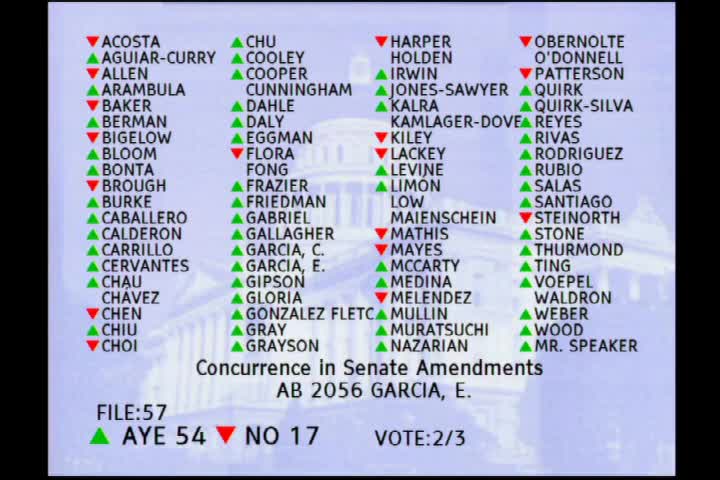
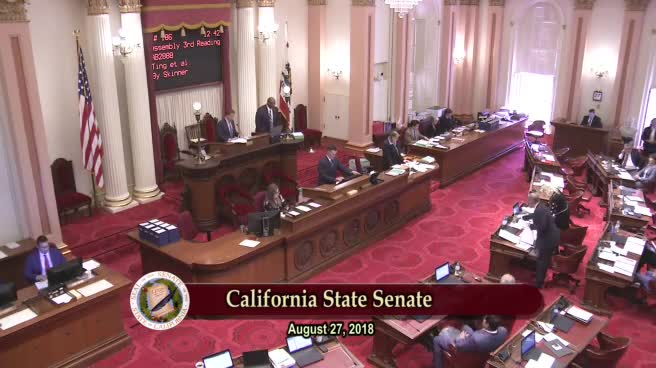

Bill Author

Bill Co-Author(s):