AB 2099: Mental health: detention and evaluation.
- Session Year: 2017-2018
- House: Assembly
- Latest Version Date: 2018-09-05
Under existing law, when a person, as a result of mental health disorder, is a danger to others, or to himself or herself, or gravely disabled, he or she may, upon probable cause, be taken into custody and placed in a facility designated by the county and approved by the State Department of Health Care Services for up to 72 hours for evaluation and treatment. Under existing law, the facility accepting the person shall require an application in writing stating the circumstances under which the persons condition was called to the attention of the official who took the person into custody.
This bill would require a copy of that application to be treated as the original.
Under existing law, when a person, as a result of mental health disorder, is a danger to others, or to himself or herself, or gravely disabled, he or she may, upon probable cause, be taken into custody and placed in a facility designated by the county and approved by the State Department of Health Care Services for up to 72 hours for evaluation and treatment. Under existing law, the facility accepting the person shall require an application in writing stating the circumstances under which the persons condition was called to the attention of the official who took the person into custody.
This bill would provide that require a copy of that application shall to be treated as the original for purposes of placing that person in the facility. original.
Under existing law, when a person, as a result of mental health disorder, is a danger to others, or to himself or herself, or gravely disabled, he or she may, upon probable cause, be taken into custody and placed in a facility designated by the county and approved by the State Department of Health Care Services for up to 72 hours for evaluation and treatment. Under existing law, the facility accepting the person shall require an application in writing stating the circumstances under which the persons condition was called to the attention of the official who took the person into custody.
This bill would provide that a copy of that application shall be treated as the original for specified purposes and in specified proceedings. purposes of placing that person in the facility.
Under existing law, when a person, as a result of mental health disorder, is a danger to others, or to himself or herself, or gravely disabled, he or she may, upon probable cause, be taken into custody and placed in a facility designated by the county and approved by the State Department of Health Care Services for up to 72 hours for evaluation and treatment. Under existing law, the facility accepting the person shall require an application in writing stating the circumstances under which the persons condition was called to the attention of the official who took the person into custody.
This bill would provide that a copy of that application shall be treated as the original for specified purposes and in specified proceedings.
(a)When a person, as a result of a mental health disorder, is a danger to others, or to himself or herself, or gravely disabled, a peace officer, professional person in charge of a facility designated by the county for evaluation and treatment, member of the attending staff, as defined by regulation, of a facility designated by the county for evaluation and treatment, designated members of a mobile crisis team, or professional person designated by the county may, upon probable cause, take, or cause to be taken, the person into custody for a period of up to 72 hours for assessment, evaluation, and crisis intervention, or placement for evaluation and treatment in a facility designated by the county for evaluation and treatment and approved by the State Department of Health Care Services. At a minimum, assessment, as defined in Section 5150.4, and evaluation, as defined in subdivision (a) of Section 5008, shall be conducted and provided on an ongoing basis. Crisis intervention, as defined in subdivision (e) of Section 5008, may be provided concurrently with assessment, evaluation, or any other service.
(b)When determining if a person should be taken into custody pursuant to subdivision (a), the individual making that determination shall apply the provisions of Section 5150.05, and shall not be limited to consideration of the danger of imminent harm.
(c)The professional person in charge of a facility designated by the county for evaluation and treatment, member of the attending staff, or professional person designated by the county shall assess the person to determine whether he or she can be properly served without being detained. If, in the judgment of the professional person in charge of the facility designated by the county for evaluation and treatment, member of the attending staff, or professional person designated by the county, the person can be properly served without being detained, he or she shall be provided evaluation, crisis intervention, or other inpatient or outpatient services on a voluntary basis. Nothing in this subdivision shall be interpreted to prevent a peace officer from delivering individuals to a designated facility for assessment under this section. Furthermore, the assessment requirement of this subdivision shall not be interpreted to require peace officers to perform any additional duties other than those specified in Sections 5150.1 and 5150.2.
(d)Whenever a person is evaluated by a professional person in charge of a facility designated by the county for evaluation or treatment, member of the attending staff, or professional person designated by the county and is found to be in need of mental health services, but is not admitted to the facility, all available alternative services provided pursuant to subdivision (c) shall be offered as determined by the county mental health director.
(e)If, in the judgment of the professional person in charge of the facility designated by the county for evaluation and treatment, member of the attending staff, or the professional person designated by the county, the person cannot be properly served without being detained, the admitting facility shall require an application in writing stating the circumstances under which the persons condition was called to the attention of the peace officer, professional person in charge of the facility designated by the county for evaluation and treatment, member of the attending staff, or professional person designated by the county, and stating that the peace officer, professional person in charge of the facility designated by the county for evaluation and treatment, member of the attending staff, or professional person designated by the county has probable cause to believe that the person is, as a result of a mental health disorder, a danger to others, or to himself or herself, or gravely disabled. The application shall also record whether the historical course of the persons mental disorder was considered in the determination, pursuant to Section 5150.05. If the probable cause is based on the statement of a person other than the peace officer, professional person in charge of the facility designated by the county for evaluation and treatment, member of the attending staff, or professional person designated by the county, the person shall be liable in a civil action for intentionally giving a statement that he or she knows to be false. A copy of the application shall be treated as the original.
(f)At the time a person is taken into custody for evaluation, or within a reasonable time thereafter, unless a responsible relative or the guardian or conservator of the person is in possession of the persons personal property, the person taking him or her into custody shall take reasonable precautions to preserve and safeguard the personal property in the possession of or on the premises occupied by the person. The person taking him or her into custody shall then furnish to the court a report generally describing the persons property so preserved and safeguarded and its disposition, in substantially the form set forth in Section 5211, except that if a responsible relative or the guardian or conservator of the person is in possession of the persons property, the report shall include only the name of the relative or guardian or conservator and the location of the property, whereupon responsibility of the person taking him or her into custody for that property shall terminate. As used in this section, responsible relative includes the spouse, parent, adult child, domestic partner, grandparent, grandchild, or adult brother or sister of the person.
(g)(1)Each person, at the time he or she is first taken into custody under this section, shall be provided, by the person who takes him or her into custody, the following information orally in a language or modality accessible to the person. If the person cannot understand an oral advisement, the information shall be provided in writing. The information shall be in substantially the following form:
My name is . I am a(peace officer/mental health professional) . with(name of agency) . You are not under criminal arrest, but I am taking you for an examination by mental health professionals at . (name of facility) You will be told your rights by the mental health staff. |
(2)If taken into custody at his or her own residence, the person shall also be provided the following information:
You may bring a few personal items with you, which I will have to approve. Please inform me if you need assistance turning off any appliance or water. You may make a phone call and leave a note to tell your friends or family where you have been taken.
(h)The designated facility shall keep, for each patient evaluated, a record of the advisement given pursuant to subdivision (g) which shall include all of the following:
(1)The name of the person detained for evaluation.
(2)The name and position of the peace officer or mental health professional taking the person into custody.
(3)The date the advisement was completed.
(4)Whether the advisement was completed.
(5)The language or modality used to give the advisement.
(6)If the advisement was not completed, a statement of good cause, as defined by regulations of the State Department of Health Care Services.
(i)(1)Each person admitted to a facility designated by the county for evaluation and treatment shall be given the following information by admission staff of the facility. The information shall be given orally and in writing and in a language or modality accessible to the person. The written information shall be available to the person in English and in the language that is the persons primary means of communication. Accommodations for other disabilities that may affect communication shall also be provided. The information shall be in substantially the following form:
My name is. |
My position here is. |
You are being placed into this psychiatric facility because it is our professional opinion that, as a result of a mental health disorder, you are likely to (check applicable): |
Harm yourself. |
(list of the facts upon which the allegation of dangerous |
You will be held for a period up to 72 hours. During the 72 hours you may also be transferred to another facility. You may request to be evaluated or treated at a facility of your choice. You may request to be evaluated or treated by a mental health professional of your choice. We cannot guarantee the facility or mental health professional you choose will be available, but we will honor your choice if we can. |
During these 72 hours you will be evaluated by the facility staff, and you may be given treatment, including medications. It is possible for you to be released before the end of the 72 hours. But if the staff decides that you need continued treatment you can be held for a longer period of time. If you are held longer than 72 hours, you have the right to a lawyer and a qualified interpreter and a hearing before a judge. If you are unable to pay for the lawyer, then one will be provided to you free of charge. |
If you have questions about your legal rights, you may contact the county Patients Rights Advocate at (phone number for the county Patients Rights Advocacy office). Your 72-hour period began (date/time). |
(2)If the notice is given in a county where weekends and holidays are excluded from the 72-hour period, the patient shall be informed of this fact.
(j)For each patient admitted for evaluation and treatment, the facility shall keep with the patients medical record a record of the advisement given pursuant to subdivision (i), which shall include all of the following:
(1)The name of the person performing the advisement.
(2)The date of the advisement.
(3)Whether the advisement was completed.
(4)The language or modality used to communicate the advisement.
(5)If the advisement was not completed, a statement of good cause.
(a)When a person, as a result of a mental health disorder, is a danger to others, or to himself or herself, or gravely disabled, a peace officer, professional person in charge of a facility designated by the county for evaluation and treatment, member of the attending staff, as defined by regulation, of a facility designated by the county for evaluation and treatment, designated members of a mobile crisis team, or professional person designated by the county may, upon probable cause, take, or cause to be taken, the person into custody for a period of up to 72 hours for assessment, evaluation, and crisis intervention, or placement for evaluation and treatment in a facility designated by the county for evaluation and treatment and approved by the State Department of Health Care Services. At a minimum, assessment, as defined in Section 5150.4, and evaluation, as defined in subdivision (a) of Section 5008, shall be conducted and provided on an ongoing basis. Crisis intervention, as defined in subdivision (e) of Section 5008, may be provided concurrently with assessment, evaluation, or any other service.
(b)When determining if a person should be taken into custody pursuant to subdivision (a), the individual making that determination shall apply the provisions of Section 5150.05, and shall not be limited to consideration of the danger of imminent harm.
(c)The professional person in charge of a facility designated by the county for evaluation and treatment, member of the attending staff, or professional person designated by the county shall assess the person to determine whether he or she can be properly served without being detained. If, in the judgment of the professional person in charge of the facility designated by the county for evaluation and treatment, member of the attending staff, or professional person designated by the county, the person can be properly served without being detained, he or she shall be provided evaluation, crisis intervention, or other inpatient or outpatient services on a voluntary basis. Nothing in this subdivision shall be interpreted to prevent a peace officer from delivering individuals to a designated facility for assessment under this section. Furthermore, the assessment requirement of this subdivision shall not be interpreted to require peace officers to perform any additional duties other than those specified in Sections 5150.1 and 5150.2.
(d)Whenever a person is evaluated by a professional person in charge of a facility designated by the county for evaluation or treatment, member of the attending staff, or professional person designated by the county and is found to be in need of mental health services, but is not admitted to the facility, all available alternative services provided pursuant to subdivision (c) shall be offered as determined by the county mental health director.
(e)If, in the judgment of the professional person in charge of the facility designated by the county for evaluation and treatment, member of the attending staff, or the professional person designated by the county, the person cannot be properly served without being detained, the admitting facility shall require an application in writing stating the circumstances under which the persons condition was called to the attention of the peace officer, professional person in charge of the facility designated by the county for evaluation and treatment, member of the attending staff, or professional person designated by the county, and stating that the peace officer, professional person in charge of the facility designated by the county for evaluation and treatment, member of the attending staff, or professional person designated by the county has probable cause to believe that the person is, as a result of a mental health disorder, a danger to others, or to himself or herself, or gravely disabled. The application shall also record whether the historical course of the persons mental disorder was considered in the determination, pursuant to Section 5150.05. If the probable cause is based on the statement of a person other than the peace officer, professional person in charge of the facility designated by the county for evaluation and treatment, member of the attending staff, or professional person designated by the county, the person shall be liable in a civil action for intentionally giving a statement that he or she knows to be false. A copy of the application shall be treated as the original for purposes of this section. original.
(f)At the time a person is taken into custody for evaluation, or within a reasonable time thereafter, unless a responsible relative or the guardian or conservator of the person is in possession of the persons personal property, the person taking him or her into custody shall take reasonable precautions to preserve and safeguard the personal property in the possession of or on the premises occupied by the person. The person taking him or her into custody shall then furnish to the court a report generally describing the persons property so preserved and safeguarded and its disposition, in substantially the form set forth in Section 5211, except that if a responsible relative or the guardian or conservator of the person is in possession of the persons property, the report shall include only the name of the relative or guardian or conservator and the location of the property, whereupon responsibility of the person taking him or her into custody for that property shall terminate. As used in this section, responsible relative includes the spouse, parent, adult child, domestic partner, grandparent, grandchild, or adult brother or sister of the person.
(g)(1)Each person, at the time he or she is first taken into custody under this section, shall be provided, by the person who takes him or her into custody, the following information orally in a language or modality accessible to the person. If the person cannot understand an oral advisement, the information shall be provided in writing. The information shall be in substantially the following form:
My name is . I am a(peace officer/mental health professional) . with(name of agency) . You are not under criminal arrest, but I am taking you for an examination by mental health professionals at . (name of facility) You will be told your rights by the mental health staff. |
(2)If taken into custody at his or her own residence, the person shall also be provided the following information:
You may bring a few personal items with you, which I will have to approve. Please inform me if you need assistance turning off any appliance or water. You may make a phone call and leave a note to tell your friends or family where you have been taken.
(h)The designated facility shall keep, for each patient evaluated, a record of the advisement given pursuant to subdivision (g) which shall include all of the following:
(1)The name of the person detained for evaluation.
(2)The name and position of the peace officer or mental health professional taking the person into custody.
(3)The date the advisement was completed.
(4)Whether the advisement was completed.
(5)The language or modality used to give the advisement.
(6)If the advisement was not completed, a statement of good cause, as defined by regulations of the State Department of Health Care Services.
(i)(1)Each person admitted to a facility designated by the county for evaluation and treatment shall be given the following information by admission staff of the facility. The information shall be given orally and in writing and in a language or modality accessible to the person. The written information shall be available to the person in English and in the language that is the persons primary means of communication. Accommodations for other disabilities that may affect communication shall also be provided. The information shall be in substantially the following form:
My name is. |
My position here is. |
You are being placed into this psychiatric facility because it is our professional opinion that, as a result of a mental health disorder, you are likely to (check applicable): |
Harm yourself. |
(list of the facts upon which the allegation of dangerous |
You will be held for a period up to 72 hours. During the 72 hours you may also be transferred to another facility. You may request to be evaluated or treated at a facility of your choice. You may request to be evaluated or treated by a mental health professional of your choice. We cannot guarantee the facility or mental health professional you choose will be available, but we will honor your choice if we can. |
During these 72 hours you will be evaluated by the facility staff, and you may be given treatment, including medications. It is possible for you to be released before the end of the 72 hours. But if the staff decides that you need continued treatment you can be held for a longer period of time. If you are held longer than 72 hours, you have the right to a lawyer and a qualified interpreter and a hearing before a judge. If you are unable to pay for the lawyer, then one will be provided to you free of charge. |
If you have questions about your legal rights, you may contact the county Patients Rights Advocate at (phone number for the county Patients Rights Advocacy office). Your 72-hour period began (date/time). |
(2)If the notice is given in a county where weekends and holidays are excluded from the 72-hour period, the patient shall be informed of this fact.
(j)For each patient admitted for evaluation and treatment, the facility shall keep with the patients medical record a record of the advisement given pursuant to subdivision (i), which shall include all of the following:
(1)The name of the person performing the advisement.
(2)The date of the advisement.
(3)Whether the advisement was completed.
(4)The language or modality used to communicate the advisement.
(5)If the advisement was not completed, a statement of good cause.
(a)When a person, as a result of a mental health disorder, is a danger to others, or to himself or herself, or gravely disabled, a peace officer, professional person in charge of a facility designated by the county for evaluation and treatment, member of the attending staff, as defined by regulation, of a facility designated by the county for evaluation and treatment, designated members of a mobile crisis team, or professional person designated by the county may, upon probable cause, take, or cause to be taken, the person into custody for a period of up to 72 hours for assessment, evaluation, and crisis intervention, or placement for evaluation and treatment in a facility designated by the county for evaluation and treatment and approved by the State Department of Health Care Services. At a minimum, assessment, as defined in Section 5150.4, and evaluation, as defined in subdivision (a) of Section 5008, shall be conducted and provided on an ongoing basis. Crisis intervention, as defined in subdivision (e) of Section 5008, may be provided concurrently with assessment, evaluation, or any other service.
(b)When determining if a person should be taken into custody pursuant to subdivision (a), the individual making that determination shall apply the provisions of Section 5150.05, and shall not be limited to consideration of the danger of imminent harm.
(c)The professional person in charge of a facility designated by the county for evaluation and treatment, member of the attending staff, or professional person designated by the county shall assess the person to determine whether he or she can be properly served without being detained. If, in the judgment of the professional person in charge of the facility designated by the county for evaluation and treatment, member of the attending staff, or professional person designated by the county, the person can be properly served without being detained, he or she shall be provided evaluation, crisis intervention, or other inpatient or outpatient services on a voluntary basis. Nothing in this subdivision shall be interpreted to prevent a peace officer from delivering individuals to a designated facility for assessment under this section. Furthermore, the assessment requirement of this subdivision shall not be interpreted to require peace officers to perform any additional duties other than those specified in Sections 5150.1 and 5150.2.
(d)Whenever a person is evaluated by a professional person in charge of a facility designated by the county for evaluation or treatment, member of the attending staff, or professional person designated by the county and is found to be in need of mental health services, but is not admitted to the facility, all available alternative services provided pursuant to subdivision (c) shall be offered as determined by the county mental health director.
(e)If, in the judgment of the professional person in charge of the facility designated by the county for evaluation and treatment, member of the attending staff, or the professional person designated by the county, the person cannot be properly served without being detained, the admitting facility shall require an application in writing stating the circumstances under which the persons condition was called to the attention of the peace officer, professional person in charge of the facility designated by the county for evaluation and treatment, member of the attending staff, or professional person designated by the county, and stating that the peace officer, professional person in charge of the facility designated by the county for evaluation and treatment, member of the attending staff, or professional person designated by the county has probable cause to believe that the person is, as a result of a mental health disorder, a danger to others, or to himself or herself, or gravely disabled. The application shall also record whether the historical course of the persons mental disorder was considered in the determination, pursuant to Section 5150.05. If the probable cause is based on the statement of a person other than the peace officer, professional person in charge of the facility designated by the county for evaluation and treatment, member of the attending staff, or professional person designated by the county, the person shall be liable in a civil action for intentionally giving a statement that he or she knows to be false. A copy of the application shall be treated as the original for all purposes under of this part and in any proceeding related to this part. section.
(f)At the time a person is taken into custody for evaluation, or within a reasonable time thereafter, unless a responsible relative or the guardian or conservator of the person is in possession of the persons personal property, the person taking him or her into custody shall take reasonable precautions to preserve and safeguard the personal property in the possession of or on the premises occupied by the person. The person taking him or her into custody shall then furnish to the court a report generally describing the persons property so preserved and safeguarded and its disposition, in substantially the form set forth in Section 5211, except that if a responsible relative or the guardian or conservator of the person is in possession of the persons property, the report shall include only the name of the relative or guardian or conservator and the location of the property, whereupon responsibility of the person taking him or her into custody for that property shall terminate. As used in this section, responsible relative includes the spouse, parent, adult child, domestic partner, grandparent, grandchild, or adult brother or sister of the person.
(g)(1)Each person, at the time he or she is first taken into custody under this section, shall be provided, by the person who takes him or her into custody, the following information orally in a language or modality accessible to the person. If the person cannot understand an oral advisement, the information shall be provided in writing. The information shall be in substantially the following form:
My name is . I am a(peace officer/mental health professional) . with(name of agency) . You are not under criminal arrest, but I am taking you for an examination by mental health professionals at . (name of facility) You will be told your rights by the mental health staff. |
(2)If taken into custody at his or her own residence, the person shall also be provided the following information:
You may bring a few personal items with you, which I will have to approve. Please inform me if you need assistance turning off any appliance or water. You may make a phone call and leave a note to tell your friends or family where you have been taken.
(h)The designated facility shall keep, for each patient evaluated, a record of the advisement given pursuant to subdivision (g) which shall include all of the following:
(1)The name of the person detained for evaluation.
(2)The name and position of the peace officer or mental health professional taking the person into custody.
(3)The date the advisement was completed.
(4)Whether the advisement was completed.
(5)The language or modality used to give the advisement.
(6)If the advisement was not completed, a statement of good cause, as defined by regulations of the State Department of Health Care Services.
(i)(1)Each person admitted to a facility designated by the county for evaluation and treatment shall be given the following information by admission staff of the facility. The information shall be given orally and in writing and in a language or modality accessible to the person. The written information shall be available to the person in English and in the language that is the persons primary means of communication. Accommodations for other disabilities that may affect communication shall also be provided. The information shall be in substantially the following form:
My name is. |
My position here is. |
You are being placed into this psychiatric facility because it is our professional opinion that, as a result of a mental health disorder, you are likely to (check applicable): |
Harm yourself. |
(list of the facts upon which the allegation of dangerous |
You will be held for a period up to 72 hours. During the 72 hours you may also be transferred to another facility. You may request to be evaluated or treated at a facility of your choice. You may request to be evaluated or treated by a mental health professional of your choice. We cannot guarantee the facility or mental health professional you choose will be available, but we will honor your choice if we can. |
During these 72 hours you will be evaluated by the facility staff, and you may be given treatment, including medications. It is possible for you to be released before the end of the 72 hours. But if the staff decides that you need continued treatment you can be held for a longer period of time. If you are held longer than 72 hours, you have the right to a lawyer and a qualified interpreter and a hearing before a judge. If you are unable to pay for the lawyer, then one will be provided to you free of charge. |
If you have questions about your legal rights, you may contact the county Patients Rights Advocate at (phone number for the county Patients Rights Advocacy office). Your 72-hour period began (date/time). |
(2)If the notice is given in a county where weekends and holidays are excluded from the 72-hour period, the patient shall be informed of this fact.
(j)For each patient admitted for evaluation and treatment, the facility shall keep with the patients medical record a record of the advisement given pursuant to subdivision (i), which shall include all of the following:
(1)The name of the person performing the advisement.
(2)The date of the advisement.
(3)Whether the advisement was completed.
(4)The language or modality used to communicate the advisement.
(5)If the advisement was not completed, a statement of good cause.
(a)When a person, as a result of a mental health disorder, is a danger to others, or to himself or herself, or gravely disabled, a peace officer, professional person in charge of a facility designated by the county for evaluation and treatment, member of the attending staff, as defined by regulation, of a facility designated by the county for evaluation and treatment, designated members of a mobile crisis team, or professional person designated by the county may, upon probable cause, take, or cause to be taken, the person into custody for a period of up to 72 hours for assessment, evaluation, and crisis intervention, or placement for evaluation and treatment in a facility designated by the county for evaluation and treatment and approved by the State Department of Health Care Services. At a minimum, assessment, as defined in Section 5150.4, and evaluation, as defined in subdivision (a) of Section 5008, shall be conducted and provided on an ongoing basis. Crisis intervention, as defined in subdivision (e) of Section 5008, may be provided concurrently with assessment, evaluation, or any other service.
(b)When determining if a person should be taken into custody pursuant to subdivision (a), the individual making that determination shall apply the provisions of Section 5150.05, and shall not be limited to consideration of the danger of imminent harm.
(c)The professional person in charge of a facility designated by the county for evaluation and treatment, member of the attending staff, or professional person designated by the county shall assess the person to determine whether he or she can be properly served without being detained. If, in the judgment of the professional person in charge of the facility designated by the county for evaluation and treatment, member of the attending staff, or professional person designated by the county, the person can be properly served without being detained, he or she shall be provided evaluation, crisis intervention, or other inpatient or outpatient services on a voluntary basis. Nothing in this subdivision shall be interpreted to prevent a peace officer from delivering individuals to a designated facility for assessment under this section. Furthermore, the assessment requirement of this subdivision shall not be interpreted to require peace officers to perform any additional duties other than those specified in Sections 5150.1 and 5150.2.
(d)Whenever a person is evaluated by a professional person in charge of a facility designated by the county for evaluation or treatment, member of the attending staff, or professional person designated by the county and is found to be in need of mental health services, but is not admitted to the facility, all available alternative services provided pursuant to subdivision (c) shall be offered as determined by the county mental health director.
(e)If, in the judgment of the professional person in charge of the facility designated by the county for evaluation and treatment, member of the attending staff, or the professional person designated by the county, the person cannot be properly served without being detained, the admitting facility shall require an application in writing stating the circumstances under which the persons condition was called to the attention of the peace officer, professional person in charge of the facility designated by the county for evaluation and treatment, member of the attending staff, or professional person designated by the county, and stating that the peace officer, professional person in charge of the facility designated by the county for evaluation and treatment, member of the attending staff, or professional person designated by the county has probable cause to believe that the person is, as a result of a mental health disorder, a danger to others, or to himself or herself, or gravely disabled. The application shall also record whether the historical course of the persons mental disorder was considered in the determination, pursuant to Section 5150.05. If the probable cause is based on the statement of a person other than the peace officer, professional person in charge of the facility designated by the county for evaluation and treatment, member of the attending staff, or professional person designated by the county, the person shall be liable in a civil action for intentionally giving a statement that he or she knows to be false. A copy of the application shall be treated as the original for all purposes under this part and in any proceeding related to this part.
(f)At the time a person is taken into custody for evaluation, or within a reasonable time thereafter, unless a responsible relative or the guardian or conservator of the person is in possession of the persons personal property, the person taking him or her into custody shall take reasonable precautions to preserve and safeguard the personal property in the possession of or on the premises occupied by the person. The person taking him or her into custody shall then furnish to the court a report generally describing the persons property so preserved and safeguarded and its disposition, in substantially the form set forth in Section 5211, except that if a responsible relative or the guardian or conservator of the person is in possession of the persons property, the report shall include only the name of the relative or guardian or conservator and the location of the property, whereupon responsibility of the person taking him or her into custody for that property shall terminate. As used in this section, responsible relative includes the spouse, parent, adult child, domestic partner, grandparent, grandchild, or adult brother or sister of the person.
(g)(1)Each person, at the time he or she is first taken into custody under this section, shall be provided, by the person who takes him or her into custody, the following information orally in a language or modality accessible to the person. If the person cannot understand an oral advisement, the information shall be provided in writing. The information shall be in substantially the following form:
My name is . I am a(peace officer/mental health professional) . with(name of agency) . You are not under criminal arrest, but I am taking you for an examination by mental health professionals at . (name of facility) You will be told your rights by the mental health staff. |
(2)If taken into custody at his or her own residence, the person shall also be provided the following information:
You may bring a few personal items with you, which I will have to approve. Please inform me if you need assistance turning off any appliance or water. You may make a phone call and leave a note to tell your friends or family where you have been taken.
(h)The designated facility shall keep, for each patient evaluated, a record of the advisement given pursuant to subdivision (g) which shall include all of the following:
(1)The name of the person detained for evaluation.
(2)The name and position of the peace officer or mental health professional taking the person into custody.
(3)The date the advisement was completed.
(4)Whether the advisement was completed.
(5)The language or modality used to give the advisement.
(6)If the advisement was not completed, a statement of good cause, as defined by regulations of the State Department of Health Care Services.
(i)(1)Each person admitted to a facility designated by the county for evaluation and treatment shall be given the following information by admission staff of the facility. The information shall be given orally and in writing and in a language or modality accessible to the person. The written information shall be available to the person in English and in the language that is the persons primary means of communication. Accommodations for other disabilities that may affect communication shall also be provided. The information shall be in substantially the following form:
My name is. |
My position here is. |
You are being placed into this psychiatric facility because it is our professional opinion that, as a result of a mental health disorder, you are likely to (check applicable): |
Harm yourself. |
(list of the facts upon which the allegation of dangerous |
You will be held for a period up to 72 hours. During the 72 hours you may also be transferred to another facility. You may request to be evaluated or treated at a facility of your choice. You may request to be evaluated or treated by a mental health professional of your choice. We cannot guarantee the facility or mental health professional you choose will be available, but we will honor your choice if we can. |
During these 72 hours you will be evaluated by the facility staff, and you may be given treatment, including medications. It is possible for you to be released before the end of the 72 hours. But if the staff decides that you need continued treatment you can be held for a longer period of time. If you are held longer than 72 hours, you have the right to a lawyer and a qualified interpreter and a hearing before a judge. If you are unable to pay for the lawyer, then one will be provided to you free of charge. |
If you have questions about your legal rights, you may contact the county Patients Rights Advocate at (phone number for the county Patients Rights Advocacy office). Your 72-hour period began (date/time). |
(2)If the notice is given in a county where weekends and holidays are excluded from the 72-hour period, the patient shall be informed of this fact.
(j)For each patient admitted for evaluation and treatment, the facility shall keep with the patients medical record a record of the advisement given pursuant to subdivision (i), which shall include all of the following:
(1)The name of the person performing the advisement.
(2)The date of the advisement.
(3)Whether the advisement was completed.
(4)The language or modality used to communicate the advisement.
(5)If the advisement was not completed, a statement of good cause.
|
Date
|
Status
|
|---|---|
| Sep 5, 2018 | Chaptered by Secretary of State - Chapter 258, Statutes of 2018. |
| Sep 5, 2018 | Approved by the Governor. |
| Aug 20, 2018 | Enrolled and presented to the Governor at 3 p.m. |
| Aug 16, 2018 | In Assembly. Ordered to Engrossing and Enrolling. |
| Aug 16, 2018 | Read third time. Passed. Ordered to the Assembly. |
| Jun 14, 2018 | Read second time. Ordered to Consent Calendar. |
| Jun 13, 2018 | From committee: Do pass. To Consent Calendar. (Ayes 8. Noes 0.) (June 13). |
| Jun 7, 2018 | Referred to Com. on HEALTH. |
| May 30, 2018 | In Senate. Read first time. To Com. on RLS. for assignment. |
| May 29, 2018 | Read third time. Passed. Ordered to the Senate. |
| May 25, 2018 | Read third time and amended. Ordered to third reading. |
| Apr 3, 2018 | Read second time. Ordered to third reading. |
| Apr 2, 2018 | Read second time and amended. Ordered returned to second reading. |
| Mar 22, 2018 | From committee: Amend, and do pass as amended. (Ayes 15. Noes 0.) (March 20). |
| Feb 22, 2018 | Referred to Com. on HEALTH. |
| Feb 9, 2018 | From printer. May be heard in committee March 11. |
| Feb 8, 2018 | Read first time. To print. |
|
Date
|
Description
|
Location
|
Votes
|
|
|---|---|---|---|---|
| Aug 16, 2018 | Assembly 3rd Reading AB2099 Gloria et al. By Beall | Senate Floor |
Passed |
|
| Jun 13, 2018 | Do pass and be ordered to the Consent Calendar | Senate Standing Committee on Health |
Passed |
|
| May 29, 2018 | AB 2099 GLORIA Assembly Third Reading | Assembly Floor |
Passed |
|
| Mar 20, 2018 | Do pass as amended. | Assembly Standing Committee on Health |
Passed |
This list shows positions taken on this bill by organizations on the date displayed, which is linked to the original source.
Positions by individuals are not included.
|
Organization
|
Position
|
Date
|
|---|---|---|
| American College of Emergency Physicians - California Chapter | * Support | Mar 20, 2018 |
| California Association Of Mental Health Patients' Rights Advocates | ** Support | Jun 15, 2018 |
| California Hospital Association | ** Support | Jun 15, 2018 |
| California House Bill Association | * Support | Mar 20, 2018 |
| California Police Chiefs Association | ** Support | Jun 15, 2018 |
| California State Association Of Counties | ** Support | Jun 15, 2018 |
| County Behavioral Health Directors Association of California | ** Support | Jun 15, 2018 |
| Disability Rights California | ** Support | Jun 15, 2018 |
| SEIU California | * Support | Mar 20, 2018 |
Office of Senate Floor Analyses (916) 651-1520 Fax: (916) 327-4478 | AB |
CONSENT
Bill No: AB 2099
:
SENATE HEALTH COMMITTEE: 8-0, 6/13/18
AYES: Pan, Nguyen, Hernandez, Leyva, Mitchell, Monning, Nielsen, Roth
NO VOTE RECORDED: Newman
ASSEMBLY FLOOR: 78-0, 5/29/18 - See last page for vote
SOURCE: California Chapter of the American College of Emergency Physicians
DIGEST:
This bill requires a copy of the application that permits an individual to be involuntarily detained, as specified, to be treated as the original for purposes of evaluation and treatment.
Existing law:
- Establishes the Lanterman-Petris-Short (LPS) Act, which authorizes a person to be involuntarily detained for a period of up to 72 hours for assessment, evaluation, and crisis intervention, when, as a result of a mental disorder, the person is a danger to self or others, or is “gravely disabled,” as defined, (“5150"). Defines “gravely disabled” as a condition in which a person, as a result of a mental disorder, is unable to provide for his or her basic personal needs for food, clothing, or shelter, or a condition in which a person has been found mentally incompetent, as specified. [WIC §5008, 5150]
- Permits a peace officer; professional person in charge of a facility designated by the county for evaluation and treatment; a member of the attending staff of a facility designated by the county for evaluation and treatment; designated members of a mobile crisis team; or, a professional person designated by the county to place a 5150 hold on a person for assessment, evaluation, and crisis intervention, or placement for evaluation and treatment in a facility designated by the county for evaluation and treatment, as specified. [WIC §5150]
- Requires a professional person in charge of a facility designated by the county for evaluation and treatment, a member of the attending staff, or a professional person designated by the county to assess a person who has been involuntarily detained to determine whether the person can be properly served without being involuntarily detained, and to be provided evaluation, crisis intervention, or other inpatient or outpatient services on a voluntary basis. [WIC §5150]
- Requires an admitting facility to require an application in writing stating the circumstances under which a person’s condition was called to the attention of an authorized person to place a 5150 hold, as specified. [WIC §5150]
This bill requires a copy of the application required under existing law that states the circumstances under which a person’s condition was called to the attention of an authorized person to place a 5150 hold to be treated as the original.
Background
- LPS Act. The LPS Act was enacted to develop a statutory process under which individuals could be involuntarily held and treated in a county-designated facility in a manner that safeguards their constitutional rights. The LPS Act was intended to balance the goals of maintaining personal liberty and choice in mental health treatment. The LPS Act imposes strict conditions relating to the detention, assessment, and treatment of a person who is detained. SB 364 (Steinberg, Chapter 567, Statutes of 2014) made several changes to the LPS Act regarding involuntary commitment that ensured clarity and consistency in the 5150 process to enable people with a mental health disorder or chronic alcoholism to obtain assessment, referral, and treatment as appropriate in the least restrictive setting as possible; broaden the types of facilities a county can designate for 5150 purposes; and, encourage counties to provide training of personnel authorized to write and release 5150 holds. Further, it restructured and recast several provisions of the 5150 process to more clearly articulate the sequencing of events throughout the 5150 process.
- Required application in writing for involuntary detention. Under current law, when the professional person in charge of the facility designated by the county, a member of the attending staff, or the professional person designated by the county determine that a person cannot be properly served without being involuntarily detained, an application in writing that states the circumstances under which a person’s condition was called to the attention of the person authorized to place the 5150 hold is required to be provided to the admitting facility. The application must also state that the authorized person who placed the 5150 hold has probable cause to believe that the person on the 5150 hold, as a result of a mental health disorder, is a danger to self or others, or is gravely disabled. Current law further requires the application to record whether the historical course of a person’s mental disorder was considered in determining to place a person on a 5150 hold. The historical course of a person’s mental disorder includes evidence presented by a person who has provided or is providing mental health or related support services to the person on the 5150 hold; evidence presented by one or more members of the family of the person on the 5150 hold; and, evidence presented by the person on the 5150 hold, or anyone designated by that person, if the historical course of the person’s mental disorder has a reasonable bearing on making a determination that the person requires a 5150 hold. Information provided by the author indicates that patients are being turned away from treatment at some receiving facilities, or treatment gets delayed several hours, because the application in writing does not contain an original signature. This bill requires a copy of the application to be treated as an original.
Comments
Author’s statement. According to the author, California is in the midst of one of the largest mental health crises in the U.S. This crisis has only exacerbated with the loss of nearly 3,000 psychiatric beds over the last two decades, significantly diminishing access to mental health treatment. Even worse, for those that are able to find an available psychiatric bed, some individuals recently under 5150 holds are reportedly being turned away from the facility in the absence of original documentation detailing the 5150 hold. This bill will clarify that copies of 5150 documents will suffice for admittance to the receiving facility.
FISCAL EFFECT: Appropriation: Fiscal Com.: Local:
California Chapter of the American College of Emergency Physicians (source)
California Association of Mental Health Patients’ Rights Advocates
California Hospital Association
California Police Chiefs Association
California State Association of Counties
County Behavioral Health Directors Association of California
Disability Rights California
OPPOSITION: (Verified 6/14/18)
None received
ARGUMENTS IN SUPPORT: The California Chapter of the American College of Emergency Physicians, the sponsor of this bill, and other supporters argue that since the LPS Act was enacted significant advancements in technology have occurred, and the LPS Act is silent about whether an electronic signature or copy of a document is legally binding. Supporters state that some hospitals and mental health facilities maintain that an original, or wet, signature is required for a 5150 hold to be valid, resulting in numerous instances in which patients have been refused treatment for having arrived with paperwork that did not have an original signature. Supporters argue that patients are unnecessarily delayed care and often ambulances are forced to backtrack, sometimes hundreds of miles, in order to effectuate the transfer of a patient to the care they need. Supporters cite that other laws support the validity of electronic signatures for a multitude of contracts, such as home purchases and the prescribing of drugs, and that patients needing behavioral health care should not have treatment delayed simply because of a patient’s accompanying paperwork.
ASSEMBLY FLOOR: 78-0, 5/29/18
AYES: Acosta, Aguiar-Curry, Travis Allen, Arambula, Baker, Berman, Bigelow, Bloom, Bonta, Brough, Burke, Caballero, Calderon, Carrillo, Cervantes, Chau, Chávez, Chen, Chiu, Choi, Chu, Cooley, Cooper, Cunningham, Dahle, Daly, Eggman, Flora, Fong, Frazier, Friedman, Gallagher, Cristina Garcia, Eduardo Garcia, Gipson, Gloria, Gonzalez Fletcher, Gray, Grayson, Harper, Holden, Irwin, Jones-Sawyer, Kalra, Kamlager-Dove, Kiley, Lackey, Levine, Limón, Low, Maienschein, Mathis, Mayes, McCarty, Medina, Melendez, Mullin, Muratsuchi, Nazarian, Obernolte, O'Donnell, Patterson, Quirk, Quirk-Silva, Reyes, Rodriguez, Rubio, Salas, Santiago, Steinorth, Mark Stone, Thurmond, Ting, Voepel, Waldron, Weber, Wood, Rendon
6/15/18 10:53:04
Office of Senate Floor Analyses (916) 651-1520 Fax: (916) 327-4478 | AB |
THIRD READING
Bill No: AB 2099
:
SENATE HEALTH COMMITTEE: 8-0, 6/13/18
AYES: Pan, Nguyen, Hernandez, Leyva, Mitchell, Monning, Nielsen, Roth
NO VOTE RECORDED: Newman
ASSEMBLY FLOOR: 78-0, 5/29/18 - See last page for vote
SOURCE: California Chapter of the American College of Emergency Physicians
DIGEST:
This bill requires a copy of the application that permits an individual to be involuntarily detained, as specified, to be treated as the original for purposes of evaluation and treatment.
Existing law:
- Establishes the Lanterman-Petris-Short (LPS) Act, which authorizes a person to be involuntarily detained for a period of up to 72 hours for assessment, evaluation, and crisis intervention, when, as a result of a mental disorder, the person is a danger to self or others, or is “gravely disabled,” as defined, (“5150"). Defines “gravely disabled” as a condition in which a person, as a result of a mental disorder, is unable to provide for his or her basic personal needs for food, clothing, or shelter, or a condition in which a person has been found mentally incompetent, as specified. [WIC §5008, 5150]
- Permits a peace officer; professional person in charge of a facility designated by the county for evaluation and treatment; a member of the attending staff of a facility designated by the county for evaluation and treatment; designated members of a mobile crisis team; or, a professional person designated by the county to place a 5150 hold on a person for assessment, evaluation, and crisis intervention, or placement for evaluation and treatment in a facility designated by the county for evaluation and treatment, as specified. [WIC §5150]
- Requires a professional person in charge of a facility designated by the county for evaluation and treatment, a member of the attending staff, or a professional person designated by the county to assess a person who has been involuntarily detained to determine whether the person can be properly served without being involuntarily detained, and to be provided evaluation, crisis intervention, or other inpatient or outpatient services on a voluntary basis. [WIC §5150]
- Requires an admitting facility to require an application in writing stating the circumstances under which a person’s condition was called to the attention of an authorized person to place a 5150 hold, as specified. [WIC §5150]
This bill requires a copy of the application required under existing law that states the circumstances under which a person’s condition was called to the attention of an authorized person to place a 5150 hold to be treated as the original.
Background
- LPS Act. The LPS Act was enacted to develop a statutory process under which individuals could be involuntarily held and treated in a county-designated facility in a manner that safeguards their constitutional rights. The LPS Act was intended to balance the goals of maintaining personal liberty and choice in mental health treatment. The LPS Act imposes strict conditions relating to the detention, assessment, and treatment of a person who is detained. SB 364 (Steinberg, Chapter 567, Statutes of 2014) made several changes to the LPS Act regarding involuntary commitment that ensured clarity and consistency in the 5150 process to enable people with a mental health disorder or chronic alcoholism to obtain assessment, referral, and treatment as appropriate in the least restrictive setting as possible; broaden the types of facilities a county can designate for 5150 purposes; and, encourage counties to provide training of personnel authorized to write and release 5150 holds. Further, it restructured and recast several provisions of the 5150 process to more clearly articulate the sequencing of events throughout the 5150 process.
- Required application in writing for involuntary detention. Under current law, when the professional person in charge of the facility designated by the county, a member of the attending staff, or the professional person designated by the county determine that a person cannot be properly served without being involuntarily detained, an application in writing that states the circumstances under which a person’s condition was called to the attention of the person authorized to place the 5150 hold is required to be provided to the admitting facility. The application must also state that the authorized person who placed the 5150 hold has probable cause to believe that the person on the 5150 hold, as a result of a mental health disorder, is a danger to self or others, or is gravely disabled. Current law further requires the application to record whether the historical course of a person’s mental disorder was considered in determining to place a person on a 5150 hold. The historical course of a person’s mental disorder includes evidence presented by a person who has provided or is providing mental health or related support services to the person on the 5150 hold; evidence presented by one or more members of the family of the person on the 5150 hold; and, evidence presented by the person on the 5150 hold, or anyone designated by that person, if the historical course of the person’s mental disorder has a reasonable bearing on making a determination that the person requires a 5150 hold. Information provided by the author indicates that patients are being turned away from treatment at some receiving facilities, or treatment gets delayed several hours, because the application in writing does not contain an original signature. This bill requires a copy of the application to be treated as an original.
Comments
Author’s statement. According to the author, California is in the midst of one of the largest mental health crises in the U.S. This crisis has only exacerbated with the loss of nearly 3,000 psychiatric beds over the last two decades, significantly diminishing access to mental health treatment. Even worse, for those that are able to find an available psychiatric bed, some individuals recently under 5150 holds are reportedly being turned away from the facility in the absence of original documentation detailing the 5150 hold. This bill will clarify that copies of 5150 documents will suffice for admittance to the receiving facility.
FISCAL EFFECT: Appropriation: Fiscal Com.: Local:
California Chapter of the American College of Emergency Physicians (source)
California Association of Mental Health Patients’ Rights Advocates
California Hospital Association
California Police Chiefs Association
California State Association of Counties
County Behavioral Health Directors Association of California
Disability Rights California
OPPOSITION: (Verified 6/14/18)
None received
ARGUMENTS IN SUPPORT: The California Chapter of the American College of Emergency Physicians, the sponsor of this bill, and other supporters argue that since the LPS Act was enacted significant advancements in technology have occurred, and the LPS Act is silent about whether an electronic signature or copy of a document is legally binding. Supporters state that some hospitals and mental health facilities maintain that an original, or wet, signature is required for a 5150 hold to be valid, resulting in numerous instances in which patients have been refused treatment for having arrived with paperwork that did not have an original signature. Supporters argue that patients are unnecessarily delayed care and often ambulances are forced to backtrack, sometimes hundreds of miles, in order to effectuate the transfer of a patient to the care they need. Supporters cite that other laws support the validity of electronic signatures for a multitude of contracts, such as home purchases and the prescribing of drugs, and that patients needing behavioral health care should not have treatment delayed simply because of a patient’s accompanying paperwork.
ASSEMBLY FLOOR: 78-0, 5/29/18
AYES: Acosta, Aguiar-Curry, Travis Allen, Arambula, Baker, Berman, Bigelow, Bloom, Bonta, Brough, Burke, Caballero, Calderon, Carrillo, Cervantes, Chau, Chávez, Chen, Chiu, Choi, Chu, Cooley, Cooper, Cunningham, Dahle, Daly, Eggman, Flora, Fong, Frazier, Friedman, Gallagher, Cristina Garcia, Eduardo Garcia, Gipson, Gloria, Gonzalez Fletcher, Gray, Grayson, Harper, Holden, Irwin, Jones-Sawyer, Kalra, Kamlager-Dove, Kiley, Lackey, Levine, Limón, Low, Maienschein, Mathis, Mayes, McCarty, Medina, Melendez, Mullin, Muratsuchi, Nazarian, Obernolte, O'Donnell, Patterson, Quirk, Quirk-Silva, Reyes, Rodriguez, Rubio, Salas, Santiago, Steinorth, Mark Stone, Thurmond, Ting, Voepel, Waldron, Weber, Wood, Rendon
6/15/18 11:15:05
SENATE COMMITTEE ON HEALTH
Senator Dr. Richard Pan, Chair
BILL NO: AB 2099
AUTHOR: | Gloria | ||
VERSION: | May 25, 2018 | ||
HEARING DATE: | June 13, 2018 | ||
CONSULTANT: | Reyes Diaz | ||
SUBJECT: Mental health: detention and evaluation.
SUMMARY:
Requires a copy of the application that permits an individual to be involuntarily detained, as specified, to be treated as the original for purposes of evaluation and treatment.
Existing law:
- Establishes the Lanterman-Petris-Short (LPS) Act, which authorizes a person to be involuntarily detained for a period of up to 72 hours for assessment, evaluation, and crisis intervention, when, as a result of a mental disorder, the person is a danger to self or others, or is “gravely disabled,” as defined, (“5150"). Defines “gravely disabled” as a condition in which a person, as a result of a mental disorder, is unable to provide for his or her basic personal needs for food, clothing, or shelter, or a condition in which a person has been found mentally incompetent, as specified. [WIC §5008, 5150]
- Permits a peace officer; professional person in charge of a facility designated by the county for evaluation and treatment; a member of the attending staff of a facility designated by the county for evaluation and treatment; designated members of a mobile crisis team; or, a professional person designated by the county to place a 5150 hold on a person for assessment, evaluation, and crisis intervention, or placement for evaluation and treatment in a facility designated by the county for evaluation and treatment, as specified. [WIC §5150]
- Requires a professional person in charge of a facility designated by the county for evaluation and treatment, a member of the attending staff, or a professional person designated by the county to assess a person who has been involuntarily detained to determine whether the person can be properly served without being involuntarily detained, and to be provided evaluation, crisis intervention, or other inpatient or outpatient services on a voluntary basis. [WIC §5150]
- Requires an admitting facility to require an application in writing stating the circumstances under which a person’s condition was called to the attention of an authorized person to place a 5150 hold, as specified. [WIC §5150]
This bill: Requires a copy of the application required under existing law that states the circumstances under which a person’s condition was called to the attention of an authorized person to place a 5150 hold to be treated as the original.
FISCAL EFFECT:
This bill has been keyed nonfiscal.
PRIOR VOTES:
Assembly Floor: | 78 - 0 |
Assembly Health Committee: | 15 - 0 |
COMMENTS:
- Author’s statement. According to the author, California is in the midst of one of the largest mental health crises in the U.S. This crisis has only exacerbated with the loss of nearly 3,000 psychiatric beds over the last two decades, significantly diminishing access to mental health treatment. Even worse, for those that are able to find an available psychiatric bed, some individuals recently under 5150 holds are reportedly being turned away from the facility in the absence of original documentation detailing the 5150 hold. This bill will clarify that copies of 5150 documents will suffice for admittance to the receiving facility.
- Background. The LPS Act was enacted to develop a statutory process under which individuals could be involuntarily held and treated in a county-designated facility in a manner that safeguards their constitutional rights. The LPS Act was intended to balance the goals of maintaining personal liberty and choice in mental health treatment. The LPS Act imposes strict conditions relating to the detention, assessment, and treatment of a person who is detained. SB 364 (Steinberg, Chapter 567, Statues of 2014) made several changes to the LPS Act regarding involuntary commitment that ensured clarity and consistency in the 5150 process to enable people with a mental health disorder or chronic alcoholism to obtain assessment, referral, and treatment as appropriate in the least restrictive setting as possible; broaden the types of facilities a county can designate for 5150 purposes; and, encourage counties to provide training of personnel authorized to write and release 5150 holds. Further, it restructured and recast several provisions of the 5150 process to more clearly articulate the sequencing of events throughout the 5150 process.
- Required application in writing for involuntary detention. Under current law, when the professional person in charge of the facility designated by the county, a member of the attending staff, or the professional person designated by the county determine that a person cannot be properly served without being involuntarily detained, an application in writing that states the circumstances under which a person’s condition was called to the attention of the person authorized to place the 5150 hold is required to be provided to the admitting facility. The application must also state that the authorized person who placed the 5150 hold has probable cause to believe that the person on the 5150 hold, as a result of a mental health disorder, is a danger to self or others, or is gravely disabled. Current law further requires the application to record whether the historical course of a person’s mental disorder was considered in determining to place a person on a 5150 hold. The historical course of a person’s mental disorder includes evidence presented by a person who has provided or is providing mental health or related support services to the person on the 5150 hold; evidence presented by one or more members of the family of the person on the 5150 hold; and, evidence presented by the person on the 5150 hold, or anyone designated by that person, if the historical course of the person’s mental disorder has a reasonable bearing on making a determination that the person requires a 5150 hold. Information provided by the author indicates that patients are being turned away from treatment at some receiving facilities, or treatment gets delayed several hours, because the application in writing does not contain an original signature. This bill requires a copy of the application to be treated as an original.
- Related legislation. SB 1045 (Weiner) permits, until January 1, 2024, San Francisco and Los Angeles counties to place in a conservatorship, as specified, a person who is chronically homeless and incapable of caring for his or her own health and well-being due to a serious mental illness and substance use disorder, as specified. SB 1045 is pending in the Assembly.
AB 1971 (Santiago, Chen, and Friedman) expands the definition of “gravely disabled” to include a person's inability to provide for medical treatment if the failure to receive medical treatment results in a deteriorating physical condition or death. AB 1971 is set for hearing on June 20, 2018 in this Committee.
- Prior legislation. SB 565 (Portantino, Chapter 218, of 2017) requires a mental health facility to make reasonable attempts to notify family members or any other person designated by the patient at least 36 hours prior to a review hearing for certification to be held involuntarily for an extended 14 days or 30 days, after an initial 5150 hold, as specified.
AB 191 (Wood, Chapter 184, Statutes of 2017) adds licensed marriage and family therapists and licensed professional clinical counselors to the list of authorized health providers permitted to sign a notice of certification when a patient is certified as needing intensive treatment pursuant to a 5150 hold.
AB 1539 (Chen of 2017) would have expanded the definition of “gravely disabled” to include an individual who is unable to provide for his or her basic need for medical care as a result of a mental health disorder or chronic alcoholism. AB 1539 was not heard in the Assembly Health Committee.
AB 1300 (Ridley-Thomas of 2016) would have allowed an emergency physician or psychiatric professional, who is not a county-designated professional person, as specified, to place a person on a 5150 hold, as specified. AB 1300 was held in the Senate Rules Committee.
AB 1194 (Eggman, Chapter 570, Statutes of 2015) requires, for purposes of determining whether a person is a danger to self or others, an individual making that determination to consider available relevant information about the historical course of the person’s mental disorder if the individual concludes that the information has a reasonable bearing on the determination, and that the individual shall not be limited to consideration of the danger of imminent harm.
SB 364 (Steinberg, Chapter 567, Statues of 2014) made several changes to the LPS Act regarding involuntary commitment that ensured clarity and consistency in the 5150 process to enable people with a mental health disorder or chronic alcoholism to obtain assessment, referral, and treatment as appropriate in the least restrictive setting as possible; broadened the types of facilities a county can designate for 5150 purposes; and encouraged counties to provide training of personnel authorized to write and release 5150 holds.
- Support. The California Chapter of the American College of Emergency Physicians, the sponsor of this bill, and other supporters argue that since the LPS Act was enacted significant advancements in technology have occurred, and the LPS Act is silent about whether an electronic signature or copy of a document is legally binding. Supporters state that some hospitals and mental health facilities maintain that an original, or wet, signature is required for a 5150 hold to be valid, resulting in numerous instances in which patients have been refused treatment for having arrived with paperwork that did not have an original signature. Supporters argue that patients are unnecessarily delayed care and often ambulances are forced to backtrack, sometimes hundreds of miles, in order to effectuate the transfer of a patient to the care they need. Supporters cite that other laws support the validity of electronic signatures for a multitude of contracts, such as home purchases and the prescribing of drugs, and that patients needing behavioral health care should not have treatment delayed simply because of a patient’s accompanying paperwork.
SUPPORT AND OPPOSITION:
Support: California Chapter of the American College of Emergency Physicians (sponsor)
California Association of Mental Health Patients’ Rights Advocates
California Hospital Association
California State Association of Counties
County Behavioral Health Directors Association of California
Oppose: None received
-- END --
ASSEMBLY THIRD READING
ATR Bill Id:AB 2099
Author:(Gloria)
As Amended Ver:May 25, 2018
Majority vote
Committee | Votes | Ayes | Noes |
Health | 15-0 | Wood, Maienschein, Aguiar-Curry, Bonta, Burke, Carrillo, Flora, Limón, McCarty, Nazarian, Rodriguez, Santiago, Obernolte, Thurmond, Waldron |
SUMMARY: Authorizes a copy of the form that permits an individual, who, as a result of a mental health disorder, is a danger to others, or to himself or herself, or gravely disabled to be held involuntarily, known as a "5150 hold," to be treated as the original for purposes of evaluation and treatment.
EXISTING LAW:
- Establishes the Lanterman-Petris Short (LPS) Act, which authorizes a person to be involuntarily detained for a period of up to 72 hours for assessment, evaluation, and crisis intervention, when, as a result of a mental disorder, the person is a danger to him or herself or to others, or is "gravely disabled," commonly referred to as a "5150 hold." Defines "gravely disabled" as a condition in which a person, as a result of a mental disorder, is unable to provide for his or her basic personal needs for food, clothing, or shelter.
- Allows, under the LPS Act, a person who is gravely disabled to be certified for intensive treatment and involuntarily detained for further inpatient intensive mental health treatment for an additional 14 days, under the following conditions:
- The professional staff of the agency or facility providing evaluation services has analyzed the person's condition and has found the person is a danger to others, or to himself or herself, or gravely disabled;
- The facility providing intensive treatment is designated by a county to provide intensive treatment, and agrees to admit the person and prohibits a facility from being designated to provide intensive treatment unless it complies with the certification review hearing, as specified; and,
- The person has been advised of the need for, but has not been willing or able to accept, treatment on a voluntary basis.
- Permits, if after a period of 14 days an individual is still gravely disabled, a person to be held for another period of 14 days, be placed on a 30-day hold for additional intensive treatment, or be placed under temporary LPS Conservatorship as specified.
- Allows, under the LPS Act, a court to order an imminently dangerous person to be confined for further inpatient intensive health treatment for an additional 180 days, as provided.
FISCAL EFFECT: None
COMMENTS: According to the author, California is in the midst of one of the largest mental health crises in the United States. That crisis has only exacerbated with the loss of nearly 3,000 psychiatric beds over the last two decades, significantly diminishing access to mental health treatment. Even worse, for those that are able to find an available psychiatric bed, some individuals, recently under 5150 holds, are reportedly being turned away from the facility in the absence of original documentation detailing the 5150 hold. This bill will clarify that copies of 5150 documents will suffice for admittance to the receiving facility.
The LPS Act, enacted in the 1960s, was intended to balance the goals of maintaining the constitutional right to personal liberty and choice in mental health treatment, while protecting public safety when an individual may be a danger to oneself or others or is gravely disabled. At the time of its enactment, the LPS Act was considered progressive because it afforded the mentally disordered more legal rights than most other states. Since its passage in 1967, the LPS Act has continued to evolve toward greater legal rights for mentally disordered persons. Welfare and Institutions Code Section 5150 of the LPS Act allows peace officers, staff-members of county-designated evaluation facilities, or other county-designated professional persons, to take an individual into custody and place him in a facility for 72-hour treatment and evaluation if the individual is a danger to himself, herself, or others, or is gravely disabled due to a mental disorder. If it is determined an individual is still gravely disabled after the initial 72-hour hold, an additional intensive treatment for a 14 day period may be authorized. This 14-day period can be re-extended, or an individual can continue to be held for an additional 30 days.
The California Chapter of the American College of Emergency Physicians (Cal/ACEP) states in support that this bill removes barriers to accessing mental health care by clarifying that hospitals and psychiatric facilities must allow 5150 order requirements to reflect advances in technology and accept copies of 5150 orders. Cal/ACEP states that as a result of requiring an original signature for a 5150 hold to be valid, there are numerous instances where patients have been refused treatment at psychiatric facilities because they arrived with paperwork that did not have an original signature. This unnecessarily delays care to patients and forces ambulances to backtrack, sometimes hundreds of miles, in order to effectuate the transfer of the patient to the care they need.
The California Hospital Association states in support of this bill that when individuals are placed on a 5150 hold – whether by policy or by a person authorized by a county behavioral health department – the patient may need to be transferred from a non-inpatient psychiatric care setting to a hospital with psychiatric inpatient capacity. Currently the original paperwork with a "wet signature" for the 5150 hold must accompany the patient as he or she moves through the health care system; a copy (fax or digital) is not acceptable.
There is no known opposition to this bill.
Analysis Prepared by: Paula Villescaz / HEALTH / (916) 319-2097 FN: 0002988
ASSEMBLY THIRD READING
ATR Bill Id:AB 2099
Author:(Gloria)
As Amended Ver:April 2, 2018
Majority vote
Committee | Votes | Ayes | Noes |
Health | 15-0 | Wood, Maienschein, Aguiar-Curry, Bonta, Burke, Carrillo, Flora, Limón, McCarty, Nazarian, Rodriguez, Santiago, Obernolte, Thurmond, Waldron |
SUMMARY: Authorizes a copy of the form that permits an individual, who, as a result of a mental health disorder, is a danger to others, or to himself or herself, or gravely disabled to be held involuntarily, known as a "5150 hold," to be treated as the original for purposes of evaluation and treatment.
EXISTING LAW:
- Establishes the Lanterman-Petris Short (LPS) Act, which authorizes a person to be involuntarily detained for a period of up to 72 hours for assessment, evaluation, and crisis intervention, when, as a result of a mental disorder, the person is a danger to him or herself or to others, or is "gravely disabled," commonly referred to as a "5150 hold." Defines "gravely disabled" as a condition in which a person, as a result of a mental disorder, is unable to provide for his or her basic personal needs for food, clothing, or shelter.
- Allows, under the LPS Act, a person who is gravely disabled to be certified for intensive treatment and involuntarily detained for further inpatient intensive mental health treatment for an additional 14 days, under the following conditions:
- The professional staff of the agency or facility providing evaluation services has analyzed the person's condition and has found the person is a danger to others, or to himself or herself, or gravely disabled;
- The facility providing intensive treatment is designated by a county to provide intensive treatment, and agrees to admit the person and prohibits a facility from being designated to provide intensive treatment unless it complies with the certification review hearing, as specified; and,
- The person has been advised of the need for, but has not been willing or able to accept, treatment on a voluntary basis.
- Permits, if after a period of 14 days an individual is still gravely disabled, a person to be held for another period of 14 days, be placed on a 30-day hold for additional intensive treatment, or be placed under temporary LPS Conservatorship as specified.
- Allows, under the LPS Act, a court to order an imminently dangerous person to be confined for further inpatient intensive health treatment for an additional 180 days, as provided.
FISCAL EFFECT: None
COMMENTS: According to the author, California is in the midst of one of the largest mental health crises in the United States. That crisis has only exacerbated with the loss of nearly 3,000 psychiatric beds over the last two decades, significantly diminishing access to mental health treatment. Even worse, for those that are able to find an available psychiatric bed, some individuals, recently under 5150 holds, are reportedly being turned away from the facility in the absence of original documentation detailing the 5150 hold. This bill will clarify that copies of 5150 documents will suffice for admittance to the receiving facility.
The LPS Act, enacted in the 1960s, was intended to balance the goals of maintaining the constitutional right to personal liberty and choice in mental health treatment, while protecting public safety when an individual may be a danger to oneself or others or is gravely disabled. At the time of its enactment, the LPS Act was considered progressive because it afforded the mentally disordered more legal rights than most other states. Since its passage in 1967, the LPS Act has continued to evolve toward greater legal rights for mentally disordered persons. Welfare and Institutions Code Section 5150 of the LPS Act allows peace officers, staff-members of county-designated evaluation facilities, or other county-designated professional persons, to take an individual into custody and place him in a facility for 72-hour treatment and evaluation if the individual is a danger to himself, herself, or others, or is gravely disabled due to a mental disorder. If it is determined an individual is still gravely disabled after the initial 72-hour hold, an additional intensive treatment for a 14 day period may be authorized. This 14-day period can be re-extended, or an individual can continue to be held for an additional 30 days.
The California Chapter of the American College of Emergency Physicians (Cal/ACEP) states in support that this bill removes barriers to accessing mental health care by clarifying that hospitals and psychiatric facilities must allow 5150 order requirements to reflect advances in technology and accept copies of 5150 orders. Cal/ACEP states that as a result of requiring an original signature for a 5150 hold to be valid, there are numerous instances where patients have been refused treatment at psychiatric facilities because they arrived with paperwork that did not have an original signature. This unnecessarily delays care to patients and forces ambulances to backtrack, sometimes hundreds of miles, in order to effectuate the transfer of the patient to the care they need.
The California Hospital Association states in support of this bill that when individuals are placed on a 5150 hold – whether by policy or by a person authorized by a county behavioral health department – the patient may need to be transferred from a non-inpatient psychiatric care setting to a hospital with psychiatric inpatient capacity. Currently the original paperwork with a "wet signature" for the 5150 hold must accompany the patient as he or she moves through the health care system; a copy (fax or digital) is not acceptable.
There is no known opposition to this bill.
Analysis Prepared by: Paula Villescaz / HEALTH / (916) 319-2097 FN: 0002643
Date of Hearing: March 20, 2018
ASSEMBLY COMMITTEE ON HEALTH
Jim Wood, Chair
ABPCA Bill Id:AB 2099
Author:(Gloria) – As Introduced Ver:February 8, 2018
SUBJECT: Mental health: detention and evaluation.
SUMMARY: Authorizes a copy of the form that permits an individual, who, as a result of a mental health disorder, is a danger to others, or to himself or herself, or gravely disabled to be held involuntarily, known as a "5150 hold," to be treated as the original for purposes of evaluation and treatment.
EXISTING LAW:
- Establishes the Lanterman-Petris Short (LPS) Act, which authorizes a person to be involuntarily detained for a period of up to 72 hours for assessment, evaluation, and crisis intervention, when, as a result of a mental disorder, the person is a danger to him or herself or to others, or is “gravely disabled,” commonly referred to as a “5150 hold.” Defines “gravely disabled” as a condition in which a person, as a result of a mental disorder, is unable to provide for his or her basic personal needs for food, clothing, or shelter.
- Allows, under the LPS Act, a person who is gravely disabled to be certified for intensive treatment and involuntarily detained for further inpatient intensive mental health treatment for an additional 14 days, under the following conditions:
- The professional staff of the agency or facility providing evaluation services has analyzed the person’s condition and has found the person is a danger to others, or to himself or herself, or gravely disabled;
- The facility providing intensive treatment is designated by a county to provide intensive treatment, and agrees to admit the person and prohibits a facility from being designated to provide intensive treatment unless it complies with the certification review hearing, as specified; and,
- The person has been advised of the need for, but has not been willing or able to accept, treatment on a voluntary basis.
- Permits, if after a period of 14 days an individual is still gravely disabled, a person to be held for another period of 14 days, be placed on a 30-day hold for additional intensive treatment, or be placed under temporary LPS Conservatorship as specified.
- Requires, for a person to be certified for intensive treatment, a notice of certification to be signed by two people.
- Requires the first signee of the certification to be the professional person, or his or her designee, in charge of the agency or facility providing evaluation services. Requires a designee of the professional person in charge of the agency or facility to be a physician or a licensed psychologist who has a doctoral degree in psychology and at least five years of postgraduate experience in the diagnosis and treatment of emotional and mental disorders.
- Requires the second signee of the certification to be a physician or psychologist who participated in the evaluation. Requires that, if possible, the physician be a board certified psychiatrist and requires the psychologist to be licensed and have at least five years of postgraduate experience in the diagnosis and treatment of emotional and mental disorders.
- Allows, under the LPS Act, a court to order an imminently dangerous person to be confined for further inpatient intensive health treatment for an additional 180 days, as provided.
FISCAL EFFECT: None
COMMENTS:
- PURPOSE OF THIS BILL. According to the author, California is in the midst of one of the largest mental health crises in the U.S. That crisis has only exacerbated with the loss of nearly 3,000 psychiatric beds over the last two decades, significantly diminishing access to mental health treatment. Even worse, for those that are able to find an available psychiatric bed, some individuals, recently under 5150 holds, are reportedly being turned away from the facility in the absence of original documentation detailing the 5150 hold. This bill will clarify that copies of 5150 documents will suffice for admittance to the receiving facility.
- BACKGROUND. The LPS Act, enacted in the 1960s, was intended to balance the goals of maintaining the constitutional right to personal liberty and choice in mental health treatment, while protecting public safety when an individual may be a danger to oneself or others or is gravely disabled. At the time of its enactment, the LPS Act was considered progressive because it afforded the mentally disordered more legal rights than most other states. Since its passage in 1967, the LPS Act has continued to evolve toward greater legal rights for mentally disordered persons. Welfare and Institutions Code Section 5150 of the LPS Act allows peace officers, staff-members of county-designated evaluation facilities, or other county-designated professional persons, to take an individual into custody and place him in a facility for 72-hour treatment and evaluation if the individual is a danger to himself, herself, or others, or is gravely disabled due to a mental disorder. If it is determined an individual is still gravely disabled after the initial 72-hour hold, an additional intensive treatment for a 14 day period may be authorized. This 14 day period can be re-extended, or an individual can continue to be held for an additional 30 days.
- Certification for intensive treatment. Under current law, people with mental health disorders or chronic alcoholism who have been detained for 72 hours and have received an evaluation, as specified, may be certified for an initial 14 days of intensive treatment (and under certain circumstances for an additional up to 14 days, or for up to an additional 30 days) related to the mental health disorder or impairment by chronic alcoholism under certain conditions, including:
- The person has been found to be a danger to self or others, or is gravely disabled;
- The facility providing intensive treatment is designated by the county, as specified; and,
- The person has been advised of the need for, but is unwilling or unable to accept, treatment on a voluntary basis.
- Certification for intensive treatment. Under current law, people with mental health disorders or chronic alcoholism who have been detained for 72 hours and have received an evaluation, as specified, may be certified for an initial 14 days of intensive treatment (and under certain circumstances for an additional up to 14 days, or for up to an additional 30 days) related to the mental health disorder or impairment by chronic alcoholism under certain conditions, including:
A notice of certification, which requires two signatures, is required for all persons certified for intensive treatment, and each time the person is certified as needing additional intensive treatment. The first person is required to be a physician or a licensed psychologist, as specified, who is in charge of the agency or facility providing evaluation services, or his or her designee. The second person is required to be a physician or psychologist who participated in the evaluation, as specified, and in the case that one is not available, a licensed clinical social worker or a registered nurse who participated in the evaluation. A copy of the notice for certification is required to be personally delivered to the person certified, the person’s attorney, or the attorney or advocate, as specified. The person certified is also asked to designate any person who is to be sent a copy of the certification notice. If the person is incapable of making a designation at the time of certification, he or she is asked to make the designation as soon as he or she is capable.
- SUPPORT. The California Chapter of the American College of Emergency Physicians (Cal/ACEP) states in support that this bill removes barriers to accessing mental health care by clarifying that hospitals and psychiatric facilities must allow 5150 order requirements to reflect advances in technology and accept copies of 5150 orders. Cal/ACEP states that as a result of requiring an original signature for a 5150 hold to be valid, there are numerous instances where patients have been refused treatment at psychiatric facilities because they arrived with paperwork that did not have an original signature. This unnecessarily delays care to patients and forces ambulances to backtrack, sometimes hundreds of miles, in order to effectuate the transfer of the patient to the care they need.
The California Hospital Association states in support of this bill that when individuals are placed on a 5150 hold – whether by policy or by a person authorized by a county behavioral health department – the patient may need to be transferred from a non-inpatient psychiatric care setting to a hospital with psychiatric inpatient capacity. Currently the original paperwork with a "wet signature" for the 5150 hold must accompany the patient as he or she moves through the health care system; a copy (fax or digital) is not acceptable.
- RELATED LEGISLATION.
- AB 191 (Wood), Chapter 184 of Statutes of 2017, adds licensed marriage and family therapists and licensed professional clinical counselors to those health providers who are authorized to sign a notice of certification, as specified, when a patient is certified as needing intensive treatment.
- SB 565 (Portantino), Chapter 218, of 2017, requires a mental health facility to make reasonable attempts to notify family members or any other person designated by the patient at least 36 hours prior to a review hearing for certification to be held involuntarily for an extended 14 days or 30 days, after an initial 72 hour hold, as specified.
- AB 1372 (Levine) permits a certified crisis stabilization unit designated by a mental health plan to provide medically necessary crisis stabilization services to individuals beyond the service time of 24 hours in those cases in which the individual needs inpatient psychiatric care or outpatient care and crisis stabilization beds or outpatient services are not reasonably available. AB 1372 is on the Senate Inactive file.
- PREVIOUS LEGISLATION.
- AB 1300 (Ridley-Thomas) of 2016 would have allowed an emergency physician or psychiatric professional, who is not a county-designated professional person, as specified, to detain a person who is a danger to self or others, or is gravely disabled, for up to 72 hours for evaluation and treatment, as specified. AB 1300 was held in the Senate Rules Committee.
- AB 1194 (Eggman), Chapter 570, Statutes of 2015, requires, for purposes of determining whether a person is a danger to self or others, an individual making that determination to consider available relevant information about the historical course of the person’s mental disorder if the individual concludes that the information has a reasonable bearing on the determination, and that the individual shall not be limited to consideration of the danger of imminent harm.
- AB 428 (Eggman), Chapter 379, Statutes of 2014, authorizes certain coursework requirements for licensure as a licensed marriage and family therapist and licensed clinical social worker to be completed through continuing education instead of formal classroom training, as specified.
- AB 348 (Chu), Chapter 94, Statutes of 2003, allows a psychologist to authorize release of a person from an involuntary hold prior to the end of the holding period if the psychologist is in a collaborative treatment relationship with a psychiatrist and both the psychologist and the psychiatrist have examined the patient and consulted with one another.
- SUGGESTED AMENDMENT. The Committee recommends an amendment clarifying that the provisions apply solely to the initial 5150 application.
REGISTERED SUPPORT / OPPOSITION:
Support
California Chapter of the American College of Emergency Physicians (sponsor)
California Hospital Association
Opposition
None on file.
Analysis Prepared by: Paula Villescaz / HEALTH / (916) 319-2097
Discussed in Hearing
 1MIN
Senate Floor
 1MIN
Assembly Floor
 30SEC
Assembly Floor
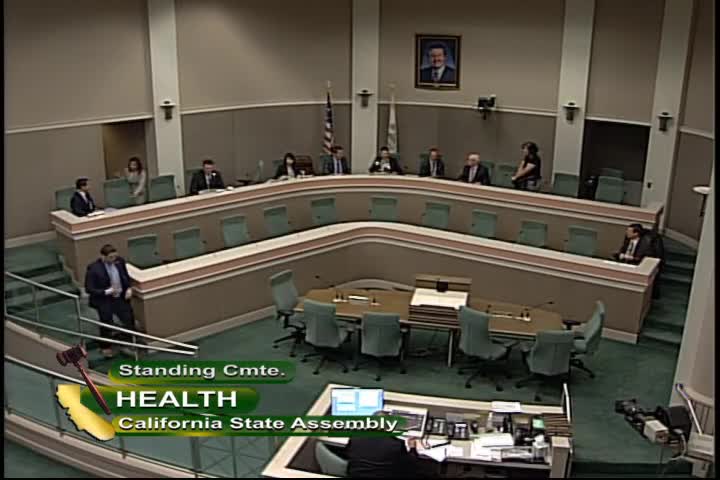 5MIN
Assembly Standing Committee on Health
Bill Author

Bill Co-Author(s):
