AB 21: Public postsecondary education: Access to Higher Education for Every Student.
- Session Year: 2017-2018
- House: Assembly
- Latest Version Date: 2017-10-05
(1)Existing law establishes the California State University, under the administration of the Trustees of the California State University; the University of California, under the administration of the Regents of the University of California; the California Community Colleges, under the administration of the Board of Governors of the California Community Colleges; and independent institutions of higher education as the 4 segments of postsecondary education in this state.
Existing provisions of the Donahoe Higher Education Act set forth the missions and functions of these 4 postsecondary educational segments. No provision of the Donahoe Higher Education Act applies to the University of California except to the extent that the regents, by appropriate resolution, make that provision applicable.
This bill would express findings and declarations of the Legislature relating to the possible impacts on public postsecondary educational institutions in this state of changes in federal immigration policies and enforcement.
The bill would add to the Donahoe Higher Education Act provisions that would require the Trustees of the California State University, the governing boards of community college districts, and independent institutions of higher education that are qualifying institutions for purposes of the Cal Grant Program, and would request the regents, to the fullest extent consistent with state and federal law, to: refrain from disclosing personal information concerning students, faculty, and staff, except under specified circumstances; advise all students, faculty, and staff to notify the office of the chancellor or president, or his or her designee, as soon as possible, if he or she is advised that an immigration officer, as defined, is expected to enter, or has entered, the campus to execute a federal immigration order; notify, as soon as possible, the emergency contact of a student, faculty, or staff person if there is reason to suspect that the person has been taken into custody as the result of an immigration enforcement action; comply with a request from an immigration officer for access to nonpublic areas of the campus only upon presentation of a judicial warrant, except as specified; advise all students, faculty, and staff responding to or having contact with an immigration officer executing a federal immigration order, to promptly refer the entity or individual to the office of the chancellor or president, or his or her designee, for purposes of verifying the legality of any warrant, court order, or subpoena; designate a staff person to serve as a point of contact for those who may be subject to immigration actions, as specified; maintain a contact list of legal services providers who provide legal immigration representation, and provide it free of charge to any and all students who request it; adopt and implement, by March 1, 2019, the model policy developed by the Attorney General or an equivalent policy pursuant to a specified statute, limiting assistance with immigration enforcement to the fullest extent possible consistent with federal and state law, as specified; post on its Internet Web site, and provide via email quarterly or each semester to all students, faculty, and staff, and update as often as is necessary, a copy of the policy referenced above, and guidance informing them of their rights under state and federal immigration laws and how to respond to a federal immigration action or order; and ensure that certain benefits and services provided to undocumented students are continued in the event that they are subject to a federal immigration order.
Because this bill would create new duties for community college districts, it would constitute a state-mandated local program.
(2)The California Constitution requires the state to reimburse local agencies and school districts for certain costs mandated by the state. Statutory provisions establish procedures for making that reimbursement.
This bill would provide that, if the Commission on State Mandates determines that the bill contains costs mandated by the state, reimbursement for those costs shall be made pursuant to the statutory provisions noted above.
(1)Existing law establishes the California State University, under the administration of the Trustees of the California State University; the University of California, under the administration of the Regents of the University of California; the California Community Colleges, under the administration of the Board of Governors of the California Community Colleges; and independent institutions of higher education as the 4 segments of postsecondary education in this state.
Existing provisions of the Donahoe Higher Education Act set forth the missions and functions of these 4 postsecondary educational segments. No provision of the Donahoe Higher Education Act applies to the University of California except to the extent that the regents, by appropriate resolution, make that provision applicable.
This bill would express findings and declarations of the Legislature relating to the possible impacts on public postsecondary educational institutions in this state of changes in federal immigration policies and enforcement.
The bill would add to the Donahoe Higher Education Act provisions that would require the Trustees of the California State University, the governing boards of community college districts, and independent institutions of higher education that are qualifying institutions for purposes of the Cal Grant Program, and would request the regents, to the fullest extent consistent with state and federal law, to: refrain from disclosing personal information concerning students, faculty, and staff, except under specified circumstances; advise all students, and require each member of the faculty faculty, and staff to immediately notify the office of the chancellor or president, or his or her designee, as soon as possible, if the student, or faculty or staff member, he or she is advised that public or law enforcement entities are an immigration officer, as defined, is expected to enter, or have has entered, the campus to execute a federal immigration order; notify, as soon as possible, the emergency contact of a student, faculty, or staff person if there is reason to suspect that the person has been taken into custody as the result of an immigration enforcement action; comply with a request from an immigration officer for access to nonpublic areas of the campus only upon presentation of a judicial warrant, except as specified; advise all students, and require all faculty faculty, and staff responding to or having contact with a representative of a public or law enforcement entity an immigration officer executing a federal immigration order, to promptly refer the entity or individual to the office of the chancellor or president, or his or her designee, for purposes of verifying the legality of any warrant warrant, court order, or subpoena; comply with requests from an agent or employee of specified immigration, customs, and border protection agencies for student, faculty, or staff records or access to campus only upon presentation of a valid subpoena or judicial warrant, as appropriate; assign designate a staff person to serve as a point of contact for those who may be subject to immigration actions; solicit and actions, as specified; maintain a contact list of known attorneys or legal services providers who provide pro bono legal immigration representation, and provide it free of charge to any and all students who request it; adopt and implement, by March 1, 2020, a policy 2019, the model policy developed by the Attorney General or an equivalent policy pursuant to a specified statute, limiting assistance with immigration enforcement to the fullest extent possible consistent with federal and state law, as specified; post on its Internet Web site, and provide via email quarterly or each semester to all students, faculty, and staff, and update as often as is necessary, a copy of the policy referenced above, and guidance informing them of their rights under state and federal immigration laws and how to respond to a federal immigration action or order; and ensure that certain benefits and services provided to undocumented students who qualify for exemption from nonresident tuition pursuant to a specified statute are continued in the event that they are subject to a federal immigration order.
The bill would express the intent of the Legislature that the provisions of the bill be funded, commencing with the 201920 fiscal year, through appropriations for these purposes in the annual Budget Act.The provisions of the bill would become operative on July 1, 2019.Because this bill would create new duties for community college districts, it would constitute a state-mandated local program.
(2)The California Constitution requires the state to reimburse local agencies and school districts for certain costs mandated by the state. Statutory provisions establish procedures for making that reimbursement.
This bill would provide that, if the Commission on State Mandates determines that the bill contains costs mandated by the state, reimbursement for those costs shall be made pursuant to the statutory provisions noted above.
(1)Existing law establishes the California State University, under the administration of the Trustees of the California State University; the University of California, under the administration of the Regents of the University of California; the California Community Colleges, under the administration of the Board of Governors of the California Community Colleges; and independent institutions of higher education as the 4 segments of postsecondary education in this state.
Existing provisions of the Donahoe Higher Education Act set forth the missions and functions of these 4 postsecondary educational segments. No provision of the Donahoe Higher Education Act applies to the University of California except to the extent that the regents, by appropriate resolution, make that provision applicable.
This bill would express findings and declarations of the Legislature relating to the possible impacts on public postsecondary educational institutions in this state of changes in federal immigration policies and enforcement.
The bill would add to the Donahoe Higher Education Act provisions that would require the Trustees of the California State University, the governing boards of community college districts, and independent institutions of higher education that are qualifying institutions for purposes of the Cal Grant Program, and would request the regents, to the fullest extent consistent with federal law, to: refrain from disclosing personal information concerning students, faculty, and staff, except under specified circumstances; advise all students, and require each member of the faculty and staff to immediately notify the office of the chancellor or president, or his or her designee, if the student, or faculty or staff member, is advised that public or law enforcement entities are expected to enter, or have entered, the campus to execute a federal immigration order; advise all students, and require all faculty and staff responding to or having contact with a representative of a public or law enforcement entity executing a federal immigration order, to promptly refer the entity or individual to the office of the chancellor or president, or his or her designee, for purposes of verifying the legality of any warrant or subpoena; comply with requests from an agent or employee of specified immigration, customs, and border protection agencies for student, faculty, or staff records or access to campus only upon presentation of a valid subpoena or judicial warrant, as appropriate; assign staff to serve as a point of contact for those who may be subject to immigration actions; solicit and maintain a contact list of known attorneys or legal services providers who provide pro bono legal immigration representation, and provide it free of charge to any and all students who request it; adopt and implement, by March 1, 2018, 2020, a policy limiting assistance with immigration enforcement to the fullest extent possible consistent with federal and state law, as specified; post on its Internet Web site, and provide via email quarterly to all students, faculty, and staff, and update as often as is necessary, a copy of the policy referenced above, and guidance informing them of their rights under state and federal immigration laws and how to respond to a federal immigration action or order; and ensure that certain benefits and services provided to students who qualify for exemption from nonresident tuition pursuant to a specified statute are continued in the event that they are subject to a federal immigration order.
The bill would express the intent of the Legislature that the provisions of the bill be funded, commencing with the 201718 201920 fiscal year, through appropriations for these purposes in the annual Budget Act.
The provisions of the bill would become operative on July 1, 2019.
Because this bill would create new duties for community college districts, it would constitute a state-mandated local program.
(2)The California Constitution requires the state to reimburse local agencies and school districts for certain costs mandated by the state. Statutory provisions establish procedures for making that reimbursement.
This bill would provide that, if the Commission on State Mandates determines that the bill contains costs mandated by the state, reimbursement for those costs shall be made pursuant to the statutory provisions noted above.
(1)Existing law establishes the California State University, under the administration of the Trustees of the California State University; the University of California, under the administration of the Regents of the University of California; the California Community Colleges, under the administration of the Board of Governors of the California Community Colleges; and independent institutions of higher education as the 4 segments of postsecondary education in this state.
Existing provisions of the Donahoe Higher Education Act set forth the missions and functions of these 4 postsecondary educational segments. No provision of the Donahoe Higher Education Act applies to the University of California except to the extent that the regents, by appropriate resolution, make that provision applicable.
This bill would express findings and declarations of the Legislature relating to the possible impacts on public postsecondary educational institutions in this state of changes in federal immigration policies and enforcement.
The bill would add to the Donahoe Higher Education Act provisions that would require the Trustees of the California State University, the governing boards of community college districts, and independent institutions of higher education that are qualifying institutions for purposes of the Cal Grant Program, and would request the regents, to the fullest extent consistent with federal law, to: refrain from releasing certain personally identifiable disclosing personal information concerning students, faculty, and staff of, or other members of the communities served by these campuses; staff, except under specified circumstances; advise all students, and require each member of the faculty and staff to immediately notify the campus chancellor or president office of the chancellor or president, or his or her designee, if they are the student, or faculty or staff member, is advised that public or law enforcement entities are expected to enter, or have entered, the campus to execute a federal immigration order; advise all students, and require all faculty and staff responding to or having contact with a representative of a public or law enforcement entity executing a federal immigration order, to promptly refer the entity or individual to the campus chancellor or president office of the chancellor or president, or his or her designee, for purposes of verifying the legality of any warrant or subpoena; comply with requests from an agent or employee of specified immigration, customs, and border protection agencies for student, faculty, or staff records or access to campus only upon presentation of a valid subpoena or judicial warrant, as appropriate; assign staff to serve as a point of contact for those who may be subject to immigration actions; solicit and maintain a contact list of known attorneys or legal services providers who provide pro bono legal immigration representation, and provide it free of charge to any and all students who request it; adopt and implement implement, by March 1, 2018, a policy limiting assistance with immigration enforcement to the fullest extent possible consistent with federal and state law, as specified; post on its Internet Web site, and provide via email quarterly to all students, faculty, and staff, and update as often as is necessary, a copy of the policy referenced above, and guidance informing them of their rights under state and federal immigration laws and how to respond to a federal immigration action or order; and ensure that certain benefits and services provided to students who qualify for exemption from nonresident tuition pursuant to a specified statute are continued in the event that they are subject to a federal immigration order.
The bill would express the intent of the Legislature that the provisions of the bill be funded, commencing with the 201718 fiscal year, through appropriations for these purposes in the annual Budget Act.
Because this bill would create new duties for community college districts, it would constitute a state-mandated local program.
(2)The California Constitution requires the state to reimburse local agencies and school districts for certain costs mandated by the state. Statutory provisions establish procedures for making that reimbursement.
This bill would provide that, if the Commission on State Mandates determines that the bill contains costs mandated by the state, reimbursement for those costs shall be made pursuant to the statutory provisions noted above.
(1)Existing law establishes the California State University, under the administration of the Trustees of the California State University; the University of California, under the administration of the Regents of the University of California; the California Community Colleges, under the administration of the Board of Governors of the California Community Colleges; and independent institutions of higher education as the 4 segments of postsecondary education in this state.
Existing provisions of the Donahoe Higher Education Act set forth the missions and functions of these 4 postsecondary educational segments. No provision of the Donahoe Higher Education Act applies to the University of California except to the extent that the regents, by appropriate resolution, make that provision applicable.
This bill would express findings and declarations of the Legislature relating to the possible impacts on public postsecondary educational institutions in this state of changes in federal immigration policies and enforcement.
The bill would add to the Donahoe Higher Education Act provisions that would require the Trustees of the California State University, the governing boards of community college districts, and independent institutions of higher education that are qualifying institutions for purposes of the Cal Grant Program, and would request the regents, to the fullest extent consistent with federal law, to: refrain from releasing certain personally identifiable information concerning students, faculty, and staff of, or other members of the communities served by these campuses; advise all students, and require each member of the faculty and staff to immediately notify the campus chancellor or president if they are advised that public or law enforcement entities are expected to enter, or have entered, the campus to execute a federal immigration order; advise all students, and require all faculty and staff responding to or having contact with a representative of a public or law enforcement entity executing a federal immigration order, to promptly refer the entity or individual to the campus chancellor or president for purposes of verifying the legality of any warrant or subpoena; assign staff to serve as a point of contact for those who may be subject to immigration actions; solicit and maintain a contact list of known attorneys or legal services providers who provide pro bono legal immigration representation, and provide it free of charge to any and all students who request it; adopt and implement a policy limiting assistance with immigration enforcement to the fullest extent possible consistent with federal and state law, as specified; and ensure that certain benefits and services provided to students who qualify for exemption from nonresident tuition pursuant to a specified statute are continued in the event that they are subject to a federal immigration order.
The bill would express the intent of the Legislature that the provisions of the bill be funded, commencing with the 201718 fiscal year, through appropriations for these purposes in the annual Budget Act.
Because this bill would create new duties for community college districts, it would constitute a state-mandated local program.
(2)The California Constitution requires the state to reimburse local agencies and school districts for certain costs mandated by the state. Statutory provisions establish procedures for making that reimbursement.
This bill would provide that, if the Commission on State Mandates determines that the bill contains costs mandated by the state, reimbursement for those costs shall be made pursuant to the statutory provisions noted above.
(3)This bill would declare that it is to take effect immediately as an urgency statute.(1)Existing law establishes the California State University, under the administration of the Trustees of the California State University; the University of California, under the administration of the Regents of the University of California; the California Community Colleges, under the administration of the Board of Governors of the California Community Colleges; and independent institutions of higher education as the 4 segments of postsecondary education in this state.
Existing provisions of the Donahoe Higher Education Act set forth the missions and functions of these 4 postsecondary educational segments. No provision of the Donahoe Higher Education Act applies to the University of California except to the extent that the regents, by appropriate resolution, make that provision applicable.
This bill would express findings and declarations of the Legislature relating to the possible impacts on public postsecondary educational institutions in this state of changes in federal immigration policies and enforcement.
The bill would add to the Donahoe Higher Education Act provisions that would require the Trustees of the California State University, the governing boards of community college districts, and independent institutions of higher education that are qualifying institutions for purposes of the Cal Grant Program, and would request the regents, to the fullest extent consistent with federal law, to: refrain from releasing certain confidential personally identifiable information concerning students, faculty, and staff of, or other members of the communities served by these campuses; advise all students, and require each member of the faculty and staff to immediately notify the campus chancellor or president if they are advised that public or law enforcement entities are expected to enter, or have entered, the campus to execute a federal immigration order; advise all students, and require all faculty and staff responding to or having contact with a representative of a public or law enforcement entity executing a federal immigration order, to promptly refer the entity or individual to the campus chancellor or president for purposes of verifying the legality of any warrant or subpoena; assign staff to serve as a point of contact for those who may be subject to immigration actions; solicit and maintain a contact list of known attorneys or legal services providers who provide pro bono legal immigration representation, and provide it free of charge to any and all students who request it; adopt and implement a policy limiting assistance with immigration enforcement to the fullest extent possible consistent with federal and state law, as specified; and ensure that certain benefits and services provided to students who qualify for exemption from nonresident tuition pursuant to a specified statute are continued in the event that they are subject to a federal immigration order.
The bill would express the intent of the Legislature that the provisions of the bill be funded, commencing with the 201718 fiscal year, through appropriations for these purposes in the annual Budget Act.
Because this bill would create new duties for community college districts, it would constitute a state-mandated local program.
(2)The California Constitution requires the state to reimburse local agencies and school districts for certain costs mandated by the state. Statutory provisions establish procedures for making that reimbursement.
This bill would provide that, if the Commission on State Mandates determines that the bill contains costs mandated by the state, reimbursement for those costs shall be made pursuant to the statutory provisions noted above.
(3)This bill would declare that it is to take effect immediately as an urgency statute.
(1)Existing law establishes the California State University, under the administration of the Trustees of the California State University; the University of California, under the administration of the Regents of the University of California; the California Community Colleges, under the administration of the Board of Governors of the California Community Colleges; and independent institutions of higher education as the 4 segments of postsecondary education in this state.
Existing provisions of the Donahoe Higher Education Act set forth the missions and functions of these 4 postsecondary educational segments. No provision of the Donahoe Higher Education Act applies to the University of California except to the extent that the regents, by appropriate resolution, make that provision applicable.
This bill would express findings and declarations of the Legislature relating to the possible impacts on public postsecondary educational institutions in this state of changes in federal immigration policies and enforcement.
The bill would add to the Donahoe Higher Education Act provisions that would require the Trustees of the California State University, the governing boards of community college districts, and independent institutions of higher education that are qualifying institutions for purposes of the Cal Grant Program, and would request the regents, to the fullest extent consistent with federal law, to: refrain from releasing certain confidential information regarding the immigration status of concerning students, faculty, and staff of, or other members of the communities served by these campuses; require all campuses; advise all students, and require each member of the faculty and staff to immediately notify the campus chancellor or president if they suspect or become aware that specified federal authorities may are advised that public or law enforcement entities are expected to enter, or have entered, the campus; immediately notify any and all students who may or could be subject to an immigration enforcement order or inquiry in a discrete and confidential manner, as specified; require all faculty and staff responding to or having contact with a representative of federal immigration authorities, or any other public or law enforcement entity working in coordination with these federal authorities, to verify the legality of any warrant or subpoena prior to complying or cooperating with any enforcement of an immigration order or inquiry; campus to execute a federal immigration order; advise all students, and require all faculty and staff responding to or having contact with a representative of a public or law enforcement entity executing a federal immigration order, to promptly refer the entity or individual to the campus chancellor or president for purposes of verifying the legality of any warrant or subpoena; assign staff to serve as a point of contact for those who may be subject to immigration actions; solicit and maintain a contact list of known attorneys or legal services providers who provide pro bono legal immigration representation, and provide it free of charge to any and all students who request it; adopt and implement a policy limiting assistance with immigration enforcement to the fullest extent possible consistent with federal and state law, as specified; and ensure that certain benefits and services provided to students who qualify for exemption from nonresident tuition pursuant to a specified statute are continued in the event that a specified federal policy is amended or reversed. they are subject to a federal immigration order.
The bill would express the intent of the Legislature that the provisions of the bill be funded, commencing with the 201718 fiscal year, through appropriations for these purposes in the annual Budget Act.
Because this bill would create new duties for community college districts, it would constitute a state-mandated local program.
(2)The California Constitution requires the state to reimburse local agencies and school districts for certain costs mandated by the state. Statutory provisions establish procedures for making that reimbursement.
This bill would provide that, if the Commission on State Mandates determines that the bill contains costs mandated by the state, reimbursement for those costs shall be made pursuant to the statutory provisions noted above.
(3)This bill would declare that it is to take effect immediately as an urgency statute.
(1)Existing law establishes the California State University, under the administration of the Trustees of the California State University; the University of California, under the administration of the Regents of the University of California; the California Community Colleges, under the administration of the Board of Governors of the California Community Colleges; and independent institutions of higher education as the 4 segments of postsecondary education in this state.
Existing provisions of the Donahoe Higher Education Act set forth the missions and functions of these 4 postsecondary educational segments. No provision of the Donahoe Higher Education Act applies to the University of California except to the extent that the regents, by appropriate resolution, make that provision applicable.
This bill would express findings and declarations of the Legislature relating to the possible impacts on public postsecondary educational institutions in this state of changes in federal immigration policies and enforcement.
The bill would add to the Donahoe Higher Education Act provisions that, commencing with the 201718 academic year, that would require the Trustees of the California State University and University, the governing boards of community college districts, and independent institutions of higher education that are qualifying institutions for purposes of the Cal Grant Program, and would request the regents, to the fullest extent consistent with federal law, to: refrain from releasing certain information regarding the immigration status of students and students, faculty, and staff of, or other members of the communities served by these campuses; refuse to allow officers or employees of United States Immigration and Customs Enforcement to enter campuses of their respective segments on official business of that agency unless they provide specified information and at least 10 business days advance notice; provide stipends for health care for all students who are not eligible for Medicaid and who cannot afford health insurance provided through the institution; offer on-campus housing, or a stipend to cover the cost of off-campus housing, during the periods between academic terms to students who face a significant risk of being unable to return to their respective campuses, as specified; provide for access to legal services without cost to students who face a significant risk of being unable to complete their studies because of possible actions by federal agencies or authorities; require all faculty and staff to immediately notify the campus chancellor or president if they suspect or become aware that specified federal authorities may enter, or have entered, the campus; immediately notify any and all students who may or could be subject to an immigration enforcement order or inquiry in a discrete and confidential manner, as specified; require all faculty and staff responding to or having contact with a representative of federal immigration authorities, or any other public or law enforcement entity working in coordination with these federal authorities, to verify the legality of any warrant or subpoena prior to complying or cooperating with any enforcement of an immigration order or inquiry; assign staff to serve as a point of contact for those who may be subject to immigration actions; solicit and maintain a contact list of known attorneys or legal services providers who provide pro bono legal immigration representation, and provide it free of charge to any and all students who request it; and ensure that certain benefits and services provided to students are continued in the event that a specified federal policy is amended or reversed.
The bill would express the intent of the Legislature that the provisions of the bill be funded, commencing with the 201718 fiscal year, through appropriations for these purposes in the annual Budget Act.
Because this bill would create new duties for community college districts, it would constitute a state-mandated local program.
(2)The California Constitution requires the state to reimburse local agencies and school districts for certain costs mandated by the state. Statutory provisions establish procedures for making that reimbursement.
This bill would provide that, if the Commission on State Mandates determines that the bill contains costs mandated by the state, reimbursement for those costs shall be made pursuant to the statutory provisions noted above.
(3)This bill would declare that it is to take effect immediately as an urgency statute.
(1)Existing law establishes the California State University, under the administration of the Trustees of the California State University; the University of California, under the administration of the Regents of the University of California; the California Community Colleges, under the administration of the Board of Governors of the California Community Colleges; and independent institutions of higher education as the 4 segments of postsecondary education in this state.
Existing provisions of the Donahoe Higher Education Act set forth the missions and functions of these 4 postsecondary educational segments. No provision of the Donahoe Higher Education Act applies to the University of California except to the extent that the regents, by appropriate resolution, make that provision applicable.
This bill would express findings and declarations of the Legislature relating to the possible impacts on public postsecondary educational institutions in this state of changes in federal immigration policies and enforcement.
The bill would add to the Donahoe Higher Education Act provisions that, commencing with the 201718 academic year, would require the Trustees of the California State University and the governing boards of community college districts, and would request the regents, to the fullest extent consistent with federal law, to: refrain from releasing certain information regarding the immigration status of students and other members of the communities served by these campuses; refuse to allow officers or employees of United States Immigration and Customs Enforcement to enter campuses of their respective segments on official business of that agency unless they provide specified information and at least 10 business days advance notice; provide stipends for health care for all students who are not eligible for Medicaid and who cannot afford health insurance provided through the institution; offer on-campus housing, or a stipend to cover the cost of off-campus housing, during the periods between academic terms to students who face a significant risk of being unable to return to their respective campuses, as specified; provide for access to legal services without cost to students who face a significant risk of being unable to complete their studies because of possible actions by federal agencies or authorities; and ensure that certain benefits and services provided to students are continued in the event that a specified federal policy is reversed.
The bill would express the intent of the Legislature that the provisions of the bill be funded, commencing with the 201718 fiscal year, through appropriations for these purposes in the annual Budget Act.
Because this bill would create new duties for community college districts, it would constitute a state-mandated local program.
(2)The California Constitution requires the state to reimburse local agencies and school districts for certain costs mandated by the state. Statutory provisions establish procedures for making that reimbursement.
This bill would provide that, if the Commission on State Mandates determines that the bill contains costs mandated by the state, reimbursement for those costs shall be made pursuant to the statutory provisions noted above.
(3)This bill would declare that it is to take effect immediately as an urgency statute.
(a)The Legislature finds and declares all of the following:
(1)Californias colleges and universities have traditionally been beacons of free thought that challenge students in a peaceful, safe environment. Its institutions of higher education have always been of great pride to the State of California.
(2)With great risks presented by changes to immigration policies and enforcement at the federal level, it is more important than ever to work to protect the students, faculty, staff, and the public, and ensure that, regardless of their immigration status, they can continue to take advantage of the education to which they are entitled, and are free from intimidation or loss of access to resources and programs that other students enjoy.
(3)It is imperative that California put necessary protections in place, and show it will take the necessary steps to ensure that the states students, faculty, staff, and the public have every opportunity to continue their education without fear or undue risk.
(4)In doing so, California reaffirms the principles that the attainment of education for the betterment of the individual and the community is paramount, regardless of ones immigration status. It is in the countrys best interests, as a nation of immigrants, which has benefited greatly from immigrants of all walks and backgrounds, to ensure that those who pursue educational and academic growth may further contribute to the productivity of this great state and nation.
(b)Therefore, it is the intent of the Legislature to enact legislation to enact the policies set forth in Section 66093.3 to ensure that Californias public and private institutions of higher education strive to foster a campus community that is safe, welcoming for all, and provides access to services and supports for all students, faculty, and staff regardless of their immigration status.
66093.3.The Trustees of the California State University, the governing board of each community college district in the state, and each independent institution of higher education that is a qualifying institution as defined in subdivision (l) of Section 69432.7, shall, and the Regents of the University of California are requested to, do all of the following to the fullest extent consistent with state and federal law:
(a)Refrain from disclosing personal information about students, faculty, and staff except: (1)with the consent of the person identified, or if the person is under 18 years of age, with the consent of the parent or guardian of the person identified; (2)as may legally be disclosed under state and federal privacy laws; (3)for the programmatic purpose for which the information was obtained; (4)as part of a directory that does not include residence addresses or individual persons course schedules and that the person has not elected to opt out of; or (5)in response to a judicial warrant, court order, or subpoena.
(b)Advise all students, faculty, and staff to notify the office of the chancellor or president, or his or her designee, as soon as possible, if he or she is advised that an immigration officer is expected to enter, will enter, or has entered the campus to execute a federal immigration order.
(c)If there is reason to suspect that a student, faculty, or staff person has been taken into custody as a result of an immigration enforcement action, the college or university, as soon as possible, shall notify the persons emergency contact that the person has been taken into custody.
(d)Comply with a request from an immigration officer for access to nonpublic areas of the campus only upon presentation of a judicial warrant. This subdivision shall not apply to an immigration officers request for access or information related to the operation of international student, staff, or faculty programs, employment verification efforts, or other nonenforcement activities.
(e)Advise all students, faculty, and staff responding to or having contact with a an immigration officer executing a federal immigration order, to refer the entity or individual to the office of the chancellor or president, or his or her designee, for purposes of verifying the legality of any warrant, court order, or subpoena.
(f)Designate a staff person to serve as a point of contact for any student, faculty, or staff person who may or could be subject to an immigration order or inquiry on campus. Unless the disclosure is permitted by state and federal education privacy law, faculty and staff persons shall be prohibited from discussing the personal information, including immigration status information, of any student, faculty, or staff person with anyone, or revealing that personal information to anyone. Nothing in this subdivision shall be construed to require a college or university to hire staff to fulfill the requirements of this subdivision.
(g)Maintain a contact list of legal services providers who provide legal immigration representation, and provide it free of charge to any and all students who request it. The list shall include, but not necessarily be limited to, the organizations name and contact number, email address, and office address.
(h)Adopt and implement, by March 1, 2019, the model policy developed by the Attorney General or an equivalent policy pursuant to the California Values Act (Chapter 17.25 (commencing with Section 7284) of Division 7 of Title 1 of the Government Code), limiting assistance with immigration enforcement to the fullest extent possible consistent with federal and state law.
(i)(1)Post on its Internet Web site in a conspicuous location, and provide via email quarterly or each semester to all students, faculty, and staff:
(A)A copy of the policy adopted pursuant to subdivision (h).
(B)Guidance informing them of their rights under state and federal immigration laws and how to respond to a federal immigration action or order.
(2)Update the information posted on its Internet Web site pursuant to paragraph (1) as often as is necessary to reflect any changes to federal and state immigration laws and university or college policies and procedures.
(j)In the event that an undocumented student is subject to a federal immigration order, ensure that both of the following occur:
(1)In the event that an undocumented student is detained, deported, or is unable to attend to his or her academic requirements due to the actions of an immigration officer in relation to a federal immigration order, the college or university shall make all reasonable efforts to assist the student in retaining any eligibility for financial aid, fellowship stipends, exemption from nonresident tuition fees, funding for research or other educational projects, housing stipends or services, or other benefits he or she has been awarded or received, and permit the student to be reenrolled if and when the student is able to return to the college or university. It is the intent of the Legislature that, in implementing this paragraph, California colleges and universities make reasonable and good-faith efforts to provide for a seamless transition in a students reenrollment and reacquisition of campus services and supports.
(2)That staff is available to assist, in a sensitive manner, undocumented students, and other students, faculty, and staff who may be subject to a federal immigration order or inquiry, or who may face similar issues, and whose education or employment is at risk because of federal immigration actions.
(k)For purposes of this article, immigration officer means any state, local, or federal law enforcement officer who is seeking to enforce immigration law.
SEC. 2.If the Commission on State Mandates determines that this act contains costs mandated by the state, reimbursement to local agencies and school districts for those costs shall be made pursuant to Part 7 (commencing with Section 17500) of Division 4 of Title 2 of the Government Code.
(a)The Legislature finds and declares all of the following:
(1)Californias colleges and universities have traditionally been beacons of free thought that challenge students in a peaceful, safe environment. Its institutions of higher education have always been of great pride to the State of California.
(2)With great risks presented by changes to immigration policies and enforcement at the federal level, it is more important than ever to work to protect the students, faculty, staff, and the public, and ensure that, regardless of their immigration status, they can continue to take advantage of the education to which they are entitled, and are free from intimidation or loss of access to resources and programs that other students enjoy.
(3)It is imperative that California put necessary protections in place, and show it will take the necessary steps to ensure that the states students, faculty, staff, and the public have every opportunity to continue their education without fear or undue risk.
(4)In doing so, California reaffirms the principles that the attainment of education for the betterment of the individual and the community is paramount, regardless of ones immigration status. It is in the countrys best interests, as a nation of immigrants, which has benefited greatly from immigrants of all walks and backgrounds, to ensure that those who pursue educational and academic growth may further contribute to the productivity of this great state and nation.
(b)Therefore, it is the intent of the Legislature to enact legislation to enact the policies set forth in Section 66093.3 to ensure that Californias public and private institutions of higher education strive to foster a campus community that is safe, welcoming for all, and provides access to services and supports for all students, faculty, and staff regardless of their immigration status.
66093.3.The Trustees of the California State University, the governing board of each community college district in the state, and each independent institution of higher education that is a qualifying institution as defined in subdivision (l) of Section 69432.7, shall, and the Regents of the University of California are requested to, do all of the following to the fullest extent consistent with state and federal law:
(a)Refrain from disclosing personal information about students, faculty, and staff except: (1)as required by law; (2)with the consent of the person identified, or if the person is under 18 years of age, with the consent of the parent or guardian of the person identified; (2)as may legally be disclosed under state and federal privacy laws; (3)for the programmatic purpose for which the information was obtained; (4)as part of a directory that does not include residence addresses or individual students persons course schedules and that the person has not elected to opt out of; or (5)in response to a judicial warrant warrant, court order, or subpoena.
(b)Advise all students, and require each member of the faculty and staff, to immediately faculty, and staff to notify the office of the chancellor or president, or his or her designee, as soon as possible, if he or she is advised that public or law enforcement entities are an immigration officer is expected to enter, will enter, or have has entered the campus to execute a federal immigration order.
(c)If there is reason to suspect that a student, faculty, or staff person has been taken into custody as a result of an immigration enforcement action, the college or university, as soon as possible, shall notify the persons emergency contact that the person has been taken into custody.
(d)Comply with a request from an immigration officer for access to nonpublic areas of the campus only upon presentation of a judicial warrant. This subdivision shall not apply to an immigration officers request for access or information related to the operation of international student, staff, or faculty programs, employment verification efforts, or other nonenforcement activities.
(c)(1)(e)Advise all students, and require all faculty faculty, and staff responding to or having contact with a representative of a public or law enforcement entity an immigration officer executing a federal immigration order, to promptly refer the entity or individual to the office of the chancellor or president, or his or her designee, for purposes of verifying the legality of any warrant warrant, court order, or subpoena.
(2)No student, faculty, or staff member may be subject to administrative or academic discipline for responding to a federal immigration order in accordance with this subdivision.(d)Comply with a request for student, faculty, or staff records from an agent or employee of the federal Immigration and Customs Enforcement or customs and border protection agencies only upon presentation of a valid subpoena. This provision shall not be construed to restrict or interfere with compliance and interaction with federal immigration officers in relation to the operation of international student or faculty programs.(e)Comply with a request for access to the campus from an agent or employee of the federal Immigration and Customs Enforcement or customs and border protection agencies only upon presentation of a judicial warrant. This provision shall not be construed to restrict or interfere with compliance and interaction with federal immigration officers in relation to the operation of international student or faculty programs.(f)Assign Designate a staff person, or multiple staff persons as necessary, person to serve as a point of contact for any student, faculty, or staff person who may or could be subject to an immigration order or inquiry on campus. Unless the disclosure is required by law, staff permitted by state and federal education privacy law, faculty and staff persons shall be prohibited from discussing the personal information, including immigration status information, of any student, faculty, or staff person with anyone, or revealing that immigration status to anyone, except as may be required to fulfill a university or college academic, programmatic, or service need for the individual. personal information to anyone. Nothing in this subdivision shall be construed to require a college or university to hire staff to fulfill the requirements of this subdivision.
(g)Solicit and maintain Maintain a contact list of known attorneys or legal services providers who provide pro bono legal immigration representation, and provide it free of charge to any and all students who request it. The list shall include, but not necessarily be limited to, the organizations name and contact number, the attorneys name, photograph if available, telephone and cellular telephone numbers, email address, and office address.
(h)Adopt and implement, by March 1, 2020, a policy 2019, the model policy developed by the Attorney General or an equivalent policy pursuant to the California Values Act (Chapter 17.25 (commencing with Section 7284) of Division 7 of Title 1 of the Government Code), limiting assistance with immigration enforcement to the fullest extent possible consistent with federal and state law.
(i)(1)Post on its Internet Web site in a conspicuous location, and provide via email quarterly or each semester to all students, faculty, and staff:
(A)A copy of the policy developed adopted pursuant to subdivision (h).
(B)Guidance informing them of their rights under state and federal immigration laws and how to respond to a federal immigration action or order.
(2)Update the information posted on its Internet Web site pursuant to paragraph (1) as often as is necessary to reflect any changes to federal and state immigration laws and university or college policies and procedures.
(j)In the event that a student enrolled pursuant to Section 68130.5 an undocumented student is subject to a federal immigration order, ensure that both of the following occur:
(1)In the event that students to whom Section 68130.5 is applicable are an undocumented student is detained, deported, or are is unable to attend to their his or her academic requirements due to the actions of a public law enforcement agency, federal immigration and customs enforcement, or other public entity an immigration officer in relation to a federal immigration order, to the greatest extent possible, they retain the college or university shall make all reasonable efforts to assist the student in retaining any eligibility for financial aid, fellowship stipends, exemption from nonresident tuition fees, funding for research or other educational projects, housing stipends or services, or other benefits they have he or she has been awarded or received and are permitted received, and permit the student to be reenrolled if and when students are the student is able to return to the college or university. It is the intent of the Legislature that, in implementing this paragraph, California colleges and universities make every effort reasonable and good-faith efforts to provide for a seamless transition in a students reenrollment and reacquisition of campus services and supports.
(2)That staff is available to assist, in a sensitive manner, students to whom Section 68130.5 is applicable, undocumented students, and other students, faculty, and staff who may be subject to a federal immigration order or inquiry, or who may face similar issues, and whose education or employment is at risk because of federal immigration actions.
(k)For purposes of this article, immigration officer means any state, local, or federal law enforcement officer who is seeking to enforce immigration law.
66093.5.It is the intent of the Legislature that the provisions of this article shall be funded, commencing with the 201920 fiscal year, through appropriations for these purposes in the annual Budget Act.66093.7.This article shall become operative on July 1, 2019.SEC. 2.If the Commission on State Mandates determines that this act contains costs mandated by the state, reimbursement to local agencies and school districts for those costs shall be made pursuant to Part 7 (commencing with Section 17500) of Division 4 of Title 2 of the Government Code.
(a)The Legislature finds and declares all of the following:
(1)Californias colleges and universities have traditionally been beacons of free thought that challenge students in a peaceful, safe environment. Its institutions of higher education have always been of great pride to the State of California.
(2)With great risks presented by changes to immigration policies and enforcement at the federal level, it is more important than ever to work to protect the students, faculty, staff, and the public, and ensure that, regardless of their immigration status, they can continue to take advantage of the education to which they are entitled, and are free from intimidation or loss of access to resources and programs that other students enjoy.
(3)It is imperative that California put necessary protections in place, and show it will take the necessary steps to ensure that the states students, faculty, staff, and the public have every opportunity to continue their education without fear or undue risk.
(4)In doing so, California reaffirms the principles that the attainment of education for the betterment of the individual and the community is paramount, regardless of ones immigration status. It is in the countrys best interests, as a nation of immigrants, which has benefited greatly from immigrants of all walks and backgrounds, to ensure that those who pursue educational and academic growth may further contribute to the productivity of this great state and nation.
(b)Therefore, it is the intent of the Legislature to enact legislation to enact the policies set forth in Section 66093.3 to ensure that Californias public and private institutions of higher education strive to foster a campus community that is safe, welcoming for all, and provides access to services and supports for all students, faculty, and staff regardless of their immigration status.
66093.3.The Trustees of the California State University, the governing board of each community college district in the state, and each independent institution of higher education that is a qualifying institution as defined in subdivision (l) of Section 69432.7, shall, and the Regents of the University of California are requested to, do all of the following to the fullest extent consistent with federal law:
(a)Refrain from disclosing personal information about students, faculty, and staff except: (1)as required by law; (2)with the consent of the person identified; (3)for the programmatic purpose for which the information was obtained; (4)as part of a directory that does not include residence addresses or individual students course schedules and that the person has not elected to opt out of; or (5)in response to a judicial warrant or subpoena.
(b)Advise all students, and require each member of the faculty and staff, to immediately notify the office of the chancellor or president, or his or her designee, if he or she is advised that public or law enforcement entities are expected to enter, will enter, or have entered the campus to execute a federal immigration order.
(c)(1)Advise all students, and require all faculty and staff responding to or having contact with a representative of a public or law enforcement entity executing a federal immigration order, to promptly refer the entity or individual to the office of the chancellor or president, or his or her designee, for purposes of verifying the legality of any warrant or subpoena.
(2)No student, faculty, or staff member may be subject to administrative or academic discipline for responding to a federal immigration order in accordance with this subdivision.
(d)Comply with a request for student, faculty, or staff records from an agent or employee of the federal Immigration and Customs Enforcement or customs and border protection agencies only upon presentation of a valid subpoena. This provision shall not be construed to restrict or interfere with compliance and interaction with federal immigration officers in relation to the operation of international student or faculty programs.
(e)Comply with a request for access to the campus from an agent or employee of the federal Immigration and Customs Enforcement or customs and border protection agencies only upon presentation of a judicial warrant. This provision shall not be construed to restrict or interfere with compliance and interaction with federal immigration officers in relation to the operation of international student or faculty programs.
(f)Assign a staff person, or multiple staff persons as necessary, to serve as a point of contact for any student, faculty, or staff person who may or could be subject to an immigration order or inquiry on campus. Unless the disclosure is required by law, staff shall be prohibited from discussing the immigration status of any student, faculty, or staff with anyone, or revealing that immigration status to anyone, except as may be required to fulfill a university or college academic, programmatic, or service need for the individual.
(g)Solicit and maintain a contact list of known attorneys or legal services providers who provide pro bono legal immigration representation, and provide it free of charge to any and all students who request it. The list shall include, but not necessarily be limited to, the organizations name and contact number, the attorneys name, photograph if available, telephone and cellular telephone numbers, email address, and office address.
(h)Adopt and implement, by March 1, 2018, 2020, a policy limiting assistance with immigration enforcement to the fullest extent possible consistent with federal and state law.
(i)(1)Post on its Internet Web site in a conspicuous location, and provide via email quarterly to all students, faculty, and staff:
(A)A copy of the policy developed pursuant to subdivision (h).
(B)Guidance informing them of their rights under state and federal immigration laws and how to respond to a federal immigration action or order.
(2)Update the information posted on its Internet Web site pursuant to paragraph (1) as often as is necessary to reflect any changes to federal and state immigration laws and university or college policies and procedures.
(j)In the event that a student enrolled pursuant to Section 68130.5 is subject to a federal immigration order, ensure that both of the following occur:
(1)In the event that students to whom Section 68130.5 is applicable are detained, deported, or are unable to attend to their academic requirements due to the actions of a public law enforcement agency, federal immigration and customs enforcement, or other public entity in relation to a federal immigration order, to the greatest extent possible, they retain any eligibility for financial aid, fellowship stipends, exemption from nonresident tuition fees, funding for research or other educational projects, housing stipends or services, or other benefits they have been awarded or received and are permitted to be reenrolled if and when students are able to return to the college or university. It is the intent of the Legislature that, in implementing this paragraph, California colleges and universities make every effort to provide for a seamless transition in a students reenrollment and reacquisition of campus services and supports.
(2)That staff is available to assist, in a sensitive manner, students to whom Section 68130.5 is applicable, and other students, faculty, and staff who may be subject to a federal immigration order or inquiry, or who may face similar issues, and whose education or employment is at risk because of federal immigration actions.
66093.5.It is the intent of the Legislature that the provisions of this article shall be funded, commencing with the 201718 201920 fiscal year, through appropriations for these purposes in the annual Budget Act.
66093.7.This article shall become operative on July 1, 2019.
SEC. 2.If the Commission on State Mandates determines that this act contains costs mandated by the state, reimbursement to local agencies and school districts for those costs shall be made pursuant to Part 7 (commencing with Section 17500) of Division 4 of Title 2 of the Government Code.
(a)The Legislature finds and declares all of the following:
(1)Californias colleges and universities have traditionally been beacons of free thought that challenge students in a peaceful, safe environment. Its institutions of higher education have always been of great pride to the State of California.
(2)With great risks presented by changes to immigration policies and enforcement at the federal level, it is more important than ever to work to protect the students, faculty, staff, and the public, and ensure that, regardless of their immigration status, they can continue to take advantage of the education to which they are entitled, and are free from intimidation or loss of access to resources and programs that other students enjoy.
(3)It is imperative that California put necessary protections in place, and show it will take the necessary steps to ensure that the states students, faculty, staff, and the public have every opportunity to continue their education without fear or undue risk.
(4)In doing so, California reaffirms the principles that the attainment of education for the betterment of the individual and the community is paramount, regardless of ones immigration status. It is in the countrys best interests, as a nation of immigrants, which has benefited greatly from immigrants of all walks and backgrounds, to ensure that those who pursue educational and academic growth may further contribute to the productivity of this great state and nation.
(b)Therefore, it is the intent of the Legislature to enact legislation to enact the policies set forth in Section 66093.3 to ensure that Californias public and private institutions of higher education strive to foster a campus community that is safe, welcoming for all, and provides access to services and supports for all students, faculty, and staff regardless of their immigration status.
66093.3.The Trustees of the California State University, the governing board of each community college district in the state, and each independent institution of higher education that is a qualifying institution as defined in subdivision (l) of Section 69432.7, shall, and the Regents of the University of California are requested to, do all of the following to the fullest extent consistent with federal law:
(a)Refrain from releasing personally identifiable information, including, but not limited to, a persons name, address, telephone number, email address, course schedule, student or personnel record, and known associates, concerning students, faculty, and staff of, or other members of the communities served by, their respective campuses and programs. disclosing personal information about students, faculty, and staff except: (1)as required by law; (2)with the consent of the person identified; (3)for the programmatic purpose for which the information was obtained; (4)as part of a directory that does not include residence addresses or individual students course schedules and that the person has not elected to opt out of; or (5)in response to a judicial warrant or subpoena.
(b)Advise all students, and require each member of the faculty and staff, to immediately notify the campus chancellor or president office of the chancellor or president, or his or her designee, if he or she is advised that public or law enforcement entities are expected to enter, will enter, or have entered the campus to execute a federal immigration order.
(c)(1)Advise all students, and require all faculty and staff responding to or having contact with a representative of a public or law enforcement entity executing a federal immigration order, to promptly refer the entity or individual to the campus chancellor or president office of the chancellor or president, or his or her designee, for purposes of verifying the legality of any warrant or subpoena.
(2)No student, faculty, or staff member may be subject to administrative or academic discipline for responding to a federal immigration order in accordance with this subdivision.
(d)Comply with a request for student, faculty, or staff records from an agent or employee of the federal Immigration and Customs Enforcement or customs and border protection agencies only upon presentation of a valid subpoena. This provision shall not be construed to restrict or interfere with compliance and interaction with federal immigration officers in relation to the operation of international student or faculty programs.
(e)Comply with a request for access to the campus from an agent or employee of the federal Immigration and Customs Enforcement or customs and border protection agencies only upon presentation of a judicial warrant. This provision shall not be construed to restrict or interfere with compliance and interaction with federal immigration officers in relation to the operation of international student or faculty programs.
(d)(f)Assign a staff person, or multiple staff persons as necessary, to serve as a point of contact for any student, faculty, or staff person who may or could be subject to an immigration order or inquiry on campus. Staff Unless the disclosure is required by law, staff shall be prohibited from discussing the immigration status of any student, faculty, or staff with anyone, or revealing that immigration status to anyone, except the student, faculty, or staff in question. as may be required to fulfill a university or college academic, programmatic, or service need for the individual.
(e)(g)Solicit and maintain a contact list of known attorneys or legal services providers who provide pro bono legal immigration representation, and provide it free of charge to any and all students who request it. The list shall include, but not necessarily be limited to, the organizations name and contact number, the attorneys name, photograph if available, telephone and cellular telephone numbers, email address, and office address.
(f)Pursuant to the California Values Act (Chapter 17.25 (commencing with Section 7284) of Division 7 of Title 1 of the Government Code), adopt(h)Adopt and implement implement, by March 1, 2018, a policy limiting assistance with immigration enforcement to the fullest extent possible consistent with federal and state law. This shall also include providing guidance at the beginning of each academic quarter or semester via email to all faculty, staff, and students informing them of their rights under state and federal immigration laws, and how to respond to a federal immigration action or order.
(i)(1)Post on its Internet Web site in a conspicuous location, and provide via email quarterly to all students, faculty, and staff:
(A)A copy of the policy developed pursuant to subdivision (h).
(B)Guidance informing them of their rights under state and federal immigration laws and how to respond to a federal immigration action or order.
(2)Update the information posted on its Internet Web site pursuant to paragraph (1) as often as is necessary to reflect any changes to federal and state immigration laws and university or college policies and procedures.
(g)(j)In the event that a student enrolled pursuant to Section 68130.5 is subject to a federal immigration order, ensure that both of the following occur:
(1)In the event that students to whom Section 68130.5 is applicable are detained, deported, or are unable to attend to their academic requirements due to the actions of a public law enforcement agency, federal immigration and customs enforcement, or other public entity in relation to a federal immigration order, to the greatest extent possible, they retain any eligibility for financial aid, fellowship stipends, exemption from nonresident tuition fees, funding for research or other educational projects, housing stipends or services, or other benefits they have been awarded or received and are permitted to be reenrolled if and when students are able to return to the college or university. It is the intent of the Legislature that, in implementing this paragraph, California colleges and universities make every effort to provide for a seamless transition in a students reenrollment and reacquisition of campus services and supports.
(2)That staff is available to assist, in a sensitive manner, students to whom Section 68130.5 is applicable, and other students, faculty, and staff who may be subject to a federal immigration order or inquiry, or who may face similar issues, and whose education or employment is at risk because of federal immigration actions.
66093.5.It is the intent of the Legislature that the provisions of this article shall be funded, commencing with the 201718 fiscal year, through appropriations for these purposes in the annual Budget Act.
SEC. 2.If the Commission on State Mandates determines that this act contains costs mandated by the state, reimbursement to local agencies and school districts for those costs shall be made pursuant to Part 7 (commencing with Section 17500) of Division 4 of Title 2 of the Government Code.
(a)The Legislature finds and declares all of the following:
(1)Californias colleges and universities have traditionally been beacons of free thought that challenge students in a peaceful, safe environment. Its institutions of higher education have always been of great pride to the State of California.
(2)With great risks presented by changes to immigration policies and enforcement at the federal level, it is more important than ever to work to protect the students, faculty, staff, and the public, and ensure that, regardless of their immigration status, they can continue to take advantage of the education to which they are entitled, and are free from intimidation or loss of access to resources and programs that other students enjoy.
(3)It is imperative that California put necessary protections in place, and show it will take the necessary steps to ensure that the states students, faculty, staff, and the public have every opportunity to continue their education without fear or undue risk.
(4)In doing so, California reaffirms the principles that the attainment of education for the betterment of the individual and the community is paramount, regardless of ones immigration status. It is in the countrys best interests, as a nation of immigrants, which has benefited greatly from immigrants of all walks and backgrounds, to ensure that those who pursue educational and academic growth may further contribute to the productivity of this great state and nation.
(b)Therefore, it is the intent of the Legislature to enact legislation to enact the policies set forth in Section 66093.3 to ensure that Californias public and private institutions of higher education strive to foster a campus community that is safe, welcoming for all, and provides access to services and supports for all students, faculty, and staff regardless of their immigration status.
66093.3.The Trustees of the California State University, the governing board of each community college district in the state, and each independent institution of higher education that is a qualifying institution as defined in subdivision (l) of Section 69432.7, shall, and the Regents of the University of California are requested to, do all of the following to the fullest extent consistent with federal law:
(a)Refrain from releasing personally identifiable information, including, but not limited to, a persons name, address, telephone number, email address, course schedule, student or personnel record, and known associates, concerning students, faculty, and staff of, or other members of the communities served by, their respective campuses and programs.
(b)Advise all students, and require each member of the faculty and staff, to immediately notify the campus chancellor or president if he or she is advised that public or law enforcement entities are expected to enter, will enter, or have entered the campus to execute a federal immigration order.
(c)(1)Advise all students, and require all faculty and staff responding to or having contact with a representative of a public or law enforcement entity executing a federal immigration order, to promptly refer the entity or individual to the campus chancellor or president for purposes of verifying the legality of any warrant or subpoena.
(2)No student, faculty, or staff member may be subject to administrative or academic discipline for responding to a federal immigration order in accordance with this subdivision.
(d)Assign a staff person, or multiple staff persons as necessary, to serve as a point of contact for any student, faculty, or staff person who may or could be subject to an immigration order or inquiry on campus. Staff shall be prohibited from discussing the immigration status of any student, faculty, or staff with anyone, or revealing that immigration status to anyone, except the student, faculty, or staff in question.
(e)Solicit and maintain a contact list of known attorneys or legal services providers who provide pro bono legal immigration representation, and provide it free of charge to any and all students who request it. The list shall include, but not necessarily be limited to, the organizations name and contact number, the attorneys name, photograph if available, telephone and cellular telephone numbers, email address, and office address.
(f)Pursuant to the California Values Act (Chapter 17.25 (commencing with Section 7284) of Division 7 of Title 1 of the Government Code), adopt and implement a policy limiting assistance with immigration enforcement to the fullest extent possible consistent with federal and state law. This shall also include providing guidance at the beginning of each academic quarter or semester via email to all faculty, staff, and students informing them of their rights under state and federal immigration laws, and how to respond to a federal immigration action or order.
(g)In the event that a student enrolled pursuant to Section 68130.5 is subject to a federal immigration order, ensure that both of the following occur:
(1)In the event that students to whom Section 68130.5 is applicable are detained, deported, or are unable to attend to their academic requirements due to the actions of a public law enforcement agency, federal immigration and customs enforcement, or other public entity in relation to a federal immigration order, to the greatest extent possible, they retain any eligibility for financial aid, fellowship stipends, exemption from nonresident tuition fees, funding for research or other educational projects, housing stipends or services, or other benefits they have been awarded or received and are permitted to be reenrolled if and when students are able to return to the college or university. It is the intent of the Legislature that in implementing this paragraph that, in implementing this paragraph, California colleges and universities make every effort to provide for a seamless transition in a students reenrollment and reacquisition of campus services and supports.
(2)That staff is available to assist, in a sensitive manner, students to whom Section 68130.5 is applicable, and other students, faculty, and staff who may be subject to a federal immigration order or inquiry, or who may face similar issues, and whose education or employment is at risk because of federal immigration actions.
66093.5.It is the intent of the Legislature that the provisions of this article shall be funded, commencing with the 201718 fiscal year, through appropriations for these purposes in the annual Budget Act.
SEC. 2.If the Commission on State Mandates determines that this act contains costs mandated by the state, reimbursement to local agencies and school districts for those costs shall be made pursuant to Part 7 (commencing with Section 17500) of Division 4 of Title 2 of the Government Code.
(a)The Legislature finds and declares all of the following:
(1)Californias colleges and universities have traditionally been beacons of free thought that challenge students in a peaceful, safe environment. Its institutions of higher education have always been of great pride to the State of California.
(2)With great risks presented by changes to immigration policies and enforcement at the federal level, it is more important than ever to work to protect the students, faculty, staff, and the public, and ensure that, regardless of their immigration status, they can continue to take advantage of the education to which they are entitled, and are free from intimidation or loss of access to resources and programs that other students enjoy.
(3)It is imperative that California put necessary protections in place, and show it will take the necessary steps to ensure that the states students, faculty, staff, and the public have every opportunity to continue their education without fear or undue risk.
(4)In doing so, California reaffirms the principles that the attainment of education for the betterment of the individual and the community is paramount, regardless of ones immigration status. It is in the countrys best interests, as a nation of immigrants, which has benefited greatly from immigrants of all walks and backgrounds, to ensure that those who pursue educational and academic growth may further contribute to the productivity of this great state and nation.
(b)Therefore, it is the intent of the Legislature to enact legislation to enact the policies set forth in Section 66093.3 to ensure that Californias public and private institutions of higher education strive to foster a campus community that is safe, welcoming for all, and provides access to services and supports for all students, faculty, and staff regardless of their immigration status.
66093.3.The Trustees of the California State University, the governing board of each community college district in the state, and each independent institution of higher education that is a qualifying institution as defined in subdivision (l) of Section 69432.7, shall, and the Regents of the University of California are requested to, do all of the following to the fullest extent consistent with federal law:
(a)Refrain from releasing personally identifiable information, including, but not limited to, a persons name, address, telephone number, email address, course schedule, student or personnel record, and known associates, concerning students, faculty, and staff of, or other members of the communities served by, their respective campuses and programs.
(b)Advise all students, and require each member of the faculty and staff, to immediately notify the campus chancellor or president if he or she is advised that public or law enforcement entities are expected to enter, will enter, or have entered the campus to execute a federal immigration order.
(c)(1)Advise all students, and require all faculty and staff responding to or having contact with a representative of a public or law enforcement entity executing a federal immigration order, to promptly refer the entity or individual to the campus chancellor or president for purposes of verifying the legality of any warrant or subpoena.
(2)No student, faculty, or staff member may be subject to administrative or academic discipline for responding to a federal immigration order in accordance with this subdivision.
(d)Assign a staff person, or multiple staff persons as necessary, to serve as a point of contact for any student, faculty, or staff person who may or could be subject to an immigration order or inquiry on campus. Staff shall be prohibited from discussing the immigration status of any student, faculty, or staff with anyone, or revealing that immigration status to anyone, except the student, faculty, or staff in question.
(e)Solicit and maintain a contact list of known attorneys or legal services providers who provide pro bono legal immigration representation, and provide it free of charge to any and all students who request it. The list shall include, but not necessarily be limited to, the organizations name and contact number, the attorneys name, photograph if available, telephone and cellular telephone numbers, email address, and office address.
(f)Pursuant to the California Values Act (Chapter 17.25 (commencing with Section 7284) of Division 7 of Title 1 of the Government Code), adopt and implement a policy limiting assistance with immigration enforcement to the fullest extent possible consistent with federal and state law. This shall also include providing guidance at the beginning of each academic quarter or semester via email to all faculty, staff, and students informing them of their rights under state and federal immigration laws, and how to respond to a federal immigration action or order.
(g)In the event that a student enrolled pursuant to Section 68130.5 is subject to a federal immigration order, ensure that both of the following occur:
(1)In the event that students to whom Section 68130.5 is applicable are detained, deported, or are unable to attend to their academic requirements due to the actions of a public law enforcement agency, federal immigration and customs enforcement, or other public entity in relation to a federal immigration order, they retain any eligibility for financial aid, fellowship stipends, exemption from nonresident tuition fees, funding for research or other educational projects, housing stipends or services, or other benefits they have been awarded or received and are permitted to be reenrolled if and when students are able to return to the college or university. It is the intent of the Legislature that in implementing this paragraph California colleges and universities make every effort to provide for a seamless transition in a students reenrollment and reacquisition of campus services and supports.
(2)That staff is available to assist, in a sensitive manner, students to whom Section 68130.5 is applicable, and other students, faculty, and staff who may be subject to a federal immigration order or inquiry, or who may face similar issues, and whose education or employment is at risk because of federal immigration actions.
66093.5.It is the intent of the Legislature that the provisions of this article shall be funded, commencing with the 201718 fiscal year, through appropriations for these purposes in the annual Budget Act.
SEC. 2.If the Commission on State Mandates determines that this act contains costs mandated by the state, reimbursement to local agencies and school districts for those costs shall be made pursuant to Part 7 (commencing with Section 17500) of Division 4 of Title 2 of the Government Code.
SEC. 3.This act is an urgency statute necessary for the immediate preservation of the public peace, health, or safety within the meaning of Article IV of the Constitution and shall go into immediate effect. The facts constituting the necessity are:In order for the provisions of this act to apply to the postsecondary segments in time to prevent hardship for affected students, it is necessary that this act take effect immediately.(a)The Legislature finds and declares all of the following:
(1)Californias colleges and universities have traditionally been beacons of free thought that challenge students in a peaceful, safe environment. Its institutions of higher education have always been of great pride to the State of California.
(2)With great risks presented by changes to immigration policies and enforcement at the federal level, it is more important than ever to work to protect the students, faculty, staff, and the public, and ensure that, regardless of their immigration status, they can continue to take advantage of the education to which they are entitled, and are free from intimidation or loss of access to resources and programs that other students enjoy.
(3)It is imperative that California put necessary protections in place, and show it will take the necessary steps to ensure that the states students, faculty, staff, and the public have every opportunity to continue their education without fear or undue risk.
(4)In doing so, California reaffirms the principles that the attainment of education for the betterment of the individual and the community is paramount, regardless of ones immigration status. It is in the countrys best interests, as a nation of immigrants, which has benefited greatly from immigrants of all walks and backgrounds, to ensure that those who pursue educational and academic growth may further contribute to the productivity of this great state and nation.
(b)Therefore, it is the intent of the Legislature to enact legislation to enact the policies set forth in Section 66093.3 and to ensure that Californias public and private institutions of higher education are safe spaces free of immigration enforcement activities with strive to foster a campus community that is safe, welcoming for all, and provides access to services and supports for all students, faculty, and staff regardless of their immigration status.
66093.3.The Trustees of the California State University, the governing board of each community college district in the state, and each independent institution of higher education that is a qualifying institution as defined in subdivision (l) of Section 69432.7, shall, and the Regents of the University of California are requested to, do all of the following to the fullest extent consistent with federal law:
(a)Refrain from releasing confidential personally identifiable information, including, but not limited to, a persons name, address, telephone number, email address, course schedule, student or personnel record, and known associates, concerning students, faculty, and staff of, or other members of the communities served by, their respective campuses and programs.
(b)Advise all students, and require each member of the faculty and staff, to immediately notify the campus chancellor or president if he or she is advised that public or law enforcement entities are expected to enter, will enter, or have entered the campus to execute a federal immigration order.
(c)(1)Advise all students, and require all faculty and staff responding to or having contact with a representative of a public or law enforcement entity executing a federal immigration order, to promptly refer the entity or individual to the campus chancellor or president for purposes of verifying the legality of any warrant or subpoena.
(2)No student, faculty, or staff member may be subject to administrative or academic discipline for responding to a federal immigration order in accordance with this subdivision.
(d)Assign a staff person, or multiple staff persons as necessary, to serve as a point of contact for any student, faculty, or staff person who may or could be subject to an immigration order or inquiry on campus. Staff shall be prohibited from discussing the immigration status of any student, faculty, or staff with anyone, or revealing that immigration status to anyone, except the student, faculty, or staff in question.
(e)Solicit and maintain a contact list of known attorneys or legal services providers who provide pro bono legal immigration representation, and provide it free of charge to any and all students who request it. The list shall include, but not necessarily be limited to, the organizations name and contact number, the attorneys name, photograph if available, telephone and cellular telephone numbers, email address, and office address.
(f)Pursuant to the California Values Act (Chapter 17.25 (commencing with Section 7284) of Division 7 of Title 1 of the Government Code), adopt and implement a policy limiting assistance with immigration enforcement to the fullest extent possible consistent with federal and state law. This shall also include providing guidance at the beginning of each academic quarter or semester via email to all faculty, staff, and students informing them of their rights under state and federal immigration laws, and how to respond to a federal immigration action or order.
(g)In the event that a student enrolled pursuant to Section 68130.5 is subject to a federal immigration order, ensure that both of the following occur:
(1)That In the event that students to whom Section 68130.5 is applicable may continue to receive are detained, deported, or are unable to attend to their academic requirements due to the actions of a public law enforcement agency, federal immigration and customs enforcement, or other public entity in relation to a federal immigration order, they retain any eligibility for financial aid, fellowship stipends, exemption from nonresident tuition fees, funding for research or other educational projects, housing stipends or services, or other benefits they have been awarded or received. received and are permitted to be reenrolled if and when students are able to return to the college or university. It is the intent of the Legislature that in implementing this paragraph California colleges and universities make every effort to provide for a seamless transition in a students reenrollment and reacquisition of campus services and supports.
(2)That staff is available to assist, on a strictly confidential basis, in a sensitive manner, students to whom Section 68130.5 is applicable, and other students, faculty, and staff who may be subject to a federal immigration order or inquiry, or who may face similar issues, and whose education or employment is at risk because of federal immigration actions.
66093.5.It is the intent of the Legislature that the provisions of this article shall be funded, commencing with the 201718 fiscal year, through appropriations for these purposes in the annual Budget Act.
SEC. 2.If the Commission on State Mandates determines that this act contains costs mandated by the state, reimbursement to local agencies and school districts for those costs shall be made pursuant to Part 7 (commencing with Section 17500) of Division 4 of Title 2 of the Government Code.
SEC. 3.This act is an urgency statute necessary for the immediate preservation of the public peace, health, or safety within the meaning of Article IV of the Constitution and shall go into immediate effect. The facts constituting the necessity are:
In order for the provisions of this act to apply to the postsecondary segments in time to prevent hardship for affected students, it is necessary that this act take effect immediately.
(a)The Legislature finds and declares all of the following:
(1)Californias colleges and universities have traditionally been beacons of free thought that challenge students in a peaceful, safe environment. Its institutions of higher education have always been of great pride to the State of California.
(2)With great risks presented by changes to immigration policies and enforcement at the federal level, it is more important than ever to work to protect the students, faculty, staff, and the public, and ensure that, regardless of their immigration status, they can continue to take advantage of the education to which they are entitled, and are free from intimidation or loss of access to resources and programs that other students enjoy.
(3)It is imperative that California put necessary protections in place, and show it will take the necessary steps to ensure that the states students, faculty, staff, and the public have every opportunity to continue their education without fear or undue risk.
(4)In doing so, California reaffirms the principles that the attainment of education for the betterment of the individual and the community is paramount, regardless of ones immigration status. It is in the countrys best interests, as a nation of immigrants, which has benefited greatly from immigrants of all walks and backgrounds, to ensure that those who pursue educational and academic growth may further contribute to the productivity of this great state and nation.
(b)Therefore, it is the intent of the Legislature to enact legislation to enact the policies set forth in Section 66093.3 and ensure that public institutions of higher education are safe spaces free of immigration enforcement activities with access to services and supports for all students, faculty, and staff regardless of their immigration status.
66093.3.The Trustees of the California State University, the governing board of each community college district in the state, and each independent institution of higher education that is a qualifying institution as defined in subdivision (l) of Section 69432.7, shall, and the Regents of the University of California are requested to, do all of the following to the fullest extent consistent with federal law:
(a)Refrain from releasing information regarding the immigration status of confidential information, including, but not limited to, a persons name, address, telephone number, email address, course schedule, student or personnel record, and known associates, concerning students, faculty, and staff of, or other members of the communities served by, their respective campuses and programs.
(b)Require each member of the faculty and staff to immediately notify the campus chancellor or president if he or she suspects, or becomes aware that, federal Immigration and Customs Enforcement (ICE), or other public or law enforcement entities working in coordination with federal ICE, are expected to enter, will enter, or have entered, the campus.(c)Immediately notify any and all students who may or could be subject to an immigration enforcement order or inquiry in a discrete and confidential manner that federal ICE is suspected to have entered, may enter, or has entered the campus.(d)Require all faculty and staff responding to or having contact with a representative of federal ICE, or any other public or law enforcement entity working in coordination with federal ICE, to verify the legality of any warrant or subpoena prior to complying or cooperating with any enforcement of an immigration order or inquiry.(b)Advise all students, and require each member of the faculty and staff, to immediately notify the campus chancellor or president if he or she is advised that public or law enforcement entities are expected to enter, will enter, or have entered the campus to execute a federal immigration order.
(c)(1)Advise all students, and require all faculty and staff responding to or having contact with a representative of a public or law enforcement entity executing a federal immigration order, to promptly refer the entity or individual to the campus chancellor or president for purposes of verifying the legality of any warrant or subpoena.
(2)No student, faculty, or staff member may be subject to administrative or academic discipline for responding to a federal immigration order in accordance with this subdivision.
(e)(d)Assign a staff person, or multiple staff persons as necessary, to serve as a point of contact for any student, faculty, or staff person who may or could be subject to an immigration order or inquiry on campus. Staff shall be prohibited from discussing the immigration status of any student, faculty, or staff with anyone, or revealing that immigration status to anyone, except the student, faculty, or staff in question.
(f)(e)Solicit and maintain a contact list of known attorneys or legal services providers who provide pro bono legal immigration representation, and provide it free of charge to any and all students who request it. The list shall include, but not necessarily be limited to, the attorneys name, photograph if available, telephone and cellular telephone numbers, email address, and office address.
(f)Pursuant to the California Values Act (Chapter 17.25 (commencing with Section 7284) of Division 7 of Title 1 of the Government Code), adopt and implement a policy limiting assistance with immigration enforcement to the fullest extent possible consistent with federal and state law. This shall also include providing guidance at the beginning of each academic quarter or semester via email to all faculty, staff, and students informing them of their rights under state and federal immigration laws, and how to respond to a federal immigration action or order.
(g)In the event that the federal Deferred Action for Childhood Arrivals (DACA) policy is amended in any way from how it existed on January 19, 2017, or is reversed, a student enrolled pursuant to Section 68130.5 is subject to a federal immigration order, ensure that both of the following occur:
(1)That students to whom the DACA policy was Section 68130.5 is applicable may continue to receive financial aid, fellowship stipends, exemption from nonresident tuition fees, funding for research or other educational projects, or other benefits they have been awarded or received.
(2)That staff is available to assist, on a strictly confidential basis, former DACA students, students to whom Section 68130.5 is applicable, and other students, faculty, and staff who may be subject to a federal immigration order or inquiry, or who may face similar issues, and whose education or employment is at risk because of federal ICE immigration actions.
66093.5.It is the intent of the Legislature that the provisions of this article shall be funded, commencing with the 201718 fiscal year, through appropriations for these purposes in the annual Budget Act.
SEC. 2.If the Commission on State Mandates determines that this act contains costs mandated by the state, reimbursement to local agencies and school districts for those costs shall be made pursuant to Part 7 (commencing with Section 17500) of Division 4 of Title 2 of the Government Code.
SEC. 3.This act is an urgency statute necessary for the immediate preservation of the public peace, health, or safety within the meaning of Article IV of the Constitution and shall go into immediate effect. The facts constituting the necessity are:
In order for the provisions of this act to apply to the postsecondary segments in time to prevent hardship for affected students, it is necessary that this act take effect immediately.
(a)The Legislature finds and declares all of the following:
(1)Colleges Californias colleges and universities have traditionally been beacons of free thought that challenge students in a peaceful, safe environment. It is our Its institutions of higher education that have always been the of great pride of our great state. With to the State of California.
(2)With great risks of changes to approaches presented by changes to immigration policies and enforcement at the federal level, it is more important than ever for us to work to protect our students to work to protect the students, faculty, staff, and the public, and ensure that, regardless of their immigration status, they may can continue to take advantage of the education to which they are entitled, and are free from intimidation or risk of a loss of access to resources and programs that other students enjoy.
(2)To that end, at all public colleges and universities in this state, we must do all of the following:(A)Guarantee student privacy by refusing to release information regarding the immigration status of students and other community members and refusing to comply with immigration authorities regarding deportations or raids.(B)Require the federal Immigration and Customs Enforcement Agency to provide notice to the administrations of our public colleges and universities before they may enter our campuses on official business.(C)Provide health care stipends for students who do not have access to Medicaid and who cannot afford to pay for school-provided health insurance.(D)Offer housing to students who cannot return home during the breaks between academic terms.(E)Bring legal practitioners to campuses so that they may provide legal counseling to students who may be in jeopardy of not being able to continue their education.(3)In the event that the federal Deferred Action for Childhood Arrivals (DACA) policy is reversed, all of the following should be goals of our public colleges and universities:(A)Ensuring that former DACA students continue to receive their financial aid and fellowship stipends by creating special funds, segregated from federal moneys, and guaranteeing that former DACA students who qualify for exemption from nonresident tuition continue to be exempt.(B)Creating special funding sources to provide undocumented students with stipends that the students can receive for participation in research under the guidance of faculty members or participation in other meaningful educational projects.(C)Assigning resources, including, but not necessarily limited to, office space and designated staff who, on a strictly confidential basis, will assist former DACA students and other students in need of their services.(4)With these(3)It is imperative that California put necessary protections in place, we will show that we are willing to take the steps necessary to ensure that our students and show it will take the necessary steps to ensure that the states students, faculty, staff, and the public have every opportunity to continue their education without fear or undue risk. We will reaffirm our values as a nation that honors
(4)In doing so, California reaffirms the principles that the attainment of education for the betterment of the individual and the community. We will also honor a principle that values every person for the potential he or she possesses, regardless of what their immigration status might be. It is in our best interests, as a nation of immigrants that has benefited greatly from talent that has flowed here from all over the world, to ensure that all of our residents who choose to attain academic success community is paramount, regardless of ones immigration status. It is in the countrys best interests, as a nation of immigrants, which has benefited greatly from immigrants of all walks and backgrounds, to ensure that those who pursue educational and academic growth may further contribute to the productivity of this great state and nation.
(b)Therefore, it is the intent of the Legislature to enact legislation to effectuate enact the policies set forth in subdivision (a) Section 66093.3 and ensure that public institutions of higher education are safe spaces immune from free of immigration enforcement activities with access to financial aid programs and medical care services and supports for all students students, faculty, and staff regardless of their immigration status.
66093.3.Commencing with the 201718 academic year, the The Trustees of the California State University and University, the governing board of each community college district in the state state, and each independent institution of higher education that is a qualifying institution as defined in subdivision (l) of Section 69432.7, shall, and the Regents of the University of California are requested to, do all of the following to the fullest extent consistent with federal law:
(a)Refrain from releasing information regarding the immigration status of students attending, and students, faculty, and staff of, or other members of the communities served by, their respective campuses. campuses and programs.
(b)Refuse to allow officers or employees of United States Immigration and Customs Enforcement to enter campuses of their respective segments on official business of that agency unless they provide a written description of the nature of that official business, and the necessity for entering the campus in furtherance of that official business, to the chief executive officer of the campus at least 10 business days before the proposed entry onto the campus.(c)Provide stipends for health care for all students who are not eligible for Medicaid and who are unable to afford to pay for health insurance provided through the institution attended by the student.(d)Offer on-campus housing, or a stipend to cover the cost of off-campus housing, during the periods between academic terms to students who face a significant risk of being unable to return to their respective campuses to resume their studies if they travel to their family residences during this academic break.(e)Provide for access to legal services without cost to students who face a significant risk of being unable to complete their studies because of possible actions by federal agencies or authorities.(f)(b)Require each member of the faculty and staff to immediately notify the campus chancellor or president if he or she suspects, or becomes aware that, federal Immigration and Customs Enforcement (ICE), or other public or law enforcement entities working in coordination with federal ICE, are expected to enter, will enter, or have entered, the campus.
(c)Immediately notify any and all students who may or could be subject to an immigration enforcement order or inquiry in a discrete and confidential manner that federal ICE is suspected to have entered, may enter, or has entered the campus.
(d)Require all faculty and staff responding to or having contact with a representative of federal ICE, or any other public or law enforcement entity working in coordination with federal ICE, to verify the legality of any warrant or subpoena prior to complying or cooperating with any enforcement of an immigration order or inquiry.
(e)Assign a staff person, or multiple staff persons as necessary, to serve as a point of contact for any student, faculty, or staff person who may or could be subject to an immigration order or inquiry on campus. Staff shall be prohibited from discussing the immigration status of any student, faculty, or staff with anyone, or revealing that immigration status to anyone, except the student, faculty, or staff in question.
(f)Solicit and maintain a contact list of known attorneys or legal services providers who provide pro bono legal immigration representation, and provide it free of charge to any and all students who request it. The list shall include, but not necessarily be limited to, the attorneys name, photograph if available, telephone and cellular telephone numbers, email address, and office address.
(g)Ensure, in In the event that the federal Deferred Action for Childhood Arrivals (DACA) policy is amended in any way from how it existed on January 19, 2017, or is reversed, ensure that both of the following: following occur:
(1)That there is funding from appropriate sources so that students to whom the DACA policy was applicable may continue to receive financial aid, fellowship stipends, exemption from nonresident tuition fees, funding for research or other educational projects, and the or other benefits they have been awarded or received.
(2)That office space and designated staff are staff is available to assist, on a strictly confidential basis, former DACA students, and other students students, faculty, and staff who may be subject to a federal immigration order or inquiry, or who may face similar issues that place at risk the continuation of their education. issues, and whose education or employment is at risk because of federal ICE actions.
66093.5.It is the intent of the Legislature that the provisions of this article shall be funded, commencing with the 201718 fiscal year, through appropriations for these purposes in the annual Budget Act.
SEC. 2.If the Commission on State Mandates determines that this act contains costs mandated by the state, reimbursement to local agencies and school districts for those costs shall be made pursuant to Part 7 (commencing with Section 17500) of Division 4 of Title 2 of the Government Code.
SEC. 3.This act is an urgency statute necessary for the immediate preservation of the public peace, health, or safety within the meaning of Article IV of the Constitution and shall go into immediate effect. The facts constituting the necessity are:
In order for the provisions of this act to apply to the public postsecondary segments in time for the commencement of the 201718 academic year and to prevent hardship for affected students, it is necessary that this act take effect immediately.
(a)The Legislature finds and declares all of the following:
(1)Colleges and universities have traditionally been beacons of free thought that challenge students in a peaceful, safe environment. It is our institutions of higher education that have always been the pride of our great state. With great risks of changes to approaches to immigration policies and enforcement at the federal level, it is more important than ever for us to work to protect our students and ensure that, regardless of their immigration status, they may continue to take advantage of the education to which they are entitled, free from intimidation or risk of a loss of access to resources and programs that other students enjoy.
(2)To that end, at all public colleges and universities in this state, we must do all of the following:
(A)Guarantee student privacy by refusing to release information regarding the immigration status of students and other community members and refusing to comply with immigration authorities regarding deportations or raids.
(B)Require the federal Immigration and Customs Enforcement Agency to provide notice to the administrations of our public colleges and universities before they may enter our campuses on official business.
(C)Provide health care stipends for students who do not have access to Medicaid and who cannot afford to pay for school-provided health insurance.
(D)Offer housing to students who cannot return home during the breaks between academic terms.
(E)Bring legal practitioners to campuses so that they may provide legal counseling to students who may be in jeopardy of not being able to continue their education.
(3)In the event that the federal Deferred Action for Childhood Arrivals (DACA) policy is reversed, all of the following should be goals of our public colleges and universities:
(A)Ensuring that former DACA students continue to receive their financial aid and fellowship stipends by creating special funds, segregated from federal moneys, and guaranteeing that former DACA students who qualify for exemption from nonresident tuition continue to be exempt.
(B)Creating special funding sources to provide undocumented students with stipends that the students can receive for participation in research under the guidance of faculty members or participation in other meaningful educational projects.
(C)Assigning resources, including, but not necessarily limited to, office space and designated staff who, on a strictly confidential basis, will assist former DACA students and other students in need of their services.
(4)With these protections in place, we will show that we are willing to take the steps necessary to ensure that our students have every opportunity to continue their education without fear or undue risk. We will reaffirm our values as a nation that honors the attainment of education for the betterment of the individual and the community. We will also honor a principle that values every person for the potential he or she possesses, regardless of what their immigration status might be. It is in our best interests, as a nation of immigrants that has benefited greatly from talent that has flowed here from all over the world, to ensure that all of our residents who choose to attain academic success may further contribute to the productivity of this great state and nation.
(b)Therefore, it is the intent of the Legislature to enact legislation to effectuate the policies set forth in subdivision (a) and ensure that public institutions of higher education are safe spaces immune from immigration enforcement activities with access to financial aid programs and medical care for all students regardless of immigration status.
66093.3.Commencing with the 201718 academic year, the Trustees of the California State University and the governing board of each community college district in the state shall, and the Regents of the University of California are requested to, do all of the following to the fullest extent consistent with federal law:
(a)Refrain from releasing information regarding the immigration status of students attending, and other members of the communities served by, their respective campuses.
(b)Refuse to allow officers or employees of United States Immigration and Customs Enforcement to enter campuses of their respective segments on official business of that agency unless they provide a written description of the nature of that official business, and the necessity for entering the campus in furtherance of that official business, to the chief executive officer of the campus at least 10 business days before the proposed entry onto the campus.
(c)Provide stipends for health care for all students who are not eligible for Medicaid and who are unable to afford to pay for health insurance provided through the institution attended by the student.
(d)Offer on-campus housing, or a stipend to cover the cost of off-campus housing, during the periods between academic terms to students who face a significant risk of being unable to return to their respective campuses to resume their studies if they travel to their family residences during this academic break.
(e)Provide for access to legal services without cost to students who face a significant risk of being unable to complete their studies because of possible actions by federal agencies or authorities.
(f)Ensure, in the event that the federal Deferred Action for Childhood Arrivals (DACA) policy is reversed, both of the following:
(1)That there is funding from appropriate sources so that students to whom the DACA policy was applicable may continue to receive financial aid, fellowship stipends, exemption from nonresident tuition fees, funding for research or other educational projects, and the other benefits they have received.
(2)That office space and designated staff are available to assist, on a strictly confidential basis, former DACA students, and other students who may face similar issues that place at risk the continuation of their education.
66093.5.It is the intent of the Legislature that the provisions of this article shall be funded, commencing with the 201718 fiscal year, through appropriations for these purposes in the annual Budget Act.
SEC. 2.If the Commission on State Mandates determines that this act contains costs mandated by the state, reimbursement to local agencies and school districts for those costs shall be made pursuant to Part 7 (commencing with Section 17500) of Division 4 of Title 2 of the Government Code.
SEC. 3.This act is an urgency statute necessary for the immediate preservation of the public peace, health, or safety within the meaning of Article IV of the Constitution and shall go into immediate effect. The facts constituting the necessity are:
In order for the provisions of this act to apply to the public postsecondary segments in time for the commencement of the 201718 academic year and to prevent hardship for affected students, it is necessary that this act take effect immediately.
|
Date
|
Status
|
|---|---|
| Oct 5, 2017 | Chaptered by Secretary of State - Chapter 488, Statutes of 2017. |
| Oct 5, 2017 | Approved by the Governor. |
| Sep 20, 2017 | Enrolled and presented to the Governor at 4:30 p.m. |
| Sep 13, 2017 | Assembly Rule 77(a) suspended. |
| Sep 13, 2017 | In Assembly. Concurrence in Senate amendments pending. May be considered on or after September 15 pursuant to Assembly Rule 77. |
| Sep 12, 2017 | Read third time. Passed. Ordered to the Assembly. |
| Sep 11, 2017 | Read second time. Ordered to third reading. |
| Sep 8, 2017 | Read third time and amended. Ordered to second reading. |
| Sep 5, 2017 | Read second time. Ordered to third reading. |
| Sep 1, 2017 | From committee: Amend, and do pass as amended. (Ayes 5. Noes 2.) (September 1). |
| Aug 21, 2017 | In committee: Referred to APPR. suspense file. |
| Jul 18, 2017 | Read second time and amended. Re-referred to Com. on APPR. |
| Jul 17, 2017 | From committee: Amend, and do pass as amended and re-refer to Com. on APPR. (Ayes 5. Noes 2.) (July 11). |
| Jul 5, 2017 | Read second time and amended. Re-referred to Com. on JUD. |
| Jul 3, 2017 | From committee: Amend, and do pass as amended and re-refer to Com. on JUD. (Ayes 5. Noes 0.) (June 28). |
| Jun 14, 2017 | Referred to Coms. on ED. and JUD. |
| Jun 5, 2017 | In Senate. Read first time. To Com. on RLS. for assignment. |
| Jun 1, 2017 | Read third time. Passed. Ordered to the Senate. (Ayes 55. Noes 23. Page 2063.) |
| May 30, 2017 | Read second time and amended. Ordered returned to second reading. |
| May 26, 2017 | From committee: Amend, and do pass as amended. (Ayes 12. Noes 5.) (May 26). |
| May 10, 2017 | In committee: Set, first hearing. Referred to APPR. suspense file. |
| Apr 25, 2017 | Re-referred to Com. on APPR. |
| Apr 24, 2017 | Read second time and amended. |
| Apr 20, 2017 | From committee: Amend, and do pass as amended and re-refer to Com. on APPR. (Ayes 8. Noes 3.) (April 18). |
| Mar 29, 2017 | From committee: Do pass and re-refer to Com. on JUD. (Ayes 8. Noes 4.) (March 28). Re-referred to Com. on JUD. |
| Mar 16, 2017 | Re-referred to Com. on HIGHER ED. |
| Mar 15, 2017 | From committee chair, with author's amendments: Amend, and re-refer to Com. on HIGHER ED. Read second time and amended. |
| Mar 14, 2017 | In committee: Hearing postponed by committee. |
| Jan 19, 2017 | Referred to Coms. on HIGHER ED. and JUD. |
| Dec 6, 2016 | From printer. May be heard in committee January 5. |
| Dec 5, 2016 | Read first time. To print. |
|
Date
|
Description
|
Location
|
Votes
|
|
|---|---|---|---|---|
| Sep 13, 2017 | AB 21 Kalra Concurrence in Senate Amendments | Assembly Floor |
Passed |
|
| Sep 12, 2017 | Assembly 3rd Reading AB21 Kalra et al. By Hueso | Senate Floor |
Passed |
|
| Sep 1, 2017 | Do pass as amended | Senate Standing Committee on Appropriations |
Passed |
|
| Aug 21, 2017 | Placed on suspense file | Senate Standing Committee on Appropriations |
Passed |
|
| Jul 11, 2017 | Do pass as amended, but first amend, and re-refer to the Committee on [Appropriations] | Senate Standing Committee on Judiciary |
Passed |
|
| Jun 28, 2017 | Do pass as amended, but first amend, and re-refer to the Committee on [Judiciary] | Senate Standing Committee on Education |
Passed |
|
| Jun 1, 2017 | AB 21 KALRA Assembly Third Reading | Assembly Floor |
Passed |
|
| May 26, 2017 | Do pass as amended. | Assembly Standing Committee on Appropriations |
Passed |
|
| Apr 18, 2017 | Do pass as amended and be re-referred to the Committee on [Appropriations] | Assembly Standing Committee on Judiciary |
Passed |
|
| Mar 28, 2017 | Do pass and be re-referred to the Committee on [Judiciary] | Assembly Standing Committee on Higher Education |
Passed |
This list shows positions taken on this bill by organizations on the date displayed, which is linked to the original source.
Positions by individuals are not included.
|
Organization
|
Position
|
Date
|
|---|---|---|
| Alliance for Boys and Men of Color | ** Support | Sep 12, 2017 |
| California Faculty Association | ** Support | Sep 12, 2017 |
| California Federation Of Teachers | ** Support | Apr 16, 2017 |
| California Immigrant Policy Center | ** Support | Sep 12, 2017 |
| California Labor Federation | ** Support | Sep 12, 2017 |
| California State Student Association | ** Support | Sep 12, 2017 |
| California State University | ** Support | Sep 12, 2017 |
| CaliforniaHealth+Advocates | ** Support | Sep 12, 2017 |
| Community Clinic Association of Los Angeles County | ** Support | Apr 16, 2017 |
| Faculty Association Of California Community Colleges | * Indeterminate | Mar 28, 2017 |
| National Association Of Social Workers, California Chapter | ** Support | Sep 12, 2017 |
| Promesa Boyle Heights | ** Support | Sep 12, 2017 |
| Service Employees International Union | ** Support | Sep 12, 2017 |
| Southeast Asia Resource Action Center | ** Support | Sep 12, 2017 |
CONCURRENCE IN SENATE AMENDMENTS
CSA1 Bill Id:AB 21
Author:(Kalra, et al.)
As Amended Ver:September 8, 2017
Majority vote
ASSEMBLY: | 55-23 | (June 1, 2017) | SENATE: | 29-8 | (September 12, 2017) |
Original Committee Reference: HIGHER ED.
SUMMARY: Requires the California State University (CSU), California Community Colleges (CCC) and each Cal Grant eligible independent institution of higher education and requests the University of California (UC), to establish various policies and actions to be implemented by postsecondary education institutions in California that safeguard against immigration enforcement activities on campuses.
The Senate amendments:
- Require that the CSU Trustees, governing board of each CCC district, each eligible independent institution of higher education, and request the UC Regents to refrain from disclosing personal information about students, faculty, and staff except: a) with the consent of the person identified, or if the person is under 18 years of age, with the consent of the parent or guardian of the person identified; b) as may legally be disclosed under state and federal privacy laws; c) for the programmatic purpose for which the information was obtained; d) as part of a directory that does not include residence addresses or individual persons' course schedules and that the person has not elected to opt out of; or, e) in response to a judicial warrant, court order, or subpoena.
- Require that the CSU Trustees, governing board of each CCC district, each eligible independent institution of higher education, and request the UC Regents to ensure that if there is reason to suspect that a student, faculty, or staff person has been taken into custody as a result of an immigration enforcement action, the college or university, as soon as possible, notify the person's emergency contact that the person has been taken into custody.
- Require that the CSU Trustees, governing board of each CCC district, each eligible independent institution of higher education, and request the UC Regents to comply with a request from an immigration officer for access to nonpublic areas of the campus only upon presentation of a judicial warrant; and, specify that this measure does not apply to an immigration officer's request for access or information related to the operation of international student, staff, or faculty programs, employment verification efforts, or other nonenforcement activities.
- Require that the CSU Trustees, governing board of each CCC district, each eligible independent institution of higher education, and request the UC Regents adopt and implement, by March 1, 2019, the model policy developed by the California Attorney General or an equivalent policy, limiting assistance with immigration enforcement to the fullest extent possible consistent with federal and state law.
- Require that the CSU Trustees, governing board of each CCC district, each eligible independent institution of higher education, and request the UC Regents to post on its Internet Web site in a conspicuous location and provide via email quarterly or each semester updates to all students, faculty, and staff: a) a copy of the adopted policy; and, b) guidance informing them of their rights. Stipulating that the information posted on the Internet Web sites should be updated as often as necessary to reflect any changes to federal and state immigration laws and university or college policies and procedures.
- Define "immigration officer" as any state, local, or federal law enforcement officer who is seeking to enforce immigration law.
- Provide clarifying and technical changes.
- Add joint-authors and co-authors.
EXISTING LAW:
Federal law.
On June 15, 2012, the Secretary of Homeland Security, under the direction of President Obama, announced the Deferred Action for Childhood Arrivals (DACA) policy, authorizing certain people who came to the United States as children and meet several guidelines to request consideration of deferred action for a period of two years, subject to renewal. They are also eligible for work authorization. Deferred action is a use of prosecutorial discretion to defer removal action against an individual for a certain period of time. Deferred action does not provide lawful status.
- Individuals may request consideration of DACA if they meet all of the following requirements:
- Were under the age of 31 as of June 15, 2012;
- Came to the United States before their 16th birthday;
- Have continuously resided in the United States since June 15, 2007, up to the present time;
- Were physically present in the United States on June 15, 2012, and at the time of making the request for consideration of deferred action;
- Had no lawful status on June 15, 2012, meaning never had a lawful immigration status on or before June 15, 2012, or any lawful immigration status or parole obtained prior to June 15, 2012, that had expired as of June 15, 2012;
- Currently in school, have graduated or obtained a certificate of completion from high school, have obtained a General Educational Development certificate, or are an honorably discharged veteran of the Coast Guard or Armed Forces of the United States; and,
- Have not been convicted of a felony, a significant misdemeanor, three or more other misdemeanors, and do not otherwise pose a threat to national security or public safety.
- Provides that any authorized immigration officer may at any time issue Immigration Detainer-Notice of Action, to any other federal, state, or local law enforcement agency. A detainer serves to advise another law enforcement agency that the Department of Homeland Security (DHS) seeks custody of an alien presently in the custody of that agency, for the purpose of arresting and removing the alien. The detainer is a request that such agency advise the DHS, prior to release of the alien, in order for the DHS to arrange to assume custody, in situations when gaining immediate physical custody is either impracticable or impossible (8 Code of Federal Regulations (CFR) Section 287.7(a)).
- States that upon a determination by the DHS to issue a detainer for an alien not otherwise detained by a criminal justice agency, such agency shall maintain custody of the alien for a period not to exceed 48 hours, excluding Saturdays, Sundays, and holidays in order to permit assumption of custody by the DHS (8 CFR Section 287.7(d)).
- Authorizes the Secretary of Homeland Security under the 287(g) program to enter into agreements that delegate immigration powers to local police. The negotiated agreements between federal Immigration and Customs Enforcement (ICE) and the local police are documented in memorandum of agreements (8 United States Code (U.S.C.) Section 1357(g)).
- States that notwithstanding any other provision of Federal, State or local law, a Federal, State or local government entity or official may not prohibit, or in any way restrict any government entity or official from sending to, or receiving from, the Immigration and Naturalization Service (INS) information regarding the citizenship or immigration status, lawful or unlawful of any individual (8 U.S.C. Section 1373(a)).
- States that notwithstanding any other provision of Federal, State or local law, no State or local government entity may be prohibited, or in any way restricted, from sending to or receiving from the INS information regarding the immigration status, lawful or unlawful, of an alien in the United States (8 U.S.C. Section 1644).
- Provides that no State shall make or enforce any law which shall abridge the privileges or immunities of citizens of the United States; nor shall any State deprive any person of life, liberty, or property, without due process of law; nor deny to any person within its jurisdiction the equal protection of the laws (U.S.C. 14th Amendment).
State law.
- Establishes the Donahoe Higher Education Act, setting forth the mission of the UC, CSU, and CCC; and, defines "independent institutions of higher education" as nonpublic higher education institutions that grant undergraduate degrees, graduate degrees, or both, and that are formed as nonprofit corporations in California and are accredited by an agency recognized by the United States Department of Education (Education Code (EC) Section 66010, et seq.).
- Requires the CCC Board of Governors (BOG) to provide leadership and direction in the continuing development of the CCC as an integral and effective element in the structure of public higher education in the state; and, requires that the work of the BOG shall at all times be directed to maintaining and continuing, to the maximum degree permissible, local authority and control in the administration of the CCCs (EC Section 70901).
- Grants CSU Trustees regulatory authority over the CSU (EC Section 89030, et seq.).
- Grants the UC Regents regulatory authority over the UC (EC Section 92440, et seq.).
- Defines "immigration hold" as "an immigration detainer issued by an authorized immigration officer, pursuant to specified regulations, that requests the law enforcement official to maintain custody of the individual for a period not to exceed 48 hours, excluding Saturdays, Sundays, and holidays, and to advise the authorized immigration officer prior to the release of that individual" (Government Code (GOV) Section 7282 (c)).
- Provides that a law enforcement official has the discretion to cooperate with federal immigration officials by detaining an individual on the basis of an immigration hold after that individual becomes eligible for release from custody only if the continued detention of the individual on the basis of the immigration hold would not violate any federal, state, or local law, or any local policy and only under specified circumstances (GOV Section 7282.5).
- Provides that, before any interview between ICE and an individual in local law enforcement custody regarding civil violations, law enforcement must provide the individual with specified information, and requires specified notification to the individual if law enforcement intends to comply with an ICE hold or notify ICE that the individual is being released (GOV Section 7283.1).
FISCAL EFFECT: According to the Senate Appropriations Committee:
- The bill is likely to impose a reimbursable state mandate on community college districts to comply with its provisions, potentially in the millions to low tens of millions of dollars in annual Proposition 98 General Fund. The extent of the mandate is unknown and would depend on the frequency and nature of federal immigration enforcement activities dealing with students attending the community colleges.
- There may also be unknown but significant General Fund cost pressures for CSU and UC to comply with the bill’s provisions. However, both UC and CSU indicate that any costs would be minor and absorbable within existing resources.
- The Department of Justice indicates unquantifiable but potentially significant costs as a result of this bill. There could be an increase in litigation workload, whether by way on injunction against the community colleges challenging their policy of limiting assistance with immigration enforcement or enforcement of a subpoena or warrant.
COMMENTS: Background. The 45th President of the United States issued an Executive Order on January 25, 2017, that aims to greatly increase the number of immigration officials and expand the population of Californians that could be subject to deportation. Additionally, on September 5, 2017, the United States Attorney General announced that DACA will be rescinded.
Need for the measure. According to the author, "With great risks of changes to immigration policies and enforcement at the federal level, it is more important than ever for us to work to protect our students and ensure that, regardless of their immigration status, they may continue to take advantage of the education to which they are entitled, free from intimidation or risk of a loss of access to resources and programs that other students enjoy."
This measure is an attempt to ensure that potentially affected college and university students are made to feel safe and protected to the fullest extent via the campuses they attend.
Current practices by postsecondary education segments.
- UC welcomes and supports students without regard to their immigration status. The UC recently issued its statement of principles reaffirming its commitment to vigorously protect the privacy and civil rights of all UC undocumented students and all members of their community.
Many UC campuses are working to empower faculty and staff with the knowledge and skills required to create safe spaces for undocumented students. For instance, the systemwide UndocuAlly program trains faculty and staff to understand the history, legislation, and current and future realities of undocumented students. Every UC campus has at least one person on staff who can answer the questions of its undocumented students and provide guidance. Additionally, the UC continues to remind their students that their privacy is protected by law and that regardless of who they approach on campus, their immigration status will remain confidential.
- The CSU recently issued systemwide guidance and principles in order to address its relationship and/or involvement with ICE. The guidance and principles, among others, specifically state that each campus shall clearly articulate in its polices that individuals will not be contacted, detained, questioned, or arrested solely on the basis of being suspected of being an undocumented immigrant; and, CSU Police Departments will not honor ICE immigration hold requests, unless it is consistent with California Government Code Section 7282.5.
Additionally, CSU believes it is vital for their students to have access to legal advice and guidance from qualified professionals. Committee staff understands that CSU has initiated conversations with California Department of Social Services (CDSS) about ensuring their students have access to legal services that have already been vetted and funded with existing contractual agreements with state agencies.
- The CCC Office of the Chancellor recently issued guidance and principles to its system of 114 colleges in order to address uncertainty over possible immigration policy changes. The guidance and principles, among others, specify that community college district police departments should not detain, question or arrest any individual solely on the basis of suspected undocumented immigration status; and, no confidential student records should be released without a judicial warrant, subpoena or court order, unless authorized by the student or required by law.
Additionally, Committee staff understands that based on a fall 2016 survey, of the 72 community college districts, 10 districts have already established Dream Centers and 30 districts have targeted strategies in place to eventually lead to the creation of a Dream Center.
- Many of California's Independent Colleges and Universities' Presidents have issued statements in support of DACA and their undocumented immigrant students. Presidents of these institutions have committed to upholding free inquiry and education in their colleges and universities, and to providing the opportunity for all students to pursue their learning and life goals in a safe environment.
Additionally, the Association of Independent California Colleges and Universities conducted two immigration symposiums for the leadership of the various independent colleges and universities. The symposiums, conducted in March of this year, were successful in building and fostering support networks around immigrant communities.
Analysis Prepared by: Jeanice Warden / HIGHER ED. / (916) 319-3960 FN: 0002244
Office of Senate Floor Analyses (916) 651-1520 Fax: (916) 327-4478 | AB |
THIRD READING
Bill No: AB 21
Amended: 9/8/17 in Senate
SENATE EDUCATION COMMITTEE: 5-0, 6/28/17
AYES: Allen, Galgiani, Leyva, Mendoza, Pan
NO VOTE RECORDED: Wilk, Vidak
SENATE JUDICIARY COMMITTEE: 5-2, 7/11/17
AYES: Jackson, Hertzberg, Monning, Stern, Wieckowski
NOES: Moorlach, Anderson
SENATE APPROPRIATIONS COMMITTEE: 5-2, 9/1/17
AYES: Lara, Beall, Bradford, Hill, Wiener
NOES: Bates, Nielsen
ASSEMBLY FLOOR: 55-23, 6/1/17 - See last page for vote
DIGEST:
This bill requires the California State University (CSU), California Community Colleges (CCC) and each Cal Grant eligible independent institution of higher education and requests the University of California (UC) to establish various policies and actions to be implemented by postsecondary institutions in California that safeguard against immigration enforcement activities on campuses.
Senate Floor Amendments of 9/8/17 make the notify and refer provisions advisory rather than required, remove faculty/staff indemnity since notify and refer provisions are no longer required, clarify that campuses designate rather than assign a point of contact for undocumented students, delete language delaying implementation until 2020 and require colleges and universities to adopt and implement the model policy developed by the Attorney General or an equivalent policy pursuant to the California Values Act.
Existing federal law:
- Provides that any authorized immigration officer may at any time issue Immigration Detainer-Notice of Action, to any other federal, state, or local law enforcement agency. A detainer serves to advise another law enforcement agency that the Department of Homeland Security (DHS) seeks custody of an alien presently in the custody of that agency, for the purpose of arresting and removing the alien. The detainer is a request that such agency advise the DHS, prior to release of the alien, in order for the DHS to arrange to assume custody, in situations when gaining immediate physical custody is either impracticable or impossible (8 Code of Federal Regulations (CFR) § 287.7(a)).
- States that upon a determination by the DHS to issue a detainer for an alien not otherwise detained by a criminal justice agency, such agency shall maintain custody of the alien for a period not to exceed 48 hours, excluding Saturdays, Sundays, and holidays in order to permit assumption of custody by the DHS (8 CFR § 287.7(d)).
- Authorizes the Secretary of Homeland Security under the 287(g) program to enter into agreements that delegate immigration powers to local police. The negotiated agreements between Immigration and Customs Enforcement (ICE) and the local police are documented in memorandum of agreements (8 United States Code (U.S.C.) § 1357(g)).
- States that notwithstanding any other provision of Federal, State or local law, a Federal, State or local government entity or official may not prohibit, or in any way restrict any government entity or official from sending to, or receiving from, the Immigration and Naturalization Service (INS) information regarding the citizenship or immigration status, lawful or unlawful of any individual (8 U.S.C. § 1373(a)).
- States that notwithstanding any other provision of Federal, State or local law, no State or local government entity may be prohibited, or in any way restricted, from sending to or receiving from the INS information regarding the immigration status, lawful or unlawful, of an alien in the United States (8 U.S.C. § 1644).
- Provides that no State shall make or enforce any law which shall abridge the privileges or immunities of citizens of the United States; nor shall any State deprive any person of life, liberty, or property, without due process of law; nor deny to any person within its jurisdiction the equal protection of the laws (U.S.C. 14th Amendment).
Existing state law:
- Establishes the Donahoe Higher Education Act, setting forth the mission of the UC, CSU, and CCC; and, defines "independent institutions of higher education" as nonpublic higher education institutions that grant undergraduate degrees, graduate degrees, or both, and that are formed as nonprofit corporations in California and are accredited by an agency recognized by the United States Department of Education (Education Code (EC) § 66010, et seq.).
- Requires the CCC Board of Governors (BOG) to provide leadership and direction in the continuing development of the CCC as an integral and effective element in the structure of public higher education in the state; and, requires that the work of the BOG shall at all times be directed to maintaining and continuing, to the maximum degree permissible, local authority and control in the administration of the CCCs (EC § 70901).
- Grants CSU Trustees regulatory authority over the CSU (EC § 89030, et seq.).
- Grants the UC Regents regulatory authority over the UC (EC § 92440, et seq.).
- Exempts, as established by AB 540 (Firebaugh, Chapter 814, Statutes of 2001), specified California nonresidents from paying nonresident tuition at the UC, CSU, and the CCC if they meet certain requirements. (EC § 68130.5)
- Provides that AB 540 students are eligible to apply for, and participate in, any student financial aid program administered by the State of California to the full extent permitted by federal law and are eligible to receive a scholarship derived from non-state funds, for purposes of scholarships, by the segment at which he or she is a student. (EC § 69508.5 and 66021.7)
- Defines "immigration hold" as "an immigration detainer issued by an authorized immigration officer, pursuant to specified regulations, that requests the law enforcement official to maintain custody of the individual for a period not to exceed 48 hours, excluding Saturdays, Sundays, and holidays, and to advise the authorized immigration officer prior to the release of that individual" (Government Code (GOV) § 7282 (c)).
- Provides that a law enforcement official has the discretion to cooperate with federal immigration officials by detaining an individual on the basis of an immigration hold after that individual becomes eligible for release from custody only if the continued detention of the individual on the basis of the immigration hold would not violate any federal, state, or local law, or any local policy and only under specified circumstances (GOV § 7282.5).
- Provides that, before any interview between ICE and an individual in local law enforcement custody regarding civil violations, law enforcement must provide the individual with specified information, and requires specified notification to the individual if law enforcement intends to comply with an ICE hold or notify ICE that the individual is being released (GOV § 7283.1).
This bill:
- Requires the CSU, CCC and each Cal Grant eligible independent institution of higher education and requests the UC to do all of the following to the fullest extent consistent with state and federal law:
- Refrain from releasing personally identifiable information about students, faculty and staff except as specified.
- Advise all students, faculty and staff:
- To notify the campus chancellor or president or designee as soon as possible if he or she is advised that an immigration officer is expected to enter, will enter, or has entered the campus to execute a federal immigration order.
- Responding to or having contact with an immigration officer executing a federal immigration order, to refer the entity or individual to the campus chancellor or president for purposes of verifying the legality of any warrant, court order, or subpoena.
- Notify, as soon as possible, the person’s emergency contact that the person has been taken into custody, if there is reason to suspect that a student, faculty or staff person has been taken into custody as a result of an immigration enforcement action.
- Comply with a request from an immigration officer for access to nonpublic areas of the campus only upon presentation of a judicial warrant, as specified.
- Designate a staff person to serve as a point of contact for any student, faculty or staff person who may be subject to an immigration order or inquiry on campus. Unless disclosure is permitted by state and federal education privacy law, faculty and staff persons are prohibited from discussing the personal information of any student, faculty or staff person or revealing that personal information, including immigration status.
- Maintain a contact list of known legal services providers who provide legal immigration representation, as specified.
- Adopt and implement, by March 1, 2019, the model policy developed by the Attorney General or an equivalent policy pursuant to the California Values Act, limiting assistance with immigration enforcement to the fullest extent possible consistent with federal and state law.
- Post on its Internet Web site in a conspicuous location, and provide via email quarterly or each semester to all students, faculty and staff:
- A copy of the policy adopted for limiting assistance with immigration enforcement as referenced in g) above.
- Guidance informing them of their rights under state and federal immigration laws and how to respond to a federal immigration action or order.
- Update the specified information posted on the Internet Web site to reflect changes to federal and state immigration laws and university or college policies and procedures.
- In the event that an undocumented student is subject to a federal immigration order, ensure that both of the following occur:
- That the college or university make all reasonable efforts to assist the undocumented students in retaining any eligibility for financial aid, fellowship stipends, exemption from nonresident tuition fees, funding for research or other education projects, housing stipends or services, or other benefits he or she has been awarded or received, and permit the student to be enrolled if and when the student is able to return to the college or university, in the event that the student is detained , deported, or is unable to attend to his or her academic requirements due to actions of an immigration officer or in relation to the immigration order.
- That staff is available to assist, in a sensitive manner undocumented students, faculty and staff who may be subject to a federal immigration order or inquiry or who may face similar issues and whose education or employment is at risk because of federal immigration action.
- Defines, “immigration office,” to mean any state, local, or federal law enforcement officer who is seeking to enforce immigration law.
Background
- On June 15, 2012, the Secretary of Homeland Security, under the direction of President Obama, announced the Deferred Action for Childhood Arrivals (DACA) policy, authorizing certain people who came to the United States as children and meet several guidelines to request consideration of deferred action for a period of two years, subject to renewal. They are also eligible for work authorization. Deferred action is a use of prosecutorial discretion to defer removal action against an individual for a certain period of time. Deferred action does not provide lawful status. Early this month the administration decided to terminate the DACA program within 6 months.
Comments
- Need for the bill. According to the author, “with great risks of changes to immigration policies and enforcement at the federal level, it is more important than ever to protect students attending California’s colleges and universities from scrupulous and unfair immigration actions. In order to ensure that all students, regardless of their immigration status, may continue to take advantage of the education to which they are entitled, free from intimidation or risk of a loss of access to resources and programs that other students enjoy, legislative action is needed.”
This bill seeks to establish minimum protections for students, faculty and staff that will mitigate the impacts of potential immigration enforcement activities by requiring public and independent postsecondary institutions to put in place various policies and procedures for when law enforcement entities enter campus for purposes of enforcing immigration law.
- Related activity by the higher education segments. The state has demonstrated a willingness to invest in undocumented students by qualifying them for state aid programs, resident tuition, among other things. In addition to these policies, enactment of federal DACA under the Obama administration made college graduation more attainable for undocumented students in California. Earlier this year, the new Trump administration issued two executive orders with regard to increased border security and stricter enforcement of immigration laws. As mentioned, early this month the administration decided to terminate of DACA within six months. These actions at the federal level regarding immigration enforcement activity have put vulnerable college students on edge. In response, the leaders of California’s public postsecondary institutions made statements and implemented policies to address growing concerns on campus.
FISCAL EFFECT: Appropriation: Fiscal Com.: Local:
According to the Senate Appropriations Committee:
- The bill is likely to impose a reimbursable state mandate on community college districts to comply with its provisions, potentially in the millions to low tens of millions of dollars in annual Proposition 98 General Fund. The extent of the mandate is unknown and would depend on the frequency and nature of federal immigration enforcement activities dealing with students attending the community colleges.
- There may also be unknown but significant General Fund cost pressures for CSU and UC to comply with the bill’s provisions. However, both UC and CSU indicate that any costs would be minor and absorbable within existing resources.
- The Department of Justice indicates unquantifiable but potentially significant costs as a result of this bill. There could be an increase in litigation workload, whether by way on injunction against the community colleges challenging their policy of limiting assistance with immigration enforcement or enforcement of a subpoena or warrant.
Alliance for Boys and Men of Color
California Faculty Association
California Immigrant Policy Center
California Labor Federation
California State Student Association
California State University
CaliforniaHealth+Advocates
National Association of Social Workers, California Chapter
Promesa Boyle Heights
Service Employees International Union
Southeast Asia Resource Action Center
OPPOSITION: (Verified 9/11/17)
None received
ASSEMBLY FLOOR: 55-23, 6/1/17
AYES: Aguiar-Curry, Arambula, Berman, Bloom, Bocanegra, Bonta, Burke, Caballero, Calderon, Cervantes, Chau, Chiu, Chu, Cooper, Dababneh, Daly, Eggman, Frazier, Friedman, Cristina Garcia, Eduardo Garcia, Gipson, Gloria, Gomez, Gonzalez Fletcher, Gray, Grayson, Holden, Irwin, Jones-Sawyer, Kalra, Lackey, Levine, Limón, Low, McCarty, Medina, Mullin, Muratsuchi, Nazarian, O'Donnell, Quirk, Quirk-Silva, Reyes, Ridley-Thomas, Rodriguez, Rubio, Salas, Santiago, Mark Stone, Thurmond, Ting, Weber, Wood, Rendon
NOES: Acosta, Travis Allen, Baker, Bigelow, Brough, Chávez, Chen, Cunningham, Dahle, Flora, Fong, Gallagher, Harper, Kiley, Maienschein, Mathis, Mayes, Melendez, Obernolte, Patterson, Steinorth, Voepel, Waldron
NO VOTE RECORDED: Choi, Cooley
9/12/17 13:38:32
**** END ****
Office of Senate Floor Analyses (916) 651-1520 Fax: (916) 327-4478 | AB |
THIRD READING
Bill No: AB 21
Amended: 9/1/17 in Senate
SENATE EDUCATION COMMITTEE: 5-0, 6/28/17
AYES: Allen, Galgiani, Leyva, Mendoza, Pan
NO VOTE RECORDED: Wilk, Vidak
SENATE JUDICIARY COMMITTEE: 5-2, 7/11/17
AYES: Jackson, Hertzberg, Monning, Stern, Wieckowski
NOES: Moorlach, Anderson
SENATE APPROPRIATIONS COMMITTEE: 5-2, 9/1/17
AYES: Lara, Beall, Bradford, Hill, Wiener
NOES: Bates, Nielsen
ASSEMBLY FLOOR: 55-23, 6/1/17 - See last page for vote
DIGEST:
This bill requires the California State University (CSU), California Community Colleges (CCC) and each Cal Grant eligible independent institution of higher education and requests the University of California (UC) to establish various policies and actions to be implemented by postsecondary institutions in California that safeguard against immigration enforcement activities on campuses.
Existing federal law:
- Provides that any authorized immigration officer may at any time issue Immigration Detainer-Notice of Action, to any other federal, state, or local law enforcement agency. A detainer serves to advise another law enforcement agency that the Department of Homeland Security (DHS) seeks custody of an alien presently in the custody of that agency, for the purpose of arresting and removing the alien. The detainer is a request that such agency advise the DHS, prior to release of the alien, in order for the DHS to arrange to assume custody, in situations when gaining immediate physical custody is either impracticable or impossible (8 Code of Federal Regulations (CFR) § 287.7(a)).
- States that upon a determination by the DHS to issue a detainer for an alien not otherwise detained by a criminal justice agency, such agency shall maintain custody of the alien for a period not to exceed 48 hours, excluding Saturdays, Sundays, and holidays in order to permit assumption of custody by the DHS (8 CFR § 287.7(d)).
- Authorizes the Secretary of Homeland Security under the 287(g) program to enter into agreements that delegate immigration powers to local police. The negotiated agreements between Immigration and Customs Enforcement (ICE) and the local police are documented in memorandum of agreements (8 United States Code (U.S.C.) § 1357(g)).
- States that notwithstanding any other provision of Federal, State or local law, a Federal, State or local government entity or official may not prohibit, or in any way restrict any government entity or official from sending to, or receiving from, the Immigration and Naturalization Service (INS) information regarding the citizenship or immigration status, lawful or unlawful of any individual (8 U.S.C. § 1373(a)).
- States that notwithstanding any other provision of Federal, State or local law, no State or local government entity may be prohibited, or in any way restricted, from sending to or receiving from the INS information regarding the immigration status, lawful or unlawful, of an alien in the United States (8 U.S.C. § 1644).
- Provides that no State shall make or enforce any law which shall abridge the privileges or immunities of citizens of the United States; nor shall any State deprive any person of life, liberty, or property, without due process of law; nor deny to any person within its jurisdiction the equal protection of the laws (U.S.C. 14th Amendment).
Existing state law:
- Establishes the Donahoe Higher Education Act, setting forth the mission of the UC, CSU, and CCC; and, defines "independent institutions of higher education" as nonpublic higher education institutions that grant undergraduate degrees, graduate degrees, or both, and that are formed as nonprofit corporations in California and are accredited by an agency recognized by the United States Department of Education (Education Code (EC) § 66010, et seq.).
- Requires the CCC Board of Governors (BOG) to provide leadership and direction in the continuing development of the CCC as an integral and effective element in the structure of public higher education in the state; and, requires that the work of the BOG shall at all times be directed to maintaining and continuing, to the maximum degree permissible, local authority and control in the administration of the CCCs (EC § 70901).
- Grants CSU Trustees regulatory authority over the CSU (EC § 89030, et seq.).
- Grants the UC Regents regulatory authority over the UC (EC § 92440, et seq.).
- Exempts, as established by AB 540 (Firebaugh, Chapter 814, Statutes of 2001), specified California nonresidents from paying nonresident tuition at the UC, CSU, and the CCC if they meet certain requirements. (EC § 68130.5)
- Provides that AB 540 students are eligible to apply for, and participate in, any student financial aid program administered by the State of California to the full extent permitted by federal law and are eligible to receive a scholarship derived from non-state funds, for purposes of scholarships, by the segment at which he or she is a student. (EC § 69508.5 and 66021.7)
- Defines "immigration hold" as "an immigration detainer issued by an authorized immigration officer, pursuant to specified regulations, that requests the law enforcement official to maintain custody of the individual for a period not to exceed 48 hours, excluding Saturdays, Sundays, and holidays, and to advise the authorized immigration officer prior to the release of that individual" (Government Code (GOV) § 7282 (c)).
- Provides that a law enforcement official has the discretion to cooperate with federal immigration officials by detaining an individual on the basis of an immigration hold after that individual becomes eligible for release from custody only if the continued detention of the individual on the basis of the immigration hold would not violate any federal, state, or local law, or any local policy and only under specified circumstances (GOV § 7282.5).
- Provides that, before any interview between Immigration and Customs Enforcement (ICE) and an individual in local law enforcement custody regarding civil violations, law enforcement must provide the individual with specified information, and requires specified notification to the individual if law enforcement intends to comply with an ICE hold or notify ICE that the individual is being released (GOV § 7283.1).
This bill:
- Requires the CSU, CCC and each Cal Grant eligible independent institution of higher education and requests the UC to do all of the following to the fullest extent consistent with federal law:
- Refrain from releasing personally identifiable information as specified.
- Advise all students, and require each member of the faculty and staff:
- To immediately notify the campus chancellor or president if he or she is advised that public or law enforcement entities are expected to enter, will enter, or have entered the campus to execute a federal immigration order.
- Responding to or having contact with a representative of a public or law enforcement entity executing a federal immigration order, to promptly refer the entity or individual to the campus chancellor or president for purposes of verifying the legality of any warrant or subpoena.
- Prohibits students, faculty, or staff from being subject to administrative or academic discipline for responding to a federal immigration order for complying with the provisions in this bill.
- Assign one or more staff person(s) to serve as a point of contact for any student, faculty or staff person who may be subject to an immigration order or inquiry on campus.
- Solicit and maintain a contact list of known attorneys or legal services providers who offer pro bono legal immigration representation, as specified.
- Pursuant to the California Values Act SB 54 (De Leon, 2017), adopt and implement a policy limiting assistance with immigration enforcement to the fullest extent possible consistent with federal and state law including providing guidance to all faculty, staff and students informing them of their rights under state or federal law and how to respond to federal immigration action or order.
- In the event that a student who is eligible for the exemption from nonresident tuition (i.e. AB 540 student) is subject to a federal immigration order, ensure that both of the following occur:
- Retention of that student’s eligibility for financial aid, fellowship stipends, exemption from nonresident tuition fees, funding for research or other educational projects, housing stipends or services, or other benefits they have been awarded or received and are permitted to be reenrolled if and when students are able to return to college or university.
- That staff is available to assist, in a sensitive manner students, faculty and staff who may be subject to a federal immigration order or inquiry or who may face similar issues and whose education or employment is at risk because of federal immigration action.
- Declares the Legislature’s intent to appropriate funds through the Budget Act of 2019 for purposes of this bill.
Background
- On June 15, 2012, the Secretary of Homeland Security, under the direction of President Obama, announced the Deferred Action for Childhood Arrivals (DACA) policy, authorizing certain people who came to the United States as children and meet several guidelines to request consideration of deferred action for a period of two years, subject to renewal. They are also eligible for work authorization. Deferred action is a use of prosecutorial discretion to defer removal action against an individual for a certain period of time. Deferred action does not provide lawful status.
Individuals may request consideration of DACA if they meet all of the following requirements:
- Were under the age of 31 as of June 15, 2012;
- Came to the United States before their 16th birthday;
- Have continuously resided in the United States since June 15, 2007, up to the present time;
- Were physically present in the United States on June 15, 2012, and at the time of making the request for consideration of deferred action;
- Had no lawful status on June 15, 2012, meaning never had a lawful immigration status on or before June 15, 2012, or any lawful immigration status or parole obtained prior to June 15, 2012, that had expired as of June 15, 2012;
- Currently in school, have graduated or obtained a certificate of completion from high school, have obtained a General Educational Development certificate, or are an honorably discharged veteran of the Coast Guard or Armed Forces of the United States; and,
- Have not been convicted of a felony, a significant misdemeanor, three or more other misdemeanors, and do not otherwise pose a threat to national security or public safety.
Comments
- Need for the bill. According to the author, “with great risks of changes to immigration policies and enforcement at the federal level, it is more important than ever to protect students attending California’s colleges and universities from scrupulous and unfair immigration actions. In order to ensure that all students, regardless of their immigration status, may continue to take advantage of the education to which they are entitled, free from intimidation or risk of a loss of access to resources and programs that other students enjoy, legislative action is needed.”
This bill seeks to establish minimum protections for students, faculty and staff that will mitigate the impacts of potential immigration enforcement activities by requiring public and independent postsecondary institutions to put in place various policies and procedures for when law enforcement entities enter campus.
- Related activity by the higher education segments. The state has demonstrated a willingness to invest in undocumented students by qualifying them for state aid programs, resident tuition, among other things. In addition to these policies, enactment of federal DACA under the Obama administration made college graduation more attainable for undocumented students in California. Earlier this year, the new Trump administration issued two executive orders with regard to increased border security and stricter enforcement of immigration laws. These actions at the federal level regarding immigration enforcement activity have put vulnerable college students on edge. In response, the leaders of California’s public postsecondary institutions made statements and implemented policies to address growing concerns on campus.
- DACA/AB 540 Students. State law established by AB 540, exempts certain students who meet the eligibility requirements noted in the background of this analysis from paying nonresident tuition. Students who meet the exemption requirements may apply for state-administered financial aid such as grants and fee waivers. In contrast, DACA is a federal process that defers removal action of an individual for a specified number years. Specifically, it allows people who came to the United States as children and meet several guidelines to request consideration of deferred action for a period of two years, subject to renewal. It also allows those who are eligible to have work authorization. A person can be eligible for both the exemption established by AB 540 and DACA status or just either one (i.e. AB 540 students with DACA status, AB 540 only or DACA only).
FISCAL EFFECT: Appropriation: Fiscal Com.: Local:
According to the Senate Appropriations Committee:
- The bill is likely to impose a reimbursable state mandate on community college districts to comply with its provisions, potentially in the millions to low tens of millions of dollars in annual Proposition 98 General Fund. The extent of the mandate is unknown and would depend on the frequency and nature of federal immigration enforcement activities dealing with students attending the community colleges.
- There may also be unknown but significant General Fund cost pressures for CSU and UC to comply with the bill’s provisions. However, both UC and CSU indicate that any costs would be minor and absorbable within existing resources.
- The Department of Justice indicates unquantifiable but potentially significant costs as a result of this bill. There could be an increase in litigation workload, whether by way on injunction against the community colleges challenging their policy of limiting assistance with immigration enforcement or enforcement of a subpoena or warrant.
Alliance for Boys and Men of Color
California Faculty Association
California Immigrant Policy Center
California Labor Federation
California State Student Association
CaliforniaHealth+Advocates
National Association of Social Workers, California Chapter
Promesa Boyle Heights
Service Employees International Union
Southeast Asia Resource Action Center
None received
ASSEMBLY FLOOR: 55-23, 6/1/17
AYES: Aguiar-Curry, Arambula, Berman, Bloom, Bocanegra, Bonta, Burke, Caballero, Calderon, Cervantes, Chau, Chiu, Chu, Cooper, Dababneh, Daly, Eggman, Frazier, Friedman, Cristina Garcia, Eduardo Garcia, Gipson, Gloria, Gomez, Gonzalez Fletcher, Gray, Grayson, Holden, Irwin, Jones-Sawyer, Kalra, Lackey, Levine, Limón, Low, McCarty, Medina, Mullin, Muratsuchi, Nazarian, O'Donnell, Quirk, Quirk-Silva, Reyes, Ridley-Thomas, Rodriguez, Rubio, Salas, Santiago, Mark Stone, Thurmond, Ting, Weber, Wood, Rendon
NOES: Acosta, Travis Allen, Baker, Bigelow, Brough, Chávez, Chen, Cunningham, Dahle, Flora, Fong, Gallagher, Harper, Kiley, Maienschein, Mathis, Mayes, Melendez, Obernolte, Patterson, Steinorth, Voepel, Waldron
NO VOTE RECORDED: Choi, Cooley
9/4/17 12:33:27
**** END ****
SENATE COMMITTEE ON APPROPRIATIONS
Senator Ricardo Lara, Chair
2017 - 2018 Regular Session
AB 21 (Kalra) - Public postsecondary education: Access to Higher Education for Every Student
Version: July 18, 2017 | Policy Vote: ED. 5 - 0, JUD. 5 - 2 |
Urgency: No | Mandate: Yes |
Hearing Date: September 1, 2017 | Consultant: Lenin Del Castillo |
Bill Summary:
This bill requires the California State University (CSU), California community colleges and each independent institution of higher education, and requests the University of California (UC), to establish various policies and take actions that safeguard against immigration enforcement activities on campuses.
*********** ANALYSIS ADDENDUM – SUSPENSE FILE ***********
The following information is revised to reflect amendments
adopted by the committee on September 1, 2017
Fiscal Impact:
- The bill is likely to impose a reimbursable state mandate on community college districts to comply with its provisions, potentially in the millions to low tens of millions of dollars in annual Proposition 98 General Fund. The extent of the mandate is unknown and would depend on the frequency and nature of federal immigration enforcement activities dealing with students attending the community colleges.
- There may also be unknown but significant General Fund cost pressures for CSU and UC to comply with the bill’s provisions. However, both UC and CSU indicate that any costs would be minor and absorbable within existing resources.
- The Department of Justice indicates unquantifiable but potentially significant costs as a result of this measure. There could be an increase in litigation workload, whether by way on injunction against the community colleges challenging their policy of limiting assistance with immigration enforcement or enforcement of a subpoena or warrant.
Committee Amendments:
Delay implementation of the bill’s provisions until July 1, 2019.
-- END --
SENATE COMMITTEE ON APPROPRIATIONS
Senator Ricardo Lara, Chair
2017 - 2018 Regular Session
AB 21 (Kalra) - Public postsecondary education: Access to Higher Education for Every Student
Version: July 18, 2017 | Policy Vote: ED. 5 - 0, JUD. 5 - 2 |
Urgency: No | Mandate: Yes |
Hearing Date: August 21, 2017 | Consultant: Lenin Del Castillo |
This bill meets the criteria for referral to the Suspense File.
Bill Summary:
This bill requires the California State University (CSU), California community colleges and each independent institution of higher education, and requests the University of California (UC), to establish various policies and take actions that safeguard against immigration enforcement activities on campuses.
Fiscal Impact:
- The bill is likely to impose a reimbursable state mandate on community college districts to comply with its provisions, potentially in the millions to low tens of millions of dollars in annual Proposition 98 General Fund. The extent of the mandate is unknown and would depend on the frequency and nature of federal immigration enforcement activities dealing with students attending the community colleges.
- There may also be unknown but significant General Fund cost pressures for CSU and UC to comply with the bill’s provisions. However, both UC and CSU indicate that any costs would be minor and absorbable within existing resources.
- The Department of Justice indicates unquantifiable but potentially significant costs as a result of this measure. There could be an increase in litigation workload, whether by way on injunction against the community colleges challenging their policy of limiting assistance with immigration enforcement or enforcement of a subpoena or warrant.
Background:
Under existing federal law, the Deferred Action for Childhood Arrivals (DACA) policy authorizes certain people who came to the United States as children and meet several guidelines to request consideration of deferred action for a period of two years, subject to renewal. They are also eligible for work authorization. Deferred action is a use of prosecutorial discretion to defer removal action against an individual for a certain period of time. Deferred action does not provide lawful status. Individuals may request consideration of DACA if they meet specified requirements, including whether they were under the age of 31 as of June 15, 2012 and came to the United States before their 16th birthday.
Federal law provides that any authorized immigration officer may at any time issue Immigration Detainer-Notice of Action, to any other federal, state, or local law enforcement agency. A detainer serves to advise another law enforcement agency that the Department of Homeland Security (DHS) seeks custody of an alien presently in the custody of that agency, for the purpose of arresting and removing the alien. Federal law states that upon a determination by the DHS to issue a detainer for an alien not otherwise detained by a criminal justice agency, such agency shall maintain custody of the alien for a period not to exceed 48 hours, excluding Saturdays, Sundays, and holidays in order to permit assumption of custody by the DHS.
Federal law also authorizes the Secretary of Homeland Security to enter into agreements that delegate immigration powers to local police. The negotiated agreements between Immigration and Customs Enforcement (ICE) and the local police are documented in memorandum of agreements.
State law establishes the Donahoe Higher Education Act, setting forth the mission of the UC, CSU, and California Community Colleges; and, defines "independent institutions of higher education" as nonpublic higher education institutions that grant undergraduate degrees, graduate degrees, or both, and that are formed as nonprofit corporations in California and are accredited by an agency recognized by the United States Department of Education.
Proposed Law:
This bill requires the CSU, the California community colleges and each independent institution of higher education, and requests the UC, to do all of the following to the fullest extent consistent with federal law:
- Refrain from disclosing personal information about students, faculty, and staff with certain exceptions, as specified.
- Advise all students, and require all faculty and staff to immediately notify the office of the chancellor or president if he or she is advised that public or law enforcement entities are expected to enter, will enter, or have entered the campus to execute a federal immigration order.
- Advise all students, and require all faculty and staff responding to or having contact with a representative of a public or law enforcement entity executing a federal immigration order to promptly refer the entity or individual to the office of the chancellor or president for purposes of verifying the legality of any warrant or subpoena.
- Prohibits students, faculty, or staff from being subject to administrative or academic discipline for responding to a federal immigration order.
- Comply with a request for student, faculty, or staff records from an agent or employee of the federal ICE or customs and border protection agencies only upon presentation of a valid subpoena or judicial warrant. This provision shall not be construed to restrict or interfere with compliance and interaction with federal immigration officers in relation to the operation of international student or faculty programs.
- Assign one or more staff as necessary to serve as a point of contact for any student, faculty or staff person who may be subject to an immigration order or inquiry on campus. Unless the disclosure is required by law, staff shall be prohibited from discussing the immigration status of any student, faculty, or staff with anyone, or revealing that immigration status to anyone, except as may be required to fulfill a university or college academic, programmatic, or service need for the individual.
- Solicit and maintain a contact list of known attorneys or legal services providers who offer pro bono legal immigration representation, as specified.
- Adopt and implement, by March 1, 2018, a policy limiting assistance with immigration enforcement to the fullest extent possible consistent with federal and state law.
- Post on its internet website in a conspicuous location, and provide via email quarterly to all students, faculty, and staff: a copy of the policy required above; and guidance informing them of their rights under state and federal immigration laws and how to respond to a federal immigration action or order.
- Update the information posted on its internet website as often as is necessary to reflect any changes to federal and state immigration laws and university or college policies and procedures.
- In the event that a student who is eligible for the exemption from nonresident tuition (i.e. AB 540 student) is subject to a federal immigration order, ensure that both of the following occur:
- Retention of that student’s eligibility for financial aid, fellowship stipends, exemption from nonresident tuition fees, funding for research or other educational projects, housing stipends or services, or other benefits they have been awarded or received and are permitted to be reenrolled if and when students are able to return to college or university.
- That staff is available to assist, in a sensitive manner students, faculty and staff who may be subject to a federal immigration order or inquiry or who may face similar issues and whose education or employment is at risk because of federal immigration action.
- Specifies the Legislature’s intent to enact policies to ensure that California’s public and private institutions of higher education strive to foster a campus community that is safe, welcoming for all, and provides access to services and supports for all students, faculty, and staff regardless of their immigration status. The bill also includes legislative intent to appropriate funds through the Budget Act of 2017 for proposes of this bill.
Related Legislation:
AB 291 (Chiu, 2017) prohibits a lessor from threatening to disclose information regarding or relating to the perceived immigration or citizenship status of a tenant, occupant, or other person associated with a tenant or occupant for the purpose of influencing a tenant to vacate a dwelling; and, prohibit a lessor, or an agent of a lessor, from disclosing to any person or entity information regarding or relating to the immigration or citizenship status of any tenant, prospective tenant, occupant, or prospective occupant of the rental property. AB 291 is pending on the Senate Floor.
SB 31 (Lara, 2017) directs California state and local governments to refrain from initiating, participating in, or assisting with any program to create a religious list, registry, or database, or using information about individuals' national origin or ethnicity to achieve the same basic purpose. SB 31 is pending in the Assembly Appropriations Committee.
SB 54 (De León, 2017) limits the involvement of state and local law enforcement agencies, including school police, in immigration enforcement and ensures that eligible individuals are able to seek services from and engage with state agencies without regard to their immigration status. SB 54 is pending in the Assembly Appropriations Committee.
Staff Comments:
While the Chancellor’s Office recently adopted guidance and principles that are in agreement with the provisions included in this bill and indicates that any costs would be minor and absorbable to local community college districts, staff notes that the bill could impose reimbursable state mandated activities. These activities include the assignment of staff to serve as the point of contact for students and staff subject to an immigration order, the adoption and implementation of policies that limit assistance with immigration enforcement, and the development of a list of pro bono legal service providers and attorneys who deal with immigration issues. Further, the bill requires that students retain previously awarded financial aid, fee waivers, and other benefits after having left college due to immigration enforcement actions and that they are permitted to be reenrolled if and when these students are able to return to school. These provisions may also be determined to be reimbursable by the state. The extent of the mandated costs is unknown and would depend on the frequency and nature of any federal immigration enforcement activities dealing with students attending the community colleges. The cost alone for one staff at each community college district to serve as the point of contact for students could be in the high millions. The Chancellor’s Office indicates that funds from the Student Equity Program can be used to cover a portion of a campus staff member designated as the point of contact to help students subject to immigration actions. However, it is unclear whether the Commission on State Mandates would determine these funds to be offsetting revenues.
There may also be unknown but significant General Fund cost pressures for CSU and UC to comply with the bill’s provisions. However, both UC and CSU indicate that any costs would be minor and absorbable within existing resources. There would also be unknown costs for similar activities to the Independent Institutions of Higher Education.
-- END --
Senator Hannah-Beth Jackson, Chair
2017-2018 Regular Session
Bill No: AB 21 (Author:Kalra)
Version: July 5, 2017
Hearing Date: July 11, 2017
Fiscal: Yes
Urgency: No
Consultant: TSG
SUBJECT
Public postsecondary education: Access to Higher Education for Every Student
DESCRIPTION
This bill would direct or request, as allowed by law, that California’s post-secondary educational institutions take certain actions in response to the possibility of immigration law enforcement activity on their campuses. In essence, the bill would (1) prevent disclosure of citizenship or immigration status information unless required by federal law; (2) seek to ensure that campus leadership has verified the legal authority behind any immigration enforcement activity on campus before it takes place; (3) make immigration legal assistance referral information available to students upon request; and (4) guarantee that students impacted by federal immigration enforcement do not lose eligibility for enrollment, financial aid, or other benefits as a result.
BACKGROUND
There are thousands of immigrant students attending California’s colleges and universities. A small, but significant percentage of them are undocumented. Statistics from 2007-2010 show that undocumented students comprised just over one percent of all University of California, California State University, and California Community College students.[1] That translates to roughly 38,000 students. The figure would no doubt be higher if it included private institutions as well.
In recent years, California has taken significant legislative action to ensure that such students are able to attain post-secondary education to the same extent as all other Californians. (See Related Prior Legislation, below, for details of these initiatives.)
Nonetheless, because it is ultimately up to the federal government to determine and enforce immigration status, these students have pursued their educations under a cloud of uncertainty. Those who obtained Deferred Action for Childhood Arrival (DACA) status under the administration of former President Barack Obama, had some assurance that they would not be subject to detention or deportation. The status of that program is tenuous under the current administration of President Donald Trump, and, in any event, it did not cover all undocumented students. In short, undocumented students are officially welcomed on California’s college and university campuses, but nonetheless face uncertainty from federal immigration enforcement policy.
In recent months, that enforcement policy has shifted radically. The Trump administration has refused to say definitively whether the DACA program will remain in place and it has elected to target nearly all undocumented individuals for enforcement action, rather than prioritizing only those accused or convicted of serious crimes.[2] Both decisions have greatly exacerbated the fear and uncertainty that undocumented college and university students face. The dramatic change in federal enforcement policy arguably necessitates revisiting and recalibrating how campuses should respond.
With that in mind, this bill would instruct or, in the case of the University of California, request that, California’s institutions of higher learning take specified measures to limit the impact of immigration enforcement activity on campus to the bare minimum required by federal law. Specifically, the bill would: (1) prevent the disclosure of citizenship or immigration status information unless required by federal law; (2) seek to ensure that campus leadership has verified the legal authority behind any immigration enforcement activity on campus before it takes place; (3) make immigration legal assistance referral information available to students upon request; and (4) guarantee that students impacted by federal immigration enforcement do not lose eligibility for enrollment, financial aid, or other benefits as a result.
This bill passed out of the Senate Committee on Education on a 5 to 0 vote.
CHANGES TO EXISTING LAW
Existing law specifies conditions for deportability of aliens who have been admitted to the United States, including applicable waivers to these provisions. (8 U.S.C. Sec. 1227.)
Existing law provides that, notwithstanding any other provision of federal, state, or local law, a federal, state, or local government entity or official may not prohibit, or in any way restrict, any government entity or official from sending to, or receiving from, the Immigration and Naturalization Service information regarding the citizenship or immigration status, lawful or unlawful, of any individual. (8 U.S.C. Sec. 1373(a).)
Existing law provides that, notwithstanding any other provision of federal, state, or local law, no person or agency may prohibit, or in any way restrict, a federal, state, or local government entity from doing any of the following with respect to information regarding the immigration status, lawful or unlawful, of any individual: (a) sending such information to, or requesting or receiving such information from, the Immigration and Naturalization Service; (b) maintaining such information; and (c) exchanging such information with any other federal, state, or local government entity. (8 U.S.C. Sec. 1373(b).)
Existing law pursuant to the Family Educational Rights and Privacy Act (FERPA), generally prohibits schools from disclosing information contained in a student’s education records to a third party without the student’s written consent, except in certain circumstances, including in order to comply with a court order or lawfully issued subpoena. (20 U.S.C. Sec. 1232g(a).)
Existing law pursuant to the Tenth Amendment, limits the power of Congress to regulate by directly compelling states to enact and enforce a federal regulatory program. (New York v. United States (1992) 505 U.S. 144, 161.)
Existing law establishes the Donohoe Higher Education Act, stating that the public elementary and secondary schools, the California Community Colleges, the California State University, the University of California, and independent institutions of higher education share goals designed to provide educational opportunity and success to the broadest possible range of our citizens, and shall provide the following: access to education and the opportunity for educational success, for all qualified Californians; b) quality teaching and programs of excellence for their students; and c) educational equity not only through a diverse and representative student body and faculty but also through educational environments in which each person, regardless of race, gender, gender identity, gender expression, sexual orientation, age, disability, or economic circumstances, has a reasonable chance to fully develop his or her potential. (Ed. Code Sec. 66010 et seq.)
Existing law declares that it is the intent of the Legislature that public institutions of higher education in California strive to provide educationally equitable environments that give each Californian, regardless of age, economic circumstance, or the characteristics listed in Education Code Section 66270, a reasonable opportunity to develop fully his or her potential. (Ed. Code Sec. 66030.)
Existing law states that it is the responsibility of the governing boards of institutions of higher education to ensure and maintain multicultural learning environments free from all forms of discrimination and harassment, in accordance with state and federal law. (Ed. Code Sec. 66030.)
Existing law provides that no person shall be subjected to discrimination on the basis of disability, gender, gender identity, gender expression, nationality, race or ethnicity, religion, sexual orientation, or any characteristic listed or defined in Section 11135 of the Government Code or any other characteristic that is contained in the prohibition of hate crimes set forth in subdivision (a) of Section 422.6 of the Penal Code in any program or activity conducted by any postsecondary educational institution that receives, or benefits from, state financial assistance or enrolls students who receive state student financial aid. (Ed. Code Sec. 66270.)
Existing law exempts specified California nonresidents from paying nonresident tuition at the University of California (UC), California State University (CSU), and the California Community Colleges (CCCs) if they meet all of the following: a) attended a California high school for three or more years, or attained credits earned in California from a California high school equivalent to three or more years of full-time high school coursework and a total of three or more years of attendance in California elementary schools, California secondary schools, or a combination of those schools; b) graduated from a California high school or attained an equivalent degree; c) registered or attended an accredited California higher education institution not before fall of the 2001-02 academic year; d) filed an affidavit, if an alien without lawful immigration status, stating that the student has filed an application to legalize their immigration status or will file such an application as soon as they are eligible to so do. (Ed. Code Sec. 68130.5.)
This bill would apply to the CSU Trustees, the governing boards of all CCC districts, and each eligible independent institution of higher education, and would also request that the UC Regents comply with its terms.
This bill would require, to the fullest extent consistent with federal law, California colleges and universities to refrain from releasing confidential information, including, but not limited to, a person's name, address, phone number, email address, course schedule, known associates, and student or personnel record, concerning students, faculty, and staff of, or other members of the communities served by, their respective campuses and programs.
This bill would require California colleges and universities to advise all students and require each member of the faculty and staff, to the fullest extent consistent with federal law, to immediately notify the campus chancellor or president if they are advised that public or law enforcement entities are expected to enter, will enter, or have entered the campus to execute a federal immigration order.
This bill would require California colleges and universities to advise all students and require all faculty and staff responding to or having contact with a representative of a public or law enforcement entity executing a federal immigration order, to the fullest extent consistent with federal law, to promptly refer the entity or individual to the campus chancellor or president for the purposes of verifying the legality of any warrant or subpoena.
This bill would provide that no student, faculty, or staff member may be subject to administrative or academic discipline for responding to a federal immigration order.
This bill would require California colleges and universities to assign a staff person, or multiple staff persons as necessary, to serve as a point of contact for any student, faculty, or staff person who may or could be subject to an immigration order or inquiry on campus. These staff would be prohibited from discussing the immigration status of any student, faculty, or staff with anyone, or revealing that immigration status to anyone, except the student, faculty, or staff in question.
This bill would require California colleges and universities to solicit and maintain a contact list of known attorneys or legal services providers who provide pro bono legal immigration representation, and provide it free of charge to any and all students who request it. The list shall include, but not necessarily be limited to, the attorney’s name, photograph if available, telephone and cellular telephone numbers, email address, and office address.
This bill would, pursuant to Section 7284.4 of the Civil Code, require colleges and universities to adopt and implement a policy limiting assistance with immigration enforcement to the fullest extent possible consistent with federal and state law.
This bill would require California colleges and universities to provide guidance at the beginning of each academic quarter or semester via electronic mail to all faculty, staff and students, informing them of their rights under state and federal immigration laws, and how to respond to a federal immigration action or order.
This bill would require California colleges and universities to ensure, in the event that a student enrolled pursuant to Section 68130.5 is subject to a federal immigration order, that: (a) the student may continue to receive financial aid, fellowship stipends, exemption from nonresident tuition fees, funding for research or other educational projects, or other benefits the student has been awarded or received; b) staff is available to assist, on a strictly confidential basis, former students to whom Section 68130.5 is applicable, and others who may be subject to a federal immigration order or inquiry, or who may face similar issues, and whose education or employment is at risk because of federal immigration actions.
This bill would make various Legislative findings, and would declare it is the intent of the Legislature in enacting this bill to ensure that public institutions of higher education are safe spaces free of immigration enforcement activities with access to services and supports for all students, faculty, and staff regardless of their immigration status.
COMMENT
1. Stated need for the bill
According to the author:
AB 21 seeks to mitigate the impacts of potential federal changes to immigration enforcement policies, including the Deferred Action for Childhood Arrivals (DACA) program, to ensure these students have access to their financial aid, legal representation and their constitutional right to due process. Colleges and universities are beacons of free thought that challenge students in a peaceful and safe environment. Our institutions of higher learning have been a source of great pride for California.
But with great risks of changes to immigration policies and enforcement at the federal level, it is more important than ever to protect students attending California’s colleges and universities from unscrupulous and unfair immigration actions.
In order to ensure that all students, regardless of their immigration status, may continue to take advantage of the education to which they are entitled, free from intimidation or risk of a loss of access to resources and programs that other students enjoy, legislative action is needed.
In support, the California State Student Association writes:
On January 25, 2017, the President issued an executive order that aims to deport millions of people with undocumented status. More specifically, the executive order outlines ways in which state and local law enforcement agencies will assist with federal immigration enforcement. As a response to the hostile narrative towards undocumented individuals, and to address concerns over the role of campus police as it pertains to their interaction with Immigration and Customs Enforcement (ICE), Chancellor White issued policies that make it clear that campus police will not cooperate with ICE. AB 21 reinforces those policies and would require postsecondary institutions to adopt additional policies to further protect undocumented students, faculty, and staff.
3. Examples of the problem this bill is intended to address
Compared against the backdrop of federal immigration enforcement activity generally, incidents involving immigration enforcement on college campuses have been quite rare. Nonetheless, as evidence of the need for this bill, the author cites reports of an incident five years ago at the University of California, Santa Cruz. Although the details are not directly confirmed, the author believes that immigration officers appeared on that campus looking for a specific student. The officers located the student but it turned out that the student had legal authorization to be in the country. The officers then proceeded to confront and detain a different student.
In a separate incident in February of 2016, the father of a Long Beach Community College student was pulled over by California State University Long Beach (CSULB) police on a routine traffic violation, while the father was in route to pick up the son from work near the campus. Immigration officials then requested that the CSULB police hold the father based on a two decade old drug charge. CSULB police complied and the father was eventually deported.[3] Subsequently, CSULB changed its policies to limit the degree to which campus police will cooperate with federal immigration enforcement.[4]
4. Limitations on ICE Sensitive Locations memorandum
Although federal immigration officers have generally stayed away from conducting enforcement activity on campus to date, there is reason to believe that this could be changing.
Since October of 2011, the U.S. Department of Homeland Security has had an official policy “designed to ensure that these enforcement actions do not occur at nor are focused on sensitive locations.” Schools at all levels, including colleges and universities, are explicitly included.[5] Only very narrow exceptions apply, such as when immigration officers are in hot pursuit of someone who represents an imminent danger to others.
As of July 9, 2017, ICE’s Web site confirms that the sensitive location policy remains in effect. However, the policy is internal to ICE and not required by any law. ICE is free to discard it at any time. Moreover, several incidents in the past months appear to suggest that ICE agents interpret the policy loosely or may not feel bound by it at all. For example:
- Early in the morning of February 8, 2017, ICE agents staked out an overnight homeless shelter near Alexandria, Virginia. The shelter is housed in the basement of the Rising Hope Mission Church. On the morning in question, ICE agents waited across the street from the church. When homeless men began emerging from the church basement and crossed the street, the ICE agents detained a group of Latino men, forcing them to stand against a wall and interrogating them. Ultimately, several of the homeless men were placed in ICE vehicles and driven away from the scene.[6]
- On February 22, 2017, ICE agents entered a Dallas, Texas hospital and re-detained a woman, the mother of two, who had been diagnosed with a brain tumor just eleven days earlier. The woman had been in an ICE detention facility until she was taken to the hospital because of severe head pain. Witnesses stated that the ICE agents bound the woman by her hands and feet upon removing her. According to ICE, the woman no longer needed hospitalization and would continue to receive medical care through the detention facility. Under public pressure, the woman was later released from detention on bond.[7]
- On March 1, 2017, ICE agents detained a 22 year old moments after she spoke critically about immigration enforcement policy at a public press conference outside the Jackson, Mississippi City Hall. The young woman had previously been registered with the Deferred Action for Childhood Arrivals (DACA) program, but her status had expired. She had been unable to put together the $495 it costs to renew DACA status until shortly before she was detained and her application was still pending. According to reports, ICE agents followed the woman’s car away from the press conference and subsequently pulled her over.[8]
- On March 2, 2017, ICE agents pulled over and detained a father in Los Angeles, moments after he dropped off one of his children at school.[9]
These incidents suggest that, as a practical matter, ICE’s sensitive locations policy is not a guarantee that ICE will stay away from sensitive locations like college and university campuses.
5. Existing limitations on federal immigration officer’s activity on campus
Absent a judicial warrant, a subpoena, exigent circumstances, or consent, there are constitutional and legal limits on where Immigration and Customs Enforcement (ICE) officers may go and what documents they can demand to see.
Like other forms of law enforcement, ICE is subject to the constitutional prohibition on unreasonable searches and seizures. (U.S. Const., amend. 4.) Under those limitations, ICE cannot enter parts of campus where students have a reasonable expectation of privacy, without a warrant. As a practical matter, this likely extends to dormitories and other campus living quarters and any other spaces on campus from which the public can be excluded. Depending on the nature of its layout, students may not always have a reasonable expectation of privacy in open, public parts of campus. There, ICE is probably free to question students, though absent a warrant, ICE officers must have reasonable articulable suspicion to prevent a student from simply walking away. (U.S. v. Cortez (1981) 449 U.S. 411.)
6. Supremacy Clause and preemption considerations
Whenever federal and state laws conflict, the federal law governs. (U.S. Const., art. VI.) “Under the Supremacy Clause, from which our pre-emption doctrine is derived, any state law, however clearly within a State’s acknowledged power, which interferes with or is contrary to federal law, must yield.” (Gade v. National Solid Waste Management Association (1992) 505 U.S. 88, 108.)
U.S. Supreme Court precedent identifies three types of pre-emption: express, field, and conflict. Express pre-emption applies where Congress explicitly states that a federal statute is intended to pre-empt state legislation. Field pre-emption occurs when federal legislation is so pervasive in an area of law that Congress has left no room for the states to supplement it. Conflict pre-emption takes place when a state and federal statute are so at odds that it is impossible to comply with both at once. (Chemerinsky, Constitutional Law Principles and Policy, Fifth Edition, p. 414.)
This bill is written to avoid any conflict with federal law. It does so most notably through the opening clause, which controls over the remainder of the bill’s provisions. That clause states that California colleges and universities shall comply with the terms of the bill “to the fullest extent consistent with federal law.” While that effectively insulates the bill against the possibility that it is preempted by federal law as a whole, it also means that, in some cases, the practical effect of the bill may be more limited than it appears.
7. Overlap with existing campus policies at public California universities and colleges
Many of the policies that AB 21 would require are already in place at California’s public colleges and universities. (For reasons of space and brevity, those policies are not repeated here, but are set forth in detail in the Senate Committee on Education’s analysis of this bill.)
8. Amendments
The author proposes to take a series of amendments in Committee. In broad strokes, those amendments would make the following changes to the bill.
First, the amendments would require California colleges and universities to refrain, to the fullest extent consistent with federal law, from disclosing personal information about students, faculty, and staff. Exceptions would exist for when the disclosure is required by law; made with the consent of the person being identified; in furtherance of the programmatic purpose for which it was obtained; in response to a judicial warrant or subpoena; or as part of a directory that does not include residence addresses or individual student’s course schedules. The bill in print contained a more specific list of information that the colleges and universities were supposed to refrain from releasing, but these might have interfered with such basic campus functions as distributing course schedules.
Second, the amendments would allow the respective chancellors’ office or president to designate someone to be the point person to receive and respond to reports that immigration enforcement activity is taking place on campus. That designee would also be the party responsible for ensuring the validity of any warrant presented by immigration enforcement officers.
Third, the amendments would require colleges and universities not to comply with requests for student records or access to campus unless the federal immigration officer presents a judicial warrant or subpoena. An exception is made for international student and faculty programs since regular interaction with ICE is part and parcel of these programs.
Fourth, the amendments allow the designated staff members serving as the point of contact for students, staff and faculty who may be subject to an immigration order or inquiry on campus, to disclose immigration status if needed to fulfill the academic, programmatic or service needs of the individual in question. Under the bill in print, the points of contact were handcuffed if they needed to disclose immigration status in order to assist the student, staff, or faculty member who had come to them for help.
Fifth, the amendments remove cross references to SB 54 (De León, 2017) which has not yet been enacted. This avoids possible problems in the event that SB 54 does not become law.
Sixth, the amendments require colleges and universities to post on their Internet Web site and update as necessary their policy with regard to campus interactions with federal immigration officials. The amendments also require the colleges and universities to email this same information quarterly to all students, faculty, and staff.
The specific amendments are:
Amendment 1
On page 4, in lines 18 through 23, strike out “releasing personally identifiable information, including, but not limited to, a person’s name, address, telephone number, email address, course schedule, student or personnel record, and known associates, concerning students, faculty, and staff of, or other members of the communities served by, their respective campuses and programs.” and insert:
disclosing personal information about students, faculty, and staff except: (a) as required by law, (b) with the consent of the person identified; (c) for the programmatic purpose for which the information was obtained; (d) as part of a directory that does not include residence addresses or individual student’s course schedules and that the person has not elected to opt out of; or (e) in response to a judicial warrant or subpoena.
Amendment 2
On page 4, in line 25, strike out “campus” and insert:
office of the
Amendment 3
On page 4, in line 25, strike out “president” and insert:
president, or their designee,
Amendment 4
On page 4, in line 32, strike out “campus” and insert:
office of the
Amendment 5
On page 4, in line 33, strike out “president” and insert:
president, or their designee,
Amendment 6
On page 4, after line 37 insert:
(d) Comply with a request for student, faculty, or staff records from an agent or employee of the federal immigration and customs enforcement or customs and border protection agencies only upon presentation of a valid subpoena. This provision shall not be construed to restrict or interfere with compliance and interaction with federal immigration officers in relation to the operation of international student or faculty programs.
(e) Comply with a request for access to the campus from an agent or employee of the federal immigration and customs enforcement or customs and border protection agencies only upon presentation of a judicial warrant. This provision shall not be construed to restrict or interfere with compliance and interaction with federal immigration officers in relation to the operation of international student or faculty programs.
Amendment 7
On page 4, in line 38, strike out “(e)” and insert:
(f)
Amendment 8
On page 5, in line 1, strike out “Staff” and insert:
Unless the disclosure is required by law, staff
Amendment 9
On page 5, in lines 3 and 4, strike out “the student, faculty, or staff in question” and insert:
as may be required to fulfill a university or college academic, programmatic, or service need for the individual
Amendment 10
On page 5, in line 5, strike out “(e)” and insert:
(g)
Amendment 11
On page 5, in lines 12 through 14, strike out “(f) Pursuant to the California Values Act (Chapter 17.25 (commencing with Section 7284) of Division 7 of Title 1 of the Government Code), adopt” and insert:
(h) Adopt
Amendment 12
On page 5, in line 14, strike out “implement” and insert:
implement, by March 1, 2018,
Amendment 13
On page 5, in line 16, strike out “This shall also”
Amendment 14
On page 5, strike out lines 17 through 20, inclusive
Amendment 15
On page 5, after line 20, insert
(i)(1) Post on its Internet Web site in a conspicuous location and provide via email quarterly to all students, faculty, and staff:
(A) A copy of the policy developed pursuant to subdivision (h).
(B) Guidance informing them of their rights under state and federal immigration laws, and how to respond to a federal immigration action or order.
(2) Update the information posted on its Internet Web site pursuant to paragraph (1) as often as is necessary to reflect any changes to federal and state immigration laws, and university or college policies and procedures.
Amendment 16
On page 5, in line 21, strike out “(g)” and insert:
(j)
Support: Alliance for Boys and Men of Color; California Federation of Teachers;
California Health Advocates; California Immigrant Policy Center; California State Student Association; Community Clinic Association of Los Angeles County; National Association of Social Workers – California Chapter; Service Employees International Union (SEIU) California; Southeast Asia Resource Action Center
Opposition: None known
HISTORY
Source: California Faculty Association
Related Pending Legislation:
SB 54 (De León, 2017) would require, among other things, that the California Attorney General publish model policies limiting assistance with immigration enforcement to the fullest extent possible consistent with federal and state law at public schools and other public facilities so as to assure that they remain safe and accessible to all California residents, regardless of immigration status. All public schools, health facilities operated by the state, and courthouses would be required to implement the model policy or its equivalent. SB 54 is currently pending consideration before the Assembly Committee on Appropriations.
AB 450 (Chiu) would require all California employers to demand presentation of a judicially signed warrant or presentation of a subpoena before allowing federal immigration officers to have access to non-public spaces and personnel records. The bill would also require employers to notify employees and the Labor Commission regarding the immigration enforcement action. AB 450 is currently pending consideration before the Senate Committee on Judiciary.
AB 699 (O'Donnell and Chiu, 2017) establishes various policies and protections to be implemented by K-12 public schools in California that safeguard against immigration enforcement activities on school campuses. AB 699 is currently pending consideration before the Senate Committee on Education.
Prior Legislation:
AB 540 (Firebaugh, Chapter 814, Statutes of 2001) exempted California nonresidents from paying nonresident tuition at the UC, CSU, and the CCC if they meet certain requirements, including completing three years of high school in California and graduating from a California high school.
Prior Vote:
Senate Education Committee (Ayes 5, Noes 0)
Assembly Floor (Ayes 55, Noes 23)
Assembly Appropriations Committee (Ayes 12, Noes 5)
Assembly Judiciary Committee (Ayes 8, Noes 3)
Assembly Higher Education Committee (Ayes 8, Noes 4)
**************
See The Case for Undocumented Students in Higher Education, Educators for Fair Consideration, p.3 <http://usp.ucr.edu/docs/undocases.pdf> (as of July 7, 2017). ↑
Compare Johnson, Policies for the Apprehension, Detention and Removal of Undocumented Immigrants (Nov. 20, 2014) U.S. Department of Homeland Security <https://www.dhs.gov/sites/default/files/
publications/14_1120_memo_prosecutorial_discretion.pdf> (as of June 18, 2017), with Kelly, Enforcement of the Immigration Laws to Serve the National Interest (Feb. 20, 2017) U.S. Department of Homeland Security p.2 < https://www.dhs.gov/sites/default/files/publications/17_0220_S1_Enforcement-of-the-Immigration-Laws-to-Serve-the-National-Interest.pdf> (as of June 18, 2017). ↑
Sawyer and Flores, Man Held for Deportation by CSULB PD Because of 21-Year-Old Drug Offense (Apr. 25, 2016) Cal State Long Beach Daily 49er <http://d49erspecial.com/features/ice/> (as of July 7, 2017). ↑
Sawyer, CSULB Police Chief Issues First ICE Directive (Apr. 29, 2016) Cal State Long Beach Daily 49er < http://www.daily49er.com/news/2016/04/29/csulb-police-chief-issues-first-ice-directive/> (as of July 7, 2017). ↑
Morton, Enforcement Actions at or Focused on Sensitive Locations (October 24, 2011) United States Immigration and Customs Enforcement, p. 1-2 <https://www.ice.gov/doclib/ero-outreach/pdf/10029.2-policy.pdf> (as of Mar. 5, 2017). ↑
Carey, ICE Agents Arrest Men Leaving Fairfax County Church Shelter (Feb. 15, 2017) NBC4 Washington <http://www.nbcwashington.com/news/local/ICE-Agents-Arrest-Men-Leaving-Alexandria-Church-Shelter-413889013.html> (as of June 22, 2017). ↑
Guerrero, Undocumented ICE Detainee with Brain Tumor Forcibly Removed from North Texas Hospital: Lawyer (Feb. 23, 2017) NBC5 Dallas Fort Worth < http://www.nbcdfw.com/news/local/Undocumented-Woman-with-Brain-Tumor-Removed-from-North-Texas-Hospital-414651843.html> (as of June 22, 2017). ↑
Lynch, DREAMer Speaks Out on Immigration, Gets Arrested by ICE (Mar. 2, 2017) CNN <http://www.cnn.com/2017/03/01/us/dreamer-arrested-jackson-mississippi/> (as of June 22, 2017). ↑
Castillo, Immigrant Arrested by ICE After Dropping Daughter Off at School, Sending Shockwaves Through Neighborhood (Mar. 3, 2017) Los Angeles Times <http://www.latimes.com/local/lanow/la-me-immigration-school-20170303-story.html> (as of Mar. 5, 2017). ↑
SENATE COMMITTEE ON EDUCATION
Senator Benjamin Allen, Chair
2017 - 2018 Regular
Bill No: Hearing Date: June 28, 2017
Author: | |||
Version: |
| ||
Urgency: | Fiscal: | ||
Consultant: | |||
Subject:
NOTE: This bill has been referred to the Committees on Education and Judiciary. A "do pass" motion should include referral to the Committee on Judiciary.
SUMMARY
This bill requires the California State University, California Community Colleges and each Cal Grant eligible independent institution of higher education and requests the University of California to establish various policies and actions to be implemented by postsecondary institutions in California that safeguard against immigration enforcement activities on campuses.
BACKGROUND
Existing law:
Federal law.
- On June 15, 2012, the Secretary of Homeland Security, under the direction of President Obama, announced the Deferred Action for Childhood Arrivals (DACA) policy, authorizing certain people who came to the United States as children and meet several guidelines to request consideration of deferred action for a period of two years, subject to renewal. They are also eligible for work authorization. Deferred action is a use of prosecutorial discretion to defer removal action against an individual for a certain period of time. Deferred action does not provide lawful status.
Individuals may request consideration of DACA if they meet all of the following requirements:
- Were under the age of 31 as of June 15, 2012;
- Came to the United States before their 16th birthday;
- Have continuously resided in the United States since June 15, 2007, up to the present time;
- Were physically present in the United States on June 15, 2012, and at the time of making the request for consideration of deferred action;
- Had no lawful status on June 15, 2012, meaning never had a lawful immigration status on or before June 15, 2012, or any lawful immigration status or parole obtained prior to June 15, 2012, that had expired as of June 15, 2012;
- Currently in school, have graduated or obtained a certificate of completion from high school, have obtained a General Educational Development certificate, or are an honorably discharged veteran of the Coast Guard or Armed Forces of the United States; and,
- Have not been convicted of a felony, a significant misdemeanor, three or more other misdemeanors, and do not otherwise pose a threat to national security or public safety.
- Provides that any authorized immigration officer may at any time issue Immigration Detainer-Notice of Action, to any other federal, state, or local law enforcement agency. A detainer serves to advise another law enforcement agency that the Department of Homeland Security (DHS) seeks custody of an alien presently in the custody of that agency, for the purpose of arresting and removing the alien. The detainer is a request that such agency advise the DHS, prior to release of the alien, in order for the DHS to arrange to assume custody, in situations when gaining immediate physical custody is either impracticable or impossible (8 Code of Federal Regulations (CFR) § 287.7(a)).
- States that upon a determination by the DHS to issue a detainer for an alien not otherwise detained by a criminal justice agency, such agency shall maintain custody of the alien for a period not to exceed 48 hours, excluding Saturdays, Sundays, and holidays in order to permit assumption of custody by the DHS (8 CFR § 287.7(d)).
- Authorizes the Secretary of Homeland Security under the 287(g) program to enter into agreements that delegate immigration powers to local police. The negotiated agreements between Immigration and Customs Enforcement (ICE) and the local police are documented in memorandum of agreements (8 United States Code (U.S.C.) § 1357(g)).
- States that notwithstanding any other provision of Federal, State or local law, a Federal, State or local government entity or official may not prohibit, or in any way restrict any government entity or official from sending to, or receiving from, the Immigration and Naturalization Service (INS) information regarding the citizenship or immigration status, lawful or unlawful of any individual (8 U.S.C. § 1373(a)).
- States that notwithstanding any other provision of Federal, State or local law, no State or local government entity may be prohibited, or in any way restricted, from sending to or receiving from the INS information regarding the immigration status, lawful or unlawful, of an alien in the United States (8 U.S.C. § 1644).
- Provides that no State shall make or enforce any law which shall abridge the privileges or immunities of citizens of the United States; nor shall any State deprive any person of life, liberty, or property, without due process of law; nor deny to any person within its jurisdiction the equal protection of the laws (U.S.C. 14th Amendment).
State law.
- Establishes the Donahoe Higher Education Act, setting forth the mission of the University of California (UC), California State University (CSU), and California Community Colleges (CCC); and, defines "independent institutions of higher education" as nonpublic higher education institutions that grant undergraduate degrees, graduate degrees, or both, and that are formed as nonprofit corporations in California and are accredited by an agency recognized by the United States Department of Education (Education Code (EC) § 66010, et seq.).
- Requires the CCC Board of Governors (BOG) to provide leadership and direction in the continuing development of the CCC as an integral and effective element in the structure of public higher education in the state; and, requires that the work of the BOG shall at all times be directed to maintaining and continuing, to the maximum degree permissible, local authority and control in the administration of the CCCs (EC § 70901).
- Grants CSU Trustees regulatory authority over the CSU (EC § 89030, et seq.).
- Grants the UC Regents regulatory authority over the UC (EC § 92440, et seq.).
- Established by AB 540, (Firebaugh, Chapter 814, Statutes of 2001) exempts specified California nonresidents from paying nonresident tuition at the UC, CSU, and the CCC if they meet certain requirements. (EC § 68130.5)
- Provides that AB 540 students are eligible to apply for, and participate in, any student financial aid program administered by the State of California to the full extent permitted by federal law and are eligible to receive a scholarship derived from non-state funds, for purposes of scholarships, by the segment at which he or she is a student. (EC § 69508.5 and 66021.7)
- Defines "immigration hold" as "an immigration detainer issued by an authorized immigration officer, pursuant to specified regulations, that requests the law enforcement official to maintain custody of the individual for a period not to exceed 48 hours, excluding Saturdays, Sundays, and holidays, and to advise the authorized immigration officer prior to the release of that individual" (Government Code (GOV) § 7282 (c)).
- Provides that a law enforcement official has the discretion to cooperate with federal immigration officials by detaining an individual on the basis of an immigration hold after that individual becomes eligible for release from custody only if the continued detention of the individual on the basis of the immigration hold would not violate any federal, state, or local law, or any local policy and only under specified circumstances (GOV § 7282.5).
- Provides that, before any interview between Immigration and Customs Enforcement (ICE) and an individual in local law enforcement custody regarding civil violations, law enforcement must provide the individual with specified information, and requires specified notification to the individual if law enforcement intends to comply with an ICE hold or notify ICE that the individual is being released (GOV § 7283.1).
ANALYSIS
This bill:
- Requires the California State University (CSU), California Community Colleges (CCC) and each Cal Grant eligible independent institution of higher education and requests the University of California (UC) to do all of the following to the fullest extent consistent with federal law:
- Refrain from releasing personally identifiable information as specified.
- Advise all students, and require each member of the faculty and staff:
- To immediately notify the campus chancellor or president if he or
she is advised that public or law enforcement entities are expected to enter, will enter, or have entered the campus to execute a federal immigration order.
- Responding to or having contact with a representative of a public or
law enforcement entity executing a federal immigration order, to promptly refer the entity or individual to the campus chancellor or president for purposes of verifying the legality of any warrant or subpoena.
- Prohibits students, faculty, or staff from being subject to
administrative or academic discipline for responding to a federal immigration order for complying with the provisions in this bill.
- Assign one or more staff person(s) to serve as a point of contact for any
student, faculty or staff person who may be subject to an immigration order or inquiry on campus.
- Solicit and maintain a contact list of known attorneys or legal services
providers who offer pro bono legal immigration representation, as specified.
- Pursuant to California Values Act SB 54 (De Leon, 2017) adopt and
implement a policy limiting assistance with immigration enforcement to the fullest extent possible consistent with federal and state law including providing guidance to all faculty, staff and students informing them of their rights under state or federal law and how to respond to federal immigration action or order.
- In the event that a student who is eligible for the exemption from
nonresident tuition (i.e. AB 540 student) is subject to a federal immigration order, ensure that both of the following occur:
- Retention of that student’s eligibility for financial aid, fellowship
stipends, exemption from nonresident tuition fees, funding for research or other educational projects, housing stipends or services, or other benefits they have been awarded or received and are permitted to be reenrolled if and when students are able to return to college or university.
- That staff is available to assist, in a sensitive manner students,
faculty and staff who may be subject to a federal immigration order or inquiry or who may face similar issues and whose education or employment is at risk because of federal immigration action.
- Declares the Legislature’s intent to appropriate funds through the Budget Act of 2017 for proposes of this bill.
STAFF COMMENTS
- Need for the bill. According to the author, “with great risks of changes to immigration policies and enforcement at the federal level, it is more important than ever to protect students attending California’s colleges and universities from scrupulous and unfair immigration actions. In order to ensure that all students, regardless of their immigration status, may continue to take advantage of the education to which they are entitled, free from intimidation or risk of a loss of access to resources and programs that other students enjoy, legislative action is needed.”
This bill seeks to establish minimum protections for students, faculty and staff that will mitigate the impacts of potential immigration enforcement activities by requiring public and independent postsecondary institutions to put in place various policies and procedures for when law enforcement entities enter campus.
- Related activity by each segment. The state has demonstrated a willingness to invest in undocumented students by qualifying them for state aid programs, resident tuition, among other things. In addition to these policies, enactment of federal Deferred Action for Childhood Arrivals (DACA) under the Obama administration made college graduation more attainable for undocumented students in California. Earlier this year, the new Trump administration issued two executive orders with regard to increased border security and stricter enforcement of immigration laws. These actions at the federal level regarding immigration enforcement activity have put vulnerable college students on edge. In response, the leaders of California’s public postsecondary institutions made statements and implemented policies to address growing concerns on campus. Existing practices and recent policies implemented by higher education institutions include the following:
University of California (UC)
- University of California (UC) welcomes and supports students without regard to their immigration status. The UC recently issued its statement of principles reaffirming its commitment to vigorously protect the privacy and civil rights of all UC undocumented students and all members of their community.
Many UC campuses are working to empower faculty and staff with the knowledge and skills required to create safe spaces for undocumented students. For instance, the systemwide UndocuAlly program trains faculty and staff to understand the history, legislation, and current and future realities of undocumented students. Every UC campus has at least one person on staff who can answer the questions of its undocumented students and provide guidance. Additionally, the UC continues to remind their students that their privacy is protected by law.
California State University (CSU)
- The CSU recently issued systemwide guidance and principles in order to address its relationship and/or involvement with immigration enforcement officials. The policy guidelines are intended to remove the CSU from the enforcement of federal immigrations laws. This includes not entering into agreements with law enforcement agencies for the purpose of enforcing federal immigrations laws. The CSU advised the campus community to contact University Police should officials enter campus requesting information regarding immigration status who would coordinate with the Office of General Counsel to provide guidance, references and resources as available. In a recent memo to the CSU community, Chancellor White stated CSU’s commitment to continue to make every lawful effort to provide a safe and welcoming campus environment for all students, faculty and staff and members of the CSU community.
California Community Colleges (CCC)
- The CCC Office of the Chancellor also recently issued guidance and principles to its system of 113 colleges in order to address uncertainty over possible immigration policy changes. The guidance and principles, among others, specify that community college district police departments should not detain, question or arrest any individual solely on the basis of suspected undocumented immigration status; and, no confidential student records should be released without a judicial warrant, subpoena or court order, unless authorized by the student or required by law. The Chancellor’s office has reassured students and colleges that campuses will remain safe, welcoming places for students of all backgrounds to learn.
Additionally, the CCC Chancellor, UC President and CSU Chancellor in a joint letter called upon President Trump to preserve Deferred Action for Childhood Arrivals (DACA) and defend the right of all students to obtain a higher education in California.
Independent Colleges and Universities
- The Association of Independent California Colleges and Universities conducted two immigration symposiums for the leadership of the various independent colleges and universities. The symposiums, conducted in March of this year, were successful in building and fostering support networks around immigrant communities.
These actions taken by California higher education institutions appear to be consistent with intent of this bill. However, concerns have been raised relating to what is permissible under state authority and that of federal authority should this bill be approved. This bill specifies that postsecondary institutions comply with the proposed provisions to the fullest extent consistent with federal law. Staff notes the author’s office continues to work with higher education institutions to address some of those concerns.
- Deferred Action for Childhood Arrivals (DACA) /AB 540 Students. State law established by AB 540, exempts certain students who meet the eligibility requirements noted in the background of this analysis from paying nonresident tuition. Students who meet the exemption requirements may apply for state-administered financial aid such as grants and fee waivers. In contrast, DACA is a federal process that defers removal action of an individual for a specified number years. Specifically, it allows people who came to the United States as children and meet several guidelines to request consideration of deferred action for a period of two years, subject to renewal. It also allows those who are eligible to have work authorization. A person can be eligible for both the exemption established by AB 540 and DACA status or just either one (i.e. AB 540 students with DACA status, AB 540 only or DACA only).
- Return rights. Should a student be deported or detained this bill seeks to make that student whole by preserving his or her eligibility for benefits provided prior to the deportation or detainment and upon return to the college or university. These provisions apply to a student who is eligible for AB 540 eligibility and it appears that an AB 540 student with or without DACA status may participate. The proposed benefit is available to a qualifying student, regardless of the length of time the student has been detained or separated from the U.S. following deportation. Presumably, a student may return at any point in time to receive aid that may no longer be available in the future.
To all colleges and universities some flexibility in this area, staff recommends the bill be amended as follows:
66093.3 (g)(1) In the event that students to whom Section 68130.5 is applicable are detained, deported, or are unable to attend to their academic requirements due to the actions of a public law enforcement agency, federal immigration and customs enforcement, or other public entity in relation to a federal immigration order, to the greatest extent possible, they retain any eligibility for financial aid, fellowship stipends, exemption from nonresident tuition fees, funding for research or other educational projects, housing stipends or services, or other benefits they have been awarded or received and are permitted to be reenrolled if and when students are able to return to the college or university. It is the intent of the Legislature that in implementing this paragraph California colleges and universities make every effort to provide for a seamless transition in a student’s reenrollment and reacquisition of campus services and supports.
- Double referral. As noted at the top of this analysis, this bill has been referred to the Committees on Education and Judiciary. The committee on Judiciary will examine the provisions under its jurisdiction including issues related to privacy.
- Related legislation
AB 291 (Chiu, et al., 2017) in part, prohibits a lessor from threatening to disclose information regarding or relating to the perceived immigration or citizenship status of a tenant, occupant, or other person associated with a tenant or occupant for the purpose of influencing a tenant to vacate a dwelling; and, prohibit a lessor, or an agent of a lessor, from disclosing to any person or entity information regarding or relating to the immigration or citizenship status of any tenant, prospective tenant, occupant, or prospective occupant of the rental property. AB 291 is pending on the Senate Floor.
SB 6 (Hueso, 2017) in part, appropriates $12 million to the California Department of Social Services (CDSS) to establish the Due Process for All Act to provide legal services to individuals facing deportation; and, would authorize CDSS to contract with qualified nonprofit legal services organizations and nonprofit agencies to implement the act. SB 6 is pending hearing on in the Assembly Judiciary Committee.
SB 31 (Lara, 2017) in part, directs California state and local governments to refrain from initiating, participating in, or assisting with any program to create a religious list, registry, or database, or using information about individuals' national origin or ethnicity to achieve the same basic purpose. SB 31 is pending in the Assembly Appropriations Committee.
SB 54 (De León, 2017) limits state and local law enforcement agencies, including school police, involvement in immigration enforcement and ensures that eligible individuals are able to seek services from and engage with state agencies without regard to their immigration status. SB 54 is pending hearing in the Assembly Judiciary Committee.
SUPPORT
Alliance for Boys and Men of Color
California Faculty Association
California Immigrant Policy Center
California Labor Federation
California State Student Association
CaliforniaHealth+Advocates
National Association of Social Workers, California Chapter
Southeast Asia Resource Action Center
OPPOSITION
None received
-- END --
ASSEMBLY THIRD READING
ATR Bill Id:AB 21
Author:(Kalra)
As Amended Ver:May 30, 2017
Majority vote
Committee | Votes | Ayes | Noes |
Higher Education | 8-4 | Medina, Arambula, Bloom, Irwin, Levine, Low, Santiago, Weber | Baker, Choi, Kiley, Quirk-Silva |
Judiciary | 8-3 | Mark Stone, Chau, Chiu, Cristina Garcia, Holden, Kalra, Reyes, Ting | Cunningham, Kiley, Maienschein |
Appropriations | 12-5 | Gonzalez Fletcher, Bloom, Bocanegra, Bonta, Calderon, McCarty, Quirk, Friedman, Eduardo Garcia, Gray, Muratsuchi, Reyes | Bigelow, Brough, Fong, Gallagher, Obernolte |
SUMMARY: Establishes various policies and actions to be implemented by institutions of higher education in California that safeguard against immigration enforcement activities on campuses. Specifically, this bill:
- Requires institutions of higher education (California Community Colleges (CCC), California State University (CSU), and California's Independent Colleges and Universities) and requests the University of California (UC), in the event that a student enrolled is subject to a federal immigration order, to ensure that both of the following occur:
- That the student may continue to receive financial aid, fellowship stipends, exemption from nonresident tuition fees, funding for research or other educational projects, housing stipends or services, or other benefits they have been awarded or received and are permitted to be reenrolled if and when students are able to return to the college or university; and,
- That the staff is available to assist, in a sensitive manner, students, faculty, and staff who may be subject to a federal immigration order or inquiry, or who may face similar issues, and whose education or employment is at risk because of federal immigration actions.
- Specifies that in the event students are detained, deported, or are unable to attend to their academic requirements due to the actions of a public law enforcement agency, federal Immigration and Customs Enforcement (ICE), or other public entity in relation to a federal immigration order, they retain any eligibility as listed in (1)(a) above.
EXISTING LAW:
Federal law.
On June 15, 2012, the Secretary of Homeland Security, under the direction of President Obama, announced the Deferred Action for Childhood Arrivals (DACA) policy, authorizing certain people who came to the United States as children and meet several guidelines to request consideration of deferred action for a period of two years, subject to renewal. They are also eligible for work authorization. Deferred action is a use of prosecutorial discretion to defer removal action against an individual for a certain period of time. Deferred action does not provide lawful status.
Individuals may request consideration of DACA if they meet all of the following requirements:
- Were under the age of 31 as of June 15, 2012;
- Came to the United States before their 16th birthday;
- Have continuously resided in the United States since June 15, 2007, up to the present time;
- Were physically present in the United States on June 15, 2012, and at the time of making the request for consideration of deferred action;
- Had no lawful status on June 15, 2012, meaning never had a lawful immigration status on or before June 15, 2012, or any lawful immigration status or parole obtained prior to June 15, 2012, that had expired as of June 15, 2012;
- Currently in school, have graduated or obtained a certificate of completion from high school, have obtained a General Educational Development certificate, or are an honorably discharged veteran of the Coast Guard or Armed Forces of the United States; and,
- Have not been convicted of a felony, a significant misdemeanor, three or more other misdemeanors, and do not otherwise pose a threat to national security or public safety.
- Provides that any authorized immigration officer may at any time issue Immigration Detainer-Notice of Action, to any other federal, state, or local law enforcement agency. A detainer serves to advise another law enforcement agency that the Department of Homeland Security (DHS) seeks custody of an alien presently in the custody of that agency, for the purpose of arresting and removing the alien. The detainer is a request that such agency advise the DHS, prior to release of the alien, in order for the DHS to arrange to assume custody, in situations when gaining immediate physical custody is either impracticable or impossible (8 Code of Federal Regulations (CFR) Section 287.7(a)).
- States that upon a determination by the DHS to issue a detainer for an alien not otherwise detained by a criminal justice agency, such agency shall maintain custody of the alien for a period not to exceed 48 hours, excluding Saturdays, Sundays, and holidays in order to permit assumption of custody by the DHS (8 CFR Section 287.7(d)).
- Authorizes the Secretary of Homeland Security under the 287(g) program to enter into agreements that delegate immigration powers to local police. The negotiated agreements between federal ICE and the local police are documented in memorandum of agreements (8 United States Code (U.S.C.) Section 1357(g)).
- States that notwithstanding any other provision of Federal, State or local law, a Federal, State or local government entity or official may not prohibit, or in any way restrict any government entity or official from sending to, or receiving from, the Immigration and Naturalization Service (INS) information regarding the citizenship or immigration status, lawful or unlawful of any individual (8 U.S.C. Section 1373(a)).
- States that notwithstanding any other provision of Federal, State or local law, no State or local government entity may be prohibited, or in any way restricted, from sending to or receiving from the INS information regarding the immigration status, lawful or unlawful, of an alien in the United States (8 U.S.C. Section 1644).
- Provides that no State shall make or enforce any law which shall abridge the privileges or immunities of citizens of the United States; nor shall any State deprive any person of life, liberty, or property, without due process of law; nor deny to any person within its jurisdiction the equal protection of the laws (U.S.C. 14th Amendment).
State law.
- Establishes the Donahoe Higher Education Act, setting forth the mission of the UC, CSU, and CCC; and, defines "independent institutions of higher education" as nonpublic higher education institutions that grant undergraduate degrees, graduate degrees, or both, and that are formed as nonprofit corporations in California and are accredited by an agency recognized by the United States Department of Education (Education Code (EC) Section 66010, et seq.).
- Requires the CCC Board of Governors (BOG) to provide leadership and direction in the continuing development of the CCC as an integral and effective element in the structure of public higher education in the state; and, requires that the work of the BOG shall at all times be directed to maintaining and continuing, to the maximum degree permissible, local authority and control in the administration of the CCCs (EC Section 70901).
- Grants CSU Trustees regulatory authority over the CSU (EC Section 89030, et seq.).
- Grants the UC Regents regulatory authority over the UC (EC Section 92440, et seq.).
- Defines "immigration hold" as "an immigration detainer issued by an authorized immigration officer, pursuant to specified regulations, that requests the law enforcement official to maintain custody of the individual for a period not to exceed 48 hours, excluding Saturdays, Sundays, and holidays, and to advise the authorized immigration officer prior to the release of that individual" (Government Code (GOV) Section 7282 (c)).
- Provides that a law enforcement official has the discretion to cooperate with federal immigration officials by detaining an individual on the basis of an immigration hold after that individual becomes eligible for release from custody only if the continued detention of the individual on the basis of the immigration hold would not violate any federal, state, or local law, or any local policy and only under specified circumstances (GOV Section 7282.5).
- Provides that, before any interview between ICE and an individual in local law enforcement custody regarding civil violations, law enforcement must provide the individual with specified information, and requires specified notification to the individual if law enforcement intends to comply with an ICE hold or notify ICE that the individual is being released (GOV Section 7283.1).
FISCAL EFFECT: According to the Assembly Appropriations Committee:
- Minor and absorbable costs to the CCC beginning in fiscal year 2017-18.
- Minor and absorbable costs to the CSU.
- Unknown costs to UC campuses, but likely minor and absorbable. The UC has Undocumented Student Resource Centers that provide support services – from academic and personal counseling, to financial aid and legal advising – to undocumented UC students.
- Unknown cost to Independent Institutions of Higher Education.
COMMENTS: Background. The 45th President of the United States issued an Executive Order on January 25, 2017, that aims to greatly increase the number of immigration officials and expand the population of Californians that could be subject to deportation.
Need for the measure. According to the author, "With great risks of changes to immigration policies and enforcement at the federal level, it is more important than ever for us to work to protect our students and ensure that, regardless of their immigration status, they may continue to take advantage of the education to which they are entitled, free from intimidation or risk of a loss of access to resources and programs that other students enjoy."
This measure is an attempt to ensure that potentially affected college and university students are made to feel safe and protected to the fullest extent via the campuses they attend.
Current practices by postsecondary education segments.
- UC welcomes and supports students without regard to their immigration status. The UC recently issued its statement of principles reaffirming its commitment to vigorously protect the privacy and civil rights of all UC undocumented students and all members of their community.
Many UC campuses are working to empower faculty and staff with the knowledge and skills required to create safe spaces for undocumented students. For instance, the systemwide UndocuAlly program trains faculty and staff to understand the history, legislation, and current and future realities of undocumented students. Every UC campus has at least one person on staff who can answer the questions of its undocumented students and provide guidance. Additionally, the UC continues to remind their students that their privacy is protected by law and that regardless of who they approach on campus, their immigration status will remain confidential.
- The CSU recently issued systemwide guidance and principles in order to address its relationship and/or involvement with ICE. The guidance and principles, among others, specifically state that each campus shall clearly articulate in its polices that individuals will not be contacted, detained, questioned, or arrested solely on the basis of being suspected of being an undocumented immigrant; and, CSU Police Departments will not honor ICE immigration hold requests, unless it is consistent with California Government Code Section 7282.5.
Additionally, CSU believes it is vital for their students to have access to legal advice and guidance from qualified professionals. Committee staff understands that CSU has initiated conversations with California Department of Social Services (CDSS) about ensuring their students have access to legal services that have already been vetted and funded with existing contractual agreements with state agencies.
- The CCC Office of the Chancellor recently issued guidance and principles to its system of 113 colleges in order to address uncertainty over possible immigration policy changes. The guidance and principles, among others, specify that community college district police departments should not detain, question or arrest any individual solely on the basis of suspected undocumented immigration status; and, no confidential student records should be released without a judicial warrant, subpoena or court order, unless authorized by the student or required by law.
Additionally, Committee staff understands that based on a fall 2016 survey, of the 72 community college districts, 10 districts have already established Dream Centers and 30 districts have targeted strategies in place to eventually lead to the creation of a Dream Center.
- Many of California's Independent Colleges and Universities' Presidents have issued statements in support of DACA and their undocumented immigrant students. Presidents of these institutions have committed to upholding free inquiry and education in their colleges and universities, and to providing the opportunity for all students to pursue their learning and life goals in a safe environment.
Additionally, the Association of Independent California Colleges and Universities conducted two immigration symposiums for the leadership of the various independent colleges and universities. The symposiums, conducted in March of this year, were successful in building and fostering support networks around immigrant communities.
Analysis Prepared by: Jeanice Warden / HIGHER ED. / (916) 319-3960 FN: 0000923
Date of Hearing: May 10, 2017
ASSEMBLY COMMITTEE ON APPROPRIATIONS
Lorena Gonzalez Fletcher, Chair
ABPCA Bill Id:AB 21
Author:(Kalra) – As Amended Ver:April 24, 2017
Policy Committee: | Higher Education | Vote: | 8 - 4 |
Judiciary | 8 - 3 | ||
|
|
Urgency: Yes State Mandated Local Program: Yes Reimbursable: Yes
SUMMARY:
This bill establishes various policies and actions to be implemented by public institutions of higher education in California that safeguard against immigration enforcement activities on campuses. Specifically, this bill:
- Requires the California State University (CSU) Trustees, the governing boards of all CCC districts, and each eligible independent institution of higher education, and requests the University of California (UC) Regents, to do all of the following to the fullest extent consistent with federal law:
- Refrain from releasing confidential information.
- Advise all students and require each member of the faculty and staff to immediately notify the campus chancellor or president if he or she is advised that public or law enforcement entities are expected to enter, will enter, or have entered the campus to execute a federal immigration order;
- Advise all students and require all faculty and staff responding to or having contact with a representative of a public or law enforcement entity executing a federal immigration order, to promptly refer the entity or individual to the campus chancellor or president.
- Assign a staff person, or multiple staff persons as necessary, to serve as a point of contact for any student, faculty, or staff person who may or could be subject to an immigration order or inquiry on campus.
- Solicit and maintain a contact list of known attorneys or legal services providers who provide pro bono legal immigration representation, and provide it free of charge to any and all students who request it.
- Adopt and implement a policy limiting assistance with immigration enforcement to the fullest extent possible consistent with federal and state law.
- In the event that a student enrolled is subject to a federal immigration order, ensure that both of the following occur:
- That the student may continue to receive financial aid, fellowship stipends, exemption from nonresident tuition fees, funding for research or other educational projects, or other benefits the student has been awarded or received.
- That staff is available to assist, on a strictly confidential basis, students, faculty, and staff who may be subject to a federal immigration order or inquiry, or who may face similar issues, and whose education or employment is at risk because of federal immigration actions.
FISCAL EFFECT:
- Minor and absorbable cost to the California Community Colleges (CCC) beginning in fiscal year 2017-18. The CCC Office of the Chancellor recently adopted guidance and principles that are in agreement with the workload in this bill. The CCC Chancellor’s Office notes that funds from the Student Equity Program can be used to cover a staff member designated as the point of contact to help students subject to immigration actions. However, any additional costs may be reimbursable, should the Commission on State Mandates determine these activities require a higher level of service.
- Unknown but significant General Fund (GF) cost pressures to CSU. While the CSU believes assigning a staff person as a resource is minor and absorbable, the CSU will be required to continue to award financial aid, fellowship stipends, exemption from nonresident tuition fees, funding for research or other educational projects, or other benefits the student has been awarded or received. The CSU has limited authority over funding for research and financial aid that requires work study. Additionally, this bill requires CSU staff to assist faculty, staff and students on a confidential basis. This assistance is undefined and could potentially require legal assistance, for which the CSU system is not equipped to provide. Similarly, if the intent of the bill is for additional confidential assistance to mean psychological services, CSU would require substantial funding for psychological counselors at all campuses, because these services are already at capacity.
- Unknown costs to UC campuses. While UC has Undocumented Student Resources, UC estimates significant costs to provide financial aid that is dependent on the student’s federal work status.
- Unknown cost to Independent Institutions of Higher Education.
COMMENTS:
- Background and Purpose. Existing federal law provides that, notwithstanding any other provision of federal, state, or local law, a federal, state, or local government entity or official may not prohibit, or in any way restrict, any government entity or official from sending to, or receiving from, the Immigration and Naturalization Service information regarding the citizenship or immigration status, lawful or unlawful, of any individual. This includes prohibiting or restricting information regarding the immigration status, lawful or unlawful, of any individual.
State law establishes the Donohoe Higher Education Act, stating that the public elementary and secondary schools, the CCC, CSU, UC and independent institutions of higher education share goals designed to provide educational opportunity and success to the broadest possible range of our citizens. California law also provides that no person will be subjected to discrimination on the basis of disability, gender, gender identity, gender expression, nationality, race or ethnicity, religion, sexual orientation or any other characteristic that is contained in the prohibition of hate crimes in any program or activity conducted by any postsecondary educational institution that receives, or benefits from, state financial assistance or enrolls students who receive state student financial aid.
- California State University: CSU recently released systemwide guidance and principles in order to address its relationship and/or involvement with Immigration and Customs Enforcement (ICE). The guidance and principles specifically state that each campus is required to clearly articulate in its polices that individuals will not be contacted, detained, questioned, or arrested solely on the basis of being suspected of being an undocumented immigrant. Finally, CSU police departments will not honor ICE immigration hold requests, unless it is consistent with state law. Additionally, CSU believes it is vital for their students to have access to legal advice and guidance from qualified professionals. CSU reports having initiated conversations with California Department of Social Services (CDSS) about ensuring their students have access to legal services that have already been vetted and funded with existing contractual agreements with state agencies.
- California Community Colleges: The CCC Office of the Chancellor recently issued guidance and principles to its system of 113 colleges in order to address uncertainty over possible immigration policy changes. The guidance and principles, among others, specify that community college district police departments should not detain, question or arrest any individual solely on the basis of suspected undocumented immigration status; and, no confidential student records should be released without a judicial warrant, subpoena or court order, unless authorized by the student or required by law. Additionally, Committee staff understands that based on a fall 2016 survey, of the 72 community college districts, 10 districts have already established Dream Centers and 30 districts have targeted strategies in place to eventually lead to the creation of a Dream Center. According to the author, this bill is intended to mitigate the impacts of potential changes to federal immigration enforcement policies under the current presidential administration, and needed to ensure that college students in California may continue to take advantage of higher education opportunities, regardless of immigration status and free from intimidation posed by the threat of immigration enforcement actions on college campuses.
- Related Legislation. AB 1622 (Low) requires the CCC and CSU, and requests the UC, to designate a Dream Resource Liaison at each campus. The bill will be heard in the Assembly Appropriations Committee concurrently.
AB 699 (O'Donnell and Chiu) of this Legislative Session establishes various policies and protections to be implemented by K-12 public schools in California that safeguard against immigration enforcement activities on school campuses. AB 699 is in Assembly Appropriations Suspense.
SB 257 (Lara) of this Legislative Session is pending in the Senate Appropriations Committee. The bill would require a school district to admit a student, whose parent or parents were residents of this state and have been deported, regardless of his or her current residency.
Analysis Prepared by: Daisy Gonzales / APPR. / (916) 319-2081
Date of Hearing: April 18, 2017
ASSEMBLY COMMITTEE ON JUDICIARY
Mark Stone, Chair
ABPCA Bill Id:AB 21
Author:(Kalra) – As Amended Ver:March 15, 2017
As Proposed to be Amended
SUBJECT: PUBLIC POSTSECONDARY EDUCATION: ACCESS TO HIGHER EDUCATION FOR EVERY STUDENT
KEY ISSUE: should various protections and supportive measures be established to ensure that students in california’s public colleges and universities are safeguarded against immigration enforcement while on campuses, and to ensure that their confidential information is protected from nonconsensual disclosure?
SYNOPSIS
According to the author, this bill is intended to mitigate the impacts of potential changes to federal immigration enforcement policies under the current presidential administration, and needed to ensure that college students in California may continue to take advantage of higher education opportunities, regardless of immigration status and free from intimidation posed by the threat of immigration enforcement actions on college campuses. As proposed to be amended, this bill would direct campus officials—to the extent permitted by federal law—to refrain from releasing confidential information concerning students, faculty, and staff of, or other members of the communities served by, their respective campuses and programs. Proposed author's amendments also delineate a policy for handling the presence of authorities who enter campus for immigration enforcement purposes. Among other things, the bill would require any faculty or staff member who comes into contact with an immigration agent to promptly refer the agent to the chancellor or president's office for the purpose of verifying the legality of the agent’s warrant or subpoena. The bill also seeks to ensure that undocumented students who meet certain eligibility requirements will continue to receive financial aid, an exemption from nonresident tuition fees, and funding or other benefits they have been awarded or received. The bill is sponsored by the California Faculty Association, and supported by immigrant advocates and labor groups, among others. This bill previously passed the Assembly Higher Education Committee by an 8-4 vote and has no known opposition.
SUMMARY: Establishes various policies and actions to be implemented by public institutions of higher education in California that safeguard against immigration enforcement activities on campuses. Specifically, this bill:
- Requires the CSU Trustees, the governing boards of all CCC districts, and each eligible independent institution of higher education, and requests the UC Regents, to do all of the following to the fullest extent consistent with federal law:
- Refrain from releasing confidential information, including, but not limited to, a person's name, address, phone number, email address, course schedule, known associates, and student or personnel record, concerning students, faculty, and staff of, or other members of the communities served by, their respective campuses and programs;
- Advise all students and require each member of the faculty and staff to immediately notify the campus chancellor or president if he or she is advised that public or law enforcement entities are expected to enter, will enter, or have entered the campus to execute a federal immigration order;
- Advise all students and require all faculty and staff responding to or having contact with a representative of a public or law enforcement entity executing a federal immigration order, to promptly refer the entity or individual to the campus chancellor or president for the purposes of verifying the legality of any warrant or subpoena. Further provides that no student, faculty, or staff member may be subject to administrative or academic discipline for responding to a federal immigration order in accordance with this requirement;
- Assign a staff person, or multiple staff persons as necessary, to serve as a point of contact for any student, faculty, or staff person who may or could be subject to an immigration order or inquiry on campus. Staff shall be prohibited from discussing the immigration status of any student, faculty, or staff with anyone, or revealing that immigration status to anyone, except the student, faculty, or staff in question;
- Solicit and maintain a contact list of known attorneys or legal services providers who provide pro bono legal immigration representation, and provide it free of charge to any and all students who request it. The list shall include, but not necessarily be limited to, the attorney’s name, photograph if available, telephone and cellular telephone numbers, email address, and office address;
- Pursuant to Section 7284.4 of the Civil Code, adopt and implement a policy limiting assistance with immigration enforcement to the fullest extent possible consistent with federal and state law. This shall also include providing guidance at the beginning of each academic quarter or semester via electronic mail to all faculty, staff and students informing them of their rights under state and federal immigration laws, and how to respond to a federal immigration action or order; and
- In the event that a student enrolled pursuant to Section 68130.5 is subject to a federal immigration order, ensure that both of the following occur:
- That the student may continue to receive financial aid, fellowship stipends, exemption from nonresident tuition fees, funding for research or other educational projects, or other benefits the student has been awarded or received.
- That staff is available to assist, on a strictly confidential basis, former students to whom Section 68130.5 is applicable, and others who may be subject to a federal immigration order or inquiry, or who may face similar issues, and whose education or employment is at risk because of federal immigration actions.
- Makes various Legislative findings, and declares it is the intent of the Legislature to enact the policies set forth in this bill and to ensure that public institutions of higher education are safe spaces free of immigration enforcement activities with access to services and supports for all students, faculty, and staff regardless of their immigration status.
- Contains an urgency clause.
EXISTING FEDERAL LAW:
- Specifies conditions for deportability of aliens who have been admitted to the United States, including applicable waivers to these provisions. (Section 237 of the Immigration and Nationality Act (8 U.S.C. Sec. 1227).)
- Provides that, notwithstanding any other provision of federal, state, or local law, a federal, state, or local government entity or official may not prohibit, or in any way restrict, any government entity or official from sending to, or receiving from, the Immigration and Naturalization Service information regarding the citizenship or immigration status, lawful or unlawful, of any individual. (8 U.S.C. 1373 (a).)
- Provides that, notwithstanding any other provision of federal, state, or local law, no person or agency may prohibit, or in any way restrict, a federal, state, or local government entity from doing any of the following with respect to information regarding the immigration status, lawful or unlawful, of any individual: (a) sending such information to, or requesting or receiving such information from, the Immigration and Naturalization Service; (b) maintaining such information; and (c) exchanging such information with any other federal, state, or local government entity. (8 U.S.C. 1373 (b).)
- Pursuant to the Family Educational Rights and Privacy Act (FERPA), generally prohibits schools from disclosing information contained in a student's education records to a third party without the student's written consent, except in certain circumstances, including in order to comply with a court order or lawfully issued subpoena. (20 U.S.C. Sec. 1232g (a).)
- Pursuant to the Tenth Amendment, limits the power of Congress to regulate by directly compelling states to enact and enforce a federal regulatory program. (New York v. United States (1992) 505 U.S. 144, 161.)
EXISTING STATE LAW:
- Establishes the Donohoe Higher Education Act, stating that the public elementary and secondary schools, the California Community Colleges, the California State University, the University of California, and independent institutions of higher education share goals designed to provide educational opportunity and success to the broadest possible range of our citizens, and shall provide the following:
- Access to education and the opportunity for educational success, for all qualified Californians.
- Quality teaching and programs of excellence for their students.
- Educational equity not only through a diverse and representative student body and faculty but also through educational environments in which each person, regardless of race, gender, gender identity, gender expression, sexual orientation, age, disability, or economic circumstances, has a reasonable chance to fully develop his or her potential. (Education Code Section 66010 et seq. All further references are to this code unless otherwise stated.)
- Declares that it is the intent of the Legislature that public higher education in California strive to provide educationally equitable environments that give each Californian, regardless of age, economic circumstance, or the characteristics listed in Section 66270, a reasonable opportunity to develop fully his or her potential. Further states that it is the responsibility of the governing boards of institutions of higher education to ensure and maintain multicultural learning environments free from all forms of discrimination and harassment, in accordance with state and federal law. (Section 66030.)
- Provides that no person shall be subjected to discrimination on the basis of disability, gender, gender identity, gender expression, nationality, race or ethnicity, religion, sexual orientation, or any characteristic listed or defined in Section 11135 of the Government Code or any other characteristic that is contained in the prohibition of hate crimes set forth in subdivision (a) of Section 422.6 of the Penal Code in any program or activity conducted by any postsecondary educational institution that receives, or benefits from, state financial assistance or enrolls students who receive state student financial aid. (Section 66270.)
- Exempts specified California nonresidents from paying nonresident tuition at the University of California (UC), California State University (CSU), and the California Community Colleges (CCCs) if they meet all of the following:
- Attended a California high school for three or more years, or attained credits earned in California from a California high school equivalent to three or more years of full-time high school coursework and a total of three or more years of attendance in California elementary schools, California secondary schools, or a combination of those schools.
- Graduated from a California high school or attained an equivalent degree.
- Registered or attended an accredited California higher education institution not before fall of the 2001-02 academic year.
- Filed an affidavit, if an alien without lawful immigration status, stating that the student has filed an application to legalize their immigration status or will file such an application as soon as they are eligible to so do. (Section 68130.5.)
FISCAL EFFECT: As currently in print this bill is keyed fiscal.
COMMENTS: In one of his first interviews after being elected President, Donald Trump echoed his campaign promises and told "60 Minutes" he intended to deport "millions and millions of undocumented immigrants" after his inauguration in January, focusing on those "who have criminal records" and promising to later "make a determination" on possible deportation of remaining undocumented immigrants. (Amy Wang, "Donald Trump plans to immediately deport 2 million to 3 million undocumented immigrants." Washington Post, Nov. 14, 2016. Available at: https://www.washingtonpost.com/news/the-fix/wp/2016/11/13/donald-trump-plans-to-immediately-deport-2-to-3-million-undocumented-immigrants). According to the Washington Post writer: "What would be new is the speed and scale with which Trump has vowed to remove undocumented immigrants with criminal records. His proposal to deport '2 to 3 million' people would be roughly equivalent to the number of people removed over the course of about six years under Obama's presidency. It is unclear how Trump would feasibly implement such a plan immediately after inauguration, as promised, without monumental expense and potentially exposing Americans to all kinds of disruptions." (Id.)
On January 25, 2017, President Trump issued Executive Order 13767 (82 FR 8793), titled "Border Security and Immigration Enforcement Improvements," which, among other things, calls for the immediate detainment and deportation of illegal immigrants and directs the U.S. Customs and Border Protection to hire 5,000 additional border patrol agents. EO 13767 clearly places a large number of California residents at greater risk of being deported, with very little guidance about how such measures are likely to be implemented.
In the face of such uncertainty, this bill seeks to ensure that college and university students in California can take advantage of the educational opportunities open to them without the unreasonable fear of immigration enforcement in the classroom or on campus. According to the author:
Colleges and universities are beacons of free thought that challenge students in a peaceful and safe environment. Our institutions of higher learning have been a source of great pride for California. But with great risks of changes to immigration policies and enforcement at the federal level, it is more important than ever to protect students attending California’s colleges and universities from scrupulous and unfair immigration actions. Unfortunately, actions taken by the President and some states to harass and bully undocumented students are not reflective of the values and principles that make up the fabric of our national identity. As such, it has fallen to states like California to take all necessary action to protect its people from unlawful or otherwise predatory actions against those who are simply looking for a better life.
In order to ensure that all students, regardless of their immigration status, may continue to take advantage of the education to which they are entitled, free from intimidation or risk of a loss of access to resources and programs that other students enjoy, legislative action is needed. In doing so, California reaffirms the principles that the attainment of education for the betterment of the individual and the community is paramount, regardless of one’s immigration status. It is in the country’s best interests, as a nation of immigrants, which has benefited greatly from immigrants of all walks and backgrounds, to ensure that those who pursue educational and academic growth may further contribute to the productivity of this great state and nation.
Summary of current practices by postsecondary education segments. This bill specifies certain requirements for the California State University (CSU), California Community Colleges (CCC), and any private college or university in receipt of state funds, and requests (but does not require) the University of California to do the same—all to the fullest extent consistent with federal law.
The requirements further common policies for the protection and support of undocumented students throughout the higher education system. According to the Assembly Higher Education Committee:
University of California: UC welcomes and supports students without regard to their immigration status. The UC recently issued its statement of principles reaffirming its commitment to vigorously protect the privacy and civil rights of all UC undocumented students and all members of their community. Many UC campuses are working to empower faculty and staff with the knowledge and skills required to create safe spaces for undocumented students. For instance, the systemwide UndocuAlly program trains faculty and staff to understand the history, legislation, and current and future realities of undocumented students. Every UC campus has at least one person on staff who can answer the questions of its undocumented students and provide guidance.
California State University: CSU recently issued systemwide guidance and principles in order to address its relationship and/or involvement with ICE. The guidance and principles specifically state that each campus shall clearly articulate in its polices that individuals will not be contacted, detained, questioned, or arrested solely on the basis of being suspected of being an undocumented immigrant. Finally, CSU Police Departments will not honor ICE immigration hold requests, unless it is consistent with Government Code Section 7282.5.
Additionally, CSU believes it is vital for their students to have access to legal advice and guidance from qualified professionals. CSU reports having initiated conversations with California Department of Social Services (CDSS) about ensuring their students have access to legal services that have already been vetted and funded with existing contractual agreements with state agencies.
California Community Colleges (CCC): The CCC Office of the Chancellor recently issued guidance and principles to its system of 113 colleges in order to address uncertainty over possible immigration policy changes. The guidance and principles, among others, specify that community college district police departments should not detain, question or arrest any individual solely on the basis of suspected undocumented immigration status; and, no confidential student records should be released without a judicial warrant, subpoena or court order, unless authorized by the student or required by law. Additionally, Committee staff understands that based on a fall 2016 survey, of the 72 community college districts, 10 districts have already established Dream Centers and 30 districts have targeted strategies in place to eventually lead to the creation of a Dream Center.
Background on ICE Sensitive Locations Memo. Since at least 2007, ICE has considered schools to be sensitive locations where the pursuit or arrest of targeted persons should be avoided, absent a threat to security. In a March 14, 2007 letter from Karyn Lang, Director of ICE, to Rep. Zoe Lofgren (CA), the director wrote, "Arresting fugitives at schools, hospitals, or places of worship is strongly discouraged, unless the alien poses an immediate threat to national security or the community. Officers are required to obtain consent before they enter private residences or non-public areas of business." (Letter available at: https://www.publiccounsel.net/ iiu/wp-content/uploads/sites/15/2014/07/ICE-Warrants-Practice-Advisory.pdf).
In 2011, this policy was the subject of an official ICE memorandum setting forth more concrete rules regarding enforcement actions by ICE officers and agents "at or focused on sensitive locations," including hospitals, churches, and schools (hereafter "ICE Sensitive Locations Memo" or "memo".) The broad definition of "schools" under the memo includes pre-schools, primary schools, secondary schools, post-secondary schools up to and including colleges and universities, and other institutions of learning such as vocational or trade schools. More specifically, the memo states that it is intended to ensure that ICE enforcement actions do not occur at sensitive locations, unless one of the following applies: 1) exigent circumstances exist (e.g. a threat to national security; imminent risk of death, violence or harm to persons or property; the immediate arrest or pursuit of a dangerous felon or suspect); 2) other law enforcement actions have led ICE to a sensitive location, as specified; or 3) prior approval is obtained. Enforcement actions covered by the memo are arrests, interviews, searches, and surveillance for the purpose of immigration enforcement only; however the memo does not apply to other actions, such as obtaining records or documents, providing notice to employees at the location, or engaging in Student and Exchange Visitor Program (SEVP) compliance and certification visits. (U.S. Immigration and Customs Enforcement, Enforcement Actions at or Focused on Sensitive Locations, Oct. 24, 2011. Available at: https://www.ice.gov/doclib/ero-outreach/pdf/10029.2-policy.pdf).
It is important to note that the Sensitive Locations memo only creates a presumption against ICE enforcement action at college and university campuses. While it directs ICE officers and agent "to make substantial efforts to avoid unnecessarily alarming local communities" when operating around sensitive locations, it does not categorically prohibit enforcement operations and, in fact, allows them when exigent circumstances, for example, are present. Under the new presidential administration, many advocates fear that ICE could abandon the memo entirely and establish a different policy in its place that would be even less respectful to campuses and sensitive locations. Even without officially abandoning the policy, proponents contend, there are troubling examples suggesting that ICE may be starting to disregard the policy. For example, a Los Angeles-area father was detained by ICE in March 2017, within sight of his daughter just after dropping her off at school. (Andrea Castillo, "Immigrant arrested by ICE after dropping daughter off at school, sending shockwaves through neighborhood." Los Angeles Times, March 3, 2017. Available at http://www.latimes.com/local/lanow/la-me-immigration-school-20170303-story.html.) For these reasons, proponents believe this bill is needed to protect and support immigrant students because of the increasing fear and uncertainty surrounding ICE enforcement polices generally, and particularly if ICE enforcement efforts start to invade college and university campuses.
Proposed author's amendments delineate a policy for handling the presence of authorities entering a campus for immigration enforcement purposes. Unlike elementary and secondary schools, which are typically enclosed and which require visitors to check in at the main office upon arriving at the school site, college campuses are generally open to the public, are not enclosed, and have multiple points of entry. As a practical matter, university administrators may not be able to prevent or control the entry of individuals into the public space of the campus, and there is less of a reasonable expectation of privacy in an open public space such as a college campus. As a result, colleges face a greater challenge in developing a policy for responding to the presence of immigration enforcement entities on their campuses.
This bill seeks to provide a consistent set of procedures among higher education institutions for how to handle the presence of immigration authorities on campus. As proposed to be amended, the bill calls for a policy to require all faculty and staff to immediately notify the campus chancellor or president if he or she is advised that public or law enforcement entities are expected to enter, will enter, or have entered the campus to execute a federal immigration order. If faculty or staff responds to, or comes into contact with, agents executing a federal immigration order, then this bill would establish a policy of having the faculty or staff member promptly refer the agent to the chancellor or president's office for the purpose of verifying the legality of any warrant or subpoena. While faculty and staff would be required to follow these directions, the bill advises but does not require the same for students.
By having campuses adopt these policies, the bill seeks to ensure that the chancellor's or president's office is informed as early as possible of the agents' presence and to be in the position of verifying a warrant or subpoena, rather than having faculty and staff bear that responsibility themselves. This bill facilitates the ability of the chancellor or president, in conjunction with the college's legal counsel, to review the warrant and then either deny access or take appropriate action in response to it. Whether access is granted or denied, under this policy the decision is communicated to the enforcement agents by the proper authority to make that decision, rather than by a faculty or staff member. Proposed author's amendments also preclude any administrative or academic discipline for students, faculty, or staff members who respond to a federal immigration order in compliance with these provisions.
The bill also calls for a policy to assign a staff person to serve as a point of contact for any student, faculty, or staff person who may or could be subject to an immigration order or inquiry on campus. This will help maintain a single line of communication between campus staff and the person who is the subject of inquiry, in case something unexpected happens. The bill requires the staff person to hold knowledge of the person's immigration status strictly confidential and not to discuss or reveal it to anyone, except the student, faculty, or staff in question. Finally, the bill provides further support for the campus community by requiring the college to maintain a contact list of known attorneys or legal services providers who provide pro bono legal immigration representation, and provide the list (without charge) to all students who request it. Legal representation in immigration matters, of course, is essential to enforcing one's rights and ensuring due process if one is detained or questioned by immigration enforcement officials.
Federal law on disclosure of immigration status and other confidential student information. Any primary, secondary, or postsecondary school that receives funding through programs administered by the U.S. Department of Education is subject to the Family Education Rights and Privacy Act (FERPA), a federal law that protects the privacy of student information. (20 U.S.C. § 1232g.) Any personal information "directly related to the student" that is disclosed to the university (for example, during the admissions or financial aid process) would be subject to protections under FERPA. FERPA generally prohibits schools from disclosing information in a student's education records to any third party without the student's written consent, subject to certain exceptions. (34 C.F.R. § 99.30.) For example, a school may disclose information without first obtaining consent if necessary to comply with a lawfully issued subpoena or a court order.
It should be noted that a different federal statute, 8 U.S.C. § 1373, prohibits federal, state, and local government entities from enacting laws or policies that limit communication with the Immigration and Naturalization Service (INS) of information "regarding the citizenship or immigration status, lawful or unlawful" of any person. The statute does not impose any affirmative obligation to share information, but only prohibits limitations on sharing immigration status specifically.
Proposed amendments revise a policy for non-disclosure of confidential student information. As proposed to be amended, this bill would direct campus officials—to the extent permitted by federal law-- to refrain from releasing confidential information concerning students, faculty, and staff of, or other members of the communities served by, their respective campuses and programs. The proposed amendments provide that this confidential information may include, but is not limited to, a person's name, address, phone number, email address, course schedule, student or personnel record, and known associates. Accordingly, the bill as proposed to be amended appears to reflect a policy that furthers the goals of protecting confidential information under FERPA, while still complying with 8 U.S.C. § 1373.
Proposed amendments provide support to students paying in-state tuition pursuant to AB 540. Existing law, Education Code Section 68130.5, exempts specified California nonresidents from paying nonresident tuition at the University of California (UC), California State University (CSU), and the California Community Colleges (CCCs) if they meet certain eligibility requirements. Section 68130.5 was enacted by AB 540 (Ch. 814, Stats of 2001) to allow certain non-citizens without legal immigration status—who are precluded from establishing California residency because of federal law—to be exempted from paying nonresident tuition if they graduated from high school in California and met other eligibility requirements. As proposed to be amended, this bill provides that in the event that a student enrolled pursuant to Section 68130.5 is subject to a federal immigration order, he or she shall be entitled to continue to receive financial aid, fellowship stipends, exemption from nonresident tuition fees, funding for research or other educational projects or other benefits they have been awarded or received. The proposed amends also ensure that staff assistance is available to these students, as well as other students, faculty, and staff who may be subject to a federal immigration action that places that person's education or employment at risk.
Author's amendments and interaction with Senate Bill 54. Senate Bill 54 (De Leon), among other things, requires the Attorney General to "publish model policies limiting assistance with immigration enforcement to the fullest extent possible consistent with federal and state law at public schools [and other public facilities]. . . ensuring that they remain safe and accessible to all California residents, regardless of immigration status." In addition, SB 54 provides that "All public schools, health facilities operated by the state or a political subdivision of the state, and courthouses shall implement the model policy, or an equivalent policy." SB 54 is currently awaiting referral at the Assembly Desk.
As proposed to be amended, the bill directs colleges and universities "pursuant to Section 7284.4 of the Civil Code, to adopt and implement a policy limiting assistance with immigration enforcement to the fullest extent possible consistent with federal and state law." The proposed amendments further specify that this includes providing guidance at the beginning of each academic quarter or semester via electronic mail to all faculty, staff and students informing them of their rights under state and federal immigration laws, and how to respond to a federal immigration action or order. Section 7284.4 of the Civil Code is a section proposed to be added to the codes if SB 54 is signed into law. This bill will ultimately need to be reconciled with SB 54 to account for the possibility SB 54 is not enacted.
Other related pending legislation. SB 6 (Hueso) would require the Department of Social Services to either contract with qualified nonprofit legal services organizations, or contract with a nonprofit agency to administer funding to nonprofit legal services organization subcontractors, to provide legal services to individuals in removal proceedings who are not otherwise entitled to legal representation under an existing local, state, or federal program. SB 6 is currently awaiting referral in the Assembly.
SB 257 (Lara), pending in the Senate Education Committee, requires a school district to admit a student, whose parent or parents were residents of this state and have been deported, regardless of his or her current residency.
AB 291 (Chiu), pending in the Assembly Privacy Committee, establishes various protections and safeguards against the unauthorized disclosure of tenants' immigration or citizenship status to federal immigration authorities or other parties, as well as potential harassment, retaliation, or discrimination against tenants based on their immigration or citizenship status, or perceived immigration or citizenship status.
AB 699 (O'Donnell and Chiu) establishes various policies and protections to be implemented by K-12 public schools in California that safeguard against immigration enforcement activities on school campuses. AB 699 is being heard in Assembly Judiciary Committee concurrently with this bill.
REGISTERED SUPPORT / OPPOSITION:
Support
California Faculty Association (sponsor)
Alliance for Boys and Men of Color
California Federation of Teachers
California Health Advocates
California Immigrant Policy Center
Community Clinic Association of Los Angeles County
Service Employees International Union (SEIU)
Southeast Asia Resource Action Center
Opposition
None on file
Analysis Prepared by: Anthony Lew / JUD. / (916) 319-2334
Date of Hearing: March 28, 2017
ASSEMBLY COMMITTEE ON HIGHER EDUCATION
Jose Medina, Chair
ABPCA Bill Id:AB 21 (
Author:Kalra) – As Amended Ver:March 15, 2017
[Note: This bill is doubled referred to the Assembly Judiciary Committee and will be heard as it relates to issues under its jurisdiction.]
SUBJECT: Public postsecondary education: Access to Higher Education for Every Student.
SUMMARY: Requires the California State University (CSU) Trustees, the governing boards of California Community Colleges (CCC) districts, and each independent institution of higher education that are qualifying institutions for purposes of the Cal Grant Program, and requests the University of California (UC) Regents, to the fullest extent consistent with federal law, to: refrain from releasing certain information regarding the immigration status of students, faculty, and staff of, or other members of the communities served by these campuses; requires all faculty and staff to immediately notify the campus chancellor or president if they suspect or become aware that specified federal authorities may enter, or have entered, the campus; immediately notify any and all students who may or could be subject to an immigration enforcement order or inquiry in a discrete and confidential manner, as specified; and, requires all faculty and staff responding to or having contact with a representative of federal immigration authorities, or any other public or law enforcement entity working in coordination with these federal authorities, to verify the legality of any warrant or subpoena prior to complying or cooperating with any enforcement of an immigration order or inquiry. Specifically, this bill:
- Finds and declares all of the following:
- California’s colleges and universities have traditionally been beacons of free thought that challenge students in a peaceful, safe environment. Its institutions of higher education have always been of great pride to the State of California;
- With great risks presented by changes to immigration policies and enforcement at the federal level, it is more important than ever to work to protect the students, faculty, staff, and the public, and ensure that, regardless of their immigration status, they can continue to take advantage of the education to which they are entitled, and are free from intimidation or loss of access to resources and programs that other students enjoy;
- It is imperative that California put necessary protections in place, and show it will take the necessary steps to ensure that the state’s students, faculty, staff, and the public have every opportunity to continue their education without fear or undue risk;
- In doing so, California reaffirms the principles that the attainment of education for the betterment of the individual and the community is paramount, regardless of one’s immigration status. It is in the country’s best interests, as a nation of immigrants, which has benefited greatly from immigrants of all walks and backgrounds, to ensure that those who pursue educational and academic growth may further contribute to the productivity of this great state and nation;
- The Legislature intends to enact legislation to create policies, as specified, and ensure that public institutions of higher education are safe spaces free of immigration enforcement activities with access to services and supports for all students, faculty, and staff regardless of their immigration status; and,
- That the provisions of this measure shall be funded, commencing with the 2017–18 fiscal year, through appropriations for these purposes in the annual Budget Act.
- Requires the CSU Trustees, the governing boards of all CCC districts, and each eligible independent institution of higher education, and requests the UC Regents to do all of the following to the fullest extent consistent with federal law:
- Refrain from releasing information regarding the immigration status of students, faculty, and staff of, or other members of the communities served by, their respective campuses and programs;
- Require each member of the faculty and staff to immediately notify the campus chancellor or president if he or she suspects, or becomes aware that, federal Immigration and Customs Enforcement (ICE), or other public or law enforcement entities working in coordination with federal ICE, are expected to enter, will enter, or have entered, the campus;
- Immediately notify any and all students, who may or could be subject to an immigration enforcement order or inquiry, in a discrete and confidential manner that federal ICE is suspected to have entered, may enter, or has entered the campus;
- Require all faculty and staff responding to or having contact with a representative of federal ICE, or any other public or law enforcement entity working in coordination with federal ICE, to verify the legality of any warrant or subpoena prior to complying or cooperating with any enforcement of an immigration order or inquiry;
- Assign a staff person, or multiple staff persons as necessary, to serve as a point of contact for any student, faculty, or staff person who may or could be subject to an immigration order or inquiry on campus. Staff shall be prohibited from discussing the immigration status of any student, faculty, or staff with anyone, or revealing that immigration status to anyone, except the student, faculty, or staff in question;
- Solicit and maintain a contact list of known attorneys or legal services providers who provide pro bono legal immigration representation, and provide it free of charge to any and all students who request it. The list shall include, but not necessarily be limited to, the attorney’s name, photograph if available, telephone and cellular telephone numbers, email address, and office address; and,
- In the event that the federal Deferred Action for Childhood Arrivals (DACA) policy is amended in any way from how it existed on January 19, 2017, or is reversed, ensure that both of the
- That students to whom the DACA policy was applicable may continue to receive financial aid, fellowship stipends, exemption from nonresident tuition fees, funding for research or other educational projects, or other benefits they have been awarded or received, and,
- That staff is available to assist, on a strictly confidential basis, former DACA students, other students, faculty, and staff who may be subject to a federal immigration order or inquiry, or who may face similar issues, and whose education or employment is at risk because of federal ICE actions.
EXISTING LAW:
Federal law.
On June 15, 2012, the Secretary of Homeland Security, under the direction of President Obama, announced the DACA policy, authorizing certain people who came to the United States as children and meet several guidelines to request consideration of deferred action for a period of two years, subject to renewal. They are also eligible for work authorization. Deferred action is a use of prosecutorial discretion to defer removal action against an individual for a certain period of time. Deferred action does not provide lawful status.
Individuals may request consideration of DACA if they meet all of the following requirements:
- Were under the age of 31 as of June 15, 2012;
- Came to the United States before their 16th birthday;
- Have continuously resided in the United States since June 15, 2007, up to the present time;
- Were physically present in the United States on June 15, 2012, and at the time of making the request for consideration of deferred action;
- Had no lawful status on June 15, 2012, meaning never had a lawful immigration status on or before June 15, 2012, or any lawful immigration status or parole obtained prior to June 15, 2012, that had expired as of June 15, 2012;
- Currently in school, have graduated or obtained a certificate of completion from high school, have obtained a General Educational Development certificate, or are an honorably discharged veteran of the Coast Guard or Armed Forces of the United States; and,
- Have not been convicted of a felony, a significant misdemeanor, three or more other misdemeanors, and do not otherwise pose a threat to national security or public safety.
- Provides that any authorized immigration officer may at any time issue Immigration Detainer-Notice of Action, to any other federal, state, or local law enforcement agency. A detainer serves to advise another law enforcement agency that the Department of Homeland Security (DHS) seeks custody of an alien presently in the custody of that agency, for the purpose of arresting and removing the alien. The detainer is a request that such agency advise the DHS, prior to release of the alien, in order for the DHS to arrange to assume custody, in situations when gaining immediate physical custody is either impracticable or impossible (8 Code of Federal Regulations (CFR) Section 287.7(a)).
- States that upon a determination by the DHS to issue a detainer for an alien not otherwise detained by a criminal justice agency, such agency shall maintain custody of the alien for a period not to exceed 48 hours, excluding Saturdays, Sundays, and holidays in order to permit assumption of custody by the DHS (8 CFR Section 287.7(d)).
- Authorizes the Secretary of Homeland Security under the 287(g) program to enter into agreements that delegate immigration powers to local police. The negotiated agreements between ICE and the local police are documented in memorandum of agreements (8 United States Code (U.S.C.) Section 1357(g)).
- States that notwithstanding any other provision of Federal, State or local law, a Federal, State or local government entity or official may not prohibit, or in any way restrict any government entity or official from sending to, or receiving from, the Immigration and Naturalization Service (INS) information regarding the citizenship or immigration status, lawful or unlawful of any individual (8 U.S.C. Section 1373(a)).
- States that notwithstanding any other provision of Federal, State or local law, no State or local government entity may be prohibited, or in any way restricted, from sending to or receiving from the INS information regarding the immigration status, lawful or unlawful, of an alien in the United States (8 U.S.C. Section 1644).
- Provides that no State shall make or enforce any law which shall abridge the privileges or immunities of citizens of the United States; nor shall any State deprive any person of life, liberty, or property, without due process of law; nor deny to any person within its jurisdiction the equal protection of the laws (U.S.C. 14th Amendment).
State law.
- Establishes the Donahoe Higher Education Act, setting forth the mission of the UC, CSU, and CCC; and, defines "independent institutions of higher education" as nonpublic higher education institutions that grant undergraduate degrees, graduate degrees, or both, and that are formed as nonprofit corporations in California and are accredited by an agency recognized by the United States Department of Education (Education Code (EC) Section 66010, et seq.).
- Requires the CCC Board of Governors (BOG) to provide leadership and direction in the continuing development of the CCC as an integral and effective element in the structure of public higher education in the state; and, requires that the work of the BOG shall at all times be directed to maintaining and continuing, to the maximum degree permissible, local authority and control in the administration of the CCCs (EC Section 70901).
- Grants CSU Trustees regulatory authority over the CSU (EC Section 89030, et seq.).
- Grants the UC Regents regulatory authority over the UC (EC Section 92440, et seq.).
- Defines "immigration hold" as "an immigration detainer issued by an authorized immigration officer, pursuant to specified regulations, that requests the law enforcement official to maintain custody of the individual for a period not to exceed 48 hours, excluding Saturdays, Sundays, and holidays, and to advise the authorized immigration officer prior to the release of that individual" (Government Code (GOV) Section 7282 (c)).
- Provides that a law enforcement official has the discretion to cooperate with federal immigration officials by detaining an individual on the basis of an immigration hold after that individual becomes eligible for release from custody only if the continued detention of the individual on the basis of the immigration hold would not violate any federal, state, or local law, or any local policy and only under specified circumstances (GOV Section 7282.5).
- Provides that, before any interview between ICE and an individual in local law enforcement custody regarding civil violations, law enforcement must provide the individual with specified information, and requires specified notification to the individual if law enforcement intends to comply with an ICE hold or notify ICE that the individual is being released (GOV Section 7283.1).
FISCAL EFFECT: Unknown
COMMENTS: Urgency clause. This measure has an urgency clause.
Background. During his campaign for President, and ahead of his inauguration, Donald Trump promised to deport millions of immigrants. The 45th President of the United States issued an Executive Order on January 25, 2017, that aims to greatly increase the number of immigration officials and expand the population of Californians that could be subject to deportation.
Need for the measure. According to the author, "With great risks of changes to immigration policies and enforcement at the federal level, it is more important than ever for us to work to protect our students and ensure that, regardless of their immigration status, they may continue to take advantage of the education to which they are entitled, free from intimidation or risk of a loss of access to resources and programs that other students enjoy."
This measure is an attempt to ensure that potentially affected college and university students are made to feel safe and protected to the fullest extent via the campuses they attend.
The author argues that, "At a time when all that California has worked for could be cast aside by the new federal administration, we must take all necessary steps to protect our most vulnerable populations. This includes children and students who are undocumented and under threat of harassment and unjust prosecution and deportation."
Current practices by postsecondary education segments. 1) UC welcomes and supports students without regard to their immigration status. The UC recently issued its statement of principles reaffirming its commitment to vigorously protect the privacy and civil rights of all UC undocumented students and all members of their community.
Many UC campuses are working to empower faculty and staff with the knowledge and skills required to create safe spaces for undocumented students. For instance, the systemwide UndocuAlly program trains faculty and staff to understand the history, legislation, and current and future realities of undocumented students. Every UC campus has at least one person on staff who can answer the questions of its undocumented students and provide guidance. Additionally, the UC continues to remind their students that their privacy is protected by law and that regardless of who they approach on campus, their immigration status will remain confidential.
2) The CSU recently issued systemwide guidance and principles in order to address its relationship and/or involvement with ICE. The guidance and principles, among others, specifically state that each campus shall clearly articulate in its polices that individuals will not be contacted, detained, questioned, or arrested solely on the basis of being suspected of being an undocumented immigrant; and, CSU Police Departments will not honor ICE immigration hold requests, unless it is consistent with California Government Code Section 7282.5.
Additionally, CSU believes it is vital for their students to have access to legal advice and guidance from qualified professionals. Committee staff understands that CSU has initiated conversations with California Department of Social Services (CDSS) about ensuring their students have access to legal services that have already been vetted and funded with existing contractual agreements with state agencies.
3) The CCC Office of the Chancellor recently issued guidance and principles to its system of 113 colleges in order to address uncertainty over possible immigration policy changes. The guidance and principles, among others, specify that community college district police departments should not detain, question or arrest any individual solely on the basis of suspected undocumented immigration status; and, no confidential student records should be released without a judicial warrant, subpoena or court order, unless authorized by the student or required by law.
Additionally, Committee staff understands that based on a fall 2016 survey, of the 72 community college districts, 10 districts have already established Dream Centers and 30 districts have targeted strategies in place to eventually lead to the creation of a Dream Center.
4) Many of California's Independent Colleges and Universities' Presidents have issued statements in support of DACA and their undocumented immigrant students. Presidents of these institutions have committed to upholding free inquiry and education in their colleges and universities, and to providing the opportunity for all students to pursue their learning and life goals in a safe environment.
Additionally, the Association of Independent California Colleges and Universities conducted two immigration symposiums for the leadership of the various independent colleges and universities. The symposiums, conducted in March of this year, were successful in building and fostering support networks around immigrant communities.
Committee comments. This measure specifies that all applicable postsecondary education entities, as specified, shall comply with the requirements set forth, to the fullest extent consistent with federal law. However, Committee staff understands that some concerns exist as to exactly what will be permissible under state authority and that of federal authority, should this measure become law.
Moving forward, the author should continue to work with representatives from the postsecondary education entities in order to ensure they have clarity as to what is legally permissible and required of them to implement per requirements established under this measure.
Related legislation. Several legislative measures are moving through the process with varying ways of addressing on-going immigration and DACA concerns:
- AB 291 (Chiu, et al.), which is pending a hearing in the Assembly Judiciary Committee, in part, prohibits a lessor from threatening to disclose information regarding or relating to the perceived immigration or citizenship status of a tenant, occupant, or other person associated with a tenant or occupant for the purpose of influencing a tenant to vacate a dwelling; and, prohibit a lessor, or an agent of a lessor, from disclosing to any person or entity information regarding or relating to the immigration or citizenship status of any tenant, prospective tenant, occupant, or prospective occupant of the rental property.
- SB 6 (Hueso), which is pending on the Senate Floor, in part, appropriates $12 million to the CDSS to establish the Due Process for All Act to provide legal services to individuals facing deportation; and, would authorize CDSS to contract with qualified nonprofit legal services organizations and nonprofit agencies to implement the act.
- SB 31 (Lara), which is pending on the Senate Floor, in part, directs California state and local governments to refrain from initiating, participating in, or assisting with any program to create a religious list, registry, or database, or using information about individuals' national origin or ethnicity to achieve the same basic purpose.
- SB 54 (De León), which is pending on the Senate Floor, in part, places certain restrictions on state and local government entities in their interactions with federal immigration authorities.
REGISTERED SUPPORT / OPPOSITION:
Support
Alliance for Boys and Men of Color
California Faculty Association (sponsor)
California Federation of Teachers
Community Clinic Association of Los Angeles County
Southeast Asia Resource Action Center
Opposition
None on file.
Analysis Prepared by: Jeanice Warden / HIGHER ED. / (916) 319-3960
Discussed in Hearing
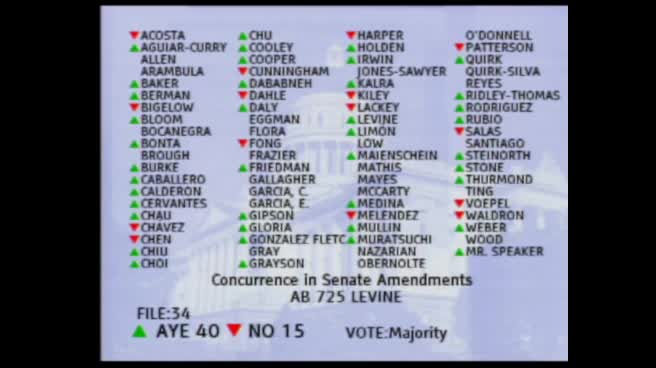 4MIN
Assembly Floor
 3MIN
Senate Floor
 1H
Senate Standing Committee on Appropriations
 12MIN
Senate Standing Committee on Judiciary
 13MIN
Senate Standing Committee on Education
 3MIN
Assembly Floor
 30SEC
Assembly Floor
 1H