AB 2165: Election day holiday.
- Session Year: 2017-2018
- House: Assembly
- Latest Version Date: 2018-02-12
Existing law requires that an election for congressional and state elective offices be held on the first Tuesday after the first Monday in November of each even-numbered year. Existing law requires a presidential general election to be held on the first Tuesday after the first Monday in November in any year that is evenly divisible by the number 4.
Existing law designates specific days as holidays in this state. Existing law designates holidays on which community colleges and public schools are required to close. Existing law entitles state employees, with specified exceptions, to be given time off with pay for specified holidays. Existing law designates optional bank holidays.
This bill would add the day on which a statewide general election is held, which is the first Tuesday after the first Monday in November of any even-numbered year, to these lists of holidays. The bill would require community colleges and public schools to close on any day on which a statewide general election is held. The bill would require that state employees, with specified exceptions, be given time off with pay for days on which a statewide general election is held.
By increasing the duties of local officials, this bill would impose a state-mandated local program.
The California Constitution requires the state to reimburse local agencies and school districts for certain costs mandated by the state. Statutory provisions establish procedures for making that reimbursement.
This bill would provide that, if the Commission on State Mandates determines that the bill contains costs mandated by the state, reimbursement for those costs shall be made pursuant to the statutory provisions noted above.
Optional bank holidays within the meaning of Section 9 are: are all of the following:
(a)Any closing of a bank because of an extraordinary situation, as that term is defined in the Bank Extraordinary Situation Closing Act (Chapter 20 4.5 (commencing with Section 3600) 1090) of Division 1 1.1 of the Financial Code).
(b)Every Saturday.
(c)Every Sunday.
(d)January 1st. 1.
(e)The third Monday in January, known as Dr. Martin Luther King, Jr. Day.
(f)February 12, known as Lincoln Day.
(g)The third Monday in February.
(h)The last Monday in May.
(i)July 4th. 4.
(j)The first Monday in September.
(k)September 9th, 9, known as Admission Day.
(l)The second Monday in October, known as Columbus Day.
(m)The first Tuesday after the first Monday in November in any even-numbered year.
(m)(n)November 11th, 11, known as Veterans Veterans Day.
(n)(o)December 25th. 25.
(o)(p)Good Friday from 12 noon p.m. until closing.
(p)(q)The Thursday in November appointed as Thanksgiving Day.
(q)(r)Any Monday following any Sunday on which January 1st, February 12th, July 4th, September 9th, November 11th, or December 25th falls. 1, February 12, July 4, September 9, November 11, or December 25 falls.
(r)(s)Any Friday preceding any Saturday on which July 4th, September 9th, or December 25th falls. 4, September 9, or December 25 falls.
SEC. 2.Section 37220 of the Education Code is amended to read:37220.(a)Except as otherwise provided, the public schools shall close on all of the following holidays:
(1)January 1.
(2)The third Monday in January or the Monday or Friday in the week in which January 15 occurs, known as Dr. Martin Luther King, Jr. Day. On the Friday preceding the day on which schools are closed, schools shall include exercises commemorating and directing attention to the history of the civil rights movement in the United States and particularly the role therein of Dr. Martin Luther King, Jr.
(3)The Monday or Friday of the week in which February 12 occurs, known as Lincoln Day. On the day that school is in session prior to the day on which schools are closed for that purpose, all public schools and educational institutions throughout the state shall hold exercises in memory of Abraham Lincoln.
(4)The third Monday in February, known as Washington Day. On the Friday preceding, all public schools and educational institutions throughout the state shall hold exercises in memory of George Washington.
(5)The last Monday in May, known as Memorial Day.
(6)July 4.
(7)The first Monday in September, known as Labor Day.
(8)The first Tuesday after the first Monday in November in any even-numbered year.
(8)(9)November 11, known as Veterans Day.
(9)(10)That Thursday in November proclaimed by the President as Thanksgiving Day.
(10)(11)December 25.
(11)(12)All days appointed by the Governor for a public fast, thanksgiving, or holiday, and all special or limited holidays on which the Governor provides that the schools shall close.
(12)(13)All days appointed by the President as a public fast, thanksgiving, or holiday, unless it is a special or limited holiday.
(13)(14)Any other day designated as a holiday by the governing board of the school district.
(b)When any of the holidays on which the schools would be closed falls on Sunday, the public schools shall close on the Monday following.
(c)When any of the holidays on which the schools would be closed falls on Saturday, the public schools shall close on the preceding Friday, and that Friday shall be declared a state holiday.
(d)If any holiday on which the public schools are required to close pursuant to subdivision (a) occurs under federal law on a date different from the date specified in subdivision (a), the governing board of any school district may close the public schools of the district on the date recognized by federal law and maintain classes on the date specified in subdivision (a).
(e)Except for Veterans Day, as designated in paragraph (8) (9) of subdivision (a), the governing board of a school district, by adoption of a resolution, may revise the date upon which the schools of the district close in observance of any of the holidays identified in subdivision (a).
(f)The governing board of a school district may not request a waiver of paragraph (8) (9) of subdivision (a) from the state board.
(g)This section does not prohibit a school district from authorizing its facilities or grounds to be used in accordance with Section 38131 on those days on which the public schools are closed.
SEC. 3.Section 45203 of the Education Code is amended to read:45203.(a)All probationary or permanent employees that are a part of the classified service shall be entitled to all of the following paid holidays provided they are in a paid status during any portion of the working day immediately preceding or succeeding the holiday: January 1, February 12 known as Lincoln Day, the third Monday in February known as Washington Day, the last Monday in May known as Memorial Day, July 4, the first Monday in September known as Labor Day, November 11 known as Veterans Day, that Thursday in November proclaimed by the President as Thanksgiving Day, December 25, every day appointed by the President, or the Governor of this state, as provided for in subdivisions (b) and (c) of Section 37220 for a public fast, thanksgiving or holiday, or any day declared a holiday under Section 1318 or 37222 for classified or certificated employees. School recesses during the Christmas, Easter, and mid-February periods shall not be considered holidays for classified employees who are normally required to work during that period. However, this shall not be construed as affecting vacation rights specified in this section.
(1)January 1.
(2)February 12, known as Lincoln Day.
(3)The third Monday in February, known as Washington Day.
(4)The last Monday in May, known as Memorial Day.
(5)July 4.
(6)The first Monday in September, known as Labor Day.
(7)The first Tuesday after the first Monday in November in any even-numbered year.
(8)November 11, known as Veterans Day.
(9)That Thursday in November proclaimed by the President as Thanksgiving Day.
(10)December 25.
(11)Every day appointed by the President, or the Governor of this state, as provided for in paragraphs (12) and (13) of subdivision (a) of Section 37220 for a public fast, thanksgiving or holiday, or any day declared a holiday under Section 1318 or 37222 for classified or certificated employees.
(b)School recesses during the Christmas, Easter, and mid-February periods shall not be considered holidays for classified employees who are normally required to work during that period. However, this shall not be construed as affecting vacation rights specified in this section.
Regular(c)Regular employees of the district who are not normally assigned to duty during the school holidays of December 25 and January 1 shall be paid for those two holidays provided that they were in a paid status during any portion of the working day of their normal assignment immediately preceding or succeeding the holiday period.
When(d)When a holiday listed in this section falls on a Sunday, the following Monday shall be deemed to be the holiday in lieu of the day observed. When a holiday listed in this section falls on a Saturday, the preceding Friday shall be deemed to be the holiday in lieu of the day observed. When a classified employee is required to work on any of these holidays, he or she shall be paid compensation, or given compensating time off, for such work, in addition to the regular pay received for the holiday, at the rate of time and one-half the employees regular rate of pay.
The(e)The provisions of Article 3 (commencing with Section 37220) of Chapter 2 of Part 22 shall not be construed to in any way limit the provisions of this section, nor shall anything in this section be construed to prohibit the governing board from adopting separate work schedules for the certificated and the classified services, or from providing holiday pay for employees who have not been in paid status on the days specified herein. Notwithstanding the adoption of separate work schedules for the certificated and the classified services, on any schoolday during which pupils would otherwise have been in attendance but are not and for which certificated personnel receive regular pay, classified personnel shall also receive regular pay whether or not they are required to report for duty that day.
In(f)In addition to the other paid holidays specified in this section, the classified service may be entitled to a paid holiday on March 31 known as Cesar Chavez Day, and a paid holiday on the fourth Friday in September known as Native American Day, provided they are in a paid status during any portion of the working day immediately preceding or succeeding the holiday, if the governing board, pursuant to a memorandum of understanding reached pursuant to Chapter 10.7 (commencing with Section 3540) of Division 4 of Title 1 of the Government Code, agrees to the paid holiday.
This(g)This section shall apply applies to districts that have adopted the merit system in the same manner and effect as if it were a part of Article 6 (commencing with Section 45240).
SEC. 4.Section 79020 of the Education Code is amended to read:79020.Except as otherwise provided provided, the community colleges shall continue in session or close on specified holidays as follows:
(a)The community colleges shall close on all of the following holidays:
(1)January 1.
(a)(2)The community colleges shall close on January 1st, the third Monday in January, commencing in the 198990 fiscal year, known as Dr. Martin Luther King, Jr. Day, February 12th known as Lincoln Day, the third Monday in February known as Washington Day, the last Monday in May known as Memorial Day, July 4th, the first Monday in September known as Labor Day, November 11th known as Veterans Day, that Thursday in November proclaimed by the President as Thanksgiving Day, and December 25th. Day.
(3)February 12, known as Lincoln Day.
(4)The third Monday in February, known as Washington Day.
(5)The last Monday in May, known as Memorial Day.
(6)July 4.
(7)The first Monday in September, known as Labor Day.
(8)The first Tuesday after the first Monday in November in any even-numbered year.
(9)November 11, known as Veterans Day.
(10)That Thursday in November proclaimed by the President as Thanksgiving Day.
(11)December 25.
(b)Any contractual provision between any community college district and its employees in effect on the effective date of the act that adds this subdivision shall prevail over any conflict regarding Dr. Martin Luther King, Jr. Day until the termination date of the contract or upon termination by mutual agreement of the parties, whichever occurs first.
(c)The Governor in appointing any other day for a public fast, thanksgiving, or holiday may provide whether the community colleges shall close on the day. If the Governor does not provide whether the community colleges shall close, they shall continue in session on all special or limited holidays appointed by the Governor, but shall close on all other days appointed by the Governor for a public fast, thanksgiving, or holiday.
(d)The community colleges shall close on every day appointed by the President as a public fast, thanksgiving, or holiday, unless it is a special or limited holiday.
(e)The community colleges shall continue in session on all legal holidays other than those designated by or pursuant to this section, and shall hold proper exercises commemorating the day.
(f)When any of the holidays on which the schools would be closed fall on Sunday, the community colleges shall close on the Monday following, except that (1) if Lincoln Day falls on a Sunday, the community colleges may observe this holiday on the preceding or following Friday, the following Monday, or the following Tuesday, and maintain classes on the date specified in subdivision (a) where applicable, or (2) if Lincoln Day falls on a Monday, the community colleges may observe this holiday on the preceding or following Friday, that Monday, or the following Tuesday, and maintain classes on the date specified in subdivision (a) where applicable.
(g)When any of the holidays on which the schools would be closed, except Lincoln Day, fall on Saturday, the community colleges shall close on the preceding Friday, and that Friday shall be declared a state holiday.
(h)If any holiday on which the community colleges are required to close pursuant to subdivision (a) occurs under federal law on a date different than the date specified in subdivision (a), the governing board of any community college district may close the community colleges of the district on the date recognized by federal law and maintain classes on the date specified in subdivision (a).
(i)When Veterans Day would fall on Tuesday, the governing board of a community college district may close the colleges on the preceding Monday, and maintain classes on the date specified in subdivision (a). When Veterans Day would fall on Wednesday, the governing board of a community college district may close the colleges on either the preceding Monday or the following Friday, and maintain classes on the date specified in subdivision (a). When Veterans Day would fall on Thursday, the governing board of a community college district may close the colleges on the following Friday, and maintain classes on the date specified in subdivision (a).
(j)When Lincoln Day would fall on Tuesday, the governing board of a community college district may close the colleges on the preceding Monday, the preceding Friday, or the following Friday, and maintain classes on the date specified in subdivision (a) where appropriate. When Lincoln Day would fall on Wednesday, the governing board of a community college district may close the colleges on the preceding Monday, the preceding Friday, or the following Friday, and maintain classes on the date specified in subdivision (a). When Lincoln Day would fall on Thursday, the governing board of a community college district may close the colleges on the preceding Friday or the following Friday, and maintain classes on the date specified in subdivision (a). When Lincoln Day falls on Saturday, the governing board of a community college district may close the colleges on the preceding Friday or the following Friday, and maintain classes on the date specified in subdivision (a) where appropriate.
(k)In addition to the holidays specified in subdivision (a), a community college may close on March 31 known as Cesar Chavez Day if the governing board, pursuant to a memorandum of understanding reached pursuant to Chapter 10.7 (commencing with Section 3540) of Division 4 of Title 1 of the Government Code, agrees to close the community college for that purpose.
(l)In addition to the holidays specified in subdivision (a), a community college may close on the fourth Friday in September known as Native American Day if the governing board, pursuant to a memorandum of understanding reached pursuant to Chapter 10.7 (commencing with Section 3540) of Division 4 of Title 1 of the Government Code, agrees to close the community college for that purpose.
(m)Nothing in this This section is to shall not be interpreted as authorizing a community college district governing board to maintain community colleges in its district for a lesser number of days during the college year than the minimum established by law.
SEC. 5.Section 79030 of the Education Code is amended to read:79030.(a)Whenever climatic conditions of a community college district are such as to render it necessary that the colleges be closed as early in the year as possible or opened as late in the year as possible, the governing board of the community college district may maintain classes on any days other than the 25th day of December, the first day of January, the fourth day of July, the first Tuesday after the first Monday in November in any even-numbered year, and any day appointed by the President or the Governor for a public thanksgiving.
When(b)When classes are maintained on holidays pursuant to this section, proper exercises shall be held commemorating the day.
SEC. 6.Section 88203 of the Education Code is amended to read:88203.(a)All probationary or permanent employees who are part of the classified service shall be entitled to the following paid holidays if they are in a paid status during any portion of the working day immediately preceding or succeeding the holiday: January 1, February 12 known as Lincoln Day, the third Monday in February known as Washington Day, the last Monday in May known as Memorial Day, July 4, the first Monday in September known as Labor Day, November 11 known as Veterans Day, that Thursday in November proclaimed by the President as Thanksgiving Day, December 25, every probationary or permanent employees who are part of the classified service shall be entitled to the following paid holidays if they are in a paid status during any portion of the working day appointed
(1)January 1.
(2)February 12, known as Lincoln Day.
(3)The third Monday in February, known as Washington Day.
(4)The last Monday in May, known as Memorial Day.
(5)July 4.
(6)The first Monday in September, known as Labor Day.
(7)The first Tuesday after the first Monday in November in any even-numbered year.
(8)November 11, known as Veterans Day.
(9)That Thursday in November proclaimed by the President as Thanksgiving Day.
(10)December 25.
(11)Every day appointed by the President, or the Governor of this state, as provided for in subdivisions (c) and (d) of Section 79020 for a public fast, thanksgiving or holiday, or any day declared a holiday under Section 1318 for classified or academic employees. College
(b)College recesses during the Christmas and Easter periods shall not be considered holidays for classified employees who are normally required to work during that period; provided, however, that this shall not be construed as affecting vacation rights specified in this section.
Regular(c)Regular employees of the district who are not normally assigned to duty during the college holidays of December 25 and January 1 shall be paid for those two holidays if they were in a paid status during any portion of the working day of their normal assignment immediately preceding or succeeding the holiday period.
When(d)When a holiday herein listed falls on a Sunday, the following Monday shall be deemed to be the holiday in lieu of the day observed. When a holiday herein listed falls on a Saturday, the preceding Friday shall be deemed to be the holiday in lieu of the day observed. When a classified employee is required to work on any of said those holidays, he or she shall be paid compensation, or given compensating time off, for such that work, in addition to the regular pay received for the holiday, at the rate of time and one-half his or her regular rate of pay.
Article(e)Article 3 (commencing with Section 79020) of Chapter 8 of Part 48 of this division shall not be construed to in any way limit this section, nor shall anything in this section be construed to prohibit the governing board from adopting separate work schedules for the academic and the classified services, or from providing holiday pay for employees who have not been in paid status on the days specified herein. Notwithstanding the adoption of separate work schedules for the academic and the classified services, on any schoolday during which students would otherwise have been in attendance, but are not and for which faculty receive regular pay, classified personnel shall also receive regular pay whether or not they are required to report for duty that day.
In(f)In addition to the other paid holidays specified in this section, the classified service may be entitled to a paid holiday on March 31 known as Cesar Chavez Day and a paid holiday on the fourth Friday in September known as Native American Day, if they are in a paid status during any portion of the working day immediately preceding or succeeding the holiday, if the governing board, pursuant to a memorandum of understanding reached pursuant to Chapter 10.7 (commencing with Section 3540) of Division 4 of Title 1 of the Government Code, agrees to the paid holiday.
This(g)This section shall apply applies to districts that have adopted the merit system in the same manner and effect as if it were a part of Article 3 (commencing with Section 88060).
SEC. 7.Section 1100 of the Elections Code is amended to read:1100.No An election shall not be held on any day other than a Tuesday, nor Tuesday and shall any election not be held on the day before, the day of, or the day after, a state holiday. holiday, except for a statewide general election holiday as described in paragraph (13) of subdivision (a) of Section 6700 of the Government Code.
SEC. 8.Section 6700 of the Government Code is amended to read:6700.(a)The holidays in this state are: are all of the following:
(1)Every Sunday.
(2)January 1st. 1.
(3)The third Monday in January, known as Dr. Martin Luther King, Jr. Day.
(4)February 12th, 12, known as Lincoln Day.
(5)The third Monday in February.
(6)March 31st, 31, known as Cesar Chavez Day.
(7)The last Monday in May.
(8)July 4th. 4.
(9)The first Monday in September.
(10)September 9th, 9, known as Admission Day.
(11)The fourth Friday in September, known as Native American Day.
(12)The second Monday in October, known as Columbus Day.
(13)The first Tuesday after the first Monday in November 11th, known as Veterans Day. in any even-numbered year.
(14)November 11, known as Veterans Day.
(14)(15)December 25th. 25.
(15)(16)Good Friday from 12 noon until p.m. to 3 p.m.
(16)(17)(A)Every day appointed by the President or Governor for a public fast, thanksgiving, or holiday.
(B)Except for the Thursday in November appointed as Thanksgiving Day, this paragraph and paragraphs (3) and (6) shall not apply to a city, county, or district unless made applicable by charter, or by ordinance or resolution of the governing body thereof.
(b)If the provisions of this section are in conflict with the provisions of a memorandum of understanding reached pursuant to Chapter 12 (commencing with Section 3560) of Division 4 of Title 1, the memorandum of understanding shall be controlling without further legislative action, except that if those provisions of a memorandum of understanding require the expenditure of funds, the provisions shall not become effective unless approved by the Legislature in the annual Budget Act.
SEC. 9.Section 19853 of the Government Code is amended to read:19853.(a)All state employees shall be entitled to the following holidays: January 1, the third Monday in January, the third Monday in February, March 31, the last Monday in May, July 4, the first Monday in September, November 11, Thanksgiving Day, the day after Thanksgiving, December 25, the
(1)January 1.
(2)The third Monday in January.
(3)The third Monday in February.
(4)March 31.
(5)The last Monday in May.
(6)July 4.
(7)The first Monday in September.
(8)The first Tuesday after the first Monday in November in any even-numbered year.
(9)November 11.
(10)Thanksgiving Day.
(11)The day after Thanksgiving.
(12)December 25.
(13)The day chosen by an employee pursuant to Section 19854, and every day 19854.
(14)Every day appointed by the Governor of this state for a public fast, thanksgiving, or holiday.
(b)If a day listed in this subdivision (a) falls on a Sunday, the following Monday shall be deemed to be the holiday in lieu of the day observed. If November 11 falls upon a Saturday, the preceding Friday shall be deemed to be the holiday in lieu of the day observed.
(c)Any state employee who may be required to work on any of the holidays included in this section, and who does work on any of these holidays, shall be entitled to receive straight-time pay and eight hours of holiday credit.
(d)For the purpose of computing the number of hours worked, time when an employee is excused from work because of holidays, sick leave, vacation, annual leave, compensating time off, or any other leave shall not be considered as time worked by the employee for the purpose of computing cash compensation for overtime or compensating time off for overtime.
(e)Any state employee, as defined in subdivision (c) of Section 3513, may elect to receive eight hours of holiday credit for the fourth Friday in September, known as Native American Day, in lieu of receiving eight hours of personal holiday credit in accordance with Section 19854.
(f)Persons employed on less than a full-time basis shall receive holidays in accordance with the Department of Human Resources rules.
(g)If subdivision (a), (c), or (d) is in conflict with the provisions of a memorandum of understanding executed or amended pursuant to Section 3517.5 on or after February 1, 2009, or the date that the act adding this section takes effect, whichever is later, the memorandum of understanding shall be controlling without further legislative action, except that if those provisions of the memorandum of understanding require the expenditure of funds, the provisions shall not become effective unless approved by the Legislature in the annual Budget Act.
(h)This section shall become operative on February 1, 2009, or the date that the act adding this section takes effect, whichever is later. SEC. 10.Section 19853.1 of the Government Code is amended to read:19853.1.(a)Notwithstanding Section 19853, this section shall apply to state employees in State Bargaining Unit 5.
(b)Except as provided in subdivision (c), all employees shall be entitled to all of the following holidays: January 1, the third Monday in January, the third Monday in February, March 31, the last Monday in May, July 4, the first Monday in September, November 11, the day after Thanksgiving, December 25, and every day appointed by the Governor of this state for a public fast, thanksgiving, or holiday.
(1)January 1.
(2)The third Monday in January.
(3)The third Monday in February.
(4)March 31.
(5)The last Monday in May.
(6)July 4.
(7)The first Monday in September.
(8)The first Tuesday after the first Monday in November in any even-numbered year.
(9)November 11.
(10)The day after Thanksgiving.
(11)December 25.
(12)Every day appointed by the Governor of this state for a public fast, thanksgiving, or holiday.
If a day listed in this subdivision falls on a Sunday, the following Monday shall be deemed to be the holiday in lieu of the day observed. If November 11 falls upon a Saturday, the preceding Friday shall be deemed to be the holiday in lieu of the day observed. Any employee who may be required to work on any of the holidays included in this section and who does work on any of these holidays shall be entitled to be paid compensation or given compensating time off for that work in accordance with his or her classifications assigned workweek group.
(c)If the provisions of subdivision (b) are in conflict with the provisions of a memorandum of understanding reached pursuant to Section 3517.5, the memorandum of understanding shall be controlling without further legislative action, except that if the provisions of a memorandum of understanding require the expenditure of funds, the provisions shall not become effective unless approved by the Legislature in the annual Budget Act.
(d)(1)Any employee who either is excluded from the definition of state employee in subdivision (c) of Section 3513, or is a nonelected officer or employee of the executive branch of government who is not a member of the civil service, is entitled to all of the following holidays, with pay, in addition to any official state holiday appointed by the Governor:
(A)January 1.
(B)The third Monday in January.
(C)The third Monday in February.
(D)March 31.
(E)The last Monday in May.
(F)July 4.
(G)The first Monday in September.
(1)January 1, the third Monday in January, the third Monday in February, March 31, the last Monday in May, July 4, the(H)The first Tuesday after the first Monday in September, November 11, Thanksgiving Day, the day after Thanksgiving, and December 25. in any even-numbered year.
(I)November 11.
(J)Thanksgiving Day.
(K)The day after Thanksgiving.
(L)December 25.
(2)When November 11 falls on a Saturday, employees shall be entitled to the preceding Friday as a holiday with pay.
(3)When a holiday, other than a personal holiday, falls on a Saturday, an employee shall, regardless of whether he or she works on the holiday, accrue only an additional eight hours of personal holiday credit per fiscal year for the holiday. The holiday credit shall be accrued on the actual date of the holiday and shall be used within the same fiscal year.
(4)When a holiday other than a personal holiday falls on Sunday, employees shall be entitled to the following Monday as a holiday with pay.
(5)Employees who are required to work on a holiday shall be entitled to pay or compensating time off for this work in accordance with their classifications assigned workweek group.
(6)Persons employed on less than a full-time basis shall receive holidays in accordance with the Department of Human Resources rules.
(e)Any employee, as defined in subdivision (c) of Section 3513, may elect to use eight hours of vacation, annual leave, or compensating time off consistent with departmental operational needs and collective bargaining agreements for the fourth Friday in September, known as Native American Day.
(f)This section shall become effective with regard to the March 31 holiday only when the Department of Human Resources notifies the Legislature that the language contained in this section has been agreed to by all exclusive representatives, and the Department of Human Resources authorizes this holiday to be applied to employees designated as excluded from the Ralph C. Dills Act (Chapter 10.3 (commencing with Section 3512), Division 4, Title 1), and the necessary statutes are amended to reflect this change.
SEC. 11.Section 4692 of the Welfare and Institutions Code is amended to read:4692.(a)Effective August 1, 2009, subject to subdivisions (c) and (e), regional centers shall not compensate a work activity program, activity center, adult development center, behavior management program, social recreation program, adaptive skills trainer, infant development program, program support group (day service), socialization training program, client/parent support behavior intervention training program, community integration training program, community activities support service, or creative arts program, as defined in Title 17 of the California Code of Regulations, for providing any service to a consumer on any of the following holidays:
(1)January 1.
(2)The third Monday in January.
(3)The third Monday in February.
(4)March 31.
(5)The last Monday in May.
(6)July 4.
(7)The first Monday in September.
(8)The first Tuesday after the first Monday in November 11. in any even-numbered year.
(9)November 11.
(9)(10)Thanksgiving Day.
(10)(11)December 25.
(11)(12)The four business days between December 25 and January 1.
(b)Effective August 1, 2009, subject to subdivisions (c) and (e), regional centers shall not compensate a transportation vendor/family member, transportation company, transportation/additional component vendor, transportation broker, transportation assistant/vendor, transportation vendor/auto driver, or transportation vendor/public or rental car agency or taxi, in accordance with Title 17 of the California Code of Regulations, for transporting any consumer to receive services from any of the vendors specified in subdivision (a) for any of the holidays set forth in paragraphs (1) to (11), (12), inclusive, of subdivision (a).
(c)If a holiday listed in this section falls on a Saturday or a Sunday, the following Monday shall be deemed to be the holiday in lieu of the day observed.
(d)Contracts between the vendors described in this section and regional centers shall reflect the holiday closures set forth in this section and shall be renegotiated accordingly, as necessary.
(e)The department may adjust the holidays set forth in subdivision (a) through a program directive. This directive shall be provided to the regional centers and posted on the departments Internet Web site at least 60 days prior to before the effective date of the change in holiday.
SEC. 12.If the Commission on State Mandates determines that this act contains costs mandated by the state, reimbursement to local agencies and school districts for those costs shall be made pursuant to Part 7 (commencing with Section 17500) of Division 4 of Title 2 of the Government Code.
|
Date
|
Status
|
|---|---|
| May 25, 2018 | In committee: Held under submission. |
| Apr 25, 2018 | In committee: Set, first hearing. Referred to APPR. suspense file. |
| Apr 5, 2018 | From committee: Do pass and re-refer to Com. on APPR. (Ayes 14. Noes 5.) (April 4). Re-referred to Com. on APPR. |
| Mar 21, 2018 | From committee: Do pass and re-refer to Com. on G.O. (Ayes 5. Noes 1.) (March 21). Re-referred to Com. on G.O. |
| Feb 26, 2018 | Referred to Coms. on E. & R. and G.O. |
| Feb 13, 2018 | From printer. May be heard in committee March 15. |
| Feb 12, 2018 | Read first time. To print. |
|
Date
|
Description
|
Location
|
Votes
|
|
|---|---|---|---|---|
| Apr 4, 2018 | Do pass and be re-referred to the Committee on [Appropriations] | Assembly Standing Committee on Governmental Organization |
Passed |
|
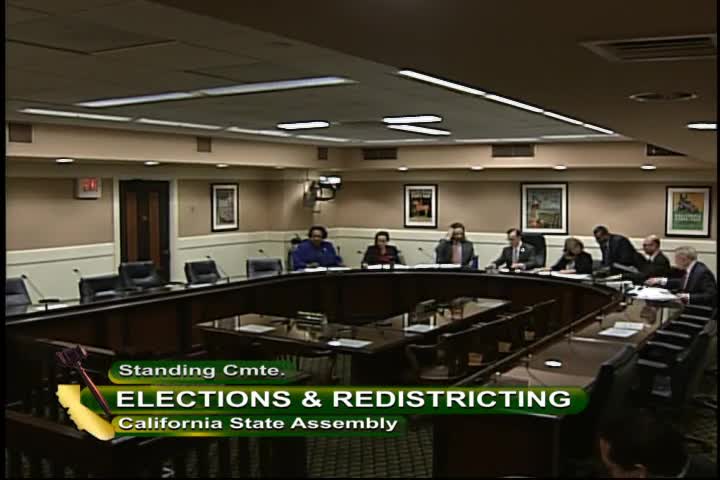
| Mar 21, 2018 | Do pass and be re-referred to the Committee on [Governmental Organization] | Assembly Standing Committee on Elections and Redistricting |
Passed |
This list shows positions taken on this bill by organizations on the date displayed, which is linked to the original source.
Positions by individuals are not included.
|
Organization
|
Position
|
Date
|
|---|---|---|
| American Civil Liberties Union of California | ** Support | Apr 3, 2018 |
| Asian Law Alliance | ** Support | Apr 3, 2018 |
| California Association of Non-Profits | * Support | Apr 4, 2018 |
| California Federation Of Teachers | * Support | Apr 4, 2018 |
| California Labor Federation | ** Support | Apr 3, 2018 |
| California Peace and Freedom Party | * Support | Mar 21, 2018 |
| California School Employees Association, AFL-CIO | ** Support | Apr 3, 2018 |
| FairVote California | ** Support | Apr 3, 2018 |
| Indivisible East Bay | ** Support | Apr 3, 2018 |
| Service Employees International Union | ** Support | Apr 3, 2018 |
Date of Hearing: April 25, 2018
ASSEMBLY COMMITTEE ON APPROPRIATIONS
Lorena Gonzalez Fletcher, Chair
ABPCA Bill Id:AB 2165
Author:(Low) – As Introduced Ver:February 12, 2018
Policy Committee: | Elections and Redistricting | Vote: | 5 - 1 |
Governmental Organization | 14 - 5 | ||
|
|
Urgency: No State Mandated Local Program: Yes Reimbursable: No
SUMMARY:
This bill makes the Tuesday after the first Monday in November in an even-numbered year a state holiday (Statewide and national elections are held in even-numbered years.) Specifically, this bill:
- Provides that all state employees are entitled to this holiday.
- Requires public schools to be closed on this day and provides that probationary and permanent school employees who are a part of the classified service are entitled to a paid holiday on that day, as specified.
- Requires community colleges to be closed on this day and provides that probationary and permanent school employees who are a part of the classified service are entitled to a paid holiday on that day, as specified.
- Provides that regional centers will not compensate on this holiday a work activity program, activity center, adult development center, behavior management program, social recreation program, adaptive skills trainer, infant development program, program support group (day service), socialization training program, client/parent support behavior intervention training program, community integration training program, community activities support service, or creative arts program.
FISCAL EFFECT:
Annual GF and special fund revenue loss of approximately $11 million.
COMMENTS:
- Rationale. Existing law designates certain days as state holidays and requires state employees to be given time off with pay on these holidays. In addition, public schools and community colleges are required to close on state holidays. Existing law also requires employers to give employees, who do not have sufficient time to vote outside of working hours, up to two hours off with pay to go vote.
According to the author, “Observing a state holiday on election day would eliminate work and school conflicts that many voters face.”
- California Voter's Choice Act. SB 450 (Allen), Chapter 832, Statutes of 2016, permits counties to opt-in to a significantly different approach to conduct elections in which every voter receives a vote-by-mail (VBM) ballot and vote centers and ballot drop-off locations are available prior to and on election day, in lieu of operating polling places for the elections, subject to certain conditions. Counties that conduct elections under SB 450 are required to follow a specified public process for developing an election administration plan that includes specific proposals for voter education and outreach. Under SB 450, some vote centers must be open for ten days prior to an election, with remaining vote centers opening three days prior to the election.
One of the goals of SB 450 is to increase voter turnout by allowing voters the opportunity to vote in the days prior to an election. Because vote centers will be open for at least eight hours a day in the ten days immediately preceding an election and from 7 a.m. to 8 p.m. on election day, many voters who cannot take unpaid time off to vote will have an increased number of days and hours to either vote in person or use one of the drop-off locations to deliver their VBM ballot. Counties that have agreed to participate in 2018 include Madera, Napa, Nevada, Sacramento, and San Mateo.
- Prior Legislation. This bill is identical to AB 674 (Low) of this legislative session, which was held on suspense in this committee.
Analysis Prepared by: Jennifer Galehouse / APPR. / (916) 319-2081
Date of Hearing: April 4, 2018
ASSEMBLY COMMITTEE ON GOVERNMENTAL ORGANIZATION
Adam Gray, Chair
ABPCA Bill Id:AB 2165 (
Author:Low) – As Introduced Ver:February 12, 2018
SUBJECT: Election day holiday
SUMMARY: Makes the first Tuesday after the first Monday in November of each even-numbered year a state holiday. Specifically, this bill:
- Provides that the first Tuesday after the first Monday in November in any even-numbered year is a holiday in the state. Provides that all state employees are entitled to this holiday.
- Requires public schools to be closed on the first Tuesday after the first Monday in November in any even-numbered year. Provides that probationary and permanent school employees that are a part of the classified service are entitled to a paid holiday on that day, as specified.
- Requires community colleges to be closed on the first Tuesday after the first Monday in November in any even-numbered year. Provides that probationary and permanent college employees that are a part of the classified service are entitled to a paid holiday on that day, as specified.
- Requires that the first Tuesday after the first Monday in November in any even-numbered year is to be included in the list of days in which regional centers shall not compensate a work activity program, activity center, adult development center, behavior management program, social recreation program, adaptive skills trainer, infant development program, program support group (day service), socialization training program, client/parent support behavior intervention training program, community integration training program, community activities support service, or creative arts program, for providing service to a consumer.
EXISTING LAW:
- Provides that the holidays in the state are:
- Every Sunday.
- January 1.
- The third Monday in January, known as "Dr. Martin Luther King, Jr. Day."
- February 12, known as "Lincoln Day."
- The third Monday in February.
- March 31, known as "Cesar Chavez Day."
- The last Monday in May.
- July 4.
- The first Monday in September.
- September 9, known as "Admission Day."
- The fourth Friday in September, known as “Native American Day.”
- The second Monday in October, known as "Columbus Day."
- November 11, known as "Veterans Day."
- December 25.
- Good Friday from 12 noon until 3 p.m.
- Every day appointed by the President or Governor for a public fast, thanksgiving, or holiday.
- Every Sunday.
- Designates holidays on which community colleges and public schools are required to close.
- Entitles state employees, with specified exceptions, to be given time off with pay for specified holidays.
- Designates optional bank holidays.
- Prohibits an election from being held on the day before, the day of, or the day after, a state holiday.
FISCAL EFFECT: Unknown
COMMENTS:
Purpose of the bill: According to the author: “In 2014, California saw historically low voter turnout, with just 25% of registered voters participating in the primary, and just 42% of registered voters participating in the general election. According to a study from the Pew Research Center, work and school conflicts were the most common reason cited by eligible voters who did not vote in 2014. This is a particular problem for low income communities who face financial roadblocks to taking unpaid time off to vote.
While state law allows Californians to take up to two hours off from work, without loss of pay, to cast a ballot, the state can do more to help facilitate voter participation. Observing a state holiday on Election Day would eliminate work and school conflicts that many voters face.
AB 2165 ensures Californians will have the time and opportunity to vote by making the day of statewide general elections in November of even-numbered years a state holiday. AB 2165 demonstrates California’s strong and unwavering commitment to democracy by eliminating barriers to voter participation and ensuring that the electoral process is open and accessible to all voters.”
National Commission on Election Reform (NCER): The NCER, which was co-chaired by former Presidents Jimmy Carter and Gerald Ford and is sometimes known as the Carter-Ford Commission, was formed in the wake of the 2000 Presidential election to quickly evaluate the body of research on election reform, review policy proposals, and offer a bipartisan analysis to the Congress, the President, and the American people. In 2002, Congress approved and the President signed into law the Help America Vote Act of 2002 (P.L. 107-252) (HAVA). The intent of HAVA was to "establish minimum election administration standards for States and units of local government with responsibility for the administration of Federal elections," among other purposes. Many of the provisions of HAVA were based in part on recommendations from the NCER. One of the recommendations made by the NCER was that Congress should enact legislation to hold presidential and congressional elections on a national holiday - possibly by moving Veterans Day to coincide with Election Day in even numbered years. The NCER report concluded, "[h]olding national elections on a national holiday will increase availability of poll workers and suitable polling places and might make voting easier for some workers."
Election Assistance Commission (EAC): The U.S. Election Assistance Commission is an independent, bipartisan commission created by the Help America Vote Act (HAVA) of 2002 to assist State and local election officials with the administration of Federal elections. In a national survey of voters in 2008 they found that 51 percent of individuals favored establishing an Election Day Federal holiday compared with 45 percent who opposed it. They further investigated the implementation of the statewide Election Day holiday in Maryland. EAC researchers interviewed local election officials in eight counties in Maryland: Allegany, Anne Arundel, Baltimore, Calvert, Carroll, Harford, Montgomery, and Washington Counties. They found: “In Carroll County, 32 of 33 polling places are in schools. In Montgomery County, 600 to 700 high school students work on Election Day at polling places, either as poll workers or helping in other ways during busy hours early in the morning and later in the evening. Election officials in a smaller jurisdiction also prefer using the closed schools as polling places. Election officials interviewed from all eight counties say they have more poll workers when State offices are closed. In Harford County, for example, 15 to 20 percent of the 800 poll workers are State employees who have the day off.”
Support: According to the California School Employees Association, (CSEA), AFL-CIO, State law allows Californians to take up to two hours off from work, without loss of pay, to cast a ballot. However, Election Day is often characterized by long lines at polling places before and after work making voting impossible for many workers. The state can do more to help facilitate greater voter participation. Observing a state holiday on Election Day will eliminate work and school conflicts that many voters face.
Schools are especially busy during early November. Many CSEA members will not take time off to vote if they feel their services are needed on campus. CSEA members often work two jobs and finding time between shifts is also not an option. Although employees are legally allowed time off to vote, managers still discourage employees from leaving during their workday. AB 2165 ensures that classified employees will have the time and opportunity to vote by making the statewide general election a holiday.
States with an Election Day Holiday: Currently, fourteen states – Delaware, Hawaii, Illinois, Indiana, Kentucky, Louisiana, Maryland, Michigan, Montana, New Jersey, New York, Rhode Island, West Virginia, and Wisconsin – and the territory of Puerto Rico, make election day a holiday.
Double Referral: AB 2165 was first heard in Assembly Committee on Elections and Redistricting on March 21, 2018, and passed on a 5-1 vote.
Prior Legislation: AB 674 (Low), 2017-2018 Legislative Session. Would have made the first Tuesday after the first Monday in November of each even-numbered year a state holiday. (Held in Assembly Appropriations Committee)
AB 2634 (Torrico), 2007-2008 Legislative Session. Would have made the first Tuesday after the first Monday in November of each year in which a statewide or national election is held a state holiday. (Never heard in Governmental Organization Committee)
REGISTERED SUPPORT / OPPOSITION:
Support
American Civil Liberties Union of California
Asian Law Alliance
California Association of Nonprofits
California Federation of Teachers
California Labor Federation
California School Employees Association, AFL-CIO
FairVote California
Indivisible East Bay
Service Employees International Union
Opposition
None on file.
Analysis Prepared by: Kenton Stanhope / G.O. / (916) 319-2531
Date of Hearing: March 21, 2018
ASSEMBLY COMMITTEE ON ELECTIONS AND REDISTRICTING
Marc Berman, Chair
ABPCA Bill Id:AB 2165 (
Author:Low and Bonta) – As Introduced Ver:February 12, 2018
SUBJECT: Election day holiday.
SUMMARY: Makes the first Tuesday after the first Monday in November of each even-numbered year a state holiday. Specifically, this bill:
- Provides that the first Tuesday after the first Monday in November in any even-numbered year is a holiday in the state. Provides that all state employees are entitled to this holiday.
- Requires public schools to be closed on the first Tuesday after the first Monday in November in any even-numbered year. Provides that probationary and permanent school employees that are a part of the classified service are entitled to a paid holiday on that day, as specified.
- Requires community colleges to be closed on the first Tuesday after the first Monday in November in any even-numbered year. Provides that probationary and permanent college employees that are a part of the classified service are entitled to a paid holiday on that day, as specified.
- Requires that the first Tuesday after the first Monday in November in any even-numbered year is to be included in the list of days in which regional centers shall not compensate a work activity program, activity center, adult development center, behavior management program, social recreation program, adaptive skills trainer, infant development program, program support group (day service), socialization training program, client/parent support behavior intervention training program, community integration training program, community activities support service, or creative arts program, for providing service to a consumer.
- Makes corresponding changes.
EXISTING LAW:
- Provides that the holidays in the state are:
- Every Sunday.
- January 1.
- The third Monday in January, known as "Dr. Martin Luther King, Jr. Day."
- February 12, known as "Lincoln Day."
- The third Monday in February.
- March 31, known as "Cesar Chavez Day."
- The last Monday in May.
- July 4.
- The first Monday in September.
- September 9, known as "Admission Day."
- The fourth Friday in September, known as “Native American Day.”
- The second Monday in October, known as "Columbus Day."
- November 11, known as "Veterans Day."
- December 25.
- Good Friday from 12 noon until 3 p.m.
- Every day appointed by the President or Governor for a public fast, thanksgiving, or holiday.
- Every Sunday.
- Designates holidays on which community colleges and public schools are required to close.
- Entitles state employees, with specified exceptions, to be given time off with pay for specified holidays.
- Designates optional bank holidays.
- Prohibits an election from being held on the day before, the day of, or the day after, a state holiday.
FISCAL EFFECT: Unknown. State-mandated local program; contains reimbursement direction.
COMMENTS:
- Purpose of the Bill: According to the author:
In 2014, California saw historically low voter turnout, with just 25% of registered voters participating in the primary, and just 42% of registered voters participating in the general election. According to a study from the Pew Research Center, work and school conflicts were the most common reason cited by eligible voters who did not vote in 2014. This is a particular problem for low income communities who face financial roadblocks to taking unpaid time off to vote.
While state law allows Californians to take up to two hours off from work, without loss of pay, to cast a ballot, the state can do more to help facilitate voter participation. Observing a state holiday on election day would eliminate work and school conflicts that many voters face.
AB 2165 ensures Californians will have the time and opportunity to vote by making the day of statewide general elections in November of even-numbered years a state holiday. AB 2165 demonstrates California’s strong and unwavering commitment to democracy by eliminating barriers to voter participation and ensuring that the electoral process is open and accessible to all voters.
- National Commission on Election Reform (NCER): The NCER, which was co-chaired by former Presidents Jimmy Carter and Gerald Ford and is sometimes known as the Carter-Ford Commission, was formed in the wake of the 2000 Presidential election to quickly evaluate the body of research on election reform, review policy proposals, and offer a bipartisan analysis to the Congress, the President, and the American people. In 2002, Congress approved and the President signed into law the Help America Vote Act of 2002 (P.L. 107-252) (HAVA). The intent of HAVA was to "establish minimum election administration standards for States and units of local government with responsibility for the administration of Federal elections," among other purposes. Many of the provisions of HAVA were based in part on recommendations from the NCER.
One of the recommendations made by the NCER was that Congress should enact legislation to hold presidential and congressional elections on a national holiday – possibly by moving Veterans Day to coincide with election day in even numbered years. The NCER report concluded that "[h]olding national elections on a national holiday will increase availability of poll workers and suitable polling places and might make voting easier for some workers."
This bill is not proposing a national holiday but it does provide for public schools, community colleges, and state buildings to be closed on election day, which provides an opportunity for schools and state buildings to be used as polling places or vote centers. Additionally it may afford the opportunity for students and state employees to serve as poll workers on election day.
While this bill makes election day a state holiday, it does not require private employers to close their offices or give their employees the day off.
- Election Day Holidays in Other States: Sixteen states – Delaware, Florida, Hawaii, Illinois, Indiana, Kentucky, Louisiana, Maryland, Michigan, Montana, New Jersey, New York, North Carolina, Rhode Island, West Virginia, and Wisconsin, and the territory of Puerto Rico, have declared election day as a legal holiday.
Election day holidays vary from state to state. Under Kentucky law and for the territory of Puerto Rico, the election day holiday applies only to elections which take place on the first Tuesday after the first Monday in November in any year that is evenly divisible by the number four. Under existing law in the states of Indiana and West Virginia, the election day holiday applies to both the primary and general elections. Similarly, in Wisconsin the election day holiday applies to both municipal and general elections but the primary election holiday is only a half-day. Pennsylvania law provides for a half-day holiday, that begins at noon on election day, for both the primary and general elections. On the date of the statewide general election, New York state has established a floating holiday provision for certain state employees whose offices remain open on election day. North Carolina has declared that Tuesday after the first Monday in November in years in which a general election is to be held is a legal public holiday. Additional states have designated their statewide election day holiday applies to all elections taking place in even-numbered years.
Committee staff is unaware of studies or other information showing that adoption of an election day holiday has led to an increase in voter participation among the states that have adopted one.
- California Voter's Choice Act: SB 450 (Allen), Chapter 832, Statutes of 2016, permits counties to opt-in to a significantly different approach to conduct elections in which every voter receives a vote-by-mail (VBM) ballot and vote centers and ballot drop-off locations are available prior to and on election day, in lieu of operating polling places for the elections, subject to certain conditions. Counties that conduct elections under SB 450 are required to follow a specified public process for developing an election administration plan that includes specific proposals for voter education and outreach. Under SB 450, some vote centers must be open for ten days prior to an election, with remaining vote centers opening three days prior to the election. SB 450 will begin a phased implementation in 2018.
One of the goals of SB 450 is to increase voter turnout by allowing voters the opportunity to vote in the days prior to the election. Because vote centers will be open for at least eight hours a day in the ten days immediately preceding an election and from 7 a.m. to 8 p.m. on election day, many voters who cannot take unpaid time off to vote will have an increased number of days and hours to either vote in person or use one of the drop-off locations to deliver their VBM ballot. Counties that have agreed to participate in 2018 include: Madera, Napa, Nevada, Sacramento, and San Mateo.
- Argument in Support: The California School Employees Association, (CSEA), AFL-CIO, writes:
State law allows Californians to take up to two hours off from work, without loss of pay, to cast a ballot. However, election day is often characterized by long lines at polling places before and after work making voting impossible for many workers. The state can do more to help facilitate greater voter participation. Observing a state holiday on election day will eliminate work and school conflicts that many voters face.
Schools are especially busy during early November. Many CSEA members will not take time off to vote if they feel their services are needed on campus. CSEA members often work two jobs and finding time between shifts is also not an option. Although employees are legally allowed time off to vote, managers still discourage employees from leaving during their workday. AB 2165 ensures that classified employees will have the time and opportunity to vote by making the statewide general election a holiday.
- Previous Legislation: This bill is identical to AB 674 (Low) of this session, which was approved by this committee on a 5-2 vote, but was held on the Assembly Appropriations Committee's suspense file. AB 2634 (Torrico) of 2008, would have made the first Tuesday after the first Monday in November of each year in which a statewide or national election is held a state holiday. AB 2634 was approved by this committee, but failed to pass in the Assembly Committee on Governmental Organization.
- Double-Referred: This bill has been double-referred to the Assembly Committee on Governmental Organization.
REGISTERED SUPPORT / OPPOSITION:
Support
American Civil Liberties Union of California
Asian Law Alliance
California Labor Federation
California School Employees Association, AFL-CIO
Service Employees International Union
Opposition
None on file.
Analysis Prepared by: Lori Barber / E. & R. / (916) 319-2094
Discussed in Hearing
 13MIN
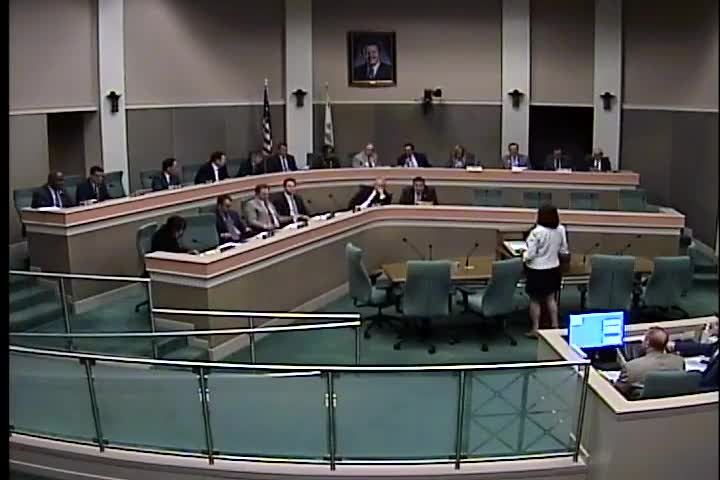
Assembly Standing Committee on Governmental Organization
 18MIN

