AB 2207: Commercially sexually exploited children.
- Session Year: 2017-2018
- House: Assembly
- Latest Version Date: 2018-09-26
Existing law provides for the placement of children who have been removed from their homes due to neglect or abuse and governs the placement of those children under the supervision of the State Department of Social Services and county welfare departments. Existing law requires county child welfare agencies and probation departments to develop and implement policies and procedures or protocols that require social workers and probation officers to identify children who are at risk of becoming victims of commercial sexual exploitation, to determine whether a child or nonminor dependent is a possible victim of commercial sexual exploitation, and to document this information, as specified. Existing law also requires the State Department of Social Services to develop, in consultation with specified stakeholders, model policies, procedures, and protocols to assist the counties in complying with these requirements.
This bill would require the State Department of Social Services to develop the model policies, procedures, and protocols described above by no later than January 1, 2020.
Existing law provides for the placement of children who have been removed from their homes due to neglect or abuse and governs the placement of those children under the supervision of the State Department of Social Services and county welfare departments. Existing law requires county child welfare agencies and probation departments to develop and implement policies and procedures or protocols that require social workers and probation officers to identify children who are at risk of becoming victims of commercial sexual exploitation, to determine whether a child or nonminor dependent is a possible victim of commercial sexual exploitation, and to document this information, as specified. Existing law also establishes the Commercially Sexually Exploited Children Program, which is administered by the State Department of Social Services, in order to adequately serve children who have been sexually exploited. The program allocates funding to participating counties to provide services to commercially sexually exploited children (CSEC), as specified. requires the State Department of Social Services to develop, in consultation with specified stakeholders, model policies, procedures, and protocols to assist the counties in complying with these requirements.
This bill would require the State Department of Social Services to convene a working group comprised of relevant stakeholders, as specified, to examine the usefulness of restraining orders in protecting CSEC and whether revisions to state laws governing the issuance of restraining orders are necessary in order to provide additional protections to this population, and would require the working group to, no later than January 1, 2020, issue a report with its findings to the Legislature. The bill would require the department, commencing no later than July 1, 2019, and until July 1, 2021, to issue reports to the Legislature addressing the progress of each county in this state toward fully implementing policies and practices that consistently provide a safe environment, appropriate services, and specialized placements for CSEC who are receiving child welfare services. The bill would require these reports to be submitted semi-annually until July 1, 2020, and then annually thereafter. The bill would require the reports to include, among other things, a description of how each county has expended specified General Fund moneys allocated to that county for CSEC programs since the 201415 fiscal year, as specified. develop the model policies, procedures, and protocols described above by no later than January 1, 2020.
The bill would require, no later than July 1, 2021, the department to report to the Legislature whether or not each county in the state has fully implemented policies and practices for CSEC receiving child welfare services, as specified. The bill would require the report to identify and list the policies, practices, and services used by each county to serve CSEC that, at minimum, result in certain outcomes, including, among others, the provision of services and placements for CSEC that are specifically tailored to their extreme trauma. The bill would also require the report to discuss whether each county utilizes the best practices identified by the department to achieve the specified outcomes described above. The bill would include a statement of legislative findings and declarations relating to CSEC.Existing law provides for the placement of children who have been removed from their homes due to neglect or abuse and governs the placement of those children under the supervision of the State Department of Social Services and county welfare departments. Existing law requires county child welfare agencies and probation departments to develop and implement policies and procedures or protocols that require social workers and probation officers to identify children who are at risk of becoming victims of commercial sexual exploitation, to determine whether a child or nonminor dependent is a possible victim of commercial sexual exploitation, and to document this information, as specified. Existing law also establishes the Commercially Sexually Exploited Children Program, which is administered by the State Department of Social Services, in order to adequately serve children who have been sexually exploited. The program allocates funding to participating counties to provide services to commercially sexually exploited children (CSEC), as specified.
This bill would require the State Department of Social Services to convene a working group comprised of relevant stakeholders, as specified, to examine the usefulness of restraining orders in protecting CSEC and whether revisions to state laws governing the issuance of restraining orders are necessary in order to provide additional protections to this population, and would require the working group to, no later than January 1, 2020, issue a report with its findings to the Legislature. The bill would require the department, commencing no later than July 1, 2019, and until July 1, 2021, the department to issue reports to the Legislature addressing the progress of each county in this state toward fully implementing policies and practices that consistently provide a safe environment, appropriate services, and specialized placements for CSEC who are receiving child welfare services. The bill would require these reports to be submitted semi-annually until July 1, 2020, and then annually thereafter. The bill would require the reports to include, among other things, an accounting a description of how each county has expended specified General Fund moneys allocated to that county for CSEC programs since fiscal year 2014-15, the 201415 fiscal year, as specified.
The bill would require, no later than July 1, 2021, the department to report to the Legislature whether or not each county in the state has fully implemented policies and practices for CSEC receiving child welfare services, as specified. The bill would require the report to identify and list the policies, practices, and services used by each county to serve CSEC that, at minimum, result in certain outcomes, including, among others, the provision of services and placements for CSEC that are specifically tailored to their extreme trauma. The bill would also require the report to discuss whether each county utilizes the best practices identified by the department to achieve the specified outcomes described above. The bill would include a statement of legislative findings and declarations relating to CSEC.
Existing law provides for the placement of children who have been removed from their homes due to neglect or abuse and governs the placement of those children under the supervision of the State Department of Social Services and county welfare departments. Existing law requires county child welfare agencies and probation departments to develop and implement policies and procedures or protocols that require social workers and probation officers to identify children who are at risk of becoming victims of commercial sexual exploitation, to determine whether a child or nonminor dependent is a possible victim of commercial sexual exploitation, and to document this information, as specified. Existing law also establishes the Commercially Sexually Exploited Children Program, which is administered by the State Department of Social Services, in order to adequately serve children who have been sexually exploited. The program allocates funding to participating counties to provide services to commercially sexually exploited children (CSEC), as specified.
This bill would require the State Department of Social Services to convene a working group comprised of relevant stakeholders, as specified, to examine the usefulness of restraining orders in protecting CSEC and whether revisions to state laws governing the issuance of restraining orders are necessary in order to provide additional protections to this population, and would require the working group to, no later than January 1, 2020, issue a report with its findings to the Legislature. The bill would require, commencing no later than July 1, 2019, and until March 1, July 1, 2021, the department to issue reports on a quarterly basis to the Legislature addressing the progress of each county in this state toward fully implementing policies and practices that consistently provide a safe environment, appropriate services, and specialized placements for CSEC who are receiving child welfare services. The bill would require these reports to be submitted semi-annually until July 1, 2020, and then annually thereafter. The bill would require the reports would to include, among other things, an accounting of how each county has expended specified General Fund moneys allocated to that county for CSEC programs since fiscal year 2014-15, as specified.
The bill would require, no later than July 1, 2021, the department to report to the Legislature whether each county in the state has fully implemented policies and practices for CSEC receiving child welfare services, as specified. The bill would require the State Department of Social Services to convene a working group comprised of relevant stakeholders, as specified, to examine the use of restraining orders in protecting CSEC and whether revisions to state laws governing the issuance of restraining orders are necessary in order to provide additional protections to this population, and would require the working group to, no later than January 1, 2020, make recommendations to the Legislature regarding how increased utilization of restraining orders may better protect CSEC. The bill would require the report to identify and list the policies, practices, and services used by each county to serve CSEC that, at minimum, result in certain outcomes, including, among others, the provision of services and placements for CSEC that are specifically tailored to their extreme trauma. The bill would also require the report to discuss whether each county utilizes the best practices identified by the department to achieve the specified outcomes described above. The bill would include a statement of legislative findings and declarations relating to CSEC.
Existing law provides for the placement of children who have been removed from their homes due to neglect or abuse and governs the placement of those children under the supervision of the State Department of Social Services and county welfare departments. Existing law requires county child welfare agencies and probation departments to develop and implement policies and procedures or protocols that require social workers and probation officers to identify children who are at risk of becoming victims of commercial sexual exploitation, to determine whether a child or nonminor dependent is a possible victim of commercial sexual exploitation, and to document this information, as specified. Existing law also establishes the Commercially Sexually Exploited Children Program, which is administered by the State Department of Social Services, in order to adequately serve children who have been sexually exploited. The program allocates funding to participating counties to provide services to commercially sexually exploited children (CSEC), as specified.
This bill would require, commencing no later than July 1, 2019, and until March 1, 2021, the department to issue reports on a quarterly basis to the Legislature addressing the progress of each county in this state toward fully implementing policies and practices that consistently provide a safe environment, appropriate services, and specialized placements for CSEC who are receiving child welfare services. The reports would include, among other things, an accounting of how each county has expended specified General Fund moneys allocated to that county for CSEC programs since fiscal year 2014-15, as specified. The bill would require, no later than July 1, 2021, the department to report to the Legislature whether each county in the state has fully implemented policies and practices for CSEC receiving child welfare services, as specified. The bill would require an unspecified entity, after consultation with representatives of CSEC, defense counsel, prosecutors, and dependency court judges, no later than an unspecified date, to consider whether revisions to state laws governing the issuance of restraining orders may aid in protecting CSEC from further exploitation and, on or before that date, to offer suggestions for the changes. The bill would require the State Department of Social Services to convene a working group comprised of relevant stakeholders, as specified, to examine the use of restraining orders in protecting CSEC and whether revisions to state laws governing the issuance of restraining orders are necessary in order to provide additional protections to this population, and would require the working group to, no later than January 1, 2020, make recommendations to the Legislature regarding how increased utilization of restraining orders may better protect CSEC. The bill would include a statement of legislative findings and declarations relating to CSEC.
Existing law provides for the placement of children who have been removed from their homes due to neglect or abuse and governs the placement of those children under the supervision of the State Department of Social Services and county welfare departments. Existing law requires county child welfare agencies and probation departments to develop and implement policies and procedures or protocols that require social workers and probation officers to identify children who are at risk of becoming victims of commercial sexual exploitation, to determine whether a child or nonminor dependent is a possible victim of commercial sexual exploitation, and to document this information, as specified. Existing law also establishes the Commercially Sexually Exploited Children Program, which is administered by the State Department of Social Services, in order to adequately serve children who have been sexually exploited. The program allocates funding to participating counties to provide services to commercially sexually exploited children (CSEC), as specified.
This bill would require, commencing no later than July 1, 2019, and until March 1, 2021, the department to issue reports on a quarterly basis to the Legislature addressing the progress of each county in this state toward fully implementing policies and practices that consistently provide a safe environment, appropriate services, and specialized placements for CSEC who are receiving child welfare services. The reports would include, among other things, an accounting of how each county has expended specified General Fund moneys allocated to that county for CSEC programs since fiscal year 2014-15, as specified. The bill would require, no later than July 1, 2021, the department to report to the Legislature whether each county in the state has fully implemented policies and practices for CSEC receiving child welfare services, as specified. The bill would require an unspecified entity, after consultation with representatives of CSEC, defense counsel, prosecutors, and dependency court judges, no later than an unspecified date, to consider whether revisions to state laws governing the issuance of restraining orders may aid in protecting CSEC from further exploitation and, on or before that date, to offer suggestions for the changes. The bill would include a statement of legislative findings and declarations relating to CSEC.
The Legislature finds and declares all of the following:
(a)According to a 2012 report by the Attorney Generals office, human trafficking is a $32 billion-a-year global industry, and California is one of the nations top destination states for the trafficking of human beings, which makes human trafficking a substantial problem facing California.
(b)The Child Welfare Councils Commercially Sexually Exploited Children (CSEC) Action Team has reported that CSEC frequently have prior involvement with the child welfare system in California. For example, an analysis by several local agencies in San Diego found that between 80 and 90 percent of CSEC were known to the child welfare system.
(c)On September 29, 2014, the President of the United States signed into law the Preventing Sex Trafficking and Strengthening Families Act (Public Law 113-183), which included amendments to Title IV-E of the Social Security Act that addresses child sex trafficking. The acts requirements were incorporated into state law with the passage of Senate Bill 794 in 2015, adding Section 16501.35 to the Welfare and Institutions Code, which required all county child welfare and probation departments, by September 20, 2016, and regardless of whether they have opted into the state CSEC program or not, to implement policies and procedures related to CSEC who are receiving child welfare services, to identify children receiving child welfare services who are at risk of becoming CSEC, and to implement protocols to expeditiously locate any child or nonminor dependent missing from foster care.
(d)In 2017, the State Department of Social Services released a report entitled Commercially Sexually Exploited Children Program, 2017 Report to the Legislature. The reports conclusions and observations about recent county initiatives to provide services to CSEC include, but are not limited, to the following:
(1)Counties have encountered various challenges while developing and implementing CSEC interagency protocols.
(2)CSEC typically suffer from extreme levels of trauma that result in strong bonds with their exploiters. As a result, the overwhelming majority of CSEC do not initially recognize themselves as victims, and it often takes them many attempts to engage in services prior to making significant progress towards long-term stabilization.
(3)A universally acknowledged barrier to effectively serving CSEC in California is the lack of suitable placement options.
(4)Some counties have not yet been able to identify any CSEC or at-risk children.
(5)There are not yet enough identified best practices, services, and appropriate placements to identify and serve gender-fluid and lesbian, gay, bisexual, transgender, and questioning (LGBTQ) youth.
(6)Providers of CSEC services and placements have high rates of staff turnover, which negatively impacts the implementation of counties CSEC programs, as agency staff and community-based providers need introductory and in-depth CSEC training to meet their responsibilities.
(7)A total of $38 million from the General Fund has been allocated for CSEC programs since the 201415 fiscal year, and the State Department of Social Services has been responsible for distributing this funding to counties. However, there has not been reporting regarding whether or how counties have spent money allocated to them for their CSEC programs, nor has there been reporting regarding the outcomes of services or the number and types of placements provided with these funds.
SEC. 2.Section 16501.35 of the Welfare and Institutions Code is amended to read:16501.35.(a)On or before September 29, 2016, county child welfare agencies and probation departments shall implement policies and procedures that require social workers and probation officers to do all of the following:
(1)Identify children receiving child welfare services, including dependents or wards in foster care, nonminor dependents, and youth receiving services pursuant to Section 677 of Title 42 of the United States Code, who are, or are at risk of becoming, victims of commercial sexual exploitation.
(2)Document individuals identified pursuant to paragraph (1) in the Child Welfare Services/Case Management System and any other agency record as determined by the county.
(3)Determine appropriate services for the child or youth identified pursuant to paragraph (1).
(4)Receive relevant training in the identification, documentation, and determination of appropriate services for any child or youth identified in paragraph (1).
(b)County child welfare agencies and probation departments shall develop and implement specific protocols to expeditiously locate any child missing from foster care. At a minimum, these policies shall do all of the following:
(1)Describe the efforts used by county child welfare or probation staff to expeditiously locate any child or nonminor dependent missing from care, including, but not limited to, the timeframe for reporting missing youth, the individuals or entities entitled to notice that a youth is missing, any required initial and ongoing efforts to locate youth, and plans to return youth to placement.
(2)Require the social worker or probation officer to do all of the following:
(A)Determine the primary factors that contributed to the child or nonminor dependent running away or otherwise being absent from care.
(B)Respond to factors identified in paragraph (2) in subsequent placements, to the extent possible.
(C)Determine the childs or nonminor dependents experiences while absent from care.
(D)Determine whether the child or nonminor dependent is a possible victim of commercial sexual exploitation.
(E)Document the activities and information described in subparagraphs (A) to (D), inclusive, for federal reporting purposes, consistent with instructions from the department.
(c)In consultation with stakeholders, including, but not limited to, the County Welfare Directors Association of California, the Chief Probation Officers of California, former foster youth, and child advocacy organizations, the department shall, no later than January 1, 2020, develop model policies, procedures, and protocols to assist the counties to comply with this section. In addition, the department shall consult with the California Department of Education, the State Department of Health Care Services, state and local law enforcement, and agencies with experience serving children and youth at risk of commercial sexual exploitation in the development of the model policies and procedures described in subdivision (a).
(d)Notwithstanding the Administrative Procedure Act (Chapter 3.5 (commencing with Section 11340) of Part 1 of Division 3 of Title 2 of the Government Code), the department may implement this section through all-county letters or similar instructions until regulations are adopted.
The Legislature finds and declares all of the following:
(a)According to a 2012 report by the Attorney Generals office, human trafficking is a $32 billion-a-year global industry, and California is one of the nations top destination states for the trafficking of human beings, which makes human trafficking a substantial problem facing California.
(b)The Child Welfare Councils Commercially Sexually Exploited Children (CSEC) Action Team has reported that CSEC frequently have prior involvement with the child welfare system in California. For example, an analysis by several local agencies in San Diego found that between 80 and 90 percent of CSEC were known to the child welfare system.
(c)On September 29, 2014, the President of the United States signed into law the Preventing Sex Trafficking and Strengthening Families Act (Public Law 113-183), which included amendments to Title IV-E of the Social Security Act that addresses child sex trafficking. The acts requirements were incorporated into state law with the passage of Senate Bill 794 in 2015, adding Section 16501.35 to the Welfare and Institutions Code, which, generally, but without deadlines or specifics, requires which required all county child welfare and probation departments departments, by September 20, 2016, and regardless of whether they have opted into the state CSEC program or not, to implement policies and procedures related to CSEC who are receiving child welfare services, to identify children receiving child welfare services who are at risk of becoming CSEC, and to implement protocols to expeditiously locate any child or nonminor dependent missing from foster care.
(d)In 2017, the State Department of Social Services released a report entitled Commercially Sexually Exploited Children Program, 2017 Report to the Legislature. The reports conclusions and observations about recent county initiatives to provide services to CSEC include, but are not limited, to the following:
(1)Counties have encountered various challenges while developing and implementing CSEC interagency protocols.
(2)CSEC typically suffer from extreme levels of trauma that result in strong bonds with their exploiters. As a result, the overwhelming majority of CSEC do not initially recognize themselves as victims, and it often takes them many attempts to engage in services prior to making significant progress towards long-term stabilization.
(3)A universally acknowledged barrier to effectively serving CSEC in California is the lack of suitable placement options.
(4)Some counties have not yet been able to identify any CSEC or at-risk children.
(5)There are not yet enough identified best practices, services, and appropriate placements to identify and serve gender-fluid and lesbian, gay, bisexual, transgender, and questioning (LGBTQ) youth.
(6)Providers of CSEC services and placements have high rates of staff turnover, which negatively impacts the implementation of counties CSEC programs, as agency staff and community-based providers need introductory and in-depth CSEC training to meet their responsibilities.
(7)A total of $38 million from the General Fund has been allocated for CSEC programs since the 201415 fiscal year, and the State Department of Social Services has been responsible for distributing this funding to counties. However, there has not been reporting regarding whether or how counties have spent money allocated to them for their CSEC programs, nor has there been reporting regarding the outcomes of services or the number and types of placements provided with these funds.
(e)It is currently unclear whether CSEC are consistently receiving the specialized services and placements they need in each county, both of which have been identified by the State Department of Social Services as essential, and for which $38 million has been appropriated by the state. That information should be reported to the Legislature.(f)State agencies need to continue to develop additional tools to aid CSEC in separating from their traffickers, potentially including, but not limited to, a clarification or an enhancement of the use of restraining orders against traffickers of CSEC. SEC. 2.Section 16501.35 of the Welfare and Institutions Code is amended to read:16501.35.(a)On or before September 29, 2016, county child welfare agencies and probation departments shall implement policies and procedures that require social workers and probation officers to do all of the following:
(1)Identify children receiving child welfare services, including dependents or wards in foster care, nonminor dependents, and youth receiving services pursuant to Section 677 of Title 42 of the United States Code, who are, or are at risk of becoming, victims of commercial sexual exploitation.
(2)Document individuals identified pursuant to paragraph (1) in the Child Welfare Services/Case Management System and any other agency record as determined by the county.
(3)Determine appropriate services for the child or youth identified pursuant to paragraph (1).
(4)Receive relevant training in the identification, documentation, and determination of appropriate services for any child or youth identified in paragraph (1).
(b)County child welfare agencies and probation departments shall develop and implement specific protocols to expeditiously locate any child missing from foster care. At a minimum, these policies shall do all of the following:
(1)Describe the efforts used by county child welfare or probation staff to expeditiously locate any child or nonminor dependent missing from care, including, but not limited to, the timeframe for reporting missing youth, the individuals or entities entitled to notice that a youth is missing, any required initial and ongoing efforts to locate youth, and plans to return youth to placement.
(2)Require the social worker or probation officer to do all of the following:
(A)Determine the primary factors that contributed to the child or nonminor dependent running away or otherwise being absent from care.
(B)Respond to factors identified in paragraph (2) in subsequent placements, to the extent possible.
(C)Determine the childs or nonminor dependents experiences while absent from care.
(D)Determine whether the child or nonminor dependent is a possible victim of commercial sexual exploitation.
(E)Document the activities and information described in subparagraphs (A) to (D), inclusive, for federal reporting purposes, consistent with instructions from the department.
(c)In consultation with stakeholders, including, but not limited to, the County Welfare Directors Association of California, the Chief Probation Officers of California, former foster youth, and child advocacy organizations, the department shall shall, no later than January 1, 2020, develop model policies, procedures, and protocols to assist the counties to comply with this section. In addition, the department shall consult with the California Department of Education, the State Department of Health Care Services, state and local law enforcement, and agencies with experience serving children and youth at risk of commercial sexual exploitation in the development of the model policies and procedures described in subdivision (a).
(d)Notwithstanding the Administrative Procedure Act (Chapter 3.5 (commencing with Section 11340) of Part 1 of Division 3 of Title 2 of the Government Code), the department may implement this section through all-county letters or similar instructions until regulations are adopted.
SEC. 2.Section 16524.12 is added to the Welfare and Institutions Code, to read:16524.12.(a)The State Department of Social Services shall convene a working group comprised of relevant stakeholders, including victims of commercial sexual exploitation, representatives of commercially sexually exploited children (CSEC), defense counsel, prosecutors, and dependency court judges, to examine the usefulness of restraining orders in protecting CSEC and whether revisions to state laws governing the issuance of restraining orders are necessary in order to provide additional protections to this population.(b)The working group shall, no later than January 1, 2020, issue a report with its findings to the Legislature, in accordance with Section 9795 of the Government Code.SEC. 3.Section 16524.13 is added to the Welfare and Institutions Code, to read:16524.13.(a)Commencing no later than July 1, 2019, and until July 1, 2021, the State Department of Social Services shall issue reports to the Legislature, in compliance with Section 9795 of the Government Code, addressing the progress of each county in this state, without regard to whether the county has opted to receive funding pursuant to this chapter, toward fully implementing policies and practices that consistently provide a safe environment, appropriate services, and specialized placements for each commercially sexually exploited children (CSEC) victim who is receiving child welfare services. The reports required by this section shall be issued on a semi-annual basis until July 1, 2020, and annually thereafter. The reports shall include all of the following broken down by county:(1)The number of CSEC served and a description of the methodologies used to identify CSEC, including, but not limited to, the frequency of screenings for each foster youth, the screening tool or tools used, if any, whether a screening tool that has been used is validated, and a description of any data collection problems that may have contributed to a countys overidentification or underidentification of CSEC.(2)A description of the various CSEC services utilized, including, but not limited to, the number of CSEC who were provided with each type of service, the duration of those services, and the outcomes resulting from the provision of each type of service provided to CSEC.(3)A description of the various placements provided for CSEC, including, but not limited to, all of the following:(A)The number of CSEC assigned to placements specifically designed for CSEC and the number of CSEC assigned to other placements not specifically designed for CSEC.(B)The length of time CSEC remain in placements specifically designed for CSEC and placements not specifically designed for CSEC.(C)The outcomes of CSEC assigned to placements specifically designed for CSEC, the outcomes of CSEC assigned to placements not specifically designed for CSEC, and the specific challenges resulting from a shortage of CSEC-specific placements, if applicable.(4)The number of CSEC self-identified as gender-fluid or lesbian, gay, bisexual, transgender, and questioning (LGBTQ), the methodology for identifying these CSEC, and a description of services or placements specifically tailored to this subset of the CSEC population.(5)The number of CSEC who were classified as runaways or missing, whether they returned home, the duration of their absences, and the duration of their returns.(6)The number of CSEC who reached the age of majority or who were adopted while under the jurisdiction of the county child welfare system, compared to the number who entered the system.(7)The number of CSEC who died or suffered significant injury that could have caused their death.(8)The number of CSEC who were arrested.(9)CSEC-related staff turnover and training staff turnover numbers and rates, what steps, if any, each county is taking to reduce that turnover, and whether turnover is remaining the same, increasing, or decreasing.(10)CSEC-related community and interagency partnership rates of engagement, classifying each as above average, average, or below average based on criteria enumerated in the report.(11)A classification of the difficulty in gathering and utilizing CSEC-related data as above average, average, or below average based on criteria enumerated in the report.(12)A description of how each county has expended the General Fund moneys allocated to that county for CSEC programs since the 201415 fiscal year, including, but not limited to, all of the following:(A)The total amount expended to provide CSEC with services, including the types of services provided and the number of CSEC served by each type of service.(B)The amount expended to secure placements specifically tailored to CSEC and the amount expended to provide CSEC with other placements, including the number of CSEC placed and the duration of their stay in each type of placement.(C)The total amount expended to administer the CSEC program.(D)The amount, if any, expended to address CSEC-related staff turnover, either of county workers or of other community service providers.(E)The amount, if any, expended to provide CSEC-related training to service providers or other community partners, the types of training provided, and the number of individuals trained.(F)The amount, if any, expended to promote public awareness of sex trafficking in the community, including a description of the information provided and how it was disseminated into the community.(G)A description of all other General Fund moneys appropriated to the county for CSEC programs since the 201415 fiscal year.(b)If any information required by subdivision (a) is unavailable or inaccessible, the department shall include an explanation describing that unavailability or inaccessibility in its report. The department shall also make reasonable efforts to provide estimations in any instance in which a specific number, figure, sum, outcome, or duration required to be reported by subdivision (a) is unavailable.SEC. 4.Section 16524.14 is added to the Welfare and Institutions Code, to read:16524.14.(a)By no later than July 1, 2021, the department shall report to the Legislature, in compliance with Section 9795 of the Government Code, whether or not each county in this state has fully implemented policies and practices that consistently provide CSEC who are receiving child welfare services with a safe environment, appropriate services, and specialized placements.(b)The report shall include each county in the state without regard to whether the county has opted to receive funding pursuant to this chapter.(c)The report shall identify and list the policies, practices, and services used by each county to serve CSEC that, at minimum, result in all of the following:(1)The identification of, and screening for, CSEC, especially those who are gender-fluid or lesbian, gay, bisexual, transgender, and questioning (LGBTQ).(2)The provision of services and placements for CSEC that are specifically tailored to their extreme trauma.(3)The provision of sufficient resources and services to assist parents of CSEC.(d)The report shall discuss whether each county utilizes the best practices identified by the department to achieve the outcomes described in paragraphs (1) to (3), inclusive, of subdivision (c).The Legislature finds and declares all of the following:
(a)According to a 2012 report by the Attorney Generals office, human trafficking is a $32 billion-a-year global industry, and California is one of the nations top destination states for the trafficking of human beings, which makes human trafficking a substantial problem facing California.
(b)The Child Welfare Councils Commercially Sexually Exploited Children (CSEC) Action Team has reported that CSEC frequently have prior involvement with the child welfare system in California. For example, an analysis by several local agencies in San Diego found that between 80 and 90 percent of CSEC were known to the child welfare system.
(c)On September 29, 2014, the President of the United States signed into law the Preventing Sex Trafficking and Strengthening Families Act (Public Law 113-183), which included amendments to Title IV-E of the Social Security Act that addresses child sex trafficking. The acts requirements were incorporated into state law with the passage of Senate Bill 794 in 2015, adding Section 16501.35 to the Welfare and Institutions Code, which, generally, but without deadlines or specifics, requires all county child welfare and probation departments to implement policies and procedures related to CSEC who are receiving child welfare services, and to implement protocols to expeditiously locate any child or nonminor dependent missing from foster care.
(d)In 2017, the State Department of Social Services released a report entitled Commercially Sexually Exploited Children Program, 2017 Report to the Legislature. The reports conclusions and observations about recent county initiatives to provide services to CSEC include, but are not limited, to the following:
(1)Counties have encountered various challenges while developing and implementing CSEC interagency protocols.
(2)CSEC typically suffer from extreme levels of trauma that result in strong bonds with their exploiters. As a result, the overwhelming majority of CSEC do not initially recognize themselves as victims, and it often takes them many attempts to engage in services prior to making significant progress towards long-term stabilization.
(3)A universally acknowledged barrier to effectively serving CSEC in California is the lack of suitable placement options.
(4)Some counties have not yet been able to identify any CSEC or at-risk children.
(5)There are not yet enough identified best practices, services, and appropriate placements to identify and serve gender-fluid and lesbian, gay, bisexual, transgender, and questioning (LGBTQ) youth.
(6)Providers of CSEC services and placements have high rates of staff turnover, which negatively impacts the implementation of counties CSEC programs, as agency staff and community-based providers need introductory and in-depth CSEC training to meet their responsibilities.
(7)A total of $38 million from the General Fund has been allocated for CSEC programs since the 201415 fiscal year, and the State Department of Social Services has been responsible for distributing this funding to counties. However, there has not been reporting regarding whether or how counties have spent money allocated to them for their CSEC programs, nor has there been reporting regarding the outcomes of services or the number and types of placements provided with these funds.
(e)It is currently unclear whether CSEC are consistently receiving the specialized services and placements they need in each county, both of which have been identified by the State Department of Social Services as essential, and for which $38 million has been appropriated by the state. That information should be reported to the Legislature.
(f)State agencies need to continue to develop additional tools to aid CSEC in separating from their traffickers, potentially including, but not limited to, a clarification or an enhancement of the use of restraining orders against traffickers of CSEC.
SEC. 2.Section 16524.12 is added to the Welfare and Institutions Code, to read:16524.12.(a)The State Department of Social Services shall convene a working group comprised of relevant stakeholders, including victims of commercial sexual exploitation, representatives of commercially sexually exploited children (CSEC), defense counsel, prosecutors, and dependency court judges, to examine the usefulness of restraining orders in protecting CSEC and whether revisions to state laws governing the issuance of restraining orders are necessary in order to provide additional protections to this population.
(b)The working group shall, no later than January 1, 2020, issue a report with its findings to the Legislature, in accordance with Section 9795 of the Government Code.
SEC. 3.Section 16524.13 is added to the Welfare and Institutions Code, to read:16524.13.(a)Commencing no later than July 1, 2019, and until July 1, 2021, the State Department of Social Services shall issue reports to the Legislature, in compliance with Section 9795 of the Government Code, addressing the progress of each county in this state, without regard to whether the county has opted to receive funding pursuant to this chapter, toward fully implementing policies and practices that consistently provide a safe environment, appropriate services, and specialized placements for each commercially sexually exploited children (CSEC) victim who is receiving child welfare services. The reports required by this section shall be issued on a semi-annual basis until July 1, 2020, and annually thereafter. The reports shall include all of the following broken down by county:
(a)(1)The number of CSEC served and a description of the methodologies used to identify CSEC, including, but not limited to, the frequency of screenings for each foster youth, the screening tool or tools used, if any, whether a screening tool that has been used is validated, and a description of any data collection problems that may have contributed to a countys overidentification or underidentification of CSEC.
(b)(2)A description of the various CSEC services utilized, including, but not limited to, the number of CSEC who were provided with each type of service, the duration of those services, and the outcomes resulting from the provision of each type of service provided to CSEC.
(c)(3)A description of the various placements provided for CSEC, including, but not limited to, all of the following:
(1)(A)The number of CSEC assigned to placements specifically designed for CSEC and the number of CSEC assigned to other placements not specifically designed for CSEC.
(2)Descriptions of, and the(B)The length of time during which CSEC remain in, placements in placements specifically designed for CSEC and placements not specifically designed for CSEC.
(3)(C)The outcomes of CSEC assigned to placements specifically designed for CSEC, the outcomes of CSEC assigned to placements not specifically designed for CSEC, and the specific challenges resulting from a shortage of CSEC-specific placements, if applicable.
(d)(4)The number of CSEC identified self-identified as gender-fluid or lesbian, gay, bisexual, transgender, and questioning (LGBTQ), the methodology for identifying these CSEC, and a description of services or placements specifically tailored to this subset of the CSEC population.
(e)(5)The number of CSEC who were classified as runaways or missing, whether they returned home, the duration of their absences, and the duration of their returns.
(f)(6)The number of CSEC who reached the age of majority or who were adopted while under the jurisdiction of the county child welfare system, compared to the number who entered the system.
(g)(7)The number of CSEC who died or suffered significant injury that could have caused their death.
(h)(8)The number of CSEC who were arrested.
(i)(9)CSEC-related staff turnover and training staff turnover numbers and rates, what steps, if any, each county is taking to reduce that turnover, and whether turnover is remaining the same, increasing, or decreasing.
(j)(10)CSEC-related community and interagency partnership rates of engagement, classifying each as above average, average, or below average based on criteria enumerated in the report.
(k)(11)A classification of the difficulty in gathering and utilizing CSEC-related data as above average, average, or below average based on criteria enumerated in the report.
(l)An accounting(12)A description of how each county has expended the General Fund moneys allocated to that county for CSEC programs since fiscal year 201415, the 201415 fiscal year, including, but not limited to, all of the following:
(1)(A)The total amount expended to provide CSEC with services, including the types of services provided and the number of CSEC served by each type of service.
(2)(B)The amount expended to secure placements specifically tailored to CSEC and the amount expended to provide CSEC with other placements, including the number of CSEC placed and the duration of their stay in each type of placement.
(3)(C)The total amount expended to administer the CSEC program.
(4)(D)The amount, if any, expended to address CSEC-related staff turnover, either of county workers or of other community service providers.
(5)(E)The amount, if any, expended to provide CSEC-related training to service providers or other community partners, the types of training provided, and the number of individuals trained.
(6)(F)The amount, if any, expended to promote public awareness of sex trafficking in the community, including a description of the information provided and how it was disseminated into the community.
(7)An accounting(G)A description of all other General Fund moneys appropriated to the county for CSEC programs since fiscal year 201415. the 201415 fiscal year.
(b)If any information required by subdivision (a) is unavailable or inaccessible, the department shall include an explanation describing that unavailability or inaccessibility in its report. The department shall also make reasonable efforts to provide estimations in any instance in which a specific number, figure, sum, outcome, or duration required to be reported by subdivision (a) is unavailable.
SEC. 4.Section 16524.14 is added to the Welfare and Institutions Code, to read:16524.14.(a)By no later than July 1, 2021, the department shall report to the Legislature, in compliance with Section 9795 of the Government Code, whether or not each county in this state has fully implemented policies and practices that consistently provide CSEC who are receiving child welfare services with a safe environment, appropriate services, and specialized placements.
(b)The report shall include each county in the state without regard to whether the county has opted to receive funding pursuant to this chapter.
(c)The report shall identify and list the policies, practices, and services used by each county to serve CSEC that, at minimum, result in all of the following:
(1)The identification of, and screening for, CSEC, especially those who are gender-fluid or lesbian, gay, bisexual, transgender, and questioning (LGBTQ).
(2)The provision of services and placements for CSEC that are specifically tailored to their extreme trauma.
(3)The provision of sufficient resources and services to assist parents of CSEC.
(d)The report shall discuss whether each county utilizes the best practices identified by the department to achieve the outcomes described in paragraphs (1) to (3) (3), inclusive, of subdivision (c).
The Legislature finds and declares all of the following:
(a)According to a 2012 report by the Attorney Generals office, human trafficking is a $32 billion-a-year global industry, and California is one of the nations top destination states for the trafficking of human beings, which makes human trafficking a substantial problem facing California.
(b)The Child Welfare Councils Commercially Sexually Exploited Children (CSEC) Action Team has reported that CSEC frequently have prior involvement with the child welfare system in California. For example, an analysis by several local agencies in San Diego found that between 80 and 90 percent of CSEC were known to the child welfare system.
(c)On September 29, 2014, the President of the United States signed into law the Preventing Sex Trafficking and Strengthening Families Act (Public Law 113-183), which included amendments to Title IV-E of the Social Security Act that addresses child sex trafficking. The acts requirements were incorporated into state law with the passage of Senate Bill 794 in 2015, adding Section 16501.35 to the Welfare and Institutions Code, which, generally, but without deadlines or specifics, requires all county child welfare and probation departments to implement policies and procedures related to CSEC who are receiving child welfare services, and to implement protocols to expeditiously locate any child or nonminor dependent missing from foster care.
(d)In 2017, the State Department of Social Services released a report entitled Commercially Sexually Exploited Children Program, 2017 Report to the Legislature. The reports conclusions and observations about recent county initiatives to provide services to CSEC include, but are not limited, to the following:
(1)Counties have encountered various challenges while developing and implementing CSEC interagency protocols.
(2)CSEC typically suffer from extreme levels of trauma that result in strong bonds with their exploiters. As a result, the overwhelming majority of CSEC do not initially recognize themselves as victims, and it often takes them many attempts to engage in services prior to making significant progress towards long-term stabilization.
(3)A universally acknowledged barrier to effectively serving CSEC in California is the lack of suitable placement options.
(4)Some counties have not yet been able to identify any CSEC or at-risk children.
(5)There are not yet enough identified best practices, services, and appropriate placements to identify and serve gender-fluid and LGBTQ lesbian, gay, bisexual, transgender, and questioning (LGBTQ) youth.
(6)Providers of CSEC services and placements have high rates of staff turnover, which negatively impacts the implementation of counties CSEC programs, as agency staff and community-based providers need introductory and in-depth CSEC training to meet their responsibilities.
(7)A total of $38 million from the General Fund has been allocated for CSEC programs since the 201415 fiscal year, and the State Department of Social Services has been responsible for distributing this funding to counties. However, there has not been reporting regarding whether or how counties have spent money allocated to them for their CSEC programs, nor has there been reporting regarding the outcomes of services or the number and types of placements provided with these funds.
(e)It is currently unclear whether CSEC are consistently receiving the specialized services and placements they need in each county, both of which have been identified by the State Department of Social Services as essential, and for which $38 million has been appropriated by the state. That information should be reported to the Legislature.
(f)State agencies need to continue to develop additional tools to aid CSEC in separating from their traffickers, potentially including, but not limited to, a clarification or an enhancement of the use of restraining orders against traffickers of CSEC.
SEC. 2.(a)The State Department of Social Services shall convene a working group comprised of relevant stakeholders, including victims of commercial sexual exploitation, representatives of commercially sexually exploited children (CSEC), defense counsel, prosecutors, and dependency court judges, to examine the use of restraining orders in protecting CSEC and whether revisions to state laws governing the issuance of restraining orders are necessary in order to provide additional protections to this population.(b)The working group shall, no later than January 1, 2020, make recommendations to the Legislature, in accordance with Section 9795 of the Government Code, regarding how increased utilization of restraining orders may better protect CSEC.SEC. 2.Section 16524.12 is added to the Welfare and Institutions Code, to read:16524.12.(a)The State Department of Social Services shall convene a working group comprised of relevant stakeholders, including victims of commercial sexual exploitation, representatives of commercially sexually exploited children (CSEC), defense counsel, prosecutors, and dependency court judges, to examine the usefulness of restraining orders in protecting CSEC and whether revisions to state laws governing the issuance of restraining orders are necessary in order to provide additional protections to this population.
(b)The working group shall, no later than January 1, 2020, issue a report with its findings to the Legislature, in accordance with Section 9795 of the Government Code.
SEC. 3.Section 16524.12 16524.13 is added to the Welfare and Institutions Code, to read:16524.12.16524.13.Commencing no later than July 1, 2019, and until March July 1, 2021, the State Department of Social Services shall issue reports on a quarterly basis to the Legislature, in compliance with Section 9795 of the Government Code, addressing the progress of each county in this state, without regard to whether the county has opted to receive funding pursuant to this chapter, toward fully implementing policies and practices that consistently provide a safe environment, appropriate services, and specialized placements for each commercially sexually exploited children (CSEC) victim who is receiving child welfare services. The reports required by this section shall be issued on a semi-annual basis until July 1, 2020, and annually thereafter. The quarterly reports required pursuant to this section shall include all of the following broken down by county:
(a)The number of CSEC served and a description of the methodologies used to identify CSEC, including, but not limited to, the frequency of screenings for each foster youth, the screening tool or tools used, if any, whether a screening tool that has been used is validated, and a description of any data collection problems that may have contributed to a countys overidentification or underidentification of CSEC.
(b)A description of the various CSEC services utilized, including, but not limited to, the number of CSEC who were provided with each type of service, the duration of those services, and the outcomes resulting from the provision of each type of service provided to CSEC.
(c)A description of the various placements provided for CSEC, including, but not limited to, all of the following:
(1)The number of CSEC assigned to placements specifically designed for CSEC and the number of CSEC assigned to other placements not specifically designed for CSEC.
(2)Descriptions of, and the length of time during which CSEC remain in, placements specifically designed for CSEC and placements not specifically designed for CSEC.
(3)The outcomes of CSEC assigned to placements specifically designed for CSEC, the outcomes of CSEC assigned to placements not specifically designed for CSEC, and the specific challenges resulting from a shortage of CSEC-specific placements, if applicable.
(d)The number of CSEC identified as gender-fluid or LGBTQ, lesbian, gay, bisexual, transgender, and questioning (LGBTQ), the methodology for identifying these CSEC, and a description of services or placements specifically tailored to this subset of the CSEC population.
(e)The number of CSEC who were classified as runaways or missing, whether they returned home, the duration of their absences, and the duration of their returns.
(f)The number of CSEC who reached the age of majority or who were adopted while under the jurisdiction of the county child welfare system, compared to the number who entered the system.
(g)The number of CSEC who died or suffered significant injury that could have caused their death.
(h)The number of CSEC who were arrested.
(i)CSEC-related staff turnover and training staff turnover numbers and rates, what steps, if any, each county is taking to reduce that turnover, and whether turnover is remaining the same, increasing, or decreasing.
(j)CSEC-related community and interagency partnership rates of engagement, classifying each as above average, average, or below average based on criteria enumerated in the report.
(k)A classification of the difficulty in gathering and utilizing CSEC-related data as above average, average, or below average based on criteria enumerated in the report.
(l)An accounting of how each county has expended the General Fund moneys allocated to that county for CSEC programs since fiscal year 201415, including, but not limited to, all of the following:
(1)The total amount expended to provide CSEC with services, including the types of services provided and the number of CSEC served by each type of service.
(2)The amount expended to secure placements specifically tailored to CSEC and the amount expended to provide CSEC with other placements, including the number of CSEC placed and the duration of their stay in each type of placement.
(3)The total amount expended to administer the CSEC program.
(4)The amount, if any, expended to address CSEC-related staff turnover, either of county workers or of other community service providers.
(5)The amount, if any, expended to provide CSEC-related training to service providers or other community partners, the types of training provided, and the number of individuals trained.
(6)The amount, if any, expended to promote public awareness of sex trafficking in the community, including a description of the information provided and how it was disseminated into the community.
(7)An accounting of all other General Fund moneys appropriated to the county for CSEC programs since fiscal year 201415.
SEC. 4.Section 16524.13 is added to the Welfare and Institutions Code, to read:16524.13.No later than July 1, 2021, the State Department of Social Services shall report to the Legislature, in compliance with Section 9795 of the Government Code, whether each county in this state has fully implemented policies and practices for commercially sexually exploited children (CSEC) who are receiving child welfare services that consistently provide each victim with a safe environment, appropriate services, and specialized placements. The report shall include each county in the state without regard to whether the county has opted to receive funding pursuant to this chapter. The policies, practices, services, and placements for each county shall be compared to best practices as identified and listed by the department and shall include, but not be limited to, all of the following:(a)Identification of and screening for CSEC.(b)Identification of and screening for CSEC who are gender-fluid or LGBTQ.(c)Services provided for CSEC that are specifically tailored to their extreme trauma.(d)Placements provided for CSEC that are specifically tailored to their extreme trauma.(e)Sufficient resources and services to assist parents of CSEC.SEC. 4.Section 16524.14 is added to the Welfare and Institutions Code, to read:16524.14.(a)By no later than July 1, 2021, the department shall report to the Legislature, in compliance with Section 9795 of the Government Code, whether each county in this state has fully implemented policies and practices that consistently provide CSEC who are receiving child welfare services with a safe environment, appropriate services, and specialized placements.
(b)The report shall include each county in the state without regard to whether the county has opted to receive funding pursuant to this chapter.
(c)The report shall identify and list the policies, practices, and services used by each county to serve CSEC that, at minimum, result in all of the following:
(1)The identification of, and screening for, CSEC, especially those who are gender-fluid or lesbian, gay, bisexual, transgender, and questioning (LGBTQ).
(2)The provision of services and placements for CSEC that are specifically tailored to their extreme trauma.
(3)The provision of sufficient resources and services to assist parents of CSEC.
(d)The report shall discuss whether each county utilizes the best practices identified by the department to achieve the outcomes described in paragraphs (1) to (3) of subdivision (c).
The Legislature finds and declares all of the following:
(a)According to a 2012 report by the Attorney Generals office, human trafficking is a $32 billion-a-year global industry, and California is one of the nations top destination states for the trafficking of human beings, which makes human trafficking a substantial problem facing California.
(b)The Child Welfare Councils Commercially Sexually Exploited Children (CSEC) Action Team has reported that CSEC frequently have prior involvement with the child welfare system in California. For example, an analysis by several local agencies in San Diego found that between 80 and 90 percent of CSEC were known to the child welfare system.
(c)On September 29, 2014, the President of the United States signed into law the Preventing Sex Trafficking and Strengthening Families Act (Public Law 113-183), which included amendments to Title IV-E of the Social Security Act that addresses child sex trafficking. The acts requirements were incorporated into state law with the passage of Senate Bill 794 in 2015, adding Section 16501.35 to the Welfare and Institutions Code, which, generally, but without deadlines or specifics, requires all county child welfare and probation departments to implement policies and procedures related to CSEC who are receiving child welfare services, and to implement protocols to expeditiously locate any child or nonminor dependent missing from foster care.
(d)In 2017, the State Department of Social Services released a report entitled Commercially Sexually Exploited Children Program, 2017 Report to the Legislature. The reports conclusions and observations about recent county initiatives to provide services to CSEC include, but are not limited, to the following:
(1)Counties have encountered various challenges while developing and implementing CSEC interagency protocols.
(2)CSEC typically suffer from extreme levels of trauma that result in strong bonds with their exploiters. As a result, the overwhelming majority of CSEC do not initially recognize themselves as victims, and it often takes them many attempts to engage in services prior to making significant progress towards long-term stabilization.
(3)A universally acknowledged barrier to effectively serving CSEC in California is the lack of suitable placement options.
(4)Some counties have not yet been able to identify any CSEC or at-risk children.
(5)There are not yet enough identified best practices, services, and appropriate placements to identify and serve gender-fluid and LGBTQ youth.
(6)Providers of CSEC services and placements have high rates of staff turnover, which negatively impacts the implementation of counties CSEC programs, as agency staff and community-based providers need introductory and in-depth CSEC training to meet their responsibilities.
(7)A total of $38 million from the General Fund has been allocated for CSEC programs since the 201415 fiscal year, and the State Department of Social Services has been responsible for distributing this funding to counties. However, there has not been reporting regarding whether or how counties have spent money allocated to them for their CSEC programs, nor has there been reporting regarding the outcomes of services or the number and types of placements provided with these funds.
(e)It is currently unclear whether CSEC are consistently receiving the specialized services and placements they need in each county, both of which have been identified by the State Department of Social Services as essential, and for which $38 million has been appropriated by the state. That information should be reported to the Legislature.
(f)State agencies need to continue to develop additional tools to aid CSEC in separating from their traffickers, potentially including, but not limited to, a clarification or an enhancement of the use of restraining orders against traffickers of CSEC.
SEC. 2.The ____, after consultation with representatives of commercially sexually exploited children (CSEC) victims, defense counsel, prosecutors, and dependency court judges, no later than ____, shall consider whether revisions to state laws governing the issuance of restraining orders may aid in protecting CSEC from further exploitation and shall, on or before that date, offer suggestions for those changes.SEC. 2.(a)The State Department of Social Services shall convene a working group comprised of relevant stakeholders, including victims of commercial sexual exploitation, representatives of commercially sexually exploited children (CSEC), defense counsel, prosecutors, and dependency court judges, to examine the use of restraining orders in protecting CSEC and whether revisions to state laws governing the issuance of restraining orders are necessary in order to provide additional protections to this population.
(b)The working group shall, no later than January 1, 2020, make recommendations to the Legislature, in accordance with Section 9795 of the Government Code, regarding how increased utilization of restraining orders may better protect CSEC.
SEC. 3.Section 16524.12 is added to the Welfare and Institutions Code, to read:16524.12.Commencing no later than July 1, 2019, and until March 1, 2021, the State Department of Social Services shall issue reports on a quarterly basis to the Legislature, in compliance with Section 9795 of the Government Code, addressing the progress of each county in this state, without regard to whether the county has opted to receive funding pursuant to this chapter, toward fully implementing policies and practices that consistently provide a safe environment, appropriate services, and specialized placements for each commercially sexually exploited children (CSEC) victim who is receiving child welfare services. The quarterly reports required pursuant to this section shall include all of the following broken down by county:
(a)The number of CSEC served and a description of the methodologies used to identify CSEC, including, but not limited to, the frequency of screenings for each foster youth, the screening tool or tools used, if any, whether a screening tool that has been used is validated, and a description of any data collection problems that may have contributed to a countys overidentification or underidentification of CSEC.
(b)A description of the various CSEC services utilized, including, but not limited to, the number of CSEC who were provided with each type of service, the duration of those services, and the outcomes resulting from the provision of each type of service provided to CSEC.
(c)A description of the various placements provided for CSEC, including, but not limited to, all of the following:
(1)The number of CSEC assigned to placements specifically designed for CSEC and the number of CSEC assigned to other placements not specifically designed for CSEC.
(2)Descriptions of, and the length of time during which CSEC remain in, placements specifically designed for CSEC and placements not specifically designed for CSEC.
(3)The outcomes of CSEC assigned to placements specifically designed for CSEC, the outcomes of CSEC assigned to placements not specifically designed for CSEC, and the specific challenges resulting from a shortage of CSEC-specific placements, if applicable.
(d)The number of CSEC identified as gender-fluid or LGBTQ, the methodology for identifying these CSEC, and a description of services or placements specifically tailored to this subset of the CSEC population.
(e)The number of CSEC who were classified as runaways or missing, whether they returned home, the duration of their absences, and the duration of their returns.
(f)The number of CSEC who reached the age of majority or who were adopted while under the jurisdiction of the county child welfare system, compared to the number who entered the system.
(g)The number of CSEC who died or suffered significant injury that could have caused their death.
(h)The number of CSEC who were arrested.
(i)CSEC-related staff turnover and training staff turnover numbers and rates, what steps, if any, each county is taking to reduce that turnover, and whether turnover is remaining the same, increasing, or decreasing.
(j)CSEC-related community and interagency partnership rates of engagement, classifying each as above average, average, or below average based on criteria enumerated in the report.
(k)A classification of the difficulty in gathering and utilizing CSEC-related data as above average, average, or below average based on criteria enumerated in the report.
(l)An accounting of how each county has expended the General Fund moneys allocated to that county for CSEC programs since fiscal year 201415, including, but not limited to, all of the following:
(1)The total amount expended to provide CSEC with services, including the types of services provided and the number of CSEC served by each type of service.
(2)The amount expended to secure placements specifically tailored to CSEC and the amount expended to provide CSEC with other placements, including the number of CSEC placed and the duration of their stay in each type of placement.
(3)The total amount expended to administer the CSEC program.
(4)The amount, if any, expended to address CSEC-related staff turnover, either of county workers or of other community service providers.
(5)The amount, if any, expended to provide CSEC-related training to service providers or other community partners, the types of training provided, and the number of individuals trained.
(6)The amount, if any, expended to promote public awareness of sex trafficking in the community, including a description of the information provided and how it was disseminated into the community.
(7)An accounting of all other General Fund moneys appropriated to the county for CSEC programs since fiscal year 201415.
SEC. 4.Section 16524.13 is added to the Welfare and Institutions Code, to read:16524.13.No later than July 1, 2021, the State Department of Social Services shall report to the Legislature, in compliance with Section 9795 of the Government Code, whether each county in this state has fully implemented policies and practices for commercially sexually exploited children (CSEC) who are receiving child welfare services that consistently provide each victim with a safe environment, appropriate services, and specialized placements. The report shall include each county in the state without regard to whether the county has opted to receive funding pursuant to this chapter. The policies, practices, services, and placements for each county shall be compared to best practices as identified and listed by the department and shall include, but not be limited to, all of the following:
(a)Identification of and screening for CSEC.
(b)Identification of and screening for CSEC who are gender-fluid or LGBTQ.
(c)Services provided for CSEC that are specifically tailored to their extreme trauma.
(d)Placements provided for CSEC that are specifically tailored to their extreme trauma.
(e)Sufficient resources and services to assist parents of CSEC.
The Legislature finds and declares all of the following:
(a)According to a 2012 report by the Attorney Generals office, human trafficking is a $32 billion-a-year global industry, and California is one of the nations top destination states for the trafficking of human beings, which makes human trafficking a substantial problem facing California.
(b)The Child Welfare Councils Commercially Sexually Exploited Children (CSEC) Action Team has reported that CSEC frequently have prior involvement with the child welfare system in California. For example, an analysis by several local agencies in San Diego found that between 80 and 90 percent of CSEC were known to the child welfare system.
(c)On September 29, 2014, the President of the United States signed into law the Preventing Sex Trafficking and Strengthening Families Act (Public Law 113-183), which included amendments to Title IV-E of the Social Security Act that addresses child sex trafficking. The acts requirements were incorporated into state law with the passage of Senate Bill 794 in 2015, adding Section 16501.35 to the Welfare and Institutions Code, which, generally, but without deadlines or specifics, requires all county child welfare and probation departments to implement policies and procedures related to CSEC who are receiving child welfare services, and to implement protocols to expeditiously locate any child or nonminor dependent missing from foster care.
(d)In 2017, the State Department of Social Services released a report entitled Commercially Sexually Exploited Children Program, 2017 Report to the Legislature. The reports conclusions and observations about recent county initiatives to provide services to CSEC include, but are not limited, to the following:
(1)Counties have encountered various challenges while developing and implementing CSEC interagency protocols.
(2)CSEC typically suffer from extreme levels of trauma that result in strong bonds with their exploiters. As a result, the overwhelming majority of CSEC do not initially recognize themselves as victims, and it often takes them many attempts to engage in services prior to making significant progress towards long-term stabilization.
(3)A universally acknowledged barrier to effectively serving CSEC in California is the lack of suitable placement options.
(4)Some counties have not yet been able to identify any CSEC or at-risk children.
(5)There are not yet enough identified best practices, services, and appropriate placements to identify and serve gender-fluid and LGBTQ youth.
(6)Providers of CSEC services and placements have high rates of staff turnover, which negatively impacts the implementation of counties CSEC programs, as agency staff and community-based providers need introductory and in-depth CSEC training to meet their responsibilities.
(7)A total of $38 million from the General Fund has been allocated for CSEC programs since the 201415 fiscal year, and the State Department of Social Services has been responsible for distributing this funding to counties. However, there has not been reporting regarding whether or how counties have spent money allocated to them for their CSEC programs, nor has there been reporting regarding the outcomes of services or the number and types of placements provided with these funds.
(e)It is currently unclear whether CSEC are consistently receiving the specialized services and placements they need in each county, both of which have been identified by the State Department of Social Services as essential, and for which $38 million has been appropriated by the state. That information should be reported to the Legislature.
(f)State agencies need to continue to develop additional tools to aid CSEC in separating from their traffickers, potentially including, but not limited to, a clarification or an enhancement of the use of restraining orders against traffickers of CSEC.
SEC. 2.The ____, after consultation with representatives of commercially sexually exploited children (CSEC) victims, defense counsel, prosecutors, and dependency court judges, no later than ____, shall consider whether revisions to state laws governing the issuance of restraining orders may aid in protecting CSEC from further exploitation and shall, on or before that date, offer suggestions for those changes.
SEC. 3.Section 16524.12 is added to the Welfare and Institutions Code, to read:16524.12.Commencing no later than July 1, 2019, and until March 1, 2021, the State Department of Social Services shall issue reports on a quarterly basis to the Legislature, in compliance with Section 9795 of the Government Code, addressing the progress of each county in this state, without regard to whether the county has opted to receive funding pursuant to this chapter, toward fully implementing policies and practices that consistently provide a safe environment, appropriate services, and specialized placements for each commercially sexually exploited children (CSEC) victim who is receiving child welfare services. The quarterly reports required pursuant to this section shall include all of the following broken down by county:
(a)The number of CSEC served and a description of the methodologies used to identify CSEC, including, but not limited to, the frequency of screenings for each foster youth, the screening tool or tools used, if any, whether a screening tool that has been used is validated, and a description of any data collection problems that may have contributed to a countys overidentification or underidentification of CSEC.
(b)A description of the various CSEC services utilized, including, but not limited to, the number of CSEC who were provided with each type of service, the duration of those services, and the outcomes resulting from the provision of each type of service provided to CSEC.
(c)A description of the various placements provided for CSEC, including, but not limited to, all of the following:
(1)The number of CSEC assigned to placements specifically designed for CSEC and the number of CSEC assigned to other placements not specifically designed for CSEC.
(2)Descriptions of, and the length of time during which CSEC remain in, placements specifically designed for CSEC and placements not specifically designed for CSEC.
(3)The outcomes of CSEC assigned to placements specifically designed for CSEC, the outcomes of CSEC assigned to placements not specifically designed for CSEC, and the specific challenges resulting from a shortage of CSEC-specific placements, if applicable.
(d)The number of CSEC identified as gender-fluid or LGBTQ, the methodology for identifying these CSEC, and a description of services or placements specifically tailored to this subset of the CSEC population.
(e)The number of CSEC who were classified as runaways or missing, whether they returned home, the duration of their absences, and the duration of their returns.
(f)The number of CSEC who reached the age of majority or who were adopted while under the jurisdiction of the county child welfare system, compared to the number who entered the system.
(g)The number of CSEC who died or suffered significant injury that could have caused their death.
(h)The number of CSEC who were arrested.
(i)CSEC-related staff turnover and training staff turnover numbers and rates, what steps, if any, each county is taking to reduce that turnover, and whether turnover is remaining the same, increasing, or decreasing.
(j)CSEC-related community and interagency partnership rates of engagement, classifying each as above average, average, or below average based on criteria enumerated in the report.
(k)A classification of the difficulty in gathering and utilizing CSEC-related data as above average, average, or below average based on criteria enumerated in the report.
(l)An accounting of how each county has expended the General Fund moneys allocated to that county for CSEC programs since fiscal year 201415, including, but not limited to, all of the following:
(1)The total amount expended to provide CSEC with services, including the types of services provided and the number of CSEC served by each type of service.
(2)The amount expended to secure placements specifically tailored to CSEC and the amount expended to provide CSEC with other placements, including the number of CSEC placed and the duration of their stay in each type of placement.
(3)The total amount expended to administer the CSEC program.
(4)The amount, if any, expended to address CSEC-related staff turnover, either of county workers or of other community service providers.
(5)The amount, if any, expended to provide CSEC-related training to service providers or other community partners, the types of training provided, and the number of individuals trained.
(6)The amount, if any, expended to promote public awareness of sex trafficking in the community, including a description of the information provided and how it was disseminated into the community.
(7)An accounting of all other General Fund moneys appropriated to the county for CSEC programs since fiscal year 201415.
SEC. 4.Section 16524.13 is added to the Welfare and Institutions Code, to read:16524.13.No later than July 1, 2021, the State Department of Social Services shall report to the Legislature, in compliance with Section 9795 of the Government Code, whether each county in this state has fully implemented policies and practices for commercially sexually exploited children (CSEC) who are receiving child welfare services that consistently provide each victim with a safe environment, appropriate services, and specialized placements. The report shall include each county in the state without regard to whether the county has opted to receive funding pursuant to this chapter. The policies, practices, services, and placements for each county shall be compared to best practices as identified and listed by the department and shall include, but not be limited to, all of the following:
(a)Identification of and screening for CSEC.
(b)Identification of and screening for CSEC who are gender-fluid or LGBTQ.
(c)Services provided for CSEC that are specifically tailored to their extreme trauma.
(d)Placements provided for CSEC that are specifically tailored to their extreme trauma.
(e)Sufficient resources and services to assist parents of CSEC.
|
Date
|
Status
|
|---|---|
| Sep 26, 2018 | Chaptered by Secretary of State - Chapter 757, Statutes of 2018. |
| Sep 26, 2018 | Approved by the Governor. |
| Sep 6, 2018 | Enrolled and presented to the Governor at 3 p.m. |
| Aug 29, 2018 | Senate amendments concurred in. To Engrossing and Enrolling. |
| Aug 27, 2018 | In Assembly. Concurrence in Senate amendments pending. May be considered on or after August 29 pursuant to Assembly Rule 77. |
| Aug 27, 2018 | Read third time. Passed. Ordered to the Assembly. |
| Aug 20, 2018 | Read second time. Ordered to third reading. |
| Aug 17, 2018 | From committee: Amend, and do pass as amended. (Ayes 7. Noes 0.) (August 16). |
| Aug 6, 2018 | In committee: Referred to APPR. suspense file. |
| Jun 27, 2018 | From committee: Do pass and re-refer to Com. on APPR. (Ayes 6. Noes 0.) (June 26). Re-referred to Com. on APPR. |
| Jun 20, 2018 | From committee: Do pass and re-refer to Com. on HUMAN S. with recommendation: To Consent Calendar. (Ayes 7. Noes 0.) (June 19). Re-referred to Com. on HUMAN S. |
| Jun 13, 2018 | Referred to Coms. on PUB. S. and HUMAN S. |
| Jun 4, 2018 | In Senate. Read first time. To Com. on RLS. for assignment. |
| May 31, 2018 | Read third time. Passed. Ordered to the Senate. |
| May 29, 2018 | Read second time. Ordered to third reading. |
| May 25, 2018 | From committee: Amend, and do pass as amended. (Ayes 16. Noes 0.) (May 25). |
| May 16, 2018 | In committee: Set, first hearing. Referred to APPR. suspense file. |
| Apr 25, 2018 | From committee: Do pass and re-refer to Com. on APPR. with recommendation: To Consent Calendar. (Ayes 7. Noes 0.) (April 24). Re-referred to Com. on APPR. |
| Apr 16, 2018 | Re-referred to Com. on PUB. S. |
| Apr 12, 2018 | Read second time and amended. |
| Apr 11, 2018 | From committee: Amend, and do pass as amended and re-refer to Com. on PUB. S. (Ayes 7. Noes 0.) (April 10). |
| Apr 3, 2018 | Re-referred to Com. on HUM. S. |
| Apr 2, 2018 | From committee chair, with author's amendments: Amend, and re-refer to Com. on HUM. S. Read second time and amended. |
| Mar 1, 2018 | Referred to Coms. on HUM. S. and PUB. S. |
| Feb 13, 2018 | From printer. May be heard in committee March 15. |
| Feb 12, 2018 | Read first time. To print. |
|
Date
|
Description
|
Location
|
Votes
|
|
|---|---|---|---|---|
| Aug 29, 2018 | AB 2207 EGGMAN Concurrence in Senate Amendments | Assembly Floor |
Passed |
|
| Aug 27, 2018 | Assembly 3rd Reading AB2207 Eggman By Skinner | Senate Floor |
Passed |
|
| Aug 16, 2018 | Do pass as amended | Senate Standing Committee on Appropriations |
Passed |
|
| Aug 6, 2018 | Placed on suspense file | Senate Standing Committee on Appropriations |
Passed |
|
| Jun 26, 2018 | Do pass, but first be re-referred to the Committee on [Appropriations] | Senate Standing Committee on Human Services |
Passed |
|
| Jun 19, 2018 | Do pass, but first be re-referred to the Committee on [Human Services] with the recommendation: To Consent Calendar | Senate Standing Committee on Public Safety |
Passed |
|
| May 31, 2018 | AB 2207 EGGMAN Assembly Third Reading | Assembly Floor |
Passed |
|
| May 25, 2018 | Do pass as amended. | Assembly Standing Committee on Appropriations |
Passed |
|
| Apr 24, 2018 | Do pass and be re-referred to the Committee on [Appropriations] with recommendation: To Consent Calendar | Assembly Standing Committee on Public Safety |
Passed |
|
| Apr 10, 2018 | Do pass as amended and be re-referred to the Committee on [Public Safety] | Assembly Standing Committee on Human Services |
Passed |
This list shows positions taken on this bill by organizations on the date displayed, which is linked to the original source.
Positions by individuals are not included.
|
Organization
|
Position
|
Date
|
|---|---|---|
| 1 individual | ** Support | Apr 6, 2018 |
| California Alliance of Caregivers | ** Support | Aug 20, 2018 |
| California Catholic Conference | ** Support | Aug 20, 2018 |
| Children Now | ** Support | Aug 20, 2018 |
| Children's Advocacy Institute | ** Support | Aug 20, 2018 |
| Children's Advocacy Institute at University of San Diego School of Law | * Support | Jun 26, 2018 |
| Children'S Law Center Of California | ** Support | Aug 20, 2018 |
| Family Law Section Of The California Lawyers Association | ** Support | Aug 20, 2018 |
| Lynch Foundation for Children | ** Support | Aug 20, 2018 |
| National Association For Missing And Exploited Children | ** Support | Aug 20, 2018 |
| National Association Of Social Workers, California Chapter | ** Support | Aug 20, 2018 |
| saved in america | ** Support | Aug 20, 2018 |
| Survivor Leader Network Of San Diego | ** Support | Aug 20, 2018 |
| The Lynch Foundation For Children | ** Support | Jun 22, 2018 |
| the national association of social workers | ** Support | Jun 22, 2018 |
CONCURRENCE IN SENATE AMENDMENTS
CSA1 Bill Id:AB 2207
Author:(Eggman)
As Amended Ver:August 17, 2018
Majority vote
ASSEMBLY: | 78-0 | (May 31, 2018) | SENATE: | 39-0 | (August 27, 2018) |
Original Committee Reference: HUM. S.
SUMMARY: Makes Legislative findings and declarations related to the commercial sexual exploitation of children (CSEC) in California, the intersection between CSEC and the child welfare system, and the provision of services to these youth by the state, and places a deadline of January 1, 2020, on the requirement in current law that the Department of Social Services (DSS), in consultation with stakeholders, must develop model policies, procedures, and protocols to assist counties achieve certain goals related to the commercial sexual exploitation of youth receiving child welfare services, as specified.
The Senate amendments:
- Delete the requirement that DSS to convene a working group to examine the usefulness of restraining orders in protecting CSEC and whether revisions to state law governing the issuance of restraining orders are necessary in order to provide additional protections for CSEC, and further deletes the requirement that the working group, no later than January 1, 2020, issue a report with its findings to the Legislature, as specified.
- Delete the requirement that DSS to issue reports to the Legislature no later than July 1, 2019, and until July 1, 2021, addressing the progress of each county, regardless of whether a county has opted to receive certain funds, toward fully implementing policies and practices that provide a safe environment, appropriate services, and specialized placements for each CSEC victim who is receiving child welfare services, and further deletes the requirement that the reports be issued on a semi-annual basis until July 1, 2020, and annually thereafter, and include certain information, as specified.
- Delete the requirement that DSS, if certain information required by the provisions of this bill is unavailable or inaccessible, include an explanation describing the unavailability or inaccessibility in its report, and further delete the requirement that DSS make reasonable efforts to provide estimations in any instance where a specific number, figure, sum, outcome, or duration required to be reported is unavailable.
- Delete the requirement that DSS report to the Legislature, no later than July 1, 2021, whether or not each county has fully implemented policies and practices that consistently provide CSEC who are receiving child welfare services with safe environments, appropriate services, and specialized placements, and further delete the requirement that the report include each county in the state regardless of whether the county has opted to receive certain funds, as specified.
- Delete language that specifies the parameters to which the report must adhere.
- Add language that imposes a deadline of January 1, 2020, as the date by which, as required in current law, DSS, in consultation with stakeholders, must develop model policies, procedures, and protocols to assist counties achieve certain goals related to the commercial sexual exploitation of youth receiving child welfare services, as specified.
EXISTING LAW:
- States that the purpose of foster care law is to provide maximum safety and protection for children who are currently being physically, sexually, or emotionally abused, neglected, or exploited, and to ensure the safety, protection, and physical and emotional well-being of children who are at risk of harm. (Welfare and Institutions Code Section (WIC) 300.2)
- States that any person who deprives or violates the personal liberty of another with the intent to obtain forced labor or services is guilty of human trafficking and shall be punished, as specified. (Penal Code Section (PEN) 236.1(a))
- States that any person who deprives or violates the personal liberty of another with the intent to effect or maintain a violation of specified sex offenses, is guilty of human trafficking and shall be punished, as specified. (PEN 236.1(b))
- States that any person who causes or persuades, or attempts to cause or persuade, a person who is a minor to engage in a commercial sex act, with the intent to effect a violation of specified sex offenses, is guilty of human trafficking and shall be punished as specified. (PEN 236.1(c)(1) and (2))
- Defines "commercial sex act" as "sexual conduct on account of which anything of value is given or received by any person." (PEN 236.1(h)(2))
- Defines commercially sexually exploited children as a child who is sexually trafficked or receives food or shelter in exchange for the performance of certain sexual acts, as specified. (WIC 300)
- Requires county child welfare agencies and probation departments to implement policies and procedures related to identification of and provision of services to CSEC victims, as specified. (WIC 16501.35)
FISCAL EFFECT: According to the Senate Appropriations Committee on August 16, 2018, this bill may result in the following costs:
- One-time costs, potentially significant costs for DSS to develop the model policies, procedures, and protocols for counties. (General Fund)
- Cost pressures for the counties to implement any data collection policies that DSS develops and requires of the counties. Proposition 30 (November 2012) eliminated any potential mandate funding liability for any new program or higher level of service mandated on local agencies related to realigned programs, including child welfare services and foster care. Rather, legislation enacted after September 30, 2012, that has an overall effect of increasing the costs already borne by a local agency for programs or levels of service mandated by realignment only apply to local agencies to the extent that the state provides annual funding for the cost increase. Local agencies are not obligated to provide programs or levels of service required by legislation above the level for which funding has been provided.
COMMENTS:
Child Welfare Services: The primary objective of California's Child Welfare Services (CWS) system is to protect children from abuse and neglect while also providing for their health, safety, and overall well-being. When it is determined that a child is at risk of abuse, neglect, or abandonment, county juvenile courts hold legal jurisdiction and the CWS system appoints a social worker in order to best serve the needs of the child. Through CWS, multiple opportunities arise for the judicial system to evaluate, review and determine the custody of the child, or determine the best out of home placement for the youth. Together, the judicial system and the child's social worker work to ensure that the best possible services are provided to the child. The CWS system also, when appropriate, works to reunite children who have been removed from the custody of their parents or guardians with individuals they consider to be family. California's child welfare system currently serves over 60,000 children and youth.
Commercial Sexual Exploitation of Children (CSEC): The commercial sexual exploitation of children is defined as the sexual exploitation of children entirely, or at least primarily, for financial or other economic reasons, and may be characterized by economic exchanges that are either monetary or non-monetary – e.g., for food, shelter, or drugs. Sex trafficking of minors is defined as the "recruitment, harboring, transportation, provision, or obtaining of a person for the purpose of a commercial sex act" where the person is a United States citizen or a lawful permanent resident under the age of 18 years.
Nearly 98% of CSEC victims in the United States (U.S.) are female, and between 50 and 80% of child victims of commercial sexual exploitation have been involved with the child welfare system, according to the Alameda County Human Exploitation and Trafficking (H.E.A.T.) Watch Unit. It is also estimated that, in 2014, one in six endangered runaways were likely sex trafficking victims, according to the National Center for Missing and Exploited Children. Due to challenges associated with identifying victims, collecting and cross-referencing data, and deciding on common definitions in order to collect accurate statistics, many experts believe that these numbers underestimate the magnitude of the problem. Many youth also do not self-identify as victims, or may be reluctant to admit to victimization due to fears of retaliation from traffickers, deportation, or incarceration.
Efforts to address trafficking in California: In recognition of the severity of human trafficking and its prevalence throughout the California, the state has undertaken multiple efforts to better understand the complex nature of trafficking and how to best serve the needs of victims, which include:
Child Welfare Council: Established by AB 2216 (Bass), Chapter 384, Statutes of 2006, the California Child Welfare Council was created to serve as an advisory body tasked with improving the collaboration and processes of the courts and the many agencies that serve children and youth in the child welfare system. The Council is required to report at least annually to the Governor, the Legislature, the Judicial Council, and the public the extent to which child welfare and foster care program and the courts are responsive to the needs of children in their care. The CSEC Action Team falls within the jurisdiction of the Child Welfare council and is a multidisciplinary body responsible for researching and identifying promising prevention and intervention practices, collaborating with survivors, providing guidance to county agencies and community partners, and conducting evaluations to ensure policies improve outcomes for children.
Preventing and Addressing Child Trafficking (PACT): In 2014, DSS received a grant from the U.S. Department of Health and Human Services Administration for Children and Families of approximately $250,000 per year until September 30, 2019 in order to implement an interagency collaborative model at the county level that serves the needs of child labor and sex trafficking victims. Ten California counties have volunteered to participate in the PACT program, including: Alameda, Los Angeles, Madera, Riverside, Sacramento, San Bernardino, San Joaquin, San Luis Obispo, Santa Barbara, and Ventura.
Child labor trafficking work group: In 2014, Governor Brown vetoed AB 2035 (Chesbro) which established that a child who is a victim of human trafficking, is a victim of sexual exploitation, or is paid to perform sexual acts, is within the jurisdiction of the juvenile court. In his veto message, Governor Brown stated that the bill was premature and additional investigation and discussion was necessary. The governor also directed DSS to "assemble relevant parties to explore all avenues that can be pursued to alleviate this suffering." In response to this directive, in 2015, DSS created the Child Labor Trafficking Work Group, which is comprised of state and national experts, policymakers, victims, providers, advocates, and others.
DSS report to the Legislature: In October 2017, DSS released a report entitled "Commercially Sexually Exploited Children Program 2017 Report to the Legislature" in compliance with requirements enumerated in SB 855 (Budget and Fiscal Review Committee), Chapter 29, Statutes of 2014. SB 855 required DSS to report to the Legislature on the implementation of the CSEC Program, as well as provide information on: participating counties; the number of victims served by each county; the types of services provided; strategies promoting collaboration between relevant stakeholders regarding prevention, training, and services; and the identification of barriers and challenges to serving CSEC victims. The study found that between July 1, 2015 and July 1, 2016, 1,911 victims were identified and served by the CSEC Program throughout the 38 participating counties, though the report acknowledges that the prevalence of CSEC is likely much higher due to underreporting and hesitancy of victims to self-identify.
The study identified a number of challenges that have emerged since the inception of the CSEC Program, including: difficulty in identifying and documenting the rates of CSEC victims in certain counties; lack of involvement of critical or mandated stakeholders; the rates of staff turnover and high levels of training required of staff; limitations of existing systems for purposes of documentation and data reporting; and timelines spending limitations in entering and executing contracts with community service providers.
Need for this bill: According to the author, "In 2015, the Legislature required DSS to develop and implement model policies, procedures, and protocols to assist the counties in meeting requirements to identify and serve CSEC. Unfortunately, years later, these model policies and procedures have not been completed. The human trafficking industry is a criminal enterprise that leaves a trail of devastation throughout California, and whose victims suffer immeasurably at the hands of their abusers. We need consistent, trauma-sensitive services, programs, and placements for all CSEC, to prevent these victims from being re-abused by traffickers. [This bill] would require DSS to complete development of these policies and procedures by January 1, 2020."
Analysis Prepared by FN: 0004615
Office of Senate Floor Analyses (916) 651-1520 Fax: (916) 327-4478 | AB |
THIRD READING
Bill No: AB 2207
:
SENATE PUBLIC SAFETY COMMITTEE: 7-0, 6/19/18
AYES: Skinner, Anderson, Bradford, Jackson, Mitchell, Stone, Wiener
SENATE HUMAN SERVICES COMMITTEE: 6-0, 6/26/18
AYES: Wiener, Glazer, Leyva, McGuire, Nguyen, Portantino
NO VOTE RECORDED: Berryhill
SENATE APPROPRIATIONS COMMITTEE: 7-0, 8/16/18
AYES: Portantino, Bates, Beall, Bradford, Hill, Nielsen, Wiener
ASSEMBLY FLOOR: 78-0, 5/31/18 - See last page for vote
SOURCE: Children’s Advocacy Institute
DIGEST:
This bill requires the Department of Social Services (DSS), beginning July 1, 2019, and until July 1, 2021, to report to the Legislature the progress of counties in implementing policies and practices to address the needs of commercially sexually exploited children (CSEC), and requires DSS to report to the Legislature no later than July 1, 2021, whether each county has fully implemented policies that consistently provide for the needs of CSEC victims.
Existing law:
- States that "sexual exploitation" refers to a person who knowingly promotes, aids, or assists, employs, uses, persuades, induces, or coerces a child, or a person responsible for the welfare of a child, who knowingly permits or encourages a child to engage in, or assist others to engage in, prostitution or a live performance involving obscene sexual conduct, or to either pose or model alone or with others for purposes of preparing a film, photograph, negative, slide, drawing, painting or other pictorial depiction involving obscene sexual conduct. (Penal Code, § 11165.1 (c)(2).)
- Permits a city, county, or community-based nonprofit organization to establish a multiagency, multidisciplinary family justice center to assist victims of domestic violence, sexual assault, elder or dependent adult abuse, and human trafficking, to ensure that victims of abuse are able to access all needed services in one location in order to enhance victim safety, increase offender accountability, and improve access to services for victims of domestic violence, sexual assault, elder or dependent adult abuse, and human trafficking. (Penal Code § 13750 (a).)
- States that any person who causes or persuades, or attempts to cause or persuade, a person who is a minor to engage in a commercial sex act, with the intent to effect a violation of specified sex offenses, is guilty of human trafficking and shall be punished as specified. (Penal Code § 236.1 (c)(1) & (2).)
- Defines "commercial sex act" as "sexual conduct on account of which anything of value is given or received by any person." (Penal Code § 236.1 (h)(2).)
- Defines commercially sexually exploited children as a child who is sexually trafficked or receives food or shelter in exchange for the performance of certain sexual acts, as specified. (Welfare & Insti. Code, § 300)
- Establishes the Commercially Sexually Exploited Children Program, as administered by the Department of Social Services (DSS), to serve children who have been sexually exploited. (Welfare & Institutions Code §§ 16524.6-16524.11.)
- Requires DSS to, no later than April 1, 2017, report certain information to the Legislature related to the CSEC Program, including the participating counties, the number of victims served by each county, and the types of services provided, among others. (Welfare & Institutions Code § 16524.10.)
- Requires county child welfare agencies and probation departments to implement policies and procedures related to identification of and provision of services to CSEC victims, as specified. (Welfare & Institutions Code § 16501.35.)
- Provides that a CSEC may be adjudged a dependent child of the juvenile court and taken into temporary custody to protect the minor’s health or safety. (Penal Code §§ 647 . (b)(5) & 653.22 (a)(2).)
- Allows the County of Alameda, contingent upon local funding, to establish a pilot project to develop a comprehensive, multidisciplinary model to address the needs and effective treatment of commercially sexually exploited minors who have been arrested or detained by local law enforcement for a violations of specified prostitution offenses. (Welfare And Institutions Code §18259 (a).)
- Allows the District Attorney of the County of Alameda, in collaboration with county and community-based agencies, to develop, as a component of the specified pilot project, protocols for identifying and assessing minors, upon arrest or detention by law enforcement, who may be victims of commercial sexual exploitation. (Welfare & Institutions Code § 18259 (b).)
- Specifies that the District Attorney of the County of Alameda, in collaboration with county and community-based agencies that serve commercially sexually exploited minors, may develop, as a component of the pilot project described in this chapter, a diversion program reflecting the best practices to address the needs and requirements of arrested or detained minors who have been determined to be victims of commercial sexual exploitation. (Welfare & Institutions Code § 18259 (c).)
- Permits the District Attorney of the County of Alameda, in collaboration with county and community-based agencies, to form, as a component of the pilot project described in this chapter, a multidisciplinary team including, but not limited to, city police departments, the county sheriff's department, the public defender's office, the probation department, child protection services, and community-based organizations that work with or advocate for commercially sexually exploited minors. (Welfare & Institutions Code, § 18259 (d).)
- Requires the District Attorney of the County of Alameda to submit a report to the Legislature by April 1, 2016 that summarizes the activities of the pilot project. (Welfare & Institutions Code § 18259.1.)
- States that the authorization for the pilot project in Alameda County will expire on January 1, 2017, unless extended by the Legislature. (Welfare & Institutions Code § 18259.5.)
- Provides that a juvenile convicted of specified offenses related to prostitution may, upon reaching 18 years of age, petition the court to have those convictions sealed without having to demonstrate that they have not been convicted of a felony or of any misdemeanor involving moral turpitude, or that rehabilitation has been attained to the satisfaction of the court. (Penal Code, § 1203.47 (a).)
This bill:
- Requires that the existing requirement that DSS, working with stakeholders, develop model policies, procedures and protocols to help counties develop procedures to address youth at risk of being commercially sexually exploited be met by January 1, 2020.
- Requires DSS to report to the Legislature on a semi-annual basis between July 1, 2019, and July 1, 2020, the progress of each county toward fully implementing policies and practices that provide a safe environment, appropriate services, and specialized placements for each CSEC victim who is receiving child welfare services, and further requires the reports to include all of the following, broken down by county, as specified:
- The number of CSEC served and a description of the methodologies used to identify CSEC;
- A description of utilized CSEC services;
- A description of the placements provided for CSEC;
- The number of CSEC who identified as gender-fluid or LGBTQ, how this population is identified, and a description of the services or placements provided to them;
- The number of CSEC classified as runaways or missing, whether they returned home, and for how long they were absent and for how long they returned to their home;
- The number of CSEC who reached the age of majority or were adopted.
- The number of CSEC who died or suffered significant injury that could have caused their death;
- The number of CSEC who were arrested;
- CSEC-related staff turnover, and what steps, if any, each county is taking to reduce staff turnover;
j) Classification of CSEC-related community and interagency partnership engagement rates;
k) Difficulty in gathering and utilizing CSEC-related data; and,
l) An accounting of how each county has expended General Fund allocations.
- Makes legislative findings and declarations related to the commercial sexual exploitation of children in California, the intersection between CSEC and the child welfare system, and the provision of services to these youth by the state.
Background
According to the author:
California is home to three of the nation’s thirteen high intensity trafficking areas as identified by the FBI: San Diego, Los Angeles, and San Francisco. The human trafficking industry is a criminal enterprise that leaves a trail of devastation throughout California, and whose victims suffer immeasurably at the hands of their abusers. California properly no longer treats CSEC victims as criminals but, properly, as abused and neglected children, needing tailored services. In CDSS’s 2017 Report to the Legislature (seven months late) documenting how counties were offering services to these especially vulnerable children, promising strategies were identified, but significant disparities were discovered between counties, both in identifying CSEC and offering secure, trauma-informed placements. These disparities are especially prevalent among some of the most vulnerable subpopulations of CSEC, which include people of color, females, and LGBT. There was also no in-depth evaluation of how $38 million for the benefit of these children was spent by the counties so we cannot identify which strategies worked and which did not. This bill will require the California Department of Social Services (CDSS) to release progress reports detailing the results of services and programs implemented to help Commercially Sexually Exploited Children (CSEC).
FISCAL EFFECT: Appropriation: Fiscal Com.: No Local:
According to the Senate Appropriations Committee:
- One-time costs, potentially significant costs for CDSS to develop the model policies, procedures, and protocols for counties. (GF)
- Cost pressures for the counties to implement any data collection policies that CDSS develops and requires of the counties. Proposition 30 (November 2012) eliminated any potential mandate funding liability for any new program or higher level of service mandated on local agencies related to realigned programs, including child welfare services and foster care. Rather, legislation enacted after September 30, 2012, that has an overall effect of increasing the costs already borne by a local agency for programs or levels of service mandated by realignment only apply to local agencies to the extent that the state provides annual funding for the cost increase. Local agencies are not obligated to provide programs or levels of service required by legislation above the level for which funding has been provided.
Children’s Advocacy Institute (source)
California Alliance of Caregivers
California Catholic Conference
Children’s Law Center of California
Children Now
Family Law Section of the California Lawyers Association
Lynch Foundation for Children
National Association for Missing and Exploited Children
National Association of Social Workers, California Chapter
Saved in America
Survivor Leader Network of San Diego
One individual
OPPOSITION: (Verified 8/17/18)
None received
ASSEMBLY FLOOR: 78-0, 5/31/18
AYES: Acosta, Aguiar-Curry, Travis Allen, Arambula, Baker, Berman, Bigelow, Bloom, Bonta, Brough, Burke, Caballero, Calderon, Carrillo, Cervantes, Chau, Chávez, Chen, Chiu, Choi, Chu, Cooley, Cooper, Cunningham, Dahle, Daly, Eggman, Flora, Fong, Frazier, Friedman, Gallagher, Cristina Garcia, Eduardo Garcia, Gipson, Gloria, Gonzalez Fletcher, Gray, Grayson, Harper, Holden, Irwin, Jones-Sawyer, Kalra, Kamlager-Dove, Kiley, Lackey, Levine, Limón, Low, Maienschein, Mathis, Mayes, McCarty, Medina, Melendez, Mullin, Muratsuchi, Nazarian, Obernolte, O'Donnell, Patterson, Quirk, Quirk-Silva, Reyes, Rodriguez, Rubio, Salas, Santiago, Steinorth, Mark Stone, Thurmond, Ting, Voepel, Waldron, Weber, Wood, Rendon
8/20/18 17:46:12
**** END ****
SENATE COMMITTEE ON APPROPRIATIONS
Senator Anthony Portantino, Chair
2017 - 2018 Regular Session
AB 2207 (Eggman) - Commercially sexually exploited children
Version: May 25, 2018 | Policy Vote: PUB. S. 7 - 0, HUMAN S. 6 - 0 |
Urgency: No | Mandate: No |
Hearing Date: August 16, 2018 | Consultant: Debra Cooper |
Bill Summary:
AB 2207 would require the California Department of Social Services (CDSS) to issue reports to the Legislature addressing the progress of each county in implementing policies and practices that consistently provide a safe environment, appropriate services, and specialized placements for commercially sexually exploited children (CSEC) who are receiving child welfare services. This bill would also require CDSS to convene a working group, comprising relevant stakeholders to examine the usefulness of restraining orders in protecting CSEC and require that working group to report to the Legislature by January 1, 2020.
*********** ANALYSIS ADDENDUM – SUSPENSE FILE ***********
The following information is revised to reflect amendments
adopted by the committee on August 16, 2018
Fiscal Impact:
- One-time costs, potentially significant costs for CDSS to develop the model policies, procedures, and protocols for counties. (GF)
- Cost pressures for the counties to implement any data collection policies that CDSS develops and requires of the counties. Proposition 30 (November 2012) eliminated any potential mandate funding liability for any new program or higher level of service mandated on local agencies related to realigned programs, including child welfare services and foster care. Rather, legislation enacted after September 30, 2012, that has an overall effect of increasing the costs already borne by a local agency for programs or levels of service mandated by realignment only apply to local agencies to the extent that the state provides annual funding for the cost increase. Local agencies are not obligated to provide programs or levels of service required by legislation above the level for which funding has been provided.
Author Amendments:
Delete provisions regarding data collection requirements for counties and reporting requirements for CDSS. Require CDSS, by January 1, 2020, to develop model policies, procedures, and protocols to assist counties with their policies regarding identifying youth at risk of sexual exploitation.
Committee Amendments:
Delete the working group.
-- END --
SENATE COMMITTEE ON APPROPRIATIONS
Senator Anthony Portantino, Chair
2017 - 2018 Regular Session
AB 2207 (Eggman) - Commercially sexually exploited children
Version: May 25, 2018 | Policy Vote: PUB. S. 7 - 0, HUMAN S. 6 - 0 |
Urgency: No | Mandate: No |
Hearing Date: August 6, 2018 | Consultant: Debra Cooper |
This bill meets the criteria for referral to the Suspense File.
Bill Summary:
AB 2207 would require the California Department of Social Services (CDSS) to issue reports to the Legislature addressing the progress of each county in implementing policies and practices that consistently provide a safe environment, appropriate services, and specialized placements for commercially sexually exploited children (CSEC) who are receiving child welfare services. This bill would also require CDSS to convene a working group, comprising relevant stakeholders to examine the usefulness of restraining orders in protecting CSEC and require that working group to report to the Legislature by January 1, 2020.
Fiscal Impact:
This bill would create local assistance costs of nearly $20 million. (GF/local fund)* This includes:
- One-time costs of approximately $14 million to update the Child Welfare Services/Case Management System (CWS/CMS) legacy system as well as Child Welfare Services - California Automated Response and Engagement System (CWS-CARES) to collect CSEC information.
- Up to $4 million attributed to administrative time that the county workers would spend collecting and inputting the newly identified information regarding CSEC youth.
- Total costs of approximately $2 million across all counties for social workers to analyze data to satisfy reporting requirements.
Ongoing costs to CDSS of up to $500,000 for additional personnel to convene a working group; to provide counties with technical assistance to collect, validate, and analyze data; and to prepare the required reports. (GF/federal)
*Proposition 30 (November 2012) eliminated any potential mandate funding liability for any new program or higher level of service mandated on local agencies related to realigned programs, including child welfare services and foster care. Rather, legislation enacted after September 30, 2012, that has an overall effect of increasing the costs already borne by a local agency for programs or levels of service mandated by realignment only apply to local agencies to the extent that the state provides annual funding for the cost increase. Local agencies are not obligated to provide programs or levels of service required by legislation above the level for which funding has been provided.
Background:
Abused and neglected children who have been removed from their homes fall under the jurisdiction of the county’s juvenile dependency court. The dependency court holds legal jurisdiction over the child, while the child is served by the Child Welfare System (CWS). This system seeks to ensure the safety and protection of these children, and where possible, preserve and strengthen families through visitation and family reunification.
CSEC is commonly defined as the sexual exploitation of children entirely, or at least primarily, for financial and other economic reasons, and may be characterized by economic exchanges that are either monetary or non-monetary, for example the exchange may be for food, shelter, or drugs. According to the Child Welfare Council’s March 2013 report, in California, 50 to 80 percent of CSEC were involved with the child welfare system. The exact number of child victims of human trafficking in the U.S. is unknown. Due to the challenge associated with identifying victims, collecting and cross-referencing data, and deciding on common definitions in order to collect accurate statistics, many experts believe that the estimated numbers underestimate the magnitude of the problem. Moreover, many youth do not self-identify as victims, or may be reluctant to admit to victimization due to fears of retaliation from traffickers, deportation, or incarceration, increasing the difficulty of accurately counting those affected.
SB 855 (Senate Committee on Budge, Chapter 29, Statutes of 2014) created the CSEC Program within CDSS to further address the needs of the CSEC population and required CDSS to report to the Legislature on the implementation of the CSEC Program, as well as provide information on participating counties, the number of victims served by each county, the types of services provided, strategies promoting collaboration between relevant stakeholders regarding prevention, training, and services, and the identification barriers and challenges to serving CSEC victims. SB 794 (Senate Human Services Committee, Chapter 425, Statutes of 2015) created additional requirements within CDSS’s CSEC program, in part an effort to address state compliance with the federal Preventing Sex Trafficking, and Strengthening Families Act.
The October 2017 report required from SB 855 found that between July 1, 2015 and July 1, 2016, 1,911 victims were identified and served by the CSEC Program throughout the 38 participating counties. The report also acknowledged that the prevalence of CSEC is likely much higher due to underreporting and hesitancy of victims to self-identify. The study also identified a number of challenges that have emerged since the inception of the CSEC program.
California has undertaken multiple efforts to better understand the complex nature of trafficking and how to best serve the needs of victims including the Child Welfare Council, Preventing and Addressing Child Trafficking (PACT), and the Child Labor Trafficking Work Group.
Proposed Law:
This bill would:
- Make Legislative findings and declarations related to the commercial sexual exploitation of children in California, the intersection between CSEC and the child welfare system, and the provision of services to these youth by the state;
- Require CDSS to convene a working group comprised of relevant stakeholders, as provided, to examine the usefulness of restraining orders in protecting CSEC and whether revisions to state laws governing the issuance of restraining orders are necessary in order to provide additional protections to this population. The working group would be required to issue a report with its findings to the Legislature, no later than January 1, 2020;
- Require CDSS to issue reports to the Legislature commencing no later than July 1, 2019, and until July 1, 2021, addressing the progress of each county toward fully implementing policies and practices that consistently provide a safe environment, appropriate services, and specialized placements for each CSEC victim who is receiving child welfare services. These reports shall be issued on a semi-annual basis until July 1, 2020, and annually thereafter;
- Require, by no later than July 1, 2021, CDSS to report to the Legislature whether or not each county has fully implemented policies and practices that consistently provide CSEC who are receiving child welfare services with a safe environment, appropriate services, and specialized placements;
- Require the policies, practices, services, and placements for each county to be compared to best practices, as specified.
Related Legislation:
AB 223 (Eggman, 2017) would have required the Board of State and Community Corrections to establish a pilot project to be made available to Alameda, Sacramento, and San Joaquin counties, in order to create programs to provide services to address the needs of CSEC. It was held in the Assembly Appropriations Committee.
SB 1322 (Mitchell, Chapter 654, Statutes of 2016) provided that a minor engaged in commercial sexual activity will not be arrested for a prostitution offense, directed a law enforcement officer who comes upon a minor engaged in a commercial sexual act to report the conduct or situation to county social services as abuse or neglect, and provided that a child who is commercially sexually exploited may be adjudged a dependent child of the juvenile court and taken into temporary custody to protect the minor’s health or safety.
SB 794 (Senate Human Services Committee, Chapter 425, Statutes of 2015) implemented provisions of the federal Preventing Sex Trafficking and Strengthening Families Act, including conforming state with federal law in the areas of sex trafficking prevention and data collection, and the state’s reasonable and prudent standards, among other things.
SB 855 (Senate Committee on Budget and Fiscal Review, Chapter 29, Statutes of 2014) created the CSEC Program within CDSS to further address the needs of the CSEC population.
AB 2035 (Chesbro, 2014) stated that a child who is a victim of human trafficking, is a victim of sexual exploitation, or is paid to perform sexual acts, is within the jurisdiction of the juvenile court, and would have required instruction on cultural competency, sensitivity, and best practices for specified administrators and individuals. It was vetoed by the Governor.
H.R. 4980 (Camp, P.L. 113-183, 2014) known as the Preventing Sex Trafficking and Strengthening Families Act, made changes to Title IV-E of the Social Security Act and required state agencies to demonstrate that policies and procedures have been developed to identify, document, and determine appropriate services for a child or nonminor dependent who is or who is at risk of becoming a sex trafficking victim.
AB 22 (Lieber, Chapter 240, Statutes of 2005) created the California Trafficking Victims Protection Act, which established civil and criminal penalties for human trafficking and allowed for forfeiture of assets derived from human trafficking. In addition, the Act required law enforcement agencies to provide Law Enforcement Agency Endorsement to trafficking victims, providing trafficking victims with protection from deportation and created the human trafficking task force.
Staff Comments:
Staff notes that this bill requires all counties, not just counties that have opted into the CSEC Program, to collect the relevant data.
-- END --
SENATE COMMITTEE ON HUMAN SERVICES
Senator Wiener, Chair
2017 - 2018 Regular
Bill No: AB 2207
Author: | Eggman | ||
Version: | May 25, 2018 | Hearing Date: | June 26, 2018 |
Urgency: | No | Fiscal: | Yes |
Consultant: | Marisa Shea | ||
Subject: Commercially sexually exploited children.
SUMMARY
This bill requires the California Department of Social Services (CDSS) to issue reports to the Legislature addressing the progress of each county toward fully implementing policies and practices that consistently provide a safe environment, appropriate services, and specialized placements for commercially sexually exploited children (CSEC) who are receiving child welfare services. This bill would also require CDSS to convene a working group, comprised of relevant stakeholders as specified, to examine the usefulness of restraining orders in protecting CSEC and requires that working group to report to the Legislature by January 1, 2020, as provided.
ABSTRACT
Existing law:
- Establishes a system of juvenile dependency for children for specified reasons, including but not limited to children who are, or are at risk of, being physically, sexually, or emotionally abused, being neglected or being exploited, to ensure their safety, protection, and physical and emotional well-being, as specified. (WIC 300 et seq.)
- States that the purpose of foster care law is to provide maximum safety and protection for children who are currently being physically, sexually, or emotionally abused, neglected or exploited, and to ensure the safety, protection, and physical and emotional well-being of children who are at risk of harm. (WIC 300.2)
- Declares the intent of the Legislature, to whenever possible, preserve and strengthen a child’s family ties and, when a child must be removed from the physical custody of his or her parents, to give preferential consideration to placement with relatives. States the intent of the Legislature to reaffirm its commitment to children who are in out-of-home placement to live in the least restrictive family setting and as close to the child’s family as possible, as specified. Further states the intent of the Legislature that all children live with a committed, permanent, nurturing family and states that services and supports should be tailored to meet the specific needs of the individual child and family being served, as specified. (WIC 16000)
- States that any person who deprives or violates the personal liberty of another with the intent to obtained forced labor or services is guilty of human trafficking and shall be punished, as specified. (PEN 236.1(a))
- States that any person who deprives or violates the personal liberty of another with the intent to effect or maintain a violation of specified sex offenses, is guilty of human trafficking and shall be punished, as specified. (PEN 236.1(b))
- States that any person who causes or persuades, or attempts to cause or persuade, a person who is a minor to engage in a commercial sex act, with the intent to effect a violation of specified sex offenses, is guilty of human trafficking and shall be punished as specified. (PEN 236.1(c)(1)-(2))
- Defines “commercial sex act” as “sexual conduct on account of which anything of value is given or received by any person.” (PEN 236.1(h)(2))
- Defines CSEC as children who are sexually trafficked or receive food or shelter in exchange for the performance of certain sexual acts, as specified. (WIC 300(b)(2))
- Establishes the CSEC Program administered by CDSS in order to create a multidisciplinary team approach to case management, service planning, and provision of services to commercially sexually exploited youth. (WIC 16524.7 et seq.)
- Requires CDSS to, no later than April 1, 2017, report certain information to the Legislature related to the CSEC Program, including the participating counties, the number of victims served by each county, and the types of services provided, among others. (WIC 16524.10)
- Requires county child welfare agencies and probation departments to implement policies and procedures related to identification of and provision of services to CSEC victims, as specified. (WIC 16501.35)
This bill:
- Makes Legislative findings and declarations related to the commercial sexual exploitation of children in California, the intersection between CSEC and the child welfare system, and the provision of services to these youth by the state.
- Requires CDSS to convene a working group comprised of relevant stakeholders, as provided, to examine the usefulness of restraining orders in protecting CSEC and whether revisions to state laws governing the issuance of restraining orders are necessary in order to provide additional protections to this population. Requires this working group issue a report with its findings to the Legislature, no later than January 1, 2020.
- Requires CDSS to issue reports to the Legislature commencing no later than July 1, 2019, and until July 1, 2021, addressing the progress of each county toward fully implementing policies and practices that consistently provide a safe environment, appropriate services, and specialized placements for each CSEC victim who is receiving child welfare services. These reports shall be issued on a semi-annual basis until July 1, 2020, and annually thereafter.
- The required report shall include all of the following broken down by county:
- The number of CSEC served and a description of the methodologies used to identify CSEC;
- A description of the various CSEC services utilized;
- A description of the various placements provided for CSEC;
- The number of CSEC self-identified as gender-fluid or lesbian, gay, bisexual, transgender, and questioning (LGBTQ), how this population is identified, and a description of the services or placements specifically tailored to meet the needs of this subset of the CSEC population;
- The number of CSEC who were classified as runaways or missing, whether they returned home, the duration of their absences, and the duration of their returns;
- The number of CSEC who reached the age of majority or who were adopted while under the jurisdiction of the county child welfare system, compared to the number who entered the system;
- The number of CSEC who died or suffered significant injury that could have caused their death;
- The number of CSEC who were arrested;
- CSEC-related staff turnover, training staff turnover numbers and rates, and what steps, if any, each county is taking to reduce staff turnover;
- CSEC-related community and interagency partnership rates of engagement;
- Information regarding the difficulty in gathering and utilizing CSEC-related data, as provided; and
- A description of how each county has expended the General Fund moneys allocated to that county for CSEC programs since Fiscal Year 2014-15.
- Requires, by no later than July 1, 2021, CDSS to report to the Legislature whether or not each county has fully implemented policies and practices that consistently provide CSEC who are receiving child welfare services with a safe environment, appropriate services, and specialized placements.
- Requires the policies, practices, services, and placements for each county to be compared to best practices, as specified, and include:
- the identification of, and screening for, CSEC, especially those who are gender-fluid or LGBTQ;
- The provision of services and placements for CSEC that are specifically tailored to their extreme trauma; and
- The provision of sufficient resources and services to assist parents of CSEC.
FISCAL IMPACT
According to the Assembly Committee on Appropriations on May 25, 2018, this bill may result in the following costs:
- Costs of approximately $150,000 General Fund to CDSS over two years to meet the data collection, analysis, and reporting requirements in the bill; and
- Unknown costs to counties to report required data to CDSS.
BACKGROUND AND DISCUSSION
Purpose of the bill:
The author states that in “CDSS’s 2017 Report to the Legislature on their CSEC Program, promising strategies were identified, but significant disparities between counties were also discovered, both in terms of identifying CSEC and in offering secure, trauma-informed placements. These disparities are especially prevalent among some of the most vulnerable subpopulations of CSEC, which include people of color, gender fluid, and LGBTQ youth.” This bill will promote consistent services for CSEC victims, identify and spread best practices between counties, and ensure state lawmakers that the intent of the laws they pass and the money they appropriate are effectively spent by creating an additional period of robust reporting,” per the author.
Child Welfare Services (CWS)
California’s CWS system is an essential component of the state’s safety net. Social workers in each county receive reports of abuse or neglect, investigate and resolve those reports. Abused and neglected children who have been removed from their homes fall under the jurisdiction of the County’s juvenile dependency court. The dependency court holds legal jurisdiction over the child, while the child is served by the CWS system social worker. This system seeks to ensure the safety and protection of these children, and where possible, preserve and strengthen families through visitation and family reunification. The CWS system provides multiple opportunities for the custody of the child, or the child’s placement outside of the home, to be evaluated, reviewed and determined by the judicial system, in consultation with the child’s social worker to help provide the best possible services to the child. It is the state’s goal to reunify a foster child or youth with their biological family whenever possible. In instances where reunification is not possible, it is the state’s goal to provide a permanent placement alternative, such as adoption or guardianship, with the second highest placement priority of the CWS system being to unite children with other relatives or nonrelative extended family members.
As of October 1, 2017, there were 60,354 children in California’s child welfare system.
Commercial Sexual Exploitation of Children (CSEC)
CSEC is commonly defined as the sexual exploitation of children entirely, or at least primarily, for financial and other economic reasons, and may be characterized by economic exchanges that are either monetary or non-monetary, for example the exchange may be for food, shelter, or drugs.[1] Sex trafficking of minors is defined as the “recruitment, harboring, transportation, provision, or obtaining of a person for the purpose of a commercial sex act” where the person is a United States citizen or a lawful, permanent resident under the age of 18.[2]
According to the Alameda County Human Exploitation and Trafficking (H.E.A.T.) Watch Unit, nearly 97 percent of CSEC victims in the U.S. are female.[3] According to the Child Welfare Council’s March 2013 report, in California, 50 to 80 percent of CSEC were involved with the child welfare system. The exact number of child victims of human trafficking in the U.S. is unknown. Due to the challenge associated with identifying victims, collecting and cross-referencing data, and deciding on common definitions in order to collect accurate statistics, many experts believe that the estimated numbers underestimate the magnitude of the problem. Moreover, many youth do not self-identify as victims, or may be reluctant to admit to victimization due to fears of retaliation from traffickers, deportation, or incarceration, increasing the difficulty of accurately counting those affected.[4]
CSEC Program and Report
In 2014, SB 855 (Senate Committee on Budge, Chapter 29, Statutes of 2014) created the CSEC Program within CDSS to further address the needs of the CSEC population. SB 855 additionally required CDSS to report to the Legislature on the implementation of the CSEC Program, as well as provide information on participating counties, the number of victims served by each county, the types of services provided, strategies promoting collaboration between relevant stakeholders regarding prevention, training, and services, and the identification barriers and challenges to serving CSEC victims. In 2015, SB 794 (Senate Human Services Committee, Chapter 425, Statutes of 2015) created additional requirements within CDSS’s CSEC program. This was in part an effort to address state compliance with the federal Preventing Sex Trafficking, and Strengthening Families Act.
SB 855’s required report was published in October of 2017. The study found that between July 1, 2015 and July 1, 2016, 1,911 victims were identified and served by the CSEC Program throughout the 38 participating counties. The report also acknowledged that the prevalence of CSEC is likely much higher due to underreporting and hesitancy of victims to self-identify.
Additionally, the study identified a number of challenges that have emerged since the inception of the CSEC program, including:
- Difficulty in identifying and documenting the rates of CSEC victims in certain counties;
- The lack of involvement of critical or mandated stakeholders;
- The rates of staff turnover and high levels of training required staff;
- Limitations of existing systems for purposes of documentation and data reporting; and
- Spending and time line limitations in entering and executing contracts with community service providers.
Additional Efforts to Address Trafficking in California
California has undertaken multiple efforts to better understand the complex nature of trafficking and how to best serve the needs of victims. These efforts include:
Child Welfare Council: Established in 2006 (AB 2216, Bass, Chapter 384, Statutes of 2006)), the California Child Welfare Council was created to serve as an advisory body tasked with improving the collaboration and processes of the courts and the many agencies that serve children and youth in the child welfare system. The Council is required to report at least annually to the Governor, the Legislature, the Judicial Council, and the public the extent to which child welfare system and the courts are responsive to the needs of children in their care. Within the Child Welfare Council is the CSEC Action Team, which is a multidisciplinary body responsible for researching and identifying promising prevention and intervention practices, collaborating with survivors, providing guidance to county agencies and community partners, and conducting evaluations to ensure policies improve outcomes for children.
Preventing and Addressing Child Trafficking (PACT): In 2014, CDSS received a grant from the U.S. Department of Health and Human Services Administration for Children and Families of approximately $250,000 per year until September 30, 2019 in order to implement an interagency collaborative model at the county level that serves the needs of child labor and sex trafficking victims. Ten California counties have volunteered to participate in the PACT program, they are: Alameda, Los Angeles, Madera, Riverside, Sacramento, San Bernardino, San Joaquin, San Luis Obispo, Santa Barbara, and Ventura.
Child Labor Trafficking Work Group: After vetoing AB 2035 (Chesbro, 2014) Governor Brown directed CDSS to “assemble relevant parties to explore all avenues that can be pursued to alleviate suffering” of victims of child labor trafficking. In response, CDSS created the Child Labor Trafficking Work Group in 2015, which is comprised of state and national experts, policymakers, victims, providers, advocates, and others. This work group meets quarterly in an effort to combat labor trafficking and address the needs of victims in California. According to his veto message, the Governor vetoed AB 2035 because it was premature and additional investigation and discussion was necessary.
Related legislation:
AB 223 (Eggman, 2017) would have required the Board of State and Community Corrections to establish a pilot project to be made available to Alameda, Sacramento, and San Joaquin counties, in order to create programs to provide services to address the needs of CSEC. It was held in the Assembly Appropriations Committee.
SB 1322 (Mitchell, Chapter 654, Statutes of 2016) provided that a minor engaged in commercial sexual activity will not be arrested for a prostitution offense, directed a law enforcement officer who comes upon a minor engaged in a commercial sexual act to report the conduct or situation to county social services as abuse or neglect, and provided that a child who is commercially sexually exploited may be adjudged a dependent child of the juvenile court and taken into temporary custody to protect the minor’s health or safety.
SB 794 (Senate Human Services Committee, Chapter 425, Statutes of 2015) implemented provisions of the federal Preventing Sex Trafficking and Strengthening Families Act, including conforming state with federal law in the areas of sex trafficking prevention and data collection, and the state’s reasonable and prudent standards, among other things.
SB 855 (Senate Committee on Budget and Fiscal Review, Chapter 29, Statutes of 2014) created the CSEC Program within CDSS to further address the needs of the CSEC population.
AB 2035 (Chesbro, 2014) stated that a child who is a victim of human trafficking, is a victim of sexual exploitation, or is paid to perform sexual acts, is within the jurisdiction of the juvenile court, and would have required instruction on cultural competency, sensitivity, and best practices for specified administrators and individuals. It was vetoed by the Governor.
H.R. 4980 (Camp, P.L. 113-183, 2014) known as the Preventing Sex Trafficking and Strengthening Families Act, made changes to Title IV-E of the Social Security Act and required state agencies to demonstrate that policies and procedures have been developed to identify, document, and determine appropriate services for a child or nonminor dependent who is or who is at risk of becoming a sex trafficking victim.
AB 22 (Lieber, Chapter 240, Statutes of 2005) created the California Trafficking Victims Protection Act, which established civil and criminal penalties for human trafficking and allowed for forfeiture of assets derived from human trafficking. In addition, the Act required law enforcement agencies to provide Law Enforcement Agency Endorsement to trafficking victims, providing trafficking victims with protection from deportation and created the human trafficking task force.
COMMENTS
This bill requires the tracking and reporting of a broad array of specific information, some of which may not be available to CDSS. Additionally, the requirement that such specific data be broken down by county creates privacy concerns related to the likely small size of some of these county specific data sets. The author may wish to further explore the feasibility obtaining the data necessary to complete the study as required by this bill.
PRIOR VOTES
Assembly Floor: | 78 - 0 |
Assembly Appropriations Committee: | 16 - 0 |
Assembly Human Services Committee: | 7 - 0 |
POSITIONS
Support:
Children’s Advocacy Institute (Sponsor)
California Alliance of Caregivers
California Lawyers Association
Children Now
Children’s Law Center
National Association for Missing and Exploited Children
Saved in America
The Lynch Foundation for Children
The National Association of Social Workers
Oppose:
None received
-- END --
Estes and Weiner. “The Commercial Sexual Exploitation of Children in the U. S., Canada and Mexico.” Univ. of PA (2002) <http://citeseerx.ist.psu.edu/viewdoc/download?doi=10.1.1.394.3823&rep=rep1&type=pdf> (as of June 2, 2018). ↑
Smith et al. “The National Report on Domestic Minor Sex Trafficking: America’s Prostituted Youth,” Shared Hope Int’l (2009) < http://sharedhope.org/wp-content/uploads/2012/09/SHI_National_Report_ on_DMST_2009.pdf> (as of June 2, 2018). ↑
“Safety Net Statistics,” H.E.A.T. Watch (2015) <http://www.heatwatch.org/resources/research> (as of June 2, 2018). ↑
“Human Trafficking and Child Welfare: A Guide for Child Welfare Agencies,” Child Welfare Information Gateway (July 2017) < https://www.childwelfare.gov/pubPDFs/trafficking_agencies.pdf> (as of June 2, 2018). ↑
SENATE COMMITTEE ON PUBLIC SAFETY
Senator Nancy Skinner, Chair
2017 - 2018 Regular
Bill No: AB 2207 Hearing Date: June 19, 2018
Author: | Eggman | ||
Version: | May 25, 2018 | ||
Urgency: | No | Fiscal: | Yes |
Consultant: | MK | ||
Subject: Commercially Sexually Exploited Children
HISTORY
Source: Children’s Advocacy Institute
Prior Legislation: AB 223 (Eggman) Held in Assembly Appropriations 2017
Support: California Alliance of Caregivers; California Catholic Conference; Children’s Law Center of California; Children Now; Family Law Section of the California Lawyers Association; Lynch Foundation for Children; National Association for Missing and Exploited Children; National Association of Social Workers, California Chapter; Saved in America; Survivor Leader Network of San Diego; individual
Opposition: None known
Assembly Floor Vote: 78 - 0
PURPOSE
The purpose of this bill is to require the Department of Social Services (DSS), on a semi-annual basis beginning July 1, 2019, and until March 1, 2021, to report to the Legislature the progress of counties in implementing policies and practices to address the needs of commercially sexually exploited children (CSEC), and requires DSS to report to the Legislature no later than July 1, 2021, whether each county has fully implemented policies that consistently provide for the needs of CSEC victims.
Existing law states that "sexual exploitation" refers to a person who knowingly promotes, aids, or assists, employs, uses, persuades, induces, or coerces a child, or a person responsible for the welfare of a child, who knowingly permits or encourages a child to engage in, or assist others to engage in, prostitution or a live performance involving obscene sexual conduct, or to either pose or model alone or with others for purposes of preparing a film, photograph, negative, slide, drawing, painting or other pictorial depiction involving obscene sexual conduct. (Penal Code, § 11165.1 (c)(2).)
Existing law permits a city, county, or community-based nonprofit organization to establish a multiagency, multidisciplinary family justice center to assist victims of domestic violence, sexual assault, elder or dependent adult abuse, and human trafficking, to ensure that victims of abuse are able to access all needed services in one location in order to enhance victim safety, increase offender accountability, and improve access to services for victims of domestic violence, sexual assault, elder or dependent adult abuse, and human trafficking. (Penal Code § 13750 (a).)
Existing law states that any person who causes or persuades, or attempts to cause or persuade, a person who is a minor to engage in a commercial sex act, with the intent to effect a violation of specified sex offenses, is guilty of human trafficking and shall be punished as specified. (Penal Code § 236.1 (c)(1) & (2).)
Existing law defines "commercial sex act" as "sexual conduct on account of which anything of value is given or received by any person." (Penal Code § 236.1 (h)(2).)
Existing law defines commercially sexually exploited children as a child who is sexually trafficked or receives food or shelter in exchange for the performance of certain sexual acts, as specified. (Welfare & Insti. Code, § 300)
Existing law establishes the Commercially Sexually Exploited Children Program, as administered by the Department of Social Services (DSS), to serve children who have been sexually exploited. (Welfare & Institutions Code §§ 16524.6-16524.11.)
Existing law requires DSS to, no later than April 1, 2017, report certain information to the Legislature related to the CSEC Program, including the participating counties, the number of victims served by each county, and the types of services provided, among others. (Welfare & Institutions Code § 16524.10.)
Existing law requires county child welfare agencies and probation departments to implement policies and procedures related to identification of and provision of services to CSEC victims, as specified. (Welfare & Institutions Code § 16501.35.)
Existing law provides that a CSEC may be adjudged a dependent child of the juvenile court and taken into temporary custody to protect the minor’s health or safety. (Penal Code §§ 647 . (b)(5) & 653.22 (a)(2).)
Existing law allows the County of Alameda, contingent upon local funding, to establish a pilot project to develop a comprehensive, multidisciplinary model to address the needs and effective treatment of commercially sexually exploited minors who have been arrested or detained by local law enforcement for a violations of specified prostitution offenses. (Welfare And Institutions Code §18259 (a).)
Existing law allows the District Attorney of the County of Alameda, in collaboration with county and community-based agencies, to develop, as a component of the specified pilot project, protocols for identifying and assessing minors, upon arrest or detention by law enforcement, who may be victims of commercial sexual exploitation. (Welfare & Institutions Code § 18259 (b).)
Existing law specifies that the District Attorney of the County of Alameda, in collaboration with county and community-based agencies that serve commercially sexually exploited minors, may develop, as a component of the pilot project described in this chapter, a diversion program reflecting the best practices to address the needs and requirements of arrested or detained minors who have been determined to be victims of commercial sexual exploitation. (Welfare & Institutions Code § 18259 (c).)
Existing law permits the District Attorney of the County of Alameda, in collaboration with county and community-based agencies, to form, as a component of the pilot project described in this chapter, a multidisciplinary team including, but not limited to, city police departments, the county sheriff's department, the public defender's office, the probation department, child protection services, and community-based organizations that work with or advocate for commercially sexually exploited minors. (Welfare & Institutions Code, § 18259 (d).)
Existing law requires the District Attorney of the County of Alameda to submit a report to the Legislature by April 1, 2016 that summarizes the activities of the pilot project. (Welfare & Institutions Code § 18259.1.)
Existing law states that the authorization for the pilot project in Alameda County will expire on January 1, 2017, unless extended by the Legislature. (Welfare & Institutions Code § 18259.5.)
Existing law provides that a juvenile convicted of specified offenses related to prostitution may, upon reaching 18 years of age, petition the court to have those convictions sealed without having to demonstrate that they have not been convicted of a felony or of any misdemeanor involving moral turpitude, or that rehabilitation has been attained to the satisfaction of the court. (Penal Code, § 1203.47 (a).)
This bill requires DSS to convene a working group of relevant stakeholders, as specified, to examine the use of restraining orders in protecting CSEC and whether changes to statute may be necessary, and further requires the working group to make recommendations to the Legislature regarding the use of restraining orders, as specified.
This bill requires DSS to report to the Legislature on a quarterly basis, no later than July 1, 2019, and until March 1, 2021, the progress of each county toward fully implementing policies and practices that provide a safe environment, appropriate services, and specialized placements for each CSEC victim who is receiving child welfare services, and further requires the reports to include all of the following, broken down by county, as specified:
- The number of CSEC served and a description of the methodologies used to identify CSEC;
- A description of utilized CSEC services;
- A description of the placements provided for CSEC;
- The number of CSEC who identified as gender-fluid or LGBTQ, how this population is identified, and a description of the services or placements provided to them;
- The number of CSEC classified as runaways or missing, whether they returned home, and for how long they were absent and for how long they returned to their home;
- The number of CSEC who reached the age of majority or were adopted.
- The number of CSEC who died or suffered significant injury that could have caused their death;
- The number of CSEC who were arrested;
- CSEC-related staff turnover, and what steps, if any, each county is taking to reduce staff turnover;
j) Classification of CSEC-related community and interagency partnership engagement rates;
k) Difficulty in gathering and utilizing CSEC-related data; and,
l) An accounting of how each county has expended General Fund allocations.
This bill requires DSS to report to the Legislature, no later than July 1, 2021, whether each county has fully implemented policies and practices for CSEC receiving child welfare services and whether those policies and practices consistently provide victims with safe environments, appropriate services, and specialized placements, and further, requires the report to include each county in the state regardless of whether the county has opted to receive certain funds, as specified.
This bill requires the policies, practices, services, and placements for each county to be compared to best practices, as specified, and include:
- Identification of and screening for CSEC and CSEC who are gender-fluid or LGBTQ;
- Services and placements provided to CSEC that are trauma informed; and,
- Sufficient resources and services to assist parents of CSEC.
This bill makes Legislative findings and declarations related to the commercial sexual exploitation of children in California, the intersection between CSEC and the child welfare system, and the provision of services to these youth by the state.
COMMENTS
1. Need for This Bill
According to the author:
California is home to three of the nation’s thirteen high intensity trafficking areas as identified by the FBI: San Diego, Los Angeles, and San Francisco. The human trafficking industry is a criminal enterprise that leaves a trail of devastation throughout California, and whose victims suffer immeasurably at the hands of their abusers. California properly no longer treats CSEC victims as criminals but, properly, as abused and neglected children, needing tailored services. In CDSS’s 2017 Report to the Legislature (seven months late) documenting how counties were offering services to these especially vulnerable children, promising strategies were identified, but significant disparities were discovered between counties, both in identifying CSEC and offering secure, trauma-informed placements. These disparities are especially prevalent among some of the most vulnerable subpopulations of CSEC, which include people of color, females, and LGBT. There was also no in-depth evaluation of how $38 million for the benefit of these children was spent by the counties so we cannot identify which strategies worked and which did not. This bill will require the California Department of Social Services (CDSS) to release progress reports detailing the results of services and programs implemented to help Commercially Sexually Exploited Children (CSEC).
2. Child Welfare Services
The primary objective of California’s Child Welfare Services (CWS) system is to protect children from abuse and neglect while also providing for their health, safety, and overall well-being. When it is determined that a child is at risk of abuse, neglect, or abandonment, county juvenile courts hold legal jurisdiction and the CWS system appoints a social worker in order to best serve the needs of the child. Through CWS, multiple opportunities arise for the judicial system to evaluate, review and determine the custody of the child, or determine the best out of home placement for the youth. Together, the judicial system and the child’s social worker work to ensure that the best possible services are provided to the child. The CWS system also, when appropriate, works to reunite children who have been removed from the custody of their parents or guardians with individuals they consider to be family. California’s child welfare system currently serves over 60,000 children and youth.
3. Commercial Sexual Exploitation of Children
The commercial sexual exploitation of children is defined as the sexual exploitation of children entirely, or at least primarily, for financial or other economic reasons, and may be characterized by economic exchanges that are either monetary or non-monetary – e.g., for food, shelter, or drugs. Sex trafficking of minors is defined as the “recruitment, harboring, transportation, provision, or obtaining of a person for the purpose of a commercial sex act” where the person is a United States citizen or a lawful permanent resident under the age of 18 years.
Nearly 98% of CSEC victims in the U.S. are female, and between 50 and 80% of child victims of commercial sexual exploitation have been involved with the child welfare system, according to the Alameda County Human Exploitation and Trafficking (H.E.A.T.) Watch Unit. It is also estimated that, in 2014, one in six endangered runaways were likely sex trafficking victims, according to the National Center for Missing and Exploited Children. Due to challenges associated with identifying victims, collecting and cross-referencing data, and deciding on common definitions in order to collect accurate statistics, many experts believe that these numbers underestimate the magnitude of the problem. Many youth also do not self-identify as victims, or may be reluctant to admit to victimization due to fears of retaliation from traffickers, deportation, or incarceration.
4. DSS report to the Legislature
In October 2017, DSS released a report entitled “Commercially Sexually Exploited Children Program 2017 Report to the Legislature” in compliance with requirements enumerated in SB 855 (Senate Committee on Budget), Chapter 29, Statutes of 2014. SB 855 required DSS to report to the Legislature on the implementation of the CSEC Program, as well as provide information on: participating counties; the number of victims served by each county; the types of services provided; strategies promoting collaboration between relevant stakeholders regarding prevention, training, and services; and the identification of barriers and challenges to serving CSEC victims. The study found that between July 1, 2015 and July 1, 2016, 1,911 victims were identified and served by the CSEC Program throughout the 38 participating counties, though the report acknowledges that the prevalence of CSEC is likely much higher due to underreporting and hesitancy of victims to self-identify.
The study identified a number of challenges that have emerged since the inception of the CSEC Program, including: difficulty in identifying and documenting the rates of CSEC victims in certain counties; lack of involvement of critical or mandated stakeholders; the rates of staff turnover and high levels of training required of staff; limitations of existing systems for purposes of documentation and data reporting; and timelines spending limitations in entering and executing contracts with community service providers.
This bill would require follow-up reports by requiring the Department of Social Services (DSS), on a quarterly basis beginning July 1, 2019, and until March 1, 2021, to report to the Legislature the progress of counties in implementing policies and practices to address the needs of commercially sexually exploited children (CSEC), and requires DSS to report to the Legislature no later than July 1, 2021, whether each county has fully implemented policies that consistently provide for the needs of CSEC victims.
-- END –
ASSEMBLY THIRD READING
ATR Bill Id:AB 2207
Author:(Eggman)
As Amended Ver:May 25, 2018
Majority vote
Committee | Votes | Ayes | Noes |
Human Services | 7-0 | Rubio, Choi, Arambula, Maienschein, Reyes, Mark Stone, Thurmond | |
Public Safety | 7-0 | Jones-Sawyer, Lackey, Carrillo, Kamlager-Dove, Kiley, Quirk, Santiago | |
Appropriations | 16-0 | Gonzalez Fletcher, Bigelow, Bloom, Bonta, Calderon, Carrillo, Chau, Eggman, Fong, Friedman, Gallagher, Eduardo Garcia, Nazarian, Obernolte, Quirk, Reyes |
|
SUMMARY: Requires the Department of Social Services (DSS) to: convene a working group and report to the Legislature regarding the usefulness of restraining orders in protecting CSEC; report to the Legislature on the progress of counties in implementing policies and practices to address the needs of commercially sexually exploited children (CSEC); and report to the Legislature on whether or not each county has fully implemented policies that consistently provide for the needs of CSEC victims.
Specifically, this bill:
- Makes Legislative findings and declarations related to the commercial sexual exploitation of children in California, the intersection between CSEC and the child welfare system, and the provision of services to these youth by the state.
- Requires DSS to convene a working group of relevant stakeholders, as specified, to examine the usefulness of restraining orders in protecting CSEC and whether revisions to state law governing the issuance of restraining orders are necessary in order to provide additional protections for CSEC, and further requires the working group to, no later than January 1, 2020, issue a report with its findings to the Legislature, as specified.
- Requires DSS to issue reports to the Legislature, as specified, no later than July 1, 2019, and until July 1, 2021, addressing the progress of each county, regardless of whether a county has opted to receive certain funds, toward fully implementing policies and practices that provide a safe environment, appropriate services, and specialized placements for each CSEC victim who is receiving child welfare services, and further requires the reports be issued on a semi-annual basis until July 1, 2020, and annually thereafter, and include all of the following, broken down by county, as specified:
- the number of CSEC served and a description of the methodologies used to identify CSEC;
- a description of utilized CSEC services;
- a description of the placements provided for CSEC;
- the number of CSEC who self-identified as gender-fluid or lesbian, gay, bisexual, transgender, and questioning (LGBTQ), how this population is identified, and a description of the services or placements provided to them;
- the number of CSEC classified as runaways or missing, whether they returned home, and for how long they were absent and for how long they returned to their home;
- the number of youth who reached the age of majority or who were adopted while under the jurisdiction of the county child welfare system, compared to the number who entered the system;
- the number of CSEC who died or suffered significant injury that could have caused their death;
- the number of CSEC youth who were arrested;
- CSEC-related staff and training staff turnover, and what steps, if any, each county is taking to reduce staff turnover;
- a classification of CSEC-related community and interagency partnership engagement rates;
- a classification of the difficulty in gathering and utilizing CSEC-related data; and
- a description of how each county has expended General Fund allocations to the county for CSEC programs, as specified.
- Requires DSS, if certain information required by the provisions of this bill is unavailable or inaccessible, to include an explanation describing the unavailability or inaccessibility in its report, and further requires DSS to make reasonable efforts to provide estimations in any instance where a specific number, figure, sum, outcome, or duration required to be reported is unavailable.
- Requires DSS to report to the Legislature, no later than July 1, 2021, whether or not each county has fully implemented policies and practices that consistently provide CSEC who are receiving child welfare services with safe environments, appropriate services, and specialized placements, and further, requires the report to include each county in the state regardless of whether the county has opted to receive certain funds, as specified.
- Requires the report to identify and list the policies, practices, and services used by each county to serve CSEC that, at a minimum, result in all of the following:
- identification of and screening for CSEC and CSEC who are gender-fluid or LGBTQ;
- provision of services and placements provided to CSEC that are trauma-informed; and
- provision of sufficient resources and services to assist parents of CSEC.
- Requires the report to discuss whether each county utilizes the best practices identified by the department to achieve certain outcomes described by the provisions of this bill.
EXISTING LAW:
- States that the purpose of foster care law is to provide maximum safety and protection for children who are currently being physically, sexually, or emotionally abused, neglected, or exploited, and to ensure the safety, protection, and physical and emotional well-being of children who are at risk of harm. (Welfare and Institutions Code Section (WIC) 300.2)
- Declares the intent of the Legislature to, whenever possible, preserve and strengthen a child's family ties and, when a child must be removed from the physical custody of his or her parents, to give preferential consideration to placement with relatives. States the intent of the Legislature to reaffirm its commitment to children who are in out-of-home placement to live in the least restrictive family setting and as close to the child's family as possible, as specified. Further states the intent of the Legislature that all children live with a committed, permanent, nurturing family and states that services and supports should be tailored to meet the specific needs of the individual child and family being served, as specified. (WIC 16000)
- States that any person who deprives or violates the personal liberty of another with the intent to obtain forced labor or services is guilty of human trafficking and shall be punished, as specified. (Penal Code Section (PEN) 236.1(a))
- States that any person who deprives or violates the personal liberty of another with the intent to effect or maintain a violation of specified sex offenses, is guilty of human trafficking and shall be punished, as specified. (PEN 236.1(b))
- States that any person who causes or persuades, or attempts to cause or persuade, a person who is a minor to engage in a commercial sex act, with the intent to effect a violation of specified sex offenses, is guilty of human trafficking and shall be punished as specified. (PEN 236.1(c)(1) and (2))
- Defines "commercial sex act" as "sexual conduct on account of which anything of value is given or received by any person." (PEN 236.1(h)(2))
- Defines commercially sexually exploited children as a child who is sexually trafficked or receives food or shelter in exchange for the performance of certain sexual acts, as specified. (WIC 300)
- Establishes the Commercially Sexually Exploited Children Program administered by DSS in order to create a multidisciplinary team approach to case management, service planning, and provision of services to commercially sexually exploited youth. (WIC 16524.7 et seq.)
- Requires DSS to, no later than April 1, 2017, report certain information to the Legislature related to the CSEC Program, including the participating counties, the number of victims served by each county, and the types of services provided, among others. (WIC 16524.10)
- Requires county child welfare agencies and probation departments to implement policies and procedures related to identification of and provision of services to CSEC victims, as specified. (WIC 16501.35)
FISCAL EFFECT: According to the Assembly Appropriations Committee on May 25, 2018, this bill may result in the following costs:
- Costs of approximately $150,000 General Fund to DSS over two years to meet the data collection, analysis, and reporting requirements in the bill; and
- Unknown costs to counties to report required data to DSS.
COMMENTS:
Child Welfare Services: The primary objective of California's Child Welfare Services (CWS) system is to protect children from abuse and neglect while also providing for their health, safety, and overall well-being. When it is determined that a child is at risk of abuse, neglect, or abandonment, county juvenile courts hold legal jurisdiction and the CWS system appoints a social worker in order to best serve the needs of the child. Through CWS, multiple opportunities arise for the judicial system to evaluate, review and determine the custody of the child, or determine the best out of home placement for the youth. Together, the judicial system and the child's social worker work to ensure that the best possible services are provided to the child. The CWS system also, when appropriate, works to reunite children who have been removed from the custody of their parents or guardians with individuals they consider to be family. California's child welfare system currently serves over 60,000 children and youth.
Commercial Sexual Exploitation of Children (CSEC): The commercial sexual exploitation of children is defined as the sexual exploitation of children entirely, or at least primarily, for financial or other economic reasons, and may be characterized by economic exchanges that are either monetary or non-monetary – e.g., for food, shelter, or drugs. Sex trafficking of minors is defined as the "recruitment, harboring, transportation, provision, or obtaining of a person for the purpose of a commercial sex act" where the person is a United States citizen or a lawful permanent resident under the age of 18 years.
Nearly 98% of CSEC victims in the United States (U.S.) are female, and between 50 and 80% of child victims of commercial sexual exploitation have been involved with the child welfare system, according to the Alameda County Human Exploitation and Trafficking (H.E.A.T.) Watch Unit. It is also estimated that, in 2014, one in six endangered runaways were likely sex trafficking victims, according to the National Center for Missing and Exploited Children. Due to challenges associated with identifying victims, collecting and cross-referencing data, and deciding on common definitions in order to collect accurate statistics, many experts believe that these numbers underestimate the magnitude of the problem. Many youth also do not self-identify as victims, or may be reluctant to admit to victimization due to fears of retaliation from traffickers, deportation, or incarceration.
Efforts to address trafficking in California: In recognition of the severity of human trafficking and its prevalence throughout the California, the state has undertaken multiple efforts to better understand the complex nature of trafficking and how to best serve the needs of victims, which include:
Child Welfare Council: Established by AB 2216 (Bass), Chapter 384, Statutes of 2006, the California Child Welfare Council was created to serve as an advisory body tasked with improving the collaboration and processes of the courts and the many agencies that serve children and youth in the child welfare system. The Council is required to report at least annually to the Governor, the Legislature, the Judicial Council, and the public the extent to which child welfare and foster care program and the courts are responsive to the needs of children in their care. The CSEC Action Team falls within the jurisdiction of the Child Welfare council and is a multidisciplinary body responsible for researching and identifying promising prevention and intervention practices, collaborating with survivors, providing guidance to county agencies and community partners, and conducting evaluations to ensure policies improve outcomes for children.
Preventing and Addressing Child Trafficking (PACT): In 2014, DSS received a grant from the U.S. Department of Health and Human Services Administration for Children and Families of approximately $250,000 per year until September 30, 2019 in order to implement an interagency collaborative model at the county level that serves the needs of child labor and sex trafficking victims. Ten California counties have volunteered to participate in the PACT program, including: Alameda, Los Angeles, Madera, Riverside, Sacramento, San Bernardino, San Joaquin, San Luis Obispo, Santa Barbara, and Ventura.
Child labor trafficking work group: In 2014, Governor Brown vetoed AB 2035 (Chesbro) which established that a child who is a victim of human trafficking, is a victim of sexual exploitation, or is paid to perform sexual acts, is within the jurisdiction of the juvenile court. In his veto message, Governor Brown stated that the bill was premature and additional investigation and discussion was necessary. The governor also directed DSS to "assemble relevant parties to explore all avenues that can be pursued to alleviate this suffering." In response to this directive, in 2015, DSS created the Child Labor Trafficking Work Group, which is comprised of state and national experts, policymakers, victims, providers, advocates, and others.
DSS report to the Legislature: In October 2017, DSS released a report entitled "Commercially Sexually Exploited Children Program 2017 Report to the Legislature" in compliance with requirements enumerated in SB 855 (Senate Committee on Budget), Chapter 29, Statutes of 2014. SB 855 required DSS to report to the Legislature on the implementation of the CSEC Program, as well as provide information on: participating counties; the number of victims served by each county; the types of services provided; strategies promoting collaboration between relevant stakeholders regarding prevention, training, and services; and the identification of barriers and challenges to serving CSEC victims. The study found that between July 1, 2015 and July 1, 2016, 1,911 victims were identified and served by the CSEC Program throughout the 38 participating counties, though the report acknowledges that the prevalence of CSEC is likely much higher due to underreporting and hesitancy of victims to self-identify.
The study identified a number of challenges that have emerged since the inception of the CSEC Program, including: difficulty in identifying and documenting the rates of CSEC victims in certain counties; lack of involvement of critical or mandated stakeholders; the rates of staff turnover and high levels of training required of staff; limitations of existing systems for purposes of documentation and data reporting; and timelines spending limitations in entering and executing contracts with community service providers.
Need for this bill: According to the author, "California is home to three of the nation's thirteen high intensity trafficking areas identified by the FBI: San Diego, Los Angles, and San Francisco. The human trafficking industry is a criminal enterprise that leaves a trail of devastation throughout California, and whose victims suffer immeasurably at the hands of their abusers. We need consistent trauma-sensitive services, programs, and placements for all CSEC to prevent these victims from being re-abused by traffickers."
Staff comments: The 2017 DSS report to the Legislature regarding the CSEC Program identified a number of challenges, described above, which the department and its county partners have stated intent to address. However, it is unclear whether these challenges are the result of insufficient data, or are more deeply rooted in the unique nature of commercial sexual exploitation. For example, the need for in-depth training of staff can stem from the complexity of the relationship between a victim and his or her exploiter. Oftentimes an exploiter has convinced the victim that he or she is in a loving relationship and that it is the intent of law enforcement or other staff to come between them, and ultimately seek to do the youth harm. Navigating this bond that a victim has with his or her exploiter is difficult and requires in-depth training of staff and practice-focused knowledge. Similarly, the willingness of a victim to continuously return to his or her exploiter can result in staff burnout and therefore high staff turnover. Another one of the challenges listed in the report is an insufficient number of suitable placement options for CSEC youth. Due to a CSEC youth's history of trauma, tendency to run away, and as a result of ongoing child welfare reform at the state level, county welfare agencies can struggle to find placements willing to accept CSEC into their home. The multifaceted nature of these issues, as well as the unique nature of a victim's relationship with his or her exploiter, makes it difficult to serve the needs of these youth. Should this bill move forward, the author may wish to better clarify how the specific data elements required under the provisions of this bill will address the challenges identified in DSS's report.
Analysis Prepared by: Kelsy Castillo / HUM. S. / (916) 319-2089 FN: 0003399
Date of Hearing: May 16, 2018
ASSEMBLY COMMITTEE ON APPROPRIATIONS
Lorena Gonzalez Fletcher, Chair
ABPCA Bill Id:AB 2207
Author:(Eggman) – As Amended Ver:April 12, 2018
Policy Committee: | Human Services | Vote: | 7 - 0 |
Public Safety | 7 - 0 | ||
|
|
Urgency: No State Mandated Local Program: No Reimbursable: No
SUMMARY:
This bill requires the Department of Social Services (DSS), on a quarterly basis beginning July 1, 2019, and until March 1, 2021, to report to the Legislature the progress of counties in implementing policies and practices to address the needs of commercially sexually exploited children (CSEC). This bill also requires DSS to report to the Legislature no later than July 1, 2021, whether each county has fully implemented policies that consistently provide for the needs of CSEC victims. Specifically, this bill:
- Requires DSS to convene a working group of relevant stakeholders, as specified, to examine the use of restraining orders in protecting CSEC and whether changes to statute may be necessary, and further requires the working group to make recommendations to the Legislature regarding the use of restraining orders.
- Requires DSS to report to the Legislature on a quarterly basis, no later than July 1, 2019, and until March 1, 2021, the progress of each county toward fully implementing policies and practices that provide a safe environment, appropriate services, and specialized placements for each CSEC victim who is receiving child welfare services, and further requires the reports to include specified information, broken down by county.
FISCAL EFFECT:
- Costs of approximately $350,000 (GF) to DSS over two years for additional staff to study the use of restraining orders and make recommendations to the Legislature, as well as to meet the data collection, analysis, and ongoing reporting requirements in the bill. DSS does not have immediate access to much of the data requested by this bill and will likely incur automation costs as well.
- Unknown costs to counties to report required data to DSS.
COMMENTS:
- Purpose. This bill seeks to assist the Legislature to better understand the CSEC population and the effectiveness of the programs serving them. According to the author:
California is home to three of the nation’s thirteen high intensity trafficking areas identified by the FBI: San Diego, Los Angles, and San Francisco. The human trafficking industry is a criminal enterprise that leaves a trail of devastation throughout California, and whose victims suffer immeasurably at the hands of their abusers. We need consistent trauma-sensitive services, programs, and placements for all CSEC to prevent these victims from being re-abused by traffickers.
- Commercial Sexual Exploitation of Children. The commercial sexual exploitation of children is defined as the sexual exploitation of children entirely, or at least primarily, for financial or other economic reasons, and may be characterized by economic exchanges that are either monetary or non-monetary – for example, for food, shelter, or drugs. Nearly 98% of CSEC victims in the U.S. are female, and between 50% and 80% of child victims have been involved with the child welfare system. The National Center for Missing and Exploited Children estimates, in 2014, one in six endangered runaways were likely sex trafficking victims. Due to challenges with identifying victims, collecting and cross-referencing data, and deciding on common definitions, many experts believe these numbers underestimate the magnitude of the problem.
- DSS report to the Legislature. In October 2017, DSS released a report entitled “Commercially Sexually Exploited Children Program 2017 Report to the Legislature” in compliance with the requirements of SB 855 (Senate Committee on Budget), Chapter 29, Statutes of 2014. SB 855 required DSS to report to the Legislature on the implementation of the CSEC Program, as well as provide information on: participating counties; the number of victims served by each county; the types of services provided; strategies promoting collaboration between relevant stakeholders regarding prevention, training, and services; and the identification of barriers and challenges to serving CSEC victims.
The study found that, between July 1, 2015, and July 1, 2016, there were 1,911 victims identified and served by the CSEC Program throughout the 38 participating counties, though the report acknowledges that the prevalence of CSEC is likely much higher due to underreporting and hesitancy of victims to self-identify.
The study identified a number of challenges that have emerged since the inception of the CSEC Program, including: difficulty in identifying and documenting the rates of CSEC victims in certain counties; lack of involvement of critical or mandated stakeholders; the rates of staff turnover and high levels of training required of staff; limitations of existing systems for purposes of documentation and data reporting; and limitations in entering and executing contracts with community service providers.
DSS and its county partners continue to address these challenges. However, it is unclear whether these challenges are the result of insufficient data, or are more deeply rooted in the unique nature of commercial sexual exploitation. This bill requires DSS to report on county progress to better understand how well programs are working and where the challenges lie.
- Prior Legislation.
AB 223 (Eggman), of the 2017-2018 Legislative Session, would have required the Board of State and Community Corrections to establish a pilot project for Alameda, Sacramento, and San Joaquin counties, to provide services to address the needs of CSEC. AB 223 was held in on this committee’s Suspense File.
SB 1322 (Mitchell), Chapter 654, Statutes of 2016, decriminalized prostitution for individuals under 18 years of age.
Analysis Prepared by: Jennifer Swenson / APPR. / (916) 319-2081
Date of Hearing:
Chief Counsel: Gregory Pagan
ASSEMBLY COMMITTEE ON PUBLIC SAFETY
Reginald Byron Jones-Sawyer, Sr., Chair
ABPCA Bill Id:AB 2207
Author:(Eggman) – As Amended Ver:April 12, 2018
SUMMARY: Requires the Department of Social Services (DSS), on a quarterly basis beginning July 1, 2019, and until March 1, 2021, to report to the Legislature the progress of counties in implementing policies and practices to address the needs of commercially sexually exploited children (CSEC), and requires DSS to report to the Legislature no later than July 1, 2021, whether each county has fully implemented policies that consistently provide for the needs of CSEC victims. Specifically, this bill:
- Requires DSS to convene a working group of relevant stakeholders, as specified, to examine the use of restraining orders in protecting CSEC and whether changes to statute may be necessary, and further requires the working group to make recommendations to the Legislature regarding the use of restraining orders, as specified.
- Requires DSS to report to the Legislature on a quarterly basis, no later than July 1, 2019, and until March 1, 2021, the progress of each county toward fully implementing policies and practices that provide a safe environment, appropriate services, and specialized placements for each CSEC victim who is receiving child welfare services, and further requires the reports to include all of the following, broken down by county, as specified:
- The number of CSEC served and a description of the methodologies used to identify CSEC;
- A description of utilized CSEC services;
- A description of the placements provided for CSEC;
- The number of CSEC who identified as gender-fluid or LGBTQ, how this population is identified, and a description of the services or placements provided to them;
- The number of CSEC classified as runaways or missing, whether they returned home, and for how long they were absent and for how long they returned to their home;
- The number of CSEC who died or suffered significant injury that could have caused their death;
- The number of youth who were arrested;
- CSEC-related staff turnover, and what steps, if any, each county is taking to reduce staff turnover;
- a classification of CSEC-related community and interagency partnership engagement rates;
- Difficulty in gathering and utilizing CSEC-related data; and,
- An accounting of how each county has expended General Fund allocations.
- Requires DSS to report to the Legislature, no later than July 1, 2021, whether each county has fully implemented policies and practices for CSEC receiving child welfare services and whether those policies and practices consistently provide victims with safe environments, appropriate services, and specialized placements, and further, requires the report to include each county in the state regardless of whether the county has opted to receive certain funds, as specified.
- Requires the policies, practices, services, and placements for each county to be compared to best practices, as specified, and include:
- Identification of and screening for CSEC and CSEC who are gender-fluid or LGBTQ;
- Services and placements provided to CSEC that are trauma informed; and,
- Sufficient resources and services to assist parents of CSEC.
- Makes Legislative findings and declarations related to the commercial sexual exploitation of children in California, the intersection between CSEC and the child welfare system, and the provision of services to these youth by the state.
EXISTING LAW:
- States that "sexual exploitation" refers to a person who knowingly promotes, aids, or assists, employs, uses, persuades, induces, or coerces a child, or a person responsible for the welfare of a child, who knowingly permits or encourages a child to engage in, or assist others to engage in, prostitution or a live performance involving obscene sexual conduct, or to either pose or model alone or with others for purposes of preparing a film, photograph, negative, slide, drawing, painting or other pictorial depiction involving obscene sexual conduct. (Pen. Code, § 11165.1, subd. (c)(2).)
- Permits a city, county, or community-based nonprofit organization to establish a multiagency, multidisciplinary family justice center to assist victims of domestic violence, sexual assault, elder or dependent adult abuse, and human trafficking, to ensure that victims of abuse are able to access all needed services in one location in order to enhance victim safety, increase offender accountability, and improve access to services for victims of domestic violence, sexual assault, elder or dependent adult abuse, and human trafficking. (Pen. Code, § 13750, subd.(a).)
- States that any person who causes or persuades, or attempts to cause or persuade, a person who is a minor to engage in a commercial sex act, with the intent to effect a violation of specified sex offenses, is guilty of human trafficking and shall be punished as specified. (Pen, Code § 236.1, subd. (c)(1) & (2).)
- Defines "commercial sex act" as "sexual conduct on account of which anything of value is given or received by any person." (Pen, Code, § 236.1, subd. (h)(2).)
- Defines commercially sexually exploited children as a child who is sexually trafficked or receives food or shelter in exchange for the performance of certain sexual acts, as specified. (Welf. & Inst. Code, § 300)
- Establishes the Commercially Sexually Exploited Children Program, as administered by the Department of Social Services (DSS), to serve children who have been sexually exploited. (Welf. & Inst. Code §§ 16524.6-16524.11.)
- Requires DSS to, no later than April 1, 2017, report certain information to the Legislature related to the CSEC Program, including the participating counties, the number of victims served by each county, and the types of services provided, among others. (Welf. & Inst. Code, § 16524.10.)
- Requires county child welfare agencies and probation departments to implement policies and procedures related to identification of and provision of services to CSEC victims, as specified. (Welf. & Inst. Code, § 16501.35.)
- Provides that a CSEC may be adjudged a dependent child of the juvenile court and taken into temporary custody to protect the minor’s health or safety. (Pen. Code, §§ 647, subd. (b)(5) & 653.22, subd. (a)(2).)
- Allows the County of Alameda, contingent upon local funding, to establish a pilot project to develop a comprehensive, multidisciplinary model to address the needs and effective treatment of commercially sexually exploited minors who have been arrested or detained by local law enforcement for a violations of specified prostitution offenses. (Welf. And Inst. Code, §18259, subd. (a).)
- Allows the District Attorney of the County of Alameda, in collaboration with county and community-based agencies, to develop, as a component of the specified pilot project, protocols for identifying and assessing minors, upon arrest or detention by law enforcement, who may be victims of commercial sexual exploitation. (Welf. & Inst. Code, § 18259, subd. (b).)
- Specifies that the District Attorney of the County of Alameda, in collaboration with county and community-based agencies that serve commercially sexually exploited minors, may develop, as a component of the pilot project described in this chapter, a diversion program reflecting the best practices to address the needs and requirements of arrested or detained minors who have been determined to be victims of commercial sexual exploitation. (Welf. & Inst. Code, § 18259, subd. (c).)
- Permits the District Attorney of the County of Alameda, in collaboration with county and community-based agencies, to form, as a component of the pilot project described in this chapter, a multidisciplinary team including, but not limited to, city police departments, the county sheriff's department, the public defender's office, the probation department, child protection services, and community-based organizations that work with or advocate for commercially sexually exploited minors. (Welf. & Inst. Code, § 18259, subd. (d).)
- Requires the District Attorney of the County of Alameda to submit a report to the Legislature by April 1, 2016 that summarizes the activities of the pilot project. (Welf. & Inst. Code, § 18259.1.)
- States that the authorization for the pilot project in Alameda County will expire on January 1, 2017, unless extended by the Legislature. (Welf. & Inst. Code, § 18259.5.)
- Provides that a juvenile convicted of specified offenses related to prostitution may, upon reaching 18 years of age, petition the court to have those convictions sealed without having to demonstrate that they have not been convicted of a felony or of any misdemeanor involving moral turpitude, or that rehabilitation has been attained to the satisfaction of the court. (Pen. Code, § 1203.47, subd. (a).)
FISCAL EFFECT: Unknown
COMMENTS:
- Author's Statement: According to the author, "California is home to three of the nation’s thirteen high intensity trafficking areas identified by the FBI: San Diego, Los Angles, and San Francisco. The human trafficking industry is a criminal enterprise that leaves a trail of devastation throughout California, and whose victims suffer immeasurably at the hands of their abusers. We need consistent trauma-sensitive services, programs, and placements for all CSEC to prevent these victims from being re-abused by traffickers."
- Child Welfare Services: The primary objective of California’s Child Welfare Services (CWS) system is to protect children from abuse and neglect while also providing for their health, safety, and overall well-being. When it is determined that a child is at risk of abuse, neglect, or abandonment, county juvenile courts hold legal jurisdiction and the CWS system appoints a social worker in order to best serve the needs of the child. Through CWS, multiple opportunities arise for the judicial system to evaluate, review and determine the custody of the child, or determine the best out of home placement for the youth. Together, the judicial system and the child’s social worker work to ensure that the best possible services are provided to the child. The CWS system also, when appropriate, works to reunite children who have been removed from the custody of their parents or guardians with individuals they consider to be family. California’s child welfare system currently serves over 60,000 children and youth.
- Commercial Sexual Exploitation of Children: The commercial sexual exploitation of children is defined as the sexual exploitation of children entirely, or at least primarily, for financial or other economic reasons, and may be characterized by economic exchanges that are either monetary or non-monetary – e.g., for food, shelter, or drugs. Sex trafficking of minors is defined as the “recruitment, harboring, transportation, provision, or obtaining of a person for the purpose of a commercial sex act” where the person is a United States citizen or a lawful permanent resident under the age of 18 years.
Nearly 98% of CSEC victims in the U.S. are female, and between 50 and 80% of child victims of commercial sexual exploitation have been involved with the child welfare system, according to the Alameda County Human Exploitation and Trafficking (H.E.A.T.) Watch Unit. It is also estimated that, in 2014, one in six endangered runaways were likely sex trafficking victims, according to the National Center for Missing and Exploited Children. Due to challenges associated with identifying victims, collecting and cross-referencing data, and deciding on common definitions in order to collect accurate statistics, many experts believe that these numbers underestimate the magnitude of the problem. Many youth also do not self-identify as victims, or may be reluctant to admit to victimization due to fears of retaliation from traffickers, deportation, or incarceration.
- Efforts to address trafficking in California: In recognition of the severity of human trafficking and its prevalence throughout the California, the state has undertaken multiple efforts to better understand the complex nature of trafficking and how to best serve the needs of victims, which include:
AB 2216 (Bass), Chapter 384, Statutes of 2006, created the California Child Welfare Council to serve as an advisory body tasked with improving the collaboration and processes of the courts and the many agencies that serve children and youth in the child welfare system. The Council is required to report at least annually to the Governor, the Legislature, the Judicial Council, and the public the extent to which child welfare and foster care program and the courts are responsive to the needs of children in their care. The CSEC Action Team falls within the jurisdiction of the Child Welfare council and is a multidisciplinary body responsible for researching and identifying promising prevention and intervention practices, collaborating with survivors, providing guidance to county agencies and community partners, and conducting evaluations to ensure policies improve outcomes for children.
In 2014, DSS received a grant from the U.S. Department of Health and Human Services Administration for Children and Families of approximately $250,000 per year until September 30, 2019 in order to implement an interagency collaborative model at the county level that serves the needs of child labor and sex trafficking victims. Ten California counties have volunteered to participate in the PACT program, including: Alameda, Los Angeles, Madera, Riverside, Sacramento, San Bernardino, San Joaquin, San Luis Obispo, Santa Barbara, and Ventura.
In 2014, Governor Brown vetoed AB 2035 (Chesbro), of the 2013-2014 Legislative Session, would established that a child who is a victim of human trafficking, is a victim of sexual exploitation, or is paid to perform sexual acts, is within the jurisdiction of the juvenile court. In his veto message, Governor Brown stated that the bill was premature and additional investigation and discussion was necessary. The governor also directed DSS to “assemble relevant parties to explore all avenues that can be pursued to alleviate this suffering.” In response to this directive, in 2015, DSS created the Child Labor Trafficking Work Group, which is comprised of state and national experts, policymakers, victims, providers, advocates, and others.
- Prior Legislation:
- AB 223 (Eggman), of the 2017-2018 Legislative Session, would have required the Board of State and Community Corrections to establish a pilot project to be made available to Alameda, Sacramento, and San Joaquin counties, in order to create programs to provide services to address the needs of CSEC. AB 223 was held in the Assembly Appropriations Committee.
- SB 1322 (Mitchell), Chapter 654, Statutes of 2016, decriminalized prostitution for individuals under 18 years of age.
- AB 223 (Eggman), of the 2017-2018 Legislative Session, would have required the Board of State and Community Corrections to establish a pilot project to be made available to Alameda, Sacramento, and San Joaquin counties, in order to create programs to provide services to address the needs of CSEC. AB 223 was held in the Assembly Appropriations Committee.
REGISTERED SUPPORT / OPPOSITION:
Support
Children's Advocacy Institute (Sponsor)
Children's Law Center of California
Children Now
California Lawyers Association, Family Law Section
Opposition
None
Analysis Prepared by:
Gregory Pagan / PUB. S. / (916) 319-3744
Date of Hearing: April 10, 2018
ASSEMBLY COMMITTEE ON HUMAN SERVICES
Blanca Rubio, Chair
ABPCA Bill Id:AB 2207 (
Author:Eggman) – As Amended Ver:April 2, 2018
SUBJECT: Commercially sexually exploited children
SUMMARY: Requires the Department of Social Services (DSS), on a quarterly basis beginning July 1, 2019, and until March 1, 2021, to report to the Legislature the progress of counties in implementing policies and practices to address the needs of commercially sexually exploited children (CSEC), and requires DSS to report to the Legislature no later than July 1, 2021, whether each county has fully implemented policies that consistently provide for the needs of CSEC victims.
Specifically, this bill:
- Makes Legislative findings and declarations related to the commercial sexual exploitation of children in California, the intersection between CSEC and the child welfare system, and the provision of services to these youth by the state.
- Requires DSS to convene a working group of relevant stakeholders, as specified, to examine the use of restraining orders in protecting CSEC and whether changes to statute may be necessary, and further requires the working group to make recommendations to the Legislature regarding the use of restraining orders, as specified.
- Requires DSS to report to the Legislature on a quarterly basis, no later than July 1, 2019, and until March 1, 2021, the progress of each county toward fully implementing policies and practices that provide a safe environment, appropriate services, and specialized placements for each CSEC victim who is receiving child welfare services, and further requires the reports to include all of the following, broken down by county, as specified:
- the number of CSEC served and a description of the methodologies used to identify CSEC;
- a description of utilized CSEC services;
- a description of the placements provided for CSEC;
- the number of CSEC who identified as gender-fluid or LGBTQ, how this population is identified, and a description of the services or placements provided to them;
- the number of CSEC classified as runaways or missing, whether they returned home, and for how long they were absent and for how long they returned to their home;
- the number of CSEC who died or suffered significant injury that could have caused their death;
- the number of youth who were arrested;
- CSEC-related staff turnover, and what steps, if any, each county is taking to reduce staff turnover;
- a classification of CSEC-related community and interagency partnership engagement rates;
- difficulty in gathering and utilizing CSEC-related data; and
- an accounting of how each county has expended General Fund allocations.
- Requires DSS to report to the Legislature, no later than July 1, 2021, whether each county has fully implemented policies and practices for CSEC receiving child welfare services and whether those policies and practices consistently provide victims with safe environments, appropriate services, and specialized placements, and further, requires the report to include each county in the state regardless of whether the county has opted to receive certain funds, as specified.
- Requires the policies, practices, services, and placements for each county to be compared to best practices, as specified, and include:
- Identification of and screening for CSEC and CSEC who are gender-fluid or LGBTQ;
- Services and placements provided to CSEC that are trauma informed; and
- Sufficient resources and services to assist parents of CSEC.
EXISTING LAW:
- States that the purpose of foster care law is to provide maximum safety and protection for children who are currently being physically, sexually, or emotionally abused, neglected, or exploited, and to ensure the safety, protection, and physical and emotional well-being of children who are at risk of harm. (WIC 300.2)
- Declares the intent of the Legislature to, whenever possible, preserve and strengthen a child’s family ties and, when a child must be removed from the physical custody of his or her parents, to give preferential consideration to placement with relatives. States the intent of the Legislature to reaffirm its commitment to children who are in out-of-home placement to live in the least restrictive family setting and as close to the child’s family as possible, as specified. Further states the intent of the Legislature that all children live with a committed, permanent, nurturing family and states that services and supports should be tailored to meet the specific needs of the individual child and family being served, as specified. (WIC 16000)
- States that any person who deprives or violates the personal liberty of another with the intent to obtain forced labor or services is guilty of human trafficking and shall be punished, as specified. (PEN 236.1(a))
- States that any person who deprives or violates the personal liberty of another with the intent to effect or maintain a violation of specified sex offenses, is guilty of human trafficking and shall be punished, as specified. (PEN 236.1(b))
- States that any person who causes or persuades, or attempts to cause or persuade, a person who is a minor to engage in a commercial sex act, with the intent to effect a violation of specified sex offenses, is guilty of human trafficking and shall be punished as specified. (PEN 236.1(c)(1) and (2))
- Defines "commercial sex act" as "sexual conduct on account of which anything of value is given or received by any person." (PEN 236.1 (h)(2))
- Defines commercially sexually exploited children as a child who is sexually trafficked or receives food or shelter in exchange for the performance of certain sexual acts, as specified. (WIC 300)
- Establishes the Commercially Sexually Exploited Children Program administered by DSS in order to create a multidisciplinary team approach to case management, service planning, and provision of services to commercially sexually exploited youth. (WIC 16524.7 et seq.)
- Requires DSS to, no later than April 1, 2017, report certain information to the Legislature related to the CSEC Program, including the participating counties, the number of victims served by each county, and the types of services provided, among others. (WIC 16524.10)
- Requires county child welfare agencies and probation departments to implement policies and procedures related to identification of and provision of services to CSEC victims, as specified. (WIC 16501.35)
FISCAL EFFECT: Unknown.
COMMENTS:
Child Welfare Services: The primary objective of California’s Child Welfare Services (CWS) system is to protect children from abuse and neglect while also providing for their health, safety, and overall well-being. When it is determined that a child is at risk of abuse, neglect, or abandonment, county juvenile courts hold legal jurisdiction and the CWS system appoints a social worker in order to best serve the needs of the child. Through CWS, multiple opportunities arise for the judicial system to evaluate, review and determine the custody of the child, or determine the best out of home placement for the youth. Together, the judicial system and the child’s social worker work to ensure that the best possible services are provided to the child. The CWS system also, when appropriate, works to reunite children who have been removed from the custody of their parents or guardians with individuals they consider to be family. California’s child welfare system currently serves over 60,000 children and youth.
Commercial Sexual Exploitation of Children (CSEC): The commercial sexual exploitation of children is defined as the sexual exploitation of children entirely, or at least primarily, for financial or other economic reasons, and may be characterized by economic exchanges that are either monetary or non-monetary – e.g., for food, shelter, or drugs. Sex trafficking of minors is defined as the “recruitment, harboring, transportation, provision, or obtaining of a person for the purpose of a commercial sex act” where the person is a United States citizen or a lawful permanent resident under the age of 18 years.
Nearly 98% of CSEC victims in the U.S. are female, and between 50 and 80% of child victims of commercial sexual exploitation have been involved with the child welfare system, according to the Alameda County Human Exploitation and Trafficking (H.E.A.T.) Watch Unit. It is also estimated that, in 2014, one in six endangered runaways were likely sex trafficking victims, according to the National Center for Missing and Exploited Children. Due to challenges associated with identifying victims, collecting and cross-referencing data, and deciding on common definitions in order to collect accurate statistics, many experts believe that these numbers underestimate the magnitude of the problem. Many youth also do not self-identify as victims, or may be reluctant to admit to victimization due to fears of retaliation from traffickers, deportation, or incarceration.
Efforts to address trafficking in California: In recognition of the severity of human trafficking and its prevalence throughout the California, the state has undertaken multiple efforts to better understand the complex nature of trafficking and how to best serve the needs of victims, which include:
Child Welfare Council: Established by AB 2216 (Bass), Chapter 384, Statutes of 2006, the California Child Welfare Council was created to serve as an advisory body tasked with improving the collaboration and processes of the courts and the many agencies that serve children and youth in the child welfare system. The Council is required to report at least annually to the Governor, the Legislature, the Judicial Council, and the public the extent to which child welfare and foster care program and the courts are responsive to the needs of children in their care. The CSEC Action Team falls within the jurisdiction of the Child Welfare council and is a multidisciplinary body responsible for researching and identifying promising prevention and intervention practices, collaborating with survivors, providing guidance to county agencies and community partners, and conducting evaluations to ensure policies improve outcomes for children.
Preventing and Addressing Child Trafficking (PACT): In 2014, DSS received a grant from the U.S. Department of Health and Human Services Administration for Children and Families of approximately $250,000 per year until September 30, 2019 in order to implement an interagency collaborative model at the county level that serves the needs of child labor and sex trafficking victims. Ten California counties have volunteered to participate in the PACT program, including: Alameda, Los Angeles, Madera, Riverside, Sacramento, San Bernardino, San Joaquin, San Luis Obispo, Santa Barbara, and Ventura.
Child labor trafficking work group: In 2014, Governor Brown vetoed AB 2035 (Chesbro) which established that a child who is a victim of human trafficking, is a victim of sexual exploitation, or is paid to perform sexual acts, is within the jurisdiction of the juvenile court. In his veto message, Governor Brown stated that the bill was premature and additional investigation and discussion was necessary. The governor also directed DSS to “assemble relevant parties to explore all avenues that can be pursued to alleviate this suffering.” In response to this directive, in 2015, DSS created the Child Labor Trafficking Work Group, which is comprised of state and national experts, policymakers, victims, providers, advocates, and others.
DSS report to the Legislature: In October 2017, DSS released a report entitled “Commercially Sexually Exploited Children Program 2017 Report to the Legislature” in compliance with requirements enumerated in SB 855 (Senate Committee on Budget), Chapter 29, Statutes of 2014. SB 855 required DSS to report to the Legislature on the implementation of the CSEC Program, as well as provide information on: participating counties; the number of victims served by each county; the types of services provided; strategies promoting collaboration between relevant stakeholders regarding prevention, training, and services; and the identification of barriers and challenges to serving CSEC victims. The study found that between July 1, 2015 and July 1, 2016, 1,911 victims were identified and served by the CSEC Program throughout the 38 participating counties, though the report acknowledges that the prevalence of CSEC is likely much higher due to underreporting and hesitancy of victims to self-identify.
The study identified a number of challenges that have emerged since the inception of the CSEC Program, including: difficulty in identifying and documenting the rates of CSEC victims in certain counties; lack of involvement of critical or mandated stakeholders; the rates of staff turnover and high levels of training required of staff; limitations of existing systems for purposes of documentation and data reporting; and timelines spending limitations in entering and executing contracts with community service providers.
Need for this bill: According to the author, “California is home to three of the nation’s thirteen high intensity trafficking areas identified by the FBI: San Diego, Los Angles, and San Francisco. The human trafficking industry is a criminal enterprise that leaves a trail of devastation throughout California, and whose victims suffer immeasurably at the hands of their abusers. We need consistent trauma-sensitive services, programs, and placements for all CSEC to prevent these victims from being re-abused by traffickers.”
Staff comments: The 2017 DSS report to the Legislature regarding the CSEC Program identified a number of challenges, described above, which the department and its county partners have stated intent to address. However, it is unclear whether these challenges are the result of insufficient data, or are more deeply rooted in the unique nature of commercial sexual exploitation. For example, the need for in-depth training of staff can stem from the complexity of the relationship between a victim and his or her exploiter. Oftentimes an exploiter has convinced the victim that he or she is in a loving relationship and that it is the intent of law enforcement or other staff to come between them, and ultimately seek to do the youth harm. Navigating this bond that a victim has with his or her exploiter is difficult and requires in-depth training of staff and practice-focused knowledge. Similarly, the willingness of a victim to continuously return to his or her exploiter can result in staff burnout and therefore high staff turnover. Another one of the challenges listed in the report is an insufficient number of suitable placement options for CSEC youth. Due to a CSEC youth’s history of trauma, tendency to run away, and as a result of ongoing child welfare reform at the state level, county welfare agencies struggle to find placements willing to accept CSEC into their home. The multifaceted nature of these issues, as well as the unique nature of a victim’s relationship with his or her exploiter, makes it difficult to serve the needs of these youth. Should this bill move forward, the author may wish to better clarify how the specific data elements required under the provisions of this bill will address the challenges identified in DSS’s report.
Recommended committee amends: In order to clarify the role of stakeholder groups, ensure feasibility of reporting timelines, and ensure clarity of reporting requirements, committee staff recommends the following amendments:
- Beginning on line 26 of page 4 of the bill, make the following amendments:
26
SEC. 2. Section 16524.12 is added to the Welfare and Institutions Code, to read:
(a) The State Department of Social Services shall
27
convene a working group comprised of relevant stakeholders,
28
including victims of commercial sexual exploitation,
29
representatives of commercially sexually exploited children
30
(CSEC), defense counsel, prosecutors, and dependency court
31
judges, to examine the use usefulness of restraining orders in protecting CSEC
32
and whether revisions to state laws governing the issuance of
33
restraining orders are necessary in order to provide additional
34
protections to this population.
35
(b) The working group shall, no later than January 1, 2020,
36
make recommendations issue a report with its findings to the Legislature, in accordance with
37
Section 9795 of the Government Code, regarding how increased
38
utilization of restraining orders may better protect CSEC.
- Beginning on line 3 of page 5 of the bill, make the following amendments:
P5 1
16524.12. Commencing no later than July 1, 2019, and until
2
March July, 1, 2021, the State Department of Social Services shall issue
3
reports on a quarterly a semi-annual basis until July 1, 2020, and annually thereafter to the Legislature, in compliance with
4
Section 9795 of the Government Code, addressing the progress of
5
each county in this state, without regard to whether the county has
6
opted to receive funding pursuant to this chapter, toward fully
7
implementing policies and practices that consistently provide a
8
safe environment, appropriate services, and specialized placements
9
for each commercially sexually exploited children (CSEC) victim
10
who is receiving child welfare services. The quarterly annual reports
11
required pursuant to this section shall include all of the following
12
broken down by county:
- Restructure Section 4 of the bill and require DSS to report to the Legislature no later than July 1, 2021, whether each county utilizes previously identified best practices.
PRIOR LEGISLATION:
AB 223 (Eggman), 2017, would have required the Board of State and Community Corrections to establish a pilot project to be made available to Alameda, Sacramento, and San Joaquin counties, in order to create programs to provide services to address the needs of CSEC. It was held in the Assembly Appropriations Committee.
SB 1322 (Mitchell), Chapter 654, Statutes of 2016, decriminalized prostitution for individuals under 18 years of age.
SB 794 (Senate Human Services Committee), Chapter 425, Statutes of 2015, implemented provisions of the federal Preventing Sex Trafficking and Strengthening Families Act, including conforming state with federal law in the areas of sex trafficking prevention and data collection, and the state’s reasonable and prudent standards, among other things.
SB 855 (Senate Committee on Budget and Fiscal Review), Chapter 29, Statutes of 2014, created the CSEC Program within DSS to further address the needs of the CSEC population.
AB 2035 (Chesbro), 2014, stated that a child who is a victim of human trafficking, is a victim of sexual exploitation, or is paid to perform sexual acts, is within the jurisdiction of the juvenile court, and would have required instruction on cultural competency, sensitivity, and best practices for specified administrators and individuals. It was vetoed by the Governor.
H. R. 4980 (Camp), P.L. 113-183, 2014, known as the Preventing Sex Trafficking and Strengthening Families Act, made changes to Title IV-E of the Social Security Act and required state agencies to demonstrate that policies and procedures have been developed to identify, document, and determine appropriate services for a child or nonminor dependent who is or who is at risk of becoming a sex trafficking victim.
AB 22 (Lieber), Chapter 240, Statutes of 2005, created the California Trafficking Victims Protection Act, which established civil and criminal penalties for human trafficking and allowed for forfeiture of assets derived from human trafficking. In addition, the Act required law enforcement agencies to provide Law Enforcement Agency Endorsement to trafficking victims, providing trafficking victims with protection from deportation and created the human trafficking task force.
DOUBLE REFERRAL. This bill has been double-referred. Should this bill pass out of this committee, it will be referred to the Assembly Public Safety Committee.
REGISTERED SUPPORT / OPPOSITION:
Support
California Alliance of Caregivers
Children Now
Children’s Advocacy Institute, sponsor
Children’s Law Center of CA
Lynch Foundation for Children
National Association for Missing and Exploited Children
National Association of Social Workers, CA Chapter
Saved in America
Survivor Leader Network of San Diego
1 individual
Opposition
None on file.
Analysis Prepared by: Kelsy Castillo / HUM. S. / (916) 319-2089
Discussed in Hearing
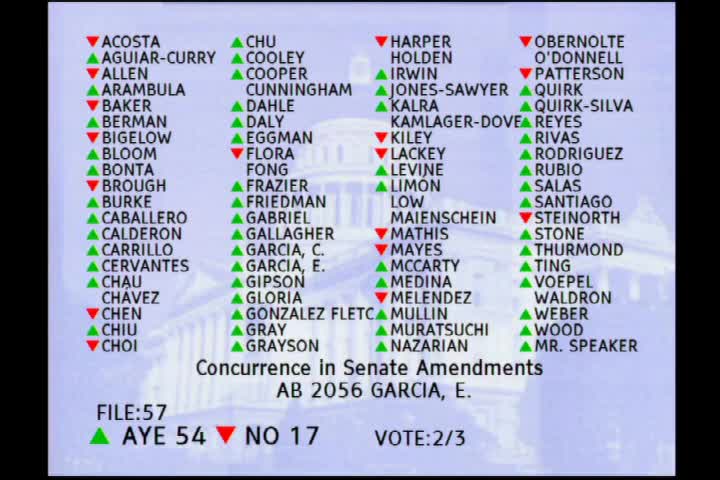 1MIN
Assembly Floor
 48SEC
Senate Floor
 1H
Senate Standing Committee on Appropriations
 2MIN
Senate Standing Committee on Human Services
 1MIN
Assembly Floor
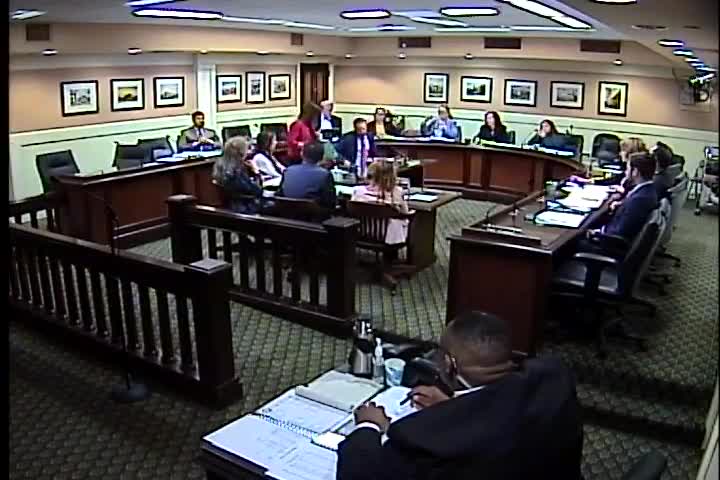 3MIN
Assembly Standing Committee on Human Services
Bill Author

Bill Co-Author(s):