AB 2258: Local agency formation commissions: grant program.
- Session Year: 2017-2018
- House: Assembly
- Latest Version Date: 2018-09-04
The Cortese-Knox-Hertzberg Local Government Reorganization Act of 2000 provides the exclusive authority and procedure for the initiation, conduct, and completion of changes of organization and reorganization for special districts, as specified. The act requires a local agency formation commission in each county to encourage the orderly formation and development of local agencies based upon local conditions and circumstances, among other things.
Existing law also establishes the Strategic Growth Council in state government and assigns to the council certain duties, including providing, funding, and distributing data and information to local governments and regional agencies that will assist in the development and planning of sustainable communities.
This bill would require the Strategic Growth Council, until July 31, 2024, to establish and administer a local agency formation commissions grant program for the payment of costs associated with initiating and completing the dissolution of districts listed as inactive, the payment of costs associated with a study of the services provided within a county by a public agency to a disadvantaged community, as defined, and for other specified purposes, including the initiation of an action, as defined, that is limited to service providers serving a disadvantaged community and is based on determinations found in the study, as approved by the commission. The bill would specify application submission, reimbursement, and reporting requirements for a local agency formation commission to receive grants pursuant to the bill. The bill would require the council, after consulting with the California Association of Local Agency Formation Commissions, to develop and adopt guidelines, timelines, and application and reporting criteria for development and implementation of the program, as specified, and would exempt these guidelines, timelines, and criteria from the rulemaking provisions of the Administrative Procedure Act. The bill would make the grant program subject to an appropriation for the program in the annual Budget Act, and would repeal these provisions on January 1, 2025.
The Cortese-Knox-Hertzberg Local Government Reorganization Act of 2000 provides the exclusive authority and procedure for the initiation, conduct, and completion of changes of organization and reorganization for special districts, as specified. The act requires a local agency formation commission in each county to encourage the orderly formation and development of local agencies based upon local conditions and circumstances, among other things.
Existing law also establishes the Strategic Growth Council in state government and assigns to the council certain duties, including providing, funding, and distributing data and information to local governments and regional agencies that will assist in the development and planning of sustainable communities.
This bill would require the Strategic Growth Council, until January 1, July 31, 2024, to establish and administer a local agency formation commissions grant program for the payment of costs associated with initiating and completing the dissolution of districts listed as inactive, the payment of costs associated with a study of the services provided within a county by a public agency to a disadvantaged community, as defined, and for other specified purposes, including the initiation of an action, as defined, that is limited to service providers serving a disadvantaged community and is based on determinations found in the study, as approved by the commission. The bill would specify application submission, reimbursement, and reporting requirements for a local agency formation commission to receive grants pursuant to the bill. The bill would require the council, after consulting with the California Association of Local Agency Formation Commissions, to develop and adopt guidelines, timelines, and application and reporting criteria for development and implementation of the program, as specified, and would exempt these guidelines, timelines, and criteria from the rulemaking provisions of the Administrative Procedure Act. The bill would appropriate $1,500,000 from the General Fund to the Strategic Growth Council for purposes of the grant program, as specified. make the grant program subject to an appropriation for the program in the annual Budget Act, and would repeal these provisions on January 1, 2025.
The Cortese-Knox-Hertzberg Local Government Reorganization Act of 2000 provides the exclusive authority and procedure for the initiation, conduct, and completion of changes of organization and reorganization for special districts, as specified. The act requires a local agency formation commission in each county to encourage the orderly formation and development of local agencies based upon local conditions and circumstances, among other things.
Existing law also establishes the Strategic Growth Council in state government and assigns to the council certain duties, including providing, funding, and distributing data and information to local governments and regional agencies that will assist in the development and planning of sustainable communities.
This bill would require the Strategic Growth Council, until January 1, 2024, to establish and administer a local agency formation commissions grant program for the payment of costs associated with initiating and completing the dissolution of districts listed as inactive, the payment of costs associated with a study of the services provided within a county by a public agency, agency to a disadvantaged community, as defined, and for other specified purposes, including the initiation of an action, as defined, that is limited to service providers serving a disadvantaged community and is based on determinations found in the study, as approved by the commission. The bill would specify application submission, reimbursement, and reporting requirements for a local agency formation commission to receive grants pursuant to the bill. The bill would require the council, after consulting with the California Association of Local Agency Formation Commissions, to develop and adopt guidelines, timelines, and application and reporting criteria for development and implementation of the program, as specified, and would exempt these guidelines, timelines, and criteria from the rulemaking provisions of the Administrative Procedure Act. The bill would make funding for the program subject to appropriation in the annual Budget Act. appropriate $1,500,000 from the General Fund to the Strategic Growth Council for purposes of the grant program, as specified.
The Cortese-Knox-Hertzberg Local Government Reorganization Act of 2000 provides the exclusive authority and procedure for the initiation, conduct, and completion of changes of organization and reorganization for special districts, as specified. The act requires a local agency formation commission in each county to encourage the orderly formation and development of local agencies based upon local conditions and circumstances, among other things.
Existing law also establishes the Strategic Growth Council in state government and assigns to the council certain duties, including providing, funding, and distributing data and information to local governments and regional agencies that will assist in the development and planning of sustainable communities.
This bill would require the Strategic Growth Council, until January 1, 2024, to establish and administer a local agency formation commissions grant program for the payment of costs associated with initiating and completing the dissolution of districts listed as inactive, the payment of costs associated with a study of the services provided within a county by a public agency, and for other specified purposes, including the initiation of an action, based on determinations found in the study, as approved by the commission. The bill would specify application submission, reimbursement, and reporting requirements for a local agency formation commission to receive grants pursuant to the bill. The bill would require the council, after consulting with the California Association of Local Agency Formation Commissions, to develop and adopt guidelines, timelines, and application and reporting criteria for development and implementation of the program, as specified, and would exempt these guidelines, timelines, and criteria from the rulemaking provisions of the Administrative Procedure Act. The bill would make funding for the program subject to appropriation in the annual Budget Act.
The Cortese-Knox-Hertzberg Local Government Reorganization Act of 2000 provides the exclusive authority and procedure for the initiation, conduct, and completion of changes of organization and reorganization for special districts, as specified. The act requires a local agency formation commission in each county to encourage the orderly formation and development of local agencies based upon local conditions and circumstances, among other things.
Existing law also establishes the Strategic Growth Council in state government and assigns to the council certain duties, including providing, funding, and distributing data and information to local governments and regional agencies that will assist in the development and planning of sustainable communities.
This bill would require the Strategic Growth Council, until January 1, 2024, to establish and administer a local agency formation commissions grant program for the payment of costs associated with initiating and completing the dissolution of inactive districts, districts listed as inactive, the payment of costs associated with a study of the services provided within a county by a public agency, and for other specified purposes, including the initiation of an action, based on determinations found in the study, as approved by the commission. The bill would specify application submission, reimbursement, and reporting requirements for a local agency formation commission to receive grants pursuant to the bill. The bill would require the council, after consulting with the California Association of Local Agency Formation Commissions, to develop and adopt guidelines, timelines, and application and reporting criteria for development and implementation of the program, as specified, and would exempt these guidelines, timelines, and criteria from the rulemaking provisions of the Administrative Procedure Act. The bill would make funding for the program subject to appropriation in the annual Budget Act.
The Cortese-Knox-Hertzberg Local Government Reorganization Act of 2000 provides the exclusive authority and procedure for the initiation, conduct, and completion of changes of organization and reorganization for special districts, as specified. The act requires a local agency formation commission in each county to encourage the orderly formation and development of local agencies based upon local conditions and circumstances, among other things.
Existing law also establishes the Strategic Growth Council in state government and assigns to the council certain duties, including providing, funding, and distributing data and information to local governments and regional agencies that will assist in the development and planning of sustainable communities.
This bill would require the Strategic Growth Council, until January 1, 2024, to establish and administer a local agency formation commissions grant program for the payment of costs associated with initiating and completing the dissolution of inactive districts, the payment of costs associated with a study of the services provided within a county by a public agency, and for other specified purposes, including the initiation of an action, based on determinations found in the study, as approved by the commission. The bill would specify application submission, reimbursement, and reporting requirements for a local agency formation commission to receive grants pursuant to the bill. The bill would require the council, after consulting with the California Association of Local Agency Formation Commissions, to develop and adopt guidelines, timelines, and application and reporting criteria for development and implementation of the program, as specified, and would exempt these guidelines, timelines, and criteria from the rulemaking provisions of the Administrative Procedure Act. The bill would make funding for the program subject to appropriation in the annual Budget Act.
The Cortese-Knox-Hertzberg Local Government Reorganization Act of 2000 provides the exclusive authority and procedure for the initiation, conduct, and completion of changes of organization and reorganization for special districts, as specified. The act requires a local agency formation commission in each county to encourage the orderly formation and development of local agencies based upon local conditions and circumstances, among other things. Existing law requires the county auditor to apportion, as specified, the net operating expenses of the local agency formation commission among the county, cities, and special districts within the commissions jurisdiction.
This bill would make a nonsubstantive change to that provision.Existing law also establishes the Strategic Growth Council in state government and assigns to the council certain duties, including providing, funding, and distributing data and information to local governments and regional agencies that will assist in the development and planning of sustainable communities.
This bill would require the Strategic Growth Council, until January 1, 2024, to establish and administer a local agency formation commissions grant program for the payment of costs associated with initiating and completing the dissolution of inactive districts, the payment of costs associated with a study of the services provided within a county by a public agency, and for other specified purposes, including the initiation of an action, based on determinations found in the study, as approved by the commission. The bill would specify application submission, reimbursement, and reporting requirements for a local agency formation commission to receive grants pursuant to the bill.
Existing law requires a local agency formation commission in each county to encourage the orderly formation and development of local agencies based upon local conditions and circumstances, among other things. Existing law requires the county auditor to apportion, as specified, the net operating expenses of the local agency formation commission among the county, cities, and special districts within the commissions jurisdiction.
This bill would make a nonsubstantive change to that provision.
The Legislature hereby finds and declares:
(a)Local agency formation commissions play a critical role in the logical formation of local agency boundaries, the promotion of orderly development, and the efficient and effective provision of services.
(b)It is the intent of the Legislature in adding Section 75131 to the Public Resources Code to assist local agency formation commissions in initiating studies of existing government agencies and their provision of services and to consider action based on the results of these studies, including dissolving inactive districts, for the purpose of creating streamlined local government services and improved efficiency in service delivery.
SEC. 2.Section 75131 is added to the Public Resources Code, to read:75131.(a)(1)The council shall establish and administer a local agency formation commissions grant program for the purposes described in subdivision (b), subject to an appropriation for this program in the annual Budget Act.
(2)Program funds provided to participating local agency formation commissions shall be used to supplement, and not supplant, existing funding and staffing levels.
(3)Program funds provided to participating local agency formation commissions shall not be used to conduct a service review of municipal services pursuant to Section 56430 of the Government Code.
(4)All local agency formation commissions shall be eligible to participate in the program.
(5)The council shall, after consulting with the California Association of Local Agency Formation Commissions (CALAFCO), adopt guidelines, timelines, and application and reporting criteria for development and implementation of the program to serve the purposes of this section and mutually meet the needs of the council and the CALAFCO.
(6)The council, in granting funds pursuant to the program, shall give preference to a local agency formation commission whose decisions are consistent with the goals of the sustainable communities strategy adopted pursuant to Section 65080 of the Government Code.
(b)The council shall award grants to local agency formation commissions for any of the following purposes:
(1)The payment of costs associated with initiating and completing the dissolution of a special district that is listed by the Controller as inactive pursuant to Section 56879 of the Government Code.
(2)The payment of costs associated with a study prepared pursuant to Section 56378 of the Government Code of the services provided within a county by a public agency to a disadvantaged community to do either or both of the following:
(A)Identify if there are any efficiencies to be gained in the provision of services.
(B)Determine what alternatives, if any, exist for improving efficiency and affordability of infrastructure and service delivery.
(3)The payment of costs to do any of the following:
(A)Initiate an action described in paragraph (2) of subdivision (a) of Section 56375, other than the dissolution of a special district that is listed by the Controller as inactive pursuant to Section 56879 of the Government Code, that is limited to service providers serving a disadvantaged community and is based on determinations found in a study prepared pursuant to Section 56378 of the Government Code, as approved by the commission.
(B)Develop and implement reorganization plans with timelines for expected outcomes.
(C)Incentivize service providers to work with the local agency formation commission to develop and implement reorganization plans with timelines for expected outcomes.
(c)(1)In order to obtain a grant award pursuant to paragraph (1) of subdivision (b), a local agency formation commission shall submit to the council an application for reimbursement of the costs of the dissolution proceedings, in the form and manner specified by the council. At a minimum, the application shall include all of the following:
(A)The notification provided to the commission by the Controller of the inactive district(s) and the requirement to initiate dissolution proceedings.
(B)A full budget accounting for costs of the dissolution.
(C)All reports and documents pertaining to the final dissolution action.
(2)The council shall review the application for reimbursement and, provided all documentation is in order, issue reimbursement to the local agency formation commission within 60 days of receipt of the application.
(d)(1)In order to obtain a grant award pursuant to paragraph (2) of subdivision (b) for purposes of conducting a study, a local agency formation commission shall submit to the council an application, in the form and manner specified by the council. At a minimum, the application shall include all of the following:
(A)A resolution adopted by the commission authorizing submission of the grant application and a commitment to review and consider the recommendations and potential actions contained in the study.
(B)A full budget accounting for estimated costs of the study to be performed.
(C)A full explanation of the reason for the study.
(D)The most recent completed municipal service review or study in which determinations were made by the local agency formation commission indicating the agency to be studied is a candidate for a change of organization or reorganization.
(E)An identification of the disadvantaged community that is expected to benefit from the study.
(2)The council shall review the applications submitted pursuant to paragraph (1), select the program participants based on criteria that furthers the purposes of this section, and notify the participants of their selection within two months of receiving the application. Funds shall be issued by the council to the local agency formation commission within 60 days of notification.
(3)A local agency formation commission that receives a grant pursuant to paragraph (2) of subdivision (b) shall commence the study within 30 days of receipt of funding and shall complete the study within two years of commencing the study. Upon completion of the study, the local agency formation commission shall do all of the following:
(A)Submit to the council a final report within 30 days of the completion of the study and the commissions adoption of a resolution making determinations. The report shall be in the form and manner specified by the council. At a minimum, the report shall include all of the following:
(i)The full study conducted.
(ii)The resolution making determinations as adopted by the local agency formation commission.
(iii)A full budget accounting report of the funds used.
(iv)A reimbursement of any unexpended funds.
(v)The local agency formation commissions plan for future action based on the studys conclusions.
(B)Upon the request of the council, participating local agency formation commissions shall provide the council with any supplemental information necessary to substantiate the information contained in the report submitted pursuant to this subdivision.
(4)A local agency formation commission shall repay the entire amount of the grant awarded pursuant to this subdivision to the council if the study funded pursuant to this subdivision is not completed within two years of receipt of the grant funds. The local agency formation commission shall make this repayment within 30 days from the two-year anniversary of receipt of the grant funds.
(e)(1)A local agency formation commission that elects to apply for a grant pursuant to paragraph (3) of subdivision (b) shall submit to the council an application, in the form and manner specified by the council. At a minimum, the application shall include all of the following:
(A)A resolution adopted by the commission authorizing submission of the application for purposes defined in the application.
(B)Change of organization or reorganization plans with timelines for expected outcomes.
(C)A full budget accounting for estimated costs of the action to be performed.
(D)The most recent completed study in which determinations were made by the local agency formation commission indicating the agency should be reorganized or dissolved, or, if there exists a municipal services review or study with like determinations that is no more than five years old.
(E)An identification of the disadvantaged community that is expected to benefit from the action.
(2)The council shall review the applications submitted pursuant to paragraph (3) of subdivision (b), select the program participants based on criteria that furthers the purposes of this section, and notify the participants of their selection within two months of receiving the application. Funds shall be issued by the council to the local agency formation commission within 60 days of notification.
(3)A local agency formation commission that receives funds pursuant to paragraph (3) of subdivision (b) shall commence action within 30 days of receipt of funding.
(4)A local agency formation commission that receives funds pursuant to paragraph (3) of subdivision (b) shall hold a public hearing to consider the action described in paragraph (2) of subdivision (a) of Section 56375, except the dissolution of a special district that is listed by the Controller as inactive pursuant to Section 56879 of the Government Code. If the action is approved by a local agency formation commission, that local agency formation commission shall order the change of organization or reorganization subject to Section 57075 of the Government Code, except that the level of protest necessary to require an election for confirmation by the registered voters residing within the affected territory shall be determined by the corresponding percentage of registered voters or land owners required to qualify a recall on the ballot pursuant to subdivision (a) or (d), as appropriate, of Section 11221 of the Elections Code. The calculation of registered voters shall be made pursuant to subdivision (b) of that section. Upon completion of the change of organization or reorganization, the local agency formation commission that receives funds pursuant to paragraph (3) of subdivision (b) shall do both of the following:
(A)Submit to the council a final report within 30 days of the final action. The report shall be in the form and manner specified by the council. At a minimum, the report shall include all of the following:
(i)The final action taken by the local agency formation commission.
(ii)If proceedings were terminated as a result of protest, all necessary information pertinent to support that fact.
(iii)All reports and documents pertaining to the final action or protest action.
(iv)A full budget accounting report of the funds used.
(v)The reimbursement of any unexpended funds.
(B)Upon the request of the council, the participating local agency formation commission shall provide the council with any supplemental information necessary to substantiate the information contained in the report submitted pursuant to this subdivision.
(f)The Legislature finds and declares that there is a compelling public interest in allowing the council to implement and administer this section as expeditiously as possible, and to thereby accelerate local agency formation commission efforts. The guidelines, timelines, and application and reporting criteria adopted by the council for purposes of this section shall be exempt from the rulemaking provisions of the Administrative Procedure Act (Chapter 3.5 (commencing with Section 11340) of Part 1 of Division 3 of Title 2 of the Government Code) for the purpose of carrying out the duties enumerated in this section.
(g)For the purposes of this section, the following terms shall apply:
(1)Disadvantaged community means a community with an annual median household income that is less than 80 percent of the statewide annual median household income.
(2)Local agency formation commission means a local agency formation commission that operates in a county pursuant to the Cortese-Knox-Hertzberg Local Government Reorganization Act of 2000 (Division 3 (commencing with Section 56000) of Title 5 of the Government Code).
(h)This section shall not be interpreted to effect the independence or discretion exercised by a local agency formation commission in carrying out an action pursuant to this section.
(i)This section shall become inoperative on July 31, 2024, and, as of January 1, 2025, is repealed.
The Legislature hereby finds and declares:
(a)Local agency formation commissions play a critical role in the logical formation of local agency boundaries, the promotion of orderly development, and the efficient and effective provision of services.
(b)It is the intent of the Legislature in adding Section 75131 to the Public Resources Code to assist local agency formation commissions in initiating studies of existing government agencies and their provision of services and to consider action based on the results of these studies, including dissolving inactive districts, for the purpose of creating streamlined local government services and improved efficiency in service delivery.
SEC. 2.Section 75131 is added to the Public Resources Code, to read:75131.(a)(1)The council shall establish and administer a local agency formation commissions grant program for the purposes described in subdivision (b). (b), subject to an appropriation for this program in the annual Budget Act.
(2)Program funds provided to participating local agency formation commissions shall be used to supplement, and not supplant, existing funding and staffing levels.
(3)Program funds provided to participating local agency formation commissions shall not be used to conduct a service review of municipal services pursuant to Section 56430 of the Government Code.
(4)All local agency formation commissions shall be eligible to participate in the program.
(5)The council shall, after consulting with the California Association of Local Agency Formation Commissions (CALAFCO), adopt guidelines, timelines, and application and reporting criteria for development and implementation of the program to serve the purposes of this section and mutually meet the needs of the council and the CALAFCO.
(6)The council, in granting funds pursuant to the program, shall give preference to a local agency formation commission whose decisions are consistent with the goals of the sustainable communities strategy adopted pursuant to Section 65080 of the Government Code.
(b)The council shall award grants to local agency formation commissions for any of the following purposes:
(1)The payment of costs associated with initiating and completing the dissolution of a special district that is listed by the Controller as inactive pursuant to Section 56879 of the Government Code.
(2)The payment of costs associated with a study prepared pursuant to Section 56378 of the Government Code of the services provided within a county by a public agency to a disadvantaged community to do either or both of the following:
(A)Identify if there are any efficiencies to be gained in the provision of services.
(B)Determine what alternatives, if any, exist for improving efficiency and affordability of infrastructure and service delivery.
(3)The payment of costs to do any of the following:
(A)Initiate an action described in paragraph (2) of subdivision (a) of Section 56375, other than the dissolution of a special district that is listed by the Controller as inactive pursuant to Section 56879 of the Government Code, that is limited to service providers serving a disadvantaged community and is based on determinations found in a study prepared pursuant to Section 56378 of the Government Code, as approved by the commission.
(B)Develop and implement reorganization plans with timelines for expected outcomes.
(C)Incentivize service providers to work with the local agency formation commission to develop and implement reorganization plans with timelines for expected outcomes.
(c)(1)In order to obtain a grant award pursuant to paragraph (1) of subdivision (b), a local agency formation commission shall submit to the council an application for reimbursement of the costs of the dissolution proceedings, in the form and manner specified by the council. At a minimum, the application shall include all of the following:
(A)The notification provided to the commission by the Controller of the inactive district(s) and the requirement to initiate dissolution proceedings.
(B)A full budget accounting for costs of the dissolution.
(C)All reports and documents pertaining to the final dissolution action.
(2)The council shall review the application for reimbursement and, provided all documentation is in order, issue reimbursement to the local agency formation commission within 60 days of receipt of the application.
(d)(1)In order to obtain a grant award pursuant to paragraph (2) of subdivision (b) for purposes of conducting a study, a local agency formation commission shall submit to the council an application, in the form and manner specified by the council. At a minimum, the application shall include all of the following:
(A)A resolution adopted by the commission authorizing submission of the grant application and a commitment to review and consider the recommendations and potential actions contained in the study.
(B)A full budget accounting for estimated costs of the study to be performed.
(C)A full explanation of the reason for the study.
(D)The most recent completed municipal service review or study in which determinations were made by the local agency formation commission indicating the agency to be studied is a candidate for a change of organization or reorganization.
(E)An identification of the disadvantaged community that is expected to benefit from the study.
(2)The council shall review the applications submitted pursuant to paragraph (1), select the program participants based on criteria that furthers the purposes of this section, and notify the participants of their selection within two months of receiving the application. Funds shall be issued by the council to the local agency formation commission within 60 days of notification.
(3)A local agency formation commission that receives a grant pursuant to paragraph (2) of subdivision (b) shall commence the study within 30 days of receipt of funding and shall complete the study within two years of commencing the study. Upon completion of the study, the local agency formation commission shall do all of the following:
(A)Submit to the council a final report within 30 days of the completion of the study and the commissions adoption of a resolution making determinations. The report shall be in the form and manner specified by the council. At a minimum, the report shall include all of the following:
(i)The full study conducted.
(ii)The resolution making determinations as adopted by the local agency formation commission.
(iii)A full budget accounting report of the funds used.
(iv)A reimbursement of any unexpended funds.
(v)The local agency formation commissions plan for future action based on the studys conclusions.
(B)Upon the request of the council, participating local agency formation commissions shall provide the council with any supplemental information necessary to substantiate the information contained in the report submitted pursuant to this subdivision.
(4)A local agency formation commission shall repay the entire amount of the grant awarded pursuant to this subdivision to the council if the study funded pursuant to this subdivision is not completed within two years of receipt of the grant funds. The local agency formation commission shall make this repayment within 30 days from the two-year anniversary of receipt of the grant funds.
(e)(1)A local agency formation commission that elects to apply for a grant pursuant to paragraph (3) of subdivision (b) shall submit to the council an application, in the form and manner specified by the council. At a minimum, the application shall include all of the following:
(A)A resolution adopted by the commission authorizing submission of the application for purposes defined in the application.
(B)Change of organization or reorganization plans with timelines for expected outcomes.
(C)A full budget accounting for estimated costs of the action to be performed.
(D)The most recent completed study in which determinations were made by the local agency formation commission indicating the agency should be reorganized or dissolved, or, if there exists a municipal services review or study with like determinations that is no more than five years old.
(E)An identification of the disadvantaged community that is expected to benefit from the action.
(2)The council shall review the applications submitted pursuant to paragraph (3) of subdivision (b), select the program participants based on criteria that furthers the purposes of this section, and notify the participants of their selection within two months of receiving the application. Funds shall be issued by the council to the local agency formation commission within 60 days of notification.
(3)A local agency formation commission that receives funds pursuant to paragraph (3) of subdivision (b) shall commence action within 30 days of receipt of funding.
(4)A local agency formation commission that receives funds pursuant to paragraph (3) of subdivision (b) shall hold a public hearing to consider the action described in paragraph (2) of subdivision (a) of Section 56375, except the dissolution of a special district that is listed by the Controller as inactive pursuant to Section 56879 of the Government Code. If the action is approved by a local agency formation commission, that local agency formation commission shall order the change of organization or reorganization subject to Section 57075 of the Government Code, except that the level of protest necessary to require an election for confirmation by the registered voters residing within the affected territory shall be determined by the corresponding percentage of registered voters or land owners required to qualify a recall on the ballot pursuant to subdivision (a) or (d), as appropriate, of Section 11221 of the Elections Code. The calculation of registered voters shall be made pursuant to subdivision (b) of that section. Upon completion of the change of organization or reorganization, the local agency formation commission that receives funds pursuant to paragraph (3) of subdivision (b) shall do both of the following:
(A)Submit to the council a final report within 30 days of the final action. The report shall be in the form and manner specified by the council. At a minimum, the report shall include all of the following:
(i)The final action taken by the local agency formation commission.
(ii)If proceedings were terminated as a result of protest, all necessary information pertinent to support that fact.
(iii)All reports and documents pertaining to the final action or protest action.
(iv)A full budget accounting report of the funds used.
(v)The reimbursement of any unexpended funds.
(B)Upon the request of the council, the participating local agency formation commission shall provide the council with any supplemental information necessary to substantiate the information contained in the report submitted pursuant to this subdivision.
(f)The Legislature finds and declares that there is a compelling public interest in allowing the council to implement and administer this section as expeditiously as possible, and to thereby accelerate local agency formation commission efforts. The guidelines, timelines, and application and reporting criteria adopted by the council for purposes of this section shall be exempt from the rulemaking provisions of the Administrative Procedure Act (Chapter 3.5 (commencing with Section 11340) of Part 1 of Division 3 of Title 2 of the Government Code) for the purpose of carrying out the duties enumerated in this section.
(g)For the purposes of this section, the following terms shall apply:
(1)Disadvantaged community means a community with an annual median household income that is less than 80 percent of the statewide annual median household income.
(2)Local agency formation commission means a local agency formation commission that operates in a county pursuant to the Cortese-Knox-Hertzberg Local Government Reorganization Act of 2000 (Division 3 (commencing with Section 56000) of Title 5 of the Government Code).
(h)This section shall not be interpreted to effect the independence or discretion exercised by a local agency formation commission in carrying out an action pursuant to this section.
(i)This section shall be repealed on December 31, 2023.(i)This section shall become inoperative on July 31, 2024, and, as of January 1, 2025, is repealed.
SEC. 3.The sum of one million five hundred thousand dollars ($1,500,000) is, not withstanding Section 13340 of the Government Code, hereby continuously appropriated to the Strategic Growth Council for allocation during the fiscal years 201819 to 202223, inclusive, for purposes of funding the grant program established by Section 75131 of the Public Resources Code, as added by the act that added this section during the 201718 Regular Session.The Legislature hereby finds and declares:
(a)Local agency formation commissions play a critical role in the logical formation of local agency boundaries, the promotion of orderly development, and the efficient and effective provision of services.
(b)It is the intent of the Legislature in adding Section 75131 to the Public Resources Code to assist local agency formation commissions in initiating studies of existing government agencies and their provision of services and to consider action based on the results of these studies, including dissolving inactive districts, for the purpose of creating streamlined local government services and improved efficiency in service delivery.
SEC. 2.Section 75131 is added to the Public Resources Code, to read:75131.(a)(1)The council shall establish and administer a local agency formation commissions grant program for the purposes described in subdivision (b).
(2)Program funding shall be subject to appropriation in the annual Budget Act.(3)(2)Program funds provided to participating local agency formation commissions shall be used to supplement, and not supplant, existing funding and staffing levels.
(4)(3)Program funds provided to participating local agency formation commissions shall not be used to conduct a service review of municipal services pursuant to Section 56430 of the Government Code.
(5)(4)All local agency formation commissions shall be eligible to participate in the program.
(6)(5)The council shall, after consulting with the California Association of Local Agency Formation Commissions (CALAFCO), adopt guidelines, timelines, and application and reporting criteria for development and implementation of the program to serve the purposes of this section and mutually meet the needs of the council and the CALAFCO.
(7)(6)The council, in granting funds pursuant to the program, shall give preference to a local agency formation commission whose decisions are consistent with the goals of the sustainable communities strategy adopted pursuant to Section 65080 of the Government Code.
(b)The council shall award grants to local agency formation commissions for any of the following purposes:
(1)The payment of costs associated with initiating and completing the dissolution of a special district that is listed by the Controller as inactive pursuant to Section 56879 of the Government Code.
(2)The payment of costs associated with a study prepared pursuant to Section 56378 of the Government Code of the services provided within a county by a public agency to a disadvantaged community to do either or both of the following:
(A)Identify if there are any efficiencies to be gained in the provision of services.
(B)Determine what alternatives, if any, exist for improving efficiency and affordability of infrastructure and service delivery.
(3)The payment of costs to do any of the following:
(A)Initiate an action described in paragraph (2) of subdivision (a) of Section 56375, other than the dissolution of a special district that is listed by the Controller as inactive pursuant to Section 56879 of the Government Code, that is limited to service providers serving a disadvantaged community and is based on determinations found in a study prepared pursuant to Section 56378 of the Government Code, as approved by the commission.
(B)Develop and implement reorganization plans with timelines for expected outcomes.
(C)Incentivize service providers to work with the local agency formation commission to develop and implement reorganization plans with timelines for expected outcomes.
(c)(1)In order to obtain a grant award pursuant to paragraph (1) of subdivision (b), a local agency formation commission shall submit to the council an application for reimbursement of the costs of the dissolution proceedings, in the form and manner specified by the council. At a minimum, the application shall include all of the following:
(A)The notification provided to the commission by the Controller of the inactive district(s) and the requirement to initiate dissolution proceedings.
(B)A full budget accounting for costs of the dissolution.
(C)All reports and documents pertaining to the final dissolution action.
(2)The council shall review the application for reimbursement and, provided all documentation is in order, issue reimbursement to the local agency formation commission within 60 days of receipt of the application.
(d)(1)In order to obtain a grant award pursuant to paragraph (2) of subdivision (b) for purposes of conducting a study, a local agency formation commission shall submit to the council an application, in the form and manner specified by the council. At a minimum, the application shall include all of the following:
(A)A resolution adopted by the commission authorizing submission of the grant application and a commitment to review and consider the recommendations and potential actions contained in the study.
(B)A full budget accounting for estimated costs of the study to be performed.
(C)A full explanation of the reason for the study.
(D)The most recent completed municipal service review or study in which determinations were made by the local agency formation commission indicating the agency to be studied is a candidate for a change of organization or reorganization.
(E)An identification of the disadvantaged community that is expected to benefit from the study.
(2)The council shall review the applications submitted pursuant to paragraph (1), select the program participants based on criteria that furthers the purposes of this section, and notify the participants of their selection within two months of receiving the application. Funds shall be issued by the council to the local agency formation commission within 60 days of notification.
(3)A local agency formation commission that receives a grant pursuant to paragraph (2) of subdivision (b) shall commence the study within 30 days of receipt of funding and shall complete the study within two years of commencing the study. Upon completion of the study, the local agency formation commission shall do all of the following:
(A)Submit to the council a final report within 30 days of the completion of the study and the commissions adoption of a resolution making determinations. The report shall be in the form and manner specified by the council. At a minimum, the report shall include all of the following:
(i)The full study conducted.
(ii)The resolution making determinations as adopted by the local agency formation commission.
(iii)A full budget accounting report of the funds used.
(iv)A reimbursement of any unexpended funds.
(v)The local agency formation commissions plan for future action based on the studys conclusions.
(B)Upon the request of the council, participating local agency formation commissions shall provide the council with any supplemental information necessary to substantiate the information contained in the report submitted pursuant to this subdivision.
(4)A local agency formation commission shall repay the entire amount of the grant awarded pursuant to this subdivision to the council if the study funded pursuant to this subdivision is not completed within two years of receipt of the grant funds. The local agency formation commission shall make this repayment within 30 days from the two-year anniversary of receipt of the grant funds.
(e)(1)A local agency formation commission that elects to apply for a grant pursuant to paragraph (3) of subdivision (b) shall submit to the council an application, in the form and manner specified by the council. At a minimum, the application shall include all of the following:
(A)A resolution adopted by the commission authorizing submission of the application for purposes defined in the application.
(B)Change of organization or reorganization plans with timelines for expected outcomes.
(C)A full budget accounting for estimated costs of the action to be performed.
(D)The most recent completed study in which determinations were made by the local agency formation commission indicating the agency should be reorganized or dissolved, or, if there exists a municipal services review or study with like determinations that is no more than five years old.
(E)An identification of the disadvantaged community that is expected to benefit from the action.
(2)The council shall review the applications submitted pursuant to paragraph (3) of subdivision (b), select the program participants based on criteria that furthers the purposes of this section, and notify the participants of their selection within two months of receiving the application. Funds shall be issued by the council to the local agency formation commission within 60 days of notification.
(3)A local agency formation commission that receives funds pursuant to paragraph (3) of subdivision (b) shall commence action within 30 days of receipt of funding.
(4)A local agency formation commission that receives funds pursuant to paragraph (3) of subdivision (b) shall hold a public hearing to consider the action described in paragraph (2) of subdivision (a) of Section 56375, except the dissolution of a special district that is listed by the Controller as inactive pursuant to Section 56879 of the Government Code. If the action is approved, approved by a local agency formation commission, that local agency formation commission shall order the change of organization or reorganization subject to Section 57075 of the Government Code, unless the change of organization is the dissolution of a special district that is not listed by the Controller as inactive. If the dissolution of the special district is approved, the local agency formation commission shall order the dissolution, unless a majority of protest exists pursuant to subdivision (c) of Section 57077.1 of the Government except that the level of protest necessary to require an election for confirmation by the registered voters residing within the affected territory shall be determined by the corresponding percentage of registered voters or land owners required to qualify a recall on the ballot pursuant to subdivision (a) or (d), as appropriate, of Section 11221 of the Elections Code. The calculation of registered voters shall be made pursuant to subdivision (b) of that section. Upon completion of the change of organization or reorganization, the local agency formation commission that receives funds pursuant to paragraph (3) of subdivision (b) shall do both of the following:
(A)Submit to the council a final report within 30 days of the final action. The report shall be in the form and manner specified by the council. At a minimum, the report shall include all of the following:
(i)The final action taken by the local agency formation commission.
(ii)If proceedings were terminated as a result of protest, all necessary information pertinent to support that fact.
(iii)All reports and documents pertaining to the final action or protest action.
(iv)A full budget accounting report of the funds used.
(v)The reimbursement of any unexpended funds.
(B)Upon the request of the council, the participating local agency formation commission shall provide the council with any supplemental information necessary to substantiate the information contained in the report submitted pursuant to this subdivision.
(f)The Legislature finds and declares that there is a compelling public interest in allowing the council to implement and administer this section as expeditiously as possible, and to thereby accelerate local agency formation commission efforts. The guidelines, timelines, and application and reporting criteria adopted by the council for purposes of this section shall be exempt from the rulemaking provisions of the Administrative Procedure Act (Chapter 3.5 (commencing with Section 11340) of Part 1 of Division 3 of Title 2 of the Government Code) for the purpose of carrying out the duties enumerated in this section.
(g)For the purposes of this section, local the following terms shall apply:
(1)Disadvantaged community means a community with an annual median household income that is less than 80 percent of the statewide annual median household income.
(2)Local agency formation commission means a local agency formation commission that operates in a county pursuant to the Cortese-Knox-Hertzberg Local Government Reorganization Act of 2000 (Division 3 (commencing with Section 56000) of Title 5 of the Government Code).
(h)This section shall not be interpreted to effect the independence or discretion exercised by a local agency formation commission in carrying out an action pursuant to this section.
(h)(i)This section shall be repealed on December 31, 2023.
SEC. 3.The sum of one million five hundred thousand dollars ($1,500,000) is, not withstanding Section 13340 of the Government Code, hereby continuously appropriated to the Strategic Growth Council for allocation during the fiscal years 201819 to 202223, inclusive, for purposes of funding the grant program established by Section 75131 of the Public Resources Code, as added by the act that added this section during the 201718 Regular Session.
The Legislature hereby finds and declares:
(a)Local agency formation commissions play a critical role in the logical formation of local agency boundaries, the promotion of orderly development, and the efficient and effective provision of services.
(b)It is the intent of the Legislature in adding Section 75131 to the Public Resources Code to assist local agency formation commissions in initiating studies of existing government agencies and their provision of services and to consider action based on the results of these studies, including dissolving inactive districts, for the purpose of creating streamlined local government services and improved efficiency in service delivery.
SEC. 2.Section 75131 is added to the Public Resources Code, to read:75131.(a)(1)The council shall establish and administer a local agency formation commissions grant program for the purposes described in subdivision (b).
(2)Program funding shall be subject to appropriation in the annual Budget Act.
(3)Program funds provided to participating local agency formation commissions shall be used to supplement, and not supplant, existing funding and staffing levels.
(4)Program funds provided to participating local agency formation commissions shall not be used to conduct a service review of municipal services pursuant to Section 56430 of the Government Code.
(5)All local agency formation commissions shall be eligible to participate in the program.
(6)The council shall, after consulting with the California Association of Local Agency Formation Commissions (CALAFCO), adopt guidelines, timelines, and application and reporting criteria for development and implementation of the program to serve the purposes of this section and mutually meet the needs of the council and the CALAFCO.
(7)The council, in granting funds pursuant to the program, shall give preference to a local agency formation commission whose decisions are consistent with the goals of the sustainable communities strategy adopted pursuant to Section 65080 of the Government Code.
(b)The council shall award grants to local agency formation commissions for any of the following purposes:
(1)The payment of costs associated with initiating and completing the dissolution of a special district that is listed by the Controller as inactive pursuant to Section 56879 of the Government Code.
(2)The payment of costs associated with a study prepared pursuant to Section 56378 of the Government Code of the services provided within a county by a public agency to do either or both of the following:
(A)Identify if there are any efficiencies to be gained in the provision of services.
(B)Determine what alternatives, if any, exist for improving efficiency and affordability of infrastructure and service delivery.
(3)The payment of costs to do any of the following:
(A)Initiate an action described in paragraph (2) of subdivision (a) of Section 56375, other than the dissolution of a special district that is listed by the Controller as inactive pursuant to Section 56879 of the Government Code, based on determinations found in a study prepared pursuant to Section 56378 of the Government Code, as approved by the commission.
(B)Develop and implement reorganization plans with timelines for expected outcomes.
(C)Incentivize service providers to work with the local agency formation commission to develop and implement reorganization plans with timelines for expected outcomes.
(c)(1)In order to obtain a grant award pursuant to paragraph (1) of subdivision (b), a local agency formation commission shall submit to the council an application for reimbursement of the costs of the dissolution proceedings, in the form and manner specified by the council. At a minimum, the application shall include all of the following:
(A)The notification provided to the commission by the Controller of the inactive district(s) and the requirement to initiate dissolution proceedings.
(B)A full budget accounting for costs of the dissolution.
(C)All reports and documents pertaining to the final dissolution action.
(2)The council shall review the application for reimbursement and, provided all documentation is in order, issue reimbursement to the local agency formation commission within 60 days of receipt of the application.
(d)(1)In order to obtain a grant award pursuant to paragraph (2) of subdivision (b) for purposes of conducting a study, a local agency formation commission shall submit to the council an application, in the form and manner specified by the council. At a minimum, the application shall include all of the following:
(A)A resolution adopted by the commission authorizing submission of the grant application and a commitment to review and consider the recommendations and potential actions contained in the study.
(B)A full budget accounting for estimated costs of the study to be performed.
(C)A full explanation of the reason for the study.
(D)The most recent completed municipal service review or study in which determinations were made by the local agency formation commission indicating the agency to be studied is a candidate for a change of organization or reorganization.
(2)The council shall review the applications submitted pursuant to paragraph (1), select the program participants based on criteria that furthers the purposes of this section, and notify the participants of their selection within two months of receiving the application. Funds shall be issued by the council to the local agency formation commission within 60 days of notification.
(3)A local agency formation commission that receives a grant pursuant to paragraph (2) of subdivision (b) shall commence the study within 30 days of receipt of funding and shall complete the study within two years of commencing the study. Upon completion of the study, the local agency formation commission shall do all of the following:
(A)Submit to the council a final report within 30 days of the completion of the study and the commissions adoption of a resolution making determinations. The report shall be in the form and manner specified by the council. At a minimum, the report shall include all of the following:
(i)The full study conducted.
(ii)The resolution making determinations as adopted by the local agency formation commission.
(iii)A full budget accounting report of the funds used.
(iv)A reimbursement of any unexpended funds.
(v)The local agency formation commissions plan for future action based on the studys conclusions.
(B)Upon the request of the council, participating local agency formation commissions shall provide the council with any supplemental information necessary to substantiate the information contained in the report submitted pursuant to this subdivision.
(e)(1)A local agency formation commission that elects to apply for a grant pursuant to paragraph (3) of subdivision (b) shall submit to the council an application, in the form and manner specified by the council. At a minimum, the application shall include all of the following:
(A)A resolution adopted by the commission authorizing submission of the application for purposes defined in the application.
(B)Change of organization or reorganization plans with timelines for expected outcomes.
(C)A full budget accounting for estimated costs of the action to be performed.
(D)The most recent completed study in which determinations were made by the local agency formation commission indicating the agency should be reorganized or dissolved, or, if there exists a municipal services review or study with like determinations that is no more than five years old.
(2)The council shall review the applications submitted pursuant to paragraph (3) of subdivision (b), select the program participants based on criteria that furthers the purposes of this section, and notify the participants of their selection within two months of receiving the application. Funds shall be issued by the council to the local agency formation commission within 60 days of notification.
(3)A local agency formation commission that receives funds pursuant to paragraph (3) of subdivision (b) shall commence action within 30 days of receipt of funding.
(4)A local agency formation commission that receives funds pursuant to paragraph (3) of subdivision (b) shall hold a public hearing to consider the action described in paragraph (2) of subdivision (a) of Section 56375, except the dissolution of a special district that is listed by the Controller as inactive pursuant to Section 56879 of the Government Code. If the action is approved, that local agency formation commission shall order the change of organization or reorganization subject to Section 57075 of the Government Code, unless the change of organization is the dissolution of a special district that is not listed by the Controller as inactive. If the dissolution of the special district is approved, the local agency formation commission shall order the dissolution, unless a majority of protest exists pursuant to subdivision (c) of Section 57077.1 of the Government Code. Upon completion of the change of organization or reorganization, the local agency formation commission that receives funds pursuant to paragraph (3) of subdivision (b) shall do both of the following:
(A)Submit to the council a final report within 30 days of the final action. The report shall be in the form and manner specified by the council. At a minimum, the report shall include all of the following:
(i)The final action taken by the local agency formation commission.
(ii)If proceedings were terminated as a result of protest, all necessary information pertinent to support that fact.
(iii)All reports and documents pertaining to the final action or protest action.
(iv)A full budget accounting report of the funds used.
(v)The reimbursement of any unexpended funds.
(B)Upon the request of the council, the participating local agency formation commission shall provide the council with any supplemental information necessary to substantiate the information contained in the report submitted pursuant to this subdivision.
(f)The Legislature finds and declares that there is a compelling public interest in allowing the council to implement and administer this section as expeditiously as possible, and to thereby accelerate local agency formation commission efforts. The guidelines, timelines, and application and reporting criteria adopted by the council for purposes of this section shall be exempt from the rulemaking provisions of the Administrative Procedure Act (Chapter 3.5 (commencing with Section 11340) of Part 1 of Division 3 of Title 2 of the Government Code) for the purpose of carrying out the duties enumerated in this section.
(g)For the purposes of this section, local agency formation commission means a local agency formation commission that operates in a county pursuant to the Cortese-Knox-Hertzberg Local Government Reorganization Act of 2000 (Division 3 (commencing with Section 56000) of Title 5 of the Government Code).
(h)This section shall be repealed on December 31, 2023.
The Legislature hereby finds and declares:
(a)Local agency formation commissions play a critical role in the logical formation of local agency boundaries, the promotion of orderly development, and the efficient and effective provision of services.
(b)It is the intent of the Legislature in adding Section 75131 to the Public Resources Code to assist local agency formation commissions in initiating studies of existing government agencies and their provision of services and to consider action based on the results of these studies, including dissolving inactive districts, for the purpose of creating streamlined local government services and improved efficiency in service delivery.
SEC. 2.Section 75131 is added to the Public Resources Code, to read:75131.(a)(1)The council shall establish and administer a local agency formation commissions grant program for the purposes described in subdivision (b).
(2)Program funding shall be subject to appropriation in the annual Budget Act.
(3)Program funds provided to participating local agency formation commissions shall be used to supplement, and not supplant, existing funding and staffing levels.
(4)Program funds provided to participating local agency formation commissions shall not be used to conduct a service review of municipal services pursuant to Section 56430 of the Government Code.
(5)All local agency formation commissions shall be eligible to participate in the program.
(6)The council shall, after consulting with the California Association of Local Agency Formation Commissions (CALAFCO), adopt guidelines, timelines, and application and reporting criteria for development and implementation of the program to serve the purposes of this section and mutually meet the needs of the council and the CALAFCO.
(b)The council shall award grants to local agency formation commissions for any of the following purposes:
(1)The payment of costs associated with initiating and completing the dissolution of inactive districts, as defined in Section 56042 of the Government Code, a special district that is listed by the Controller as inactive pursuant to Section 56879 of the Government Code.
(2)The payment of costs associated with a study prepared pursuant to Section 56378 of the Government Code of the services provided within a county by a public agency to do either or both of the following:
(A)Identify if there are any efficiencies to be gained in the provision of services.
(B)Determine what alternatives, if any, exist for improving efficiency and affordability of infrastructure and service delivery.
(3)The payment of costs to do any of the following:
(A)Initiate an action, action described in paragraph (2) of subdivision (a) of Section 56375, other than the dissolution of an inactive district, a special district that is listed by the Controller as inactive pursuant to Section 56879 of the Government Code, based on determinations found in a study prepared pursuant to Section 56378 of the Government Code, as approved by the commission.
(B)Develop and implement reorganization plans with timelines for expected outcomes.
(C)Incentivize service providers to work with the local agency formation commission to develop and implement reorganization plans with timelines for expected outcomes.
(c)(1)In order to obtain a grant award pursuant to paragraph (1) of subdivision (b), a local agency formation commission shall submit to the council an application for reimbursement of the costs of the dissolution proceedings, in the form and manner specified by the council. At a minimum, the application shall include all of the following:
(A)The notification provided to the commission by the Controller of the inactive district(s) and the requirement to initiate dissolution proceedings.
(B)A full budget accounting for costs of the dissolution.
(C)All reports and documents pertaining to the final dissolution action.
(2)The council shall review the application for reimbursement and, provided all documentation is in order, issue reimbursement to the local agency formation commission within 60 days of receipt of the application.
(d)(1)In order to obtain a grant award pursuant to paragraph (2) of subdivision (b) for purposes of conducting a study, a local agency formation commission shall submit to the council an application, in the form and manner specified by the council. At a minimum, the application shall include all of the following:
(A)A resolution adopted by the commission authorizing submission of the grant application and a commitment to review and consider the recommendations and potential actions contained in the study.
(B)A full budget accounting for estimated costs of the study to be performed.
(C)A full explanation of the reason for the study.
(D)The most recent completed municipal service review or study in which determinations were made by the local agency formation commission indicating the agency to be studied is a candidate for a change of organization or reorganization.
(2)The council shall review the applications submitted pursuant to paragraph (1), select the program participants based on criteria that furthers the purposes of this section, and notify the participants of their selection within two months of receiving the application. Funds shall be issued by the council to the local agency formation commission within 60 days of notification.
(3)A local agency formation commission that receives a grant pursuant to paragraph (2) of subdivision (b) shall commence the study within 30 days of receipt of funding and shall complete the study within two years of commencing the study. Upon completion of the study, the local agency formation commission shall do all of the following:
(A)Submit to the council a final report within 30 days of the completion of the study and the commissions adoption of a resolution making determinations. The report shall be in the form and manner specified by the council. At a minimum, the report shall include all of the following:
(i)The full study conducted.
(ii)The resolution making determinations as adopted by the local agency formation commission.
(iii)A full budget accounting report of the funds used.
(iv)A reimbursement of any unexpended funds.
(v)The local agency formation commissions plan for future action based on the studys conclusions.
(B)Upon the request of the council, participating local agency formation commissions shall provide the council with any supplemental information necessary to substantiate the information contained in the report submitted pursuant to this subdivision.
(e)(1)A local agency formation commission that elects to apply for a grant pursuant to paragraph (3) of subdivision (b) shall submit to the council an application, in the form and manner specified by the council. At a minimum, the application shall include all of the following:
(A)A resolution adopted by the commission authorizing submission of the application for purposes defined in the application.
(B)Change of organization or reorganization plans with timelines for expected outcomes.
(C)A full budget accounting for estimated costs of the action to be performed.
(D)The most recent completed study in which determinations were made by the local agency formation commission indicating the agency should be reorganized or dissolved, or, if there exists a municipal services review or study with like determinations that is no more than five years old.
(2)The council shall review the applications submitted pursuant to paragraph (3) of subdivision (b), select the program participants based on criteria that furthers the purposes of this section, and notify the participants of their selection within two months of receiving the application. Funds shall be issued by the council to the local agency formation commission within 60 days of notification.
(3)A local agency formation commission that receives funds pursuant to paragraph (3) of subdivision (b) shall commence action within 30 days of receipt of funding.
(4)A local agency formation commission that receives funds pursuant to paragraph (3) of subdivision (b) shall hold a public hearing to consider the change of organization or reorganization described in subdivision (a) of Section 56375 of the Government Code, action described in paragraph (2) of subdivision (a) of Section 56375, except the dissolution of an inactive district, and, if that change of organization or a reorganization is approved, a special district that is listed by the Controller as inactive pursuant to Section 56879 of the Government Code. If the action is approved, that local agency formation commission shall order the change of organization or reorganization subject to Section 57075 of the Government Code, unless the change of organization is the dissolution of a special district other than an inactive district. that is not listed by the Controller as inactive. If the dissolution of a the special district other than an inactive district is approved, the local agency formation commission shall order the dissolution, unless a majority of protest exists pursuant to subdivision (c) of Section 57077.1 of the Government Code. Upon completion of the change of organization or reorganization, the local agency formation commission that receives funds pursuant to paragraph (3) of subdivision (b) shall do both of the following:
(A)Submit to the council a final report within 30 days of the final action. The report shall be in the form and manner specified by the council. At a minimum, the report shall include all of the following:
(i)The final action taken by the local agency formation commission.
(ii)If proceedings were terminated as a result of protest, all necessary information pertinent to support that fact.
(iii)All reports and documents pertaining to the final action or protest action.
(iv)A full budget accounting report of the funds used.
(v)The reimbursement of any unexpended funds.
(B)Upon the request of the council, the participating local agency formation commission shall provide the council with any supplemental information necessary to substantiate the information contained in the report submitted pursuant to this subdivision.
(f)The Legislature finds and declares that there is a compelling public interest in allowing the council to implement and administer this section as expeditiously as possible, and to thereby accelerate local agency formation commission efforts. The guidelines, timelines, and application and reporting criteria adopted by the council for purposes of this section shall be exempt from the rulemaking provisions of the Administrative Procedure Act (Chapter 3.5 (commencing with Section 11340) of Part 1 of Division 3 of Title 2 of the Government Code) for the purpose of carrying out the duties enumerated in this section.
(g)For the purposes of this section, local agency formation commission means a local agency formation commission that operates in a county pursuant to the Cortese-Knox-Hertzberg Local Government Reorganization Act of 2000 (Division 3 (commencing with Section 56000) of Title 5 of the Government Code).
(h)This section shall be repealed on December 31, 2023.
The Legislature hereby finds and declares:
(a)Local agency formation commissions play a critical role in the logical formation of local agency boundaries, the promotion of orderly development, and the efficient and effective provision of services.
(b)It is the intent of the Legislature in adding Section 75131 to the Public Resources Code to assist local agency formation commissions in initiating studies of existing government agencies and their provision of services and to consider action based on the results of these studies, including dissolving inactive districts, for the purpose of creating streamlined local government services and improved efficiency in service delivery.
SEC. 2.Section 75131 is added to the Public Resources Code, to read:75131.(a)(1)The council shall establish and administer a local agency formation commissions grant program for the purposes described in subdivision (b).
(2)Program funding shall be subject to appropriation in the annual Budget Act.
(3)Program funds provided to participating local agency formation commissions shall be used to supplement, and not supplant, existing funding and staffing levels.
(4)Program funds provided to participating local agency formation commissions shall not be used to conduct a service review of municipal services pursuant to Section 56430 of the Government Code.
(5)All local agency formation commissions shall be eligible to participate in the program.
(6)The council shall, after consulting with the California Association of Local Agency Formation Commissions (CALAFCO), adopt guidelines, timelines, and application and reporting criteria for development and implementation of the program to serve the purposes of this section and mutually meet the needs of the council and the CALAFCO.
(b)The council shall award grants to local agency formation commissions for any of the following purposes:
(1)The payment of costs associated with initiating and completing the dissolution of inactive districts, as defined in Section 56042 of the Government Code, pursuant to Section 56879 of the Government Code.
(2)The payment of costs associated with a study prepared pursuant to Section 56378 of the Government Code of the services provided within a county by a public agency to do either or both of the following:
(A)Identify if there are any efficiencies to be gained in the provision of services.
(B)Determine what alternatives, if any, exist for improving efficiency and affordability of infrastructure and service delivery.
(3)The payment of costs to do any of the following:
(A)Initiate an action, described in paragraph (2) of subdivision (a) of Section 56375, other than the dissolution of an inactive district, based on determinations found in a study prepared pursuant to Section 56378 of the Government Code, as approved by the commission.
(B)Develop and implement reorganization plans with timelines for expected outcomes.
(C)Incentivize service providers to work with the local agency formation commission to develop and implement reorganization plans with timelines for expected outcomes.
(c)(1)In order to obtain a grant award pursuant to paragraph (1) of subdivision (b), a local agency formation commission shall submit to the council an application for reimbursement of the costs of the dissolution proceedings, in the form and manner specified by the council. At a minimum, the application shall include all of the following:
(A)The notification provided to the commission by the Controller of the inactive district(s) and the requirement to initiate dissolution proceedings.
(B)A full budget accounting for costs of the dissolution.
(C)All reports and documents pertaining to the final dissolution action.
(2)The council shall review the application for reimbursement and, provided all documentation is in order, issue reimbursement to the local agency formation commission within 60 days of receipt of the application.
(d)(1)In order to obtain a grant award pursuant to paragraph (2) of subdivision (b) for purposes of conducting a study, a local agency formation commission shall submit to the council an application, in the form and manner specified by the council. At a minimum, the application shall include all of the following:
(A)A resolution adopted by the commission authorizing submission of the grant application and a commitment to review and consider the recommendations and potential actions contained in the study.
(B)A full budget accounting for estimated costs of the study to be performed.
(C)A full explanation of the reason for the study.
(D)The most recent completed municipal service review or study in which determinations were made by the local agency formation commission indicating the agency to be studied is a candidate for a change of organization or reorganization.
(2)The council shall review the applications submitted pursuant to paragraph (1), select the program participants based on criteria that furthers the purposes of this section, and notify the participants of their selection within two months of receiving the application. Funds shall be issued by the council to the local agency formation commission within 60 days of notification.
(3)A local agency formation commission that receives a grant pursuant to paragraph (2) of subdivision (b) shall commence the study within 30 days of receipt of funding and shall complete the study within two years of commencing the study. Upon completion of the study, the local agency formation commission shall do all of the following:
(A)Submit to the council a final report within 30 days of the completion of the study and the commissions adoption of a resolution making determinations. The report shall be in the form and manner specified by the council. At a minimum, the report shall include all of the following:
(i)The full study conducted.
(ii)The resolution making determinations as adopted by the local agency formation commission.
(iii)A full budget accounting report of the funds used.
(iv)A reimbursement of any unexpended funds.
(v)The local agency formation commissions plan for future action based on the studys conclusions.
(B)Upon the request of the council, participating local agency formation commissions shall provide the council with any supplemental information necessary to substantiate the information contained in the report submitted pursuant to this subdivision.
(e)(1)A local agency formation commission that elects to apply for a grant pursuant to paragraph (3) of subdivision (b) shall submit to the council an application, in the form and manner specified by the council. At a minimum, the application shall include all of the following:
(A)A resolution adopted by the commission authorizing submission of the application for purposes defined in the application.
(B)Change of organization or reorganization plans with timelines for expected outcomes.
(C)A full budget accounting for estimated costs of the action to be performed.
(D)The most recent completed study in which determinations were made by the local agency formation commission indicating the agency should be reorganized or dissolved, or, if there exists a municipal services review or study with like determinations that is no more than five years old.
(2)The council shall review the applications submitted pursuant to paragraph (3) of subdivision (b), select the program participants based on criteria that furthers the purposes of this section, and notify the participants of their selection within two months of receiving the application. Funds shall be issued by the council to the local agency formation commission within 60 days of notification.
(3)A local agency formation commission that receives funds pursuant to paragraph (3) of subdivision (b) shall commence action within 30 days of receipt of funding.
(4)A local agency formation commission that receives funds pursuant to paragraph (3) of subdivision (b) shall hold a public hearing to consider the change of organization or reorganization, and reorganization described in subdivision (a) of Section 56375 of the Government Code, except the dissolution of an inactive district, and, if that change of organization or a reorganization is approved, order the change of organization or reorganization subject to Section 57075 of the Government Code, unless the change of organization is the dissolution of a district other than an inactive district. If the dissolution of a district other than an inactive district is approved, the local agency formation commission shall order the dissolution, unless a majority of protest exists pursuant to subdivision (c) of Section 57077 57077.1 of the Government Code. Upon completion of the change of organization or reorganization, the local agency formation commission that receives funds pursuant to paragraph (3) of subdivision (b) shall do both of the following:
(A)Submit to the council a final report within 30 days of the final action. The report shall be in the form and manner specified by the council. At a minimum, the report shall include all of the following:
(i)The final action taken by the local agency formation commission.
(ii)If proceedings were terminated as a result of protest, all necessary information pertinent to support that fact.
(iii)All reports and documents pertaining to the final action or protest action.
(iv)A full budget accounting report of the funds used.
(v)The reimbursement of any unexpended funds.
(B)Upon the request of the council, the participating local agency formation commission shall provide the council with any supplemental information necessary to substantiate the information contained in the report submitted pursuant to this subdivision.
(f)The Legislature finds and declares that there is a compelling public interest in allowing the council to implement and administer this section as expeditiously as possible, and to thereby accelerate local agency formation commission efforts. The regulations guidelines, timelines, and application and reporting criteria adopted by the council for purposes of this section shall be exempt from the rulemaking provisions of the Administrative Procedure Act (Chapter 3.5 (commencing with Section 11340) of Part 1 of Division 3 of Title 2 of the Government Code) for the purpose of carrying out the duties enumerated in this section.
(g)For the purposes of this section, local agency formation commission means a local agency formation commission that operates in a county pursuant to the Cortese-Knox-Hertzberg Local Government Reorganization Act of 2000 (Division 3 (commencing with Section 56000) of Title 5 of the Government Code).
(h)This section shall be repealed on December 31, 2023.
The Legislature hereby finds and declares:
(a)Local agency formation commissions play a critical role in the logical formation of local agency boundaries, the promotion of orderly development, and the efficient and effective provision of services.
(b)It is the intent of the Legislature in adding Section 75131 to the Public Resources Code to assist local agency formation commissions in initiating studies of existing government agencies and their provision of services and to consider action based on the results of these studies, including dissolving inactive districts, for the purpose of creating streamlined local government services and improved efficiency in service delivery.
SEC. 2.Section 75131 is added to the Public Resources Code, to read:75131.(a)(1)The council shall establish and administer a local agency formation commissions grant program for the purposes described in subdivision (b).
(2)Program funding shall be subject to appropriation in the annual Budget Act.
(3)Program funds provided to participating local agency formation commissions shall be used to supplement, and not supplant, existing funding and staffing levels.
(4)Program funds provided to participating local agency formation commissions shall not be used to conduct a service review of municipal services pursuant to Section 56430 of the Government Code.
(5)All local agency formation commissions shall be eligible to participate in the program.
(b)The council shall award grants to local agency formation commissions for any of the following purposes:
(1)The payment of costs associated with initiating and completing the dissolution of inactive districts, as defined in Section 56042 of the Government Code, pursuant to Section 56879 of the Government Code.
(2)The payment of costs associated with a study prepared pursuant to Section 56378 of the Government Code of the services provided within a county by a public agency to do either or both of the following:
(A)Identify if there are any efficiencies to be gained in the provision of services.
(B)Determine what alternatives, if any, exist for improving efficiency and affordability of infrastructure and service delivery.
(3)The payment of costs to do any of the following:
(A)Initiate an action, described in paragraph (2) of subdivision (a) of Section 56375, other than the dissolution of an inactive district, based on determinations found in a study prepared pursuant to Section 56378 of the Government Code, as approved by the commission.
(B)Develop and implement reorganization plans with timelines for expected outcomes.
(C)Incentivize service providers to work with the local agency formation commission to develop and implement reorganization plans with timelines for expected outcomes.
(c)(1)In order to obtain a grant award pursuant to paragraph (1) of subdivision (b), a local agency formation commission shall submit to the council an application for reimbursement of the costs of the dissolution proceedings, in the form and manner specified by the council. At a minimum, the application shall include all of the following:
(A)The notification provided to the commission by the Controller of the inactive district(s) and the requirement to initiate dissolution proceedings.
(B)A full budget accounting for costs of the dissolution.
(C)All reports and documents pertaining to the final dissolution action.
(2)The council shall review the application for reimbursement and, provided all documentation is in order, issue reimbursement to the local agency formation commission within 60 days of receipt of the application.
(d)(1)In order to obtain a grant award pursuant to paragraph (2) of subdivision (b) for purposes of conducting a study, a local agency formation commission shall submit to the council an application, in the form and manner specified by the council. At a minimum, the application shall include all of the following:
(A)A resolution adopted by the commission authorizing submission of the grant application and a commitment to review and consider the recommendations and potential actions contained in the study.
(B)A full budget accounting for estimated costs of the study to be performed.
(C)A full explanation of the reason for the study.
(D)The most recent completed municipal service review or study in which determinations were made by the local agency formation commission indicating the agency to be studied is a candidate for a change of organization or reorganization.
(2)The council shall review the applications submitted pursuant to paragraph (1), select the program participants based on criteria that furthers the purposes of this section, and notify the participants of their selection within two months of receiving the application. Funds shall be issued by the council to the local agency formation commission within 60 days of notification.
(3)A local agency formation commission that receives a grant pursuant to paragraph (2) of subdivision (b) shall commence the study within 30 days of receipt of funding and shall complete the study within two years of commencing the study. Upon completion of the study, the local agency formation commission shall do all of the following:
(A)Submit to the council a final report within 30 days of the completion of the study and the commissions adoption of a resolution making determinations. The report shall be in the form and manner specified by the council. At a minimum, the report shall include all of the following:
(i)The full study conducted.
(ii)The resolution making determinations as adopted by the local agency formation commission.
(iii)A full budget accounting report of the funds used.
(iv)A reimbursement of any unexpended funds.
(v)The local agency formation commissions plan for future action based on the studys conclusions.
(B)Upon the request of the council, participating local agency formation commissions shall provide the council with any supplemental information necessary to substantiate the information contained in the report submitted pursuant to this subdivision.
(e)(1)A local agency formation commission that elects to apply for a grant pursuant to paragraph (3) of subdivision (b) shall submit to the council an application, in the form and manner specified by the council. At a minimum, the application shall include all of the following:
(A)A resolution adopted by the commission authorizing submission of the application for purposes defined in the application.
(B)Change of organization or reorganization plans with timelines for expected outcomes.
(C)A full budget accounting for estimated costs of the action to be performed.
(D)The most recent completed study in which determinations were made by the local agency formation commission indicating the agency should be reorganized or dissolved, or, if there exists a municipal services review or study with like determinations that is no more than five years old.
(2)The council shall review the applications submitted pursuant to paragraph (3) of subdivision (b), select the program participants based on criteria that furthers the purposes of this section, and notify the participants of their selection within two months of receiving the application. Funds shall be issued by the council to the local agency formation commission within 60 days of notification.
(3)A local agency formation commission that receives funds pursuant to paragraph (3) of subdivision (b) shall commence action within 30 days of receipt of funding.
(4)A local agency formation commission that receives funds pursuant to paragraph (3) of subdivision (b) shall hold a public hearing to consider the change of organization or reorganization, and if approved, order the change of organization or reorganization unless a majority of protest exists pursuant to subdivision (c) of Section 57077 of the Government Code. Upon completion of the change of organization or reorganization, the local agency formation commission that receives funds pursuant to paragraph (3) of subdivision (b) shall do both of the following:
(A)Submit to the council a final report within 30 days of the final action. The report shall be in the form and manner specified by the council. At a minimum, the report shall include all of the following:
(i)The final action taken by the local agency formation commission.
(ii)If proceedings were terminated as a result of protest, all necessary information pertinent to support that fact.
(iii)All reports and documents pertaining to the final action or protest action.
(iv)A full budget accounting report of the funds used.
(v)The reimbursement of any unexpended funds.
(B)Upon the request of the council, the participating local agency formation commission shall provide the council with any supplemental information necessary to substantiate the information contained in the report submitted pursuant to this subdivision.
(f)The Legislature finds and declares that there is a compelling public interest in allowing the council to implement and administer this section as expeditiously as possible, and to thereby accelerate local agency formation commission efforts. The regulations adopted by the council for purposes of this section shall be exempt from the rulemaking provisions of the Administrative Procedure Act (Chapter 3.5 (commencing with Section 11340) of Part 1 of Division 3 of Title 2 of the Government Code) for the purpose of carrying out the duties enumerated in this section.
(g)For the purposes of this section, local agency formation commission means a local agency formation commission that operates in a county pursuant to the Cortese-Knox-Hertzberg Local Government Reorganization Act of 2000 (Division 3 (commencing with Section 56000) of Title 5 of the Government Code).
(h)This section shall be repealed on December 31, 2023.
SECTION 1.Section 56381 of the Government Code is amended to read:56381.(a)The commission shall adopt annually, following noticed public hearings, a proposed budget by May 1 and final budget by June 15. At a minimum, the proposed and final budget shall be equal to the budget adopted for the previous fiscal year unless the commission finds that reduced staffing or program costs will nevertheless allow the commission to fulfill the purposes and programs of this chapter. The commission shall transmit its proposed and final budgets to the board of supervisors, to each city, and to each independent special district.(b)After public hearings, consideration of comments, and adoption of a final budget by the commission pursuant to subdivision (a), the auditor shall apportion the net operating expenses of a commission in the following manner:(1)(A)In counties in which there is city and independent special district representation on the commission, the county, cities, and independent special districts shall each provide a one-third share of the commissions operational costs.(B)The cities share shall be apportioned in proportion to each citys total revenues, as reported in the most recent edition of the Cities Annual Report published by the Controller, as a percentage of the combined city revenues within a county, or by an alternative method approved by a majority of cities representing the majority of the combined cities populations.(C)The independent special districts share shall be apportioned in proportion to each districts total revenues as a percentage of the combined total district revenues within a county. Except as provided in subparagraph (D), an independent special districts total revenue shall be calculated for nonenterprise activities as total revenues for general purpose transactions less intergovernmental revenue and for enterprise activities as total operating and nonoperating revenues less intergovernmental revenue, as reported in the most recent edition of the Special Districts Annual Report published by the Controller, or by an alternative method approved by a majority of the agencies, representing a majority of their combined populations. For the purposes of fulfilling the requirement of this section, a multicounty independent special district shall be required to pay its apportionment in its principal county. It is the intent of the Legislature that no single district or class or type of district shall bear a disproportionate amount of the district share of costs.(D)(i)For purposes of apportioning costs to a health care district formed pursuant to Division 23 (commencing with Section 32000) of the Health and Safety Code that operates a hospital, a health care districts share, except as provided in clauses (ii) and (iii), shall be apportioned in proportion to each districts net from operations as reported in the most recent edition of the hospital financial disclosure report form published by the Office of Statewide Health Planning and Development, as a percentage of the combined independent special districts net operating revenues within a county.(ii)A health care district for which net from operations is a negative number may not be apportioned any share of the commissions operational costs until the fiscal year following positive net from operations, as reported in the most recent edition of the hospital financial disclosure report form published by the Office of Statewide Health Planning and Development.(iii)A health care district that has filed and is operating under public entity bankruptcy pursuant to federal bankruptcy law, shall not be apportioned any share of the commissions operational costs until the fiscal year following its discharge from bankruptcy.(iv)As used in this subparagraph net from operations means total operating revenue less total operating expenses.(E)Notwithstanding the requirements of subparagraph (C), the independent special districts share may be apportioned by an alternative method approved by a majority of the districts, representing a majority of the combined populations. However, in no event shall an individual districts apportionment exceed the amount that would be calculated pursuant to subparagraphs (C) and (D), or in excess of 50 percent of the total independent special districts share, without the consent of that district.(F)Notwithstanding the requirements of subparagraph (C), an independent special district shall not be apportioned a share of more than 50 percent of the total independent special districts share of the commissions operational costs, without the consent of the district as otherwise provided in this section. In those counties in which a districts share is limited to 50 percent of the total independent special districts share of the commissions operational costs, the share of the remaining districts shall be increased on a proportional basis so that the total amount for all districts equals the share apportioned by the auditor to independent special districts.(2)In counties in which there is no independent special district representation on the commission, the county and its cities shall each provide a one-half share of the commissions operational costs. The cities share shall be apportioned in the manner described in paragraph (1).(3)In counties in which there are no cities, the county and its special districts shall each provide a one-half share of the commissions operational costs. The independent special districts share shall be apportioned in the manner described for cities apportionment in paragraph (1). If there is no independent special district representation on the commission, the county shall pay all of the commissions operational costs.(4)Instead of determining apportionment pursuant to paragraph (1), (2), or (3), any alternative method of apportionment of the net operating expenses of the commission may be used if approved by a majority vote of each of the following: the board of supervisors; a majority of the cities representing a majority of the total population of cities in the county; and the independent special districts representing a majority of the combined total population of independent special districts in the county. However, in no event shall an individual districts apportionment exceed the amount that would be calculated pursuant to subparagraphs (C) and (D) of paragraph (1), or in excess of 50 percent of the total independent special districts share, without the consent of that district.(c)After apportioning the costs as required in subdivision (b), the auditor shall request payment from the board of supervisors and from each city and each independent special district no later than July 1 of each year for the amount that entity owes and the actual administrative costs incurred by the auditor in apportioning costs and requesting payment from each entity. If the county, a city, or an independent special district does not remit its required payment within 60 days, the commission may determine an appropriate method of collecting the required payment, including a request to the auditor to collect an equivalent amount from the property tax, or any fee or eligible revenue owed to the county, city, or district. The auditor shall provide written notice to the county, city, or district prior to appropriating a share of the property tax or other revenue to the commission for the payment due the commission pursuant to this section. Any expenses incurred by the commission or the auditor in collecting late payments or successfully challenging nonpayment shall be added to the payment owed to the commission. Between the beginning of the fiscal year and the time the auditor receives payment from each affected city and district, the board of supervisors shall transmit funds to the commission sufficient to cover the first two months of the commissions operating expenses as specified by the commission. When the city and district payments are received by the commission, the countys portion of the commissions annual operating expenses shall be credited with funds already received from the county. If, at the end of the fiscal year, the commission has funds in excess of what it needs, the commission may retain those funds and calculate them into the following fiscal years budget. If, during the fiscal year, the commission is without adequate funds to operate, the board of supervisors may loan the commission funds. The commission shall appropriate sufficient funds in its budget for the subsequent fiscal year to repay the loan.(a)The commission shall adopt annually, following noticed public hearings, a proposed budget by May 1 and final budget by June 15. At a minimum, the proposed and final budget shall be equal to the budget adopted for the previous fiscal year unless the commission finds that reduced staffing or program costs will nevertheless allow the commission to fulfill the purposes and programs of this chapter. The commission shall transmit its proposed and final budgets to the board of supervisors, to each city, and to each independent special district.
(b)After public hearings, consideration of comments, and adoption of a final budget by the commission pursuant to subdivision (a), the auditor shall apportion the net operating expenses of a commission in the following manner:
(1)(A)In counties in which there is city and independent special district representation on the commission, the county, cities, and independent special districts shall each provide a one-third share of the commissions operational costs.
(B)The cities share shall be apportioned in proportion to each citys total revenues, as reported in the most recent edition of the Cities Annual Report published by the Controller, as a percentage of the combined city revenues within a county, or by an alternative method approved by a majority of cities representing the majority of the combined cities populations.
(C)The independent special districts share shall be apportioned in proportion to each districts total revenues as a percentage of the combined total district revenues within a county. Except as provided in subparagraph (D), an independent special districts total revenue shall be calculated for nonenterprise activities as total revenues for general purpose transactions less intergovernmental revenue and for enterprise activities as total operating and nonoperating revenues less intergovernmental revenue, as reported in the most recent edition of the Special Districts Annual Report published by the Controller, or by an alternative method approved by a majority of the agencies, representing a majority of their combined populations. For the purposes of fulfilling the requirement of this section, a multicounty independent special district shall be required to pay its apportionment in its principal county. It is the intent of the Legislature that no single district or class or type of district shall bear a disproportionate amount of the district share of costs.
(D)(i)For purposes of apportioning costs to a health care district formed pursuant to Division 23 (commencing with Section 32000) of the Health and Safety Code that operates a hospital, a health care districts share, except as provided in clauses (ii) and (iii), shall be apportioned in proportion to each districts net from operations as reported in the most recent edition of the hospital financial disclosure report form published by the Office of Statewide Health Planning and Development, as a percentage of the combined independent special districts net operating revenues within a county.
(ii)A health care district for which net from operations is a negative number may not be apportioned any share of the commissions operational costs until the fiscal year following positive net from operations, as reported in the most recent edition of the hospital financial disclosure report form published by the Office of Statewide Health Planning and Development.
(iii)A health care district that has filed and is operating under public entity bankruptcy pursuant to federal bankruptcy law, shall not be apportioned any share of the commissions operational costs until the fiscal year following its discharge from bankruptcy.
(iv)As used in this subparagraph net from operations means total operating revenue less total operating expenses.
(E)Notwithstanding the requirements of subparagraph (C), the independent special districts share may be apportioned by an alternative method approved by a majority of the districts, representing a majority of the combined populations. However, in no event shall an individual districts apportionment exceed the amount that would be calculated pursuant to subparagraphs (C) and (D), or in excess of 50 percent of the total independent special districts share, without the consent of that district.
(F)Notwithstanding the requirements of subparagraph (C), no an independent special district shall not be apportioned a share of more than 50 percent of the total independent special districts share of the commissions operational costs, without the consent of the district as otherwise provided in this section. In those counties in which a districts share is limited to 50 percent of the total independent special districts share of the commissions operational costs, the share of the remaining districts shall be increased on a proportional basis so that the total amount for all districts equals the share apportioned by the auditor to independent special districts.
(2)In counties in which there is no independent special district representation on the commission, the county and its cities shall each provide a one-half share of the commissions operational costs. The cities share shall be apportioned in the manner described in paragraph (1).
(3)In counties in which there are no cities, the county and its special districts shall each provide a one-half share of the commissions operational costs. The independent special districts share shall be apportioned in the manner described for cities apportionment in paragraph (1). If there is no independent special district representation on the commission, the county shall pay all of the commissions operational costs.
(4)Instead of determining apportionment pursuant to paragraph (1), (2), or (3), any alternative method of apportionment of the net operating expenses of the commission may be used if approved by a majority vote of each of the following: the board of supervisors; a majority of the cities representing a majority of the total population of cities in the county; and the independent special districts representing a majority of the combined total population of independent special districts in the county. However, in no event shall an individual districts apportionment exceed the amount that would be calculated pursuant to subparagraphs (C) and (D) of paragraph (1), or in excess of 50 percent of the total independent special districts share, without the consent of that district.
(c)After apportioning the costs as required in subdivision (b), the auditor shall request payment from the board of supervisors and from each city and each independent special district no later than July 1 of each year for the amount that entity owes and the actual administrative costs incurred by the auditor in apportioning costs and requesting payment from each entity. If the county, a city, or an independent special district does not remit its required payment within 60 days, the commission may determine an appropriate method of collecting the required payment, including a request to the auditor to collect an equivalent amount from the property tax, or any fee or eligible revenue owed to the county, city, or district. The auditor shall provide written notice to the county, city, or district prior to appropriating a share of the property tax or other revenue to the commission for the payment due the commission pursuant to this section. Any expenses incurred by the commission or the auditor in collecting late payments or successfully challenging nonpayment shall be added to the payment owed to the commission. Between the beginning of the fiscal year and the time the auditor receives payment from each affected city and district, the board of supervisors shall transmit funds to the commission sufficient to cover the first two months of the commissions operating expenses as specified by the commission. When the city and district payments are received by the commission, the countys portion of the commissions annual operating expenses shall be credited with funds already received from the county. If, at the end of the fiscal year, the commission has funds in excess of what it needs, the commission may retain those funds and calculate them into the following fiscal years budget. If, during the fiscal year, the commission is without adequate funds to operate, the board of supervisors may loan the commission funds. The commission shall appropriate sufficient funds in its budget for the subsequent fiscal year to repay the loan.
|
Date
|
Status
|
|---|---|
| Sep 18, 2018 | Vetoed by Governor. |
| Sep 10, 2018 | Enrolled and presented to the Governor at 3:30 p.m. |
| Aug 30, 2018 | Senate amendments concurred in. To Engrossing and Enrolling. |
| Aug 29, 2018 | In Assembly. Concurrence in Senate amendments pending. |
| Aug 29, 2018 | Read third time. Passed. Ordered to the Assembly. |
| Aug 27, 2018 | Read second time. Ordered to third reading. |
| Aug 24, 2018 | Read third time and amended. Ordered to second reading. |
| Aug 17, 2018 | Read second time. Ordered to third reading. |
| Aug 17, 2018 | From committee: Do pass. (Ayes 5. Noes 2.) (August 16). |
| Aug 13, 2018 | In committee: Referred to APPR. suspense file. |
| Aug 6, 2018 | In committee: Hearing postponed by committee. |
| Aug 6, 2018 | From committee chair, with author's amendments: Amend, and re-refer to committee. Read second time, amended, and re-referred to Com. on APPR. |
| Jul 2, 2018 | Read second time and amended. Re-referred to Com. on APPR. |
| Jun 28, 2018 | From committee: Amend, and do pass as amended and re-refer to Com. on APPR. (Ayes 7. Noes 2.) (June 26). |
| Jun 20, 2018 | From committee: Do pass and re-refer to Com. on N.R. & W. (Ayes 5. Noes 1.) (June 20). Re-referred to Com. on N.R. & W. |
| Jun 7, 2018 | Referred to Coms. on GOV. & F. and N.R. & W. |
| May 31, 2018 | In Senate. Read first time. To Com. on RLS. for assignment. |
| May 30, 2018 | Read third time. Passed. Ordered to the Senate. |
| May 25, 2018 | From committee: Do pass. (Ayes 13. Noes 3.) (May 25). |
| May 9, 2018 | In committee: Set, first hearing. Referred to APPR. suspense file. |
| Apr 24, 2018 | Re-referred to Com. on APPR. |
| Apr 23, 2018 | Read second time and amended. |
| Apr 19, 2018 | From committee: Amend, and do pass as amended and re-refer to Com. on APPR. (Ayes 6. Noes 3.) (April 18). |
| Apr 10, 2018 | Re-referred to Com. on L. GOV. |
| Apr 9, 2018 | From committee chair, with author's amendments: Amend, and re-refer to Com. on L. GOV. Read second time and amended. |
| Mar 19, 2018 | Re-referred to Com. on L. GOV. |
| Mar 15, 2018 | From committee chair, with author's amendments: Amend, and re-refer to Com. on L. GOV. Read second time and amended. |
| Mar 15, 2018 | Referred to Com. on L. GOV. |
| Feb 14, 2018 | From printer. May be heard in committee March 16. |
| Feb 13, 2018 | Read first time. To print. |
|
Date
|
Description
|
Location
|
Votes
|
|
|---|---|---|---|---|
| Aug 30, 2018 | AB 2258 CABALLERO Concurrence in Senate Amendments | Assembly Floor |
Passed |
|
| Aug 29, 2018 | Assembly 3rd Reading AB2258 Caballero et al. By Hertzberg | Senate Floor |
Passed |
|
| Aug 16, 2018 | Do pass | Senate Standing Committee on Appropriations |
Passed |
|
| Aug 13, 2018 | Placed on suspense file | Senate Standing Committee on Appropriations |
Passed |
|
| Jun 26, 2018 | Do pass as amended, but first amend, and re-refer to the Committee on [Appropriations] | Senate Standing Committee on Natural Resources and Water |
Passed |
|
| Jun 20, 2018 | Do pass, but first be re-referred to the Committee on [Natural Resources and Water] | Senate Standing Committee on Governance and Finance |
Passed |
|
| May 30, 2018 | AB 2258 CABALLERO Assembly Third Reading | Assembly Floor |
Passed |
|
| May 25, 2018 | Do pass. | Assembly Standing Committee on Appropriations |
Passed |
|
| Apr 18, 2018 | Do pass as amended and be re-referred to the Committee on [Appropriations] | Assembly Standing Committee on Local Government |
Passed |
This list shows positions taken on this bill by organizations on the date displayed, which is linked to the original source.
Positions by individuals are not included.
|
Organization
|
Position
|
Date
|
|---|---|---|
| Alameda LAFCO | ** Support | Aug 27, 2018 |
| Association of California Healthcare Districts | ** Support | Aug 27, 2018 |
| Association Of California Water Agencies | ** Support | Aug 27, 2018 |
| Butte Lafco | ** Support | Aug 27, 2018 |
| Calafco [Sponsor] | ** Support | Apr 17, 2018 |
| Calaveras Lafco | ** Support | Aug 27, 2018 |
| California Association of LAFCo | * Support | Apr 18, 2018 |
| California Association of Local Agency Formation Commissions | ** Support | Aug 27, 2018 |
| California Special Districts Association | ** Support | Aug 27, 2018 |
| California State Association Of Counties | ** Support | Aug 27, 2018 |
| Colusa Lafco | ** Support | Aug 27, 2018 |
| Contra Costa LAFCO | ** Support | Aug 27, 2018 |
| County of El Dorado | ** Support | Aug 27, 2018 |
| County of Santa Cruz | ** Support | Aug 27, 2018 |
| El Dorado LAFCO | ** Support | Aug 27, 2018 |
| Fresno Lafco | ** Support | Aug 27, 2018 |
| Humboldt Lafco | ** Support | Aug 27, 2018 |
| Imperial Lafco | ** Support | Aug 27, 2018 |
| Kern Lafco | ** Support | Aug 27, 2018 |
| Lake Lafco | ** Support | Aug 27, 2018 |
| Lassen Lafco | ** Support | Aug 27, 2018 |
| Marin Lafco | ** Support | Aug 27, 2018 |
| Mckinleyville Community Services District. | ** Against | Jun 22, 2018 |
| Mendocino Lafco | ** Support | Aug 27, 2018 |
| Merced Lafco | ** Support | Aug 27, 2018 |
| Modoc Lafco | ** Support | Aug 27, 2018 |
| Monterey Lafco | ** Support | Aug 27, 2018 |
| Napa Lafco | ** Support | Aug 27, 2018 |
| Plumas Lafco | ** Support | Aug 27, 2018 |
| Riverside LAFCO | ** Support | Aug 27, 2018 |
| Rural County Representatives of California | ** Support | Apr 17, 2018 |
| Sacramento Lafco | ** Support | Aug 27, 2018 |
| San Benito Lafco | ** Support | Aug 27, 2018 |
| San Bernardino LAFCO | ** Support | Aug 27, 2018 |
| San Luis Obispo Lafco | ** Support | Aug 27, 2018 |
| San Mateo LAFCO | ** Support | Aug 27, 2018 |
| Santa Clara Lafco | ** Support | Aug 27, 2018 |
| Santa Cruz County LAFCO | ** Support | Aug 27, 2018 |
| solano lafco | ** Support | Aug 27, 2018 |
| Sonoma LAFCO | ** Support | Aug 27, 2018 |
| Sutter Lafco | ** Support | Aug 27, 2018 |
| Urban Counties Caucus | ** Support | Apr 17, 2018 |
| Urban Counties of California | ** Support | Aug 27, 2018 |
| Yolo Lafco | ** Support | Aug 27, 2018 |
| Yuba Lafco | ** Support | Aug 27, 2018 |
GOVERNOR'S VETO
GV Bill Id:AB 2258
Author:(Caballero)
As Enrolled Ver:September 10, 2018
2/3 vote
ASSEMBLY: | 57-19 | (May 30, 2018) | SENATE: | 31-8 | (August 29, 2018) |
ASSEMBLY: | 59-19 | (August 30, 2018) |
Original Committee Reference: L. GOV.
SUMMARY: Authorizes the Strategic Growth Council (SGC) to administer a grant program to finance certain local agency formation commission (LAFCO) activities.
The Senate amendments:
- Require the SGC, in granting funds under this program, shall give preference to a LAFCO whose decisions are consistent with the goals of an adopted sustainable communities strategy.
- Require that a disadvantaged community must be involved for certain LAFCO activities to be eligible for a grant.
- Define "disadvantaged community" as a community with an annual median household income that is less than 80% of the statewide annual median household income.
- Provide that a LAFCO shall repay the entire amount of the grant awarded by the SGC to the SGC if an eligible study is not completed within two years of the receipt of the grant funds. The LAFCO shall make repayment within 30 days from the two-year anniversary of receipt of the grant funds.
- Specify that if a LAFCO receives a grant from the SGC and approves a change of organization, the level of protest necessary to require an election for confirmation by the registered voters residing within the affected territory shall be determined by the corresponding percentage of registered voters or landowners required to qualify a recall on the ballot, as specified.
- Provide that the grant program shall become inoperative on July 31, 2024, and, as of January 1, 2025, is repealed.
EXISTING LAW:
- Enacts the Cortese-Knox-Hertzberg Local Government Reorganization Act of 2000 (CKH Act), which:
- Controls how local officials change the boundaries of cities and special districts, putting LAFCOs in charge of the proceedings; and,
- Directs LAFCOs to ensure that services are effectively and efficiently delivered, and local governments can only exercise their powers and provide services where allowed to by LAFCO, including the formation of new cities and special districts, modifications of existing boundaries, and dissolutions of unsustainable special districts.
- Defines "inactive district" to mean a special district that meets all of the following:
- The special district, as defined in LAFCO law, to mean an agency of the state, formed pursuant to general law or special act, for the local performance of governmental or proprietary functions within limited boundaries, as specified;
- The special district has had no financial transactions in the previous fiscal year;
- The special district has no assets and liabilities; and,
- The special district has no outstanding debts, judgments, litigation, contracts, liens, or claims.
- Requires the State Controller to notify the LAFCO in the county or counties in which the inactive district is located, if the State Controller has included the district on the list.
- Requires the LAFCO to initiate dissolution of inactive districts by resolution within 90 days of receiving notification from the State Controller, unless the LAFCO determines that the district does not meet the specified criteria.
- Requires the LAFCO to notify the State Controller, if the LAFCO determines that a district does not meet the criteria for an inactive district.
- Requires the LAFCO to hold one public hearing, within 90 days of the adoption of the resolution initiating dissolution, on the dissolution of an inactive district.
- Prohibits the dissolution of an inactive district from being subject to protest and election requirements or determinations by the LAFCO.
- Prohibits the dissolution process for inactive districts in this bill from applying to a special district formed by special legislation during the period of time in which the district is authorized to obtain funding.
AS PASSED BY THE ASSEMBLY, this bill:
- Required the SGC to establish and administer a LAFCO grant program.
- Specified that program funding is subject to appropriation in the annual budget.
- Provided that program funds provided to participating LAFCOs shall be used to supplement, and not supplant, existing funding and staffing levels.
- Mandated that funds shall not be used to conduct municipal service reviews (MSRs).
- Required the SGC to, after consulting with the California Association of LAFCOs (CALAFCO), adopt guidelines, timelines, and application and reporting criteria for development and implementation of the program to meet the needs of the SGC and CALAFCO.
- Provided that the SGC shall award grants to LAFCOs for any of the following purposes:
- The payment of costs associated with initiating and completing the dissolution of inactive special districts;
- The payment of costs associated with a study of services provided by a public agency to do either or both of the following:
- Identify efficiencies to be gained in the provision of services; or,
- Determine what alternatives, if any, exist for improving efficiency and affordability of infrastructure and service delivery;
- The payment of costs to do any of the following:
- Initiate a change of organization, excluding a dissolution of an inactive special district;
- Develop and implement reorganization plans with timelines for expected outcomes; and,
- Incentivize service providers to work with the LAFCO to develop and implement reorganization plans with timelines for expected outcomes.
- Specified that in order to obtain grant funding, a LAFCO shall submit to the SGC an application for reimbursement of the costs of the dissolution proceedings of an inactive district, in a form and manner specified by the SGC. At a minimum, the application shall include all of the following:
- The notification provided to the LAFCO by the State Controller of the inactive district and the requirement to initiate dissolution proceedings;
- A full budget accounting for costs of dissolution; and,
- All reports and documents pertaining to the final dissolution action.
- Required the SGC to review the application for reimbursement and, provided all documentation is submitted, issue reimbursement to the LAFCO within 60 days of the receipt of application.
- Specified that in order to obtain grant funding for the purposes of conducting a study, a LAFCO shall submit to the SGC an application in a form and manner specified by the SGC. At a minimum, the application shall include all of the following:
- A resolution adopted by the LAFCO authorizing submission of the grant application and a commitment to review and consider recommendations and potential actions contained in the study;
- A full budget accounting for the estimated costs of the study to be performed;
- A full explanation of the reason for the study; and,
- The most recently completed MSR or study, which determinations were made by the LAFCO, indicating the agency should be studied and is a candidate for a change of organization or reorganization.
- Provided that the SGC shall review the applications, select the program participants based on a criterion that furthers the purposes of this program, and notify the participants of their selection within two months of receiving the application. Funds shall be issued by the SGC to the LAFCO within 60 days of notification. A LAFCO that receives a grant shall commence the study within 30 days of receipt of funding and shall complete the study within two years of commencing the study. Upon completion of the study, the LAFCO shall do the following:
- Submit to the SGC a final report within 30 days of the completion of the study and the LAFCO's adoption of a resolution making determinations. The report shall be in the form and manner specified by the SGC. At a minimum, the report shall include the following:
- The full study conducted;
- The resolution making determinations, as adopted by the LAFCO;
- A full budget accounting report of the funds used;
- A reimbursement of any unexpended funds; and,
- The LAFCO's plan for future action based on the study's conclusions;
- Upon request of the SGC, participating LAFCOs shall provide the SGC with any supplemental information necessary to substantiate the information contained in the report.
- Submit to the SGC a final report within 30 days of the completion of the study and the LAFCO's adoption of a resolution making determinations. The report shall be in the form and manner specified by the SGC. At a minimum, the report shall include the following:
- Required LAFCOs that apply for a grant to initiate a change of organization to submit to the SGC an application, in the form and manner specified by the SGC. At minimum, the application shall include the following:
- A resolution adopted by the LAFCO authorizing submission of the application for purposes defined in the application;
- Change of organization or reorganization plans with timelines and expected outcomes;
- A full budget accounting for estimated costs of the action to be performed; and,
- The most recent completed study in which determinations were made by the LAFCO indicating the local agency should be reorganized or dissolved, or, if there exists a municipal service review or study with like determinations that is no more than five years old.
- Mandated that the SGC shall review the application, select the program participants based
on a criterion that furthers the purposes of the program, and notify the participants of their selection within two months of receiving the application. - Specified that a LAFCO that receives funding shall commence the action within 30 days.
- Required a LAFCO that receives funding to initiate a change of organization or reorganization to hold a public hearing to consider the change action, and, if that action is approved, order the action.
- Provided that, if the dissolution of an active district is approved, the LAFCO shall conduct protest proceedings. If a majority protest exists, the dissolution of the active district is prohibited. If proceedings receive a 25% protest, an election is triggered.
- Provided that upon completion of the change of organization or reorganization, the LAFCO that receives funding from the SGC shall do both of the following:
- Submit to the SGC a final report within 30 days of the final action. The report shall be in a form and manner specified by the SGC. At a minimum, the report shall include all of the following:
- The final action taken by the LAFCO;
- If the protest proceeding was terminated as a result of a successful protest, all necessary information to support that fact;
- All reports and documents pertaining to the final action or protest;
- A full budget accounting report of the funds used; and,
- The reimbursement of any unexpended funds.
- Upon request of the SGC, the participating LAFCO shall provide the SGC with any supplemental information necessary to substantiate the information contained in the submitted report.
- Submit to the SGC a final report within 30 days of the final action. The report shall be in a form and manner specified by the SGC. At a minimum, the report shall include all of the following:
- Included findings and declarations.
- Contained a sunset date of December 31, 2023.
FISCAL EFFECT: According to the Senate Appropriations Committee, this bill has the following costs:
- One-time General Fund appropriation of $1.5 million to the SGC in 2018-19 for grant funding.
- The SGC would incur approximately $170,000 annually for five years for 1 PY of staff to establish and administer the grant program. (General Fund)
COMMENTS:
- LAFCOs. The Cortese-Knox-Hertzberg Act of 2000 controls the manner in which local officials change the boundaries of cities and special districts, and designates a LAFCO in each county to oversee boundary changes. Besides the more common annexations to cities and special districts, LAFCOs also control district formations, consolidations, and dissolutions, as well as city incorporations, consolidations, and disincorporations. The statutory mission of LAFCOs is to discourage urban sprawl and encourage the orderly formation and development of local agencies.
Most boundary changes begin when a city or special district applies to a LAFCO, or when registered voters or landowners file a petition with a LAFCO. In limited circumstances, a LAFCO can initiate some special district boundary changes, including consolidations, dissolutions, mergers, subsidiary districts, or reorganizations (AB 1335, Gotch, 1993). Boundary changes, including district dissolutions, require four (sometimes five) steps:
- First, there must be a completed application to a LAFCO, including a petition or resolution, an environmental review document, and a property tax exchange agreement between the county and the district;
- Second, a LAFCO must hold a noticed public hearing, take testimony, and may approve the proposed district dissolution. LAFCO may impose terms and conditions that spell out what happens to the district's assets and liabilities. If a LAFCO disapproves, the proposed dissolution stops;
- Third, a LAFCO must hold another public hearing to measure protests. In general, LAFCOs must order an election on the proposed dissolution, but there are many statutory exemptions. For example, if a district has been inactive for three years, no election is required;
- Fourth, if state law requires an election, it occurs among the district's voters. A successful dissolution requires majority-voter approval; and,
- Finally, a LAFCO's staff files formal documents to complete the dissolution.
- Little Hoover Commission. The Little Hoover Commission serves as California's independent oversight agency by investigating government operations. Through reports and legislative proposals, it makes recommendations to the Governor and Legislature to promote economy, efficiency, and improved service in state operations. The Commission released the report "Special Districts: Improving Oversight and Transparency" in August 2017, making 20 different recommendations to improve the accountability and operation of special districts.
In the report, the Little Hoover Commission suggested that, "The Commission in its 2000 report and again in this study heard that certain LAFCOs and smaller districts lack the resources to propose consolidations and dissolutions. As part of the August 2016 hearing and June 2017 advisory committee meeting, the Commission was told a small one-time infusion of $1 million to $3 million in grant funding could save California taxpayers money if local government is streamlined and efficiency is improved. This funding could provide an incentive for LAFCOs or smaller districts to start a dissolution or consolidation process. Participants in the Commission's public process suggested the Strategic Growth Council or Department of Conservation could administer this one-time funding. The Legislature should provide one-time grant funding to pay for specified LAFCO activities, particularly to incentivize LAFCOs or smaller special districts to develop and implement dissolution or consolidation plans with timelines for expected outcomes. Funding should be tied to process completion and results, including enforcement authority for corrective action and consolidation."
- Bill Summary. This bill requires the SGC to establish and maintain a grant program to fund LAFCO actions and studies. Individual LAFCOs can apply to the SGC for funding. This measure requires the SGC adopt guidelines, timelines, and application and reporting criteria for development and implementation of the program after consulting with CALAFCO. This bill is sponsored by CALAFCO.
- Author's Statement. According to the author, "LAFCOs are responsible for meeting important statutory directives to maintain orderly boundaries and seek greater efficiencies in delivering local services, and yet these directives cannot be regularly met under current funding mechanisms. As a result, much-needed LAFCO activities are sometimes delayed or rejected because of the lack of funds. In fact, an August 2017 Little Hoover Commission report on special districts outlined concerns about LAFCOs, and suggested that if local government services were streamlined and efficiency were improved, it would save taxpayers money. AB 2258 establishes a grant funding program, administered by the SGC, to provide LAFCOs with funding to initiate and complete dissolution of inactive districts, prepare special studies, and potentially initiate actions based on determinations contained in the study. The grant program includes specific eligible activities and a requirement to report to the SGC as to the use of grant funds. This will go a long way in creating the type of efficiencies LAFCOs need."
- Who Pays? Traditionally, the agency that initiates dissolution, consolidation, annexation, or other change of organization pays for the costs associated with completing the process. LAFCOs are funded by the cities, counties, and, in 30 counties, special districts. CALAFCO states that one third of the 58 LAFCOs have an annual budget of less than $100,000 and one-fifth have an annual budget of less than $50,000.
- Arguments in Support. Supporters argue that local resources are not sufficient to undertake the highly specialized, complex, and time consuming requirements to address all identified opportunities for local agency consolidations and dissolutions. The situation is even more acute for small LAFCOs that struggle with basic financial and operational challenges.
AB 2258 remedies this situation in part by making available to all LAFCOs the opportunity to apply for a portion of grant funding for consolidation, dissolution, and related activities.
- Arguments in Opposition. None on file.
Subject to an appropriation in the annual Budget Act, this bill requires the Strategic Growth Council to establish and administer a grant program to fund various activities performed by Local Agency Formation Commissions.
This new spending proposal should be evaluated in the annual budget process where it can be weighed together with the state's other spending priorities.
Analysis Prepared by: Jimmy MacDonald / L. GOV. / (916) 319-3958 FN: 0005254
CONCURRENCE IN SENATE AMENDMENTS
CSA1 Bill Id:AB 2258
Author:(Caballero)
As Amended Ver:August 24, 2018
Majority
ASSEMBLY: | 57-19 | (May 30, 2018) | SENATE: | 31-8 | (August 29, 2018) |
Original Committee Reference: L. GOV.
SUMMARY: Authorizes the Strategic Growth Council (SGC) to administer a grant program to finance certain local agency formation commission (LAFCO) activities.
The Senate amendments:
- Require the SGC, in granting funds under this program, shall give preference to a LAFCO whose decisions are consistent with the goals of an adopted sustainable communities strategy.
- Require that a disadvantaged community must be involved for certain LAFCO activities to be eligible for a grant.
- Define "disadvantaged community" as a community with an annual median household income that is less than 80% of the statewide annual median household income.
- Provide that a LAFCO shall repay the entire amount of the grant awarded by the SGC to the SGC if an eligible study is not completed within two years of the receipt of the grant funds. The LAFCO shall make repayment within 30 days from the two-year anniversary of receipt of the grant funds.
- Specify that if a LAFCO receives a grant from the SGC and approves a change of organization, the level of protest necessary to require an election for confirmation by the registered voters residing within the affected territory shall be determined by the corresponding percentage of registered voters or landowners required to qualify a recall on the ballot, as specified.
- Provide that the grant program shall become inoperative on July 31, 2024, and, as of January 1, 2025, is repealed.
EXISTING LAW:
- Enacts the Cortese-Knox-Hertzberg Local Government Reorganization Act of 2000 (CKH Act), which:
- Controls how local officials change the boundaries of cities and special districts, putting LAFCOs in charge of the proceedings; and,
- Directs LAFCOs to ensure that services are effectively and efficiently delivered, and local governments can only exercise their powers and provide services where allowed to by LAFCO, including the formation of new cities and special districts, modifications of existing boundaries, and dissolutions of unsustainable special districts.
- Defines "inactive district" to mean a special district that meets all of the following:
- The special district, as defined in LAFCO law, to mean an agency of the state, formed pursuant to general law or special act, for the local performance of governmental or proprietary functions within limited boundaries, as specified;
- The special district has had no financial transactions in the previous fiscal year;
- The special district has no assets and liabilities; and,
- The special district has no outstanding debts, judgments, litigation, contracts, liens, or claims.
- Requires the State Controller to notify the LAFCO in the county or counties in which the inactive district is located, if the State Controller has included the district on the list.
- Requires the LAFCO to initiate dissolution of inactive districts by resolution within 90 days of receiving notification from the State Controller, unless the LAFCO determines that the district does not meet the specified criteria.
- Requires the LAFCO to notify the State Controller, if the LAFCO determines that a district does not meet the criteria for an inactive district.
- Requires the LAFCO to hold one public hearing, within 90 days of the adoption of the resolution initiating dissolution, on the dissolution of an inactive district.
- Prohibits the dissolution of an inactive district from being subject to protest and election requirements or determinations by the LAFCO.
- Prohibits the dissolution process for inactive districts in this bill from applying to a special district formed by special legislation during the period of time in which the district is authorized to obtain funding.
AS PASSED BY THE ASSEMBLY, this bill:
- Required the SGC to establish and administer a LAFCO grant program.
- Specified that program funding is subject to appropriation in the annual budget.
- Provided that program funds provided to participating LAFCOs shall be used to supplement, and not supplant, existing funding and staffing levels.
- Mandated that funds shall not be used to conduct municipal service reviews (MSRs).
- Required the SGC to, after consulting with the California Association of LAFCOs (CALAFCO), adopt guidelines, timelines, and application and reporting criteria for development and implementation of the program to meet the needs of the SGC and CALAFCO.
- Provided that the SGC shall award grants to LAFCOs for any of the following purposes:
- The payment of costs associated with initiating and completing the dissolution of inactive special districts;
- The payment of costs associated with a study of services provided by a public agency to do either or both of the following:
- Identify efficiencies to be gained in the provision of services; or,
- Determine what alternatives, if any, exist for improving efficiency and affordability of infrastructure and service delivery;
- The payment of costs to do any of the following:
- Initiate a change of organization, excluding a dissolution of an inactive special district;
- Develop and implement reorganization plans with timelines for expected outcomes; and,
- Incentivize service providers to work with the LAFCO to develop and implement reorganization plans with timelines for expected outcomes.
- Specified that in order to obtain grant funding, a LAFCO shall submit to the SGC an application for reimbursement of the costs of the dissolution proceedings of an inactive district, in a form and manner specified by the SGC. At a minimum, the application shall include all of the following:
- The notification provided to the LAFCO by the State Controller of the inactive district and the requirement to initiate dissolution proceedings;
- A full budget accounting for costs of dissolution; and,
- All reports and documents pertaining to the final dissolution action.
- Required the SGC to review the application for reimbursement and, provided all documentation is submitted, issue reimbursement to the LAFCO within 60 days of the receipt of application.
- Specified that in order to obtain grant funding for the purposes of conducting a study, a LAFCO shall submit to the SGC an application in a form and manner specified by the SGC. At a minimum, the application shall include all of the following:
- A resolution adopted by the LAFCO authorizing submission of the grant application and a commitment to review and consider recommendations and potential actions contained in the study;
- A full budget accounting for the estimated costs of the study to be performed;
- A full explanation of the reason for the study; and,
- The most recently completed MSR or study, which determinations were made by the LAFCO, indicating the agency should be studied and is a candidate for a change of organization or reorganization.
- Provided that the SGC shall review the applications, select the program participants based on a criterion that furthers the purposes of this program, and notify the participants of their selection within two months of receiving the application. Funds shall be issued by the SGC to the LAFCO within 60 days of notification. A LAFCO that receives a grant shall commence the study within 30 days of receipt of funding and shall complete the study within two years of commencing the study. Upon completion of the study, the LAFCO shall do the following:
- Submit to the SGC a final report within 30 days of the completion of the study and the LAFCO's adoption of a resolution making determinations. The report shall be in the form and manner specified by the SGC. At a minimum, the report shall include the following:
- The full study conducted;
- The resolution making determinations, as adopted by the LAFCO;
- A full budget accounting report of the funds used;
- A reimbursement of any unexpended funds; and,
- The LAFCO's plan for future action based on the study's conclusions;
- Upon request of the SGC, participating LAFCOs shall provide the SGC with any supplemental information necessary to substantiate the information contained in the report.
- Submit to the SGC a final report within 30 days of the completion of the study and the LAFCO's adoption of a resolution making determinations. The report shall be in the form and manner specified by the SGC. At a minimum, the report shall include the following:
- Required LAFCOs that apply for a grant to initiate a change of organization to submit to the SGC an application, in the form and manner specified by the SGC. At minimum, the application shall include the following:
- A resolution adopted by the LAFCO authorizing submission of the application for purposes defined in the application;
- Change of organization or reorganization plans with timelines and expected outcomes;
- A full budget accounting for estimated costs of the action to be performed; and,
- The most recent completed study in which determinations were made by the LAFCO indicating the local agency should be reorganized or dissolved, or, if there exists a municipal service review or study with like determinations that is no more than five years old.
- Mandated that the SGC shall review the application, select the program participants based
on a criterion that furthers the purposes of the program, and notify the participants of their selection within two months of receiving the application. - Specified that a LAFCO that receives funding shall commence the action within 30 days.
- Required a LAFCO that receives funding to initiate a change of organization or reorganization to hold a public hearing to consider the change action, and, if that action is approved, order the action.
- Provided that, if the dissolution of an active district is approved, the LAFCO shall conduct protest proceedings. If a majority protest exists, the dissolution of the active district is prohibited. If proceedings receive a 25% protest, an election is triggered.
- Provided that upon completion of the change of organization or reorganization, the LAFCO that receives funding from the SGC shall do both of the following:
- Submit to the SGC a final report within 30 days of the final action. The report shall be in a form and manner specified by the SGC. At a minimum, the report shall include all of the following:
- The final action taken by the LAFCO;
- If the protest proceeding was terminated as a result of a successful protest, all necessary information to support that fact;
- All reports and documents pertaining to the final action or protest;
- A full budget accounting report of the funds used; and,
- The reimbursement of any unexpended funds.
- Upon request of the SGC, the participating LAFCO shall provide the SGC with any supplemental information necessary to substantiate the information contained in the submitted report.
- Submit to the SGC a final report within 30 days of the final action. The report shall be in a form and manner specified by the SGC. At a minimum, the report shall include all of the following:
- Included findings and declarations.
- Contained a sunset date of December 31, 2023.
FISCAL EFFECT: According to the Senate Appropriations Committee, this bill has the following costs:
- One-time General Fund appropriation of $1.5 million to the SGC in 2018-19 for grant funding.
- The SGC would incur approximately $170,000 annually for five years for 1 PY of staff to establish and administer the grant program. (General Fund)
COMMENTS:
- LAFCOs. The Cortese-Knox-Hertzberg Act of 2000 controls the manner in which local officials change the boundaries of cities and special districts, and designates a LAFCO in each county to oversee boundary changes. Besides the more common annexations to cities and special districts, LAFCOs also control district formations, consolidations, and dissolutions, as well as city incorporations, consolidations, and disincorporations. The statutory mission of LAFCOs is to discourage urban sprawl and encourage the orderly formation and development of local agencies.
Most boundary changes begin when a city or special district applies to a LAFCO, or when registered voters or landowners file a petition with a LAFCO. In limited circumstances, a LAFCO can initiate some special district boundary changes, including consolidations, dissolutions, mergers, subsidiary districts, or reorganizations (AB 1335, Gotch, 1993). Boundary changes, including district dissolutions, require four (sometimes five) steps:
- First, there must be a completed application to a LAFCO, including a petition or resolution, an environmental review document, and a property tax exchange agreement between the county and the district;
- Second, a LAFCO must hold a noticed public hearing, take testimony, and may approve the proposed district dissolution. LAFCO may impose terms and conditions that spell out what happens to the district's assets and liabilities. If a LAFCO disapproves, the proposed dissolution stops;
- Third, a LAFCO must hold another public hearing to measure protests. In general, LAFCOs must order an election on the proposed dissolution, but there are many statutory exemptions. For example, if a district has been inactive for three years, no election is required;
- Fourth, if state law requires an election, it occurs among the district's voters. A successful dissolution requires majority-voter approval; and,
- Finally, a LAFCO's staff files formal documents to complete the dissolution.
- Little Hoover Commission. The Little Hoover Commission serves as California's independent oversight agency by investigating government operations. Through reports and legislative proposals, it makes recommendations to the Governor and Legislature to promote economy, efficiency, and improved service in state operations. The Commission released the report "Special Districts: Improving Oversight and Transparency" in August 2017, making 20 different recommendations to improve the accountability and operation of special districts.
In the report, the Little Hoover Commission suggested that, "The Commission in its 2000 report and again in this study heard that certain LAFCOs and smaller districts lack the resources to propose consolidations and dissolutions. As part of the August 2016 hearing and June 2017 advisory committee meeting, the Commission was told a small one-time infusion of $1 million to $3 million in grant funding could save California taxpayers money if local government is streamlined and efficiency is improved. This funding could provide an incentive for LAFCOs or smaller districts to start a dissolution or consolidation process. Participants in the Commission's public process suggested the Strategic Growth Council or Department of Conservation could administer this one-time funding. The Legislature should provide one-time grant funding to pay for specified LAFCO activities, particularly to incentivize LAFCOs or smaller special districts to develop and implement dissolution or consolidation plans with timelines for expected outcomes. Funding should be tied to process completion and results, including enforcement authority for corrective action and consolidation."
- Bill Summary. This bill requires the SGC to establish and maintain a grant program to fund LAFCO actions and studies. Individual LAFCOs can apply to the SGC for funding. This measure requires the SGC adopt guidelines, timelines, and application and reporting criteria for development and implementation of the program after consulting with CALAFCO. This bill is sponsored by CALAFCO.
- Author's Statement. According to the author, "LAFCOs are responsible for meeting important statutory directives to maintain orderly boundaries and seek greater efficiencies in delivering local services, and yet these directives cannot be regularly met under current funding mechanisms. As a result, much-needed LAFCO activities are sometimes delayed or rejected because of the lack of funds. In fact, an August 2017 Little Hoover Commission report on special districts outlined concerns about LAFCOs, and suggested that if local government services were streamlined and efficiency were improved, it would save taxpayers money. AB 2258 establishes a grant funding program, administered by the SGC, to provide LAFCOs with funding to initiate and complete dissolution of inactive districts, prepare special studies, and potentially initiate actions based on determinations contained in the study. The grant program includes specific eligible activities and a requirement to report to the SGC as to the use of grant funds. This will go a long way in creating the type of efficiencies LAFCOs need."
- Who Pays? Traditionally, the agency that initiates dissolution, consolidation, annexation, or other change of organization pays for the costs associated with completing the process. LAFCOs are funded by the cities, counties, and, in 30 counties, special districts. CALAFCO states that one third of the 58 LAFCOs have an annual budget of less than $100,000 and one-fifth have an annual budget of less than $50,000.
- Arguments in Support. Supporters argue that local resources are not sufficient to undertake the highly specialized, complex, and time consuming requirements to address all identified opportunities for local agency consolidations and dissolutions. The situation is even more acute for small LAFCOs that struggle with basic financial and operational challenges.
AB 2258 remedies this situation in part by making available to all LAFCOs the opportunity to apply for a portion of grant funding for consolidation, dissolution, and related activities.
- Arguments in Opposition. None on file.
Analysis Prepared by: Jimmy MacDonald / L. GOV. / (916) 319-3958 FN: 0004907
Office of Senate Floor Analyses (916) 651-1520 Fax: (916) 327-4478 | AB |
THIRD READING
Bill No: AB 2258
:
SENATE GOVERNANCE & FIN. COMMITTEE: 5-1, 6/20/18
AYES: McGuire, Beall, Hernandez, Hertzberg, Lara
NOES: Nguyen
NO VOTE RECORDED: Moorlach
SENATE NATURAL RES. & WATER COMMITTEE: 7-2, 6/26/18
AYES: Hertzberg, Allen, Hueso, Jackson, McGuire, Monning, Stern
NOES: Stone, Vidak
SENATE APPROPRIATIONS COMMITTEE: 5-2, 8/16/18
AYES: Portantino, Beall, Bradford, Hill, Wiener
NOES: Bates, Nielsen
ASSEMBLY FLOOR: 57-19, 5/30/18 - See last page for vote
SOURCE: California Association of Local Agency Formation Commissions
DIGEST:
This bill establishes a grant program for local agency formation commissions that perform specified actions until July 1, 2024.
Senate Floor Amendments of 8/24/18 remove the bill’s appropriation and instead make grant funds available upon appropriation and extend the bill’s sunset provisions to July 31, 2024.
Existing law:
- Enacts the Cortese-Knox-Hertzberg Local Government Reorganization Act of 2000 (CKH Act), which:
- Delegates the Legislature’s ongoing responsibility to control the boundaries of cities, county service areas, and most special districts to local agency formation commissions (LAFCOs) in each county.
- Directs LAFCOs to ensure that services are effectively and efficiently delivered, and local governments can only exercise their powers and provide services where allowed to by LAFCO, including the formation of new cities and special districts, modifications of existing boundaries, and dissolutions of unsustainable special districts.
- Establishes a procedure for LAFCOs to dissolve “inactive districts,” upon identification by the State Controller’s Office.
- Defines “inactive district” to mean a special district that meets all of the following:
- The special district, as defined in LAFCO law, to mean an agency of the state, formed pursuant to general law or special act, for the local performance of governmental or proprietary functions within limited boundaries, as specified;
- The special district has had no financial transactions in the previous fiscal year;
- The special district has no assets and liabilities; and,
- The special district has no outstanding debts, judgments, litigation, contracts, liens,
or claims.
- Establishes the Strategic Growth Council (SGC) in state government to promote sustainability, economic prosperity and quality of life for all Californians.
- Requires a petition signed by a specified number of registered voters to initiate a recall election for a local official, as follows:
- Thirty percent if the registration is less than 1,000.
- Twenty-five percent if the registration is less than 10,000 but at least 1,000.
- Twenty percent if the registration is less than 50,000 but at least 10,000.
- Fifteen percent if the registration is less than 100,000 but at least 50,000.
- Ten percent if the registration is 100,000 or above.
- Voters representing ten percent of the assessed valuation in the case of landowner voting districts.
This bill:
- Requires the SGC to establish and administer a LAFCO grant program.
- Makes funding for the program subject to an appropriation in the annual Budget Act.
- Provides that program funds provided to participating LAFCOs shall be used to supplement, and not supplant, existing funding and staffing levels.
- Mandates that funds shall not be used to conduct municipal service reviews (MSRs).
- Requires the SGC to, after consulting with the California Association of LAFCOs (CALAFCO), adopt guidelines, timelines, and application and reporting criteria for development and implementation of the program to meet the needs of the SGC and CALAFCO.
- Requires the SGC to give preference to LAFCOs whose decisions are consistent with the goals of the applicable sustainable community strategy.
- Provides that the SGC shall award grants to LAFCOs for any of the following purposes:
- The payment of costs associated with initiating and completing the dissolution of inactive special districts;
- The payment of costs associated with a study of services provided by a public agency to a disadvantaged community, as defined, to do either or both of the following:
- Identify efficiencies to be gained in the provision of services; or,
- Determine what alternatives, if any, exist for improving efficiency and affordability of infrastructure and service delivery;
- The payment of costs to do any of the following:
- Initiate a change of organization, excluding a dissolution of an inactive special district that is limited to service providers serving a disadvantaged community;
- Develop and implement reorganization plans with timelines for expected outcomes; and,
- Incentivize service providers to work with the LAFCO to develop and implement reorganization plans with timelines for expected outcomes.
- Specifies that in order to obtain grant funding for these purposes, a LAFCO shall submit to the SGC an application in a form and manner specified by the SGC, with specified contents.
- Requires the SGC to review applications for reimbursement and, provided all documentation is submitted, issue reimbursement to the LAFCO within 60 days of the receipt of application.
- Requires the SGC to review the applications for grants to support studies, select the program participants based on a criterion that furthers the purposes of this program, and notify the participants of their selection within two months of receiving the application. Funds shall be issued by the SGC to the LAFCO within 60 days of notification. A LAFCO that receives a grant shall commence the study within 30 days of receipt of funding and shall complete the study within two years of commencing the study. Upon completion of the study, the LAFCO shall do the following:
- Submit to the SGC a final report within 30 days of the completion of the study and the LAFCO’s adoption of a resolution making determinations. The report shall be in the form and manner specified by the SGC, with specified minimum contents.
- Requires LAFCOs to repay the entire amount of the grant awarded if the study funded is not completed within two years of receipt of the grant funds. The local agency formation commission shall make this repayment within 30 days from the two-year anniversary of receipt of the grant funds.
- Requires LAFCOs that apply for a grant to initiate a change of organization to submit to the SGC an application, in the form and manner specified by the SGC, with specified minimum contents.
- Requires the SGC to review the application, select the program participants based on a criterion that furthers the purposes of the program, and notify the participants of their selection within two months of receiving the application.
- Specifies that a LAFCO that receives funding shall commence the action within 30 days.
- Requires a LAFCO that receives funding to initiate a change of organization or reorganization to hold a public hearing to consider the change action, and, if that action is approved, order the action.
- Requires the LAFCO to conduct protest proceedings if the dissolution of an active district is approved.
- Specifies that the protest threshold for a dissolution funded by a grant is the same as the percentage of signatures required to initiate a recall election for a local official.
- Requires, upon completion of the change of organization or reorganization, the LAFCO that receives funding from the SGC to do both of the following:
- Submit to the SGC a final report within 30 days of the final action. The report shall be in a form and manner specified by the SGC, with specified minimum contents.
- Includes findings and declarations to support its purposes.
- Contains a sunset date of July 31, 2024.
Comments
- Purpose of the bill. According to the author, “Consistent with a recommendation made in the 2017 Little Hoover Commission report, AB 2258 would provide LAFCOs, or Local Agency Formation Commissions, with a one-time small infusion of grant-like monies to focus efforts on streamlining local government and improving efficiency in service delivery. There is a need for LAFCOs to conduct more in-depth studies of local agency service providers that could result in more options for greater efficiencies, the elimination of non-functioning organizations, or reorganization actions. AB 2258 would establish a grant-like funding program, administered by the Strategic Growth Council, to provide LAFCOs with funding to conduct studies and analyses of local government agencies and services for the purpose of streamlining the delivery of local government services. Through AB 2258, LAFCOs would be able to address known service and governance concerns that could potentially save California taxpayers money. Grant funds will be used specifically to conduct special studies to identify and support opportunities to create greater efficiencies in the provision of municipal services, and to potentially initiate actions based on those studies that remove or reduce local costs thus incentivizing local agencies to work with the LAFCO in developing and implementing reorganization plans. The grant program would sunset on July 31, 2024.”
- With great power comes great responsibility. The Legislature delegated its authority to create and abolish local governments and adjust their boundaries to LAFCOs through the CKH Act. In doing so, the Legislature granted local officials much greater leeway in setting their own boundaries by establishing commissions comprising local officials. This is an important responsibility—they are tasked with ensuring that local services are provided efficiently, and are supposed to set aside their roles as local elected officials. However, it is unclear whether LAFCOs are living up to this responsibility. Specifically, the Legislature has enacted several measures in recent years to direct LAFCOs to take specific actions. While some bills sidestepping LAFCOs have done so because supporters think it’s easier than going through LAFCOs, other bills have emerged because constituents are concerned—and the Legislature has agreed—that LAFCOs have been falling down on the job. For example, the Legislature bypassed LAFCO in requiring consolidations of failing water systems in part because LAFCOs weren’t pursuing consolidations as aggressively as the Legislature wanted in cases of chronically unsafe drinking water. Supporters of AB 2258 argue that this bill provides an opportunity for LAFCOs to show that they can do more of the types of activities the Legislature wants to see if they are provided the funding. But other obstacles to LAFCOs fulfilling the Legislature’s vision of LAFCOs may persist, including whether local officials can successfully set aside their prior convictions when they sit on LAFCOs and take action to consolidate or dissolve local agencies that may put fellow local officials out of a job. AB 2258 raises significant questions about LAFCO’s responsibilities and how they carry them out.
- Show me the money. Many LAFCOs do not receive adequate funding to carry out the full range of actions that the Legislature has directed LAFCOs to perform. For example, a 2015 survey by CALAFCO found that just over half of LAFCOs felt they were adequately funded to perform their activities. However, LAFCOs already possess a powerful mechanism for securing funding: after a LAFCO adopts a budget, it forwards that budget to the county auditor to be apportioned among cities, counties, and, in those counties with special district representation on LAFCO, special districts. If those entities do not provide their share of funding, the auditor can appropriate property tax or other revenue to the LAFCO. Accordingly, the underfunding of LAFCOs may be due to a lack of political will on the part of the commissions themselves. AB 2258 establishes a program to provide state funding to commissions populated with local representatives that are given the authority to take actions that affect local agencies. Does this bill strikes the appropriate balance between state and local responsibilities over boundaries, and is the level of local control afforded to LAFCOs is appropriate if the state is providing funding?
FISCAL EFFECT: Appropriation: Fiscal Com.: Local:
According to the Senate Appropriations Committee:
- One-time costs in the range of $1 million to $3 million to fund the SGC grant program. (General Fund)
- The SGC would incur approximately $170,000 annually for five years for 1 PY of staff to establish and administer the grant program. (General Fund)
California Association of Local Agency Formation Commissions (source)
Alameda LAFCO
Association of California Healthcare Districts
Association of California Water Agencies
Butte LAFCO
Calaveras LAFCO
California Special Districts Association
California State Association of Counties
Contra Costa LAFCO
Colusa LAFCO
County of El Dorado
County of Santa Cruz
El Dorado LAFCO
Fresno LAFCO
Humboldt LAFCO
Imperial LAFCO
Kern LAFCO
Lake LAFCO
Lassen LAFCO
Marin LAFCO
Mendocino LAFCO
Merced LAFCO
Modoc LAFCO
Monterey LAFCO
Napa LAFCO
Plumas LAFCO
Riverside LAFCO
Sacramento LAFCO
San Benito LAFCO
San Bernardino LAFCO
San Luis Obispo LAFCO
San Mateo LAFCO
Santa Clara LAFCO
Santa Cruz County LAFCO
Solano LAFCO
Sonoma LAFCO
Sutter LAFCO
Urban Counties of California
Yolo LAFCO
Yuba LAFCO
OPPOSITION: (Verified 8/27/18)
None received
ASSEMBLY FLOOR: 57-19, 5/30/18
AYES: Aguiar-Curry, Arambula, Baker, Berman, Bloom, Bonta, Burke, Caballero, Calderon, Carrillo, Cervantes, Chau, Chiu, Chu, Cooley, Cooper, Dahle, Daly, Eggman, Frazier, Friedman, Gallagher, Cristina Garcia, Eduardo Garcia, Gipson, Gloria, Gonzalez Fletcher, Gray, Grayson, Holden, Irwin, Jones-Sawyer, Kalra, Kamlager-Dove, Levine, Limón, Low, Maienschein, McCarty, Medina, Mullin, Muratsuchi, Nazarian, O'Donnell, Quirk, Quirk-Silva, Reyes, Rodriguez, Rubio, Salas, Santiago, Mark Stone, Thurmond, Ting, Weber, Wood, Rendon
NOES: Acosta, Travis Allen, Bigelow, Brough, Chávez, Chen, Choi, Cunningham, Flora, Fong, Harper, Lackey, Mathis, Melendez, Obernolte, Patterson, Steinorth, Voepel, Waldron
NO VOTE RECORDED: Kiley, Mayes
8/27/18 18:53:28
Office of Senate Floor Analyses (916) 651-1520 Fax: (916) 327-4478 | AB |
THIRD READING
Bill No: AB 2258
:
SENATE GOVERNANCE & FIN. COMMITTEE: 5-1, 6/20/18
AYES: McGuire, Beall, Hernandez, Hertzberg, Lara
NOES: Nguyen
NO VOTE RECORDED: Moorlach
SENATE NATURAL RES. & WATER COMMITTEE: 7-2, 6/26/18
AYES: Hertzberg, Allen, Hueso, Jackson, McGuire, Monning, Stern
NOES: Stone, Vidak
SENATE APPROPRIATIONS COMMITTEE: 5-2, 8/16/18
AYES: Portantino, Beall, Bradford, Hill, Wiener
NOES: Bates, Nielsen
ASSEMBLY FLOOR: 57-19, 5/30/18 - See last page for vote
SOURCE: California Association of Local Agency Formation Commissions
DIGEST:
This bill establishes a grant program for local agency formation commissions that perform specified actions until December 31, 2023.
Existing law:
- Enacts the Cortese-Knox-Hertzberg Local Government Reorganization Act of 2000 (CKH Act), which:
- Delegates the Legislature’s ongoing responsibility to control the boundaries of cities, county service areas, and most special districts to local agency formation commissions (LAFCOs) in each county.
- Directs LAFCOs to ensure that services are effectively and efficiently delivered, and local governments can only exercise their powers and provide services where allowed to by LAFCO, including the formation of new cities and special districts, modifications of existing boundaries, and dissolutions of unsustainable special districts.
- Establishes a procedure for LAFCOs to dissolve “inactive districts,” upon identification by the State Controller’s Office.
- Defines “inactive district” to mean a special district that meets all of the following:
- The special district, as defined in LAFCO law, to mean an agency of the state, formed pursuant to general law or special act, for the local performance of governmental or proprietary functions within limited boundaries, as specified;
- The special district has had no financial transactions in the previous fiscal year;
- The special district has no assets and liabilities; and,
- The special district has no outstanding debts, judgments, litigation, contracts, liens,
or claims.
- Establishes the Strategic Growth Council (SGC) in state government to promote sustainability, economic prosperity and quality of life for all Californians.
- Requires a petition signed by a specified number of registered voters to initiate a recall election for a local official, as follows:
- Thirty percent if the registration is less than 1,000.
- Twenty-five percent if the registration is less than 10,000 but at least 1,000.
- Twenty percent if the registration is less than 50,000 but at least 10,000.
- Fifteen percent if the registration is less than 100,000 but at least 50,000.
- Ten percent if the registration is 100,000 or above.
- Voters representing ten percent of the assessed valuation in the case of landowner voting districts.
This bill:
- Requires the SGC to establish and administer a LAFCO grant program.
- Appropriates $1.5 million from the General Fund to the SGC to implement the grant program.
- Provides that program funds provided to participating LAFCOs shall be used to supplement, and not supplant, existing funding and staffing levels.
- Mandates that funds shall not be used to conduct municipal service reviews (MSRs).
- Requires the SGC to, after consulting with the California Association of LAFCOs (CALAFCO), adopt guidelines, timelines, and application and reporting criteria for development and implementation of the program to meet the needs of the SGC and CALAFCO.
- Requires the SGC to give preference to LAFCOs whose decisions are consistent with the goals of the applicable sustainable community strategy.
- Provides that the SGC shall award grants to LAFCOs for any of the following purposes:
- The payment of costs associated with initiating and completing the dissolution of inactive special districts;
- The payment of costs associated with a study of services provided by a public agency to a disadvantaged community, as defined, to do either or both of the following:
- Identify efficiencies to be gained in the provision of services; or,
- Determine what alternatives, if any, exist for improving efficiency and affordability of infrastructure and service delivery;
- The payment of costs to do any of the following:
- Initiate a change of organization, excluding a dissolution of an inactive special district that is limited to service providers serving a disadvantaged community;
- Develop and implement reorganization plans with timelines for expected outcomes; and,
- Incentivize service providers to work with the LAFCO to develop and implement reorganization plans with timelines for expected outcomes.
- Specifies that in order to obtain grant funding for these purposes, a LAFCO shall submit to the SGC an application in a form and manner specified by the SGC, with specified contents.
- Requires the SGC to review applications for reimbursement and, provided all documentation is submitted, issue reimbursement to the LAFCO within 60 days of the receipt of application.
- Requires the SGC to review the applications for grants to support studies, select the program participants based on a criterion that furthers the purposes of this program, and notify the participants of their selection within two months of receiving the application. Funds shall be issued by the SGC to the LAFCO within 60 days of notification. A LAFCO that receives a grant shall commence the study within 30 days of receipt of funding and shall complete the study within two years of commencing the study. Upon completion of the study, the LAFCO shall do the following:
- Submit to the SGC a final report within 30 days of the completion of the study and the LAFCO’s adoption of a resolution making determinations. The report shall be in the form and manner specified by the SGC, with specified minimum contents.
- Requires LAFCOs to repay the entire amount of the grant awarded if the study funded is not completed within two years of receipt of the grant funds. The local agency formation commission shall make this repayment within 30 days from the two-year anniversary of receipt of the grant funds.
- Requires LAFCOs that apply for a grant to initiate a change of organization to submit to the SGC an application, in the form and manner specified by the SGC, with specified minimum contents.
- Requires the SGC to review the application, select the program participants based on a criterion that furthers the purposes of the program, and notify the participants of their selection within two months of receiving the application.
- Specifies that a LAFCO that receives funding shall commence the action within 30 days.
- Requires a LAFCO that receives funding to initiate a change of organization or reorganization to hold a public hearing to consider the change action, and, if that action is approved, order the action.
- Requires the LAFCO to conduct protest proceedings if the dissolution of an active district is approved.
- Specifies that the protest threshold for a dissolution funded by a grant is the same as the percentage of signatures required to initiate a recall election for a local official.
- Requires, upon completion of the change of organization or reorganization, the LAFCO that receives funding from the SGC to do both of the following:
- Submit to the SGC a final report within 30 days of the final action. The report shall be in a form and manner specified by the SGC, with specified minimum contents.
- Includes findings and declarations to support its purposes.
- Contains a sunset date of December 31, 2023.
Comments
- Purpose of the bill. According to the author, “Consistent with a recommendation made in the 2017 Little Hoover Commission report, AB 2258 would provide LAFCOs, or Local Agency Formation Commissions, with a one-time small infusion of grant-like monies to focus efforts on streamlining local government and improving efficiency in service delivery. There is a need for LAFCOs to conduct more in-depth studies of local agency service providers that could result in more options for greater efficiencies, the elimination of non-functioning organizations, or reorganization actions. AB 2258 would establish a grant-like funding program, administered by the Strategic Growth Council, to provide LAFCOs with funding to conduct studies and analyses of local government agencies and services for the purpose of streamlining the delivery of local government services. Through AB 2258, LAFCOs would be able to address known service and governance concerns that could potentially save California taxpayers money. Grant funds will be used specifically to conduct special studies to identify and support opportunities to create greater efficiencies in the provision of municipal services, and to potentially initiate actions based on those studies that remove or reduce local costs thus incentivizing local agencies to work with the LAFCO in developing and implementing reorganization plans. The grant program would sunset on December 31, 2023.”
- With great power comes great responsibility. The Legislature delegated its authority to create and abolish local governments and adjust their boundaries to LAFCOs through the CKH Act. In doing so, the Legislature granted local officials much greater leeway in setting their own boundaries by establishing commissions comprising local officials. This is an important responsibility—they are tasked with ensuring that local services are provided efficiently, and are supposed to set aside their roles as local elected officials. However, it is unclear whether LAFCOs are living up to this responsibility. Specifically, the Legislature has enacted several measures in recent years to direct LAFCOs to take specific actions. While some bills sidestepping LAFCOs have done so because supporters think it’s easier than going through LAFCOs, other bills have emerged because constituents are concerned—and the Legislature has agreed—that LAFCOs have been falling down on the job. For example, the Legislature bypassed LAFCO in requiring consolidations of failing water systems in part because LAFCOs weren’t pursuing consolidations as aggressively as the Legislature wanted in cases of chronically unsafe drinking water. Supporters of AB 2258 argue that this bill provides an opportunity for LAFCOs to show that they can do more of the types of activities the Legislature wants to see if they are provided the funding. But other obstacles to LAFCOs fulfilling the Legislature’s vision of LAFCOs may persist, including whether local officials can successfully set aside their prior convictions when they sit on LAFCOs and take action to consolidate or dissolve local agencies that may put fellow local officials out of a job. AB 2258 raises significant questions about LAFCO’s responsibilities and how they carry them out.
- Show me the money. Many LAFCOs do not receive adequate funding to carry out the full range of actions that the Legislature has directed LAFCOs to perform. For example, a 2015 survey by CALAFCO found that just over half of LAFCOs felt they were adequately funded to perform their activities. However, LAFCOs already possess a powerful mechanism for securing funding: after a LAFCO adopts a budget, it forwards that budget to the county auditor to be apportioned among cities, counties, and, in those counties with special district representation on LAFCO, special districts. If those entities do not provide their share of funding, the auditor can appropriate property tax or other revenue to the LAFCO. Accordingly, the underfunding of LAFCOs may be due to a lack of political will on the part of the commissions themselves. AB 2258 provides state funding to commissions populated with local representatives that are given the authority to take actions that affect local agencies. Does this bill strikes the appropriate balance between state and local responsibilities over boundaries, and is the level of local control afforded to LAFCOs is appropriate if the state is providing funding?
FISCAL EFFECT: Appropriation: Fiscal Com.: Local:
According to the Senate Appropriations Committee:
- One-time General Fund appropriation of $1.5 million to the SGC in 2018-19 for grant funding.
- The SGC would incur approximately $170,000 annually for five years for 1 PY of staff to establish and administer the grant program. (General Fund)
California Association of Local Agency Formation Commissions (source)
Alameda LAFCO
Association of California Healthcare Districts
Association of California Water Agencies
Butte LAFCO
Calaveras LAFCO
California Special Districts Association
California State Association of Counties
Contra Costa LAFCO
Colusa LAFCO
County of El Dorado
County of Santa Cruz
El Dorado LAFCO
Fresno LAFCO
Humboldt LAFCO
Imperial LAFCO
Kern LAFCO
Lake LAFCO
Lassen LAFCO
Marin LAFCO
Mendocino LAFCO
Merced LAFCO
Modoc LAFCO
Monterey LAFCO
Napa LAFCO
Plumas LAFCO
Riverside LAFCO
Sacramento LAFCO
San Benito LAFCO
San Bernardino LAFCO
San Luis Obispo LAFCO
San Mateo LAFCO
Santa Clara LAFCO
Santa Cruz County LAFCO
Solano LAFCO
Sonoma LAFCO
Sutter LAFCO
Urban Counties of California
Yolo LAFCO
Yuba LAFCO
OPPOSITION: (Verified 8/17/18)
None received
ASSEMBLY FLOOR: 57-19, 5/30/18
AYES: Aguiar-Curry, Arambula, Baker, Berman, Bloom, Bonta, Burke, Caballero, Calderon, Carrillo, Cervantes, Chau, Chiu, Chu, Cooley, Cooper, Dahle, Daly, Eggman, Frazier, Friedman, Gallagher, Cristina Garcia, Eduardo Garcia, Gipson, Gloria, Gonzalez Fletcher, Gray, Grayson, Holden, Irwin, Jones-Sawyer, Kalra, Kamlager-Dove, Levine, Limón, Low, Maienschein, McCarty, Medina, Mullin, Muratsuchi, Nazarian, O'Donnell, Quirk, Quirk-Silva, Reyes, Rodriguez, Rubio, Salas, Santiago, Mark Stone, Thurmond, Ting, Weber, Wood, Rendon
NOES: Acosta, Travis Allen, Bigelow, Brough, Chávez, Chen, Choi, Cunningham, Flora, Fong, Harper, Lackey, Mathis, Melendez, Obernolte, Patterson, Steinorth, Voepel, Waldron
NO VOTE RECORDED: Kiley, Mayes
8/18/18 14:25:37
SENATE COMMITTEE ON APPROPRIATIONS
Senator Anthony Portantino, Chair
2017 - 2018 Regular Session
AB 2258 (Caballero) - Local agency formation commissions: grant program
Version: August 6, 2018 | Policy Vote: GOV. & F. 5 - 1, N.R. & W. 7 - 2 |
Urgency: No | Mandate: No |
Hearing Date: August 13, 2018 | Consultant: Mark McKenzie |
This bill meets the criteria for referral to the Suspense File.
Bill Summary:
AB 2258 would require the Strategic Growth Council (SGC) to establish and administer a local agency formation commission (LAFCO) grant program to pay for costs associated with dissolving inactive special districts, as well as service studies and other actions by public agencies in disadvantaged communities, as specified. The bill would make a $1.5 million General Fund appropriation for these purposes.
Fiscal Impact:
- One-time General Fund appropriation of $1.5 million to the SGC in 2018-19 for grant funding.
- The SGC would incur approximately $170,000 annually for five years for 1 PY of staff to establish and administer the grant program. (General Fund)
Background:
Existing law, The Cortese-Knox-Hertzberg Act of 2000, controls the manner in which local officials change the boundaries of cities and special districts, and designates a LAFCO in each county to oversee boundary changes. Besides the more common annexations to cities and special districts, LAFCOs also control district formations, consolidations, and dissolutions, as well as city incorporations, consolidations, and disincorporations.
Most boundary changes begin when a city or special district applies to LAFCO, or when registered voters or landowners file petitions with a LAFCO. In limited circumstances, LAFCO can initiate some special district boundary changes: consolidations, dissolutions, mergers, subsidiary districts, or reorganizations. District dissolutions, and other boundary changes, typically require four (sometimes five) steps: (1) A requesting entity files a completed application, including required documentation, to LAFCO; (2) LAFCO holds a noticed public hearing to take testimony and approve, conditionally approve, or disapprove the proposal; (3) LAFCO holds another public hearing to measure protests, and orders an election, if required (if a district has been inactive for three years, no election is required); (4) a majority-vote election is held, if required, among the district’s voters; and (5) LAFCO files formal documents to complete the dissolution.
Generally, the entity that initiates a dissolution, consolidation, annexation, or other change of organization (the applicant) is required to pay for any costs associated with the process. Existing law, as enacted by SB 448 (Wieckowski, 2017) requires LAFCOs to dissolve inactive districts pursuant to an abbreviated process and to initiate dissolution proceedings for specified idle special districts. The costs for the latter would be extensive and the process requires the applicant (LAFCO) to pay for a municipal service review, hold hearings, hold protest hearings, and potentially an election for voters to determine whether the district should be dissolved. According to the California Association of Local Agency Formation Commissions (CALAFCO), simple proceedings can require up to six months of staff analysis time and up to $50,000. LAFCOs are funded by cities, counties, and, in 30 counties, special districts, and CALAFCO indicates that one third of the 58 LAFCOs have an annual budget of less than $100,000 and one-fifth have an annual budget of less than $50,000. After a LAFCO adopts a budget, it is forwarded to the county auditor and costs are to be apportioned among the cities, counties, and special districts with representation on the LAFCO. If those entities do not provide their share of funding, the auditor may appropriate property taxes or other revenues to the LAFCO to fully fund its budget.
Proposed Law:
AB 2258 would require the SGC to establish and administer a LAFCO grant program until December 31, 2023. The bill would require the SGC to consult with CALAFCO, adopt guidelines, timelines, and application and reporting criteria for the development and implementation of the program. The SGC must provide grant funding to LAFCOs for the following purposes:
- The payment of costs associated with initiating and completing the dissolution of a special district listed by the State Controller as inactive, as specified. The SGC must provide reimbursement for LAFCOs that submits a completed application within 60 days.
- The payment of costs associated with a special study of the services provided by a public agency to a disadvantaged community, as specified. The SGC must review completed applications, select program participants based on criteria that furthers the bill’s purposes, and notify participants of their selection within two months. The SGC must issue funds within 60 days of notification of participants. The special study must be completed within two years of receiving a grant allocation.
- The payment of costs for other changes of organization, develop reorganization plans, or incentivizing reorganizations in disadvantaged communities, as specified. The SGC must review completed applications, select program participants based on criteria that furthers the bill’s purposes, and notify participants of their selection within two months. A LAFCO that receives funding pursuant to this provision must commence an action within 30 days of receiving a grant allocation, and follow specified procedures related to the proposed change of organization.
The bill would also appropriate $1.5 million from the General Fund for allocation during the 2018-19 through 2022-23 fiscal years, for purposes of funding the grant program.
Related Legislation:
SB 448 (Wieckowski), Chap. 334/2017, requires the State Controller to publish a list of inactive districts, and establishes a streamlined process for LAFCOs to dissolve those districts, as specified.
Staff Comments:
The Little Hoover Commission issued a report in 2017 examining whether taxpayers are well-served by special districts, and whether consolidation or dissolution of some special districts would improve local government operations and efficiency. Among the recommendations in the report, the Commission suggested that the Legislature provide one-time grant funding of $1 - $3 million to pay for some LAFCO activities to encourage LAFCOs or smaller special districts to develop and implement dissolution or consolidation plans. The Commission noted that participants in its hearings on the issue suggested that the SGC administer such a program. This bill would implement that recommendation.
Staff notes that the author requested that the budget include $2 million over a five year period for LAFCO grants for the purposes identified in this bill. However, the request was never considered in Budget Subcommittee hearings, and the 2018-19 Budget Act does not contain funding for this purpose.
-- END --
SENATE COMMITTEE ON NATURAL RESOURCES AND WATER
Senator Robert Hertzberg, Chair
2017 - 2018 Regular
Bill No: AB 2258 Hearing Date: June 26, 2018
Author: | |||
Version: |
| ||
Urgency: | Fiscal: | ||
Consultant: | |||
Subject: Local agency formation commissions: grant program
BACKGROUND AND EXISTING LAW
Note—This bill was heard in Senate Governance and Finance which heard the local government aspects of this bill. Amendments from that committee will be adopted by this committee to expedite the two hearings of this bill this week. This analysis is limited to the elements of the bill that are within the jurisdiction of this committee, namely the provisions related to the Strategic Growth Council.
Existing law:
- Creates the Strategic Growth Council (SGC), prescribes its membership, and requires the council to encourage the development of sustainable communities initially through its role in implementing SB 375 (Steinberg), and through subsequent legislation. The SGC was created by SB 732 (Steinberg) when Senator Steinberg chaired this committee.
- Requires the SGC to take certain actions with regard to coordinating programs of member state agencies to improve air and water quality, improve natural resource protection, increase the availability of affordable housing, improve transportation, meet the goals of the California Global Warming Solutions Act of 2006, encourage sustainable land use planning, and revitalize urban and community centers in a sustainable manner. Requires the SGC to manage and award grants and loans to support the planning and development of sustainable communities, for preparing, adopting, and implementing general plans, general plan elements, regional plans, or other planning in California.
- Enacts the Cortese-Knox-Hertzberg Local Government Reorganization Act of 2000 which:
- Controls how local officials change the boundaries of cities and special districts, putting Local Agency Formation Commission (LAFCO)s in charge of the proceedings; and,
- Directs LAFCOs to ensure that services are effectively and efficiently delivered, and directs that local governments can only exercise their powers and provide services where allowed to by LAFCO, including the formation of new cities and special districts, modifications of existing boundaries, and dissolutions of unsustainable special districts.
- Controls how local officials change the boundaries of cities and special districts, putting Local Agency Formation Commission (LAFCO)s in charge of the proceedings; and,
PROPOSED LAW
This bill requires the SGC to establish and maintain a grant program to fund LAFCO actions and studies. Individual LAFCOs can apply to the SGC for funding. This measure requires the SGC to adopt guidelines, timelines, and application and reporting criteria for development and implementation of the program after consulting with California Association of Local Agency Formation Commission (CALAFCO). Specifically, with regard to the SGC provisions, this bill (reflecting the amendments from Senate Governance and Finance):
- Requires the SGC to establish and administer a LAFCO grant program.
- Specifies that program funding is subject to appropriation in the annual budget.
- Provides that program funds provided to participating LAFCOs shall be used to supplement, and not supplant, existing funding and staffing levels.
- Mandates that funds shall not be used to conduct municipal service reviews (MSRs).
- Requires the SGC to, after consulting with the CALAFCO, adopt guidelines, timelines, and application and reporting criteria for development and implementation of the program to meet the needs of the SGC and CALAFCO.
- Provides that the SGC shall award grants to LAFCOs for any of the following purposes:
- The payment of costs associated with initiating and completing the dissolution of inactive special districts;
- The payment of costs associated with a study of services provided by a public agency to a disadvantaged community to do either or both of the following:
- Identify efficiencies to be gained in the provision of services; or,
- Determine what alternatives, if any, exist for improving efficiency and affordability of infrastructure and service delivery;
- The payment of costs to do any of the following:
- Initiate a change of organization, excluding a dissolution of an inactive special district that would benefit a disadvantaged community;
- Develop and implement reorganization plans with timelines for expected outcomes; and,
- Incentivize service providers to work with the LAFCO to develop and implement reorganization plans with timelines for expected outcomes.
- Specifies that in order to obtain grant funding, a LAFCO shall submit to the SGC an application for reimbursement of the costs of the dissolution proceedings of an inactive district, in a form and manner specified by the SGC. At a minimum, the application shall include all of the following:
- The notification provided to the LAFCO by the State Controller of the inactive district and the requirement to initiate dissolution proceedings;
- A full budget accounting for costs of dissolution; and,
- All reports and documents pertaining to the final dissolution action.
- Requires the SGC to review the application for reimbursement and, provided all documentation is submitted, issue reimbursement to the LAFCO within 60 days of the receipt of application.
- Specifies that in order to obtain grant funding for the purposes of conducting a study, a LAFCO shall submit to the SGC an application in a form and manner specified by the SGC. At a minimum, the application shall include all of the following:
- A resolution adopted by the LAFCO authorizing submission of the grant application and a commitment to review and consider recommendations and potential actions contained in the study;
- A full budget accounting for the estimated costs of the study to be performed;
- A full explanation of the reason for the study; and,
- The most recently completed MSR or study, which determinations were made by the LAFCO, indicating the agency should be studied and is a candidate for a change of organization or reorganization.
- The identification of the disadvantaged community that is expected to benefit from the study.
- Provides that the SGC shall review the applications, select the program participants based on a criterion that furthers the purposes of this program, and notify the participants of their selection within two months of receiving the application. Funds shall be issued by the SGC to the LAFCO within 60 days of notification. A LAFCO that receives a grant shall commence the study within 30 days of receipt of funding and shall complete the study within two years of commencing the study. Upon completion of the study, the LAFCO shall do the following:
- Submit to the SGC a final report within 30 days of the completion of the study and the LAFCO’s adoption of a resolution making determinations. The report shall be in the form and manner specified by the SGC. At a minimum, the report shall include the following:
- The full study conducted;
- The resolution making determinations, as adopted by the LAFCO;
- A full budget accounting report of the funds used;
- A reimbursement of any unexpended funds; and,
- The LAFCO’s plan for future action based on the study’s conclusions;
- Upon request of the SGC, participating LAFCOs shall provide the SGC with any supplemental information necessary to substantiate the information contained in the report.
- Submit to the SGC a final report within 30 days of the completion of the study and the LAFCO’s adoption of a resolution making determinations. The report shall be in the form and manner specified by the SGC. At a minimum, the report shall include the following:
- Requires LAFCOs that apply for a grant to initiate a change of organization to submit to the SGC an application, in the form and manner specified by the SGC. At minimum, the application shall include the following:
- A resolution adopted by the LAFCO authorizing submission of the application for purposes defined in the application;
- Change of organization or reorganization plans with timelines and expected outcomes;
- A full budget accounting for estimated costs of the action to be performed; and,
- The most recent completed study in which determinations were made by the LAFCO indicating the local agency should be reorganized or dissolved, or, if there exists a municipal service review or study with like determinations that is no more than five years old.
- An identification of the disadvantaged community that is expected to benefit from the action.
- Requires a LAFCO that fails to complete a study funded by a grant within 2 years shall repay the full cost of the grant to the SGC.
- Mandates that the SGC shall review the application, select the program participants based on criterion that furthers the purposes of the program, and notify the participants of their selection within two months of receiving the application.
- Specifies that a LAFCO that receives funding shall commence the action within 30 days.
- Requires a LAFCO that receives funding to initiate a change of organization or reorganization to hold a public hearing to consider the change action, and, if that action is approved, order the action.
- Upon completion of the change of organization or reorganization, the LAFCO that receives funding from the SGC shall do both of the following:
- Submit to the SGC a final report within 30 days of the final action. The report shall be in a form and manner specified by the SGC. At a minimum, the report shall include all of the following:
- The final action taken by the LAFCO;
- If the protest proceeding was terminated as a result of a successful protest, all necessary information to support that fact;
- All reports and documents pertaining to the final action or protest;
- A full budget accounting report of the funds used; and,
- The reimbursement of any unexpended funds.
- Upon request of the SGC, the participating LAFCO shall provide the SGC with any supplemental information necessary to substantiate the information contained in the submitted report.
- Submit to the SGC a final report within 30 days of the final action. The report shall be in a form and manner specified by the SGC. At a minimum, the report shall include all of the following:
- Includes findings and declarations.
- Contains a sunset date of December 31, 2023.
- Defines disadvantaged community pursuant to Water Code section 75005(g).
ARGUMENTS IN SUPPORT
According to the author, “LAFCOs are responsible for meeting important statutory directives to maintain orderly boundaries and seek greater efficiencies in delivering local services, and yet these directives cannot be regularly met under current funding mechanisms. As a result, much-needed LAFCO activities are sometimes delayed or rejected because of the lack of funds. In fact, an August 2017 Little Hoover Commission report on special districts outlined concerns about LAFCOs, and suggested that if local government services were streamlined and efficiency were improved, it would save taxpayers money. AB 2258 establishes a grant funding program, administered by the SGC, to provide LAFCOs with funding to initiate and complete dissolution of inactive districts, prepare special studies, and potentially initiate actions based on determinations contained in the study. The grant program includes specific eligible activities and a requirement to report to the SGC as to the use of grant funds. This will go a long way in creating the type of efficiencies LAFCOs need.”
ARGUMENTS IN OPPOSITION
The opposition arguments raised in Governance and Finance are not relevant to the issues within the jurisdiction of this committee.
COMMENTS:
- In consultation with the sponsor, staff recommends adding a provision that requires the SGC to establish a preference in its grant-making that applies only to LAFCOs that are within a metropolitan planning organization. The preference is for LAFCOs that have demonstrated consistency with the goals of the sustainable communities strategies required by SB 375. This preference would not apply to LAFCOs who are not covered by a metropolitan planning organization. The idea is to create an incentive for LAFCOs to focus their actions to maximize consistency with SB 375.
- This amendment would be taken along with the amendments adopted by the Senate Governance and Finance Committee.
SUGGESTED AMENDMENTS
AMENDMENT 1
Page 4, line 23: Add: The council shall establish a preference for LAFCOs whose decisions when considering applications are consistent with the goals of the sustainable communities strategies adopted pursuant to SB 375.
SUPPORT
Alameda LAFCO
Association of California Water Agencies
Butte LAFCO
Calaveras LAFCO
California Association of Local Agency Formation Commissions
California State Association of Counties
Contra Costa LAFCO
Colusa LAFCO
El Dorado County Board of Supervisors
El Dorado LAFCO
Fresno LAFCO
Humboldt LAFCO
Imperial LAFCO
Kern LAFCO
Lake LAFCO
Lassen LAFCO
Marin LAFCO
Mendocino LAFCO
Merced LAFCO
Modoc LAFCO
Monterey LAFCO
Napa LAFCO
Plumas LAFCO
Riverside LAFCO
Sacramento LAFCO
San Benito LAFCO
San Bernardino LAFCO
San Luis Obispo LAFCO
San Mateo LAFCO
Santa Clara LAFCO
Santa Cruz County Board of Supervisors
Santa Cruz County LAFCO
Solano LAFCO
Sonoma LAFCO
Sutter LAFCO
Urban Counties of California
Yolo LAFCO
Yuba LAFCO
OPPOSITION
California Special Districts Association
McKinleyville Community Services District.
-- END --
SENATE COMMITTEE ON GOVERNANCE AND FINANCE
Senator Mike McGuire, Chair
2017 - 2018 Regular
Bill No: | AB 2258 | Hearing Date: | 6/20/18 |
Author: | Caballero | Tax Levy: | No |
Version: | 4/23/18 | Fiscal: | Yes |
Consultant: | Favorini-Csorba | ||
Local agency formation commissions: grant program
Establishes a grant program for local agency formation commissions that perform specified actions until December 31, 2023.
Background
Local government boundaries. The Legislature has the authority to create, dissolve, or otherwise modify the boundaries and services of local governments. Beginning in 1963, the Legislature delegated the ongoing responsibility to control the boundaries of cities, county service areas, and most special districts to local agency formation commissions (LAFCOs) in each county. The responsibilities and authority of LAFCOs have been modified in subsequent legislation, including a major revision of the LAFCO statutes in the Cortese-Knox-Hertzberg Local Government Reorganization Act of 2000 (AB 2838, Hertzberg).
The courts often refer to LAFCOs as the Legislature’s watchdog over boundary changes. To plan for the future boundaries and service areas of the cities and special districts, a LAFCO must adopt a policy document for each city and district called a sphere of influence. The LAFCO’s boundary decisions must be consistent with the spheres of influence of the affected cities or districts. Spheres must be reviewed and updated at least every five years.
Local governments can only exercise their powers and provide services where LAFCO allows them to: within their boundaries (which are set by LAFCO), within their spheres of influence but outside their boundaries (with authorization by LAFCO), and outside their spheres to address a major threat to public health if the extension is consistent with LAFCO’s policies. In 2015, the Legislature approved AB 402 (Dodd), which established a pilot program in Napa County and San Bernardino County that allowed the extension of services outside a local agency’s sphere of influence to support existing or planned uses under specified conditions. A local government that wants to expand its territory must ask LAFCO to annex new territory into the local government’s boundaries.
Most boundary changes begin when a city or special district applies to LAFCO, or when registered voters or landowners file petitions with a LAFCO. In limited circumstances, LAFCO can initiate some special district boundary changes: consolidations, dissolutions, mergers, subsidiary districts, or reorganizations. Boundary changes require four (sometimes five) steps:
- First, there must be a completed application to LAFCO, including a petition or resolution, an environmental review document, an agreement on how property taxes will be transferred, and a plan for services that describes what services will be provided at what level and how those services will be financed.
- Second, LAFCO must hold a noticed public hearing, take testimony, and may approve the proposed reorganization. The LAFCO may impose terms and conditions that spell out what happens to the assets and liabilities of affected local agencies. If LAFCO disapproves, the proposed reorganization stops.
- Third, LAFCO must hold another public hearing to count written protests in order to determine whether an election is needed. Although there are many exceptions, in most cases an election is required if 25 percent of the voters in a district, or voters representing 25 percent of the assessed value of land, submit written protests. However, the protest threshold is lowered to 10 percent in cases where the LAFCO initiates a change of organization—such as a dissolution or reorganization of a special district—instead of the local agency itself making the request. In nearly all cases, if a majority of voters or landowners protest, the reorganization also stops.
- Fourth, if an election is required, it occurs among the affected voters, requiring majority voter approval.
- Finally, LAFCO’s staff files formal documents to complete the reorganization.
Municipal service reviews and special studies. To determine spheres of influence, LAFCOs must conduct a “municipal service review” (MSR) to inform their decisions. When conducting an MSR, a LAFCO must comprehensively review all of the agencies that provide services within an area designated by the LAFCO. MSRs must analyze and make determinations about seven topics:
- Growth and population projections;
- Present and planned capacity of public facilities and adequacy of public services, including infrastructure needs or deficiencies, including the water, sewer, and fire protection needs of disadvantaged unincorporated communities;
- Agencies’ financial abilities to provide services;
- Opportunities for sharing facilities;
- Accountability for community service needs;
- The location and characteristics of any disadvantaged unincorporated communities; and
- Other matters relating to effective or efficient services.
An MSR may also assess various alternatives for improving efficiency and affordability of infrastructure and services in the area in and around a sphere of influence. Because spheres must be reviewed every five years, MSRs must also be conducted on that schedule. LAFCO law also allows LAFCOs to perform special studies of existing government agencies to determine their maximum service area and service capacities.
Commission makeup. Each LAFCO is governed by a commission comprising local elected officials and one or two members of the public. With a few exceptions, every commission has either five or seven members, as follows: two members of the county board of supervisors, two members of city councils from cities within the county, and one member of the public, as well as two members of special district boards in the 30 counties where special districts have elected to be represented on LAFCOs. State law prescribes greater numbers of local officials to sit on the LAFCOs in Los Angeles, San Diego, and Kern counties, and counties with no cities—Alpine, Mariposa, and Trinity—have three members of the board of supervisors and two public members. State law requires local officials that sit on LAFCOs to exercise independent judgment on behalf of the residents of the county as a whole, but also provides that those members do not have to recuse themselves on any matters and that this requirement does not create a right to sue.
Legislative history. Legislators have considered a number of measures to provide additional direction to LAFCOs in the years following the enactment of the Cortese-Knox-Hertzberg Act. In particular:
- SB 244 (Wolk, 2011) generally prohibits annexations of small areas to a city if a disadvantaged unincorporated community is contiguous with that area, with the aim of preventing cities from carving out disadvantaged communities in unincorporated areas. SB 244 also requires LAFCOs to include in the MSR a description of the location and characteristics of any disadvantaged unincorporated communities within or contiguous to the sphere of influence and to consider the water, sewer, or fire protection needs of disadvantaged unincorporated communities within the sphere when considering updates.
- SB 88 (Committee on Budget and Fiscal Review, 2015) took this effort a step further by authorizing the State Water Resources Control Board (board) to order a consolidation of neighboring drinking water systems where it is economically feasible in order to address public health threats. SB 88 established an elaborate process for consolidating water systems that requires multiple public hearings, as well as consultations with affected entities (such as the water system being subsumed, the receiving water system, domestic well owners, and the local government with land use authority over the area) and the LAFCO. The LAFCO must carry out the necessary actions to effectuate the board’s order, as long as the board pays the LAFCO’s costs.
- AB 2471 (Quirk, 2016) would have required Alameda County LAFCO to order the dissolution of the Eden Township Healthcare District, if the District met specified criteria, but did not pass the Senate.
- SB 1318 (Wolk, 2016) would have prohibited a LAFCO from updating the sphere of influence of, or authorizing the extension of services by, a city or qualified special district if nearby disadvantaged unincorporated communities lack safe drinking water or adequate wastewater services. SB 1318 was never heard in the Assembly.
Inactive districts. In addition, SB 448 (Wieckowski, 2017) requires the State Controller to publish a list of inactive special districts that have had no financial transactions, assets, debts, or liabilities in the past fiscal year. AB 448 also establishes a streamlined process for LAFCOs to dissolve those districts by requiring LAFCOs to initiate dissolution of inactive districts within 90 days of receiving the list from the Controller, holding only one public hearing, and exempting such a dissolution from the protest process.
Little Hoover Commission. In addition to Legislative interest in the subject, the state’s Little Hoover Commission (LHC) issued a report in 2017 examining whether California taxpayers are well-served by special districts, and whether consolidation or dissolution of some special districts would improve local government operations and efficiency. As part of that review, LHC made recommendations regarding the role of LAFCOs. Among other recommendations, the LHC suggested that the Legislature provide one-time grant funding to pay for some LAFCO activities to encourage LAFCOs or smaller special districts to develop and implement dissolution or consolidation plans. The LHC noted that participants in the LHC’s hearings on the issue suggested that the Strategic Growth Council (SGC) administer such a program. The California Association of Local Agency Formation Commissions (CALAFCO) wants the Legislature to implement this recommendation.
Proposed Law
Assembly Bill 2258 directs, until December 31, 2023, SGC to establish and administer a grant program for LAFCOs that perform specified actions, subject to appropriation by the Legislature. All LAFCOs are eligible for funding under the program. AB 2258 requires SGC to adopt guidelines and other administrative procedures for issuing grants after consulting with CALAFCO. The bill also exempts the development of these regulations from the Administrative Procedures Act.
AB 2258 requires SGC to award grants to local agencies to pay the costs of:
- Initiating dissolution of an inactive special district;
- Conducting special studies to identify efficiencies and alternatives for improving the efficiency and affordability of infrastructure and service delivery;
- Initiating a change of organization, other than the dissolution of an inactive special district, based on determinations found in a special study that has been approved by the commission;
- Developing and implementing reorganization plans with timelines for expected outcomes; and
- Incentivizing service providers to work with the LAFCO to develop and implement reorganization plans.
AB 2258 requires LAFCOs to supplement, not supplant, existing funding and staffing levels with the grant funds and prohibits the use of grant funds for conducting MSRs.
Inactive districts. In order to receive a grant for initiating a dissolution of an inactive special district, the LAFCO must submit to SGC an application requesting reimbursement for the costs of the dissolution proceedings. The application must include at least:
- The notification provided to the commission by the Controller of the inactive district(s) and the requirement to initiate dissolution proceedings;
- A full budget accounting for costs of the dissolution; and
- All reports and documents pertaining to the final dissolution action.
If all of the required documentation is in order, SGC must review and issue reimbursement within 60 days of receiving the application.
Special studies. In order to receive a grant to conduct a special study, the LAFCO must submit an application that includes at least:
- A resolution adopted by the LAFCO authorizing submission of the grant application and a commitment to review and consider the recommendations and potential actions contained in the study;
- A full budget accounting for estimated costs of the study to be performed;
- A full explanation of the reason for the study; and
- The most recent completed MSR or study in which determinations were made by the LAFCO indicating the agency to be studied is a candidate for a change of organization or reorganization.
The SGC must review the applications and select program participants based on criteria that further the purposes of the bill. The SGC must then notify selected program participants within two months of receiving the application and issue funds to the LAFCO within 60 days of the notification. A LAFCO that receives funding for a study must start the study within 30 days and must complete it within two years. After the LAFCO completes its study, it must provide the SGC:
- The full study conducted;
- The resolution making determinations as adopted by the local agency formation commission;
- A full budget accounting report of the funds used;
- A reimbursement of any unexpended funds;
- The local agency formation commission’s plan for future action based on the study’s conclusions; and
- Any other information requested by the SGC.
Other changes of organization. In order to receive funding to initiate other changes of organization, develop reorganization plans, or incentivize reorganization, a LAFCO must submit an application to SGC that contains:
- A resolution adopted by the LAFCO defining the purposes of the grant;
- Change of organization or reorganization plans with timelines for expected outcomes;
- A full budget accounting for estimated costs of the action to be performed; and
- The most recent completed study, including an MSR or similar study that is less than five years old, in which the LAFCO made determinations that the agency should be reorganized or dissolved.
The SGC must review the applications and select program participants based on criteria that further the purposes of the bill. The SGC must then notify selected program participants within two months of receiving the application and issue funds to the LAFCO within 60 days of the notification. A LAFCO that receives funding to initiate other changes of organization, develop reorganization plans, or incentivize reorganization must take the action within 30 days.
AB 2258 also changes the protest threshold for a change of organization that is funded by an SGC grant. Specifically, under current law, if a LAFCO initiates a change of organization that does not implement a prior determination by the LAFCO in an MSR or special study, the LAFCO must hold an election on the proposal if more than 10 percent of voters or landowners protest. AB 2258 instead establishes a 25 percent protest threshold for such an action if it is funded by a grant from the SGC. AB 2258 also includes cross references to the majority protest requirement under existing LAFCO law for changes of organization that are initiated by a LAFCO to carry out a determination in an MSR or special study, as well as to the existing laws governing dissolution of inactive special districts.
Once the LAFCO takes the action, it must provide the SGC:
- The final action taken by the LAFCO;
- If proceedings were terminated as a result of protest, information necessary to support that fact;
- All reports and documents pertaining to the final action or protest action;
- A full accounting of the funds used;
- The reimbursement of any unexpended funds; and
- Any other information requested by the SGC.
AB 2258 includes findings and declarations to support its purposes.
State Revenue Impact
No estimate.
Comments
1. Purpose of the bill. According to the author, “Consistent with a recommendation made in the 2017 Little Hoover Commission report, AB 2258 would provide LAFCOs, or Local Agency Formation Commissions, with a one-time small infusion of grant-like monies to focus efforts on streamlining local government and improving efficiency in service delivery. There is a need for LAFCOs to conduct more in-depth studies of local agency service providers that could result in more options for greater efficiencies, the elimination of non-functioning organizations, or reorganization actions. AB 2258 would establish a grant-like funding program, administered by the Strategic Growth Council, to provide LAFCOs with funding to conduct studies and analyses of local government agencies and services for the purpose of streamlining the delivery of local government services. Through AB 2258, LAFCOs would be able to address known service and governance concerns that could potentially save California taxpayers money. Grant funds will be used specifically to conduct special studies to identify and support opportunities to create greater efficiencies in the provision of municipal services, and to potentially initiate actions based on those studies that remove or reduce local costs thus incentivizing local agencies to work with the LAFCO in developing and implementing reorganization plans. The grant program would sunset on December 31, 2023.”
2. With great power comes great responsibility. The Legislature delegated its authority to create and abolish local governments and adjust their boundaries to LAFCOs through the Cortese-Knox-Hertzberg Act. In doing so, the Legislature granted local officials much greater leeway in setting their own boundaries by establishing commissions comprising local officials. This is an important responsibility—they are tasked with ensuring that local services are provided efficiently, and are supposed to set aside their roles as local elected officials. However, it is unclear whether LAFCOs are living up to this responsibility. Specifically, the Legislature has enacted several measures in recent years to direct LAFCOs to take specific actions. While some bills sidestepping LAFCOs have done so because supporters think it’s easier than going through LAFCOs, other bills have emerged because constituents are concerned—and the Legislature has agreed—that LAFCOs have been falling down on the job. For example, the Legislature enacted SB 88 in part because LAFCOs weren’t pursuing consolidations as aggressively as the Legislature wanted in cases of chronically unsafe drinking water. Supporters of AB 2258 argue that this bill provides an opportunity for LAFCOs to show that they can do more of the types of activities the Legislature wants to see if they are provided the funding. But other obstacles to LAFCOs fulfilling the Legislature’s vision of LAFCOs may persist, including whether local officials can successfully set aside their prior convictions when they sit on LAFCOs and take action to consolidate or dissolve local agencies that may put fellow local officials out of a job. AB 2258 raises significant questions about LAFCO’s responsibilities and how they carry them out. A larger conversation may need to be had about the role for LAFCOs and the Legislature’s expectations of them. The Committee may wish to consider whether AB 2258 is premature and instead convene a working group in the fall to better answer these questions and others.
3. Guns and butter. While LAFCOs’ overall budgets will increase as a result of the grant program, the increase is unlikely to fully go towards expanded services, regardless of the prohibition contained in the bill. Specifically, under current law, MSRs can—but are not required to—assess various alternatives for improving efficiency and affordability of infrastructure and service delivery within and contiguous to the sphere of influence, including, but not limited to, the consolidation of governmental agencies. Some LAFCOs include this information in their MSRs; others do not. In addition, LAFCOs already argue that MSRs are not in fact required to be updated every five years, but only “as necessary.” A 2011 report by the Legislative Analyst’s Office found that “the LAFCO executives we spoke with reported that they are not up to date on having all spheres of influence and municipal service reviews updated every five years, as required by law.” AB 2258 requires SGC to give grants out for special studies that assess alternatives for improving efficiency and affordability of infrastructure and service delivery—the same activity that LAFCOs can choose to include in their MSRs. Since that the bill allows LAFCOs to apply for funding for studies that in practice should be conducted as part of a comprehensive MSR, some LAFCOs may scale back future MSRs performed with their own funds to exclude these studies of efficiency and affordability in anticipation of receiving grant money to conduct special studies. To guard against the funds displacing LAFCOs’ existing funds, the Committee may wish to consider amending AB 2258 to:
- Clarify that MSRs indeed must be conducted for all services in each county every five years; and
- Delete the requirement for SGC to provide grant funds for special studies.
4. Show me the money. Many LAFCOs do not receive adequate funding to carry out the full range of actions that the Legislature has directed LAFCOs to perform. For example, a 2015 survey by CALAFCO found that just over half of LAFCOs felt they were adequately funded to perform their activities. However, LAFCOs already possess a powerful mechanism for securing funding: after a LAFCO adopts a budget, it forwards that budget to the county auditor to be apportioned among cities, counties, and, in those counties with special district representation on LAFCO, special districts. If those entities do not provide their share of funding, the auditor can appropriate property tax or other revenue to the LAFCO. Accordingly, the underfunding of LAFCOs may be due to a lack of political will on the part of the commissions themselves. AB 2258 provides state funding to commissions populated with local representatives that are given the authority to take actions that affect local agencies. The Committee may wish to consider whether this bill strikes the appropriate balance between state and local responsibilities over boundaries, and if the level of local control afforded to LAFCOs is appropriate if the state is providing funding.
Moreover, AB 2258 establishes a grant program to be funded by SGC, but the source of funds for the program is currently unknown. The 2018-19 Budget recently passed by the Legislature does not contain funding for such a purpose, despite a request by the author, and prior attempts to make LAFCOs eligible for existing sources of SGC funds have been unsuccessful. Specifically, AB 2624 (Smythe, 2012) and AB 453 (Mullin, 2013) would have made LAFCOs eligible recipients of funds allocated to SGC in the Safe Drinking Water, Water Quality and Supply, Flood Control, River and Coastal Protection Bond Act of 2006 (Proposition 84), which made available $5.4 billion in bond funds for natural resources purposes. Both bills were held in the Senate Appropriations Committee. The Committee may wish to consider whether this bill will achieve its intended goals without a state funding source, particularly when LAFCOs already possess the ability to fund their operations from local sources at whatever level is approved by the LAFCO.
Other changes to the LAFCO statute to enhance local contributions to LAFCO—such as providing clearer statutory direction to the commissions themselves on the level of funding they should be requesting from local agencies—may be a more appropriate solution to LAFCOs current lack of funding. If, on the other hand, state funding for LAFCO operations is deemed appropriate, the Committee may wish to consider amending AB 2258 to only authorize funding for those actions that benefit residents of disadvantaged communities who may be suffering from inadequate services and lack the funds to pay for consolidations or actions that benefit them.
5. The lady doth protest too much. AB 2258 raises the threshold for consolidations and other changes of organizations that have not been identified in a previous MSR or special study, from 10 percent to 25 percent. Representatives of special districts cite the protest requirement as necessary to prevent LAFCOs from taking actions to dissolve or consolidate agencies against the will of local residents. They note that protests are relatively rare, and further argue that the source of funding should not change what threshold applies. However, LAFCOs often cite the specter of a protest and subsequent election—which a LAFCO would have to fund—as one reason that they do not initiate more actions of their own volition. LAFCOs also argue that a higher protest threshold is needed to ensure that state funds are not wasted on a process that is ultimately stalled by a small portion of the population. More generally, LAFCO law contains approximately 20 different combinations of actions that require varying protest thresholds. Should the Legislature revisit what level of protest threshold is appropriate in a comprehensive manner?
6. Double referral. The Senate Rules Committee has ordered a double-referral of AB 2258—first to the Senate Governance & Finance Committee, which has jurisdiction over bills relating to LAFCOs, and then to the Senate Natural Resources and Water Committee, to hear issues related to the Strategic Growth Council.
7. Related legislation. SB 1215, which the Committee passed at its April 25th hearing on a 5-0 vote, allows the State Water Resources Control Board to order provision of service to disadvantaged communities served by onsite wastewater treatment systems by directing LAFCOs to take the necessary actions. SB 1318 (Wolk, 2016) would have prohibited a LAFCO from updating the sphere of influence of, or authorizing the extension of services by, a city or qualified special district if nearby disadvantaged unincorporated communities lack safe drinking water or adequate wastewater services. SB 1318 passed the Senate Governance and Finance Committee on a 5-1 vote, but later died without hearing in the Assembly.
Assembly Actions
Assembly Local Government Committee: 6-3
Assembly Appropriations Committee: 13-3
Assembly Floor: 57-19
Support and Opposition
(6/15/18)
Support: Alameda LAFCO; Association of California Water Agencies; Butte LAFCO; Calaveras LAFCO; California Association of Local Agency Formation Commissions; California State Association of Counties; Contra Costa LAFCO; Colusa LAFCO; El Dorado County Board of Supervisors; El Dorado LAFCO; Fresno LAFCO; Humboldt LAFCO; Imperial LAFCO; Kern LAFCO; Lake LAFCO; Lassen LAFCO; Marin LAFCO; Mendocino LAFCO; Merced LAFCO; Modoc LAFCO; Monterey LAFCO; Napa LAFCO; Plumas LAFCO; Riverside LAFCO; Sacramento LAFCO; San Benito LAFCO; San Bernardino LAFCO; San Luis Obispo LAFCO; San Mateo LAFCO; Santa Clara LAFCO; Santa Cruz County Board of Supervisors; Santa Cruz County LAFCO; Solano LAFCO; Sonoma LAFCO; Sutter LAFCO; Urban Counties of California; Yolo LAFCO; Yuba LAFCO;
Opposition: California Special Districts Association; McKinleyville Community Services District.
-- END --
ASSEMBLY THIRD READING
ATR Bill Id:AB 2258
Author:(Caballero)
As Amended Ver:April 23, 2018
Majority vote
Committee | Votes | Ayes | Noes |
Local Government | 6-3 | Aguiar-Curry, Bloom, Caballero, Cooley, Grayson, Mark Stone | Waldron, Lackey, Voepel |
Appropriations | 13-3 | Gonzalez Fletcher, Bloom, Bonta, Calderon, Carrillo, Chau, Eggman, Friedman, Gallagher, Eduardo Garcia, Nazarian, Quirk, Reyes | Bigelow, Fong, Obernolte |
SUMMARY: Authorizes the Strategic Growth Council (SGC) to administer a grant program to finance certain local agency formation commission (LAFCO) activities. Specifically, this bill:
- Requires the SGC to establish and administer a LAFCO grant program.
- Specifies that program funding is subject to appropriation in the annual budget.
- Provides that program funds provided to participating LAFCOs shall be used to supplement, and not supplant, existing funding and staffing levels.
- Mandates that funds shall not be used to conduct municipal service reviews (MSRs).
- Requires the SGC to, after consulting with the California Association of LAFCOs (CALAFCO), adopt guidelines, timelines, and application and reporting criteria for development and implementation of the program to meet the needs of the SGC and CALAFCO.
- Provides that the SGC shall award grants to LAFCOs for any of the following purposes:
- The payment of costs associated with initiating and completing the dissolution of inactive special districts;
- The payment of costs associated with a study of services provided by a public agency to do either or both of the following:
- Identify efficiencies to be gained in the provision of services; or,
- Determine what alternatives, if any, exist for improving efficiency and affordability of infrastructure and service delivery;
- The payment of costs to do any of the following:
- Initiate a change of organization, excluding a dissolution of an inactive special district;
- Develop and implement reorganization plans with timelines for expected outcomes; and,
- Incentivize service providers to work with the LAFCO to develop and implement reorganization plans with timelines for expected outcomes.
- Specifies that in order to obtain grant funding, a LAFCO shall submit to the SGC an application for reimbursement of the costs of the dissolution proceedings of an inactive district, in a form and manner specified by the SGC. At a minimum, the application shall include all of the following:
- The notification provided to the LAFCO by the State Controller of the inactive district and the requirement to initiate dissolution proceedings;
- A full budget accounting for costs of dissolution; and,
- All reports and documents pertaining to the final dissolution action.
- Requires the SGC to review the application for reimbursement and, provided all documentation is submitted, issue reimbursement to the LAFCO within 60 days of the receipt of application.
- Specifies that in order to obtain grant funding for the purposes of conducting a study, a LAFCO shall submit to the SGC an application in a form and manner specified by the SGC. At a minimum, the application shall include all of the following:
- A resolution adopted by the LAFCO authorizing submission of the grant application and a commitment to review and consider recommendations and potential actions contained in the study;
- A full budget accounting for the estimated costs of the study to be performed;
- A full explanation of the reason for the study; and,
- The most recently completed MSR or study, which determinations were made by the LAFCO, indicating the agency should be studied and is a candidate for a change of organization or reorganization.
- Provides that the SGC shall review the applications, select the program participants based on a criterion that furthers the purposes of this program, and notify the participants of their selection within two months of receiving the application. Funds shall be issued by the SGC to the LAFCO within 60 days of notification. A LAFCO that receives a grant shall commence the study within 30 days of receipt of funding and shall complete the study within two years of commencing the study. Upon completion of the study, the LAFCO shall do the following:
- Submit to the SGC a final report within 30 days of the completion of the study and the LAFCO's adoption of a resolution making determinations. The report shall be in the form and manner specified by the SGC. At a minimum, the report shall include the following:
- The full study conducted;
- The resolution making determinations, as adopted by the LAFCO;
- A full budget accounting report of the funds used;
- A reimbursement of any unexpended funds; and,
- The LAFCO's plan for future action based on the study's conclusions;
- Upon request of the SGC, participating LAFCOs shall provide the SGC with any supplemental information necessary to substantiate the information contained in the report.
- Submit to the SGC a final report within 30 days of the completion of the study and the LAFCO's adoption of a resolution making determinations. The report shall be in the form and manner specified by the SGC. At a minimum, the report shall include the following:
- Requires LAFCOs that apply for a grant to initiate a change of organization to submit to the SGC an application, in the form and manner specified by the SGC. At minimum, the application shall include the following:
- A resolution adopted by the LAFCO authorizing submission of the application for purposes defined in the application;
- Change of organization or reorganization plans with timelines and expected outcomes;
- A full budget accounting for estimated costs of the action to be performed; and,
- The most recent completed study in which determinations were made by the LAFCO indicating the local agency should be reorganized or dissolved, or, if there exists a municipal service review or study with like determinations that is no more than five years old.
- Mandates that the SGC shall review the application, select the program participants based on a criterion that furthers the purposes of the program, and notify the participants of their selection within two months of receiving the application.
- Specifies that a LAFCO that receives funding shall commence the action within 30 days.
- Requires a LAFCO that receives funding to initiate a change of organization or reorganization to hold a public hearing to consider the change action, and, if that action is approved, order the action.
- If the dissolution of an active district is approved, the LAFCO shall conduct protest proceedings. If a majority protest exists, the dissolution of the active district is prohibited. If proceedings receive a 25% protest, an election is triggered.
- Upon completion of the change of organization or reorganization, the LAFCO that receives funding from the SGC shall do both of the following:
- Submit to the SGC a final report within 30 days of the final action. The report shall be in a form and manner specified by the SGC. At a minimum, the report shall include all of the following:
- The final action taken by the LAFCO;
- If the protest proceeding was terminated as a result of a successful protest, all necessary information to support that fact;
- All reports and documents pertaining to the final action or protest;
- A full budget accounting report of the funds used; and,
- The reimbursement of any unexpended funds.
- Upon request of the SGC, the participating LAFCO shall provide the SGC with any supplemental information necessary to substantiate the information contained in the submitted report.
- Submit to the SGC a final report within 30 days of the final action. The report shall be in a form and manner specified by the SGC. At a minimum, the report shall include all of the following:
- Includes findings and declarations.
- Contains a sunset date of December 31, 2023.
EXISTING LAW:
- Enacts the Cortese-Knox-Hertzberg Local Government Reorganization Act of 2000 (CKH Act), which:
- Controls how local officials change the boundaries of cities and special districts, putting LAFCOs in charge of the proceedings; and,
- Directs LAFCOs to ensure that services are effectively and efficiently delivered, and local governments can only exercise their powers and provide services where allowed to by LAFCO, including the formation of new cities and special districts, modifications of existing boundaries, and dissolutions of unsustainable special districts.
- Defines "inactive district" to mean a special district that meets all of the following:
- The special district, as defined in LAFCO law, to mean an agency of the state, formed pursuant to general law or special act, for the local performance of governmental or proprietary functions within limited boundaries, as specified;
- The special district has had no financial transactions in the previous fiscal year;
- The special district has no assets and liabilities; and,
- The special district has no outstanding debts, judgments, litigation, contracts, liens,
or claims.
- Requires the State Controller to notify the LAFCO in the county or counties in which the inactive district is located, if the State Controller has included the district on the list.
- Requires the LAFCO to initiate dissolution of inactive districts by resolution within 90 days of receiving notification from the State Controller, unless the LAFCO determines that the district does not meet the specified criteria.
- Requires the LAFCO to notify the State Controller, if the LAFCO determines that a district does not meet the criteria for an inactive district.
- Requires the LAFCO to hold one public hearing, within 90 days of the adoption of the resolution initiating dissolution, on the dissolution of an inactive district.
- Prohibits the dissolution of an inactive district from being subject to protest and election requirements or determinations by the LAFCO.
- Prohibits the dissolution process for inactive districts in this bill from applying to a special district formed by special legislation during the period of time in which the district is authorized to obtain funding.
FISCAL EFFECT: According to the Assembly Appropriations Committee:
- Estimated costs to the SGC of $170,000 (GF) annually for five years for one additional staff and associated expenses to establish and maintain the program.
- One-time cost pressure to the GF of $2 million to fund the grant program. Typically 5% of the grant total would go to the administrating agency, in this case the SGC, to administer the grants.
- The bill's author submitted a budget request for a $2 million appropriation specifically to fund this bill. The request has not been heard.
COMMENTS:
- LAFCOs. The Cortese-Knox-Hertzberg Act of 2000 controls the manner in which local officials change the boundaries of cities and special districts, and designates a LAFCO in each county to oversee boundary changes. Besides the more common annexations to cities and special districts, LAFCOs also control district formations, consolidations, and dissolutions, as well as city incorporations, consolidations, and disincorporations. The statutory mission of LAFCOs is to discourage urban sprawl and encourage the orderly formation and development of local agencies.
Most boundary changes begin when a city or special district applies to a LAFCO, or when registered voters or landowners file a petition with a LAFCO. In limited circumstances, a LAFCO can initiate some special district boundary changes, including consolidations, dissolutions, mergers, subsidiary districts, or reorganizations (AB 1335 (Gotch), Chapter 1307, Statutes of 1993). Boundary changes, including district dissolutions, require four (sometimes five) steps:
- First, there must be a completed application to a LAFCO, including a petition or resolution, an environmental review document, and a property tax exchange agreement between the county and the district;
- Second, a LAFCO must hold a noticed public hearing, take testimony, and may approve the proposed district dissolution. LAFCO may impose terms and conditions that spell out what happens to the district’s assets and liabilities. If a LAFCO disapproves, the proposed dissolution stops;
- Third, a LAFCO must hold another public hearing to measure protests. In general, LAFCOs must order an election on the proposed dissolution, but there are many statutory exemptions. For example, if a district has been inactive for three years, no election is required;
- Fourth, if state law requires an election, it occurs among the district’s voters. A successful dissolution requires majority-voter approval; and,
- Finally, a LAFCO's staff files formal documents to complete the dissolution.
- Little Hoover Commission. The Little Hoover Commission serves as California's independent oversight agency by investigating government operations. Through reports and legislative proposals, it makes recommendations to the Governor and Legislature to promote economy, efficiency, and improved service in state operations. The Commission released the report "Special Districts: Improving Oversight and Transparency" in August 2017, making 20 different recommendations to improve the accountability and operation of special districts. In the report, the Little Hoover Commission suggested that, "The Commission in its 2000 report and again in this study heard that certain LAFCOs and smaller districts lack the resources to propose consolidations and dissolutions. As part of the August 2016 hearing and June 2017 advisory committee meeting the Commission was told a small one-time infusion of $1 million to $3 million in grant funding could save California taxpayers money if local government is streamlined and efficiency is improved. This funding could provide an incentive for LAFCOs or smaller districts to start a dissolution or consolidation process. Participants in the Commission’s public process suggested the Strategic Growth Council or Department of Conservation could administer this one-time funding. The Legislature should provide one-time grant funding to pay for specified LAFCO activities, particularly to incentivize LAFCOs or smaller special districts to develop and implement dissolution or consolidation plans with timelines for expected outcomes. Funding should be tied to process completion and results, including enforcement authority for corrective action and consolidation."
- Bill Summary. This bill requires the SGC to establish and maintain a grant program to fund LAFCO actions and studies. Individual LAFCOs can apply to the SGC for funding. This measure requires the SGC adopt guidelines, timelines, and application and reporting criteria for development and implementation of the program after consulting with CALAFCO. This bill is sponsored by CALAFCO.
- Author's Statement. According to the author, "LAFCOs are responsible for meeting important statutory directives to maintain orderly boundaries and seek greater efficiencies in delivering local services, and yet these directives cannot be regularly met under current funding mechanisms. As a result, much-needed LAFCO activities are sometimes delayed or rejected because of the lack of funds. In fact, an August 2017 Little Hoover Commission report on special districts outlined concerns about LAFCOs, and suggested that if local government services were streamlined and efficiency were improved, it would save taxpayers money. AB 2258 establishes a grant funding program, administered by the SGC, to provide LAFCOs with funding to initiate and complete dissolution of inactive districts, prepare special studies, and potentially initiate actions based on determinations contained in the study. The grant program includes specific eligible activities and a requirement to report to the SGC as to the use of grant funds. This will go a long way in creating the type of efficiencies LAFCOs need."
- Who Pays? Traditionally, the agency that initiates dissolution, consolidation, annexation, or other change of organization pays for the costs associated with completing the process. LAFCOs are funded by the cities, counties, and, in 30 counties, special districts. CALAFCO states that one third of the 58 LAFCOs have an annual budget of less than $100,000 and one-fifth have an annual budget of less than $50,000.
- Policy Considerations. The California Special Districts Association (CSDA) has concerns that the bill raises the protest threshold for actions initiated by a LAFCO from 10 % to 25%. CSDA is concerned that AB 2258 would set up a scenario where a community facing a LAFCO action funded by a grant under this program would have less of a voice than a community facing a LAFCO action funded by the LAFCO. Additionally, raising the threshold to 25% could make it virtually impossible for local residents to maintain self-determination with regard to who governs them. Lastly, CSDA is concerned that the increase is being proposed with no evidence to suggest that it is necessary.
- Arguments in Support. Supporters argue that local resources are not sufficient to undertake the highly specialized, complex, and time consuming requirements to address all identified opportunities for local agency consolidations and dissolutions. The situation is even more acute for small LAFCOs that struggle with basic financial and operational challenges. AB 2258 remedies this situation in part by making available to all LAFCOs the opportunity to apply for a portion of grant funding for consolidation, dissolution, and related activities.
- Arguments in Opposition. None on file.
Analysis Prepared by: Jimmy MacDonald / L. GOV. / (916) 319-3958 FN: 0003034
Date of Hearing: May 9, 2018
ASSEMBLY COMMITTEE ON APPROPRIATIONS
Lorena Gonzalez Fletcher, Chair
ABPCA Bill Id:AB 2258
Author:(Caballero) – As Amended Ver:April 23, 2018
Policy Committee: | Local Government | Vote: | 6 - 3 |
|
| ||
|
|
Urgency: No State Mandated Local Program: No Reimbursable: No
SUMMARY:
This bill requires the Strategic Growth Council (SGC), until December 31, 2023, to establish and maintain a grant program to fund local agency formation commission (LAFCO) actions and studies. This bill requires the SGC adopt guidelines, timelines, and application and reporting criteria for development and implementation of the program after consulting with the California Association of LAFCOs (CALAFCO). The bill specifies that program funding is subject to appropriation in the annual budget act.
FISCAL EFFECT:
- Estimated costs to the SGC of $170,000 (GF) annually for five years for one additional staff and associated expenses to establish and maintain the program.
- One-time cost pressure to the GF of $2 million to fund the grant program. Typically 5% of the grant total would go to the administrating agency, in this case the SGC, to administer the grants.
- The bill’s author submitted a budget request for a $2 million appropriation specifically to fund this bill. The request has not been heard.
COMMENTS:
- Purpose. This bill seeks to implement a recommendation of the Little Hoover Commission to improve accountability and operation of special districts by providing funding to initiate and complete dissolution of inactive districts, prepare special studies, and potentially initiate actions based on determinations contained in the studies. According to the author:
LAFCOs are responsible for meeting important statutory directives to maintain orderly boundaries and seek greater efficiencies in delivering local services, and yet these directives cannot be regularly met under current funding mechanisms. As a result, much-needed LAFCO activities are sometimes delayed or rejected because of the lack of funds.
- Background. The Cortese-Knox-Hertzberg Act of 2000 controls the manner in which local officials change the boundaries of cities and special districts and designates a LAFCO in each county to oversee boundary changes. Besides the more common annexations to cities and special districts, LAFCOs also control district formations, consolidations, and dissolutions, as well as city incorporations, consolidations, and disincorporations. The statutory mission of LAFCOs is to discourage urban sprawl and encourage the orderly formation and development of local agencies.
The Little Hoover Commission serves as California’s independent oversight agency by investigating government operations. Through reports and legislative proposals, it makes recommendations to the governor and Legislature to promote economy, efficiency, and improved service in state operations. The commission released the report “Special Districts: Improving Oversight and Transparency” in August 2017, making 20 different recommendations to improve the accountability and operation of special districts. In the report, the Little Hoover Commission suggested:
The Commission in its 2000 report and again in this study heard that certain LAFCOs and smaller districts lack the resources to propose consolidations and dissolutions. As part of the August 2016 hearing and June 2017 advisory committee meeting the Commission was told a small one-time infusion of $1 million to $3 million in grant funding could save California taxpayers money if local government is streamlined and efficiency is improved. This funding could provide an incentive for LAFCOs or smaller districts to start a dissolution or consolidation process.
This bill implements this recommendation.
Analysis Prepared by: Jennifer Swenson / APPR. / (916) 319-2081
Date of Hearing: April 18, 2018
ASSEMBLY COMMITTEE ON LOCAL GOVERNMENT
Cecilia Aguiar-Curry, Chair
ABPCA Bill Id:AB 2258 (
Author:Caballero) – As Amended Ver:April 9, 2018
SUBJECT: Local agency formation commissions: grant program.
SUMMARY: Authorizes the Strategic Growth Council (SGC) to administer a grant program to finance certain local agency formation commission (LAFCO) activities. Specifically, this bill:
- Requires the SGC to establish and administer a LAFCO grant program.
- Specifies that program funding is subject to appropriation in the annual budget.
- Provides that program funds provided to participating LAFCOs shall be used to supplement, and not supplant, existing funding and staffing levels.
- Mandates that funds shall not be used to conduct municipal service reviews (MSRs).
- Requires the SGC to, after consulting with the California Association of LAFCOs (CALAFCO), adopt guidelines, timelines, and application and reporting criteria for development and implementation of the program to meet the needs of the SGC and CALAFCO.
- Provides that the SGC shall award grants to LAFCOs for any of the following purposes:
- The payment of costs associated with initiating and completing the dissolution of inactive special districts;
- The payment of costs associated with a study of services provided by a public agency to do either or both of the following:
- Identify efficiencies to be gained in the provision of services; or,
- Determine what alternatives, if any, exist for improving efficiency and affordability of infrastructure and service delivery;
- The payment of costs to do any of the following:
- Initiate a change of organization, excluding a dissolution of an inactive special district;
- Develop and implement reorganization plans with timelines for expected outcomes; and,
- Incentivize service providers to work with the LAFCO to develop and implement reorganization plans with timelines for expected outcomes.
- Specifies that in order to obtain grant funding, a LAFCO shall submit to the SGC an application for reimbursement of the costs of the dissolution proceedings of an inactive district, in a form and manner specified by the SGC. At a minimum, the application shall include all of the following:
- The notification provided to the LAFCO by the State Controller of the inactive district and the requirement to initiate dissolution proceedings;
- A full budget accounting for costs of dissolution; and,
- All reports and documents pertaining to the final dissolution action.
- Requires the SGC to review the application for reimbursement and, provided all documentation is submitted, issue reimbursement to the LAFCO within 60 days of the receipt of application.
- Specifies that in order to obtain grant funding for the purposes of conducting a study, a LAFCO shall submit to the SGC an application in a form and manner specified by the SGC. At a minimum, the application shall include all of the following:
- A resolution adopted by the LAFCO authorizing submission of the grant application and a commitment to review and consider recommendations and potential actions contained in the study;
- A full budget accounting for the estimated costs of the study to be performed;
- A full explanation of the reason for the study; and,
- The most recently completed MSR or study, which determinations were made by the LAFCO, indicating the agency should be studied and is a candidate for a change of organization or reorganization.
- Provides that the SGC shall review the applications, select the program participants based on a criterion that furthers the purposes of this program, and notify the participants of their selection within two months of receiving the application. Funds shall be issued by the SGC to the LAFCO within 60 days of notification. A LAFCO that receives a grant shall commence the study within 30 days of receipt of funding and shall complete the study within two years of commencing the study. Upon completion of the study, the LAFCO shall do the following:
- Submit to the SGC a final report within 30 days of the completion of the study and the LAFCO’s adoption of a resolution making determinations. The report shall be in the form and manner specified by the SGC. At a minimum, the report shall include the following:
- The full study conducted;
- The resolution making determinations, as adopted by the LAFCO;
- A full budget accounting report of the funds used;
- A reimbursement of any unexpended funds; and,
- The LAFCO’s plan for future action based on the study’s conclusions;
- Upon request of the SGC, participating LAFCOs shall provide the SGC with any supplemental information necessary to substantiate the information contained in the report.
- Submit to the SGC a final report within 30 days of the completion of the study and the LAFCO’s adoption of a resolution making determinations. The report shall be in the form and manner specified by the SGC. At a minimum, the report shall include the following:
- Requires LAFCOs that apply for a grant to initiate a change of organization to submit to the SGC an application, in the form and manner specified by the SGC. At minimum, the application shall include the following:
- A resolution adopted by the LAFCO authorizing submission of the application for purposes defined in the application;
- Change of organization or reorganization plans with timelines and expected outcomes;
- A full budget accounting for estimated costs of the action to be performed; and,
- The most recent completed study in which determinations were made by the LAFCO indicating the local agency should be reorganized or dissolved, or, if there exists a municipal service review or study with like determinations that is no more than five years old.
- Mandates that the SGC shall review the application, select the program participants based
on a criterion that furthers the purposes of the program, and notify the participants of their selection within two months of receiving the application. - Specifies that a LAFCO that receives funding shall commence the action within 30 days.
- Requires a LAFCO that receives funding to initiate a change of organization or reorganization to hold a public hearing to consider the change action, and, if that action is approved, order the action.
- If the dissolution of an active district is approved, the LAFCO shall conduct protest proceedings. If a majority protest exists, the dissolution of the active district is prohibited.
If proceedings receive a 25% protest, an election is triggered. - Upon completion of the change of organization or reorganization, the LAFCO that receives funding from the SGC shall do both of the following:
- Submit to the SGC a final report within 30 days of the final action. The report shall be in a form and manner specified by the SGC. At a minimum, the report shall include all of the following:
- The final action taken by the LAFCO;
- If the protest proceeding was terminated as a result of a successful protest, all necessary information to support that fact;
- All reports and documents pertaining to the final action or protest;
- A full budget accounting report of the funds used; and,
- The reimbursement of any unexpended funds.
- Upon request of the SGC, the participating LAFCO shall provide the SGC with any supplemental information necessary to substantiate the information contained in the submitted report.
- Submit to the SGC a final report within 30 days of the final action. The report shall be in a form and manner specified by the SGC. At a minimum, the report shall include all of the following:
- Includes findings and declarations.
- Contains a sunset date of December 31, 2023.
EXISTING LAW:
- Enacts the Cortese-Knox-Hertzberg Local Government Reorganization Act of 2000 (CKH Act), which:
- Controls how local officials change the boundaries of cities and special districts, putting LAFCOs in charge of the proceedings; and,
- Directs LAFCOs to ensure that services are effectively and efficiently delivered, and local governments can only exercise their powers and provide services where allowed to by LAFCO, including the formation of new cities and special districts, modifications of existing boundaries, and dissolutions of unsustainable special districts.
- Controls how local officials change the boundaries of cities and special districts, putting LAFCOs in charge of the proceedings; and,
- Defines "inactive district" to mean a special district that meets all of the following:
- The special district, as defined in LAFCO law, to mean an agency of the state, formed pursuant to general law or special act, for the local performance of governmental or proprietary functions within limited boundaries, as specified;
- The special district has had no financial transactions in the previous fiscal year;
- The special district has no assets and liabilities; and,
- The special district has no outstanding debts, judgments, litigation, contracts, liens,
or claims.
- Requires the State Controller to notify the LAFCO in the county or counties in which the inactive district is located, if the State Controller has included the district on the list.
- Requires the LAFCO to initiate dissolution of inactive districts by resolution within 90 days of receiving notification from the State Controller, unless the LAFCO determines that the district does not meet the specified criteria.
- Requires the LAFCO to notify the State Controller, if the LAFCO determines that a district does not meet the criteria for an inactive district.
- Requires the LAFCO to hold one public hearing, within 90 days of the adoption of the resolution initiating dissolution, on the dissolution of an inactive district.
- Prohibits the dissolution of an inactive district from being subject to protest and election requirements or determinations by the LAFCO.
- Prohibits the dissolution process for inactive districts in this bill from applying to a special district formed by special legislation during the period of time in which the district is authorized to obtain funding.
FISCAL EFFECT: This bill is keyed fiscal.
COMMENTS:
- LAFCOs. The Cortese-Knox-Hertzberg Act of 2000 controls the manner in which local officials change the boundaries of cities and special districts, and designates a LAFCO in each county to oversee boundary changes. Besides the more common annexations to cities and special districts, LAFCOs also control district formations, consolidations, and dissolutions, as well as city incorporations, consolidations, and disincorporations. The statutory mission of LAFCOs is to discourage urban sprawl and encourage the orderly formation and development of local agencies.
Most boundary changes begin when a city or special district applies to a LAFCO, or when registered voters or landowners file a petition with a LAFCO. In limited circumstances, a LAFCO can initiate some special district boundary changes, including consolidations, dissolutions, mergers, subsidiary districts, or reorganizations (AB 1335, Gotch, 1993). Boundary changes, including district dissolutions, require four (sometimes five) steps:
- First, there must be a completed application to a LAFCO, including a petition or resolution, an environmental review document, and a property tax exchange agreement between the county and the district;
- Second, a LAFCO must hold a noticed public hearing, take testimony, and may approve the proposed district dissolution. LAFCO may impose terms and conditions that spell out what happens to the district’s assets and liabilities. If a LAFCO disapproves, the proposed dissolution stops;
- Third, a LAFCO must hold another public hearing to measure protests. In general, LAFCOs must order an election on the proposed dissolution, but there are many statutory exemptions. For example, if a district has been inactive for three years, no election is required;
- Fourth, if state law requires an election, it occurs among the district’s voters.
A successful dissolution requires majority-voter approval; and, - Finally, a LAFCO’s staff files formal documents to complete the dissolution.
- First, there must be a completed application to a LAFCO, including a petition or resolution, an environmental review document, and a property tax exchange agreement between the county and the district;
- Little Hoover Commission. The Little Hoover Commission serves as California’s independent oversight agency by investigating government operations. Through reports and legislative proposals, it makes recommendations to the Governor and Legislature to promote economy, efficiency, and improved service in state operations. The Commission released the report “Special Districts: Improving Oversight and Transparency” in August 2017, making 20 different recommendations to improve the accountability and operation of special districts. In the report, the Little Hoover Commission suggested that, “The Commission in its 2000 report and again in this study heard that certain LAFCOs and smaller districts lack the resources to propose consolidations and dissolutions. As part of the August 2016 hearing and June 2017 advisory committee meeting the Commission was told a small one-time infusion of $1 million to $3 million in grant funding could save California taxpayers money if local government is streamlined and efficiency is improved. This funding could provide an incentive for LAFCOs or smaller districts to start a dissolution or consolidation process. Participants in the Commission’s public process suggested the Strategic Growth Council or Department of Conservation could administer this one-time funding. The Legislature should provide one-time grant funding to pay for specified LAFCO activities, particularly to incentivize LAFCOs or smaller special districts to develop and implement dissolution or consolidation plans with timelines for expected outcomes. Funding should be tied to process completion and results, including enforcement authority for corrective action and consolidation.”
- Bill Summary. This bill requires the SGC to establish and maintain a grant program to fund LAFCO actions and studies. Individual LAFCOs can apply to the SGC for funding. This measure requires the SGC adopt guidelines, timelines, and application and reporting criteria for development and implementation of the program after consulting with CALAFCO. This bill is sponsored by CALAFCO.
- Author’s Statement. According to the author, “LAFCOs are responsible for meeting important statutory directives to maintain orderly boundaries and seek greater efficiencies in delivering local services, and yet these directives cannot be regularly met under current funding mechanisms. As a result, much-needed LAFCO activities are sometimes delayed or rejected because of the lack of funds. In fact, an August 2017 Little Hoover Commission report on special districts outlined concerns about LAFCOs, and suggested that if local government services were streamlined and efficiency were improved, it would save taxpayers money. AB 2258 establishes a grant funding program, administered by the SGC, to provide LAFCOs with funding to initiate and complete dissolution of inactive districts, prepare special studies, and potentially initiate actions based on determinations contained in the study. The grant program includes specific eligible activities and a requirement to report to the SGC as to the use of grant funds. This will go a long way in creating the type of efficiencies LAFCOs need.”
- Who Pays? Traditionally, the agency that initiates dissolution, consolidation, annexation, or other change of organization pays for the costs associated with completing the process. LAFCOs are funded by the cities, counties, and, in 30 counties, special districts. CALAFCO states that one third of the 58 LAFCOs have an annual budget of less than $100,000 and one-fifth have an annual budget of less than $50,000.
- Policy Considerations. The California Special Districts Association (CSDA) has concerns that the bill raises the protest threshold for actions initiated by a LAFCO from 10 % to 25%. CSDA is concerned that AB 2258 would set up a scenario where a community facing a LAFCO action funded by a grant under this program would have less of a voice than a community facing a LAFCO action funded by the LAFCO. Additionally, raising the threshold to 25% could make it virtually impossible for local residents to maintain self-determination with regard to who governs them. Lastly, CSDA is concerned that the increase is being proposed with no evidence to suggest that it is necessary.
- Technical Amendments. The Government Code dictates two separate methods for dissolving special districts. One process is specific for districts that the State Controller deems “inactive.” The State Controller can order a LAFCO to dissolve an inactive district, and the LAFCO can utilize a streamlined dissolution process that does not require it to hold protest proceedings. When dissolving an active district that currently provides services, the LAFCO must conduct a protest proceeding, and if enough protests are submitted, an election can be triggered or the dissolution can be canceled outright. To ensure this bill does not require a LAFCO to conduct protest proceedings when dissolving a district that has been deemed inactive, the Committee may wish to amend the bill to clarify the two separate procedures for special district dissolution.
- Arguments in Support. Supporters argue that local resources are not sufficient to undertake the highly specialized, complex, and time consuming requirements to address all identified opportunities for local agency consolidations and dissolutions. The situation is even more acute for small LAFCOs that struggle with basic financial and operational challenges.
AB 2258 remedies this situation in part by making available to all LAFCOs the opportunity to apply for a portion of grant funding for consolidation, dissolution, and related activities. - Arguments in Opposition. None on file.
REGISTERED SUPPORT / OPPOSITION:
Support
CALAFCO [SPONSOR]
California State Association of Counties
LAFCOs of: Butte, Calaveras, Contra Costa, El Dorado, Fresno, Humboldt, Imperial, Kern,
Lake, Los Angeles, Marin, Mendocino, Monterey, San Benito, San Bernardino, San Luis Obispo, Santa Cruz, Solano, Sonoma, and Yolo
Rural County Representatives of California
Urban Counties Caucus
Concerns
California Special Districts Association
Opposition
None on file
Analysis Prepared by: Jimmy MacDonald / L. GOV. / (916) 319-3958
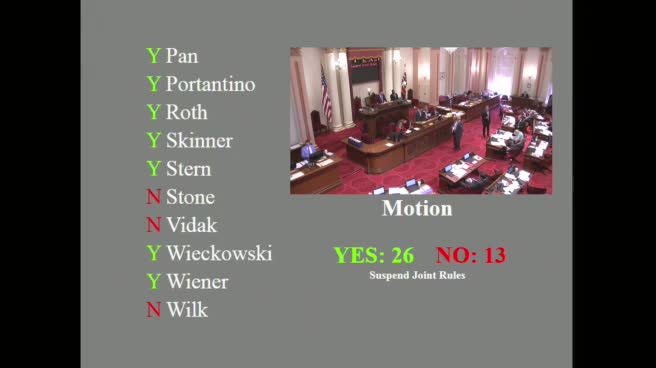

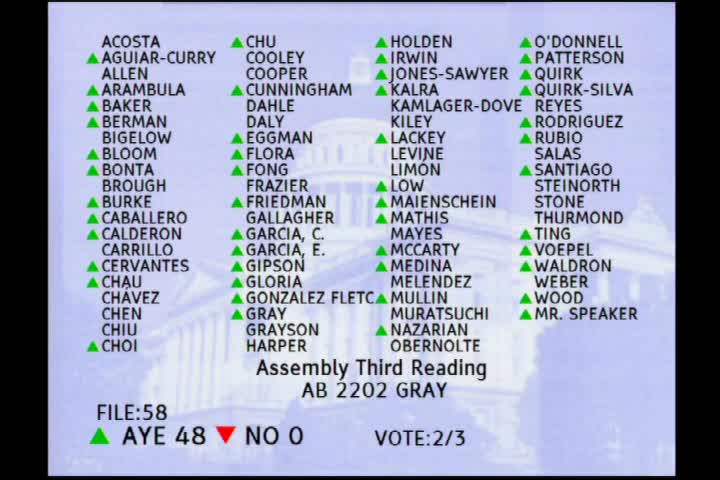
Bill Author


