AB 2274: Division of community property: pet animals.
- Session Year: 2017-2018
- House: Assembly
- Latest Version Date: 2018-09-27
Existing law generally requires a court in a judgment of dissolution of marriage or judgment of legal separation of the parties to make a property division that equally divides the community estate of the parties, except as otherwise specified.
This bill would authorize a court, upon request of a party to proceedings for dissolution of marriage or for legal separation of the parties and notwithstanding other requirements for dividing the community estate of the parties, to assign sole or joint ownership of a community property pet animal taking into consideration the care of the pet animal. The bill would authorize a court, also upon the request of a party, to order a party to care for the pet animal prior to the final determination of ownership.
Existing law generally requires a court in a judgment of dissolution of marriage or judgment of legal separation of the parties to make a property division that equally divides the community estate of the parties, except as otherwise specified.
This bill would require authorize a court, upon request of a party to proceedings for dissolution of marriage or for legal separation of the parties and notwithstanding other requirements for dividing the community estate of the parties, to assign sole or joint ownership of a community property pet animal taking into consideration the care of the pet animal. The bill would authorize a court, also upon the request of a party, to order a party to care for the pet animal prior to the final determination of ownership.
Existing law generally requires a court in a judgment of dissolution of marriage or judgment of legal separation of the parties to make a property division that equally divides the community estate of the parties, except as otherwise specified.
This bill would require a court, upon request of a party to proceedings for dissolution of marriage or for legal separation of the parties and notwithstanding other requirements for dividing the community estate of the parties, to assign sole or joint ownership of a community property pet animal taking into consideration the care of the pet animal. The bill would authorize a court, also upon the request of a party, to order a party to care for the pet animal prior to the final determination of ownership.
Existing law generally requires a court in a judgment of dissolution of marriage or judgment of legal separation of the parties to make a property division that equally divides the community estate of the parties, except as otherwise specified.
This bill would require a court, upon request of a party to a proceeding proceedings for dissolution of marriage or for legal separation of the parties and notwithstanding other requirements for dividing the community estate of the parties, to assign sole or joint ownership of a community property pet animal taking into consideration the well-being of the pet. care of the pet animal. The bill would authorize a court, also upon the request of a party, to order a party to care for the pet animal prior to the final determination of ownership.
Existing law generally requires a court in a judgment of dissolution of marriage or judgment of legal separation of the parties to make a property division that equally divides the community estate of the parties, except as otherwise specified.
This bill would require a court, upon request of a party to a proceeding for dissolution of marriage or for legal separation of the parties and notwithstanding other requirements for dividing the community estate of the parties, to assign sole or joint ownership of a community property pet taking into consideration the well-being of the pet.
(a)The court, at the request of a party to proceedings for dissolution of marriage or for legal separation of the parties, may enter an order, prior to the final determination of ownership of a pet animal, to require a party to care for the pet animal. The existence of an order providing for the care of a pet animal during the course of proceedings for dissolution of marriage or for legal separation of the parties shall not have any impact on the courts final determination of ownership of the pet animal.
(b)Notwithstanding any other law, including, but not limited to, Section 2550, the court, at the request of a party to proceedings for dissolution of marriage or for legal separation of the parties, may assign sole or joint ownership of a pet animal taking into consideration the care of the pet animal.
(c)For purposes of this section, the following definitions shall apply:
(1)Care includes, but is not limited to, the prevention of acts of harm or cruelty, as described in Section 597 of the Penal Code, and the provision of food, water, veterinary care, and safe and protected shelter.
(2)Pet animal means any animal that is community property and kept as a household pet.
(a)The court, at the request of a party to proceedings for dissolution of marriage or for legal separation of the parties, may enter an order, prior to the final determination of ownership of a pet animal, to require a party to care for the pet animal. The existence of an order providing for the care of a pet animal during the course of proceedings for dissolution of marriage or for legal separation of the parties shall not have any impact on the courts final determination of ownership of the pet animal.
(b)Notwithstanding any other law, including, but not limited to to, Section 2550, the court, at the request of a party to proceedings for dissolution of marriage or for legal separation of the parties, shall parties, may assign sole or joint ownership of a pet animal taking into consideration the care of the pet animal.
(c)For purposes of this section, the following definitions shall apply:
(1)Care includes, but is not limited to, the prevention of acts of harm or cruelty, as described in Section 597 of the Penal Code, and the provision of food, water, veterinary care, and safe and protected shelter.
(2)Pet animal means any animal that is community property and kept as a household pet.
(a)The court, at the request of a party to proceedings for dissolution of marriage or for legal separation of the parties, may enter an order, prior to the final determination of ownership of a pet animal, to require a party to care for the pet animal, prohibit each party from euthanizing the pet animal, or both. animal. The existence of an order providing for the care of a pet animal during the course of proceedings for dissolution of marriage or for legal separation of the parties shall not have any impact on the courts final determination of ownership of the pet animal.
(b)Notwithstanding any other law, including, but not limited to Section 2550, the court, at the request of a party to proceedings for dissolution of marriage or for legal separation of the parties, shall assign sole or joint ownership of a pet animal taking into consideration the care of the pet animal.
(c)For purposes of this section, the following definitions shall apply:
(1)Care includes, but is not limited to, the prevention of acts of harm or cruelty, as described in Section 597 of the Penal Code, and the provision of food, water, veterinary care, and safe and protected shelter.
(2)Pet animal means any animal that is community property and kept as a household pet.
(a)Notwithstanding The court, at the request of a party to proceedings for dissolution of marriage or for legal separation of the parties, may enter an order, prior to the final determination of ownership of a pet animal, to require a party to care for the pet animal, prohibit each party from euthanizing the pet animal, or both. The existence of an order providing for the care of a pet animal during the course of proceedings for dissolution of marriage or for legal separation of the parties shall not have any impact on the courts final determination of ownership of the pet animal.
(b)Notwithstanding any other law, including, but not limited to Section 2550, the court, at the request of a party to a proceeding proceedings for dissolution of marriage or for legal separation of the parties, shall assign sole or joint ownership of a community property pet animal taking into consideration the well-being care of the pet. pet animal.
(b)(c)For purposes of this section, pet shall mean any household animal, including, but not limited to, a cat or dog. the following definitions shall apply:
(1)Care includes, but is not limited to, the prevention of acts of harm or cruelty, as described in Section 597 of the Penal Code, and the provision of food, water, veterinary care, and safe and protected shelter.
(2)Pet animal means any animal that is community property and kept as a household pet.
(a)Notwithstanding any other law, including, but not limited to Section 2550, the court, at the request of a party to a proceeding for dissolution of marriage or for legal separation of the parties, shall assign sole or joint ownership of a community property pet taking into consideration the well-being of the pet.
(b)For purposes of this section, pet shall mean any household animal, including, but not limited to, a cat or dog.
|
Date
|
Status
|
|---|---|
| Sep 27, 2018 | Chaptered by Secretary of State - Chapter 820, Statutes of 2018. |
| Sep 27, 2018 | Approved by the Governor. |
| Aug 20, 2018 | Enrolled and presented to the Governor at 3 p.m. |
| Aug 16, 2018 | In Assembly. Ordered to Engrossing and Enrolling. |
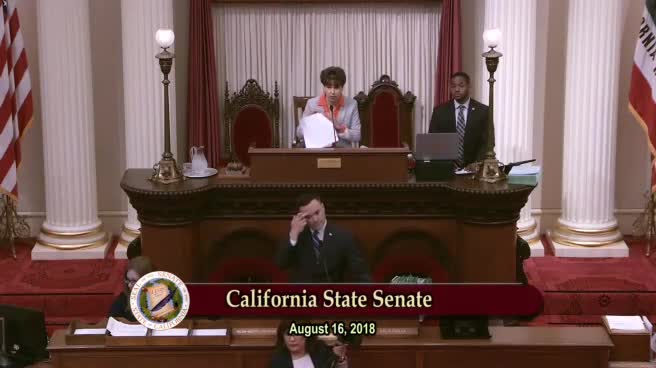
| Aug 16, 2018 | Read third time. Passed. Ordered to the Assembly. |
| Jun 21, 2018 | Read second time. Ordered to third reading. |
| Jun 20, 2018 | From committee: Do pass. (Ayes 6. Noes 1.) (June 19). |
| May 30, 2018 | Referred to Com. on JUD. |
| May 17, 2018 | In Senate. Read first time. To Com. on RLS. for assignment. |
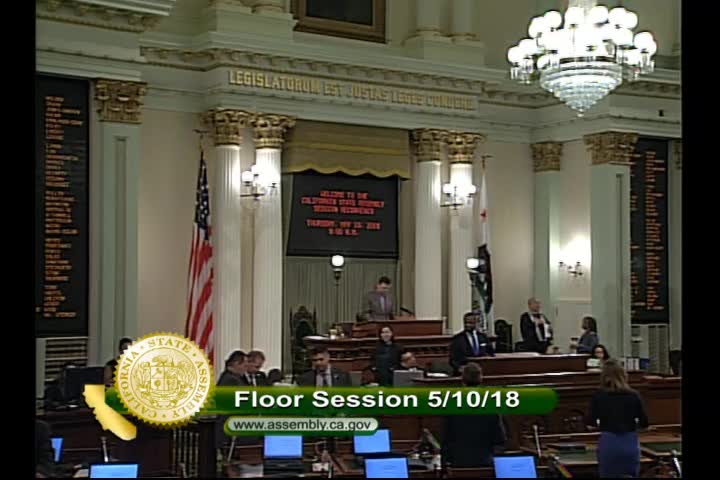
| May 17, 2018 | Read third time. Passed. Ordered to the Senate. |
| May 10, 2018 | Read third time and amended. Ordered to third reading. |
| Apr 9, 2018 | Read second time. Ordered to third reading. |
| Apr 5, 2018 | Read second time and amended. Ordered returned to second reading. |
| Apr 4, 2018 | From committee: Amend, and do pass as amended. (Ayes 7. Noes 1.) (April 3). |
| Apr 3, 2018 | Re-referred to Com. on JUD. |
| Apr 2, 2018 | From committee chair, with author's amendments: Amend, and re-refer to Com. on JUD. Read second time and amended. |
| Mar 1, 2018 | Referred to Com. on JUD. |
| Feb 14, 2018 | From printer. May be heard in committee March 16. |
| Feb 13, 2018 | Read first time. To print. |
|
Date
|
Description
|
Location
|
Votes
|
|
|---|---|---|---|---|
| Aug 16, 2018 | Assembly 3rd Reading AB2274 Quirk By Jackson | Senate Floor |
Passed |
|
| Jun 19, 2018 | Do pass | Senate Standing Committee on Judiciary |
Passed |
|
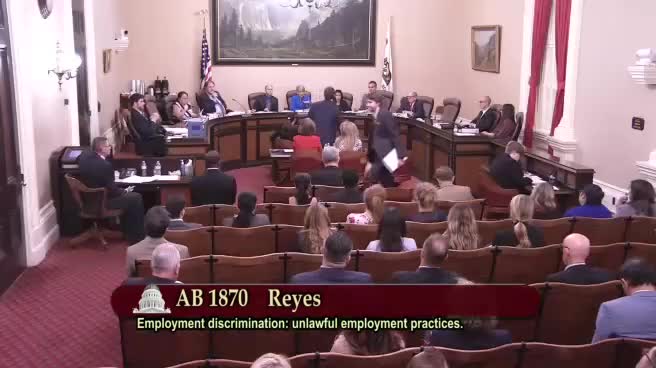
| May 17, 2018 | AB 2274 QUIRK Assembly Third Reading | Assembly Floor |
Passed |
|
| Apr 3, 2018 | Do pass as amended. | Assembly Standing Committee on Judiciary |
Passed |
This list shows positions taken on this bill by organizations on the date displayed, which is linked to the original source.
Positions by individuals are not included.
|
Organization
|
Position
|
Date
|
|---|---|---|
| Association of Certified Family Law Specialists | ** Against | Jun 22, 2018 |
| Best Friends Animal Society | * Support | Apr 3, 2018 |
| San Diego Humane Society | ** Support | Jun 22, 2018 |
| San Francisco Spca | ** Support | Jun 22, 2018 |
Office of Senate Floor Analyses (916) 651-1520 Fax: (916) 327-4478 | AB 2274 |
THIRD READING
Bill No: AB 2274
Amended: 5/10/18 in Assembly
SENATE JUDICIARY COMMITTEE: 6-1, 6/19/18
AYES: Jackson, Moorlach, Hertzberg, Monning, Stern, Wieckowski
NOES: Anderson
ASSEMBLY FLOOR: 57-4, 5/17/18 - See last page for vote
SUBJECT: Division of community property: pet animals
DIGEST:
This bill provides statutory guidance on the rights of parties in a proceeding for marital dissolution or legal separation to petition a court for sole or joint ownership of a community property pet.
Existing law:
- Defines community property as all property, real or personal, wherever situated, acquired by a married person during the marriage while residing in this state. (Family Code Section 760. All further statutory references are to the Family Code, unless otherwise indicated.)
- Specifies that separate property in a marriage includes property owned by an individual before the marriage and anything acquired by a spouse during the marriage by gift, bequest, devise, or descent. (Section 770.)
- Requires the court, unless otherwise agreed upon, to divide the community estate equally between parties in a proceeding for dissolution of marriage or legal separation. (Section 2550.)
- Subjects spouses to the general rules governing fiduciary responsibilities and imposes a duty of the highest good faith and fair dealing on each spouse such that neither shall take any unfair advantage of the other, including requirements of refraining from engaging in grossly negligent or reckless conduct, intentional misconduct, or a knowing violation of law. (Section 721 (b) and Corporations Code Section 16404 (c).)
- Requires spouses to uphold their fiduciary responsibilities from the date of separation to the date of the distribution of community or quasi-community assets or liabilities. (Section 2102 (a).)
- Restrains both parties in cases of marital dissolution or legal separation from in any way disposing of property, real or personal, whether community, semi-community, or separate, as provided. (Section 2040 (b).)
- Allows the court, on showing of good cause, to grant a petitioner requesting a protective order under the Domestic Violence Protective Act to have the exclusive care, possession, or control of any animal owned, possessed, leased, kept, or held by the petitioner, the respondent, or a minor child in the household of either. (Section 6320 (b).)
This bill:
- Allows parties in a proceeding for dissolution of marriage or legal separation to petition the court for sole or joint ownership of a pet animal, taking into consideration the care of the animal.
- Permits the court, upon request of a party, to enter an order to require a party to care for a pet animal prior to the final decision on ownership. States that such an order shall not impact the court’s final determination of ownership.
- Specifies that “care” of an animal includes prevention of acts of harm or cruelty, as defined, and provision of food, water, veterinary care, and safe and protected shelter.
- Defines “pet animal” as any animal that is community property and kept as a household pet.
Background
Existing law provides that all property, whether real or personal, acquired by a married person during the marriage while domiciled in this state is community property. (Fam. Code Sec. 760.) Existing law also provides that the community estate is liable for a debt incurred by either spouse, as specified. (Fam. Code Sec. 910.) Existing law further provides that absent prior agreement, upon dissolution, the court must divide the community estate equally. (Fam. Code Sec. 2550.) This policy was established to recognize the equal contributions of both spouses to the family unit, and historically has provided for an arguably more just division of property for families where one spouse earns more income than the other.
Under existing law, pets are generally treated as personal property, and, if acquired during a marriage, are typically characterized as community property. This bill will not change that characterization; it simply provides guidance to courts with regard to granting ownership of pets in divorce proceedings. This bill defines “pet animal” for purposes of the bill’s provisions as community property kept as a household pet. This bill provides that a court, at the request of a party in the proceeding, may enter an order, before the final determination of ownership of a pet animal, to require a party to care for the pet animal. This preliminary order is not intended to impact the court’s final determination of ownership of the pet. In other words, if a court orders one spouse to care for the pet while the proceeding is pending, that initial decision will not impact the final ownership determination by the court.
This bill also provides that the court, at the request of a party, may assign sole or joint ownership of a pet animal, taking into consideration the care of the pet animal. This bill defines “care,” for the purposes of its provisions, as including “the prevention of acts of harm or cruelty, as described, and the provision of food, water, veterinary care, and safe and protected shelter.” These provisions are similar to recently adopted statutes in Alaska and Illinois, and generally provide clarity in guidance in determining which party gets to keep the pet.
FISCAL EFFECT: Appropriation: No Fiscal Com.: No Local: No
American Society for the Prevention of Cruelty to Animals
San Diego Humane Society
San Francisco SPCA
OPPOSITION: (Verified 6/22/18)
Association of Certified Family Law Specialists
ARGUMENTS IN SUPPORT: According to the author:
Pets sometimes become our most mischievous and beloved members of the family. When the pet is mutually cared for by a couple that is separating or divorcing, it is not uncommon for a court to make a pet custody determination. …
In the eyes of the law animals are property. They are no different than a house or vehicle that was mutually owned by a couple. This is unfortunate because pet owners do not share the same view. Pet ownership battles are often passionate and emotional.
AB 2274 changes how courts resolve pet ownership cases. Specifically, this bill empowers judges to take into consideration the “Care” of a pet, in determining sole or joint ownership.
ARGUMENTS IN OPPOSITION: Opponents with the Association of Certified Family Law Specialists contend that cases of marital dissolution and legal separation already face significant delays and issues of contention in court, particularly surrounding child custody. By adding in sole or joint ownership of pet animals as a determination courts can make in divorce proceedings, the already backlogged family court proceedings may become even more delayed as judges consider the myriad factors that come into play when making decisions about community property division and child custody. Opponents argue that current law already provides courts with the authority to award pets to either party and that the bill will lead parties to litigate over who is better able to care for the pet.
To address some of these concerns, the author has previously amended the bill to give courts discretion in determining whether to grant a request to assign ownership of the pet. In appreciation of these amendments, Judicial Council writes:
The Judicial Council appreciates [the author’s] willingness to amend AB 2274 so that a judicial officer is permitted, as opposed to mandated, to assign sole or joint ownership of a pet animal, as defined, at the request of a party to a dissolution or legal separation. The mandatory nature of this provision was the basis for the council’s concerns. With this amendment, the Judicial Council takes no position on AB 2274.
ASSEMBLY FLOOR: 57-4, 5/17/18
AYES: Acosta, Aguiar-Curry, Travis Allen, Arambula, Baker, Berman, Bloom, Bonta, Burke, Caballero, Calderon, Carrillo, Cervantes, Chau, Chávez, Chiu, Choi, Chu, Cooley, Cooper, Daly, Eggman, Frazier, Friedman, Eduardo Garcia, Gipson, Gloria, Gray, Grayson, Holden, Irwin, Jones-Sawyer, Kalra, Kamlager-Dove, Lackey, Levine, Limón, Low, Maienschein, McCarty, Mullin, Nazarian, O'Donnell, Quirk, Quirk-Silva, Reyes, Rodriguez, Rubio, Salas, Mark Stone, Thurmond, Ting, Voepel, Waldron, Weber, Wood, Rendon
NOES: Cunningham, Gonzalez Fletcher, Harper, Obernolte
NO VOTE RECORDED: Bigelow, Brough, Chen, Dahle, Flora, Fong, Gallagher, Cristina Garcia, Kiley, Mathis, Mayes, Medina, Melendez, Muratsuchi, Patterson, Santiago, Steinorth
Prepared by: Josh Tosney / JUD. / (916) 651-4113
6/22/18 14:09:08
**** END ****
Senator Hannah-Beth Jackson, Chair
2017-2018 Regular Session
Bill No: AB 2274 (Author:Quirk)
Version: May 10, 2018
Hearing Date: June 19, 2018
Fiscal: No
Urgency: No
Consultant: JDT
SUBJECT
Division of community property: pet animals
DESCRIPTION
This measure would allow individuals in divorce or legal separation proceedings to request a court to allow sole or joint ownership of a pet animal acquired as community property during the marriage, and would also give the court authority to grant temporary ownership of the animal during the course of the proceedings.
BACKGROUND
California Supreme Court Justice Armand Arabian, in a 1994 dissenting opinion, issued a fulsome ode to pet ownership:
Both recorded and unrecorded history bear witness to the domestication of animals as household pets. Throughout the ages, dogs and cats have provided human beings with a variety of services in addition to their companionship--shepherding flocks, guarding life and property, hunting game, ridding the house and barn of vermin. Of course, the modern classic example is the assist dog, which facilitates a sense of independence and security for disabled persons by enabling them to navigate their environment, alerting them to important sounds, and bringing the world within their reach. Emotionally, they allow a connection full of sensation and delicacy of feeling.
Throughout the ages, art and literature, as well as mythology, depict humans in all walks of life and social strata with cats and dogs, illustrating their widespread acceptance in everyday life. Some religions have even incorporated them into their worship. Dogs and cats are also admired for the purity of their character traits. Closer to home, our own culture is populated with examples of the well-established place pets have found in our hearts and homes.
In addition to these historical and cultural references, the value of pets in daily life is a matter of common knowledge and understanding as well as extensive documentation. People of all ages, but particularly the elderly and the young, enjoy their companionship. Those who suffer from serious disease or injury and are confined to their home or bed experience a therapeutic, even spiritual, benefit from their presence. Animals provide comfort at the death of a family member or dear friend, and for the lonely can offer a reason for living when life seems to have lost its meaning. […] Not only have children and animals always been natural companions, children learn responsibility and discipline from pet ownership while developing an important sense of kindness and protection for animals. Single adults may find certain pets can afford a feeling of security. Families benefit from the experience of sharing that having a pet encourages. While pet ownership may not be a fundamental right as such, unquestionably it is an integral aspect of our daily existence, which cannot be lightly dismissed and should not suffer unwarranted intrusion into its circle of privacy. (Nahrstedt v. Lakeside Village Condominium Assn. (1994) 8 Cal.4th 361, 393-394.)
This bill would provide guidance to courts with regard to granting ownership of pets in divorce and legal separation proceedings. The bill would provide that a court, at the request of a party in the proceeding, may enter an order, before the final determination of ownership of a pet animal, to require a party to care for the pet animal. The bill would additionally provide that the court, at the request of a party, may assign sole or joint ownership of a pet animal, taking into consideration the care of the pet animal.
CHANGES TO EXISTING LAW
Existing law provides that all property, whether real or personal, acquired by a married person during the marriage while domiciled in this state is community property. (Fam. Code Sec. 760.)
Existing law specifies that separate property in a marriage includes property owned by an individual before the marriage and anything acquired by a spouse during the marriage by gift, bequest, devise, or descent. (Fam. Code Sec. 770.)
Existing law provides that absent prior agreement, upon dissolution, the court must divide the community estate equally, with specified exceptions. (Fam. Code Secs. 2550 & 2600 et seq.)
Existing law restrains both parties in cases of marital dissolution or legal separation from in any way disposing of property, real or personal, whether community, semi-community, or separate, as provided. (Fam. Code Sec. 2040(b).)
This bill would provide that a court, at the request of a party to proceedings for dissolution of marriage or for legal separation of the parties, may enter an order, before the final determination of ownership of a pet animal, to require a party to care for the pet animal.
This bill would provide that the existence of such an order does not impact the court’s final determination of ownership of the pet animal.
This bill would provide that, notwithstanding the general rules applicable to the division of community property in a dissolution or legal separation, the court, at the request of a party to the proceeding, may assign sole or joint ownership of a pet animal, taking into consideration the care of the pet animal.
This bill would define “care” for the purposes of its provisions to include “the prevention of acts of harm or cruelty, as described, and the provision of food, water, veterinary care, and safe and protected shelter.”
This bill would define “pet animal” for purposes of the bill’s provisions as “community property kept as a household pet.”
COMMENT
1. Stated need for the bill
According to the author:
Pets sometimes become our most mischievous and beloved members of the family. When the pet is mutually cared for by a couple that is separating or divorcing, it is not uncommon for a court to make a pet custody determination. …
In the eyes of the law animals are property. They are no different than a house or vehicle that was mutually owned by a couple. This is unfortunate because pet owners do not share the same view. Pet ownership battles are often passionate and emotional.
AB 2274 changes how courts resolve pet ownership cases. Specifically, this bill empowers judges to take into consideration the “Care” of a pet, in determining sole or joint ownership.
In a joint letter, the San Diego Humane Society and the San Francisco Society for the Prevention of Cruelty to Animals (SPCA) argue that this measure empowers judges to consider the care of animals and will reduce conflicts and extended disputes about animal ownership in divorce and legal separation proceedings. Supporters make the case that pets play a special role in people’s lives and should not be seen as equivalent to property in cases of marital dissolution and divorce. And in response to concerns about whether this bill might increase court workload, they cite a 2014 survey by the American Academy of Matrimonial Lawyers showing a 22 percent increase in pet custody hearings in court – courts are already dealing with these cases. Additionally, divorce is a common reason for people to relinquish their pets to a shelter, and groups supporting this measure argue that the law should support couples’ efforts to look out for their pets and not increase the number of homeless pets.
2. Concerns expressed about the bill
Opponents with the Association of Certified Family Law Specialists contend that cases of marital dissolution and legal separation already face significant delays and issues of contention in court, particularly surrounding child custody. By adding in sole or joint ownership of pet animals as a determination courts can make in divorce proceedings, the already backlogged family court proceedings may become even more delayed as judges consider the myriad factors that come into play when making decisions about community property division and child custody. Opponents argue that current law already provides courts with the authority to award pets to either party and that the bill would lead parties to litigate over who is better able to care for the pet.
To address some of these concerns, the author has previously amended the bill to give courts discretion in determining whether to grant a request to assign ownership of the pet. In appreciation of these amendments, Judicial Council writes:
The Judicial Council appreciates [the author’s] willingness to amend AB 2274 so that a judicial officer is permitted, as opposed to mandated, to assign sole or joint ownership of a pet animal, as defined, at the request of a party to a dissolution or legal separation. The mandatory nature of this provision was the basis for the council’s concerns. With this amendment, the Judicial Council takes no position on AB 2274.
3. Assignment of ownership of a pet in a divorce
Existing law provides that all property, whether real or personal, acquired by a married person during the marriage while domiciled in this state is community property. (Fam. Code Sec. 760.) Existing law also provides that the community estate is liable for a debt incurred by either spouse, as specified. (Fam. Code Sec. 910.) Existing law further provides that absent prior agreement, upon dissolution, the court must divide the community estate equally. (Fam. Code Sec. 2550.) This policy was established to recognize the equal contributions of both spouses to the family unit, and historically has provided for an arguably more just division of property for families where one spouse earns more income than the other.
Under existing law, pets are generally treated as personal property, and, if acquired during a marriage, are typically characterized as community property. This bill would not change that characterization; it would simply provide guidance to courts with regard to granting ownership of pets in divorce proceedings. The bill would define “pet animal” for purposes of the bill’s provisions as community property kept as a household pet. The bill would provide that a court, at the request of a party in the proceeding, may enter an order, before the final determination of ownership of a pet animal, to require a party to care for the pet animal. This preliminary order is not intended to impact the court’s final determination of ownership of the pet. In other words, if a court orders one spouse to care for the pet while the proceeding is pending, that initial decision will not impact the final ownership determination by the court.
The bill would also provide that the court, at the request of a party, may assign sole or joint ownership of a pet animal, taking into consideration the care of the pet animal. This bill would define “care,” for the purposes of its provisions, as including “the prevention of acts of harm or cruelty, as described, and the provision of food, water, veterinary care, and safe and protected shelter.” These provisions are similar to recently adopted statutes in Alaska and Illinois, and generally provide clarity in guidance in determining which party gets to keep the pet.
Support: American Society for the Prevention of Cruelty to Animals; San Diego Humane Society; San Francisco SPCA
Opposition: Association of Certified Family Law Specialists
HISTORY
Source: Author
Related Pending Legislation: None known
Prior Legislation: None known
Prior Vote:
Assembly Floor (Ayes 57, Noes 4)
Assembly Judiciary Committee (Ayes 7, Noes 1)
**************
ASSEMBLY THIRD READING
ATR Bill Id:AB 2274
Author:(Quirk)
As Amended Ver:May 10, 2018
Majority vote
Committee | Votes | Ayes | Noes |
Judiciary | 7-1 | Mark Stone, Chau, Chiu, Holden, Kalra, Maienschein, Reyes | Cunningham |
SUMMARY: Provides statutory guidance on the rights of parties in a proceeding for marital dissolution or legal separation to petition a court for sole or joint ownership of a community property pet. Specifically, this bill:
- Allows parties in a proceeding for dissolution of marriage or legal separation to petition the court for sole or joint ownership of a pet animal, taking into consideration the care of the animal. Permits the court to assign sole or joint ownership of the pet animal, as specified.
- Permits the court, upon request of a party, to enter an order to require a party to care for a pet animal prior to the final decision on ownership. States that such an order shall not impact the court's final determination of ownership.
- Specifies that "care" of an animal includes prevention of acts of harm or cruelty, as defined, and provision of food, water, veterinary care, and safe and protected shelter.
- Defines "pet animal" as any animal that is community property and kept as a household pet.
EXISTING LAW:
- Defines community property as all property, real or personal, wherever situated, acquired by a married person during the marriage while residing in this state. (Family Code Section 760. All further statutory references are to the Family Code, unless otherwise indicated.)
- Specifies that separate property in a marriage includes property owned by an individual before the marriage and anything acquired by a spouse during the marriage by gift, bequest, devise, or descent. (Section 770.)
- Requires the court, unless otherwise agreed upon, to divide the community estate equally between parties in a proceeding for dissolution of marriage or legal separation. (Section 2550.)
- Subjects spouses to the general rules governing fiduciary responsibilities and imposes a duty of the highest good faith and fair dealing on each spouse such that neither shall take any unfair advantage of the other, including requirements of refraining from engaging in grossly negligent or reckless conduct, intentional misconduct, or a knowing violation of law. (Section 721(b) and Corporations Code Section 16404(c).)
- Requires spouses to uphold their fiduciary responsibilities from the date of separation to the date of the distribution of community or quasi-community assets or liabilities. (Section 2102(a).)
- Restrains both parties in cases of marital dissolution or legal separation from in any way disposing of property, real or personal, whether community, semi-community, or separate, as provided. (Section 2040(b).)
- Allows the court, on showing of good cause, to grant a petitioner requesting a protective order under the Domestic Violence Protective Act to have the exclusive care, possession, or control of any animal owned, possessed, leased, kept, or held by the petitioner, the respondent, or a minor child in the household of either. (Section 6320(b).)
FISCAL EFFECT: None
COMMENTS: Pets are beloved parts of many households and, as a result, may be the most contentious issue for some divorcing couples to resolve. Like all animals, pets are considered property under California law; and in dissolution proceedings, courts must determine how to divide property, including pets. This bill does not change pets' characterization as property. It simply creates uniform rules to assist parties and courts in determining what happens to family pets when couples divorce.
Case law recognizes pets as property, and, when appropriate as community property, but also recognizes their unique nature. In an unpublished 2015 California court decision involving property division in a divorce, the ownership of the dog was awarded on the basis that the animal was community property since neither party established that the animal in question was separate property. Additionally, in a 2012 California appellate case dealing with wrongful injury of a pet animal, the court held that pet owners can recover reasonable and necessary costs in case of pet injury, even if those costs exceed the usual standard of recovery – the market value of the pet, in this case. (Martinez v. Robledo (2012) 210 Cal.App.4th 384.) That opinion provided that pets represent a special case of property and that the value of pets can be assessed differently than other types of property.
California already recognizes the unique role pets have by allowing their inclusion in protective orders under the Domestic Violence Protection Act. Though pets are considered property in the eyes of the law, existing family law statutes differentiate them from other types of property that individuals hold. For example, under the Domestic Violence Prevention Act, protective orders can extend to the care of an animal "owned, possessed, leased, kept, or held by either the petitioner or the respondent or a minor child residing in the residence or household of either." (Section 6320 (b).)
Definition of "Pet Animals." This measure applies to "pet animals," which are defined as "any animal that is community property and kept as a household pet." To qualify as community property, a pet animal would need to be acquired during the marriage and not meet any of the standards for separate property (if a pet were given or bequeathed to one individual in the marriage or was acquired by one spouse before the marriage, it would be separate property, not community property). Additionally, animals kept for commercial uses would not fall under the scope of this measure. For example, livestock or race horses acquired as community property for investment or profit would not be considered household pets and would not be subject to the rules in this bill.
The bill does not explicitly address the issue of service animals in cases of marital dissolution or legal separation. However, given that service animals are intended for use by a particular individual to serve her or him in a specific capacity, a service animal would not meet the definition of community property and would be considered the separate property of the spouse to whom it is in service.
Care of pets before final determination of ownership. This measure also allows parties, during the pendency of their dissolution proceeding, to petition the court to make an order of care for a pet prior to the final determination of ownership. By the terms of the bill, this preliminary order is not intended to impact the court's final determination of ownership of the pet. In other words, if a court orders that one spouse shall care for the pet while the divorce or separation proceedings take place, that decision will not impact the final ownership determination by the court.
Uniform rules for the final determination of ownership. This bill would allow courts to assign sole or joint ownership of the pet, taking into consideration the care of the pet, when making a final determination of pet ownership. Care of a pet animal is defined in general terms that avoids being unnecessarily prescriptive while also encompassing broad provisions for both the prevention of harm and the promotion of positive outcomes for the pet animal in question. In terms of preventing negative consequences for a pet animal, the bill language refers to the deterrence of cruelty and acts that would be considered crimes, namely, "the prevention of acts of harm or cruelty, as described in Section 597 of the Penal Code." Care also entails the promotion of positive outcomes for the pet through "provision of food, water, veterinary care, and safe and protected shelter." This determination by a court is, appropriately, very different than the much more involved best interests determination that a court makes when deciding child custody. Additionally, the bill language avoids any reference to "well-being" or "best interests" in order to distinguish the issue of ownership of community property pets from the question of child custody.
Analysis Prepared by: Leora Gershenzon / JUD. / (916) 319-2334 FN: 0002880
ASSEMBLY THIRD READING
ATR Bill Id:AB 2274
Author:(Quirk)
As Amended Ver:April 5, 2018
Majority vote
Committee | Votes | Ayes | Noes |
Judiciary | 7-1 | Mark Stone, Chau, Chiu, Holden, Kalra, Maienschein, Reyes | Cunningham |
SUMMARY: Provides statutory guidance on the rights of parties in a proceeding for marital dissolution or legal separation to petition a court for sole or joint ownership of a community property pet. Specifically, this bill:
- Allows parties in a proceeding for dissolution of marriage or legal separation to petition the court for sole or joint ownership of a pet animal, taking into consideration the care of the animal.
- Permits the court, upon request of a party, to enter an order to require a party to care for a pet animal prior to the final decision on ownership. States that such an order shall not impact the court's final determination of ownership.
- Specifies that "care" of an animal includes prevention of acts of harm or cruelty, as defined, and provision of food, water, veterinary care, and safe and protected shelter.
- Defines "pet animal" as any animal that is community property and kept as a household pet.
EXISTING LAW:
- Defines community property as all property, real or personal, wherever situated, acquired by a married person during the marriage while residing in this state. (Family Code Section 760. All further statutory references are to the Family Code, unless otherwise indicated.)
- Specifies that separate property in a marriage includes property owned by an individual before the marriage and anything acquired by a spouse during the marriage by gift, bequest, devise, or descent. (Section 770.)
- Requires the court, unless otherwise agreed upon, to divide the community estate equally between parties in a proceeding for dissolution of marriage or legal separation. (Section 2550.)
- Subjects spouses to the general rules governing fiduciary responsibilities and imposes a duty of the highest good faith and fair dealing on each spouse such that neither shall take any unfair advantage of the other, including requirements of refraining from engaging in grossly negligent or reckless conduct, intentional misconduct, or a knowing violation of law. (Section 721(b) and Corporations Code Section 16404 (c).)
- Requires spouses to uphold their fiduciary responsibilities from the date of separation to the date of the distribution of community or quasi-community assets or liabilities. (Section 2102(a).)
- Restrains both parties in cases of marital dissolution or legal separation from in any way disposing of property, real or personal, whether community, semi-community, or separate, as provided. (Section 2040(b).)
- Allows the court, on showing of good cause, to grant a petitioner requesting a protective order under the Domestic Violence Protective Act to have the exclusive care, possession, or control of any animal owned, possessed, leased, kept, or held by the petitioner, the respondent, or a minor child in the household of either. (Section 6320(b).)
FISCAL EFFECT: None
COMMENTS: Pets are beloved parts of many households and, as a result, may be the most contentious issue for some divorcing couples to resolve. Like all animals, pets are considered property under California law; and in dissolution proceedings, courts must determine how to divide property, including pets. This bill does not change pets' characterization as property. It simply creates uniform rules to assist parties and courts in determining what happens to family pets when couples divorce.
Case law recognizes pets as property, and, when appropriate as community property, but also recognizes their unique nature. In an unpublished 2015 California court decision involving property division in a divorce, the ownership of the dog was awarded on the basis that the animal was community property since neither party established that the animal in question was separate property. Additionally, in a 2012 California appellate case dealing with wrongful injury of a pet animal, the court held that pet owners can recover reasonable and necessary costs in case of pet injury, even if those costs exceed the usual standard of recovery – the market value of the pet, in this case. (Martinez v. Robledo (2012) 210 Cal.App.4th 384.) That opinion provided that pets represent a special case of property and that the value of pets can be assessed differently than other types of property.
California already recognizes the unique role pets have by allowing their inclusion in protective orders under the Domestic Violence Protection Act. Though pets are considered property in the eyes of the law, existing family law statutes differentiate them from other types of property that individuals hold. For example, under the Domestic Violence Prevention Act, protective orders can extend to the care of an animal "owned, possessed, leased, kept, or held by either the petitioner or the respondent or a minor child residing in the residence or household of either." (Section 6320 (b).)
Definition of "Pet Animals." This measure applies to "pet animals," which are defined as "any animal that is community property and kept as a household pet." To qualify as community property, a pet animal would need to be acquired during the marriage and not meet any of the standards for separate property (if a pet were given or bequeathed to one individual in the marriage or was acquired by one spouse before the marriage, it would be separate property, not community property). Additionally, animals kept for commercial uses would not fall under the scope of this measure. For example, livestock or race horses acquired as community property for investment or profit would not be considered household pets and would not be subject to the rules in this bill.
The bill does not explicitly address the issue of service animals in cases of marital dissolution or legal separation. However, given that service animals are intended for use by a particular individual to serve her or him in a specific capacity, a service animal would not meet the definition of community property and would be considered the separate property of the spouse to whom it is in service.
Care of pets before final determination of ownership. This measure also allows parties, during the pendency of their dissolution proceeding, to petition the court to make an order of care for a pet prior to the final determination of ownership. By the terms of the bill, this preliminary order is not intended to impact the court's final determination of ownership of the pet. In other words, if a court orders that one spouse shall care for the pet while the divorce or separation proceedings take place, that decision will not impact the final ownership determination by the court.
Uniform rules for the final determination of ownership. When making the final determination of ownership of household pets, this bill would require courts to consider the pet's care. Care of a pet animal is defined in general terms that avoids being unnecessarily prescriptive while also encompassing broad provisions for both the prevention of harm and the promotion of positive outcomes for the pet animal in question. In terms of preventing negative consequences for a pet animal, the bill language refers to the deterrence of cruelty and acts that would be considered crimes, namely, "the prevention of acts of harm or cruelty, as described in Section 597 of the Penal Code." Care also entails the promotion of positive outcomes for the pet through "provision of food, water, veterinary care, and safe and protected shelter." This determination by a court is, appropriately, very different than the much more involved best interests determination that a court makes when deciding child custody. Additionally, the bill language avoids any reference to "well-being" or "best interests" in order to distinguish the issue of ownership of community property pets from the question of child custody.
Analysis Prepared by: Sandra Nakagawa and Leora Gershenzon / JUD. / (916) 319-2334 FN: 0002641
Date of Hearing: April 3, 2018
ASSEMBLY COMMITTEE ON JUDICIARY
Mark Stone, Chair
ABPCA Bill Id:AB 2274
Author:(Quirk) – As Amended Ver:April 2, 2018
As Proposed to be Amended
SUBJECT: Division of community property: pets
KEY ISSUE: SHOULD A COURT BE SPECIFICALLY AUTHORIZED TO AWARD TEMPORARY OWNERSHIP OF A COMMUNITY PROPERTY PET DURING A DISSOLUTION PROCEEDING AND DETERMINE FINAL OWNERSHIP CONSIDERING THE CARE OF THE PET?
SYNOPSIS
This measure would allow individuals in divorce or legal separation proceedings to request a court to allow sole or joint ownership of a pet animal acquired as community property during the marriage and would also give the court authority to grant temporary ownership of the animal during the course of dissolution proceedings. Case law and existing statutes recognize pets as a special type of property; and, consistent with that, this bill, while not change the pets' characterization as property, would allow courts to decide on ownership, considering the care of the pet. This bill only addresses household pets acquired as community property and it follows from similar statutes enacted recently in other states. This author-sponsored measure is supported by the San Diego Humane Society and the San Francisco SPCA and is opposed by the Association of Certified Family Law Specialists.
SUMMARY: Provides statutory guidance on the rights of parties in a proceeding for marital dissolution or legal separation to petition a court for sole or joint ownership of a community property pet. Specifically, this bill:
- Allows parties in a proceeding for dissolution of marriage or legal separation to petition the court for sole or joint ownership of a pet animal, taking into consideration the care of the animal.
- Permits the court, upon request of a party, to enter an order to require a party to care for a pet animal prior to the final decision on ownership. States that such an order shall not impact the court’s final determination of ownership.
- Specifies that “care” of an animal includes prevention of acts of harm or cruelty, as defined, and provision of food, water, veterinary care, and safe and protected shelter.
- Defines “pet animal” as any animal that is community property and kept as a household pet.
EXISTING LAW:
- Defines community property as all property, real or personal, wherever situated, acquired by a married person during the marriage while residing in this state. (Family Code Section 760. All further statutory references are to the Family Code, unless otherwise indicated.)
- Specifies that separate property in a marriage includes property owned by an individual before the marriage and anything acquired by a spouse during the marriage by gift, bequest, devise, or descent. (Section 770.)
- Requires the court, unless otherwise agreed upon, to divide the community estate equally between parties in a proceeding for dissolution of marriage or legal separation. (Section 2550.)
- Subjects spouses to the general rules governing fiduciary responsibilities and imposes a duty of the highest good faith and fair dealing on each spouse such that neither shall take any unfair advantage of the other, including requirements of refraining from engaging in grossly negligent or reckless conduct, intentional misconduct, or a knowing violation of law. (Section 721 (b) and Corporations Code Section 16404 (c).)
- Requires spouses to uphold their fiduciary responsibilities from the date of separation to the date of the distribution of community or quasi-community assets or liabilities. (Section 2102 (a).)
- Restrains both parties in cases of marital dissolution or legal separation from in any way disposing of property, real or personal, whether community, semi-community, or separate, as provided. (Section 2040 (b).)
- Allows the court, on showing of good cause, to grant a petitioner requesting a protective order under the Domestic Violence Protective Act to have the exclusive care, possession, or control of any animal owned, possessed, leased, kept, or held by the petitioner, the respondent, or a minor child in the household of either. (Section 6320 (b).)
FISCAL EFFECT: As currently in print this bill is keyed non-fiscal.
COMMENTS: Pets are beloved parts of many households and, as a result, may be the most contentious issue for some divorcing couples to resolve. Like all animals, pets are considered property under California law; and in dissolution proceedings, courts must determine how to divide property, including pets. This bill does not change pets’ characterization as property. It simply creates uniform rules to assist parties and courts in determining what happens to family pets when couples divorce. According to the author:
Pets sometimes become our most mischievous and beloved members of the family. …
In the eyes of the law animals are property. They are no difference than a house or vehicle that was mutually owned by a couple. This is unfortunate because pet owners do not share the same view. Pet ownership battles are often passionate and emotional.
AB 2274 changes how courts resolve pet ownership cases. Specifically, this bill empowers judges to take into consideration the ["care"] of a pet, in determining sole or joint ownership.
Case law recognizes pets as property, and, when appropriate as community property, but also recognizes their unique nature. In an unpublished 2015 California court decision involving property division in a divorce, the ownership of the dog was awarded on the basis that the animal was community property since neither party established that the animal in question was separate property. Additionally, in a 2012 California appellate case dealing with wrongful injury of a pet animal, the court held that pet owners can recover reasonable and necessary costs in case of pet injury, even if those costs exceed the usual standard of recovery – the market value of the pet, in this case. (Martinez v. Robledo (2012) 210 Cal.App.4th 384.) That opinion provided that pets represent a special case of property and that the value of pets can be assessed differently than other types of property.
California already recognizes the unique role pets have by allowing their inclusion in protective orders under the Domestic Violence Protection Act. Though pets are considered property in the eyes of the law, existing family law statutes differentiate them from other types of property that individuals hold. For example, under the Domestic Violence Prevention Act, protective orders can extend to the care of an animal “owned, possessed, leased, kept, or held by either the petitioner or the respondent or a minor child residing in the residence or household of either.” (Section 6320 (b).)
Definition of “Pet Animals.” This measure applies to “pet animals,” which are defined as “any animal that is community property and kept as a household pet.” To qualify as community property, a pet animal would need to be acquired during the marriage and not meet any of the standards for separate property (if a pet were given or bequeathed to one individual in the marriage or was acquired by one spouse before the marriage, it would be separate property, not community property). Additionally, animals kept for commercial uses would not fall under the scope of this measure. For example, livestock or race horses acquired as community property for investment or profit would not be considered household pets and would not be subject to the rules in this bill.
The bill does not explicitly address the issue of service animals in cases of marital dissolution or legal separation. However, given that service animals are intended for use by a particular individual to serve her or him in a specific capacity, a service animal would not meet the definition of community property and would be considered the separate property of the spouse to whom it is in service.
Care of pets before final determination of ownership. This measure also allows parties, during the pendency of their dissolution proceeding, to petition the court to make an order of care for a pet prior to the final determination of ownership. By the terms of the bill, this preliminary order is not intended to impact the court’s final determination of ownership of the pet. In other words, if a court orders that one spouse shall care for the pet while the divorce or separation proceedings take place, that decision will not impact the final ownership determination by the court.
As currently in print, this bill would also allow for the court to issue an order prohibiting the euthanizing of the pet animal before the final determination of ownership. However, this provision is unnecessary and may have unintended negative consequences. Since parties to marital dissolution or legal separation proceedings already have fiduciary responsibilities for community assets that would prevent destruction or damage to community property during the proceedings (see Sections 721 and 2102), community property pets are already protected from unwarranted destruction. Moreover, by explicitly allowing orders to prohibit euthanasia of a pet, the court may unintentionally create a situation in which a pet animal with sudden onset of a life-threatening condition (e.g., being hit by a car) cannot be euthanized because of a court order prohibiting such actions by a party to dissolution, without going back to court for a change in the order. In such a case, a pet animal may suffer unnecessarily. Additionally, even if consent of the other party to marital dissolution or legal separation proceeding were a condition of providing euthanasia to a community property pet animal, one can imagine situations where the other party is incapacitated or unavailable to provide consent to proceed with euthanasia or it becomes another bargaining chip in the divorce. As a result, the author has agreed to amend the bill to eliminate the following clause: ", prohibit each party from euthanizing the pet animal, or both".
Uniform rules for the final determination of ownership. When making the final determination of ownership of household pets, this bill would require courts to consider the pet’s care. Care of a pet animal is defined in general terms that avoids being unnecessarily prescriptive while also encompassing broad provisions for both the prevention of harm and the promotion of positive outcomes for the pet animal in question. In terms of preventing negative consequences for a pet animal, the bill language refers to the deterrence of cruelty and acts that would be considered crimes, namely, “the prevention of acts of harm or cruelty, as described in Section 597 of the Penal Code.” Care also entails the promotion of positive outcomes for the pet through “provision of food, water, veterinary care, and safe and protected shelter.” This determination by a court is, appropriately, very different than the much more involved best interests determination that a court makes when deciding child custody. Additionally, the bill language avoids any reference to “well-being” or “best interests” in order to distinguish the issue of ownership of community property pets from the question of child custody.
Legislation in Other States. Both Alaska and Illinois have recently passed similar statutes dealing with the ownership of pets during dissolution of marriage or legal separation proceedings.
ARGUMENTS IN SUPPORT: In a joint letter, the San Diego Humane Society and the San Francisco Society for the Prevention of Cruelty to Animals (SPCA) argue that this measure empowers judges to consider the care of animals and will reduce conflicts and extended disputes about animal ownership in divorce and legal separation proceedings. Supporters make the case that pets play a special role in people’s lives and should not be seen as equivalent to property in cases of marital dissolution and divorce. And in response to concerns about whether this bill might increase court workload, they cite a 2014 survey by the American Academy of Matrimonial Lawyers showing a 22 percent increase in pet custody hearings in court – courts are already dealing with these cases. Additionally, divorce is a common reason for people to relinquish their pets to a shelter, and groups supporting this measure argue that the law should support couples’ efforts to look out for their pets and not increase the number of homeless pets.
ARGUMENTS IN OPPOSITION: Opponents with the Association of Certified Family Law Specialists contend that cases of marital dissolution and legal separation already face significant delays and issues of contention in court, particularly surrounding child custody. By adding in sole or joint ownership of pet animals as a determination courts can make in divorce proceedings, the already backlogged family court proceedings may become even more delayed as judges consider the well-being of a pet animal in addition to the myriad of other factors that come into play when making decisions about community property division and child custody. Opponents argue that current law already provides courts with the authority to award pets to either party and that the bill would lead parties to litigate over who is better able to care for the pet.
It is important to note that, as amended, the bill no longer requires courts to consider the well-being of pets. Additionally, courts are already dealing with these disputes today (see the 2014 American Academy of Matrimonial Lawyers discussed above). This bill just establishes a uniform way for them to do so.
REGISTERED SUPPORT / OPPOSITION:
Support
San Diego Humane Society
San Francisco Society for the Prevention of Cruelty to Animals (SPCA)
Opposition
Association of Certified Family Law Specialists (ACFLS)
Analysis Prepared by: Sandra Nakagawa and Leora Gershenzon / JUD. / (916) 319-2334
Bill Author

Bill Co-Author(s):