AB 2282: Salary history information.
- Session Year: 2017-2018
- House: Assembly
- Latest Version Date: 2018-07-18
(1)Existing law prohibits an employer from relying on the salary history information of an applicant for employment as a factor in determining whether to offer an applicant employment or what salary to offer an applicant, except in specified circumstances. Existing law requires an employer, upon reasonable request, to provide the pay scale for a position to an applicant applying for employment.
This bill would define pay scale, reasonable request, and applicant for purposes of these provisions. The bill would specify that these provisions do not prohibit an employer from asking about an applicant for employments salary expectation for the position being applied for.
(2)Existing law prohibits an employer from paying any of its employees at wage rates less than the rates paid to employees of the opposite sex for substantially similar work, when viewed as a composite of skill, effort, and responsibility, and performed under similar working conditions, unless the employer demonstrates that one or more specific factors, reasonably applied, account for the entire wage differential. Existing law also similarly prohibits an employer from paying any of its employees at wage rates less than the rates paid to employees of another race or ethnicity for substantially similar work. Existing law prohibits prior salary, by itself, from justifying a disparity in compensation under these provisions.
This bill would authorize an employer to make a compensation decision based on an employees current salary as long as any wage differential resulting from that compensation decision is justified by one or more specified factors, including a seniority system or a merit system.
This bill would make a nonsubstantive change to this provision.Existing law prohibits an employer from relying on the salary history information of an applicant for employment as a factor in determining whether to offer an applicant employment or what salary to offer an applicant, except in specified circumstances.
This bill would make a nonsubstantive change to this provision.
(a)An employer shall not rely on the salary history information of an applicant for employment as a factor in determining whether to offer employment to an applicant or what salary to offer an applicant.
(b)An employer shall not, orally or in writing, personally or through an agent, seek salary history information, including compensation and benefits, about an applicant for employment.
(c)An employer, upon reasonable request, shall provide the pay scale for a position to an applicant applying for employment. For purposes of this section, pay scale means a salary or hourly wage range. For purposes of this section reasonable request means a request made after an applicant has completed an initial interview with the employer.
(d)Section 433 does not apply to this section.
(e)This section does not apply to salary history information disclosable to the public pursuant to federal or state law, including the California Public Records Act (Chapter 3.5 (commencing with Section 6250) of Division 7 of Title 1 of the Government Code) or the federal Freedom of Information Act (Section 552 of Title 5 of the United States Code).
(f)This section applies to all employers, including state and local government employers and the Legislature.
(g)Nothing in this section shall prohibit an applicant from voluntarily and without prompting disclosing salary history information to a prospective employer.
(h)If an applicant voluntarily and without prompting discloses salary history information to a prospective employer, nothing in this section shall prohibit that employer from considering or relying on that voluntarily disclosed salary history information in determining the salary for that applicant.
(i)Nothing in this section shall prohibit an employer from asking an applicant about his or her salary expectation for the position being applied for.
(j)Consistent with Section 1197.5, nothing in this section shall be construed to allow prior salary to justify any disparity in compensation.
(k)For purposes of this section, the term applicant or applicant for employment means an individual who is seeking employment with the employer and is not currently employed with that employer in any capacity or position.
SEC. 2.Section 1197.5 of the Labor Code is amended to read:1197.5.(a)An employer shall not pay any of its employees at wage rates less than the rates paid to employees of the opposite sex for substantially similar work, when viewed as a composite of skill, effort, and responsibility, and performed under similar working conditions, except where the employer demonstrates:
(1)The wage differential is based upon one or more of the following factors:
(A)A seniority system.
(B)A merit system.
(C)A system that measures earnings by quantity or quality of production.
(D)A bona fide factor other than sex, such as education, training, or experience. This factor shall apply only if the employer demonstrates that the factor is not based on or derived from a sex-based differential in compensation, is job related with respect to the position in question, and is consistent with a business necessity. For purposes of this subparagraph, business necessity means an overriding legitimate business purpose such that the factor relied upon effectively fulfills the business purpose it is supposed to serve. This defense shall not apply if the employee demonstrates that an alternative business practice exists that would serve the same business purpose without producing the wage differential.
(2)Each factor relied upon is applied reasonably.
(3)The one or more factors relied upon account for the entire wage differential.
(4)Prior salary shall not justify any disparity in compensation. Nothing in this section shall be interpreted to mean that an employer may not make a compensation decision based on a current employees existing salary, so long as any wage differential resulting from that compensation decision is justified by one or more of the factors in this subdivision.
(b)An employer shall not pay any of its employees at wage rates less than the rates paid to employees of another race or ethnicity for substantially similar work, when viewed as a composite of skill, effort, and responsibility, and performed under similar working conditions, except where the employer demonstrates:
(1)The wage differential is based upon one or more of the following factors:
(A)A seniority system.
(B)A merit system.
(C)A system that measures earnings by quantity or quality of production.
(D)A bona fide factor other than race or ethnicity, such as education, training, or experience. This factor shall apply only if the employer demonstrates that the factor is not based on or derived from a race- or ethnicity-based differential in compensation, is job related with respect to the position in question, and is consistent with a business necessity. For purposes of this subparagraph, business necessity means an overriding legitimate business purpose such that the factor relied upon effectively fulfills the business purpose it is supposed to serve. This defense shall not apply if the employee demonstrates that an alternative business practice exists that would serve the same business purpose without producing the wage differential.
(2)Each factor relied upon is applied reasonably.
(3)The one or more factors relied upon account for the entire wage differential.
(4)Prior salary shall not justify any disparity in compensation. Nothing in this section shall be interpreted to mean that an employer may not make a compensation decision based on a current employees existing salary, so long as any wage differential resulting from that compensation decision is justified by one or more of the factors listed in this subdivision.
(c)Any employer who violates subdivision (a) or (b) is liable to the employee affected in the amount of the wages, and interest thereon, of which the employee is deprived by reason of the violation, and an additional equal amount as liquidated damages.
(d)The Division of Labor Standards Enforcement shall administer and enforce this section. If the division finds that an employer has violated this section, it may supervise the payment of wages and interest found to be due and unpaid to employees under subdivision (a) or (b). Acceptance of payment in full made by an employer and approved by the division shall constitute a waiver on the part of the employee of the employees cause of action under subdivision (h).
(e)Every employer shall maintain records of the wages and wage rates, job classifications, and other terms and conditions of employment of the persons employed by the employer. All of the records shall be kept on file for a period of three years.
(f)Any employee may file a complaint with the division that the wages paid are less than the wages to which the employee is entitled under subdivision (a) or (b) or that the employer is in violation of subdivision (k). The complaint shall be investigated as provided in subdivision (b) of Section 98.7. The division shall keep confidential the name of any employee who submits to the division a complaint regarding an alleged violation of subdivision (a), (b), or (k) until the division establishes the validity of the complaint, unless the division must abridge confidentiality to investigate the complaint. The name of the complaining employee shall remain confidential if the complaint is withdrawn before the confidentiality is abridged by the division. The division shall take all proceedings necessary to enforce the payment of any sums found to be due and unpaid to these employees.
(g)The department or division may commence and prosecute, unless otherwise requested by the employee or affected group of employees, a civil action on behalf of the employee and on behalf of a similarly affected group of employees to recover unpaid wages and liquidated damages under subdivision (a) or (b), and in addition shall be entitled to recover costs of suit. The consent of any employee to the bringing of any action shall constitute a waiver on the part of the employee of the employees cause of action under subdivision (h) unless the action is dismissed without prejudice by the department or the division, except that the employee may intervene in the suit or may initiate independent action if the suit has not been determined within 180 days from the date of the filing of the complaint.
(h)An employee receiving less than the wage to which the employee is entitled under this section may recover in a civil action the balance of the wages, including interest thereon, and an equal amount as liquidated damages, together with the costs of the suit and reasonable attorneys fees, notwithstanding any agreement to work for a lesser wage.
(i)A civil action to recover wages under subdivision (a) or (b) may be commenced no later than two years after the cause of action occurs, except that a cause of action arising out of a willful violation may be commenced no later than three years after the cause of action occurs.
(j)If an employee recovers amounts due the employee under subdivision (c), and also files a complaint or brings an action under subdivision (d) of Section 206 of Title 29 of the United States Code which results in an additional recovery under federal law for the same violation, the employee shall return to the employer the amounts recovered under subdivision (c), or the amounts recovered under federal law, whichever is less.
(k)(1)An employer shall not discharge, or in any manner discriminate or retaliate against, any employee by reason of any action taken by the employee to invoke or assist in any manner the enforcement of this section. An employer shall not prohibit an employee from disclosing the employees own wages, discussing the wages of others, inquiring about another employees wages, or aiding or encouraging any other employee to exercise his or her rights under this section. Nothing in this section creates an obligation to disclose wages.
(2)Any employee who has been discharged, discriminated or retaliated against, in the terms and conditions of his or her employment because the employee engaged in any conduct delineated in this section may recover in a civil action reinstatement and reimbursement for lost wages and work benefits caused by the acts of the employer, including interest thereon, as well as appropriate equitable relief.
(3)A civil action brought under this subdivision may be commenced no later than one year after the cause of action occurs.
(l)As used in this section, employer includes public and private employers. Section 1199.5 does not apply to a public employer.
(a)An employer shall not rely on the salary history information of an applicant for employment as a factor in determining whether to offer employment to an applicant or what salary to offer an applicant.
(b)An employer shall not, orally or in writing, personally or through an agent, seek salary history information, including compensation and benefits, about an applicant for employment.
(c)An employer, upon reasonable request, shall provide the pay scale for a position to an applicant applying for employment. For purposes of this section, pay scale means a salary or hourly wage range. For purposes of this section reasonable request means a request made after an applicant has completed an initial interview with the employer.
(d)Section 433 does not apply to this section.
(e)This section does not apply to salary history information disclosable to the public pursuant to federal or state law, including the California Public Records Act (Chapter 3.5 (commencing with Section 6250) of Division 7 of Title 1 of the Government Code) or the federal Freedom of Information Act (Section 552 of Title 5 of the United States Code).
(f)This section applies to all employers, including state and local government employers and the Legislature.
(g)Nothing in this section shall prohibit an applicant from voluntarily and without prompting disclosing salary history information to a prospective employer.
(h)If an applicant voluntarily and without prompting discloses salary history information to a prospective employer, nothing in this section shall prohibit that employer from considering or relying on that voluntarily disclosed salary history information in determining the salary for that applicant.
(i)Nothing in this section shall prohibit an employer from asking an applicant about his or her salary expectation for the position being applied for.
(i)(j)Consistent with Section 1197.5, nothing in this section shall be construed to allow prior salary, by itself, salary to justify any disparity in compensation.
(k)For purposes of this section, the term applicant or applicant for employment means an individual who is seeking employment with the employer and is not currently employed with that employer in any capacity or position.
SEC. 2.Section 1197.5 of the Labor Code is amended to read:1197.5.(a)An employer shall not pay any of its employees at wage rates less than the rates paid to employees of the opposite sex for substantially similar work, when viewed as a composite of skill, effort, and responsibility, and performed under similar working conditions, except where the employer demonstrates:
(1)The wage differential is based upon one or more of the following factors:
(A)A seniority system.
(B)A merit system.
(C)A system that measures earnings by quantity or quality of production.
(D)A bona fide factor other than sex, such as education, training, or experience. This factor shall apply only if the employer demonstrates that the factor is not based on or derived from a sex-based differential in compensation, is job related with respect to the position in question, and is consistent with a business necessity. For purposes of this subparagraph, business necessity means an overriding legitimate business purpose such that the factor relied upon effectively fulfills the business purpose it is supposed to serve. This defense shall not apply if the employee demonstrates that an alternative business practice exists that would serve the same business purpose without producing the wage differential.
(2)Each factor relied upon is applied reasonably.
(3)The one or more factors relied upon account for the entire wage differential. Prior salary shall not, by itself, justify any disparity in compensation.
(4)Prior salary shall not justify any disparity in compensation. Nothing in this section shall be interpreted to mean that an employer may not make a compensation decision based on a current employees existing salary, so long as any wage differential resulting from that compensation decision is justified by one or more of the factors in this subdivision.
(b)An employer shall not pay any of its employees at wage rates less than the rates paid to employees of another race or ethnicity for substantially similar work, when viewed as a composite of skill, effort, and responsibility, and performed under similar working conditions, except where the employer demonstrates:
(1)The wage differential is based upon one or more of the following factors:
(A)A seniority system.
(B)A merit system.
(C)A system that measures earnings by quantity or quality of production.
(D)A bona fide factor other than race or ethnicity, such as education, training, or experience. This factor shall apply only if the employer demonstrates that the factor is not based on or derived from a race- or ethnicity-based differential in compensation, is job related with respect to the position in question, and is consistent with a business necessity. For purposes of this subparagraph, business necessity means an overriding legitimate business purpose such that the factor relied upon effectively fulfills the business purpose it is supposed to serve. This defense shall not apply if the employee demonstrates that an alternative business practice exists that would serve the same business purpose without producing the wage differential.
(2)Each factor relied upon is applied reasonably.
(3)The one or more factors relied upon account for the entire wage differential. Prior salary shall not, by itself, justify any disparity in compensation.
(4)Prior salary shall not justify any disparity in compensation. Nothing in this section shall be interpreted to mean that an employer may not make a compensation decision based on a current employees existing salary, so long as any wage differential resulting from that compensation decision is justified by one or more of the factors listed in this subdivision.
(c)Any employer who violates subdivision (a) or (b) is liable to the employee affected in the amount of the wages, and interest thereon, of which the employee is deprived by reason of the violation, and an additional equal amount as liquidated damages.
(d)The Division of Labor Standards Enforcement shall administer and enforce this section. If the division finds that an employer has violated this section, it may supervise the payment of wages and interest found to be due and unpaid to employees under subdivision (a) or (b). Acceptance of payment in full made by an employer and approved by the division shall constitute a waiver on the part of the employee of the employees cause of action under subdivision (h).
(e)Every employer shall maintain records of the wages and wage rates, job classifications, and other terms and conditions of employment of the persons employed by the employer. All of the records shall be kept on file for a period of three years.
(f)Any employee may file a complaint with the division that the wages paid are less than the wages to which the employee is entitled under subdivision (a) or (b) or that the employer is in violation of subdivision (k). The complaint shall be investigated as provided in subdivision (b) of Section 98.7. The division shall keep confidential the name of any employee who submits to the division a complaint regarding an alleged violation of subdivision (a), (b), or (k) until the division establishes the validity of the complaint, unless the division must abridge confidentiality to investigate the complaint. The name of the complaining employee shall remain confidential if the complaint is withdrawn before the confidentiality is abridged by the division. The division shall take all proceedings necessary to enforce the payment of any sums found to be due and unpaid to these employees.
(g)The department or division may commence and prosecute, unless otherwise requested by the employee or affected group of employees, a civil action on behalf of the employee and on behalf of a similarly affected group of employees to recover unpaid wages and liquidated damages under subdivision (a) or (b), and in addition shall be entitled to recover costs of suit. The consent of any employee to the bringing of any action shall constitute a waiver on the part of the employee of the employees cause of action under subdivision (h) unless the action is dismissed without prejudice by the department or the division, except that the employee may intervene in the suit or may initiate independent action if the suit has not been determined within 180 days from the date of the filing of the complaint.
(h)An employee receiving less than the wage to which the employee is entitled under this section may recover in a civil action the balance of the wages, including interest thereon, and an equal amount as liquidated damages, together with the costs of the suit and reasonable attorneys fees, notwithstanding any agreement to work for a lesser wage.
(i)A civil action to recover wages under subdivision (a) or (b) may be commenced no later than two years after the cause of action occurs, except that a cause of action arising out of a willful violation may be commenced no later than three years after the cause of action occurs.
(j)If an employee recovers amounts due the employee under subdivision (c), and also files a complaint or brings an action under subdivision (d) of Section 206 of Title 29 of the United States Code which results in an additional recovery under federal law for the same violation, the employee shall return to the employer the amounts recovered under subdivision (c), or the amounts recovered under federal law, whichever is less.
(k)(1)An employer shall not discharge, or in any manner discriminate or retaliate against, any employee by reason of any action taken by the employee to invoke or assist in any manner the enforcement of this section. An employer shall not prohibit an employee from disclosing the employees own wages, discussing the wages of others, inquiring about another employees wages, or aiding or encouraging any other employee to exercise his or her rights under this section. Nothing in this section creates an obligation to disclose wages.
(2)Any employee who has been discharged, discriminated or retaliated against, in the terms and conditions of his or her employment because the employee engaged in any conduct delineated in this section may recover in a civil action reinstatement and reimbursement for lost wages and work benefits caused by the acts of the employer, including interest thereon, as well as appropriate equitable relief.
(3)A civil action brought under this subdivision may be commenced no later than one year after the cause of action occurs.
(l)As used in this section, employer includes public and private employers. Section 1199.5 does not apply to a public employer.
(a)An employer shall not rely on the salary history information of an applicant for employment as a factor in determining whether to offer employment to an applicant or what salary to offer an applicant.
(b)An employer shall not, orally or in writing, personally or through an agent, seek salary history information, including compensation and benefits, about an applicant for employment.
(c)An employer, upon reasonable request, shall provide the pay scale for a position to an applicant applying for employment.
(d)Section 433 does not apply to this section.
(e)This section shall does not apply to salary history information disclosable to the public pursuant to federal or state law, including the California Public Records Act (Chapter 3.5 (commencing with Section 6250) of Division 7 of Title 1 of the Government Code) or the federal Freedom of Information Act (Section 552 of Title 5 of the United States Code).
(f)This section applies to all employers, including state and local government employers and the Legislature.
(g)Nothing in this section shall prohibit an applicant from voluntarily and without prompting disclosing salary history information to a prospective employer.
(h)If an applicant voluntarily and without prompting discloses salary history information to a prospective employer, nothing in this section shall prohibit that employer from considering or relying on that voluntarily disclosed salary history information in determining the salary for that applicant.
(i)Consistent with Section 1197.5, nothing in this section shall be construed to allow prior salary, by itself, to justify any disparity in compensation.
|
Date
|
Status
|
|---|---|
| Jul 18, 2018 | Chaptered by Secretary of State - Chapter 127, Statutes of 2018. |
| Jul 18, 2018 | Approved by the Governor. |
| Jul 10, 2018 | Enrolled and presented to the Governor at 3 p.m. |
| Jul 5, 2018 | In Assembly. Ordered to Engrossing and Enrolling. |
| Jul 5, 2018 | Read third time. Passed. Ordered to the Assembly. |
| Jun 26, 2018 | Read second time. Ordered to third reading. |
| Jun 25, 2018 | From committee: Be ordered to second reading pursuant to Senate Rule 28.8. |
| Jun 13, 2018 | From committee: Do pass and re-refer to Com. on APPR. (Ayes 5. Noes 0.) (June 13). Re-referred to Com. on APPR. |
| May 30, 2018 | Referred to Com. on L. & I.R. |
| May 17, 2018 | In Senate. Read first time. To Com. on RLS. for assignment. |
| May 17, 2018 | Read third time. Passed. Ordered to the Senate. |
| May 10, 2018 | Read second time. Ordered to Consent Calendar. |
| May 9, 2018 | From committee: Do pass. To Consent Calendar. (Ayes 16. Noes 0.) (May 9). |
| Apr 26, 2018 | From committee: Do pass and re-refer to Com. on APPR. with recommendation: To Consent Calendar. (Ayes 6. Noes 0.) (April 25). Re-referred to Com. on APPR. |
| Mar 19, 2018 | Re-referred to Com. on L. & E. |
| Mar 15, 2018 | Referred to Com. on L. & E. |
| Feb 14, 2018 | From printer. May be heard in committee March 16. |
| Feb 13, 2018 | Read first time. To print. |
|
Date
|
Description
|
Location
|
Votes
|
|
|---|---|---|---|---|
| Jul 5, 2018 | Assembly 3rd Reading AB2282 Eggman By Jackson | Senate Floor |
Passed |
|
| Jun 13, 2018 | Do pass, but first be re-referred to the Committee on [Appropriations] | Senate Standing Committee on Labor and Industrial Relations |
Passed |
|
| May 17, 2018 | AB 2282 EGGMAN Consent Calendar Second Day Regular Session | Assembly Floor |
Passed |
|
| May 9, 2018 | Do pass. To Consent Calendar. | Assembly Standing Committee on Appropriations |
Passed |
|
| Apr 25, 2018 | Do pass and be re-referred to the Committee on [Appropriations] with recommendation: To Consent Calendar | Assembly Standing Committee on Labor and Employment |
Passed |
This list shows positions taken on this bill by organizations on the date displayed, which is linked to the original source.
Positions by individuals are not included.
|
Organization
|
Position
|
Date
|
|---|---|---|
| ACLU of California | ** Support | Apr 23, 2018 |
| American Association of University Women | ** Support | Jun 27, 2018 |
| California Employment Lawyers Association | ** Support | Jun 27, 2018 |
| California Women's Law Center | ** Support | Jun 27, 2018 |
| Coalition Of Labor Union Women, California Capital Chapter | ** Support | Apr 23, 2018 |
| Consumer Attorneys Of California | ** Support | Apr 23, 2018 |
| Equal Rights Advocates | ** Support | Jun 27, 2018 |
| Feminist Majority | ** Support | Jun 27, 2018 |
| Legal Aid At Work | ** Support | Jun 27, 2018 |
| National Association of Social Workers | * Support | Jun 13, 2018 |
| National Association Of Social Workers, California Chapter | ** Support | Jun 27, 2018 |
| The Women's Foundation of California | ** Support | Jun 27, 2018 |
Office of Senate Floor Analyses (916) 651-1520 Fax: (916) 327-4478 | AB |
THIRD READING
Bill No: AB 2282
:
SENATE LABOR & IND. REL. COMMITTEE: 5-0, 6/13/18
AYES: Lara, Stone, Jackson, Mitchell, Wieckowski
SENATE APPROPRIATIONS COMMITTEE: Senate Rule 28.8
ASSEMBLY FLOOR: 73-0, 5/17/18 (Consent) - See last page for vote
SOURCE: American Association of University Women
California Employment Lawyers Association
Equal Rights Advocates
DIGEST:
This bill makes clarifying changes to the existing provisions regarding the use of a job applicant’s prior salary to prohibit use of prior salary to justify any disparity in compensation. This bill also clarifies that an employer may make a compensation decision based on a current employee’s existing salary, so long as the wage differential resulting from that compensation decision is justified by other specified factors in current law. This bill also specifies that the prohibition on asking a job applicant about prior salary does not forbid an employer from asking the applicant about his or her salary expectations for the position being applied for.
Existing law:
- Prohibits an employer from paying an employee at wage rates less than the rates paid to employees of the opposite sex or of a different race or ethnicity for substantially similar work, when viewed as a composite of skill, effort, and responsibility, and performed under similar working conditions. (Labor Code §1197.5)
- Establishes exceptions to these prohibitions where the employer demonstrates the payment is made pursuant to:
- a seniority system;
- a merit system;
- a system which measures earnings by quantity or quality of production; and
- a bona fide factor other than sex, race or ethnicity, such as education, training, or experience which applies only if the employer demonstrates the factor is not based on or derived from a sex, race or ethnicity based pay differential, is job related, and is consistent with a business necessity, as defined.
- Specifies that prior salary cannot, by itself, justify any disparity in compensation.
- Makes it a misdemeanor, punishable by a fine of up to $10,000 and/or by imprisonment, or both, for an employer or other person, as specified, to pay or cause to be paid to any employee a wage less than the rate paid to an employee of the opposite sex, race or ethnicity, or who reduces the wages of any employee in order to comply with wage protections per Labor Code Section 1197.5. (Labor Code §1199.5)
- Prohibits an employer, including the state, local government and the Legislature, from relying on the salary history information of an applicant for employment as a factor in determining whether to offer employment to an applicant or what salary to offer an applicant, except for information disclosable to the public by law. (Labor Code §432.3)
- Requires an employer, upon reasonable request, to provide the pay scale for a position to an applicant applying for employment.
- Does not prohibit an applicant from voluntarily and without prompting disclosing salary history information to a prospective employer, and that employer from considering that information in determining the salary for that applicant.
This bill:
- Defines the following terms for purposes of clarifying the above mentioned provisions regarding prior salary inquiries:
- “Pay scale” means a salary or hourly wage range.
- “Reasonable request” means a request made after an applicant has completed an initial interview with the employer.
- “Applicant” or “applicant for employment” means an individual who is seeking employment with the employer and is not currently employed with that employer in any capacity or position.
- Specifies that the prohibition on asking a job applicant about prior salary does not forbid an employer from asking the applicant about his or her salary expectations for the position being applied for.
- Prohibits prior salary from justifying a disparity in pay based on sex, race or ethnicity.
- Excludes from the above prohibition a compensation decision based on a current employee’s existing salary, so long as any wage differential resulting from that compensation decision is justified by one or more specified factors under Labor Code §1197.5, including a seniority system or a merit system.
Background
Gender Pay Disparity
There have been numerous studies dedicated to calculating disparities in earnings between men and women in the workplace over the last 50 years. According to the American Association of University Women (AAUW), in 1963 women who worked full-time made 59 cents on average for every dollar earned by a man. Today, women working full time in the United States are typically paid 80 percent of what men are paid, a gap of 20 cents. (The Simple Truth about the Gender Pay Gap, 2017 Edition, AAUW)
The wage gap is even larger for women of color. According to the National Partnership for Women & Families, among women who hold full-time, year-round jobs in the United States, Black women are typically paid 63 cents for every dollar paid to white men, while Latinas are paid just 54 cents for every dollar. Asian women are paid 85 cents for every dollar paid to white men, although some ethnic subgroups of Asian women fare much worse. (America’s Women and the Wage Gap, National Partnership for Women & Families, April 2017)
Research finds that the gender pay gap has lifelong financial effects. According to the AAUW, at a time when 40 percent of mothers with children under the age of 18 are their families’ primary or sole breadwinners, the gender pay gap has direct impact on men and children as well. Additionally, the pay gap follows women even after they leave the workforce where you will see the impact in lower retirement benefits as well as lower benefits for other programs based on earnings. The wage gap has narrowed since the 1960s, however, that slow progress has stalled in recent years and at this rate women will not reach pay equity with men until 2152.
Need for this bill?
The persistent gender pay gap has resulted in significant state efforts to curb wage discrimination. In 1949, California enacted the Equal Pay Act, which targeted wage discrimination against women by prohibiting an employer from paying an employee a wage rate that is less than the rate of an employee of the opposite sex who does comparable work. SB 358 (Jackson, Chapter 546, Statutes of 2015) made a number of changes to the Equal Pay Act allowing victims of wage discrimination to identify an unlawful wage disparity and seek appropriate remedy. Additionally, in 2016, AB 1676 (Campos, Chapter 856) specified that prior salary cannot, by itself, justify any disparity in compensation under the bona fide factor exception in the existing Equal Pay Act. Further, in 2017, AB 168 (Eggman, Chapter 688) was adopted to prohibit employers from relying on the salary history information of an applicant as a factor in determining whether to offer an applicant employment or what salary to offer. AB 168 also required an employer, upon reasonable request, to provide the pay scale for a position to an applicant for employment.
Comments
According to the author, while recent legislation has made great strides towards eliminating the use of prior salary to justify paying women a lower wage rate, it remains unclear the extent to which prior salary may be used at all. This bill makes clear that prior salary simply cannot be used to justify a wage differential, whether used on its own or in combination with a lawful factor under the Equal Pay Act. However, this bill provides a limited carve-out for using prior salary in a compensation decision in the case of a current employee (for purposes of giving employee raises or bonuses for example), so long as any wage differential from that compensation decision is justified by one or more specified factors per Labor Code §1197.5, including a seniority system or a merit system.
Related/Prior Legislation
AB 168 (Eggman, Chapter 688, Statutes of 2017) prohibited an employer from relying on salary history information of an applicant as a factor in whether to offer employment or what salary to offer. Also required employers, upon request, to provide the positions pay scale.
AB 46 (Cooper, Chapter 776, Statutes of 2017) specified that the Equal Pay Act provisions which prohibit employers from paying a lower wage rate to employees on the basis of gender, race, or ethnicity apply to both public and private employers.
AB 1676 (Campos, Chapter 856, Statutes of 2016) provided that prior salary cannot, by itself, justify a sex-based pay differential for employees performing substantially similar work.
SB 1063 (Hall, Chapter 866, Statutes of 2016) expanded the prohibitions in the Equal Pay Act regarding gender, to include discrimination based on race or ethnicity.
SB 358 (Jackson, Chapter 546, Statutes of 2015) prohibited an employer from paying any of its employees at wage rates less than those paid to employees of the opposite sex for substantially similar work and revised the employer defenses to such pay differentials.
FISCAL EFFECT: Appropriation: Fiscal Com.: Local:
American Association of University Women (co-source)
California Employment Lawyers Association (co-source)
Equal Rights Advocates (co-source)
American Civil Liberties Union of California Center for Advocacy and Policy
California Women’s Law Center
Feminist Majority
Legal Aid at Work
National Association of Social Workers, California Chapter
The Women’s Foundation of California
OPPOSITION: (Verified 6/26/18)
None received
ARGUMENTS IN SUPPORT: According to the sponsors of this bill, the employer practice of seeking salary history from job applicants and relying on it to set a new employee’s pay rate has perpetuated historical discrimination and wage inequalities across the occupational spectrum. They note that the Equal Employment Opportunity Commission has recognized the adverse effect of this practice, advising employers to avoid basing salary decisions on prior salary (U.S.EEOC, Tips for Small Businesses). Proponents argue that while recent legislation has made great strides toward eliminating the use of prior salary to justify paying a lower wage rate, it remains unclear the extent to which prior salary may be used at all. This bill makes it clear that prior salary simply cannot be used to justify a wage differential, whether used on its own or in combination with a lawful factor under the Equal Pay Act.
ASSEMBLY FLOOR: 73-0, 5/17/18
AYES: Acosta, Aguiar-Curry, Travis Allen, Arambula, Baker, Berman, Bigelow, Bloom, Bonta, Brough, Burke, Caballero, Calderon, Carrillo, Cervantes, Chau, Chávez, Chen, Chiu, Choi, Chu, Cooley, Cooper, Cunningham, Dahle, Daly, Eggman, Flora, Fong, Frazier, Friedman, Gallagher, Eduardo Garcia, Gipson, Gloria, Gonzalez Fletcher, Gray, Grayson, Harper, Holden, Irwin, Jones-Sawyer, Kalra, Kamlager-Dove, Kiley, Lackey, Levine, Limón, Low, Maienschein, Mathis, Mayes, McCarty, Medina, Mullin, Nazarian, Obernolte, O'Donnell, Patterson, Quirk, Quirk-Silva, Reyes, Rodriguez, Rubio, Salas, Mark Stone, Thurmond, Ting, Voepel, Waldron, Weber, Wood, Rendon
NO VOTE RECORDED: Cristina Garcia, Melendez, Muratsuchi, Santiago, Steinorth
6/27/18 9:08:19
**** END ****
SENATE COMMITTEE ON LABOR AND INDUSTRIAL RELATIONS
Senator Ricardo Lara, Chair
2017 - 2018 Regular
Bill No: AB 2282 Hearing Date: June 13, 2018
Author: | Eggman | ||
Version: | March 15, 2018 | ||
Urgency: | No | Fiscal: | Yes |
Consultant: | Alma Perez-Schwab | ||
Subject: Salary history information
KEY ISSUES
Should the Legislature prohibit prior salary from justifying a disparity in compensation?
Should employers be allowed to ask applicants about salary expectations?
Should the Legislature clarify that employers are authorized to make compensation decisions based on a current employee’s salary, so long as any wage differential resulting from that decision is justified by one or more specified factors under the existing Equal Pay Act?
ANALYSIS
Existing law:
- Prohibits an employer from paying an employee at wage rates less than the rates paid to employees of the opposite sex or of a different race or ethnicity for substantially similar work, when viewed as a composite of skill, effort, and responsibility, and performed under similar working conditions. (Labor Code §1197.5)
- Establishes exceptions to these prohibitions where the employer demonstrates the payment is made pursuant to:
- a seniority system;
- a merit system;
- a system which measures earnings by quantity or quality of production;
- a bona fide factor other than sex, race or ethnicity, such as education, training, or experience which applies only if the employer demonstrates the factor is not based on or derived from a sex, race or ethnicity based pay differential, is job related, and is consistent with a business necessity, as defined.
- Specifies that prior salary cannot, by itself, justify any disparity in compensation.
- Makes it a misdemeanor, punishable by a fine of up to $10,000 and/or by imprisonment, or both, for an employer or other person, as specified, to pay or cause to be paid to any employee a wage less than the rate paid to an employee of the opposite sex, race or ethnicity, or who reduces the wages of any employee in order to comply with wage protections per Labor Code Section 1197.5. (Labor Code §1199.5)
- Prohibits an employer, including the state, local government and the Legislature, from relying on the salary history information of an applicant for employment as a factor in determining whether to offer employment to an applicant or what salary to offer an applicant, except for information disclosable to the public by law. (Labor Code §432.3)
- Requires an employer, upon reasonable request, to provide the pay scale for a position to an applicant applying for employment.
- Does not prohibit an applicant from voluntarily and without prompting disclosing salary history information to a prospective employer, and that employer from considering that information in determining the salary for that applicant.
This Bill:
- Defines the following terms for purposes of clarifying the above mentioned provisions regarding prior salary inquiries:
- “Pay scale” means a salary or hourly wage range.
- “Reasonable request” means a request made after an applicant has completed an initial interview with the employer.
- “Applicant” or “applicant for employment” means an individual who is seeking employment with the employer and is not currently employed with that employer in any capacity or position.
- Specifies that the prohibition on asking a job applicant about prior salary does not forbid an employer from asking the applicant about his or her salary expectations for the position being applied for.
- Prohibits prior salary from justifying a disparity in pay based on sex, race or ethnicity.
- Excludes from the above prohibition a compensation decision based on a current employee’s existing salary, so long as any wage differential resulting from that compensation decision is justified by one or more specified factors under Labor Code §1197.5, including a seniority system or a merit system.
COMMENTS
1. Background on Gender Pay Disparity
There have been numerous studies dedicated to calculating disparities in earnings between men and women in the workplace over the last fifty years. According to the American Association of University Women (AAUW), in 1963 women who worked full-time made 59 cents on average for every dollar earned by a man. Today, women working full time in the United States are typically paid 80 percent of what men are paid, a gap of 20 cents. (The Simple Truth about the Gender Pay Gap, 2017 Edition, AAUW)
The wage gap is even larger for women of color. According to the National Partnership for Women & Families, among women who hold full-time, year-round jobs in the United States, Black women are typically paid 63 cents for every dollar paid to white men, while Latinas are paid just 54 cents for every dollar. Asian women are paid 85 cents for every dollar paid to white men, although some ethnic subgroups of Asian women fare much worse. (America’s Women and the Wage Gap, National Partnership for Women & Families, April 2017)
Research finds that the gender pay gap has lifelong financial effects. According to the AAUW, at a time when 40 percent of mothers with children under the age of 18 are their families’ primary or sole breadwinners, the gender pay gap has direct impact on men and children as well. Additionally, the pay gap follows women even after they leave the workforce where you will see the impact in lower retirement benefits as well as lower benefits for other programs based on earnings. The wage gap has narrowed since the 1960s, however, that slow progress has stalled in recent years and at this rate women will not reach pay equity with men until 2152.
2. Need for this bill?
The persistent gender pay gap has resulted in significant state efforts to curb wage discrimination. In 1949, California enacted the Equal Pay Act, which targeted wage discrimination against women by prohibiting an employer from paying an employee a wage rate that is less than the rate of an employee of the opposite sex who does comparable work. SB 358 (Jackson) of 2015, made a number of changes to the Equal Pay Act allowing victims of wage discrimination to identify an unlawful wage disparity and seek appropriate remedy. Additionally, in 2016 AB 1676 (Campos) specified that prior salary cannot, by itself, justify any disparity in compensation under the bona fide factor exception in the existing Equal Pay Act. Further, in 2017 AB 168 (Eggman) was adopted to prohibit employers from relying on the salary history information of an applicant as a factor in determining whether to offer an applicant employment or what salary to offer. AB 168 also requires an employer, upon reasonable request, to provide the pay scale for a position to an applicant for employment.
According to the author, while recent legislation has made great strides towards eliminating the use of prior salary to justify paying women a lower wage rate, it remains unclear the extent to which prior salary may be used at all. This bill makes clear that prior salary simply cannot be used to justify a wage differential, whether used on its own or in combination with a lawful factor under the Equal Pay Act. However, this bill provides a limited carve out for using prior salary in a compensation decision in the case of a current employee (for purposes of giving employee raises or bonuses for example), so long as any wage differential from that compensation decision is justified by one or more specified factors per Labor Code §1197.5, including a seniority system or a merit system.
3. Proponent Arguments:
According to the sponsors of the measure, the employer practice of seeking salary history from job applicants and relying on it to set a new employee’s pay rate has perpetuated historical discrimination and wage inequalities across the occupational spectrum. They note that the Equal Employment Opportunity Commission has recognized the adverse effect of this practice, advising employers to avoid basing salary decisions on prior salary (U.S.EEOC, Tips for Small Businesses). Proponents argue that while recent legislation has made great strides toward eliminating the use of prior salary to justify paying a lower wage rate, it remains unclear the extent to which prior salary may be used at all. This bill makes it clear that prior salary simply cannot be used to justify a wage differential, whether used on its own or in combination with a lawful factor under the Equal Pay Act.
4. Opponent Arguments:
None received.
5. Prior Legislation:
AB 168 (Eggman) Chapter 688, Statutes of 2017 prohibits an employer from relying on salary history information of an applicant as a factor in whether to offer employment or what salary to offer. Also requires employers, upon request, to provide the positions pay scale.
AB 46 (Cooper) Chapter 776, Statutes of 2017 specified that the Equal Pay Act provisions which prohibit employers from paying a lower wage rate to employees on the basis of gender, race, or ethnicity apply to both public and private employers.
AB 1676 (Campos) Chapter 856, Statutes of 2016 provides that prior salary cannot, by itself, justify a sex-based pay differential for employees performing substantially similar work.
SB 1063 (Hall) Chapter 866, Statutes of 2016 expands the prohibitions in the Equal Pay Act regarding gender, to include discrimination based on race or ethnicity.
SB 358 (Jackson) Chapter 546, Statutes of 2015 prohibits an employer from paying any of its employees at wage rates less than those paid to employees of the opposite sex for substantially similar work and revised the employer defenses to such pay differentials.
SUPPORT
American Association of University Women (Co-Sponsor)
California Employment Lawyers Association (Co-Sponsor)
Equal Rights Advocates (Co-Sponsor)
American Civil Liberties Union of California Center for Advocacy and Policy
California Women’s Law Center
Feminist Majority
Legal Aid at Work
National Association of Social Workers, California Chapter
The Women’s Foundation of California
OPPOSITION
None received
-- END --
Date of Hearing: May 9, 2018
ASSEMBLY COMMITTEE ON APPROPRIATIONS
Lorena Gonzalez Fletcher, Chair
ABPCA Bill Id:AB 2282
Author:(Eggman) – As Amended Ver:March 15, 2018
Policy Committee: | Labor and Employment | Vote: | 6 - 0 |
|
|
Urgency: No State Mandated Local Program: No Reimbursable: No
SUMMARY:
This bill makes clarifying changes to the prohibition on requesting a job applicant’s prior salary and prohibits use of prior salary to justify any disparity in compensation. This bill also clarifies that an employer may make a compensation decision based on a current employee’s existing salary, so long as the wage differential resulting from that compensation decision is justified by other specified factors.
FISCAL EFFECT:
Absorbable costs for the Division of Labor Standards Enforcement (DLSE) to enforce the provisions of this bill.
COMMENTS:
- Background. AB 1676 (Campos), Chapter 856, Statutes of 2016, provides that prior salary, by itself, cannot justify a sex-based pay differential for employees performing substantially similar work. AB 168 (Eggman), Chapter 688, Statutes of 2017, prohibits an employer from relying on salary information of an applicant as a factor in determining whether to offer an applicant employment or what salary to offer.
- Purpose. AB 2282 makes assorted changes to how an employer may use a job applicant’s prior salary when setting compensation levels. According to the author, these changes will strengthen existing policies aimed at closing the persistent wage gap. AB 2282’s provisions include:
- Clarifying that an employer may ask about an applicant’s salary expectations and that an “applicant,” for the purposes of the prohibition on asking about prior salary, does not include someone currently working with the employer.
- Replacing provisions prohibiting prior salary from, by itself, justifying pay disparities with provisions prohibiting prior salary from justifying any disparity. (The author state this change will make clear that prior salary simply cannot be used to justify a wage differential, whether used on its own or in combination with a lawful factor established in current law.)
- Clarifying an employer may make compensation decisions based on a current employee’s existing salary so long as any wage differential resulting from that compensation is justified, as specified. (The author argues this change will help current employees seeking a promotion and a raise.)
Analysis Prepared by: Luke Reidenbach / APPR. / (916) 319-2081
Date of Hearing: April 25, 2018
ASSEMBLY COMMITTEE ON LABOR AND EMPLOYMENT
Tony Thurmond, Chair
ABPCA Bill Id:AB 2282 (
Author:Eggman) – As Amended Ver:March 15, 2018
SUBJECT: Salary history information
SUMMARY: Clarifies the prohibition on the request for, and use of, prior salary information from job applicants to set compensation and to justify any compensation disparities based on sex, race or ethnicity. Specifically, this bill:
- Defines key terms regarding the requirement than an employer provide a pay scale, upon reasonable request, to a job applicant, such as:
- “Pay scale” means a salary or hourly wage range.
- “Reasonable request” means a request made after an applicant has completed an initial interview with the employer.
- “Applicant” or “applicant for employment” means an individual who is seeking employment with the employer and is not currently employed with that employer in any capacity or position.
- Clarifies that the prohibition on asking a job applicant about prior salary does not forbid an employer from asking the applicant about his or her salary expectations for the position being applied for.
- Prohibits prior salary from justifying a disparity in compensation based on sex, race or ethnicity.
- Excludes from the above prohibition a compensation decision based on a current employee’s existing salary, so long as any wage differential from that compensation decision is justified by one or more specified factors, including a seniority system or a merit system.
EXISTING LAW:
- Prohibits an employer from relying on the salary history information of an applicant for employment as a factor in determining whether to offer an applicant employment or what salary to offer an applicant, except in specified circumstances.
- Requires an employer, upon reasonable request, to provide the pay scale for a position to an applicant applying for employment.
- Prohibits an employer from paying any of its employees at wage rates less than the rates paid to employees of the opposite sex, for substantially similar work, when viewed as a composite of skill, effort, and responsibility, and performed under similar working conditions, unless the employer demonstrates that one or more specific factors, reasonably applied, account for the entire wage differential.
- Prohibits an employer from also paying any of its employees at wage rates less than the rates paid to employees of another race or ethnicity, for substantially similar work, as specified.
- Prohibits prior salary, by itself, from justifying a disparity in compensation based on sex, race or ethnicity.
FISCAL EFFECT: Unknown
COMMENTS: In 2015, California passed landmark legislation to address gender-based pay discrimination when it passed the Fair Pay Act, SB 358 (Jackson) Chapter 546, Statutes of 2015, which amended the Equal Pay Act. The Fair Pay Act enhances the concept of equal pay for equal work and requires that a justification for wage disparity must be consistent with business necessity and that any factor causing such disparity be reasonably applied. In addition, legislation in 2016 provided that an employee’s prior salary, by itself, cannot justify a wage disparity.
According to the author, despite the passage of SB 358, the gender wage gap persists and progress toward closing it is slow. On a national level, “women still make roughly 80 cents for every dollar earned by their male counterparts. The disparity is even larger for women of color. African American women are paid 63 cents and Latinas are paid 43 cents on the dollar.” The author further states, “while recent legislation has made great strides towards eliminating the use of prior salary to justify paying (women) a lower wage rate, it remains unclear the extent to which prior salary may be used at all. This bill makes clear that prior salary simply cannot be used to justify a wage differential, whether used on its own or in combination with a lawful factor under the Equal Pay Act.”
The bill’s cosponsors, including the California Employment Lawyers Association, argues in support that “because women frequently begin their careers earning lower salaries than men, they remain at a stark disadvantage throughout their working lives, especially when employers set pay based on prior salaries. The Equal Employment Opportunity Commission has recognized the adverse effect of this practice, advising employers to avoid basing salary decisions on prior salary.”[1]
The Ninth Circuit Court of Appeals, in an en banc ruling this month, appears to affirm the principle that prior salary, even in combination with legitimate factors, cannot justify a pay differential based on sex. Decided under the Federal Equal Pay Act, 29 U.S.C. § 2069(d), which requires equal pay for equal work, the court held that “we do not see how the employer’s consideration of other factors would prevent the perpetuation of existing pay disparities if…prior salary is the only factor that causes the current disparity.” See Rizo v. Yovino, 9th Cir, No. 16-15372, 10 (April 9, 2018).
This bill provides, however, a limited carve out for using prior salary in a compensation decision. The exception allows an employer to consider the existing salary of a current employee for setting a new salary, so long as any wage differential from that compensation decision is justified by one or more specified factors, including a seniority system or a merit system.
The author explains that this could help a current employee, who is seeking a promotion, receive an appropriate raise.
Prior and Related Legislation
AB 168 (Eggman) Chapter 688, Statutes of 2017 prohibits an employer from relying on salary history information of an applicant as a factor in determining whether to offer an applicant employment or what salary to offer. Also requires an employer, upon reasonable request, to provide the pay scale for a position to an applicant for employment.
AB 1676 (Campos) Chapter 856, Statutes of 2016 provides that prior salary cannot, by itself, justify a sex-based pay differential for employees performing substantially similar work.
SB 358 (Jackson) Chapter 546, Statutes of 2015 prohibits an employer from paying any of its employees at wage rates less than those paid to employees of the opposite sex for substantially similar work and revised the employer defenses to such pay differentials.
AB 1017 (Campos) of 2015 would have prohibited an employer from seeking salary history information from an applicant for employment. This bill was vetoed by Governor Brown.
REGISTERED SUPPORT / OPPOSITION:
Support
ACLU of California
American Association of University Women, CA Chapter (cosponsor)
California Employment Lawyers Association (cosponsor)
California Women's Law Center
Coalition of Labor Union Women, California Capital Chapter
Consumer Attorneys of California
Equal Rights Advocates (cosponsor)
National Association of Social Workers, California Chapter
Opposition
None on file.
Analysis Prepared by: Megan Lane / L. & E. /
U.S. Equal Employment Opportunity Commission, Tips for Small Businesses, at https://goo.gl/D1cgzO. ↑
Discussed in Hearing
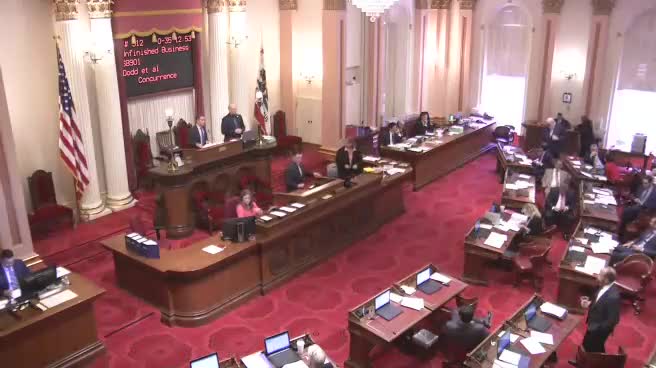 4MIN
Senate Floor
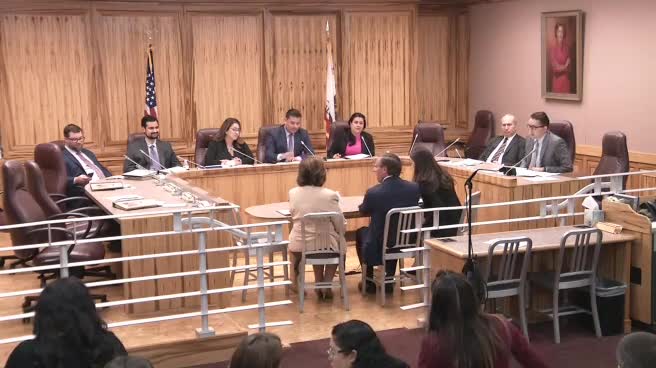 3MIN
Senate Standing Committee on Labor and Industrial Relations
Bill Author

Bill Co-Author(s):