AB 2283: Income taxes: exclusion: turf removal water conservation program.
- Session Year: 2017-2018
- House: Assembly
- Latest Version Date: 2018-02-13
The Personal Income Tax Law and the Corporation Tax Law, for taxable years beginning on or after January 1, 2014, and before January 1, 2019, provide an exclusion from gross income for any amount received as a rebate, voucher, or other financial incentive issued by a local water agency or supplier for participation in a turf removal water conservation program.
This bill would extend the operation of those provisions to January 1, 2024.
This bill would take effect immediately as a tax levy.
(a)For taxable years beginning on or after January 1, 2014, and before January 1, 2019, 2024, gross income does not include any amount received as a rebate, voucher, or other financial incentive issued by a local water agency or supplier for participation in a turf removal water conservation program.
(b)This section shall remain in effect only until December 1, 2019, 2024, and as of that date is repealed.
SEC. 2.Section 24308.2 of the Revenue and Taxation Code is amended to read:24308.2.(a)For taxable years beginning on or after January 1, 2014, and before January 1, 2019, 2024, gross income does not include any amount received as a rebate, voucher, or other financial incentive issued by a local water agency or supplier for participation in a turf removal water conservation program.
(b)This section shall remain in effect only until December 1, 2019, 2024, and as of that date is repealed.
SEC. 3.This act provides for a tax levy within the meaning of Article IV of the California Constitution and shall go into immediate effect.
|
Date
|
Status
|
|---|---|
| May 25, 2018 | In committee: Held under submission. |
| Apr 4, 2018 | In committee: Set, first hearing. Referred to suspense file. |
| Mar 20, 2018 | From committee: Do pass and re-refer to Com. on APPR. (Ayes 10. Noes 0.) (March 19). Re-referred to Com. on APPR. |
| Mar 1, 2018 | Referred to Com. on REV. & TAX. |
| Feb 14, 2018 | From printer. May be heard in committee March 16. |
| Feb 13, 2018 | Read first time. To print. |
|
Date
|
Description
|
Location
|
Votes
|
|
|---|---|---|---|---|
| Mar 19, 2018 | Do pass and be re-referred to the Committee on [Appropriations] | Assembly Standing Committee on Revenue and Taxation |
Passed |
This list shows positions taken on this bill by organizations on the date displayed, which is linked to the original source.
Positions by individuals are not included.
|
Organization
|
Position
|
Date
|
|---|---|---|
| California Municipal Utilities Association | ** Support | Mar 16, 2018 |
| City of Pasadena | ** Support | Mar 16, 2018 |
Date of Hearing: April 4, 2018
ASSEMBLY COMMITTEE ON APPROPRIATIONS
Lorena Gonzalez Fletcher, Chair
ABPCA Bill Id:AB 2283
Author:(Holden) – As Introduced Ver:February 13, 2018
Policy Committee: | Revenue and Taxation | Vote: | 10 - 0 |
|
|
Urgency: No State Mandated Local Program: No Reimbursable: No
SUMMARY:
This bill extends, from January 1, 2019, to January 1, 2024, the sunset date for a gross income exclusion for amounts received from a local water agency or supplier as part of a turf removal water conservation program.
FISCAL EFFECT:
Annual General Fund (GF) revenue loss of $80,000 in 2018-19, $150,000 in 2019-20, and $150,000 in 2020-21.
COMMENTS:
- Background. Existing state law allows taxpayers to exclude from gross income various financial incentives received as part of a conservation or energy efficiency program, meaning that these incentives are not considered income for state income tax purposes. For example, a taxpayer can exclude from gross income the amount he or she received as financial rebates or vouchers issued by the California Energy Commission or the California Public Utilities Commission for the purchase of thermal systems, solar systems, or fuel cell generating systems. Similarly, taxpayers can also exclude from their income the financial incentives received from local water agencies to remove a property’s turf. This turf removal program is set to expire on January 1, 2019.
- Purpose. According to the author, AB 2283 will encourage future participation in water conservation programs. The City of Pasadena, a supporter of the bill, points to Pasadena Water and Power’s local turf replacement program, which since 2011 has resulted in more than 1.7 million square feet of turf being removed, as a successful incentive program.
- Fiscal implications of tax expenditures. Existing law allows for various tax expenditures such as credits, deductions, exclusions, and exemptions for particular taxpayer groups. These features of the tax code can result in significant state costs through foregone tax revenue and, in many cases, policymakers have little control over the revenue loss that occurs in any given year. As a result, many tax expenditure bills now include provisions designed to give the Legislature more control over costs. Examples of such provisions include placing a sunset date or making a bill’s provisions contingent upon a separate budget appropriation. AB 2283 extends a current program five years rather than making it permanent.
Analysis Prepared by: Luke Reidenbach / APPR. / (916) 319-2081
Date of Hearing: March 19, 2018
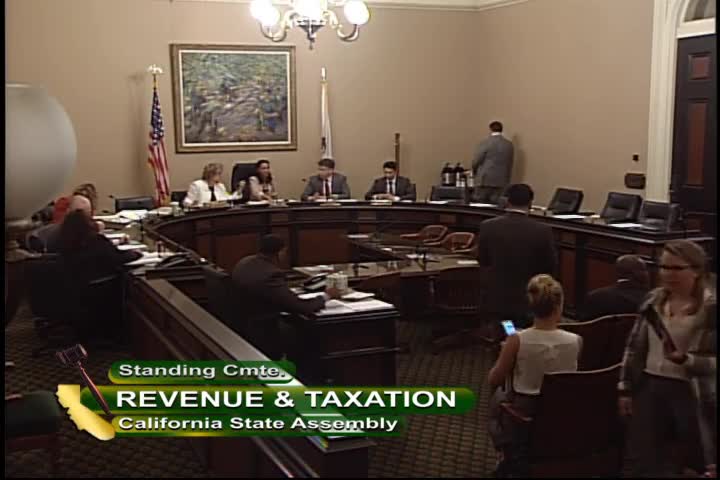
ASSEMBLY COMMITTEE ON REVENUE AND TAXATION
Autumn R. Burke, Chairwoman
ABPCA Bill Id:AB 2283 (
Author:Holden) – As Introduced Ver:February 13, 2018
Majority vote. Tax levy. Fiscal committee.
SUBJECT: Income taxes: exclusion: turf removal water conservation program
SUMMARY: Extends, by five years, the sunset date for the existing gross income exclusion applicable to amounts received for participation in a turf removal water conservation program. Specifically, this bill:
- Extends, by five years, the gross income exclusion for any amount received as a rebate, voucher, or other financial incentive issued by a local water agency or supplier for participation in a turf removal water conservation program.
- Applies the exclusion to taxable years beginning before January 1, 2024 (instead of January 1, 2019 under current law).
- Takes immediate effect as a tax levy.
EXISTING FEDERAL LAW:
- Defines "gross income" as, except as otherwise provided, all income from whatever source derived. (Internal Revenue Code (IRC) Section 61.) Among other things, gross income specifically includes compensation for services, business income, gains from dealings in property, interest, rents, royalties, dividends, and annuities.
- Excludes from gross income the value of any subsidy provided (directly or indirectly) by a public utility to a customer for the purchase or installation of any energy conservation measure, as defined. (IRC Section 136.)
EXISTING STATE LAW:
- Provides that IRC Section 61, relating to the definition of gross income, shall apply, except as specified. (Revenue and Taxation Code (R&TC) Section 17071.)
- Provides an exclusion, under both the Personal Income Tax (PIT) Law and the Corporation Tax (CT) Law, for any amount received as a rebate, voucher, or other financial incentive issued by a local water agency or supplier for participation in a turf removal water conservation program. The exclusion specifically applies for taxable years beginning on or after January 1, 2014, and before January 1, 2019. (R&TC Sections 17138.2 and 24308.2.)
- Provides an exclusion, under both the PIT Law and the CT Law, for any rebate, voucher, or other financial incentive issued by the California Energy Commission, the Public Utility Commission, or a local publicly owned electric utility, for an expense incurred by a taxpayer to purchase or install a:
- Thermal system as defined in Public Resources Code (PRC) Section 25600;
- Solar system as defined in PRC Section 25600;
- Wind energy system device that produces electricity; or,
- Fuel cell generating system that produces electricity. (R&TC Sections 17138.1 and 24308.1.)
- Thermal system as defined in Public Resources Code (PRC) Section 25600;
FISCAL EFFECT: The Franchise Tax Board estimates that this bill would reduce General Fund revenues by $80,000 in fiscal year (FY) 2018-19, by $150,000 in FY 2019-20, and by $150,000 in FY 2020-21.
COMMENTS:
- The author has provided the following statement in support of this bill:
Current drought impact for California ranges from abnormally dry to severe drought. We need to do everything we can to continue to conserve water and energy. These continued incentives will encourage future participation in these programs with the end goal of increasing water conservation in California.
- This bill is supported by the City of Pasadena, which notes:
For several years, the City of Pasadena's municipally-owned utility, Pasadena Water and Power ("PWP"), ran a successful local turf replacement program in partnership with SoCal Water$mart. PWP currently provides an incentive for turf removal up to a maximum of $500 per property, as well as a no-cost turf retrofit program for low-income customers. PWP has consistently supported customers in transforming their landscapes from turf to drought tolerant. Since Fiscal Year 2011, our customers have removed more than 1.7 million square feet of turf saving 149 million gallons of water to-date.
- Committee Staff Comments
- What is a "tax expenditure"? Existing law provides various credits, deductions, exclusions, and exemptions for particular taxpayer groups. In the late 1960s, U.S. Treasury officials began arguing that these features of the tax law should be referred to as "expenditures" since they are generally enacted to accomplish some governmental purpose and there is a determinable cost associated with each (in the form of foregone revenues). This bill extends an existing tax expenditure program, in the form of a gross income exclusion, to encourage greater participation in water conservation turf removal programs.
- How is a tax expenditure different from a direct expenditure? As the Department of Finance notes in its annual Tax Expenditure Report, there are several key differences between tax expenditures and direct expenditures. First, tax expenditures are reviewed less frequently than direct expenditures once they are put in place. This can offer taxpayers greater economic certainty, but it can also result in tax expenditures remaining a part of the tax code without demonstrating any public benefit. Second, there is generally no control over the amount of revenue losses associated with any given tax expenditure. Finally, it should also be noted that, once enacted, it takes a two-thirds vote to rescind an existing tax expenditure absent a sunset date. This effectively results in a "one-way ratchet" whereby tax expenditures can be conferred by majority vote, but cannot be rescinded, irrespective of their efficacy, without a supermajority vote.
- Existing law: Existing federal and state law excludes from gross income any subsidy provided by a public utility for the purchase or installation of any "energy conservation measure". An "energy conservation measure", in turn, is defined as any installation or modification primarily designed to reduce the consumption of electricity or natural gas or to improve the management of energy demand in a dwelling unit, as specified.
Existing state law also provides an exclusion for any rebate, voucher, or other financial incentive issued by the California Energy Commission, the Public Utility Commission, or a local publicly owned electric utility, for an expense incurred by a taxpayer to purchase or install a specified thermal system, solar system, wind energy system, or a fuel cell generating system.
Finally, as noted above, existing state law provides an exclusion for any amount received as a rebate, voucher, or other financial incentive issued by a local water agency or supplier for participation in a turf removal water conservation program.
- What are we covering? In recent years, a number of local governments and agencies have established rebate programs to encourage water conservation. For example, in an effort to reduce water consumption, the Metropolitan Water District of Southern California ("Metropolitan") instituted a rebate program for the removal of water-intensive turf. Unfortunately, Metropolitan notes that turf removal incentives are no longer being offered region-wide because funding has been exhausted. Nevertheless, Metropolitan advises that local turf removal rebates are still being offered by the City of Anaheim, the Los Angeles Department of Water and Power, and by Pasadena Water and Power.
- Wait, isn't the drought over? In a word, no. Despite last winter's significant rainfall, large swathes of the state remain dry. As of March 6, 2018, abnormal dryness or drought are currently affecting approximately 36,368,000 people in California or about 98% of California's population. Nevertheless, news reports note that water conservation habits, which had improved over five years of drought, are quickly deteriorating. According to new data from the State Water Resources Control Board, for the seventh time in the last eight months, the amount of water saved by urban Californians has declined.
- Issues of conformity: This bill would continue the operation of a state gross income exclusion for which federal law appears to have no counterpart, thus increasing nonconformity. California typically conforms to federal law for gross income exclusions for ease of administration.
- Prior legislation:
- AB 2434 (Gomez), Chapter 738, Statutes of 2014, provided, for taxable years beginning on or after January 1, 2014, and before January 1, 2019, a gross income exclusion for amounts received as a rebate, voucher, or other financial incentive issued by a local water agency or supplier for participation in a turf removal water conservation program.
- SB 358 (Cannella), of the 2011-12 Legislative Session, would have excluded from gross income any amount provided to a person by the California Air Resources Board, an air pollution control district, or an air quality management district, as defined, for the purpose of air pollution reduction. SB 358 was never heard by the Senate Governance and Finance Committee and was returned to the Secretary of the Senate.
- AB 1968 (Nation), Chapter 843, Statutes of 2002, provided an exclusion for specified rebates and vouchers issued for expenses paid or incurred by a taxpayer to purchase or install a thermal system, solar system, wind energy system, or a fuel cell generating system.
REGISTERED SUPPORT / OPPOSITION:
Support
California Municipal Utilities Association
City of Pasadena
Opposition
None on file
Analysis Prepared by: M. David Ruff / REV. & TAX. / (916) 319-2098
Discussed in Hearing
 4MIN
Assembly Standing Committee on Revenue and Taxation
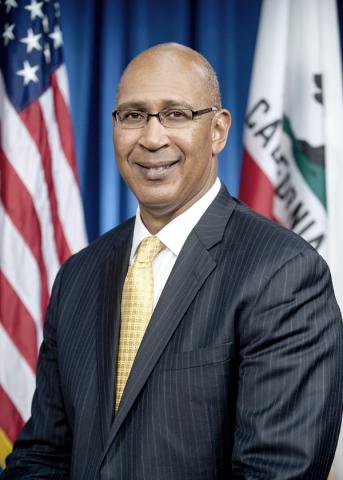
Bill Author
Bill Co-Author(s):