AB 2298: Parent-child relationship: assisted reproduction agreement for gestational carriers.
- Session Year: 2017-2018
- House: Assembly
- Latest Version Date: 2018-08-29
Existing law regulates specified aspects of agreements for a woman to carry and bear a child for another through medically assisted reproduction, and defines 2 types of surrogacy for these provisions: traditional surrogate and gestational carrier. A gestational carrier is a woman who is not an intended parent, as defined, and who agrees to gestate an embryo that is genetically unrelated to her pursuant to an assisted reproduction agreement. The Uniform Parentage Act defines the parent and child relationship as the legal relationship existing between a child and the childs parents and provides rebuttable presumptions as to the parentage of a child born under certain circumstances.
Existing law requires a court, upon petition of any party to an assisted reproduction agreement for gestational carriers that was executed in a specified manner and contains certain provisions, to issue a judgment establishing a parent-child relationship of the intended parent or intended parents identified in the agreement and further establishing that the gestational carrier, her spouse, or partner is not a parent of, and has no parental rights or duties with respect to, the child or children.
This bill would require an assisted reproductive agreement for gestational carriers, in order to be sufficient to require a court to enter a judgment establishing a parent-child relationship, to also disclose that any child conceived through sexual intercourse by the gestational carrier is the child of the gestational carrier. The bill would specifically establish that the gestational carrier surrogate and her spouse or partner do not have a parent-child relationship with the child or children who are born from the transferred embryo or embryos if an agreement for gestational carriers that complies with specified provisions is lodged with the superior court, as specified.
Existing law regulates specified aspects of agreements for a woman to carry and bear a child for another through medically assisted reproduction, and defines 2 types of surrogacy for these provisions: traditional surrogate and gestational carrier. A gestational carrier is a woman who is not an intended parent, as defined, and who agrees to gestate an embryo that is genetically unrelated to her pursuant to an assisted reproduction agreement. The Uniform Parentage Act defines the parent and child relationship as the legal relationship existing between a child and the childs parents and provides rebuttable presumptions as to the parentage of a child born under certain circumstances.
Existing law requires a court, upon petition of any party to an assisted reproduction agreement for gestational carriers that was executed in a specified manner and contains certain provisions, to issue a judgment establishing a parent-child relationship of the intended parent or intended parents identified in the agreement and further establishing that the gestational carrier, her spouse, or partner is not a parent of, and has no parental rights or duties with respect to, the child or children.
This bill would require an assisted reproductive agreement for gestational carriers, in order to be sufficient to require a court to enter a judgment establishing a parent-child relationship, to also disclose that any child conceived through sexual intercourse by the gestational carrier is the child of the gestational carrier.
Existing law regulates specified aspects of agreements for a woman to carry and bear a child for another through medically assisted reproduction, and defines 2 types of surrogacy for these provisions: traditional surrogate and gestational carrier. A gestational carrier is a woman who is not an intended parent, as defined, and who agrees to gestate an embryo that is genetically unrelated to her pursuant to an assisted reproduction agreement. The Uniform Parentage Act defines the parent and child relationship as the legal relationship existing between a child and the childs parents and provides rebuttable presumptions as to the parentage of a child born under certain circumstances.
Existing law requires a court, upon petition of any party to an assisted reproduction agreement for gestational carriers that was executed in a specified manner and contains certain provisions, to issue a judgment establishing a parent-child relationship of the intended parent or intended parents identified in the agreement and further establishing that the gestational carrier, her spouse, or partner is not a parent of, and has no parental rights or duties with respect to, the child or children.
This bill would require an assisted reproductive agreement for gestational carriers, in order to be sufficient to require a court to enter a judgment establishing a parent-child relationship, to also disclose that, absent a written agreement to the contrary, that any child conceived through sexual intercourse by the gestational carrier is the child of the gestational carrier.
Existing law regulates specified aspects of agreements for a woman to carry and bear a child for another through medically assisted reproduction, and defines 2 types of surrogacy for these provisions: traditional surrogate and gestational carrier. A gestational carrier is a woman who is not an intended parent, as defined, and who agrees to gestate an embryo that is genetically unrelated to her pursuant to an assisted reproduction agreement. The Uniform Parentage Act defines the parent and child relationship as the legal relationship existing between a child and the childs parents and provides rebuttable presumptions as to the parentage of a child born under certain circumstances.
Existing law requires a court, upon petition of any party to an assisted reproduction agreement for gestational carriers that was executed in a specified manner and contains certain provisions, to issue a judgment establishing a parent-child relationship of the intended parent or intended parents identified in the agreement and further establishing that the gestational carrier, her spouse, or partner is not a parent of, and has no parental rights or duties with respect to, the child or children.
This bill would require an assisted reproductive agreement for gestational carriers, in order to be sufficient to require a court to enter a judgment establishing a parent-child relationship, to also identify the county where the assisted reproduction agreement for gestational carriers was executed. disclose that, absent a written agreement to the contrary, any child conceived through sexual intercourse by the gestational carrier is the child of the gestational carrier.
Existing law regulates specified aspects of agreements for a woman to carry and bear a child for another through medically assisted reproduction, and defines 2 types of surrogacy for these provisions: traditional surrogate and gestational carrier. A gestational carrier is a woman who is not an intended parent, as defined, and who agrees to gestate an embryo that is genetically unrelated to her pursuant to an assisted reproduction agreement. The Uniform Parentage Act defines the parent and child relationship as the legal relationship existing between a child and the childs parents and provides rebuttable presumptions as to the parentage of a child born under certain circumstances.
Existing law requires a court, upon petition of any party to an assisted reproduction agreement for gestational carriers that was executed in a specified manner and contains certain provisions, to issue a judgment establishing a parent-child relationship of the intended parent or intended parents identified in the agreement and further establishing that the gestational carrier, her spouse, or partner is not a parent of, and has no parental rights or duties with respect to, the child or children.
This bill would require an assisted reproductive agreement for gestational carriers, in order to be sufficient to require a court to enter a judgment establishing a parent-child relationship, to also identify the county where the assisted reproduction agreement for gestational carriers was executed.
(a)An assisted reproduction agreement for gestational carriers shall contain, but shall not be limited to, all of the following information:
(1)The date on which the assisted reproduction agreement for gestational carriers was executed.
(2)The persons from which the gametes originated, unless donated gametes were used, in which case the assisted reproduction agreement does not need to specify the name of the donor but shall specify whether the donated gamete or gametes were eggs, sperm, or embryos, or all.
(3)The identity of the intended parent or parents.
(4)Disclosure of how the intended parents will cover the medical expenses of the gestational carrier and of the newborn or newborns. If health care coverage is used to cover those medical expenses, the disclosure shall include a review of the health care policy provisions related to coverage for surrogate pregnancy, including any possible liability of the gestational carrier, third-party liability liens or other insurance coverage, and any notice requirements that could affect coverage or liability of the gestational carrier. The review and disclosure do not constitute legal advice. If coverage of liability is uncertain, a statement of that fact shall be sufficient to meet the requirements of this section.
(5)Disclosure that any child conceived through sexual intercourse by the gestational carrier is the child of the gestational carrier.
(b)Prior to executing the written assisted reproduction agreement for gestational carriers, a surrogate and the intended parent or intended parents shall be represented by separate independent licensed attorneys of their choosing.
(c)The assisted reproduction agreement for gestational carriers shall be executed by the parties and the signatures on the assisted reproduction agreement for gestational carriers shall be notarized or witnessed by an equivalent method of affirmation as required in the jurisdiction where the assisted reproduction agreement for gestational carriers is executed.
(d)The parties to an assisted reproduction agreement for gestational carriers shall not undergo an embryo transfer procedure, or commence injectable medication in preparation for an embryo transfer for assisted reproduction purposes, until the assisted reproduction agreement for gestational carriers has been fully executed as required by subdivisions (b) and (c) of this section.
(e)An action to establish the parent-child relationship between the intended parent or parents and the child as to a child conceived pursuant to an assisted reproduction agreement for gestational carriers may be filed before the childs birth and may be filed in the county where the child is anticipated to be born, the county where the intended parent or intended parents reside, the county where the surrogate resides, the county where the assisted reproduction agreement for gestational carriers is executed, or the county where medical procedures pursuant to the agreement are to be performed. A copy of the assisted reproduction agreement for gestational carriers shall be lodged in the court action filed for the purpose of establishing the parent-child relationship. The parties to the assisted reproduction agreement for gestational carriers shall attest, under penalty of perjury, and to the best of their knowledge and belief, as to the parties compliance with this section in entering into the assisted reproduction agreement for gestational carriers. Submitting those declarations shall not constitute a waiver, under Section 912 of the Evidence Code, of the lawyer-client privilege described in Article 3 (commencing with Section 950) of Chapter 4 of Division 8 of the Evidence Code.
(f)(1)A notarized assisted reproduction agreement for gestational carriers that complies with subdivision (a) and is signed by all the parties, with the attached declarations of independent attorneys, and lodged with the superior court in accordance with this section, shall establish that the gestational carrier surrogate and her spouse or partner do not have a parent-child relationship with the child or children who are born from the transferred embryo or embryos under subdivision (a) of Section 7610 or Section 7613 and that any presumptions contained within Part 2 (commencing with Section 7540) or Section 7611 are rebutted with respect to the child or children who are born from the transferred embryo or embryos.
(2)Upon petition of any party to a properly executed assisted reproduction agreement for gestational carriers, the court shall issue a judgment or order establishing a parent-child relationship, whether pursuant to Section 7630 or otherwise. The judgment or order may be issued before or after the childs or childrens birth subject to the limitations of Section 7633. Subject to proof of compliance with this section, the judgment or order shall establish the parent-child relationship of the intended parent or intended parents identified in the surrogacy agreement and shall establish that the surrogate, her spouse, or partner is not a parent of, and has no parental rights or duties with respect to, the child or children who are born from the transferred embryo or embryos. The judgment or order shall be issued forthwith and without further hearing or evidence, unless the court or a party to the assisted reproduction agreement for gestational carriers has a good faith, reasonable belief that the assisted reproduction agreement for gestational carriers or attorney declarations were not executed in accordance with this section. Upon motion by a party to the assisted reproduction agreement for gestational carriers, the matter shall be scheduled for hearing before a judgment or order is issued. Nothing in this section shall be construed to prevent a court from finding and declaring that the intended parent is or intended parents are the parent or parents of the child where compliance with this section has not been met; however, the court shall require sufficient proof entitling the parties to the relief sought.
(g)The petition, relinquishment or consent, agreement, order, report to the court from any investigating agency, and any power of attorney and deposition filed in the office of the clerk of the court pursuant to this part shall not be open to inspection by any person other than the parties to the proceeding and their attorneys and the State Department of Social Services, except upon the written authority of a judge of the superior court. A judge of the superior court shall not authorize anyone to inspect the petition, relinquishment or consent, agreement, order, report to the court from any investigating agency, or power of attorney or deposition, or any portion of those documents, except in exceptional circumstances and where necessary. The petitioner may be required to pay the expense of preparing the copies of the documents to be inspected.
(h)Upon the written request of any party to the proceeding and the order of any judge of the superior court, the clerk of the court shall not provide any documents referred to in subdivision (g) for inspection or copying to any other person, unless the name of the gestational carrier or any information tending to identify the gestational carrier is deleted from the documents or copies thereof.
(i)An assisted reproduction agreement for gestational carriers executed in accordance with this section is presumptively valid and shall not be rescinded or revoked without a court order. For purposes of this part, any failure to comply with the requirements of this section shall rebut the presumption of the validity of the assisted reproduction agreement for gestational carriers.
(a)An assisted reproduction agreement for gestational carriers shall contain, but shall not be limited to, all of the following information:
(1)The date on which the assisted reproduction agreement for gestational carriers was executed.
(2)The persons from which the gametes originated, unless donated gametes were used, in which case the assisted reproduction agreement does not need to specify the name of the donor but shall specify whether the donated gamete or gametes were eggs, sperm, or embryos, or all.
(3)The identity of the intended parent or parents.
(4)Disclosure of how the intended parents will cover the medical expenses of the gestational carrier and of the newborn or newborns. If health care coverage is used to cover those medical expenses, the disclosure shall include a review of the health care policy provisions related to coverage for surrogate pregnancy, including any possible liability of the gestational carrier, third-party liability liens or other insurance coverage, and any notice requirements that could affect coverage or liability of the gestational carrier. The review and disclosure do not constitute legal advice. If coverage of liability is uncertain, a statement of that fact shall be sufficient to meet the requirements of this section.
(5)Disclosure that any child conceived through sexual intercourse by the gestational carrier is the child of the gestational carrier.
(b)Prior to executing the written assisted reproduction agreement for gestational carriers, a surrogate and the intended parent or intended parents shall be represented by separate independent licensed attorneys of their choosing.
(c)The assisted reproduction agreement for gestational carriers shall be executed by the parties and the signatures on the assisted reproduction agreement for gestational carriers shall be notarized or witnessed by an equivalent method of affirmation as required in the jurisdiction where the assisted reproduction agreement for gestational carriers is executed.
(d)The parties to an assisted reproduction agreement for gestational carriers shall not undergo an embryo transfer procedure, or commence injectable medication in preparation for an embryo transfer for assisted reproduction purposes, until the assisted reproduction agreement for gestational carriers has been fully executed as required by subdivisions (b) and (c) of this section.
(e)An action to establish the parent-child relationship between the intended parent or parents and the child as to a child conceived pursuant to an assisted reproduction agreement for gestational carriers may be filed before the childs birth and may be filed in the county where the child is anticipated to be born, the county where the intended parent or intended parents reside, the county where the surrogate resides, the county where the assisted reproduction agreement for gestational carriers is executed, or the county where medical procedures pursuant to the agreement are to be performed. A copy of the assisted reproduction agreement for gestational carriers shall be lodged in the court action filed for the purpose of establishing the parent-child relationship. The parties to the assisted reproduction agreement for gestational carriers shall attest, under penalty of perjury, and to the best of their knowledge and belief, as to the parties compliance with this section in entering into the assisted reproduction agreement for gestational carriers. Submitting those declarations shall not constitute a waiver, under Section 912 of the Evidence Code, of the lawyer-client privilege described in Article 3 (commencing with Section 950) of Chapter 4 of Division 8 of the Evidence Code.
(f)(1)A notarized assisted reproduction agreement for gestational carriers that complies with subdivision (a) and is signed by all the parties, with the attached declarations of independent attorneys, and lodged with the superior court in accordance with this section, shall rebut any presumptions contained within Part 2 (commencing with Section 7540), subdivision (a) of Section 7610, and Sections 7611 and 7613, as to the gestational carrier surrogate, her spouse, or partner being a parent of the child or children.(f)(1)A notarized assisted reproduction agreement for gestational carriers that complies with subdivision (a) and is signed by all the parties, with the attached declarations of independent attorneys, and lodged with the superior court in accordance with this section, shall establish that the gestational carrier surrogate and her spouse or partner do not have a parent-child relationship with the child or children who are born from the transferred embryo or embryos under subdivision (a) of Section 7610 or Section 7613 and that any presumptions contained within Part 2 (commencing with Section 7540) or Section 7611 are rebutted with respect to the child or children who are born from the transferred embryo or embryos.
(2)Upon petition of any party to a properly executed assisted reproduction agreement for gestational carriers, the court shall issue a judgment or order establishing a parent-child relationship, whether pursuant to Section 7630 or otherwise. The judgment or order may be issued before or after the childs or childrens birth subject to the limitations of Section 7633. Subject to proof of compliance with this section, the judgment or order shall establish the parent-child relationship of the intended parent or intended parents identified in the surrogacy agreement and shall establish that the surrogate, her spouse, or partner is not a parent of, and has no parental rights or duties with respect to, the child or children. children who are born from the transferred embryo or embryos. The judgment or order shall be issued forthwith and without further hearing or evidence, unless the court or a party to the assisted reproduction agreement for gestational carriers has a good faith, reasonable belief that the assisted reproduction agreement for gestational carriers or attorney declarations were not executed in accordance with this section. Upon motion by a party to the assisted reproduction agreement for gestational carriers, the matter shall be scheduled for hearing before a judgment or order is issued. Nothing in this section shall be construed to prevent a court from finding and declaring that the intended parent is or intended parents are the parent or parents of the child where compliance with this section has not been met; however, the court shall require sufficient proof entitling the parties to the relief sought.
(g)The petition, relinquishment or consent, agreement, order, report to the court from any investigating agency, and any power of attorney and deposition filed in the office of the clerk of the court pursuant to this part shall not be open to inspection by any person other than the parties to the proceeding and their attorneys and the State Department of Social Services, except upon the written authority of a judge of the superior court. A judge of the superior court shall not authorize anyone to inspect the petition, relinquishment or consent, agreement, order, report to the court from any investigating agency, or power of attorney or deposition, or any portion of those documents, except in exceptional circumstances and where necessary. The petitioner may be required to pay the expense of preparing the copies of the documents to be inspected.
(h)Upon the written request of any party to the proceeding and the order of any judge of the superior court, the clerk of the court shall not provide any documents referred to in subdivision (g) for inspection or copying to any other person, unless the name of the gestational carrier or any information tending to identify the gestational carrier is deleted from the documents or copies thereof.
(i)An assisted reproduction agreement for gestational carriers executed in accordance with this section is presumptively valid and shall not be rescinded or revoked without a court order. For purposes of this part, any failure to comply with the requirements of this section shall rebut the presumption of the validity of the assisted reproduction agreement for gestational carriers.
(a)An assisted reproduction agreement for gestational carriers shall contain, but shall not be limited to, all of the following information:
(1)The date on which the assisted reproduction agreement for gestational carriers was executed.
(2)The persons from which the gametes originated, unless donated gametes were used, in which case the assisted reproduction agreement does not need to specify the name of the donor but shall specify whether the donated gamete or gametes were eggs, sperm, or embryos, or all.
(3)The identity of the intended parent or parents.
(4)Disclosure of how the intended parents will cover the medical expenses of the gestational carrier and of the newborn or newborns. If health care coverage is used to cover those medical expenses, the disclosure shall include a review of the health care policy provisions related to coverage for surrogate pregnancy, including any possible liability of the gestational carrier, third-party liability liens or other insurance coverage, and any notice requirements that could affect coverage or liability of the gestational carrier. The review and disclosure do not constitute legal advice. If coverage of liability is uncertain, a statement of that fact shall be sufficient to meet the requirements of this section.
(5)Disclosure that any child conceived through sexual intercourse by the gestational carrier is the child of the gestational carrier.
(b)Prior to executing the written assisted reproduction agreement for gestational carriers, a surrogate and the intended parent or intended parents shall be represented by separate independent licensed attorneys of their choosing.
(c)The assisted reproduction agreement for gestational carriers shall be executed by the parties and the signatures on the assisted reproduction agreement for gestational carriers shall be notarized or witnessed by an equivalent method of affirmation as required in the jurisdiction where the assisted reproduction agreement for gestational carriers is executed.
(d)The parties to an assisted reproduction agreement for gestational carriers shall not undergo an embryo transfer procedure, or commence injectable medication in preparation for an embryo transfer for assisted reproduction purposes, until the assisted reproduction agreement for gestational carriers has been fully executed as required by subdivisions (b) and (c) of this section.
(e)An action to establish the parent-child relationship between the intended parent or parents and the child as to a child conceived pursuant to an assisted reproduction agreement for gestational carriers may be filed before the childs birth and may be filed in the county where the child is anticipated to be born, the county where the intended parent or intended parents reside, the county where the surrogate resides, the county where the assisted reproduction agreement for gestational carriers is executed, or the county where medical procedures pursuant to the agreement are to be performed. A copy of the assisted reproduction agreement for gestational carriers shall be lodged in the court action filed for the purpose of establishing the parent-child relationship. The parties to the assisted reproduction agreement for gestational carriers shall attest, under penalty of perjury, and to the best of their knowledge and belief, as to the parties compliance with this section in entering into the assisted reproduction agreement for gestational carriers. Submitting those declarations shall not constitute a waiver, under Section 912 of the Evidence Code, of the lawyer-client privilege described in Article 3 (commencing with Section 950) of Chapter 4 of Division 8 of the Evidence Code.
(f)(1)A notarized assisted reproduction agreement for gestational carriers that complies with subdivision (a) and is signed by all the parties, with the attached declarations of independent attorneys, and lodged with the superior court in accordance with this section, shall rebut any presumptions contained within Part 2 (commencing with Section 7540), subdivision (a) of Section 7610, and Sections 7611 and 7613, as to the gestational carrier surrogate, her spouse, or partner being a parent of the child or children.
(2)Upon petition of any party to a properly executed assisted reproduction agreement for gestational carriers, the court shall issue a judgment or order establishing a parent-child relationship, whether pursuant to Section 7630 or otherwise. The judgment or order may be issued before or after the childs or childrens birth subject to the limitations of Section 7633. Subject to proof of compliance with this section, the judgment or order shall establish the parent-child relationship of the intended parent or intended parents identified in the surrogacy agreement and shall establish that the surrogate, her spouse, or partner is not a parent of, and has no parental rights or duties with respect to, the child or children. The judgment or order shall be issued forthwith and without further hearing or evidence, unless the court or a party to the assisted reproduction agreement for gestational carriers has a good faith, reasonable belief that the assisted reproduction agreement for gestational carriers or attorney declarations were not executed in accordance with this section. Upon motion by a party to the assisted reproduction agreement for gestational carriers, the matter shall be scheduled for hearing before a judgment or order is issued. Nothing in this section shall be construed to prevent a court from finding and declaring that the intended parent is or intended parents are the parent or parents of the child where compliance with this section has not been met; however, the court shall require sufficient proof entitling the parties to the relief sought.
(g)The petition, relinquishment or consent, agreement, order, report to the court from any investigating agency, and any power of attorney and deposition filed in the office of the clerk of the court pursuant to this part shall not be open to inspection by any person other than the parties to the proceeding and their attorneys and the State Department of Social Services, except upon the written authority of a judge of the superior court. A judge of the superior court shall not authorize anyone to inspect the petition, relinquishment or consent, agreement, order, report to the court from any investigating agency, or power of attorney or deposition, or any portion of those documents, except in exceptional circumstances and where necessary. The petitioner may be required to pay the expense of preparing the copies of the documents to be inspected.
(h)Upon the written request of any party to the proceeding and the order of any judge of the superior court, the clerk of the court shall not provide any documents referred to in subdivision (g) for inspection or copying to any other person, unless the name of the gestational carrier or any information tending to identify the gestational carrier is deleted from the documents or copies thereof.
(i)An assisted reproduction agreement for gestational carriers executed in accordance with this section is presumptively valid and shall not be rescinded or revoked without a court order. For purposes of this part, any failure to comply with the requirements of this section shall rebut the presumption of the validity of the assisted reproduction agreement for gestational carriers.
(a)An assisted reproduction agreement for gestational carriers shall contain, but shall not be limited to, all of the following information:
(1)The date on which the assisted reproduction agreement for gestational carriers was executed.
(2)The persons from which the gametes originated, unless donated gametes were used, in which case the assisted reproduction agreement does not need to specify the name of the donor but shall specify whether the donated gamete or gametes were eggs, sperm, or embryos, or all.
(3)The identity of the intended parent or parents.
(4)Disclosure of how the intended parents will cover the medical expenses of the gestational carrier and of the newborn or newborns. If health care coverage is used to cover those medical expenses, the disclosure shall include a review of the health care policy provisions related to coverage for surrogate pregnancy, including any possible liability of the gestational carrier, third-party liability liens or other insurance coverage, and any notice requirements that could affect coverage or liability of the gestational carrier. The review and disclosure do not constitute legal advice. If coverage of liability is uncertain, a statement of that fact shall be sufficient to meet the requirements of this section.
(5)Disclosure that, absent a written agreement to the contrary, that any child conceived through sexual intercourse by the gestational carrier is the child of the gestational carrier.
(b)Prior to executing the written assisted reproduction agreement for gestational carriers, a surrogate and the intended parent or intended parents shall be represented by separate independent licensed attorneys of their choosing.
(c)The assisted reproduction agreement for gestational carriers shall be executed by the parties and the signatures on the assisted reproduction agreement for gestational carriers shall be notarized or witnessed by an equivalent method of affirmation as required in the jurisdiction where the assisted reproduction agreement for gestational carriers is executed.
(d)The parties to an assisted reproduction agreement for gestational carriers shall not undergo an embryo transfer procedure, or commence injectable medication in preparation for an embryo transfer for assisted reproduction purposes, until the assisted reproduction agreement for gestational carriers has been fully executed as required by subdivisions (b) and (c) of this section.
(e)An action to establish the parent-child relationship between the intended parent or parents and the child as to a child conceived pursuant to an assisted reproduction agreement for gestational carriers may be filed before the childs birth and may be filed in the county where the child is anticipated to be born, the county where the intended parent or intended parents reside, the county where the surrogate resides, the county where the assisted reproduction agreement for gestational carriers is executed, or the county where medical procedures pursuant to the agreement are to be performed. A copy of the assisted reproduction agreement for gestational carriers shall be lodged in the court action filed for the purpose of establishing the parent-child relationship. The parties to the assisted reproduction agreement for gestational carriers shall attest, under penalty of perjury, and to the best of their knowledge and belief, as to the parties compliance with this section in entering into the assisted reproduction agreement for gestational carriers. Submitting those declarations shall not constitute a waiver, under Section 912 of the Evidence Code, of the lawyer-client privilege described in Article 3 (commencing with Section 950) of Chapter 4 of Division 8 of the Evidence Code.
(f)(1)A notarized assisted reproduction agreement for gestational carriers signed by all the parties, with the attached declarations of independent attorneys, and lodged with the superior court in accordance with this section, shall rebut any presumptions contained within Part 2 (commencing with Section 7540), subdivision (a) of Section 7610, and Sections 7611 and 7613, as to the gestational carrier surrogate, her spouse, or partner being a parent of the child or children.
(2)Upon petition of any party to a properly executed assisted reproduction agreement for gestational carriers, the court shall issue a judgment or order establishing a parent-child relationship, whether pursuant to Section 7630 or otherwise. The judgment or order may be issued before or after the childs or childrens birth subject to the limitations of Section 7633. Subject to proof of compliance with this section, the judgment or order shall establish the parent-child relationship of the intended parent or intended parents identified in the surrogacy agreement and shall establish that the surrogate, her spouse, or partner is not a parent of, and has no parental rights or duties with respect to, the child or children. The judgment or order shall be issued forthwith and without further hearing or evidence, unless the court or a party to the assisted reproduction agreement for gestational carriers has a good faith, reasonable belief that the assisted reproduction agreement for gestational carriers or attorney declarations were not executed in accordance with this section. Upon motion by a party to the assisted reproduction agreement for gestational carriers, the matter shall be scheduled for hearing before a judgment or order is issued. Nothing in this section shall be construed to prevent a court from finding and declaring that the intended parent is or intended parents are the parent or parents of the child where compliance with this section has not been met; however, the court shall require sufficient proof entitling the parties to the relief sought.
(g)The petition, relinquishment or consent, agreement, order, report to the court from any investigating agency, and any power of attorney and deposition filed in the office of the clerk of the court pursuant to this part shall not be open to inspection by any person other than the parties to the proceeding and their attorneys and the State Department of Social Services, except upon the written authority of a judge of the superior court. A judge of the superior court shall not authorize anyone to inspect the petition, relinquishment or consent, agreement, order, report to the court from any investigating agency, or power of attorney or deposition, or any portion of those documents, except in exceptional circumstances and where necessary. The petitioner may be required to pay the expense of preparing the copies of the documents to be inspected.
(h)Upon the written request of any party to the proceeding and the order of any judge of the superior court, the clerk of the court shall not provide any documents referred to in subdivision (g) for inspection or copying to any other person, unless the name of the gestational carrier or any information tending to identify the gestational carrier is deleted from the documents or copies thereof.
(i)An assisted reproduction agreement for gestational carriers executed in accordance with this section is presumptively valid and shall not be rescinded or revoked without a court order. For purposes of this part, any failure to comply with the requirements of this section shall rebut the presumption of the validity of the assisted reproduction agreement for gestational carriers.
(a)An assisted reproduction agreement for gestational carriers shall contain, but shall not be limited to, all of the following information:
(1)The date on which the assisted reproduction agreement for gestational carriers was executed.
(2)The persons from which the gametes originated, unless donated gametes were used, in which case the assisted reproduction agreement does not need to specify the name of the donor but shall specify whether the donated gamete or gametes were eggs, sperm, or embryos, or all.
(3)The identity of the intended parent or parents.
(4)Disclosure of how the intended parents will cover the medical expenses of the gestational carrier and of the newborn or newborns. If health care coverage is used to cover those medical expenses, the disclosure shall include a review of the health care policy provisions related to coverage for surrogate pregnancy, including any possible liability of the gestational carrier, third-party liability liens or other insurance coverage, and any notice requirements that could affect coverage or liability of the gestational carrier. The review and disclosure do not constitute legal advice. If coverage of liability is uncertain, a statement of that fact shall be sufficient to meet the requirements of this section.
(5)The county where the assisted reproduction agreement for gestational carriers was executed.(5)Disclosure that, absent a written agreement to the contrary, any child conceived through sexual intercourse by the gestational carrier is the child of the gestational carrier.
(b)Prior to executing the written assisted reproduction agreement for gestational carriers, a surrogate and the intended parent or intended parents shall be represented by separate independent licensed attorneys of their choosing.
(c)The assisted reproduction agreement for gestational carriers shall be executed by the parties and the signatures on the assisted reproduction agreement for gestational carriers shall be notarized or witnessed by an equivalent method of affirmation as required in the jurisdiction where the assisted reproduction agreement for gestational carriers is executed.
(d)The parties to an assisted reproduction agreement for gestational carriers shall not undergo an embryo transfer procedure, or commence injectable medication in preparation for an embryo transfer for assisted reproduction purposes, until the assisted reproduction agreement for gestational carriers has been fully executed as required by subdivisions (b) and (c) of this section.
(e)An action to establish the parent-child relationship between the intended parent or parents and the child as to a child conceived pursuant to an assisted reproduction agreement for gestational carriers may be filed before the childs birth and may be filed in the county where the child is anticipated to be born, the county where the intended parent or intended parents reside, the county where the surrogate resides, the county where the assisted reproduction agreement for gestational carriers is executed, or the county where medical procedures pursuant to the agreement are to be performed. A copy of the assisted reproduction agreement for gestational carriers shall be lodged in the court action filed for the purpose of establishing the parent-child relationship. The parties to the assisted reproduction agreement for gestational carriers shall attest, under penalty of perjury, and to the best of their knowledge and belief, as to the parties compliance with this section in entering into the assisted reproduction agreement for gestational carriers. Submitting those declarations shall not constitute a waiver, under Section 912 of the Evidence Code, of the lawyer-client privilege described in Article 3 (commencing with Section 950) of Chapter 4 of Division 8 of the Evidence Code.
(f)(1)A notarized assisted reproduction agreement for gestational carriers signed by all the parties, with the attached declarations of independent attorneys, and lodged with the superior court in accordance with this section, shall rebut any presumptions contained within Part 2 (commencing with Section 7540), subdivision (a) of Section 7610, and Sections 7611 and 7613, as to the gestational carrier surrogate, her spouse, or partner being a parent of the child or children.
(2)Upon petition of any party to a properly executed assisted reproduction agreement for gestational carriers, the court shall issue a judgment or order establishing a parent-child relationship, whether pursuant to Section 7630 or otherwise. The judgment or order may be issued before or after the childs or childrens birth subject to the limitations of Section 7633. Subject to proof of compliance with this section, the judgment or order shall establish the parent-child relationship of the intended parent or intended parents identified in the surrogacy agreement and shall establish that the surrogate, her spouse, or partner is not a parent of, and has no parental rights or duties with respect to, the child or children. The judgment or order shall be issued forthwith and without further hearing or evidence, unless the court or a party to the assisted reproduction agreement for gestational carriers has a good faith, reasonable belief that the assisted reproduction agreement for gestational carriers or attorney declarations were not executed in accordance with this section. Upon motion by a party to the assisted reproduction agreement for gestational carriers, the matter shall be scheduled for hearing before a judgment or order is issued. Nothing in this section shall be construed to prevent a court from finding and declaring that the intended parent is or intended parents are the parent or parents of the child where compliance with this section has not been met; however, the court shall require sufficient proof entitling the parties to the relief sought.
(g)The petition, relinquishment or consent, agreement, order, report to the court from any investigating agency, and any power of attorney and deposition filed in the office of the clerk of the court pursuant to this part shall not be open to inspection by any person other than the parties to the proceeding and their attorneys and the State Department of Social Services, except upon the written authority of a judge of the superior court. A judge of the superior court shall not authorize anyone to inspect the petition, relinquishment or consent, agreement, order, report to the court from any investigating agency, or power of attorney or deposition, or any portion of those documents, except in exceptional circumstances and where necessary. The petitioner may be required to pay the expense of preparing the copies of the documents to be inspected.
(h)Upon the written request of any party to the proceeding and the order of any judge of the superior court, the clerk of the court shall not provide any documents referred to in subdivision (g) for inspection or copying to any other person, unless the name of the gestational carrier or any information tending to identify the gestational carrier is deleted from the documents or copies thereof.
(i)An assisted reproduction agreement for gestational carriers executed in accordance with this section is presumptively valid and shall not be rescinded or revoked without a court order. For purposes of this part, any failure to comply with the requirements of this section shall rebut the presumption of the validity of the assisted reproduction agreement for gestational carriers.
(a)An assisted reproduction agreement for gestational carriers shall contain, but shall not be limited to, all of the following information:
(1)The date on which the assisted reproduction agreement for gestational carriers was executed.
(2)The persons from which the gametes originated, unless donated gametes were used, in which case the assisted reproduction agreement does not need to specify the name of the donor but shall specify whether the donated gamete or gametes were eggs, sperm, or embryos, or all.
(3)The identity of the intended parent or parents.
(4)Disclosure of how the intended parents will cover the medical expenses of the gestational carrier and of the newborn or newborns. If health care coverage is used to cover those medical expenses, the disclosure shall include a review of the health care policy provisions related to coverage for surrogate pregnancy, including any possible liability of the gestational carrier, third-party liability liens or other insurance coverage, and any notice requirements that could affect coverage or liability of the gestational carrier. The review and disclosure do not constitute legal advice. If coverage of liability is uncertain, a statement of that fact shall be sufficient to meet the requirements of this section.
(5)The county where the assisted reproduction agreement for gestational carriers was executed.
(b)Prior to executing the written assisted reproduction agreement for gestational carriers, a surrogate and the intended parent or intended parents shall be represented by separate independent licensed attorneys of their choosing.
(c)The assisted reproduction agreement for gestational carriers shall be executed by the parties and the signatures on the assisted reproduction agreement for gestational carriers shall be notarized or witnessed by an equivalent method of affirmation as required in the jurisdiction where the assisted reproduction agreement for gestational carriers is executed.
(d)The parties to an assisted reproduction agreement for gestational carriers shall not undergo an embryo transfer procedure, or commence injectable medication in preparation for an embryo transfer for assisted reproduction purposes, until the assisted reproduction agreement for gestational carriers has been fully executed as required by subdivisions (b) and (c) of this section.
(e)An action to establish the parent-child relationship between the intended parent or parents and the child as to a child conceived pursuant to an assisted reproduction agreement for gestational carriers may be filed before the childs birth and may be filed in the county where the child is anticipated to be born, the county where the intended parent or intended parents reside, the county where the surrogate resides, the county where the assisted reproduction agreement for gestational carriers is executed, or the county where medical procedures pursuant to the agreement are to be performed. A copy of the assisted reproduction agreement for gestational carriers shall be lodged in the court action filed for the purpose of establishing the parent-child relationship. The parties to the assisted reproduction agreement for gestational carriers shall attest, under penalty of perjury, and to the best of their knowledge and belief, as to the parties compliance with this section in entering into the assisted reproduction agreement for gestational carriers. Submitting those declarations shall not constitute a waiver, under Section 912 of the Evidence Code, of the lawyer-client privilege described in Article 3 (commencing with Section 950) of Chapter 4 of Division 8 of the Evidence Code.
(f)(1)A notarized assisted reproduction agreement for gestational carriers signed by all the parties, with the attached declarations of independent attorneys, and lodged with the superior court in accordance with this section, shall rebut any presumptions contained within Part 2 (commencing with Section 7540), subdivision (a) of Section 7610, and Sections 7611 and 7613, as to the gestational carrier surrogate, her spouse, or partner being a parent of the child or children.
(2)Upon petition of any party to a properly executed assisted reproduction agreement for gestational carriers, the court shall issue a judgment or order establishing a parent-child relationship, whether pursuant to Section 7630 or otherwise. The judgment or order may be issued before or after the childs or childrens birth subject to the limitations of Section 7633. Subject to proof of compliance with this section, the judgment or order shall establish the parent-child relationship of the intended parent or intended parents identified in the surrogacy agreement and shall establish that the surrogate, her spouse, or partner is not a parent of, and has no parental rights or duties with respect to, the child or children. The judgment or order shall be issued forthwith and without further hearing or evidence, unless the court or a party to the assisted reproduction agreement for gestational carriers has a good faith, reasonable belief that the assisted reproduction agreement for gestational carriers or attorney declarations were not executed in accordance with this section. Upon motion by a party to the assisted reproduction agreement for gestational carriers, the matter shall be scheduled for hearing before a judgment or order is issued. Nothing in this section shall be construed to prevent a court from finding and declaring that the intended parent is or intended parents are the parent or parents of the child where compliance with this section has not been met; however, the court shall require sufficient proof entitling the parties to the relief sought.
(g)The petition, relinquishment or consent, agreement, order, report to the court from any investigating agency, and any power of attorney and deposition filed in the office of the clerk of the court pursuant to this part shall not be open to inspection by any person other than the parties to the proceeding and their attorneys and the State Department of Social Services, except upon the written authority of a judge of the superior court. A judge of the superior court shall not authorize anyone to inspect the petition, relinquishment or consent, agreement, order, report to the court from any investigating agency, or power of attorney or deposition, or any portion of those documents, except in exceptional circumstances and where necessary. The petitioner may be required to pay the expense of preparing the copies of the documents to be inspected.
(h)Upon the written request of any party to the proceeding and the order of any judge of the superior court, the clerk of the court shall not provide any documents referred to in subdivision (g) for inspection or copying to any other person, unless the name of the gestational carrier or any information tending to identify the gestational carrier is deleted from the documents or copies thereof.
(i)An assisted reproduction agreement for gestational carriers executed in accordance with this section is presumptively valid and shall not be rescinded or revoked without a court order. For purposes of this part, any failure to comply with the requirements of this section shall rebut the presumption of the validity of the assisted reproduction agreement for gestational carriers.
|
Date
|
Status
|
|---|---|
| Sep 26, 2018 | Vetoed by Governor. |
| Sep 5, 2018 | Enrolled and presented to the Governor at 3 p.m. |
| Aug 27, 2018 | Senate amendments concurred in. To Engrossing and Enrolling. |
| Aug 23, 2018 | In Assembly. Concurrence in Senate amendments pending. May be considered on or after August 25 pursuant to Assembly Rule 77. |
| Aug 23, 2018 | Read third time. Passed. Ordered to the Assembly. |
| Aug 21, 2018 | Read second time. Ordered to third reading. |
| Aug 20, 2018 | Read third time and amended. Ordered to second reading. |
| Aug 6, 2018 | From Consent Calendar. |
| Jul 5, 2018 | Read second time. Ordered to Consent Calendar. |
| Jul 3, 2018 | From committee: Do pass. To Consent Calendar. (Ayes 7. Noes 0.) (July 3). |
| Jun 4, 2018 | In committee: Set, first hearing. Hearing canceled at the request of author. |
| May 3, 2018 | Referred to Com. on JUD. |
| Apr 19, 2018 | In Senate. Read first time. To Com. on RLS. for assignment. |
| Apr 19, 2018 | Read third time. Passed. Ordered to the Senate. (Ayes 72. Noes 0.) |
| Apr 10, 2018 | Read second time. Ordered to third reading. |
| Apr 9, 2018 | Read second time and amended. Ordered returned to second reading. |
| Apr 5, 2018 | From committee: Amend, and do pass as amended. (Ayes 9. Noes 0.) (April 3). |
| Apr 2, 2018 | Re-referred to Com. on JUD. |
| Mar 23, 2018 | From committee chair, with author's amendments: Amend, and re-refer to Com. on JUD. Read second time and amended. |
| Mar 5, 2018 | Re-referred to Com. on JUD. |
| Mar 1, 2018 | From committee chair, with author's amendments: Amend, and re-refer to Com. on JUD. Read second time and amended. |
| Mar 1, 2018 | Referred to Com. on JUD. |
| Feb 14, 2018 | From printer. May be heard in committee March 16. |
| Feb 13, 2018 | Read first time. To print. |
|
Date
|
Description
|
Location
|
Votes
|
|
|---|---|---|---|---|
| Aug 27, 2018 | AB 2298 CHAU Concurrence in Senate Amendments | Assembly Floor |
Passed |
|
| Aug 23, 2018 | Assembly 3rd Reading AB2298 Chau By Monning | Senate Floor |
Passed |
|
| Jul 3, 2018 | Do pass and be ordered to the Consent Calendar | Senate Standing Committee on Judiciary |
Passed |
|
| Apr 19, 2018 | AB 2298 CHAU Assembly Third Reading | Assembly Floor |
Passed |
|
| Apr 3, 2018 | Do pass as amended. | Assembly Standing Committee on Judiciary |
Passed |
This list shows positions taken on this bill by organizations on the date displayed, which is linked to the original source.
Positions by individuals are not included.
|
Organization
|
Position
|
Date
|
|---|---|---|
| Academy of California Adoption Lawyers | * Support | Apr 3, 2018 |
GOVERNOR'S VETO
GV Bill Id:AB 2298
Author:(Chau)
As Enrolled Ver:September 5, 2018
2/3 vote
ASSEMBLY: | 72-0 | (April 19, 2018) | SENATE: | 39-0 | (August 23, 2018) |
ASSEMBLY: | 64-8 | (August 27, 2018) |
|
|
Original Committee Reference: JUD.
SUMMARY: Requires assisted reproduction agreements to include a disclosure that a child conceived through sexual intercourse by a gestational carrier is considered the child of the gestational carrier. Specifically, this bill:
- Requires that assisted reproduction agreements include a disclosure stating that any child conceived through sexual intercourse by the gestational carrier is the child of the gestational carrier.
- Clarifies that, a signed and notarized assisted reproduction agreement that meets specified requirements, including the bill's requirement for a disclosure described in 1), above, and is lodged with the court, establishes a parent-child relationship between the intended parent or parents and the child or children who are born from the transferred embryo or embryos, and provides that neither the gestational carrier nor her spouse or partner has a parent-child relationship with the child or children.
The Senate amendments clarify that a parent-child relationship is established between the intended parent(s) and a child or children born from a transferred embryo or embryos if an agreement with specified provisions is lodged with the superior court.
EXISTING LAW:
- Establishes the California Uniform Parentage Act, which defines a parent and child relationship as the legal relationship between a child and the child's natural or adoptive parents, and establishes the jurisdiction of the courts in such matters. Includes various presumptions of parentage. (Family Code Section 7600 et seq. All other statutory references are to the Family Code, unless otherwise noted.)
- Defines "assisted reproduction" as conception by any means other than sexual intercourse. Defines "assisted reproduction agreement" as a written contract that includes a person who intends to be the legal parent of a child born through assisted reproduction and defines the terms of the relationship between the parties to the contract. (Section 7606.)
- Requires assisted reproduction agreements to include specified information, such as the identity of the intended parent or parents, the date of execution of the agreement, and disclosure of how medical costs will be covered. (Section 7962(a) et seq.)
- Defines "gestational carrier" as a woman who is not an intended parent and who agrees to gestate an embryo that is genetically unrelated to her pursuant to an assisted reproduction agreement. (Section 7960(f)(2).)
FISCAL EFFECT: None
COMMENTS: California law carefully spells out rules and protections for parties using assisted reproductions agreements to conceive children. California case law has long made clear that even without a genetic link, the parties who intended to bring a child into the world are the child's legal parents.
A Case of Contested Parentage Following Superfetation in an Assisted Reproduction Agreement. A 2017 Washington Post story reported on the case of a California woman who had entered into a contract to be a gestational carrier for a couple wishing to have a baby. After becoming pregnant with the intended couple's child following in vitro fertilization, a doctor revealed that the carrier was actually carrying two embryos. Assuming that the embryo implanted via in vitro fertilization had split in two, the doctor and all parties in the assisted reproduction agreement believed the gestational carrier was pregnant with identical twins.
However, about a month after the birth of the two babies, the gestational carrier received a picture from the twins' mother and an inquiry asking if the gestational carrier knew why the babies looked nothing alike. DNA (deoxyribonucleic acid) testing revealed that one of the twins was actually the biological son of the gestational carrier and that she had experienced a rare medical condition called "superfetation." In superfetation, the estrous cycle continues after an individual is already pregnant and another fertilized egg implants itself into the lining of the womb, thus resulting in simultaneous pregnancies with different conception dates. In this case, while already pregnant with the intended parents' child, the gestational carrier had intercourse with her partner and a second fetus with genetic material from the carrier and her partner also began to gestate in her womb.
To the gestational carrier's horror, she had unintentionally given away the parental rights to a baby that she was unaware was her biological child. After making it known that the carrier and her partner wanted the child, a legal battle ensued in which the "legal" parents relinquished the rights to the child conceived through intercourse, but also requested $22,000 from the gestational carrier in "compensation." After disputing the requested compensation, a case worker from the surrogacy agency informed the gestational carrier that they had lined up parents to adopt the child, should she not pay the requested $22,000 in compensation. Following a prolonged legal fight, the surrogacy agency eventually dropped the request for compensation, and the gestational carrier was able to regain custody of her biological son.
According to the author:
Superfetation is a very rare medical condition in which someone is impregnated twice, and has two embryos of different ages inside the uterus. While this situation is rare, current law is silent on this possibility within the realm of assisted reproduction. No parent should every unknowingly sign away the rights to a child that they weren't aware was their own. AB 2298 would address this very rare situation by requiring assisted reproduction agreements to contain a disclosure making it clear that, absent a written agreement to the contrary, any child conceived through sexual intercourse by the gestational carrier is the child of the gestational carrier.
This bill modifies disclosure requirements for assisted reproduction agreements.
Although well-intentioned, this bill is an example of my oft-repeated maxim that not every problem deserves a law. The fact-specific situation at issue is quite unique, and while certainly difficult for the parties involved, has already been dealt with appropriately. Additional legislation is not needed.
Analysis Prepared by: Alison Merrilees / JUD. / (916) 319-2334 FN: 0005287
CONCURRENCE IN SENATE AMENDMENTS
CSA1 Bill Id:AB 2298
Author:(Chau)
As Amended Ver:August 20, 2018
Majority vote
ASSEMBLY: | 72-0 | (April 19, 2018) | SENATE: | 39-0 | (August 23, 2018) |
Original Committee Reference: JUD.
SUMMARY: Requires assisted reproduction agreements to include a disclosure that a child conceived through sexual intercourse by a gestational carrier is considered the child of the gestational carrier. Specifically, this bill:
- Requires that assisted reproduction agreements include a disclosure stating that any child conceived through sexual intercourse by the gestational carrier is the child of the gestational carrier.
- Clarifies that, a signed and notarized assisted reproduction agreement that meets specified requirements, including the bill's requirement for a disclosure described in 1), above, and is lodged with the court, establishes a parent-child relationship between the intended parent or parents and the child or children who are born from the transferred embryo or embryos, and provides that neither the gestational carrier nor her spouse or partner has a parent-child relationship with the child or children.
The Senate amendments clarify that a parent-child relationship is established between the intended parent(s) and a child or children born from a transferred embryo or embryos if an agreement with specified provisions is lodged with the superior court.
EXISTING LAW:
- Establishes the California Uniform Parentage Act, which defines a parent and child relationship as the legal relationship between a child and the child's natural or adoptive parents, and establishes the jurisdiction of the courts in such matters. Includes various presumptions of parentage. (Family Code Section 7600 et seq. All other statutory references are to the Family Code, unless otherwise noted.)
- Defines "assisted reproduction" as conception by any means other than sexual intercourse. Defines "assisted reproduction agreement" as a written contract that includes a person who intends to be the legal parent of a child born through assisted reproduction and defines the terms of the relationship between the parties to the contract. (Section 7606.)
- Requires assisted reproduction agreements to include specified information, such as the identity of the intended parent or parents, the date of execution of the agreement, and disclosure of how medical costs will be covered. (Section 7962(a) et seq.)
- Defines "gestational carrier" as a woman who is not an intended parent and who agrees to gestate an embryo that is genetically unrelated to her pursuant to an assisted reproduction agreement. (Section 7960(f)(2).)
FISCAL EFFECT: None
COMMENTS: California law carefully spells out rules and protections for parties using assisted reproductions agreements to conceive children. California case law has long made clear that even without a genetic link, the parties who intended to bring a child into the world are the child's legal parents.
A Case of Contested Parentage Following Superfetation in an Assisted Reproduction Agreement. A 2017 Washington Post story reported on the case of a California woman who had entered into a contract to be a gestational carrier for a couple wishing to have a baby. After becoming pregnant with the intended couple's child following in vitro fertilization, a doctor revealed that the carrier was actually carrying two embryos. Assuming that the embryo implanted via in vitro fertilization had split in two, the doctor and all parties in the assisted reproduction agreement believed the gestational carrier was pregnant with identical twins.
However, about a month after the birth of the two babies, the gestational carrier received a picture from the twins' mother and an inquiry asking if the gestational carrier knew why the babies looked nothing alike. DNA (deoxyribonucleic acid) testing revealed that one of the twins was actually the biological son of the gestational carrier and that she had experienced a rare medical condition called "superfetation." In superfetation, the estrous cycle continues after an individual is already pregnant and another fertilized egg implants itself into the lining of the womb, thus resulting in simultaneous pregnancies with different conception dates. In this case, while already pregnant with the intended parents' child, the gestational carrier had intercourse with her partner and a second fetus with genetic material from the carrier and her partner also began to gestate in her womb.
To the gestational carrier's horror, she had unintentionally given away the parental rights to a baby that she was unaware was her biological child. After making it known that the carrier and her partner wanted the child, a legal battle ensued in which the "legal" parents relinquished the rights to the child conceived through intercourse, but also requested $22,000 from the gestational carrier in "compensation." After disputing the requested compensation, a case worker from the surrogacy agency informed the gestational carrier that they had lined up parents to adopt the child, should she not pay the requested $22,000 in compensation. Following a prolonged legal fight, the surrogacy agency eventually dropped the request for compensation, and the gestational carrier was able to regain custody of her biological son.
According to the author:
Superfetation is a very rare medical condition in which someone is impregnated twice, and has two embryos of different ages inside the uterus. While this situation is rare, current law is silent on this possibility within the realm of assisted reproduction. No parent should every unknowingly sign away the rights to a child that they weren't aware was their own. AB 2298 would address this very rare situation by requiring assisted reproduction agreements to contain a disclosure making it clear that, absent a written agreement to the contrary, any child conceived through sexual intercourse by the gestational carrier is the child of the gestational carrier.
Analysis Prepared by: Alison Merrilees and Sandra Nakagawa / JUD. / (916) 319-2334 FN: 0004388
Office of Senate Floor Analyses (916) 651-1520 Fax: (916) 327-4478 | AB |
THIRD READING
Bill No: AB 2298
Amended: 8/20/18 in Senate
SENATE JUDICIARY COMMITTEE: 7-0, 7/3/18
AYES: Jackson, Moorlach, Anderson, Hertzberg, Monning, Stern, Wieckowski
ASSEMBLY FLOOR: 72-0, 4/19/18 - See last page for vote
DIGEST:
This bill provides that assisted reproduction agreements for gestational carriers must also include a disclosure that any child conceived through sexual intercourse by the gestational carrier is the child of the gestational carrier, in order for the assisted reproduction agreement to be sufficient to require a court to enter a judgment establishing a parent-child relationship. This bill clarifies that the gestational carrier surrogate and her spouse or partner do not have a parent-child relationship with the child or children who are born from the transferred embryo or embryos if an agreement for gestational carriers that complies with specified provisions is lodged with the superior court, as specified.
Senate Floor Amendments of 8/20/18 make clarifying nonsubstantive changes.
Existing law:
- Establishes the California Uniform Parentage Act, which defines a parent and child relationship as the legal relationship between a child and the child’s natural or adoptive parents; establishes the jurisdiction of the courts in such matters; and includes various presumptions of parentage. (Fam. Code Sec. 7600 et seq.)
- Defines “assisted reproduction” as conception by any means other than sexual intercourse; and defines “assisted reproduction agreement” as a written contract that includes a person who intends to be the legal parent of a child born through assisted reproduction and defines the terms of the relationship between the parties to the contract. (Fam. Code Sec. 7606.)
- Requires assisted reproduction agreements to include specified information, such as the identity of the intended parent or parents, the date of execution of the agreement, and disclosure of how medical costs will be covered. (Fam. Code Sec. 7962(a) et seq.)
- Defines “gestational carrier” as a woman who is not an intended parent and who agrees to gestate an embryo that is genetically unrelated to her pursuant to an assisted reproduction agreement. (Fam. Code Sec. 7960(f)(2).)
This bill:
- Provides that assisted reproduction agreements for gestational carriers must also include a disclosure that any child conceived through sexual intercourse by the gestational carrier is the child of the gestational carrier, in order for the assisted reproduction agreement to be sufficient to require a court to enter a judgment establishing a parent-child relationship.
- Clarifies that the gestational carrier surrogate and her spouse or partner do not have a parent-child relationship with the child or children who are born from the transferred embryo or embryos if an agreement for gestational carriers that complies with specified provisions is lodged with the superior court, as specified.
Background
Existing California law regulates agreements for a woman to carry and bear a child for another through medically assisted reproduction. A gestational carrier is a woman who is not an intended parent and who agrees to gestate an embryo that is genetically unrelated to her pursuant to an assisted reproduction agreement. Existing law requires a court, upon petition of any party to an assisted reproduction agreement for gestational carriers that was executed in a specified manner and contains certain provisions, to issue a judgment establishing a parent-child relationship of the intended parent or intended parents identified in the agreement and further establishing that the gestational carrier, her spouse, or partner is not a parent of, and has no parental rights or duties with respect to, the child or children.
In 2017, the Washington Post published a story regarding a California woman who had entered into a contract to be a gestational carrier for a couple.[1] She went through in vitro fertilization treatments and became pregnant. The gestational carrier was later informed that she was carrying two embryos. After the babies were born and living with their intended parents, the gestational carrier was sent a picture of the babies who looked nothing alike. A DNA test revealed that one of the twins was the biological son of the gestational carrier. The gestational carrier had become pregnant with her biological child through sexual intercourse after she was pregnant with the embryo of the couple who had an assisted reproduction agreement with. California law did not anticipate this situation of a gestational carrier carrying both the intended couple’s child and her own biological child. In fact, the gestational carrier had to engage in a legal battle to get her biological child back even though the non-biological couple did not want the child and returned the child to the surrogacy agency. Therefore, this bill requires assisted reproduction agreements to include a disclosure stating that any child conceived through sexual intercourse by the gestational carrier is the child of the gestational carrier.
Comments
The author writes:
Superfetation is a very rare medical condition in which someone is impregnated twice, and has 2 embryos of different ages inside the uterus. While this situation is rare, current law is silent on this possibility within the realm of assisted reproduction. No parent should ever unknowingly sign away the rights to a child that they weren’t aware was their own. AB 2298 would address this very rare situation by requiring assisted reproduction agreements to contain a disclosure making it clear that, absent a written agreement to the contrary, any child conceived through sexual intercourse by the gestational carrier is the child of the gestational carrier.
The Story Behind This Bill
According to an October 28, 2017, Washington Post article a California woman decided to become a surrogate. She was to be paid $30,000 for bringing another woman’s child to term. In April 2016, the woman became “pregnant with the couple’s baby.” “Six weeks later” a “second baby had appeared in her scans.” The payment increased by “$5,000 for the second child.” The gestational carrier thought that “the transferred embryo had split into two.” The gestational carrier gave birth to both babies in December of 2016 and the babies were given to the couple. About a month later the gestational carrier was sent a picture of the babies she carried who looked different from each other. According to the Washington Post:
A DNA test would soon reveal the truth: One of the “twins” was actually [the gestational carrier and her partner’s] biological son. Despite using condoms, they had apparently conceived the child after becoming pregnant with the [other family’s] baby, in what is believed to be an extremely rare case of superfetation.
The condition – in which an already pregnant woman conceives another child – is so rare that alleged cases are usually treated with skepticism. [.. .]
[The gestational carrier and her partner] focused on getting their son back[.]
What followed was a lengthy, expensive legal battle. The San Diego agency reportedly told [the gestational carrier] that the [couple] had relinquished the baby who was not their biological match – and also wanted up to $22,000 in “compensation.” [The gestational carrier] told the New York Post they couldn’t afford that and were shocked when the agency put up other barriers to reuniting with their son[.]
As further reported in the article, according to the gestational carrier “a caseworker from the agency lined up parents to adopt him and ‘absorb’ the money” owed to the couple. Also, according to the gestational carrier, the couple was “thinking of putting” the gestational carrier’s biological child “up for adoption, as they were still his legal parents.” The gestational carrier was finally reunited with her biological child after her attorney got the agency to reduce the fee allegedly owed to the couple.
In an effort to ensure that a gestational carrier will not have to go through a legal battle to recover her biological child who was conceived through sexual intercourse, this bill makes clear in the gestational agreement that any child conceived through sexual intercourse by the gestational carrier is the child of the gestational carrier.
FISCAL EFFECT: Appropriation: Fiscal Com.: Local:
None received
None received
ASSEMBLY FLOOR: 72-0, 4/19/18
AYES: Acosta, Aguiar-Curry, Travis Allen, Arambula, Baker, Berman, Bigelow, Bloom, Bonta, Brough, Burke, Caballero, Carrillo, Cervantes, Chau, Chávez, Chen, Chiu, Choi, Chu, Cooley, Cooper, Cunningham, Dahle, Daly, Flora, Fong, Frazier, Friedman, Gallagher, Eduardo Garcia, Gipson, Gloria, Gonzalez Fletcher, Gray, Grayson, Harper, Holden, Irwin, Jones-Sawyer, Kalra, Kamlager-Dove, Kiley, Lackey, Levine, Limón, Low, Maienschein, Mathis, Mayes, McCarty, Medina, Muratsuchi, Nazarian, Obernolte, O'Donnell, Patterson, Quirk-Silva, Reyes, Rodriguez, Rubio, Salas, Santiago, Steinorth, Mark Stone, Thurmond, Ting, Voepel, Waldron, Weber, Wood, Rendon
NO VOTE RECORDED: Calderon, Eggman, Cristina Garcia, Melendez, Mullin, Quirk
8/21/18 18:57:46
**** END ****
She signed up to be a surrogate mother – and unwittingly gave her own child away The Washington Post (Oct. 28, 2017) Amy B. Wang <https://www.washingtonpost.com/news/to-your-health/wp/2017/10/28/she-signed-up-to-be-a-surrogate-mother-and-unwittingly-gave-her-own-child-away/?noredirect=on&utm_term=.1530144688e5> [as of 5/17/18] ↑
Office of Senate Floor Analyses (916) 651-1520 Fax: (916) 327-4478 | AB |
THIRD READING
Bill No: AB 2298
:
SENATE JUDICIARY COMMITTEE: 7-0, 7/3/18
AYES: Jackson, Moorlach, Anderson, Hertzberg, Monning, Stern, Wieckowski
ASSEMBLY FLOOR: 72-0, 4/19/18 - See last page for vote
DIGEST:
This bill requires assisted reproduction agreements to include a disclosure stating that any child conceived through sexual intercourse by the gestational carrier is the child of the gestational carrier.
Existing law:
- Establishes the California Uniform Parentage Act, which defines a parent and child relationship as the legal relationship between a child and the child’s natural or adoptive parents; establishes the jurisdiction of the courts in such matters; and includes various presumptions of parentage. (Fam. Code Sec. 7600 et seq.)
- Defines “assisted reproduction” as conception by any means other than sexual intercourse; and defines “assisted reproduction agreement” as a written contract that includes a person who intends to be the legal parent of a child born through assisted reproduction and defines the terms of the relationship between the parties to the contract. (Fam. Code Sec. 7606.)
- Requires assisted reproduction agreements to include specified information, such as the identity of the intended parent or parents, the date of execution of the agreement, and disclosure of how medical costs will be covered. (Fam. Code Sec. 7962(a) et seq.)
- Defines “gestational carrier” as a woman who is not an intended parent and who agrees to gestate an embryo that is genetically unrelated to her pursuant to an assisted reproduction agreement. (Fam. Code Sec. 7960(f)(2).)
This bill provides that assisted reproduction agreements for gestational carriers must also include a disclosure that any child conceived through sexual intercourse by the gestational carrier is the child of the gestational carrier, in order for the assisted reproduction agreement to be sufficient to require a court to enter a judgment establishing a parent-child relationship.
Background
Existing California law regulates agreements for a woman to carry and bear a child for another through medically assisted reproduction. A gestational carrier is a woman who is not an intended parent and who agrees to gestate an embryo that is genetically unrelated to her pursuant to an assisted reproduction agreement. Existing law requires a court, upon petition of any party to an assisted reproduction agreement for gestational carriers that was executed in a specified manner and contains certain provisions, to issue a judgment establishing a parent-child relationship of the intended parent or intended parents identified in the agreement and further establishing that the gestational carrier, her spouse, or partner is not a parent of, and has no parental rights or duties with respect to, the child or children.
In 2017, the Washington Post published a story regarding a California woman who had entered into a contract to be a gestational carrier for a couple.[1] She went through in vitro fertilization treatments and became pregnant. The gestational carrier was later informed that she was carrying two embryos. After the babies were born and living with their intended parents, the gestational carrier was sent a picture of the babies who looked nothing alike. A DNA test revealed that one of the twins was the biological son of the gestational carrier. The gestational carrier had become pregnant with her biological child through sexual intercourse after she was pregnant with the embryo of the couple who had an assisted reproduction agreement with. California law did not anticipate this situation of a gestational carrier carrying both the intended couple’s child and her own biological child. In fact, the gestational carrier had to engage in a legal battle to get her biological child back even though the non-biological couple did not want the child and returned the child to the surrogacy agency. Therefore, this bill requires assisted reproduction agreements to include a disclosure stating that any child conceived through sexual intercourse by the gestational carrier is the child of the gestational carrier.
Comments
The author writes:
Superfetation is a very rare medical condition in which someone is impregnated twice, and has 2 embryos of different ages inside the uterus. While this situation is rare, current law is silent on this possibility within the realm of assisted reproduction. No parent should ever unknowingly sign away the rights to a child that they weren’t aware was their own. AB 2298 would address this very rare situation by requiring assisted reproduction agreements to contain a disclosure making it clear that, absent a written agreement to the contrary, any child conceived through sexual intercourse by the gestational carrier is the child of the gestational carrier.
The Story Behind This Bill
According to an October 28, 2017, Washington Post article a California woman decided to become a surrogate. She was to be paid $30,000 for bringing another woman’s child to term. In April 2016, the woman became “pregnant with the couple’s baby.” “Six weeks later” a “second baby had appeared in her scans.” The payment increased by “$5,000 for the second child.” The gestational carrier thought that “the transferred embryo had split into two.” The gestational carrier gave birth to both babies in December of 2016 and the babies were given to the couple. About a month later the gestational carrier was sent a picture of the babies she carried who looked different from each other. According to the Washington Post:
A DNA test would soon reveal the truth: One of the “twins” was actually [the gestational carrier and her partner’s] biological son. Despite using condoms, they had apparently conceived the child after becoming pregnant with the [other family’s] baby, in what is believed to be an extremely rare case of superfetation.
The condition – in which an already pregnant woman conceives another child – is so rare that alleged cases are usually treated with skepticism. [.. .]
[The gestational carrier and her partner] focused on getting their son back[.]
What followed was a lengthy, expensive legal battle. The San Diego agency reportedly told [the gestational carrier] that the [couple] had relinquished the baby who was not their biological match – and also wanted up to $22,000 in “compensation.” [The gestational carrier] told the New York Post they couldn’t afford that and were shocked when the agency put up other barriers to reuniting with their son[.]
As further reported in the article, according to the gestational carrier “a caseworker from the agency lined up parents to adopt him and ‘absorb’ the money” owed to the couple. Also, according to the gestational carrier, the couple was “thinking of putting” the gestational carrier’s biological child “up for adoption, as they were still his legal parents.” The gestational carrier was finally reunited with her biological child after her attorney got the agency to reduce the fee allegedly owed to the couple.
In an effort to ensure that a gestational carrier will not have to go through a legal battle to recover her biological child who was conceived through sexual intercourse, this bill makes clear in the gestational agreement that any child conceived through sexual intercourse by the gestational carrier is the child of the gestational carrier.
FISCAL EFFECT: Appropriation: Fiscal Com.: Local:
None received
None received
ASSEMBLY FLOOR: 72-0, 4/19/18
AYES: Acosta, Aguiar-Curry, Travis Allen, Arambula, Baker, Berman, Bigelow, Bloom, Bonta, Brough, Burke, Caballero, Carrillo, Cervantes, Chau, Chávez, Chen, Chiu, Choi, Chu, Cooley, Cooper, Cunningham, Dahle, Daly, Flora, Fong, Frazier, Friedman, Gallagher, Eduardo Garcia, Gipson, Gloria, Gonzalez Fletcher, Gray, Grayson, Harper, Holden, Irwin, Jones-Sawyer, Kalra, Kamlager-Dove, Kiley, Lackey, Levine, Limón, Low, Maienschein, Mathis, Mayes, McCarty, Medina, Muratsuchi, Nazarian, Obernolte, O'Donnell, Patterson, Quirk-Silva, Reyes, Rodriguez, Rubio, Salas, Santiago, Steinorth, Mark Stone, Thurmond, Ting, Voepel, Waldron, Weber, Wood, Rendon
NO VOTE RECORDED: Calderon, Eggman, Cristina Garcia, Melendez, Mullin, Quirk
Prepared by: Margie Estrada / JUD. / (916) 651-4113
8/8/18 9:57:10
**** END ****
She signed up to be a surrogate mother – and unwittingly gave her own child away The Washington Post (Oct. 28, 2017) Amy B. Wang <https://www.washingtonpost.com/news/to-your-health/wp/2017/10/28/she-signed-up-to-be-a-surrogate-mother-and-unwittingly-gave-her-own-child-away/?noredirect=on&utm_term=.1530144688e5> [as of 5/17/18] ↑
Senator Hannah-Beth Jackson, Chair
2017-2018 Regular Session
Bill No: AB 2298 (Author:Chau)
Version: April 9, 2018
Hearing Date: July 3, 2018
Fiscal: No
Urgency: No
Consultant: MEC
SUBJECT
Parent-child relationship: assisted reproduction agreement for gestational carriers
DESCRIPTION
This bill would require assisted reproduction agreements to include a disclosure stating that any child conceived through sexual intercourse by the gestational carrier is the child of the gestational carrier.
BACKGROUND
Existing California law regulates agreements for a woman to carry and bear a child for another through medically assisted reproduction. A gestational carrier is a woman who is not an intended parent and who agrees to gestate an embryo that is genetically unrelated to her pursuant to an assisted reproduction agreement. Existing law requires a court, upon petition of any party to an assisted reproduction agreement for gestational carriers that was executed in a specified manner and contains certain provisions, to issue a judgment establishing a parent-child relationship of the intended parent or intended parents identified in the agreement and further establishing that the gestational carrier, her spouse, or partner is not a parent of, and has no parental rights or duties with respect to, the child or children.
In 2017, the Washington Post published a story regarding a California woman who had entered into a contract to be a gestational carrier for a couple.[1] She went through in vitro fertilization treatments and became pregnant. The gestational carrier was later informed that she was carrying two embryos. After the babies were born and living with their intended parents, the gestational carrier was sent a picture of the babies who looked nothing alike. A DNA test revealed that one of the twins was the biological son of the gestational carrier. The gestational carrier had become pregnant with her biological child through sexual intercourse after she was pregnant with the embryo of the couple who had an assisted reproduction agreement with. California law did not anticipate this situation of a gestational carrier carrying both the intended couple’s child and her own biological child. In fact, the gestational carrier had to engage in a legal battle to get her biological child back even though the non-biological couple did not want the child and returned the child to the surrogacy agency. Therefore, this bill would require assisted reproduction agreements to include a disclosure stating that any child conceived through sexual intercourse by the gestational carrier is the child of the gestational carrier.
CHANGES TO EXISTING LAW
Existing law establishes the California Uniform Parentage Act, which defines a parent and child relationship as the legal relationship between a child and the child’s natural or adoptive parents; establishes the jurisdiction of the courts in such matters; and includes various presumptions of parentage. (Fam. Code Sec. 7600 et seq.)
Existing law defines “assisted reproduction” as conception by any means other than sexual intercourse; and defines “assisted reproduction agreement” as a written contract that includes a person who intends to be the legal parent of a child born through assisted reproduction and defines the terms of the relationship between the parties to the contract. (Fam. Code Sec. 7606.)
Existing law requires assisted reproduction agreements to include specified information, such as the identity of the intended parent or parents, the date of execution of the agreement, and disclosure of how medical costs will be covered. (Fam. Code Sec. 7962(a) et seq.)
Existing law defines “gestational carrier” as a woman who is not an intended parent and who agrees to gestate an embryo that is genetically unrelated to her pursuant to an assisted reproduction agreement. (Fam. Code Sec. 7960(f)(2).)
This bill would provide that assisted reproduction agreements for gestational carriers must also include a disclosure that any child conceived through sexual intercourse by the gestational carrier is the child of the gestational carrier, in order for the assisted reproduction agreement to be sufficient to require a court to enter a judgment establishing a parent-child relationship.
COMMENT
1. Stated need for the bill
According to the author:
Superfetation is a very rare medical condition in which someone is impregnated twice, and has 2 embryos of different ages inside the uterus. While this situation is rare, current law is silent on this possibility within the realm of assisted reproduction. No parent should ever unknowingly sign away the rights to a child that they weren’t aware was their own. AB 2298 would address this very rare situation by requiring assisted reproduction agreements to contain a disclosure making it clear that, absent a written agreement to the contrary, any child conceived through sexual intercourse by the gestational carrier is the child of the gestational carrier.
2. The story behind the bill
According to an October 28, 2017, Washington Post article a California woman decided to become a surrogate. She was to be paid $30,000 for bringing another woman’s child to term. In April 2016, the woman became “pregnant with the couple’s baby.” “Six weeks later” a “second baby had appeared in her scans.” The payment increased by “$5,000 for the second child.” The gestational carrier thought that “the transferred embryo had split into two.” The gestational carrier gave birth to both babies in December of 2016 and the babies were given to the couple. About a month later the gestational carrier was sent a picture of the babies she carried who looked different from each other. According to the Washington Post:
A DNA test would soon reveal the truth: One of the “twins” was actually [the gestational carrier and her partner’s] biological son. Despite using condoms, they had apparently conceived the child after becoming pregnant with the [other family’s] baby, in what is believed to be an extremely rare case of superfetation.
The condition – in which an already pregnant woman conceives another child – is so rare that alleged cases are usually treated with skepticism. [. . . ]
[The gestational carrier and her partner] focused on getting their son back[.]
What followed was a lengthy, expensive legal battle. The San Diego agency reportedly told [the gestational carrier] that the [couple] had relinquished the baby who was not their biological match – and also wanted up to $22,000 in “compensation.” [The gestational carrier] told the New York Post they couldn’t afford that and were shocked when the agency put up other barriers to reuniting with their son[.]
As further reported in the article, according to the gestational carrier “a caseworker from the agency lined up parents to adopt him and ‘absorb’ the money” owed to the couple. Also, according to the gestational carrier, the couple was “thinking of putting” the gestational carrier’s biological child “up for adoption, as they were still his legal parents.” The gestational carrier was finally reunited with her biological child after her attorney got the agency to reduce the fee allegedly owed to the couple.
In an effort to ensure that a gestational carrier will not have to go through a legal battle to recover her biological child who was conceived through sexual intercourse, this bill would make clear in the gestational agreement that any child conceived through sexual intercourse by the gestational carrier is the child of the gestational carrier.
Support: None Known
Opposition: None Known
HISTORY
Source: Author
Related Pending Legislation: None Known
Prior Legislation: None Known
Prior Vote:
Assembly Floor (Ayes 72, Noes 0)
Assembly Judiciary Committee (Ayes 9, Noes 0)
**************
She signed up to be a surrogate mother – and unwittingly gave her own child away The Washington Post (Oct. 28, 2017) Amy B. Wang <https://www.washingtonpost.com/news/to-your-health/wp/2017/10/28/she-signed-up-to-be-a-surrogate-mother-and-unwittingly-gave-her-own-child-away/?noredirect=on&utm_term=.1530144688e5> [as of 5/17/18] ↑
ASSEMBLY THIRD READING
ATR Bill Id:AB 2298
Author:(Chau)
As Amended Ver:April 9, 2018
Majority vote
Committee | Votes | Ayes | Noes |
Judiciary | 9-0 | Mark Stone, Chau, Chiu, Gonzalez Fletcher, Holden, Kalra, Kiley, Maienschein, Reyes |
|
SUMMARY: Requires assisted reproduction agreements to include a disclosure that a child conceived through sexual intercourse by a gestational carrier is considered the child of the gestational carrier. Specifically, this bill:
- Requires that assisted reproduction agreements include a disclosure stating that any child conceived through sexual intercourse by the gestational carrier is the child of the gestational carrier.
- Clarifies that, in order for a signed and notarized assisted reproduction agreement for gestational carriers to rebut any otherwise applicable presumptions of parentage as to the gestational carrier surrogate, her or his spouse, or partner being a parent of the child or children, the agreement must comply with the requirements of state law, including the bill's requirement for a disclosure described in 1), above.
EXISTING LAW:
- Establishes the California Uniform Parentage Act, which defines a parent and child relationship as the legal relationship between a child and the child's natural or adoptive parents, and establishes the jurisdiction of the courts in such matters. Includes various presumptions of parentage. (Family Code Section 7600 et seq. All other statutory references are to the Family Code, unless otherwise noted.)
- Defines "assisted reproduction" as conception by any means other than sexual intercourse. Defines "assisted reproduction agreement" as a written contract that includes a person who intends to be the legal parent of a child born through assisted reproduction and defines the terms of the relationship between the parties to the contract. (Section 7606.)
- Requires assisted reproduction agreements to include specified information, such as the identity of the intended parent or parents, the date of execution of the agreement, and disclosure of how medical costs will be covered. (Section 7962(a) et seq.)
- Defines "gestational carrier" as a woman who is not an intended parent and who agrees to gestate an embryo that is genetically unrelated to her pursuant to an assisted reproduction agreement. (Section 7960(f)(2).)
FISCAL EFFECT: None
COMMENTS: California law carefully spells out rules and protections for parties using assisted reproductions agreements to conceive children. California case law has long made clear that even without a genetic link, the parties who intended to bring a child into the world are the child's legal parents.
A Case of Contested Parentage Following Superfetation in an Assisted Reproduction Agreement. A 2017 Washington Post story reported on the case of a California woman who had entered into a contract to be a gestational carrier for a couple wishing to have a baby. After becoming pregnant with the intended couple's child following in vitro fertilization, a doctor revealed that the carrier was actually carrying two embryos. Assuming that the embryo implanted via in vitro fertilization had split in two, the doctor and all parties in the assisted reproduction agreement believed the gestational carrier was pregnant with identical twins.
However, about a month after the birth of the two babies, the gestational carrier received a picture from the twins' mother and an inquiry asking if the gestational carrier knew why the babies looked nothing alike. DNA (deoxyribonucleic acid) testing revealed that one of the twins was actually the biological son of the gestational carrier and that she had experienced a rare medical condition called "superfetation." In superfetation, the estrous cycle continues after an individual is already pregnant and another fertilized egg implants itself into the lining of the womb, thus resulting in simultaneous pregnancies with different conception dates. In this case, while already pregnant with the intended parents' child, the gestational carrier had intercourse with her partner and a second fetus with genetic material from the carrier and her partner also began to gestate in her womb.
To the gestational carrier's horror, she had unintentionally given away the parental rights to a baby that she was unaware was her biological child. After making it known that the carrier and her partner wanted the child, a legal battle ensued in which the "legal" parents relinquished the rights to the child conceived through intercourse, but also requested $22,000 from the gestational carrier in "compensation." After disputing the requested compensation, a case worker from the surrogacy agency informed the gestational carrier that they had lined up parents to adopt the child, should she not pay the requested $22,000 in compensation. Following a prolonged legal fight, the surrogacy agency eventually dropped the request for compensation, and the gestational carrier was able to regain custody of her biological son.
According to the author:
Superfetation is a very rare medical condition in which someone is impregnated twice, and has two embryos of different ages inside the uterus. While this situation is rare, current law is silent on this possibility within the realm of assisted reproduction. No parent should every unknowingly sign away the rights to a child that they weren't aware was their own. AB 2298 would address this very rare situation by requiring assisted reproduction agreements to contain a disclosure making it clear that, absent a written agreement to the contrary, any child conceived through sexual intercourse by the gestational carrier is the child of the gestational carrier.
Section 7606(a) "Assisted reproduction" means conception by any means other than sexual intercourse.
Analysis Prepared by: Alison Merrilees and Sandra Nakagawa / JUD. / (916) 319-2334 FN: 0002668
Date of Hearing: April 3, 2018
ASSEMBLY COMMITTEE ON JUDICIARY
Mark Stone, Chair
ABPCA Bill Id:AB 2298
Author:(Chau) – As Amended Ver:March 23, 2018
SUBJECT: Parent-child relationship: assisted reproduction agreement for gestational carriers
KEY ISSUE: Should assisted reproduction agreements BE REQUIRED TO Include A Disclosure stating that a child of a gestational carrier conceived through sexual intercouRse is considered to be the child of the carrier?
SYNOPSIS
California has several laws around surrogacy and assisted reproduction agreements which are intended to protect the rights of all parties involved. These include presumptions that the intended parents are the parents of the child, regardless of who gives birth to the child. Existing California law allows the presumption that a person who gives birth to a child is the parent to be rebutted, for a gestational carrier, by a signed and notarized assisted reproduction agreement, establishing that third parties are the intended parents of the child. However, current law does not foresee the possibility that, during the pendency of an assisted reproduction agreement, the gestational carrier conceives a child through sexual intercourse. A recent case of disputed parentage in a California assisted reproduction agreement reveals the shortcomings of current law in failing to recognize the parental rights in the case of superfetation of a gestational carrier. This bill would clarify that in order to rebut otherwise applicable presumptions of parenthood, assisted reproduction agreements must include a disclosure that a child conceived through sexual intercourse of a gestational carrier is indeed the child of the gestational carrier. The author has proposed to make one minor clarifying amendment to the bill in order to make it clear that an assisted reproduction agreement must comply with the disclosure requirement of the bill in order to rebut the otherwise applicable presumptions of parenthood. That amendment is incorporated into and reflected in the analysis. This author-sponsored bill has no support or opposition on file.
SUMMARY: Requires assisted reproduction agreements to include a disclosure that a child conceived through sexual intercourse by a gestational carrier is considered the child of the gestational carrier. Specifically, this bill:
- Requires that assisted reproduction agreements include a disclosure stating that any child conceived through sexual intercourse by the gestational carrier is the child of the gestational carrier.
- Clarifies that, in order for a signed and notarized assisted reproduction agreement for gestational carriers to rebut any otherwise applicable presumptions of parentage as to the gestational carrier surrogate, her or his spouse, or partner being a parent of the child or children, the agreement must comply with the requirements of this bill.
EXISTING LAW:
- Establishes the California Uniform Parentage Act, which defines a parent and child relationship as the legal relationship between a child and the child’s natural or adoptive parents, and establishes the jurisdiction of the courts in such matters. Includes various presumptions of parentage. (Family Code Section 7600 et seq. All other statutory references are to the Family Code, unless otherwise noted.)
- Defines “assisted reproduction” as conception by any means other than sexual intercourse. Defines “assisted reproduction agreement” as a written contract that includes a person who intends to be the legal parent of a child born through assisted reproduction and defines the terms of the relationship between the parties to the contract. (Section 7606.)
- Requires assisted reproduction agreements to include specified information, such as the identity of the intended parent or parents, the date of execution of the agreement, and disclosure of how medical costs will be covered. (Section 7962 (a) et seq.)
- Defines “gestational carrier” as a woman who is not an intended parent and who agrees to gestate an embryo that is genetically unrelated to her pursuant to an assisted reproduction agreement. (Section 7960 (f)(2).)
FISCAL EFFECT: As currently in print this bill is keyed non-fiscal.
COMMENTS: California law carefully spells out rules and protections for parties using assisted reproductions agreements to conceive children. California case law has long made clear that even without a genetic link, the parties who intended to bring a child into the world are the child’s legal parents. (Johnson v. Calvert (1993) 5 Cal.4th 84; Marriage of Buzzanca (1998) 61 Cal.App.4th 1410).
In order to clarify the rights of all parties and to help protect both intended parents and surrogates, the Legislature passed AB 1217 (Fuentes), Chap. 466, Stats. 2012, which provides various requirements that surrogacy agreements are required to meet in order to rebut otherwise applicable presumptions of parenthood. First and foremost, it requires that parties to an assisted reproduction agreement for gestational carriers be represented by separate, independent counsel prior to the signing of the agreement. This helps ensure that all parties, but particularly the surrogate, understand the terms of the arrangement and are protected from possible harms. Parties to an assisted reproduction agreement are also not permitted to undergo an embryo transfer or begin fertility treatments prior to the execution of the agreement. This ensures that all the terms of the agreement are spelled out before medical intervention or pregnancy begins.
A Case of Contested Parentage Following Superfetation in an Assisted Reproduction Agreement. A 2017 Washington Post story reported on the case of a California woman who had entered into a contract to be a gestational carrier for a couple wishing to have a baby. After becoming pregnant with the intended couple’s child following in vitro fertilization, a doctor revealed that the carrier was actually carrying two embryos. Assuming that the embryo implanted via in vitro fertilization had split in two, the doctor and all parties in the assisted reproduction agreement believed the gestational carrier was pregnant with identical twins.
However, about a month after the birth of the two babies, the gestational carrier received a picture from the twins’ mother and an inquiry asking if the gestational carrier knew why the babies looked nothing alike. DNA testing revealed that one of the twins was actually the biological son of the gestational carrier and that she had experienced a rare medical condition called “superfetation.” In superfetation, the estrous cycle continues after an individual is already pregnant and another fertilized egg implants itself into the lining of the womb, thus resulting in simultaneous pregnancies with different conception dates. In this case, while already pregnant with the intended parents’ child, the gestational carrier had intercourse with her partner and a second fetus with genetic material from the carrier and her partner also began to gestate in her womb.
To the gestational carrier’s horror, she had unintentionally given away the parental rights to a baby that she was unaware was her biological child. After making it known that the carrier and her partner wanted the child, a legal battle ensued in which the “legal” parents relinquished the rights to the twin conceived through intercourse, but also requested $22,000 from the gestational carrier in “compensation.” After disputing the requested compensation, a case worker from the surrogacy agency informed the gestational carrier that they had lined up parents to adopt the child, should she not pay the requested $22,000 in compensation. Following a prolonged legal fight, the surrogacy agency eventually dropped the request for compensation, and the gestational carrier was able to regain custody of her biological son.
According to the author:
Superfetation is a very rare medical condition in which someone is impregnated twice, and has 2 embryos of different ages inside the uterus. While this situation is rare, current law is silent on this possibility within the realm of assisted reproduction. No parent should every unknowingly sign away the rights to a child that they weren’t aware was their own. AB 2298 would address this very rare situation by requiring assisted reproduction agreements to contain a disclosure making it clear that, absent a written agreement to the contrary, any child conceived through sexual intercourse by the gestational carrier is the child of the gestational carrier.
Section 7606 (a) “Assisted reproduction” means conception by any means other than sexual intercourse.
Author’s Clarifying Amendment. In order to make it clear that an assisted reproduction agreement must comply with the disclosure requirement of the bill in order to rebut the otherwise applicable presumptions of parenthood, the author has agreed to the following clarifying amendment:
On Page 3, at line 38, insert “that complies with subdivision (a)” after “carriers” so that 7962 (f)(1) will read as follows:
(f)(1) A notarized assisted reproduction agreement for gestational carriers that complies with subdivision (a) and is signed…
REGISTERED SUPPORT / OPPOSITION:
Support
None on file
Opposition
None of file
Analysis Prepared by: Sandra Nakagawa / JUD. / (916) 319-2334
Discussed in Hearing
 1MIN
Assembly Floor
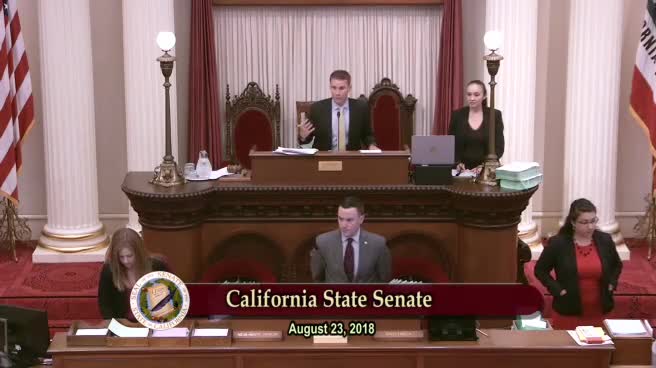 2MIN
Senate Floor
 1MIN
Assembly Floor
 3MIN
Assembly Standing Committee on Judiciary
Bill Author

Bill Co-Author(s):