AB 2313: Electronic benefits transfer system.
- Session Year: 2017-2018
- House: Assembly
- Latest Version Date: 2018-09-23
Existing law provides for the establishment of a statewide electronic benefits transfer (EBT) system, administered by the State Department of Social Services, for the purpose of providing financial and food assistance benefits. Existing law provides that a recipient shall not incur any loss of cash benefits that are taken by an unauthorized withdrawal, removal, or use of benefits, that does not occur by the use of a physical EBT card issued to the recipient or authorized 3rd party, as specified, and requires the prompt replacement of the taken benefits.
This bill would additionally provide that a recipient shall not incur any loss of cash benefits that are taken by an unauthorized contact. The bill would also require the prompt replacement of the taken benefits if a recipient knowingly provides his or her EBT card number and personal identification number to an unauthorized 3rd party that the recipient mistakenly believes to be the contracted EBT vendor, an approved retailer, or a governmental entity, but not more than one time in a 36-month period. The bill would authorize the department to issue mass reimbursements to recipients for the loss of cash benefits if the department finds that the benefits of multiple recipients were taken by an unauthorized withdrawal, removal, or use of benefits in which the recipients EBT card numbers or personal identification numbers were obtained by means of a data breach. The bill would require a mass reimbursement to be approved by the Department of Finance.
This bill would authorize the State Department of Social Services to implement and administer the above-described provisions through all-county letters or similar instructions until regulations are adopted, and would require the department to adopt emergency regulations and final regulations, as specified.
Existing law provides for the establishment of a statewide electronic benefits transfer (EBT) system, administered by the State Department of Social Services, for the purpose of providing financial and food assistance benefits. Existing law provides that a recipient shall not incur any loss of cash benefits that are taken by an unauthorized withdrawal, removal, or use of benefits, that does not occur by the use of a physical EBT card issued to the recipient or authorized 3rd party, as specified, and requires the prompt replacement of the taken benefits.
This bill would additionally provide that a recipient shall not incur any loss of cash benefits that are taken by an unauthorized contact. The bill would also require the prompt replacement of the taken benefits if a recipient knowingly provides his or her EBT card number and personal identification number to an unauthorized 3rd party that the recipient mistakenly believes to be the contracted EBT vendor, an approved retailer, or a governmental entity, but not more than one time in a 12-month 36-month period. The bill would authorize the department to issue mass reimbursements to recipients for the loss of cash benefits if the department finds that the benefits of multiple recipients were taken by an unauthorized withdrawal, removal, or use of benefits in which the recipients electronic benefits transfer EBT card numbers or personal identification numbers were obtained by means of a data breach. The bill would require a mass reimbursement to be approved by the Department of Finance.
Existing law provides for the establishment of a statewide electronic benefits transfer (EBT) system, administered by the State Department of Social Services, for the purpose of providing financial and food assistance benefits. Existing law provides that a recipient shall not incur any loss of cash benefits that are taken by an unauthorized withdrawal, removal, or use of benefits, that does not occur by the use of a physical EBT card issued to the recipient or authorized 3rd party, as specified, and requires the prompt replacement of the taken benefits.
This bill would additionally provide that a recipient shall not incur any loss of cash benefits that are taken by an unauthorized contact. The bill would also require the prompt replacement of the taken benefits if a recipient knowingly provides his or her EBT card number and personal identification number to an unauthorized 3rd party that the recipient mistakenly believes to be the contracted EBT vendor, an approved retailer, or a governmental entity, but not more than one time in a 12-month period. The bill would authorize the department to issue mass reimbursements to recipients for the loss of cash benefits if the department finds that the benefits of multiple recipients were taken by an unauthorized withdrawal, removal, or use of benefits in which the recipients electronic benefits transfer card numbers or personal identification numbers were obtained by means of a data breach. The bill would require a mass reimbursement to be approved by the Department of Finance.
Existing law provides for the establishment of a statewide electronic benefits transfer (EBT) system, administered by the State Department of Social Services, for the purpose of providing financial and food assistance benefits. Existing law provides that a recipient shall not incur any loss of cash benefits that are taken by an unauthorized withdrawal, removal, or use of benefits, that does not occur by the use of a physical EBT card issued to the recipient or authorized 3rd party, as provided. specified, and requires the prompt replacement of the taken benefits.
This bill would additionally provide that a recipient shall not incur any loss of cash benefits that are taken by an unauthorized contact and would specify that an unauthorized contact, withdrawal, removal, or use of benefits includes use that results from an unauthorized solicitation, request, or representation that causes a recipient to surrender information about his or her account or personal identification number. contact. The bill would also require the prompt replacement of the taken benefits if a recipient knowingly provides his or her EBT card number and personal identification number to an unauthorized 3rd party that the recipient mistakenly believes to be the contracted EBT vendor, an approved retailer, or a governmental entity, but not more than one time in a 12-month period.
Existing law provides for the establishment of a statewide electronic benefits transfer (EBT) system, administered by the State Department of Social Services, for the purpose of providing financial and food assistance benefits. Existing law provides that a recipient shall not incur any loss of cash benefits that are taken by an unauthorized withdrawal, removal, or use of benefits, that does not occur by the use of a physical EBT card issued to the recipient or authorized 3rd party, as provided.
This bill would additionally provide that a recipient shall not incur any loss of cash benefits that are taken by an unauthorized contact, as specified. contact and would specify that an unauthorized contact, withdrawal, removal, or use of benefits includes use that results from an unauthorized solicitation, request, or representation that causes a recipient to surrender information about his or her account or personal identification number.
Existing law provides for the establishment of a statewide electronic benefits transfer (EBT) system, administered by the State Department of Social Services, for the purpose of providing financial and food assistance benefits. Existing law provides that a recipient shall not incur any loss of cash benefits that are taken by an unauthorized withdrawal, removal, or use of benefits, that does not occur by the use of a physical EBT card issued to the recipient or authorized 3rd party, as provided.
This bill would additionally provide that a recipient shall not incur any loss of cash benefits that are taken by an unauthorized contact, as specified.
The electronic benefits transfer system required by this chapter shall be designed to do, but not be limited to, all of the following:
(a)To the extent permitted by federal law and the rules of the program providing the benefits, recipients who are required to receive their benefits using an electronic benefits transfer system shall be permitted to gain access to the benefits in any part of the state where electronic benefits transfers are accepted. All electronic benefits transfer systems in this state shall be designed to allow recipients to gain access to their benefits by using every other electronic benefits transfer system.
(b)To the maximum extent feasible, electronic benefits transfer systems shall be designed to be compatible with the electronic benefits transfer systems in other states.
(c)All reasonable measures shall be taken in order to ensure that recipients have access to electronically issued benefits through systems, including, but not limited to, automated teller machines, point-of-sale devices, or other devices that accept electronic benefits transfer transactions. Benefits provided under Chapter 2 (commencing with Section 11200) of Part 3 shall be staggered over a period of three calendar days, unless a county requests a waiver from the department and the waiver is approved, or in cases of hardship pursuant to subdivision (p).
(d)The system shall provide for reasonable access to benefits to recipients who demonstrate an inability to use an electronic benefits transfer card or other aspect of the system because of disability, language, lack of access, or other barrier. These alternative methods shall conform to the requirements of the federal Americans with Disabilities Act of 1990 (42 U.S.C. Sec. 12101, et seq.), including reasonable accommodations for recipients who, because of physical or mental disabilities, are unable to operate or otherwise make effective use of the electronic benefits transfer system.
(e)The system shall permit a recipient the option to choose a personal identification number, also known as a PIN number, to assist the recipient to remember his or her number in order to allow access to benefits. Whenever an institution, authorized representative, or other third party not part of the recipient household or assistance unit has been issued an electronic benefits transfer card, either in lieu of, or in addition to, the recipient, the third party shall have a separate card and personal identification number. At the option of the recipient, he or she may designate whether restrictions apply to the third partys access to the recipients benefits. At the option of the recipient head of household or assistance unit, the county shall provide one electronic benefits transfer card to each adult member to enable them to access benefits.
(f)The system shall have a 24-hour per day toll-free telephone hotline for the reporting of lost or stolen cards that will provide recipients, at no additional cost to the recipient, with information on how to have the card and personal identification number replaced, and that will allow an authorized representative or head of household to access, over the telephone, the transaction history detail for at least the last 10 transactions and to request that the transaction history detail for at least the past two months be sent by mail.
(g)The system shall have an Internet Web site that will provide recipients, at no additional cost to the recipient, with information on how to have the card and personal identification number replaced, and that will allow an authorized representative or head of household to view the transaction history detail for at least the last 10 transactions and to request that the transaction history detail for at least the past two months be sent by mail.
(h)In addition to the ability to receive transaction history detail pursuant to subdivisions (f) and (g), a county human services agency shall make available to an authorized representative or head of household, at no additional cost to the authorized representative or head of household, all electronic benefit transaction history details that are available to the county human services agency within 10 business days after a request has been received by the agency.
(i)(1)A recipient shall not incur any loss of electronic benefits after reporting that his or her electronic benefits transfer card or personal identification number has been lost or stolen. The system shall provide for the prompt replacement of lost or stolen electronic benefits transfer cards and personal identification numbers. Electronic benefits for which the case was determined eligible and that were not withdrawn by transactions using an authorized personal identification number for the account shall also be promptly replaced.
(2)(A)Except as provided in subparagraph (B), a recipient shall not incur any loss of cash benefits that are taken by an unauthorized contact, withdrawal, removal, or use of benefits, including, but not limited to, use that results from an unauthorized solicitation, request, or representation that does not occur by the use of a physical electronic benefits transfer card issued to the recipient or authorized third party to directly access the benefits. Benefits taken as described in this subparagraph shall be promptly replaced in accordance with the protocol established by the department pursuant to paragraph (3).
(B)If a recipient knowingly provides his or her electronic benefits transfer card number and personal identification number to an unauthorized third party that the recipient mistakenly believes to be the contracted electronic benefits transfer vendor, an approved retailer, or a governmental entity, any benefits taken as described in subparagraph (A) shall be promptly replaced in accordance with the protocol established by the department pursuant to paragraph (3), but not more than one time in a 36-month period.
(3)The State Department of Social Services shall establish a protocol for recipients to report electronic theft of cash benefits that minimizes the burden on recipients, ensures prompt replacement of benefits in order to minimize the harm to recipients, and ensures program integrity. This protocol may include the automatic replacement of benefits without the need for recipient reporting and verification.
(4)(A)Notwithstanding paragraphs (2) and (3), the State Department of Social Services may issue mass reimbursements to recipients for the loss of cash benefits if the department finds that the benefits of multiple recipients were taken by an unauthorized withdrawal, removal, or use of benefits in which the recipients electronic benefits transfer card numbers or personal identification numbers were obtained by means of a data breach.
(B)A mass reimbursement made pursuant to subparagraph (A) requires the approval of the Department of Finance with notice given to the Joint Legislative Budget Committee.
(j)Electronic benefits transfer system consumers shall be informed on how to use electronic benefits transfer cards, how to protect their cards from misuse, and where consumers can use their cards to withdraw benefits without incurring a fee, charge, or surcharge.
(k)The electronic benefits transfer system shall be designed to inform recipients when the electronic benefits transfer system does not function or is expected not to function for more than a one-hour period between 6 a.m. and midnight during any 24-hour period. This information shall be made available in the recipients preferred language if the electronic benefits transfer system vendor contract provides for services in that language.
(l)Procedures shall be developed for error resolution.
(m)A fee shall not be charged by the state, a county, or an electronic benefits processor certified by the state to retailers participating in the electronic benefits transfer system.
(n)Except for CalFresh transactions, a recipient may be charged a fee, not to exceed the amount allowed by applicable state and federal law and customarily charged to other customers, for cash withdrawal transactions that exceed four per month.
(o)The electronic benefits transfer system shall be designed to ensure that recipients of benefits under Chapter 2 (commencing with Section 11200) of Part 3 have access to using or withdrawing benefits with minimal fees or charges, including an opportunity to access benefits with no fee or charges.
(p)A county shall exempt an individual from the three-day staggering requirement under subdivision (c) on a case-by-case basis for hardship. Hardship includes, but is not limited to, the incurrence of late charges on an individuals housing payments.
(q)A county shall use information provided by the department to inform recipients of benefits under Chapter 2 (commencing with Section 11200) of Part 3 of all of the following:
(1)The methods of electronic delivery of benefits available, including distribution of benefits through the electronic benefits transfer system or direct deposit pursuant to Section 11006.2.
(2)Applicable fees and charges, including surcharges, consumer and privacy protections, and liability for theft associated with the electronic benefits transfer system.
(3)How to avoid fees and charges, including opting for delivery of benefits by direct deposit and using the electronic benefits transfer card solely at surcharge free locations.
(4)Where to withdraw benefits without a surcharge when using the electronic benefits transfer system.
(5)That a recipient may authorize any available method of electronic delivery of benefits and instructions regarding how the recipient may select or change his or her preferred method of electronic delivery of benefits and that the recipient shall be given the opportunity to select the method prior to the first payment.
(6)That a recipient may be entitled to an alternative method of delivery if the recipient demonstrates an inability to use an electronic benefits transfer card or other aspect of the system because of disability, language, lack of access, or other barrier pursuant to subdivision (d) and instructions regarding how to determine whether the recipient qualifies for an alternative method of delivery.
(7)That a recipient may be entitled to an exemption from the three-day staggering requirement under subdivision (c) on a case-by-case basis for hardship pursuant to subdivision (p) and instructions regarding how to determine whether the recipient qualifies for the exemption.
(r)A county is in compliance with subdivision (q) if it provides the recipient a copy of the information developed by the department. A county may provide a recipient information, in addition to the copy of the information developed by the department, pursuant to subdivision (q), either verbally or in writing, if the county determines the additional information will benefit the recipients understanding of the information provided.
SEC. 2.(a)Notwithstanding the rulemaking provisions of the Administrative Procedure Act (Chapter 3.5 (commencing with Section 11340) of Part 1 of Division 3 of Title 2 of the Government Code), the State Department of Social Services may implement and administer this act through all-county letters or similar instructions until regulations are adopted.
(b)The department shall adopt emergency regulations implementing these provisions no later than January 1, 2021. The department may readopt any emergency regulation authorized by this section that is the same as, or substantially equivalent to, emergency regulations previously adopted pursuant to this section. The initial adoption of regulations pursuant to this section and one readoption of emergency regulations shall be deemed to be an emergency and necessary for the immediate preservation of the public peace, health, safety, or general welfare. Initial emergency regulations and the one readoption of emergency regulations authorized by this section shall be exempt from review by the Office of Administrative Law. The initial emergency regulations and the one readoption of emergency regulations authorized by this section shall be submitted to the Office of Administrative Law for filing with the Secretary of State, and each shall remain in effect for no more than 180 days, by which time final regulations shall be adopted.
The electronic benefits transfer system required by this chapter shall be designed to do, but not be limited to, all of the following:
(a)To the extent permitted by federal law and the rules of the program providing the benefits, recipients who are required to receive their benefits using an electronic benefits transfer system shall be permitted to gain access to the benefits in any part of the state where electronic benefits transfers are accepted. All electronic benefits transfer systems in this state shall be designed to allow recipients to gain access to their benefits by using every other electronic benefits transfer system.
(b)To the maximum extent feasible, electronic benefits transfer systems shall be designed to be compatible with the electronic benefits transfer systems in other states.
(c)All reasonable measures shall be taken in order to ensure that recipients have access to electronically issued benefits through systems, including, but not limited to, automated teller machines, point-of-sale devices, or other devices that accept electronic benefits transfer transactions. Benefits provided under Chapter 2 (commencing with Section 11200) of Part 3 shall be staggered over a period of three calendar days, unless a county requests a waiver from the department and the waiver is approved, or in cases of hardship pursuant to subdivision (p).
(d)The system shall provide for reasonable access to benefits to recipients who demonstrate an inability to use an electronic benefits transfer card or other aspect of the system because of disability, language, lack of access, or other barrier. These alternative methods shall conform to the requirements of the federal Americans with Disabilities Act of 1990 (42 U.S.C. Sec. 12101, et seq.), including reasonable accommodations for recipients who, because of physical or mental disabilities, are unable to operate or otherwise make effective use of the electronic benefits transfer system.
(e)The system shall permit a recipient the option to choose a personal identification number, also known as a PIN number, to assist the recipient to remember his or her number in order to allow access to benefits. Whenever an institution, authorized representative, or other third party not part of the recipient household or assistance unit has been issued an electronic benefits transfer card, either in lieu of, or in addition to, the recipient, the third party shall have a separate card and personal identification number. At the option of the recipient, he or she may designate whether restrictions apply to the third partys access to the recipients benefits. At the option of the recipient head of household or assistance unit, the county shall provide one electronic benefits transfer card to each adult member to enable them to access benefits.
(f)The system shall have a 24-hour per day toll-free telephone hotline for the reporting of lost or stolen cards that will provide recipients, at no additional cost to the recipient, with information on how to have the card and personal identification number replaced, and that will allow an authorized representative or head of household to access, over the telephone, the transaction history detail for at least the last 10 transactions and to request that the transaction history detail for at least the past two months be sent by mail.
(g)The system shall have an Internet Web site that will provide recipients, at no additional cost to the recipient, with information on how to have the card and personal identification number replaced, and that will allow an authorized representative or head of household to view the transaction history detail for at least the last 10 transactions and to request that the transaction history detail for at least the past two months be sent by mail.
(h)In addition to the ability to receive transaction history detail pursuant to subdivisions (f) and (g), a county human services agency shall make available to an authorized representative or head of household, at no additional cost to the authorized representative or head of household, all electronic benefit transaction history details that are available to the county human services agency within 10 business days after a request has been received by the agency.
(i)(1)A recipient shall not incur any loss of electronic benefits after reporting that his or her electronic benefits transfer card or personal identification number has been lost or stolen. The system shall provide for the prompt replacement of lost or stolen electronic benefits transfer cards and personal identification numbers. Electronic benefits for which the case was determined eligible and that were not withdrawn by transactions using an authorized personal identification number for the account shall also be promptly replaced.
(2)(A)Except as provided in subparagraph (B), a recipient shall not incur any loss of cash benefits that are taken by an unauthorized contact, withdrawal, removal, or use of benefits, including, but not limited to, use that results from an unauthorized solicitation, request, or representation that does not occur by the use of a physical electronic benefits transfer card issued to the recipient or authorized third party to directly access the benefits. Benefits taken as described in this subparagraph shall be promptly replaced in accordance with the protocol established by the department pursuant to paragraph (3).
(B)If a recipient knowingly provides his or her electronic benefits transfer card number and personal identification number to an unauthorized third party that the recipient mistakenly believes to be the contracted electronic benefits transfer vendor, an approved retailer, or a governmental entity, any benefits taken as described in subparagraph (A) shall be promptly replaced in accordance with the protocol established by the department pursuant to paragraph (3), but not more than one time in a 12-month 36-month period.
(3)The State Department of Social Services shall establish a protocol for recipients to report electronic theft of cash benefits that minimizes the burden on recipients, ensures prompt replacement of benefits in order to minimize the harm to recipients, and ensures program integrity. This protocol may include the automatic replacement of benefits without the need for recipient reporting and verification.
(4)(A)Notwithstanding paragraphs (2) and (3), the State Department of Social Services may issue mass reimbursements to recipients for the loss of cash benefits if the department finds that the benefits of multiple recipients were taken by an unauthorized withdrawal, removal, or use of benefits in which the recipients electronic benefits transfer card numbers or personal identification numbers were obtained by means of a data breach.
(B)A mass reimbursement made pursuant to subparagraph (A) requires the approval of the Department of Finance with notice given to the Joint Legislative Budget Committee.
(j)Electronic benefits transfer system consumers shall be informed on how to use electronic benefits transfer cards, how to protect their cards from misuse, and where consumers can use their cards to withdraw benefits without incurring a fee, charge, or surcharge.
(k)The electronic benefits transfer system shall be designed to inform recipients when the electronic benefits transfer system does not function or is expected not to function for more than a one-hour period between 6 a.m. and midnight during any 24-hour period. This information shall be made available in the recipients preferred language if the electronic benefits transfer system vendor contract provides for services in that language.
(l)Procedures shall be developed for error resolution.
(m)A fee shall not be charged by the state, a county, or an electronic benefits processor certified by the state to retailers participating in the electronic benefits transfer system.
(n)Except for CalFresh transactions, a recipient may be charged a fee, not to exceed the amount allowed by applicable state and federal law and customarily charged to other customers, for cash withdrawal transactions that exceed four per month.
(o)The electronic benefits transfer system shall be designed to ensure that recipients of benefits under Chapter 2 (commencing with Section 11200) of Part 3 have access to using or withdrawing benefits with minimal fees or charges, including an opportunity to access benefits with no fee or charges.
(p)A county shall exempt an individual from the three-day staggering requirement under subdivision (c) on a case-by-case basis for hardship. Hardship includes, but is not limited to, the incurrence of late charges on an individuals housing payments.
(q)A county shall use information provided by the department to inform recipients of benefits under Chapter 2 (commencing with Section 11200) of Part 3 of all of the following:
(1)The methods of electronic delivery of benefits available, including distribution of benefits through the electronic benefits transfer system or direct deposit pursuant to Section 11006.2.
(2)Applicable fees and charges, including surcharges, consumer and privacy protections, and liability for theft associated with the electronic benefits transfer system.
(3)How to avoid fees and charges, including opting for delivery of benefits by direct deposit and using the electronic benefits transfer card solely at surcharge free locations.
(4)Where to withdraw benefits without a surcharge when using the electronic benefits transfer system.
(5)That a recipient may authorize any available method of electronic delivery of benefits and instructions regarding how the recipient may select or change his or her preferred method of electronic delivery of benefits and that the recipient shall be given the opportunity to select the method prior to the first payment.
(6)That a recipient may be entitled to an alternative method of delivery if the recipient demonstrates an inability to use an electronic benefits transfer card or other aspect of the system because of disability, language, lack of access, or other barrier pursuant to subdivision (d) and instructions regarding how to determine whether the recipient qualifies for an alternative method of delivery.
(7)That a recipient may be entitled to an exemption from the three-day staggering requirement under subdivision (c) on a case-by-case basis for hardship pursuant to subdivision (p) and instructions regarding how to determine whether the recipient qualifies for the exemption.
(r)A county is in compliance with subdivision (q) if it provides the recipient a copy of the information developed by the department. A county may provide a recipient information, in addition to the copy of the information developed by the department, pursuant to subdivision (q), either verbally or in writing, if the county determines the additional information will benefit the recipients understanding of the information provided.
The electronic benefits transfer system required by this chapter shall be designed to do, but not be limited to, all of the following:
(a)To the extent permitted by federal law and the rules of the program providing the benefits, recipients who are required to receive their benefits using an electronic benefits transfer system shall be permitted to gain access to the benefits in any part of the state where electronic benefits transfers are accepted. All electronic benefits transfer systems in this state shall be designed to allow recipients to gain access to their benefits by using every other electronic benefits transfer system.
(b)To the maximum extent feasible, electronic benefits transfer systems shall be designed to be compatible with the electronic benefits transfer systems in other states.
(c)All reasonable measures shall be taken in order to ensure that recipients have access to electronically issued benefits through systems, including, but not limited to, automated teller machines, point-of-sale devices, or other devices that accept electronic benefits transfer transactions. Benefits provided under Chapter 2 (commencing with Section 11200) of Part 3 shall be staggered over a period of three calendar days, unless a county requests a waiver from the department and the waiver is approved, or in cases of hardship pursuant to subdivision (p).
(d)The system shall provide for reasonable access to benefits to recipients who demonstrate an inability to use an electronic benefits transfer card or other aspect of the system because of disability, language, lack of access, or other barrier. These alternative methods shall conform to the requirements of the federal Americans with Disabilities Act of 1990 (42 U.S.C. Sec. 12101, et seq.), including reasonable accommodations for recipients who, because of physical or mental disabilities, are unable to operate or otherwise make effective use of the electronic benefits transfer system.
(e)The system shall permit a recipient the option to choose a personal identification number, also known as a PIN number, to assist the recipient to remember his or her number in order to allow access to benefits. Whenever an institution, authorized representative, or other third party not part of the recipient household or assistance unit has been issued an electronic benefits transfer card, either in lieu of, or in addition to, the recipient, the third party shall have a separate card and personal identification number. At the option of the recipient, he or she may designate whether restrictions apply to the third partys access to the recipients benefits. At the option of the recipient head of household or assistance unit, the county shall provide one electronic benefits transfer card to each adult member to enable them to access benefits.
(f)The system shall have a 24-hour per day toll-free telephone hotline for the reporting of lost or stolen cards that will provide recipients, at no additional cost to the recipient, with information on how to have the card and personal identification number replaced, and that will allow an authorized representative or head of household to access, over the telephone, the transaction history detail for at least the last 10 transactions and to request that the transaction history detail for at least the past two months be sent by mail.
(g)The system shall have an Internet Web site that will provide recipients, at no additional cost to the recipient, with information on how to have the card and personal identification number replaced, and that will allow an authorized representative or head of household to view the transaction history detail for at least the last 10 transactions and to request that the transaction history detail for at least the past two months be sent by mail.
(h)In addition to the ability to receive transaction history detail pursuant to subdivisions (f) and (g), a county human services agency shall make available to an authorized representative or head of household, at no additional cost to the authorized representative or head of household, all electronic benefit transaction history details that are available to the county human services agency within 10 business days after a request has been received by the agency.
(i)(1)A recipient shall not incur any loss of electronic benefits after reporting that his or her electronic benefits transfer card or personal identification number has been lost or stolen. The system shall provide for the prompt replacement of lost or stolen electronic benefits transfer cards and personal identification numbers. Electronic benefits for which the case was determined eligible and that were not withdrawn by transactions using an authorized personal identification number for the account shall also be promptly replaced.
(2)(A)Except as provided in subparagraph (B), a recipient shall not incur any loss of cash benefits that are taken by an unauthorized contact, withdrawal, removal, or use of benefits, including, but not limited to, use that results from an unauthorized solicitation, request, or representation that does not occur by the use of a physical electronic benefits transfer card issued to the recipient or authorized third party to directly access the benefits. Benefits taken as described in this subparagraph shall be promptly replaced in accordance with the protocol established by the department pursuant to paragraph (3).
(B)If a recipient knowingly provides his or her electronic benefits transfer card number and personal identification number to an unauthorized third party that the recipient mistakenly believes to be the contracted electronic benefits transfer vendor, an approved retailer, or a governmental entity, any benefits taken as described in subparagraph (A) shall be promptly replaced in accordance with the protocol established by the department pursuant to paragraph (3), but not more than one time in a 12-month period.
(3)The State Department of Social Services shall establish a protocol for recipients to report electronic theft of cash benefits that minimizes the burden on recipients, ensures prompt replacement of benefits in order to minimize the harm to recipients, and ensures program integrity. This protocol may include the automatic replacement of benefits without the need for recipient reporting and verification.
(4)(A)Notwithstanding paragraphs (2) and (3), the State Department of Social Services may issue mass reimbursements to recipients for the loss of cash benefits if the department finds that the benefits of multiple recipients were taken by an unauthorized withdrawal, removal, or use of benefits in which the recipients electronic benefits transfer card numbers or personal identification numbers were obtained by means of a data breach.
(B)A mass reimbursement made pursuant to subparagraph (A) requires the approval of the Department of Finance with notice given to the Joint Legislative Budget Committee.
(j)Electronic benefits transfer system consumers shall be informed on how to use electronic benefits transfer cards, how to protect their cards from misuse, and where consumers can use their cards to withdraw benefits without incurring a fee, charge, or surcharge.
(k)The electronic benefits transfer system shall be designed to inform recipients when the electronic benefits transfer system does not function or is expected not to function for more than a one-hour period between 6 a.m. and midnight during any 24-hour period. This information shall be made available in the recipients preferred language if the electronic benefits transfer system vendor contract provides for services in that language.
(l)Procedures shall be developed for error resolution.
(m)A fee shall not be charged by the state, a county, or an electronic benefits processor certified by the state to retailers participating in the electronic benefits transfer system.
(n)Except for CalFresh transactions, a recipient may be charged a fee, not to exceed the amount allowed by applicable state and federal law and customarily charged to other customers, for cash withdrawal transactions that exceed four per month.
(o)The electronic benefits transfer system shall be designed to ensure that recipients of benefits under Chapter 2 (commencing with Section 11200) of Part 3 have access to using or withdrawing benefits with minimal fees or charges, including an opportunity to access benefits with no fee or charges.
(p)A county shall exempt an individual from the three-day staggering requirement under subdivision (c) on a case-by-case basis for hardship. Hardship includes, but is not limited to, the incurrence of late charges on an individuals housing payments.
(q)A county shall use information provided by the department to inform recipients of benefits under Chapter 2 (commencing with Section 11200) of Part 3 of all of the following:
(1)The methods of electronic delivery of benefits available, including distribution of benefits through the electronic benefits transfer system or direct deposit pursuant to Section 11006.2.
(2)Applicable fees and charges, including surcharges, consumer and privacy protections, and liability for theft associated with the electronic benefits transfer system.
(3)How to avoid fees and charges, including opting for delivery of benefits by direct deposit and using the electronic benefits transfer card solely at surcharge free locations.
(4)Where to withdraw benefits without a surcharge when using the electronic benefits transfer system.
(5)That a recipient may authorize any available method of electronic delivery of benefits and instructions regarding how the recipient may select or change his or her preferred method of electronic delivery of benefits and that the recipient shall be given the opportunity to select the method prior to the first payment.
(6)That a recipient may be entitled to an alternative method of delivery if the recipient demonstrates an inability to use an electronic benefits transfer card or other aspect of the system because of disability, language, lack of access, or other barrier pursuant to subdivision (d) and instructions regarding how to determine whether the recipient qualifies for an alternative method of delivery.
(7)That a recipient may be entitled to an exemption from the three-day staggering requirement under subdivision (c) on a case-by-case basis for hardship pursuant to subdivision (p) and instructions regarding how to determine whether the recipient qualifies for the exemption.
(r)A county is in compliance with subdivision (q) if it provides the recipient a copy of the information developed by the department. A county may provide a recipient information, in addition to the copy of the information developed by the department, pursuant to subdivision (q), either verbally or in writing, if the county determines the additional information will benefit the recipients understanding of the information provided.
The electronic benefits transfer system required by this chapter shall be designed to do, but not be limited to, all of the following:
(a)To the extent permitted by federal law and the rules of the program providing the benefits, recipients who are required to receive their benefits using an electronic benefits transfer system shall be permitted to gain access to the benefits in any part of the state where electronic benefits transfers are accepted. All electronic benefits transfer systems in this state shall be designed to allow recipients to gain access to their benefits by using every other electronic benefits transfer system.
(b)To the maximum extent feasible, electronic benefits transfer systems shall be designed to be compatible with the electronic benefits transfer systems in other states.
(c)All reasonable measures shall be taken in order to ensure that recipients have access to electronically issued benefits through systems, including, but not limited to, automated teller machines, point-of-sale devices, or other devices that accept electronic benefits transfer transactions. Benefits provided under Chapter 2 (commencing with Section 11200) of Part 3 shall be staggered over a period of three calendar days, unless a county requests a waiver from the department and the waiver is approved, or in cases of hardship pursuant to subdivision (p).
(d)The system shall provide for reasonable access to benefits to recipients who demonstrate an inability to use an electronic benefits transfer card or other aspect of the system because of disability, language, lack of access, or other barrier. These alternative methods shall conform to the requirements of the federal Americans with Disabilities Act of 1990 (42 U.S.C. Sec. 12101, et seq.), including reasonable accommodations for recipients who, because of physical or mental disabilities, are unable to operate or otherwise make effective use of the electronic benefits transfer system.
(e)The system shall permit a recipient the option to choose a personal identification number, also known as a PIN number, to assist the recipient to remember his or her number in order to allow access to benefits. Whenever an institution, authorized representative, or other third party not part of the recipient household or assistance unit has been issued an electronic benefits transfer card, either in lieu of, or in addition to, the recipient, the third party shall have a separate card and personal identification number. At the option of the recipient, he or she may designate whether restrictions apply to the third partys access to the recipients benefits. At the option of the recipient head of household or assistance unit, the county shall provide one electronic benefits transfer card to each adult member to enable them to access benefits.
(f)The system shall have a 24-hour per day toll-free telephone hotline for the reporting of lost or stolen cards that will provide recipients, at no additional cost to the recipient, with information on how to have the card and personal identification number replaced, and that will allow an authorized representative or head of household to access, over the telephone, the transaction history detail for at least the last 10 transactions and to request that the transaction history detail for at least the past two months be sent by mail.
(g)The system shall have an Internet Web site that will provide recipients, at no additional cost to the recipient, with information on how to have the card and personal identification number replaced, and that will allow an authorized representative or head of household to view the transaction history detail for at least the last 10 transactions and to request that the transaction history detail for at least the past two months be sent by mail.
(h)In addition to the ability to receive transaction history detail pursuant to subdivisions (f) and (g), a county human services agency shall make available to an authorized representative or head of household, at no additional cost to the authorized representative or head of household, all electronic benefit transaction history details that are available to the county human services agency within 10 business days after a request has been received by the agency.
(i)(1)A recipient shall not incur any loss of electronic benefits after reporting that his or her electronic benefits transfer card or personal identification number has been lost or stolen. The system shall provide for the prompt replacement of lost or stolen electronic benefits transfer cards and personal identification numbers. Electronic benefits for which the case was determined eligible and that were not withdrawn by transactions using an authorized personal identification number for the account shall also be promptly replaced.
(2)A (A)Except as provided in subparagraph (B), a recipient shall not incur any loss of cash benefits that are taken by an unauthorized contact, withdrawal, removal, or use of benefits, including, but not limited to, use that results from an unauthorized solicitation, request, or representation that causes a recipient to surrender information about his or her account or personal identification number, and that does not occur by the use of a physical electronic benefits transfer card issued to the recipient or authorized third party to directly access the benefits. Benefits taken as described in this paragraph subparagraph shall be promptly replaced in accordance with the protocol established by the department pursuant to paragraph (3).
(B)If a recipient knowingly provides his or her electronic benefits transfer card number and personal identification number to an unauthorized third party that the recipient mistakenly believes to be the contracted electronic benefits transfer vendor, an approved retailer, or a governmental entity, any benefits taken as described in subparagraph (A) shall be promptly replaced in accordance with the protocol established by the department pursuant to paragraph (3), but not more than one time in a 12-month period.
(3)The State Department of Social Services shall establish a protocol for recipients to report electronic theft of cash benefits that minimizes the burden on recipients, ensures prompt replacement of benefits in order to minimize the harm to recipients, and ensures program integrity. This protocol may include the automatic replacement of benefits without the need for recipient reporting and verification.
(j)Electronic benefits transfer system consumers shall be informed on how to use electronic benefits transfer cards, how to protect their cards from misuse, and where consumers can use their cards to withdraw benefits without incurring a fee, charge, or surcharge.
(k)The electronic benefits transfer system shall be designed to inform recipients when the electronic benefits transfer system does not function or is expected not to function for more than a one-hour period between 6 a.m. and midnight during any 24-hour period. This information shall be made available in the recipients preferred language if the electronic benefits transfer system vendor contract provides for services in that language.
(l)Procedures shall be developed for error resolution.
(m)A fee shall not be charged by the state, a county, or an electronic benefits processor certified by the state to retailers participating in the electronic benefits transfer system.
(n)Except for CalFresh transactions, a recipient may be charged a fee, not to exceed the amount allowed by applicable state and federal law and customarily charged to other customers, for cash withdrawal transactions that exceed four per month.
(o)The electronic benefits transfer system shall be designed to ensure that recipients of benefits under Chapter 2 (commencing with Section 11200) of Part 3 have access to using or withdrawing benefits with minimal fees or charges, including an opportunity to access benefits with no fee or charges.
(p)A county shall exempt an individual from the three-day staggering requirement under subdivision (c) on a case-by-case basis for hardship. Hardship includes, but is not limited to, the incurrence of late charges on an individuals housing payments.
(q)A county shall use information provided by the department to inform recipients of benefits under Chapter 2 (commencing with Section 11200) of Part 3 of all of the following:
(1)The methods of electronic delivery of benefits available, including distribution of benefits through the electronic benefits transfer system or direct deposit pursuant to Section 11006.2.
(2)Applicable fees and charges, including surcharges, consumer and privacy protections, and liability for theft associated with the electronic benefits transfer system.
(3)How to avoid fees and charges, including opting for delivery of benefits by direct deposit and using the electronic benefits transfer card solely at surcharge free locations.
(4)Where to withdraw benefits without a surcharge when using the electronic benefits transfer system.
(5)That a recipient may authorize any available method of electronic delivery of benefits and instructions regarding how the recipient may select or change his or her preferred method of electronic delivery of benefits and that the recipient shall be given the opportunity to select the method prior to the first payment.
(6)That a recipient may be entitled to an alternative method of delivery if the recipient demonstrates an inability to use an electronic benefits transfer card or other aspect of the system because of disability, language, lack of access, or other barrier pursuant to subdivision (d) and instructions regarding how to determine whether the recipient qualifies for an alternative method of delivery.
(7)That a recipient may be entitled to an exemption from the three-day staggering requirement under subdivision (c) on a case-by-case basis for hardship pursuant to subdivision (p) and instructions regarding how to determine whether the recipient qualifies for the exemption.
(r)A county is in compliance with subdivision (q) if it provides the recipient a copy of the information developed by the department. A county may provide a recipient information, in addition to the copy of the information developed by the department, pursuant to subdivision (q), either verbally or in writing, if the county determines the additional information will benefit the recipients understanding of the information provided.
The electronic benefits transfer system required by this chapter shall be designed to do, but not be limited to, all of the following:
(a)To the extent permitted by federal law and the rules of the program providing the benefits, recipients who are required to receive their benefits using an electronic benefits transfer system shall be permitted to gain access to the benefits in any part of the state where electronic benefits transfers are accepted. All electronic benefits transfer systems in this state shall be designed to allow recipients to gain access to their benefits by using every other electronic benefits transfer system.
(b)To the maximum extent feasible, electronic benefits transfer systems shall be designed to be compatible with the electronic benefits transfer systems in other states.
(c)All reasonable measures shall be taken in order to ensure that recipients have access to electronically issued benefits through systems systems, including, but not limited to, automated teller machines, point-of-sale devices, or other devices that accept electronic benefits transfer transactions. Benefits provided under Chapter 2 (commencing with Section 11200) of Part 3 shall be staggered over a period of three calendar days, unless a county requests a waiver from the department and the waiver is approved, or in cases of hardship pursuant to subdivision (p).
(d)The system shall provide for reasonable access to benefits to recipients who demonstrate an inability to use an electronic benefits transfer card or other aspect of the system because of disability, language, lack of access, or other barrier. These alternative methods shall conform to the requirements of the federal Americans with Disabilities Act of 1990 (42 U.S.C. Sec. 12101, et seq.), including reasonable accommodations for recipients who, because of physical or mental disabilities, are unable to operate or otherwise make effective use of the electronic benefits transfer system.
(e)The system shall permit a recipient the option to choose a personal identification number, also known as a PIN number, to assist the recipient to remember his or her number in order to allow access to benefits. Whenever an institution, authorized representative, or other third party not part of the recipient household or assistance unit has been issued an electronic benefits transfer card, either in lieu of, or in addition to, the recipient, the third party shall have a separate card and personal identification number. At the option of the recipient, he or she may designate whether restrictions apply to the third partys access to the recipients benefits. At the option of the recipient head of household or assistance unit, the county shall provide one electronic benefits transfer card to each adult member to enable them to access benefits.
(f)The system shall have a 24-hour per day toll-free telephone hotline for the reporting of lost or stolen cards that will provide recipients, at no additional cost to the recipient, with information on how to have the card and personal identification number replaced, and that will allow an authorized representative or head of household to access, over the telephone, the transaction history detail for at least the last 10 transactions and to request that the transaction history detail for at least the past two months be sent by mail.
(g)The system shall have an Internet Web site that will provide recipients, at no additional cost to the recipient, with information on how to have the card and personal identification number replaced, and that will allow an authorized representative or head of household to view the transaction history detail for at least the last 10 transactions and to request that the transaction history detail for at least the past two months be sent by mail.
(h)In addition to the ability to receive transaction history detail pursuant to subdivisions (f) and (g), a county human services agency shall make available to an authorized representative or head of household, at no additional cost to the authorized representative or head of household, all electronic benefit transaction history details that are available to the county human services agency within 10 business days after a request has been received by the agency.
(i)(1)A recipient shall not incur any loss of electronic benefits after reporting that his or her electronic benefits transfer card or personal identification number has been lost or stolen. The system shall provide for the prompt replacement of lost or stolen electronic benefits transfer cards and personal identification numbers. Electronic benefits for which the case was determined eligible and that were not withdrawn by transactions using an authorized personal identification number for the account shall also be promptly replaced.
(2)A recipient shall not incur any loss of cash benefits that are taken by an unauthorized contact, withdrawal, removal, or use of benefits benefits, including, but not limited to, use that results from an unauthorized solicitation, request, or representation that causes a recipient to surrender information about his or her account or personal identification number, and that does not occur by the use of a physical electronic benefits transfer card issued to the recipient or authorized third party to directly access the benefits. Benefits taken as described in this paragraph shall be promptly replaced in accordance with the protocol established by the department pursuant to paragraph (3).
(3)The State Department of Social Services shall establish a protocol for recipients to report electronic theft of cash benefits that minimizes the burden on recipients, ensures prompt replacement of benefits in order to minimize the harm to recipients, and ensures program integrity. This protocol may include the automatic replacement of benefits without the need for recipient reporting and verification.
(j)Electronic benefits transfer system consumers shall be informed on how to use electronic benefits transfer cards, how to protect their cards from misuse, and where consumers can use their cards to withdraw benefits without incurring a fee, charge, or surcharge.
(k)The electronic benefits transfer system shall be designed to inform recipients when the electronic benefits transfer system does not function or is expected not to function for more than a one-hour period between 6 a.m. and midnight during any 24-hour period. This information shall be made available in the recipients preferred language if the electronic benefits transfer system vendor contract provides for services in that language.
(l)Procedures shall be developed for error resolution.
(m)A fee shall not be charged by the state, a county, or an electronic benefits processor certified by the state to retailers participating in the electronic benefits transfer system.
(n)Except for CalFresh transactions, a recipient may be charged a fee, not to exceed the amount allowed by applicable state and federal law and customarily charged to other customers, for cash withdrawal transactions that exceed four per month.
(o)The electronic benefits transfer system shall be designed to ensure that recipients of benefits under Chapter 2 (commencing with Section 11200) of Part 3 have access to using or withdrawing benefits with minimal fees or charges, including an opportunity to access benefits with no fee or charges.
(p)A county shall exempt an individual from the three-day staggering requirement under subdivision (c) on a case-by-case basis for hardship. Hardship includes, but is not limited to, the incurrence of late charges on an individuals housing payments.
(q)A county shall use information provided by the department to inform recipients of benefits under Chapter 2 (commencing with Section 11200) of Part 3 of all of the following:
(1)The methods of electronic delivery of benefits available, including distribution of benefits through the electronic benefits transfer system or direct deposit pursuant to Section 11006.2.
(2)Applicable fees and charges, including surcharges, consumer and privacy protections, and liability for theft associated with the electronic benefits transfer system.
(3)How to avoid fees and charges, including opting for delivery of benefits by direct deposit and using the electronic benefits transfer card solely at surcharge free locations.
(4)Where to withdraw benefits without a surcharge when using the electronic benefits transfer system.
(5)That a recipient may authorize any available method of electronic delivery of benefits and instructions regarding how the recipient may select or change his or her preferred method of electronic delivery of benefits and that the recipient shall be given the opportunity to select the method prior to the first payment.
(6)That a recipient may be entitled to an alternative method of delivery if the recipient demonstrates an inability to use an electronic benefits transfer card or other aspect of the system because of disability, language, lack of access, or other barrier pursuant to subdivision (d) and instructions regarding how to determine whether the recipient qualifies for an alternative method of delivery.
(7)That a recipient may be entitled to an exemption from the three-day staggering requirement under subdivision (c) on a case-by-case basis for hardship pursuant to subdivision (p) and instructions regarding how to determine whether the recipient qualifies for the exemption.
(r)A county is in compliance with subdivision (q) if it provides the recipient a copy of the information developed by the department. A county may provide a recipient information, in addition to the copy of the information developed by the department, pursuant to subdivision (q), either verbally or in writing, if the county determines the additional information will benefit the recipients understanding of the information provided.
The electronic benefits transfer system required by this chapter shall be designed to do, but not be limited to, all of the following:
(a)To the extent permitted by federal law and the rules of the program providing the benefits, recipients who are required to receive their benefits using an electronic benefits transfer system shall be permitted to gain access to the benefits in any part of the state where electronic benefits transfers are accepted. All electronic benefits transfer systems in this state shall be designed to allow recipients to gain access to their benefits by using every other electronic benefits transfer system.
(b)To the maximum extent feasible, electronic benefits transfer systems shall be designed to be compatible with the electronic benefits transfer systems in other states.
(c)All reasonable measures shall be taken in order to ensure that recipients have access to electronically issued benefits through systems such as including, but not limited to, automated teller machines, point-of-sale devices, or other devices that accept electronic benefits transfer transactions. Benefits provided under Chapter 2 (commencing with Section 11200) of Part 3 shall be staggered over a period of three calendar days, unless a county requests a waiver from the department and the waiver is approved, or in cases of hardship pursuant to subdivision (p).
(d)The system shall provide for reasonable access to benefits to recipients who demonstrate an inability to use an electronic benefits transfer card or other aspect of the system because of disability, language, lack of access, or other barrier. These alternative methods shall conform to the requirements of the federal Americans with Disabilities Act of 1990 (42 U.S.C. Sec. 12101, et seq.), including reasonable accommodations for recipients who, because of physical or mental disabilities, are unable to operate or otherwise make effective use of the electronic benefits transfer system.
(e)The system shall permit a recipient the option to choose a personal identification number, also known as a PIN number, to assist the recipient to remember his or her number in order to allow access to benefits. Whenever an institution, authorized representative, or other third party not part of the recipient household or assistance unit has been issued an electronic benefits transfer card, either in lieu of, or in addition to, the recipient, the third party shall have a separate card and personal identification number. At the option of the recipient, he or she may designate whether restrictions apply to the third partys access to the recipients benefits. At the option of the recipient head of household or assistance unit, the county shall provide one electronic benefits transfer card to each adult member to enable them to access benefits.
(f)The system shall have a 24-hour per day toll-free telephone hotline for the reporting of lost or stolen cards that will provide recipients, at no additional cost to the recipient, with information on how to have the card and personal identification number replaced, and that will allow an authorized representative or head of household to access, over the telephone, the transaction history detail for at least the last 10 transactions and to request that the transaction history detail for at least the past two months be sent by mail.
(g)The system shall have an Internet Web site that will provide recipients, at no additional cost to the recipient, with information on how to have the card and personal identification number replaced, and that will allow an authorized representative or head of household to view the transaction history detail for at least the last 10 transactions and to request that the transaction history detail for at least the past two months be sent by mail.
(h)In addition to the ability to receive transaction history detail pursuant to subdivisions (f) and (g), a county human services agency shall make available to an authorized representative or head of household, at no additional cost to the authorized representative or head of household, all electronic benefit transaction history details that are available to the county human services agency within 10 business days after a request has been received by the agency.
(i)(1)A recipient shall not incur any loss of electronic benefits after reporting that his or her electronic benefits transfer card or personal identification number has been lost or stolen. The system shall provide for the prompt replacement of lost or stolen electronic benefits transfer cards and personal identification numbers. Electronic benefits for which the case was determined eligible and that were not withdrawn by transactions using an authorized personal identification number for the account shall also be promptly replaced.
(2)A recipient shall not incur any loss of cash benefits that are taken by an unauthorized contact, withdrawal, removal, or use of benefits that does not occur by the use of a physical EBT electronic benefits transfer card issued to the recipient or authorized third party to directly access the benefits. Benefits taken as described in this paragraph shall be promptly replaced in accordance with the protocol established by the department pursuant to paragraph (3).
(3)The State Department of Social Services shall establish a protocol for recipients to report electronic theft of cash benefits that minimizes the burden on recipients, ensures prompt replacement of benefits in order to minimize the harm to recipients, and ensures program integrity. This protocol may include the automatic replacement of benefits without the need for recipient reporting and verification.
(j)Electronic benefits transfer system consumers shall be informed on how to use electronic benefits transfer cards, how to protect their cards from misuse, and where consumers can use their cards to withdraw benefits without incurring a fee, charge, or surcharge.
(k)The electronic benefits transfer system shall be designed to inform recipients when the electronic benefits transfer system does not function or is expected not to function for more than a one-hour period between 6 a.m. and midnight during any 24-hour period. This information shall be made available in the recipients preferred language if the electronic benefits transfer system vendor contract provides for services in that language.
(l)Procedures shall be developed for error resolution.
(m)No A fee shall not be charged by the state, a county, or an electronic benefits processor certified by the state to retailers participating in the electronic benefits transfer system.
(n)Except for CalFresh transactions, a recipient may be charged a fee, not to exceed the amount allowed by applicable state and federal law and customarily charged to other customers, for cash withdrawal transactions that exceed four per month.
(o)The electronic benefits transfer system shall be designed to ensure that recipients of benefits under Chapter 2 (commencing with Section 11200) of Part 3 have access to using or withdrawing benefits with minimal fees or charges, including an opportunity to access benefits with no fee or charges.
(p)A county shall exempt an individual from the three-day staggering requirement under subdivision (c) on a case-by-case basis for hardship. Hardship includes, but is not limited to, the incurrence of late charges on an individuals housing payments.
(q)A county shall use information provided by the department to inform recipients of benefits under Chapter 2 (commencing with Section 11200) of Part 3 of all of the following:
(1)The methods of electronic delivery of benefits available, including distribution of benefits through the electronic benefits transfer system or direct deposit pursuant to Section 11006.2.
(2)Applicable fees and charges, including surcharges, consumer and privacy protections, and liability for theft associated with the electronic benefits transfer system.
(3)How to avoid fees and charges, including opting for delivery of benefits by direct deposit and using the electronic benefits transfer card solely at surcharge free locations.
(4)Where to withdraw benefits without a surcharge when using the electronic benefits transfer system.
(5)That a recipient may authorize any available method of electronic delivery of benefits and instructions regarding how the recipient may select or change his or her preferred method of electronic delivery of benefits and that the recipient shall be given the opportunity to select the method prior to the first payment.
(6)That a recipient may be entitled to an alternative method of delivery if the recipient demonstrates an inability to use an electronic benefits transfer card or other aspect of the system because of disability, language, lack of access, or other barrier pursuant to subdivision (d) and instructions regarding how to determine whether the recipient qualifies for an alternative method of delivery.
(7)That a recipient may be entitled to an exemption from the three-day staggering requirement under subdivision (c) on a case-by-case basis for hardship pursuant to subdivision (o) (p) and instructions regarding how to determine whether the recipient qualifies for the exemption.
(r)A county is in compliance with subdivision (q) if it provides the recipient a copy of the information developed by the department. A county may provide a recipient information, in addition to the copy of the information developed by the department, pursuant to subdivision (q), either verbally or in writing, if the county determines the additional information will benefit the recipients understanding of the information provided.
|
Date
|
Status
|
|---|---|
| Sep 23, 2018 | Chaptered by Secretary of State - Chapter 712, Statutes of 2018. |
| Sep 23, 2018 | Approved by the Governor. |
| Sep 6, 2018 | Enrolled and presented to the Governor at 3 p.m. |
| Aug 29, 2018 | Senate amendments concurred in. To Engrossing and Enrolling. |
| Aug 27, 2018 | In Assembly. Concurrence in Senate amendments pending. May be considered on or after August 29 pursuant to Assembly Rule 77. |
| Aug 27, 2018 | Read third time. Passed. Ordered to the Assembly. |
| Aug 22, 2018 | Read second time. Ordered to third reading. |
| Aug 21, 2018 | Read third time and amended. Ordered to second reading. |
| Aug 20, 2018 | Read second time. Ordered to third reading. |
| Aug 17, 2018 | From committee: Amend, and do pass as amended. (Ayes 7. Noes 0.) (August 16). |
| Jul 2, 2018 | In committee: Referred to APPR. suspense file. |
| Jun 25, 2018 | From committee chair, with author's amendments: Amend, and re-refer to committee. Read second time, amended, and re-referred to Com. on APPR. |
| Jun 14, 2018 | Read second time and amended. Re-referred to Com. on APPR. |
| Jun 13, 2018 | From committee: Amend, and do pass as amended and re-refer to Com. on APPR. (Ayes 6. Noes 0.) (June 12). |
| Apr 25, 2018 | Referred to Com. on HUMAN S. |
| Apr 12, 2018 | In Senate. Read first time. To Com. on RLS. for assignment. |
| Apr 12, 2018 | Read third time. Passed. Ordered to the Senate. |
| Apr 5, 2018 | Read second time. Ordered to Consent Calendar. |
| Apr 4, 2018 | From committee: Do pass. To Consent Calendar. (Ayes 15. Noes 0.) (April 4). |
| Mar 21, 2018 | From committee: Do pass and re-refer to Com. on APPR. with recommendation: To Consent Calendar. (Ayes 7. Noes 0.) (March 20). Re-referred to Com. on APPR. |
| Mar 13, 2018 | Re-referred to Com. on HUM. S. |
| Mar 12, 2018 | From committee chair, with author's amendments: Amend, and re-refer to Com. on HUM. S. Read second time and amended. |
| Mar 1, 2018 | Referred to Com. on HUM. S. |
| Feb 14, 2018 | From printer. May be heard in committee March 16. |
| Feb 13, 2018 | Read first time. To print. |
|
Date
|
Description
|
Location
|
Votes
|
|
|---|---|---|---|---|
| Aug 29, 2018 | AB 2313 STONE Concurrence in Senate Amendments | Assembly Floor |
Passed |
|
| Aug 27, 2018 | Assembly 3rd Reading AB2313 Mark Stone By Wiener | Senate Floor |
Passed |
|
| Aug 16, 2018 | Do pass as amended | Senate Standing Committee on Appropriations |
Passed |
|
| Jul 2, 2018 | Placed on suspense file | Senate Standing Committee on Appropriations |
Passed |
|
| Jun 12, 2018 | Do pass as amended, but first amend, and re-refer to the Committee on [Appropriations] | Senate Standing Committee on Human Services |
Passed |
|
| Apr 12, 2018 | AB 2313 STONE Consent Calendar Second Day Regular Session | Assembly Floor |
Passed |
|
| Apr 4, 2018 | Do pass. To Consent Calendar. | Assembly Standing Committee on Appropriations |
Passed |
|
| Mar 20, 2018 | Do pass and be re-referred to the Committee on [Appropriations] with recommendation: To Consent Calendar | Assembly Standing Committee on Human Services |
Passed |
This list shows positions taken on this bill by organizations on the date displayed, which is linked to the original source.
Positions by individuals are not included.
|
Organization
|
Position
|
Date
|
|---|---|---|
| California Association Of Food Banks | * Support | Jun 12, 2018 |
| California Department of Finance | ** Against | Aug 22, 2018 |
| Children'S Defense Fund | ** Support | Aug 22, 2018 |
| Children's Defense Fund--California | ** Support | Mar 16, 2018 |
| Food Bank of Contra Costa and Solano | ** Support | Mar 16, 2018 |
| National Association of Social Workers | ** Support | Aug 22, 2018 |
| The Coalition Of California Welfare Rights Organizations | ** Support | Aug 22, 2018 |
| western center on law and poverty | ** Support | Aug 22, 2018 |
| WORKS | ** Support | Mar 16, 2018 |
CONCURRENCE IN SENATE AMENDMENTS
CSA1 Bill Id:AB 2313
Author:(Mark Stone)
As Amended Ver:August 21, 2018
Majority vote
ASSEMBLY: | 68-0 | (April 12, 2018) | SENATE: | 39-0 | (August 27, 2018) |
Original Committee Reference: HUM. S.
SUMMARY: Expands the list of actions taken by an outside party and resulting in unauthorized acquisition of the cash benefits of a recipient of certain public services for which the recipient shall not incur a loss of those benefits, and allows DSS to issue reimbursements to benefits recipients in certain instances and if certain criteria are met.
Specifically, this bill:
- Adds unauthorized contact to the list of activities taken by an outside party for which a recipient of certain public benefits is prohibited from incurring a loss of cash benefits, except in certain circumstances as described by the provisions of this bill, as specified.
- Requires, if a recipient knowingly provides his or her electronic benefits transfer (EBT) card number and personal identification number (PIN) to an unauthorized third party that the recipient mistakenly believes to be the contracted EBT vendor, an approved retailer, or a governmental entity, any taken benefits be replaced in accordance with protocols established by the Department of Social Services (DSS), but not more than one time in a 36-month period.
- Allows DSS to issue mass reimbursements to recipients for the loss of cash benefits if DSS finds that the benefits of multiple recipients were taken by an unauthorized withdrawal, removal, or use of benefits in which the recipients' EBT card numbers or PIN numbers were obtained via a data breach.
- Subjects mass reimbursements made in accordance with the provisions of this bill to the approval of the Department of Finance, with a notice given to the Joint Legislative Budget Committee.
- Specifies that unauthorized use of benefits includes, but is not limited to, use that results from an unauthorized solicitation, request, or representation that results in a recipient surrendering information about his or her account or personal identification number.
- Requires DSS to adopt emergency regulations implementing the provisions of this bill by January 1, 2021, to be followed by final regulations, and, until that time, authorizes DSS to implement the provisions of this bill through an all-county letter or similar instruction, as specified.
- Makes technical changes.
The Senate amendments:
- Add language that requires, if a recipient knowingly provides his or her electronic benefits transfer (EBT) card number and personal identification number (PIN) to an unauthorized third party that the recipient mistakenly believes is a specific entity, any taken benefits be replaced in accordance with protocols established by the Department of Social Services (DSS), but not more than one time in a 36-month period.
- Add language that allows DSS to issue mass reimbursements to recipients for the loss of cash benefits if DSS finds that the benefits of multiple recipients were taken by an unauthorized withdrawal, removal, or use of benefits in which the recipients' EBT card numbers of PIN numbers were obtained via a data breach.
- Add language that subjects mass reimbursements made in accordance with the provisions of this bill to the approval of the Department of Finance, with a notice given to the Joint Legislative Budget Committee.
- Add language that requires DSS to adopt emergency regulations implementing the provisions of this bill by January 1, 2021, to be followed by final regulations, and, until that time, authorizes DSS to implement the provisions of this bill through an all-county letter or similar instruction, as specified.
- Make technical changes.
EXISTING LAW:
- Establishes, under the California Electronic Benefits Transfer (EBT) Act an EBT system that automates the delivery, redemption, and reconciliation of issued public assistance benefits, including CalFresh benefits, California Food Assistance Program benefits, and cash aid benefits. (Welfare and Institutions Code Section (WIC) 10065 et seq.)
- Prohibits a recipient from incurring any loss of cash benefits that are taken by an unauthorized withdrawal, removal, or use of benefits that does not occur by the use of a physical EBT card issued to the recipient or authorized third party to directly access the benefits. Further requires that benefits taken be promptly replaced in accordance with protocols developed by the Department of Social Service (DSS). (WIC 10072 (i)(2))
- States that one of the primary goals of EBT is to reduce the cost of delivering benefits to recipients, to ensure that all systems within California are compatible, and to afford public social services recipients the opportunity to better and more securely manage their financial affairs. (WIC 10065(b))
FISCAL EFFECT: According to the Senate Appropriations Committee on August 16, 2018, this bill may result in:
- Unknown costs that will potentially exceed $50,000 per year for reimbursement of CalWORKs grant benefits that are unlikely to be recovered from unauthorized outside parties. Additional ongoing costs to local agencies for reimbursement of general assistance benefits. Costs would depend on the number of CalWORKs and general assistance recipients who submit claims for reimbursement of lost benefits under this bill (or the number of recipients including in a mass reimbursement) and the amount of lost benefits claimed. Based on an average grant of $564 per household, every 100 claims submitted for reimbursement would result in $56,400 in additional costs to the state. (General Fund [GF])
- Unknown, likely minor administrative workload costs to investigate claims for reimbursement of benefits. (GF)
- Unknown, likely minimal costs to track recipient claims and benefit reimbursement for cases subject to electronic benefit theft.
COMMENTS:
Electronic Benefits Transfer (EBT): EBT is an electronic system that automates the delivery, and use of issued CalFresh, CalWORKs, or General Assistance/General Relief benefits. EBT is currently used in all 50 states. In California, recipients access their benefits via an EBT card, which like a bank-issued automated teller machine (ATM) card, allows the cardholder to slide the card through a point-of-sale (POS) device, or use the card at an ATM. EBT cards may be used at more than 15,000 businesses and over 54,000 ATMs in California in all 58 counties, according to DSS' website. Current law states that one of the primary purposes of the EBT Act is to provide public social services recipients with the opportunity to better and more securely manage their finances.
Phishing vs. skimming: Individuals looking to illegally obtain the money of their victims utilize several types of scams, including phishing and skimming. Phishing occurs electronically, either through email or through voice phone calls. When a phishing email is sent to an individual, the email often contains a message encouraging the victim to contact his or her bank or insurance company and often includes a fake phone number for victims to call. When the victim dials the phone number, he or she is connected with someone purporting to represent the legitimate entity that the victim intended to call. The scammer will solicit personal information from the victim, including his or her social security number, bank account information, or bank passwords, in order to access and obtain funds in the victim's bank accounts.
Skimming occurs when scammers use devices known as skimmers, which are card readers that steal and store data from a credit or debit card's magnetic strip, often at ATM locations. The skimmer attaches directly and discreetly to the ATM's card reader such that the victim is often unaware that he or she is using an ATM that has been tampered with. Information obtained by the skimmer often includes the credit or debit card number, the expiration date, and the card owner's full name. Thieves then use this data to make fraudulent charges either online or through a counterfeit debit card. Occasionally, retail and restaurant workers who handle credit cards are recruited to be a part of a skimming operation, and use a small skimming device to illegally obtain credit or debit card information during a normal business transaction.
The primary difference between these types of scam is how the pertinent information is obtained by the scammers. In instances of skimming, the victim uses an ATM like he or she normally would and is unaware that any of his or her personal identifying information has been accessed. In contrast, when the information of a phishing victim is obtained, it is often because the victim has responded to a fraudulent solicitation, either through email or text, and provided that information to the scammer on the other end of the line. While the victim of a phishing scam may believe he or she shared his or her information with a reputable entity, the victim has nonetheless offered that information to the scammer. The provisions of this bill would prohibit victims of phishing scams from incurring any loss of benefits, as they were led to believe that they were sharing their personal identifying information with a reputable entity.
Need for this bill: According to the author, "Millions of Californians receive aid that helps them cover their basic needs for food or cash assistance on an EBT card, but benefits are being stolen by emerging forms of 'skimming' or 'phishing' scams. DSS warns that these scams target EBT cardholders by falsely posing as government agencies and sending text messages, providing fake 'help' phone numbers, and promoting smart phone apps designed to deceive benefit recipients into providing account information. Once they have access to that information, thieves can use it to steal funds in EBT accounts.
[This bill] clarifies existing law to ensure that the benefits that the state provides to Californians will be reimbursed if stolen from phishing scams and similar new forms of benefit theft. The measure will help protect the state's most vulnerable citizens and the communities where they live. [This bill] makes the law clear that EBT cardholders should be reimbursed when they suffer the theft of funds in their EBT accounts as a result of phishing or skimming scams, just as debit and credit card holders already are."
PRIOR LEGISLATION:
AB 2035 (Bradford), Chapter 319, Statutes of 2012, protected recipients of benefits through the EBT system from a loss of benefits by prohibiting a recipient from incurring a loss of benefits if he or she was a victim of skimming.
H.R. 1099 (Hooley), 2005, also known as the Anti-Phishing Act of 2005, would have criminalized, at the federal level, internet scams involving phishing. It died in the House Judiciary Committee.
Analysis Prepared by: Kelsy Castillo / HUM. S. / (916) 319-2089 FN: 0004626
Office of Senate Floor Analyses (916) 651-1520 Fax: (916) 327-4478 | AB |
THIRD READING
Bill No: AB 2313
Amended: 8/21/18 in Senate
SENATE HUMAN SERVICES COMMITTEE: 6-0, 6/12/18
AYES: Wiener, Glazer, Leyva, McGuire, Nguyen, Portantino
NO VOTE RECORDED: Berryhill
SENATE APPROPRIATIONS COMMITTEE: 7-0, 8/16/18
AYES: Portantino, Bates, Beall, Bradford, Hill, Nielsen, Wiener
ASSEMBLY FLOOR: 68-0, 4/12/18 (Consent) - See last page for vote
SOURCE: Western Center on Law and Poverty
DIGEST:
This bill establishes protections for recipients of public benefits who are victims of electronic benefit theft by specifying that an unauthorized use of benefits includes, but is not limited to, use that results from an unauthorized solicitation, request, or representation and if the recipient knowingly provides their benefit card number and their personal identification number to an unauthorized third party that the recipient mistakenly believed to be an authorized party. This bill also authorizes the California Department of Social Service (CDSS) to issue mass reimbursements to recipients for the loss of cash benefits due to a data breach, as specified.
Senate Floor Amendments of 8/21/18 provide CDSS with the authority to implement the bill through all-county letters or similar instruction until regulations are adopted and the authority to adopt emergency regulations before January 1, 2021.
Existing law:
- Establishes in the Electronic Benefits Transfer (EBT) Act a system for the distribution and use of public assistance benefits, including CalFresh, California Work Opportunity and Responsibility to Kids (CalWORKs), General Assistance/General Relief, and requires EBT access to be provided through automated teller machines (ATMs), point-of-sale devices and other devices that accept EBT transactions. (WIC 10065 et seq.)
- Prohibits a recipient from incurring any loss of cash benefits that are taken by an unauthorized withdrawal, removal, or use of benefits that does not occur by the use of a physical EBT card issued to the recipient or authorized third party to directly access the benefits. Further requires that benefits taken be promptly replaced in accordance with protocols developed by CDSS. (WIC 10072 (i)(2))
- States that one of the primary goals of EBT is to reduce the cost of delivering benefits to recipients, to ensure that all systems within California are compatible, and to afford public social services recipients the opportunity to better and more securely manage their financial affairs. (WIC 10065 (b))
This bill:
- Specifies that circumstances under which a recipient shall not incur any loss of cash benefits that are taken by an unauthorized contact, withdrawal, removal or use of benefits that does not occur by use of an EBT card includes, but is not limited to, use that results from an unauthorized solicitation, request, or representation.
- Requires that if a recipient knowingly provides his or her electronic benefits transfer card number and personal identification number to an unauthorized third party that the recipient mistakenly believes to be the contracted electronic benefits transfer vendor, an approved retailer, or a governmental entity, any benefits taken shall be promptly replaced, as specified, but not more than one time in a 36-month period.
- Authorizes CDSS to issue mass reimbursements to recipients for the loss of cash benefits if the Department finds that the benefits of multiple recipients were taken by an unauthorized withdrawal, removal, or use of benefits in which the recipients’ EBT card numbers or personal identification numbers were obtained by means of a data breach. A mass reimbursement would require the approval of Department of Finance with notice given to the Joint Legislative Budget Committee.
- Authorizes CDSS to implement and administer the above-described provisions through all-county letters or similar instructions until regulations are adopted, and requires the Department to adopt emergency regulations and final regulations, as specified.
Background
According to the author, “Millions of Californians receive aid that helps them cover their basic needs for food or cash assistance on an EBT card, but benefits are being stolen by emerging forms of ‘phishing’ scams. AB 2313 ensures that EBT card holders will be reimbursed when they suffer the theft of public benefit funds from their EBT as a result of phishing scams, similar to the way debit and credit card holders are protected.”
EBT Cards
The EBT system automates the delivery, redemption and reconciliation of multiple types of public assistance benefits, including CalFresh, CalWORKs, and General Assistance/General Relief. These magnetic strip EBT cards are very similar to ATM cards. EBT card holders can access their benefits via point-of-sale devices at approved vendor locations and via ATM machines. EBT cards may be used at more than 15,000 businesses and over 54,000 ATMs in California in all 58 counties, according to CDSS’s Web site. One of the primary purposes of the EBT Act is to provide public social services recipients with the opportunity to better and more securely manage their finances.
Phishing and Skimming
Similar to credit card holders, EBT card holders can be victims of scams known as phishing and skimming.
Phishing is generally known to be the act of attempting to acquire sensitive information (such as usernames, passwords, and financial account details) by masquerading as a reputable and trustworthy entity in an electronic communication (such email, text, or phone calls). Recipients of phishing messages are encouraged to contact an entity masquerading as a bank, insurance company or, other legitimate entity. When the victim contacts the perpetrator, the victim is prompted to provide social security numbers, account numbers, personal identifying numbers (PIN) and/or other sensitive information. Believing they are in communication with a legitimate entity, victims provide the requested information which is used to access accounts and drain funds.
CDSS warns that such scams are targeting EBT cardholders by falsely posing as government agencies and sending text messages, providing fake “help” phone numbers, and promoting smart phone apps designed to deceive benefit recipients into providing account information. Once they have access to that information, thieves can use it to steal funds in EBT accounts. While CDSS does not have data on frequency with which EBT card holders are contacted by or victims of phishing scams, the issue is sufficiently prevalent to cause the Department to caution card holders not to respond to such fraudulent communications.
Skimming occurs when perpetrators use card readers that steal and store data from a credit or debit card’s magnetic strip, often at ATM locations. These skimmers attach directly and discreetly to ATM card readers, making the victim unaware that he or she is using an ATM that has been tampered with. Information obtained by the skimmer generally includes the credit or debit card number, the expiration date, and the card owner’s full name. Thieves then use this data to make fraudulent charges online or through a counterfeit credit, debit or EBT cards.
The primary difference between phishing and skimming is the manner in which information is obtained. Skimming victims are unaware that personal identifying information has been accessed. In contrast, phishing victims have proactively responded to fraudulent solicitations, either through email or text, and provided that information to the scammer believing the information was shared with a reputable entity.
Under current law, holders of EBT cards are prohibited from incurring any loss of cash benefits that are taken by an unauthorized withdrawal, removal, or use of benefits that does not occur by the use of a physical EBT card issued. The law further requires that CDSS promptly replace any benefits taken. Based on this law, victims of skimming are clearly protected from losing their benefits. However, it is not so clear that phishing victims enjoy the same protections.
This bill prohibits victims of phishing scams from incurring any loss of benefits if they were led to believe that they were sharing their personal identifying information with a reputable entity.
Related/Prior Legislation
AB 2035 (Bradford, Chapter 319, Statutes of 2012) protected recipients of benefits through the EBT system from a loss of benefits by prohibiting a recipient from incurring a loss of benefits if he or she was a victim of skimming.
SB 355 (Murray, Chapter 437, Statues of 2005), the Anti‑Phishing Act of 2005, made it unlawful in California for any person, through the Internet or other electronic means, to solicit, request, or take any action to induce another person to provide identifying information by representing itself to be a business without the approval or authority of the business.
H.R. 1099 (Hooley, 2005), also known as the Anti-Phishing Act of 2005, would have criminalized, at the federal level, internet scams involving phishing. It did not pass out of the House Judiciary Committee.
FISCAL EFFECT: Appropriation: Fiscal Com.: Local:
According to the Senate Appropriations Committee:
- Unknown costs that will potentially exceed $50,000 per year for reimbursement of CalWORKs grant benefits that are unlikely to be recovered from unauthorized outside parties. Additional ongoing costs to local agencies for reimbursement of general assistance benefits. Costs would depend on the number of CalWORKs and general assistance recipients who submit claims for reimbursement of lost benefits under this bill (or the number of recipients including in a mass reimbursement) and the amount of lost benefits claimed. Based on an average grant of $564 per household, every 100 claims submitted for reimbursement would result in $56,400 in additional costs to the state. (GF)
- Unknown, likely minor administrative workload costs to investigate claims for reimbursement of benefits. (GF)
- Unknown, likely minimal costs to track recipient claims and benefit reimbursement for cases subject to electronic benefit theft.
Western Center on Law and Poverty (source)
Children’s Defense Fund
National Association of Social Workers
The Coalition of California Welfare Rights Organizations
OPPOSITION: (Verified 8/22/18)
California Department of Finance
ARGUMENTS IN SUPPORT: The Western Center on Law and Poverty writes the following in support of this bill, “AB 2313 clarifies existing law to ensure that the benefits the state provides to Californians will be reimbursed if stolen from phishing scams and similar new forms of benefit theft. The measure will help protect the state’s most vulnerable citizens and the communities where they live. AB 2313 makes the law clear that EBT cardholders should be reimbursed when they suffer the theft of funds in their EBT accounts as a result of phishing or skimming scams, just as debit and credit card holders already are.”
ARGUMENTS IN OPPOSITION: The California Department of Finance opposes the June 25, 2018 version of this bill for the following reasons:
- This bill only limits the number of instances a cash benefit recipient may be reimbursed for phishing scams to once per year. Imposing a lifetime limit could encourage recipients to protect their personal EBT information, which in turn would limit state costs associated with replacing stolen benefits.
- All newly enrolled EBT recipients are verbally informed and provided a brochure on methods to protect their EBT information. Additionally, the EBT website provides recipients with information on emerging forms of benefit theft and methods of protection. This bill results in new General Fund costs not included in the Administration's current fiscal plan. Any requests for resources will be considered as part of the annual budget process.
ASSEMBLY FLOOR: 68-0, 4/12/18
AYES: Acosta, Aguiar-Curry, Travis Allen, Arambula, Baker, Berman, Bigelow, Bonta, Brough, Burke, Caballero, Calderon, Carrillo, Cervantes, Chau, Chávez, Chen, Chiu, Choi, Chu, Cooley, Cooper, Cunningham, Dahle, Daly, Eggman, Flora, Fong, Frazier, Friedman, Gallagher, Eduardo Garcia, Gipson, Gloria, Gonzalez Fletcher, Grayson, Harper, Holden, Irwin, Kalra, Kiley, Lackey, Levine, Maienschein, Mathis, Mayes, McCarty, Medina, Melendez, Muratsuchi, Nazarian, Obernolte, O'Donnell, Patterson, Quirk, Quirk-Silva, Reyes, Rodriguez, Rubio, Salas, Mark Stone, Thurmond, Ting, Voepel, Waldron, Weber, Wood, Rendon
NO VOTE RECORDED: Bloom, Cristina Garcia, Gray, Jones-Sawyer, Limón, Low, Mullin, Santiago, Steinorth
8/22/18 14:36:47
**** END ****
Office of Senate Floor Analyses (916) 651-1520 Fax: (916) 327-4478 | AB |
THIRD READING
Bill No: AB 2313
Amended: 8/17/18 in Senate
SENATE HUMAN SERVICES COMMITTEE: 6-0, 6/12/18
AYES: Wiener, Glazer, Leyva, McGuire, Nguyen, Portantino
NO VOTE RECORDED: Berryhill
SENATE APPROPRIATIONS COMMITTEE: 7-0, 8/16/18
AYES: Portantino, Bates, Beall, Bradford, Hill, Nielsen, Wiener
ASSEMBLY FLOOR: 68-0, 4/12/18 (Consent) - See last page for vote
SOURCE: Western Center on Law and Poverty
DIGEST:
This bill establishes protections for recipients of public benefits who are victims of electronic benefit theft by specifying that an unauthorized use of benefits includes, but is not limited to, use that results from an unauthorized solicitation, request, or representation and if the recipient knowingly provides their benefit card number and their personal identification number to an unauthorized third party that the recipient mistakenly believed to be an authorized party. This bill also authorizes the California Department of Social Service (CDSS) to issue mass reimbursements to recipients for the loss of cash benefits due to a data breach, as specified.
Existing law:
- Establishes in the Electronic Benefits Transfer (EBT) Act a system for the distribution and use of public assistance benefits, including CalFresh, California Work Opportunity and Responsibility to Kids (CalWORKs), General Assistance/General Relief, and requires EBT access to be provided through automated teller machines (ATMs), point-of-sale devices and other devices that accept EBT transactions. (WIC 10065 et seq.)
- Prohibits a recipient from incurring any loss of cash benefits that are taken by an unauthorized withdrawal, removal, or use of benefits that does not occur by the use of a physical EBT card issued to the recipient or authorized third party to directly access the benefits. Further requires that benefits taken be promptly replaced in accordance with protocols developed by CDSS. (WIC 10072 (i)(2))
- States that one of the primary goals of EBT is to reduce the cost of delivering benefits to recipients, to ensure that all systems within California are compatible, and to afford public social services recipients the opportunity to better and more securely manage their financial affairs. (WIC 10065 (b))
This bill:
- Specifies that circumstances under which a recipient shall not incur any loss of cash benefits that are taken by an unauthorized contact, withdrawal, removal or use of benefits that does not occur by use of an EBT card includes, but is not limited to, use that results from an unauthorized solicitation, request, or representation.
- Requires that if a recipient knowingly provides his or her electronic benefits transfer card number and personal identification number to an unauthorized third party that the recipient mistakenly believes to be the contracted electronic benefits transfer vendor, an approved retailer, or a governmental entity, any benefits taken shall be promptly replaced, as specified, but not more than one time in a 36-month period.
- Authorizes CDSS to issue mass reimbursements to recipients for the loss of cash benefits if the Department finds that the benefits of multiple recipients were taken by an unauthorized withdrawal, removal, or use of benefits in which the recipients’ EBT card numbers or personal identification numbers were obtained by means of a data breach. A mass reimbursement would require the approval of Department of Finance with notice given to the Joint Legislative Budget Committee.
Background
According to the author, “Millions of Californians receive aid that helps them cover their basic needs for food or cash assistance on an EBT card, but benefits are being stolen by emerging forms of ‘phishing’ scams. AB 2313 ensures that EBT card holders will be reimbursed when they suffer the theft of public benefit funds from their EBT as a result of phishing scams, similar to the way debit and credit card holders are protected.”
EBT Cards
The EBT system automates the delivery, redemption and reconciliation of multiple types of public assistance benefits, including CalFresh, CalWORKs, and General Assistance/General Relief. These magnetic strip EBT cards are very similar to ATM cards. EBT card holders can access their benefits via point-of-sale devices at approved vendor locations and via ATM machines. EBT cards may be used at more than 15,000 businesses and over 54,000 ATMs in California in all 58 counties, according to CDSS’s Web site. One of the primary purposes of the EBT Act is to provide public social services recipients with the opportunity to better and more securely manage their finances.
Phishing and Skimming
Similar to credit card holders, EBT card holders can be victims of scams known as phishing and skimming.
Phishing is generally known to be the act of attempting to acquire sensitive information (such as usernames, passwords, and financial account details) by masquerading as a reputable and trustworthy entity in an electronic communication (such email, text, or phone calls). Recipients of phishing messages are encouraged to contact an entity masquerading as a bank, insurance company or, other legitimate entity. When the victim contacts the perpetrator, the victim is prompted to provide social security numbers, account numbers, personal identifying numbers (PIN) and/or other sensitive information. Believing they are in communication with a legitimate entity, victims provide the requested information which is used to access accounts and drain funds.
CDSS warns that such scams are targeting EBT cardholders by falsely posing as government agencies and sending text messages, providing fake “help” phone numbers, and promoting smart phone apps designed to deceive benefit recipients into providing account information. Once they have access to that information, thieves can use it to steal funds in EBT accounts. While CDSS does not have data on frequency with which EBT card holders are contacted by or victims of phishing scams, the issue is sufficiently prevalent to cause the department to caution card holders not to respond to such fraudulent communications.
Skimming occurs when perpetrators use card readers that steal and store data from a credit or debit card’s magnetic strip, often at ATM locations. These skimmers attach directly and discreetly to ATM card readers, making the victim unaware that he or she is using an ATM that has been tampered with. Information obtained by the skimmer generally includes the credit or debit card number, the expiration date, and the card owner’s full name. Thieves then use this data to make fraudulent charges online or through a counterfeit credit, debit or EBT cards.
The primary difference between phishing and skimming is the manner in which information is obtained. Skimming victims are unaware that personal identifying information has been accessed. In contrast, phishing victims have proactively responded to fraudulent solicitations, either through email or text, and provided that information to the scammer believing the information was shared with a reputable entity.
Under current law, holders of EBT cards are prohibited from incurring any loss of cash benefits that are taken by an unauthorized withdrawal, removal, or use of benefits that does not occur by the use of a physical EBT card issued. The law further requires that CDSS promptly replace any benefits taken. Based on this law, victims of skimming are clearly protected from losing their benefits. However, it is not so clear that phishing victims enjoy the same protections.
This bill prohibits victims of phishing scams from incurring any loss of benefits if they were led to believe that they were sharing their personal identifying information with a reputable entity.
Related/Prior Legislation
AB 2035 (Bradford, Chapter 319, Statutes of 2012) protected recipients of benefits through the EBT system from a loss of benefits by prohibiting a recipient from incurring a loss of benefits if he or she was a victim of skimming.
SB 355 (Murray, Chapter 437, Statues of 2005), the Anti‑Phishing Act of 2005, made it unlawful in California for any person, through the Internet or other electronic means, to solicit, request, or take any action to induce another person to provide identifying information by representing itself to be a business without the approval or authority of the business.
H.R. 1099 (Hooley, 2005), also known as the Anti-Phishing Act of 2005, would have criminalized, at the federal level, internet scams involving phishing. It did not pass out of the House Judiciary Committee.
FISCAL EFFECT: Appropriation: Fiscal Com.: Local:
According to the Senate Appropriations Committee:
- Unknown costs that will potentially exceed $50,000 per year for reimbursement of CalWORKs grant benefits that are unlikely to be recovered from unauthorized outside parties. Additional ongoing costs to local agencies for reimbursement of general assistance benefits. Costs would depend on the number of CalWORKs and general assistance recipients who submit claims for reimbursement of lost benefits under this bill (or the number of recipients including in a mass reimbursement) and the amount of lost benefits claimed. Based on an average grant of $564 per household, every 100 claims submitted for reimbursement would result in $56,400 in additional costs to the state. (GF)
- Unknown, likely minor administrative workload costs to investigate claims for reimbursement of benefits. (GF)
- Unknown, likely minimal costs to track recipient claims and benefit reimbursement for cases subject to electronic benefit theft.
Western Center on Law and Poverty (source)
Children’s Defense Fund
National Association of Social Workers
The Coalition of California Welfare Rights Organizations
OPPOSITION: (Verified 8/16/18)
California Department of Finance
ARGUMENTS IN SUPPORT: The Western Center on Law and Poverty writes the following in support of this bill, “AB 2313 clarifies existing law to ensure that the benefits the state provides to Californians will be reimbursed if stolen from phishing scams and similar new forms of benefit theft. The measure will help protect the state’s most vulnerable citizens and the communities where they live. AB 2313 makes the law clear that EBT cardholders should be reimbursed when they suffer the theft of funds in their EBT accounts as a result of phishing or skimming scams, just as debit and credit card holders already are.”
ARGUMENTS IN OPPOSITION: The Department of Finance opposes the June 25, 2018 version of this bill for the following reasons:
- The bill only limits the number of instances a cash benefit recipient may be reimbursed for phishing scams to once per year. Imposing a lifetime limit could encourage recipients to protect their personal EBT information, which in turn would limit state costs associated with replacing stolen benefits.
- All newly enrolled EBT recipients are verbally informed and provided a brochure on methods to protect their EBT information. Additionally, the EBT website provides recipients with information on emerging forms of benefit theft and methods of protection. The bill results in new General Fund costs not included in the Administration's current fiscal plan. Any requests for resources will be considered as part of the annual budget process.
ASSEMBLY FLOOR: 68-0, 4/12/18
AYES: Acosta, Aguiar-Curry, Travis Allen, Arambula, Baker, Berman, Bigelow, Bonta, Brough, Burke, Caballero, Calderon, Carrillo, Cervantes, Chau, Chávez, Chen, Chiu, Choi, Chu, Cooley, Cooper, Cunningham, Dahle, Daly, Eggman, Flora, Fong, Frazier, Friedman, Gallagher, Eduardo Garcia, Gipson, Gloria, Gonzalez Fletcher, Grayson, Harper, Holden, Irwin, Kalra, Kiley, Lackey, Levine, Maienschein, Mathis, Mayes, McCarty, Medina, Melendez, Muratsuchi, Nazarian, Obernolte, O'Donnell, Patterson, Quirk, Quirk-Silva, Reyes, Rodriguez, Rubio, Salas, Mark Stone, Thurmond, Ting, Voepel, Waldron, Weber, Wood, Rendon
NO VOTE RECORDED: Bloom, Cristina Garcia, Gray, Jones-Sawyer, Limón, Low, Mullin, Santiago, Steinorth
8/20/18 9:50:24
**** END ****
SENATE COMMITTEE ON
Senator Anthony Portantino, Chair
2017 - 2018 Regular Session
AB 2313 (Mark Stone) - Electronic benefits transfer system
Version: | Policy Vote: |
Urgency: | Mandate: |
Hearing Date: | Consultant: |
Bill Summary:
AB 2313 would establish protections for recipients of public benefits who are victims of electronic benefit theft by specifying that an unauthorized use of benefits includes, but is not limited to, use that results from an unauthorized solicitation, request, or representation or if the recipient knowingly provides their benefit card number and their personal identification number to an unauthorized third party that the recipient mistakenly believed to be an authorized party.
*********** ANALYSIS ADDENDUM – SUSPENSE FILE ***********
The following information is revised to reflect amendments
adopted by the committee on August 16, 2018
Fiscal Impact:
- Unknown costs that will potentially exceed $50,000 per year for reimbursement of CalWORKs grant benefits that are unlikely to be recovered from unauthorized outside parties. Additional ongoing costs to local agencies for reimbursement of general assistance benefits. Costs would depend on the number of CalWORKs and general assistance recipients who submit claims for reimbursement of lost benefits under this bill (or the number of recipients including in a mass reimbursement) and the amount of lost benefits claimed. Based on an average grant of $564 per household, every 100 claims submitted for reimbursement would result in $56,400 in additional costs to the state. (GF)
- Unknown, likely minor administrative workload costs to investigate claims for reimbursement of benefits. (GF)
- Unknown, likely minimal costs to track recipient claims and benefit reimbursement for cases subject to electronic benefit theft.
Author Amendments:
Extend the period of time that benefits are able to be replaced from once every 12-months to once every 36-months.
-- END --
SENATE COMMITTEE ON APPROPRIATIONS
Senator Anthony Portantino, Chair
2017 - 2018 Regular Session
AB 2313 (Mark Stone) - Electronic benefits transfer system
Version: June 25, 2018 | Policy Vote: HUMAN S. 6 - 0 |
Urgency: No | Mandate: No |
Hearing Date: July 2, 2018 | Consultant: Debra Cooper |
This bill meets the criteria for referral to the Suspense File.
Bill Summary:
AB 2313 would establish protections for recipients of public benefits who are victims of electronic benefit theft by specifying that an unauthorized use of benefits includes, but is not limited to, use that results from an unauthorized solicitation, request, or representation or if the recipient knowingly provides their benefit card number and their personal identification number to an unauthorized third party that the recipient mistakenly believed to be an authorized party.
Fiscal Impact:
- Unknown costs that will potentially exceed $50,000 per year for reimbursement of CalWORKs grant benefits that are unlikely to be recovered from unauthorized outside parties. Additional ongoing costs to local agencies for reimbursement of general assistance benefits. Costs would depend on the number of CalWORKs and general assistance recipients who submit claims for reimbursement of lost benefits under this bill (or the number of recipients including in a mass reimbursement) and the amount of lost benefits claimed. Based on an average grant of $564 per household, every 100 claims submitted for reimbursement would result in $56,400 in additional costs to the state. (GF)
- Unknown, likely minor administrative workload costs to investigate claims for reimbursement of benefits. (GF)
- Unknown, likely minimal costs to track recipient claims and benefit reimbursement for cases subject to electronic benefit theft.
Background:
The EBT system automates the delivery, redemption and reconciliation of multiple types of public assistance benefits, including CalFresh, CalWORKs, and General Assistance/General Relief. These magnetic strip EBT cards are very similar to ATM cards. EBT card holders can access their benefits via point-of-sale devices at approved vendor locations and via ATM machines. EBT cards may be used at more than 15,000 businesses and over 54,000 ATMs in California in all 58 counties, according to CDSS’s website. One of the primary purposes of the EBT Act is to provide public social services recipients with the opportunity to better and more securely manage their finances.
Similar to credit card holders, EBT card holders can be victims of scams known as phishing and skimming. Phishing is generally known to be the act of attempting to acquire sensitive information (such as usernames, passwords, and financial account details) by masquerading as a reputable and trustworthy entity in an electronic communication (such email, text, or phone calls). Recipients of phishing messages are encouraged to contact an entity masquerading as a bank, insurance company or, other legitimate entity. When the victim contacts the perpetrator, the victim is prompted to provide social security numbers, account numbers, personal identifying numbers (PIN) and/or other sensitive information. Believing they are in communication with a legitimate entity, victims provide the requested information which is used to access accounts and drain funds.
CDSS warns that such scams are targeting EBT cardholders by falsely posing as government agencies and sending text messages, providing fake ‘help’ phone numbers, and promoting smart phone apps designed to deceive benefit recipients into providing account information. CDSS does not have data on frequency with which EBT card holders are contacted or victims of “phishing” scams.
Skimming occurs when perpetrators use card readers that steal and store data from a credit or debit card’s magnetic strip, often at ATM locations. These skimmers attach directly and discreetly to ATM card readers, making the victim unaware that he or she is using an ATM that has been tampered with. Information obtained by the skimmer generally includes the credit or debit card number, the expiration date, and the card owner’s full name. Thieves then use this data to make fraudulent charges online or through a counterfeit credit, debit or EBT card.
Under current law, holders of EBT cards are prohibited from incurring any loss of cash benefits that are taken by an unauthorized withdrawal, removal, or use of benefits that does not occur by the use of a physical EBT card issued. The law further requires that CDSS promptly replace any benefits taken. Based on this law, victims of skimming are clearly protected from losing their benefits; however, it is not so clear that phishing victims enjoy the same protections.
Proposed Law:
This bill would establish protections for recipients of public benefits who are victims of electronic benefit theft. Specifically, this bill would:
- Prohibit a recipient from incurring any loss of cash benefits that are taken by an unauthorized contact, withdrawal, removal, or use of benefits, including, but not limited to, use that results from an unauthorized solicitation, request, or representation and that does not occur by the use of a physical EBT card issued to the recipient or authorized third party to directly access the benefits or if a recipient knowingly provides his or her electronic benefits transfer card number and personal identification number to an unauthorized third party that the recipient mistakenly believes to be the contracted electronic benefits transfer vendor, an approved retailer, or a governmental entity;
- Provide that recipients that mistakenly provide his or her EBT information to an unauthorized third party shall only have benefits replaced once in a 12-month period;
- Authorize CDSS to issue mass reimbursements to recipients for the loss of cash benefits if the department finds that the benefits of multiple recipients were taken by an unauthorized withdrawal, removal, or use of benefits in which the recipients’ EBT card numbers or personal identification numbers were obtained by means of a data breach. A mass reimbursement would require the approval of Department of Finance with notice given to the Joint Legislative Budget Committee.
Related Legislation:
AB 2035 (Bradford, Chapter 319, Statutes of 2012) protects recipients of benefits through the EBT system from a loss of benefits by prohibiting a recipient from incurring a loss of benefits if he or she was a victim of skimming.
-- END --
SENATE COMMITTEE ON HUMAN SERVICES
Senator Wiener, Chair
2017 - 2018 Regular
Bill No: AB 2313
Author: | Mark Stone | ||
Version: | March 12, 2018 | Hearing Date: | June 12, 2018 |
Urgency: | No | Fiscal: | Yes |
Consultant: | Taryn Smith | ||
Subject: Electronic benefits transfer system.
SUMMARY
This bill establishes protections for recipients of public benefits who are victims of electronic benefit theft by specifying that an unauthorized use of benefits includes, but is not limited to, use that results from an unauthorized solicitation, request, or representation that results in a recipient surrendering information about his or her account or personal identification number.
ABSTRACT
Existing law:
- Establishes in the Electronic Benefits Transfer (EBT) Act a system for the distribution and use of public assistance benefits, including CalFresh, California Work Opportunity and Responsibility to Kids (CalWORKs), General Assistance/General Relief, and requires EBT access to be provided through automated teller machines (ATMs), point-of-sale devices and other devices that accept EBT transactions. (WIC 10065 et seq.)
- Prohibits a recipient from incurring any loss of cash benefits that are taken by an unauthorized withdrawal, removal, or use of benefits that does not occur by the use of a physical EBT card issued to the recipient or authorized third party to directly access the benefits. Further requires that benefits taken be promptly replaced in accordance with protocols developed by the California Department of Social Service (CDSS). (WIC 10072 (i)(2))
- States that one of the primary goals of EBT is to reduce the cost of delivering benefits to recipients, to ensure that all systems within California are compatible, and to afford public social services recipients the opportunity to better and more securely manage their financial affairs. (WIC 10065 (b))
This bill:
Prohibits a recipient from incurring any loss of cash benefits that are taken by an unauthorized contact, withdrawal, removal, or use of benefits, including, but not limited to, use that results from an unauthorized solicitation, request, or representation that causes a recipient to surrender information about his or her account or personal identification number, and that does not occur by the use of a physical EBT card issued to the recipient or authorized third party to directly access the benefits.
FISCAL IMPACT
According to an analysis prepared by the Assembly Committee on Appropriations on April 4, 2018, this bill would likely have the following fiscal impact:
- Unknown, likely minor ongoing costs to the General Fund to CDSS for reimbursement of CalWORKs grant benefits that are unlikely to be recovered and additional ongoing costs to local agencies for reimbursement of general assistance (GA) benefits. Costs would depend upon the number of CalWORKs and GA recipients who submit claims for reimbursement of lost benefits and the amount of lost benefits claimed due to phishing. Based on an average Fiscal Year 2017-18 CalWORKs grant of $564 per household, every 100 claims submitted for reimbursement in any one year would result in $56,400 in additional costs to the General Fund.
- Unknown, likely minor administrative workload costs to investigate claims for reimbursement of benefits through phishing.
- Minimal automation costs to track recipient claims and benefit reimbursement for cases subject to phishing.
BACKGROUND AND DISCUSSION
Purpose of the bill:
According to the author, “Millions of Californians receive aid that helps them cover their basic needs for food or cash assistance on an EBT card, but benefits are being stolen by emerging forms of ‘phishing’ scams. AB 2313 ensures that EBT card holders will be reimbursed when they suffer the theft of public benefit funds from their EBT as a result of phishing scams, similar to the way debit and credit card holders are protected.
EBT Cards
The EBT system automates the delivery, redemption and reconciliation of multiple types of public assistance benefits, including CalFresh, CalWORKs, and General Assistance/General Relief. These magnetic strip EBT cards are very similar to ATM cards. EBT card holders can access their benefits via point-of-sale devices at approved vendor locations and via ATM machines. EBT cards may be used at more than 15,000 businesses and over 54,000 ATMs in California in all 58 counties, according to CDSS’s website. One of the primary purposes of the EBT Act is to provide public social services recipients with the opportunity to better and more securely manage their finances.
Phishing and Skimming
Similar to credit card holders, EBT card holders can be victims of scams known as phishing and skimming.
Phishing is generally known to be the act of attempting to acquire sensitive information (such as usernames, passwords, and financial account details) by masquerading as a reputable and trustworthy entity in an electronic communication (such email, text, or phone calls). Recipients of phishing messages are encouraged to contact an entity masquerading as a bank, insurance company or, other legitimate entity. When the victim contacts the perpetrator, the victim is prompted to provide social security numbers, account numbers, personal identifying numbers (PIN) and/or other sensitive information. Believing they are in communication with a legitimate entity, victims provide the requested information which is used to access accounts and drain funds.
CDSS warns that such scams are targeting EBT cardholders by falsely posing as government agencies and sending text messages, providing fake ‘help’ phone numbers, and promoting smart phone apps designed to deceive benefit recipients into providing account information. Once they have access to that information, thieves can use it to steal funds in EBT accounts. While CDSS does not have data on frequency with which EBT card holders are contacted or victims of “phishing” scams, the issue is sufficiently prevalent to cause the department to caution card holders not to respond to such fraudulent communications.
Skimming occurs when perpetrators use card readers that steal and store data from a credit or debit card’s magnetic strip, often at ATM locations. These skimmers attaches directly and discreetly to ATM card readers, making the victim unaware that he or she is using an ATM that has been tampered with. Information obtained by the skimmer generally includes the credit or debit card number, the expiration date, and the card owner’s full name. Thieves then use this data to make fraudulent charges online or through a counterfeit credit, debit or EBT card.
The primary difference between phishing and skimming is the manner in which information is obtained. Skimming victims are unaware that personal identifying information has been accessed. In contrast, phishing victims have proactively responded to fraudulent solicitations, either through email or text, and provided that information to the scammer believing the information was shared with a reputable entity.
Under current law, holders of EBT cards are prohibited from incurring any loss of cash benefits that are taken by an unauthorized withdrawal, removal, or use of benefits that does not occur by the use of a physical EBT card issued. The law further requires that CDSS promptly replace any benefits taken. Based on this law, victims of skimming are clearly protected from losing their benefits. However, it is not so clear that phishing victims enjoy the same protections.
This bill would prohibit victims of phishing scams from incurring any loss of benefits if they were led to believe that they were sharing their personal identifying information with a reputable entity.
Related legislation:
AB 2035 (Bradford, Chapter 319, Statutes of 2012) protects recipients of benefits through the EBT system from a loss of benefits by prohibiting a recipient from incurring a loss of benefits if he or she was a victim of skimming.
H.R. 1099 (Hooley, 2005), also known as the Anti-Phishing Act of 2005, would have criminalized, at the federal level, internet scams involving phishing. It died in the House Judiciary Committee.
SB 355 (Murray, Chapter 437, Statues of 2005), the Anti‑Phishing Act of 2005, made it unlawful in California for any person, through the Internet or other electronic means, to solicit, request, or take any action to induce another person to provide identifying information by representing itself to be a business without the approval or authority of the business.
COMMENTS
In order to provide protections to EBT card holders who might fall victim to a broader range of scams – not just phishing and skimming – the committee suggests the following amendments:
On page 4, line 5:
(2) (a) Except for as provided in subparagraph (b), a recipient shall not incur any loss of cash benefits that are taken by an unauthorized contact, withdrawal, removal, or use of benefits, including, but not limited to, use that results from an unauthorized solicitation, request, or representation that causes a recipient to surrender information about his or her account or personal identification number, and that does not occur by the use of a physical electronic benefits transfer card issued to the recipient or authorized third party to directly access the benefits. Benefits taken as described in this paragraph shall be promptly replaced in accordance with the protocol established by the department pursuant to paragraph (3).
(b) For purposes of this paragraph if the recipient knowingly provided their benefit card number and their personal identification number to an unauthorized third party that the recipient mistakenly believed to be the contracted EBT vendor, an approved retailer or a government entity, benefits taken as described in this paragraph shall be promptly replaced no more than once in a 12 month period. Benefits taken as described in this paragraph shall be promptly replaced in accordance with the protocol established by the department pursuant to paragraph (3).
PRIOR VOTES
Assembly Floor: | 68 - 0 |
Assembly Appropriations Committee: | 15 - 0 |
Assembly Human Services Committee: | 7 - 0 |
POSITIONS
Support:
Western Center on Law and Poverty (Sponsor)
Children’s Defense Fund
National Association of Social Workers
The Coalition of California Welfare Rights Organizations
Oppose:
None received
-- END --
Date of Hearing: April 4, 2018
ASSEMBLY COMMITTEE ON APPROPRIATIONS
Lorena Gonzalez Fletcher, Chair
ABPCA Bill Id:AB 2313
Author:(Mark Stone) – As Amended Ver:March 12, 2018
Policy Committee: | Human Services | Vote: | 7 - 0 |
Urgency: No State Mandated Local Program: No Reimbursable: No
SUMMARY:
This bill establishes additional protections for recipients of public benefits who are victims of electronic benefit theft. Specifically, this bill:
- Adds unauthorized contact to the list of activities taken by an outside party for which a recipient of benefits through the electronic benefits transfer (EBT) system would not incur any loss of cash benefits.
- Specifies that an unauthorized use of benefits includes, but is not limited to, use that results from an unauthorized solicitation, request, or representation that results in a recipient surrendering information about his or her account or personal identification number.
FISCAL EFFECT:
- Unknown, likely minor ongoing costs (GF) to DSS for reimbursement of CalWORKs grant benefits that are unlikely to be recovered. Additional ongoing costs to local agencies for reimbursement of general assistance (GA) benefits. Costs would depend upon the number of CalWORKs and GA recipients who submit claims for reimbursement of lost benefits and the amount of lost benefits claimed due to phishing. Based on an average fiscal year 2017-18 CalWORKs grant of $564 per household, every 100 claims submitted for reimbursement in any one year would result in $56,400 (GF) in additional costs to the state.
- Unknown, likely minor administrative workload costs (GF) to investigate claims for reimbursement of benefits through phishing.
- Minimal automation costs to track recipient claims and benefit reimbursement for cases subject to phishing.
COMMENTS:
- Purpose. This bill intends to further protect EBT benefit recipients by ensuring stolen cash benefits can be replaced for victims of phishing scams. According to the author:
Millions of Californians receive aid that helps them cover their basic needs for food or cash assistance on an EBT card, but benefits are being stolen by emerging forms of ‘skimming’ or ‘phishing’ scams. DSS warns that these scams target EBT cardholders by falsely posing as government agencies and sending text messages, providing fake ‘help’ phone numbers, and promoting smart phone apps designed to deceive benefit recipients into providing account information. Once they have access to that information, thieves can use it to steal funds in EBT accounts. [This bill] makes the law clear that EBT cardholders should be reimbursed when they suffer the theft of funds in their EBT accounts as a result of phishing or skimming scams, just as debit and credit card holders already are.
- Background. Existing law provides for a statewide EBT system administered by DSS for providing public assistance benefits including CalFresh benefits, California Food Assistance Program (CFAP) benefits, and cash aid benefits to needy Californians. Regulations issued by DSS also provide for counties delivering CalWORKs and GA benefits through EBT cards. All 58 counties use the EBT system to deliver either CalWORKs or GA benefits, or both.
Under existing law, a recipient does not incur any loss of electronic benefits after reporting that his or her EBT card or personal identification number (PIN) has been lost or stolen, and the system is required to provide for the prompt replacement of lost or stolen EBT cards and PINs.
Existing law also provides that the system must promptly replace cash benefits taken from an EBT card by an unauthorized withdrawal, removal, or use of those benefits as long as the unauthorized activity doesn’t occur by use of the physical card. This protects against skimming, which occurs when scammers use hidden devices, known as skimmers, to read cards and steal and store data from a credit or debit card’s magnetic strip, often at ATM locations. Card owners don’t lose possession of their cards or PINs and don’t know they are victims until they discover the money is gone.
A different type of scam, known as phishing, occurs electronically, either through email or through voice phone calls. A phishing email is sent to an individual encouraging the victim to contact his or her bank or insurance company. The email may include a fake phone number for victims to call. When the victim calls, he or she is connected to a scammer pretending to represent a legitimate entity who then solicits personal information from the victim, including his or her social security number, bank account information, or bank passwords, in order to access and obtain funds in the victim’s bank accounts.
Because the victim willingly provides access to the account, the theft does not fit the current law definition of an unauthorized withdrawal or use of money. This bill modifies current law to cover this type of scam.
- Prior Legislation. AB 2035 (Bradford), Chapter 319, Statutes of 2012, prohibits a recipient from incurring a loss of EBT benefits if he or she was a victim of skimming.
Analysis Prepared by: Jennifer Swenson / APPR. / (916) 319-2081
Date of Hearing: March 20, 2018
ASSEMBLY COMMITTEE ON HUMAN SERVICES
Blanca Rubio, Chair
ABPCA Bill Id:AB 2313 (
Author:Mark Stone) – As Amended Ver:March 12, 2018
SUBJECT: Electronic benefits transfer system
SUMMARY: Expands the list of actions taken by an outside party and resulting in unauthorized acquisition of the cash benefits of a recipient of certain public services for which the recipient shall not incur a loss of those benefits.
Specifically, this bill:
- Adds unauthorized contact to the list of activities taken by an outside party for which a recipient of certain public benefits is prohibited from incurring a loss of cash benefits, as specified.
- Specifies that unauthorized use of benefits includes, but is not limited to, use that results from an unauthorized solicitation, request, or representation that results in a recipient surrendering information about his or her account or personal identification number.
- Makes technical changes.
EXISTING LAW:
- Establishes, under the California Electronic Benefits Transfer (EBT) Act an EBT system that automates the delivery, redemption, and reconciliation of issued public assistance benefits, including CalFresh benefits, California Food Assistance Program benefits, and cash aid benefits. (WIC 10065 et seq.)
- Prohibits a recipient from incurring any loss of cash benefits that are taken by an unauthorized withdrawal, removal, or use of benefits that does not occur by the use of a physical EBT card issued to the recipient or authorized third party to directly access the benefits. Further requires that benefits taken be promptly replaced in accordance with protocols developed by the Department of Social Service (DSS). (WIC 10072 (i)(2))
- States that one of the primary goals of EBT is to reduce the cost of delivering benefits to recipients, to ensure that all systems within California are compatible, and to afford public social services recipients the opportunity to better and more securely manage their financial affairs. (WIC 10065 (b))
FISCAL EFFECT: Unknown.
COMMENTS:
Electronic Benefits Transfer (EBT): EBT is an electronic system that automates the delivery, and use of issued CalFresh, CalWORKs, or General Assistance/General Relief benefits. EBT is currently used in all 50 states. In California, recipients access their benefits via an EBT card, which like a bank-issued automated teller machine (ATM) card, allows the cardholder to slide the card through a point-of-sale (POS) device, or use the card at an ATM. EBT cards may be used at more than 15,000 businesses and over 54,000 ATMs in California in all 58 counties, according to DSS’ website. Current law states that one of the primary purposes of the EBT Act is to provide public social services recipients with the opportunity to better and more securely manage their finances.
Phishing vs. skimming: Individuals looking to illegally obtain the money of their victims utilize several types of scams, including phishing and skimming. Phishing occurs electronically, either through email or through voice phone calls. When a phishing email is sent to an individual, the email often contains a message encouraging the victim to contact his or her bank or insurance company and often includes a fake phone number for victims to call. When the victim dials the phone number, he or she is connected with someone purporting to represent the legitimate entity that the victim intended to call. The scammer will solicit personal information from the victim, including his or her social security number, bank account information, or bank passwords, in order to access and obtain funds in the victim’s bank accounts.
Skimming occurs when scammers use devices known as skimmers, which are card readers that steal and store data from a credit or debit card’s magnetic strip, often at ATM locations. The skimmer attaches directly and discreetly to the ATM’s card reader such that the victim is often unaware that he or she is using an ATM that has been tampered with. Information obtained by the skimmer often includes the credit or debit card number, the expiration date, and the card owner’s full name. Thieves then use this data to make fraudulent charges either online or through a counterfeit debit card. Occasionally, retail and restaurant workers who handle credit cards are recruited to be a part of a skimming operation, and use a small skimming device to illegally obtain credit or debit card information during a normal business transaction.
The primary difference between these types of scam is how the pertinent information is obtained by the scammers. In instances of skimming, the victim uses an ATM like he or she normally would and is unaware that any of his or her personal identifying information has been accessed. In contrast, when the information of a phishing victim is obtained, it is often because the victim has responded to a fraudulent solicitation, either through email or text, and provided that information to the scammer on the other end of the line. While the victim of a phishing scam may believe he or she shared his or her information with a reputable entity, the victim has nonetheless offered that information to the scammer. The provisions of this bill would prohibit victims of phishing scams from incurring any loss of benefits, as they were led to believe that they were sharing their personal identifying information with a reputable entity.
Need for this bill: According to the author, “Millions of Californians receive aid that helps them cover their basic needs for food or cash assistance on an EBT card, but benefits are being stolen by emerging forms of ‘skimming’ or ‘phishing’ scams. DSS warns that these scams target EBT cardholders by falsely posing as government agencies and sending text messages, providing fake ‘help’ phone numbers, and promoting smart phone apps designed to deceive benefit recipients into providing account information. Once they have access to that information, thieves can use it to steal funds in EBT accounts.
[This bill] clarifies existing law to ensure that the benefits that the state provides to Californians will be reimbursed if stolen from phishing scams and similar new forms of benefit theft. The measure will help protect the state’s most vulnerable citizens and the communities where they live. [This bill] makes the law clear that EBT cardholders should be reimbursed when they suffer the theft of funds in their EBT accounts as a result of phishing or skimming scams, just as debit and credit card holders already are.”
PRIOR LEGISLATION:
AB 2035 (Bradford), Chapter 319, Statutes of 2012, protected recipients of benefits through the EBT system from a loss of benefits by prohibiting a recipient from incurring a loss of benefits if he or she was a victim of skimming.
H.R. 1099 (Hooley), 2005, also known as the Anti-Phishing Act of 2005, would have criminalized, at the federal level, internet scams involving phishing. It died in the House Judiciary Committee.
REGISTERED SUPPORT / OPPOSITION:
Support
Children’s Defense Fund—California
Food Bank of Contra Costa and Solano
Western Center on Law and Poverty (sponsor)
WORKS
Opposition
None on file.
Analysis Prepared by: Kelsy Castillo / HUM. S. / (916) 319-2089
Discussed in Hearing
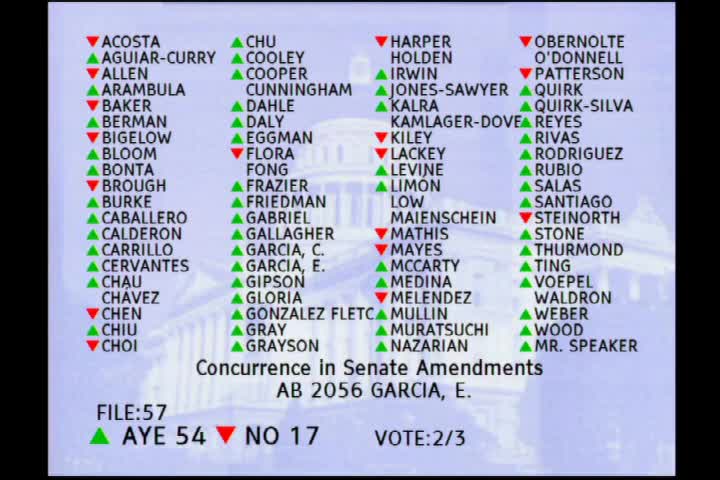 37SEC
Assembly Floor
 1MIN
Senate Floor
 1H
Senate Standing Committee on Appropriations
 2MIN
Senate Standing Committee on Human Services
Bill Author

Bill Co-Author(s):