AB 2348: California Winter Rice Habitat Incentive Program.
- Session Year: 2017-2018
- House: Assembly
- Latest Version Date: 2018-09-21
Existing law authorizes the Director of Fish and Wildlife, pursuant to the California Waterfowl Habitat Program, to enter into land use contracts for an initial term of 10 years to conserve waterfowl and waterfowl habitat with nonpublic entities that are owners of record or with lessees of land determined by the director to be important for the conservation of waterfowl, subject to the appropriation of money for that purpose. Under those contracts, the use of the land is restricted for waterfowl conservation and habitat purposes and the Department of Fish and Wildlife makes payments for that restriction. Existing law requires the contract to be recorded by the county recorder, as specified, and, if the land is divested, the successor to the owner or lessee of the land is subject to the contract.
This bill would establish a similar program, to be known as the California Winter Rice Habitat Incentive Program, to authorize the director to enter into contracts for an initial term of 3 years with nonpublic entities that are owners of record or with lessees of productive agricultural rice lands that are winter-flooded and that are determined by the director to be important for the conservation of waterfowl. Under these contracts, the use of the land would be restricted for waterfowl conservation and habitat purposes in a manner that allows for the use of the land for rice farming. The bill would create the California Winter Rice Habitat Incentive Program Account in the Fish and Game Preservation Fund and would make funds deposited in the account available for expenditure, upon appropriation, to the department for purposes of the program. The bill would make available certain moneys appropriated in the Budget Act of 2018 for purposes of this program.
Existing law authorizes the Director of Fish and Wildlife, pursuant to the California Waterfowl Habitat Program, to enter into land use contracts for an initial term of 10 years to conserve waterfowl and waterfowl habitat with nonpublic entities that are owners of record, record or with lessees, who have the owners of record execute the contract, lessees of land determined by the director to be important for the conservation of waterfowl, subject to the appropriation of money for that purpose. Under those contracts, the use of the land is restricted for waterfowl conservation and habitat purposes and the Department of Fish and Wildlife makes payments for that restriction. Existing law requires the contract to be recorded by the county recorder, as specified, and, if the land is divested, the successor to the owner or lessee of the land is subject to the contract.
This bill would specifically establish a similar program, to be known as the California Winter Rice Habitat Incentive Program, to authorize the director to enter into contracts for an initial term of 3 years with nonpublic entities that are owners of record, record or with lessees, who have the owners of record execute the contract, lessees of productive agricultural rice lands that are winter-flooded and that are determined by the director to be important for the conservation of waterfowl. Under these contracts, the use of the land would be restricted for waterfowl conservation and habitat purposes in a manner that allows for the use of the land for rice farming. The bill would require these contracts to include a requirement that the department reduce the amount of any payment to the owner or lessee by an amount equal to the portion of any payment that the department determines to be in compensation for the same obligation undertaken by the owner under any other governmental program. The bill would require the department to contract with a nongovernmental organization to develop a generally applicable habitat management plan to be carried out as a condition of one of these contracts and would require the department to approve the plan if it makes a specified finding. The bill would authorize the director to consult with specified entities to determine a fair and reasonable standard rate or rates to pay owners or lessees who enter into these contracts. The bill would provide that certain moneys made available for purposes of the California Waterfowl Habitat Program shall not be used to fund these contracts. The bill would make other related changes. The bill would make available certain moneys appropriated in the Budget Act of 2018 for purposes of this program.
To the extent that the bill expands the types of contracts required to be recorded by a county recorder, this bill would impose a state-mandated local program.The California Constitution requires the state to reimburse local agencies and school districts for certain costs mandated by the state. Statutory provisions establish procedures for making that reimbursement.This bill would provide that no reimbursement is required by this act for a specified reason.Existing law authorizes the Director of Fish and Wildlife, pursuant to the California Waterfowl Habitat Program, to enter into land use contracts to conserve waterfowl and waterfowl habitat with nonpublic entities that are owners of record, or with lessees, who have the owners of record execute the contract, of land determined by the director to be important for the conservation of waterfowl, subject to the appropriation of money for that purpose. Under those contracts, the use of the land is restricted for waterfowl conservation and habitat purposes and the department Department of Fish and Wildlife makes payments for that restriction. Existing law requires the contract to be recorded by the county recorder, as specified, and, if the land is divested, the successor to the owner or lessee of the land is subject to the contract.
This bill would specifically authorize the director to enter into contracts with nonpublic entities that are owners of record, or with lessees, who have the owners of record execute the contract, of productive agricultural rice lands that are winter-flooded and that are determined by the director to be important for the conservation of waterfowl. Under these contracts, the use of the land would be restricted for waterfowl conservation and habitat purposes in a manner that allows for the use of the land for rice farming. The bill would require these contracts to include a requirement that the department reduce the amount of any payment to the owner or lessee by an amount equal to the portion of any payment that the department determines to be in compensation for the same obligation undertaken by the owner under any other governmental program. The bill would require the department to contract with a nongovernmental organization to develop a generally applicable habitat management plan to be carried out as a condition of one of these contracts and would require the department to approve the plan if it makes a specified finding. The bill would authorize the director to consult with specified entities to determine a fair and reasonable standard rate or rates to pay owners or lessees who enter into these contracts. The bill would provide that certain moneys made available for purposes of the California Waterfowl Habitat Program shall not be used to fund these contracts. The bill would make other related changes.
To the extent that the bill expands the types of contracts required to be recorded by a county recorder, this bill would impose a state-mandated local program.
The California Constitution requires the state to reimburse local agencies and school districts for certain costs mandated by the state. Statutory provisions establish procedures for making that reimbursement.
This bill would provide that no reimbursement is required by this act for a specified reason.
Existing law authorizes the Director of Fish and Wildlife Wildlife, pursuant to the California Waterfowl Habitat Program, to enter into land use contracts to conserve waterfowl and waterfowl habitat with nonpublic entities that are owners of record, or with lessees, who have the owners of record execute the contract, of land determined by the director to be important for the conservation of waterfowl, subject to the appropriation of money for that purpose. Under those contracts, the use of the land is restricted for waterfowl conservation and habitat purposes and the department makes payments for that restriction. Existing law requires the contract to be recorded by the county recorder, as specified, and, if the land is divested, the successor to the owner or lessee of the land is subject to the contract.
This bill would specifically authorize the director to enter into contracts with nonpublic entities that are owners of record, or with lessees, who have the owners of record execute the contract, of productive agricultural rice lands that are winter-flooded and that are determined by the director to be important for the conservation of waterfowl. The bill would require the department to contract with a nongovernmental organization to develop a generally applicable habitat management plan to be carried out as a condition of one of these contracts and would require the department to approve the plan if it makes a specified finding. The bill would authorize the director to consult with specified entities to determine a fair and reasonable standard rate or rates to pay owners or lessees who enter into these contracts. The bill would provide that certain moneys made available for purposes of the California Waterfowl Habitat Program shall not be used to fund these contracts. The bill would make other related changes.
To the extent that the bill expands the types of contracts required to be recorded by a county recorder, this bill would impose a state-mandated local program.
The California Constitution requires the state to reimburse local agencies and school districts for certain costs mandated by the state. Statutory provisions establish procedures for making that reimbursement.
This bill would provide that no reimbursement is required by this act for a specified reason.
Existing law authorizes the Director of Fish and Wildlife to enter into land use contracts to conserve waterfowl and waterfowl habitat with nonpublic entities that are owners of record, or with lessees, who have the owners of record execute the contract, of land determined by the director to be important for the conservation of waterfowl, subject to the appropriation of money for that purpose.
This bill would specifically authorize the director to enter into contracts with nonpublic entities that are owners of record, or with lessees, who have the owners of record execute the contract, of productive agricultural rice lands that are winter-flooded and that are determined by the director to be important for the conservation of waterfowl.
Existing law requires the Department of Food and Agriculture to establish and oversee an environmental farming program that provides incentives to farmers whose practices promote the well-being of ecosystems, air quality, and wildlife and their habitats.This bill would declare the intent of the Legislature to enact subsequent legislation that would provide an incentive to farmers to maintain winter-flooded rice.Existing law requires the Department of Food and Agriculture to establish and oversee an environmental farming program that provides incentives to farmers whose practices promote the well-being of ecosystems, air quality, and wildlife and their habitats.
This bill would declare the intent of the Legislature to enact subsequent legislation that would provide an incentive to farmers to maintain winter-flooded rice.
The Legislature finds and declares all of the following:
(a)Californias great Central Valley, encompassing the Sacramento and San Joaquin Valleys and joined by the Bay Delta, was once an expansive complex of permanent and seasonal wetlands. Over 100 years ago, an estimated four million acres of these valuable habitats lined the Central Valley, supporting an estimated 20 million to 40 million waterfowl and countless millions of other shorebirds, wading birds, raptors, and other wildlife.
(b)By the 1970s, the rich ecological wetlands complex in the Central Valley dwindled to less than 250,000 acres, just 5 percent of historic levels.
(c)Habitat improvement in this Critical Conservation Area can make a significant and beneficial conservation impact on waterbird populations in the Pacific Flyway.
(d)The Central Valley is a critical hub to the Pacific Flyway as a major migratory corridor extending from Alaska to South America.
(e)Over the past few decades, winter flooding of California rice lands has created high-quality habitats on approximately 350,000 acres annually. In recent years, the average total amount of winter-flooded rice fields has decreased, and many waterbird conservationists are concerned that this trend will continue.
(f)For waterfowl, the consequences of fewer acres of winter-flooded rice fields is devastating, as the Central Valley Joint Venture has estimated that winter-flooded rice fields provide over 60 percent of the food required by waterfowl in the Sacramento Valley.
(g)Recent studies show that winter-flooded rice fields may also prove to be a valuable tool in improving the salmon populations by demonstrating that growth rates of juvenile salmon reared in these habitats are the highest on record.
(h)Considering the multiple threats facing the region, California should expand its substantial conservation investments designed to help preserve the Pacific Flyway for future generations.
SEC. 2.Article 7.5 (commencing with Section 3469) is added to Chapter 2 of Part 1 of Division 4 of the Fish and Game Code, to read:7.5.The California Winter Rice Habitat Incentive Program3469.(a)There is established the California Winter Rice Habitat Incentive Program subject to the requirements of this article.
(b)Subject to appropriation for purposes of this article, the director may enter into contracts with nonpublic entities that are owners of record, or with lessees who have the owners of record execute the contract, of productive agricultural rice lands that are winter-flooded and that are determined by the director to be important for the conservation of waterfowl. The contract shall enforceably restrict the use of the land for the conservation of waterfowl and their habitat in a manner that allows for the use of the land for rice farming consistent with Section 8 of Article XIII of the California Constitution.
(c)The director shall give priority to contracts that have the greatest potential for restoring, enhancing, and protecting high-quality waterfowl habitat, especially that subject to destruction, drastic modification, or significant curtailment of habitat values. The director may give priority to contracts that provide additional environmental cobenefits, including cobenefits to species such as fish or snakes.
(d)(1)Before entering into a contract pursuant to this article, if the land proposed to be subject to the contract is located within five miles of a runway on a military base or international airport, the director shall consult with the applicable branch of the United States military or the operator of the international airport, as applicable.
(2)The department shall develop guidance and protocols regarding consultation conducted pursuant to paragraph (1) that addresses, at a minimum, notification, participation, and a procedure to request the director to reconsider his or her decision to enter into a contract pursuant to this article.
(e)Contracts entered into pursuant to this article are not subject to Part 2 (commencing with Section 10100) of Division 2 of the Public Contract Code.
(f)For purposes of this article, productive agricultural rice lands that are winter-flooded means a field that has been farmed to rice at least two of the last three growing seasons and is intentionally maintained in a flooded state for at least 70 days between October 15 and March 15, inclusive, of the following year.
3469.2.Each contract shall be for an initial term of three years and shall include the following:
(a)The designation of the owner of record and any lessee, and the legal description and the assessors parcel number of the land subject to the contract.
(b)An agreement by the owner and any lessee to restore, enhance, and protect the waterfowl habitat character of the described land.
(c)Specification of the amount and date in each year that the payment is to be made by the department to the owner or lessee, which shall be calculated at the rate or rates that the director determines to be fair and reasonable in consideration of the obligations undertaken by the owner or lessee.
(d)A requirement that the owner or lessee do either of the following:
(1)Refund to the state all payments received under the contract plus interest at the legal rate, as specified in Section 3289 of the Civil Code, upon the owners or lessees violation of the contract, or any extension thereof, if the director determines that the violation warrants termination of the contract and the director terminates the contract.
(2)Make refunds or accept payment adjustments that the director determines are appropriate, not to exceed the total amount paid by the state to the owner or lessee in the preceding calendar year plus interest at the legal rate, as specified in Section 3289 of the Civil Code, if the director determines that the violation by the owner or lessee does not warrant termination of the contract.
(e)A requirement that the department reduce the amount of any payment to the owner or lessee under subdivision (c) by an amount equal to the portion of any payment under the federal Water Bank Program (16 U.S.C. Sec. 1301 et seq.) that the department determines to be in compensation for the same obligation undertaken by the owner under the water bank program.
(f)In addition to subdivision (e), a requirement that the department reduce the amount of any payment to the owner or lessee under subdivision (c) by an amount equal to the portion of any payment that the department determines to be in compensation for the same obligation undertaken by the owner under any other governmental program.
(g)An authorization for the department to monitor compliance with the contract with the federal Natural Resources Conservation Service, a county agricultural commissioner, or other appropriate agency, entity, or person to monitor compliance with the contract, and a requirement that the owner or lessee allow access for the monitoring.
(h)Any additional provisions that the director determines are desirable to effectuate the purposes of the program or to facilitate its administration.
3469.4.If during the contract period the owner or lessee is divested of the use of the waterfowl habitat subject to the contract, the owner or lessee shall notify the department concurrent with that divestment. Any unearned payment shall immediately be refunded by the owner or lessee to the department.
3469.6.The director and the owner or lessee may mutually agree to modify the terms and conditions of a contract under this article as the director may determine to be desirable to carry out the purposes of, or to facilitate administration of, the program.
3469.8.The California Winter Rice Habitat Incentive Program Account is hereby created in the Fish and Game Preservation Fund. Funds deposited in the California Winter Rice Habitat Incentive Program Account shall be made available for expenditure, upon appropriation by the Legislature, to the department. These funds shall be expended solely for the purposes set forth in this article. An amount that equals not more than 5 percent of the funds allocated for this program may be used to pay the administrative costs of the program and up to 10 percent of funds allocated may be used for planning and monitoring necessary to ensure the success of the program.
SEC. 3.Notwithstanding any other law, the amount appropriated pursuant to Provision 4 of Item 3600-001-0001 in the Budget Act of 2018 (Chapter 29 of the Statutes of 2018) shall be available for purposes of the California Winter Rice Habitat Incentive Program.
The Legislature finds and declares all of the following:
(a)Californias great Central Valley, encompassing the Sacramento and San Joaquin Valleys and joined by the Bay Delta, was once an expansive complex of permanent and seasonal wetlands. Over 100 years ago, an estimated four million acres of these valuable habitats lined the Central Valley, supporting an estimated 20 million to 40 million waterfowl and countless millions of other shorebirds, wading birds, raptors, and other wildlife.
(b)By the 1970s, the rich ecological wetlands complex in the Central Valley dwindled to less than 250,000 acres, just 5 percent of historic levels.
(c)Habitat improvement in this Critical Conservation Area can make a significant and beneficial conservation impact on waterbird populations in the Pacific Flyway.
(d)The Central Valley is a critical hub to the Pacific Flyway as a major migratory corridor running extending from Alaska to South America.
(e)Over the past few decades, winter flooding of California rice lands has created high-quality habitats on approximately 350,000 acres annually. In recent years, the average total amount of winter-flooded rice fields has decreased, and many waterbird conservationists are concerned that this trend will continue.
(f)For waterfowl, the consequences of fewer acres of winter-flooded rice fields is devastating, as the Central Valley Joint Venture has estimated that winter-flooded rice fields provide over 60 percent of the food required by waterfowl in the Sacramento Valley.
(g)Recent studies show that winter-flooded rice fields may also prove to be a valuable tool in improving the salmon populations by demonstrating that growth rates of juvenile salmon reared in these habitats are the highest on record.
(h)Considering the multiple threats facing the region, California should consider expand its substantial conservation investments designed to help preserve the Pacific Flyway for future generations.
SEC. 2.Article 7.5 (commencing with Section 3469) is added to Chapter 2 of Part 1 of Division 4 of the Fish and Game Code, to read:7.5.The California Winter Rice Habitat Incentive Program3469.(a)There is established the California Winter Rice Habitat Incentive Program subject to the requirements of this article.
(b)Subject to appropriation for purposes of this article, the director may enter into contracts with nonpublic entities that are owners of record, or with lessees who have the owners of record execute the contract, of productive agricultural rice lands that are winter-flooded and that are determined by the director to be important for the conservation of waterfowl. The contract shall enforceably restrict the use of the land for the conservation of waterfowl and their habitat in a manner that allows for the use of the land for rice farming consistent with Section 8 of Article XIII of the California Constitution.
(c)The director shall give priority to contracts that have the greatest potential for restoring, enhancing, and protecting high-quality waterfowl habitat, especially that subject to destruction, drastic modification, or significant curtailment of habitat values. The director may give priority to contracts that provide additional environmental cobenefits, including cobenefits to species such as fish or snakes.
(d)Before entering into a contract pursuant to this article, if the land proposed to be subject to the contract is located within five miles of a runway on a military base or international airport, the director shall consult with the applicable branch of the United States military or the operator of the international airport, as applicable.
(e)Contracts entered into pursuant to this article are not subject to Part 2 (commencing with Section 10100) of Division 2 of the Public Contract Code.
(f)For purposes of this article, productive agricultural rice lands that are winter-flooded means a field that has been farmed to rice at least two of the last three growing seasons and is intentionally maintained in a flooded state for at least 70 days between October 15 and March 15, inclusive, of the following year.
3469.2.Each contract shall be for an initial term of three years and shall include the following:
(a)The designation of the owner of record and any lessee, and the legal description and the assessors parcel number of the land subject to the contract.
(b)An agreement by the owner and any lessee to restore, enhance, and protect the waterfowl habitat character of the described land.
(c)Specification of the amount and date in each year that the payment is to be made by the department to the owner or lessee, which shall be calculated at the rate or rates that the director determines to be fair and reasonable in consideration of the obligations undertaken by the owner or lessee.
(d)A requirement that the owner or lessee do either of the following:
(1)Refund to the state all payments received under the contract plus interest at the legal rate, as specified in Section 3289 of the Civil Code, upon the owners or lessees violation of the contract, or any extension thereof, if the director determines that the violation warrants termination of the contract and the director terminates the contract.
(2)Make refunds or accept payment adjustments that the director determines are appropriate, not to exceed the total amount paid by the state to the owner or lessee in the preceding calendar year plus interest at the legal rate, as specified in Section 3289 of the Civil Code, if the director determines that the violation by the owner or lessee does not warrant termination of the contract.
(e)A requirement that the department reduce the amount of any payment to the owner or lessee under subdivision (c) by an amount equal to the portion of any payment under the federal Water Bank Program (16 U.S.C. Sec. 1301 et seq.) that the department determines to be in compensation for the same obligation undertaken by the owner under the water bank program.
(f)In addition to subdivision (e), a requirement that the department reduce the amount of any payment to the owner or lessee under subdivision (c) by an amount equal to the portion of any payment that the department determines to be in compensation for the same obligation undertaken by the owner under any other governmental program.
(g)An authorization for the department to monitor compliance with the contract with the federal Natural Resources Conservation Service, a county agricultural commissioner, or other appropriate agency, entity, or person to monitor compliance with the contract, and a requirement that the owner or lessee allow access for the monitoring.
(h)Any additional provisions that the director determines are desirable to effectuate the purposes of the program or to facilitate its administration.
3469.4.If during the contract period the owner or lessee is divested of the use of the waterfowl habitat subject to the contract, the owner or lessee shall notify the department concurrent with that divestment. Any unearned payment shall immediately be refunded by the owner or lessee to the department.
3469.6.The director and the owner or lessee may mutually agree to modify the terms and conditions of a contract under this article as the director may determine to be desirable to carry out the purposes of, or to facilitate administration of, the program.
SEC. 3.Notwithstanding any other law, the amount appropriated pursuant to Provision 4 of Item 3600-001-0001 in the Budget Act of 2018 (Chapter 29 of the Statutes of 2018) shall be available for purposes of the California Winter Rice Habitat Incentive Program.
SEC. 2.Section 3460 of the Fish and Game Code is amended to read:3460.(a)(1)Subject to appropriation pursuant to Section 3467, the director may enter into contracts with nonpublic entities that are owners of record, or with lessees, who have the owners of record execute the contract, of land determined by the director to be important for the conservation of waterfowl. The contract shall enforceably restrict the use of the land for the conservation of waterfowl and their habitat consistent with Section 8 of Article XIII of the California Constitution.(2)Subject to appropriation pursuant to Section 3467, the director may enter into contracts with nonpublic entities that are owners of record, or with lessees, who have the owners of record execute the contract, of productive agricultural rice lands that are winter-flooded and that are determined by the director to be important for the conservation of waterfowl. The contract shall enforceably restrict the use of the land for the conservation of waterfowl and their habitat in a manner that allows for the use of the land for rice farming consistent with Section 8 of Article XIII of the California Constitution.(b)The director shall give priority to contracts that have the greatest potential for restoring, enhancing, and protecting high-quality waterfowl habitat, especially that subject to destruction, drastic modification, or significant curtailment of habitat values. The director may give priority to contracts that provide additional environmental cobenefits, including cobenefits to species such as fish or snakes.(c)Contracts entered into pursuant to this section are not subject to Part 2 (commencing with Section 10100) of Division 2 of the Public Contract Code.(d)For purposes of this article, productive agricultural rice lands that are winter-flooded means a field that has been farmed to rice at least two of the last three growing seasons and is intentionally maintained in a flooded state for at least 70 days between October 15 and March 15, inclusive, of the following year.SEC. 3.Section 3461 of the Fish and Game Code is amended to read:3461.Each contract shall be for an initial term of 10 years and shall include all of the following:(a)The designation of the owner of record and any lessee, and the legal description and the assessors parcel number of the land subject to the contract.(b)(1)For a contract entered into pursuant to subdivision (a) of Section 3460, an agreement by the owner and any lessee to restore, enhance, and protect the waterfowl habitat character of the described land and to carry out a waterfowl habitat management plan developed with the department.(2)For a contract entered into pursuant to paragraph (2) of subdivision (a) of Section 3460, an agreement by the owner and any lessee to restore, enhance, and protect the waterfowl habitat character of the described land and to conduct habitat management pursuant to the generally applicable habitat management plan approved pursuant to Section 3461.5.(c)Specification of the amount and date in each year that the payment is to be made by the department to the owner or lessee, which shall be calculated at the rate or rates that the director determines to be fair and reasonable in consideration of the obligations undertaken by the owner or lessee.(d)A requirement that the owner or lessee do either of the following:(1)Refund to the state all payments received under the contract plus interest at the legal rate, as specified in Section 3289 of the Civil Code, upon the owners or lessees violation of the contract, or any extension thereof, if the director determines that the violation warrants termination of the contract and the director terminates the contract.(2)Make refunds or accept payment adjustments that the director determines are appropriate, not to exceed the total amount paid by the state to the owner or lessee in the preceding calendar year plus interest at the legal rate, as specified in Section 3289 of the Civil Code, if the director determines that the violation by the owner or lessee does not warrant termination of the contract.(e)A requirement that the department reduce the amount of any payment to the owner or lessee under subdivision (c) by an amount equal to the portion of any payment under the Federal Water Bank Program (16 U.S.C. Sec. 1301 et seq.) that the department determines to be in compensation for the same obligation undertaken by the owner under the water bank program.(f)With respect to contracts entered into pursuant to paragraph (2) of subdivision (a) of Section 3460, in addition to subdivision (e), a requirement that the department reduce the amount of any payment to the owner or lessee under subdivision (c) by an amount equal to the portion of any payment that the department determines to be in compensation for the same obligation undertaken by the owner under any other governmental program. This requirement does not apply to any payments that an owner or lessee receives under a governmental program for supporting research projects or fisheries on the land subject to the contract.(g)A requirement that the department monitor compliance with the management plan or contract with the federal Natural Resource Conservation Service, a county agricultural commissioner, or other appropriate agency, entity, or person to monitor compliance with the management plan, and that the owner or lessee allows access for the monitoring.(h)Any additional provisions that the director determines are desirable to effectuate the purposes of the program or to facilitate its administration.SEC. 4.Section 3461.5 is added to the Fish and Game Code, to read:3461.5.(a)The department shall contract with a nongovernmental organization to develop a generally applicable habitat management plan to be carried out as a condition of a contract entered into pursuant to paragraph (2) of subdivision (a) of Section 3460. After the plan has been developed, the department shall approve the plan if it finds that the plan is consistent with the purposes of this article.(b)The director may consult with industry-supported foundations, nongovernmental organizations, local water agencies, and any appropriate state agencies to determine a fair and reasonable standard rate or rates to pay owners or lessees who enter into contracts pursuant to paragraph (2) of subdivision (a) of Section 3460.SEC. 5.Section 3467 of the Fish and Game Code is amended to read:3467.(a)The California Waterfowl Habitat Preservation Account is hereby created in the Fish and Game Preservation Fund, and the money in the account shall be transferred to the Surplus Money Investment Fund for investment pursuant to Article 4 (commencing with Section 16470) of Chapter 3 of Division 4 of Title 2 of the Government Code. The proceeds of the investment deposited in the account shall be available, upon appropriation by the Legislature, for expenditure pursuant to this article. However, not more than 7 percent of the money appropriated from the account for expenditure in any fiscal year shall be expended in that fiscal year for administrative costs of the department.(b)Moneys made available for purposes of this article pursuant to the California Drought, Water, Parks, Climate, Coastal Protection, and Outdoor Access For All Act of 2018 (Proposition 68 of the June 5, 2018, statewide primary election) or the Water Supply and Water Quality Bond Act of 2018, if that act is submitted to the voters, shall not be used to fund a contract entered into pursuant to paragraph (2) of subdivision (a) of Section 3460.SEC. 6.No reimbursement is required by this act pursuant to Section 6 of Article XIIIB of the California Constitution because a local agency or school district has the authority to levy service charges, fees, or assessments sufficient to pay for the program or level of service mandated by this act, within the meaning of Section 17556 of the Government Code.The Legislature finds and declares all of the following:
(a)Californias great Central Valley, encompassing the Sacramento and San Joaquin Valleys and joined by the Bay Delta, was once an expansive complex of permanent and seasonal wetlands. Over 100 years ago, an estimated four million acres of these valuable habitats lined the Central Valley, supporting an estimated 20 million to 40 million waterfowl and countless millions of other shorebirds, wading birds, raptors, and other wildlife.
(b)By the 1970s, the rich ecological wetlands complex in the Central Valley dwindled to less than 250,000 acres, just 5 percent of historic levels.
(c)Habitat improvement in this Critical Conservation Area can make a significant and beneficial conservation impact on waterbird populations in the Pacific Flyway.
(d)The Central Valley is a critical hub to the Pacific Flyway as a major migratory corridor running from Alaska to South America.
(e)Over the past few decades, winter flooding of California rice lands has created high-quality habitats on approximately 350,000 acres annually. In recent years, the average total amount of winter-flooded rice fields has decreased, and many waterbird conservationists are concerned that this trend will continue.
(f)For waterfowl, the consequences of fewer acres of winter-flooded rice fields is devastating, as the Central Valley Joint Venture has estimated that winter-flooded rice fields provide over 60 percent of the food required by waterfowl in the Sacramento Valley.
(g)Recent studies show that winter-flooded rice fields may also prove to be a valuable tool in improving the salmon populations by demonstrating that growth rates of juvenile salmon reared in these habitats are the highest on record.
(h)Considering the multiple threats facing the region, California should consider substantial conservation investments designed to help preserve the Pacific Flyway for future generations.
SEC. 2.Section 3460 of the Fish and Game Code is amended to read:3460.(a)(1)Subject to appropriation pursuant to Section 3467, the director may enter into contracts with nonpublic entities that are owners of record, or with lessees, who have the owners of record execute the contract, of land determined by the director to be important for the conservation of waterfowl. The contract shall enforceably restrict the use of the land for the conservation of waterfowl and their habitat consistent with Section 8 of Article XIII of the California Constitution.
(2)In accordance with paragraph (1), Subject to appropriation pursuant to Section 3467, the director may enter into contracts with nonpublic entities that are owners of record, or with lessees, who have the owners of record execute the contract, of productive agricultural rice lands that are winter-flooded and that are determined by the director to be important for the conservation of waterfowl. The contract shall enforceably restrict the use of the land for the conservation of waterfowl and their habitat in a manner that allows for the use of the land for rice farming consistent with Section 8 of Article XIII of the California Constitution.
(b)The director shall give priority to contracts that have the greatest potential for restoring, enhancing, and protecting high-quality waterfowl habitat, especially that subject to destruction, drastic modification, or significant curtailment of habitat values. The director may give priority to contracts that provide additional environmental cobenefits, including cobenefits to species such as fish or snakes.
(c)Contracts entered into pursuant to this section are not subject to Part 2 (commencing with Section 10100) of Division 2 of the Public Contract Code.
(d)For purposes of this article, productive agricultural rice lands that are winter-flooded means a field that has been farmed to rice at least two of the last three growing seasons and is intentionally maintained in a flooded state for at least 70 days between October 15 and March 15, inclusive, of the following year.
SEC. 3.Section 3461 of the Fish and Game Code is amended to read:3461.Each contract shall be for an initial term of 10 years and shall include all of the following:
(a)The designation of the owner of record and any lessee, and the legal description and the assessors parcel number of the land subject to the contract.
(b)(1)For a contract entered into pursuant to subdivision (a) of Section 3460, but not pursuant to paragraph (2) thereof, an agreement by the owner and any lessee to restore, enhance, and protect the waterfowl habitat character of the described land and to carry out a waterfowl habitat management plan developed with the department.
(2)For a contract entered into pursuant to paragraph (2) of subdivision (a) of Section 3460, an agreement by the owner and any lessee to restore, enhance, and protect the waterfowl habitat character of the described land and to conduct habitat management pursuant to the generally applicable habitat management plan approved pursuant to Section 3461.5.
(c)Specification of the amount and date in each year that the payment is to be made by the department to the owner or lessee, which shall be calculated at the rate or rates that the director determines to be fair and reasonable in consideration of the obligations undertaken by the owner or lessee.
(d)A requirement that the owner or lessee do either of the following:
(1)Refund to the state all payments received under the contract plus interest at the legal rate, as specified in Section 3289 of the Civil Code, upon the owners or lessees violation of the contract, or any extension thereof, if the director determines that the violation warrants termination of the contract and the director terminates the contract.
(2)Make refunds or accept payment adjustments that the director determines are appropriate, not to exceed the total amount paid by the state to the owner or lessee in the preceding calendar year plus interest at the legal rate, as specified in Section 3289 of the Civil Code, if the director determines that the violation by the owner or lessee does not warrant termination of the contract.
(e)A requirement that the department reduce the amount of any payment to the owner or lessee under subdivision (c) by an amount equal to the portion of any payment under the Federal Water Bank Program (16 U.S.C. Sec. 1301 et seq.) which that the department determines to be in compensation for the same obligation undertaken by the owner under the water bank program.
(f)With respect to contracts entered into pursuant to paragraph (2) of subdivision (a) of Section 3460, in addition to subdivision (e), a requirement that the department reduce the amount of any payment to the owner or lessee under subdivision (c) by an amount equal to the portion of any payment that the department determines to be in compensation for the same obligation undertaken by the owner under any other governmental program. This requirement does not apply to any payments that an owner or lessee receives under a governmental program for supporting research projects or fisheries on the land subject to the contract.
(f)(g)A requirement that the department monitor compliance with the management plan or contract with the federal Natural Resource Conservation Service, a county agricultural commissioner, or other appropriate agency, entity, or person to monitor compliance with the management plan, and that the owner or lessee allows access for the monitoring.
(g)(h)Any additional provisions that the director determines are desirable to effectuate the purposes of the program or to facilitate its administration.
SEC. 4.Section 3461.5 is added to the Fish and Game Code, to read:3461.5.(a)The department shall contract with a nongovernmental organization to develop a generally applicable habitat management plan to be carried out as a condition of a contract entered into pursuant to paragraph (2) of subdivision (a) of Section 3460. After the plan has been developed, the department shall approve the plan if it finds that the plan is consistent with the purposes of this article.
(b)The director may consult with industry-supported foundations, nongovernmental organizations, local water agencies, and any appropriate state agencies to determine a fair and reasonable standard rate or rates to pay owners or lessees who enter into contracts pursuant to paragraph (2) of subdivision (a) of Section 3460.
SEC. 5.Section 3467 of the Fish and Game Code is amended to read:3467.(a)The California Waterfowl Habitat Preservation Account is hereby created in the Fish and Game Preservation Fund, and the money in the account shall be transferred to the Surplus Money Investment Fund for investment pursuant to Article 4 (commencing with Section 16470) of Chapter 3 of Division 4 of Title 2 of the Government Code. The proceeds of the investment deposited in the account shall be available, upon appropriation by the Legislature, for expenditure pursuant to this article. However, not more than 7 percent of the money appropriated from the account for expenditure in any fiscal year shall be expended in that fiscal year for administrative costs of the department.
(b)Moneys made available for purposes of this article pursuant to the California Drought, Water, Parks, Climate, Coastal Protection, and Outdoor Access For All Act of 2018 (Proposition 68 of the June 5, 2018, statewide primary election) or the Water Supply and Water Quality Bond Act of 2018, if that act is submitted to the voters, shall not be used to fund a contract entered into pursuant to paragraph (2) of subdivision (a) of Section 3460.
SEC. 6.No reimbursement is required by this act pursuant to Section 6 of Article XIIIB of the California Constitution because a local agency or school district has the authority to levy service charges, fees, or assessments sufficient to pay for the program or level of service mandated by this act, within the meaning of Section 17556 of the Government Code.
The Legislature finds and declares all of the following:
(a)Californias great Central Valley, encompassing the Sacramento and San Joaquin Valleys and joined by the Bay Delta, was once an expansive complex of permanent and seasonal wetlands. Over 100 years ago, an estimated four million acres of these valuable habitats lined the Central Valley, supporting an estimated 20 million to 40 million waterfowl and countless millions of other shorebirds, wading birds, raptors, and other wildlife.
(b)By the 1970s, the rich ecological wetlands complex in the Central Valley dwindled to less than 250,000 acres, just 5 percent of historic levels.
(c)Habitat improvement in this Critical Conservation Area can make a significant and beneficial conservation impact on waterbird populations in the Pacific Flyway.
(d)The Central Valley is a critical hub to the Pacific Flyway as a major migratory corridor running from Alaska to South America.
(e)Over the past few decades, winter flooding of California rice lands has created high-quality habitats on approximately 350,000 acres annually. In recent years, the average total amount of winter-flooded rice has decreased, and many waterbird conservationists are concerned that this trend will continue.
(f)For waterfowl, the consequences of fewer acres of winter-flooded rice is devastating, as the Central Valley Joint Venture has estimated that winter-flooded rice fields provide over 60 percent of the food required by waterfowl in the Sacramento Valley.
(g)Recent studies show that winter-flooded rice fields may also prove to be a valuable tool in improving the salmon populations by demonstrating that growth rates of juvenile salmon reared in these habitats are the highest on record.
(h)Considering the multiple threats facing the region, California should consider substantial conservation investments designed to help preserve the Pacific Flyway for future generations.
SEC. 2.Section 3460 of the Fish and Game Code is amended to read:3460.(a)(1)Subject to appropriation pursuant to Section 3467, the director may enter into contracts with nonpublic entities that are owners of record, or with lessees, who have the owners of record execute the contract, of land determined by the director to be important for the conservation of waterfowl. The contract shall enforceably restrict the use of the land for the conservation of waterfowl and their habitat consistent with Section 8 of Article XIII of the California Constitution.
(2)In accordance with paragraph (1), the director may enter into contracts with nonpublic entities that are owners of record, or with lessees, who have the owners of record execute the contract, of productive agricultural rice lands that are winter-flooded and that are determined by the director to be important for the conservation of waterfowl.
(b)The director shall give priority to contracts that have the greatest potential for restoring, enhancing, and protecting high quality high-quality waterfowl habitat, especially that which is subject to destruction, drastic modification, or significant curtailment of habitat values.
(c)Contracts entered into pursuant to this section are not subject to Part 2 (commencing with Section 10100) of Division 2 of the Public Contract Code.
(d)For purposes of this article, productive agricultural rice lands that are winter-flooded means a field that has been farmed to rice at least two of the last three growing seasons and is intentionally maintained in a flooded state for at least 70 days between October 15 and March 15, inclusive, of the following year.
SEC. 3.Section 3461 of the Fish and Game Code is amended to read:3461.Each contract shall be for an initial term of 10 years and shall include all of the following:
(a)The designation of the owner of record and any lessee, and the legal description and the assessors parcel number of the land subject to the contract.
(b)An(b)(1)For a contract entered into pursuant to subdivision (a) of Section 3460, but not pursuant to paragraph (2) thereof, an agreement by the owner and any lessee to restore, enhance, and protect the waterfowl habitat character of the described land and to carry out a waterfowl habitat management plan developed with the department.
(2)For a contract entered into pursuant to paragraph (2) of subdivision (a) of Section 3460, an agreement by the owner and any lessee to restore, enhance, and protect the waterfowl habitat character of the described land and to conduct habitat management pursuant to the generally applicable habitat management plan approved pursuant to Section 3461.5.
(c)Specification of the amount and date in each year that the payment is to be made by the department to the owner or lessee, which shall be calculated at the rate or rates that the director determines to be fair and reasonable in consideration of the obligations undertaken by the owner or lessee.
(d)A requirement that the owner or lessee do either of the following:
(1)Refund to the state all payments received under the contract plus interest at the legal rate, as specified in Section 3289 of the Civil Code, upon the owners or lessees violation of the contract, or any extension thereof, if the director determines that the violation warrants termination of the contract and the director terminates the contract.
(2)Make refunds or accept payment adjustments that the director determines are appropriate, not to exceed the total amount paid by the state to the owner or lessee in the preceding calendar year plus interest at the legal rate, as specified in Section 3289 of the Civil Code, if the director determines that the violation by the owner or lessee does not warrant termination of the contract.
(e)A requirement that the department reduce the amount of any payment to the owner or lessee under subdivision (c) by an amount equal to the portion of any payment under the Federal Water Bank Program (16 U.S.C. Sec. 1301 et seq.) which the department determines to be in compensation for the same obligation undertaken by the owner under the water bank program.
(f)A requirement that the department monitor compliance with the management plan or contract with the United States Soil Conservation Service federal Natural Resource Conservation Service, a county agricultural commissioner, or other appropriate agency, entity, or person to monitor compliance with the management plan, and that the owner or lessee allows access for the monitoring.
(g)Any additional provisions that the director determines are desirable to effectuate the purposes of the program or to facilitate its administration.
SEC. 4.Section 3461.5 is added to the Fish and Game Code, to read:3461.5.(a)The department shall contract with a nongovernmental organization to develop a generally applicable habitat management plan to be carried out as a condition of a contract entered into pursuant to paragraph (2) of subdivision (a) of Section 3460. After the plan has been developed, the department shall approve the plan if it finds that the plan is consistent with the purposes of this article.
(b)The director may consult with industry-supported foundations, nongovernmental organizations, local water agencies, and any appropriate state agencies to determine a fair and reasonable standard rate or rates to pay owners or lessees who enter into contracts pursuant to paragraph (2) of subdivision (a) of Section 3460.
SEC. 5.Section 3467 of the Fish and Game Code is amended to read:3467.(a)The California Waterfowl Habitat Preservation Account is hereby created in the Fish and Game Preservation Fund, and the money in the account shall be transferred to the Surplus Money Investment Fund for investment pursuant to Article 4 (commencing with Section 16470) of Chapter 3 of Division 4 of Title 2 of the Government Code. The proceeds of the investment deposited in the account shall be available, upon appropriation by the Legislature, for expenditure pursuant to this article. However, not more than 7 percent of the money appropriated from the account for expenditure in any fiscal year shall be expended in that fiscal year for administrative costs of the department.
(b)Moneys made available for purposes of this article pursuant to the California Drought, Water, Parks, Climate, Coastal Protection, and Outdoor Access For All Act of 2018 (Proposition 68 of the June 5, 2018, statewide primary election) or the Water Supply and Water Quality Bond Act of 2018, if that act is submitted to the voters, shall not be used to fund a contract entered into pursuant to paragraph (2) of subdivision (a) of Section 3460.
SEC. 6.No reimbursement is required by this act pursuant to Section 6 of Article XIIIB of the California Constitution because a local agency or school district has the authority to levy service charges, fees, or assessments sufficient to pay for the program or level of service mandated by this act, within the meaning of Section 17556 of the Government Code.
The Legislature finds and declares all of the following:
(a)Californias great Central Valley, encompassing the Sacramento and San Joaquin Valleys and joined by the Bay Delta, was once an expansive complex of permanent and seasonal wetlands. Over 100 years ago, an estimated four million acres of these valuable habitats lined the Central Valley, supporting an estimated 20 million to 40 million waterfowl and countless millions of other shorebirds, wading birds, raptors, and other wildlife.
(b)By the 1970s, the rich ecological wetlands complex in the Central Valley dwindled to less than 250,000 acres, just 5 percent of historic levels.
(c)Habitat improvement in this Critical Conservation Area can make a significant and beneficial conservation impact on waterbird populations in the Pacific Flyway.
(d)The Central Valley is a critical hub to the Pacific Flyway as a major migratory corridor running from Alaska to South America.
(e)Over the past few decades, winter flooding of California rice lands has created high-quality habitats on approximately 350,000 acres annually. In recent years, the average total amount of winter-flooded rice has decreased, and many waterbird conservationists are concerned that this trend will continue.
(f)For waterfowl, the consequences of fewer acres of winter-flooded rice is devastating, as the Central Valley Joint Venture has estimated that winter-flooded rice fields provide over 60 percent of the food required by waterfowl in the Sacramento Valley.
(g)Recent studies show that winter-flooded rice fields may also prove to be a valuable tool in improving the salmon populations by demonstrating that growth rates of juvenile salmon reared in these habitats are the highest on record.
(h)Considering the multiple threats facing the region, California should consider substantial conservation investments designed to help preserve the Pacific Flyway for future generations.
SEC. 2.Section 3460 of the Fish and Game Code is amended to read:3460.(a)(1)Subject to appropriation pursuant to Section 3467, the director may enter into contracts with nonpublic entities which that are owners of record, or with lessees, who have the owners of record execute the contract, of land determined by the director to be important for the conservation of waterfowl. The contract shall enforceably restrict the use of the land for the conservation of waterfowl and their habitat consistent with Section 8 of Article XIII of the California Constitution.
(2)In accordance with paragraph (1), the director may enter into contracts with nonpublic entities that are owners of record, or with lessees, who have the owners of record execute the contract, of productive agricultural rice lands that are winter-flooded and that are determined by the director to be important for the conservation of waterfowl.
(b)The director shall give priority to contracts that have the greatest potential for restoring, enhancing, and protecting high quality waterfowl habitat, especially that which is subject to destruction, drastic modification, or significant curtailment of habitat values.
(c)Contracts entered into pursuant to this section are not subject to Part 2 (commencing with Section 10100) of Division 2 of the Public Contract Code.
SEC. 2.It is the intent of the Legislature to enact subsequent legislation that would provide an incentive to farmers to maintain winter-flooded rice.The Legislature finds and declares all of the following:
(a)Californias great Central Valley, encompassing the Sacramento and San Joaquin Valleys and joined by the Bay Delta, was once an expansive complex of permanent and seasonal wetlands. Over 100 years ago, an estimated four million acres of these valuable habitats lined the Central Valley, supporting an estimated 20 million to 40 million waterfowl and countless millions of other shorebirds, wading birds, raptors, and other wildlife.
(b)By the 1970s, the rich ecological wetlands complex in the Central Valley dwindled to less than 250,000 acres, just 5 percent of historic levels.
(c)Habitat improvement in this Critical Conservation Area can make a significant and beneficial conservation impact on waterbird populations in the Pacific Flyway.
(d)The Central Valley is a critical hub to the Pacific Flyway as a major migratory corridor running from Alaska to South America.
(e)Over the past few decades, winter flooding of California rice lands has created high-quality habitats on approximately 350,000 acres annually. In recent years, the average total amount of winter-flooded rice has decreased, and many waterbird conservationists are concerned that this trend will continue.
(f)For waterfowl, the consequences of fewer acres of winter-flooded rice is devastating, as the Central Valley Joint Venture has estimated that winter-flooded rice fields provide over 60 percent of the food required by waterfowl in the Sacramento Valley.
(g)Recent studies show that winter-flooded rice fields may also prove to be a valuable tool in improving the salmon populations by demonstrating that growth rates of juvenile salmon reared in these habitats are the highest on record.
(h)Considering the multiple threats facing the region, California should consider substantial conservation investments designed to help preserve the Pacific Flyway for future generations.
SEC. 2.It is the intent of the Legislature to enact subsequent legislation that would provide an incentive to farmers to maintain winter-flooded rice.
|
Date
|
Status
|
|---|---|
| Sep 21, 2018 | Chaptered by Secretary of State - Chapter 649, Statutes of 2018. |
| Sep 21, 2018 | Approved by the Governor. |
| Sep 10, 2018 | Enrolled and presented to the Governor at 3:30 p.m. |
| Aug 30, 2018 | Senate amendments concurred in. To Engrossing and Enrolling. |
| Aug 29, 2018 | In Assembly. Concurrence in Senate amendments pending. |
| Aug 29, 2018 | Read third time. Passed. Ordered to the Assembly. |
| Aug 27, 2018 | Read second time. Ordered to third reading. |
| Aug 24, 2018 | Read third time and amended. Ordered to second reading. |
| Aug 20, 2018 | Read second time. Ordered to third reading. |
| Aug 17, 2018 | From committee: Amend, and do pass as amended. (Ayes 7. Noes 0.) (August 16). |
| Aug 13, 2018 | In committee: Referred to APPR. suspense file. |
| Aug 6, 2018 | In committee: Hearing postponed by committee. |
| Jun 26, 2018 | From committee: Do pass and re-refer to Com. on APPR. (Ayes 9. Noes 0.) (June 26). Re-referred to Com. on APPR. |
| Jun 18, 2018 | From committee chair, with author's amendments: Amend, and re-refer to committee. Read second time, amended, and re-referred to Com. on N.R. & W. |
| Jun 7, 2018 | Referred to Com. on N.R. & W. |
| May 30, 2018 | In Senate. Read first time. To Com. on RLS. for assignment. |
| May 29, 2018 | Read third time. Passed. Ordered to the Senate. |
| May 25, 2018 | From committee: Do pass. (Ayes 16. Noes 0.) (May 25). |
| May 16, 2018 | In committee: Set, first hearing. Referred to APPR. suspense file. |
| Apr 24, 2018 | From committee: Do pass and re-refer to Com. on APPR. (Ayes 15. Noes 0.) (April 24). Re-referred to Com. on APPR. |
| Apr 18, 2018 | Re-referred to Com. on W.,P., & W. |
| Apr 17, 2018 | From committee chair, with author's amendments: Amend, and re-refer to Com. on W.,P., & W. Read second time and amended. |
| Mar 21, 2018 | Re-referred to Com. on W.,P., & W. |
| Mar 20, 2018 | From committee chair, with author's amendments: Amend, and re-refer to Com. on W.,P., & W. Read second time and amended. |
| Mar 19, 2018 | Referred to Com. on W.,P., & W. |
| Feb 14, 2018 | From printer. May be heard in committee March 16. |
| Feb 13, 2018 | Read first time. To print. |
|
Date
|
Description
|
Location
|
Votes
|
|
|---|---|---|---|---|
| Aug 30, 2018 | AB 2348 AGUIAR-CURRY Concurrence in Senate Amendments | Assembly Floor |
Passed |
|
| Aug 29, 2018 | Assembly 3rd Reading AB2348 Aguiar-Curry By Nielsen | Senate Floor |
Passed |
|
| Aug 16, 2018 | Do pass as amended | Senate Standing Committee on Appropriations |
Passed |
|
| Aug 13, 2018 | Placed on suspense file | Senate Standing Committee on Appropriations |
Passed |
|
| Jun 26, 2018 | Do pass, but first be re-referred to the Committee on [Appropriations] | Senate Standing Committee on Natural Resources and Water |
Passed |
|
| May 29, 2018 | AB 2348 AGUIAR-CURRY Assembly Third Reading | Assembly Floor |
Passed |
|
| May 25, 2018 | Do pass. | Assembly Standing Committee on Appropriations |
Passed |
|
| Apr 24, 2018 | Do pass and be re-referred to the Committee on [Appropriations] | Assembly Standing Committee on Water, Parks, and Wildlife |
Passed |
This list shows positions taken on this bill by organizations on the date displayed, which is linked to the original source.
Positions by individuals are not included.
|
Organization
|
Position
|
Date
|
|---|---|---|
| Audubon California | ** Support | Aug 27, 2018 |
| Cal-Ore Wetlands and Waterfowl Council | ** Support | Aug 27, 2018 |
| California Association Of Resource Conservation Districts | ** Support | Aug 27, 2018 |
| California Rice Commission | ** Support | Aug 27, 2018 |
| California Waterfowl Association | ** Support | Aug 27, 2018 |
| Delta Stewardship Council | ** Support | Aug 27, 2018 |
| Ducks Unlimited | ** Support | Aug 27, 2018 |
| Environmental Defense Fund | ** Support | Aug 27, 2018 |
| Grassland Water District | ** Support | Aug 27, 2018 |
| Northern California Water Association | ** Support | Aug 27, 2018 |
| Pasuza Duck Club | ** Support | Aug 27, 2018 |
| Rural County Representatives of California | ** Support | Aug 27, 2018 |
| Suisun Resource Conservation District | ** Support | Aug 27, 2018 |
| The Black Brant Group | ** Support | Aug 27, 2018 |
| The Nature Conservancy | ** Support | Aug 27, 2018 |
| Tulare Basin Wetlands Association | ** Support | Aug 27, 2018 |
CONCURRENCE IN SENATE AMENDMENTS
CSA1 Bill Id:AB 2348
Author:(Aguiar-Curry)
As Amended Ver:August 24, 2018
Majority vote
ASSEMBLY: | 77-0 | (May 29, 2018) | SENATE: | 39-0 | (August 29, 2018) |
Original Committee Reference: W., P., & W.
SUBJECT: California Winter Rice Habitat Incentive Program
SUMMARY: Establishes the California Winter Rice Habitat Incentive Program and authorizes the director of the Department of Fish and Wildlife (DFW) to enter into contracts with owners of productive agricultural rice lands that are winter-flooded, as defined, and that are determined by the director to be important for the conservation of waterfowl. Specifically, this bill:
- Authorizes the director of the DFW to enter into contracts, as prescribed, for an initial term of three years with nonpublic entities that are owners of record, or with lessees who have the owners of record execute the contract, of productive agricultural rice lands that are winter-flooded and that are determined by the director to be important for the conservation of waterfowl.
- Requires the contracts to enforceably restrict the use of land for the conservation of water fowl and their habitat in a manner that allows for the use of the land for rice farming.
- Requires the director of the DFW to give priority to contracts that have the greatest potential for restoring, enhancing, and protecting high-quality water fowl habitat, especially those lands that are subject to destruction, drastic modification, or significant curtailment of habitat values.
- Allows the director of the DFW to give priority to contracts that provide additional environmental co-benefits, including to species such as fish or snakes.
- Defines "productive agricultural rice lands that are winter-flooded" as a field that has been farmed to rice at least two of the last three growing seasons and is intentionally maintained in a flooded state for at least 70 days between October 15 and March 15, inclusive, of the following year.
- Allows the DFW to contract with the federal Natural Resource Conservation Service, a county agricultural commissioner, or another appropriate agency, entity, or person for compliance monitoring.
- Allows the DFW to include additional provisions in the contract to effectuate the purposes of the program or facilitate its administration.
- Requires the DFW to reduce the amount of any payment to the owner or lessee by an amount equal to the portion of any payment that the DFW determines to be in compensation for the same obligation undertaken by the owner under the federal Water Bank Program and any other governmental program.
- Creates the California Winter Rice Habitat Incentive Program Account in the Fish and Game Preservation Fund for expenditures, upon appropriation by the Legislature, to implement the program. Allows no more than five percent of the funds allocated for the program to pay for the administrative costs of the program, and allows up to ten percent of funds allocated to pay for necessary planning and monitoring.
- Makes $5 million (General Fund) appropriated in the Budget Act of 2018 available for the California Winter Rice Habitat Incentive Program.
- Makes finding and declarations regarding the importance of Central Valley wetlands and winter-flooded rice as habitat for waterfowl populations, as well as potential benefits for salmon populations.
The Senate amendments:
- Remove all of the provisions modifying the California Waterfowl Habitat Program (CWHP) and create a new program, the California Winter Rice Habitat Incentive Program, which is similar to, but separate from, the existing CWHP.
- Specify that the initial term for contracts under the California Winter Rice Habitat Incentive Program is three years.
- Permit the director of the DFW to give priority to contracts that provide additional environmental co-benefits, including to species such as fish or snakes.
- Require contracts for winter-flooded rice fields to enforceably restrict the use of the land for the conservation of waterfowl and their habitat in a manner that allows for the use of the land for rice farming.
- Require the director of the DFW to develop guidance and protocols regarding consultation and to consult with the applicable branch of the United States military or the operator of the international airport if the land proposed for a contract is located within five miles of a runway on a military base or international airport.
- Require the DFW to reduce the amount of any payment to the owner or lessee of productive agricultural rice lands that are winter-flooded by an amount equal to the portion of any payment that the DFW determines to be in compensation for the same obligation undertaken by the owner under the federal Water Bank Program and any other governmental program.
- Create the California Winter Rice Habitat Incentive Program Account in the Fish and Game Preservation Fund for expenditures, upon appropriation by the Legislature, to implement the program.
- Allow no more than five percent of the funds allocated for the program to pay for the administrative costs of the program, and allow up to ten percent of funds allocated to pay for necessary planning and monitoring.
- Make $5 million appropriated in the Budget Act of 2018 available for the California Winter Rice Habitat Incentive Program.
EXISTING LAW:
- Authorizes the director of the DFW, under the CWHP, to enter into land use contracts, and specifies the requirements for contracts, to conserve waterfowl and waterfowl habitat with nonpublic entities that are owners of record, or with lessees, who have the owners of record execute the contract, of land determined by the director to be important for the conservation of waterfowl, subject to the appropriation of money for that purpose.
- Requires the director give priority, under the CWHP, to contracts that have the greatest potential for restoring, enhancing, and protecting high-quality waterfowl habitat, especially habitat that is subject to destruction, drastic modification, or significant curtailment of habitat values.
FISCAL EFFECT: According to the Senate Appropriations Committee, this bill has General Fund costs to the DFW of $156,000 in the first year and ongoing annual costs of $209,000 to implement the program.
COMMENTS:
Background and Purpose: To date, funding for the CWHP has never been awarded to working agricultural lands, such as rice fields. This bill would create a new program, the California Winter Rice Habitat Incentive Program, which allows the DFW to enter into contracts for agricultural rice lands that are winter-flooded and are determined by the director to be important for the conservation of waterfowl.
According to a 2017 report prepared by Ducks Unlimited for the California Rice Commission, the state's ricelands are used by 230 species of wildlife, including about seven million waterfowl, several hundred thousand shorebirds and wading birds, and endangered Giant Garter Snakes. The report also notes that any decline in rice fields would have a harmful impact on the bird population, with a 50 percent decrease in the number of acres of rice production resulting in a reduction in the capacity to support about 1.2 million ducks. Winter-flooded rice fields have been shown to have additional benefits for pest control and reductions in methane production. In addition, approximately 45,000 acres of managed wetlands in California rely on rice tailwater (water drained from rice fields) for early flood up.
The DFW estimates this bill could result in 80 agreements per year. Current incentive rates are $20 per acre in the Sacramento and San Joaquin valleys, and $30 per acre in the Tulare basin. However, the DFW is investigating new rate structures to incentivize various wetland and associated habitat types because certain habitat types are needed more than others and some are more expensive to maintain than others. Under this potential new rate structure, the DFW estimates a cost of between $10 and $100 per acre for incentive payments, depending on the type of management activities required for each habitat type.
Related Legislation:
SB 1630 (Presley), Chapter 633, Statutes of 1987, created the California Waterfowl Habitat Preservation Act, which established the CWHP, also known as the Presley Program.
SB 318 (Thompson), Chapter 745, Statutes of 1997, implemented a general prohibition against rice straw burning, except in the case of disease. The bill redirected costs previously used to mitigate the public health impacts of rice straw burning to find new ways to store, dispose of, or sell rice straw.
AB 832 (Aguiar-Curry) of 2017, would have created the Pacific Flyway Protection Tax Credit under both the Personal Income Tax Law and the Corporation Tax Law, equal to 40% of costs paid or incurred by a qualified taxpayer to maintain winter-flooded rice. The bill died in Assembly Appropriations Committee.
AB 2697 (Gallagher) of the current legislative session, would require the Wildlife Conservation Board to establish the Nesting Bird Habitat Incentive Program, a voluntary incentive program to encourage landowners to voluntarily cultivate or retain upland cover crops or other upland vegetation on idled lands to provide waterfowl, upland game bird, and other wildlife habitat cover. The bill is currently on the Senate Floor.
Analysis Prepared by: Keith Cialino / W., P., & W. / (916) 319-2096 FN: 0004911
Office of Senate Floor Analyses (916) 651-1520 Fax: (916) 327-4478 | AB |
THIRD READING
Bill No: AB 2348
:
SENATE NATURAL RES. & WATER COMMITTEE: 9-0, 6/26/18
AYES: Hertzberg, Stone, Allen, Hueso, Jackson, McGuire, Monning, Stern, Vidak
SENATE APPROPRIATIONS COMMITTEE: 7-0, 8/16/18
AYES: Portantino, Bates, Beall, Bradford, Hill, Nielsen, Wiener
ASSEMBLY FLOOR: 77-0, 5/29/18 - See last page for vote
DIGEST:
This bill creates the California Winter Rice Habitat Incentive Program, which authorizes the Department of Fish and Wildlife (DFW) to enter into a land use contracts with owners or lessees of productive agricultural rice lands that are winter-flooded and determined to be important for the conservation of waterfowl.
Senate Floor Amendments of 8/24/18 create the California Winter Rice Habitat Incentive Program Account for the deposit of funds for the program and clarify consultation process with nearby airports.
Existing law:
- Authorizes the Director of DFW, under the California Waterfowl Habitat Program (CWHP), to enter into land use contracts to conserve waterfowl and waterfowl habitat with nonpublic entities that are owners of record, or with lessees, who have the owners of record execute the contract, of land determined by the director to be important for the conservation of waterfowl, subject to the appropriation of money for that purpose.
- Restricts the use of the land, under those contracts, for waterfowl conservation and habitat purposes and DFW makes payments for that restriction.
- Requires the director give priority to contracts that have the greatest potential for restoring, enhancing, and protecting high-quality waterfowl habitat, especially habitat that is subject to destruction, drastic modification, or significant curtailment of habitat values.
This bill:
- Creates the California Winter Rice Habitat Incentive Program (Program). The Program:
- Authorizes the Director of DFW to enter into contracts with nonpublic entities that are owners of record or with lessees of productive agricultural rice lands that are winter flooded and that are determined to be important for the conservation of water fowl.
- The contracts will be for an initial term of 3 years
- The contracts shall enforceably restrict the use of land for the conservation of water fowl and their habitat in a manner that allows for the use of the land for rice farming
- The Director must give priority to contracts that have the greatest potential for restoring, enhancing, and protecting high-quality water fowl habitat, especially those lands that are subject to destruction, drastic modification, or significant curtailment of habitat values
- The Director may also give priority to contracts that provide additional environmental cobenefits, including to species such as fish or snakes.
- Defines “productive agricultural rice lands that are winter-flooded” as a field that has been farmed to riced at least two of the last three growing seasons and is intentionally maintained in a flooded state for at least 70 days between October 15 and march 15 of the following year.
- Authorizes the Director of DFW to enter into contracts with nonpublic entities that are owners of record or with lessees of productive agricultural rice lands that are winter flooded and that are determined to be important for the conservation of water fowl.
- Creates the California Winter Rice Habitat Incentive Program Account for the deposit of funds for the program.
- Provides that the $5M appropriated in this year’s budget bill for the California Waterfowl Habitat Program (3600-001-0001, Provision 4) shall be available for the Program.
Flooding Rice Fields Does Provide Environmental Benefits. According to a 2017 report prepared by Ducks Unlimited for the California Rice Commission, the state’s rice lands are used by 230 species of wildlife, including about seven million waterfowl, several hundred thousand shorebirds and wading birds, and endangered Giant Garter Snakes. The report also notes that any decline in rice lands would have a harmful impact on the bird population, with a 50% decrease in the number of acres of rice production resulting in a reduction in the capacity to support about 1.2 million ducks.
Should The State Pay Farmers To Do Something Many Of Them Do Anyway? This bill would provide incentives for farmers flood rice fields lands to water fowl. Winter flooding of rice fields is a fairly common farming practice. The fundamental policy question is “Why should the state pay farmers to do something many of them are doing already?”
Recent Amendments taken in Senate Appropriations removed all opposition.
Related/Prior Legislation
AB 2697 (Gallagher, 2018) requires the Wildlife Conservation Board to establish a voluntary incentive program to encourage landowners to voluntarily cultivate or retain cover crops or other upland vegetation on idled lands to provide waterfowl, upland game bird, and other wildlife habitat cover.
FISCAL EFFECT: Appropriation: Fiscal Com.: Local: No
According to the Senate Appropriations Committee:
- $156,000 in FY 2018-19 and $209,000 in FY 2019-20 (General Fund) for DFW to implement the program. Staff notes that the 2018 budget act provided some funding for this purpose.
Audubon California
California Association of Resource Conservation Districts
California Rice Commission
California Waterfowl Association
Cal-Ore Wetlands and Waterfowl Council
Delta Stewardship Council
Ducks Unlimited
Environmental Defense Fund
Grassland Water District
Northern California Water Association
Pasuza Duck Club
Rural County Representatives of California
Suisun Resource Conservation District
The Black Brant Group
The Nature Conservancy
Tulare Basin Wetlands Association
OPPOSITION: (Verified 8/17/18)
None received
ARGUMENTS IN SUPPORT: According to the author, “AB 2348 will help offset the cost of winter-flooding rice fields, an agricultural practice that provides critical wetland habitat for waterbirds along the Pacific Flyway in California. Rice lands in the Sacramento Valley provide 60% of the food resources for roughly 6 million wintering waterfowl in the state. Unfortunately, it is becoming less and less economical for farmers to winter-flood their fields. Helping farmers offset the costs to maintain these agricultural wetlands is a cost effective way to ensure waterbirds and other species continue to have a home in California.”
ASSEMBLY FLOOR: 77-0, 5/29/18
AYES: Acosta, Aguiar-Curry, Travis Allen, Arambula, Baker, Berman, Bigelow, Bloom, Bonta, Brough, Burke, Caballero, Calderon, Carrillo, Cervantes, Chau, Chávez, Chen, Chiu, Choi, Chu, Cooley, Cooper, Cunningham, Dahle, Daly, Eggman, Flora, Fong, Frazier, Friedman, Cristina Garcia, Eduardo Garcia, Gipson, Gloria, Gonzalez Fletcher, Gray, Grayson, Harper, Holden, Irwin, Jones-Sawyer, Kalra, Kamlager-Dove, Kiley, Lackey, Levine, Limón, Low, Maienschein, Mathis, Mayes, McCarty, Medina, Melendez, Mullin, Muratsuchi, Nazarian, Obernolte, O'Donnell, Patterson, Quirk, Quirk-Silva, Reyes, Rodriguez, Rubio, Salas, Santiago, Steinorth, Mark Stone, Thurmond, Ting, Voepel, Waldron, Weber, Wood, Rendon
NO VOTE RECORDED: Gallagher
8/27/18 18:53:27
**** END ****
Office of Senate Floor Analyses (916) 651-1520 Fax: (916) 327-4478 | AB |
THIRD READING
Bill No: AB 2348
:
SENATE NATURAL RES. & WATER COMMITTEE: 9-0, 6/26/18
AYES: Hertzberg, Stone, Allen, Hueso, Jackson, McGuire, Monning, Stern, Vidak
SENATE APPROPRIATIONS COMMITTEE: 7-0, 8/16/18
AYES: Portantino, Bates, Beall, Bradford, Hill, Nielsen, Wiener
ASSEMBLY FLOOR: 77-0, 5/29/18 - See last page for vote
DIGEST:
This bill creates the California Winter Rice Habitat Incentive Program, which authorizes the Department of Fish and Wildlife (DFW) to enter into a land use contracts with owners or lessees of productive agricultural rice lands that are winter-flooded and determined to be important for the conservation of waterfowl.
Existing law:
- Authorizes the Director of DFW, under the California Waterfowl Habitat Program (CWHP), to enter into land use contracts to conserve waterfowl and waterfowl habitat with nonpublic entities that are owners of record, or with lessees, who have the owners of record execute the contract, of land determined by the director to be important for the conservation of waterfowl, subject to the appropriation of money for that purpose.
- Restricts the use of the land, under those contracts, for waterfowl conservation and habitat purposes and DFW makes payments for that restriction.
- Requires the director give priority to contracts that have the greatest potential for restoring, enhancing, and protecting high-quality waterfowl habitat, especially habitat that is subject to destruction, drastic modification, or significant curtailment of habitat values.
This bill:
- Creates the California Winter Rice Habitat Incentive Program (Program). The Program:
- Authorizes the Director of DFW to enter into contracts with nonpublic entities that are owners of record or with lessees of productive agricultural rice lands that are winter flooded and that are determined to be important for the conservation of water fowl.
- The contracts will be for an initial term of 3 years
- The contracts shall enforceably restrict the use of land for the conservation of water fowl and their habitat in a manner that allows for the use of the land for rice farming
- The Director must give priority to contracts that have the greatest potential for restoring, enhancing, and protecting high-quality water fowl habitat, especially those lands that are subject to destruction, drastic modification, or significant curtailment of habitat values
- The Director may also give priority to contracts that provide additional environmental cobenefits, including to species such as fish or snakes.
- Defines “productive agricultural rice lands that are winter-flooded” as a field that has been farmed to riced at least two of the last three growing seasons and is intentionally maintained in a flooded state for at least 70 days between October 15 and march 15 of the following year
- Authorizes the Director of DFW to enter into contracts with nonpublic entities that are owners of record or with lessees of productive agricultural rice lands that are winter flooded and that are determined to be important for the conservation of water fowl.
- Provides that the $5M appropriated in this year’s budget bill for the California Waterfowl Habitat Program (3600-001-0001, Provision 4) shall be available for the Program.
Comments
Flooding Rice Fields Does Provide Environmental Benefits. According to a 2017 report prepared by Ducks Unlimited for the California Rice Commission, the state’s rice lands are used by 230 species of wildlife, including about seven million waterfowl, several hundred thousand shorebirds and wading birds, and endangered Giant Garter Snakes. The report also notes that any decline in rice lands would have a harmful impact on the bird population, with a 50% decrease in the number of acres of rice production resulting in a reduction in the capacity to support about 1.2 million ducks.
Should The State Pay Farmers To Do Something Many Of Them Do Anyway? This bill would provide incentives for farmers flood rice fields lands to water fowl. Winter flooding of rice fields is a fairly common farming practice. The fundamental policy question is “Why should the state pay farmers to do something many of them are doing already?”
Recent Amendments taken in Senate Appropriations removed all opposition.
Related/Prior Legislation
AB 2697 (Gallagher, 2018) requires the Wildlife Conservation Board to establish a voluntary incentive program to encourage landowners to voluntarily cultivate or retain cover crops or other upland vegetation on idled lands to provide waterfowl, upland game bird, and other wildlife habitat cover.
FISCAL EFFECT: Appropriation: Fiscal Com.: Local: No
According to the Senate Appropriations Committee:
- $156,000 in FY 2018-19 and $209,000 in FY 2019-20 (General Fund) for DFW to implement the program. Staff notes that the 2018 budget act provided some funding for this purpose.
Audubon California
California Association of Resource Conservation Districts
California Rice Commission
California Waterfowl Association
Cal-Ore Wetlands and Waterfowl Council
Delta Stewardship Council
Ducks Unlimited
Environmental Defense Fund
Grassland Water District
Northern California Water Association
Pasuza Duck Club
Rural County Representatives of California
Suisun Resource Conservation District
The Black Brant Group
The Nature Conservancy
Tulare Basin Wetlands Association
OPPOSITION: (Verified 8/17/18)
None received
ARGUMENTS IN SUPPORT: According to the author, “AB 2348 will help offset the cost of winter-flooding rice fields, an agricultural practice that provides critical wetland habitat for waterbirds along the Pacific Flyway in California. Rice lands in the Sacramento Valley provide 60% of the food resources for roughly 6 million wintering waterfowl in the state. Unfortunately, it is becoming less and less economical for farmers to winter-flood their fields. Helping farmers offset the costs to maintain these agricultural wetlands is a cost effective way to ensure waterbirds and other species continue to have a home in California.”
ASSEMBLY FLOOR: 77-0, 5/29/18
AYES: Acosta, Aguiar-Curry, Travis Allen, Arambula, Baker, Berman, Bigelow, Bloom, Bonta, Brough, Burke, Caballero, Calderon, Carrillo, Cervantes, Chau, Chávez, Chen, Chiu, Choi, Chu, Cooley, Cooper, Cunningham, Dahle, Daly, Eggman, Flora, Fong, Frazier, Friedman, Cristina Garcia, Eduardo Garcia, Gipson, Gloria, Gonzalez Fletcher, Gray, Grayson, Harper, Holden, Irwin, Jones-Sawyer, Kalra, Kamlager-Dove, Kiley, Lackey, Levine, Limón, Low, Maienschein, Mathis, Mayes, McCarty, Medina, Melendez, Mullin, Muratsuchi, Nazarian, Obernolte, O'Donnell, Patterson, Quirk, Quirk-Silva, Reyes, Rodriguez, Rubio, Salas, Santiago, Steinorth, Mark Stone, Thurmond, Ting, Voepel, Waldron, Weber, Wood, Rendon
NO VOTE RECORDED: Gallagher
8/20/18 19:24:12
**** END ****
SENATE COMMITTEE ON APPROPRIATIONS
Senator Anthony Portantino, Chair
2017 - 2018 Regular Session
AB 2348 (Aguiar-Curry) - California Waterfowl Habitat Program: eligibility: winter-flooded rice lands
Version: June 18, 2018 | Policy Vote: N.R. & W. 9 - 0 |
Urgency: No | Mandate: Yes |
Hearing Date: August 16, 2018 | Consultant: Ashley Ames |
Bill Summary:
This bill would authorize the Department of Fish and Wildlife (DFW) to enter into a land use contract with nonpublic entities of productive agricultural rice lands that are winter-flooded and determined to be important for the conservation of waterfowl as well as require DFW to develop a habitat management plan to be carried out as a condition of the land use incentive contract.
*********** ANALYSIS ADDENDUM – SUSPENSE FILE ***********
The following information is revised to reflect amendments
adopted by the committee on August 16, 2018
Fiscal Impact:
- $156,000 in FY 2018-19 and $209,000 in FY 2019-20 (General Fund) for DFW to implement the program. Staff notes that the 2018 budget act provided some funding for this purpose.
Author Amendments:
Create a new program at DFW rather than expand an existing program, and make specified rice farms located within a certain distance of Beale Air Force Base ineligible for incentive payments.
-- END --
SENATE COMMITTEE ON APPROPRIATIONS
Senator Anthony Portantino, Chair
2017 - 2018 Regular Session
AB 2348 (Aguiar-Curry) - California Waterfowl Habitat Program: eligibility: winter-flooded rice lands
Version: June 18, 2018 | Policy Vote: N.R. & W. 9 - 0 |
Urgency: No | Mandate: Yes |
Hearing Date: August 13, 2018 | Consultant: Ashley Ames |
This bill meets the criteria for referral to the Suspense File.
Bill Summary:
This bill would authorize the Department of Fish and Wildlife (DFW) to enter into a land use contract with nonpublic entities of productive agricultural rice lands that are winter-flooded and determined to be important for the conservation of waterfowl as well as require DFW to develop a habitat management plan to be carried out as a condition of the land use incentive contract.
Fiscal Impact:
- $156,000 in FY 2018-19 and $209,000 in FY 2019-20 (General Fund) for DFW to implement the program. Staff notes that the 2018 budget act provided some funding for this purpose.
Background:
Farmers began flooding fields during winter to encourage straw decomposition, among other things, in the 1990s. A side benefit of flooding rice fields has been the creation of additional habitat for migratory waterfowl.
In response to the widespread loss of wetland habitat in California, the Legislature established the California Waterfowl Habitat Program (CWHP), which is a multi-faceted wetland incentive program designed to improve habitat for waterfowl on private lands. The CWHP provides economic incentives to private landowners who agree to manage their properties in accordance with a wetland management plan developed cooperatively by DFW biologists and the participating landowner.
As of early 2015, the CWHP had enrolled 29,295 acres of habitat on 126 properties throughout the Central Valley.
Proposed Law:
- This bill would:
- Add provisions to the CWHP to allow the director to also enter into contracts for productive agricultural rice lands that are winter-flooded and that are determined by the director to be important for the conservation of waterfowl.
- Define “productive agricultural rice lands that are winter-flooded” as a field that has been farmed to rice at least two of the last three growing seasons and is intentionally maintained in a flooded state for at least 70 days between October 15 and March 15, inclusive, of the following year.
- Authorize the director to give priority to contracts that provide additional environmental cobenefits, including cobenefits to species such as fish or snakes.
- Require DFW to reduce the amount of any payment to the owner or lessee of winter flooded rice lands by an amount equal to the portion of any payment that DFW determines to be in compensation for the same obligation undertaken by the owner under any other governmental program. This requirement would not apply to any payments that an owner or lessee receives under a governmental program for supporting research projects or fisheries on the land subject to the contract.
- Require DFW to contract with a nongovernmental organization to develop a generally applicable habitat management plan to be carried out as a condition of a contract for winter flooded rice lands. After the plan has been developed, the department shall approve the plan if it finds that the plan is consistent with the purposes of this article.
- Authorize the director to consult with industry-supported foundations, nongovernmental organizations, local water agencies, and any appropriate state agencies to determine a fair and reasonable standard rate or rates to pay owners or lessees of winter flooded rice lands.
- Prohibit moneys made available for purposes of this article pursuant to the California Drought, Water, Parks, Climate, Coastal Protection, and Outdoor Access For All Act of 2018 (Proposition 68 of the June 5, 2018, statewide primary election) or the Water Supply and Water Quality Bond Act of 2018, if that act is submitted to the voters, shall not be used to fund a contract for winter flooded rice lands.
-- END --
SENATE COMMITTEE ON NATURAL RESOURCES AND WATER
Senator Robert Hertzberg, Chair
2017 - 2018 Regular
Bill No: AB Hearing Date: June 26, 2018
Author: | Aguiar-Curry | ||
Version: | June 18, 2018 | ||
Urgency: | No | Fiscal: | Yes |
Consultant: | Dennis O'Connor | ||
Subject: California Waterfowl Habitat Program: eligibility: winter-flooded rice lands
BACKGROUND AND EXISTING LAW
Background:
- Before the 1990s, burning was the most common method to dispose of straw residue after harvest. In the early 1990s, air quality concerns led to the introduction of state laws restricting straw burning. As a result, growers started to disc straw residues in the fall after harvest, followed by flooding of fields during the winter to encourage straw decomposition. Currently about 80-85 % of the lands are flooded to encourage straw decomposition. On most of the other lands, the farmers repeatedly disc the soil to try to cut the straw into ever smaller pieces and then incorporate the residual into the soil.
A side benefit of flooding rice fields has been the creation of additional habitat for migratory waterfowl, which has been valued at more than $1 billion.
- California Waterfowl Habitat Program.
In response to the widespread loss of wetland habitat in California, State Senator Robert Presley introduced the California Waterfowl Habitat Preservation Act in 1987. The Act established the California Waterfowl Habitat Program (CWHP), a multi-faceted wetland incentive program designed to improve habitat for waterfowl on private lands. The CWHP provides economic incentives to private landowners who agree to manage their properties in accordance with a wetland management plan developed cooperatively by Department of Fish and Wildlife (DFW) biologists and the participating landowner.
As of early 2015, the CWHP had enrolled 29,295 acres of habitat on 126 properties throughout the Central Valley.
Existing law:
- Authorizes the Director of DFW, under the CWHP, to enter into land use contracts to conserve waterfowl and waterfowl habitat with nonpublic entities that are owners of record, or with lessees, who have the owners of record execute the contract, of land determined by the director to be important for the conservation of waterfowl, subject to the appropriation of money for that purpose.
- Restricts the use of the land, under those contracts, for waterfowl conservation and habitat purposes and DFW makes payments for that restriction.
- Requires the director give priority to contracts that have the greatest potential for restoring, enhancing, and protecting high-quality waterfowl habitat, especially habitat that is subject to destruction, drastic modification, or significant curtailment of habitat values.
- Creates the California Waterfowl Habitat Preservation Account in the Fish and Game Preservation Fund.
PROPOSED LAW
This bill would
- Add provisions to the CWHP to allow the director to also enter into contracts for productive agricultural rice lands that are winter-flooded and that are determined by the director to be important for the conservation of waterfowl.
- Define “productive agricultural rice lands that are winter-flooded” as a field that has been farmed to rice at least two of the last three growing seasons and is intentionally maintained in a flooded state for at least 70 days between October 15 and March 15, inclusive, of the following year.
- Authorize the director to give priority to contracts that provide additional environmental cobenefits, including cobenefits to species such as fish or snakes.
- Require DFW to reduce the amount of any payment to the owner or lessee of winter flooded rice lands by an amount equal to the portion of any payment that DFW determines to be in compensation for the same obligation undertaken by the owner under any other governmental program. This requirement would not apply to any payments that an owner or lessee receives under a governmental program for supporting research projects or fisheries on the land subject to the contract.
- Require DFW to contract with a nongovernmental organization to develop a generally applicable habitat management plan to be carried out as a condition of a contract for winter flooded rice lands. After the plan has been developed, the department shall approve the plan if it finds that the plan is consistent with the purposes of this article.
- Authorize the director to consult with industry-supported foundations, nongovernmental organizations, local water agencies, and any appropriate state agencies to determine a fair and reasonable standard rate or rates to pay owners or lessees of winter flooded rice lands.
- Prohibit moneys made available for purposes of this article pursuant to the California Drought, Water, Parks, Climate, Coastal Protection, and Outdoor Access For All Act of 2018 (Proposition 68 of the June 5, 2018, statewide primary election) or the Water Supply and Water Quality Bond Act of 2018, if that act is submitted to the voters, shall not be used to fund a contract for winter flooded rice lands.
ARGUMENTS IN SUPPORT
According to the author, “AB 2348 will help offset the cost of winter-flooding rice fields, an agricultural practice that provides critical wetland habitat for waterbirds along the Pacific Flyway in California. Rice lands in the Sacramento Valley provide 60% of the food resources for roughly 6 million wintering waterfowl in the state. Unfortunately, it is becoming less and less economical for farmers to winter-flood their fields. Helping farmers offset the costs to maintain these agricultural wetlands is a cost effective way to ensure waterbirds and other species continue to have a home in California.”
ARGUMENTS IN OPPOSITION
A coalition of waterfowl and conservation interests write, “California Waterfowl generally supports the flooding of rice in winter for waterfowl habitat and air quality purposes. It is becoming apparent that winter-flooded rice fields may provide benefits to endangered salmon and Delta Smelt, as well.”
“However, AB 2348 would use the Presley Program to fund the proposed incentives, which will most likely interfere and compete with the purpose for which the program was instituted. Although the latest amendments to AB 2348 prohibit the use of funding from Proposition 68 or from the Water Supply and Water Quality bond Act of 2018, the undersigned are still concerned that the rice incentive will interfere with, comingle funds with, or compete for funding with the existing Presley Program.”
COMMENTS
Flooding Rice Fields Does Provide Environmental Benefits. According to a 2017 report prepared by Ducks Unlimited for the California Rice Commission, the state’s rice lands are used by 230 species of wildlife, including about seven million waterfowl, several hundred thousand shorebirds and wading birds, and endangered Giant Garter Snakes. The report also notes that any decline in rice lands would have a harmful impact on the bird population, with a 50% decrease in the number of acres of rice production resulting in a reduction in the capacity to support about 1.2 million ducks.
Current Program Is Oversubscribed. According to the DFW, the existing funds for the CWHP are already oversubscribed. Supporting an additional cover crop program could draw resources away from current high priority wetland conservation and enhancement programs. The DFW estimates this bill could result in 80 agreements per year, which could reduce dollars available for contracts on restored wetlands.
$5 M Is In The Budget For Rice Fields. The recently adopted budget includes budget bill language directing $5 M in general fund moneys the California Waterfowl Habitat Program to include working agricultural rice fields. (3600-001-0001)
Comingling Of Funds. The opponents offer up two options for removing their opposition. Use a different account separate from the CWHP account for the rice incentive program, or use a subaccount with the CWHP account with a “firewall” to prevent the rice incentive program funds from comingling or otherwise affecting the current CWHP program. Should the committee pass this bill, the Senate Appropriations Committee may decide to explore this issue further.
Should The State Pay Rice Farmers To Do Something Most Of Them Do Anyway? Notwithstanding the adopted budget, the fundamental policy question is “Why should the state pay rice farmers to do something most of them are doing already?” Even if some do decide to stop flooding their rice fields, there still will be a significant number of acres flooded. The USDA reports for 2017 445,000 acres were planted in rice. Assuming the number of acres flooded dropped to 75 percent, that would still leave over 330,000 acres of flooded rice lands.
Related Bills.
AB 2697 (Gallagher) – would require the Wildlife Conservation Board (WCB) to establish a voluntary incentive program to encourage landowners to voluntarily cultivate or retain cover crops or other upland vegetation on idled lands to provide waterfowl, upland game bird, and other wildlife habitat cover.
SUGGESTED AMENDMENTS: None
SUPPORT
Audubon California
California Association of Resource Conservation Districts
California Rice Commission
Delta Stewardship Council (In concept)
Ducks Unlimited
Environmental Defense Fund
Northern California Water Association
Rural County Representatives of California
The Nature Conservancy
OPPOSITION (unless amended)
California Waterfowl Association
Grassland Water District
Cal-Ore Wetlands and Waterfowl Council
Suisun Resource Conservation District
The Black Brant Group
Tulare Basin Wetlands Association
-- END --
ASSEMBLY THIRD READING
ATR Bill Id:AB 2348
Author:(Aguiar-Curry)
As Amended Ver:April 17, 2018
Majority vote
Committee | Votes | Ayes | Noes |
Water | 15-0 | Eduardo Garcia, Gallagher, Bigelow, Carrillo, Choi, Chu, Friedman, Gloria, Harper, Kalra, Levine, Mathis, Rubio, Salas, Wood | |
Appropriations | 16-0 | Gonzalez Fletcher, Bigelow, Bloom, Bonta, Calderon, Carrillo, Chau, Eggman, Fong, Friedman, Gallagher, Eduardo Garcia, Nazarian, Obernolte, Quirk, Reyes |
|
SUBJECT: California Waterfowl Habitat Program: eligibility: winter-flooded rice lands
SUMMARY: Authorizes the director of the Department of Fish and Wildlife (DFW) to enter into contracts with owners of productive agricultural rice lands that are winter-flooded, as defined, and that are determined by the director to be important for the conservation of waterfowl. Specifically, this bill:
- Authorizes the director of the DFW to enter into contracts under the California Waterfowl Habitat Program (CWHP) with nonpublic entities that are owners of record, or with lessees who have the owners of record execute the contract, of productive agricultural rice lands that are winter-flooded and that are determined by the director to be important for the conservation of waterfowl.
- Defines "productive agricultural rice lands that are winter-flooded" as a field that has been farmed to rice at least two of the last three growing seasons and is intentionally maintained in a flooded state for at least 70 days between October 15 and March 15, inclusive, of the following year.
- Requires the DFW to contract with a nongovernmental organization to develop a generally applicable habitat management plan that would be carried out by the owners of record, or lessees, under contracts entered into under the CWHP for productive agricultural rice lands that are winter-flooded.
- Allows the DFW to consult with industry-supported foundations, nongovernmental organizations, local water agencies, and any appropriate state agencies to determine a fair and reasonable standard rate or rates to pay owners or lessees who enter into contracts for productive agricultural rice lands that are winter-flooded.
- Allows the DFW to contract with the federal Natural Resource Conservation Service (NRCS) or a county agricultural commissioner for compliance monitoring.
- Prohibits the use of any funding made available to the CWHP from SB 5 (Chapter 852, Statutes of 2017), California Drought, Water, Parks, Climate, Coastal Protection, and Outdoor Access for All Act of 2018 or the Water Supply and Water Quality Bond Act of 2018, if either are approved by the voters, for contracts entered into under the CWHP for productive agricultural rice lands that are winter-flooded.
- Excludes a local agency or school district from receiving reimbursement for any costs incurred as a result of this bill.
- Makes finding and declarations regarding the importance of Central Valley wetlands and winter-flooded rice as habitat for waterfowl populations, as well as potential benefits for salmon populations.
EXISTING LAW:
- Authorizes the director of the DFW, under the CWHP, to enter into land use contracts to conserve waterfowl and waterfowl habitat with nonpublic entities that are owners of record, or with lessees, who have the owners of record execute the contract, of land determined by the director to be important for the conservation of waterfowl, subject to the appropriation of money for that purpose.
- Requires the director give priority to contracts that have the greatest potential for restoring, enhancing, and protecting high-quality waterfowl habitat, especially habitat that is subject to destruction, drastic modification, or significant curtailment of habitat values.
- Specifies the requirements for contracts under the CWHP.
- Creates the California Waterfowl Habitat Preservation Account in the Fish and Game Preservation Fund.
- Exempts contracts entered into under the CWHP from state agency contracting requirements.
FISCAL EFFECT: According to the Assembly Appropriations Committee, this bill has increased General Fund costs to the DFW of $257,000 in the first-year (1 position plus equipment) and ongoing annual costs of $209,000 within the CWHP.
COMMENTS:
Background and Purpose: To date, funding for the CWHP has never been awarded to working agricultural lands, such as rice fields. This bill would allow the DFW to enter into contracts under the CWHP for agricultural rice lands that are winter-flooded and are determined by the director to be important for the conservation of waterfowl.
According to a 2017 report prepared by Ducks Unlimited for the California Rice Commission, the state's ricelands are used by 230 species of wildlife, including about seven million waterfowl, several hundred thousand shorebirds and wading birds, and endangered Giant Garter Snakes. The report also notes that any decline in ricelands would have a harmful impact on the bird population, with a 50% decrease in the number of acres of rice production resulting in a reduction in the capacity to support about 1.2 million ducks. Winter-flooded rice fields have been shown to have additional benefit for pest control and reductions in methane production. In addition, approximately 45,000 acres of managed wetlands in California rely on rice tailwater (water drained from rice fields) for early flood up.
According to the DFW, the existing funds for the CWHP are already oversubscribed. Supporting an additional cover crop program could draw resources away from current high priority wetland conservation and enhancement programs. The DFW estimates this bill could result in 80 agreements per year, which could reduce dollars available for contracts on restored wetlands.
Current incentive rates are $20 per acre in the Sacramento and San Joaquin valleys, and $30 per acre in the Tulare basin. However, the DFW is investigating new rate structures to incentivize various wetland and associated habitat types because certain habitat types are needed more than others and some are more expensive to maintain than others. Under this potential new rate structure, the DFW estimates a cost of between $10 and $100 per acre for incentive payments, depending on the type of management activities required for each habitat type.
Related Legislation:
SB 1630 (Presley), Chapter 633, Statutes of 1987, created the California Waterfowl Habitat Preservation Act, which established the CWHP, also known as the Presley Program.
AB 1378 (Connelly), Chapter 787, Statutes of 1991, the Connelly-Areias-Chandler Rice Straw Burning Reduction Act of 1991, gradually reduced the allowable amount of rice straw acreage farmers could burn each year.
SB 318 (Thompson), Chapter 745, Statutes of 1997, implemented a general prohibition against rice straw burning, except in the case of disease. The bill redirected costs previously used to mitigate the public health impacts of rice straw burning to find new ways to store, dispose of, or sell rice straw.
AB 832 (Aguiar-Curry) of 2017, would have created the Pacific Flyway Protection Tax Credit under both the Personal Income Tax Law and the Corporation Tax Law, equal to 40% of costs paid or incurred by a qualified taxpayer to maintain winter-flooded rice. The bill died in Assembly Appropriations Committee.
Analysis Prepared by: Keith Cialino / W., P., & W. / (916) 319-2096 FN: 0003093
Date of Hearing: May 16, 2018
ASSEMBLY COMMITTEE ON APPROPRIATIONS
Lorena Gonzalez Fletcher, Chair
ABPCA Bill Id:AB 2348
Author:(Aguiar-Curry) – As Amended Ver:April 17, 2018
Policy Committee: | Water, Parks and Wildlife | Vote: | 15 - 0 |
|
| ||
|
|
Urgency: No State Mandated Local Program: Yes Reimbursable: No
SUMMARY:
This bill authorizes the director of the Department of Fish and Wildlife (DFW) to enter into contracts with nonpublic entities that are owners of record of productive agricultural rice lands that are winter-flooded, as defined, and that are determined by the director to be important for the conservation of waterfowl. Additionally, this bill:
- Prohibits the use of any funding made available to the California Waterfowl Habitat Program (CWHP) from SB 5 (Chapter 852, Statutes of 2017), California Drought, Water, Parks, Climate, Coastal Protection, and Outdoor Access for All Act of 2018 or the Water Supply and Water Quality Bond Act of 2018, if either are approved by the voters, for contracts entered into under the CWHP for productive agricultural rice lands that are winter-flooded.
- Excludes a local agency or school district from receiving reimbursement for any costs incurred as a result of this bill.
- Makes finding and declarations regarding the importance of Central Valley wetlands and winter-flooded rice as habitat for waterfowl populations, as well as potential benefits for salmon populations.
FISCAL EFFECT:
Increased first-year DFW costs of $257,000 GF (1 PY plus equipment) and ongoing annual costs of $209,000 GF within the CWHP.
According to DWF, the existing program is already oversubscribed, using an alternate funding source that could be directed toward other critical needs. Supporting an additional cover crop program would draw resources away from current high priority wetland conservation and enhancement programs.
Current incentive rates are $20 per acre in the Sacramento and San Joaquin valleys, and $30 per acre in the Tulare basin. However, DFW is investigating new rate structures to incentivize various wetland and associated habitat types, because certain habitat types are needed more than others, and some are more expensive to maintain than others. Under this potential new rate structure, DFW estimates a cost of between $10 and $100 per acre for incentive payments (depending on type of management activities required for each habitat type). DFW estimates 80 agreements per year, under this bill. Using these funds on agricultural lands will reduce dollars available for contracts on restored wetlands.
COMMENTS:
- Background and Purpose. The director of DFW, under the CWHP, is authorized to enter into land use contracts to conserve waterfowl and waterfowl habitat with nonpublic entities that are owners of record, or with lessees, who have the owners of record execute the contract, of land determined by the director to be important for the conservation of waterfowl, subject to the appropriation of money for that purpose.
To date, funding for the CWHP has never been awarded to working agricultural lands, such as rice fields. This bill would allow the DFW to enter into contracts under the CWHP for agricultural rice lands that are winter-flooded and are determined by the director to be important for the conservation of waterfowl.
- Benefits of Winter-flooded Rice. According to a 2017 report prepared by Ducks Unlimited for the California Rice Commission, the state’s ricelands are used by 230 species of wildlife, including about seven million waterfowl, several hundred thousand shorebirds and wading birds, and endangered Giant Garter Snakes. The report also notes that any decline in ricelands would have a harmful impact on the bird population, with a 50% decrease in the number of acres of rice production resulting in a reduction in the capacity to support about 1.2 million ducks.
Studies have shown that winter-flooded rice fields had fewer rice water weevil, larvae, and pupae during the rice production season than fields that were left unflooded in the winter. A study by Mohammad‐Amir Aghaee and Larry D. Godfrey also showed that winter flooded conditions corresponded to a 20% increase in the amount of silica found in plant tissues and a 39% to 90% decrease in methane production in the soil from 2013 to 2014. In addition, approximately 45,000 acres of managed wetlands in California rely on rice tailwater (water drained from rice fields) for early flood up.
Analysis Prepared by: Jennifer Galehouse / APPR. / (916) 319-2081
Date of Hearing: April 24, 2018
ASSEMBLY COMMITTEE ON WATER, PARKS, AND WILDLIFE
Eduardo Garcia, Chair
ABPCA Bill Id:AB 2348 (
Author:Aguiar-Curry) – As Amended Ver:April 17, 2018
SUBJECT: California Waterfowl Habitat Program: eligibility: winter-flooded rice lands
SUMMARY: Authorizes the director of the Department of Fish and Wildlife (DFW) to enter into contracts with nonpublic entities that are owners of record of productive agricultural rice lands that are winter-flooded and that are determined by the director to be important for the conservation of waterfowl. Specifically, this bill:
- Authorizes the director of the DFW to enter into contracts under the California Waterfowl Habitat Program (CWHP) with nonpublic entities that are owners of record, or with lessees, who have the owners of record execute the contract, of productive agricultural rice lands that are winter-flooded and that are determined by the director to be important for the conservation of waterfowl.
- Defines “productive agricultural rice lands that are winter-flooded” as a field that has been farmed to rice at least two of the last three growing seasons and is intentionally maintained in a flooded state for at least 70 days between October 15 and March 15, inclusive, of the following year.
- Requires the DFW to contract with a nongovernmental organization to develop a generally applicable habitat management plan that would be carried out by the owners of record, or lessees, under contracts entered into under the CWHP for productive agricultural rice lands that are winter-flooded.
- Allows the DFW to consult with industry-supported foundations, nongovernmental organizations, local water agencies, and any appropriate state agencies to determine a fair and reasonable standard rate or rates to pay owners or lessees who enter into contracts for productive agricultural rice lands that are winter-flooded.
- Allows the DFW to contract with the federal Natural Resource Conservation Service (NRCS) or a county agricultural commissioner for compliance monitoring.
- Prohibits the use of any funding made available to the CWHP from SB 5 (Chapter 852, Statutes of 2017), California Drought, Water, Parks, Climate, Coastal Protection, and Outdoor Access for All Act of 2018 or the Water Supply and Water Quality Bond Act of 2018, if either are approved by the voters, for contracts entered into under the CWHP for productive agricultural rice lands that are winter-flooded.
- Excludes a local agency or school district from receiving reimbursement for any costs incurred as a result of this bill.
- Makes finding and declarations regarding the importance of Central Valley wetlands and winter-flooded rice as habitat for waterfowl populations, as well as potential benefits for salmon populations.
EXISTING LAW:
- Authorizes the director of the DFW, under the CWHP, to enter into land use contracts to conserve waterfowl and waterfowl habitat with nonpublic entities that are owners of record, or with lessees, who have the owners of record execute the contract, of land determined by the director to be important for the conservation of waterfowl, subject to the appropriation of money for that purpose.
- Requires the director give priority to contracts that have the greatest potential for restoring, enhancing, and protecting high-quality waterfowl habitat, especially habitat that is subject to destruction, drastic modification, or significant curtailment of habitat values.
- Specifies the requirements for contracts under the CWHP.
- Restricts the use of the land under the contract for the conservation of waterfowl and their habitat consistent with Section 8 of Article XIII of the California Constitution.
- Allows the Legislature to define open space land and enforceably restrict that land for recreation, enjoyment of scenic beauty, use or conservation of natural resources, or production of food or fiber. That land is valued for property tax purposes only on a basis that is consistent with its restrictions and uses.
- Creates the California Waterfowl Habitat Preservation Account in the Fish and Game Preservation Fund.
- Exempts contracts entered into under the CWHP from state agency contracting requirements.
FISCAL EFFECT: Unknown
COMMENTS: This bill authorizes the director of the DFW to enter into contracts under the CWHP for productive agricultural rice lands that are winter-flooded and that are determined by the director to be important for the conservation of waterfowl. Productive agricultural rice lands have not previously been included under the CWHP.
Author’s Statement:
AB 2348 will help offset the cost of winter-flooding rice fields, an agricultural practice that provides critical wetland habitat for waterbirds along the Pacific Flyway in California. Ricelands in the Sacramento Valley provide 60% of the food resources for roughly 6 million wintering waterfowl in the state. Unfortunately, it is becoming less and less economical for farmers to winter-flood their fields. Helping farmers offset the costs to maintain these agricultural wetlands is a cost effective way to ensure waterbirds and other species continue to have a home in California.
Background: Winter-flooded Rice. Eliminating rice straw before the growing season is necessary for seedling establishment and disease control. Rice plants have a high silica (a chemical compound commonly found in sand) content, which prevents rice straw from being used as a compostable byproduct in the same way as that from wheat and many other crops. In the past, the most common post-harvest practice in rice fields was to burn and then plow the fields. In 1997, the Legislature prohibited rice straw burning, except in the case of disease, to improve air quality. As an alternative, most farmers began flooding rice fields over the winter months (November to March), often with recycled agricultural water, a method that accelerates the decomposition of rice straw into the soil.
In years of normal rainfall, an average of 550,000 acres of rice are planted in the California Central Valley. There are about 380,000 acres of winter-flooded rice in the Central Valley. Of this 380,000 acres, approximately 75 percent is intentional winter flooding and the remaining 25 percent is natural flooding from rain events.
Benefits of Winter-flooded Rice. Prior to the Gold Rush of the mid-1800s, the Central Valley of California contained more than 4 million acres of wetlands and supported over 20 million waterfowl during fall and winter. Today about five percent (about 200,000 acres) of the valley’s wetlands remain, yet the region still supports one of the highest concentrations of waterfowl on earth due to ricelands. According to a 2017 report prepared by Ducks Unlimited for the California Rice Commission, the state’s ricelands are used by 230 species of wildlife, including about seven million waterfowl, several hundred thousand shorebirds and wading birds, and endangered Giant Garter Snakes. The report also notes that any decline in ricelands would have a harmful impact on the bird population, with a 50 percent decrease in the number of acres of rice production resulting in a reduction in the capacity to support about 1.2 million ducks.
Studies have shown that winter-flooded rice fields had fewer rice water weevil (Lissorhoptrus oryzophilus), larvae, and pupae during the rice production season than fields that were left unflooded in the winter. A study by Mohammad‐Amir Aghaee and Larry D. Godfrey also showed that winter flooded conditions corresponded to a 20 percent increase in the amount of silica found in plant tissues and a 39 to 90 percent decrease in methane production in the soil from 2013 to 2014. In addition, approximately 45,000 acres of managed wetlands in California rely on rice tailwater (water drained from rice fields) for early flood up.
Potential Benefits for Salmon and Other Fish. Recent work by scientists with California Trout has shown that salmon allowed to feed in flooded rice fields grew seven times faster than fish in the nearby river channel. California Trout also partnered with farm and water groups to launch the Sacramento Valley Salmon Recovery Program, which will leverage private/public partnerships to build floodplain habitat projects informed by the scientific results. Future work will look at methods for getting fish into flooded fields or ways to strategically drain rice tailwater back into rivers where fish populations feed.
California Waterfowl Habitat Program. To date, funding for the CWHP has never been awarded to working agricultural lands, such as rice fields. This bill would allow the DFW to enter into contracts under the CWHP for agricultural rice lands that are winter-flooded and are determined by the director to be important for the conservation of waterfowl.
The CWHP is a wetland incentive program designed to improve habitat for waterfowl on private lands by providing economic incentives to private landowners who agree to manage their properties in accordance with an annual work plan (AWP) and a site-specific management plan (SSMP) developed cooperatively by the DFW biologists and the participating landowner. Consistent with its primary waterfowl habitat objectives, the program also endeavors to enhance habitat for shorebirds, wading birds, and other wetland-dependent species.
The SSMP provides immediate and long-term wetland management objectives for the enrolled property. Management plans typically require landowners to implement moist-soil management and practices such as timely spring drawdowns, spring and summer irrigations, and pond-bottom discing as needed. The DFW also integrates summer brood water, upland habitat, and riparian habitat into SSMPs as appropriate.
Management activities conducted during the first 14 years of the program resulted in increased food supplies for wintering waterfowl, optimal foraging depths for waterfowl and shorebirds, and summer wetlands crucial to breeding ducks, shorebirds, and a host of other wetland wildlife. As of early 2015, the CWHP had enrolled 29,295 acres of habitat on 126 properties throughout the Central Valley.
Contracts under the CWHP are typically 10 years in length, and pay landowners $20/acre ($30/acre in the Tulare Basin) annually for enrolled acreage for implementing habitat management practices in accordance with the AWP and the SSMP. The land under contract is enforceably restricted, meaning that the DFW can pursue enforcement actions if the contract is broken and the land is used for purposes other than those agreed to under the AWP and the SSMP.
Annual payments under the CWHP are not intended to cover a landowner’s entire annual maintenance budget, but are intended to supplement a portion of the costs of habitat maintenance. There is an expectation that the payments are for costs directly associated with habitat management, which can include diesel to operate a tractor, equipment rentals, herbicide costs, water costs, etc. CWHP funds are not permitted to be used for planting of supplemental food plots, installing hunting blinds, maintaining clubhouses, replacing water control structures, etc. Properties are required to be between 20 and 500 acres, and cannot be in agricultural production.
Federal Funding. The Natural Resources Conservation Service, part of the U.S. Department of Agriculture (USDA), funded a project from 2015-2018 to enhance waterbird habitat on Central Valley agricultural lands. The USDA provided $7 million with the California Rice Commission and eight cooperating partners providing $2.9 million. Winter-flooding was included as one of seven conservation objectives. Winter flooding protocols included flooding fields after harvest, holding water during the winter, then implementing a variable drawdown in February to create a matrix of shallow water and mudflat habitat for wintering and migrating birds. The post-harvested rice fields were to be prepared with a method that left at least 60 percent of crop residues on the ground as forage for resident and migrating waterbirds. The final results of this project are pending.
Considerations. The author may want to modify the definition of “productive agricultural rice lands that are winter-flooded.” Concerns have been raised that winter-flooding may not be as effective if the field has been left fallow for the prior year and if the fields are only flooded for 70 days within the October 15 through March 15 period.
The author may want to consider restricting contracts to winter-flooded rice lands that do not receive any payments or incentives for similar purposes.
Prior and Related Legislation:
SB 1630 (Presley), Chapter 633, Statutes of 1987, created the California Waterfowl Habitat Preservation Act, which established the CWHP, also known as the Presley Program.
AB 1378 (Connelly), Chapter 787, Statutes of 1991, the Connelly-Areias-Chandler Rice Straw Burning Reduction Act of 1991, gradually reduced the allowable amount of rice straw acreage farmers could burn each year.
SB 318 (Thompson), Chapter 745, Statutes of 1997, implemented a general prohibition against rice straw burning, except in the case of disease. The bill redirected costs previously used to mitigate the public health impacts of rice straw burning to find new ways to store, dispose of, or sell rice straw.
SB 38 (Lockyer), Chapter 954, Statutes of 1996, enacted a $15 per ton tax credit to increase aggregate demand for rice straw, thereby reducing the amount needed to be stored, burned, or plowed under. This tax credit was allowed to sunset in 2008.
AB 2514 (Thomson), Chapter 1017, Statutes of 2000, created the Agricultural Biomass Utilization Account and appropriated $2 million from the General Fund to provide grants to persons that utilize rice straw for various purposes.
AB 832 (Aguiar-Curry), 2017, would have created the Pacific Flyway Protection Tax Credit under both the Personal Income Tax Law and the Corporation Tax Law, equal to 40 percent of costs paid or incurred by a qualified taxpayer to maintain winter-flooded rice. AB 832 defined "winter-flooded rice" as the intentional flooding of a California rice field that has been farmed to rice at least two of the last three growing seasons and is maintained in a flooded state for at least 70 days between October 15 and March 15 of the following year. The bill died in Assembly Appropriations Committee.
Arguments in Support: Those in support argue that this program is necessary for incentivizing winter-flooding practices to support farmers and provide habitat for waterfowl. This bill would allow winter-flooded rice to be considered important waterfowl habitat along with managed wetlands. Supporters deem this type of private landowner incentive program an important tool for the state’s efforts to respond to changing climate conditions.
Arguments in Opposition: None on file
REGISTERED SUPPORT / OPPOSITION:
Support
Audubon California
California Association of Resource Conservation Districts
Environmental Defense Fund
Nature Conservancy, The
Opposition
None on file
Analysis Prepared by: Keith Cialino / W., P., & W. / (916) 319-2096
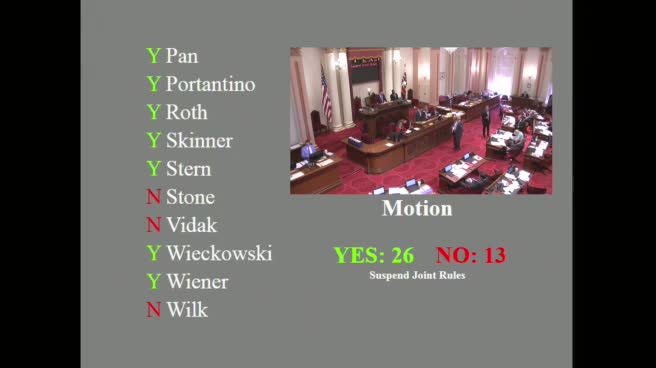

Bill Author

Bill Co-Author(s):