AB 2410: Annual tax: limited liability company small business.
- Session Year: 2017-2018
- House: Assembly
- Latest Version Date: 2018-05-01
Existing law imposes an annual tax in an amount equal to the minimum franchise tax on every limited liability company doing business in this state.
This bill, for taxable years beginning on or after January 1, 2020, and before January 1, 2025, would reduce that annual tax to $400 for a limited liability company that is a small business, which is defined as a business entity with gross receipts of $250,000 or less, during the 2 taxable years after the date on which the articles of organization have been accepted or a certificate of registration has been issued.
This bill would take effect immediately as a tax levy.
Existing law imposes an annual tax in an amount equal to the minimum franchise tax on every limited liability company doing business in this state.
This bill bill, for taxable years beginning on or after January 1, 2020, would reduce that annual tax to $400 for a limited liability company that is a small business, which is defined as a business entity with gross receipts of $250,000 or less and fewer than 5 employees within its first less, during the 2 taxable years of operation. after the date on which the articles of organization have been accepted or a certificate of registration has been issued.
This bill would take effect immediately as a tax levy.
Existing law imposes an annual tax in an amount equal to the minimum franchise tax on every limited liability company doing business in this state.
This bill for taxable years beginning on or after January 1, 2020, would reduce that annual tax to $400 for a limited liability company that is a small business, which is defined as a business entity with gross receipts of $250,000 or less and fewer than 5 employees within its first 2 years of operation.
This bill would take effect immediately as a tax levy.
(a)For each taxable year beginning on or after January 1, 1997, a limited liability company doing business in this state (as defined in Section 23101) shall pay annually to this state a tax for the privilege of doing business in this state in an amount equal to the applicable amount specified in subdivision (d) of Section 23153 for the taxable year.
(b)(1)In addition to any limited liability company that is doing business in this state and is therefore subject to the tax imposed by subdivision (a), for each taxable year beginning on or after January 1, 1997, a limited liability company shall pay annually the tax prescribed in subdivision (a) if articles of organization have been accepted, or a certificate of registration has been issued, by the office of the Secretary of State. The tax shall be paid for each taxable year, or part thereof, until a certificate of cancellation of registration or of articles of organization is filed on behalf of the limited liability company with the office of the Secretary of State.
(2)If a taxpayer files a return with the Franchise Tax Board that is designated as its final return, the Franchise Tax Board shall notify the taxpayer that the annual tax shall continue to be due annually until a certificate of dissolution is filed with the Secretary of State pursuant to Section 17707.08 of the Corporations Code or a certificate of cancellation is filed with the Secretary of State pursuant to Section 17708.06 of the Corporations Code.
(c)The tax assessed under this section shall be due and payable on or before the 15th day of the fourth month of the taxable year.
(d)For purposes of this section, limited liability company means an organization, other than a limited liability company that is exempt from the tax and fees imposed under this chapter pursuant to Section 23701h or Section 23701x, that is formed by one or more persons under the law of this state, any other country, or any other state, as a limited liability company and that is not taxable as a corporation for California tax purposes.
(e)Notwithstanding anything in this section to the contrary, if the office of the Secretary of State files a certificate of cancellation pursuant to Section 17707.02 of the Corporations Code for any limited liability company, then paragraph (1) of subdivision (f) of Section 23153 shall apply to that limited liability company as if the limited liability company were properly treated as a corporation for that limited purpose only, and paragraph (2) of subdivision (f) of Section 23153 shall not apply. Nothing in this subdivision entitles a limited liability company to receive a reimbursement for any annual taxes or fees already paid.
(f)(1)Notwithstanding any provision of this section to the contrary, a limited liability company that is a small business solely owned by a deployed member of the United States Armed Forces shall not be subject to the tax imposed under this section for any taxable year the owner is deployed and the limited liability company operates at a loss or ceases operation.
(2)The Franchise Tax Board may promulgate regulations as necessary or appropriate to carry out the purposes of this subdivision, including a definition for ceases operation.
(3)For the purposes of this subdivision, all of the following definitions apply:
(A)Deployed means being called to active duty or active service during a period when a Presidential Executive order specifies that the United States is engaged in combat or homeland defense. Deployed does not include either of the following:
(i)Temporary duty for the sole purpose of training or processing.
(ii)A permanent change of station.
(B)Operates at a loss means a limited liability companys expenses exceed its receipts.
(C)Small business means a limited liability company with total income from all sources derived from, or attributable, to the state of two hundred fifty thousand dollars ($250,000) or less.
(4)This subdivision shall become inoperative for taxable years beginning on or after January 1, 2018.
(g)(1)Notwithstanding any provision of this section to the contrary, for taxable years beginning on or after January 1, 2020, and before January 1, 2025, every limited liability company that is a small business shall pay to the state an annual tax of four hundred dollars ($400) during the two taxable years after the date on which the articles of organization have been accepted or a certificate of registration has been issued.
(2)For purposes of this subdivision:
(A)Gross receipts, less returns and allowances reportable to this state, means the sum of the gross receipts from the production of business income, as defined in subdivision (a) of Section 25120, and the gross receipts from the production of nonbusiness income, as defined in subdivision (d) of Section 25120.
(B)Small business means a limited liability company that reasonably estimates that it will have gross receipts, less returns and allowances, reportable to this state for the taxable year of two hundred fifty thousand dollars ($250,000) or less.
(3)This subdivision shall not apply to a limited liability company that does not file a return by the date on which the return is due, without regard to extension, for that year.
SEC. 2.This act provides for a tax levy within the meaning of Article IV of the California Constitution and shall go into immediate effect.
(a)For each taxable year beginning on or after January 1, 1997, a limited liability company doing business in this state (as defined in Section 23101) shall pay annually to this state a tax for the privilege of doing business in this state in an amount equal to the applicable amount specified in subdivision (d) of Section 23153 for the taxable year.
(b)(1)In addition to any limited liability company that is doing business in this state and is therefore subject to the tax imposed by subdivision (a), for each taxable year beginning on or after January 1, 1997, a limited liability company shall pay annually the tax prescribed in subdivision (a) if articles of organization have been accepted, or a certificate of registration has been issued, by the office of the Secretary of State. The tax shall be paid for each taxable year, or part thereof, until a certificate of cancellation of registration or of articles of organization is filed on behalf of the limited liability company with the office of the Secretary of State.
(2)If a taxpayer files a return with the Franchise Tax Board that is designated as its final return, the Franchise Tax Board shall notify the taxpayer that the annual tax shall continue to be due annually until a certificate of dissolution is filed with the Secretary of State pursuant to Section 17707.08 of the Corporations Code or a certificate of cancellation is filed with the Secretary of State pursuant to Section 17708.06 of the Corporations Code.
(c)The tax assessed under this section shall be due and payable on or before the 15th day of the fourth month of the taxable year.
(d)For purposes of this section, limited liability company means an organization, other than a limited liability company that is exempt from the tax and fees imposed under this chapter pursuant to Section 23701h or Section 23701x, that is formed by one or more persons under the law of this state, any other country, or any other state, as a limited liability company and that is not taxable as a corporation for California tax purposes.
(e)Notwithstanding anything in this section to the contrary, if the office of the Secretary of State files a certificate of cancellation pursuant to Section 17707.02 of the Corporations Code for any limited liability company, then paragraph (1) of subdivision (f) of Section 23153 shall apply to that limited liability company as if the limited liability company were properly treated as a corporation for that limited purpose only, and paragraph (2) of subdivision (f) of Section 23153 shall not apply. Nothing in this subdivision entitles a limited liability company to receive a reimbursement for any annual taxes or fees already paid.
(f)(1)Notwithstanding any provision of this section to the contrary, a limited liability company that is a small business solely owned by a deployed member of the United States Armed Forces shall not be subject to the tax imposed under this section for any taxable year the owner is deployed and the limited liability company operates at a loss or ceases operation.
(2)The Franchise Tax Board may promulgate regulations as necessary or appropriate to carry out the purposes of this subdivision, including a definition for ceases operation.
(3)For the purposes of this subdivision, all of the following definitions apply:
(A)Deployed means being called to active duty or active service during a period when a Presidential Executive order specifies that the United States is engaged in combat or homeland defense. Deployed does not include either of the following:
(i)Temporary duty for the sole purpose of training or processing.
(ii)A permanent change of station.
(B)Operates at a loss means a limited liability companys expenses exceed its receipts.
(C)Small business means a limited liability company with total income from all sources derived from, or attributable, to the state of two hundred fifty thousand dollars ($250,000) or less.
(4)This subdivision shall become inoperative for taxable years beginning on or after January 1, 2018.
(g)(1)Notwithstanding any provision of this section to the contrary, for taxable years beginning on or after January 1, 2020, every limited liability company that is a small business within its first two years of operation shall pay to the state an annual tax of four hundred dollars ($400). ($400) during the two taxable years after the date on which the articles of organization have been accepted or a certificate of registration has been issued.
(2)For purposes of this subdivision:
(A)Gross receipts, less returns and allowances reportable to this state, means the sum of the gross receipts from the production of business income, as defined in subdivision (a) of Section 25120, and the gross receipts from the production of nonbusiness income, as defined in subdivision (d) of Section 25120.
(B)Small business means a limited liability company that reasonably estimates that it will have gross receipts, less returns and allowances, reportable to this state for the taxable year of two hundred fifty thousand dollars ($250,000) or has fewer than Five employees. less.
(3)This subdivision shall not apply to a limited liability company that does not file a return on the due date of its return, by the date on which the return is due, without regard to extension, for that year.
SEC. 2.This act provides for a tax levy within the meaning of Article IV of the California Constitution and shall go into immediate effect.
(a)For each taxable year beginning on or after January 1, 1997, a limited liability company doing business in this state (as defined in Section 23101) shall pay annually to this state a tax for the privilege of doing business in this state in an amount equal to the applicable amount specified in subdivision (d) of Section 23153 for the taxable year.
(b)(1)In addition to any limited liability company that is doing business in this state and is therefore subject to the tax imposed by subdivision (a), for each taxable year beginning on or after January 1, 1997, a limited liability company shall pay annually the tax prescribed in subdivision (a) if articles of organization have been accepted, or a certificate of registration has been issued, by the office of the Secretary of State. The tax shall be paid for each taxable year, or part thereof, until a certificate of cancellation of registration or of articles of organization is filed on behalf of the limited liability company with the office of the Secretary of State.
(2)If a taxpayer files a return with the Franchise Tax Board that is designated as its final return, the Franchise Tax Board shall notify the taxpayer that the annual tax shall continue to be due annually until a certificate of dissolution is filed with the Secretary of State pursuant to Section 17707.08 of the Corporations Code or a certificate of cancellation is filed with the Secretary of State pursuant to Section 17708.06 of the Corporations Code.
(c)The tax assessed under this section shall be due and payable on or before the 15th day of the fourth month of the taxable year.
(d)For purposes of this section, limited liability company means an organization, other than a limited liability company that is exempt from the tax and fees imposed under this chapter pursuant to Section 23701h or Section 23701x, that is formed by one or more persons under the law of this state, any other country, or any other state, as a limited liability company and that is not taxable as a corporation for California tax purposes.
(e)Notwithstanding anything in this section to the contrary, if the office of the Secretary of State files a certificate of cancellation pursuant to Section 17707.02 of the Corporations Code for any limited liability company, then paragraph (1) of subdivision (f) of Section 23153 shall apply to that limited liability company as if the limited liability company were properly treated as a corporation for that limited purpose only, and paragraph (2) of subdivision (f) of Section 23153 shall not apply. Nothing in this subdivision entitles a limited liability company to receive a reimbursement for any annual taxes or fees already paid.
(f)(1)Notwithstanding any provision of this section to the contrary, a limited liability company that is a small business solely owned by a deployed member of the United States Armed Forces shall not be subject to the tax imposed under this section for any taxable year the owner is deployed and the limited liability company operates at a loss or ceases operation.
(2)The Franchise Tax Board may promulgate regulations as necessary or appropriate to carry out the purposes of this subdivision, including a definition for ceases operation.
(3)For the purposes of this subdivision, all of the following definitions apply:
(A)Deployed means being called to active duty or active service during a period when a Presidential Executive order specifies that the United States is engaged in combat or homeland defense. Deployed does not include either of the following:
(i)Temporary duty for the sole purpose of training or processing.
(ii)A permanent change of station.
(B)Operates at a loss means a limited liability companys expenses exceed its receipts.
(C)Small business means a limited liability company with total income from all sources derived from, or attributable, to the state of two hundred fifty thousand dollars ($250,000) or less.
(4)This subdivision shall become inoperative for taxable years beginning on or after January 1, 2018.
(g)(1)Notwithstanding any provision of this section to the contrary, for taxable years beginning on or after January 1, 2020, every limited liability company that is a small business within its first two years of operation shall pay to the state an annual tax of four hundred dollars ($400).
(2)For purposes of this subdivision:
(A)Gross receipts, less returns and allowances reportable to this state, means the sum of the gross receipts from the production of business income, as defined in subdivision (a) of Section 25120, and the gross receipts from the production of nonbusiness income, as defined in subdivision (d) of Section 25120.
(B)Small business means a limited liability company that reasonably estimates that it will have gross receipts, less returns and allowances, reportable to this state for the taxable year of two hundred fifty thousand dollars ($250,000) or has fewer than Five employees.
(3)This subdivision shall not apply to a limited liability company that does not file a return on the due date of its return, without regard to extension, for that year.
SEC. 2.This act provides for a tax levy within the meaning of Article IV of the California Constitution and shall go into immediate effect.
|
Date
|
Status
|
|---|---|
| May 25, 2018 | In committee: Held under submission. |
| May 9, 2018 | In committee: Set, first hearing. Referred to APPR. suspense file. |
| May 2, 2018 | Re-referred to Com. on APPR. |
| May 1, 2018 | Read second time and amended. |
| Apr 30, 2018 | From committee: Amend, and do pass as amended and re-refer to Com. on APPR. (Ayes 9. Noes 0.) (April 23). |
| Apr 17, 2018 | Re-referred to Com. on REV. & TAX. |
| Apr 16, 2018 | From committee chair, with author's amendments: Amend, and re-refer to Com. on REV. & TAX. Read second time and amended. |
| Apr 2, 2018 | In committee: Set, first hearing. Hearing canceled at the request of author. |
| Mar 5, 2018 | Referred to Com. on REV. & TAX. |
| Feb 15, 2018 | From printer. May be heard in committee March 17. |
| Feb 14, 2018 | Read first time. To print. |
|
Date
|
Description
|
Location
|
Votes
|
|
|---|---|---|---|---|
| Apr 23, 2018 | Do pass as amended and be re-referred to the Committee on [Appropriations] | Assembly Standing Committee on Revenue and Taxation |
Passed |
This list shows positions taken on this bill by organizations on the date displayed, which is linked to the original source.
Positions by individuals are not included.
|
Organization
|
Position
|
Date
|
|---|---|---|
| California Coalition Of Travel Organizations | * Support | Apr 23, 2018 |
Date of Hearing: May 9, 2018
ASSEMBLY COMMITTEE ON APPROPRIATIONS
Lorena Gonzalez Fletcher, Chair
ABPCA Bill Id:AB 2410
Author:(Grayson) – As Amended Ver:May 1, 2018
Policy Committee: | Revenue and Taxation | Vote: | 9 - 0 |
|
| ||
|
|
Urgency: No State Mandated Local Program: No Reimbursable: No
SUMMARY:
This bill reduces, from $800 to $400, for tax years 2020 through 2024, the limited liability company (LLC) annual tax on small businesses during their first two taxable years of operation.
FISCAL EFFECT:
Annual GF revenue loss of $25 million in 2019-20, $45 million in 2020-21, and $49 million in 2021-22.
COMMENTS:
- Background. The $800 MFT is the minimum amount of franchise tax that corporations must pay. Generally, corporations doing business in California must pay a franchise tax worth 8.84% of their taxable income. However, that tax cannot be lower than $800, even for corporations with little or no taxable income. Similarly, each limited partnership (LP), limited liability partnership (LLP), and limited liability company (LLC) must pay an “annual tax” equal to the $800 MFT. AB 2410’s provisions apply only to qualified LLCs.
- Purpose. According to the author, AB 2410 will allow state policy to nurture small businesses before they have a chance to generate any revenue.
- Recent legislation. Since the 2009-10 Legislative Session, there has been a significant number of bills to reduce the MFT, and therefore the annual tax that applies to LLCs, or to create an exception for certain kinds of businesses. Specifically:
- In the 2017-18 Legislative Session, AB 1922 (Fong), which repeals the MFT, is pending on this committee’s Suspense File. AB 1432 (Melendez), which requires the California State University’s Center for California Studies to study the business impact of the MFT, and AB 1256 (Brough), which reduces the MFT to $100 for certain entities, were both held on this committee’s Suspense File.
- In the 2015-16 Legislative Session, AB 612 (Patterson), which would have reduced the MFT to $400 for certain businesses, and SB 328 (Grove), which would have exempted certain businesses from the MFT, both died in the Assembly Committee on Revenue and Taxation.
- In the 2013-14 Legislative Session, AB 2428 (Patterson), which would have exempted businesses from the MFT for the first five years, AB 2495 (Melendez), which also would have exempted businesses from the MFT for the first five years, and AB 1769 (Debabneh), which would have exempted some businesses from the MFT for the first two years, all died in the Assembly Committee on Revenue and Taxation. Moreover, AB 2466 (Nestande), which would have exempted certain types of businesses from the MFT, was held on this committee’s Suspense File, and SB 641 (Anderson), which would have eliminated the MFT for certain new corporations, was held on the Suspense File of the Senate Appropriations Committee. Finally, AB 1889 (Hagman), Chapter 700, Statutes of 2014, exempts certain small businesses entities from the MFT for up to the first two taxable years.
- In the 2011-12 Legislative Session, AB 166 (Cook), which would have eliminated the MFT altogether, AB 368 (Morrell), which would have reduced the MFT to $400 for certain businesses, AB 821 (Garrick), which would have reduced the MFT to $100 for small business in the first ten years of operation, and AB 1605 (Garrick), which would have reduced the MFT for some business to $99, all died in the Assembly Committee on Revenue and Taxation.
- In the 2009-10 Legislative Session, AB 327 (Garrick), which would have reduced the MFT to $100, and AB 2126 (Garrick), which would have also reduced the MFT to $100, both died in the Assembly Committee on Revenue and Taxation.
Analysis Prepared by: Luke Reidenbach / APPR. / (916) 319-2081
Date of Hearing: April 23, 2018
ASSEMBLY COMMITTEE ON REVENUE AND TAXATION
Autumn R. Burke, Chairwoman
ABPCA Bill Id:AB 2410 (
Author:Grayson) – As amended Ver:April 16, 2018
Majority vote. Tax levy. Fiscal committee.
SUBJECT: Annual tax: limited liability company small business
SUMMARY: Reduces the annual tax to $400 for every limited liability company (LLC) that is a small business during the first two taxable years of operation. Specifically, this bill:
- Reduces, beginning on or after January 1, 2020, the annual tax for every LLC that is a small business to $400 during the two taxable years after the date on which the articles of organization have been accepted or a certificate of registration has been issued.
- Defines a "small business" as an LLC that reasonably estimates that it will have "gross receipts, less returns and allowances, reportable to this state" of $250,000 or less.
- Defines "gross receipts, less returns and allowances reportable to this state,” as the sum of the gross receipts from the production of business income, as defined, and the gross receipts from the production of nonbusiness income, as defined.
- Disallows the reduction in annual tax if the LLC does not file a return by the date on which the return is due, without regard to extension, for that year.
- Takes effect immediately as a tax levy.
EXISTING LAW:
- Imposes a franchise tax on all corporations doing business in California equal to 8.84% of the taxable income attributable to California. A minimum franchise tax of $800 is imposed on all corporations that are incorporated under the laws of California, qualified to transact intrastate business in California, or are doing business in California. Taxpayers must pay the minimum franchise tax only if it is more than their regular franchise tax liability.[1]
- Provides exceptions with respect to imposition of the minimum franchise tax. For instance, credit unions and nonprofit organizations are not subject to the minimum franchise tax and a corporation is not subject to the minimum franchise tax for its first taxable year. However, even though a corporation is not subject to the minimum tax in its first taxable year, it will be subject to franchise tax in its first taxable year based on its taxable income.
- Provides that Limited Partnerships, Limited Liability Partnerships, and LLCs that are doing business in California, registered or qualified to do business in California, or formed in this state, are subject to annual tax in an amount equal to the minimum franchise tax, currently set at $800. These entities (known as 'pass-through entities') are not subject to any tax based on taxable income. Rather, the items of income, gain, loss, deduction and credit are passed-through to the owners and reported on their respective income or franchise tax returns.
FISCAL EFFECT: The FTB estimates General Fund revenue losses of $17 million in fiscal year (FY) 2018-19, $47 million in FY 2019-20, and $65 million in FY 2020-21.
COMMENTS:
- Author’s Statement: The author has provided the following statement in support of this bill:
Asking new small businesses to pay a uniform filing fee without any income or size threshold sends the signal that California is closed for business. As a small business owner, I know how important capital is when starting up, and allowing businesses to get off the ground prior to making any revenue is critically important. While everybody should pay their fair share, it makes sense that our state policy nurtures rather than hinders small business before they have the chance to generate any revenue.
- Committee Staff Comments:
- You do not need to pay $800 to do business in California: California allows individuals to open a business as a sole proprietor. A sole proprietorship is an unincorporated business that is owned by one person and is the simplest form of business organization to start and maintain. The business has no existence apart from the owner; its liabilities are the owner's personal liabilities; and the owner undertakes the risks of the business for all assets owned, whether used in the business or personally owned. The owner includes the income and expenses of the business on the owner’s tax return. Formation documents are not required to be filed with the California Secretary of State’s (SOS) office, but other state filings may be required depending on the type of business. General partnerships are treated very similarly but are required to file a statement of partnership authority with the SOS. Although the structure and liabilities are different from other business entities, sole proprietorships and general partnerships can engage in business without having to pay the minimum franchise tax or the annual tax. As such, the minimum franchise tax and the annual tax do not appear to inhibit the creation of new businesses.
- Minimum Tax: The minimum franchise tax, the annual tax, and annual fee, were enacted to ensure that all corporations and LLCs pay at least a minimum amount of tax for the privilege of doing business in California, regardless of the business' income or losses. Thus, the minimum tax is not an "income tax", but rather a tax on the right to exercise the powers granted to a corporation doing business in California. Even when a business earns no income, it still receives the benefits of its corporate status, including limited liability protection under California law.
- $800 pays for insurance coverage: By providing limited liability to certain entities, (e.g., LLCs, LLPs, and corporations), California is essentially allowing a business owner to transfer part of the cost of conducting business onto creditors and tort victims. (Jonathan Macey, The Limited Liability Company: Lessons for Corporate Law, Washington University Law Review, Vol. 73, Issue 2, 1995.) As an example, if an owner of a construction company, having limited liability, injures an individual during the course of business, the victim's redress is limited to the assets of the company. If the company is insolvent, part of the cost of the injury is borne by the victim. Before the advent of LLCs and LLPs, that small business owner would have likely started the company as a sole proprietor or general partnership, allowing the victim to go after the personal assets of the owner.
As a public policy, California has decided that the risk borne by creditors and potential tort victims is outweighed by the need to encourage investment. Providing limited liability to small businesses, presumably with few or no assets, may cause owners of the business to only consider those marginal costs and benefits associated with the investments that they will internalize. In other words, "limited liability allows investors to pursue extremely risky projects and to profit from the pursuit of a 'heads I win; tails you lose' strategy of project finance." (Id.) The idea that people will take on greater risk because someone else will pay for the costs is known as "moral hazard." (Id.) This tends to occur when businesses are shielded from liability, but also when businesses lack financial resources to provide adequate compensation to creditors. (Id.) It may be argued that creditors, knowing that LLCs have limited liability, will require higher borrowing costs or ask for personal guarantees from the individual owners. However, the person hit by a taxi cab or the victim of a toxic spill did not assume the potential risk of the company's insolvency and the owner's limited liability. (David Millon, Piercing the Corporate Veil, Financial Responsibility, and the Limits of Limited Liability, Emory Law Journal, Vol. 65, Number 5, 2007.) The goal of providing limited liability appears to be the state’s need to promote investment by transferring risk from investors to creditors. (Id.) Therefore, LLCs and other limited liability structures obtain significant insurance protection at a nominal cost of $800 per year, even when insolvent or operating at a loss.
- Inflation: California's minimum franchise tax was increased to $800 in 1990, and has remained at $800 since then. Due to inflation, the cost of the minimum franchise tax has been significantly reduced. The $800 minimum franchise tax in 1990 would cost $1,556.46 in January 2018 dollars.[2] Because the minimum franchise tax is not indexed for inflation, it has functionally been lowered by 2.35% per year. Therefore, the minimum franchise tax has effectively been cut in half since it was imposed in 1990.
- Cash Flow Problems: Both startups and established companies may, at some point, face cash flow problems. A number of things can put a strain on a business' cash flow: customers can choose not to pay or pay late, cost of materials can skyrocket, unforeseen acts can delay production, and changes in interest rates can increase the costs of capital. Additionally, once a business realizes that it is unable to pay current debts, it may be difficult, if not impossible to secure additional funding. It appears that this bill could aid new businesses as they struggle to become profitable. However, as noted earlier, $800 is a nominal amount, and it is unclear if the elimination of the annual tax would help struggling businesses succeed.
- How is a tax expenditure different from a direct expenditure? As the Department of Finance notes in its Tax Expenditure Report, there are several key differences between tax expenditures and direct expenditures. First, once they are put in place, tax expenditures are reviewed less frequently than direct expenditures. Although this creates greater certainty for taxpayers regarding the applicable tax laws (because the tax expenditure will remain on the books for longer periods of time), it may also result in arbitrary tax expenditures that do not serve a public benefit. Second, there is generally no control over the amount of revenue losses associated with any given tax expenditure. Finally, it should also be noted that once enacted it takes a two-thirds vote to rescind an existing tax expenditure absent a sunset date. For this reason, the Committee may wish to include a five-year sunset to this bill.
REGISTERED SUPPORT / OPPOSITION:
Support
None on file
Opposition
None on file
Analysis Prepared by: Carlos Anguiano / REV. & TAX. / (916) 319-2098
According to the Franchise Tax Board (FTB), for taxable years beginning on or after January 1, 1997, only taxpayers with net incomes of less than approximately $9,040 pay the minimum franchise tax because the amount of measured tax owed would be less than $800 ($9,039 x 8.84% = $799). ↑
Consumer Price Index, Inflation Calculator, Bureau of Labor Statistics, https://www.bls.gov/data/inflation_calculator.htm ↑
Discussed in Hearing
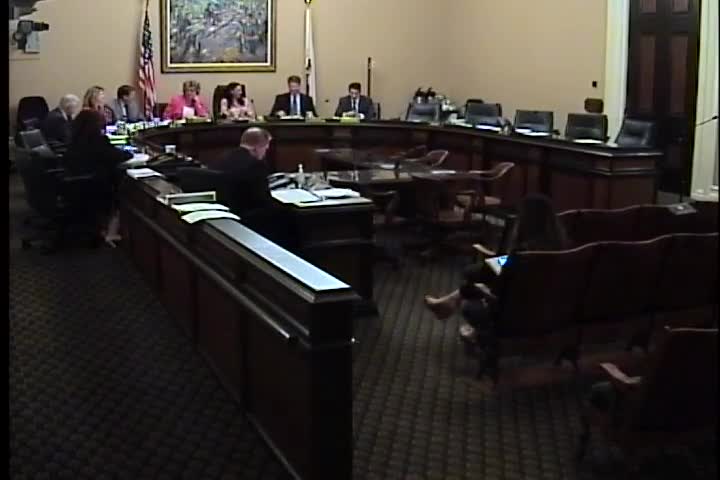 9MIN
Assembly Standing Committee on Revenue and Taxation
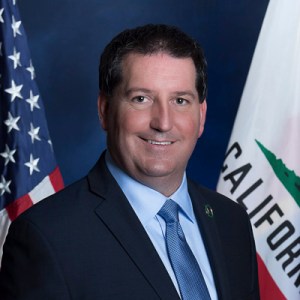
Bill Author
Bill Co-Author(s):