AB 2411: Solid waste: use of compost: planning.
- Session Year: 2017-2018
- House: Assembly
- Latest Version Date: 2018-08-28
Existing law, the California Integrated Waste Management Act of 1989, establishes a compost market program to increase the use of compost products, including requiring the Department of General Services and the Department of Resources Recycling and Recovery to maintain specifications for the purchase of compost by the state and requiring the Department of Transportation to use compost in place of, or to supplement, petroleum-based commercial fertilizers in the states highway landscape maintenance program.
This bill would require the Department of Resources Recycling and Recovery, on or before December 31, 2019, to develop and implement a plan to maximize the use of compost for slope stabilization and for establishing vegetation in the course of providing debris removal services following a wildfire. The bill would require the Department of Resources Recycling and Recovery, in coordination with the Department of Transportation, to identify best practices for each of the Department of Transportations 12 districts regarding the cost-effective use of compost along roadways and to develop a plan to implement the identified best practices in each of the districts. The bill would additionally require the Department of Resources Recycling and Recovery to review the best practices at least once every 5 years and update the best practices as necessary. The bill would also make nonsubstantive changes to the compost market program provisions.
Existing law, the California Integrated Waste Management Act of 1989, establishes a compost market program to increase the use of compost products, including requiring the Department of General Services and the Department of Resources Recycling and Recovery to maintain specifications for the purchase of compost by the state and requiring the Department of Transportation to use compost in place of, or to supplement, petroleum-based commercial fertilizers in the states highway landscape maintenance program.
This bill would require the Department of Resources Recycling and Recovery, on or before December 31, 2019, to develop and implement a plan to maximize the use of compost for slope stabilization and for establishing vegetation in the course of providing debris removal services following a wildfire. The bill would also require the Department of Resources Recycling and Recovery, in coordination with the Department of Transportation, to identify best practices for each of the Department of Transportations 12 districts regarding the cost-effective use of compost along roadways and to develop a plan to implement the identified best practices in each of the districts. The bill would additionally require the Department of Resources Recycling and Recovery to review the best practices at least once every 5 years and update the best practices as necessary. The bill would also make nonsubstantive changes to the compost market program provisions.
Existing law, the California Integrated Waste Management Act of 1989, requires the Department of Resources Recycling and Recovery to adopt and revise minimum standards for solid waste handling, transfer, composting, transformation, and disposal, as prescribed. establishes a compost market program to increase the use of compost products, including requiring the Department of General Services and the Department of Resources Recycling and Recovery to maintain specifications for the purchase of compost by the state and requiring the Department of Transportation to use compost in place of, or to supplement, petroleum-based commercial fertilizers in the states highway landscape maintenance program.
This bill would require the department, Department of Resources Recycling and Recovery, on or before December 31, 2019, to develop and implement a plan to maximize the use of compost for slope stabilization and for establishing vegetation in the course of providing debris removal services following a fire and, wildfire. The bill would also require the Department of Resources Recycling and Recovery, in coordination with the Department of Transportation, to identify best practices of for each of the Department of Transportations 12 districts regarding the cost-effective use of compost along roadways and to develop a plan to expand implement the identified best practices to the other in each of the districts. The bill would also make nonsubstantive changes to the compost market program provisions.
Existing law, the California Integrated Waste Management Act of 1989, requires the Department of Resources Recycling and Recovery to adopt and revise minimum standards for solid waste handling, transfer, composting, transformation, and disposal, as prescribed.
This bill would require the department, on or before December 31, 2019, to develop and implement a plan to maximize the use of compost for slope stabilization and establishing vegetation in the course of providing debris removal services following a fire and, in coordination with the Department of Transportation, to identify best practices of each of the Department of Transportations 12 districts regarding the cost-effective use of compost along roadways and develop a plan to expand the identified best practices to the other districts.
Existing law declares the intent of the Legislature that the state pursue all feasible measures to improve markets for recycled products including, but not limited to, bid evaluation preferences for purchases made by the state. Existing law requires a state agency to report annually to the California Integrated Waste Management Board its progress in meeting recycled product purchasing requirements, as specified. Existing law requires each state agency to ensure that, before January 1, 2020, at least 50% of reportable purchases are recycled products. Existing law also requires each state agency to ensure that, on and after January 1, 2020, that at least 75% of reportable purchases are recycled products, except for paint, antifreeze, and tires, and that at least 50% of reportable purchases of paint, antifreeze, and tires are recycled products. This bill would require each state agency to ensure that, on and after January 1, 2020, at least 50% of reportable purchases of soil or similar products are compost, as described.Existing law declares the intent of the Legislature that the state pursue all feasible measures to improve markets for recycled products including, but not limited to, bid evaluation preferences for purchases made by the state. Existing law requires a state agency to report annually to the California Integrated Waste Management Board its progress in meeting recycled product purchasing requirements, as specified. Existing law requires each state agency to ensure that, before January 1, 2020, at least 50% of reportable purchases are recycled products. Existing law also requires each state agency to ensure that, on and after January 1, 2020, that at least 75% of reportable purchases are recycled products, except for paint, antifreeze, and tires, and that at least 50% of reportable purchases of paint, antifreeze, and tires are recycled products.
This bill would require each state agency to ensure that, on and after January 1, 2020, at least 50% of reportable purchases of soil or similar products are compost, as described.
The Department of General Services and the department, in consultation with other affected state agencies, shall maintain specifications for the purchase of compost by the State of California. The specifications shall designate the state minimum operating standards and product quality standards. The specifications shall be designed to maximize the use of compost without jeopardizing the safety and health of the citizens of the state or the environment.
SEC. 2.Section 42241 of the Public Resources Code is amended to read:42241.The Department of Transportation shall use compost in place of, or to supplement, petroleum-based commercial fertilizers in the states highway landscape maintenance program.
SEC. 3.Section 42241.3 is added to the Public Resources Code, to read:42241.3.(a)On or before December 31, 2019, the department, in coordination with the Department of Transportation, shall do both of the following:(1)Identify best practices for each of the Department of Transportations 12 districts regarding the cost-effective use of compost along roadways. The best practices shall reflect the highest and best use of compost, taking into consideration the circumstances particular to each jurisdiction.
(2)Develop a plan to implement the best practices identified pursuant to paragraph (1) in each of the Department of Transportations 12 districts.
(b)The department shall review the best practices identified pursuant to paragraph (1) of subdivision (a) at least once every five years, and update the best practices as necessary.
SEC. 4.Section 42241.5 of the Public Resources Code is amended to read:42241.5.The department may develop a program to increase the use of compost products in agricultural applications. The program may include, but shall not be limited to, either or both of the following:
(a)Identification of federal, state, and local financial assistance.
(b)Cooperative efforts with appropriate federal and state agencies.
SEC. 5.Section 42243 of the Public Resources Code is amended to read:42243.The Department of Forestry and Fire Protection, the Department of Parks and Recreation, and the Department of General Services shall initiate programs to restore public lands that use compost, co-compost, rice straw, and chemically fixed sewage sludge and shall use those products or materials wherever possible.
SEC. 6.Section 42243.5 is added to the Public Resources Code, to read:42243.5.On or before December 31, 2019, the department shall develop and implement a plan to maximize the use of compost for slope stabilization and for establishing vegetation in the course of providing debris removal services following a wildfire.
SEC. 7.Section 42244 of the Public Resources Code is amended to read:42244.The department shall evaluate compost, co-compost, and chemically fixed sewage sludge for use as solid waste landfill cover materials or for use as extenders for currently used cover material. Compost, co-compost, and chemically fixed sewage sludge products, when used as a substitute for or mixed with currently approved cover material, shall possess all the physical characteristics required in the definition of a cover material.
SEC. 8.Section 42245 of the Public Resources Code is amended to read:42245.Based on the results of the evaluation conducted in accordance with Section 42244, the department may, on a case-by-case basis, approve the use of compost, co-compost, and chemically fixed sewage sludge, that meet the performance standards for cover material, for up to 25 percent of landfill cover materials or landfill cover extenders.
The Department of General Services and the department, in consultation with other affected state agencies, shall maintain specifications for the purchase of compost by the State of California. The specifications shall designate the state minimum operating standards and product quality standards. The specifications shall be designed to maximize the use of compost without jeopardizing the safety and health of the citizens of the state or the environment.
SEC. 2.Section 42241 of the Public Resources Code is amended to read:42241.The Department of Transportation shall use compost in place of, or to supplement, petroleum-based commercial fertilizers in the states highway landscape maintenance program.
SEC. 3.Section 42241.3 is added to the Public Resources Code, to read:42241.3.(a)On or before December 31, 2019, the department, in coordination with the Department of Transportation, shall do both of the following:(a)(1)Identify best practices for each of the Department of Transportations 12 districts regarding the cost-effective use of compost along roadways. The best practices shall reflect the highest and best use of compost, taking into consideration the circumstances particular to each jurisdiction.
(b)(2)Develop a plan to implement the best practices identified in subdivision (a) pursuant to paragraph (1) in each of the Department of Transportations 12 districts.
(b)The department shall review the best practices identified pursuant to paragraph (1) of subdivision (a) at least once every five years, and update the best practices as necessary.
SEC. 4.Section 42241.5 of the Public Resources Code is amended to read:42241.5.The department may develop a program to increase the use of compost products in agricultural applications. The program may include, but shall not be limited to, either or both of the following:
(a)Identification of federal, state, and local financial assistance.
(b)Cooperative efforts with appropriate federal and state agencies.
SEC. 5.Section 42243 of the Public Resources Code is amended to read:42243.The Department of Forestry and Fire Protection, the Department of Parks and Recreation, and the Department of General Services shall initiate programs to restore public lands that use compost, co-compost, rice straw, and chemically fixed sewage sludge and shall use those products or materials wherever possible.
SEC. 6.Section 42243.5 is added to the Public Resources Code, to read:42243.5.On or before December 31, 2019, the department shall develop and implement a plan to maximize the use of compost for slope stabilization and for establishing vegetation in the course of providing debris removal services following a wildfire.
SEC. 7.Section 42244 of the Public Resources Code is amended to read:42244.The department shall evaluate compost, co-compost, and chemically fixed sewage sludge for use as solid waste landfill cover materials or for use as extenders for currently used cover material. Compost, co-compost, and chemically fixed sewage sludge products, when used as a substitute for or mixed with currently approved cover material, shall possess all the physical characteristics required in the definition of a cover material.
SEC. 8.Section 42245 of the Public Resources Code is amended to read:42245.Based on the results of the evaluation conducted in accordance with Section 42244, the department may, on a case-by-case basis, approve the use of compost, co-compost, and chemically fixed sewage sludge, that meet the performance standards for cover material, for up to 25 percent of landfill cover materials or landfill cover extenders.
The Department of General Services and the board, department, in consultation with other affected state agencies, shall maintain specifications for the purchase of compost by the State of California. The specifications shall designate the state minimum operating standards and product quality standards. The specifications shall be designed to maximize the use of compost without jeopardizing the safety and health of the citizens of the state or the environment.
SEC. 2.Section 42241 of the Public Resources Code is amended to read:42241.On or after January 1, 1991, the The Department of Transportation shall use compost in place of, or to supplement, petroleum-based commercial fertilizers in the states highway landscape maintenance program.
SEC. 3.Section 42241.3 is added to the Public Resources Code, to read:42241.3.On or before December 31, 2019, the department, in coordination with the Department of Transportation, shall do both of the following:
(a)Identify best practices for each of the Department of Transportations 12 districts regarding the cost-effective use of compost along roadways.
(b)Develop a plan to implement the best practices identified in subdivision (a) in each of the Department of Transportations 12 districts.
SEC. 4.Section 42241.5 of the Public Resources Code is amended to read:42241.5.The board department may develop a program to increase the use of compost products in agricultural applications. The program may include, but shall not be limited to, either or both of the following:
(a)Identification of federal, state, and local financial assistance.
(b)Cooperative efforts with appropriate federal and state agencies.
SEC. 5.Section 42243 of the Public Resources Code is amended to read:42243.On or after January 1, 1993, the The Department of Forestry and Fire Protection, the Department of Parks and Recreation, and the Department of General Services shall initiate programs to restore public lands that use compost, co-compost, rice straw, and chemically fixed sewage sludge and shall use those products or materials wherever possible.
SEC. 6.Section 42243.5 is added to the Public Resources Code, to read:42243.5.On or before December 31, 2019, the department shall develop and implement a plan to maximize the use of compost for slope stabilization and for establishing vegetation in the course of providing debris removal services following a wildfire.
SEC. 7.Section 42244 of the Public Resources Code is amended to read:42244.The board department shall evaluate compost, cocompost, co-compost, and chemically fixed sewage sludge for use as solid waste landfill cover materials or for use as extenders for currently used cover material. Compost, cocompost, co-compost, and chemically fixed sewage sludge products, when used as a substitute for or mixed with currently approved cover material, shall possess all the physical characteristics required in the definition of a cover material.
SEC. 8.Section 42245 of the Public Resources Code is amended to read:42245.On or after January 1, 1992, based Based on the results of the evaluation conducted in accordance with Section 42244, the board department may, on a case-by-case basis, approve the use of compost, co-compost, and chemically fixed sewage sludge, that meet the performance standards for cover material, for up to 25 percent of landfill cover materials or landfill cover extenders.
SECTION 1.Section 43033 is added to the Public Resources Code, to read:43033.The department shall do all of the following on or before December 31, 2019:(a)Develop and implement a plan to maximize the use of compost for slope stabilization and establishing vegetation in the course of providing debris removal services following a fire.(b)In coordination with the Department of Transportation, identify best practices of each of the Department of Transportations 12 districts regarding the cost-effective use of compost along roadways.(c)In coordination with the Department of Transportation, develop a plan to expand the best practices identified pursuant to subdivision (b) to other Department of Transportation districts that do not use those best practices.The department shall do all of the following on or before December 31, 2019:
(a)Develop and implement a plan to maximize the use of compost for slope stabilization and establishing vegetation in the course of providing debris removal services following a fire.
(b)In coordination with the Department of Transportation, identify best practices of each of the Department of Transportations 12 districts regarding the cost-effective use of compost along roadways.
(c)In coordination with the Department of Transportation, develop a plan to expand the best practices identified pursuant to subdivision (b) to other Department of Transportation districts that do not use those best practices.
SECTION 1.Section 12203 of the Public Contract Code is amended to read:12203.Each state agency shall ensure each of the following:(a)(1)Before January 1, 2020, at least 50 percent of reportable purchases are recycled products.(2)On and after January 1, 2020, at least 75 percent of reportable purchases are recycled products, except for paint, antifreeze, and tires.(3)On and after January 1, 2020, at least 50 percent of reportable purchases of paint, antifreeze, and tires are recycled products.(4)On and after January 1, 2020, at least 50 percent of reportable purchases of soil or similar products are compost as described in subdivision (c) of Section 12209.(b)The requirements specified in this article apply to all reportable purchases of state agencies for product categories listed in this article.(c)The reportable purchases of state agencies shall meet each requirement for, and be applied to the total dollar amount of, each specified product category as defined in this article. The purchase of a recycled product from one category may not be applied toward the requirements for, or the total dollar amount of, any other category listed in this article.(d)Each state agency shall require the businesses with whom it contracts to use, to the maximum extent economically feasible in the performance of the contract work, recycled products.Each state agency shall ensure each of the following:
(a)(1)Before January 1, 2020, at least 50 percent of reportable purchases are recycled products.
(2)On and after January 1, 2020, at least 75 percent of reportable purchases are recycled products, except for paint, antifreeze, and tires.
(3)On and after January 1, 2020, at least 50 percent of reportable purchases of paint, antifreeze, and tires are recycled products.
(4)On and after January 1, 2020, at least 50 percent of reportable purchases of soil or similar products are compost as described in subdivision (c) of Section 12209.
(b)The requirements specified in this article apply to all reportable purchases of state agencies for product categories listed in this article.
(c)The reportable purchases of state agencies shall meet each requirement for, and be applied to the total dollar amount of, each specified product category as defined in this article. The purchase of a recycled product from one category may not be applied toward the requirements for, or the total dollar amount of, any other category listed in this article.
(d)Each state agency shall require the businesses with whom it contracts to use, to the maximum extent economically feasible in the performance of the contract work, recycled products.
|
Date
|
Status
|
|---|---|
| Aug 28, 2018 | Chaptered by Secretary of State - Chapter 238, Statutes of 2018. |
| Aug 28, 2018 | Approved by the Governor. |
| Aug 16, 2018 | Enrolled and presented to the Governor at 4 p.m. |
| Aug 13, 2018 | Senate amendments concurred in. To Engrossing and Enrolling. |
| Aug 9, 2018 | In Assembly. Concurrence in Senate amendments pending. May be considered on or after August 11 pursuant to Assembly Rule 77. |
| Aug 9, 2018 | Read third time. Passed. Ordered to the Assembly. |
| Jul 3, 2018 | Read second time. Ordered to third reading. |
| Jul 2, 2018 | From committee: Be ordered to second reading pursuant to Senate Rule 28.8. |
| Jun 12, 2018 | Read second time and amended. Re-referred to Com. on APPR. |
| Jun 11, 2018 | From committee: Amend, and do pass as amended and re-refer to Com. on APPR. (Ayes 5. Noes 0.) (June 6). |
| May 30, 2018 | Referred to Com. on EQ. |
| May 17, 2018 | In Senate. Read first time. To Com. on RLS. for assignment. |
| May 17, 2018 | Read third time. Passed. Ordered to the Senate. |
| May 10, 2018 | Read second time. Ordered to Consent Calendar. |
| May 9, 2018 | From committee: Do pass. To Consent Calendar. (Ayes 16. Noes 0.) (May 9). |
| May 2, 2018 | Re-referred to Com. on APPR. |
| May 1, 2018 | Read second time and amended. |
| Apr 30, 2018 | From committee: Amend, and do pass as amended and re-refer to Com. on APPR. (Ayes 10. Noes 0.) (April 23). |
| Apr 2, 2018 | From committee: Be re-referred to Com. on NAT. RES. Re-referred. (Ayes 6. Noes 0.) (April 2). Re-referred to Com. on NAT. RES. |
| Mar 22, 2018 | Re-referred to Com. on A. & A.R. |
| Mar 21, 2018 | From committee chair, with author's amendments: Amend, and re-refer to Com. on A. & A.R. Read second time and amended. |
| Mar 5, 2018 | Referred to Coms. on A. & A.R. and NAT. RES. |
| Feb 15, 2018 | From printer. May be heard in committee March 17. |
| Feb 14, 2018 | Read first time. To print. |
|
Date
|
Description
|
Location
|
Votes
|
|
|---|---|---|---|---|
| Aug 13, 2018 | AB 2411 MCCARTY Concurrence in Senate Amendments | Assembly Floor |
Passed |
|
| Aug 9, 2018 | Assembly 3rd Reading AB2411 McCarty et al. By Skinner | Senate Floor |
Passed |
|
| Jun 6, 2018 | Do pass as amended, but first amend, and re-refer to the Committee on [Appropriations] | Senate Standing Committee on Environmental Quality |
Passed |
|
| May 17, 2018 | AB 2411 MCCARTY Consent Calendar Second Day Regular Session | Assembly Floor |
Passed |
|
| May 9, 2018 | Do pass. To Consent Calendar. | Assembly Standing Committee on Appropriations |
Passed |
|
| Apr 23, 2018 | Do pass as amended and be re-referred to the Committee on [Appropriations] | Assembly Standing Committee on Natural Resources |
Passed |
|
| Apr 2, 2018 | Be re-referred to the Committee on [Natural Resources] | Assembly Standing Committee on Rules |
Passed |
This list shows positions taken on this bill by organizations on the date displayed, which is linked to the original source.
Positions by individuals are not included.
|
Organization
|
Position
|
Date
|
|---|---|---|
| 1 individual | ** Support | Apr 20, 2018 |
| Association Of Compost Producers | ** Support | Jul 3, 2018 |
| Biodegradable Products Institute | ** Support | Jul 3, 2018 |
| California Compost Coalition | * Support | Apr 23, 2018 |
| Californians Against Waste | ** Support | Jul 3, 2018 |
| Central Contra Costa Solid Waste Authority | ** Support | Jul 3, 2018 |
| League Of California Cities | ** Support | Jul 3, 2018 |
| Marin Carbon Project | * Support | Jun 6, 2018 |
| Marine Carbon Project | * Support | Apr 23, 2018 |
| Recology | * Support | Apr 23, 2018 |
| Recyclesmart | ** Support | Jul 3, 2018 |
| Republic Services | * Support | Apr 23, 2018 |
| Rural County Representatives of California | ** Support | Apr 20, 2018 |
| Shaw Yoder & Antwih | * Support | Jun 6, 2018 |
| Solid Waste Association of North America | ** Support | Jun 6, 2018 |
| Western Placer Waste Management Authority | ** Support | Jul 3, 2018 |
CONCURRENCE IN SENATE AMENDMENTS
CSA1 Bill Id:AB 2411
Author:(McCarty)
As Amended Ver:June 12, 2018
Majority vote
ASSEMBLY: | 73-0 | (May 17, 2018) | SENATE: | 36-0 | (August 9, 2018) |
Original Committee Reference: NAT. RES.
SUMMARY: This bill requires the Department of Resources Recycling and Recovery (CalRecycle), by December 31, 2019, to develop and implement a plan to maximize the use of compost for slope stabilization and establishing vegetation in the course of providing debris removal services following a wildfire. Additionally, this bill requires CalRecycle, in consultation with Caltrans, to identify and develop a plan to implement best practices for Caltrans' 12 districts regarding the cost-effective use of compost along roadways by December 31, 2019.
The Senate amendments:
- Require that the best practices reflect the highest and best use of compost, taking into consideration the circumstances particular to each jurisdiction.
- Require CalRecycle to review the best practices at least once every five years and update as necessary.
EXISTING LAW, pursuant to the Integrated Waste Management Act of 1989:
- Requires local agencies to divert, through source reduction, recycling, and composting, 50% of solid waste disposed by their jurisdictions and establishes a statewide diversion goal of 75% by 2020.
- Requires commercial waste generators, including multi-family dwellings, to arrange for recycling services, and requires local governments to implement commercial solid waste recycling programs designed to divert solid waste from businesses.
- Requires generators of specified amounts of organic waste (i.e., food waste and yard waste) to arrange for recycling services for that material.
- Requires the Air Resources Board (ARB) to implement the comprehensive short-lived climate pollutant (SLCP) strategy to achieve, from 2013 levels, a 40% reduction in methane, a 40% reduction in hydrofluorocarbon gases (HFCs), and a 50% reduction in black carbon by 2030. Specifies that methane emission reduction goals include targets to reduce the landfill disposal of organic waste 50% by 2020 and 75% by 2025 from the 2014 level.
- Establishes the Compost Market Program, which:
- Requires the Department of General Services and CalRecycle to maintain specifications for the purchase of compost by the state to maximize the use of compost.
- Requires Caltrans to use compost in place of, or to supplement, petroleum-based fertilizers in the state's highway landscape maintenance program.
FISCAL EFFECT: According to the Senate Appropriations Committee, pursuant to Senate Rule 28.8, this bill had negligible state costs.
COMMENTS: CalRecycle is tasked with diverting at least 75% of solid waste statewide by 2020. Organic materials make up over half of the waste stream (54.8%); food continues to be the greatest single item disposed, comprising approximately 18% of materials landfilled. Leaves, grass, prunings, and trimmings represent just under seven percent of the total waste stream.
Local governments are required to submit Source Reduction and Recycling Elements and comprehensive annual reports to CalRecycle to identify the programs and plans to ensure they meet the state's 50% diversion requirement for local jurisdictions and to assist CalRecycle in meeting the state's 75% diversion goal. Pursuant to AB 341 (Chesbro), Chapter 476, Statutes of 2011, generators are required to arrange for recycling services and requires local governments to implement commercial solid waste recycling programs designed to divert solid waste from businesses. AB 1826 (Chesbro), Chapter 727, Statutes of 2014, requires generators of specified amounts of organic waste (i.e., food waste and yard waste) to arrange for recycling services for that material.
The 2017 fire season was devastating. Over 1.3 million acres burned in high-severity wildfires and over 10,000 structures were destroyed. Fire has always been present in California landscapes either occurring by lightning strikes or used by Native American tribes to preserve certain useful plants and prevent larger fires. Low-intensity fires have clear ecological benefits such as creating habitat and assisting in the regeneration of certain species of plants and trees. Low-intensity fire also reduces surface fuel, which decreases future wildfire intensity. However, after a century of fire exclusion, logging of older growth and more fire-resistant trees, and a significant five-year drought, the size and severity of California's fires has increased dramatically. Climate change has also contributed to wildfire risk by reducing humidity and precipitation and increasing temperatures.
In the fall and winter of 2017 high winds and low humidity created the conditions that led to major fires in Butte, Lake, Los Angeles, Mendocino, Napa, Nevada, Riverside, San Diego, Solano, Sonoma, Ventura, and Yuba counties. This included the Thomas fire, which was the largest wildfire in California history. Between October and December wildfires caused the tragic loss of 44 lives, which is more than the last 10 years combined. Many places in California experienced the worst air quality on record, including for deadly particulate matter 2.5. These massive fires also created significant amounts of greenhouse gas (GHG) emissions. The 2017 wildfires produced more GHG emissions than every car, truck, and big rig on the state's roads in one year.
The lands destroyed by fire, especially those near populated areas, require restoration to reduce the risk of mudslides and foster regrowth. Significant rains following the Thomas fire resulted in a severe mudslide in Montecito on January 9th. The mudslide destroyed over 100 homes and 21 people were killed.
Organic waste is primarily recycled using anaerobic digestion or composting. Anaerobic digestion is the controlled breakdown of organic matter without air, used to manage waste and/or to release energy. It is a biological process that produces an energy-rich biogas, which is used as a fuel. This technology has been used in the United States for decades in wastewater treatment facilities and dairy manure digesters. It is increasingly being used to manage the state's organic waste stream, including food waste, to generate clean energy. Digestate, the material left over at the end of the process, is similar to compost and can be composted with other material or used alone as a soil amendment. Composting is the aerobic controlled decomposition of organic material, such as leaves, twigs, grass clippings, and food scraps to produce compost, which can be used as a soil amendment and for slope stabilization.
Compost and similar soil amendments have been shown to provide numerous benefits, including preserving topsoil and preventing erosion, increasing the water retention capacity of soil, reducing and improving the water quality of stormwater runoff, increasing the number of beneficial microorganisms, providing stable, slow-release nutrients, and enhancing soil carbon sequestration. Compost used in natural environments should meet the United States Environmental Protection Agency's (US EPA) requirements of a "process to further reduce pathogens." This process requires that the compost meet specific time and temperature requirements to destroy pathogens that may be present in the organic material prior to composting.
In spite of its numerous benefits, there are inadequate markets for finished compost in California. New and expanded markets are necessary for the state to achieve its GHG emissions reduction and waste diversion goals. According to Caltrans, compost can be used in the short-term for construction site management projects, such as erosion control and slope stabilization, as well as in the long-term, such as for vegetation management. Caltrans also identifies the benefits of compost in managing stormwater runoff. Caltrans Compost FAQ states, "…overall, the total pollutant mass in runoff has been shown to be lower in stormwater runoff from compost-treated sites. When implemented as a filtering mechanism, compost can even reduce the concentrations and loads of many pollutants in runoff. Studies have also shown that there may be no runoff except in extreme storm events due to absorption and increased infiltration when compost is incorporated into soil." This bill requires CalRecycle to work with Caltrans to expand its use of compost along California's roadways to improve soil health and control erosion and sediment to ensure that all of its 12 districts are maximizing their use of compost.
Compost products are also effective at stabilizing slopes and reducing erosion on exposed soils, such as after wildfires. According to the US EPA, compost can absorb four times its weight in water, which significantly reduces runoff during storms. Compost also provides an excellent growing medium for young seedlings and fosters native plant growth. This bill requires CalRecycle to develop and implement a plan to maximize the use of compost for slope stabilization and establishing vegetation in the course of providing debris removal services following a fire.
Analysis Prepared by: Elizabeth MacMillan / NAT. RES. / (916) 319-2092 FN: 0003692
Office of Senate Floor Analyses (916) 651-1520 Fax: (916) 327-4478 | AB |
THIRD READING
Bill No: AB 2411
:
SENATE ENVIRONMENTAL QUALITY COMMITTEE: 5-0, 6/6/18
AYES: Wieckowski, Stone, Gaines, Hill, Skinner
NO VOTE RECORDED: Lara, Stern
SENATE APPROPRIATIONS COMMITTEE: Senate Rule 28.8
ASSEMBLY FLOOR: 73-0, 5/17/18 (Consent) - See last page for vote
DIGEST:
This bill requires the Department of Resources Recycling and Recovery (CalRecycle) to develop and implement a plan to maximize the use of compost for slope stabilization and establishing vegetation in the course of providing debris removal services following a wildfire. This bill requires CalRecycle, in consultation with the Department of Transportation (CalTrans) to identify best practices for CalTrans’ 12 districts regarding the cost-effective use of compost along roadways.
Existing law:
- Establishes a state policy goal that 75% of solid waste generated be source reduced, recycled, or composted by 2020 (PRC §41780.01).
- Requires each state agency and each large state facility to divert at least 50% of all solid waste through source reduction, recycling and composting activities (PRC § 42921).
- Requires local agencies to divert, through source reduction, recycling, and composting, 50% of solid waste disposed by their jurisdictions (PRC § 41780).
- Requires generators of specified amounts of organic waste (i.e. food waste and yard waste) to arrange for recycling services for that material (PRC § 42649.81).
- Establishes the Compost Market Program (CMP), which:
- Requires the Department of General Services (DGS) and CalRecycle, in consultation with other state agencies, to maintain specifications for the purchase of compost by the state. (PRC §42240).
- Requires the Department of Transportation (CalTrans) to use compost in place of, or to supplement, petroleum-based commercial fertilizers in the state’s highway landscape maintenance program. (PRC § 42241).
- Requires CalRecycle, DGS, CalTrans, the Department of Forestry and Fire Protection, and the Department of Parks and Recreation to initiate specified programs that use compost. (§42243).
- For the purposes of CMP, defines “compost” as the product resulting from the controlled biological decomposition of organic wastes that are source separated from the municipal solid waste stream. (§42231).
- Vests CalTrans with full possession and control of all state highways and all property and rights in property acquired for state highway purposes and divides CalTrans into 12 transportation districts (Streets and Highways Code (SHC) § 90 et seq.).
This bill requires CalRecycle to do all of the following before December 31, 2019:
- Identify, in coordination with CalTrans, best practices for the cost-effective use of compost along roadways in each of the transportation districts, and to review the best practices at least once every five years.
- Develop a plan to implement the best practices in each of the transportation districts.
- Develop and implement a plan to maximize the use of compost for slope stabilization and for establishing vegetation in the course of providing debris removal services following a wildfire.
Background
- Statewide diversion goals. CalRecycle is tasked with diverting at least 75% of solid waste statewide by 2020. Organic materials make up one-third of the waste stream and food continues to be the highest single item disposed of at over 15% of materials landfilled. CalRecycle is also charged with implementing its Strategic Directive 6.1, which calls for reducing organic waste disposal by 50% by 2020.
- Recycling organic waste - anaerobic digestion and composting. For purposes of recycling, “organic waste “ is defined as food waste, green waste, landscape and pruning waste, nonhazardous wood waste, and food-soiled paper waste that is mixed with food waste. Organic material, such as food waste and yard waste, which represents about one-third of the solid waste stream, is sent to landfills even though a large percentage can be recycled or composted. Recycling technologies for organic waste include composting, anaerobic digestion, and other types of processing that generate renewable fuels, energy, soil amendments, and mulch.
- Composting. Composting is the biological decomposition of biodegradable solid waste under controlled, predominantly aerobic conditions. Composting can be done at small-scale on-site facilities or at large-scale commercialized facilities that handle high volumes of organic material. Compost facilities have traditionally utilized open windows to process compostable organics, mostly agricultural and green material, into finished compost. Some compost facilities incorporate more sophisticated technologies, such as aerated static piles and biofilters, to meet air quality requirements. End uses of the compost product include: soil amendment, fertilizer, mulch, boiler fuel, and a small amount used as alternative daily cover at landfills. The most common markets are agriculture and horticulture markets. One drawback of composting, however, is the release of carbon dioxide and methane into the air resulting from the composting process.
- Anaerobic digestion. In comparison, organic material may also be processed via in-vessel digestion. Anaerobic digestion, the biological decomposition of organic material in the absence of oxygen or in an oxygen-starved environment, is the most common form of in-vessel digestion. Anaerobic digesters are fully enclosed structures, such as tanks or other sealed containers, in which the entire digestion process occurs. Anaerobic digestion produces biogas, consisting primarily of methane and carbon dioxide, and digestate. Digestate is the solid and/or liquid residual material remaining after organic material has been digested. Unlike composting, however, the methane and carbon dioxide, or biogas, that results from anaerobic digestion is captured and not released into the air. There are a variety of controlled systems where anaerobic technology is currently utilized in the United States, including wastewater treatment facilities and dairy manure digesters. In other countries, primarily in Europe, anaerobic technology is utilized in municipal solid waste digesters to produce energy and to reduce the volume of solid waste that must be landfilled. Products produced through anaerobic digestion include biogas, liquid fertilizer, and compost. Biogas can be used to generate electricity, as a boiler fuel for space or water heating, upgraded to natural gas pipeline quality, called “biomethane” (which requires the removal of residual carbon dioxide and has the same properties as natural gas), or for a variety of other uses.
- Recycling organic waste into compost. Recycling organic waste provides significant GHG reduction benefits over landfilling. Composting and other organics processing technologies reduce GHGs by avoiding the emissions that would be generated by the material’s decomposition in the landfill.
Compost and other soil amendments that can be produced from organic materials diverted out of landfills have been shown to improve soil health by incorporating organic matter, beneficial micro-organisms, and nutrients. In addition to improving the quality of soil, compost and other soil amendments prevent soil erosion, reduce the need for chemical fertilizers, herbicides, and pesticides, and enable better soil water retention. These products also conserve water by allowing water to penetrate the soil more quickly and decreasing runoff.
Over the last few years, a number of bills have increased recycling requirements in the state. CalRecycle is tasked with diverting at least 75% of solid waste statewide by 2020. In 2016, SB 1383 (Lara) was enacted to require CalRecycle, in consultation with California Air Resources Board (ARB), to adopt regulations to achieve targets to reduce the landfill disposal of organic waste of 50% by 2020 and 75% by 2025 from the 2014 level. In 2015, AB 1045 (Irwin) was enacted to promote the use of agricultural, forestry, and urban organic waste as feedstock for compost and to promote the use of that feedstock. And in 2014, AB 1826 (Chesbro), required generators of organic waste to arrange for recycling services for that material.
- California wildfires. Each year wildfires destroy hundreds of thousands of acres of California forest and chaparral. Often times, these fires occur on steep and remote lands that are difficult to access. Due to climate change, California’s fire season is starting earlier and lasting longer. Less rainfall in winter means the brush dries out earlier. Higher temperatures and seasonal winds can quickly turn a small fire into a catastrophic event. Wildfires eliminate the soil’s protective vegetative layer, exposing it to wind and rain. Heavy rainfall on burned lands washes sediments into creeks and river, and often onto roads and neighborhoods.
Occasionally wildfires enter the rural or urban interface zones, often with devastating consequences for homeowners living in the area. The 2017 California wildfire season was the most destructive wildfire season on record, with multiple fires burning across the state and 5 of the 20 most destructive wildfires in the state’s history burning between October and December. According to the Department of Forestry and Fire Protection (CalFire), a total of 9,133 fires burned 1,381,405 acres.
- Northern California wildfires. In October 2017, Northern California experienced what is now referred to as the Northern California firestorm, where 250 wildfires started burning across the state. Twenty-one of the wildfires became major fires that burned over 245,000 acres. The wildfires, which burned through Napa, Lake, Sonoma, Mendocino, Butte, and Solano Counties, tragically killed at least 44 people and hospitalized at least 185 people.
- Southern California wildfires. In December 2017, 29 wildfires burned across Southern California, burning over 307,900 acres and forcing over 230,000 people to evacuate. The largest was the Thomas Fire, affecting Ventura and Santa Barbara Counties. The massive fire reached over 281,620 acres and became the fifth largest fire in modern California history.
- Northern California wildfires. In October 2017, Northern California experienced what is now referred to as the Northern California firestorm, where 250 wildfires started burning across the state. Twenty-one of the wildfires became major fires that burned over 245,000 acres. The wildfires, which burned through Napa, Lake, Sonoma, Mendocino, Butte, and Solano Counties, tragically killed at least 44 people and hospitalized at least 185 people.
Comments
- Purpose of Bill. According to the author, “AB 2411 is a win-win for Californians. Composting is the most cost effective and efficient way to fit climate change by reducing GHGs. By studying new ways to use compost we can ensure a healthy market and spur investment in new composting facilities. That means better air for a healthier California and new jobs in both building and operating new compost facilities.”
- Creating a market for compost. As discussed above, various pieces of legislation have been passed to increase the amount of organic waste diverted from landfills and recycled. As the state continues to increase the amount of diverted organic material, that organic material must be managed whether it be through anaerobic digestion, composting, or other method. Generally, the process of anaerobic digestion has been the preferred method over composting when it comes to the management of organic material due to the release of greenhouse gas emissions into the atmosphere that results from composting.
According to ARB, markets for compost and digested commodities are not adequate to accommodate what is needed to reach the waste reduction goals. AB 2411 would help to expand the market for compost by encouraging the use of compost along roadways and maximizing the use of compost for slope stabilization and establishing vegetation following a wildfire.
- How does compost help combat the damage caused by wildfires? According to CalRecycle, compost improves the physical, chemical, and biological properties of soil. Compost amendments and mulch help protect fire-damaged lands by protecting the soil from the erosive impact of heavy rain. The organic matter in compost helps increase water infiltration and soil water-holding capacity, giving seeds more time to germinate. The vital nutrients in compost are tightly bound in organic complexes while synthetic fertilizers contain highly soluble nutrients to boost youth plant growth. Allowing plants to develop a healthy, extensive, and deep root structure further improves soil structure to minimize or even prevent land erosion. According to the US EPA, compost can absorb four times its weight in water, which significantly reduces runoff during storms. Therefore, utilizing compost as an amendment to soil can help remediate fire-scarred lands and prevent erosion.
FISCAL EFFECT: Appropriation: Fiscal Com.: Local:
Association of Compost Producers
Biodegradable Products Institute
Californians Against Waste
Central Contra Costa Solid Waste Authority
League of California Cities
RecycleSmart (Central Contra Costa Solid Waste Authority)
Western Placer Waste Management Authority
None received
ASSEMBLY FLOOR: 73-0, 5/17/18
AYES: Acosta, Aguiar-Curry, Travis Allen, Arambula, Baker, Berman, Bigelow, Bloom, Bonta, Brough, Burke, Caballero, Calderon, Carrillo, Cervantes, Chau, Chávez, Chen, Chiu, Choi, Chu, Cooley, Cooper, Cunningham, Dahle, Daly, Eggman, Flora, Fong, Frazier, Friedman, Gallagher, Eduardo Garcia, Gipson, Gloria, Gonzalez Fletcher, Gray, Grayson, Harper, Holden, Irwin, Jones-Sawyer, Kalra, Kamlager-Dove, Kiley, Lackey, Levine, Limón, Low, Maienschein, Mathis, Mayes, McCarty, Medina, Mullin, Nazarian, Obernolte, O'Donnell, Patterson, Quirk, Quirk-Silva, Reyes, Rodriguez, Rubio, Salas, Mark Stone, Thurmond, Ting, Voepel, Waldron, Weber, Wood, Rendon
NO VOTE RECORDED: Cristina Garcia, Melendez, Muratsuchi, Santiago, Steinorth
7/3/18 16:08:04
**** END ****
SENATE COMMITTEE ON ENVIRONMENTAL QUALITY
Senator Wieckowski, Chair
2017 - 2018 Regular
Bill No: AB 2411
Author: | McCarty | ||
Version: | 5/1/2018 | Hearing Date: | 6/6/2018 |
Urgency: | No | Fiscal: | Yes |
Consultant: | Genevieve Wong | ||
SUBJECT: Solid waste: use of compost: planning
ANALYSIS:
Existing law:
- The Integrated Waste Management Act of 1989 (IWMA) (Public Resources Code (PRC) §4000 et seq.):
- Establishes a state policy goal that 75% of solid waste generated be source reduced, recycled, or composted by 2020 (PRC §41780.01).
- Requires each state agency and each large state facility to divert at least 50% of all solid waste through source reduction, recycling and composting activities (PRC § 42921).
- Requires local agencies to divert, through source reduction, recycling, and composting, 50% of solid waste disposed by their jurisdictions (PRC § 41780).
- Requires generators of specified amounts of organic waste (i.e. food waste and yard waste) to arrange for recycling services for that material (PRC § 42649.81).
- Establishes the Compost Market Program (CMP), which:
- Requires the Department of General Services (DGS) and the Department of Resources Recycling and Recovery (CalRecycle), in consultation with other state agencies, to maintain specifications for the purchase of compost by the state. (PRC §42240).
- Requires the Department of Transportation (CalTrans) to use compost in place of, or to supplement, petroleum-based commercial fertilizers in the state’s highway landscape maintenance program. (PRC § 42241).
- Requires CalRecycle, DGS, CalTrans, the Department of Forestry and Fire Protection, and the Department of Parks and Recreation to initiate specified programs that use compost. (§42243).
- For the purposes of CMP, defines “compost” as the product resulting from the controlled biological decomposition of organic wastes that are source separated from the municipal solid waste stream. (§42231).
- Requires the Department of General Services (DGS) and the Department of Resources Recycling and Recovery (CalRecycle), in consultation with other state agencies, to maintain specifications for the purchase of compost by the state. (PRC §42240).
- Establishes a state policy goal that 75% of solid waste generated be source reduced, recycled, or composted by 2020 (PRC §41780.01).
- Vests CalTrans with full possession and control of all state highways and all property and rights in property acquired for state highway purposes and divides CalTrans into 12 transportation districts (Streets and Highways Code (SHC) § 90 et seq.).
This bill:
- Requires CalRecycle to do all of the following before December 31, 2019:
- Identify, in coordination with CalTrans, best practices for the cost-effective use of compost along roadways in each of the transportation districts.
- Develop a plan to implement the best practices in each of the transportation districts.
- Develop and implement a plan to maximize the use of compost for slope stabilization and for establishing vegetation in the course of providing debris removal services following a wildfire.
- Identify, in coordination with CalTrans, best practices for the cost-effective use of compost along roadways in each of the transportation districts.
Background
- Statewide diversion goals. CalRecycle is tasked with diverting at least 75% of solid waste statewide by 2020. Organic materials make up one-third of the waste stream and food continues to be the highest single item disposed of at over 15% of materials landfilled. CalRecycle is also charged with implementing its Strategic Directive 6.1, which calls for reducing organic waste disposal by 50% by 2020.
- Recycling organic waste - anaerobic digestion and composting. For purposes of recycling, “organic waste “ is defined as food waste, green waste, landscape and pruning waste, nonhazardous wood waste, and food-soiled paper waste that is mixed with food waste. Organic material, such as food waste and yard waste, which represents about one-third of the solid waste stream, is sent to landfills even though a large percentage can be recycled or composted. Recycling technologies for organic waste include composting, anaerobic digestion, and other types of processing that generate renewable fuels, energy, soil amendments, and mulch.
Composting. Composting is the biological decomposition of biodegradable solid waste under controlled, predominantly aerobic conditions. Composting can be done at small-scale on-site facilities or at large-scale commercialized facilities that handle high volumes of organic material. Compost facilities have traditionally utilized open windows to process compostable organics, mostly agricultural and green material, into finished compost. Some compost facilities incorporate more sophisticated technologies, such as aerated static piles and biofilters, to meet air quality requirements. End uses of the compost product include: soil amendment, fertilizer, mulch, boiler fuel, and a small amount used as alternative daily cover at landfills. The most common markets are agriculture and horticulture markets. One drawback of composting, however, is the release of carbon dioxide and methane into the air resulting from the composting process.
Anaerobic digestion. In comparison, organic material may also be processed via in-vessel digestion. Anaerobic digestion, the biological decomposition of organic material in the absence of oxygen or in an oxygen-starved environment, is the most common form of in-vessel digestion. Anaerobic digesters are fully enclosed structures, such as tanks or other sealed containers, in which the entire digestion process occurs. Anaerobic digestion produces biogas, consisting primarily of methane and carbon dioxide, and digestate. Digestate is the solid and/or liquid residual material remaining after organic material has been digested. Unlike composting, however, the methane and carbon dioxide, or biogas, that results from anaerobic digestion is captured and not released into the air. There are a variety of controlled systems where anaerobic technology is currently utilized in the United States, including wastewater treatment facilities and dairy manure digesters. In other countries, primarily in Europe, anaerobic technology is utilized in municipal solid waste digesters to produce energy and to reduce the volume of solid waste that must be landfilled. Products produced through anaerobic digestion include biogas, liquid fertilizer, and compost. Biogas can be used to generate electricity, as a boiler fuel for space or water heating, upgraded to natural gas pipeline quality, called “biomethane” (which requires the removal of residual carbon dioxide and has the same properties as natural gas), or for a variety of other uses.
- Recycling organic waste into compost. Recycling organic waste provides significant GHG reduction benefits over landfilling. Composting and other organics processing technologies reduce GHGs by avoiding the emissions that would be generated by the material’s decomposition in the landfill.
Compost and other soil amendments that can be produced from organic materials diverted out of landfills have been shown to improve soil health by incorporating organic matter, beneficial micro-organisms, and nutrients. In addition to improving the quality of soil, compost and other soil amendments prevent soil erosion, reduce the need for chemical fertilizers, herbicides, and pesticides, and enable better soil water retention. These products also conserve water by allowing water to penetrate the soil more quickly and decreasing runoff.
Over the last few years, a number of bills have increased recycling requirements in the state. CalRecycle is tasked with diverting at least 75% of solid waste statewide by 2020. In 2016, SB 1383 (Lara) was enacted to require CalRecycle, in consultation with California Air Resources Board (ARB), to adopt regulations to achieve targets to reduce the landfill disposal of organic waste of 50% by 2020 and 75% by 2025 from the 2014 level. In 2015, AB 1045 (Irwin) was enacted to promote the use of agricultural, forestry, and urban organic waste as feedstock for compost and to promote the use of that feedstock. And in 2014, AB 1826 (Chesbro), required generators of organic waste to arrange for recycling services for that material.
- California wildfires. Each year wildfires destroy hundreds of thousands of acres of California forest and chaparral. Often times, these fires occur on steep and remote lands that are difficult to access. Due to climate change, California’s fire season is starting earlier and lasting longer. Less rainfall in winter means the brush dries out earlier. Higher temperatures and seasonal winds can quickly turn a small fire into a catastrophic event. Wildfires eliminate the soil’s protective vegetative layer, exposing it to wind and rain. Heavy rainfall on burned lands washes sediments into creeks and river, and often onto roads and neighborhoods.
Occasionally wildfires enter the rural or urban interface zones, often with devastating consequences for homeowners living in the area. The 2017 California wildfire season was the most destructive wildfire season on record, with multiple fires burning across the state and 5 of the 20 most destructive wildfires in the state’s history burning between October and December. According to the Department of Forestry and Fire Protection (CalFire), a total of 9,133 fires burned 1,381,405 acres.
- Northern California wildfires. In October 2017, Northern California experienced what is now referred to as the Northern California firestorm, where 250 wildfires started burning across the state. Twenty-one of the wildfires became major fires that burned over 245,000 acres. The wildfires, which burned through Napa, Lake, Sonoma, Mendocino, Butte, and Solano Counties, tragically killed at least 44 people and hospitalized at least 185 people.
- Southern California wildfires. In December 2017, 29 wildfires burned across Southern California, burning over 307,900 acres and forcing over 230,000 people to evacuate. The largest was the Thomas Fire, affecting Ventura and Santa Barbara Counties. The massive fire reached over 281,620 acres and became the fifth largest fire in modern California history.
- Northern California wildfires. In October 2017, Northern California experienced what is now referred to as the Northern California firestorm, where 250 wildfires started burning across the state. Twenty-one of the wildfires became major fires that burned over 245,000 acres. The wildfires, which burned through Napa, Lake, Sonoma, Mendocino, Butte, and Solano Counties, tragically killed at least 44 people and hospitalized at least 185 people.
Comments
- Purpose of Bill. According to the author, “AB 2411 is a win-win for Californians. Composting is the most cost effective and efficient way to fit climate change by reducing GHGs. By studying new ways to use compost we can ensure a healthy market and spur investment in new composting facilities. That means better air for a healthier California and new jobs in both building and operating new compost facilities.”
- Creating a market for compost. As discussed above, various pieces of legislation have been passed to increase the amount of organic waste diverted from landfills and recycled. As the state continues to increase the amount of diverted organic material, that organic material must be managed whether it be through anaerobic digestion, composting, or other method. Generally, the process of anaerobic digestion has been the preferred method over composting when it comes to the management of organic material due to the release of greenhouse gas emissions into the atmosphere that results from composting.
According to ARB, markets for compost and digested commodities are not adequate to accommodate what is needed to reach the waste reduction goals. AB 2411 would help to expand the market for compost by encouraging the use of compost along roadways and maximizing the use of compost for slope stabilization and establishing vegetation following a wildfire.
- How does compost help combat the damage caused by wildfires? According to CalRecycle, compost improves the physical, chemical, and biological properties of soil. Compost amendments and mulch help protect fire-damaged lands by protecting the soil from the erosive impact of heavy rain. The organic matter in compost helps increase water infiltration and soil water-holding capacity, giving seeds more time to germinate. The vital nutrients in compost are tightly bound in organic complexes while synthetic fertilizers contain highly soluble nutrients to boost youth plant growth. Allowing plants to develop a healthy, extensive, and deep root structure further improves soil structure to minimize or even prevent land erosion. According to the US EPA, compost can absorb four times its weight in water, which significantly reduces runoff during storms. Therefore, utilizing compost as an amendment to soil can help remediate fire-scarred lands and prevent erosion.
- Identifying best practices. CalRecycle, in coordination with CalTrans, has been tasked with the responsibility of identifying the best practices for each of the 12 transportation districts regarding the cost-effective use of compost in roadways. The 12 districts are divided by geography, each having its own unique considerations. To assist CalRecycle and CalTrans in developing the individual best practices for the 12 districts, some parameters should be provided.
An amendment is needed to require that in developing the best practices, CalRecycle and CalTrans shall ensure that the best practices are of the highest and best use consistent with the circumstances of a particular jurisdiction.
- Updating the best practices. As environmental considerations change over time, and the state strives to further reduce greenhouse gas emissions, the department should have the flexibility to review and update the best practices to reflect those changes.
An amendment is needed to require CalRecycle to review the best practices for each of the 12 transportation districts at least once every 5 years and to update those practices, as necessary.
Related/Prior Legislation
AB 1933 (Maienschein, 2017) specifies that activities that expand and improve waste diversion and recycling include food rescue, waste prevention, and organic waste recycling. AB 1333 is in currently on the Assembly Floor.
AB 1981 (Limon, 2017) adds CalFire to the departments that the California Environmental Protection Agency must consult with when developing and implementing policies relating to meeting the state’s organic waste recycling goals and encouraging the use of compost. AB 1981 is currently on the Assembly Floor.
SB 1383 (Lara, Chapter 395, Statutes of 2016) requires ARB to approve and implement the comprehensive Short Lived Climate Pollutant Reduction Strategy (Strategy) and set specified targets for reducing organic waste in landfills.
AB 876 (McCarty, Chapter 593, Statutes of 2015) requires a county or regional agency to include in its annual report to CalRecycle specified information regarding organic waste recycling.
AB 1045 (Irwin, Chapter 596, Statutes of 2015) requires CalEPA to promote the use of agricultural, forestry, and urban organic waste as a feedstock for compost and to promote the use of that feedstock. This bill also directs CalRecycle to coordinate with ARB and State Water Resources Control Board to coordinate permitting and regulation of composting facilities.
AB 1826 (Chesbro, Chapter 727, Statutes of 2014) phases in requirements for generators of specified amounts of organic waste to arrange recycling services for that material beginning January 1, 2016, through January 1, 2019.
SB 605 (Lara, Chapter 523, Statutes of 2014) requires ARB to complete a comprehensive strategy to reduce emissions of short-lived climate pollutants by January 1, 2016.
SOURCE:
Author
SUPPORT:
Association of Compost Producers
Biodegradable Products Institute
Central Contra Costa Solid Waste Authority
Western Placer Waste Management Authority
OPPOSITION:
None received
-- END --
SENATE COMMITTEE ON ENVIRONMENTAL QUALITY
Senator Wieckowski, Chair
2017 - 2018 Regular
Bill No: AB 2411
Author: | McCarty | ||
Version: | 5/1/2018 | Hearing Date: |
|
Urgency: | No | Fiscal: | Yes |
Consultant: | Genevieve Wong | ||
SUBJECT: Solid waste: use of compost: planning
ANALYSIS:
Existing law:
- The Integrated Waste Management Act of 1989 (IWMA) (Public Resources Code (PRC) §4000 et seq.):
- Establishes a state policy goal that 75% of solid waste generated be source reduced, recycled, or composted by 2020 (PRC §41780.01).
- Requires each state agency and each large state facility to divert at least 50% of all solid waste through source reduction, recycling and composting activities (PRC § 42921).
- Requires local agencies to divert, through source reduction, recycling, and composting, 50% of solid waste disposed by their jurisdictions (PRC § 41780).
- Requires generators of specified amounts of organic waste (i.e. food waste and yard waste) to arrange for recycling services for that material (PRC § 42649.81).
- Establishes the Compost Market Program (CMP), which:
- Requires the Department of General Services (DGS) and the Department of Resources Recycling and Recovery (CalRecycle), in consultation with other state agencies, to maintain specifications for the purchase of compost by the state. (PRC §42240).
- Requires the Department of Transportation (CalTrans) to use compost in place of, or to supplement, petroleum-based commercial fertilizers in the state’s highway landscape maintenance program. (PRC § 42241).
- Requires CalRecycle, DGS, CalTrans, the Department of Forestry and Fire Protection, and the Department of Parks and Recreation to initiate specified programs that use compost. (§42243).
- For the purposes of CMP, defines “compost” as the product resulting from the controlled biological decomposition of organic wastes that are source separated from the municipal solid waste stream. (§42231).
- Requires the Department of General Services (DGS) and the Department of Resources Recycling and Recovery (CalRecycle), in consultation with other state agencies, to maintain specifications for the purchase of compost by the state. (PRC §42240).
- Establishes a state policy goal that 75% of solid waste generated be source reduced, recycled, or composted by 2020 (PRC §41780.01).
- Vests CalTrans with full possession and control of all state highways and all property and rights in property acquired for state highway purposes and divides CalTrans into 12 transportation districts (Streets and Highways Code (SHC) § 90 et seq.).
This bill:
- Requires CalRecycle to do all of the following before December 31, 2019:
- Identify, in coordination with CalTrans, best practices for the cost-effective use of compost along roadways in each of the transportation districts.
- Develop a plan to implement the best practices in each of the transportation districts.
- Develop and implement a plan to maximize the use of compost for slope stabilization and for establishing vegetation in the course of providing debris removal services following a wildfire.
- Identify, in coordination with CalTrans, best practices for the cost-effective use of compost along roadways in each of the transportation districts.
Background
- Statewide diversion goals. CalRecycle is tasked with diverting at least 75% of solid waste statewide by 2020. Organic materials make up one-third of the waste stream and food continues to be the highest single item disposed of at over 15% of materials landfilled. CalRecycle is also charged with implementing its Strategic Directive 6.1, which calls for reducing organic waste disposal by 50% by 2020.
- Recycling organic waste - anaerobic digestion and composting. For purposes of recycling, “organic waste “ is defined as food waste, green waste, landscape and pruning waste, nonhazardous wood waste, and food-soiled paper waste that is mixed with food waste. Organic material, such as food waste and yard waste, which represents about one-third of the solid waste stream, is sent to landfills even though a large percentage can be recycled or composted. Recycling technologies for organic waste include composting, anaerobic digestion, and other types of processing that generate renewable fuels, energy, soil amendments, and mulch.
Composting. Composting is the biological decomposition of biodegradable solid waste under controlled, predominantly aerobic conditions. Composting can be done at small-scale on-site facilities or at large-scale commercialized facilities that handle high volumes of organic material. Compost facilities have traditionally utilized open windows to process compostable organics, mostly agricultural and green material, into finished compost. Some compost facilities incorporate more sophisticated technologies, such as aerated static piles and biofilters, to meet air quality requirements. End uses of the compost product include: soil amendment, fertilizer, mulch, boiler fuel, and a small amount used as alternative daily cover at landfills. The most common markets are agriculture and horticulture markets. One drawback of composting, however, is the release of carbon dioxide and methane into the air resulting from the composting process.
Anaerobic digestion. In comparison, organic material may also be processed via in-vessel digestion. Anaerobic digestion, the biological decomposition of organic material in the absence of oxygen or in an oxygen-starved environment, is the most common form of in-vessel digestion. Anaerobic digesters are fully enclosed structures, such as tanks or other sealed containers, in which the entire digestion process occurs. Anaerobic digestion produces biogas, consisting primarily of methane and carbon dioxide, and digestate. Digestate is the solid and/or liquid residual material remaining after organic material has been digested. Unlike composting, however, the methane and carbon dioxide, or biogas, that results from anaerobic digestion is captured and not released into the air. There are a variety of controlled systems where anaerobic technology is currently utilized in the United States, including wastewater treatment facilities and dairy manure digesters. In other countries, primarily in Europe, anaerobic technology is utilized in municipal solid waste digesters to produce energy and to reduce the volume of solid waste that must be landfilled. Products produced through anaerobic digestion include biogas, liquid fertilizer, and compost. Biogas can be used to generate electricity, as a boiler fuel for space or water heating, upgraded to natural gas pipeline quality, called “biomethane” (which requires the removal of residual carbon dioxide and has the same properties as natural gas), or for a variety of other uses.
- Recycling organic waste into compost. Recycling organic waste provides significant GHG reduction benefits over landfilling. Composting and other organics processing technologies reduce GHGs by avoiding the emissions that would be generated by the material’s decomposition in the landfill.
Compost and other soil amendments that can be produced from organic materials diverted out of landfills have been shown to improve soil health by incorporating organic matter, beneficial micro-organisms, and nutrients. In addition to improving the quality of soil, compost and other soil amendments prevent soil erosion, reduce the need for chemical fertilizers, herbicides, and pesticides, and enable better soil water retention. These products also conserve water by allowing water to penetrate the soil more quickly and decreasing runoff.
Over the last few years, a number of bills have increased recycling requirements in the state. CalRecycle is tasked with diverting at least 75% of solid waste statewide by 2020. In 2016, SB 1383 (Lara) was enacted to require CalRecycle, in consultation with California Air Resources Board (ARB), to adopt regulations to achieve targets to reduce the landfill disposal of organic waste of 50% by 2020 and 75% by 2025 from the 2014 level. In 2015, AB 1045 (Irwin) was enacted to promote the use of agricultural, forestry, and urban organic waste as feedstock for compost and to promote the use of that feedstock. And in 2014, AB 1826 (Chesbro), required generators of organic waste to arrange for recycling services for that material.
- California wildfires. Each year wildfires destroy hundreds of thousands of acres of California forest and chaparral. Often times, these fires occur on steep and remote lands that are difficult to access. Due to climate change, California’s fire season is starting earlier and lasting longer. Less rainfall in winter means the brush dries out earlier. Higher temperatures and seasonal winds can quickly turn a small fire into a catastrophic event. Wildfires eliminate the soil’s protective vegetative layer, exposing it to wind and rain. Heavy rainfall on burned lands washes sediments into creeks and river, and often onto roads and neighborhoods.
Occasionally wildfires enter the rural or urban interface zones, often with devastating consequences for homeowners living in the area. The 2017 California wildfire season was the most destructive wildfire season on record, with multiple fires burning across the state and 5 of the 20 most destructive wildfires in the state’s history burning between October and December. According to the Department of Forestry and Fire Protection (CalFire), a total of 9,133 fires burned 1,381,405 acres.
- Northern California wildfires. In October 2017, Northern California experienced what is now referred to as the Northern California firestorm, where 250 wildfires started burning across the state. Twenty-one of the wildfires became major fires that burned over 245,000 acres. The wildfires, which burned through Napa, Lake, Sonoma, Mendocino, Butte, and Solano Counties, tragically killed at least 44 people and hospitalized at least 185 people.
- Southern California wildfires. In December 2017, 29 wildfires burned across Southern California, burning over 307,900 acres and forcing over 230,000 people to evacuate. The largest was the Thomas Fire, affecting Ventura and Santa Barbara Counties. The massive fire reached over 281,620 acres and became the fifth largest fire in modern California history.
- Northern California wildfires. In October 2017, Northern California experienced what is now referred to as the Northern California firestorm, where 250 wildfires started burning across the state. Twenty-one of the wildfires became major fires that burned over 245,000 acres. The wildfires, which burned through Napa, Lake, Sonoma, Mendocino, Butte, and Solano Counties, tragically killed at least 44 people and hospitalized at least 185 people.
Comments
- Purpose of Bill. According to the author, “AB 2411 is a win-win for Californians. Composting is the most cost effective and efficient way to fit climate change by reducing GHGs. By studying new ways to use compost we can ensure a healthy market and spur investment in new composting facilities. That means better air for a healthier California and new jobs in both building and operating new compost facilities.”
- Creating a market for compost. As discussed above, various pieces of legislation have been passed to increase the amount of organic waste diverted from landfills and recycled. As the state continues to increase the amount of diverted organic material, that organic material must be managed whether it be through anaerobic digestion, composting, or other method. Generally, the process of anaerobic digestion has been the preferred method over composting when it comes to the management of organic material due to the release of greenhouse gas emissions into the atmosphere that results from composting.
According to ARB, markets for compost and digested commodities are not adequate to accommodate what is needed to reach the waste reduction goals. AB 2411 would help to expand the market for compost by encouraging the use of compost along roadways and maximizing the use of compost for slope stabilization and establishing vegetation following a wildfire.
- How does compost help combat the damage caused by wildfires? According to CalRecycle, compost improves the physical, chemical, and biological properties of soil. Compost amendments and mulch help protect fire-damaged lands by protecting the soil from the erosive impact of heavy rain. The organic matter in compost helps increase water infiltration and soil water-holding capacity, giving seeds more time to germinate. The vital nutrients in compost are tightly bound in organic complexes while synthetic fertilizers contain highly soluble nutrients to boost youth plant growth. Allowing plants to develop a healthy, extensive, and deep root structure further improves soil structure to minimize or even prevent land erosion. According to the US EPA, compost can absorb four times its weight in water, which significantly reduces runoff during storms. Therefore, utilizing compost as an amendment to soil can help remediate fire-scarred lands and prevent erosion.
- Identifying best practices. CalRecycle, in coordination with CalTrans, has been tasked with the responsibility of identifying the best practices for each of the 12 transportation districts regarding the cost-effective use of compost in roadways. The 12 districts are divided by geography, each having its own unique considerations. To assist CalRecycle and CalTrans in developing the individual best practices for the 12 districts, some parameters should be provided.
An amendment is needed to require that in developing the best practices, CalRecycle and CalTrans shall ensure that the best practices are of the highest and best use consistent with the circumstances of a particular jurisdiction.
- Updating the best practices. As environmental considerations change over time, and the state strives to further reduce greenhouse gas emissions, the department should have the flexibility to review and update the best practices to reflect those changes.
An amendment is needed to require CalRecycle to review the best practices for each of the 12 transportation districts at least once every 5 years and to update those practices, as necessary.
Related/Prior Legislation
AB 1933 (Maienschein, 2017) specifies that activities that expand and improve waste diversion and recycling include food rescue, waste prevention, and organic waste recycling. AB 1333 is in currently on the Assembly Floor.
AB 1981 (Limon, 2017) adds CalFire to the departments that the California Environmental Protection Agency must consult with when developing and implementing policies relating to meeting the state’s organic waste recycling goals and encouraging the use of compost. AB 1981 is currently on the Assembly Floor.
SB 1383 (Lara, Chapter 395, Statutes of 2016) requires ARB to approve and implement the comprehensive Short Lived Climate Pollutant Reduction Strategy (Strategy) and set specified targets for reducing organic waste in landfills.
AB 876 (McCarty, Chapter 593, Statutes of 2015) requires a county or regional agency to include in its annual report to CalRecycle specified information regarding organic waste recycling.
AB 1045 (Irwin, Chapter 596, Statutes of 2015) requires CalEPA to promote the use of agricultural, forestry, and urban organic waste as a feedstock for compost and to promote the use of that feedstock. This bill also directs CalRecycle to coordinate with ARB and State Water Resources Control Board to coordinate permitting and regulation of composting facilities.
AB 1826 (Chesbro, Chapter 727, Statutes of 2014) phases in requirements for generators of specified amounts of organic waste to arrange recycling services for that material beginning January 1, 2016, through January 1, 2019.
SB 605 (Lara, Chapter 523, Statutes of 2014) requires ARB to complete a comprehensive strategy to reduce emissions of short-lived climate pollutants by January 1, 2016.
SOURCE:
Author
SUPPORT:
Association of Compost Producers
Biodegradable Products Institute
Central Contra Costa Solid Waste Authority
Western Placer Waste Management Authority
OPPOSITION:
None received
-- END --
Date of Hearing: May 9, 2018
ASSEMBLY COMMITTEE ON APPROPRIATIONS
Lorena Gonzalez Fletcher, Chair
ABPCA Bill Id:AB 2411
Author:(McCarty) – As Amended Ver:May 1, 2018
Policy Committee: | Rules | Vote: | 6 - 0 |
Natural Resources | 10 - 0 | ||
|
|
Urgency: No State Mandated Local Program: No Reimbursable: No
SUMMARY:
This bill requires CalRecycle, by December 31, 2019, to develop and implement a plan to maximize the use of compost for slope stabilization and establishing vegetation in the course of providing debris removal services following a wildfire.
Additionally, this bill requires CalRecycle, in consultation with Caltrans, to identify and develop a plan to implement best practices for Caltrans' 12 districts regarding the cost-effective use of compost along roadways, by December 31, 2019.
FISCAL EFFECT:
- CalRecycle costs are absorbable.
- Caltrans costs are unknown, but likely absorbable.
COMMENTS:
- Purpose. According to the author, “SB 1383 (Lara), set the ambitious statewide goal of 75% organics diversion from landfills by 2025. To achieve this goal, there will need to be at least a tripling of the number of organic waste recycling facilities.”
The author contends composting is the most cost effective and efficient method for reducing greenhouse gases (GHGs). A recent LAO study on California’s climate investments found that 1 ton of GHGs was reduced for every $4 spent on organics loans and $10 spent on organics grants. The author argues that, compared to the average of $57 per ton for GHG abatement, organics programs are the most cost-effective way to reduce climate change causing pollutants.
This bill is intended to help develop a market for compost materials so the state will be able to achieve its diversion goals.
- Background. Organic waste is primarily recycled using anaerobic digestion or composting. Composting is the aerobic controlled decomposition of organic material, such as leaves, twigs, grass clippings, and food scraps to produce compost, which can be used as a soil amendment and for slope stabilization.
According to Caltrans, compost can be used in the short-term for construction site management projects, such as erosion control and slope stabilization, as well as in the long-term, such as for vegetation management.
Compost products are also effective at stabilizing slopes and reducing erosion on exposed soils, such as after wildfires. According to the US EPA, compost can absorb four times its weight in water, which significantly reduces runoff during storms.
Compost also provides an excellent growing medium for young seedlings and fosters native plant growth.
Analysis Prepared by: Jennifer Galehouse / APPR. / (916) 319-2081
Date of Hearing: April 23, 2018
ASSEMBLY COMMITTEE ON NATURAL RESOURCES
Al Muratsuchi, Acting Chair
ABPCA Bill Id:AB 2411 (
Author:McCarty) – As Amended Ver:March 21, 2018
SUBJECT: Solid waste: use of compost: planning
SUMMARY: Requires the Department of Resources Recycling and Recovery (CalRecycle) to develop and implement a plan to maximize the use of compost for slope stabilization and establishing vegetation in the course of providing debris removal services following a wildfire. Requires CalRecycle, in consultation with the Department of Transportation (Caltrans) to identify best practices for Caltrans' 12 districts regarding the cost-effective use of compost along roadways.
EXISTING LAW, pursuant to the Integrated Waste Management Act of 1989:
- Requires local agencies to divert, through source reduction, recycling, and composting, 50% of solid waste disposed by their jurisdictions.
- Establishes a statewide diversion goal of 75% by 2020.
- Requires a commercial waste generator, including multi-family dwellings, to arrange for recycling services and requires local governments to implement commercial solid waste recycling programs designed to divert solid waste from businesses.
- Requires generators of specified amounts of organic waste (i.e., food waste and yard waste) to arrange for recycling services for that material.
- Requires the Air Resources Board (ARB) to implement the comprehensive short-lived climate pollutant (SLCP) strategy to achieve, from 2013 levels, a 40% reduction in methane, a 40% reduction in hydrofluorocarbon gases (HFCs), and a 50% reduction in black carbon by 2030. Specifies that methane emission reduction goals include targets to reduce the landfill disposal of organic waste 50% by 2020 and 75% by 2025 from the 2014 level.
- Establishes the Compost Market Program, which:
- Requires the Department of General Services and CalRecycle to maintain specifications for the purchase of compost by the state to maximize the use of compost.
- Requires Caltrans to use compost in place of, or to supplement, petroleum-based fertilizers in the state's highway landscape maintenance program.
THIS BILL:
- Requires CalRecycle to do all of the following on or before December 31, 2019:
- Develop and implement a plan to maximize the use of compost for slope stabilization and establishing vegetation in the course of providing debris removal services following a fire;
- In coordination with Caltrans, identify best practices for each of Caltrans' 12 districts regarding the cost-effective use of compost along roadways;
- In coordination with Caltrans, develop a plan to expand the best practices identified for each of the 12 districts to other Caltrans districts that do not use best practices.
FISCAL EFFECT: Unknown
COMMENTS:
- Author's statement:
Organic waste composting allows organic material, which would otherwise release greenhouse gas (GHG) emissions, to be diverted from landfills to compost facilities. The waste material is then converted to nutrient-rich compost and millions of tons of GHGs are kept from being released into the atmosphere. Organic recycling is the most cost effective way for California to reach its climate goals. Ensuring a healthy market for compost is a vital component of the state’s plan to combat climate change.
Composting is the most cost effective and efficient method for reducing GHGs. A recent LAO study on California’s climate investments, found that 1 ton of GHGs was reduced for every $4 spent on organics loans and $10 spent on organics grants. Compared to the average of $57 per ton for GHG abatement, organics programs are the most cost effective way to reduce climate change causing pollutants. Also, composting is a job creator; on a per ton basis, a compost facility employs twice as many workers as a landfill.
California is a leader in composting and organics recycling. SB 1383 (Lara), set the ambitious statewide goal of 75% organics diversion from landfills by 2025. To achieve this goal, there will need to be at least a tripling of the number of organic waste recycling facilities in California.
As a result, there will be an at least tripling of the amount of compost produced by these facilities and a need for available markets for these products. Absent a market demand, it will be difficult to actually find financing to build these much needed facilities.
- California wildfires. The 2017 fire season was devastating. Over 1.3 million acres burned in high-severity wildfires and over 10,000 structures were destroyed. Fire has always been present in California landscapes either occurring by lightning strikes or used by Native American tribes to preserve certain useful plants and prevent larger fires. Low-intensity fires have clear ecological benefits such as creating habitat and assisting in the regeneration of certain species of plants and trees. Low-intensity fire also reduces surface fuel, which decreases future wildfire intensity. However, after a century of fire exclusion, logging of older growth and more fire-resistant trees, and a significant five-year drought, the size and severity of California’s fires has increased dramatically. Climate change has also contributed to wildfire risk by reducing humidity and precipitation and increasing temperatures.
In the fall and winter of 2017 high winds and low humidity created the conditions that led to major fires in Butte, Lake, Los Angeles, Mendocino, Napa, Nevada, Riverside, San Diego, Solano, Sonoma, Ventura, and Yuba counties. This included the Thomas fire, which was the largest wildfire in California history. Between October and December wildfires caused the tragic loss of 44 lives, which is more than the last 10 years combined. Many places in California experienced the worst air quality on record, including for deadly particulate matter 2.5. These massive fires also created significant amounts of GHG emissions. The 2017 wildfires produced more GHG emissions than every car, truck, and big rig on the state’s roads in one year.
The lands destroyed by fire, especially those near populated areas, require restoration to reduce the risk of mudslides and foster regrowth. Significant rains following the Thomas fire resulted in a severe mudslide in Montecito on January 9th. The mudslide destroyed over 100 homes and 21 people were killed. - Meeting the state’s recycling goals. CalRecycle is tasked with diverting at least 75% of solid waste statewide by 2020. Organic materials make up over half of the waste stream (54.8%); food continues to be the greatest single item disposed, comprising approximately 18% of materials landfilled. Leaves, grass, prunings, and trimmings represent just under 7% of the total waste stream.
Local governments are required to submit Source Reduction and Recycling Elements and comprehensive annual reports to CalRecycle to identify the programs and plans to ensure they meet the state's 50% diversion requirement for local jurisdictions and to assist CalRecycle in meeting the state's 75% diversion goal. Pursuant to AB 341 (Chesbro), Chapter 476, Statutes of 2011, generators are required to arrange for recycling services and requires local governments to implement commercial solid waste recycling programs designed to divert solid waste from businesses. AB 1826 (Chesbro), Chapter 727, Statutes of 2014, requires generators of specified amounts of organic waste (i.e., food waste and yard waste) to arrange for recycling services for that material. - Compost. Organic waste is primarily recycled using anaerobic digestion or composting. Anaerobic digestion is the controlled breakdown of organic matter without air, used to manage waste and/or to release energy. It is a biological process that produces an energy-rich biogas, which is used as a fuel. This technology has been used in the United States for decades in wastewater treatment facilities and dairy manure digesters. It is increasingly being used to manage the state's organic waste stream, including food waste, to generate clean energy. Digestate, the material left over at the end of the process, is similar to compost and can be composted with other material or used alone as a soil amendment. Composting is the aerobic controlled decomposition of organic material, such as leaves, twigs, grass clippings, and food scraps to produce compost, which can be used as a soil amendment and for slope stabilization.
Compost and similar soil amendments have been shown to provide numerous benefits, including preserving topsoil and preventing erosion, increasing the water retention capacity of soil, reducing and improving the water quality of stormwater runoff, increasing the number of beneficial microorganisms, providing stable, slow-release nutrients, and enhancing soil carbon sequestration. Compost used in natural environments should meet the United States Environmental Protection Agency's (US EPA) requirements of a "process to further reduce pathogens." This process requires that the compost meet specific time and temperature requirements to destroy pathogens that may be present in the organic material prior to composting.
In spite of its numerous benefits, there are inadequate markets for finished compost in California. New and expanded markets are necessary for the state to achieve its GHG emissions reduction and waste diversion goals. According to Caltrans, compost can be used in the short-term for construction site management projects, such as erosion control and slope stabilization, as well as in the long-term, such as for vegetation management. Caltrans also identifies the benefits of compost in managing stormwater runoff. Caltrans Compost FAQ states, "…overall, the total pollutant mass in runoff has been shown to be lower in stormwater runoff from compost-treated sites. When implemented as a filtering mechanism, compost can even reduce the concentrations and loads of many pollutants in runoff. Studies have also shown that there may be no runoff except in extreme storm events due to absorption and increased infiltration when compost is incorporated into soil." This bill requires CalRecycle to work with Caltrans to expand its use of compost along California's roadways to improve soil health and control erosion and sediment to ensure that all of its 12 districts are maximizing their use of compost.
Compost products are also effective at stabilizing slopes and reducing erosion on exposed soils, such as after wildfires. According to the US EPA, compost can absorb four times its weight in water, which significantly reduces runoff during storms. Compost also provides an excellent growing medium for young seedlings and fosters native plant growth. This bill requires CalRecycle to develop and implement a plan to maximize the use of compost for slope stabilization and establishing vegetation in the course of providing debris removal services following a fire. - Suggested amendments. The committee may wish to amend the bill to incorporate its provisions into the existing Compost Market Program (Public Resources Code Section 42240 et. seq.) and include cleanup changes to that program.
- Related legislation. AB 1981 (Limón) adds CAL FIRE to the departments that the California Environmental Protection Agency must consult with when developing and implementing policies relating to meeting the state's organic waste recycling goals and to encouraging the use of compost. This bill is also set for hearing in this committee on April 23rd.
REGISTERED SUPPORT / OPPOSITION:
Support
Association of Compost Producers
California Compost Coalition
Californians Against Waste
League of California Cities
Rural County Representatives of California
1 Individual
Opposition
None on file
Analysis Prepared by: Elizabeth MacMillan / NAT. RES. /
Discussed in Hearing
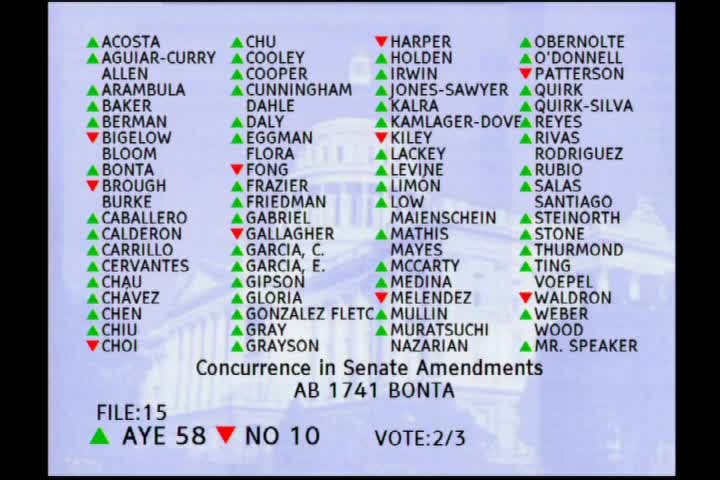 1MIN
Assembly Floor
 1MIN
Senate Floor
 5MIN
Senate Standing Committee on Environmental Quality
 4MIN
Assembly Standing Committee on Natural Resources
Bill Author


