AB 2420: Workforce development: soft skills training.
- Session Year: 2017-2018
- House: Assembly
- Latest Version Date: 2018-08-27
Existing law establishes the Employment Training Panel within the Employment Development Department and prescribes the functions and duties of the panel with respect to various employment training programs in the state. Existing law requires the panel, among other things, to solicit proposals and write contracts for the purpose of providing employment training and requires these contracts to be made for training in job-related vocational skills that are necessary for participants to attain a new job or retain an existing job. Existing law authorizes the contracts to include ancillary training for job-related basic and literacy training if the panel finds that the training is necessary to achieve the objectives of the vocational training.
This bill would specify, with regard to the contracts described above, that job-related basic and literacy skills training includes soft skills and would define soft skills as behaviors and competencies to allow people to navigate professional environments, work well with colleagues, and perform up to standards for professional success. The bill would also make conforming changes in this regard.
Existing law establishes the Employment Training Panel within the Employment Development Department, Department and prescribes the functions and duties of the panel with respect to various employment training programs in the state. Existing law requires the panel to, panel, among other things, to solicit proposals and write contracts for the purpose of providing employment training and requires these contracts to be made for training in job-related vocational skills that are necessary for participants to attain a new job or retain an existing job. Existing law authorizes the contracts to include ancillary training for job-related basic and literacy training if the panel finds that the training is necessary to achieve the objectives of the vocational training.
This bill would instead authorize those contracts to include ancillary training for job related soft-skills training specify, with regard to the contracts described above, that job-related basic and literacy skills training includes soft skills and would define soft-skills soft skills as behaviors and competencies to allow people to navigate professional environments, work well with colleagues, and perform up to standards for professional success. The bill would also make conforming changes in this regard.
Existing law establishes the Employment Training Panel within the Employment Development Department, and prescribes the functions and duties of the panel with respect to various employment training programs in the state. Existing law requires the panel to, among other things, solicit proposals and write contracts for the purpose of providing employment training and requires these contracts to be made for training in job-related vocational skills that are necessary for participants to attain a new job or retain an existing job. Existing law authorizes the contracts to include ancillary training for job-related basic and literacy training if the panel finds that the training is necessary to achieve the objectives of the vocational training.
This bill would instead authorize those contracts to include ancillary training for job related soft-skills training and would define soft-skills as behaviors and competencies to allow people to navigate professional environments, work well with colleagues, and perform up to standards for professional success. The bill would also make conforming changes in this regard.
The Legislature finds and declares the following:
(a)Californias economy is being challenged by competition from other states and overseas. In order to meet this challenge, Californias employers, workers, labor organizations, and government need to invest in a skilled and productive workforce, and in developing the skills of frontline workers. For purposes of this section, frontline worker means a worker who directly produces or delivers goods or services.
The purpose of this chapter is to establish a strategically designed employment training program to promote a healthy labor market in a growing, competitive economy that shall fund only projects that meet the following criteria:
(1)Foster creation of high-wage, high-skilled jobs, or foster retention of high-wage, high-skilled jobs in manufacturing and other industries that are threatened by out-of-state and global competition, including, but not limited to, those industries in which targeted training resources for Californias small and medium-sized business suppliers will increase the states competitiveness to secure federal, private sector, and other nonstate funds. In addition, provide for retraining contracts in companies that make a monetary or in-kind contribution to the funded training enhancements.
(2)Encourage industry-based investment in human resources development that promotes the competitiveness of California industry through productivity and product quality enhancements.
(3)Result in secure jobs for those who successfully complete training. All training shall be customized to the specific requirements of one or more employers or a discrete industry and shall include general skills, including soft skills, that trainees can use in the future.
(4)Supplement, rather than displace, funds available through existing programs conducted by employers and government-funded training programs, such as the Workforce Investment Act of 1998 (29 U.S.C. Sec. 2801 et seq.), the Carl D. Perkins Vocational Education Act (Public Law 98-524), CalWORKs (Chapter 2 (commencing with Section 11200) of Part 3 of Division 9 of the Welfare and Institutions Code), the Enterprise Zone Act (Chapter 12.8 (commencing with Section 7070) of Division 7 of Title 1 of the Government Code), and the McKinney-Vento Homeless Assistance Act (42 U.S.C. Sec. 11301 et seq.), the California Community Colleges Economic Development Program, or apportionment funds allocated to the community colleges, regional occupational centers and programs, or other local educational agencies. In addition, it is further the intention of the Legislature that programs developed pursuant to this chapter shall not replace, parallel, supplant, compete with, or duplicate in any way already existing approved apprenticeship programs.
(b)The Employment Training Panel, in funding projects that meet the requirements of subdivision (a), shall give funding priority to those projects that best meet the following goals:
(1)Result in the growth of the California economy by stimulating exports from the state and the production of goods and services that would otherwise be imported from outside the state.
(2)Train new employees of firms locating or expanding in the state that provide high-skilled, high-wage jobs and are committed to an ongoing investment in the training of frontline workers.
(3)Develop workers with skills that prepare them for the challenges of a high performance workplace of the future.
(4)Train workers who have been displaced, have received notification of impending layoff, or are subject to displacement, because of a plant closure, workforce reduction, changes in technology, or significantly increasing levels of international and out-of-state competition.
(5)Are jointly developed by business management and worker representatives.
(6)Develop career ladders for workers.
(7)Promote the retention and expansion of the states manufacturing workforce.
(c)The program established through this chapter is to be coordinated with all existing employment training programs and economic development programs, including, but not limited to, programs such as the Workforce Investment Act of 1998 (29 U.S.C. Sec. 2801 et seq.), the California Community Colleges, the regional occupational programs, vocational education programs, joint labor-management training programs, and related programs under the Employment Development Department and the Governors Office of Business and Economic Development, and the Business, Consumer Services, and Housing Agency.
SEC. 2.Section 10201 of the Unemployment Insurance Code is amended to read:10201.As used in this chapter:
(a)Department means the Employment Development Department.
(b)Employer or eligible employer means any employer subject to Part 1 (commencing with Section 100) of Division 1, except any public entity, or any nonprofit organization which has elected an alternate method of financing its liability for unemployment insurance compensation benefits pursuant to Article 5 (commencing with Section 801), or Article 6 (commencing with Section 821) of Chapter 3.
Any public entity or nonprofit organization that has elected an alternate method of financing its liability for unemployment insurance compensation benefits pursuant to Article 5 (commencing with Section 801), or Article 6 (commencing with Section 821) of Chapter 3, shall be deemed to be an employer only for purposes of placement of new hire trainees who received training as an incidental part of a training project designed to meet the needs of one or more private sector employers.
(c)Eligible participant means any person who, prior to beginning training or employment pursuant to this chapter, is any of the following:
(1)Unemployed and has established an unemployment insurance claim in this state, or has exhausted eligibility for unemployment insurance benefits from this state within the previous 24 months.
(2)Employed for a minimum of 90 days by his or her employer, or if employed for less than 90 days, met the conditions of paragraph (1) at the time of hire, had received a notice of layoff from the prior employer, or was employed by an employer for a period of not less than 90 days during the 180-day period prior to the employees current employment at the start of training with an eligible employer, as provided in subdivision (b). The panel may waive this requirement for trainees employed by a business locating or expanding operations in the state, provided it is part of a state and local economic development effort endeavoring to create or retain California jobs. The panel may also waive the requirement for up to 10 percent of the trainee population, if it determines a business meets standard funding requirements set out under subdivision (a) of Section 10200.
(d)Executive director means the executive director appointed pursuant to Section 10202.
(e)Fund means the Employment Training Fund created by Section 1610.
(f)Job means employment on a basis customarily considered full time for the occupation and industry. The employment shall have definite career potential and a substantial likelihood of providing long-term job security, with reportable California earnings during the employment retention period. Furthermore, the employment shall provide earnings, upon completion of the employment requirement specified in subdivision (f) of Section 10209, equal to 50 percent, in the case of new hire training, or 60 percent, in the case of retraining, of the state or regional average hourly wage. However, in no case shall the employment result in earnings of less than 45 percent of the state average hourly wage for new hire training and 55 percent of the state average hourly wage for retraining. The panel may consider the dollar value of health benefits that are voluntarily paid for by an employer when computing earnings to meet the minimum wage requirements.
(g)New hire training means employment training, including job-related literacy training, including soft skills, for persons who, at the start of training, are unemployed.
(h)Panel means the Employment Training Panel created by Section 10202.
(i)Retraining means employment-related skills and literacy training, including soft skills, for persons who are employed and who meet the definition of paragraph (2) of subdivision (c) prior to commencement of training and will continue to be employed by the same employer for at least 90 days following completion of training.
(j)Soft skills means behaviors and competencies to allow people to navigate professional environments, work well with colleagues, and perform up to standards for professional success, including, but not limited to, all of the following:
(1)Social skills, including, but not limited to, respectful personal interactions, context appropriate behavior, and conflict resolution.
(2)Competency in oral, written, nonverbal, and listening skills.
(3)Problem solving, critical thinking, and decisionmaking skills, including, but not limited to, identifying issues and evaluating options in order to reach a reasonable conclusion.
(4)Self-regulation of behavior and the exercise of delayed gratification or directing focus or attention, or both.
(k)State average hourly wage means the average weekly wage paid by employers to employees covered by unemployment insurance, as reported to the Employment Development Department for the four calendar quarters ending June 30 of the preceding calendar year, divided by 40 hours.
(l)Trainee means an eligible participant.
(m)Training agency means any private training entity or local educational agency.
SEC. 3.Section 10209 of the Unemployment Insurance Code is amended to read:10209.(a)Contracts shall only be made for training in job-related vocational skills that are necessary for participants to attain a new job or retain an existing job with definite career potential and long-term job security. The contracts for vocational skills training may include ancillary training for job-related basic and literacy skills training, including soft skills, if the panel finds that the training is necessary to achieve the objectives of the vocational training.
(b)The panel shall not approve any training proposal which facilitates the change in ownership of a business leading to the likelihood that an existing collective bargaining agreement would be declared void.
(c)To encourage a broad and equitable distribution of funds, the panel may require an employer who has previously received funds pursuant to this chapter for retraining of workers at a facility to contribute proportionately more to the cost of training in subsequent panel contracts for training of workers at the same facility.
(d)The panel may delegate to the executive director the authority to approve training contracts of up to one hundred thousand dollars ($100,000), provided the contracts meet the requirements of this chapter and the policies established by the panel, and provided that the panel regularly reviews the actions taken by the executive director pursuant to this subdivision.
(e)Payments shall be made in accordance with a performance contract under which partial payments may be made during training, a partial payment may be made on placement or retention of each trainee, and not less than 25 percent of the negotiated fee is withheld until the trainee has been retained in employment for 90 days after the end of training with a single employer, except for those occupations in which it is not customary for a worker to be employed 90 consecutive days with a single employer. In these latter cases, the panel may substitute a period similar to the probationary period customary to the occupation. The probationary period shall not be less than 500 work hours and shall be completed within 272 days of the completion of the training. In no case shall any payment be considered to have been earned until the trainee has been retained in employment for 90 days or the equivalent probationary period for an occupation in which it is not customary for a worker to be employed 90 consecutive days with a single employer.
(f)Contracts for new hire training shall require the contractor to provide the placement services necessary to ensure the trainees are placed in jobs for which they have been trained.
SEC. 4.Section 10214.5 of the Unemployment Insurance Code is amended to read:10214.5.(a)The panel may allocate up to 15 percent of the annually available training funds for the purpose of funding special employment training projects that improve the skills and employment security of frontline workers, as defined in subdivision (a) of Section 10200. Notwithstanding any other provision of this chapter, participants in these projects are not required to meet the eligibility criteria set forth in paragraph (1) of subdivision (a) of Section 10200 or subdivision (c) of Section 10201.
(b)The panel shall, on an annual basis or as needed in response to a proclamation of a state of emergency issued by the Governor under the California Emergency Services Act (Chapter 7 (commencing with Section 8550) of Division 1 of Title 2 of the Government Code), identify industries and occupations that shall be priorities for funding under this section. Training shall be targeted, but not limited, to frontline workers who earn at least the state average hourly wage.
(c)The panel may waive the minimum wage provisions pursuant to subdivision (f) of Section 10201 for projects in regions of the state where the unemployment rate is significantly higher than the state average or regions identified in a proclamation of a state of emergency issued by the Governor under the California Emergency Services Act (Chapter 7 (commencing with Section 8550) of Division 1 of Title 2 of the Government Code), and also may waive the employment retentions provisions specified in subdivision (f) of Section 10209 and instead require that the trainee has been retained in employment for a minimum of 90 days out of 120 consecutive days after the end of training with no more than three employers.
(d)(1)The panel may allocate funds pursuant to subdivision (a) to increase the productivity and extended employment retention of workers in the states major seasonal industries.
(2)In funding special employment training projects for this purpose, the panel may do all of the following:
(A)When the amount of the postretention wages of each trainee who has completed training exceeds the amount of wages that the trainee earned before and during training, waive the minimum wage requirements set forth in subdivision (f) of Section 10201.
(B)Waive the employment retention requirements set forth in subdivision (f) of Section 10209 and instead require that the trainee be retained in employment for not less than 500 hours within the 12-month period following the completion of the training.
(C)When the panel finds that the training is necessary to achieve the objectives of vocational training, waive the limitation on job-related basic and literacy skills training, including soft skills, set forth in subdivision (a) of Section 10209.
(3)For purposes of this section, major seasonal industries means eligible employers who satisfy all of the following requirements:
(A)Have a workforce comprised of at least 50 percent of workers whose employment period is necessarily cyclical, including, but not limited to, businesses directly involved in the harvesting, packing, or processing of goods or products.
(B)Have retained at least 50 percent of the same seasonal employees for at least one season of not less than 500 hours for the preceding 12-month period.
(C)Pay wages and provide benefits that exceed industry averages.
(e)The panel shall adopt minimum standards for consideration of proposals to be funded pursuant to this section.
(f)The panel may select contracts funded under this section based on competitive bidding.
(g)It is the intent of the Legislature in providing the authority for these projects that the panel allocate these funds in a manner consistent with the objectives of this chapter as provided in Section 10200.
The Legislature finds and declares the following:
(a)Californias economy is being challenged by competition from other states and overseas. In order to meet this challenge, Californias employers, workers, labor organizations, and government need to invest in a skilled and productive workforce, and in developing the skills of frontline workers. For purposes of this section, frontline worker means a worker who directly produces or delivers goods or services.
The purpose of this chapter is to establish a strategically designed employment training program to promote a healthy labor market in a growing, competitive economy that shall fund only projects that meet the following criteria:
(1)Foster creation of high-wage, high-skilled jobs, or foster retention of high-wage, high-skilled jobs in manufacturing and other industries that are threatened by out-of-state and global competition, including, but not limited to, those industries in which targeted training resources for Californias small and medium-sized business suppliers will increase the states competitiveness to secure federal, private sector, and other nonstate funds. In addition, provide for retraining contracts in companies that make a monetary or in-kind contribution to the funded training enhancements.
(2)Encourage industry-based investment in human resources development that promotes the competitiveness of California industry through productivity and product quality enhancements.
(3)Result in secure jobs for those who successfully complete training. All training shall be customized to the specific requirements of one or more employers or a discrete industry and shall include soft-skills general skills, including soft skills, that trainees can use in the future.
(4)Supplement, rather than displace, funds available through existing programs conducted by employers and government-funded training programs, such as the Workforce Investment Act of 1998 (29 U.S.C. Sec. 2801 et seq.), the Carl D. Perkins Vocational Education Act (Public Law 98-524), CalWORKs (Chapter 2 (commencing with Section 11200) of Part 3 of Division 9 of the Welfare and Institutions Code), the Enterprise Zone Act (Chapter 12.8 (commencing with Section 7070) of Division 7 of Title 1 of the Government Code), and the McKinney-Vento Homeless Assistance Act (42 U.S.C. Sec. 11301 et seq.), the California Community Colleges Economic Development Program, or apportionment funds allocated to the community colleges, regional occupational centers and programs, or other local educational agencies. In addition, it is further the intention of the Legislature that programs developed pursuant to this chapter shall not replace, parallel, supplant, compete with, or duplicate in any way already existing approved apprenticeship programs.
(b)The Employment Training Panel, in funding projects that meet the requirements of subdivision (a), shall give funding priority to those projects that best meet the following goals:
(1)Result in the growth of the California economy by stimulating exports from the state and the production of goods and services that would otherwise be imported from outside the state.
(2)Train new employees of firms locating or expanding in the state that provide high-skilled, high-wage jobs and are committed to an ongoing investment in the training of frontline workers.
(3)Develop workers with skills that prepare them for the challenges of a high performance workplace of the future.
(4)Train workers who have been displaced, have received notification of impending layoff, or are subject to displacement, because of a plant closure, workforce reduction, changes in technology, or significantly increasing levels of international and out-of-state competition.
(5)Are jointly developed by business management and worker representatives.
(6)Develop career ladders for workers.
(7)Promote the retention and expansion of the states manufacturing workforce.
(c)The program established through this chapter is to be coordinated with all existing employment training programs and economic development programs, including, but not limited to, programs such as the Workforce Investment Act of 1998 (29 U.S.C. Sec. 2801 et seq.), the California Community Colleges, the regional occupational programs, vocational education programs, joint labor-management training programs, and related programs under the Employment Development Department and the Governors Office of Business and Economic Development, and the Business, Consumer Services, and Housing Agency.
SEC. 2.Section 10201 of the Unemployment Insurance Code is amended to read:10201.As used in this chapter:
(a)Department means the Employment Development Department.
(b)Employer or eligible employer means any employer subject to Part 1 (commencing with Section 100) of Division 1, except any public entity, or any nonprofit organization which has elected an alternate method of financing its liability for unemployment insurance compensation benefits pursuant to Article 5 (commencing with Section 801), or Article 6 (commencing with Section 821) of Chapter 3.
Any public entity or nonprofit organization that has elected an alternate method of financing its liability for unemployment insurance compensation benefits pursuant to Article 5 (commencing with Section 801), or Article 6 (commencing with Section 821) of Chapter 3, shall be deemed to be an employer only for purposes of placement of new hire trainees who received training as an incidental part of a training project designed to meet the needs of one or more private sector employers.
(c)Eligible participant means any person who, prior to beginning training or employment pursuant to this chapter, is any of the following:
(1)Unemployed and has established an unemployment insurance claim in this state, or has exhausted eligibility for unemployment insurance benefits from this state within the previous 24 months.
(2)Employed for a minimum of 90 days by his or her employer, or if employed for less than 90 days, met the conditions of paragraph (1) at the time of hire, had received a notice of layoff from the prior employer, or was employed by an employer for a period of not less than 90 days during the 180-day period prior to the employees current employment at the start of training with an eligible employer, as provided in subdivision (b). The panel may waive this requirement for trainees employed by a business locating or expanding operations in the state, provided it is part of a state and local economic development effort endeavoring to create or retain California jobs. The panel may also waive the requirement for up to 10 percent of the trainee population, if it determines a business meets standard funding requirements set out under subdivision (a) of Section 10200.
(d)Executive director means the executive director appointed pursuant to Section 10202.
(e)Fund means the Employment Training Fund created by Section 1610.
(f)Job means employment on a basis customarily considered full time for the occupation and industry. The employment shall have definite career potential and a substantial likelihood of providing long-term job security, with reportable California earnings during the employment retention period. Furthermore, the employment shall provide earnings, upon completion of the employment requirement specified in subdivision (f) of Section 10209, equal to 50 percent, in the case of new hire training, or 60 percent, in the case of retraining, of the state or regional average hourly wage. However, in no case shall the employment result in earnings of less than 45 percent of the state average hourly wage for new hire training and 55 percent of the state average hourly wage for retraining. The panel may consider the dollar value of health benefits that are voluntarily paid for by an employer when computing earnings to meet the minimum wage requirements.
(g)New hire training means employment training, including job-related soft-skills literacy training, including soft skills, for persons who, at the start of training, are unemployed.
(h)Panel means the Employment Training Panel created by Section 10202.
(i)Retraining means employment-related soft-skills training skills and literacy training, including soft skills, for persons who are employed and who meet the definition of paragraph (2) of subdivision (c) prior to commencement of training and will continue to be employed by the same employer for at least 90 days following completion of training.
(j)Soft-skills Soft skills means behaviors and competencies to allow people to navigate professional environments, work well with colleagues, and perform up to standards for professional success, including, but not limited to, all of the following:
(1)Social skills, including, but not limited to, respectful personal interactions, context appropriate behavior, and conflict resolution.
(2)Competency in oral, written, nonverbal, and listening skills.
(3)Problem solving, critical thinking, and decisionmaking skills, including, but not limited to, identifying issues and evaluating options in order to reach a reasonable conclusion.
(4)Self-regulation of behavior and the exercise of delayed gratification or directing focus or attention, or both.
(k)State average hourly wage means the average weekly wage paid by employers to employees covered by unemployment insurance, as reported to the Employment Development Department for the four calendar quarters ending June 30 of the preceding calendar year, divided by 40 hours.
(l)Trainee means an eligible participant.
(m)Training agency means any private training entity or local educational agency.
SEC. 3.Section 10209 of the Unemployment Insurance Code is amended to read:10209.(a)Contracts shall only be made for training in job-related vocational skills that are necessary for participants to attain a new job or retain an existing job with definite career potential and long-term job security. The contracts for vocational skills training may include ancillary training for job-related soft-skills training basic and literacy skills training, including soft skills, if the panel finds that the training is necessary to achieve the objectives of the vocational training.
(b)The panel shall not approve any training proposal which facilitates the change in ownership of a business leading to the likelihood that an existing collective bargaining agreement would be declared void.
(c)To encourage a broad and equitable distribution of funds, the panel may require an employer who has previously received funds pursuant to this chapter for retraining of workers at a facility to contribute proportionately more to the cost of training in subsequent panel contracts for training of workers at the same facility.
(d)The panel may delegate to the executive director the authority to approve training contracts of up to one hundred thousand dollars ($100,000), provided the contracts meet the requirements of this chapter and the policies established by the panel, and provided that the panel regularly reviews the actions taken by the executive director pursuant to this subdivision.
(e)Payments shall be made in accordance with a performance contract under which partial payments may be made during training, a partial payment may be made on placement or retention of each trainee, and not less than 25 percent of the negotiated fee is withheld until the trainee has been retained in employment for 90 days after the end of training with a single employer, except for those occupations in which it is not customary for a worker to be employed 90 consecutive days with a single employer. In these latter cases, the panel may substitute a period similar to the probationary period customary to the occupation. The probationary period shall not be less than 500 work hours and shall be completed within 272 days of the completion of the training. In no case shall any payment be considered to have been earned until the trainee has been retained in employment for 90 days or the equivalent probationary period for an occupation in which it is not customary for a worker to be employed 90 consecutive days with a single employer.
(f)Contracts for new hire training shall require the contractor to provide the placement services necessary to ensure the trainees are placed in jobs for which they have been trained.
SEC. 4.Section 10214.5 of the Unemployment Insurance Code is amended to read:10214.5.(a)The panel may allocate up to 15 percent of the annually available training funds for the purpose of funding special employment training projects that improve the skills and employment security of frontline workers, as defined in subdivision (a) of Section 10200. Notwithstanding any other provision of this chapter, participants in these projects are not required to meet the eligibility criteria set forth in paragraph (1) of subdivision (a) of Section 10200 or subdivision (c) of Section 10201.
(b)The panel shall, on an annual basis or as needed in response to a proclamation of a state of emergency issued by the Governor under the California Emergency Services Act (Chapter 7 (commencing with Section 8550) of Division 1 of Title 2 of the Government Code), identify industries and occupations that shall be priorities for funding under this section. Training shall be targeted, but not limited, to frontline workers who earn at least the state average hourly wage.
(c)The panel may waive the minimum wage provisions pursuant to subdivision (f) of Section 10201 for projects in regions of the state where the unemployment rate is significantly higher than the state average or regions identified in a proclamation of a state of emergency issued by the Governor under the California Emergency Services Act (Chapter 7 (commencing with Section 8550) of Division 1 of Title 2 of the Government Code), and also may waive the employment retentions provisions specified in subdivision (f) of Section 10209 and instead require that the trainee has been retained in employment for a minimum of 90 days out of 120 consecutive days after the end of training with no more than three employers.
(d)(1)The panel may allocate funds pursuant to subdivision (a) to increase the productivity and extended employment retention of workers in the states major seasonal industries.
(2)In funding special employment training projects for this purpose, the panel may do all of the following:
(A)When the amount of the postretention wages of each trainee who has completed training exceeds the amount of wages that the trainee earned before and during training, waive the minimum wage requirements set forth in subdivision (f) of Section 10201.
(B)Waive the employment retention requirements set forth in subdivision (f) of Section 10209 and instead require that the trainee be retained in employment for not less than 500 hours within the 12-month period following the completion of the training.
(C)When the panel finds that the training is necessary to achieve the objectives of vocational training, waive the limitation on job-related soft-skills training basic and literacy skills training, including soft skills, set forth in subdivision (a) of Section 10209.
(3)For purposes of this section, major seasonal industries means eligible employers who satisfy all of the following requirements:
(A)Have a workforce comprised of at least 50 percent of workers whose employment period is necessarily cyclical, including, but not limited to, businesses directly involved in the harvesting, packing, or processing of goods or products.
(B)Have retained at least 50 percent of the same seasonal employees for at least one season of not less than 500 hours for the preceding 12-month period.
(C)Pay wages and provide benefits that exceed industry averages.
(e)The panel shall adopt minimum standards for consideration of proposals to be funded pursuant to this section.
(f)The panel may select contracts funded under this section based on competitive bidding.
(g)It is the intent of the Legislature in providing the authority for these projects that the panel allocate these funds in a manner consistent with the objectives of this chapter as provided in Section 10200.
The Legislature finds and declares the following:
(a)Californias economy is being challenged by competition from other states and overseas. In order to meet this challenge, Californias employers, workers, labor organizations, and government need to invest in a skilled and productive workforce, and in developing the skills of frontline workers. For purposes of this section, frontline worker means a worker who directly produces or delivers goods or services.
The purpose of this chapter is to establish a strategically designed employment training program to promote a healthy labor market in a growing, competitive economy that shall fund only projects that meet the following criteria:
(1)Foster creation of high-wage, high-skilled jobs, or foster retention of high-wage, high-skilled jobs in manufacturing and other industries that are threatened by out-of-state and global competition, including, but not limited to, those industries in which targeted training resources for Californias small and medium-sized business suppliers will increase the states competitiveness to secure federal, private sector, and other nonstate funds. In addition, provide for retraining contracts in companies that make a monetary or in-kind contribution to the funded training enhancements.
(2)Encourage industry-based investment in human resources development that promotes the competitiveness of California industry through productivity and product quality enhancements.
(3)Result in secure jobs for those who successfully complete training. All training shall be customized to the specific requirements of one or more employers or a discrete industry and shall include general skills soft-skills that trainees can use in the future.
(4)Supplement, rather than displace, funds available through existing programs conducted by employers and government-funded training programs, such as the Workforce Investment Act of 1998 (29 U.S.C. Sec. 2801 et seq.), the Carl D. Perkins Vocational Education Act (Public Law 98-524), CalWORKs (Chapter 2 (commencing with Section 11200) of Part 3 of Division 9 of the Welfare and Institutions Code), the Enterprise Zone Act (Chapter 12.8 (commencing with Section 7070) of Division 7 of Title 1 of the Government Code), and the McKinney-Vento Homeless Assistance Act (42 U.S.C. Sec. 11301 et seq.), the California Community Colleges Economic Development Program, or apportionment funds allocated to the community colleges, regional occupational centers and programs, or other local educational agencies. In addition, it is further the intention of the Legislature that programs developed pursuant to this chapter shall not replace, parallel, supplant, compete with, or duplicate in any way already existing approved apprenticeship programs.
(b)The Employment Training Panel, in funding projects that meet the requirements of subdivision (a), shall give funding priority to those projects that best meet the following goals:
(1)Result in the growth of the California economy by stimulating exports from the state and the production of goods and services that would otherwise be imported from outside the state.
(2)Train new employees of firms locating or expanding in the state that provide high-skilled, high-wage jobs and are committed to an ongoing investment in the training of frontline workers.
(3)Develop workers with skills that prepare them for the challenges of a high performance workplace of the future.
(4)Train workers who have been displaced, have received notification of impending layoff, or are subject to displacement, because of a plant closure, workforce reduction, changes in technology, or significantly increasing levels of international and out-of-state competition.
(5)Are jointly developed by business management and worker representatives.
(6)Develop career ladders for workers.
(7)Promote the retention and expansion of the states manufacturing workforce.
(c)The program established through this chapter is to be coordinated with all existing employment training programs and economic development programs, including, but not limited to, programs such as the Workforce Investment Act of 1998 (29 U.S.C. Sec. 2801 et seq.), the California Community Colleges, the regional occupational programs, vocational education programs, joint labor-management training programs, and related programs under the Employment Development Department and the Governors Office of Business and Economic Development, and the Business, Consumer Services, and Housing Agency.
SEC. 2.Section 10201 of the Unemployment Insurance Code is amended to read:10201.As used in this chapter:
(a)Department means the Employment Development Department.
(b)Employer or eligible employer means any employer subject to Part 1 (commencing with Section 100) of Division 1, except any public entity, or any nonprofit organization which has elected an alternate method of financing its liability for unemployment insurance compensation benefits pursuant to Article 5 (commencing with Section 801), or Article 6 (commencing with Section 821) of Chapter 3.
Any public entity or nonprofit organization that has elected an alternate method of financing its liability for unemployment insurance compensation benefits pursuant to Article 5 (commencing with Section 801), or Article 6 (commencing with Section 821) of Chapter 3, shall be deemed to be an employer only for purposes of placement of new hire trainees who received training as an incidental part of a training project designed to meet the needs of one or more private sector employers.
(c)Eligible participant means any person who, prior to beginning training or employment pursuant to this chapter, is any of the following:
(1)Unemployed and has established an unemployment insurance claim in this state, or has exhausted eligibility for unemployment insurance benefits from this state within the previous 24 months.
(2)Employed for a minimum of 90 days by his or her employer, or if employed for less than 90 days, met the conditions of paragraph (1) at the time of hire, had received a notice of layoff from the prior employer, or was employed by an employer for a period of not less than 90 days during the 180-day period prior to the employees current employment at the start of training with an eligible employer, as provided in subdivision (b). The panel may waive this requirement for trainees employed by a business locating or expanding operations in the state, provided it is part of a state and local economic development effort endeavoring to create or retain California jobs. The panel may also waive the requirement for up to 10 percent of the trainee population, if it determines a business meets standard funding requirements set out under subdivision (a) of Section 10200.
(d)Executive director means the executive director appointed pursuant to Section 10202.
(e)Fund means the Employment Training Fund created by Section 1610.
(f)Job means employment on a basis customarily considered full time for the occupation and industry. The employment shall have definite career potential and a substantial likelihood of providing long-term job security, with reportable California earnings during the employment retention period. Furthermore, the employment shall provide earnings, upon completion of the employment requirement specified in subdivision (f) of Section 10209, equal to 50 percent, in the case of new hire training, or 60 percent, in the case of retraining, of the state or regional average hourly wage. However, in no case shall the employment result in earnings of less than 45 percent of the state average hourly wage for new hire training and 55 percent of the state average hourly wage for retraining. The panel may consider the dollar value of health benefits that are voluntarily paid for by an employer when computing earnings to meet the minimum wage requirements.
(g)New hire training means employment training, including job-related literacy soft-skills training, for persons who, at the start of training, are unemployed.
(h)Panel means the Employment Training Panel created by Section 10202.
(i)Retraining means employment-related skill and literacy soft-skills training for persons who are employed and who meet the definition of paragraph (2) of subdivision (c) prior to commencement of training and will continue to be employed by the same employer for at least 90 days following completion of training.
(j)Soft-skills means behaviors and competencies to allow people to navigate professional environments, work well with colleagues, and perform up to standards for professional success, including, but not limited to, all of the following:
(1)Social skills, including, but not limited to, respectful personal interactions, context appropriate behavior, and conflict resolution.
(2)Competency in oral, written, nonverbal, and listening skills.
(3)Problem solving, critical thinking, and decisionmaking skills, including, but not limited to, identifying issues and evaluating options in order to reach a reasonable conclusion.
(4)Self-regulation of behavior and the exercise of delayed gratification or directing focus or attention, or both.
(j)(k)State average hourly wage means the average weekly wage paid by employers to employees covered by unemployment insurance, as reported to the Employment Development Department for the four calendar quarters ending June 30 of the preceding calendar year, divided by 40 hours.
(k)(l)Trainee means an eligible participant.
(l)(m)Training agency means any private training entity or local educational agency.
SEC. 3.Section 10209 of the Unemployment Insurance Code is amended to read:10209.(a)Contracts shall only be made for training in job-related vocational skills that are necessary for participants to attain a new job or retain an existing job with definite career potential and long-term job security. The contracts for vocational skills training may include ancillary training for job-related basic and literacy skills soft-skills training if the panel finds that the training is necessary to achieve the objectives of the vocational training.
(b)The panel shall not approve any training proposal which facilitates the change in ownership of a business leading to the likelihood that an existing collective bargaining agreement would be declared void.
(c)To encourage a broad and equitable distribution of funds, the panel may require an employer who has previously received funds pursuant to this chapter for retraining of workers at a facility to contribute proportionately more to the cost of training in subsequent panel contracts for training of workers at the same facility.
(d)The panel may delegate to the executive director the authority to approve training contracts of up to one hundred thousand dollars ($100,000), provided the contracts meet the requirements of this chapter and the policies established by the panel, and provided that the panel regularly reviews the actions taken by the executive director pursuant to this subdivision.
(e)Payments shall be made in accordance with a performance contract under which partial payments may be made during training, a partial payment may be made on placement or retention of each trainee, and not less than 25 percent of the negotiated fee is withheld until the trainee has been retained in employment for 90 days after the end of training with a single employer, except for those occupations in which it is not customary for a worker to be employed 90 consecutive days with a single employer. In these latter cases, the panel may substitute a period similar to the probationary period customary to the occupation. The probationary period shall not be less than 500 work hours and shall be completed within 272 days of the completion of the training. In no case shall any payment be considered to have been earned until the trainee has been retained in employment for 90 days or the equivalent probationary period for an occupation in which it is not customary for a worker to be employed 90 consecutive days with a single employer.
(f)Contracts for new hire training shall require the contractor to provide the placement services necessary to ensure the trainees are placed in jobs for which they have been trained.
SEC. 4.Section 10214.5 of the Unemployment Insurance Code is amended to read:10214.5.(a)The panel may allocate up to 15 percent of the annually available training funds for the purpose of funding special employment training projects that improve the skills and employment security of frontline workers, as defined in subdivision (a) of Section 10200. Notwithstanding any other provision of this chapter, participants in these projects are not required to meet the eligibility criteria set forth in paragraph (1) of subdivision (a) of Section 10200 or subdivision (c) of Section 10201.
(b)The panel shall, on an annual basis or as needed in response to a proclamation of a state of emergency issued by the Governor under the California Emergency Services Act (Chapter 7 (commencing with Section 8550) of Division 1 of Title 2 of the Government Code), identify industries and occupations that shall be priorities for funding under this section. Training shall be targeted, but not limited, to frontline workers who earn at least the state average hourly wage.
(c)The panel may waive the minimum wage provisions pursuant to subdivision (f) of Section 10201 for projects in regions of the state where the unemployment rate is significantly higher than the state average or regions identified in a proclamation of a state of emergency issued by the Governor under the California Emergency Services Act (Chapter 7 (commencing with Section 8550) of Division 1 of Title 2 of the Government Code), and also may waive the employment retentions provisions specified in subdivision (f) of Section 10209 and instead require that the trainee has been retained in employment for a minimum of 90 days out of 120 consecutive days after the end of training with no more than three employers.
(d)(1)The panel may allocate funds pursuant to subdivision (a) to increase the productivity and extended employment retention of workers in the states major seasonal industries.
(2)In funding special employment training projects for this purpose, the panel may do all of the following:
(A)When the amount of the postretention wages of each trainee who has completed training exceeds the amount of wages that the trainee earned before and during training, waive the minimum wage requirements set forth in subdivision (f) of Section 10201.
(B)Waive the employment retention requirements set forth in subdivision (f) of Section 10209 and instead require that the trainee be retained in employment for not less than 500 hours within the 12-month period following the completion of the training.
(C)When the panel finds that the training is necessary to achieve the objectives of vocational training, waive the limitation on job-related basic and literacy skills soft-skills training set forth in subdivision (a) of Section 10209.
(3)For purposes of this section, major seasonal industries means eligible employers who satisfy all of the following requirements:
(A)Have a workforce comprised of at least 50 percent of workers whose employment period is necessarily cyclical, including, but not limited to, businesses directly involved in the harvesting, packing, or processing of goods or products.
(B)Have retained at least 50 percent of the same seasonal employees for at least one season of not less than 500 hours for the preceding 12-month period.
(C)Pay wages and provide benefits that exceed industry averages.
(e)The panel shall adopt minimum standards for consideration of proposals to be funded pursuant to this section.
(f)The panel may select contracts funded under this section based on competitive bidding.
(g)It is the intent of the Legislature in providing the authority for these projects that the panel allocate these funds in a manner consistent with the objectives of this chapter as provided in Section 10200.
|
Date
|
Status
|
|---|---|
| Aug 27, 2018 | Chaptered by Secretary of State - Chapter 216, Statutes of 2018. |
| Aug 27, 2018 | Approved by the Governor. |
| Aug 14, 2018 | Enrolled and presented to the Governor at 4 p.m. |
| Aug 9, 2018 | In Assembly. Ordered to Engrossing and Enrolling. |
| Aug 9, 2018 | Read third time. Passed. Ordered to the Assembly. |
| Jun 26, 2018 | Read second time. Ordered to third reading. |
| Jun 25, 2018 | From committee: Be ordered to second reading pursuant to Senate Rule 28.8. |
| Jun 13, 2018 | From committee: Do pass and re-refer to Com. on APPR. (Ayes 5. Noes 0.) (June 13). Re-referred to Com. on APPR. |
| May 24, 2018 | Referred to Com. on L. & I.R. |
| May 10, 2018 | In Senate. Read first time. To Com. on RLS. for assignment. |
| May 10, 2018 | Read third time. Passed. Ordered to the Senate. |
| May 3, 2018 | Read second time. Ordered to Consent Calendar. |
| May 2, 2018 | From committee: Do pass. To Consent Calendar. (Ayes 17. Noes 0.) (May 2). |
| Apr 19, 2018 | From committee: Do pass and re-refer to Com. on APPR. (Ayes 7. Noes 0.) (April 18). Re-referred to Com. on APPR. |
| Apr 11, 2018 | Re-referred to Com. on L. & E. |
| Apr 10, 2018 | From committee chair, with author's amendments: Amend, and re-refer to Com. on L. & E. Read second time and amended. |
| Mar 15, 2018 | Referred to Com. on L. & E. |
| Feb 15, 2018 | From printer. May be heard in committee March 17. |
| Feb 14, 2018 | Read first time. To print. |
|
Date
|
Description
|
Location
|
Votes
|
|
|---|---|---|---|---|
| Aug 9, 2018 | Assembly 3rd Reading AB2420 Quirk-Silva By Jackson | Senate Floor |
Passed |
|
| Jun 13, 2018 | Do pass, but first be re-referred to the Committee on [Appropriations] | Senate Standing Committee on Labor and Industrial Relations |
Passed |
|
| May 10, 2018 | AB 2420 QUIRK-SILVA Consent Calendar Second Day Regular Session | Assembly Floor |
Passed |
|
| May 2, 2018 | Do pass. To Consent Calendar. | Assembly Standing Committee on Appropriations |
Passed |
|
| Apr 18, 2018 | Do pass and be re-referred to the Committee on [Appropriations] | Assembly Standing Committee on Labor and Employment |
Passed |
This list shows positions taken on this bill by organizations on the date displayed, which is linked to the original source.
Positions by individuals are not included.
|
Organization
|
Position
|
Date
|
|---|---|---|
| California Manufacturers & Technology Association | ** Support | Jun 27, 2018 |
| California Right to Life Committee | ** Against | Jun 27, 2018 |
| United Chamber Advocacy Network | ** Support | Jun 27, 2018 |
Office of Senate Floor Analyses (916) 651-1520 Fax: (916) 327-4478 | AB |
THIRD READING
Bill No: AB 2420
:
SENATE LABOR & IND. REL. COMMITTEE: 5-0, 6/13/18
AYES: Lara, Stone, Jackson, Mitchell, Wieckowski
SENATE APPROPRIATIONS COMMITTEE: Senate Rule 28.8
ASSEMBLY FLOOR: 73-0, 5/10/18 (Consent) - See last page for vote
DIGEST:
This bill authorizes the Employment Training Panel (ETP) to include “soft skills,” as defined, in the type of job-related basic and literacy skills training for which a training contract may be provided.
Existing law:
- Establishes the ETP within the Employment Development Department, and prescribes the functions and duties of ETP with respect to various employment training programs. (Unemployment Insurance (UI) Code §10200-10217)
- Requires ETP to, among other things, solicit proposals and write contracts for the provision of employment training in job-related vocational skills necessary for participants to attain a new job or retain an existing job with career potential and long-term job security. (UI Code §10205)
- Authorizes the contracts for vocational skills training to include ancillary training for job-related basic and literacy skills training if the panel finds that the training is necessary to achieve the objectives of the vocational training. (UI Code §10209)
- Requires ETP to give funding priority to projects that best meet the following goals: (UI Code §10200)
- Grow the economy by stimulating exports from the state and the production of goods and services that would otherwise be imported.
- Train new employees of firms locating or expanding in the state that provide high-skilled, high-wage jobs and are committed to an ongoing investment.
- Develop workers with skills that prepare them for the challenges of a high performance workplace of the future.
- Train workers who have been displaced, have received notification of impending layoff, or are subject to displacement, because of a plant closure, workforce reduction, changes in technology, or significantly increasing levels of international and out-of-state competition.
- Are jointly developed by business management and worker representatives.
- Develop career ladders for workers.
- Promote the retention and expansion of the state’s manufacturing workforce.
This bill:
- Specifies, with regard to the solicitation and writing of training contracts by the ETP, that job-related basic and literacy skills training includes soft skills.
- Defines “soft skills” as behaviors and competencies to allow people to navigate professional environments, work well with colleagues, and perform up to standards for professional success, including, but not limited to, all of the following:
- Social skills, including, but not limited to, respectful personal interactions, context appropriate behavior, and conflict resolution.
- Competency in oral, written, nonverbal, and listening skills.
- Problem solving, critical thinking, and decision-making skills, including, but not limited to, identifying issues and evaluating options in order to reach a reasonable conclusion.
- Self-regulation of behavior and the exercise of delayed gratification or directing focus or attention, or both.
- Makes conforming changes in code for the implementation of this policy change.
Background
ETP
The ETP was established in 1982 by the Legislature to serve as the state’s premier program supporting job creation and retention through workforce training. Funded by employers through the California Employment Training Tax, the ETP is a performance-based statewide workforce training and economic development program which provides financial assistance to California businesses for customized worker training of new and existing employees.
The ETP is a funding agency, not a training agency. Businesses determine their own training needs and how to provide training. According to their 2015-2016 Annual Report, for three decades, the ETP has supported California’s workers and employers by providing over $1.4 billion for the successful training and employment retention of over a million workers employed by over 80,000 California businesses.
Need for this bill?
ETP is authorized to approve funding for vocational skills training in addition to what they refer to as job related basic skills and literacy. As defined in regulations, "literacy training" means basic, job-related skills including math, reading, and language skills necessary for the trainee's job performance and employment retention in a job with definite career potential and long-term job security. (22 CCR 4400) According to the author, hiring managers are expressing dissatisfaction with key workplace skills for new hires, and at the same time, new graduates and those entering the workforce are experiencing difficulty in translating educational attainment into marketable job skills. AB 2420 will include “soft skills,” which are certain social and problem-solving skills, such as conflict resolution and self-regulation of behavior, as part of the vocational skills training for which EPT may grant a training contract.
FISCAL EFFECT: Appropriation: Fiscal Com.: Local:
California Manufacturers & Technology Association
United Chamber Advocacy Network
OPPOSITION: (Verified 6/26/18)
California Right to Life Committee
ARGUMENTS IN SUPPORT: According to proponents, employers are challenged with finding job candidates that possess the "soft-skills" needed to succeed in a dynamic and diverse high-tech industrial workplace. These skills include attendance and punctuality; collaboration and respect; conflict resolution; concentration and problem solving; professional etiquette; communication; following directions; and acceptance of constructive criticism. Proponents support clarifying that industry-funded resources provided through ETP can also be used to develop interpersonal and competency-based professional skills.
ARGUMENTS IN OPPOSITION: Opponents question why this bill is necessary and wonder why teachers are not equipped to present these soft-skills characteristics without additional funding for classes and seminars.
ASSEMBLY FLOOR: 73-0, 5/10/18
AYES: Acosta, Aguiar-Curry, Arambula, Baker, Berman, Bigelow, Bloom, Bonta, Brough, Burke, Caballero, Calderon, Carrillo, Cervantes, Chau, Chávez, Chen, Chiu, Choi, Chu, Cooper, Cunningham, Dahle, Daly, Eggman, Flora, Fong, Frazier, Gallagher, Eduardo Garcia, Gipson, Gloria, Gonzalez Fletcher, Gray, Grayson, Harper, Holden, Irwin, Jones-Sawyer, Kalra, Kamlager-Dove, Kiley, Lackey, Levine, Limón, Low, Maienschein, Mathis, Mayes, McCarty, Medina, Melendez, Mullin, Muratsuchi, Nazarian, O'Donnell, Patterson, Quirk, Quirk-Silva, Reyes, Rodriguez, Rubio, Salas, Santiago, Steinorth, Mark Stone, Thurmond, Ting, Voepel, Waldron, Weber, Wood, Rendon
NO VOTE RECORDED: Travis Allen, Cooley, Friedman, Cristina Garcia, Obernolte
6/27/18 9:13:45
**** END ****
SENATE COMMITTEE ON LABOR AND INDUSTRIAL RELATIONS
Senator Ricardo Lara, Chair
2017 - 2018 Regular
Bill No: AB 2420 Hearing Date: June 13, 2018
Author: | Quirk-Silva | ||
Version: | April 10, 2018 | ||
Urgency: | No | Fiscal: | Yes |
Consultant: | Alma Perez-Schwab | ||
Subject: Workforce development: soft skills training
KEY ISSUE
Should the Legislature authorize the Employment Training Panel to include “soft skills,” as defined, in the type of job-related basic and literacy skills training for which a training contract can be awarded?
ANALYSIS
Existing law:
- Establishes the Employment Training Panel (ETP) within the Employment Development Department (EDD), and prescribes the functions and duties of ETP with respect to various employment training programs. (Unemployment Insurance Code §10200-10217)
- Requires ETP to, among other things, solicit proposals and write contracts for the provision of employment training in job-related vocational skills necessary for participants to attain a new job or retain an existing job with career potential and long-term job security. (UI Code §10205)
- Authorizes the contracts for vocational skills training to include ancillary training for job-related basic and literacy skills training if the panel finds that the training is necessary to achieve the objectives of the vocational training. (UI Code §10209)
- Requires ETP to give funding priority to projects that best meet the following goals:
(UI Code §10200)
- Grow the California economy by stimulating exports from the state and the production of goods and services that would otherwise be imported.
- Train new employees of firms locating or expanding in the state that provide high-skilled, high-wage jobs and are committed to an ongoing investment.
- Develop workers with skills that prepare them for the challenges of a high performance workplace of the future.
- Train workers who have been displaced, have received notification of impending layoff, or are subject to displacement, because of a plant closure, workforce reduction, changes in technology, or significantly increasing levels of international and out-of-state competition.
- Are jointly developed by business management and worker representatives.
- Develop career ladders for workers.
- Promote the retention and expansion of the state’s manufacturing workforce.
This Bill:
- Specifies, with regard to the solicitation and writing of training contracts by the Employment Training Panel (ETP), that job-related basic and literacy skills training includes soft skills.
- Defines “soft skills” as behaviors and competencies to allow people to navigate professional environments, work well with colleagues, and perform up to standards for professional success, including, but not limited to, all of the following:
- Social skills, including, but not limited to, respectful personal interactions, context appropriate behavior, and conflict resolution.
- Competency in oral, written, nonverbal, and listening skills.
- Problem solving, critical thinking, and decision-making skills, including, but not limited to, identifying issues and evaluating options in order to reach a reasonable conclusion.
- Self-regulation of behavior and the exercise of delayed gratification or directing focus or attention, or both.
- Makes conforming changes in code for the implementation of this policy change.
COMMENTS
1. Background on the Employment Training Panel:
The Employment Training Panel was established in 1982 by the Legislature to serve as the state’s premier program supporting job creation and retention through workforce training. Funded by employers through the California Employment Training Tax, the ETP is a performance-based statewide workforce training and economic development program which provides financial assistance to California businesses for customized worker training of new and existing employees. According to EDD, ongoing investment in employee training helps California businesses stay competitive, productive, and profitable while supporting the creation and retention of high-wage, high-skilled, secure jobs in industries that have the greatest positive impact on California’s economy.
The ETP is a funding agency, not a training agency. Businesses determine their own training needs and how to provide training. According to their 2015-2016 Annual Report, for three decades, the ETP has supported California’s workers and employers by providing over $1.4 billion for the successful training and employment retention of over a million workers employed by over 80,000 California businesses. In FY 2015-16, the Panel approved over $97 million, up from $78 million in FY 2014-15, to provide training to 105,143 new-hire and incumbent workers, up from 84,964 in FY 2014-15. ETP-funded training has helped California’s economic recovery through job sustainability and creation, and also enabled big and small businesses to remain competitive.
2. Need for this bill?
The Employment Training Panel is authorized to approve funding for vocational skills training in addition to what they refer to as job related basic skills and literacy. As defined in regulations, "literacy training" means basic, job-related skills including math, reading, and language skills necessary for the trainee's job performance and employment retention in a job with definite career potential and long-term job security. (22 CCR 4400) According to the author of this bill, the skillsets needed for a positive contribution to a work environment are taken for granted in education and workforce training. The author argues that hiring managers are expressing dissatisfaction with key workplace skills for new hires, and at the same time, new graduates and those entering the workforce are experiencing difficulty in translating educational attainment into marketable job skills.
AB 2420 will include “soft skills,” which are certain social and problem-solving skills, such as conflict resolution and self-regulation of behavior, as part of the vocational skills training for which EPT may grant a training contract.
3. Proponent Arguments:
According to proponents, along with technical training and mechanical aptitude, employers are challenged with finding job candidates that possess the "soft-skills" needed to succeed in a dynamic and diverse high-tech industrial workplace. These skills include attendance and punctuality; collaboration and respect; conflict resolution; concentration and problem solving; professional etiquette; communication; following directions; and acceptance of constructive criticism. Proponents support clarifying that industry-funded resources provided through ETP can also be used to develop interpersonal and competency-based professional skills to help support an individual’s transition into the world of work.
4. Opponent Arguments:
Opponents question why this bill is necessary and wonder why teachers are not equipped to present these soft-skills characteristics without additional funding for classes and seminars.
SUPPORT
California Manufacturers & Technology Association (CMTA)
United Chamber Advocacy Network (UCAN)
OPPOSITION
California Right to Life Committee
-- END --
Date of Hearing: May 2, 2018
ASSEMBLY COMMITTEE ON APPROPRIATIONS
Lorena Gonzalez Fletcher, Chair
ABPCA Bill Id:AB 2420
Author:(Quirk-Silva) – As Amended Ver:April 10, 2018
Policy Committee: | Labor and Employment | Vote: | 7 - 0 |
|
| ||
|
|
Urgency: No State Mandated Local Program: No Reimbursable: No
SUMMARY:
This bill authorizes the Employment Training Panel (ETP) to include “soft skills,” as defined, in the type of job-related basic and literacy skills training for which a training contract may be provided.
FISCAL EFFECT:
Minor and absorbable costs to ETP.
COMMENTS:
Background and purpose. ETP was created in 1982 to provide funding to employers for training and upgrading their workers’ skills. For example, in March 2018 EPT awarded $8.3 million in grants to employers to train an estimated 9,100 workers. ETP is fully supported by the Employment Training Tax, which is 0.1% of the Unemployment Insurance taxable payroll.
According to the author of AB 2420, the skillsets needed for a positive contribution to a work environment are taken for granted in education and workforce training. AB 2420 will include “soft skills,” which are certain social and problem-solving skills, such as conflict resolution and self-regulation of behavior, as part of the vocational skills training for which EPT may grant a training contract.
Analysis Prepared by: Luke Reidenbach / APPR. / (916) 319-2081
Date of Hearing: April 18, 2018
ASSEMBLY COMMITTEE ON LABOR AND EMPLOYMENT
Tony Thurmond, Chair
ABPCA Bill Id:AB 2420 (
Author:Quirk-Silva) – As Amended Ver:April 10, 2018
SUBJECT: Workforce development: soft skills training
SUMMARY:
- Specifies with regards to the solicitation and writing of training contracts by the Employment Training Panel (ETP) that job-related basic and literacy skills training includes soft skills.
- Defines “soft skills” as behaviors and competencies to allow people to navigate professional environments, work well with colleagues, and perform up to standards for professional success and makes conforming changes in this regard.
EXISTING LAW:
- Establishes the ETP within the Employment Development Department (EDD), and prescribes the functions and duties of ETP with respect to various employment training programs in the state.
- Requires ETP to, among other things, solicit proposals and write contracts for the purpose of providing employment training and requires these contracts to be made for training in job-related vocational skills that are necessary for participants to attain a new job or retain an existing job.
- Authorizes the contracts to include ancillary training for job-related basic and literacy training if the panel finds that the training is necessary to achieve the objectives of the vocational training.
FISCAL EFFECT: Unknown
COMMENTS: According to the author, “the skill set for positive contribution to a work environment has long been taken for granted in the context of education and workforce training. Hiring managers are expressing dissatisfaction with key workplace skills for new hires, and at the same time, new graduates and those entering the workforce are experiencing difficulty in translating educational attainment into marketable job skills. In conversations with stakeholders in workforce development, training, and the business community, as Chair of the Jobs Committee, there has been an expression of dissatisfaction with key workplace skills for new hires. At the same time, those entering the workforce are experiencing difficulty in translating their education into marketable job skills."
Recent amendments address concerns raised by ETP.
The measure is author sponsored and has no known support or opposition.
Background on the Employment Training Panel
ETP provides funding to employers to assist in upgrading the skills of their workers through training that leads to good paying, long-term jobs. The ETP was created in 1982 by the Legislature and is funded by California employers through a special payroll tax. The ETP is a funding agency, not a training agency. Businesses determine their own training needs and how to provide training.
Prior Legislation
AB 2570 (Silva), Chapter 497, Statutes of 2008. Made several changes to the ETP statutes that revised the definition of eligible participant, restricted contract approval authority only to ETP, deleted the limit on the number of nurse training programs that can be funded, and increased the amount of funds that can be allocated to special employment training projects, in addition to making several technical changes to revise outdated language.
REGISTERED SUPPORT / OPPOSITION:
Support
None on file.
Opposition
None on file.
Analysis Prepared by: Jennifer Richard / L. & E. /
Discussed in Hearing
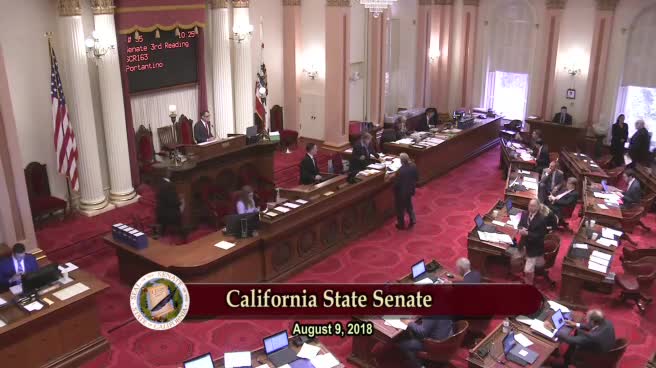 2MIN
Senate Floor
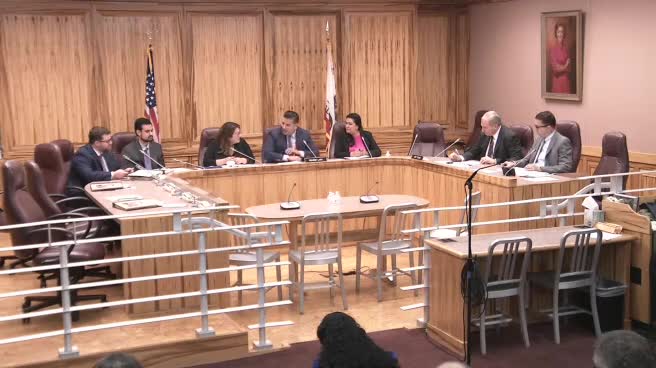 7MIN
Senate Standing Committee on Labor and Industrial Relations
 3MIN
Assembly Standing Committee on Labor and Employment
Bill Author

Bill Co-Author(s):