AB 2423: Physical therapists: direct access to services: plan of care approval.
- Session Year: 2017-2018
- House: Assembly
- Latest Version Date: 2018-09-26
The Physical Therapy Practice Act creates the Physical Therapy Board of California and makes it responsible for the licensure and regulation of physical therapists. The act makes it a crime to violate any of its provisions.
The act authorizes a patient to access physical therapy treatment directly from a licensed physical therapist if the treatment is within the scope of practice of physical therapists and prescribed conditions are met, including a treatment limit prohibiting the physical therapist from continuing treatment beyond 45 calendar days or 12 visits, whichever occurs first, without receiving specified doctor approval of the physical therapists plan of care. The act exempts from that plan of care approval condition for continuing treatment the provision of certain wellness physical therapy services to a patient.
This bill would also exempt from that condition the provision of physical therapy services as part of an individualized family service plan or an individualized education plan pursuant to specified state statutes and the federal Individuals with Disabilities Education Act to an individual who does not have a medical diagnosis.
The Physical Therapy Practice Act creates the Physical Therapy Board of California and makes it responsible for the licensure and regulation of physical therapists. The act makes it a crime to violate any of its provisions.
The act authorizes a patient to access physical therapy treatment directly from a licensed physical therapist if the treatment is within the scope of practice of physical therapists and prescribed conditions are met, including a treatment limit prohibiting the physical therapist from continuing treatment beyond 45 calendar days or 12 visits, whichever occurs first, without receiving specified doctor approval of the physical therapists plan of care. The act exempts from that plan of care approval condition for continuing treatment the provision of certain wellness physical therapy services to a patient.
This bill would also exempt from that condition the provision of physical therapy services as part of an individualized family service plan or an individualized education plan pursuant to specified state statutes and the federal Individuals with Disabilities Education Act. Act to an individual who does not have a medical diagnosis.
The Physical Therapy Practice Act creates the Physical Therapy Board of California and makes it responsible for the licensure and regulation of physical therapists. The act makes it a crime to violate any of its provisions.
The act authorizes a patient to access physical therapy treatment directly from a licensed physical therapist if the treatment is within the scope of practice of physical therapists and prescribed conditions are met, including a treatment limit prohibiting the physical therapist from continuing treatment beyond 45 calendar days or 12 visits, whichever occurs first, without receiving specified doctor approval of the physical therapists plan of care. The act exempts from that plan of care approval condition for continuing treatment the provision of certain wellness physical therapy services to a patient.
This bill would also exempt from that condition the provision of physical therapy services as part of an individualized family service plan or an individualized education plan pursuant to the federal Individuals with Disabilities Education Act.
The Legislature finds and declares the following:
(a)The intent of this act is to provide physical therapists with an exemption from the 45 calendar days or 12 visits, whichever occurs first, direct access limitation described in paragraph (4) of subdivision (a) of Section 2620.1 of the Business and Professions Code in order to enable them to provide services that are within the scope of their practice under the federal Individuals with Disabilities Education Act (IDEA) under a school-developed Individualized Education Program (IEP) or an Individualized Family Service Plan (IFSP).
(b)Services under the IEP are intended to provide students with assistance to enable the student to progress in the educational setting.
SEC. 2.Section 2620.1 of the Business and Professions Code is amended to read:2620.1.(a)In addition to receiving those services authorized by Section 2620, a person may initiate physical therapy treatment directly from a licensed physical therapist if the treatment is within the scope of practice of physical therapists, as defined in Section 2620, and all of the following conditions are met:
(1)If, at any time, the physical therapist has reason to believe that the patient has signs or symptoms of a condition that requires treatment beyond the scope of practice of a physical therapist or the patient is not progressing toward documented treatment goals as demonstrated by objective, measurable, or functional improvement, the physical therapist shall refer the patient to a person holding a physician and surgeons certificate issued by the Medical Board of California or by the Osteopathic Medical Board of California or to a person licensed to practice dentistry, podiatric medicine, or chiropractic.
(2)The physical therapist shall comply with Section 2633, and shall disclose to the patient any financial interest he or she has in treating the patient and, if working in a physical therapy corporation, shall comply with Article 6 (commencing with Section 650) of Chapter 1.
(3)With the patients written authorization, the physical therapist shall notify the patients physician and surgeon, if any, that the physical therapist is treating the patient.
(4)The physical therapist shall not continue treating the patient beyond 45 calendar days or 12 visits, whichever occurs first, without receiving, from a person holding a physician and surgeons certificate from the Medical Board of California or the Osteopathic Medical Board of California or from a person holding a certificate to practice podiatric medicine from the California Board of Podiatric Medicine and acting within his or her scope of practice, a dated signature on the physical therapists plan of care indicating approval of the physical therapists plan of care. Approval of the physical therapists plan of care shall include an in-person patient examination and evaluation of the patients condition and, if indicated, testing by the physician and surgeon or podiatrist.
(b)The conditions in paragraph (4) of subdivision (a) do not apply to a physical therapist under either of the following circumstances:
(1)When he or she is only providing wellness physical therapy services to a patient as described in subdivision (a) of Section 2620.
(2)Pursuant to Section 56363 of the Education Code or Section 7572 of the Government Code, when he or she is providing physical therapy services as part of an individualized family service plan or an individualized education plan pursuant to the federal Individuals with Disabilities Education Act (20 U.S.C. Sec. 1400 et seq.) and the individual receiving those services does not have a medical diagnosis.
(c)(1)This section does not expand or modify the scope of practice for physical therapists set forth in Section 2620, including the prohibition on a physical therapist diagnosing a disease.
(2)This section does not restrict or alter the scope of practice of any other health care professional.
(d)Nothing in this section shall be construed to require a health care service plan, insurer, workers compensation insurance plan, employer, or state program to provide coverage for direct access to treatment by a physical therapist.
(e)When a person initiates physical therapy treatment services directly, pursuant to this section, the physical therapist shall not perform physical therapy treatment services without first providing the following notice to the patient, orally and in writing, in at least 14-point type and signed by the patient:
Direct Physical Therapy Treatment Services
You are receiving direct physical therapy treatment services from an individual who is a physical therapist licensed by the Physical Therapy Board of California.
Under California law, you may continue to receive direct physical therapy treatment services for a period of up to 45 calendar days or 12 visits, whichever occurs first, after which time a physical therapist may continue providing you with physical therapy treatment services only after receiving, from a person holding a physician and surgeons certificate issued by the Medical Board of California or by the Osteopathic Medical Board of California, or from a person holding a certificate to practice podiatric medicine from the California Board of Podiatric Medicine and acting within his or her scope of practice, a dated signature on the physical therapists plan of care indicating approval of the physical therapists plan of care and that an in-person patient examination and evaluation was conducted by the physician and surgeon or podiatrist.
Patients Signature/Date
The Legislature finds and declares the following:
(a)The intent of this act is to provide physical therapists with an exemption from the 45 calendar days or 12 visits, whichever occurs first, direct access limitation described in paragraph (4) of subdivision (a) of Section 2620.1 of the Business and Professions Code in order to enable them to provide services that are within the scope of their practice under the federal Individuals with Disabilities Education Act (IDEA) under a school-developed Individualized Education Program (IEP) or an Individualized Family Service Plan (IFSP).
(b)Services under the IEP are intended to provide students with assistance to enable the student to progress in the educational setting.
SECTION 1. SEC. 2.Section 2620.1 of the Business and Professions Code is amended to read:2620.1.(a)In addition to receiving those services authorized by Section 2620, a person may initiate physical therapy treatment directly from a licensed physical therapist if the treatment is within the scope of practice of physical therapists, as defined in Section 2620, and all of the following conditions are met:
(1)If, at any time, the physical therapist has reason to believe that the patient has signs or symptoms of a condition that requires treatment beyond the scope of practice of a physical therapist or the patient is not progressing toward documented treatment goals as demonstrated by objective, measurable, or functional improvement, the physical therapist shall refer the patient to a person holding a physician and surgeons certificate issued by the Medical Board of California or by the Osteopathic Medical Board of California or to a person licensed to practice dentistry, podiatric medicine, or chiropractic.
(2)The physical therapist shall comply with Section 2633, and shall disclose to the patient any financial interest he or she has in treating the patient and, if working in a physical therapy corporation, shall comply with Article 6 (commencing with Section 650) of Chapter 1.
(3)With the patients written authorization, the physical therapist shall notify the patients physician and surgeon, if any, that the physical therapist is treating the patient.
(4)The physical therapist shall not continue treating the patient beyond 45 calendar days or 12 visits, whichever occurs first, without receiving, from a person holding a physician and surgeons certificate from the Medical Board of California or the Osteopathic Medical Board of California or from a person holding a certificate to practice podiatric medicine from the California Board of Podiatric Medicine and acting within his or her scope of practice, a dated signature on the physical therapists plan of care indicating approval of the physical therapists plan of care. Approval of the physical therapists plan of care shall include an in-person patient examination and evaluation of the patients condition and, if indicated, testing by the physician and surgeon or podiatrist.
(b)The conditions in paragraph (4) of subdivision (a) do not apply to a physical therapist under either of the following circumstances:
(1)When he or she is only providing wellness physical therapy services to a patient as described in subdivision (a) of Section 2620.
(2)Pursuant to Section 56363 of the Education Code or Section 7572 of the Government Code, when he or she is providing physical therapy services as part of an individualized family service plan or an individualized education plan pursuant to the federal Individuals with Disabilities Education Act (20 U.S.C. Sec. 1400 et seq.) and the individual receiving those services does not have a medical diagnosis.
(c)(1)This section does not expand or modify the scope of practice for physical therapists set forth in Section 2620, including the prohibition on a physical therapist diagnosing a disease.
(2)This section does not restrict or alter the scope of practice of any other health care professional.
(d)Nothing in this section shall be construed to require a health care service plan, insurer, workers compensation insurance plan, employer, or state program to provide coverage for direct access to treatment by a physical therapist.
(e)When a person initiates physical therapy treatment services directly, pursuant to this section, the physical therapist shall not perform physical therapy treatment services without first providing the following notice to the patient, orally and in writing, in at least 14-point type and signed by the patient:
Direct Physical Therapy Treatment Services
You are receiving direct physical therapy treatment services from an individual who is a physical therapist licensed by the Physical Therapy Board of California.
Under California law, you may continue to receive direct physical therapy treatment services for a period of up to 45 calendar days or 12 visits, whichever occurs first, after which time a physical therapist may continue providing you with physical therapy treatment services only after receiving, from a person holding a physician and surgeons certificate issued by the Medical Board of California or by the Osteopathic Medical Board of California, or from a person holding a certificate to practice podiatric medicine from the California Board of Podiatric Medicine and acting within his or her scope of practice, a dated signature on the physical therapists plan of care indicating approval of the physical therapists plan of care and that an in-person patient examination and evaluation was conducted by the physician and surgeon or podiatrist.
Patients Signature/Date
(a)In addition to receiving those services authorized by Section 2620, a person may initiate physical therapy treatment directly from a licensed physical therapist if the treatment is within the scope of practice of physical therapists, as defined in Section 2620, and all of the following conditions are met:
(1)If, at any time, the physical therapist has reason to believe that the patient has signs or symptoms of a condition that requires treatment beyond the scope of practice of a physical therapist or the patient is not progressing toward documented treatment goals as demonstrated by objective, measurable, or functional improvement, the physical therapist shall refer the patient to a person holding a physician and surgeons certificate issued by the Medical Board of California or by the Osteopathic Medical Board of California or to a person licensed to practice dentistry, podiatric medicine, or chiropractic.
(2)The physical therapist shall comply with Section 2633, and shall disclose to the patient any financial interest he or she has in treating the patient and, if working in a physical therapy corporation, shall comply with Article 6 (commencing with Section 650) of Chapter 1.
(3)With the patients written authorization, the physical therapist shall notify the patients physician and surgeon, if any, that the physical therapist is treating the patient.
(4)The physical therapist shall not continue treating the patient beyond 45 calendar days or 12 visits, whichever occurs first, without receiving, from a person holding a physician and surgeons certificate from the Medical Board of California or the Osteopathic Medical Board of California or from a person holding a certificate to practice podiatric medicine from the California Board of Podiatric Medicine and acting within his or her scope of practice, a dated signature on the physical therapists plan of care indicating approval of the physical therapists plan of care. Approval of the physical therapists plan of care shall include an in-person patient examination and evaluation of the patients condition and, if indicated, testing by the physician and surgeon or podiatrist.
(b)The conditions in paragraph (4) of subdivision (a) do not apply to a physical therapist under either of the following circumstances:
(1)When he or she is only providing wellness physical therapy services to a patient as described in subdivision (a) of Section 2620.
(2)When Pursuant to Section 56363 of the Education Code or Section 7572 of the Government Code, when he or she is providing physical therapy services as part of an individualized family service plan or an individualized education plan pursuant to the federal Individuals with Disabilities Education Act (20 U.S.C. Sec. 1400 et seq.) and the individual receiving those services does not have a medical diagnosis.
(c)(1)This section does not expand or modify the scope of practice for physical therapists set forth in Section 2620, including the prohibition on a physical therapist diagnosing a disease.
(2)This section does not restrict or alter the scope of practice of any other health care professional.
(d)Nothing in this section shall be construed to require a health care service plan, insurer, workers compensation insurance plan, employer, or state program to provide coverage for direct access to treatment by a physical therapist.
(e)When a person initiates physical therapy treatment services directly, pursuant to this section, the physical therapist shall not perform physical therapy treatment services without first providing the following notice to the patient, orally and in writing, in at least 14-point type and signed by the patient:
Direct Physical Therapy Treatment Services
You are receiving direct physical therapy treatment services from an individual who is a physical therapist licensed by the Physical Therapy Board of California.
Under California law, you may continue to receive direct physical therapy treatment services for a period of up to 45 calendar days or 12 visits, whichever occurs first, after which time a physical therapist may continue providing you with physical therapy treatment services only after receiving, from a person holding a physician and surgeons certificate issued by the Medical Board of California or by the Osteopathic Medical Board of California, or from a person holding a certificate to practice podiatric medicine from the California Board of Podiatric Medicine and acting within his or her scope of practice, a dated signature on the physical therapists plan of care indicating approval of the physical therapists plan of care and that an in-person patient examination and evaluation was conducted by the physician and surgeon or podiatrist.
Patients Signature/Date
(a)In addition to receiving those services authorized by Section 2620, a person may initiate physical therapy treatment directly from a licensed physical therapist if the treatment is within the scope of practice of physical therapists, as defined in Section 2620, and all of the following conditions are met:
(1)If, at any time, the physical therapist has reason to believe that the patient has signs or symptoms of a condition that requires treatment beyond the scope of practice of a physical therapist or the patient is not progressing toward documented treatment goals as demonstrated by objective, measurable, or functional improvement, the physical therapist shall refer the patient to a person holding a physician and surgeons certificate issued by the Medical Board of California or by the Osteopathic Medical Board of California or to a person licensed to practice dentistry, podiatric medicine, or chiropractic.
(2)The physical therapist shall comply with Section 2633, and shall disclose to the patient any financial interest he or she has in treating the patient and, if working in a physical therapy corporation, shall comply with Article 6 (commencing with Section 650) of Chapter 1.
(3)With the patients written authorization, the physical therapist shall notify the patients physician and surgeon, if any, that the physical therapist is treating the patient.
(4)The physical therapist shall not continue treating the patient beyond 45 calendar days or 12 visits, whichever occurs first, without receiving, from a person holding a physician and surgeons certificate from the Medical Board of California or the Osteopathic Medical Board of California or from a person holding a certificate to practice podiatric medicine from the California Board of Podiatric Medicine and acting within his or her scope of practice, a dated signature on the physical therapists plan of care indicating approval of the physical therapists plan of care. Approval of the physical therapists plan of care shall include an in-person patient examination and evaluation of the patients condition and, if indicated, testing by the physician and surgeon or podiatrist.
(b)The conditions in paragraph (4) of subdivision (a) do not apply to a physical therapist when he or she is only providing wellness physical therapy services to a patient as described in subdivision (a) of Section 2620. under either of the following circumstances:
(1)When he or she is only providing wellness physical therapy services to a patient as described in subdivision (a) of Section 2620.
(2)When he or she is providing physical therapy services as part of an individualized family service plan or an individualized education plan pursuant to the federal Individuals with Disabilities Education Act (20 U.S.C. Sec. 1400 et seq.)
(c)(1)This section does not expand or modify the scope of practice for physical therapists set forth in Section 2620, including the prohibition on a physical therapist diagnosing a disease.
(2)This section does not restrict or alter the scope of practice of any other health care professional.
(d)Nothing in this section shall be construed to require a health care service plan, insurer, workers compensation insurance plan, employer, or state program to provide coverage for direct access to treatment by a physical therapist.
(e)When a person initiates physical therapy treatment services directly, pursuant to this section, the physical therapist shall not perform physical therapy treatment services without first providing the following notice to the patient, orally and in writing, in at least 14-point type and signed by the patient:
Direct Physical Therapy Treatment Services
You are receiving direct physical therapy treatment services from an individual who is a physical therapist licensed by the Physical Therapy Board of California.
Under California law, you may continue to receive direct physical therapy treatment services for a period of up to 45 calendar days or 12 visits, whichever occurs first, after which time a physical therapist may continue providing you with physical therapy treatment services only after receiving, from a person holding a physician and surgeons certificate issued by the Medical Board of California or by the Osteopathic Medical Board of California, or from a person holding a certificate to practice podiatric medicine from the California Board of Podiatric Medicine and acting within his or her scope of practice, a dated signature on the physical therapists plan of care indicating approval of the physical therapists plan of care and that an in-person patient examination and evaluation was conducted by the physician and surgeon or podiatrist.
Patients Signature/Date
|
Date
|
Status
|
|---|---|
| Sep 26, 2018 | Chaptered by Secretary of State - Chapter 761, Statutes of 2018. |
| Sep 26, 2018 | Approved by the Governor. |
| Sep 10, 2018 | Enrolled and presented to the Governor at 3:30 p.m. |
| Aug 30, 2018 | Senate amendments concurred in. To Engrossing and Enrolling. |
| Aug 29, 2018 | In Assembly. Concurrence in Senate amendments pending. |
| Aug 29, 2018 | Read third time. Passed. Ordered to the Assembly. |
| Aug 27, 2018 | Read second time. Ordered to third reading. |
| Aug 24, 2018 | Read third time and amended. Ordered to second reading. |
| Aug 7, 2018 | Read second time. Ordered to third reading. |
| Aug 6, 2018 | From committee: Be ordered to second reading pursuant to Senate Rule 28.8. |
| Jun 28, 2018 | Read second time and amended. Re-referred to Com. on APPR. |
| Jun 27, 2018 | From committee: Amend, and do pass as amended and re-refer to Com. on APPR. (Ayes 9. Noes 0.) (June 25). |
| Jun 13, 2018 | Referred to Com. on B., P. & E.D. |
| Jun 4, 2018 | In Senate. Read first time. To Com. on RLS. for assignment. |
| May 31, 2018 | Read third time. Passed. Ordered to the Senate. |
| Apr 30, 2018 | From Consent Calendar. |
| Apr 26, 2018 | Read second time. Ordered to Consent Calendar. |
| Apr 25, 2018 | From committee: Do pass. To Consent Calendar. (Ayes 17. Noes 0.) (April 25). |
| Apr 10, 2018 | Re-referred to Com. on APPR. |
| Apr 9, 2018 | Read second time and amended. |
| Apr 5, 2018 | From committee: Amend, and do pass as amended and re-refer to Com. on APPR. (Ayes 13. Noes 0.) (April 3). |
| Mar 8, 2018 | Referred to Com. on B. & P. |
| Feb 15, 2018 | From printer. May be heard in committee March 17. |
| Feb 14, 2018 | Read first time. To print. |
|
Date
|
Description
|
Location
|
Votes
|
|
|---|---|---|---|---|
| Aug 30, 2018 | AB 2423 HOLDEN Concurrence in Senate Amendments | Assembly Floor |
Passed |
|
| Aug 29, 2018 | Assembly 3rd Reading AB2423 Holden By Wieckowski | Senate Floor |
Passed |
|
| Jun 25, 2018 | Do pass as amended, but first amend, and re-refer to the Committee on [Appropriations] | Senate Standing Committee on Business, Professions and Economic Development |
Passed |
|
| May 31, 2018 | AB 2423 HOLDEN Assembly Third Reading | Assembly Floor |
Passed |
|
| Apr 25, 2018 | Do pass. To Consent Calendar. | Assembly Standing Committee on Appropriations |
Passed |
|
| Apr 3, 2018 | Do pass as amended and be re-referred to the Committee on [Appropriations] | Assembly Standing Committee on Business and Professions |
Passed |
This list shows positions taken on this bill by organizations on the date displayed, which is linked to the original source.
Positions by individuals are not included.
|
Organization
|
Position
|
Date
|
|---|---|---|
| Association Of California School Administrators | ** Support | Aug 27, 2018 |
| Association Of Regional Center Agencies | ** Support | Aug 27, 2018 |
| California Medical Association | * Support | Apr 3, 2018 |
| California Orthopaedic Association | ** Against | Aug 8, 2018 |
| California Physical Therapy Association | ** Support | Aug 27, 2018 |
| Special Education Local Plan Area Administrators of California | ** Support | Aug 27, 2018 |
CONCURRENCE IN SENATE AMENDMENTS
CSA1 Bill Id:AB 2423
Author:(Holden)
As Amended Ver:August 24, 2018
Majority vote
ASSEMBLY: | 77-0 | (May 31, 2018) | SENATE: | 39-0 | (August 29, 2018) |
Original Committee Reference: B. & P.
SUMMARY: Exempts physical therapy services as part of an individualized education program (IEP) or individualized family service plan (IFSP) pursuant to the federal Individuals with Disabilities Education Act (IDEA) from the direct access limitation that prohibits physical therapists from continuing treatment beyond 45 calendar days or 12 visits, whichever occurs first, without first receiving a physician's signed approval of the physical therapist's plan of care.
The Senate amendments:
- Add findings and declarations clarifying that the intent of this bill is not to expand the scope of practice of physical therapists and that the provided services are intended to help enable students to progress in an educational setting.
- Add the exemption for services provided pursuant to an IFSP.
FISCAL EFFECT: According to the Senate Appropriations Committee, pursuant to Senate Rule 28.8, no significant state costs anticipated.
COMMENTS:
Purpose. This bill is sponsored by the California Physical Therapy Association. According to the author, "[i]n 2013, AB 1000 (Wieckowski) gave Californians the right to directly seek treatment from physical therapists similar to what is allowed in many states. As a concession to concerns raised by medical interests, a 45-day/12-visit limit was included, which, once reached, requires a patient to see their physician before receiving further treatment. In schools, physical therapy services may be required as a condition of a student's [IEP] as required by federal law. These plans are typically in effect for a year or more, and physical therapists will easily serve students throughout the year. This puts physical therapists at risk for violating AB 1000 while carrying out the demands of federal law and the students' IEPs. [This bill] provides a very narrow exception to the laws governing physical therapy services in California. It will allow students with an IEP to be served by physical therapists working in the schools without having to incur the extra cost and time delay of having to go see their physician."
Background. According to the Physical Therapy Board of California, physical therapists provide services to individuals to develop, maintain, and restore movement to maximize functional ability where movement and function are threatened by age, injury, disease, disorder, or other conditions or environmental factors. In California, a person may initiate physical therapy treatment directly from a licensed physical therapist without first obtaining a medical diagnosis, for up to 45 calendar days or 12 visits, whichever occurs first. If treatment is still needed beyond that time period, a physical therapist may not continue the treatment without receiving a licensed physician and surgeon's medical diagnosis and signed approval of the physical therapist's plan of care.
Currently, wellness physical therapy services are exempted from the referral requirement. Wellness physical therapy includes the promotion and maintenance of physical fitness to enhance the bodily movement through lifestyle changes, including but not limited to, increased physical activity, with the goal of preventing injuries and/or diseases.
Direct Access of Physical Therapy Under IDEA. Currently, children covered by the federal IDEA law are not specifically exempted from the direct access limitation under California law. This bill seeks to clarify that physical therapy services as part of an individualized education program under IDEA are not subject to the direct access limitation.
IDEA is a federal law that is implemented by states and public agencies to ensure early intervention, special education, and related services to eligible infants, toddlers, children, and youth with disabilities. The purpose behind IDEA is "to ensure that all children with disabilities have available to them a free appropriate public education that emphasizes special education and related services designed to meet their unique needs and prepare them for further education, education, and independent living."
Generally, there are two types of individualized programs under IDEA. IFSPs provide early intervention services for infants and toddlers (birth up to 36 months) with disabilities and their families under IDEA Part C. IEPs cover special education and related services for children and youth (ages three through 21) under IDEA Part B.
An IFSP or IEP may or may not involve a medical diagnosis. The services provided pursuant to an IFSP or IEP (such as physical therapy) are primarily habilitative, meaning they are meant to help students with exceptional needs more fully and effectively participate in educational programs. Medically necessary services provided pursuant to a medical diagnosis tend to be rehabilitative, meaning they are intended to address a specific health condition.
According to the sponsor, the 45-day or 12-visit limitation creates as a barrier to the students who do not have a medical diagnosis but can still benefit from physical therapy. While children that are covered by IDEA are entitled to receive appropriate services to meet their education needs, the current referral requirement under California law can delay a child's ability to receive proper medical treatment or equipment.
Analysis Prepared by: Vincent Chee / B. & P. / (916) 319-3301 FN: 0005101
Office of Senate Floor Analyses (916) 651-1520 Fax: (916) 327-4478 | AB |
THIRD READING
Bill No: AB 2423
:
SENATE BUS., PROF. & ECON. DEV. COMMITTEE: 9-0, 6/25/18
AYES: Hill, Fuller, Allen, Dodd, Galgiani, Glazer, Hernandez, Pan, Wilk
SENATE APPROPRIATIONS COMMITTEE: Senate Rule 28.8
ASSEMBLY FLOOR: 77-0, 5/31/18 - See last page for vote
SUBJECT: Physical therapists: direct access to services: plan of care approval
SOURCE: California Physical Therapy Association
DIGEST:
This bill exempts from direct access treatment limitations the provision of physical therapy services pursuant to an individualized education program (IEP) or individualized family service plan (IFSP).
Senate Floor Amendments of 8/24/18 remove opposition of the California Orthopaedic Association by stating the Legislature’s intent to provide a narrow exemption to the physical therapist direct access rule for purposes of providing services pursuant to an IEP or an IFSP.
Existing federal law:
- Establishes the Individuals with Disabilities Education Act (IDEA) which makes available a free appropriate public education to eligible children with disabilities throughout the nation and ensures special education and related services to those children. (20 United States Code §§ 1400 et seq)
- Defines an IEP as a written statement for each child with a disability that includes: (Volume 34, Code of Federal Regulations (CFR) § 300.320 (a))
- A statement of the child’s present levels of academic achievement and functional performance.
- A statement of measurable annual goals.
- A description of how the child’s progress toward meeting the annual goals will be measured; and
- A statement of the special education and related services to be provided to the child, or on behalf of the child, and a statement of the program modifications or supports for school personnel that will be provided to enable the child.
- Defines an IFSP as a written plan for providing early intervention services to an infant or toddler with a disability and the infant's or toddler's family that: (34 CFR § 300.32)
- Is based on a specified evaluation and assessment, includes specified content, and is developed in accordance with specified IFSP procedures.
- Is implemented as soon as possible once parental consent for the early intervention services in the IFSP is obtained.
Existing state law:
- Establishes the Physical Therapy Board of California (Board) under the Department of Consumer Affairs to enforce and administer the Physical Therapy Practice Act (Act). (Business and Professions Code (BPC) § 2602)
- Defines the practice of physical therapy to mean the art and science of physical or corrective rehabilitation or of physical or corrective treatment of any bodily or mental condition of any person by the use of the physical, chemical, and other properties of heat, light, water, electricity, sound, massage, and active, passive, and resistive exercise, and shall include physical therapy evaluation, treatment planning, instruction and consultative services. The practice of physical therapy includes the promotion and maintenance of physical fitness to enhance the bodily movement related health and wellness of individuals through the use of physical therapy interventions. (BPC § 2620)
- Authorizes a person to initiate physical therapy treatment directly from a PT if (BPC § 2620.1):
- At any time, the PT has reason to believe that the patient has signs or symptoms of a condition that requires treatment beyond the PT’s scope of practice or the patient is not progressing toward documented treatment goals as demonstrated by objective, measurable, or functional improvement, the PT shall refer the patient to a physician and surgeon, dentist, podiatrist, or chiropractic.
- The PT discloses to the patient any financial interest he or she has in treating the patient and, if working in a physical therapy corporation, complies with all laws pertaining to unearned rebates, refunds, and discounts.
- The PT, with the patient’s written authorization, notifies the patient’s physician and surgeon, if any, that the PT is treating the patient.
- The PT limits treatment to 45 calendar days or 12 visits, whichever occurs first, without receiving a dated signature on the PT’s care plan indicating approval from a physician and surgeon or podiatrist.
This bill:
- Makes the following legislative findings and declarations:
- The intent of this bill is to provide physical therapists with an exemption from the 45 calendar days or 12 visits, whichever occurs first, direct access limitation in order to enable them to provide services that are within the scope of their practice under IDEA under a school-developed IEP or IFSP.
- Services under the IEP are intended to provide students with assistance to enable the student to progress in the educational setting.
- Exempts physical therapy provided pursuant to an IEP or IFSP to a person without a medical diagnosis from the time limitations established for direct access to PT services.
Background
The Practice of Physical Therapy. A PT is a licensed health care professional who evaluates a patient's physical status, establishes a plan of care and goals, then administers treatments to promote optimal health. PTs seek to relieve pain, improve the body's movement and function, maintain cardiopulmonary function, and limit disabilities resulting from injury or disease. A PT may not diagnose disease.
To obtain a California license, a PT applicant must complete an accredited four-to-six-year college program which includes studies in basic medical sciences and biology, as well as clinical experience. A PT applicant must pass both a national physical therapy examination and a California examination on physical therapy laws and regulations. There are currently over 37,000 PTs in California.
IEPs, IFSPs, and PT services. The federal IDEA ensures a free and appropriate public education to eligible children with disabilities and ensures special education and related services to those children. An IEP or IFSP is the roadmap to ensuring these goals are met, and is developed by a team of individuals with relevant and specialized knowledge of the child and the services to be provided.
A child may require any of the following related services in order to benefit from special education. Related services, as listed under IDEA, include (but are not limited to):
- Audiology services
- Counseling services
- Early identification and assessment of disabilities in children
- Medical services
- Occupational therapy
- Parent counseling and training
- Physical therapy
- Psychological services
- Recreation
- Rehabilitation counseling services
- School health services
- Social work services in schools
- Speech-language pathology services
An IEP or IFSP may require physical therapy and include an assessment of a child’s current abilities, a goal for treatment, and a description for measuring progress.
Restrictions on direct access to PT services. AB 1000 (Wieckowski and Maienschein, Chapter 620, Statutes of 2013) authorized individuals to access physical therapy services for 45 calendar days or 12 visits, whichever occurs first, without receiving approval on the PT’s care plan from a physician or podiatrist. The rationale for this limited direct access was the belief that any condition serious enough to remain unresolved after 45 days or 12 visits warranted examination and possible diagnosis by a physician. However, there exist certain circumstances in which a medical diagnosis may be unnecessary to continue successful treatment.
According to a board-certified specialist in pediatric physical therapy, “Physical therapists working in schools, and often in early intervention, are providing services to ensure that children can access and participate in school and family activities -- not to remediate a medical condition. This is a very different approach than providing physical therapy for a patient that has had a rotator cuff repair. We are addressing activity limitations and participation restrictions to optimize their educational experience.”
California’s PT restrictions may conflict with the federal treatment plan requirements of an IEP and IFSP. According to the California Physical Therapy Association, “We have become aware that there are many cases in which children in schools are receiving services directed by an IEP, including physical therapy services, in which a ‘diagnosis’ does not exist. The provisions of AB 1000 would effectively require services to stop until a visit with an M.D., D.O., or podiatrist was conducted. This conflicts with the mandate of the IEP and is often unnecessary, either because the child has already been seen by a physician or other provider who has not been willing to place a ‘diagnosis’ on the child at that point or because the services required are not due to a medical diagnosis but are necessary for the student to be successful in the educational environment.”
Effects of this bill. This bill provides a narrow exception to the PT direct access restrictions for children with an IEP or IFSP. This does not circumvent patient protections, however, as a PT is still bound by current law requiring referral if the patient has signs or symptoms of a condition that requires treatment beyond the PT’s scope of practice, or the patient is not progressing toward documented treatment goals. The IEP and IFSP teams are also responsible for ensuring the patient is meeting the goals of physical therapy treatment as identified in the IEP or IFSP.
FISCAL EFFECT: Appropriation: Fiscal Com.: Local:
California Physical Therapy Association (source)
Association of California School Administrators
Association of Regional Center Agencies
Special Education Local Plan Area Administrators of California
One individual
OPPOSITION: (Verified 8/27/18)
None received
ARGUMENTS IN SUPPORT: The California Physical Therapy Association writes, “We have discovered an unintended consequence of the law pertaining to ‘direct access’ to physical therapy services that was contained in Chapter 620 of 2013 (AB 1000 Wieckowski). …
“AB 2423 resolves the unintended consequence in these instances by narrowly exempting from the 45-day/12-visit provision of AB 1000 those children who have a standing IEP in place that mandates physical therapy services but for whom an official diagnosis has not been made….
“AB 2423 deftly addresses this issue and makes clear that the Business & Professions Code does not otherwise impede education-related services that MUST be provided under both federal and state law.”
ASSEMBLY FLOOR: 77-0, 5/31/18
AYES: Acosta, Aguiar-Curry, Travis Allen, Arambula, Baker, Berman, Bigelow, Bloom, Bonta, Brough, Burke, Caballero, Calderon, Carrillo, Cervantes, Chau, Chávez, Chen, Chiu, Choi, Chu, Cooley, Cooper, Cunningham, Dahle, Daly, Eggman, Fong, Frazier, Friedman, Gallagher, Cristina Garcia, Eduardo Garcia, Gipson, Gloria, Gonzalez Fletcher, Gray, Grayson, Harper, Holden, Irwin, Jones-Sawyer, Kalra, Kamlager-Dove, Kiley, Lackey, Levine, Limón, Low, Maienschein, Mathis, Mayes, McCarty, Medina, Melendez, Mullin, Muratsuchi, Nazarian, Obernolte, O'Donnell, Patterson, Quirk, Quirk-Silva, Reyes, Rodriguez, Rubio, Salas, Santiago, Steinorth, Mark Stone, Thurmond, Ting, Voepel, Waldron, Weber, Wood, Rendon
NO VOTE RECORDED: Flora
8/27/18 19:47:24
**** END ****
Office of Senate Floor Analyses (916) 651-1520 Fax: (916) 327-4478 | AB |
THIRD READING
Bill No: AB 2423
:
SENATE BUS., PROF. & ECON. DEV. COMMITTEE: 9-0, 6/25/18
AYES: Hill, Fuller, Allen, Dodd, Galgiani, Glazer, Hernandez, Pan, Wilk
SENATE APPROPRIATIONS COMMITTEE: Senate Rule 28.8
ASSEMBLY FLOOR: 77-0, 5/31/18 - See last page for vote
SOURCE: California Physical Therapy Association
DIGEST:
This bill exempts from direct access treatment limitations the provision of physical therapy services pursuant to an individualized education program (IEP) or individualized family service plan (IFSP).
Existing federal law:
- Establishes the Individuals with Disabilities Education Act (IDEA) which makes available a free appropriate public education to eligible children with disabilities throughout the nation and ensures special education and related services to those children. (20 United States Code §§ 1400 et seq)
- Defines an IEP as a written statement for each child with a disability that includes: (Volume 34, Code of Federal Regulations (CFR) § 300.320 (a))
- A statement of the child’s present levels of academic achievement and functional performance.
- A statement of measurable annual goals.
- A description of how the child’s progress toward meeting the annual goals will be measured; and
- A statement of the special education and related services to be provided to the child, or on behalf of the child, and a statement of the program modifications or supports for school personnel that will be provided to enable the child.
- Defines an IFSP as a written plan for providing early intervention services to an infant or toddler with a disability and the infant's or toddler's family that: (34 CFR § 300.32)
- Is based on a specified evaluation and assessment, includes specified content, and is developed in accordance with specified IFSP procedures.
- Is implemented as soon as possible once parental consent for the early intervention services in the IFSP is obtained.
Existing state law:
- Establishes the Physical Therapy Board of California (Board) under the Department of Consumer Affairs to enforce and administer the Physical Therapy Practice Act (Act). (Business and Professions Code (BPC) § 2602)
- Defines the practice of physical therapy to mean the art and science of physical or corrective rehabilitation or of physical or corrective treatment of any bodily or mental condition of any person by the use of the physical, chemical, and other properties of heat, light, water, electricity, sound, massage, and active, passive, and resistive exercise, and shall include physical therapy evaluation, treatment planning, instruction and consultative services. The practice of physical therapy includes the promotion and maintenance of physical fitness to enhance the bodily movement related health and wellness of individuals through the use of physical therapy interventions. (BPC § 2620)
- Prohibits a physical therapist (PT) from authorizing the diagnosis of disease. (BPC § 2620)
- Authorizes a person to initiate physical therapy treatment directly from a PT if (BPC § 2620.1):
- At any time, the PT has reason to believe that the patient has signs or symptoms of a condition that requires treatment beyond the PT’s scope of practice or the patient is not progressing toward documented treatment goals as demonstrated by objective, measurable, or functional improvement, the PT shall refer the patient to a physician and surgeon, dentist, podiatrist, or chiropractic.
- The PT discloses to the patient any financial interest he or she has in treating the patient and, if working in a physical therapy corporation, complies with all laws pertaining to unearned rebates, refunds, and discounts.
- The PT, with the patient’s written authorization, notifies the patient’s physician and surgeon, if any, that the PT is treating the patient.
- The PT limits treatment to 45 calendar days or 12 visits, whichever occurs first, without receiving a dated signature on the PT’s care plan indicating approval from a physician and surgeon or podiatrist. Approval of the PT’s care plan shall include an in-person patient examination and evaluation of the patient’s condition and, if indicated, testing by the physician and surgeon or podiatrist.
- The PT provides a summary to the patient of the law governing direct access, as specified, orally and in writing.
- Defines, for purposes of special education programs, “designated instruction and services” to mean “related services” as defined in federal law, and includes transportation, such developmental, corrective, and other supportive services, including physical and occupational therapy, as may be required to assist an individual with exceptional needs to benefit from special education.
(Education Code § 56363) - Requires a child to be assessed in all areas related to a suspected disability by those qualified to make a determination of the child’s need for the service before any action is taken with respect to the provision of related services to a child, including, but not limited to, services in the areas of occupational therapy and physical therapy. (Government Code § 7572(a))
This bill exempts physical therapy provided pursuant to an IEP or IFSP to a person without a medical diagnosis from the time limitations established for direct access to PT services.
Background
The Practice of Physical Therapy. A PT is a licensed health care professional who evaluates a patient's physical status, establishes a plan of care and goals, then administers treatments to promote optimal health. PTs seek to relieve pain, improve the body's movement and function, maintain cardiopulmonary function, and limit disabilities resulting from injury or disease. A PT may not diagnose disease.
To obtain a California license, a PT applicant must complete an accredited four-to-six-year college program which includes studies in basic medical sciences and biology, as well as clinical experience. A PT applicant must pass both a national physical therapy examination and a California examination on physical therapy laws and regulations. There are currently over 37,000 PTs in California.
IEPs, IFSPs, and PT services. The federal IDEA ensures a free and appropriate public education to eligible children with disabilities and ensures special education and related services to those children. An IEP or IFSP is the roadmap to ensuring these goals are met, and is developed by a team of individuals with relevant and specialized knowledge of the child and the services to be provided.
A child may require any of the following related services in order to benefit from special education. Related services, as listed under IDEA, include (but are not limited to):
- Audiology services
- Counseling services
- Early identification and assessment of disabilities in children
- Medical services
- Occupational therapy
- Orientation and mobility services
- Parent counseling and training
- Physical therapy
- Psychological services
- Recreation
- Rehabilitation counseling services
- School health services
- Social work services in schools
- Speech-language pathology services
- Transportation
An IEP or IFSP may require physical therapy and include an assessment of a child’s current abilities, a goal for treatment, and a description for measuring progress.
Restrictions on direct access to PT services. AB 1000 (Wieckowski and Maienschein, Chapter 620, Statutes of 2013) authorized individuals to access physical therapy services for 45 calendar days or 12 visits, whichever occurs first, without receiving approval on the PT’s care plan from a physician or podiatrist. The rationale for this limited direct access was the belief that any condition serious enough to remain unresolved after 45 days or 12 visits warranted examination and possible diagnosis by a physician. However, there exist certain circumstances in which a medical diagnosis may be unnecessary to continue successful treatment.
According to a board-certified specialist in pediatric physical therapy, “Physical therapists working in schools, and often in early intervention, are providing services to ensure that children can access and participate in school and family activities -- not to remediate a medical condition. This is a very different approach than providing physical therapy for a patient that has had a rotator cuff repair. We are addressing activity limitations and participation restrictions to optimize their educational experience.”
California’s PT restrictions may conflict with the federal treatment plan requirements of an IEP and IFSP. According to the California Physical Therapy Association, “We have become aware that there are many cases in which children in schools are receiving services directed by an IEP, including physical therapy services, in which a ‘diagnosis’ does not exist. The provisions of AB 1000 would effectively require services to stop until a visit with an M.D., D.O., or podiatrist was conducted. This conflicts with the mandate of the IEP and is often unnecessary, either because the child has already been seen by a physician or other provider who has not been willing to place a ‘diagnosis’ on the child at that point or because the services required are not due to a medical diagnosis but are necessary for the student to be successful in the educational environment.”
Effects of this bill. This bill provides a narrow exception to the PT direct access restrictions for children with an IEP or IFSP. This does not circumvent patient protections, however, as a PT is still bound by current law requiring referral if the patient has signs or symptoms of a condition that requires treatment beyond the PT’s scope of practice, or the patient is not progressing toward documented treatment goals. The IEP and IFSP teams are also responsible for ensuring the patient is meeting the goals of physical therapy treatment as identified in the IEP or IFSP.
FISCAL EFFECT: Appropriation: Fiscal Com.: Local:
California Physical Therapy Association (source)
Association of California School Administrators
Association of Regional Center Agencies
Special Education Local Plan Area Administrators of California
One individual
California Orthopaedic Association
ARGUMENTS IN SUPPORT: The California Physical Therapy Association writes, “We have discovered an unintended consequence of the law pertaining to ‘direct access’ to physical therapy services that was contained in Chapter 620 of 2013 (AB 1000 Wieckowski). …
“AB 2423 resolves the unintended consequence in these instances by narrowly exempting from the 45-day/12-visit provision of AB 1000 those children who have a standing IEP in place that mandates physical therapy services but for whom an official diagnosis has not been made….
“AB 2423 deftly addresses this issue and makes clear that the Business & Professions Code does not otherwise impede education-related services that MUST be provided under both federal and state law.”
ARGUMENTS IN OPPOSITION: The California Orthopaedic Association (COA) writes, “Children under the IDEA program range in age from infancy through school age who suffer from learning and developmental disabilities. Disabilities covered under the IDEA program include: autism, deaf-blindness, deafness, emotional disturbance, hearing impairment, intellectual disability, multiple disabilities, orthopedic impairment, other health impairment, specific learning disability, speech or language impairment, traumatic brain injury, visual Impairment.
“Unlimited physical therapy treatment for these chronically ill children or those showing signs of these clinical conditions may result in these youngsters never being referred or evaluated by a physician and surgeon who could render a medical diagnosis, thus depriving the children of additional medical treatments that are known to improve their given condition.
“Initially, the sponsor explained that this bill was necessary due to an inability for these children to get a timely referral to a physician and surgeon for purposes of obtaining a medical diagnosis. They indicated that once they have a diagnosis, there is not a problem for physical therapists to be able to treat these children. Subsequently we learned that often times these children are being referred for physical therapy services by their pediatrician. In this situation, it is unclear why the bill is needed. The pediatrician should evaluate the child’s disability and make the medical diagnosis. In the unusual circumstance where a child with one of these medical conditions does not have a physician, remedying this should be a priority for the reasons mentioned above.
“The ultimate goal of COA is not to deny assistive physical therapy services to children with disabilities that may help them navigate a mainstream school environment, but rather to ensure that the child receives a timely medical evaluation by a physician and surgeon, so that their disability can be diagnosed, and the appropriate team of health care professionals can develop the best treatment plan, a treatment plan that typically also includes items outside of physical therapy.
“The existing physical therapy direct access exemption was intended for ‘only providing wellness physical therapy services to a patient.’ This assumes the physical therapist does not suspect the patient has any underpinning conditions that are outside his or her scope of practice to treat. COA is not convinced that children with disabilities enrolled in these federal programs are simply seeking ‘wellness’ services and some of whom may suffer from medical conditions that deserve an evaluation and perhaps ongoing treatment by a physician and surgeon or podiatrist.”
ASSEMBLY FLOOR: 77-0, 5/31/18
AYES: Acosta, Aguiar-Curry, Travis Allen, Arambula, Baker, Berman, Bigelow, Bloom, Bonta, Brough, Burke, Caballero, Calderon, Carrillo, Cervantes, Chau, Chávez, Chen, Chiu, Choi, Chu, Cooley, Cooper, Cunningham, Dahle, Daly, Eggman, Fong, Frazier, Friedman, Gallagher, Cristina Garcia, Eduardo Garcia, Gipson, Gloria, Gonzalez Fletcher, Gray, Grayson, Harper, Holden, Irwin, Jones-Sawyer, Kalra, Kamlager-Dove, Kiley, Lackey, Levine, Limón, Low, Maienschein, Mathis, Mayes, McCarty, Medina, Melendez, Mullin, Muratsuchi, Nazarian, Obernolte, O'Donnell, Patterson, Quirk, Quirk-Silva, Reyes, Rodriguez, Rubio, Salas, Santiago, Steinorth, Mark Stone, Thurmond, Ting, Voepel, Waldron, Weber, Wood, Rendon
NO VOTE RECORDED: Flora
8/8/18 13:01:54
**** END ****
SENATE COMMITTEE ON
BUSINESS, PROFESSIONS AND ECONOMIC DEVELOPMENT
Senator Jerry Hill, Chair
2017 - 2018 Regular
Bill No: AB 2423 Hearing Date: June 25, 2018
Author: | Holden | ||
Version: |
| ||
Urgency: | Fiscal: | ||
Consultant: | |||
Subject: Physical therapists: direct access to services: plan of care approval
SUMMARY:
Exempts from direct access treatment limitations the provision of physical therapy services pursuant to an individualized education program (IEP).
Existing state law:
- Establishes the Physical Therapy Board of California (Board) under the Department of Consumer Affairs to enforce and administer the Physical Therapy Practice Act (Act). (Business and Professions Code (BPC) § 2602)
- Defines the practice of physical therapy to mean the art and science of physical or corrective rehabilitation or of physical or corrective treatment of any bodily or mental condition of any person by the use of the physical, chemical, and other properties of heat, light, water, electricity, sound, massage, and active, passive, and resistive exercise, and shall include physical therapy evaluation, treatment planning, instruction and consultative services. The practice of physical therapy includes the promotion and maintenance of physical fitness to enhance the bodily movement related health and wellness of individuals through the use of physical therapy interventions. (BPC § 2620)
- Prohibits a physical therapist (PT) from authorizing the diagnosis of disease.
(BPC § 2620) - Authorizes a person to initiate physical therapy treatment directly from a PT if:
(BPC § 2620.1)
- At any time, the PT has reason to believe that the patient has signs or symptoms of a condition that requires treatment beyond the PT’s scope of practice or the patient is not progressing toward documented treatment goals as demonstrated by objective, measurable, or functional improvement, the PT shall refer the patient to a physician and surgeon, dentist, podiatrist, or chiropractic.
- The PT discloses to the patient any financial interest he or she has in treating the patient and, if working in a physical therapy corporation, complies with all laws pertaining to unearned rebates, refunds, and discounts.
- The PT, with the patient’s written authorization, notifies the patient’s physician and surgeon, if any, that the PT is treating the patient.
- The PT limits treatment to 45 calendar days or 12 visits, whichever occurs first, without receiving a dated signature on the PT’s care plan indicating approval from a physician and surgeon or podiatrist. Approval of the PT’s care plan shall include an in-person patient examination and evaluation of the patient’s condition and, if indicated, testing by the physician and surgeon or podiatrist.
- The PT provides a summary to the patient of the law governing direct access, as specified, orally and in writing.
- Defines, for purposes of special education programs, “designated instruction and services” to mean “related services” as defined in federal law, and includes transportation, such developmental, corrective, and other supportive services, including physical and occupational therapy, as may be required to assist an individual with exceptional needs to benefit from special education.
(Education Code § 56363) - Requires a child to be assessed in all areas related to a suspected disability by those qualified to make a determination of the child’s need for the service before any action is taken with respect to the provision of related services to a child, including, but not limited to, services in the areas of occupational therapy and physical therapy. (Government Code (GOV) § 7572(a))
- Requires the IEP team to add the related service to the child’s IEP.
(GOV § 7572(c))
Existing federal law:
- Establishes the Individuals with Disabilities Education Act (IDEA) which makes available a free appropriate public education to eligible children with disabilities throughout the nation and ensures special education and related services to those children. (20 United States Code §§ 1400 et seq)
- Defines an IEP as a written statement for each child with a disability that includes:
(Volume 34, Code of Federal Regulations § 300.320 (a))
- A statement of the child’s present levels of academic achievement and functional performance.
- A statement of measurable annual goals.
- A description of how the child’s progress toward meeting the annual goals will be measured; and
- A statement of the special education and related services to be provided to the child, or on behalf of the child, and a statement of the program modifications or supports for school personnel that will be provided to enable the child.
This bill exempts physical therapy provided pursuant to an IEP to a person without a medical diagnosis from the time limitations established for direct access to PT services.
FISCAL EFFECT:
This bill is keyed fiscal by Legislative Counsel. According to the Assembly Appropriations Committee analysis dated April 25, 2018, this bill’s costs are expected to be minor and absorbable to the Board. (Physical Therapy Fund).
COMMENTS:
- Purpose. This bill is sponsored by the California Physical Therapy Association. According to the Author’s office, “AB 2423 clarifies state law in order to avoid conflict with federal law by granting a very narrow exception to services provided by physical therapists who work for school districts (as employees or contractors) and serve students in schools under the federal Individuals with Disabilities Education Act (IDEA) law. Students provided services under this law usually have an Individualized Education Program (IEP) in place that guides the services they receive to allow them to access their education as fully as possible, and these plans usually provide the road map for services for a year or until changes are made. Physical therapy services are sometimes one of the services directed by/included in the IEP. Because the IEP is typically in place for a year, it is possible a physical therapist will see the student multiple times during the life of the IEP. However, the scope of practice of Physical Therapy mandates that people treated by physical therapists may only do so for 45 days or 12 visits, whichever comes first, before necessitating a visit to a physician. AB 2423 provides a narrow exception to this statute.”
- The Practice of Physical Therapy. A PT is a licensed health care professional who evaluates a patient's physical status, establishes a plan of care and goals, then administers treatments to promote optimal health. Physical therapists seek to relieve pain, improve the body's movement and function, maintain cardiopulmonary function, and limit disabilities resulting from injury or disease. A PT may not diagnose disease.
To obtain a California license, a PT applicant must complete an accredited four-to-six-year college program which includes studies in basic medical sciences and biology, as well as clinical experience. A PT applicant must pass both a national physical therapy examination and a California examination on physical therapy laws and regulations.
There are currently over 37,000 PTs in California.
- IEPs and PT services. The federal IDEA ensures a free and appropriate public education to eligible children with disabilities and ensures special education and related services to those children. An IEP is the roadmap to ensuring these goals are met, and is developed by a team of individuals with relevant and specialized knowledge of the child and the services to be provided.
A child may require any of the following related services in order to benefit from special education. Related services, as listed under IDEA, include (but are not limited to):
- Audiology services
- Counseling services
- Early identification and assessment of disabilities in children
- Medical services
- Occupational therapy
- Orientation and mobility services
- Parent counseling and training
- Physical therapy
- Psychological services
- Recreation
- Rehabilitation counseling services
- School health services
- Social work services in schools
- Speech-language pathology services
- Transportation
An IEP may require physical therapy and include an assessment of a child’s current abilities, a goal for treatment, and a description for measuring progress.
- Restrictions on Direct Access to PT Services. AB 1000 (Wieckowski and Maienschein, Chapter 620, Statutes of 2013), authorized individuals to access physical therapy services for 45 calendar days or 12 visits, whichever occurs first, without receiving approval on the PT’s care plan from a physician or podiatrist. The rationale for this limited direct access was the belief that any condition serious enough to remain unresolved after 45 days or 12 visits warranted examination and possible diagnosis by a physician. However, there exist certain circumstances in which a medical diagnosis may be unnecessary to continue successful treatment.
According to a board-certified specialist in pediatric physical therapy, “Physical therapists working in schools, and often in early intervention, are providing services to ensure that children can access and participate in school and family activities -- not to remediate a medical condition. This is a very different approach than providing physical therapy for a patient that has had a rotator cuff repair. We are addressing activity limitations and participation restrictions to optimize their educational experience.”
California’s PT restrictions may conflict with the federal treatment plan requirements of an IEP. According to the California Physical Therapy Association, “We have become aware that there are many cases in which children in schools are receiving services directed by an IEP, including physical therapy services, in which a ‘diagnosis’ does not exist. The provisions of AB 1000 would effectively require services to stop until a visit with an M.D., D.O., or podiatrist was conducted. This conflicts with the mandate of the IEP and is often unnecessary, either because the child has already been seen by a physician or other provider who has not been willing to place a ‘diagnosis’ on the child at that point or because the services required are not due to a medical diagnosis but are necessary for the student to be successful in the educational environment.”
- Effects of This Bill. This bill provides a narrow exception to the PT direct access restrictions for children with an IEP. This does not circumvent patient protections, however, as a PT is still bound by current law requiring referral if the patient has signs or symptoms of a condition that requires treatment beyond the PT’s scope of practice, or the patient is not progressing toward documented treatment goals. The IEP team is also responsible for ensuring the patient is meeting the goals of physical therapy treatment as identified in the IEP.
- Prior Related Legislation. AB 1000 (Wieckowski and Maienschein, Chapter 620, Statutes of 2013) allowed patients to access physical therapy services without a referral for 45 calendar days or 12 visits, whichever comes first, after which the patient must receive an in-person examination from a physician and surgeon or podiatrist, who must also sign off on the PT’s plan of care; expands the types of licensed professionals permitted to work for a professional corporation; and permits a PT to be a shareholder, officer, or director of a medical and podiatric professional corporation, as specified.
- Arguments in Support. The California Physical Therapy Association writes, “We have discovered an unintended consequence of the law pertaining to ‘direct access’ to physical therapy services that was contained in Chapter 620 of 2013 (AB 1000, Wieckowski). …
“AB 2423 resolves the unintended consequence in these instances by narrowly exempting from the 45-day/12-visit provision of AB 1000 those children who have a standing IEP in place that mandates physical therapy services but for whom an official diagnosis has not been made….
“AB 2423 deftly addresses this issue and makes clear that the Business & Professions Code does not otherwise impede education-related services that MUST be provided under both federal and state law.”
- Arguments in Opposition. The California Orthopaedic Association (COA) writes, “Children under the IDEA program range in age from infancy through school age who suffer from learning and developmental disabilities. Disabilities covered under the IDEA program include: autism, deaf-blindness, deafness, emotional disturbance, hearing impairment, intellectual disability, multiple disabilities, orthopedic impairment, other health impairment, specific learning disability, speech or language impairment, traumatic brain injury, visual Impairment.
“Unlimited physical therapy treatment for these chronically ill children or those showing signs of these clinical conditions may result in these youngsters never being referred or evaluated by a physician and surgeon who could render a medical diagnosis, thus depriving the children of additional medical treatments that are known to improve their given condition.
“Initially, the sponsor explained that this bill was necessary due to an inability for these children to get a timely referral to a physician and surgeon for purposes of obtaining a medical diagnosis. They indicated that once they have a diagnosis, there is not a problem for physical therapists to be able to treat these children. Subsequently we learned that often times these children are being referred for physical therapy services by their pediatrician. In this situation, it is unclear why the bill is needed. The pediatrician should evaluate the child’s disability and make the medical diagnosis. In the unusual circumstance where a child with one of these medical conditions does not have a physician, remedying this should be a priority for the reasons mentioned above.
“The ultimate goal of COA is not to deny assistive physical therapy services to children with disabilities that may help them navigate a mainstream school environment, but rather to ensure that the child receives a timely medical evaluation by a physician and surgeon, so that their disability can be diagnosed, and the appropriate team of health care professionals can develop the best treatment plan, a treatment plan that typically also includes items outside of physical therapy.
“The existing physical therapy direct access exemption was intended for ‘only providing wellness physical therapy services to a patient.’ This assumes the physical therapist does not suspect the patient has any underpinning conditions that are outside his or her scope of practice to treat. COA is not convinced that children with disabilities enrolled in these federal programs are simply seeking ‘wellness’ services and some of whom may suffer from medical conditions that deserve an evaluation and perhaps ongoing treatment by a physician and surgeon or podiatrist.”
- Proposed Author’s Amendments. The Author wishes to include an “individualized family service plan” (IFSP) in the direct access exception, as was included in the bill in its introduced version and heard by the Assembly Business and Professions Committee. An IFSP is another type of individualized program under IDEA which provides early intervention services for infants and toddlers (birth up to 36 months) with disabilities and their families. The reference to an IFSP was removed in this version of AB 2423 because of concerns by the California Medical Association (CMA), who has now agreed to its reinsertion, along with the author, sponsors, and prior policy committee staff.
On page 3, line 11, after “an,” insert “individualized family service plan or an”
SUPPORT AND OPPOSITION:
Support:
California Physical Therapy Association (Sponsor)
Association of California School Administrators
Association of Regional Center Agencies
Special Education Local Plan Area Administrators of California
One individual
Opposition:
California Orthopaedic Association
-- END --
ASSEMBLY THIRD READING
ATR Bill Id:AB 2423
Author:(Holden)
As Amended Ver:April 9, 2018
Majority vote
Committee | Votes | Ayes | Noes |
Business & Professions | 13-0 | Low, Bloom, Chiu, Cunningham, Eggman, Gipson, Grayson, Holden, Irwin, Mayes, Mullin, Steinorth, Ting | |
Appropriations | 17-0 | Gonzalez Fletcher, Bigelow, Bloom, Bonta, Brough, Calderon, Carrillo, Chau, Eggman, Fong, Friedman, Gallagher, Eduardo Garcia, Nazarian, Obernolte, Quirk, Reyes |
SUMMARY: Exempts physical therapy services as part of an individualized education program (IEP) pursuant to the federal Individuals with Disabilities Education Act (IDEA) from the direct access limitation that prohibits physical therapists from continuing treatment beyond 45 calendar days or 12 visits, whichever occurs first, without first receiving a physician's signed approval of the physical therapist's plan of care.
FISCAL EFFECT: According to the Assembly Appropriations Committee, costs to the Physical Therapy Board within the Department of Consumer Affairs, including for a minor regulatory update, are expected to be minor and absorbable (Physical Therapy Fund).
COMMENTS:
Purpose. This bill is sponsored by the California Physical Therapy Association. According to the author, "[i]n 2013, AB 1000 (Wieckowski) gave Californians the right to directly seek treatment from physical therapists similar to what is allowed in many states. As a concession to concerns raised by medical interests, a 45-day/12-visit limit was included, which, once reached, requires a patient to see their physician before receiving further treatment. In schools, physical therapy services may be required as a condition of a student's Individualized Educational Program (IEP) as required by federal law. These plans are typically in effect for a year or more, and physical therapists will easily serve students throughout the year. This puts physical therapists at risk for violating AB 1000 while carrying out the demands of federal law and the students' IEPs. [This bill] provides a VERY narrow exception to the laws governing physical therapy services in California. It will allow students with an IEP to be served by physical therapists working in the schools without having to incur the extra cost and time delay of having to go see their physician."
Background. According to the Physical Therapy Board of California (PTBC), physical therapists provide services to individuals to develop, maintain, and restore movement to maximize functional ability where movement and function are threatened by age, injury, disease, disorder, or other conditions or environmental factors. In California, a person may initiate physical therapy treatment directly from a licensed physical therapist without first obtaining a medical diagnosis, for up to 45 calendar days or 12 visits, whichever occurs first. If treatment is still needed beyond that time period, a physical therapist may not continue the treatment without receiving a licensed physician and surgeon's medical diagnosis and signed approval of the physical therapist's plan of care.
Currently, wellness physical therapy services are exempted from the referral requirement. Wellness physical therapy includes the promotion and maintenance of physical fitness to enhance the bodily movement through lifestyle changes, including but not limited to, increased physical activity, with the goal of preventing injuries and/or diseases.
Direct Access of Physical Therapy under IDEA. Currently, children covered by the federal IDEA law are not specifically exempted from the direct access limitation under California law. This bill seeks to clarify that physical therapy services as part of an individualized education program under IDEA are not subject to the direct access limitation.
IDEA is a federal law that is implemented by states and public agencies to ensure early intervention, special education, and related services to eligible infants, toddlers, children, and youth with disabilities. The purpose behind IDEA is "to ensure that all children with disabilities have available to them a free appropriate public education that emphasizes special education and related services designed to meet their unique needs and prepare them for further education, education, and independent living" (20 United States Code Section 1400 (d)).
Generally, there are two types of individualized programs under IDEA. IFSPs provide early intervention services for infants and toddlers (birth up to 36 months) with disabilities and their families under IDEA Part C. IEPs cover special education and related services for children and youth (ages three through 21) under IDEA Part B.
An IFSP or IEP may or may not involve a medical diagnosis. The services provided pursuant to an IFSP or IEP (such as physical therapy) are primarily habilitative, meaning they are meant to help students with exceptional needs more fully and effectively participate in educational programs. Medically necessary services provided pursuant to a medical diagnosis tend to be rehabilitative, meaning they are intended to address a specific health condition.
According to the sponsor, the 45-day or 12-visit limitation creates as a barrier to the students who do not have a medical diagnosis but can still benefit from physical therapy. While children that are covered by IDEA are entitled to receive appropriate services to meet their education needs, the current referral requirement under California law can delay a child's ability to receive proper medical treatment or equipment.
Analysis Prepared by: Vincent Chee / B. & P. / (916) 319-3301 FN: 0002750
Date of Hearing: April 25, 2018
ASSEMBLY COMMITTEE ON APPROPRIATIONS
Lorena Gonzalez Fletcher, Chair
ABPCA Bill Id:AB 2423
Author:(Holden) – As Amended Ver:April 9, 2018
Policy Committee: | Business and Professions | Vote: | 13 - 0 |
Urgency: No State Mandated Local Program: No Reimbursable: No
SUMMARY:
This bill provides an exemption to a "direct access limitation" in current law, thereby allowing an individual to receive in excess of 12 visits or 45 days of physical therapy services without seeking a medical diagnosis and physician approval if the following applies:
- The individual is receiving physical therapy services as part of an individualized education program (IEP) pursuant to the federal Individuals with Disabilities Education Act (IDEA), and
- The individual receiving services does not have a medical diagnosis.
FISCAL EFFECT:
Costs to the Physical Therapy Board within the Department of Consumer Affairs, including for a minor regulatory update, are expected to be minor and absorbable (Physical Therapy Fund).
COMMENTS:
- Purpose. This bill is sponsored by the California Physical Therapy Association to provide a narrow exception to the laws governing physical therapy services in order to allow students with an IEP to be served by physical therapists working in schools without requiring the student to see a physician.
- Background. Current law allows any patient or client to initiate physical therapy treatment directly from a licensed physical therapist without first obtaining a medical diagnosis, for up to 45 calendar days or 12 visits, whichever occurs first. If the individual still requires treatment by a physical therapist, a physical therapist may not continue the treatment without receiving a licensed physician's medical diagnosis and signed approval of the physical therapist’s plan of care. Children who receive physical therapy services through schools in order to allow them to benefit from their education may not have a physician's diagnosis, which this bill addresses through a tailored exception to current law.
Analysis Prepared by: Lisa Murawski / APPR. / (916) 319-2081
Date of Hearing:
ASSEMBLY COMMITTEE ON BUSINESS AND PROFESSIONS
Evan Low, Chair
ABPCA Bill Id:AB 2423
Author:(Holden) – As Introduced Ver:February 14, 2018
SUBJECT: Physical therapists: direct access to services: plan of care approval.
SUMMARY: Exempts physical therapy services as part of an individualized education program (IEP) pursuant to the federal Individuals with Disabilities Education Act (IDEA) from the direct access limitation prohibiting physical therapists from continuing treatment beyond 45 calendar days or 12 visits, whichever occurs first, without receiving a doctor’s signed approval of the physical therapist’s plan of care.
EXISTING LAW:
- Implements and supplements the federal IDEA law and establishes a state special education program for kindergarten and grades 1-12, administered by the California Department of Education and specified public agencies. (Education Code (EDC) §§ 56000-56865; California Code of Regulations (CCR), Title 5, §§ 3000-3100)
- Defines an IEP as a written document for an individual with exceptional needs that is developed, reviewed, and revised in a meeting with an IEP team. (EDC § 56032)
- Authorizes local special education programs to contract with licensed occupational therapists and physical therapists and requires the licensees to provide services based upon recommendation of the IEP team. (EDC § 56363; CCR, tit. 5, § 3051.6)
- Establishes the Early Start Program under the California Early Intervention Services Act to provide early intervention services for toddlers and infants (0-3 years of age), including physical therapy, administered by the California Department of Developmental Services in collaboration with the California Department of Education. (EDC §§ 56425 - 56432; Government Code §§ 95000-95004; CCR, tit. 17, §§ 52000-52175)
- Defines “individualized family service plan“ (IFSP) as a written plan for providing early intervention services to infants or toddlers younger than three years of age and their families who have been determined eligible for early intervention services. (EDC § 56032; CCR, tit. 17, § 52000(b)(28))
- Establishes the Physical Therapy Practice Act, which is enforced by the Physical Therapy Board of California (PTBC), to license and regulate the practice of physical therapists. (Business and Professions Code (BPC) § 2600 et seq.)
- Defines physical therapy as the art and science of physical or corrective rehabilitation or of physical or corrective treatment of any bodily or mental condition of any person by the use of the physical, chemical, and other properties of heat, light, water, electricity, sound massage, and active, passive, and restrictive exercise, and shall include physical therapy evaluation, treatment planning, instruction, and consultative services. (BPC § 2620)
- Provides that the practice of physical therapy includes the promotion and maintenance of physical fitness to enhance the bodily movement related health and wellness of individuals through the use of physical therapy interventions. (BPC § 2620)
- Specifies that the use of roentgen rays and radioactive materials, for diagnostic and therapeutic purposes, and the use of electricity for surgical purposes, including cauterization, are not authorized under the term “physical therapy.” (BPC § 2620)
- Indicates that a physical therapy license does not authorize the diagnosis of disease. (BPC § 2620)
- Provides that an applicant for a physical therapy license must be a graduate of a professional degree program of an accredited postsecondary institution approved by the PTB, and must complete academic coursework and a clinical internship in physical therapy. (BPC § 2650)
- Permits a physical therapist to perform tissue penetration for the purpose of evaluating neuromuscular performance upon specified authorized of a physician and surgeon, but prohibits the physical therapist from developing or making diagnostic or prognostic interpretations from the data obtained. (BPC § 2620.5)
- Authorizes a patient to access physical therapy treatment directly from a licensed physical therapist for up to 45 calendar days or 12 visits, whichever occurs first. After 45 days or 12 visits, the physical therapist must seek a doctor’s signed approval of the physical therapist’s plan of care. (BPC 2620.1 (a))
- Requires that, if a physical therapist has reason to believe that the patient has signs or symptoms of a condition that requires treatment beyond the scope of practice of a physical therapist or the patient is not progressing toward documented treatment goals as demonstrated by objective, measurable, or functional improvement, the physical therapist must refer the patient to a person holding a physician and surgeon’s certificate issued by the Medical Board of California or by the Osteopathic Medical Board of California or to a person licensed to practice dentistry, podiatric medicine, or chiropractic. (BPC § 2620.1(a)(1)
- Exempts wellness physical therapy interventions from the 45-day or 12-visit direct access limitation. (BPC 2620.1 (b))
THIS BILL:
- Exempts physical therapy services provided as part of an IFSP or IEP pursuant to the federal IDEA law (20 U.S.C. § 1400 et seq.) from the 12-visit or 45-day direct access limitation.
FISCAL EFFECT: Unknown. This bill is keyed fiscal by the Legislative Counsel.
COMMENTS:
Purpose. This bill is sponsored by the California Physical Therapy Association. According to the author, “[i]n 2013, AB 1000 (Wieckowski) gave Californians the right to directly seek treatment from physical therapists similar to what is allowed in many states. As a concession to concerns raised by medical interests, a 45-day/12-visit limit was included, which, once reached, requires a patient to see their physician before receiving further treatment. In schools, physical therapy services may be required as a condition of a student’s Individualized Educational Program (IEP) as required by federal law. These plans are typically in effect for a year or more, and physical therapists will easily serve students throughout the year. This puts physical therapists at risk for violating AB 1000 while carrying out the demands of federal law and the students’ IEPs. [This bill] provides a VERY narrow exception to the laws governing physical therapy services in California. It will allow students with an IEP to be served by physical therapists working in the schools without having to incur the extra cost and time delay of having to go see their physician.”
Background. According to the Physical Therapy Board of California (PTBC), physical therapists provide services to individuals to develop, maintain, and restore movement to maximize functional ability where movement and function are threatened by age, injury, disease, disorder, or other conditions or environmental factors. The physical therapy practice identifies and maximizes quality of life and movement potential by incorporating promotion, prevention, treatment, intervention, and re/habilitation into its scope. Specifically, the practice of physical therapy involves the interaction between the physical therapist, the patient/client, other health professionals, families, and caregivers in a process where restoring movement to maximize functional ability is assessed and goals are agreed upon using the knowledge and skills unique to the physical therapist.
The PTBC states that physical therapists are qualified and required to: perform comprehensive examinations and assessments of patients/clients; evaluate the findings and make clinical judgments; formulate treatment plans; provide consultation and determine when patients/clients need to be referred to another healthcare professional; implement an intervention and/or treatment plan; determine the outcomes of any intervention and/or treatment; and make recommendations for self-management.
45-day or 12-visit Direct Access Limitation. In California, a patient/client may initiate physical therapy treatment directly from a licensed physical therapist without first obtaining a medical diagnosis, for up to 45 calendar days or 12 visits, whichever occurs first. If a patient/client still requires treatment by a physical therapist, a physical therapist may not continue the treatment without receiving a licensed physician/surgeon’s medical diagnosis and signed approval of the physical therapist’s plan of care.
Currently, physical therapists providing only wellness physical therapy services are exempted from the referral requirement. Wellness physical therapy is evidenced by the promotion and maintenance of physical fitness to enhance the bodily movement through lifestyle changes, including but not limited to, increased physical activity, with the goal of preventing injuries and/or diseases.
Direct Access of Physical Therapy under IDEA. Children covered by the federal IDEA law are not specifically exempted from the direct access limitation under California law. This billseeks to clarify that physical therapy services as part of an individualized education program under IDEA are not subject to the direct access limitation.
IDEA is a federal law that is implemented by states and public agencies to ensure early intervention, special education, and related services to eligible infants, toddlers, children, and youth with disabilities. The purpose behind IDEA is “to ensure that all children with disabilities have available to them a free appropriate public education that emphasizes special education and related services designed to meet their unique needs and prepare them for further education, education, and independent living” (20 U.S.C. § 1400 (d)).
Generally, there are two types of individualized programs under IDEA. IFSPs provide early intervention services for infants and toddlers (birth up to 36 months) with disabilities and their families under IDEA Part C. IEPs cover special education and related services for children and youth (ages three through 21) under IDEA Part B.
An IFSP or IEP may or may not involve a medical diagnosis. The services provided pursuant to an IFSP or IEP (such as physical therapy) are primarily habilitative, meaning they are meant to help students with exceptional needs more fully and effectively participate in educational programs. Medically necessary services provided pursuant to a medical diagnosis tend to be rehabilitative, meaning they are intended to address a specific health condition.
According to the sponsor, the 45-day or 12-visit limitation creates as a barrier to both physical therapists in schools and the students without a medical diagnosis but are still in need of physical therapy services. While children that are covered by IDEA are entitled to receive appropriate services to meet their education needs, the current referral requirement under California law can delay a child’s ability to receive proper medical treatment or equipment.
Other States. Three tiers of physical therapy services exist across the country: limited patient access; patient access with provisions; and unrestricted patient access. 6 states have limited patient access laws, allowing access to evaluation, fitness & wellness, and limited treatment only to certain patient populations or under certain circumstances (i.e. treatment restricted to patients with a previous medical diagnosis or a previous physician referral). 26 states (including California under current law) and Washington, D.C. have patient access laws with provisions allowing access to treatment with some provisions such as time and visit limits. 18 states have unrestricted patient access laws, allowing for treatment absent a physician referral with no restrictions or limitations.
Prior Related Legislation. AB 1000 (Wieckowski), Chapter 620, Statutes of 2013 established the 45 day or 12 visit direct access limitation for physical therapy services.
SB 924 (Price) of 2011 would have, among other things, established a 30-day or 12-visit direct access limitation. NOTE: SB 924 died in the Senate Committee on Rules.
AB 721 (Nava) of 2009 would have authorized patients to access physical therapy services directly without referral from a physician. NOTE: AB 721 failed passage in the Assembly Committee on Business, Professions, and Consumer Protection.
ARGUMENTS IN SUPPORT:
The California Physical Therapy Association (sponsor) writes in support, “[w]e have become aware that there are many cases in which children in schools are receiving services directed by an IEP, including physical therapy services, in which a “diagnosis” does not exist. The provisions of AB 1000 would effectively require services to stop until a visit with an M.D., D.O., or podiatrist was conducted. This conflicts with the mandate of the IEP and is often unnecessary, either because the child has already been seen by a physician or other provider who has not been willing to place a 'diagnosis' on the child at that point or because the services required are not due to a medical diagnosis but are necessary for the student to be successful in the educational environment.
[This bill] resolves the unintended consequence in these instances by narrowly exempting from the 45-day/12-visit provision of AB 1000 those children who have a standing IEP in place that mandates physical therapy services but for whom an official diagnosis has not been made. It is important to note that such services provided are also still subject to [the requirement that physical therapists must refer patients if the physical therapist has reason to believe that the condition is beyond the physical therapists scope of practice]. [This bill] deftly addresses this issue and makes clear that the [BPC] does not otherwise impede education-related services that must be provided under both federal and state law.”
ARGUMENTS IN OPPOSITION:
The California Medical Association (CMA) is opposed to this bill unless it is amended to (1) delete the reference to IFSPs and (2) clarify that the individual receiving services does not have a medical diagnosis. According to the CMA, this bill “seeks an exemption to the current direct access requirements for physical therapists that provide physical therapy services as part of an [IFSP or IEP]. An IFSP is a plan that guides and supports parents' efforts to boost their child's development up to age 3. An IEP is a plan for special education and related services for children ages 3 to 21.
Both types of plans require a team-based approach that may include parents, teachers, a school district representative, the student, and, if appropriate, physicians and other health care practitioners, such as physical therapists. However, while the main goal of an IEP is to develop a plan that optimizes the child's educational opportunities, the primary goal of an IFSP is to assess the physical, cognitive, communication, social and emotional development and the vision, hearing and overall health of children with disabilities under 4 years of age. Physical therapists lack the appropriate training to safely provide physical therapy services to toddlers without the child having a medical diagnosis from a physician and surgeon.”
AMENDMENTS:
To clarify that the exemption only applies to individuals receiving services under an IEP without a medical diagnosis and provide additional time to work with stakeholders on the provisions relating to services provided pursuant to an IFSP, the author and sponsor are amending the bill as follows:
On page 3, lines 9 through 12:
(2) Pursuant to Education Code Section 56363 or Government Code Section 7572, when he or she is providing physical therapy services as part of an individualized family service plan or an individualized education plan pursuant to the federal Individuals with Disabilities Education Act (20 U.S.C. Sec. 1400 et seq.) and the individual does not have a medical diagnosis.
REGISTERED SUPPORT:
California Physical Therapy Association (sponsor)
REGISTERED OPPOSITION:
California Medical Association
California Orthopedic Association
Analysis Prepared by: Nick Scotti / Vincent Chee / B. & P. / (916) 319-3301
Discussed in Hearing
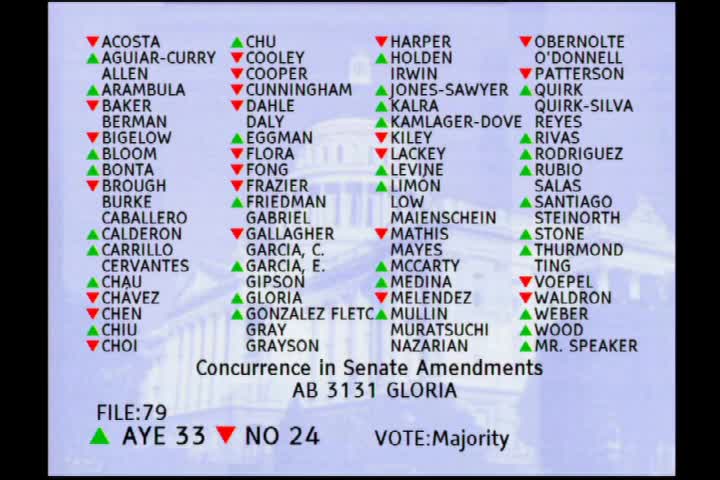 57SEC
Assembly Floor
 45SEC
Senate Floor
 3MIN
Assembly Floor
 35MIN
Assembly Standing Committee on Business and Professions
Bill Author

Bill Co-Author(s):