AB 2431: Public Utilities Commission: proceedings: intervenor compensation.
- Session Year: 2017-2018
- House: Assembly
- Latest Version Date: 2018-05-01
Under existing law, the Public Utilities Commission has broad regulatory authority pursuant to the California Constitution and the Public Utilities Act over public utilities, as defined. Existing law provides compensation for reasonable advocates fees, reasonable expert witness fees, and other reasonable costs for participation or intervention in a hearing or proceeding of the commission. Existing law specifies that no state, federal, or local government agency, publicly owned public utility, or entity that, in the commissions opinion, was established or formed by a local government entity for the purpose of participating in a commission proceeding is eligible to receive that compensation, except as specified.
This bill would authorize public school districts, county offices of education, community college districts, or authorized representatives of those entities, small school districts, as defined, participating in the general rate cases of electrical or gas corporations, to receive that compensation.
Under existing law, the Public Utilities Commission has broad regulatory authority pursuant to the California Constitution and the Public Utilities Act over public utilities, as defined. Existing law provides compensation for reasonable advocates fees, reasonable expert witness fees, and other reasonable costs for participation or intervention in a hearing or proceeding of the commission. Existing law specifies that no state, federal, or local government agency, publicly owned public utility, or entity that, in the commissions opinion, was established or formed by a local government entity for the purpose of participating in a commission proceeding is eligible to receive that compensation, except as specified.
This bill would authorize public school districts, county offices of education, community college districts, or authorized representatives of those entities, to receive that compensation.
As used in this article:
(a)Compensation means payment for all or part, as determined by the commission, of reasonable advocates fees, reasonable expert witness fees, and other reasonable costs of preparation for and participation in a proceeding, and includes the fees and costs of obtaining an award under this article and of obtaining judicial review, if any.
(b)(1)Customer means any of the following:
(A)A participant representing consumers, customers, or subscribers of any electrical, gas, telephone, telegraph, or water corporation that is subject to the jurisdiction of the commission.
(B)A representative who has been authorized by a customer.
(C)A representative of a group or organization authorized pursuant to its articles of incorporation or bylaws to represent the interests of residential customers, or to represent small commercial customers who receive bundled electric service from an electrical corporation.
(2)(A)Except as provided in subparagraph (B), customer does not include any state, federal, or local government agency, any publicly owned public utility, or any entity that, in the commissions opinion, was established or formed by a local government entity for the purpose of participating in a commission proceeding.
(B)Notwithstanding subparagraph (A), a public school district, county office of education, or community college district, or an authorized representative of one of those entities, small school district participating in a general rate case of an electrical or gas corporation is a customer.
(c)Expert witness fees means recorded or billed costs incurred by a customer for an expert witness.
(d)Eligible local government entity means a city, county, or city and county that is not a publicly owned public utility that intervenes or participates in a commission proceeding for the purpose of protecting the health and safety of the residents within the entitys jurisdiction following a catastrophic material loss suffered by its residents either in significant damage to infrastructure or loss of life and property, or both, as a direct result of public utility infrastructure.
(e)Other reasonable costs means reasonable out-of-pocket expenses directly incurred by a customer that are directly related to the contentions or recommendations made by the customer that resulted in a substantial contribution.
(f)Party means any interested party, respondent public utility, or commission staff in a hearing or proceeding.
(g)Proceeding means an application, complaint, or investigation, rulemaking, alternative dispute resolution procedures in lieu of formal proceedings as may be sponsored or endorsed by the commission, or other formal proceeding before the commission.
(h)Significant financial hardship means either that the customer cannot afford, without undue hardship, to pay the costs of effective participation, including advocates fees, expert witness fees, and other reasonable costs of participation, or that, in the case of a group or organization, the economic interest of the individual members of the group or organization is small in comparison to the costs of effective participation in the proceeding.
(i)Small commercial customer means any nonresidential customer with a maximum peak demand of less than 50 kilowatts. The commission may establish rules to modify or change the definition of small commercial customer, including use of criteria other than a peak demand threshold, if the commission determines that the modification or change will promote participation in proceedings at the commission by organizations representing small businesses, without incorporating large commercial and industrial customers.
(j)Small school district means a school district with an average daily attendance of 5,000 or less.
(j)(k)Substantial contribution means that, in the judgment of the commission, the customers presentation has substantially assisted the commission in the making of its order or decision because the order or decision has adopted in whole or in part one or more factual contentions, legal contentions, or specific policy or procedural recommendations presented by the customer. Where the customers participation has resulted in a substantial contribution, even if the decision adopts that customers contention or recommendations only in part, the commission may award the customer compensation for all reasonable advocates fees, reasonable expert fees, and other reasonable costs incurred by the customer in preparing or presenting that contention or recommendation.
As used in this article:
(a)Compensation means payment for all or part, as determined by the commission, of reasonable advocates fees, reasonable expert witness fees, and other reasonable costs of preparation for and participation in a proceeding, and includes the fees and costs of obtaining an award under this article and of obtaining judicial review, if any.
(b)(1)Customer means any of the following:
(A)A participant representing consumers, customers, or subscribers of any electrical, gas, telephone, telegraph, or water corporation that is subject to the jurisdiction of the commission.
(B)A representative who has been authorized by a customer.
(C)A representative of a group or organization authorized pursuant to its articles of incorporation or bylaws to represent the interests of residential customers, or to represent small commercial customers who receive bundled electric service from an electrical corporation.
(2)Customer (A)Except as provided in subparagraph (B), customer does not include any state, federal, or local government agency, any publicly owned public utility, or any entity that, in the commissions opinion, was established or formed by a local government entity for the purpose of participating in a commission proceeding.
(B)Notwithstanding subparagraph (A), a public school district, county office of education, or community college district, or an authorized representative of one of those entities, is a customer.
(c)Expert witness fees means recorded or billed costs incurred by a customer for an expert witness.
(d)Eligible local government entity means a city, county, or city and county that is not a publicly owned public utility that intervenes or participates in a commission proceeding for the purpose of protecting the health and safety of the residents within the entitys jurisdiction following a catastrophic material loss suffered by its residents either in significant damage to infrastructure or loss of life and property, or both, as a direct result of public utility infrastructure.
(e)Other reasonable costs means reasonable out-of-pocket expenses directly incurred by a customer that are directly related to the contentions or recommendations made by the customer that resulted in a substantial contribution.
(f)Party means any interested party, respondent public utility, or commission staff in a hearing or proceeding.
(g)Proceeding means an application, complaint, or investigation, rulemaking, alternative dispute resolution procedures in lieu of formal proceedings as may be sponsored or endorsed by the commission, or other formal proceeding before the commission.
(h)Significant financial hardship means either that the customer cannot afford, without undue hardship, to pay the costs of effective participation, including advocates fees, expert witness fees, and other reasonable costs of participation, or that, in the case of a group or organization, the economic interest of the individual members of the group or organization is small in comparison to the costs of effective participation in the proceeding.
(i)Small commercial customer means any nonresidential customer with a maximum peak demand of less than 50 kilowatts. The commission may establish rules to modify or change the definition of small commercial customer, including use of criteria other than a peak demand threshold, if the commission determines that the modification or change will promote participation in proceedings at the commission by organizations representing small businesses, without incorporating large commercial and industrial customers.
(j)Substantial contribution means that, in the judgment of the commission, the customers presentation has substantially assisted the commission in the making of its order or decision because the order or decision has adopted in whole or in part one or more factual contentions, legal contentions, or specific policy or procedural recommendations presented by the customer. Where the customers participation has resulted in a substantial contribution, even if the decision adopts that customers contention or recommendations only in part, the commission may award the customer compensation for all reasonable advocates fees, reasonable expert fees, and other reasonable costs incurred by the customer in preparing or presenting that contention or recommendation.
CORRECTIONS: DigestVote KeyPage 1.|
Date
|
Status
|
|---|---|
| May 25, 2018 | In committee: Held under submission. |
| May 16, 2018 | In committee: Set, first hearing. Referred to APPR. suspense file. |
| May 2, 2018 | Re-referred to Com. on APPR. |
| May 1, 2018 | Read second time and amended. |
| Apr 30, 2018 | From committee: Amend, and do pass as amended and re-refer to Com. on APPR. (Ayes 10. Noes 2.) (April 25). |
| Apr 17, 2018 | In committee: Set, first hearing. Hearing canceled at the request of author. |
| Apr 4, 2018 | In committee: Hearing postponed by committee. |
| Mar 9, 2018 | Introduced measure version corrected. |
| Mar 5, 2018 | Referred to Com. on U. & E. |
| Feb 15, 2018 | From printer. May be heard in committee March 17. |
| Feb 14, 2018 | Read first time. To print. |
|
Date
|
Description
|
Location
|
Votes
|
|
|---|---|---|---|---|
| Apr 25, 2018 | Do pass as amended and be re-referred to the Committee on [Appropriations] | Assembly Standing Committee on Utilities and Energy |
Passed |
This list shows positions taken on this bill by organizations on the date displayed, which is linked to the original source.
Positions by individuals are not included.
|
Organization
|
Position
|
Date
|
|---|---|---|
| Ackerman Charter School District | ** Support | Apr 24, 2018 |
| Banning Unified School District | ** Support | Apr 24, 2018 |
| Bellevue Union School District | ** Support | Apr 24, 2018 |
| Butte County Office Of Education | ** Support | Apr 24, 2018 |
| California Association Of School Business Officials | ** Support | Apr 24, 2018 |
| California Chamber Of Commerce | * Against | Apr 25, 2018 |
| California Communications Association | ** Against | Apr 24, 2018 |
| California Manufacturers And Technology Association | * Against | Apr 25, 2018 |
| California Retailers Association | ** Against | Apr 24, 2018 |
| California School Boards Association | ** Support | Apr 24, 2018 |
| California Solar and Storage Association | * Support | Apr 25, 2018 |
| California Water Association | ** Against | Apr 24, 2018 |
| Ceres Unified School District | ** Support | Apr 24, 2018 |
| Chico Unified School District | ** Support | Apr 24, 2018 |
| Claremont Unified School District | ** Support | Apr 24, 2018 |
| Coalition of Adequate School Housing | ** Support | Apr 24, 2018 |
| College of the Desert | ** Support | Apr 24, 2018 |
| Contra Costa County Office of Education | ** Support | Apr 24, 2018 |
| Energy Users Forum | ** Against | Apr 24, 2018 |
| Fortuna Union High School District | ** Support | Apr 24, 2018 |
| Fresno Unified School District | ** Support | Apr 24, 2018 |
| Hemet Unified School District | ** Support | Apr 24, 2018 |
| Hillsborough City School District | ** Support | Apr 24, 2018 |
| Irvine Unified School District | ** Support | Apr 24, 2018 |
| Jacoby Creek School District | ** Support | Apr 24, 2018 |
| Kern County Superintendent Of Schools | ** Support | Apr 24, 2018 |
| Kings Canyon Unified School District | ** Support | Apr 24, 2018 |
| Pacificore | * Against | Apr 25, 2018 |
| Pacificorp | ** Against | Apr 24, 2018 |
| Panama-Buena Vista Union School District | ** Support | Apr 24, 2018 |
| Riverside County Superintendent of Schools | ** Support | Apr 24, 2018 |
| San Bernardino City Unified School District | ** Support | Apr 24, 2018 |
| San Diego County Office of Education | ** Support | Apr 24, 2018 |
| San Diego Schools Coalition for Electricity Cost Reduction | ** Support | Apr 24, 2018 |
| San Francisco Unified School District | ** Support | Apr 24, 2018 |
| Santiago County Office of Education | * Support | Apr 25, 2018 |
| School Energy Coalition | * Support | Apr 25, 2018 |
| School Project for Utility Rate Reduction | ** Support | Apr 24, 2018 |
| School Project For Utility Rate Reduction Spurr | * Support | Apr 25, 2018 |
| Stockton Unified School District | ** Support | Apr 24, 2018 |
| Tracy Unified School District | ** Support | Apr 24, 2018 |
Date of Hearing: May 16, 2018
ASSEMBLY COMMITTEE ON APPROPRIATIONS
Lorena Gonzalez Fletcher, Chair
ABPCA Bill Id:AB 2431
Author:(Weber) – As Amended Ver:May 1, 2018
Policy Committee: | Utilities and Energy | Vote: | 10 - 2 |
|
| ||
|
|
Urgency: No State Mandated Local Program: No Reimbursable: No
SUMMARY:
This bill allows a small school district to receive intervenor compensation for participation in a proceeding before the California Public Utilities Commission (CPUC). The bill defines a small school district as “a school district with an average daily attendance of 5,000 or less.”
FISCAL EFFECT:
- Ongoing special fund costs to the CPUC of an unknown amount, but potentially in the low-hundreds-of-thousands of dollars annually.
- Potential ongoing non-state costs to utility ratepayers of an unknown amount to provide compensation to a small school district awarded intervenor compensation. In recent years, CPUC intervenor compensation awards have varied from the tens-of-thousands of dollars to the millions of dollars.
COMMENTS:
- Purpose. The author contends this bill will ensure that public education agencies are afforded the same rights and abilities to be represented in CPUC proceedings as other ratepayers. The author introduced a bill that was much more expansive in that it authorized any public school district, county office of education, or community college district to receive intervenor compensation. The bill was paired back in policy committee to cover only small school districts.
- Intervenor Compensation. The CPUC initiated its intervenor compensation program in 1981 and state law was enacted in 1984 to govern the program. The program is intended to ensure that intervenors – individuals and groups that represent the interests of utility ratepayers – have the financial resources to bring their concerns and interest to the CPUC at its proceedings. Intervenors advocate for a variety of ratepayers, including residential and small-business customers, minority groups, and the disabled. Public utilities pay these intervenor compensation awards from the amounts they collect from their ratepayers. These awards affect utility rates so that utilities can recoup any amounts they pay to intervenors.
A party to a proceeding who plans to claim intervenor compensation must file a notice of intent to claim compensation that indicates the planned extent and estimated costs of the intervenor’s planned participation in a proceeding. Additionally, intervenors must show “significant financial hardship” to receive compensation, by submitting documents demonstrating that the intervenor could not afford to participate without undue hardship. Existing law prohibits any federal, state, or local governmental entity from receiving intervenor compensation. This prohibition encompasses a public school of any size.
The CPUC reports it dedicates five full-time staff to managing its intervenor compensation program. The CPUC further reports it approved annual compensation ranging from $6.3 million to $12.2 million over the year 2014 through 2017 to a few dozen different intervenors. Finally, the CPUC indicates the average number of individual claims filed each year is 86, based on the 11-year period 2007 through 2017.
According to the California Department of Education’s CalEd Facts website, there are 1,024 school districts in the state. Of this 1,024, about 700 have an average daily of attendance of 5,000 or fewer students. It is impossible to know how many small school districts would participate as intervenors in a CPUC proceedings or proceedings and submit claims for compensation. However, assuming 28 small schools, or 4% of the total number of small schools in the state, did so, the number of claims filed with the CPUC would increase by about 33%. Therefore, CPUC administrative cost likely would increase by a similar amount. The CPUC reports it requires five PY to administer the existing intervenor compensation program, at an all-in cost of $129,750 per PY.
- Most California School Districts Are Small. There are approximately one thousand school districts in California. Of those, about 700 have an average daily attendance of 5,000 or less.
- Prior and Related Legislation. There have been at least two recent bills that would have allowed public schools to receive intervenor compensation:
AB 2120 (Weber), of the 2015-16 Legislative Session, would have authorized compensation for participation or intervention of a county office of education, or a consortium of public school districts or agencies on behalf of local K–12 educational agencies (LEAs) in a CPUC proceeding relating to gas or electricity rates. That bill was held on the suspense file of the Senate Committee on Appropriations.
SB 1165 (Wright), of the 2011-12 Legislative Session, would have allowed intervenor compensation to be awarded for participation or intervention in proceedings at the CPUC for a county office of education, on behalf of any of the local educational agencies in whole or part within the county or on behalf of itself, or for a community college district. That bill was held on the suspense file of the Senate Committee on Appropriations.
Analysis Prepared by: Jay Dickenson / APPR. / (916) 319-2081
Date of Hearing: April 25, 2018
ASSEMBLY COMMITTEE ON UTILITIES AND ENERGY
Chris Holden, Chair
ABPCA Bill Id:AB 2431 (
Author:Weber) – As Introduced Ver:February 14, 2018
SUBJECT: Public Utilities Commission: proceedings: intervenor compensation
SUMMARY: Defines, for the purposes of establishing eligibility for the intervenor compensation program, a customer to include a public school district, county office of education, or community college district, or an authorized representative of one of those entities.
EXISTING LAW:
- Authorizes intervenors of electric, water, and telephone utilities to be compensated for making a substantial contribution to proceedings as determined by the California Public Utilities Commission (CPUC). (Public Utilities Code § 1801 et seq.)
- Defines "compensation" as payments for all or part, as determined by the CPUC, of reasonable advocate's fees, reasonable expert witness fees, and other reasonable costs of preparation for and participation in a proceeding, and includes the fees and costs of obtaining an award, as specified, and of obtaining judicial review, if any. (Public Utilities Code § 1802)
- Defines "customer" to include any of the following:
- A participant representing consumers, customers, or subscribers of any electrical, gas, telephone, telegraph, or water corporation that is subject to the jurisdiction of the CPUC;
- A representative of a group or organization that holds the interests of residential customers, or to represent small commercial customers who receive bundled electric service from an electrical corporation;
- A city, county, or city and county that is not a publicly owned public utility that intervenes in a commission proceeding for the purpose of protecting the health and safety of the residents within the entity’s jurisdiction following a catastrophic material loss suffered by its residents either in significant damage to infrastructure or loss of life and property, or both, as a direct result of public utility infrastructure;
- A small commercial customer as nonresidential customer with a maximum peak demand of less than 50 kilowatts; and
- A group or association that represents the interests of small agricultural customers in a proceeding and that would otherwise be eligible for an award made shall not be deemed ineligible solely because that group or organization also has members who are large agricultural customers. (Public Utilities Code § 1802)
- Excludes from the definition of customer any state, federal, or local government agency, any publicly owned public utility, or any entity that, in the CPUC’s opinion was established or formed by a local government entity for the purpose of participating in a CPUC proceeding;
- Establishes an Office of Ratepayer Advocates (ORA) to represent and advocate on behalf of public utility customers with a goal to obtain the lowest possible rate for service consistent with reliable and safe service levels with a primary focus on residential and small commercial customers. (Public Utilities Code § 309.5)
FISCAL EFFECT: This bill is keyed fiscal and will be referred to the Appropriations Committee for its review of the fiscal effect of this bill. It is important to note however that the Appropriations Committee limits its analysis to the impact on overall state agency impacts and does not assess the impacts of policy on the costs of electricity or gas service to ratepayers.
BACKGROUND:
CPUC Intervenor Compensation – The CPUC initiated its intervenor compensation program in 1981 and state law was enacted in 1984 to govern the program. The program is intended to ensure that intervenors – individuals and groups that represent the interests of utility ratepayers – have the financial resources to bring their concerns and interest to the CPUC at its proceedings. Intervenors advocate for a variety of ratepayers, including residential and small-business customers, minority groups, and the disabled. State law allows intervenors that participate in CPUC proceedings involving utilities, such as electric, gas, and water utilities, to request compensation for the costs associated with that participation. Public utilities pay these intervenor compensation awards from the amounts they collect from their ratepayers. These awards affect utility rates so that utilities can recoup any amounts they pay to intervenors.
Intervenor Eligibility – A party to a proceeding planning to claim intervenor compensation must file a notice of intent to claim compensation that indicates the planned extent and estimated costs of the intervenor’s planned participation in a proceeding. Additionally, intervenors must show “significant financial hardship” to receive compensation, by submitting documents demonstrating that the intervenor could not afford to participate without undue hardship.
Office of Ratepayer Advocates (ORA) – The ORA was created to represent and advocate on behalf of the interests of public utility customers and subscribers within the jurisdiction of the CPUC. ORA’s goal is to obtain the lowest possible rate for service consistent with reliable and safe service levels. For revenue allocation and rate design matters, the office primarily considers the interests of residential and small commercial customers. ORA has a staff of 147 consisting of engineers, economists, scientists, and auditors with expertise in regulatory issues related to the electricity, natural gas, water, and communications industries in California. ORA’s staff performs in-depth review and analyses of regulatory policy issues and utility proposals, for funding that totals in the tens of billions of dollars, in order to determine whether utility requests are in the interest of the ratepayers who fund utility activities through their utility bills. ORA also supports environmental policies that benefit customers and seeks to ensure that utility actions comport with CPUC rules and California environmental laws and policy goals. In 2015, ORA participated in 192 CPUC proceedings.
Intervenor Compensation Ratepayer Costs – The CPUC has made $36.8 million in compensation awards to approximately 65 parties for 2014-2017 under the Intervenor Compensation Program:
2014 | 2015 | 2016 | 2017 |
$7,987,355 | $12,243,656 | $10,180,317 | $6,342,036 |
Intervenor representatives (attorneys and experts) are compensated by the hour according to a rate schedule adopted annually by the CPUC. For 2017 attorneys were paid a minimum of $170 an hour for 0-2 years of experience and a maximum of $585 an hour for 13 or more years of experience. Expert witness fees are compensated a minimum of $145 an hour for 0-6 years of experience and a maximum of $435 an hour for more than $13 years of experience.
COMMENTS:
- Author’s Statement. The author states that AB 2431 will ensure that public education agencies are afforded the same rights and abilities to be represented in CPUC proceedings as other ratepayers. Intervenor status will help schools in their efforts to reduce and/or manage their utility and telecommunications costs, which will in turn, lead to better use and efficiency of education facility and operating fund revenues and improved education outcomes.
The bill would simply create greater opportunities for local education agencies (LEAs) to participate in CPUC proceedings that impact their utility costs. Large increases in utility costs divert funds from educational purposes, but there is also a significant cost just to participate in these very technical CPUC proceedings. The bill does not create any rate increases or decreases – the CPUC would continue to have authority to consider the input of all stakeholders and set utility rates.
- Opportunities to Engage. In addition to the efforts of ORA to address general rate cases on behalf of ratepayers, CPUC proceedings are public and open but complicated. Any interested person or group that files an application, petition, or formal complaint with the CPUC automatically becomes a party to the proceeding as well as those filing replies to initiating documents in a proceeding, or appearing at the initial prehearing conference. Groups wishing to participate in a proceeding which is already underway, must file a separate motion with the administrative law judge that addresses the parties interest in the ongoing proceeding. In addition investor owned utilities (IOUs) are required to hold public participation hearings throughout their respective territory after the filing of general rate cases which are open to any ratepayer or ratepayer groups in the IOU territory including schools.
- Eligibility. The statute governing intervenor compensation has historically excluded state, federal, or local government agencies, any public utilities, or any entities formed by a local government agency for the purpose of participating in a CPUC proceeding from the definition of a customer. This exclusion is premised on the fact that government agencies are funded with public dollars and have the ability to pass the costs of participation on to their citizens. Government agencies can still participate as a party in any CPUC proceeding.
The committee acknowledges that school districts have constrained budgets. Unfortunately constrained budgets are a reality for most public and private entities participating in CPUC proceedings. Constrained budgets are different than “financial hardship” which is the threshold for qualification for intervenor compensation. It may be difficult to allow schools to participate in the intervenor compensation program, but not allow other government agencies that may also face similar budget constraints.
- San Bruno Exception. On September 9, 2010, a natural gas pipeline owned by Pacific Gas and Electric Company (PG&E) exploded in a residential neighborhood in the City of San Bruno. Eight people died, dozens were injured, 38 houses were destroyed and many more were damaged. The investigations by the National Transportation Safety Board (NTSB) and an independent review panel appointed by the CPUC found that PG&E mismanaged their pipeline over decades, failed to adequately test the strength of the pipeline and, more generally, valued profits over safety. These same investigations also noted the CPUC’s inadequate oversight of PG&E. In response to the explosion in San Bruno, the Legislature passed SB 512 in 2015 which amended the definition of a customer for purposes of participating in the intervenor compensation program to include a local government entity that participates in proceedings for the purposes of protecting health and safety of residents within their jurisdiction after suffering a material loss, either in significant damage to infrastructure or loss of life and property.
- Magnitude. Authorizing public school districts, county offices of education, community college districts and education trade associations opens intervenor compensation more than 1,000 public agencies and innumerable trade associations. In California there are 1,025 school districts, 72 community college districts, and 58 county offices of education. Furthermore the bill also authorizes authorized representatives of those entities, i.e. trade groups, to be eligible for intervenor compensation. This would expand eligible entities for intervenor compensation dramatically and these additional costs of CPUC proceedings would be paid for by the ratepayers of electric, gas, water, and telecommunication corporations.
To limit the expanse of eligible groups and eligible proceedings the committee may wish to consider narrowing the bill to limit eligibility to small schools districts, defined as those with 5,000 or less average daily attendance, participating in the general rate cases of gas and electric corporations. - Prior Legislation. The following related bills have been considered in prior legislative sessions.
AB 2120 (Weber, 2016) would have authorized compensation for participation or intervention of a county office of education, or a consortium of public school districts or agencies on behalf of local K–12 educational agencies (LEAs) in a California Public Utilities Commission (CPUC) proceeding relating to gas or electricity rates. Status: Held in Senate Committee on Appropriations.
SB 512 (Hill, 2015) defines a customer for purposes of participating in the intervenor compensation program to include a local government entity that is not a publicly owned public utility that participates in a proceeding for purposes of protecting the health and safety of the residents within their jurisdiction after suffering a material loss, either in significant damage to infrastructure or loss of life and property. (Chapter 808, Statutes of 2016)
SB 1165 (Wright, 2012) would have allowed intervenor compensation to be awarded for participation or intervention in proceedings at the CPUC for a county office of education, on behalf of any of the local educational agencies in whole or part within the county or on behalf of itself, or for a community college district. Held in the Status: Senate Committee on Appropriations.
REGISTERED SUPPORT / OPPOSITION:
Support
School Project for Utility Rate Reduction (Sponsor)
Ackerman Charter School District
Banning Unified School District
Bellevue Union School District
Butte County Office of Education
California Association of School Business Officials (CASBO)
California School Boards Association
Ceres Unified School District
Chico Unified School District
Claremont Unified School District
Coalition of Adequate School Housing
College of The Desert
Contra Costa County Office of Education
Fortuna Union High School District
Fresno Unified School District
Hemet Unified School District
Hillsborough City School District
Irvine Unified School District
Jacoby Creek School District
Kern County Superintendent of Schools
Kings Canyon Unified School District
Lake Elsinore Unified School District
Panama-Buena Vista Union School District
Riverside County Superintendent of Schools
San Bernardino City Unified School District
San Diego County Office of Education
San Diego Schools Coalition for Electricity Cost Reduction
San Francisco Unified School District
School Energy Coalition
Stockton Unified School District
Tracy Unified School District
Opposition
California Chamber of Commerce
California Communications Association
California Manufacturers & Technology Association
California Retailers Association
California Water Association
Energy Users Forum
PacifiCorp
Analysis Prepared by: Kellie Smith / U. & E. /
Date of Hearing: April 18, 2018
ASSEMBLY COMMITTEE ON UTILITIES AND ENERGY
Chris Holden, Chair
ABPCA Bill Id:AB 2431 (
Author:Weber) – As Introduced Ver:February 14, 2018
SUBJECT: Public Utilities Commission: proceedings: intervenor compensation
SUMMARY: Defines, for the purposes of establishing eligibility for the intervenor compensation program, a customer to include a public school district, county office of education, or community college district, or an authorized representative of one of those entities.
EXISTING LAW:
- Authorizes intervenors of electric, water, and telephone utilities to be compensated for making a substantial contribution to proceedings as determined by the California Public Utilities Commission (CPUC). (Public Utilities Code § 1801 et seq.)
- Defines "compensation" as payments for all or part, as determined by the CPUC, of reasonable advocate's fees, reasonable expert witness fees, and other reasonable costs of preparation for and participation in a proceeding, and includes the fees and costs of obtaining an award, as specified, and of obtaining judicial review, if any. (Public Utilities Code § 1802)
- Defines "customer" to include any of the following:
- A participant representing consumers, customers, or subscribers of any electrical, gas, telephone, telegraph, or water corporation that is subject to the jurisdiction of the CPUC;
- A representative of a group or organization that holds the interests of residential customers, or to represent small commercial customers who receive bundled electric service from an electrical corporation;
- A city, county, or city and county that is not a publicly owned public utility that intervenes in a commission proceeding for the purpose of protecting the health and safety of the residents within the entity’s jurisdiction following a catastrophic material loss suffered by its residents either in significant damage to infrastructure or loss of life and property, or both, as a direct result of public utility infrastructure;
- A small commercial customer as nonresidential customer with a maximum peak demand of less than 50 kilowatts; and
- A group or association that represents the interests of small agricultural customers in a proceeding and that would otherwise be eligible for an award made shall not be deemed ineligible solely because that group or organization also has members who are large agricultural customers. (Public Utilities Code § 1802)
- Excludes from the definition of customer any state, federal, or local government agency, any publicly owned public utility, or any entity that, in the CPUC’s opinion was established or formed by a local government entity for the purpose of participating in a CPUC proceeding;
- Establishes an Office of Ratepayer Advocates (ORA) to represent and advocate on behalf of public utility customers with a goal to obtain the lowest possible rate for service consistent with reliable and safe service levels with a primary focus on residential and small commercial customers. (Public Utilities Code § 309.5)
FISCAL EFFECT: This bill is keyed fiscal and will be referred to the Appropriations Committee for its review of the fiscal effect of this bill. It is important to note however that the Appropriations Committee limits its analysis to the impact on overall state agency impacts and does not assess the impacts of policy on the costs of electricity or gas service to ratepayers..
BACKGROUND:
CPUC Intervenor Compensation – The CPUC initiated its intervenor compensation program in 1981 and state law was enacted in 1984 to govern the program. The program is intended to ensure that intervenors – individuals and groups that represent the interests of utility ratepayers – have the financial resources to bring their concerns and interest to the CPUC at its proceedings. Intervenors advocate for a variety of ratepayers, including residential and small-business customers, minority groups, and the disabled. State law allows intervenors that participate in CPUC proceedings involving utilities, such as electric, gas, and water utilities, to request compensation for the costs associated with that participation. Public utilities pay these intervenor compensation awards from the amounts they collect from their ratepayers. These awards affect utility rates so that utilities can recoup any amounts they pay to intervenors.
Intervenor Eligibility – A party to a proceeding planning to claim intervenor compensation must file a notice of intent to claim compensation that indicates the planned extent and estimated costs of the intervenor’s planned participation in a proceeding. Additionally, intervenors must show “significant financial hardship” to receive compensation, by submitting documents demonstrating that the intervenor could not afford to participate without undue hardship.
Office of Ratepayer Advocates (ORA) – The ORA was created to represent and advocate on behalf of the interests of public utility customers and subscribers within the jurisdiction of the CPUC. ORA’s goal is to obtain the lowest possible rate for service consistent with reliable and safe service levels. For revenue allocation and rate design matters, the office primarily considers the interests of residential and small commercial customers. ORA has a staff of 147 consisting of engineers, economists, scientists, and auditors with expertise in regulatory issues related to the electricity, natural gas, water, and communications industries in California. ORA’s staff performs in-depth review and analyses of regulatory policy issues and utility proposals, for funding that totals in the tens of billions of dollars, in order to determine whether utility requests are in the interest of the ratepayers who fund utility activities through their utility bills. ORA also supports environmental policies that benefit customers and seeks to ensure that utility actions comport with CPUC rules and California environmental laws and policy goals. In 2015, ORA participated in 192 CPUC proceedings.
Intervenor Compensation Ratepayer Costs – The CPUC has made $36.8 million in compensation awards to approximately 65 parties for 2014-2017 under the Intervenor Compensation Program:
2014 | 2015 | 2016 | 2017 |
$7,987,355 | $12,243,656 | $10,180,317 | $6,342,036 |
Intervenor representatives (attorneys and experts) are compensated by the hour according to a rate schedule adopted annually by the CPUC. For 2017 attorneys were paid a minimum of $170 an hour for 0-2 years of experience and a maximum of $585 an hour for 13 or more years of experience. Expert witness fees are compensated a minimum of $145 an hour for 0-6 years of experience and a maximum of $435 an hour for more than $13 years of experience.
COMMENTS:
- Author’s Statement. The author states that AB 2431 will ensure that public education agencies are afforded the same rights and abilities to be represented in CPUC proceedings as other ratepayers. Intervenor status will help schools in their efforts to reduce and/or manage their utility and telecommunications costs, which will in turn, lead to better use and efficiency of education facility and operating fund revenues and improved education outcomes.
The bill would simply create greater opportunities for local education agencies (LEAs) to participate in CPUC proceedings that impact their utility costs. Large increases in utility costs divert funds from educational purposes, but there is also a significant cost just to participate in these very technical CPUC proceedings. The bill does not create any rate increases or decreases – the CPUC would continue to have authority to consider the input of all stakeholders and set utility rates.
- Opportunities to Engage. In addition to the efforts of ORA to address general rate cases on behalf of ratepayers, CPUC proceedings are public and open but complicated. Any interested person or group that files an application, petition, or formal complaint with the CPUC automatically becomes a party to the proceeding as well as those filing replies to initiating documents in a proceeding, or appearing at the initial prehearing conference. Groups wishing to participate in a proceeding which is already underway, must file a separate motion with the administrative law judge that addresses the parties interest in the ongoing proceeding. In addition investor owned utilities (IOUs) are required to hold public participation hearings throughout their respective territory after the filing of general rate cases which are open to any ratepayer or ratepayer groups in the IOU territory including schools.
- Eligibility. The statute governing intervenor compensation has historically excluded state, federal, or local government agencies, any public utilities, or any entities formed by a local government agency for the purpose of participating in a CPUC proceeding from the definition of a customer. This exclusion is premised on the fact that government agencies are funded with public dollars and have the ability to pass the costs of participation on to their citizens. Government agencies can still participate as a party in any CPUC proceeding.
The committee acknowledges that school districts have constrained budgets. Unfortunately constrained budgets are a reality for most public and private entities participating in CPUC proceedings. Constrained budgets are different than “financial hardship” which is the threshold for qualification for intervenor compensation. It may be difficult to allow schools to participate in the intervenor compensation program, but not allow other government agencies that may also face similar budget constraints.
- San Bruno Exception. On September 9, 2010, a natural gas pipeline owned by Pacific Gas and Electric Company (PG&E) exploded in a residential neighborhood in the City of San Bruno. Eight people died, dozens were injured, 38 houses were destroyed and many more were damaged. The investigations by the National Transportation Safety Board (NTSB) and an independent review panel appointed by the CPUC found that PG&E mismanaged their pipeline over decades, failed to adequately test the strength of the pipeline and, more generally, valued profits over safety. These same investigations also noted the CPUC’s inadequate oversight of PG&E. In response to the explosion in San Bruno, the Legislature passed SB 512 in 2015 which amended the definition of a customer for purposes of participating in the intervenor compensation program to include a local government entity that participates in proceedings for the purposes of protecting health and safety of residents within their jurisdiction after suffering a material loss, either in significant damage to infrastructure or loss of life and property.
- Magnitude. Authorizing public school districts, county offices of education, community college districts and education trade associations opens intervenor compensation more than 1,000 public agencies and innumerable trade associations. In California there are 1,025 school districts, 72 community college districts, and 58 county offices of education. Furthermore the bill also authorizes authorized representatives of those entities, i.e. trade groups, to be eligible for intervenor compensation. This would expand eligible entities for intervenor compensation dramatically and these additional costs of CPUC proceedings would be paid for by the ratepayers of electric, gas, water, and telecommunication corporations.
To limit the expanse of eligible groups and eligible proceedings the committee may wish to consider narrowing the bill to limit eligibility to small schools districts, defined as those with 5,000 or less average daily attendance, participating in the general rate cases of gas and electric corporations. - Prior Legislation. The following related bills have been considered in prior legislative sessions.
AB 2120 (Weber, 2016) would have authorized compensation for participation or intervention of a county office of education, or a consortium of public school districts or agencies on behalf of local K–12 educational agencies (LEAs) in a California Public Utilities Commission (CPUC) proceeding relating to gas or electricity rates. Status: Held in Senate Committee on Appropriations.
SB 512 (Hill, 2015) defines a customer for purposes of participating in the intervenor compensation program to include a local government entity that is not a publicly owned public utility that participates in a proceeding for purposes of protecting the health and safety of the residents within their jurisdiction after suffering a material loss, either in significant damage to infrastructure or loss of life and property. (Chapter 808, Statutes of 2016)
SB 1165 (Wright, 2012) would have allowed intervenor compensation to be awarded for participation or intervention in proceedings at the CPUC for a county office of education, on behalf of any of the local educational agencies in whole or part within the county or on behalf of itself, or for a community college district. Held in the Status: Senate Committee on Appropriations.
REGISTERED SUPPORT / OPPOSITION:
Support
School Project for Utility Rate Reduction (Sponsor)
Ackerman Charter School District
Banning Unified School District
Bellevue Union School District
Butte County Office of Education
California Association of School Business Officials (CASBO)
California School Boards Association
Ceres Unified School District
Chico Unified School District
Claremont Unified School District
Coalition Of Adequate School Housing
College of The Desert
Contra Costa County Office of Education
Fortuna Union High School District
Fresno Unified School District
Hemet Unified School District
Hillsborough City School District
Irvine Unified School District
Jacoby Creek School District
Kern County Superintendent of Schools
Kings Canyon Unified School District
Lake Elsinore Unified School District
Panama-Buena Vista Union School District
Riverside County Superintendent of Schools
San Bernardino City Unified School District
San Diego County Office of Education
San Diego Schools Coalition for Electricity Cost Reduction
San Francisco Unified School District
School Energy Coalition
School Project for Utility Rate Reduction
Stockton Unified School District
Tracy Unified School District
Opposition
California Chamber of Commerce
California Communications Association
California Manufacturers & Technology Association
California Retailers Association
California Water Association
Energy Users Forum
PacifiCorp
Analysis Prepared by: Kellie Smith / U. & E. /
Date of Hearing: April 4, 2018
ASSEMBLY COMMITTEE ON UTILITIES AND ENERGY
Chris Holden, Chair
ABPCA Bill Id:AB 2431 (
Author:Weber) – As Introduced Ver:February 14, 2018
SUBJECT: Public Utilities Commission: proceedings: intervenor compensation
SUMMARY: Defines, for the purposes of establishing eligibility for the intervenor compensation program, a customer to include a public school district, county office of education, or community college district, or an authorized representative of one of those entities.
EXISTING LAW:
- Authorizes intervenors of electric, water, and telephone utilities to be compensated for making a substantial contribution to proceedings as determined by the California Public Utilities Commission (CPUC). (Public Utilities Code § 1801 et seq.)
- Defines "compensation" as payments for all or part, as determined by the CPUC, of reasonable advocate's fees, reasonable expert witness fees, and other reasonable costs of preparation for and participation in a proceeding, and includes the fees and costs of obtaining an award, as specified, and of obtaining judicial review, if any. (Public Utilities Code § 1802)
- Defines "customer" to include any of the following:
- A participant representing consumers, customers, or subscribers of any electrical, gas, telephone, telegraph, or water corporation that is subject to the jurisdiction of the CPUC;
- A representative of a group or organization that holds the interests of residential customers, or to represent small commercial customers who receive bundled electric service from an electrical corporation;
- A city, county, or city and county that is not a publicly owned public utility that intervenes in a commission proceeding for the purpose of protecting the health and safety of the residents within the entity’s jurisdiction following a catastrophic material loss suffered by its residents either in significant damage to infrastructure or loss of life and property, or both, as a direct result of public utility infrastructure;
- A small commercial customer as nonresidential customer with a maximum peak demand of less than 50 kilowatts; and
- A group or association that represents the interests of small agricultural customers in a proceeding and that would otherwise be eligible for an award made shall not be deemed ineligible solely because that group or organization also has members who are large agricultural customers. (Public Utilities Code §1802)
- Excludes from the definition of customer any state, federal, or local government agency, any publicly owned public utility, or any entity that, in the CPUC’s opinion was established or formed by a local government entity for the purpose of participating in a CPUC proceeding;
- Establishes an Office of Ratepayer Advocates (ORA) to represent and advocate on behalf of public utility customers with a goal to obtain the lowest possible rate for service consistent with reliable and safe service levels with a primary focus on residential and small commercial customers. (Public Utilities Code § 309.5)
FISCAL EFFECT: This bill is keyed fiscal and will be referred to the Appropriations Committee for its review of the fiscal effect of this bill. It is important to note however that the Appropriations Committee limits its analysis to the impact on overall state agency impacts and does not assess the impacts of policy on the costs of electricity or gas service to ratepayers..
BACKGROUND:
CPUC Intervenor Compensation – The CPUC initiated its intervenor compensation program in 1981 and state law was enacted in 1984 to govern the program. The program is intended to ensure that intervenors – individuals and groups that represent the interests of utility ratepayers – have the financial resources to bring their concerns and interest to the CPUC at its proceedings. Intervenors advocate for a variety of ratepayers, including residential and small-business customers, minority groups, and the disabled. State law allows intervenors that participate in CPUC proceedings involving utilities, such as electric, gas, and water utilities, to request compensation for the costs associated with that participation. Public utilities pay these intervenor compensation awards from the amounts they collect from their ratepayers. These awards affect utility rates so that utilities can recoup any amounts they pay to intervenors.
Intervenor Eligibility – A party to a proceeding planning to claim intervenor compensation must file a notice of intent to claim compensation that indicates the planned extent and estimated costs of the intervenor’s planned participation in a proceeding. Additionally, intervenors must show “significant financial hardship” to receive compensation, by submitting documents demonstrating that the intervenor could not afford to participate without undue hardship.
Office of Ratepayer Advocates (ORA) – The ORA was created to represent and advocate on behalf of the interests of public utility customers and subscribers within the jurisdiction of the CPUC. ORA’s goal is to obtain the lowest possible rate for service consistent with reliable and safe service levels. For revenue allocation and rate design matters, the office primarily considers the interests of residential and small commercial customers. ORA has a staff of 147 consisting of engineers, economists, scientists, and auditors with expertise in regulatory issues related to the electricity, natural gas, water, and communications industries in California. ORA’s staff performs in-depth review and analyses of regulatory policy issues and utility proposals, for funding that totals in the tens of billions of dollars, in order to determine whether utility requests are in the interest of the ratepayers who fund utility activities through their utility bills. ORA also supports environmental policies that benefit customers and seeks to ensure that utility actions comport with CPUC rules and California environmental laws and policy goals. In 2015, ORA participated in 192 CPUC proceedings.
Intervenor Compensation Ratepayer Costs – The CPUC has made $36.8 million in compensation awards to approximately 65 parties for 2014-2017 under the Intervenor Compensation Program:
2014 | 2015 | 2016 | 2017 |
$7,987,355 | $12,243,656 | $10,180,317 | $6,342,036 |
Intervenor representatives (attorneys and experts) are compensated by the hour according to a rate schedule adopted annually by the CPUC. For 2017 attorneys were paid a minimum of $170 an hour for 0-2 years of experience and a maximum of $585 an hour for 13 or more years of experience. Expert witness fees are compensated a minimum of $145 an hour for 0-6 years of experience and a maximum of $435 an hour for more than $13 years of experience.
COMMENTS:
- Author’s Statement. The author states that AB 2431 will ensure that public education agencies are afforded the same rights and abilities to be represented in CPUC proceedings as other ratepayers. Intervenor status will help schools in their efforts to reduce and/or manage their utility and telecommunications costs, which will in turn, lead to better use and efficiency of education facility and operating fund revenues and improved education outcomes.
The bill would simply create greater opportunities for local education agencies (LEAs) to participate in CPUC proceedings that impact their utility costs. Large increases in utility costs divert funds from educational purposes, but there is also a significant cost just to participate in these very technical CPUC proceedings. The bill does not create any rate increases or decreases – the CPUC would continue to have authority to consider the input of all stakeholders and set utility rates.
- Opportunities to Engage. In addition to the efforts of ORA to address general rate cases on behalf of ratepayers, CPUC proceedings are public and open but complicated. Any interested person or group that files an application, petition, or formal complaint with the CPUC automatically becomes a party to the proceeding as well as those filing replies to initiating documents in a proceeding, or appearing at the initial prehearing conference. Groups wishing to participate in a proceeding which is already underway, must file a separate motion with the administrative law judge that addresses the parties interest in the ongoing proceeding. In addition investor owned utilities (IOUs) are required to hold public participation hearings throughout their respective territory after the filing of general rate cases which are open to any ratepayer or ratepayer groups in the IOU territory including schools.
- Eligibility. The statute governing intervenor compensation has historically excluded state, federal, or local government agencies, any public utilities, or any entities formed by a local government agency for the purpose of participating in a CPUC proceeding from the definition of a customer. This exclusion is premised on the fact that government agencies are funded with public dollars and have the ability to pass the costs of participation on to their citizens. Government agencies can still participate as a party in any CPUC proceeding.
The committee acknowledges that school districts have constrained budgets. Unfortunately constrained budgets are a reality for most public and private entities participating in CPUC proceedings. Constrained budgets are different than “financial hardship” which is the threshold for qualification for intervenor compensation. It may be difficult to allow schools to participate in the intervenor compensation program, but not allow other government agencies that may also face similar budget constraints.
- San Bruno Exception. On September 9, 2010, a natural gas pipeline owned by Pacific Gas and Electric Company (PG&E) exploded in a residential neighborhood in the City of San Bruno. Eight people died, dozens were injured, 38 houses were destroyed and many more were damaged. The investigations by the National Transportation Safety Board (NTSB) and an independent review panel appointed by the CPUC found that PG&E mismanaged their pipeline over decades, failed to adequately test the strength of the pipeline and, more generally, valued profits over safety. These same investigations also noted the CPUC’s inadequate oversight of PG&E. In response to the explosion in San Bruno, the Legislature passed SB 512 in 2015 which amended the definition of a customer for purposes of participating in the intervenor compensation program to include a local government entity that participates in proceedings for the purposes of protecting health and safety of residents within their jurisdiction after suffering a material loss, either in significant damage to infrastructure or loss of life and property.
- Magnitude. Authorizing public school districts, county offices of education, community college districts and education trade associations opens intervenor compensation more than 1,000 public agencies and innumerable trade associations. In California there are 1,025 school districts, 72 community college districts, and 58 county offices of education. Furthermore the bill also authorizes authorized representatives of those entities, i.e. trade groups, to be eligible for intervenor compensation. This would expand eligible entities for intervenor compensation dramatically and these additional costs of CPUC proceedings would be paid for by the ratepayers of electric, gas, water, and telecommunication corporations.
- Prior Legislation. The following related bills have been considered in prior legislative sessions.
AB 2120 (Weber, 2016) would have authorized compensation for participation or intervention of a county office of education, or a consortium of public school districts or agencies on behalf of local K–12 educational agencies (LEAs) in a California Public Utilities Commission (CPUC) proceeding relating to gas or electricity rates. Held in Senate Committee on Appropriations.
SB 512 (Hill, 2015) defines a customer for purposes of participating in the intervenor compensation program to include a local government entity that is not a publicly owned public utility that participates in a proceeding for purposes of protecting the health and safety of the residents within their jurisdiction after suffering a material loss, either in significant damage to infrastructure or loss of life and property. (Chapter 808, Statutes of 2016)
SB 1165 (Wright, 2012) would have allowed intervenor compensation to be awarded for participation or intervention in proceedings at the CPUC for a county office of education, on behalf of any of the local educational agencies in whole or part within the county or on behalf of itself, or for a community college district. Held in the Senate Committee on Appropriations.
REGISTERED SUPPORT / OPPOSITION:
Support
School Project for Utility Rate Reduction (Sponsor)
Ackerman Charter School District
Banning Unified School District
Bellevue Union School District
Butte County Office of Education
California Association of School Business Officials (CASBO)
Ceres Unified School District
Chico Unified School District
Coalition of Adequate School Housing
College of The Desert
Contra Costa County Office of Education
Fortuna Union High School District
Fresno Unified School District
Hemet Unified School District
Hillsborough City School District
Irvine Unified School District
Jacoby Creek School District
Kern County Superintendent of Schools
Kings Canyon Unified School District
Lake Elsinore Unified School District
Panama-Buena Vista Union School District
Riverside County Superintendent Of Schools
San Bernardino City Unified School District
San Diego County Office of Education
San Diego Schools Coalition for Electricity Cost Reduction
School Energy Coalition
Stockton Unified School District
Tracy Unified School District
Opposition
California Chamber of Commerce
California Communications Association
California Manufacturers & Technology Association
California Retailers Association
Energy Users Forum
Analysis Prepared by: Kellie Smith / U. & E. /
Discussed in Hearing
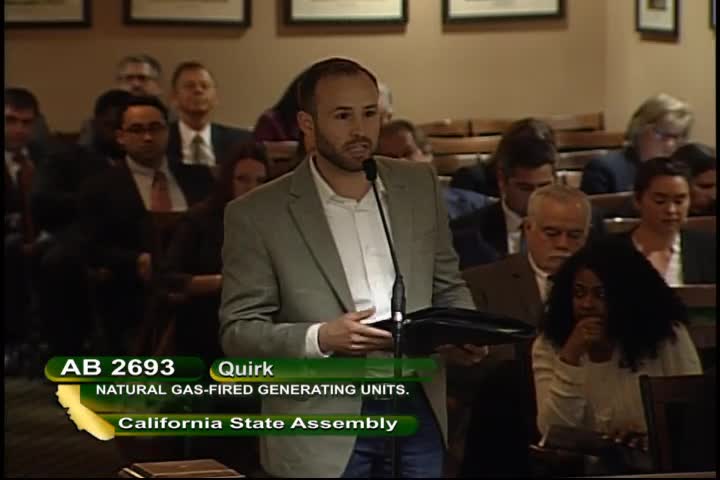 20MIN
Assembly Standing Committee on Utilities and Energy
Bill Author

Bill Co-Author(s):