AB 2455: Home care aide registry: disclosure of personal contact information.
- Session Year: 2017-2018
- House: Assembly
- Latest Version Date: 2018-09-29
(1)Existing law establishes the Home Care Services Consumer Protection Act, which provides for the licensure and regulation of home care organizations, as defined, by the State Department of Social Services, and for the registration of home care aides. The act requires the department to establish and maintain a registry of registered home care aides and home care aide applicants on the departments Internet Web site, as provided. The act prohibits the registry on the Internet Web site from providing any additional, individually identifiable information about a registered home care aide or home care aide applicant. Existing law authorizes the department to maintain additional information for registered home care aides or home care aide applicants, as necessary for the administration of the act, but prohibits the department from making that information publicly available on the registry. A violation of the act is a misdemeanor, punishable by a fine not to exceed $1,000, by imprisonment in a county jail for a period not to exceed 180 days, or by both that fine and imprisonment.
This bill would require, for any new registration or renewal of registration of a home care aide occurring on and after July 1, 2019, the department to provide, upon request, a labor organization an electronic copy of a registered home care aides name, telephone number, and cellular telephone number, as specified. The bill would require the department to establish a simple opt-out procedure that would allow a home care aide to prohibit the department from sharing his or her information and would require the department, at the time of registration or renewal of registration, to inform a home care aide how to use the simple opt-out procedure. The bill would prohibit a labor organization from using or disclosing the shared information, except for certain purposes. Because a violation of the Home Care Services Consumer Protection Act is punishable as a misdemeanor and this bill would expand requirements under the act, this bill would impose a state-mandated local program.
(2) The California Constitution requires the state to reimburse local agencies and school districts for certain costs mandated by the state. Statutory provisions establish procedures for making that reimbursement.
This bill would provide that no reimbursement is required by this act for a specified reason.
(1)Existing law establishes the Home Care Services Consumer Protection Act, which provides for the licensure and regulation of home care organizations, as defined, by the State Department of Social Services, and for the registration of home care aides. The act requires the department to establish and maintain a registry of registered home care aides and home care aide applicants on the departments Internet Web site, as provided. The act prohibits the registry on the Internet Web site from providing any additional, individually identifiable information about a registered home care aide or home care aide applicant. Existing law authorizes the department to maintain additional information for registered home care aides or home care aide applicants, as necessary for the administration of the act, but prohibits the department from making that information publicly available on the registry. A violation of the act is a misdemeanor, punishable by a fine not to exceed $1,000, by imprisonment in a county jail for a period not to exceed 180 days, or by both that fine and imprisonment.
This bill would require, for any new registration or renewal of registration of a home care aide occurring on and after July 1, 2019, the department to provide, upon request, a labor organization an electronic copy of a registered home care aides name, telephone number, and cellular telephone number, as specified. The bill would require the department to establish a simple opt-out procedure that would allow a home care aide to prohibit the department from sharing his or her information and would require the department, at the time of registration or renewal of registration, to inform a home care aide how to use the opt-out procedure or change his or her mailing address on file with the department. simple opt-out procedure. The bill would prohibit a labor organization from using or disclosing the shared information, except for certain purposes. Because a violation of the Home Care Services Consumer Protection Act is punishable as a misdemeanor and this bill would expand requirements under the act, this bill would impose a state-mandated local program.
(2) The California Constitution requires the state to reimburse local agencies and school districts for certain costs mandated by the state. Statutory provisions establish procedures for making that reimbursement.
This bill would provide that no reimbursement is required by this act for a specified reason.
(1)Existing law establishes the Home Care Services Consumer Protection Act, which provides for the licensure and regulation of home care organizations, as defined, by the State Department of Social Services, and for the registration of home care aides. The act requires the department to establish and maintain a registry of registered home care aides and home care aide applicants on the departments Internet Web site, as provided. The act prohibits the registry on the Internet Web site from providing any additional, individually identifiable information about a registered home care aide or home care aide applicant. Existing law authorizes the department to maintain additional information for registered home care aides or home care aide applicants, as necessary for the administration of the act, but prohibits the department from making that information publicly available on the registry. A violation of the act is a misdemeanor, punishable by a fine not to exceed $1,000, by imprisonment in a county jail for a period not to exceed 180 days, or by both that fine and imprisonment.
This bill would require, for any new registration or renewal of registration of a home care aide occurring on and after January July 1, 2019, the department to provide, upon request, a labor organization an electronic copy of a registered home care aides name, telephone number, and cellular telephone number, as specified. The bill would require the department to establish a simple opt-out procedure that would allow a home care aide to prohibit the department from sharing his or her information and would require the department, at the time of registration or renewal of registration, to inform a home care aide how to use the opt-out procedure or change his or her mailing address on file with the department. The bill would prohibit a labor organization from using or disclosing the shared information, except for certain purposes. Because a violation of the Home Care Services Consumer Protection Act is punishable as a misdemeanor and this bill would expand requirements under the act, this bill would impose a state-mandated local program.
(2) The California Constitution requires the state to reimburse local agencies and school districts for certain costs mandated by the state. Statutory provisions establish procedures for making that reimbursement.
This bill would provide that no reimbursement is required by this act for a specified reason.
(1)Existing law establishes the Home Care Services Consumer Protection Act, which provides for the licensure and regulation of home care organizations, as defined, by the State Department of Social Services, and for the registration of home care aides. The act requires the department to establish and maintain a registry of registered home care aides and home care aide applicants on the departments Internet Web site, as provided. The act prohibits the registry on the Internet Web site from providing any additional, individually identifiable information about a registered home care aide or home care aide applicant. Existing law authorizes the department to maintain additional information for registered home care aides or home care aide applicants, as necessary for the administration of the act, but prohibits the department from making that information publicly available on the registry. A violation of the act is a misdemeanor, punishable by a fine not to exceed $1,000, by imprisonment in a county jail for a period not to exceed 180 days, or by both that fine and imprisonment.
This bill would require, for any new registration or renewal of registration of a home care aid aide occurring on and after January 1, 2019, the department to provide provide, upon request, a labor organization an electronic copy of a registered home care aides name, telephone number, and cellular telephone number, as specified. The bill would require the department to establish a simple opt-out procedure to request that contact information on file with the department not be disclosed in response to a request by a labor organization. that would allow a home care aide to prohibit the department from sharing his or her information and would require the department, at the time of registration or renewal of registration, to inform a home care aide how to use the opt-out procedure or change his or her mailing address on file with the department. The bill would prohibit a labor organization from using or disclosing this the shared information, except for certain purposes. Because a violation of the Home Care Services Consumer Protection Act is punishable as a misdemeanor and this bill would expand requirements under the act, this bill would impose a state-mandated local program.
(2) The California Constitution requires the state to reimburse local agencies and school districts for certain costs mandated by the state. Statutory provisions establish procedures for making that reimbursement.
This bill would provide that no reimbursement is required by this act for a specified reason.
(1)Existing law establishes the Home Care Services Consumer Protection Act, which provides for the licensure and regulation of home care organizations, as defined, by the State Department of Social Services, and for the registration of home care aides. The act requires the department to establish and maintain a registry of registered home care aides and home care aide applicants on the departments Internet Web site, as provided. The act prohibits the registry on the Internet Web site from providing any additional, individually identifiable information about a registered home care aide or home care aide applicant. Existing law authorizes the department to maintain additional information for registered home care aides or home care aide applicants, as necessary for the administration of the act, but prohibits the department from making that information publicly available on the registry. A violation of the act is a misdemeanor, punishable by a fine not to exceed $1,000, by imprisonment in a county jail for a period not to exceed 180 days, or by both that fine and imprisonment.
This bill would require, for any new registration or renewal of registration of a home care aid occurring on and after January 1, 2019, the department to provide a labor organization an electronic copy of a registered home care aides name, telephone number, and cellular telephone number, as specified. The bill would require the department to establish a simple opt-out procedure to request that contact information on file with the department not be disclosed in response to a request by a labor organization. The bill would prohibit a labor organization from using or disclosing this information, except for certain purposes. Because a violation of the Home Care Services Consumer Protection Act is punishable as a misdemeanor and this bill would expand requirements under the act, this bill would impose a state-mandated local program.
(2) The California Constitution requires the state to reimburse local agencies and school districts for certain costs mandated by the state. Statutory provisions establish procedures for making that reimbursement.
This bill would provide that no reimbursement is required by this act for a specified reason.
(a)The Legislature finds and declares all of the following:
(1)As Californias elderly population continues to grow, so will the need for home care aides and home health aides and the valuable services they provide to enable individuals to live independently in their own homes as they age. The home care workforce is comprised primarily of women and people of color, and home care workers earn a median hourly wage of under $10.50 an hour.
(2)Across the country, labor organizations have been organizing and representing the home care workforce and negotiating with employers concerning access to training, grievances, labor disputes, wages, rates of pay, hours of employment, and conditions of work. Home care aides who are organized are more likely to have higher wages, greater access to training, and lower turnover rates.
(b)It is the intent of the Legislature that information shared between the State Department of Social Services and labor organizations is done for the purpose of organizing and representing home care aides and that information is shared in a manner that properly restricts the type of, access to, and uses of that shared information. It is also the intent of the Legislature that home care aides who may have their information shared by the department are afforded the right to prohibit that sharing and are well informed of their right and the process through which they may exercise it.
SEC. 2.Section 1796.29 of the Health and Safety Code is amended to read:1796.29.The department shall do all of the following in the administration of the home care aide registry:
(a)Establish and maintain on the departments Internet Web site the registry of registered home care aides and home care aide applicants.
(1)To expedite the ability of a consumer to determine if a registered home care aide or home care aide applicant has passed a background examination, pursuant to Section 1796.23, the Internet Web site shall enable consumers to look up the registration status by providing the registered home care aides or home care aide applicants name and registration number. The Internet Web site shall provide the registration status, the registration expiration date, and, if applicable, the home care organization with which the affiliated home care aide is associated.
(2)The Internet Web site shall not provide any additional, individually identifiable information about a registered home care aide or home care aide applicant. The department may request and may maintain additional information for registered home care aides or home care aide applicants, as necessary for the administration of this chapter, that shall not be publicly available on the home care aide registry.
(b)Update the home care aide registry upon receiving notification from a home care organization that an affiliated home care aide is no longer employed by the home care organization.
(c)Notwithstanding any other provision of this chapter to the contrary, information regarding a registered home care aide or registered home care aide applicant is not subject to public disclosure pursuant to this chapter, except as provided in subdivision (d).
(d)(1)For any new registration or renewal of registration occurring on and after July 1, 2019, the department shall provide an electronic copy of a registered home care aides name, telephone number, and cellular telephone number on file with the department, upon its request, to a labor organization in which a provider of in-home supportive services, as described in Article 7 (commencing with Section 12300) of Chapter 3 of Part 3 of Division 9 of the Welfare and Institutions Code, or a registered home care aide, already participates and which exists for the purpose, in whole or in part, of dealing with employers of home care aides concerning access to training, grievances, labor disputes, wages, rates of pay, hours of employment, or conditions of work. The labor organization shall not use this information for any purpose other than employee organizing, representation, and assistance activities. The labor organization shall not disclose this information to any other party.
(2)The department shall establish a simple opt-out procedure by which a registered home care aide or registered home care aide applicant may request that his or her contact information on file with the department not be disclosed in response to a request described in paragraph (1).
(e)At the time of any registration or renewal of registration occurring on and after July 1, 2019, the department shall do both of the following:
(1)Provide a written notice to the registering or registered home care aide that his or her information may be shared with a labor organization, as described in paragraph (1) of subdivision (d).
(2)Provide written instructions on how to utilize the simple opt-out procedure described in paragraph (2) of subdivision (d).
(f)This section applies solely to an individual who provides services as a home care aide under this chapter.
SEC. 3.No reimbursement is required by this act pursuant to Section 6 of Article XIIIB of the California Constitution because the only costs that may be incurred by a local agency or school district will be incurred because this act creates a new crime or infraction, eliminates a crime or infraction, or changes the penalty for a crime or infraction, within the meaning of Section 17556 of the Government Code, or changes the definition of a crime within the meaning of Section 6 of Article XIIIB of the California Constitution.
(a)The Legislature finds and declares all of the following:
(1)As Californias elderly population continues to grow, so will the need for home care aides and home health aides and the valuable services they provide to enable individuals to live independently in their own homes as they age. The home care workforce is comprised primarily of women and people of color, and home care workers earn a median hourly wage of under $10.50 an hour.
(2)Across the country, labor organizations have been organizing and representing the home care workforce and negotiating with employers concerning access to training, grievances, labor disputes, wages, rates of pay, hours of employment, and conditions of work. Home care aides who are organized are more likely to have higher wages, greater access to training, and lower turnover rates.
(b)It is the intent of the Legislature that information shared between the State Department of Social Services and labor organizations is done for the purpose of organizing and representing home care aides and that information is shared in a manner that properly restricts the type of, access to, and uses of that shared information. It is also the intent of the Legislature that home care aides who may have their information shared by the department are afforded the right to prohibit that sharing and are well informed of their right and the process through which they may exercise it.
SEC. 2.Section 1796.29 of the Health and Safety Code is amended to read:1796.29.The department shall do all of the following in the administration of the home care aide registry:
(a)Establish and maintain on the departments Internet Web site the registry of registered home care aides and home care aide applicants.
(1)To expedite the ability of a consumer to determine if a registered home care aide or home care aide applicant has passed a background examination, pursuant to Section 1796.23, the Internet Web site shall enable consumers to look up the registration status by providing the registered home care aides or home care aide applicants name and registration number. The Internet Web site shall also provide the registration status, the status of the background examination, status, the registration expiration date, and, if applicable, the home care organization with which the affiliated home care aide is associated.
(2)The Internet Web site shall not provide any additional, individually identifiable information about a registered home care aide or home care aide applicant. The department may request and may maintain additional information for registered home care aides or home care aide applicants, as necessary for the administration of this chapter, that shall not be publicly available on the home care aide registry.
(b)Update the home care aide registry upon receiving notification from a home care organization that an affiliated home care aide is no longer employed by the home care organization.
(c)Notwithstanding any other provision of this chapter to the contrary, information regarding a registered home care aide or registered home care aide applicant is not subject to public disclosure pursuant to this chapter, except as provided in subdivision (d).
(d)(1)For any new registration or renewal of registration occurring on and after July 1, 2019, the department shall provide an electronic copy of a registered home care aides name, telephone number, and cellular telephone number on file with the department, upon its request, to a labor organization in which a provider of in-home supportive services, as described in Article 7 (commencing with Section 12300) of Chapter 3 of Part 3 of Division 9 of the Welfare and Institutions Code, or a registered home care aide, already participates and which exists for the purpose, in whole or in part, of dealing with employers of home care aides concerning access to training, grievances, labor disputes, wages, rates of pay, hours of employment, or conditions of work. The labor organization shall not use this information for any purpose other than employee organizing, representation, and assistance activities. The labor organization shall not disclose this information to any other party.
(2)The department shall establish a simple opt-out procedure by which a registered home care aide or registered home care aide applicant may request that his or her contact information on file with the department not be disclosed in response to a request described in paragraph (1).
(e)At the time of any registration or renewal of registration occurring on and after July 1, 2019, the department shall do all both of the following:
(1)Provide a written notice to the registering or registered home care aide that his or her information may be shared with a labor organization, as described in paragraph (1) of subdivision (d).
(2)Provide the registering or registered home care aide the option to change his or her mailing address on file with the department. (3)(2)Provide written instructions on how to utilize the simple opt-out procedure described in paragraph (2) of subdivision (d).
(f)This section applies solely to an individual who provides services as a home care aide under this chapter.
SEC. 3.No reimbursement is required by this act pursuant to Section 6 of Article XIIIB of the California Constitution because the only costs that may be incurred by a local agency or school district will be incurred because this act creates a new crime or infraction, eliminates a crime or infraction, or changes the penalty for a crime or infraction, within the meaning of Section 17556 of the Government Code, or changes the definition of a crime within the meaning of Section 6 of Article XIIIB of the California Constitution.
(a)The Legislature finds and declares all of the following:
(1)As Californias elderly population continues to grow, so will the need for home care aides and home health aides and the valuable services they provide to enable individuals to live independently in their own homes as they age. The home care workforce is comprised primarily of women and people of color, and home care workers earn a median hourly wage of under $10.50 an hour.
(2)Across the country, labor organizations have been organizing and representing the home care workforce and negotiating with employers concerning access to training, grievances, labor disputes, wages, rates of pay, hours of employment, and conditions of work. Home care aides who are organized are more likely to have higher wages, greater access to training, and lower turnover rates.
(b)It is the intent of the Legislature that information shared between the State Department of Social Services and labor organizations is done for the purpose of organizing and representing home care aides and that information is shared in a manner that properly restricts the type of, access to, and uses of that shared information. It is also the intent of the Legislature that home care aides who may have their information shared by the department are afforded the right to prohibit that sharing and are well informed of their right and the process through which they may exercise it.
SEC. 2.Section 1796.29 of the Health and Safety Code is amended to read:1796.29.The department shall do all of the following in the administration of the home care aide registry:
(a)Establish and maintain on the departments Internet Web site the registry of registered home care aides and home care aide applicants.
(1)To expedite the ability of a consumer to determine if a registered home care aide or home care aide applicant has passed a background examination, pursuant to Section 1796.23, the Internet Web site shall enable consumers to look up the registration status by providing the registered home care aides or home care aide applicants name and registration number. The Internet Web site shall also provide the registration status, the status of the background examination, the registration expiration date, and, if applicable, the home care organization with which the affiliated home care aide is associated.
(2)The Internet Web site shall not provide any additional, individually identifiable information about a registered home care aide or home care aide applicant. The department may request and may maintain additional information for registered home care aides or home care aide applicants, as necessary for the administration of this chapter, that shall not be publicly available on the home care aide registry.
(b)Update the home care aide registry upon receiving notification from a home care organization that an affiliated home care aide is no longer employed by the home care organization.
(c)Notwithstanding any other provision of this chapter to the contrary, information regarding a registered home care aide or registered home care aide applicant is not subject to public disclosure pursuant to this chapter, except as provided in subdivision (d).
(d)(1)For any new registration or renewal of registration occurring on and after January July 1, 2019, the department shall provide an electronic copy of a registered home care aides name, telephone number, and cellular telephone number on file with the department, upon its request, to a labor organization in which a provider of in-home supportive services, as described in Article 7 (commencing with Section 12300) of Chapter 3 of Part 3 of Division 9 of the Welfare and Institutions Code, or a registered home care aide, already participates and which exists for the purpose, in whole or in part, of dealing with employers of home care aides concerning access to training, grievances, labor disputes, wages, rates of pay, hours of employment, or conditions of work. The labor organization shall not use this information for any purpose other than employee organizing, representation, and assistance activities. The labor organization shall not disclose this information to any other party.
(2)The department shall establish a simple opt-out procedure by which a registered home care aide or registered home care aide applicant may request that his or her contact information on file with the department not be disclosed in response to a request described in paragraph (1).
(e)At the time of any registration or renewal of registration occurring on and after January July 1, 2019, the department shall do all of the following:
(1)Provide a written notice to the registering or registered home care aide that his or her information may be shared with a labor organization, as described in paragraph (1) of subdivision (d).
(2)Provide the registering or registered home care aide the option to change his or her mailing address on file with the department.
(3)Provide written instructions on how to utilize the opt-out procedure described in paragraph (2) of subdivision (d).
(f)This section applies solely to an individual who provides services as a home care aide under this chapter.
SEC. 3.No reimbursement is required by this act pursuant to Section 6 of Article XIIIB of the California Constitution because the only costs that may be incurred by a local agency or school district will be incurred because this act creates a new crime or infraction, eliminates a crime or infraction, or changes the penalty for a crime or infraction, within the meaning of Section 17556 of the Government Code, or changes the definition of a crime within the meaning of Section 6 of Article XIIIB of the California Constitution.
(a)The Legislature finds and declares all of the following:
(1)As Californias elderly population continues to grow, so will the need for home care aides and home health aides and the valuable services they provide to enable individuals to live independently in their own homes as they age. The home care workforce is comprised primarily of women and people of color, and home care workers earn a median hourly wage of under $10.50 an hour.
(2)Across the country, labor organizations have been organizing and representing the home care workforce and negotiating with employers concerning access to training, grievances, labor disputes, wages, rates of pay, hours of employment, and conditions of work. Home care aides who are organized are more likely to have higher wages, greater access to training, and lower turnover rates.
(b)It is the intent of the Legislature that information shared between the State Department of Social Services and labor organizations is done for the purpose of organizing and representing home care aides and that information is shared in a manner that properly restricts the type of, access to, and uses of that shared information. It is also the intent of the Legislature that home care aides who may have their information shared by the department are afforded the right to prohibit that sharing and are well informed of their right and the process through which they may exercise it.
SECTION 1.SEC. 2.Section 1796.29 of the Health and Safety Code is amended to read:1796.29.The department shall do all of the following in the administration of the home care aide registry:
(a)Establish and maintain on the departments Internet Web site the registry of registered home care aides and home care aide applicants.
(1)To expedite the ability of a consumer to determine if a registered home care aide or home care aide applicant has passed a background examination, pursuant to Section 1796.23, the Internet Web site shall enable consumers to look up the registration status by providing the registered home care aides or home care aide applicants name and registration number. The Internet Web site shall also provide the registration status, the status of the background examination, the registration expiration date, and, if applicable, the home care organization with which the affiliated home care aide is associated.
(2)The Internet Web site shall not provide any additional, individually identifiable information about a registered home care aide or home care aide applicant. The department may request and may maintain additional information for registered home care aides or home care aide applicants, as necessary for the administration of this chapter, that shall not be publicly available on the home care aide registry.
(b)Update the home care aide registry upon receiving notification from a home care organization that an affiliated home care aide is no longer employed by the home care organization.
(c)Notwithstanding any other provision of this chapter to the contrary, information regarding a registered home care aide or registered home care aid aide applicant is not subject to public disclosure pursuant to this chapter, except as provided in subdivision (d).
(d)(1)For any new registration or renewal of registration occurring on and after January 1, 2019, the department shall provide an electronic copy of a registered home care aides name, telephone number, and cellular telephone number on file with the department, upon its request, to a labor organization in which a provider of in-home supportive services, as described in Article 7 (commencing with Section 12300) of Chapter 3 of Part 3 of Division 9 of the Welfare and Institutions Code, or a registered home care aide, already participates and which exists for the purpose, in whole or in part, of dealing with employers of home care aides concerning access to training, grievances, labor disputes, wages, rates of pay, hours of employment, or conditions of work. The labor organization shall not use this information for any purpose other than employee organizing, representation, and assistance activities. The labor organization shall not disclose this information to any other party.
(2)The department shall establish a simple opt-out procedure by which a registered home care aide or registered home care aid aide applicant may request that his or her contact information on file with the department not be disclosed in response to a request described in paragraph (1).
(e)At the time of any registration or renewal of registration occurring on and after January 1, 2019, the department shall do all of the following:
(1)Provide a written notice to the registering or registered home care aide that his or her information may be shared with a labor organization, as described in paragraph (1) of subdivision (d).
(2)Provide the registering or registered home care aide the option to change his or her mailing address on file with the department.
(3)Provide written instructions on how to utilize the opt-out procedure described in paragraph (2) of subdivision (d).
(e)(f)This section applies solely to an individual who provides services as a home care aide under this chapter.
SEC. 2.SEC. 3.No reimbursement is required by this act pursuant to Section 6 of Article XIIIB of the California Constitution because the only costs that may be incurred by a local agency or school district will be incurred because this act creates a new crime or infraction, eliminates a crime or infraction, or changes the penalty for a crime or infraction, within the meaning of Section 17556 of the Government Code, or changes the definition of a crime within the meaning of Section 6 of Article XIIIB of the California Constitution.
The department shall do both all of the following in the administration of the home care aide registry:
(a)Establish and maintain on the departments Internet Web site the registry of registered home care aides and home care aide applicants.
(1)To expedite the ability of a consumer to search and locate determine if a registered home care aide or home care aide applicant, applicant has passed a background examination, pursuant to Section 1796.23, the Internet Web site shall enable consumers to look up the registration status by providing the registered home care aides or home care aide applicants name, name and registration number, number. The Internet Web site shall also provide the registration status, the status of the background examination, the registration expiration date, and, if applicable, the home care organization with which the affiliated home care aide is associated.
(2)The Internet Web site shall not provide any additional, individually identifiable information about a registered home care aide or home care aide applicant. The department may request and may maintain additional information for registered home care aides or home care aide applicants, as necessary for the administration of this chapter, that shall not be publicly available on the home care aide registry.
(b)Update the home care registry upon receiving notification from a home care organization that an affiliated home care aide is no longer employed by the home care organization.
(c)Notwithstanding any other provision of this chapter to the contrary, information regarding a registered home care aide or registered home care aid applicant is not subject to public disclosure pursuant to this chapter, except as provided in subdivision (d).
(d)(1)For any new registration or renewal of registration occurring on and after January 1, 2019, the department shall provide an electronic copy of a registered home care aides name, telephone number, and cellular telephone number on file with the department, upon its request, to a labor organization in which a provider of in-home supportive services, as described in Article 7 (commencing with Section 12300) of Chapter 3 of Part 3 of Division 9 of the Welfare and Institutions Code, or a registered home care aide, already participates and which exists for the purpose, in whole or in part, of dealing with employers of home care aides concerning access to training, grievances, labor disputes, wages, rates of pay, hours of employment, or conditions of work. The labor organization shall not use this information for any purpose other than employee organizing, representation, and assistance activities. The labor organization shall not disclose this information to any other party.
(2)The department shall establish a simple opt-out procedure by which a registered home care aide or registered home care aid applicant may request that his or her contact information on file with the department not be disclosed in response to a request described in paragraph (1).
(e)This section applies solely to an individual who provides services as a home care aide under this chapter.
SEC. 2.No reimbursement is required by this act pursuant to Section 6 of Article XIIIB of the California Constitution because the only costs that may be incurred by a local agency or school district will be incurred because this act creates a new crime or infraction, eliminates a crime or infraction, or changes the penalty for a crime or infraction, within the meaning of Section 17556 of the Government Code, or changes the definition of a crime within the meaning of Section 6 of Article XIIIB of the California Constitution.
|
Date
|
Status
|
|---|---|
| Sep 29, 2018 | Chaptered by Secretary of State - Chapter 917, Statutes of 2018. |
| Sep 29, 2018 | Approved by the Governor. |
| Sep 7, 2018 | Enrolled and presented to the Governor at 2:30 p.m. |
| Aug 29, 2018 | Senate amendments concurred in. To Engrossing and Enrolling. |
| Aug 24, 2018 | In Assembly. Concurrence in Senate amendments pending. May be considered on or after August 26 pursuant to Assembly Rule 77. |
| Aug 24, 2018 | Read third time. Passed. Ordered to the Assembly. |
| Aug 17, 2018 | From committee: Do pass. (Ayes 5. Noes 2.) (August 16). |
| Aug 6, 2018 | In committee: Referred to APPR. suspense file. |
| Jun 28, 2018 | Read second time and amended. Re-referred to Com. on APPR. |
| Jun 27, 2018 | From committee: Amend, and do pass as amended and re-refer to Com. on APPR. (Ayes 4. Noes 1.) (June 26). |
| Jun 13, 2018 | Referred to Com. on HUMAN S. |
| Jun 4, 2018 | In Senate. Read first time. To Com. on RLS. for assignment. |
| May 31, 2018 | Read third time. Passed. Ordered to the Senate. |
| May 29, 2018 | Read second time. Ordered to third reading. |
| May 25, 2018 | From committee: Amend, and do pass as amended. (Ayes 12. Noes 4.) (May 25). |
| May 16, 2018 | In committee: Set, first hearing. Referred to APPR. suspense file. |
| May 1, 2018 | Re-referred to Com. on APPR. |
| Apr 30, 2018 | Read second time and amended. |
| Apr 26, 2018 | From committee: Amend, and do pass as amended and re-refer to Com. on APPR. (Ayes 5. Noes 2.) (April 24). |
| Mar 20, 2018 | In committee: Hearing postponed by committee. |
| Mar 5, 2018 | Referred to Com. on HUM. S. |
| Feb 15, 2018 | From printer. May be heard in committee March 17. |
| Feb 14, 2018 | Read first time. To print. |
|
Date
|
Description
|
Location
|
Votes
|
|
|---|---|---|---|---|
| Aug 29, 2018 | AB 2455 KALRA Concurrence in Senate Amendments | Assembly Floor |
Passed |
|
| Aug 24, 2018 | Assembly 3rd Reading AB2455 Kalra By Leyva | Senate Floor |
Passed |
|
| Aug 16, 2018 | Do pass | Senate Standing Committee on Appropriations |
Passed |
|
| Aug 6, 2018 | Placed on suspense file | Senate Standing Committee on Appropriations |
Passed |
|
| Jun 26, 2018 | Do pass as amended, but first amend, and re-refer to the Committee on [Appropriations] | Senate Standing Committee on Human Services |
Passed |
|
| May 31, 2018 | AB 2455 KALRA Assembly Third Reading | Assembly Floor |
Passed |
|
| May 25, 2018 | Do pass as amended. | Assembly Standing Committee on Appropriations |
Passed |
|
| Apr 24, 2018 | Do pass as amended and be re-referred to the Committee on [Appropriations] | Assembly Standing Committee on Human Services |
Passed |
This list shows positions taken on this bill by organizations on the date displayed, which is linked to the original source.
Positions by individuals are not included.
|
Organization
|
Position
|
Date
|
|---|---|---|
| 24 Hr Homecare | ** Against | Jun 22, 2018 |
| AFSCME Local 3930 | ** Support | Aug 18, 2018 |
| Apex Care | * Against | Apr 24, 2018 |
| Cahsah | ** Against | Jun 22, 2018 |
| California Association For Health Services At Home | * Against | Apr 24, 2018 |
| California Association Of Health Care Services At Home | ** Against | Jun 22, 2018 |
| California Chamber Of Commerce | ** Against | Jun 22, 2018 |
| California Disability Services Association | * Against | Apr 24, 2018 |
| California Labor Federation | ** Support | Aug 18, 2018 |
| Ceresti Health | ** Support | Aug 18, 2018 |
| Crime Survivors Resources Center | ** Against | Jun 22, 2018 |
| Herself | * Support | Apr 24, 2018 |
| Home Care Association Of America | ** Against | Jun 22, 2018 |
| Home Instead | * Against | Apr 24, 2018 |
| Home Instead Senior Care | ** Against | Jun 22, 2018 |
| Indecare In-Home Care | * Against | Apr 24, 2018 |
| Indecare In-Home Care | * Against | Apr 24, 2018 |
| Maxim Health Care Services | ** Against | Jun 22, 2018 |
| Maxim Healthcare Services | ** Against | Jun 22, 2018 |
| SEIU California | ** Support | Aug 18, 2018 |
| WEAVE | ** Against | Jun 22, 2018 |
CONCURRENCE IN SENATE AMENDMENTS
CSA1 Bill Id:AB 2455
Author:(Kalra)
As Amended Ver:June 28, 2018
Majority vote
ASSEMBLY: | 47-29 | (May 31, 2018) | SENATE: | 23-14 | (August 24, 2018) |
Original Committee Reference: HUM. S.
SUMMARY: Requires the Department of Social Services (DSS) to, for any new home care aide registration or renewal of registration occurring on or after July 1, 2019, provide an electronic copy of a registered home care aide's name and certain contact information upon request to specified labor organizations, provided the aide has not opted out of sharing this information, and prohibits certain uses of the acquired information.
Specifically, this bill:
- Makes legislative findings and declarations related to the home care aide industry, and states egislative intent that information shared between DSS and labor organizations be done for the purpose of organizing and representing home care aides, and in such a way so as to protect the information of the individuals and to offer them, and educate them on, the right to prohibit such sharing of their information.
- Clarifies that the purpose of a consumer's ability to search the DSS-maintained home care aide registry is to enable the consumer to determine if a registered home care aide or home care aide applicant has passed the background examination required by current law.
- Clarifies that, in order to look up a home care aide's or home care aide applicant's registration status, the consumer must provide the aide's or applicant's name and registration number, and that the Internet Web site must provide the registration status and expiration date, and, where applicable, the home care organization with which the home care aide is affiliated.
- Requires DSS, for any new home care aide registration or renewal of registration that takes place as of July 1, 2019, to provide an electronic copy of a registered home care aide's name, telephone number, and cellular telephone number on file with DSS, upon request, to a labor organization in which a provider of in-home supportive services (IHSS) or a registered home care aide already participates and which exists for the purpose of dealing with employers of home care aides concerning a number of employment-related factors, as specified.
- Prohibits the labor organization requesting the list from using the information for any purpose other than employee organizing, representation, and assistance activities and further, prohibits the labor organization from disclosing the information to any other party.
- Requires DSS to establish a simple opt-out procedure whereby a registered home care aide or home care aide applicant can request that his or her contact information on file with DSS not be disclosed, as specified.
- Requires DSS to, at the time of any registration or renewal of registration occurring on or after July 1, 2019, provide the registering or registered home care aide with both of the following:
- A written notice that his or her information may be shared with a labor organization, as specified; and
- Written instructions on how to utilize the opt-out procedure, as specified.
- Stipulates that the provisions of current law and this bill pertaining to DSS's administration of the home care aide registry, as specified, apply solely to an individual who provides services as a home care aide under the Home Care Services Chapter of Health and Safety Code and further, states that information regarding a registered home care aide or home care aide applicant is not subject to public disclosure, except as provided for in the provisions of this bill related to the information DSS must provide to labor organizations, as specified.
- Makes technical changes.
The Senate amendments:
- Delete language requiring the home care aide registry Internet Web site to provide the status of a home care aide’s or applicant’s background examination.
- Delete language requiring DSS to, at the time of any registration or renewal of registration occurring on or after July 1, 2019, provide the registering or registered home care aide with the option to change his or her mailing address on file with the department.
EXISTING LAW:
- Adopts the Home Care Services Consumer Protection Act to provide for the licensure and regulation of home care organizations and the registration of home care aides, as defined. (Health and Safety Code Section (HSC) 1796.10 et seq.)
- Requires DSS to establish and regularly update an online home care aide registry to include specified information on home care aide applicants and registered home care aides, as defined. (HSC 1796.29)
- Defines "home care services" as nonmedical services and assistance, as specified, provided by a registered home care aide to a client who, due to advanced age or physical or mental disability, cannot perform these services and uses such services to remain in his or her residence. (HSC 1796.12(n))
- Defines "home care organization" to mean an adult individual or entity that arranges for home care services by an affiliated home care aide to a client and is licensed, as specified. (HSC 1796.12(j))
- Defines "affiliated home care aide" to mean an adult individual who is employed by a home care organization to provide home care services to a client and is listed on the home care registry. (HSC 1796.12(a))
- Defines "independent home care aide" to mean an adult individual who is not employed by a home care organization but who is listed on the home care aide registry and is providing home care services through a direct agreement with a client. (HSC 1796.12 (p))
- Defines "registered home care aide" to mean an affiliated home care aide or independent home care aide who is listed on the home care aide registry. (HSC 1796.12(o))
- Defines "home care aide applicant" to mean an adult individual who is requesting to become a registered home care aide and from whom the department has received a complete home care aide application and nonrefundable application fee that it is processing.
(HSC 1796.12(g)) - Requires background clearances for home care aides applying to be on the home care aide registry, as specified. (HSC 1796.23-1796.28)
- Requires affiliated home care aides hired on or after January 1, 2016, to demonstrate that they are free of active tuberculosis, as specified. (HSC 1796.45)
- Creates the Home Care Fund and requires certain fees, as specified, to be imposed by DSS on home care organizations and deposited into this fund. (HSC 1796.47-1796.49)
- Prescribes enforcement procedures, fines and penalties for violations of the Home Care Services Consumer Protection Act by a home care organization or a home care aide, as specified. (HSC 1796.51-1796.59)
- Establishes the IHSS program to provide supportive services, including domestic, protective supervision, personal care, and paramedical services as specified, to individuals who are aged, blind, or living with disabilities, and who are unable to perform the services themselves or remain safely in their homes without receiving these services. (WIC 12300 et seq.)
FISCAL EFFECT: According to the Senate Appropriations Committee on August 6, 2018, this bill may result in the following costs:
- Ongoing significant costs to DSS of approximately $300,000 per year for additional personnel to develop an opt-out procedure and to manage and maintain the list. (General Fund)
- One-time costs to DSS in the tens of thousands of dollars for automation and IT contracts to develop the list of home care aides who have and have not opted-out of having their contact information disclosed. (General Fund)
COMMENTS:
Home Care Aide Registry: Home care aides provide assistance with a breadth of daily non-medical needs, such as cooking, cleaning, dressing, feeding, and the like, to help facilitate elderly individuals and individuals with disabilities to remain living comfortably in their own homes. The United States (U.S.) Department of Labor's Bureau of Labor Statistics forecasts a growth rate in the home health aide and personal care aide occupations that is much faster than average; between 2016 and 2026, the U.S. is estimated to gain over 1.2 million such jobs, an increase of 41% over the current number of jobs. Much of this increase may be attributed to the growth in the nation's senior population. California is witnessing similar trends in growth of its older population, and an attendant growth in the need for home care aides. In an effort to better regulate this fast-growing employment sector, AB 1217 (Lowenthal), Chapter 790, Statutes of 2013, enacted the Home Care Services Consumer Protection Act. This bill adopted a number of measures that were implemented as of January 1, 2016. They included, among other requirements, the following:
- Requiring the establishment of an online registry by DSS where home care aides directly employed by home care organizations must be listed, and where other independent home care aides may volunteer to register;
- Requiring home care aides to pass a background clearance in order to be listed on the registry;
- Requiring home care organizations to ensure that their employees are on the registry, have passed a tuberculosis test, and have completed specified training; and
- Requiring the licensure and regulation of home care organizations, including the development of related complaint and other processes, and the collection of fees and penalties.
The Department of Social Services reports that, as of March 4, 2018, it has received 154,059 applications for the Home Care Aide Registry: 112,035 home care aides have become registered; 5,219 are pending registration; and 36,805 have been discharged (a category that encompasses closure, revocations, denials, forfeitures, and the like). Approximately 7% of home care aides on the registry are independent home care aides (i.e., aides that are not required to be registered, but who have volunteered to do so). There are 1,497 home care organizations that have obtained licensure.
Governor's veto message: AB 1513 (Kalra) of 2017, proposed language similar to this bill and was vetoed. The Governor's veto message stated that: "Home care aides have placed their names and personal contact information on the Registry for the purpose of allowing consumers and their families to determine whether an aide has undergone a criminal background check and received training. I am concerned about now releasing the personal information of these home care aides, who joined the registry without knowing that their information would be disclosed as prescribed by this bill."
This bill seeks to address the concerns raised in the Governor's veto message by making any sharing of a home care aide's contact information prospective as of July 1, 2019. Only the information of aides registering, or re-registering, after that date has the potential of being shared, provided the aide does not use the opt-out process.
Need for this bill: According to the author, "[This bill] allows home care aides the opportunity to benefit from training, resources, and representation, which all bolster the industry to prepare and protect workers. Furthermore, these services help home care aides increase the level of care they provide by attuning them to the needs of the state's increasing aging population."
Analysis Prepared by: Daphne Hunt / HUM. S. / (916) 319-2089 FN: 0004460
Office of Senate Floor Analyses (916) 651-1520 Fax: (916) 327-4478 | AB |
THIRD READING
Bill No: AB 2455
:
SENATE HUMAN SERVICES COMMITTEE: 4-1, 6/26/18
AYES: Wiener, Leyva, McGuire, Portantino
NOES: Glazer
NO VOTE RECORDED: Berryhill, Nguyen
SENATE APPROPRIATIONS COMMITTEE: 5-2, 8/16/18
AYES: Portantino, Beall, Bradford, Hill, Wiener
NOES: Bates, Nielsen
ASSEMBLY FLOOR: 47-29, 5/31/18 - See last page for vote
DIGEST:
This bill requires the California Department of Social Services (CDSS) to, for any new home care aide registration or renewal of registration occurring on or after July 1, 2019, provide an electronic copy of a registered home care aide's name and specified contact information, upon request, to specified labor organizations, provided the aide has not opted out of sharing this information. This bill also prohibits certain uses of the acquired contact information.
Existing law:
- Adopts the Home Care Services Consumer Protection Act to provide for the licensure and regulation of home care organizations, the registration of home care aides, and makes CDSS responsible for administering and enforcing the act, as specified. (HSC 1796.10 et seq.)
- Defines “affiliated home care aide” to mean an adult individual who is employed by a home care organization to provide home care services to a client and is listed on the home care registry. (HSC 1796.12 (a))
- Defines “home care aide applicant” to mean an individual, 18 years of age or older, who is requesting to become a registered home care aide and from whom CDSS has received and is processing the individual’s complete home care aide application and nonrefundable application fee. (HSC 1796.12 (g))
- Defines “home care aide registry” to mean a department-established and department-maintained Internet Web site of registered home care aides and home care aide applicants, which includes all of the following: the individual’s name; registration number; registration status; registration expiration date; and, if applicable, the home care organization to which the affiliated home care aide or affiliated home care aide applicant is associated. (HSC 1796.12 (i))
- Defines “home care organization” to mean an adult individual or entity that arranges for home care services by an affiliated home care aide to a client, and is licensed, as specified. (HSC 1796.12 (j))
- Defines “home care services” as nonmedical services and assistance, as specified, provided by a registered home care aide to a client who, due to advanced age or physical or mental disability, cannot perform these services and uses such services to remain in his or her residence. (HSC 1796.12 (n))
- Defines “registered home care aide” to mean an affiliated home care aide or independent home care aide who is listed on the home care aide registry. (HSC 1796.12 (o))
- Defines “independent home care aide” to mean an adult individual who is not employed by a home care organization but who is listed on the home care aide registry and is providing home care services through a direct agreement with a client. (HSC 1796.12 (p))
- Requires background clearances for home care aides applying to be on the home care aide registry, as specified. (HSC 1796.23)
- Requires CDSS to establish a home care aide registry and to continuously update the registry information. Specifically, upon submission of the home care aide application and fingerprints or other required identification, CDSS shall enter into the home care aide registry the person’s name, identification number, and an indicator that the person has submitted a home care aide application and fingerprints or identification documentation. This person shall be known as a “home care aide applicant.” (HSC 1796.24)
- Requires registered home care aides and home care aide applicants to maintain a current mailing address with the department. Further requires registered home care aides and home care aide applicants to inform the department of any new mailing address in writing within 10 days of a change in address. (HSC 1796.28)
- Requires CDSS to establish and regularly update an online home care aide registry to include specified information on home care aide applicants and registered home care aides, as defined. Requires that the Internet Web site shall enable consumers to look up the registration status by providing the registered home care aide’s or home care applicant’s name, registration number, registration status, and other specified information. (HSC 1796.29)
- Prescribes enforcement procedures, fines and penalties for violations of the Home Care Services Protection Act by a home care organization or a home care aide, as specified. (HSC 1796.51-1796.59)
This bill:
- Makes Legislative findings and declarations related to the home care aide industry, and states Legislative intent that information shared between CDSS and labor organizations be done for the purpose of organizing and representing home care aides, and in such a way so as to protect the information of the individuals and to offer them, and educate them on, the right to prohibit such sharing of their information.
- Provides that the purpose of a consumer's ability to search the CDSS-maintained home care aide registry is to enable the consumer to determine if a registered home care aide or home care aide applicant has passed the background examination required by current law.
- Clarifies that, in order to look up a home care aide's or home care aide applicant's registration status, the consumer must provide the aide's or applicant's name and registration number, and that the Internet Web site must provide the registration status and expiration date, and, where applicable, the home care organization with which the home care aide is affiliated.
- Provides that information regarding a registered home care aide or home care aide applicant is not subject to public disclosure, except as provided for in the provisions of this bill related to the information CDSS must provide to labor organizations, as specified.
- Requires CDSS, for any new home care aide registration or renewal of registration occurring on or after July 1, 2019, to provide an electronic copy of a registered home care aide's name, telephone number, and cellular telephone number on file with CDSS, upon request, to a labor organization in which a provider of in-home supportive services (IHSS) or a registered home care aide already participates and which exists for the purpose of dealing with employers of home care aides concerning a number of employment-related factors, as specified.
- Prohibits the labor organization requesting the list from using the information for any purpose other than employee organizing, representation, and assistance activities and further, prohibits the labor organization from disclosing the information to any other party.
- Requires CDSS to establish a simple opt-out procedure by which a registered home care aide or home care aide applicant may request that his or her contact information on file with CDSS not be disclosed, as specified.
- Requires CDSS to, at the time of any registration or renewal of registration occurring on or after July 1, 2019, provide the registering or registered home care aide with all of the following:
- A written notice that his or her information may be shared with a labor organization, as specified;
- Written instructions on how to utilize the simple opt-out procedure, as specified.
- Stipulates that the provisions of current law and this bill pertaining to CDSS's administration of the home care aide registry, as specified, apply solely to an individual who provides services as a home care aide under the Home Care Services Chapter of Health and Safety Code.
- Makes technical changes.
Background
According to the author, AB 2455 “allows home care aides the opportunity to benefit from training, resources, and representation, which all bolster the industry to prepare and protect workers. Furthermore, these services help home care aides increase the level of care they provide by attuning them to the needs of the state's increasing aging population."
Home Care Aides
According to the Legislative Analyst’s Office, California’s senior population (adults age 65 years or older) is projected to increase from 5 million in 2015 to nearly 12 million by 2060. As Californian’s elderly population increases, the need for qualified care providers is expected to increase as well.
In-home care makes it possible for people who are elderly and disabled to live comfortably and safely in their own residences. Home care aides provide a wide array of nonmedical services to elderly individuals and individuals with physical disabilities. They assist with activities of daily living such as housekeeping, meal preparation, and other personal care services.
The Home Care Services Consumer Protection Act (AB 1217, Lowenthal, Chapter 790, Statutes of 2013) created a regulatory structure for the home care services industry and required CDSS to license private agencies that provide private pay in-home care services to California’s elderly and disabled population, as well as to certify individual home care aides who are employed by those agencies to provide personal care services. Home care aides who work independently are not required to register with CDSS, but they may choose to do so. AB 1217 included a number of measures that were implemented as of January 1, 2016, some of which are:
- Requiring the establishment of an online registry by CDSS where home care aides directly employed by home care organizations must be listed, and where other independent home care aides may volunteer to register;
- Requiring home care aides to pass a background clearance in order to be listed on the registry;
- Requiring home care organizations to ensure that their employees a) are on the registry; b) have passed a tuberculosis test, and c) have completed specified training; and
- Requiring the licensure and regulation of home care organizations, including the development of related complaint and other processes, and the collection of fees and penalties.
Currently, the online home care aide registry contains information about more than 112,000 searchable home care aides, of which approximately 7 percent are independent home care aides. Approximately 1,500 home care organizations have obtained licensure.
The CDSS home care aide registry Web site will verify whether or not a home care aide is registered once a consumer has provided the aide’s name and personnel identification number. The consumer must obtain this information through the home care organization or directly from the home care aide. The Web site provides inquiring consumers with the home care aides’ registration status, expiration date, and, if applicable, the home care organization with which the affiliated home care aide is associated. By law, the Web site does not provide individually identifiable information, such as the address or telephone number of registrants.
Labor Representation
Providers of IHSS and other long term care services are represented by labor organizations. This bill seeks to facilitate communication between registered home care aids and a labor organization that represents IHSS providers.
Related/Prior Legislation
AB 1513 (Kalra, 2017) would have required the CDSS to maintain a list of registered home care aides and to make that list available, upon request, to specified entities. The bill was vetoed by the Governor.
AB 1667 (Dodd, 2016) would have included home care aide domestic referral agencies in the Home Care Services Consumer Protection Act. It did not pass out of the Assembly Appropriations Committee.
AB 782 (Dababneh, 2015) would have included home care aide domestic referral agencies in the Home Care Services Consumer Protection Act. It did not pass out of the Assembly Appropriations Committee.
AB 1863 (Jones, 2014) would have included home care aide domestic referral agencies in the Home Care Services Consumer Protection Act. It did not pass out of the Senate Appropriations Committee.
SB 855 (Committee on Budget and Fiscal Review, Chapter 29, Statutes of 2014) revised and recast provisions of the Home Care Services Consumer Protection Act and delayed implementation by one year until January 1, 2016.
AB 1217 (Lowenthal, Chapter 790, Statutes of 2013) established the Home Care Services Consumer Protection Act.
FISCAL EFFECT: Appropriation: Fiscal Com.: Local:
According to the Senate Appropriations Committee:
- Ongoing significant costs to CDSS of approximately $300,000 per year for additional personnel to develop an opt-out procedure and to manage and maintain the list. (GF)
- One-time costs to CDSS in the tens of thousands of dollars for automation and IT contracts to develop the list of home care aides who have and have not opted-out of having their contact information disclosed. (GF)
SEIU California (source)
California Labor Federation
Ceresti Health
UDW/AFSCME Local 3930
OPPOSITION: (Verified 8/15/18)
24 Hr HomeCare
California Association of Health Care Services At Home
California Chamber of Commerce
California Department of Finance
Crime Survivors Resources Center
Home Care Association of America
Maxim Healthcare Services
The Alliance Supporting People with Intellectual and Developmental Disabilities
WEAVE
ARGUMENTS IN SUPPORT: Writing in support of AB 2455, the sponsor of the bill, SEIU California, states that, “training homecare workers is associated with better care, stronger health outcomes, and lower costs through reduction in a recipient’s use of emergency services hospitalizations, and readmissions to hospitals. Specifically, the training provided to homecare provides – including cardiopulmonary Resuscitation/First Aid Certification, infection control, home safety, personal care, body mechanics, diet and nutrition, medications, providing care for common diseases, dementia, behavioral health, diabetes and developmental disabilities – improved the workforce and quality of care for both recipients and providers of home care services.”
ARGUMENTS IN OPPOSITION: Writing in opposition, the California Association for Health Care Services at Home states, “The online public home care aide registry created under AB 1217 of 2013 was designed and implemented by the Home Care Services Bureau to ensure that home care clients were receiving care by specially trained and licensed home care providers. AB 1217 always intended the home care aide registry to protect a home care aide’s personal information from public access…There is no public benefit or justification for providing an aide’s private information at a labor organization’s request…This bill goes against California’s best practices for securing an individual’s personal information. California statutes, Civil Code Section 1798.24, already protect personal information from being disclosed by any state agency through a public record’s request.”
ASSEMBLY FLOOR: 47-29, 5/31/18
AYES: Aguiar-Curry, Arambula, Berman, Bloom, Bonta, Burke, Caballero, Calderon, Carrillo, Cervantes, Chau, Chiu, Chu, Cooper, Eggman, Friedman, Cristina Garcia, Eduardo Garcia, Gipson, Gloria, Gonzalez Fletcher, Gray, Grayson, Holden, Jones-Sawyer, Kalra, Kamlager-Dove, Limón, Low, McCarty, Medina, Mullin, Muratsuchi, Nazarian, O'Donnell, Quirk, Quirk-Silva, Reyes, Rodriguez, Salas, Santiago, Mark Stone, Thurmond, Ting, Weber, Wood, Rendon
NOES: Acosta, Travis Allen, Baker, Bigelow, Brough, Chávez, Chen, Choi, Cooley, Cunningham, Dahle, Flora, Fong, Frazier, Gallagher, Harper, Irwin, Kiley, Lackey, Levine, Maienschein, Mathis, Mayes, Melendez, Obernolte, Patterson, Steinorth, Voepel, Waldron
NO VOTE RECORDED: Daly, Rubio
8/18/18 14:37:57
**** END ****
SENATE COMMITTEE ON APPROPRIATIONS
Senator Anthony Portantino, Chair
2017 - 2018 Regular Session
AB 2455 (Kalra) - Home care aide registry: disclosure of personal contact information
Version: June 28, 2018 | Policy Vote: HUMAN S. 4 - 1 |
Urgency: No | Mandate: Yes |
Hearing Date: August 6, 2018 | Consultant: Debra Cooper |
This bill meets the criteria for referral to the Suspense File.
Bill Summary:
AB 2455 would require the California Department of Social Services (CDSS), for any new home care aide registration or renewal of registration occurring on or after July 1, 2019, to provide an electronic copy of a registered home care aide’s name and specified contact information, upon request, to specified labor organizations, provided the aide has not opted out of sharing this information. This bill would also prohibit certain uses of the acquired contact information.
Fiscal Impact:
- Ongoing significant costs to CDSS of approximately $300,000 per year for additional personnel to develop an opt-out procedure and to manage and maintain the list. (GF)
- One-time costs to CDSS in the tens of thousands of dollars for automation and IT contracts to develop the list of home care aides who have and have not opted-out of having their contact information disclosed. (GF)
Background:
AB 1217 (Lowenthal, Chapter 790, Statutes of 2013) established the Home Care Services Consumer Protection Act which created a regulatory structure for the home care services industry, required CDSS to license private agencies that provide private pay in-home care services to California’s elderly and disabled population, and required CDSS to certify individual home care aides who are employed by those agencies. Home care aides who work independently are not required to register with CDSS, but may choose to do so. As of January 1, 2016, CDSS has established an online registry where home care aides directly employed by home care organizations must be listed and where other independent home care aides may volunteer to register. Registered home care aides are required to pass a background clearance in order to be listed.
Currently, the online home care aide registry contains more than 112,000 searchable home care aides. Approximately 7% of those aides are independent home care aides. About 90,000 of the aides have been registered, while the remainder were either denied, revoked, closed, or are pending registration. Approximately 1,500 home care organizations have obtained licensure.
Once a consumer has provided an aide’s name and personnel identification number, the registry will verify whether or not a home care aide is registered. The aide’s name and personnel identification number must be obtain by the consumer through the home care organization or directly from the home care aide. The website provides the consumer with the home care aide’s registration status, expiration date, and home care organization, if applicable. By law, the website does not provide individually identifiable information such as registrants’ address or telephone number.
Proposed Law:
This bill would:
- Provide that a registered home care aide’s or home care aide applicant’s name and registration number shall be on CDSS’s Internet Web site for consumers to determine if a registered home care aide or applicant has passed a background examination;
- Require CDSS, for any new registration or renewal of registration occurring on and after July 1, 2019, to provide an electronic copy of a registered home care aide’s name, telephone number, and cellular telephone number on file with the department, upon its request, to a labor organization in which a provider of in-home supportive services (IHSS) or a registered home care aide, already participates and which exists for the purpose, in whole or in part, of dealing with employers of home care aides concerning access to training, grievances, labor disputes, wages, rates of pay, hours of employment, or conditions of work;
- Prohibit the labor organization from using this information for any purpose other than employee organizing, representation, and assistance activities or from disclosing this information to any other party;
- Require CDSS to establish a simple opt-out procedure by which a registered home care aide or registered home care aide applicant may request that his or her contact information on file with the department not be disclosed in response to a request;
- Require CDSS, at the time of any registration or renewal of registration occurring on and after July 1, 2019, to provide a written notice to the registering or registered home care aide that his or her information may be shared with a labor organization and provide written instructions on how to utilize the simple opt-out procedure.
Related Legislation:
AB 1513 (Kalra, 2017) similar to this bill, would have required CDSS to maintain a list of registered home care aides and to make that list available, upon request, to specified entities. It was vetoed by the Governor with the veto message: “Home care aides have placed their names and personal contact information on the Registry for the purpose of allowing consumers and their families to determine whether an aide has undergone a criminal background check and received training. I am concerned about now releasing the personal information of these home care aides, who joined the registry without knowing that their information would be disclosed as prescribed by this bill.”
SB 855 (Committee on Budget and Fiscal Review, Chapter 29, Statutes of 2014) revised and recast provisions of the Home Care Services Consumer Protection Act and delayed implementation one year until January 1, 2016.
AB 1217 (Lowenthal, Chapter 790, Statutes of 2013) established the Home Care Services Consumer Protection Act.
Staff Comments:
AB 1513 (Kalra, 2017) was vetoed by the Governor. The Governor expressed concern for the privacy of home care aides and that the registry was straying from its intended purpose. This bill would seek to address the concerns raised in the Governor’s veto message by making sharing of a home care aide’s contact information prospective as of January 1, 2019, and by requiring a simple opt-out procedure.
-- END --
SENATE COMMITTEE ON HUMAN SERVICES
Senator Wiener, Chair
2017 - 2018 Regular
Bill No: AB 2455
Author: | Kalra | ||
Version: | May 25, 2018 | Hearing Date: | June 26, 2018 |
Urgency: | No | Fiscal: | Yes |
Consultant: | Taryn Smith | ||
Subject: Home care aide registry: disclosure of personal contact information.
SUMMARY
This bill requires the California Department of Social Services (CDSS) to, for any new home care aide registration or renewal of registration occurring on or after July 1, 2019, provide an electronic copy of a registered home care aide's name and specified contact information, upon request, to specified labor organizations, provided the aide has not opted out of sharing this information. The bill also prohibits certain uses of the acquired contact information.
ABSTRACT
Existing law:
- Adopts the Home Care Services Consumer Protection Act to provide for the licensure and regulation of home care organizations, the registration of home care aides, and makes CDSS responsible for administering and enforcing the act, as specified. (HSC 1796.10 et seq.)
- Defines “affiliated home care aide” to mean an adult individual who is employed by a home care organization to provide home care services to a client and is listed on the home care registry. (HSC 1796.12 (a))
- Defines “home care aide applicant” to mean an individual, 18 years of age or older, who is requesting to become a registered home care aide and from whom CDSS has received and is processing the individual’s complete home care aide application and nonrefundable application fee. (HSC 1796.12 (g)
- Defines “home care aide registry” to mean a department-established and department-maintained Internet Web site of registered home care aides and home care aide applicants, which includes all of the following: the individual’s name; registration number; registration status; registration expiration date; and, if applicable, the home care organization to which the affiliated home care aide or affiliated home care aide applicant is associated. (HSC 1796.12 (i))
- Defines “home care organization” to mean an adult individual or entity that arranges for home care services by an affiliated home care aide to a client, and is licensed, as specified. (HSC 1796.12 (j))
- Defines “home care services” as nonmedical services and assistance, as specified, provided by a registered home care aide to a client who, due to advanced age or physical or mental disability, cannot perform these services and uses such services to remain in his or her residence. (HSC 1796.12 (n))
- Defines “registered home care aide” to mean an affiliated home care aide or independent home care aide who is listed on the home care aide registry. (HSC 1796.12 (o))
- Defines “independent home care aide” to mean an adult individual who is not employed by a home care organization but who is listed on the home care aide registry and is providing home care services through a direct agreement with a client. (HSC 1796.12 (p))
- Requires background clearances for home care aides applying to be on the home care aide registry, as specified. (HSC 1796.23)
- Requires CDSS to establish a home care aide registry and to continuously update the registry information. Specifically, upon submission of the home care aide application and fingerprints or other required identification, CDSS shall enter into the home care aide registry the person’s name, identification number, and an indicator that the person has submitted a home care aide application and fingerprints or identification documentation. This person shall be known as a “home care aide applicant.” (HSC 1796.24)
- Requires registered home care aides and home care aide applicants to maintain a current mailing address with the department. Further requires registered home care aides and home care aide applicants to inform the department of any new mailing address in writing within 10 days of a change in address. (HSC 1796.28)
- Requires CDSS to establish and regularly update an online home care aide registry to include specified information on home care aide applicants and registered home care aides, as defined. Requires that the Internet web site shall enable consumers to look up the registration status by providing the registered home care aide’s or home care applicant’s name, registration number, registration status, and other specified information. (HSC 1796.29)
- Creates the Home Care Fund and requires certain fees, as specified, to be imposed by CDSS on home care organizations and deposited into this fund. (HSC 1796.47-1796.49)
- Prescribes enforcement procedures, fines and penalties for violations of the Home Care Services Protection Act by a home care organization or a home care aide, as specified. (HSC 1796.51-1796.59)
This bill:
- Makes Legislative findings and declarations related to the home care aide industry, and states Legislative intent that information shared between CDSS and labor organizations be done for the purpose of organizing and representing home care aides, and in such a way so as to protect the information of the individuals and to offer them, and educate them on, the right to prohibit such sharing of their information.
- Provides that the purpose of a consumer's ability to search the CDSS-maintained home care aide registry is to enable the consumer to determine if a registered home care aide or home care aide applicant has passed the background examination required by current law.
- Clarifies that, in order to look up a home care aide's or home care aide applicant's registration status, the consumer must provide the aide's or applicant's name and registration number, and that the Internet Web site must provide the registration status and expiration date, the status of the background examination, and, where applicable, the home care organization with which the home care aide is affiliated.
- Provides that information regarding a registered home care aide or home care aide applicant is not subject to public disclosure, except as provided for in the provisions of this bill related to the information CDSS must provide to labor organizations, as specified.
- Requires CDSS, for any new home care aide registration or renewal of registration occurring on or after July 1, 2019, to provide an electronic copy of a registered home care aide's name, telephone number, and cellular telephone number on file with CDSS, upon request, to a labor organization in which a provider of in-home supportive services (IHSS) or a registered home care aide already participates and which exists for the purpose of dealing with employers of home care aides concerning a number of employment-related factors, as specified.
- Prohibits the labor organization requesting the list from using the information for any purpose other than employee organizing, representation, and assistance activities and further, prohibits the labor organization from disclosing the information to any other party.
- Requires CDSS to establish a simple opt-out procedure by which a registered home care aide or home care aide applicant may request that his or her contact information on file with CDSS not be disclosed, as specified.
- Requires CDSS to, at the time of any registration or renewal of registration occurring on or after July 1, 2019, provide the registering or registered home care aide with all of the following:
- A written notice that his or her information may be shared with a labor organization, as specified;
- The option to change his or her mailing address on file with the department; and
- Written instructions on how to utilize the opt-out procedure, as specified.
- Stipulates that the provisions of current law and this bill pertaining to CDSS's administration of the home care aide registry, as specified, apply solely to an individual who provides services as a home care aide under the Home Care Services Chapter of Health and Safety Code.
- Makes technical changes.
FISCAL IMPACT
According to the Assembly Committee on Appropriations on May 25, 2018, this bill may result in the following costs:
- Estimated ongoing costs of approximately $300,000 (General Fund) to CDSS for two positions to develop an opt-out procedure and to manage and maintain the list; and
- Onetime costs, likely in the tens of thousands of dollars (General Fund) for automation to build a list of home care aides who have and have not opted-out of having their contact information being disclosed to a labor organization.
BACKGROUND AND DISCUSSION
Purpose of the bill:
According to the author, AB 2455 “allows home care aides the opportunity to benefit from training, resources, and representation, which all bolster the industry to prepare and protect workers. Furthermore, these services help home care aides increase the level of care they provide by attuning them to the needs of the state's increasing aging population."
Home Care Aides
According to the Legislative Analyst’s Office, California’s senior population (adults age 65 years or older) is projected to increase from 5 million in 2015 to nearly 12 million by 2060. As Californian’s elderly population increases, the need for qualified care providers is expected to increase as well.
In-home care makes it possible for people who are elderly and disabled to live comfortably and safely in their own residences. Home care aides provide a wide array of nonmedical services to elderly individuals and individuals with physical disabilities. They assist with activities of daily living such as housekeeping, meal preparation, and other personal care services.
The Home Care Services Consumer Protection Act (AB 1217, Lowenthal, Chapter 790, Statutes of 2013) created a regulatory structure for the home care services industry and required CDSS to license private agencies that provide private pay in-home care services to California’s elderly and disabled population, as well as to certify individual home care aides who are employed by those agencies to provide personal care services. Home care aides who work independently are not required to register with CDSS, but they may choose to do so. AB 1217 included a number of measures that were implemented as of January 1, 2016, some of which are:
- Requiring the establishment of an online registry by CDSS where home care aides directly employed by home care organizations must be listed, and where other independent home care aides may volunteer to register;
- Requiring home care aides to pass a background clearance in order to be listed on the registry;
- Requiring home care organizations to ensure that their employees a) are on the registry; b) have passed a tuberculosis test, and c) have completed specified training; and
- Requiring the licensure and regulation of home care organizations, including the development of related complaint and other processes, and the collection of fees and penalties.
Currently, the online home care aide registry contains information about more than 112,000 searchable home care aides, of which approximately 7 percent are independent home care aides. Approximately 1,500 home care organizations have obtained licensure.
The CDSS home care aide registry Web site will verify whether or not a home care aide is registered once a consumer has provided the aide’s name and personnel identification number. The consumer must obtain this information through the home care organization or directly from the home care aide. The Web site provides inquiring consumers with the home care aides’ registration status, expiration date, and, if applicable, the home care organization with which the affiliated home care aide is associated. By law, the Web site does not provide individually identifiable information, such as the address or telephone number of registrants.
Labor Representation
Providers of IHSS and other long term care services are represented by labor organizations. This bill seeks to facilitate communication between registered home care aids and a labor organization that represents IHSS providers.
Related legislation:
AB 1513 (Kalra, 2017) would have required the CDSS to maintain a list of registered home care aides and to make that list available, upon request, to specified entities. The bill was vetoed by the Governor.
AB 1667 (Dodd, 2016) would have included home care aide domestic referral agencies in the Home Care Services Consumer Protection Act. It did not pass out of the Assembly Appropriations Committee.
AB 782 (Dababneh, 2015) would have included home care aide domestic referral agencies in the Home Care Services Consumer Protection Act. It did not pass out of the Assembly Appropriations Committee.
AB 1863 (Jones, 2014) would have included home care aide domestic referral agencies in the Home Care Services Consumer Protection Act. It did not pass out of the Senate Appropriations Committee.
SB 855 (Committee on Budget and Fiscal Review, Chapter 29, Statutes of 2014) revised and recast provisions of the Home Care Services Consumer Protection Act and delayed implementation by one year until January 1, 2016.
AB 1217 (Lowenthal, Chapter 790, Statutes of 2013) established the Home Care Services Consumer Protection Act.
SUPPORT/OPPOSITION
Arguments in support:
Writing in support of the bill, SEIU California states that, “training homecare workers is associated with better care, stronger health outcomes, and lower costs through reduction in a recipient’s use of emergency services hospitalizations, and readmissions to hospitals. Specifically, the training provided to homecare provides – including cardiopulmonary Resuscitation/First Aid Certification, infection control, home safety, personal care, body mechanics, diet and nutrition, medications, providing care for common diseases, dementia, behavioral health, diabetes and developmental disabilities – improved the workforce and quality of care for both recipients and providers of home care services.”
Arguments in opposition:
Writing in opposition, the California Association for Health Services at Home states, “The online public home care aide registry created under AB 1217 of 2013 was designed and implemented by the Home Care Services Bureau to ensure that home care clients were receiving care by specially trained and licensed home care providers. AB 1217 always intended the home care aide registry to protect a home care aide’s personal information from public access…There is no public benefit or justification for providing an aide’s private information at a labor organization’s request…This bill goes against California’s best practices for securing an individual’s personal information. California statutes, Civil Code Section 1798.24, already protect personal information from being disclosed by any state agency through a public record’s request.”
COMMENTS
This bill is similar to AB 1513 (Kalra, 2017) which was vetoed. The Governor's veto message stated:
"Home care aides have placed their names and personal contact information on the registry for the purpose of allowing consumers and their families to determine whether an aide has undergone a criminal background check and received training. I am concerned about now releasing the personal information of these home care aides, who joined the registry without knowing that their information would be disclosed as prescribed by this bill."
This bill seeks to address the concerns raised in the Governor's veto message by making the sharing of a home care aide's contact information prospective as of July 1, 2019. Therefore, contact information of aides registering, or re-registering, after that date would be shared with a labor organization, provided the aide does not use the opt-out process.
Additionally, this bill does not authorize or require the release of the home addresses of home care aides on the registry. Rather, it requires the release of home care aides’ names, telephone numbers, and cellular telephone numbers.
Amendment #1
Because the registry does not provide public information regarding the status of background checks (if a person appears on the registry, their background has been cleared), the author may wish to consider the following amendment
On page 3, line 20:
(1) To expedite the ability of a consumer to determine if a registered home care aide or home care aide applicant has passed a background examination, pursuant to Section 1796.23, the Internet Web site shall enable consumers to look up the registration status by providing the registered home care aide’s or home care aide applicant’s name and registration number. The Internet Web site shall also provide the registration status, the status of the background examination, the registration expiration date, and, if applicable, the home care organization with which the affiliated home care aide is associated.
Amendment #2:
In order to clarify that this bill does not propose to release home addresses of home care aides on the registry and reinforce the requirement that the opt-out procedure must be simple, the author may wish to consider the following amendment.
On page 4, line 27:
(e) At the time of any registration or renewal of registration occurring on and after July 1, 2019, the department shall do all of the following:
(1) Provide a written notice to the registering or registered home care aide that his or her information may be shared with a labor organization, as described in paragraph (1) of subdivision (d).
(2) Provide the registering or registered home care aide the option to change his or her mailing address on file with the department.
(3) (2) Provide written instructions on how to utilize the simple opt-out procedure described in paragraph (2) of subdivision (d).
PRIOR VOTES
Assembly Floor: | 47 - 29 |
Assembly Appropriations Committee: | 12 - 4 |
Assembly Human Services Committee: | 5 - 2 |
POSITIONS
Support:
SEIU California (Sponsor)
California Labor Federation
UDW/AFSCME Local 3930
Oppose:
24 Hr HomeCare
CAHSAH/Home Care Association of America/Maxim Health Care Services/ Home Instead Senior Care
California Association of Health Care Services At Home (CAHSAH)
California Chamber of Commerce
Crime Survivors Resources Center
Home Care Association of America
Home Care Association of America
Maxim Healthcare Services
The Alliance Supporting People with Intellectual and Developmental Disabilities
WEAVE
-- END --
ASSEMBLY THIRD READING
ATR Bill Id:AB 2455
Author:(Kalra)
As Amended Ver:May 25, 2018
Majority vote
Committee | Votes | Ayes | Noes |
Human Services | 5-2 | Rubio, Arambula, Reyes, Mark Stone, Thurmond | Choi, Maienschein |
Appropriations | 12-4 | Gonzalez Fletcher, Bloom, Bonta, Calderon, Carrillo, Chau, Eggman, Friedman, Eduardo Garcia, Nazarian, Quirk, Reyes | Bigelow, Fong, Gallagher, Obernolte |
SUMMARY: Requires the Department of Social Services (DSS) to, for any new home care aide registration or renewal of registration occurring on or after July 1, 2019, provide an electronic copy of a registered home care aide's name and certain contact information upon request to specified labor organizations, provided the aide has not opted out of sharing this information, and prohibits certain uses of the acquired information.
Specifically, this bill:
- Makes Legislative findings and declarations related to the home care aide industry, and states Legislative intent that information shared between DSS and labor organizations be done for the purpose of organizing and representing home care aides, and in such a way so as to protect the information of the individuals and to offer them, and educate them on, the right to prohibit such sharing of their information.
- Clarifies that the purpose of a consumer's ability to search the DSS-maintained home care aide registry is to enable the consumer to determine if a registered home care aide or home care aide applicant has passed the background examination required by current law.
- Clarifies that, in order to look up a home care aide's or home care aide applicant's registration status, the consumer must provide the aide's or applicant's name and registration number, and that the Internet Web site must provide the registration status and expiration date, the status of the background examination, and, where applicable, the home care organization with which the home care aide is affiliated.
- Requires DSS, for any new home care aide registration or renewal of registration that takes place as of July 1, 2019, to provide an electronic copy of a registered home care aide's name, telephone number, and cellular telephone number on file with DSS, upon request, to a labor organization in which a provider of in-home supportive services (IHSS) or a registered home care aide already participates and which exists for the purpose of dealing with employers of home care aides concerning a number of employment-related factors, as specified.
- Prohibits the labor organization requesting the list from using the information for any purpose other than employee organizing, representation, and assistance activities and further, prohibits the labor organization from disclosing the information to any other party.
- Requires DSS to establish a simple opt-out procedure whereby a registered home care aide or home care aide applicant can request that his or her contact information on file with DSS not be disclosed, as specified.
- Requires DSS to, at the time of any registration or renewal of registration occurring on or after July 1, 2019, provide the registering or registered home care aide with all of the following:
- A written notice that his or her information may be shared with a labor organization, as specified;
- The option to change his or her mailing address on file with the department; and
- Written instructions on how to utilize the opt-out procedure, as specified.
- Stipulates that the provisions of current law and this bill pertaining to DSS's administration of the home care aide registry, as specified, apply solely to an individual who provides services as a home care aide under the Home Care Services Chapter of Health and Safety Code and further, states that information regarding a registered home care aide or home care aide applicant is not subject to public disclosure, except as provided for in the provisions of this bill related to the information DSS must provide to labor organizations, as specified.
- Makes technical changes.
EXISTING LAW:
- Adopts the Home Care Services Consumer Protection Act to provide for the licensure and regulation of home care organizations and the registration of home care aides, as defined. (Health and Safety Code Section (HSC) 1796.10 et seq.)
- Requires DSS to establish and regularly update an online home care aide registry to include specified information on home care aide applicants and registered home care aides, as defined. (HSC 1796.29)
- Defines "home care services" as nonmedical services and assistance, as specified, provided by a registered home care aide to a client who, due to advanced age or physical or mental disability, cannot perform these services and uses such services to remain in his or her residence. (HSC 1796.12 (n))
- Defines "home care organization" to mean an adult individual or entity that arranges for home care services by an affiliated home care aide to a client and is licensed, as specified. (HSC 1796.12 (j))
- Defines "affiliated home care aide" to mean an adult individual who is employed by a home care organization to provide home care services to a client and is listed on the home care registry. (HSC 1796.12 (a))
- Defines "independent home care aide" to mean an adult individual who is not employed by a home care organization but who is listed on the home care aide registry and is providing home care services through a direct agreement with a client. (HSC 1796.12 (p))
- Defines "registered home care aide" to mean an affiliated home care aide or independent home care aide who is listed on the home care aide registry. (HSC 1796.12 (o))
- Defines "home care aide applicant" to mean an adult individual who is requesting to become a registered home care aide and from whom the department has received a complete home care aide application and nonrefundable application fee that it is processing. (HSC 1796.12(g))
- Requires background clearances for home care aides applying to be on the home care aide registry, as specified. (HSC 1796.23-1796.28)
- Requires affiliated home care aides hired on or after January 1, 2016, to demonstrate that they are free of active tuberculosis, as specified. (HSC 1796.45)
- Creates the Home Care Fund and requires certain fees, as specified, to be imposed by DSS on home care organizations and deposited into this fund. (HSC 1796.47-1796.49)
- Prescribes enforcement procedures, fines and penalties for violations of the Home Care Services Consumer Protection Act by a home care organization or a home care aide, as specified. (HSC 1796.51-1796.59)
- Establishes the IHSS program to provide supportive services, including domestic, protective supervision, personal care, and paramedical services as specified, to individuals who are aged, blind, or living with disabilities, and who are unable to perform the services themselves or remain safely in their homes without receiving these services. (WIC 12300 et seq.)
FISCAL EFFECT: According to the Assembly Appropriations Committee on May 25, 2018, this bill may result in the following costs:
- Estimated ongoing costs of approximately $300,000 (General Fund) to DSS for two positions to develop an opt-out procedure and to manage and maintain the list; and
- Onetime costs, likely in the tens of thousands of dollars (General Fund) for automation to build a list of home care aides who have and have not opted-out of having their contact information being disclosed to a labor organization.
COMMENTS:
Home Care Aide Registry: Home care aides provide assistance with a breadth of daily non-medical needs, such as cooking, cleaning, dressing, feeding, and the like, to help facilitate elderly individuals and individuals with disabilities to remain living comfortably in their own homes. The U.S. Department of Labor's Bureau of Labor Statistics forecasts a growth rate in the home health aide and personal care aide occupations that is much faster than average; between 2016 and 2026, the U.S. is estimated to gain over 1.2 million such jobs, an increase of 41% over the current number of jobs. Much of this increase may be attributed to the growth in the nation's senior population. California is witnessing similar trends in growth of its older population, and an attendant growth in the need for home care aides. In an effort to better regulate this fast-growing employment sector, AB 1217 (Lowenthal), Chapter 790, Statutes of 2013, enacted the Home Care Services Consumer Protection Act. This bill adopted a number of measures that were implemented as of January 1, 2016. They included, among other requirements, the following:
- Requiring the establishment of an online registry by DSS where home care aides directly employed by home care organizations must be listed, and where other independent home care aides may volunteer to register;
- Requiring home care aides to pass a background clearance in order to be listed on the registry;
- Requiring home care organizations to ensure that their employees are on the registry, have passed a tuberculosis test, and have completed specified training; and
- Requiring the licensure and regulation of home care organizations, including the development of related complaint and other processes, and the collection of fees and penalties.
The Department of Social Services reports that, as of March 4, 2018, it has received 154,059 applications for the Home Care Aide Registry: 112,035 home care aides have become registered; 5,219 are pending registration; and 36,805 have been discharged (a category that encompasses closure, revocations, denials, forfeitures, and the like). Approximately 7% of home care aides on the registry are independent home care aides (i.e., aides that are not required to be registered, but who have volunteered to do so). There are 1,497 home care organizations that have obtained licensure.
Governor's veto message: AB 1513 (Kalra) of 2017, proposed language similar to this bill and was vetoed. The Governor's veto message stated that: "Home care aides have placed their names and personal contact information on the Registry for the purpose of allowing consumers and their families to determine whether an aide has undergone a criminal background check and received training. I am concerned about now releasing the personal information of these home care aides, who joined the registry without knowing that their information would be disclosed as prescribed by this bill."
This bill seeks to address the concerns raised in the Governor's veto message by making any sharing of a home care aide's contact information prospective as of July 1, 2019. Only the information of aides registering, or re-registering, after that date has the potential of being shared, provided the aide does not use the opt-out process.
Need for this bill: According to the author, "[This bill] allows home care aides the opportunity to benefit from training, resources, and representation, which all bolster the industry to prepare and protect workers. Furthermore, these services help home care aides increase the level of care they provide by attuning them to the needs of the state's increasing aging population."
Analysis Prepared by: Daphne Hunt / HUM. S. / (916) 319-2089 FN: 0003403
Date of Hearing: May 16, 2018
ASSEMBLY COMMITTEE ON APPROPRIATIONS
Lorena Gonzalez Fletcher, Chair
ABPCA Bill Id:AB 2455
Author:(Kalra) – As Amended Ver:April 30, 2018
Policy Committee: | Human Services | Vote: | 5 - 2 |
|
| ||
|
|
Urgency: No State Mandated Local Program: Yes Reimbursable: No
SUMMARY:
This bill requires the Department of Social Services (DSS), beginning January 1, 2019, to provide an electronic copy of a registered home care aide’s name and certain contact information upon request to specified labor organizations, provided the aide has not opted out of sharing this information. Specifically, this bill:
- Requires DSS, for any new home care aide registration or renewal of registration occurring on or after January 1, 2019, to provide an electronic copy of a registered home care aide's name, telephone number, and cell phone number on file with DSS, upon request, to a labor organization in which a provider of in-home supportive services (IHSS) or a registered home care aide already participates and which exists for the purpose of dealing with employers of home care aides concerning a number of employment-related factors, as specified.
- Requires DSS, for any registration or renewal occurring after January 1, 2019, to provide written notice to the registering home care aide that their information may be shared with a labor organization.
- Requires DSS to establish a simple opt-out procedure to allow a home care aide to prohibit DSS from sharing information and, at the time of registration or renewal, to inform a home care aide how to use the opt-out procedure.
- Prohibits the labor organization requesting the list from using the information for any purpose other than employee organizing, representation, and assistance activities and further, prohibits the labor organization from disclosing the information to any other party.
FISCAL EFFECT:
- Estimated ongoing costs of approximately $300,000 (GF) to DSS for two positions to develop an opt-out procedure and to manage and maintain the list.
- Onetime costs, likely in the tens of thousands of dollars (GF) for automation to build a list of home care aides who have and have not opted-out of having their contact information being disclosed to a labor organization.
COMMENTS:
- Purpose. According to the author:
[This bill] allows home care aides the opportunity to benefit from training, resources, and representation, which all bolster the industry to prepare and protect workers. Furthermore, these services help home care aides increase the level of care they provide by attuning them to the needs of the state's increasing aging population.
- Background. The Home Care Services Consumer Protection Act, enacted in 2013, adopted a number of measures aimed at better regulating the home care services industry. Among the requirements of the Home Care Services Consumer Protection Act was a requirement that DSS establish an online registry where home care aides directly employed by home care organizations must register, and where other independent home care aides may volunteer to register. Currently, the online Home Care Aide Registry contains over 112,000 searchable home care aides, of which approximately 9% are independent home care aides.
AB 1513 (Kalra), of this legislative session, is similar to this bill and was vetoed. The governor’s veto message expressed concern for the privacy of home care aides and that the registry was straying from its intended purpose. This bill seeks to address the concerns raised in the governor’s veto message by making sharing of a home care aide’s contact information prospective as of January 1, 2019, and by requiring an opt-out provision
- Support. According to SEIU California, sponsors of this bill:
[This bill] protects the privacy of home care aides and addresses concerns raised by Governor Brown’s veto message of AB 1513 (2017) by establishing a clear opt-out process upon registration or renewal of registration of a homecare aide.
- Opposition. Writing in opposition, the Home Care Association of America states:
There is no justification for providing this information to those requesting entities that outweighs the security risks posed for home care aides. The opt-out provision contained in the bill is not sufficient to protect a home care aide’s private information. If a home care aide decides to make their personal information available to the public, the aide should be required to opt-in.
- Prior Legislation.
AB 1667 (Dodd) and AB 782 (Dababneh), both of the 2015-16 Legislative Session, and AB 1863 (Jones), of the 2013-14 Legislative Session, all would have included home care aide domestic referral agencies in the Home Care Services Consumer Protection Act. AB 1667 and AB 782 were held on this committee’s Suspense File. AB 1863 was held on the Senate Appropriations Committee’s Suspense File.
Analysis Prepared by: Jennifer Swenson / APPR. / (916) 319-2081
Date of Hearing: April 24, 2018
ASSEMBLY COMMITTEE ON HUMAN SERVICES
Blanca Rubio, Chair
ABPCA Bill Id:AB 2455 (
Author:Kalra) – As Introduced Ver:February 14, 2018
SUBJECT: Home care aide registry: disclosure of personal contact information
SUMMARY: Requires the Department of Social Services (DSS) to, for any new home care aide registration or renewal of registration occurring on or after January 1, 2019, provide an electronic copy of a registered home care aide’s name and certain contact information upon request to specified labor organizations, provided the aide has not opted out of sharing this information, and prohibits certain uses of the acquired information.
Specifically, this bill:
- Clarifies that the purpose of a consumer's ability to search the DSS-maintained home care aide registry is to enable the consumer to determine if a registered home care aide or home care aide applicant has passed the background examination required by current law.
- Clarifies that, in order to look up a home care aide's or home care aide applicant's registration status, the consumer must provide the aide's or applicant's name and registration number, and that the Internet Web site must provide the registration status and expiration date, the status of the background examination, and, where applicable, the home care organization with which the home care aide is affiliated.
- Requires DSS, for any new home care aide registration or renewal of registration that takes place as of January 1, 2019, to provide an electronic copy of a registered home care aide's name, telephone number, and cellular telephone number on file with DSS, upon request, to a labor organization in which a provider of in-home supportive services (IHSS) or a registered home care aide already participates and which exists for the purpose of dealing with employers of home care aides concerning a number of employment-related factors, as specified.
- Prohibits the labor organization requesting the list from using the information for any purpose other than employee organizing, representation, and assistance activities and further, prohibits the labor organization from disclosing the information to any other party.
- Requires DSS to establish a simple opt-out procedure whereby a registered home care aide or home care aide applicant can request that his or her contact information on file with DSS not be disclosed, as specified.
- Stipulates that the provisions of current law and this bill pertaining to DSS's administration of the home care aide registry, as specified, apply solely to an individual who provides services as a home care aide under the Home Care Services Chapter of Health and Safety Code and further, states that information regarding a registered home care aide or home care aide applicant is not subject to public disclosure, except as provided for in the provisions of this bill related to the information DSS must provide to labor organizations, as specified.
- Makes technical changes.
EXISTING LAW:
- Adopts the Home Care Services Consumer Protection Act to provide for the licensure and regulation of home care organizations and the registration of home care aides, as defined. (HSC 1796.10 et seq.)
- Requires DSS to establish and regularly update an online home care aide registry to include specified information on home care aide applicants and registered home care aides, as defined. (HSC 1796.29)
- Defines “home care services” as nonmedical services and assistance, as specified, provided by a registered home care aide to a client who, due to advanced age or physical or mental disability, cannot perform these services and uses such services to remain in his or her residence. (HSC 1796.12 (n))
- Defines “home care organization” to mean an adult individual or entity that arranges for home care services by an affiliated home care aide to a client and is licensed, as specified. (HSC 1796.12 (j))
- Defines “affiliated home care aide” to mean an adult individual who is employed by a home care organization to provide home care services to a client and is listed on the home care registry. (HSC 1796.12 (a))
- Defines “independent home care aide” to mean an adult individual who is not employed by a home care organization but who is listed on the home care aide registry and is providing home care services through a direct agreement with a client. (HSC 1796.12 (p))
- Defines “registered home care aide” to mean an affiliated home care aide or independent home care aide who is listed on the home care aide registry. (HSC 1796.12 (o))
- Defines “home care aide applicant” to mean an adult individual who is requesting to become a registered home care aide and from whom the department has received a complete home care aide application and nonrefundable application fee that it is processing. (HSC 1796.12(g))
- Requires background clearances for home care aides applying to be on the home care aide registry, as specified. (HSC 1796.23-1796.28)
- Requires affiliated home care aides hired on or after January 1, 2016, to demonstrate that they are free of active tuberculosis, as specified. (HSC 1796.45)
- Creates the Home Care Fund and requires certain fees, as specified, to be imposed by DSS on home care organizations and deposited into this fund. (HSC 1796.47-1796.49)
- Prescribes enforcement procedures, fines and penalties for violations of the Home Care Services Consumer Protection Act by a home care organization or a home care aide, as specified. (HSC 1796.51-1796.59)
- Establishes the IHSS program to provide supportive services, including domestic, protective supervision, personal care, and paramedical services as specified, to individuals who are aged, blind, or living with disabilities, and who are unable to perform the services themselves or remain safely in their homes without receiving these services. (WIC 12300 et seq.)
FISCAL EFFECT: Unknown.
COMMENTS:
Home Care Aide Registry: Home care aides provide assistance with a breadth of daily non-medical needs, such as cooking, cleaning, dressing, feeding, and the like, to help facilitate elderly individuals and individuals with disabilities to remain living comfortably in their own homes. The U.S. Department of Labor’s Bureau of Labor Statistics forecasts a growth rate in the home health aide and personal care aide occupations that is much faster than average; between 2016 and 2026, the U.S. is estimated to gain over 1.2 million such jobs, an increase of 41% over the current number of jobs. Much of this increase may be attributed to the growth in the nation’s senior population. California is witnessing similar trends in growth of its older population, and an attendant growth in the need for home care aides. In an effort to better regulate this fast-growing employment sector, AB 1217 (Lowenthal), Chapter 790, Statutes of 2013, enacted the Home Care Services Consumer Protection Act. This bill adopted a number of measures that were implemented as of January 1, 2016. They included, among other requirements, the following:
- Requiring the establishment of an online registry by DSS where home care aides directly employed by home care organizations must be listed, and where other independent home care aides may volunteer to register;
- Requiring home care aides to pass a background clearance in order to be listed on the registry;
- Requiring home care organizations to ensure that their employees are on the registry, have passed a tuberculosis test, and have completed specified training; and
- Requiring the licensure and regulation of home care organizations, including the development of related complaint and other processes, and the collection of fees and penalties.
The Department of Social Services reports that, as of March 4, 2018, it has received 154,059 applications for the Home Care Aide Registry: 112,035 home care aides have become registered; 5,219 are pending registration; and 36,805 have been discharged (a category that encompasses closure, revocations, denials, forfeitures, and the like). Approximately 7% of home care aides on the registry are independent home care aides (i.e., aides that are not required to be registered, but who have volunteered to do so). There are 1,497 home care organizations that have obtained licensure.
Governor’s veto message: AB 1513 (Kalra), 2017, proposed language similar to this bill and was vetoed. The Governor’s veto message stated that: “Home care aides have placed their names and personal contact information on the Registry for the purpose of allowing consumers and their families to determine whether an aide has undergone a criminal background check and received training. I am concerned about now releasing the personal information of these home care aides, who joined the registry without knowing that their information would be disclosed as prescribed by this bill.”
This bill seeks to address the concerns raised in the Governor’s veto message by making any sharing of a home care aide’s contact information prospective as of January 1, 2019. Only the information of aides registering, or re-registering, after that date has the potential of being shared, provided the aide does not use the opt-out process.
Need for this bill: According to the author, “[This bill] allows home care aides the opportunity to benefit from training, resources, and representation, which all bolster the industry to prepare and protect workers. Furthermore, these services help home care aides increase the level of care they provide by attuning them to the needs of the state's increasing aging population.”
According to SEIU California, sponsors of this bill:
“The Bureau of Labor Statistics estimates approximately 100,000 private home care aides reside in California. These personal care providers are essential to providing quality care at home for the growing aging population – nearly 12 million by the year 2060. Home care aides are primarily employed by large for-profit companies who deploy these workers to consumers – the elderly, convalescents, or persons with disabilities – who need assistance with activities of daily living such as housekeeping, meal preparation, and other personal care services.
…In 2016, the report Care Team Integration and Training of Homecare Workers, completed by the California Long Term Care Education Center (CLTCEC) and supported by the U.S. Department of Health and Human Services and the Centers for Medicare & Medicaid Services, was released. This report analyzed a grant project funded through the Centers for Medicare and Medicaid Innovation, in which 6,375 seniors and persons with disabilities along with their care providers (who are a part of California’s In-Home Supportive Services (IHSS) program) participated in a program to train IHSS providers and integrate them into the consumer’s care team. Results show ‘that training homecare workers is associated with better care, stronger health outcome, and lower costs’ through reductions in a recipient’s use of emergency services, hospitalizations, and readmissions to hospitals. Specifically, the training provided to homecare providers – including Cardiopulmonary Resuscitation (CPR)/First Aid Certification, infection control, home safety, personal care, body mechanics, diet and nutrition, medications, providing care for common diseases, dementia, behavioral health, diabetes and developmental disabilities – improved the workforce and quality of care for both recipients and providers of home care services. Lastly, another very important piece of in-home quality care is access to a multi-lingual and multi-ethnic workforce. The common language among recipients and providers in the project was Spanish, followed by English, Armenian, Mandarin, Cantonese, and Korean. In summation, this project proved the value of a trained homecare worker in increasing a consumer’s overall health and wellbeing.
[This bill] protects the privacy of home care aides and addresses concerns raised by Governor Brown’s veto message of AB 1513 (2017) by establishing a clear opt-out process upon registration or renewal of registration of a homecare aide.”
Opposition: Opposition to this bill cites as a main concern the protection of privacy of home care aides. Writing in opposition, the California Association for Health Services at Home (CAHSAH) states the following:
“The language of [this bill] states that labor organizations need access to the personal information listed in the registry in order to inform aides of the services the labor organization provides to its members. But there are other ways for these labor organizations to advertise their services, such as online ads, print and electronic media, etc., that would not disclose and reveal the personal information of caregivers.
[This bill] places an unnecessary administrative burden on the Department of Social Services, Home Care Services Bureau. Last year, the Bureau received legislative approval to raise the licensure fees for home care organizations and home care aides in order to meet its current workload. If the Department does not have the resources on hand to meet existing requirements, how will they be able to meet the requirements of this bill?
There is no justification for providing this information to those requesting entities that outweighs the security risks posed for home care aides. The opt-out provision contained in the bill is not sufficient to protect a home care aide’s private information. If a home care aide decides to make their personal information available to the public, the aide should be required to opt-in.”
Recommended amendments: In order to ensure that home care aide applicants and registrants are, upon registration and re-registration, notified in writing about the availability of, and ways to utilize, the opt-out process, in order to express Legislative intent to protect individuals’ privacy, and in order to make technical corrections, committee staff recommend the following amendments:
- Before line 1 of page 2 of the bill, insert the following:
SECTION 1.
- The Legislature finds and declares that, as California’s elderly population continues to grow, so will the need for home care aides and home health aides and the valuable services they provide to enable individuals to live independently in their own homes as they age. The Legislature further finds that the homecare workforce is made up primarily of women and people of color, and home care workers earn a median hourly wage of under $10.50 an hour.
- The Legislature finds and declares that, across the country, labor organizations have been organizing and representing the home care workforce, negotiating with employers concerning access to training, grievances, labor disputes, wages, rates of pay, hours of employment, and/or conditions of work. The Legislature further finds that organized home care aides have been shown to have higher wages, greater access to training, and lower turnover rates.
- It is the intent of the Legislature that any sharing of information between the Department of Social Services and labor organizations done for the purposes of organizing and representing home care aides be done in a manner that properly restricts the type of, access to, and uses of that information. Furthermore, it is the intent of the Legislature that home care aides who are subject to the potential sharing of their information are afforded the right to prohibit the sharing of their information, and that they are well-informed of this right and the process through which they may exercise it.
- Beginning on line 11 of page 3, of the bill, make the following amendments:
9
(c) Notwithstanding any other provision of this chapter to the
10
contrary, information regarding a registered home care aide or
11
registered home care aide applicant is not subject to public
12
disclosure pursuant to this chapter, except as provided in
13
subdivision (d).
14
(d) (1) For any new registration or renewal of registration
15
occurring on and after January 1, 2019, the department shall
16
provide an electronic copy of a registered home care aide’s name,
17
telephone number, and cellular telephone number on file with the
18
department, upon its request, to a labor organization in which a
19
provider of in-home supportive services, as described in Article 7
20
(commencing with Section 12300) of Chapter 3 of Part 3 of
21
Division 9 of the Welfare and Institutions Code, or a registered
22
home care aide, already participates and which exists for the
23
purpose, in whole or in part, of dealing with employers of home
24
care aides concerning access to training, grievances, labor
25
disputes, wages, rates of pay, hours of employment, or conditions
26
of work. The labor organization shall not use this information for
27
any purpose other than employee organizing, representation, and
28
assistance activities. The labor organization shall not disclose this
29
information to any other party.
30
(2) The department shall establish a simple opt-out procedure
31
by which a registered home care aide or registered home care aide
32
applicant may request that his or her contact information on file
33
with the department not be disclosed in response to a request
34
described in paragraph (1).
(e) At the time of any registration or renewal of registration occurring on and after January 1, 2019, the department shall do all of the following:
(1) Provide a written notice to the registering or registered aide informing the registrant that his or her information may be shared with a labor organization, as described in paragraph (1) of subdivision (d).
(2) Provide the registering or registered home care aide the option to change his or her mailing address on file with the department.
(3) Provide written instructions on how to utilize the opt-out procedure described in paragraph (2) of subdivision (d).
35
(e) (f) This section applies solely to an individual who provides
36
services as a home care aide under this chapter.
PRIOR LEGISLATION:
AB 1513 (Kalra), 2017, would have required DSS to provide an electronic copy of a registered home aide’s name, telephone number, cellular telephone number, if available, upon request, to labor organizations, as specified. It was vetoed by the Governor.
AB 1667 (Dodd), 2016, would have included home care aide domestic referral agencies in the Home Care Services Consumer Protection Act. It died in the Assembly Appropriations Committee.
AB 782 (Dababneh), 2015, would have included home care aide domestic referral agencies in the Home Care Services Consumer Protection Act. It died in the Assembly Appropriations Committee.
AB 1863 (Jones), 2014, would have included home care aide domestic referral agencies in the Home Care Services Consumer Protection Act. It died in the Senate Appropriations Committee.
SB 855 (Committee on Budget and Fiscal Review), Chapter 29, Statutes of 2014, revised and recast provisions of the Home Care Services Consumer Protection Act and delayed implementation one year until January 1, 2016.
AB 1217 (Lowenthal), Chapter 790, Statutes of 2013, established the Home Care Services Consumer Protection Act.
REGISTERED SUPPORT / OPPOSITION:
Support
California Labor Federation
UDW/AFSCME Local 3930
SEIU California, sponsor
Opposition
California Association for Health Services at Home
California Chamber of Commerce
Home Care Association of America
Maxim Healthcare Services
Analysis Prepared by: Daphne Hunt / HUM. S. / (916) 319-2089
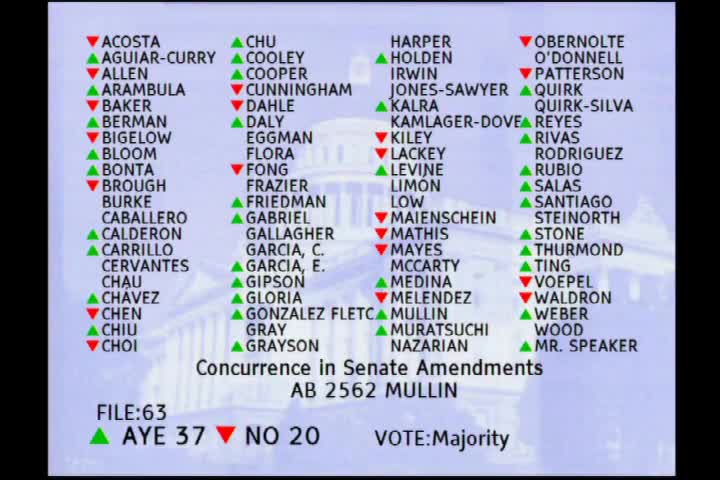

Bill Author

Bill Co-Author(s):