AB 2458: Qualified special taxes: exemption: information.
- Session Year: 2017-2018
- House: Assembly
- Latest Version Date: 2018-09-14
Existing law authorizes school districts to impose qualified special taxes, subject to specified constitutional and statutory provisions. Existing law defines qualified special taxes for those purposes as taxes that apply uniformly to all taxpayers or all real property within a school district but may provide for an exemption for persons who are 65 years of age or older, for persons receiving Supplemental Security Income for a disability, or for persons receiving Social Security Disability Insurance benefits, as specified. Existing law authorizes a school district to enter into an agreement with the county to collect any special tax on behalf of the district.
Existing property tax law requires that each county tax bill, or a statement accompanying that bill, include specified information.
This bill would, commencing on January 1, 2020, require a school district that provides for an exemption from a qualified special tax described above, and contracts or enters into an agreement with the county to collect the qualified special tax within the district, to annually provide specified information relating to that exemption to the county tax collector. The bill would require a county tax collector that receives that information to include a hyperlink, identified as Parcel Tax Exemptions, on the tax collectors Internet Web site homepage to another location on the tax collectors Internet Web site that contains the information submitted by the school district to the tax collector relating to that exemption, except as specified. The bill would, if a school district provides for an exemption from a qualified special tax and enters into an agreement with the county to collect the tax as described above, require a county tax collector to include on each county tax bill information indicating that school district parcel tax exemption information is available on the tax collectors Internet Web site, except as specified. By imposing new duties on county officials relating to property tax administration, this bill would impose a state-mandated local program.
This bill would incorporate additional changes to Section 50079 of the Government Code proposed by AB 2954 to be operative only if this bill and AB 2954 are enacted and this bill is enacted last.
The California Constitution requires the state to reimburse local agencies and school districts for certain costs mandated by the state. Statutory provisions establish procedures for making that reimbursement.
This bill would provide that, if the Commission on State Mandates determines that the bill contains costs mandated by the state, reimbursement for those costs shall be made pursuant to the statutory provisions noted above.
Existing law authorizes school districts to impose qualified special taxes, subject to specified constitutional and statutory provisions. Existing law defines qualified special taxes for those purposes as taxes that apply uniformly to all taxpayers or all real property within a school district but may provide for an exemption for persons who are 65 years of age or older, for persons receiving Supplemental Security Income for a disability, or for persons receiving Social Security Disability Insurance benefits, as specified. Existing law authorizes a school district to enter into an agreement with the county to collect any special tax on behalf of the district.
Existing property tax law requires that each county tax bill, or a statement accompanying that bill, include specified information.
This bill would, commencing on January 1, 2020, require a school district that provides for an exemption from a qualified special tax described above, and contracts or enters into an agreement with the county to collect the qualified special tax within the district, to annually provide specified information relating to that exemption to the county tax collector. The bill would require a county tax collector that receives that information to include a hyperlink, identified as Parcel Tax Exemptions, on the tax collectors Internet Web site homepage to another location on the tax collectors Internet Web site that contains the information submitted by the school district to the tax collector relating to that exemption. exemption, except as specified. The bill would, if a school district provides for an exemption from a qualified special tax and enters into an agreement with the county to collect the tax as described above, require a county tax collector to include on each county tax bill information indicating that school district parcel tax exemption information is available on the tax collectors Internet Web site. site, except as specified. By imposing new duties on county officials relating to property tax administration, this bill would impose a state-mandated local program.
The California Constitution requires the state to reimburse local agencies and school districts for certain costs mandated by the state. Statutory provisions establish procedures for making that reimbursement.
This bill would provide that, if the Commission on State Mandates determines that the bill contains costs mandated by the state, reimbursement for those costs shall be made pursuant to the statutory provisions noted above.
Existing law authorizes school districts to impose qualified special taxes, subject to specified constitutional and statutory provisions. Existing law defines qualified special taxes for those purposes as taxes that apply uniformly to all taxpayers or all real property within a school district but may provide for an exemption for persons who are 65 years of age or older, for persons receiving Supplemental Security Income for a disability, or for persons receiving Social Security Disability Insurance benefits, as specified. Existing law authorizes a school district to enter into an agreement with the county to collect any special tax on behalf of the district.
Existing property tax law requires that each county tax bill, or a statement accompanying that bill, include specified information.
This bill would, if would, commencing on January 1, 2020, require a school district that provides for an exemption from a qualified special tax described above, and contracts or enters into an agreement with the county to collect the qualified special tax within the district, to annually provide specified information relating to that exemption to the county tax collector. The bill would require a county tax collector that receives that information to include a hyperlink, identified as Parcel Tax Exemptions, on the tax collectors collectors Internet Web site homepage to another location on the tax collectors Internet Web site that contains information on how to apply for that exemption, and would the information submitted by the school district to the tax collector relating to that exemption. The bill would, if a school district provides for an exemption from a qualified special tax and enters into an agreement with the county to collect the tax as described above, require a county tax collector to include a hyperlink to the homepage of the tax collector on each county tax bill. on each county tax bill information indicating that school district parcel tax exemption information is available on the tax collectors Internet Web site. By imposing new duties on county officials relating to property tax administration, this bill would impose a state-mandated local program.
The California Constitution requires the state to reimburse local agencies and school districts for certain costs mandated by the state. Statutory provisions establish procedures for making that reimbursement.
This bill would provide that, if the Commission on State Mandates determines that the bill contains costs mandated by the state, reimbursement for those costs shall be made pursuant to the statutory provisions noted above.
Existing law authorizes school districts to impose qualified special taxes, subject to specified constitutional and statutory provisions. Existing law defines qualified special taxes for those purposes as taxes that apply uniformly to all taxpayers or all real property within a school district but may provide for an exemption for persons who are 65 years of age or older, for persons receiving Supplemental Security Income for a disability, or for persons receiving Social Security Disability Insurance benefits, as specified.
Existing property tax law requires that each county tax bill, or a statement accompanying that bill, include specified information.
This bill would, if a school district provides for an exemption from a qualified special tax described above, require a county tax collector to include a hyperlink, identified as Parcel Tax Exemptions, on the tax collectors homepage to another location on the tax collectors Internet Web site that contains information on how to apply for that exemption, and would require a county tax collector to include a hyperlink to the homepage of the tax collector on each county tax bill. By imposing new duties on county officials relating to property tax administration, this bill would impose a state-mandated local program.
The California Constitution requires the state to reimburse local agencies and school districts for certain costs mandated by the state. Statutory provisions establish procedures for making that reimbursement.
This bill would provide that, if the Commission on State Mandates determines that the bill contains costs mandated by the state, reimbursement for those costs shall be made pursuant to the statutory provisions noted above.
(a)Subject to Section 4 of Article XIIIA of the California Constitution, any school district may impose qualified special taxes within the district pursuant to the procedures established in Article 3.5 (commencing with Section 50075) and any other applicable procedures provided by law.
(b)(1)As used in this section, qualified special taxes means special taxes that apply uniformly to all taxpayers or all real property within the school district, except that qualified special taxes may include taxes that provide for an exemption from those taxes for any or all of the following taxpayers:
(A)Persons who are 65 years of age or older.
(B)Persons receiving Supplemental Security Income for a disability, regardless of age.
(C)Persons receiving Social Security Disability Insurance benefits, regardless of age, whose yearly income does not exceed 250 percent of the 2012 federal poverty guidelines issued by the United States Department of Health and Human Services.
(2)Qualified special taxes do not include special taxes imposed on a particular class of property or taxpayers.
(c)The amendments made to this section by Chapter 81 of the Statutes of 2015 are declaratory of existing law.
(d)Any exemption granted pursuant to subdivision (b) shall remain in effect until the taxpayer becomes ineligible. If the taxpayer becomes ineligible for the exemption for any reason, a new exemption may be granted in the same manner.
(e)This section shall remain in effect only until January 1, 2020, and as of that date is repealed.
SEC. 1.5.Section 50079 of the Government Code is amended to read:50079.(a)Subject to Section 4 of Article XIIIA of the California Constitution, any school district may impose qualified special taxes within the district pursuant to the procedures established in Article 3.5 (commencing with Section 50075) and any other applicable procedures provided by law.
(b)(1)As used in this section, qualified special taxes means special taxes that apply uniformly to all taxpayers or all real property within the school district, except that unimproved property may be taxed at a lower rate than improved property. Qualified special taxes may include taxes that provide for an exemption from those taxes for any or all of the following taxpayers:
(A)Persons who are 65 years of age or older.
(B)Persons receiving Supplemental Security Income for a disability, regardless of age.
(C)Persons receiving Social Security Disability Insurance benefits, regardless of age, whose yearly income does not exceed 250 percent of the 2012 federal poverty guidelines issued by the United States Department of Health and Human Services.
(2)Qualified special taxes do not include special taxes imposed on a particular class of property or taxpayers.
(c)The amendments made to this section by Chapter 81 of the Statutes of 2015 are declaratory of existing law.
(d)Any exemption granted pursuant to subdivision (b) shall remain in effect until the taxpayer becomes ineligible. If the taxpayer becomes ineligible for the exemption for any reason, a new exemption may be granted in the same manner.
(e)This section shall remain in effect only until January 1, 2020, and as of that date is repealed.
SEC. 2.Section 50079 is added to the Government Code, to read:50079.(a)Subject to Section 4 of Article XIII A of the California Constitution, any school district may impose qualified special taxes within the district pursuant to the procedures established in Article 3.5 (commencing with Section 50075) and any other applicable procedures provided by law.
(b)(1)As used in this section, qualified special taxes means special taxes that apply uniformly to all taxpayers or all real property within the school district, except that qualified special taxes may include taxes that provide for an exemption from those taxes for any or all of the following taxpayers:
(A)Persons who are 65 years of age or older.
(B)Persons receiving Supplemental Security Income for a disability, regardless of age.
(C)Persons receiving Social Security Disability Insurance benefits, regardless of age, whose yearly income does not exceed 250 percent of the 2012 federal poverty guidelines issued by the United States Department of Health and Human Services.
(2)Qualified special taxes do not include special taxes imposed on a particular class of property or taxpayers.
(c)The amendments made to this section by Chapter 81 of the Statutes of 2015 are declaratory of existing law.
(d)Any exemption granted pursuant to subdivision (b) shall remain in effect until the taxpayer becomes ineligible. If the taxpayer becomes ineligible for the exemption for any reason, a new exemption may be granted in the same manner.
(e)(1)If a school district provides for an exemption for a qualified special tax pursuant to subdivision (b), and the school district contracts or enters into an agreement with the county to collect the qualified special tax within the district, the school district shall annually provide to the tax collector of that county the following information:
(A)A hyperlink to the location on the Internet Web site of the school district that contains exemption information, if available.
(B)A hyperlink to the location on the Internet Web site of the school district that contains the application for the exemption, if available.
(C)A phone number to provide persons with exemption information or direct persons requesting exemption information.
(2)If a county contracts or enters into an agreement with a school district to collect a qualified special tax for the district and for which that district provides for an exemption pursuant to subdivision (b), the tax collector of that county shall include a hyperlink, which shall be identified as Parcel Tax Exemptions, on the tax collectors Internet Web site homepage to another location on the tax collectors Internet Web site that posts the hyperlinks and information provided by the school district in paragraph (1).
(3)Paragraph (2) shall only apply when the school district provides the information to the tax collector required by paragraph (1). The tax collector shall not post any hyperlink to a location on a school district Internet Web site that is invalid.
(f)This section shall become operative on January 1, 2020.
SEC. 2.5.Section 50079 is added to the Government Code, to read:50079.(a)Subject to Section 4 of Article XIII A of the California Constitution, any school district may impose qualified special taxes within the district pursuant to the procedures established in Article 3.5 (commencing with Section 50075) and any other applicable procedures provided by law.
(b)(1)As used in this section, qualified special taxes means special taxes that apply uniformly to all taxpayers or all real property within the school district, except that unimproved property may be taxed at a lower rate than improved property. Qualified special taxes may include taxes that provide for an exemption from those taxes for any or all of the following taxpayers:
(A)Persons who are 65 years of age or older.
(B)Persons receiving Supplemental Security Income for a disability, regardless of age.
(C)Persons receiving Social Security Disability Insurance benefits, regardless of age, whose yearly income does not exceed 250 percent of the 2012 federal poverty guidelines issued by the United States Department of Health and Human Services.
(2)Qualified special taxes do not include special taxes imposed on a particular class of property or taxpayers.
(c)The amendments made to this section by Chapter 81 of the Statutes of 2015 are declaratory of existing law.
(d)Any exemption granted pursuant to subdivision (b) shall remain in effect until the taxpayer becomes ineligible. If the taxpayer becomes ineligible for the exemption for any reason, a new exemption may be granted in the same manner.
(e)(1)If a school district provides for an exemption for a qualified special tax pursuant to subdivision (b), and the school district contracts or enters into an agreement with the county to collect the qualified special tax within the district, the school district shall annually provide to the tax collector of that county the following information:
(A)A hyperlink to the location on the Internet Web site of the school district that contains exemption information, if available.
(B)A hyperlink to the location on the Internet Web site of the school district that contains the application for the exemption, if available.
(C)A phone number to provide persons with exemption information or direct persons requesting exemption information.
(2)If a county contracts or enters into an agreement with a school district to collect a qualified special tax for the district and for which that district provides for an exemption pursuant to subdivision (b), the tax collector of that county shall include a hyperlink, which shall be identified as Parcel Tax Exemptions, on the tax collectors Internet Web site homepage to another location on the tax collectors Internet Web site that posts the hyperlinks and information provided by the school district in paragraph (1).
(3)Paragraph (2) shall only apply when the school district provides the information to the tax collector required by paragraph (1). The tax collector shall not post any hyperlink to a location on a school district Internet Web site that is invalid.
(f)This section shall become operative on January 1, 2020.
SEC. 3.Section 2611.6 of the Revenue and Taxation Code is amended to read:2611.6.The following information shall be included in each county tax bill, whether mailed or electronically transmitted, or in a separate statement accompanying the bill:
(a)The full value of locally assessed property, including assessments made for irrigation district purposes in accordance with Section 26625.1 of the Water Code.
(b)The tax rate required by Article XIIIA of the California Constitution.
(c)The rate or dollar amount of taxes levied in excess of the 1-percent limitation to pay for voter-approved indebtedness incurred before July 1, 1978, or bonded indebtedness for the acquisition or improvement of real property approved by two-thirds of the voters on or after June 4, 1986.
(d)The amount of any special taxes and special assessments levied.
(e)The amount of any tax rate reduction pursuant to Section 96.8, with the notation: Tax reduction by (name of jurisdiction).
(f)The amount of any exemptions. Exemptions reimbursable by the state shall be shown separately.
(g)The total taxes due and payable on the property covered by the bill.
(h)Instructions on tendering payment, including the name and mailing address of the tax collector.
(i)The billing of any special purpose parcel tax as required by paragraph (2) of subdivision (b) of Section 53087.4 of the Government Code, or any successor to that paragraph.
(j)Information specifying all of the following:
(1)That if the taxpayer disagrees with the assessed value as shown on the tax bill, the taxpayer has the right to an informal assessment review by contacting the assessors office.
(2)That if the taxpayer and the assessor are unable to agree on a proper assessed value pursuant to an informal assessment review, the taxpayer has the right to file an application for reduction in assessment for the following year with the county board of equalization or the assessment appeals board, as applicable, and the time period during which the application will be accepted.
(3)The address of the clerk of the county board of equalization or the assessment appeals board, as applicable, at which forms for an application for reduction in assessment may be obtained.
(4)That if an informal or formal assessment review is requested, relief from penalties shall apply only to the difference between the county assessors final determination of value and the value on the assessment roll for the fiscal year covered.
(k)This section shall remain in effect only until January 1, 2020, and as of that date is repealed.
SEC. 4.Section 2611.6 is added to the Revenue and Taxation Code, to read:2611.6.The following information shall be included in each county tax bill, whether mailed or electronically transmitted, or in a separate statement accompanying the bill:
(a)The full value of locally assessed property, including assessments made for irrigation district purposes in accordance with Section 26625.1 of the Water Code.
(b)The tax rate required by Article XIIIA of the California Constitution.
(c)The rate or dollar amount of taxes levied in excess of the 1-percent limitation to pay for voter-approved indebtedness incurred before July 1, 1978, or bonded indebtedness for the acquisition or improvement of real property approved by two-thirds of the voters on or after June 4, 1986.
(d)The amount of any special taxes and special assessments levied.
(e)The amount of any tax rate reduction pursuant to Section 96.8, with the notation: Tax reduction by (name of jurisdiction).
(f)The amount of any exemptions. Exemptions reimbursable by the state shall be shown separately.
(g)The total taxes due and payable on the property covered by the bill.
(h)Instructions on tendering payment, including the name and mailing address of the tax collector.
(i)The billing of any special purpose parcel tax as required by paragraph (2) of subdivision (b) of Section 53087.4 of the Government Code, or any successor to that paragraph.
(j)Information specifying all of the following:
(1)That if the taxpayer disagrees with the assessed value as shown on the tax bill, the taxpayer has the right to an informal assessment review by contacting the assessors office.
(2)That if the taxpayer and the assessor are unable to agree on a proper assessed value pursuant to an informal assessment review, the taxpayer has the right to file an application for reduction in assessment for the following year with the county board of equalization or the assessment appeals board, as applicable, and the time period during which the application will be accepted.
(3)The address of the clerk of the county board of equalization or the assessment appeals board, as applicable, at which forms for an application for reduction in assessment may be obtained.
(4)That if an informal or formal assessment review is requested, relief from penalties shall apply only to the difference between the county assessors final determination of value and the value on the assessment roll for the fiscal year covered.
(k)(1)If a school district in that county provides for an exemption for a qualified special tax pursuant to subdivision (b) of Section 50079 of the Government Code and contracts or enters into an agreement with the county to collect the qualified special tax within the district, information indicating that school district parcel tax exemption information is available on the tax collectors Internet Web site, including the URL of the tax collectors Internet Web site homepage.
(2)This subdivision shall only apply when the school district provides the information to the tax collector required by subdivision (e) of Section 50079 of the Government Code at least 90 days prior to the mailing or electronic transmittal of the county tax bill for that fiscal year. The tax collector shall not include on the county tax bill any hyperlink to a location on a school district Internet Web site that is invalid.
(l)This section shall become operative on January 1, 2020.
SEC. 5.Sections 1.5 and 2.5 of this bill incorporate amendments to Section 50079 of the Government Code proposed by both this bill and Assembly Bill 2954. Those sections shall only become operative if (1) both bills are enacted and become effective on or before January 1, 2019, (2) each bill amends Section 50079 of the Government Code, (3) this bill amends, repeals, and adds Section 50079 of the Government Code, and (4) this bill is enacted after Assembly Bill 2954, in which case Sections 1 and 2 of this bill shall not become operative.
SEC. 6.If the Commission on State Mandates determines that this act contains costs mandated by the state, reimbursement to local agencies and school districts for those costs shall be made pursuant to Part 7 (commencing with Section 17500) of Division 4 of Title 2 of the Government Code.
(a)Subject to Section 4 of Article XIIIA of the California Constitution, any school district may impose qualified special taxes within the district pursuant to the procedures established in Article 3.5 (commencing with Section 50075) and any other applicable procedures provided by law.
(b)(1)As used in this section, qualified special taxes means special taxes that apply uniformly to all taxpayers or all real property within the school district, except that qualified special taxes may include taxes that provide for an exemption from those taxes for any or all of the following taxpayers:
(A)Persons who are 65 years of age or older.
(B)Persons receiving Supplemental Security Income for a disability, regardless of age.
(C)Persons receiving Social Security Disability Insurance benefits, regardless of age, whose yearly income does not exceed 250 percent of the 2012 federal poverty guidelines issued by the United States Department of Health and Human Services.
(2)Qualified special taxes do not include special taxes imposed on a particular class of property or taxpayers.
(c)The amendments made to this section by Chapter 81 of the Statutes of 2015 are declaratory of existing law.
(d)Any exemption granted pursuant to subdivision (b) shall remain in effect until the taxpayer becomes ineligible. If the taxpayer becomes ineligible for the exemption for any reason, a new exemption may be granted in the same manner.
(e)This section shall remain in effect only until January 1, 2020, and as of that date is repealed.
SEC. 1.5.Section 50079 of the Government Code is amended to read:50079.(a)Subject to Section 4 of Article XIIIA of the California Constitution, any school district may impose qualified special taxes within the district pursuant to the procedures established in Article 3.5 (commencing with Section 50075) and any other applicable procedures provided by law.
(b)(1)As used in this section, qualified special taxes means special taxes that apply uniformly to all taxpayers or all real property within the school district, except that qualified unimproved property may be taxed at a lower rate than improved property. Qualified special taxes may include taxes that provide for an exemption from those taxes for any or all of the following taxpayers:
(A)Persons who are 65 years of age or older.
(B)Persons receiving Supplemental Security Income for a disability, regardless of age.
(C)Persons receiving Social Security Disability Insurance benefits, regardless of age, whose yearly income does not exceed 250 percent of the 2012 federal poverty guidelines issued by the United States Department of Health and Human Services.
(2)Qualified special taxes do not include special taxes imposed on a particular class of property or taxpayers.
(c)The amendments made to this section by Chapter 81 of the Statutes of 2015 are declaratory of existing law.
(d)Any exemption granted pursuant to subdivision (b) shall remain in effect until the taxpayer becomes ineligible. If the taxpayer becomes ineligible for the exemption for any reason, a new exemption may be granted in the same manner.
(e)This section shall remain in effect only until January 1, 2020, and as of that date is repealed.
SEC. 2.Section 50079 is added to the Government Code, to read:50079.(a)Subject to Section 4 of Article XIII A of the California Constitution, any school district may impose qualified special taxes within the district pursuant to the procedures established in Article 3.5 (commencing with Section 50075) and any other applicable procedures provided by law.
(b)(1)As used in this section, qualified special taxes means special taxes that apply uniformly to all taxpayers or all real property within the school district, except that qualified special taxes may include taxes that provide for an exemption from those taxes for any or all of the following taxpayers:
(A)Persons who are 65 years of age or older.
(B)Persons receiving Supplemental Security Income for a disability, regardless of age.
(C)Persons receiving Social Security Disability Insurance benefits, regardless of age, whose yearly income does not exceed 250 percent of the 2012 federal poverty guidelines issued by the United States Department of Health and Human Services.
(2)Qualified special taxes do not include special taxes imposed on a particular class of property or taxpayers.
(c)The amendments made to this section by Chapter 81 of the Statutes of 2015 are declaratory of existing law.
(d)Any exemption granted pursuant to subdivision (b) shall remain in effect until the taxpayer becomes ineligible. If the taxpayer becomes ineligible for the exemption for any reason, a new exemption may be granted in the same manner.
(e)(1)If a school district provides for an exemption for a qualified special tax pursuant to subdivision (b), and the school district contracts or enters into an agreement with the county to collect the qualified special tax within the district, the school district shall annually provide to the tax collector of that county the following information:
(A)A hyperlink to the location on the Internet Web site of the school district that contains exemption information, if available.
(B)A hyperlink to the location on the Internet Web site of the school district that contains the application for the exemption, if available.
(C)A phone number to provide persons with exemption information or direct persons requesting exemption information.
(2)If a county contracts or enters into an agreement with a school district to collect a qualified special tax for the district and for which that district provides for an exemption pursuant to subdivision (b), the tax collector of that county shall include a hyperlink, which shall be identified as Parcel Tax Exemptions, on the tax collectors Internet Web site homepage to another location on the tax collectors Internet Web site that posts the hyperlinks and information provided by the school district in paragraph (1).
(3)Paragraph (2) shall only apply when the school district provides the information to the tax collector required by paragraph (1). The tax collector shall not post any hyperlink to a location on a school district Internet Web site that is invalid.
(f)This section shall become operative on January 1, 2020.
SEC. 2.5.Section 50079 is added to the Government Code, to read:50079.(a)Subject to Section 4 of Article XIII A of the California Constitution, any school district may impose qualified special taxes within the district pursuant to the procedures established in Article 3.5 (commencing with Section 50075) and any other applicable procedures provided by law.
(b)(1)As used in this section, qualified special taxes means special taxes that apply uniformly to all taxpayers or all real property within the school district, except that unimproved property may be taxed at a lower rate than improved property. Qualified special taxes may include taxes that provide for an exemption from those taxes for any or all of the following taxpayers:
(A)Persons who are 65 years of age or older.
(B)Persons receiving Supplemental Security Income for a disability, regardless of age.
(C)Persons receiving Social Security Disability Insurance benefits, regardless of age, whose yearly income does not exceed 250 percent of the 2012 federal poverty guidelines issued by the United States Department of Health and Human Services.
(2)Qualified special taxes do not include special taxes imposed on a particular class of property or taxpayers.
(c)The amendments made to this section by Chapter 81 of the Statutes of 2015 are declaratory of existing law.
(d)Any exemption granted pursuant to subdivision (b) shall remain in effect until the taxpayer becomes ineligible. If the taxpayer becomes ineligible for the exemption for any reason, a new exemption may be granted in the same manner.
(e)(1)If a school district provides for an exemption for a qualified special tax pursuant to subdivision (b), and the school district contracts or enters into an agreement with the county to collect the qualified special tax within the district, the school district shall annually provide to the tax collector of that county the following information:
(A)A hyperlink to the location on the Internet Web site of the school district that contains exemption information, if available.
(B)A hyperlink to the location on the Internet Web site of the school district that contains the application for the exemption, if available.
(C)A phone number to provide persons with exemption information or direct persons requesting exemption information.
(2)If a county contracts or enters into an agreement with a school district to collect a qualified special tax for the district and for which that district provides for an exemption pursuant to subdivision (b), the tax collector of that county shall include a hyperlink, which shall be identified as Parcel Tax Exemptions, on the tax collectors Internet Web site homepage to another location on the tax collectors Internet Web site that posts the hyperlinks and information provided by the school district in paragraph (1).
(3)Paragraph (2) shall only apply when the school district provides the information to the tax collector required by paragraph (1). The tax collector shall not post any hyperlink to a location on a school district Internet Web site that is invalid.
(f)This section shall become operative on January 1, 2020.
SEC. 3.Section 2611.6 of the Revenue and Taxation Code is amended to read:2611.6.The following information shall be included in each county tax bill, whether mailed or electronically transmitted, or in a separate statement accompanying the bill:
(a)The full value of locally assessed property, including assessments made for irrigation district purposes in accordance with Section 26625.1 of the Water Code.
(b)The tax rate required by Article XIIIA of the California Constitution.
(c)The rate or dollar amount of taxes levied in excess of the 1-percent limitation to pay for voter-approved indebtedness incurred before July 1, 1978, or bonded indebtedness for the acquisition or improvement of real property approved by two-thirds of the voters on or after June 4, 1986.
(d)The amount of any special taxes and special assessments levied.
(e)The amount of any tax rate reduction pursuant to Section 96.8, with the notation: Tax reduction by (name of jurisdiction).
(f)The amount of any exemptions. Exemptions reimbursable by the state shall be shown separately.
(g)The total taxes due and payable on the property covered by the bill.
(h)Instructions on tendering payment, including the name and mailing address of the tax collector.
(i)The billing of any special purpose parcel tax as required by paragraph (2) of subdivision (b) of Section 53087.4 of the Government Code, or any successor to that paragraph.
(j)Information specifying all of the following:
(1)That if the taxpayer disagrees with the assessed value as shown on the tax bill, the taxpayer has the right to an informal assessment review by contacting the assessors office.
(2)That if the taxpayer and the assessor are unable to agree on a proper assessed value pursuant to an informal assessment review, the taxpayer has the right to file an application for reduction in assessment for the following year with the county board of equalization or the assessment appeals board, as applicable, and the time period during which the application will be accepted.
(3)The address of the clerk of the county board of equalization or the assessment appeals board, as applicable, at which forms for an application for reduction in assessment may be obtained.
(4)That if an informal or formal assessment review is requested, relief from penalties shall apply only to the difference between the county assessors final determination of value and the value on the assessment roll for the fiscal year covered.
(k)This section shall remain in effect only until January 1, 2020, and as of that date is repealed.
SEC. 4.Section 2611.6 is added to the Revenue and Taxation Code, to read:2611.6.The following information shall be included in each county tax bill, whether mailed or electronically transmitted, or in a separate statement accompanying the bill:
(a)The full value of locally assessed property, including assessments made for irrigation district purposes in accordance with Section 26625.1 of the Water Code.
(b)The tax rate required by Article XIIIA of the California Constitution.
(c)The rate or dollar amount of taxes levied in excess of the 1-percent limitation to pay for voter-approved indebtedness incurred before July 1, 1978, or bonded indebtedness for the acquisition or improvement of real property approved by two-thirds of the voters on or after June 4, 1986.
(d)The amount of any special taxes and special assessments levied.
(e)The amount of any tax rate reduction pursuant to Section 96.8, with the notation: Tax reduction by (name of jurisdiction).
(f)The amount of any exemptions. Exemptions reimbursable by the state shall be shown separately.
(g)The total taxes due and payable on the property covered by the bill.
(h)Instructions on tendering payment, including the name and mailing address of the tax collector.
(i)The billing of any special purpose parcel tax as required by paragraph (2) of subdivision (b) of Section 53087.4 of the Government Code, or any successor to that paragraph.
(j)Information specifying all of the following:
(1)That if the taxpayer disagrees with the assessed value as shown on the tax bill, the taxpayer has the right to an informal assessment review by contacting the assessors office.
(2)That if the taxpayer and the assessor are unable to agree on a proper assessed value pursuant to an informal assessment review, the taxpayer has the right to file an application for reduction in assessment for the following year with the county board of equalization or the assessment appeals board, as applicable, and the time period during which the application will be accepted.
(3)The address of the clerk of the county board of equalization or the assessment appeals board, as applicable, at which forms for an application for reduction in assessment may be obtained.
(4)That if an informal or formal assessment review is requested, relief from penalties shall apply only to the difference between the county assessors final determination of value and the value on the assessment roll for the fiscal year covered.
(k)(1)If a school district in that county provides for an exemption for a qualified special tax pursuant to subdivision (b) of Section 50079 of the Government Code and contracts or enters into an agreement with the county to collect the qualified special tax within the district, information indicating that school district parcel tax exemption information is available on the tax collectors Internet Web site, including the URL of the tax collectors Internet Web site homepage.
(2)This subdivision shall only apply when the school district provides the information to the tax collector required by subdivision (e) of Section 50079 of the Government Code at least 90 days prior to the mailing or electronic transmittal of the county property tax bill for that fiscal year. The tax collector shall not include on the county property tax bill any hyperlink to a location on a school district Internet Web site that is invalid.
(l)This section shall become operative on January 1, 2020.
SEC. 5.Sections 1.5 and 2.5 of this bill incorporate amendments to Section 50079 of the Government Code proposed by both this bill and Assembly Bill 2954. Those sections shall only become operative if (1) both bills are enacted and become effective on or before January 1, 2019, (2) each bill amends Section 50079 of the Government Code, (3) this bill amends, repeals, and adds Section 50079 of the Government Code, and (4) this bill is enacted after Assembly Bill 2954, in which case Sections 1 and 2 of this bill shall not become operative.
SEC. 5.SEC. 6.If the Commission on State Mandates determines that this act contains costs mandated by the state, reimbursement to local agencies and school districts for those costs shall be made pursuant to Part 7 (commencing with Section 17500) of Division 4 of Title 2 of the Government Code.
(a)Subject to Section 4 of Article XIIIA of the California Constitution, any school district may impose qualified special taxes within the district pursuant to the procedures established in Article 3.5 (commencing with Section 50075) and any other applicable procedures provided by law.
(b)(1)As used in this section, qualified special taxes means special taxes that apply uniformly to all taxpayers or all real property within the school district, except that qualified special taxes may include taxes that provide for an exemption from those taxes for any or all of the following taxpayers:
(A)Persons who are 65 years of age or older.
(B)Persons receiving Supplemental Security Income for a disability, regardless of age.
(C)Persons receiving Social Security Disability Insurance benefits, regardless of age, whose yearly income does not exceed 250 percent of the 2012 federal poverty guidelines issued by the United States Department of Health and Human Services.
(2)Qualified special taxes do not include special taxes imposed on a particular class of property or taxpayers.
(c)The amendments made to this section by Chapter 81 of the Statutes of 2015 are declaratory of existing law.
(d)Any exemption granted pursuant to subdivision (b) shall remain in effect until the taxpayer becomes ineligible. If the taxpayer becomes ineligible for the exemption for any reason, a new exemption may be granted in the same manner.
(e)This section shall remain in effect only until January 1, 2020, and as of that date is repealed.
SEC. 2.Section 50079 is added to the Government Code, to read:50079.(a)Subject to Section 4 of Article XIII A of the California Constitution, any school district may impose qualified special taxes within the district pursuant to the procedures established in Article 3.5 (commencing with Section 50075) and any other applicable procedures provided by law.
(b)(1)As used in this section, qualified special taxes means special taxes that apply uniformly to all taxpayers or all real property within the school district, except that qualified special taxes may include taxes that provide for an exemption from those taxes for any or all of the following taxpayers:
(A)Persons who are 65 years of age or older.
(B)Persons receiving Supplemental Security Income for a disability, regardless of age.
(C)Persons receiving Social Security Disability Insurance benefits, regardless of age, whose yearly income does not exceed 250 percent of the 2012 federal poverty guidelines issued by the United States Department of Health and Human Services.
(2)Qualified special taxes do not include special taxes imposed on a particular class of property or taxpayers.
(c)The amendments made to this section by Chapter 81 of the Statutes of 2015 are declaratory of existing law.
(d)Any exemption granted pursuant to subdivision (b) shall remain in effect until the taxpayer becomes ineligible. If the taxpayer becomes ineligible for the exemption for any reason, a new exemption may be granted in the same manner.
(e)(1)If a school district provides for an exemption for a qualified special tax pursuant to subdivision (b), and the school district contracts or enters into an agreement with the county to collect the qualified special tax within the district, the school district shall annually provide to the tax collector of that county the following information:
(A)A hyperlink to the location on the Internet Web site of the school district that contains exemption information, if available.
(B)A hyperlink to the location on the Internet Web site of the school district that contains the application for the exemption, if available.
(C)A phone number to provide persons with exemption information or direct persons requesting exemption information.
(2)If a county contracts or enters into an agreement with a school district to collect a qualified special tax for the district and for which that district provides for an exemption pursuant to subdivision (b), the tax collector of that county shall include a hyperlink, which shall be identified as Parcel Tax Exemptions, on the tax collectors Internet Web site homepage to another location on the tax collectors Internet Web site that posts the hyperlinks and information provided by the school district in paragraph (1).
(3)Paragraph (2) shall only apply when the school district provides the information to the tax collector required by paragraph (1). The tax collector shall not post any hyperlink to a location on a school district Internet Web site that is invalid.
(f)This section shall become operative on January 1, 2020.
SEC. 3.Section 2611.6 of the Revenue and Taxation Code is amended to read:2611.6.The following information shall be included in each county tax bill, whether mailed or electronically transmitted, or in a separate statement accompanying the bill:
(a)The full value of locally assessed property, including assessments made for irrigation district purposes in accordance with Section 26625.1 of the Water Code.
(b)The tax rate required by Article XIIIA of the California Constitution.
(c)The rate or dollar amount of taxes levied in excess of the 1-percent limitation to pay for voter-approved indebtedness incurred before July 1, 1978, or bonded indebtedness for the acquisition or improvement of real property approved by two-thirds of the voters on or after June 4, 1986.
(d)The amount of any special taxes and special assessments levied.
(e)The amount of any tax rate reduction pursuant to Section 96.8, with the notation: Tax reduction by (name of jurisdiction).
(f)The amount of any exemptions. Exemptions reimbursable by the state shall be shown separately.
(g)The total taxes due and payable on the property covered by the bill.
(h)Instructions on tendering payment, including the name and mailing address of the tax collector.
(i)The billing of any special purpose parcel tax as required by paragraph (2) of subdivision (b) of Section 53087.4 of the Government Code, or any successor to that paragraph.
(j)Information specifying all of the following:
(1)That if the taxpayer disagrees with the assessed value as shown on the tax bill, the taxpayer has the right to an informal assessment review by contacting the assessors office.
(2)That if the taxpayer and the assessor are unable to agree on a proper assessed value pursuant to an informal assessment review, the taxpayer has the right to file an application for reduction in assessment for the following year with the county board of equalization or the assessment appeals board, as applicable, and the time period during which the application will be accepted.
(3)The address of the clerk of the county board of equalization or the assessment appeals board, as applicable, at which forms for an application for reduction in assessment may be obtained.
(4)That if an informal or formal assessment review is requested, relief from penalties shall apply only to the difference between the county assessors final determination of value and the value on the assessment roll for the fiscal year covered.
(k)This section shall remain in effect only until January 1, 2020, and as of that date is repealed.
SEC. 4.Section 2611.6 is added to the Revenue and Taxation Code, to read:2611.6.The following information shall be included in each county tax bill, whether mailed or electronically transmitted, or in a separate statement accompanying the bill:
(a)The full value of locally assessed property, including assessments made for irrigation district purposes in accordance with Section 26625.1 of the Water Code.
(b)The tax rate required by Article XIIIA of the California Constitution.
(c)The rate or dollar amount of taxes levied in excess of the 1-percent limitation to pay for voter-approved indebtedness incurred before July 1, 1978, or bonded indebtedness for the acquisition or improvement of real property approved by two-thirds of the voters on or after June 4, 1986.
(d)The amount of any special taxes and special assessments levied.
(e)The amount of any tax rate reduction pursuant to Section 96.8, with the notation: Tax reduction by (name of jurisdiction).
(f)The amount of any exemptions. Exemptions reimbursable by the state shall be shown separately.
(g)The total taxes due and payable on the property covered by the bill.
(h)Instructions on tendering payment, including the name and mailing address of the tax collector.
(i)The billing of any special purpose parcel tax as required by paragraph (2) of subdivision (b) of Section 53087.4 of the Government Code, or any successor to that paragraph.
(j)Information specifying all of the following:
(1)That if the taxpayer disagrees with the assessed value as shown on the tax bill, the taxpayer has the right to an informal assessment review by contacting the assessors office.
(2)That if the taxpayer and the assessor are unable to agree on a proper assessed value pursuant to an informal assessment review, the taxpayer has the right to file an application for reduction in assessment for the following year with the county board of equalization or the assessment appeals board, as applicable, and the time period during which the application will be accepted.
(3)The address of the clerk of the county board of equalization or the assessment appeals board, as applicable, at which forms for an application for reduction in assessment may be obtained.
(4)That if an informal or formal assessment review is requested, relief from penalties shall apply only to the difference between the county assessors final determination of value and the value on the assessment roll for the fiscal year covered.
(k)(1)If a school district in that county provides for an exemption for a qualified special tax pursuant to subdivision (b) of Section 50079 of the Government Code and contracts or enters into an agreement with the county to collect the qualified special tax within the district, information indicating that school district parcel tax exemption information is available on the tax collectors Internet Web site, including the URL of the tax collectors Internet Web site homepage.
(2)This subdivision shall only apply when the school district provides the information to the tax collector required by subdivision (e) of Section 50079 of the Government Code at least 90 days prior to the mailing or electronic transmittal of the county property tax bill for that fiscal year. The tax collector shall not include on the county property tax bill any hyperlink to a location on a school district Internet Web site that is invalid.
(l)This section shall become operative on January 1, 2020.
SEC. 5.If the Commission on State Mandates determines that this act contains costs mandated by the state, reimbursement to local agencies and school districts for those costs shall be made pursuant to Part 7 (commencing with Section 17500) of Division 4 of Title 2 of the Government Code.
(a)Subject to Section 4 of Article XIIIA of the California Constitution, any school district may impose qualified special taxes within the district pursuant to the procedures established in Article 3.5 (commencing with Section 50075) and any other applicable procedures provided by law.
(b)(1)As used in this section, qualified special taxes means special taxes that apply uniformly to all taxpayers or all real property within the school district, except that qualified special taxes may include taxes that provide for an exemption from those taxes for any or all of the following taxpayers:
(A)Persons who are 65 years of age or older.
(B)Persons receiving Supplemental Security Income for a disability, regardless of age.
(C)Persons receiving Social Security Disability Insurance benefits, regardless of age, whose yearly income does not exceed 250 percent of the 2012 federal poverty guidelines issued by the United States Department of Health and Human Services.
(2)Qualified special taxes do not include special taxes imposed on a particular class of property or taxpayers.
(c)The amendments made to this section by Chapter 81 of the Statutes of 2015 are declaratory of existing law.
(d)Any exemption granted pursuant to subdivision (b) shall remain in effect until the taxpayer becomes ineligible. If the taxpayer becomes ineligible for the exemption for any reason, a new exemption may be granted in the same manner.
(e)This section shall remain in effect only until January 1, 2020, and as of that date is repealed.
SEC. 2.Section 50079 is added to the Government Code, to read:50079.(a)Subject to Section 4 of Article XIII A of the California Constitution, any school district may impose qualified special taxes within the district pursuant to the procedures established in Article 3.5 (commencing with Section 50075) and any other applicable procedures provided by law.
(b)(1)As used in this section, qualified special taxes means special taxes that apply uniformly to all taxpayers or all real property within the school district, except that qualified special taxes may include taxes that provide for an exemption from those taxes for any or all of the following taxpayers:
(A)Persons who are 65 years of age or older.
(B)Persons receiving Supplemental Security Income for a disability, regardless of age.
(C)Persons receiving Social Security Disability Insurance benefits, regardless of age, whose yearly income does not exceed 250 percent of the 2012 federal poverty guidelines issued by the United States Department of Health and Human Services.
(2)Qualified special taxes do not include special taxes imposed on a particular class of property or taxpayers.
(c)The amendments made to this section by Chapter 81 of the Statutes of 2015 are declaratory of existing law.
(d)Any exemption granted pursuant to subdivision (b) shall remain in effect until the taxpayer becomes ineligible. If the taxpayer becomes ineligible for the exemption for any reason, a new exemption may be granted in the same manner.
(e)(1)If a school district provides for an exemption for a qualified special tax pursuant to subdivision (b), and the school district contracts or enters into an agreement with the county to collect the qualified special tax within the district, the school district shall annually provide to the tax collector of that county the following information:
(A)A hyperlink to the location on the Internet Web site of the school district that contains exemption information, if available.
(B)A hyperlink to the location on the Internet Web site of the school district that contains the application for the exemption, if available.
(C)A phone number to provide persons with exemption information or direct persons requesting exemption information.
(2)If a county contracts or enters into an agreement with a school district to collect a qualified special tax for the district and for which that district provides for an exemption pursuant to subdivision (b), the tax collector of that county shall include a hyperlink, which shall be identified as Parcel Tax Exemptions, on the tax collectors Internet Web site homepage to another location on the tax collectors Internet Web site that posts the hyperlinks and information provided by the school district in paragraph (1).
(f)This section shall become operative on January 1, 2020.
SEC. 3.Section 2611.6 of the Revenue and Taxation Code is amended to read:2611.6.The following information shall be included in each county tax bill, whether mailed or electronically transmitted, or in a separate statement accompanying the bill:
(a)The full value of locally assessed property, including assessments made for irrigation district purposes in accordance with Section 26625.1 of the Water Code.
(b)The tax rate required by Article XIIIA of the California Constitution.
(c)The rate or dollar amount of taxes levied in excess of the 1-percent limitation to pay for voter-approved indebtedness incurred before July 1, 1978, or bonded indebtedness for the acquisition or improvement of real property approved by two-thirds of the voters on or after June 4, 1986.
(d)The amount of any special taxes and special assessments levied.
(e)The amount of any tax rate reduction pursuant to Section 96.8, with the notation: Tax reduction by (name of jurisdiction).
(f)The amount of any exemptions. Exemptions reimbursable by the state shall be shown separately.
(g)The total taxes due and payable on the property covered by the bill.
(h)Instructions on tendering payment, including the name and mailing address of the tax collector.
(i)The billing of any special purpose parcel tax as required by paragraph (2) of subdivision (b) of Section 53087.4 of the Government Code, or any successor to that paragraph.
(j)Information specifying all of the following:
(1)That if the taxpayer disagrees with the assessed value as shown on the tax bill, the taxpayer has the right to an informal assessment review by contacting the assessors office.
(2)That if the taxpayer and the assessor are unable to agree on a proper assessed value pursuant to an informal assessment review, the taxpayer has the right to file an application for reduction in assessment for the following year with the county board of equalization or the assessment appeals board, as applicable, and the time period during which the application will be accepted.
(3)The address of the clerk of the county board of equalization or the assessment appeals board, as applicable, at which forms for an application for reduction in assessment may be obtained.
(4)That if an informal or formal assessment review is requested, relief from penalties shall apply only to the difference between the county assessors final determination of value and the value on the assessment roll for the fiscal year covered.
(k)This section shall remain in effect only until January 1, 2020, and as of that date is repealed.
SEC. 4.Section 2611.6 is added to the Revenue and Taxation Code, to read:2611.6.The following information shall be included in each county tax bill, whether mailed or electronically transmitted, or in a separate statement accompanying the bill:
(a)The full value of locally assessed property, including assessments made for irrigation district purposes in accordance with Section 26625.1 of the Water Code.
(b)The tax rate required by Article XIIIA of the California Constitution.
(c)The rate or dollar amount of taxes levied in excess of the 1-percent limitation to pay for voter-approved indebtedness incurred before July 1, 1978, or bonded indebtedness for the acquisition or improvement of real property approved by two-thirds of the voters on or after June 4, 1986.
(d)The amount of any special taxes and special assessments levied.
(e)The amount of any tax rate reduction pursuant to Section 96.8, with the notation: Tax reduction by (name of jurisdiction).
(f)The amount of any exemptions. Exemptions reimbursable by the state shall be shown separately.
(g)The total taxes due and payable on the property covered by the bill.
(h)Instructions on tendering payment, including the name and mailing address of the tax collector.
(i)The billing of any special purpose parcel tax as required by paragraph (2) of subdivision (b) of Section 53087.4 of the Government Code, or any successor to that paragraph.
(j)Information specifying all of the following:
(1)That if the taxpayer disagrees with the assessed value as shown on the tax bill, the taxpayer has the right to an informal assessment review by contacting the assessors office.
(2)That if the taxpayer and the assessor are unable to agree on a proper assessed value pursuant to an informal assessment review, the taxpayer has the right to file an application for reduction in assessment for the following year with the county board of equalization or the assessment appeals board, as applicable, and the time period during which the application will be accepted.
(3)The address of the clerk of the county board of equalization or the assessment appeals board, as applicable, at which forms for an application for reduction in assessment may be obtained.
(4)That if an informal or formal assessment review is requested, relief from penalties shall apply only to the difference between the county assessors final determination of value and the value on the assessment roll for the fiscal year covered.
(k)If a school district in that county provides for an exemption for a qualified special tax pursuant to subdivision (b) of Section 50079 of the Government Code and contracts or enters into an agreement with the county to collect the qualified special tax within the district, information indicating that school district parcel tax exemption information is available on the tax collector's Internet Web site, including the URL of the tax collectors Internet Web site homepage.
(l)This section shall become operative on January 1, 2020.
SEC. 5.If the Commission on State Mandates determines that this act contains costs mandated by the state, reimbursement to local agencies and school districts for those costs shall be made pursuant to Part 7 (commencing with Section 17500) of Division 4 of Title 2 of the Government Code.
SECTION 1.Section 50079 of the Government Code is amended to read:50079.(a)Subject to Section 4 of Article XIIIA of the California Constitution, any school district may impose qualified special taxes within the district pursuant to the procedures established in Article 3.5 (commencing with Section 50075) and any other applicable procedures provided by law.(b)(1)As used in this section, qualified special taxes means special taxes that apply uniformly to all taxpayers or all real property within the school district, except that qualified special taxes may include taxes that provide for an exemption from those taxes for any or all of the following taxpayers:(A)Persons who are 65 years of age or older.(B)Persons receiving Supplemental Security Income for a disability, regardless of age.(C)Persons receiving Social Security Disability Insurance benefits, regardless of age, whose yearly income does not exceed 250 percent of the 2012 federal poverty guidelines issued by the United States Department of Health and Human Services.(2)Qualified special taxes do not include special taxes imposed on a particular class of property or taxpayers.(c)The amendments made to this section by Chapter 81 of the Statutes of 2015 are declaratory of existing law.(d)Any exemption granted pursuant to subdivision (b) shall remain in effect until the taxpayer becomes ineligible. If the taxpayer becomes ineligible for the exemption for any reason, a new exemption may be granted in the same manner.(e)If a school district provides for an exemption for a qualified special tax pursuant to subdivision (b), the tax collector of that county shall include a hyperlink, which shall be identified as Parcel Tax Exemptions, on the tax collectors homepage to another location on the tax collectors Internet Web site that contains information on how to apply for that exemption. As used in this subdivision, the terms homepage, hyperlink, and Internet Web site, have the same meaning as those terms are defined in subdivision (e) of Section 1368.015 of the Health and Safety Code.SEC. 2.Section 2611.6 of the Revenue and Taxation Code is amended to read:2611.6.The following information shall be included in each county tax bill, whether mailed or electronically transmitted, or in a separate statement accompanying the bill:(a)The full value of locally assessed property, including assessments made for irrigation district purposes in accordance with Section 26625.1 of the Water Code.(b)The tax rate required by Article XIIIA of the California Constitution.(c)The rate or dollar amount of taxes levied in excess of the 1-percent limitation to pay for voter-approved indebtedness incurred before July 1, 1978, or bonded indebtedness for the acquisition or improvement of real property approved by two-thirds of the voters on or after June 4, 1986.(d)The amount of any special taxes and special assessments levied.(e)The amount of any tax rate reduction pursuant to Section 96.8, with the notation: Tax reduction by (name of jurisdiction).(f)The amount of any exemptions. Exemptions reimbursable by the state shall be shown separately.(g)The total taxes due and payable on the property covered by the bill.(h)Instructions on tendering payment, including the name and mailing address of the tax collector.(i)The billing of any special purpose parcel tax as required by paragraph (2) of subdivision (b) of Section 53087.4 of the Government Code, or any successor to that paragraph.(j)Information specifying all of the following:(1)That if the taxpayer disagrees with the assessed value as shown on the tax bill, the taxpayer has the right to an informal assessment review by contacting the assessors office.(2)That if the taxpayer and the assessor are unable to agree on a proper assessed value pursuant to an informal assessment review, the taxpayer has the right to file an application for reduction in assessment for the following year with the county board of equalization or the assessment appeals board, as applicable, and the time period during which the application will be accepted.(3)The address of the clerk of the county board of equalization or the assessment appeals board, as applicable, at which forms for an application for reduction in assessment may be obtained.(4)That if an informal or formal assessment review is requested, relief from penalties shall apply only to the difference between the county assessors final determination of value and the value on the assessment roll for the fiscal year covered.(k)If a school district in that county has provided for an exemption for a qualified special tax pursuant to subdivision (b) of Section 50079 of the Government Code, the URL of the homepage of the tax collector. The URL of the homepage shall be identified on the tax bill under the heading of Parcel Tax Exemptions. As used in this subdivision, the terms homepage and URL have the same meaning as those terms are defined in subdivision (e) of Section 1368.015 of the Health and Safety Code.SEC. 3.If the Commission on State Mandates determines that this act contains costs mandated by the state, reimbursement to local agencies and school districts for those costs shall be made pursuant to Part 7 (commencing with Section 17500) of Division 4 of Title 2 of the Government Code.(a)Subject to Section 4 of Article XIIIA of the California Constitution, any school district may impose qualified special taxes within the district pursuant to the procedures established in Article 3.5 (commencing with Section 50075) and any other applicable procedures provided by law.
(b)(1)As used in this section, qualified special taxes means special taxes that apply uniformly to all taxpayers or all real property within the school district, except that qualified special taxes may include taxes that provide for an exemption from those taxes for any or all of the following taxpayers:
(A)Persons who are 65 years of age or older.
(B)Persons receiving Supplemental Security Income for a disability, regardless of age.
(C)Persons receiving Social Security Disability Insurance benefits, regardless of age, whose yearly income does not exceed 250 percent of the 2012 federal poverty guidelines issued by the United States Department of Health and Human Services.
(2)Qualified special taxes do not include special taxes imposed on a particular class of property or taxpayers.
(c)The amendments made to this section by Chapter 81 of the Statutes of 2015 are declaratory of existing law.
(d)Any exemption granted pursuant to subdivision (b) shall remain in effect until the taxpayer becomes ineligible. If the taxpayer becomes ineligible for the exemption for any reason, a new exemption may be granted in the same manner.
(e)If a school district provides for an exemption for a qualified special tax pursuant to subdivision (b), the tax collector of that county shall include a hyperlink, which shall be identified as Parcel Tax Exemptions, on the tax collectors homepage to another location on the tax collectors Internet Web site that contains information on how to apply for that exemption. As used in this subdivision, the terms homepage, hyperlink, and Internet Web site, have the same meaning as those terms are defined in subdivision (e) of Section 1368.015 of the Health and Safety Code.
SEC. 2.Section 2611.6 of the Revenue and Taxation Code is amended to read:2611.6.The following information shall be included in each county tax bill, whether mailed or electronically transmitted, or in a separate statement accompanying the bill:
(a)The full value of locally assessed property, including assessments made for irrigation district purposes in accordance with Section 26625.1 of the Water Code.
(b)The tax rate required by Article XIIIA of the California Constitution.
(c)The rate or dollar amount of taxes levied in excess of the 1-percent limitation to pay for voter-approved indebtedness incurred before July 1, 1978, or bonded indebtedness for the acquisition or improvement of real property approved by two-thirds of the voters on or after June 4, 1986.
(d)The amount of any special taxes and special assessments levied.
(e)The amount of any tax rate reduction pursuant to Section 96.8, with the notation: Tax reduction by (name of jurisdiction).
(f)The amount of any exemptions. Exemptions reimbursable by the state shall be shown separately.
(g)The total taxes due and payable on the property covered by the bill.
(h)Instructions on tendering payment, including the name and mailing address of the tax collector.
(i)The billing of any special purpose parcel tax as required by paragraph (2) of subdivision (b) of Section 53087.4 of the Government Code, or any successor to that paragraph.
(j)Information specifying all of the following:
(1)That if the taxpayer disagrees with the assessed value as shown on the tax bill, the taxpayer has the right to an informal assessment review by contacting the assessors office.
(2)That if the taxpayer and the assessor are unable to agree on a proper assessed value pursuant to an informal assessment review, the taxpayer has the right to file an application for reduction in assessment for the following year with the county board of equalization or the assessment appeals board, as applicable, and the time period during which the application will be accepted.
(3)The address of the clerk of the county board of equalization or the assessment appeals board, as applicable, at which forms for an application for reduction in assessment may be obtained.
(4)That if an informal or formal assessment review is requested, relief from penalties shall apply only to the difference between the county assessors final determination of value and the value on the assessment roll for the fiscal year covered.
(k)If a school district in that county has provided for an exemption for a qualified special tax pursuant to subdivision (b) of Section 50079 of the Government Code, the URL of the homepage of the tax collector. The URL of the homepage shall be identified on the tax bill under the heading of Parcel Tax Exemptions. As used in this subdivision, the terms homepage and URL have the same meaning as those terms are defined in subdivision (e) of Section 1368.015 of the Health and Safety Code.
SEC. 3.If the Commission on State Mandates determines that this act contains costs mandated by the state, reimbursement to local agencies and school districts for those costs shall be made pursuant to Part 7 (commencing with Section 17500) of Division 4 of Title 2 of the Government Code.
|
Date
|
Status
|
|---|---|
| Sep 14, 2018 | Chaptered by Secretary of State - Chapter 391, Statutes of 2018. |
| Sep 14, 2018 | Approved by the Governor. |
| Aug 24, 2018 | Enrolled and presented to the Governor at 4:30 p.m. |
| Aug 20, 2018 | Senate amendments concurred in. To Engrossing and Enrolling. |
| Aug 14, 2018 | In Assembly. Concurrence in Senate amendments pending. May be considered on or after August 16 pursuant to Assembly Rule 77. |
| Aug 13, 2018 | Read third time. Passed. Ordered to the Assembly. |
| Aug 9, 2018 | Read second time. Ordered to third reading. |
| Aug 8, 2018 | Read third time and amended. Ordered to second reading. |
| Jul 3, 2018 | Read second time. Ordered to third reading. |
| Jul 2, 2018 | From committee: Be ordered to second reading pursuant to Senate Rule 28.8. |
| Jun 20, 2018 | In committee: Set, first hearing. Hearing canceled at the request of author. |
| Jun 20, 2018 | From committee chair, with author's amendments: Amend, and re-refer to committee. Read second time, amended, and re-referred to Com. on APPR. |
| Jun 13, 2018 | From committee: Do pass and re-refer to Com. on APPR. (Ayes 7. Noes 0.) (June 13). Re-referred to Com. on APPR. |
| May 17, 2018 | Referred to Com. on GOV. & F. |
| May 3, 2018 | In Senate. Read first time. To Com. on RLS. for assignment. |
| May 3, 2018 | Read third time. Passed. Ordered to the Senate. |
| Apr 26, 2018 | Read second time. Ordered to Consent Calendar. |
| Apr 25, 2018 | From committee: Do pass. To Consent Calendar. (Ayes 17. Noes 0.) (April 25). |
| Apr 16, 2018 | Re-referred to Com. on APPR. |
| Apr 12, 2018 | Read second time and amended. |
| Apr 11, 2018 | From committee: Amend, and do pass as amended and re-refer to Com. on APPR. (Ayes 8. Noes 0.) (April 9). |
| Apr 2, 2018 | In committee: Set, first hearing. Hearing canceled at the request of author. |
| Mar 5, 2018 | Referred to Com. on REV. & TAX. |
| Feb 15, 2018 | From printer. May be heard in committee March 17. |
| Feb 14, 2018 | Read first time. To print. |
|
Date
|
Description
|
Location
|
Votes
|
|
|---|---|---|---|---|
| Aug 20, 2018 | AB 2458 WEBER Concurrence in Senate Amendments | Assembly Floor |
Passed |
|
| Aug 13, 2018 | Assembly 3rd Reading AB2458 Weber By McGuire | Senate Floor |
Passed |
|
| Jun 13, 2018 | Do pass, but first be re-referred to the Committee on [Appropriations] | Senate Standing Committee on Governance and Finance |
Passed |
|
| May 3, 2018 | AB 2458 WEBER Consent Calendar Second Day Regular Session | Assembly Floor |
Passed |
|
| Apr 25, 2018 | Do pass. To Consent Calendar. | Assembly Standing Committee on Appropriations |
Passed |
|
| Apr 9, 2018 | Do pass as amended and be re-referred to the Committee on [Appropriations] | Assembly Standing Committee on Revenue and Taxation |
Passed |
This list shows positions taken on this bill by organizations on the date displayed, which is linked to the original source.
Positions by individuals are not included.
|
Organization
|
Position
|
Date
|
|---|---|---|
| California Apartment Association | ** Support | Aug 10, 2018 |
| California Association of County Tax Collectors and Treasurers | * Against | Jun 13, 2018 |
| California Association of County Treasurer-Tax Collectors | ** Against | Jul 3, 2018 |
| California Association Of Realtors | ** Support | Aug 10, 2018 |
| California Taxpayers Association | ** Support | Aug 10, 2018 |
| Insync | * Support | Apr 9, 2018 |
CONCURRENCE IN SENATE AMENDMENTS
CSA1 Bill Id:AB 2458
Author:(Weber)
As Amended Ver:August 8, 2018
Majority vote
ASSEMBLY: | 71-0 | (May 3, 2018) | SENATE: | 36-0 | (August 13, 2018) |
Original Committee Reference: REV. & TAX.
SUMMARY: Requires county tax collectors to post online information received from school districts about available parcel tax exemptions for senior and disabled taxpayers and to include a message about the available online information with the annual property tax bill.
The Senate amendments limits these requirements to those county tax collectors who receive the necessary information from a school district, as specified, and prohibits tax collectors from posting or providing hyperlinks to invalid school district Internet Web sites. Additionally, the Senate amendments insert double-jointing amendments to AB 2945 (Bonta) of the current legislative session which also proposes amendments to Government Code Section (GOV) 50079.
AS PASSED BY THE ASSEMBLY, this bill:
- Required school districts that contract or enter into an agreement with the county to collect a qualified special tax (i.e., parcel tax) within the district that provides exemptions for specified taxpayers to annually provide the following information to the county tax collector:
- A hyperlink to the school district's Web site page that contains exemption information, if available;
- A hyperlink to the school district's Web site page that contains the exemption application, if available; and,
- A phone number to provide persons seeking exemption information.
- Required the county tax collector to include a hyperlink entitled "Parcel Tax Exemptions" on its Internet Web site homepage to another location on its Web site that posts the hyperlinks and information provided by the school district for those districts that provide an exemption for taxpayers that are:
- Persons 65 years of age or older;
- Persons receiving Supplemental Security Income (SSI) for a disability; or,
- Persons receiving Social Security Disability Insurance (SSDI) benefits whose annual income is less than 250% of 2012 federal poverty guidelines.
- Required, in those counties that have school district parcel tax exemptions, the county tax collector to include information with the property tax bill that parcel tax exemption information is available on the tax collector's Internet Web site homepage, as specified.
- Made these provisions operative January 1, 2020.
- Provided that if the Commission on State Mandates determines that this bill contains state mandated costs, reimbursement to the local agencies and school districts shall be made pursuant to GOV Title 2, Division 4, Part 7 (commencing with Section 17500).
EXISTING LAW:
- Authorizes school districts to impose qualified special taxes, in accordance with specified procedures, including the approval of two-thirds of the voters in the district. (California Constitution, Section 4, Article XIII A, and Article 3.5 (commencing with Section 50075) of GOV Title 5, Division 1, Part 1, Chapter 1.
- Provides that "qualified special taxes" must apply uniformly to all taxpayers or all real property within the school district (except for exemptions extended to persons noted below) and do not include special taxes imposed on a particular class of property or taxpayers.
- Authorizes a school district to exempt from a "qualified special tax" any or all of the following persons:
- Allows a person eligible for an exemption to opt out of the qualified special tax by filing a claim and providing verification documents with the school district.
- Requires exemptions, once granted to eligible persons, to remain in effect until the taxpayer becomes ineligible.
- Allows the legislative body of a city or district, including a school district, to provide for the collection of its special tax in the same manner and subject to the same penalty as, or with, other charges and taxes fixed and collected by the city, or district, or, by agreement with the county, by the county on behalf of the city, or district.
- Allows a county that agrees to collect special taxes on behalf of a city, or district, including a school district, to deduct the county's reasonable costs for the collection service before remitting the balance to the city or district.
- Requires the county tax collector to include specified information on the property tax bill or in a separate statement accompanying the tax bill.
- Requires local government agencies, other than school districts and community college districts (e.g., counties, cities, and special districts), that levy a parcel tax to report annually to the State Controller information relating to the imposition of each locally assessed parcel tax.
FISCAL EFFECT: According to the Senate Appropriations, pursuant to Senate Rule 28.8, negligible state costs.
COMMENTS:
- The author has provided the following statement in support of this bill:
Existing law allows for the imposition of parcel taxes, which are special taxes assessed on individual pieces of property, to fund, among other things, education. Under current law, school districts may exempt seniors and severely disabled individuals, who are typically on fixed incomes, from paying parcel taxes. Unfortunately, many senior and severely disabled homeowners are unable to find information on how to apply for a parcel tax exemption because there is currently no consistent or uniform process in place to assist them. My bill provides greater transparency by creating a simple uniform process that will allow members of two protected classes to more easily find information on how to apply for a parcel tax exemption. Specifically, my bill requires the web address of a tax collector's homepage to appear on the property tax bill under the header "Parcel Tax Exemptions," and requires a corresponding "Parcel Tax Exemptions" hyperlink to appear on the tax collector’s homepage. This hyperlink will connect to a webpage on the tax collector's website that features information on how to apply for a parcel tax exemption. AB 2458 is a modest and narrowly tailored bill that only applies to counties with school districts that both impose parcel taxes and offer exemptions from those parcel taxes. Moreover, the content of the webpage that features the parcel tax exemption information is left to the discretion of the tax collector.
- This bill is sponsored by the California Association of REALTORS (C.A.R.),® which notes the following:
Seniors and severely disabled individuals, who are typically on fixed incomes, may be exempt from paying these taxes. Unfortunately, many senior and severely disabled homeowners are unable to find information on how to apply for a parcel tax exemption. Currently, there is NO consistent or uniform process in place, leaving senior and severely disabled homeowners frustrated that they cannot take advantage of the exemption.
C.A.R. supports AB 2458 because it will allow members of two protected classes to more easily find information on how to apply for a parcel tax exemption.
- The California Taxpayers Association (CalTax) in support of this bill comments that:
Currently, the process for applying for parcel tax exemptions is not transparent, making it difficult for seniors and the disabled taxpayers to claim their exemption. If a school district offers an exemption, property owners must first find out how to claim an exemption. While some schools currently post this information on their website, other schools require taxpayers to call their business and finance departments to request an exemption, or even call third-party consultants hired by the district to administer their parcel tax.
As a testament to this process, CalTax receives hundreds of calls and e-mails from taxpayers about how to apply for a parcel tax exemption.
- Committee Staff Comments:
- Qualified special taxes by another name: Proposition 13 (1978) not only limited both the tax rates and assessments of property taxes, but also eliminated the ability of school districts to levy an incremental ad valorem tax on real property. However, school districts still have limited authority to generate local revenues from qualified special taxes as long as the special tax applies uniformly to all taxpayers (other than persons over the age of 65 or persons receiving SSI or SSDI) and real property within the district. While Proposition 13 did not define the term "special tax," over time the courts have opined that a tax is a "special tax" whenever expenditure of its revenues is limited to specific purposes, i.e., the proceeds of the tax are earmarked or dedicated in some manner to a specific project or projects. In contrast, a tax is a "general tax" only when its revenues are placed into the General Fund and are available for expenditure for any and all governmental purposes. [Bay Area Cellular Telephone Co. v. City of Union City (2008) 162 Cal.App.4th 686; Howard Jarvis Taxpayers Assn. v. City of Roseville (2003) 106 Cal.App.4th 1178.] Because Proposition 218 (1996) prohibits school districts and special districts from imposing general taxes, any tax levied by a school district is considered to be a special tax subject to two-thirds voter approval. Thus far, school districts have only imposed "qualified special taxes" under GOV Section 50079 in the form of a parcel tax.
- Parcel taxes provide flexible school district revenues: Parcel taxes provide school districts with revenue that can be used for operating expenses, unlike school bond measures. Existing law does not prescribe a maximum rate of tax nor does it limit the period within which the qualified special tax may be imposed and, therefore, the rate of tax varies significantly among different school districts. For example, school districts in Santa Clara County levy parcel taxes that range from $49 to $790 per parcel. Most often, school parcel taxes are levied at a flat per-parcel amount, but they can be levied on a per-square-foot basis (by parcel size or improvement size) or some other equally applied factor. Most school parcel taxes are for a finite term, but a few have no sunset provision and do not expire. For example, in November 2011, Palos Verdes voters approved a $374 school parcel tax with no expiration. Some parcel taxes remain the same amount throughout the term, while others include an annual percentage adjustment. Existing law also does not limit how the special parcel tax proceeds may be spent and, therefore, a local school board can specify in the ballot measure how the funds will be used. Generally, local school district parcel taxes, which require two-thirds voter approval, provide secure funding for teacher salaries, books, materials and supplies, computers, arts, music, and sports programs.
- School district provided parcel tax exemptions: The law authorizes school districts to exempt from qualified special taxes persons over the age of 65, persons receiving SSI for a disability regardless of age, and persons receiving SSDI with a specified maximum annual income. In Borikas v. Alameda Unified School District (2012) 211 Cal.App.4th 833, a case involving parcel tax amounts that differed for residential and non-residential parcels, the court overturned the different parcel charges, but upheld the exemptions for seniors and disabled persons. These exemptions are permissive rather than mandatory, which allows the school district to consider the need for, and impact of, an exemption from special taxes imposed. For example, a school district may choose to exempt all three classes of individuals or may choose to exempt only seniors. Neighboring school districts may offer no exemptions. Any exemption, if provided, is stipulated in the voter-approved ballot text for the measure. Some school parcel tax measures include the senior exemption to help garner more widespread support,[4] and a small number include the disability exemption. Existing law generally does not allow exemptions for other city, county or special district-imposed parcel taxes. Generally, these parcel taxes must be applied uniformly.
- The process of collecting school parcel taxes via the property tax bill: Typically, the most cost-efficient way to collect a parcel tax is to use the mechanism of the county's annual property tax and the county's property tax administrative system. The law allows school districts, as well as other special districts levying parcel taxes, to contract with the county if the county so agrees, to collect parcel taxes for which the county is compensated. (See GOV Section 5077(b).) After the school district and county reach agreement to use the county's tax billing and collection services, the school district annually provides, in an electronic format, a complete list of the parcel taxes, by assessor parcel number (previously obtained from the county assessor), that the school district desires to be included in the county's annual tax billing. The school district provides this list to the county auditor by a specified date to ensure the item is placed on the tax bill that the county tax collector ultimately issues. School districts themselves (or a third party contractor) process and grant exemptions, not the county. After granting an exemption, the school district does not include the homeowner's assessor parcel number in the annual list provided to the county auditor. It is through this administrative process, that the school parcel tax will not be charged in the next annual property tax bill.
- What does this bill do? This bill has several parts. First, this bill requires school districts to annually provide specified information related to any available parcel tax exemptions to those county tax collectors that collect the tax on behalf of the district. Second, this bill requires county tax collectors to post this information on their Web sites to highlight school districts within the county that offer parcel tax exemptions. Third, this bill requires county tax collectors to include information with the county's property tax bill directing persons to the tax collector's Web site for detailed information about parcel tax exemptions.
- What is the problem? Finding information about available school district parcel tax exemptions can be a frustrating and time-consuming experience. There is no one-stop location to find whether the school districts that impose parcel taxes offer exemptions, and, if so, the qualifications, claim forms, and deadlines by which taxpayers may apply. By today's standards, people expect this type of basic information to be easily accessible and online.
- Recent Civil Grand Jury Report: The 2016-17 Santa Clara County Civil Grand Jury (Grand Jury) examined 22 school districts within that county that offer school parcel tax exemptions and issued an in-depth report.[5] The Grand Jury undertook the investigation in response to a senior homeowner complaint that his elementary school district required exemption applications in person, and that it took months to get approval by mail. By contrast, his high school district made it easy to learn about the exemption and to apply by mail. The Grand Jury found no intentional wrongdoing, but concluded the processes to make taxpayers aware of the exemptions and exemption applications could be improved, and made several recommendations in that regard to county school board districts, the county office of education, and county board of supervisors.
- Counties with school parcel taxes: There are 1,024 school districts in California, and not all have voter-approved parcel taxes. And, not all counties have school districts that levy parcel taxes. In the last 10 years, at least 20 of the 58 counties have school districts that have enacted parcel taxes. School parcel taxes are particularly concentrated in the San Francisco Bay Area, where five counties (Santa Clara, San Mateo, Alameda, Marin and Contra Costa) account for about 70% of the 140 school parcel taxes approved statewide in the last 10 years.
- The process for obtaining exemptions varies: School districts' exemption-granting processes differ. Generally, school districts require individuals who qualify for the exemption to "opt out" of paying the tax by completing an application demonstrating proof of age or disability benefits. Administration details differ. Some require in-person application; others allow the application to be mailed. Filing deadlines vary, with some schools taking applications year-round, while others have a limited window that ends close to the deadline for submitting annual information to the county auditor. Some school districts hire third-party contractors; others administer the parcel tax themselves.
- Mandate: The California Constitution requires the state to reimburse local governments for the costs of new or expanded state mandated local programs. Because this bill imposes new requirements on counties, Legislative Counsel says that it imposes a new state mandate. This bill requires the state to reimburse local agencies if the Commission on State Mandates determines that the bill imposes a reimbursable mandate.
Analysis Prepared by: Rose Marie Kinnee / REV. & TAX. / (916) 319-2098 FN: 0003928
Available since school district parcel taxes were initially authorized post-Proposition 62 (1986) with AB 1440 (Hannigan), Chapter 100, Statutes of 1988. ↑
Beginning January 1, 2006 via AB 385 (Lieber), Chapter 41, Statutes of 2006. ↑
Beginning January 1, 2012 via SB 874 (Hancock), Chapter 791, Statutes of 2012. ↑
McGhee and Wetson, Parcel Taxes for Education in California, September 2013, Public Policy Institute of California. ↑
Santa Clara County Civil Grand Jury, Show Me the Money: School Parcel Tax Exemptions For Seniors and Homeowners with Disabilities, (2017 May). ↑
Office of Senate Floor Analyses (916) 651-1520 Fax: (916) 327-4478 | AB |
THIRD READING
Bill No: AB 2458
: 8/8/18
SENATE GOVERNANCE & FIN. COMMITTEE: 7-0, 6/13/18
AYES: McGuire, Nguyen, Beall, Hernandez, Hertzberg, Lara, Moorlach
SENATE APPROPRIATIONS COMMITTEE: Senate Rule 28.8
ASSEMBLY FLOOR: 71-0, 5/3/18 (Consent) - See last page for vote
SOURCE: California Association of Realtors
DIGEST:
This bill requires tax collectors to add specified information regarding parcel tax exemptions to their Web sites and property tax bills; directs school districts to add similar information to its Web sites.
Senate Floor Amendments of 8/8/18 resolve chaptering conflicts with AB 2954 (Bonta).
Existing law:
- Requires 2/3 voter approval when a local agency wants to impose or increase a special tax (Section XIIIA of the California Constitution, as added by Proposition 13, 1978).
- Requires the Legislature to g rant specific taxing power to local agencies to impose taxes (Proposition 62, 1986).
- Allows school districts to impose qualified special taxes that applied uniformly, to all taxpayers or real property within the district (AB 1440, Hannigan, Chapter 100, Statutes of 1987).
- Permits school districts to exempt from the tax any or all of the following persons:
- Over the age of 65 years (AB 1440, Hannigan).
- Receiving Supplemental Security Income regardless of age (AB 385, Lieber, Chapter 41, Statutes of 2006).
- Receiving Social Security Disability Insurance, whose yearly income was less than 250% of 2012 federal poverty guidelines (SB 874, Hancock, Chapter 791, Statutes of 2012).
- Requires any exemption granted to remain in effect until the taxpayer becomes ineligible.
- Provides that counties collect parcel taxes with property taxes, and then remit funds to the agency imposing the tax.
- Assigns to county tax collectors the duty to collect all taxes, including property taxes, school and special district taxes, and taxes on business licenses. As part of these duties, tax collectors administer the billing and collections process for property taxes, determining delinquency and default, and administering the sale of tax-defaulted property, among other obligations.
- Directs tax collectors to include specified information as part of the property tax bill, such as the property’s taxable value, the property tax rate, any special taxes or assessments, the amount of any exemptions, the total taxes due and payable, and the billing of any special purpose parcel tax.
This bill:
- Requires school districts that both provide an exemption to its qualified special tax and either contract or enter into an agreement with the county to collect the tax to annually send to the county tax collector the following information:
- A hyperlink to the location on the Internet Web site of the school district that contains exemption information, if available.
- A hyperlink to the location on the Internet Web site of the school district that contains the application for the exemption, if available.
- A phone number to provide persons with exemption information or direct persons requesting exemption information.
- Directs tax collectors in counties that either contract with or enter into an agreement with the school district to collect the tax that also allows an exemption to include a hyperlink, identified as “Parcel Tax Exemptions” on their Internet Web site homepage. That hyperlink must refer to another location on the tax collector’s Internet Web site that posts the hyperlinks and information provided by school districts; however, the tax collector need only post links to school district websites when the appropriate district actually provides the link, and must not post any hyperlink that is invalid.
- Requires tax collectors in counties that either contract with or enter into an agreement with the school district to collect the tax that also allows an exemption to include on the tax bill information indicating that school district parcel tax exemption information is available on the tax collector’s Internet Web site, including the URL of the tax collector’s Internet Web site homepage; however, the tax collector need only include this information when the school district provides it to them at least 90 days prior to the mailing or electronic transmittal of the county property tax bill for that fiscal year, and must not include on the county property tax bill any hyperlink to a location on a school district Internet Web site that is invalid.
4) Applies its changes commencing on January 1, 2020.
Background
One common form of local tax is the parcel tax, which can be imposed by cities, counties, or special districts, like school districts. Parcel taxes are not ad valorem or assessed based on the value of a property like property taxes; instead they are generally a flat rate assessed per parcel regardless of its size, or per square foot of a parcel or its improvements. Agencies can use revenues in almost any way that serves local needs, such as ongoing expenses, programs, or buildings. Property tax law generally guides parcel tax collection.
While many districts provide specific information regarding the tax and its exemption, often on its internet Web sites, some do not. In response to complaints from a senior homeowner, the Santa Clara County Grand Jury issued a report entitled “Show Me the Money: School Parcel Tax Exemptions for Seniors and Homeowners with Disabilities.” The report indicated that some districts require seniors to apply in person, and others by mail, with varying forms and required documentation. While the report did not find any wrongdoing, it made recommendations to better inform taxpayers of exemptions, the renewal process, and the role of the County Office of Education. The report recommended that some or all Santa Clara County school districts should:
- Include information about exemptions and application procedures via public outreach, such as newspapers as well as postings in libraries and senior centers, to inform taxpayers who do not have access to the internet or cannot easily use it,
- Post a link on the home page of their Web sites labelled “parcel tax” to direct users to information about the tax, as well as any exemptions and forms necessary to claim exemptions,
- Review and revise all exemption forms as necessary for accuracy and clarity,
- Allow taxpayers to apply for exemptions by mail,
- Develop an online process for submitting exemption applications,
- Have exemption forms available year-round,
- Agree on a standard deadline to accept exemption forms, and
- Directly send exemption renewal forms to taxpayers, and receive exemption documentation, by mail.
The report also recommended that the Santa Clara County Board of Supervisors direct its Finance Agency to revise its property tax bill to include information regarding the parcel tax, including information about exemptions, and a phone number for its parcel tax manager. Additionally, the report recommends that the Santa Clara County Board of Education should direct the County Superintendent of Schools to offer assistance to Santa Clara County school districts by providing training about parcel tax exemptions, including standardizing processes for informing taxpayers about parcel tax exemptions, administering application and renewal procedures, and setting due dates.
FISCAL EFFECT: Appropriation: Fiscal Com.: Local:
California Association of Realtors (source)
California Apartment Association
California Taxpayers Association
California Association of County Treasurer-Tax Collectors
ARGUMENTS IN SUPPORT: According to the author, “Under existing law, parcel taxes are assessed on individual parcels of property. School districts may exempt senior and severely disabled homeowners, who are typically on fixed incomes, from paying parcel taxes. Unfortunately, many senior and severely disabled homeowners are unable to find information on how to apply for a parcel tax exemption as there is no consistent or uniform process in place. My bill provides greater transparency by creating a simple uniform process that will allow members of two protected classes to more easily find parcel tax exemption information. Specifically, my bill requires the web address of the tax collector’s homepage to appear on the property tax bill which, if accessed, will link to information on how to apply for a parcel tax exemption. To address concerns raised by the California Association of County Treasurers and Tax Collectors, my bill was amended in the Assembly Revenue and Taxation Committee to specify that the exemption information will be provided to the tax collector by the school district, and to provide a one-year delayed effective date. AB 2458 is a modest and narrowly tailored bill that only applies to counties with school districts that both impose parcel taxes and offer an exemption from those parcel taxes.”
ARGUMENTS IN OPPOSITION: According to the California Association of County Treasurer-Tax Collectors, “Tax collectors do not participate in the campaigns for parcel taxes and are not involved in the outreach by the school districts to educate taxpayers about their ability to seek relief. Our view is that school districts, as the sole beneficiary of parcel tax collections, should take a far more active role in mitigating the impacts of these taxes on seniors and the disabled. It makes far more sense to have the County Office of Education (COE) aggregate all parcel tax exemption information within the county, and then print the COE’s website on the property tax bill. This is much friendlier for taxpayers, and builds upon the existing relationship schools have with the COE. Inserting tax collectors artificially in this process, when they don’t create applications, proves them, or even place the tax bill is confusing to the taxpayer and unnecessarily complicates the search for information. There are over 1,024 school districts in California, and all of them have established relationships and regular meetings with their COE.”
ASSEMBLY FLOOR: 71-0, 5/3/18
AYES: Acosta, Aguiar-Curry, Arambula, Baker, Berman, Bigelow, Bloom, Bonta, Brough, Burke, Calderon, Carrillo, Cervantes, Chau, Chávez, Chen, Chiu, Chu, Cooley, Cooper, Cunningham, Dahle, Daly, Eggman, Flora, Fong, Frazier, Friedman, Gallagher, Eduardo Garcia, Gipson, Gloria, Gonzalez Fletcher, Gray, Harper, Holden, Irwin, Jones-Sawyer, Kalra, Kamlager-Dove, Kiley, Lackey, Levine, Limón, Low, Maienschein, Mathis, Mayes, McCarty, Medina, Melendez, Mullin, Muratsuchi, Nazarian, Obernolte, O'Donnell, Patterson, Quirk, Reyes, Rodriguez, Rubio, Salas, Santiago, Steinorth, Mark Stone, Thurmond, Ting, Waldron, Weber, Wood, Rendon
NO VOTE RECORDED: Travis Allen, Caballero, Choi, Cristina Garcia, Grayson, Quirk-Silva, Voepel
8/10/18 11:22:08
**** END ****
Office of Senate Floor Analyses (916) 651-1520 Fax: (916) 327-4478 | AB |
THIRD READING
Bill No: AB 2458
:
SENATE GOVERNANCE & FIN. COMMITTEE: 7-0, 6/13/18
AYES: McGuire, Nguyen, Beall, Hernandez, Hertzberg, Lara, Moorlach
SENATE APPROPRIATIONS COMMITTEE: Senate Rule 28.8
ASSEMBLY FLOOR: 71-0, 5/3/18 (Consent) - See last page for vote
SOURCE: California Association of Realtors
DIGEST:
This bill requires tax collectors to add specified information regarding parcel tax exemptions to their Web sites and property tax bills; directs school districts to add similar information to its Web sites
Existing law:
- Requires 2/3 voter approval when a local agency wants to impose or increase a special tax (Section XIIIA of the California Constitution, as added by Proposition 13, 1978).
- Requires the Legislature to grant specific taxing power to local agencies to impose taxes (Proposition 62, 1986).
- Allows school districts to impose qualified special taxes that applied uniformly, to all taxpayers or real property within the district (AB 1440, Hannigan, Chapter 100, Statutes of 1987).
- Permits school districts to exempt from the tax any or all of the following persons:
- Over the age of 65 years (AB 1440, Hannigan).
- Receiving Supplemental Security Income regardless of age (AB 385, Lieber, Chapter 41, Statutes of 2006).
- Receiving Social Security Disability Insurance, whose yearly income was less than 250% of 2012 federal poverty guidelines (SB 874, Hancock, Chapter 791, Statutes of 2012).
- Requires any exemption granted to remain in effect until the taxpayer becomes ineligible.
- Provides that counties collect parcel taxes with property taxes, and then remit funds to the agency imposing the tax.
- Assigns to county tax collectors the duty to collect all taxes, including property taxes, school and special district taxes, and taxes on business licenses. As part of these duties, tax collectors administer the billing and collections process for property taxes, determining delinquency and default, and administering the sale of tax-defaulted property, among other obligations.
- Directs tax collectors to include specified information as part of the property tax bill, such as the property’s taxable value, the property tax rate, any special taxes or assessments, the amount of any exemptions, the total taxes due and payable, and the billing of any special purpose parcel tax.
This bill:
- Requires school districts that both provide an exemption to its qualified special tax and either contract or enter into an agreement with the county to collect the tax to annually send to the county tax collector the following information:
- A hyperlink to the location on the Internet Web site of the school district that contains exemption information, if available.
- A hyperlink to the location on the Internet Web site of the school district that contains the application for the exemption, if available.
- A phone number to provide persons with exemption information or direct persons requesting exemption information.
- Directs tax collectors in counties that either contract with or enter into an agreement with the school district to collect the tax that also allows an exemption to include a hyperlink, identified as “Parcel Tax Exemptions” on their Internet Web site homepage. That hyperlink must refer to another location on the tax collector’s Internet Web site that posts the hyperlinks and information provided by school districts; however, the tax collector need only post links to school district websites when the appropriate district actually provides the link, and must not post any hyperlink that is invalid.
- Requires tax collectors in counties that either contract with or enter into an agreement with the school district to collect the tax that also allows an exemption to include on the tax bill information indicating that school district parcel tax exemption information is available on the tax collector’s Internet Web site, including the URL of the tax collector’s Internet Web site homepage; however, the tax collector need only include this information when the school district provides it to them at least 90 days prior to the mailing or electronic transmittal of the county property tax bill for that fiscal year, and must not include on the county property tax bill any hyperlink to a location on a school district Internet Web site that is invalid.
4) Applies its changes commencing on January 1, 2020.
Background
One common form of local tax is the parcel tax, which can be imposed by cities, counties, or special districts, like school districts. Parcel taxes are not ad valorem or assessed based on the value of a property like property taxes; instead they are generally a flat rate assessed per parcel regardless of its size, or per square foot of a parcel or its improvements. Agencies can use revenues in almost any way that serves local needs, such as ongoing expenses, programs, or buildings. Property tax law generally guides parcel tax collection.
While many districts provide specific information regarding the tax and its exemption, often on its internet Web sites, some do not. In response to complaints from a senior homeowner, the Santa Clara County Grand Jury issued a report entitled “Show Me the Money: School Parcel Tax Exemptions for Seniors and Homeowners with Disabilities.” The report indicated that some districts require seniors to apply in person, and others by mail, with varying forms and required documentation. While the report did not find any wrongdoing, it made recommendations to better inform taxpayers of exemptions, the renewal process, and the role of the County Office of Education. The report recommended that some or all Santa Clara County school districts should:
- Include information about exemptions and application procedures via public outreach, such as newspapers as well as postings in libraries and senior centers, to inform taxpayers who do not have access to the internet or cannot easily use it,
- Post a link on the home page of their Web sites labelled “parcel tax” to direct users to information about the tax, as well as any exemptions and forms necessary to claim exemptions,
- Review and revise all exemption forms as necessary for accuracy and clarity,
- Allow taxpayers to apply for exemptions by mail,
- Develop an online process for submitting exemption applications,
- Have exemption forms available year-round,
- Agree on a standard deadline to accept exemption forms, and
- Directly send exemption renewal forms to taxpayers, and receive exemption documentation, by mail.
The report also recommended that the Santa Clara County Board of Supervisors direct its Finance Agency to revise its property tax bill to include information regarding the parcel tax, including information about exemptions, and a phone number for its parcel tax manager. Additionally, the report recommends that the Santa Clara County Board of Education should direct the County Superintendent of Schools to offer assistance to Santa Clara County school districts by providing training about parcel tax exemptions, including standardizing processes for informing taxpayers about parcel tax exemptions, administering application and renewal procedures, and setting due dates.
FISCAL EFFECT: Appropriation: Fiscal Com.: Local:
California Association of Realtors (source)
California Apartment Association
California Taxpayers Association
California Association of County Treasurer-Tax Collectors
ARGUMENTS IN SUPPORT: According to the author, “Under existing law, parcel taxes are assessed on individual parcels of property. School districts may exempt senior and severely disabled homeowners, who are typically on fixed incomes, from paying parcel taxes. Unfortunately, many senior and severely disabled homeowners are unable to find information on how to apply for a parcel tax exemption as there is no consistent or uniform process in place. My bill provides greater transparency by creating a simple uniform process that will allow members of two protected classes to more easily find parcel tax exemption information. Specifically, my bill requires the web address of the tax collector’s homepage to appear on the property tax bill which, if accessed, will link to information on how to apply for a parcel tax exemption. To address concerns raised by the California Association of County Treasurers and Tax Collectors, my bill was amended in the Assembly Revenue and Taxation Committee to specify that the exemption information will be provided to the tax collector by the school district, and to provide a one-year delayed effective date. AB 2458 is a modest and narrowly tailored bill that only applies to counties with school districts that both impose parcel taxes and offer an exemption from those parcel taxes.”
ARGUMENTS IN OPPOSITION: According to the California Association of County Treasurer-Tax Collectors, “Tax collectors do not participate in the campaigns for parcel taxes and are not involved in the outreach by the school districts to educate taxpayers about their ability to seek relief. Our view is that school districts, as the sole beneficiary of parcel tax collections, should take a far more active role in mitigating the impacts of these taxes on seniors and the disabled. It makes far more sense to have the County Office of Education (COE) aggregate all parcel tax exemption information within the county, and then print the COE’s website on the property tax bill. This is much friendlier for taxpayers, and builds upon the existing relationship schools have with the COE. Inserting tax collectors artificially in this process, when they don’t create applications, proves them, or even place the tax bill is confusing to the taxpayer and unnecessarily complicates the search for information. There are over 1,024 school districts in California, and all of them have established relationships and regular meetings with their COE.”
ASSEMBLY FLOOR: 71-0, 5/3/18
AYES: Acosta, Aguiar-Curry, Arambula, Baker, Berman, Bigelow, Bloom, Bonta, Brough, Burke, Calderon, Carrillo, Cervantes, Chau, Chávez, Chen, Chiu, Chu, Cooley, Cooper, Cunningham, Dahle, Daly, Eggman, Flora, Fong, Frazier, Friedman, Gallagher, Eduardo Garcia, Gipson, Gloria, Gonzalez Fletcher, Gray, Harper, Holden, Irwin, Jones-Sawyer, Kalra, Kamlager-Dove, Kiley, Lackey, Levine, Limón, Low, Maienschein, Mathis, Mayes, McCarty, Medina, Melendez, Mullin, Muratsuchi, Nazarian, Obernolte, O'Donnell, Patterson, Quirk, Reyes, Rodriguez, Rubio, Salas, Santiago, Steinorth, Mark Stone, Thurmond, Ting, Waldron, Weber, Wood, Rendon
NO VOTE RECORDED: Travis Allen, Caballero, Choi, Cristina Garcia, Grayson, Quirk-Silva, Voepel
7/3/18 16:00:05
**** END ****
SENATE COMMITTEE ON GOVERNANCE AND FINANCE
Senator Mike McGuire, Chair
2017 - 2018 Regular
Bill No: | AB 2458 | Hearing Date: | 6/13/18 |
Author: | Weber | Tax Levy: | No |
Version: | 4/12/18 | Fiscal: | Yes |
Consultant: | Grinnell | ||
Qualified special taxes: exemption: information
Requires tax collectors to add specified information regarding parcel tax exemptions to their websites and property tax bills; directs school districts to add similar information to its websites.
Background
The California Constitution states that taxes levied by local governments are either general taxes, subject to majority approval of its voters, or special taxes, subject to 2/3 vote (Article XIII C). Proposition 13 (1978) required a 2/3 vote of each house of the Legislature for state tax increases, and 2/3 vote of local voters for local special taxes. Proposition 62 (1986) prohibited local agencies from imposing general taxes without majority approval of local voters, and a 2/3 vote for special taxes. Proposition 218 (1996) extended those vote thresholds to charter cities, and limited local agencies’ powers to levy new assessments, fees, and taxes. Local agencies generally propose to increase taxes by adopting an ordinance or a resolution at a public hearing.
Parcel taxes. One common form of local tax is the parcel tax, which can be imposed by cities, counties, or special districts, like school districts. Parcel taxes are not ad valorem or assessed based on the value of a property like property taxes; instead they are generally a flat rate assessed per parcel regardless of its size, or per square foot of a parcel or its improvements. Agencies can use revenues in almost any way that serves local needs, such as ongoing expenses, programs, or buildings. Counties collect parcel taxes with property taxes, and then remit funds to the agency imposing the tax. Property tax law generally guides parcel tax collection.
Prior to Proposition 62, school districts imposed parcel taxes to fund education; however, the initiative prompted school districts to seek specific legislative authorization to ratify the existing taxes, and clarify the authority to impose new ones. The Legislature allowed school and community college districts to impose qualified special taxes that applied uniformly, to all taxpayers or real property within the district, but allowed districts to exempt persons over the age of 65 from the tax (AB 1440, Hannigan, 1988). In 1991, the Legislature additionally allowed 15 types of local agencies to impose similar taxes; however, the measure allowed local agencies to tax unimproved property at a lower rate than improved property, and contained no other exemptions (SB 158, Committee on Local Government, 1991). To date, all qualified special taxes imposed have been parcel taxes.
In 2006, the Legislature allowed school districts to also exempt persons receiving Supplemental Security Income (SSI) regardless of age (AB 385, Lieber, 2006), and persons receiving Social Security Disability Insurance (SSDI), whose yearly income was less than 250% of 2012 federal poverty guidelines (SB 874, Hancock, 2012). The Legislature subsequently clarified that school districts can exempt any or all of the groups currently eligible for the exemption from the parcel tax (SB 371, Hancock, 2016), and ensured that taxpayers granted an exemption from a qualified special tax based on age need not reestablish eligibility (AB 1891, Dababneh, 2016).
While many districts provide specific information regarding the tax and its exemption, often on its internet websites, some do not. In response to complaints from a senior homeowner, the Santa Clara County Grand Jury issued a report entitled “Show Me the Money: School Parcel Tax Exemptions for Seniors and Homeowners with Disabilities.” The report indicated that some districts require seniors to apply in person, and others by mail, with varying forms and required documentation. While the report did not find any wrongdoing, it made recommendations to better inform taxpayers of exemptions, the renewal process, and the role of the County Office of Education. The report recommended that some or all Santa Clara County school districts should:
- Include information about exemptions and application procedures via public outreach, such as newspapers as well as postings in libraries and senior centers, to inform taxpayers who do not have access to the internet or cannot easily use it,
- Post a link on the home page of their websites labelled “parcel tax” to direct users to information about the tax, as well as any exemptions and forms necessary to claim exemptions,
- Review and revise all exemption forms as necessary for accuracy and clarity,
- Allow taxpayers to apply for exemptions by mail,
- Develop an online process for submitting exemption applications,
- Have exemption forms available year-round,
- Agree on a standard deadline to accept exemption forms, and
- Directly send exemption renewal forms to taxpayers, and receive exemption documentation, by mail.
The report also recommended that the Santa Clara County Board of Supervisors direct its Finance Agency to revise its property tax bill to include information regarding the parcel tax, including information about exemptions, and a phone number for its parcel tax manager. Additionally, the report recommends that the Santa Clara County Board of Education should direct the County Superintendent of Schools to offer assistance to Santa Clara County school districts by providing training about parcel tax exemptions, including standardizing processes for informing taxpayers about parcel tax exemptions, administering application and renewal procedures, and setting due dates.
Property Tax Bills. California law assigns to county tax collectors the duty to collect all taxes, including property taxes, school and special district taxes, and taxes on business licenses. As part of these duties, tax collectors administer the billing and collections process for property taxes, determining delinquency and default, and administering the sale of tax-defaulted property, among other obligations. Current law requires tax collectors to include specified information as part of the property tax bill, such as the property’s taxable value, the property tax rate, any special taxes or assessments, the amount of any exemptions, the total taxes due and payable, and the billing of any special purpose parcel tax.
Arguing that seniors and severely disabled homeowners have difficulty finding information regarding parcel tax exemptions, the California Association of Realtors wants to require school districts to provide exemption information to tax collectors, and direct tax collectors to include exemption information on their websites and on the property tax bill.
Proposed Law
Assembly Bill 2458 makes three changes, all of which take effect on January 1, 2020.
First, AB 2458 requires school districts that both provide an exemption to its qualified special tax and either contract or enter into an agreement with the county to collect the tax to annually send to the county tax collector the following information:
- A hyperlink to the location on the Internet Web site of the school district that contains exemption information, if available.
- A hyperlink to the location on the Internet Web site of the school district that contains the application for the exemption, if available.
- A phone number to provide persons with exemption information or direct persons requesting exemption information.
Second, AB 2458 directs tax collectors to include a hyperlink, identified as “Parcel Tax Exemptions,” on their Internet Web site homepages, to another location on its website that posts the hyperlinks and information provided by the school district required above. Lastly, the measure requires tax collectors to include on the property tax bill information indicating that school district parcel tax exemption information is available on the tax collector's Internet Web site, including the URL of the tax collector’s Internet Web site homepage.
State Revenue Impact
No estimate.
Comments
1. Purpose of the bill. According to the author, “Under existing law, parcel taxes are assessed on individual parcels of property. School districts may exempt senior and severely disabled homeowners, who are typically on fixed incomes, from paying parcel taxes. Unfortunately, many senior and severely disabled homeowners are unable to find information on how to apply for a parcel tax exemption as there is no consistent or uniform process in place. My bill provides greater transparency by creating a simple uniform process that will allow members of two protected classes to more easily find parcel tax exemption information. Specifically, my bill requires the web address of the tax collector’s homepage to appear on the property tax bill which, if accessed, will link to information on how to apply for a parcel tax exemption. To address concerns raised by the California Association of County Treasurers and Tax Collectors, my bill was amended in the Assembly Revenue and Taxation Committee to specify that the exemption information will be provided to the tax collector by the school district, and to provide a one-year delayed effective date. AB 2458 is a modest and narrowly tailored bill that only applies to counties with school districts that both impose parcel taxes and offer an exemption from those parcel taxes.”
2. Know your role. As mentioned above, state law places specific duties on tax collectors to collect almost all local taxes, including school district parcel taxes. AB 2458 would add compiling and positing links to school district parcel tax exemption information to these duties to rectify a lack of information from some school districts regarding parcel tax exemptions. Tax collectors argue that implementing AB 2458 will be complex and costly, especially in larger counties with many school districts levying parcel taxes in combination with hundreds of distinct tax rate areas incorporating several taxing entities. Tax collectors instead suggest that County Offices of Education (COEs) are more appropriate entities for purposes of compiling parcel tax information for all school districts in its county, as COEs are in contact with school districts regularly, unlike tax collectors. COEs could aggregate this information on its website, including exemption information and forms, and then tax collectors could include a single link on its website and the property tax bill to the COEs website. The Committee may wish to consider whether tax collectors are the appropriate entity to respond to a lack of information regarding exemptions from parcel taxes imposed by school districts. Short of reassigning the task to COEs, the Committee may wish to consider amending AB 2458 to only require tax collectors to post information actually sent by school districts to ease implementation, and absolving them of the requirement when hyperlinks don’t work.
3. Overkill? For many years, special taxes, such as parcel taxes, have been subject to additional accountability (SB 165, Alarcón, 2000). That bill requires local agencies to:
- Issue a statement indicating the specific purpose of the tax;
- Require that the proceeds be used only for the purpose in the statement;
- Create an account in which to deposit proceeds; and,
- Publish an annual report that includes the amount of funds collected and expended, along with the status of any project required or authorized by the tax measure.
In recent years, the Legislature has added several additional administrative requirements on entities imposing parcel taxes. In 2014, the Legislature required entities imposing parcel taxes to report specified information to the State Controller, who must incorporate this information in local government financial transaction reports (AB 2109, Daly, 2014). The Legislature additionally required local agencies imposing parcel taxes to send a notice with specified contents regarding the tax to nonresident landowners (AB 2458, Daly, 2016).
Most relevant to this measure, the Legislature recently ensured that taxpayers granted an exemption from a qualified special tax based on age need not reestablish eligibility. As a result, current law should ameliorate some of the problems that give rise to AB 2458, because once a taxpayer has obtained an exemption, school districts are barred from revoking it, so information needed to annually certify an exemption is no longer necessary. The Committee may wish to consider whether existing law sufficiently addresses the issues AB 2458 seeks to remedy. Additionally, while the measure requires school districts to provide specified information to tax collectors to help them fulfil the bill’s additionally required tasks, no sanction exists for either school districts or tax collectors if they do not comply. As a result, the bill’s additional requirements may not be effective.
4. Parcel taxes in California. In April, 2015, the Public Policy Institute of California issued “Parcel Taxes as a Local Revenue Source in California,” which contained revealing data regarding the way in which local agencies use parcel taxes. Between 2003 and 2012, school districts placed 329 parcel tax measures before voters during the same period, with 60% passing. PPIC notes that only 114 of California’s 963 school districts had one or more successful parcel tax elections during this period, mostly concentrated in the Bay Area. The report argues that the higher frequency of parcel taxes in the Bay Area is partly explained by higher income levels. PPIC argues that the use of the parcel tax is growing, and that it has many advantages over other taxes: it has no deadweight loss, and assigns taxes in line with benefits. However, PPIC cautions that the tax has a major shortcoming in that many large parcels have little value, and are limited in their capacity to support a parcel tax. The California Tax Foundation in its September, 2014, report entitled “Piecing Together California’s Parcel Taxes” argues that the parcel tax needs consistency, and local governments need oversight and greater accountability to taxpayers. The Foundation suggests statewide reforms to parcel taxes in California should be standardized to provide consistency, certainty, simplicity and transparency to promote complementary tax bases among all local governments. The Foundation’s specific recommendations include to:
- Consolidate all parcel tax elections to occur with statewide elections,
- Direct local agencies to calculate inflation adjustments using an index specific to that geographic region,
- Allow the Board of Equalization an oversight role over parcel taxes,
- Standardize tax bases to reduce exemptions to ensure that parcel taxes can be deducted from federal income taxes,
- Require all parcel taxes to have sunset dates,
- Cap the combined parcel and property tax rate to no more than 1.2% of value,
- Mandate agencies imposing parcel taxes to provide consistent information regarding the tax in an annual report,
- Prohibit the use of assessors’ use codes when levying a parcel tax, and
- Allow longer than a 60 day period to file a legal challenge over the validity of the tax.
5. Mandate. The California Constitution generally requires the state to reimburse local agencies for their costs when the state imposes new programs or additional duties on them. Because the measure adds responsibilities to tax collectors and school districts, AB 2458 creates a new state-mandated local program. The bill states that any mandate reimbursement must be made using existing statutory procedures.
Assembly Actions
Assembly Revenue and Taxation Committee: 8-0
Assembly Appropriations Committee: 17-0
Assembly Floor: 71-0
Support and Opposition
(6/8/18)
Support: California Apartment Association, California Association of Realtors, California Taxpayers Association.
Opposition: California Association of County Treasuer-Tax Collectors
-- END --
Date of Hearing: April 25, 2018
ASSEMBLY COMMITTEE ON APPROPRIATIONS
Lorena Gonzalez Fletcher, Chair
ABPCA Bill Id:AB 2458
Author:(Weber) – As Amended Ver:April 12, 2018
Policy Committee: | Revenue and Taxation | Vote: | 8 - 0 |
Urgency: No State Mandated Local Program: Yes Reimbursable: Yes
SUMMARY:
This bill requires, staring on January 1, 2020, certain school districts and county tax collectors (county agencies) to make information about parcel tax exemptions more readily available online and on tax bills. Specifically, this bill:
- Requires a school district that contracts with a county agency for parcel tax collection to send that county agency specified information, if available, as well as a phone number to call for information on parcel tax exemptions. The county agency must put this information on its website.
- Requires a county agency that collects parcel taxes to put on each county tax bill an indication that parcel tax information is available on the county agency’s website.
FISCAL EFFECT:
- Modest costs for affected county agencies to update their bills and to post information online. Some county agencies and school districts already post this information online, and not all counties have school districts that levy parcel taxes. Moreover, county agencies are required to put online only information they receive from a school district. If 20 county agencies spent on average $5,000 to update their tax bills and websites, potential reimbursable costs would be $100,000. It is possible that county agencies could collect these funds from school districts as part of the contract made to collect parcel taxes.
- Likely minor costs for school districts to send county tax collectors the appropriate information. AB 2458 requires school districts to send information on websites only if that information is available, and therefore does not require school districts to update their websites. Moreover, school districts already send other exemption information to county tax collectors as part of the annual collection process.
COMMENTS:
- Background. School parcel taxes, which require two-thirds voter approval, provide school districts with additional revenue that can flexibly spent. Existing law does not limit how proceeds may be spent, nor is there a limit on the rate of the tax and how long the tax lasts. Thus, parcel taxes vary significantly both in their duration and their rates.
Existing law also authorizes school districts to exempt from school parcel taxes persons over the age of 65 and those receiving Supplemental Security Income (SSI) or certain Social Security Disability Insurance (SSDI) recipients with a specified annual income. These exemptions are not mandatory, so schools may evaluate which exemptions to provide.
- Current process. Typically, a school district contracts with the county to collect a parcel tax if the county agrees. The county is reimbursed by the school district for its costs of collecting the tax, and the school district provides, in an electronic format, a complete list of the parcel taxes, by assessor parcel number, school districts do not include a homeowner’s assessor parcel number if that homeowner is eligible for an exemption.
- Purpose. According to the author, many senior and disabled homeowners are unable to find information on how to apply for a parcel tax exemption because there is no consistent or uniform process in place to assist them. The author argues that AB 2458 is a modest and narrow bill that applies only to counties with school districts that both impose parcel taxes and offer exemptions from their parcel taxes.
- Scope of the bill. As written, AB 2458 represents a small step toward transparency and improved communication of available parcel tax exemptions. By requiring county agencies to post provided information online and in county tax bills, more information would be provided to homeowners. However, because the bill does not require school districts – the entities that benefit from the parcel tax – to send appropriate information to county agencies, there may still be instances when exemption information is not readily provided to seniors and eligible disabled homeowners.
Analysis Prepared by: Luke Reidenbach / APPR. / (916) 319-2081
Date of Hearing: April 9, 2018
ASSEMBLY COMMITTEE ON REVENUE AND TAXATION
Autumn R. Burke, Chairwoman
ABPCA Bill Id:AB 2458 (
Author:Weber) – As Introduced Ver:February 14, 2018
Majority vote. Fiscal committee.
SUBJECT: Qualified special taxes: exemption: information
SUMMARY: Requires county tax collectors to post online information about school district parcel tax exemptions available to senior and disabled taxpayers and to add a "Parcel Tax Exemptions" section to the annual property tax bill. Specifically, this bill:
- Requires the county tax collector to maintain a hyperlink on its homepage to another location on its Internet Web site entitled "Parcel Tax Exemptions" if a school district within the county enacts a qualified special tax (i.e., parcel tax) that provides an exemption for taxpayers that are:
- Persons 65 years of age or older;
- Persons receiving Supplemental Security Income (SSI) for a disability; or,
- Persons receiving Social Security Disability Insurance (SSDI) benefits whose annual income is less than 250% of 2012 federal poverty guidelines.
- Requires the county tax collector's Internet Web site to provide information about how to apply for a school district-offered exemption from the qualified special tax.
- Requires the property tax bill issued by the county tax collector to include the tax collector's homepage URL under a "Parcel Tax Exemptions" header if a school district within the county enacts a qualified special tax that provides exemptions for specified taxpayers.
- Defines "homepage," "hyperlink," "Internet Web site," and "URL" with the same meaning as those terms are defined in Health and Safety Code (H&SC) Section 1368.015(e).
- Provides that if the Commission on State Mandates determines that this bill contains state mandated costs, reimbursement to the local agencies and school districts shall be made pursuant to Part 7 (commencing with Section 17500) of Division 4 of Title 2 of the Government Code (GC).
EXISTING LAW:
- Authorizes school districts to impose qualified special taxes, in accordance with specified procedures, including the approval of two-thirds of the voters in the district. (Article XIII A, Section 4, California Constitution and Article 3.5 (commencing with Section 50075) of Chapter 1 of Part 1 of Division 1 of Title 5 of the GC.)
- Provides that "qualified special taxes" must apply uniformly to all taxpayers or all real property within the school district (except for exemptions extended to persons noted below) and do not include special taxes imposed on a particular class of property or taxpayers. (GC Section 50079(b)(1) and (2).)
- Authorizes a school district to exempt from a "qualified special tax" any or all of the following persons (GC Section 50079(b).):
- Allows a person eligible for an exemption to opt out of the qualified special tax by filing a claim and providing verification documents with the school district.
- Requires exemptions, once granted to eligible persons, to remain in effect until the taxpayer becomes ineligible. (GC Section 50079(d).)
- Allows the legislative body of a city or district, including a school district, to provide for the collection of its special tax in the same manner and subject to the same penalty as, or with, other charges and taxes fixed and collected by the city, or district, or, by agreement with the county, by the county on behalf of the city, or district. (GC Section 50077(b).)
- Allows a county that agrees to collect special taxes on behalf of a city, or district, including a school district, to deduct the county's reasonable costs for the collection service before remitting the balance to the city or district. (GC Section 50077(b).)
- Requires the county tax collector to include specified information on the property tax bill or in a separate statement accompanying the tax bill. (Revenue and Taxation Code (R&TC) Section 2611.6.)
- Requires local government agencies, other than school districts and community college districts (e.g., counties, cities, and special districts), that levy a parcel tax to report annually to the State Controller information relating to the imposition of each locally assessed parcel tax. (GC Section 12463.2.)
FISCAL EFFECT: Unknown. Any revenue loss to school districts would be a direct result of more exemptions granted to eligible persons because of increased awareness and access to exemption availability information.
COMMENTS:
- The author has provided the following statement in support of this bill:
Existing law allows for the imposition of parcel taxes, which are special taxes assessed on individual pieces of property, to fund, among other things, education. Under current law, school districts may exempt seniors and severely disabled individuals, who are typically on fixed incomes, from paying parcel taxes. Unfortunately, many senior and severely disabled homeowners are unable to find information on how to apply for a parcel tax exemption because there is currently no consistent or uniform process in place to assist them. My bill provides greater transparency by creating a simple uniform process that will allow members of two protected classes to more easily find information on how to apply for a parcel tax exemption. Specifically, my bill requires the web address of a tax collector's homepage to appear on the property tax bill under the header "Parcel Tax Exemptions," and requires a corresponding "Parcel Tax Exemptions" hyperlink to appear on the tax collector’s homepage. This hyperlink will connect to a webpage on the tax collector's website that features information on how to apply for a parcel tax exemption. AB 2458 is a modest and narrowly tailored bill that only applies to counties with school districts that both impose parcel taxes and offer exemptions from those parcel taxes. Moreover, the content of the webpage that features the parcel tax exemption information is left to the discretion of the tax collector.
- This bill is sponsored by the California Association of REALTORS,® which notes the following:
Seniors and severely disabled individuals, who are typically on fixed incomes, may be exempt from paying these taxes. Unfortunately, many senior and severely disabled homeowners are unable to find information on how to apply for a parcel tax exemption. Currently, there is NO consistent or uniform process in place, leaving senior and severely disabled homeowners frustrated that they cannot take advantage of the exemption.
C.A.R. supports AB 2458 because it will allow members of two protected classes to more easily find information on how to apply for a parcel tax exemption.
- The California Taxpayers Association in support of this bill comments that:
Currently, the process for applying for parcel tax exemptions is not transparent, making it difficult for seniors and the disabled taxpayers to claim their exemption. If a school district offers an exemption, property owners must first find out how to claim an exemption. While some schools currently post this information on their website, other schools require taxpayers to call their business and finance departments to request an exemption, or even call third-party consultants hired by the district to administer their parcel tax.
As a testament to this process, CalTax receives hundreds of calls and e-mails from taxpayers about how to apply for a parcel tax exemption.
- This bill is opposed by the California Association of County Treasurers and Tax Collectors (CATTC), which notes that this bill:
[C]reates new, unfunded mandate responsibilities for County Tax Collectors that rightfully should be handled by school districts.
. . .
CATTC's view is that the school districts, who are the sole beneficiary of the parcel tax collections, should take a far more active role in mitigating the impact of their taxes on seniors and the disabled. Further, from a pure implementation standpoint, there is no mechanism to ensure that school districts are mandated to provide Tax Collectors information as to whether a school district has provided for the exemption.
. . .
[A]mendments will make the bill more operational and relieve Tax Collectors of an obligation to post incorrect or misleading information.
- Committee Staff Comments:
- Qualified special taxes by another name: Proposition 13 (1978) not only limited both the tax rates and assessments of property taxes, but also eliminated the ability of school districts to levy an incremental ad valorem tax on real property. However, school districts still have limited authority to generate local revenues from qualified special taxes as long as the special tax applies uniformly to all taxpayers (other than persons over the age of 65 or persons receiving SSI or SSDI) and real property within the district. While Proposition 13 did not define the term "special tax," over time the courts have opined that a tax is a "special tax" whenever expenditure of its revenues is limited to specific purposes, i.e., the proceeds of the tax are earmarked or dedicated in some manner to a specific project or projects. In contrast, a tax is a "general tax" only when its revenues are placed into the General Fund and are available for expenditure for any and all governmental purposes. [Bay Area Cellular Telephone Co. v. City of Union City (2008) 162 Cal.App.4th 686; Howard Jarvis Taxpayers Assn. v. City of Roseville (2003) 106 Cal.App.4th 1178.] Because Proposition 218 (1996) prohibits school districts and special districts from imposing general taxes, any tax levied by a school district is considered to be a special tax subject to two-thirds voter approval. Thus far, school districts have only imposed "qualified special taxes" under GC Section 50079 in the form of a parcel tax.
- Parcel taxes provide flexible school district revenues: Parcel taxes provide school districts with revenue that can be used for operating expenses, unlike school bond measures. Existing law does not prescribe a maximum rate of tax nor does it limit the period within which the qualified special tax may be imposed and, therefore, the rate of tax varies significantly among different school districts. For example, school districts in Santa Clara County levy parcel taxes that range from $49 to $790 per parcel. Most often, school parcel taxes are levied at a flat per-parcel amount, but they can be levied on a per-square-foot basis (by parcel size or improvement size) or some other equally applied factor. Most school parcel taxes are for a finite term, but a few have no sunset provision and do not expire. For example, in November 2011, Palos Verdes voters approved a $374 school parcel tax with no expiration. Some parcel taxes remain the same amount throughout the term, while others include an annual percentage adjustment. Existing law also does not limit how the special parcel tax proceeds may be spent and, therefore, a local school board can specify in the ballot measure how the funds will be used. Generally, local school district parcel taxes, which require two-thirds voter approval, provide secure funding for teacher salaries, books, materials and supplies, computers, arts, music, and sports programs.
- School district provided parcel tax exemptions: The law authorizes school districts to exempt from qualified special taxes persons over the age of 65, persons receiving SSI for a disability regardless of age, and persons receiving SSDI with a specified maximum annual income. In Borikas v. Alameda Unified School District (2012) 211 Cal.App.4th 833, a case involving parcel tax amounts that differed for residential and non-residential parcels, the court overturned the different parcel charges, but upheld the exemptions for seniors and disabled persons. These exemptions are permissive rather than mandatory, which allows the school district to consider the need for, and impact of, an exemption from special taxes imposed. For example, a school district may choose to exempt all three classes of individuals or may choose to exempt only seniors. Neighboring school districts may offer no exemptions. Any exemption, if provided, is stipulated in the voter-approved ballot text for the measure. Some school parcel tax measures include the senior exemption to help garner more widespread support,[4] and a small number include the disability exemption. Existing law generally does not allow exemptions for other city, county or special district-imposed parcel taxes. Generally, these parcel taxes must be applied uniformly.
- The process of collecting school parcel taxes via the property tax bill: Typically, the most cost-efficient way to collect a parcel tax is to use the mechanism of the county's annual property tax and the county's property tax administrative system. The law allows school districts, as well as other special districts levying parcel taxes, to contract with the county if the county so agrees, to collect parcel taxes for which the county is compensated. (See GC Section 5077(b).) After the school district and county reach agreement to use the county's tax billing and collection services, the school district annually provides, in an electronic format, a complete list of the parcel taxes, by assessor parcel number (previously obtained from the county assessor), that the school district desires to be included in the county's annual tax billing. The school district provides this list to the county auditor by a specified date to ensure the item is placed on the tax bill that the county tax collector ultimately issues. School districts themselves (or a third party contractor) process and grant exemptions, not the county. After granting an exemption, the school district does not include the homeowner's assessor parcel number in the annual list provided to the county auditor. It is through this administrative process, that the school parcel tax will not be charged in the next annual property tax bill.
- What does this bill do? This bill has two parts. First, it requires county tax collectors to determine, maintain, and post information on their Web sites to highlight school districts within the county that offer parcel tax exemptions. Second, it requires county tax collectors to modify the county's property tax bill to add a "Parcel Tax Exemptions" section directing persons to the tax collector's Web site for detailed information.
- What is the problem? Finding information about available school district parcel tax exemptions can be a frustrating and time-consuming experience. There is no one-stop location to find whether the school districts that impose parcel taxes offer exemptions, and, if so, the qualifications, claim forms, and deadlines by which taxpayers may apply. By today's standards, people expect this type of basic information to be easily accessible and online.
- Recent Civil Grand Jury Report: The 2016-17 Santa Clara County Civil Grand Jury (Grand Jury) examined 22 school districts within that county that offer school parcel tax exemptions and issued an in-depth report.[5] The Grand Jury undertook the investigation in response to a senior homeowner complaint that his elementary school district required exemption applications in person, and that it took months to get approval by mail. By contrast, his high school district made it easy to learn about the exemption and to apply by mail. The Grand Jury found no intentional wrongdoing, but concluded the processes to make taxpayers aware of the exemptions and exemption applications could be improved, and made several recommendations in that regard to county school board districts, the county office of education, and county board of supervisors.
- Counties with school parcel taxes: There are 1,024 school districts in California, and not all have voter-approved parcel taxes. And, not all counties have school districts that levy parcel taxes. In the last 10 years, at least 20 of the 58 counties have school districts that have enacted parcel taxes. School parcel taxes are particularly concentrated in the San Francisco Bay Area, where five counties (Santa Clara, San Mateo, Alameda, Marin and Contra Costa) account for about 70% of the 140 school parcel taxes approved statewide in the last 10 years.
- The process for obtaining exemptions varies: School districts' exemption-granting processes differ. Generally, school districts require individuals who qualify for the exemption to "opt out" of paying the tax by completing an application demonstrating proof of age or disability benefits. Administration details differ. Some require in-person application; others allow the application to be mailed. Filing deadlines vary, with some schools taking applications year-round, while others have a limited window that ends close to the deadline for submitting annual information to the county auditor. Some school districts hire third-party contractors; others administer the parcel tax themselves.
- Reversed responsibility roles: This bill requires the county tax collector to research and maintain the application procedures established by another governmental entity on the tax collector's Internet Web site. This bill fails to place any obligation upon each school district to indicate to the county tax collector when the district offers exemptions and, if so, provide the tax collector with its application exemption procedures. Furthermore, this bill does not require the school district to establish a counterpart Internet Web site page dedicated to its parcel tax exemption process to assist persons seeking information and to which the county tax collector could link taxpayers back. Committee staff notes that the county tax collector arguably should act as a conduit for information rather than the originator of information. That is, the school district should maintain the information on its own Internet Web site and provide links to the tax collector. The tax collector, in turn, could post the links on its own Internet Web site so taxpayers can easily find a path back to the school district's site. The Committee may wish to consider the appropriate responsibility school districts should share to provide taxpayers with one-stop online school parcel tax exemption information that is reliable, correct, and up-to-date.
- Mandate: The California Constitution requires the state to reimburse local governments for the costs of new or expanded state mandated local programs. Because this bill imposes new requirements on counties, Legislative Counsel says that it imposes a new state mandate. This bill requires the state to reimburse local agencies if the Commission on State Mandates determines that the bill imposes a reimbursable mandate.
- Related legislation:
- AB 2954 (Bonta) would create an exception to the rule that school district parcel taxes apply uniformly to all taxpayers or all real property within the district, and allow school districts to levy a parcel tax on unimproved property at a lower rate than improved property. AB 2954 is pending hearing by this Committee.
- SB 958 (Dodd) would allow school districts to exempt their teachers and other school district employees from a school district parcel tax. SB 858 is pending hearing by the Senate Governance and Finance Committee.
- SB 929 (McGuire) would require every independent special district to maintain an Internet Web site that clearly lists contact information and provides easily accessible and accurate information beginning on January 1, 2020. SB 929 is set for hearing in the Senate Governance and Finance Committee on April 4, 2018.
- Prior legislation:
- AB 1891 (Dababneh), Chapter 450, Statutes of 2016, requires school district parcel tax exemptions granted to remain in effect until the taxpayer is no longer eligible, thus eliminating the need to annually reapply.
- AB 2109 (Daley), Chapter 781, Statutes of 2014, requires local government agencies, excluding school districts, that impose parcel taxes collected on the county-issued property tax bill, to annually report to the Controller specified information.
REGISTERED SUPPORT / OPPOSITION:
Support
California Association of REALTORS® (Sponsor)
California Taxpayers Association
One Individual
Opposition
California Association of County Treasurers and Tax Collectors
Analysis Prepared by: Rose Marie Kinnee / REV. & TAX. / (916) 319-2098
Available since school district parcel taxes were initially authorized post-Proposition 62 (1986) with AB 1440 (Hannigan), Chapter 100, Statutes of 1988. ↑
Beginning January 1, 2006 via AB 385 (Lieber), Chapter 41, Statutes of 2006. ↑
Beginning January 1, 2012 via SB 874 (Hancock) , Chapter 791, Statutes of 2012. ↑
McGhee and Wetson, Parcel Taxes for Education in California, September 2013, Public Policy Institute of California. ↑
Santa Clara County Civil Grand Jury, Show Me the Money: School Parcel Tax Exemptions For Seniors and Homeowners with Disabilities, (2017 May). ↑
Discussed in Hearing
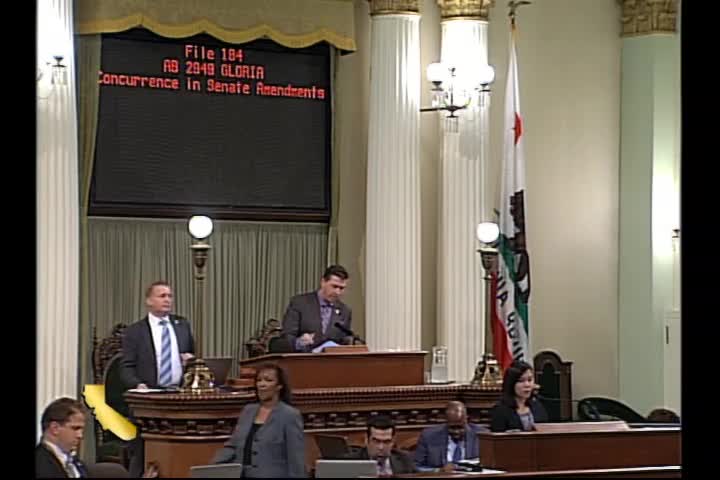 1MIN
Assembly Floor
 1MIN
Senate Floor
 6MIN
Senate Standing Committee on Governance and Finance
 6MIN
Assembly Standing Committee on Revenue and Taxation
Bill Author

Bill Co-Author(s):