AB 247: Public health: childhood lead poisoning: Lead Advisory Task Force.
- Session Year: 2017-2018
- House: Assembly
- Latest Version Date: 2017-09-15
Under existing law, known as the Childhood Lead Poisoning Prevention Act of 1991, the State Department of Public Health is required to establish procedures for environmental abatement and followup, and undertake other specified measures, designed to reduce the incidence of excessive childhood lead exposure in California.
The bill would require, by April 1, 2018, the Office of Environmental Health Hazard Assessment to convene a Lead Advisory Task Force, with a prescribed membership, to review and advise, as provided, regarding policies and procedures to reduce childhood lead poisoning in the state. The bill would require the task force to publish on the Office of Environmental Health Hazard Assessments Internet Web site a recommended regulatory agenda on or before April 1, 2020, that would identify sources of lead and ensure that regulatory standards are protective of health in the state, as specified, and to update the regulatory agenda on or before April 1, 2022. These provisions would become inoperative on April 1, 2022.
Under existing law, known as the Childhood Lead Poisoning Prevention Act of 1991, the State Department of Public Health is required to establish procedures for environmental abatement and followup, and undertake other specified measures, designed to reduce the incidence of excessive childhood lead exposure in California.
The bill would require, by April 1, 2018, the Office of Environmental Health Hazard Assessment to convene a Lead Advisory Taskforce, Task Force, with a prescribed membership, to review and advise, as provided, regarding policies and procedures to reduce childhood lead poisoning in the state. The bill would require the taskforce task force to publish on the Office of Environmental Health Hazard Assessments Internet Web site a recommended regulatory agenda on or before April 1, 2020, that would identify sources of lead and ensure that regulatory standards are protective of health in the state, as specified, and to update the regulatory agenda on or before April 1, 2022. These provisions would become inoperative on April 1, 2022.
Under existing law, known as the Childhood Lead Poisoning Prevention Act of 1991, the State Department of Public Health is required to establish procedures for environmental abatement and followup, and undertake other specified measures, designed to reduce the incidence of excessive childhood lead exposure in California.
The bill would require, by April 1, 2018, the Office of Environmental Health Hazard Assessment to convene a Lead Advisory Taskforce, with a prescribed membership, to review and advise, as provided, regarding policies and procedures to reduce childhood lead poisoning in the state. The bill would require the taskforce to publish on the Office of Environmental Health Hazard Assessments Internet Web site a recommended regulatory agenda on or before April 1, 2020, that would identify sources of lead and ensure that regulatory standards are protective of health in the state, as specified, and to update the regulatory agenda on or before April 1, 2022. These provisions would become inoperative on April 1, 2022.
Under existing law, known as the Childhood Lead Poisoning Prevention Act of 1991, the State Department of Public Health is required to establish procedures for environmental abatement and followup, and undertake other specified measures, designed to reduce the incidence of excessive childhood lead exposure in California.
The bill would require, by April 1, 2018, the Office of Environmental Health Hazard Assessment to convene a Lead Advisory Taskforce, with a prescribed membership, to review and advise, as provided, regarding policies and procedures to reduce childhood lead poisoning in the state. The bill would require the taskforce to publish on the Office of Environmental Health Hazard Assessments Internet Web site a recommended regulatory agenda on or before April 1, 2020, that would identify sources of lead and ensure that regulatory standards are protective of health in the state, as specified. specified, and to update the regulatory agenda on or before April 1, 2022. These provisions would become inoperative on April 1, 2022.
Under existing law, known as the Childhood Lead Poisoning Prevention Act of 1991, the State Department of Public Health is required to establish procedures for environmental abatement and followup, and undertake other specified measures, designed to reduce the incidence of excessive childhood lead exposure in California.
The bill would require, by April 1, 2018, the Office of Environmental Health Hazard Assessment to convene a Lead Advisory Taskforce, with a prescribed membership, to review and advise advise, as provided, regarding policies and procedures to reduce childhood lead poisoning in the state. The bill would require the taskforce to publish a recommended regulatory agenda that would identify sources of lead and ensure that regulatory standards are protective of health in the state, as specified.
Under existing law, known as the Childhood Lead Poisoning Prevention Act of 1991, the State Department of Public Health is required to establish procedures for environmental abatement and followup, and undertake other specified measures, designed to reduce the incidence of excessive childhood lead exposure in California.
The bill would require, by April 1, 2018, the Office of Environmental Health Hazard Assessment to convene a Lead Advisory Taskforce, with a prescribed membership, to review and advise regarding policies and procedures to reduce childhood lead poisoning in the state. The bill would require the taskforce to publish a recommended regulatory agenda that would identify sources of lead and ensure that regulatory standards are protective of health in the state, as specified.
(a)On or before April 1, 2018, the Office of Environmental Health Hazard Assessment shall convene and appoint members to a Lead Advisory Task Force to review and advise, as provided in subdivision (c), regarding policies and procedures to reduce childhood lead poisoning in the state. Until April 1, 2020, the task force shall meet quarterly and, on or before that date, shall publish on the Office of Environmental Health Hazard Assessments Internet Web site a recommended regulatory agenda for the state that would identify sources of lead and ensure that regulatory standards are protective of health in the state. Commencing April 1, 2020, the task force shall meet twice a year. The task force shall update the regulatory agenda on or before April 1, 2022.
(b)(1)The membership of the task force shall be as follows:
(A)One member shall be a lead exposure assessment expert.
(B)One member shall be an epidemiology expert.
(C)One member shall be a physician.
(D)One member shall be an occupational health expert.
(E)One member shall be an expert on lead remediation in paint or soil.
(F)Two members shall be representatives from environmental justice organizations that work on lead contamination.
(G)One member shall be a local government representative from a lead poisoning prevention program.
(H)One member shall be a representative from the Department of Toxic Substances Control.
(I)One member shall be a representative from the Office of Environmental Health Hazard Assessment.
(J)One member shall be a representative from the Division of Occupational Safety and Health.
(K)One member shall be a representative of industries that use lead in producing their products.
(L)One member shall be a representative of the lead recycling industry.
(M)One member shall be a representative of the civil aviation industry.
(N)One member shall be a representative of industries not otherwise represented on the task force that are emitters of significant quantities of lead into the air of the state.
(O)One member shall be a representative of an air quality management district.
(P)One member shall be a representative from the State Water Resources Control Board.
(Q)One member shall be a representative of a county environmental health department.
(R)One member shall be a representative of worker safety advocates.
(S)One member shall be a representative of a healthy housing organization.
(T)One member shall be a representative from the State Department of Public Health.
(2)The members specified in subparagraphs (O) and (Q) shall come from different geographic areas of the state.
(c)In its recommended regulatory agenda, the task force shall do all of the following:
(1)Evaluate the efficacy of each of the following:
(A)Each countys childhood lead testing programs and the states lead testing program.
(B)The drinking water program described in Section 116271.
(C)Each countys healthy homes program.
(2)Address remedial action strategies that should be considered by the Department of Toxic Substances Control when approving remedial action plans.
(3)Advise state and local entities on how to better use existing state lead data, including, but not limited to, biomonitoring data that the state receives to identify opportunities to prevent lead poisoning and blood lead data from the State Department of Public Health.
(4)Review existing regulatory provisions for the protection and health of children in California and recommend any appropriate changes to any regulations that have not been revised on or after January 1, 2011.
(5)Provide advice on how to align the states lead regulatory framework with the federal Centers for Disease Control and Preventions most recent findings on the toxicity of lead to children.
(6)Identify key policies, regulations, and protocols for state agencies to follow to better protect Californias children from lead exposure.
(7)Make recommendations, including, but not limited to, recommendations on the sharing of information between state agencies and departments.
(8)Identify how the state can work to leverage resources.
(9)Make recommendations on how to establish a comprehensive surveillance program on lead toxicity.
(d)(1)Each member of the task force shall receive reasonable and necessary traveling expenses and meal allowances as approved by the Office of Environmental Health Hazard Assessment for each day spent in actual attendance at, or in traveling to and from, meetings of the task force.
(2)A member of the task force who is a representative of a state or local government agency shall receive only those expenses or allowances specified in paragraph (1) that are provided by his or her employer.
(e)This section shall become inoperative on April 1, 2022, and, as of January 1, 2023, is repealed.
(a)On or before April 1, 2018, the Office of Environmental Health Hazard Assessment shall convene and appoint members to a Lead Advisory Taskforce Task Force to review and advise, as provided in subdivision (c), regarding policies and procedures to reduce childhood lead poisoning in the state. Until April 1, 2020, the taskforce task force shall meet quarterly and, on or before that date, shall publish on the Office of Environmental Health Hazard Assessments Internet Web site a recommended regulatory agenda for the state that would identify sources of lead and ensure that regulatory standards are protective of health in the state. Commencing April 1, 2020, the taskforce task force shall meet twice a year. The taskforce task force shall update the regulatory agenda on or before April 1, 2022.
(b)(1)The membership of the taskforce task force shall be as follows:
(A)One member shall be a lead exposure assessment expert.
(B)One member shall be an epidemiology expert.
(C)One member shall be a physician.
(D)One member shall be an occupational health expert.
(E)One member shall be an expert on lead remediation in paint or soil.
(F)Two members shall be representatives from environmental justice organizations that work on lead contamination.
(G)One member shall be a local government representative from a lead poisoning prevention program.
(H)One member shall be a representative from the Department of Toxic Substances Control.
(I)One member shall be a representative from the Office of Environmental Health Hazard Assessment.
(J)One member shall be a representative from the Division of Occupational Safety and Health.
(K)One member shall be a representative of industries that use lead in producing their products.
(L)One member shall be a representative of the lead recycling industry.
(M)One member shall be a representative of the civil aviation industry.
(N)One member shall be a representative of industries not otherwise represented on the taskforce task force that are emitters of significant quantities of lead into the air of the state.
(O)One member shall be a representative of an air quality management district.
(P)One member shall be a representative from the State Water Resources Control Board.
(Q)One member shall be a representative of a county environmental health department.
(R)One member shall be a representative of worker safety advocates.
(S)One member shall be a representative of a healthy housing organization.
(T)One member shall be a representative from the State Department of Public Health.
(2)The members specified in subparagraphs (O) and (Q) shall come from different geographic areas of the state.
(c)In its recommended regulatory agenda, the taskforce task force shall do all of the following:
(1)Evaluate the efficacy of each of the following:
(A)Each countys childhood lead testing programs and the states lead testing program.
(B)The drinking water program described in Section 116271.
(C)Each countys healthy homes program.
(2)Address remedial action strategies that should be considered by the Department of Toxic Substances Control when approving remedial action plans.
(3)Advise state and local entities on how to better use existing state lead data, including, but not limited to, biomonitoring data that the state receives to identify opportunities to prevent lead poisoning and blood lead data from the State Department of Public Health.
(4)Review existing regulatory provisions for the protection and health of children in California and recommend any appropriate changes to any regulations that have not been revised on or after January 1, 2011.
(5)Provide advice on how to align the states lead regulatory framework with the federal Centers for Disease Control and Preventions most recent findings on the toxicity of lead to children.
(6)Identify key policies, regulations, and protocols for state agencies to follow to better protect Californias children from lead exposure.
(7)Make recommendations, including, but not limited to, recommendations on the sharing of information between state agencies and departments.
(8)Identify how the state can work to leverage resources.
(9)Make recommendations on how to establish a comprehensive surveillance program on lead toxicity.
(d)(1)Each member of the taskforce task force shall receive reasonable and necessary traveling expenses and meal allowances as approved by the Office of Environmental Health Hazard Assessment for each day spent in actual attendance at, or in traveling to and from, meetings of the taskforce. task force.
(2)A member of the taskforce task force who is a representative of a state or local government agency shall receive only those expenses or allowances specified in paragraph (1) that are provided by his or her employer.
(e)This section shall become inoperative on April 1, 2022, and, as of January 1, 2023, is repealed.
(a)On or before April 1, 2018, the Office of Environmental Health Hazard Assessment shall convene and appoint members to a Lead Advisory Taskforce to review and advise, as provided in subdivision (c), regarding policies and procedures to reduce childhood lead poisoning in the state. Until April 1, 2020, the taskforce shall meet quarterly and, on or before that date, shall publish on the Office of Environmental Health Hazard Assessments Internet Web site a recommended regulatory agenda for the state that would identify sources of lead and ensure that regulatory standards are protective of health in the state. Commencing April 1, 2020, the taskforce shall meet twice a year. The taskforce shall update the regulatory agenda on or before April 1, 2022.
(b)(1)The membership of the taskforce shall be as follows:
(A)One member shall be a lead exposure assessment expert.
(B)One member shall be an epidemiology expert.
(C)One member shall be a physician.
(D)One member shall be an occupational health expert.
(E)One member shall be an expert on lead remediation in paint or soil.
(F)Two members shall be representatives from environmental justice organizations that work on lead contamination.
(G)One member shall be a local government representative from a lead poisoning prevention program.
(H)One member shall be a representative from the Department of Toxic Substances Control.
(I)One member shall be a representative from the Office of Environmental Health Hazard Assessment.
(J)One member shall be a representative from the Division of Occupational Safety and Health.
(K)One member shall be a representative of industries that use lead in producing their products.
(L)One member shall be a representative of the lead recycling industry.
(M)One member shall be a representative of the civil aviation industry.
(N)One member shall be a representative of industries not otherwise represented on the taskforce that are emitters of significant quantities of lead into the air of the state.
(O)One member shall be a representative of an air quality management district.
(P)One member shall be a representative from the State Water Resources Control Board.
(Q)One member shall be a representative of a county environmental health department.
(R)One member shall be a representative of worker safety advocates.
(S)One member shall be a representative of a healthy housing organization.
(2)The members specified in subparagraphs (O), (P), (O) and (Q) shall each come from a different geographic area areas of the state.
(c)In its recommended regulatory agenda, the taskforce shall do all of the following:
(1)Evaluate the efficacy of each of the following:
(A)Each countys childhood lead testing programs and the states lead testing program.
(B)The drinking water program described in Section 116271.
(C)Each countys healthy homes program.
(2)Address remedial action strategies that should be considered by the Department of Toxic Substances Control when approving remedial action plans.
(3)Advise state and local entities on how to better use existing state lead data, including, but not limited to, biomonitoring data that the state receives to identify opportunities to prevent lead poisoning and blood lead data from the State Department of Public Health.
(4)Review existing regulatory provisions for the protection and health of children in California and recommend any appropriate changes to any regulations that have not been revised on or after January 1, 2011.
(5)Provide advice on how to align the states lead regulatory framework with the federal Centers for Disease Control and Preventions most recent findings on the toxicity of lead to children.
(6)Identify key policies, regulations, and protocols for state agencies to follow to better protect Californias children from lead exposure.
(7)Make recommendations, including, but not limited to, recommendations on the sharing of information between state agencies and departments.
(8)Identify how the state can work to leverage resources.
(9)Make recommendations on how to establish a comprehensive surveillance program on lead toxicity.
(d)(1)Each member of the taskforce shall receive reasonable and necessary traveling expenses and meal allowances as approved by the Office of Environmental Health Hazard Assessment for each day spent in actual attendance at, or in traveling to and from, meetings of the taskforce.
(2)A member of the taskforce who is a representative of a state or local government agency shall receive only those expenses or allowances specified in paragraph (1) that are provided by his or her employer.
(e)This section shall become inoperative on April 1, 2022, and, as of January 1, 2023, is repealed.
(a)On or before April 1, 2018, the Office of Environmental Health Hazard Assessment shall convene and appoint members to a Lead Advisory Taskforce to review and advise, as provided in subdivision (c), regarding policies and procedures to reduce childhood lead poisoning in the state. Until April 1, 2020, the taskforce shall meet quarterly and, on or before that date, shall publish on the Office of Environmental Health Hazard Assessments Internet Web site a recommended regulatory agenda for the state that would identify sources of lead and ensure that regulatory standards are protective of health in the state. Commencing April 1, 2020, the taskforce shall meet twice a year. The taskforce shall update the regulatory agenda on or before April 1, 2022.
(b)(1)Membership The membership of the taskforce shall be as follows:
(A)One member shall be a lead exposure assessment expert.
(B)One member shall be a biostatistician or an epidemiology expert.
(C)One member shall be a physician.
(D)One member shall be an occupational health expert.
(E)One member shall be an expert on lead remediation in paint or soil.
(F)Two members shall be representatives from environmental justice organizations that work on lead contamination.
(G)One member shall be a local government representative from a lead poisoning prevention program.
(H)One member shall be a representative from the Department of Toxic Substances Control.
(I)One member shall be a representative from the Office of Environmental Health Hazard Assessment.
(J)One member shall be a representative from the Division of Occupational Safety and Health.
(K)One member shall be a representative of industries that use lead in producing their products.
(L)One member shall be a representative of the lead recycling industry.
(M)One member shall be a representative of the civil aviation industry.
(N)One member shall be a representative of industries not otherwise represented on the taskforce that are emitters of significant quantities of lead into the air of the state.
(O)One member shall be a representative of an air quality management district.
(P)One member shall be a representative from the State Water Resources Control Board.
(Q)One member shall be a representative of a county environmental health department.
(R)One member shall be a representative of worker safety advocates.
(S)One member shall be a representative of a healthy housing organization.
(2)The members specified in subparagraphs (O), (P), and (Q) shall each come from a different geographic area of the state.
(c)In its recommended regulatory agenda, the taskforce shall do all of the following:
(1)Evaluate the efficacy of each of the following:
(A)Each countys childhood lead testing programs and the states lead testing program.
(B)The drinking water program described in Section 116271.
(C)Each countys healthy homes program.
(2)Address remedial action strategies that should be considered by the Department of Toxic Substances Control when approving remedial action plans.
(3)Advise state and local entities on how to better use existing state lead data, including, but not limited to, biomonitoring data that the state receives to identify opportunities to prevent lead poisoning. poisoning and blood lead data from the State Department of Public Health.
(4)Review existing regulatory provisions for the protection and health of children in California and recommend any appropriate changes to any regulations that have not been revised on or after January 1, 2011.
(5)Provide advice on how to align the states lead regulatory framework with the federal Centers for Disease Control and Preventions most recent findings on the toxicity of lead to children.
(6)Identify key policies, regulations, and protocols for state agencies to follow to better protect Californias children from lead exposure.
(7)Make recommendations, including, but not limited to, recommendations on the sharing of information between state agencies and departments.
(8)Identify how the state can work to leverage resources.
(9)Make recommendations on how to establish a comprehensive surveillance program on lead toxicity.
(d)Each member of the taskforce shall receive reasonable and necessary traveling expenses and meal allowances as approved by the Office of Environmental Health Hazard Assessment for each day spent in actual attendance at, or in traveling to and from, meetings of the taskforce.
(e)This section shall become inoperative on April 1, 2022, and, as of January 1, 2023, is repealed.
(a)On or before April 1, 2018, the Office of Environmental Health Hazard Assessment shall convene a Lead Advisory Taskforce to review and advise, as provided in subdivision (c), regarding policies and procedures to reduce childhood lead poisoning in the state. Until April 1, 2020, the taskforce shall meet quarterly and, on or before that date, shall publish a recommended regulatory agenda for the state that would identify sources of lead and ensure that regulatory standards are protective of health in the state. Commencing April 1, 2020, the taskforce shall meet twice a year.
(b)(1)Membership of the taskforce shall be as follows:
(1)(A)One member shall be a lead exposure assessment expert.
(2)(B)One member shall be a biostatistician or epidemiology expert.
(3)(C)One member shall be a medical doctor. physician.
(4)(D)One member shall be an occupational health expert.
(5)(E)One member shall be a an expert on lead remediation expert. in paint or soil.
(6)(F)Two members shall be representatives from environmental justice organizations that work on lead contamination.
(7)(G)One member shall be a local government representative from a lead poisoning prevention program.
(8)(H)One member shall be a representative from the Department of Toxic Substances Control.
(9)(I)One member shall be a representative from the Office of Environmental Health Hazard Assessment.
(10)(J)One member shall be a representative from the Division of Occupational Safety and Health.
(11)(K)One member shall be a representative of industries that use lead in producing their products.
(12)(L)One member shall be a representative of the lead recycling industry.
(13)(M)One member shall be a representative of the civil aviation industry.
(14)(N)One member shall be a representative of industries not otherwise represented on the taskforce that are emitters of significant quantities of lead into the air of the state.
(15)(O)One member shall be a representative of an air quality management district.
(16)(P)One member shall be a representative of a regional water quality control board. from the State Water Resources Control Board.
(17)(Q)One member shall be a representative of a county environmental health department.
(18)(R)One member shall be a representative of worker safety advocates.
(19)(S)One member shall be a representative of a healthy housing organization.
(2)The members specified in subparagraphs (O), (P), and (Q) shall each come from a different geographic area of the state.
(c)In its recommended regulatory agenda, the taskforce shall do all of the following:
(1)Evaluate of each of the following:
(A)The program established pursuant to this article.(B)(A)Each countys childhood lead testing programs. programs and the states lead testing program.
(C)(B)The drinking water program described in Section 116271.
(D)(C)Each countys healthy homes program.
(2)Address remedial action strategies that should be considered by the Department of Toxic Substances Control when approving remedial action plans.
(3)Advise state and local entities on how to better use biomonitoring data that the state receives to identify opportunities to prevent lead poisoning.
(4)Review existing regulatory provisions for the protection and health of children in California and recommend any appropriate changes to any regulations that have not been revised on or after January 1, 2011.
(5)Provide advice on how to align the states lead regulatory framework with the federal Center Centers for Disease Control and Preventions most recent findings on the toxicity of lead to children.
(6)Identify key policies, regulations, and protocols for state agencies to follow to better protect Californias children from lead exposure.
(7)Make recommendations, including, but not limited to, recommendations on the sharing of information between state agencies and departments.
(8)Identify how the state can work to leverage resources.
(9)Recommendations Make recommendations on how to establish a comprehensive surveillance program on lead toxicity.
(d)Each member of the taskforce shall receive reasonable and necessary traveling expenses and meal allowances as approved by the Office of Environmental Health Hazard Assessment for each day spent in actual attendance at, or in traveling to and from, meetings of the taskforce.
(a)On or before April 1, 2018, the Office of Environmental Health Hazard Assessment shall convene a Lead Advisory Taskforce to review and advise, as provided in subdivision (c), regarding policies and procedures to reduce childhood lead poisoning in the state. Until April 1, 2020, the taskforce shall meet quarterly and, on or before that date, shall publish a recommended regulatory agenda for the state that would identify sources of lead and ensure that regulatory standards are protective of health in the state. Commencing April 1, 2020, the taskforce shall meet twice a year.
(b)Membership of the taskforce shall be as follows:
(1)One member shall be a lead exposure assessment expert.
(2)One member shall be a biostatistician or epidemiology expert.
(3)One member shall be a medical doctor.
(4)One member shall be an occupational health expert.
(5)One member shall be a lead remediation expert.
(6)Two members shall be representatives from environmental justice organizations that work on lead contamination.
(7)One member shall be a local government representative from a lead poisoning prevention program.
(8)One member shall be a representative from the Department of Toxic Substances Control.
(9)One member shall be a representative from the Office of Environmental Health Hazard Assessment.
(10)One member shall be a representative from the Division of Occupational Safety and Health.
(11)One member shall be a representative of industries that use lead in producing their products.
(12)One member shall be a representative of the lead recycling industry.
(13)One member shall be a representative of the civil aviation industry.
(14)One member shall be a representative of industries not otherwise represented on the taskforce that are emitters of significant quantities of lead into the air of the state.
(15)One member shall be a representative of an air quality management district.
(16)One member shall be a representative of a regional water quality control board.
(17)One member shall be a representative of a county environmental health department.
(18)One member shall be a representative of worker safety advocates.
(19)One member shall be a representative of a healthy housing organization.
(c)In its recommended regulatory agenda, the taskforce shall do all of the following:
(1)Evaluate of each of the following:
(A)The program established pursuant to this article.
(B)Each countys childhood lead testing programs.
(C)The drinking water program described in Section 116271.
(D)Each countys healthy homes program.
(2)Address remedial action strategies that should be considered by the Department of Toxic Substances Control when approving remedial action plans.
(3)Advise state and local entities on how to better use biomonitoring data that the state receives to identify opportunities to prevent lead poisoning.
(4)Review existing regulatory provisions for the protection and health of children in California and recommend any appropriate changes to any regulations that have not been revised on or after January 1, 2011.
(5)Provide advice on how to align the states lead regulatory framework with the federal Center for Disease Control and Preventions most recent findings on the toxicity of lead to children.
(6)Identify key policies, regulations, and protocols for state agencies to follow to better protect Californias children from lead exposure.
(7)Make recommendations on the sharing of information between state agencies and departments.
(8)Identify how the state can work to leverage resources.
(9)Recommendations on how to establish a comprehensive surveillance program on lead toxicity.
(d)Each member of the taskforce shall receive reasonable and necessary traveling expenses and meal allowances as approved by the Office of Environmental Health Hazard Assessment for each day spent in actual attendance at, or in traveling to and from, meetings of the taskforce.
|
Date
|
Status
|
|---|---|
| Jan 12, 2018 | Stricken from file. |
| Jan 3, 2018 | Consideration of Governor's veto pending. |
| Oct 13, 2017 | Vetoed by Governor. |
| Sep 25, 2017 | Enrolled and presented to the Governor at 12 p.m. |
| Sep 14, 2017 | Senate amendments concurred in. To Engrossing and Enrolling. |
| Sep 14, 2017 | In Assembly. Concurrence in Senate amendments pending. |
| Sep 14, 2017 | Read third time. Passed. Ordered to the Assembly. |
| Sep 12, 2017 | Ordered to special consent calendar. |
| Sep 5, 2017 | Read second time. Ordered to third reading. |
| Sep 1, 2017 | From committee: Do pass. (Ayes 7. Noes 0.) (September 1). |
| Aug 21, 2017 | In committee: Referred to APPR. suspense file. |
| Jul 11, 2017 | Read second time and amended. Re-referred to Com. on APPR. |
| Jul 10, 2017 | From committee: Amend, and do pass as amended and re-refer to Com. on APPR. (Ayes 7. Noes 0.) (July 5). |
| Jun 15, 2017 | In committee: Hearing postponed by committee. |
| Jun 8, 2017 | Referred to Com. on EQ. |
| May 30, 2017 | In Senate. Read first time. To Com. on RLS. for assignment. |
| May 30, 2017 | Read third time. Passed. Ordered to the Senate. (Ayes 77. Noes 0. Page 1810.) |
| May 26, 2017 | From committee: Do pass. (Ayes 17. Noes 0.) (May 26). |
| Apr 5, 2017 | In committee: Set, first hearing. Referred to APPR. suspense file. |
| Mar 29, 2017 | Re-referred to Com. on APPR. |
| Mar 28, 2017 | From committee chair, with author's amendments: Amend, and re-refer to Com. on APPR. Read second time and amended. |
| Mar 13, 2017 | Re-referred to Com. on APPR. |
| Mar 9, 2017 | Read second time and amended. |
| Mar 8, 2017 | From committee: Amend, and do pass as amended and re-refer to Com. on APPR. (Ayes 7. Noes 0.) (March 7). |
| Feb 28, 2017 | Re-referred to Com. on E.S. & T.M. |
| Feb 27, 2017 | From committee chair, with author's amendments: Amend, and re-refer to Com. on E.S. & T.M. Read second time and amended. |
| Feb 6, 2017 | Referred to Com. on E.S. & T.M. |
| Jan 31, 2017 | From printer. May be heard in committee March 2. |
| Jan 30, 2017 | Read first time. To print. |
|
Date
|
Description
|
Location
|
Votes
|
|
|---|---|---|---|---|
| Sep 14, 2017 | AB 247 Cristina Garcia Special Consent Calendar 1st Day Regular Session | Assembly Floor |
Passed |
|
| Sep 14, 2017 | Special Consent Calendar # AB247 | Senate Floor |
Passed |
|
| Sep 1, 2017 | Do pass | Senate Standing Committee on Appropriations |
Passed |
|
| Aug 21, 2017 | Placed on suspense file | Senate Standing Committee on Appropriations |
Passed |
|
| Jul 5, 2017 | Do pass as amended, but first amend, and re-refer to the Committee on [Appropriations] | Senate Standing Committee on Environmental Quality |
Passed |
|
| May 30, 2017 | AB 247 GARCIA, C. Assembly Third Reading | Assembly Floor |
Passed |
|
| May 26, 2017 | Do pass. | Assembly Standing Committee on Appropriations |
Passed |
|
| Mar 7, 2017 | Do pass as amended and be re-referred to the Committee on [Appropriations] | Assembly Standing Committee on Environmental Safety and Toxic Materials |
Passed |
This list shows positions taken on this bill by organizations on the date displayed, which is linked to the original source.
Positions by individuals are not included.
|
Organization
|
Position
|
Date
|
|---|---|---|
| Action Now | ** Support | Sep 3, 2017 |
| American Federation of State, County and Municipal Employees | ** Support | Sep 3, 2017 |
| AMVETS | ** Support | Sep 3, 2017 |
| Apostolic Faith Center | ** Support | Sep 3, 2017 |
| Arguments In Opposition: | ** Against | Jul 3, 2017 |
| Breast Cancer Prevention Partners | ** Support | Mar 3, 2017 |
| California Communities Against Toxics | ** Support | Sep 3, 2017 |
| California Environmental Justice Alliance | ** Support | Sep 3, 2017 |
| California Health+Advocates | ** Support | Sep 3, 2017 |
| California Kids IAQ | ** Support | Sep 3, 2017 |
| California League Of Conservation Voters | ** Support | Sep 3, 2017 |
| California Safe Schools | ** Support | Sep 3, 2017 |
| California State PTA | ** Support | Sep 3, 2017 |
| California Teachers Association | ** Support | Sep 3, 2017 |
| Californians For Alternatives to Toxics | * Support | Mar 7, 2017 |
| Center For Environmental Health | ** Support | Sep 3, 2017 |
| Center on Race, Poverty, and the Environment | ** Support | Sep 3, 2017 |
| Coalition for a Safe Environment | ** Support | Sep 3, 2017 |
| Coalition For Clean Air | * Support | Mar 7, 2017 |
| Community Dreams | ** Support | Sep 3, 2017 |
| Del Amo Action Committee | ** Support | Sep 3, 2017 |
| Department Of Finance | ** Against | Sep 3, 2017 |
| Desert Citizens Against Pollution | ** Support | Sep 3, 2017 |
| East Valley Water District | ** Support | Sep 3, 2017 |
| EMERGE | ** Support | Sep 3, 2017 |
| Environmental Working Group | ** Support | Sep 3, 2017 |
| Healthy Homes Collaborative | ** Support | Sep 3, 2017 |
| Mothers for East Los Angeles | ** Support | Mar 3, 2017 |
| Mothers of East Los Angeles | ** Support | Sep 3, 2017 |
| naacp san pedro-wilmington chapter #1069 | ** Support | Sep 3, 2017 |
| Natural Resources Defence Council | * Support | Jul 5, 2017 |
| Natural Resources Defense Council | ** Support | Mar 3, 2017 |
| Resurrection Church | ** Support | Sep 3, 2017 |
| San Pedro & Peninsula Homeowners Coalition | ** Support | Sep 3, 2017 |
| Sierra Club California | ** Support | Sep 3, 2017 |
| Society for Positive Action | ** Support | Sep 3, 2017 |
| St. Philomena Social Justice Ministry | ** Support | Sep 3, 2017 |
| Wilmington Improvement Center | ** Support | Mar 3, 2017 |
| Wilmington Improvement Network | ** Support | Sep 3, 2017 |
GOVERNOR'S VETO
GV Bill Id:AB 247
Author:(Cristina Garcia, et al.)
As Enrolled Ver:September 15, 2017
2/3 vote
ASSEMBLY: | 77-0 | (May 30, 2017) | SENATE: | 40-0 | (September 14, 2017) |
ASSEMBLY: | 79-0 | (September 14, 2017) |
Original Committee Reference: E.S. & T.M.
SUMMARY: Establishes a Statewide Lead Advisory Taskforce (Taskforce) to review and provide recommendations regarding policies and procedures to reduce lead poisoning in the state. Specifically, this bill:
- Requires, on or before April 1, 2018, the Office of Environmental Health Hazard Assessment (OEHHA) to convene and appoint members to a Taskforce to review and advise on policies and procedures to reduce childhood lead poisoning in the state.
- Requires the Taskforce, until April 1, 2020, to meet quarterly and publish on OEHHA's website a recommended regulatory agenda that would identify sources of lead and ensure that regulatory standards are protective of health in the state, and to update the regulatory agenda on or before April 1, 2022.
- Specifies the Taskforce's membership and requires the Taskforce to evaluate the efficacy of various state and local lead-related programs; address remedial action strategies that should be considered by the Department of Toxic Substances Control (DTSC); advise state and local entities on how to better use existing state lead data; review and assess existing lead-related regulations; provide advice on how to align the state's lead regulatory framework with the United States Centers for Disease Control and Prevention's most recent findings on the toxicity of lead; identify key policies, regulations, and protocols for state agencies to follow to better protect California's children from lead exposure; make recommendations on the sharing of information between state agencies and departments; identify how the state can work to leverage resources; and, recommend how to establish a comprehensive surveillance program on lead toxicity.
- Requires each member of the Taskforce to receive reasonable and necessary traveling expenses and meal allowances, as approved by OEHHA. Limits a member of the taskforce who is a representative of a state or local government agency to receive only those expenses or allowances that are provided by his or her employer.
- Sunsets the bill on April 1, 2022.
The Senate amendments add one member to the Taskforce membership to include a representative from the California Department of Public Health (CDPH).
EXISTING LAW:
- Establishes the federal Lead-Based Paint Poisoning Prevention Act to create a prohibition against the future use of lead-based paint.
- Declares childhood lead exposure as the most significant childhood environmental health problem in the state and establishes the Childhood Lead Poisoning Prevention Program to reduce the incidence of childhood lead exposure in California.
FISCAL EFFECT: According to the Senate Appropriations Committee, enactment of this bill could result in approximately $400,000 annually to OEHHA for three positions, including $40,000 per year to cover taskforce members’ travel expenses; minor costs to participating state entities for staff time necessary to participate on the task group; and, unknown, likely in the millions of dollars, in ongoing costs to fund efforts to implement recommendations or reimburse for state mandates resulting from recommendations.
COMMENTS:
California's current regulation of lead exposure: California has a long history of banning lead products and regulating sources of lead exposure, which has resulted in a kaleidoscope of regulatory activity on lead. The following includes, but is not limited to, the state and local entities that play a role in managing lead exposure prevention: CDPH, DTSC, State Water Resources Control Board, California Department of Industrial Relations, Division of Occupational Safety and Health, California Air Resources Board, OEHHA, and county-enforced Healthy Homes Initiative programs.
Better state coordination: Currently, there is a lack of coordination between those agencies and programs that play a role in managing and preventing lead exposure. Compelling greater interagency communication and information sharing could lead to stronger public health initiatives across multiple agencies, potentially more efficient use of state resources and scientists, and hopefully a greater reduction in lead-related health impacts. The Taskforce convened by this bill would be responsible for assessing those existing state and local programs and authorities and advising on how to align the state's lead regulatory framework.
DTSC Independent Review Panel (IRP): The 2015-16 Budget Act created a three-person IRP to oversee DTSC's permitting, enforcement, and fiscal management and to provide DTSC with a full programmatic review to restore its mission to properly protect public health.
The IRP believes that additional action to protect the public from lead exposure is needed. The October 24, 2016 IRP report recommended creating a statewide lead taskforce to make recommendations on the sharing of information, leveraging of resources, and establishing a comprehensive surveillance program on lead toxicity.
This bill proposes to codify that IRP recommendation.
This bill creates a twenty-one member Lead Advisory Task Force to review and advise on state policies and procedures to reduce childhood lead poisoning and to suggest a regulatory agenda that would identify sources of lead and ensure standards are protective of public health.
The responsibilities of this task force would be duplicative of ongoing work by the Office of Environmental Health Hazard Assessment, the Department of Public Health, the State Water Resources Control Board, and the Department of Toxic Substances Control. Coordination and evaluation of procedures to reduce childhood lead poisoning is being accomplished administratively amongst these agencies so there is no reason to divert resources to a task force.
Analysis Prepared by: Paige Brokaw / E.S. & T.M. / (916) 319-3965 FN: 0002480
CONCURRENCE IN SENATE AMENDMENTS
CSA1 Bill Id:AB 247
Author:(Cristina Garcia, et al.)
As Amended Ver:July 11, 2017
Majority vote
ASSEMBLY: | 77-0 | (May 30, 2017) | SENATE: | 40-0 | (September 14, 2017) |
Original Committee Reference: E.S. & T.M.
SUMMARY: Establishes a Statewide Lead Advisory Taskforce (Taskforce) to review and provide recommendations regarding policies and procedures to reduce lead poisoning in the state. Specifically, this bill:
- Requires, on or before April 1, 2018, the Office of Environmental Health Hazard Assessment (OEHHA) to convene and appoint members to a Taskforce to review and advise on policies and procedures to reduce childhood lead poisoning in the state.
- Requires the Taskforce, until April 1, 2020, to meet quarterly and publish on OEHHA's website a recommended regulatory agenda that would identify sources of lead and ensure that regulatory standards are protective of health in the state, and to update the regulatory agenda on or before April 1, 2022.
- Specifies the Taskforce's membership and requires the Taskforce to evaluate the efficacy of various state and local lead-related programs; address remedial action strategies that should be considered by the Department of Toxic Substances Control (DTSC); advise state and local entities on how to better use existing state lead data; review and assess existing lead-related regulations; provide advice on how to align the state's lead regulatory framework with the United States Centers for Disease Control and Prevention's most recent findings on the toxicity of lead; identify key policies, regulations, and protocols for state agencies to follow to better protect California's children from lead exposure; make recommendations on the sharing of information between state agencies and departments; identify how the state can work to leverage resources; and, recommend how to establish a comprehensive surveillance program on lead toxicity.
- Requires each member of the Taskforce to receive reasonable and necessary traveling expenses and meal allowances as approved by OEHHA. Limits a member of the taskforce who is a representative of a state or local government agency to receive only those expenses or allowances that are provided by his or her employer.
- Sunsets the bill on April 1, 2022.
The Senate amendments add one member to the Taskforce membership to include a representative from the California Department of Public Health (CDPH).
EXISTING LAW:
- Establishes the federal Lead-Based Paint Poisoning Prevention Act to create a prohibition against the future use of lead-based paint.
- Declares childhood lead exposure as the most significant childhood environmental health problem in the state and establishes the Childhood Lead Poisoning Prevention Program to reduce the incidence of childhood lead exposure in California.
FISCAL EFFECT: According to the Senate Appropriations Committee, enactment of this bill would result in approximately $400,000 annually to OEHHA for three positions, including $40,000 per year to cover taskforce members’ travel expenses; minor costs to participating state entities for staff time necessary to participate on the task group; and, unknown, likely in the millions of dollars, in ongoing costs to fund efforts to implement recommendations or reimburse for state mandates resulting from recommendations.
COMMENTS:
California's current regulation of lead exposure: California has a long history of banning lead products and regulating sources of lead exposure, which has resulted in a kaleidoscope of regulatory activity on lead. The following includes, but is not limited to, the state and local entities that play a role in managing lead exposure prevention: CDPH, DTSC, State Water Resources Control Board, California Department of Industrial Relations, Division of Occupational Safety and Health, California Air Resources Board, OEHHA, and Healthy Homes Initiative.
Better state coordination: Currently, there is a lack of coordination between those agencies and programs that play a role in managing and preventing lead exposure. Compelling greater interagency communication and information sharing could lead to stronger public health initiatives across multiple agencies, potentially more efficient use of state resources and scientists, and hopefully a greater reduction in lead-related health impacts. The Taskforce convened by this bill would be responsible for assessing those existing state and local programs and authorities and advising on how to align the state's lead regulatory framework.
DTSC Independent Review Panel (IRP): The 2015-16 Budget Act created a three-person IRP to oversee DTSC's permitting, enforcement, and fiscal management and to provide DTSC with a full programmatic review to restore its mission to properly protect public health.
The IRP believes that additional action to protect the public from lead exposure is needed. The October 24, 2016 IRP report recommended creating a statewide lead taskforce to make recommendations on the sharing of information, leveraging of resources, and establishing a comprehensive surveillance program on lead toxicity.
This bill proposes to codify that IRP recommendation.
Analysis Prepared by: Paige Brokaw / E.S. & T.M. / (916) 319-3965 FN: 0001887
Office of Senate Floor Analyses (916) 651-1520 Fax: (916) 327-4478 | AB |
THIRD READING
Bill No: AB 247
:
SENATE ENVIRONMENTAL QUALITY COMMITTEE: 7-0, 7/5/17
AYES: Wieckowski, Stone, Gaines, Hill, Lara, Skinner, Stern
SENATE APPROPRIATIONS COMMITTEE: 7-0, 9/1/17
AYES: Lara, Bates, Beall, Bradford, Hill, Nielsen, Wiener
ASSEMBLY FLOOR: 77-0, 5/30/17 - See last page for vote
DIGEST:
- This bill requires the Office of Environmental Health Hazard Assessment (OEHHA) to convene a Lead Advisory Task Force (task force) to review and advise on policies and procedures to reduce childhood lead poisoning in the state, and specifies requirements of the task force.
Existing federal law:
- Requires, pursuant to the Toxic Substances Control Act, the United States Environmental Protection Agency (US EPA) to create a regulatory framework to collect data on chemicals in order to evaluate, assess, mitigate, and control risks that may be posed by their manufacture, processing, and use. (15 U.S.C. § 2601 et seq.)
- Provides that the Federal Clean Air Act (FCAA) and its implementing regulations set National Ambient Air Quality Standards (NAAQS) for six criteria pollutants, including lead, and designate air basins that do not achieve NAAQS as nonattainment. (42 U.S.C. §7401 et seq.)
- Requires, under the federal Safe Drinking Water Act and California Safe Drinking Water Act, drinking water to meet specified standards for contamination, including lead, as set by the US EPA or the State Water Resources Control Board (SWRCB). (42 U.S.C. §300 et seq.) (HSC §116270 et seq.)
- Prohibits, pursuant to the Federal Lead Contamination Control Act of 1988, lead-lined water coolers in schools and childcare facilities, and requires the US EPA to set up an information program to help local school districts identify and eliminate lead contamination in drinking water. (42 U.S.C. §300j-21)
- Requires, pursuant to the federal Lead and Copper Rule, that all public drinking water systems regularly test a sample of high-risk homes for lead at the tap. (C.F.R. 40 Part 141)
- Establishes the federal Lead-Based Paint Poisoning Prevention Act to create a prohibition against the future use of lead-based paint. (42 U.S.C. §4851)
- Prohibits the use of lead for residential use in the United States. (16 CFR 1303)
- Enhances, under the Consumer Product Safety Improvement Act of 2008, safety standards for consumer products, including new specified levels for lead cadmium content in children’s toys and increases enforcement and penalty provisions. (15 U.S.C. §2051)
Existing state law:
- Requires, under the Childhood Lead Poisoning Act of 1991, the California Department of Public Health (CDPH) to establish a childhood lead poisoning prevention program to increase awareness regarding the hazards of lead exposure, reduce lead exposure, increase the number of children assessed and their blood tested for lead poisoning, and identify and conduct medical follow-up of high-risk children. (Health and Safety Code (HSC) §124125 et seq.)
- Requires CDPH, under the Lead-Safe Schools Protection Act, to perform various activities related to reducing the risk of exposure to lead hazards in public schools, including identification of potential lead exposure risks. (Education Code §32240 – 32245)
- Requires, under the Safe Drinking Water and Toxic Enforcement Act of 1986, (Proposition 65), the state to publish a list of chemicals known to cause cancer or birth defects or other reproductive harm. (HSC §25249.5 et seq.)
- Prohibits any person from introducing into commerce any pipe, pipe or plumbing fitting, or fixture intended to convey or dispense water for human consumption through drinking or cooking that is not “lead-free.” (HSC §116875)
- Establishes the California Air Resources Board (CARB) as the state’s air pollution control agency and requires the CARB, among other things, to control toxic air contaminant emissions from stationary sources. (HSC §39500 et seq.)
- Prohibits the manufacture, shipping, sale, or offering for sale of jewelry that is not made entirely from certain specified materials and specifically restricts the amount of lead that may be contained in jewelry. (HSC §25214.1 et seq.)
- Prohibits, under the Toxics in Packaging Prevention Act, a person from offering for sale or for promotional purposes in this state a product in a package that includes a regulated metal, including lead, in the package itself or in a packaging component if the regulated metal has been intentionally introduced into the package or packaging component. (HSC §25214.11 et seq.)
This bill establishes a statewide task force to review and provide recommendations regarding policies and procedures to reduce lead poisoning in the state.
Background
- Lead is a potent health hazard. Lead has been listed under Proposition 65 since 1987 as a substance that can cause reproductive damage and birth defects, and has been on the list of chemicals known to cause cancer since 1992. Lead is a neurotoxin and is particularly hazardous to children. Lead in young children even at very minute levels can result in reduced IQ, learning disabilities, attention deficit disorders, behavioral problems, stunted growth, impaired hearing, and kidney damage. The Centers for Disease Control (CDC) states there is no evidence of a threshold below which adverse effects are not experienced.
- Lead as a public health issue. Over the past few decades, in recognition of the health risks involved in exposure to lead, products that contain lead have been restricted or phased out of use, including lead-based paint, leaded gasoline, and lead-containing plumbing materials. However, lead exposure continues to be a health risk today. Previous widespread use of lead-containing products in the past has created significant legacy sources of lead contamination that must be dealt with today.
According to the CDC, lead-based paint and lead-contaminated dust are the most hazardous sources of lead for children in the United States. Lead-based paints were banned for use in housing in 1978. Thus, houses built before 1978 are likely to contain some lead-based paint, which deteriorates and can lead to elevated levels of lead-contaminated house dust. Other potential sources of exposure for the general population include lead-contaminated drinking water and soils (especially near freeways and industrial areas), and imported foods, dishware, pottery, jewelry, cosmetics and folk remedies from countries with fewer regulations on lead-containing products.
Additionally, given recent events, like the Exide Technologies lead-acid battery recycling facility contamination of nearby communities, which resulted in the state’s most extensive and expensive lead-contaminated soil removal effort in California history, lead exposure continues to be a public health issue.
California currently regulates many different sources of potential lead exposure through several different agencies including, CDPH, the Department of Toxic Substances Control (DTSC), SWRCB, Cal/OSHA, CARB, and OEHHA.
- DTSC Independent Review Panel (IRP). In response to concerns about DTSC’s ability to adequately and effectively carry out its statutory responsibilities, the 2015-16 Budget Act created a three-person IRP to oversee DTSC’s permitting, enforcement, and fiscal management and to provide DTSC with a full programmatic review to restore its mission to properly protect public health.
To address public concern about lead exposure in the vicinity of the Exide Technologies facility, the IRP invited health experts to make presentations on blood lead contamination at the IRP’s May 12, 2016 meeting. Based on what was learned at that meeting and from subsequently submitted expert recommendations to improve site assessment and remediation to prevent exposure to lead around the facility and throughout California, the IRP made the following recommendation to the Governor and the Legislature:
“Create a statewide lead task force to make recommendations on the sharing of information, leveraging of resources, and establishing of a comprehensive surveillance program on lead toxicity. The task force should include representatives from: DTSC, Department of Public Health (DPH), Office of Environmental Health Hazard Assessment, Cal/OSHA, air quality management districts, regional water quality control boards, county environmental health departments, worker safety advocates, labor organizations, healthy housing organizations, and impacted communities.”
FISCAL EFFECT: Appropriation: Fiscal Com.: Local:
According to the Senate Appropriations Committee:
- Approximately $400,000 annually (General Fund or special fund) to OEHHA for three positions (two Senior Environmental Scientists and one Office Technician); including $40,000 per year to cover task force members’ travel expenses.
- Minor costs to participating state entities for staff time necessary to participate on the task group.
- Unknown, likely in the millions of dollars, in ongoing costs to fund efforts to implement recommendations or reimburse for state mandates resulting from recommendations.
Action Now
American Federation of State, County and Municipal Employees
AMVETS
Apostolic Faith Center
California Communities Against Toxics
California Environmental Justice Alliance
California Health+Advocates
California Kids IAQ
California League of Conservation Voters
California Safe Schools
California State PTA
California Teachers Association
Center for Environmental Health
Center on Race, Poverty, and the Environment
Coalition for a Safe Environment
Community Dreams
Del Amo Action Committee
Desert Citizens Against Pollution
East Valley Water District
EMERGE
Environmental Working Group
Healthy Homes Collaborative
Mothers of East Los Angeles
NAACP San Pedro-Wilmington Chapter #1069
Resurrection Church
San Pedro & Peninsula Homeowners Coalition
Sierra Club California
Society for Positive Action
St. Philomena Social Justice Ministry
Wilmington Improvement Network
Department of Finance
ASSEMBLY FLOOR: 77-0, 5/30/17
AYES: Acosta, Aguiar-Curry, Travis Allen, Arambula, Baker, Berman, Bigelow, Bloom, Bocanegra, Bonta, Brough, Burke, Caballero, Calderon, Cervantes, Chávez, Chen, Chiu, Chu, Cooley, Cooper, Cunningham, Dababneh, Dahle, Daly, Flora, Fong, Frazier, Friedman, Gallagher, Cristina Garcia, Eduardo Garcia, Gipson, Gloria, Gomez, Gonzalez Fletcher, Gray, Grayson, Harper, Holden, Irwin, Jones-Sawyer, Kalra, Kiley, Lackey, Levine, Limón, Low, Maienschein, Mathis, Mayes, McCarty, Medina, Melendez, Mullin, Muratsuchi, Nazarian, Obernolte, O'Donnell, Patterson, Quirk, Quirk-Silva, Reyes, Ridley-Thomas, Rodriguez, Rubio, Salas, Santiago, Steinorth, Mark Stone, Thurmond, Ting, Voepel, Waldron, Weber, Wood, Rendon
NO VOTE RECORDED: Chau, Choi, Eggman
9/3/17 18:18:26
**** END ****
SENATE COMMITTEE ON APPROPRIATIONS
Senator Ricardo Lara, Chair
2017 - 2018 Regular Session
AB 247 (Cristina Garcia) - Public health: childhood lead poisoning: Lead Advisory Task Force
Version: July 11, 2017 | Policy Vote: E.Q. 7 - 0 |
Urgency: No | Mandate: No |
Hearing Date: August 21, 2017 | Consultant: Narisha Bonakdar |
This bill meets the criteria for referral to the Suspense File.
Bill Summary:
- AB 247 requires the Office of Environmental Health Hazard Assessment (OEHHA) to convene a Lead Advisory Task Force (task force) to review and advise on policies and procedures to reduce childhood lead poisoning in the state, and specifies requirements of the task force.
Fiscal Impact:
- Approximately $400,000 annually (General Fund or special fund) to OEHHA for three positions (two Senior Environmental Scientists and one Office Technician); including $40,000 per year to cover taskforce members’ travel expenses.
- Minor costs to participating state entities for staff time necessary to participate on the task group.
- Unknown, likely in the millions of dollars, in ongoing costs to fund efforts to implement recommendations or reimburse for state mandates resulting from recommendations.
Background:
Even minute amounts of lead pose a significant health hazard. Lead is a neurotoxin and is particularly hazardous to children. It has been listed under Proposition 65 since 1987 as a substance that can cause reproductive damage and birth defects, and since 1992 as a known cause of cancer. The Centers for Disease Control states there is no evidence of a threshold below which adverse effects are not experienced.
In recognition of the health risks, products that contain lead, including lead-based paint, leaded gasoline, and lead-containing plumbing materials, have been restricted or phased out of use over the past few decades. However, due to the legacy sources of lead contamination (e.g., lead remaining in paint, soil and pipes that pre-date regulation) resulting from its widespread use, lead exposure remains a public health issue.
Numerous state and federal laws attempt to mitigate for lead exposure. Several state entities administer lead prevention and mitigation programs. These include:
- The California Department of Public Health (CDPH) oversees the Childhood Lead Poisoning Prevention Branch (branch) works through state-supported Childhood Lead Poisoning Prevention Programs (CLPPP) in local health jurisdictions to increase awareness of the hazards of lead exposure, reduce lead exposure, and increase the number of children assessed for lead poisoning. The branch also maintains a statewide database of all blood tested for lead.
- The Department of Toxic Substances Control (DTSC) oversees the Hazardous Waste Control Law, which regulates hazardous waste removal and remediation, including lead-contaminated soil cleanup, and administers various laws regulating or banning lead in products.
- The State Water Resources Control Board (SWRCB) enforces federal and state drinking water standards, including the Lead and Copper Rule, which requires water systems to monitor lead and copper levels.
- The California Division of Occupational Safety and Health Administration (Cal/OSHA) has regulatory authority over the Lead-in-Construction Standards for lead safety in construction.
- The California Air Resources Board (ARB) regulates air emissions from all mobile sources (inorganic lead is a toxic air contaminant).
- OEHHA manages three programs: (1) Proposition 65, which requires notification of all chemicals that are known to cause cancer or reproductive harm—lead is listed both as a carcinogen and reproductive toxicant; (2) CalEnviroScreen, a mapping tool that identifies communities most affected by pollution and, (3) with CDPH and DTSC, the California Environmental Contaminant Biomonitoring Program, which measures levels of environmental chemicals in a representative sample of Californians to assess the effectiveness of public health efforts.
Independent Review Panel (IRP) recommendation. SB 83 (Budget Committee, Chapter 24, Statutes of 2015) established, until January 1, 2018, the three-member IRP within the DTSC to review and make recommendations on improvements to permitting, enforcement, public outreach, and fiscal management. One of many IRP recommendations was the creation of “a statewide lead taskforce to make recommendations on the sharing of information, leveraging of resources, and establishing of a comprehensive surveillance program on lead toxicity” that includes representatives from the following: DTSC, CDPH, OEHHA, Cal/OSHA, air quality management districts, regional water quality control boards, county environmental health departments, worker safety advocates, labor organizations, healthy housing organizations, and impacted communities.
Proposed Law:
This bill:
- Requires the OEHHA to convene a task force to review and advise on policies and procedures to reduce childhood lead poisoning in the state by April 1, 2018.
- Requires the task force to meet quarterly until April 1, 2020 and twice per year after that date.
- Requires OEHHA to publish on its website a recommended regulatory agenda for the state that identifies sources of lead and ensures that regulatory standards are protective of health in the state.
- Requires the task force to update the regulatory agenda by April 1, 2022.
- Specifies that the task force must be comprised of the following membership and have representation from different regions of the state:
- One lead exposure assessment expert.
- One epidemiology expert.
- One physician.
- One occupational health expert.
- One expert on lead remediation in paint or soil.
- Two representatives from environmental justice organizations that work on lead contamination.
- One local government representative from a lead poisoning prevention program.
- One representative from the Department of Toxic Substances Control.
- One representative from the OEEHA.
- One member shall be a representative from the Division of Occupational Safety and Health.
- One representative of industries that use lead in producing their products.
- One representative of the lead recycling industry.
- One representative of the civil aviation industry.
- One representative of industries not otherwise represented on the task force that are emitters of significant quantities of lead into the air of the state.
- One representative of an air quality management district.
- One representative from the State Water Resources Control Board.
- One representative of a county environmental health department.
- One representative of worker safety advocates.
- One a representative of a healthy housing organization.
- One representative from the State Department of Public Health.
- Requires the task force to do all of the following:
- Evaluate the efficacy of each county’s: childhood lead testing programs and the state’s lead testing program, drinking water program, and healthy homes program.
- Address remedial action strategies that should be considered by the DTSC when approving remedial action plans.
- Advise state and local entities on how to better use existing state lead data, including, but not limited to, biomonitoring data that the state receives to identify opportunities to prevent lead poisoning and blood lead data from the DPH.
- Review existing regulatory provisions for the protection and health of children in California and recommend any appropriate changes to any regulations that have not been revised on or after January 1, 2011.
- Provide advice on how to align the state’s lead regulatory framework with the federal Centers for Disease Control and Prevention’s most recent findings on the toxicity of lead to children.
- Identify key policies, regulations, and protocols for state agencies to follow to better protect California’s children from lead exposure.
- Make recommendations, including, but not limited to, recommendations on the sharing of information between state agencies and departments.
- Identify how the state can work to leverage resources.
Make recommendations on how to establish a comprehensive surveillance program on lead toxicity.
- Specifies that task force members must be reimbursed for travel expenses incurred to participate in meetings, but restricts reimbursement for representatives of a state or local government to only those expenses or allowances that are provided by his or her employer.
- Sunsets the provisions of the bill on April 1, 2022.
Related Legislation:
AB 245 (Quirk, 2017) outlines requirement for DTSC’s hazardous waste program. Pending hearing in Senate Appropriations Committee.
AB 246 (Santiago, 2017) promotes the use of fence line monitoring by hazardous waste facility permit holders. Pending hearing in Senate Appropriations Committee.
AB 248 (Reyes, 2017) requires permittees to submit complete renewal applications six months prior to expiration of a hazardous waste facilities permit if the permit is due to expire prior to July 1, 2020 and two years prior to expiration for those permits that expire after July 1, 2020. Pending hearing on Senate Floor.
AB 1179 (Kalra, 2017) requires inspection frequencies for DTSC when inspecting permitted hazardous waste facilities. Pending hearing in Senate Appropriations Committee.
AB 1316 (Quirk and C. Garcia, 2017) would require CDPH to revise its regulations for the CLPPP to redefine the risk assessment for the purposes of evaluating a child’s risk for lead exposure. Specifically, requires CDPH to consider the most significant risk factors, including, but not limited to, a child’s time spent in a home, school, or building built before 1978, a child’s proximity to a former lead or steel smelter, a child’s proximity to a freeway, a child’s consumption of imported foods and spices, and other known risk factors for lead exposure.
AB 2153 (C. Garcia, 2016) contained similar language to this bill; however, according to the author, the language was removed from the final version of the bill at the request of the Governor’s office.
Staff Comments:
Department of Finance opposition. Staff notes DOF’s opposition to the bill and echoes both concerns expressed—the lack of an identified funding source will likely result in General Fund cost pressures and questions about the problem this bill is intended to address.
Creates costly mandate that goes substantially beyond the IRP recommendations. This bill expands the scope of the taskforce recommended by the IRP, to develop recommendations on information sharing, leveraging resources, and establishing a comprehensive lead toxicity surveillance), to also require the task force to achieve the following: (1) evaluate state and county lead-related programs; (2) review remedial action strategies and lead-related regulations revised before January 1, 2011; (3) advise on how to better align with the Center for Disease Control’s recent findings on lead toxicity; and identify of key policies, regulations, and protocols for state agencies to follow to better protect California’s children from lead exposure.
The bill also imposes requirements, such as additional membership and meeting frequency, without clear support for the need. Given the diverse work experience generally required of qualified candidates, the expertise or contribution provided by some of the additional members required in the bill is duplicative of those listed in the IRP recommendation; the task force can engage experts from fields not represented when necessary or, upon finding gaps in expertise, engage experts in those fields. Prescribing so many members may unnecessarily increase costs and the complexity of administering the group (finding willing and qualified candidates in each of the required fields, coordinating 20 schedules, delegating and monitoring assigned activities, etc.).
The bill also requires the task force to meet quarterly until April 1, 2020 and twice per year after that date. It is difficult to know how many meetings will be necessary to achieve the bills desired outcomes and at what times during the process meetings will be most productive. This requirement could result in unnecessary expenditures of public funds to comply with statute.
-- END --
SENATE COMMITTEE ON ENVIRONMENTAL QUALITY
Senator Wieckowski, Chair
2017 - 2018 Regular
Bill No: AB 247
Author: | Cristina Garcia, et al. | ||
Version: | 3/28/2017 | Hearing Date: | 7/5/2017 |
Urgency: | No | Fiscal: | Yes |
Consultant: | Anna Reade | ||
SUBJECT: Public health: childhood lead poisoning: Lead Advisory Taskforce.
ANALYSIS:
Existing federal law:
- Pursuant to the Toxic Substances Control Act (TSCA) requires the United States Environmental Protection Agency (US EPA) to create a regulatory framework to collect data on chemicals in order to evaluate, assess, mitigate, and control risks that may be posed by their manufacture, processing, and use. (15 U.S.C. § 2601 et seq.)
- The Federal Clean Air Act (FCAA) and its implementing regulations set National Ambient Air Quality Standards (NAAQS) for six criteria pollutants, including lead, and designate air basins that do not achieve NAAQS as nonattainment. (42 U.S.C. §7401 et seq.)
- Under the federal Safe Drinking Water Act and California Safe Drinking Water Act, requires drinking water to meet specified standards for contamination (maximum contaminant levels), including lead, as set by the US EPA or the State Water Resources Control Board (SWRCB). (42 U.S.C. §300 et seq.) (HSC §116270 et seq.)
- Prohibits, pursuant to the Federal Lead Contamination Control Act of 1988, lead-lined water coolers in schools and childcare facilities, and requires the US EPA to set up an information program to help local school districts identify and eliminate lead contamination in drinking water. (42 U.S.C. §300j-21)
- Requires, pursuant to the federal Lead and Copper Rule, that all public drinking water systems regularly test a sample of high-risk homes for lead at the tap. (C.F.R. 40 Part 141)
- Establishes the federal Lead-Based Paint Poisoning Prevention Act to create a prohibition against the future use of lead-based paint. (42 U.S.C. §4851)
- Prohibits the use of lead for residential use in the United States. (16 CFR 1303)
- Under the Consumer Product Safety Improvement Act of 2008, enhances safety standards for consumer products, including new specified levels for lead and cadmium content in children’s toys and increases enforcement and penalty provisions under the authority of the Consumer Product Safety Commission. (15 U.S.C. §2051)
Existing state law:
- Under the Childhood Lead Poisoning Act of 1991, requires the California Department of Public Health (CDPH) to establish a childhood lead poisoning prevention program to increase awareness regarding the hazards of lead exposure, reduce lead exposure, increase the number of children assessed and their blood tested for lead poisoning, and identify and conduct medical follow-up of high-risk children. (Health and Safety Code (HSC) §124125 et seq.)
- Under the Lead-Safe Schools Protection Act, CDPH is required to perform various activities related to reducing the risk of exposure to lead hazards in public schools, including identification of potential lead exposure risks. (Education Code §32240 – 32245)
- Under the Safe Drinking Water and Toxic Enforcement Act of 1986, (Proposition 65), requires the state to publish a list of chemicals known to cause cancer or birth defects or other reproductive harm. This list, which must be updated at least once a year, has grown to include approximately 750 chemicals since it was first published in 1987, includes lead. (HSC §25249.5 et seq.)
- Prohibits any person from introducing into commerce any pipe, pipe or plumbing fitting, or fixture intended to convey or dispense water for human consumption through drinking or cooking that is not “lead-free.” (HSC §116875)
- Establishes the California Air Resources Board (ARB) as the air pollution control agency in California and requires the ARB, among other things, to control toxic air contaminant emissions from stationary sources. (HSC §39500 et seq.)
- Prohibits the manufacture, shipping, sale, or offering for sale of jewelry that is not made entirely from certain specified materials and specifically restricts the amount of lead that may be contained in jewelry intended for use by both children and adults. (HSC §25214.1 et seq.)
- Under the Toxics in Packaging Prevention Act, prohibits a person from offering for sale or for promotional purposes in this state a product in a package that includes a regulated metal, including lead, in the package itself or in a packaging component if the regulated metal has been intentionally introduced into the package or packaging component during manufacturing or distribution. (HSC §25214.11 et seq.)
This bill:
Establishes a statewide Lead Advisory Taskforce (Taskforce) to review and provide recommendations regarding policies and procedures to reduce lead poisoning in the state.
- Requires, on or before April 1, 2018, the Office of Environmental Health Hazard Assessment (OEHHA) to convene and appoint members to the Taskforce to review and advise on policies and procedures to reduce childhood lead poisoning in the state. Specifies the Taskforce’s 20 members, including:
- One expert each in: lead exposure assessment, epidemiology, occupational health, lead remediation in paint or soil, and a physician.
- One representative each from: a local government lead poisoning prevention program, Department of Toxic Substances Control (DTSC), OEHHA, Division of Occupational Safety and Health (Cal/OSHA), an industry that uses lead in producing its products, a lead recycling industry, a civil aviation industry, an industry not otherwise represented that emits a significant quantity of lead into the air of the state, an air quality management district, State Water Resources Control Board (SWRCB), a county environmental health department, worker safety advocates, a healthy housing organization; and two representatives from environmental justice organizations that work on lead contamination.
- Requires the Taskforce, until April 1, 2020, to meet quarterly; and publish, on or before April 1, 2020, a recommended regulatory agenda that would identify sources of lead and ensure that regulatory standards are protective of health in the state. Specifically, requires the Taskforce to:
- Evaluate each county’s childhood lead testing and healthy homes programs, the state’s lead testing program and the California Safe Drinking Water Program.
- Address remedial action strategies that should be considered by DTSC when approving remedial action plans.
- Advise state and local entities on how to better use existing state lead data, including, but not limited to, biomonitoring data and blood lead data from CDPH to identify opportunities to prevent lead poisoning.
- Review existing regulatory provisions for the protection and health of children in California and recommend any appropriate changes to any regulations that have not been revised since January 1, 2011.
- Provide advice on how to align the state’s lead regulatory framework with the U.S. Centers for Disease Control and Prevention’s (CDC) most recent findings on the toxicity of lead.
- Identify key policies, regulations, and protocols for state agencies to follow to better protect California’s children from lead exposure.
- Make recommendations on the sharing of information between state agencies and departments.
- Identify how the state can work to leverage resources.
- Recommend how to establish a comprehensive surveillance program on lead toxicity.
- After April 1, 2020, requires the Taskforce to meet twice a year until this section becomes inoperative on April 1, 2022; requires the Taskforce to update the regulatory agenda on or before April 1, 2022.
- Requires each member of the Taskforce to receive reasonable and necessary traveling expenses and meal allowances as approved by OEHHA.
Background
- Lead is a potent health hazard. Lead has been listed under Proposition 65 since 1987 as a substance that can cause reproductive damage and birth defects, and has been on the list of chemicals known to cause cancer since 1992. Lead is a neurotoxin and is particularly hazardous to children.
Lead in young children even at very minute levels can result in reduced IQ, learning disabilities, attention deficit disorders, behavioral problems, stunted growth, impaired hearing, and kidney damage.
For adults, high levels of exposure to lead can result in kidney problems, high blood pressure, nerve disorders, fertility problems, muscle and joint pain, irritability, memory and concentration problems. Furthermore, pregnant women can pass lead contained in their bodies to their fetuses.
The Centers for Disease Control states there is no evidence of a threshold below which adverse effects are not experienced.
- Lead as a public health issue. Over the past few decades, in recognition of the health risks involved in exposure to lead, products that contain lead have been restricted or phased out of use, including lead-based paint, leaded gasoline, and lead-containing plumbing materials.
However, lead exposure continues to be a health risk today. Previous wide-spread use of lead-containing products in the past has created significant legacy sources of lead contamination that must be dealt with today.
According to the CDC, lead-based paint and lead-contaminated dust are the most hazardous sources of lead for children in the United States. Lead-based paints were banned for use in housing in 1978. Thus, houses built before 1978 are likely to contain some lead-based paint, which deteriorates and can lead to elevated levels of lead-contaminated house dust.
Other potential sources of exposure for the general population include lead-contaminated drinking water and soils (especially near freeways and industrial areas), and imported foods, dishware, pottery, jewelry, cosmetics and folk remedies from countries with fewer regulations on lead-containing products.
Additionally, given recent events, like the Exide Technologies lead-acid battery recycling facility contamination of nearby communities, which resulted in the state’s most extensive and expensive lead-contaminated soil removal effort in California history, lead exposure continues to be a public health issue.
- Current regulations to control lead exposure in California. California regulates many different sources of potential lead exposure through several different agencies.
- CDPH oversees the Childhood Lead Poisoning Prevention Branch (CLPPB), whose mission is to eliminate childhood lead poisoning by identifying and caring for lead-burdened children and preventing environmental exposures to lead.
CLPPB works largely through state supported Childhood Lead Poisoning Prevention Programs (CLPPPs) in local health jurisdictions to provide services to the community for the purpose of increasing awareness regarding the hazards of lead exposure, reducing lead exposure, and increasing the number of children assessed and appropriately blood tested for lead poisoning.
CLPPB keeps a state-wide database of all blood tested for lead and shares results with local health jurisdictions and other relevant agencies. For high blood lead level cases, alerts are released so that local jurisdictions can quickly respond to a potential case of lead poisoning. From 2007 to 2012 the percentage of children in California that have tested for greater than the regulatory threshold of 4.5 mcg/dL of lead in their blood has consistently decreased (from 7.5% to under 2%), with around 600,000 to 700,000 children tested annually.
CLPPP programs offer home visitation, environmental home inspections, and nutritional assessments to families of children found to be severely lead poisoned. Any issues that come up during a search for the source of lead contamination in a child’s home are reported immediately to CLPPB and to other relevant agencies, such as agencies that have the authority to recall products or have enforcement authority over a particular product.
Also provided are telephone contacts and educational materials to families of lead-poisoned and lead-exposed children and information and education to the general public, medical providers, public health workers and community-based organizations.
The CLPPB also oversees the Lead-Related Construction Program to ensure that workers in occupations involving lead are properly trained to perform their jobs safely and protect their families, clients, and themselves from lead exposure.
CDPH also has a Lead in Candy Program in their Food and Drug Branch that is responsible for the collection and testing of candy samples and notifying local environmental health directors and the public when samples test positive for lead.
- DTSC oversees the Hazardous Waste Control Law, which regulates hazardous waste removal and remediation, including lead-contaminated soil cleanup. DTSC also administers various laws regulating or banning lead in products, including, but not limited to, lead in jewelry, lead wheel weights, lead in plumbing, and lead-acid batteries.
- SWRCB is vested with the authority over the federal and state Safe Drinking Water Programs, which establish drinking water standards. SWRCB is responsible for enforcing the Lead and Copper Rule, which requires water systems to monitor lead and copper levels. If action levels for lead or copper are exceeded, installation or modifications to corrosion control treatment is required, along with public notification.
- Cal/OSHA has regulatory authority over the Lead-in-Construction Standard for lead safety in construction.
- CARB regulates air emissions from all mobile sources. Under its authority, it identified inorganic lead as a toxic air contaminant and developed risk management guidelines for addressing lead emissions from new and existing stationary sources.
- OEHHA manages Proposition 65, which requires notification of all chemicals that are known to cause cancer or reproductive harm. Lead is listed both as a carcinogen and reproductive toxicant.
OEHHA is also responsible for the creation and management of CalEnviroScreen, which is a mapping tool that helps to identify California communities that are most affected by many sources of pollution, and where people are often especially vulnerable to pollution’s effects.
OEHHA, with CDPH and DTSC, oversees the California Environmental Contaminant Biomonitoring Program, which determines levels of environmental chemicals in a representative sample of Californians, establishes trends in the levels of these chemicals over time, and assesses the effectiveness of public health efforts and regulatory programs to decrease exposures to specific chemicals.
- DTSC Independent Review Panel (IRP). In response to concerns about DTSC’s ability to adequately and effectively carry out its statutory responsibilities, the 2015-16 Budget Act created a three-person IRP to oversee DTSC’s permitting, enforcement, and fiscal management and to provide DTSC with a full programmatic review to restore its mission to properly protect public health.
The IRP is tasked to report every 90 days for a defined period of time on DTSC’s performance, specifically related to permitting, enforcement backlog reductions, and meeting legislative mandates.
In response to public concern about the adverse health effects of lead exposure in the vicinity of the Exide Technologies facility, the IRP invited health experts to make presentations on blood lead contamination at the IRP’s May 12, 2016 meeting. Based on what was learned at that meeting and from subsequently submitted expert recommendations to improve site assessment and remediation to prevent exposure to lead around the facility and throughout California, the IRP made the following recommendation to the Governor and the Legislature:
“Create a statewide lead taskforce to make recommendations on the sharing of information, leveraging of resources, and establishing of a comprehensive surveillance program on lead toxicity. The taskforce should include representatives from: DTSC, Department of Public Health (DPH), Office of Environmental Health Hazard Assessment, Cal/OSHA, air quality management districts, regional water quality control boards, county environmental health departments, worker safety advocates, labor organizations, healthy housing organizations, and impacted communities.”
Comments
- Purpose of Bill. Author states: “This bill would create a statewide taskforce to review and advise state agencies regarding policies and procedures to reduce lead poisoning in the state. The Lead Advisory taskforce shall make recommendations on the sharing of information between state agencies and departments, leveraging of resources, and establishing a comprehensive surveillance program on lead toxicity. This idea was recommend by the IRP as one of the ways to approve DTSC, it is imperative that state agencies work together to share information on lead due to the negative health issues caused by lead.”
- IRP recommendations. As a review panel of DTSC, the IRP’s recommendations are with respect to DTSC responsibility for testing and cleanup of properties in the vicinity of the lead-related facilities, like the Exide Technologies facility; and the recommendations were made with the goal of improving site assessment and remediation to prevent exposure to lead around the lead-related facilities in California.
This bill goes substantially beyond the IRP recommendations in the following ways:
- The IRP recommended that the taskforce’s scope consist of recommendations on the sharing of information, leveraging of resources, and establishing of a comprehensive surveillance program on lead toxicity.
This bill expands the scope of the taskforce to also include: evaluation of multiple state and county lead-related programs, review of remedial action strategies and of all lead-related regulations that have not been revised since January 1, 2011, advise on how to better align with the CDC’s more recent findings on the toxicity of lead, and identification of key policies, regulations, and protocols for state agencies to follow to better protect California’s children from lead exposure.
- The taskforce should include representatives from: DTSC, CDPH, OEHHA, Cal/OSHA, air quality management districts, regional water quality control boards, county environmental health departments, worker safety advocates, labor organizations, healthy housing organizations, and impacted communities.
This bill doubles the membership to include: four experts in various lead-related science fields, a physician, and representatives from a local government lead poisoning prevention program and four lead-related industries.
This bill does not, however, include a representative from CDPH, as recommended by the IRP.
- Considering this bill’s expansion of the IRP’s recommendations, several questions arise:
- As previously raised in the Assembly Committee on Environmental Safety and Toxic Materials analysis, pulling together twenty reputable professionals with the requisite experience to participate from all over the state, and coordinating logistics and schedules for four meetings a year, may prove impractical. Would the outcome of this taskforce be significantly different if it met just once a year? Is there anything about this situation that is changing on a rapid enough-basis that would require quarterly meetings?
- Considering CDPH’s extensive involvement in lead regulation in this state, including a branch dedicated to childhood lead poisoning prevention, why does the taskforce not include a representative from CDPH?
Excluding CDPH from the Taskforce on lead would make many of the objectives of the Taskforce very difficult. For example, all lead blood tests above 4.5 mcg/dL are reported to CDPH and stored in their database. How is the Taskforce to advise state and local entities on how to better use existing state lead data if the agency in charge of storing existing state lead data is not included in the Taskforce?
- It is unclear what problem this bill is intended to address. The scope of this taskforce is beyond what is needed to accomplish the IRP’s recommendations to improve site assessment and remediation around the lead-related facilities. What is the problem or deficiency in existing law that requires the expanded objectives listed in this bill?
- Much of the regulatory framework and lead toxicity programs for addressing the concerns raised in this bill currently exist. For example, the CLPPB within CDPH requires outreach and education to prevent lead exposure, promotes blood lead testing in-at risk children, and supports efforts to remove sources of lead exposure. These programs include coordination with stakeholders such as county health departments, regulatory agencies, universities, and community groups to develop standards, implement procedures, and resolve environmental and occupational problems.
If there already exists a regulatory framework with programs tasked with meeting the objectives of this bill, but the author is not satisfied with their performance, is this taskforce the most effective way to remedy the issue, or should the problem with the existing programs be addressed directly?
At minimum, the bill should be amended to add a representative from CDPH to the membership of the Lead Advisory Taskforce.
Related/Prior Legislation
- This bill is part of a legislative package of five bills that is proposing to codify recommendations made by the IRP. The other four bills are:
- AB 245 (Quirk, 2017) requires DTSC, within 90 days of receiving a renewal application for a hazardous waste facilities permit, to hold a public meeting; requires DTSC review the financial assurances required to operate a hazardous waste facility at least once every 5 years; requires DTSC, under specified circumstances, to request an owner or operator of a hazardous waste facility to submit to DTSC for review and approval a written cost estimate to cover activities associated with a corrective action based on available data, history of releases, and site activities, as specified and require the owner or operator, within 90 days of the approval or the imposition of a corrective action cost estimate, as specified, to fund the cost estimate or enter into a schedule of compliance for assurances of financial responsibility for completing the corrective action; requires DTSC to review permit financial assurance every 5 years; and increases administrative and civil penalties to $37,500. This bill is set to be heard on July 5, 2017 in the Senate Committee on Environmental Quality.
- AB 246 (Santiago, 2017) promotes the use of fence line monitoring by hazardous waste facility permit holders. This bill is also set to be heard on July 5, 2017 in the Senate Committee on Environmental Quality.
- AB 248 (Reyes, 2017) requires permittees to submit complete renewal applications six months prior to expiration of a hazardous waste facilities permit if the permit is due to expire prior to July 1, 2020 and two years prior to expiration for those permits that expire after July 1, 2020. This bill is also set to be heard on July 5, 2017 in the Senate Committee on Environmental Quality.
- AB 1179 (Kalra, 2017) requires inspection frequencies for DTSC when inspecting permitted hazardous waste facilities. This bill is also set to be heard on July 5, 2017 in the Senate Committee on Environmental Quality.
- AB 1316 (Quirk and C. Garcia, 2017) would require CDPH to revise its regulations for the CLPPP to redefine the risk assessment for the purposes of evaluating a child’s risk for lead exposure. Specifically, requires CDPH to consider the most significant risk factors, including, but not limited to, a child’s time spent in a home, school, or building built before 1978, a child’s proximity to a former lead or steel smelter, a child’s proximity to a freeway, a child’s consumption of imported foods and spices, and other known risk factors for lead exposure. This bill will be heard on July 5, 2017 in the Senate Committee on Environmental Quality.
- AB 2153 (C. Garcia, 2016) contained similar language to this bill; however, according to the author, the language was removed from the final version of the bill at the request of the Governor’s office.
SOURCE:
Author
SUPPORT:
Action Now
American Federation of State, County and Municipal Employees
AMVETS
Apostolic Faith Center
California Communities Against Toxics
California Environmental Justice Alliance
California Health+Advocates
California Kids IAQ
California League of Conservation Voters
California Safe Schools
California State PTA
California Teachers Association
Center for Environmental Health
Center on Race, Poverty, and the Environment
Coalition for a Safe Environment
Community Dreams
Del Amo Action Committee
Desert Citizens Against Pollution
East Valley Water District
EMERGE
Environmental Working Group
Healthy Homes Collaborative
Mothers of East Los Angeles
NAACP San Pedro-Wilmington Chapter #1069
Resurrection Church
San Pedro & Peninsula Homeowners Coalition
Sierra Club California
Society for Positive Action
St. Philomena Social Justice Ministry
Wilmington Improvement Network
OPPOSITION:
Department of Finance
ARGUMENTS IN SUPPORT:
Proponents of this bill support this bill as part of a package of bills, “designed to bring about changes in the way hazardous waste facilities are regulated and reviewed in California – codifies recommendations made by an Independent Review Panel (IRP) proposing reforms to the Department of Toxic Substances Control.”
“Our organizations advocate for environmental justice throughout California and are very concerned about the lack of diligence surrounding DTSC’s regulation of hazardous waste facilities in California. We are concerned about the protection of public health and fiscal health of the state of California. We believe that this slate of bills is responsive to concerns raised by the IRP…”
ARGUMENTS IN OPPOSITION:
According to the Department of Finance, “Several lead toxicity programs are currently in place to address concerns raised in this bill, and it is unclear what the problem this bill is intended to address.” The Department also notes that the bill does not specify or provide a funding source, which means it is likely that General Fund reserves will be required to support the Taskforce and the required activities.
-- END --
ASSEMBLY THIRD READING
ATR Bill Id:AB 247
Author:(Cristina Garcia, et al.)
As Amended Ver:March 28, 2017
Majority vote
Committee | Votes | Ayes | Noes |
Environmental Safety | 7-0 | Quirk, Dahle, Arambula, Chen, Cristina Garcia, Gomez, Holden | |
Appropriations | 17-0 | Gonzalez Fletcher, Bigelow, Bloom, Bocanegra, Bonta, Brough, Calderon, McCarty, Quirk, Fong, Friedman, Gallagher, Eduardo Garcia, Gray, Muratsuchi, Obernolte, Reyes |
|
SUMMARY: Establishes a Statewide Lead Advisory Taskforce (Taskforce) to review and provide recommendations regarding policies and procedures to reduce lead poisoning in the state. Specifically, this bill:
- Requires, on or before April 1, 2018, the Office of Environmental Health Hazard Assessment (OEHHA) to convene and appoint members to a Taskforce to review and advise on policies and procedures to reduce childhood lead poisoning in the state.
- Requires the Taskforce, until April 1, 2020, to meet quarterly and publish on OEHHA's website a recommended regulatory agenda that would identify sources of lead and ensure that regulatory standards are protective of health in the state, and to update the regulatory agenda on or before April 1, 2022.
- Specifies the Taskforce's membership and requires the Taskforce to evaluate the efficacy of various state and local lead-related programs; address remedial action strategies that should be considered by the Department of Toxic Substances Control (DTSC); advise state and local entities on how to better use existing state lead data; review and assess existing lead-related regulations; provide advice on how to align the state's lead regulatory framework with the United States Centers for Disease Control and Prevention's most recent findings on the toxicity of lead; identify key policies, regulations, and protocols for state agencies to follow to better protect California's children from lead exposure; make recommendations on the sharing of information between state agencies and departments; identify how the state can work to leverage resources; and, recommend how to establish a comprehensive surveillance program on lead toxicity.
- Requires each member of the Taskforce to receive reasonable and necessary traveling expenses and meal allowances as approved by OEHHA. Limits a member of the taskforce who is a representative of a state or local government agency to receive only those expenses or allowances that are provided by his or her employer.
- Sunsets the bill on April 1, 2022.
FISCAL EFFECT: According to the Assembly Appropriations Committee, enactment of this bill may result in increased annual staffing costs of an estimated $453,000 for OEHHA beginning in 2018 (General Fund or special fund); unknown increased annual costs, likely in the tens of thousands of dollars, to hold quarterly public meetings over the life of the Taskforce; and, unknown increased annual costs, likely minor, to compensate nongovernmental Taskforce members for travel and provide meal allowances.
COMMENTS: Lead: Lead has been listed under California's Proposition 65's requirements as a substance that can cause reproductive damage and birth defects since 1987 and has been on the list of chemicals known to cause cancer since 1992. There is no level of lead that has been proven safe, either for children or for adults.
California's current regulation of lead exposure: California has a long history of banning lead products and regulating sources of lead exposure, which has resulted in a kaleidoscope of regulatory activity on lead. The following includes, but is not limited to, the state and local agencies that play a role in managing lead exposure prevention: California Department of Public Health (CDPH), DTSC, State Water Board, California Department of Industrial Relations, Division of Occupational Safety and Health (CalOSHA), California Air Resources Board, OEHHA, and Healthy Homes Initiative.
Better state coordination: Currently, there is a lack of coordination between those agencies and programs. Compelling greater interagency communication and information sharing could lead to stronger public health initiatives across multiple agencies, potentially more efficient use of state resources and scientists, and hopefully a greater reduction in lead-related health impacts. The Taskforce convened by this bill would be responsible for assessing those existing state and local programs and authorities and advising on how to align the state's lead regulatory framework.
DTSC Independent Review Panel (IRP): The 2015-16 Budget Act created a three-person IRP to oversee DTSC's permitting, enforcement, and fiscal management and to provide DTSC with a full programmatic review to restore its mission to properly protect public health.
In response to public concern about the adverse health effects of lead exposure in the vicinity of the Exide Technologies facility, the IRP invited health experts to make presentations on blood lead contamination at the IRP’s May 12, 2016 meeting. Based on what was learned at that meeting and from subsequently submitted expert recommendations to improve site assessment and remediation to prevent exposure to lead around the facility and throughout California, the IRP believes that additional action to protect the public is needed. The October 24, 2016, IRP report made the following recommendation:
Create a statewide lead taskforce to make recommendations on the sharing of information, leveraging of resources, and establishing of a comprehensive surveillance program on lead toxicity. The taskforce should include representatives from: DTSC, CDPH, OEHHA, CalOSHA, air quality management districts, regional water quality control boards, county environmental health departments, worker safety advocates, labor organizations, healthy housing organizations, and impacted communities.
This bill proposes to codify that IRP recommendation.
Analysis Prepared by: Paige Brokaw / E.S. & T.M. / (916) 319-3965 FN: 0000543
Date of Hearing: April 5, 2017
ASSEMBLY COMMITTEE ON APPROPRIATIONS
Lorena Gonzalez Fletcher, Chair
ABPCA Bill Id:AB 247
Author:(Cristina Garcia) – As Amended Ver:March 28, 2017
Policy Committee: | Environmental Safety and Toxic Materials | Vote: | 7 - 0 |
Urgency: No State Mandated Local Program: No Reimbursable: No
SUMMARY:
This bill requires the Office of Environmental Health Hazard Assessment (OEHHA), by April 1, 2018, to convene and appoint 20 members from specified government agencies, industries, and expertise areas and interest groups, to a Lead Advisory Taskforce (Taskforce) to review and advise on policies and procedures to reduce childhood lead poisoning in the state. Additionally, this bill requires the Taskforce to:
- Meet quarterly and publish a recommended regulatory agenda on OEHHA's website until April 1, 2020.
- Evaluate: a) each county's childhood lead testing programs and the state's lead testing program; b) the California Safe Drinking Water Program; and c) each county's healthy homes program.
- Address remedial action strategies that should be considered by the Department of Toxic Substances Control (DTSC) when approving remedial action plans.
- Advise state and local entities on how to better use biomonitoring data to identify opportunities to prevent lead poisoning.
- Review existing regulatory provisions for the protection and health of children in California and recommend any appropriate changes to any regulations that have not been revised since January 1, 2011.
- Provide advice on how to align the state's lead regulatory framework with the U.S. Centers for Disease Control and Prevention's (CDC) most recent findings on the toxicity of lead.
- Identify key policies, regulations, and protocols for state agencies to follow to better protect California's children from lead exposure.
- Make recommendations on the sharing of information between state agencies and departments.
- Identify how the state can work to leverage resources and, how to establish a comprehensive surveillance program on lead toxicity.
FISCAL EFFECT:
- Increased annual staffing costs of an estimated $453,000 for OEHHA, including three senior environmental scientists ($130,000 each) and one office technician ($63,000) and an additional $40,000 in contracts for two years, beginning in 2018 (GF or special fund).
- Unknown increased annual costs, likely in the tens of thousands, to hold quarterly public meetings over the life of the Taskforce (GF or special fund).
- Unknown increased annual costs, likely minor, to compensate nongovernmental Taskforce members for travel and provide meal allowances (GF or special fund).
COMMENTS:
- Purpose. According to the author, this bill creates a statewide taskforce to review and advise state agencies regarding policies and procedures to reduce lead poisoning in the state.
- Lead. Lead has been listed under California's Proposition 65's requirements as a substance that can cause reproductive damage and birth defects since 1987 and has been on the list of chemicals known to cause cancer since 1992. According to OEHHA, lead has multiple toxic effects on the human body. Decreased intelligence in children and increased blood pressure in adults are among the more serious non-carcinogenic effects.
There is no level of lead that has been proven safe, either for children or for adults. Exposure to lead is a significant health concern, especially for young children and infants whose growing bodies tend to absorb more lead than the average adult. The CDC found that approximately 900,000 U.S. children between 1 and 5 years old have abnormally high levels of lead in their blood.
For adults, more than 90% of cases of elevated blood lead levels can be attributed to occupational exposure, through the inhalation of lead fumes and particles and ingestion of lead contaminated dust and other lead-contaminated materials in the workplace.
- Numerous Agencies Regulate Lead. California has a long history of banning lead products and regulating sources of lead exposure, which has resulted in a mixture of regulatory activity on lead. The Taskforce in this bill is designed to include all relevant state agencies and to ensure better state coordination.
- Independent Review Panel. SB 83 (Budget Committee, Chapter 24, Statutes of 2015) established a three-member Independent Review Panel (IRP) within the Department of Toxic Substance Control (DTSC) to review and make recommendations on improvements to permitting, enforcement, public outreach, and fiscal management.
The IRP is required to submit recommendations to the Governor and Legislature at the time of each submission of the Governor’s budget, 90 days after the IRP was initially appointed, and every 90 days thereafter, on the DTSC’s progress in reducing permitting and enforcement backlogs, improving public outreach, and improving fiscal management. The IRP remains in effect until January 1, 2018.
Beginning with the IRP’s first meeting on November 18, 2015, and including meetings through 2016, the IRP has convened 20 public meetings to discuss its work and hear testimony from stakeholders, subject matter experts, elected officials, representatives of DTSC, and representatives of the California Environmental Protection Agency (CalEPA).
The Taskforce contained in this bill was recommended by the IRP for improving public outreach.
Analysis Prepared by: Jennifer Galehouse / APPR. / (916) 319-2081
Date of Hearing: March 7, 2017
ASSEMBLY COMMITTEE ON ENVIRONMENTAL SAFETY AND TOXIC MATERIALS
Bill Quirk, Chair
ABPCA Bill Id:AB 247 (
Author:Cristina Garcia) – As Amended Ver:February 27, 2017
SUBJECT: Public health: childhood lead poisoning: Lead Advisory Taskforce
SUMMARY: Establishes a Statewide Lead Advisory Taskforce (Taskforce) to review and provide recommendations regarding policies and procedures to reduce lead poisoning in the state. Specifically, this bill:
- Requires, on or before April 1, 2017, the Office of Environmental Health Hazard Assessment (OEHHA) to convene a Taskforce to review and advise on policies and procedures to reduce childhood lead poisoning in the state.
- Requires the Taskforce, until April 1, 2020, to meet quarterly and publish a recommended regulatory agenda that would identify sources of lead and ensure that regulatory standards are protective of health in the state.
- Specifies the Taskforce's membership and requires the Taskforce to:
- Evaluate:
- Each county's childhood lead testing programs;
- The California Safe Drinking Water Program; and,
- Each county's healthy homes program.
- Address remedial action strategies that should be considered by the Department of Toxic Substances Control (DTSC) when approving remedial action plans;
- Advise state and local entities on how to better use biomonitoring data to identify opportunities to prevent lead poisoning;
- Review existing regulatory provisions for the protection and health of children in California and recommend any appropriate changes to any regulations that have not been revised since January 1, 2011;
- Provide advice on how to align the state's lead regulatory framework with the U.S. Centers for Disease Control and Prevention's (CDC) most recent findings on the toxicity of lead;
- Identify key policies, regulations, and protocols for state agencies to follow to better protect California's children from lead exposure;
- Make recommendations on the sharing of information between state agencies and departments;
- Identify how the state can work to leverage resources; and,
- Recommend how to establish a comprehensive surveillance program on lead toxicity.
- Evaluate:
- Requires each member of the Taskforce to receive reasonable and necessary traveling expenses and meal allowances as approved by OEHHA.
EXISTING LAW:
UNDER FEDERAL LAW:
- Prohibits, pursuant to the Federal Lead Contamination Control Act of 1988, lead-lined water coolers in schools and childcare facilities, and requires the United States Environmental Protection Agency (US EPA) to set up an information program to help local school districts identify and eliminate lead contamination in drinking water. (Title 42, United States Code (USC) § 300j-21)
- Requires, pursuant to the federal Lead and Copper Rule, that all public drinking water systems regularly test a sample of high-risk homes for lead at the tap. (Code of Federal Regulations (CFR) 40 Part 141)
- Establishes the federal Lead-Based Paint Poisoning Prevention Act to create a prohibition against the future use of lead-based paint. (Title 42 USC § 4851)
- Prohibits the use of lead for residential use in the United States. (16 CFR 1303)
- Under the federal Safe Drinking Water Act and California Safe Drinking Water Act, requires drinking water to meet specified standards for contamination (maximum contaminant levels) as set by the US EPA or the State Water Resources Control Board (State Water Board). (Title 42 USC § 300g–1)
UNDER STATE LAW:
- Declares childhood lead exposure as the most significant childhood environmental health problem in the state and establishes the Childhood Lead Poisoning Prevention Program to reduce the incidence of childhood lead exposure in California. (Health and Safety Code (HSC) § 124125, et seq.)
- Prohibits any person from introducing into commerce any pipe, pipe or plumbing fitting, or fixture intended to convey or dispense water for human consumption through drinking or cooking that is not 'lead-free.' (HSC § 116875)
FISCAL EFFECT: Unknown.
COMMENTS:
Need for the bill: According to the author, "This bill would create a statewide taskforce to review and advise state agencies regarding policies and procedures to reduce lead poisoning in the state. The Lead Advisory Taskforce shall make recommendations on the sharing of information between state agencies and departments, leveraging of resources, and establishing a comprehensive surveillance program on lead toxicity. This idea was recommend by the IRP as one of the ways to approve DTSC, it is imperative that state agencies work together to share information on lead due to the negative health issues caused by lead."
Lead: Lead has been listed under California's Proposition 65's requirements as a substance that can cause reproductive damage and birth defects since 1987 and has been on the list of chemicals known to cause cancer since 1992. According to OEHHA, lead has multiple toxic effects on the human body. Decreased intelligence in children and increased blood pressure in adults are among the more serious non-carcinogenic effects.
There is no level of lead that has been proven safe, either for children or for adults. Exposure to lead is a significant health concern, especially for young children and infants whose growing bodies tend to absorb more lead than the average adult. The CDC found that approximately 900,000 U.S. children between 1 and 5 years old have abnormally high levels of lead in their blood.
Lead exposure: In the last twenty-five years, lead-based paint, leaded gasoline, leaded can solder and lead-containing plumbing materials were among the products that were gradually restricted or phased out of use. The use of lead, and exposure to lead contamination, however, is far from nonexistent.
According to the CDC, lead-based paint and lead-contaminated dust are the most hazardous sources of lead for children in the United States. Lead-based paints were banned for use in housing in 1978. All houses built before 1978 are likely to contain some lead-based paint; however, it is the deterioration of this paint that causes a problem. Approximately 24 million housing units have deteriorated leaded paint and elevated levels of lead-contaminated house dust.
For adults, more than 90% of cases of elevated blood lead levels can be attributed to occupational exposure, through inhalation of lead fumes and particles and ingestion of lead contaminated dust and other lead-contaminated materials in the workplace.
Other potential sources of exposure for the general population include lead-contaminated soils and dust at shooting ranges, molten lead and lead solder used in hobbies (such as stained glass making), lead glazes for pottery, art paints, glassblowing coloring agents, plastic food wrap pigments, certain cosmetics and folk remedies, and inadequately glazed lead in pottery used for food storage or cooking.
Given recent events, like the Exide Technologies lead-acid battery recycling facility contamination of nearby communities, which resulted in the state's most extensive and expensive lead-contaminated soil removal effort in California history, as well as Flint, Michigan's drinking water crisis, which resulted in exposing between 6,000 to 12,000 children to drinking water with high levels of lead, lead exposure in the United States continues to be a problem and government oversight of lead contamination is ever-important.
California's current regulation of lead exposure: California has a long history of banning lead products and regulating sources of lead exposure, which has resulted in a kaleidoscope of regulatory activity on lead. The following includes, but is not limited to, the state and local agencies that play a role in managing lead exposure prevention:
- California Department of Public Health (CDPH) oversees three lead-related programs.
Under the Childhood Lead Poisoning Prevention Act, CDPH requires children at risk of lead exposure to have their blood lead level screened and uses the data to manage the state's lead exposure prevention efforts.
Under the Lead-Related Construction Program, CDPH certifies lead-related construction trades-people and accredits lead-related construction training providers.
Under the Lead in Candy Program, CDPH is responsible for the collection and testing of candy samples and notifying local environmental health directors and the public when samples test positive for lead.
- DTSC oversees the Hazardous Waste Control Law, which regulates hazardous waste removal and remediation. All lead-contaminated soil cleanup is overseen or conducted by DTSC.
DTSC also administers various laws regulating or banning lead in products, including, but not limited to, lead in jewelry, lead wheel weights, lead in plumbing, and lead-acid batteries.
- State Water Board is vested with the authority over the federal and state Safe Drinking Water Programs, which establish drinking water standards. The State Water Board is responsible for regulating water supplies for drinking water contaminants and ensuring compliance with a maximum contaminant level goal of zero for lead.
Additionally, the State Water Board is responsible for overseeing all public water systems, which are required to identify and replace any plumbing or service lines with lead in its distribution system.
- California Department of Industrial Relations, Division of Occupational Safety and Health has regulatory authority over the Lead-in-Construction Standard for lead safety in construction. The occupational health standard for lead was promulgated to protect workers exposed to lead.
- California Air Resources Board regulates air emissions from all mobile sources. Under its authority, it identified inorganic lead as a toxic air contaminant and determined the best approach for addressing lead emissions from new and existing stationary sources was to develop risk management guidelines.
ARB also provides guidance to the regional air districts in setting risk levels for the air contaminant "hot spots." Local air districts set standards for regional air emissions from stationary sources.
- OEHHA manages Proposition 65, which requires notification of all chemicals that are known to cause cancer or reproductive harm. Lead is listed both as a carcinogen and reproductive toxicant.
OEHHA is also responsible for the creation and management of CalEnviroScreen, which is a mapping tool that helps to identify California communities that are most affected by many sources of pollution, and where people are often especially vulnerable to pollution’s effects.
OEHHA, with CDPH and DTSC, oversees the California Environmental Contaminant Biomonitoring Program, which determines levels of environmental chemicals in a representative sample of Californians, establishes trends in the levels of these chemicals over time, and assesses the effectiveness of public health efforts and regulatory programs to decrease exposures to specific chemicals.
- The Healthy Homes Initiative, a grant program created by the US Department of Housing and Urban Development, provides funds to local governments to create local programs that conduct home hazard assessment and intervention methods for housing-related hazards, such as lead, mold, and carbon monoxide.
Better state coordination: AB 247 would require OEHHA, by April 1, 2018, to create a Taskforce to review and advise on policies and procedures to reduce childhood lead poisoning in the state.
There are myriad lead exposure pathways, as is evidenced by the many different state and local programs focused on different aspects of lead in California. The challenge to each of these programs is that none take a universal view of lead exposure or consider cumulative exposure, nor do any of them have the authority, resources, bandwidth or expertise to address all forms of lead exposure facing Californians.
Currently, there is a lack of coordination between those agencies and programs. Many operate in silos, focusing on their mandated charge with blinders on to other lead-related problems. Compelling greater interagency communication and information sharing could lead to stronger public health initiatives across multiple agencies, potentially more efficient use of state resources and scientists, and hopefully a greater reduction in lead-related health impacts.
For example, CDPH collects childhood blood lead data, but that data is shared belatedly and incompletely with the public. It is not shared directly with the state and local agencies that could use that data to investigate lead contamination or do education and outreach. Requiring better data sharing from CDPH could help inform the other agencies in making data-driven policy decisions.
The Taskforce convened by this bill would be responsible for assessing those existing state and local programs and authorities and advising on how to align the state's lead regulatory framework.
DTSC Independent Review Panel (IRP): For years, questions have been raised about DTSC’s ability to adequately and effectively carry out its statutory responsibilities, especially in regards to its Hazardous Waste Management Program. DTSC has been criticized by the Legislature, State Auditor, and communities throughout the state for issues related to unclear permit processes, nontransparent policies, years-long workload backups, unresponsiveness to public concerns, and lax enforcement.
The 2015-16 Budget Act created a three-person IRP to oversee DTSC's permitting, enforcement, and fiscal management and to provide DTSC with a full programmatic review to restore its mission to properly protect public health.
The IRP is tasked to report every 90-days for a defined period of time on DTSC's performance, specifically related to permitting, enforcement backlog reductions, and meeting legislative mandates. The IRP has been reviewing multiple aspects of DTSC for more than a year and has issued recommendations for actions by the Governor, the Legislature, and the department itself.
A legislative package of six bills is proposing to codify recommendations made by the IRP. This package of bills is designed to make statutory changes to better protect human health and safety as well as the environment from exposure to toxic substances. A more transparent and effective DTSC will also benefit industry by providing clarity on how to follow regulations and preventing law-abiding businesses from being undercut by bad actors.
The package consists of the following bills, each covering different recommendations contained in the report:
- AB 245 (Gomez) - Strengthens hazardous waste facilities financial assurance requirements to ensure there are adequate resources set aside to clean up contamination caused by their facility. Also requires DTSC to hold public hearings in the impacted community upon receiving a hazardous waste facility permit renewal application.
- AB 246 (Santiago) - Promotes the use of fence line monitoring by hazardous waste facility permit holders.
- AB 247 (C. Garcia) - Creates a statewide lead taskforce to review and revise policies and procedures to reduce lead poisoning in the state.
- AB 248 (Reyes) - Requires hazardous waste facilities to submit completed permit renewals two years before their permit expires in order to allow for sufficient review time. Also requires DTSC to post estimated dates of key milestones in the application review process on its website for each application.
- AB 249 (Gomez) - Increases maximum penalties that DTSC can assess to match the maximum federal penalties for similar violations.
- AB 1179 (Kalra) – Establishes inspection frequencies for DTSC when inspecting permitted hazardous waste facilities.
In response to public concern about the adverse health effects of lead exposure in the vicinity of the Exide Technologies facility, the IRP invited health experts to make presentations on blood lead contamination at the IRP’s May 12, 2016 meeting. Based on what was learned at that meeting and from subsequently submitted expert recommendations to improve site assessment and remediation to prevent exposure to lead around the facility and throughout California, the IRP believes that additional action to protect the public is needed.
The October 24, 2016, IRP report made the following recommendation:
"Create a statewide lead taskforce to make recommendations on the sharing of information, leveraging of resources, and establishing of a comprehensive surveillance program on lead toxicity. The taskforce should include representatives from: DTSC, Department of Public Health (DPH), Office of Environmental Health Hazard Assessment, Cal/OSHA, air quality management districts, regional water quality control boards, county environmental health departments, worker safety advocates, labor organizations, healthy housing organizations, and impacted communities."
Supporting the need for a taskforce: In a letter from The University of Southern California's Division of Environmental Health at the Keck School of Medicine to the IRP, Dr. Jill Johnston, PhD, and Andrea Hricko, MPH, state that the events around Exide demonstrate that there is no coordinated effort to understand lead exposures across sources and jurisdictions in the state of California. They specifically recommend:
"A Statewide Lead Taskforce could assist in the sharing of information, leveraging of resources and establishing of a comprehensive surveillance program that examines trends and patterns using current scientific knowledge on lead toxicity. There is compelling evidence that lead harms children in any amount, including very low-levels of exposure. Exposure to high levels of lead is also harmful to workers, and workers can bring lead home in their cars or on their clothes. The Taskforce should include, at the least, representatives of the DTSC, CDPH, Cal OSHA, the Regional Water Quality Control Board, representatives of the County health departments with the largest number of children with elevated blood lead levels, worker safety advocates and union representatives knowledgeable about lead exposure, healthy housing representatives, and environmental justice advocates from impacted communities."
Making Taskforce success possible: AB 247 requires that the Taskforce be comprised of twenty experts from nineteen different fields. Representatives on the Taskforce will include an epidemiologist, a physician, a lead remediation expert, representatives from local and state governments, the recycling industry, the aviation industry, the environmental justice community, and more.
The Taskforce will be required to meet quarterly for two years, until April 1, 2020, and biannually thereafter to produce a "recommended regulatory agenda" for the state that would identify sources of lead and ensure that regulatory standards are protective of public health.
Pulling together twenty reputable professionals with the requisite experience to participate from all over the state, and coordinating logistics and schedules for four meetings a year, may prove impractical.
The author may wish to consider including language that gives OEHHA flexibility to comply with the mandate even if experts cannot be identified from all of the specified professional fields to attend meetings quarterly. While being mindful of potential Bagley-Keene Open Meeting Act (Government Code sections 11120-11132) compliance requirements, the author may wish to consider video conferencing or other technologies that may enable a large group to meet quarterly, or consider other options for ensuring the intended experts are able to meet as often as the author desires.
In addition, the agenda for the Taskforce is pretty hefty, with a charge to assess many existing regulatory programs and delve into many different complex issue areas.
To provide clearer directions to the Taskforce, the author may wish to consider clarifying, perhaps by defining, what a "recommended regulatory agenda" is, and the committee may wish to clarifying when and where it should be published. The author may also wish to consider clarifying what is meant by a "comprehensive surveillance program" and clarifying how the Taskforce should "address remedial action strategies" considered by DTSC. The clearer the directions the bill can provide to the Taskforce, the better set up for success the Taskforce will be.
Where the bill requires the Taskforce to evaluate different programs for the regulatory agenda, the committee may wish to consider clarifying what, exactly, should be evaluated. For instance, the bill could explain that the Taskforce shall evaluate, for efficacy and transparency, each county's lead testing programs.
Lastly, OEHHA is responsible for the staffing and administration of the California Environmental Contaminant Biomonitoring Program’s Scientific Guidance Panel. Health & Safety Code §105448 required OEHHA to 'establish' the Scientific Guidance Panel, but the members of the panel were appointed by the Governor, Senate Rules and the Assembly.
OEHHA also coordinated the Risk Assessment Advisory Committee to review the health risk assessment policies and practices of CalEPA. Health & Safety Code §57004 required OEHHA to 'convene' the Committee of "of distinguished scientists…," implying OEHHA also selected the Committee members.
The term "convene" implies but does not explicitly state that OEHHA would be responsible for selecting the Taskforce members. The Proposition 65 Developmental and Reproductive Toxicant Identification Committee is also a statutorily mandated panel that is 'convened' by OEHHA pursuant to Health & Safety Code §25249.8, but the members are selected and appointed by the Governor. Therefore, the committee may wish to consider providing some clarification to OEHHA's responsibilities as the convener of the Taskforce.
Proposed technical amendments: The Committee may wish to consider the following amendments:
- Identifying when and where the regulatory agenda needs to be published.
- Clarifying OEHHA's role appointing members to the Taskforce.
- Establishing an end date for the Taskforce.
- Clarifying what representation is needed in Section 142166 (b)(2). It currently states one representative shall be a biostatistician or epidemiology expert. These expert positions are not necessarily interchangeable. All epidemiologists have training in biostatistics, but not all biostatisticians are epidemiology experts. Because of that, an epidemiologist would be the most appropriate term to use in 142166 (b)(2).
Related legislation:
- AB 1316 (Quirk – C. Garcia). Would require all children in California be screened for blood lead levels. This bill is waiting referral from the Assembly Rules Committee.
- AB 2153 (C. Garcia, Chapter 666, Statutes of 2016). Established the Lead-Acid Battery Recycling Act of 2016 and created new fees on lead-acid batteries to fund lead contamination cleanup.
REGISTERED SUPPORT / OPPOSITION:
Support
American Veterans
Apostolic Faith Center
Breast Cancer Prevention Partners
California Environmental Justice Alliance (in concept)
California Communities Against Toxics
California Kids IAQ
California Safe Schools
Center on Race, Poverty, & the Environment (in concept)
Coalition for a Safe Environment
Community Dreams
Del Amo Action Committee
EMERGE
Mothers for East Los Angeles
NAACP #1069
Natural Resources Defense Council
Resurrection Church
San Pedro Peninsula Homeowners Coalition
Sierra Club California
St. Philomena Social Justice Ministry
Wilmington Improvement Center
Opposition
None on file.
Analysis Prepared by: Paige Brokaw / E.S. & T.M. /
Discussed in Hearing
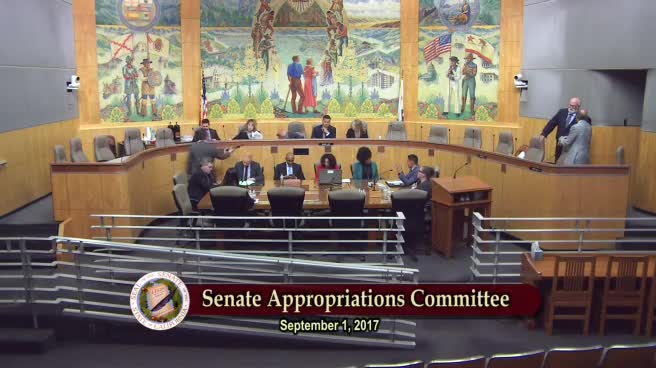 1H
Senate Standing Committee on Appropriations
 4MIN
Senate Standing Committee on Environmental Quality
 1MIN
Assembly Floor
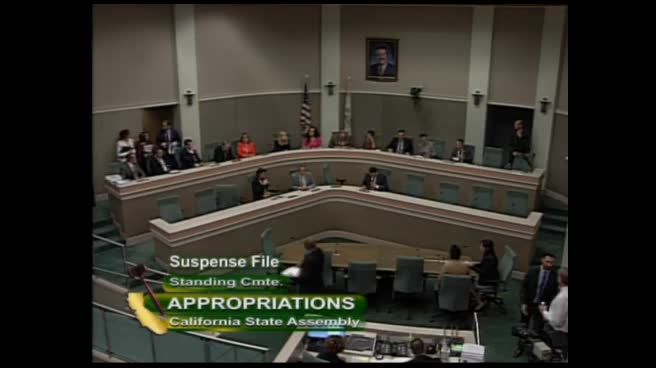 1H
Assembly Standing Committee on Appropriations
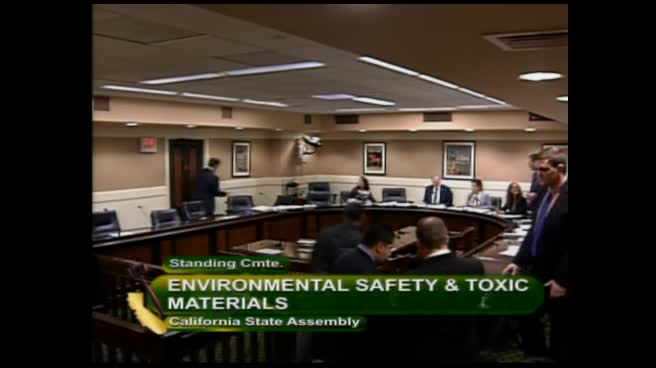 6MIN
Assembly Standing Committee on Environmental Safety and Toxic Materials



Bill Co-Author(s):