AB 2471: Pupil health: School-Based Pupil Support Services Program Act.
- Session Year: 2017-2018
- House: Assembly
- Latest Version Date: 2018-04-17
Existing law, the Healthy Start Support Services for Children Act, requires the Superintendent of Public Instruction to award grants to local educational agencies or consortia to fund programs in qualifying schools that provide support services, which include case-managed health, mental health, social, and academic support services, to eligible pupils and their families.
This bill would state the intent of the Legislature to enact legislation that would increase inschool in-school support services to pupils in order to break down barriers to academic success.
The bill would enact the School-Based Pupil Support Services Program Act, under which grants would be awarded by the State Department of Education to qualifying schools, as defined., defined. The bill would specify that recipient qualifying schools would provide $1 of matching funds for each $4 of grant funds received. The bill would authorize 2 types of grants: planning grants and operational grants. The bill would specify that planning grants would be used by qualifying schools for planning and coordination activities relating to specified support services. The bill would specify that operational grants would be used by qualifying schools for, among other purposes, increasing the presence of school health professionals, as defined, in schools and providing programs that prevent and reduce substance abuse among pupils.
The bill would specify that the source of the state funding for the grants awarded under the program would be an appropriation from the Youth Education, Prevention, Early Intervention and Treatment Account established pursuant to the Control, Regulate and Tax Adult Use of Marijuana Act (Proposition 64, as approved by the voters at the November 8, 2016, statewide general election). The appropriation would be made to the State Department of Health Care Services, for transfer to the State Department of Education, in accordance with a determination that expenditure of these funds for purposes of this bill would be authorized, as specified. The bill would place an unspecified limit on the amount and duration of the grants.
The bill would require each recipient of a grant under the program to annually report specified data to the State Department of Education.
Existing law, the Healthy Start Support Services for Children Act, requires the Superintendent of Public Instruction to award grants to local educational agencies or consortia to fund programs in qualifying schools that provide support services, which include case-managed health, mental health, social, and academic support services, to eligible pupils and their families.
This bill would state the intent of the Legislature to enact legislation that would increase inschool support services to pupils in order to break down barriers to academic success.
The bill would enact the School-Based Pupil Support Services Program Act, under which grants would be awarded by the State Department of Education to qualifying schools, as defined., The bill would specify that recipient qualifying schools would provide $1 of matching funds for each $4 of grant funds received. The bill would authorize 2 types of grants: planning grants and operational grants. The bill would specify that planning grants would be used by qualifying schools for planning and coordination activities relating to specified support services. The bill would specify that operational grants would be used by qualifying schools for, among other purposes, increasing the presence of school health professionals, as defined, in schools and providing programs that prevent and reduce substance abuse among pupils.
The bill would specify that the source of the state funding for the grants awarded under the program would be an appropriation from the Youth Education, Prevention, Early Intervention and Treatment Account established pursuant to the Control, Regulate and Tax Adult Use of Marijuana Act (Proposition 64, as approved by the voters at the November 8, 2016, statewide general election). The appropriation would be made to the State Department of Health Care Services, for transfer to the State Department of Education, in accordance with a determination that expenditure of these funds for purposes of this bill would be authorized, as specified. The bill would place an unspecified limit on the amount and duration of the grants.
The bill would require each recipient of a grant under the program to annually report specified data to the State Department of Education.
Existing law, the Healthy Start Support Services for Children Act, requires the Superintendent of Public Instruction to award grants to local educational agencies or consortia to fund programs in qualifying schools that provide support services, which include case-managed health, mental health, social, and academic support services, to eligible pupils and their families.
This bill would state the intent of the Legislature to enact legislation that would increase inschool support services to pupils in order to break down barriers to academic success.
It is the intent of the Legislature to enact legislation that would increase inschool in-school support services to pupils in order to break down barriers to academic success.
SEC. 2.Article 3.5 (commencing with Section 49445) is added to Chapter 9 of Part 27 of Division 4 of Title 2 of the Education Code, to read:3.5.School-Based Pupil Support Services Program49445.(a)This article shall be known, and may cited, as the School-Based Pupil Support Services Program Act.
(b)As used in this article: article, the following terms have the following meanings:
(1)LEA or local educational agency means a school district district, a charter school, or a county office of education.
(2)Lead agency means the State Department of Education.
(3)Qualifying school includes any of the following: a school in which 55 percent or more of the pupils enrolled are unduplicated pupils, as defined in Section 42238.02.
(A)An LEA in which 50 percent or more of the enrolled pupils are either of the following:(i)From families that receive benefits from CalWORKS or any successor program, or have limited English proficiency, or both.(ii)Are eligible to receive free or reduced-price meals.(B)An LEA which has higher-than-average dropout rates.(C)A school that does not satisfy the criteria set forth in subparagraphs (A) and (B), but demonstrates other factors that warrant its consideration, including, but not necessarily limited to, fulfilling an exceptional need or providing service to a particular target population.(4)School health professional means a state-licensed school nurse, psychologist, social worker, counselor, or other state-licensed, state-certified health professional qualified under state law to provide support services to pupils. an individual holding a services credential with a specialization in pupil personnel services or a services credential with a specialization in health for a school nurse.
49445.3.(a)(1)For purposes of implementing this article, moneys from the Youth Education, Prevention, Early Intervention and Treatment Account established by paragraph (1) of subdivision (f) of Section 34019 of the Revenue and Taxation Code shall be appropriated to the State Department of Health Care Services, for transfer to the lead agency for purposes of awarding grants pursuant to this article, for each fiscal year beginning with the 201920 fiscal year. Any funds that are not fully expended in a single fiscal year shall be available for purposes of implementing this article in any one of, or across one or more of, subsequent fiscal years.
(2)The State Department of Health Care Services shall transfer the funds appropriated in paragraph (1) to the lead agency upon determining that the grants to be awarded under this article shall be used for purposes for which the use of moneys from the Youth Education, Prevention, Early Intervention and Treatment Account is authorized.
(b)All grants awarded under this article shall be matched by the participating LEA with one dollar ($1) for each four dollars ($4) awarded. The lead agency may waive the match requirement upon verifying that the LEA made a substantial effort to secure a match but was unable to secure the required matching funds.
49445.5.The State Department of Health Care Services shall establish an interagency agreement with the lead agency to implement this article in accordance with the pertinent provisions of the Control, Regulate and Tax Adult Use of Marijuana Act (Proposition 64, as approved by the voters at the November 8, 2016, statewide general election), and in accordance with a determination made pursuant to paragraph (2) of subdivision (a) of Section 49445.3 that the use of the funds for these purposes is authorized, with the State Department of Education as the lead agency. authorized. The lead agency may integrate or redirect existing resources to perform its duties under this article. These duties include, but are not necessarily limited to, all of the following:
(a)Developing, promoting, and implementing policy supporting the program.
(b)Reviewing grant applications and awarding grants.
(c)Soliciting input regarding program policy and direction from individuals and entities with experience in the integration of childrens services.
(d)Ensuring that programs funded through grants are designed to educate about and prevent substance abuse disorders and harm that may come from substance use.
(e)Ensuring that programs funded through grants provide accurate education to school employees, youth, and caregivers about substance use, mental health stigma, and physical health.
(f)Ensuring that the programs funded through grants provide effective prevention as well as early intervention of substance use, behavioral health issues, and physical health issues.
(g)Ensuring that the programs funded through grants provide timely treatment of youth and their families and caregivers, as needed.
(h)At the request of the Superintendent, assisting the LEA or consortium in planning and implementing this program, including assisting with local technical assistance, and developing interagency collaboration.
49445.7.(a)A qualifying school shall first receive a planning grant that will pay the costs of planning and coordination activities, on behalf of one or more qualifying schools within the LEA, relating to programs that provide support services that will include programs designed to educate pupils and prevent substance use disorders from affecting pupils and their families at or near the school. Upon completion of the planning phase, the LEA or consortium shall be eligible to apply for, and may receive, an operational grant. grant pursuant to Section 49445.9. No grant awarded under this article section shall exceed ____ dollars ($____) in any fiscal year, for a maximum of ____ fiscal years.
(b)A recipient of a planning grant under this section shall, at a minimum, comply with all of the following requirements:
(1)Implementing a school climate assessment that includes information from multiple stakeholders, including school staff, pupils, and families, that is used to inform the selection of strategies and behavioral health, as well as substance abuse, and interventions that reflect the culture and goals of the school.
(2)Committing to leverage school and community resources to offer comprehensive multitiered services on a sustainable basis, which can include community and faith-based organizations, foster care providers, juvenile and family courts, and others, who recognize the early signs of substance use, behavioral health issues, physical health, and other barriers to academic success.
(3)Developing strategies and practices that ensure parent engagement with the school and provide parents with access to resources that support their childrens educational success.
(4)Developing strategies and practices that prevent and reduce dropping out of school.
(5)Creating and maintaining a mechanism, described in writing, to coordinate services provided to individual pupils among school staff and school health center staff while maintaining the confidentiality and privacy of health information consistent with applicable state and federal law.
49445.9.(a)A qualifying school may receive an operational grant once it has demonstrated readiness to begin operation of a program or to expand existing support services programs. An operational grant awarded under this section shall supplement, and not supplant, existing services and funds. An operational grant awarded under this section shall not exceed ____ dollars ($____) in any fiscal year, for a maximum of ____ fiscal years.
(b)A recipient of an operational grant under this section shall, at a minimum, comply with all of the following requirements:
(1)Increase the presence of school health professionals in its schools.
(2)Provide programs that prevent and reduce substance abuse among its pupils.
(3)Establish a coordination-of-services team that considers referrals for services, oversees schoolwide efforts, and uses data-informed processes to identify struggling pupils who require early interventions. This team may include existing staff.
(4)Provide comprehensive professional development opportunities for school employees, including teachers, that enable school employees to recognize and respond to a childs unique needs, including the ability to provide referrals to professionals in the school who can provide the needed support service. Nothing in this paragraph shall be construed to require teachers to provide mental health services to pupils.
49446.Each recipient of a grant under this article shall annually report each of the following to the lead agency:
(a)The number of school health professionals employed with grant funds.
(b)The ratio of newly hired health professionals to pupils.
(c)Information indicating an increase in the level of evidence-based programming for pupil support services.
(d)Changes in dropout rates in school over the span of the operational grant.
(e)An evaluation of the impact of the School-Based Pupil Support Services Program. This includes a comparison of data from before the grant was awarded and after. This can include discipline referrals, attendance, suspensions, and other relevant data that can be used to assess impact.
It is the intent of the Legislature to enact legislation that would increase inschool support services to pupils in order to break down barriers to academic success.
SEC. 2.Article 3.5 (commencing with Section 49445) is added to Chapter 9 of Part 27 of Division 4 of Title 2 of the Education Code, to read:3.5.School-Based Pupil Support Services Program49445.(a)This article shall be known, and may cited, as the School-Based Pupil Support Services Program Act.
(b)As used in this article:
(1)LEA or local educational agency means a school district or a county office of education.
(2)Lead agency means the State Department of Education.
(3)Qualifying school includes any of the following:
(A)An LEA in which 50 percent or more of the enrolled pupils are either of the following:
(i)From families that receive benefits from CalWORKS or any successor program, or have limited English proficiency, or both.
(ii)Are eligible to receive free or reduced-price meals.
(B)An LEA which has higher-than-average dropout rates.
(C)A school that does not satisfy the criteria set forth in subparagraphs (A) and (B), but demonstrates other factors that warrant its consideration, including, but not necessarily limited to, fulfilling an exceptional need or providing service to a particular target population.
(4)School health professional means a state-licensed school nurse, psychologist, social worker, counselor, or other state-licensed, state-certified health professional qualified under state law to provide support services to pupils.
49445.3.(a)(1)For purposes of implementing this article, moneys from the Youth Education, Prevention, Early Intervention and Treatment Account established by paragraph (1) of subdivision (f) of Section 34019 of the Revenue and Taxation Code shall be appropriated to the State Department of Health Care Services, for transfer to the lead agency for purposes of awarding grants pursuant to this article, for each fiscal year beginning with the 201920 fiscal year. Any funds that are not fully expended in a single fiscal year shall be available for purposes of implementing this article in any one of, or across one or more of, subsequent fiscal years.
(2)The State Department of Health Care Services shall transfer the funds appropriated in paragraph (1) to the lead agency upon determining that the grants to be awarded under this article shall be used for purposes for which the use of moneys from the Youth Education, Prevention, Early Intervention and Treatment Account is authorized.
(b)All grants awarded under this article shall be matched by the participating LEA with one dollar ($1) for each four dollars ($4) awarded. The lead agency may waive the match requirement upon verifying that the LEA made a substantial effort to secure a match but was unable to secure the required matching funds.
49445.5.The State Department of Health Care Services shall establish an interagency agreement with the lead agency to implement this article in accordance with the pertinent provisions of the Control, Regulate and Tax Adult Use of Marijuana Act (Proposition 64, as approved by the voters at the November 8, 2016, statewide general election), and in accordance with a determination made pursuant to paragraph (2) of subdivision (a) of Section 49445.3 that the use of the funds for these purposes is authorized, with the State Department of Education as the lead agency. The lead agency may integrate or redirect existing resources to perform its duties under this article. These duties include, but are not necessarily limited to, all of the following:
(a)Developing, promoting, and implementing policy supporting the program.
(b)Reviewing grant applications and awarding grants.
(c)Soliciting input regarding program policy and direction from individuals and entities with experience in the integration of childrens services.
(d)Ensuring that programs funded through grants are designed to educate about and prevent substance abuse disorders and harm that may come from substance use.
(e)Ensuring that programs funded through grants provide accurate education to school employees, youth, and caregivers about substance use, mental health stigma, and physical health.
(f)Ensuring that the programs funded through grants provide effective prevention as well as early intervention of substance use, behavioral health issues, and physical health issues.
(g)Ensuring that the programs funded through grants provide timely treatment of youth and their families and caregivers, as needed.
(h)At the request of the Superintendent, assisting the LEA or consortium in planning and implementing this program, including assisting with local technical assistance, and developing interagency collaboration.
49445.7.(a)A qualifying school shall first receive a planning grant that will pay the costs of planning and coordination activities, on behalf of one or more qualifying schools within the LEA, relating to programs that provide support services that will include programs designed to educate pupils and prevent substance use disorders from affecting pupils and their families at or near the school. Upon completion of the planning phase, the LEA or consortium shall be eligible to apply for, and may receive, an operational grant. No grant awarded under this article shall exceed ____ dollars ($____) in any fiscal year, for a maximum of ____ fiscal years.
(b)A recipient of a planning grant under this section shall, at a minimum, comply with all of the following requirements:
(1)Implementing a school climate assessment that includes information from multiple stakeholders, including school staff, pupils, and families, that is used to inform the selection of strategies and behavioral health, as well as substance abuse, and interventions that reflect the culture and goals of the school.
(2)Committing to leverage school and community resources to offer comprehensive multitiered services on a sustainable basis, which can include community and faith-based organizations, foster care providers, juvenile and family courts, and others, who recognize the early signs of substance use, behavioral health issues, physical health, and other barriers to academic success.
(3)Developing strategies and practices that ensure parent engagement with the school and provide parents with access to resources that support their childrens educational success.
(4)Developing strategies and practices that prevent and reduce dropping out of school.
(5)Creating and maintaining a mechanism, described in writing, to coordinate services provided to individual pupils among school staff and school health center staff while maintaining the confidentiality and privacy of health information consistent with applicable state and federal law.
49445.9.(a)A qualifying school may receive an operational grant once it has demonstrated readiness to begin operation of a program or to expand existing support services programs. An operational grant awarded under this section shall supplement, and not supplant, existing services and funds. An operational grant awarded under this section shall not exceed ____ dollars ($____) in any fiscal year, for a maximum of ____ fiscal years.
(b)A recipient of an operational grant under this section shall, at a minimum, comply with all of the following requirements:
(1)Increase the presence of school health professionals in its schools.
(2)Provide programs that prevent and reduce substance abuse among its pupils.
(3)Establish a coordination-of-services team that considers referrals for services, oversees schoolwide efforts, and uses data-informed processes to identify struggling pupils who require early interventions. This team may include existing staff.
(4)Provide comprehensive professional development opportunities for school employees, including teachers, that enable school employees to recognize and respond to a childs unique needs, including the ability to provide referrals to professionals in the school who can provide the needed support service. Nothing in this paragraph shall be construed to require teachers to provide mental health services to pupils.
49446.Each recipient of a grant under this article shall annually report each of the following to the lead agency:
(a)The number of school health professionals employed with grant funds.
(b)The ratio of newly hired health professionals to pupils.
(c)Information indicating an increase in the level of evidence-based programming for pupil support services.
(d)Changes in dropout rates in school over the span of the operational grant.
(e)An evaluation of the impact of the School-Based Pupil Support Services Program. This includes a comparison of data from before the grant was awarded and after. This can include discipline referrals, attendance, suspensions, and other relevant data that can be used to assess impact.
It is the intent of the Legislature to enact legislation that would increase inschool support services to pupils in order to break down barriers to academic success.
|
Date
|
Status
|
|---|---|
| May 25, 2018 | In committee: Held under submission. |
| May 9, 2018 | In committee: Set, first hearing. Referred to APPR. suspense file. |
| Apr 25, 2018 | From committee: Do pass and re-refer to Com. on APPR. with recommendation: To Consent Calendar. (Ayes 15. Noes 0.) (April 24). Re-referred to Com. on APPR. |
| Apr 18, 2018 | Re-referred to Com. on HEALTH. |
| Apr 17, 2018 | Read second time and amended. |
| Apr 16, 2018 | From committee: Amend, and do pass as amended and re-refer to Com. on HEALTH. (Ayes 6. Noes 0.) (April 11). |
| Apr 2, 2018 | Re-referred to Com. on ED. |
| Mar 22, 2018 | Referred to Coms. on ED. and HEALTH. |
| Feb 15, 2018 | From printer. May be heard in committee March 17. |
| Feb 14, 2018 | Read first time. To print. |
|
Date
|
Description
|
Location
|
Votes
|
|
|---|---|---|---|---|
| Apr 24, 2018 | Do pass and be re-referred to the Committee on [Appropriations] with recommendation: To Consent Calendar | Assembly Standing Committee on Health |
Passed |
|
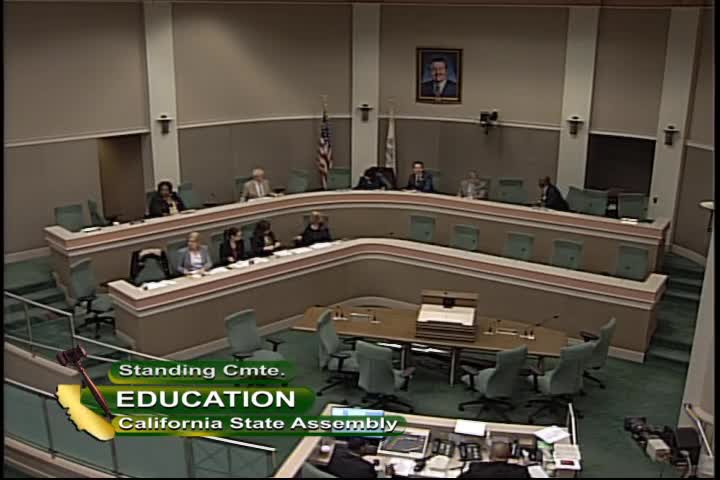
| Apr 11, 2018 | Do pass as amended and be re-referred to the Committee on [Health] | Assembly Standing Committee on Education |
Passed |
This list shows positions taken on this bill by organizations on the date displayed, which is linked to the original source.
Positions by individuals are not included.
|
Organization
|
Position
|
Date
|
|---|---|---|
| American Civil Liberties Union of California | ** Support | Apr 20, 2018 |
| California Coverage and Health Initiatives | ** Support | Apr 20, 2018 |
| California School Nurses | * Support | Apr 11, 2018 |
| California School Nurses Organization | ** Support | Apr 20, 2018 |
| California Teacher's Association | * Support | Apr 11, 2018 |
| Children Now | ** Support | Apr 20, 2018 |
| Children's Defense Fund-California | ** Support | Apr 20, 2018 |
| Coalition of California Welfare Rights Organizations | ** Support | Apr 20, 2018 |
| Corona-Norco United Way | ** Support | Apr 20, 2018 |
| National Association of Social Workers - California Chapter | ** Support | Apr 20, 2018 |
| Orange County United Way | ** Support | Apr 20, 2018 |
| Teachers for Healthy Kids | ** Support | Apr 20, 2018 |
| The Children's Partnership | * Support | Apr 11, 2018 |
| United Way California Capital Region | ** Support | Apr 20, 2018 |
| United Ways Of California | ** Support | Apr 20, 2018 |
Date of Hearing: May 9, 2018
ASSEMBLY COMMITTEE ON APPROPRIATIONS
Lorena Gonzalez Fletcher, Chair
ABPCA Bill Id:AB 2471
Author:(Thurmond) – As Amended Ver:April 17, 2018
Policy Committee: | Education | Vote: | 6 - 0 |
Health | 15 - 0 | ||
|
|
Urgency: No State Mandated Local Program: No Reimbursable: No
SUMMARY: This bill requires the California Department of Health Care Services (DHCS) to establish an interagency agreement with the California Department of Education (CDE) to award Proposition 64 funding. The bill requires the funding be for grants to local education agencies (LEAs) with high concentrations of disadvantaged students to increase in-school support services designed to prevent substance use disorders, beginning with the 2019-20 school year. It requires CDE to first award planning grants to LEAs then operational grants, which LEAs would match with $1 for every $4. It also requires CDE to provide technical assistance to grantees. This bill does not specify grant amounts or duration.
FISCAL EFFECT:
- Ongoing Proposition 64 cost pressures, potentially in the tens of millions of dollars, to award grants to LEAs for programs designed to prevent substance abuse. About half of the state’s more than 1,000 LEAs would be eligible for grant awards. Assuming 25% of these LEAs receive annual grants of $200,000, costs would be $25 million.
- Ongoing cost pressures to grantee LEAs to match grants with $1 for every $4 awarded. (Matching funds likely would be Proposition 98 GF, LEAs’ largest unrestricted fund source.) Assuming 25% of these LEAs receive annual grants of $200,000, costs to match grants would be would be $6.3 million.
- Ongoing GF costs of about $300,000 for CDE to administer and monitor grants.
- Ongoing Proposition 98 GF costs of about $300,000 for CDE to contract with a county office of education to provide technical assistance to grantees.
COMMENTS:
- Proposition 64. Proposition 64—also known as the Control, Regulate and Tax Adult Use of Marijuana Act—was passed by voters in November 2016. It taxes the cultivation and consumption of cannabis. Tax revenue, as well as certain fine revenue, is to be deposited in a special fund. Sixty percent of the funds are to be allocated to the Youth Education, Prevention, Early Intervention, and Treatment Account (Youth Account) for distribution by DHCS for youth programs, which include information about substance use disorder, prevention, and treatment.
The amount of revenue to be generated by Proposition 64 is highly uncertain. However, in January 2018, the Department of Finance estimated this measure could generate additional state and local tax revenues in the 2017-18 fiscal year in the range of $200 million for use in the 2018-19 fiscal year, and revenues in the high hundreds of millions annually thereafter, beginning in 2018-19 fiscal year for use in the 2019-20 fiscal year. Using this estimate, about $2 million would be available in the Youth Account for use in 2018-19 fiscal year and about $350 million would be available in the Youth Account beginning in the 2019-20 fiscal year.
- Related Legislation. AB 1744 (McCarty) authorizes DHCS to consider after school programs in allocating funds generated from an excise tax on the retail sale of cannabis for youth education, prevention, and treatment efforts. The bill is pending before this committee.
AB 2022 (Chu) requires all schools, including charter schools, to have at least one mental health professional for each 600 pupils. The bill is pending before this committee.
Analysis Prepared by: Natasha Collins / APPR. / (916) 319-2081
Date of Hearing: April 24, 2018
ASSEMBLY COMMITTEE ON HEALTH
Jim Wood, Chair
ABPCA Bill Id:AB 2471
Author:(Thurmond) – As Amended Ver:April 17, 2018
SUBJECT: Pupil health: School-Based Pupil Support Services Program Act.
SUMMARY: Establishes the School-Based Pupil Support Services Program to increase in-school support services to pupils in order to break down barriers to academic success. Specifically, this bill:
- Declares the intent of the Legislature to enact legislation that would increase in-school support services to pupils in order to break down barriers to academic success.
- Establishes the following definitions:
- “LEA” or “local educational agency” means a school district, charter school, or a county office of education;
- “Lead agency” means the California Department of Education (CDE);
- “Qualifying school” includes a school in which 55% or more of the pupils enrolled are foster youth, homeless youth, or are eligible for free or reduced lunch meal prices; and,
- “School health professional” means an individual holding a services credential with a specialization in pupil personnel services or a services credential with a specialization in health for a school nurse.
- Appropriates funding from the Youth Education, Prevention, Early Intervention and Treatment Account (Youth Treatment Account) to the State Department of Health Care Services (DHCS), for purposes of awarding grants as established in this bill, for each fiscal year beginning with the 2019–20 fiscal year.
- Requires any funds that are not fully expended in a single fiscal year to be available for purposes of implementing this bill in any one of, or across one or more of, subsequent fiscal years.
- Requires DHCS to transfer the funds appropriated in 3) above to the lead agency, upon determining that the grants be awarded, from the Youth Treatment Account is authorized.
- Requires all grants awarded under this bill to be matched by the participating LEA with one dollar ($1) for each four dollars ($4) awarded. Permits CDE to waive the match requirement upon verifying that the LEA made a substantial effort to secure a match but was unable to secure the required matching funds.
- Requires DHCS to establish an interagency agreement with CDE to implement this bill in accordance with the pertinent provisions of the Control, Regulate and Tax Adult Use of Marijuana Act (AUMA) (Proposition 64, as approved by the voters at the November 8, 2016, statewide general election), and in accordance with a determination that the use of the funds for these purposes is authorized. Permits CDE to integrate or redirect existing resources to perform its duties. These duties include, but are not limited to, all of the following:
- Developing, promoting, and implementing policy supporting the program;
- Reviewing grant applications and awarding grants;
- Soliciting input regarding program policy and direction from individuals and entities with experience in the integration of children’s services;
- Ensuring that programs funded through grants are designed to educate about and prevent substance abuse disorders and harm that may come from substance use;
- Ensuring that programs funded through grants provide accurate education to school employees, youth, and caregivers about substance use, mental health stigma, and physical health;
- Ensuring that the programs funded through grants provide effective prevention as well as early intervention of substance use, behavioral health issues, and physical health issues;
- Ensuring that the programs funded through grants provide timely treatment of youth and their families and caregivers, as needed; and,
- At the request of the CDE Superintendent, assisting the LEA or consortium in planning and implementing this program, including assisting with local technical assistance, and developing interagency collaboration.
- Requires a qualifying school to first receive a planning grant that will pay the costs of planning and coordination activities, on behalf of one or more qualifying schools within the LEA, relating to programs that provide support services that will include programs designed to educate pupils and prevent substance use disorders (SUD) from affecting pupils and their families at or near the school.
- Permits, upon completion of the planning phase, the LEA or consortium to be eligible to apply for, and may receive, an operational grant. Establishes an unspecified maximum grant awarded by this bill for an unspecified amount of maximum years.
- Requires a recipient of a planning grant under this bill to, at a minimum, comply with all of the following requirements:
- Implementing a school climate assessment that includes information from multiple stakeholders, including school staff, pupils, and families, that is used to inform the selection of strategies and behavioral health, as well as substance abuse, and interventions that reflect the culture and goals of the school;
- Committing to leverage school and community resources to offer comprehensive multitiered services on a sustainable basis, which can include community and faith-based organizations, foster care providers, juvenile and family courts, and others, who recognize the early signs of substance use, behavioral health issues, physical health, and other barriers to academic success;
- Developing strategies and practices that ensure parent engagement with the school and provide parents with access to resources that support their children’s educational success;
- Developing strategies and practices that prevent and reduce dropping out of school; and,
- Creating and maintaining a mechanism, described in writing, to coordinate services provided to individual pupils among school staff and school health center staff while maintaining the confidentiality and privacy of health information consistent with applicable state and federal law.
- Permits a qualifying school to receive an operational grant once it has demonstrated readiness to begin operation of a program or to expand existing support services programs. Requires that an operational grant that is awarded supplement, and not supplant, existing services and funds. Prohibits an operational grant awarded from exceeding an unspecified amount of dollars in any fiscal year, for an unspecified maximum number of fiscal years.
- Requires a recipient of an operational grant to, at a minimum, comply with all of the following requirements:
- Increase the presence of school health professionals in its schools;
- Provide programs that prevent and reduce substance abuse among its pupils;
- Establish a coordination-of-services team that considers referrals for services, oversees schoolwide efforts, and uses data-informed processes to identify struggling pupils who require early interventions and specifies that this team may include existing staff; and,
- Provide comprehensive professional development opportunities for school employees, including teachers that enable school employees to recognize and respond to a child’s unique needs, including the ability to provide referrals to professionals in the school who can provide the needed support service.
- Specifies that nothing in this bill be construed to require teachers to provide mental health services to pupils.
- Requires each recipient of a grant under this bill to annually report each of the following to CDE:
- The number of school health professionals employed with grant funds;
- The ratio of newly hired health professionals to pupils;
- Information indicating an increase in the level of evidence-based programming for pupil support services;
- Changes in dropout rates in school over the span of the operational grant; and,
- An evaluation of the impact of the School-Based Pupil Support Services Program. This includes a comparison of data from before the grant was awarded and after. This can include discipline referrals, attendance, suspensions, and other relevant data that can be used to assess impact.
EXISTING LAW:
- Establishes, through the AUMA, the California Marijuana Tax Fund (Fund), for purposes of depositing taxes collected from the sale and cultivation of marijuana.
- Allocates, after other specified disbursements, 60% of the remaining Fund for the Youth Treatment Account, for programs for youth that are designed to educate about, and to prevent harm from, substance use disorders.
- Requires DHCS to enter into interagency agreements with DPH and CDE to implement and administer programs specified in 2) above. Requires the programs to emphasize accurate education, effective prevention, early intervention, school retention, and timely treatment services for youth, their families, and caregivers. Allows the programs to include, but not be limited to, the following components:
- Prevention and early intervention services including outreach, risk survey, and education to youth, families, caregivers, schools, primary care health providers, behavioral health and substance use disorder service providers, community and faith-based organizations, foster care providers, juvenile and family courts, and others to recognize and reduce risks related to substance use, and the early signs of problematic use and of substance use disorders;
- Grants to schools to develop and support student assistance programs, or other similar programs, designed to prevent and reduce substance use, and improve school retention and performance, by supporting students who are at risk of dropping out of school and promoting alternatives to suspension or expulsion that focus on school retention, remediation, and professional care. Requires that schools with higher than average dropout rates be prioritized for grants;
- Grants to programs for outreach, education, and treatment for homeless youth and out-of-school youth with substance use disorders;
- Access and linkage to care provided by county behavioral health programs for youth, and their families and caregivers, who have a substance use disorder or who are at risk for developing a substance use disorder;
- Youth-focused substance use disorder treatment programs that are culturally and gender competent, trauma-informed, evidence-based and provide a continuum of care that includes screening and assessment (substance use disorder as well as mental health), early intervention, active treatment, family involvement, case management, overdose prevention, prevention of communicable diseases related to substance use, relapse management for substance use and other co-occurring behavioral health disorders, vocational services, literacy services, parenting classes, family therapy and counseling services, medication-assisted treatments, psychiatric medication, and psychotherapy;
- Requires, to the extent permitted by law and where indicated, interventions to utilize a two-generation approach to addressing substance use disorders with the capacity to treat youth and adults together. Supporting the development of family-based interventions that address substance use disorders and related problems within the context of families, including parents, foster parents, caregivers, and all their children;
- Programs to assist individuals, as well as families and friends of drug using young people, to reduce the stigma associated with substance use including being diagnosed with a substance use disorder or seeking substance use disorder services. Includes peer-run outreach and education to reduce stigma, anti-stigma campaigns, and community recovery networks;
- Workforce training and wage structures that increase the hiring pool of behavioral health staff with substance use disorder prevention and treatment expertise. Provide ongoing education and coaching that increases substance use treatment providers’ core competencies and trains providers on promising and evidenced-based practices;
- Construction of community-based youth treatment facilities;
- Permits DPH to contract with each county behavioral health program for the provision of services;
- Requires that funds be allocated to counties based on demonstrated need, including the number of youth in the county, the prevalence of substance use disorders among adults, and confirmed through statistical data, validated assessments, or submitted reports prepared by the applicable county to demonstrate and validate need;
- Requires DPH, CDE, and DHCS to periodically evaluate the programs they are funding to determine the effectiveness of the programs.
- Permits DPH, CDE, and DHCS to use up to 4% of the moneys allocated to the Youth Education, Prevention, Early Intervention and Treatment Account for administrative costs related to implementation, evaluation, and oversight of the programs;
- Requires, if the Department of Finance ever determines that funding pursuant to marijuana taxation exceeds demand for youth prevention and treatment services in the state, DPH, CDE, and DHCS to provide a plan to the Department of Finance to provide treatment services to adults using these funds; and,
- Requires DPH, CDE, and DHCS to solicit input from volunteer health organizations, physicians who treat addiction, treatment researchers, family therapy and counseling providers, and professional education associations with relevant expertise as to the administration of any grants.
- Requires a school to include in its School Accountability Report Card, the availability of qualified personnel to provide counseling and other pupil support services, including the ratio of academic counselors per pupil.
- Expresses the intent of the Legislature that the that the governing board of each school district and each county superintendent of schools maintain fundamental school health services at a level that is adequate to accomplish all of the following: preserve pupils’ ability to learn, fulfill existing state requirements and policies regarding pupils’ health, and contain health care costs through preventive programs and education.
FISCAL EFFECT: This bill has not yet been analyzed by a fiscal committee.
COMMENTS:
- PURPOSE OF THIS BILL. According to the author, supportive services, in general, are linked to many positive outcomes including an improved learning environment, student behavior, engagement in school, and academic achievement. Unfortunately, California is not meeting the social and emotional needs of our students. The author states that the program established by this bill is necessary because if we want to improve our student’s success, we must address the whole student’s need.
- BACKGROUND. According to the CDE, 29% of California school districts have no counseling programs at all. When counseling programs exist, counselors are often asked to add administrative duties such as testing, supervising, and class scheduling. The ratio of students per counselor in this state averages 945:1, compared to the national average of 477:1, ranking California last in the nation.
As of 2016-17, there were 2,630 credentialed school nurses in California. This clearly fails to meet the threshold of one nurse per school as there are more than 10,000 public K-12 schools in California. Data from the Lucille Packard Foundation suggests that the nurse to pupil ratio in California schools is 2,784:1. According to CDE data for 2016-17, there were 5,932 school psychologists and 687 social workers employed in California schools. The Packard Foundation, citing 2015 data, notes that the ratio for school psychologists is 1,265:1 and for social workers is 12,870:1.
- Proposition 64 (AUMA). Prop 64 was passed by the voters in November 2016. As a result of the passage of Prop 64, adults, aged 21 years or older, are allowed to possess and use marijuana for recreational purposes. Prop 64 created two new taxes; a cultivation tax on marijuana plants and flowers and a 15% excise tax on the sale of all marijuana and marijuana products. Prop 64 also exempted from the California state sales tax, sales of medical marijuana or marijuana products. Revenues collected from the new state excise tax and the cultivation tax on growing marijuana will be deposited in a new state account, the Fund. Certain fines on businesses or individuals who violate regulations created by Prop 64 would also be deposited into the Fund. Monies in the Fund will first be used to pay back certain state agencies for any marijuana regulatory costs not covered by license fees. A portion of the monies will then be allocated as follows:
- Sixty percent for youth programs including substance use disorder education, prevention, and treatment;
- Twenty percent to clean up and prevent environmental damage resulting from the illegal growing of marijuana, and;
- Twenty percent for programs designed to reduce driving under the influence of alcohol, marijuana, and other drugs and a grant program designed to reduce any potential negative impacts on public health or safety resulting from the measure.
- LEA Billing. The LEA Medi-Cal Billing Option Program was established in 1993 and provides Medicaid federal financial participation (FFP) to LEAs for health-related services provided by qualified medical practitioners. Reimbursement is based upon a fee-for-service model, and school expenditures for qualified services rendered are reimbursed at 50% of cost using federal Medicaid matching funds. There is no state General Fund expense for the program. Under the program, LEAs bill Medi-Cal for the direct medical services they provide to Medi-Cal eligible students. LEAs pay for the services and are reimbursed the FFP rate relative to the cost of each individual service from federal funds. Subject to specified conditions, LEA covered services can include the following:
- Health and mental health evaluations and health and mental health education;
- Medical transportation;
- Nursing services;
- Occupational therapy;
- Physical therapy;
- Physician services;
- Mental health and counseling services;
- School health aide services;
- Speech pathology services;
- Audiology services; and,
- Targeted case management services for children with an IEP or an IFSP.
- Proposition 64 (AUMA). Prop 64 was passed by the voters in November 2016. As a result of the passage of Prop 64, adults, aged 21 years or older, are allowed to possess and use marijuana for recreational purposes. Prop 64 created two new taxes; a cultivation tax on marijuana plants and flowers and a 15% excise tax on the sale of all marijuana and marijuana products. Prop 64 also exempted from the California state sales tax, sales of medical marijuana or marijuana products. Revenues collected from the new state excise tax and the cultivation tax on growing marijuana will be deposited in a new state account, the Fund. Certain fines on businesses or individuals who violate regulations created by Prop 64 would also be deposited into the Fund. Monies in the Fund will first be used to pay back certain state agencies for any marijuana regulatory costs not covered by license fees. A portion of the monies will then be allocated as follows:
Under the state’s Medicaid State Plan, LEA services are limited to a maximum of 24 services per 12 month period for a beneficiary without prior authorization, provided that medical necessity criteria are met. LEAs may obtain authorization for LEA services beyond 24 services per 12-month period from the beneficiary’s:
- Individualized Education Plan or Individualized Family Service Plan developed for the special education student;
- California Children’s Services Program;
- Short-Doyle Program;
- Medi-Cal field office authorization; and,
- Prepaid health plan authorization (including Primary Care Case Management).
- SUPPORT. Supporters, including the United Way, the National Association of Social Workers, and others note that California’s youth face challenges, within and outside the classroom, that prevent them from being the best students they can be. Peer pressures, bullying at school, adverse family situations, substance abuse, and mental health needs are all barriers to learning. By helping schools to provide the supports students need and to create a supportive learning environment, this bill will improve the academic preparation and social development of California’s students. In establishing a grant for supportive service positions, a multi-tiered care system is created where teachers are the frontline of recognizing and referring students who need services; school nurses and counselors provide preventative services, referrals, and health assessments; and community-based organizations as well as health providers give services.
- RELATED LEGISLATION.
- AB 1744 (McCarty) authorizes DHCS to consider after school programs in allocating funds generated from an excise tax on the retail sale of cannabis for youth education, prevention and treatment efforts. AB 1744 is pending in the Assembly Health Committee and scheduled for a hearing on April 24, 2018.
- AB 2022 (Chu) of this Session requires all schools, including charter schools, to have at least one mental health professional for each 600 pupils. AB 2022 is pending in the Assembly Health Committee and scheduled for a hearing on April 24, 2018.
- PREVIOUS LEGISLATION.
- AB 882 (Arambula) of 2017, would have established the School Nursing and Pupil Health Care Services Task Force (Task Force), and requires the Task Force to identify model school health care services programs and practices to improve the safety and quality of health care services to pupils. This bill was held in the Assembly Appropriations Committee.
- AB 580 (O’Donnell) of the 2015-16 Session requires the CDE to develop model referral protocols for voluntary use by schools to address the appropriate and timely referral by school staff of students with mental health concerns. This bill was vetoed by the Governor, stating:
"This bill requires CDE to develop model referral protocols to address the appropriate and timely referral by school staff of students with mental health concerns.
California does not currently have specific model referral protocols for addressing student mental health as outlined by this bill. However, the CDE recently received a grant from the federal Department of Health and Human Services, Substance Abuse and Mental Health Services Administration to identify and address critical student and family mental health needs.
It's premature to impose an additional and overly prescriptive requirement until the current efforts are completed and we can strategically target resources to best address student mental health."
REGISTERED SUPPORT / OPPOSITION:
Support
American Civil Liberties Union of California
California Coverage and Health Initiatives
California School Nurses Organization
Children NOW
Children’s Defense Fund-California
Coalition of California Welfare Rights Organizations
Corona-Norco United Way
National Association of Social Workers – California Chapter
Orange County United Way
Teachers for Healthy Kids
United Way California Capital Region
United Ways of California
Opposition
None on file.
Analysis Prepared by: Paula Villescaz / HEALTH / (916) 319-2097
Date of Hearing: April 11, 2018
ASSEMBLY COMMITTEE ON EDUCATION
Patrick O'Donnell, Chair
ABPCA Bill Id:AB 2471 (
Author:Thurmond) – As Amended Ver:March 22, 2018
[Note: This bill is doubled referred to the Assembly Health Committee and will be heard by that Committee as it relates to issues under its jurisdiction.]
SUBJECT: Pupil health: School-Based Pupil Support Services Program Act
SUMMARY: Requires the transfer of funds from the Youth, Education, Prevention, Early Intervention and Treatment Account established through the passage of the Control, Regulate and Tax Adult Use of Marijuana Act to the California Department of Education (CDE) to establish a grant program which would allow schools to provide in-school support services to pupils. Specifically, this bill:
- Expresses the intent of the Legislature to enact legislation that would increase in-school support services to pupils in order to break down barriers to academic success.
- Establishes the School-Based Pupil Support Services Program.
- Defines the following terms for the purpose of this program as follows:
- “Local education agency” (LEA) means a school district or a county office of education.
- “Lead agency” means the California Department of Education (CDE).
- “Qualifying school” includes any of the following:
- An LEA in which 50 percent or more of the enrolled pupils are either from families receiving Cal WORKs or any successor program and/or have limited English proficiency, or are eligible to receive free or reduced price meals.
- An LEA which has a higher-than-average dropout rate..
- A school that does not satisfy the criteria in (i) or (ii) above, but demonstrates other factors that warrant its consideration, including, but not limited to, fulfilling an exceptional need or providing service to a particular target population.
- “School health professional” means a state-licensed school nurse, psychologist, social worker, counselor, or other state-licensed state-certified health professional qualified under state law to provide support services to pupils.
- Appropriates funds from the Youth, Education, Prevention, Early Intervention and Treatment Account established through the passage of the Control, Regulate and Tax Adult Use of Marijuana Act (Proposition 64, as approved by voters at the November 8, 2016 statewide general election), to the California Department of Health Care Services (DHCS) annually for transfer to the lead agency for the purpose of awarding grants to implement this program beginning in 2019-20, and specifies that any funds not fully expended in a single fiscal year are to be available in subsequent fiscal years.
- Requires DHCS to transfer the funds appropriated to the lead agency upon determining that the grants to be awarded under this program are to be used for authorized purposes as per the Youth, Education, Prevention, Early Intervention and Treatment Account established through the passage of Proposition 64.
- Requires each LEA receiving a grant through this program to provide a match of one dollar for every four dollars in grant funding received, and authorizes the lead agency to waive the match requirement upon verification that the LEA made a substantial effort to secure a match, but was unable to secure the required matching funds.
- Requires DHCS to establish an interagency agreement with CDE to implement the provisions of this program in accordance with the pertinent provisions of the Control, Regulate and Tax Adult Use of Marijuana Act.
- Authorizes CDE to integrate or redirect existing resources to perform its duties under this program.
- Specifies that CDE’s duties as the lead agency are to include, but are not limited to, all of the following:
- Developing, promoting, and implementing policy supporting the program.
- Reviewing grant applications and awarding grants.
- Soliciting input regarding program policy and direction from individuals and entities with experience in the integration of children’s services.
- Ensuring that programs funded through grants are designed to educate about and prevent substance abuse disorders and harm that may come from substance use.
- Ensuring that programs funded through grants provide accurate education to school employees, youth, and caregivers about substance use, mental health stigma, and physical health.
- Ensuring that the programs funded through grants provide effective prevention as well as early intervention of substance use, behavioral health issues, and physical health issues.
- Ensuring that the programs funded through grants provide timely treatment of youth and their families and caregivers, as needed.
- At the request of the Superintendent, assisting the LEA or consortium in planning and implementing this program, including assisting with local technical assistance, and developing interagency collaboration.
- Specifies that a qualifying school will first receive a planning grant to pay the costs of planning and coordinating activities on behalf of one or more qualifying schools within the LEA, relating to programs that provide support services, including programs designed to educate pupils and prevent substance use disorders from affecting pupils and their families.
- Specifies that, upon completion of the planning phase, the LEA or consortium is eligible to apply for, and may receive, an operational grant, not to exceed an unspecified amount in a given fiscal year, for an unspecified number of years.
- Requires that a recipient of a planning grant must comply with all of the following:
- Implement a school climate assessment that includes information from multiple stakeholders, including school staff, pupils, and families, that is used to inform the selection of strategies and behavioral health, as well as substance abuse, and interventions that reflect the culture and goals of the school.
- Commit to leverage school and community resources to offer comprehensive multi-tiered services on a sustainable basis, which can include community and faith-based organizations, foster care providers, juvenile and family courts, and others, who recognize the early signs of substance use, behavioral health issues, physical health, and other barriers to academic success.
- Develop strategies and practices that ensure parent engagement with the school and provide parents with access to resources that support their children’s educational success.
- Develop strategies and practices that prevent and reduce dropping out of school.
- Create and maintain a mechanism, described in writing, to coordinate services provided to individual pupils among school staff and school health center staff while maintaining the confidentiality and privacy of health information consistent with applicable state and federal law.
- Authorizes a qualifying school to receive an operational grant once it has demonstrated readiness to begin operation of a program or to expand existing support services programs.
- Specifies that an operational grant awarded under this program must supplement and not supplant existing services and funds and that the grant will not exceed an unspecified amount in any fiscal year for an unspecified number of years.
- Requires the recipient of an operating grant, under this program, to, at a minimum, comply with all of the following:
- Increase the presence of school health professionals in its schools.
- Provide programs that prevent and reduce substance abuse among its pupils.
- Establish a coordination-of-services team that considers referrals for services, oversees schoolwide efforts, and uses data-informed processes to identify struggling pupils who require early interventions. Specifies that this team may include existing staff.
- Provide comprehensive professional development opportunities for school employees, including teachers that enable school employees to recognize and respond to a child’s unique needs, including the ability to provide referrals to professionals in the school who can provide the needed support service. Also specifies that nothing in this paragraph shall be construed to require teachers to provide mental health services to pupils.
- Requires each recipient of a grant under this program to annually report each of the following to CDE:
- The number of school health professionals employed with grant funds.
- The ratio of newly hired health professionals to pupils.
- Information indicating an increase in the level of evidence-based programming for pupil support services.
- Changes in dropout rates in the school over the span of the operational grant.
- An evaluation of the impact of the School-Based Pupil Support Services Program. This includes a comparison of data from before the grant was awarded and after. This can include discipline referrals, attendance, suspensions, and other relevant data that can be used to assess impact.
EXISTING LAW:
- Establishes effective January 1, 2018, a cannabis excise tax to be imposed upon purchasers of cannabis or cannabis products sold in this state at the rate of 15 percent of the average market price of any retail sale by a cannabis retailer (Revenue & Tax Code 34011).
- Establishes the California Cannabis Tax Fund in the State Treasury consisting of all taxes, interest, penalties, and other amounts collected and paid to the board pursuant to this part. This special trust fund established solely to carry out the purposes of the Control, Regulate and Tax Adult Use of Marijuana Act and all revenues deposited into the Tax Fund, together with interest or dividends earned by the fund, are to be expended only in accordance with the provisions of the Act (RTC 34018).
- Specifies that the Controller is to disburse funds in the California Cannabis Tax Fund as follows (RTC 34019):
- Reasonable costs incurred by various state agencies for carrying out specified duties associated with the Act.
- Ten million dollars ($10,000,000) to a public university or universities annually beginning in 2018-19 to 2028-29 to research the effect of the Control, Regulate and Tax Adult Use of Marijuana Act.
- Three million dollars ($3,000,000) annually from 2018-19 through 2022-23 to the California Highway Patrol to adopt protocols to determine whether a driver is operating a vehicle while impaired by the use of cannabis or cannabis products.
- Ten million dollars ($10,000,000) annually in 2018-19, increasing to fifty million dollars ($50,000,000) in 2022-23 to the Governor’s Office of Business and Economic Development to administer a community reinvestments grants program.
- Two million dollars ($2,000,000) annually to the University of California San Diego Center for Medicinal Cannabis Research.
- By July 15 of each year, beginning in 2018-19 the Controller will, after disbursing funds for the purposes identified in (a) through (e) above, disburse 60 percent of the remaining funds into the Youth Education, Prevention, Early Intervention and Treatment Account to DHCS for programs for youth designed to educate about and to prevent substance abuse disorders and to prevent harm from substance use. Requires the DHCS to enter into interagency agreements with the State Department of Public Health (CDPH) and the California Department of Education (CDE) to implement and administer these programs. Specifies that these programs may include, but are not limited to, the following:
- Prevention and early intervention services to recognize and reduce risks associated with substance use and the early signs of problematic use and of substance abuse disorders.
- Grants to schools for student assistance programs designed to prevent and reduce substance abuse, and improve school retention and performance, by supporting students who are at risk of dropping out of school and promoting alternatives to suspension or expulsion.
- Grants to programs for outreach, education, and treatment for homeless youth and out-of-school youth with substance use disorders.
- Access and linkage to care provided by county behavioral health programs for youth who have, or are at risk of developing, a substance use disorder.
- Youth-focused substance use disorder treatment programs, which utilize a two-generation approach with the capacity to treat youth and adults together.
- Programs to assist individuals, as well as families and friends, to reduce the stigma associated with substance use including seeking substance use disorder services.
- Specifies that the funds identified in (f) above may also be utilized for workforce training and wage structures to increase the hiring pool of behavioral health staff with substance use disorder prevention and treatment expertise, and for construction of community-based youth treatment facilities.
- Specifies that the DHCS may contract with each county behavioral health program for the provision of services and that the funds identified in (f) above will be allocated to counties based on demonstrated need, including the number of youth in the county, and the prevalence of substance use disorders among adults.
- Requires a school to include in its School Accountability Report Card, the availability of qualified personnel to provide counseling and other pupil support services, including the ratio of academic counselors per pupil (EC 33126).
- Expresses the intent of the Legislature that the that the governing board of each school district and each county superintendent of schools maintain fundamental school health services at a level that is adequate to accomplish all of the following: preserve pupils’ ability to learn, fulfill existing state requirements and policies regarding pupils’ health, and contain health care costs through preventive programs and education (EC 49427).
- Requires the governing board of a school district to give diligent care to the health and physical development of pupils, and authorizes the district to employ properly certified persons for the work (EC 49400).
- Specifies that the minimum requirements for the services credential with a specialization in pupil personnel services are a baccalaureate degree or higher degree from an approved institution, a fifth year of study, and any specialized and professional preparation that the commission shall require. The services credential with a specialization in pupil personnel services shall authorize the holder to perform, at all grade levels, the pupil personnel service approved by the commission as designated on the credential, which may include, but need not be limited to, school counseling, school psychology, child welfare and attendance services, and school social work (EC 44266).
- The minimum requirements for a services credential with a specialization in health for a school nurse are all of the following: a baccalaureate or higher degree from an accredited institution, a valid California license as a registered nurse, and one year of coursework beyond the baccalaureate degree in a program approved by the commission. The services credential with a specialization in health for a school nurse authorizes the holder to perform, at grades 12 and below, the health services approved by the commission designated on the credential (EC 44267.5).
FISCAL EFFECT: Unknown
COMMENTS: This bill directs a portion of the funds to be generated from an excise tax on cannabis and cannabis products authorized for use in youth education, prevention, early intervention and treatment, according to the provisions of Proposition 64, to flow through the DHCS to the CDE to administer a grant program to support in-school support services for pupils at qualifying schools.
Need for the bill. According to the author,
“Student support services meet a crucial need for California’s students that extends beyond academics. Peer pressure, bullying at school, family troubles, drug use, and teen suicide all contribute to barriers to learning. Student services personnel such as school counselors, nurses, and social workers, provide the critical support students need. Especially for those who abuse substances or have physical, emotional, or behavioral needs.
Schools are a trusted and comfortable setting for families and students to receive assessments and link to community and county services. By prioritizing integration, this bill will ensure no students slip through the cracks while navigating the complex health care system. In establishing a grant for supportive service positions, a multi-tiered care system is created where teachers are the frontline of recognizing and referring students who need services; school nurses and counselors provide preventive services, referrals, and health assessments; and community-based organizations as well as health providers give services.
With limited school resources and numerous demands, funding is needed so that student support staff meet student needs that otherwise may fall to already strained administrators and teachers to address—or that may not be addressed at all. Supportive services, in general, are linked to many positive outcomes including an improved learning environment, student behavior, engagement in school, and academic achievement. Where resources are available, schools should not be making the choice of whether to allocate state funds for school-based supportive services at the expense of academics; both are necessary for the success of our students.
The State of Colorado has used revenue from taxes on cannabis to establish a School Health Professional Grant program which provides funds to eligible education providers to enhance the presence of school health professionals in both elementary and secondary schools. It is time for California to make that same investment in our youth.”
California lags in providing social emotional support to pupils. According to the CDE, 29 percent of California school districts have no counseling programs at all. When counseling programs exist, counselors are often asked to add administrative duties such as testing, supervising, and class scheduling. The ratio of students per counselor in this state averages 945 to 1, compared to the national average of 477 to 1, ranking California last in the nation.
As of 2016-17, there were 2,630 credential school nurses in California. This clearly fails to meet the threshold of one nurse per school as there are more than 10,000 public K-12 schools in California. Data from the Lucille Packard Foundation suggests that the nurse to pupil ratio in California schools is 2,784 to 1.
According to CDE data for 2016-17, there were 5,932 school psychologists and 687 social workers employed in California schools. The Packard Foundation, citing 2015 data, notes that the ratio for school psychologists is 1,265 to 1 and for social workers is 12,870 to 1.
Clearly California lacks sufficient numbers of trained personnel in our schools to meet the social and emotional needs of over six million pupils.
This bill identifies a new source of funding to provide grants to qualifying schools to increase in-school support services to pupils, including the hiring of additional “school health professionals”. These are defined as a state-licensed school nurse, psychologist, social worker, counselor, or other state-licensed health professional qualified under state law to provide support services.
Committee staff recommends that, in order to clarify that services to pupils are provided by those with appropriate credentials to meet the needs of pupils, the bill be amended to define the qualifying individuals as those holding a services credential with a specialization in health authorizing service as a school nurse or a services credential with a specialization in pupil personnel services.
Selection of qualifying schools. This bill provides a very broad definition of schools that qualify to receive funding under this program, including having 50 percent or more pupils from families receiving CalWORKs assistance, or who have limited English proficiency, or who are eligible to receive free or reduced price meals. Additional criteria that would qualify a school include having a higher than average dropout rate, or other factors warranting consideration including fulfilling an exceptional need or providing service to a particular target population. In order to ease administration of the program and direct funding to areas of greatest need, committee staff recommends that a qualifying school be defined as a school receiving concentration grant funds as a result of having 55 percent or more upduplicated pupils, namely pupils who are either classified as English learners, eligible for a free or reduced-price meal, or foster youth.
Arguments in support. Supporters note that California’s youth face challenges, within and outside the classroom, that prevent them from being the best students they can be. Peer pressures, bullying at school, adverse family situations, substance abuse, and mental health needs are all barriers to learning. By helping schools to provide the supports students need and to create a supportive learning environment, this bill will improve the academic preparation and social development of California’s students. In establishing a grant for supportive service positions, a multi-tiered care system is created where teachers are the frontline of recognizing and referring students who need services; school nurses and counselors provide preventative services, referrals, and health assessments; and community-based organizations as well as health providers give services.
Similar or prior legislation. AB 1744 (McCarty) of this Session authorizes DHCS to consider after school programs in allocating funds generated from an excise tax on the retail sale of cannabis for youth education, prevention and treatment efforts. This bill is pending before this committee.
AB 2022 (Chu) of this Session requires all schools, including charter schools, to have at least one mental health professional for each 600 pupils. This bill is pending before this committee.
AB 2498 (Eggman) of this Session establishes the School Social Worker Pilot Program to provide multiyear grants to school districts in specified counties to fund a social worker at each eligible school. This bill is pending before this committee.
AB 882 (Arambula) of this Session establishes the School Nursing and Pupil Health Care Services Task Force (Task Force), and requires the Task Force to identify model school health care services programs and practices to improve the safety and quality of health care services to pupils. This bill was held in the Assembly Appropriations Committee.
AB 580 (O’Donnell) of the 2015-16 Session requires the CDE to develop model referral protocols for voluntary use by schools to address the appropriate and timely referral by school staff of students with mental health concerns. This bill was vetoed by the Governor.
SB 1239 (Wolk) of the 2013-14 Session requires school districts that are eligible to receive concentration funding under the Local Control Funding Formula (LCFF) to employ at least one school nurse as a supervisor of health. This bill was held in the Senate Appropriations Committee.
REGISTERED SUPPORT / OPPOSITION:
Support
American Civil Liberties Union of California
California Coverage and Health Initiatives
California School Nurses Organization
Children NOW
Children’s Defense Fund-California
Coalition of California Welfare Rights Organizations
Teachers for Healthy Kids
United Way California Capital Region
Opposition
None on file
Analysis Prepared by: Debbie Look / ED. / (916) 319-2087
Bill Author

Bill Co-Author(s):