AB 2472: Health care coverage.
- Session Year: 2017-2018
- House: Assembly
- Latest Version Date: 2018-09-22
Existing federal law, the federal Patient Protection and Affordable Care Act (PPACA), enacts various health care coverage market reforms that took effect January 1, 2014. Among other things, PPACA required each state to establish an American Health Benefit Exchange to facilitate the purchase of qualified health plans by qualified individuals and qualified small employers.
Existing state law establishes the Council on Health Care Delivery Systems as an independent body to develop a plan that includes options for advancing progress toward achieving a health care delivery system in California that provides coverage and access through a unified financing system for all Californians. Existing law requires the council, on or before October 1, 2021, to submit to the Legislature and the Governor a plan with options that include a timeline of the benchmarks and steps necessary to implement health care delivery system changes, including steps necessary to achieve a unified financing system.
This bill would also require the council to prepare an analysis and evaluation, known as a feasibility analysis, to determine the feasibility of a public health insurance plan option to increase competition and choice for health care consumers. The bill would require the feasibility analysis to contain, among other things, an actuarial and economic analysis of a public health insurance plan and an analysis of the extent to which a new public health insurance plan option could address the underlying factors that limit health plan choices in some regions. The bill would require the council to submit the feasibility analysis to the Legislature and the Governor on or before October 1, 2021.
Existing federal law, the federal Patient Protection and Affordable Care Act (PPACA), enacts various health care coverage market reforms that took effect January 1, 2014. Among other things, PPACA required each state to establish an American Health Benefit Exchange to facilitate the purchase of qualified health plans by qualified individuals and qualified small employers.
Existing state law establishes the Council on Health Care Delivery Systems as an independent body to develop a plan that includes options for advancing progress toward achieving a health care delivery system in California that provides coverage and access through a unified financing system for all Californians. Existing law requires the council, on or before October 1, 2021, to submit to the Legislature and the Governor a plan with options that include a timeline of the benchmarks and steps necessary to implement health care delivery system changes, including steps necessary to achieve a unified financing system.
This bill would also require the council to prepare an analysis and evaluation, known as a feasibility analysis, to determine the feasibility of a public health insurance plan option to increase competition and choice for health care consumers. The bill would require the feasibility analysis to contain, among other things, an actuarial and economic analysis of a public health insurance plan and an analysis of the extent to which a new public health insurance plan option could address the underlying factors that limit health plan choices in some regions. The bill would require the council to submit the feasibility analysis to the Legislature and the Governor on or before October 1, 2021.
Existing federal law, the federal Patient Protection and Affordable Care Act (PPACA), enacts various health care coverage market reforms that took effect January 1, 2014. Among other things, PPACA required each state to establish an American Health Benefit Exchange to facilitate the purchase of qualified health plans by qualified individuals and qualified small employers.
Existing state law establishes the California Health Benefit Exchange, also known as Covered California, within state government. Existing law specifies the powers and duties of the board governing the Exchange, and requires the board to facilitate the purchase of qualified health plans by qualified individuals and qualified small employers. Council on Health Care Delivery Systems as an independent body to develop a plan that includes options for advancing progress toward achieving a health care delivery system in California that provides coverage and access through a unified financing system for all Californians. Existing law requires the council, on or before October 1, 2021, to submit to the Legislature and the Governor a plan with options that include a timeline of the benchmarks and steps necessary to implement health care delivery system changes, including steps necessary to achieve a unified financing system.
This bill would also require the board council to prepare an analysis and evaluation, known as a feasibility analysis, to determine the feasibility of a public health insurance plan option to increase competition and choice for health care consumers. The bill would require the feasibility analysis to contain, among other things, an actuarial and economic analysis of a public health insurance plan and an analysis of the extent to which a new public health insurance plan option could address the underlying factors that limit health plan choices in some regions. The bill would require the board council to submit the feasibility analysis to the Legislature and the Governor on or before January 1, 2020. October 1, 2021.
(2)Existing law, the Knox-Keene Health Care Service Plan Act of 1975, provides for the licensure and regulation of health care service plans, including individual health benefit plans, by the Department of Managed Health Care, and makes a willful violation of its provisions a crime. Existing law also provides for the Medi-Cal program, which is administered by the State Department of Health Care Services, under which qualified low-income individuals receive health care services.This bill, commencing on January 1, 2020, would require a health care service plan that has a contract with the State Department of Health Care Services to offer Medi-Cal managed care plans or prepaid health plans, and that meets other specified criteria, to offer to negotiate with the Exchange each year regarding offering individual products on the Exchange in the plans approved service areas that overlap with counties in which there were 2 or fewer health care service plans offering products on the Exchange during the preceding year. The bill would require a health care service plan that is required to offer to negotiate with the Exchange pursuant to the bill to comply with the requirements in the Exchanges qualified health plan certification application, including all applicable timelines. Because a willful violation of the bills requirements would be a crime, the bill would impose a state-mandated local program.The California Constitution requires the state to reimburse local agencies and school districts for certain costs mandated by the state. Statutory provisions establish procedures for making that reimbursement.This bill would provide that no reimbursement is required by this act for a specified reason.(1)Existing federal law, the federal Patient Protection and Affordable Care Act (PPACA), enacts various health care coverage market reforms that took effect January 1, 2014. Among other things, PPACA required each state to establish an American Health Benefit Exchange to facilitate the purchase of qualified health plans by qualified individuals and qualified small employers.
Existing state law establishes the California Health Benefit Exchange, also known as Covered California, within state government. Existing law specifies the powers and duties of the board governing the Exchange, and requires the board to facilitate the purchase of qualified health plans by qualified individuals and qualified small employers.
This bill would require the board to prepare an analysis and evaluation, known as a feasibility analysis, to determine the feasibility of a public health insurance plan option to increase competition and choice for health care consumers. The bill would require the feasibility analysis to contain, among other things, an actuarial and economic analysis of a public health insurance plan and an analysis of the extent to which a new public health insurance plan option could address the underlying factors that limit health plan choices in some regions. The bill would require the board to submit the feasibility analysis to the Legislature on or before January 1, 2020.
(2)Existing law, the Knox-Keene Health Care Service Plan Act of 1975, provides for the licensure and regulation of health care service plans, including individual health benefit plans, by the Department of Managed Health Care, and makes a willful violation of its provisions a crime. Existing law also provides for the Medi-Cal program, which is administered by the State Department of Health Care Services, under which qualified low-income individuals receive health care services.
This bill, commencing on January 1, 2020, would require a health care service plan that has a contract with the State Department of Health Care Services to offer Medi-Cal managed care plans or prepaid health plans, and that meets other specified criteria, to offer to negotiate with the Exchange each year regarding offering individual products on the Exchange in the plans approved service areas that overlap with counties in which there are were 2 or fewer health care service plans offering products on the Exchange, as specified. Exchange during the preceding year. The bill would require a health care service plan that is required to offer to negotiate with the Exchange pursuant to the bill to comply with the requirements in the Exchanges qualified health plan certification application, including all applicable timelines. Because a willful violation of the bills requirements would be a crime, the bill would impose a state-mandated local program.
The California Constitution requires the state to reimburse local agencies and school districts for certain costs mandated by the state. Statutory provisions establish procedures for making that reimbursement.
This bill would provide that no reimbursement is required by this act for a specified reason.
(1)Existing federal law, the federal Patient Protection and Affordable Care Act (PPACA), enacts various health care coverage market reforms that took effect January 1, 2014. Among other things, PPACA required each state to establish an American Health Benefit Exchange to facilitate the purchase of qualified health plans by qualified individuals and qualified small employers.
Existing state law establishes the California Health Benefit Exchange, also known as Covered California, within state government. Existing law specifies the powers and duties of the board governing the Exchange, and requires the board to facilitate the purchase of qualified health plans by qualified individuals and qualified small employers.
This bill would require the board to prepare an analysis and evaluation, known as a feasibility analysis, to determine the feasibility of a public health insurance plan option to increase competition and choice for health care consumers. The bill would require the feasibility analysis to contain, among other things, an actuarial and economic analysis of a public health insurance plan and an analysis of the extent to which a new public health insurance plan option could address the underlying factors that limit health plan choices in some regions. The bill would require the board to submit the feasibility analysis to the Legislature on or before January 1, 2020.
(2)Existing law, the Knox-Keene Health Care Service Plan Act of 1975, provides for the licensure and regulation of health care service plans, including individual health benefit plans, by the Department of Managed Health Care, and makes a willful violation of its provisions a crime. Existing law also provides for the Medi-Cal program, which is administered by the State Department of Health Care Services, under which qualified low-income individuals receive health care services.
This bill, commencing on January 1, 2020, would require a health care service plan that has a contract with the State Department of Health Care Services to offer Medi-Cal managed care plans or prepaid health plans, and that meets other specified criteria, to offer to negotiate with the Exchange regarding offering individual products on the Exchange in the plans approved service areas that overlap with counties in which there are 2 or fewer health care service plans offering products on the Exchange, as specified. Because a willful violation of the bills requirements would be a crime, the bill would impose a state-mandated local program.
The California Constitution requires the state to reimburse local agencies and school districts for certain costs mandated by the state. Statutory provisions establish procedures for making that reimbursement.
This bill would provide that no reimbursement is required by this act for a specified reason.
Existing federal law, the federal Patient Protection and Affordable Care Act (PPACA), enacts various health care coverage market reforms that took effect January 1, 2014. Among other things, PPACA required each state to establish an American Health Benefit Exchange to facilitate the purchase of qualified health plans by qualified individuals and qualified small employers. Existing state law establishes the California Health Benefit Exchange, also known as Covered California, within state government. Existing law specifies the powers and duties of the board governing the Exchange, and requires the board to facilitate the purchase of qualified health plans by qualified individuals and qualified small employers.
Existing law provides for the Medi-Cal program, which is administered by the State Department of Health Care Services, under which qualified low-income individuals receive health care services. The Medi-Cal program is, in part, governed and funded by federal Medicaid program provisions. Existing law establishes eligibility criteria for beneficiary enrollment in the Medi-Cal program, and requires counties to make eligibility determinations for those purposes.
This bill would require the State Department of Health Care Services to apply to the United States Department of Health and Human Services for federal waivers to permit individuals whose income is greater than the income eligibility threshold for Medi-Cal benefits to purchase coverage under the Medi-Cal program through a separate public purchase option. The bill would require the Director of Health Care Services to report to the health and budget committees of the Legislature on its progress in this regard by January 1, 2020. The bill would require the department to prepare an implementation plan for the public purchase option, including specified components, and to submit the plan to the health committees of both houses of the Legislature by March 1, 2020.
Existing law provides for the licensing and regulation of health care service plans by the Department of Managed Health Care. Existing law authorizes the department to require enrollees and subscribers of health care service plans to participate in a plans grievance process for up to 30 days before pursuing a grievance through the department or the independent medical review system, and authorizes the department to refer a grievance issue unrelated to compliance with the laws governing health care service plans to the appropriate governmental entity.This bill would make technical, nonsubstantive changes to that provision.Existing law provides for the licensing and regulation of health care service plans by the Department of Managed Health Care. Existing law authorizes the department to require enrollees and subscribers of health care service plans to participate in a plans grievance process for up to 30 days before pursuing a grievance through the department or the independent medical review system, and authorizes the department to refer a grievance issue unrelated to compliance with the laws governing health care service plans to the appropriate governmental entity.
This bill would make technical, nonsubstantive changes to that provision.
(a)The Legislature finds and declares all of the following:
(1)A review of health plans contracted through Covered California in 2018 by ZIP Code indicates that there are approximately 213 ZIP Codes or portions of ZIP Codes, constituting 8 percent of ZIP Codes or portions of ZIP Codes in California, in which consumers have only one choice for a health plan, and approximately 635 ZIP Codes or portions of ZIP Codes, constituting 24 percent of ZIP Codes or portions of Zip Codes in California, in which consumers are limited to two health plan choices.
(2)Consumers have only one health plan choice in the Counties of Monterey, San Benito, San Luis Obispo, Santa Barbara, Inyo, and Mono, and in most of Kings County.
(3)Twenty-two additional counties have two or fewer health plan choices in all the ZIP Codes or portions of ZIP Codes in those counties. For approximately one-third of the ZIP Codes in California, consumers are limited to two or fewer health plan choices in their regions.
(b)It is the intent of the Legislature to look at options to improve competition in areas with limited health plan choices.
SEC. 2.Section 1002.5 is added to the Health and Safety Code, to read:1002.5.(a)The council shall prepare an analysis and evaluation, known as a feasibility analysis, to determine the feasibility of a public health insurance plan option to increase competition and choice for health care consumers.
(b)At a minimum, the feasibility analysis shall include all of the following:
(1)An actuarial and economic analysis of a public health insurance plan.
(2)A plan to expand the participation of public health plans, including state-licensed county organized health systems and local health plans.
(3)A state developed public health insurance plan.
(4)A list of necessary federal waivers for a state-developed public health insurance plan.
(5)A discussion of potential funding and state costs for a public health insurance plan.
(6)An analysis of the extent to which a new public health insurance plan option could address the underlying factors that limit health plan choices in some regions.
(c)In developing the feasibility analysis, the council shall consult with key stakeholders, including, but not limited to, consumer advocates, health care providers, and health plans, including, but not limited to, county organized health systems and local health plans.
(d)(1)The council shall submit the feasibility analysis to the Legislature and the Governor on or before October 1, 2021. The feasibility analysis shall be submitted in compliance with Section 9795 of the Government Code.
(2)The council shall provide an update detailing its progress in developing the feasibility analysis to the Governor and the health committees of the Senate and the Assembly on or before January 1, 2020, and shall update those committees every six months thereafter.
(e)This section does not authorize the council to apply for a waiver under Section 1332 of the federal Patient Protection and Affordable Care Act (Public Law 111-148), as amended by the federal Health Care and Education Reconciliation Act of 2010 (Public Law 111-152), and any amendments to, or regulations or guidance issued under, those acts.
(a)The Legislature finds and declares all of the following:
(1)A review of health plans contracted through Covered California in 2018 by ZIP Code indicates that there are approximately 213 ZIP Codes or portions of ZIP Codes, constituting 8 percent of ZIP Codes or portions of ZIP Codes in California, in which consumers have only one choice for a health plan, and approximately 635 ZIP Codes or portions of ZIP Codes, constituting 24 percent of ZIP Codes or portions of Zip Codes in California, in which consumers are limited to two health plan choices.
(2)Consumers have only one health plan choice in the Counties of Monterey, San Benito, San Luis Obispo, Santa Barbara, Inyo, and Mono, and in most of Kings County.
(3)Twenty-two additional counties have two or fewer health plan choices in all the ZIP Codes or portions of ZIP Codes in those counties. For approximately one-third of the ZIP Codes in California, consumers are limited to two or fewer health plan choices in their regions.
(b)It is the intent of the Legislature to look at options to improve competition in areas with limited health plan choices.
SEC. 2.Section 1002.5 is added to the Health and Safety Code, to read:1002.5.(a)The council shall prepare an analysis and evaluation, known as a feasibility analysis, to determine the feasibility of a public health insurance plan option to increase competition and choice for health care consumers.
(b)At a minimum, the feasibility analysis shall include all of the following:
(1)An actuarial and economic analysis of a public health insurance plan.
(2)A plan to expand the participation of public health plans, including state-licensed county organized health systems and local health plans.
(3)A state developed public health insurance plan.
(4)A list of necessary federal waivers for a state-developed public health insurance plan.
(5)A discussion of potential funding and state costs for a public health insurance plan.
(6)An analysis of the extent to which a new public health insurance plan option could address the underlying factors that limit health plan choices in some regions.
(c)In developing the feasibility analysis, the council shall consult with key stakeholders, including, but not limited to, consumer advocates, health care providers, and health plans, including, but not limited to, county organized health systems and local health plans.
(d)(1)The council shall submit the feasibility analysis to the Legislature and the Governor on or before October 1, 2021. The feasibility analysis shall be submitted in compliance with Section 9795 of the Government Code.
(2)The council shall provide an update detailing its progress in developing the feasibility analysis to the Governor and the health committees of the Senate and the Assembly on or before January 1, 2020, and shall update those committees every six months thereafter.
(e)This section does not authorize the council to apply for a waiver under Section 1332 of the federal Patient Protection and Affordable Care Act (Public Law 111-148), as amended by the federal Health Care and Education Reconciliation Act of 2010 (Public Law 111-152), and any amendments to, or regulations or guidance issued under, those acts.
(a)The Legislature finds and declares all of the following:
(1)A review of health plans contracted through Covered California in 2018 by ZIP Code indicates that there are approximately 213 ZIP Codes or portions of ZIP Codes, constituting 8 percent of ZIP Codes or portions of ZIP Codes in California, in which consumers have only one choice for a health plan, and approximately 635 ZIP Codes or portions of ZIP Codes, constituting 24 percent of ZIP Codes or portions of Zip Codes in California, in which consumers are limited to two health plan choices.
(2)Consumers have only one health plan choice in the Counties of Monterey, San Benito, San Luis Obispo, Santa Barbara, Inyo, and Mono, and in most of Kings County.
(3)Twenty-two additional counties have two or fewer health plan choices in all the ZIP Codes or portions of ZIP Codes in those counties. For approximately one-third of the ZIP Codes in California, consumers are limited to two or fewer health plan choices in their regions.
(b)It is the intent of the Legislature to look at options to improve competition in areas with limited health plan choices.
SEC. 2.Section 100523 is added to the Government Code, to read:100523. SEC. 2.Section 1002.5 is added to the Health and Safety Code, to read:1002.5.(a)The board council shall prepare an analysis and evaluation, known as a feasibility analysis, to determine the feasibility of a public health insurance plan option to increase competition and choice for health care consumers.
(b)At a minimum, the feasibility analysis shall include all of the following:
(1)An actuarial and economic analysis of a public health insurance plan.
(2)A plan to expand the participation of public health plans, including state-licensed county organized health systems and local health plans.
(3)A state developed public health insurance plan.
(4)A list of necessary federal waivers for a state-developed public health insurance plan.
(5)A discussion of potential funding and state costs for a public health insurance plan.
(6)An analysis of the extent to which a new public health insurance plan option could address the underlying factors that limit health plan choices in some regions.
(c)In developing the feasibility analysis, the board council shall consult with key stakeholders, including, but not limited to, consumer advocates, health care providers, and health plans, including, but not limited to, county organized health systems and local health plans.
(d)(1)The board council shall submit the feasibility analysis to the Legislature and the Governor on or before January 1, 2020. October 1, 2021. The feasibility analysis shall be submitted in compliance with Section 9795. 9795 of the Government Code.
(2)The council shall provide an update detailing its progress in developing the feasibility analysis to the Governor and the health committees of the Senate and the Assembly on or before January 1, 2020, and shall update those committees every six months thereafter.
(e)This section does not authorize the Exchange council to apply for a waiver under Section 1332 of the federal act as defined in subdivision (e) of Section 100501. Patient Protection and Affordable Care Act (Public Law 111-148), as amended by the federal Health Care and Education Reconciliation Act of 2010 (Public Law 111-152), and any amendments to, or regulations or guidance issued under, those acts.
SEC. 3.Section 1360.7 is added to the Health and Safety Code, to read:1360.7.(a)On or after January 1, 2020, a health care service plan that has a contract with the State Department of Health Care Services pursuant to Chapter 7 (commencing with Section 14000) or Chapter 8 (commencing with Section 14200) of Part 3 of Division 9 of the Welfare and Institutions Code, and that meets the criteria specified in subdivision (b), shall offer to negotiate with the Exchange each year regarding offering individual products on the Exchange in the plans approved service areas that overlap with counties in which there were two or fewer health care service plans offering products on the Exchange during the preceding year.(b)A health care service plan required to offer to negotiate with the Exchange pursuant to subdivision (a) shall meet the following criteria:(1)The health care service plan is licensed to offer Medi-Cal managed care, as a Knox-Keene licensed entity, through its existing license, subsidiary, or affiliate.(2)The health care service plan, or its subsidiary or affiliate, is licensed to offer individual products in the individual market both on and off the Exchange.(3)The health care service plan, or its subsidiary or affiliate, has been previously approved to offer individual products in the individual market in counties in which there are two or fewer health care service plans offering products on the Exchange.(c)A health care service plan required to offer to negotiate with the Exchange pursuant to subdivision (a) shall comply with the requirements in the Exchanges qualified health plan certification application, including all applicable timelines. This section does not require the Exchange to contract with any health plan that it negotiates with, or to certify any individual products that do not meet the certification requirements.SEC. 4.No reimbursement is required by this act pursuant to Section 6 of Article XIIIB of the California Constitution because the only costs that may be incurred by a local agency or school district will be incurred because this act creates a new crime or infraction, eliminates a crime or infraction, or changes the penalty for a crime or infraction, within the meaning of Section 17556 of the Government Code, or changes the definition of a crime within the meaning of Section 6 of Article XIIIB of the California Constitution.(a)The Legislature finds and declares all of the following:
(1)A review of health plans contracted through Covered California in 2018 by ZIP Code indicates that there are approximately 213 ZIP Codes or portions of ZIP Codes, constituting 8 percent of ZIP Codes or portions of ZIP Codes in California, in which consumers have only one choice for a health plan, and approximately 635 ZIP Codes or portions of ZIP Codes, constituting 24 percent of ZIP Codes or portions of Zip Codes in California, in which consumers are limited to two health plan choices.
(2)Consumers have only one health plan choice in the Counties of Monterey, San Benito, San Luis Obispo, Santa Barbara, Inyo, and Mono, and in most of Kings County.
(3)Twenty-two additional counties have two or fewer health plan choices in all the ZIP Codes or portions of ZIP Codes in those counties. For approximately one-third of the ZIP Codes in California, consumers are limited to two or fewer health plan choices in their regions.
(b)It is the intent of the Legislature to look at options to improve competition in areas with limited health plan choices.
SEC. 2.Section 100523 is added to the Government Code, to read:100523.(a)The board shall prepare an analysis and evaluation, known as a feasibility analysis, to determine the feasibility of a public health insurance plan option to increase competition and choice for health care consumers.
(b)At a minimum, the feasibility analysis shall include all of the following:
(1)An actuarial and economic analysis of a public health insurance plan.
(2)A plan to expand the participation of public health plans, including state-licensed county organized health systems and local health plans.
(3)A state developed public health insurance plan.
(4)A list of necessary federal waivers for a state-developed public health insurance plan.
(5)A discussion of potential funding and state costs for a public health insurance plan.
(6)An analysis of the extent to which a new public health insurance plan option could address the underlying factors that limit health plan choices in some regions.
(c)In developing the feasibility analysis, the board shall consult with key stakeholders, including, but not limited to, consumer advocates, health care providers, and health plans, including, but not limited to, county organized health systems and local health plans.
(d)The board shall submit the feasibility analysis to the Legislature on or before January 1, 2020. The feasibility analysis shall be submitted in compliance with Section 9795.
(e)This section does not authorize the Exchange to apply for a waiver under Section 1332 of the federal act as defined in subdivision (e) of Section 100501.
SEC. 3.Section 1360.7 is added to the Health and Safety Code, to read:1360.7.(a)On or after January 1, 2020, a health care service plan that has a contract with the State Department of Health Care Services pursuant to Chapter 7 (commencing with Section 14000) or Chapter 8 (commencing with Section 14200) of Part 3 of Division 9 of the Welfare and Institutions Code, and that meets the criteria specified in subdivision (b), shall offer to negotiate with the Exchange each year regarding offering individual products on the Exchange in the plans approved service areas that overlap with counties in which there are were two or fewer health care service plans offering products on the Exchange as of the plan year beginning in 2018. during the preceding year.
(b)A health care service plan required to offer to negotiate with the Exchange pursuant to subdivision (a) shall meet the following criteria:
(1)The health care service plan is licensed to offer Medi-Cal managed care, as a Knox-Keene licensed entity, through its existing license, subsidiary, or affiliate.
(2)The health care service plan, or its subsidiary or affiliate, is licensed to offer individual products in the individual market both on and off the Exchange.
(3)The health care service plan, or its subsidiary or affiliate, has been previously approved to offer individual products in the individual market in counties in which there are two or fewer health care service plans offering products on the Exchange.
(c)A health care service plan required to offer to negotiate with the Exchange pursuant to subdivision (a) shall comply with the requirements in the Exchanges qualified health plan certification application, including all applicable timelines. This section does not require the Exchange to contract with any health plan that it negotiates with, or to certify any individual products that do not meet the certification requirements.
SEC. 4.No reimbursement is required by this act pursuant to Section 6 of Article XIIIB of the California Constitution because the only costs that may be incurred by a local agency or school district will be incurred because this act creates a new crime or infraction, eliminates a crime or infraction, or changes the penalty for a crime or infraction, within the meaning of Section 17556 of the Government Code, or changes the definition of a crime within the meaning of Section 6 of Article XIIIB of the California Constitution.
(a)The Legislature finds and declares all of the following:
(1)A review of health plans contracted through Covered California in 2018 by ZIP Code indicates that there are approximately 213 ZIP Codes or portions of ZIP Codes, constituting 8 percent of ZIP Codes or portions of ZIP Codes in California, in which consumers have only one choice for a health plan, and approximately 635 ZIP Codes or portions of ZIP Codes, constituting 24 percent of ZIP Codes or portions of Zip Codes in California, in which consumers are limited to two health plan choices.
(2)Consumers have only one health plan choice in the Counties of Monterey, San Benito, San Luis Obispo, Santa Barbara, Inyo, and Mono, and in most of Kings County.
(3)Twenty-two additional counties have two or fewer health plan choices in all the ZIP Codes or portions of ZIP Codes in those counties. For approximately one-third of the ZIP Codes in California, consumers are limited to two or fewer health plan choices in their regions.
(b)It is the intent of the Legislature to look at options to improve competition in areas with limited health plan choices.
SEC. 2.Section 100523 is added to the Government Code, to read:100523.(a)The board shall prepare an analysis and evaluation, known as a feasibility analysis, to determine the feasibility of a public health insurance plan option to increase competition and choice for health care consumers.
(b)At a minimum, the feasibility analysis shall include all of the following:
(1)An actuarial and economic analysis of a public health insurance plan.
(2)A plan to expand the participation of public health plans, including state-licensed county organized health systems and local health plans.
(3)A state developed public health insurance plan.
(4)A list of necessary federal waivers for a state-developed public health insurance plan.
(5)A discussion of potential funding and state costs for a public health insurance plan.
(6)An analysis of the extent to which a new public health insurance plan option could address the underlying factors that limit health plan choices in some regions.
(c)In developing the feasibility analysis, the board shall consult with key stakeholders, including, but not limited to, consumer advocates, health care providers, and health plans, including, but not limited to, county organized health systems and local health plans.
(d)The board shall submit the feasibility analysis to the Legislature on or before January 1, 2020. The feasibility analysis shall be submitted in compliance with Section 9795.
(e)This section does not authorize the Exchange to apply for a waiver under Section 1332 of the federal act as defined in subdivision (e) of Section 100501.
SEC. 3.Section 1360.7 is added to the Health and Safety Code, to read:1360.7.(a)On or after January 1, 2020, a health care service plan that has a contract with the State Department of Health Care Services pursuant to Chapter 7 (commencing with Section 14000) or Chapter 8 (commencing with Section 14200) of Part 3 of Division 9 of the Welfare and Institutions Code, and that meets the criteria specified in subdivision (b), shall offer to negotiate with the Exchange regarding offering individual products on the Exchange in the plans approved service areas that overlap with counties in which there are two or fewer health care service plans offering products on the Exchange as of the plan year beginning in 2018.
(b)A health care service plan required to offer to negotiate with the Exchange pursuant to subdivision (a) shall meet the following criteria:
(1)The health care service plan is licensed to offer Medi-Cal managed care, as a Knox-Keene licensed entity, through its existing license, subsidiary, or affiliate.
(2)The health care service plan, or its subsidiary or affiliate, is licensed to offer individual products in the individual market both on and off the Exchange.
(3)The health care service plan, or its subsidiary or affiliate, has been previously approved to offer individual products in the individual market in counties in which there are two or fewer health care service plans offering products on the Exchange.
SEC. 4.No reimbursement is required by this act pursuant to Section 6 of Article XIIIB of the California Constitution because the only costs that may be incurred by a local agency or school district will be incurred because this act creates a new crime or infraction, eliminates a crime or infraction, or changes the penalty for a crime or infraction, within the meaning of Section 17556 of the Government Code, or changes the definition of a crime within the meaning of Section 6 of Article XIIIB of the California Constitution.
(a)The Legislature finds and declares all of the following:
(1)A review of health plans contracted through Covered California in 2018 by ZIP Code indicates that there are approximately 213 ZIP Codes or portions of ZIP Codes, constituting 8 percent of ZIP Codes or portions of ZIP Codes in California, in which consumers have only one choice for a health plan, and approximately 635 ZIP Codes or portions of ZIP Codes, constituting 24 percent of ZIP Codes or portions of Zip Codes in California, in which consumers are limited to two health plan choices.
(2)Consumers have only one health plan choice in the Counties of Monterey, San Benito, San Luis Obispo, Santa Barbara, Inyo, and Mono, and in most of Kings County.
(3)Twenty-two additional counties have two or fewer health plan choices in all the ZIP Codes or portions of ZIP Codes in those counties. For approximately one-third of the ZIP Codes in California, consumers are limited to two or fewer health plan choices in their regions.
(b)It is the intent of the Legislature to look at options to improve competition in areas with limited health plan choices.
SEC. 2.Section 100523 is added to the Government Code, to read:100523.(a)The board shall prepare an analysis and evaluation, known as a feasibility analysis, to determine the feasibility of a public health insurance plan option to increase competition and choice for health care consumers.
(b)At a minimum, the feasibility analysis shall include all of the following:
(1)An actuarial and economic analysis of a public health insurance plan.
(2)A plan to expand the participation of public health plans, including county organized health systems and local health plans.
(3)A state developed public health insurance plan.
(4)A list of necessary federal waivers for a public health insurance plan.
(5)A discussion of potential funding and state costs for a public health insurance plan.
(6)An analysis of the extent to which a new public health insurance plan option could address the underlying factors that limit health plan choices in some regions.
(c)In developing the feasibility analysis, the board shall consult with key stakeholders, including, but not limited to, consumer advocates, health care providers, and health plans, including, but not limited to, county organized health systems and local health plans.
(d)The board shall submit the feasibility analysis to the Legislature on or before January 1, 2020. The feasibility analysis shall be submitted in compliance with Section 9795.
SECTION 1.Chapter 2.34 (commencing with Section 1414.10) is added to Division 2 of the Health and Safety Code, to read:2.34.Public Purchase Option1414.10.(a)The State Department of Health Care Services shall apply to the United States Department of Health and Human Services for federal waivers to permit individuals whose income is greater than the income eligibility threshold for Medi-Cal benefits to purchase coverage under the Medi-Cal program through a separate public purchase option in accordance with this chapter.(b)The Director of Health Care Services shall report to the health and budget committees of both houses of the Legislature on the progress in receiving the federal waivers described in subdivision (a) by January 1, 2020.1414.11.(a)The State Department of Health Care Services shall prepare an implementation plan for the public purchase option described in Section 1414.10. At a minimum, the plan shall include all of the following:(1)Actuarial and economic analyses.(2)Eligibility requirements.(3)Program benefits.(4)Enrollment process.(5)Premiums and cost sharing.(6)Participation of public and private health plans, including county organized health systems and local health plans.(7)Relationship of the plan to Covered California and the subsidized individual market.(8)Administration.(b)The department shall submit the plan described in subdivision (a) to the health committees of both houses of the Legislature by March 1, 2020. The plan shall be submitted in compliance with Section 9795 of the Government Code. REVISIONS: HeadingLine 2.(a)The State Department of Health Care Services shall apply to the United States Department of Health and Human Services for federal waivers to permit individuals whose income is greater than the income eligibility threshold for Medi-Cal benefits to purchase coverage under the Medi-Cal program through a separate public purchase option in accordance with this chapter.
(b)The Director of Health Care Services shall report to the health and budget committees of both houses of the Legislature on the progress in receiving the federal waivers described in subdivision (a) by January 1, 2020.
1414.11.(a)The State Department of Health Care Services shall prepare an implementation plan for the public purchase option described in Section 1414.10. At a minimum, the plan shall include all of the following:
(1)Actuarial and economic analyses.
(2)Eligibility requirements.
(3)Program benefits.
(4)Enrollment process.
(5)Premiums and cost sharing.
(6)Participation of public and private health plans, including county organized health systems and local health plans.
(7)Relationship of the plan to Covered California and the subsidized individual market.
(8)Administration.
(b)The department shall submit the plan described in subdivision (a) to the health committees of both houses of the Legislature by March 1, 2020. The plan shall be submitted in compliance with Section 9795 of the Government Code.
SECTION 1.Section 1368.03 of the Health and Safety Code is amended to read:1368.03.(a)The department may require enrollees and subscribers to participate in a plans grievance process for up to 30 days before pursuing a grievance through the department or the independent medical review system. However, the department may not impose this waiting period for expedited review cases covered by subdivision (b) of Section 1368.01 or in any other case where the department determines that an earlier review is warranted.(b)Notwithstanding subdivision (a), the department may refer a grievance issue that does not pertain to compliance with this chapter to the State Department of Health Care Services, the California Department of Aging, the federal Centers for Medicare and Medicaid Services, or any other appropriate governmental entity for investigation and resolution.(a)The department may require enrollees and subscribers to participate in a plans grievance process for up to 30 days before pursuing a grievance through the department or the independent medical review system. However, the department may not impose this waiting period for expedited review cases covered by subdivision (b) of Section 1368.01 or in any other case where the department determines that an earlier review is warranted.
(b)Notwithstanding subdivision (a), the department may refer any a grievance issue that does not pertain to compliance with this chapter to the State Department of Health Care Services, the California Department of Aging, the federal Health Care Financing Administration, Centers for Medicare and Medicaid Services, or any other appropriate governmental entity for investigation and resolution.
(c)This section shall become operative on January 1, 2001, and then only if Assembly Bill 55 of the 19992000 Regular Session is enacted.|
Date
|
Status
|
|---|---|
| Sep 22, 2018 | Chaptered by Secretary of State - Chapter 677, Statutes of 2018. |
| Sep 22, 2018 | Approved by the Governor. |
| Sep 5, 2018 | Enrolled and presented to the Governor at 3 p.m. |
| Aug 27, 2018 | Senate amendments concurred in. To Engrossing and Enrolling. |
| Aug 22, 2018 | In Assembly. Concurrence in Senate amendments pending. May be considered on or after August 24 pursuant to Assembly Rule 77. |
| Aug 22, 2018 | Read third time. Passed. Ordered to the Assembly. |
| Aug 20, 2018 | Read second time. Ordered to third reading. |
| Aug 17, 2018 | From committee: Amend, and do pass as amended. (Ayes 5. Noes 1.) (August 16). |
| Aug 6, 2018 | In committee: Referred to APPR. suspense file. |
| Jun 26, 2018 | Read second time and amended. Re-referred to Com. on APPR. |
| Jun 25, 2018 | From committee: Amend, and do pass as amended and re-refer to Com. on APPR. (Ayes 7. Noes 0.) (June 20). |
| Jun 11, 2018 | From committee chair, with author's amendments: Amend, and re-refer to committee. Read second time, amended, and re-referred to Com. on HEALTH. |
| Jun 7, 2018 | Referred to Com. on HEALTH. |
| May 30, 2018 | In Senate. Read first time. To Com. on RLS. for assignment. |
| May 29, 2018 | Read third time. Passed. Ordered to the Senate. |
| May 25, 2018 | Coauthors revised. |
| May 9, 2018 | In committee: Set, first hearing. Referred to APPR. suspense file. |
| Apr 25, 2018 | From committee: Do pass and re-refer to Com. on APPR. (Ayes 15. Noes 0.) (April 24). Re-referred to Com. on APPR. |
| Apr 17, 2018 | Re-referred to Com. on HEALTH. |
| Apr 16, 2018 | From committee chair, with author's amendments: Amend, and re-refer to Com. on HEALTH. Read second time and amended. |
| Apr 2, 2018 | Re-referred to Com. on HEALTH. |
| Mar 23, 2018 | From committee chair, with author's amendments: Amend, and re-refer to Com. on HEALTH. Read second time and amended. |
| Mar 22, 2018 | Referred to Com. on HEALTH. |
| Feb 15, 2018 | From printer. May be heard in committee March 17. |
| Feb 14, 2018 | Read first time. To print. |
|
Date
|
Description
|
Location
|
Votes
|
|
|---|---|---|---|---|
| Aug 27, 2018 | AB 2472 WOOD Concurrence in Senate Amendments | Assembly Floor |
Passed |
|
| Aug 22, 2018 | Assembly 3rd Reading AB2472 Wood et al. By Monning | Senate Floor |
Passed |
|
| Aug 16, 2018 | Do pass as amended | Senate Standing Committee on Appropriations |
Passed |
|
| Aug 6, 2018 | Placed on suspense file | Senate Standing Committee on Appropriations |
Passed |
|
| Jun 20, 2018 | Do pass as amended, but first amend, and re-refer to the Committee on [Appropriations] | Senate Standing Committee on Health |
Passed |
|
| May 29, 2018 | AB 2472 WOOD Assembly Third Reading | Assembly Floor |
Passed |
|
| May 25, 2018 | Do pass. | Assembly Standing Committee on Appropriations |
Passed |
|
| Apr 24, 2018 | Do pass and be re-referred to the Committee on [Appropriations] | Assembly Standing Committee on Health |
Passed |
This list shows positions taken on this bill by organizations on the date displayed, which is linked to the original source.
Positions by individuals are not included.
|
Organization
|
Position
|
Date
|
|---|---|---|
| Airbnb, Inc. | * Support | Jun 20, 2018 |
| Alameda County Board of Supervisors | * Against | Jun 20, 2018 |
| American Federation of State, County and Municipal Employees | ** Support | Aug 19, 2018 |
| California Academy Of Family Physicians | ** Support | Aug 19, 2018 |
| California Association Of Health Plans | * Against Unless Amend | Jun 20, 2018 |
| California State Association Of Counties | * Against | Jun 20, 2018 |
| Care4All California | ** Support | Aug 19, 2018 |
| CHIRLA | * Support | Jun 20, 2018 |
| Consumer Union | ** Support | Aug 19, 2018 |
| COOK Alliance | * Support | Jun 20, 2018 |
| County Health Executives Association Of California | * Against | Jun 20, 2018 |
| County Of Los Angeles | * Support | Jun 20, 2018 |
| County of San Mateo | * Against | Jun 20, 2018 |
| County Representatives of California | * Against | Jun 20, 2018 |
| Health Access California | ** Support | Aug 19, 2018 |
| LA Care Health Plan | ** Support | Aug 19, 2018 |
| Lawyer's Committee for Civil Rights | * Against Unless Amend | Jun 20, 2018 |
| Local Physician Health Officers and Health Executives | * Against | Jun 20, 2018 |
| Own Our Food Coalition | * Against | Jun 20, 2018 |
| Placer County | * Against | Jun 20, 2018 |
| San Bernardino Board of Supervisors | * Against | Jun 20, 2018 |
| San Bernardino County | * Against | Jun 20, 2018 |
| Santa Clara County | * Against | Jun 20, 2018 |
| Santa Clara County Board of Supervisors | * Against | Jun 20, 2018 |
| Slow Food California | * Support | Jun 20, 2018 |
| Small Business Majority | ** Support | Aug 19, 2018 |
| Sustainable Economies Law Center | * Against | Jun 20, 2018 |
| Urban Counties California | * Against | Jun 20, 2018 |
| western center on law and poverty | ** Support | Aug 19, 2018 |
CONCURRENCE IN SENATE AMENDMENTS
CSA1 Bill Id:AB 2472
Author:(Wood)
As Amended Ver:August 17, 2018
Majority vote
ASSEMBLY: | 68-8 | (May 29, 2018) | SENATE: | 27-10 | (August 22, 2018) |
Original Committee Reference: HEALTH
SUMMARY: Requires the Council on Health Care Delivery Systems (Council) to prepare an analysis and evaluation, known as a feasibility analysis, to determine the feasibility of a public health insurance plan option to increase competition and choice for health care consumers. Specifically, this bill:
- Requires the Council to prepare an analysis and evaluation, known as a feasibility analysis, to determine the feasibility of a public health insurance plan option to increase competition and choice for health care consumers.
- Requires the feasibility analysis, at a minimum, to include all of the following:
- An actuarial and economic analysis of a public health insurance plan;
- A plan to expand the participation of public health plans, including county organized health systems (COHS) and local health plans;
- A state developed public health insurance plan;
- A list of necessary federal waivers for a public health insurance plan;
- A discussion of potential funding and state costs for a public health insurance plan; and,
- An analysis of the extent to which a new public health insurance plan option could address the underlying factors that limit health plan choices in some regions.
- Requires the Council, in developing the feasibility analysis to consult with key stakeholders, including, but not limited to, consumer advocates, health care providers, and health plans, including but not limited to COHS and local health plans.
- Requires the Council to submit the feasibility analysis to the Legislature and the Governor on or before October 1, 2021.
- Requires the Council to provide an update detailing its progress in developing the feasibility analysis to the Governor and the health committees of the Senate and Assembly on or before January 1, 2020, and to update those committees every six months.
- States the intent of the Legislature to look at options to improve competition in areas with limited health plan choices.
The Senate amendments transfer the requirements of this bill from Covered California to the Council, and require the Council to submit the feasibility analysis on or before October 1, 2021 (consistent with existing reporting requirements timeline for the Council).
EXISTING LAW, pursuant to AB 1810 (Committee on Budget), Chapter 34, Statutes of 2018, establishes the Council to develop a plan that includes options for advancing progress toward achieving a health care delivery system in California that provides coverage and access through a unified financing system for all Californians. Existing law also requires the Council, on or before October 1, 2021, to submit to the Legislature and the Governor a plan with options that include a timeline of the benchmarks and steps necessary to implement health care delivery system changes, including steps necessary to achieve a unified financing system.
FISCAL EFFECT: According to the Senate Appropriations Committee: One-time contract costs of 250,000 to $600,000 (special fund) for the Council to complete the report. The 2018 Budget Act provides one-time $5 million for the Council, a portion of which may need to be allocated to implement the bill's provisions.
COMMENTS: According to the author, in California there are some counties that only have one health plan choice, including Monterey, San Benito, San Luis Obispo, Santa Barbara, Inyo, Mono, and in most of Kings County. Additionally, 22 other counties have two or fewer health plan choices. This limited plan choice has impacted not just the prices of health care in these areas but also the quality of health care that consumers receive. Although the federal Patient Protection and Affordable Care Act has greatly reduced the number of uninsured in California, premiums consumers continue to rise for many consumers. Policymakers have an obligation to find ways to make healthcare more affordable and accessible to consumers. One proposed solution to the problem of limited health plan competition in the individual market is the establishment of a public option as an alternative to existing private plans. However, among other considerations, the structure, financing, and governance of a public option needs to be evaluated. This bill would require the Council to conduct an analysis and evaluation of a public health insurance plan option and determine if this public option is possible to implement in California.
A March 2018 issue brief published by the Insure the Uninsured Project (ITUP) entitled "Exploring Public Option in California," highlights the issues and options related to public option. The issue brief defined public option as a publicly operated health plan choice that directly competes with private health plans in specified target markets. A public option does not include public programs such as Medicare, Medi-Cal, or the Children's Health Insurance Program, but may be modeled after, or offered as an adjunct to, public programs. The issue brief highlights California-specific factors that will influence a public plan choice, including: an active purchaser exchange (Covered California); existing network of local public health plans; strong California standards and consumer protections; California communities with severe provider shortages and lack of competition; and, a state safety net linked to public health plans. In the issue brief, ITUP also developed three scenarios of how a public plan choice might be organized in California and notes that the scenarios acknowledge California's extensive network of local health plans and the heavy concentration of managed care in the existing Medi-Cal program.
Analysis Prepared by: Rosielyn Pulmano / HEALTH / (916) 319-2097 FN: 0004338
Office of Senate Floor Analyses (916) 651-1520 Fax: (916) 327-4478 | AB 2472 |
THIRD READING
Bill No: AB 2472
Amended: 8/17/18 in Senate
SENATE HEALTH COMMITTEE: 7-0, 6/20/18
AYES: Pan, Beall, Hernandez, Leyva, Mitchell, Monning, Roth
NO VOTE RECORDED: Nguyen, Nielsen
SENATE APPROPRIATIONS COMMITTEE: 5-1, 8/16/18
AYES: Portantino, Beall, Bradford, Hill, Wiener
NOES: Nielsen
NO VOTE RECORDED: Bates
ASSEMBLY FLOOR: 68-8, 5/29/18 - See last page for vote
DIGEST:
This bill requires the Council on Health Care Delivery Systems, established pursuant to AB 1810 (Assembly Budget Committee, Chapter 34, Statutes of 2018), to prepare a feasibility analysis of a public health insurance plan option to increase competition and choice.
Existing law:
- Establishes the Council on Health Care Delivery Systems (council), as of January 1, 2019, as an independent body to develop a plan that includes options for advancing progress toward achieving a health care delivery system that provides coverage and access through a unified financing system for all Californians. Authorizes the California Health and Human Services agency to staff the council. Implements the creation of this council by requiring the council:
- To meet on or before July 1, 2019, and to meet at least quarterly at easily-accessible locations;
- To be comprised of five members, three appointed by the Governor, one by the Senate and one by the Assembly, who serve without compensation; and,
- To elect a chairperson on an annual basis.
- Sunsets the council on January 1, 2022. [HSC §1000 -1005]
- Establishes Covered California as an independent entity in state government not affiliated with any state agency or department, governed by a five member board. Requires the Covered California Executive Board to establish and use a competitive process to select participating carriers and other contractors. [GOV §100500 -100522]
This bill:
- Requires the council to prepare an analysis and evaluation (feasibility analysis) to determine the feasibility of a public health insurance plan option to increase competition and choice for health care consumers. Requires, at a minimum, the feasibility analysis to include:
- An actuarial and economic analysis of a public health insurance plan;
- A plan to expand the participation of public health plans, including state licensed county organized health systems (COHS) and local health plans;
- A state developed public health insurance plan;
- A list of necessary federal waivers for a state developed public health insurance plan;
- A discussion of potential funding and state costs for a public health insurance plan; and,
- An analysis of the extent to which a new public health insurance plan option could address the underlying factors that limit health plan choices in some regions.
- Requires the council, in developing the feasibility analysis, to consult with key stakeholders, including but not limited to, consumer advocates, health care providers, and health plans (including, but not limited to, COHS’ and local health plans).
- Requires the council to submit the feasibility analysis to the Legislature and the Governor on or before October 1, 2021, and update the health committees of the Senate and Assembly on or before January 1, 2020, and every six months thereafter.
- Prohibits 1) through 3) above from being construed to authorize the council to apply for a federal waiver, as specified, without further legislative authority.
Comments
- Author’s statement. According to the author, in California there are some counties that only have one health plan choice, including Monterey, San Benito, San Luis Obispo, Santa Barbara, Inyo, Mono, and in most of Kings County. Additionally twenty-two additional counties have two or fewer health plan choices. This limited plan choice has impacted not just the prices of health care in these areas but also the quality of health care that consumers receive. Although the Affordable Care Act (ACA) has greatly reduced the number of uninsured in California, premiums continue to rise for many consumers. Policymakers have an obligation to find ways to make healthcare more affordable and accessible to consumers. One proposed solution to the problem of limited health plan competition in the individual market is the establishment of a public option as an alternative to existing private plans. However, among other considerations, the structure, financing, and governance of a public option need to be evaluated. This bill would require the council to conduct an analysis and evaluation of a public health insurance plan option and determine if this public option is possible to implement in California.
- Assembly Select Committee. In 2017, the Assembly Select Committee on Health Care Delivery Systems and Universal Coverage (Select Committee) held multiple hearings to identify the best and quickest path to universal coverage for California and to explore strategies for improving the health care system. The University of California San Francisco prepared a report (UC report) to the Select Committee summarizing the Select Committee's hearings, including findings and potential options. The report stated that one proposed solution to the problem of limited health plan competition in the individual market is the establishment of a “public option” as an alternative to existing private health plans. A public option could be a plan or a set of plans across the state. Many details regarding its structure, financing and governance remain to be resolved. The UC report points out that offering a public option through Covered California would enable eligible consumers to use federal subsidies to support its purchase, but to do so a public option would have to meet ACA QHP requirements. A public option offers several potential benefits to consumers. First, it guarantees that consumers will have a choice of at least one plan in an area even if private insurers choose not to enter the market. Second, a public plan may be less expensive to consumers than private insurance offerings since a public plan does not need to generate a profit and may be able to contract with providers at lower reimbursement rates. Third, to the extent a public option includes providers who are not available through other insurers it can broaden the physicians and hospitals available to consumers.
FISCAL EFFECT: Appropriation: No Fiscal Com.: Yes Local: No
According to the Senate Appropriations Committee, staff notes the following fiscal estimate uses the prior fiscal, associated with Covered California conducting the analyses, as a proxy for the workload of the newly established Council of Health Care Delivery Systems. The council was only authorized on June 27, 2018, and legislative and gubernatorial appointments have not yet been made.
One-time contract costs of $250,000 to $600,000 (special fund) for the council to complete the report. The 2018 Budget Act provides one-time $5 million for the council, a portion of which may need to be allocated to implement the bill’s provisions.
American Federation of State, County and Municipal Employees
California Academy of Family Physicians
Care4All California
Consumer Union
Health Access California
LA Care Health Plan
Small Business Majority
Western Center on Law and Poverty
OPPOSITION: (Verified 8/15/18)
None received
ARGUMENTS IN SUPPORT: Care4All California supports the concept of a public option which could help to provide competition in those areas of the state in which consumers have limited range of health plan choices in Covered California, and supports the idea of a publicly governed, publicly accountable plan that must be responsible to the public. Too many health plans in California are accountable primarily to profit-driven shareholders or worse yet, a board of directors accountable only to itself and not as a non-profit with a charitable trust obligation. The California Academy of Family Physicians writes that a plan must be made to expand the participation of public health plans, to identify potential funding for a state developed public health insurance plan, and that this bill will take meaningful steps towards accomplishing this goal. The Small Business Majority believes this study would provide valuable information on options for expanding coverage in California that would help many of California’s small businesses, their employees and self-employed entrepreneurs. LA Care Health Plan writes some consumers may have only one or two health plan options to choose from on the exchange in their area and this limited plan choice could affect competition and prices paid for by consumer for their healthcare. This bill would be the first step to helping solve the problem of limited options on the exchange by creating a feasibility study to look at a public plan option. Western Center on Law and Poverty writes that adding a public health insurance plan to regions with only one or two choices would stabilize the market in those areas, and even in areas where there are two plan choices, adding another health insurance plan to the region would further stabilize the market in those areas and potentially lower prices through increased competition. Health Access California writes these managed care plans have expertise and experience in building and offering networks of providers in these regions. Especially for those regions where consumers do not have an adequate choice of plans, the state of California has a strong interest to use its relationships and purchasing power to ask these licensed managed care plans to offer to participate in Covered California.
ASSEMBLY FLOOR: 68-8, 5/29/18
AYES: Acosta, Aguiar-Curry, Arambula, Baker, Berman, Bigelow, Bloom, Bonta, Burke, Caballero, Calderon, Carrillo, Cervantes, Chau, Chávez, Chen, Chiu, Chu, Cooley, Cooper, Cunningham, Dahle, Daly, Eggman, Flora, Frazier, Friedman, Gallagher, Cristina Garcia, Eduardo Garcia, Gipson, Gloria, Gonzalez Fletcher, Gray, Grayson, Holden, Irwin, Jones-Sawyer, Kalra, Kamlager-Dove, Lackey, Levine, Limón, Low, Maienschein, Mayes, McCarty, Medina, Mullin, Muratsuchi, Nazarian, O'Donnell, Quirk, Quirk-Silva, Reyes, Rodriguez, Rubio, Salas, Santiago, Steinorth, Mark Stone, Thurmond, Ting, Voepel, Waldron, Weber, Wood, Rendon
NOES: Travis Allen, Brough, Fong, Harper, Kiley, Melendez, Obernolte, Patterson
NO VOTE RECORDED: Choi, Mathis
8/19/18 13:26:08
SENATE COMMITTEE ON
Senator Anthony Portantino, Chair
2017 - 2018 Regular Session
AB 2472 (Wood) - Health care coverage: Covered California
Version: | Policy Vote: |
Urgency: | Mandate: |
Hearing Date: | Consultant: |
Bill Summary:
Requires Covered California to prepare a feasibility analysis of a public health insurance plan option, and requires a health plan that has a contract with the Department of Health Care Services (DHCS) to negotiate with Covered California to offer coverage in service areas with two or fewer health plan’s offering products.
*********** ANALYSIS ADDENDUM – SUSPENSE FILE ***********
The following information is revised to reflect amendments
adopted by the committee on August 16, 2018
Fiscal Impact:
Staff notes the following fiscal estimate uses the prior fiscal, associated with Covered California conducting the analyses, as a proxy for the workload of the newly established Council of Health Care Delivery Systems. The Council was only authorized on June 27, 2018, and legislative and gubernatorial appointments have not yet been made.
- One-time contract costs of $250,000 to $600,000 (special fund) for the Council of Health Care Delivery Systems to complete the report. The 2018 Budget Act provides one-time $5 million for the Council, a portion of which, may need to be allocated to implement the bill’s provisions.
Author Amendments:
- Requires the Council of Health Care Delivery Systems, not Covered California Board, to conduct and submit the feasibility analysis to the Legislature and the Governor by October 1, 2021;
- Requires the Council to provide an update detailing its progress in developing the analysis to the Governor and health committees by January 1, 2020 and update those committees every six months;
- Deletes language removing the requirement for a health plan with a contract with DHCS to negotiate with the Exchange annually starting January 1, 2020.
Staff Comments: Assembly Bill 1810 (Committee on Budget, Chapter 34, Statutes of 2018), the health trailer bill, and the Budget Act of 2018, establish, and include a one-time $5 million allocation, the Council of Health Care Delivery Systems. Existing law requires the Council, by October 1, 2021, to submit to the Legislature and Governor a plan with options that include a timeline and benchmarks necessary to implement health care delivery system changes. The plan must consider key design options, such as covered benefits, eligibility, service delivery, provider payments, and quality improvement, and opportunities for controlling health care costs. Staff notes this bill adds further requirements of the Council beyond what was included in the budget and existing law (Government Code Section 100503.3).
-- END --
SENATE COMMITTEE ON
Senator Anthony Portantino, Chair
2017 - 2018 Regular Session
AB 2472 (Wood) - Health care coverage: Covered California
Version: June 26, 2018 | Policy Vote: HEALTH 7 - 0 |
Urgency: No | Mandate: Yes |
Hearing Date: August 6, 2018 | Consultant: Samantha Lui |
This bill meets the criteria for referral to the Suspense File.
Bill Summary:
Requires Covered California to prepare a feasibility analysis of a public health insurance plan option, and requires a health plan that has a contract with the Department of Health Care Services to negotiate with Covered California to offer coverage in service areas with two or fewer health plan’s offering products.
Fiscal Impact:
- One-time $250,000 to $600,000 (California Health Trust Fund) for Covered California contract costs to complete the report. This estimated range is based on similar contracts Covered California has, or has had, in place.
- Up to $73,000 in FY 2018-19 (special fund) and $140,000 in FY 2019-20 in limited-term funding for Department of Insurance to participate in the stakeholder process and consult with the Board of California on the development on the feasibility analysis.
- No impact on Department of Health Care Services at this time.
Background:
In 2018, Covered California covers approximately 1.4 million Californians in 2018 through 11 health plans and insurers available for enrollment in 2018. There are no California counties where there is not at least one plan choice. In 2018, 95 percent of Covered California consumers had at least two health plans to choose from, and 81 percent had at least three. For more detail, please see table on page 2, which was included as part of the Senate Health Committee’s policy analysis.
The Medi-Cal program covers approximately 13 million Californians each month. In 2016-17, the Medi-Cal program cost was $105.6 billion in total funds ($18.6 billion General Fund). DHCS administers Medi-Cal through two types of delivery systems: managed care and fee-for-service. DHCS contracts with 22 Medi-Cal managed care plans across California, 56 county specialty mental health plans, and two primary care case management plans (AIDS Healthcare Foundation and Family Mosaic). Slightly over 79 percent of Medi-Cal beneficiaries (10.9 million individuals) receive care through a Medi-Cal managed care plan, a significant shift from December 2011, when approximately 45 percent of beneficiaries were enrolled in Medi-Cal managed care. In California, there are six primary models of managed care: two-plan, COHS, Geographic Managed Care (GMC), Regional, Imperial and San Benito. Of the 22 Medi-Cal managed care plans, the following full service plans are for-profit plans: Aetna, Anthem Blue Cross, Centene (California Health and Wellness and Health Net), Molina, and United. Nonprofit plans such as Kaiser, Care 1st, and Community Health Group also participate. There are 15 local public plan options available in 35 counties. In the Medi-Cal program, local plans must be licensed under Knox-Keene but COHS plans are exempt from licensure unless they choose to voluntarily apply.
COHS | Two-Plan | Regional | GMC | Imperial | San Benito |
One county-wide health plan authorized in federal and state law that serves as the single plan for all Medi-Cal enrollees. Knox-Keene licensure is not required. Some COHS subcontract with private, commercial plans. | One private, commercial plan completes with a public plan (referred to as a local initiative because it is established by county ordinance and/or joint powers agreement. A Knox-Keene license is required for all plans. | Two private, commercial plans. | Four or five private, commercial plans compete depending upon the county. | Two private, commercial plans. | One private, commercial plan and fee-for-service option. |
Over two million lives covered by six plans in 22 counties. | Over six million lives covered by nine public and private, commercial plans in 13 counties. | Over 300,000 lives covered in 18 counties. | Over 1 million lives covered in two counties. | Over 27,000 lives covered in one county. | Over 80,000 lives covered in one county. |
Del Norte, Humboldt, Lake, Lassen, Marin, Mendocino, Merced, Modoc, Monterey, Napa, Orange, San Luis Obispo, San Mateo, Santa Barbara, Santa Cruz, Shasta, Siskiyou, Solano, Sonoma, Trinity, Ventura and Yolo. | Alameda, Contra Costa, Fresno, Kern, Kings, Los Angeles, Madera, Riverside, San Bernardino, San Francisco, San Joaquin, Santa Clara, Stanislaus, and Tulare. | Alpine, Amador, Butte, Calaveras, Colusa, El Dorado, Glenn, Inyo, Mariposa, Mono, Nevada, Placer, Plumas, Sierra, Sutter, Tehama, Tuolumne and Yuba. | San Diego and Sacramento |
Proposed Law:
The bill includes the following provisions, among others:
- Feasibility analysis. Requires Covered California to prepare a feasibility analysis to determine the feasibility of a public health insurance plan option to increase competition and choice for health care consumers. The bill requires the feasibility analysis to include all of the following:
- An actuarial and economic analysis of a public health insurance plan.
- A plan to expand the participation of public health plans, including state-licensed county organized health systems and local health plans.
- A state developed public health insurance plan.
- A list of necessary federal waivers for a state-developed public health insurance plan.
- A discussion of potential funding and state costs for a public health insurance plan.
- An analysis of the extent to which a new public health insurance plan option could address the underlying factors that limit health plan choices in some regions.
- Requires the Covered California board to consult with key stakeholders, including, but not limited to, consumer advocates, health care providers, and health plans, including, but not limited to, county organized health systems and local health plans.
- Requires Covered California to submit the feasibility analysis to the Legislature on or before January 1, 2020.
- Provides that the section does not authorize the Exchange to apply for a specified waiver.
- In counties with two or fewer health care service plans. Requires a health care service plan, on or after January 1, 2020, that has a contract with the State Department of Health Care Services pursuant to Chapter 7 (commencing with Section 14000) or Chapter 8 (commencing with Section 14200) of Part 3 of Division 9 of the Welfare and Institutions Code, and that meets the criteria specified in subdivision (b), shall offer to negotiate with the Exchange each year regarding offering individual products on the Exchange in the plan’s approved service areas that overlap with counties in which there were two or fewer health care service plans offering products on the Exchange during the preceding year.
- Requires A health care service plan required to offer to negotiate with the Exchange pursuant to subdivision (a) shall meet the following criteria:
- The health care service plan is licensed to offer Medi-Cal managed care, as a Knox-Keene licensed entity, through its existing license, subsidiary, or affiliate.
- The health care service plan, or its subsidiary or affiliate, is licensed to offer individual products in the individual market both on and off the Exchange.
- The health care service plan, or its subsidiary or affiliate, has been previously approved to offer individual products in the individual market in counties in which there are two or fewer health care service plans offering products on the Exchange.
- No mandate reimbursement. The bill would require a health care service plan that is required to offer to negotiate with the Exchange pursuant to the bill to comply with the requirements in the Exchange’s qualified health plan certification application, including all applicable timelines. Because a willful violation of the bill’s requirements would be a crime, the bill would impose a state-mandated local program. Provides no reimbursement is necessary.
Related Legislation:
- The Legislature has recently deliberated similar policies, including:
- AB 2416 (Wood, 2018) requires a health plan that has a contract with DHCS, as specified, to negotiate with Covered California regarding offering individual products on the Exchange in the health plan’s approved service areas that overlap with counties where there are two or fewer health plans offering products on the exchange as of the 2018 plan year. AB 2416 was held under submission on the Assembly Appropriations Committee suspense file.
- AB 1602 (John A Pérez, Chapter 655, Statutes of 2010) and SB 900 (Alquist, Chapter 659, Statutes of 2010) establish the exchange in California and delineate its powers and duties.
- ABX1 2 (Pan, Chapter 1, Statutes of 2013-14 First Extraordinary Session) and SBX1 2 (Hernandez, Chapter 2, Statutes of 2013-14 First Extraordinary Session) establish health insurance market reforms contained in the ACA specific to individual purchasers, such as prohibiting insurers from denying coverage based on preexisting conditions; and, make conforming changes to small employer health insurance laws resulting from final federal regulations.
Staff Comments:
- At least three health plans with Medi-Cal contracts, potentially, would be required to offer to negotiate with Covered California under this bill for coverage in areas with one plan choice. All of these plans or affiliates/subsidiaries already offer products through Covered California but not all of them offer coverage in areas with two or fewer plans. Blue Shield is the only plan of the three that already offers a product in all of the one plan choice areas. Anthem and possibly Health Net are likely the only other health plans currently that would need to offer to negotiate with Covered California under this bill.
Although the bill does not require an entity to develop a public option, staff notes out-year cost pressures related to potential implementation related to the public option, which could be considered as part of the annual budget process or through legislation in the future.
-- END --
SENATE COMMITTEE ON
Senator Dr. Richard Pan, Chair
BILL NO:
AUTHOR: | |||
VERSION: |
| ||
HEARING DATE: | June 20, 2018 | ||
CONSULTANT: | |||
SUBJECT:
SUMMARY:
Requires Covered California to prepare a feasibility analysis of a public health insurance plan option to increase competition and choice, and requires a health plan that has a contract with the Department of Health Care Services to negotiate with Covered California to offer coverage in service areas with two or fewer health plan’s offering products.
Existing law:
- Establishes, under the federal Affordable Care Act (ACA), an advanced and refundable tax credit for qualified individuals who purchase a qualified health plan (QHP) through a health benefit exchange and cost sharing reductions for qualified individuals who choose specified plans. [26 U.S.C. 36B §1402 and 42 U.S.C. §18071]
- Establishes Covered California as an independent entity in state government not affiliated with any state agency or department, governed by a five member board. Requires the Covered California Executive Board to establish and use a competitive process to select participating carriers and other contractors. [GOV §100500 -100522]
- Authorizes Covered California, with respect to individual coverage it makes available, to collect premiums and assist in administration of subsidies. [GOV §100504]
- Establishes the Medi-Cal program, administered by the Department of Health Care Services (DHCS), under which health care services are provided to qualified low-income persons. [WIC §14000, et seq.]
- Establishes the Department of Managed Health Care (DMHC) to regulate health plans under the Knox-Keene Health Care Service Plan Act of 1975 (Knox-Keene Act) and the California Department of Insurance (CDI) to regulate health insurance. [HSC §1340, et seq. and INS §106, et seq.]
This bill:
- Requires Covered California to prepare an analysis and evaluation (feasibility analysis) to determine the feasibility of a public health insurance plan option to increase competition and choice for health care consumers. Requires, at a minimum, the feasibility analysis to include:
- An actuarial and economic analysis of a public health insurance plan;
- A plan to expand the participation of public health plans, including state licensed county organized health systems (COHS) and local health plans;
- A state developed public health insurance plan;
- A list of necessary federal waivers for a state developed public health insurance plan;
- A discussion of potential funding and state costs for a public health insurance plan; and,
- An analysis of the extent to which a new public health insurance plan option could address the underlying factors that limit health plan choices in some regions.
- Requires Covered California, in developing the feasibility analysis, to consult with key stakeholders, including but not limited to, consumer advocates, health care providers, and health plans (including, but not limited to, COHS’ and local health plans).
- Requires Covered California to submit the feasibility analysis to the Legislature on or before January 1, 2020.
- States legislative intent to look at options to improve competition in areas with limited health plan choices such as the counties and zip codes where consumers have only one or two plan choices.
- Prohibits 1) through 3) above from being construed to authorize Covered California to apply for a federal waiver, as specified, without further legislative authority.
- Requires a health plan, on or after January 1, 2020, that has a Medi-Cal contract with DHCS and that meets the criteria in 7) below, to offer to negotiate with Covered California regarding offering individual products on Covered California in the plan’s approved service areas that overlap with counties where there are two or fewer health plans offering products on Covered California as of the plan year beginning in 2018.
- Requires a health plan required to offer to negotiate with Covered California to meet the following criteria:
- The health plan is licensed to offer Medi-Cal managed care, as a Knox-Keene licensed entity, through its existing license, subsidiary, or affiliate;
- The health plan, or its subsidiary or affiliate, is licensed to offer individual products both on and off Covered California; and,
- The health plan, or its subsidiary or affiliate, has been approved previously to offer individual products in the individual market in counties where there are two or fewer health plans offering products in Covered California.
FISCAL EFFECT:
According to the Assembly Appropriations Committee analysis:
- One-time costs in the range of $250,000 for Covered California to contract for the report (California Health Trust Fund).
- To the extent new workload is created in the areas of QHP certification application review and negotiation, Covered California may incur additional staff costs of up to $300,000 (California Health Trust Fund).
- If Covered California contracts with additional QHPs as a result of the negotiations required by this bill, this would likely result in unknown additional operational costs (California Health Trust Fund).
PRIOR VOTES:
Assembly Floor: | 68 - 8 |
Assembly Appropriations Committee: | 14 - 2 |
Assembly Committee: |
COMMENTS:
- Author’s statement. According to the author, in California there are some counties that only have one health plan choice, including Monterey, San Benito, San Luis Obispo, Santa Barbara, Inyo, Mono, and in most of Kings County. Additionally twenty-two additional counties have two or fewer health plan choices. This limited plan choice has impacted not just the prices of health care in these areas but also the quality of health care that consumers receive. Although the ACA has greatly reduced the number of uninsured in California, premiums continue to rise for many consumers. Policymakers have an obligation to find ways to make healthcare more affordable and accessible to consumers. One proposed solution to the problem of limited health plan competition in the individual market is the establishment of a public option as an alternative to existing private plans. However, among other considerations, the structure, financing, and governance of a public option need to be evaluated. This bill would require Covered California to conduct an analysis and evaluation of a public health insurance plan option and determine if this public option is possible to implement in California. To further increase competition, this bill also requires health plans with Medi-Cal contracts and that are also licensed to offer health plans that qualify under the ACA, to offer to negotiate with Covered California. The fewer number of plans offered in any one region can cause prices to increase due to limited competition.
- Assembly Select Committee. In 2017, the Assembly Select Committee on Health Care Delivery Systems and Universal Coverage (Select Committee) held multiple hearings to identify the best and quickest path to universal coverage for California and to explore strategies for improving the health care system. The University of California San Francisco prepared a report (UC report) to the Select Committee summarizing the Select Committee's hearings, including findings and potential options. The report stated that one proposed solution to the problem of limited health plan competition in the individual market is the establishment of a “public option” as an alternative to existing private health plans. A public option could be a plan or a set of plans across the state. Many details regarding its structure, financing and governance remain to be resolved. The UC report points out that offering a public option through Covered California would enable eligible consumers to use federal subsidies to support its purchase, but to do so a public option would have to meet ACA QHP requirements. A public option offers several potential benefits to consumers. First, it guarantees that consumers will have a choice of at least one plan in an area even if private insurers choose not to enter the market. Second, a public plan may be less expensive to consumers than private insurance offerings since a public plan does not need to generate a profit and may be able to contract with providers at lower reimbursement rates. Third, to the extent a public option includes providers who are not available through other insurers it can broaden the physicians and hospitals available to consumers.
- Covered California plan participation. Covered California is covering approximately 1.4 million Californians in 2018 through 11 health plans and insurers available for enrollment in 2018. There are no California counties where there is not at least one plan choice. In 2018, 95% of Covered California consumers had at least two health plans to choose from, and 81% had at least three. According to a March 19, 2018 report of the Insuring the Uninsured Project (ITUP), there was a slight decline in plan choice between 2017 and 2018 resulting in 66,000 consumers having only one plan choice (Blue Shield) in the entire counties of Inyo, Mono, Monterey, Santa Barbara, San Benito and San Luis Obispo. Some ZIP codes in El Dorado, Placer, Fresno, Kings, and Madera, Ventura, Kern, Riverside and San Bernardino also had only one plan choice (Blue Shield). A California Health Care Foundation publication states that this is primarily because of the withdrawal of Anthem Blue Cross from 16 of 19 Covered California regions. Other shifts in coverage also took place for 2018. According to Covered California’s 2018 plan offerings document, in addition to Anthem removing coverage from most areas of the state except for Northern California, Santa Clara, and some parts of Central California, Blue Shield’s HMO expanded into Solano, Contra Costa, Alameda, and Ventura counties. HealthNet added its’ PPO in Sacramento, Placer, Yolo, Los Angeles, San Diego and other parts of Southern California and partially removed its HMO from a few regions. Oscar, already in San Francisco, Santa Clara and San Mateo counties, expanded to Northeast Los Angeles. The ITUP report describes California’s strong consumer protection and health plan regulations under the Knox-Keene Act that most Covered California plans must adhere, such as financial solvency and capacity, network adequacy, consumer disclosure, grievances and appeals, and review of quality and utilization management systems. At least one Covered California carrier is regulated under CDI which has similar requirements as DMHC in most, but not all, cases. To participate as a QHP in Covered California, health plans must be licensed by DMHC or certified by CDI, and meet state and federal QHP requirements related to premiums, networks, quality, performance and public reporting.
- Medi-Cal Managed Care. The Medi-Cal program covers approximately 13 million Californians each month. In 2016-17, the Medi-Cal program cost was $105.6 billion in total funds ($18.6 billion General Fund). DHCS administers Medi-Cal through two types of delivery systems: managed care and fee-for-service. DHCS contracts with 22 Medi-Cal managed care plans across California, 56 county specialty mental health plans, and two primary care case management plans (AIDS Healthcare Foundation and Family Mosaic). Slightly over 79% of Medi-Cal beneficiaries (10.9 million individuals) receive care through a Medi-Cal managed care plan, a significant shift from December 2011, when approximately 45% of beneficiaries were enrolled in Medi-Cal managed care. In California, there are six primary models of managed care: two-plan, COHS, Geographic Managed Care (GMC), Regional, Imperial and San Benito. Of the 22 Medi-Cal managed care plans, the following full service plans are for-profit plans: Aetna, Anthem Blue Cross, Centene (California Health and Wellness and Health Net), Molina, and United. Nonprofit plans such as Kaiser, Care 1st , and Community Health Group also participate. There are 15 local public plan options available in 35 counties. In the Medi-Cal program, local plans must be licensed under Knox-Keene but COHS plans are exempt from licensure unless they choose to voluntarily apply.
COHS | Two-Plan | Regional | GMC | Imperial | San Benito |
One county-wide health plan authorized in federal and state law that serves as the single plan for all Medi-Cal enrollees. Knox-Keene licensure is not required. Some COHS subcontract with private, commercial plans. | One private, commercial plan completes with a public plan (referred to as a local initiative because it is established by county ordinance and/or joint powers agreement. A Knox-Keene license is required for all plans. | Two private, commercial plans. | Four or five private, commercial plans compete depending upon the county. | Two private, commercial plans. | One private, commercial plan and fee-for-service option. |
Over two million lives covered by six plans in 22 counties. | Over six million lives covered by nine public and private, commercial plans in 13 counties. | Over 300,000 lives covered in 18 counties. | Over 1 million lives covered in two counties. | Over 27,000 lives covered in one county. | Over 80,000 lives covered in one county. |
Del Norte, Humboldt, Lake, Lassen, Marin, Mendocino, Merced, Modoc, Monterey, Napa, Orange, San Luis Obispo, San Mateo, Santa Barbara, Santa Cruz, Shasta, Siskiyou, Solano, Sonoma, Trinity, Ventura and Yolo. | Alameda, Contra Costa, Fresno, Kern, Kings, Los Angeles, Madera, Riverside, San Bernardino, San Francisco, San Joaquin, Santa Clara, Stanislaus, and Tulare. | Alpine, Amador, Butte, Calaveras, Colusa, El Dorado, Glenn, Inyo, Mariposa, Mono, Nevada, Placer, Plumas, Sierra, Sutter, Tehama, Tuolumne and Yuba. | San Diego and Sacramento |
- Overlap. According to the ITUP report, developing a viable public plan option in underserved counties could prove problematic, given the low number of individuals a public plan could enroll and the costs associated with developing a competitive QHP that complies with exchange standards. The enrollment data for Covered California highlights the relatively low overall exchange enrollment available in those regions with one plan choice, potentially complicating the viability of offering a public plan to address the current lack of plan choice. Local public plans in particular may encounter operational challenges related to exchange requirements that differ significantly from Medi-Cal requirements, including: specific member support for billing issues, including subsidy determination; billing and collecting monthly premiums from enrollees; and, paying the Covered California health plan assessment at four percent of premium. In addition, plans sold through Covered California must be National Committee on Quality Assurance-certified and offer the same products inside and outside the exchange.
County | Public plan | Zip codes in the County with one plan choice | Covered California enrollment (Sept 2017) |
El Dorado | None | 33% | 420 |
Fresno | CalViva Health | 14% | 23,680 |
Inyo | None | All | 670 |
Kings | CalViva Health | 58% | 2,320 |
Madera | CalViva Health | 16% | 4,180 |
Mono | None | All | 930 |
Monterey | Central CA Alliance for Health | All | 13,110 |
Placer | None | 27% | 14,540 |
San Benito | None | All | 1,590 |
San Luis Obispo | CenCal | All | 12,470 |
Santa Barbara | CenCal | All | 16,040 |
- Individual market/Medi-Cal managed care plans: Presently there are at least three health plans with Medi-Cal contracts that potentially would be required to offer to negotiate with Covered California under this bill for coverage in areas with one plan choice. All of these plans or affiliates/subsidiaries already offer products through Covered California but not all of them offer coverage in areas with two or fewer plans. Blue Shield is the only plan of the three that already offers a product in all of the one plan choice areas. Anthem and possibly Health Net are likely the only other health plans currently that would need to offer to negotiate with Covered California under this bill.
- Related legislation. AB 2416 (Wood) requires a health plan that has a contract with DHCS, as specified, to negotiate with Covered California regarding offering individual products on the Exchange in the health plan’s approved service areas that overlap with counties where there are two or fewer health plans offering products on the exchange as of the 2018 plan year. AB 2416 was held on the Assembly Appropriations Committee suspense file.
- Prior legislation. AB 1602 (John A Pérez, Chapter 655, Statutes of 2010) and SB 900 (Alquist, Chapter 659, Statutes of 2010) establish the exchange in California and delineate its powers and duties.
ABX1 2 (Pan, Chapter 1, Statutes of 2013-14 First Extraordinary Session) and SBX1 2 (Hernandez, Chapter 2, Statutes of 2013-14 First Extraordinary Session) establish health insurance market reforms contained in the ACA specific to individual purchasers, such as prohibiting insurers from denying coverage based on preexisting conditions; and, make conforming changes to small employer health insurance laws resulting from final federal regulations.
- Support. Care4All California supports the concept of a public option which could help to provide competition in those areas of the state in which consumers have limited range of health plan choices in Covered California, and supports the idea of a publicly governed, publicly accountable plan that must be responsible to the public. Too many health plans in California are accountable primarily to profit-driven shareholders or worse yet, a board of directors accountable only to itself and not as a non-profit with a charitable trust obligation. The California Academy of Family Physicians writes that a plan must be made to expand the participation of public health plans, to identify potential funding for a state developed public health insurance plan, and that this bill will take meaningful steps towards accomplishing this goal. The Small Business Majority believes this study would provide valuable information on options for expanding coverage in California that would help many of California’s small businesses, their employees and self-employed entrepreneurs. LA Care Health Plan writes some consumers may have only one or two health plan options to choose from on the exchange in their area and this limited plan choice could affect competition and prices paid for by consumer for their healthcare. This bill would be the first step to helping solve the problem of limited options on the exchange by creating a feasibility study to look at a public plan option. Western Center on Law and Poverty writes that adding a public health insurance plan to regions with only one or two choices would stabilize the market in those areas, and even in areas where there are two plan choices, adding another health insurance plan to the region would further stabilize the market in those areas and potentially lower prices through increased competition. Health Access California writes these managed care plans have expertise and experience in building and offering networks of providers in these regions. Especially for those regions where consumers do not have an adequate choice of plans, the state of California has a strong interest to use its relationships and purchasing power to ask these licensed managed care plans to offer to participate in Covered California.
- Concerns. The California Association of Health Plans (CAHP) members have expressed concerns with the compulsory requirement for Medi-Cal managed care plans (MCP) to enter negotiations with Covered California. CAHP states, as written this bill removes the MCP’s ability to make informed and logical decisions regarding its participation in markets beyond the Medi-Cal program.
- Technical assistance. Covered California has suggested some amendments to bring clarity in implementation. The amendments would require the Medi-Cal managed care plans to offer to negotiation based on counties with two or fewer plans during the preceding plan year, make it clear that a plan that is required to offer to negotiate must adhere to QHP certification application process and timeframes, and also that Covered California is not required to contract with any plan that does not meet certification requirements.
SUPPORT AND OPPOSITION:
Support: American Federation of State, County and Municipal Employees
California Academy of Family Physicians
Care4All California
Consumer Union
Health Access California
LA Care Health Plan
Small Business Majority
Western Center on Law and Poverty
Oppose: None received
-- END --
ASSEMBLY THIRD READING
ATR Bill Id:AB 2472
Author:(Wood)
As Amended Ver:April 16, 2018
Majority vote
Committee | Votes | Ayes | Noes |
Health | 15-0 | Wood, Mayes, Aguiar-Curry, Bigelow, Bonta, Burke, Carrillo, Flora, Limón, McCarty, Nazarian, Rodriguez, Santiago, Thurmond, Waldron | |
Appropriations | 14-2 | Gonzalez Fletcher, Bigelow, Bloom, Bonta, Calderon, Carrillo, Chau, Eggman, Friedman, Gallagher, Eduardo Garcia, Nazarian, Quirk, Reyes | Fong, Obernolte |
SUMMARY: Requires the board governing California’s Health Benefit Exchange (Exchange), also known as Covered California, to prepare an analysis and evaluation, known as a feasibility analysis, to determine the feasibility of a public health insurance plan option to increase competition and choice for health care consumers. Specifically, this bill:
- Requires the board governing California’s Exchange to prepare an analysis and evaluation, known as a feasibility analysis, to determine the feasibility of a public health insurance plan option to increase competition and choice for health care consumers.
- Requires the feasibility analysis, at a minimum, to include all of the following:
- An actuarial and economic analysis of a public health insurance plan;
- A plan to expand the participation of public health plans, including county organized health systems (COHS) and local health plans;
- A state developed public health insurance plan;
- A list of necessary federal waivers for a public health insurance plan;
- A discussion of potential funding and state costs for a public health insurance plan; and,
- An analysis of the extent to which a new public health insurance plan option could address the underlying factors that limit health plan choices in some regions.
- Requires the board, in developing the feasibility analysis to consult with key stakeholders, including, but not limited to, consumer advocates, health care providers, and health plans, including but not limited to COHS and local health plans.
- Requires the board to submit the feasibility analysis to the Legislature on or before January 1, 2020.
- States the intent of the Legislature to look at options to improve competition in areas with limited health plan choices.
FISCAL EFFECT: According to the Assembly Appropriations Committee analysis: One-time costs in the range of $250,000 for Covered California to contract for the report (California Health Trust Fund).
COMMENTS: According to the author, in California there are some counties that only have one health plan choice, including Monterey, San Benito, San Luis Obispo, Santa Barbara, Inyo, Mono, and in most of Kings County. Additionally, 22 other counties have two or fewer health plan choices. This limited plan choice has impacted not just the prices of health care in these areas but also the quality of health care that consumers receive. Although the federal Patient Protection and Affordable Care Act has greatly reduced the number of uninsured in California, premiums consumers continue to rise for many consumers. Policymakers have an obligation to find ways to make healthcare more affordable and accessible to consumers. One proposed solution to the problem of limited health plan competition in the individual market is the establishment of a public option as an alternative to existing private plans. However, among other considerations, the structure, financing, and governance of a public option needs to be evaluated. This bill would require Covered California to conduct an analysis and evaluation of a public health insurance plan option and determine if this public option is possible to implement in California.
A March 2018 issue brief published by the Insure the Uninsured Project (ITUP) entitled "Exploring Public Option in California," highlights the issues and options related to public option. The issue brief defined public option as a publicly operated health plan choice that directly competes with private health plans in specified target markets. A public option does not include public programs such as Medicare, Medi-Cal, or the Children's Health Insurance Program, but may be modeled after, or offered as an adjunct to, public programs. The issue brief highlights California-specific factors that will influence a public plan choice, including: an active purchaser exchange (Covered California); existing network of local public health plans; strong California standards and consumer protections; California communities with severe provider shortages and lack of competition; and, a state safety net linked to public health plans. In the issue brief, ITUP also developed three scenarios of how a public plan choice might be organized in California and notes that the scenarios acknowledge California's extensive network of local health plans and the heavy concentration of managed care in the existing Medi-Cal program.
Analysis Prepared by: Rosielyn Pulmano / HEALTH / (916) 319-2097 FN: 0003187
Date of Hearing: May 9, 2018
ASSEMBLY COMMITTEE ON APPROPRIATIONS
Lorena Gonzalez Fletcher, Chair
ABPCA Bill Id:AB 2472
Author:(Wood) – As Amended Ver:April 16, 2018
Policy Committee: | Health | Vote: | 15 - 0 |
Urgency: No State Mandated Local Program: No Reimbursable: No
SUMMARY:
This bill requires Covered California to prepare a feasibility analysis of a public health insurance plan option to increase competition and choice for health plan consumers, as specified.
FISCAL EFFECT:
One-time costs in the range of $250,000 for Covered California to contract for the report (California Health Trust Fund).
COMMENTS:
- Purpose. According to the author, in California there are some counties that only have one health plan choice through Covered California, and twenty-two additional counties have two or fewer health plan choices. This lack of competition may also increase prices and reduce quality. One proposed solution is the establishment of a public option as an alternative to existing private plans. However, among other considerations, the structure, financing, and governance of a public option must be evaluated. This bill proposes such an evaluation. It is supported by health advocacy groups and the California Academy of Family Physicians and has no opposition.
- Background. The Affordable Care Act established an entitlement to premium subsidies for qualified persons under 400% of the federal poverty level. Eligible consumers can shop for plans through state or federal health benefits exchanges; in this state, the Covered California website fulfills this function. A "public option" for health insurance can take a variety of forms, but for this bill's purposes can be thought of as a publicly operated plan that competes with private health plans in a target market. A public option is seen by some as a way to increase choice and lower costs, as well as offer a plan that is responsive to the needs of a local community.
- Related Legislation. A number of bills have been introduced this session to address health care access and affordability concerns.
Analysis Prepared by: Lisa Murawski / APPR. / (916) 319-2081
Date of Hearing: April 24, 2018
ASSEMBLY COMMITTEE ON HEALTH
Jim Wood, Chair
ABPCA Bill Id:AB 2472
Author:(Wood) – As Amended Ver:April 16, 2018
SUBJECT: Health care coverage: Covered California.
SUMMARY: Requires the board governing California’s Health Benefit Exchange (Exchange), also known as Covered California, to prepare an analysis and evaluation, known as a feasibility analysis, to determine the feasibility of a public health insurance plan option to increase competition and choice for health care consumers. Specifically, this bill:
- Requires the board governing California’s Exchange to prepare an analysis and evaluation, known as a feasibility analysis, to determine the feasibility of a public health insurance plan option to increase competition and choice for health care consumers.
- Requires the feasibility analysis, at a minimum, to include all of the following:
- An actuarial and economic analysis of a public health insurance plan;
- A plan to expand the participation of public health plans, including county organized health systems (COHS) and local health plans;
- A state developed public health insurance plan;
- A list of necessary federal waivers for a public health insurance plan;
- A discussion of potential funding and state costs for a public health insurance plan; and,
- An analysis of the extent to which a new public health insurance plan option could address the underlying factors that limit health plan choices in some regions.
- Requires the board, in developing the feasibility analysis to consult with key stakeholders, including, but not limited to, consumer advocates, health care providers, and health plans, including but not limited to COHS and local health plans.
- Requires the board to submit the feasibility analysis to the Legislature on or before January 1, 2020.
- States the intent of the Legislature to look at options to improve competition in areas with limited health plan choices.
EXISTING LAW:
- Establishes the federal Patient Protection and Affordable Act (ACA), which enacts various health care coverage market reforms including the availability of health insurance exchanges.
- Establishes in state government, the Exchange, as an independent public entity not affiliated with an agency or department, and require the Exchange to compare and make available through selective contracting health insurance for individual and small business purchasers as authorized under the ACA. Specifies the powers and duties of the board governing the Exchange, and requires the board to facilitate the purchase of qualified health plan through the Exchange by qualified individuals and small employers.
- Requires the board in 2) above to determine the criteria and process for eligibility, enrollment, and disenrollment of enrollees and potential enrollees in the Exchange and coordinate that process with state and local government entities administering other specified health care programs, as specified.
FISCAL EFFECT: This bill has not yet been analyzed by a fiscal committee.
COMMENTS:
- PURPOSE OF THIS BILL. According to the author, in California there are some counties that only have one health plan choice, including Monterey, San Benito, San Luis Obispo, Santa Barbara, Inyo, Mono, and in most of Kings County. Additionally twenty-two additional counties have two or fewer health plan choices. This limited plan choice has impacted not just the prices of health care in these areas but also the quality of health care that consumers receive. Although the ACA has greatly reduced the number of uninsured in California, premiums consumers continue to rise for many consumers. Policymakers have an obligation to find ways to make healthcare more affordable and accessible to consumers. One proposed solution to the problem of limited health plan competition in the individual market is the establishment of a public option as an alternative to existing private plans. However, among other considerations, the structure, financing, and governance of a public option needs to be evaluated. This bill would require Covered California to conduct an analysis and evaluation of a public health insurance plan option and determine if this public option is possible to implement in California.
- BACKGROUND.
- Public option. A March 2018 issue brief published by the Insure the Uninsured Project (ITUP) entitled “Exploring Public Option in California,” highlights the issues and options related to public option. The issue brief defined public option as a publicly operated health plan choice that directly competes with private health plans in specified target markets. A public option does not include public programs such as Medicare, Medi-Cal, or CHIP, but may be modeled after, or offered as an adjunct to, public programs. The issue brief highlights California-specific factors that will influence a public plan choice, including: an active purchaser exchange (Covered California); existing network of local public health plans; strong California standards and consumer protections; California communities with severe provider shortages and lack of competition; and, a state safety net linked to public health plans. In the issue brief, ITUP also developed three scenarios of how a public plan choice might be organized in California and notes that the scenarios acknowledge California’s extensive network of local health plans and the heavy concentration of managed care in the existing Medi-Cal program.
- Individual market changes. Cigna notified agents in June 2017, that they would no longer offer some individual and family plan products in California for the 2018 plan year. Members enrolled in those plans had coverage through the end of 2017. Cigna individual and family health plans were never offered through Covered California. Cigna offered their exclusive provider organization (EPO) and preferred provider organization plan (PPO) products primarily in the Bay Area and Southern California.
Additionally, according to Covered California, for plan year 2018, Health Net Life reduced coverage in the following regions, where it serves about 1,367 people: Region 1 (Northern Counties); 3 (Contra Costa); 7 (Santa Clara); and, 11 (Fresno, Kings, and Madera); and, also expanded its offerings in Regions 15 and 16 (Los Angeles County); Region 17 (San Bernardino, Riverside); 18 (Orange); and, 19 (San Diego). Anthem Blue Cross (Anthem) withdrew from 16 of California’s 19 regions, affecting about 153,000 people. Anthem will, however, continue to serve Regions 1 (Northern counties); 7 (Santa Clara County); and, 10 (Central Valley), where it covers over 108,000 enrollees, approximately 41% of its current enrollment. Anthem’s change impact individual products on and off California’s Exchange. - Select Committee. In March 2017, California Assembly Speaker Anthony Rendon appointed a Select Committee on Health Care Delivery Systems and Universal Coverage (Select Committee) to identify the best and quickest path to universal coverage for California and to explore strategies for improving the health care system. The California State Assembly contracted with the University of California San Francisco in order to provide a report (UC report) to the Select Committee summarizing the Select Committee's hearings, including any findings and potential options.
The UC report states that California has made great progress in reducing the number of uninsured but has not yet achieved universal coverage. In high-performing health care systems around the globe, universal coverage is essential for ensuring access to care, improving outcomes and controlling costs. A strong primary care system, a comprehensive basic benefit package, provider payments that reward better health outcomes, a strong social safety net and administrative simplicity are other important ingredients for high performance. The UC report contends that California could take short-term steps and establish a longer term roadmap for system transformation. The report identified one proposed solution to the problem of limited health plan competition in the individual market and is the establishment of a “public option” as an alternative to existing private health plans. A public option could be a plan or a set of plans across the state. Many details regarding its structure, financing and governance remain to be resolved. The UC report points out that offering a public option through Covered California would enable eligible consumers to use federal subsidies to support its purchase, but to do so, a public option would have to meet ACA Qualified Health Plan requirements. A public option offers several potential benefits to consumers. First, it guarantees that consumers will have a choice of at least one plan in an area even if private insurers choose not to enter the market. Second, a public plan may be less expensive to consumers than private insurance offerings since a public plan does not need to generate a profit and may be able to contract providers at lower reimbursement rates. Third, to the extent a public option includes providers who are not available through other insurers, it can broaden the physicians and hospitals available to consumers. - Other states. According to ITUP, states like Massachusetts, Minnesota, Nevada, and Wisconsin proposed public option plan legislation in 2017. For example, in Nevada, the “Sprinkle Care” proposal would have modeled benefits after Medicaid benefits for non-managed care participants, except transportation services can be excluded, and the state would determine the premiums. Nevada’s proposal was vetoed by the Governor. Similarly, Minnesota’s Minnesota Care Option proposed to model benefits after the state Medicaid benefits, and the state could adjust actuarial value of the benefits package to no lower than 87% and the state could determine the premiums based on the average rate paid by the state to Medicaid managed care plan contractors. Minnesota Care Option failed to pass.
- SUPPORT. Western Center on Law and Poverty states that currently consumers have only one plan choice when purchasing a Covered California plan in six counties and some zip codes in other counties. Not only does this leave consumers with fewer options, but this also decreases the amount of premium tax credits available to consumers. Health Access California states that it supports the concept of a public option which would help to provide competition in those areas of the state in which consumers have a limited range of health plan choices in Covered California.
REGISTERED SUPPORT / OPPOSITION:
Support
California Academy of Family Physicians
Health Access California
Western Center on Law and Poverty
Opposition
None on file.
Analysis Prepared by: Rosielyn Pulmano / HEALTH / (916) 319-2097
Discussed in Hearing
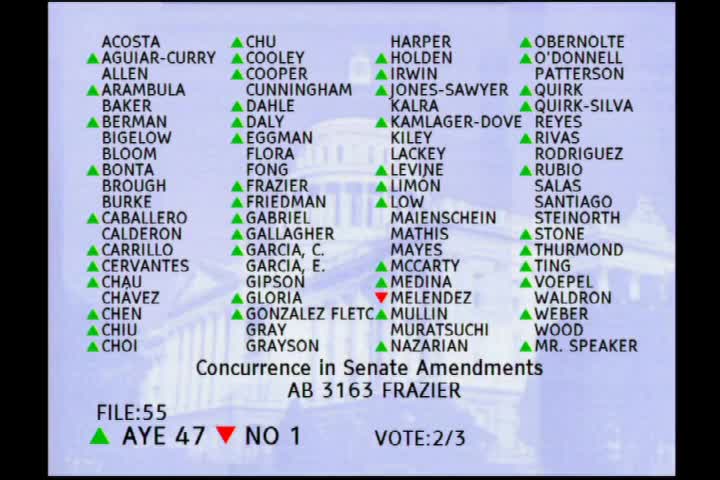 1MIN
Assembly Floor
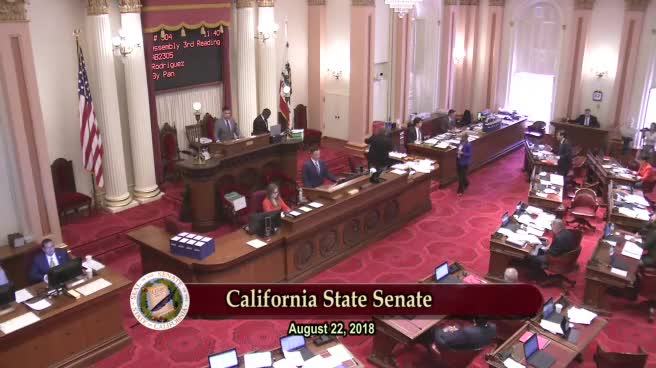 2MIN
Senate Floor
 1H
Senate Standing Committee on Appropriations
 48MIN
Senate Standing Committee on Health
 1MIN
Assembly Floor
 2MIN
Assembly Standing Committee on Health
Bill Author

Bill Co-Author(s):