AB 250: State Coastal Conservancy: Lower Cost Coastal Accommodations Program.
- Session Year: 2017-2018
- House: Assembly
- Latest Version Date: 2017-10-15
(1)Existing law establishes the State Coastal Conservancy in state government, and prescribes the membership and functions and duties of the conservancy with regard to the protection, preservation, and enhancement of specified coastal lands in the coastal zone, as defined. Existing law establishes the California Coastal Commission, and prescribes the commissions duties with regard to, among other things, the review and issuance of coastal development permits for development within the coastal zone, as defined. Existing law authorizes the commission to charge various in-lieu fees to an applicant for a coastal development permit and use those fees for certain purposes related to coastal protection and preservation.
This bill would require the conservancy to develop and implement a specified Lower Cost Coastal Accommodations Program intended to facilitate improvement of existing, and development of new, lower cost accommodations within 11/2 miles of the coast. The bill would require the conservancy to take specified actions to develop and implement the program, as prescribed. The bill would require the conservancy to prepare a lower cost coastal accommodations assessment containing specified information relating to specific opportunities to improve existing, and generate new, lower cost coastal accommodations, and to update the assessment not less than every 5 years. The bill would also authorize the conservancy to develop and implement a pilot program for the purposes of identifying and testing measures that support development, improvement, maintenance, and the operation of lower cost coastal accommodations by nonprofit or for-profit private entities, and would require the conservancy to establish criteria for the selection of projects to be included in the pilot program. The bill would authorize the commission to reclaim any in-lieu fee, as defined, that has not been expended within 7 years of its deposit with the appropriate entity, and reassign any such fee for use for one or more lower cost coastal accommodation and visitor-serving facilities projects, as described, if the executive director of the commission makes a specified written determination that the in-lieu fee will be better utilized by the reassignment to those projects, as specified.
(2)Existing law authorizes the State Public Works Board to select and acquire, in the name of and on behalf of the state, with the consent of the state agency concerned, the fee or any lesser right or interest in any real property necessary for any state purpose or function. Existing law requires that all land and other real property to be acquired by or for any state agency, except for specified state agencies including the State Coastal Conservancy with respect to acceptance of offers to dedicate public accessways made pursuant to the California Coastal Act of 1976, be acquired by the state board.
This bill would exempt land acquired by the conservancy for the purposes of the program from that requirement.
(1)Existing law establishes the State Coastal Conservancy in state government, and prescribes the membership and functions and duties of the conservancy with regard to the protection, preservation, and enhancement of specified coastal lands in the coastal zone, as defined.
This bill would require the conservancy to develop and implement a specified Lower Cost Coastal Accommodations Program intended to facilitate improvement of existing, and development of new, lower cost accommodations within 3 11/2 miles of the coast. The bill would require the conservancy to take specified actions to develop and implement the program, as prescribed. The bill would require the conservancy to prepare a lower cost coastal accommodations assessment containing specified information relating to specific opportunities to improve existing, and generate new, lower cost coastal accommodations, and to update the assessment not less than every 5 years. The bill would also authorize the conservancy to develop and implement a pilot program for the purposes of identifying and testing measures that support development, improvement, maintenance, and the operation of lower cost coastal accommodations by nonprofit or for-profit private entities, and would require the conservancy to establish criteria for the selection of projects to be included in the pilot program.
(2)Existing law authorizes the State Public Works Board to select and acquire, in the name of and on behalf of the state, with the consent of the state agency concerned, the fee or any lesser right or interest in any real property necessary for any state purpose or function. Existing law requires that all land and other real property to be acquired by or for any state agency, except for specified state agencies including the State Coastal Conservancy with respect to acceptance of offers to dedicate public accessways made pursuant to the California Coastal Act of 1976, be acquired by the state board.
This bill would exempt land acquired by the conservancy for the purposes of the program from that requirement.
(1)Existing law establishes the State Coastal Conservancy in state government, and prescribes the membership and functions and duties of the conservancy with regard to the protection, preservation, and enhancement of specified coastal lands in the coastal zone, as defined.
This bill would require the conservancy to develop and implement a specified Lower Cost Coastal Accommodations Program intended to facilitate improvement of existing, and development of new, lower cost accommodations within 3 miles of the coast. The bill would require the conservancy to take specified actions to develop and implement the program, as prescribed. The bill would require the conservancy to prepare a lower cost coastal accommodations assessment containing specified information relating to specific opportunities to improve existing, and generate new, lower cost coastal accommodations, and to update the assessment not less than every 5 years. The bill would also authorize the conservancy to develop and implement a pilot program for the purposes of identifying and testing measures that support development, improvement, maintenance, and the operation of lower cost coastal accommodations by nonprofit or for-profit private entities, and would require the conservancy to establish criteria for the selection of projects to be included in the pilot program.
(2)Existing law authorizes the State Public Works Board to select and acquire, in the name of and on behalf of the state, with the consent of the state agency concerned, the fee or any lesser right or interest in any real property necessary for any state purpose or function. Existing law requires that all land and other real property to be acquired by or for any state agency, except for specified state agencies including the State Coastal Conservancy with respect to acceptance of offers to dedicate public accessways made pursuant to the California Coastal Act of 1976, be acquired by the state board.
This bill would exempt land acquired by the conservancy for the purposes of the program from that requirement.
(1)Existing law establishes the State Coastal Conservancy in state government, and prescribes the membership and functions and duties of the conservancy with regard to the protection, preservation, and enhancement of specified coastal lands in the coastal zone, as defined.
This bill would require the conservancy to develop and implement a specified Lower Cost Coastal Accommodations Program intended to facilitate improvement of existing, and development of new, lower cost accommodations within the coastal zone and a specified geographic area along the coast adjacent to the costal zone 3 miles of the coast. The bill would require the conservancy to take specified actions to develop and implement the program, as prescribed. The bill would require the conservancy to prepare a lower cost coastal accommodations plan assessment containing specified information relating to specific opportunities to improve existing, and generate new, lower cost coastal accommodations, and to update the plan assessment not less every 5 years. The bill would also authorize the conservancy to develop and implement a pilot program for the purposes of identifying and testing measures that support development, improvement, maintenance, and the operation of lower cost coastal accommodations by nonprofit or for-profit private entities, and would require the conservancy to establish criteria for the selection of projects to be included in the pilot program.
(2)Existing law authorizes the State Public Works Board to select and acquire, in the name of and on behalf of the state, with the consent of the state agency concerned, the fee or any lesser right or interest in any real property necessary for any state purpose or function. Existing law requires that all land and other real property to be acquired by or for any state agency, except for specified state agencies including the State Coastal Conservancy with respect to acceptance of offers to dedicate public accessways made pursuant to the California Coastal Act of 1976, be acquired by the state board.
This bill would exempt land acquired by the conservancy for the purposes of the program from that requirement.
(1)Existing law establishes the State Coastal Conservancy in state government, and prescribes the membership and functions and duties of the conservancy with regard to the protection, preservation, and enhancement of specified coastal lands in the coastal zone, as defined.
This bill would require the conservancy to develop and implement a specified Lower Cost Coastal Accommodations Program intended to facilitate improvement of existing, and development of new, lower cost accommodations within the coastal zone and a specified geographic area along the coast adjacent to the costal zone. The bill would require the conservancy to take specified actions to develop and implement the program, as prescribed. The bill would require the conservancy to prepare a lower cost coastal accommodations plan containing specified information relating to specific opportunities to improve existing, and generate new, lower cost coastal accommodations, and to update the plan not less every 5 years. The bill would also authorize the conservancy to develop and implement a pilot program for the purposes of identifying and testing measures that support development, improvement, maintenance, and the operation of lower cost coastal accommodations by private entities, and would require the conservancy to establish criteria for the selection of projects to be included in the pilot program.
(2)Existing law authorizes the State Public Works Board to select and acquire, in the name of and on behalf of the state, with the consent of the state agency concerned, the fee or any lesser right or interest in any real property necessary for any state purpose or function. Existing law requires that all land and other real property to be acquired by or for any state agency, except for specified state agencies including the State Coastal Conservancy with respect to acceptance of offers to dedicate public accessways made pursuant to the California Coastal Act of 1976, be acquired by the state board.
This bill would exempt land acquired by the conservancy for the purposes of the program from that requirement.
(a)The board may select and acquire, in the name of and on behalf of the state, with the consent of the state agency concerned, the fee or any lesser right or interest in any real property necessary for any state purpose or function.
(b)If moneys are appropriated by the Budget Act for any fiscal year or by any other act for the acquisition of land or other real property, either (1) subject to this part or (2) for any state agency for whom property is acquired by the board, the moneys and acquisitions are subject to this part and the moneys shall be expended in accordance with this part, notwithstanding any other law.
(c)Notwithstanding any other law, all land and other real property to be acquired by or for any state agency, other than the Department of Transportation, the Department of Water Resources, the State Reclamation Board, the Department of Fish and Game, the Wildlife Conservation Board, the Public Employees Retirement System, the State Teachers Retirement System, the Department of Housing and Community Development, the State Lands Commission, except for property to be acquired for the State Lands Commission pursuant to an appropriation from the General Fund, and the State Coastal Conservancy with respect to acceptance of offers to dedicate public accessways made pursuant to Division 20 (commencing with Section 30000), and for the purposes of Chapter 10 (commencing with Section 31411) of, the Public Resources Code, shall be acquired by the State Public Works Board in accordance with this part.
(d)(1)Notwithstanding subdivision (a), the board shall acquire, on behalf of and for the Department of Parks and Recreation, in accordance with this part, any interests in real property, including options to purchase, which have been appraised, selected, and settled through purchase negotiations by the Department of Parks and Recreation pursuant to subdivision (b) of Section 5006 of the Public Resources Code. Out of moneys appropriated for the acquisition of options to purchase, no more than ten thousand dollars ($10,000) may be expended for the acquisition of any single option unless otherwise provided by the Legislature.
(2)Notwithstanding Section 15854, purchase negotiations for interests in real property for the state park system pursuant to subdivision (d) of Section 5006 of the Public Resources Code shall be initiated within six months of the effective date of the act that appropriates funds for the acquisition. Purchase negotiations on all projects not proposed pursuant to subdivision (d) of Section 5006 of the Public Resources Code shall be initiated within 12 months of the effective date of the act appropriating funds for the acquisition. Either title shall be conveyed or a written agreement to transfer title shall be executed within the appropriate authorization period unless the Department of Parks and Recreation formally abandons the acquisition prior to the conclusion of the appropriate authorization period. For the purposes of this section, in order for the Department of Parks and Recreation to formally abandon an acquisition, it shall transmit written notification to the board of its intent not to proceed with the acquisition.
(3)The board, at any time during the periods specified in paragraph (2), may commence condemnation proceedings if it finds it to be appropriate. However, if, during the appropriate authorization period, title is not conveyed or a written agreement to transfer title is not signed, the acquisition has not been formally abandoned, or condemnation proceedings have not been commenced, the Department of Parks and Recreation shall notify, by letter, the chair of the committee in each house of the Legislature that considers appropriations, the Chair of the Joint Legislative Budget Committee, and the Members of the Legislature within whose district any part of the land or other real property is located of the status of the acquisition. For the purpose of this paragraph, condemnation proceedings shall be deemed to be commenced as of the date the board authorizes acquisition by condemnation.
(4)The board may schedule special meetings as are necessary to expedite the acquisition of options to purchase real property for the state park system.
(e)The board may acquire furnishings that the owner thereof agrees to sell and that are contained within improvements acquired by the board. Cost of acquisition of furnishings shall be charged to the appropriation available for acquisition of the real property.
(f)This section shall not apply to the acquisition of conservation easements made pursuant to the California Forest Legacy Program Act of 2007 (Division 10.5 (commencing with Section 12200) of the Public Resources Code).
SEC. 2.Section 30607.8 is added to the Public Resources Code, to read:30607.8.(a)The commission shall, when assessing or directing the use of any reclaimed in-lieu fees for any coastal development project, consider the lower cost coastal accommodations assessment required to be prepared pursuant to subdivision (a) of Section 31413.
(b)(1)The commission may reclaim any in-lieu fee assessed that has not been expended within seven years of the date of its deposit with the appropriate entity, and reassign any such fee for use for one or more projects that are consistent with Section 30213, including lower cost coastal accommodations funded under Chapter 10 (commencing with Section 31411), if the executive director makes a written determination that the original intent of the in-lieu fee will be better utilized by the reassignment to those projects.
(2)This subdivision is not intended, and shall not be construed, to authorize the commission to alter or abrogate coastal development permit conditions in a manner that would violate a provision of this division or any other law.
(c)For purposes of this section, in-lieu fee means any fee paid as a condition for issuance of a coastal development permit to mitigate impacts associated with the development of lower cost coastal visitor-serving projects.
SEC. 3.Chapter 10 (commencing with Section 31411) is added to Division 21 of the Public Resources Code, to read:10.Lower Cost Coastal Accommodations Program31411.The Legislature finds and declares all of the following:
(a)The right of access to the coast is guaranteed to the people of California by the California Constitution and the California Coastal Act of 1976 (Division 20 (commencing with Section 30000)), which requires that coastal development be regulated, and public access rights to our states beaches be protected.
(b)Californias Parks Forward Commission has emphasized the need to expand access to parks and public lands throughout California to ensure that all Californians and visitors to the state, including those from low-income and underserved communities, are able to benefit from outdoor experiences.
(c)Lower cost accommodations, including hotels, motels, hostels, cabins, and camping opportunities, are essential elements of coastal and park access because they enable Californians and visitors from a variety of backgrounds, including those of low and moderate income, to enjoy Californias beaches and parks and experience the full range of recreational, educational, spiritual, and other experiences offered.
(d)A lack of affordable accommodations remains a barrier to coastal access. Californias historic supply of lower cost coastal accommodations has been reduced, and continues to be diminished, as a result of high coastal property values and economic pressures to develop new coastal accommodations that are too expensive to be affordable to most visitors.
(e)California should invest in new strategies and partnerships to improve the availability of lower cost accommodations along the coast, particularly for low-income and middle-income families. A strategic program to provide affordable accommodations in appropriate areas of our coastal parks and public lands can play an important role in improving public access to the coast. California should also support innovative pilot projects that enable the state to partner with nonprofit organizations and the private sector in order to provide coastal access.
31412.(a)The conservancy shall develop and implement a Lower Cost Coastal Accommodations Program to facilitate improvement of existing, and the development of new, lower cost accommodations within one and one-half miles of the coast. In implementing the program, the conservancy may undertake projects and award grants, and shall be guided by the lower cost accommodations assessment required to be developed pursuant to Section 31413.
(b)The program shall include both of the following:
(1)Clear and measurable objectives.
(2)Implementation measures designed to ensure that new or improved accommodation projects supported by the program will be affordable and available to low-income and middle-income families and to nonprofit organizations and public entities that provide young or at-risk populations with education, service learning, healthy living, recreational, or similar opportunities.
(c)The conservancy shall take all of the following actions to develop and implement the program:
(1)Consult with the Department of Parks and Recreation, the California Coastal Commission, local and regional park agencies, open-space districts, and other public agencies regarding development of the accommodations assessment and selection and funding of specific projects to improve existing and new lower cost coastal accommodations.
(2)Engage with parks, conservation, and community groups to ensure that program activities reflect and address community needs and interests.
(3)Provide the department, commission, and other interested agencies and organizations with copies of the completed assessment, as well as technical assistance upon request, for purposes of informing their potential investments in lower cost accommodations along the coast.
31413.(a)The conservancy shall prepare a lower cost coastal accommodations assessment that includes, at a minimum, all of the following elements:
(1)(A)A description of specific opportunities to improve existing and develop new lower cost accommodations on coastal public lands and coastal lands owned or operated by nonprofit organizations, including a list of potentially suitable sites for the location of these accommodations.
(B)For purposes of the description required by this paragraph, all of the following shall apply:
(i)Lands may include, but are not limited to, state, regional, and local parks, lands held by harbor or open space districts, lands owned by the public but not yet designated as parks, lands owned by nonprofit organizations, and national parks and other federally managed lands.
(ii)Qualifying accommodations may include, but are not limited to, campgrounds, cabins, and hostels.
(iii)A site for potential lower cost accommodations shall not be included in the assessment without consultation from the agency or nonprofit organization that owns or operates the site. A site shall not be included in the assessment if so requested by the entity that owns or operates the site.
(2)An analysis of daily occupancy or rental rates, based on geographic location, seasonality, and other relevant factors, that the conservancy will consider for purposes of identifying existing lower cost accommodations as well as potential future projects for program support. Any analysis developed pursuant to this paragraph shall not be interpreted to conflict with any rights and responsibilities of the Department of Parks and Recreation to establish rental rates or fees for accommodations within its jurisdiction.
(3)Data and analysis regarding the existing supply of and need for lower cost coastal accommodations within the program area, anticipated costs of new project development, and the supply of lower cost accommodations relative to population within 150 miles of the California coast.
(4)Criteria for prioritizing investment of program funds in lower cost accommodation projects, such as any applicable legal requirements that may apply to those funds, geography, the vulnerability of potential projects to sea level rise or coastal hazards, existing disparities in park or coastal access, availability of public agency or nonprofit partners, adequacy of existing infrastructure and services, and financial feasibility.
(5)A description of needed and anticipated measures to ensure that accommodation projects that may be supported by the program will be consistent with the purposes described in paragraph (2) of subdivision (b) of Section 31412.
(6)A list of appropriate public and private funding sources and potential financing mechanisms to support development and operation of lower cost accommodation projects.
(b)(1)The conservancy shall update the assessment not less than every five years, and maintain a current list of potential lower cost accommodation projects that may be implemented, subject to available funding.
(2)Each five-year update of the assessment shall include an evaluation of the conservancys implementation of the program over the preceding five years, and shall describe any recommended changes that may be needed to improve the programs effectiveness.
31414.(a)The conservancy may develop and implement a pilot program for the purposes of identifying and testing measures that support development, improvement, maintenance, and operation of lower cost accommodations by nonprofit or for-profit private entities. The conservancy shall establish criteria for selection of projects that are eligible to receive assistance under the pilot program.
(b)In carrying out a pilot program, the conservancy may do all of the following:
(1)Purchase existing lower cost accommodations from willing sellers and operate those accommodations through leases or operating agreements with qualified regional or local park agencies, concessionaires, or nonprofit organizations.
(2)Purchase existing accommodations from willing sellers and resell them to willing buyers, including private entities.
(3)Provide loans, grants, or other financial assistance to private entities for purposes of acquiring or improving accommodations.
(c)(1)Any project or transaction undertaken pursuant to this section shall be subject to terms and conditions prescribed by the conservancy to ensure that the project or transaction advances the purposes of the program, is based upon the economic soundness of the project itself, and provides a reasonable expectation that all financial obligations of the project can be met by participating parties.
(2)Any sale of real property to a private entity pursuant to this section shall be subject to deed restrictions or other legally enforceable instruments that require the property to be used for the provision of lower cost coastal accommodations for at least 30 years following the date of sale.
(3)Any purchase of property by the conservancy pursuant to this chapter shall not be subject to the Property Acquisition Law (Part 11 (commencing with Section 15850) of Division 3 of Title 2 of the Government Code).
(d)For purposes of this section, accommodations may include, but are not limited to, campgrounds, cabins, hostels, limited stay recreational vehicle parks, motels, and hotels, but shall not include private residences.
(a)The board may select and acquire, in the name of and on behalf of the state, with the consent of the state agency concerned, the fee or any lesser right or interest in any real property necessary for any state purpose or function.
(b)If moneys are appropriated by the Budget Act for any fiscal year or by any other act for the acquisition of land or other real property, either (1) subject to this part or (2) for any state agency for whom property is acquired by the board, the moneys and acquisitions are subject to this part and the moneys shall be expended in accordance with this part, notwithstanding any other law.
(c)Notwithstanding any other law, all land and other real property to be acquired by or for any state agency, other than the Department of Transportation, the Department of Water Resources, the State Reclamation Board, the Department of Fish and Game, the Wildlife Conservation Board, the Public Employees Retirement System, the State Teachers Retirement System, the Department of Housing and Community Development, the State Lands Commission, except for property to be acquired for the State Lands Commission pursuant to an appropriation from the General Fund, and the State Coastal Conservancy with respect to acceptance of offers to dedicate public accessways made pursuant to Division 20 (commencing with Section 30000), and for the purposes of Chapter 10 (commencing with Section 31411) of, the Public Resources Code, shall be acquired by the State Public Works Board in accordance with this part.
(d)(1)Notwithstanding subdivision (a), the board shall acquire, on behalf of and for the Department of Parks and Recreation, in accordance with this part, any interests in real property, including options to purchase, which have been appraised, selected, and settled through purchase negotiations by the Department of Parks and Recreation pursuant to subdivision (b) of Section 5006 of the Public Resources Code. Out of moneys appropriated for the acquisition of options to purchase, no more than ten thousand dollars ($10,000) may be expended for the acquisition of any single option unless otherwise provided by the Legislature.
(2)Notwithstanding Section 15854, purchase negotiations for interests in real property for the state park system pursuant to subdivision (d) of Section 5006 of the Public Resources Code shall be initiated within six months of the effective date of the act that appropriates funds for the acquisition. Purchase negotiations on all projects not proposed pursuant to subdivision (d) of Section 5006 of the Public Resources Code shall be initiated within 12 months of the effective date of the act appropriating funds for the acquisition. Either title shall be conveyed or a written agreement to transfer title shall be executed within the appropriate authorization period unless the Department of Parks and Recreation formally abandons the acquisition prior to the conclusion of the appropriate authorization period. For the purposes of this section, in order for the Department of Parks and Recreation to formally abandon an acquisition, it shall transmit written notification to the board of its intent not to proceed with the acquisition.
(3)The board, at any time during the periods specified in paragraph (2), may commence condemnation proceedings if it finds it to be appropriate. However, if, during the appropriate authorization period, title is not conveyed or a written agreement to transfer title is not signed, the acquisition has not been formally abandoned, or condemnation proceedings have not been commenced, the Department of Parks and Recreation shall notify, by letter, the chair of the committee in each house of the Legislature that considers appropriations, the Chair of the Joint Legislative Budget Committee, and the Members of the Legislature within whose district any part of the land or other real property is located of the status of the acquisition. For the purpose of this paragraph, condemnation proceedings shall be deemed to be commenced as of the date the board authorizes acquisition by condemnation.
(4)The board may schedule special meetings as are necessary to expedite the acquisition of options to purchase real property for the state park system.
(e)The board may acquire furnishings that the owner thereof agrees to sell and that are contained within improvements acquired by the board. Cost of acquisition of furnishings shall be charged to the appropriation available for acquisition of the real property.
(f)This section shall not apply to the acquisition of conservation easements made pursuant to the California Forest Legacy Program Act of 2007 (Division 10.5 (commencing with Section 12200) of the Public Resources Code).
SEC. 2.Section 30607.8 is added to the Public Resources Code, to read:30607.8.(a)The commission shall, when assessing or directing the use of any reclaimed in-lieu fees for any coastal development project, consider the lower cost coastal accommodations assessment required to be prepared pursuant to subdivision (a) of Section 31413.
(b)(1)The commission may reclaim any in-lieu fee assessed that has not been expended within seven years of the date of its deposit with the appropriate entity, and reassign any such fee for use for one or more projects that are consistent with Section 30213, including lower cost coastal accommodations funded under Chapter 10 (commencing with Section 31411), if the executive director makes a written determination that the original intent of the in-lieu fee will be better utilized by the reassignment to those projects.
(2)This subdivision is not intended, and shall not be construed, to authorize the commission to alter or abrogate coastal development permit conditions in a manner that would violate a provision of this division or any other law.
(c)For purposes of this section, in-lieu fee means any fee paid as a condition for issuance of a coastal development permit to mitigate impacts associated with the development of lower cost coastal visitor-serving projects.
SEC. 2.SEC. 3.Chapter 10 (commencing with Section 31411) is added to Division 21 of the Public Resources Code, to read:10.Lower Cost Coastal Accommodations Program31411.The Legislature finds and declares all of the following:
(a)The right of access to the coast is guaranteed to the people of California by the California Constitution and the California Coastal Act of 1976 (Division 20 (commencing with Section 30000)), which requires that coastal development be regulated, and public access rights to our states beaches be protected.
(b)Californias Parks Forward Commission has emphasized the need to expand access to parks and public lands throughout California to ensure that all Californians and visitors to the state, including those from low-income and underserved communities, are able to benefit from outdoor experiences.
(c)Lower cost accommodations, including hotels, motels, hostels, cabins, and camping opportunities, are essential elements of coastal and park access because they enable Californians and visitors from a variety of backgrounds, including those of low and moderate income, to enjoy Californias beaches and parks and experience the full range of recreational, educational, spiritual, and other experiences offered.
(d)A lack of affordable accommodations remains a barrier to coastal access. Californias historic supply of lower cost coastal accommodations has been reduced, and continues to be diminished, as a result of high coastal property values and economic pressures to develop new coastal accommodations that are too expensive to be affordable to most visitors.
(e)California should invest in new strategies and partnerships to improve the availability of lower cost accommodations along the coast, particularly for low-income and middle-income families. A strategic program to provide affordable accommodations in appropriate areas of our coastal parks and public lands can play an important role in improving public access to the coast. California should also support innovative pilot projects that enable the state to partner with nonprofit organizations and the private sector in order to provide coastal access.
31412.(a)The conservancy shall develop and implement a Lower Cost Coastal Accommodations Program to facilitate improvement of existing, and the development of new, lower cost accommodations within one and one-half miles of the coast. In implementing the program, the conservancy may undertake projects and award grants, and shall be guided by the lower cost accommodations assessment required to be developed pursuant to Section 31413.
(b)The program shall include both of the following:
(1)Clear and measurable objectives.
(2)Implementation measures designed to ensure that new or improved accommodation projects supported by the program will be affordable and available to low-income and middle-income families and to nonprofit organizations and public entities that provide young or at-risk populations with education, service learning, healthy living, recreational, or similar opportunities.
(c)The conservancy shall take all of the following actions to develop and implement the program:
(1)Consult with the Department of Parks and Recreation, the California Coastal Commission, local and regional park agencies, open-space districts, and other public agencies regarding development of the accommodations assessment and selection and funding of specific projects to improve existing and new lower cost coastal accommodations.
(2)Engage with parks, conservation, and community groups to ensure that program activities reflect and address community needs and interests.
(3)Provide the department, commission, and other interested agencies and organizations with copies of the completed assessment, as well as technical assistance upon request, for purposes of informing their potential investments in lower cost accommodations along the coast.
(d)(1)Any in-lieu fees assessed for lower cost accommodations that were assessed but not expended for those accommodations by January 1, 2018, may be expended, upon appropriation by the Legislature or allocation to the conservancy by a local public agency, by the conservancy, to the extent feasible, for projects that meet the criteria for prioritizing investments developed pursuant to paragraph (4) of subdivision (a) of Section 31413.(2)For purposes of this subdivision, in-lieu fee means a fee paid to a state or local public agency as a condition for issuance of a coastal development permit.31413.(a)The conservancy shall prepare a lower cost coastal accommodations assessment that includes, at a minimum, all of the following elements:
(1)(A)A description of specific opportunities to improve existing and develop new lower cost accommodations on coastal public lands and coastal lands owned or operated by nonprofit organizations, including a list of potentially suitable sites for the location of these accommodations.
(B)For purposes of the description required by this paragraph, all of the following shall apply:
(i)Lands may include, but are not limited to, state, regional, and local parks, lands held by harbor or open space districts, lands owned by the public but not yet designated as parks, lands owned by nonprofit organizations, and national parks and other federally managed lands.
(ii)Qualifying accommodations may include, but are not limited to, campgrounds, cabins, and hostels.
(iii)A site for potential lower cost accommodations shall not be included in the assessment without consultation from the agency or nonprofit organization that owns or operates the site. A site shall not be included in the assessment if so requested by the entity that owns or operates the site.
(2)An analysis of daily occupancy or rental rates, based on geographic location, seasonality, and other relevant factors, that the conservancy will consider for purposes of identifying existing lower cost accommodations as well as potential future projects for program support. Any analysis developed pursuant to this paragraph shall not be interpreted to conflict with any rights and responsibilities of the Department of Parks and Recreation to establish rental rates or fees for accommodations within its jurisdiction.
(3)Data and analysis regarding the existing supply of and need for lower cost coastal accommodations within the program area, as well as an analysis of anticipated costs of new project development, and the supply of lower cost accommodations relative to population within 150 miles of the California coast.
(4)Criteria for prioritizing investment of program funds in lower cost accommodation projects, such as any applicable legal requirements that may apply to those funds, geography, the vulnerability of potential projects to sea level rise or coastal hazards, existing disparities in park or coastal access, availability of public agency or nonprofit partners, adequacy of existing infrastructure and services, and financial feasibility.
(5)A description of needed and anticipated measures to ensure that accommodation projects that may be supported by the program will be consistent with the purposes described in paragraph (2) of subdivision (b) of Section 31412.
(6)A list of appropriate public and private funding sources and potential financing mechanisms to support development and operation of lower cost accommodation projects.
(b)(1)The conservancy shall update the assessment not less than every five years, and maintain a current list of potential lower cost accommodation projects that may be implemented, subject to available funding.
(2)Each five-year update of the assessment shall include an evaluation of the conservancys implementation of the program over the preceding five years, and shall describe any recommended changes that may be needed to improve the programs effectiveness.
31414.(a)The conservancy may develop and implement a pilot program for the purposes of identifying and testing measures that support development, improvement, maintenance, and operation of lower cost accommodations by nonprofit or for-profit private entities. The conservancy shall establish criteria for selection of projects that are eligible to receive assistance under the pilot program.
(b)In carrying out a pilot program, the conservancy may do all of the following:
(1)Purchase existing lower cost accommodations from willing sellers and operate those accommodations through leases or operating agreements with qualified regional or local park agencies, concessionaires, or nonprofit organizations.
(2)Purchase existing accommodations from willing sellers and resell them to willing buyers, including private entities.
(3)Provide loans, grants, or other financial assistance to private entities for purposes of acquiring or improving accommodations.
(c)(1)Any project or transaction undertaken pursuant to this section shall be subject to terms and conditions prescribed by the conservancy to ensure that the project or transaction advances the purposes of the program, is based upon the economic soundness of the project itself, and provides a reasonable expectation that all financial obligations of the project can be met by participating parties.
(2)Any sale of real property to a private entity pursuant to this section shall be subject to deed restrictions or other legally enforceable instruments that require the property to be used for the provision of lower cost coastal accommodations for at least 30 years following the date of sale.
(3)Any purchase of property by the conservancy pursuant to this chapter shall not be subject to the Property Acquisition Law (Part 11 (commencing with Section 15850) of Division 3 of Title 2 of the Government Code).
(d)For purposes of this section, accommodations may include, but are not limited to, campgrounds, cabins, hostels, limited stay recreational vehicle parks, motels, and hotels, but shall not include private residences.
(a)The board may select and acquire, in the name of and on behalf of the state, with the consent of the state agency concerned, the fee or any lesser right or interest in any real property necessary for any state purpose or function.
(b)If moneys are appropriated by the Budget Act for any fiscal year or by any other act for the acquisition of land or other real property, either (1) subject to this part or (2) for any state agency for whom property is acquired by the board, the moneys and acquisitions are subject to this part and the moneys shall be expended in accordance with this part, notwithstanding any other law.
(c)Notwithstanding any other law, all land and other real property to be acquired by or for any state agency, other than the Department of Transportation, the Department of Water Resources, the State Reclamation Board, the Department of Fish and Game, the Wildlife Conservation Board, the Public Employees Retirement System, the State Teachers Retirement System, the Department of Housing and Community Development, the State Lands Commission, except for property to be acquired for the State Lands Commission pursuant to an appropriation from the General Fund, and the State Coastal Conservancy with respect to acceptance of offers to dedicate public accessways made pursuant to Division 20 (commencing with Section 30000), and for the purposes of Chapter 10 (commencing with Section 31411) of, the Public Resources Code, shall be acquired by the State Public Works Board in accordance with this part.
(d)(1)Notwithstanding subdivision (a), the board shall acquire, on behalf of and for the Department of Parks and Recreation, in accordance with this part, any interests in real property, including options to purchase, which have been appraised, selected, and settled through purchase negotiations by the Department of Parks and Recreation pursuant to subdivision (b) of Section 5006 of the Public Resources Code. Out of moneys appropriated for the acquisition of options to purchase, no more than ten thousand dollars ($10,000) may be expended for the acquisition of any single option unless otherwise provided by the Legislature.
(2)Notwithstanding Section 15854, purchase negotiations for interests in real property for the state park system pursuant to subdivision (d) of Section 5006 of the Public Resources Code shall be initiated within six months of the effective date of the act that appropriates funds for the acquisition. Purchase negotiations on all projects not proposed pursuant to subdivision (d) of Section 5006 of the Public Resources Code shall be initiated within 12 months of the effective date of the act appropriating funds for the acquisition. Either title shall be conveyed or a written agreement to transfer title shall be executed within the appropriate authorization period unless the Department of Parks and Recreation formally abandons the acquisition prior to the conclusion of the appropriate authorization period. For the purposes of this section, in order for the Department of Parks and Recreation to formally abandon an acquisition, it shall transmit written notification to the board of its intent not to proceed with the acquisition.
(3)The board, at any time during the periods specified in paragraph (2), may commence condemnation proceedings if it finds it to be appropriate. However, if, during the appropriate authorization period, title is not conveyed or a written agreement to transfer title is not signed, the acquisition has not been formally abandoned, or condemnation proceedings have not been commenced, the Department of Parks and Recreation shall notify, by letter, the chair of the committee in each house of the Legislature that considers appropriations, the Chair of the Joint Legislative Budget Committee, and the Members of the Legislature within whose district any part of the land or other real property is located of the status of the acquisition. For the purpose of this paragraph, condemnation proceedings shall be deemed to be commenced as of the date the board authorizes acquisition by condemnation.
(4)The board may schedule special meetings as are necessary to expedite the acquisition of options to purchase real property for the state park system.
(e)The board may acquire furnishings that the owner thereof agrees to sell and that are contained within improvements acquired by the board. Cost of acquisition of furnishings shall be charged to the appropriation available for acquisition of the real property.
(f)This section shall not apply to the acquisition of conservation easements made pursuant to the California Forest Legacy Program Act of 2007 (Division 10.5 (commencing with Section 12200) of the Public Resources Code).
SEC. 2.Chapter 10 (commencing with Section 31411) is added to Division 21 of the Public Resources Code, to read:10.Lower Cost Coastal Accommodations Program31411.The Legislature finds and declares all of the following:
(a)The right of access to the coast is guaranteed to the people of California by the California Constitution and the California Coastal Act of 1976 (Division 20 (commencing with Section 30000)), which requires that coastal development be regulated, and public access rights to our states beaches be protected.
(b)Californias Parks Forward Commission has emphasized the need to expand access to parks and public lands throughout California to ensure that all Californians and visitors to the state, including those from low-income and underserved communities, are able to benefit from outdoor experiences.
(c)Lower cost accommodations, including hotels, motels, hostels, cabins, and camping opportunities, are essential elements of coastal and park access because they enable Californians and visitors from a variety of backgrounds, including those of low and moderate income, to enjoy Californias beaches and parks and experience the full range of recreational, educational, spiritual, and other experiences offered.
(d)A lack of affordable accommodations remains a barrier to coastal access. Californias historic supply of lower cost coastal accommodations has been reduced, and continues to be diminished, as a result of high coastal property values and economic pressures to develop new coastal accommodations that are too expensive to be affordable to most visitors.
(e)California should invest in new strategies and partnerships to improve the availability of lower cost accommodations along the coast, particularly for low-income and middle-income families. A strategic program to provide affordable accommodations in appropriate areas of our coastal parks and public lands can play an important role in improving public access to the coast. California should also support innovative pilot projects that enable the state to partner with nonprofit organizations and the private sector in order to provide coastal access.
31412.(a)The conservancy shall develop and implement a Lower Cost Coastal Accommodations Program to facilitate improvement of existing, and the development of new, lower cost accommodations within three one and one-half miles of the coast. In implementing the program, the conservancy may undertake projects and award grants, and shall be guided by the lower cost accommodations assessment required to be developed pursuant to Section 31413.
(b)The program shall include both of the following:
(1)Clear and measurable objectives.
(2)Implementation measures designed to ensure that new or improved accommodation projects supported by the program will be affordable and available to low-income and middle-income families and to nonprofit organizations and public entities that provide young or at-risk populations with education, service learning, healthy living, recreational, or similar opportunities.
(c)The conservancy shall take all of the following actions to develop and implement the program:
(1)Consult with the Department of Parks and Recreation, the California Coastal Commission, local and regional park agencies, open-space districts, and other public agencies regarding development of the accommodations assessment and selection and funding of specific projects to improve existing and new lower cost coastal accommodations.
(2)Engage with parks, conservation, and community groups to ensure that program activities reflect and address community needs and interests.
(3)Provide the department, commission, and other interested agencies and organizations with copies of the completed assessment, as well as technical assistance upon request, for purposes of informing their potential investments in lower cost accommodations along the coast.
(d)(1)Any in-lieu fees assessed for lower cost accommodations that were assessed but not expended for those accommodations by January 1, 2018, may be expended, upon appropriation by the Legislature or allocation to the conservancy by a local public agency, by the conservancy, to the extent feasible, for projects that meet the criteria for prioritizing investments developed pursuant to paragraph (4) of subdivision (a) of Section 31413.
(2)For purposes of this subdivision, in-lieu fee means a fee paid to a state or local public agency as a condition for issuance of a coastal development permit.
31413.(a)The conservancy shall prepare a lower cost coastal accommodations assessment that includes, at a minimum, all of the following elements:
(1)(A)A description of specific opportunities to improve existing and develop new lower cost accommodations on coastal public lands and coastal lands owned or operated by nonprofit organizations, including a list of potentially suitable sites for the location of these accommodations.
(B)For purposes of the description required by this paragraph, all of the following shall apply:
(i)Lands may include, but are not limited to, state, regional, and local parks, lands held by harbor or open space districts, lands owned by the public but not yet designated as parks, lands owned by nonprofit organizations, and national parks and other federally managed lands.
(ii)Qualifying accommodations may include, but are not limited to, campgrounds, cabins, and hostels.
(iii)A site for potential lower cost accommodations shall not be included in the assessment without consultation from the agency or nonprofit organization that owns or operates the site. A site shall not be included in the assessment if so requested by the entity that owns or operates the site.
(2)An analysis of daily occupancy or rental rates, based on geographic location, seasonality, and other relevant factors, that the conservancy will consider for purposes of identifying existing lower cost accommodations as well as potential future projects for program support. Any analysis developed pursuant to this paragraph shall not be interpreted to conflict with any rights and responsibilities of the Department of Parks and Recreation to establish rental rates or fees for accommodations within its jurisdiction.
(3)Data and analysis regarding the existing supply of and need for lower cost coastal accommodations within the program area, as well as an analysis of the supply of lower cost accommodations relative to population within 150 miles of the California coast.
(4)Criteria for prioritizing investment of program funds in lower cost accommodation projects, such as any applicable legal requirements that may apply to those funds, geography, the vulnerability of potential projects to sea level rise or coastal hazards, existing disparities in park or coastal access, availability of public agency or nonprofit partners, adequacy of existing infrastructure and services, and financial feasibility.
(5)A description of needed and anticipated measures to ensure that accommodation projects that may be supported by the program will be consistent with the purposes described in paragraph (2) of subdivision (b) of Section 31412.
(6)A list of appropriate public and private funding sources and potential financing mechanisms to support development and operation of lower cost accommodation projects.
(b)(1)The conservancy shall update the assessment not less than every five years, and maintain a current list of potential lower cost accommodation projects that may be implemented, subject to available funding.
(2)Each five-year update of the assessment shall include an evaluation of the conservancys implementation of the program over the preceding five years, and shall describe any recommended changes that may be needed to improve the programs effectiveness.
31414.(a)The conservancy may develop and implement a pilot program for the purposes of identifying and testing measures that support development, improvement, maintenance, and operation of lower cost accommodations by nonprofit or for-profit private entities. The conservancy shall establish criteria for selection of projects that are eligible to receive assistance under the pilot program.
(b)In carrying out a pilot program, the conservancy may do all of the following:
(1)Purchase existing lower cost accommodations from willing sellers and operate those accommodations through leases or operating agreements with qualified regional or local park agencies, concessionaires, or nonprofit organizations.
(2)Purchase existing accommodations from willing sellers and resell them to willing buyers, including private entities.
(3)Provide loans, grants, or other financial assistance to private entities for purposes of acquiring or improving accommodations.
(c)(1)Any project or transaction undertaken pursuant to this section shall be subject to terms and conditions prescribed by the conservancy to ensure that the project or transaction advances the purposes of the program, is based upon the economic soundness of the project itself, and provides a reasonable expectation that all financial obligations of the project can be met by participating parties.
(2)Any sale of real property to a private entity pursuant to this section shall be subject to deed restrictions or other legally enforceable instruments that require the property to be used for the provision of lower cost coastal accommodations for at least 30 years following the date of sale.
(3)Any purchase of property by the conservancy pursuant to this chapter shall not be subject to the Property Acquisition Law (Part 11 (commencing with Section 15850) of Division 3 of Title 2 of the Government Code).
(d)For purposes of this section, accommodations may include, but are not limited to, campgrounds, cabins, hostels, limited stay recreational vehicle parks, motels, and hotels. hotels, but shall not include private residences.
(a)The board may select and acquire, in the name of and on behalf of the state, with the consent of the state agency concerned, the fee or any lesser right or interest in any real property necessary for any state purpose or function.
(b)If moneys are appropriated by the Budget Act for any fiscal year or by any other act for the acquisition of land or other real property, either (1) subject to this part or (2) for any state agency for whom property is acquired by the board, the moneys and acquisitions are subject to this part and the moneys shall be expended in accordance with this part, notwithstanding any other law.
(c)Notwithstanding any other law, all land and other real property to be acquired by or for any state agency, other than the Department of Transportation, the Department of Water Resources, the State Reclamation Board, the Department of Fish and Game, the Wildlife Conservation Board, the Public Employees Retirement System, the State Teachers Retirement System, the Department of Housing and Community Development, the State Lands Commission, except for property to be acquired for the State Lands Commission pursuant to an appropriation from the General Fund, and the State Coastal Conservancy with respect to acceptance of offers to dedicate public accessways made pursuant to Division 20 (commencing with Section 30000), and for the purposes of Chapter 10 (commencing with Section 31411) of, the Public Resources Code, shall be acquired by the State Public Works Board in accordance with this part.
(d)(1)Notwithstanding subdivision (a), the board shall acquire, on behalf of and for the Department of Parks and Recreation, in accordance with this part, any interests in real property, including options to purchase, which have been appraised, selected, and settled through purchase negotiations by the Department of Parks and Recreation pursuant to subdivision (b) of Section 5006 of the Public Resources Code. Out of moneys appropriated for the acquisition of options to purchase, no more than ten thousand dollars ($10,000) may be expended for the acquisition of any single option unless otherwise provided by the Legislature.
(2)Notwithstanding Section 15854, purchase negotiations for interests in real property for the state park system pursuant to subdivision (d) of Section 5006 of the Public Resources Code shall be initiated within six months of the effective date of the act that appropriates funds for the acquisition. Purchase negotiations on all projects not proposed pursuant to subdivision (d) of Section 5006 of the Public Resources Code shall be initiated within 12 months of the effective date of the act appropriating funds for the acquisition. Either title shall be conveyed or a written agreement to transfer title shall be executed within the appropriate authorization period unless the Department of Parks and Recreation formally abandons the acquisition prior to the conclusion of the appropriate authorization period. For the purposes of this section, in order for the Department of Parks and Recreation to formally abandon an acquisition, it shall transmit written notification to the board of its intent not to proceed with the acquisition.
(3)The board, at any time during the periods specified in paragraph (2), may commence condemnation proceedings if it finds it to be appropriate. However, if, during the appropriate authorization period, title is not conveyed or a written agreement to transfer title is not signed, the acquisition has not been formally abandoned, or condemnation proceedings have not been commenced, the Department of Parks and Recreation shall notify, by letter, the chair of the committee in each house of the Legislature that considers appropriations, the Chair of the Joint Legislative Budget Committee, and the Members of the Legislature within whose district any part of the land or other real property is located of the status of the acquisition. For the purpose of this paragraph, condemnation proceedings shall be deemed to be commenced as of the date the board authorizes acquisition by condemnation.
(4)The board may schedule special meetings as are necessary to expedite the acquisition of options to purchase real property for the state park system.
(e)The board may acquire furnishings that the owner thereof agrees to sell and that are contained within improvements acquired by the board. Cost of acquisition of furnishings shall be charged to the appropriation available for acquisition of the real property.
(f)This section shall not apply to the acquisition of conservation easements made pursuant to the California Forest Legacy Program Act of 2007 (Division 10.5 (commencing with Section 12200) of the Public Resources Code).
SEC. 2.Chapter 10 (commencing with Section 31411) is added to Division 21 of the Public Resources Code, to read:10.Lower Cost Coastal Accommodations Program31411.The Legislature finds and declares all of the following:
(a)The right of access to the coast is guaranteed to the people of California by the California Constitution and the California Coastal Act of 1976 (Division 20 (commencing with Section 30000)), which requires that coastal development be regulated, and public access rights to our states beaches be protected.
(b)Californias Parks Forward Commission has emphasized the need to expand access to parks and public lands throughout California to ensure that all Californians and visitors to the state, including those from low-income and underserved communities, are able to benefit from outdoor experiences.
(c)Lower cost accommodations, including hotels, motels, hostels, cabins, and camping opportunities, are essential elements of coastal and park access because they enable Californians and visitors from a variety of backgrounds, including those of low and moderate income, to enjoy Californias beaches and parks and experience the full range of recreational, educational, spiritual, and other experiences offered.
(d)A lack of affordable accommodations remains a barrier to coastal access. Californias historic supply of lower cost coastal accommodations has been reduced, and continues to be diminished, as a result of high coastal property values and economic pressures to develop new coastal accommodations that are too expensive to be affordable to most visitors.
(e)California should invest in new strategies and partnerships to improve the availability of lower cost accommodations along the coast, particularly for low-income and middle-income families. A strategic program to provide affordable accommodations in appropriate areas of our coastal parks and public lands can play an important role in improving public access to the coast. California should also support innovative pilot projects that enable the state to partner with nonprofit organizations and the private sector in order to provide coastal access.
31412.(a)The conservancy shall develop and implement a Lower Cost Coastal Accommodations Program to facilitate improvement of existing, and the development of new, lower cost accommodations within three miles of the coast. In implementing the program, the conservancy may undertake projects and award grants, and shall be guided by the lower cost accommodations assessment required to be developed pursuant to Section 31413.
(b)The program shall include both of the following:
(1)Clear and measurable objectives.
(2)Implementation measures designed to ensure that new or improved accommodation projects supported by the program will be affordable and available to low-income and middle-income families, families and to nonprofit organizations, organizations and public entities that provide young or at-risk populations with education, service learning, healthy living, recreational, or similar opportunities.
(c)The conservancy shall take all of the following actions to develop and implement the program:
(1)Consult with the Department of Parks and Recreation, the California Coastal Commission, local and regional park agencies, open-space districts, and other public agencies regarding development of the accommodations assessment and selection and funding of specific projects to improve existing and new lower cost coastal accommodations.
(2)Engage with parks, conservation, and community groups to ensure that program activities reflect and address community needs and interests.
(3)Provide the department, commission, and other interested agencies and organizations with copies of the completed assessment, as well as technical assistance upon request, for purposes of informing their potential investments in lower cost accommodations along the coast.
31413.(a)The conservancy shall prepare a lower cost coastal accommodations assessment that includes, at a minimum, all of the following elements:
(1)(A)A description of specific opportunities to improve existing and develop new lower cost accommodations on coastal public lands and coastal lands owned or operated by nonprofit organizations, including a list of potentially suitable sites for the location of these accommodations.
(B)For purposes of the description required by this paragraph, all of the following shall apply:
(i)Lands may include, but are not limited to, state, regional, and local parks, lands held by harbor or open space districts, lands owned by the public but not yet designated as parks, lands owned by nonprofit organizations, and national parks and other federally managed lands.
(ii)Qualifying accommodations may include, but are not limited to, campgrounds, cabins, and hostels.
(iii)A site for potential lower cost accommodations shall not be included in the assessment without consultation from the agency or nonprofit organization that owns or operates the site. A site shall not be included in the assessment if so requested by the entity that owns or operates the site.
(2)An analysis of daily occupancy or rental rates, based on geographic location, seasonality, and other relevant factors, that the conservancy will consider for purposes of identifying existing lower cost accommodations as well as potential future projects for program support. Any analysis developed pursuant to this paragraph shall not be interpreted to conflict with any rights and responsibilities of the Department of Parks and Recreation to establish rental rates or fees for accommodations within its jurisdiction.
(3)Data and analysis regarding the existing supply of and need for lower cost coastal accommodations within the program area, as well as an analysis of the supply of lower cost accommodations relative to population within 150 miles of the California coast.
(4)Criteria for prioritizing investment of program funds in lower cost accommodation projects, such as any applicable legal requirements that may apply to those funds, geography, the vulnerability of potential projects to sea level rise or coastal hazards, existing disparities in park or coastal access, availability of public agency or nonprofit partners, adequacy of existing infrastructure and services, and financial feasibility.
(5)A description of needed and anticipated measures to ensure that accommodation projects that may be supported by the program will be consistent with the purposes described in paragraph (2) of subdivision (b) of Section 31412.
(6)A list of appropriate public and private funding sources and potential financing mechanisms to support development and operation of lower cost accommodation projects.
(b)(1)The conservancy shall update the assessment not less than every five years, and maintain a current list of potential lower cost accommodation projects that may be implemented, subject to available funding.
(2)Each five-year update of the assessment shall include an evaluation of the conservancys implementation of the program over the preceding five years, and shall describe any recommended changes that may be needed to improve the programs effectiveness.
31414.(a)The conservancy may develop and implement a pilot program for the purposes of identifying and testing measures that support development, improvement, maintenance, and operation of lower cost accommodations by nonprofit or for-profit private entities. The conservancy shall establish criteria for selection of projects that are eligible to receive assistance under the pilot program.
(b)In carrying out a pilot program, the conservancy may do all of the following:
(1)Purchase existing lower cost accommodations from willing sellers and operate those accommodations through leases or operating agreements with qualified regional or local park agencies, concessionaires, or nonprofit organizations.
(2)Purchase and resell existing accommodations from willing sellers and resell them to willing buyers, including private entities.
(3)Provide loans, grants, or other financial assistance to private entities for purposes of acquiring or improving accommodations.
(c)(1)Any project or transaction undertaken pursuant to this section shall be subject to terms and conditions prescribed by the conservancy to ensure that the project or transaction advances the purposes of the program, is based upon the economic soundness of the project itself, and provides a reasonable expectation that all financial obligations of the project can be met by participating parties.
(2)Any sale of real property to a private entity pursuant to this section shall be subject to deed restrictions or other legally enforceable instruments that require the property to be used for the provision of lower cost coastal accommodations for at least 30 years following the date of sale.
(3)Any purchase of property by the conservancy pursuant to this chapter shall not be subject to the Property Acquisition Law (Part 11 (commencing with Section 15850) of Division 3 of Title 2 of the Government Code).
(d)For purposes of this section, accommodations may include, but are not limited to, campgrounds, cabins, hostels, limited stay recreational vehicle parks, motels, and hotels.
(a)The board may select and acquire, in the name of and on behalf of the state, with the consent of the state agency concerned, the fee or any lesser right or interest in any real property necessary for any state purpose or function.
(b)If moneys are appropriated by the Budget Act for any fiscal year or by any other act for the acquisition of land or other real property, either (1) subject to this part or (2) for any state agency for whom property is acquired by the board, the moneys and acquisitions are subject to this part and the moneys shall be expended in accordance with this part, notwithstanding any other law.
(c)Notwithstanding any other law, all land and other real property to be acquired by or for any state agency, other than the Department of Transportation, the Department of Water Resources, the State Reclamation Board, the Department of Fish and Game, the Wildlife Conservation Board, the Public Employees Retirement System, the State Teachers Retirement System, the Department of Housing and Community Development, the State Lands Commission, except for property to be acquired for the State Lands Commission pursuant to an appropriation from the General Fund, and the State Coastal Conservancy with respect to acceptance of offers to dedicate public accessways made pursuant to Division 20 (commencing with Section 30000), and for the purposes of Chapter 10 (commencing with Section 31411) of, the Public Resources Code, shall be acquired by the State Public Works Board in accordance with this part.
(d)(1)Notwithstanding subdivision (a), the board shall acquire, on behalf of and for the Department of Parks and Recreation, in accordance with this part, any interests in real property, including options to purchase, which have been appraised, selected, and settled through purchase negotiations by the Department of Parks and Recreation pursuant to subdivision (b) of Section 5006 of the Public Resources Code. Out of moneys appropriated for the acquisition of options to purchase, no more than ten thousand dollars ($10,000) may be expended for the acquisition of any single option unless otherwise provided by the Legislature.
(2)Notwithstanding Section 15854, purchase negotiations for interests in real property for the state park system pursuant to subdivision (d) of Section 5006 of the Public Resources Code shall be initiated within six months of the effective date of the act that appropriates funds for the acquisition. Purchase negotiations on all projects not proposed pursuant to subdivision (d) of Section 5006 of the Public Resources Code shall be initiated within 12 months of the effective date of the act appropriating funds for the acquisition. Either title shall be conveyed or a written agreement to transfer title shall be executed within the appropriate authorization period unless the Department of Parks and Recreation formally abandons the acquisition prior to the conclusion of the appropriate authorization period. For the purposes of this section, in order for the Department of Parks and Recreation to formally abandon an acquisition, it shall transmit written notification to the board of its intent not to proceed with the acquisition.
(3)The board, at any time during the periods specified in paragraph (2), may commence condemnation proceedings if it finds it to be appropriate. However, if, during the appropriate authorization period, title is not conveyed or a written agreement to transfer title is not signed, the acquisition has not been formally abandoned, or condemnation proceedings have not been commenced, the Department of Parks and Recreation shall notify, by letter, the chair of the committee in each house of the Legislature that considers appropriations, the Chair of the Joint Legislative Budget Committee, and the Members of the Legislature within whose district any part of the land or other real property is located of the status of the acquisition. For the purpose of this paragraph, condemnation proceedings shall be deemed to be commenced as of the date the board authorizes acquisition by condemnation.
(4)The board may schedule special meetings as are necessary to expedite the acquisition of options to purchase real property for the state park system.
(e)The board may acquire furnishings that the owner thereof agrees to sell and that are contained within improvements acquired by the board. Cost of acquisition of furnishings shall be charged to the appropriation available for acquisition of the real property.
(f)This section shall not apply to the acquisition of conservation easements made pursuant to the California Forest Legacy Program Act of 2007 (Division 10.5 (commencing with Section 12200) of the Public Resources Code).
SEC. 2.Chapter 10 (commencing with Section lookup) 31411) is added to Division 21 of the Public Resources Code, to read:10.Lower Cost Coastal Accommodations Program31411.The Legislature finds and declares all of the following:
(a)The right of access to the coast is guaranteed to the people of California by the California Constitution and the California Coastal Act of 1976 (Division 20 (commencing with Section 30000)), which requires that coastal development be regulated, and public access rights to our states beaches be protected.
(b)Californias Parks Forward Commission has emphasized the need to expand access to parks and public lands throughout California to ensure that all Californians and visitors to the state, including those from low-income and underserved communities, are able to benefit from outdoor experiences.
(c)Lower cost accommodations, including hotels, motels, hostels, cabins, and camping opportunities, are essential elements of coastal and park access because they enable Californians and visitors from a variety of backgrounds, including those of low and moderate income, to enjoy Californias beaches and parks and experience the full range of recreational, educational, spiritual, and other experiences offered.
(d)A lack of affordable accommodations remains a barrier to coastal access. Californias historic supply of lower cost coastal accommodations has been reduced, and continues to be diminished, as a result of high coastal property values and economic pressures to develop new coastal accommodations that are too expensive to be affordable to most visitors.
(e)California should invest in new strategies and partnerships to improve the availability of lower cost accommodations along the coast, particularly for low-income and middle-income families. A strategic program to provide affordable accommodations in appropriate areas of our coastal parks and public lands can play an important role in improving public access to the coast. California should also support innovative pilot projects that enable the state to partner with nonprofit organizations and the private sector in order to provide coastal access.
31412.(a)The conservancy shall develop and implement a Lower Cost Coastal Accommodations Program to facilitate improvement of existing, and the development of new, lower cost accommodations within the coastal zone and a one mile area along three miles of the coast adjacent to the coastal zone. coast. In implementing the program, the conservancy may undertake projects and award grants, and shall be guided by the lower cost accommodations plan assessment required to be developed pursuant to Section 31413.
(b)The program shall include both of the following:
(1)Clear and measurable objectives.
(2)Implementation measures designed to ensure that new or improved accommodation projects supported by the program will be affordable and available to low-income and middle-income families, nonprofit organizations, and public entities that provide young or at-risk populations with education, service learning, healthy living, recreational, or similar opportunities.
(c)The conservancy shall take both all of the following actions to develop and implement the program:
(1)Consult and collaborate with the Department of Parks and Recreation, the California Coastal Commission, local and regional park agencies, open-space districts, and other public agencies regarding development of the accommodations plan assessment and selection and funding of specific projects to improve existing and new lower cost coastal accommodations.
(2)Engage with parks, conservation, and community groups to ensure that program activities reflect and address community needs and interests.
(3)Provide the department, commission, and other interested agencies and organizations with copies of the completed assessment, as well as technical assistance upon request, for purposes of informing their potential investments in lower cost accommodations along the coast.
31413.(a)The conservancy shall prepare a lower cost coastal accommodations plan assessment that includes, at a minimum, all of the following elements:
(1)(A)A description of specific opportunities to improve existing and develop new lower cost accommodations on coastal public lands and coastal lands owned or operated by nonprofit organizations, including a list of potentially suitable sites for the location of these accommodations such as state, regional, local parks, lands held by harbor or open-space districts, and public lands not yet designated as parks. accommodations.
(B)For purposes of the description required by this paragraph, all of the following shall apply:
(i)Lands may include, but are not limited to, state, regional, and local parks, lands held by harbor or open space districts, lands owned by the public but not yet designated as parks, lands owned by nonprofit organizations, and national parks and other federally managed lands.
(ii)Qualifying accommodations may include, but are not limited to, campgrounds, cabins, and hostels.
(iii)A site for potential lower cost accommodations shall not be included in the assessment without consultation from the agency or nonprofit organization that owns or operates the site. A site shall not be included in the assessment if so requested by the entity that owns or operates the site.
(2)Estimates An analysis of daily occupancy or rental rates, based on geographic location, seasonality, and other relevant factors, that the conservancy will use consider for purposes of identifying existing lower cost accommodations as well as potential future projects for program support. Any estimates analysis developed pursuant to this paragraph shall not be interpreted to conflict with any rights and responsibilities of the Department of Parks and Recreation to establish rental rates or fees for accommodations within its jurisdiction.
(3)Data and analysis regarding the existing supply of and need for lower cost coastal accommodations within the program area, as well as an analysis of the supply of low-cost lower cost accommodations relative to population within 150 miles of the California coast.
(4)An assessment of demand for, and opportunities to establish, new or expanded lower cost accommodations within the program area.(5)(4)Criteria for prioritizing investment of program funds in lower cost accommodation projects, such as any applicable legal requirements that may apply to those funds, geography, the vulnerability of potential projects to sea level rise or coastal hazards, existing disparities in park or coastal access, availability of public agency or nonprofit partners, adequacy of existing infrastructure and services, and financial feasibility.
(6)(5)A description of needed and anticipated measures to ensure that accommodation projects that may be supported by the program will be consistent with the purposes of this chapter. described in paragraph (2) of subdivision (b) of Section 31412.
(7)(6)A list of appropriate public and private funding sources and potential financing mechanisms to support development and operation of lower cost accommodation projects.
(b)(1)The conservancy shall update the plan assessment not less than every five years, and maintain a current list of potential lower cost accommodation projects that may be implemented, subject to available funding.
(2)Each five-year update of the plan assessment shall include an evaluation of the conservancys implementation of the program and plan over the preceding five years, and shall describe any recommended changes that may be needed to improve the programs effectiveness.
(c)For purposes of this section, lower cost accommodations may include, but are not limited to, campgrounds, cabins, limited-stay RV parks, hostels, motels, and hotels.31414.(a)The conservancy may develop and implement a pilot program for the purposes of identifying and testing measures that support development, improvement, maintenance, and operation of lower cost accommodations by nonprofit or for-profit private entities. The conservancy shall establish criteria for selection of projects that are eligible to receive assistance under the pilot program.
(b)In carrying out a pilot program, the conservancy may do all of the following:
(1)Purchase existing low-cost lower cost accommodations and operate those accommodations through leases or operating agreements with qualified regional or local park agencies, concessionaires, or nonprofit organizations.
(2)Purchase and resell existing accommodations to willing buyers, including private entities.
(3)Provide loans, grants, or other financial assistance to private entities for purposes of acquiring or improving accommodations.
(c)(1)Any project or transaction undertaken pursuant to this section shall be subject to terms and conditions prescribed by the conservancy to ensure that the project or transaction advances the purposes of the program, is based upon the economic soundness of the project itself, and provides a reasonable expectation that all financial obligations of the project can be met by participating parties.
(2)Any sale of real property to a private entity pursuant to this section shall be subject to deed restrictions or other legally enforceable instruments that require the property to be used for the provision of lower cost coastal accommodations for at least 30 years following the date of sale.
(3)Any purchase of property by the conservancy pursuant to this chapter shall not be subject to the Property Acquisition Law (Part 11 (commencing with Section 15850) of Division 3 of Title 2 of the Government Code).
(d)For purposes of this section, accommodations may include, but are not limited to, campgrounds, cabins, hostels, limited stay recreational vehicle parks, motels, and hotels.
REVISIONS: HeadingLine 2.(a)The board may select and acquire, in the name of and on behalf of the state, with the consent of the state agency concerned, the fee or any lesser right or interest in any real property necessary for any state purpose or function.
(b)If moneys are appropriated by the Budget Act for any fiscal year or by any other act for the acquisition of land or other real property, either (1) subject to this part or (2) for any state agency for whom property is acquired by the board, the moneys and acquisitions are subject to this part and the moneys shall be expended in accordance with this part, notwithstanding any other law.
(c)Notwithstanding any other law, all land and other real property to be acquired by or for any state agency, other than the Department of Transportation, the Department of Water Resources, the State Reclamation Board, the Department of Fish and Game, the Wildlife Conservation Board, the Public Employees Retirement System, the State Teachers Retirement System, the Department of Housing and Community Development, the State Lands Commission, except for property to be acquired for the State Lands Commission pursuant to an appropriation from the General Fund, and the State Coastal Conservancy with respect to acceptance of offers to dedicate public accessways made pursuant to Division 20 (commencing with Section 30000) of 30000), and for the purposes of Chapter 10 (commencing with Section 31411) of, the Public Resources Code, shall be acquired by the State Public Works Board in accordance with this part.
(d)(1)Notwithstanding subdivision (a), the board shall acquire, on behalf of and for the Department of Parks and Recreation, in accordance with this part, any interests in real property, including options to purchase, which have been appraised, selected, and settled through purchase negotiations by the Department of Parks and Recreation pursuant to subdivision (b) of Section 5006 of the Public Resources Code. Out of moneys appropriated for the acquisition of options to purchase, no more than ten thousand dollars ($10,000) may be expended for the acquisition of any single option unless otherwise provided by the Legislature.
(2)Notwithstanding Section 15854, purchase negotiations for interests in real property for the state park system pursuant to subdivision (d) of Section 5006 of the Public Resources Code shall be initiated within six months of the effective date of the act that appropriates funds for the acquisition. Purchase negotiations on all projects not proposed pursuant to subdivision (d) of Section 5006 of the Public Resources Code shall be initiated within 12 months of the effective date of the act appropriating funds for the acquisition. Either title shall be conveyed or a written agreement to transfer title shall be executed within the appropriate authorization period unless the Department of Parks and Recreation formally abandons the acquisition prior to the conclusion of the appropriate authorization period. For the purposes of this section, in order for the Department of Parks and Recreation to formally abandon an acquisition, it shall transmit written notification to the board of its intent not to proceed with the acquisition.
(3)The board, at any time during the periods specified in paragraph (2), may commence condemnation proceedings if it finds it to be appropriate. However, if, during the appropriate authorization period, title is not conveyed or a written agreement to transfer title is not signed, the acquisition has not been formally abandoned, or condemnation proceedings have not been commenced, the Department of Parks and Recreation shall notify, by letter, the chair of the committee in each house of the Legislature that considers appropriations, the Chair of the Joint Legislative Budget Committee, and the Members of the Legislature within whose district any part of the land or other real property is located of the status of the acquisition. For the purpose of this paragraph, condemnation proceedings shall be deemed to be commenced as of the date the board authorizes acquisition by condemnation.
(4)The board may schedule special meetings as are necessary to expedite the acquisition of options to purchase real property for the state park system.
(e)The board may acquire furnishings that the owner thereof agrees to sell and that are contained within improvements acquired by the board. Cost of acquisition of furnishings shall be charged to the appropriation available for acquisition of the real property.
(f)This section shall not apply to the acquisition of conservation easements made pursuant to the California Forest Legacy Program Act of 2007 (Division 10.5 (commencing with Section 12200) of the Public Resources Code).
SEC. 2.Chapter 10 (commencing with Section lookup) is added to Division 21 of the Public Resources Code, to read:10.Lower Cost Coastal Accommodations Program31411.The Legislature finds and declares all of the following:
(a)The right of access to the coast is guaranteed to the people of California by the California Constitution and the California Coastal Act of 1976 (Division 20 (commencing with Section 30000)), which requires that coastal development be regulated, and public access rights to our states beaches be protected.
(b)Californias Parks Forward Commission has emphasized the need to expand access to parks and public lands throughout California to ensure that all Californians and visitors to the state, including those from low-income and underserved communities, are able to benefit from outdoor experiences.
(c)Lower cost accommodations, including hotels, motels, hostels, and camping opportunities, are essential elements of coastal and park access because they enable Californians and visitors from a variety of backgrounds, including those of low and moderate income, to enjoy Californias beaches and parks and experience the full range of recreational, educational, spiritual, and other experiences offered.
(d)A lack of affordable accommodations remains a barrier to coastal access. Californias historic supply of lower cost coastal accommodations has been reduced, and continues to be diminished, as a result of high coastal property values and economic pressures to develop new coastal accommodations that are too expensive to be affordable to most visitors.
(e)California should invest in new strategies and partnerships to improve the availability of lower cost accommodations along the coast, particularly for low-income and middle-income families. A strategic program to provide affordable accommodations in appropriate areas of our coastal parks and public lands can play an important role in improving public access to the coast. California should also support innovative pilot projects that enable the state to partner with the private sector to provide access.
31412.(a)The conservancy shall develop and implement a Lower Cost Coastal Accommodations Program to facilitate improvement of existing, and the development of new, lower cost accommodations within the coastal zone and a one mile area along the coast adjacent to the coastal zone. In implementing the program, the conservancy may undertake projects and award grants, and shall be guided by the lower cost accommodations plan required to be developed pursuant to Section 31413.
(b)The program shall include both of the following:
(1)Clear and measurable objectives.
(2)Implementation measures designed to ensure that new or improved accommodation projects supported by the program will be affordable and available to low-income and middle-income families, nonprofit organizations, and public entities that provide young or at-risk populations with education, service learning, healthy living, recreational, or similar opportunities.
(c)The conservancy shall take both of the following actions to develop and implement the program:
(1)Consult and collaborate with the Department of Parks and Recreation, the California Coastal Commission, local and regional park agencies, open-space districts, and other public agencies regarding development of the accommodations plan and selection and funding of specific projects to improve existing and new lower cost coastal accommodations.
(2)Engage with parks, conservation, and community groups to ensure that program activities reflect and address community needs and interests.
31413.(a)The conservancy shall prepare a lower cost coastal accommodations plan that includes, at a minimum, all of the following elements:
(1)A description of specific opportunities to improve existing and develop new lower cost accommodations on coastal public lands and coastal lands owned or operated by nonprofit organizations, including a list of potentially suitable sites for the location of these accommodations such as state, regional, local parks, lands held by harbor or open-space districts, and public lands not yet designated as parks.
(2)Estimates of daily occupancy or rental rates, based on geographic location, seasonality, and other relevant factors, that the conservancy will use for purposes of identifying existing lower cost accommodations as well as potential future projects for program support. Any estimates developed pursuant to this paragraph shall not be interpreted to conflict with any rights and responsibilities of the Department of Parks and Recreation to establish rental rates or fees for accommodations within its jurisdiction.
(3)Data and analysis regarding the existing supply of lower cost coastal accommodations within the program area, as well as an analysis of the supply of low-cost accommodations relative to population within 150 miles of the California coast.
(4)An assessment of demand for, and opportunities to establish, new or expanded lower cost accommodations within the program area.
(5)Criteria for prioritizing investment of program funds in accommodation projects, such as any applicable legal requirements that may apply to those funds, geography, existing disparities in park or coastal access, availability of public agency or nonprofit partners, adequacy of existing infrastructure and services, and financial feasibility.
(6)A description of needed and anticipated measures to ensure that accommodation projects that may be supported by the program will be consistent with the purposes of this chapter.
(7)A list of appropriate public and private funding sources and potential financing mechanisms to support development and operation of lower cost accommodation projects.
(b)(1)The conservancy shall update the plan not less than every five years, and maintain a current list of potential lower cost accommodation projects that may be implemented, subject to available funding.
(2)Each five-year update of the plan shall include an evaluation of the conservancys implementation of the program and plan over the preceding five years, and shall describe any recommended changes that may be needed to improve the programs effectiveness.
(c)For purposes of this section, lower cost accommodations may include, but are not limited to, campgrounds, cabins, limited-stay RV parks, hostels, motels, and hotels.
31414.(a)The conservancy may develop and implement a pilot program for the purposes of identifying and testing measures that support development, improvement, maintenance, and operation of lower cost accommodations by private entities. The conservancy shall establish criteria for selection of projects that are eligible to receive assistance under the pilot program.
(b)In carrying out a pilot program, the conservancy may do all of the following:
(1)Purchase existing low-cost accommodations and operate those accommodations through leases or operating agreements with qualified regional or local park agencies, concessionaires, or nonprofit organizations.
(2)Purchase and resell existing accommodations to willing buyers, including private entities.
(3)Provide loans, grants, or other financial assistance to private entities for purposes of acquiring or improving accommodations.
(c)(1)Any project or transaction undertaken pursuant to this section shall be subject to terms and conditions prescribed the conservancy to ensure that the project or transaction advances the purposes of the program, is based upon the economic soundness of the project itself, and provides a reasonable expectation that all financial obligations of the project can be met by participating parties.
(2)Any sale of real property to a private entity pursuant to this section shall be subject to deed restrictions or other legally enforceable instruments that require the property to be used for the provision of lower cost coastal accommodations for at least 30 years following the date of sale.
(3)Any purchase of property by the conservancy pursuant to this chapter shall not be subject to the Property Acquisition Law (Part 11 (commencing with Section 15850) of Division 3 of Title 2 of the Government Code).
|
Date
|
Status
|
|---|---|
| Oct 15, 2017 | Chaptered by Secretary of State - Chapter 838, Statutes of 2017. |
| Oct 15, 2017 | Approved by the Governor. |
| Sep 20, 2017 | Enrolled and presented to the Governor at 4:30 p.m. |
| Sep 13, 2017 | Assembly Rule 77(a) suspended. |
| Sep 12, 2017 | In Assembly. Concurrence in Senate amendments pending. May be considered on or after September 14 pursuant to Assembly Rule 77. |
| Sep 11, 2017 | Read third time. Passed. Ordered to the Assembly. |
| Sep 5, 2017 | Read second time. Ordered to third reading. |
| Sep 1, 2017 | From committee: Do pass. (Ayes 5. Noes 2.) (September 1). |
| Jul 17, 2017 | In committee: Referred to APPR. suspense file. |
| Jul 5, 2017 | Read second time and amended. Re-referred to Com. on APPR. |
| Jul 3, 2017 | From committee: Amend, and do pass as amended and re-refer to Com. on APPR. (Ayes 7. Noes 1.) (June 27). |
| Jun 14, 2017 | Referred to Com. on N.R. & W. |
| Jun 1, 2017 | In Senate. Read first time. To Com. on RLS. for assignment. |
| May 31, 2017 | Read third time. Passed. Ordered to the Senate. (Ayes 67. Noes 6. Page 1953.) |
| May 30, 2017 | Read second time and amended. Ordered returned to second reading. |
| May 26, 2017 | From committee: Amend, and do pass as amended. (Ayes 12. Noes 0.) (May 26). |
| Apr 5, 2017 | In committee: Set, first hearing. Referred to APPR. suspense file. |
| Mar 23, 2017 | Re-referred to Com. on APPR. |
| Mar 22, 2017 | Read second time and amended. |
| Mar 21, 2017 | From committee: Amend, and do pass as amended and re-refer to Com. on APPR. (Ayes 9. Noes 1.) (March 20). |
| Mar 16, 2017 | Coauthors revised. |
| Mar 14, 2017 | Re-referred to Com. on NAT. RES. |
| Mar 13, 2017 | From committee chair, with author's amendments: Amend, and re-refer to Com. on NAT. RES. Read second time and amended. |
| Feb 6, 2017 | Referred to Com. on NAT. RES. |
| Jan 31, 2017 | From printer. May be heard in committee March 2. |
| Jan 30, 2017 | Read first time. To print. |
|
Date
|
Description
|
Location
|
Votes
|
|
|---|---|---|---|---|
| Sep 13, 2017 | AB 250 GONZALEZ FLETCHER Concurrence in Senate Amendments | Assembly Floor |
Passed |
|
| Sep 11, 2017 | Assembly 3rd Reading AB250 Gonzalez Fletcher By Hertzberg | Senate Floor |
Passed |
|
| Sep 1, 2017 | Do pass | Senate Standing Committee on Appropriations |
Passed |
|
| Jul 17, 2017 | Placed on suspense file | Senate Standing Committee on Appropriations |
Passed |
|
| Jun 27, 2017 | Do pass as amended, but first amend, and re-refer to the Committee on [Appropriations] | Senate Standing Committee on Natural Resources and Water |
Passed |
|
| May 31, 2017 | AB 250 GONZALEZ FLETCHER Assembly Third Reading | Assembly Floor |
Passed |
|
| May 26, 2017 | Do pass as amended. | Assembly Standing Committee on Appropriations |
Passed |
|
| Mar 20, 2017 | Do pass as amended and be re-referred to the Committee on [Appropriations] | Assembly Standing Committee on Natural Resources |
Passed |
This list shows positions taken on this bill by organizations on the date displayed, which is linked to the original source.
Positions by individuals are not included.
|
Organization
|
Position
|
Date
|
|---|---|---|
| Azul | ** Support | Mar 17, 2017 |
| California Coastal Commission | ** Support | Sep 4, 2017 |
| California Coastal Protection Network | ** Support | Mar 17, 2017 |
| California Coastkeeper Alliance | ** Support | Sep 4, 2017 |
| California League Of Conservation Voters | ** Support | Sep 4, 2017 |
| California State Parks Foundation | ** Support | Sep 4, 2017 |
| channel islands surfboards | ** Support | Sep 4, 2017 |
| ChicoBag Company | ** Support | Sep 4, 2017 |
| City Of Huntington Beach | ** Against | Sep 4, 2017 |
| Coast Seafoods Company | ** Support | Sep 4, 2017 |
| CR Club California | * Support | Mar 20, 2017 |
| Crystal Cove Alliance | ** Support | Mar 17, 2017 |
| Environment California | ** Support | Sep 4, 2017 |
| Fathers and Families of San Joaquin | ** Support | Sep 4, 2017 |
| Friends of Harbors, Beaches and Parks | ** Support | Sep 4, 2017 |
| half moon bay brewing | ** Support | Sep 4, 2017 |
| hog island oyster co. | ** Support | Sep 4, 2017 |
| john paul mitchell systems | ** Support | Sep 4, 2017 |
| Latino Outdoors | ** Support | Sep 4, 2017 |
| mixte communications | ** Support | Sep 4, 2017 |
| Mujeres de la Tierra | ** Support | Mar 17, 2017 |
| Natural Resources Defense Council | * Support | Jun 27, 2017 |
| Oak View ComUNIDAD | ** Support | Mar 17, 2017 |
| okiino | ** Support | Sep 4, 2017 |
| Orange County Coastkeeper | ** Support | Mar 17, 2017 |
| Outdoor Afro | ** Support | Sep 4, 2017 |
| Outdoor Outreach | ** Support | Sep 4, 2017 |
| Pacoima Beautiful | ** Support | Sep 4, 2017 |
| radfish malibu board & apparel | ** Support | Sep 4, 2017 |
| resources law foundation | ** Support | Jun 22, 2017 |
| Resources Legacy Fund | ** Support | Sep 4, 2017 |
| samudra skin & sea | ** Support | Sep 4, 2017 |
| San Gabriel Mountains Forever | ** Support | Sep 4, 2017 |
| Seventh Generation Advisors | * Support | Jun 27, 2017 |
| shelter co. | ** Support | Sep 4, 2017 |
| Sierra Club | * Support | Jun 27, 2017 |
| smiley's saloon & hotel | ** Support | Sep 4, 2017 |
| stokeshare | ** Support | Sep 4, 2017 |
| The Nature Conservancy | ** Support | Sep 4, 2017 |
| The Wildlands Conservancy | ** Support | Sep 4, 2017 |
| Unite Here! | ** Support | Sep 4, 2017 |
| Wildcoast | ** Support | Sep 4, 2017 |
CONCURRENCE IN SENATE AMENDMENTS
CSA1 Bill Id:AB 250
Author:(Gonzalez Fletcher)
As Amended Ver:July 5, 2017
Majority vote
ASSEMBLY: | 67-6 | (May 31, 2017) | SENATE: | 30-10 | (September 11, 2017) |
Original Committee Reference: NAT. RES.
SUMMARY: Requires the State Coastal Conservancy (SCC) to develop and implement a Lower Cost Coastal Accommodations Program (Program) to improve the availability of lower cost accommodations along the coast. Specifically, this bill:
- Requires SCC to develop and implement a Program to improve the availability of lower cost accommodations along the coast, including the development of new lower cost accommodations within one and half miles of the coast.
- Authorizes SCC to undertake projects and award grants.
- Requires the Program to include the following:
- Clear and measurable objectives;
- Implementation measures designed to ensure that new or improved accommodation projects will be affordable and available to low-income and middle-income families and to nonprofit organizations and public entities that provide young or at-risk populations with education, service learning, healthy living, recreational, or similar opportunities; and,
- Consult with, and provide information to, the Department of Parks and Recreation (State Parks), Commission, and other interested agencies and organizations.
- Requires SCC to prepare a lower cost coastal accommodations assessment that includes a description of specific opportunities to improve existing and develop new lower cost accommodations on coastal public lands and coastal lands owned or operated by nonprofit organizations, including a list of potentially suitable sites for these accommodations.
- Requires SCC to update the assessment at least every five years and maintain a current list of potential lower cost accommodation projects that may be implemented.
- Authorizes SCC to develop and implement a pilot program for the purposes of identifying and testing measures that support development, improvement, maintenance, and operation of campgrounds, cabins, hostels, limited-stay RV parks, motels, and hotels by nonprofit or for-profit entities.
- Authorizes SCC in carrying out the pilot program to do the following:
- Purchase existing lower cost accommodations from willing sellers and operate those accommodations through leases or operating agreements with qualified regional or local park agencies, concessionaires, or nonprofit organizations;
- Purchase from willing sellers and resell existing accommodations to willing buyers, including private entities; and,
- Provide loans, grants, or other financial assistance to private entities for purposes of acquiring or improving accommodations.
- Requires a project or transaction to be subject to term and conditions, including in some cases a deed restriction, that ensures the project or transaction advances the purposes of the program and is economically sound.
- Authorizes the SCC to purchase and own land consistent with the Program independent of the State Public Works Board (SPWB).
The Senate amendments requires the California Coastal Commission (Commission) to consider the lower cost coastal accommodations assessment when assessing or directing the use of any reclaimed in-lieu fees for any costal development project. Authorizes the Commission to reclaim in-lieu fee assessed that has not been expended within seven years if the executive director makes a written determination that the original intent of the in-lieu fee will be better utilized.
EXISTING LAW:
- Pursuant to the California Constitution, requires protection of coastal access, requires maximum access and recreational opportunities to be provided for all people consistent with public safety needs and the need to protect public rights, rights of private property owners, and natural resource areas from overuse.
- Establishes SCC with powers and responsibilities for implementing and administering various programs intended to preserve, protect, and restore the state's coastal areas.
- Requires SCC to cooperate with the Commission, other public agencies, and with nonprofit organizations to meet the policies and objectives of the California Coastal Act of 1976 (Coastal Act), or a certified local coastal program (LCP).
- Requires, pursuant to the Coastal Act, lower cost visitor and recreational facilities to be protected, encouraged, and, where feasible, provided. Declares a preference for developments providing public recreational opportunities.
- Requires, pursuant to the Coastal Act, a person planning to perform or undertake any development in the coastal zone to obtain a coastal development permit (CDP) from the Commission or local government enforcing a LCP.
- Requires, except with specified state agencies, SPWB to acquire all land and other real property for any state agency. Authorizes the SCC to accept offers to dedicate public accessways directly without SPWB involvement.
FISCAL EFFECT: According to the Senate Appropriations Committee:
- Costs pressures, likely in the tens of millions of dollars (General Fund or special fund) for the SCC to undertake projects and provide the grants specified in the bill.
- One-time costs of approximately $300,000 (GF or special fund) over two years for the SCC to develop the assessment and program.
- Ongoing costs of approximately $60,000 for each assessment update required every five years.
COMMENTS:
- Coastal Commission. The Coastal Act broadly protects public access for all by protecting and providing for lower cost public recreational and visitor serving facilities, including, but not limited to, overnight accommodations. As stated in the Commission's Strategic Plan Vision: "The California coast is available for all to enjoy through thousands of public accessways to and along the shoreline, a completed California Coastal Trail, a well-supported network of parks and open spaces, and a wide range of visitor-serving facilities, including lower cost campgrounds, hostels, and hotels."
Public Resources Code Section 30213 requires permitted development to protect, encourage, and, where feasible, provide lower cost visitor and recreational facilities. According to the Commission, this protection is necessary because there is significant pressure to develop new higher cost accommodations, sometimes by replacing existing lower or moderate cost facilities. This is because market demand tends to push prices increasingly higher in the California coastal zone where tourism and overnight accommodations are extremely valuable commodities.
The Commission has carried out the Coastal Act mandate to protect and provide lower cost visitor-serving accommodations in various ways. The Commission has certified LCP policies throughout the coastal zone that implement Section 30213 requirements. Through CDP actions, the Commission has in some cases denied permit applications for development that would eliminate existing lower cost facilities, and has in other cases required lower cost accommodations to be constructed in conjunction with new higher cost hotels either on or off site.
The Commission has also collected over $24 million in "in-lieu" fee mitigation for impacts to lower cost accommodations, and more than $10 million of those fees have resulted in the development of significant lower cost accommodations along the California coast, including support for the 260-bed Santa Monica Hostel, the restoration of Crystal Cove Cottages in Orange County, and nearly 200 new State Parks campsites. However, millions of dollars in "in lieu" fees remain unspent, and the Commission is currently engaged in an effort to document all past "in lieu" fee requirements. The Commission partnered with State Parks, SCC, regional agencies, local governments, and non-profits on projects that spend "in lieu" fees.
The Commission's Strategic Plan Action 1.2.2 expresses a need to work with SCC, State Parks, and other state and local partners to identify, plan for, and provide new public access and recreational opportunities and lower cost accommodations through effective allocation of existing and potential future "in-lieu" fees. The Commission has had three workshops on lower cost accommodations including, December 2014, March 2015, and November 2016. During these workshops concerns were expressed over the unspent "in-lieu" fees and the lack of lower cost accommodations. At the December workshop, San Francisco State University Professor Patrick Tierney stated that many owners of lower cost accommodations in the coastal zone are nearing retirement and that many private motels and hotels that are a lower cost option for visitors could be lost in the near future. In the November 2016 workshop staff report, it references a loss of nearly 25,000 "economy" lodging rooms since 1989. The staff report also recommended that the Commission work to define what constitutes a lower cost hotel.
- Other players. While the federal and local governments also have efforts to increase lower cost accommodations along the coast, SCC and State Parks are the two other state agencies that play a role providing lower cost accommodations. SCC has targeted the provision of lower cost overnight accommodations near the coast under part of its Public Access Program since 1985, and assisted nonprofit organizations and local governmental agencies in developing campgrounds, hostels, and cabins/cottages along the California Coast. Since the start of the Public Access Program in 1985, SCC has granted over $9 million to help fund 13 separate projects to enhance lower cost coastal accommodations. One concern raised by SCC with the "in lieu" fees provided by the Commission is they are small relative to the total cost of a lower cost accommodation project. In addition, "in lieu" fees are a condition of an individual CDP and often have geographic and nexus requirements that makes it more complicated to find appropriate projects for the "in lieu" fees.
Coastal state parks cover 339 miles of Pacific coastline. State parks along the coast also provide many lower cost visitor-serving accommodations. The Parks Forward Initiative stated that more people will visit parks if parks offer a broad range of affordable overnight accommodations. A key Parks Forward recommendation is increasing the number, variety, and affordability of overnight accommodations. It is important to increase lower cost accommodations available at state parks because cabins on the coastal zone often are booked through much of the summer season. For example, occupancy rates at the Crystal Cove Cottages in Crystal Cove State Park are estimated to be approximately 97%. Cabins often offer options to disadvantaged Californians that may not have traditional camping equipment. The Commission has ordered construction of lower cost accommodations at State Parks as direct mitigation and has awarded "in lieu" fees for that purpose
Analysis Prepared by: Michael Jarred / NAT. RES. / (916) 319-2092 FN: 0001876
Office of Senate Floor Analyses (916) 651-1520 Fax: (916) 327-4478 | AB 250 |
THIRD READING
Bill No: AB 250
Author: Gonzalez Fletcher (D), et al.
Amended: 7/5/17 in Senate
SENATE NATURAL RES. & WATER COMMITTEE: 7-1, 6/27/17
AYES: Hertzberg, Allen, Atkins, Hueso, Jackson, Stern, Vidak
NOES: Stone
NO VOTE RECORDED: Monning
SENATE APPROPRIATIONS COMMITTEE: 5-2, 9/1/17
AYES: Lara, Beall, Bradford, Hill, Wiener
NOES: Bates, Nielsen
ASSEMBLY FLOOR: 67-6, 5/31/17 - See last page for vote
SUBJECT: State Coastal Conservancy: Lower Cost Coastal Accommodations Program
DIGEST:
This bill requires the State Coastal Conservancy (SCC) to develop and implement a Lower Cost Coastal Accommodations Program (Program) to improve the availability of lower cost accommodations in the coastal zone. Additionally, this bill requires the SCC to prepare an assessment to determine the availability of lower cost coastal accommodations and authorizes the SCC to develop and implement a pilot program.
Existing law:
- Requires, pursuant to the California Constitution, protection of coastal access, and requires maximum access and recreational opportunities to be provided for all people consistent with public safety needs and the need to protect public rights, rights of private property owners, and natural resource areas from overuse.
- Establishes the SCC with powers and responsibilities for implementing and administering various programs intended to preserve, protect, and restore the state’s coastal areas.
- Requires the SCC to cooperate with the California Coastal Commission (Commission), other public agencies, and with nonprofit organizations to meet the policies and objectives of the California Coastal Act of 1976 (Coastal Act), or a certified local coastal program (LCP).
- Requires, pursuant to the Coastal Act, lower cost visitor and recreational facilities to be protected, encouraged, and, where feasible, provided, and declares a preference for developments providing public recreational opportunities.
- Requires, pursuant to the Coastal Act, a person planning to perform or undertake any development in the coastal zone to obtain a coastal development permit (CDP) from the Commission or local government enforcing a LCP.
- Authorizes the Commission to charge various in-lieu fees to an applicant for a coastal development permit and use those fees for certain purposes related to coastal protection and preservation.
- Requires, except with specified state agencies, the State Public Works Board (SPWB) to acquire all land and other real property for any state agency, and authorizes the SCC to accept offers to dedicate public access ways directly without SPWB involvement.
This bill:
- Makes various findings about access to the coast and the importance of lower cost accommodations.
- Declares that California should invest in new strategies and partnerships to improve the availability of lower cost accommodations along the coast, particularly for low-income and middle-income families.
- Requires the SCC to develop and implement a program to improve the availability of lower cost accommodations along the coast, including the development of new lower cost accommodations within 1.5 miles of the coast.
- Authorizes the SCC to undertake projects and award grants.
- Requires the program to include the following:
- Clear and measurable objectives;
- Implementation measures designed to ensure that new or improved accommodation projects will be affordable and available to low-income and middle-income families, nonprofit organizations, and public entities that provide young or at-risk populations with education, service learning, healthy living, recreational, or similar opportunities; and,
- Consult with and provide a completed assessment (#6, below) as well as technical information to the Department of Parks and Recreation (State Parks), Commission, and other interested agencies and organizations.
- Authorizes the Commission to reclaim any in-lieu fee, as defined, that has not been expended within seven years of its deposit with the appropriate entity, and reassign any such fee for use for one or more lower cost coastal accommodation and visitor-serving facilities projects, as described, if the executive director of the Commission makes a specified written determination that the in-lieu fee will be better utilized by the reassignment to those projects, as specified.
- Requires the SCC to prepare a lower cost coastal accommodations assessment that includes the following elements:
- A description of specific opportunities to improve existing and develop new lower cost accommodations on coastal public lands and coastal lands owned or operated by nonprofit organizations, including a list of potentially suitable sites for these accommodations. Eligible lands include state, regional, and local parks, lands held by specified special districts, lands owned by the public but not yet converted to parks, lands owned by nonprofits, as well as national parks and other federally managed lands;
- Qualifying accommodations may include campgrounds, cabins, and hostels.
- An analysis of daily occupancy or rental rates, based on geographic location, seasonality, and other relevant factors, that the SCC will consider for identifying existing lower cost accommodations, as well as potential future projects for program support;
- Data and analysis regarding the existing supply and need for lower cost coastal accommodations within the program area, anticipated costs of new project development, and the supply of lower cost accommodations relative to population within 150 miles of the California coast;
- Criteria for prioritizing investment of program funds in lower cost accommodation projects;
- A description of needed and anticipated measures to ensure the accommodation projects supported by the program are consistent with the goals of the program; and,
- A list of appropriate public and private funding sources and potential financing mechanisms to support development and operation of lower cost accommodation.
- Requires the SCC to update the assessment at least every five years and maintain a current list of potential lower cost accommodation projects that may be implemented and to evaluate the program and recommend any needed changes.
- Authorizes the SCC to develop and implement a pilot program for the purposes of identifying and testing measures that support development, improvement, maintenance, and operation of campgrounds, cabins, hostels, limited-stay recreational vehicle parks, motels, and hotels by nonprofit or for-profit entities.
- Authorizes the SCC in carrying out the pilot program to do the following:
- Purchase existing lower cost accommodations and operate those accommodations through leases or operating agreements with qualified regional or local park agencies, concessionaires, or nonprofit organizations;
- Purchase and resell existing accommodations to willing buyers, including private entities; and,
- Provide loans, grants, or other financial assistance to private entities for purposes of acquiring or improving accommodations.
- Requires a project or transaction to be subject to term and conditions, including in some cases a deed restriction, that ensures the project or transaction advances the purposes of the program and is economically sound.
- Authorizes the SCC to purchase and own land consistent with the program independent of SPWB.
Background
This bill tasks the SCC with the responsibility of working with the Commission, State Parks and others interested in lower cost accommodations to develop a low cost overnight accommodations program, an assessment, and to implement pilot projects. The Commission, State Parks and the SCC are already engaged in work in this area, and a brief summary of their activities follow, and additional information in the Senate Natural Resources and Water Committee’s bill analysis. According to a recent Commission staff report, a loss of nearly 25,000 “economy” lodging rooms since 1989 has occurred in the coastal zone.
California Coastal Commission. The Coastal Act broadly protects public access for all by protecting and providing for lower cost public recreational and visitor serving facilities, including, but not limited to, overnight accommodations. The Commission has carried out the Coastal Act mandate to protect and provide lower cost visitor-serving accommodations in various ways. The Commission has certified LCP policies throughout the coastal zone that implement Public Resources Act Section 30213 requirements to promote lower cost visitor and recreational facilities. Through CDP actions, the Commission has in some cases denied permit applications for development that would eliminate existing lower cost facilities, and has in other cases required lower cost accommodations to be constructed in conjunction with new higher cost hotels either on or off site.
In many circumstances, the Commission also collects in-lieu fees when on-site mitigation is not practical or feasible. In the context most relevant to this bill, the Commission has collected over $24 million in in-lieu fee mitigation for impacts to lower cost accommodations, and more than $10 million of those fees have resulted in the development of significant lower cost accommodations along the California coast. The Commission reported unspent in-lieu fees in November 2016 of $13.7 million, and following additional expenditures estimates currently that there is about $4.5 million remaining. The Commission’s Strategic Plan expresses a need to work with SCC, State Parks, and other state and local partners to identify, plan for, and provide new public access and recreational opportunities and lower cost accommodations through effective allocation of existing and potential future in-lieu fees.
California State Parks. Coastal state parks cover 339 miles of Pacific coastline. State parks along the coast also provide many lower cost visitor-serving accommodations. The Parks Forward Initiative stated that more people will visit parks if parks offer a broad range of affordable overnight accommodations. A key Parks Forward recommendation is increasing the number, variety, and affordability of overnight accommodations. The Commission has ordered construction of lower cost accommodations at State Parks as direct mitigation and has awarded in-lieu fees for that purpose.
State Coastal Conservancy. The SCC has targeted the provision of lower cost overnight accommodations near the coast under part of its Public Access Program since 1985, and assisted nonprofit organizations and local governmental agencies in developing campgrounds, hostels, and cabins/cottages along the state’s coast. Since the start of the Public Access Program in 1985, SCC has granted over $9 million to help fund 13 separate projects to enhance lower cost coastal accommodations. It has also increased access with grants to improve handicap access and low-cost accommodations were there previously were none.
FISCAL EFFECT: Appropriation: No Fiscal Com.: Yes Local: No
According to the Senate Appropriations Committee:
- Costs pressures, likely in the tens of millions of dollars (General Fund or special fund) for the SCC to undertake projects and provide the grants specified in the bill.
- One-time costs of approximately $300,000 (GF or special fund) over two years for the SCC to develop the assessment and program.
- Ongoing costs of approximately $60,000 for each assessment update required every five years.
Resources Legacy Fund (source)
California Coastal Commission
California Coastkeeper Alliance
California League of Conservation Voters
California State Parks Foundation
Channel Islands Surfboards
ChicoBag Company
Coast Seafoods Company
Environment California
Fathers and Families of San Joaquin
Friends of Harbors, Beaches and Parks
Half Moon Bay Brewing
Hog Island Oyster Co.
John Paul Mitchell Systems
Latino Outdoors
Mixte Communications
Okiino
Outdoor Afro
Outdoor Outreach
Pacoima Beautiful
Radfish Malibu Board & Apparel
Samudra Skin & Sea
San Gabriel Mountains Forever
Shelter Co.
Smiley’s Saloon & Hotel
StokeShare
The Nature Conservancy
The Wildlands Conservancy
Unite Here!
WILDCOAST
City of Huntington Beach
ARGUMENTS IN SUPPORT: According to the author, AB 250 makes it easier for Californians of all backgrounds to stay overnight on the coast by helping to preserve and increase lower-cost overnight accommodations along our coast. Individuals, families, and communities will benefit. AB 250 helps preserve and increase lower-cost overnight accommodations along California’s coast, thereby addressing the lack of affordable overnight accommodations for Californians and visitors who want to access and visit the state’s beaches and coastal parks.
The economics driving the state's current coastal lodging market favor buyouts of historic lower-cost motels and hotels, market consolidation, and development of high-end properties that are out-of-reach for working families and individuals, especially those who travel from inland communities to enjoy the state’s beaches and nearby natural, cultural and historical resources. The shrinking pool of affordable private lodging opportunities impairs access to our shoreline for all Californians as required by state law. In addition, while many state and local parks offer camping opportunities and a limited number of cabins and similar options, the demand for such options far outstrips the current supply, with interested Californians facing month-long wait times, as well as barriers to access such as internet-based reservation systems that may not be accessible for those with limited means or time away from work.
Despite current policy, California does not have a strategic, coordinated, multi-agency approach for protecting and expanding the supply of lower cost accommodations as an element of its park and coastal access programs. The SCC, Commission, and State Parks often collaborate on individual projects, but do not have statewide guidelines or a list of priorities for directing staff and funding toward projects that would generate the greatest public benefits.
SCC has targeted the provision of lower cost overnight accommodations near the coast under part of its Public Access Program since 1985, and assisted nonprofit organizations and local governmental agencies in developing campgrounds, hostels, and cabins/cottages along the California Coast. Since the start of the Public Access Program in 1985, SCC has granted over $9 million to help fund 13 separate projects to enhance lower cost coastal accommodations. One concern raised by SCC with the in-lieu fees provided by the Commission is they are small relative to the total cost of a lower cost accommodation project. In addition, in-lieu fees are a condition of an individual CDP and often have geographic and nexus requirements that makes it more complicated to find appropriate projects for the in-lieu fees.
The California Coastkeeper Alliance, the Resources Legacy Fund (sponsor), and the California State Parks Foundation support this bill for the rationale advanced by the author.
ARGUMENTS IN OPPOSITION: The City of Huntington Beach objects that this bill does not include consultation with affected local jurisdictions, although that issue has been addressed. It also raises the concern that this bill could interfere with short term rental policies in local jurisdictions.
ASSEMBLY FLOOR: 67-6, 5/31/17
AYES: Acosta, Aguiar-Curry, Arambula, Baker, Berman, Bloom, Bocanegra, Bonta, Burke, Caballero, Calderon, Cervantes, Chau, Chiu, Chu, Cooley, Cooper, Cunningham, Dababneh, Dahle, Daly, Flora, Frazier, Friedman, Gallagher, Cristina Garcia, Eduardo Garcia, Gipson, Gloria, Gomez, Gonzalez Fletcher, Gray, Grayson, Holden, Irwin, Jones-Sawyer, Kalra, Kiley, Lackey, Levine, Limón, Low, Maienschein, Mathis, Mayes, McCarty, Medina, Mullin, Muratsuchi, Nazarian, O'Donnell, Quirk, Quirk-Silva, Reyes, Ridley-Thomas, Rodriguez, Rubio, Salas, Santiago, Steinorth, Mark Stone, Thurmond, Ting, Voepel, Weber, Wood, Rendon
NOES: Travis Allen, Bigelow, Chávez, Harper, Obernolte, Waldron
NO VOTE RECORDED: Brough, Chen, Choi, Eggman, Fong, Melendez, Patterson
Prepared by: William Craven / N.R. & W. / (916) 651-4116
9/4/17 13:02:51
**** END ****
SENATE COMMITTEE ON APPROPRIATIONS
Senator Ricardo Lara, Chair
2017 - 2018 Regular Session
AB 250 (Gonzalez Fletcher) - State Coastal Conservancy: Lower Cost Coastal Accommodations Program
Version: July 5, 2017 | Policy Vote: N.R. & W. 7 - 1 |
Urgency: No | Mandate: No |
Hearing Date: July 17, 2017 | Consultant: Narisha Bonakdar |
This bill meets the criteria for referral to the Suspense File.
Bill Summary:
AB 250 requires the State Coastal Conservancy (SCC) to develop and implement a Lower Cost Coastal Accommodations Program (Program) to improve the availability of lower cost accommodations within three miles of the coast. Additionally, this bill requires SCC to prepare an assessment to determine the availability of lower cost coastal accommodations and authorizes the SCC to develop and implement a pilot program.
Fiscal Impact:
- Costs pressures, likely in the tens of millions of dollars (General Fund or special fund) for the SCC to undertake projects and provide the grants specified in the bill.
- One-time costs of approximately $300,000 (GF or special fund) over two years for the SCC to develop the assessment and program.
- Ongoing costs of approximately $60,000 for each assessment update required every five years.
Background:
- The Coastal Act broadly protects public access for all by protecting and providing for lower cost public recreational and visitor serving facilities, including but not limited to, overnight accommodations.
The State Coastal Commission (Commission) has carried out the Coastal Act mandate to protect and provide lower cost visitor accommodations in various ways. Additionally, the Commission has certified local coastal program (LCP) policies throughout the coastal zone with low cost accommodation requirements.
Through coastal development permit actions, the Commission has in some cases denied permit applications for development that would eliminate existing lower cost facilities, and has in other cases required low-cost accommodations to be constructed in conjunction with new higher cost hotels either on- or offsite.
In-lieu Fees. The Commission has collected more than $19 million in “in-lieu” fees to mitigate for impacts of development in lower-cost accommodations and access. Those fees have resulted in the development of significant projects along the California coast, including support for the 260-bed Santa Monica Hostel, the restoration of Crystal Cove Cottages in Orange County, and nearly 200 new State Parks campsites.
However, millions of dollars in “in-lieu” fees remain unspent. The Commission is currently engaged in an effort to document all past “in-lieu” fee requirements, and has partnered with State Parks, SCC, regional agencies, local governments, and non-profits on projects that spend “in-lieu” fees.
Proposed Law:
- This bill:
- Makes various findings about access to the coast and the importance of lower cost accommodations.
- Declares that California should invest in new strategies and partnerships to improve the availability of lower cost accommodations along the coast, particularly for low-income and middle-income families.
- Requires SCC to develop and implement a program to improve the availability of lower cost accommodations along the coast, including the development of new lower cost accommodations within 1.5 miles of the coast.
- Authorizes SCC to undertake projects and award grants.
- Requires the program to include the following:
- Clear and measurable objectives;
- Implementation measures designed to ensure that new or improved accommodation projects will be affordable and available to low-income and middle-income families, nonprofit organizations, and public entities that provide young or at-risk populations with education, service learning, healthy living, recreational, or similar opportunities; and,
- Consult with and provide a completed assessment (#6, below) as well as technical information to the Department of Parks and Recreation (State Parks), Commission, and other interested agencies and organizations.
- Authorizes the expenditure of in-lieu fees that have not been expended to be appropriated to the SCC for projects that meet the criteria for prioritized investments that is to be developed by the SCC.
- Requires SCC to prepare a lower cost coastal accommodations assessment that includes the following elements:
- A description of specific opportunities to improve existing and develop new lower cost accommodations on coastal public lands and coastal lands owned or operated by nonprofit organizations, including a list of potentially suitable sites for these accommodations. Eligible lands include state, regional, and local parks, lands held by specified special districts, lands owned by the public but not yet converted to parks, lands owned by nonprofits, as well as national parks and other federally managed lands.
- Qualifying accommodations may include campgrounds, cabins, and hostels.
- An analysis of daily occupancy or rental rates, based on geographic location, seasonality, and other relevant factors, that the SCC will consider for identifying existing lower cost accommodations, as well as potential future projects for program support;
- Data and analysis regarding the existing supply and need for lower cost coastal accommodations within the program area, as well as an analysis of the supply of lower cost accommodations relative to population within 150 miles of the California coast;
- Criteria for prioritizing investment of program funds in lower cost accommodation projects;
- A description of needed and anticipated measures to ensure the accommodation projects supported by the program are consistent with the goals of the program; and,
- A list of appropriate public and private funding sources and potential financing mechanisms to support development and operation of lower cost accommodation.
- Requires SCC to update the assessment at least every five years and maintain a current list of potential lower cost accommodation projects that may be implemented and to evaluate the program and recommend any needed changes.
- Authorizes SCC to develop and implement a pilot program for the purposes of identifying and testing measures that support development, improvement, maintenance, and operation of campgrounds, cabins, hostels, limited-stay RV parks, motels, and hotels by nonprofit or for-profit entities.
- Authorizes SCC in carrying out the pilot program to do the following:
- Purchase existing lower cost accommodations and operate those accommodations through leases or operating agreements with qualified regional or local park agencies, concessionaires, or nonprofit organizations;
- Purchase and resell existing accommodations to willing buyers, including private entities; and,
- Provide loans, grants, or other financial assistance to private entities for purposes of acquiring or improving accommodations.
- Requires a project or transaction to be subject to term and conditions, including in some cases a deed restriction, that ensures the project or transaction advances the purposes of the program and is economically sound.
- Authorizes the SCC to purchase and own land consistent with the program independent of SPWB.
Related Legislation:
- AB 2185 (Gonzalez, 2016) required SCC to develop a program to assist private low-cost accommodations to continue to provide lower cost accommodations to the public. This bill required SCC to develop a document with a list of potential lower cost accommodation projects that could be used as options for mitigation when considering Coastal Development Plans. This bill was held on the Suspense File in this Committee.
AB 694 (Rendon, 2015) was almost identical to this bill and was held on suspense in this Committee.
Staff Comments:
Purpose. According to the author, although the 1972 Coastal Act requires lower cost visitor and recreational facilities to be protected, encouraged, and provided, a 2006 Coastal Commission report found that only 8% of overnight accommodations in nine popular coastal counties were considered low-cost. This bill enhances the authority of the State Coastal Conservancy to protect and develop affordable accommodations along California’s coast.
-- END --
SENATE COMMITTEE ON NATURAL RESOURCES AND WATER
Senator Robert Hertzberg, Chair
2017 - 2018 Regular
Bill No: AB Hearing Date: June 27, 2017
Author: | Gonzalez Fletcher | ||
Version: | May 30, 2017 | ||
Urgency: | No | Fiscal: | Yes |
Consultant: | William Craven | ||
Subject: State Coastal Conservancy: Lower Cost Coastal Accommodations Program
BACKGROUND AND EXISTING LAW
- Pursuant to the California Constitution, requires protection of coastal access, requires maximum access and recreational opportunities to be provided for all people consistent with public safety needs and the need to protect public rights, rights of private property owners, and natural resource areas from overuse.
- Establishes State Coastal Conservancy (SCC) with powers and responsibilities for implementing and administering various programs intended to preserve, protect, and restore the state’s coastal areas.
- Requires SCC to cooperate with the California Coastal Commission (Commission), other public agencies, and with nonprofit organizations to meet the policies and objectives of the California Coastal Act of 1976 (Coastal Act), or a certified local coastal program (LCP).
- Requires, pursuant to the Coastal Act, lower cost visitor and recreational facilities to be protected, encouraged, and, where feasible, provided. Declares a preference for developments providing public recreational opportunities.
- Requires, pursuant to the Coastal Act, a person planning to perform or undertake any development in the coastal zone to obtain a coastal development permit (CDP) from the Commission or local government enforcing a LCP.
- Requires, except with specified state agencies, the State Public Works Board (SPWB) to acquire all land and other real property for any state agency. Authorizes the SCC to accept offers to dedicate public access ways directly without SPWB involvement.
PROPOSED LAW
- Makes various findings about access to the coast and the importance of lower cost accommodations.
- Declares that California should invest in new strategies and partnerships to improve the availability of lower cost accommodations along the coast, particularly for low-income and middle-income families.
- Requires SCC to develop and implement a program to improve the availability of lower cost accommodations along the coast, including the development of new lower cost accommodations within 1.5 miles of the coast.
- Authorizes SCC to undertake projects and award grants.
- Requires the program to include the following:
- Clear and measurable objectives;
- Implementation measures designed to ensure that new or improved accommodation projects will be affordable and available to low-income and middle-income families, nonprofit organizations, and public entities that provide young or at-risk populations with education, service learning, healthy living, recreational, or similar opportunities; and,
- Consult with and provide a completed assessment (#6, below) as well as technical information to the Department of Parks and Recreation (State Parks), Commission, and other interested agencies and organizations.
- Authorizes the expenditure of in lieu fees that have not been expended to be appropriated to the SCC for projects that meet the criteria for prioritized investments that is to be developed by the SCC.
- Requires SCC to prepare a lower cost coastal accommodations assessment that includes the following elements:
- A description of specific opportunities to improve existing and develop new lower cost accommodations on coastal public lands and coastal lands owned or operated by nonprofit organizations, including a list of potentially suitable sites for these accommodations. Eligible lands include state, regional, and local parks, lands held by specified special districts, lands owned by the public but not yet converted to parks, lands owned by nonprofits, as well as national parks and other federally managed lands.
- Qualifying accommodations may include campgrounds, cabins, and hostels.
- An analysis of daily occupancy or rental rates, based on geographic location, seasonality, and other relevant factors, that the SCC will consider for identifying existing lower cost accommodations, as well as potential future projects for program support;
- Data and analysis regarding the existing supply and need for lower cost coastal accommodations within the program area, as well as an analysis of the supply of lower cost accommodations relative to population within 150 miles of the California coast;
- Criteria for prioritizing investment of program funds in lower cost accommodation projects;
- A description of needed and anticipated measures to ensure the accommodation projects supported by the program are consistent with the goals of the program; and,
- A list of appropriate public and private funding sources and potential financing mechanisms to support development and operation of lower cost accommodation.
- Requires SCC to update the assessment at least every five years and maintain a current list of potential lower cost accommodation projects that may be implemented and to evaluate the program and recommend any needed changes.
- Authorizes SCC to develop and implement a pilot program for the purposes of identifying and testing measures that support development, improvement, maintenance, and operation of campgrounds, cabins, hostels, limited-stay RV parks, motels, and hotels by nonprofit or for-profit entities.
- Authorizes SCC in carrying out the pilot program to do the following:
- Purchase existing lower cost accommodations and operate those accommodations through leases or operating agreements with qualified regional or local park agencies, concessionaires, or nonprofit organizations;
- Purchase and resell existing accommodations to willing buyers, including private entities; and,
- Provide loans, grants, or other financial assistance to private entities for purposes of acquiring or improving accommodations.
- Requires a project or transaction to be subject to term and conditions, including in some cases a deed restriction, that ensures the project or transaction advances the purposes of the program and is economically sound.
- Authorizes the SCC to purchase and own land consistent with the program independent of SPWB.
ARGUMENTS IN SUPPORT
According to the author, AB 250 would make it easier for Californians of all backgrounds to stay overnight on the coast by helping to preserve and increase lower-cost overnight accommodations along our coast. Individuals, families, and communities will benefit. AB 250 would help preserve and increase lower-cost overnight accommodations along California’s coast, thereby addressing the lack of affordable overnight accommodations for Californians and visitors who want to access and visit the state’s beaches and coastal parks.
The economics driving the state's current coastal lodging market favor buyouts of historic lower-cost motels and hotels, market consolidation, and development of high-end properties that are out-of-reach for working families and individuals, especially those who travel from inland communities to enjoy the state’s beaches and nearby natural, cultural and historical resources. The shrinking pool of affordable private lodging opportunities impairs access to our shoreline for all Californians as required by state law. In addition, while many state and local parks offer camping opportunities and a limited number of cabins and similar options, the demand for such options far outstrips the current supply, with interested Californians facing month-long wait times, as well as barriers to access such as internet-based reservation systems that may not be accessible for those with limited means or time away from work.
Despite current policy, California does not have a strategic, coordinated, multi-agency approach for protecting and expanding the supply of lower cost accommodations as an element of its park and coastal access programs. The SCC, Commission, and State Parks often collaborate on individual projects, but do not have statewide guidelines or a list of priorities for directing staff and funding toward projects that would generate the greatest public benefits.
SCC has targeted the provision of lower cost overnight accommodations near the coast under part of its Public Access Program since 1985, and assisted nonprofit organizations and local governmental agencies in developing campgrounds, hostels, and cabins/cottages along the California Coast. Since the start of the Public Access Program in 1985, SCC has granted over $9 million to help fund 13 separate projects to enhance lower cost coastal accommodations. One concern raised by SCC with the “in lieu” fees provided by the Commission is they are small relative to the total cost of a lower cost accommodation project. In addition, “in lieu” fees are a condition of an individual CDP and often have geographic and nexus requirements that makes it more complicated to find appropriate projects for the “in lieu” fees.
The California Coastkeeper Alliance, the Resources Law Foundation (sponsor), and the California State Parks Foundation support the bill for the rationale advanced by the author.
ARGUMENTS IN OPPOSITION
The City of Huntington Beach objects that the bill does not include consultation with affected local jurisdictions, although that issue has been addressed. It also raises the concern that the bill could interfere with short term rental policies in local jurisdictions.
COMMENTS
This bill tasks SCC with the responsibility of working with the Commission, State Parks, and other players interested in lower cost accommodations to develop a low cost overnight accommodations program, an assessment, and to implement pilot projects. A short summary of the ongoing work of these three agencies on this topic follows.
Coastal Commission. The Coastal Act broadly protects public access for all by protecting and providing for lower cost public recreational and visitor serving facilities, including, but not limited to, overnight accommodations. As stated in the Commission’s Strategic Plan Vision: “The California coast is available for all to enjoy through thousands of public access ways to and along the shoreline, a completed California Coastal Trail, a well-supported network of parks and open spaces, and a wide range of visitor-serving facilities, including lower cost campgrounds, hostels, and hotels.”
Public Resources Code Section 30213 requires permitted development to protect, encourage, and, where feasible, provide lower cost visitor and recreational facilities. According to the Commission, this policy provides some support to help mitigate the significant pressure to develop new higher cost accommodations, sometimes by replacing existing lower or moderate cost facilities. This is because market demand tends to push prices increasingly higher in the California coastal zone where tourism and overnight accommodations are extremely valuable commodities.
The Commission has carried out the Coastal Act mandate to protect and provide lower cost visitor-serving accommodations in various ways. The Commission has certified LCP policies throughout the coastal zone that implement Section 30213 requirements. Through CDP actions, the Commission has in some cases denied permit applications for development that would eliminate existing lower cost facilities, and has in other cases required lower cost accommodations to be constructed in conjunction with new higher cost hotels either on or off site.
In many circumstances, the Commission also collects “in lieu” fees when on-site mitigation is not practical or feasible. It does this in the context of lower cost visitor serving accommodations, but also in the context of public access, beach nourishment, habitat mitigation funding, agriculture, and low cost boating.
In the context most relevant to this bill, the Commission has collected over $24 million in “in-lieu” fee mitigation for impacts to lower cost accommodations, and more than $10 million of those fees have resulted in the development of significant lower cost accommodations along the California coast, including support for the 260-bed Santa Monica Hostel, the restoration of Crystal Cove Cottages in Orange County, and nearly 200 new state parks campsites. The Commission reported unspent in lieu fees in November 2016 of $13.7 million.
Since that report, the Commission released $3.7 million in fees related to the expansion of the cabins at Crystal Cove State Beach, will imminently release $1.6 million related to the new hostel in Santa Monica, and is finalizing details to release $4 million for tent cabins and a camp for foster youth in Puerco Canyon in collaboration with the Mountains Recreation and Conservation Authority. The Commission’s current estimate is that there is about $4.5 million left to be expended.
The Commission’s Strategic Plan Action 1.2.2 expresses a need to work with SCC, State Parks, and other state and local partners to identify, plan for, and provide new public access and recreational opportunities and lower cost accommodations through effective allocation of existing and potential future “in-lieu” fees. The Commission has had three workshops on lower cost accommodations in December 2014, March 2015, and November 2016. During these workshops concerns were expressed over the unspent “in-lieu” fees and the lack of lower cost accommodations. At the December workshop, San Francisco State University Professor Patrick Tierney stated that many owners of lower cost accommodations in the coastal zone are nearing retirement and that many private motels and hotels that are a lower cost option for visitors could be lost in the near future. In the November 2016 workshop staff report, it references a loss of nearly 25,000 “economy” lodging rooms since 1989.
California State Parks. Coastal state parks cover 339 miles of Pacific coastline. State parks along the coast also provide many lower cost visitor-serving accommodations. The Parks Forward Initiative stated that more people will visit parks if parks offer a broad range of affordable overnight accommodations. A key Parks Forward recommendation is increasing the number, variety, and affordability of overnight accommodations. It is important to increase lower cost accommodations available at state parks because cabins on the coastal zone often are booked through much of the summer season. For example, occupancy rates at the Crystal Cove Cottages in Crystal Cove State Park are estimated to be approximately 97%. Cabins often offer options to disadvantaged Californians that may not have traditional camping equipment. The Commission has ordered construction of lower cost accommodations at State Parks as direct mitigation and has awarded “in lieu” fees for that purpose.
State Coastal Conservancy.
The SCC has targeted the provision of lower cost overnight accommodations near the coast under part of its Public Access Program since 1985, and assisted nonprofit organizations and local governmental agencies in developing campgrounds, hostels, and cabins/cottages along the California Coast. Since the start of the Public Access Program in 1985, SCC has granted over $9 million to help fund 13 separate projects to enhance lower cost coastal accommodations. One concern raised by SCC with the “in lieu” fees provided by the Commission is they are small relative to the total cost of a lower cost accommodation project. In addition, “in lieu” fees are a condition of an individual CDP and often have geographic and nexus requirements that makes it more complicated to find appropriate projects for the “in lieu” fees.
Since the start of the public access program in 1985, the Conservancy has granted over $9 million to help fund 13 separate projects to enhance low-cost coastal accommodations. It has supported low-cost accommodations in nine different counties along the coast from Orange County to Mendocino County that has resulted in creating
over 360 additional beds for low cost accommodation and there are currently two projects in the development phase (Piedras Blancas campground and Harbor Terrace campground) that will substantially increase that number.
It has also increased access with grants to improve handicap access and low-cost accommodations were there previously were none. These include cottages, cabins, and hostels.
Conclusion. This bill formalizes and expands the role of the SCC in helping provide low-cost visitor accommodations, and has the potential to increase the funding for this program through future appropriations, bond acts, and other sources of funding.
An Assembly Appropriations amendment correctly identified a problem with the lack of authority to expedite the expenditure of unspent in-lieu fees. However, inadvertently, that amendment covered all in-lieu fees (see Comments, Coastal Commission), not just those related to low-cost accommodations, and did not focus on the unspent fees which were largely related to older projects for which no feasible project may exist. The first suggested amendment, containing more than one provision, furthers the intent of the Assembly Appropriations Committee with new language that was worked out with the sponsor and the commission. (Amendment 1).
Amendment 2 is technical and adds the “anticipated costs of new project development” into the assessment required by the bill. (Amendment 2).
It is staff’s understanding that both amendments are acceptable to the author.
SUGGESTED AMENDMENTS
AMENDMENT 1
Page 6, lines 17-26, delete, and add new section 30707.8 to the Public Resources Code:
30607.8. (a) When assessing and directing in-lieu fees, the commission shall consider the assessment prepared pursuant to subdivision (a) of Section 31413.
(b) Any in-lieu fee that has not been expended within seven years of the date of its deposit with the appropriate entity may be reclaimed by the Commission and assigned to one or more projects that are consistent with Section 30213 following a written determination by the executive director of the Coastal Commission that the original intent of the in-lieu fee will be better achieved by the reassignment. The executive director shall consider the assessment prepared pursuant to subdivision (a) of Section 31413. This subdivision is not intended, and shall not be construed, as authorizing the Commission to abrogate existing permit conditions in a manner that would violate the provisions of this division or any other existing law.
(c) For purposes of this section, “in-lieu fee” means a fee paid as a condition for issuance of a coastal development permit to mitigate impacts to lower cost visitor serving opportunities.
AMENDMENT 2
Page 7, line 19, amend Section 31413 (a) (3) as follows: Data and analysis regarding the existing supply of and need for lower cost coastal accommodations within the program area, anticipated costs of new project development, as well as and an analysis of the supply of lower cost accommodations relative to population within 150 miles of the California coast.
SUPPORT
California Coastkeeper Alliance
California State Parks Foundation
Resources Law Foundation
Resources Legacy Fund
Unite Here
California Coastal Commission
The Wildlands Conservancy
Friends of Harbors, Beaches and Parks
Outdoor Outreach
Latino Outdoors
Fathers and Families of San Joaquin
Outdoor Afro
Pacoima Beautiful
San Gabriel Mountains Forever
The Nature Conservancy
WILDCOAST
League of Conservation Voters
Environment California
Channel Islands Surfboards
ChicoBag Company
Coast Seafoods Company
Half Moon Bay Brewing
Hog Island Oyster Co.
John Paul Mitchell Systems
Mixte Communications
Okiino
Radfish Malibu Board & Apparel
Samudra Skin & Sea
Shelter Co.
Smiley’s Saloon & Hotel
StokeShare
OPPOSITION
City of Huntington Beach
-- END --
ASSEMBLY THIRD READING
ATR Bill Id:AB 250
Author:(Gonzalez Fletcher)
As Amended Ver:May 30, 2017
Majority vote
Committee | Votes | Ayes | Noes |
Natural Resources | 9-1 | Cristina Garcia, Acosta, Chau, Eggman, Flora, Limón, McCarty, Muratsuchi, Mark Stone | Travis Allen |
Appropriations | 12-0 | Gonzalez Fletcher, Bloom, Bocanegra, Bonta, Calderon, McCarty, Quirk, Friedman, Eduardo Garcia, Gray, Muratsuchi, Reyes |
SUMMARY: Requires the State Coastal Conservancy (SCC) to develop and implement a Lower Cost Coastal Accommodations Program (Program) to improve the availability of lower cost accommodations along the coast. Specifically, this bill:
- Requires SCC to develop and implement a Program to improve the availability of lower cost accommodations along the coast, including the development of new lower cost accommodations within one and half miles of the coast.
- Authorizes SCC to undertake projects and award grants.
- Requires the Program to include the following:
- Clear and measurable objectives;
- Implementation measures designed to ensure that new or improved accommodation projects will be affordable and available to low-income and middle-income families and to nonprofit organizations and public entities that provide young or at-risk populations with education, service learning, healthy living, recreational, or similar opportunities; and,
- Consult with, and provide information to, the Department of Parks and Recreation (State Parks), Commission, and other interested agencies and organizations.
- Requires SCC to prepare a lower cost coastal accommodations assessment that includes a description of specific opportunities to improve existing and develop new lower cost accommodations on coastal public lands and coastal lands owned or operated by nonprofit organizations, including a list of potentially suitable sites for these accommodations.
- Requires SCC to update the assessment at least every five years and maintain a current list of potential lower cost accommodation projects that may be implemented.
- Authorizes SCC to develop and implement a pilot program for the purposes of identifying and testing measures that support development, improvement, maintenance, and operation of campgrounds, cabins, hostels, limited-stay RV parks, motels, and hotels by nonprofit or for-profit entities.
- Authorizes SCC in carrying out the pilot program to do the following:
- Purchase existing lower cost accommodations from willing sellers and operate those accommodations through leases or operating agreements with qualified regional or local park agencies, concessionaires, or nonprofit organizations;
- Purchase from willing sellers and resell existing accommodations to willing buyers, including private entities; and,
- Provide loans, grants, or other financial assistance to private entities for purposes of acquiring or improving accommodations.
- Requires a project or transaction to be subject to term and conditions, including in some cases a deed restriction, that ensures the project or transaction advances the purposes of the program and is economically sound.
- Authorizes the SCC to purchase and own land consistent with the Program independent of the State Public Works Board (SPWB).
EXISTING LAW:
- Pursuant to the California Constitution, requires protection of coastal access, requires maximum access and recreational opportunities to be provided for all people consistent with public safety needs and the need to protect public rights, rights of private property owners, and natural resource areas from overuse.
- Establishes SCC with powers and responsibilities for implementing and administering various programs intended to preserve, protect, and restore the state's coastal areas.
- Requires SCC to cooperate with the California Coastal Commission (Commission), other public agencies, and with nonprofit organizations to meet the policies and objectives of the California Coastal Act of 1976 (Coastal Act), or a certified local coastal program (LCP).
- Requires, pursuant to the Coastal Act, lower cost visitor and recreational facilities to be protected, encouraged, and, where feasible, provided. Declares a preference for developments providing public recreational opportunities.
- Requires, pursuant to the Coastal Act, a person planning to perform or undertake any development in the coastal zone to obtain a coastal development permit (CDP) from the Commission or local government enforcing a LCP.
- Requires, except with specified state agencies, SPWB to acquire all land and other real property for any state agency. Authorizes the SCC to accept offers to dedicate public accessways directly without SPWB involvement.
FISCAL EFFECT: According to the Assembly Appropriations Committee:
- General Fund (GF) or special fund cost pressures potentially in the tens of millions to the one hundred million dollar range for the SCC to undertake projects and provide the grants specified in the bill, partially offset by the availability of in lieu fees.
- Increased initial costs to SCC of approximately $300,000 (GF or special fund) to develop the assessment and program over the first two years. Ongoing costs of approximately $60,000 for every update of the assessment required every five years.
COMMENTS:
- Coastal Commission. The Coastal Act broadly protects public access for all by protecting and providing for lower cost public recreational and visitor serving facilities, including, but not limited to, overnight accommodations. As stated in the Commission's Strategic Plan Vision: "The California coast is available for all to enjoy through thousands of public accessways to and along the shoreline, a completed California Coastal Trail, a well-supported network of parks and open spaces, and a wide range of visitor-serving facilities, including lower cost campgrounds, hostels, and hotels."
Public Resources Code Section 30213 requires permitted development to protect, encourage, and, where feasible, provide lower cost visitor and recreational facilities. According to the Commission, this protection is necessary because there is significant pressure to develop new higher cost accommodations, sometimes by replacing existing lower or moderate cost facilities. This is because market demand tends to push prices increasingly higher in the California coastal zone where tourism and overnight accommodations are extremely valuable commodities.
The Commission has carried out the Coastal Act mandate to protect and provide lower cost visitor-serving accommodations in various ways. The Commission has certified LCP policies throughout the coastal zone that implement Section 30213 requirements. Through CDP actions, the Commission has in some cases denied permit applications for development that would eliminate existing lower cost facilities, and has in other cases required lower cost accommodations to be constructed in conjunction with new higher cost hotels either on or off site.
The Commission has also collected over $24 million in "in-lieu" fee mitigation for impacts to lower cost accommodations, and more than $10 million of those fees have resulted in the development of significant lower cost accommodations along the California coast, including support for the 260-bed Santa Monica Hostel, the restoration of Crystal Cove Cottages in Orange County, and nearly 200 new State Parks campsites. However, millions of dollars in "in lieu" fees remain unspent, and the Commission is currently engaged in an effort to document all past "in lieu" fee requirements. The Commission partnered with State Parks, SCC, regional agencies, local governments, and non-profits on projects that spend "in lieu" fees.
The Commission's Strategic Plan Action 1.2.2 expresses a need to work with SCC, State Parks, and other state and local partners to identify, plan for, and provide new public access and recreational opportunities and lower cost accommodations through effective allocation of existing and potential future "in-lieu" fees. The Commission has had three workshops on lower cost accommodations including, December 2014, March 2015, and November 2016. During these workshops concerns were expressed over the unspent "in-lieu" fees and the lack of lower cost accommodations. At the December workshop, San Francisco State University Professor Patrick Tierney stated that many owners of lower cost accommodations in the coastal zone are nearing retirement and that many private motels and hotels that are a lower cost option for visitors could be lost in the near future. In the November 2016 workshop staff report, it references a loss of nearly 25,000 "economy" lodging rooms since 1989. The staff report also recommended that the Commission work to define what constitutes a lower cost hotel.
- Other players. While the federal and local governments also have efforts to increase lower cost accommodations along the coast, SCC and State Parks are the two other state agencies that play a role providing lower cost accommodations. SCC has targeted the provision of lower cost overnight accommodations near the coast under part of its Public Access Program since 1985, and assisted nonprofit organizations and local governmental agencies in developing campgrounds, hostels, and cabins/cottages along the California Coast. Since the start of the Public Access Program in 1985, SCC has granted over $9 million to help fund 13 separate projects to enhance lower cost coastal accommodations. One concern raised by SCC with the "in lieu" fees provided by the Commission is they are small relative to the total cost of a lower cost accommodation project. In addition, "in lieu" fees are a condition of an individual CDP and often have geographic and nexus requirements that makes it more complicated to find appropriate projects for the "in lieu" fees.
Coastal state parks cover 339 miles of Pacific coastline. State parks along the coast also provide many lower cost visitor-serving accommodations. The Parks Forward Initiative stated that more people will visit parks if parks offer a broad range of affordable overnight accommodations. A key Parks Forward recommendation is increasing the number, variety, and affordability of overnight accommodations. It is important to increase lower cost accommodations available at state parks because cabins on the coastal zone often are booked through much of the summer season. For example, occupancy rates at the Crystal Cove Cottages in Crystal Cove State Park are estimated to be approximately 97%. Cabins often offer options to disadvantaged Californians that may not have traditional camping equipment. The Commission has ordered construction of lower cost accommodations at State Parks as direct mitigation and has awarded "in lieu" fees for that purpose.
Analysis Prepared by: Michael Jarred / NAT. RES. / FN: 0000889
Date of Hearing: April 5, 2017
ASSEMBLY COMMITTEE ON APPROPRIATIONS
Lorena Gonzalez Fletcher, Chair
ABPCA Bill Id:AB 250
Author:(Gonzalez Fletcher) – As Amended Ver:March 22, 2017
Policy Committee: | Natural Resources | Vote: | 9 - 1 |
|
| ||
|
|
Urgency: No State Mandated Local Program: No Reimbursable: No
SUMMARY:
This bill requires the State Coastal Conservancy (SCC) to develop and implement a Lower Cost Coastal Accommodations Program (Program) to improve the availability of lower cost accommodations within three miles of the coast. Additionally, this bill requires SCC to prepare an assessment to determine the availability of lower cost coastal accommodations and authorizes the SCC to develop and implement a pilot program. Specifically, this bill:
- Requires SCC to Consult with and provide information to the Department of Parks and Recreation, the Parks Commission and other interested agencies and organizations.
- Authorizes SCC to undertake projects and award grants.
- Requires the Program to include clear and measurable objectives and specified implementation measures,
- Requires SCC to prepare a lower cost coastal accommodations assessment that includes specified elements. Requires SCC to update the assessment at least every five years and maintain a current list of potential lower cost accommodation projects that may be implemented.
- Authorizes SCC to develop and implement a pilot program for the purposes of identifying and testing measures that support development, improvement, maintenance, and operation of campgrounds, cabins, hostels, limited-stay RV parks, motels, and hotels by nonprofit or for-profit entities.
- Authorizes the SCC to purchase and own land consistent with the Program independent of State Public Works Board.
FISCAL EFFECT:
- GF or special fund cost pressures potentially in the tens of millions to the one hundred million dollar range for the SCC to undertake projects and provide the grants specified in the bill.
- Increased initial costs to SCC of approximately $300,000 (GF or special fund) to develop the assessment and program over the first two years. Ongoing costs of approximately $60,000 for every update of the assessment required every five years.
COMMENTS:
- Purpose. According to the author, although the 1972 Coastal Act requires lower cost visitor and recreational facilities to be protected, encouraged, and provided, a 2006 Coastal Commission report found that only 8% of overnight accommodations in nine popular coastal counties were considered low-cost. This bill enhances the authority of the State Coastal Conservancy to protect and develop affordable accommodations along California’s coast.
- Background. The Coastal Act broadly protects public access for all by protecting and providing for lower cost public recreational and visitor serving facilities, including but not limited to, overnight accommodations.
The Commission has carried out the Coastal Act mandate to protect and provide lower cost visitor accommodations in various ways. Additionally, the Commission has certified LCP policies throughout the coastal zone with low cost accommodation requirements.
Through coastal development permit actions, the Commission has in some cases denied permit applications for development that would eliminate existing lower cost facilities, and has in other cases required low-cost accommodations to be constructed in conjunction with new higher cost hotels either on or off site.
- In Lieu Fees. The Commission has also collected over $19 million in “in-lieu” fee mitigation for impacts for low-cost accommodations, and those fees have resulted in the development of significant projects along the California coast, including support for the 260-bed Santa Monica Hostel, the restoration of Crystal Cove Cottages in Orange County, and nearly 200 new State Parks campsites.
However, millions of dollars in “in lieu” fees remain un-spent, and the Commission is currently engaged in an effort to document all past “in lieu” fee requirements. The Commission partnered with State Parks, SCC, regional agencies, local governments, and non-profits on projects that spend “in lieu” fees.
- Prior legislation. AB 2185 (Gonzalez, 2016) required SCC to develop a program to assist private low-cost accommodations to continue to provide lower cost accommodations to the public. This bill required SCC to develop a document with a list of potential lower cost accommodation projects that could be used as options for mitigation when considering Coastal Development Plans. This bill was held on the Suspense File in this Committee.
AB 694 (Rendon, 2015) was almost identical to this bill and was held on suspense in this Committee.
Analysis Prepared by: Jennifer Galehouse / APPR. / (916) 319-2081
Date of Hearing: March 20, 2017
ASSEMBLY COMMITTEE ON NATURAL RESOURCES
Cristina Garcia, Chair
ABPCA Bill Id:AB 250 (
Author:Gonzalez Fletcher) – As Amended Ver:March 13, 2017
SUBJECT: State Coastal Conservancy: Lower Cost Coastal Accommodations Program
SUMMARY: Requires the State Coastal Conservancy (SCC) to develop and implement a Lower Cost Coastal Accommodations Program (Program) to improve the availability of lower cost accommodations along the coast. Requires SCC to prepare a lower cost coastal accommodations assessment to assess the availability of lower cost coastal accommodations and evaluate the Program.
EXISTING LAW:
- Pursuant to the California Constitution, requires protection of coastal access, requires maximum access and recreational opportunities to be provided for all people consistent with public safety needs and the need to protect public rights, rights of private property owners, and natural resource areas from overuse.
- Establishes SCC with powers and responsibilities for implementing and administering various programs intended to preserve, protect, and restore the state’s coastal areas.
- Requires SCC to cooperate with the California Coastal Commission (Commission), other public agencies, and with nonprofit organizations to meet the policies and objectives of the California Coastal Act of 1976 (Coastal Act), or a certified local coastal program (LCP).
- Requires, pursuant to the Coastal Act, lower cost visitor and recreational facilities to be protected, encouraged, and, where feasible, provided. Declares a preference for developments providing public recreational opportunities.
- Requires, pursuant to the Coastal Act, a person planning to perform or undertake any development in the coastal zone to obtain a coastal development permit (CDP) from the Commission or local government enforcing a LCP.
- Requires, except with specified state agencies, the State Public Works Board (SPWB) to acquire all land and other real property for any state agency. Authorizes the SCC to accept offers to dedicate public accessways directly without SPWB involvement.
THIS BILL:
- Makes various findings about access to the coast and the importance of lower cost accommodations.
- Declares that California should invest in new strategies and partnerships to improve the availability of lower cost accommodations along the coast, particularly for low-income and middle-income families.
- Requires SCC to develop and implement a Program to improve the availability of lower cost accommodations along the coast, including the development of new lower cost accommodations within three miles of the coast.
- Authorizes SCC to undertake projects and award grants.
- Requires the Program to include the following:
- Clear and measurable objectives;
- Implementation measures designed to ensure that new or improved accommodation projects will be affordable and available to low-income and middle-income families, nonprofit organizations, and public entities that provide young or at-risk populations with education, service learning, healthy living, recreational, or similar opportunities; and,
- Consult with, and provide information to, the Department of Parks and Recreation (State Parks), Commission, and other interested agencies and organizations.
- Requires SCC to prepare a lower cost coastal accommodations assessment that includes the following elements:
- A description of specific opportunities to improve existing and develop new lower cost accommodations on coastal public lands and coastal lands owned or operated by nonprofit organizations, including a list of potentially suitable sites for these accommodations;
- An analysis of daily occupancy or rental rates, based on geographic location, seasonality, and other relevant factors, that the SCC will consider for identifying existing lower cost accommodations, as well as potential future projects for program support;
- Data and analysis regarding the existing supply and need for lower cost coastal accommodations within the program area, as well as an analysis of the supply of lower cost accommodations relative to population within 150 miles of the California coast;
- Criteria for prioritizing investment of program funds in lower cost accommodation projects;
- A description of needed and anticipated measures to ensure the accommodation projects supported by the program are consistent with the goals of the program; and,
- A list of appropriate public and private funding sources and potential financing mechanisms to support development and operation of lower cost accommodation.
- Requires SCC to update the assessment at least every five years and maintain a current list of potential lower cost accommodation projects that may be implemented.
- Authorizes SCC to develop and implement a pilot program for the purposes of identifying and testing measures that support development, improvement, maintenance, and operation of campgrounds, cabins, hostels, limited-stay RV parks, motels, and hotels by nonprofit or for-profit entities.
- Authorizes SCC in carrying out the pilot program to do the following:
- Purchase existing lower cost accommodations and operate those accommodations through leases or operating agreements with qualified regional or local park agencies, concessionaires, or nonprofit organizations;
- Purchase and resell existing accommodations to willing buyers, including private entities; and,
- Provide loans, grants, or other financial assistance to private entities for purposes of acquiring or improving accommodations.
- Requires a project or transaction to be subject to term and conditions, including in some cases a deed restriction, that ensures the project or transaction advances the purposes of the program and is economically sound.
- Authorizes the SCC to purchase and own land consistent with the Program independent of SPWB.
FISCAL EFFECT: Unknown
COMMENTS:
- Author’s statement:
AB 250 would make it easier for Californians of all backgrounds to stay overnight on the coast by helping to preserve and increase lower-cost overnight accommodations along our coast. Individuals, families, and communities will benefit. AB 250 would help preserve and increase lower-cost overnight accommodations along California’s coast, thereby addressing the lack of affordable overnight accommodations for Californians and visitors who want to access and visit the state’s beaches and coastal parks.
The economics driving the state's current coastal lodging market favor buyouts of historic lower-cost motels and hotels, market consolidation, and development of high-end properties that are out-of-reach for working families and individuals, especially those who travel from inland communities to enjoy the state’s beaches and nearby natural, cultural and historical resources. The shrinking pool of affordable private lodging opportunities reduces access to our shoreline for all Californians as required by state law. In addition, while many state and local parks offer camping opportunities and a limited number of cabins and similar options, the demand for such options far outstrips the current supply, with interested Californians facing month-long wait times, as well as barriers to access such as internet-based reservation systems that may not be accessible for those with limited means or time away from work.
Despite current policy, California does not have a strategic, coordinated, multi-agency approach for protecting and expanding the supply of lower cost accommodations as an element of its park and coastal access programs. The SCC, Commission, and State Parks often collaborate on individual projects, but do not have statewide guidelines or a list of priorities for directing staff and funding toward projects that would generate the greatest public benefits. AB 250 would address this gap.
- Coastal Commission. The Coastal Act broadly protects public access for all by protecting and providing for lower cost public recreational and visitor serving facilities, including, but not limited to, overnight accommodations. As stated in the Commission’s Strategic Plan Vision: “The California coast is available for all to enjoy through thousands of public accessways to and along the shoreline, a completed California Coastal Trail, a well-supported network of parks and open spaces, and a wide range of visitor-serving facilities, including lower cost campgrounds, hostels, and hotels.”
Public Resources Code Section 30213 requires permitted development to protect, encourage, and, where feasible, provide lower cost visitor and recreational facilities. According to the Commission, this protection is necessary because there is significant pressure to develop new higher cost accommodations, sometimes by replacing existing lower or moderate cost facilities. This is because market demand tends to push prices increasingly higher in the California coastal zone where tourism and overnight accommodations are extremely valuable commodities.
The Commission has carried out the Coastal Act mandate to protect and provide lower cost visitor-serving accommodations in various ways. The Commission has certified LCP policies throughout the coastal zone that implement Section 30213 requirements. Through CDP actions, the Commission has in some cases denied permit applications for development that would eliminate existing lower cost facilities, and has in other cases required lower cost accommodations to be constructed in conjunction with new higher cost hotels either on or off site.
The Commission has also collected over $24 million in “in-lieu” fee mitigation for impacts to lower cost accommodations, and more than $10 million of those fees have resulted in the development of significant lower cost accommodations along the California coast, including support for the 260-bed Santa Monica Hostel, the restoration of Crystal Cove Cottages in Orange County, and nearly 200 new State Parks campsites. However, millions of dollars in “in lieu” fees remain unspent, and the Commission is currently engaged in an effort to document all past “in lieu” fee requirements. The Commission partnered with State Parks, SCC, regional agencies, local governments, and non-profits on projects that spend “in lieu” fees.
The Commission’s Strategic Plan Action 1.2.2 expresses a need to work with SCC, State Parks, and other state and local partners to identify, plan for, and provide new public access and recreational opportunities and lower cost accommodations through effective allocation of existing and potential future “in-lieu” fees. The Commission has had three workshops on lower cost accommodations including, December 2014, March 2015, and November 2016. During these workshops concerns were expressed over the unspent “in-lieu” fees and the lack of lower cost accommodations. At the December workshop, San Francisco State University Professor Patrick Tierney stated that many owners of lower cost accommodations in the coastal zone are nearing retirement and that many private motels and hotels that are a lower cost option for visitors could be lost in the near future. In the November 2016 workshop staff report, it references a loss of nearly 25,000 “economy” lodging rooms since 1989. The staff report also recommended that the Commission work to define what constitutes a lower cost hotel.
- Other players. While the federal and local governments also have efforts to increase lower cost accommodations along the coast, SCC and State Parks are the two other state agencies that play a role providing lower cost accommodations. SCC has targeted the provision of lower cost overnight accommodations near the coast under part of its Public Access Program since 1985, and assisted nonprofit organizations and local governmental agencies in developing campgrounds, hostels, and cabins/cottages along the California Coast. Since the start of the Public Access Program in 1985, SCC has granted over $9 million to help fund 13 separate projects to enhance lower cost coastal accommodations. One concern raised by SCC with the “in lieu” fees provided by the Commission is they are small relative to the total cost of a lower cost accommodation project. In addition, “in lieu” fees are a condition of an individual CDP and often have geographic and nexus requirements that makes it more complicated to find appropriate projects for the “in lieu” fees.
Coastal state parks cover 339 miles of Pacific coastline. State parks along the coast also provide many lower cost visitor-serving accommodations. The Parks Forward Initiative stated that more people will visit parks if parks offer a broad range of affordable overnight accommodations. A key Parks Forward recommendation is increasing the number, variety, and affordability of overnight accommodations. It is important to increase lower cost accommodations available at state parks because cabins on the coastal zone often are booked through much of the summer season. For example, occupancy rates at the Crystal Cove Cottages in Crystal Cove State Park are estimated to be approximately 97%. Cabins often offer options to disadvantaged Californians that may not have traditional camping equipment. The Commission has ordered construction of lower cost accommodations at State Parks as direct mitigation and has awarded “in lieu” fees for that purpose.
- AB 250. This bill tasks SCC with the responsibility of working with the Commission, State Parks, and other players interested in lower cost accommodations to develop a Program, assessment, and to implement pilot projects. A stated goal of the bill is to make these lower cost accommodations available to low-income and middle-income families. However, depending on program design, higher income families could reserve lower cost accommodations impacting availability. In a recent University of California Los Angeles poll on coastal access, it was found that 75% of Californians view lack of opportunities to stay overnight as a key barrier to coastal access. Demand for lower cost accommodations will be high. It is important for SCC to design a program that targets low-income and middle-income families to meet the bill’s goals.
“In lieu” fees could be used for the proposed pilot program. Due to the nexus issue mentioned above, they would likely be insufficient to fully fund a project. AB 18 (E. Garcia) was recently amended to include $100 million in bond funding allocated to the Natural Resources Agency (NRA) for lower cost accommodations. NRA includes SCC, State Parks, and the Commission. If SCC does receive enough funding, there is a question whether it could use eminent domain to acquire property for lower cost accommodations. Current law allows SPWB to acquire property on behalf of the SCC using eminent domain. For the few projects SCC might pilot, it would be inappropriate to use eminent domain. The author and committee may wish to consider amending the bill to require SCC to acquire property from willing sellers.
- Amendments. In addition to the amendment mentioned above, the author and committee may wish to amend the bill to clarify which nonprofits the program should target.
- Previous legislation.
AB 2185 (Gonzalez Fletcher, 2016) required SCC to develop a program to assist private low-cost accommodations to continue to provide lower cost accommodations to the public. Requires SCC to develop a document with a list of potential lower cost accommodation projects that could be used as options for mitigation when considering CDP. This bill was held in Assembly Appropriations Committee.
AB 694 (Rendon, 2015) was almost identical to AB 2185 and was held in Assembly Appropriations Committee.
REGISTERED SUPPORT / OPPOSITION:
Support
Resource Legacy Fund (Sponsor)
AZUL
California Coastal Protection Network
California Coastkeeper Alliance
California League of Conservation Voters
Crystal Cove Alliance
Environment California
Fathers and Families of San Joaquin
Latino Outdoors
Mujeres de la Tierra
Oak View ComUNIDAD
Orange County Coastkeeper
Outdoor Afro
Outdoor Outreach
Pacoima Beautiful
San Gabriel Mountains Forever
The Wildlands Conservancy
WILDCOAST
Opposition
City of Huntington Beach
Analysis Prepared by: Michael Jarred / NAT. RES. /
Discussed in Hearing
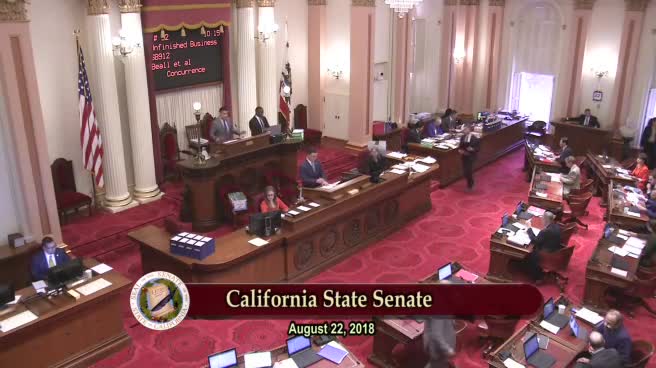 3MIN
Senate Floor
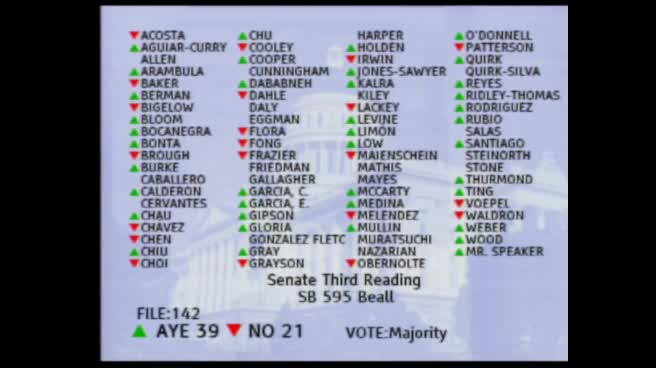 1MIN
Assembly Floor
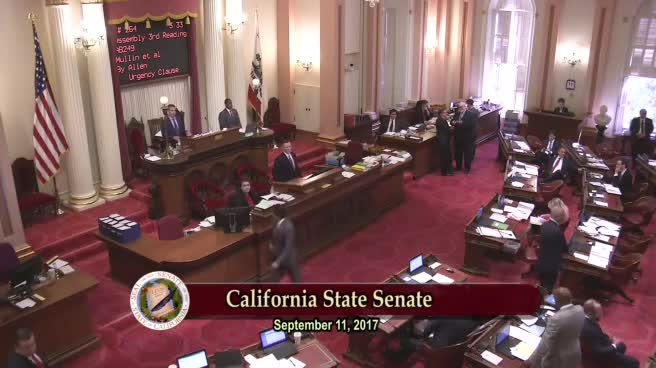 6MIN
Senate Floor
 1H
Senate Standing Committee on Appropriations
 12MIN
Senate Standing Committee on Natural Resources and Water
 52MIN
Joint Legislative Budget Committee
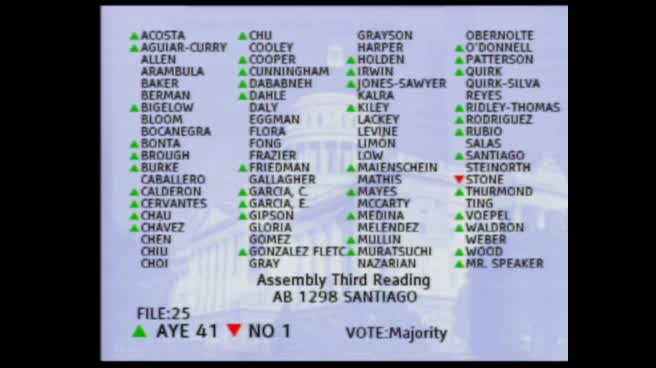 1MIN
Assembly Floor
 1H
Assembly Standing Committee on Appropriations
Bill Author

Bill Co-Author(s):






