AB 2511: The Parent’s Accountability and Child Protection Act.
- Session Year: 2017-2018
- House: Assembly
- Latest Version Date: 2018-09-28
Existing law prohibits an operator of an Internet Web site, online service, online application, or mobile application, as specified, from marketing or advertising specified types of products or services to a minor. Existing law also makes it unlawful for any person to sell specified products or services to a minor or requires permission from a parent or legal guardian in order to sell to a minor. Under existing law, generally a minor may make a contract in the same manner as an adult.
This bill, commencing on January 1, 2020, would require a person or business that conducts business in California and that seeks to sell specified products or services, to take reasonable steps, as specified, to ensure that the purchaser is of legal age at the time of purchase or delivery, including, but not limited to, verifying the age of the purchaser. The bill would prohibit a person or business that is required to comply with these provisions from retaining, using, or disclosing any information it receives in an effort to verify age from a purchaser or recipient for any purpose other than complying with these provisions, California law, or a state or federal court order. The bill would specify that a business or person that violates these provisions is subject to a civil penalty not exceeding $7,500 for each violation.
Existing law prohibits an operator of an Internet Web site, online service, online application, or mobile application, as specified, from marketing or advertising specified types of products or services to a minor. Existing law also makes it unlawful for any person to sell specified products or services to a minor or requires permission from a parent or legal guardian in order to sell to a minor. Under existing law, generally a minor may make a contract in the same manner as an adult.
This bill, commencing on January 1, 2020, would require a person or business that operates an Internet Web site or application conducts business in California and that seeks to sell specified products or services, to take reasonable steps, as defined, specified, to ensure that the purchaser is of legal age at the time of purchase, purchase or delivery, including, but not limited to, verifying the age of the purchaser, as specified. purchaser. The bill would prohibit a person or business that is required to comply with these provisions from retaining, using, or disclosing any information it receives from a purchaser or recipient for any purpose other than complying with these provisions, California law, or a state or federal court order. The bill would specify that a business or person that violates these provisions is subject to a civil penalty not exceeding $7,500 for each violation.
Existing law prohibits an operator of an Internet Web site, online service, online application, or mobile application, as specified, from marketing or advertising specified types of products or services to a minor. Existing law also makes it unlawful for any person to sell specified products or services to a minor or requires permission from a parent or legal guardian in order to sell to a minor. Under existing law, generally a minor may make a contract in the same manner as an adult.
This bill, commencing on January 1, 2020, would require a person or business that operates an Internet Web site or application and that seeks to sell specified products or services, to take reasonable steps, as defined, to ensure that the purchaser is of legal age at the time of purchase, including, but not limited to, verifying the age of the purchaser, as specified. The bill would prohibit a person or business that is required to comply with these provisions from retaining, using, or disclosing any information it receives from a purchaser or recipient for any purpose other than complying with these provisions, California law, or a state or federal court order. The bill would specify that a business or person that violates these provisions is subject to a civil penalty not exceeding $7,500 for each violation.
Existing law prohibits an operator of an Internet Web site, online service, online application, or mobile application, as specified, from marketing or advertising specified types of products or services to a minor. Existing law also makes it unlawful for any person to sell specified products or services to a minor or requires permission from a parent or legal guardian in order to sell to a minor. Under existing law, generally a minor may make a contract in the same manner as an adult.
This bill, commencing on January 1, 2020, would require a person or business that operates an Internet Web site or application and that seeks to sell specified products or services, to take reasonable steps, as defined, to ensure that the purchaser is of legal age at the time of purchase, including, but not limited to, verifying the age of the purchaser, as specified. The bill would specify that a business or person that violates these provisions is subject to a civil penalty not exceeding $7,500 for each violation.
Existing law prohibits an operator of an Internet Web site, online service, online application, or mobile application, as specified, from marketing or advertising specified types of products or services to a minor. Existing law also makes it unlawful for any person to sell specified products or services to a minor or requires permission from a parent or legal guardian in order to sell to a minor. Under existing law, generally a minor may make a contract in the same manner as an adult.
This bill would prohibit a person or business that conducts business in California, that operates an Internet Web site or application that seeks to use a minors name, picture, or any information about the minor on a social media Internet Web site, or application as specified, from doing so without obtaining prior parental consent. The bill would also bill, commencing on January 1, 2020, would require a person or business that conducts business in California, that operates an Internet Web site or application and that seeks to sell specified products or services services, to take reasonable steps to verify the age of the purchaser and to refrain from delivering, or causing to be delivered, any proscribed products or services, to a person under 18 years of age, or, in the case of alcohol, under 21 years of age, as specified. steps, as defined, to ensure that the purchaser is of legal age at the time of purchase, including, but not limited to, verifying the age of the purchaser, as specified. The bill would specify that a business or person that violates these provisions is subject to a civil penalty not exceeding $7,500 for each violation.
Existing federal law requires an operator of an Internet Web site or online service directed to a child, as defined, or an operator of an Internet Web site or online service that has actual knowledge that it is collecting personal information from a child to provide notice of what information is being collected and how that information is being used, and to give the parents of the child the opportunity to refuse to permit the operator's further collection of information from the child.
Existing law prohibits an operator of an Internet Web site, online service, online application, or mobile application, as specified, from marketing or advertising specified types of products or services to a minor. Existing law also makes it unlawful for any person to sell specified products or services to a minor or requires permission from a parent or legal guardian in order to sell to a minor. Under existing law, generally a minor may make a contract in the same manner as an adult.
This bill would prohibit a person or business that conducts business in California, that operates an Internet Web site or application that seeks to use a minors name, picture, or any information about the minor on a social media Internet Web site, site, or application as specified, or from doing so without obtaining prior parental consent. The bill would also require a person or business that conducts business in California, that operates an Internet Web site or application that seeks to sell specified products or services from engaging in specified acts, including soliciting or knowingly permitting the minor to agree to terms or conditions on behalf of an adult, or obtaining or seeking to obtain consent from the minor for any policy, practice, term, or condition through the business generally applicable terms and conditions of use, to take reasonable steps to verify the age of the purchaser and to refrain from delivering, or causing to be delivered, any proscribed products or services, to a person under 18 years of age, or, in the case of alcohol, under 21 years of age, as specified. The bill would specify that a business or person that violates these provisions is subject to a civil penalty not exceeding $7,500 for each violation.
Existing federal law requires an operator of an Internet Web site or online service directed to a child, as defined, or an operator of an Internet Web site or online service that has actual knowledge that it is collecting personal information from a child to provide notice of what information is being collected and how that information is being used, and to give the parents of the child the opportunity to refuse to permit the operator's further collection of information from the child.
Existing law prohibits an operator of an Internet Web site, online service, online application, or mobile application, as specified, from marketing or advertising specified types of products or services to a minor. Existing law also makes it unlawful for any person to sell specified products or services to a minor or requires permission from a parent or legal guardian in order to sell to a minor. Under existing law, generally a minor may make a contract in the same manner as an adult.
This bill would prohibit a person or business that conducts business in California, that operates an Internet Web site or application that uses seeks to use a minors name, picture, or any information about the minor on a social media Internet Web site, as specified, or that sells those products and services that are to sell to a minor or that requires permission from a parent or legal guardian in order to sell to a minor, seeks to sell specified products or services from engaging in specified acts, including soliciting or knowingly permitting the minor to agree to terms or conditions on behalf of an adult, or obtaining or seeking to obtain consent from the minor for any policy, practice, term, or condition through the business generally applicable terms and conditions of use, as specified. The bill would specify that a business or person that violates these provisions is subject to a civil penalty not exceeding $7,500 for each violation.
Existing law requires a business that owns, licenses, or maintains personal information about a California resident to implement and maintain reasonable security procedures and practices appropriate to the nature of the information to protect the personal information from unauthorized access, destruction, use, modification, or disclosure.
Existing law requires an operator of a commercial Web site or online service that collects personally identifiable information through the Internet about individual consumers residing in California who or use or visit its commercial Web site or online service to conspicuously post its privacy policy on its Web site, as specified.
Existing federal law requires an operator of an Internet Web site or online service directed to a child, as defined, or an operator of an Internet Web site or online service that has actual knowledge that it is collecting personal information from a child to provide notice of what information is being collected and how that information is being used, and to give the parents of the child the opportunity to refuse to permit the operator's further collection of information from the child.
Existing law prohibits an operator of an Internet Web site, online service, online application, or mobile application, as specified, from marketing or advertising specified types of products or services to a minor. Existing law also makes it unlawful for any person to sell specified products or services to a minor or requires permission from a parent or legal guardian in order to sell to a minor. Under existing law, generally a minor may make a contract in the same manner as an adult.
This bill would prohibit a person or business that conducts business in California, that operates an Internet Web site or application that requires a password and that enables a minor resident of California to use the site or application to create and share content, including, but not limited to, photographs, messages, digitally created pictures, and videos uses a minors name, picture, or any information about the minor on a social media Internet Web site, as specified, or that sells those products and services that are to sell to a minor or that requires permission from a parent or legal guardian in order to sell to a minor, from engaging in specified acts, including soliciting or knowingly permitting the minor to agree to terms or conditions on behalf of an adult, or obtaining or seeking to obtain consent from the minor for any policy, practice, term, or condition through the business generally applicable terms and conditions of use. use, as specified. The bill would specify that a business or person that violates these provisions is subject to a civil penalty not exceeding $7,500 for each violation.
Existing law requires a business that owns, licenses, or maintains personal information about a California resident to implement and maintain reasonable security procedures and practices appropriate to the nature of the information to protect the personal information from unauthorized access, destruction, use, modification, or disclosure.
Existing law requires an operator of a commercial Web site or online service that collects personally identifiable information through the Internet about individual consumers residing in California who or use or visit its commercial Web site or online service to conspicuously post its privacy policy on its Web site, as specified.
Existing federal law requires an operator of an Internet Web site or online service directed to a child, as defined, or an operator of an Internet Web site or online service that has actual knowledge that it is collecting personal information from a child to provide notice of what information is being collected and how that information is being used, and to give the parents of the child the opportunity to refuse to permit the operator's further collection of information from the child.
This bill would prohibit a person or business that conducts business in California, that operates an Internet Web site or application that requires a password and that enables a minor resident of California to use the site or application to create and share content, including, but not limited to, photographs, messages, digitally created pictures, and videos from engaging in specified acts, including soliciting or knowingly permitting the minor to agree to terms or conditions on behalf of an adult, or obtaining or seeking to obtain consent from the minor for any policy, practice, term, or condition through the business generally applicable terms and conditions of use. The bill would specify that a business or person that violates these provisions is subject to a civil penalty not exceeding $7,500 for each violation.
(a)(1)A person or business that conducts business in California, and that seeks to sell any product or service in or into California that is illegal under state law to sell to a minor, as described in subdivisions (b) and (c), shall, notwithstanding any general term or condition, take reasonable steps to ensure that the purchaser is of legal age at the time of purchase or delivery, including, but not limited to, verifying the age of the purchaser.
(2)Reasonable steps as used in paragraph (1) for the purchase of items described in subdivision (b) include, but are not limited to, any of the following:
(A)Requiring the purchaser or recipient to input, scan, provide, or display a government-issued identification, provided that the person or business complies with all laws governing the retention, use, and disclosure of personally identifiable information, including, but not limited to, subdivision (a) of Section 1749.65, paragraphs (3) to (7), inclusive, of subdivision (b) of, and subdivisions (c) to (f), inclusive, of, Section 1798.90, paragraph (1) of subdivision (a) of Section 1798.90.1, Sections 1798.29, 1798.81.5, and 1798.82, and Sections 22575 to 22579, inclusive, of the Business and Professions Code.
(B)Requiring the purchaser to use a nonprepaid credit card for an online purchase.
(C)Implementing a system that restricts individuals with accounts designated as minor accounts from purchasing the products listed in subdivision (b).
(D)Shipping the product or service to an individual who is of legal age.
(3)Reasonable steps as used in paragraph (1) for the purchase of items described in subdivision (c) include, but are not limited to, any of the following:
(A)Requiring the purchaser or recipient to input, scan, provide, or display a government-issued identification, provided that the person or business complies with all laws governing the retention, use, and disclosure of personally identifiable information, including, but not limited to, subdivision (a) of Section 1749.65, paragraphs (3) to (7), inclusive, of subdivision (b) of, and subdivisions (c) to (f), inclusive, of, Section 1798.90, paragraph (1) of subdivision (a) of Section 1798.90.1, Sections 1798.29, 1798.81.5, and 1798.82, and Sections 22575 to 22579, inclusive, of the Business and Professions Code.
(B)Shipping the product or service to an individual who is of legal age.
(4)Reasonable steps as used in paragraph (1) shall not include consent obtained through the minor.
(5)A sellers reasonable and good faith reliance on bona fide evidence of the purchaser or recipients age shall constitute an affirmative defense to any action under this subdivision.
(6)A person or business required to comply with this section shall not retain, use, or disclose any information it receives from a purchaser or recipient in an effort to verify age pursuant to this section for any purpose other than as required to comply with, or as needed to demonstrate compliance with, this section, California law, or a state or federal court order.
(b)Products or services that are illegal to sell to a minor under state law that are subject to subdivision (a) include all of the following:
(1)An aerosol container of paint that is capable of defacing property, as referenced in Section 594.1 of the Penal Code.
(2)Etching cream that is capable of defacing property, as referenced in Section 594.1 of the Penal Code.
(3)Dangerous fireworks, as referenced in Sections 12505 and 12689 of the Health and Safety Code.
(4)Tanning in an ultraviolet tanning device, as referenced in Sections 22702 and 22706 of the Business and Professions Code.
(5)Dietary supplement products containing ephedrine group alkaloids, as referenced in Section 110423.2 of the Health and Safety Code.
(6)Body branding, as referenced in Sections 119301 and 119302 of the Health and Safety Code.
(c)Products or services that are illegal to sell to a minor under state law that are subject to subdivision (a) include all of the following:
(1)Firearms or handguns, as referenced in Sections 16520, 16640, and 27505 of the Penal Code.
(2)A BB device, as referenced in Sections 16250 and 19910 of the Penal Code.
(3)Ammunition or reloaded ammunition, as referenced in Sections 16150 and 30300 of the Penal Code.
(4)Any tobacco, cigarette, cigarette papers, blunt wraps, any other preparation of tobacco, any other instrument or paraphernalia that is designed for the smoking or ingestion of tobacco, products prepared from tobacco, or any controlled substance, as referenced in Division 8.5 (commencing with Section 22950) of the Business and Professions Code, and Sections 308, 308.1, 308.2, and 308.3 of the Penal Code.
(5)Electronic cigarettes, as referenced in Section 119406 of the Health and Safety Code.
(6)A less lethal weapon, as referenced in Sections 16780 and 19405 of the Penal Code.
(d)In an action brought by a public prosecutor, a business or person that violates this section shall be subject to a civil penalty not exceeding seven thousand five hundred dollars ($7,500) for each violation.
(e)The provisions of this section do not apply to a business that is regulated by state or federal law providing greater protection to personal information or requiring greater age verification than provided by this section in regard to the subjects addressed by this section. Compliance with state or federal law shall be deemed compliance with this section with regard to those subjects. This subdivision does not relieve a business from a duty to comply with any other requirements of other state and federal law regarding the protection and privacy of personal information or age verification.
(f)For purposes of this section, a government-issued identification means any of the following:
(1)A document issued by a federal, state, county, or municipal government, or subdivision or agency thereof, including, but not limited to, an identification card or a valid motor vehicle operators license, including licenses issued pursuant to Section 12801.9 of the Vehicle Code, that contains the name, date of birth, description, and picture of the person.
(2)A valid passport issued by the United States or by a foreign government.
(3)A valid identification card issued to a member of the United States Armed Forces that includes the date of birth and picture of the person.
(4)A valid consular identification document.
(5)An identification card issued by a federally recognized tribal government.
(g)This section shall become operative on January 1, 2020.
(a)(1)A person or business that conducts business in California, and that seeks to sell any product or service in or into California that is illegal under state law to sell to a minor, as described in subdivisions (b) and (c), shall, notwithstanding any general term or condition, take reasonable steps to ensure that the purchaser is of legal age at the time of purchase or delivery, including, but not limited to, verifying the age of the purchaser.
(2)Reasonable steps as used in paragraph (1) for the purchase of items described in subdivision (b) include, but are not limited to, any of the following:
(A)Requiring the purchaser or recipient to input, scan, provide, or display a government-issued identification, provided that the person or business complies with all laws governing the retention, use, and disclosure of personally identifiable information, including, but not limited to, subdivision (a) of Section 1749.65, paragraphs (3) to (7), inclusive, of subdivision (b) of, and subdivisions (c) to (f), inclusive, of, Section 1798.90, paragraph (1) of subdivision (a) of Section 1798.90.1, Sections 1798.29, 1798.81.5, and 1798.82, and Sections 22575 to 22579, inclusive, of the Business and Professions Code.
(B)Requiring the purchaser to use a nonprepaid credit card for an online purchase.
(C)Implementing a system that restricts individuals with accounts designated as minor accounts from purchasing the products listed in subdivision (b).
(D)Shipping the product or service to an individual who is of legal age.
(3)Reasonable steps as used in paragraph (1) for the purchase of items described in subdivision (c) include, but are not limited to, any of the following:
(A)Requiring the purchaser or recipient to input, scan, provide, or display a government-issued identification, provided that the person or business complies with all laws governing the retention, use, and disclosure of personally identifiable information, including, but not limited to, subdivision (a) of Section 1749.65, paragraphs (3) to (7), inclusive, of subdivision (b) of, and subdivisions (c) to (f), inclusive, of, Section 1798.90, paragraph (1) of subdivision (a) of Section 1798.90.1, Sections 1798.29, 1798.81.5, and 1798.82, and Sections 22575 to 22579, inclusive, of the Business and Professions Code.
(B)Shipping the product or service to an individual who is of legal age.
(4)Reasonable steps as used in paragraph (1) shall not include consent obtained through the minor.
(5)A sellers reasonable and good faith reliance on bona fide evidence of the purchaser or recipients age shall constitute an affirmative defense to any action under this subdivision.
(6)A person or business that is required to comply with this section shall not retain, use, or disclose any information it receives from a purchaser or recipient in an effort to verify age pursuant to this section for any purpose other than as required to comply with with, or as needed to demonstrate compliance with, this section, with California law, or with a state or federal court order.
(b)Products or services that are illegal to sell to a minor under state law that are subject to subdivision (a) include all of the following:
(1)An aerosol container of paint that is capable of defacing property, as referenced in Section 594.1 of the Penal Code.
(2)Etching cream that is capable of defacing property, as referenced in Section 594.1 of the Penal Code.
(3)Dangerous fireworks, as referenced in Sections 12505 and 12689 of the Health and Safety Code.
(4)Tanning in an ultraviolet tanning device, as referenced in Sections 22702 and 22706 of the Business and Professions Code.
(5)Dietary supplement products containing ephedrine group alkaloids, as referenced in Section 110423.2 of the Health and Safety Code.
(6)Body branding, as referenced in Sections 119301 and 119302 of the Health and Safety Code.
(c)Products or services that are illegal to sell to a minor under state law that are subject to subdivision (a) include all of the following:
(1)Firearms or handguns, as referenced in Sections 16520, 16640, and 27505 of the Penal Code.
(2)A BB device, as referenced in Sections 16250 and 19910 of the Penal Code.
(3)Ammunition or reloaded ammunition, as referenced in Sections 16150 and 30300 of the Penal Code.
(4)Any tobacco, cigarette, cigarette papers, blunt wraps, any other preparation of tobacco, any other instrument or paraphernalia that is designed for the smoking or ingestion of tobacco, products prepared from tobacco, or any controlled substance, as referenced in Division 8.5 (commencing with Section 22950) of the Business and Professions Code, and Sections 308, 308.1, 308.2, and 308.3 of the Penal Code.
(5)Electronic cigarettes, as referenced in Section 119406 of the Health and Safety Code.
(6)A less lethal weapon, as referenced in Sections 16780 and 19405 of the Penal Code.
(d)In an action brought by a public prosecutor, a business or person that violates this section shall be subject to a civil penalty not exceeding seven thousand five hundred dollars ($7,500) for each violation.
(e)The provisions of this section do not apply to a business that is regulated by state or federal law providing greater protection to personal information or requiring greater age verification than provided by this section in regard to the subjects addressed by this section. Compliance with state or federal law shall be deemed compliance with this section with regard to those subjects. This subdivision does not relieve a business from a duty to comply with any other requirements of other state and federal law regarding the protection and privacy of personal information or age verification.
(f)For purposes of this section, a government-issued identification means any of the following:
(1)A document issued by a federal, state, county, or municipal government, or subdivision or agency thereof, including, but not limited to, an identification card or a valid motor vehicle operators license, including licenses issued pursuant to Section 12801.9 of the Vehicle Code, that contains the name, date of birth, description, and picture of the person.
(2)A valid passport issued by the United States or by a foreign government.
(3)A valid identification card issued to a member of the United States Armed Forces that includes the date of birth and picture of the person.
(4)A valid consular identification document.
(5)An identification card issued by a federally recognized tribal government.
(g)This section shall become operative on January 1, 2020.
(a)(1)A person or business that conducts business in California, and that seeks to sell any product or service in or into California that is illegal under state law to sell to a minor, as described in subdivisions (b) and (c), shall, notwithstanding any general term or condition, take reasonable steps to ensure that the purchaser is of legal age at the time of purchase or delivery, including, but not limited to, verifying the age of the purchaser.
(2)Reasonable steps as used in paragraph (1) for the purchase of items described in subdivision (b) include, but are not limited to, any of the following:
(A)Requiring the purchaser or recipient to input, scan, provide, or display a government-issued identification, provided that the person or business complies with all laws governing the retention, use, and disclosure of personally identifiable information, including, but not limited to, subdivision (a) of Section 1749.65, paragraphs (3) to (7), inclusive, of subdivision (b) of, and subdivisions (c) to (f), inclusive, of, Section 1798.90, paragraph (1) of subdivision (a) of Section 1798.90.1, Sections 1798.29, 1798.81.5, and 1798.82, and Sections 22575 to 22579, inclusive, of the Business and Professions Code.
(B)Requiring the purchaser to use a nonprepaid credit card for an online purchase.
(C)Implementing a system that restricts individuals with accounts designated as minor accounts from purchasing the products listed in subdivision (b).
(D)Delivering Shipping the product or service to an individual who is of legal age.
(3)Reasonable steps as used in paragraph (1) for the purchase of items described in subdivision (c) include, but are not limited to, any of the following:
(A)Requiring the purchaser or recipient to input, scan, provide, or display a government-issued identification, provided that the person or business complies with all laws governing the retention, use, and disclosure of personally identifiable information, including, but not limited to, subdivision (a) of Section 1749.65, paragraphs (3) to (7), inclusive, of subdivision (b) of, and subdivisions (c) to (f), inclusive, of, Section 1798.90, paragraph (1) of subdivision (a) of Section 1798.90.1, Sections 1798.29, 1798.81.5, and 1798.82, and Sections 22575 to 22579, inclusive, of the Business and Professions Code.
(B)Delivering Shipping the product or service to an individual who is of legal age.
(4)Reasonable steps as used in paragraph (1) shall not include consent obtained through the minor.
(5)A sellers reasonable and good faith reliance on bona fide evidence of the purchaser or recipients age shall constitute an affirmative defense to any action under this subdivision.
(6)A person or business that is required to comply with this section shall not retain, use, or disclose any information it receives from a purchaser or recipient pursuant to this section for any purpose other than as required to comply with this section, with California law, or with a state or federal court order.
(b)Products or services that are illegal to sell to a minor under state law that are subject to subdivision (a) include, include all of the following:
(1)An aerosol container of paint that is capable of defacing property, as referenced in Section 594.1 of the Penal Code.
(2)Etching cream that is capable of defacing property, as referenced in Section 594.1 of the Penal Code.
(3)Dangerous fireworks, as referenced in Sections 12505 and 12689 of the Health and Safety Code.
(4)Tanning in an ultraviolet tanning device, as referenced in Sections 22702 and 22706 of the Business and Professions Code.
(5)Dietary supplement products containing ephedrine group alkaloids, as referenced in Section 110423.2 of the Health and Safety Code.
(6)Body branding, as referenced in Sections 119301 and 119302 of the Health and Safety Code.
(c)Products or services that are illegal to sell to a minor under state law that are subject to subdivision (a) include all of the following:
(1)Firearms or handguns, as referenced in Sections 16520, 16640, and 27505 of the Penal Code.
(2)A BB device, as referenced in Sections 16250 and 19910 of the Penal Code.
(3)Ammunition or reloaded ammunition, as referenced in Sections 16150 and 30300 of the Penal Code.
(4)Any tobacco, cigarette, cigarette papers, blunt wraps, any other preparation of tobacco, any other instrument or paraphernalia that is designed for the smoking or ingestion of tobacco, products prepared from tobacco, or any controlled substance, as referenced in Division 8.5 (commencing with Section 22950) of the Business and Professions Code, and Sections 308, 308.1, 308.2, and 308.3 of the Penal Code.
(5)Electronic cigarettes, as referenced in Section 119406 of the Health and Safety Code.
(6)A less lethal weapon, as referenced in Sections 16780 and 19405 of the Penal Code.
(d)In an action brought by a public prosecutor, a business or person that violates this section shall be subject to a civil penalty not exceeding seven thousand five hundred dollars ($7,500) for each violation.
(e)The provisions of this section do not apply to a business that is regulated by state or federal law providing greater protection to personal information or requiring greater age verification than provided by this section in regard to the subjects addressed by this section. Compliance with state or federal law shall be deemed compliance with this section with regard to those subjects. This subdivision does not relieve a business from a duty to comply with any other requirements of other state and federal law regarding the protection and privacy of personal information or age verification.
(f)For purposes of this section, a government-issued identification means any of the following:
(1)A document issued by a federal, state, county, or municipal government, or subdivision or agency thereof, including, but not limited to, a valid motor vehicle operators license, including licenses issued pursuant to Section 12801.9 of the Vehicle Code, that contains the name, date of birth, description, and picture of the person.
(2)A valid passport issued by the United States or by a foreign government.
(3)A valid identification card issued to a member of the United States Armed Forces that includes a the date of birth and a picture of the person.
(4)A valid consular identification document.
(g)This section shall become operative on January 1, 2020.
(a)(1)A person or business that conducts business in California, and that seeks to sell any product or service in or into California that is illegal under state law to sell to a minor, as described in subdivisions (b) and (c), shall, notwithstanding any general term or condition, take reasonable steps to ensure that the purchaser is of legal age at the time of purchase or delivery, including, but not limited to, verifying the age of the purchaser.
(2)Reasonable steps as used in paragraph (1) for the purchase of items described in subdivision (b) include, but are not limited to, any of the following:
(A)Requiring the purchaser or recipient to input, scan, provide, or display a government-issued identification. identification, provided that the person or business complies with all laws governing the retention, use, and disclosure of personally identifiable information, including, but not limited to, subdivision (a) of Section 1749.65, paragraphs (3) to (7), inclusive, of subdivision (b) of, and subdivisions (c) to (f), inclusive, of, Section 1798.90, paragraph (1) of subdivision (a) of Section 1798.90.1, Sections 1798.29, 1798.81.5, and 1798.82, and Sections 22575 to 22579, inclusive, of the Business and Professions Code.
(B)Requiring the purchaser to use a nonprepaid credit card for an online purchase.
(C)Implementing a system that restricts individuals with accounts designated as minor accounts from purchasing the products listed in subdivision (b).
(D)Delivering the product or service to an individual who is of legal age.
(3)Reasonable steps as used in paragraph (1) for the purchase of items described in subdivision (c) include, but are not limited to, any of the following:
(A)Requiring the purchaser or recipient to input, scan, provide, or display a government-issued identification, including, but not limited to, any of the following: provided that the person or business complies with all laws governing the retention, use, and disclosure of personally identifiable information, including, but not limited to, subdivision (a) of Section 1749.65, paragraphs (3) to (7), inclusive, of subdivision (b) of, and subdivisions (c) to (f), inclusive, of, Section 1798.90, paragraph (1) of subdivision (a) of Section 1798.90.1, Sections 1798.29, 1798.81.5, and 1798.82, and Sections 22575 to 22579, inclusive, of the Business and Professions Code.
(i)A document issued by a federal, state, county, or municipal government, or subdivision or agency thereof, including, but not limited to, a valid motor vehicle operators license, that contains the name, date of birth, description, and picture of the person.(ii)A valid passport issued by the United States or by a foreign government.(iii)A valid identification card issued to a member of the Armed Forces that includes a date of birth and a picture of the person.(B)Delivering the product or service to an individual who is of legal age.
(4)Reasonable steps as used in paragraph (1) shall not include consent obtained through the minor.
(5)A sellers reasonable and good faith reliance on bona fide evidence of the purchaser or recipients age shall constitute an affirmative defense to any action under this subdivision.
(b)Products or services that are illegal to sell to a minor under state law that are subject to subdivision (a) include, all of the following:
(1)An aerosol container of paint that is capable of defacing property, as referenced in Section 594.1 of the Penal Code.
(2)Etching cream that is capable of defacing property, as referenced in Section 594.1 of the Penal Code.
(3)Dangerous fireworks, as referenced in Sections 12505 and 12689 of the Health and Safety Code.
(4)Tanning in an ultraviolet tanning device, as referenced in Sections 22702 and 22706 of the Business and Professions Code.
(5)Dietary supplement products containing ephedrine group alkaloids, as referenced in Section 110423.2 of the Health and Safety Code.
(6)Body branding, as referenced in Sections 119301 and 119302 of the Health and Safety Code.
(c)Products or services that are illegal to sell to a minor under state law that are subject to subdivision (a) include all of the following:
(1)Firearms or handguns, as referenced in Sections 16520, 16640, and 27505 of the Penal Code.
(2)A BB device, as referenced in Sections 16250 and 19910 of the Penal Code.
(3)Ammunition or reloaded ammunition, as referenced in Sections 16150 and 30300 of the Penal Code.
(4)Any tobacco, cigarette, cigarette papers, blunt wraps, any other preparation of tobacco, any other instrument or paraphernalia that is designed for the smoking or ingestion of tobacco, products prepared from tobacco, or any controlled substance, as referenced in Division 8.5 (commencing with Section 22950) of the Business and Professions Code, and Sections 308, 308.1, 308.2, and 308.3 of the Penal Code.
(5)Electronic cigarettes, as referenced in Section 119406 of the Health and Safety Code.
(6)A less lethal weapon, as referenced in Sections 16780 and 19405 of the Penal Code.
(d)In an action brought by a public prosecutor, a business or person that violates this section shall be subject to a civil penalty not exceeding seven thousand five hundred dollars ($7,500) for each violation.
(e)The provisions of this section do not apply to a business that is regulated by state or federal law providing greater protection to personal information or requiring greater age verification than provided by this section in regard to the subjects addressed by this section. Compliance with state or federal law shall be deemed compliance with this section with regard to those subjects. This subdivision does not relieve a business from a duty to comply with any other requirements of other state and federal law regarding the protection and privacy of personal information or age verification.
(f)For purposes of this section, a government-issued identification means any of the following:
(1)A document issued by a federal, state, county, or municipal government, or subdivision or agency thereof, including, but not limited to, a valid motor vehicle operators license, including licenses issued pursuant to Section 12801.9 of the Vehicle Code, that contains the name, date of birth, description, and picture of the person.
(2)A valid passport issued by the United States or by a foreign government.
(3)A valid identification card issued to a member of the United States Armed Forces that includes a date of birth and a picture of the person.
(4)A valid consular identification document.
(e)(g)This section shall become operative on January 1, 2020.
(a)(1)A person or business that conducts business in California, and that seeks to sell any product or service in or into California that is illegal under state law to sell to a minor, as described in subdivisions (b) and (c), shall, notwithstanding any general term or condition, take reasonable steps to ensure that the purchaser is of legal age at the time of purchase or delivery, including, but not limited to, verifying the age of the purchaser.
(2)Reasonable steps as used in paragraph (1) for the purchase of items described in subdivision (b) include, but are not limited to, any of the following:
(A)Requiring the purchaser or recipient to input, scan, provide, or display a government-issued identification.
(B)Requiring the purchaser to use a nonprepaid credit card for an online purchase.
(C)Implementing a system that restricts individuals with accounts designated as minor accounts from purchasing the products listed in subdivision (b).
(D)Delivering the product or service to an individual who is of legal age.
(3)Reasonable steps as used in paragraph (1) for the purchase of items described in subdivision (c) include, but are not limited to, a review of any of the following:
(A)Requiring the purchaser or recipient to input, scan, provide, or display a government-issued identification, including, but not limited to, any of the following:
(i)A document issued by a federal, state, county, or municipal government, or subdivision or agency thereof, including, but not limited to, a valid motor vehicle operators license, that contains the name, date of birth, description, and picture of the person.
(ii)A valid passport issued by the United States or by a foreign government.
(iii)A valid identification card issued to a member of the Armed Forces that includes a date of birth and a picture of the person.
(B)Delivering the product or service to an individual who is of legal age.
(4)Reasonable steps as used in paragraph (1) shall not include consent obtained through the minor.
(5)A sellers reasonable and good faith reliance on bona fide evidence of the purchaser or recipients age shall constitute an affirmative defense to any action under this subdivision.
(b)Products or services that are illegal to sell to a minor under state law that are subject to subdivision (a) include, all of the following:
(1)An aerosol container of paint that is capable of defacing property, as referenced in Section 594.1 of the Penal Code.
(2)Etching cream that is capable of defacing property, as referenced in Section 594.1 of the Penal Code.
(3)Dangerous fireworks, as referenced in Sections 12505 and 12689 of the Health and Safety Code.
(4)Tanning in an ultraviolet tanning device, as referenced in Sections 22702 and 22706 of the Business and Professions Code.
(5)Dietary supplement products containing ephedrine group alkaloids, as referenced in Section 110423.2 of the Health and Safety Code.
(6)Body branding, as referenced in Sections 119301 and 119302 of the Health and Safety Code.
(c)Products or services that are illegal to sell to a minor under state law that are subject to subdivision (a) include all of the following:
(1)Alcoholic beverages, as referenced in Sections 23003 to 23007, inclusive, and Section 25658 of the Business and Professions Code.(2)(1)Firearms or handguns, as referenced in Sections 16520, 16640, and 27505 of the Penal Code.
(3)(2)A BB device, as referenced in Sections 16250 and 19910 of the Penal Code.
(4)(3)Ammunition or reloaded ammunition, as referenced in Sections 16150 and 30300 of the Penal Code.
(5)(4)Any tobacco, cigarette, cigarette papers, blunt wraps, any other preparation of tobacco, any other instrument or paraphernalia that is designed for the smoking or ingestion of tobacco, products prepared from tobacco, or any controlled substance, as referenced in Division 8.5 (commencing with Section 22950) of the Business and Professions Code, and Sections 308, 308.1, 308.2, and 308.3 of the Penal Code.
(6)(5)Electronic cigarettes, as referenced in Section 119406 of the Health and Safety Code.
(7)(6)A less lethal weapon, as referenced in Sections 16780 and 19405 of the Penal Code.
(d)In an action brought by a public prosecutor, a business or person that violates this section shall be subject to a civil penalty not exceeding seven thousand five hundred dollars ($7,500) for each violation.
(e)This section shall become operative on January 1, 2020.
(a)(1)A person or business that conducts business in California, that operates an Internet Web site or application, and that seeks to sell any product or service in or into California that is illegal under state law to sell to a minor, as described in subdivision (c), shall: subdivisions (b) and (c), shall, notwithstanding any general term or condition, take reasonable steps to ensure that the purchaser is of legal age at the time of purchase or delivery, including, but not limited to, verifying the age of the purchaser.
(1)Notwithstanding any general term condition, take reasonable steps to verify the age of the purchaser.(2)Not deliver, or cause to be delivered, any proscribed products or services, as described in subdivision (c), to a person under 18 years of age, or, in the case of alcohol, under 21 years of age.(2)Reasonable steps as used in paragraph (1) for the purchase of items described in subdivision (b) include, but are not limited to, any of the following:
(A)Requiring the purchaser or recipient to input, scan, provide, or display a government-issued identification.
(B)Requiring the purchaser to use a nonprepaid credit card for an online purchase.
(C)Implementing a system that restricts individuals with accounts designated as minor accounts from purchasing the products listed in subdivision (b).
(D)Delivering the product or service to an individual who is of legal age.
(3)Reasonable steps as used in paragraph (1) for the purchase of items described in subdivision (c) include, but are not limited to, a review of any of the following:
(A)Requiring the purchaser or recipient to input, scan, provide, or display a government-issued identification, including, but not limited to, any of the following:
(i)A document issued by a federal, state, county, or municipal government, or subdivision or agency thereof, including, but not limited to, a valid motor vehicle operators license, that contains the name, date of birth, description, and picture of the person.
(ii)A valid passport issued by the United States or by a foreign government.
(iii)A valid identification card issued to a member of the Armed Forces that includes a date of birth and a picture of the person.
(B)Delivering the product or service to an individual who is of legal age.
(4)Reasonable steps as used in paragraph (1) shall not include consent obtained through the minor.
(5)A sellers reasonable and good faith reliance on bona fide evidence of the purchaser or recipients age shall constitute an affirmative defense to any action under this subdivision.
(c)(b)Products or services that are illegal to sell to a minor under state law that are subject to subdivision (b) (a) include, all of the following:
(1)Alcoholic beverages, as referenced in Sections 23003 to 23007, inclusive, and Section 25658 of the Business and Professions Code.(2)Firearms or handguns, as referenced in Sections 16520, 16640, and 27505 of the Penal Code.(3)Ammunition or reloaded ammunition, as referenced in Sections 16150 and 30300 of the Penal Code.(4)(1)An aerosol container of paint that is capable of defacing property, as referenced in Section 594.1 of the Penal Code.
(5)(2)Etching cream that is capable of defacing property, as referenced in Section 594.1 of the Penal Code.
(6)Any tobacco, cigarette, or cigarette papers, or blunt wraps, or any other preparation of tobacco, or any other instrument or paraphernalia that is designed for the smoking or ingestion of tobacco, products prepared from tobacco, or any controlled substance, as referenced in Division 8.5 (commencing with Section 22950) of the Business and Professions Code, and Sections 308, 308.1, 308.2, and 308.3 of the Penal Code.(7) A BB device, as referenced in Sections 16250 and 19910 of the Penal Code.(8)(3)Dangerous fireworks, as referenced in Sections 12505 and 12689 of the Health and Safety Code.
(9)(4)Tanning in an ultraviolet tanning device, as referenced in Sections 22702 and 22706 of the Business and Professions Code.
(10)(5)Dietary supplement products containing ephedrine group alkaloids, as referenced in Section 110423.2 of the Health and Safety Code.
(11)(6)Body branding, as referenced in Sections 119301 and 119302 of the Health and Safety Code.
(12)Electronic cigarettes, as referenced in Section 119406 of the Health and Safety Code.(13)Obscene matter, as referenced in Section 311 of the Penal Code.(14)A less lethal weapon, as referenced in Sections 16780 and 19405 of the Penal Code.(c)Products or services that are illegal to sell to a minor under state law that are subject to subdivision (a) include all of the following:
(1)Alcoholic beverages, as referenced in Sections 23003 to 23007, inclusive, and Section 25658 of the Business and Professions Code.
(2)Firearms or handguns, as referenced in Sections 16520, 16640, and 27505 of the Penal Code.
(3)A BB device, as referenced in Sections 16250 and 19910 of the Penal Code.
(4)Ammunition or reloaded ammunition, as referenced in Sections 16150 and 30300 of the Penal Code.
(5)Any tobacco, cigarette, cigarette papers, blunt wraps, any other preparation of tobacco, any other instrument or paraphernalia that is designed for the smoking or ingestion of tobacco, products prepared from tobacco, or any controlled substance, as referenced in Division 8.5 (commencing with Section 22950) of the Business and Professions Code, and Sections 308, 308.1, 308.2, and 308.3 of the Penal Code.
(6)Electronic cigarettes, as referenced in Section 119406 of the Health and Safety Code.
(7)A less lethal weapon, as referenced in Sections 16780 and 19405 of the Penal Code.
(d)In an action brought by a public prosecutor, a business or person that violates this section shall be subject to a civil penalty not exceeding seven thousand five hundred dollars ($7,500) for each violation.
(e)This section shall become operative on January 1, 2020.
(a)(1)A person or business that conducts business in California, that operates an Internet Web site or application that seeks to use a minors name, picture, or any information about the minor on a social media Internet Web site or application pursuant to an arrangement in which the person or business is paid by a third party to display the minors name, picture, or information without any compensation to the minor shall not do any of the following: that could reasonably identify the minor shall not do so without obtaining prior parental consent, which shall be separate from the social media Internet Web site or the applications general terms and conditions. The failure of a parent to provide the parental consent to the use of the minors name, picture, or information shall not result in any minor being denied access to the social media Internet Web site or application.
(2)Parental consent shall not be obtained through the minor.
(1)Solicit or knowingly permit the minor to agree to terms or conditions on behalf of an adult, including, but not limited to, the minors parent or legal guardian.(2)Presume that consent of the minor implies consent of an adult, including, but not limited to, a parent or a legal guardian.(3)Obtain or seek to obtain in terms or conditions the consent from the minor for any policy, practice, term, or condition through the business generally applicable terms and conditions of use that apply equally to minors and adults.(4)Require the minor or his or her parent or legal guardian, through any agreement or condition, to waive his or her ability to combine as a class to enforce the requirements of this section, whether in civil court or in arbitration.(b)A person or business that conducts business in California, that operates an Internet Web site or application, and that seeks to sell any product or service that is illegal under state law to sell to a minor, or that state law requires permission from a parent or legal guardian in order to sell to a minor, including, but not limited to, products and services described in subdivision (c), shall not do any of the following in the course of selling the product or service: as described in subdivision (c), shall:
(1)Notwithstanding any general term condition, take reasonable steps to verify the age of the purchaser.
(2)Not deliver, or cause to be delivered, any proscribed products or services, as described in subdivision (c), to a person under 18 years of age, or, in the case of alcohol, under 21 years of age.
(1)Solicit or knowingly permit the minor to agree to terms or conditions on behalf of an adult, including, but not limited to, the minors parent or legal guardian.(2)Presume that consent of the minor implies consent of an adult, including, but not limited to, a parent or a legal guardian.(3)Obtain or seek to obtain in terms or conditions the consent from the minor for any policy, practice, term, or condition through the business generally applicable terms and conditions of use that apply equally to minors and adults.(4)Require the minor or his or her parent or legal guardian, through any agreement or condition, to waive his or her ability to combine as a class to enforce the requirements of this section, whether in civil court or in arbitration.(c)Products or services that are illegal to sell to a minor under state law or that state law requires the consent of a parent or guardian in order to sell to a minor that are subject to subdivision (b) include, but not are limited to, all of the following:
(1)Alcoholic beverages, as referenced in Sections 23003 to 23007, inclusive, and Section 25658 of the Business and Professions Code.
(2)Firearms or handguns, as referenced in Sections 16520, 16640, and 27505 of the Penal Code.
(3)Ammunition or reloaded ammunition, as referenced in Sections 16150 and 30300 of the Penal Code.
(4)An aerosol container of paint that is capable of defacing property, as referenced in Section 594.1 of the Penal Code.
(5)Etching cream that is capable of defacing property, as referenced in Section 594.1 of the Penal Code.
(6)Any tobacco, cigarette, or cigarette papers, or blunt wraps, or any other preparation of tobacco, or any other instrument or paraphernalia that is designed for the smoking or ingestion of tobacco, products prepared from tobacco, or any controlled substance, as referenced in Division 8.5 (commencing with Section 22950) of the Business and Professions Code, and Sections 308, 308.1, 308.2, and 308.3 of the Penal Code.
(7) A BB device, as referenced in Sections 16250 and 19910 of the Penal Code.
(8)Dangerous fireworks, as referenced in Sections 12505 and 12689 of the Health and Safety Code.
(9)Tanning in an ultraviolet tanning device, as referenced in Sections 22702 and 22706 of the Business and Professions Code.
(10)Dietary supplement products containing ephedrine group alkaloids, as referenced in Section 110423.2 of the Health and Safety Code.
(11)Body branding, as referenced in Sections 119301 and 119302 of the Health and Safety Code.
(12)Drug paraphernalia, as referenced in Section 11364.5 of the Health and Safety Code. (13)(12)Electronic cigarettes, as referenced in Section 119406 of the Health and Safety Code.
(14)(13)Obscene matter, as referenced in Section 311 of the Penal Code.
(15)(14)A less lethal weapon, as referenced in Sections 16780 and 19405 of the Penal Code.
(d)In an action brought by a public prosecutor, a business or person that violates this section shall be subject to a civil penalty not exceeding seven thousand five hundred dollars ($7,500) for each violation.
(a)This section applies to a A person or business that conducts business in California, that operates an Internet Web site or application that seeks to do any of the following:
(1)Use to use a minors name, picture, or any information about the minor on a social media Internet Web site pursuant to an arrangement in which the person or business is paid by a third party to display the minors name, picture, or information without any compensation to the minor. minor shall not do any of the following:
(2)Sell any product that is illegal to sell to a minor or that requires permission from a parent or legal guardian in order to sell to a minor, including, but limited to:(1)Solicit or knowingly permit the minor to agree to terms or conditions on behalf of an adult, including, but not limited to, the minors parent or legal guardian.
(2)Presume that consent of the minor implies consent of an adult, including, but not limited to, a parent or a legal guardian.
(3)Obtain or seek to obtain in terms or conditions the consent from the minor for any policy, practice, term, or condition through the business generally applicable terms and conditions of use that apply equally to minors and adults.
(4)Require the minor or his or her parent or legal guardian, through any agreement or condition, to waive his or her ability to combine as a class to enforce the requirements of this section, whether in civil court or in arbitration.
(b)A person or business that conducts business in California, that operates an Internet Web site or application, and that seeks to sell any product or service that is illegal under state law to sell to a minor, or that state law requires permission from a parent or legal guardian in order to sell to a minor, including, but not limited to, products and services described in subdivision (c), shall not do any of the following in the course of selling the product or service:
(1)Solicit or knowingly permit the minor to agree to terms or conditions on behalf of an adult, including, but not limited to, the minors parent or legal guardian.
(2)Presume that consent of the minor implies consent of an adult, including, but not limited to, a parent or a legal guardian.
(3)Obtain or seek to obtain in terms or conditions the consent from the minor for any policy, practice, term, or condition through the business generally applicable terms and conditions of use that apply equally to minors and adults.
(4)Require the minor or his or her parent or legal guardian, through any agreement or condition, to waive his or her ability to combine as a class to enforce the requirements of this section, whether in civil court or in arbitration.
(c)Products or services that are illegal to sell to a minor under state law or that state law requires the consent of a parent or guardian in order to sell to a minor that are subject to subdivision (b) include, but not are limited to, all of the following:
(A)(1)Alcoholic beverages, as referenced in Sections 23003 to 23007, inclusive, and Section 25658 of the Business and Professions Code.
(B)(2)Firearms or handguns, as referenced in Sections 16520, 16640, and 27505 of the Penal Code.
(C)(3)Ammunition or reloaded ammunition, as referenced in Sections 16150 and 30300 of the Penal Code.
(D)(4)An aerosol container of paint that is capable of defacing property, as referenced in Section 594.1 of the Penal Code.
(E)(5)Etching cream that is capable of defacing property, as referenced in Section 594.1 of the Penal Code.
(F)(6)Any tobacco, cigarette, or cigarette papers, or blunt wraps, or any other preparation of tobacco, or any other instrument or paraphernalia that is designed for the smoking or ingestion of tobacco, products prepared from tobacco, or any controlled substance, as referenced in Division 8.5 (commencing with Section 22950) of the Business and Professions Code, and Sections 308, 308.1, 308.2, and 308.3 of the Penal Code.
(G)(7) A BB device, as referenced in Sections 16250 and 19910 of the Penal Code.
(H)(8)Dangerous fireworks, as referenced in Sections 12505 and 12689 of the Health and Safety Code.
(I)(9)Tanning in an ultraviolet tanning device, as referenced in Sections 22702 and 22706 of the Business and Professions Code.
(J)(10)Dietary supplement products containing ephedrine group alkaloids, as referenced in Section 110423.2 of the Health and Safety Code.
(K)(11)Body branding, as referenced in Sections 119301 and 119302 of the Health and Safety Code.
(L)(12)Drug paraphernalia, as referenced in Section 11364.5 of the Health and Safety Code.
(M)(13)Electronic cigarettes, as referenced in Section 119406 of the Health and Safety Code.
(N)(14)Obscene matter, as referenced in Section 311 of the Penal Code.
(O)(15)A less lethal weapon, as referenced in Sections 16780 and 19405 of the Penal Code.
(b)No person or business described in subdivision (a) shall do any of the following:(1)Solicit or knowingly permit the minor to agree to terms or conditions on behalf of an adult, including, but not limited to, the minors parent or legal guardian.(2)Presume that consent of the minor implies consent of an adult, including, but not limited to, a parent or a legal guardian.(3)Obtain or seek to obtain in terms or conditions the consent from the minor for any policy, practice, term, or condition through the business generally applicable terms and conditions of use that apply equally to minors and adults.(4)Require the minor or his or her parent or legal guardian, through any agreement or condition, to waive his or her ability to combine as a class to enforce the requirements of this section, whether in civil court or in arbitration. (c)(d)In an action brought by a public prosecutor, a business or person that violates this section shall be subject to a civil penalty not exceeding seven thousand five hundred dollars ($7,500) for each violation.
(a)A This section applies to a person or business that conducts business in California, that operates an Internet Web site or application that requires a password, and that enables a minor resident of California to use the site or application to create and share content, including, but not limited to, photographs, messages, digitally created pictures, and videos, shall not do any of the following: seeks to do any of the following:
(1)Use a minors name, picture, or any information about the minor on a social media Internet Web site pursuant to an arrangement in which the person or business is paid by a third party to display the minors name, picture, or information without any compensation to the minor.
(2)Sell any product that is illegal to sell to a minor or that requires permission from a parent or legal guardian in order to sell to a minor, including, but limited to:
(A)Alcoholic beverages, as referenced in Sections 23003 to 23007, inclusive, and Section 25658 of the Business and Professions Code.
(B)Firearms or handguns, as referenced in Sections 16520, 16640, and 27505 of the Penal Code.
(C)Ammunition or reloaded ammunition, as referenced in Sections 16150 and 30300 of the Penal Code.
(D)An aerosol container of paint that is capable of defacing property, as referenced in Section 594.1 of the Penal Code.
(E)Etching cream that is capable of defacing property, as referenced in Section 594.1 of the Penal Code.
(F)Any tobacco, cigarette, or cigarette papers, or blunt wraps, or any other preparation of tobacco, or any other instrument or paraphernalia that is designed for the smoking or ingestion of tobacco, products prepared from tobacco, or any controlled substance, as referenced in Division 8.5 (commencing with Section 22950) of the Business and Professions Code, and Sections 308, 308.1, 308.2, and 308.3 of the Penal Code.
(G) A BB device, as referenced in Sections 16250 and 19910 of the Penal Code.
(H)Dangerous fireworks, as referenced in Sections 12505 and 12689 of the Health and Safety Code.
(I)Tanning in an ultraviolet tanning device, as referenced in Sections 22702 and 22706 of the Business and Professions Code.
(J)Dietary supplement products containing ephedrine group alkaloids, as referenced in Section 110423.2 of the Health and Safety Code.
(K)Body branding, as referenced in Sections 119301 and 119302 of the Health and Safety Code.
(L)Drug paraphernalia, as referenced in Section 11364.5 of the Health and Safety Code.
(M)Electronic cigarettes, as referenced in Section 119406 of the Health and Safety Code.
(N)Obscene matter, as referenced in Section 311 of the Penal Code.
(O)A less lethal weapon, as referenced in Sections 16780 and 19405 of the Penal Code.
(b)No person or business described in subdivision (a) shall do any of the following:
(1)Solicit or knowingly permit the minor to agree to terms or conditions on behalf of an adult, including, but not limited to, the minors parent or legal guardian.
(2)Presume that consent of the minor implies consent of an adult, including, but not limited to, a parent or a legal guardian.
(3)Obtain or seek to obtain in terms or conditions the consent from the minor for any policy, practice, term, or condition through the business generally applicable terms and conditions of use. use that apply equally to minors and adults.
(4)Require the minor or his or her parent or legal guardian, through any agreement or condition, to waive his or her ability to combine as a class to enforce the requirements of this section, whether in civil court or in arbitration.
(b)(c)In an action brought by a public prosecutor, a business or person that violates this section shall be subject to a civil penalty not exceeding seven thousand five hundred dollars ($7,500) for each violation.
(a)A person or business that conducts business in California, that operates an Internet Web site or application that requires a password, and that enables a minor resident of California to use the site or application to create and share content, including, but not limited to, photographs, messages, digitally created pictures, and videos, shall not do any of the following:
(1)Solicit or knowingly permit the minor to agree to terms or conditions on behalf of an adult, including, but not limited to, the minors parent or legal guardian.
(2)Presume that consent of the minor implies consent of an adult, including, but not limited to, a parent or a legal guardian.
(3)Obtain or seek to obtain consent from the minor for any policy, practice, term, or condition through the business generally applicable terms and conditions of use.
(4)Require the minor or his or her parent or legal guardian, through any agreement or condition, to waive his or her ability to combine as a class to enforce the requirements of this section, whether in civil court or in arbitration.
(b)In an action brought by a public prosecutor, a business or person that violates this section shall be subject to a civil penalty not exceeding seven thousand five hundred dollars ($7,500) for each violation.
|
Date
|
Status
|
|---|---|
| Sep 28, 2018 | Chaptered by Secretary of State - Chapter 872, Statutes of 2018. |
| Sep 28, 2018 | Approved by the Governor. |
| Sep 10, 2018 | Enrolled and presented to the Governor at 3:30 p.m. |
| Aug 30, 2018 | Senate amendments concurred in. To Engrossing and Enrolling. |
| Aug 29, 2018 | In Assembly. Concurrence in Senate amendments pending. |
| Aug 29, 2018 | Read third time. Passed. Ordered to the Assembly. |
| Aug 27, 2018 | Read second time. Ordered to third reading. |
| Aug 24, 2018 | Read third time and amended. Ordered to second reading. |
| Aug 17, 2018 | From committee: Do pass. (Ayes 5. Noes 2.) (August 16). |
| Aug 13, 2018 | In committee: Referred to APPR. suspense file. |
| Aug 7, 2018 | Read second time and amended. Re-referred to Com. on APPR. |
| Aug 6, 2018 | From committee: Amend, and do pass as amended and re-refer to Com. on APPR. (Ayes 5. Noes 1.) (July 3). |
| Jun 25, 2018 | From committee chair, with author's amendments: Amend, and re-refer to committee. Read second time, amended, and re-referred to Com. on JUD. |
| Jun 20, 2018 | Withdrawn from committee. |
| Jun 19, 2018 | From committee chair, with author's amendments: Amend, and re-refer to committee. Read second time, amended, and re-referred to Com. on G.O. |
| Jun 14, 2018 | From committee chair, with author's amendments: Amend, and re-refer to committee. Read second time, amended, and re-referred to Com. on G.O. |
| Jun 13, 2018 | Referred to Coms. on G.O., JUD. and APPR. |
| Jun 4, 2018 | In Senate. Read first time. To Com. on RLS. for assignment. |
| May 31, 2018 | Read third time. Passed. Ordered to the Senate. |
| May 8, 2018 | Read second time. Ordered to third reading. |
| May 7, 2018 | Read second time and amended. Ordered returned to second reading. |
| May 3, 2018 | From committee: Amend, and do pass as amended. (Ayes 8. Noes 1.) (May 1). |
| Apr 24, 2018 | Re-referred to Com. on P. & C.P. |
| Apr 23, 2018 | From committee chair, with author's amendments: Amend, and re-refer to Com. on P. & C.P. Read second time and amended. |
| Mar 22, 2018 | Re-referred to Com. on P. & C.P. |
| Mar 21, 2018 | From committee chair, with author's amendments: Amend, and re-refer to Com. on P. & C.P. Read second time and amended. |
| Mar 5, 2018 | Referred to Com. on P. & C.P. |
| Feb 15, 2018 | From printer. May be heard in committee March 17. |
| Feb 14, 2018 | Read first time. To print. |
|
Date
|
Description
|
Location
|
Votes
|
|
|---|---|---|---|---|
| Aug 30, 2018 | AB 2511 CHAU Concurrence in Senate Amendments | Assembly Floor |
Passed |
|
| Aug 29, 2018 | Assembly 3rd Reading AB2511 Chau By Roth | Senate Floor |
Passed |
|
| Aug 16, 2018 | Do pass | Senate Standing Committee on Appropriations |
Passed |
|
| Aug 13, 2018 | Placed on suspense file | Senate Standing Committee on Appropriations |
Passed |
|
| Jul 3, 2018 | Do pass as amended, but first amend, and re-refer to the Committee on [Appropriations] | Senate Standing Committee on Judiciary |
Passed |
|
| May 31, 2018 | AB 2511 CHAU Assembly Third Reading | Assembly Floor |
Passed |
|
| May 1, 2018 | Do pass as amended. | Assembly Standing Committee on Privacy and Consumer Protection |
Passed |
This list shows positions taken on this bill by organizations on the date displayed, which is linked to the original source.
Positions by individuals are not included.
|
Organization
|
Position
|
Date
|
|---|---|---|
| California Chamber Of Commerce | * Against | May 1, 2018 |
| California Coalition for Children's Safety and Health | ** Support | Aug 27, 2018 |
| California Collaboration For Youth | * Support | May 1, 2018 |
| California Retailers Association | * Against | May 1, 2018 |
| California State PTA | ** Support | Aug 27, 2018 |
| California Trucking Industry | ** Against | Jul 2, 2018 |
| center for digital democracy | ** Support | Aug 27, 2018 |
| Center for Public Interest Law | ** Indeterminate | May 1, 2018 |
| Children Now | * Support | May 1, 2018 |
| Children's Advocacy Institute | ** Support | Aug 27, 2018 |
| Children's Advocacy Institute at University of San Diego School of Law | * Support | May 1, 2018 |
| Common Sense Kids Action | ** Support | Aug 27, 2018 |
| CompTIA | ** Against | Apr 27, 2018 |
| Consumer Federation Of California | * Support | May 1, 2018 |
| Consumer Watchdog | ** Support | Apr 27, 2018 |
| Insurance Commissioner, Dave Jones | ** Support | Aug 27, 2018 |
| Internet Association | * Indeterminate | May 1, 2018 |
| Personal Insurance Federation Of California | * Neutral | May 1, 2018 |
| Technet | * Against | May 1, 2018 |
CONCURRENCE IN SENATE AMENDMENTS
CSA1 Bill Id:AB 2511
Author:(Chau)
As Amended Ver:August 24, 2018
Majority vote
ASSEMBLY: | 56-16 | (May 31, 2018) | SENATE: | 27-10 | (August 29, 2018) |
Original Committee Reference: P. & C.P.
SUMMARY: Requires, commencing on January 1, 2020 and notwithstanding any general term or condition, that a person or business that operates a business in California and that seeks to sell certain products or services that are illegal to sell to a minor under state law, take reasonable steps, as specified, to ensure that the purchaser is of legal age at the time of purchase or delivery, including, but not limited to, verifying the age of the purchaser. This bill provides that a business or person that violates these provisions is subject to a civil penalty of up to $7,500 per violation in an action brought by a public prosecutor.
The Senate amendments:
- Apply this bill to any person or business that conducts business in California, as opposed to only those that operate an internet website or application, and change the name of the Act from "The Parent's Internet Accountability and Child Protection Act" to "The Parent's Accountability and Child Protection Act" accordingly.
- Clarify that a person or business that is required to comply with this section shall not retain, use, or disclose any information it receives from a purchaser or recipient in an effort to verify age pursuant to this section for any purpose other than as required to comply with, or as needed to demonstrate compliance with this bill, California law, or a state or federal court order.
- Clarify that the provisions of this bill do not apply to a business that is regulated by state or federal law providing greater protection to personal information or requiring greater age verification than provided by this bill in regard to the subjects addressed by this bill. To this end, the Senate amendments specify that compliance with state or federal law shall be deemed compliance with this bill with regard to those subjects. The Senate amendments further specify, however, that this provision does not relieve a business from a duty to comply with any other requirements of other state and federal law regarding the protection and privacy of personal information or age verification.
- List the acceptable forms of government-issued identification for purposes of verifying age under this bill, including identification cards issued by a federal, state, county, or municipal government, or identification cards issued by a federally recognized tribal government, among others.
- Clarify examples of what constitutes "reasonable steps" under this bill, tailor those steps based upon the types of products or services involved (all of which are illegal to sell to minors, but some more dangerous than others), and otherwise narrow for purposes of this bill the relevant products or services that are illegal to sell to a minor under state law.
- Make this bill operative on January 1, 2020.
- Narrow this bill by removing a separate provision that would have required parental consent prior to using a minor's name, image, or any information about the minor on a social internet media website or application.
- Make other technical or clarifying amendments.
EXISTING LAW:
- Prohibits, pursuant to the Privacy Rights for Minors in the Digital World, the operator of an internet website, online service, online application, or mobile application from:
- marketing or advertising a product or service to a minor, if the minor cannot legally purchase the product or participate in the service in the State of California; or
- using, disclosing, or compiling, or knowingly allowing a third party to use, disclose, or compile, the personal information of a minor for the purpose of marketing goods or services that minors cannot legally purchase or engage in in the State of California. (Business and Professions Code Section (BPC) 22580.)
- Defines a "minor" as a natural person under 18 years of age who resides in this state. (BPC 22580(d).)
FISCAL EFFECT: According to the Senate Appropriations Committee, "Unknown, potentially-significant workload cost pressures to the court to adjudicate lawsuits filed by public prosecutors against website operators, online services, online and mobile applications that do not take reasonable steps to ensure a purchaser's legal age. While the superior courts are not funded on a workload basis, an increase in workload could result in delayed court services and would put pressure on the General Fund to fund additional staff and resources. For example, the 2018 Budget Act appropriated $64 million from the General Fund to backfill continued reduction in fine and penalty revenue for trial court operations. (General Fund*)"
*Trial Court Trust Fund
COMMENTS:
- Purpose of this bill: This bill, sponsored by Children's Advocacy Institute, seeks to regulate the unlawful selling of products to minors by requiring sellers of specific products online—products which cannot be legally sold to minors under existing state law—to ensure that purchasers are of sufficient legal age to purchase said products at the time of purchase or delivery.
- Privacy Rights for Minors in the Digital World places restrictions on certain websites, online applications, and mobile applications with regard to minors' personal information and marketing: In 2013, in an effort to protect minors online, this Legislature passed SB 568 (Steinberg), Chapter 336, Statutes of 2013, known as Privacy Rights for California Minors in the Digital World, which prohibits the operator of an internet website or other online service or mobile application from marketing or advertising a product or service to a minor if the minor cannot legally purchase the product or participate in the service in California, or, compiling personal information to market those products or services. This prohibition only applies to operators that have actual knowledge that a minor is using its online service or whose site service is directed to minor.
SB 568 was opposed by the Center for Democracy and Technology who took issue with the bill's limitation that a website must be directed to minors for the provisions of the bill to apply. SB 568, now codified beginning at BPC 22580, provided that a site or service is "directed to minors" if it is "created for the purpose of reaching an audience that is predominantly composed of minors, and is not intended for a more general audience comprised of adults." (Emphasis added.) The definition adds that a site or service would not be deemed to be "directed at minors" merely because it contained links to sites or services that were directed to minors.
As last heard in policy committee in the Assembly, this bill sought to address websites directed at the general public, which may also be used by minors. As amended in the Senate, the bill now applies the same rules to online and brick and mortar stores in California, more generally.
As clarified by and narrowed in the Senate, this bill requires businesses that sell items that are illegal to sell to minors to take reasonable steps to ensure that the purchaser is of legal age at the time of purchase or delivery. By providing a number of examples of particular actions that would be deemed "reasonable steps," this bill creates various safe harbors for businesses selling the aforementioned items online. Those reasonable steps, as amended in the Senate, differ based on the type of product or service that is illegal to sell to minors – i.e. based on whether they involve: a) spray paint; etching cream, tanning in an ultraviolet tanning device, dietary supplement products containing ephedrine group alkaloids, dangerous fireworks, or body branding, as specified; or b) firearms or handguns, BB devices, ammunition or reloaded ammunition, tobacco, cigarettes, or e-cigarettes, or less lethal weapons, as specified.
"Reasonable steps" safe harbors for the first grouping (involving products such as spray paint) include:
- Requiring the purchaser or recipient to input, scan, provide or display a government-issued identification, as specified;
- Requiring the purchaser to use a non-prepaid credit card;
- Implementing a system that restricts those with accounts designated as minor accounts from purchasing the listed products; or
- Shipping the product or service to an individual of legal age.
"Reasonable steps" safe harbors for the second grouping (involving products such as firearms or handguns, for example) include:
- Requiring the purchaser or recipient to input, scan, provide or display a government-issued identification, as specified.
- Shipping the product or service to an individual of legal age
Notably, this bill expressly provides that a seller's reasonable and good faith reliance on bona fide evidence of the purchaser or recipient's age shall constitute a complete defense to any action under the bill, but also expressly states that "reasonable steps" shall not include consent obtained through the minor.
At the same time, as clarified in the Senate, this bill expressly states that a person or business shall not retain, use, or disclose any information it receives from a purchaser or recipient in an effort to verify age pursuant to this bill for any purpose other than as required to comply with, or as needed to demonstrate compliance with this bill, California law, or a state or federal court order.
- Removal of opposition: As of August 29, 2018, the California Chamber of Commerce has removed its opposition to this bill based on recent amendments.
Analysis Prepared by: Nichole Rapier / P. & C.P. / (916) 319-2200 FN: 0005161
Office of Senate Floor Analyses (916) 651-1520 Fax: (916) 327-4478 | AB |
THIRD READING
Bill No: AB 2511
Amended: 8/24/18 in Senate
SENATE JUDICIARY COMMITTEE: 5-1, 7/3/18
AYES: Jackson, Hertzberg, Monning, Stern, Wieckowski
NOES: Anderson
NO VOTE RECORDED: Moorlach
SENATE APPROPRIATIONS COMMITTEE: 5-2, 8/16/18
AYES: Portantino, Beall, Bradford, Hill, Wiener
NOES: Bates, Nielsen
ASSEMBLY FLOOR: 56-16, 5/31/18 - See last page for vote
SOURCE: Children’s Advocacy Institute
DIGEST:
This bill requires that a person or business that conducts business in California, and that seeks to sell specified products or services in or into California that are illegal under state law to sell to a minor, shall, notwithstanding any general term or condition, take reasonable steps, as defined, to ensure that the purchaser is of legal age at the time of purchase or delivery, including, but not limited to, verifying the age of the purchaser. This bill prohibits a person or business required to comply with these provisions from retaining, using, or disclosing any information it receives from a purchaser or recipient in an effort to verify age pursuant to this bill for any purpose other than as required to comply with, or as needed to demonstrate compliance with, the provisions of this bill, California law, or a state or federal court order.
Senate Floor Amendments of 8/24/18 are clarifying in nature. Specifically, the amendments (1) change the name of the Act from “The Parent’s Internet Accountability and Child Protection Act” to “The Parent’s Accountability and Child Protection Act” because the Act does not only apply to the Internet.; (2) clarify that a person or business required to comply with this section shall not retain, use, or disclose any information it receives from a purchaser or recipient in an effort to verify age pursuant to this section for any purpose other than as required to comply with, or as needed to demonstrate compliance with, this section, California law, or a state or federal court order; and (3) also provide that an identification card issued by a federally recognized tribal government and an identification card issued by a federal, state, county, or municipal government can be used to verify age pursuant to this bill.
Existing law:
- Provides that, among other rights, all people have an inalienable right to pursue and obtain privacy. (Cal. Const., art.I, Sec. 1.)
- Requires an operator of an Internet Web site or online service directed to a child, as defined, or an operator of an Internet Web site or online service that has actual knowledge that it is collecting personal information from a child to provide notice of what information is being collected and how that information is being used, and to give the parents of the child the opportunity to refuse to permit the operator’s further collection of information from the child. (15 U.S.C. Sec. 6502.)
- Prohibits an operator of an Internet Web site, online service, online application, or mobile application directed to minors from marketing or advertising a number of products or services to a minor that include, alcoholic beverages, tobacco products, drug paraphernalia, electronic cigarettes, and others. (Bus. & Prof. Code Sec. 22580.)
- Prohibits an operator of an Internet Web site, online service, online application, or mobile application from marketing or advertising certain products or services to a minor who the operator has actual knowledge is using its Internet Web site, online service, online application, or mobile application, if the marketing or advertising is specifically directed to that minor based on information specific to that minor. (Bus. & Prof. Code Secs. 22580(b)(1) and (i).)
- Provides that an operator of an Internet Web site, online service, online application, or mobile application is deemed to be in compliance with advertising and marketing restrictions related to minors if the operator takes reasonable actions in good faith designed to avoid marketing or advertising under the prohibited circumstances. (Bus. & Prof. Code Sec. 22580(b)(2).)
- Prohibits an operator of an Internet Web site, online service, online application, or mobile application directed to minors who has actual knowledge that a minor is using its Internet Web site, online service, online application, or mobile application, from knowingly using, disclosing, compiling, or allowing a third party to use, disclose, or compile, the personal information of a minor with actual knowledge that the use, disclosure, or compilation is for the purpose of marketing or advertising products or services to that minor for a prohibited product. (Bus. & Prof. Code Sec. 22580(b)(2).)
- Defines a “minor” as a natural person under 18 years of age who resides in this state. (Bus. & Prof. Code Sec. 22580(d).)
- Exempts any incidental placement of products or services embedded in content from the marketing and advertising restrictions on the condition that the content is not distributed by or at the direction of the operator primarily for the purposes of marketing and advertising of the specified products and services.
(Bus. & Prof. Code Sec. 22580(j).) - Deems the operator of an Internet Web site, online service, online application, or mobile application directed to minors to be in compliance with the law protecting minors if the operator notifies an advertising service, in the manner required by the advertising service, that the site, service, or application is directed to minors.
(Bus. & Prof. Code Sec. 22580(h)(1).) - Prohibits an advertising service from marketing or advertising a prohibited product or service on the operator’s Internet Web site, online service, online application, or mobile application if it is notified, in the manner required by the advertising service, that an Internet Web site, online service, online application, or mobile application is directed to minors. (Bus. & Prof. Code Sec. 22580(h)(2).)
This bill:
- Enacts the Parent’s Internet Accountability and Child Protection Act.
- Provides that a person or business that conducts business in California, and that seeks to sell specified products or services in or into California that are illegal under state law to sell to a minor, shall, notwithstanding any general term or condition, take reasonable steps to ensure that the purchaser is of legal age at the time of purchase or delivery, including, but not limited to, verifying the age of the purchaser.
- Specifies that “reasonable steps” for the purchase of specified products and services include, but are not limited to, any of the following:
- requiring the purchaser or recipient to input, scan, provide, or display a government-issued identification, provided that the person or business complies with all laws governing the retention, use, and disclosure of personally identifiable information, including, but not limited to, subdivision (a) of Section 1749.65, paragraphs (3) to (7), inclusive, of subdivision (b) of, and subdivisions (c) to (f), inclusive, of, Section 1798.90, paragraph (1) of subdivision (a) of Section 1798.90.1, Sections 1798.29, 1798.81.5, and 1798.82, and Sections 22575 to 22579, inclusive, of the Business and Professions Code;
- requiring the purchaser to use a nonprepaid credit card for an online purchase;
- implementing a system that restricts individuals with accounts designated as minor accounts from purchasing the products; or
- shipping the product or service to an individual who is of legal age.
- Provides that the products that the above requirements apply to are:
- an aerosol container of paint that is capable of defacing property, as defined;
- etching cream that is capable of defacing property, as defined;
- dangerous fireworks, as defined;
- tanning in an ultraviolet tanning device, as defined;
- dietary supplement products containing ephedrine group alkaloids, as defined; and
- body branding, as defined.
- Specifies that “reasonable steps” for the purchase of specified products and services include, but are not limited to, any of the following:
- requiring the purchaser or recipient to input, scan, provide, or display a government-issued identification, provided that the person or business complies with all laws governing the retention, use, and disclosure of personally identifiable information, including, but not limited to, subdivision (a) of Section 1749.65, paragraphs (3) to (7), inclusive, of subdivision (b) of, and subdivisions (c) to (f), inclusive, of, Section 1798.90, paragraph (1) of subdivision (a) of Section 1798.90.1, Sections 1798.29, 1798.81.5, and 1798.82, and Sections 22575 to 22579, inclusive, of the Business and Professions Code; or
- shipping the product or service to an individual who is of legal age.
- Provides that the products that the above requirements apply to are:
- firearms or handguns, as defined;
- a BB device, as defined;
- ammunition or reloaded ammunition, as defined;
- any tobacco, cigarette, cigarette papers, blunt wraps, any other preparation of tobacco, any other instrument or paraphernalia that is designed for the smoking or ingestion of tobacco, products prepared from tobacco, or any controlled substance, as defined;
- electronic cigarettes, as defined; and
- a less lethal weapon, as referenced in Sections 16780 and 19405 of the Penal Code.
- Provides that “reasonable steps” for both lists of products and services shall not include consent obtained through the minor.
- Provides that a seller’s reasonable and good faith reliance on bona fide evidence of the purchaser or recipient’s age shall constitute an affirmative defense to any action under this bill.
- Provides that in an action brought by a public prosecutor, a business or person that violates the above provisions shall be subject to a civil penalty not exceeding seven thousand five hundred dollars ($7,500) for each violation.
- Provides that the provisions do not apply to a business that is regulated by state or federal law providing greater protection to personal information or requiring greater age verification than provided by this section in regard to the subjects addressed by this section.
- Provides that compliance with state or federal law shall be deemed compliance with this bill with regard to those subjects. However, this does not relieve a business from a duty to comply with any other requirements of other state and federal law regarding the protection and privacy of personal information or age verification.
- Provides, for purposes of this bill, that a “government-issued identification” means any of the following:
- a document issued by a federal, state, county, or municipal government, or subdivision or agency thereof, including, but not limited to, an identification card or a valid motor vehicle operator’s license, including licenses issued pursuant to Section 12801.9 of the Vehicle Code, that contains the name, date of birth, description, and picture of the person;
- a valid passport issued by the United States or by a foreign government;
- a valid identification card issued to a member of the United States Armed Forces that includes the date of birth and picture of the person;
- a valid consular identification document;
- or an identification card issued by a federally recognized tribal government.
- Provides that a person or business required to comply with this section shall not retain, use, or disclose any information it receives from a purchaser or recipient in an effort to verify age pursuant to this section for any purpose other than as required to comply with, or as needed to demonstrate compliance with, this section, California law, or a state or federal court order.
- Provides that the provisions shall become operative on January 1, 2020.
Background
The Legislature passed SB 568 (Steinberg, Chapter 336, Statutes of 2013) to protect minors online by: requiring that operators of Internet Web sites, online services, online applications, or mobile applications (Operators) permit minors to remove information they personally posted on the Operator’s site, service or application; and prohibiting Operators from displaying advertisements for products or services, that state law expressly prohibits minors from purchasing, on the Operator’s site, service or application directed to minors or when the Operator has actual knowledge that a minor is visiting the site at the time the advertisement is displayed.
The author of SB 568 argued that “because of their still developing capacity for self-regulation, still developing critical thinking skills, still developing ability to use sound judgment, and susceptibility to peer pressure, children and adolescents are at greater risk than adults as they navigate through the digital world and experiment with social media.” He further argued that “children are more susceptible to online marketing of harmful products” and that “it is the state’s responsibility to ensure that children are not bombarded with inappropriate advertisements while they are navigating sites directed towards children or served advertisements for products public policy deem are harmful for minors.” Senator Steinberg reasoned that “it is especially inappropriate for operators to subject children to advertisements for products those children are legally barred from purchasing when the operator knows the person visiting the site at the time the advertisement is displayed is a minor.” The Legislature unanimously approved SB 568.
Nonetheless, minors have been able to purchase products over the internet that they are not old enough to purchase under California law. The reason for this, according to the author, is that some internet Web sites do very little to verify a minor’s age before purchase. One such example presented is that of a 14 year old boy who was able to purchase a BB gun from Amazon.com even though California law prohibits the sale of this type of BB gun without the consent of a parent.[1] Specifically, a “Sacramento boy was able to buy a BB gun and other weapons online through Amazon.com. The 14-year-old was able to buy the weapons by using an Amazon gift card and set up an account in his own name. The terms and conditions for Amazon’s site say you must be over 18 to use the site, and it assumed that anyone under 18 using it has their parents’ permission.”[2]
In an effort to ensure that minors are not able to purchase specified items that they are not legally allowed to purchase, this bill would require businesses, including internet Web sites, to take reasonable steps to ensure that the purchaser is of legal age at the time of purchase or delivery, including, but not limited to, verifying the age of the purchaser.
Comments
The author writes:
A recent KCRA news story detailed how a 14 year old boy was able to purchase online a BB gun, throwing knives, and a hunting knife, all without his parent’s consent or knowledge. Those items are illegal to sell to anyone under age 18. However, in this situation a 14 year old was able to buy these items because there was no check to see if the purchaser was over age 18. AB 2511 would require online retailers to take reasonable steps to ensure the purchaser of products illegal to sell to a minor is of legal age.
FISCAL EFFECT: Appropriation: Fiscal Com.: Local:
According to the Senate Appropriations Committee, unknown, potentially-significant workload cost pressures to the court to adjudicate lawsuits filed by public prosecutors against Web site operators, online services, online and mobile applications that do not take reasonable steps to ensure a purchaser’s legal age. While the superior courts are not funded on a workload basis, an increase in workload could result in delayed court services and would put pressure on the General Fund to fund additional staff and resources. For example, the 2018 Budget Act appropriated $64 million from the General Fund to backfill continued reduction in fine and penalty revenue for trial court operations. (General Fund*)
*Trial Court Trust Fund
Children’s Advocacy Institute (source)
Insurance Commissioner, Dave Jones
California Chapters of the Brady Campaign to Prevent Gun Violence
California Coalition for Children’s Safety and Health
California State PTA
Center for Digital Democracy
Common Sense Kids Action
United Food and Commercial Workers Union Western States Council
OPPOSITION: (Verified 8/17/18)
None received
ASSEMBLY FLOOR: 56-16, 5/31/18
AYES: Aguiar-Curry, Arambula, Baker, Berman, Bloom, Bonta, Burke, Caballero, Calderon, Carrillo, Cervantes, Chau, Chiu, Chu, Cooley, Cooper, Cunningham, Daly, Eggman, Frazier, Friedman, Gallagher, Cristina Garcia, Eduardo Garcia, Gipson, Gloria, Gonzalez Fletcher, Gray, Grayson, Holden, Jones-Sawyer, Kalra, Lackey, Levine, Limón, Low, Maienschein, McCarty, Medina, Mullin, Muratsuchi, Nazarian, O'Donnell, Quirk, Quirk-Silva, Reyes, Rodriguez, Rubio, Salas, Santiago, Mark Stone, Thurmond, Ting, Waldron, Weber, Rendon
NOES: Travis Allen, Bigelow, Brough, Chávez, Chen, Dahle, Flora, Fong, Harper, Irwin, Mayes, Melendez, Obernolte, Patterson, Steinorth, Voepel
NO VOTE RECORDED: Acosta, Choi, Kamlager-Dove, Kiley, Mathis, Wood
8/27/18 18:53:26
**** END ****
Office of Senate Floor Analyses (916) 651-1520 Fax: (916) 327-4478 | AB |
THIRD READING
Bill No: AB 2511
:
SENATE JUDICIARY COMMITTEE: 5-1, 7/3/18
AYES: Jackson, Hertzberg, Monning, Stern, Wieckowski
NOES: Anderson
NO VOTE RECORDED: Moorlach
SENATE APPROPRIATIONS COMMITTEE: 5-2, 8/16/18
AYES: Portantino, Beall, Bradford, Hill, Wiener
NOES: Bates, Nielsen
ASSEMBLY FLOOR: 56-16, 5/31/18 - See last page for vote
SOURCE: Children’s Advocacy Institute
DIGEST:
This bill requires that a person or business that conducts business in California, and that seeks to sell specified products or services in or into California that are illegal under state law to sell to a minor, shall, notwithstanding any general term or condition, take reasonable steps, as defined, to ensure that the purchaser is of legal age at the time of purchase or delivery, including, but not limited to, verifying the age of the purchaser. This bill prohibits a person or business that is required to comply with these provisions from retaining, using, or disclosing any information it receives from a purchaser or recipient for any purpose other than complying with these provisions, California law, or a state or federal court order.
Existing law:
- Provides that, among other rights, all people have an inalienable right to pursue and obtain privacy. (Cal. Const., art.I, Sec. 1.)
- Requires an operator of an Internet Web site or online service directed to a child, as defined, or an operator of an Internet Web site or online service that has actual knowledge that it is collecting personal information from a child to provide notice of what information is being collected and how that information is being used, and to give the parents of the child the opportunity to refuse to permit the operator’s further collection of information from the child. (15 U.S.C. Sec. 6502.)
- Prohibits an operator of an Internet Web site, online service, online application, or mobile application directed to minors from marketing or advertising a number of products or services to a minor that include, alcoholic beverages, tobacco products, drug paraphernalia, electronic cigarettes, and others. (Bus. & Prof. Code Sec. 22580.)
- Prohibits an operator of an Internet Web site, online service, online application, or mobile application from marketing or advertising certain products or services to a minor who the operator has actual knowledge is using its Internet Web site, online service, online application, or mobile application, if the marketing or advertising is specifically directed to that minor based on information specific to that minor. (Bus. & Prof. Code Secs. 22580(b)(1) and (i).)
- Provides that an operator of an Internet Web site, online service, online application, or mobile application is deemed to be in compliance with advertising and marketing restrictions related to minors if the operator takes reasonable actions in good faith designed to avoid marketing or advertising under the prohibited circumstances. (Bus. & Prof. Code Sec. 22580(b)(2).)
- Prohibits an operator of an Internet Web site, online service, online application, or mobile application directed to minors who has actual knowledge that a minor is using its Internet Web site, online service, online application, or mobile application, from knowingly using, disclosing, compiling, or allowing a third party to use, disclose, or compile, the personal information of a minor with actual knowledge that the use, disclosure, or compilation is for the purpose of marketing or advertising products or services to that minor for a prohibited product. (Bus. & Prof. Code Sec. 22580(b)(2).)
- Defines a “minor” as a natural person under 18 years of age who resides in this state. (Bus. & Prof. Code Sec. 22580(d).)
- Exempts any incidental placement of products or services embedded in content from the marketing and advertising restrictions on the condition that the content is not distributed by or at the direction of the operator primarily for the purposes of marketing and advertising of the specified products and services.
(Bus. & Prof. Code Sec. 22580(j).) - Deems the operator of an Internet Web site, online service, online application, or mobile application directed to minors to be in compliance with the law protecting minors if the operator notifies an advertising service, in the manner required by the advertising service, that the site, service, or application is directed to minors.
(Bus. & Prof. Code Sec. 22580(h)(1).) - Prohibits an advertising service from marketing or advertising a prohibited product or service on the operator’s Internet Web site, online service, online application, or mobile application if it is notified, in the manner required by the advertising service, that an Internet Web site, online service, online application, or mobile application is directed to minors. (Bus. & Prof. Code Sec. 22580(h)(2).)
This bill:
- Enacts the Parent’s Internet Accountability and Child Protection Act.
- Provides that a person or business that conducts business in California, and that seeks to sell specified products or services in or into California that are illegal under state law to sell to a minor, shall, notwithstanding any general term or condition, take reasonable steps to ensure that the purchaser is of legal age at the time of purchase or delivery, including, but not limited to, verifying the age of the purchaser.
- Specifies that “reasonable steps” for the purchase of specified products and services include, but are not limited to, any of the following:
- requiring the purchaser or recipient to input, scan, provide, or display a government-issued identification, provided that the person or business complies with all laws governing the retention, use, and disclosure of personally identifiable information, including, but not limited to, subdivision (a) of Section 1749.65, paragraphs (3) to (7), inclusive, of subdivision (b) of, and subdivisions (c) to (f), inclusive, of, Section 1798.90, paragraph (1) of subdivision (a) of Section 1798.90.1, Sections 1798.29, 1798.81.5, and 1798.82, and Sections 22575 to 22579, inclusive, of the Business and Professions Code;
- requiring the purchaser to use a nonprepaid credit card for an online purchase;
- implementing a system that restricts individuals with accounts designated as minor accounts from purchasing the products; or
- shipping the product or service to an individual who is of legal age.
- Provides that the products that the above requirements apply to are:
- an aerosol container of paint that is capable of defacing property, as defined;
- etching cream that is capable of defacing property, as defined;
- dangerous fireworks, as defined;
- tanning in an ultraviolet tanning device, as defined;
- dietary supplement products containing ephedrine group alkaloids, as defined; and
- body branding, as defined.
- Specifies that “reasonable steps” for the purchase of specified products and services include, but are not limited to, any of the following:
- requiring the purchaser or recipient to input, scan, provide, or display a government-issued identification, provided that the person or business complies with all laws governing the retention, use, and disclosure of personally identifiable information, including, but not limited to, subdivision (a) of Section 1749.65, paragraphs (3) to (7), inclusive, of subdivision (b) of, and subdivisions (c) to (f), inclusive, of, Section 1798.90, paragraph (1) of subdivision (a) of Section 1798.90.1, Sections 1798.29, 1798.81.5, and 1798.82, and Sections 22575 to 22579, inclusive, of the Business and Professions Code; or
- shipping the product or service to an individual who is of legal age.
- Provides that the products that the above requirements apply to are:
- firearms or handguns, as defined;
- a BB device, as defined;
- ammunition or reloaded ammunition, as defined;
- any tobacco, cigarette, cigarette papers, blunt wraps, any other preparation of tobacco, any other instrument or paraphernalia that is designed for the smoking or ingestion of tobacco, products prepared from tobacco, or any controlled substance, as defined;
- electronic cigarettes, as defined; and
- a less lethal weapon, as referenced in Sections 16780 and 19405 of the Penal Code.
- Provides that “reasonable steps” for both lists of products and services shall not include consent obtained through the minor.
- Provides that a seller’s reasonable and good faith reliance on bona fide evidence of the purchaser or recipient’s age shall constitute an affirmative defense to any action under this bill.
- Provides that in an action brought by a public prosecutor, a business or person that violates the above provisions shall be subject to a civil penalty not exceeding seven thousand five hundred dollars ($7,500) for each violation.
- Provides that the provisions do not apply to a business that is regulated by state or federal law providing greater protection to personal information or requiring greater age verification than provided by this section in regard to the subjects addressed by this section.
- Provides that compliance with state or federal law shall be deemed compliance with this bill with regard to those subjects. However, this does not relieve a business from a duty to comply with any other requirements of other state and federal law regarding the protection and privacy of personal information or age verification.
- Provides, for purposes of this bill, that a “government-issued identification” means any of the following:
- a document issued by a federal, state, county, or municipal government, or subdivision or agency thereof, including, but not limited to, a valid motor vehicle operator’s license, including licenses issued pursuant to Section 12801.9 of the Vehicle Code, that contains the name, date of birth, description, and picture of the person;
- a valid passport issued by the United States or by a foreign government;
- a valid identification card issued to a member of the United States Armed Forces that includes the date of birth and picture of the person; or
- a valid consular identification document.
- Provides that a person or business that is required to comply with this section shall not retain, use, or disclose any information it receives from a purchaser or recipient pursuant to this section for any purpose other than as required to comply with this section, with California law, or with a state or federal court order.
- Provides that the provisions shall become operative on January 1, 2020.
Background
The Legislature passed SB 568 (Steinberg, Chapter 336, Statutes of 2013) to protect minors online by: requiring that operators of Internet Web sites, online services, online applications, or mobile applications (Operators) permit minors to remove information they personally posted on the Operator’s site, service or application; and prohibiting Operators from displaying advertisements for products or services, that state law expressly prohibits minors from purchasing, on the Operator’s site, service or application directed to minors or when the Operator has actual knowledge that a minor is visiting the site at the time the advertisement is displayed.
The author of SB 568 argued that “because of their still developing capacity for self-regulation, still developing critical thinking skills, still developing ability to use sound judgment, and susceptibility to peer pressure, children and adolescents are at greater risk than adults as they navigate through the digital world and experiment with social media.” He further argued that “children are more susceptible to online marketing of harmful products” and that “it is the state’s responsibility to ensure that children are not bombarded with inappropriate advertisements while they are navigating sites directed towards children or served advertisements for products public policy deem are harmful for minors.” Senator Steinberg reasoned that “it is especially inappropriate for operators to subject children to advertisements for products those children are legally barred from purchasing when the operator knows the person visiting the site at the time the advertisement is displayed is a minor.” The Legislature unanimously approved SB 568.
Nonetheless, minors have been able to purchase products over the internet that they are not old enough to purchase under California law. The reason for this, according to the author, is that some internet Web sites do very little to verify a minor’s age before purchase. One such example presented is that of a 14 year old boy who was able to purchase a BB gun from Amazon.com even though California law prohibits the sale of this type of BB gun without the consent of a parent.[1] Specifically, a “Sacramento boy was able to buy a BB gun and other weapons online through Amazon.com. The 14-year-old was able to buy the weapons by using an Amazon gift card and set up an account in his own name. The terms and conditions for Amazon’s site say you must be over 18 to use the site, and it assumed that anyone under 18 using it has their parents’ permission.”[2]
In an effort to ensure that minors are not able to purchase specified items that they are not legally allowed to purchase, this bill would require businesses, including internet Web sites, to take reasonable steps to ensure that the purchaser is of legal age at the time of purchase or delivery, including, but not limited to, verifying the age of the purchaser.
Comments
The author writes:
A recent KCRA news story detailed how a 14 year old boy was able to purchase online a BB gun, throwing knives, and a hunting knife, all without his parent’s consent or knowledge. Those items are illegal to sell to anyone under age 18. However, in this situation a 14 year old was able to buy these items because there was no check to see if the purchaser was over age 18. AB 2511 would require online retailers to take reasonable steps to ensure the purchaser of products illegal to sell to a minor is of legal age.
FISCAL EFFECT: Appropriation: Fiscal Com.: Local:
According to the Senate Appropriations Committee, unknown, potentially-significant workload cost pressures to the court to adjudicate lawsuits filed by public prosecutors against Web site operators, online services, online and mobile applications that do not take reasonable steps to ensure a purchaser’s legal age. While the superior courts are not funded on a workload basis, an increase in workload could result in delayed court services and would put pressure on the General Fund to fund additional staff and resources. For example, the 2018 Budget Act appropriated $64 million from the General Fund to backfill continued reduction in fine and penalty revenue for trial court operations. (General Fund*)
*Trial Court Trust Fund
Children’s Advocacy Institute (source)
Insurance Commissioner, Dave Jones
California Chapters of the Brady Campaign to Prevent Gun Violence
California Coalition for Children’s Safety and Health
California State PTA
Center for Digital Democracy
Common Sense Kids Action
United Food and Commercial Workers Union Western States Council
OPPOSITION: (Verified 8/17/18)
None received
ASSEMBLY FLOOR: 56-16, 5/31/18
AYES: Aguiar-Curry, Arambula, Baker, Berman, Bloom, Bonta, Burke, Caballero, Calderon, Carrillo, Cervantes, Chau, Chiu, Chu, Cooley, Cooper, Cunningham, Daly, Eggman, Frazier, Friedman, Gallagher, Cristina Garcia, Eduardo Garcia, Gipson, Gloria, Gonzalez Fletcher, Gray, Grayson, Holden, Jones-Sawyer, Kalra, Lackey, Levine, Limón, Low, Maienschein, McCarty, Medina, Mullin, Muratsuchi, Nazarian, O'Donnell, Quirk, Quirk-Silva, Reyes, Rodriguez, Rubio, Salas, Santiago, Mark Stone, Thurmond, Ting, Waldron, Weber, Rendon
NOES: Travis Allen, Bigelow, Brough, Chávez, Chen, Dahle, Flora, Fong, Harper, Irwin, Mayes, Melendez, Obernolte, Patterson, Steinorth, Voepel
NO VOTE RECORDED: Acosta, Choi, Kamlager-Dove, Kiley, Mathis, Wood
Prepared by: Margie Estrada / JUD. / (916) 651-4113
8/18/18 16:19:34
**** END ****
SENATE COMMITTEE ON APPROPRIATIONS
Senator Anthony Portantino, Chair
2017 - 2018 Regular Session
AB 2511 (Chau) - The Parent’s Internet Accountability and Child Protection Act.
Version: August 7, 2018 | Policy Vote: JUD. 5 - 1 |
Urgency: No | Mandate: No |
Hearing Date: August 13, 2018 | Consultant: Shaun Naidu |
This bill meets the criteria for referral to the Suspense File.
Bill Summary:
AB 2511 would require a person or business that operates a website or application and that seeks to sell specified products or services to take reasonable steps, as defined, to ensure that the purchaser is of legal age at the time of purchase, as specified.
Fiscal Impact:
Unknown, potentially-significant workload cost pressures to the court to adjudicate lawsuits filed by public prosecutors against website operators, online services, online and mobile applications that do not take reasonable steps to ensure a purchaser’s legal age. While the superior courts are not funded on a workload basis, an increase in workload could result in delayed court services and would put pressure on the General Fund to fund additional staff and resources. For example, the 2018 Budget Act appropriated $64 million from the General Fund to backfill continued reduction in fine and penalty revenue for trial court operations. (General Fund*)
*Trial Court Trust Fund
Background:
In 2013, the Legislature, in an attempt to protect minors online, passed the Privacy Rights for California Minors in the Digital World. The law required that website operators, online services, online applications, and mobile applications (collectively “operators”) permit minors to remove information minors personally post on operators’ sites, services or applications. Additionally, operators are prohibited from displaying advertisements for products or services that state law expressly prohibit minors from purchasing on their sites, services, or applications directed to minors or when operators have actual knowledge that a minor is visiting the site at the time the advertisement is displayed.
Proposed Law:
This bill would require, starting on January 1, 2020, an entity that operates a website or application and that seeks to sell specified products or services to take reasonable steps to ensure that the purchaser is of legal age at the time of purchase. The reasonable steps would include verifying the age of the purchaser, requiring the purchaser to use a non-prepaid credit card for online purchases, and shipping the product or service to a person who is of legal age. Additionally, a person or business that is required to comply with these provisions would be prohibited from retaining, using, or disclosing any information it receives from a purchaser or recipient for any purpose other than complying with these provisions, California law, or a state or federal court order. AB 2511 would not apply to a business that is regulated by state or federal law providing greater protection to personal information or requiring greater age verification than provided by this measure, but a business would not be relieved from a duty to comply with any other requirements of other state and federal law regarding the protection and privacy of personal information or age verification.
A violation of the provisions of this measure would be subject to a civil penalty of up to $7,500 for each violation when the action is brought by a public prosecutor.
Related Legislation:
AB 3067 (Chau, 2018) would add marijuana, marijuana products, and paraphernalia designed for the consumption marijuana products to the list of products or services subject to the protections of the Privacy Rights for California Minors in the Digital World. AB 3067 is pending on the Senate floor.
Staff Comments:
The actual fiscal impact of AB 2511 to the court will depend on many factors, including the numbers of violations alleged to have occurred, if the Attorney General, a city attorney, a county counsel, or a district attorney decides to pursue legal action, if parties settle before the filing of an action, and the factors unique to each case. While it is unknown how many petitions would be filed ultimately, it generally costs about $7,010 to operate a courtroom for one day. Additionally, it costs the court a little over $2,600, on average, in personnel and resources to adjudicate a limited civil case and a little over $11,600, on average, in personnel and resources to adjudicate an unlimited civil case. These costs takes into consideration the time from when a petition or complaint is received by the court, processing and calendaring by the clerks, any hearings presided over by a judicial officer, and the finalizing of the outcome by the clerk. The type of action a public prosecutor would pursue for violations of this measure depends on how many violations are alleged. As each violation is subject to a civil penalty of a maximum of $7,500, four or more alleged violations could result in penalties of up to $30,000 and require the prosecutor pursue the case as an unlimited civil matter. If violations of AB 2511 led to the filing of more than four new large cases, nineteen smaller cases, or a few complex cases that took longer than seven days to adjudicate, the cost pressures to the court would surpass the Suspense File threshold. As indicated above, while the court is not funded on a workload basis, an increase in workload could result in delayed court services and would put pressure on the General Fund to fund additional staff and resources.
-- END --
Senator Hannah-Beth Jackson, Chair
2017-2018 Regular Session
Bill No: AB 2511 (Author:Chau)
Version: June 25, 2018
Hearing Date: July 3, 2018
Fiscal: No
Urgency: No
Consultant: MEC
SUBJECT
The Parent’s Internet Accountability and Child Protection Act
DESCRIPTION
This bill would require that a person or business that conducts business in California, and that seeks to sell specified products or services in or into California that are illegal under state law to sell to a minor, shall, notwithstanding any general term or condition, take reasonable steps, as defined, to ensure that the purchaser is of legal age at the time of purchase or delivery, including, but not limited to, verifying the age of the purchaser.
BACKGROUND
The Legislature passed SB 568 (Steinberg, Ch. 336, Stats. 2013) to protect minors online by: requiring that operators of Internet Web sites, online services, online applications, or mobile applications (Operators) permit minors to remove information they personally posted on the Operator’s site, service or application; and prohibiting Operators from displaying advertisements for products or services, that state law expressly prohibits minors from purchasing, on the Operator’s site, service or application directed to minors or when the Operator has actual knowledge that a minor is visiting the site at the time the advertisement is displayed.
The author of SB 568 argued that “because of their still developing capacity for self-regulation, still developing critical thinking skills, still developing ability to use sound judgment, and susceptibility to peer pressure, children and adolescents are at greater risk than adults as they navigate through the digital world and experiment with social media.” He further argued that “children are more susceptible to online marketing of harmful products” and that “it is the state’s responsibility to ensure that children are not bombarded with inappropriate advertisements while they are navigating sites directed towards children or served advertisements for products public policy deem are harmful for minors.” Senator Steinberg reasoned that “it is especially inappropriate for operators to subject children to advertisements for products those children are legally barred from purchasing when the operator knows the person visiting the site at the time the advertisement is displayed is a minor.” The Legislature unanimously approved SB 568.
Nonetheless, minors have been able to purchase products over the internet that they are not old enough to purchase under California law. The reason for this, according to the author, is that some internet websites do very little to verify a minor’s age before purchase. One such example presented is that of a 14 year old boy who was able to purchase a BB gun from Amazon.com even though California law prohibits the sale of this type of BB gun without the consent of a parent.[1] Specifically, a “Sacramento boy was able to buy a BB gun and other weapons online through Amazon.com. The 14-year-old was able to buy the weapons by using an Amazon gift card and set up an account in his own name. The terms and conditions for Amazon’s site say you must be over 18 to use the site, and it assumed that anyone under 18 using it has their parents’ permission.”[2]
In an effort to ensure that minors are not able to purchase specified items that they are not legally allowed to purchase, this bill would require businesses, including internet websites, to take reasonable steps to ensure that the purchaser is of legal age at the time of purchase or delivery, including, but not limited to, verifying the age of the purchaser.
CHANGES TO EXISTING LAW
Existing law provides that, among other rights, all people have an inalienable right to pursue and obtain privacy. (Cal. Const., art.I, Sec. 1.)
Existing federal law requires an operator of an Internet Web site or online service directed to a child, as defined, or an operator of an Internet Web site or online service that has actual knowledge that it is collecting personal information from a child to provide notice of what information is being collected and how that information is being used, and to give the parents of the child the opportunity to refuse to permit the operator’s further collection of information from the child. (15 U.S.C. Sec. 6502.)
Existing law prohibits an operator of an Internet Web site, online service, online application, or mobile application directed to minors from marketing or advertising a number of products or services to a minor that include, alcoholic beverages, tobacco products, drug paraphernalia, electronic cigarettes, and others. (Bus. & Prof. Code Sec. 22580.)
Existing law prohibits an operator of an Internet Web site, online service, online application, or mobile application from marketing or advertising certain products or services to a minor who the operator has actual knowledge is using its Internet Web site, online service, online application, or mobile application, if the marketing or advertising is specifically directed to that minor based on information specific to that minor. (Bus. & Prof. Code Secs. 22580(b)(1) and (i).)
Existing law provides that an operator of an Internet Web site, online service, online application, or mobile application is deemed to be in compliance with advertising and marketing restrictions related to minors if the operator takes reasonable actions in good faith designed to avoid marketing or advertising under the prohibited circumstances. (Bus. & Prof. Code Sec. 22580(b)(2).)
Existing law prohibits an operator of an Internet Web site, online service, online application, or mobile application directed to minors who has actual knowledge that a minor is using its Internet Web site, online service, online application, or mobile application, from knowingly using, disclosing, compiling, or allowing a third party to use, disclose, or compile, the personal information of a minor with actual knowledge that the use, disclosure, or compilation is for the purpose of marketing or advertising products or services to that minor for a prohibited product. (Bus. & Prof. Code Sec. 22580(b)(2).)
Existing law defines a “minor” as a natural person under 18 years of age who resides in this state. (Bus. & Prof. Code Sec. 22580(d).)
Existing law exempts any incidental placement of products or services embedded in content from the marketing and advertising restrictions on the condition that the content is not distributed by or at the direction of the operator primarily for the purposes of marketing and advertising of the specified products and services.
(Bus. & Prof. Code Sec. 22580(j).)
Existing law deems the operator of an Internet Web site, online service, online application, or mobile application directed to minors to be in compliance with the law protecting minors if the operator notifies an advertising service, in the manner required by the advertising service, that the site, service, or application is directed to minors.
(Bus. & Prof. Code Sec. 22580(h)(1).)
Existing law prohibits an advertising service from marketing or advertising a prohibited product or service on the operator’s Internet Web site, online service, online application, or mobile application if it is notified, in the manner required by the advertising service, that an Internet Web site, online service, online application, or mobile application is directed to minors. (Bus. & Prof. Code Sec. 22580(h)(2).)
This bill would enact the Parent’s Internet Accountability and Child Protection Act.
This bill would provide that a person or business that conducts business in California, and that seeks to sell specified products or services in or into California that are illegal under state law to sell to a minor, shall, notwithstanding any general term or condition, take reasonable steps to ensure that the purchaser is of legal age at the time of purchase or delivery, including, but not limited to, verifying the age of the purchaser.
This bill would specify that “reasonable steps” for the purchase of specified products and services include, but are not limited to, any of the following:
- requiring the purchaser or recipient to input, scan, provide, or display a government-issued identification, provided that the person or business complies with all laws governing the retention, use, and disclosure of personally identifiable information, including, but not limited to, subdivision (a) of Section 1749.65, paragraphs (3) to (7), inclusive, of subdivision (b) of, and subdivisions (c) to (f), inclusive, of, Section 1798.90, paragraph (1) of subdivision (a) of Section 1798.90.1, Sections 1798.29, 1798.81.5, and 1798.82, and Sections 22575 to 22579, inclusive, of the Business and Professions Code;
- requiring the purchaser to use a nonprepaid credit card for an online purchase;
- implementing a system that restricts individuals with accounts designated as minor accounts from purchasing the products; or
- delivering the product or service to an individual who is of legal age.
This bill would provide that the products that the above requirements apply to are:
- an aerosol container of paint that is capable of defacing property, as defined;
- etching cream that is capable of defacing property, as defined;
- dangerous fireworks, as defined;
- tanning in an ultraviolet tanning device, as defined;
- dietary supplement products containing ephedrine group alkaloids, as defined; and
- body branding, as defined.
This bill would specify that “reasonable steps” for the purchase of specified products and services include, but are not limited to, any of the following:
- requiring the purchaser or recipient to input, scan, provide, or display a government-issued identification, provided that the person or business complies with all laws governing the retention, use, and disclosure of personally identifiable information, including, but not limited to, subdivision (a) of Section 1749.65, paragraphs (3) to (7), inclusive, of subdivision (b) of, and subdivisions (c) to (f), inclusive, of, Section 1798.90, paragraph (1) of subdivision (a) of Section 1798.90.1, Sections 1798.29, 1798.81.5, and 1798.82, and Sections 22575 to 22579, inclusive, of the Business and Professions Code; or
- delivering the product or service to an individual who is of legal age.
This bill would provide that the products that the above requirements apply to are:
- firearms or handguns, as defined;
- a BB device, as defined;
- ammunition or reloaded ammunition, as defined;
- any tobacco, cigarette, cigarette papers, blunt wraps, any other preparation of tobacco, any other instrument or paraphernalia that is designed for the smoking or ingestion of tobacco, products prepared from tobacco, or any controlled substance, as defined;
- electronic cigarettes, as defined; and
- a less lethal weapon, as referenced in Sections 16780 and 19405 of the Penal Code.
This bill would provide that “reasonable steps” for both lists of products and services shall not include consent obtained through the minor.
This bill would provide that a seller’s reasonable and good faith reliance on bona fide evidence of the purchaser or recipient’s age shall constitute an affirmative defense to any action under this bill.
This bill would provide that in an action brought by a public prosecutor, a business or person that violates the above provisions shall be subject to a civil penalty not exceeding seven thousand five hundred dollars ($7,500) for each violation.
This bill would provide that the provisions do not apply to a business that is regulated by state or federal law providing greater protection to personal information or requiring greater age verification than provided by this section in regard to the subjects addressed by this section.
This bill would provide that compliance with state or federal law shall be deemed compliance with this bill with regard to those subjects. However, this does not relieve a business from a duty to comply with any other requirements of other state and federal law regarding the protection and privacy of personal information or age verification.
This bill would provide, for purposes of this bill, that a “government-issued identification” means any of the following:
- a document issued by a federal, state, county, or municipal government, or subdivision or agency thereof, including, but not limited to, a valid motor vehicle operator’s license, including licenses issued pursuant to Section 12801.9 of the Vehicle Code, that contains the name, date of birth, description, and picture of the person;
- a valid passport issued by the United States or by a foreign government;
- a valid identification card issued to a member of the United States Armed Forces that includes a date of birth and a picture of the person; or
- a valid consular identification document.
This bill would provide that the provisions shall become operative on January 1, 2020.
COMMENT
1. Stated need for the bill
According to the author:
A recent KCRA news story detailed how a 14 year old boy was able to purchase online a BB gun, throwing knives, and a hunting knife, all without his parent’s consent or knowledge. Those items are illegal to sell to anyone under age 18. However, in this situation a 14 year old was able to buy these items because there was no check to see if the purchaser was over age 18. AB 2511 would require online retailers to take reasonable steps to ensure the purchaser of products illegal to sell to a minor is of legal age.
Insurance Commissioner Dave Jones, in support of the bill, writes:
This bill would prohibit social media websites and websites selling products illegal for minors to own or purchase from using what the website perceives as a child’s consent to mean that their parent has also consented to any policy, practice, term or condition through a business’ general terms and conditions of use.
It has become common for companies to seek out young, influential individuals, within social media, to encourage them to endorse brands and share that endorsement with their friends. Companies are building provisions into their terms and conditions that seek a child’s consent on behalf of their parents or legal guardians. Currently, these terms and conditions cannot legally be enforced against children and Family Code Section 6700 states that a minor may rescind or nullify the contract at any time. Yet parents and children are not aware of their rights.
Online retailers have similar terms and conditions. In California, it is illegal to purchase a BB gun if you are under 18 years of age. Yet, children under the age of 18 are able to purchase a BB gun because there was no meaningful parental consent or way to even check if the purchaser was over age 18. AB 2511 will ensure that minors using social media platforms cannot agree to a business’ general terms and conditions and cannot consent on behalf of their parents or legal guardians. It will also apply these same provisions to websites selling products illegal for minors to own or purchase. This is a common sense measure to protect our children.
The Children’s Advocacy Institute, sponsors of the bill explain:
In provisions meticulously negotiated with technology industry representatives, AB 2511 for the first time expressly in statute establishes baseline age verification requirements for online retailing. AB 2511:
1. Applies only to businesses that “seeks to sell any product or service in or into California that is illegal under state law to sell to a minor[.]”
2. Operatively requires businesses that sell items that are unlawful to sell to minors to “take reasonable steps to ensure that the purchaser is of legal age at the time of purchase or delivery, including, but not limited to, verifying the age of the purchaser.”
3. Prohibits the current practice of obtaining bogus parental consent via boilerplate terms and conditions (“notwithstanding any general term or condition … Reasonable steps… shall not include consent obtained through the minor.”)
4. Offers four safe harbor examples of what qualify as “reasonable steps” for the less dangerous items that are unlawful to sell to minors (spray paint, etching cream, fireworks, tanning devices, dietary supplements, body branding):
- “Requiring the purchaser or recipient to input, scan, provide, or display a government-issued identification”
- “Requiring the purchaser to use a nonprepaid credit card for an online purchase”
- “Implementing a system that restricts individuals with accounts designated as minor accounts from purchasing the products”
- that restricts individuals with online accounts designated as minor accounts from purchasing the products” and
- “Delivering the product or service to an individual who is of legal age.”
5. For more dangerous items (weapons, ammunition, tobacco), “reasonable steps” safe harbors are restrained to just the following:
- “Requiring the purchaser or recipient to input, scan, provide, or display a government-issued identification”
- “Delivering the product or service to an individual who is of legal age.”
The bill provides for enforcement-motivating civil penalties available to public prosecutors of up to $7,500 per violation. The bill as well clarifies that its application is all “upside;” that is, its application is limited only to where current law can be interpreted as offering less protection than what the bill requires.
2. Enhancing privacy protections
This bill contains provisions designed to protect the personal information that the businesses will be receiving about individuals when verifying age as required by this bill. Under the bill, the business can require the purchaser or recipient to input, scan, provide, or display government-issued identification. However, the bill also requires the person or business to comply with all laws governing the retention, use, and disclosure of personally identifiable information. In order to ensure that the identification information that will be provided pursuant to the provisions of this bill will be fully protected, this committee many wish to amend the bill to ensure that the information is not retained, is not used by the entity taking the information except for purposes of complying with the provisions of this bill, and is not shared except as required by State law or required by a state or federal court order.
Amendment 1
Add the following paragraphs to subdivision (a):
(6) A person or business that is required to comply with this section shall not retain, use, or disclose any information it receives from a purchaser or recipient pursuant to this section for any purpose other than as required to verify the age of the purchaser, comply with California law, or comply with a state or federal court order.
3. Opposition
The California Trucking Association (CTA) is opposed to the bill unless it is amended as specified below. The CTA explains that the bill “creates an unrealistic and unworkable model for trucking companies that could be exposed to a $7500 fine for each violation and forcing those companies to choose between following federal law vs. following state law.” According to the CTA:
Under Rowe v. New Hampshire Motor Transport Association, the U.S. Supreme Court found that Federal Aviation Administration Authorization Act of 1994 (FAAAA) did not allow any exceptions for police powers or public health concerns of the State. The unanimous decision in 2008, came about after the Maine Legislature passed the Tobacco Delivery Law, which imposed requirements on air and motor carriers that transport tobacco products and required those carriers to verify the age of each tobacco purchaser.
The author offers the following amendment to address the concerns raised by CTA:
Amendment 2:
Amend (a)(2)(D) to read as follows:
Delivering Shipping the product or service to individual who is of legal age.
Amend (a)(3)(B) to read as follows:
Delivering Shipping the product or service to an individual who is of legal age.
According to the author, the amendment would appropriately place the emphasis on regulating the business that sells the products and not the business that delivers the products, thus avoiding potential preemption issues.
Support: California Chapters of the Brady Campaign to Prevent Gun Violence; California Coalition for Children’s Safety and Health; California State PTA; Center for Digital Democracy; Common Sense Kids Action; Insurance Commissioner, Dave Jones; United Food and Commercial Workers Union Western States Council
Opposition: California Trucking Industry
HISTORY
Source: Children’s Advocacy Institute
Related Pending Legislation: AB 3067 (Chau, 2018) would add cannabis, cannabis product, cannabis business, or any instrument or paraphernalia that is designed for the smoking or ingestion of cannabis or cannabis products to the list of products or services subject to the protections of the Privacy Rights for California Minors in the Digital World (SB 568 (Steinberg, Ch. 839, Stats. 2013)).
Prior Legislation:
AB 2799 (Chau, Ch. 620, Stats. 2016) created the Early Learning Privacy Information Protection Act (ELPIPA) to extend all of the protections offered by the Student Online Personal Information Protection Act (SOPIPA) to pupils enrolled in preschools and pre-kindergarten. Provides that ELPIPA imposes requirements directly on Web sites, online services, and mobile applications that are designed, marketed, and used primarily by children enrolled in a preschool or prekindergarten course of instruction.
SB 1177 (Steinberg, Ch. 839, Stats. 2014) established the Student Online Personal Information Protection Act to restrict the use and disclosure of information about K-12 students.
SB 568 (Steinberg, Ch. 336, Stats. 2013) established the Privacy Rights for California Minors in the Digital World which prohibits operators of Internet Web sites, online service, online applications, and mobile applications that are directed to minors, from marketing certain products or services, such as tobacco and alcohol to minors. The bill also prohibits operators of the same services that are not directed towards minors, from marketing such products to a minor, if the operator has actual knowledge that a minor is using the Web site or online service.
Prior Vote:
Assembly Floor (Ayes 56, Noes 16)
Assembly Privacy and Consumer Protection Committee (Ayes 8, Noes 1)
**************
ASSEMBLY THIRD READING
ATR Bill Id:AB 2511
Author:(Chau)
As Amended Ver:May 7, 2018
Majority vote
Committee | Votes | Ayes | Noes |
Privacy | 8-1 | Chau, Baker, Berman, Calderon, Irwin, Mullin, Reyes, Ting | Obernolte |
SUMMARY: This bill prohibit a person or business that conducts business in California, that operates an Internet Web site or application that seeks to use a minor's name, picture, or any information about the minor on a social media Internet Website, site, or application as specified, from doing so without obtaining prior parental consent. The bill also requires a person or business that conducts business in California, that operates an Internet Web site or application that seeks to sell specified products or services to take reasonable steps to verify the age of the purchaser and to refrain from delivering, or causing to be delivered, any proscribed products or services, to a person under 18 years of age, or, in the case of alcohol, under 21 years of age. The bill specifies that a business or person that violates these provisions is subject to a civil penalty not exceeding $7,500 for each violation.
FISCAL EFFECT: Unknown. This bill is keyed non-fiscal by the Legislative Counsel.
COMMENTS: According to the author: "In recent years, it has become common for companies to seek out young, influential individuals, within social groups, to encourage them to endorse brands and share that endorsement with their friends. The rise in this practice led to a class action lawsuit being filed against a social media company. The lawsuit alleged that it was unlawful to use people's names and photos for advertising without their consent. The company operated a program where it could use the "liked" content of a user to create an advertisement that could then be sent to the user's friends.
To authorize such programs, companies are increasingly building into their terms and conditions provisions that seek a child's consent on behalf of their parents or legal guardians. For example, one company's terms and conditions states: 'If you are under the age of eighteen (18), you represent that a parent or legal guardian also agrees to this section on your behalf.'
But this situation isn't just limited to marketing on social media websites. Just last month we found out that one online retailer has similar terms and conditions that apply to buying products through their website. AB 2511 will ensure that minors using social media platforms cannot agree to a business' general terms and conditions and cannot consent on behalf of their parents or legal guardians. It will also apply these same provisions to websites selling products illegal for minors to own or purchase."
As described by the author and sponsor, this bill has two primary aims. First, it regulates the unlawful selling of products to minors through online marketplaces, and second, it prohibits the use of specified language inserted in boilerplate terms and conditions as a way for social media platforms to evade parental consent. In support, the sponsor argues that neither SB 568 (Steinberg), Chapter 336, Statutes of 2013, enacting the Privacy Rights for Minors in the Digital World, nor the federal Child's Online Privacy Protection Act of 1998 (COPPA) apply to websites such as Amazon or Facebook that are directed to the general public.
SB 568 applies only to websites that are (i) "directed to minors" or (ii) internet "marketing and advertising" that "is specifically directed to a minor based upon information specific to that minor, including, but not limited to, the minor's profile, activity, address, or location sufficient to establish contact with a minor" when the website has "actual knowledge …a minor…is using its internet website."
COPPA likewise "applies to operators of commercial websites and online services directed to children under the age of 13" or general websites that have "actual knowledge" they are collecting information from children under 13. Thus, under COPPA, "an operator who asks for a date of birth on a site's registration page has actual knowledge as defined by COPPA if a user responds with a year that suggests they're under 13." (Citation omitted.)
Internet company practices seek to ensure laws like COPPA and SB 586 that address websites "directed to minors" do not apply. They do this by using boilerplate terms and conditions similar to those addressed in this bill. For example, when a consumer signs up for Facebook there is the following disclaimer: "Note: you must be at least 13 years old to create a Facebook account."
Thus, neither COPPA nor SB 568 on their face apply to general websites such as Facebook or Amazon. To the extent the laws might apply, both companies seek to prevent such an application by use of boilerplate terms and conditions similar to those addressed by this bill.
Accordingly, this bill seeks to increase minors' online privacy and safety by targeting practices which are not arguably addressed under current law.
ARGUMENTS IN SUPPORT: The United Food and Commercial Workers Union writes in support that, "[t]he dangers of internet Companies, unlike their brick and mortar competitors, doing nothing to verify age or obtain parental consent for the kinds of transactions covered under the bill were made real in the [] recent television news report documenting how a 14 year-old boy was able on his own to buy BB guns that looked like real guns and hunting knives from an internet site even though California law prohibits the sale of such dangerous items to children without the consent of a parent. […] In addition to these dangers, by doing essentially nothing to age verify or obtain parental consent, internet companies like Amazon are earning profits from the sale of merchandise that a brick and mortar store could not sell. This is unfair competition."
ARGUMENTS IN OPPOSITION: A coalition of organizations, including the California Chamber of Commerce, TechNet, CompTIA, and the Internet Association, and the Personal Insurance Federation of California (hereinafter "coalition") while sharing in the interest of the author to increase online safety for minors, nonetheless oppose this bill for a variety of reasons. On the issue of further regulating the unlawful selling of products to minors online, the coalition writes:
This bill appears to be partially modeled on Business and Professions Code section 22580 et seq. enacted in 2013 by SB 568 (Steinberg). The purpose of that legislation was to regulate "marketing or advertising a product or service to a minor, as defined, if the minor cannot legally purchase the product or participate in the service in the State of California." (See Senate Judiciary Analysis April 22, 2013.). The reason SB 568 addressed marketing was because it was understood that the sale of these items to minors was already proscribed. In contrast, this bill proposes to regulate how minors enter into contracts for goods and services that are already "illegal under state law to sell to a minor."
Further, collating the regulated items listed in SB 568 (and this bill) made sense in the context of marketing. However, it is inapposite in the current context of parental consent for the sale of goods. First, parental consent has no bearing on the legality of a minor procuring some of these goods or services. Second, some of these items are service transactions (e.g. tanning and body branding). Third, many of the listed items have a statutory scheme around their sale that this bill would only undermine and complicate. Fourth, some of these services cannot be purchased by consumers even after reaching the age of majority (e.g. tobacco, handguns, handgun ammunition, and alcohol). This bill presents an unnecessary and unworkable scheme regarding the sale of these goods.
The coalition also notes in opposition that "[t]his legislation would require a website to collect and validate detailed personal information about teen users and their parents. Accurately confirming specific individuals online requires significant resources and would require gathering more granular information on users, which can run counter to overall privacy online. Additionally, these requirements would prove to be very burdensome for start-up sites that lack the resources to process such requests quickly and accurately."
Analysis Prepared by: Nichole Rapier / P. & C.P. / (916) 319-2200 FN: 0002813
Date of Hearing: May 1, 2018
ASSEMBLY COMMITTEE ON PRIVACY AND CONSUMER PROTECTION
Ed Chau, Chair
ABPCA Bill Id:AB 2511 (
Author:Chau) – As Amended Ver:April 23, 2018
SUBJECT: The Parent’s Social Media Accountability and Child Protection Act
SUMMARY: This bill would prohibit a person or business in California that operates an internet website or application that seeks to use a minor’s name, picture, or any information about the minor, or to sell specified products or services to a minor, from engaging in specified acts, including soliciting or knowingly permitting the minor to agree to terms or conditions on behalf of an adult, or seeking to obtain consent from the minor for any policy, practice, term, or condition through the business’ generally applicable terms and conditions of use. Specifically, this bill would:
- Prohibit a person or business that conducts business in California, that operates an internet website or application that seeks to use a minor’s name, picture, or any information about the minor on a social media internet website pursuant to an arrangement in which the person or business is paid by a third party to display the minor’s name, picture, or information without any compensation to the minor shall not do any of the following:
- Solicit or knowingly permit the minor to agree to terms or conditions on behalf of an adult, including, but not limited to, the minor’s parent or legal guardian.
- Presume that consent of the minor implies consent of an adult, including, but not limited to, a parent or a legal guardian.
- Obtain or seek to obtain in terms or conditions the consent from the minor for any policy, practice, term, or condition through the business’ generally applicable terms and conditions of use that apply equally to minors and adults.
- Require the minor or his or her parent or legal guardian, through any agreement or condition, to waive his or her ability to combine as a class to enforce the requirements of this section, whether in civil court or in arbitration.
- Apply the provisions above to a person or business that conducts business in California, that operates an internet website or application, and that seeks to sell any product or service that is illegal under state law to sell to a minor, as specified, or that state law requires permission from a parent or legal guardian in order to sell to a minor, as specified, including but not limited to:
- Alcoholic beverages, firearms or handguns, or ammunition or reloaded ammunition.
- An aerosol container of paint that is capable of defacing property, or etching cream that is capable of defacing property.
- Any tobacco, cigarette, or cigarette papers, or blunt wraps, electronic cigarette, or any other preparation of tobacco, or any other instrument or paraphernalia that is designed for the smoking or ingestion of tobacco, products prepared from tobacco, or any controlled substance, or drug paraphernalia, as specified.
- A BB device, dangerous fireworks, or less lethal weapons.
- Tanning in an ultraviolet tanning device, dietary supplement products containing ephedrine group alkaloids, or body branding.
- Obscene matter, as specified.
- Provide that in an action brought by a public prosecutor, a business or person that violates the above provisions shall be subject to a civil penalty not exceeding $7,500 for each violation.
EXISTING LAW:
- Provides that, among other rights, all people have an inalienable right to pursue and obtain privacy. (Cal. Const., art. I, Sec. 1.)
- Requires, pursuant to the federal Children’s Online Privacy Protection Act (COPPA), that an operator of an internet website or online service directed to a child, as defined, or an operator of an internet website or online service that has actual knowledge that it is collecting personal information from a child to provide notice of what information is being collected and how that information is being used, and to give the parents of the child the opportunity to refuse to permit the operator’s further collection of information from the child. (15 U.S.C. Sec. 6502.)
- Prohibits, pursuant to the Privacy Rights for Minors in the Digital World, the operator of an internet website, online service, online application, or mobile application from:
- marketing or advertising a product or service to a minor, if the minor cannot legally purchase the product or participate in the service in the State of California; or
- using, disclosing, or compiling, or knowingly allowing a third party to use, disclose, or compile, the personal information of a minor for the purpose of marketing goods or services that minors cannot legally purchase or engage in in the State of California. (Bus. & Prof. Code Sec. 22580.)
- Requires an operator of an internet website, online service, online application, or mobile application to do all of the following:
- permit a minor who is a user of the operator’s internet website, service, or application to remove content or information submitted to or posted on the operator’s website, service or application by the user;
- provide notice to a minor who is the user of the operator’s internet website, service, or application that the minor may remove content or information submitted to or posted on the operator’s website, service, or application by the user; and
- provide notice to a minor who is the user of the operator’s internet website, service, or application that the removal described above does not ensure complete or comprehensive removal of the content or information. (Bus. & Prof. Code Sec. 22581.)
- Authorizes, subject to certain exceptions, a minor to make a contract in the same manner as an adult, subject to disaffirmance. (Fam. Code Sec. 6700.)
- Provides that a contract entered into by a minor may not be disaffirmed if all of the following are satisfied:
- The contract is to pay the reasonable value of things necessary for the support of the minor or the minor’s family.
- These things have been actually furnished to the minor or to the minor’s family.
- The contract is entered into by the minor when not under the care of a parent or guardian able to provide for the minor or the minor’s family. (Fam. Code Sec. 6712.)
FISCAL EFFECT: None. This bill has been keyed nonfiscal by the Legislative Counsel.
COMMENTS:
- Purpose of this bill: This bill seeks to protect children by ensuring that minors using social media platforms cannot agree to a business’ general terms and conditions and cannot consent on behalf of their parents or legal guardians. It will also apply these same provisions to websites selling products illegal for minors to own or purchase. This bill is sponsored by the Children’s Advocacy Institute.
- Author’s statement: According to the author: “In recent years, it has become common for companies to seek out young, influential individuals, within social groups, to encourage them to endorse brands and share that endorsement with their friends. The rise in this practice led to a class action lawsuit being filed against a social media company. The lawsuit alleged that it was unlawful to use people’s names and photos for advertising without their consent. The company operated a program where it could use the “liked” content of a user to create an advertisement that could then be sent to the user’s friends.
To authorize such programs, companies are increasingly building into their terms and conditions provisions that seek a child’s consent on behalf of their parents or legal guardians. For example, one company’s terms and conditions states: ‘If you are under the age of eighteen (18), you represent that a parent or legal guardian also agrees to this section on your behalf.’
But this situation isn’t just limited to marketing on social media websites. Just last month we found out that one online retailer has similar terms and conditions that apply to buying products through their website. AB 2511 will ensure that minors using social media platforms cannot agree to a business’ general terms and conditions and cannot consent on behalf of their parents or legal guardians. It will also apply these same provisions to websites selling products illegal for minors to own or purchase.”
- The federal Child’s Online Privacy Protection Act protects the online privacy of children under 13 years of age: Enacted in 1998, the federal Child’s Online Privacy Protection Act of 1998 (COPPA), requires the Federal Trade Commission (FTC) to issue and enforce a rule (the Rule) concerning children’s online privacy. The FTC notes that:
The primary goal of COPPA and the Rule is to place parents in control over what information is collected from their young children online. The Rule was designed to protect children under age 13 while accounting for the dynamic nature of the internet. The Rule applies to operators of commercial websites and online services directed to children under 13 that collect, use, or disclose personal information from children, and operators of general audience websites or online services with actual knowledge that they are collecting, using, or disclosing personal information from children under 13. (Federal Trade Commission: Frequently Asked Questions about the Children’s Online Privacy Protection Rule <http://www.ftc.gov/privacy/coppafaqs.shtm> [as of Apr. 25, 2018].)
On December 19, 2012, the FTC announced final amendments to the COPPA rule in order to strengthen privacy protections for children and to give parents greater control over personal information that online services may collect from children. The New York Times’ December 19, 2012 article entitled “New Online Privacy Rules for Children” reported:
In an era of widespread photo sharing, video chatting and location-based apps, the revised children’s privacy rule makes clear that companies must obtain parental consent before collecting certain details that could be used to identify, contact or locate a child. These include photos, video and audio as well as the location of a child’s mobile device.
While the new rule strengthens such safeguards, it could also disrupt online advertising. websites and online advertising networks often use persistent identification systems — like a cookie in a person’s browser, the unique serial number on a mobile phone, or the I.P. address of a computer — to collect information about a user’s online activities and tailor ads for that person.
The new rule expands the definition of personal information to include persistent IDs if they are used to show a child behavior-based ads. It also requires third parties like ad networks and social networks that know they are operating on children’s sites to notify and obtain consent from parents before collecting such personal information. And it makes children’s sites responsible for notifying parents about data collection by third parties integrated into their services. (Singer, New Online Privacy Rules for Children, The New York Times (Dec. 19, 2012) <http://www.nytimes.com/2012/12/20/technology /ftc-broadens-rules-for-online-privacy-of-children.html> [as of Apr. 25, 2018].)
- Privacy Rights for Minors in the Digital World places restrictions on certain websites, online applications, and mobile applications with regard to minors’ personal information and marketing: In an effort to further protect minors online, the Legislature subsequently passed SB 568 (Steinberg, Ch. 336, Stats. 2013), known as Privacy Rights for California Minors in the Digital World, which prohibits the operator of an internet website or other online service or mobile application from marketing or advertising a product or service to a minor if the minor cannot legally purchase the product or participate in the service in California, or, compiling personal information to market those products or services. This prohibition only applies to operators that have actual knowledge that a minor is using its online service or whose site service is directed to minor. That bill also permits a minor to remove content or information posted to a website or service, as specified.
SB 568 was opposed by the Center for Democracy and Technology who took issue with the bill’s limitation that a website must be directed to minors for the provisions of the bill to apply. SB 568, now codified beginning at Business and Professions Code Sec. 22580, provided that a site or service is “directed to minors” if it is “created for the purpose of reaching an audience that is predominantly composed of minors, and is not intended for a more general audience comprised of adults.” (Emphasis added.) The definition adds that a site or service would not be deemed to be “directed at minors” merely because it contained links to sites or services that were directed to minors. This bill seeks to now address websites directed at the general public, which may also be used by minors.
- This bill intends to address shortcomings with existing laws that seek to protect the activities of minors online: As described by the author and sponsor, this bill has two primary aims. First, it would further regulate the unlawful selling of products to minors through online marketplaces, and second, it would prohibit the use of specified language inserted in boilerplate terms and conditions as a way for social media platforms to evade parental consent. In support, the sponsor argues that neither SB 568 (enacting the Privacy Rights for Minors in the Digital World), nor COPPA apply to websites such as Amazon or Facebook that are directed to the general public.
SB 568 applies only to websites that are (i) “directed to minors” or (ii) internet “marketing and advertising” that “is specifically directed to a minor based upon information specific to that minor, including, but not limited to, the minor’s profile, activity, address, or location sufficient to establish contact with a minor” when the website has “actual knowledge …a minor…is using its internet website.”
COPPA likewise “applies to operators of commercial websites and online services directed to children under the age of 13” or general websites that have “actual knowledge” they are collecting information from children under 13. Thus, under COPPA, “an operator who asks for a date of birth on a site’s registration page has actual knowledge as defined by COPPA if a user responds with a year that suggests they’re under 13.” (Citation omitted.)
Internet company practices seek to ensure laws like COPPA and SB 586 that address websites “directed to minors” do not apply. They do this by using boilerplate terms and conditions similar to those addressed in this bill. For example, when a consumer signs up for Facebook there is the following disclaimer: “Note: you must be at least 13 years old to create a Facebook account.”
Thus, neither COPPA nor SB 568 on their face apply to general websites such as Facebook or Amazon. To the extent the laws might apply, both companies seek to prevent such an application by use of boilerplate terms and conditions similar to those addressed by this bill.
Accordingly, this bill seeks to increase minors’ online privacy and safety by targeting practices which are not arguably addressed under current law.
- Bill seeks to ensure minors cannot buy products online that are unlawful to sell to minors under California law: The impetus for the further regulation of the unlawful selling of products to minors was a recent news story in which a Sacramento-area minor bought a BB gun, which is illegal to sell to minors in California, on Amazon.com. (Oliver, KCRA 3, Sacramento dad: Amazon sold BB gun, other forbidden items to son (Feb. 28, 2018) <http://www.kcra.com/article/amazon-selling-bb-guns-other-forbidden-items-to-children-1/18761872> [as of Apr. 25, 2018].) Common Sense Kids Action, in support, describes the need for this bill that, “Amazon’s fine-print, boilerplate terms and conditions and makes no effort comparable to their brick and mortar competitors to obtain age verification or parental consent to prevent the purchase by children and teens of items they are not allowed to buy. The only effort Amazon makes is to insert this language in its fine print, boilerplate, terms and conditions: ‘If you are under 18, you may use the Amazon Services only with involvement of a parent or guardian.’”
A coalition of organizations, including the California Chamber of Commerce, TechNet, CompTIA, and the Internet Association, and the Personal Insurance Federation of California (hereinafter “coalition”) while sharing in the interest of the author to increase online safety for minors, nonetheless oppose this bill for a variety of reasons. On the issue of further regulating the unlawful selling of products to minors online, the coalition writes:
This bill appears to be partially modeled on Business and Professions Code section 22580 et seq. enacted in 2013 by SB 568 (Steinberg). The purpose of that legislation was to regulate “marketing or advertising a product or service to a minor, as defined, if the minor cannot legally purchase the product or participate in the service in the State of California.” (See Senate Judiciary Analysis April 22, 2013.). The reason SB 568 addressed marketing was because it was understood that the sale of these items to minors was already proscribed. In contrast, this bill proposes to regulate how minors enter into contracts for goods and services that are already “illegal under state law to sell to a minor.”
Further, collating the regulated items listed in SB 568 (and this bill) made sense in the context of marketing. However, it is inapposite in the current context of parental consent for the sale of goods. First, parental consent has no bearing on the legality of a minor procuring some of these goods or services. Second, some of these items are service transactions (e.g. tanning and body branding). Third, many of the listed items have a statutory scheme around their sale that this bill would only undermine and complicate. Fourth, some of these services cannot be purchased by consumers even after reaching the age of majority (e.g. tobacco, handguns, handgun ammunition, and alcohol). This bill presents an unnecessary and unworkable scheme regarding the sale of these goods.
The United Food and Commercial Workers Union counters, in support that, “[t]he dangers of internet Companies, unlike their brick and mortar competitors, doing nothing to verify age or obtain parental consent for the kinds of transactions covered under the bill were made real in the [] recent television news report documenting how a 14 year-old boy was able on his own to buy BB guns that looked like real guns and hunting knives from an internet site even though California law prohibits the sale of such dangerous items to children without the consent of a parent. […] In addition to these dangers, by doing essentially nothing to age verify or obtain parental consent, internet companies like Amazon are earning profits from the sale of merchandise that a brick and mortar store could not sell. This is unfair competition.”
Recognizing that parental consent does not override the various provisions of the Penal Code, Health & Safety Code, and Government Code which deem the selling of certain products or services to minors illegal, and that this particular language in the bill could arguably be confusing for consumers and website operators, the author seeks to narrow the bill to reflect his underlying intent, which is to intensify the age verification efforts online sellers must undertake with respect to specified goods. Accordingly, the author offers amendments to remove the provisions related to parental consent from the unlawful selling portion of the bill, and instead require sellers to take reasonable steps to verify the age of the purchaser, and to additionally prohibit delivery of specified goods to a person less than 18 years of age:
Author’s amendments:
On page 3, line 14, after “minor,” strike “or that state law requires permission from a parent or”
On page 3, strike line 15
On page 3, line 16, strike “to, products and services” and insert “as”
On page 3, line 16, strike “shall not” and insert “shall: (1) Notwithstanding any term or condition, take reasonable steps to verify the age of the purchaser. (2) Not deliver any proscribed products or services, as described by subdivision (c), to a person under 18 years of age, or 21 years of age with respect to alcohol.”
On page 3, strike line 17-31 inclusive
On page 3, line 33-34, strike “or that state law requires the consent of a parent or guardian in order to sell to a minor”
On page 3, line 35, strike “, but are not limited to,”
On page 4, strike line 37-38, inclusive
In opposition, the coalition also writes that “[t]his legislation would require a website to collect and validate detailed personal information about teen users and their parents. Accurately confirming specific individuals online requires significant resources and would require gathering more granular information on users, which can run counter to overall privacy online. Additionally, these requirements would prove to be very burdensome for start-up sites that lack the resources to process such requests quickly and accurately.”
The author is keenly sensitive to the privacy challenges associated with collecting consumer information but responds that “the Legislature also has an interest in protecting minors and has clearly prohibited the selling of certain dangerous products and services to minors. Innovation and technology have created new types of marketplaces which have greatly increased convenience for Californians. However, those new technologies also came with a host of problems. It is time to apply that same innovative spirit the tech sector embodies to the solving of undesirable consequences. I am confident that as this bill moves through the process, we can come up with a solution that will balance all of the competing interests.”
- Evading parental consent on social media platforms: This bill would additionally prohibit a person or business that seeks to use a minor’s name, picture, or any information about the minor on a social media website or application pursuant to an arrangement in which the person or business is paid by a third party to display the minor’s name, picture, or information without any compensation to the minor, from:
- soliciting or knowingly permitting the minor to agree to terms or conditions on behalf of an adult;
- presuming that consent of the minor implies consent of an adult; and
- obtaining or seek to obtain in terms or conditions the consent from the minor for any policy, practice, term, or condition through the business’ generally applicable terms and conditions of use that apply equally to minors and adults.
The sponsor describes that “[w]hen Facebook seeks to obtain consent from users – including children -- “to use your name, profile picture, content, and information in connection with commercial, sponsored, or related content (such as a brand you like) served or enhanced by us,” they do it in language aimed identically at children and adults, buried in the company’s boilerplate terms and conditions.” Buried within those boilerplate terms and conditions is a statement that, “If you are under the age of eighteen (18), you represent that a parent or legal guardian also agrees to this section on your behalf. (Emphasis in original.) This, seemingly, is intended to represent parental consent, for a practice by which the company then trades the child’s image and name.
How one’s personal information is gleaned from online accounts and subsequently used for various purposes has been a matter of debate for nearly two decades, but increasingly so as consumers struggle to understand the business model employed by social media companies. A 2016 National Public Radio article describes the method as follows:
Data brokers have been around for a long time, collecting information about your magazine and newspaper subscriptions. They know whether you prefer dogs or cats. From public records they can tell if you drive a Ford or a Subaru or if you’ve declared bankruptcy.
But the internet upped the ante considerably. Think of all that personal data you share on Facebook, or your online shopping. According to Julie Brill, who recently stepped down as a commissioner on the Federal Trade Commission, these companies share just about everything. “It’s what Web pages we visit, where we’re shopping, who we’re interfacing with on social media — all of that information is available to be collected by entities that park themselves on the various websites,” Brill said.
Once these companies collect the information, the data brokers package and sell it — sometimes to other brokers, sometimes to businesses — that then use the information to target ads to consumers. And it’s a lucrative industry. One of the largest brokers, Acxiom, reported over $800 million in revenue last year.
When the FTC studied data brokers two years ago, it found that brokers take the information they gleaned about consumers and use it to put us into categories. Some of the categories are innocuous — pet owner, or winter sports enthusiast.
But Brill says others were more problematic, like “single mom struggling in an urban setting” or “people who did not speak English and felt more comfortable speaking in Spanish” or “gamblers.”
“And so the concern is not only the fact that these profiles are being created, but how are they being used,” Brill said. (Naylor, All Tech Considered, Firms Are Buying, Sharing Your Online Info. What Can You Do About It? (July 11, 2016) <https://www.npr.org/ sections/alltechconsidered/2016/07/11/485571291/firms-are-buying-sharing-your-online-info-what-can-you-do-about-it> [as of Apr. 26, 2018].)
More recently, the Cambridge Analytica controversy in which the personal information of at least 87 million Facebook users was harvested and used in an effort to influence the 2016 U.S. presidential election, has ignited public debate over the ways social media companies sell consumers’ information. (Langone, Time, Facebook’s Cambridge Analytica Controversy Could Be Big Trouble for the Social Network. Here’s What to Know (Apr. 4, 2018) <http://time.com/5205314/facebook-cambridge-analytica-breach/> [as of Apr. 20, 2018].)
By targeting the issue of how children’s personal information is monetized online, this bill appropriately recognizes that the long term consequences for children who exist in a digital world unlike what their parents experienced is a matter of public concern. That being said, the coalition of technology companies raises questions as to the extent that this bill could interfere with certain rights or protections minors have under existing law and practice.
Specifically, the collation argues that “[m]any social networking sites ask for users’ dates of birth for one important reason: to protect users that identify themselves as under 18. Once a user is identified as a minor, a number of behind-the-scenes security measures kick in. These range from restrictions on adults being able to search for minors, limits on minors’ ability to share information with strangers, and additional steps in a friend verification process.” The coalition also argues that this bill “would restrict the First Amendment rights of teenagers engaging in innocuous online activities like messaging their friends, listening to music, or creating art work. Giving others the ability to limit the expression of older teenagers is unconstitutional.”
It should be noted that, as a general matter, rights do not exist in a vacuum. The constitutional rights of minors have to be balanced with the fundamental rights of parents to direct the education and upbringing of their children, and to protect their children’s right to privacy. Also, to the concern raised by the coalition above, it is not clear that this bill would restrict minors’ ability to communicate and otherwise engage on social media websites or applications. However, to the extent that such a result could be possible, the author shares this concern and seeks to ensure minors’ First Amendment rights are appropriately protected, while also protecting their rights to privacy.
Additionally, staff notes that, among other rights, minors have the right to contract. With regard to contracts, minors generally can engage in contracts the same way that adults can, but can disaffirm those contracts for specified reasons. As a practical matter, this means that while minors can enforce contracts against others, they can also unwind them if enforcing that contract would be unfair or unconscionable to the minor. (See, e.g., Fam. Code Secs. 6700 and 6712.) To the extent that this bill would make contracts that apply to minors more readily enforceable (because a parent actually consented to a social media website’s terms and conditions which would permit the sharing of a minor’s information), the current version of this bill may have the unintended consequence of being less protective than existing law.
Recognizing the concerns above, the author offers amendments which would narrowly tailor the bill to prohibit the specific practice of selling a minor’s information without actual parental consent, require that the consent be separate from a social media website or application’s general terms and conditions, and prohibit a social media website or application from denying a minor access to the platform for the failure of his or her parent to consent to the sharing of the minor’s information. Arguably, these amendments begin to strike the right balance between the competing interests and rights of minors and their parents, while also ensuring workability for social media website and application operators:
Author’s amendments:
On page 2, line 7, after “(a)” insert “(1)”
On page 2, line 13, after “information” strike “without” and insert “that could reasonably identify the minor”
On page 2, line 14, strike “any compensation to the minor” and after “shall not do” insert “so without obtaining prior parental consent, which shall be separate from the social media website or application’s general terms and conditions. Failure of a parent to provide the parental consent to the use of the minor’s name, picture, or information as described by this subdivision shall not result in any minor being denied access to the social media website or application.
(2) Parental consent shall not be obtained through the minor.”
On page 2, line 14, strike “any of the”
On page 2, strike lines 15-21, inclusive
On page 3, strike lines 1-10, inclusive
Staff notes that these amendments should operate to ensure that a social media website or application cannot seek to obtain parental consent through a child.
- Prior legislation: SB 568 (Steinberg, Ch. 336, Stats. 2013) see Comment 4.
REGISTERED SUPPORT / OPPOSITION:
Support
Children’s Advocacy Institute (sponsor)
Center for Digital Democracy
Children Now
Common Sense Kids Action
Consumer Watchdog
United Food and Commercial Workers Union Western States Council
Opposition
California Chamber of Commerce
CompTIA
Internet Association
Personal Insurance Federation of California
TechNet
Analysis Prepared by: Nichole Rapier / P. & C.P. / (916) 319-2200
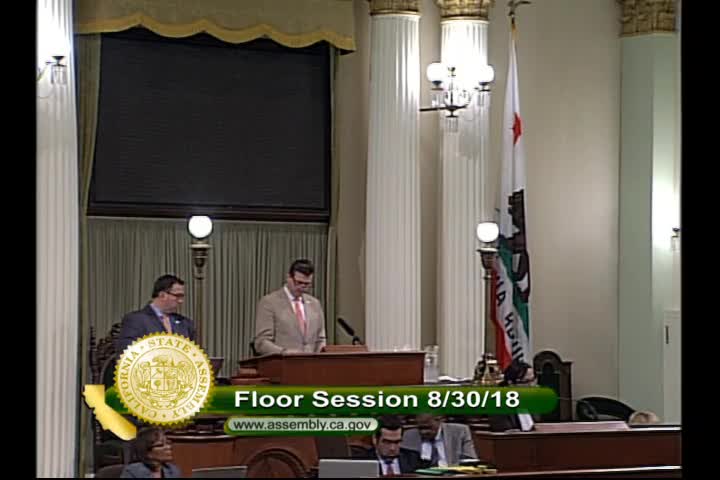
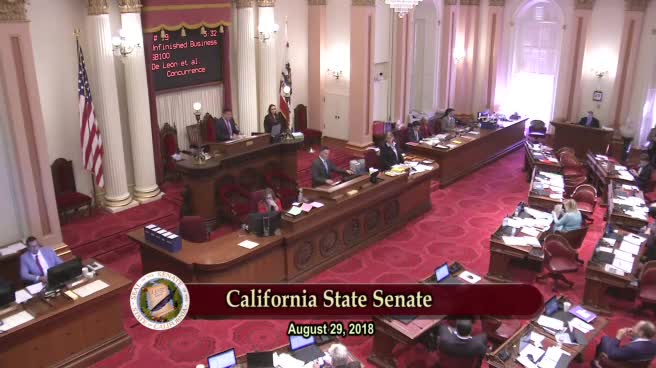

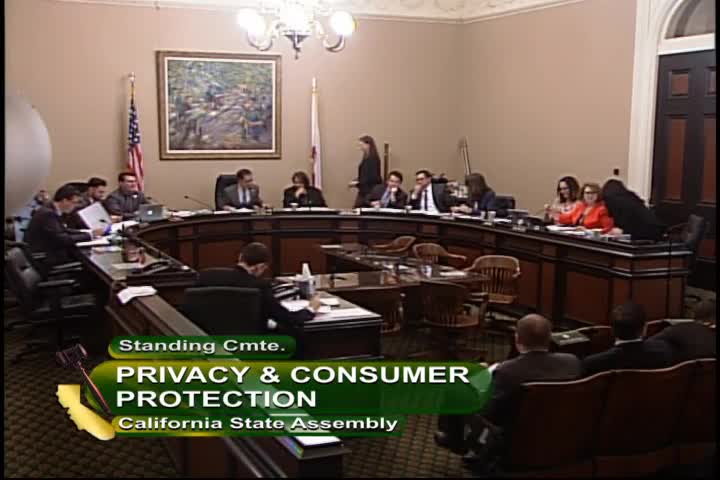
Bill Author

Bill Co-Author(s):