AB 2521: Reservists: active duty: deferment of financial obligations.
- Session Year: 2017-2018
- House: Assembly
- Latest Version Date: 2018-07-09
Existing law, the California Military Families Financial Relief Act, authorizes a reservist who is called to active duty to defer payments on mortgages, credit cards, retail installment accounts and contracts, real property taxes and assessments, vehicle leases, and obligations owed to utility companies, for the period of active duty plus 60 calendar days, or 180 days, whichever is the lesser, as specified. Existing law requires the reservist or his or her designee to deliver to the obligor (1) a copy of his or her activation or deployment order and any other information that substantiates the duration of the service members military service, and (2) a letter signed by the reservist, under penalty of perjury, requesting a deferment of financial obligations, in order for the obligation or liability to be subject to the provisions of the act.
This bill would delete the requirement to provide a signed letter, under penalty of perjury, and instead would require the reservist or his or her designee to deliver a written request by the reservist for a deferment of financial obligations to the obligor.
Existing law provides for a Veterans Home of California system within the Department of Veterans Affairs. Existing law recognizes Veterans Home Allied Councils, composed of members of each home, as established advisory bodies to the administrator of each home. Existing law authorizes each council to also represent members who reside at the home for which the council was established in matters before the Legislature, as specified.This bill would make a technical, nonsubstantive change to these provisions.Existing law provides for a Veterans Home of California system within the Department of Veterans Affairs. Existing law recognizes Veterans Home Allied Councils, composed of members of each home, as established advisory bodies to the administrator of each home. Existing law authorizes each council to also represent members who reside at the home for which the council was established in matters before the Legislature, as specified.
This bill would make a technical, nonsubstantive change to these provisions.
(a)Subject to subdivision (b), in addition to any other benefits provided by law and to the extent permitted by federal law, a reservist who is called to active duty may defer payments on any of the following obligations while serving on active duty:
(1)An obligation secured by a mortgage or deed of trust.
(2)Credit card, as defined in Section 1747.02 of the Civil Code.
(3)Retail installment contract, as defined in Section 1802.6 of the Civil Code.
(4)Retail installment account, installment account, or revolving account, as defined in Section 1802.7 of the Civil Code.
(5)Up to two vehicle loans. For purposes of this chapter, vehicle means a vehicle as defined in Section 670 of the Vehicle Code.
(6)A payment of property tax or any special assessment of in-lieu property tax imposed on real property that is assessed on residential property owned by the reservist and used as that reservists primary place of residence on the date the reservist was ordered to active duty.
(7)An obligation owed to a utility company.
(b)(1)In order for an obligation or liability of a reservist to be subject to the provisions of this chapter, the reservist or the reservists designee shall deliver to the obligor both of the following:
(A)A written request by the reservist for a deferment of financial obligations. For purposes of this subparagraph, written request includes an electronic communication.
(B)A copy of the reservists activation or deployment order and any other information that substantiates the duration of the service members military service.
(2)If required by a financial institution, proof that the reservists employer does not provide continuing income to the reservist while the reservist is on active military duty, including the reservists military pay, of more than 90 percent of the reservists monthly salary and wage income earned before the call to active duty.
(c)Upon request of the reservist or the reservists dependent or designee and within five working days of that request, if applicable, the employer of a reservist shall furnish the letter or other comparable evidence showing that the employers compensation policy does not provide continuing income to the reservist, including the reservists military pay, of more than 90 percent of the reservists monthly salary and wage income earned before the call to active duty.
(d)The deferral period on financial obligations shall be the lesser of 180 days or the period of active duty plus 60 calendar days and shall apply only to those payments due subsequent to the notice provided to a lender as provided in subdivision (b). In addition, the total period of the deferment shall not exceed 180 days within a 365-day period.
(e)If a lender defers payments on a closed end credit obligation or an open-end credit obligation with a maturity date, pursuant to this chapter, the lender shall extend the term of the obligation by the amount of months the obligation was deferred.
(f)If a lender defers payments on an open-end credit obligation pursuant to this chapter, the lender may restrict the availability of additional credit with respect to that obligation during the term of the deferral.
(a)Subject to subdivision (b), in addition to any other benefits provided by law and to the extent permitted by federal law, a reservist who is called to active duty may defer payments on any of the following obligations while serving on active duty:
(1)An obligation secured by a mortgage or deed of trust.
(2)Credit card, as defined in Section 1747.02 of the Civil Code.
(3)Retail installment contract, as defined in Section 1802.6 of the Civil Code.
(4)Retail installment account, installment account, or revolving account, as defined in Section 1802.7 of the Civil Code.
(5)Up to two vehicle loans. For purposes of this chapter, vehicle means a vehicle as defined in Section 670 of the Vehicle Code.
(6)A payment of property tax or any special assessment of in-lieu property tax imposed on real property that is assessed on residential property owned by the reservist and used as that reservists primary place of residence on the date the reservist was ordered to active duty.
(7)An obligation owed to a utility company.
(b)(1)In order for an obligation or liability of a reservist to be subject to the provisions of this chapter, the reservist or the reservists designee shall deliver to the obligor both of the following:
(A)A letter signed written request by the reservist, under penalty of perjury, requesting reservist for a deferment of financial obligations. For purposes of this subparagraph, written request includes an electronic communication.
(B)A copy of the reservists activation or deployment order and any other information that substantiates the duration of the service members military service.
(2)If required by a financial institution, proof that the reservists employer does not provide continuing income to the reservist while the reservist is on active military duty, including the reservists military pay, of more than 90 percent of the reservists monthly salary and wage income earned before the call to active duty.
(c)Upon request of the reservist or the reservists dependent or designee and within five working days of that request, if applicable, the employer of a reservist shall furnish the letter or other comparable evidence showing that the employers compensation policy does not provide continuing income to the reservist, including the reservists military pay, of more than 90 percent of the reservists monthly salary and wage income earned before the call to active duty.
(d)The deferral period on financial obligations shall be the lesser of 180 days or the period of active duty plus 60 calendar days and shall apply only to those payments due subsequent to the notice provided to a lender as provided in subdivision (b). In addition, the total period of the deferment shall not exceed 180 days within a 365-day period.
(e)If a lender defers payments on a closed end credit obligation or an open-end credit obligation with a maturity date, pursuant to this chapter, the lender shall extend the term of the obligation by the amount of months the obligation was deferred.
(f)If a lender defers payments on an open-end credit obligation pursuant to this chapter, the lender may restrict the availability of additional credit with respect to that obligation during the term of the deferral.
SECTION 1.Section 1050 of the Military and Veterans Code is amended to read:1050.Veterans Home Allied Councils, which are established pursuant to the constitution of the Allied Council, Veterans Home of California, for each home, and which are composed of members of each home, are hereby recognized as established advisory bodies to the administrator of each home. Each Veterans Home Allied Council may also represent members who reside at the home for which the council was established in matters before the Legislature. In the course of providing that representation, each council shall comply with the following requirements:(a)The councils representation shall be approved by a majority of the voting members of the council.(b)The council shall not engage in any campaign or endorse public candidates in connection with that representation.(c)The councils actions shall be in accordance with its constitution, bylaws, policies, and procedures.Veterans Home Allied Councils, which are established pursuant to the constitution of the Allied Council, Veterans Home of California, for each home, and which are composed of members of each home, are hereby recognized as established advisory bodies to the administrator of each home. Each Veterans Home Allied Council may also represent members who reside at the home for which the council was established in matters before the Legislature. In the course of providing that representation, each council shall comply with the following requirements:
(a)The councils representation shall be approved by a majority of the voting members of the council.
(b)The council shall not engage in any campaign or endorse public candidates in connection with that representation.
(c)The councils actions shall be in accordance with its constitution, bylaws, and policies policies, and procedures.
|
Date
|
Status
|
|---|---|
| Jul 9, 2018 | Chaptered by Secretary of State - Chapter 79, Statutes of 2018. |
| Jul 9, 2018 | Approved by the Governor. |
| Jun 29, 2018 | Enrolled and presented to the Governor at 3 p.m. |
| Jun 25, 2018 | In Assembly. Ordered to Engrossing and Enrolling. |
| Jun 25, 2018 | Read third time. Passed. Ordered to the Assembly. |
| Jun 14, 2018 | Read second time. Ordered to Consent Calendar. |
| Jun 13, 2018 | From committee: Do pass. To Consent Calendar. (Ayes 5. Noes 0.) (June 12). |
| May 17, 2018 | Referred to Com. on V.A. |
| May 7, 2018 | In Senate. Read first time. To Com. on RLS. for assignment. |
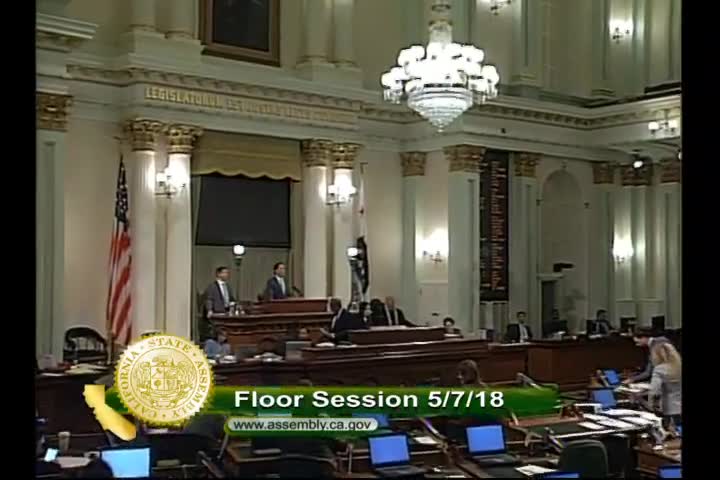
| May 7, 2018 | Read third time. Passed. Ordered to the Senate. |
| May 1, 2018 | Read second time. Ordered to third reading. |
| Apr 30, 2018 | Withdrawn from committee. |
| Apr 25, 2018 | From committee: Do pass and re-refer to Com. on APPR. (Ayes 10. Noes 0.) (April 24). Re-referred to Com. on APPR. |
| Apr 2, 2018 | Re-referred to Com. on V.A. |
| Mar 23, 2018 | From committee chair, with author's amendments: Amend, and re-refer to Com. on V.A. Read second time and amended. |
| Mar 22, 2018 | Referred to Com. on V.A. |
| Feb 15, 2018 | From printer. May be heard in committee March 17. |
| Feb 14, 2018 | Read first time. To print. |
|
Date
|
Description
|
Location
|
Votes
|
|
|---|---|---|---|---|
| Jun 25, 2018 | Consent Calendar AB2521 | Senate Floor |
Passed |
|
| Jun 12, 2018 | Do pass and be ordered to the Consent Calendar | Senate Standing Committee on Veterans Affairs |
Passed |
|
| May 7, 2018 | AB 2521 QUIRK-SILVA Assembly Third Reading | Assembly Floor |
Passed |
|
| Apr 24, 2018 | Do pass and be re-referred to the Committee on [Appropriations] | Assembly Standing Committee on Veterans Affairs |
Passed |
This list shows positions taken on this bill by organizations on the date displayed, which is linked to the original source.
Positions by individuals are not included.
|
Organization
|
Position
|
Date
|
|---|---|---|
| American G.I. Forum of California | ** Support | Jun 15, 2018 |
| American Gi Form- Department Of California | ** Support | Apr 23, 2018 |
| American Legion - Department of California | ** Support | Jun 15, 2018 |
| AMVETS - Department of California | ** Support | Jun 15, 2018 |
| California Association Of County Veterans Service Officers | ** Support | Jun 15, 2018 |
| California School Employees Association | ** Support | Jun 15, 2018 |
| California State Commanders Veterans Council | ** Support | Jun 15, 2018 |
| Military Officers Association of America-California Council of Chapters | ** Support | Apr 23, 2018 |
| National Guard Association Of California | ** Support | Jun 15, 2018 |
| National Guard Association Of California- Sponsor | ** Support | Apr 23, 2018 |
| Vietnam Veterans of America - California State Council | ** Support | Jun 15, 2018 |
| Vietnam Veterans Of America-Department Of California | ** Support | Apr 23, 2018 |
Office of Senate Floor Analyses (916) 651-1520 Fax: (916) 327-4478 | AB |
CONSENT
Bill No: AB 2521
:
SENATE VETERANS AFFAIRS COMMITTEE: 5-0, 6/12/18
AYES: Nielsen, Dodd, Nguyen, Roth, Wilk
NO VOTE RECORDED: Newman, Hueso
ASSEMBLY FLOOR: 74-0, 5/7/18 - See last page for vote
SOURCE: National Guard Association of California
DIGEST:
This bill requires a mobilized military reservist (or designee), in order to invoke the protections of the California Military Families Financial Relief Act (CMFFR Act), to deliver a written request, which may be via electronic communication, for a deferment of financial obligations to the obligor. This bill removes the existing requirements that the request be by signed letter and under penalty of perjury.
Existing law:
- Establishes the CMFFR Act, which authorizes a reservist who is called to active duty to defer payments on mortgages, credit cards, retail installment accounts and contracts, real property taxes and assessments, vehicle leases, and obligations owed to utility companies, for the period of active duty plus 60 calendar days, or 180 days, whichever is the lesser.
- Requires the reservist or his or her designee to deliver to the obligor:
- a copy of his or her activation or deployment order and any other information that substantiates the duration of the service member’s military service, and
- a letter signed by the reservist, under penalty of perjury, requesting a deferment of financial obligations, in order for the obligation or liability to be subject to the provisions of the act.
This bill:
- Eliminates the existing requirement that a mobilized military reservist must provide a signed letter, under penalty of perjury, requesting a deferment of financial obligations to the obligor, in order for the obligation or liability to be subject to the provisions of the CMFFR Act.
- Requires, instead, that the reservist or designee to deliver a written request by the reservist for a deferment of financial obligations to the obligor. (Permits email.)
Background
Financial protections for military reservists. The need to provide active duty members of the military, as well as National Guard and reserve members who are called to active duty, with a certain measure of protection in civil liability cases is long-recognized, first during the Civil War and later, in the form of the federal Soldiers and Sailors Relief Act (SSRA) of 1940.
The SSRA was updated in 2003 to become the Servicemembers Civil Relief Act (SCRA), which gives members of the active duty military, and their dependents, a wide range of legal protections not available to the general public. It covers all active duty service members, reservists, and the members of the National Guard while on active duty. Among the protections provided by the SCRA are several included in this bill designed to help service members and their families cope with the unique demands of military life and deployment. These are largely provisions allowing for the modification, termination, or cap on financial obligations incurred before the period of military service and persisting in some cases during military service and for some time after.
In response to the terrorist attacks of September 11, 2001 and subsequent U.S. military operations in Afghanistan and Iraq, the California Legislature has enacted various statutes that also help protect military service members, especially National Guard and federal reservists, from the burdensome impacts of financial obligations during their periods of active military service. Most of the enacted protections, including the CMFFR Act, are concentrated within two portions of the Military and Veterans Code: Sections 400-409.14 and Sections 800-829.
Many of the California state provisions are similar to those provided by the federal SCRA, including protection against non-judicial foreclosure and default judgment to reserve component personnel, which include members of the National Guard and federal reserve components. None of California’s protections currently apply to California’s 100,000+ active component personnel, who are generally always on Title 10 (U.S. Code) active duty.
Many of the protections provided by state statute expire immediately or very shortly after a service member leaves active duty. Many service members face financial distress and instability during the time right after active duty, and need time to reintegrate into civilian life. For example, the protections against default judgments and non-judicial foreclosures expire immediately upon release from active duty. Likewise, protections against eviction expire 30 days after release from active duty. Under this bill, each of these protections would extend for 90-120 days after one’s release from active duty to protect service members during their readjustment to civilian life.
Although active component personnel are covered by the federal SCRA, almost all of the SCRA's protections can be waived by the service member. Conversely, all of the state MVC protections are directly enforceable by the AG in state court, and none of these protections can be waived by the service member.
Related/Prior Legislation
AB 3212 (Irwin, 2018) expands the classes of military and state militia members who receive specified civil liability protections; extends the duration after military service of existing provisions, as specified; adds a category of debt to existing protections that cap interest rates for military members called to active duty, as specified; and expands existing provisions allowing military members who have been called to active duty to seek release from lease obligations, among other changes.
SB 720 (Correa, Chapter 220, Statutes of 2013) extended the enhanced §§400 protections currently offered only to service members ordered to active duty as part of the conflicts in Iraq and Afghanistan, including protection from having to pay interest on the accumulated principal or interest of a deferred financial obligation, to all federal military reservists and California National Guard service members ordered to active duty. The bill also incorporated specific safeguards afforded to financial institutions under other deferment statutes to financial obligations deferred by service members under these enhanced protections.
AB 526 (Melendez, Chapter 236, Statutes of 2013) extended to a larger class of military reservists the enhanced §§800 financial protections currently offered only to service members ordered to active duty as part of the Iraq and Afghanistan conflicts. It also added utility bills to the list of financial obligations subject to statutory deferment.
AB 713 (Block, Chapter 105, Statutes of 2011) clarified that a service member may, at any time during their most current period of military service or within six months thereafter, petition for relief from any obligation or liability incurred prior to the effective date of the orders for their most current period of military service or petition for relief with respect to any tax or assessment whether falling due prior to or during their most current period of military service. Also extended to a service member’s dependents the reduction of interest rates to six percent on obligations or liabilities that were incurred prior to the service member’s military service, subject to judicial discretion as provided.
AB 2455 (Nava, Chapter 124, Statutes of 2010) extended protections allowing deferment of vehicle loans to spouses and dependents of service members, as provided.
AB 306 (Baca, Chapter 291, Statutes of 2005) authorized members called to active duty as a result of the Iraq or Afghanistan conflicts to defer payments on specified obligations for the period of active duty, plus 60 calendar days, or 180 days, whichever is less.
AB 1433 (Horton, Chapter 60, Statutes of 2002) allowed service members to petition a court for specified relief with respect to credit contract obligations, rental agreements, taxes (except income taxes), and health insurance, as well as eviction protection for the service members’ families.
FISCAL EFFECT: Appropriation: No Fiscal Com.: No Local: No
National Guard Association of California (source)
American G.I. Forum of California
American Legion – Department of California
AMVETS – Department of California
California Association of County Veterans Service Officers
California School Employees Association
California State Commanders Veterans Council
Military Officers Association of America, California Council of Chapters
Vietnam Veterans of America – California State Council
OPPOSITION: (Verified 6/12/18)
None received
ASSEMBLY FLOOR: 74-0, 5/7/18
AYES: Acosta, Aguiar-Curry, Travis Allen, Arambula, Baker, Berman, Bigelow, Bloom, Brough, Burke, Caballero, Calderon, Carrillo, Cervantes, Chau, Chávez, Chiu, Choi, Chu, Cooley, Cooper, Dahle, Daly, Eggman, Flora, Fong, Frazier, Friedman, Gallagher, Eduardo Garcia, Gipson, Gloria, Gonzalez Fletcher, Gray, Grayson, Harper, Holden, Irwin, Jones-Sawyer, Kalra, Kamlager-Dove, Kiley, Lackey, Levine, Limón, Low, Maienschein, Mathis, Mayes, McCarty, Medina, Melendez, Mullin, Muratsuchi, Nazarian, Obernolte, O'Donnell, Patterson, Quirk, Quirk-Silva, Reyes, Rodriguez, Rubio, Salas, Santiago, Steinorth, Mark Stone, Thurmond, Ting, Voepel, Waldron, Weber, Wood, Rendon
NO VOTE RECORDED: Bonta, Chen, Cunningham, Cristina Garcia
6/15/18 10:26:47
**** END ****
SENATE COMMITTEE ON
Senator Josh Newman, Chair
2017 - 2018 Regular
Bill No: Hearing Date: 6/12/18
Author: | Quirk-Silva | ||
Version: | Amended | ||
Urgency: | Fiscal: | ||
Consultant: | |||
Subject:
DESCRIPTION
Summary:
This bill requires a mobilized military reservist (or designee), in order to invoke the protections of the California Military Families Financial Relief Act (CMFFR Act), to deliver a written request, which may be via electronic communication, for a deferment of financial obligations to the obligor, of. The bill removes the existing requirements that the request be by signed letter and under penalty of perjury.
Existing law:
- Establishes the CMFFR Act, which authorizes a reservist who is called to active duty to defer payments on mortgages, credit cards, retail installment accounts and contracts, real property taxes and assessments, vehicle leases, and obligations owed to utility companies, for the period of active duty plus 60 calendar days, or 180 days, whichever is the lesser.
- Requires the reservist or his or her designee to deliver to the obligor:
- a copy of his or her activation or deployment order and any other information that substantiates the duration of the service member’s military service, and
- a letter signed by the reservist, under penalty of perjury, requesting a deferment of financial obligations, in order for the obligation or liability to be subject to the provisions of the act.
This bill:
- Eliminates the existing requirement that a mobilized military reservist must provide a signed letter, under penalty of perjury, requesting a deferment of financial obligations to the obligor, in order for the obligation or liability to be subject to the provisions of the CMFFR Act.
- Requires, instead, that the reservist or designee to deliver a written request by the reservist for a deferment of financial obligations to the obligor. (Permits email.)
BACKGROUND
Financial protections for military reservists. The need to provide active duty members of the military, as well as National Guard and reserve members who are called to active duty, with a certain measure of protection in civil liability cases is long-recognized, first during the Civil War and later, in the form of the federal Soldiers and Sailors Relief Act (SSRA) of 1940.
The SSRA was updated in 2003 to become the Servicemembers Civil Relief Act (SCRA), which gives members of the active duty military, and their dependents, a wide range of legal protections not available to the general public. It covers all active duty service members, reservists, and the members of the National Guard while on active duty. Among the protections provided by the SCRA are several included in this bill designed to help service members and their families cope with the unique demands of military life and deployment. These are largely provisions allowing for the modification, termination, or cap on financial obligations incurred before the period of military service and persisting in some cases during military service and for some time after.
In response to the terrorist attacks of September 11, 2001 and subsequent U.S. military operations in Afghanistan and Iraq, the California Legislature has enacted various statutes that also help protect military service members, especially National Guard and federal reservists, from the burdensome impacts of financial obligations during their periods of active military service. Most of the enacted protections, including the CMFFR Act, are concentrated within two portions of the Military and Veterans Code: Sections 400-409.14 and Sections 800-829.
Many of the California state provisions are similar to those provided by the federal SCRA, including protection against non-judicial foreclosure and default judgment to reserve component personnel, which include members of the National Guard and federal reserve components. None of California’s protections currently apply to California’s 100,000+ active component personnel, who are generally always on Title 10 (U.S. Code) active duty.
Many of the protections provided by state statute expire immediately or very shortly after a service member leaves active duty. Many service members face financial distress and instability during the time right after active duty, and need time to reintegrate into civilian life. For example, the protections against default judgments and non-judicial foreclosures expire immediately upon release from active duty. Likewise, protections against eviction expire 30 days after release from active duty. Under this bill, each of these protections would extend for 90-120 days after one’s release from active duty to protect service members during their readjustment to civilian life.
Although active component personnel are covered by the federal SCRA, almost all of the SCRA's protections can be waived by the service member. Conversely, all of the state MVC protections are directly enforceable by the AG in state court, and none of these protections can be waived by the service member.
The Related/Prior Legislation section (below) of this analysis provides some perspective on the gradual development of California’s state-level protections.
COMMENT
Author Comments:
“Financial hardships can have a chilling effect on morale for the service member, as well as the family. Deployment is a time when military reservists should be worried about taking care of family, or accomplishing the mission to be able to return home. AB 2521 will remove 'under penalty of perjury' as well as replace 'letter signed' with 'written request.' The 'written request' verbiage will allow a service member to send an email with an attachment of their orders to their financial institution. These simple changes can help service members, while on deployments. Service members do not need extra things to worry about while deployed.”
Committee Analytical Comments:
- AB 2521 explicitly allows “electronic communication” as a means of conveying the written request. This permits the service member to communicate the request with military orders attached to the obligor almost instantly. This time-saving approach allows also quick interchanges between the parties to cure problems with a request’s incompleteness or legal insufficiency. It also provides communication time-stamps and other evidence to help demonstrate good faith compliance by all parties.
- According to the analysis by the Assembly Committee on Veterans Affairs:
“Some unscrupulous secondary lenders are using the existing law against service members who are requesting a deferment of applicable loans and obligations. In order for a reservist to qualify for deferred payments, he or she must submit "a letter signed by the reservist, under penalty of perjury, requesting a deferment of financial obligations". These lenders were interpreting "under penalty of perjury" as meaning the reservists had to write the phrase "under penalty of perjury" on the deferment request to be eligible for their deferment, thereby using it as a loop-hole to deny a service member protections under state code. These service members that are activated must take a leave of absence from their civilian jobs, possibly receiving less military pay than they make in their civilian job. This creates financial hardship and undue stress that a service member and his/her family shouldn't have to worry about while deployed.”
Related/Prior Legislation
AB 3212 (Irwin, pending Senate Veterans Affairs, 2018) expands the classes of military and state militia members who receive specified civil liability protections; extends the duration after military service of existing provisions, as specified; adds a category of debt to existing protections that cap interest rates for military members called to active duty, as specified; and expands existing provisions allowing military members who have been called to active duty to seek release from lease obligations, among other changes.
SB 720 (Correa, Chapter 220, Statutes of 2013) which extended the enhanced §§400 protections currently offered only to service members ordered to active duty as part of the conflicts in Iraq and Afghanistan, including protection from having to pay interest on the accumulated principal or interest of a deferred financial obligation, to all federal military reservists and California National Guard service members ordered to active duty. This bill also incorporated specific safeguards afforded to financial institutions under other deferment statutes to financial obligations deferred by service members under these enhanced protections.
AB 526 (Melendez, Chapter 236, Statutes of 2013) extends to a larger class of military reservists the enhanced §§800 financial protections currently offered only to service members ordered to active duty as part of the Iraq and Afghanistan conflicts. It also adds utility bills to the list of financial obligations subject to statutory deferment.
AB 713 (Block, Chapter 105, Statutes of 2011) clarifies that a service member may, at any time during their most current period of military service or within six months thereafter, petition for relief from any obligation or liability incurred prior to the effective date of the orders for their most current period of military service or petition for relief with respect to any tax or assessment whether falling due prior to or during their most current period of military service. Also extends to a service member’s dependents the reduction of interest rates to six percent on obligations or liabilities that were incurred prior to the service member’s military service, subject to judicial discretion as provided.
AB 2455 (Nava, Chapter 124, Statutes of 2010) extends protections allowing deferment of vehicle loans to spouses and dependents of service members, as provided.
AB 306 (Baca, Chapter 291, Statutes of 2005) authorizes members called to active duty as a result of the Iraq or Afghanistan conflicts to defer payments on specified obligations for the period of active duty, plus 60 calendar days, or 180 days, whichever is less.
AB 1433 (Horton, Chapter 60, Statutes of 2002) allows service members to petition a court for specified relief with respect to credit contract obligations, rental agreements, taxes (except income taxes), and health insurance, as well as eviction protection for the service members’ families.
POSITIONS
Sponsor: National Guard Association of California
Support:
American G.I. Forum of California
American Legion – Department of California
AMVETS – Department of California
California Association of County Veterans Service Officers (CACVSO)
California School Employees Association (CSEA)
California State Commanders Veterans Council
Military Officers Association of America, California Council of Chapters (MOAA)
Vietnam Veterans of America – California State Council
Oppose: None received
-- END --
ASSEMBLY THIRD READING
ATR Bill Id:AB 2521
Author:(Quirk-Silva)
As Amended Ver:March 23, 2018
Majority vote
Committee | Votes | Ayes | Noes |
Veterans Affairs | 10-0 | Irwin, Voepel, Chávez, Daly, Frazier, Gloria, Mathis, Muratsuchi, Quirk-Silva, Salas |
SUMMARY: Deletes the requirement to provide a signed letter, under penalty of perjury, requesting a deferment of financial obligations to the obligor, in order for the obligation or liability to be subject to the provisions of the act. Instead requires the reservist or his or her designee to deliver a written request by the reservist for a deferment of financial obligations to the obligor.
FISCAL EFFECT: This bill is keyed non-fiscal by the Legislative Counsel.
COMMENTS:
The need to provide active duty members of the military with special protection from civil liability is long-standing. It was first recognized during the Civil War and first codified in federal law with the enactment of the Soldiers and Sailors Relief Act of 1940. Although California also has a long history of protecting active and reserve members of the military from civil proceedings during their service, existing state law may not adequately protect all service members serving in the state in terms of the personnel who are covered by state law, the duration of the protection, and the scope of the protection.
The California Military Families Financial Relief Act was adopted in 2005 to provide protections to members of the United States Military Reserve or the National Guard called to active duty as a result of the conflicts in Afghanistan and Iraq. The primary purpose is to require creditors to defer payments due on certain types of loans and accounts for the lesser of 180 days, or the period of active duty plus 60 days, upon delivery of a notice to the creditor by the reservist called to active duty. The loans or accounts must have been entered into prior to active duty.
Some unscrupulous secondary lenders are using the existing law against service members who are requesting a deferment of applicable loans and obligations. In order for a reservist to qualify for deferred payments, he or she must submit "a letter signed by the reservist, under penalty of perjury, requesting a deferment of financial obligations". These lenders were interpreting "under penalty of perjury" as meaning the reservists had to write the phrase "under penalty of perjury" on the deferment request to be eligible for their deferment, thereby using it as a loop-hole to deny a service member protections under state code. These service members that are activated must take a leave of absence from their civilian jobs, possibly receiving less military pay than they make in their civilian job. This creates financial hardship and undue stress that a service member and his/her family shouldn't have to worry about while deployed.
According to the author:
Financial hardships can have a chilling effect on morale for the service member, as well as the family. Deployment is a time when military reservists should be worried about taking care of family, or accomplishing the mission to be able to return home. AB 2521 will remove 'under penalty of perjury' as well as replace 'letter signed' with 'written request.' The 'written request' verbiage will allow a service member to send an email with an attachment of their orders to their financial institution. These simple changes can help service members, while on deployments. Service members do not need extra things to worry about while deployed.
Analysis Prepared by: Jenny Callison / V.A. / (916) 319-3550 FN: 0002761
Date of Hearing: April 24, 2018
ASSEMBLY COMMITTEE ON VETERANS AFFAIRS
Jacqui Irwin, Chair
ABPCA Bill Id:AB 2521 (
Author:Quirk-Silva) – As Amended Ver:March 23, 2018
SUBJECT: Reservists: active duty: deferment of financial obligations
SUMMARY: Deletes the requirement to provide a signed letter, under penalty of perjury, requesting a deferment of financial obligations to the obligor, in order for the obligation or liability to be subject to the provisions of the act. Instead requires the reservist or his or her designee to deliver a written request by the reservist for a deferment of financial obligations to the obligor.
EXISTING LAW:
- Establishes the California Military Families Financial Relief Act, which authorizes a reservist who is called to active duty to defer payments on mortgages, credit cards, retail installment accounts and contracts, real property taxes and assessments, vehicle leases, and obligations owed to utility companies, for the period of active duty plus 60 calendar days, or 180 days, whichever is the lesser.
- Requires the reservist or his or her designee to deliver to the obligor:
- a copy of his or her activation or deployment order and any other information that substantiates the duration of the service member’s military service, and
- a letter signed by the reservist, under penalty of perjury, requesting a deferment of financial obligations, in order for the obligation or liability to be subject to the provisions of the act.
FISCAL EFFECT: Keyed non-fiscal.
COMMENTS:
The need to provide active duty members of the military with special protection from civil liability is long-standing. It was first recognized during the Civil War and first codified in federal law with the enactment of the Soldiers and Sailors Relief Act of 1940. Although California also has a long history of protecting active and reserve members of the military from civil proceedings during their service, existing state law may not adequately protect all service members serving in the state in terms of the personnel who are covered by state law, the duration of the protection, and the scope of the protection.
The California Military Families Financial Relief Act was adopted in 2005 to provide protections to members of the U.S. Military Reserve or the National Guard called to active duty as a result of the conflicts in Afghanistan and Iraq. The primary purpose is to require creditors to defer payments due on certain types of loans and accounts for the lesser of 180 days, or the period of active duty plus 60 days, upon delivery of a notice to the creditor by the reservist called to active duty. The loans or accounts must have been entered into prior to active duty.
Some unscrupulous secondary lenders are using the existing law against service members who are requesting a deferment of applicable loans and obligations. In order for a reservist to qualify for deferred payments, he or she must submit “a letter signed by the reservist, under penalty of perjury, requesting a deferment of financial obligations”. These lenders were interpreting “under penalty of perjury” as meaning the reservists had to write the phrase “under penalty of perjury” on the deferment request to be eligible for their deferment, thereby using it as a loop-hole to deny a service member protections under state code. These service members that are activated must take a leave of absence from their civilian jobs, possibly receiving less military pay than they make in their civilian job. This creates financial hardship and undue stress that a service member and his/her family shouldn’t have to worry about while deployed.
According to the author:
“Financial hardships can have a chilling effect on morale for the service member, as well as the family. Deployment is a time when military reservists should be worried about taking care of family, or accomplishing the mission to be able to return home. AB 2521 will remove ‘under penalty of perjury’ as well as replace ‘letter signed’ with ‘written request.’ The ‘written request’ verbiage will allow a service member to send an email with an attachment of their orders to their financial institution. These simple changes can help service members, while on deployments. Service members do not need extra things to worry about while deployed.”
REGISTERED SUPPORT / OPPOSITION:
Support
National Guard Association of California- Sponsor
American GI Form- Department of California
American Legion-Department of California
California Association of County Veterans Service Officers
California State Commanders Veterans Council
Military Officers Association of America-California Council of Chapters
Vietnam Veterans of America-Department of California
Opposition
None on File.
Analysis Prepared by: Jenny Callison / V.A. / (916) 319-3550
Bill Author

Bill Co-Author(s):