AB 254: Local Educational Agency Behavioral Health Integration Pilot Program.
- Session Year: 2017-2018
- House: Assembly
- Latest Version Date: 2017-06-28
Existing law provides for the Medi-Cal program, which is administered by the State Department of Health Care Services, under which qualified low-income individuals receive health care services. The Medi-Cal program is, in part, governed by, and funded pursuant to, federal Medicaid program provisions. Existing law provides that specified services provided by local educational agencies (LEAs) are covered Medi-Cal benefits, including, but not limited to, mental health evaluations, mental health education, and mental health and counseling services. Existing law provides that an LEA may be reimbursed for the provision of those benefits on a fee-for-service basis through the Medi-Cal billing option for LEAs.
This bill would require the department to establish the Local Educational Agency Behavioral Health Integration Pilot Program for the purpose of improving the behavioral health outcomes of students through a whole person care approach that is accomplished by providing funding to an eligible participant for the provision by improving the delivery of direct behavioral health services, as defined. The bill would require the department to encourage eligible participants to participate in the program, to provide technical assistance to eligible participants, to develop a request for a proposals process to determine funding allocation, and to formulate any necessary Medi-Cal State Plan amendments, and award grants pursuant to these provisions. The bill would require an LEA receiving funding through the program to use funds received to undertake specified activities in support of the program, including, among others, providing, or building capacity for the provision of, direct behavioral health services to all students with a demonstrated need, with a concerted effort toward improving the delivery of underutilized services to students enrolled in the Medi-Cal program. The bill would authorize an LEA to provide direct behavioral health services through direct employment of health care providers, or by contracting, as specified, with health care providers or school health centers, as defined. The bill would provide for implementation of the program to the extent that any necessary federal approvals have been obtained. The bill would require the department, upon termination of the program and depletion of appropriated funds, to report to the Legislature, as specified, on the outcomes of the program and the need for funding school-based health services and their connection to early behavioral health outcomes. The bill would make related legislative findings and declarations.
Existing law, the Mental Health Services Act (MHSA), an initiative measure enacted by the voters as Proposition 63 at the November 2, 2004, statewide general election, funds a system of county mental health plans for the provision of mental health services, as specified. The MHSA provides that it may be amended by the Legislature by a 2/3 vote of each house as long as the amendment is consistent with and furthers the intent of the MHSA. Existing law establishes the Mental Health Services Fund (MHSF), continuously appropriated to and administered by the department, to fund specified county mental health programs, including prevention and early intervention programs and programs implemented under the Adult and Older Adult Mental Health System of Care Act. The MHSA authorizes the payment of administrative costs of the state from the fund in an amount not greater than 5% of the annual total deposited in the fund and otherwise specifies the distribution of moneys in the fund.
To implement the pilot program, this bill would appropriate $15 $10 million per year for the fiscal years from the 201819 fiscal year through and including the 202122 fiscal year to the department, subject to availability, from the MHSF moneys reserved for administrative costs described above. The bill would provide that funds not fully expended in a single fiscal year shall be available for the purpose of implementing this article in any one, or across one or more of, subsequent fiscal years, as specified. The bill would require the program to operate for 4 years from the date of that appropriation. By changing the use of the reserved administrative funds from that approved by the voters, the bill would amend the MHSA.
Existing law provides for the Medi-Cal program, which is administered by the State Department of Health Care Services, under which qualified low-income individuals receive health care services. The Medi-Cal program is, in part, governed by, and funded pursuant to, federal Medicaid program provisions. Existing law provides that specified services provided by local educational agencies (LEAs) are covered Medi-Cal benefits, including, but not limited to, mental health evaluations, mental health education, and mental health and counseling services. Existing law provides that an LEA may be reimbursed for the provision of those benefits on a fee-for-service basis through the Medi-Cal billing option for LEAs.
This bill would require the department, upon appropriation of funds, department to establish the Local Educational Agency Pilot for Overall Needs (program) Behavioral Health Integration Pilot Program for the purpose of improving the mental behavioral health outcomes of students through a whole person care approach that is accomplished by providing funding to an eligible participant for the provision of direct health services behavioral health services, as defined. The bill would require the department to encourage eligible participants to participate in the program, to provide technical assistance to eligible participants, to develop a request for proposals process to determine funding allocation, and to formulate any necessary Medi-Cal State Plan amendments. amendments, and award grants pursuant to these provisions. The bill would require an LEA receiving funding through the program to use funds received to increase direct undertake specified activities in support of the program, including, among others, providing, or building capacity for the provision of, direct behavioral health services provided to all registered students, to all students with a demonstrated need, with a concerted effort toward providing improving the delivery of underutilized services to students enrolled in the Medi-Cal program. The bill would authorize an LEA to provide direct health services behavioral health services through direct employment of health care providers, or by contracting, as specified, with health care providers or school health centers, as defined. The bill would require a school health center that contracts with an LEA under the program to work in partnership with the school nurse to deliver direct health services, to serve all registered students, and to seek reimbursement for services provided from private health insurers or health care service plans, if applicable. The bill would provide for implementation of the program upon appropriation of funds for the program and to the extent that any necessary federal approvals have been obtained. The bill would require the program to operate for 4 years from the date of that appropriation. The bill would require the department, upon termination of the program and depletion of appropriated funds, to report to the Legislature, as specified, on the outcomes of the program and the need for funding school-based health services and their connection to early mental behavioral health outcomes. The bill would make related legislative findings and declarations.
Existing law, the Mental Health Services Act (MHSA), an initiative measure enacted by the voters as Proposition 63 at the November 2, 2004, statewide general election, funds a system of county mental health plans for the provision of mental health services, as specified. The MHSA provides that it may be amended by the Legislature by a 2/3 vote of each house as long as the amendment is consistent with and furthers the intent of the MHSA. Existing law establishes the Mental Health Services Fund (MHSF), continuously appropriated to and administered by the department, to fund specified county mental health programs, including prevention and early intervention programs and programs implemented under the Adult and Older Adult Mental Health System of Care Act. The MHSA authorizes the payment of administrative costs of the state from the fund in an amount not greater than 5% of the annual total deposited in the fund and otherwise specifies the distribution of moneys in the fund.
To implement the pilot program, this bill would appropriate $15 million per year for the fiscal years from the 201819 fiscal year through and including the 202122 fiscal year to the department, subject to availability, from the MHSF moneys reserved for administrative costs described above. The bill would provide that funds not fully expended in a single fiscal year shall be available for the purpose of implementing this article in any one, or across one or more of, subsequent fiscal years, as specified. The bill would require the program to operate for 4 years from the date of that appropriation. By changing the use of the reserved administrative funds from that approved by the voters, the bill would amend the MHSA.
Existing law provides for the Medi-Cal program, which is administered by the State Department of Health Care Services, under which qualified low-income individuals receive health care services. The Medi-Cal program is, in part, governed by, and funded pursuant to, federal Medicaid program provisions. Existing law provides that specified services provided by local educational agencies (LEAs) are covered Medi-Cal benefits, including, but not limited to, mental health evaluations, mental health education, and mental health and counseling services. Existing law provides that an LEA may be reimbursed for the provision of those benefits on a fee-for-service basis through the Medi-Cal billing option for LEAs.
This bill would require the department, upon appropriation of funds, to establish the Local Educational Agency Pilot for Overall Needs (program) for the purpose of improving the mental health outcomes of students through a whole person care approach that is accomplished by providing funding to an eligible participant for the provision of direct health services, as defined. The bill would require the department to encourage eligible participants to participate in the program, to provide technical assistance to eligible participants, and to develop a request for proposals process to determine funding allocation. allocation, and to formulate any necessary Medi-Cal State Plan amendments. The bill would require an LEA receiving funding through the program to use funds received to increase direct health services provided to all registered students, with a concerted effort toward providing services to students enrolled in the Medi-Cal program. The bill would authorize an LEA to provide direct health services through direct employment of health care providers, or by contracting, as specified, with health care providers or school health centers, as defined. The bill would require a school health center that contracts with an LEA under the program to work in partnership with the school nurse to deliver direct health services, to serve all registered students, and to seek reimbursement for services provided from private health insurers or health care service plans, if applicable. The bill would provide for implementation of the program upon appropriation of funds for the program and to the extent that any necessary federal approvals have been obtained. The bill would require the program to operate for 4 years from the date of that appropriation. The bill would require the department, upon termination of the program and depletion of appropriated funds, to report to the Legislature, as specified, on the outcomes of the program and the need for funding school-based health services and their connection to early mental health outcomes.
Existing law provides for the Medi-Cal program, which is administered by the State Department of Health Care Services, under which qualified low-income individuals receive health care services. The Medi-Cal program is, in part, governed by, and funded pursuant to, federal Medicaid program provisions. Existing law provides that specified services provided by local educational agencies (LEAs) are covered Medi-Cal benefits, including, but not limited to, mental health evaluations, mental health education, and mental health and counseling services. Existing law provides that an LEA may be reimbursed for the provision of those benefits on a fee-for-service basis through the Medi-Cal billing option for LEAs.
This bill would require the department, upon appropriation of funds, to establish the Local Educational Agency Pilot for Overall Needs (program) for the purpose of improving the mental health outcomes of students through a whole person care approach that is accomplished by providing funding to an eligible participant for the provision of direct health services, as defined. The bill would require the department to encourage eligible participants to participate in the program, to provide technical assistance to eligible participants, and to develop a request for proposals process to determine funding allocation. The bill would require an LEA receiving funding through the program to use funds received to increase direct health services provided to all registered students, with a concerted effort toward providing services to students enrolled in the Medi-Cal program. The bill would authorize an LEA to provide direct health services through direct employment of health care providers, or by contracting, as specified, with health care providers or school health centers, as defined. The bill would require a school health center that contracts with an LEA under the program to work in partnership with the school nurse to deliver direct health services, to serve all registered students, and to seek reimbursement for services provided from private health insurers or health care service plans, if applicable. The bill would provide for implementation of the program upon appropriation of funds for the program and to the extent that any necessary federal approvals have been obtained. The bill would require the program to operate for 4 years from the date of that appropriation. The bill would require the department, upon termination of the program and depletion of appropriated funds, to report to the Legislature, as specified, on the outcomes of the program and the need for funding school-based health services and their connection to early mental health outcomes.
Existing law provides for the Medi-Cal program, which is administered by the State Department of Health Care Services, under which qualified low-income individuals receive health care services. The Medi-Cal program is, in part, governed by, and funded pursuant to, federal Medicaid Program program provisions. Existing law provides that specified services provided by local educational agencies (LEAs) are covered Medi-Cal benefits, including, but not limited to, mental health evaluations, mental health education, and mental health and counseling services, are covered Medi-Cal benefits. Existing law establishes an administrative claiming process under which the department is authorized to contract with local governmental agencies and local educational consortia for the purpose of obtaining federal matching funds to assist with the performance of administrative activities relating to the Medi-Cal program. services. Existing law provides that an LEA may be reimbursed for the provision of those benefits on a fee-for-service basis through the Medi-Cal billing option for LEAs.
This bill would state the intent of the Legislature to enact legislation that would increase services provided to Medi-Cal beneficiaries enrolled in schools in order to address their mental health needs. require the department, upon appropriation of funds, to establish the Local Educational Agency Pilot for Overall Needs (program) for the purpose of improving the mental health outcomes of students through a whole person care approach that is accomplished by providing funding to an eligible participant for the provision of direct health services, as defined. The bill would require the department to encourage eligible participants to participate in the program, to provide technical assistance to eligible participants, and to develop a request for proposals process to determine funding allocation. The bill would require an LEA receiving funding through the program to use funds received to increase direct health services provided to all registered students, with a concerted effort toward providing services to students enrolled in the Medi-Cal program. The bill would authorize an LEA to provide direct health services through direct employment of health care providers, or by contracting, as specified, with health care providers or school health centers, as defined. The bill would require a school health center that contracts with an LEA under the program to work in partnership with the school nurse to deliver direct health services, to serve all registered students, and to seek reimbursement for services provided from private health insurers or health care service plans, if applicable. The bill would provide for implementation of the program upon appropriation of funds for the program and to the extent that any necessary federal approvals have been obtained. The bill would require the program to operate for 4 years from the date of that appropriation. The bill would require the department, upon termination of the program and depletion of appropriated funds, to report to the Legislature, as specified, on the outcomes of the program and the need for funding school-based health services and their connection to early mental health outcomes.
Existing law provides for the Medi-Cal program, which is administered by the State Department of Health Care Services, under which qualified low-income individuals receive health care services. The Medi-Cal program is, in part, governed by, and funded pursuant to, federal Medicaid Program provisions. Existing law provides that specified services provided by local educational agencies (LEAs) are covered Medi-Cal benefits, including, but not limited to, mental health evaluations, mental health education, and mental health and counseling services, are covered Medi-Cal benefits. Existing law establishes an administrative claiming process under which the department is authorized to contract with local governmental agencies and local educational consortia for the purpose of obtaining federal matching funds to assist with the performance of administrative activities relating to the Medi-Cal program.
This bill would state the intent of the Legislature to enact legislation that would increase services provided to Medi-Cal beneficiaries enrolled in schools in order to address their mental health needs.
For the purposes of this chapter, the following definitions shall apply:
(a)Department means the State Department of Health Care Services.
(b)Eligible participant means either of the following:
(1)A local educational agency (LEA) that does not participate in the Medi-Cal billing option for LEAs authorized pursuant to Section 14132.06.
(2)An LEA that participates in the Medi-Cal billing option for LEAs authorized pursuant to Section 14132.06, but which receives low reimbursement relative to the number of students enrolled in the Medi-Cal program who would be eligible to receive covered services.
(c)Direct behavioral health services means those services that the department has identified as reimbursable behavioral health services under the Medi-Cal billing option for LEAs pursuant to Section 14132.06 and behavioral health services that are not covered under the Medi-Cal billing option for LEAs, including, but not limited to, mental health and alcohol and substance abuse service assessments, crisis intervention, counseling, treatment, and referral to a continuum of services, including, but not limited to, emergency psychiatric care, evidence-based mental health or alcohol and substance abuse treatment services, community support programs, inpatient care, and outpatient programs.
(d)Program means the Local Educational Agency Behavioral Health Integration Pilot Program established pursuant to this article.
(e)School health center means a center or program, located at or near an LEA, that provides age-appropriate health care services at the program site or through referrals.
14094.27.(a)The department, in cooperation with the State Department of Education, shall establish the Local Educational Agency Behavioral Health Integration Pilot Program for the purpose of improving the delivery of underutilized direct behavioral health services as part of a whole person care approach. services.
(b)In implementing the program, the department shall do all of the following:
(1)Encourage the participation in the program of eligible participants that are not yet participating in the program.
(2)Provide technical assistance to LEAs that seek to participate in the program or that are eligible participants. For the purposes of this article, technical assistance includes, but is not limited to, identifying public and private funding sources that will assist the LEA in enrolling students in the Medi-Cal program.
(3)Develop a request for proposals process that collects applicant information and determines which proposals shall receive funding. Funding priority shall be given to proposals that ensure coordination with existing health care delivery systems, including, if applicable, Medi-Cal managed care plans, county mental health plans, and primary and behavioral health care providers or their representatives.
(4)Formulate the necessary Medi-Cal State Plan amendments required by subdivisions (a) and (b) of Section 14115.8.
(5)Award grants pursuant to this article.
14094.29.(a)An LEA that participates in the program shall do all of the following:
(1)Use funds received through the program to provide, or to build capacity for the provision of, direct behavioral health services to all students with a demonstrated need, with a concerted effort toward improving the delivery of underutilized services to students enrolled in the Medi-Cal program. Funds received through the program shall be used to deliver, or develop capacity to ensure delivery of, new onsite direct behavioral health services not already provided by the LEA.
(2)Maximize enrollment of students eligible for the Medi-Cal program into the Medi-Cal program.
(3)Provide, or ensure the provision of, integrated physical and behavioral health services that are individualized and supportive of students and, where appropriate, their families, to ensure that health, social, or social and behavioral challenges are addressed.
(4)Create a sustainability plan that establishes how the LEA will seek to maximize the use of public funds, including, but not limited to, participation in federal reimbursement programs.
(5)Provide comprehensive professional development opportunities for school employees, including teachers, that enable school employees to recognize and respond to a childs unique needs that includes the ability to provide referrals to professionals in the school who can provide mental health services. Nothing in this paragraph is intended to require teachers to provide mental health services to students.
(b)An LEA that participates in the program shall participate in the Medi-Cal billing option for LEAs by the time the LEA begins participation in the program.
(c)A reimbursement received through the program for direct behavioral health services provided by the LEA shall be used in accordance with applicable federal laws, regulations, or guidelines.
(d)An LEA participating in the program may provide direct behavioral health services through direct employment of health care providers or by contracting with other health care providers or school health centers for the purpose of supplementing services.
14094.31.An LEA that contracts with a health care provider or school health center pursuant to subdivision (d) of Section 14094.29 shall do both of the following:
(a)Create and maintain a mechanism, described in writing, to coordinate services provided to individual students among school staff and school health center staff while maintaining the confidentiality and privacy of health information consistent with applicable state and federal law.
(b)Create and maintain a contract or memorandum of understanding between the LEA, the health care provider or school health center, and any other provider agencies that describes the relationship between the LEA and the school health center, if applicable.
14094.35.(a)For the purpose of implementing this article, a sum not to exceed fifteen million dollars ($15,000,000) ten million dollars ($10,000,000) per year is appropriated to the department for each year of the fiscal years from the 201819 fiscal year through and including the 202122 fiscal year from the Mental Health Services Act funds allocated to the department pursuant to subdivision (d) of Section 5892, subject to the availability of those funds. Funds not fully expended in a single fiscal year shall be available for the purpose of implementing this article in any one, or across one or more of, subsequent fiscal years through and including the 202122 fiscal year.
(b)This article shall be implemented only to the extent that any necessary federal approvals have been obtained.
(c)The program shall operate for four years from the date of the appropriation described in subdivision (a), notwithstanding fiscal years.
14094.37.(a)Upon the depletion of funds appropriated for the program and the termination of the program, the department shall submit a report to the Assembly Committees on Appropriations, Education, and Health, and the Senate Committees on Appropriations, Education, and Health, that shall include, but not be limited to, all of the following information:
(1)An evaluation of the need for funding school-based health services and their connection to early behavioral health outcomes.
(2)The impact of the program on student well-being, academic achievement, school engagement, attendance, and other outcome and indicator measures collected by LEAs participating in the program.
(b)Information reported pursuant to subdivision (a) shall be reported in the aggregate and shall not be reported in a manner that would compromise the privacy of any individual student.
The Legislature finds and declares all of the following:
(a)Health is a state of complete physical, mental, and social well-being.
(b)Physical health and behavioral health are inextricably tied together. Persons with poor behavioral health are at risk of developing chronic physical conditions, and poor physical health is associated with behavioral health concerns.
(c)Comprehensive health care, which is health care that integrates both physical and behavioral health, best addresses a persons whole needs.
(d)Schools are an important resource for the provision of both physical and behavioral health, as they are at the center of communities, and a place that parents know and trust.
(e)School-based health improves student academic achievement, increases attendance, reduces dropout rates, improves behavior, and promotes parent engagement.
(f)Increasing school-based comprehensive health care is one of the best ways to improve overall student outcomes.
SECTION 1.SEC. 2.Article 2.986 (commencing with Section 14094.25) is added to Chapter 7 of Part 3 of Division 9 of the Welfare and Institutions Code, to read:2.986.Local Educational Agency Pilot for Overall Needs Behavioral Health Integration Pilot Program14094.25.For the purposes of this chapter, the following definitions shall apply:
(a)Department means the State Department of Health Care Services.
(b)Eligible participant means either of the following:
(1)A local educational agency (LEA) that does not participate in the Medi-Cal billing option for LEAs authorized pursuant to Section 14132.06.
(2)An LEA that participates in the Medi-Cal billing option for LEAs authorized pursuant to Section 14132.06, but which receives low reimbursement relative to the number of students enrolled in the Medi-Cal program who would be eligible to receive covered services.
(c)Direct behavioral health services means those services that the department has identified as reimbursable behavioral health services under the Medi-Cal billing option for LEAs pursuant to Section 14132.06 and physical and mental health care behavioral health services that are not covered under the Medi-Cal billing option for LEAs, including, but not limited to, any or all of the following:
(1)Management of chronic medical conditions.(2)Basic laboratory tests.(3)Reproductive health services.(4)Nutrition services.(5)Mental mental health and alcohol and substance abuse service assessments, crisis intervention, counseling, treatment, and referral to a continuum of services, including, but not limited to, emergency psychiatric care, evidence-based mental health or alcohol and substance abuse treatment services, community support programs, inpatient care, and outpatient programs.
(6)Oral health services, including, but not limited to, preventive services, basic restorative services, and referral to specialty services.(d)Program means the Local Educational Agency Pilot for Overall Needs Behavioral Health Integration Pilot Program established pursuant to this article.
(e)School health center means a center or program, located at or near an LEA, that provides age-appropriate health care services at the program site or through referrals.
14094.27.(a)The department, in cooperation with the State Department of Education, shall establish the Local Educational Agency Pilot for Overall Needs Behavioral Health Integration Pilot Program for the purpose of increasing comprehensive and integrated physical and mental health services improving the delivery of underutilized direct behavioral health services as part of a whole person care approach.
(b)In implementing the program, the department shall do all of the following:
(1)Encourage the participation in the program of eligible participants that are not yet participating in the program.
(2)Provide technical assistance to LEAs that seek to participate in the program or that are eligible participants. For the purposes of this article, technical assistance includes, but is not limited to, identifying public and private funding sources that will assist the LEA in enrolling students in the Medi-Cal program.
(3)Develop a request for proposals process that collects applicant information and determines which proposals shall receive funding. Funding priority shall be given to proposals that ensure coordination with existing health care delivery systems, including, if applicable, Medi-Cal managed care plans, county mental health plans, and primary and behavioral health care providers or their representatives.
(4)Formulate the necessary Medi-Cal State Plan amendments required by subdivisions (a) and (b) of Section 14115.8.
(5)Award grants pursuant to this article.
14094.29.(a)An LEA that participates in the program shall do all of the following:
(1)Use funds received through the program to increase direct provide, or to build capacity for the provision of, direct behavioral health services provided to all registered students, to all students with a demonstrated need, with a concerted effort toward providing improving the delivery of underutilized services to students enrolled in the Medi-Cal program. Funds received through the program shall be used to fund deliver, or develop capacity to ensure delivery of, new onsite direct behavioral health services not already provided by the LEA.
(2)Make a concerted effort toward enrolling Maximize enrollment of students eligible for the Medi-Cal program into the Medi-Cal program.
(3)Strive to provide Provide, or ensure the provision of, integrated physical and mental behavioral health services that are individualized and supportive of students and, where appropriate, their families, to ensure that health, social, or behavioral challenges are addressed.
(4)Create a sustainability plan that establishes how the LEA will seek to maximize the use of public funds, including, but not limited to, participation in federal reimbursement programs.
(b)An LEA that participates in the program shall participate in the Medi-Cal billing option for LEAs by the time the LEA begins participation in the program.
(c)A reimbursement received through the program for direct behavioral health services provided by the LEA shall be used in accordance with applicable federal laws, regulations, or guidelines.
(d)An LEA participating in the program may provide direct behavioral health services through direct employment of health care providers, such as school nurses, providers or by contracting with other health care providers or school health centers for the purpose of supplementing services. The Legislature does not intend for a school health center to serve as a substitute for a school nurse directly employed by an LEA.
14094.31.An LEA that contracts with a health care provider or school health center pursuant to subdivision (d) of Section 14094.29 shall do both of the following:
(a)Create and maintain a mechanism, described in writing, to coordinate services provided to individual students among school staff and school health center staff while maintaining the confidentiality and privacy of health information consistent with applicable state and federal law.
(b)Create and maintain a contract or memorandum of understanding between the LEA, the health care provider or school health center, and any other provider agencies that describes the relationship between the LEA and the school health center, if applicable.
14094.33.(a)A school health center that contracts with an LEA pursuant to subdivision (d) of Section 14094.29 shall be or shall be eligible to become an enrolled Medi-Cal provider at the time of contracting and shall do all of the following:(1)Work in partnership with the school nurse, if one is employed by the LEA, to provide direct health services that are either not provided by the LEA or that are provided by the LEA but require supplementation in order to improve services delivered to students under the program.(2)Serve all registered students enrolled in school without regard to ability to pay, with a concerted effort toward providing services to students enrolled in the Medi-Cal program.(3)Seek reimbursement from and have procedures in place for billing public and private health insurers or health care service plans for covered services provided to students by the school health center.(b)For the purposes of the program, a school health center may provide direct health services and may provide referrals for services not offered at the school health center site.(c)A school health center may serve two or more nonadjacent schools or LEAs.14094.35.(a)This article shall be implemented only upon appropriation of funds for the program and to the extent that any necessary federal approvals have been obtained.(b)The program shall operate for four years from the date of the appropriation described in subdivision (a), notwithstanding fiscal years.14094.35.(a)For the purpose of implementing this article, a sum not to exceed fifteen million dollars ($15,000,000) per year is appropriated to the department for each year of the fiscal years from the 201819 fiscal year through and including the 202122 fiscal year from the Mental Health Services Act funds allocated to the department pursuant to subdivision (d) of Section 5892, subject to the availability of those funds. Funds not fully expended in a single fiscal year shall be available for the purpose of implementing this article in any one, or across one or more of, subsequent fiscal years through and including the 202122 fiscal year.
(b)This article shall be implemented only to the extent that any necessary federal approvals have been obtained.
(c)The program shall operate for four years from the date of the appropriation described in subdivision (a), notwithstanding fiscal years.
14094.37.(a)Upon the depletion of funds appropriated for the program and the termination of the program, the department shall submit a report to the Assembly Committees on Appropriations, Education, and Health, and the Senate Committees on Appropriations, Education, and Health, that shall include, but not be limited to, all of the following information:
(1)An evaluation of the need for funding school-based health services and their connection to early mental behavioral health outcomes.
(2)The impact of the program on student well-being, academic achievement, school engagement, attendance, and other outcome and indicator measures collected by LEAs participating in the program.
(b)Information reported pursuant to subdivision (a) shall be reported in the aggregate and shall not be reported in a manner that would compromise the privacy of any individual student.
For the purposes of this chapter, the following definitions shall apply:
(a)Department means the State Department of Health Care Services.
(b)Eligible participant means either of the following:
(1)A local educational agency (LEA) that does not participate in the Medi-Cal billing option for LEAs authorized pursuant to Section 14132.06.
(2)An LEA that participates in the Medi-Cal billing option for LEAs authorized pursuant to Section 14132.06, but which receives low reimbursement relative to the number of students enrolled in the Medi-Cal program who would be eligible to receive covered services.
(c)Direct health services means those services that the department has identified as reimbursable services under the Medi-Cal billing option for LEAs pursuant to Section 14132.06 and physical and mental health care services that are not covered under the Medi-Cal billing option for LEAs, including, but not limited to, any or all of the following:
(1)Management of chronic medical conditions.
(2)Basic laboratory tests.
(3)Reproductive health services.
(4)Nutrition services.
(5)Mental health and alcohol and substance abuse service assessments, crisis intervention, counseling, treatment, and referral to a continuum of services, including, but not limited to, emergency psychiatric care, evidence-based mental health or alcohol and substance abuse treatment services, community support programs, inpatient care, and outpatient programs.
(6)Oral health services, including, but not limited to, preventive services, basic restorative services, and referral to specialty services.
(d)Program means the Local Educational Agency Pilot for Overall Needs established pursuant to this article.
(e)School health center means a center or program, located at or near an LEA, that provides age-appropriate health care services at the program site or through referrals.
14094.27.(a)The department, in cooperation with the State Department of Education, shall establish the Local Educational Agency Pilot for Overall Needs for the purpose of increasing comprehensive and integrated physical and mental health services as part of a whole person care approach.
(b)In implementing the program, the department shall do all of the following:
(1)Encourage the participation in the program of eligible participants that are not yet participating in the program.
(2)Provide technical assistance to LEAs that seek to participate in the program or that are eligible participants. For the purposes of this article, technical assistance includes, but is not limited to, identifying public and private funding sources that will assist the LEA in enrolling students in the Medi-Cal program.
(3)Develop a request for proposals process that collects applicant information and determines which proposals shall receive funding.
(4)Formulate the necessary Medi-Cal State Plan amendments required by subdivisions (a) and (b) of Section 14115.8.
14094.29.(a)An LEA that participates in the program shall do all of the following:
(1)Use funds received through the program to increase direct health services provided to all registered students, with a concerted effort toward providing services to students enrolled in the Medi-Cal program. Funds received through the program shall be used to fund new on-site onsite direct health services not already provided by the LEA.
(2)Make a concerted effort toward enrolling students eligible for the Medi-Cal program into the Medi-Cal program.
(3)Strive to provide integrated physical and mental health services that are individualized and supportive of students and, where appropriate, their families, to ensure that health, social, or behavioral challenges are addressed.
(4)Create a sustainability plan that establishes how the LEA will seek to maximize the use of public funds, including, but not limited to, participation in federal reimbursement programs.
(b)An LEA that participates in the program shall participate in the Medi-Cal billing option for LEAs by the time the LEA begins participation in the program.
(c)A reimbursement received through the program for direct health services provided by the LEA shall be used in accordance with applicable federal laws, regulations, or guidelines.
(d)An LEA participating in the program may provide direct health services through direct employment of health care providers, such as school nurses, or by contracting with other health care providers or school health centers for the purpose of supplementing services. The Legislature does not intend for a school health center to serve as a substitute for a school nurse directly employed by an LEA.
14094.31.An LEA that contracts with a health care provider or school health center pursuant to subdivision (d) of Section 14094.29 shall do both of the following:
(a)Create and maintain a mechanism, described in writing, to coordinate services provided to individual students among school staff and school health center staff while maintaining the confidentiality and privacy of health information consistent with applicable state and federal law.
(b)Create and maintain a contract or memorandum of understanding between the LEA, the health care provider or school health center, and any other provider agencies that describes the relationship between the LEA and the school health center, if applicable.
14094.33.(a)A school health center that contracts with an LEA pursuant to subdivision (d) of Section 14094.29 shall be or shall be eligible to become an enrolled Medi-Cal provider at the time of contracting and shall do all of the following:
(1)Work in partnership with the school nurse, if one is employed by the LEA, to provide direct health services that are either not provided by the LEA or that are provided by the LEA but require supplementation in order to improve services delivered to students under the program.
(2)Serve all registered students enrolled in school without regard to ability to pay, with a concerted effort toward providing services to students enrolled in the Medi-Cal program.
(3)Seek reimbursement from and have procedures in place for billing public and private health insurers or health care service plans for covered services provided to students by the school health center.
(b)For the purposes of the program, a school health center may provide direct health services and may provide referrals for services not offered at the school health center site.
(c)A school health center may serve two or more nonadjacent schools or LEAs.
14094.35.(a)This article shall be implemented only upon appropriation of funds for the program and to the extent that any necessary federal approvals have been obtained.
(b)The program shall operate for four years from the date of the appropriation described in subdivision (a), notwithstanding fiscal years.
14094.37.(a)Upon the depletion of funds appropriated for the program and the termination of the program, the department shall submit a report to the Assembly Committee on Appropriations and the Senate Committee on Appropriations Committees on Appropriations, Education, and Health, and the Senate Committees on Appropriations, Education, and Health, that shall include, but not be limited to, all of the following information:
(1)An evaluation of the need for funding school-based health services and their connection to early mental health outcomes.
(2)The impact of the program on student well-being, academic achievement, school engagement, attendance, and other outcome and indicator measures collected by LEAs participating in the program.
(b)Information reported pursuant to subdivision (a) shall be reported in the aggregate and shall not be reported in a manner that would compromise the privacy of any individual student.
For the purposes of this chapter, the following definitions shall apply:
(a)Department means the State Department of Health Care Services.
(b)Eligible participant means either of the following:
(1)A local educational agency (LEA) that does not participate in the Medi-Cal billing option for LEAs authorized pursuant to Section 14132.06.
(2)An LEA that participates in the Medi-Cal billing option for LEAs authorized pursuant to Section 14132.06, but which receives low reimbursement relative to the number of students enrolled in the Medi-Cal program who would be eligible to receive covered services.
(c)Direct health services means those services that the department has identified as reimbursable services under the Medi-Cal billing option for LEAs pursuant to Section 14132.06. 14132.06 and physical and mental health care services that are not covered under the Medi-Cal billing option for LEAs, including, but not limited to, any or all of the following:
(1)Management of chronic medical conditions.
(2)Basic laboratory tests.
(3)Reproductive health services.
(4)Nutrition services.
(5)Mental health and alcohol and substance abuse service assessments, crisis intervention, counseling, treatment, and referral to a continuum of services, including, but not limited to, emergency psychiatric care, evidence-based mental health or alcohol and substance abuse treatment services, community support programs, inpatient care, and outpatient programs.
(6)Oral health services, including, but not limited to, preventive services, basic restorative services, and referral to specialty services.
(d)Program means the Local Educational Agency Pilot for Overall Needs established pursuant to this article.
(e)School health center means a center or program, located at or near an LEA, that provides age-appropriate health care services at the program site or through referrals.
14094.27.(a)The department, in cooperation with the State Department of Education, shall establish the Local Educational Agency Pilot for Overall Needs for the purpose of improving the mental health outcomes of students through a whole person care approach that is accomplished by providing funding to an eligible participant for the provision of direct health services. increasing comprehensive and integrated physical and mental health services as part of a whole person care approach.
(b)In implementing the program, the department shall do all of the following:
(1)Encourage the participation in the program of eligible participants that are not yet participating in the program.
(2)Provide technical assistance to LEAs that seek to participate in the program or that are eligible participants. For the purposes of this article, technical assistance includes, but is not limited to, identifying public and private funding sources that will assist the LEA in enrolling students in the Medi-Cal program.
(3)Develop a request for proposals process that collects applicant information and determines which proposals shall receive funding.
14094.29.(a)An LEA that participates in the program shall do all of the following:
(1)Use funds received through the program to increase direct health services provided to all registered students, with a concerted effort toward providing services to students enrolled in the Medi-Cal program. Funds received through the program shall be used to fund new on-site direct health services not already provided by the LEA, including, but not limited to, mental health services. LEA.
(2)Make a concerted effort toward enrolling students eligible for the Medi-Cal program into the Medi-Cal program.
(3)Strive to provide integrated physical and mental health services that are individualized and supportive of students and, where appropriate, their families, to ensure that health, social, or behavioral challenges are addressed.
(4)Create a sustainability plan that establishes how the LEA will seek to maximize the use of public funds, including, but not limited to, participation in federal reimbursement programs.
(b)An LEA that participates in the program shall participate in the Medi-Cal billing option for LEAs by the time the LEA begins participation in the program.
(c)A reimbursement received through the program for direct health services provided by the LEA shall be used in accordance with applicable federal laws, regulations, or guidelines.
(d)An LEA participating in the program may provide direct health services through direct employment of health care providers, such as school nurses, or by contracting with other health care providers or school health centers for the purpose of supplementing services. The Legislature does not intend for a school health center to serve as a substitute for a school nurse directly employed by an LEA.
14094.31.An LEA that contracts with a health care provider or school health center pursuant to subdivision (d) of Section 14094.29 shall do both of the following:
(a)Create and maintain a mechanism, described in writing, to coordinate services provided to individual students among school staff and school health center staff while maintaining the confidentiality and privacy of health information consistent with applicable state and federal law.
(b)Create and maintain a contract or memorandum of understanding between the LEA, the health care provider or school health center, and any other provider agencies that describes the relationship between the LEA and the school health center, if applicable.
14094.33.(a)A school health center that contracts with an LEA pursuant to subdivision (d) of Section 14094.29 shall be or shall be eligible to become an enrolled Medi-Cal provider at the time of contracting and shall do all of the following:
(1)Work in partnership with the school nurse, if one is employed by the LEA, to provide direct health services that are either not provided by the LEA or that are provided by the LEA but require supplementation in order to improve services delivered to students under the program.
(2)Serve all registered students enrolled in school without regard to ability to pay, with a concerted effort toward providing services to students enrolled in the Medi-Cal program.
(3)Seek reimbursement from and have procedures in place for billing public and private health insurers or health care service plans for covered services provided to students by the school health center.
(b)For the purposes of the program, a school health center may provide direct health services and may provide referrals for services not offered at the school health center site.
(c)A school health center may serve two or more nonadjacent schools or LEAs.
14094.35.(a)This article shall be implemented only upon appropriation of funds for the program and to the extent that any necessary federal approvals have been obtained.
(b)The program shall operate for four years from the date of the appropriation described in subdivision (a), notwithstanding fiscal years.
14094.37.(a)Upon the depletion of funds appropriated for the program and the termination of the program, the department shall submit a report to the Assembly Committee on Appropriations and the Senate Committee on Appropriations that shall include, but not be limited to, all of the following information:
(1)An evaluation of the need for funding school-based health services and their connection to early mental health outcomes.
(2)The impact of the program on student well-being, academic achievement, school engagement, attendance, and other outcome and indicator measures collected by LEAs participating in the program.
(b)Information reported pursuant to subdivision (a) shall be reported in the aggregate and shall not be reported in a manner that would compromise the privacy of any individual student.
For the purposes of this chapter, the following definitions shall apply:
(a)Department means the State Department of Health Care Services.
(b)Eligible participant means either of the following:
(1)A local educational agency (LEA) that does not participate in the Medi-Cal billing option for LEAs authorized pursuant to Section 14132.06.
(2)An LEA that participates in the Medi-Cal billing option for LEAs authorized pursuant to Section 14132.06, but which receives low reimbursement relative to the number of students enrolled in the Medi-Cal program who would be eligible to receive covered services.
(c)Direct health services means those services that the department has identified as reimbursable services under the Medi-Cal billing option for LEAs pursuant to Section 14132.06.
(d)Program means the Local Educational Agency Pilot for Overall Needs established pursuant to this article.
(e)School health center means a center or program, located at or near an LEA, that provides age-appropriate health care services at the program site or through referrals.
14094.27.(a)The department, in cooperation with the State Department of Education, shall establish the Local Educational Agency Pilot for Overall Needs for the purpose of improving the mental health outcomes of students through a whole person care approach that is accomplished by providing funding to an eligible participant for the provision of direct health services.
(b)In implementing the program, the department shall do all of the following:
(1)Encourage the participation in the program of eligible participants that are not yet participating in the program.
(2)Provide technical assistance to LEAs that seek to participate in the program or that are eligible participants. For the purposes of this article, technical assistance includes, but is not limited to, identifying public and private funding sources that will assist the LEA in enrolling students in the Medi-Cal program.
(3)Develop a request for proposals process that collects applicant information and determines which proposals shall receive funding.
14094.29.(a)An LEA that participates in the program shall do all of the following:
(1)Use funds received through the program to increase direct health services provided to all registered students, with a concerted effort toward providing services to students enrolled in the Medi-Cal program. Funds received through the program shall be used to fund new services not already provided by the LEA, including, but not limited to, mental health services.
(2)Make a concerted effort toward enrolling students eligible for the Medi-Cal program into the Medi-Cal program.
(b)An LEA that participates in the program shall participate in the Medi-Cal billing option for LEAs by the time the LEA begins participation in the program.
(c)A reimbursement received through the program for direct health services provided by the LEA shall be used in accordance with applicable federal laws, regulations, or guidelines.
(d)An LEA participating in the program may provide direct health services through direct employment of health care providers, such as school nurses, or by contracting with other health care providers or school health centers for the purpose of supplementing services. The Legislature does not intend for a school health center to serve as a substitute for a school nurse directly employed by an LEA.
14094.31.An LEA that contracts with a health care provider or school health center pursuant to subdivision (d) of Section 14094.29 shall do both of the following:
(a)Create and maintain a mechanism, described in writing, to coordinate services provided to individual students among school staff and school health center staff while maintaining the confidentiality and privacy of health information consistent with applicable state and federal law.
(b)Create and maintain a contract or memorandum of understanding between the LEA, the health care provider or school health center, and any other provider agencies that describes the relationship between the LEA and the school health center, if applicable.
14094.33.(a)A school health center that contracts with an LEA pursuant to subdivision (d) of Section 14094.29 shall be or shall be eligible to become an enrolled Medi-Cal provider at the time of contracting and shall do all of the following:
(1)Work in partnership with the school nurse, if one is employed by the LEA, to provide direct health services that are either not provided by the LEA or that are provided by the LEA but require supplementation in order to improve services delivered to students under the program.
(2)Serve all registered students enrolled in school without regard to ability to pay, with a concerted effort toward providing services to students enrolled in the Medi-Cal program.
(3)Seek reimbursement from and have procedures in place for billing public and private health insurers or health care service plans for covered services provided to students by the school health center.
(b)For the purposes of the program, a school health center may provide direct health services and may provide referrals for services not offered at the school health center site.
(c)A school health center may serve two or more nonadjacent schools or LEAs.
14094.35.(a)This article shall be implemented only upon appropriation of funds for the program and to the extent that any necessary federal approvals have been obtained.
(b)The program shall operate for four years from the date of the appropriation described in subdivision (a), notwithstanding fiscal years.
14094.37.(a)Upon the depletion of funds appropriated for the program and the termination of the program, the department shall submit a report to the Assembly Committee on Appropriations and the Senate Committee on Appropriations that shall include, but not be limited to, all of the following information:
(1)An evaluation of the need for funding school-based health services and their connection to early mental health outcomes.
(2)The impact of the program on student well-being, academic achievement, school engagement, attendance, and other outcome and indicator measures collected by LEAs participating in the program.
(b)Information reported pursuant to subdivision (a) shall be reported in the aggregate and shall not be reported in a manner that would compromise the privacy of any individual student.
SECTION 1.It is the intent of the Legislature to enact legislation that would increase services provided to Medi-Cal beneficiaries enrolled in schools in order to address their mental health needs.It is the intent of the Legislature to enact legislation that would increase services provided to Medi-Cal beneficiaries enrolled in schools in order to address their mental health needs.
|
Date
|
Status
|
|---|---|
| Sep 1, 2017 | In committee: Held under submission. |
| Aug 21, 2017 | In committee: Referred to APPR. suspense file. |
| Jul 12, 2017 | From committee: Do pass and re-refer to Com. on APPR. (Ayes 7. Noes 0.) (July 12). Re-referred to Com. on APPR. |
| Jul 6, 2017 | From committee: Do pass and re-refer to Com. on ED. (Ayes 9. Noes 0.) (July 5). Re-referred to Com. on ED. |
| Jun 28, 2017 | From committee chair, with author's amendments: Amend, and re-refer to committee. Read second time, amended, and re-referred to Com. on HEALTH. |
| Jun 14, 2017 | Referred to Coms. on HEALTH and ED. |
| Jun 1, 2017 | In Senate. Read first time. To Com. on RLS. for assignment. |
| May 31, 2017 | Read third time. Passed. Ordered to the Senate. (Ayes 64. Noes 9. Page 1995.) |
| May 30, 2017 | Read second time. Ordered to third reading. |
| May 26, 2017 | From committee: Amend, and do pass as amended. (Ayes 12. Noes 5.) (May 26). |
| May 17, 2017 | In committee: Set, first hearing. Referred to APPR. suspense file. |
| May 4, 2017 | Re-referred to Com. on APPR. |
| May 3, 2017 | Read second time and amended. |
| May 2, 2017 | From committee: Amend, and do pass as amended and re-refer to Com. on APPR. (Ayes 6. Noes 1.) (April 26). |
| Apr 19, 2017 | From committee: Do pass and re-refer to Com. on ED. (Ayes 13. Noes 1.) (April 18). Re-referred to Com. on ED. |
| Apr 18, 2017 | Re-referred to Com. on HEALTH. |
| Apr 17, 2017 | From committee chair, with author's amendments: Amend, and re-refer to Com. on HEALTH. Read second time and amended. |
| Mar 27, 2017 | Re-referred to Com. on HEALTH. |
| Mar 23, 2017 | From committee chair, with author's amendments: Amend, and re-refer to Com. on HEALTH. Read second time and amended. |
| Mar 23, 2017 | Referred to Coms. on HEALTH and ED. |
| Feb 1, 2017 | From printer. May be heard in committee March 3. |
| Jan 31, 2017 | Read first time. To print. |
|
Date
|
Description
|
Location
|
Votes
|
|
|---|---|---|---|---|
| Aug 21, 2017 | Placed on suspense file | Senate Standing Committee on Appropriations |
Passed |
|
| Jul 12, 2017 | Do pass, but first be re-referred to the Committee on [Appropriations] | Senate Standing Committee on Education |
Passed |
|
| Jul 5, 2017 | Do pass, but first be re-referred to the Committee on [Education] | Senate Standing Committee on Health |
Passed |
|
| May 31, 2017 | AB 254 THURMOND Assembly Third Reading | Assembly Floor |
Passed |
|
| May 26, 2017 | Do pass as amended. | Assembly Standing Committee on Appropriations |
Passed |
|
| Apr 26, 2017 | Do pass as amended and be re-referred to the Committee on [Appropriations] | Assembly Standing Committee on Education |
Passed |
|
| Apr 18, 2017 | Do pass and be re-referred to the Committee on [Education] | Assembly Standing Committee on Health |
Passed |
This list shows positions taken on this bill by organizations on the date displayed, which is linked to the original source.
Positions by individuals are not included.
|
Organization
|
Position
|
Date
|
|---|---|---|
| California Academy of Child and Adolescent Psychiatry | ** Support | Jul 11, 2017 |
| California Alliance Of Child And Family Services | ** Support | Jul 11, 2017 |
| California Immigrant Policy Center | ** Support | Jul 11, 2017 |
| California Right to Life Committee, Inc. | ** Against | Jul 11, 2017 |
| California School Boards Association | ** Support | Jul 11, 2017 |
| California School Nurses Organization | ** Support | Jul 11, 2017 |
| California State Parent Teacher Association | ** Support | Apr 14, 2017 |
| California State PTA | ** Support | Jul 11, 2017 |
| California Teachers Association | ** Support | Jul 11, 2017 |
| Children'S Defense Fund - California | ** Support | Jul 11, 2017 |
| Common Sense Kids Action | ** Support | Jul 11, 2017 |
| Los Angeles County Office Of Education | ** Support | Jul 11, 2017 |
| Mental Health Services Oversight and Accountability Commission | ** Support | Jul 11, 2017 |
| Schools in Sacramento | * Support | Apr 18, 2017 |
| United Ways Of California | ** Support | Jul 11, 2017 |
| Young Minds Advocacy | ** Support | Jul 11, 2017 |
SENATE COMMITTEE ON APPROPRIATIONS
Senator Ricardo Lara, Chair
2017 - 2018 Regular Session
AB 254 (Thurmond) - Local Educational Agency Behavioral Health Integration Pilot Program
Version: June 28, 2017 | Policy Vote: HEALTH 9 - 0, ED. 7 - 0 |
Urgency: No | Mandate: No |
Hearing Date: August 21, 2017 | Consultant: Brendan McCarthy |
This bill meets the criteria for referral to the Suspense File.
Bill Summary:
AB 254 would establish a grant program, in order to encourage schools to provide additional behavioral health services to students.
Fiscal Impact:
- Total annual program costs of $10 million per year for four years to support the grant program (Mental Health Services Fund). The bill would appropriate $10 million per year from the portion of the Mental Health Services Fund set aside for state administrative costs.
- Annual costs of about $900,000 per year over the four year program for Department of Health Care Services to administer the grant program, provide oversight of grant awards, and evaluate the program (Mental Health Services Fund). Typically, the administrative cost to implement a grant program is around 5% of total program costs. However, due to the complexity of school-based billing for Medi-Cal services, it is reasonable that the Department would incur higher than normal administrative costs to effectively oversee this program.
- One-time costs of about $200,000 for staff at the Department of Education to assist the Department of Health Care Services in developing the program and awarding grants (Mental Health Services Fund).
Background:
Under state and federal law, the Department of Health Care Services operates the Medi-Cal program, which provides health care coverage to low income individuals, families, and children. Medi-Cal provides coverage to childless adults and parents with household incomes up to 138% of the federal poverty level and to children with household incomes up to 266% of the federal poverty level. The federal government provides matching funds that vary from 50% to 90% of expenditures depending on the category of beneficiary. Under the Medi-Cal program, specialty mental health services have been realigned to the counties. County mental health plans are responsible for providing mental health services to Medi-Cal enrollees with moderate to severe mental illness. The non-federal share of funding for specialty mental health services is paid for with county funds, including realignment funding and Mental Health Services Act (Proposition 63) funds.
Under federal law, local educational agencies are responsible for providing mental health services for students with emotional disturbances. Such students are provided services according to the student’s individualized education program (IEP). Local educational agencies are responsible for funding those identified services.
Prior to 2012, students with an identified need for mental health services in his or her individualized educational program were referred to the county mental health plan to receive mental health services. AB 114 (Statutes of 2011) shifted responsibility for providing required mental health services to students from county mental health plans to local educational agencies. All necessary services identified in a student’s individualized education program must be provided, either by the local educational agency directly or by contract with outside providers (including county mental health plans or their contracted providers).
Oftentimes, there is an overlap between the mental health services identified in a student’s individualized education program and mental health services that the student is entitled to under the Medi-Cal program (for those students who are Medi-Cal eligible). In such case, a local educational agency could use the Medi-Cal program to draw down federal matching funds for the services provided. In order to receive federal matching funds for eligible services, a local educational agency must either participate in the Local Educational Agency Medi-Cal Billing Option Program (under which the local educational agency must enroll with the state as a Medi-Cal provider and meet certain administrative requirements) or a local educational agency may contract with a county mental health plan (under which the county mental health plan can provide the services to students or the local educational agency can become a contracted provider with the county mental health plan in order to provide services).
In practice, many local educational agencies have not participated in either of those options to collaborate with the Medi-Cal program and therefore many local educational agencies are not receiving federal matching funds for mental health services that are being provided. In part, this had been due to federal requirements that required schools to bill private insurers for any services provided broadly to students, in order to bill Medi-Cal for the services provided to Medi-Cal beneficiaries. This created an administrative burden that discouraged schools from participating in the Local Educational Agency Medi-Cal Billing Option Program. In 2015, the federal government rescinded that requirement and the state has followed suit.
Proposed Law:
AB 254 would establish a grant program, in order to encourage schools to provide additional behavioral health services to students.
Specific provisions of the bill would:
- Specify the behavioral health services that are eligible for funding under the bill to include both services that are covered by the Medi-Cal billing option and services that are not currently covered;
- Require the Department of Health Care Services to establish the Local Education Agency Behavioral Health Integration Pilot Program to improve the delivery of underutilized behavioral health services;
- Require the Department to encourage participation by local educational agencies and provide technical assistance;
- Require the Department to award grants pursuant to the requirements of the bill;
- Specify the requirements on participating local educational agencies, including a requirement that participating local educational agencies participate in the Medi-Cal billing option for local educational agencies;
- Appropriate $10 million per year for the fiscal years of 2018-19 through 2021-22, from the administrative portion of the Mental Health Services Fund;
- Require the Department to provide an evaluation of the program to the Legislature.
Related Legislation:
- AB 834 (O’Donnell) would establish an Office of School-Based Health Programs within the California Department of Education to administer and support school-based health programs operated by public schools. That bill is pending on this committee’s Suspense File.
- SB 191 (Beall) would have authorized a local educational agency to enter into a contract with a county or qualified mental health service provider to create a partnership for providing mental health services to students. That bill would have created a new special fund, from which funding could be provided to support such programs. That bill was held on this committee’s Suspense File.
- AB 1664 (Bonta, 2016) would have required the Department of Public Health to create a grant program to provide funding for mental health services by local educational agencies. That bill was held on this committee’s Suspense File.
Staff Comments:
As noted above, there are mechanisms in law that allow local educational agencies to participate in the Medi-Cal program and to receive federal matching funds for covered mental health services that are provided to students who are enrolled in Medi-Cal. However, it seems that the majority of local educational agencies have not participated in such programs. There have been cases where productive partnerships between local educational agencies and county mental health plans have allowed local educational agencies to access federal matching funds, therefore increasing their ability to offer services to students. For example, San Bernardino County and the Desert Mountain SELPA have an agreement in place that allows existing education funding for mental health services to be used to draw down matching federal funds. This both saves the county money and allows additional services to be provided to students.
According to an audit by the Bureau of State Audits (Report 2015-112) only one of four local educational agencies they studied had contracted with their county mental health plan to access Medi-Cal funding for mental health services being provided by the agency. The Bureau of State Audits recommended the Legislature require counties and local educational agencies to enter into contracts to allow local educational agencies to access Medi-Cal funding.
Under current practice, about 80% of Medi-Cal enrollees (including most children) are enrolled in Medi-Cal managed care plans. Medi-Cal managed care plans are responsible for providing necessary health care services, including services for mild to moderate mental illness and substance abuse services. The state pays those Medi-Cal managed care plans capitated payments to cover the costs for providing those services. Under this bill, participating schools would provide services to Medi-Cal enrollees on a fee-for-service basis, without any requirement for coordination with Medi-Cal managed care plans. This lack of coordination may result in the state paying twice for services provided to students (through both payments to Medi-Cal managed care plans and through the grant funds to local educational agencies).
Under the Mental Health Services Act (Proposition 63 of 2004), up to 5% of revenues are available to the state for administrative costs relating to the Mental Health Services Act. In recent years, appropriations for state administrative activity (and certain specific program augmentations approved by the Legislature) have exceeded the annual cap on administrative spending (although prior fund balances allowed those augmentations to be made within the law). The most recent calculations of the administrative cap by the Department of Finance indicate an overall available balance of $19 million at the end of 2017-18.
-- END --
SENATE COMMITTEE ON EDUCATION
Senator Benjamin Allen, Chair
2017 - 2018 Regular
Bill No: AB 254 Hearing Date: July 12, 2017
Author: | |||
Version: | June 28, 2017 | ||
Urgency: | No | Fiscal: | Yes |
Consultant: | Brandon Darnell | ||
Subject: Local Educational Agency Behavioral Health Integration Pilot Program
SUMMARY
This bill requires the Department of Health Care Services (DHCS), in cooperation with the California Department of Education, to establish the Local Educational Agency (LEA) Behavioral Health Integration Pilot Program to provide grants to schools improve the delivery of direct behavioral health services to students.
BACKGROUND
Existing law: check
1) Establishes the Medi-Cal program, administered by the DHCS, under which qualified low-income persons to receive health care benefits. (Welfare and Institutions Code §1400, et seq.)
2) Establishes a schedule of benefits in the Medi-Cal program and requires specified services provided by a LEA are covered Medi-Cal benefits, to the extent federal financial participation (FFP) is available, and subject to utilization controls and standards adopted by DHCS, and consistent with Medi-Cal requirements for physician prescription, order, and supervision. This is referred to as the LEA billing option. (WIC §14132.06)
3) Requires DHCS to amend the Medicaid state plan with respect to the LEA billing option for services provided by LEAs to ensure that schools be reimbursed for all eligible services that they provide that are not precluded by federal requirements. (WIC §14115.8)
4) Defines the scope of covered services that an LEA may provide, which included targeted case management services for children regardless of whether the child has an Individualized Education Program (IEP) or an Individual Family Service Plan (IFSP). (WIC § 14132.06)
5) Defines LEA, for the purpose of the LEA billing option, to include school districts, county offices of education, state special schools, charter schools, and California State University and a University of California campuses. (WIC § 14132.06)
6) Requires the DHCS to seek FFP for covered services that are provided by an LEA to a Medi-Cal eligible child regardless of whether the child has an IEP or an individualized family service plan (IFSP), or whether those same services are provided at no charge to the child or to the community at large. (WIC § 14132.06)
7) Establishes the Mental Health Services Act (MHSA), enacted by voters in 2004 as Proposition 63, to provide funds to counties to expand services, develop innovative programs, and integrated service plans for mentally ill children, adults, and seniors through a 1 percent income tax on personal income above $1 million.
8) Specifies that the MHSA can only be amended by a two-thirds vote of both houses of the Legislature and only as long as the amendment is consistent with and furthers the intent of the MHSA. (MHSA § 18)
ANALYSIS
This bill requires the Department of Health Care Services (DHCS), in cooperation with the California Department of Education (CDE), to establish the Local Educational Agency (LEA) Behavioral Health Integration Pilot Program to provide grants to schools improve the delivery of direct behavioral health services to students. Specifically, this bill:
1) Requires DHCS, in cooperation with the in cooperation with CDE, to establish the LEA Behavioral Health Integration Pilot Program to improve the delivery of underutilized direct behavioral health services.
2) Requires DHCS to do all of the following:
a) Encourage the participation in the program of eligible participants that are not yet participating in the program.
b) Provide technical assistance to LEAs that seek to participate in the program or that are eligible participants. This bill establishes that technical assistance includes but is not limited to identifying public and private funding sources that will assist the LEA in enrolling students in the Medi-Cal program.
c) Develop a request for proposals process that collects applicant information and determines which proposals are to receive funding. This bill requires funding priority to be given to proposals that ensure coordination with existing health care delivery systems, including Medi-Cal managed care plans, county mental health plans, and primary and behavioral health care providers or their representatives.
d) Formulate the necessary Medi-Cal State Plan amendments.
e) Award grants pursuant to this bill.
3) Requires an LEA that participates in the program to do all of the following:
a) Use funds to provide, or to build capacity for the provision of, direct behavioral health services to all students with a demonstrated need, with a concerted effort toward improving the delivery of underutilized services to students enrolled in the Medi-Cal program. This bill requires funds to be used to deliver, or develop capacity to ensure delivery of, new onsite direct behavioral health services not already provided by the local education agency (LEA).
b) Maximize enrollment of students eligible for the Medi-Cal program into the Medi-Cal program.
c) Provide, or ensure the provision of, behavioral health services that are individualized and supportive of students and, where appropriate, their families, to ensure that social and behavioral challenges are addressed.
d) Create a sustainability plan that establishes how the LEA will seek to maximize the use of public funds, including but not limited to participation in federal reimbursement programs.
e) Provide comprehensive professional development opportunities for school employees, including teachers, that enable school employees to recognize and respond to a child’s unique needs that includes the ability to provide referrals to professionals in the school who can provide mental health services. This bill provides that it is not intended to require teachers to provide mental health services to students.
4) Requires a LEA that participates in the program to participate in the LEA billing option by the time the LEA begins participation in the program pursuant to this bill.
5) Requires a reimbursement for direct behavioral health services provided by the LEA to be used in accordance with applicable federal laws, regulations, or guidelines.
6) Authorizes a participating LEA to provide direct behavioral health services through direct employment of health care providers or by contracting with other health care providers or school health centers to supplement services.
7) Requires a LEA that contracts with a health care provider or school health center to do both of the following:
a) Create and maintain a mechanism, described in writing, to coordinate services provided to individual students among school staff and school health center staff while maintaining the confidentiality and privacy of health information consistent with applicable state and federal laws.
b) Create and maintain a contract or memorandum of understanding between the LEA, the health care provider or school health center, and any other provider agencies that describes the relationship between the LEA and the school health center, if applicable.
8) Appropriates up to $10 million per year to Department of Health Care Services (DHCS) in the 2018-19 to 2021-22 fiscal years from the Mental Health Services Act funds allocated to DHCS, subject to the availability of those funds. This bill requires that funds not fully expended in a single fiscal year to be available to implement this bill in any one, or across one or more of, subsequent fiscal years through the 2021-22 fiscal year.
9) Requires implementation only to the extent that any necessary federal approvals have been obtained.
10) Sunsets the Local Educational Agency (LEA) Behavioral Health Integration Pilot Program four years from the date of the appropriation, notwithstanding fiscal years.
11) Requires the Department of Health Care Services (DHCS), upon the depletion of funds and the termination of the grant program, to submit a report to specified legislative committees that includes but is not limited to all of the following information (reported in the aggregate and not in a manner that would compromise student privacy):
a) An evaluation of the need for funding school-based health services and their connection to early behavioral health outcomes.
b) The impact of the program on student well-being, academic achievement, school engagement, attendance, and other outcome and indicator measures collected by participating LEAs.
12) Provides the following definitions:
a) “Eligible participant” means either of the following:
i) A local educational agency (LEA) that does not participate in the LEA billing option.
ii) An LEA that participates in the LEA billing option but receives low reimbursement relative to the number of students enrolled in the Medi-Cal program who would be eligible to receive covered services.
b) “Direct behavioral health services” means services that the DHCS has identified as reimbursable behavioral health services under the LEA billing option and behavioral health services that are not covered under the LEA billing option, including but not limited to:
i) Mental health and alcohol and substance abuse service assessments.
ii) Crisis intervention.
iii) Counseling.
iv) Treatment.
v) Referral to a continuum of services, including but not limited to:
(1) Emergency psychiatric care.
(2) Evidence-based mental health or alcohol and substance abuse treatment services.
(3) Community support programs.
(4) Inpatient care.
(5) Outpatient programs.
c) “School health center” means a center or program, located at or near a local educational agency (LEA), that provides age-appropriate health care services at the program site or through referrals.
STAFF COMMENTS
1) Need for the bill. According to the author, “The LEA billing option provides up to a 50% federal reimbursement for a specified direct health services provided to Medi-Cal-enrolled students. Reimbursement is limited to services that are already provided by a school district and cannot go to create a new service, nor replace funding levels for an existing program. Examples of reinvestments can include health care services (e.g. immunizations) and mental health services (e.g. primary prevention and crisis intervention, assessments, or training for teachers to recognize mental health problems).
On September 15, 2015, as allowed by the Federal government, California has joined other states in reversing the free care rule. The removal of this rule now permits reimbursement for Medic-Cal-covered services provided to Medi-Cal enrollees, regardless of whether the service is also provided at no cost to other non-Medi-Cal populations. The reversal frees up schools to seek reimbursement for services to all Medi-Cal students; enhance and expand the role of school districts in the broader health delivery system. In addition, the Department of Health Care Services is in on-going conversations with the Centers for Medicare & Medicaid Services to expand the reimbursable services, providers who can be reimbursed, and a change in the billing methodology that could reduce staff time required.
These potential changes to the LEA billing option present an opportunity for the State of California to promote school-based health care services while attaining a return-on-investment from the federal government. In targeting school districts with students who could most benefit from this pilot program, this bill would improve educational outcomes through more wholesome school-based physical and mental healthcare services.
The grants establish a multi-tiered care system where teachers are the frontline of recognizing and referring students who need services; school nurses and counselors provided preventative services, referrals, and mental health assessments; and health providers give mental health services. In targeting school districts with students who could most benefit from this pilot program, the bill would explore how we can improve educational outcomes by enhancing and expanding the role of school districts in the health care delivery system.”
2) The local educational agency (LEA) billing option. The LEA billing option provides federal financial participation (FFP) through Medicaid reimbursement to LEAs (school districts, county offices of education, charter schools, a state special school, community colleges, California State University and University of California) for health-related services provided by qualified medical practitioners to students who are enrolled in Medi-Cal. Any of these entities is authorized to bill for services provided to any student, regardless of age, who is a Medi-Cal recipient. LEAs pay for health-related services and are reimbursed for 50 percent of their costs through Medicaid FFP. LEA services are delivered either through the LEAs (which employ practitioners who provide the services on site) or through local contracted practitioners. LEAs must annually certify that the public funds expended for LEA services provided are eligible for FFP. LEA covered services can include the following:
a) Health and mental health evaluations and health and mental health education.
b) Medical transportation.
c) Nursing services.
d) Occupational therapy and physical therapy.
e) Physician services.
f) Mental health and counseling services.
g) School health aide services.
h) Speech pathology services.
i) Audiology services.
j) Targeted case management services for children regardless of whether the child has an individualized education plan (IEP) or an individualized family service plan (IFSP).
The Department of Health Care Services’ May 2017 Medi-Cal Estimate assumes the LEA billing option will draw down $131.1 million in federal funds in 2017-18.
3) Recent change in policy allows for additional reimbursement opportunities. Prior to 2014, under long-standing policy known as the “free care rule,” LEAs could not receive payment for services which they made available without charge to Medi-Cal eligible students or to the community at large unless all students were billed for the service. For example, if all children in a school received hearing evaluations, Medi-Cal could not be billed for the hearing evaluations provided to Medi-Cal recipients unless all students, regardless of insurance status, were billed for the services as well. This meant that before being able to bill, schools had to bill a variety of private insurers as well as Medi-Cal. This was an administrative burden that many local educational agencies (LEAs) found prohibitive.
In December 2014, the Centers for Medicare and Medicaid Services issued new guidance which will allow LEAs to serve all Medi-Cal-eligible students, whether or not they have an individualized education plan (IEP) or an individualized family service plan (IFSP). While California receives the largest total share of federal funds, the amount the state receives per eligible student is low relative to other states. In 2009-10, California served 240,000 of its 3.3 million eligible students, resulting in an average of $159 per eligible student. The average among the 32 states surveyed was $544 per eligible student. Nebraska (with 103,000 eligible students) received $796 per eligible student, Vermont received $694 per eligible student, and Rhode Island received $635 per eligible student (all figures include Medicaid administrative funds).
The December 2014 guidance reversed the above administrative requirement, allowing Medicaid reimbursement for covered services under the approved state plan that are provided to Medicaid beneficiaries, regardless of whether there is any charge for the service to the beneficiary or the community at large. As a result, funding is available for Medicaid payments for care provided through providers that do not charge individuals for the service, as long as all other Medicaid requirements are met.
.
4) California historically poor at drawing down Medicaid funding. For many years California has drawn down a low share of Medicaid funding through the LEA billing option relative to the number of eligible students in the state. A 2000 report by the U.S. General Accounting Office found that California ranked in the bottom quartile of states by funding received through this option. The amount claimed has been increasing in recent years: a 2012 report from the Department of Health Care Services (DHCS) on the LEA billing option found that statewide reimbursement increased from $60 million in 2000-01 and to $130 million in 2009-10. But while California receives the largest total share of federal funds, the amount the state receives per eligible student is low relative to other states. In 2009-10, California served 240,000 of its 3.3 million eligible students, resulting in an average of $159 per eligible student. The average among the 32 states surveyed was $544 per eligible student. Nebraska (with 103,000 eligible students) received $796 per eligible student, Vermont received $694 per eligible student, and Rhode Island received $635 per eligible student (all figures include Medicaid administrative funds).
5) Funding source in this bill. Under the LEA billing option, schools currently fund the non-federal share that is used to draw down federal Medicaid funds. This bill appropriates up to $10 million annually each year for four years in funds currently reserved for the costs for DHCS, the California Mental Health Planning Council, the Office of Statewide Health Planning and Development, the Mental Health Services Oversight and Accountability Commission, the Department of Public Health, and any other state agency to implement all duties pursuant to specified programs set forth in the Mental Health Services Act. The Department of Finance indicates, as of the 2017 May Revision, there was approximately $36 million available for 2017-18 from this fund source. The Budget Conference Committee included about $21.1 million of new expenditures, so using the May Revision, leaving approximately $15 million for 2017-18.
6) Related and previous legislation. AB 834 (O’Donnell) requires the California Department of Education (CDE) to establish an Office of School-Based Health Programs (Office) for the purpose of administering current health-related programs under the purview of CDE, and requires the scope of the Office to include, but not be limited to, improving the operation of, and participation in, school-based health programs, including the Administrative Claiming process and the LEA billing option. AB 834 Increases the annual amount of moneys collected as a result of the reduction in federal Medicaid payments allocable to LEAs for DHCS administrative activities from $1.5 million to $2 million, and requires $500,000 of this amount to be available for transfer through an interagency agreement to CDE for the support of the Office of School-Based Health Programs. AB 834 is pending before the Senate Appropriations Committee.
SB 123 (Liu of 2016) would have established a revised process for school-based and non-school-based administrative claiming, authorized DHCS to administer or oversee a single statewide quarterly random moment time survey, requires the DHCS and CDE to enter into an interagency agreement or Memorandum of Understanding (MOU) by July 1, 2018, and to establish a workgroup to provide advice on issues related to the delivery of school-based Medi-Cal services to students. SB 123 was vetoed by Governor Brown, who stated that collaboration among DHCS, CDE, and local education groups is very important, but the existing advisory committee is working well and codification in not needed.
SB 276 (Wolk, Chapter 653, Statutes of 2015) required DHCS to seek federal financial participation for covered services that are provided by a LEA to a child who is an eligible Medi-Cal beneficiary, regardless of whether the child has an individualized education plan (IEP) or an individualized family service plan (IFSP), or whether those same services are provided at no charge to the beneficiary or to the community at large, if the LEA takes all reasonable measures to ascertain and pursue claims for payment of covered services against legally liable third parties.
AB 2608 (Bonilla, Chapter 755, Statutes of 2012) made permanent and expanded provisions relating to program improvement activities in the LEA billing option. AB 2608 also expanded the scope of transportation services for which Medicaid reimbursements can be received.
SB 870 (Ducheny, Chapter 712, Statutes of 2010) (the 2010-11 Budget Bill) required DHCS to withhold 1 percent of LEA reimbursements, not to exceed $650,000, for the purpose of funding the work and related administrative costs associated with the audit resources approved in a specified budget change proposal to ensure fiscal accountability of the LEA billing option and to comply with the Medi-Cal State Plan.
SUPPORT
California Academy of Child and Adolescent Psychiatry
California Alliance of Child and Family Services
California Immigrant Policy Center
California School Boards Association
California School Nurses Organization
California State PTA
California Teachers Association
Children’s Defense Fund – California
Common Sense Kids Action
Los Angeles County Office of Education
Mental Health Services Oversight and Accountability Commission
United Ways of California
Young Minds Advocacy
OPPOSITION
California Right to Life Committee, Inc.
-- END --
SENATE COMMITTEE ON HEALTH
Senator Ed Hernandez, O.D., Chair
BILL NO: AB 254
AUTHOR: | Thurmond | ||
VERSION: | June 28, 2017 | ||
HEARING DATE: | July 5, 2017 | ||
CONSULTANT: | Scott Bain | ||
SUBJECT: Local Educational Agency Behavioral Health Integration Pilot Program
SUMMARY:
Requires the Department of Health Care Services to establish the Local Education Agency Behavioral Health Integration Pilot Program for four years for the purpose of improving the delivery of underutilized direct behavioral health services. Establishes requirements for DHCS and the LEAs that participate in the program. Appropriates up to $10 million each year for four years from the Mental Health Services Act funds allocated to DHCS. Requires an evaluation report to be provided to legislative committees on the impact of the program on student well-being, academic achievement and other outcome and indicator measures.
Existing law:
- Establishes the Medi-Cal program, which is administered by the Department of Health Care Services (DHCS), under which qualified low-income individuals receive health care services.
- Establishes a schedule of benefits in the Medi-Cal program. Requires specified services provided by a local educational agency (LEA) are covered Medi-Cal benefits, to the extent federal financial participation (FFP) is available, and subject to utilization controls and standards adopted by DHCS, and consistent with Medi-Cal requirements for physician prescription, order, and supervision. This is referred to as the LEA Local Billing Option (LEA LBO).
- Requires DHCS LEA LBO activities to be funded and staffed by proportionately reducing federal Medicaid payments allocable to LEAs for the provision of benefits funded by the federal Medicaid program under the LEA LBO.
This bill:
- Requires DHCS, in cooperation with the California Department of Education (CDE), to establish the LEA Behavioral Health Integration Pilot Program (Pilot Program) for the purpose of improving the delivery of underutilized direct behavioral health services.
- Defines “direct behavioral health services” as those services that DHCS has identified as reimbursable behavioral health services under the Medi-Cal LEA local billing option under existing law and behavioral health services that are not covered under the LEA LBO, including but not limited to, mental health and alcohol and substance abuse service assessment, crisis intervention, counseling, treatment, and referral to a continuum of services, including but not limited to, emergency psychiatric care, evidence-based mental health or alcohol and substance abuse treatment services, community support programs, inpatient care, and outpatient programs.
- Requires DHCS, in implementing the Pilot Program, to do all of the following:
- Encourage the participation in the Pilot Program of eligible participants that are not yet participating in the Pilot Program;
- Provide technical assistance to LEAs that seek to participate in the program or that are eligible participants. Defines “technical assistance” to include, but not be limited to, identifying public and private funding sources that will assist the LEA in enrolling students in the Medi-Cal program;
- Develop a request for proposals process that collects applicant information and determines which proposals receive funding. Requires funding priority to be given to proposals that ensure coordination with existing health care delivery systems, including, if applicable, Medi-Cal managed care plans, county mental health plans, and primary and behavioral health care providers or their representatives;
- Formulate the necessary Medi-Cal State Plan amendments required by existing law; and,
- Award grants.
- Requires an LEA that participates in the Pilot Program to do all of the following:
- Use funds received through the Pilot Program to provide, or to build capacity for the provision of, direct behavioral health services to all students with a demonstrated need, with a concerted effort toward improving the delivery of underutilized services to students enrolled in the Medi-Cal program. Requires funds received through the Pilot Program to be used to deliver, or develop capacity to ensure delivery of, new onsite direct behavioral health services not already provided by the LEA.
- Maximize enrollment of students eligible for the Medi-Cal program into the Medi-Cal program;
- Provide, or ensure the provision of, behavioral health services that are individualized and supportive of students and, where appropriate, their families, to ensure that social and behavioral challenges are addressed;
- Create a sustainability plan that establishes how the LEA will seek to maximize the use of public funds, including, but not limited to, participation in federal reimbursement programs; and,
- Provides comprehensive professional development opportunities for school employees, including teachers, that enable school employees to recognize and respond to a child’s unique needs that includes the ability to provide referrals to professionals in the school who can provide mental health services. Prohibits this provision from being intended to require teachers to provide mental health services to students.
- Requires an LEA that participates in the Pilot Program to participate in the Medi-Cal billing option for LEAs by the time the LEA begins participation in the Pilot Program.
- Requires reimbursement received through the Pilot Program for direct behavioral health services provided by the LEA to be used in accordance with applicable federal laws, regulations, or guidelines.
- Permits an LEA participating in the Pilot Program to provide direct behavioral health services through direct employment of health care providers or by contracting with other health care providers or school health centers for the purpose of supplementing services.
- Requires an LEA that contracts with a health care provider or school health center to create and maintain both of the following:
- A mechanism, described in writing, to coordinate services provided to individual students among school staff and school health center staff while maintaining the confidentiality and privacy of health information consistent with applicable state and federal law; and,
- A contract or memorandum of understanding between the LEA, the health care provider or school health center, and any other provider agencies that describes the relationship between the LEA and the school health center, if applicable.
- Appropriates $10 million to DHCS for each year of the fiscal years from the 2018–19 fiscal year through and including the 2021–22 fiscal year from the Mental Health Services Act funds allocated to DHCS, subject to the availability of those funds. Requires funds not fully expended in a single fiscal year to be available for the purpose of implementing this bill in any one, or across one or more of, subsequent fiscal years through and including the 2021–22 fiscal year.
- Implements this bill only to the extent that any necessary federal approvals have been obtained.
- Requires the Pilot Program to operate for four years from the date of the appropriation
- Requires DHCS, upon the depletion of funds appropriated for the program and the termination of the program, to submit a report to the Assembly Committees on Appropriations, Education, and Health, and the Senate Committees on Appropriations, Education, and Health, that include, but not be limited to, all of the following information:
- An evaluation of the need for funding school-based health services and their connection to early behavioral health outcomes; and,
- The impact of the program on student well-being, academic achievement, school engagement, attendance, and other outcome and indicator measures collected by LEAs participating in the program.
- Requires information reported to be reported in the aggregate and not reported in a manner that would compromise the privacy of any individual student.
FISCAL EFFECT:
According to the Assembly Appropriations Committee of the previous version of this bill:
- $15 million (now $10 million per most recent amendments) per year for four years from the Mental Health Services Fund (Proposition 63) state administrative set-aside to run the program, a portion of which will be administrative cost to DHCS. Assuming federal approvals are granted, federal financial participation should also be available to schools for Medi-Cal covered services to eligible students.
- Administrative costs to DHCS in the hundreds of thousands at a minimum (Mental Health Services Fund), including one-time costs to develop and begin the program and seek needed federal approvals, and a similar level of costs annually ongoing to manage the program. In addition, administrative costs could be greater if this bill encourages more LEAs to enroll in the LEA billing program.
PRIOR VOTES:
Assembly Floor: | 64 - 9 |
Assembly Appropriations Committee: | 12 - 5 |
Assembly Health Committee: | 13 - 1 |
COMMENTS:
- Author’s statement. According to the author, we cannot continue to allow children that suffer from health conditions to fall behind in school and slip between the cracks. All students, regardless of economic circumstances, deserve an opportunity to pursue an education and get the treatment they need to remain active in school. Providing mental health assessments of school children along with on-site access to mental health services will lead to better attendance and better academic performance.
- Background. The LEA LBO provides FFP through Medicaid reimbursement to LEAs (school districts, county offices of education, charter schools, a state special school, community colleges, California State University and University of California) for health-related services provided by qualified medical practitioners to students who are enrolled in Medi-Cal. Any of these entities is authorized to bill for services provided to any student, regardless of age, who is a Medi-Cal recipient. LEAs pay for health-related services and are reimbursed for 50% of their costs through Medicaid FFP. LEA services are delivered either through the LEAs (which employ practitioners who provide the services on site) or through local contracted practitioners. LEAs must annually certify that the public funds expended for LEA services provided are eligible for FFP. LEA covered services can include the following:
- Health and mental health evaluations and health and mental health education;
- Medical transportation;
- Nursing services;
- Occupational therapy and physical therapy;
- Physician services;
- Mental health and counseling services;
- School health aide services;
- Speech pathology services;
- Audiology services; and,
- Targeted case management services for children regardless of whether the child has an individualized education plan (IEP) or an individualized family service plan (IFSP).
DHCS’ May 2017 Medi-Cal Estimate assumes the LEA LBO will draw down $131.1 million in federal funds in 2017-18.
The LEA Billing Option have been the focus of a recent Bureau of State Audits audit, and a low share of Medicaid funding in California in the LEA LBO relative to the number of eligible students in the state.
- Double referral. This bill is double referred. Should it pass out of this committee, it will be heard in the Senate Education Committee.
- Related legislation. AB 834 (O’Donnell) requires the California Department of Education (CDE) to establish an Office of School-Based Health Programs (Office) for the purpose of administering current health-related programs under the purview of CDE. Requires the scope of the Office to include, but not be limited to, improving the operation of, and participation in, school-based health programs, including the Administrative Claiming process and the LEA LBO. Increases the annual amount of moneys collected as a result of the reduction in federal Medicaid payments allocable to LEAs for DHCS administrative activities from $1.5 million to $2 million, and requires $500,000 of this amount to be available for transfer through an interagency agreement to CDE for the support of the Office of School-Based Health Programs.
- Prior legislation. SB 123 (Liu of 2016) would have established a revised process for school-based and non-school-based administrative claiming, authorized DHCS to administer or oversee a single statewide quarterly random moment time survey, requires the DHCS and CDE to enter into an interagency agreement or MOU by July 1, 2018, and to establish a workgroup to provide advice on issues related to the delivery of school-based Medi-Cal services to students. SB 123 was vetoed by Governor Brown, who stated that collaboration among DHCS, CDE, and local education groups is very important, but the existing advisory committee is working well and codification in not needed.
SB 276 (Wolk, Chapter 653, Statutes of 2015) requires DHCS to seek federal financial participation for covered services that are provided by a LEA to a child who is an eligible Medi-Cal beneficiary, regardless of whether the child has an individualized education plan (IEP) or an individualized family service plan (IFSP), or whether those same services are provided at no charge to the beneficiary or to the community at large, if the LEA takes all reasonable measures to ascertain and pursue claims for payment of covered services against legally liable third parties.
AB 2608 (Bonilla, Chapter 755, Statutes of 2012) made permanent and expanded provisions relating to program improvement activities in the Medi-Cal LEA LBO program. AB 2608 also expanded the scope of transportation services for which Medicaid reimbursements can be received.
SB 870 (Ducheny, Chapter 712, Statutes of 2010) (the 2010-11 Budget Bill) required DHCS to withhold 1% of LEA reimbursements, not to exceed $650,000, for the purpose of funding the work and related administrative costs associated with the audit resources approved in a specified budget change proposal to ensure fiscal accountability of the LEA LBO and to comply with the Medi-Cal State Plan.
AB 1540 (Committee on Health, Chapter 298, Statutes of 2009) extended the LEA LBO program improvement provision sunset date from January 1, 2010, to January 1, 2013.
AB 131 (Committee on Budget, Chapter 80, Statutes of 2005) the 2005 health budget trailer bill, sunset the LEA program improvement provisions January 1, 2010.
SB 256 (Maddy, Chapter 654, Statutes of 1993) established the LEA LBO program by requiring that services provided by a LEA are a Medi-Cal-covered benefit.
SB 231 (Ortiz, Chapter 655, Statutes of 2001) enacted the LEA program improvement activities requirements, required DHCS to obtain a state plan amendment to accomplish various goals to enhance reimbursement for Medi-Cal services provided at school sites and student access to those services, and sunset various provisions of that bill January 1, 2006.
- Support. The Mental Health Services Oversight and Accountability Commission write in support that this bill would create additional opportunities for school and mental health partnership to help children meet their educational goals and reduce school failure. The Commission writes that reducing school failure is a core goal of the Mental Health Services Act. The California Immigrant Policy Center writes in support that, in recognition of the critical roles schools play in addressing the social and emotional needs of students, school health services must include mental health services as there is an increasing understanding that health must be addressed physically and mentally. The United Ways of California writes in support that in targeting school districts with students who could most benefit from this pilot program, this bill will improve educational outcomes by enhancing and expanding the role of school districts in the health care delivery system.
- Policy issues:
- Funding source in this bill. Under the LEA LBO, schools currently fund the non-federal share that is used to draw down federal Medicaid funds. This bill appropriates up to $10 million annually each year for four years in funds currently reserved for the costs for DHCS, the California Mental Health Planning Council, the Office of Statewide Health Planning and Development, the Mental Health Services Oversight and Accountability Commission, the Department of Public Health, and any other state agency to implement all duties pursuant to specified programs set forth in the Mental Health Services Act. The Department of Finance indicates, as of the 2017 May Revision, there was approximately $36 million available for 2017-18 from this fund source. The Budget Conference Committee included about $21.1 million of new expenditures, so using the May Revision, leaving approximately $15 million for 2017-18.
SUPPORT AND OPPOSITION:
Support: California Academy of Child and Adolescent Psychiatry
California Teachers Association
California Immigrant Policy Center
California School Nurses Organization
Common Sense Kids Action
Los Angeles County Office of Education
Mental Health Services Oversight and Accountability Commission
United Ways of California
Oppose: None received
-- END --
ASSEMBLY THIRD READING
ATR Bill Id:AB 254
Author:(Thurmond)
As Amended Ver:May 30, 2017
2/3 Vote
Committee | Votes | Ayes | Noes |
Health | 13-1 | Wood, Maienschein, Bonta, Burke, Limón, McCarty, Nazarian, Patterson, Quirk-Silva, Rodriguez, Santiago, Thurmond, Waldron | Gallagher |
Education | 6-1 | O'Donnell, Flora, Gloria, McCarty, Thurmond, Weber | Kiley |
Appropriations | 12-5 | Gonzalez Fletcher, Bloom, Bocanegra, Bonta, Calderon, McCarty, Quirk, Friedman, Eduardo Garcia, Gray, Muratsuchi, Reyes | Bigelow, Brough, Fong, Gallagher, Obernolte |
SUMMARY: Requires the Department of Health Care Services (DHCS), in cooperation with the California Department of Education (CDE), to establish the Local Educational Agency (LEA) Behavioral Health Integration Pilot Program (Pilot Program) for four years for the purpose of improving the mental health outcomes of students through a whole person care approach, as specified. Specifically, this bill:
- Defines direct behavioral health services as those services that DHCS has identified as reimbursable behavioral health services under the LEA Billing Program and behavioral health services that are not covered under the LEA Billing Program including mental health and alcohol and substance abuse service assessments, crisis intervention, counseling, treatment, and referral to a continuum of services including emergency psychiatric care, evidence-based mental health or alcohol and substance abuse treatment services, community support programs, inpatient care, and outpatient programs.
- Requires DHCS to encourage the participation in the Pilot Program of eligible participants that are not yet participating in the LEA Billing Program; provide technical assistance to LEAs that seek to participate in the Pilot Program or that are eligible participants; and develop a request for proposals process that collects applicant information and determines which proposals receive funding that prioritizes proposals that ensure coordination with existing health care delivery systems, including Medi-Cal managed care plans, county mental health plans, and primary and behavioral health care providers or their representatives.
- Establishes requirements for participating LEAs related to the provision, or building the capacity for the provision of, direct behavioral health services to students, as specified.
- Permits a LEA participating in the program to provide direct behavioral health services through direct employment of health care providers or by contracting with other health care providers or school health centers for the purpose of supplementing services.
- Requires a LEA that contracts with a health care provider or school health center to create and maintain a mechanism to coordinate services provided to individual students while maintaining the confidentiality and privacy of health information, and to create and maintain a contract or memorandum of understanding between the LEA, the health care provider or school health center, and any other provider agencies that describes the relationship between the LEA and the school health center, as specified.
- Permits a school health center to provide direct health services and allows referrals for services not offered at the school health center site and to serve two or more nonadjacent schools or LEAs.
- Allocates $15 million per year to DHCS for each of the fiscal years from 2018-2019 through and including the 2021-2022 fiscal year from the Mental Health Services Act (MHSA), subject to the availability of those funds.
- Requires DHCS, upon the depletion of funds appropriated for the program and the termination of the program, to submit a report to the Assembly Committee on Appropriations and the Senate Committee on Appropriations that includes, but is not limited to, all of the following information:
- An evaluation of the need for funding school-based health services and their connection to early behavioral health outcomes; and,
- The impact of the program on student well-being, academic achievement, school engagement, attendance, and other outcome and indicator measures collected by LEAs participating in the program.
- Sunsets the Pilot Program four years after the initial appropriation from the MHSA.
FISCAL EFFECT: According to the Assembly Appropriations Committee:
- $15 million per year for 4 years from the Mental Health Services Fund (Proposition 63) state administrative set-aside to run the program, a portion of which will be administrative cost to DHCS. Assuming federal approvals are granted, federal financial participation should also be available to schools for Medi-Cal covered services to eligible students.
- Administrative costs to DHCS in the hundreds of thousands at a minimum (Mental Health Services Fund), including one-time costs to develop and begin the program and seek needed federal approvals, and a similar level of costs annually ongoing to manage the program. In addition, administrative costs could be greater if this bill encourages more LEAs to enroll in the LEA billing program.
COMMENTS: According to the author, school settings present an important resource for the provision of both physical and mental health. They are the center of communities and a place parents know and trust. Given the inextricable relationship between education and health, if the State of California seeks to lead in education we must also focus on the provision of healthcare. This bill would provide school districts the funding needed to expand services, both physical and mental health. School-based health improves student academic achievement, increases attendance, reduces dropout rates, improves behavior, and promotes parent engagement.
- LEA Billing Program. The LEA Billing Program was established in 1993 in conjunction with CDE and has provided Medicaid funds to LEAs for health-related services provided to students who have IEPs or IFSPs. The LEA Billing Program provides the federal share of reimbursement for health assessment and treatment for Medi-Cal eligible children and family members within the school environment. A LEA provider employs or contracts with qualified medical practitioners to render certain health services Reimbursement is based upon a "fee-for-service" model. School expenditures for services rendered are reimbursed at 50% of cost. Eligible services include the following:
- Health and Mental Health Evaluation and Education (Assessments);
- Physical Therapy;
- Occupational Therapy;
- Speech Therapy;
- Audiology Services;
- Psychology and Counseling;
- Nursing Services and Trained Health Care Aide Services;
- Physician Services;
- Medical Transportation and Mileage; and,
- Targeted Case Management Services.
- State Auditor Report. An August 2015 report by the California State Auditor (CSA) titled "California Department of Health Care Services: It Should Improve Its Administration and Oversight of School-Based Medi-Cal Programs," (report) indicated several areas for improvement in the administration of the LEA Billing Program and MAA Programs. The report indicates that DHCS has displayed certain weaknesses in its administration of school-based Medi-Cal programs, which consists of the School-Based MAA program and the LEA Billing Program. For instance, DHCS has not maximized the participation of claiming units in the MAA Program, and CSA estimates that 275, or 27%, of the 1,004 LEAs did not participate in the administrative activities program during fiscal year 2011-12, resulting in a loss to the State of an estimated $10.2 million in federal reimbursements. In addition, DHCS delegated responsibility for maximizing claiming unit participation to LECs and LGAs but did not adequately oversee their efforts. CSA also notes that DHCS did not maximize federal reimbursement for the MAA program by failing to authorize claiming units to claim reimbursement for translation activities at a 75% rate as federal law currently allows rather than the 50% rate it previously allowed. Because the claiming units used the lower rate, CSA estimates that they failed to claim $4.6 million in federal funding from February 2009, through June 2015.
Analysis Prepared by: Paula Villescaz / HEALTH / (916) 319-2097 FN: 0000744
Date of Hearing: May 17, 2017
ASSEMBLY COMMITTEE ON APPROPRIATIONS
Lorena Gonzalez Fletcher, Chair
ABPCA Bill Id:AB 254
Author:(Thurmond) – As Amended Ver:May 3, 2017
Policy Committee: | Health | Vote: | 13 - 1 |
Education | 6 - 1 |
Urgency: No State Mandated Local Program: No Reimbursable: No
SUMMARY:
This bill establishes the "Local Educational Agency Pilot for Overall Needs" program to provide funding to increase direct health services for all registered students, with a focus on students eligible for and enrolled in Medi-Cal.
- Requires the Department of Health Care Services (DHCS) to encourage Local Educational Agencies (LEAs) to participate in the program, provide technical assistance to participating LEAs, develop a request for proposals process and determine which proposals receive funding, and formulate necessary state plan amendments.
- Defines the health services to be delivered, which include a broad range of physical, oral, and behavioral health services and referrals.
- Stipulates requirements on participating LEAs.
- Makes implementation contingent on an appropriation for the purpose, and stipulates the program ceases operation four years from the date of such an appropriation.
- Requires an evaluation report to the Legislature upon termination of the program.
FISCAL EFFECT:
- GF cost pressure in the millions of dollars to fund the program. Implementation is contingent upon appropriation and would scale to the appropriation. Assuming federal approvals are granted, federal financial participation should available to schools for Medi-Cal eligible services, but the non-federal share of the cost for additional services would fall to the GF.
- Administrative costs to DHCS in the hundreds of thousands at a minimum, including one-time costs to develop and begin the program and seek needed federal approvals, and a similar level of costs annually ongoing to manage the program. Ongoing costs would scale depending on the magnitude of the program, which would depend on the appropriation. In addition, administrative costs could be greater if this bill encourages more LEAs to enroll in the LEA billing program (enrollment in the LEA billing program is a prerequisite to participating in the pilot program).
COMMENTS:
- Purpose. According to the author, school settings present an important opportunity for the provision of both physical and mental health. School-based health improves student academic achievement, increases attendance, reduces dropout rates, improves behavior, and promotes parent engagement.
- Background. Provision of health services in schools is nothing new. Many schools, though not all, have school nurses who provide some level of care to students. School-based health centers— community clinics co-located at a school site — have been growing in number. There is a movement toward "community schools," particularly in disadvantaged communities, where schools become a hub of engagement within a community and a place to receive other non-school-related services, such as health and social services, and youth and community development. Due to the recognition of the link between health and academic achievement, as well as federal Medi-Cal policy changes that have encouraged such integration, there is growing interest in integrating health services into a school setting.
Schools can be federally reimbursed for some of their costs of delivering health care services through an option called the Medi-Cal LEA billing program. This bill would build off that foundation and broaden the number of services provided at schools participating in the pilot.
- Staff Comments. Theoretically, under the right circumstances, delivery of health services to students at a school site has potential to improve health outcomes and ensure students have easy, cost-effective access to high-quality health care. However, though well-intentioned, this bill in its current form does not adequately recognize and coordinate with the existing channels through which children receive care, and through which health care funding flows. Specifically, the state already pays Medi-Cal managed care plans to deliver comprehensive health care, and county mental health plans receive realignment funding for mental health care. As such, because AB 254 appears to require additional funds for services the state is already paying for, the approach of the bill increases costs for the state and creates a funding model that may not scale. Similarly, on a policy note, funding schools to provide the same services managed health care plans and county mental health plans are already paid to do risks muddying accountability for outcomes, duplicating efforts, and further fragmenting care.
Improving health care delivery at school sites is worth pursuing as a proof-of-concept, but this bill would benefit from greater attention to how school health services can be integrated into the existing health care delivery system. An example of integration can be found in a January 2016 policy brief prepared for the California School-Based Health Alliance, "Policy Considerations for California Following the 2014 Reversal of the Medicaid 'Free Care Rule'." The report describes a partnership in Kern County between Kern Family Health Care, the local initiative for Medi-Cal managed care, and the Bakersfield City School District to improve asthma management for students. The program focused on activities to reduce asthma-related emergency room usage and hospitalization, including initial and follow up home visits, classroom education, and individual education. Such targeted, innovative programs that leverage the school setting to meet a targeted, specific health need seem to have promise.
As it is, this bill creates a program that implies direct health care delivery of a large range of services at schools, along with billing through the fee-for-service LEA Billing Program in absence of coordination with a child's primary care provider or managed care plan, is the right way to ensure comprehensive, integrated services. This may work for oral health care, which is underutilized and which is largely provided on a fee-for-service basis, but for other health care services it raises more questions about the proper role of schools in health care delivery.
Additionally, some students already access comprehensive health care through other, non-Medi-Cal plans. This bill would have the state pay for services provided to all children. Is paying for comprehensive school-based health services on behalf of children who can access health care through private health care plans a state priority, given other needs?
Finally, on a technical note, the bill requires the department to develop a request for proposals process, and to determine which proposals receive funding, but does not require the department to award grants.
- Related Legislation. AB 882 (Arambula), pending on this Committee's Suspense, requires the Department of Education to convene a school-based health care task force.
Analysis Prepared by: Lisa Murawski / APPR. / (916) 319-2081
Date of Hearing: April 26, 2017
ASSEMBLY COMMITTEE ON EDUCATION
Patrick O'Donnell, Chair
ABPCA Bill Id:AB 254 (
Author:Thurmond) – As Amended Ver:April 17, 2017
[This bill was doubled referred and was heard by the Assembly Health Committee on matters that are within their jurisdiction.]
SUBJECT: Local Educational Agency Pilot for Overall Needs
SUMMARY: Provides grants funds to local education agencies to expand health care services to all pupils. Specifically, this bill:
- Requires the Department of Health Care Services (DHCS), in cooperation with the State Department of Education (CDE), to establish the Local Educational Agency Pilot for Overall Needs for the purpose of increasing comprehensive and integrated physical and mental health services as part of a whole person care approach.
- Defines the following terms:
- "Department” means the State Department of Health Care Services.
- “Eligible participant” means either of the following:
- A local educational agency (LEA) that does not participate in the Medi-Cal billing option for LEAs.
- An LEA that participates in the Medi-Cal billing option for LEAs, but which receives low reimbursement relative to the number of students enrolled in the Medi-Cal program who would be eligible to receive covered services.
- “Direct health services” means those services that DHCS has identified as reimbursable services under the Medi-Cal billing option for LEAs and physical and mental health care services that are not covered under the Medi-Cal billing option for LEAs, including, but not limited to, any or all of the following:
- Management of chronic medical conditions.
- Basic laboratory tests.
- Reproductive health services.
- Nutrition services.
- Mental health and alcohol and substance abuse service assessments, crisis intervention, counseling, treatment, and referral to a continuum of services including emergency psychiatric care, evidence-based mental health or alcohol and substance abuse treatment services, community support programs, inpatient care, and outpatient programs
- Oral health services that may include preventive services, basic restorative services, and referral to specialty services.
- “Program” means the Local Educational Agency Pilot for Overall Needs.
- “School health center” means a center or program, located at or near an LEA, that provides age-appropriate health care services at the program site or through referrals.
- Requires DHCS to do all of the following:
- Encourage the participation in the program of eligible participants that are not yet participating in the program.
- Provide technical assistance to LEAs that seek to participate in the program or that are eligible participants. Technical assistance includes, but is not limited to, identifying public and private funding sources that will assist the LEA in enrolling students in the Medi-Cal program.
- Develop a request for proposals process that collects applicant information and determines which proposals shall receive funding.
- Requires an LEA that participates in the program to do all of the following:
- Use funds received through the program to increase direct health services provided to all registered students, with a concerted effort toward providing services to students enrolled in the Medi-Cal program. Funds received through the program shall be used to fund new on-site direct health services not already provided by the LEA.
- Strive to provide integrated physical and mental health services that are individualized and supportive of students, and where appropriate their families, to ensure that health, social, or behavioral challenges are addressed.
- Create a sustainability plan that establishes how the LEA will seek to maximize the use of public funds, including, but not limited to, participation in federal reimbursement programs.
- Make a concerted effort toward enrolling students eligible for the Medi-Cal program into the Medi-Cal program.
- Requires an LEA that participates in the program to participate in the Medi-Cal billing option for LEAs by the time the LEA begins participation in the program.
- Requires a reimbursement received through the program for direct health services provided by the LEA to be used in accordance with applicable federal laws, regulations, or guidelines.
- Authorizes an LEA participating in the program to provide direct health services through direct employment of health care providers, such as school nurses, or by contracting with other health care providers or school health centers for the purpose of supplementing services; and, specifies the Legislature does not intend for a school health center to serve as a substitute for a school nurse directly employed by an LEA.
- Requires an LEA that contracts with a health care provider or school health center to do both of the following:
- Create and maintain a mechanism, described in writing, to coordinate services provided to individual students among school staff and school health center staff while maintaining the confidentiality and privacy of health information consistent with applicable state and federal law.
- Create and maintain a contract or memorandum of understanding between the LEA, the health care provider or school health center, and any other provider agencies that describes the relationship between the LEA and the school health center, if applicable.
- Requires a school health center that contracts with an LEA to be or to be eligible to become an enrolled Medi-Cal provider at the time of contracting and to do all of the following:
- Work in partnership with the school nurse, if one is employed by the LEA, to provide direct health services that are either not provided by the LEA or that are provided by the LEA but require supplementation in order to improve services delivered to students under the program.
- Serve all registered students enrolled in school without regard to ability to pay, with a concerted effort toward providing services to students enrolled in the Medi-Cal program.
- Seek reimbursement from and have procedures in place for billing public and private health insurers or health care service plans for covered services provided to students by the school health center.
- Authorizes, for the purposes of the program, a school health center to provide direct health services, to provide referrals for services not offered at the school health center site; and, to serve two or more nonadjacent schools or LEAs.
- Specifies this program shall be implemented only upon appropriation of funds for the program and to the extent that any necessary federal approvals have been obtained and the program shall operate for four years from the date of the appropriation, notwithstanding fiscal years.
- Requires, upon the depletion of funds appropriated for the program and the termination of the program, DHCS to submit a report, in the aggregate, to the Assembly Committee on Appropriations and the Senate Committee on Appropriations that to include, but not be limited to, all of the following information:
- An evaluation of the need for funding school-based health services and their connection to early mental health outcomes.
- The impact of the program on student well-being, academic achievement, school engagement, attendance, and other outcome and indicator measures collected by LEAs participating in the program.
EXISTING LAW:
- Establishes the Medi-Cal program, administered by DHCS under which qualified low-income individuals receive health care services.
- Requires DHCS to amend the Medicaid state plan with respect to the LEA Billing Program for services provided by LEAs, to ensure that schools be reimbursed for all eligible services that they provide that are not precluded by federal requirements.
- Authorizes DHCS to contract with local governmental agency (LGAs) or local education consortium (LECs) to assist with the performance of administrative activities necessary for the proper and efficient administration of the Medi-Cal program through the Medi-Cal Administrative Activities (MAA) program.
- Defines the scope of covered services that an LEA may provide, including targeted case management services (TCM) for children with an Individualized Education Program (IEP) or an Individual Family Service Plan (IFSP).
- Permits DHCS to contract with each participating LGA or each LEC to assist with the performance of administrative activities necessary for the proper and efficient administration of the Medi-Cal program.
- Requires DHCS to examine methodologies for increasing school participation in the Medi-Cal billing option for LEAs so that schools can meet the health care needs of their students and requires DHCS to simplify claiming processes for LEA billing.
- Requires DHCS to regularly consult with CDE, representatives of urban, rural, large and small school districts, county offices of education, the LECs, and LEAs.
- Requires each LEA that elects to participate in the MAA program to submit claims through its LEC or LGA, but not both.
- Defines a LEA for purposes of the MAA program as the governing body of any school district or community college district, the county office of education, a state special school, a California State University campus, or a University of California campus that participates in the Administrative Claiming process as a subcontractor to the LEC in its service region.
FISCAL EFFECT: Unknown
COMMENTS: This bill creates a grant program for local education agencies (LEAs) to provide expanded health care services to all students. The program emphasizes services to Medi-Cal eligible pupils but also requires districts expand their current services to all students.
According to the author, "The Local Education Agency (LEA) Billing Program provides up to a 50% federal reimbursement for a specified direct health services provided to Medi-Cal-enrolled students. Reimbursement is limited to services that are already provided by a school district and cannot go to create a new service, nor replace funding levels for an existing program. Examples of reinvestments can include health care services (e.g. immunizations) and mental health services (e.g. primary prevention and crisis intervention, assessments, or training for teachers to recognize mental health problems).
On September 15, 2015, as allowed by the Federal government, California has joined other states in reversing the free care rule. The removal of this rule now permits reimbursement for Medic-Cal-covered services provided to Medi-Cal enrollees, regardless of whether the service is also provided at no cost to other non-Medi-Cal populations. The reversal frees up schools to seek reimbursement for services to all Medi-Cal students; enhance and expand the role of school districts in the broader health delivery system. In addition, the Department of Health Care Services is in on-going conversations with the Centers for Medicare & Medicaid Services to expand the reimbursable services, providers who can be reimbursed, and a change in the billing methodology that could reduce staff time required.
These potential changes to the LEA Billing Option program present an opportunity for the State of California to promote school-based health care services while attaining a return-on-investment from the federal government. In targeting school districts with students who could most benefit from this pilot program, this bill would improve educational outcomes through more wholesome school-based physical and mental healthcare services."
LEA Billing Program. The LEA Billing Program was established in 1993 in conjunction with CDE and has provided Medicaid funds to LEAs for health-related services provided to students who have IEPs or IFSPs. The LEA Billing Program provides the federal share of reimbursement for health assessment and treatment for Medi-Cal eligible children and family members within the school environment. A LEA provider employs or contracts with qualified medical practitioners to render certain health services Reimbursement is based upon a "fee-for-service" model. School expenditures for services rendered are reimbursed at 50% of cost. Eligible services include the following:
- Health and Mental Health Evaluation and Education (Assessments)
- Physical Therapy
- Occupational Therapy
- Speech Therapy
- Audiology Services
- Psychology and Counseling
- Nursing Services and Trained Health Care Aide Services
- Physician Services
- Medical Transportation and Mileage
- Targeted Case Management Services
Recent change in federal policy. Prior to 2014, under long-standing policy known as the “free care rule,” LEAs could not receive payment for services which they made available without charge to Medi-Cal eligible students or to the community at large unless all students were billed for the service. For example, if all children in a school received hearing evaluations, Medi-Cal could not be billed for the hearing evaluations provided to Medi-Cal recipients unless all students, regardless of insurance status, were billed for the services as well. This meant that before being able to bill, schools had to bill a variety of private insurers as well as Medi-Cal. This was an administrative burden that many LEAs found prohibitive.
In December, 2014, the Centers for Medicare and Medicaid Services (CMS) issued new guidance which will allow LEAs to serve all Medi-Cal-eligible students, whether or not they have an IEP or an IFSP. While California receives the largest total share of federal funds, the amount the state receives per eligible student is low relative to other states. In 2009-10, California served 240,000 of its 3.3 million eligible students, resulting in an average of $159 per eligible student. The average among the 32 states surveyed was $544 per eligible student. Nebraska (with 103,000 eligible students) received $796 per eligible student, Vermont received $694 per eligible student, and Rhode Island received $635 per eligible student (all figures include Medicaid administrative funds).
The December 2014 guidance reversed the above administrative requirement, allowing Medicaid reimbursement for covered services under the approved state plan that are provided to Medicaid beneficiaries, regardless of whether there is any charge for the service to the beneficiary or the community at large. As a result, funding is available for Medicaid payments for care provided through providers that do not charge individuals for the service, as long as all other Medicaid requirements are met.
How will school districts know that they qualify? This bill specifies that districts are eligible for the grant program in one of two cases: either the district does not currently participate in the Medi-Cal billing option, or the district participates in the Medi-Cal billing option but receives low reimbursement rates relative to the number of students enrolled in the Medi-Cal program who would be eligible to receive covered services. First, it is unclear how many school districts currently opt-out of the Medi-Cal billing option program. One data list provided by DHCS ranks 537 LEAs based on reimbursement rates. Does this mean that only 537 LEAs participate in the Medi-Cal billing option? There are nearly 1,000 school districts, 58 county offices of education and over 1,200 charter schools in this State. Second, would a district that currently participates in the Medi-Cal billing option program know whether they have a low reimbursement rate, and therefore know that they qualify for this grant program? The committee should consider whether the eligibility criteria for the grant program are clear to potential program applicants.
Purpose of the Grant Funds. It is unclear for what purpose the grant funds shall be used. The language in the bill specifies that districts must expand physical and mental health care services not covered under the LEA billing option program. Therefore, districts must expand services that they will not receive reimbursement for from the federal government. Is the grant funding meant to cover the costs of providing these expanded services? Or, is the grant program meant to fund staff to provide these services? The committee should consider whether the scope of the grant program will provide enough funding to cover both the cost of increased health care staff, but also the cost of the non-reimbursable health care services.
Funding. This bill specifies that the program shall go into effect upon appropriation of funds in the State budget. According to the author, the intent is to seek $60 million over 3 years from the Prop. 63 administrative cap fund, to fund this grant program. The $60 million over 3 years could potentially fund approximately 20 districts at $1 million per year, per district.
Committee Amendments: The Health Committee passed this bill with the understanding that the following amendments would be processed by our committee, due to the Legislative deadline.
- This bill requires a report on the Pilot Program to be submitted only to the Assembly and Senate Appropriations Committees. The bill should be amended to require the reports to be submitted the appropriate policy committees.
- This bill creates an expansion of services in the LEA Billing Program without federal participation/approval. Currently, the following health services are not considered reimbursable services, and would therefore not be eligible for FFP:
- Management of chronic medical conditions;
- Basic laboratory tests;
- Reproductive health services;
- Nutrition services;
- Mental health and alcohol and substance abuse service assessments, crisis intervention, counseling, treatment, and referral to a continuum of services including emergency psychiatric care, evidence-based mental health or alcohol and substance abuse treatment services, community support programs, inpatient care, and outpatient programs; and,
- Oral health services that may include preventive services, basic restorative services, and referral to specialty services.
The bill should be amended to specify that necessary Medicaid state plan amendments be required before implementation of the Pilot Program.
REGISTERED SUPPORT / OPPOSITION:
Support
California Academy of Child and Adolescent Psychiatry
Opposition
None on file
Analysis Prepared by: Chelsea Kelley / ED. / (916) 319-2087
Date of Hearing: April 18, 2017
ASSEMBLY COMMITTEE ON HEALTH
Jim Wood, Chair
ABPCA Bill Id:AB 254
Author:(Thurmond) – As Amended Ver:April 17, 2017
SUBJECT: Local Educational Agency Pilot for Overall Needs.
SUMMARY: Requires the Department of Health Care Services (DHCS), in cooperation with the California Department of Education (CDE), to establish the Local Educational Agency Pilot for Overall Needs (Pilot Program) for the purpose of improving the mental health outcomes of students through a whole person care approach, as specified. Specifically, this bill:
- For purposes of the bill, defines eligible participants as a local education agency (LEA) that does not participate in the LEA Medi-Cal Billing Program (LEA Billing Program) or a LEA that participates in the LEA Billing Program, but receives low reimbursement relative to the number of students enrolled in the Medi-Cal program who would be eligible to receive covered services.
- Defines direct health services as those services that DHCS has identified as reimbursable services under the LEA Billing Program which may include any or all of the following:
- Management of chronic medical conditions;
- Basic laboratory tests;
- Reproductive health services;
- Nutrition services;
- Mental health and alcohol and substance abuse service assessments, crisis intervention, counseling, treatment, and referral to a continuum of services including emergency psychiatric care, evidence-based mental health or alcohol and substance abuse treatment services, community support programs, inpatient care, and outpatient programs; and,
- Oral health services that may include preventive services, basic restorative services, and referral to specialty services.
- Defines school health center as a center or program, located at or near a LEA, that provides age-appropriate health care services at the program site or through referrals.
- Requires DHCS to do all of the following:
- Encourage the participation in the Pilot Program of eligible participants that are not yet participating in the LEA Billing Program;
- Provide technical assistance to LEAs that seek to participate in the Pilot Program or that are eligible participants, including but not limited to, identifying public and private funding sources that will assist the LEA in enrolling students in the Medi-Cal program; and,
- Develop a request for proposals process that collects applicant information and determines which proposals shall receive funding.
- Requires a participating LEA to do all of the following:
- Use funds received through the Pilot Program to increase direct health services provided to all registered students, with a concerted effort toward providing services to students enrolled in the Medi-Cal program and require LEA to use funds received through the program to fund new on-site direct health services not already provided by the LEA, including, but not limited to, mental health services;
- Strive to provide integrated physical and mental health services that are individualized and in support of students, and where appropriate their families, to ensure that health, social, or behavioral challenges are addressed;
- Make a concerted effort toward enrolling students eligible for the Medi-Cal program into the Medi-Cal program;
- Participate in the LEA Billing Program by the time the LEA begins participation in the program;
- Utilize reimbursements received through the program for direct health services provided by the LEA in accordance with applicable federal laws, regulations, or guidelines; and,
- Show a sustainability plan that establishes how the LEA seeks to maximize the use of public, including but not limited to participation in federal reimbursement programs.
- Permits a LEA participating in the program to provide direct health services through direct employment of health care providers, such as school nurses, or by contracting with other health care providers or school health centers for the purpose of supplementing services. The Legislature does not intend for a school health center to serve as a substitute for a school nurse directly employed by a LEA.
- Requires a LEA that contracts with a health care provider or school health center to create and maintain a mechanism to coordinate services provided to individual students while maintaining the confidentiality and privacy of health information, and to create and maintain a contract or memorandum of understanding between the LEA, the health care provider or school health center, and any other provider agencies that describes the relationship between the LEA and the school health center, as specified.
- Requires a school health center that contracts with a LEA to become an enrolled Medi-Cal provider at the time of contracting and to do all of the following:
- Work in partnership with the school nurse, if one is employed by the LEA, to provide direct health services that are either not provided by the LEA or that are provided by the LEA but require supplementation in order to improve services delivered to students under the program;
- Serve all registered students enrolled in school without regard to ability to pay, with a concerted effort toward providing services to students enrolled in the Medi-Cal program; and,
- Seek reimbursement from and have procedures in place for billing public and private health insurers or health care service plans for covered services provided to students by the school health center.
- Permits a school health center to provide direct health services and allows referrals for services not offered at the school health center site.
- Permits a school health center to serve two or more nonadjacent schools or LEAs.
- Makes implementation of the Pilot Program contingent on an appropriation of funds for the program and requires any necessary federal approvals to be been obtained. Establishes a sunset of the Pilot Program four years from the date of the appropriation.
- Requires DHCS, upon the depletion of funds appropriated for the program and the termination of the program, to submit a report to the Assembly Committee on Appropriations and the Senate Committee on Appropriations that includes, but is not limited to, all of the following information:
- An evaluation of the need for funding school-based health services and their connection to early mental health outcomes; and,
- The impact of the program on student well-being, academic achievement, school engagement, attendance, and other outcome and indicator measures collected by LEAs participating in the program.
EXISTING LAW:
- Establishes the Medi-Cal program, administered by DHCS under which qualified low-income individuals receive health care services.
- Requires that specified services provided by a LEA are covered Medi-Cal benefits, to the extent federal financial participation (FFP) is available, are subject to utilization controls and standards adopted by DHCS, and are consistent with Medi-Cal requirements for physician prescription, order, and supervision.
- Requires DHCS to amend the Medicaid state plan with respect to the LEA Billing Program for services provided by LEAs, to ensure that schools be reimbursed for all eligible services that they provide that are not precluded by federal requirements.
- Authorizes DHCS to contract with LGAs or local education consortiums (LECs) to assist with the performance of administrative activities necessary for the proper and efficient administration of the Medi-Cal program through the Medi-Cal Administrative Activities (MAA) program.
- Defines the scope of covered services that a LEA may provide, including targeted case management services for children with an Individualized Education Program (IEP) or an Individual Family Service Plan (IFSP).
- Permits DHCS to contract with each participating LGA or each LEC to assist with the performance of administrative activities necessary for the proper and efficient administration of the Medi-Cal program.
- Requires DHCS to examine methodologies for increasing school participation in the Medi-Cal billing option for LEAs so that schools can meet the health care needs of their students and requires DHCS to simplify claiming processes for LEA billing.
- Requires DHCS to regularly consult with CDE, representatives of urban, rural, large and small school districts, county offices of education, the LECs, and LEAs to assist in formulating the state plan amendment.
- Requires each LEA that elects to participate in the MAA program to submit claims through its LEC or LGA, but not both.
- Defines a LEA for purposes of the MAA program as the governing body of any school district or community college district, the county office of education, a state special school, a California State University campus, or a University of California campus that participates in the Administrative Claiming process as a subcontractor to the LEC in its service region.
FISCAL EFFECT: This bill has not yet been analyzed by a fiscal committee.
COMMENTS:
- PURPOSE OF THIS BILL. According to the author, school settings present an important resource for the provision of both physical and mental health. They are the center of communities and a place parents know and trust. Given the inextricable relationship between education and health, if the State of California seeks to lead in education we must also focus on the provision of healthcare. This bill would provide school districts the funding needed to expand services, both physical and mental health. School-based health improves student academic achievement, increases attendance, reduces dropout rates, improves behavior, and promotes parent engagement.
- BACKGROUND.
- LEA Billing Program. The LEA Billing Program was established in 1993 in conjunction with CDE and has provided Medicaid funds to LEAs for health-related services provided to students who have IEPs or IFSPs. The LEA Billing Program provides the federal share of reimbursement for health assessment and treatment for Medi-Cal eligible children and family members within the school environment. A LEA provider employs or contracts with qualified medical practitioners to render certain health services Reimbursement is based upon a "fee-for-service" model. School expenditures for services rendered are reimbursed at 50% of cost. Eligible services include the following:
- Health and Mental Health Evaluation and Education (Assessments);
- Physical Therapy;
- Occupational Therapy;
- Speech Therapy;
- Audiology Services;
- Psychology and Counseling;
- Nursing Services and Trained Health Care Aide Services;
- Physician Services;
- Medical Transportation and Mileage; and,
- Targeted Case Management Services.
- Recent change in federal policy. Prior to 2014, under long-standing policy known as the “free care rule,” LEAs could not receive payment for services which they made available without charge to Medi-Cal eligible students or to the community at large unless all students were billed for the service. For example, if all children in a school received hearing evaluations, Medi-Cal could not be billed for the hearing evaluations provided to Medi-Cal recipients unless all students, regardless of insurance status, were billed for the services as well. This meant that before being able to bill, schools had to bill a variety of private insurers as well as Medi-Cal. This was an administrative burden that many LEAs found prohibitive.
- LEA Billing Program. The LEA Billing Program was established in 1993 in conjunction with CDE and has provided Medicaid funds to LEAs for health-related services provided to students who have IEPs or IFSPs. The LEA Billing Program provides the federal share of reimbursement for health assessment and treatment for Medi-Cal eligible children and family members within the school environment. A LEA provider employs or contracts with qualified medical practitioners to render certain health services Reimbursement is based upon a "fee-for-service" model. School expenditures for services rendered are reimbursed at 50% of cost. Eligible services include the following:
In December, 2014, the Centers for Medicare and Medicaid Services issued new guidance which will allow LEAs to serve all Medi-Cal-eligible students, whether or not they have an IEP or an IFSP. While California receives the largest total share of federal funds, the amount the state receives per eligible student is low relative to other states. In 2009-10, California served 240,000 of its 3.3 million eligible students, resulting in an average of $159 per eligible student. The average among the 32 states surveyed was $544 per eligible student. Nebraska (with 103,000 eligible students) received $796 per eligible student, Vermont received $694 per eligible student, and Rhode Island received $635 per eligible student (all figures include Medicaid administrative funds).
The December 2014 guidance reversed the above administrative requirement, allowing Medicaid reimbursement for covered services under the approved state plan that are provided to Medicaid beneficiaries, regardless of whether there is any charge for the service to the beneficiary or the community at large. As a result, funding is available for Medicaid payments for care provided through providers that do not charge individuals for the service, as long as all other Medicaid requirements are met.
- State Auditor Report. An August 2015 report by the California State Auditor (CSA) titled "California Department of Health Care Services: It Should Improve Its Administration and Oversight of School-Based Medi-Cal Programs," (report) indicated several areas for improvement in the administration of the LEA Billing Program and MAA Programs. The report indicates that DHCS has displayed certain weaknesses in its administration of school-based Medi-Cal programs, which consists of the School-Based MAA program and the LEA Billing Program. For instance, DHCS has not maximized the participation of claiming units in the MAA Program, and CSA estimates that 275, or 27%, of the 1,004 LEAs did not participate in the administrative activities program during fiscal year 2011-12, resulting in a loss to the State of an estimated $10.2 million in federal reimbursements. In addition, DHCS delegated responsibility for maximizing claiming unit participation to LECs and LGAs but did not adequately oversee their efforts. CSA also notes that DHCS did not maximize federal reimbursement for the MAA program by failing to authorize claiming units to claim reimbursement for translation activities at a 75% rate as federal law currently allows rather than the 50% rate it previously allowed. Because the claiming units used the lower rate, CSA estimates that they failed to claim $4.6 million in federal funding from February 2009, through June 2015.
- SUPPORT. The California School Nurses Organization states in support that school nurses spend over 30% of their time addressing the emotional and mental health issues of their students. Yet, many of these problems continue to impact students' functioning in school. This bill will address some of the barriers that prevent schools from participating in the LEA billing program, increase the reimbursement to schools for the services they provide, and hopefully supplement and expand the existing staff required to provide critical health and mental health services to vulnerable children.
The California State PTA states in support that in recent years, there has been a concerted effort to move towards a collaborative model of care that is sensitive to the overall needs that encompass care, known as the Whole Person Care model. This model addresses the unique needs of vulnerable populations facing significant barriers to access, specifically children and youth in Medi-Cal. These populations are more likely to experience a multitude of physical and behavioral health issues stemming from or amplified by psychosocial challenges such as food insecurity, abuse, or substance misuse in their household. This bill would allow LEAs to increase direct health services for their students through direct employment of health care practitioners or by contracting with other health care practitioners to establish or expand physical and mental health services.
- OPPOSITION. The California Right to Life Committee (CRLC) states in opposition to the bill that the stated purpose for funding and encouraging LEAs to enroll more students in Medi-Cal programs through school based centers is for the purpose of improving the mental health outcomes of students through a Whole Person Care approach. CRLC questions what this approach includes and notes that no definition is provided in the bill.
- RELATED LEGISLATION.
- AB 834 (O'Donnell) requires CDE to establish the Office of School-Based Health Programs (OSBHP) by July 1, 2018, for the purpose of administering current health-related programs under the purview of CDE, advising on issues related to the delivery of school-based Medi-Cal services in the state, developing recommendations for an interagency agreement or memorandum of understanding between DHCS and CDE; and, assisting DHCS in formulating the Medi-Cal SPAs necessary to establish a OSBHP and related services. AB 834 is pending in the Assembly Health Committee.
- AB 882 (Arambula) would establish the School Nursing and Pupil Health Care Services Task Force consisting of 18 members, appointed as specified, to identify model school health care services programs and practices that directly serve pupils that can be used by county offices of education and school districts to provide support and technical assistance to schools within each jurisdiction in order to improve the safety and quality of health care services to pupils. AB 882 is pending in the Assembly Health Committee.
- PREVIOUS LEGISLATION.
- SB 123 (Liu) of 2015 would have required the Legislative Analyst’s Office, in consultation with CDE and DHCS, to make recommendations relative to the administration and oversight of the MAA program. SB 123 was vetoed by the Governor, who stated:
This bill establishes a work group jointly administered by the Departments of Health Care Services and Education to recommend changes to school-based Medi-Cal programs.
There is an advisory committee within the Department of Health Care Services whose very purpose is to continuously review and recommend improvements to these programs. Collaboration among the health and education departments and local education groups is very important, but the existing advisory committee is working well and certainly up to the task. Codification in this case is not needed.
- SB 276 (Wolk), Chapter 653, Statutes of 2015, among other provisions, requires the DHCS to seek FFP for covered services that are provided by a LEA to a Medi-Cal eligible child regardless of whether the child has an IEP or an IFSP, or whether those same services are provided at no charge to the child or to the community at large.
- AB 1955 (Pan) of 2014, would have required DHCS and CDE to cooperate and coordinate efforts in order to maximize receipt of federal financial participation under the MAA process, and required DHCS, through an interagency agreement with the CDE, to provide technical advice and consultation to local educational agencies participating in a demonstration project established by the bill, in order to meet requirements to certify and bill valid claims for allowable activities under MAA. AB 1955 was held in the Assembly Appropriations Committee.
- DOUBLE REFERRAL. This bill is double referred; upon passage in this Committee, this bill will be referred to the Assembly Education Committee.
- POLICY COMMENT. The eligibility requirements for participation in the Pilot Program established by this bill include 1) a LEA that does not participate in the LEA Medi-Cal Billing Program or 2) a LEA that participates in the LEA Billing Program, but receives low reimbursement relative to the number of students enrolled in the Medi-Cal program that would be eligible to receive covered services. It is unclear how the determination of "low reimbursement" would be made. The author may wish to consider clarifying how eligibility for LEAs with low reimbursement would be made.
- SUGGESTED AMENDMENTS.
- FFP. This bill creates an expansion of services in the LEA Billing Program without federal participation/approval. Currently, the following health services are not considered reimbursable services, and would therefore not be eligible for FFP:
- Management of chronic medical conditions;
- Basic laboratory tests;
- Reproductive health services;
- Nutrition services;
- Mental health and alcohol and substance abuse service assessments, crisis intervention, counseling, treatment, and referral to a continuum of services including emergency psychiatric care, evidence-based mental health or alcohol and substance abuse treatment services, community support programs, inpatient care, and outpatient programs; and,
- Oral health services that may include preventive services, basic restorative services, and referral to specialty services.
- FFP. This bill creates an expansion of services in the LEA Billing Program without federal participation/approval. Currently, the following health services are not considered reimbursable services, and would therefore not be eligible for FFP:
The Committee may wish to specify that necessary Medicaid state plan amendments be required before implementation of the Pilot Program.
- Report. This bill requires a report on the Pilot Program to be submitted only to the Appropriation Committees of the Legislature. The Committee may wish to require the reports to be submitted to the appropriate policy committees.
REGISTERED SUPPORT / OPPOSITION:
Support
California Academy of Child and Adolescent Psychiatry
California Alliance of Child and Family Services
California Immigrant Policy Center
California State Parent Teacher Association
California School Nurses Organization
Opposition
California Right to Life Committee.
Analysis Prepared by: Paula Villescaz / HEALTH / (916) 319-2097
Discussed in Hearing
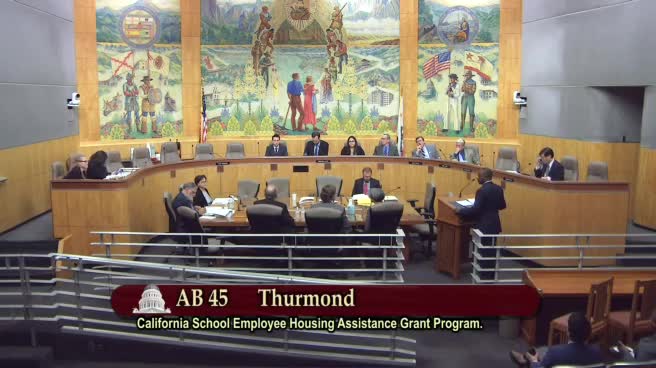 12MIN
Senate Standing Committee on Education
 9MIN
Senate Standing Committee on Health
 1MIN
Assembly Floor
 1H
Assembly Standing Committee on Appropriations
 4MIN
Assembly Standing Committee on Education
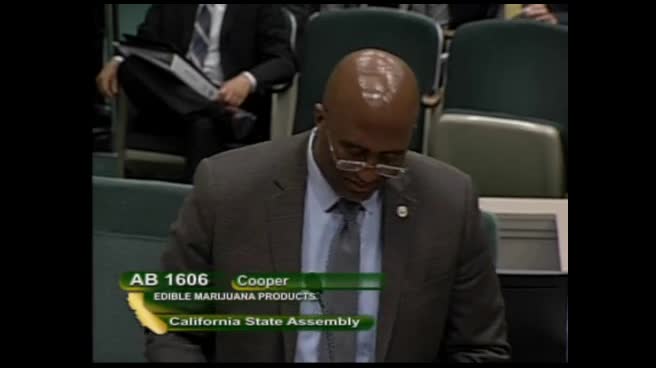 5MIN
Assembly Standing Committee on Health
Bill Author
Bill Co-Author(s):