AB 2619: Mental health services funding: homeless persons.
- Session Year: 2017-2018
- House: Assembly
- Latest Version Date: 2018-03-23
Existing law, the Mental Health Services Act, an initiative measure enacted by the voters as Proposition 63 at the November 2, 2004, statewide general election, funds a system of county mental health plans for the provision of mental health services, as specified. The act establishes the continuously appropriated Mental Health Services Fund to fund various county mental health programs by imposing a tax of 1% on annual incomes above $1,000,000. The act requires the State Department of Health Care Services to implement specified mental health services provided under the act through contracts with county mental health programs or counties acting jointly, as prescribed. The act provides that it may be amended by the Legislature by a 2/3 vote of each house as long as the amendment is consistent with and furthers the intent of the act, and that the Legislature may also clarify procedures and terms of the act by majority vote. Among other provisions, the existing act declares the intent to establish programs that ensure services are provided to severely mentally ill children, as defined, and that those services are part of the childrens system of care, as specified. Existing law requires county mental health programs to develop plans for innovative programs, and provides for funding for these programs from the Mental Health Services Fund.
This bill would make technical, nonsubstantive changes to those provisions. appropriate $10,000,000 from the General Fund to the State Department of Health Care Services to be distributed to counties for the purpose of funding innovative programs to provide mental health services to Californias homeless population.
Existing law, the Mental Health Services Act, an initiative measure enacted by the voters as Proposition 63 at the November 2, 2004, statewide general election, funds a system of county mental health plans for the provision of mental health services, as specified. The act provides that it may be amended by the Legislature by a 2/3 vote of each house as long as the amendment is consistent with and furthers the intent of the act, and that the Legislature may also clarify procedures and terms of the act by majority vote. Among other provisions, the existing act declares the intent to establish programs that ensure services are provided to severely mentally ill children, as defined, and that those services are part of the childrens system of care, as specified.
This bill would make technical, nonsubstantive changes to those provisions.
The sum of ten million dollars ($10,000,000) is hereby appropriated from the General Fund to the State Department of Health Care Services. The department shall allocate the appropriated funds to county mental health programs for the purpose of funding innovative programs, consistent with Section 5830 of the Welfare and Institutions Code, to provide mental health services to Californias homeless population.
SECTION 1.Section 5878.1 of the Welfare and Institutions Code is amended to read:5878.1.(a)It is the intent of this article to establish programs that ensure services will be provided to severely mentally ill children, as defined in Section 5878.2, and that they be part of the childrens system of care established pursuant to this part. It is the intent of this act that services provided under this chapter to severely mentally ill children are accountable, developed in partnership with youth and their families, culturally competent, and individualized to the strengths and needs of each child and his or her family.(b)This act does not authorize any services to be provided to a minor without the consent of the childs parent or legal guardian beyond those already authorized by existing statute.(a)It is the intent of this article to establish programs that ensure services will be provided to severely mentally ill children children, as defined in Section 5878.2 5878.2, and that they be part of the childrens system of care established pursuant to this part. It is the intent of this act that services provided under this chapter to severely mentally ill children are accountable, developed in partnership with youth and their families, culturally competent, and individualized to the strengths and needs of each child and his or her family.
(b)Nothing in this act shall be construed to This act does not authorize any services to be provided to a minor without the consent of the childs parent or legal guardian beyond those already authorized by existing statute.
|
Date
|
Status
|
|---|---|
| Apr 17, 2018 | In committee: Set, first hearing. Hearing canceled at the request of author. |
| Apr 2, 2018 | Re-referred to Com. on HEALTH. |
| Mar 23, 2018 | From committee chair, with author's amendments: Amend, and re-refer to Com. on HEALTH. Read second time and amended. |
| Mar 22, 2018 | Referred to Com. on HEALTH. |
| Feb 16, 2018 | From printer. May be heard in committee March 18. |
| Feb 15, 2018 | Read first time. To print. |
This list shows positions taken on this bill by organizations on the date displayed, which is linked to the original source.
Positions by individuals are not included.
Date of Hearing: April 17, 2018
ASSEMBLY COMMITTEE ON HEALTH
Jim Wood, Chair
ABPCA Bill Id:AB 2619
Author:(Travis Allen) – As Amended Ver:March 23, 2018
SUBJECT: Mental health services funding: homeless persons.
SUMMARY: Appropriates $10 million from the General Fund to the California Department of Health Care Services (DHCS) to allocate the appropriated funds to county mental health programs for the purpose of funding innovative programs to provide mental health services to California’s homeless population.
EXISTING LAW:
- Establishes the Mental Health Services Act (MHSA), enacted by voters in 2004 as Proposition 63, to provide funds to counties to expand services, develop innovative programs, and integrated service plans for mentally ill children, adults, and seniors through a 1% income tax on personal income above $1 million.
- Establishes the Mental Health Services Oversight and Accountability Commission (Commission) to oversee the implementation of MHSA, made up of 16 individuals appointed by the Governor, as specified.
- Establishes the Mental Health Services Fund (Fund) to be disbursed as follows:
- Twenty percent of funds distributed to counties to be used for prevention and early intervention programs;
- Five percent of the total funding for each county mental health program to be utilized for innovative programs;
- Requires the balance of funds to be distributed to county mental health programs for services to persons with severe mental illnesses, for the children’s system of care, and for the adult and older adult system of care;
- Permits no more than 20% of the average amount of funds allocated to a county for the previous five years to be used for technological needs and capital facilities, human resource needs, and for counties to establish a prudent reserve to ensure services do not have to be significantly reduced in years in which revenues are below the average of previous years;
- Permits up to 5% of funds to be used for planning costs including for county mental health programs to pay for the costs of consumers, family members, and other stakeholders to participate in the planning process and for the planning and implementation required for private provider contracts to be significantly expanded to provide additional services; and,
- Requires, prior to making the allocations in a) through d) above, up to 5% of funds to be reserved for the costs for DHCS, the California Mental Health Planning Council, the Office of Statewide Health Planning and Development), the Commission, the California Department of Public Health, and any other state agency to implement all duties pursuant to the MHSA.
- Requires DHCS, pursuant to the MHSA and in coordination with counties, to establish a program designed to prevent mental illnesses from becoming severe and disabling and requires the program to emphasize strategies to reduce the following negative outcomes that may result from untreated mental illness:
- Suicide;
- Incarcerations;
- School failure or dropout;
- Unemployment;
- Prolonged suffering;
- Homelessness; and,
- Removal of children from their homes.
- Requires all expenditures for county mental health programs to be consistent with a currently approved mental health plan or update.
- Requires any funds allocated to a county that have not been spent for their authorized purpose within three years to revert to the state to be deposited into the Fund and be made available for other counties in future years.
FISCAL EFFECT: This bill has not yet been analyzed by a fiscal committee.
COMMENTS:
- BACKGROUND.
- Proposition 63 Commission. The MHSA creates the 16 member Commission charged with overseeing the implementation of MHSA. The 2017-18 Governor’s Budget projected that $1.34 billion would be deposited into the Fund in fiscal year 2015-16. The MHSA addresses a broad continuum of prevention, early intervention and service needs as well as providing funding for infrastructure, technology and training needs for the community mental health system. The MHSA requires each county mental health department to prepare and submit a three-year plan to DHCS that must be updated each year and approved by DHCS after review and comment by the Commission. In their three-year plans, counties are required to include a list of all programs for which MHSA funding is being requested and that identifies how the funds will be spent and which populations will be served. Counties must submit their plans for approval to the Commission before the counties may spend certain categories of funding.
- Funding. The MHSA provides funding for programs within five components:
- Community Services and Supports: Provides direct mental health services to the severely and seriously mentally ill, such as mental health treatment, cost of health care treatment, and housing supports. Regulation requires counties to direct the majority of its Community Services and Supports funds to Full‑Service Partnerships (FSPs). FSPs are county coordinated plans, in collaboration with the client and the family to provide the full spectrum of community services. These services consist of mental health services and supports, such as peer support and crisis intervention services; and non-mental health services and supports, such as food, clothing, housing, and the cost of medical treatment;
- Prevention and Early Intervention: Provides services to mental health clients in order to help prevent mental illness from becoming severe and disabling;
- Innovation: Provides services and approaches that are creative in an effort to address mental health clients’ persistent issues, such as improving services for underserved or unserved populations within the community;
- Capital Facilities and Technological Needs: Creates additional county infrastructure such as additional clinics and facilities and/or development of a technological infrastructure for the mental health system, such as electronic health records for mental health services; and,
- Workforce Education and Training: Provides training for existing county mental health employees, outreach and recruitment to increase employment in the mental health system, and financial incentives to recruit or retain employees within the public mental health system.
- California Mental Health Planning Council (Council). The Council is a majority consumer and family member advisory body to state and local government, the Legislature, and residents of California on mental health services in California. According to its Website, the vision and mission of the Council guides its evaluation of California's system of mental health care through targeted committee studies, community site visits, and General Session forums and presentations. The Council informs the Administration and the Legislature on priority issues through publications and reports, provides feedback on mental health policy and regulations, and on legislative actions based on its Policy Platform. The Council is currently working on the 2017 Data Notebook project with the county mental health boards statewide. The data notebook is a snapshot of current mental health indicators that is compared to statewide indicators. It is anticipated that the 2017 Data Notebook will be released in late 2017.
- State Auditor Report and Recommendations. On February 27, 2018, the State Auditor released a report entitled "Mental Health Services Act: The State Could Better Ensure the Effective Use of Mental Health Services Act Funding" (Audit Report), at the request of the Joint Legislative Audit Committee. The Audit Report concluded that despite having significant responsibility for the MHSA program since 2012, DHCS has not developed a process to recover unspent MHSA funds from local mental health agencies after the statutory time frames for spending the funds have elapsed, known as reversion. As a result, the local mental health agencies have had less incentive to spend MHSA funds in a timely manner and had amassed unspent funds of $231 million as of the end of fiscal year 2015–16 that they should have reverted to the State for it to reallocate to other local mental health agencies. This figure does not include funds held in reserves or interest earned on the unspent funds. However, the Audit Report noted that the Legislature enacted a one‑time change in state law in 2017 that allowed local mental health agencies to retain all funds that were subject to reversion as of July 1, 2017. The Audit Report concluded that nevertheless, this one‑time allowance did not resolve the larger issue that DHCS has been slow in implementing a process to revert unspent MHSA funds. The State Auditor recommended, in order to ensure that local mental health agencies spend MHSA funds in a timely manner, that DHCS implement a fiscal reversion process to reallocate to other local mental health agencies any MHSA funds that are unspent within the statutory reversion time frames.
- 2016 "No Place Like Home" Initiative. On July 1, 2016, Governor Brown signed landmark legislation enacting the No Place Like Home program to dedicate $2 billion in bond funds and leverage additional dollars from other local, state, and federal funding for purposes of providing housing for chronically homeless persons with mental illness. The initiative includes proposals to construct permanent supportive housing for chronically homeless persons with mental illness, provide $200 million over four years in shorter-term, rent subsidies while the permanent housing is constructed or rehabilitated and support for special housing programs that will assist families that are part of the child welfare system or are enrolled in California Work Opportunity and Responsibility to Kids (CalWORKs) Housing Support Program. The bonds are repaid by funding from the Mental Health Services Act (MHSA). Key features of the program include:
- Counties will be eligible applicants (either solely or with a housing development sponsor).
- Funding for permanent supportive housing must utilize low barrier tenant selection practices that prioritize vulnerable populations and offer flexible, voluntary, and individualized supportive services.
- Counties must commit to provide mental health services and help coordinate access to other community-based supportive services.
- RELATED LEGISLATION.
- AB 2843 (Gloria) adds cities, special districts, school districts, or other public entities to the list of entities eligible to receive an excess of Mental Health Services Act (MHSA) funds subject to reversion for the provision of mental health services consistent with the intent of the MHSA. AB 2843is pending in the Assembly Health Committee.
- AB 488 (Kiley) establishes the Mental Health Services Fund Transparency and Accountability Office within the California Health and Human Services Agency and transfers various functions of DHCS under the MHSA to the office, as specified. AB 488 is pending in the Assembly Health Committee.
- AB 1134 (Gloria), Chapter 412, Statutes of 2017, authorizes the Commission to establish a fellowship program for the purpose of providing an experiential learning opportunity for a mental health consumer and a mental health professional.
- SB 192 (Beall) would require counties, or counties acting jointly, seeking funding from the MHSA Reversion Fund, to demonstrate to the Mental Health Services Oversight and Accountability Commission that funding will be used to create, or expand, existing capacity for services and supports that address unmet community needs. SB 192 is pending in the Assembly Health Committee.
- POLICY COMMENT. As noted above, a recent State Audit Report indicated that local mental health agencies have amassed unspent funds of $231 million as of the end of fiscal year 2015-2016. Additionally, recent proposals such as the "No Place Like Home" Initiative dedicated even more funding specifically to housing individuals experiencing mental health disorders. Therefore, the need for this bill is unclear.
REGISTERED SUPPORT / OPPOSITION:
Support
None on file.
Opposition
None on file.
Analysis Prepared by: Paula Villescaz / HEALTH / (916) 319-2097
Bill Author
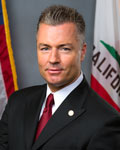
Bill Co-Author(s):