AB 2652: Telecommunications: universal service.
- Session Year: 2017-2018
- House: Assembly
- Latest Version Date: 2018-08-29
Under existing law, the Public Utilities Commission has regulatory authority over public utilities, including telephone corporations. The Moore Universal Telephone Service Act establishes the Universal Lifeline Telephone Service program in order to provide low-income households with access to affordable basic residential telephone service. Existing law requires the commission, by January 15, 2017, to adopt a portability freeze rule for the lifeline program, and requires the commission to consider including in the rule a period of time during which the subscriber would be able to terminate lifeline service without penalty and a requirement that the administrator of the lifeline program provide a telephone corporation providing lifeline service with specified subscriber information.
This bill would require the commission, on or before June 30, 2019, to adopt a rule to improve the cost-effectiveness of the delivery of the lifeline program. The bill would repeal the requirement that the commission consider including in its portability freeze rule the features described above, and would instead require the commission to include, at minimum, those and certain other features in this lifeline program cost-effectiveness rule.
Under existing law, a violation of the Public Utilities Act or any order, decision, rule, direction, demand, or requirement of the commission is a crime.
Because the provisions of this bill would be a part of the act and because a violation of an order, decision, or rule of the commission implementing its requirements would be a crime, the bill would impose a state-mandated local program.
The California Constitution requires the state to reimburse local agencies and school districts for certain costs mandated by the state. Statutory provisions establish procedures for making that reimbursement.
This bill would provide that no reimbursement is required by this act for a specified reason.
Under existing law, the Public Utilities Commission has regulatory authority over public utilities, including telephone corporations. The Moore Universal Telephone Service Act establishes the Universal Lifeline Telephone Service program (lifeline program) in order to provide low-income households with access to affordable basic residential telephone service. Existing law requires the commission, by January 15, 2017, to adopt a portability freeze rule for the lifeline program, and requires the commission to consider including in the rule a period of time during which the subscriber would be able to terminate lifeline service without penalty and a requirement that the administrator of the lifeline program provide a telephone corporation providing lifeline service with specified subscriber information.
This bill would require the commission, on or before June 30, 2019, to adopt a rule to improve the cost-effectiveness of the delivery of the lifeline program. The bill would delete the requirement that the commission consider including in its portability freeze rule the features described above, and would instead require the commission to include, at minimum, those and certain other features in this lifeline program cost-effectiveness rule.
Under existing law, a violation of the Public Utilities Act or any order, decision, rule, direction, demand, or requirement of the commission is a crime.
Because the provisions of this bill would be a part of the act and because a violation of an order, decision, or rule of the commission implementing its requirements would be a crime, the bill would impose a state-mandated local program.
The California Constitution requires the state to reimburse local agencies and school districts for certain costs mandated by the state. Statutory provisions establish procedures for making that reimbursement.
This bill would provide that no reimbursement is required by this act for a specified reason.
Under existing law, the Public Utilities Commission has regulatory authority over public utilities, including telephone corporations. The Moore Universal Telephone Service Act establishes the Universal Lifeline Telephone Service program (lifeline program) in order to provide low-income households with access to affordable basic residential telephone service. Existing law requires the commission, by January 15, 2017, to adopt a portability freeze rule for the lifeline program, and requires the commission to consider including in the rule a 60-day duration of the portability freeze, a period of time during which the subscriber would be able to terminate lifeline service without penalty, penalty and a requirement that the administrator of the lifeline program provide a telephone corporation providing lifeline service with specified subscriber information.
This bill would require the commission to instead adopt the rule by March 1, 2019, would require the rule to include, at minimum, the elements described above, and would condition the implementation of the rule on the Federal Communications Commission not adopting an order denying federal benefits to a subscriber if the rule is implemented. The bill would require the commission, on or before June 30, 2019, to adopt a rule to improve the cost-effectiveness of the delivery of the lifeline program, and program. The bill would delete the requirement that the commission consider including in its portability freeze rule the features described above, and would instead require the commission to include, at minimum, those and certain other features in the this lifeline program cost-effectiveness rule.
Under existing law, a violation of the Public Utilities Act or any order, decision, rule, direction, demand, or requirement of the commission is a crime.
Because the provisions of this bill would be a part of the act and because a violation of an order, decision, or rule of the commission implementing its requirements would be a crime, the bill would impose a state-mandated local program.
The California Constitution requires the state to reimburse local agencies and school districts for certain costs mandated by the state. Statutory provisions establish procedures for making that reimbursement.
This bill would provide that no reimbursement is required by this act for a specified reason.
Under existing law, the Public Utilities Commission has regulatory authority over public utilities, including telephone corporations. The Moore Universal Telephone Service Act establishes the Universal Lifeline Telephone Service program in order to provide low-income households with access to affordable basic residential telephone service. Existing law requires the commission, by January 15, 2017, to adopt a portability freeze rule for the lifeline program, and requires the commission to consider including in the rule a 60-day duration of the portability freeze, a period of time during which the subscriber would be able to terminate lifeline service without penalty, and a requirement that the administrator of the lifeline program provide a telephone corporation providing lifeline service with specified subscriber information.
This bill would require the commission to instead adopt the rule by January 15, March 1, 2019, and for that would require the rule to include, at minimum, the elements described above. above, and would condition the implementation of the rule on the Federal Communications Commission not adopting an order denying federal benefits to a subscriber if the rule is implemented. The bill would require the commission, on or before June 30, 2019, to adopt a rule to improve the cost-effectiveness of the delivery of the lifeline program, and would require the commission to include, at minimum, certain features in the rule.
Under existing law, a violation of the Public Utilities Act or any order, decision, rule, direction, demand, or requirement of the commission is a crime.
Because the provisions of this bill would be a part of the act and because a violation of an order, decision, or rule of the commission implementing its requirements would be a crime, the bill would impose a state-mandated local program by expanding the application of a crime. program.
The California Constitution requires the state to reimburse local agencies and school districts for certain costs mandated by the state. Statutory provisions establish procedures for making that reimbursement.
This bill would provide that no reimbursement is required by this act for a specified reason.
Under existing law, the Public Utilities Commission has regulatory authority over public utilities, including telephone corporations. The Moore Universal Telephone Service Act establishes the Universal Lifeline Telephone Service program in order to provide low-income households with access to affordable basic residential telephone service. Existing law requires the commission, by January 15, 2017, to adopt a portability freeze rule for the lifeline program, and requires the commission to consider including in the rule a 60-day duration of the portability freeze, a period of time when a during which the subscriber would be able to terminate lifeline service without penalty, and a requirement that the administrator of the lifeline program provide a telephone corporation providing lifeline service with specified subscriber information.
This bill would require the commission to instead adopt the rule by January 15, 2019, and for that rule to include, at minimum, the elements described above and a requirement that a subscriber provide proof of change of address if the commission chooses to allow the subscriber to bypass the portability freeze when the subscriber moves. above. The bill would require the commission, on or before June 30, 2019, to adopt a rule to improve the cost-effectiveness of the delivery of the lifeline program, and would require the commission to include, at minimum, certain features in the rule.
Under existing law, a violation of the Public Utilities Act or any order, decision, rule, direction, demand, or requirement of the commission is a crime.
Because the provisions of this bill would be a part of the act and because a violation of an order, decision, or rule of the commission implementing its requirements would be a crime, the bill would impose a state-mandated local program by expanding the application of a crime.
The California Constitution requires the state to reimburse local agencies and school districts for certain costs mandated by the state. Statutory provisions establish procedures for making that reimbursement.
This bill would provide that no reimbursement is required by this act for a specified reason.
Under existing law, the Public Utilities Commission has regulatory authority over public utilities, including telephone corporations. The Moore Universal Telephone Service Act establishes the Universal Lifeline Telephone Service program in order to provide low-income households with access to affordable basic residential telephone service. Existing law requires the commission, by January 15, 2017, to adopt a portability freeze rule for the lifeline program, and requires the commission to consider including in the rule a 60-day duration of the portability freeze, a period of time when a subscriber would be able to terminate lifeline service without penalty, and a requirement that the administrator of the lifeline program provide a telephone corporation providing lifeline service with specified subscriber information.
This bill would require the commission to instead adopt the rule by January 15, 2019, and for that rule to include, at minimum, the elements described above, above and a requirement that a subscriber provide proof of change of address if the commission chooses to allow the subscriber to bypass the portability freeze when the subscriber moves, and a penalty on a lifeline service provider that fails to inform a subscriber that he or she may receive discounted wireless or landline service, but not both, through the lifeline program. The bill would require a provider of mobile telephony service providing lifeline service to offer, as part of the service, a plan that includes unlimited minutes, unlimited text messages, and, to the extent possible, unlimited mobile data service. moves. The bill would require the commission, on or before June 30, 2019, to adopt a rule to improve the cost-effectiveness of the delivery of the lifeline program, and would require the commission to include, at minimum, certain features in the rule.
Under existing law, a violation of the Public Utilities Act or any order, decision, rule, direction, demand, or requirement of the commission is a crime.
Because the provisions of this bill would be a part of the act and because a violation of an order, decision, or rule of the commission implementing its requirements would be a crime, the bill would impose a state-mandated local program by expanding the application of a crime.
The California Constitution requires the state to reimburse local agencies and school districts for certain costs mandated by the state. Statutory provisions establish procedures for making that reimbursement.
This bill would provide that no reimbursement is required by this act for a specified reason.
Under existing law, the Public Utilities Commission has regulatory authority over public utilities, including telephone corporations. The Moore Universal Telephone Service Act establishes the Universal Lifeline Telephone Service program in order to provide low-income households with access to affordable basic residential telephone service. Existing law requires the commission, by January 15, 2017, to adopt a portability freeze rule for the lifeline program, and requires the commission to consider including in the rule a 60-day duration of the portability freeze in the rule. freeze, a period of time when a subscriber would be able to terminate lifeline service without penalty, and a requirement that the administrator of the lifeline program provide a telephone corporation providing lifeline service with specified subscriber information.
This bill would require the commission to instead consider including a 6-month duration of the portability freeze in the rule. adopt the rule by January 15, 2019, and for that rule to include, at minimum, the elements described above, a requirement that a subscriber provide proof of change of address if the commission chooses to allow the subscriber to bypass the portability freeze when the subscriber moves, and a penalty on a lifeline service provider that fails to inform a subscriber that he or she may receive discounted wireless or landline service, but not both, through the lifeline program. The bill would require a provider of mobile telephony service providing lifeline service to offer, as part of the service, a plan that includes unlimited minutes, unlimited text messages, and, to the extent possible, unlimited mobile data service. The bill would require the commission, on or before June 30, 2019, to adopt a rule to improve the cost-effectiveness of the delivery of the lifeline program, and would require the commission to consider include, at minimum, certain features for inclusion in the rule.
Under existing law, a violation of the Public Utilities Act or any order, decision, rule, direction, demand, or requirement of the commission is a crime.
Because the provisions of this bill would be a part of the act and because a violation of an order, decision, or rule of the commission implementing its requirements would be a crime, the bill would impose a state-mandated local program by expanding the application of a crime.
The California Constitution requires the state to reimburse local agencies and school districts for certain costs mandated by the state. Statutory provisions establish procedures for making that reimbursement.
This bill would provide that no reimbursement is required by this act for a specified reason.
Under existing law, the Public Utilities Commission has regulatory authority over public utilities, including telephone corporations. The Moore Universal Telephone Service Act establishes the Universal Lifeline Telephone Service program in order to provide low-income households with access to affordable basic residential telephone service. Existing law requires the commission, by January 15, 2017, to adopt a portability freeze rule for the lifeline program, and requires the commission to consider including a 60-day duration of the portability freeze in the rule.
This bill would require the commission to instead consider including a 6-month duration of the portability freeze in the rule. The bill would require a provider of mobile telephony service providing lifeline service to offer, as part of the service, a plan that includes unlimited minutes, unlimited text messages, and, to the extent possible, unlimited mobile data service. The bill would require the commission, on or before June 30, 2019, to adopt a rule to improve the cost-effectiveness of the delivery of the lifeline program, and would require the commission to consider certain features for inclusion in the rule.
Under existing law, a violation of the Public Utilities Act or any order, decision, rule, direction, demand, or requirement of the commission is a crime.
Because the provisions of this bill would be a part of the act and because a violation of an order, decision, or rule of the commission implementing its requirements would be a crime, the bill would impose a state-mandated local program by expanding the application of a crime.
The California Constitution requires the state to reimburse local agencies and school districts for certain costs mandated by the state. Statutory provisions establish procedures for making that reimbursement.
This bill would provide that no reimbursement is required by this act for a specified reason.
The commission shall adopt a portability freeze rule for the lifeline program by January 15, 2017. The commission shall consider including a 60-day duration of the portability freeze in the rule.
SEC. 2.Section 878.7 is added to the Public Utilities Code, to read:878.7.On or before June 30, 2019, the commission shall adopt a rule to improve the cost-effectiveness of the delivery of the lifeline program. The commission shall include, at minimum, all of the following in the rule:
(a)A modified recertification process that minimizes barriers to recertification faced by a subscriber, reduces the burden and cost of recertification on the lifeline program, and provides for all of the following:
(1)When a subscriber transfers his or her benefit from one lifeline provider to another, the anniversary date for that subscriber shall be one calendar year from the approval date of the benefit transfer.
(2)Allowing each lifeline subscriber to complete his or her annual recertification of eligibility online using an electronic signature and verifying his or her identity using personally identifiable information on file with the third-party administrator, without using a commission-issued personal identification number (PIN).
(3)Allowing lifeline subscribers the option to complete annual recertification of eligibility through an interactive voice response system.
(b)Allowing direct consumer enrollment with an electronic signature through an online platform to expand participation in the program.
(c)A means to encourage lifeline service providers to work with community-based organizations, and other approved nonprofit organizations, to increase participation in the lifeline program by assisting those providers with outreach, marketing, and enrollment.
(d)A period of time when a subscriber would be able to terminate lifeline service without penalty, similar to provisions established in Section 4.13.5 of commission Decision 14-01-036 (January 16, 2014), Decision Adopting Revisions to Modernize and Expand the California Lifeline Program.
(e)A requirement that the administrator of the lifeline program provide a telephone corporation providing lifeline service with real-time information concerning whether a subscriber has enrolled with another telephone corporation during the period of the portability freeze adopted by the commission pursuant to Section 878.5 and, if the subscriber enrolled during this period, the date of enrollment.
SEC. 3.No reimbursement is required by this act pursuant to Section 6 of Article XIIIB of the California Constitution because the only costs that may be incurred by a local agency or school district will be incurred because this act creates a new crime or infraction, eliminates a crime or infraction, or changes the penalty for a crime or infraction, within the meaning of Section 17556 of the Government Code, or changes the definition of a crime within the meaning of Section 6 of Article XIIIB of the California Constitution.
The commission shall adopt a portability freeze rule for the lifeline program by January 15, 2017. The commission shall consider including a 60-day duration of the portability freeze in the rule.
SEC. 2.Section 878.7 is added to the Public Utilities Code, to read:878.7.On or before June 30, 2019, the commission shall adopt a rule to improve the cost-effectiveness of the delivery of the lifeline program. The commission shall include, at minimum, all of the following in the rule:
(a)A modified recertification process that minimizes barriers to recertification faced by a subscriber, reduces the burden and cost of recertification on the lifeline program, and provides for all of the following:
(1)Allowing all lifeline subscribers to recertify their continued eligibility at any time prior to their respective anniversary dates.(2)A requirement for a lifetime subscriber to provide proof of eligibility for lifeline service when that subscriber transfers his or her benefits from one lifeline provider to another, thereby extending the recertification deadline for that subscriber to one year from the date of the benefits transfer.(1)When a subscriber transfers his or her benefit from one lifeline provider to another, the anniversary date for that subscriber shall be one calendar year from the approval date of the benefit transfer.
(3)(2)Allowing each lifeline subscriber to complete his or her annual recertification of eligibility online using an electronic signature and verifying his or her identity using personally identifiable information on file with the third-party administrator, without using a commission-issued personal identification number (PIN).
(4)(3)Allowing lifeline subscribers the option to complete annual recertification of eligibility through an interactive voice response system.
(b)Allowing direct consumer enrollment with an electronic signature through an online platform to expand participation in the program.
(c)A means to encourage lifeline service providers to work with community-based organizations, and other approved nonprofit organizations, to increase participation in the lifeline program by assisting those providers with outreach, marketing, and enrollment.
(d)A period of time when a subscriber would be able to terminate lifeline service without penalty, similar to provisions established in Section 4.13.5 of commission Decision 14-01-036 (January 16, 2014), Decision Adopting Revisions to Modernize and Expand the California Lifeline Program.
(e)A requirement that the administrator of the lifeline program provide a telephone corporation providing lifeline service with real-time information concerning whether a subscriber has enrolled with another telephone corporation during the period of the portability freeze adopted by the commission pursuant to Section 878.5 and, if the subscriber enrolled during this period, the date of enrollment.
SEC. 3.No reimbursement is required by this act pursuant to Section 6 of Article XIIIB of the California Constitution because the only costs that may be incurred by a local agency or school district will be incurred because this act creates a new crime or infraction, eliminates a crime or infraction, or changes the penalty for a crime or infraction, within the meaning of Section 17556 of the Government Code, or changes the definition of a crime within the meaning of Section 6 of Article XIIIB of the California Constitution.
The commission shall adopt a portability freeze rule for the lifeline program by January 15, 2017. The commission shall consider including all of the following in the rule:
(a)A a 60-day duration of the portability freeze. freeze in the rule.
(b)A period of time when a subscriber would be able to terminate lifeline service without penalty, similar to provisions established in Section 4.13.5 of commission Decision 14-01-036 (January 16, 2014), Decision Adopting Revisions to Modernize and Expand the California Lifeline Program.(c)A requirement that the administrator of the lifeline program provide a telephone corporation providing lifeline service with real-time information concerning whether a subscriber has enrolled with another telephone corporation during the period of the portability freeze adopted by the commission pursuant to this section and, if the subscriber enrolled during this period, the date of enrollment.SEC. 2.Section 878.7 is added to the Public Utilities Code, to read:878.7.On or before June 30, 2019, the commission shall adopt a rule to improve the cost-effectiveness of the delivery of the lifeline program. The commission shall include, at minimum, all of the following in the rule:
(a)A modified recertification process that minimizes barriers to recertification faced by a subscriber, reduces the burden and cost of recertification on the lifeline program, and provides for all of the following:
(1)Allowing all lifeline subscribers to recertify their continued eligibility at any time prior to their respective anniversary dates.
(2)A requirement for a lifetime subscriber to provide proof of eligibility for lifeline service when that subscriber transfers his or her benefits from one lifeline provider to another, thereby extending the recertification deadline for that subscriber to one year from the date of the benefits transfer.
(3)Allowing each lifeline subscriber to complete his or her annual recertification of eligibility online using an electronic signature and verifying his or her identity using personally identifiable information on file with the third-party administrator, without using a commission-issued personal identification number (PIN).
(4)Allowing lifeline subscribers the option to complete annual recertification of eligibility through an interactive voice response system.
(b)Allowing direct consumer enrollment with an electronic signature through an online platform to expand participation in the program.
(c)A means to encourage lifeline service providers to work with community-based organizations, and other approved nonprofit organizations, to increase participation in the lifeline program by assisting those providers with outreach, marketing, and enrollment.
(d)A period of time when a subscriber would be able to terminate lifeline service without penalty, similar to provisions established in Section 4.13.5 of commission Decision 14-01-036 (January 16, 2014), Decision Adopting Revisions to Modernize and Expand the California Lifeline Program.
(e)A requirement that the administrator of the lifeline program provide a telephone corporation providing lifeline service with real-time information concerning whether a subscriber has enrolled with another telephone corporation during the period of the portability freeze adopted by the commission pursuant to Section 878.5 and, if the subscriber enrolled during this period, the date of enrollment.
SEC. 3.No reimbursement is required by this act pursuant to Section 6 of Article XIIIB of the California Constitution because the only costs that may be incurred by a local agency or school district will be incurred because this act creates a new crime or infraction, eliminates a crime or infraction, or changes the penalty for a crime or infraction, within the meaning of Section 17556 of the Government Code, or changes the definition of a crime within the meaning of Section 6 of Article XIIIB of the California Constitution.
The commission shall adopt a portability freeze rule for the lifeline program by January 15, 2019. March 1, 2019, which shall be implemented unless the Federal Communications Commission adopts a commission-level order determining that the implementation of a portability freeze would result in a loss of federal benefits to a subscriber. The commission shall include, at minimum, all of the following in the rule:
(a)A portability freeze of 60 days from the time of enrollment.
(b)A period of time when a subscriber would be able to terminate lifeline service without penalty, similar to provisions established in Section 4.13.5 of commission Decision 14-01-036 (January 16, 2014), Decision Adopting Revisions to Modernize and Expand the California Lifeline Program.
(c)A requirement that the administrator of the lifeline program provide a telephone corporation providing lifeline service with real-time information concerning whether a subscriber has enrolled with another telephone corporation during the period of the portability freeze adopted by the commission pursuant to this section and, if the subscriber enrolled during this period, the date of enrollment.
SEC. 2.Section 878.7 is added to the Public Utilities Code, to read:878.7.On or before June 30, 2019, the commission shall adopt a rule to improve the cost-effectiveness of the delivery of the lifeline program. The commission shall include, at minimum, all of the following in the rule:
(a)A modified recertification process that minimizes barriers to recertification faced by a subscriber, reduces the burden and cost of recertification on the lifeline program, and provides for all of the following:
(1)Allowing all lifeline subscribers to recertify their continued eligibility at any time prior to their respective anniversary dates.
(2)A requirement for a lifetime subscriber to provide proof of eligibility for lifeline service when that subscriber transfers his or her benefits from one lifeline provider to another, thereby extending the recertification deadline for that subscriber to one year from the date of the benefits transfer.
(3)Allowing all each lifeline subscribers served by all lifeline providers subscriber to complete his or her annual recertification of eligibility online with using an electronic signature and verifying his or her identity using personally identifiable information on file with the third-party administrator, without using a commission-issued personal identification number. number (PIN).
(4)Allowing lifeline subscribers the option to complete annual recertification of eligibility through an interactive voice response system.
(b)Allowing direct consumer enrollment with an electronic signature through an online platform to expand participation in the program.
(c)A means to encourage lifeline service providers to work with community-based organizations, and other approved nonprofit organizations, to increase participation in the lifeline program by assisting those providers with outreach, marketing, and enrollment.
SEC. 3.No reimbursement is required by this act pursuant to Section 6 of Article XIIIB of the California Constitution because the only costs that may be incurred by a local agency or school district will be incurred because this act creates a new crime or infraction, eliminates a crime or infraction, or changes the penalty for a crime or infraction, within the meaning of Section 17556 of the Government Code, or changes the definition of a crime within the meaning of Section 6 of Article XIIIB of the California Constitution.
The commission shall adopt a portability freeze rule for the lifeline program by January 15, 2019. The commission shall include, at minimum, all of the following in the rule:
(a)At least a 60-day duration of the portability freeze.(a)A portability freeze of 60 days from the time of enrollment.
(b)A period of time when a subscriber would be able to terminate lifeline service without penalty, similar to provisions established in Section 4.13.5 of commission Decision 14-01-036 (January 16, 2014), Decision Adopting Revisions to Modernize and Expand the California Lifeline Program.
(c)A requirement that the administrator of the lifeline program provide a telephone corporation providing lifeline service with real-time information concerning whether a subscriber has enrolled with another telephone corporation during the period of the portability freeze adopted by the commission pursuant to this section and, if the subscriber enrolled during this period, the date of enrollment.
(d)A requirement that a subscriber provide proof of change of address if the commission chooses to allow the subscriber to bypass the portability freeze when the subscriber moves.SEC. 2.Section 878.7 is added to the Public Utilities Code, to read:878.7.On or before June 30, 2019, the commission shall adopt a rule to improve the cost-effectiveness of the delivery of the lifeline program. The commission shall include, at minimum, all of the following in the rule:
(a)A two-year recertification process that minimizes any barriers to renewal faced by a subscriber.(b)Allowing the use of an electronic signature to expedite the enrollment process.(a)A modified recertification process that minimizes barriers to recertification faced by a subscriber, reduces the burden and cost of recertification on the lifeline program, and provides for all of the following:
(1)Allowing all lifeline subscribers to recertify their continued eligibility at any time prior to their respective anniversary dates.
(2)A requirement for a lifetime subscriber to provide proof of eligibility for lifeline service when that subscriber transfers his or her benefits from one lifeline provider to another, thereby extending the recertification deadline for that subscriber to one year from the date of the benefits transfer.
(3)Allowing all lifeline subscribers served by all lifeline providers to complete annual recertification of eligibility online with an electronic signature and without a commission-issued personal identification number.
(4)Allowing lifeline subscribers the option to complete annual recertification of eligibility through an interactive voice response system.
(b)Allowing direct consumer enrollment with an electronic signature through an online platform to expand participation in the program.
(c)A means to encourage lifeline service providers to work with community-based organizations, and other approved nonprofit organizations, to increase participation in the lifeline program by assisting those providers with outreach, marketing, and enrollment.
(d)A goal of enrolling 90 percent of all eligible customers statewide in the lifeline program by January 1, 2022.SEC. 3.No reimbursement is required by this act pursuant to Section 6 of Article XIIIB of the California Constitution because the only costs that may be incurred by a local agency or school district will be incurred because this act creates a new crime or infraction, eliminates a crime or infraction, or changes the penalty for a crime or infraction, within the meaning of Section 17556 of the Government Code, or changes the definition of a crime within the meaning of Section 6 of Article XIIIB of the California Constitution.
The commission shall adopt a portability freeze rule for the lifeline program by January 15, 2019. The commission shall include, at minimum, all of the following in the rule:
(a)At least a 60-day duration of the portability freeze.
(b)A period of time when a subscriber would be able to terminate lifeline service without penalty, similar to provisions established in Section 4.13.5 of commission Decision 14-01-036 (January 16, 2014), Decision Adopting Revisions to Modernize and Expand the California Lifeline Program.
(c)A requirement that the administrator of the lifeline program provide a telephone corporation providing lifeline service with real-time information concerning whether a subscriber has enrolled with another telephone corporation during the period of the portability freeze adopted by the commission pursuant to this section and, if the subscriber enrolled during this period, the date of enrollment.
(d)A requirement that a subscriber provide proof of change of address if the commission chooses to allow the subscriber to bypass the portability freeze when the subscriber moves.
(e)A penalty on a lifeline service provider that fails to inform a subscriber that he or she may receive discounted wireless or landline service, but not both, through the lifeline program.SEC. 3.SEC. 2.Section 878.7 is added to the Public Utilities Code, to read:878.7.On or before June 30, 2019, the commission shall adopt a rule to improve the cost-effectiveness of the delivery of the lifeline program. The commission shall include, at minimum, all of the following in the rule:
(a)A two-year recertification process that minimizes any barriers to renewal faced by a subscriber.
(b)Allowing the use of an electronic signature to expedite the enrollment process.
(c)A process to ensure quality products are distributed to eligible subscribers.(d)(c)A means to encourage lifeline service providers to work with community-based organizations, and other approved nonprofit organizations, to increase participation in the lifeline program by assisting those providers with outreach, marketing, and enrollment.
(e)(d)A goal of enrolling 90 percent of all eligible customers statewide in the lifeline program by January 1, 2022.
SEC. 4.SEC. 3.No reimbursement is required by this act pursuant to Section 6 of Article XIIIB of the California Constitution because the only costs that may be incurred by a local agency or school district will be incurred because this act creates a new crime or infraction, eliminates a crime or infraction, or changes the penalty for a crime or infraction, within the meaning of Section 17556 of the Government Code, or changes the definition of a crime within the meaning of Section 6 of Article XIIIB of the California Constitution.
The commission shall require a provider of mobile telephony service providing lifeline service to offer, as part of the service, a plan that includes unlimited minutes, unlimited text messages, and, to the extent possible, unlimited mobile data service.
SEC. 2.Section 878.5 of the Public Utilities Code is amended to read:878.5.The commission shall adopt a portability freeze rule for the lifeline program by January 15, 2017. 2019. The commission shall consider including include, at minimum, all of the following in the rule:
(a)A six-month At least a 60-day duration of the portability freeze.
(b)A period of time when a subscriber would be able to terminate lifeline service without penalty, similar to provisions established in Section 4.13.5 of commission Decision 14-01-036 (January 16, 2014), Decision Adopting Revisions to Modernize and Expand the California Lifeline Program.
(c)A requirement that the administrator of the lifeline program provide a telephone corporation providing lifeline service with real-time information concerning whether a subscriber has enrolled with another telephone corporation during the period of the portability freeze adopted by the commission pursuant to this section and, if the subscriber enrolled during this period, the date of enrollment.
(d)A requirement that a subscriber provide proof of change of address if the commission chooses to allow the subscriber to bypass the portability freeze when the subscriber moves.
(e)A penalty on a lifeline service provider that fails to inform a subscriber that he or she may receive discounted wireless or landline service, but not both, through the lifeline program.
SEC. 3.Section 878.7 is added to the Public Utilities Code, to read:878.7.On or before June 30, 2019, the commission shall adopt a rule to improve the cost-effectiveness of the delivery of the lifeline program. The commission shall consider including include, at minimum, all of the following in the rule:
(a)A two-year recertification process that minimizes any barriers to renewal faced by a subscriber.
(b)Allowing the use of an electronic signature to expedite the enrollment process.
(c)A process to ensure quality products are distributed to eligible customers. subscribers.
(d)A means to encourage lifeline service providers to work with community-based organizations, and other approved nonprofit organizations, to increase participation in the lifeline program by assisting those providers with outreach, marketing, and enrollment.
(e)A goal of enrolling 90 percent of all eligible customers statewide in the lifeline program by January 1, 2022.
SEC. 4.No reimbursement is required by this act pursuant to Section 6 of Article XIIIB of the California Constitution because the only costs that may be incurred by a local agency or school district will be incurred because this act creates a new crime or infraction, eliminates a crime or infraction, or changes the penalty for a crime or infraction, within the meaning of Section 17556 of the Government Code, or changes the definition of a crime within the meaning of Section 6 of Article XIIIB of the California Constitution.
The commission shall require a provider of mobile telephony service providing lifeline service to offer, as part of the service, a plan that includes unlimited minutes, unlimited text messages, and, to the extent possible, unlimited mobile data service.
SEC. 2.Section 878.5 of the Public Utilities Code is amended to read:878.5.The commission shall adopt a portability freeze rule for the lifeline program by January 15, 2017. The commission shall consider including all of the following in the rule:
(a)A 60-day six-month duration of the portability freeze.
(b)A period of time when a subscriber would be able to terminate lifeline service without penalty, similar to provisions established in Section 4.13.5 of commission Decision 14-01-036 (January 16, 2014), Decision Adopting Revisions to Modernize and Expand the California Lifeline Program.
(c)A requirement that the administrator of the lifeline program provide a telephone corporation providing lifeline service with real-time information concerning whether a subscriber has enrolled with another telephone corporation during the period of the portability freeze adopted by the commission pursuant to this section and, if the subscriber enrolled during this period, the date of enrollment.
SEC. 3.Section 878.7 is added to the Public Utilities Code, to read:878.7.On or before June 30, 2019, the commission shall adopt a rule to improve the cost-effectiveness of the delivery of the lifeline program. The commission shall consider including all of the following in the rule:
(a)A two-year recertification process that minimizes any barriers to renewal faced by a subscriber.
(b)Allowing the use of an electronic signature to expedite the enrollment process.
(c)A process to ensure quality products are distributed to eligible customers.
SEC. 4.No reimbursement is required by this act pursuant to Section 6 of Article XIIIB of the California Constitution because the only costs that may be incurred by a local agency or school district will be incurred because this act creates a new crime or infraction, eliminates a crime or infraction, or changes the penalty for a crime or infraction, within the meaning of Section 17556 of the Government Code, or changes the definition of a crime within the meaning of Section 6 of Article XIIIB of the California Constitution.
|
Date
|
Status
|
|---|---|
| Sep 28, 2018 | Vetoed by Governor. |
| Sep 5, 2018 | Enrolled and presented to the Governor at 3 p.m. |
| Aug 27, 2018 | Senate amendments concurred in. To Engrossing and Enrolling. |
| Aug 22, 2018 | In Assembly. Concurrence in Senate amendments pending. May be considered on or after August 24 pursuant to Assembly Rule 77. |
| Aug 22, 2018 | Read third time. Passed. Ordered to the Assembly. |
| Aug 20, 2018 | Read second time. Ordered to third reading. |
| Aug 17, 2018 | Read second time and amended. Ordered returned to second reading. |
| Aug 6, 2018 | In committee: Referred to APPR. suspense file. |
| Jul 3, 2018 | Read second time and amended. Re-referred to Com. on APPR. |
| Jul 2, 2018 | From committee: Amend, and do pass as amended and re-refer to Com. on APPR. (Ayes 10. Noes 0.) (June 27). |
| Jun 14, 2018 | From committee chair, with author's amendments: Amend, and re-refer to committee. Read second time, amended, and re-referred to Com. on E., U. & C. |
| Jun 13, 2018 | Referred to Com. on E., U. & C. |
| Jun 4, 2018 | In Senate. Read first time. To Com. on RLS. for assignment. |
| May 31, 2018 | Read third time. Passed. Ordered to the Senate. |
| May 29, 2018 | Read second time. Ordered to third reading. |
| May 25, 2018 | From committee: Amend, and do pass as amended. (Ayes 12. Noes 3.) (May 25). |
| May 16, 2018 | In committee: Set, first hearing. Referred to APPR. suspense file. |
| May 1, 2018 | Re-referred to Com. on APPR. |
| Apr 30, 2018 | Read second time and amended. |
| Apr 26, 2018 | From committee: Amend, and do pass as amended and re-refer to Com. on APPR. (Ayes 8. Noes 4.) (April 25). |
| Apr 17, 2018 | Re-referred to Com. on C. & C. |
| Apr 16, 2018 | From committee chair, with author's amendments: Amend, and re-refer to Com. on C. & C. Read second time and amended. |
| Mar 8, 2018 | Referred to Com. on C. & C. |
| Feb 16, 2018 | From printer. May be heard in committee March 18. |
| Feb 15, 2018 | Read first time. To print. |
|
Date
|
Description
|
Location
|
Votes
|
|
|---|---|---|---|---|
| Aug 27, 2018 | AB 2652 QUIRK Concurrence in Senate Amendments | Assembly Floor |
Passed |
|
| Aug 22, 2018 | Assembly 3rd Reading AB2652 Quirk By Hueso | Senate Floor |
Passed |
|
| Aug 16, 2018 | Do pass as amended | Senate Standing Committee on Appropriations |
Passed |
|
| Aug 6, 2018 | Placed on suspense file | Senate Standing Committee on Appropriations |
Passed |
|
| Jun 27, 2018 | Do pass as amended, but first amend, and re-refer to the Committee on [Appropriations] | Senate Standing Committee on Energy, Utilities and Communications |
Passed |
|
| May 31, 2018 | AB 2652 QUIRK Assembly Third Reading | Assembly Floor |
Passed |
|
| May 25, 2018 | Do pass as amended. | Assembly Standing Committee on Appropriations |
Passed |
|
| Apr 25, 2018 | Do pass as amended and be re-referred to the Committee on [Appropriations] | Assembly Standing Committee on Communications and Conveyance |
Passed |
This list shows positions taken on this bill by organizations on the date displayed, which is linked to the original source.
Positions by individuals are not included.
|
Organization
|
Position
|
Date
|
|---|---|---|
| California Cable & Telecommunications Association | ** Against | Jun 25, 2018 |
| California Communications Association | ** Against | Jun 25, 2018 |
| Consolidated Communications Inc. | ** Against | Jun 25, 2018 |
| Consumer Action | ** Support | Aug 19, 2018 |
| Frontier Communications | ** Against | Jun 25, 2018 |
| Lifeline subsidiary Assurance Wireless | * Against | Apr 25, 2018 |
| National Lifeline Association | ** Support | Aug 19, 2018 |
| Pacoima Beautiful | ** Support | Aug 19, 2018 |
| Salvadoran American Leadership and Educational Fund | ** Support | Aug 19, 2018 |
| The Utility Reform Network | ** Against | Aug 19, 2018 |
| TruConnect | ** Support | Apr 24, 2018 |
| Truconnect Telecommunications, Inc. | ** Support | Aug 19, 2018 |
| Youth Policy Institute | ** Support | Aug 19, 2018 |
GOVERNOR'S VETO
GV Bill Id:AB 2652
Author:(Quirk)
As Enrolled Ver:September 5, 2018
2/3 vote
ASSEMBLY: | 56-15 | (May 31, 2018) | SENATE: | 38-0 | (August 22, 2018) |
ASSEMBLY: | 70-1 | (August 27, 2018) |
|
|
|
Original Committee Reference: C. & C.
SUMMARY: Requires the California Public Utilities Commission (CPUC) to adopt a rule by June 30, 2019, to improve the cost-effectiveness of the delivery of the California LifeLine Program.
The Senate amendments make technical and clarifying changes.
EXISTING LAW:
- Establishes the Moore Universal Telephone Service Act to achieve universal service by making basic telephone service affordable to low-income households through the creation of a lifeline class of service. Requires the CPUC and telephone corporations to employ every means to ensure that every qualified household is informed and afforded the opportunity to subscribe to the service. (Public Utilities Code (PUC) Section 871 et seq.)
- Requires the CPUC to adopt a portability freeze rule for the lifeline program by January 15, 2017, as specified. (PUC Section 878.5)
- Requires the CPUC to annually designate a class of lifeline service necessary to meet minimum communications needs, as specified. (PUC Section 873)
- Establishes lifeline telephone service rates and charges, as specified. (PUC Section 874)
- Requires the CPUC to require every telephone corporation providing telephone service within a service area to file a schedule of rates and charges providing a class of lifeline telephone service, as specified. (PUC Section 876)
FISCAL EFFECT: According to the Senate Appropriations Committee, this bill would have ongoing annual costs to the CPUC ranging from low millions to tens of millions to (1) adopt a rule to improve the cost-effectiveness of the delivery of the California LifeLine Program, (2) modify the program recertification process, and (3) develop means to encourage LifeLine service providers to work with community-based organizations and nonprofit organizations to increase LifeLine participation.
COMMENTS:
- Author's Statement: According to the author, "AB 2652 seeks to improve program administration and delivery of the California Wireless LifeLine Program. This bill changes how the CPUC issues rules regarding […] the acceptance of electronic signatures and the recertification process […] In addition, with much of the uncertainty surrounding the Federal LifeLine program, it it's critical that we continue to protect this program in California."
- Background: The CPUC is tasked with developing and implementing programs to advance universal access to necessary services, such as telephone and broadband services. To do so, the CPUC implements a number of public programs to promote universal service, including the LifeLine Program. The universal service programs are funded through a surcharge on each customer's phone bill.
- California LifeLine Program: The California LifeLine Program was created in 1984 to provide access for low-income households to affordable basic residential telephone service. The California LifeLine Program, together with the federal LifeLine program, helps consumers lower the cost of their phone bills by providing discounts for home phone and cell phone service. Together each program participant can currently receive a monthly maximum discount of $14.30 from the California LifeLine Program in addition to a monthly maximum discount of $9.25 from the Federal LifeLine Program. To qualify for LifeLine, consumers must be enrolled in certain public assistance programs, such as Medi-Cal and CalFresh, or demonstrate that their household income falls within certain parameters.
This bill requires the CPUC to adopt a rule by June 30, 2019, to improve the cost-effectives of the delivery of the California LifeLine Program; including establishing new requirements for LifeLine enrollment and recertification that would allow subscribers to recertify online using an electronic signature and verifying their identity without a CPUC issued personal identification number; provide subscribers the option to complete recertify through an interactive voice response system; and allow consumers to enroll online with an electronic signature.
This bill would require the California Public Utilities Commission to revise and adopt specific rules pertaining to enrollment and recertification of California LifeLine Program participants.
The Commission currently has an open proceeding on the Lifeline Program with a goal of developing reforms to reduce burdens on individuals who want to enroll in the Program. This process is public, deliberative and is the best venue to address necessary Program adjustments.
Analysis Prepared by: Edmond Cheung / C. & C. / (916) 319-2637 FN: 0005368
CONCURRENCE IN SENATE AMENDMENTS
CSA1 Bill Id:AB 2652
Author:(Quirk)
As Amended Ver:August 17, 2018
Majority vote
ASSEMBLY: | 56-15 | (May 31, 2018) | SENATE: | 38-0 | (August 22, 2018) |
Original Committee Reference: C. & C.
SUMMARY: Requires the California Public Utilities Commission (CPUC) to adopt a rule by June 30, 2019, to improve the cost-effectiveness of the delivery of the California LifeLine Program.
The Senate amendments make technical and clarifying changes.
EXISTING LAW:
- Establishes the Moore Universal Telephone Service Act to achieve universal service by making basic telephone service affordable to low-income households through the creation of a lifeline class of service. Requires the CPUC and telephone corporations to employ every means to ensure that every qualified household is informed and afforded the opportunity to subscribe to the service. (Public Utilities Code (PUC) Section 871 et seq.)
- Requires the CPUC to adopt a portability freeze rule for the lifeline program by January 15, 2017, as specified. (PUC Section 878.5)
- Requires the CPUC to annually designate a class of lifeline service necessary to meet minimum communications needs, as specified. (PUC Section 873)
- Establishes lifeline telephone service rates and charges, as specified. (PUC Section 874)
- Requires the CPUC to require every telephone corporation providing telephone service within a service area to file a schedule of rates and charges providing a class of lifeline telephone service, as specified. (PUC Section 876)
FISCAL EFFECT: According to the Senate Appropriations Committee, this bill would have ongoing annual costs to the CPUC ranging from low millions to tens of millions to (1) adopt a rule to improve the cost-effectiveness of the delivery of the California LifeLine Program, (2) modify the program recertification process, and (3) develop means to encourage LifeLine service providers to work with community-based organizations and nonprofit organizations to increase LifeLine participation.
COMMENTS:
- Author's Statement: According to the author, "AB 2652 seeks to improve program administration and delivery of the California Wireless LifeLine Program. This bill changes how the CPUC issues rules regarding […] the acceptance of electronic signatures and the recertification process […] In addition, with much of the uncertainty surrounding the Federal LifeLine program, it it's critical that we continue to protect this program in California."
- Background: The CPUC is tasked with developing and implementing programs to advance universal access to necessary services, such as telephone and broadband services. To do so, the CPUC implements a number of public programs to promote universal service, including the LifeLine Program. The universal service programs are funded through a surcharge on each customer's phone bill.
- California LifeLine Program: The California LifeLine Program was created in 1984 to provide access for low-income households to affordable basic residential telephone service. The California LifeLine Program, together with the federal LifeLine program, helps consumers lower the cost of their phone bills by providing discounts for home phone and cell phone service. Together each program participant can currently receive a monthly maximum discount of $14.30 from the California LifeLine Program in addition to a monthly maximum discount of $9.25 from the Federal LifeLine Program. To qualify for LifeLine, consumers must be enrolled in certain public assistance programs, such as Medi-Cal and CalFresh, or demonstrate that their household income falls within certain parameters.
This bill requires the CPUC to adopt a rule by June 30, 2019, to improve the cost-effectives of the delivery of the California LifeLine Program; including establishing new requirements for LifeLine enrollment and recertification that would allow subscribers to recertify online using an electronic signature and verifying their identity without a CPUC issued personal identification number; provide subscribers the option to complete recertify through an interactive voice response system; and allow consumers to enroll online with an electronic signature.
Analysis Prepared by: Edmond Cheung / C. & C. / (916) 319-2637 FN: 0004605
Office of Senate Floor Analyses (916) 651-1520 Fax: (916) 327-4478 | AB |
THIRD READING
Bill No: AB 2652
Amended: 8/17/18 in Senate
SENATE ENERGY, U. & C. COMMITTEE: 10-0, 6/27/18
AYES: Hueso, Morrell, Bradford, Hertzberg, Hill, McGuire, Skinner, Stern, Vidak, Wiener
NO VOTE RECORDED: Cannella
SENATE APPROPRIATIONS COMMITTEE: 7-0, 8/16/18
AYES: Portantino, Bates, Beall, Bradford, Hill, Nielsen, Wiener
ASSEMBLY FLOOR: 56-15, 5/31/18 - See last page for vote
DIGEST:
This bill requires the California Public Utilities Commission (CPUC) to adopt a rule by June 30, 2019, to revise Lifeline enrollment and recertification requirements.
Existing law:
- Gives the CPUC the authority to supervise and regulate every public utility in the state and do all things necessary and convenient in the exercise of such power and jurisdiction. (Public Utilities Code §701)
- Defines the term “public utility” and includes common carriers in the definition of a public utility. (Public Utilities Code §216)
- States California’s telecommunications policy, including affirming the State’s commitment to universal service by assuring the continued affordability and widespread availability of high-quality telecommunications services to all Californians. (Public Utilities Code §709)
- Requires the CPUC to designate a class of Lifeline service necessary to meet minimum communications needs and set rates and eligibility criteria for that service. (Public Utilities Code §873)
- Required the CPUC to adopt a portability freeze rule for the Lifeline program by January 15, 2017. (Public Utilities Code §878.5)
This bill:
- Requires the CPUC to adopt a rule by June 30, 2019, modifying the Lifeline program’s enrollment and recertification processes to minimize subscribers’ barriers to recertification, reduce recertification costs and burdens, and do the following:
- Require subscribers to provide proof of eligibility when transferring between providers, which would enable the establishment an anniversary date for the purposes of recertification at one calendar year from the approval date of a subscriber’s enrollment with or transfer to a provider.
- Allow subscribers to recertify eligibility online via an electronic signature without a CPUC-issued personal identification number (PIN).
- Allow subscribers to recertify eligibility through an interactive voice response system.
- Allow subscribers to enroll in the Lifeline program online via an electronic signature.
- Include a method for encouraging Lifeline service providers to work with community-based organizations and other approved nonprofits to increase program participation.
- Establish a time frame during which a subscriber would be able to terminate lifeline service without incurring a penalty, similar to provisions established in a prior CPUC decision (D. 14-01-036), modifying Lifeline program rules.
- Require the Lifeline program administrator to supply participating telecommunications providers with real-time information about whether a subscriber has enrolled with another telephone corporation during the period of a portability freeze and, if the subscriber enrolled during this period, the date of enrollment.
Background
Federal and state Lifelines. Lifeline is one of several universal service programs that helps increase the affordability of communications services. California Lifeline subscribers are eligible for both the federal Lifeline program and a separate state Lifeline program. The federal Lifeline program is regulated by the Federal Communications Commission (FCC), and the state Lifeline program is regulated by the CPUC. Both programs are funded through surcharges on telephone bills. The CPUC administers Lifeline with guidance from the Universal Lifeline Telephone Service Trust Administrative Committee (ULTSAC) whose membership includes representatives from telecommunications companies, community-based organizations, consumer groups, specific Lifeline constituencies, and the Office of Ratepayer Advocates. ULTSAC reviews program operations, advises the CPUC on program administration and recommends actions to improve the program.
Lifeline addresses affordability. Prior to the 1984 break-up of the Bell telephone system, long-distance services helped subsidize local telephone costs. Following AT&T’s divestment of the Bell Operating Companies, long-distance and local telephone services were separated. The Reagan FCC established the Lifeline program to address concerns about the affordability of local telephone service for low-income individuals after this separation. The Lifeline program provides households at or below 135 percent of the federal poverty level with a monthly subsidy to obtain one fixed or wireless line with a participating communications provider, which may include a data package. California Lifeline subscribers may receive $13.75 per month from the state program in addition to the $9.25 from the federal program. As a result, California participants can receive a total of $23 per month towards their Lifeline service.
From wireline to wireless and broadband. Initially, Lifeline provided a subsidy to help a low-income household cover the cost of a fixed telephone line. However, as the communications market has changed, the Lifeline program also evolved. In 2005, the George W. Bush FCC modified the program, enabling subscribers to apply the subsidy to a fixed or wireless telephone line. In 2016, the Obama FCC issued the Lifeline Modernization Order, which made a number of changes to the Lifeline program, including permitting subscribers to apply the subsidy to fixed or mobile broadband services.
Enrollment and recertification. The Obama FCC undertook efforts in 2012 and 2016 to reduce waste, fraud, and abuse in the federal Lifeline program by ensuring accurate verification of eligibility. In a 2014 decision (D. 14-01-036), the CPUC took steps to modernize and expand the Lifeline program in California. These steps included clarifying enrollment requirements and establishing a 14-day period during which the subscriber can cancel his or her contract without incurring a penalty. While some modernization changes are aimed at limiting fraud and aligning state policies with those of the federal program, other Lifeline changes are aimed at increasing enrollment in the program. National Lifeline enrollment peaked in 2012, declined significantly in subsequent years, plateauing recently. In 2017, California had the highest Lifeline subscription rate in the nation at 41 percent. Subscribers may enroll in Lifeline through a participating communications provider by submitting proof of eligibility to the provider. Enrollment in other assistance programs, including the Supplemental Nutrition Assistance Program or Medicaid, can be used to demonstrate eligibility. Lifeline subscribers are required to recertify their eligibility on an annual basis. This bill would require the CPUC to establish an anniversary date for the purposes of recertification. Under this bill, this anniversary date must be one calendar year from the date that a subscriber enrolls with or transfers to a lifeline provider.
Modernizing enrollment and recertification. Currently, Lifeline subscribers may enroll and recertify their eligibility via mail or online; however, online enrollment requires a unique PIN, which is mailed to the subscriber. This PIN is intended to ensure that a Lifeline provider can identify the subscriber and prevent duplicate enrollments. However, a PIN is not necessary to establish a unique identifier. Other mechanisms exist to ensure that duplicate enrollments do not occur. The California Secretary of State establishes requirements for digital signatures, including digital signatures accepted by public agencies. These requirements include ensuring that the signature is unique, verifiable, and linked to data that would invalidate the signature if changed.
This bill requires the CPUC to establish new requirements for Lifeline enrollment and recertification that would enable a participant to enroll online with an electronic signature and recertify eligibility without a PIN. This requirement does not necessarily require the use of a digital signature as prescribed by the Secretary of State; however, this bill does require subscribers submitting electronic signatures to verify their identities with personally identifiable information on file with the program’s third-party administrator. This bill also requires the new requirements to enable recertification through an interactive voice response system.
Maximizing state and federal benefits. California Lifeline subscribers receive the greatest benefit amount by combining federal and state subsidies. While these two programs are technically separate, the CPUC administers both programs through a single state-level third party administrator. Coordinating both programs reduces confusion for subscribers and helps streamline enrollment and recertification for subscribers in both programs. Streamlining enrollment and reducing confusion for subscribers not only encourages participation in the program, it also helps California maximize the amount of funding available for Lifeline subsidies.
FISCAL EFFECT: Appropriation: Fiscal Com.: Local:
According to the Senate Committee on Appropriations, the fiscal impact would be ongoing annual costs to CPUC ranging from low millions to tens of millions (Universal Lifeline Telephone Service), to (1) adopt a rule to improve the cost-effectiveness of the delivery of the California LifeLine Program, (2) modify the program recertification process, and (3) develop means to encourage LifeLine service providers to work with community-based organizations (CBOs) and nonprofit organizations to increase LifeLine participation.
Consumer Action
National Lifeline Association
Pacoima Beautiful
Salvadoran American Leadership and Educational Fund
TruConnect Telecommunications, Inc.
Youth Policy Institute
OPPOSITION: (Verified 8/16/18)
The Utility Reform Network
ARGUMENTS IN SUPPORT: According to the author:
“The California LifeLine Program provides basic telephone service to low-income households at a discounted price. According to data provided by the CPUC, participation in the LifeLine program is abysmally low. More can be done to increase subscription to this vital service and more can be done to make it easier for qualitied individuals to enroll into, and re-certify their eligibility into, the LifeLine program. AB 2652 seeks to improve program administration and delivery of the California Wireless LifeLine Program.”
ARGUMENTS IN OPPOSITION: The Utility Reform Network (TURN) opposes this bill unless it is amended to give the CPUC more flexibility to consider program changes instead of setting the requirements in statute; eliminate documentation requirements for transferring between providers; defer goal setting for Lifeline program enrollment; and encourage the CPUC to work with community based organizations instead of encouraging providers to work with these organizations. Amendments to this bill may have addressed some of these concerns by eliminating the enrollment goal setting provisions and revising language regarding recertification and enrollment.
ASSEMBLY FLOOR: 56-15, 5/31/18
AYES: Aguiar-Curry, Arambula, Baker, Berman, Bloom, Bonta, Burke, Caballero, Calderon, Carrillo, Cervantes, Chau, Chiu, Choi, Chu, Cooley, Daly, Eggman, Friedman, Cristina Garcia, Eduardo Garcia, Gipson, Gloria, Gonzalez Fletcher, Gray, Grayson, Holden, Irwin, Jones-Sawyer, Kalra, Kamlager-Dove, Lackey, Levine, Limón, Low, Maienschein, McCarty, Medina, Mullin, Nazarian, Obernolte, O'Donnell, Quirk, Quirk-Silva, Reyes, Rodriguez, Rubio, Salas, Santiago, Mark Stone, Thurmond, Ting, Voepel, Weber, Wood, Rendon
NOES: Travis Allen, Bigelow, Brough, Chávez, Cunningham, Dahle, Flora, Fong, Gallagher, Harper, Kiley, Mathis, Melendez, Patterson, Waldron
NO VOTE RECORDED: Acosta, Chen, Cooper, Frazier, Mayes, Muratsuchi, Steinorth
8/19/18 13:57:53
**** END ****
SENATE COMMITTEE ON APPROPRIATIONS
Senator Anthony Portantino, Chair
2017 - 2018 Regular Session
AB 2652 (Quirk) - Telecommunications: universal service
Version: July 3, 2018 | Policy Vote: E., U., & C. 10 - 0 |
Urgency: No | Mandate: Yes |
Hearing Date: August 16, 2018 | Consultant: Ashley Ames |
Bill Summary:
Bill Summary: This bill makes a number of changes to the California LifeLine Program to increase enrollment and improve the cost-effectiveness of program delivery.
*********** ANALYSIS ADDENDUM – SUSPENSE FILE ***********
The following information is revised to reflect amendments
adopted by the committee on August 16, 2018
Fiscal Impact:
- Ongoing annual costs to CPUC ranging from low millions to tens of millions (Universal Lifeline Telephone Service), to (1) adopt a rule to improve the cost-effectiveness of the delivery of the California LifeLine Program, (2) modify the program recertification process, and (3) develop means to encourage LifeLine service providers to work with community-based organizations (CBOs) and nonprofit organizations to increase LifeLine participation
Author Amendments:
Clarify the timeline of program eligibility.
-- END --
SENATE COMMITTEE ON APPROPRIATIONS
Senator Anthony Portantino, Chair
2017 - 2018 Regular Session
AB 2652 (Quirk) - Telecommunications: universal service
Version: July 3, 2018 | Policy Vote: E., U., & C. 10 - 0 |
Urgency: No | Mandate: Yes |
Hearing Date: August 6, 2018 | Consultant: Ashley Ames |
This bill meets the criteria for referral to the Suspense File.
Bill Summary:
This bill makes a number of changes to the California LifeLine Program to increase enrollment and improve the cost-effectiveness of program delivery.
Fiscal Impact:
Ongoing annual costs to CPUC ranging from low millions to tens of millions (Universal Lifeline Telephone Service), to (1) adopt a rule to improve the cost-effectiveness of the delivery of the California LifeLine Program, (2) modify the program recertification process, and (3) develop means to encourage LifeLine service providers to work with community-based organizations (CBOs) and nonprofit organizations to increase LifeLine participation
Background: The LifeLine program provides discounted home phones or cell phones to qualified households. Only one discount per household is allowed; however, the CPUC has interpreted this as an economic unit so there could be multiple lifeline phones in one house. A person can qualify for the lifeline program if they are enrolled in any of numerous public assistance programs such as Medicaid/Medi-Cal, Low Income Home Energy Assistance Program, Supplemental Security Income, Food Stamps, and Women, Infants, and Children Program. In 2014 the CPUC expanded the program to include wireless services - voice, text, and data. The lifeline program had been on a decline, but after the 2014 decision the program more than doubled. As a result the surcharge paid by telephone customers, except low-income customers, increased three times in 2015. In November 2016, the commission reduced the surcharge to 4.75% stating the program had attained an adequate fund reserve. There is actually a federal and state Lifeline subsidy in California.
Proposed Law:
This bill would make a number of changes to the California LifeLine Program to increase enrollment and improve the cost-effectiveness of program delivery, including requiring the commission, on or before June 30, 2019, to adopt a rule to improve the lifeline program. This bill would change how the CPUC issues rules regarding portability freezes (important for consumer retention and product delivery), the acceptance of electronic signatures, and the recertification process.
-- END --
SENATE COMMITTEE ON ENERGY, UTILITIES AND COMMUNICATIONS
Senator Ben Hueso, Chair
2017 - 2018 Regular
Bill No: Hearing Date: 6/27/2018
Author: | |||
Version: | As Amended | ||
Urgency: | Fiscal: | ||
Consultant: | |||
SUBJECT:
DIGEST: This bill would require the California Public Utilities Commission (CPUC) to adopt a 60-day portability freeze requirement for the California Lifeline Program by March 1, 2019, and require the CPUC to adopt a rule by June 30, 2019, to revise Lifeline enrollment requirements.
ANALYSIS:
Existing law:
- States federal communications policy, including the regulation of interstate and foreign commerce to make adequate communications service and facilities available to all people within the United States at reasonable rates. (47 United States Code §151)
- Authorizes the Federal Communications Commission (FCC) to establish rules and regulations regarding common carrier interstate communications. (47 United States Code §201)
- Requires every telecommunications carrier providing interstate telecommunications services to contribute, on an equitable and nondiscriminatory basis, to the specific, predictable, and sufficient methods specified by the FCC for preserving and advancing universal service. Contributions are deposited into the Universal Service Fund, which is administered by the Universal Service Administrative Company. (47 United States Code §254)
- Gives the CPUC the authority to supervise and regulate every public utility in the state and do all things necessary and convenient in the exercise of such power and jurisdiction. (Public Utilities Code §701)
- Defines the term “public utility” and includes common carriers in the definition of a public utility. (Public Utilities Code §216)
- States California’s telecommunications policy, including affirming the State’s commitment to universal service by assuring the continued affordability and widespread availability of high-quality telecommunications services to all Californians. (Public Utilities Code §709)
- Requires the CPUC to designate a class of Lifeline service necessary to meet minimum communications needs and set rates and eligibility criteria for that service. (Public Utilities Code §873)
- Required the CPUC to adopt a portability freeze rule for the Lifeline program by January 15, 2017. (Public Utilities Code §878.5)
This bill:
- Requires the CPUC to adopt by March 1, 2019, a portability freeze of 60 days from enrollment – unless the FCC adopts a FCC-level order determining that such a freeze would result in a loss of federal benefits for a subscriber.
- Requires the CPUC to adopt by June 30, 2019, a new rule, modifying the Lifeline program’s enrollment and recertification processes to minimize subscribers’ barriers to recertification, reduce recertification costs and burdens, and does the following:
- Allows subscribers to recertify their eligibility at any time before their enrollment anniversary dates.
- Requires a subscriber to provide proof of eligibility when the subscriber transfers from one Lifeline provider to another, extending the subscriber’s recertification deadline to one year from the date of transfer.
- Allows subscribers to recertify eligibility online via an electronic signature without a CPUC-issued personal identification number (PIN).
- Allows subscribers to recertify eligibility through an interactive voice response system.
- Allows subscribers to enroll in the Lifeline program online via an electronic signature.
- Includes a method for encouraging Lifeline service providers to work with community-based organizations and other approved nonprofits to increase program participation.
Background
Federal and State Lifelines. Lifeline is one of several universal service programs that helps increase the affordability of communications services. California Lifeline subscribers are eligible for both the federal Lifeline program and a separate state Lifeline program. The federal Lifeline program is regulated by the FCC, and the state Lifeline program is regulated by the CPUC. Both programs are funded through surcharges on telephone bills. The CPUC administers Lifeline with guidance from the Universal Lifeline Telephone Service Trust Administrative Committee (ULTSAC) whose membership includes representatives from telecommunications companies, community-based organizations, consumer groups, specific Lifeline constituencies, and the Office of Ratepayer Advocates. ULTSAC reviews program operations, advises the CPUC on program administration and recommends actions to improve the program.
Lifeline Addresses Affordability. Prior to the 1984 break-up of the Bell telephone system, long-distance services helped subsidize local telephone costs. Following AT&T’s divestment of the Bell Operating Companies, long-distance and local telephone services were separated. The Reagan FCC established the Lifeline program to address concerns about the affordability of local telephone service for low-income individuals after this separation. The Lifeline program provides households at or below 135 percent of the federal poverty level with a monthly subsidy to obtain one fixed or wireless line with a participating communications provider, which may include a data package. California Lifeline subscribers may receive $13.75 per month from the state program in addition to the $9.25 from the federal program. As a result, California participants can receive a total of $23 per month towards their Lifeline service.
From Wireline to Wireless and Broadband. Initially, Lifeline provided a subsidy to help a low-income household cover the cost of a fixed telephone line. However, as the communications market has changed, the Lifeline program also evolved. In 2005, the George W. Bush FCC modified the program, enabling subscribers to apply the subsidy to a fixed or wireless telephone line. In 2016, the Obama FCC issued the Lifeline Modernization Order, which made a number of changes to the Lifeline program, including permitting subscribers to apply the subsidy to fixed or mobile broadband services.
Enrollment and Recertification. The Obama FCC undertook efforts in 2012 and 2016 to reduce waste, fraud, and abuse in the federal Lifeline program by ensuring accurate verification of eligibility. National Lifeline enrollment peaked in 2012, declined significantly in subsequent years, plateauing recently. In 2017, California had the highest Lifeline subscription rate in the nation at 41 percent. Subscribers may enroll in Lifeline through a participating communications provider by submitting proof of eligibility to the provider. Enrollment in other assistance programs, including the Supplemental Nutrition Assistance Program or Medicaid, can be used to demonstrate eligibility. Lifeline subscribers are required to recertify their eligibility on an annual basis.
Modernizing Enrollment and Recertification. Currently, Lifeline subscribers may enroll and recertify their eligibility via mail or online; however, online enrollment requires a unique PIN, which is mailed to the subscriber. This PIN is intended to ensure that a Lifeline provider can identify the subscriber and prevent duplicate enrollments. However, a PIN is not necessary to establish a unique identifier. Other mechanisms exist to ensure that duplicate enrollments do not occur. The California Secretary of State establishes requirements for digital signatures, including digital signatures accepted by public agencies. These requirements include ensuring that the signature is unique, verifiable, and linked to data that would invalidate the signature if changed.
This bill would require the CPUC to establish new requirements for Lifeline enrollment and recertification that would enable a participant to enroll online with an electronic signature and recertify eligibility without a PIN. This requirement does not necessarily require the use of a digital signature as prescribed by the Secretary of State; however, this bill does require subscribers submitting electronic signatures to verify their identities with personally identifiable information on file with the program’s third-party administrator. This bill would also require the new requirements to enable recertification through an interactive voice response system.
Portability vs. Stability. When a subscriber switches service providers, their Lifeline subsidy can be transferred or “ported” to the new provider. The ability to port Lifeline benefits between providers can enhance consumer choice within the program and increase competition between participating providers; however, it can also lead to uncertainty in the Lifeline program as subscribers churn between providers. Rapid switching between Lifeline providers can negatively impact both the provider and the subscriber. A stable subscriber base can encourage provider participation in the Lifeline program and incentivize investment in additional Lifeline services, which may encourage additional subscribers to enroll in the program. A port freeze is a mechanism for stabilizing Lifeline subscribers’ enrollment. A port freeze does not prevent a subscriber from changing telecommunications providers; however, it will limit the subscriber’s ability to change providers and still apply Lifeline subsidies to the new provider for the duration of the freeze.
Portability requirements for the federal and state Lifeline programs have changed several times recently. However, due to temporary waivers and flexibility provided to the CPUC, federal and state portability requirements in California have different significantly to date. This bill would establish portability requirements for the California Lifeline Program that would differ from federal requirements.
Lifeline Port Freezes. In addition to permitting broadband services in Lifeline, the Obama FCC established a port freeze for the federal Lifeline program in 2016. This port freeze required subscribers to wait 12 months before transferring their federal benefits to a new broadband provider and 60 days before transferring their federal benefits to a new voice provider. The 2016 Lifeline Modernization Order cited the need for stability in the Lifeline market to incentivize investment in additional services for Lifeline consumers, including broadband. In 2016, the Legislature also passed AB 2570 (Quirk, Chapter 577, Statutes of 2016), which required the CPUC to adopt a port freeze for the California Lifeline Program. In January 2017, the CPUC issued a decision (D. 17-01-032) to align the California Lifeline Program to the FCC rules and comply with AB 2570. The decision established a port freeze of 60 days with certain exceptions.
In December 2017, the Trump FCC released new rules for the Lifeline program, which eliminated the port freeze established by the Obama administration. In response to the Trump FCC decision, the CPUC issued a ruling in March 2018 (R. 11-03-013), temporarily reducing the California Lifeline port freeze from 60 days to 24 and petitioned the FCC for a waiver, requesting a four-month extension to comply with the federal port freeze.
Maximizing State and Federal Benefits. California Lifeline subscribers receive the greatest benefit amount by combining federal and state subsidies. While these two programs are technically separate, the CPUC administers both programs through a single state-level third party administrator. Coordinating both programs reduces confusion for subscribers and helps streamline enrollment and recertification for subscribers in both programs. Streamlining enrollment and reducing confusion for subscribers not only encourages participation in the program, it also helps California maximize the amount of funding available for Lifeline subsidies. All California Lifeline Program costs are funded through ULTSAC, and the CPUC annually allocates monies from the fund for program administration, consumer education, outreach, staffing, and other required duties. These allocations are posted publicly on the CPUC’s website. To the extent that significant administrative burdens occur as a result of program changes, these costs could lead to a greater allocation of funds for administration and lower allocations for other lifeline duties, including state-level subsidies to subscribers.
Need for Amendments. Establishing a port freeze and modernizing enrollment processes may increase program stability and investments in Lifeline services; however, the port freeze requirement in this bill may have unintended consequences that could impact Lifeline participants’ benefits. The FCC may withhold federal subsidies from California if it determines that the port freeze violates federal policy. Additionally, any significant administrative burdens may negatively impact program administration, consumer outreach, and Lifeline subsidies. To the extent that the author and committee wish to ensure that the California Lifeline Program takes steps to modernize enrollment and recertification while preventing negative impacts to Lifeline subsidies, the author and committee may wish to amend this bill to eliminate provisions regarding the port freeze. Focusing on the modernization of enrollment and re-certification processes will support Lifeline participation while the CPUC continues to clarify federal portability requirements with the FCC.
Prior/Related Legislation
AB 2537 (Carrillo, 2018) would establish the Lifeline Oversight Board and specify the board’s membership and duties. The bill would codify administrative actions of ULTSAC and clarify the board’s duties for advising the CPUC on the California Lifeline Program. The bill is currently being considered in this committee.
AB 2570 (Quirk, Chapter 577, Statutes of 2016) required the CPUC to adopt a portability freeze rule for the Lifeline program by January 15, 2017. The bill required the CPUC to consider a 60-day freeze as part of its proceeding.
AB 1407 (Bradford, 2014) would have phased out the existing Lifeline program for basic landline service and created a new Lifeline discount of $11.85 per month for voice communication services from a telephone corporation or eligible wireless and Voice over Internet Protocol providers. The bill was held in the Senate Committee on Appropriations.
AB 2213 (Fuentes, Chapter 381, Statutes of 2010) deleted references to Lifeline service being a residential basic telephone service, required that an eligible low-income subscriber be provided with one Lifeline subscription per household, and authorized the CPUC to determine what is considered Lifeline service.
FISCAL EFFECT: Appropriation: Fiscal Com.: Local:
SUPPORT:
National Lifeline Association
Pacoima Beautiful
Salvadoran American Leadership and Educational Fund
TruConnect Telecommunications, Inc.
Youth Policy Institute
OPPOSITION:
California Cable & Telecommunications Association
California Communications Association
Consolidated Communications Inc.
Frontier Communications
The Utility Reform Network
ARGUMENTS IN SUPPORT: According to the author:
“The California LifeLine Program provides basic telephone service to low-income households at a discounted price. According to data provided by the CPUC, participation in the LifeLine program is abysmally low. More can be done to increase subscription to this vital service and more can be done to make it easier for qualitied individuals to enroll into, and re-certify their eligibility into, the LifeLine program. AB 2652 seeks to improve program administration and delivery of the California Wireless LifeLine Program. This bill changes how the CPUC issues rules regarding portability freezes (important for consumer retention and product delivery), the acceptance of electronic signatures, and the recertification process. This is a follow-up to the bill that I introduced in 2016. In addition, with much of the uncertainty surrounding the Federal LifeLine program, it is critical that we continue to protect this program in California.”
ARGUMENTS IN OPPOSITION: Opponents claim that a port freeze limits consumer choice. They argue that this bill would lead to a lack of alignment between the state and federal Lifeline programs, which would increase administrative burdens without a commensurate benefit to Lifeline subscribers. In opposition, Frontier Communications states, “When the California program is in alignment with the federal program, California low-income customers can draw support from both. Lack of alignment results in greater draw from the California program, which means California customers pay much more into the federal program than state customers get back.”
-- END --
ASSEMBLY THIRD READING
ATR Bill Id:AB 2652
Author:(Quirk)
As Amended Ver:May 25, 2018
Majority vote
Committee | Votes | Ayes | Noes |
Communications | 8-4 | Santiago, Bonta, Cervantes, Eduardo Garcia, Holden, Low, O'Donnell, Quirk-Silva | Obernolte, Maienschein, Mathis, Patterson |
Appropriations | 12-3 | Gonzalez Fletcher, Bloom, Bonta, Calderon, Carrillo, Chau, Eggman, Friedman, Eduardo Garcia, Nazarian, Quirk, Reyes | Bigelow, Fong, Gallagher |
SUMMARY: Requires the California Public Utilities Commission (CPUC) to adopt a portability freeze and a rule to improve the cost-effectiveness of the delivery of the California LifeLine Program. Specifically, this bill:
- Requires the CPUC to adopt a portability freeze rule for the lifeline program by January 15, 2019. The CPUC shall include, at minimum, all of the following in the rule:
- A portability freeze of 60 days from the time of enrollment;
- A period of time when a subscriber would be able to terminate lifeline service without penalty, as specified; and,
- A requirement that the administrator of the lifeline program provide a telephone corporation providing lifeline service with real-time information concerning whether a subscriber has enrolled with another telephone corporation during the period of the portability freeze adopted by the CPUC, as specified, and, if the subscriber enrolled during this period, the date of enrollment.
- Requires, the CPUC, on or before June 30, 2019, to adopt a rule to improve the cost-effectiveness of the delivery of the lifeline program. The CPUC shall include, at minimum, all of the following in the rule:
- A modified recertification process that minimizes barriers to recertification faced by a subscriber, reduces the burden and cost of recertification on the lifeline program, and provides for all of the following:
- Allowing all lifeline subscribers to recertify their continued eligibility at any time prior to their respective anniversary dates;
- A requirement for a lifetime subscriber to provide proof of eligibility for lifeline service when that subscriber transfers his or her benefits from one lifeline provider to another, thereby extending the recertification deadline for that subscriber to one year from the date of the benefits transfer;
- Allowing all lifeline subscribers served by all lifeline providers to complete annual recertification of eligibility online with an electronic signature and without a commission-issued personal identification number; and,
- Allowing lifeline subscribers the option to complete annual recertification of eligibility through an interactive voice response system.
- Allowing direct consumer enrollment with an electronic signature through an online platform to expand participation in the program; and,
- A means to encourage lifeline service providers to work with community-based organizations, and other approved nonprofit organizations, to increase participation in the lifeline program by assisting those providers with outreach, marketing, and enrollment.
- A modified recertification process that minimizes barriers to recertification faced by a subscriber, reduces the burden and cost of recertification on the lifeline program, and provides for all of the following:
FISCAL EFFECT: According to the Assembly Appropriations Committee, minor, absorbable one-time costs to the CPUC to re-adopt a 60-day portability freeze rule and to adopt a rule to improve the cost-effectiveness of the delivery of the lifeline program.
COMMENTS:
- Author's Statement: According to the author, "AB 2652 seeks to improve program administration and delivery of the California Wireless LifeLine Program. This bill changes how the CPUC issues rules regarding portability freezes (important for consumer retention and product delivery), the acceptance of electronic signatures, and the recertification process. […] In addition, with much of the uncertainty surrounding the Federal LifeLine program, it it's critical that we continue to protect this program in California."
- Background: The CPUC is tasked with developing and implementing programs to advance universal access to necessary services, such as telephone and broadband services. To do so, the CPUC implements a number of public programs to promote universal service, including the LifeLine Program. The universal service programs are funded through a surcharge on each customer's phone bill.
- California LifeLine Program: The California LifeLine Program was created in 1984 to provide access for low-income households to affordable basic residential telephone service. The California LifeLine Program, together with the federal LifeLine program, helps consumers lower the cost of their phone bills by providing discounts for home phone and cell phone service. Together each program participant can currently receive a monthly maximum discount of $14.30 from the California LifeLine Program in addition to a monthly maximum discount of $9.25 from the Federal LifeLine Program. To qualify for LifeLine, consumers must be enrolled in certain public assistance programs, such as Medi-Cal and CalFresh, or demonstrate that their household income falls within certain parameters.
- Portability Freeze: A portability freeze requires Lifeline customers to keep their phone discounts with the same provider for a certain period of time. This can provide greater certainty and customer retention for providers, but can also serve to limit consumer choices. AB 2570 (Quirk), Chapter 577, Statutes of 2016, required the CPUC to adopt a portability freeze. The CPUC adopted a 60 day portability freeze in alignment with the federal LifeLine program at the time. However, in December 2017, the FCC reversed course and eliminated the federal portability freeze. The CPUC then temporarily modified the portability freeze on the California LifeLine Program to 24 hours to ensure that California continued to receive the federal Lifeline support. The CPUC is currently seeking input from stakeholders before a final decision is made. This bill requires the CPUC adopt changes to the California LifeLine program including, implementing a portability freeze of 60 days.
Analysis Prepared by: Edmond Cheung / C. & C. / (916) 319-2637 FN: 0003436
Date of Hearing: May 16, 2018
ASSEMBLY COMMITTEE ON APPROPRIATIONS
Lorena Gonzalez Fletcher, Chair
ABPCA Bill Id:AB 2652
Author:(Quirk) – As Amended Ver:April 30, 2018
Policy Committee: | Communications and Conveyance | Vote: | 8 - 4 |
|
| ||
|
|
Urgency: No State Mandated Local Program: Yes Reimbursable: No
SUMMARY:
This bill makes a number of changes to the California LifeLine Program to increase enrollment and improve the cost-effectiveness of program delivery, including:
- Requires the California Public Utilities Commission (CPUC) to adopt a portability-freeze rule that includes:
- At least a 60-day duration of the portability freeze;
- A period during which a subscriber may terminate lifeline service without penalty.
- A requirement that the administrator of the lifeline program provide a telephone corporation providing lifeline service with real-time information concerning whether a subscriber has enrolled with another telephone corporation during the period of the portability freeze adopted by the CPUC, as specified, and, if the subscriber enrolled during this period, the date of enrollment.
- A requirement that a subscriber provide proof of change of address if the CPUC chooses to allow the subscriber to bypass the portability freeze when the subscriber moves.
- Requires the CPUC to adopt a rule to improve the cost-effectiveness of delivery of the LifeLine Program, which is to include the goal of enrolling 90% of all eligible individuals statewide, as described above.
FISCAL EFFECT:
Ongoing annual special fund costs to CPUC, for staff and contracting, to solicit, receive, and coordinate stakeholder input; and develop, implement, and assess new, revised, and expanded marketing-and-outreach campaigns and materials. The CPUC reports these activities and staffing will cost several millions of dollars annually. These costs are largely driven by the bill’s requirement that CPUC adopt a goal of enrolling 90% of all individuals statewide who are eligible to participate in the lifeline program.
COMMENTS:
- Purpose. The author intends this bill to strengthen the LifeLine program and improve program administration and delivery.
- Background. The California LifeLine Program is one of several programs administered by the CPUC to further the goal of universal access to telecommunications service. LifeLine does so by subsidizing the landline and cellular service of low-income Californians who qualify for the program. A surcharge on each Californian’s telecommunications bill funds the LifeLine program. The current surcharge is 4.75% of each bill’s total.
Currently, the California LifeLine Program offers a monthly subsidy of up to $14.30. The federal lifeline program, also administered by CPUC, offers an additional subsidy of up to $9.25. Individuals may qualify for the lifeline subsidies a couple of ways—either by showing participation in any one of several programs to help low-income individuals, such as Medi-Cal and CalFresh, or by demonstrating household income falls within certain parameters. Statute limits program participation to only one LifeLine discount per household.
The CPUC reports 1.8 million Californians currently participate in the lifeline program, a number that represents only 41% of those eligible to participate. The CPUC contends it is difficult, and costly, to increase program participation significantly, and that difficulty—and cost—expands considerably as the program attempts to increase participation to something near all eligible participants. Therefore, the author could reduce the costs of this bill substantially were the bill to be amended to delete the 90% goal or to express such a goal through some sort of intent language.
- Portability. One key issue in this bill is the concept of a “portability freeze” and the timeframes during which a portability freeze applies. In short, a portability freeze (also referred to as a “port freeze”) limits the ability of a lifeline program enrollee to transfer service and receive a lifeline subsidy from the new service provider. The intent of a port freeze is to give service providers enough certainty so they are willing to offer service to lifeline program participants. In this way, a port freeze attempts to balance the business needs of providers against the consumer needs of lifeline program participants.
Port freeze policy is in flux. This bill is a response to that flux. On April 27, 2016, the Federal Communications Commission (FCC) implemented a portability freeze applicable to the federal lifeline program. Subsequent legislation (AB 2570 (Quirk), Chapter 577, Statutes of 2016) directed the CPUC to adopt a portability freeze rule. In January of 2017, the CPUC adopted such a rule, adopting a 60-day portability freeze. In December of 2017, the FCC, under new leadership, repealed the portability-freeze rule applicable to the federal lifeline program, citing competition, consumer choice, and a lack of demonstrated efficacy. The CPUC, in response to the FCC repeal, modified the port freeze applicable to the state lifeline program, shortening it from 60 days to 24 hours. The CPUC explains its decision as being temporary an in the interest of maintaining service provider eligibility under the federal lifeline program.
This bill requires the CPUC, among other things, to adopt a port freeze applicable to the California lifeline program of at least 60 days.
Analysis Prepared by: Jay Dickenson / APPR. / (916) 319-2081
Date of Hearing: April 25, 2018
ASSEMBLY COMMITTEE ON COMMUNICATIONS AND CONVEYANCE
Miguel Santiago, Chair
ABPCA Bill Id:AB 2652 (
Author:Quirk) – As Amended Ver:April 16, 2018
SUBJECT: Telecommunications: universal service
SUMMARY: Requires the California Public Utilities Commission (CPUC) to adopt a portability freeze and a rule to improve the cost-effectiveness of the delivery of the California LifeLine Program. Specifically, this bill:
- Requires the CPUC to adopt a portability freeze rule for the lifeline program by January 15, 2019. The CPUC shall include, at minimum, all of the following in the rule:
- At least a 60-day duration of the portability freeze;
- A period of time when a subscriber would be able to terminate lifeline service without penalty, as specified;
- A requirement that the administrator of the lifeline program provide a telephone corporation providing lifeline service with real-time information concerning whether a subscriber has enrolled with another telephone corporation during the period of the portability freeze adopted by the CPUC, as specified, and, if the subscriber enrolled during this period, the date of enrollment;
- A requirement that a subscriber provide proof of change of address if the CPUC chooses to allow the subscriber to bypass the portability freeze when the subscriber moves; and,
- A penalty on a lifeline service provider that fails to inform a subscriber that he or she may receive discounted wireless or landline service, but not both, through the lifeline program.
- Requires, the CPUC, on or before June 30, 2019, to adopt a rule to improve the cost-effectiveness of the delivery of the lifeline program. The CPUC shall include, at minimum, all of the following in the rule:
- A two-year recertification process that minimizes any barriers to renewal faced by a subscriber;
- Allowing the use of an electronic signature to expedite the enrollment process;
- A process to ensure quality products are distributed to eligible subscribers;
- A means to encourage lifeline service providers to work with community-based organizations, and other approved nonprofit organizations, to increase participation in the lifeline program by assisting those providers with outreach, marketing, and enrollment; and,
- A goal of enrolling 90 percent of all eligible customers statewide in the lifeline program by January 1, 2022.
- Requires the CPUC to require a provider of mobile telephony service providing lifeline service to offer, as part of the service, a plan that includes unlimited minutes, unlimited text messages, and, to the extent possible, unlimited mobile data service.
EXISTING LAW:
- Establishes the Moore Universal Telephone Service Act to achieve universal service by making basic telephone service affordable to low-income households through the creation of a lifeline class of service. Requires the CPUC and telephone corporations to employ every means to ensure that every qualified household is informed and afforded the opportunity to subscribe to the service. (Public Utilities Code (PUC) Section 871 et seq.)
- Requires the CPUC to adopt a portability freeze rule for the lifeline program by January 15, 2017. The CPUC shall consider including all of the following in the rule:
- A 60-day duration of the portability freeze;
- A period of time when a subscriber would be able to terminate lifeline service without penalty, as specified; and,
- A requirement that the administrator of the lifeline program provide a telephone corporation providing lifeline service with real-time information concerning whether a subscriber has enrolled with another telephone corporation during the period of the portability freeze adopted by the CPUC, as specified, and, if the subscriber enrolled during this period, the date of enrollment. (PUC Section 878.5)
- Requires the CPUC to annually do all of the following:
- Designate a class of lifeline service necessary to meet minimum communications needs;
- Set the rates and charges for that service;
- Develop eligibility criteria for that service; and,
- Assess the degree of achievement of universal service, including telephone penetration rates by income, ethnicity, and geography. (PUC Section 873)
- Specifies that the lifeline telephone service rates and charges shall be as follows:
- In a residential subscriber’s service area where measured service is not available, the lifeline telephone service rates shall not be more than 50 percent of the rates for basic flat rate service, exclusive of federally mandated end user access charges, available to the residential subscriber; and,
- In a residential subscriber’s service area where measured service is available, the subscriber may elect either of the following:
- A lifeline telephone service measured rate of not more than 50 percent of the basic rate for measured service, exclusive of federally mandated end user access charges, available to the residential subscriber; or,
- A lifeline flat rate of not more than 50 percent of the rates for basic flat rate service, exclusive of federally mandated end user access charges, available to the residential subscriber. (PUC Section 874)
- Requires the CPUC to require every telephone corporation providing telephone service within a service area to file a schedule of rates and charges providing a class of lifeline telephone service. Every telephone corporation providing service within a service area shall inform all eligible subscribers of the availability of lifeline telephone service, and how they may qualify for and obtain service, and shall accept applications for lifeline telephone service according to procedures specified by the CPUC. (PUC Section 876)
- Requires a lifeline telephone service subscriber to be provided with one lifeline subscription, as defined by the CPUC, at his or her principal place of residence, and no other member of that subscriber’s family or household who maintains residence at that place is eligible for lifeline telephone service. An applicant for lifeline telephone service may report only one address in this state as the principal place of residence. (PUC Section 878)
- Establishes the Universal Lifeline Telephone Service Trust Administrative Committee (ULTSAC), which is an advisory board to advise the CPUC regarding the development, implementation, and administration of a program to ensure lifeline telephone service is available to the people of the state, as specified, and to carry out the program pursuant to the CPUC’s direction, control, and approval. (PUC Section 277)
- Requires the CPUC to require interconnected Voice over Internet Protocol (VoIP) service providers to collect and remit surcharges on their California intrastate revenues in support of specified public purpose program funds. (PUC Section 285)
FISCAL EFFECT: Unknown. This bill has been keyed fiscal by the Legislative Counsel.
COMMENTS:
- Author’s Statement: According to the author, “The Moore Universal Service Telephone Act of 1987 made it a state priority to offer affordable telephone service to Californians. The California LifeLine Program provides basic telephone service to low-income households at a discounted price. According to the CPUC, wired LifeLine participation is only being utilized by 10% of those eligible for the service. Wireless lifeline participation is at 34%. More can be done to increase subscription to this vital service. AB 2652 seeks to improve program administration and delivery of the California Wireless LifeLine Program. This bill changes how the CPUC issues rules regarding portability freezes (important for consumer retention and product delivery), the acceptance of electronic signatures, and the recertification process. This is a follow-up to the bill that I introduced in 2016. In addition, with much of the uncertainty surrounding the Federal LifeLine program, it it’s critical that we continue to protect this program in California.”
- Background: Ensuring that everyone has access to safe, reliable, and high-quality telecommunications service is a bedrock principle of telecommunications policy. The CPUC is tasked with developing and implementing programs to advance universal access to necessary services, such as telephone and broadband services. To do so, the CPUC implements a number of public programs to promote universal service, including the California High Cost Fund-A, California High Cost Fund-B, the California LifeLine Program, the California Teleconnect Fund, the Deaf & Disabled Telecommunications Program, and the California Advanced Services Fund.
Such universal service programs are generally developed to provide support either for providers in areas of the state where it might not make economic sense to provide telecommunications services due to the difficulties in building and/or providing services, such as rural, remote, and sparsely populated areas; or support for individuals who are low income, deaf and disabled, or living in or serving disadvantage communities and institutions, that otherwise might struggle to access affordable telecommunications services. Universal service programs serve to give as many subscribers as possible access to the telecommunications network; further complimenting the network and advancing the State’s telecommunications objectives.
The universal service programs are funded through a surcharge on each customer’s phone bill for landline, wireless, and VoIP services. The surcharge for each program is typically adjusted on an annual basis to ensure adequate funding to cover carrier claims and administrative costs. As of March 1, 2018, the total surcharge for all universal service programs is 7.24 percent of each customer’s phone bill for intrastate telecommunications service.
- California LifeLine Program: The California LifeLine Program was created in 1984 following the enactment of the Moore Universal Telephone Service Act to provide access for low-income households to affordable basic residential telephone service. The California LifeLine Program helps consumers lower the cost of their phone bills by providing discounts for home phone and cell phone service to qualified California residents. The California LifeLine Program works in conjunction with the federal LifeLine program which provides an additional discount on phone service for qualifying low-income consumers. Together each program participant can currently receive a monthly maximum discount of $14.30 from the California LifeLine Program in addition to a monthly maximum discount of $9.25 from the Federal LifeLine Program. As of March 1, 2018, the surcharge for Universal Lifeline Telephone Service is 4.75 percent of each customer’s phone bill for intrastate telecommunications service.
To qualify for LifeLine, consumers must be enrolled in certain public assistance programs, such as, Medicaid/Medi-Cal; Supplemental Security Income; CalFresh, Food Stamps or Supplemental Nutrition Assistance Program; Women, Infants and Children Program; National School Lunch Program, among others. In addition, consumer may also qualify if their household’s total annual gross income is less than a specified amount. Only one LifeLine discount is allowed per household for each residential address. As of January 2018, there are approximately 1.77 million participants in the California LifeLine Program.
- Portability Freeze Adoption: In 2016, the federal LifeLine program adopted a portability freeze which required Lifeline customers to keep their phone discounts with the same service provider for a certain period of time. The Federal Communications Commission (FCC) adopted a 60 days portability freeze for phone service, with certain exceptions. In 2016, the Legislature passed AB 2570 (Quirk) Chapter 577, Statutes of 2016, which required the CPUC to adopt a portability freeze, but it did not mandate a specific duration. The CPUC subsequently adopted a 60 day portability freeze in alignment with the federal program.
At the time, in adopted the portability freeze, the FCC noted the need to further incentivize investments by providers for Lifeline service. The adoption of a portability freeze could incentivize more Lifeline service providers to enter the market by providing greater certainty and customer retention. However, a portability freeze can also serve to limit consumer choices by denying a customer the ability to discontinuing service and move on to an alternative product. Lifeline service providers argue that unlike other service providers, customers are not as educated about their service options and products compared to other telecommunications services. A portability freeze would give Lifeline service providers an opportunity to educate their customers, whereas, without it customers may leave the provider before they are able to recuperate a return on their investment.
- Portability Freeze Elimination: In December 2017, the FCC eliminated the federal portability freeze for Lifeline services stating that it was doing so to encourage competition and decrease administrative burdens. The FCC concluded that the portability freeze ultimately failed to yield improved service offerings and instead, disadvantaged consumers by unnecessarily restricting consumer choice, diminishing service providers’ motivation to offer competitive service offerings, and preventing consumer from obtaining the services they need. Because the federal and state Lifeline programs are intertwined and administered together by the CPUC, in March 2018, the CPUC temporarily modified the portability freeze on the California LifeLine Program from 60 days to 24 hours. The CPUC adopted the change in order to ensure that California continued to receive the federal Lifeline support. The CPUC is currently seeking input from stakeholders on what changes are needed to the California LifeLine program before a final decision is made.
According to the author, the lack of consistent federal or state guidelines have prevented the growth of the Lifeline program causing insecurity among providers and limiting the use of technology for enrollment. Simple administrative measures could ensure that a greater number of eligible customers are enrolled and that high-quality products are made available to low income subscribers.
This bill requires the CPUC to adopt changes to the California LifeLine program including, implementing a portability freeze of at least 60 days. This bill also requires the CPUC to adopt a penalty on lifeline service providers who fail to inform subscribers of the program, and adopt a process to ensure quality products are distributed to eligible subscribers. Current law requires every telephone company to inform all eligible subscribers of the availably of Lifeline and how they can qualify and obtain the service. It is unclear if the CPUC would have the administrative or enforcement capabilities to enforce such a penalty or determine what would be considered a “quality product.” The bill also requires Lifeline providers to provide specified service and plans. It is unclear if adopting such requirements in statute would be beneficial especially as technology continues to evolve.
The author may wish to consider an amendment deleting the requirement on the CPUC to implement a penalty on a provider who to fail to inform a subscriber on the program, and creating a process to ensure quality products are distributed to eligible subscribers.
The author may wish to consider an amendment to make the bill more technology neutral by deleting references to specified services and plans.
- Suggested Amendment:
873.5 The commission shall require a provider of mobile telephony service providing lifeline service to offer, as part of the service, a plan that includes unlimited minutes, unlimited text messages, and, to the extent possible, unlimited mobile data service.
878.5 (e) A penalty on a lifeline service provider that fails to inform a subscriber that he or she may receive discounted wireless or landline service, but not both, through the lifeline program.
878.7 (c) A process to ensure quality products are distributed to eligible subscribers.
- Arguments in Support: According to Truconnect, “Affording providers certainty and customer retention during a longer freeze period provides an opportunity for [essential telecommunications carriers] to perform and deliver innovative service. Unlike a non-lifeline product, wireless lifeline consumers are not educated about their service options and product availability by exhaustive marketing campaigns. The market place for Lifeline providers is different in that information about these services is typically accomplished through the direct relationship between provider and consumer. These simple but important changes would modernize the administration of this program by the [CPUC] […] Most importantly, we recognize the State’s long history in struggling to provide these desperately needed wireless telecommunications services to the underserved. Increasing participation in wireless Lifeline will increase mobility, productivity, and bridge the digital divide for those whom need it the most.”
- Arguments in Opposition: According to The Utility Reform Network (TURN), “TURN has several concerns with how AB 2652 would impact the LifeLine program. First, this bill removes the CPUC discretion to administer the LifeLine program in such a way to balance the needs of participants, carriers, and staff […] Second, the bill imposes an unnecessary and onerous documentation requirement for consumers that request an exception from the portability freeze […] Third, the bill eliminates the discretion of the CPUC and carriers to design the appropriate LifeLine service offerings to meet the needs of California low income customers […] Finally, TURN acknowledges the bill also imposes conditions on the program that could benefit LifeLine customers […] However, these proposal would benefit from sufficient stakeholder and public input.”
- Related Legislation: AB 2537 (Carrillo) of 2018 establishes the Lifeline Oversight Board to advise the CPUC on the California LifeLine Program. Status: Pending in the Assembly Committee on Communications and Conveyance.
AB 3111 (E. Garcia) of 2018 requires the CPUC, in consultation with the Department of Corrections and Rehabilitation, and the Department of Veteran Affairs, to develop outreach and enrollment programs for the California LifeLine Program for the formerly incarcerated and veterans. Status: Pending in the Assembly Committee on Communications and Conveyance.
- Previous Legislation: AB 2570 (Quirk) of 2016 required the CPUC to adopt a portability freeze rule for the California LifeLine Program that limits the ability of subscribers to change services. Status: Chaptered by the Secretary of State, Chapter 577, Statutes of 2016.
AB 2213 (Fuentes) of 2010 replaced the definition of “residential” for California’s low-income residential telephone service with a definition of “household” and defines household as a residential dwelling that is the principal place of residence of the lifeline telephone service subscriber. Status: Chaptered by the Secretary of State, Chapter 381, Statutes of 2010.
SB 742 (Escutia) of 2001 provided for an orderly transition of the Universal Service Telephone Programs, including the Universal Lifeline Telephone Service Program, to state fiscal and budgetary control. Status: Chaptered by the Secretary of State, Chapter 118, Statutes of 2001.
SB 669 (Polanco) of 1999 codified six existing CPUC advisory boards, including the ULTSAC, and requires the CPUC to administer the revenues used to fund the boards’ activities. Status: Chaptered by the Secretary of State, Chapter 677, Statutes of 1999.
REGISTERED SUPPORT / OPPOSITION:
Support
National Lifeline Association
Pacoima Beautiful
Salvadoran American Leadership and Educational Fund
TruConnect
Youth Policy Institute
Opposition
The Utility Reform Network (unless amended)
Analysis Prepared by: Edmond Cheung / C. & C. / (916) 319-2637
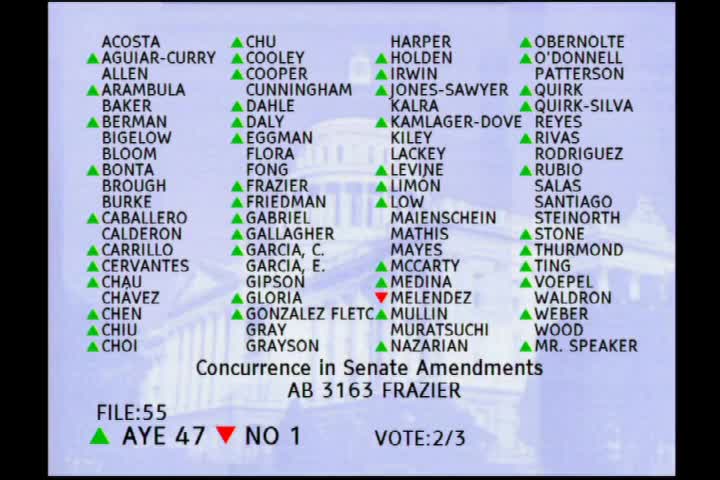

Bill Author

Bill Co-Author(s):