AB 2654: Design-build: Orange County.
- Session Year: 2017-2018
- House: Assembly
- Latest Version Date: 2018-08-28
Existing law, until January 1, 2025, authorizes local agencies, as defined, to use the design-build procurement process for specified public works with prescribed cost thresholds. Existing law requires specified information submitted by a design-build entity in the design-build procurement process to be certified under penalty of perjury.
This bill would authorize the County of Orange to use the design-build process for specified types of public works infrastructure projects, limited to no more than one project per year in excess of $5,000,000. The bill would also authorize the Orange County Flood Control District to use the design-build process for flood protection improvements and would limit those to no more than 12 projects in excess of $5,000,000 prior to January 1, 2025. By expanding design-build authority to include additional projects, the bill would expand the scope of the crime of perjury, thereby imposing a state-mandated local program.
This bill would make legislative findings and declarations as to the necessity of a special statute for the County of Orange and the Orange County Flood Control District.
The California Constitution requires the state to reimburse local agencies and school districts for certain costs mandated by the state. Statutory provisions establish procedures for making that reimbursement.
This bill would provide that no reimbursement is required by this act for a specified reason.
Existing law, until January 1, 2025, authorizes local agencies, as defined, to use the design-build procurement process for specified public works with prescribed cost thresholds. Existing law requires specified information submitted by a design-build entity in the design-build procurement process to be certified under penalty of perjury.
This bill would authorize the County of Orange to use the design-build process for specified types of public works infrastructure projects, limited to no more than an average of 3 projects one project per year in excess of $5,000,000. The bill would also authorize the Orange County Flood Control District to use the design-build process for flood protection improvements and would limit those to no more than an average of 3 projects per year 12 projects in excess of $5,000,000. $5,000,000 prior to January 1, 2025. By expanding design-build authority to include additional projects, the bill would expand the scope of the crime of perjury, thereby imposing a state-mandated local program.
This bill would make legislative findings and declarations as to the necessity of a special statute for the County of Orange and the Orange County Flood Control District.
The California Constitution requires the state to reimburse local agencies and school districts for certain costs mandated by the state. Statutory provisions establish procedures for making that reimbursement.
This bill would provide that no reimbursement is required by this act for a specified reason.
Existing law, until January 1, 2025, authorizes local agencies, as defined, to use the design-build procurement process for specified public works with prescribed cost thresholds. Existing law requires specified information submitted by a design-build entity in the design-build procurement process to be certified under penalty of perjury.
This bill would establish similar provisions specific to Orange County. The bill would authorize the County of Orange and the Orange County Flood Control District, indefinitely and without exclusion, to use the design-build process for specified types of public works infrastructure projects projects, limited to no more than an average of 3 projects per year in excess of $1,000,000. The bill would require specified information to be verified under penalty of perjury. By expanding the crime of perjury, the bill would impose a state-mandated local program. $5,000,000. The bill would also authorize the Orange County Flood Control District to use the design-build process for flood protection improvements and would limit those to no more than an average of 3 projects per year in excess of $5,000,000. By expanding design-build authority to include additional projects, the bill would expand the scope of the crime of perjury, thereby imposing a state-mandated local program.
This bill would make legislative findings and declarations as to the necessity of a special statute for Orange County. the County of Orange and the Orange County Flood Control District.
The California Constitution requires the state to reimburse local agencies and school districts for certain costs mandated by the state. Statutory provisions establish procedures for making that reimbursement.
This bill would provide that no reimbursement is required by this act for a specified reason.
Existing law, until January 1, 2025, authorizes local agencies, as defined, to use the design-build procurement process for specified public works with prescribed cost thresholds.
This bill would establish similar provisions specific to Orange County. The bill would authorize the County of Orange and the Orange County Flood Control District, indefinitely and without exclusion, to use design-build for public works infrastructure projects in excess of $1,000,000. The bill would require specified information to be verified under penalty of perjury. By expanding the crime of perjury, the bill would impose a state-mandated local program.
This bill would make legislative findings and declarations as to the necessity of a special statute for Orange County.
The California Constitution requires the state to reimburse local agencies and school districts for certain costs mandated by the state. Statutory provisions establish procedures for making that reimbursement.
This bill would provide that no reimbursement is required by this act for a specified reason.
(a)Upon approval of the board of supervisors, the County of Orange may use the design-build contracting process described in this chapter to award a contract for the following projects:
(1)Flood protection improvements.
(2)Harbor and beach improvements.
(3)Bikeway improvements.
(b)In addition to the requirements set forth in Section 22164, for a project authorized under subdivision (a), the county shall be responsible for the performance of, and county employees in Orange County Public Works may perform, project development services, including performance specifications, preliminary engineering, procurement services and the preparation of project reports, and construction inspection services, excluding specialty bridge inspectors. The county shall also be the responsible agency for, and county employees in Orange County Public Works may perform, the preparation of documents that may include, but need not be limited to, the size, type, and desired design character of the project, performance specifications covering quality of materials, equipment, and workmanship, preliminary plans, and any other information deemed necessary to describe adequately the needs of the County of Orange.
(c)For a project authorized under subdivision (a), the county shall be limited to no more than one project per year in excess of five million dollars ($5,000,000).
SEC. 2.Section 22162.7 is added to the Public Contract Code, to read:22162.7.(a)Upon approval of the governing body, the Orange County Flood Control District, as defined in Chapter 36 of the Orange County Flood Control Act, Sections 1 to 23 of the Orange County Flood Control Act, Water Code Appendix, may use the design-build contracting process described in this chapter to award a contract for flood protection improvements.
(b)In addition to the requirements set forth in Section 22164, for a project authorized under subdivision (a), the Orange County Flood Control District shall be responsible for the performance of, and county employees in Orange County Public Works may perform, project development services, including performance specifications, preliminary engineering, procurement services and the preparation of project reports, and construction inspection services, excluding specialty bridge inspectors. The county shall also be the responsible agency for, and county employees in Orange County Public Works may perform, the preparation of documents that may include, but need not be limited to, the size, type, and desired design character of the project, performance specifications covering quality of materials, equipment, and workmanship, preliminary plans, and any other information deemed necessary to describe adequately the needs of the Orange County Flood Control District.
(c)For a project authorized under subdivision (a), the district shall be limited to no more than twelve projects in excess of five million dollars ($5,000,000) prior to January 1, 2025.
SEC. 3.The Legislature finds and declares that a special statute is necessary and that a general statute cannot be made applicable within the meaning of Section 16 of Article IV of the California Constitution because of the unique conditions in Orange County that make it necessary to grant the County of Orange and the Orange County Flood Control District the authority to use the specific design-build procurement process described in this act.
SEC. 4.No reimbursement is required by this act pursuant to Section 6 of Article XIIIB of the California Constitution because the only costs that may be incurred by a local agency or school district will be incurred because this act creates a new crime or infraction, eliminates a crime or infraction, or changes the penalty for a crime or infraction, within the meaning of Section 17556 of the Government Code, or changes the definition of a crime within the meaning of Section 6 of Article XIIIB of the California Constitution.
(a)Upon approval of the board of supervisors, the County of Orange may use the design-build contracting process described in this chapter to award a contract for the following projects:
(1)Flood protection improvements.
(2)Harbor and beach improvements.
(3)Bikeway improvements.
(b)In addition to the requirements set forth in Section 22164, for a project authorized under subdivision (a), the county shall be responsible for the performance of, and county employees in Orange County Public Works shall may perform, project development services, including performance specifications, preliminary engineering, procurement services and the preparation of project reports, and construction inspection services, excluding specialty bridge inspectors. The county shall also be the responsible agency for, and county employees in Orange County Public Works shall may perform, the preparation of documents that may include, but need not be limited to, the size, type, and desired design character of the project, performance specifications covering quality of materials, equipment, and workmanship, preliminary plans, and any other information deemed necessary to describe adequately the needs of the County of Orange.
(c)For a project authorized under subdivision (a), the county shall be limited to no more than an average of three projects one project per year in excess of five million dollars ($5,000,000).
SEC. 2.Section 22162.7 is added to the Public Contract Code, to read:22162.7.(a)Upon approval of the governing body, the Orange County Flood Control District, as defined in Chapter 36 of the Orange County Flood Control Act, Sections 1 to 23 of the Orange County Flood Control Act, Water Code Appendix, may use the design-build contracting process described in this chapter to award a contract for flood protection improvements.
(b)In addition to the requirements set forth in Section 22164, for a project authorized under subdivision (a), the Orange County Flood Control District shall be responsible for the performance of, and county employees in Orange County Public Works shall may perform, project development services, including performance specifications, preliminary engineering, procurement services and the preparation of project reports, and construction inspection services, excluding specialty bridge inspectors. The county shall also be the responsible agency for, and county employees in Orange County Public Works shall may perform, the preparation of documents that may include, but need not be limited to, the size, type, and desired design character of the project, performance specifications covering quality of materials, equipment, and workmanship, preliminary plans, and any other information deemed necessary to describe adequately the needs of the Orange County Flood Control District.
(c)For a project authorized under subdivision (a), the district shall be limited to no more than an average of three projects per year twelve projects in excess of five million dollars ($5,000,000). ($5,000,000) prior to January 1, 2025.
SEC. 3.The Legislature finds and declares that a special statute is necessary and that a general statute cannot be made applicable within the meaning of Section 16 of Article IV of the California Constitution because of the unique conditions in Orange County that make it necessary to grant the County of Orange and the Orange County Flood Control District the authority to use the specific design-build procurement process described in this act.
SEC. 4.No reimbursement is required by this act pursuant to Section 6 of Article XIIIB of the California Constitution because the only costs that may be incurred by a local agency or school district will be incurred because this act creates a new crime or infraction, eliminates a crime or infraction, or changes the penalty for a crime or infraction, within the meaning of Section 17556 of the Government Code, or changes the definition of a crime within the meaning of Section 6 of Article XIIIB of the California Constitution.
(a)Upon approval of the board of supervisors, the County of Orange may use the design-build contracting process described in this chapter to award a contract for the following projects:
(1)Flood protection improvements.
(2)Harbor and beach improvements.
(3)Bikeway improvements.
(b)In addition to the requirements set forth in Section 22164, for a project authorized under subdivision (a), the county shall be responsible for the performance of, and county employees in Orange County Public Works shall perform, project development services, including performance specifications, preliminary engineering, procurement services and the preparation of project reports, and construction inspection services, excluding specialty bridge inspectors. The county shall also be the responsible agency for, and county employees in Orange County Public Works shall perform, the preparation of documents that may include, but need not be limited to, the size, type, and desired design character of the project, performance specifications covering quality of materials, equipment, and workmanship, preliminary plans, and any other information deemed necessary to describe adequately the needs of the County of Orange.
(c)For a project authorized under subdivision (a), the county shall be limited to no more than an average of three projects per year in excess of five million dollars ($5,000,000).
SEC. 2.Section 22162.7 is added to the Public Contract Code, to read:22162.7.(a)Upon approval of the governing body, the Orange County Flood Control District, as defined in Chapter 36 of the Orange County Flood Control Act, Sections 1 to 23 of the Orange County Flood Control Act, Water Code Appendix, may use the design-build contracting process described in this chapter to award a contract for flood protection improvements.
(b)In addition to the requirements set forth in Section 22164, for a project authorized under subdivision (a), the Orange County Flood Control District shall be responsible for the performance of, and county employees in Orange County Public Works shall perform, project development services, including performance specifications, preliminary engineering, procurement services and the preparation of project reports, and construction inspection services, excluding specialty bridge inspectors. The county shall also be the responsible agency for, and county employees in Orange County Public Works shall perform, the preparation of documents that may include, but need not be limited to, the size, type, and desired design character of the project, performance specifications covering quality of materials, equipment, and workmanship, preliminary plans, and any other information deemed necessary to describe adequately the needs of the Orange County Flood Control District.
(c)For a project authorized under subdivision (a), the district shall be limited to no more than an average of three projects per year in excess of five million dollars ($5,000,000).
SEC. 2.SEC. 3.The Legislature finds and declares that a special statute is necessary and that a general statute cannot be made applicable within the meaning of Section 16 of Article IV of the California Constitution because of the unique conditions in Orange County that make it necessary to grant the County of Orange and the Orange County Flood Control District the authority to use the specific design-build procurement process described in this act.
SEC. 3.SEC. 4.No reimbursement is required by this act pursuant to Section 6 of Article XIIIB of the California Constitution because the only costs that may be incurred by a local agency or school district will be incurred because this act creates a new crime or infraction, eliminates a crime or infraction, or changes the penalty for a crime or infraction, within the meaning of Section 17556 of the Government Code, or changes the definition of a crime within the meaning of Section 6 of Article XIIIB of the California Constitution.
(a)The Legislature finds and declares that the design-build method of project delivery, using a best value procurement methodology, has been authorized for various agencies that have reported benefits from such projects including reduced project costs, expedited project completion, and design features that are not achievable through the traditional design-bid-build method.
(b)It is the intent of the Legislature that the following occur:
(1)This chapter provides general authorization for Orange County to use design-build for public works infrastructure projects.
(2)This chapter shall not be deemed to provide a preference for the design-build method over other procurement methodologies.
22171.For purposes of this chapter, the following definitions apply:
(a)Best value means a value determined by evaluation of objective criteria that relate to price, features, functions, life-cycle costs, experience, and past performance. A best value determination may involve the selection of the lowest cost proposal meeting the interests of Orange County and meeting the objectives of the project, selection of the best proposal for a stipulated sum established by the procuring agency, or a tradeoff between price and other specified factors.
(b)Construction subcontract means each subcontract awarded by the design-build entity to a subcontractor that will perform work or labor or render service to the design-build entity in or about the construction of the work or improvement, or a subcontractor licensed by the State of California that, under subcontract to the design-build entity, specially fabricates and installs a portion of the work or improvement according to detailed drawings contained in the plans and specifications produced by the design-build team.
(c)Design-build means a project delivery process in which both the design and construction of a project are procured from a single entity.
(d)Design-build entity means a corporation, limited liability company, partnership, joint venture, or other legal entity that is able to provide appropriately licensed contracting, architectural, and engineering services as needed pursuant to a design-build contract.
(e)Design-build team means the design-build entity itself and the individuals and other entities identified by the design-build entity as members of its team. Members shall include the general contractor and, if utilized in the design of the project, all electrical, mechanical, and plumbing contractors.
(f)Orange County means:
(1)The County of Orange.
(2)The Orange County Flood Control District.
(g)Project means a public works infrastructure project.
22172.(a)Notwithstanding any other law, Orange County, with the approval of its governing body, may procure design-build contracts for public works projects in excess of one million dollars ($1,000,000), awarding the contract to either the low bid or the best value.
(b)Orange County shall develop guidelines for a standard organizational conflict-of-interest policy, consistent with applicable law, regarding the ability of a person or entity, that performs services for Orange County relating to the solicitation of a design-build project, to submit a proposal as a design-build entity, or to join a design-build team. This conflict-of-interest policy shall apply to Orange County design-build contracts authorized under this chapter.
22173.The procurement process for the design-build projects shall progress as follows:
(a)(1) Orange County shall prepare a set of documents setting forth the scope and estimated price of the project. The documents may include, but need not be limited to, the size, type, and desired design character of the project, performance specifications covering the quality of materials, equipment, workmanship, preliminary plans or building layouts, or any other information deemed necessary to describe Orange Countys needs adequately. The performance specifications and any plans shall be prepared by a design professional who is duly licensed and registered in California.
(2)The documents shall not include a design-build-operate contract for any project. The documents, however, may include operations during a training or transition period but shall not include long-term operations for any project.
(b)Orange County shall prepare and issue a request for qualifications in order to prequalify or short-list the design-build entities whose proposals shall be evaluated for final selection. The request for qualifications shall include, but need not be limited to, the following elements:
(1)Identification of the basic scope and needs of the project or contract, the expected cost range, the methodology that will be used by Orange County to evaluate proposals, the procedure for final selection of the design-build entity, and any other information deemed necessary by Orange County to inform interested parties of the contracting opportunity.
(2)Significant factors that Orange County reasonably expects to consider in evaluating qualifications, including technical design and construction expertise, an acceptable safety record, and all other nonprice-related factors.
(3)A standard template request for statements of qualifications prepared by Orange County. In preparing the standard template, Orange County may consult with the construction industry, the building trades and surety industry, and other interested parties using the authorization provided by this article. The template shall require the following information:
(A)If the design-build entity is a privately held corporation, limited liability company, partnership, or joint venture, a listing of all of the shareholders, partners, or members known at the time of statement of qualification submission who will perform work on the project.
(B)Evidence that the members of the design-build team have completed, or demonstrated the experience, competency, capability, and capacity to complete projects of similar size, scope, or complexity, and that proposed key personnel have sufficient experience and training to competently manage and complete the design and construction of the project, and a financial statement that ensures that the design-build entity has the capacity to complete the project.
(C)The licenses, registration, and credentials required to design and construct the project, including, but not limited to, information on the revocation or suspension of any license, credential, or registration.
(D)Evidence that establishes that the design-build entity has the capacity to obtain all required payment and performance bonding, liability insurance, and errors and omissions insurance.
(E)Information concerning workers compensation experience history and a worker safety program.
(F)If the proposed design-build entity is a corporation, limited liability company, partnership, joint venture, or other legal entity, a copy of the organizational documents or agreement committing to form the organization.
(G)An acceptable safety record. A proposers safety record shall be deemed acceptable if its experience modification rate for the most recent three-year period is an average of 1.00 or less, and its average total recordable injury or illness rate and average lost work rate for the most recent three-year period does not exceed the applicable statistical standards for its business category or if the proposer is a party to an alternative dispute resolution system as provided for in Section 3201.5 of the Labor Code.
(4)(A) The information required under this subdivision shall be certified under penalty of perjury by the design-build entity and its general partners or joint venture members.
(B)Information required under this subdivision that is not otherwise a public record under the California Public Records Act (Chapter 3.5 (commencing with Section 6250) of Division 7 of Title 1 of the Government Code) shall not be open to public inspection.
(c)Based on the documents prepared as described in subdivision (a), Orange County shall prepare a request for proposals that invites prequalified or short-listed entities to submit competitive sealed proposals in the manner prescribed by Orange County. The request for proposals shall include, but need not be limited to, the following elements:
(1)Identification of the basic scope and needs of the project or contract, the estimated cost of the project, the methodology that will be used by Orange County to evaluate proposals, whether the contract will be awarded on the basis of low bid or best value, and any other information deemed necessary by Orange County to inform interested parties of the contracting opportunity.
(2)Significant factors that Orange County reasonably expects to consider in evaluating proposals, including, but not limited to, cost or price and all nonprice-related factors.
(3)The relative importance or the weight assigned to each of the factors identified in the request for proposals.
(4)Where a best value selection method is used, Orange County may reserve the right to request proposal revisions and hold discussions and negotiations with responsive proposers, in which case Orange County shall so specify in the request for proposals and shall publish separately or incorporate into the request for proposals applicable procedures to be observed by Orange County to ensure that any discussions or negotiations are conducted in good faith.
(d)For those projects utilizing low bid as the final selection method, the competitive bidding process shall result in lump-sum bids by the prequalified or short-listed design-build entities, and awards shall be made to the design-build entity that is the lowest responsible bidder.
(e)For those projects utilizing best value as a selection method, the design-build competition shall progress as follows:
(1)Competitive proposals shall be evaluated by using only the criteria and selection procedures specifically identified in the request for proposals. The following minimum factors, however, shall be weighted as deemed appropriate by Orange County:
(A)Price, unless a stipulated sum is specified.
(B)Technical design and construction expertise.
(C)Life-cycle costs over 15 or more years.
(2)Pursuant to subdivision (d), Orange County may hold discussions or negotiations with responsive proposers using the process articulated in Orange Countys request for proposals.
(3)When the evaluation is complete, the responsive proposers shall be ranked based on a determination of value provided, provided that no more than three proposers are required to be ranked.
(4)The award of the contract shall be made to the responsible design-build entity whose proposal is determined by Orange County to have offered the best value to the public.
(5)Notwithstanding any other provision of this code, upon issuance of a contract award, Orange County shall publicly announce its award, identifying the design-build entity to which the award is made, along with a statement regarding the basis of the award.
(6)The statement regarding Orange Countys contract award, described in paragraph (5), and the contract file shall provide sufficient information to satisfy an external audit.
SEC. 2.The Legislature finds and declares that a special statute is necessary and that a general statute cannot be made applicable within the meaning of Section 16 of Article IV of the California Constitution because of the unique conditions in Orange County that make it necessary to grant the County of Orange and the Orange County Flood Control District the authority to use the specific design-build procurement process described in this act.
SEC. 3.No reimbursement is required by this act pursuant to Section 6 of Article XIIIB of the California Constitution because the only costs that may be incurred by a local agency or school district will be incurred because this act creates a new crime or infraction, eliminates a crime or infraction, or changes the penalty for a crime or infraction, within the meaning of Section 17556 of the Government Code, or changes the definition of a crime within the meaning of Section 6 of Article XIIIB of the California Constitution.
|
Date
|
Status
|
|---|---|
| Aug 28, 2018 | Chaptered by Secretary of State - Chapter 239, Statutes of 2018. |
| Aug 28, 2018 | Approved by the Governor. |
| Aug 16, 2018 | Enrolled and presented to the Governor at 4 p.m. |
| Aug 13, 2018 | Senate amendments concurred in. To Engrossing and Enrolling. |
| Aug 9, 2018 | In Assembly. Concurrence in Senate amendments pending. May be considered on or after August 11 pursuant to Assembly Rule 77. |
| Aug 9, 2018 | Read third time. Passed. Ordered to the Assembly. |
| Jul 3, 2018 | Read second time. Ordered to third reading. |
| Jul 2, 2018 | From committee: Be ordered to second reading pursuant to Senate Rule 28.8. |
| Jun 14, 2018 | Read second time and amended. Re-referred to Com. on APPR. |
| Jun 13, 2018 | From committee: Amend, and do pass as amended and re-refer to Com. on APPR. (Ayes 7. Noes 0.) (June 13). |
| May 24, 2018 | Referred to Com. on GOV. & F. |
| May 10, 2018 | In Senate. Read first time. To Com. on RLS. for assignment. |
| May 10, 2018 | Read third time. Passed. Ordered to the Senate. |
| May 3, 2018 | Read second time. Ordered to Consent Calendar. |
| May 2, 2018 | From committee: Do pass. To Consent Calendar. (Ayes 17. Noes 0.) (May 2). |
| Apr 19, 2018 | From committee: Do pass and re-refer to Com. on APPR. (Ayes 9. Noes 0.) (April 18). Re-referred to Com. on APPR. |
| Apr 11, 2018 | Re-referred to Com. on L. GOV. |
| Apr 10, 2018 | From committee chair, with author's amendments: Amend, and re-refer to Com. on L. GOV. Read second time and amended. |
| Mar 8, 2018 | Referred to Com. on L. GOV. |
| Feb 16, 2018 | From printer. May be heard in committee March 18. |
| Feb 15, 2018 | Read first time. To print. |
|
Date
|
Description
|
Location
|
Votes
|
|
|---|---|---|---|---|
| Aug 13, 2018 | AB 2654 QUIRK-SILVA Concurrence in Senate Amendments | Assembly Floor |
Passed |
|
| Aug 9, 2018 | Assembly 3rd Reading AB2654 Quirk-Silva By Moorlach | Senate Floor |
Passed |
|
| Jun 13, 2018 | Do pass as amended, but first amend, and re-refer to the Committee on [Appropriations] | Senate Standing Committee on Governance and Finance |
Passed |
|
| May 10, 2018 | AB 2654 QUIRK-SILVA Consent Calendar Second Day Regular Session | Assembly Floor |
Passed |
|
| May 2, 2018 | Do pass. To Consent Calendar. | Assembly Standing Committee on Appropriations |
Passed |
|
| Apr 18, 2018 | Do pass and be re-referred to the Committee on [Appropriations] | Assembly Standing Committee on Local Government |
Passed |
This list shows positions taken on this bill by organizations on the date displayed, which is linked to the original source.
Positions by individuals are not included.
|
Organization
|
Position
|
Date
|
|---|---|---|
| Aaron Reid and Associates | * Support | Jun 13, 2018 |
| Estate Building and Construction Trades Council | * Support | Jun 13, 2018 |
| Orange County Board of Supervisors | ** Support | Jul 3, 2018 |
| Orange County Board Of Supervisors . | ** Support | Jun 8, 2018 |
| Orange County Business Council | ** Support | Apr 17, 2018 |
| Orange County Public Works | * Support | Apr 18, 2018 |
| Orange County [Sponsor] | ** Support | Apr 17, 2018 |
| Unknown. | ** Against | Jun 8, 2018 |
CONCURRENCE IN SENATE AMENDMENTS
CSA1 Bill Id:AB 2654
Author:(Quirk-Silva)
As Amended Ver:June 14, 2018
Majority vote
ASSEMBLY: | 73-0 | (May 10, 2018) | SENATE: | 36-0 | (August 9, 2018) |
Original Committee Reference: L. GOV.
SUMMARY: Authorizes Orange County and the Orange County Flood Control District (District) to use the design-build contracting process for specified projects.
The Senate amendments:
- Reduce the number of projects authorized by this bill to one project per year for Orange County, and a total of 12 projects before January 1, 2025, for the District.
- Allow, rather than require, Orange County Public Works employees to perform project development services and preparation of documents, as specified.
EXISTING LAW:
- Requires, pursuant to the Local Agency Public Construction Act (LAPC Act), local officials to invite bids for construction projects and then award contracts to the lowest responsible bidder under the traditional design-bid-build project delivery system.
- Authorizes, until January 1, 2025, cities, counties, and specified special districts, transit and transportation agencies, and specified additional local agencies to use design-build for specified public works contracts in excess of $1 million using either a low bid or best value process.
AS PASSED BY THE ASSEMBLY, this bill:
- Allowed Orange County, upon approval of its board of supervisors, to use the design-build contracting process authorized for local agencies to award a contract for flood protection improvements, harbor and beach improvements, and bikeway improvements.
- Required the following for a project authorized above:
- Orange County shall be responsible for the performance of, and county employees in Orange County Public Works shall perform, project development services, including performance specifications, preliminary engineering, procurement services and the preparation of project reports, and construction inspection services, excluding specialty bridge inspectors; and,
- Orange County shall also be the responsible agency for, and county employees in Orange County Public Works shall perform, the preparation of documents that may include, but need not be limited to, the size, type, and desired design character of the project, performance specifications covering quality of materials, equipment, and workmanship, preliminary plans, and any other information deemed necessary to describe adequately the needs of the county.
- Limited Orange County, for a project authorized in 1), above, to no more than an average of three projects per year in excess of $5 million.
- Allowed the District, upon approval of its governing body, to use the design-build contracting process authorized for local agencies to award a contract for flood protection improvements.
- Required the following for a project authorized in 4), above:
- The District shall be responsible for the performance of, and county employees in Orange County Public Works shall perform, project development services, including performance specifications, preliminary engineering, procurement services and the preparation of project reports, and construction inspection services, excluding specialty bridge inspectors; and,
- The District shall also be the responsible agency for, and county employees in Orange County Public Works shall perform, the preparation of documents that may include, but need not be limited to, the size, type, and desired design character of the project, performance specifications covering quality of materials, equipment, and workmanship, preliminary plans, and any other information deemed necessary to describe adequately the needs of the District.
- Limited the District, for a project authorized in 4), above, to no more than an average of three projects per year in excess of $5 million.
- Found and declared that a special statute is necessary and that a general statute cannot be made applicable within the meaning of the California Constitution, Article IV Section 16 because of the unique conditions in Orange County that make it necessary to grant the County of Orange and the Orange County Flood Control District the authority to use the specific design-build procurement process described in this act.
- Provided that no reimbursement is required by this bill because the only costs that may be incurred by a local agency or school district will be incurred because the bill creates a new crime or infraction, eliminates a crime or infraction, or changes the penalty for a crime or infraction, within the meaning of Government Code Section 17556, or changes the definition of a crime within the meaning of the California Constitution Article XII B Section 6.
FISCAL EFFECT: According to the Senate Appropriations Committee, pursuant to Senate Rule 28.8, negligible state costs.
COMMENTS:
- Bill Summary. This bill allows Orange County and the District to use the design-build contracting process authorized for local agencies for specified projects. For Orange County, the additional projects are limited to flood protection improvements, harbor and beach improvements, and bikeway improvements. For the District, the projects are limited to flood protection improvements only.
The bill requires each agency to be responsible for the performance of project development services, including performance specifications, preliminary engineering, procurement services and the preparation of project reports, and construction inspection services, excluding specialty bridge inspectors. It also requires each agency to be responsible for the preparation of documents that may include, but need not be limited to, the size, type, and desired design character of the project, performance specifications covering quality of materials, equipment, and workmanship, preliminary plans, and any other information deemed necessary to describe adequately the needs of each agency. County employees in Orange County Public Works may perform all of these services.
Each agency is limited to the following number of projects in excess of $5 million: one project per year for Orange County, and a total of 12 projects before January 1, 2025, for the District. This bill is sponsored by Orange County.
- Author's Statement. According to the author, "The Design-Build method provided by AB 2654 will provide the County with expedited project delivery and cost savings, especially for a number of pending stormwater and flood control projects to better serve Orange County residents and businesses."
- Background. The LAPC Act generally requires local officials to invite bids for construction projects and then award contracts to the lowest responsible bidder. This design-bid-build method is the traditional approach to public works construction. The design-bid-build process was developed to protect taxpayers from extravagance, corruption, and other improper practices by public officials as well as to secure a fair and reasonable price for public works construction by injecting competition amongst bidders into the process.
Although design-bid-build generally results in the lowest cost construction contract, it is not without its drawbacks, including:
- Projects generally take longer to complete because designs must be entirely completed, permits obtained, and right-of-way acquired before the construction contract can be bid and awarded.
- Designs prepared for a competitive low-bid procurement are developed to allow for a broad range of construction approaches. As a result, low-bid designs do not always equate to the most efficient design possible, depending on a particular contractor's particular strengths or capabilities.
- Because the project designer does not have the benefit of consulting with the entity that will ultimately be responsible for construction of the project, there may be significant issues that the designer does not anticipate, particularly constructability issues. This can result in change orders that ultimately drive up the price of the contract.
- Low-bid is not always the least expensive option, once change orders and contractor claims are factored into the overall project costs.
In the early 1990s, public works agencies grew frustrated with design-bid-build and began experimenting with other project delivery methods, including design-build. Under the design-build method, a single contract covers the design and construction of a project with a single company or consortium that acts as both the project designer and builder. The design-build entity arranges all architectural, engineering, and construction services, and is responsible for delivering the project at a guaranteed price and schedule based upon performance criteria set by the public agency.
Design-build differs from design-bid-build in some key areas, including:
- Shorter overall elapsed project delivery time because construction can begin before final design is complete;
- Project costs and schedule risks are more heavily borne by the design-build contractor;
- Construction claims and change orders are minimized;
- Designs can be developed to take advantage of particular contractor's strengths and abilities, thereby reducing the need to "over-design" for generic use as in design-bid-build;
- Project specifications are typically based on definitive performance criteria (which may or may not be well established by the project owner) rather than established specifications; and,
- Contracts are awarded based on best-value analyses rather than low-bid.
Design-build contracts are not without their drawbacks as well. For example, with a design-build project, the project owner must give up a good deal of control over the details of the project design. Additionally, design-build contractors are typically selected using qualifications-based selection criteria or best value analysis. These approaches are more subjective than a low-bid approach, potentially subjecting the public works owner to greater contract challenges and higher costs.
- Design-Build in California Law. As noted above, the Legislature began granting design-build authority in the early 1990's, and has typically done so with specified parameters, such as the duration of the authority, the types of agencies allowed to use it, the types of projects for which it can be used, cost thresholds, and specified procedures that must be followed in preparing and awarding contracts. Over the years, this resulted in a plethora of statutes in a variety of code sections, which created confusion for public agencies and contractors alike.
In an effort to consolidate these statutes, SB 785 (Wolk), Chapter 931, Statutes of 2014, repealed existing law authorizing the Department of General Services (DGS), the Department of Corrections and Rehabilitation (CDCR), and local agencies to use the design-build procurement process, and enacted uniform provisions authorizing DGS, CDCR, and specified local agencies to utilize the design-build procurement process for specified public works projects (with some exceptions, notably design-build authority for CalTrans). SB 785 created one set of codes for DGS and CDCR, and a separate set for specified local agencies, but with similar parameters.
Since SB 785 was enacted, the Legislature has authorized nearly a dozen additional local agencies or types of local agencies to use SB 785 design-build authority for additional projects or types of projects (see Previous Legislation, below).
- Limits on Design-Build for Cities and Counties. Existing law generally limits the use of design-build by cities and counties to the following types of projects:
- The construction of a building or buildings and improvements directly related to the construction of a building or buildings, county sanitation wastewater treatment facilities, and park and recreational facilities; and,
- Local and regional wastewater facilities, solid waste management facilities, or water recycling facilities (for cities and counties that operate such facilities).
Existing law expressly prohibits cities and counties from using design-build for the construction of other infrastructure, including, but not limited to, streets and highways, public rail transit, or water resources facilities and infrastructure [with the exception of b), above].
- Limits on Design-Build for Special Districts and Other Specified Agencies. Existing law also generally limits the use of design-build for special districts and a handful of other specified agencies by both type of district or agency and type of project. The agencies include: special districts that operate wastewater facilities, solid waste management facilities, water recycling facilities, or fire protection facilities; specified transit and transportation agencies; the San Diego Association of Governments (SANDAG); a few water agencies; and, healthcare districts. Each of these agencies is limited to the types of projects for which they can use design-build, with the exception of two healthcare districts and two open space districts that may use design-build contracting for the construction of any buildings or other facilities.
- Orange County Flood Control District. The District was established in 1927 under authorization of the Orange County Flood Control Act to provide control of flood and storm waters of the district (which is the boundary of Orange County) and of streams flowing into the district, such as the Santa Ana River or San Juan Creek. The District also mitigates the effects of tides and waves, and protects the harbors, waterways, public highways and property in the District from such waters. The District is a dependent special district governed by the Orange County Board of Supervisors and administered by county employees in the Orange County Public Works department. While the District has no employees, it owns land and assesses an annual benefit on all taxable real property in Orange County.
- Pending Projects. The County reports the following flood control projects for which it would like to use design-build: Fullerton Creek Channel; Houston Storm Channel; Cypress Pump Station; Carbon Creek Channel; East Garden Grove-Wintersburg Channel; Santa Ana Delhi Channel; Trabuco Creek Channel; San Juan Creek Channel; and Ocean View Channel. These projects are needed to provide critical flood control protection, reducing the threat of billions of dollars in damages, while protecting more than three million residents and 100,000 acres in Orange County.
The County would also like design-build authority for these harbor and beach projects: Dana Point Harbor improvements; Mile Square Park improvements; Aliso Canyon Woods Park improvements; and Irvine Regional Park improvements. These projects will provide increased access and safety to facilities and expand recreational opportunities for County residents.
Finally, the County has several projects planned to improve bikeways that would benefit from design-build authority: Orange County Loop Bikepath through Coyote Creek and El Cajon; Paularino Channel bikeway; and, Peters Canyon bikeway. These projects will provide safe pedestrian and bike trails along a 66-mile bike path that encompasses the entire County.
- Arguments in Support. Orange County, sponsor of this measure, writes, "AB 2654 will provide the County with expedited project delivery, cost savings, and superior results, especially for a number of pending complex stormwater/flood control, and other important public works infrastructure projects that serve Orange County residents and businesses."
- Arguments in Opposition. None on file.
Analysis Prepared by: Angela Mapp / L. GOV. / (916) 319-3958 FN: 0003736
Office of Senate Floor Analyses (916) 651-1520 Fax: (916) 327-4478 | AB |
THIRD READING
Bill No: AB 2654
:
SENATE GOVERNANCE & FIN. COMMITTEE: 7-0, 6/13/18
AYES: McGuire, Nguyen, Beall, Hernandez, Hertzberg, Lara, Moorlach
SENATE APPROPRIATIONS COMMITTEE: Senate Rule 28.8
ASSEMBLY FLOOR: 73-0, 5/10/18 (Consent) - See last page for vote
SOURCE: Orange County Board of Supervisors
DIGEST:
This bill authorizes Orange County and the Orange County Flood Control District to use design-build for specified types of infrastructure.
Existing law:
- Requires, pursuant to the Local Agency Public Construction Act (LAPC Act), local officials to invite bids for construction projects and then award contracts to the lowest responsible bidder under the traditional design-bid-build project delivery system.
- Authorizes, until January 1, 2025, cities, counties, and specified special districts, transit and transportation agencies, and specified additional local agencies to use design-build for specified public works contracts in excess of $1 million using either a low bid or best value process.
This bill:
- Allows Orange County, upon approval of its board of supervisors, to use the design-build contracting process authorized for local agencies to award a contract for flood protection improvements, harbor and beach improvements, and bikeway improvements.
- Requires the following for a project authorized above:
- Orange County shall be responsible for the performance of, and county employees in Orange County Public Works may perform, project development services, including performance specifications, preliminary engineering, procurement services and the preparation of project reports, and construction inspection services, excluding specialty bridge inspectors; and,
- Orange County shall also be the responsible agency for, and county employees in Orange County Public Works may perform, the preparation of documents that may include, but need not be limited to, the size, type, and desired design character of the project, performance specifications covering quality of materials, equipment, and workmanship, preliminary plans, and any other information deemed necessary to describe adequately the needs of the county.
- Limits Orange County, for a project authorized in 1), above, to no more than one project per year in excess of $5 million.
- Allows the Orange County Flood Control District (OCFCD), upon approval of its governing body, to use the design-build contracting process authorized for local agencies to award a contract for flood protection improvements.
- Requires the following for a project authorized in 4), above:
- The OCFCD shall be responsible for the performance of, and county employees in Orange County Public Works may perform, project development services, including performance specifications, preliminary engineering, procurement services and the preparation of project reports, and construction inspection services, excluding specialty bridge inspectors; and,
- The OCFCD shall also be the responsible agency for, and county employees in Orange County Public Works may perform, the preparation of documents that may include, but need not be limited to, the size, type, and desired design character of the project, performance specifications covering quality of materials, equipment, and workmanship, preliminary plans, and any other information deemed necessary to describe adequately the needs of the OCFCD.
- Limits the OCFCD, for a project authorized in 4), above, to no more than an average of 12 projects prior to January 1, 2025 in excess of $5 million.
- Includes findings and declarations to support its purposes.
Background
The LAPC Act requires local officials to invite bids for construction projects and then award contracts to the lowest responsible bidder. This design-bid-build method is the traditional, and most widely-used, approach to public works construction. This approach splits construction projects into two distinct phases: design and construction. During the design phase, the local agency prepares detailed project plans and specifications using its own employees or by hiring outside architects and engineers. Once project designs are complete, local officials invite bids from the construction industry and award the contract to the lowest responsible bidder. Although design-bid-build generally results in the lowest cost construction contract, it is not without its drawbacks, such as slower project delivery.
Design-build. In the early 1990s, public works agencies grew frustrated with design-bid-build and began experimenting with other project delivery methods, including design-build. Under design-build, a public agency contracts with a single entity—which can be a single firm, a consortium, or a joint venture—to design and construct a project. Before inviting bids, the agency prepares documents that describe the basic concept of the project, as opposed to a complete set of drawings and specifications of the final product. In the bidding phase, the agency typically evaluates bids on a low-bid or best-value basis, incorporating technical factors, such as qualifications and design quality, in addition to price.
State law allows state and local officials, until January 1, 2025, to use the design-build method for contracts in excess of $1 million to procure both design and construction services from a single company before the development of complete plans and specifications. The Department of General Services, the California Department of Corrections and Rehabilitation, cities, counties, transit districts, special districts operating wastewater, water recycling, or solid waste management facilities, and certain other special districts may use design-build. Cities and counties are limited to using design-build for a specific list of types of infrastructure, including buildings, recreational facilities, wastewater treatment facilities, solid waste management facilities, and water recycling facilities. Local officials are explicitly prohibited from funding other types of infrastructure, including water facilities.
Orange County Flood Control District. In 1927, the Orange County Flood Control Act established the OCFCD to provide control of flood and storm waters of the district and of streams flowing into the district, such as the Santa Ana River or San Juan Creek. The OCFCD also mitigates the effects of tides and waves, and protects the harbors, waterways, public highways and property in OCFCD from such waters. The OCFCD is a dependent special district governed by the Orange County Board of Supervisors and administered by county employees in the Orange County Public Works department. While OCFCD has no employees, it owns land and assesses an annual benefit on all taxable real property in Orange County.
Orange County officials want the Legislature to allow the use of design-build for additional types of infrastructure in the county.
Comments
- Purpose of the bill. Historically, water projects built by local agencies have been limited to the design-bid-build delivery method. While there are benefits to this process, such as an impartial design team and builders bidding on the same design, there are also several drawbacks. Unexpected costs may arise during construction due to change orders or other unanticipated complications. Alternative delivery methods, on the other hand, can be more cost effective when used to procure large, complex projects because these methods give contractors the freedom to develop clever solutions to problems, encourage collaboration among contractors and the public agency, and potentially transfer the risk of overruns from the public agency to the contractor. AB 2654 provides Orange County and OCFCD the necessary authorizations to use these methods for flood control improvements, harbor and beach improvements, and bikeways, thereby ensuring timely construction of much-needed infrastructure and the efficient use of taxpayer dollars.
- Design-build, by design. Originally the authorizations for state agencies and local governments to use design-build were dispersed throughout state law in separate code sections. In 2014, the Legislature consolidated these provisions into consistent, generally-applicable statutes (SB 785, Wolk, Chapter 931, Statutes of 2014). SB 785 outlined a standardized design-build procurement process in which the awarding authority may prepare a list of qualified or short-listed entities, based on specified criteria. The particulars of SB 785 were carefully negotiated to balance the interests of project proponents, labor unions, contractors, and subcontractors. SB 785 specifically prohibited cities and counties from using the design-build project delivery method for the construction of water resources facilities. Since then, at least bills have created exceptions to SB 785’s limitations. Although proponents of these bills may argue that these projects are distinctive and therefore warrant unique authority, AB 2654 is just the most recent departure from the standard set by SB 785.
FISCAL EFFECT: Appropriation: Fiscal Com.: Local:
Orange County Board of Supervisors (source)
None received
ASSEMBLY FLOOR: 73-0, 5/10/18
AYES: Acosta, Aguiar-Curry, Arambula, Baker, Berman, Bigelow, Bloom, Bonta, Brough, Burke, Caballero, Calderon, Carrillo, Cervantes, Chau, Chávez, Chen, Chiu, Choi, Chu, Cooper, Cunningham, Dahle, Daly, Eggman, Flora, Fong, Frazier, Gallagher, Eduardo Garcia, Gipson, Gloria, Gonzalez Fletcher, Gray, Grayson, Harper, Holden, Irwin, Jones-Sawyer, Kalra, Kamlager-Dove, Kiley, Lackey, Levine, Limón, Low, Maienschein, Mathis, Mayes, McCarty, Medina, Melendez, Mullin, Muratsuchi, Nazarian, O'Donnell, Patterson, Quirk, Quirk-Silva, Reyes, Rodriguez, Rubio, Salas, Santiago, Steinorth, Mark Stone, Thurmond, Ting, Voepel, Waldron, Weber, Wood, Rendon
NO VOTE RECORDED: Travis Allen, Cooley, Friedman, Cristina Garcia, Obernolte
7/3/18 16:02:23
**** END ****
SENATE COMMITTEE ON GOVERNANCE AND FINANCE
Senator Mike McGuire, Chair
2017 - 2018 Regular
Bill No: | AB 2654 | Hearing Date: | 6/13/18 |
Author: | Quirk-Silva | Tax Levy: | No |
Version: | 4/10/18 | Fiscal: | Yes |
Consultant: | Favorini-Csorba | ||
Design-build: Orange County
Authorizes Orange County and the Orange County Flood Control District to use design-build for specified types of infrastructure.
Background
The Local Agency Public Construction Act requires local officials to invite bids for construction projects and then award contracts to the lowest responsible bidder. This design-bid-build method is the traditional, and most widely-used, approach to public works construction. This approach splits construction projects into two distinct phases: design and construction. During the design phase, the local agency prepares detailed project plans and specifications using its own employees or by hiring outside architects and engineers. Once project designs are complete, local officials invite bids from the construction industry and award the contract to the lowest responsible bidder. Although design-bid-build generally results in the lowest cost construction contract, it is not without its drawbacks, including:
- Project delivery can be slow because designs must be entirely completed, permits obtained, and right-of-way acquired before the construction contract can be bid and awarded.
- Designs prepared for a competitive low-bid procurement are developed to allow for a broad range of construction approaches. As a result, low-bid designs do not always equate to the most efficient design possible, depending on a particular contractor's particular strengths or capabilities.
- Because the project designer does not have the benefit of consulting with the entity that will ultimately be responsible for construction of the project, there may be significant issues that the designer does not anticipate, particularly constructability issues. This can result in change orders that ultimately drive up the price of the contract.
- Low-bid is not always the least expensive option, once change orders and contractor claims are factored into the overall project costs.
Design-build. In the early 1990s, public works agencies grew frustrated with design-bid-build and began experimenting with other project delivery methods, including design-build. Under design-build, a public agency contracts with a single entity—which can be a single firm, a consortium, or a joint venture—to design and construct a project. Before inviting bids, the agency prepares documents that describe the basic concept of the project, as opposed to a complete set of drawings and specifications of the final product. In the bidding phase, the agency typically evaluates bids on a low-bid or best-value basis, incorporating technical factors, such as qualifications and design quality, in addition to price.
State law allows state and local officials, until January 1, 2025, to use the design-build method for contracts in excess of $1 million to procure both design and construction services from a single company before the development of complete plans and specifications. The Department of General Services, the California Department of Corrections and Rehabilitation, cities, counties, transit districts, special districts operating wastewater, water recycling, or solid waste management facilities, and certain other special districts may use design-build. Cities and counties are limited to using design-build for a specific list of types of infrastructure, including buildings, recreational facilities, wastewater treatment facilities, solid waste management facilities, and water recycling facilities. Local officials are explicitly prohibited from funding other types of infrastructure, including water facilities.
Originally the authorizations for state agencies and local governments to use design-build were dispersed throughout state law in separate code sections. In 2014, the Legislature consolidated these provisions into consistent, generally-applicable statutes (SB 785, Wolk, 2014). SB 785 outlined a standardized design-build procurement process in which the awarding authority may prepare a list of qualified or short-listed entities, based on specified criteria. Once a list of qualified or short-listed entities is complete, the awarding authority may prepare a request for proposals (RFP) that invite prequalified or short-listed entities to submit competitive sealed proposals in the manner prescribed by the awarding authority.
For projects utilizing low bid as the selection method, the competitive bidding process must involve lump-sum bids by the prequalified or short-listed design-build entities. Awards must be made to the design-build entity that is the lowest responsible bidder. For those projects utilizing best value as a selection method, proposals must be evaluated using only the criteria and selection procedures specifically identified in the RFP. The state’s design-build statutes also impose requirements for the use of skilled labor, the issuance of performance bonds, insurance coverage, and identification of subcontractors that will complete at least one-half of 1% of the value of a contract.
Orange County Flood Control District. In 1927, the Orange County Flood Control Act established the Orange County Flood Control District (OCFCD) to provide control of flood and storm waters of the district and of streams flowing into the district, such as the Santa Ana River or San Juan Creek. The OCFCD also mitigates the effects of tides and waves, and protects the harbors, waterways, public highways and property in OCFCD from such waters. The OCFCD is a dependent special district governed by the Orange County Board of Supervisors and administered by county employees in the Orange County Public Works department. While OCFCD has no employees, it owns land and assesses an annual benefit on all taxable real property in Orange County.
According to the county, a number of pending projects could benefit from the design-build procurement method, including:
- Flood protection improvements to reduce flood damages: Fullerton Creek Channel; Houston Storm Channel; Cypress Pump Station; Carbon Creek Channel; East Garden Grove-Wintersburg Channel; Santa Ana Delhi Channel; Trabuco Creek Channel; San Juan Creek Channel; and Ocean View Channel.
- Harbor, beach and park improvements to increase recreational opportunities and safety: Dana Point Harbor improvements; Mile Square Park improvements; Aliso Canyon Woods Park improvements; and Irvine Regional Park improvements.
- Bikeways and multi-use recreational facility improvements to provide safe pedestrian and bike trails along a 66-mile bike path throughout the county: OC Loop Bikepath – Coyote Creek & El Cajon; Paularino Channel bikeway; and Peters Canyon bikeway.
Orange County officials want the Legislature to allow the use of design-build for additional types of infrastructure in the county.
Proposed Law
Assembly Bill 2654 authorizes Orange County and OCFCD to use the design-build procurement method to award contracts for several types of improvements and imposes certain requirements on those projects.
Orange County. AB 2654 allows Orange County to use design-build for flood protection improvements, harbor and beach improvements, and bikeway improvements. AB 2654 limits this authorization to an average of three projects per year that exceed $5 million dollars.
In addition to meeting all the requirements in existing law for design-build procurement, AB 2654 requires Orange County to be responsible for the performance of project development services, including specified parts of the project development process, and requires employees of the Orange County Public Works department to perform those activities. AB 2654 also requires Orange County to be responsible for the preparation of documents establishing the needs of the county, including specified project criteria such as performance specifications and preliminary plans. Orange County Public Works employees must also perform these activities.
Orange County Flood Control District. AB 2654 also allows OCFCD to use design-build for flood protection improvements. AB 2654 limits this authorization to an average of three projects per year that exceed $5 million dollars.
In addition to meeting all the requirements in existing law for design-build procurement, AB 2654 requires OCFCD to be responsible for the performance of project development services, including specified parts of the project development process, and requires employees of the Orange County Public Works department to perform those activities. AB 2654 also requires Orange County to be responsible for the preparation of documents establishing the needs of the county, including specified project criteria such as performance specifications and preliminary plans. Orange County Public Works employees must also perform these activities.
State Revenue Impact
No estimate.
Comments
1. Purpose of the bill. Historically, water projects built by local agencies have been limited to the design-bid-build delivery method. While there are benefits to this process, such as an impartial design team and builders bidding on the same design, there are also several drawbacks. Unexpected costs may arise during construction due to change orders or other unanticipated complications. Alternative delivery methods, on the other hand, can be more cost effective when used to procure large, complex projects because these methods give contractors the freedom to develop clever solutions to problems, encourage collaboration among contractors and the public agency, and potentially transfer the risk of overruns from the public agency to the contractor. AB 2654 provides Orange County and OCFCD the necessary authorizations to use these methods for flood control improvements, harbor and beach improvements, and bikeways, thereby ensuring timely construction of much-needed infrastructure and the efficient use of taxpayer dollars.
2. Design-build, by design. SB 785 was enacted to harmonize the state’s design-build authorizations that had been scattered across sections of code. The particulars of SB 785 were carefully negotiated to balance the interests of project proponents, labor unions, contractors, and subcontractors. SB 785 specifically prohibited cities and counties from using the design-build project delivery method for the construction of water resources facilities. Since then, several bills have created exceptions to SB 785’s limitations, including: AB 2551 (Gallagher, 2016), which allowed local agencies to use design-build, design-bid-build, or construction manager at-risk for specific water storage projects that receive funding from the 2014 statewide water bond (Proposition 1); SB 373 (Cannella, 2017), which allowed the Stanislaus Regional Water Authority to utilize design-build to construct a surface water supply project; and several additional bills to give other individual districts the ability to use the design-build authority given to cities and counties (AB 1290, Dahle, 2015; SB 974, Committee on Governance and Finance, 2016; and SB 793, Hill, 2017). Although proponents of these bills may argue that these projects are distinctive and therefore warrant unique authority, AB 2654 is just the most recent departure from the standard set by SB 785. The Committee may wish to consider a discussion on broadening design-build authority for large projects to all local agencies.
3. Congenial to the Constitution. Article XXII of the California Constitution permits the state and all local agencies to contract with private entities to perform architectural and engineering services—including during all phases of design and construction—for any public work (Proposition 35, 2000). The courts have since interpreted this provision to invalidate attempts by the Legislature to require these activities to be performed by government employees. AB 2654 requires certain parts of the design-build process to be performed by Orange County Public Works employees, such as preliminary engineering and preliminary plans, but this requirement may run afoul of Article XXII’s terms. To avoid a Constitutional problem while retaining adequate oversight over the use of this authority, the Committee may wish to consider amending AB 2654 to make these requirements permissive instead of mandatory and to reduce the number of projects that are authorized under the bill.
4. Let’s be clear. The design-build authority granted to cities and counties—which AB 2654 extends to Orange County and OCFCD—sunsets on January 1, 2025. AB 2654 limits those entities from using this authority for more than an average of three projects per year, but does not specify a time period over which this average must be calculated, making it difficult to determine whether Orange County or OCFCD is in compliance with the requirement at any given time. The Committee may wish to consider clarifying the time period over which this average must be calculated, or simply establishing a total cap on projects prior to a specified date.
5. Special legislation. The California Constitution prohibits special legislation when a general law can apply (Article IV, §16). AB 2654 contains findings and declarations explaining the need for legislation that only applies to Orange County and OCFCD.
6. Mandate. The California Constitution generally requires the state to reimburse local agencies for their costs when the state imposes new programs or additional duties on them. AB 2654 requires bidders to certify specified information under penalty of perjury. By expanding the crime of perjury, AB 2654 creates a new state-mandated program. But the bill disclaims the state's responsibility for reimbursing local governments for enforcing these new crimes. That's consistent with the California Constitution, which says that the state does not have to reimburse local governments for the costs of new crimes (Article XIIIB, 6[a][2]).
Assembly Actions
Assembly Local Government Committee: 9-0
Assembly Appropriations Committee: 17-0
Assembly Floor: 73-0
Support and Opposition
(6/7/18)
Support: Orange County Board of Supervisors (sponsor).
Opposition: Unknown.
-- END --
Date of Hearing: May 2, 2018
ASSEMBLY COMMITTEE ON APPROPRIATIONS
Lorena Gonzalez Fletcher, Chair
ABPCA Bill Id:AB 2654
Author:(Quirk-Silva) – As Amended Ver:April 10, 2018
Policy Committee: | Local Government | Vote: | 9 - 0 |
|
| ||
|
|
Urgency: No State Mandated Local Program: Yes Reimbursable: No
SUMMARY:
This bill authorizes Orange County and the Orange County Flood Control District (District) to use the design-build contracting process for specified projects. Specifically, this bill:
- Allows Orange County, upon approval of its board of supervisors, to use design-build to award a contract for flood protection improvements, harbor and beach improvements, and bikeway improvements.
- Allows the Orange County Flood Control District (District), upon approval of its governing body, to use design-build to award a contract for flood protection improvements.
- Requires each agency to be responsible for the performance of project development services, construction inspection services, and for the preparation of specified documents, and county employees in Orange County Public Works to perform all of these services.
- Limits each agency to no more than an average of three projects per year in excess of
$5 million.
FISCAL EFFECT:
Negligible state fiscal impact.
COMMENTS:
- Purpose. This bill seeks to grant design-build authority for a number of pending flood control, harbor and beach, and bikeway projects in Orange County. According to the author:
The Design-Build method provided by AB 2654 will provide the County with expedited project delivery and cost savings, especially for a number of pending stormwater and flood control projects to better serve Orange County residents and businesses.
- Background. The District encompasses the entire county and was established in 1927 under authorization of the Orange County Flood Control Act to provide control of flood and storm waters in the district and streams flowing into the district, such as the Santa Ana River or San Juan Creek. The District also mitigates the effects of tides and waves and protects the harbors, waterways, public highways, and property in the District from such waters. The District is a dependent special district governed by the Orange County Board of Supervisors and administered by county employees in the Orange County Public Works department.
Existing law authorizes a local agency to construct certain public works projects using the design-build project delivery method if the cost of the procurement exceeds one million dollars. Under the law, generally a local agency may use design-build to construct wastewater treatment facilities, solid waste facilities, water recycling facilities, or fire protection facilities.
Design-build is one of several methods of project delivery that are available to an entity seeking to design and construct a building or other infrastructure. The traditional procurement method for local agencies in California has been design-bid-build in which a project is designed by one entity and then constructed by another. Design-build, in contrast, covers the design and construction of a project with a single company or consortium that acts as both the project designer and builder. Over time, the Legislature expanded the number of public entities and projects authorized for the use of design-build. Today local agencies are authorized to construct buildings using design-build, and are authorized to build certain public works projects.
SB 785 (Wolk), Chapter 931, Statutes of 2014, consolidated a variety of design-build statutes and created uniform provisions for the use of design-build for specified public works projects. The bill was supported by local agencies, labor, and contractors, and both simplified compliance for contractors and protected workers with skilled and trained workforce requirements. Since SB 785 was enacted, the Legislature has authorized nearly a dozen additional local agencies or types of local agencies to use SB 785 design-build authority for additional projects or types of projects.
- Prior legislation. Most recently:
AB 851 (Caballero and Gloria), Chapter 821, Statutes of 2017, allowed the Santa Clara Valley Water District to use the design-build procurement method for specified types of projects.
AB 994 (Muratsuchi), Chapter 321, Statutes of 2017, allowed the Beach Cities Health District to use the design-build procurement method to assign contracts for the construction of facilities or other buildings in the district.
AB 1523 (Obernolte and Reyes), Chapter 154, Statutes of 2017, authorized the San Bernardino County Transportation Authority to use design-build for the construction of the Mt. Vernon Avenue Viaduct project.
SB 373 (Cannella), Chapter 391, Statutes of 2017, allowed the Stanislaus Regional Water Authority to use design-build for its Regional Surface Water Supply Project.
SB 793 (Hill), Chapter 627, Statutes of 2017, allowed the Peninsula Health Care District, the Midpeninsula Regional Open Space District, and the Santa Clara Valley Open-Space Authority to use the design-build procurement method to assign contracts for the construction of facilities or other buildings in those districts.
Analysis Prepared by: Jennifer Swenson / APPR. / (916) 319-2081
Date of Hearing: April 18, 2018
ASSEMBLY COMMITTEE ON LOCAL GOVERNMENT
Cecilia Aguiar-Curry, Chair
ABPCA Bill Id:AB 2654 (
Author:Quirk-Silva) – As Amended Ver:April 10, 2018
SUBJECT: Design-build: Orange County.
SUMMARY: Authorizes Orange County and the Orange County Flood Control District to use the design-build contracting process for specified projects. Specifically, this bill:
- Allows Orange County, upon approval of its board of supervisors, to use the design-build contracting process authorized for local agencies to award a contract for flood protection improvements, harbor and beach improvements, and bikeway improvements.
- Requires the following for a project authorized above:
- Orange County shall be responsible for the performance of, and county employees in Orange County Public Works shall perform, project development services, including performance specifications, preliminary engineering, procurement services and the preparation of project reports, and construction inspection services, excluding specialty bridge inspectors; and,
- Orange County shall also be the responsible agency for, and county employees in Orange County Public Works shall perform, the preparation of documents that may include, but need not be limited to, the size, type, and desired design character of the project, performance specifications covering quality of materials, equipment, and workmanship, preliminary plans, and any other information deemed necessary to describe adequately the needs of the county.
- Limits Orange County, for a project authorized in 1), above, to no more than an average of three projects per year in excess of $5 million.
- Allows the Orange County Flood Control District (District), upon approval of its governing body, to use the design-build contracting process authorized for local agencies to award a contract for flood protection improvements.
- Requires the following for a project authorized in 4), above:
- The District shall be responsible for the performance of, and county employees in Orange County Public Works shall perform, project development services, including performance specifications, preliminary engineering, procurement services and the preparation of project reports, and construction inspection services, excluding specialty bridge inspectors; and,
- The District shall also be the responsible agency for, and county employees in Orange County Public Works shall perform, the preparation of documents that may include, but need not be limited to, the size, type, and desired design character of the project, performance specifications covering quality of materials, equipment, and workmanship, preliminary plans, and any other information deemed necessary to describe adequately the needs of the District.
- Limits the District, for a project authorized in 4), above, to no more than an average of three projects per year in excess of $5 million.
- Finds and declares that a special statute is necessary and that a general statute cannot be made applicable within the meaning of Section 16 of Article IV of the California Constitution because of the unique conditions in Orange County that make it necessary to grant the County of Orange and the Orange County Flood Control District the authority to use the specific design-build procurement process described in this act.
- Provides that no reimbursement is required by this bill because the only costs that may be incurred by a local agency or school district will be incurred because the bill creates a new crime or infraction, eliminates a crime or infraction, or changes the penalty for a crime or infraction, within the meaning of Section 17556 of the Government Code, or changes the definition of a crime within the meaning of Section 6 of Article XIII B of the California Constitution.
EXISTING LAW:
- Requires, pursuant to the Local Agency Public Construction Act (LAPC Act), local officials to invite bids for construction projects and then award contracts to the lowest responsible bidder under the traditional design-bid-build project delivery system.
- Authorizes, until January 1, 2025, cities, counties, and specified special districts, transit and transportation agencies, and specified additional local agencies to use design-build for specified public works contracts in excess of $1 million using either a low bid or best value process.
FISCAL EFFECT: This bill is keyed fiscal.
COMMENTS:
- Bill Summary. This bill allows Orange County and the District to use the design-build contracting process authorized for local agencies for specified projects. For Orange County, the additional projects are limited to flood protection improvements, harbor and beach improvements, and bikeway improvements. For the District, the projects are limited to flood protection improvements only.
The bill requires each agency to be responsible for the performance of project development services, including performance specifications, preliminary engineering, procurement services and the preparation of project reports, and construction inspection services, excluding specialty bridge inspectors. It also requires each agency to be responsible for the preparation of documents that may include, but need not be limited to, the size, type, and desired design character of the project, performance specifications covering quality of materials, equipment, and workmanship, preliminary plans, and any other information deemed necessary to describe adequately the needs of each agency. County employees in Orange County Public Works shall perform all of these services.
Each agency is limited to no more than an average of three projects per year in excess of
$5 million. This bill is sponsored by Orange County.
- Author's Statement. According to the author, "The Design-Build method provided by AB 2654 will provide the County with expedited project delivery and cost savings, especially for a number of pending stormwater and flood control projects to better serve Orange County residents and businesses."
- Background. The LAPC Act generally requires local officials to invite bids for construction projects and then award contracts to the lowest responsible bidder. This design-bid-build method is the traditional approach to public works construction. The design-bid-build process was developed to protect taxpayers from extravagance, corruption, and other improper practices by public officials as well as to secure a fair and reasonable price for public works construction by injecting competition amongst bidders into the process.
Although design-bid-build generally results in the lowest cost construction contract, it is not without its drawbacks, including:
- Projects generally take longer to complete because designs must be entirely completed, permits obtained, and right-of-way acquired before the construction contract can be bid and awarded.
- Designs prepared for a competitive low-bid procurement are developed to allow for a broad range of construction approaches. As a result, low-bid designs do not always equate to the most efficient design possible, depending on a particular contractor's particular strengths or capabilities.
- Because the project designer does not have the benefit of consulting with the entity that will ultimately be responsible for construction of the project, there may be significant issues that the designer does not anticipate, particularly constructability issues. This can result in change orders that ultimately drive up the price of the contract.
- Low-bid is not always the least expensive option, once change orders and contractor claims are factored into the overall project costs.
In the early 1990s, public works agencies grew frustrated with design-bid-build and began experimenting with other project delivery methods, including design-build. Under the design-build method, a single contract covers the design and construction of a project with a single company or consortium that acts as both the project designer and builder. The design-build entity arranges all architectural, engineering, and construction services, and is responsible for delivering the project at a guaranteed price and schedule based upon performance criteria set by the public agency.
Design-build differs from design-bid-build in some key areas, including:
- Shorter overall elapsed project delivery time because construction can begin before final design is complete;
- Project costs and schedule risks are more heavily borne by the design-build contractor;
- Construction claims and change orders are minimized;
- Designs can be developed to take advantage of particular contractor's strengths and abilities, thereby reducing the need to "over-design" for generic use as in design-bid-build;
- Project specifications are typically based on definitive performance criteria (which may or may not be well established by the project owner) rather than established specifications; and,
- Contracts are awarded based on best-value analyses rather than low-bid.
Design-build contracts are not without their drawbacks as well. For example, with a design-build project, the project owner must give up a good deal of control over the details of the project design. Additionally, design-build contractors are typically selected using qualifications-based selection criteria or best value analysis. These approaches are more subjective than a low-bid approach, potentially subjecting the public works owner to greater contract challenges and higher costs.
- Design-Build in California Law. As noted above, the Legislature began granting design-build authority in the early 1990's, and has typically done so with specified parameters, such as the duration of the authority, the types of agencies allowed to use it, the types of projects for which it can be used, cost thresholds, and specified procedures that must be followed in preparing and awarding contracts. Over the years, this resulted in a plethora of statutes in a variety of code sections, which created confusion for public agencies and contractors alike.
In an effort to consolidate these statutes, SB 785 (Wolk), Chapter 931, Statutes of 2014, repealed existing law authorizing the Department of General Services (DGS), the Department of Corrections and Rehabilitation (CDCR), and local agencies to use the design-build procurement process, and enacted uniform provisions authorizing DGS, CDCR, and specified local agencies to utilize the design-build procurement process for specified public works projects (with some exceptions, notably design-build authority for CalTrans). SB 785 created one set of codes for DGS and CDCR, and a separate set for specified local agencies, but with similar parameters.
Since SB 785 was enacted, the Legislature has authorized nearly a dozen additional local agencies or types of local agencies to use SB 785 design-build authority for additional projects or types of projects (see Previous Legislation, below).
- Limits on Design-Build for Cities and Counties. Existing law generally limits the use of design-build by cities and counties to the following types of projects:
- The construction of a building or buildings and improvements directly related to the construction of a building or buildings, county sanitation wastewater treatment facilities, and park and recreational facilities; and,
- Local and regional wastewater facilities, solid waste management facilities, or water recycling facilities (for cities and counties that operate such facilities).
Existing law expressly prohibits cities and counties from using design-build for the construction of other infrastructure, including, but not limited to, streets and highways, public rail transit, or water resources facilities and infrastructure [with the exception of b), above].
- Limits on Design-Build for Special Districts and Other Specified Agencies. Existing law also generally limits the use of design-build for special districts and a handful of other specified agencies by both type of district or agency and type of project. The agencies include: special districts that operate wastewater facilities, solid waste management facilities, water recycling facilities, or fire protection facilities; specified transit and transportation agencies; the San Diego Association of Governments (SANDAG); a few water agencies; and, healthcare districts. Each of these agencies is limited to the types of projects for which they can use design-build, with the exception of two healthcare districts and two open space districts that may use design-build contracting for the construction of any buildings or other facilities.
- Orange County Flood Control District. The District was established in 1927 under authorization of the Orange County Flood Control Act to provide control of flood and storm waters of the district (which is the boundary of Orange County) and of streams flowing into the district, such as the Santa Ana River or San Juan Creek. The District also mitigates the effects of tides and waves, and protects the harbors, waterways, public highways and property in the District from such waters. The District is a dependent special district governed by the Orange County Board of Supervisors and administered by county employees in the Orange County Public Works department. While the District has no employees, it owns land and assesses an annual benefit on all taxable real property in Orange County.
- Pending Projects. The County reports the following flood control projects for which it would like to use design-build: Fullerton Creek Channel; Houston Storm Channel; Cypress Pump Station; Carbon Creek Channel; East Garden Grove-Wintersburg Channel; Santa Ana Delhi Channel; Trabuco Creek Channel; San Juan Creek Channel; and Ocean View Channel. These projects are needed to provide critical flood control protection, reducing the threat of billions of dollars in damages, while protecting more than three million residents and 100,000 acres in Orange County.
The County would also like design-build authority for these harbor and beach projects: Dana Point Harbor improvements; Mile Square Park improvements; Aliso Canyon Woods Park improvements; and Irvine Regional Park improvements. These projects will provide increased access and safety to facilities and expand recreational opportunities for County residents.
Finally, the County has several projects planned to improve bikeways that would benefit from design-build authority: Orange County Loop Bikepath through Coyote Creek and El Cajon; Paularino Channel bikeway; and, Peters Canyon bikeway. These projects will provide safe pedestrian and bike trails along a 66-mile bike path that encompasses the entire County.
- Previous Legislation. AB 851 (Caballero and Gloria), Chapter 821, Statutes of 2017, allowed the Santa Clara Valley Water District to use the design-build procurement method for specified types of projects.
AB 994 (Muratsuchi), Chapter 321, Statutes of 2017, allowed the Beach Cities Health District to use the design-build procurement method to assign contracts for the construction of facilities or other buildings in the district.
AB 1523 (Obernolte and Reyes), Chapter 154, Statutes of 2017, authorized the San Bernardino County Transportation Authority to use design-build for the construction of the Mt. Vernon Avenue Viaduct project.
SB 373 (Cannella), Chapter 391, Statutes of 2017, allowed the Stanislaus Regional Water Authority to use design-build for its Regional Surface Water Supply Project.
SB 793 (Hill), Chapter 627, Statutes of 2017, allowed the Peninsula Health Care District, the Midpeninsula Regional Open Space District, and the Santa Clara Valley Open-Space Authority to use the design-build procurement method to assign contracts for the construction of facilities or other buildings in those districts.
SB 957 (Hueso), Chapter 212, Statutes of 2016, allowed health care districts that own or operate a hospital or clinic to use the design-build procedure to construct a building or improvements directly related to the construction of a hospital or health facility building.
AB 1290 (Dahle), Chapter 34, Statutes of 2015, allowed the Mayers Memorial Hospital District to use the design-build procedure to construct a building or improvements directly related to the construction of a hospital or health facility building in the district.
SB 374 (Hueso), Chapter 715, Statutes of 2015, allowed SANDAG to use the design-build procurement process for specified development projects related to transit facilities developed or jointly developed by SANDAG.
AB 155 (Alejo), Chapter 865, Statutes of 2014, allowed the Monterey County Water Resources Agency to use design-build contracting to construct a pipeline or tunnel that will connect two reserviors that the agency owns and operates.
SB 268 (Gaines), Chapter 18, Statutes of 2014, allowed the Last Frontier Health Care District to use the design-build process when contracting for the construction of a building and improvements directly related to a hospital or health facility building at the Modoc Medical Center.
SB 785 (Wolk), Chapter 931, Statutes of 2014, repealed existing law authorizing DGS, CDCR, and local agencies to use the design-build procurement process, and enacted uniform provisions authorizing DGS, CDCR, and specified local agencies to utilize the design-build procurement process for specified public works projects.
- Arguments in Support. Orange County, sponsor of this measure, writes, "AB 2654 will provide the County with expedited project delivery, cost savings, and superior results, especially for a number of pending complex stormwater/flood control, and other important public works infrastructure projects that serve Orange County residents and businesses."
- Arguments in Opposition. None on file.
REGISTERED SUPPORT / OPPOSITION:
Support
Orange County [SPONSOR]
Building Industry Association of Southern California, Orange County Chapter
Orange County Business Council
Opposition
None on file
Analysis Prepared by: Angela Mapp / L. GOV. / (916) 319-3958
Discussed in Hearing
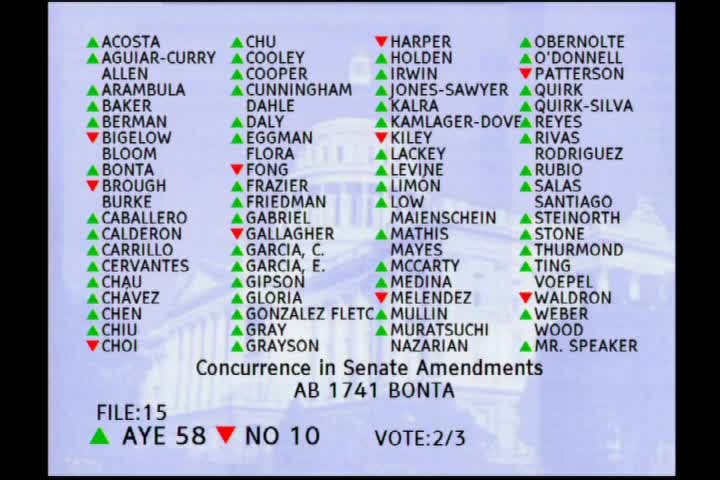 1MIN
Assembly Floor
 1MIN
Senate Floor
 3MIN
Senate Standing Committee on Governance and Finance
 6MIN
Assembly Standing Committee on Local Government
Bill Author

Bill Co-Author(s):