AB 2664: Court reporters: official reporter pro tempore.
- Session Year: 2017-2018
- House: Assembly
- Latest Version Date: 2018-09-18
Existing law authorizes the court to appoint an official reporter pro tempore when needed for the judicial business of the superior court of the county to be diligently carried on and so a particular matter may proceed to trial or hearing without delay. Existing law authorizes a pro tempore official reporter to be appointed by the presiding judge of the court or the judge presiding in the department where the reporter will serve.
This bill would instead authorize a pro tempore official reporter who is present in the courtroom providing that service to be appointed by the presiding judge of the court or the judge presiding in the department where the reporter will serve. The bill would also make conforming and technical changes and would revise obsolete provisions.
Existing law requires the Judicial Council to adopt rules to ensure, among other things, that if an official court reporter is not available, a party is authorized to arrange for the presence of a certified shorthand reporter to serve as an official pro tempore reporter and that the costs are recoverable as taxable costs by the prevailing party.
This bill would additionally require the Judicial Council to adopt rules to ensure that at the arranging partys request the court would be required to appoint the certified shorthand reporter to be present in the courtroom and serve as the official reporter pro tempore unless there is good cause shown for the court to refuse that appointment. The bill would also require that the fees and charges of the certified shorthand reporter be recoverable as taxable costs by the prevailing party.
Existing law authorizes the court to appoint an official reporter pro tempore when needed for the judicial business of the superior court of the county to be diligently carried on and so a particular matter may proceed to trial or hearing without delay. Existing law requires the written stipulation of the parties at the trial, hearing, or other proceeding in a contested matter for the appointment of an official reporter pro tempore. authorizes a pro tempore official reporter to be appointed by the presiding judge of the court or the judge presiding in the department where the reporter will serve.
This bill would require the court to appoint an official reporter pro tempore pursuant to a written stipulation of the parties, if possible. The bill would require the court, if the parties attempt to arrive at a stipulation and are unable to do so, and at least one of the parties continues to seek the appointment of an official reporter pro tempore, to appoint an official reporter pro tempore that meets specified criteria. The bill would also require the court, if a party objects to the appointment of a particular reporter submitted by the requesting party, or if parties request appointment of different reporters, to appoint an official reporter pro tempore from among the reporters submitted by the parties if the reporter is available and meets specified criteria. The bill would also make technical, nonsubstantive changes to these provisions.This bill would instead authorize a pro tempore official reporter who is present in the courtroom providing that service to be appointed by the presiding judge of the court or the judge presiding in the department where the reporter will serve. The bill would also make conforming and technical changes and would revise obsolete provisions.
Existing law requires the Judicial Council to adopt rules to ensure, among other things, that if an official court reporter is not available, a party is authorized to arrange for the presence of a certified shorthand reporter to serve as an official pro tempore reporter and that the costs are recoverable as taxable costs by the prevailing party.
This bill would additionally require the Judicial Council to adopt rules to ensure that at the arranging partys request the court would be required to appoint the certified shorthand reporter to be present in the courtroom and serve as the official reporter pro tempore unless there is good cause shown for the court to refuse that appointment. The bill would also require that the fees and charges of the certified shorthand reporter be recoverable as taxable costs by the prevailing party.
Existing law authorizes the court to appoint an official reporter pro tempore when needed for the judicial business of the superior court of the county to be diligently carried on and so a particular matter may proceed to trial or hearing without delay. Existing law requires the written stipulation of the parties at the trial, hearing, or other proceeding in a contested matter for the appointment of an official reporter pro tempore.
This bill would require the court to appoint an official reporter pro tempore from among the qualified candidates proposed by the parties if the parties are unable to arrive at a stipulation. pursuant to a written stipulation of the parties, if possible. The bill would require the court, if the parties attempt to arrive at a stipulation and are unable to do so, and at least one of the parties continues to seek the appointment of an official reporter pro tempore, to appoint an official reporter pro tempore that meets specified criteria. The bill would also require the court, if a party objects to the appointment of a particular reporter submitted by the requesting party, or if parties request appointment of different reporters, to appoint an official reporter pro tempore from among the reporters submitted by the parties if the reporter is available and meets specified criteria. The bill would also make technical, nonsubstantive changes to these provisions.
Existing law authorizes the court to appoint an official reporter pro tempore when needed for the judicial business of the superior court of the county to be diligently carried on and so a particular matter may proceed to trial or hearing without delay. Existing law requires the written stipulation of the parties at the trial, hearing, or other proceeding in a contested matter for the appointment of an official reporter pro tempore.
This bill would require the court to appoint an official reporter pro tempore from among the qualified candidates proposed by the parties if the parties are unable to arrive at a stipulation. The bill would also make technical, nonsubstantive changes to these provisions.
The following provisions apply in superior court:
(a)In addition to any other fee required in civil actions or cases:
(1)For each proceeding anticipated to last one hour or less, a fee of thirty dollars ($30) shall be charged for the reasonable cost of the court reporting services provided at the expense of the court by an official court reporter pursuant to Section 269 of the Code of Civil Procedure.
(A)The fee shall be charged to the party, or parties if filing jointly, that filed the paper that resulted in the proceeding being scheduled. If no fee has been charged, and a party subsequently requests a court reporter, that party shall be charged the fee if a reporter is to be provided by the court.
(B)All parties paying the fee shall deposit the fee with the clerk of the court as specified by the court, but not later than the conclusion of each days court session.
(C)The fee shall be charged once per case for all proceedings conducted within the same hour if the total time taken by those proceedings is one hour or less. If the total time taken exceeds one hour, the fee shall be charged and collected pursuant to paragraph (2).
(D)The fee shall be deposited into the Trial Court Trust Fund and distributed back to the court from which the fee was collected on a dollar-for-dollar basis.
(E)The fee shall be refunded as soon as practicable to the remitting party or parties if no court reporting services were provided.
(2)For each proceeding lasting more than one hour, a fee equal to the actual cost of providing that service shall be charged per one-half day of services to the parties, on a pro rata basis, for the services of an official court reporter on the first and each succeeding judicial day those services are provided pursuant to Section 269 of the Code of Civil Procedure.
(A)All parties shall deposit their pro rata shares of these fees with the clerk of the court as specified by the court, but not later than the conclusion of each days court session.
(B)For purposes of this paragraph, one-half day means any period of judicial time, in excess of one hour, but not more than four hours, during either the morning or afternoon court session.
(b)The fee shall be waived for a person who has been granted a fee waiver under Section 68631.
(c)The costs for the services of the official court reporter shall be recoverable as taxable costs by the prevailing party as otherwise provided by law.
(d)The Judicial Council shall adopt rules to ensure all of the following:
(1)That parties are given adequate and timely notice of the availability of an official court reporter.
(2)That if an official court reporter is not available, a party may arrange for, at the partys expense, the presence of a certified shorthand reporter to serve as an official pro tempore reporter. At the arranging partys request, the court shall appoint the certified shorthand reporter to be present in the courtroom and serve as the official reporter pro tempore unless there is good cause shown for the court to refuse that appointment. The fees and charges of the certified shorthand reporter shall be recoverable as taxable costs by the prevailing party as otherwise provided by law.
(3)That if the services of an official pro tempore reporter are utilized pursuant to paragraph (2), no other charge shall be made to the parties.
(e)The fees collected pursuant to this section shall be used only to pay the cost for services of an official court reporter in civil proceedings.
(f)The Judicial Council shall report on or before February 1 of each year to the Joint Legislative Budget Committee on the fees collected by courts pursuant to this section and Section 68086.1 and on the total amount spent for services of official court reporters in civil proceedings statewide in the prior fiscal year.
SEC. 2.Section 70044 of the Government Code is amended to read:70044.(a)When needed in order that the judicial business of the superior court in the county may be diligently carried on and a particular matter may proceed to trial or hearing without delay, a pro tempore official reporter may be appointed to perform the duties of a phonographic reporter in that matter, or until a regular official reporter becomes available for that service. A pro tempore official reporter who is present in the courtroom providing that service may be appointed by the presiding judge of the court or the judge presiding in the department where the reporter will serve. If the appointment is made for service in a contested matter, it shall be made only pursuant to a written stipulation of the parties appearing at the trial or hearing or other proceeding to be reported by the pro tempore reporter or pursuant to paragraph (2) of subdivision (d) of Section 68086.
(b)A pro tempore official reporter who is licensed as described in Section 69942, and who has been appointed a pro tempore official reporter by the court pursuant to Section 69941, and is present in the courtroom may serve in any matter without further order of the court or stipulation of the parties.
The following provisions apply in superior court:
(a)In addition to any other fee required in civil actions or cases:
(1)For each proceeding anticipated to last one hour or less, a fee of thirty dollars ($30) shall be charged for the reasonable cost of the court reporting services provided at the expense of the court by an official court reporter pursuant to Section 269 of the Code of Civil Procedure.
(A)The fee shall be charged to the party, or parties if filing jointly, that filed the paper that resulted in the proceeding being scheduled. If no fee has been charged, and a party subsequently requests a court reporter, that party shall be charged the fee if a reporter is to be provided by the court.
(B)All parties paying the fee shall deposit the fee with the clerk of the court as specified by the court, but not later than the conclusion of each days court session.
(C)The fee shall be charged once per case for all proceedings conducted within the same hour if the total time taken by those proceedings is one hour or less. If the total time taken exceeds one hour, the fee shall be charged and collected pursuant to paragraph (2).
(D)The fee shall be deposited into the Trial Court Trust Fund and distributed back to the court from which the fee was collected on a dollar-for-dollar basis.
(E)The fee shall be refunded as soon as practicable to the remitting party or parties if no court reporting services were provided.
(2)For each proceeding lasting more than one hour, a fee equal to the actual cost of providing that service shall be charged per one-half day of services to the parties, on a pro rata basis, for the services of an official court reporter on the first and each succeeding judicial day those services are provided pursuant to Section 269 of the Code of Civil Procedure.
(A)All parties shall deposit their pro rata shares of these fees with the clerk of the court as specified by the court, but not later than the conclusion of each days court session.
(B)For purposes of this paragraph, one-half day means any period of judicial time, in excess of one hour, but not more than four hours, during either the morning or afternoon court session.
(b)The fee shall be waived for a person who has been granted a fee waiver under Section 68631.
(c)The costs for the services of the official court reporter shall be recoverable as taxable costs by the prevailing party as otherwise provided by law.
(d)The Judicial Council shall adopt rules to ensure all of the following:
(1)That parties are given adequate and timely notice of the availability of an official court reporter.
(2)That if an official court reporter is not available, a party may arrange for for, at the partys expense, the presence of a certified shorthand reporter to serve as an official pro tempore reporter, the costs therefor recoverable as provided in subdivision (c). reporter. At the arranging partys request, the court shall appoint the certified shorthand reporter to be present in the courtroom and serve as the official reporter pro tempore unless there is good cause shown for the court to refuse that appointment. The fees and charges of the certified shorthand reporter shall be recoverable as taxable costs by the prevailing party as otherwise provided by law.
(3)That if the services of an official pro tempore reporter are utilized pursuant to paragraph (2), no other charge shall be made to the parties.
(e)The fees collected pursuant to this section shall be used only to pay the cost for services of an official court reporter in civil proceedings.
(f)The Judicial Council shall report on or before February 1 of each year to the Joint Legislative Budget Committee on the fees collected by courts pursuant to this section and Section 68086.1 and on the total amount spent for services of official court reporters in civil proceedings statewide in the prior fiscal year.
SEC. 2.Section 70044 of the Government Code is amended to read:70044.(a)When needed in order that the judicial business of the superior court in the county may be diligently carried on and a particular matter may proceed to trial or hearing without delay, a pro tempore official reporter may be appointed to perform the duties of a phonographic reporter in such that matter, or until a regular official reporter becomes available for such that service. A pro tempore official reporter for such who is present in the courtroom providing that service may be appointed by the presiding judge of the court and or the judge presiding in the department where such the reporter will serve. If such the appointment is made for service in a contested matter, it shall be made only pursuant to a written stipulation of the parties appearing at the trial or hearing or other proceeding to be reported by such the pro tempore reporter. reporter or pursuant to paragraph (2) of subdivision (d) of Section 68086.
A
(b)A pro tempore official reporter who has passed the test on qualifications and has a certificate thereof on file among the records of the court as prescribed by Section 69943, is licensed as described in Section 69942, and who has been appointed a pro tempore official reporter by a majority of the judges of such the court pursuant to Section 69941, and is present in the courtroom may serve in any matter without further order of the court or stipulation of the parties.
SECTION 1.Section 70044 of the Government Code is amended to read:70044.(a)When needed for the judicial business of the superior court in the county to be diligently carried on and for a particular matter to proceed to trial or hearing without delay, an official reporter pro tempore who is a certified shorthand reporter pursuant to Section 8018 of the Business and Professions Code may be appointed to perform the duties of a phonographic reporter in a matter, or until a regular official reporter becomes available. An official reporter pro tempore may be appointed by the presiding judge of the court and the judge presiding in the department where the reporter will serve.(1)Except as provided in paragraph (2), if the matter is contested, the appointment shall be made pursuant to a written stipulation of the parties appearing at the trial, hearing, or other proceeding to be reported by the official reporter pro tempore, if possible.(2)(A)If the parties attempt to arrive at a stipulation and are unable to do so, and at least one of the parties continues to seek the appointment of an official reporter pro tempore, the court shall appoint an official reporter pro tempore who meets the criteria described in subdivision (b).(B)If a party requests an appointment of a particular official reporter pro tempore who meets the criteria described in subdivision (b), the court shall appoint the reporter submitted by the requesting party, if the reporter is available. If a party objects to the appointment of the reporter submitted by the requesting party or if the parties request the appointment of different reporters, the court shall appoint an official reporter pro tempore from among the reporters submitted by the parties if the reporter is available and meets the criteria described in subdivision (b).(b)An official reporter pro tempore who is a certified shorthand reporter pursuant to Section 8018 of the Business and Professions Code, has passed the test on qualifications, has a certificate on file in the court records, as prescribed by Section 69942, and has been appointed an official reporter pro tempore by a majority of the judges of the court pursuant to Section 69941, may serve in any matter without further order of the court or stipulation of the parties.(a)When needed for the judicial business of the superior court in the county to be diligently carried on and for a particular matter to proceed to trial or hearing without delay, an official reporter pro tempore who is a certified shorthand reporter pursuant to Section 8018 of the Business and Professions Code may be appointed to perform the duties of a phonographic reporter in a matter, or until a regular official reporter becomes available. An official reporter pro tempore may be appointed by the presiding judge of the court and the judge presiding in the department where the reporter will serve. If the appointment is made in a contested matter, it shall be made only pursuant to a written stipulation of the parties appearing at the trial, hearing, or other proceeding to be reported by the official reporter pro tempore, if possible. If the parties cannot arrive at a stipulation, the court shall appoint an official reporter pro tempore from among the qualified candidates proposed by the parties.
(1)Except as provided in paragraph (2), if the matter is contested, the appointment shall be made pursuant to a written stipulation of the parties appearing at the trial, hearing, or other proceeding to be reported by the official reporter pro tempore, if possible.
(2)(A)If the parties attempt to arrive at a stipulation and are unable to do so, and at least one of the parties continues to seek the appointment of an official reporter pro tempore, the court shall appoint an official reporter pro tempore who meets the criteria described in subdivision (b).
(B)If a party requests an appointment of a particular official reporter pro tempore who meets the criteria described in subdivision (b), the court shall appoint the reporter submitted by the requesting party, if the reporter is available. If a party objects to the appointment of the reporter submitted by the requesting party or if the parties request the appointment of different reporters, the court shall appoint an official reporter pro tempore from among the reporters submitted by the parties if the reporter is available and meets the criteria described in subdivision (b).
(b)An official reporter pro tempore who is a certified shorthand reporter pursuant to Section 8018 of the Business and Professions Code, has passed the test on qualifications, has a certificate on file in the court records, as prescribed by Section 69942, and has been appointed an official reporter pro tempore by a majority of the judges of the court pursuant to Section 69941, may serve in any matter without further order of the court or stipulation of the parties.
(a)When needed in order that for the judicial business of the superior court in the county may to be diligently carried on and for a particular matter may to proceed to trial or hearing without delay, a an official reporter pro tempore official reporter may be appointed to perform the duties of a phonographic reporter in such a matter, or until a regular official reporter becomes available for such service. A available. An official reporter pro tempore official reporter for such service may be appointed by the presiding judge of the court and the judge presiding in the department where such the reporter will serve. If such the appointment is made for service in a contested matter, it shall be made only pursuant to a written stipulation of the parties appearing at the trial or hearing trial, hearing, or other proceeding to be reported by such pro tempore reporter. the official reporter pro tempore, if possible. If the parties cannot arrive at a stipulation, the court shall appoint an official reporter pro tempore from among the qualified candidates proposed by the parties.
A pro tempore(b)An official reporter pro tempore who has passed the test on qualifications and qualifications, has a certificate thereof on file among the records of the court in the court records, as prescribed by Section 69943, 69942, and who has been appointed a an official reporter pro tempore official reporter by a majority of the judges of such the court pursuant to Section 69941, may serve in any matter without further order of the court or stipulation of the parties.
|
Date
|
Status
|
|---|---|
| Sep 18, 2018 | Chaptered by Secretary of State - Chapter 497, Statutes of 2018. |
| Sep 18, 2018 | Approved by the Governor. |
| Sep 12, 2018 | Enrolled and presented to the Governor at 12 p.m. |
| Aug 31, 2018 | Senate amendments concurred in. To Engrossing and Enrolling. |
| Aug 31, 2018 | In Assembly. Concurrence in Senate amendments pending. |
| Aug 31, 2018 | Read third time. Passed. Ordered to the Assembly. |
| Aug 30, 2018 | Read second time. Ordered to third reading. |
| Aug 29, 2018 | From committee: Be ordered to second reading pursuant to Senate Rule 28.8. |
| Aug 27, 2018 | Re-referred to Com. on APPR. pursuant to Joint Rule 10.5. |
| Aug 24, 2018 | Read third time and amended. Ordered to second reading. |
| Jun 21, 2018 | From Consent Calendar. |
| Jun 14, 2018 | Read second time. Ordered to Consent Calendar. |
| Jun 13, 2018 | From committee: Do pass. To Consent Calendar. (Ayes 7. Noes 0.) (June 12). |
| Jun 4, 2018 | From committee chair, with author's amendments: Amend, and re-refer to committee. Read second time, amended, and re-referred to Com. on JUD. |
| May 17, 2018 | Referred to Com. on JUD. |
| May 7, 2018 | In Senate. Read first time. To Com. on RLS. for assignment. |
| May 7, 2018 | Read third time. Passed. Ordered to the Senate. |
| May 2, 2018 | Read second time. Ordered to Consent Calendar. |
| May 1, 2018 | From committee: Do pass. To Consent Calendar. (Ayes 10. Noes 0.) (May 1). |
| Mar 8, 2018 | Referred to Com. on JUD. |
| Feb 16, 2018 | From printer. May be heard in committee March 18. |
| Feb 15, 2018 | Read first time. To print. |
|
Date
|
Description
|
Location
|
Votes
|
|
|---|---|---|---|---|
| Aug 31, 2018 | AB 2664 Holden Concurrence in Senate Amendments | Assembly Floor |
Passed |
|
| Aug 31, 2018 | Assembly 3rd Reading AB2664 Holden By Monning | Senate Floor |
Passed |
|
| Jun 12, 2018 | Do pass and be ordered to the Consent Calendar | Senate Standing Committee on Judiciary |
Passed |
|
| May 7, 2018 | AB 2664 HOLDEN Consent Calendar Second Day | Assembly Floor |
Passed |
|
| May 1, 2018 | Do pass. To Consent Calendar. | Assembly Standing Committee on Judiciary |
Passed |
This list shows positions taken on this bill by organizations on the date displayed, which is linked to the original source.
Positions by individuals are not included.
|
Organization
|
Position
|
Date
|
|---|---|---|
| California Conference of Bar Associations | ** Support | Aug 29, 2018 |
| Deposition Reporters Association Of California, Inc. | ** Support | Apr 27, 2018 |
| Deposition Reporters Of America | ** Support | Aug 29, 2018 |
| Judicial Council | ** Support | Aug 29, 2018 |
| Judicial Council; United Public Employees | ** Support | Jun 11, 2018 |
| United Public Employees | ** Support | Aug 29, 2018 |
CONCURRENCE IN SENATE AMENDMENTS
CSA1 Bill Id:AB 2664
Author:(Holden)
As Amended Ver:August 24, 2018
Majority vote
ASSEMBLY: | 72-0 | (May 7, 2018) | SENATE: | 38-0 | (August 31, 2018) |
Original Committee Reference: JUD.
SUMMARY: Eliminates the requirement that all parties involved in litigation must agree and stipulate to the use of a specific court reporter pro tempore before the reporter can be appointed by the court. Specifically, this bill:
- Provides that if an official court reporter is not available, a party may arrange for, at the party's expense, the presence of a shorthand certified reporter to serve as an official pro tempore reporter.
- Provides that, at the arranging party's request, the court must appoint the certified shorthand reporter to be present in the courtroom and serve as the official reporter pro tempore unless there is good cause shown for the court to refuse that appointment.
- Provides that the fees and charges of the certified shorthand reporter are recoverable as taxable costs by the prevailing party, as otherwise provided by law.
- Makes other technical changes.
The Senate amendments:
- Revise and recast the provisions of this bill to maintain the elimination of the stipulation requirement while clarifying that an arranging party's shorthand reporter may be appointed the official pro tempore reporter, so long as that reporter is present in the courtroom and there is no good cause to reject the appointment.
- Provide that court reporters pro tempore must be appointed in accordance with existing law and must be present in the courtroom.
EXISTING LAW:
- Provides that, in order to assist the court in conducting judicial business, a majority of the judges of the superior court of the county may appoint as many regular official phonographic reporters as necessary to report the proceedings in the court and to perform such duties. The number of reporters so appointed shall not exceed at any one time the number of offices of judge provided by law for the court. (Government Code Section 70043.)
- Provides that when needed to conduct the judicial business of the superior court, a pro tempore official reporter may be appointed to perform the duties of a phonographic reporter in a matter, or until a regular official reporter becomes available for such service. A pro tempore official reporter for such service may be appointed by the presiding judge of the court and the judge presiding in the department where such reporter will serve. (Government Code Section 70044.)
- Provides that if a pro tempore official reporter is appointed pursuant to 2), above, the appointment shall be made only pursuant to a written stipulation of all parties appearing at the trial or hearing or other proceeding to be reported by such pro tempore reporter. (Government Code Section 70044.)
- Provides that a superior court may appoint as many competent phonographic reporters, to be known as official reporters of such court, and such official reporters pro tempore, as are deemed necessary for the performance of the duties and the exercise of the powers conferred by law upon the court and its members. (Government Code Section 69941.)
- Provides that no person shall be appointed to the position of official reporter of any court unless that person has first obtained a license from the Court Reporters Board of California. (Government Code Section 69942.)
- Permits any person over the age of 18 years, who has not committed any acts or crimes constituting grounds for the denial of licensure, who has a high school education, and who has satisfactorily passed an examination under any regulations that the Court Reporters Board of California may prescribe, shall be entitled to a certificate and shall be styled and known as a certified shorthand reporter so long as they provide one of the following:
- One year of experience in making verbatim records of depositions, arbitrations, hearings, or judicial or related proceedings by means of written symbols or abbreviations in shorthand or machine shorthand writing and transcribing these records;
- A verified certificate of satisfactory completion of a prescribed course of study in a recognized court reporting school or a certificate from the school that evidences an equivalent proficiency and the ability to make a verbatim record of material dictated in accordance with regulations adopted by the Court Reporters Board of California;
- A certificate from the National Court Reporters Association demonstrating proficiency in machine shorthand reporting;
- A passing grade on the California state hearing reporters examination; or
- A valid certified shorthand reporter's certificate or license to practice shorthand reporting issued by a state other than California whose requirements and licensing examination are substantially the same as those in California. (Business and Professions Code Section 8020.)
- Provides that a minimum fee of $30 shall be imposed for each court proceeding anticipated to last one hour or less for the reasonable cost of the court reporting services provided at the expense of the court by an official court reporter. (Government Code Section 68086.)
- Requires an official reporter or official reporter pro tempore of the superior court shall take down in shorthand all testimony, objections made, rulings of the court, exceptions taken, arraignments, pleas, sentences, arguments of the attorneys to the jury, and statements and remarks made and oral instructions given by the judge or other judicial officer, in the following cases:
- In a civil case, on the order of the court or at the request of a party;
- In a felony case, on the order of the court or at the request of the prosecution, the defendant, or the attorney for the defendant; and
- In a misdemeanor or infraction case, on the order of the court. (Code of Civil Procedure Section 269.)
FISCAL EFFECT: According to the Senate Appropriations Committee, pursuant to Senate Rule 28.8, negligible state costs.
COMMENTS: Unlike criminal cases, an official record produced by an official court reporter is not required by law in civil cases. Existing law does, however, provide that a court reporter may be provided upon an order of the court or at the request of a party to the proceeding. As a result of significant cuts to court budgets, however, California courts often fail to provide official reporters for civil matters. In the event that an official court reporter, one employed by the courts, cannot be provided due to workload or budget constraints, existing law enables parties to provide their own, on the condition that all parties stipulate to the appointment of the temporary court reporter, known as a pro tempore reporter. In the event that the parties to litigation cannot agree, the court proceedings advance without an official record, even if one or more parties were willing to pay for a court reporter.
In order to ensure that official transcripts are produced in as many civil matters as possible, this bill clarifies the process whereby the court may appoint a pro tempore court reporter in the event the parties cannot reach an agreement and stipulate to appointment of a court reporter. The bill would authorize the judge to appoint any qualified reporter paid for by the parties in the event of a dispute between the parties regarding the appointment of a specific reporter so long as no good cause exists to disqualify the proposed court reporter. This bill will ensure that no one party to litigation can effectively veto the appointment of an otherwise qualified court reporter as the official reporter pro tempore simply by refusing to agree to an appointment.
Analysis Prepared by: Nicholas Liedtke / JUD. / (916) 319-2334 FN: 0005138
Office of Senate Floor Analyses (916) 651-1520 Fax: (916) 327-4478 | AB |
THIRD READING
Bill No: AB 2664
:
SENATE JUDICIARY COMMITTEE: 7-0, 6/12/18
AYES: Jackson, Moorlach, Anderson, Hertzberg, Monning, Stern, Wieckowski
SENATE APPROPRIATIONS COMMITTEE: Senate Rule 28.8
ASSEMBLY FLOOR: 72-0, 5/7/18 (Consent) - See last page for vote
SUBJECT: Court reporters: official reporter pro tempore
SOURCE: California Conference of Bar Associations
Deposition Reporters of America
DIGEST:
This bill clarifies that if an official court reporter is not available, a party may arrange for, at the party’s expense, the presence of a shorthand certified reporter to serve as an official pro tempore reporter.
Senate Floor Amendments of 8/24/18 make technical changes by amending a different code section to accomplish the same general policy.
Existing law:
- Requires that an official reporter or official reporter pro tempore of the superior court take down in shorthand all testimony, objections made, rulings of the court, exceptions taken, arraignments, pleas, sentences, arguments of the attorneys to the jury, and statements and remarks made and oral instructions given by the judge or other judicial office, in a criminal case, as specified, and in a civil case on the order of the court or at the request of a party. (Code Civ. Proc. Sec. 269(a).)
- Provides that the report of the official reporter, or official reporter pro tempore, of any court, duly appointed and sworn, when transcribed and certified as being a correct transcript of the testimony and proceedings in the case, is prima facie evidence of that testimony and proceedings. (Code Civ. Proc. Sec. 273(a).)
- Establishes within the Department of Consumer Affairs the Court Reporters Board of California that is responsible for the licensure, regulation, and discipline of shorthand court reporters. (Bus. & Prof. Code Secs. 8000 & 8005.1.)
- Provides that the regulation of shorthand court reporters is designed to establish and maintain a standard of competency for those engaged in the practice of shorthand reporting, for the protection of the public, in general, and for the protection of all litigants whose rights to personal freedom and property are affected by the competency of shorthand reporters, in particular. (Bus. & Prof. Code Sec. 8015.)
- Prohibits a person from engaging in the practice of shorthand reporting, including pro tempore official reporters, unless that person is the holder of a certificate in full force and effect issued by the board. (Bus. & Prof. Code Sec. 8016.)
- Defines the practice of shorthand reporting as the making, by means of written symbols or abbreviations in shorthand or machine shorthand writing, of a verbatim record of any oral court proceeding, deposition, court ordered hearing or arbitration, or proceeding before any grand jury, referee or court commissioner and the accurate transcription thereof. (Bus. & Prof. Code Sec. 8017.)
- Provides that any natural person holding a valid certificate as a shorthand reporter is a “certified shorthand reporter,” and that no other person, firm, or corporation may assume or use that title unless so certified. (Bus. & Prof. Code Sec. 8018.)
- Provides that a violation of the provisions governing the regulation of shorthand reporters, or any support provided in the commission of such a violation, is guilty of a misdemeanor. (Bus. & Prof. Code Secs. 8018 & 8019.)
- Provides that a superior court may appoint as many competent phonographic reporters, to be known as official reporters of such court, and such official reporters pro tempore, as are deemed necessary for the performance of the duties and the exercise of the powers conferred by law upon the court and its members. (Gov. Code Sec. 69941.)
- Prohibits a person from being appointed to the position of official reporter of any court unless the person has first obtained a license to practice as a certified shorthand reporter from the Court Reporters Board of California. (Gov. Code Sec. 69942.)
- Provides that before entering upon the duties of his or her office, the official reporter of any court or official reporter pro tempore must take and subscribe the constitutional oath of office. (Gov. Code Sec. 69946.)
- Prescribes the fees for reporting testimony and proceedings at $55 a day, or any fractional part thereof, and sets varying levels of compensation for court reporters based on the county in which the reporting occurs. (Gov. Code Sec. 69948.)
- Provides that when there is no official reporter in attendance and a reporter pro tempore is appointed, his or her reasonable expenses for traveling and detention must be fixed and allowed by the court and paid in like manner. (Gov. Code Sec. 69952.)
- Requires the Judicial Council to adopt rules to ensure all of the following:
- that parties are given adequate and timely notice of the availability of an official court reporter;
- that if an official court reporter is not available, a party may arrange for the presence of a certified shorthand reporter to serve as an official pro tempore reporter, the costs therefor recoverable as taxable costs by the prevailing party, as otherwise provided by law; and
- that if the services of an official pro tempore reporter are utilized, no other charge may be made to the parties. (Gov. Code Sec. 68086(c) & (d).)
- States: “If the services of an official court reporter are not available for a hearing or trial in a civil case, a party may arrange for the presence of a certified shorthand reporter to serve as an official pro tempore reporter. It is that party’s responsibility to pay the reporter’s fee for attendance at the proceedings, but the expense may be recoverable as part of the costs, as provided by law.” (Rule of Court, Sec. 2.956(c).)
- Provides, that when needed in order for judicial business of the superior court to be diligently carried on without delay, a pro tempore official reporter may be appointed to perform the duties of a phonographic reporter in such matter, or until a regular official reporter becomes available for such service. A pro tempore official reporter for such service may be appointed by the presiding judge of the court and the judge presiding in the department where the reporter will serve. If the appointment is made for service in a contested matter, it must be made pursuant to a written stipulation of the parties appearing at the trial or hearing or other proceeding to be reported by the pro tempore reporter. (Gov. Code Sec. 70044(a).)
- Provides that a pro tempore reporter who has passed the test on qualifications and has a certificate thereof on file among the records of the court, as prescribed, and who has been appointed a pro tempore official reporter by a majority of the judges of such court, as specified, may serve in a matter without further order or stipulation of the parties. (Gov. Code Sec. 70044(b).)
This bill:
- Provides that if an official court reporter is not available, a party may arrange for, at the party’s expense, the presence of a shorthand certified reporter to serve as an official pro tempore reporter.
- Provides that, at the arranging party’s request, the court must appoint the certified shorthand reporter to be present in the courtroom and serve as the official reporter pro tempore unless there is good cause shown for the court to refuse that appointment.
- Provides that the fees and charges of the certified shorthand reporter are recoverable as taxable costs by the prevailing party, as otherwise provided by law.
- Makes other technical changes.
Background
According to the sponsors, in some cases, Government Code section 70044(a), which is intended to enable parties to stipulate to use an agreed upon court reporter pro tempore, has been construed to mean that, if the parties fail to arrive to a stipulation, a court reporter pro tempore cannot be appointed.
Code of Civil Procedure Section 269 requires that an official reporter or official reporter pro tempore of the superior court create a shorthand record of the proceedings in a civil case at the request of the party. Government Code Section 69941 provides that a superior court may appoint as many competent official reporters, and such official reporters pro tempore, as are deemed necessary for the performance of the duties and the exercise of the powers conferred by law upon the court and its members. Additionally, Government Code Section 68086, subdivision (d)(2) requires the Judicial Council to adopt rules to ensure “[t]hat if an official court reporter is not available, a party may arrange for the presence of a certified shorthand reporter to serve as an official pro tempore reporter.” Pursuant to section 68086, the Judicial Council adopted rule 2.956(c), which states: “[i]f the services of an official court reporter are not available for a hearing or trial in a civil case, a party may arrange for the presence of a certified shorthand reporter to serve as an official pro tempore reporter. It is that party's responsibility to pay the reporter's fee for attendance at the proceedings, but the expense may be recoverable as part of the costs, as provided by law.” Finally, Government Code Section 70044(b) provides that a reporter who is certified and has been appointed a pro tempore official reporter by a majority of the judges of the court may serve in a matter without further order or stipulation of the parties. Collectively, these provisions plainly establish that a stipulation is not a prerequisite for obtaining a court reporter. (See Jameson v. Desta (2015) 241 Cal.App.4th 491, 502 [“Government Code section 68086 and rule 2.956 […] provide that, to the extent an official court reporter is unavailable, a party may arrange for the presence of a court reporter and that the costs of paying such reporter may potentially be recoverable by the prevailing party”].)
Although courts must generally harmonize statutes and the interpretation described by the sponsors—that Section 70044(a)’s authorization to stipulate to the appointment of an official court reporter pro tempore amounts to an affirmative prohibition on obtaining the appointment by other means—effectively nullifies the general provisions that enable a party to unilaterally arrange for a court reporter pro tempore, a clarification may be warranted nonetheless.
In its prior iteration, this bill’s clarifying provisions were contained in Section 70044. However, after discussions with stakeholders, the author opted to instead to insert those provisions in Section 68086. While the language of the new provisions differs, the essential policy goal is the same: to clarify that a party may unilaterally arrange for the presence of a court reporter pro tempore, regardless of what the other party wants. This bill also makes technical changes to Section 70044.
FISCAL EFFECT: Appropriation: Fiscal Com.: Local:
California Conference of Bar Associations (co-source)
Deposition Reporters of America (co-source)
Judicial Council
United Public Employees
OPPOSITION: (Verified 8/26/18)
None received
ARGUMENTS IN SUPPORT: The author writes:
In order to improve the abilities of the courts to carry out justice provided by the existence of written record of court proceedings, and as to protect the rights of all parties involved in litigation by allowing more secure access to an official court reporter, this bill requires that the court appoint a certified court reporter in all cases in which the parties involved do not agree on a candidate otherwise.
AB 2664 ensures that all parties involved in a contested manner are provided a court reporter if they desire one regardless of any attempts to prevent a record from being created. This bill is essential to improving the efficiency of the court and to protecting the rights of litigants.
ASSEMBLY FLOOR: 72-0, 5/7/18
AYES: Acosta, Aguiar-Curry, Travis Allen, Arambula, Baker, Berman, Bigelow, Bloom, Brough, Burke, Caballero, Calderon, Carrillo, Cervantes, Chau, Chávez, Chiu, Choi, Chu, Cooley, Cooper, Dahle, Daly, Flora, Fong, Frazier, Friedman, Gallagher, Eduardo Garcia, Gipson, Gloria, Gonzalez Fletcher, Gray, Grayson, Harper, Holden, Irwin, Jones-Sawyer, Kalra, Kamlager-Dove, Kiley, Lackey, Levine, Limón, Low, Maienschein, Mathis, Mayes, Medina, Melendez, Mullin, Muratsuchi, Nazarian, Obernolte, O'Donnell, Patterson, Quirk, Quirk-Silva, Reyes, Rodriguez, Rubio, Salas, Santiago, Steinorth, Mark Stone, Thurmond, Ting, Voepel, Waldron, Weber, Wood, Rendon
NO VOTE RECORDED: Bonta, Chen, Cunningham, Eggman, Cristina Garcia, McCarty
Prepared by: Josh Tosney / JUD. / (916) 651-4113
8/29/18 21:24:55
Office of Senate Floor Analyses (916) 651-1520 Fax: (916) 327-4478 | AB |
THIRD READING
Bill No: AB 2664
:
SENATE JUDICIARY COMMITTEE: 7-0, 6/12/18
AYES: Jackson, Moorlach, Anderson, Hertzberg, Monning, Stern, Wieckowski
ASSEMBLY FLOOR: 72-0, 5/7/18 (Consent) - See last page for vote
SOURCE: Conference of California Bar Associations
Deposition Reporters of America
DIGEST:
This bill clarifies that an official court reporter pro tempore may be appointed even if the parties fail to stipulate to the appointment.
Existing law:
- Requires that an official reporter or official reporter pro tempore of the superior court take down in shorthand all testimony, objections made, rulings of the court, exceptions taken, arraignments, pleas, sentences, arguments of the attorneys to the jury, and statements and remarks made and oral instructions given by the judge or other judicial office, in a criminal case, as specified, and in a civil case on the order of the court or at the request of a party. (Code Civ. Proc. Sec. 269(a).)
- Provides that the report of the official reporter, or official reporter pro tempore, of any court, duly appointed and sworn, when transcribed and certified as being a correct transcript of the testimony and proceedings in the case, is prima facie evidence of that testimony and proceedings. (Code Civ. Proc. Sec. 273(a).)
- Establishes within the Department of Consumer Affairs the Court Reporters Board of California that is responsible for the licensure, regulation, and discipline of shorthand court reporters. (Bus. & Prof. Code Secs. 8000 & 8005.1.)
- Provides that the regulation of shorthand court reporters is designed to establish and maintain a standard of competency for those engaged in the practice of shorthand reporting, for the protection of the public, in general, and for the protection of all litigants whose rights to personal freedom and property are affected by the competency of shorthand reporters, in particular. (Bus. & Prof. Code Sec. 8015.)
- Prohibits a person from engaging in the practice of shorthand reporting, including pro tempore official reporters, unless that person is the holder of a certificate in full force and effect issued by the board. (Bus. & Prof. Code Sec. 8016.)
- Defines the practice of shorthand reporting as the making, by means of written symbols or abbreviations in shorthand or machine shorthand writing, of a verbatim record of any oral court proceeding, deposition, court ordered hearing or arbitration, or proceeding before any grand jury, referee or court commissioner and the accurate transcription thereof. (Bus. & Prof. Code Sec. 8017.)
- Provides that any natural person holding a valid certificate as a shorthand reporter is a “certified shorthand reporter,” and that no other person, firm, or corporation may assume or use that title unless so certified. (Bus. & Prof. Code Sec. 8018.)
- Provides that a violation of the provisions governing the regulation of shorthand reporters, or any support provided in the commission of such a violation, is guilty of a misdemeanor. (Bus. & Prof. Code Secs. 8018 & 8019.)
- Provides that a superior court may appoint as many competent phonographic reporters, to be known as official reporters of such court, and such official reporters pro tempore, as are deemed necessary for the performance of the duties and the exercise of the powers conferred by law upon the court and its members. (Gov. Code Sec. 69941.)
- Prohibits a person from being appointed to the position of official reporter of any court unless the person has first obtained a license to practice as a certified shorthand reporter from the Court Reporters Board of California. (Gov. Code Sec. 69942.)
- Provides that before entering upon the duties of his or her office, the official reporter of any court or official reporter pro tempore must take and subscribe the constitutional oath of office. (Gov. Code Sec. 69946.)
- Prescribes the fees for reporting testimony and proceedings at $55 a day, or any fractional part thereof, and sets varying levels of compensation for court reporters based on the county in which the reporting occurs. (Gov. Code Sec. 69948.)
- Provides that when there is no official reporter in attendance and a reporter pro tempore is appointed, his or her reasonable expenses for traveling and detention must be fixed and allowed by the court and paid in like manner. (Gov. Code Sec. 69952.)
- Requires the Judicial Council to adopt rules to ensure all of the following:
- that parties are given adequate and timely notice of the availability of an official court reporter;
- that if an official court reporter is not available, a party may arrange for the presence of a certified shorthand reporter to serve as an official pro tempore reporter, the costs therefor recoverable as taxable costs by the prevailing party, as otherwise provided by law; and
- that if the services of an official pro tempore reporter are utilized, no other charge may be made to the parties. (Gov. Code Sec. 68086(c) & (d).)
- States: “If the services of an official court reporter are not available for a hearing or trial in a civil case, a party may arrange for the presence of a certified shorthand reporter to serve as an official pro tempore reporter. It is that party’s responsibility to pay the reporter’s fee for attendance at the proceedings, but the expense may be recoverable as part of the costs, as provided by law.” (Rule of Court, Sec. 2.956(c).)
- Provides, that when needed in order for judicial business of the superior court to be diligently carried on without delay, a pro tempore official reporter may be appointed to perform the duties of a phonographic reporter in such matter, or until a regular official reporter becomes available for such service. A pro tempore official reporter for such service may be appointed by the presiding judge of the court and the judge presiding in the department where the reporter will serve. If the appointment is made for service in a contested matter, it must be made pursuant to a written stipulation of the parties appearing at the trial or hearing or other proceeding to be reported by the pro tempore reporter. (Gov. Code Sec. 70044(a).)
- Provides that a pro tempore reporter who has passed the test on qualifications and has a certificate thereof on file among the records of the court, as prescribed, and who has been appointed a pro tempore official reporter by a majority of the judges of such court, as specified, may serve in a matter without further order or stipulation of the parties. (Gov. Code Sec. 70044(b).)
This bill:
- Requires the court, if the parties attempt to arrive at a stipulation and are unable to do so, and at least one of the parties continues to seek the appointment of an official reporter pro tempore, to appoint an official reporter pro tempore who has been previously approved by the court.
- Provides that if a party requests an appointment of a particular official reporter pro tempore who meets the criteria in subdivision (b), the court must appoint the reporter submitted by the requesting party, if the reporter is available.
- Provides that if a party objects to the appointment of the reporter submitted by the requesting party or if parties request appointment of different reporters, the judge must appoint an official reporter pro tempore from among reporters submitted by the parties if the reporter is available and the reporter has previously been approved by the court.
Background
According to the sponsors, in some cases, Government Code Section 70044(a), which is intended to enable parties to stipulate to use an agreed upon court reporter pro tempore, has been construed to mean that, if the parties fail to arrive to a stipulation, a court reporter pro tempore cannot be appointed.
Code of Civil Procedure Section 269 requires that an official reporter or official reporter pro tempore of the superior court create a shorthand record of the proceedings in a civil case at the request of the party. Government Code Section 69941 provides that a superior court may appoint as many competent official reporters, and such official reporters pro tempore, as are deemed necessary for the performance of the duties and the exercise of the powers conferred by law upon the court and its members. Additionally, Government Code Section 68086, subdivision (d)(2) requires the Judicial Council to adopt rules to ensure “[t]hat if an official court reporter is not available, a party may arrange for the presence of a certified shorthand reporter to serve as an official pro tempore reporter.” Pursuant to Section 68086, the Judicial Council adopted rule 2.956(c), which states: “[i]f the services of an official court reporter are not available for a hearing or trial in a civil case, a party may arrange for the presence of a certified shorthand reporter to serve as an official pro tempore reporter. It is that party's responsibility to pay the reporter's fee for attendance at the proceedings, but the expense may be recoverable as part of the costs, as provided by law.” Finally, Government Code Section 70044(b) provides that a pro tempore reporter who is certified and has been appointed a pro tempore official reporter by a majority of the judges of the court may serve in a matter without further order or stipulation of the parties. Collectively, these statutes plainly establish that a stipulation is not a prerequisite for obtaining a court reporter. (See Jameson v. Desta (2015) 241 Cal.App.4th 491, 502 [“Government Code section 68086 and rule 2.956 […] provide that, to the extent an official court reporter is unavailable, a party may arrange for the presence of a court reporter and that the costs of paying such reporter may potentially be recoverable by the prevailing party”].)
Although courts must generally harmonize statutes and the interpretation described by the sponsors—that Section 70044(a)’s authorization to stipulate to the appointment of an official court reporter pro tempore amounts to an affirmative prohibition on obtaining the appointment by other means—effectively nullifies the general provisions described above that enable a party to unilaterally arrange for a court reporter pro tempore, a clarification may be warranted nonetheless. Accordingly, this bill specifies that, if the parties fail to arrive at a stipulation, then, as long as at least one of the parties continues to seek the appointment of an official reporter pro tempore, the party may request that the judge appoint a reporter who has previously been approved for such service by the court. The bill also provides that a party may request a particular court-approved reporter, and requires the court to appoint the reporter unless another party objects or submits its own reporter, in which case the judge would be required to make the appointment from the pool of submitted reporters.
FISCAL EFFECT: Appropriation: Fiscal Com.: Local:
Conference of California Bar Associations (co-source)
Deposition Reporters of America (co-source)
Judicial Council
United Public Employees
OPPOSITION: (Verified 6/12/18)
None received
ARGUMENTS IN SUPPORT: The author writes:
In order to improve the abilities of the courts to carry out justice provided by the existence of written record of court proceedings, and as to protect the rights of all parties involved in litigation by allowing more secure access to an official court reporter, this bill requires that the court appoint a certified court reporter in all cases in which the parties involved do not agree on a candidate otherwise.
AB 2664 ensures that all parties involved in a contested manner are provided a court reporter if they desire one regardless of any attempts to prevent a record from being created. This bill is essential to improving the efficiency of the court and to protecting the rights of litigants.
ASSEMBLY FLOOR: 72-0, 5/7/18
AYES: Acosta, Aguiar-Curry, Travis Allen, Arambula, Baker, Berman, Bigelow, Bloom, Brough, Burke, Caballero, Calderon, Carrillo, Cervantes, Chau, Chávez, Chiu, Choi, Chu, Cooley, Cooper, Dahle, Daly, Flora, Fong, Frazier, Friedman, Gallagher, Eduardo Garcia, Gipson, Gloria, Gonzalez Fletcher, Gray, Grayson, Harper, Holden, Irwin, Jones-Sawyer, Kalra, Kamlager-Dove, Kiley, Lackey, Levine, Limón, Low, Maienschein, Mathis, Mayes, Medina, Melendez, Mullin, Muratsuchi, Nazarian, Obernolte, O'Donnell, Patterson, Quirk, Quirk-Silva, Reyes, Rodriguez, Rubio, Salas, Santiago, Steinorth, Mark Stone, Thurmond, Ting, Voepel, Waldron, Weber, Wood, Rendon
NO VOTE RECORDED: Bonta, Chen, Cunningham, Eggman, Cristina Garcia, McCarty
Prepared by: Josh Tosney / JUD. / (916) 651-4113
6/22/18 15:09:09
**** END ****
Senator Hannah-Beth Jackson, Chair
2017-2018 Regular Session
Bill No: AB 2664 (Author:Holden)
Version: June 4, 2018
Hearing Date: June 12, 2018
Fiscal: No
Urgency: No
Consultant: JDT
SUBJECT
Court reporters: official reporter pro tempore
DESCRIPTION
This bill would clarify that an official court reporter pro tempore may be appointed even if the parties fail to stipulate to the appointment.
BACKGROUND
Transcripts generated by court reporters are essential to the administration of justice. Unfortunately, California does not mandate the use of court reporters in certain civil actions, forcing parties to choose between forgoing the creation of a formal record of the proceedings and absorbing the costs by seeking the services of private reporters. Existing law provides that if an official reporter is not available for a given proceeding, a private reporter may be appointed as an “official reporter pro tempore” for purposes of the proceeding. Existing law provides that the parties may stipulate to a particular reporter, but does not expressly address what happens if negotiations break down and they are unable to arrive at a stipulation.
This bill would clarify that in such situations, as long as at least one of the parties continues to seek the appointment of an official reporter pro tempore, the party may request that the judge appoint a reporter who has previously been approved for such service by the court. The bill would also provide that a party may request a particular court-approved reporter, and would require the court to appoint the reporter unless another party objects or submits its own reporter, in which case the judge would be required to make the appointment from the pool of submitted reporters.
CHANGES TO EXISTING LAW
Existing law requires that an official reporter or official reporter pro tempore of the superior court take down in shorthand all testimony, objections made, rulings of the court, exceptions taken, arraignments, pleas, sentences, arguments of the attorneys to the jury, and statements and remarks made and oral instructions given by the judge or other judicial office, in a criminal case, as specified, and in a civil case on the order of the court or at the request of a party. (Code Civ. Proc. Sec. 269(a).)
Existing law provides that the report of the official reporter, or official reporter pro tempore, of any court, duly appointed and sworn, when transcribed and certified as being a correct transcript of the testimony and proceedings in the case, is prima facie evidence of that testimony and proceedings. (Code Civ. Proc. Sec. 273(a).)
Existing law establishes within the Department of Consumer Affairs the Court Reporters Board of California that is responsible for the licensure, regulation, and discipline of shorthand court reporters. (Bus. & Prof. Code Secs. 8000 & 8005.1.)
Existing law provides that the regulation of shorthand court reporters is designed to establish and maintain a standard of competency for those engaged in the practice of shorthand reporting, for the protection of the public, in general, and for the protection of all litigants whose rights to personal freedom and property are affected by the competency of shorthand reporters, in particular. (Bus. & Prof. Code Sec. 8015.)
Existing law prohibits a person from engaging in the practice of shorthand reporting, including pro tempore official reporters, unless that person is the holder of a certificate in full force and effect issued by the board. (Bus. & Prof. Code Sec. 8016.)
Existing law defines the practice of shorthand reporting as the making, by means of written symbols or abbreviations in shorthand or machine shorthand writing, of a verbatim record of any oral court proceeding, deposition, court ordered hearing or arbitration, or proceeding before any grand jury, referee or court commissioner and the accurate transcription thereof. (Bus. & Prof. Code Sec. 8017.)
Existing law provides that any natural person holding a valid certificate as a shorthand reporter is a “certified shorthand reporter,” and that no other person, firm, or corporation may assume or use that title unless so certified. (Bus. & Prof. Code Sec. 8018.)
Existing law provides that a violation of the provisions governing the regulation of shorthand reporters, or any support provided in the commission of such a violation, is guilty of a misdemeanor. (Bus. & Prof. Code Secs. 8018 & 8019.)
Existing law provides that a superior court may appoint as many competent phonographic reporters, to be known as official reporters of such court, and such official reporters pro tempore, as are deemed necessary for the performance of the duties and the exercise of the powers conferred by law upon the court and its members. (Gov. Code Sec. 69941.)
Existing law prohibits a person from being appointed to the position of official reporter of any court unless the person has first obtained a license to practice as a certified shorthand reporter from the Court Reporters Board of California. (Gov. Code Sec. 69942.)
Existing law provides that before entering upon the duties of his or her office, the official reporter of any court or official reporter pro tempore must take and subscribe the constitutional oath of office. (Gov. Code Sec. 69946.)
Existing law prescribes the fees for reporting testimony and proceedings at $55 a day, or any fractional part thereof, and sets varying levels of compensation for court reporters based on the county in which the reporting occurs. (Gov. Code Sec. 69948.)
Existing law provides that when there is no official reporter in attendance and a reporter pro tempore is appointed, his or her reasonable expenses for traveling and detention must be fixed and allowed by the court and paid in like manner. (Gov. Code Sec. 69952.)
Existing law requires the Judicial Council to adopt rules to ensure all of the following:
- that parties are given adequate and timely notice of the availability of an official court reporter;
- that if an official court reporter is not available, a party may arrange for the presence of a certified shorthand reporter to serve as an official pro tempore reporter, the costs therefor recoverable as taxable costs by the prevailing party, as otherwise provided by law; and
- that if the services of an official pro tempore reporter are utilized, no other charge may be made to the parties. (Gov. Code Sec. 68086(c) & (d).)
Existing law states: “If the services of an official court reporter are not available for a hearing or trial in a civil case, a party may arrange for the presence of a certified shorthand reporter to serve as an official pro tempore reporter. It is that party’s responsibility to pay the reporter’s fee for attendance at the proceedings, but the expense may be recoverable as part of the costs, as provided by law.” (Rule of Court, Sec. 2.956(c).)
Existing law provides, that when needed in order for judicial business of the superior court to be diligently carried on without delay, a pro tempore official reporter may be appointed to perform the duties of a phonographic reporter in such matter, or until a regular official reporter becomes available for such service. A pro tempore official reporter for such service may be appointed by the presiding judge of the court and the judge presiding in the department where the reporter will serve. If the appointment is made for service in a contested matter, it must be made pursuant to a written stipulation of the parties appearing at the trial or hearing or other proceeding to be reported by the pro tempore reporter. (Gov. Code Sec. 70044(a).)
Existing law provides that a pro tempore reporter who has passed the test on qualifications and has a certificate thereof on file among the records of the court, as prescribed, and who has been appointed a pro tempore official reporter by a majority of the judges of such court, as specified, may serve in a matter without further order or stipulation of the parties. (Gov. Code Sec. 70044(b).)
This bill would require the court, if the parties attempt to arrive at a stipulation and are unable to do so, and at least one of the parties continues to seek the appointment of an official reporter pro tempore, to appoint an official reporter pro tempore who has been previously approved by the court.
This bill would provide that if a party requests an appointment of a particular official reporter pro tempore who meets the criteria in subdivision (b), the court must appoint the reporter submitted by the requesting party, if the reporter is available.
This bill would also provide that if a party objects to the appointment of the reporter submitted by the requesting party or if parties request appointment of different reporters, the judge must appoint an official reporter pro tempore from among reporters submitted by the parties if the reporter is available and the reporter has previously been approved by the court.
COMMENT
1. Stated need for the bill
The author writes:
In order to improve the abilities of the courts to carry out justice provided by the existence of written record of court proceedings, and as to protect the rights of all parties involved in litigation by allowing more secure access to an official court reporter, this bill requires that the court appoint a certified court reporter in all cases in which the parties involved do not agree on a candidate otherwise.
AB 2664 ensures that all parties involved in a contested manner are provided a court reporter if they desire one regardless of any attempts to prevent a record from being created. This bill is essential to improving the efficiency of the court and to protecting the rights of litigants.
The Conference of California Bar Associations, a co-sponsor of the bill, writes:
AB 2664 corrects and clarifies a section of statute that is occasionally being used to deprive litigants of their right to a court reporter – and thereby depriving them of their right to appeal a decision or verdict.
Existing law (Government Code §70044) authorizes a court to appoint an official court reporter pro tempore when one is not otherwise provided. But the section specifies that such appointment in a contested matter “shall be made only pursuant to a written stipulation of the parties appearing at the trial or hearing or other proceeding.” Courts have, based upon the statute’s plain language – and particularly the word “only” - to mean that in the absence of unanimous agreement between the parties, no court reporter will be appointed. Several jurisdictions have adopted local rules to this effect.
This interpretation of the language of §70044 makes it possible for a party to litigation to strategically or arbitrarily block the creation of a record in the case. Because of this language, courts have prohibited parties from having a court reporter make a non-official record of the proceedings where an official record was blocked by the other party, and on at least one occasion a court has even ordered the bailiff to stop the private court reporter from taking notes from the audience. This makes it effectively impossible for the opposition to appeal an adverse decision and harms the public’s confidence in the courts’ ability to ensure the fair and equal administration of justice.
AB 2664 will eliminate this ability of one party to prevent the creation of a record, either by an official reporter pro tempore or by a reporter brought by one of the parties, simply by refusing to stipulate. Under the bill, stipulation by the parties is still preferred, but only if agreement can be reached. If a party refuses to stipulate, the court is required to appoint a court reporter on the official list maintained by the court, as already provided in the statute. If there is disagreement among the parties as to whether a particular reporter is to be appointed, the bill establishes a mechanism for ensuring that a reporter is appointed, either through the process established in §70044, by removing the current impediment that statute can be argued to impose against the effective functioning of Rule of Court 2.956, or both. One way or another, AB 2664 ensures that if a party wants or needs to have an official recording of a proceeding by a court reporter, there will be one.
The other co-sponsor, Deposition Reporters of America, writes:
Government Code §70044 has long authorized a court to appoint an official court reporter pro tempore when one is not otherwise provided. The statute specifies that if the appointment “shall be made only pursuant to a written stipulation of the parties appearing at the trial or hearing or other proceeding.”
Some courts have regrettably interpreted this statute to mean that, in the absence of unanimous agreement among all the parties, no licensed court reporter (who are ministerial officers of the court) will be permitted to transcribe a judicial proceeding. On this basis, some courts are prohibiting parties from bringing their own court reporter to the hearing or trial to create a transcript.
[…]
AB 2664 will eliminate the ability of a party arbitrarily to block appointment of an official reporter pro tempore. If any party desires a court reporter but the parties cannot agree on one, the court will be required to appoint an official pro tempore court reporter from the candidates proposed by the parties. This restores to judges the ability to manage their courtrooms, restores to parties their ability to litigate appeals fairly and transparently based on what actually happens in a courtroom, and prevents a freelance court reporter from falling victim to vexatious legal gamesmanship.
2. The importance of transcripts of proceedings
California does not mandate the use of court reporters in certain civil actions, and budget cuts have resulted in increasingly shallow pools of official court reporters, prompting parties to seek the services of private reporters. Privately-retained reporters who serve as official reporters pro tempore do so under appointment by the superior court. (Gov. Code Secs. 69941 & 70044.) By accepting that appointment, persons serving as official reporters pro tempore become ministerial officers of the court and are subject to the jurisdiction of the court during the period of their appointment to the same extent as an official reporter. (Burd v. Barkley Court Reporters, Inc. (2017) 17 Cal.App.5th 1037, 1050.) However, because parties generally must pay for a court reporter when one is not provided, they often forgo using a private court reporter.
As a matter of public policy, accurate transcripts of proceedings are vital to the administration of justice for a variety of reasons, including: establishing a record in order to subject errant rulings to the scrutiny of higher courts; enabling counsel to impeach a witness by showing that the witness made prior inconsistent statements while under oath; prosecuting a person for perjury; and ensuring that court orders accurately reflect the judge’s ruling on nuanced issues such as visitation rights or division of property. If the parties later disagree on a ruling, they may be forced to re-litigate the case—a considerable burden on the parties and courts. Moreover, a lack of transcripts of court proceedings deprives the general public of a means to independently evaluate what transpires in courts. Accurate, authoritative transcripts of proceedings are thus critical to ensuring judicial accountability, due process, equal protection, and access to justice.
3. A failure to stipulate does not preclude the appointment of a court reporter
According to the sponsors, in some cases, Government Code section 70044(a), which is intended to enable parties to stipulate to use an agreed upon court reporter pro tempore, has been construed to mean that, if the parties fail to arrive to a stipulation, a court reporter pro tempore cannot be appointed.
Code of Civil Procedure Section 269 requires that an official reporter or official reporter pro tempore of the superior court create a shorthand record of the proceedings in a civil case at the request of the party. Government Code Section 69941 provides that a superior court may appoint as many competent official reporters, and such official reporters pro tempore, as are deemed necessary for the performance of the duties and the exercise of the powers conferred by law upon the court and its members. Additionally, Government Code Section 68086, subdivision (d)(2) requires the Judicial Council to adopt rules to ensure “[t]hat if an official court reporter is not available, a party may arrange for the presence of a certified shorthand reporter to serve as an official pro tempore reporter.” Pursuant to section 68086, the Judicial Council adopted rule 2.956(c), which states: “[i]f the services of an official court reporter are not available for a hearing or trial in a civil case, a party may arrange for the presence of a certified shorthand reporter to serve as an official pro tempore reporter. It is that party's responsibility to pay the reporter's fee for attendance at the proceedings, but the expense may be recoverable as part of the costs, as provided by law.” Finally, Government Code Section 70044(b) provides that a pro tempore reporter who is certified and has been appointed a pro tempore official reporter by a majority of the judges of the court may serve in a matter without further order or stipulation of the parties. Collectively, these statutes plainly establish that a stipulation is not a prerequisite for obtaining a court reporter. (See Jameson v. Desta (2015) 241 Cal.App.4th 491, 502 [“Government Code section 68086 and rule 2.956 […] provide that, to the extent an official court reporter is unavailable, a party may arrange for the presence of a court reporter and that the costs of paying such reporter may potentially be recoverable by the prevailing party”].)
Although courts must generally harmonize statutes and the interpretation described by the sponsors—that Section 70044(a)’s authorization to stipulate to the appointment of an official court reporter pro tempore amounts to an affirmative prohibition on obtaining the appointment by other means—effectively nullifies the general provisions described above that enable a party to unilaterally arrange for a court reporter pro tempore, a clarification may be warranted nonetheless. Accordingly, this bill would specify that, if the parties fail to arrive at a stipulation, then, as long as at least one of the parties continues to seek the appointment of an official reporter pro tempore, the party may request that the judge appoint a reporter who has previously been approved for such service by the court. The bill would also provide that a party may request a particular court-approved reporter, and would require the court to appoint the reporter unless another party objects or submits its own reporter, in which case the judge would be required to make the appointment from the pool of submitted reporters.
Support: Judicial Council; United Public Employees
Opposition: None known
HISTORY
Sources: California Conference of Bar Associations and Deposition Reporters of America
Related Pending Legislation:
AB 2084 (Kalra) would augment the regulation of those engaged in the business of providing or arranging for certified shorthand reporters. That bill is pending hearing in the Senate Business, Professions & Economic Development Committee.
AB 2357 (Rubio) would require that a court provide a court reporter at every child custody or Domestic Violence Prevention Act hearing in which testimony is received. That bill will be heard in this Committee.
AB 2757 (Reyes) would increase the fees charged by court reporters for original transcripts and copies by 33%, through a series of step increases over the next five years, commencing in 2019. That bill will be heard in this Committee.
Prior Legislation: None known
Prior Vote:
Assembly Floor (Ayes 72, Noes 0)
Assembly Judiciary Committee (Ayes 10, Noes 0)
**************
Date of Hearing: May 1, 2018
ASSEMBLY COMMITTEE ON JUDICIARY
Mark Stone, Chair
ABPCA Bill Id:AB 2664
Author:(Holden) – As Introduced Ver:February 15, 2018
PROPOSED CONSENT
SUBJECT: Court reporters: official reporter pro tempore
KEY ISSUE: SHOULD THE COURT BE PERMITTED TO APPOINT A PRO TEMPORE OFFICIAL COURT REPORTER IN A CIVIL CASE, FROM A LIST OF POTENTIAL CANDIDATES PROVIDED BY THE PARTIES, WHEN THE PARTIES FAIL TO REACH AN AGREEMENT ON THE CHOICE OF REPORTERS?
SYNOPSIS
In order to ensure that an official record of court proceedings is generated in as many civil cases as possible, this non-controversial measure seeks to eliminate one of the hurdles to the appointment of a pro tempore court reporter in civil cases. Although existing law, generally, provides that a court reporter should be provided in a civil case upon the order of the court or the request of a party, too frequently budget constraints prevent the court from providing an official reporter. The existing law does provide parties the opportunity to provide their own court reporter and seek that person's appointment as a pro tempore court reporter, however, all parties must stipulate to agree to the appointment. Under existing law, as interpreted by many California courts, the inability of the parties to stipulate to an appointment results in no pro tempore being appointed and no official record of the proceedings being produced.
To remedy this somewhat illogical outcome, and potential conflict between two provisions of existing law, this bill seeks to eliminate the requirement that all parties must stipulate to the use of a specific pro tempore court reporter before that person can be appointed by the court. Instead, this bill proposes that in the event the parties cannot agree on a court reporter, the court will be required to appoint a pro tempore court reporter from any of the potential candidates provided by the parties. This bill seeks to empower judges to overcome disputes between parties and ensure that a proper court record is generated. This bill is co-sponsored by the Conference of California Bar Association and the Deposition Reporters Association of California who contend that this bill restores to judges the ability to manage their courtrooms and provides parties the ability to litigate appeals fairly and transparently. This common sense measure has no known opposition.
SUMMARY: Eliminates the requirement that all parties must agree and stipulate to the use of a specific court reporter pro tempore before the reporter can be appointed by the court. Specifically, this bill:
- Provides that in the absence of a stipulated agreement between parties regarding the appointment of a pro tempore official court reporter, the court shall appoint a qualified official court reporter from the lists of candidates provided by the parties.
- Makes technical and conforming changes to the Government Code to reflect 1).
EXISTING LAW:
- Provides that, in order to assist the court in conducting judicial business, a majority of the judges of the superior court of the county may appoint as many regular official phonographic reporters as necessary to report the proceedings in the court and to perform such duties. The number of reporters so appointed shall not exceed at any one time the number of offices of judge provided by law for the court. (Government Code Section 70043.)
- Provides that when needed to conduct the judicial business of the superior court, a pro tempore official reporter may be appointed to perform the duties of a phonographic reporter in a matter, or until a regular official reporter becomes available for such service. A pro tempore official reporter for such service may be appointed by the presiding judge of the court and the judge presiding in the department where such reporter will serve. (Government Code Section 70044.)
- Provides that if a pro tempore official reporter is appointed pursuant to 2), the appointment shall be made only pursuant to a written stipulation of all parties appearing at the trial or hearing or other proceeding to be reported by such pro tempore reporter. (Government Code Section 70044.)
- Provides that a superior court may appoint as many competent phonographic reporters, to be known as official reporters of such court, and such official reporters pro tempore, as are deemed necessary for the performance of the duties and the exercise of the powers conferred by law upon the court and its members. (Government Code Section 69941.)
- Provides that no person shall be appointed to the position of official reporter of any court unless that person has first obtained a license from the Court Reporters Board of California. (Government Code Section 69942.)
- Permits any person over the age of 18 years, who has not committed any acts or crimes constituting grounds for the denial of licensure, who has a high school education, and who has satisfactorily passed an examination under any regulations that the Court Reporters Board of California may prescribe, shall be entitled to a certificate and shall be styled and known as a certified shorthand reporter so long as they provide one of the following:
- One year of experience in making verbatim records of depositions, arbitrations, hearings, or judicial or related proceedings by means of written symbols or abbreviations in shorthand or machine shorthand writing and transcribing these records;
- A verified certificate of satisfactory completion of a prescribed course of study in a recognized court reporting school or a certificate from the school that evidences an equivalent proficiency and the ability to make a verbatim record of material dictated in accordance with regulations adopted by the Court Reporters Board of California;
- A certificate from the National Court Reporters Association demonstrating proficiency in machine shorthand reporting;
- A passing grade on the California state hearing reporters examination; or
- A valid certified shorthand reporter’s certificate or license to practice shorthand reporting issued by a state other than California whose requirements and licensing examination are substantially the same as those in California. (Business and Professions Code Section 8020.)
- Provides that a minimum fee of $30 shall be imposed for each court proceeding anticipated to last one hour or less for the reasonable cost of the court reporting services provided at the expense of the court by an official court reporter. (Government Code Section 68086.)
- Requires an official reporter or official reporter pro tempore of the superior court shall take down in shorthand all testimony, objections made, rulings of the court, exceptions taken, arraignments, pleas, sentences, arguments of the attorneys to the jury, and statements and remarks made and oral instructions given by the judge or other judicial officer, in the following cases:
- In a civil case, on the order of the court or at the request of a party;
- In a felony case, on the order of the court or at the request of the prosecution, the defendant, or the attorney for the defendant; and
- In a misdemeanor or infraction case, on the order of the court. (Code of Civil Procedure Section 269.)
FISCAL EFFECT: As currently in print this bill is keyed non-fiscal.
COMMENTS: Unlike criminal cases, an official record produced by an official court reporter is not required by law in civil cases. Existing law does, however, provide that a court reporter may be provided upon an order of the court or at the request of a party to the proceeding. As a result of significant cuts to court budgets, however, California courts often fail to provide official reporters for civil matters. In the event that an official court reporter, one employed by the courts, cannot be provided due to workload or budget constraints, existing law enables parties to provide their own, on the condition that all parties stipulate to the appointment of the temporary court reporter, known as a pro tempore reporter. In the event that the parties to litigation cannot agree, the court proceedings advance without an official record, even if one or more parties were willing to pay for a court reporter.
In order to ensure more civil cases have adequate court records for potential appeals, this bill seeks to eliminate the need for the parties to reach an agreement on a pro tempore court reporter, and requires the court to appoint a pro tempore reporter in the event the parties reach an impasse. In support of this bill the author states:
AB 2664 ensures that all people involved in court proceedings will have access to the full range of their rights. Requiring the court to appoint an official court reporter from among qualified candidates in circumstances where the parties involved cannot reach a unanimous agreement on a candidate will protect the rights of the litigants in all contested matters and allow the courts to carry out business efficiently.
Court reporters are an essential part of the legal process and provide a necessary service to all people involved in litigation. Court reporters create official records of trials, hearings, and other court proceedings. Without official records provided by court reporters, the processes of appeal and review are not possible and the ability for the court to carry out justice is halted.
Years of cuts to the judicial system’s budget have limited the court’s ability to hire and provide official reporters for civil cases. As a result of California’s past budget deficits, significant cuts were made to California’s court budget. These cuts forced the courts to effectively eliminate official court reporters availability in civil matters, prompting litigants to turn to private court reporters and seek the appointment of pro tempore court reporters in civil cases. (Aguilar, Erika. “Court Reporters Find Work Outside of Courtrooms.” Southern California Public Radio, 11 Jan. 2013.) The loss of court reporters in civil litigation is troubling for the prospects of justice in California. The transcripts generated by court reporters are, typically, the only meaningful records of a trial court’s proceedings that can be utilized in an appellate review. Because most Californians cannot afford the hourly rate of a court reporter, a troublingly small minority of civil cases are generating adequate records.
For persons who can afford court transcripts, additional hurdles remain. Existing law permits one or both parties to fund a court reporter to generate an official record. However, the existing law has been interpreted to require all parties to agree to the reporter’s appointment, which the author notes can lead to disagreement between litigants and a subsequent lack of an official record.
This bill. In order to ensure that official transcripts are produced in as many civil matters as possible, this bill would require the court to appoint a pro tempore court reporter in the event the parties cannot reach an agreement and stipulate to appointment of a court reporter. The bill would authorize the judge to choose any qualified reporter from the list of reporters provided by the parties. Tying the appointment to the list provided by the parties would ensure that the appointed court reporter is generally acceptable to the parties. Permitting the court to make the appointment ensures a degree of impartiality in the court reporter’s selection and ensures that petty squabbling between parties, a frequent occurrence in litigation, does not preclude the development of a proper record of court proceedings.
Existing interpretations of the court reporter pro tempore statute. Existing law provides that the appointment of a court reporter pro tempore shall be made “only pursuant to a written stipulation of the parties appearing at the trial…” (Government Code Section 70044.) The author notes that ten counties, including the large counties of Los Angeles, San Diego, and Santa Clara, have specifically adopted local rules interpreting this standard to strictly require all parties to have a written agreement before a court reporter pro tempore can be appointed. Further, the author argues that the strict requirement for agreement of the parties frustrates the intent of Civil Code Section 269, which generally requires a court reporter to be provided in a civil case at the request of a party. The two, seemingly conflicting, statutes essentially permit one party to use the existing Government Code statute to veto a party’s right under the Code of Civil Procedure. This bill would remedy that conflict.
Utilizing the appointment of a pro tempore court reporter as a litigation tactic. As noted, the existing law requires all parties to reach an agreement on the appointment of a court reporter pro tempore. The sponsors, both the Conference of California Bar Association and the Deposition Reporters Association of California, frequently witness the contentious nature of litigation on a first-hand basis. They argue that refusing to stipulate to an appointed pro tempore court reporter can be used as a litigation tactic during contentious disputes. Although such a tactic is used as leverage, with the opposing party backing down in most cases, the sponsors contend that should parties take their disagreements to an extreme a case’s court proceedings may wind up without a record. In turn, the lack of an official record denies all parties the ability to use a court transcript should an appeal become necessary.
To demonstrate the lengths to which parties will go to frustrate an opponent in litigation, the California Conference of Bar Associations, a co-sponsor of this measure, notes that on at least one occasion a bailiff was ordered to stop a private court reporter from taking notes from the audience. The author notes that this bill, by requiring the court to appoint a pro tempore court reporter when the parties cannot agree, removes the appointment of a court reporter and creation of an official transcript from being leveraged as a litigation tactic.
Although this bill, unfortunately, does not address the chronic underfunding of court reporter services in California courts, it does ensure that no litigant’s ability to generate a court transcript will be frustrated solely on account of a disagreement with their opponent.
ARGUMENTS IN SUPPORT: In support of this measure, the Deposition Reporters Association of California notes that this bill:
Will eliminate the ability of a party arbitrarily to block appointment of an official reporter pro tempore. If any party desires a court reporter but the parties cannot agree on one, the court will be required to appoint an official pro tempore court reporter from the candidates proposed by the parties. This restores to judges the ability to manage their courtrooms, restores to parties their ability to litigate appeals fairly and transparently based on what actually happens in a courtroom, and prevents a freelance court reporter from falling victim to vexatious legal gamesmanship.
Additionally, the Conference of California Bar Associations proffers that this bill "will ensure that if a party wants or needs to have a court reporter for the proceeding, there will be one."
REGISTERED SUPPORT / OPPOSITION:
Support
Conference of California Bar Associations (co-sponsor)
Deposition Reporters Association of California, Inc. (co-sponsor)
Opposition
None on file
Analysis Prepared by: Nicholas Liedtke / JUD. / (916) 319-2334
Discussed in Hearing
View Older Hearings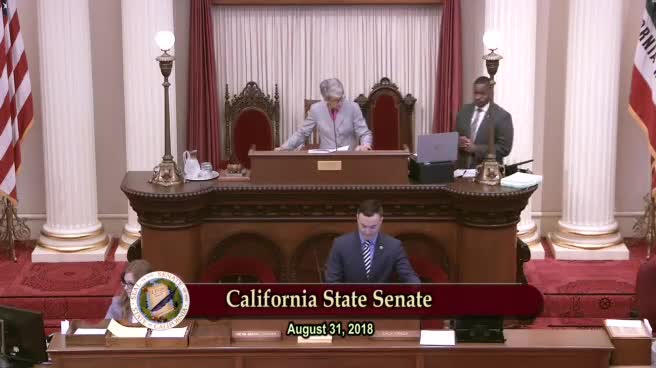
Bill Author

Bill Co-Author(s):