AB 2674: Health care service plans: disciplinary actions.
- Session Year: 2017-2018
- House: Assembly
- Latest Version Date: 2018-09-07
Existing law, the Knox-Keene Health Care Service Plan Act of 1975, provides for the licensure and regulation of health care service plans by the Department of Managed Health Care. Existing law prohibits a health care service plan from engaging in an unfair payment pattern, as defined, and requires the department to adopt regulations that ensure that plans have adopted a dispute resolution mechanism, as specified.
This bill would require the department to review complaints of unfair payment patterns on or before July 1, 2019, and at least annually thereafter. The bill would authorize the department to conduct an audit or an enforcement action, as specified, if the department determines the complaint review indicates a possible unfair payment pattern.
Existing law, the Knox-Keene Health Care Service Plan Act of 1975, provides for the licensure and regulation of health care service plans by the Department of Managed Health Care. Existing law prohibits a health care service plan from engaging in an unfair payment pattern, as defined, and requires the department to adopt regulations that ensure that plans have adopted a dispute resolution mechanism, as specified.
This bill would require the department to review complaints of unfair payment patterns on or before July 1, 2019, and at least annually thereafter. The bill would require authorize the department to conduct an audit and or an enforcement action, as specified, if the Director of the Department of Managed Health Care department determines the complaint review indicates a possible unfair payment pattern. Upon a final determination by the department that a health care service plans, or plans capitated providers, practice, policy, or procedure constitutes a demonstrable and unjust payment pattern or unfair payment pattern, the bill would require the director to assess an administrative penalty in, and to require the plan to pay the provider, an amount not less than the amount owed plus interest.
Existing law, the Knox-Keene Health Care Service Plan Act of 1975 (the act), 1975, provides for the licensure and regulation of health care service plans by the Department of Managed Health Care and makes a willful violation of the act a crime. Care. Existing law prohibits a health care service plan from engaging in an unfair payment pattern, as defined, and requires the department to adopt regulations that ensure that plans have adopted a dispute resolution mechanism, as specified.
This bill would require the department to maintain an electronic database of provider complaints that a health care service plan has underpaid or failed to pay the provider and would establish a procedure for a provider to file a complaint with the department, and a procedure for a health care service plan to provide supporting documentation relating to a provider complaint to the department. The bill would require the department to log the complaint and supporting documentation in the electronic database, as specified, and would require the department, on or before January 1, 2020, and annually thereafter, to review the logged complaints and to take specified action if there is information that a health care service plan rescinded or modified treatment authorization or engaged in an unfair payment pattern, as specified. review complaints of unfair payment patterns on or before July 1, 2019, and annually thereafter. The bill would require the department to conduct an audit and an enforcement action, as specified, if the Director of the Department of Managed Health Care determines the complaint review indicates a possible unfair payment pattern. Upon a final determination by the department that a health care service plan has underpaid or failed to pay a provider, plans, or plans capitated providers, practice, policy, or procedure constitutes a demonstrable and unjust payment pattern or unfair payment pattern, the bill would require the director to assess an administrative penalty in, and to require the plan to pay the provider, an amount not less than the amount owed plus interest. The bill would require the administrative penalties to be transferred to a specified fund upon appropriation by the Legislature. The bill would also prohibit a health care service plan from delegating a statutory liability pursuant to these provisions. By creating new crimes, the bill would impose a state-mandated local program.
The California Constitution requires the state to reimburse local agencies and school districts for certain costs mandated by the state. Statutory provisions establish procedures for making that reimbursement.This bill would provide that no reimbursement is required by this act for a specified reason.Existing law, the Knox-Keene Health Care Service Plan Act of 1975 (the act), provides for the licensure and regulation of health care service plans by the Department of Managed Health Care and makes a willful violation of the act a crime. Existing law prohibits a health care service plan from engaging in an unfair payment pattern, as defined, and requires the department to adopt regulations that ensure that plans have adopted a dispute resolution mechanism, as specified.
This bill would require the department to investigate maintain an electronic database of provider complaints that a health care service plan has underpaid or failed to pay the provider and would establish a procedure for a provider to file a complaint with the department, and a procedure for a health care service plan to provide supporting documentation relating to a provider complaint to the department. The bill would require the department to log the complaint and supporting documentation in the electronic database, as specified, and would require the department, on or before January 1, 2020, and annually thereafter, to review the logged complaints and to take specified action if there is information that a health care service plan rescinded or modified treatment authorization or engaged in an unfair payment pattern, as specified. Upon a final determination by the department that a health care service plan has underpaid or failed to pay a provider, the bill would require the director to assess an administrative penalty in, and to require the plan to pay the provider, an amount not less than the amount owed plus interest. The bill would require the administrative penalties to be transferred to a specified fund upon appropriation by the Legislature. The bill would also prohibit a health care service plan from delegating a statutory liability pursuant to these provisions. By creating new crimes, the bill would impose a state-mandated local program.
The California Constitution requires the state to reimburse local agencies and school districts for certain costs mandated by the state. Statutory provisions establish procedures for making that reimbursement.
This bill would provide that no reimbursement is required by this act for a specified reason.
Existing law, the Knox-Keene Health Care Service Plan Act of 1975 (the act), provides for the licensure and regulation of health care service plans by the Department of Managed Health Care and makes a willful violation of the act a crime. Existing law prohibits a health care service plan from engaging in an unfair payment pattern, as defined, and requires the department to adopt regulations that ensure that plans have adopted a dispute resolution mechanism, as specified.
This bill would require the department to investigate provider complaints that a health care service plan has underpaid or failed to pay the provider and would establish a procedure for a provider to file a complaint with the department. department, and a procedure for a health care service plan to provide supporting documentation relating to a provider complaint to the department. Upon a final determination by the department that a health care service plan has underpaid or failed to pay a provider, the bill would require the director to assess an administrative penalty in, and to require the plan to pay the provider, an amount not less than the amount owed plus interest. The bill would require the administrative penalties to be transferred to a specified fund upon appropriation by the Legislature. The bill would also prohibit a health care service plan from delegating a statutory liability pursuant to these provisions. By creating new crimes, the bill would impose a state-mandated local program.
The California Constitution requires the state to reimburse local agencies and school districts for certain costs mandated by the state. Statutory provisions establish procedures for making that reimbursement.
This bill would provide that no reimbursement is required by this act for a specified reason.
Existing law, the Knox-Keene Health Care Service Plan Act of 1975 (the act), provides for the licensure and regulation of health care service plans by the Department of Managed Health Care and makes a willful violation of the act a crime. Existing law authorizes the Director of the Department of Managed Health Care, after appropriate notice and opportunity for a hearing, to by order suspend or revoke a license issued pursuant to the act to a health care service plan or assess administrative penalties if the director determines that the licensee has committed any of the acts or omissions constituting grounds for disciplinary action. Existing law prohibits a health care service plan from engaging in an unfair payment pattern, as defined, and requires the department to adopt regulations that ensure that plans have adopted a dispute resolution mechanism, as specified.
This bill would require, rather than authorize, the director to assess administrative penalties if he or she makes that determination. The bill would also make technical changes.Existing law prohibits a health care service plan from engaging in an unfair payment pattern, as defined, and requires the department to adopt regulations that ensure that plans have adopted a dispute resolution mechanism, as specified.This bill would require the department to investigate provider complaints that a health care service plan has underpaid or failed to pay the provider and would establish a procedure for a provider to file a complaint with the department. Upon a final determination by the department that a health care service plan has underpaid or failed to pay a provider, the bill would require the director to assess an administrative penalty in, and to require the plan to pay the provider, an amount not less than the amount owed plus interest. The bill would require the administrative penalties to be transferred to a specified fund upon appropriation by the Legislature. The bill would also prohibit a health care service plan from delegating a statutory liability pursuant to these provisions. By creating new crimes, the bill would impose a state-mandated local program.
The California Constitution requires the state to reimburse local agencies and school districts for certain costs mandated by the state. Statutory provisions establish procedures for making that reimbursement.
This bill would provide that no reimbursement is required by this act for a specified reason.
Existing law, the Knox-Keene Health Care Service Plan Act of 1975 (the act), provides for the licensure and regulation of health care service plans by the Department of Managed Health Care and makes a willful violation of the act a crime. Existing law authorizes the Director of the Department of Managed Health Care, after appropriate notice and opportunity for a hearing, to by order suspend or revoke a license issued pursuant to the act to a health care service plan or assess administrative penalties if the director determines that the licensee has committed any of the acts or omissions constituting grounds for disciplinary action.
This bill would require, rather than authorize, the director to assess administrative penalties if he or she makes that determination. The bill would also make technical changes.
Existing law prohibits a health care service plan from engaging in an unfair payment pattern, as defined, and requires the department to adopt regulations that ensure that plans have adopted a dispute resolution mechanism, as specified.
This bill would require the department to investigate provider complaints that a health care service plan has underpaid or failed to pay the provider and would establish a procedure for a provider to file a complaint with the department. Upon a final determination by the department that a health care service plan has underpaid or failed to pay a provider, the bill would require the director to assess an administrative penalty in, and to require the plan to pay the provider, an amount not less than the amount owed plus interest. The bill would require the administrative penalties to be transferred to a specified fund upon appropriation by the Legislature. The bill would also prohibit a health care service plan from delegating a statutory liability pursuant to these provisions. By creating new crimes, the bill would impose a state-mandated local program.
The California Constitution requires the state to reimburse local agencies and school districts for certain costs mandated by the state. Statutory provisions establish procedures for making that reimbursement.
This bill would provide that no reimbursement is required by this act for a specified reason.
Existing law, the Knox-Keene Health Care Service Plan Act of 1975 (the act), provides for the licensure and regulation of health care service plans by the Department of Managed Health Care and makes a willful violation of the act a crime. Existing law authorizes the Director of the Department of Managed Health Care, after appropriate notice and opportunity for a hearing, to by order suspend or revoke a license issued pursuant to the act to a health care service plan or assess administrative penalties if the director determines that the licensee has committed any of the acts or omissions constituting grounds for disciplinary action.
This bill would require, rather than authorize, the director to assess administrative penalties if he or she makes that determination. The bill would also make technical changes.
(a)Providers may report to the department through the toll-free provider line, email address, or another method designated by the department, instances in which the provider believes a plan is engaging in an unfair payment pattern.
(b)Plans may report to the department through the toll-free provider line, email address, or another method designated by the department, instances in which the plan believes a provider is engaging in an unfair billing pattern.
(c)Unfair billing pattern means engaging in a demonstrable and unjust pattern of unbundling of claims, upcoding of claims, or other demonstrable and unjustified billing patterns, as defined by the department.
(d)On or before July 1, 2019, and at least annually thereafter, the department shall review complaints filed pursuant to subdivision (a). If the review of complaint data indicates a possible unfair payment pattern, the department may conduct an audit or an enforcement action pursuant to subdivision (s) of Section 1300.71 of Title 28 of the California Code of Regulations.
(a)Providers may report to the departments Office of Plan and Provider Relations department through the toll-free provider line (877-525-1295), e-mail address ([email protected]), line, email address, or another method designated by the department, instances in which the provider believes a plan is engaging in an unfair payment pattern.
(b)Plans may report to the departments Office of Plan and Provider Relations department through the toll-free provider line (877-525-1295), e-mail address ([email protected]), line, email address, or another method designated by the department, instances in which the plan believes a provider is engaging in an unfair billing pattern.
(c)Unfair billing pattern means engaging in a demonstrable and unjust pattern of unbundling of claims, upcoding of claims, or other demonstrable and unjustified billing patterns, as defined by the department.
(d)On or before July 1, 2019, and at least annually thereafter, the department shall review complaints filed pursuant to subdivision (a). If the director determines the review of complaint data indicates a possible unfair payment pattern, the department shall may conduct an audit and or an enforcement action pursuant to subdivision (s) of Section 1300.71 of Title 28 of the California Code of Regulations.
(e)If the department makes a final determination that a plans, or a plans capitated providers, practice, policy, or procedure constitutes a demonstrable and unjust payment pattern or unfair payment pattern, the director shall do both of the following for each case used to substantiate a determination that a health care service plan has underpaid or failed to pay a provider in violation of this chapter:(1)Assess an administrative penalty in an amount not less than the amount owed plus interest.(2)Require the plan to pay the provider an amount not less than the amount owed plus interest.(f)Subdivision (e) shall not apply to claims subject to Section 1371.30.(a)Providers may report to the departments Office of Plan and Provider Relations, either Relations through the toll-free provider line (877-525-1295) or (877-525-1295), e-mail address ([email protected]), or another method designated by the department, instances in which the provider believes a plan is engaging in an unfair payment pattern.
(b)Plans may report to the departments Office of Plan and Provider Relations, either Relations through the toll-free provider line (877-525-1295) or (877-525-1295), e-mail address ([email protected]), or another method designated by the department, instances in which the plan believes a provider is engaging in an unfair billing pattern.
(1)(c)Unfair billing pattern means engaging in a demonstrable and unjust pattern of unbundling of claims, upcoding of claims, or other demonstrable and unjustified billing patterns, as defined by the department.
(2)The department shall convene appropriate state agencies to make recommendations by July 1, 2001, to the Legislature and the Governor for the purpose of developing a system for responding to unfair billing patterns as defined in this section. This section shall include a process by which information is made available to the public regarding actions taken against providers for unfair billing patterns and the activities that were the basis for the action.(c)On or before December 31, 2001, the department shall report to the Legislature and the Governor information regarding the development of the definition of unfair billing pattern as used in this section. This report shall include, but not be limited to, a description of the process used and a list of the parties involved in the departments development of this definition as well as recommendations for statutory adoption.(d)On or before July 1, 2019, and annually thereafter, the department shall review complaints filed pursuant to subdivision (a). If the director determines the review of complaint data indicates a possible unfair payment pattern, the department shall conduct an audit and an enforcement action pursuant to subdivision (s) of Section 1300.71 of Title 28 of the California Code of Regulations.
(e)If the department makes a final determination that a plans, or a plans capitated providers, practice, policy, or procedure constitutes a demonstrable and unjust payment pattern or unfair payment pattern, the director shall do both of the following for each case used to substantiate a determination that a health care service plan has underpaid or failed to pay a provider in violation of this chapter:
(1)Assess an administrative penalty in an amount not less than the amount owed plus interest.
(2)Require the plan to pay the provider an amount not less than the amount owed plus interest.
(f)Subdivision (e) shall not apply to claims subject to Section 1371.30.
SECTION 1.Section 1386.5 is added to the Health and Safety Code, to read:1386.5.(a)The department shall maintain an electronic database of provider complaints that a health care service plan has underpaid or failed to pay the provider in violation of this chapter as follows:(1)The provider shall submit the dispute to the health care service plans internal dispute resolution process established pursuant to subdivision (h) of Section 1367, and wait 45 working days from the date of the receipt of the provider dispute by the health care service plan or until the health care service plans written determination, whichever occurs first, before filing a complaint with the department.(2)A provider may file a complaint with the department pursuant to this section not later than two years after the time period described in paragraph (1).(3)Upon receipt of a complaint pursuant to this section, the department shall log the complaint and supporting documentation in the electronic database in a manner that allows the department to identify individual complaints and to identify information indicating the health care service plan has violated Section 1371.8 or engaged in an unfair payment pattern pursuant to Section 1371.37, and do all of the following electronically:(A)Acknowledge receipt of the complaint.(B)Provide a complaint number to the provider.(C)Provide the provider with a list of any required supporting documentation.(D)Provide instructions to the provider regarding how to submit the supporting documentation, including notification that the provider has 90 working days to submit the supporting documentation.(b)(1)On or before January 1, 2020, and at least annually thereafter, the department shall review the complaints logged pursuant to subdivision (a) and, upon identification of information indicating that a health care service plan has violated Section 1371.8 or engaged in an unfair payment pattern pursuant to Section 1371.37, shall do all of the following:(A)Inform the health care service plan of any complaints it intends to investigate further in writing.(B)Provide the relevant complaint numbers created pursuant to subparagraph (B) of paragraph (3) of subdivision (a) to the health care service plan.(C)Provide the health care service plan with a list of any required supporting documentation.(D)Provide instructions to the health care service plan regarding how to submit the supporting documentation, including notification that the health care service plan has 90 working days to submit the supporting documentation.(2)Within 180 working days of receiving all necessary supporting documentation from the health care service plan provided pursuant to subparagraph (D) of paragraph (3) of subdivision (a), the department shall issue a final determination regarding whether the health care service plan has underpaid or failed to pay a provider in violation of this chapter.(c)(1)Upon a final determination by the department that a health care service plan has underpaid or failed to pay a provider in violation of this chapter, the director shall, by order, do both of the following:(A)Assess an administrative penalty in an amount not less than the amount owed plus interest.(B)Require the plan to pay the provider an amount not less than the amount owed plus interest.(2)(A)Notwithstanding the date on which the director makes a final determination as described in this subdivision, the calculation of the amount of the remedy imposed pursuant to paragraph (1) shall be determined based on the date on which the plan committed the violation.(B)For purposes of this section, the date on which the plan committed the violation means 30 working days after the receipt of the complete claim from the provider by the plan or the plans capitated provider, or, if the plan is a health maintenance organization, 45 working days after the receipt of the complete claim from the provider by the plan or the plans capitated provider.(d)(1)Except as provided in paragraph (2), a provider is not required to resubmit a claim to a health care service plan in order to receive payment pursuant to this section.(2)If the department makes a determination that an extraordinary circumstance exists, the department may require a provider to resubmit a claim to a health care service plan in order to receive payment pursuant to this section, provided that the department also requires the plan to add to the amount owed to the provider a reasonable amount necessary to reimburse the provider for the cost of resubmission.(e)This section shall not apply to claims subject to Section 1371.30.(f)Remedies provided by this section are not exclusive, and may be sought and employed in any combination with civil, criminal, and other administrative remedies deemed warranted by the department to enforce this chapter.(g)A proceeding pursuant to this section shall be conducted in accordance with Section 1374.27.(h)A health care service plan may not delegate a statutory liability under this section.(i)The administrative penalties collected pursuant to this section shall be transferred to the Managed Care Administrative Fines and Penalties Fund, as described in Section 1341.45, upon appropriation by the Legislature.SEC. 2.No reimbursement is required by this act pursuant to Section 6 of Article XIIIB of the California Constitution because the only costs that may be incurred by a local agency or school district will be incurred because this act creates a new crime or infraction, eliminates a crime or infraction, or changes the penalty for a crime or infraction, within the meaning of Section 17556 of the Government Code, or changes the definition of a crime within the meaning of Section 6 of Article XIIIB of the California Constitution.(a)The department shall investigate maintain an electronic database of provider complaints that a health care service plan has underpaid or failed to pay the provider in violation of this chapter as follows:
(1)The provider shall submit the dispute to the health care service plans internal dispute resolution process established pursuant to subdivision (h) of Section 1367, and wait 45 working days from the date of the receipt of the provider dispute by the health care service plan or until the health care service plans written determination, whichever occurs first, before filing a complaint with the department.
(2)A provider may file a complaint with the department pursuant to this section not later than four two years after the time period described in paragraph (1).
(3)Upon receipt of a complaint pursuant to this section, the department shall commence an investigation pursuant to this subdivision log the complaint and supporting documentation in the electronic database in a manner that allows the department to identify individual complaints and to identify information indicating the health care service plan has violated Section 1371.8 or engaged in an unfair payment pattern pursuant to Section 1371.37, and do all of the following: following electronically:
(A)Acknowledge receipt of the complaint.
(B)Provide a complaint number to the provider.
(C)Provide the provider with a list of any required supporting documentation.
(D)Provide instructions to the provider regarding how to submit the supporting documentation, including notification that the provider has 30 90 working days to submit the supporting documentation.
(4)Within 30 working days of receiving all necessary supporting documentation from the provider pursuant to subdivision (C) of paragraph (2), the department shall do all of the following:(b)(1)On or before January 1, 2020, and at least annually thereafter, the department shall review the complaints logged pursuant to subdivision (a) and, upon identification of information indicating that a health care service plan has violated Section 1371.8 or engaged in an unfair payment pattern pursuant to Section 1371.37, shall do all of the following:
(A)Inform the health care service plan of the complaint any complaints it intends to investigate further in writing.
(B)Provide a the relevant complaint number numbers created pursuant to subparagraph (B) of paragraph (3) of subdivision (a) to the health care service plan.
(C)Provide the health care service plan with a list of any required supporting documentation.
(D)Provide instructions to the health care service plan regarding how to submit the supporting documentation, including notification that the health care service plan has 30 90 working days to submit the supporting documentation.
(5)(2)Within 45 180 working days of receiving all necessary supporting documentation from the health care service plan provided pursuant to paragraph (4), subparagraph (D) of paragraph (3) of subdivision (a), the department shall issue a final determination regarding whether the health care service plan has underpaid or failed to pay a provider in violation of this chapter.
(b)(c)(1)Upon a final determination by the department that a health care service plan has underpaid or failed to pay a provider in violation of this chapter, the director shall, by order, do both of the following:
(A)Assess an administrative penalty in an amount not less than the amount owed plus interest.
(B)Require the plan to pay the provider an amount not less than the amount owed plus interest.
(2)For purposes of this subdivision, a final determination includes, but is not limited to, a final determination that a health care service plan has violated Section 1371.8 or has engaged in an unfair payment pattern as provided in Section 1371.37.(3)(2)(A)Notwithstanding the date on which the director makes a final determination as described in this subdivision, the calculation of the amount of the remedy imposed pursuant to paragraph (1) shall be determined based on the date on which the plan committed the violation.
(B)For purposes of this section, the date on which the plan committed the violation means 30 working days after the receipt of the complete claim from the provider by the plan or the plans capitated provider, or, if the plan is a health maintenance organization, 45 working days after the receipt of the complete claim from the provider by the plan or the plans capitated provider.
(c)(d)(1)Except as provided in paragraph (2), a provider is not required to resubmit a claim to a health care service plan in order to receive payment pursuant to this section.
(2)If the department makes a determination that an extraordinary circumstance exists, the department may require a provider to resubmit a claim to a health care service plan in order to receive payment pursuant to this section, provided that the department also requires the plan to add to the amount owed to the provider a reasonable amount necessary to reimburse the provider for the cost of resubmission.
(d)(e)This section shall not apply to claims subject to Section 1371.30.
(e)(f)Remedies provided by this section are not exclusive, and may be sought and employed in any combination with civil, criminal, and other administrative remedies deemed warranted by the department to enforce this chapter.
(f)(g)A proceeding pursuant to this section shall be conducted in accordance with Section 1374.27.
(g)(h)A health care service plan may not delegate a statutory liability under this section.
(h)(i)The administrative penalties collected pursuant to this section shall be transferred to the Managed Care Administrative Fines and Penalties Fund, as described in Section 1341.45, upon appropriation by the Legislature.
SEC. 2.No reimbursement is required by this act pursuant to Section 6 of Article XIIIB of the California Constitution because the only costs that may be incurred by a local agency or school district will be incurred because this act creates a new crime or infraction, eliminates a crime or infraction, or changes the penalty for a crime or infraction, within the meaning of Section 17556 of the Government Code, or changes the definition of a crime within the meaning of Section 6 of Article XIIIB of the California Constitution.
(a)The department shall investigate provider complaints that a health care service plan has underpaid or failed to pay the provider in violation of this chapter as follows:
(1)If the The provider has submitted shall submit the dispute to the health care service plans internal dispute resolution process established pursuant to subdivision (h) of Section 1367 at least 1367, wait 45 working days earlier or if the department has received from the date of the receipt of the provider dispute by the health care service plan or until the health care service plans written determination, whichever occurs first, the department may commence an investigation pursuant to this subdivision. before filing a complaint with the department.
(2)A provider may file a complaint with the department pursuant to this section not later than four years after the time period described in paragraph (1). Upon
(3)Upon receipt of a complaint pursuant to this section, the department shall commence an investigation pursuant to this subdivision and do all of the following:
(A)Acknowledge receipt of the complaint.
(B)Provide a complaint number to the provider.
(C)Provide the provider with a list of any required supporting documentation.
(D)Provide instructions to the provider regarding how to submit the supporting documentation. documentation, including notification that the provider has 30 working days to submit the supporting documentation.
(3)(4)Within 45 30 working days of receiving all necessary supporting documentation, documentation from the provider pursuant to subdivision (C) of paragraph (2), the department shall issue do all of the following:
(A)Inform the health care service plan of the complaint in writing.
(B)Provide a complaint number to the health care service plan.
(C)Provide the health care service plan with a list of any required supporting documentation.
(D)Provide instructions to the health care service plan regarding how to submit the supporting documentation, including notification that the health care service plan has 30 working days to submit the supporting documentation.
(5)Within 45 working days of receiving all necessary supporting documentation from the health care service plan pursuant to paragraph (4), the department shall issue a final determination regarding whether the health care service plan has underpaid or failed to pay a provider in violation of this chapter.
(b)(1)Upon a final determination by the department that a health care service plan has underpaid or failed to pay a provider in violation of this chapter, the director shall, by order, do both of the following:
(A)Assess an administrative penalty in an amount not less than the amount owed plus interest.
(B)Require the plan to pay the provider an amount not less than the amount owed plus interest.
(2)For purposes of this subdivision, a final determination includes, but is not limited to, a final determination that a health care service plan has violated Section 1371.8 or has engaged in an unfair payment pattern as provided in Section 1371.37.
(3)(A)Notwithstanding the date on which the director makes a final determination as described in this subdivision, the calculation of the amount of the remedy imposed pursuant to paragraph (1) shall be determined based on the date on which the plan committed the violation.
(B)For purposes of this section, the date on which the plan committed the violation means 30 working days after the receipt of the complete claim from the provider by the plan or the plans capitated provider, or, if the plan is a health maintenance organization, 45 working days after the receipt of the complete claim from the provider by the plan or the plans capitated provider.
(c)(1)Except as provided in paragraph (2), a provider is not required to resubmit a claim to a health care service plan in order to receive payment pursuant to this section.
(2)If the department makes a determination that an extraordinary circumstance exists, the department may require a provider to resubmit a claim to a health care service plan in order to receive payment pursuant to this section, provided that the department also requires the plan to add to the amount owed to the provider a reasonable amount necessary to reimburse the provider for the cost of resubmission.
(d)This section shall not apply to claims subject to Section 1371.30.
(d)(e)Remedies provided by this section are not exclusive, and may be sought and employed in any combination with civil, criminal, and other administrative remedies deemed warranted by the department to enforce this chapter.
(e)(f)A proceeding pursuant to this section shall be conducted in accordance with Section 1374.27.
(f)(g)A health care service plan may not delegate a statutory liability under this section.
(g)(h)The administrative penalties collected pursuant to this section shall be transferred to the Managed Care Administrative Fines and Penalties Fund, as described in Section 1341.45, upon appropriation by the Legislature.
SEC. 2.No reimbursement is required by this act pursuant to Section 6 of Article XIIIB of the California Constitution because the only costs that may be incurred by a local agency or school district will be incurred because this act creates a new crime or infraction, eliminates a crime or infraction, or changes the penalty for a crime or infraction, within the meaning of Section 17556 of the Government Code, or changes the definition of a crime within the meaning of Section 6 of Article XIIIB of the California Constitution.
(a)The department shall investigate provider complaints that a health care service plan has underpaid or failed to pay the provider in violation of this chapter as follows:
(1)If the provider has submitted the dispute to the health care service plans internal dispute resolution process established pursuant to subdivision (h) of Section 1367 at least 45 working days earlier or if the department has received the health care service plans written determination, whichever occurs first, the department may commence an investigation pursuant to this subdivision.
(2)A provider may file a complaint with the department pursuant to this section not later than four years after the time period described in paragraph (1). Upon receipt of a complaint pursuant to this section, the department shall do all of the following:
(A)Acknowledge receipt of the complaint.
(B)Provide a complaint number to the provider.
(C)Provide the provider with a list of any required supporting documentation.
(D)Provide instructions to the provider regarding how to submit the supporting documentation.
(3)Within 45 days of receiving all necessary supporting documentation, the department shall issue a final determination regarding whether the health care service plan has underpaid or failed to pay a provider in violation of this chapter.
(b)(1)Upon a final determination by the department that a health care service plan has underpaid or failed to pay a provider in violation of this chapter, the director shall, by order, do both of the following:
(A)Assess an administrative penalty in an amount not less than the amount owed plus interest.
(B)Require the plan to pay the provider an amount not less than the amount owed plus interest.
(2)For purposes of this subdivision, a final determination includes, but is not limited to, a final determination that a health care service plan has violated Section 1371.8 or has engaged in an unfair payment pattern as provided in Section 1371.37.
(3)Notwithstanding the date on which the director makes a final determination as described in this subdivision, the calculation of the amount of the remedy imposed pursuant to paragraph (1) shall be determined based on the date on which the plan committed the violation.
(c)(1)Except as provided in paragraph (2), a provider is not required to resubmit a claim to a health care service plan in order to receive payment pursuant to this section.
(2)If the department makes a determination that an extraordinary circumstance exists, the department may require a provider to resubmit a claim to a health care service plan in order to receive payment pursuant to this section, provided that the department also requires the plan to add to the amount owed to the provider a reasonable amount necessary to reimburse the provider for the cost of resubmission.
(d)Remedies provided by this section are not exclusive, and may be sought and employed in any combination with civil, criminal, and other administrative remedies deemed warranted by the department to enforce this chapter.
(e)A proceeding pursuant to this section shall be conducted in accordance with Section 1374.27.
(f)A health care service plan may not delegate a statutory liability under this section.
(g)The administrative penalties collected pursuant to this section shall be transferred to the Managed Care Administrative Fines and Penalties Fund, as described in Section 1341.45, upon appropriation by the Legislature.
SEC. 3.SEC. 2.No reimbursement is required by this act pursuant to Section 6 of Article XIIIB of the California Constitution because the only costs that may be incurred by a local agency or school district will be incurred because this act creates a new crime or infraction, eliminates a crime or infraction, or changes the penalty for a crime or infraction, within the meaning of Section 17556 of the Government Code, or changes the definition of a crime within the meaning of Section 6 of Article XIIIB of the California Constitution.
(a)The director shall by order assess administrative penalties and may by order suspend or revoke a license issued under this chapter to a health care service plan if, after appropriate notice and opportunity for a hearing, the director determines that the licensee has committed any of the acts or omissions constituting grounds for disciplinary action.
(b)The following acts or omissions constitute grounds for disciplinary action by the director:
(1)The plan is operating at variance with the basic organizational documents as filed pursuant to Section 1351 or 1352, or with its published plan, or in any manner contrary to that described in, and reasonably inferred from, the plan as contained in its application for licensure and annual report, or any modification thereof, unless amendments allowing the variation have been submitted to, and approved by, the director.
(2)The plan has issued, or permits others to use, evidence of coverage or uses a schedule of charges for health care services that do not comply with those published in the latest evidence of coverage found unobjectionable by the director.
(3)The plan does not provide basic health care services to its enrollees and subscribers as set forth in the evidence of coverage. This subdivision shall not apply to specialized health care service plan contracts.
(4)The plan is no longer able to meet the standards set forth in Article 5 (commencing with Section 1367).
(5)The continued operation of the plan will constitute a substantial risk to its subscribers and enrollees.
(6)The plan has violated or attempted to violate, or conspired to violate, directly or indirectly, or assisted in or abetted a violation or conspiracy to violate a provision of this chapter, a rule or regulation adopted by the director pursuant to this chapter, or any order issued by the director pursuant to this chapter.
(7)The plan has engaged in conduct that constitutes fraud or dishonest dealing or unfair competition, as defined by Section 17200 of the Business and Professions Code.
(8)The plan has permitted, or aided or abetted a violation by an employee or contractor who is a holder of a certificate, license, permit, registration, or exemption issued pursuant to the Business and Professions Code or this code that would constitute grounds for discipline against the certificate, license, permit, registration, or exemption.
(9)The plan has aided or abetted or permitted the commission of any illegal act.
(10)The engagement of a person as an officer, director, employee, associate, or provider of the plan contrary to the provisions of an order issued by the director pursuant to subdivision (c) of this section or subdivision (d) of Section 1388.
(11)The engagement of a person as a solicitor or supervisor of solicitation contrary to the provisions of an order issued by the director pursuant to Section 1388.
(12)The plan, its management company, or any other affiliate of the plan, or any controlling person, officer, director, or other person occupying a principal management or supervisory position in the plan, management company, or affiliate, has been convicted of or pleaded nolo contendere to a crime, or committed an act involving dishonesty, fraud, or deceit, which crime or act is substantially related to the qualifications, functions, or duties of a person engaged in business in accordance with this chapter. The director may revoke or deny a license hereunder irrespective of a subsequent order under the provisions of Section 1203.4 of the Penal Code.
(13)The plan violates Section 510, 2056, or 2056.1 of the Business and Professions Code or Section 1375.7.
(14)The plan has been subject to a final disciplinary action taken by this state, another state, an agency of the federal government, or another country for any act or omission that would constitute a violation of this chapter.
(15)The plan violates the Confidentiality of Medical Information Act (Part 2.6 (commencing with Section 56) of Division 1 of the Civil Code).
(16)The plan violates Section 806 of the Military and Veterans Code.
(17)The plan violates Section 1262.8.
(c)(1)The director may prohibit a person from serving as an officer, director, employee, associate, or provider of a plan or solicitor firm, or of any management company of a plan, or as a solicitor, if either of the following applies:
(A)The prohibition is in the public interest and the person has committed, caused, participated in, or had knowledge of a violation of this chapter by a plan, management company, or solicitor firm.
(B)The person was an officer, director, employee, associate, or provider of a plan or of a management company or solicitor firm of a plan whose license has been suspended or revoked pursuant to this section and the person had knowledge of, or participated in, any of the prohibited acts for which the license was suspended or revoked.
(2)A proceeding for the issuance of an order under this subdivision may be included with a proceeding against a plan under this section or may constitute a separate proceeding, subject in either case to subdivision (d).
(d)A proceeding under this section shall be subject to appropriate notice to, and the opportunity for a hearing with regard to, the person affected in accordance with subdivision (a) of Section 1397.
SEC. 2.Section 1386.5 is added to the Health and Safety Code, to read:1386.5.(a)The department shall investigate provider complaints that a health care service plan has underpaid or failed to pay the provider in violation of this chapter as follows:
(1)If the provider has submitted the dispute to the health care service plans internal dispute resolution process established pursuant to subdivision (h) of Section 1367 at least 45 working days earlier or if the department has received the health care service plans written determination, whichever occurs first, the department may commence an investigation pursuant to this subdivision.
(2)A provider may file a complaint with the department pursuant to this section not later than four years after the time period described in paragraph (1). Upon receipt of a complaint pursuant to this section, the department shall do all of the following:
(A)Acknowledge receipt of the complaint.
(B)Provide a complaint number to the provider.
(C)Provide the provider with a list of any required supporting documentation.
(D)Provide instructions to the provider regarding how to submit the supporting documentation.
(3)Within 45 days of receiving all necessary supporting documentation, the department shall issue a final determination regarding whether the health care service plan has underpaid or failed to pay a provider in violation of this chapter.
(b)(1)Upon a final determination by the department that a health care service plan has underpaid or failed to pay a provider in violation of this chapter, the director shall, by order, do both of the following:
(A)Assess an administrative penalty in an amount not less than the amount owed plus interest.
(B)Require the plan to pay the provider an amount not less than the amount owed plus interest.
(2)For purposes of this subdivision, a final determination includes, but is not limited to, a final determination that a health care service plan has violated Section 1371.8 or has engaged in an unfair payment pattern as provided in Section 1371.37.
(3)Notwithstanding the date on which the director makes a final determination as described in this subdivision, the calculation of the amount of the remedy imposed pursuant to paragraph (1) shall be determined based on the date on which the plan committed the violation.
(c)(1)Except as provided in paragraph (2), a provider is not required to resubmit a claim to a health care service plan in order to receive payment pursuant to this section.
(2)If the department makes a determination that an extraordinary circumstance exists, the department may require a provider to resubmit a claim to a health care service plan in order to receive payment pursuant to this section, provided that the department also requires the plan to add to the amount owed to the provider a reasonable amount necessary to reimburse the provider for the cost of resubmission.
(d)Remedies provided by this section are not exclusive, and may be sought and employed in any combination with civil, criminal, and other administrative remedies deemed warranted by the department to enforce this chapter.
(e)A proceeding pursuant to this section shall be conducted in accordance with Section 1374.27.
(f)A health care service plan may not delegate a statutory liability under this section.
(g)The administrative penalties collected pursuant to this section shall be transferred to the Managed Care Administrative Fines and Penalties Fund, as described in Section 1341.45, upon appropriation by the Legislature.
SEC. 3.No reimbursement is required by this act pursuant to Section 6 of Article XIIIB of the California Constitution because the only costs that may be incurred by a local agency or school district will be incurred because this act creates a new crime or infraction, eliminates a crime or infraction, or changes the penalty for a crime or infraction, within the meaning of Section 17556 of the Government Code, or changes the definition of a crime within the meaning of Section 6 of Article XIIIB of the California Constitution.
(a)The director may, after appropriate notice and opportunity for a hearing, shall by order assess administrative penalties and may by order suspend or revoke any a license issued under this chapter to a health care service plan or assess administrative penalties if if, after appropriate notice and opportunity for a hearing, the director determines that the licensee has committed any of the acts or omissions constituting grounds for disciplinary action.
(b)The following acts or omissions constitute grounds for disciplinary action by the director:
(1)The plan is operating at variance with the basic organizational documents as filed pursuant to Section 1351 or 1352, or with its published plan, or in any manner contrary to that described in, and reasonably inferred from, the plan as contained in its application for licensure and annual report, or any modification thereof, unless amendments allowing the variation have been submitted to, and approved by, the director.
(2)The plan has issued, or permits others to use, evidence of coverage or uses a schedule of charges for health care services that do not comply with those published in the latest evidence of coverage found unobjectionable by the director.
(3)The plan does not provide basic health care services to its enrollees and subscribers as set forth in the evidence of coverage. This subdivision shall not apply to specialized health care service plan contracts.
(4)The plan is no longer able to meet the standards set forth in Article 5 (commencing with Section 1367).
(5)The continued operation of the plan will constitute a substantial risk to its subscribers and enrollees.
(6)The plan has violated or attempted to violate, or conspired to violate, directly or indirectly, or assisted in or abetted a violation or conspiracy to violate any a provision of this chapter, any a rule or regulation adopted by the director pursuant to this chapter, or any order issued by the director pursuant to this chapter.
(7)The plan has engaged in any conduct that constitutes fraud or dishonest dealing or unfair competition, as defined by Section 17200 of the Business and Professions Code.
(8)The plan has permitted, or aided or abetted any a violation by an employee or contractor who is a holder of any a certificate, license, permit, registration, or exemption issued pursuant to the Business and Professions Code or this code that would constitute grounds for discipline against the certificate, license, permit, registration, or exemption.
(9)The plan has aided or abetted or permitted the commission of any illegal act.
(10)The engagement of a person as an officer, director, employee, associate, or provider of the plan contrary to the provisions of an order issued by the director pursuant to subdivision (c) of this section or subdivision (d) of Section 1388.
(11)The engagement of a person as a solicitor or supervisor of solicitation contrary to the provisions of an order issued by the director pursuant to Section 1388.
(12)The plan, its management company, or any other affiliate of the plan, or any controlling person, officer, director, or other person occupying a principal management or supervisory position in the plan, management company, or affiliate, has been convicted of or pleaded nolo contendere to a crime, or committed any an act involving dishonesty, fraud, or deceit, which crime or act is substantially related to the qualifications, functions, or duties of a person engaged in business in accordance with this chapter. The director may revoke or deny a license hereunder irrespective of a subsequent order under the provisions of Section 1203.4 of the Penal Code.
(13)The plan violates Section 510, 2056, or 2056.1 of the Business and Professions Code or Section 1375.7.
(14)The plan has been subject to a final disciplinary action taken by this state, another state, an agency of the federal government, or another country for any act or omission that would constitute a violation of this chapter.
(15)The plan violates the Confidentiality of Medical Information Act (Part 2.6 (commencing with Section 56) of Division 1 of the Civil Code).
(16)The plan violates Section 806 of the Military and Veterans Code.
(17)The plan violates Section 1262.8.
(c)(1)The director may prohibit any a person from serving as an officer, director, employee, associate, or provider of any a plan or solicitor firm, or of any management company of any a plan, or as a solicitor, if either of the following applies:
(A)The prohibition is in the public interest and the person has committed, caused, participated in, or had knowledge of a violation of this chapter by a plan, management company, or solicitor firm.
(B)The person was an officer, director, employee, associate, or provider of a plan or of a management company or solicitor firm of any a plan whose license has been suspended or revoked pursuant to this section and the person had knowledge of, or participated in, any of the prohibited acts for which the license was suspended or revoked.
(2)A proceeding for the issuance of an order under this subdivision may be included with a proceeding against a plan under this section or may constitute a separate proceeding, subject in either case to subdivision (d).
(d)A proceeding under this section shall be subject to appropriate notice to, and the opportunity for a hearing with regard to, the person affected in accordance with subdivision (a) of Section 1397.
|
Date
|
Status
|
|---|---|
| Sep 7, 2018 | Chaptered by Secretary of State - Chapter 303, Statutes of 2018. |
| Sep 7, 2018 | Approved by the Governor. |
| Sep 5, 2018 | Enrolled and presented to the Governor at 3 p.m. |
| Aug 27, 2018 | Senate amendments concurred in. To Engrossing and Enrolling. |
| Aug 22, 2018 | In Assembly. Concurrence in Senate amendments pending. May be considered on or after August 24 pursuant to Assembly Rule 77. |
| Aug 22, 2018 | Read third time. Passed. Ordered to the Assembly. |
| Aug 20, 2018 | Read second time. Ordered to third reading. |
| Aug 17, 2018 | From committee: Amend, and do pass as amended. (Ayes 7. Noes 0.) (August 16). |
| Aug 6, 2018 | In committee: Referred to APPR. suspense file. |
| Jun 28, 2018 | From committee: Do pass and re-refer to Com. on APPR. (Ayes 9. Noes 0.) (June 27). Re-referred to Com. on APPR. |
| Jun 14, 2018 | From committee chair, with author's amendments: Amend, and re-refer to committee. Read second time, amended, and re-referred to Com. on HEALTH. |
| Jun 13, 2018 | Referred to Com. on HEALTH. |
| Jun 4, 2018 | In Senate. Read first time. To Com. on RLS. for assignment. |
| May 31, 2018 | Read third time. Passed. Ordered to the Senate. |
| May 29, 2018 | Read second time. Ordered to third reading. |
| May 25, 2018 | From committee: Amend, and do pass as amended. (Ayes 13. Noes 0.) (May 25). |
| May 2, 2018 | In committee: Set, first hearing. Referred to APPR. suspense file. |
| Apr 17, 2018 | Re-referred to Com. on APPR. |
| Apr 16, 2018 | Read second time and amended. |
| Apr 12, 2018 | From committee: Amend, and do pass as amended and re-refer to Com. on APPR. (Ayes 14. Noes 0.) (April 10). |
| Apr 3, 2018 | In committee: Set, first hearing. Hearing canceled at the request of author. |
| Apr 3, 2018 | Re-referred to Com. on HEALTH. |
| Apr 2, 2018 | From committee chair, with author's amendments: Amend, and re-refer to Com. on HEALTH. Read second time and amended. |
| Mar 22, 2018 | Re-referred to Com. on HEALTH. |
| Mar 21, 2018 | From committee chair, with author's amendments: Amend, and re-refer to Com. on HEALTH. Read second time and amended. |
| Mar 8, 2018 | Referred to Com. on HEALTH. |
| Feb 16, 2018 | From printer. May be heard in committee March 18. |
| Feb 15, 2018 | Read first time. To print. |
|
Date
|
Description
|
Location
|
Votes
|
|
|---|---|---|---|---|
| Aug 27, 2018 | AB 2674 AGUIAR-CURRY Concurrence in Senate Amendments | Assembly Floor |
Passed |
|
| Aug 22, 2018 | Assembly 3rd Reading AB2674 Aguiar-Curry By Stern | Senate Floor |
Passed |
|
| Aug 16, 2018 | Do pass as amended | Senate Standing Committee on Appropriations |
Passed |
|
| Aug 6, 2018 | Placed on suspense file | Senate Standing Committee on Appropriations |
Passed |
|
| Jun 27, 2018 | Do pass, but first be re-referred to the Committee on [Appropriations] | Senate Standing Committee on Health |
Passed |
|
| May 31, 2018 | AB 2674 AGUIAR-CURRY Assembly Third Reading | Assembly Floor |
Passed |
|
| May 25, 2018 | Do pass as amended. | Assembly Standing Committee on Appropriations |
Passed |
|
| Apr 10, 2018 | Do pass as amended and be re-referred to the Committee on [Appropriations] | Assembly Standing Committee on Health |
Passed |
This list shows positions taken on this bill by organizations on the date displayed, which is linked to the original source.
Positions by individuals are not included.
|
Organization
|
Position
|
Date
|
|---|---|---|
| Anthem Blue Cross | * Against | Apr 10, 2018 |
| California Academy Of Family Physicians | ** Support | Aug 20, 2018 |
| California Association Of Health Plans | ** Against | Aug 20, 2018 |
| California Chronic Care Coalition | ** Support | Aug 20, 2018 |
| california dermatology society | * Support | Apr 10, 2018 |
| California Hospital Association | ** Support | Aug 20, 2018 |
| California Medical Association | ** Support | Aug 20, 2018 |
| California Podiatric Medical Association | ** Support | Aug 20, 2018 |
| California Rheumatology Alliance | ** Support | Aug 20, 2018 |
CONCURRENCE IN SENATE AMENDMENTS
CSA1 Bill Id:AB 2674
Author:(Aguiar-Curry)
As Amended Ver:August 17, 2018
Majority vote
ASSEMBLY: | 74-0 | (May 31, 2018) | SENATE: | 39-0 | (August 22, 2018) |
Original Committee Reference: HEALTH
SUMMARY: Requires the Department of Managed Health Care (DMHC) to review complaints filed by a provider who believes a plan is engaging in an unfair payment pattern, and authorizes DMHC to conduct an audit and an enforcement action pursuant to existing regulations.
The Senate amendments:
- Amend existing law to require, on or before July 1, 2019, and at least annually thereafter, DMHC to review complaints filed when a provider believes a plan is engaging in an unfair payment pattern.
- Authorize DMHC, if review of complaint data indicates a possible unfair payment pattern, to conduct an audit or an enforcement action pursuant to existing regulations.
- Make other technical and clarifying changes and delete obsolete provisions.
- Delete provisions that required the DMHC to maintain an electronic database of provider complaints that a health plan has underpaid or failed to pay a provider.
FISCAL EFFECT: According to the Senate Appropriations Committee, possible workload costs (mid-hundreds of thousands, Managed Care Fund) for the DMHC to report and review complaints. The DMHC has existing authority and resources to levy enforcement actions, and can utilize current processes to conduct an audit. However, to the extent there is an increased awareness among providers to report a plan that they believe is engaging in an unfair payment pattern, Senate Appropriations Committee assumes an increase in calls and an increased need for DMHC to provide technical assistance. Senate Appropriations Committee assumes permanent full-time staff may be needed to assist in reviewing increased complaint workload and ensuring audit follow-up, as necessary.
COMMENTS: According to the author, this bill will deter health plans from purposefully underpaying providers in order to increase profits. This bill will not do anything to limit DMHC's discretion to determine if a health plan has engaged in a pattern or practice of violating the Knox Keene Act. This bill asks that DMHC perform an annual review of provider claims received through the department's existing system, which will provide an opportunity to bring unfair business practices to light.
- Provider Dispute Resolution (PDR) Mechanism. Health plans are required to annually report the number, type, and summaries of provider claim payment disputes, describe the resolutions including terms and timeliness, and explain how health plans are addressing trends or patterns in disputes. The PDR Mechanisms Report includes provider dispute data from health plans' capitated providers such as hospital systems and medical groups. The DMHC's 2016 annual report summarizes provider claim disputes by type of health plan, including full service health plans and specialized health plans, from October 1, 2015, through September 30, 2016. Health plans processed approximately 154 million claims in 2016.
The PDR data summarized in the report is self-reported by health plans and capitated providers, and may not include all provider disputes. In addition, there are substantive differences in the way health plans identify, quantify and track provider disputes. DMHC is currently working with the health plans and capitated providers to improve the reporting and quality of the data. DMHC conducts regular onsite auditing activities, and reviews quarterly and annual claims payment and dispute resolution reports to monitor the industry's compliance with claims payment standards required by existing law. DMHC implements corrective actions for any identified claims payment deficiencies and monitors them accordingly. The plan specific claim and provider dispute examination results are located on the DMHC's Web site.
- California Medical Association (CMA) survey. CMA, the sponsor of this bill, county medical societies and several specialty societies conducted a survey in 2018 of physicians to obtain feedback on the health plans that are routinely engaging in unfair payment patterns, the types of violations and the results of physician efforts to resolve the issues both through internal plan processes as well as through DMHC. The survey gathered data from 741 practices within California representing physicians across a vast range of specialties and practice sizes in 40 different counties over a period of nine days. Survey findings include:
Two-thirds of physician practice respondents report routine problems with plans engaging in various unfair payment patterns, pursuant to regulations; more than half of practices report that health plans continue to attempt to rescind or modify authorizations after the physician renders the service in good faith.
CMA writes that DMHC has been slow to address provider complaints and has taken few enforcement actions against health care service plans that unlawfully underpay providers. When DMHC has acted, the penalty amounts have been small in relation to the economic injury to consumers and providers. DMHC also has refused to issue enforcement actions to cover the entire period of underpayment and has not required health care service plans to pay providers even after it has determined payment should have been made. Accordingly, health plans make economic decisions to violate the law, knowing that any penalty amount that may be imposed will be outweighed by the extra revenue the health plans will generate by, for example, underpaying medical care. This results in a loss of resources that should be invested in patient care.
The California Association of Health Plans writes that this bill will increase health care costs by imposing mandatory and duplicative penalties on health plans for payment disputes even though existing law already allows for plans to be penalized in these cases. This bill removes the DMHC's discretion and requires mandatory administrative penalties on health plans on top of paying the provider the amount owed plus interest. Mandatory fines are not justified.
Analysis Prepared by: Kristene Mapile / HEALTH / (916) 319-2097 FN: 0004456
Office of Senate Floor Analyses (916) 651-1520 Fax: (916) 327-4478 | AB |
THIRD READING
Bill No: AB 2674
Amended: 8/17/18 in Senate
SENATE HEALTH COMMITTEE: 9-0, 6/27/18
AYES: Pan, Nguyen, Beall, Hernandez, Leyva, Mitchell, Monning, Nielsen, Roth
SENATE APPROPRIATIONS COMMITTEE: 7-0, 8/16/18
AYES: Portantino, Bates, Beall, Bradford, Hill, Nielsen, Wiener
ASSEMBLY FLOOR: 74-0, 5/31/18 - See last page for vote
SOURCE: California Medical Association
DIGEST:
This bill requires the Department of Managed Health Care (DMHC) to review complaints filed by a provider who believes a plan is engaging in an unfair payment pattern, and authorizes DMHC to conduct an audit and an enforcement action pursuant to existing regulations.
Existing law:
- Establishes DMHC to regulate health plans under the Knox-Keene Health Care Service Plan Act of 1975 (Knox-Keene Act). [HSC §1340, et seq.]
- Establishes health plan requirements including that contracts with subscribers and enrollees, including group contracts, and contracts with providers and others, be fair, reasonable and consistent with the objectives of the Knox-Keene Act. Requires all contracts with providers to contain provisions requiring a fast, fair, and cost-effective dispute resolution mechanism under which providers may submit disputes to the health plan. [HSC §1367(h)(1)]
- Requires a health plan, including a specialized health plan, to pay any claim as soon as practicable but no later than 30 working days after receipt, or if the health plan is an HMO, 45 working days after receipt of the claim by the health plan unless the claim is being contested by the health plan, in which case, requires the health plan to notify the claimant, in writing, that the claim is contested or denied, within 30 working days after receipt, or 45 working days, if an HMO. [HSC §1371]
- Requires interest to accrue at the rate of 15% per annum beginning with the first calendar day if an uncontested claim is not paid within the respective 30/45 working-day period described in 3) above. [HSC §1371]
- States that a claim is reasonably contested if the health plan has not received the completed claim and all information necessary to determine payer liability for the claim, or has not been granted reasonable access to information concerning provider services. Information necessary to determine payer liability for the claim includes, but is not limited to, reports of investigations concerning fraud and misrepresentation, and necessary consents, releases, and assignments, a claim on appeal, or other information necessary for the health plan to determine the medical necessity for the health care services provided. [HSC §1371]
- Gives the health plan 30 working days, 45 working days if an HMO, after receipt of additional information pursuant to 5) above to complete reconsideration of a contested claim, or pay the interest pursuant to 4) above. [HSC §1371]
- Prohibits the obligation of the health plan to comply with 3) – 6) above from being deemed to be waived when the health plan requires its medical groups, independent practice associations, or other contracting entities to pay claims for covered services. [HSC §1371]
- Prohibits a health plan from engaging in an unfair payment pattern, as defined, and authorizes DMHC to investigate a health plan to determine whether it has engaged in an unfair payment pattern. [HSC §1371.37]
- Permits providers and plans to report to DMHC’s Office of Plan and Provider Relations through a toll-free provider line, or e-mail, instances in which the provider believes a plan is engaging in an unfair payment pattern. [HSC §1371.39]
- Requires DMHC to convene state agencies by July 1, 2001, to make recommendations and report to the Legislature and Governor by December 31, 2001, information regarding the development of the definition of “unfair billing pattern.” [HSC §1371.39]
- Authorizes DMHC to review the plan’s and the plan's capitated provider's claims processing system through periodic medical surveys and financial examinations, as specified, and when appropriate, through the investigation of complaints of demonstrable and unjust payment patterns. Authorizes failure of a plan to comply with specified requirements to constitute a basis for disciplinary action against the plan, and states that the civil, criminal, and administrative remedies available to DMHC are not exclusive, and may be sought and employed in any combination deemed advisable by DMHC to enforce the provisions of this regulation. Makes violations subject to enforcement action whether or not remediated, although a plan's identification and self-initiated remediation of deficiencies may be considered in determining the appropriate penalty. [28 CCR §1300.71]
- Requires, in making a determination that a plan's or a plan's capitated provider's practice, policy or procedure constitutes a “demonstrable and unjust payment pattern” or “unfair payment pattern,” DMHC to consider the documentation or justification for the implementation of the practice, policy or procedure and may consider the aggregate amount of money involved in the plan's or the plan's capitated provider's action or inaction; the number of claims adjudicated by the plan or plan's capitated provider during the time period in question, legitimate industry practices, whether there is evidence that the provider had engaged in an unfair billing practice, the potential impact of the payment practices on the delivery of health care or on provider practices; the plan's or the plan's capitated provider's intentions or knowledge of the violation(s); the speed and effectiveness of appropriate remedial measures implemented to ameliorate harm to providers or patients, or to preclude future violations; and any previous related or similar enforcement actions involving the plan or the plan's capitated provider. [28 CCR §1300.71]
- Authorizes additional penalties if a plan is determined to be engaged in a “Demonstrable and Unjust Payment Pattern” in any combination of the following:
- The imposition of an additional monetary penalty to reflect the serious nature of the demonstrable and unjust payment pattern;
- The imposition, for a period of up to three years, of a requirement that the plan reimburse complete and accurate claims in a shorter time period than the time period prescribed in existing law; and,
- The appointment of a claims monitor or conservator to supervise the plan's claim payment activities to insure timely compliance with claims payment obligations. [28 CCR §1300.71]
This bill:
- Requires, on or before July 1, 2019, and at least annually thereafter, DMHC to review complaints filed when a provider believes a plan is engaging in an unfair payment pattern.
- Authorizes DMHC, if review of complaint data indicates a possible unfair payment pattern, to conduct an audit or an enforcement action pursuant to existing regulations.
- Makes other technical and clarifying changes and deletes obsolete provisions.
- Author’s statement. According to the author, this bill will deter health plans from purposefully underpaying providers in order to increase profits. This bill will not do anything to limit DMHC's discretion to determine if a health plan has engaged in a pattern or practice of violating the Knox Keene Act. This bill asks that DMHC perform an annual review of provider claims received through the department’s existing system, which will provide an opportunity to bring unfair business practices to light.
- Provider Dispute Resolution (PDR) Mechanism. Health plans are required to annually report the number, type, and summaries of provider claim payment disputes, describe the resolutions including terms and timeliness, and explain how health plans are addressing trends or patterns in disputes. The PDR Mechanisms Report includes provider dispute data from health plans’ capitated providers such as hospital systems and medical groups. The DMHC’s 2016 annual report summarizes provider claim disputes by type of health plan, including full service health plans and specialized health plans, from October 1, 2015, through September 30, 2016. Health plans processed approximately 154 million claims in 2016. Less than 1% (0.73%) of these claims resulted in claims disputes. Full service health plans received more than one million provider disputes for the reporting period. California’s seven largest full service health plan’s provide health care benefits to approximately 18 million (74%) of the approximately 24 million full service health plan enrollees. Approximately 69% of the reported provider disputes were filed with the seven largest full service health plans. These seven health plans processed more than 126 million claims, accounting for 82% of all claims filed by full service health plans in California. Of these seven, the plans with the highest percentage of reported disputes received are: Anthem Blue Cross (19%), LA Care (14%), Blue Shield (13%) and Health Net (13%). Approximately 85% of all provider disputes processed by full service health plans were reported as being resolved within 45 working days from the date of receipt. Roughly 84% of provider disputes filed with full service health plans involved claims payment and/or billing problems. Providers prevailed in 37% of all disputes; health plans upheld their original determinations in 44% of the disputes, with 19% of the disputes pending at the time the plans reported this data to the DMHC.
The PDR data summarized in the report is self-reported by health plans and capitated providers, and may not include all provider disputes. In addition, there are substantive differences in the way health plans identify, quantify and track provider disputes. DMHC is currently working with the health plans and capitated providers to improve the reporting and quality of the data. DMHC conducts regular onsite auditing activities, and reviews quarterly and annual claims payment and dispute resolution reports to monitor the industry’s compliance with claims payment standards required by existing law. DMHC implements corrective actions for any identified claims payment deficiencies and monitors them accordingly. The plan specific claim and provider dispute examination results are located on the DMHC’s Web site. - CMA survey. The California Medical Association (CMA), the sponsor of this bill, county medical societies and several specialty societies conducted a survey in 2018 of physicians to obtain feedback on the health plans that are routinely engaging in unfair payment patterns, the types of violations and the results of physician efforts to resolve the issues both through internal plan processes as well as through DMHC. The survey gathered data from 741 practices within California representing physicians across a vast range of specialties and practice sizes in 40 different counties over a period of nine days. Survey findings include:
Two-thirds of physician practice respondents report routine problems with plans engaging in various unfair payment patterns, pursuant to regulations; more than half of practices report that health plans continue to attempt to rescind or modify authorizations after the physician renders the service in good faith. Respondents overwhelmingly (62%) report that Anthem Blue Cross is the most problematic when it comes to violating the unfair payment practices and Blue Shield of California was second most problematic (52%). The health plan PDR processes are largely ineffective, with 32% of practices indicating disputes are resolved only half of the time and 29% indicating disputes are rarely resolved through the plans’ PDR processes. Though most practices utilize the health plans’ internal processes to attempt to resolve issues, 63% of practices report that plans routinely fail to respond to their appeals within 45-business days of receipt, as required by California law. Anthem Blue Cross is identified as the most problematic (66%) with Blue Shield the second most problematic (61%). When health plans do respond to physician appeals, 74% of practices state the health plan responses do not include a clear explanation for the plans’ determination. Twenty one percent of practices report they don’t use the plans’ PDR processes. When asked why, 59% cited administrative burden as the main reason and 44% said the process was ineffective – a “rubber stamp” of the initial processing. More than a third of practices report staff reviewing clinical and administrative appeals is under-qualified and 35% state they rarely receive a response to their appeals (respondents allowed to mark multiple reasons). Only 26% of respondents currently utilize the DMHC’s provider complaint process when the health plans’ PDR processes fail. More than half of respondents were unaware that DMHC accepted complaints, but more than a third of practices cited administrative burden as the reason they don’t use the process, 21% stated the DMHC process was ineffective and 15% indicated they do not file through DMHC because it doesn’t investigate all complaints filed. When practices do file complaints through DMHC, 11% report their issues are resolved only half of the time and 62% report they are rarely or never resolved through the DMHC complaint process.
FISCAL EFFECT: Appropriation: Fiscal Com.: Local:
According to the Senate Appropriations Committee, possible workload costs (mid-hundreds of thousands, Managed Care Fund) for the DMHC to report and review complaints. The DMHC has existing authority and resources to levy enforcement actions, and can utilize current processes to conduct an audit. However, to the extent there is an increased awareness among providers to report a plan that they believe is engaging in an unfair payment pattern, staff assumes an increase in calls and an increased need for DMHC to provide technical assistance. Staff assumes permanent full-time staff may be needed to assist in reviewing increased complaint workload and ensuring audit follow-up, as necessary.
California Medical Association (source)
California Academy of Family Physicians
California Chapter of the American College of Emergency Physicians
California Chronic Care Coalition
California Hospital Association
California Podiatric Medical Association
California Rheumatology Alliance
OPPOSITION: (Verified 8/15/18)
California Association of Health Plans
ARGUMENTS IN SUPPORT: The California Medical Association (CMA) writes that despite the California Legislature’s enactment of AB 1455 to address widespread payment abuses by health care service plans, many of them continue to flout the law and DMHC has been slow to address provider complaints and has taken few enforcement actions against health care service plans that unlawfully underpay providers. When DMHC has acted, the penalty amounts have been small in relation to the economic injury to consumers and providers. DMHC also has refused to issue enforcement actions to cover the entire period of underpayment and has not required health care service plans to pay providers even after it has determined payment should have been made. Accordingly, health plans make economic decisions to violate the law, knowing that any penalty amount that may be imposed will be outweighed by the extra revenue the health plans will generate by, for example, underpaying medical care. This results in a loss of resources that should be invested in patient care. To address this issue, CMA is sponsoring this bill, which requires DMHC to investigate provider complaints that a health care service plan has underpaid or failed to pay the provider in violation of the Knox-Keene Act. If DMHC finds that a health plan has unlawfully underpaid a provider, this bill requires the penalty amount to, at a minimum, equal the amount of the underpayment plus interest. The California Hospital Association writes that this bill would strengthen current law to protect patients and providers by requiring DMHC, if it determines that a health plan has unlawfully underpaid a provider, to assess penalties and require whole reimbursement to the provider, effectively disincentivizing the violation.
ARGUMENTS IN OPPOSITION: The California Association of Health Plans writes that this bill will increase health care costs by imposing mandatory and duplicative penalties on health plans for payment disputes even though existing law already allows for plans to be penalized in these cases. This bill removes the DMHC’s discretion and require mandatory administrative penalties on health plans on top of paying the provider the amount owed plus interest. Mandatory fines are not justified.
ASSEMBLY FLOOR: 74-0, 5/31/18
AYES: Acosta, Aguiar-Curry, Travis Allen, Arambula, Baker, Berman, Bigelow, Bloom, Bonta, Brough, Burke, Caballero, Calderon, Carrillo, Cervantes, Chau, Chávez, Chen, Chiu, Chu, Cooley, Cooper, Cunningham, Dahle, Daly, Eggman, Flora, Fong, Friedman, Gallagher, Cristina Garcia, Eduardo Garcia, Gipson, Gloria, Gonzalez Fletcher, Gray, Grayson, Harper, Holden, Irwin, Jones-Sawyer, Kalra, Kamlager-Dove, Kiley, Lackey, Levine, Limón, Low, Maienschein, Mathis, Mayes, McCarty, Medina, Melendez, Mullin, Muratsuchi, Nazarian, O'Donnell, Patterson, Quirk, Quirk-Silva, Reyes, Rodriguez, Rubio, Salas, Santiago, Steinorth, Mark Stone, Thurmond, Ting, Voepel, Weber, Wood, Rendon
NO VOTE RECORDED: Choi, Frazier, Obernolte, Waldron
8/20/18 9:15:29
SENATE COMMITTEE ON APPROPRIATIONS
Senator Anthony Portantino, Chair
2017 - 2018 Regular Session
AB 2674 (Aguiar-Curry) - Health care service plans: disciplinary actions
Version: June 14, 2018 | Policy Vote: HEALTH 9 - 0 |
Urgency: No | Mandate: No |
Hearing Date: August 16, 2018 | Consultant: Samantha Lui |
Bill Summary:
- Requires the Department of Managed Health Care to review complaints filed by a provider who believes a plan is engaging in an unfair payment pattern, conduct an audit and an enforcement action pursuant to existing regulations, and if a final determination is made that a plan’s practice constitutes a “demonstrable and unjust payment pattern” or “unfair payment pattern,” assess and require the plan to pay an administrative penalty in an amount not less than the amount owed plus interest.
*********** ANALYSIS ADDENDUM – SUSPENSE FILE ***********
The following information is revised to reflect amendments
adopted by the committee on August 16, 2018
Fiscal Impact:
- Staff notes possible workload costs (mid-hundreds of thousands, Managed Care Fund) for the DMHC to report and review complaints. The DMHC has existing authority and resources to levy enforcement actions, and can utilize current processes to conduct an audit. However, to the extent there is an increased awareness among providers to report a plan that they believe is engaging in an unfair payment pattern, staff assumes an increase in calls and an increased need for DMHC to provide technical assistance. Staff assumes permanent full-time staff may be needed to assist in reviewing increased complaint workload and ensuring audit follow-up, as necessary.
Author Amendments:
- Authorizes, instead of requires, DMHC to conduct an audit or an enforcement action if the review of complaint data indicates a possible unfair payment pattern.
- Removes provisions that require DMHC to assess an administrative penalty or to require the plan to pay the provider a specified amount, if the director of DMHC finds a plan or a plan’s capitated provider’s practice, policy, or procedure constitutes a demonstrable and unjust payment pattern or unfair payment pattern.
- Makes other technical changes related to how a provider may contact the DMHC.
-- END --
SENATE COMMITTEE ON APPROPRIATIONS
Senator Anthony Portantino, Chair
2017 - 2018 Regular Session
AB 2674 (Aguiar-Curry) - Health care service plans: disciplinary actions
Version: June 14, 2018 | Policy Vote: HEALTH 9 - 0 |
Urgency: No | Mandate: No |
Hearing Date: August 6, 2018 | Consultant: Samantha Lui |
This bill meets the criteria for referral to the Suspense File.
Bill Summary:
- Requires the Department of Managed Health Care to review complaints filed by a provider who believes a plan is engaging in an unfair payment pattern, conduct an audit and an enforcement action pursuant to existing regulations, and if a final determination is made that a plan’s practice constitutes a “demonstrable and unjust payment pattern” or “unfair payment pattern,” assess and require the plan to pay an administrative penalty in an amount not less than the amount owed plus interest.
Fiscal Impact:
- No costs to the Department of Insurance.
- $3.4 million and 27.9 PYs in FY 2018-19, $11.8 million and 78.9 PYs in FY 2019-20; $21.4 million and 141.4 PYs in FY 2020-21; $21.7 million and 145.5 PYs in FY 2021-22; and $21.6 million and 145.5 PYs in FY 2022-23 and the same amount annually thereafter for the Department of Managed Health Care (Managed Care Fund). For additional detail on how the bill would impact several offices within the department, please see Staff Comments.
Background:
Health plans are required to annually self-report the number, type, and summaries of provider claim payment disputes, describe the resolutions including terms and timeliness, and explain how health plans are addressing trends or patterns in disputes. The DMHC’s 2016 annual report summarizes provider claim disputes by type of health plan, including full service health plans and specialized health plans, from October 1, 2015 through September 30, 2016.
Health plans processed approximately 154 million claims in 2016. California’s seven largest full service health plan’s provide health care benefits to approximately 18 million (74%) of the approximately 24 million full service health plan enrollees. Approximately 69% of the reported provider disputes were filed with the seven largest full service health plans. These seven health plans processed more than 126 million claims, accounting for 82% of all claims filed by full service health plans in California. Approximately 85% of all provider disputes processed by full service health plans were reported as being resolved within 45 working days from the date of receipt. Roughly 84% of provider disputes filed with full service health plans involved claims payment and/or billing problems.
The data summarized in the report is self-reported by health plans and capitated providers, and may not include all provider disputes. In addition, there are differences in the way health plans identify, quantify and track provider disputes.
DMHC has authority to monitor and enforce the laws with regard to claims payment, including assessing penalties on plans that violate the law, through onsite auditing activities and review of claims payment and dispute resolution reports. DMHC implements corrective actions for any identified claims payment deficiencies and monitors them accordingly. The plan specific claim and provider dispute examination results are located on the DMHC’s website. Between January 1, 2008, and March 28, 2018, 26 enforcement actions were taken against 18 health plans for violations including payment issues with penalties in the amount of $1,155,000. In that same period another $1,443,500 was assessed for violations of regulations.
Proposed Law:
The bill includes the following provisions:
- Requires, on or before July 1, 2019 and annually thereafter, DMHC to review complaints filed when a provider believes a plan is engaging in an unfair payment pattern.
- Requires DMHC, if the director determines the review of complaint data indicates a possible unfair payment pattern, to conduct an audit and an enforcement action pursuant to existing regulations.
- Requires if DMHC makes a final determination that a plan’s, or a plan’s capitated provider’s, practice, policy, or procedure constitutes a “demonstrable and unjust payment pattern” or “unfair payment pattern,” to assess and require the plan to pay an administrative penalty in an amount not less than the amount owed plus interest for each case used to substantiate a determination that a health plan has underpaid or failed to pay a provider in violation of the Knox-Keene Act.
- Exempts claims under the Independent Dispute Resolution process for noncontracting individual health providers, as defined, from 3) above.
- Makes other technical and clarifying changes and deletes obsolete provisions.
Related Legislation:
- AB 1092 (Cooley, 2018) authorizes, notwithstanding any other law, a specialized health care service plan that undertakes solely to arrange for the provision of vision care services to use a statistically reliable method to investigate suspected fraud and to recover over payments made as a result of fraud only if specified requirements are met. AB 1092 is set to be heard on June 27, 2018 in this Committee.
- SB 1455 (Scott, Chapter 827, Statutes of 2000) provides for a clearer dispute resolution process of claims for medical services between providers and plans as to unfair and unjust payment and billing patterns.
- SB 260 (Speier, Chapter 529, Statutes of 1999) directs the now-DMHC director to investigate and take enforcement action against a plan that fails to comply with contractual requirements, and prohibits a contract between a risk-bearing organization and a plan from including any provision that requires a provider to accept rates or methods of payment specified in contracts with plan affiliates unless the provision has been first negotiated and agreed to between the plan and the risk-bearing organization.
- SB 2007 (Speier of 1999) would have allowed the director to establish and maintain a system of receiving, reviewing, and acting on provider complaints. SB 2007 was held on the Senate Appropriations Committee suspense file.
Staff Comments:
The following includes additional information regarding the Department of Managed Health Care’s impact:
- Help Desk: $3.4 million and 27.5 PYs in FY 2018-19, $4.8 million and 49.0 PYs in FY 2019-20, and $5.9 million and 49.0 PYs in FY 2020-21 and ongoing for the Help Center for anticipated significant increase in provider complaints and claim payment violations. The workload increase is based on a 3 percent contact rate, or 22,863 contacts, by providers who have not resolved their payment dispute favorably through the health plan provider dispute resolution process. In addition, the amount includes $400,000 in FY 2019-20 for equipment costs to significantly enhance or replace the current Provider Complaint System database to handle the increased number of cases.
- Office of Legal Services: $73,000 and 0.4 PY in FY 2018-19, $76,000 and 0.4 PY in FY 2019-20, and $73,000 and 0.4 PY in FY 2020-21 for short-term workload to prepare legal memoranda each year for three years beginning in FY 2018-19.
- Office of Financial Review (OFR): $1.4 million and 5.5 PYs in FY 2019-20, $931,000 and 5.5 PYs in FY 2020-21 and ongoing thereafter for workload for non-routine claims pattern exams that include detailed statistical sampling analysis and claims pattern review examinations. This includes $500,000 for consulting costs in FY 2019-20 and $100,000 starting in FY 2020-21 for an expert statistician to validate, revise and create credible, statistically valid claims pattern sampling techniques.
- Office of Enforcement: $11.0 and 62.5 PYs in FY 2020-21, $11.4 millionj and 67.0 PYs in FY 2021-22, $11.3 million and 67.0 PYs in FY 2022-23 and the same amount annually thereafter. This includes software license costs of $24,000 in FY 2020-21 and $25,000 in all subsequent years beginning in FY 2021-22 and consultant contract funding beginning in FY 2021-22 in the amount of $225,000 for expert witness contracts and $143,000 for hearing/trial related expenses.
The additional administrative workload is associated with referrals from the Help Center for plan violations that do not comply with the requirements set forth in AB 2674. The DMHC estimates that 1.2%, or 274, of Help Center contacts related to AB 2674 will result in a referral to the Office of Enforcement.
- Office of Administrative Services (OAS): $1.7 million and 12.0 PYs in FY 2019-20, $1.6 million and 12.0 PYs in FY 2020-21 and the same amount annually thereafter to provide administrative support for an array of personnel (i.e., recruitment, retention, training, benefits, leave, reasonable accommodation, discipline issues); fiscal services (i.e., travel expense claims, payroll warrants and checks, and budgeting); and facility services.
- Office of Technology and Innovation (OTI): $1.9 million and 12.0 PYs in FY 2019-20, $1.8 million and 12.0 PYs in FY 2020-21 and the same amount annually thereafter for workload to provide all IT-related services to employees (information security training, desktop and mobile device support, and network support).
-- END --
SENATE COMMITTEE ON HEALTH
Senator Dr. Richard Pan, Chair
BILL NO: AB 2674
AUTHOR: | Aguiar-Curry | ||
VERSION: | June 14, 2018 | ||
HEARING DATE: | June 27, 2018 | ||
CONSULTANT: | Teri Boughton | ||
SUBJECT: Health care service plans: disciplinary actions.
SUMMARY:
- Requires the Department of Managed Health Care to review complaints filed by a provider who believes a plan is engaging in an unfair payment pattern, conduct an audit and an enforcement action pursuant to existing regulations, and if a final determination is made that a plan’s practice constitutes a “demonstrable and unjust payment pattern” or “unfair payment pattern,” assess and require the plan to pay an administrative penalty in an amount not less than the amount owed plus interest.
Existing law:
- Establishes the Department of Managed Health Care (DMHC) to regulate health plans under the Knox-Keene Health Care Service Plan Act of 1975 (Knox-Keene Act). [HSC §1340, et seq.]
- Establishes health plan requirements including that contracts with subscribers and enrollees, including group contracts, and contracts with providers and others, be fair, reasonable and consistent with the objectives of the Knox-Keene Act. Requires all contracts with providers to contain provisions requiring a fast, fair, and cost-effective dispute resolution mechanism under which providers may submit disputes to the health plan. [HSC §1367(h)(1)]
- Requires a health plan, including a specialized health plan, to pay any claim as soon as practicable but no later than 30 working days after receipt, or if the health plan is an HMO, 45 working days after receipt of the claim by the health plan unless the claim is being contested by the health plan, in which case, requires the health plan to notify the claimant, in writing, that the claim is contested or denied, within 30 working days after receipt, or 45 working days, if an HMO. [HSC §1371]
- Requires interest to accrue at the rate of 15% per annum beginning with the first calendar day if an uncontested claim is not paid within the respective 30/45 working-day period described in 3) above. [HSC §1371]
- States that a claim is reasonably contested if the health plan has not received the completed claim and all information necessary to determine payer liability for the claim, or has not been granted reasonable access to information concerning provider services. Information necessary to determine payer liability for the claim includes, but is not limited to, reports of investigations concerning fraud and misrepresentation, and necessary consents, releases, and assignments, a claim on appeal, or other information necessary for the health plan to determine the medical necessity for the health care services provided. [HSC §1371]
- Gives the health plan 30 working days, 45 working days if an HMO, after receipt of additional information pursuant to 5) above to complete reconsideration of a contested claim, or pay the interest pursuant to 4) above. [HSC §1371]
- Prohibits the obligation of the health plan to comply with 3) – 6) above from being deemed to be waived when the health plan requires its medical groups, independent practice associations, or other contracting entities to pay claims for covered services. [HSC §1371]
- Prohibits a health plan from engaging in an unfair payment pattern, as defined, and authorizes DMHC to investigate a health plan to determine whether it has engaged in an unfair payment pattern. [HSC §1371.37]
- Permits providers and plans to report to DMHC’s Office of Plan and Provider Relations through a toll-free provider line, or e-mail, instances in which the provider believes a plan is engaging in an unfair payment pattern. [HSC §1371.39]
- Requires DMHC to convene state agencies by July 1, 2001 to make recommendations and report to the Legislature and Governor by December 31, 2001 information regarding the development of the definition of “unfair billing pattern.” [HSC §1371.39]
- Authorizes DMHC to review the plan’s and the plan's capitated provider's claims processing system through periodic medical surveys and financial examinations, as specified, and when appropriate, through the investigation of complaints of demonstrable and unjust payment patterns. Authorizes failure of a plan to comply with specified requirements to constitute a basis for disciplinary action against the plan, and states that the civil, criminal, and administrative remedies available to DMHC are not exclusive, and may be sought and employed in any combination deemed advisable by DMHC to enforce the provisions of this regulation. Makes violations subject to enforcement action whether or not remediated, although a plan's identification and self-initiated remediation of deficiencies may be considered in determining the appropriate penalty. [28 CCR §1300.71]
- Requires, in making a determination that a plan's or a plan's capitated provider's practice, policy or procedure constitutes a “demonstrable and unjust payment pattern” or “unfair payment pattern,” DMHC to consider the documentation or justification for the implementation of the practice, policy or procedure and may consider the aggregate amount of money involved in the plan's or the plan's capitated provider's action or inaction; the number of claims adjudicated by the plan or plan's capitated provider during the time period in question, legitimate industry practices, whether there is evidence that the provider had engaged in an unfair billing practice, the potential impact of the payment practices on the delivery of health care or on provider practices; the plan's or the plan's capitated provider's intentions or knowledge of the violation(s); the speed and effectiveness of appropriate remedial measures implemented to ameliorate harm to providers or patients, or to preclude future violations; and any previous related or similar enforcement actions involving the plan or the plan's capitated provider. [28 CCR §1300.71]
- Authorizes additional penalties if a plan is determined to be engaged in a “Demonstrable and Unjust Payment Pattern” in any combination of the following:
- The imposition of an additional monetary penalty to reflect the serious nature of the demonstrable and unjust payment pattern;
- The imposition, for a period of up to three years, of a requirement that the plan reimburse complete and accurate claims in a shorter time period than the time period prescribed in existing law; and,
- The appointment of a claims monitor or conservator to supervise the plan's claim payment activities to insure timely compliance with claims payment obligations. [28 CCR §1300.71]
This bill:
- Requires, on or before July 1, 2019 and annually thereafter, DMHC to review complaints filed when a provider believes a plan is engaging in an unfair payment pattern.
- Requires DMHC, if the director determines the review of complaint data indicates a possible unfair payment pattern, to conduct an audit and an enforcement action pursuant to existing regulations.
- Requires if DMHC makes a final determination that a plan’s, or a plan’s capitated provider’s, practice, policy, or procedure constitutes a “demonstrable and unjust payment pattern” or “unfair payment pattern,” to assess and require the plan to pay an administrative penalty in an amount not less than the amount owed plus interest for each case used to substantiate a determination that a health plan has underpaid or failed to pay a provider in violation of the Knox-Keene Act.
- Exempts claims under the Independent Dispute Resolution process for noncontracting individual health providers, as defined, from 3) above.
- Makes other technical and clarifying changes and deletes obsolete provisions.
FISCAL EFFECT:
According to the Assembly Appropriations Committee:
- Unknown ongoing costs to DMHC, likely in the hundreds of thousands of dollars to review complaints and take specified enforcement actions (Managed Care Fund). Costs depend on the number of times unfair payment practices are substantiated and the number of claims used to make such a determination.
- Unknown, likely minor administrative penalty revenue to the Managed Care Administrative Fines and Penalties Fund.
PRIOR VOTES:
Assembly Floor: | 74 - 0 |
Assembly Appropriations Committee: | 13 - 0 |
Assembly Health Committee: | 14 - 0 |
COMMENTS:
- Author’s statement. According to the author, this bill will deter health plans from purposefully underpaying providers in order to increase profits. When DMHC finds that a health care service plan has unlawfully and habitually underpaid a provider, this bill requires the director to assess administrative penalties that are strong. This sets the penalty level to equal to the amount of the underpayment plus interest. In addition, the enforcement action would require the health plan to make the provider “whole” again, by reimbursing them for the full amount of the unlawful underpayment plus interest. This will discourage future violations enough to change unfair behavior. This bill would not do anything to limit DMHC's discretion to determine if a health plan has engaged in a pattern or practice of violating the Knox Keene Act. This bill asks that DMHC perform an annual review of provider claims received through the department’s existing system, which will provide an opportunity to bring unfair business practices to light.
- Provider Dispute Resolution (PDR) Mechanism. Health plans are required to annually report the number, type, and summaries of provider claim payment disputes, describe the resolutions including terms and timeliness, and explain how health plans are addressing trends or patterns in disputes. The PDR Mechanisms Report includes provider dispute data from health plans’ capitated providers such as hospital systems and medical groups. The DMHC’s 2016 annual report summarizes provider claim disputes by type of health plan, including full service health plans and specialized health plans, from October 1, 2015 through September 30, 2016. Health plans processed approximately 154 million claims in 2016. Less than 1% (0.73%) of these claims resulted in claims disputes. Full service health plans received more than one million provider disputes for the reporting period. California’s seven largest full service health plan’s provide health care benefits to approximately 18 million (74%) of the approximately 24 million full service health plan enrollees. Approximately 69% of the reported provider disputes were filed with the seven largest full service health plans. These seven health plans processed more than 126 million claims, accounting for 82% of all claims filed by full service health plans in California. Of these seven, the plans with the highest percentage of reported disputes received are: Anthem Blue Cross (19%), LA Care (14%), Blue Shield (13%) and Health Net (13%). Approximately 85% of all provider disputes processed by full service health plans were reported as being resolved within 45 working days from the date of receipt. Roughly 84% of provider disputes filed with full service health plans involved claims payment and/or billing problems. Providers prevailed in 37% of all disputes; health plans upheld their original determinations in 44% of the disputes, with 19% of the disputes pending at the time the plans reported this data to the DMHC.
The PDR data summarized in the report is self-reported by health plans and capitated providers, and may not include all provider disputes. In addition, there are substantive differences in the way health plans identify, quantify and track provider disputes. DMHC is currently working with the health plans and capitated providers to improve the reporting and quality of the data. DMHC conducts regular onsite auditing activities, and reviews quarterly and annual claims payment and dispute resolution reports to monitor the industry’s compliance with claims payment standards required by existing law. DMHC implements corrective actions for any identified claims payment deficiencies and monitors them accordingly. The plan specific claim and provider dispute examination results are located on the DMHC’s website. - CMA survey. The California Medical Association (CMA), the sponsor of this bill, county medical societies and several specialty societies conducted a survey in 2018 of physicians to obtain feedback on the health plans that are routinely engaging in unfair payment patterns, the types of violations and the results of physician efforts to resolve the issues both through internal plan processes as well as through DMHC. The survey gathered data from 741 practices within California representing physicians across a vast range of specialties and practice sizes in 40 different counties over a period of nine days. Survey findings include:
Two thirds of physician practice respondents report routine problems with plans engaging in various unfair payment patterns, pursuant to regulations; more than half of practices report that health plans continue to attempt to rescind or modify authorizations after the physician renders the service in good faith. Respondents overwhelmingly (62%) report that Anthem Blue Cross is the most problematic when it comes to violating the unfair payment practices and Blue Shield of California was second most problematic (52%). The health plan PDR processes are largely ineffective, with 32% of practices indicating disputes are resolved only half of the time and 29% indicating disputes are rarely resolved through the plans’ PDR processes. Though most practices utilize the health plans’ internal processes to attempt to resolve issues, 63% of practices report that plans routinely fail to respond to their appeals within 45-business days of receipt, as required by California law. Anthem Blue Cross is identified as the most problematic (66%) with Blue Shield the second most problematic (61%). When health plans do respond to physician appeals, 74% of practices state the health plan responses do not include a clear explanation for the plans’ determination. Twenty one percent of practices report they don’t use the plans’ PDR processes. When asked why, 59% cited administrative burden as the main reason and 44% said the process was ineffective – a “rubber stamp” of the initial processing. More than a third of practices report staff reviewing clinical and administrative appeals is under-qualified and 35% state they rarely receive a response to their appeals (respondents allowed to mark multiple reasons). Only 26% of respondents currently utilize the DMHC’s provider complaint process when the health plans’ PDR processes fail. More than half of respondents were unaware that DMHC accepted complaints, but more than a third of practices cited administrative burden as the reason they don’t use the process, 21% stated the DMHC process was ineffective and 15% indicated they do not file through DMHC because it doesn’t investigate all complaints filed. When practices do file complaints through DMHC, 11% report their issues are resolved only half of the time and 62% report they are rarely or never resolved through the DMHC complaint process.
- Related legislation. AB 1092 (Cooley) authorizes, notwithstanding any other law, a specialized health care service plan that undertakes solely to arrange for the provision of vision care services to use a statistically reliable method to investigate suspected fraud and to recover over payments made as a result of fraud only if specified requirements are met. AB 1092 is set to be heard on June 27, 2018 in this Committee.
- Prior legislation. SB 1455 (Scott, Chapter 827, Statutes of 2000) provides for a clearer dispute resolution process of claims for medical services between providers and plans as to unfair and unjust payment and billing patterns.
SB 260 (Speier, Chapter 529, Statutes of 1999) directs the now-DMHC director to investigate and take enforcement action against a plan that fails to comply with contractual requirements, and prohibits a contract between a risk-bearing organization and a plan from including any provision that requires a provider to accept rates or methods of payment specified in contracts with plan affiliates unless the provision has been first negotiated and agreed to between the plan and the risk-bearing organization.
SB 2007 (Speier of 1999) would have allowed the director to establish and maintain a system of receiving, reviewing, and acting on provider complaints. SB 2007 was held on the Senate Appropriations Committee suspense file.
- Support. The California Medical Association writes that despite the California Legislature’s enactment of AB 1455 to address widespread payment abuses by health care service plans, many of them continue to flout the law and DMHC has been slow to address provider complaints and has taken few enforcement actions against health care service plans that unlawfully underpay providers. When DMHC has acted, the penalty amounts have been small in relation to the economic injury to consumers and providers. DMHC also has refused to issue enforcement actions to cover the entire period of underpayment and has not required health care service plans to pay providers even after it has determined payment should have been made. Accordingly, health plans make economic decisions to violate the law, knowing that any penalty amount that may be imposed will be outweighed by the extra revenue the health plans will generate by, for example, underpaying medical care. This results in a loss of resources that should be invested in patient care. To address this issue, CMA is sponsoring this bill, which would require DMHC to investigate provider complaints that a health care service plan has underpaid or failed to pay the provider in violation of the Knox-Keene Act. If DMHC finds that a health plan has unlawfully underpaid a provider, this bill would require the penalty amount to, at a minimum, equal the amount of the underpayment plus interest. The California Hospital Association writes that this bill would strengthen current law to protect patients and providers by requiring DMHC, if it determines that a health plan has unlawfully underpaid a provider, to assess penalties and require whole reimbursement to the provider, effectively disincentivizing the violation.
- Oppose. The California Association of Health Plans writes that this bill will increase health care costs by imposing mandatory and duplicative penalties on health plans for payment disputes even though existing law already allows for plans to be penalized in these cases. This bill would remove the DMHC’s discretion and require mandatory administrative penalties on health plans on top of paying the provider the amount owed plus interest. Mandatory fines are not justified.
- Policy Comment. It appears DMHC has significant authority to monitor and enforce the laws with regard to claims payment, including assessing penalties on plans that violate the law. Along with an annual report about the plans’ internal PDRs, DMHC makes available compliance reports for each plan following DMHC routine examinations. One recent enforcement action against a plan for violating a claim settlement practice resulted in a $10,000 fine. DMHC indicates that between January 1, 2008, and March 28, 2018, 26 enforcement actions were taken against 18 health plans for violations including payment issues with penalties in the amount of $1,155,000. In that same period another $1,443,500 was assessed for violations of regulations. To provide more transparency about actions DMHC has taken against plans that violate claims’ payment provisions, the Committee could request an amendment to require DMHC to include enforcement actions taken related to provider payment issues, including amounts required to be paid to providers and penalties, in the DMHC’s annual report, which currently contains only self-reported PDRs handled through the plan’s internal process.
SUPPORT AND OPPOSITION:
Support: California Medical Association (sponsor)
California Academy of Family Physicians
California Chapter of the American College of Emergency Physicians
California Chronic Care Coalition
California Hospital Association
California Podiatric Medical Association
California Rheumatology Alliance
Oppose: California Association of Health Plans
ASSEMBLY THIRD READING
ATR Bill Id:
Author:(Aguiar-Curry)
As Amended Ver:
Majority vote
Committee | Votes | Ayes | Noes |
Health | 14-0 | Wood, Mayes, Aguiar-Curry, Bigelow, Bonta, Burke, Carrillo, Flora, Limón, McCarty, Nazarian, Rodriguez, Santiago, Thurmond | |
Appropriations | 13-0 | Gonzalez Fletcher, Bloom, Bonta, Calderon, Carrillo, Chau, Eggman, Friedman, Gallagher, Eduardo Garcia, Nazarian, Quirk, Reyes |
|
SUMMARY: Requires the Department of Managed Health Care (DMHC) to maintain an electronic database of provider complaints that a health care service plan (health plan) has underpaid or failed to pay a provider. Specifically, this bill:
- Requires DMHC to maintain an electronic database of provider complaints that a health plan has underpaid or failed to pay a provider as follows:
- Requires the provider to submit the dispute to the health plan's internal dispute resolution process established by existing law, and wait at least 45 working days, as specified, or until the health plan's written determination, whichever comes first, before filing a complaint with the DMHC;
- Allows a provider to file a complaint with DMHC no later than two years after the time period described in 1)a) above. Requires DMHC, upon receipt of a complaint, to log the complaint and supporting documentation in the electronic database in a manner that allows the DMHC to identify individual complaints and to identify information indicating a health plan violated provisions with respect to rescission or modification of authorization or unfair payment patterns, as specified in existing law, and to do all of the following:
- Acknowledge receipt of the complaint;
- Provide a complaint number to the provider;
- Provide the provider with a list of any required supporting documentation; and,
- Provide instructions to the provider regarding how to submit the supporting documentation, including notification that the provider has 90 working days to submit the supporting documentation.
- Requires DMHC to issue a final determination regarding whether the health plan has underpaid or failed to pay a provider within 45 days of receiving all necessary supporting documentation.
- Requires the DMHC, on or before January 1, 2020, and at least annually thereafter, to review the complaints logged pursuant to 1) above and, upon identification of information indicating that a health plan violated provisions with respect to rescission or modification of authorization or unfair payment patterns, as specified in existing law, to do the following:
- Inform the health plan of any complaints DMHC intends to investigate further in writing;
- Provide the relevant complaint numbers created pursuant to 1)b)ii) above;
- Provide the health plan with a list of any required supporting documentation; and,
- Provide instructions to the health plan regarding how to submit the supporting documentation, as specified.
- Requires DMHC to issue a final determination regarding whether the health plan has underpaid or failed to pay a provider within 180 days of receiving all necessary supporting documentation.
- Requires the DMHC Director, upon a final determination that a health plan has underpaid or failed to pay a provider to, by order, do the following:
- Assess an administrative penalty in an amount not less than the amount owed plus interest; and,
- Require the health plan to pay the provider an amount not less than the amount owed plus interest.
- Requires the calculation of the amount of the remedy imposed in 4) above to be determined based on the date on which the health plan committed the violation, as defined.
- Allows DMHC to require a provider to resubmit a claim to a health plan if DMHC makes a determination that an extraordinary circumstance exists, provided that DMHC also requires the health plan to add to the amount owed to the provider a reasonable amount necessary to reimburse the provider for the cost of resubmission.
- Excludes claims subject to existing Independent Dispute Resolution Process (IDRP) for non-contracted providers, as specified.
- States that remedies in this bill are not exclusive, and allows any combination of civil, criminal, and other administrative remedies as warranted by DMHC.
- Requires a proceeding pursuant to this bill to be conducted in accordance with penalties for violations under existing law.
- Prohibits a health plan from delegating statutory liability.
- Requires administrative penalties collected pursuant to this bill be transferred to the Managed Care Administrative Fines and Penalties Fund (Managed Care Fund), upon Legislative appropriation.
FISCAL EFFECT: According to the Assembly Appropriations Committee:
- Unknown ongoing costs to DMHC, likely in the hundreds of thousands of dollars to review complaints and take specified enforcement actions (Managed Care Fund). Costs depend on the number of times unfair payment practices are substantiated and the number of claims used to make such a determination.
- Unknown, likely minor administrative penalty revenue to the Managed Care Administrative Fines and Penalties Fund.
COMMENTS: According to the author, this bill would not do anything to limit DMHC's discretion to determine when a health plan has engaged in a pattern or practice of violating the Knox-Keene Health Care Services Plan Act of 1975. Once DMHC has found an unlawful pattern or practice by a health plan, this bill would require that DMHC impose meaningful penalties that make providers whole and deter future violations. Health plans should not be allowed to profit from violating the law by taking advantage of the system for corporate gains. These losses and administrative burdens on providers end up being passed on to consumers, meaning reduced access to services and putting patient care in jeopardy.
- Existing Provider Dispute Mechanisms. State law requires health plans to pay health care providers accurately and in a timely fashion for services provided and to maintain a fast, fair, and cost-effective system for processing and resolving provider claim disputes. According to DMHC, before it can begin a review of a provider complaint, the provider is required to submit the dispute to the payor's provider dispute resolution mechanism for a minimum of 45 working days or until receipt of the payor's written determination, whichever period is shorter. Upon submission of a provider complaint, DMHC will email an acknowledgement of the receipt of the complaint to the provider, along with a complaint number, and a list of the required supporting documentation and instructions for submitting the documentation.
DMHC states that an unfair payment pattern and emerging trend analysis will be performed on all provider complaints. DMHC's Office of Financial Review (OFR) uses trending data to support routine and non-routine financial examinations. OFR, in part, monitors and evaluates the financial viability of health plans to ensure continued access to health care services for the enrollees of California. This is accomplished by reviewing financial statements, analyzing financial arrangements and other information submitted as part of the licensing, material modification, and amendment process, and by performing routine and non-routine examinations.
Additionally, DMHC's Provider Complaint Unit (PCU) is responsible for accepting provider complaints involving unfair payment patterns. The PCU tracks and trends complaints and forwards to the DMHC's OFR. The PCU is also responsible for coordinating two IDRPs for emergency and non-emergency services, respectively, as described below.
DMHC provided information indicating that in 2017, approximately 30% of the 4,833 provider complaints received by DMHC's PCU resulted in payments to providers. In addition, DMHC's financial audits of health plans also routinely result in reimbursements to providers by health plans for payments that the DMHC determines were incorrectly calculated or denied. When these audits show unfair or unjust payment patterns, DMHC will require the health plan to reprocess all claims for a period of time and pay providers the correct amount owed plus interest.
- Existing IDRP Processes. DMHC established an Emergency Services IDRP process to afford non-contracted providers who deliver Emergency Medical Treatment and Active Labor Act required emergency services a fast, fair, and cost-effective way to resolve claim payment disputes with health plans or capitated providers concerning the reasonable and customary value of services rendered. The Emergency Services IDRP is voluntary and non-binding as to both providers and payors.
Additionally, AB 72 (Bonta), Chapter 492, Statutes of 2016, established the Non-Emergency Services IDRP. AB 72 protects consumers from surprise medical bills for non-emergency services rendered by non-contracting providers at contracted facilities on or after July 1, 2017. AB 72 also takes consumers out of any ongoing billing disputes by creating a binding IDRP to allow non-contracted providers and payors to dispute the appropriate reimbursement amount for non-emergency services.
- CMA Survey Results on Unfair Payment. In March of this year, the California Medical Association (CMA) published results of its survey to physicians that sought to obtain feedback on the health plans that are routinely engaging in unfair payment patterns, the types of violations, and the results of physician efforts to resolve the issues brought through internal plan processes as well as through DMHC. Among the survey results,
- Thirty-two percent of practices indicated provider disputes are resolved only half of the time and 29% indicated disputes are rarely resolved through the plans' provider dispute resolution processes;
- Though most practices utilized the health plans' internal processes to attempt to resolve issues, 63% of practices report that health plans routinely fail to respond to their appeals within 45-business days of receipt, as required by California law. Two thirds of physician practice respondents report routine problems with health plans engaging in various unfair payment patterns;
- Twenty one percent of practices report they do not use the health plans' provider dispute resolutions processes, and 59% cited administrative burden as the main reason; and, 44% said the process was ineffective; and,
- Only 26% of respondents currently utilize DMHC's provider complaint process when the health plans' provider dispute resolution processes fail. More than half of respondents were unaware that DMHC accepted complaints, but more than a third of practices cited administrative burden as the reason they do not use the process, 21% stated the DMHC process was ineffective and 15% indicated they do not file through DMHC because it does not investigate all complaints filed.
CMA, the sponsor of this bill, states that this bill would help protect the health care delivery system by mitigating future violations of law by health plans, thereby saving providers and the state vital resources that should be invested in patient care.
In a previous version of this bill, the California Association of Health Plans contends that this bill will increase health care costs by allowing providers, including non-contracting providers, to avoid existing mechanisms for handling payment disputes with health plans and flood DMHC with complaints that should have been handled under existing laws and processes.
Analysis Prepared by: Kristene Mapile / HEALTH / (916) 319-2097 FN: 0003423
Date of Hearing: May 2, 2018
ASSEMBLY COMMITTEE ON APPROPRIATIONS
Lorena Gonzalez Fletcher, Chair
ABPCA Bill Id:AB 2674
Author:(Aguiar-Curry) – As Amended Ver:April 16, 2018
Policy Committee: | Health | Vote: | 14 - 0 |
Urgency: No State Mandated Local Program: Yes Reimbursable: No
SUMMARY:
This bill establishes a process whereby the Department of Managed Health Care would resolve provider complaints that a health plan has underpaid or failed to pay a provider. Specifically, this bill:
- Requires DMHC, upon receiving a complaint, to acknowledge the complaint, provide a complaint number to the provider, and inform the provider how to submit supplementary documentation.
- Requires DMHC to investigate the complaint and issue a determination within 45 days.
- Upon a final determination that a plan has underpaid or failed to pay a provider, requires DMHC to assess an administrative penalty in an amount not less than the amount owed plus interest, as well as to order the plan to pay the provider an amount not less than the amount owed plus interest.
- Transfers administrative penalties to the Managed Care Administrative Fines and Penalties Fund, upon appropriation by the Legislature.
FISCAL EFFECT:
- Costs to DMHC are uncertain, but are likely to exceed $10 million annually (Managed Care Fund). Using estimates based on historical data, which projects about 23,000 contacts from providers who have not resolved disputes favorably with plans, long-range costs of about $24 million annually, phased in by year ($1.4 million in 2018-19; $7.2 million in 2019-20; and about $24 million in 2020-21 and annually thereafter). Costs are largely because of workload associated with the requirement that DMHC investigate every provider complaint and prosecute each instance of non-compliance.
- Unknown, likely significant administrative penalty revenue to the Managed Care Administrative Fines and Penalties Fund.
COMMENTS:
- Purpose. According to the author and the California Medical Association, the bill's sponsor, this bill is intended to hold plans accountable for accurate and timely provider payments by increasing the department's oversight of provider payment disputes with plans.
- Background. DMHC oversees health plans pursuant to the Knox-Keene Act, which establishes a number of standards and consumer protections. With respect to the issues raised in this bill, the act requires health plans to pay health care providers accurately and promptly for services provided and to maintain a system for processing and resolving provider claim disputes. In enforcing the act, DMHC conducts financial surveys of plans that include investigation and prosecutions of overall patterns of non-compliance with provider payment rules. But the department does not adjudicate individual disputes as envisioned in this bill.
There is precedent for resolving claims disputes within DMHC, however. Existing law establishes a non-binding independent dispute resolution process (IDRP) for emergency services, as well as a binding IDRP for non-emergency services rendered by non-contracting providers at contracted facilities. This latter process is designed to address, for instance, payment to a non-contracted anesthesiologist for services during a surgery at an in-network hospital.
- Support and Opposition. Physicians and hospitals support this bill, arguing it will ensure providers are paid in accordance with law and mitigate future violations. Health plans oppose it, contending it will allow providers to avoid existing mechanisms for handling payment disputes and flood DMHC with complaints that should have been handled under existing laws and processes.
- Prior Legislation. AB 72 (Bonta), Chapter 492, Statutes of 2016, established the Non-Emergency Services IDRP discussed above.
AB 1155 (Huffman), of the 2007-08 Legislative Session, was similar to this bill, though less prescriptive. It would have required DMHC, upon a final determination that a health plan has underpaid or failed to pay a provider, as specified, to assess an administrative penalty, as specified, and to require the health plan to pay the provider the amount owed plus interest, as specified. AB 1155 was vetoed by the governor, who noted current law provides broad authority to DMHC to assess administrative penalties against health plans for a variety of violations, including unlawful provider payment practices of health plans.
- Staff Comments. This bill is an ambitious expansion of DMHC's statutory charge at significant cost. The author may wish to consider whether there is a more cost-efficient mechanism available to meet this bill's goals.
This bill provides "The administrative penalties collected pursuant to this section shall be transferred to the Managed Care Administrative Fines and Penalties Fund […] upon appropriation by the Legislature." Instead of saying the funds are transferred upon appropriation, the author may wish to say the funds are available upon appropriation by the Legislature for allowable purposes.
Analysis Prepared by: Lisa Murawski / APPR. / (916) 319-2081
Date of Hearing: April 10, 2018
ASSEMBLY COMMITTEE ON HEALTH
Jim Wood, Chair
ABPCA Bill Id:AB 2674
Author:Aguiar-Curry – As Amended Ver:April 2, 2018
SUBJECT: Health care service plans: disciplinary actions.
SUMMARY: Requires the Department of Managed Health Care (DMHC) to investigate provider complaints that a health care service plan (health plan) has underpaid or failed to pay a provider. Specifically, this bill:
- Requires DMHC to investigate provider complaints that a health plan has underpaid or failed to pay a provider as follows:
- Allows DMHC to commence an investigation if the provider submitted the dispute to the health plan’s internal dispute resolution process established by existing law at least 45 working days earlier or if DMHC has received the health plan’s written determination, whichever comes first;
- Allows a provider to file a complaint with DMHC no later than four years after the time period described in 1) a) above. Upon receipt of a complaint, requires DMHC to do all of the following:
- Acknowledge receipt of the complaint;
- Provide a complaint number to the provider;
- Provide the provider with a list of any required supporting documentation; and,
- Provide instructions to the provider regarding how to submit the supporting documentation.
- Requires DMHC to issue a final determination regarding whether the health plan has underpaid or failed to pay a provider within 45 days of receiving all necessary supporting documentation.
- Requires the DMHC Director, upon a final determination that a health plan has underpaid or failed to pay a provider to, by order, do the following:
- Assess an administrative penalty in an amount not less than the amount owed plus interest; and,
- Require the health plan to pay the provider an amount not less than the amount owed plus interest.
- Defines a final determination to include, but is not limited to, a final determination that a health plan violated provisions with respect to rescission or modification of authorization or unfair payment patterns, as specified in existing law.
- Requires the calculation of the amount of the remedy imposed in 2) above to be determined based on the date on which the health plan committed the violation.
- Allows DMHC to require a provider to resubmit a claim to a health plan if DMHC makes a determination that an extraordinary circumstance exists, provided that DMHC also requires the health plan to add to the amount owed to the provider a reasonable amount necessary to reimburse the provider for the cost of resubmission.
- States that remedies in this bill are not exclusive, and allows any combination of civil, criminal, and other administrative remedies as warranted by DMHC.
- Requires a proceeding pursuant to this bill to be conducted in accordance with penalties for violations under existing law.
- Prohibits a health plan from delegating statutory liability.
- Requires administrative penalties collected pursuant to this bill be transferred to the Managed Care Administrative Fines and Penalties Fund (Managed Care Fund), upon Legislative appropriation.
EXISTING LAW:
- Provides for the regulation of health plans by DMHC under the Knox-Keene Health Care Service Plan Act of 1975 (Knox-Keene Act).
- Requires contracts between providers and health plans to be in writing and prohibits, except for applicable copayments and deductibles, a contracted provider from invoicing or balance billing a health plan’s enrollee for the difference between the provider’s billed charges and the reimbursement paid by the health plan or the health plan’s capitated provider for any covered benefit.
- Requires health plan contracts with providers to be fair and reasonable and contain provisions requiring a fast, fair, and cost effective dispute resolution mechanism under which providers may submit disputes to the health plan, and requires health plans to inform its providers upon contracting with the health plan of the procedures for processing and resolving disputes, including the location and telephone number where information regarding disputes may be submitted.
- Prohibits a provider, in the event that a contract has not been reduced to writing, or does not contain the prohibition above, from collecting or attempting to collect from the subscriber or enrollee sums owed by the health plan. Prohibits a contracting provider, agent, trustee, or assignee from taking an action against a subscriber or enrollee to collect sums owed by the health plan.
- Establishes, pursuant to regulations, requirements that health plans implement in their claims settlement practice, including the meaning of "reimbursement of a claim," such that providers with a contract receive the contract rate. Requires health plans to reimburse claims, for contracted providers without a written contract and non-contracted providers, the reasonable and customary value for the health care services rendered based upon “statistically credible information” that is updated at least annually and takes into consideration the following:
- The provider's training, qualifications, and length of time in practice;
- The nature of the services provided;
- The fees usually charged by the provider;
- Prevailing provider rates charged in the general geographic area in which the services were rendered;
- Other aspects of the economics of the medical provider's practice that are relevant; and,
- Any unusual circumstances in the case.
- Allows a non-contracted provider to dispute the appropriateness of a health plan's computation of the reasonable and customary value and requires the health plan to respond to the dispute through the health plan’s mandated provider dispute resolution process.
- Prohibits a health plan from engaging in an unfair payment pattern, defined as, engaging in a demonstrable and unjust pattern, of reviewing or processing complete and accurate claims that results in payment delays; engaging in a demonstrable and unjust pattern of reducing the amount of payment or denying complete and accurate claims; failing on a repeated basis to pay the uncontested portions of a claim within specified timeframes; and, failing on a repeated basis to automatically include the interest due on claims, as specified.
- Prohibits a health plan that authorizes a specific type of treatment by a provider from rescinding or modifying this authorization after the provider renders the health care service in good faith and pursuant to the authorization, as specified.
- Requires health plans to reimburse claims as soon as practicable, but no later than 30 working days after receipt of the claim (or 45 days for health maintenance organizations), unless the health plan contests or denies the claim, as specified. Specifies that this requirement applies regardless of whether a health plan requires medical groups, independent practice associations, or other contracting entities to pay claims for covered services.
- Allows the DMHC Director to, after appropriate notice and opportunity for hearing, suspend or revoke any license of a health plan or assess administrative penalties if the Director determines that the licensee has committed any of the acts or omissions constituting ground for disciplinary action.
- Establishes the Managed Care Fund in the State Treasury.
FISCAL EFFECT: This bill has not yet been analyzed by a fiscal committee.
COMMENTS:
- PURPOSE OF THIS BILL. According to the author, this bill would not do anything to limit DMHC's discretion to determine when a health plan has engaged in a pattern or practice of violating the Knox-Keene Act. Once DMHC has found an unlawful pattern or practice by a health plan, this bill would require that DMHC impose meaningful penalties that make providers whole and deter future violations. Health plans should not be allowed to profit from violating the law by taking advantage of the system for corporate gains. These losses and administrative burdens on providers end up being passed on to consumers, meaning reduced access to services and putting patient care in jeopardy.
- BACKGROUND.
- Existing Provider Dispute Mechanisms. State law requires health plans to pay health care providers accurately and in a timely fashion for services provided and to maintain a fast, fair, and cost-effective system for processing and resolving provider claim disputes. According to DMHC, before it can begin a review of a provider complaint, the provider is required to submit the dispute to the payor's provider dispute resolution mechanism for a minimum of 45 working days or until receipt of the payor's written determination, whichever period is shorter. Upon submission of a provider complaint, DMHC will email an acknowledgement of the receipt of the complaint to the provider, along with a complaint number, and a list of the required supporting documentation and instructions for submitting the documentation.
DMHC states that an unfair payment pattern and emerging trend analysis will be performed on all provider complaints. DMHC’s Office of Financial Review (OFR) uses trending data to support routine and non-routine financial examinations. OFR, in part, monitors and evaluates the financial viability of health plans to ensure continued access to health care services for the enrollees of California. This is accomplished by reviewing financial statements, analyzing financial arrangements and other information submitted as part of the licensing, material modification, and amendment process, and by performing routine and non-routine examinations.
Additionally, DMHC’s Provider Complaint Unit (PCU) is responsible for accepting provider complaints involving unfair payment patterns. The PCU tracks and trends complaints and forwards to the DMHC’s OFR. The PCU is also responsible for coordinating two Independent Dispute Resolution Processes (IDRP) for emergency and non-emergency services, respectively, as described below.
DMHC provided information indicating that in 2017, approximately 30% of the 4,833 provider complaints received by DMHC’s PCU resulted in payments to providers. In addition, DMHC’s financial audits of health plans also routinely result in reimbursements to providers by health plans for payments that the DMHC determines were incorrectly calculated or denied. When these audits show unfair or unjust payment patterns, DMHC will require the health plan to reprocess all claims for a period of time and pay providers the correct amount owed plus interest.
- Existing IDRP Processes. DMHC established an Emergency Services IDRP process to afford non-contracted providers who deliver Emergency Medical Treatment & Active Labor Act required emergency services a fast, fair, and cost-effective way to resolve claim payment disputes with health plans or capitated providers concerning the reasonable and customary value of services rendered. The Emergency Services IDRP is voluntary and non-binding as to both providers and payors.
Additionally, AB 72 (Bonta), Chapter 492, Statutes of 2016, established the Non-Emergency Services IDRP. AB 72 protects consumers from surprise medical bills for non-emergency services rendered by non-contracting providers at contracted facilities on or after July 1, 2017. AB 72 also takes consumers out of any ongoing billing disputes by creating a binding IDRP to allow non-contracted providers and payors to dispute the appropriate reimbursement amount for non-emergency services.
- CMA Survey Results on Unfair Payment. In March of this year, the California Medical Association (CMA) published results of its survey to physicians that sought to obtain feedback on the health plans that are routinely engaging in unfair payment patterns, the types of violations, and the results of physician efforts to resolve the issues brought through internal plan processes as well as through DMHC. Among the survey results,
- Thirty-two percent of practices indicated provider disputes are resolved only half of the time and 29% indicated disputes are rarely resolved through the plans’ provider dispute resolution processes;
- Though most practices utilized the health plans’ internal processes to attempt to resolve issues, 63% of practices report that health plans routinely fail to respond to their appeals within 45-business days of receipt, as required by California law. Two thirds of physician practice respondents report routine problems with health plans engaging in various unfair payment patterns;
- Twenty one percent of practices report they do not use the health plans’ provider dispute resolutions processes, and 59% cited administrative burden as the main reason; and, 44% said the process was ineffective; and,
- Only 26% of respondents currently utilize DMHC’s provider complaint process when the health plans’ provider dispute resolution processes fail. More than half of respondents were unaware that DMHC accepted complaints, but more than a third of practices cited administrative burden as the reason they do not use the process, 21% stated the DMHC process was ineffective and 15% indicated they do not file through DMHC because it does not investigate all complaints filed.
- CMA Survey Results on Unfair Payment. In March of this year, the California Medical Association (CMA) published results of its survey to physicians that sought to obtain feedback on the health plans that are routinely engaging in unfair payment patterns, the types of violations, and the results of physician efforts to resolve the issues brought through internal plan processes as well as through DMHC. Among the survey results,
- SUPPORT. CMA, the sponsor of this bill, states that this bill would help protect the health care delivery system by mitigating future violations of law by health plans, thereby saving providers and the state vital resources that should be invested in patient care. The California Hospital Association states that this bill would strengthen current law to protect patients and providers by requiring DMHC, if it determines that a health plan has unlawfully underpaid a provider, to assess penalties and require whole reimbursement to the provider.
- OPPOSITION. The California Association of Health Plans contends that this bill will increase health care costs by allowing providers, including non-contracting providers, to avoid existing mechanisms for handling payment disputes with health plans and flood DMHC with complaints that should have been handled under existing laws and processes.
- PREVIOUS LEGISLATION.
- AB 1155 (Huffman) of 2007 would have required the DMHC Director, upon a final determination that a health plan has underpaid or failed to pay a provider, as specified, to assess an administrative penalty, as specified, and to require the health plan to pay the provider the amount owed plus interest, as specified. AB 1155 was vetoed by the Governor in part because current law already gives broad authority to DMHC to assess administrative penalties against health plans for a variety of violations, including unlawful provider payment practices of health plans.
- AB 1455 (Scott), Chapter 827, Statutes of 2000, prohibits a health plan from engaging in an unfair payment pattern, as defined, in its reimbursement of a provider and authorizes the DMHC Director to investigate a report of this conduct, and permits a provider to report this conduct to DMHC. AB 1455 authorizes the DMHC Director, upon a final determination that a health plan has engaged in an unfair payment pattern, to impose sanctions on the plan. AB 1455 additionally increases the interest rate on an uncontested provider claim that is not paid by the plan within a prescribed time period to 15% per annum and imposes a $10 charge on a plan that fails to automatically include this interest amount in its payment to a provider. Also requires a health plan to ensure its dispute resolution mechanism is available to non-contracted providers and to submit an annual report to DMHC regarding this mechanism.
- AUTHOR AMENDMENTS. The author wishes to amend this bill as follows:
- Require the provider to submit the payment dispute to the health plan’s internal dispute resolution process and allow 45 working days from the date the health plan receives the dispute or until the health plan’s written determination, whichever occurs first, before the DMHC begins its investigation.
- Require DMHC to include a notification to the provider that the provider has 30 working days to provide supporting documentation.
- Require DMHC, within 30 working days to do the following:
- Inform the health plan of the complaint;
- Provide a complaint number to the health plan;
- Provide the health plan with a list of supporting documentation; and,
- Provide instructions to health plans, as specified.
- Define the “date on which the health plan committed the violation,” as specified.
- Exclude claims subject to existing IDRP process for non-contracted providers, as specified.
- Make other clarifying changes.
REGISTERED SUPPORT / OPPOSITION:
Support
California Medical Association (sponsor)
California Hospital Association
California Podiatric Medical Association
California Rheumatology Alliance
Opposition
Anthem
California Association of Health Plans
Analysis Prepared by: Kristene Mapile / HEALTH / (916) 319-2097
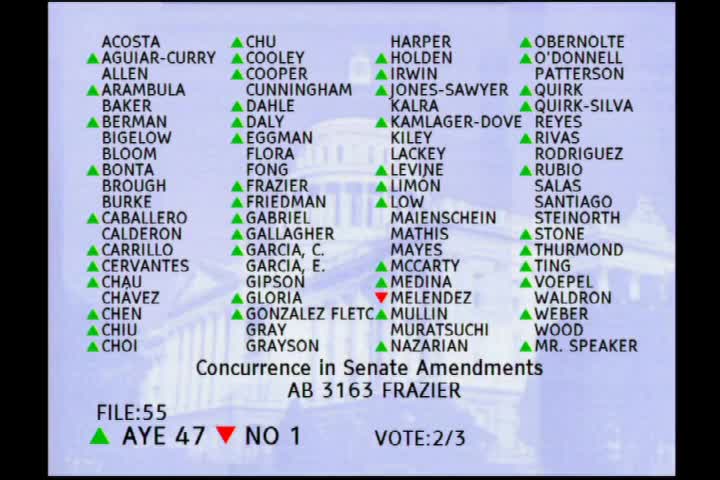


Bill Author

Bill Co-Author(s):