AB 2679: Health facilities: linen laundry.
- Session Year: 2017-2018
- House: Assembly
- Latest Version Date: 2018-09-20
Existing law provides for the licensure and regulation of health facilities, including general acute care hospitals and acute psychiatric hospitals, by the State Department of Public Health. Existing regulations prescribe specified processes and methods by which general acute care hospitals and acute psychiatric hospitals are required to launder the linens used at those facilities. A violation of these provisions is a crime.
This bill would, on or before January 1, 2020, require each general acute care hospital and acute psychiatric hospital, including those facilities that use a medical laundry service provider, to adopt and implement a linen laundry processing policy that is consistent and in accordance with the most recent infection control guidelines and standards developed by the federal Centers for Disease Control and Prevention and the federal Centers for Medicare and Medicaid Services. By creating a new crime, this bill would impose a state-mandated local program.
The California Constitution requires the state to reimburse local agencies and school districts for certain costs mandated by the state. Statutory provisions establish procedures for making that reimbursement.
This bill would provide that no reimbursement is required by this act for a specified reason.
Existing law provides for the licensure and regulation of health facilities, including general acute care hospitals and acute psychiatric hospitals, by the State Department of Public Health. Existing regulations prescribe specified processes and methods by which general acute care hospitals and acute psychiatric hospitals are required to launder the linens used at those facilities. A violation of these provisions is a crime.
This bill would, on or before January 1, 2020, require each general acute care hospital and acute psychiatric hospital, including those facilities that use a medical laundry service provider, to adopt and implement a linen laundry processing policy that is consistent and in accordance with the most recent infection control guidelines and standards developed by the federal Centers for Disease Control and Prevention, the federal Healthcare Infection Control Practices Advisory Committee, Prevention and the federal Centers for Medicare and Medicaid Services. By creating a new crime, this bill would impose a state-mandated local program.
The California Constitution requires the state to reimburse local agencies and school districts for certain costs mandated by the state. Statutory provisions establish procedures for making that reimbursement.
This bill would provide that no reimbursement is required by this act for a specified reason.
Existing law provides for the licensure and regulation of health facilities facilities, including general acute care hospitals and acute psychiatric hospitals, by the State Department of Public Health. Existing law requires the department to adopt, amend, and repeal reasonable rules and regulations as may be necessary or proper to carry out the purposes and intent of those provisions and to enable the department to exercise the powers and perform the duties conferred upon it by those provisions. regulations prescribe specified processes and methods by which general acute care hospitals and acute psychiatric hospitals are required to launder the linens used at those facilities. A violation of these provisions is a crime.
This bill would require the department, on or before January 1, 2020, to amend specified regulations relating to linen laundry in a general acute care hospital and acute psychiatric hospital to reflect modern advancements in linen laundry processes. Until the amendments to those regulations are adopted, the bill would authorize a general acute care hospital and acute psychiatric hospital to use a linen laundry process that uses lower water temperatures and reduced washing times, as compared to the water temperatures and washing times specified in those regulations, if certain infection control standards are met, including that the infection control committee of the hospital approves and periodically evaluates the effectiveness of the product or technology used. The bill would repeal its provisions on January 1, 2024.This bill would, on or before January 1, 2020, require each general acute care hospital and acute psychiatric hospital, including those facilities that use a medical laundry service provider, to adopt and implement a linen laundry processing policy that is consistent and in accordance with the most recent infection control guidelines and standards developed by the federal Centers for Disease Control and Prevention, the federal Healthcare Infection Control Practices Advisory Committee, and the federal Centers for Medicare and Medicaid Services. By creating a new crime, this bill would impose a state-mandated local program.
The California Constitution requires the state to reimburse local agencies and school districts for certain costs mandated by the state. Statutory provisions establish procedures for making that reimbursement.
This bill would provide that no reimbursement is required by this act for a specified reason.
Existing law provides for the licensure and regulation of health facilities by the State Department of Public Health. Existing law requires the department to adopt, amend, and repeal reasonable rules and regulations as may be necessary or proper to carry out the purposes and intent of those provisions and to enable the department to exercise the powers and perform the duties conferred upon it by those provisions.
This bill would require the department, on or before January 1, 2020, to amend specified regulations relating to linen laundry in a general acute care hospital and acute psychiatric hospital to reflect modern advancements in linen laundry processes. Until the amendments to those regulations are adopted, the bill would authorize a general acute care hospital and acute psychiatric hospital to use a linen laundry process that uses lower water temperatures and reduced washing times, as compared to the water temperatures and washing times specified in those regulations, if certain infection control standards are met, including that the infection control committee of the hospital approves and periodically evaluates the effectiveness of the product or technology used. The bill would repeal its provisions on January 1, 2024.
Existing law provides for the licensure and regulation of health facilities by the State Department of Public Health. Existing law requires the building standards published in the California Building Standards Code by the Office of Statewide Health Planning and Development, and the regulations adopted by the department, as applicable, to prescribe standards of adequacy, safety, and sanitation of the physical plant, of staffing with duly qualified licensed personnel, and of services, based on the type of health facility and the needs of the persons served thereby. department to adopt, amend, and repeal reasonable rules and regulations as may be necessary or proper to carry out the purposes and intent of those provisions and to enable the department to exercise the powers and perform the duties conferred upon it by those provisions.
This bill would make technical, nonsubstantive changes to that provision. require the department, on or before January 1, 2020, to amend specified regulations relating to linen laundry to reflect modern advancements in linen laundry processes.
Existing law provides for the licensure and regulation of health facilities by the State Department of Public Health. Existing law requires the building standards published in the California Building Standards Code by the Office of Statewide Health Planning and Development, and the regulations adopted by the department, as applicable, to prescribe standards of adequacy, safety, and sanitation of the physical plant, of staffing with duly qualified licensed personnel, and of services, based on the type of health facility and the needs of the persons served thereby.
This bill would make technical, nonsubstantive changes to that provision.
The Legislature finds and declares both of the following:
(a)Significant advances have been made in the technologies and detergents used in laundry processes, which reduce the amount of time, energy, and water that are necessary to hygienically clean linens used at health facilities. The State of California has embraced numerous energy and water savings policies that can be achieved, in part, by more efficient commercial laundry processes.
(b)It is the intent of the Legislature by enacting this act to allow for more energy and water efficient processes to be used in the processing of hygienically clean linens used at health facilities.
SEC. 2.Section 1275.8 is added to the Health and Safety Code, to read:1275.8.(a)On or before January 1, 2020, each general acute care hospital, as defined in subdivision (a) of Section 1250, and acute psychiatric hospital, as defined in subdivision (b) of Section 1250, shall adopt and implement a linen laundry processing policy that is consistent and in accordance with the most recent infection control guidelines and standards developed by the following:
(1)The federal Centers for Disease Control and Prevention.
(2)The federal Centers for Medicare and Medicaid Services.
(b)A general acute care hospital and an acute psychiatric hospital that uses a medical laundry service provider shall comply with the requirements of subdivision (a).
SEC. 3.No reimbursement is required by this act pursuant to Section 6 of Article XIIIB of the California Constitution because the only costs that may be incurred by a local agency or school district will be incurred because this act creates a new crime or infraction, eliminates a crime or infraction, or changes the penalty for a crime or infraction, within the meaning of Section 17556 of the Government Code, or changes the definition of a crime within the meaning of Section 6 of Article XIIIB of the California Constitution.
The Legislature finds and declares both of the following:
(a)Significant advances have been made in the technologies and detergents used in laundry processes, which reduce the amount of time, energy, and water that are necessary to hygienically clean linens used at health facilities. The State of California has embraced numerous energy and water savings policies that can be achieved, in part, by more efficient commercial laundry processes.
(b)It is the intent of the Legislature by enacting this act to allow for more energy and water efficient processes to be used in the processing of hygienically clean linens used at health facilities.
SEC. 2.Section 1275.8 is added to the Health and Safety Code, to read:1275.8.(a)On or before January 1, 2020, each general acute care hospital, as defined in subdivision (a) of Section 1250, and acute psychiatric hospital, as defined in subdivision (b) of Section 1250, shall adopt and implement a linen laundry processing policy that is consistent and in accordance with the most recent infection control guidelines and standards developed by all of the following:
(1)The federal Centers for Disease Control and Prevention.
(2)The federal Healthcare Infection Control Practices Advisory Committee.(3)(2)The federal Centers for Medicare and Medicaid Services.
(b)A general acute care hospital and a an acute psychiatric hospital that uses a medical laundry service provider shall comply with the requirements of subdivision (a).
SEC. 3.No reimbursement is required by this act pursuant to Section 6 of Article XIIIB of the California Constitution because the only costs that may be incurred by a local agency or school district will be incurred because this act creates a new crime or infraction, eliminates a crime or infraction, or changes the penalty for a crime or infraction, within the meaning of Section 17556 of the Government Code, or changes the definition of a crime within the meaning of Section 6 of Article XIIIB of the California Constitution.
The Legislature finds and declares both of the following:
(a)Significant advances have been made in the technologies and detergents used in laundry processes, which reduce the amount of time, energy, and water that are necessary to hygienically clean linens used at health facilities. The State of California has embraced numerous energy and water savings policies that can be achieved, in part, by more efficient commercial laundry processes.
(b)It is the intent of the Legislature by enacting this act to allow for more energy and water efficient processes to be used in the processing of hygienically clean linens used at health facilities.
SEC. 2.Section 1275.8 is added to the Health and Safety Code, to read:1275.8.(a)On or before January 1, 2020, each general acute care hospital, as defined in subdivision (a) of Section 1250, and acute psychiatric hospital, as defined in subdivision (b) of Section 1250, shall adopt and implement a linen laundry processing policy that is consistent and in accordance with the most recent infection control guidelines and standards developed by all of the following:
(1)The federal Centers for Disease Control and Prevention.
(2)The federal Healthcare Infection Control Practices Advisory Committee.
(3)The federal Centers for Medicare and Medicaid Services.
(b)A general acute care hospital and a acute psychiatric hospital that uses a medical laundry service provider shall comply with the requirements of subdivision (a).
SEC. 3.No reimbursement is required by this act pursuant to Section 6 of Article XIIIB of the California Constitution because the only costs that may be incurred by a local agency or school district will be incurred because this act creates a new crime or infraction, eliminates a crime or infraction, or changes the penalty for a crime or infraction, within the meaning of Section 17556 of the Government Code, or changes the definition of a crime within the meaning of Section 6 of Article XIIIB of the California Constitution.
SECTION 1.Section 1275.8 is added to the Health and Safety Code, to read:1275.8.(a)On or before January 1, 2020, the department shall amend Sections 70825(a)(4) and 71629(a)(4) of Title 22 of the California Code of Regulations to reflect modern advancements in linen laundry processes.(b)Until the department adopts amendments to Sections 70825(a)(4) and 71629(a)(4) of Title 22 of the California Code of Regulations pursuant to subdivision (a), a general acute care hospital and acute psychiatric hospital may use a linen laundry process that uses lower water temperatures and reduced washing times, as compared to the water temperatures and washing times specified in those provisions, if all of the following infection control standards are met:(1)The product or technology used to wash soiled hospital linen specifically requires lower water temperatures.(2)The infection control committee of the hospital approves and periodically evaluates the effectiveness of the product or technology.(3)Contingency plans are developed for the use of water temperatures of at least 140 degrees Fahrenheit when the product is not available or when the technology is disrupted.(c)This section shall remain in effect only until January 1, 2024, and as of that date is repealed.(a)On or before January 1, 2020, the department shall amend Sections 70825(a)(4) and 71629(a)(4) of Title 22 of the California Code of Regulations to reflect modern advancements in linen laundry processes.
(b)Until the department adopts amendments to Sections 70825(a)(4) and 71629(a)(4) of Title 22 of the California Code of Regulations pursuant to subdivision (a), a general acute care hospital and acute psychiatric hospital may use a linen laundry process that uses lower water temperatures and reduced washing times, as compared to the water temperatures and washing times specified in those provisions, if all of the following infection control standards are met:
(1)The product or technology used to wash soiled hospital linen specifically requires lower water temperatures.
(2)The infection control committee of the hospital approves and periodically evaluates the effectiveness of the product or technology.
(3)Contingency plans are developed for the use of water temperatures of at least 140 degrees Fahrenheit when the product is not available or when the technology is disrupted.
(c)This section shall remain in effect only until January 1, 2024, and as of that date is repealed.
On or before January 1, 2020, the department shall amend Sections 70825(a)(4) and 71629(a)(4) of Title 22 of the California Code of Regulations to reflect modern advancements in linen laundry processes.
SECTION 1.Section 1276 of the Health and Safety Code is amended to read:1276.(a)The building standards published in the California Building Standards Code by the Office of Statewide Health Planning and Development, and the regulations adopted by the department shall, as applicable, prescribe standards of adequacy, safety, and sanitation of the physical plant, of staffing with duly qualified licensed personnel, and of services, based on the type of health facility and the needs of the persons served thereby.(b)These regulations shall permit program flexibility by the use of alternate concepts, methods, procedures, techniques, equipment, personnel qualifications, bulk purchasing of pharmaceuticals, or conducting of pilot projects as long as statutory requirements are met and the use has the prior written approval of the department or the office, as applicable. The approval of the department or the office shall provide for the terms and conditions under which the exception is granted. A written request plus supporting evidence shall be submitted by the applicant or licensee to the department or office regarding the exception, as applicable.(c)While it is the intent of the Legislature that health facilities shall maintain continuous, ongoing compliance with the licensing rules and regulations, it is the further intent of the Legislature that the department expeditiously review and approve, if appropriate, applications for program flexibility. The Legislature recognizes that health care technology, practice, pharmaceutical procurement systems, and personnel qualifications and availability are changing rapidly. Therefore, requests for program flexibility require expeditious consideration.(d)The department shall, on or before April 1, 1989, develop a standardized form and format for requests by health facilities for program flexibility. Health facilities shall thereafter apply to the department for program flexibility in the prescribed manner. After the department receives a complete application requesting program flexibility, it shall have 60 days within which to approve, approve with conditions or modifications, or deny the application. Denials and approvals with conditions or modifications shall be accompanied by an analysis and a detailed justification for any conditions or modifications imposed. Summary denials to meet the 60-day timeframe shall not be permitted.(e)Notwithstanding any other law or regulation, the department shall provide flexibility in its pharmaceutical services requirements to permit any state department that operates state facilities subject to these provisions to establish a single statewide formulary or to procure pharmaceuticals through a departmentwide or multidepartment bulk purchasing arrangement. It is the intent of the Legislature that consolidation of these activities be permitted in order to allow the more cost-effective use and procurement of pharmaceuticals for the benefit of patients and residents of state facilities.(a)The building standards published in the State California Building Standards Code by the Office of Statewide Health Planning and Development, and the regulations adopted by the state department shall, as applicable, prescribe standards of adequacy, safety, and sanitation of the physical plant, of staffing with duly qualified licensed personnel, and of services, based on the type of health facility and the needs of the persons served thereby.
(b)These regulations shall permit program flexibility by the use of alternate concepts, methods, procedures, techniques, equipment, personnel qualifications, bulk purchasing of pharmaceuticals, or conducting of pilot projects as long as statutory requirements are met and the use has the prior written approval of the department or the office, as applicable. The approval of the department or the office shall provide for the terms and conditions under which the exception is granted. A written request plus supporting evidence shall be submitted by the applicant or licensee to the department or office regarding the exception, as applicable.
(c)While it is the intent of the Legislature that health facilities shall maintain continuous, ongoing compliance with the licensing rules and regulations, it is the further intent of the Legislature that the state department expeditiously review and approve, if appropriate, applications for program flexibility. The Legislature recognizes that health care technology, practice, pharmaceutical procurement systems, and personnel qualifications and availability are changing rapidly. Therefore, requests for program flexibility require expeditious consideration.
(d)The state department shall, on or before April 1, 1989, develop a standardized form and format for requests by health facilities for program flexibility. Health facilities shall thereafter apply to the state department for program flexibility in the prescribed manner. After the state department receives a complete application requesting program flexibility, it shall have 60 days within which to approve, approve with conditions or modifications, or deny the application. Denials and approvals with conditions or modifications shall be accompanied by an analysis and a detailed justification for any conditions or modifications imposed. Summary denials to meet the 60-day timeframe shall not be permitted.
(e)Notwithstanding any other provision of law or regulation, the State Department of Health Services department shall provide flexibility in its pharmaceutical services requirements to permit any state department that operates state facilities subject to these provisions to establish a single statewide formulary or to procure pharmaceuticals through a departmentwide or multidepartment bulk purchasing arrangement. It is the intent of the Legislature that consolidation of these activities be permitted in order to allow the more cost-effective use and procurement of pharmaceuticals for the benefit of patients and residents of state facilities.
|
Date
|
Status
|
|---|---|
| Sep 20, 2018 | Chaptered by Secretary of State - Chapter 587, Statutes of 2018. |
| Sep 20, 2018 | Approved by the Governor. |
| Sep 11, 2018 | Enrolled and presented to the Governor at 4:30 p.m. |
| Aug 30, 2018 | Senate amendments concurred in. To Engrossing and Enrolling. |
| Aug 29, 2018 | In Assembly. Concurrence in Senate amendments pending. |
| Aug 29, 2018 | Read third time. Passed. Ordered to the Assembly. |
| Aug 27, 2018 | Read second time. Ordered to third reading. |
| Aug 24, 2018 | Read third time and amended. Ordered to second reading. |
| Aug 14, 2018 | Read second time. Ordered to third reading. |
| Aug 13, 2018 | From committee: Do pass. (Ayes 6. Noes 0.) (August 13). |
| Aug 6, 2018 | In committee: Hearing postponed by committee. |
| Aug 6, 2018 | From committee chair, with author's amendments: Amend, and re-refer to committee. Read second time, amended, and re-referred to Com. on APPR. |
| Jun 26, 2018 | Read second time and amended. Re-referred to Com. on APPR. |
| Jun 25, 2018 | From committee: Amend, and do pass as amended and re-refer to Com. on APPR. with recommendation: To Consent Calendar. (Ayes 8. Noes 0.) (June 20). |
| May 17, 2018 | Referred to Com. on HEALTH. |
| May 3, 2018 | In Senate. Read first time. To Com. on RLS. for assignment. |
| May 3, 2018 | Read third time. Passed. Ordered to the Senate. |
| Apr 26, 2018 | Read second time. Ordered to Consent Calendar. |
| Apr 25, 2018 | From committee: Do pass. To Consent Calendar. (Ayes 17. Noes 0.) (April 25). |
| Apr 18, 2018 | From committee: Do pass and re-refer to Com. on APPR. (Ayes 15. Noes 0.) (April 17). Re-referred to Com. on APPR. |
| Apr 2, 2018 | Re-referred to Com. on HEALTH. |
| Mar 23, 2018 | From committee chair, with author's amendments: Amend, and re-refer to Com. on HEALTH. Read second time and amended. |
| Mar 22, 2018 | Referred to Com. on HEALTH. |
| Feb 16, 2018 | From printer. May be heard in committee March 18. |
| Feb 15, 2018 | Read first time. To print. |
|
Date
|
Description
|
Location
|
Votes
|
|
|---|---|---|---|---|
| Aug 30, 2018 | AB 2679 O'DONNELL Concurrence in Senate Amendments | Assembly Floor |
Passed |
|
| Aug 29, 2018 | Assembly 3rd Reading AB2679 O'Donnell By Pan | Senate Floor |
Passed |
|
| Aug 13, 2018 | Do pass | Senate Standing Committee on Appropriations |
Passed |
|
| Jun 20, 2018 | Do pass as amended, but first amend, and re-refer to the Committee on [Appropriations] with the recommendation: To Consent Calendar | Senate Standing Committee on Health |
Passed |
|
| May 3, 2018 | AB 2679 O'DONNELL Consent Calendar Second Day Regular Session | Assembly Floor |
Passed |
|
| Apr 25, 2018 | Do pass. To Consent Calendar. | Assembly Standing Committee on Appropriations |
Passed |
|
| Apr 17, 2018 | Do pass and be re-referred to the Committee on [Appropriations] | Assembly Standing Committee on Health |
Passed |
This list shows positions taken on this bill by organizations on the date displayed, which is linked to the original source.
Positions by individuals are not included.
|
Organization
|
Position
|
Date
|
|---|---|---|
| Alsco Inc. | ** Support | Aug 27, 2018 |
| Alsco, Inc. | ** Support | Apr 13, 2018 |
| American Textile Maintenance | ** Support | Aug 27, 2018 |
| American Textile Maintenance Company | ** Support | Apr 13, 2018 |
| Angelica | ** Support | Aug 27, 2018 |
| California Linen Services | ** Support | Aug 27, 2018 |
| Ecolab | ** Support | Aug 27, 2018 |
| Encore Textiles | ** Support | Aug 27, 2018 |
| Encore Textiles, Dba Campus Laundry | ** Support | Apr 13, 2018 |
| Magic Laundry Services, Inc. | ** Support | Aug 27, 2018 |
| Medico Professional Linen Service | ** Support | Aug 27, 2018 |
| Mission Linen Supply | ** Support | Aug 27, 2018 |
| Morgan Services | ** Support | Aug 27, 2018 |
| Republic Master Chefs | ** Support | Aug 27, 2018 |
| Shasta Linen Supply | ** Support | Aug 27, 2018 |
| Shasta Linen Supply | * Support | Apr 17, 2018 |
| Textile Rental Services Association | ** Support | Aug 27, 2018 |
| Western Textile Services Association | ** Support | Aug 27, 2018 |
CONCURRENCE IN SENATE AMENDMENTS
CSA1 Bill Id:AB 2679
Author:(O'Donnell)
As Amended Ver:August 24, 2018
Majority vote
ASSEMBLY: | 71-0 | (May 3, 2018) | SENATE: | 39-0 | (August 29, 2018) |
Original Committee Reference: HEALTH
SUMMARY: Requires the Department of Public Health (DPH) on or before January 1, 2020, to amend current regulations to reflect modern advancements in linen laundry processes.
The Senate amendments require general acute care hospitals, on or before January 1, 2020, to adopt and implement a linen laundry processing policy that is consistent and in accordance with the most recent infection control guidelines and standards developed by the federal Centers for Disease Control and Prevention (CDC) and the federal Centers for Medicare and Medicaid Services (CMS).
EXISTING LAW: Licenses and regulates various types of health facilities by DPH, including hospitals, long-term care facilities, primary care clinics, and specialty clinics, and requires DPH to adopt reasonable rules and regulations as may be necessary to enable DPH to carry out the purposes of provisions of law governing the various types of facilities licensed by DPH.
FISCAL EFFECT: According to the Senate Appropriations Committee, DPH anticipates minor and absorbable costs. Senate Appropriations Committee also notes possible cost pressures at the Department of State Hospitals, whose five state hospitals located at Atascadero, Metropolitan-Los Angeles, Napa, Patton, and Coalinga, have normal laundry processed through a contracted agreement, compliant to Title 22 standards. There may be limited-term workload for existing staff to review the Title 22 standards and compare it for compliance with the bill's proposed infection control guidelines according to the CDC, and CMS. The bill would, at a minimum, maintain existing contract costs.
COMMENTS: According to the author, in the 1980s the DPH developed standards for the cleaning of hospital linens to protect the health of patients and prevent the spread of disease. The author states that since then new discoveries and technologies have led the industry to develop cheaper and more efficient standards that still ensure linens are clean and safe, however, despite studies demonstrating the effectiveness of these new methods, DPH has failed to update their standards for over 30 years. The author concludes that adhering to these outdated standards is more expensive, time consuming, and energy inefficient than available alternatives, and it is time for regulations to reflect these advances.
Current regulations regarding the laundering of health facility linens have been in effect since 1985. In 2003, the CDC conducted a report titled, "Guidelines for Infection Control in Health-Care Facilities" which suggested that water temperatures from 71 to 77 Degrees Fahrenheit would be appropriate for hospital linen processing. In 2001, the Department of Health Services, now the Department of Health Care Services, (DHCS) acknowledged the need to update laundry regulations to reflect advancements in modern technology and sanitation through an All Facilities Letter (AFL) which allowed hospitals and their laundry service providers the flexibility to lower their wash temperatures. However, it was later discovered that the DHCS's AFL did not follow the APA, and was an underground regulation. As a result, each hospital must request flexibility for their laundry practices on a case-by-case basis.
According to DPH, its Center for Health Care Quality reorganized its Policy and Enforcement Branch in 2015 to create a regulations unit in the Policy Section. The unit is staffed by four full-time Associate Governmental Program Analysts and one Staff Services Manager I, all of whom work exclusively on regulations development. Current regulations packets in process:
Initial Development | Final Development | Final Approvals |
GACH: Rehab Services/ Outpatient Services/ Supportive Services | Adverse Events- GACH & acute psychiatric hospitals | Inpatient Treatment of Eating Disorders |
GACH Emergency Services/ Specialized Services/ Medical Imaging | Certified Nursing Assistants and Home Health Aide (CNA/HHA) Criminal Clearance | Medical Information Breach (MIB) -Administrative Penalties |
Correctional Treatment Centers | Unusual Occurrences/ Reportable Events | Skilled Nursing Facility - 3.5/2.4 Direct Care Staffing |
GACH: Administration/ Records & Reporting/ Medical Records/ Small Rural Hospitals | Temporary Management | |
GACH: Infection Control/ Physical Environment | Revision of Social Worker Definitions | |
GACH: Pharmacy/ Dietary/ Clinical Lab | ||
Change of Ownership (CHOW) | ||
Intermediate care facility/ developmentally disabled-nursing and intermediate care facility/ developmentally disabled-continuous nursing ICF/DD (N-CN-H) | ||
CNA/HHA Training | ||
Hospice Provider and Facilities | ||
Certified Hemodialysis Technician Training Program | ||
Pediatric Day Health Facilities | ||
GACH: Nursing/ Observation/ Surgical/ Anesthesia/ Patient Rights |
DPH states that the regulations on laundry in general acute care hospitals are part of the Infection Control and Physical Environment package currently in the initial development stage. An update to the laundry regulation is also included in the planned acute psychiatric hospital regulations.
Analysis Prepared by: Lara Flynn / HEALTH / (916) 319-2097 FN: 0004886
Office of Senate Floor Analyses (916) 651-1520 Fax: (916) 327-4478 | AB |
THIRD READING
Bill No: AB 2679
:
SENATE HEALTH COMMITTEE: 8-0, 6/20/18
AYES: Pan, Nguyen, Beall, Hernandez, Leyva, Mitchell, Monning, Roth
NO VOTE RECORDED: Nielsen
SENATE APPROPRIATIONS COMMITTEE: 6-0, 8/13/18
AYES: Portantino, Bates, Beall, Bradford, Hill, Wiener
NO VOTE RECORDED: Nielsen
ASSEMBLY FLOOR: 71-0, 5/3/18 (Consent) - See last page for vote
SUBJECT: Health facilities: linen laundry
SOURCE: Textile Rental Services Association
DIGEST:
This bill requires hospitals to adopt and implement a linen laundry processing policy that is in accordance with the most recent infection control guidelines and standards.
Senate Floor Amendments of 8/24/18 delete “the federal Healthcare Infection Control Practices Advisory Committee” as one of the guidelines and standards that is to be used when a hospital adopts a linen laundry processing policy, so that hospitals must now be guided by the federal Centers for Disease Control and Prevention and the federal Centers for Medicare and Medicaid Services.
Existing law:
- Licenses and regulates various types of health facilities by the Department of Public Health (DPH), including hospitals, long-term care facilities, primary care clinics, and specialty clinics, among others. [HSC §1250, et seq.]
- Permits DPH to adopt and enforce regulations for the execution of its duties. [HSC §131200]
- Establishes, under the Administrative Procedures Act (APA), a process for adopting, amending, or repealing regulations through the Office of Administrative Law (OAL). [GOV §11340, et seq.]
This bill:
- Requires general acute care hospitals and acute psychiatric hospitals, on or before January 1, 2020, to adopt and implement a linen laundry processing policy that is consistent and in accordance with the most recent infection control guidelines and standards developed by the following:
- The federal Centers for Disease Control and Prevention (CDC); and,
- The federal Centers for Medicare and Medicaid Services.
- Requires a general acute care hospital and an acute psychiatric hospital that uses a medical laundry service provider to comply with the provisions of this bill.
- Makes various legislative findings and declarations, including that it is the intent of the Legislature to allow for more energy and water efficient processes to be used in the processing of hygienically clean linens used at health care facilities.
Comments
- Author’s statement. According to the author, in the 1980s, DPH developed standards for the cleaning of hospital linens to protect the health of patients and prevent the spread of disease. Since then new discoveries and technologies have led the industry to develop cheaper and more efficient standards that still ensure linens are clean and safe. Despite studies demonstrating the effectiveness of these new methods, the Department has failed to update their standards for over 30 years. Adhering to these out of date standards is more expensive, time consuming, and energy inefficient than ready and available alternatives. It is time for our regulations to reflect these advances.
- Guidelines. According to the author, the current regulations governing how hospitals are required to launder their linens has been in effect since 1985. Since then, there have been significant advances in technology that save water and energy while still safely washing hospital linens. In 2003, the CDC released “Guidelines for Infection Control in Health Care Facilities,” which included guidelines for laundry. According to these guidelines, “although hot-water washing is an effective laundry disinfection method, the cost can be substantial…representing 10% to15% of the energy used by a hospital.” The CDC guidelines state that several studies have demonstrated that lower water temperatures of 71 to 77 degrees Fahrenheit can reduce microbial contamination when the cycling of the washer, the wash detergent, and the amount of laundry additive are carefully monitored and controlled. Low-temperature laundry cycles rely heavily on the presence of chlorine- or oxygen-activated bleach to reduce the levels of microbial contamination. The CDC guidelines state that “the selection of hot- or cold-water laundry cycles may be dictated by state health care facility licensing standards.”
In 2001, after receiving requests to amend these laundry temperature regulations, DPH issued an All Facilities Letter (AFL), stating that it would issue program flex for all health facilities when the product or technology used to wash linen specifically requires lower water temperatures, the infection control committee approves and periodically evaluates the effectiveness of the product or technology, and contingency plans are develop for water temperatures of at least 140 degrees Fahrenheit when the product or technology is not available. However, subsequent to this AFL, OAL issued a decision that found that all rules of general application must be adopted under the APA, and as a result of this decision, the AFL on laundry requirements was considered an underground regulation and was rendered inoperative. In 2015, the Textile Rental Services Association wrote to DPH requesting an updated AFL to reflect advances in laundry technology since the 2001 AFL, and DPH responded that due to the earlier OAL decision, it could not issue an updated AFL, and instead health facilities could continue to submit individual program flexibility requests.
- Title 22 and program flex. Division 5 of Title 22 contains the regulations that govern the different types of health facilities, home health agencies and clinics. However, there a number of places in Title 22 which permit DPH to grant “program flex” to comply with the regulation in an alternate manner. With regard to hospitals, there is explicit authorization to permit DPH to grant program flex with regard to hospital licensing requirements. DPH has a form on its website for facilities to request program flex, which simply asks what section of Title 22 is being requested for program flex, and what is the proposed alternate method for meeting the intent of the regulations. DPH is unable to grant program flexibility requests that would apply to all facilities, as that would be considered an underground regulation. Instead, program flex must be requested and approved for each individual facility. DPH states that on average, 192 program flexibility requests have been approved per year. DPH reports that most (66%) of the program flexibility requests were requested by general acute care hospitals, followed by skilled nursing facilities (15%) and home health agencies (10%). Approval of program flexibility requests are required to be posted immediately adjacent to the facility’s license.
- DPH and troubled history of adopting regulations. There has been a longstanding problem in DPH of ignoring mandates to adopt regulations. In 2008-09, the Legislative Analyst’s Office, in analyzing the health and social services budget, reported that “the Department of Public Health is slow to promulgate regulations and consequently, state laws are not being enforced or applied consistently across the state. We recommend the department report at budget hearings on the status of the development and promulgation of unissued regulations.” This problem has affected health care facilities, labs, pharmacies, and narcotic treatment facilities, among others. There have been a number of bills that have come through the Senate Health Committee to work around outdated regulations, without leaving facilities unregulated entirely.
However, while it has taken a long time, new regulations are moving forward. According to DPH, its Center for Health Care Quality reorganized its Policy and Enforcement Branch in 2015 to create a regulations unit in the Policy Section. The unit is staffed by four full-time Associate Governmental Program Analysts and one Staff Services Manager I, all of whom work exclusively on regulations development. DPH reports that it is currently working on 21 regulatory packages that are at different stages in the development process, including regulations on hospice providers, certified hemodialysis technician training programs, intermediate care facility/developmentally disable-nursing facilities, pediatric day health facilities, skilled nursing facilities 3.5 direct care hours, and certified nursing assistant and home health aide training, among others. There are currently 12 regulatory packages which have not been started, including several updates to standards of care for specified general acute care hospital services, an update to requirements establishing minimum, specific, and numerical nurse-to-patient ratios for direct care givers in acute psychiatric hospitals, and regulations that are needed to establish standards that govern Congregate Living Health Facilities. DPH states that the last regulatory package in the work plan is scheduled to be filed at the Secretary of State’s Office in 2024, and as new laws are chaptered requiring clarification, Title 22 will continue to be updated.
FISCAL EFFECT: Appropriation: Fiscal Com.: Local:
According to the Senate Appropriations Committee:
- According to DPH, minor and absorbable costs.
- Senate Appropriations staff notes possible cost pressures at the Department of State Hospitals, whose five state hospitals located at Atascadero, Metropolitan-Los Angeles, Napa, Patton, and Coalinga, have normal laundry processed through a contracted agreement, compliant to Title 22 standards. There may be limited-term workload for existing staff to review the Title 22 standards and compare it for compliance with this bill’s proposed infection control guidelines according to the CDC, Healthcare Infection Control Practices Advisory Committee, and Centers for Medicare and Medicaid Services. This bill, at a minimum, maintains existing contract costs.
Textile Rental Services Association (source)
Alsco Inc.
American Textile Maintenance
Angelica
California Linen Services
Ecolab
Encore Textiles
Magic Laundry Services, Inc.
Medico Professional Linen Service
Mission Linen Supply
Morgan Services
Republic Master Chefs
Shasta Linen Supply
Western Textile Services Association
OPPOSITION: (Verified 8/24/18)
None received
ARGUMENTS IN SUPPORT: This bill is sponsored by the Textile Rental Services Association (TRSA), which states that as an association it has been very proactive on promoting sustainable business practices through its Clean Green laundry certification and Industry Sustainability Survey, and that since 1997, its members have collectively realized a reduction of 24% in CO² emissions, a 33% reduction in water usage, and a 27% reduction in all energy consumption, all while growing to over 15 million tons of processed laundry. However, to keep this substantial environmental progress growing, TRSA states that it needs a regulatory structure that doesn’t restrict the laundry industry to outdated laundry practices that waste water and energy. TRSA states that the CDC, the Centers for Medicare and Medicaid Services, and the US Department of Health and Human Services have all acknowledged that medical linen laundering can safely be completed at much lower temperatures than the method prescribed in Title 22 regulations. Numerous individual linen rental and laundry services companies write in support, asserting that this bill helps California’s environment while also promoting a modernized regulatory structure for businesses to follow.
ASSEMBLY FLOOR: 71-0, 5/3/18
AYES: Acosta, Aguiar-Curry, Arambula, Baker, Berman, Bigelow, Bloom, Bonta, Brough, Burke, Calderon, Carrillo, Cervantes, Chau, Chávez, Chen, Chiu, Chu, Cooley, Cooper, Cunningham, Dahle, Daly, Eggman, Flora, Fong, Frazier, Friedman, Gallagher, Eduardo Garcia, Gipson, Gloria, Gonzalez Fletcher, Gray, Harper, Holden, Irwin, Jones-Sawyer, Kalra, Kamlager-Dove, Kiley, Lackey, Levine, Limón, Low, Maienschein, Mathis, Mayes, McCarty, Medina, Melendez, Mullin, Muratsuchi, Nazarian, Obernolte, O'Donnell, Patterson, Quirk, Reyes, Rodriguez, Rubio, Salas, Santiago, Steinorth, Mark Stone, Thurmond, Ting, Waldron, Weber, Wood, Rendon
NO VOTE RECORDED: Travis Allen, Caballero, Choi, Cristina Garcia, Grayson, Quirk-Silva, Voepel
8/27/18 19:35:02
**** END ****
Office of Senate Floor Analyses (916) 651-1520 Fax: (916) 327-4478 | AB |
THIRD READING
Bill No: AB 2679
:
SENATE HEALTH COMMITTEE: 8-0, 6/20/18
AYES: Pan, Nguyen, Beall, Hernandez, Leyva, Mitchell, Monning, Roth
NO VOTE RECORDED: Nielsen
SENATE APPROPRIATIONS COMMITTEE: 6-0, 8/13/18
AYES: Portantino, Bates, Beall, Bradford, Hill, Wiener
NO VOTE RECORDED: Nielsen
ASSEMBLY FLOOR: 71-0, 5/3/18 (Consent) - See last page for vote
SUBJECT: Health facilities: linen laundry
SOURCE: Textile Rental Services Association
DIGEST:
This bill requires hospitals to adopt and implement a linen laundry processing policy that is in accordance with the most recent infection control guidelines and standards.
Existing law:
- Licenses and regulates various types of health facilities by the Department of Public Health (DPH), including hospitals, long-term care facilities, primary care clinics, and specialty clinics, among others. [HSC §1250, et seq.]
- Permits DPH to adopt and enforce regulations for the execution of its duties. [HSC §131200]
- Establishes, under the Administrative Procedures Act (APA), a process for adopting, amending, or repealing regulations through the Office of Administrative Law (OAL). [GOV §11340, et seq.]
This bill:
- Requires general acute care hospitals and acute psychiatric hospitals, on or before January 1, 2020, to adopt and implement a linen laundry processing policy that is consistent and in accordance with the most recent infection control guidelines and standards developed by all of the following:
- The federal Centers for Disease Control and Prevention;
- The federal Healthcare Infection Control Practices Advisory Committee; and,
- The federal Centers for Medicare and Medicaid Services.
- Requires a general acute care hospital and an acute psychiatric hospital that uses a medical laundry service provider to comply with the provisions of this bill.
- Makes various legislative findings and declarations, including that it is the intent of the Legislature to allow for more energy and water efficient processes to be used in the processing of hygienically clean linens used at health care facilities.
Comments
- Author’s statement. According to the author, in the 1980s, DPH developed standards for the cleaning of hospital linens to protect the health of patients and prevent the spread of disease. Since then new discoveries and technologies have led the industry to develop cheaper and more efficient standards that still ensure linens are clean and safe. Despite studies demonstrating the effectiveness of these new methods, the Department has failed to update their standards for over 30 years. Adhering to these out of date standards is more expensive, time consuming, and energy inefficient than ready and available alternatives. It is time for our regulations to reflect these advances.
- Guidelines. According to the author, the current regulations governing how hospitals are required to launder their linens has been in effect since 1985. Since then, there have been significant advances in technology that save water and energy while still safely washing hospital linens. In 2003, the Centers for Disease Control and Prevention (CDC) released “Guidelines for Infection Control in Health Care Facilities,” which included guidelines for laundry. According to these guidelines, “although hot-water washing is an effective laundry disinfection method, the cost can be substantial…representing 10% to15% of the energy used by a hospital.” The CDC guidelines state that several studies have demonstrated that lower water temperatures of 71 to 77 degrees Fahrenheit can reduce microbial contamination when the cycling of the washer, the wash detergent, and the amount of laundry additive are carefully monitored and controlled. Low-temperature laundry cycles rely heavily on the presence of chlorine- or oxygen-activated bleach to reduce the levels of microbial contamination. The CDC guidelines state that “the selection of hot- or cold-water laundry cycles may be dictated by state health care facility licensing standards.”
In 2001, after receiving requests to amend these laundry temperature regulations, DPH issued an All Facilities Letter (AFL), stating that it would issue program flex for all health facilities when the product or technology used to wash linen specifically requires lower water temperatures, the infection control committee approves and periodically evaluates the effectiveness of the product or technology, and contingency plans are develop for water temperatures of at least 140 degrees Fahrenheit when the product or technology is not available. However, subsequent to this AFL, OAL issued a decision that found that all rules of general application must be adopted under the APA, and as a result of this decision, the AFL on laundry requirements was considered an underground regulation and was rendered inoperative. In 2015, the Textile Rental Services Association wrote to DPH requesting an updated AFL to reflect advances in laundry technology since the 2001 AFL, and DPH responded that due to the earlier OAL decision, it could not issue an updated AFL, and instead health facilities could continue to submit individual program flexibility requests.
- Title 22 and program flex. Division 5 of Title 22 contains the regulations that govern the different types of health facilities, home health agencies and clinics. However, there a number of places in Title 22 which permit DPH to grant “program flex” to comply with the regulation in an alternate manner. With regard to hospitals, there is explicit authorization to permit DPH to grant program flex with regard to hospital licensing requirements. DPH has a form on its website for facilities to request program flex, which simply asks what section of Title 22 is being requested for program flex, and what is the proposed alternate method for meeting the intent of the regulations. DPH is unable to grant program flexibility requests that would apply to all facilities, as that would be considered an underground regulation. Instead, program flex must be requested and approved for each individual facility. DPH states that on average, 192 program flexibility requests have been approved per year. DPH reports that most (66%) of the program flexibility requests were requested by general acute care hospitals, followed by skilled nursing facilities (15%) and home health agencies (10%). Approval of program flexibility requests are required to be posted immediately adjacent to the facility’s license.
- DPH and troubled history of adopting regulations. There has been a longstanding problem in DPH of ignoring mandates to adopt regulations. In 2008-09, the Legislative Analyst’s Office, in analyzing the health and social services budget, reported that “the Department of Public Health is slow to promulgate regulations and consequently, state laws are not being enforced or applied consistently across the state. We recommend the department report at budget hearings on the status of the development and promulgation of unissued regulations.” This problem has affected health care facilities, labs, pharmacies, and narcotic treatment facilities, among others. There have been a number of bills that have come through the Senate Health Committee to work around outdated regulations, without leaving facilities unregulated entirely.
However, while it has taken a long time, new regulations are moving forward. According to DPH, its Center for Health Care Quality reorganized its Policy and Enforcement Branch in 2015 to create a regulations unit in the Policy Section. The unit is staffed by four full-time Associate Governmental Program Analysts and one Staff Services Manager I, all of whom work exclusively on regulations development. DPH reports that it is currently working on 21 regulatory packages that are at different stages in the development process, including regulations on hospice providers, certified hemodialysis technician training programs, intermediate care facility/developmentally disable-nursing facilities, pediatric day health facilities, skilled nursing facilities 3.5 direct care hours, and certified nursing assistant and home health aide training, among others. There are currently 12 regulatory packages which have not been started, including several updates to standards of care for specified general acute care hospital services, an update to requirements establishing minimum, specific, and numerical nurse-to-patient ratios for direct care givers in acute psychiatric hospitals, and regulations that are needed to establish standards that govern Congregate Living Health Facilities. DPH states that the last regulatory package in the work plan is scheduled to be filed at the Secretary of State’s Office in 2024, and as new laws are chaptered requiring clarification, Title 22 will continue to be updated.
FISCAL EFFECT: Appropriation: Fiscal Com.: Local:
According to the Senate Appropriations Committee:
- According to DPH, minor and absorbable costs.
- Senate Appropriations staff notes possible cost pressures at the Department of State Hospitals, whose five state hospitals located at Atascadero, Metropolitan-Los Angeles, Napa, Patton, and Coalinga, have normal laundry processed through a contracted agreement, compliant to Title 22 standards. There may be limited-term workload for existing staff to review the Title 22 standards and compare it for compliance with this bill’s proposed infection control guidelines according to the CDC, Healthcare Infection Control Practices Advisory Committee, and Centers for Medicare and Medicaid Services. This bill, at a minimum, maintains existing contract costs.
Textile Rental Services Association (source)
Alsco Inc.
American Textile Maintenance
Angelica
California Linen Services
Ecolab
Encore Textiles
Magic Laundry Services, Inc.
Medico Professional Linen Service
Mission Linen Supply
Morgan Services
Republic Master Chefs
Shasta Linen Supply
Western Textile Services Association
OPPOSITION: (Verified 8/15/18)
None received
ARGUMENTS IN SUPPORT: This bill is sponsored by the Textile Rental Services Association (TRSA), which states that as an association it has been very proactive on promoting sustainable business practices through its Clean Green laundry certification and Industry Sustainability Survey, and that since 1997, its members have collectively realized a reduction of 24% in CO² emissions, a 33% reduction in water usage, and a 27% reduction in all energy consumption, all while growing to over 15 million tons of processed laundry. However, to keep this substantial environmental progress growing, TRSA states that it needs a regulatory structure that doesn’t restrict the laundry industry to outdated laundry practices that waste water and energy. TRSA states that the CDC, the Centers for Medicare and Medicaid Services, and the US Department of Health and Human Services have all acknowledged that medical linen laundering can safely be completed at much lower temperatures than the method prescribed in Title 22 regulations. Numerous individual linen rental and laundry services companies write in support, asserting that this bill helps California’s environment while also promoting a modernized regulatory structure for businesses to follow.
ASSEMBLY FLOOR: 71-0, 5/3/18
AYES: Acosta, Aguiar-Curry, Arambula, Baker, Berman, Bigelow, Bloom, Bonta, Brough, Burke, Calderon, Carrillo, Cervantes, Chau, Chávez, Chen, Chiu, Chu, Cooley, Cooper, Cunningham, Dahle, Daly, Eggman, Flora, Fong, Frazier, Friedman, Gallagher, Eduardo Garcia, Gipson, Gloria, Gonzalez Fletcher, Gray, Harper, Holden, Irwin, Jones-Sawyer, Kalra, Kamlager-Dove, Kiley, Lackey, Levine, Limón, Low, Maienschein, Mathis, Mayes, McCarty, Medina, Melendez, Mullin, Muratsuchi, Nazarian, Obernolte, O'Donnell, Patterson, Quirk, Reyes, Rodriguez, Rubio, Salas, Santiago, Steinorth, Mark Stone, Thurmond, Ting, Waldron, Weber, Wood, Rendon
NO VOTE RECORDED: Travis Allen, Caballero, Choi, Cristina Garcia, Grayson, Quirk-Silva, Voepel
8/15/18 11:08:34
**** END ****
SENATE COMMITTEE ON APPROPRIATIONS
Senator Anthony Portantino, Chair
2017 - 2018 Regular Session
AB 2679 (O'Donnell) - Health facilities: linen laundry
Version: August 6, 2018 | Policy Vote: HEALTH 8 - 0 |
Urgency: No | Mandate: No |
Hearing Date: August 13, 2018 | Consultant: Samantha Lui |
This bill does not meet the criteria for referral to the Suspense File.
Bill Summary:
The bill requires, by January 1, 2020, each general acute care hospital and acute psychiatric hospital, as defined respectively, that use a medical laundry service provider, to adopt and implement a linen laundry processing policy that is consistent and in accordance with specified infection control guidelines and standards.
Fiscal Impact:
- According to the Department of Public Health, minor and absorbable costs.
- Staff notes possible cost pressures at the Department of State Hospitals, whose five state hospitals located at Atascadero, Metropolitan-Los Angeles, Napa, Patton, and Coalinga, have normal laundry processed through a contracted agreement, compliant to Title 22 standards. There may be limited-term workload for existing staff to review the Title 22 standards and compare it for compliance with the bill’s proposed infection control guidelines according to the Centers for Disease Control and Prevention, Healthcare Infection Control Practices Advisory Committee, and Centers for Medicare and Medicaid Services. The bill would, at a minimum, maintain existing contract costs.
Background:
In 2003, the Centers for Disease Control and Prevention (CDC) released “Guidelines for Infection Control in Health Care Facilities,” which included guidelines for laundry. According to these guidelines, “although hot-water washing is an effective laundry disinfection method, the cost can be substantial…representing 10% to15% of the energy used by a hospital.” The CDC guidelines state that several studies have demonstrated that lower water temperatures of 71 to 77 degrees Fahrenheit can reduce microbial contamination when the cycling of the washer, the wash detergent, and the amount of laundry additive are carefully monitored and controlled. Low-temperature laundry cycles rely heavily on the presence of chlorine- or oxygen-activated bleach to reduce the levels of microbial contamination. The CDC guidelines state that “the selection of hot- or cold-water laundry cycles may be dictated by state health care facility licensing standards.
Proposed Law:
The bill requires, by January 1, 2020, each general acute care hospital and acute psychiatric hospital, as defined respectively, that use a medical laundry service provider, to adopt and implement a linen laundry processing policy that is consistent and in accordance with the most recent infection control guidelines and standards developed by all of the following:
- The federal Centers for Disease Control and Prevention.
- The federal Healthcare Infection Control Practices Advisory Committee.
- The federal Centers for Medicare and Medicaid Services.
Related Legislation:
- AB 1225 (Patterson) requires the Department of Public Health (CDPH) to report to the Legislature by January 1, 2020 on its efforts to update or modernize its Title 22 regulations to better reflect modern day best practices and technologies, and also its use of program flex waivers. Additionally, requires CDPH to focus on, and prioritize, adoption of amendments to regulations related to cardiovascular surgery staff, equipment and supplies, and regulations related to staffing requirements and procedural limitations within cardiac catheterization laboratories. The bill is on the Senate Floor.
-- END --
SENATE COMMITTEE ON HEALTH
Senator Dr. Richard Pan, Chair
BILL NO: AB 2679
AUTHOR: | O'Donnell | ||
VERSION: | March 23, 2018 | ||
HEARING DATE: | June 20, 2018 | ||
CONSULTANT: | Vincent D. Marchand | ||
SUBJECT: Health facilities: regulations: linen laundry
SUMMARY:
Requires DPH to amend specified regulations related to the laundry process for hospital linens, by January 1, 2020, to reflect modern advancements in linen laundry processes.
Existing law:
- Licenses and regulates various types of health facilities by DPH, including hospitals, long-term care facilities, primary care clinics, and specialty clinics, among others. [HSC §1250, et seq.]
- Permits DPH to adopt and enforce regulations for the execution of its duties. [HSC §131200]
- Establishes, under the Administrative Procedures Act (APA), a process for adopting, amending, or repealing regulations through the Office of Administrative Law (OAL). [GOV §11340, et seq.]
This bill requires DPH, on or before January 1, 2020, to amend regulations related to hospital linen laundry to reflect modern advancements in linen laundry processes. The regulations subject to this bill require both general acute care hospitals and acute psychiatric hospitals to wash linens according to a specified method that exposes the linens to water at a minimum temperature of 160 degrees Fahrenheit for at least 24 minutes during the washing process.
FISCAL EFFECT:
According to Assembly Appropriations Committee, administrative costs of $120,000 per year for two years to DPH to issue regulations (Licensing and Certification Fund).
PRIOR VOTES:
Assembly Floor: | 71 - 0 |
Assembly Appropriations Committee: | 17 - 0 |
Assembly Health Committee: | 15 - 0 |
COMMENTS:
- Author’s statement. According to the author, in the 1980s, DPH developed standards for the cleaning of hospital linens to protect the health of patients and prevent the spread of disease. Since then new discoveries and technologies have led the industry to develop cheaper and more efficient standards that still ensure linens are clean and safe. Despite studies demonstrating the effectiveness of these new methods, the department has failed to update their standards for over 30 years. Adhering to these out of date standards is more expensive, time consuming, and energy inefficient than ready and available alternatives. It is time for our regulations to reflect these advances.
- Background. According to the author, the current regulations governing how hospitals are required to launder their linens has been in effect since 1985. Since then, there have been significant advances in technology that save water and energy while still safely washing hospital linens. In 2003, the Centers for Disease Control and Prevention (CDC) released “Guidelines for Infection Control in Health Care Facilities,” which included guidelines for laundry. According to these guidelines, “although hot-water washing is an effective laundry disinfection method, the cost can be substantial…representing 10% to15% of the energy used by a hospital.” The CDC guidelines state that several studies have demonstrated that lower water temperatures of 71 to 77 degrees Fahrenheit can reduce microbial contamination when the cycling of the washer, the wash detergent, and the amount of laundry additive are carefully monitored and controlled. Low-temperature laundry cycles rely heavily on the presence of chlorine- or oxygen-activated bleach to reduce the levels of microbial contamination. The CDC guidelines state that “the selection of hot- or cold-water laundry cycles may be dictated by state health care facility licensing standards.
In 2001, after receiving requests to amend these laundry temperature regulations, DPH issued an All Facilities Letter (AFL), stating that it would issue program flex for all health facilities when the product or technology used to wash linen specifically requires lower water temperatures, the infection control committee approves and periodically evaluates the effectiveness of the product or technology, and contingency plans are develop for water temperatures of at least 140 degrees Fahrenheit when the product or technology is not available. However, subsequent to this AFL, OAL issued a decision that found that all rules of general application must be adopted under the APA, and as a result of this decision, the AFL on laundry requirements was considered an underground regulation and was rendered inoperative. In 2015, the Textile Rental Services Association wrote to DPH requesting an updated AFL to reflect advances in laundry technology since the 2001 AFL, and DPH responded that due to the earlier OAL decision, it could not issue an updated AFL, and instead health facilities could continue to submit individual program flexibility requests. - Regulatory process. According to OAL, the regulatory process is designed to provide the public with a meaningful opportunity to participate in the adoption of regulations or rules that have the force of law and to ensure the creation of an adequate record for the public, OAL, and judicial review. OAL is responsible for reviewing administrative regulations proposed by over 200 state agencies for compliance with the standards set forth in the APA. To initiate a rulemaking action, an agency first issues a public notice, and has one year within which to complete the rulemaking and submit to OAL. The APA requires a minimum of 45-days comment to the agency, in writing, on the proposed regulation. After the initial public comment period, changes to the initial proposal may be made. Agencies must make each substantial, sufficiently related change available for public comment for at least 15 days before adoption. Upon receipt of a proposed regulation, OAL has 30 working days to conduct its review and determine whether it demonstrates that the agency satisfied the procedural requirement of the APA, and review the proposed regulations for compliance with the six legal standards set forth in the APA. According to DPH, their experience is that a relatively simple regulation packet could move through the process in as few as 15 to 18 months, while regulations pertaining to more complicated subject matter can sometimes take several years, depending on the volume of public comments.
- Title 22 and program flex. Division 5 of Title 22 contains the regulations that govern the different types of health facilities, home health agencies and clinics. However, there a number of places in Title 22 which permit DPH to grant “program flex” to comply with the regulation in an alternate manner. With regard to hospitals, there is explicit authorization to permit DPH to grant program flex with regard to hospital licensing requirements. DPH has a form on its website for facilities to request program flex, which simply asks what section of Title 22 is being requested for program flex, and what is the proposed alternate method for meeting the intent of the regulations. DPH is unable to grant program flexibility requests that would apply to all facilities, as that would be considered an underground regulation. Instead, program flex must be requested and approved for each individual facility. DPH states that on average, 192 program flexibility requests have been approved per year. DPH reports that most (66%) of the program flexibility requests were requested by general acute care hospitals, followed by skilled nursing facilities (15%) and home health agencies (10%). Approval of program flexibility requests are required to be posted immediately adjacent to the facility’s license.
- DPH and troubled history of adopting regulations. There has been a longstanding problem in DPH of ignoring mandates to adopt regulations. In 2008-09, the Legislative Analyst’s Office, in analyzing the health and social services budget, reported that “the Department of Public Health is slow to promulgate regulations and consequently, state laws are not being enforced or applied consistently across the state. We recommend the department report at budget hearings on the status of the development and promulgation of unissued regulations.” This problem has affected health care facilities, labs, pharmacies, and narcotic treatment facilities, among others. There have been a number of bills that have come through this Committee to work around outdated regulations, without leaving facilities unregulated entirely.
However, while it has taken a long time, new regulations are moving forward. According to DPH, its CHCQ reorganized its Policy and Enforcement Branch in 2015 to create a regulations unit in the Policy Section. The unit is staffed by four full-time Associate Governmental Program Analysts and one Staff Services Manager I, all of whom work exclusively on regulations development. DPH reports that it is currently working on 21 regulatory packages that are at different stages in the development process, including regulations on hospice providers, certified hemodialysis technician training programs, intermediate care facility/developmentally disable-nursing facilities, pediatric day health facilities, skilled nursing facilities 3.5 direct care hours, and certified nursing assistant and home health aide training, among others. There are currently 12 regulatory packages which have not been started, including several updates to standards of care for specified general acute care hospital services, an update to requirements establishing minimum, specific, and numerical nurse-to-patient ratios for direct care givers in acute psychiatric hospitals, and regulations that are needed to establish standards that govern Congregate Living Health Facilities. DPH states that the last regulatory package in the work plan is scheduled to be filed at the Secretary of State office in 2024, and as new laws are chaptered requiring clarification, Title 22 will continue to be updated. - Related legislation. AB 1225 (Patterson) requires DPH to report to the Legislature by January 1, 2020 on its efforts to update or modernize its Title 22 regulations to better reflect modern day best practices and technologies, and also its use of program flex waivers. Additionally, requires DPH to focus on, and prioritize, adoption of amendments to regulations related to cardiovascular surgery staff, equipment and supplies, and regulations related to staffing requirements and procedural limitations within cardiac catheterization laboratories. AB 1225 is set for hearing on June 27, 2018 in this Committee.
- Prior legislation. AB 614 (Brown, Chapter 435, Statutes of 2015) permits DPH, without taking regulatory action, to update references in the California Code of Regulations (CCR) to health care standards of practice adopted by a recognized state or national association when the state or national association and its outdated standards are already named in the CCR.
AB 2425 (Quirk, Chapter 570, Statutes of 2014) provides for a temporary exemption from complying with existing regulations for law enforcement laboratories engaging in forensic alcohol analysis tests if the laboratory is accredited and provides the exemption only until DPH updates their existing regulations.
AB 1822 (Bonta of 2014) would have allowed certain health care providers to store unused tissue without being licensed as a tissue bank, provided they maintain the tissue in accordance with the manufacturers' instructions and the tissue is regulated by the federal Food and Drug Administration. AB 1822 was vetoed by the Governor.
AB 1312 (Brown of 2013) would have authorized DPH, without taking regulatory action, to update references in regulations to health care standards of practice adopted by a recognized state or national association. AB 1312 was held in the Assembly Health Committee.
SB 534 (Hernandez, Chapter 722, Statutes of 2013) required four types of health facility categories to comply with facility-specific federal certification requirements to meet state licensing requirements until DPH adopted state regulations.
- Support. This bill is sponsored by the Textile Rental Services Association (TRSA), which states that as an association it has been very proactive on promoting sustainable business practices through its Clean Green laundry certification and Industry Sustainability Survey, and that since 1997, its members have collectively realized a reduction of 24% in CO² emissions, a 33% reduction in water usage, and a 27% reduction in all energy consumption, all while growing to over 15 million tons of processed laundry. However, to keep this substantial environmental progress growing, TRSA states that it needs a regulatory structure that doesn’t restrict the laundry industry to outdated laundry practices that waste water and energy. TRSA states that the CDC, the Centers for Medicare and Medicaid Services, and the US Department of Health and Human Services have all acknowledged that medical linen laundering can safely be completed at much lower temperatures than the method prescribed in Title 22 regulations. Numerous individual linen rental and laundry services companies write in support, asserting that this bill would help California’s environment while also promoting a modernized regulatory structure for businesses to follow.
- Suggested amendment. According to DPH, the regulatory package that includes the update to the laundry standards is in the beginning stages. But because this regulatory package also includes other hospital infection control and facility requirements, it may take longer than a year to complete. The author may wish to consider simply codifying the laundry standard that DPH attempted to permit in its AFL from 2001, at least for a few years or until DPH completes the new regulations.
SUPPORT AND OPPOSITION:
Support: Textile Rental Services Association (Sponsor)
Alsco Inc.
American Textile Maintenance
Angelica
California Linen Services
Ecolab
Encore Textiles
Magic Laundry Services, Inc.
Medico Professional Linen Service
Mission Linen Supply
Morgan Services
Republic Master Chefs
Shasta Linen Supply
Western Textile Services Association
Oppose: None received
-- END --
Date of Hearing: April 25, 2018
ASSEMBLY COMMITTEE ON APPROPRIATIONS
Lorena Gonzalez Fletcher, Chair
ABPCA Bill Id:AB 2679
Author:(O'Donnell) – As Amended Ver:March 23, 2018
Policy Committee: | Health | Vote: | 15 - 0 |
Urgency: No State Mandated Local Program: No Reimbursable: No
SUMMARY:
This bill requires the California Department of Public Health (CDPH) to amend specified regulations to reflect modern advancements in linen laundry processes on or before January 1, 2020.
FISCAL EFFECT:
Administrative costs of $120,000 per year for two years to CDPH to issue regulations (Licensing and Certification Fund).
COMMENTS:
- Purpose. The author indicates requiring CDPH to adopt regulations by a date certain for updates in linen laundry processes will allow the use of cheaper and more water-efficient and energy-efficient technology.
- Background. CDPH administers and oversees a diverse array of programs to protect public health and safety. The department's regulatory programs are often complex and of high interest to regulated industries. Programs often require a high level of specialized scientific and programmatic expertise, technology and safety standards constantly evolve, and a high volume and diversity of standards need continuous updating. Because of these challenges, some difficulty in issuing regulations is to be expected, but CDPH appears to be an outlier among state agencies for the sheer number of outdated standards across many different programs and its difficulty updating them. Many outdated standards have been reported as problematic by various industry representatives that have sought legislative remedies over the years. CDPH has reorganized staff units working on regulations and is focused on updating high-priority regulations. The department reports it is currently working on 33 regulatory packages, including an ambitious update to Title 22 regulations governing facility licensure. At this time it does not appear the department has prioritized updating linen laundry standards.
Analysis Prepared by: Lisa Murawski / APPR. / (916) 319-2081
Date of Hearing: April 17, 2018
ASSEMBLY COMMITTEE ON HEALTH
Jim Wood, Chair
ABPCA Bill Id:AB 2679
Author:(O'Donnell) – As Amended Ver:March 23, 2018
SUBJECT: Health facilities: regulations: linen laundry.
SUMMARY: Requires the Department of Public Health (DPH) on or before January 1, 2020, to amend current regulations to reflect modern advancements in linen laundry processes.
EXISTING LAW:
- Licenses and regulates various types of health facilities by DPH, including hospitals, long-term care facilities, primary care clinics, and specialty clinics.
- Requires DPH to adopt reasonable rules and regulations as may be necessary to enable DPH to carry out the purposes of provisions of law governing the various types of facilities licensed by DPH.
- Establishes, under the Administrative Procedures Act (APA), a process for adopting, amending, or repealing regulations through the Office of Administrative Law (OAL).
- Permits DPH to approve the use of program flexibility to permit facilities to use alternate methods of compliance with regulations, with the prior written approval of DPH.
FISCAL EFFECT: This bill has not yet been analyzed by a fiscal committee.
COMMENTS:
- PURPOSE OF THIS BILL. According to the author, in the 1980s the DPH developed standards for the cleaning of hospital linens to protect the health of patients and prevent the spread of disease. The author states that since then new discoveries and technologies have led the industry to develop cheaper and more efficient standards that still ensure linens are clean and safe, however, despite studies demonstrating the effectiveness of these new methods, DPH has failed to update their standards for over 30 years. The author concludes that adhering to these outdated standards is more expensive, time consuming, and energy inefficient than available alternatives, and it is time for regulations to reflect these advances.
- BACKGROUND. Current regulations regarding the laundering of health facility linens have been in effect since 1985. In 2003, the Centers for Disease Control and Prevention (CDC) conducted a report titled, “Guidelines for Infection Control in Health-Care Facilities” which suggested that water temperatures from 71 to 77 Degrees Fahrenheit would be appropriate for hospital linen processing. In 2001, the Department of Health Services, now the Department of Health Care Services, (DHCS) acknowledged the need to update laundry regulations to reflect advancements in modern technology and sanitation through an All Facilities Letter (AFL) which allowed hospitals and their laundry service providers the flexibility to lower their wash temperatures. However, it was later discovered that the DHCS’s AFL did not follow the APA, and was an underground regulation. As a result, each hospital must request flexibility for their laundry practices on a case-by-case basis.
- Title 22 and program flexibility. Division 5 of Title 22 contains the regulations that govern the different types of health facilities, home health agencies and clinics. However, there a number of places in the Health and Safety Code which permit DPH to grant “program flexibility” to comply with the law in an alternate manner. For example, in the statutes governing primary and specialty clinics, the statutes permit applications for program flexibility for the use of “alternate concepts, methods, procedures, techniques, equipment, personnel qualifications, bulk purchasing of pharmaceuticals, or conducting of pilot projects as long as statutory requirements are met and the use has the prior written approval” of DPH. With regard to hospitals, there is an explicit authority to permit DPH to grant program flexibility with regard to hospital building code requirements, among other provisions of law. DPH has a form on its Website for facilities to request program flexibility, which simply asks what section of Title 22 is being requested for program flexibility, and what is the proposed alternate method for meeting the intent of the regulations. According to DPH, since January 1, 2012, DPH as approved 962 program flexes, received from 13 types of facilities, for more than 140 types of regulations. DPH reports that most (66%) of the program flexes were requested by general acute care hospitals, followed by skilled nursing facilities (15%) and home health agencies (10%). DPH states that on average, 192 program flexes have been approved per year.
- Regulatory process. A regulation is a rule adopted by a state regulatory agency to implement, interpret, or make specific the law enforced or administered by that agency, or to govern an agency's procedure. According to OAL, the regulatory process is designed to provide the public with a meaningful opportunity to participate in the adoption of regulations or rules that have the force of law and to ensure the creation of an adequate record for the public, OAL, and judicial review. OAL is responsible for reviewing administrative regulations proposed by over 200 state agencies for compliance with the standards set forth in the APA. To initiate a rulemaking action, an agency first issues a public notice, and has one year within which to complete the rulemaking and submit to OAL. The APA requires a minimum of 45-days comment to the agency, in writing, on the proposed regulation. After the initial public comment period, changes to the initial proposal may be made. Agencies must make each substantial, sufficiently related change available for public comment for at least 15 days before adoption. Upon receipt of a proposed regulation, OAL has 30 working days to conduct its review and determine whether it demonstrates that the agency satisfied the procedural requirement of the APA, and review the proposed regulations for compliance with the six legal standards set forth in the APA. According to DPH, their experience is that a relatively simple regulation packet could move through the process in as few as 15-18 months, while regulations pertaining to more complicated subject matter can sometimes take several years, depending on the volume of public comments.
- DPH's slow history of adopting regulations. In 2008-09, the Legislative Analyst’s Office, in analyzing the health and social services budget, reported that “the Department of Public Health is slow to promulgate regulations and consequently, state laws are not being enforced or applied consistently across the state. We recommend the department report at budget hearings on the status of the development and promulgation of unissued regulations.” This problem has affected health care facilities, labs, pharmacies, and narcotic treatment facilities, among others. There have been a number of bills that have come through this Committee to work around outdated regulations, without leaving facilities entirely unregulated. Those bills have been drafted to address specific instances in which an outdated regulation was limiting the ability of providers to practice in the most effective manner. For example, federal regulations were amended in 2001 to allow for Sunday or holiday closure of methadone clinics in certain cases while state regulations have not been updated for over 20 years and require methadone clinics to be open seven days a week. There are take-home doses of methadone available that are safe to use, ensuring that patients do not have a break in treatment if a facility were closed one day a week. Another bill heard by this Committee permits pharmacy technicians, rather than pharmacists, to check expiration dates on the labels of drugs in a hospital pharmacy – something currently prohibited by a regulation not updated since its promulgation in 1986.
- DPH efforts to update Title 22 regulations. According to DPH, its Center for Health Care Quality reorganized its Policy and Enforcement Branch in 2015 to create a regulations unit in the Policy Section. The unit is staffed by four full-time Associate Governmental Program Analysts and one Staff Services Manager I, all of whom work exclusively on regulations development. Current regulations packets in process:
Initial Development | Final Development | Final Approvals |
GACH: Rehab Services/ Outpatient Services/ Supportive Services | Adverse Events- GACH & acute psychiatric hospitals | Inpatient Treatment of Eating Disorders |
GACH Emergency Services/ Specialized Services/ Medical Imaging | Certified Nursing Assistants and Home Health Aide (CNA/HHA) Criminal Clearance | Medical Information Breach (MIB) -Administrative Penalties |
Correctional Treatment Centers | Unusual Occurrences/ Reportable Events | Skilled Nursing Facility - 3.5/2.4 Direct Care Staffing |
GACH: Administration/ Records & Reporting/ Medical Records/ Small Rural Hospitals | Temporary Management | |
GACH: Infection Control/ Physical Environment | Revision of Social Worker Definitions | |
GACH: Pharmacy/ Dietary/ Clinical Lab | ||
Change of Ownership (CHOW) | ||
Intermediate care facility/ developmentally disabled-nursing and intermediate care facility/ developmentally disabled-continuous nursing ICF/DD (N-CN-H) | ||
CNA/HHA Training | ||
Hospice Provider and Facilities | ||
Certified Hemodialysis Technician Training Program | ||
Pediatric Day Health Facilities | ||
GACH: Nursing/ Observation/ Surgical/ Anesthesia/ Patient Rights |
DPH reports that it is currently working on 33 regulatory packages that are at different stages in the development process. There are currently 12 regulatory packages which have not been started, including several updates to standards of care for specified general acute care hospital services, an update to requirements establishing minimum, specific, and numerical nurse-to-patient ratios for direct care givers in acute psychiatric hospitals, and regulations that are needed to establish standards that govern Congregate Living Health Facilities.
DPH states that the regulations on laundry in general acute care hospitals are part of the Infection Control and Physical Environment package currently in the initial development stage. An update to the laundry regulation is also included in the planned acute psychiatric hospital regulations.
DPH considers patient safety, the complexity of the package, and age of the regulations when prioritizing regulations; however, prioritization continually changes with new legislative mandates. At this time, DPH believes all outdated regulations have been identified and prioritized, but that each package completion date varies. DPH states that the last regulatory package in the work plan is scheduled to be filed at the Secretary of State office in 2024, and as new laws are chaptered requiring clarification, Title 22 will continue to be updated.
- SUPPORT. The Textile Rental Services Association (TRSA) support this bill stating that millions of Californians rely on TRSAs members every day for clean uniforms, garments, hospital and restaurant linens, and other products supple with hygienic, sustainable laundering services. TRSA notes that California's regulations that guide medical linen laundering were developed in the 1980's which prescribes an outdated laundering process that requires high levels of energy and water use. TRSA contends that thanks to modern advances in technology and detergents, the CDC, the Centers for Medicaid and Medicare Services, and the US Department of Health and Human Services have all acknowledged that medical linen laundering can be safely completed at much lower temperatures than the method prescribed in regulation.
Angelica writes in support and notes that the company has over 1,000 employees in the state of California, and that the company makes every effort to be environmentally conscious. Angelica states that they need a regulatory structure that reflects those efforts, and they have the technology to safely launder medical linens while not utilizing more energy than they need to. - RELATED LEGISLATION. AB 2798 (Maienschein) establishes specific timelines for DPH to approve applications from hospitals seeking to modify, add, or expand a service or program. Requires DPH to develop an advice program to assist hospitals in completing application paperwork. Requires DPH to develop an automated system to process applications and to publicly report metrics on the workload and timelines of the application process. AB 2798 is currently pending in the Assembly Health Committee.
- PREVIOUS LEGISLATION.
- AB 1225 (Patterson) of 2017 would have required the DPH to annually report to the Legislature regarding its efforts to update or modernize regulations, and on the use of program flexibility waivers. AB 1225 failed passage in the Senate Health Committee.
- AB 614 (Brown), Chapter 435, Statutes of 2015, permits DPH, without taking regulatory action, to update references in the California Code of Regulations (CCR) to health care standards of practice adopted by a recognized state or national association when the state or national association and its outdated standards are already named in the CCR.
- AB 2425 (Quirk), Chapter 570, Statutes of 2014, provides for a temporary exemption from complying with existing regulations for law enforcement laboratories engaging in forensic alcohol analysis tests if the laboratory is accredited and provides the exemption only until DPH updates their existing regulations.
- AB 1822 (Bonta) of 2014 would have allowed certain healthcare providers to store unused tissue without being licensed as a tissue bank, provided they maintain the tissue in accordance with the manufacturers' instructions and the tissue is regulated by the federal Food and Drug Administration. AB 1822 was vetoed by Governor Brown.
- AB 1312 (Brown) of 2013 would have authorized DPH to, without taking regulatory action, update references in regulations to health care standards of practice adopted by a recognized state or national association. AB 1312 was held in Assembly Health Committee.
- AB 1225 (Patterson) of 2017 would have required the DPH to annually report to the Legislature regarding its efforts to update or modernize regulations, and on the use of program flexibility waivers. AB 1225 failed passage in the Senate Health Committee.
- POLICY COMMENT. While it is encouraging that DPH is currently engaged in an effort to update Title 22 regulations, it is troubling that the update is estimated to take seven years to complete. DPH should examine what the barriers have been to using the APA process in an effort to ensure future required regulations and necessary updates are promulgated in an efficient and timely manner. However, it is unclear whether prioritizing which regulations are updated through legislation is necessary. DPH may need the flexibility to prioritize regulatory packages that have a greater effect on the health and safety of patients
REGISTERED SUPPORT / OPPOSITION:
Support
Textile Rental Services Association (sponsor)
Alsco, Inc.
American Textile Maintenance Company
Angelica
California Linen Services
Ecolab
Encore Textiles, dba Campus Laundry
Magic Laundry Services, Inc.
Medico Professional Linen Service
Mission Linen Supply
Morgan Services
Republic Master Chefs
Shasta Linen Supply
Western Textile Services Association
Opposition
None on file.
Analysis Prepared by: Lara Flynn / HEALTH / (916) 319-2097
Discussed in Hearing
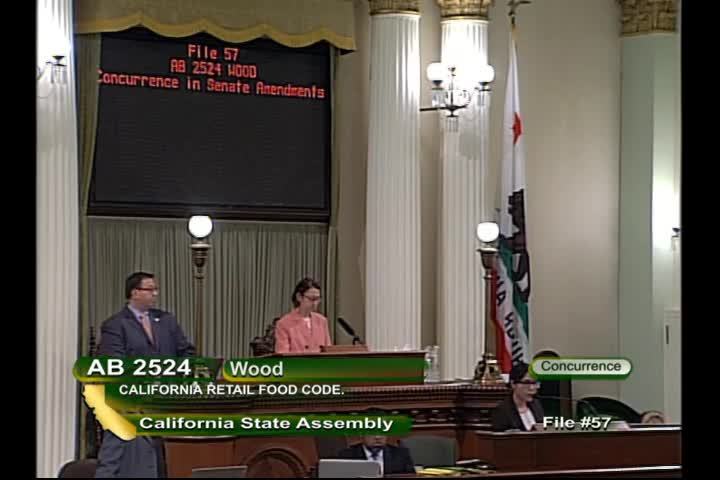 44SEC
Assembly Floor
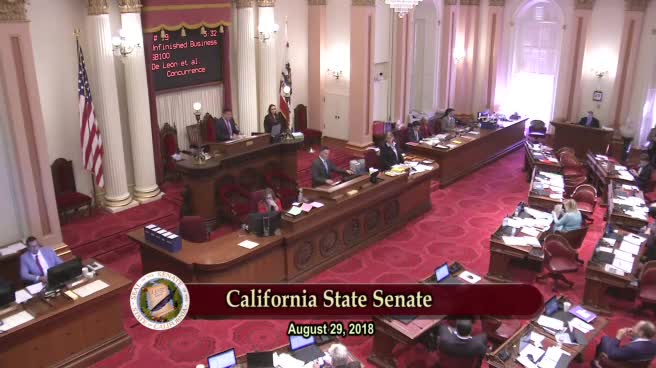 2MIN
Senate Floor
 2MIN
Senate Standing Committee on Appropriations
 5MIN
Assembly Standing Committee on Health
Bill Author

Bill Co-Author(s):