AB 2693: Public Utilities Commission: telecommunications service: natural disasters: reports.
- Session Year: 2017-2018
- House: Assembly
- Latest Version Date: 2018-07-03
Under existing law, the Public Utilities Commission has regulatory authority over public utilities, including telephone corporations. Existing law requires the commission, in consultation with the Office of Emergency Services, to identify the need for telecommunications service systems not on customers premises to have backup electricity to enable telecommunications networks to function, and to enable customers to contact a public safety answering point operator during an electrical outage, to determine performance criteria for backup systems, and to determine whether specified best practices for backup systems have been implemented by telecommunications service providers operating in California. Existing law requires the commission to report certain information to the Legislature.
This bill would, upon the declaration of a for the duration of a fire- or natural disaster-related state of emergency or a local emergency declared by the Governor, require the commission to collect specified information from telecommunications service providers relating to the providers efforts and resources used to restore telecommunications service outages caused by, and to repair or replace related network infrastructure or facilities that were damaged as a result of, the emergency or a natural disaster. The bill would require the commission to annually submit prepare a report that summarizes the information collected, collected and the service providers plans for restoring telecommunication service outages caused by, or repairing or replacing related network infrastructure or facilities, as necessitated by, the emergency or natural disaster. The bill would require the report to be broken down by each emergency or natural disaster, disaster and submitted to the appropriate policy committees of the Legislature and Legislature. The bill would require the commission to post the report in a conspicuous area of its Internet Web site. The bill would also require the President of the commission to annually present a summary of the information collected to the appropriate policy committees of the Legislature. The bill would authorize the commission to require telecommunications service providers to collect and forward to the commission any relevant information for these purposes. purposes and would authorize the commission to make this information public. The bill would authorize the commission to withhold from the public information it deems would pose a security threat if publicly disclosed.
Under existing law, a violation of any provision of the Public Utilities Act or of any of the rules or orders issued under the act is a crime.
Because the provisions of this bill are within the act and require action by the commission to implement its requirements, a violation of which would be a crime, this bill would impose a state-mandated local program.
Existing constitutional provisions require that a statute that limits the right of access to the meetings of public bodies or the writings of public officials and agencies be adopted with findings demonstrating the interest protected by the limitation and the need for protecting that interest.
This bill would make legislative findings to that effect.
The California Constitution requires the state to reimburse local agencies and school districts for certain costs mandated by the state. Statutory provisions establish procedures for making that reimbursement.
This bill would provide that no reimbursement is required by this act for a specified reason.
Under existing law, the Public Utilities Commission has regulatory authority over public utilities, including telephone corporations. Existing law requires the commission, in consultation with the Office of Emergency Services, to identify the need for telecommunications service systems not on customers premises to have backup electricity to enable telecommunications networks to function, and to enable customers to contact a public safety answering point operator during an electrical outage, to determine performance criteria for backup systems, and to determine whether specified best practices for backup systems have been implemented by telecommunications service providers operating in California. Existing law requires the commission to report certain information to the Legislature.
This bill would, upon the declaration of a state of emergency or a local emergency by the Governor, require the commission to collect specified information from telecommunications service providers relating to the providers efforts and resources used to restore telecommunications service outages caused by, and to repair or replace related network infrastructure or facilities that were damaged as a result of, the emergency or a natural disaster. The bill would require the commission to annually submit a report that summarizes the information collected, broken down by each emergency or natural disaster, to the appropriate policy committees of the Legislature and to post the report in a conspicuous area of its Internet Web site. The bill would also require the President of the commission to annually present a summary of the information collected to the appropriate policy committees of the Legislature. The bill would authorize the commission to require telecommunications service providers to collect and forward to the commission any relevant information for these purposes.
Under existing law, a violation of any provision of the Public Utilities Act or of any of the rules or orders issued under the act is a crime.
Because the provisions of this bill are within the act and require action by the commission to implement its requirements, a violation of which would be a crime, this bill would impose a state-mandated local program.
The California Constitution requires the state to reimburse local agencies and school districts for certain costs mandated by the state. Statutory provisions establish procedures for making that reimbursement.
This bill would provide that no reimbursement is required by this act for a specified reason.
Under existing law, the Public Utilities Commission has regulatory jurisdiction over electrical and gas corporations. Existing law authorizes the commission to fix the rates and charges for every public utility, including electrical and gas corporations, and requires that those rates and charges be just and reasonable.This bill would require the commission to consider revising the gas supply tariff for natural gas-fired generating units to authorize the collection of rate revenues mostly in capacity charges, as specified. The bill would state the intent of the Legislature that the commission undertake certain actions regarding Californias future grid reliability needs, including determining which natural gas-fired generating units can be retired and which are needed, as specified.Under existing law, a violation of the Public Utilities Act or any order, decision, rule, direction, demand, or requirement of the commission is a crime. Because this bill would be a part of the act and because a violation of an order or decision of the commission implementing its requirements would be a crime, the bill would impose a state-mandated local program by creating a new crime. The California Constitution requires the state to reimburse local agencies and school districts for certain costs mandated by the state. Statutory provisions establish procedures for making that reimbursement.This bill would provide that no reimbursement is required by this act for a specified reason.Under existing law, the Public Utilities Commission has regulatory jurisdiction over electrical and gas corporations. Existing law authorizes the commission to fix the rates and charges for every public utility, including electrical and gas corporations, and requires that those rates and charges be just and reasonable.
This bill would require the commission, before January 1, 2020, and every 2 years thereafter, in consultation with the Independent System Operator, to analyze and determine for specified years which natural gas-fired electric generating units in existence at the time of the analysis are needed to ensure short-term and long-term local and system electrical reliability in the state. The bill would, after that analysis and determination, require the commission, in consultation with the State Air Resources Board, to identify from among those generating units preferred generating units. The bill would require the commission to ensure that the preferred generating units receive sufficient revenues to remain operational. The bill would require the commission to consider revising the gas supply tariff for natural gas-fired generating units to authorize the collection of rate revenues mostly in capacity charges, as specified. The bill would state the intent of the Legislature that the commission undertake certain actions regarding Californias future grid reliability needs, including determining which natural gas-fired generating units can be retired and which are needed, as specified.
Under existing law, a violation of the Public Utilities Act or any order, decision, rule, direction, demand, or requirement of the commission is a crime.
Because this bill would be a part of the act and because a violation of an order or decision of the PUC commission implementing its requirements would be a crime, the bill would impose a state-mandated local program by creating a new crime.
The California Constitution requires the state to reimburse local agencies and school districts for certain costs mandated by the state. Statutory provisions establish procedures for making that reimbursement.
This bill would provide that no reimbursement is required by this act for a specified reason.
Under existing law, the Public Utilities Commission has regulatory jurisdiction over electrical and gas corporations. Existing law authorizes the commission to fix the rates and charges for every public utility, including electrical and gas corporations, and requires that those rates and charges be just and reasonable.
This bill would require the commission, before January 1, 2020, and every 2 years thereafter, in consultation with the Independent System Operator, to analyze and determine for specified years which natural gas-fired electric generating units in existence at the time of the analysis are needed to ensure short-term and long-term local and system electrical reliability in the state. The bill would, after that analysis and determination, require the commission, in consultation with the State Air Resources Board, to identify from among those generating units preferred generating units. The bill would require the commission to ensure that the preferred generating units receive sufficient revenues to remain operational. The bill would require the commission to modify consider revising the gas supply tariff for natural gas-fired generating units to authorize the collection of rate revenues mostly in capacity charges, as specified.
Under existing law, a violation of the Public Utilities Act or any order, decision, rule, direction, demand, or requirement of the commission is a crime.
Because this bill would be a part of the act and because a violation of an order or decision of the PUC implementing its requirements would be a crime, the bill would impose a state-mandated local program by creating a new crime.
The California Constitution requires the state to reimburse local agencies and school districts for certain costs mandated by the state. Statutory provisions establish procedures for making that reimbursement.
This bill would provide that no reimbursement is required by this act for a specified reason.
Under existing law, the Public Utilities Commission has regulatory jurisdiction over electrical and gas corporations. Existing law authorizes the commission to fix the rates and charges for every public utility, including electrical and gas corporations, and requires that those rates and charges be just and reasonable.
This bill would require the commission, before January 1, 2020, and every 2 years thereafter, in consultation with the Independent System Operator, to analyze and determine for specified years which natural gas-fired electric generation powerplants generating units in existence at the time of the analysis are needed to ensure short-term and long-term electric local and system electrical reliability in the state. The bill would, after that analysis and determination, require the commission, in consultation with the State Air Resources Board, to identify from among those powerplants generating units preferred powerplants. generating units. The bill would require the commission to ensure that the preferred powerplants generating units receive sufficient revenues to remain operational. The bill would require the commission to modify the gas supply tariff for natural gas-fired powerplants generating units to authorize the collection of rate revenues mostly in demand capacity charges, as specified.
Under existing law, a violation of the Public Utilities Act or any order, decision, rule, direction, demand, or requirement of the commission is a crime.
Because this bill would be a part of the act and because a violation of an order or decision of the PUC implementing its requirements would be a crime, the bill would impose a state-mandated local program by creating a new crime.
The California Constitution requires the state to reimburse local agencies and school districts for certain costs mandated by the state. Statutory provisions establish procedures for making that reimbursement.
This bill would provide that no reimbursement is required by this act for a specified reason.
Under existing law, the Public Utilities Commission has regulatory jurisdiction over electrical and gas corporations. Existing law authorizes the commission to fix the rates and charges for every public utility, including electrical and gas corporations, and requires that those rates and charges be just and reasonable.
This bill would require the commission to analyze and determine which commission, before January 1, 2020, and every 2 years thereafter, in consultation with the Independent System Operator, to analyze and determine for specified years which natural gas-fired electric generation powerplants in existence at the time of the analysis are needed to ensure short-term and long-term electric local and system reliability in the state. The bill would, after that analysis and determination, require the commission, in consultation with the State Air Resources Board, to identify from among those powerplants preferred powerplants. The bill would require the commission to direct electrical corporations to contract for those electrical services with those powerplants determined to be necessary and to authorize the electrical corporations to recover the costs of those contracts from their ratepayers. ensure that the preferred powerplants receive sufficient revenues to remain operational. The bill would require the commission to require gas corporations to develop a modify the gas supply tariff for natural gas-fired powerplants authorizing to authorize the collection of rate revenues mostly in demand charges, as specified.
Under existing law, a violation of the Public Utilities Act or any order, decision, rule, direction, demand, or requirement of the commission is a crime.
Because this bill would be a part of the act and because a violation of an order or decision of the PUC implementing its requirements would be a crime, the bill would impose a state-mandated local program by creating a new crime.
The California Constitution requires the state to reimburse local agencies and school districts for certain costs mandated by the state. Statutory provisions establish procedures for making that reimbursement.
This bill would provide that no reimbursement is required by this act for a specified reason.
Under existing law, the Public Utilities Commission has regulatory jurisdiction over electrical and gas corporations. Existing law authorizes the commission to fix the rates and charges for every public utility, including electrical and gas corporations, and requires that those rates and charges be just and reasonable.
This bill would require the commission to analyze and determine which natural gas-fired electric generation powerplants in existence at the time of the analysis are needed to ensure long-term electric reliability in the state. The bill would require the commission to direct electrical corporations to contract for those electrical services with those powerplants determined to be necessary and to authorize the electrical corporations to recover the costs of those contracts from their ratepayers. The bill would require the commission to require gas corporations to develop a gas tariff for natural gas-fired powerplants authorizing the collection of rate revenues mostly in demand charges, as specified.
Under existing law, a violation of the Public Utilities Act or any order, decision, rule, direction, demand, or requirement of the commission is a crime.
Because this bill would be a part of the act and because a violation of an order or decision of the PUC implementing its requirements would be a crime, the bill would impose a state-mandated local program by creating a new crime.
The California Constitution requires the state to reimburse local agencies and school districts for certain costs mandated by the state. Statutory provisions establish procedures for making that reimbursement.
This bill would provide that no reimbursement is required by this act for a specified reason.
(a)For purposes of this section, telecommunications service has the same meaning as defined in Section 2892.1.
(b)Upon the declaration of a of, and for the duration of, a fire- or natural disaster-related state of emergency or a local emergency by the Governor pursuant to Section 8558 of the Government Code, the commission shall collect all of the following information from telecommunications service providers relating to the providers efforts and resources used to restore telecommunications service outages caused by, and to repair or replace related network infrastructure or facilities that were damaged as a result of, the emergency or a natural disaster:
(1)The extent of any damage to telecommunications network infrastructure or facilities caused by the emergency or natural disaster, including the type of facility and infrastructure damaged.
(2)The number of people in California who experienced a telecommunications service outage caused by the emergency or natural disaster.
(3)The duration of each telecommunications service outage caused by the emergency or natural disaster.
(4)Any specific data on 911 emergency system outages caused by the emergency or natural disaster.
(5)The types of infrastructure or facilities used to restore telecommunications service outages caused by, or to repair or replace related network infrastructure or facilities damaged by, the emergency or natural disaster.
(6)The service providers plans for fully restoring any telecommunications service outages or repairing or replacing any related network infrastructure or facilities, as necessitated by the emergency or natural disaster, including specifically identifying areas where wireless facilities would replace wireline facilities.(c)Consistent with paragraph (2) of subdivision (a) of Section 920, the The commission shall annually submit prepare a report that summarizes the information collected pursuant to subdivision (b), (b) and service providers plans for restoring any telecommunication service outages caused by, or repairing or replacing any related network infrastructure or facilities, as necessitated by, the emergency or natural disaster, including specifically identifying areas where wireless facilities would replace wireline facilities. This report shall be broken down by each emergency or natural disaster, disaster and, consistent with paragraph (2) of subdivision (a) of Section 920, shall be submitted to the appropriate policy committees of the Legislature and post the report Legislature, and posted in a conspicuous area of its the commissions Internet Web site.
(d)The president of the commission shall annually present to the appropriate policy committees of the Legislature a summary of the information collected pursuant to subdivision (b). The summary may be presented at the same time that the president presents the annual report pursuant to Section 321.6.
(e)For purposes of this section, the commission may require a telecommunications service provider to collect and forward to the commission any relevant information. information and, pursuant to existing authority, may make this information public, except information generated or obtained pursuant to subdivision (b) that the commission deems would pose a security threat to the public if disclosed.
SEC. 2.The Legislature finds and declares that Section 1 of this act, which adds Section 910.8 of the Public Utilities Code, imposes a limitation on the publics right of access to the meetings of public bodies or the writings of public officials and agencies within the meaning of Section 3 of Article I of the California Constitution. Pursuant to that constitutional provision, the Legislature makes the following findings to demonstrate the interest protected by this limitation and the need for protecting that interest:
The interests in withholding information from public that, if disclosed, is deemed by the Public Utilities Commission to present a security threat to the public outweigh the benefits of public disclosure of that information.
SEC. 2.SEC. 3.No reimbursement is required by this act pursuant to Section 6 of Article XIIIB of the California Constitution because the only costs that may be incurred by a local agency or school district will be incurred because this act creates a new crime or infraction, eliminates a crime or infraction, or changes the penalty for a crime or infraction, within the meaning of Section 17556 of the Government Code, or changes the definition of a crime within the meaning of Section 6 of Article XIIIB of the California Constitution.
(a)For purposes of this section, telecommunications service has the same meaning as defined in Section 2892.1.
(b)Upon the declaration of a state of emergency or a local emergency by the Governor pursuant to Section 8558 of the Government Code, the commission shall collect all of the following information from telecommunications service providers relating to the providers efforts and resources used to restore telecommunications service outages caused by, and to repair or replace related network infrastructure or facilities that were damaged as a result of, the emergency or a natural disaster:
(1)The extent of any damage to telecommunications network infrastructure or facilities caused by the emergency or natural disaster, including the type of facility and infrastructure damaged.
(2)The number of people in California who experienced a telecommunications service outage caused by the emergency or natural disaster.
(3)The duration of each telecommunications service outage caused by the emergency or natural disaster.
(4)Any specific data on 911 emergency system outages caused by the emergency or natural disaster.
(5)The types of infrastructure or facilities used to restore telecommunications service outages caused by, or to repair or replace related network infrastructure or facilities damaged by, the emergency or natural disaster.
(6)The service providers plans for fully restoring any telecommunications service outages or repairing or replacing any related network infrastructure or facilities, as necessitated by the emergency or natural disaster, including specifically identifying areas where wireless facilities would replace wireline facilities.
(c)Consistent with paragraph (2) of subdivision (a) of Section 920, the commission shall annually submit a report that summarizes the information collected pursuant to subdivision (b), broken down by each emergency or natural disaster, to the appropriate policy committees of the Legislature and post the report in a conspicuous area of its Internet Web site.
(d)The president of the commission shall annually present to the appropriate policy committees of the Legislature a summary of the information collected pursuant to subdivision (b). The summary may be presented at the same time that the president presents the annual report pursuant to Section 321.6.
(e)For purposes of this section, the commission may require a telecommunications service provider to collect and forward to the commission any relevant information.
SEC. 2.No reimbursement is required by this act pursuant to Section 6 of Article XIIIB of the California Constitution because the only costs that may be incurred by a local agency or school district will be incurred because this act creates a new crime or infraction, eliminates a crime or infraction, or changes the penalty for a crime or infraction, within the meaning of Section 17556 of the Government Code, or changes the definition of a crime within the meaning of Section 6 of Article XIIIB of the California Constitution.
SECTION 1.Section 454.52.5 is added to the Public Utilities Code, to read:454.52.5.(a)(1)The Legislature finds and declares all of the following:(A)The California Global Warming Solutions Act of 2006 (Division 25.5 (commencing with Section 38500) of the Health and Safety Code) requires the state to reduce its emissions of greenhouse gases to 40 percent below 1990 levels by 2030.(B)The California Renewables Portfolio Standard Program (Article 16 (commencing with Section 399.11) of Chapter 2.3) requires that 50 percent of the states electricity come from renewable resources by 2030.(C)By adopting these requirements, the Legislature expects load-serving entities to procure a greater quantity of renewable resources and to rely less on natural gas-fired generating units. The variable generation profile of wind and solar generation changes the resource attributes needed for electric grid reliability and to date has been primarily addressed by relying on natural gas-fired generating units that can quickly ramp up and down, and come online quickly during grid contingencies.(D)The Legislature recognizes the need to prepare for reductions in the emissions of greenhouse gases.(E)California should begin an orderly phase out of its natural gas-fired generating units while preserving electric system reliability.(F)There are zero-carbon emitting technologies that can provide some of the same grid reliability services that natural gas-fired generating units currently provide.(G)Criteria air pollutants associated with cycling and starting up a natural gas-fired generating unit are significantly higher than emissions associated with steady-state generation.(H)There is a risk that gas-fired generating units that may be needed for grid reliability will not remain in operation due to insufficient revenues.(I)Requiring the state to analyze future grid reliability needs, and the appropriate role for natural gas in that future, will provide information needed to ensure sufficient revenue for necessary natural gas-fired generating units to remain operational.(2)(A)It is the intent of the Legislature that the commission do both of the following:(i)Analyze, in an ongoing proceeding and in consultation with the Independent System Operator, the State Energy Resources Conservation and Development Commission, representatives of local publicly owned electric utilities, and representatives of community choice aggregators, Californias future grid reliability needs.(ii)Determine, in the ongoing proceeding referenced in subparagraph (A) and in consultation with the State Air Resources Board, which natural gas-fired generating units can be retired and which units are needed to ensure local and system grid reliability, while minimizing emissions of greenhouse gases, criteria air pollutants, and toxic air contaminants.(B)In performing the analysis and determination intended pursuant to clauses (i) and (ii) of subparagraph (A), the commission should consider all relevant factors.(b)The commission shall consider revising the gas supply tariffs for natural gas-fired generating units so that the gas corporation supplying the generating units collects most of its revenue from rates through capacity charges and the remaining revenue through volumetric charges.SEC. 2.No reimbursement is required by this act pursuant to Section 6 of Article XIIIB of the California Constitution because the only costs that may be incurred by a local agency or school district will be incurred because this act creates a new crime or infraction, eliminates a crime or infraction, or changes the penalty for a crime or infraction, within the meaning of Section 17556 of the Government Code, or changes the definition of a crime within the meaning of Section 6 of Article XIIIB of the California Constitution.(a)(1)The Legislature finds and declares all of the following:
(A)The California Global Warming Solutions Act of 2006 (Division 25.5 (commencing with Section 38500) of the Health and Safety Code) requires the state to reduce its emissions of greenhouse gases to 40 percent below 1990 levels by 2030.
(B)The California Renewables Portfolio Standard Program (Article 16 (commencing with Section 399.11) of Chapter 2.3) requires that 50 percent of the states electricity come from renewable resources by 2030.
(C)By adopting these requirements, the Legislature expects load-serving entities to procure a greater quantity of renewable resources and to rely less on natural gas-fired generating units. The variable generation profile of wind and solar generation changes the resource attributes needed for electric grid reliability and to date has been primarily addressed by relying on natural gas-fired generating units that can quickly ramp up and down, and come online quickly during grid contingencies.
(D)The Legislature recognizes the need to prepare for reductions in the emissions of greenhouse gases.
(E)California should begin an orderly phase out of its natural gas-fired generating units while preserving electric system reliability.
(F)There are zero-carbon emitting technologies that can provide some of the same grid reliability services that natural gas-fired generating units currently provide.
(G)Criteria air pollutants associated with cycling and starting up a natural gas-fired generating unit are significantly higher than emissions associated with steady-state generation.
(H)There is a risk that gas-fired generating units that may be needed for grid reliability will not remain in operation due to insufficient revenues.
(I)Requiring the state to analyze future grid reliability needs, and the appropriate role for natural gas in that future, will provide information needed to ensure sufficient revenue for necessary natural gas-fired generating units to remain operational.
(2)(A)It is the intent of the Legislature that the commission do all both of the following:
(A)Periodically analyze,(i)Analyze, in an ongoing proceeding and in consultation with the Independent System Operator, the State Energy Resources Conservation and Development Commission, representatives of local publicly owned electric utilities, and representatives of community choice aggregators, Californias future grid reliability needs.
(B)(ii)Determine, in the ongoing proceeding referenced in subparagraph (A) and in consultation with the State Air Resources Board, which natural gas-fired generating units can be retired and which units are needed to ensure local and system grid reliability, while minimizing emissions of greenhouse gases, criteria air pollutants, and toxic air contaminants.
(C)(B)In performing the analysis and determination intended pursuant to subparagraphs (A) and (B), clauses (i) and (ii) of subparagraph (A), the commission should consider all relevant factors.
(D)Ensure that natural gas-fired generating units determined to be necessary for grid reliability receive sufficient revenue to remain operational.(b)Before January 1, 2020, and every two years thereafter, the commission, in consultation with the Independent System Operator, shall analyze and determine for the years 2025 and 2030, and subsequent dates determined appropriate by the commission, which natural gas-fired generating units in existence at the time of the analysis could be used to ensure short-term and long-term local and system electrical reliability in the balancing authority area of the Independent System Operator, including during extreme weather events. The commission shall apply an appropriate reliability standard, such as the commonly used one event in ten years standard.(c)Following the analysis and determination pursuant to subdivision (b), the commission, in consultation with the State Air Resources Board, shall determine from among the natural gas-fired generating units identified pursuant to subdivision (b) which of those generating units are preferred. In making this determination, the commission shall consider all of the following factors:(1)Minimizing the systemwide emissions of greenhouse gases from the electrical system.(2)Minimizing the emissions of criteria air pollutants and toxic air contaminants from natural gas-fired generating units in steady-state operation, partial-load operation, startup, and shutdown.(3)Minimizing impacts on disadvantaged communities identified pursuant to Section 39711 of the Health and Safety Code.(4)Efficiency of each natural gas-fired generating unit.(5)The unit characteristics of each natural gas-fired generating unit, including, but not limited to, minimum load, ramp rates, start times, and flexibility.(6)Feasibility and cost of nonemitting and renewable alternatives to natural gas-fired generation.(7)Minimizing the use of fresh water.(d)The commission shall ensure that the preferred natural gas-fired generating units identified pursuant to subdivision (c) receive sufficient revenue to remain operational for the time period they are needed, including revenues sufficient to reimburse costs imposed by the gas supply tariffs, while ensuring that owners or operators of generating units do not exercise market power. The commission may use any of the following mechanisms to collect those revenues from all benefiting customers:(1)The mechanism described in paragraph (1) of subdivision (c) of Section 365.1.(2)A resource adequacy program applicable to all load-serving entities that ensures all benefiting customers pay in proportion to their loads.(3)Another mechanism determined appropriate by the commission that ensures that all benefiting customers pay in proportion to their loads.(e)(b)The commission shall consider revising the gas supply tariffs for natural gas-fired generating units so that the gas corporation supplying the generating units collects most of its revenue from rates through capacity charges and the remaining revenue through volumetric charges.
SEC. 2.No reimbursement is required by this act pursuant to Section 6 of Article XIIIB of the California Constitution because the only costs that may be incurred by a local agency or school district will be incurred because this act creates a new crime or infraction, eliminates a crime or infraction, or changes the penalty for a crime or infraction, within the meaning of Section 17556 of the Government Code, or changes the definition of a crime within the meaning of Section 6 of Article XIIIB of the California Constitution.
(a)(1)The Legislature finds and declares all of the following:
(A)The California Global Warming Solutions Act of 2006 (Division 25.5 (commencing with Section 38500) of the Health and Safety Code) requires the state to reduce its emissions of greenhouse gases to 40 percent below 1990 levels by 2030.
(B)The California Renewables Portfolio Standard Program (Article 16 (commencing with Section 399.11) of Chapter 2.3) requires that 50 percent of the states electricity come from renewable resources by 2030.
(C)By adopting these requirements, the Legislature expects load-serving entities to procure a greater quantity of renewable resources and to rely less on natural gas-fired generating units. The variable generation profile of wind and solar generation changes the resource attributes needed for electric grid reliability and to date has been primarily addressed by relying on natural gas-fired generating units that can quickly ramp up and down, and come online quickly during grid contingencies.
(D)The Legislature recognizes the need to prepare for reductions in the emissions of greenhouse gases.
(E)California should begin an orderly phase out of its natural gas-fired generating units while preserving electric system reliability.
(F)There are zero-carbon emitting technologies that can provide some of the same grid reliability services that natural gas-fired generating units currently provide.
(G)Criteria air pollutants associated with cycling and starting up a natural gas-fired generating unit are significantly higher than emissions associated with steady-state generation.
(H)There is a risk that gas-fired generating units that may be needed for grid reliability will not remain in operation due to insufficient revenues.
(I)Requiring the state to analyze future grid reliability needs, and the appropriate role for natural gas in that future, will provide information needed to ensure sufficient revenue for necessary natural gas-fired generating units to remain operational.
(2)It is the intent of the Legislature that the commission do all of the following:
(A)Periodically analyze, in consultation with the Independent System Operator, Californias future grid reliability needs.
(B)Determine, in consultation with the State Air Resources Board, which natural gas-fired generating units can be retired and which units are needed to ensure local and system grid reliability, while minimizing emissions of greenhouse gases, criteria air pollutants, and toxic air contaminants.
(C)In performing the analysis and determination intended pursuant to subparagraphs (A) and (B), the commission should consider all relevant factors.
(D)Ensure that natural gas-fired generating units determined to be necessary for grid reliability receive sufficient revenue to remain operational.
(E)Revise gas tariffs for natural gas-fired generating units to allow a gas corporation to collect most of its revenues from rates through capacity charges and the remaining revenues through volumetric charges.(b)Before January 1, 2020, and every two years thereafter, the commission, in consultation with the Independent System Operator, shall analyze and determine for the years 2025 and 2030, and subsequent dates determined appropriate by the commission, which natural gas-fired generating units in existence at the time of the analysis could be used to ensure short-term and long-term local and system electrical reliability in the balancing authority area of the Independent System Operator, including during extreme weather events. The commission shall apply an appropriate reliability standard, such as the commonly used one event in ten years standard.
(c)Following the analysis and determination pursuant to subdivision (b), the commission, in consultation with the State Air Resources Board, shall determine from among the natural gas-fired generating units identified pursuant to subdivision (b) which of those generating units are preferred. In making this determination, the commission shall consider all of the following factors:
(1)Minimizing the systemwide emissions of greenhouse gases from the electrical system.
(2)Minimizing the emissions of criteria air pollutants and toxic air contaminants from natural gas-fired generating units in steady-state operation, partial-load operation, startup, and shutdown.
(3)Minimizing impacts on disadvantaged communities identified pursuant to Section 39711 of the Health and Safety Code.
(4)Efficiency of each natural gas-fired generating unit.
(5)The unit characteristics of each natural gas-fired generating unit, including, but not limited to, minimum load, ramp rates, start times, and flexibility.
(6)Feasibility and cost of nonemitting and renewable alternatives to natural gas-fired generation.
(7)Minimizing the use of fresh water.
(d)The commission shall ensure that the preferred natural gas-fired generating units identified pursuant to subdivision (c) receive sufficient revenue to remain operational for the time period they are needed, including revenues sufficient to reimburse costs imposed by the gas supply tariffs, as modified pursuant to subdivision (e), while ensuring that owners or operators of generating units do not exercise market power. The commission may use any of the following mechanisms to collect those revenues from all benefiting customers:
(1)The mechanism described in paragraph (1) of subdivision (c) of Section 365.1.
(2)A resource adequacy program applicable to all load-serving entities that ensures all benefiting customers pay in proportion to their loads.
(3)Another mechanism determined appropriate by the commission that ensures that all benefiting customers pay in proportion to their loads.
(e)The commission shall modify consider revising the gas supply tariffs for natural gas-fired generating units so that the gas corporation supplying the generating units collects most of its revenue from rates through capacity charges and the remaining revenue through volumetric charges.
SEC. 2.No reimbursement is required by this act pursuant to Section 6 of Article XIIIB of the California Constitution because the only costs that may be incurred by a local agency or school district will be incurred because this act creates a new crime or infraction, eliminates a crime or infraction, or changes the penalty for a crime or infraction, within the meaning of Section 17556 of the Government Code, or changes the definition of a crime within the meaning of Section 6 of Article XIIIB of the California Constitution.
(a)(1)The Legislature finds and declares all of the following:
(A)The California Global Warming Solutions Act of 2006 (Division 25.5 (commencing with Section 38500) of the Health and Safety Code) requires the state to reduce its emissions of greenhouse gases to 40 percent below 1990 levels by 2030.
(B)The California Renewables Portfolio Standard Program (Article 16 (commencing with Section 399.11) of Chapter 2.3) requires that 50 percent of the states electricity come from renewable resources by 2030.
(C)By adopting these requirements, the Legislature expects load-serving entities to procure a greater quantity of renewable resources and to rely less on natural gas-fired powerplants. generating units. The variable generation profile of wind and solar generation changes the resource attributes needed for electric grid reliability and to date has been primarily addressed by relying on natural gas-fired powerplants generating units that can quickly ramp up and down, and come online quickly during grid contingencies.
(D)The Legislature recognizes the need to prepare for reductions in the emissions of greenhouse gases.
(E)California should begin an orderly phase out of its natural gas-fired powerplants generating units while preserving electric system reliability.
(F)There are zero-carbon emitting technologies that can provide some of the same grid reliability services that natural gas-fire powerplants gas-fired generating units currently provide.
(G)Criteria air pollutants associated with cycling and starting up a natural gas-fired powerplant generating unit are significantly higher than emissions associated with steady-state generation.
(H)There is a risk that gas-fire powerplants gas-fired generating units that may be needed for grid reliability will not remain in operation due to insufficient revenues.
(I)Requiring the state to analyze future grid reliability needs, and the appropriate role for natural gas in that future, will provide information needed to ensure sufficient revenue for necessary natural gas-fired powerplants generating units to remain operational.
(2)It is the intent of the Legislature that the commission do all of the following:
(A)Periodically analyze, in consultation with the Independent System Operator, Californias future grid reliability needs.
(B)Determine, in consultation with the State Air Resources Board, which natural gas-fired powerplants generating units can be retired and which units are needed to ensure local and system grid reliability, while minimizing emissions of greenhouse gases, criteria air pollutants, and toxic air contaminants.
(C)In performing the analysis and determination intended pursuant to subparagraphs (A) and (B), the commission should consider all relevant factors.
(D)Ensure that natural gas-fired powerplants generating units determined to be necessary for grid reliability receive sufficient revenue to remain operational.
(E)Revise gas tariffs for natural gas-fired powerplants generating units to allow a gas corporation to collect most of its revenues from rates through demand capacity charges and the remaining revenues through volumetric charges.
(b)Before January 1, 2020, and every two years thereafter, the commission, in consultation with the Independent System Operator, shall analyze and determine for the years 2025 and 2030, and subsequent dates determined appropriate by the commission, which natural gas-fired powerplants generating units in existence at the time of the analysis could be used to ensure short-term and long-term electric local and system electrical reliability in the state, balancing authority area of the Independent System Operator, including during extreme weather events. The commission shall apply an appropriate reliability standard, such as the commonly used one event in ten years standard.
(c)Following the analysis and determination pursuant to subdivision (b), the commission, in consultation with the State Air Resources Board, shall determine from among the natural gas-fired powerplants generating units identified in pursuant to subdivision (b) which of those powerplants generating units are preferred. In making this determination, the commission shall consider all of the following factors:
(1)Minimization of Minimizing the systemwide emissions of greenhouse gases from the electrical system.
(2)Minimization of Minimizing the emissions of criteria air pollutants and toxic air contaminants from natural gas-fired powerplants generating units in steady-state operation, partial-load operation, startup, and shutdown.
(3)Minimization of Minimizing impacts on disadvantaged communities identified pursuant to Section 39711 of the Health and Safety Code.
(4)Efficiency of each natural gas-fired powerplant. generating unit.
(5)The unit characteristics of each natural gas-fired powerplant, generating unit, including, but not limited to, minimum load, ramping, ramp rates, start times, and flexibility.
(6)Feasibility and cost of nonemitting resources. alternatives to natural gas-fired generation.
(7)Minimization of Minimizing the use of fresh water.
(d)The commission shall ensure that the preferred natural gas-fired powerplants generating units identified pursuant to subdivision (c) receive sufficient revenue to remain operational for the time period they are needed, including revenues sufficient to reimburse costs imposed by the gas supply tariffs, as modified pursuant to subdivision (e), while ensuring that owners or operators of powerplants generating units do not exercise market power. The commission may use any of the following mechanisms to ensure this result: collect those revenues from all benefiting customers:
(1)The mechanism described in paragraph (1) of subdivision (c) of Section 365.1.
(2)A resource adequacy program applicable to all load-serving entities that ensures all benefiting customers pay in proportion to their loads.
(3)Another mechanism determined appropriate by the commission that ensures that all benefiting customers pay in proportion to their loads.
(e)The commission shall modify the gas supply tariffs for natural gas-fired powerplants generating units so that the gas corporation supplying the powerplant generating units collects most of its revenue from rates through demand capacity charges and the remaining revenue through volumetric charges.
SEC. 2.No reimbursement is required by this act pursuant to Section 6 of Article XIIIB of the California Constitution because the only costs that may be incurred by a local agency or school district will be incurred because this act creates a new crime or infraction, eliminates a crime or infraction, or changes the penalty for a crime or infraction, within the meaning of Section 17556 of the Government Code, or changes the definition of a crime within the meaning of Section 6 of Article XIIIB of the California Constitution.
(a)(1)The Legislature finds and declares all of the following:
(A)The California Global Warming Solutions Act of 2006 (Division 25.5 (commencing with Section 38500) of the Health and Safety Code) requires the state to reduce its emissions of greenhouse gases to 40 percent below 1990 levels by 2030.
(B)The California Renewables Portfolio Standard Program (Article 16 (commencing with Section 399.11) of Chapter 2.3) requires that 50 percent of the states electricity come from renewable resources by 2030.
(C)By adopting these requirements, the Legislature expects load-serving entities to procure a greater quantity of renewable resources and to rely less on natural gas-fired powerplants. The variable generation profile of wind and solar generation changes the resource attributes needed for electric grid reliability and to date has been primarily addressed by relying on natural gas-fired powerplants that can quickly ramp up and down, and come online quickly during grid contingencies.
(D)The Legislature recognizes the need to prepare for reductions in the emissions of greenhouse gases.
(E)California should begin an orderly phase out of its natural gas-fired powerplants while preserving electric system reliability.
(F)There are zero-carbon emitting technologies that can provide some of the same grid reliability services that natural gas-fire powerplants currently provide.
(G)Criteria air pollutants associated with cycling and starting up a natural gas-fired powerplant are significantly higher than emissions associated with steady-state generation.
(H)There is a risk that gas-fire powerplants that may be needed for grid reliability will not remain in operation due to insufficient revenues.
(I)Requiring the state to analyze future grid reliability needs, and the appropriate role for natural gas in that future, will provide information needed to ensure sufficient revenue for necessary natural gas-fired powerplants to remain operational.
(2)It is the intent of the Legislature that the commission do all of the following:
(A)Periodically analyze, in consultation with the Independent System Operator, Californias future grid reliability needs.
(B)Determine, in consultation with the State Air Resources Board, which natural gas-fired powerplants can be retired and which units are needed to ensure local and system grid reliability, while minimizing emissions of greenhouse gases, criteria air pollutants, and toxic air contaminants.
(C)In performing the analysis and determination intended pursuant to subparagraphs (A) and (B), the commission should consider all relevant factors.
(D)Ensure that natural gas-fired powerplants determined to be necessary for grid reliability receive sufficient revenue to remain operational.
(E)Revise gas tariffs for natural gas-fired powerplants to allow a gas corporation to collect most of its revenues from rates through demand charges and the remaining revenues through volumetric charges.
(b)Before January 1, 2020, and every two years thereafter, the commission, in consultation with the Independent System Operator, shall analyze and determine for the years 2025 and 2030, and subsequent dates determined appropriate by the commission, which natural gas-fired powerplants in existence at the time of the analysis could be used to ensure short-term and long-term electric local and system reliability in the state, including during extreme weather events.
(c)Following the analysis and determination pursuant to subdivision (b), the commission, in consultation with the State Air Resources Board, shall determine from among the natural gas-fired powerplants identified in subdivision (b) which of those powerplants are preferred. In making this determination, the commission shall consider all of the following factors:
(1)Minimization of the systemwide emissions of greenhouse gases from the electrical system.
(2)Minimization of the emissions of criteria air pollutants and toxic air contaminants from natural gas-fired powerplants in steady-state operation, partial-load operation, startup, and shutdown.
(3)Minimization of impacts on disadvantaged communities identified pursuant to Section 39711 of the Health and Safety Code.
(4)Efficiency of each natural gas-fired powerplant.
(5)The unit characteristics of each natural gas-fired powerplant, including, but not limited to, minimum load, ramping, and flexibility.
(6)Feasibility and cost of nonemitting resources.
(7)Minimization of the use of fresh water.
(d)The commission shall ensure that the preferred natural gas-fired powerplants identified pursuant to subdivision (c) receive sufficient revenue to remain operational while ensuring that owners or operators of powerplants do not exercise market power. The commission may use any of the following mechanisms to ensure this result:
(1)The mechanism described in paragraph (1) of subdivision (c) of Section 365.1.
(2)A resource adequacy program applicable to all load-serving entities that ensures all benefiting customers pay in proportion to their loads.
(3)Another mechanism determined appropriate by the commission that ensures that all benefiting customers pay in proportion to their loads.
(e)The commission shall modify the gas supply tariffs for natural gas-fired powerplants so that the gas corporation supplying the powerplant collects most of its revenue from rates through demand charges and the remaining revenue through volumetric charges.
SEC. 2.No reimbursement is required by this act pursuant to Section 6 of Article XIIIB of the California Constitution because the only costs that may be incurred by a local agency or school district will be incurred because this act creates a new crime or infraction, eliminates a crime or infraction, or changes the penalty for a crime or infraction, within the meaning of Section 17556 of the Government Code, or changes the definition of a crime within the meaning of Section 6 of Article XIIIB of the California Constitution.
SECTION 1.(a)The Legislature finds and declares all of the following:(1)The California Global Warming Solutions Act of 2006 (Division 25.5 (commencing with Section 38500) of the Health and Safety Code) requires the state to reduce its emissions of greenhouse gases to 40 percent below 1990 levels by 2030.(2)The California Renewables Portfolio Standard Program (Article 16 (commencing with Section 399.11) of Chapter 2.3 of Part 1 of Division 1 of the Public Utilities Code) requires that 50 percent of the states electricity come from renewable resources by 2030.(3)By adopting these requirements, the Legislature expects load-serving entities to procure a greater quantity of renewable resources and to rely less on natural gas-fired electricity generation. However, for reliability reasons, natural gas-fired generation cannot disappear entirely. Many renewable resources, including solar and wind, are intermittent resources, available only as conditions allow. This intermittency complicates electric grid reliability and to date is primarily addressed by relying on natural gas-fired powerplants that can quickly ramp up and down in their generation of power.(4)California should begin an orderly phase out of it natural gas-fired powerplants to make room for more renewable generation.(5)It is evident that many natural gas-fired powerplants are struggling to remain in operation because they are unable to earn sufficient revenues in the Independent System Operators wholesale market.(6)Requiring electrical corporations to contract with natural gas-fired powerplants deemed essential by the Public Utilities Commission, and requiring all customers to pay those costs, will provide those powerplants with the financial assurances needed to remain in operation.(b)It is the intent of the Legislature that the Public Utilities Commission should do all of the following:(1)Analyze Californias existing natural gas-fired powerplants and the future electric supply from other resources to identify which powerplants should remain in on-demand operation to provide essential flexibility and which should be retired to make room for zero-carbon resources.(2)Direct electrical corporations to procure electrical services from powerplants identified as essential and provide for cost recovery for those services from ratepayers on a fully nonbypassable basis.(3)Revise gas tariffs for natural gas-fired powerplants to allow a gas corporation to collect most of its revenues from rates through demand charges and the remaining revenues through volumetric charges to adequately compensate the gas corporationss fixed distribution costs associated with the delivery of natural gas to those powerplants.SEC. 2.Section 454.57 is added to the Public Utilities Code, to read:454.57.The commission shall do all of the following:(a)Analyze and determine which natural gas-fired electric generation powerplants in existence at the time of the analysis are needed to ensure long-term electric reliability in the state.(b)Direct electrical corporations to procure electrical services from those powerplants determined to be needed pursuant to subdivision (a) and allow for cost recovery from ratepayers for those services on a fully nonbypassable basis pursuant to paragraph (2) of subdivision (c) of Section 365.1.(c)Require each gas corporation to develop a gas tariff for natural gas-fired powerplants allowing the gas corporation supplying the powerplant to collect most of its revenue from rates through demand charges and the remaining revenue through volumetric charges to adequately compensate the gas corporations fixed distribution costs associated with the delivery of natural gas to those powerplants.SEC. 3.No reimbursement is required by this act pursuant to Section 6 of Article XIIIB of the California Constitution because the only costs that may be incurred by a local agency or school district will be incurred because this act creates a new crime or infraction, eliminates a crime or infraction, or changes the penalty for a crime or infraction, within the meaning of Section 17556 of the Government Code, or changes the definition of a crime within the meaning of Section 6 of Article XIIIB of the California Constitution.(a)The Legislature finds and declares all of the following:
(1)The California Global Warming Solutions Act of 2006 (Division 25.5 (commencing with Section 38500) of the Health and Safety Code) requires the state to reduce its emissions of greenhouse gases to 40 percent below 1990 levels by 2030.
(2)The California Renewables Portfolio Standard Program (Article 16 (commencing with Section 399.11) of Chapter 2.3 of Part 1 of Division 1 of the Public Utilities Code) requires that 50 percent of the states electricity come from renewable resources by 2030.
(3)By adopting these requirements, the Legislature expects load-serving entities to procure a greater quantity of renewable resources and to rely less on natural gas-fired electricity generation. However, for reliability reasons, natural gas-fired generation cannot disappear entirely. Many renewable resources, including solar and wind, are intermittent resources, available only as conditions allow. This intermittency complicates electric grid reliability and to date is primarily addressed by relying on natural gas-fired powerplants that can quickly ramp up and down in their generation of power.
(4)California should begin an orderly phase out of it natural gas-fired powerplants to make room for more renewable generation.
(5)It is evident that many natural gas-fired powerplants are struggling to remain in operation because they are unable to earn sufficient revenues in the Independent System Operators wholesale market.
(6)Requiring electrical corporations to contract with natural gas-fired powerplants deemed essential by the Public Utilities Commission, and requiring all customers to pay those costs, will provide those powerplants with the financial assurances needed to remain in operation.
(b)It is the intent of the Legislature that the Public Utilities Commission should do all of the following:
(1)Analyze Californias existing natural gas-fired powerplants and the future electric supply from other resources to identify which powerplants should remain in on-demand operation to provide essential flexibility and which should be retired to make room for zero-carbon resources.
(2)Direct electrical corporations to procure electrical services from powerplants identified as essential and provide for cost recovery for those services from ratepayers on a fully nonbypassable basis.
(3)Revise gas tariffs for natural gas-fired powerplants to allow a gas corporation to collect most of its revenues from rates through demand charges and the remaining revenues through volumetric charges to adequately compensate the gas corporationss fixed distribution costs associated with the delivery of natural gas to those powerplants.
SEC. 2.Section 454.57 is added to the Public Utilities Code, to read:454.57.The commission shall do all of the following:
(a)Analyze and determine which natural gas-fired electric generation powerplants in existence at the time of the analysis are needed to ensure long-term electric reliability in the state.
(b)Direct electrical corporations to procure electrical services from those powerplants determined to be needed pursuant to subdivision (a) and allow for cost recovery from ratepayers for those services on a fully nonbypassable basis pursuant to paragraph (2) of subdivision (c) of Section 365.1.
(c)Require each gas corporation to develop a gas tariff for natural gas-fired powerplants allowing the gas corporation supplying the powerplant to collect most of its revenue from rates through demand charges and the remaining revenue through volumetric charges to adequately compensate the gas corporations fixed distribution costs associated with the delivery of natural gas to those powerplants.
SEC. 3.No reimbursement is required by this act pursuant to Section 6 of Article XIIIB of the California Constitution because the only costs that may be incurred by a local agency or school district will be incurred because this act creates a new crime or infraction, eliminates a crime or infraction, or changes the penalty for a crime or infraction, within the meaning of Section 17556 of the Government Code, or changes the definition of a crime within the meaning of Section 6 of Article XIIIB of the California Constitution.
|
Date
|
Status
|
|---|---|
| Aug 16, 2018 | In committee: Held under submission. |
| Aug 6, 2018 | In committee: Referred to APPR. suspense file. |
| Jul 3, 2018 | Read second time and amended. Re-referred to Com. on APPR. |
| Jul 2, 2018 | From committee: Amend, and do pass as amended and re-refer to Com. on APPR. (Ayes 8. Noes 2.) (June 27). |
| Jun 20, 2018 | From committee chair, with author's amendments: Amend, and re-refer to committee. Read second time, amended, and re-referred to Com. on E., U. & C. |
| Jun 13, 2018 | Referred to Com. on E., U. & C. |
| Jun 4, 2018 | In Senate. Read first time. To Com. on RLS. for assignment. |
| May 31, 2018 | Read third time. Passed. Ordered to the Senate. |
| May 29, 2018 | Read second time. Ordered to third reading. |
| May 25, 2018 | From committee: Amend, and do pass as amended. (Ayes 12. Noes 0.) (May 25). |
| May 16, 2018 | In committee: Set, first hearing. Referred to APPR. suspense file. |
| May 2, 2018 | Re-referred to Com. on APPR. |
| May 1, 2018 | Read second time and amended. |
| Apr 30, 2018 | From committee: Amend, and do pass as amended and re-refer to Com. on APPR. (Ayes 15. Noes 0.) (April 25). |
| Apr 18, 2018 | In committee: Set, first hearing. Hearing canceled at the request of author. |
| Apr 12, 2018 | Re-referred to Com. on U. & E. |
| Apr 11, 2018 | From committee chair, with author's amendments: Amend, and re-refer to Com. on U. & E. Read second time and amended. |
| Apr 2, 2018 | In committee: Hearing postponed by committee. |
| Mar 22, 2018 | Re-referred to Com. on U. & E. |
| Mar 21, 2018 | From committee chair, with author's amendments: Amend, and re-refer to Com. on U. & E. Read second time and amended. |
| Mar 8, 2018 | Referred to Com. on U. & E. |
| Feb 16, 2018 | From printer. May be heard in committee March 18. |
| Feb 15, 2018 | Read first time. To print. |
|
Date
|
Description
|
Location
|
Votes
|
|
|---|---|---|---|---|
| Aug 6, 2018 | Placed on suspense file | Senate Standing Committee on Appropriations |
Passed |
|
| Jun 27, 2018 | Do pass as amended, but first amend, and re-refer to the Committee on [Appropriations] | Senate Standing Committee on Energy, Utilities and Communications |
Passed |
|
| May 31, 2018 | AB 2693 QUIRK Assembly Third Reading | Assembly Floor |
Passed |
|
| May 25, 2018 | Do pass as amended. | Assembly Standing Committee on Appropriations |
Passed |
|
| Apr 25, 2018 | Do pass as amended and be re-referred to the Committee on [Appropriations] | Assembly Standing Committee on Utilities and Energy |
Passed |
This list shows positions taken on this bill by organizations on the date displayed, which is linked to the original source.
Positions by individuals are not included.
|
Organization
|
Position
|
Date
|
|---|---|---|
| At&T | ** Against | Jun 25, 2018 |
| California Cable and Telecommunications Association | ** Against | Jun 25, 2018 |
| California Environmental Justice Alliance | * Against | Apr 25, 2018 |
| California Municipal Utilities Association | * Indeterminate | Apr 25, 2018 |
| California State Association Of Electrical Workers | * Support | Apr 25, 2018 |
| California State Pipe Trades Council | ** Support | Apr 24, 2018 |
| Calpine Corporation | ** Support | Apr 24, 2018 |
| Coalition For Renewable Natural Gas | * Against | Apr 25, 2018 |
| Coalition of California Utility Employees | * Support | Apr 25, 2018 |
| Consumer Federation Of California | ** Support | Jun 25, 2018 |
| CTIA | ** Against | Jun 25, 2018 |
| Frontier Communications | ** Against | Jun 25, 2018 |
| Hernandez Strategy Group | * For If Amend | Apr 25, 2018 |
| Independent Energy Producers Association | ** Against | Apr 24, 2018 |
| Northern California Power Agency | * Support | Apr 25, 2018 |
| Sierra Club California | * Indeterminate | Apr 25, 2018 |
| Solar Energy Industries Association | * Against | Apr 25, 2018 |
| Sprint | ** Against | Jun 25, 2018 |
| T-Mobile | ** Against | Jun 25, 2018 |
| The Utility Reform Network | ** Support | Jun 25, 2018 |
| Verizon | ** Against | Jun 25, 2018 |
| Western States Council Of Sheet Metal Workers | ** Support | Apr 24, 2018 |
SENATE COMMITTEE ON APPROPRIATIONS
Senator Anthony Portantino, Chair
2017 - 2018 Regular Session
AB 2693 (Wood) - Public Utilities Commission: telecommunications service: natural disasters: reports
Version: July 3, 2018 | Policy Vote: E., U., & C. 8 - 2 |
Urgency: No | Mandate: Yes |
Hearing Date: August 6, 2018 | Consultant: Ashley Ames |
This bill meets the criteria for referral to the Suspense File.
Bill Summary:
This bill would requires the California Public Utilities Commission (CPUC) to annually report to the Legislature the impact and restoral efforts of telephone corporations and other communication providers in areas where the Governor has declared a disaster.
Fiscal Impact:
- Ongoing costs of $416,169 for the CPUC to gather data and write the required report.
Background:
In 2017, the governor issued multiple state of emergency proclamations regarding the wildfires. These historic wildfires destroyed significant amounts of utility infrastructure. Damage to utility infrastructure resulted in widespread telecommunications outages. In November 2017, the CPUC issued a report on the fires’ impact on telecommunications services and efforts to restore service. According to this report, fires resulted in outages to approximately 160,000 wireline customers and 85,000 wireless customers. The North Bay/North Coast Broadband Consortium, a public regional consortium promoting broadband access, conducted a survey to determine the scope of outages resulting from the fires in Mendocino, Napa and Sonoma. The survey results showed that across these counties, 66 percent of respondents lost landline services, 74 percent lost cellular services, and 66 percent lost Internet services.
In many cases, telecommunications providers seek to restore service from outages caused by natural disasters as quickly as possible. During the 2017 California Wildfires, several telecommunications providers started repairs and restoration activities while the fires continued to burn in nearby areas; however, restoration can be inhibited for a number of reasons, including safety concerns, resource availability, and requirements to prioritize services for emergency management purposes. Highly destructive fires can damage some telecommunication infrastructure beyond repair. These facilities will need complete replacement. Some copper telecommunications distribution facilities were damaged beyond repair during the North Bay fires; telecommunications providers are replacing these facilities with fiber facilities, which could improve access to broadband services. Some communities are still in the midst of long-term reconstruction efforts. These communities include Santa Rosa’s Coffey Park in which the fires killed several residents, burned at least 1,500 homes, and caused significant damage to a larger number of structures and facilities. While some telecommunications services can be restored more quickly to communities that require long-term reconstruction, services dependent upon residential and commercial building reconstruction may take longer.
Proposed Law:
This bill would This bill:
- Require the CPUC to, upon declaration of a state of emergency or local emergency by the Governor, collect the specific information on telecommunications providers’ efforts and resources used to restore services from outages caused by natural disasters.
- Require the CPUC to annually present a summary of the information collected about telecommunications outages from natural disasters and restoration efforts to the relevant policy committees of the Legislature.
- Authorize the CPUC to conduct the annual presentation summarizing outage information as part of its existing duty to annually appear before the relevant policy committees to report on CPUC activities.
- Authorize the CPUC to require telecommunications providers to collect and forward relevant information for the report.
-- END --
SENATE COMMITTEE ON ENERGY, UTILITIES AND COMMUNICATIONS
Senator Ben Hueso, Chair
2017 - 2018 Regular
Bill No: AB 2693 Hearing Date: 6/27/2018
Author: | Wood | ||
Version: | 6/20/2018 As Amended | ||
Urgency: | No | Fiscal: | Yes |
Consultant: | Sarah Smith | ||
SUBJECT: Public Utilities Commission: telecommunications service: natural disasters: reports
DIGEST: This bill would require the California Public Utilities Commission (CPUC) to annually report on telecommunications providers’ progress towards restoring service outages resulting from natural disasters and emergencies.
ANALYSIS:
Existing law:
- Gives the CPUC the authority to supervise and regulate every public utility in the state and do all things necessary and convenient in the exercise of such power and jurisdiction. (Public Utilities Code §701)
- Defines the term “public utility” and includes common carriers in the definition of a public utility. (Public Utilities Code §216)
- Requires public utilities to submit reports to and answer questions from the CPUC as needed. The CPUC may require utilities to file monthly reports regarding any matter the CPUC must enforce. Any report required by the CPUC will be under oath. (Public Utilities Code §584)
- Requires the CPUC to assess electrical corporations’ compliance with certain standards for electricity infrastructure safety and authorizes the CPUC to withhold information generated or obtained for this assessment from the public if the CPUC determines that such a disclosure would pose a security threat to the public. (Public Utilities Code §364)
- Requires the CPUC to annually submit a report to the Legislature that discusses the CPUC’s work plan, performance measures, activities to lower ratepayer costs, efforts to effectively solicit input from stakeholders in diverse areas of the state, and a list of public meetings held and to be held outside of San Francisco. (Public Utilities Code §910)
- Requires the CPUC to annually appear before the relevant policy committees in the Legislature to present the annual report required under Public Utilities Code §910. (Public Utilities Code §321.6)
- States California’s telecommunications policy, including affirming the state’s commitment to universal service by assuring the continued affordability and widespread availability of high-quality telecommunications services to all Californians; encouraging expanded access to state-of-the-art technologies for rural, inner-city, low-income, and disabled Californians; promoting lower prices, broader consumer choice, and avoidance of anticompetitive conduct; and encouraging fair treatment of consumers through the provision of sufficient information for making informed choices, establishment of reasonable service quality standards, and establishment of processes for equitable resolution of billing and service problems. (Public Utilities Code §709)
- Defines a “state of emergency” as disaster or of peril to safety of individuals and property from air pollution, fire, flood, storm, epidemic, riot, drought, sudden and severe energy shortage, plant or animal infestation or disease, earthquakes or volcanic activity, or other conditions. A local emergency exists when these conditions occur within the boundaries of a local jurisdiction. A local emergency and state of emergency do not include conditions resulting from a labor controversy, a state of war emergency, or a sudden and severe energy shortage. (Government Code §8558)
- Authorizes the governor to declare a state of emergency when the governor finds that emergency conditions exist and an emergency declaration is requested by a local government official or the governor finds that the local authority is inadequate to cope with the emergency. (Government Code §8625)
- Requires telecommunications providers to report certain outage information to the Federal Communications Commission (FCC) within a specified timeframe after discovering the outage. Outages are reported through the National Outage Reporting System (NORS). (Title 47 Code of Federal Regulations Part 4)
- Requires telecommunications providers to concurrently report outage information to the CPUC’s Communications Division and Office of Ratepayer Advocates (ORA) in addition to reports submitted to the FCC. Reports must be submitted when a disruption or outage meets the FCC’s reporting threshold and the disruption or outage involves communications in California, regardless of whether the affected communications independently meet the FCC’s reporting threshold. (CPUC General Order 133-D)
This bill:
- Requires the CPUC to, upon declaration of a state of emergency or local emergency by the Governor, collect the following information on telecommunications providers’ efforts and resources used to restore services from outages caused by natural disasters:
- The extent of damage to telecommunications infrastructure and facilities, including the type of facility or infrastructure damaged.
- The number of people affected by outages.
- The duration of outages.
- Any specific data on 9-1-1 emergency system outages.
- Infrastructure and facilities used to restore outages.
- Long-term plans for fully restoring outages and replacing infrastructure, including identifying areas where wireless would replace wireline facilities.
- Requires the CPUC to annually present a summary of the information collected about telecommunications outages from natural disasters and restoration efforts to the relevant policy committees of the Legislature.
- Authorizes the CPUC to conduct the annual presentation summarizing outage information as part of its existing duty to annually appear before the relevant policy committees to report on CPUC activities.
- Authorizes the CPUC to require telecommunications providers to collect and forward relevant information for the report.
Background
California’s Historic 2017 Wildfire Season. The 2017 California wildfire season was the most destructive in the state’s modern history; more than 9,000 fires burned more than 1.2 million acres of land. These fires included the most destructive fire (Tubbs) and the largest fire (Thomas) in California’s modern history. California’s North Bay was particularly impacted by wildfire damage due to the destructive nature of the fires that occurred within the region. In 2017, the North Bay experienced three of the most destructive fires in the state’s recent history: the Tubbs, Nuns, and Atlas fires. The region was also impacted by additional fires that threatened the community, including the Pocket Fire. Collectively, these North Bay fires destroyed more than 7,700 structures and resulted in the deaths of at least 30 people.
Fires Led to Widespread Telecommunications Outages. In addition to destroying homes and businesses, the fires also destroyed utility infrastructure. Damage to utility infrastructure resulted in widespread telecommunications outages. In November 2017, the CPUC issued a report on the fires’ impact on telecommunications services and efforts to restore service. According to this report, fires resulted in outages to approximately 160,000 wireline customers and 85,000 wireless customers. The North Bay/North Coast Broadband Consortium, a public regional consortium promoting broadband access, conducted a survey to determine the scope of outages resulting from the fires in Mendocino, Napa and Sonoma. The survey results showed that across these counties, 66 percent of respondents lost landline services, 74 percent lost cellular services, and 66 percent lost Internet services. In 2017, the governor issued multiple state of emergency proclamations regarding the wildfires.
Efforts to Restore Services. In many cases, telecommunications providers seek to restore service from outages caused by natural disasters as quickly as possible. During the 2017 California Wildfires, several telecommunications providers started repairs and restoration activities while the fires continued to burn in nearby areas; however, restoration can be inhibited for a number of reasons, including safety concerns, resource availability, and requirements to prioritize services for emergency management purposes. Highly destructive fires can damage some telecommunication infrastructure beyond repair. These facilities will need complete replacement. Some copper telecommunications distribution facilities were damaged beyond repair during the North Bay fires; telecommunications providers are replacing these facilities with fiber facilities, which could improve access to broadband services. Some communities are still in the midst of long-term reconstruction efforts. These communities include Santa Rosa’s Coffey Park in which the fires killed several residents, burned at least 1,500 homes, and caused significant damage to a larger number of structures and facilities. While some telecommunications services can be restored more quickly to communities that require long-term reconstruction, services dependent upon residential and commercial building reconstruction may take longer.
Access to Public Information on Outages is Inconsistent. Existing law requires public utilities to respond to data requests from the CPUC and gives the CPUC the authority to compel regular reports from utilities on any issue the CPUC is required to enforce. The CPUC requires telecommunications outage reporting similar to reporting required by the FCC; however, public information about these outages is not reported in a comprehensive or predictable fashion. The CPUC released its November 2017 report on telecommunications outages after peak outages from the North Bay fires and posted information regarding these telecommunications outages on a 2017 Wildfires webpage on the CPUC website. However, this report did not include information regarding outages from the Thomas Fire because the fire did not start until December 2018. No additional information regarding telecommunications outages from fires after November 2017 exist on CPUC’s 2017 Wildfires webpage.
This bill would expand the CPUC’s public and legislative reporting requirements to require the CPUC to collect information regarding telecommunications outages resulting from natural disasters leading to a state of emergency or local emergency declaration. Under this bill the CPUC could consolidate this reporting requirement with an existing requirement to appear before the relevant Legislative policy committees and present a report regarding CPUC activities.
Forecasting During an Emergency. This bill would require telecommunications providers to report various information to the CPUC regarding service restoration, including long-term plans to fully restore outages and replace infrastructure, including identifying areas in which wireless would replace wireline facilities. The bill would require the CPUC to collect this information each time a state of emergency or local emergency is declared. While telecommunications providers may be able to report outages and the type of infrastructure deployed in specific areas at the time an emergency is declared, information to support plans to replace specific infrastructure may not be available until the provider can inspect the damage to facilities, determine if the facilities are beyond repair, and identify the best option for restoring service. Additionally, emergency proclamations may be issued at the start of a disaster, but the disaster may last for a long period of time. The Thomas Fire started on December 4, 2017, and the governor issued emergency proclamations regarding the fire within several days of its start. However, the Thomas Fire significantly expanded in size in the days after the declarations, and the fire didn’t reach full containment until January 12, 2018. Any long-term forecast of replacement needs issued at the start of a natural disaster will likely be inaccurate by the end of the disaster.
Need for Amendments. This bill establishes data collection requirements that appear to focus on the need for real-time information; however, the bill only requires annual reporting by the CPUC to the Legislature. Some of the data collection requirements may not be appropriate for real-time reports and other real-time information may need special disclosure considerations. This bill requires telecommunications providers to report on long-term plans for replacing infrastructure destroyed by natural disasters; however, this information may not be available, safe to obtain, or complete at the time of an emergency proclamation’s issuance. To the extent that the author and committee wish to focus on data collection regarding outages during emergencies, the author and committee may wish to consider amending this bill to remove the requirement to collect long-term planning information at the time of an emergency and instead require the CPUC to collect and report this information annually when it appears before the relevant policy committees. To the extent that this bill would require real-time reporting that identifies specific infrastructure or facilities impacted by an outage, the author and committee may also wish to amend this bill to clarify that the CPUC should keep confidential any information that would negatively impact public safety if disclosed.
Prior/Related Legislation
SB 512 (Hill, Chapter 808, Statutes of 2016) established various reporting, public accessibility, and administrative reforms for the CPUC, including the requirement that the CPUC annually submit a report to the Legislature regarding its work plan, performance measures, efforts to reduce ratepayer costs, solicit information from consumers, and hold meetings outside San Francisco.
SB 1250 (McGuire, 2016) would have required telecommunications providers to report rural outages to the Office of Emergency Services (OES) within 60 minutes of discovering an outage. The bill would have required the provider to notify OES of the estimated time to repair an outage and the time at which service restoration occurs. The bill died in the Assembly.
SB 697 (Hertzberg, Chapter 612, Statutes of 2015) enacted the CPUC Accountability Act of 2015 and updated various reporting requirements. The bill also required the CPUC to direct electrical corporations to report on their compliance with CPUC standards for electricity infrastructure replacement, repair, and maintenance. The CPUC must make the report available to the public; however, the CPUC is authorized to withhold information from the public if the CPUC determines that the information’s disclosure would pose a security threat to the public.
FISCAL EFFECT: Appropriation: No Fiscal Com.: Yes Local: Yes
SUPPORT:
The Utility Reform Network (Source)
Consumer Federation of California
OPPOSITION:
AT&T
CTIA
California Cable and Telecommunications Association
Frontier Communications
Sprint
T-Mobile
Verizon
ARGUMENTS IN SUPPORT: According to the author:
“In the aftermath of the devastating fires that ravaged through California in late 2017, the state and the CPUC have focused heavily on the utilities response to the massive destruction. However, little is known about the impact these natural disasters had on telecommunications networks and how telecommunications companies have responded. We have been left in the dark when it comes to understanding the technology that may be used to rebuild infrastructure in the North Bay and whether companies have put temporary ‘fixes’ in place or, instead invested in permanent upgrades. Without this information, there is no way to ensure that residents have the same or improved access to a reliable network. For most Californians, reliable voice telephone service is necessary to reach 911 emergency services and stay in touch with family and employers. Without reliable service, the ability to contact emergency services is limited or nonexistent. AB 2693 would require to the CPUC to report to the legislature, the impact of a natural disaster on the state’s telecommunication network and the response of telecommunication companies. This reporting trigger is narrowed to apply only after a natural disaster is officially declared a ‘state of emergency’ or ‘local emergency’.”
ARGUMENTS IN OPPOSITION: Opponents claim that this bill gives the CPUC greater authority to collect telecommunications infrastructure information without ensuring that certain confidential information that could impact public safety is protected from disclosure. Opponents also argue that some of the long-term planning reporting requirements in this bill could be interpreted to require reporting of proprietary information that is not needed to address service issues from natural disaster outages and could hinder efforts to restore and improve service in areas impacted by outages. These opponents are opposed to the bill unless it is amended to address these concerns.
-- END --
ASSEMBLY THIRD READING
ATR Bill Id:AB 2693
Author:(Quirk)
As Amended Ver:May 25, 2018
Majority vote
Committee | Votes | Ayes | Noes |
Utilities | 15-0 | Holden, Patterson, Burke, Chen, Cunningham, Eggman, Gallagher, Berman, Eduardo Garcia, Mayes, Muratsuchi, Quirk, Reyes, Santiago, Ting | |
Appropriations | 12-0 | Gonzalez Fletcher, Bloom, Bonta, Calderon, Carrillo, Chau, Eggman, Friedman, Eduardo Garcia, Nazarian, Quirk, Reyes |
SUMMARY: Addresses the use of natural gas-fired power plants in California. Specifically, this bill:
- Expresses the intent of the Legislature that the California Public Utilities Commission (CPUC):
- Analyze, in consultation with the Independent System Operator (CAISO) and California Energy Commission (CEC), and representatives of publicly owned electricity (POUs) and community choice aggregators (CCAs), California's future grid reliability needs; and
- Determine, as part of an ongoing proceeding and in consultation with the Air Resources Board (ARB), which natural gas plants can be retired and which plants are needed to ensure local and system grid reliability while minimizing emissions of greenhouse gases, criteria air pollutants, and toxic air contaminants.
- Requires the CPUC to consider revising the rates paid for fuel by natural gas-fired power plants so that the rates are primarily based on capacity charges with the remaining cost based on the volume of gas used by the plant.
FISCAL EFFECT: According to the Assembly Appropriations Committee:
- Onetime special fund costs to the CPUC, likely in the range of $250,000 $500,000, to analyze California’s grid reliability needs and to determine which natural gas-fired generating units can be retired and which units are needed to ensure local and system grid reliability, while minimizing emissions of greenhouse gases, criteria air pollutants, and toxic air contaminants.
- Unknown onetime costs, likely in the range of $100,000 to $300,000 annually, to the ARB to develop a methodology to determine emissions associated with each natural gas-fired powerplant and to consult with the CPUC and CAISO.
- Minor onetime costs to the California Energy Commission to consult with the CPUC.
- Unknown non-state costs to CAISO, municipal utilities, and community-choice aggregators to consult with the CPUC.
COMMENTS:
- Three Part Problem. Gas plants are struggling to remain operational in the state. Many are still needed but lack contracts. It appears that this is the result of three significant factors:
Renewable Generation Increasing. As noted by the author, as renewable generation increases, gas-fired generation will decrease. California will need some, but not all, of its current gas fleet for flexible, fast ramping generation and local reliability.
Who's on First? California's electricity market is increasingly fragmented with the CPUC reporting one year ago that:
…by the end of 2017, 30-40 percent of California's investor-owned electric utility customers will be receiving some type of electricity service from an alternative source and/or provider, such as CCAs, rooftop solar, or Direct Access providers. Projections suggest that this number will grow to well past 80 percent by the middle of the next decade.
As a result of CCA growth, and the consequential drop in IOU customers, the IOUs have dropped some gas plant contracts. It appears that the CCAs cannot or will not contract for the gas needed to meet system reliability. The ISO recently used, for the first time, its backstop procurement authority due to reliability concerns and contracted for more than 1,000 megawatts of gas plant capacity for 2018.
Market Distortions/Impacts. One of the significant dynamics affecting California's gas plant fleet is out of state resources. Each IOU, POU, CCA, and ESP provides the ISO a schedule of resources it has under contract to serve its customers a “day-ahead” of need. The ISO markets then, generally, call on the resources bid in to the market in order of costs – least to highest. However, the resources bid into the ISO market are not just from California-based entities. Out of state marketeers also bid competing resources into the market. Some are specific plants but more often than not these marketeers scoop up myriad surplus generation sources outside of California and bid those “unspecified sources” of power into the market. These resources often bump California-based plants out due to lower costs.
- Analysis Need. The author opines that the CPUC recognizes these issues, but has no plan to decide which gas plants will be needed and how to fund those plants so that they can remain operational. The CPUC has no mechanism to assess and determine which gas plants we need and retire those that don't. In the CPUC's IRP proceeding, many stakeholders raised questions similar to those addressed by the author in this bill which were summarized by the CPUC:
…need for better location-specific understanding of the value of natural gas resources on the system, identification of operational challenges that will emerge or be exacerbated as the amount of renewable generation grows, whether services currently provided by natural gas resources can be economically replaced by other resources, and how to ensure least-cost reliability through CAISO market mechanisms and capacity development in the resource adequacy or IRP processes.
In its IRP decision, the CPUC acknowledged that gas-fired generation would decrease and that it would be worthwhile to determine which generating units would be needed in the future. However, it is not apparent that the CPUC has taken action to perform this analysis. No parties in the IRP proceeding or those in contact with the committee have questioned the need for this analysis. A few parties did comment in the IRP proceeding that they think that the analysis should be done by the ISO. State control of procurement decisions is critical. State procurement decisions generally concern a broader array of factors, particularly costs and environmental factors, than ISO analyses.
Analysis Prepared by: Kellie Smith / U. & E. / (916) 319-2083 FN: 0003411
Date of Hearing: May 16, 2018
ASSEMBLY COMMITTEE ON APPROPRIATIONS
Lorena Gonzalez Fletcher, Chair
ABPCA Bill Id:AB 2693
Author:(Quirk) – As Amended Ver:May 1, 2018
Policy Committee: | Utilities and Energy | Vote: | 15 - 0 |
|
| ||
|
|
Urgency: No State Mandated Local Program: Yes Reimbursable: No
SUMMARY:
This bill requires the California Public Utilities Commission (CPUC) to periodically determine which natural gas-fired powerplants are needed to ensure local and system reliability and ensure those units receive sufficient revenue to remain operational. The bill requires the CPUC to complete its work in consultation with the California Independent System Operator (CAISO) and the Air Resources Board (ARB).
FISCAL EFFECT:
- Ongoing annual special fund costs to the CPUC of approximately $1 million (five PY and $250,000 in contracting) to determine, every two years, the existing natural gas-fired powerplants necessary to provide local and system reliability and ensure such powerplants will have sufficient revenue to remain in operation as long as needed.
- Unknown, likely in the $100,000 to $300,000 annually, to the ARB to develop a methodology to determine emissions associated with each natural gas-fired powerplant and to consult with the CPUC and CAISO.
- Unknown non-state costs to CAISO to consult with the CPUC.
COMMENTS:
- Purpose. The author asserts there will be a need for natural gas-fired powerplants for several years to come to ensure reliability of the electric system. The author intends this bill to result in an analysis to determine which natural gas-fired powerplants will be needed and which may be retired, as well as a plan to ensure the former remain economically viable for as long as needed.
- Background: more renewables, but…The state has ambitious environmental goals, most notably the reduction of the state’s emissions of greenhouse gases to at least 40% below what they were in 1990. In planning to meet this and other goals as cost-effectively as possible, the CPUC modeled an ideal portfolio of resources. The ideal portfolio includes increasing amounts of renewable resources. It also includes reliance on natural gas-fired powerplants. Or, as the CPUC puts it:
Natural gas resources already delivering energy to CAISO are needed for reliability and renewable integration purposes through 2030 to reduce overall system costs. Keeping existing gas capacity available was predicted as more cost-effective than retiring gas plants and acquiring new ones, or alternative replacement capacity, to serve reliability and integration needs.
However, it seems the CPUC has identified neither the attributes of the natural gas-fired powerplants that will most complement the state’s goals nor the financial arrangements to ensure powerplants with those attributes will be available when needed. This bill seeks to require the CPUC to undertake this work.
Analysis Prepared by: Jay Dickenson / APPR. / (916) 319-2081
Date of Hearing: April 25, 2018
ASSEMBLY COMMITTEE ON UTILITIES AND ENERGY
Chris Holden, Chair
ABPCA Bill Id:AB 2693 (
Author:Quirk) – As Amended Ver:April 11, 2018
SUBJECT: Natural gas-fired generating units
SUMMARY: Requires the California Public Utilities Commission (CPUC) to assess the inventory of natural gas-fired generating units (gas plants) in the California Independent System Operator’s (ISO) balancing authority and develop a plan to ensure that there are sufficient gas plants for reliability and that those plants have sufficient revenues to remain operational. Specifically, this bill:
- Requires the CPUC, in consultation with the ISO, to analyze and determine which gas plants could be used for reliability in the ISO balancing authority.
- Subsequent to the analysis done with the ISO, requires the CPUC to consult with the Air Resources Board (ARB) and develop a list of preferred gas plants based on: minimizing emissions of greenhouse gases (GHG) and criteria pollutants, impacts on disadvantaged communities and water use; efficiency and unit characteristics of each gas plant; and the feasibility and cost of non-emitting alternatives to gas plants.
- Ensure that the identified gas plants receive sufficient revenue to remain operational for the time needed, including fuel supply costs, while ensuring that gas plant operators do not exercise market power.
- Limits the revenue collection mechanisms that can be used by the CPUC to those that include all benefitting customers.
- Requires that the CPUC modify the rate structures of gas corporations (IOUs) for gas supplied to gas plants to ensure that the IOU collects most of the revenue from capacity charges and the remainder from volumetric charges.
EXISTING LAW:
- Permits the CPUC to supervise and regulate every public utility in the state and to take all things necessary and convenient in the exercise of such power and jurisdiction. (Public Utilities Code § 701)
- Requires that all rates charged by a public utility be just and reasonable. (Public Utilities Code § 451)
- Requires the CPUC to identify a diverse and balanced portfolio of resources needed to ensure a reliable electricity supply that provides optimal integration of renewable energy in a cost-effective manner which relies on zero carbon-emitting resources to the maximum extent reasonable and be designed to achieve GHG limits set by the ARB under AB 32. (Public Utilities Code § 454.51)
- Defines a gas plant as all real estate, fixtures, and personal property, owned, controlled, operated, or managed in connection with or to facilitate the production, generation, transmission, delivery, underground storage, or furnishing of gas, natural or manufactured, except propane, for light, heat, or power. (Public Utilities Code § 221)
- Establishes standards for the maintenance and operation of electric generating facilities and power plants to maintain and protect the public health and safety of residents and businesses, to ensure that electric generating facilities are effectively and appropriately maintained and efficiently operated, and to ensure electrical service reliability and adequacy. (CPUC General Order 167)
- Establishes technology-based standards to implement federal Clean Water Act section 316(b) to reduce the effects associated with cooling water intake structures for power generating facilities on marine and estuarine life (once-through-cooling, OTC) (State Water Resources Control Board, 23 CCR § 2922)
FISCAL EFFECT: This bill is keyed fiscal and will be referred to the Appropriations Committee for its review of the fiscal effect of this bill. It is important to note however that the Appropriations Committee limits its analysis to the impact on overall state agency impacts and cannot assess the impacts of policy on the costs of electricity or gas service to ratepayers.
BACKGROUND:
Gas Fleet; What’s Left? – The number of gas plants in the state is steadily declining as is the use of the plants that remain due to several market and environmental factors. Some plants have been taken off line by owners unable or unwilling to eliminate once-through-cooling technologies. Some gas plant owners have retired plants because the growth of renewable generation has pushed the need for the gas-fired generation off of the grid. Some gas plants have likely been supplanted by imports of power. The ISO market does allow out-of-state resources to be bid in to the California market. If out of state electricity comes in at a better price, the out of state plants run and California plants don’t.
Integrated Resource Planning – As required by SB 350, the CPUC has introduced two important elements into its long-term resource planning activity on behalf of IOUs: portfolio optimization and steadily decreasing GHG emissions in the electric sector from now through 2030. These elements have created the opportunity for the CPUC to modify resource planning so that portfolios of resources that achieve optimization and GHG emissions reductions can be presented to the CPUC for decision-making. This process is Integrated Resource Planning (IRP) and the outcome will be periodic filings by all load-serving entities and POUs called integrated resource plans. The CPUC has adopted a two-year planning cycle to conduct modeling and analysis, set GHG emissions targets, and consider IRP filings from all LSEs.
In its first modeling and analysis of resources in the IOU territories, the CPUC made a preliminary determination that the gas plants currently in operation will remain necessary for reliability purposes until 2030. They specifically opined that:
…natural gas resources already delivering energy to the CAISO are needed for reliability and renewable integration purposes through 2030 to reduce overall system costs. Keeping existing gas capacity available was predicted as more cost-effective than retiring gas plants and acquiring new ones, or alternative replacement capacity, to serve reliability and integration needs.
But the CPUC also noted the need for further analysis due to factors that will likely change the resource mix in the coming years:
However, because the RESOLVE model handles classes of resources and not individual plants, and because the expiration of the ITC and PTC would drive early procurement of solar and wind resources, lowering utilization of the natural gas capacity in the near term prior to retirement of the Diablo Canyon nuclear plant in the medium term, staff recommended that more analysis was needed to identify the types of gas plants, or plant attributes, that are most desirable and most needed for reliability. Further work was also identified as needed on how to design procurement or contractual mechanisms to support sustaining the desirable natural gas plants and characteristics in the near and medium term to support attainment of the 2030 GHG target sector wide at least cost while maintaining reliability.
ISO Uses Backstop Procurement Authority – The ISO has a voluntary backstop procurement mechanism known as the Capacity Procurement Mechanism (CPM). This is a type of centralized capacity procurement performed by the ISO for reliability. Under its CPM tariff authority, ISO can offer specific resources a contract to provide capacity services under several circumstances which result in insufficient capacity or resource adequacy and impact reliability.
In December 2017, ISO procured unit 2 at the Moss Landing gas plant (510 MW) and units 4 and 5 at the Encina gas plant (545 MW total) under its first ever annual CPM designation, which will run from January 1, 2018 through December 31, 2018.
COMMENTS:
- Author’s Statement. The author states that as California increases the supply of electricity from renewable sources and spurs the development of greater storage capability, natural gas-fired power plants are being operated less frequently. However, barring unforeseen technological advancements that significantly drive down the cost of large-scale storage, some amount of natural gas-fired generation may still be needed to assure reliability, particularly if the state succeeds in electrifying other energy uses such as transportation. Yet, many gas-fired power plants are not economically viable and cannot obtain sufficient compensation to remain operational within the existing wholesale power market, causing some to shut down and others to consider doing so. While most plans for the how the state will achieve its climate and renewable energy goals assume adequate natural gas-fired capacity will remain in existence to assure reliability, there is currently no plan in place to ensure those plants that will still be needed remain operational and economically viable.
California should develop a comprehensive plan to determine which natural gas-fired power plants will still be needed to meet our energy needs and which can be phased out. Those that will still be needed should be provided with adequate compensation to remain operational until no longer needed.
AB 2693 will require the CPUC to analyze and determine which natural gas-fired power plants are needed to ensure long-term electric reliability and which can be phased-out. It directs electric corporations to procure electric services from those deemed essential and to allow cost recovery from rate payers. AB 2693 also requires each gas corporation to develop a gas tariff to allow the gas corporation to collect its revenue from rates through demand charges and volumetric charges associated with the delivery of natural gas to these power plants.
- Three Part Problem. Gas plants are struggling to remain operational in the state. Many are still needed but lack contracts. It appears that this is the result of three significant factors:
Renewable Generation Increasing. As noted by the author, as renewable generation increases, gas-fired generation will decrease. California will need some, but not all, of its current gas fleet for flexible, fast ramping generation and local reliability.
Who’s on First? California’s electricity market is increasingly fragmented with the CPUC reporting one year ago that:
…by the end of 2017, 30-40 percent of California’s investor-owned electric utility customers will be receiving some type of electricity service from an alternative source and/or provider, such as Community Choice Aggregators (CCA), rooftop solar, or Direct Access providers. Projections suggest that this number will grow to well past 80 percent by the middle of the next decade.
As a result of CCA growth, and the consequential drop in IOU customers, the IOUs have dropped some gas plant contracts. It appears that the CCAs cannot or will not contract for the gas needed to meet system reliability. The ISO recently used, for the first time, its backstop procurement authority due to reliability concerns and contracted for more than 1,000 megawatts of gas plant capacity for 2018.
Market Distortions/Impacts. One of the significant dynamics affecting California’s gas plant fleet is out of state resources. Each IOU, POU, CCA, and ESP provides the ISO a schedule of resources it has under contract to serve its customers a “day-ahead” of need. The ISO markets then, generally, call on the resources bid in to the market in order of costs – least to highest. However, the resources bid into the ISO market are not just from California-based entities. Out of state marketeers also bid competing resources into the market. Some are specific plants but more often than not these marketeers scoop up myriad surplus generation sources outside of California and bid those “unspecified sources” of power into the market. These resources often bump California-based plants out due to lower costs.
- Analysis Need. The author opines that the CPUC recognizes these issues, but has no plan to decide which gas plants will be needed. The CPUC has no mechanism to assess and determine which gas plants we need and retire those we don’t. In the CPUC’s IRP proceeding, many stakeholders raised questions similar to those addressed by the author in this bill which were summarized by the CPUC:
…need for better location-specific understanding of the value of natural gas resources on the system, identification of operational challenges that will emerge or be exacerbated as the amount of renewable generation grows, whether services currently provided by natural gas resources can be economically replaced by other resources, and how to ensure least-cost reliability through CAISO market mechanisms and capacity development in the resource adequacy or IRP processes.
In its IRP decision, the CPUC acknowledged that gas-fired generation would decrease and that it would be worthwhile to determine which generating units would be needed in the future.[1] However, it is not apparent that the CPUC has taken action to perform this analysis. No parties in the IRP proceeding or those in contact with the committee have questioned the need for this analysis. A few parties did comment in the IRP proceeding that they think that the analysis should be done by the ISO. State control of procurement decisions is critical. State procurement decisions generally concern a broader array of factors, particularly costs and environmental factors, than ISO analyses.
- Non-ISO Balancing Authority Gas Plants. The purpose of the bill is to stabilize the remaining gas plants in the ISO’s balancing authority to ensure that the resources are used efficiently and that the plants have the financial support needed to remain available and operational. A related impact is a desire to continue to reduce the use of gas plants to meet demand. For the latter, the bill does not include the non-ISO balancing areas the largest of which are LADWP and SMUD which have several gas plants remaining in their fleet. The Union of Concerned Scientists comments that:
…an analysis of the future role of natural gas generation should not leave out the thousands of megawatts of natural gas plant capacity operating outside the CAISO balancing authority, like plants in the service territory of Los Angeles Department of Water and Power, for example. Not only would limiting this analysis to the CAISO give the state an incomplete sense of the appropriate role of natural gas in California’s clean energy future, it would also miss the opportunity to understand the value of clean alternatives in some of the places in California worst impacted by fossil-fuel combustion.
This is a critical question but the more narrow purpose of this bill is to ensure reliability in the ISO balancing authority while also considering cost and environmental factors in procurement decisions. The continued use of gas plants in the non-ISO balancing authorities is addressed in the filing of integrated resource plans by the POUs with the California Energy Commission. Each POU will have a GHG emissions limit that it must meet. As that limit is ratcheted down, some gas plants will likely have to come off line. A more aggressive look at the plants may be necessary.
- Legislative Ratemaking. The bill goes beyond planning and also goes beyond the requirement that the plants have the necessary market support to remain operational. This bill requires that the CPUC modify rates that the gas plants pay to PG&E, SoCalGas and SDG&E for the supply of gas to run the plants so that the rates are primarily based on demand capacity charges and secondarily based on volumetric charges.
The sponsor opines that the current rate structure for gas plant fuel supply is primarily based on volumetric charges and that this:
…process disadvantages efficient California plants compared to inefficient out of state plants. Higher GHG emissions result from this rate structure. Also, some California plants pay much higher gas supply rates than other plants based solely on whether they are connected to backbone gas transmission or local gas transmission. This rate structure also results in higher GHG emissions.
This may be true for some plants but not all plants. It is an issue that the CPUC should consider. However a statutory mandate on rates paid by gas plants by the Legislature undermines the statutory requirement of the CPUC to determine what is “just and reasonable.” The only consequence of this mandate that is certain is that it will create a cost shift – aka rate increase – for some other class of customers. This is a good example of legislative ratemaking which should always be approached with great caution. The impacts of this change are not known. Therefore the committee may wish to consider requiring the CPUC to consider the impact of the IOU rate change as part of the study mandated by the bill, rather than mandating the rate change with no understanding of unintended consequences.
- Page 3, strike lines 37-40;
- Page 4, line 40, strike “as modified” and on page 5, line 1, strike “pursuant to subdivision (e); and
- At page 5, at line 14, strike “shall modify” and insert “consider revising”.
- Study Scope. The bill limits the generating resources that the CPUC may consider as alternatives to gas plants stating that only “non-emitting resources” may be considered. This eliminates consideration of other resources that are considered renewable on a life cycle basis even though they do emit criteria pollutants such as plants that run on biogas or biomass. The committee may wish to consider amendments that allow the CPUC to consider all renewable resources by adding “and renewable” after “non-emitting” at page 4, line 33.
- Going Forward. The stability and reliability of the gas plant fleet in the IOU balancing authority is of critical concern. The committee has letters recommending amendments to this evaluation and some parties are at polar opposites. The committee has not heard from the ISO or the CPUC. As this bill moves forward, the author should work with the policy committees in both houses and regulatory agencies to ensure that the study has the right balance and scope.
REGISTERED SUPPORT / OPPOSITION:
Support
California State Association of Electrical Workers
California State Pipe Trades Council
Coalition of California Utility Employees
Western States Council of Sheet Metal Workers
Support If Amended
Calpine Corporation
The Utility Reform Network
Oppose
Independent Energy Producers Association
Concerns
California Environmental Justice Alliance
Large-Scale Solar Association
Union of Concerned Scientists
Solar Energy Industries Association
Analysis Prepared by: Kellie Smith / U. & E. /
See D.18-02-018 ↑
Date of Hearing: April 18, 2018
ASSEMBLY COMMITTEE ON UTILITIES AND ENERGY
Chris Holden, Chair
ABPCA Bill Id:AB 2693 (
Author:Quirk) – As Amended Ver:April 11, 2018
SUBJECT: Natural gas-fired generating units
SUMMARY: Requires the California Public Utilities Commission (CPUC) to assess the inventory of natural gas-fired generating units (gas plants) in the California Independent System Operator’s (ISO) balancing authority and develop a plan to ensure that there are sufficient gas plants for reliability and that those plants have sufficient revenues to remain operational. Specifically, this bill:
- Requires the CPUC, in consultation with the ISO, to analyze and determine which gas plants could be used for reliability in the ISO balancing authority.
- Subsequent to the analysis done with the ISO, requires the CPUC to consult with the Air Resources Board (ARB) and develop a list of preferred gas plants based on: minimizing emissions of greenhouse gases (GHG) and criteria pollutants, impacts on disadvantaged communities and water use; efficiency and unit characteristics of each gas plant; and the feasibility and cost of non-emitting alternatives to gas plants.
- Ensure that the identified gas plants receive sufficient revenue to remain operational for the time needed, including fuel supply costs, while ensuring that gas plant operators do not exercise market power.
- Limits the revenue collection mechanisms that can be used by the CPUC to those that include all benefitting customers.
- Requires that the CPUC modify the rate structures of gas corporations (IOUs) for gas supplied to gas plants to ensure that the IOU collects most of the revenue from capacity charges and the remainder from volumetric charges.
EXISTING LAW:
- Permits the CPUC to supervise and regulate every public utility in the state and to take all things necessary and convenient in the exercise of such power and jurisdiction. (Public Utilities Code § 701)
- Requires that all rates charged by a public utility be just and reasonable. (Public Utilities Code § 451)
- Requires the CPUC to identify a diverse and balanced portfolio of resources needed to ensure a reliable electricity supply that provides optimal integration of renewable energy in a cost-effective manner which relies on zero carbon-emitting resources to the maximum extent reasonable and be designed to achieve GHG limits set by the ARB under AB 32. (Public Utilities Code § 454.51)
- Defines a gas plant as all real estate, fixtures, and personal property, owned, controlled, operated, or managed in connection with or to facilitate the production, generation, transmission, delivery, underground storage, or furnishing of gas, natural or manufactured, except propane, for light, heat, or power. (Public Utilities Code § 221)
- Establishes standards for the maintenance and operation of electric generating facilities and power plants to maintain and protect the public health and safety of residents and businesses, to ensure that electric generating facilities are effectively and appropriately maintained and efficiently operated, and to ensure electrical service reliability and adequacy. (CPUC General Order 167)
- Establishes technology-based standards to implement federal Clean Water Act section 316(b) to reduce the effects associated with cooling water intake structures for power generating facilities on marine and estuarine life (once-through-cooling, OTC) (State Water Resources Control Board, 23 CCR § 2922)
FISCAL EFFECT: This bill is keyed fiscal and will be referred to the Appropriations Committee for its review of the fiscal effect of this bill. It is important to note however that the Appropriations Committee limits its analysis to the impact on overall state agency impacts and cannot assess the impacts of policy on the costs of electricity or gas service to ratepayers.
BACKGROUND:
Gas Fleet; What’s Left? – The number of gas plants in the state is steadily declining as is the use of the plants that remain due to several market and environmental factors. Some plants have been taken off line by owners unable or unwilling to eliminate once-through-cooling technologies. Some gas plant owners have retired plants because the growth of renewable generation has pushed the need for the gas-fired generation off of the grid. Some gas plants have likely been supplanted by imports of power. The ISO market does allow out-of-state resources to be bid in to the California market. If out of state electricity comes in at a better price, the out of state plants run and California plants don’t.
Integrated Resource Planning – As required by SB 350, the CPUC has introduced two important elements into its long-term resource planning activity on behalf of IOUs: portfolio optimization and steadily decreasing GHG emissions in the electric sector from now through 2030. These elements have created the opportunity for the CPUC to modify resource planning so that portfolios of resources that achieve optimization and GHG emissions reductions can be presented to the CPUC for decision-making. This process is Integrated Resource Planning (IRP) and the outcome will be periodic filings by all load-serving entities and POUs called integrated resource plans. The CPUC has adopted a two-year planning cycle to conduct modeling and analysis, set GHG emissions targets, and consider IRP filings from all LSEs.
In its first modeling and analysis of resources in the IOU territories, the CPUC made a preliminary determination that the gas plants currently in operation will remain necessary for reliability purposes until 2030. They specifically opined that:
…natural gas resources already delivering energy to the CAISO are needed for reliability and renewable integration purposes through 2030 to reduce overall system costs. Keeping existing gas capacity available was predicted as more cost-effective than retiring gas plants and acquiring new ones, or alternative replacement capacity, to serve reliability and integration needs.
But the CPUC also noted the need for further analysis due to factors that will likely change the resource mix in the coming years:
However, because the RESOLVE model handles classes of resources and not individual plants, and because the expiration of the ITC and PTC would drive early procurement of solar and wind resources, lowering utilization of the natural gas capacity in the near term prior to retirement of the Diablo Canyon nuclear plant in the medium term, staff recommended that more analysis was needed to identify the types of gas plants, or plant attributes, that are most desirable and most needed for reliability. Further work was also identified as needed on how to design procurement or contractual mechanisms to support sustaining the desirable natural gas plants and characteristics in the near and medium term to support attainment of the 2030 GHG target sector wide at least cost while maintaining reliability.
ISO Uses Backstop Procurement Authority – The ISO has a voluntary backstop procurement mechanism known as the Capacity Procurement Mechanism (CPM). This is a type of centralized capacity procurement performed by the ISO for reliability. Under its CPM tariff authority, ISO can offer specific resources a contract to provide capacity services under several circumstances which result in insufficient capacity or resource adequacy and impact reliability.
In December 2017, ISO procured unit 2 at the Moss Landing gas plant (510 MW) and units 4 and 5 at the Encina gas plant (545 MW total) under its first ever annual CPM designation, which will run from January 1, 2018 through December 31, 2018.
COMMENTS:
- Author’s Statement. The author states that as California increases the supply of electricity from renewable sources and spurs the development of greater storage capability, natural gas-fired power plants are being operated less frequently. However, barring unforeseen technological advancements that significantly drive down the cost of large-scale storage, some amount of natural gas-fired generation may still be needed to assure reliability, particularly if the state succeeds in electrifying other energy uses such as transportation. Yet, many gas-fired power plants are not economically viable and cannot obtain sufficient compensation to remain operational within the existing wholesale power market, causing some to shut down and others to consider doing so. While most plans for the how the state will achieve its climate and renewable energy goals assume adequate natural gas-fired capacity will remain in existence to assure reliability, there is currently no plan in place to ensure those plants that will still be needed remain operational and economically viable.
California should develop a comprehensive plan to determine which natural gas-fired power plants will still be needed to meet our energy needs and which can be phased out. Those that will still be needed should be provided with adequate compensation to remain operational until no longer needed.
AB 2693 will require the CPUC to analyze and determine which natural gas-fired power plants are needed to ensure long-term electric reliability and which can be phased-out. It directs electric corporations to procure electric services from those deemed essential and to allow cost recovery from rate payers. AB 2693 also requires each gas corporation to develop a gas tariff to allow the gas corporation to collect its revenue from rates through demand charges and volumetric charges associated with the delivery of natural gas to these power plants.
- Three Part Problem. Gas plants are struggling to remain operational in the state. Many are still needed but lack contracts. It appears that this is the result of three significant factors:
Renewable Generation Increasing. As noted by the author, as renewable generation increases, gas-fired generation will decrease. California will need some, but not all, of its current gas fleet for flexible, fast ramping generation and local reliability.
Who’s on First? California’s electricity market is increasingly fragmented with the CPUC reporting one year ago that:
…by the end of 2017, 30-40 percent of California’s investor-owned electric utility customers will be receiving some type of electricity service from an alternative source and/or provider, such as Community Choice Aggregators (CCA), rooftop solar, or Direct Access providers. Projections suggest that this number will grow to well past 80 percent by the middle of the next decade.
As a result of CCA growth, and the consequential drop in IOU customers, the IOUs have dropped some gas plant contracts. It appears that the CCAs cannot or will not contract for the gas needed to meet system reliability. The ISO recently used, for the first time, its backstop procurement authority due to reliability concerns and contracted for more than 1,000 megawatts of gas plant capacity for 2018.
Market Distortions/Impacts. One of the significant dynamics affecting California’s gas plant fleet is out of state resources. Each IOU, POU, CCA, and ESP provides the ISO a schedule of resources it has under contract to serve its customers a “day-ahead” of need. The ISO markets then, generally, call on the resources bid in to the market in order of costs – least to highest. However, the resources bid into the ISO market are not just from California-based entities. Out of state marketeers also bid competing resources into the market. Some are specific plants but more often than not these marketeers scoop up myriad surplus generation sources outside of California and bid those “unspecified sources” of power into the market. These resources often bump California-based plants out due to lower costs.
- Analysis Need. The author opines that the CPUC recognizes these issues, but has no plan to decide which gas plants will be needed. The CPUC has no mechanism to assess and determine which gas plants we need and retire those we don’t. In the CPUC’s IRP proceeding, many stakeholders raised questions similar to those addressed by the author in this bill which were summarized by the CPUC:
…need for better location-specific understanding of the value of natural gas resources on the system, identification of operational challenges that will emerge or be exacerbated as the amount of renewable generation grows, whether services currently provided by natural gas resources can be economically replaced by other resources, and how to ensure least-cost reliability through CAISO market mechanisms and capacity development in the resource adequacy or IRP processes.
In its IRP decision, the CPUC acknowledged that gas-fired generation would decrease and that it would be worthwhile to determine which generating units would be needed in the future.[1] However, it is not apparent that the CPUC has taken action to perform this analysis. No parties in the IRP proceeding or those in contact with the committee have questioned the need for this analysis. A few parties did comment in the IRP proceeding that they think that the analysis should be done by the ISO. State control of procurement decisions is critical. State procurement decisions generally concern a broader array of factors, particularly costs and environmental factors, than ISO analyses.
- Non-ISO Balancing Authority Gas Plants. The purpose of the bill is to stabilize the remaining gas plants in the ISO’s balancing authority to ensure that the resources are used efficiently and that the plants have the financial support needed to remain available and operational. A related impact is a desire to continue to reduce the use of gas plants to meet demand. For the latter, the bill does not include the non-ISO balancing areas the largest of which are LADWP and SMUD which have several gas plants remaining in their fleet. The Union of Concerned Scientists comments that:
…an analysis of the future role of natural gas generation should not leave out the thousands of megawatts of natural gas plant capacity operating outside the CAISO balancing authority, like plants in the service territory of Los Angeles Department of Water and Power, for example. Not only would limiting this analysis to the CAISO give the state an incomplete sense of the appropriate role of natural gas in California’s clean energy future, it would also miss the opportunity to understand the value of clean alternatives in some of the places in California worst impacted by fossil-fuel combustion.
This is a critical question but the more narrow purpose of this bill is to ensure reliability in the ISO balancing authority while also considering cost and environmental factors in procurement decisions. The continued use of gas plants in the non-ISO balancing authorities is addressed in the filing of integrated resource plans by the POUs with the California Energy Commission. Each POU will have a GHG emissions limit that it must meet. As that limit is ratcheted down, some gas plants will likely have to come off line. A more aggressive look at the plants may be necessary.
- Legislative Ratemaking. The bill goes beyond planning and also goes beyond the requirement that the plants have the necessary market support to remain operational. This bill requires that the CPUC modify rates that the gas plants pay to PG&E, SoCalGas and SDG&E for the supply of gas to run the plants so that the rates are primarily based on demand capacity charges and secondarily based on volumetric charges.
The sponsor opines that the current rate structure for gas plant fuel supply is primarily based on volumetric charges and that this:
…process disadvantages efficient California plants compared to inefficient out of state plants. Higher GHG emissions result from this rate structure. Also, some California plants pay much higher gas supply rates than other plants based solely on whether they are connected to backbone gas transmission or local gas transmission. This rate structure also results in higher GHG emissions.
This may be true for some plants but not all plants. It is an issue that the CPUC should consider. However a statutory mandate on rates paid by gas plants by the Legislature undermines the statutory requirement of the CPUC to determine what is “just and reasonable.” The only consequence of this mandate that is certain is that it will create a cost shift – aka rate increase – for some other class of customers. This is a good example of legislative ratemaking which should always be approached with great caution. The impacts of this change are not known. Therefore the committee may wish to consider requiring the CPUC to consider the impact of the IOU rate change as part of the study mandated by the bill, rather than mandating the rate change with no understanding of unintended consequences.
- Page 3, strike lines 37-40;
- Page 4, line 40, strike “as modified” and on page 5, line 1, strike “pursuant to subdivision (e); and
- At page 5, modify lines 14-18 as follows:
(e) The commission shallmodify theconsider the impact of gas supply tariffs for natural gas-fired generating units on the ability of the plants to remain operationalso that the gas corporation supplying the generating units collects most of its revenue from rates through capacity charges and the remaining revenue through volumetric charges. - Study Scope. The bill limits the generating resources that the CPUC may consider as alternatives to gas plants stating that only “non-emitting resources” may be considered. This eliminates consideration of other resources that are considered renewable on a life cycle basis even though they do emit criteria pollutants such as plants that run on biogas or biomass. The committee may wish to consider amendments that allow the CPUC to consider all renewable resources by adding “and renewable” after “non-emitting” at page 4, line 33.
- Going Forward. The stability and reliability of the gas plant fleet in the IOU balancing authority is of critical concern. The committee has letters recommending amendments to this evaluation and some parties are at polar opposites. The committee has not heard from the ISO or the CPUC. As this bill moves forward, the author should work with the policy committees in both houses and regulatory agencies to ensure that the study has the right balance and scope.
REGISTERED SUPPORT / OPPOSITION:
Support
California State Association of Electrical Workers
California State Pipe Trades Council
Coalition of California Utility Employees
Western States Council of Sheet Metal Workers
Support If Amended
Calpine Corporation
The Utility Reform Network
Oppose
None on file.
Concerns
Large-Scale Solar Association
Union of Concerned Scientists
Solar Energy Industries Association
Analysis Prepared by: Kellie Smith / U. & E. /
See D.18-02-018 ↑
Discussed in Hearing
 1H
Senate Standing Committee on Appropriations
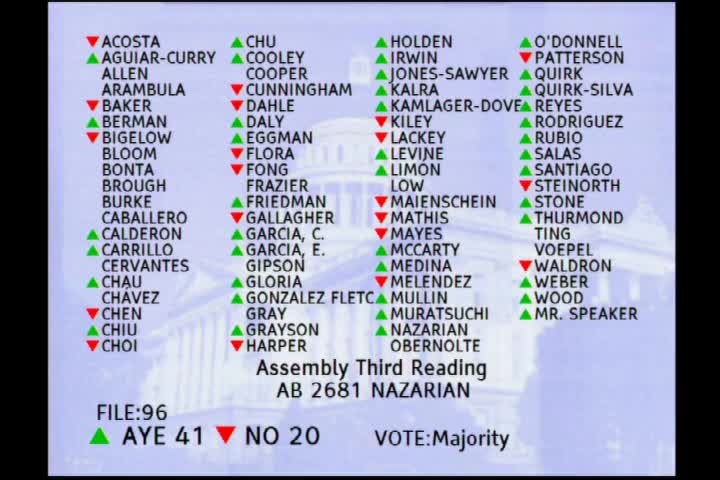 7MIN
Assembly Floor
 19MIN
Assembly Standing Committee on Utilities and Energy


Bill Co-Author(s):