AB 2713: Public employment: sexual harassment tracking.
- Session Year: 2017-2018
- House: Assembly
- Latest Version Date: 2018-08-23
Existing law grants the Department of Human Resources the power to operate the state civil service system in accordance with Article VII of the California Constitution, the Government Code, the merit principle, and applicable rules duly adopted by the State Personnel Board. Existing law prohibits a person from being discriminated against in the terms, conditions, and privileges of his or her employment with the state based on his or her medical condition, mental disability, or physical disability. Existing law provides that each state agency is responsible for an effective employment opportunity program within that agency, and requires the appointing power of that agency to carry out specified duties, including establishing procedures for filing, processing, and resolving discrimination complaints. Existing law requires the appointing power of each state agency, and the director of each state department, to appoint an equal employment opportunity officer to develop, implement, coordinate, and monitor the agencys equal employment opportunity program.
The California Fair Employment and Housing Act (FEHA) makes specified employment practices unlawful, including sexual harassment of an employee or other specified persons by an employer, labor organization, employment agency, apprenticeship training program, or any training program leading to employment. FEHA authorizes a person alleging a violation of specified provisions of the act relating to employment discrimination to submit a verified complaint to the Department of Fair Employment and Housing, and requires the department to take actions to investigate and conciliate that complaint.
This bill would require the equal employment officer of each state agency to, by July 1, 2019, and annually on that date thereafter, submit a report to the Department of Human Resources that contains specified information relating to sexual harassment complaints received by, or filed with, that agency within a specified time period, and information related to any judgment or settlement paid or received by the agency relating to sexual harassment. The bill would prohibit the equal employment officer from including in the report any individually identifiable information pertaining to a complainant or witness. The bill would require the Department of Human Resources to, by January 1, 2020, and annually on that date thereafter, submit a report to the Legislature, and post the report, in a machine readable format, on its Internet Web site, using the information submitted by state agencies as described in the previous sentence that includes information related to sexual harassment complaints received by, or filed with, any state agency statewide during the time period reflected in the reports, as well as information related to any judgment or settlement paid or received statewide relating to sexual harassment. The bill would require the Department of Human Resources, in preparing that annual report, to include detailed information on each agency that submitted a report, and to provide specified information for each complaint.
The bill would require the Department of Fair Employment and Housing by January 1, 2020, and annually on that date thereafter, to compile a report, and post it on its Internet Web site, relating to sexual harassment complaints received by the Department of Fair Employment and Housing, pursuant to the provisions governing FEHA described above, and would require that report to include specified information relating to the number of verified complaints alleging sexual harassment received by, or filed with, the Department of Fair Employment and Housing, as well as the results of any investigation of those complaints.
The bill would require the employment officer of each state agency, or supervisor directly involved in the investigation of a claim, who receives a complaint alleging sexual harassment to provide the complainant specified information in writing relating to the complainants rights under federal and state law.
Existing law grants the Department of Human Resources the power to operate the state civil service system in accordance with Article VII of the California Constitution, the Government Code, the merit principle, and applicable rules duly adopted by the State Personnel Board. Existing law prohibits a person from being discriminated against in the terms, conditions, and privileges of his or her employment with the state based on his or her medical condition, mental disability, or physical disability. Existing law provides that each state agency is responsible for an effective employment opportunity program within that agency, and requires the appointing power of that agency to carry out specified duties, including establishing procedures for filing, processing, and resolving discrimination complaints. Existing law requires the appointing power of each state agency, and the director of each state department, to appoint an equal employment opportunity officer to develop, implement, coordinate, and monitor the agencys equal employment opportunity program.
The California Fair Employment and Housing Act (FEHA) makes specified employment practices unlawful, including sexual harassment of an employee or other specified persons by an employer, labor organization, employment agency, apprenticeship training program, or any training program leading to employment. FEHA authorizes a person alleging a violation of specified provisions of the act relating to employment discrimination to submit a verified complaint to the Department of Fair Employment and Housing, and requires the department to take actions to investigate and conciliate that complaint.
This bill would require the equal employment officer of each state agency to, by July 1, 2019, and annually on that date thereafter, submit a report to the Department of Human Resources that contains specified information relating to sexual harassment complaints received by, or filed with, that agency within a specified time period, and information related to any judgment or settlement paid or received by the agency relating to sexual harassment. The bill would prohibit the equal employment officer from including in the report any individually identifiable information pertaining to a complainant or witness. The bill would require the Department of Human Resources to, by January 1, 2020, and annually on that date thereafter, submit a report to the Legislature, and post the report report, in a machine readable format, on its Internet Web site, using the information submitted by state agencies as described in the previous sentence that includes information related to sexual harassment complaints received by, or filed with, any state agency statewide during the time period reflected in the reports, as well as information related to any judgment or settlement paid or received statewide relating to sexual harassment. The bill would require the Department of Human Resources, in preparing that annual report, to include detailed information on each agency that submitted a report. report, and to provide specified information for each complaint.
The bill would require the Department of Fair Employment and Housing by January 1, 2020, and annually on that date thereafter, to compile a report, and post it on its Internet Web site, relating to sexual harassment complaints received by the Department of Fair Employment and Housing, pursuant to the provisions governing FEHA described above, and would require that report to include specified information relating to the number of verified complaints alleging sexual harassment received by, or filed with, the Department of Fair Employment and Housing, as well as the results of any investigation of those complaints.
The bill would require the employment officer of each state agency, or supervisor directly involved in the investigation of a claim, who receives a complaint alleging sexual harassment to provide the complainant specified information in writing relating to the complainants rights under federal and state law.
Existing law grants the Department of Human Resources the power to operate the state civil service system in accordance with Article VII of the California Constitution, the Government Code, the merit principle, and applicable rules duly adopted by the State Personnel Board. Existing law prohibits a person from being discriminated against in the terms, conditions, and privileges of his or her employment with the state based on his or her medical condition, mental disability, or physical disability. Existing law provides that each state agency is responsible for an effective employment opportunity program within that agency, and requires the appointing power of that agency to carry out specified duties, including establishing procedures for filing, processing, and resolving discrimination complaints. Existing law requires the appointing power of each state agency, and the director of each state department, to appoint an equal employment opportunity officer to develop, implement, coordinate, and monitor the agencys equal employment opportunity program.
The California Fair Employment and Housing Act (FEHA) makes specified employment practices unlawful, including sexual harassment of an employee or other specified persons by an employer, labor organization, employment agency, apprenticeship training program, or any training program leading to employment. FEHA authorizes a person alleging a violation of specified provisions of the act relating to employment discrimination to submit a verified complaint to the Department of Fair Employment and Housing, and requires the department to take actions to investigate and conciliate that complaint.
This bill would require the equal employment officer of each state agency to, by July 1, 2019, and annually on that date thereafter, submit a report to the Department of Human Resources that contains specified information relating to sexual harassment complaints received by, or filed with, that agency within a specified time period, and information related to any judgment or settlement paid or received by the agency relating to sexual harassment. The bill would require the Department of Human Resources to, by January 1, 2020, and annually on that date thereafter, submit a report to the Legislature, and post the report on its Internet Web site, using the information submitted by state agencies as described in the previous sentence that includes information related to sexual harassment complaints received by, or filed with, any state agency statewide during the time period reflected in the reports, as well as information related to any judgment or settlement paid or received statewide relating to sexual harassment. The bill would require the Department of Human Resources, in preparing that annual report, to include detailed information on each agency that submitted a report.
The bill would require the Department of Fair Employment and Housing by January 1, 2020, and annually on that date thereafter, to compile a report, and post it on its Internet Web site, relating to sexual harassment complaints received by the Department of Fair Employment and Housing, pursuant to the provisions governing FEHA described above, and would require that report to include specified information relating to the number of verified complaints alleging sexual harassment received by, or filed with, the Department of Fair Employment and Housing, as well as the results of any investigation of those complaints.
The bill would require the employment officer of each state agency, or supervisor directly involved in the investigation of a claim, who receives a complaint alleging sexual harassment to provide the complainant specified information in writing relating to the complainants rights under federal and state law.
For purposes of this article, equal employment opportunity officer means a equal employment opportunity officer appointed by the appointing power of a state agency or the director of each state department pursuant to Section 19795.
18731.(a)The equal employment opportunity officer of each state agency shall, by July 1, 2019, and annually on that date thereafter, submit a report to the department, in the form and manner prescribed by the department, relating to sexual harassment complaints received by, or filed with, that agency that includes all of the following information:
(1)The total number of sexual harassment complaints filed by employees of that agency in the immediately preceding calendar year. And for each complaint, the report shall include the date of filing, length of time to resolve, whether the complaint was investigated, the ultimate outcome of the complaint, and whether the complaint was against an individual who was employed by that agency.
(2)The total number of sexual harassment complaints received, but not filed, by the agency in the immediately preceding calendar year. And for each complaint, the report shall include the date received, length of time to resolve, whether the complaint was investigated, the ultimate outcome of the complaint, and whether the complaint was against an individual who was employed by that agency.
(3)The total dollar amount of final judgements and settlements paid by the state agency with respect to sexual harassment complaints in the immediately preceding fiscal year.
(4)An identification of source of funding, including, if applicable, the budget act item number or statute, that authorized the payment of that judgment or settlement described in paragraph (3).
(5)The total dollar amount of final judgements and settlements received by the agency with respect to sexual harassment complaints in the immediately preceding fiscal year.
(6)An identification of the fund or account in which the money from judgment or settlement described in paragraph (5) was deposited.
(7)The average number of employees working at the agency during the reporting period.
(b)The equal employment opportunity officer shall not include in the report submitted pursuant to subdivision (a) any individually identifiable information pertaining to any individual who brings a complaint or any witness. For purposes of this section, individually identifiable information means any data concerning a complaint that could uniquely identify an individual or any other information that would constitute an unwarranted invasion of personal privacy.
18732.The department, using the information submitted by each state agency pursuant to Section 18731, shall, by January 1, 2020, and annually on that date thereafter, submit to the Legislature consistent with Section 9795, and post on the departments Internet Web site, a report relating to sexual harassment complaints statewide. The department shall also post the data used to generate the report in a machine readable format. The report shall include all of the following:
(a)The total number of sexual harassment complaints filed by employees statewide in the calendar year covered by the reports submitted pursuant to Section 18731. The department shall also include detailed information for each agency that submitted a report pursuant to Section 18731 that lists the total number of sexual harassment complaints filed by employees of that agency in that time period. And for each complaint, the report shall include the date of filing, length of time to resolve, whether the complaint was investigated, the ultimate outcome of the complaint, and whether the complaint was against the individual who was employed by the agency.
(b)The total number of sexual harassment complaints received, but not filed, by all state agencies statewide in the calendar year covered by the reports submitted pursuant to Section 18731. The department shall also include detailed information for each agency that submitted a report pursuant to Section 18731 that lists the total number of sexual harassment complaints filed by employees of that agency in that time period. And for each complaint, the report shall include the date received, length of time to resolve, whether the complaint was investigated, the ultimate outcome of the complaint, and whether the complaint was against an individual who was employed by the agency.
(c)The total dollar amount of final judgements and settlements paid by all state agencies that submitted a report pursuant to Section 18731 with respect to sexual harassment complaints in the fiscal year covered by the reports submitted pursuant to Section 18731. The department shall also include detailed information for each agency that submitted a report pursuant to Section 18731 that lists the total number of final judgements and settlements paid by that agency in that time period, and an identification of the source of funding, including, if applicable, the budget act item number or statute, that authorized the payment of that judgment or settlement.
(d)The total dollar amount of final judgements and settlements received by all state agencies that submitted a report pursuant to Section 18731 with respect to sexual harassment complaints in the fiscal year covered by the reports submitted pursuant to Section 18731. The department shall also include detailed information for each agency that submitted a report pursuant to Section 18731 that lists the total number of final judgements and settlements received by that agency in that time period, and an identification of fund or account in which the money from judgment or settlement was deposited.
(e)The average number of employees working at each agency during the reporting period.
18733.The Department of Fair Employment and Housing shall by January 1, 2020, and annually on that date thereafter, compile a report, and post that report on its Internet Web site, relating to sexual harassment complaints received by the Department of Fair Employment and Housing. The Department of Fair Employment and Housing shall also post the data used to generate the report in a machine readable format. The report shall include all of the following:
(a)The total number of verified complaints that allege sexual harassment, within the meaning of subdivision (j) or (k) of Section 12940, filed by state employees from each state agency with the Department of Fair Employment and Housing in the immediately preceding calendar year. And for each complaint, the report shall include the date of filing, length of time to resolve, whether the complaint was investigated, the ultimate outcome of the complaint, and whether the complaint was also filed with the state agency that employs the state employee who submitted the complaint.
(b)The total number of verified complaints that allege sexual harassment, within the meaning of subdivision (j) or (k) of Section 12940, filed against employees from each state agency by an individual who is not employed by that agency in the immediately preceding calendar year. And for each complaint, the report shall include the date of filing, length of time to resolve, whether the complaint was investigated, the ultimate outcome of the complaint, and whether the complaint was also filed with the state agency that employs the individual subject to the complaint.
(c)Detailed information listing the results of any investigations of all verified complaints that allege sexual harassment, within the meaning of subdivision (j) or (k) of Section 12940, filed by state employees with the Department of Fair Employment and Housing.
18734.The equal employment officer of each state agency, or any supervisor that is directly involved in the investigation of a claim, who receives a complaint alleging sexual harassment shall, upon receiving the complaint, provide the complainant all of the following in writing:
(a)The state agencys sexual harassment complaint process and procedures.
(b)The complaint process available through the federal Equal Employment Opportunity Commission.
(c)The complaint process available through the California Fair Employment and Housing Act.
(d)The right to representation from the complainants respective recognized employee organization, if applicable.
For purposes of this article, equal employment opportunity officer means a equal employment opportunity officer appointed by the appointing power of a state agency or the director of each state department pursuant to Section 19795.
18731.(a)The equal employment opportunity officer of each state agency shall, by July 1, 2019, and annually on that date thereafter, submit a report to the department, in the form and manner prescribed by the department, relating to sexual harassment complaints received by, or filed with, that agency that includes all of the following information:
(a)(1)The total number of sexual harassment complaints filed by employees of that agency in the immediately preceding calendar year, including dates year. And for each complaint, the report shall include the date of filing, length of time to resolve, whether the complaint was investigated, and the ultimate outcome of the complaint. complaint, and whether the complaint was against an individual who was employed by that agency.
(b)(2)The total number of sexual harassment complaints received, but not filed, by the agency in the immediately preceding calendar year, including year. And for each complaint, the report shall include the date received, length of time to resolve, whether the complaint was investigated, and the ultimate outcome of the complaint. complaint, and whether the complaint was against an individual who was employed by that agency.
(c)(3)The total dollar amount of final judgements and settlements paid by the state agency with respect to sexual harassment complaints in the immediately preceding fiscal year.
(d)(4)An identification of source of funding, including, if applicable, the budget act item number or statute, that authorized the payment of that judgment or settlement described in subdivision (c). paragraph (3).
(e)(5)The total dollar amount of final judgements and settlements received by the agency with respect to sexual harassment complaints in the immediately preceding fiscal year.
(f)(6)An identification of the fund or account in which the money from judgment or settlement described in subdivision (e) paragraph (5) was deposited.
(7)The average number of employees working at the agency during the reporting period.
(b)The equal employment opportunity officer shall not include in the report submitted pursuant to subdivision (a) any individually identifiable information pertaining to any individual who brings a complaint or any witness. For purposes of this section, individually identifiable information means any data concerning a complaint that could uniquely identify an individual or any other information that would constitute an unwarranted invasion of personal privacy.
18732.The department, using the information submitted by each state agency pursuant to Section 18731, shall, by January 1, 2020, and annually on that date thereafter, submit to the Legislature consistent with Section 9795, and post on the departments Internet Web site, a report relating to sexual harassment complaints statewide that includes statewide. The department shall also post the data used to generate the report in a machine readable format. The report shall include all of the following:
(a)The total number of sexual harassment complaints filed by employees statewide in the calendar year covered by the reports submitted pursuant to Section 18731. The department shall also include detailed information for each agency that submitted a report pursuant to Section 18731 that lists the total number of sexual harassment complaints filed by employees of that agency in that time period, including dates period. And for each complaint, the report shall include the date of filing, length of time to resolve, whether the complaint was investigated, and the ultimate outcome of the complaint. complaint, and whether the complaint was against the individual who was employed by the agency.
(b)The total number of sexual harassment complaints received, but not filed, by all state agencies statewide in the calendar year covered by the reports submitted pursuant to Section 18731. The department shall also include detailed information for each agency that submitted a report pursuant to Section 18731 that lists the total number of sexual harassment complaints filed by employees of that agency in that time period, including dates period. And for each complaint, the report shall include the date received, length of time to resolve, whether the complaint was investigated, and the ultimate outcome of the complaint. complaint, and whether the complaint was against an individual who was employed by the agency.
(c)The total dollar amount of final judgements and settlements paid by all state agencies that submitted a report pursuant to Section 18731 with respect to sexual harassment complaints in the fiscal year covered by the reports submitted pursuant to Section 18731. The department shall also include detailed information for each agency that submitted a report pursuant to Section 18731 that lists the total number of final judgements and settlements paid by that agency in that time period, and an identification of the source of funding, including, if applicable, the budget act item number or statute, that authorized the payment of that judgment or settlement.
(d)The total dollar amount of final judgements and settlements received by all state agencies that submitted a report pursuant to Section 18731 with respect to sexual harassment complaints in the fiscal year covered by the reports submitted pursuant to Section 18731. The department shall also include detailed information for each agency that submitted a report pursuant to Section 18731 that lists the total number of final judgements and settlements received by that agency in that time period, and an identification of fund or account in which the money from judgment or settlement was deposited.
(e)The average number of employees working at each agency during the reporting period.
18733.The Department of Fair Employment and Housing shall by January 1, 2020, and annually on that date thereafter, compile a report, and post that report on its Internet Web site, relating to sexual harassment complaints received by the Department of Fair Employment and Housing that includes Housing. The Department of Fair Employment and Housing shall also post the data used to generate the report in a machine readable format. The report shall include all of the following:
(a)The total number of verified complaints that allege sexual harassment, within the meaning of subdivision (j) or (k) of Section 12940, filed by state employees from each state agency with the Department of Fair Employment and Housing in the immediately preceding calendar year. The Department of Fair Employment and Housing shall also include detailed information for each state agency of the total number of complaints alleging sexual harassment filed by employees of that agency during that time period, including dates And for each complaint, the report shall include the date of filing, length of time to resolve, whether the complaint was investigated, and the ultimate outcome of the complaint. complaint, and whether the complaint was also filed with the state agency that employs the state employee who submitted the complaint.
(b)The total number of verified complaints that allege sexual harassment, within the meaning of subdivision (j) or (k) of Section 12940, by state employees received by the Department of Fair Employment and Housing filed against employees from each state agency by an individual who is not employed by that agency in the immediately preceding calendar year. The Department of Fair Employment and Housing shall also include detailed information for each state agency of the total number of complaints received from employees of that agency, including dates And for each complaint, the report shall include the date of filing, length of time to resolve, whether the complaint was investigated, and the ultimate outcome of the complaint. complaint, and whether the complaint was also filed with the state agency that employs the individual subject to the complaint.
(c)Detailed information listing the results of any investigations of all verified complaints that allege sexual harassment, within the meaning of subdivision (j) or (k) of Section 12940, filed by state employees with the Department of Fair Employment and Housing.
18734.The equal employment officer of each state agency, or any supervisor that is directly involved in the investigation of a claim, who receives a complaint alleging sexual harassment shall, upon receiving the complaint, provide the complainant all of the following in writing:
(a)The state agencys sexual harassment complaint process and procedures.
(b)The complaint process available through the federal Equal Employment Opportunity Commission.
(c)The complaint process available through the California Fair Employment and Housing Act.
(d)The right to representation from the complainants respective recognized employee organization, if applicable.
For purposes of this article, equal employment opportunity officer means a equal employment opportunity officer appointed by the appointing power of a state agency or the director of each state department pursuant to Section 19795.
18731.The equal employment opportunity officer of each state agency shall, by July 1, 2019, and annually on that date thereafter, submit a report to the department, in the form and manner prescribed by the department, relating to sexual harassment complaints received by, or filed with, that agency that includes all of the following information:
(a)The total number of sexual harassment complaints filed by employees of that agency in the immediately preceding calendar year, including dates of filing, length of time to resolve, whether the complaint was investigated, and the ultimate outcome of the complaint.
(b)The total number of sexual harassment complaints received, but not filed, by the agency in the immediately preceding calendar year, including the date received, length of time to resolve, whether the complaint was investigated, and the ultimate outcome of the complaint.
(c)The total dollar amount of final judgements and settlements paid by the state agency with respect to sexual harassment complaints in the immediately preceding fiscal year.
(d)An identification of source of funding, including, if applicable, the budget act item number or statute, that authorized the payment of that judgment or settlement described in subdivision (c).
(e)The total dollar amount of final judgements and settlements received by the agency with respect to sexual harassment complaints in the immediately preceding fiscal year.
(f)An identification of the fund or account in which the money from judgment or settlement described in subdivision (e) was deposited.
18732.The department, using the information submitted by each state agency pursuant to Section 18731, shall, by January 1, 2020, and annually on that date thereafter, submit to the Legislature consistent with Section 9795, and post on the departments Internet Web site, a report relating to sexual harassment complaints statewide that includes all of the following:
(a)The total number of sexual harassment complaints filed by employees statewide in the calendar year covered by the reports submitted pursuant to Section 18731. The department shall also include detailed information for each agency that submitted a report pursuant to Section 18731 that lists the total number of sexual harassment complaints filed by employees of that agency in that time period, including dates of filing, length of time to resolve, whether the complaint was investigated, and the ultimate outcome of the complaint.
(b)The total number of sexual harassment complaints received, but not filed, by all state agencies statewide in the calendar year covered by the reports submitted pursuant to Section 18731. The department shall also include detailed information for each agency that submitted a report pursuant to Section 18731 that lists the total number of sexual harassment complaints filed by employees of that agency in that time period, including dates received, length of time to resolve, whether the complaint was investigated, and the ultimate outcome of the complaint.
(c)The total dollar amount of final judgements and settlements paid by all state agencies that submitted a report pursuant to Section 18731 with respect to sexual harassment complaints in the fiscal year covered by the reports submitted pursuant to Section 18731. The department shall also include detailed information for each agency that submitted a report pursuant to Section 18731 that lists the total number of final judgements and settlements paid by that agency in that time period, and an identification of the source of funding, including, if applicable, the budget act item number or statute, that authorized the payment of that judgment or settlement.
(d)The total dollar amount of final judgements and settlements received by all state agencies that submitted a report pursuant to Section 18731 with respect to sexual harassment complaints in the fiscal year covered by the reports submitted pursuant to Section 18731. The department shall also include detailed information for each agency that submitted a report pursuant to Section 18731 that lists the total number of final judgements and settlements received by that agency in that time period, and an identification of fund or account in which the money from judgment or settlement was deposited.
18733.The Department of Fair Employment and Housing shall by January 1, 2020, and annually on that date thereafter, compile a report, and post that report on its Internet Web site, relating to sexual harassment complaints received by the Department of Fair Employment and Housing that includes all of the following:
(a)The total number of verified complaints that allege sexual harassment, within the meaning of subdivision (j) or (k) of Section 12940, filed by state employees with the Department of Fair Employment and Housing in the immediately preceding calendar year. The Department of Fair Employment and Housing shall also include detailed information for each state agency of the total number of complaints alleging sexual harassment filed by employees of that agency during that time period, including dates of filing, length of time to resolve, whether the complaint was investigated, and the ultimate outcome of the complaint.
(b)The total number of verified complaints that allege sexual harassment, within the meaning of subdivision (j) or (k) of Section 12940, by state employees received by the Department of Fair Employment and Housing in the immediately preceding calendar year. The Department of Fair Employment and Housing shall also include detailed information for each state agency of the total number of complaints received from employees of that agency, including dates of filing, length of time to resolve, whether the complaint was investigated, and the ultimate outcome of the complaint.
(c)Detailed information listing the results of any investigations of all verified complaints that allege sexual harassment, within the meaning of subdivision (j) or (k) of Section 12940, filed by state employees with the Department of Fair Employment and Housing.
18734.The equal employment officer of each state agency, or any supervisor that is directly involved in the investigation of a claim, who receives a complaint alleging sexual harassment shall, upon receiving the complaint, provide the complainant all of the following in writing:
(a)The state agencys sexual harassment complaint process and procedures.
(b)The complaint process available through the federal Equal Employment Opportunity Commission.
(c)The complaint process available through the California Fair Employment and Housing Act.
(d)The right to representation from the complainants respective recognized employee organization, if applicable.
|
Date
|
Status
|
|---|---|
| Sep 30, 2018 | Vetoed by Governor. |
| Aug 27, 2018 | Enrolled and presented to the Governor at 3 p.m. |
| Aug 22, 2018 | In Assembly. Ordered to Engrossing and Enrolling. |
| Aug 21, 2018 | Read third time. Passed. Ordered to the Assembly. |
| Aug 17, 2018 | From committee: Do pass. (Ayes 7. Noes 0.) (August 16). |
| Aug 6, 2018 | In committee: Referred to APPR. suspense file. |
| Jun 27, 2018 | From committee: Do pass and re-refer to Com. on APPR. (Ayes 7. Noes 0.) (June 26). Re-referred to Com. on APPR. |
| Jun 12, 2018 | From committee: Do pass and re-refer to Com. on JUD. (Ayes 5. Noes 0.) (June 11). Re-referred to Com. on JUD. |
| Jun 7, 2018 | Referred to Coms. on P.E. & R. and JUD. |
| May 31, 2018 | In Senate. Read first time. To Com. on RLS. for assignment. |
| May 30, 2018 | Read third time. Passed. Ordered to the Senate. |
| May 25, 2018 | From committee: Do pass. (Ayes 14. Noes 0.) (May 25). |
| May 9, 2018 | In committee: Set, first hearing. Referred to APPR. suspense file. |
| Apr 26, 2018 | Re-referred to Com. on APPR. |
| Apr 25, 2018 | Read second time and amended. |
| Apr 24, 2018 | From committee: Amend, and do pass as amended and re-refer to Com. on APPR. (Ayes 8. Noes 0.) (April 24). |
| Apr 18, 2018 | From committee: Do pass and re-refer to Com. on JUD. (Ayes 5. Noes 1.) (April 18). Re-referred to Com. on JUD. |
| Mar 22, 2018 | Referred to Coms. on P.E., R., & S.S. and JUD. |
| Feb 16, 2018 | From printer. May be heard in committee March 18. |
| Feb 15, 2018 | Read first time. To print. |
|
Date
|
Description
|
Location
|
Votes
|
|
|---|---|---|---|---|
| Aug 21, 2018 | Assembly 3rd Reading AB2713 Rodriguez By Leyva | Senate Floor |
Passed |
|
| Aug 16, 2018 | Do pass | Senate Standing Committee on Appropriations |
Passed |
|
| Aug 6, 2018 | Placed on suspense file | Senate Standing Committee on Appropriations |
Passed |
|
| Jun 26, 2018 | Do pass, but first be re-referred to the Committee on [Appropriations] | Senate Standing Committee on Judiciary |
Passed |
|
| Jun 11, 2018 | Do pass, but first be re-referred to the Committee on [Judiciary] | Senate Standing Committee on Public Employment and Retirement |
Passed |
|
| May 30, 2018 | AB 2713 RODRIGUEZ Assembly Third Reading | Assembly Floor |
Passed |
|
| May 25, 2018 | Do pass. | Assembly Standing Committee on Appropriations |
Passed |
|
| Apr 24, 2018 | Do pass as amended and be re-referred to the Committee on [Appropriations] | Assembly Standing Committee on Judiciary |
Passed |
|
| Apr 18, 2018 | Do pass and be re-referred to the Committee on [Judiciary] | Assembly Standing Committee on Public Employees, Retirement, and Social Security |
Passed |
This list shows positions taken on this bill by organizations on the date displayed, which is linked to the original source.
Positions by individuals are not included.
|
Organization
|
Position
|
Date
|
|---|---|---|
| American Association of University Women | ** Support | Aug 18, 2018 |
| American Federation Of State County And Municipal Employees AflCio | * Support | Jun 11, 2018 |
| California Association Of Professional Scientists | ** Support | Aug 18, 2018 |
| California Labor Federation, Afl-Cio | ** Support | Aug 18, 2018 |
| Consumer Attorneys Of California | * Support | Apr 24, 2018 |
| Service Employees International Union, California | ** Support | Aug 18, 2018 |
| Service Employees International Union, Local 1000 | ** Support | Aug 18, 2018 |
| Work Safe | * Support | Apr 24, 2018 |
GOVERNOR'S VETO
GV Bill Id:AB 2713
Author:(Rodriguez)
As Enrolled Ver:August 27, 2018
2/3 vote
Committee | Votes | Ayes | Noes |
Public Employee | 5-1 | Rodriguez, Cervantes, Cooley, Cooper, O'Donnell | Brough |
Judiciary | 8-0 | Mark Stone, Chau, Chiu, Weber, Holden, Kalra, Maienschein, Reyes | |
Appropriations | 14-0 | Gonzalez Fletcher, Bloom, Bonta, Calderon, Carrillo, Chau, Eggman, Fong, Friedman, Eduardo Garcia, Nazarian, Obernolte, Quirk, Reyes |
ASSEMBLY: | 72-0 | (May 30, 2018) | SENATE: | 39-0 | (August 21, 2018) |
SUMMARY: Requires, by January 1, 2020, and annually thereafter, the California Department of Human Resources (CalHR) and the Department of Fair Employment Housing (DFEH) to each create and make public a respective report related to sexual harassment complaints in state agencies.
EXISTING LAW:
1) Prohibits a person from being discriminated against based on his or her medical condition, mental or physical disability, in the terms, conditions, and privileges of employment with state, and provides each state agency with responsibility for an effective employment opportunity program within that agency, and requires the agency to carry out specified duties, including establishing certain procedures for discrimination complaints.
2) Requires each state agency and department to appoint an EEO officer to develop, implement, coordinate, and monitor the agency's EEO program.
3) Makes, pursuant to the California Fair Employment and Housing Act (FEHA), certain employment practices unlawful, including sexual harassment of an employee or other persons by an employer, among others.
FISCAL EFFECT: According to the Assembly Appropriations Committee, this bill would result in "one-time costs for CalHR in excess of $1 million General Fund (GF) to develop a system allowing state agencies to report the required data; ongoing costs to complete the report and coordinate with state agencies are likely to be in the range of $150,000 to $250,000 GF annually; one-time costs of approximately $20,000 GF for the DFEH to develop its website and coordinate the completion of the report with CalHR, and likely minor costs ongoing; and, unknown, but likely significant, aggregate costs across state agencies for EEOs in each state agency and department to compile and submit the required data."
COMMENTS: According to the author, "[i]n a recent review of state agency and department practices, it was found that the state does not have a centralized method for tracking sexual harassment complaints nor the amount of taxpayer money paid to settle sexual harassment claims across all departments and agencies. Without tracking complaints, behavior that could lead to a conflicted workspace is not properly defined. This means that there is no way to determine whether a pattern or culture of discrimination is being fostered, knowingly or unknowingly, in certain state agencies.
'Assembly Bill 2713 creates a centralized method for tracking sexual harassment complaints across all state agencies and departments to identify agencies and departments that may have a pattern or culture of such activity."
This bill requires, by January 1, 2020, the California Department of Human Resources and the Department of Fair Employment and Housing to create and make public an annual report on sexual harassment complaints in state departments.
This bill definitely covers an important topic but current management practices are taking the necessary steps to assure a suitable work environment.
Analysis Prepared by: Michael Bolden / P.E.,R., & S.S. / (916) 319-3957 FN: 0005307
Office of Senate Floor Analyses (916) 651-1520 Fax: (916) 327-4478 | AB |
THIRD READING
Bill No: AB 2713
:
SENATE PUBLIC EMP. & RET. COMMITTEE: 5-0, 6/11/18
AYES: Pan, Morrell, Leyva, Moorlach, Portantino
SENATE JUDICIARY COMMITTEE: 7-0, 6/26/18
AYES: Jackson, Moorlach, Anderson, Hertzberg, Monning, Stern, Wieckowski
SENATE APPROPRIATIONS COMMITTEE: 7-0, 8/16/18
AYES: Portantino, Bates, Beall, Bradford, Hill, Nielsen, Wiener
ASSEMBLY FLOOR: 72-0, 5/30/18 - See last page for vote
SOURCE: American Federation of State, County and Municipal Employees, AFL-CIO
Service Employees International Union, Local 1000
DIGEST:
This bill requires, by January 1, 2020, for the California Department of Human Resources and the Department of Fair Employment and Housing to create and make public an annual report on sexual harassment complaints in state agencies.
ANALYSIS:
Existing law:
- Prohibits in the California Constitution discrimination or preferential treatment in public employment based on an individual’s race, sex, color, ethnicity, or national origin.
- Establishes the California Department of Human Resources (CalHR) and grants the authority to operate the state civil service system in accordance with Article VII of the California Constitution, the Government Code, the merit principle, and applicable rules adopted by the State Personnel Board (SPB).
- Vests each state agency with the responsibility for an effective employment opportunity program within that agency, and requires the agency to carry out specified duties, including establishing certain procedures for discrimination complaints.
- Requires each state agency and department to appoint an equal employment opportunity officer (EEO officer) to develop, implement, coordinate, and monitor the agency’s equal employment opportunity program.
- Defines sexual harassment as “unwelcome sexual advances, requests for sexual favors, and other verbal, visual, or physical conduct of a sexual nature.”
- Makes, pursuant to the California Fair Employment and Housing Act (FEHA), specified employment practices unlawful, including sexual harassment of an employee or other persons, as specified, by an employer, labor organization, employment agency, apprenticeship training program, or training program that leads to employment.
- Permits any individual to file in writing with the Department of Fair Employment and Housing (DFEH) a verified complaint of an alleged unlawful practice, including sexual harassment, stating the name and address of the person, employer, labor organization, or employment agency alleged to have committed the unlawful practice, as specified.
- Requires the each employer shall display or distribute the DFEH information sheet on sexual harassment prevention to its employees, unless the employer provides equivalent information to its employees that contains, at minimum, components of the following:
- The illegality of sexual harassment.
- The definition of sexual harassment under state and federal law.
- A description of sexual harassment, with examples.
- The internal complaint process of the employer available to the employee.
- The legal remedies and complaint processes available through DFEH.
- Directions on how to contact DFEH.
- Mandates CalHR publish an annual report that includes demographic information on employees in the state civil service.
This bill:
- Requires, by July 1, 2019, the EEO officer of each state agency to submit an annual report to CalHR, as specified, relating to sexual harassment complaints received by, or filed with, that agency. Reports shall include the following:
- Total number of sexual harassment complaints filed by employees of that agency in the immediately preceding calendar year. For each complaint, the report shall include: the date of filing, length of time to resolve, whether the complaint was investigated, the ultimate outcome of the complaint, and whether the complaint was against an individual employed by that agency.
- The total number of sexual harassment complaints received, but not filed by, the agency in the immediately preceding calendar year. For each complaint, the report shall include: the date received, length of time to resolve, whether the complaint was investigated, the ultimate outcome of the complaint, and whether the complaint was against an individual employed by that agency.
- The total dollar amount of final judgments and settlements paid by the state agency with respect to sexual harassment complaints in prior fiscal year.
- An identification of the source of funding, including, if applicable, the budget act item number or statute, that authorized the payment of that judgment or settlement, as specified.
- The total dollar amount of final judgements and settlements received by the agency with respect to sexual harassment complaints in the immediately preceding fiscal year.
- An identification of the fund or account in which the money from the judgment or settlement, as specified, was deposited.
- The average number of employees working at the agency during the reporting period.
- Prohibits the EEO officer from including in the report any individually identifying information, as specified, pertaining to any individual who brings a complaint or any witnesses.
- Defines “individually identifying information” as any data concerning a complaint that could uniquely identify an individual, or any other information that would constitute an unwarranted invasion of privacy.
- Requires, by January 1, 2020, and annually thereafter on that date, CalHR to submit a report to the Legislature, as specified, using the information submitted by each state agency relating to sexual harassment complaints statewide, to post the report to the CalHR website, and to post the data used to generate the report in a machine readable format. This report must include:
- The total number of sexual harassment complaints filed by employees statewide in a calendar year covered by the reports submitted from each state agency, including other detailed information, as specified.
- The total number of sexual harassment complaints received, but not filed, by all state agencies statewide in the calendar year covered by the reports submitted from each state agency, and include additional specified information.
- The total amount of final judgements and settlements paid by the state agency with respect to sexual harassment complaints in the fiscal year covered by the reports submitted by each state agency, including specified detailed information.
- The total amount of final judgements and settlements received by all state agencies that submitted a report, as specified, with respect to sexual harassment complaints in the fiscal year covered by the submitted report, and other specified information.
- The average number of employees working at each agency during the reporting period.
- Requires, by January 1, 2020, and annually thereafter, DFEH to compile a report relating to sexual harassment complaints received by DFEH, and post this report online. Data used to generate the report shall also be posted online in a machine readable format. The report must include:
- The total number of verified complaints that allege sexual harassment, as defined, filed by state employees from each state agency with the DFEH in the immediate preceding calendar year. The DFEH report must include specified detailed information.
- The total number of complaints alleging sexual harassment, as defined, filed against employees from each state agency by an individual not employed by that agency in the immediately preceding calendar year. For each complaint the DFEH shall include specified information.
- Detailed information listing the results of any investigations of all verified complaints that allege sexual harassment, as defined, filed by state employees with DFEH.
- Requires the EEO of each state agency or any supervisor that is directly involved in the investigation of a claim, and who receives a complaint alleging sexual harassment to provide to the complainant the following in writing upon receipt of the complaint:
- The state agency’s sexual harassment complaint processes and procedures.
- The complaint process available through the federal Equal Employment Opportunity Commission.
- The complaint process available through FEHA.
- The right to representation from the complainant’s respective recognized employee organization, if applicable.
- Defines “equal opportunity officer” to mean an equal employment opportunity officer appointed by the appointing power of a state agency or the director of each state department, as specified.
Background
According to the author,
“Generally, state agencies and departments have the authority to investigate and settle sexual harassment claims internally and are not required to report such claims to the state’s human resources department.
In cases where the employee disagrees with the department’s findings, the employee can file a complaint with the Department of Fair Employment and Housing or file a grievance with the State Personnel Board. It is not until this point that there is a mechanism to track sexual harassment complaints, and even then it is not capturing all the data.
The lack of a centralized database to track sexual harassment cases prohibits the state from identifying whether patterns or problems exist and how much the state is paying to settle harassment complaints.
AB 2713 creates a centralized method for tracking sexual harassment complaints received and filed by state employees in each state agency and department, and the amount paid to settle those complaints. Findings would be collected into a report and made available to the legislature and the public.”
Related/Prior Legislation
AB 1867 (Reyes, 2018), currently on the Assembly Floor, requires, among other provisions, an employer with fifty or more employees to maintain records of employee complaints of sexual harassment for ten years from the date of filing
FISCAL EFFECT: Appropriation: Fiscal Com.: Local:
According to Senate Appropriations Committee:
- One-time costs to CalHR of $1.5 million to develop an IT system to interface with state agencies in reporting the required data (General Fund, special funds). Ongoing costs to complete the report and coordinate with state agencies are likely to be in the low hundreds of thousands of dollars annually.
- The Department of Fair and Equal Housing would incur a one-time General Fund cost of $20,000 to develop its internet site and coordinate the completion of the report with CalHR; ongoing costs would likely be minor.
- The bill would result in unknown, potentially significant, aggregate costs across all state departments for Equal Employment Opportunity (EEO) officers to compile and submit the required data.
American Federation of State, County and Municipal Employees, AFL-CIO (co-source)
Service Employees International Union, Local 1000 (co-source)
American Association of University Women
California Association of Professional Scientists
California Labor Federation, AFL-CIO
Service Employees International Union, California
OPPOSITION: (Verified 8/17/18)
None received
ARGUMENTS IN SUPPORT: The California Labor Federation states,
“AB 2713 will give legislators and the public a better understanding of the total number of sexual harassment complaints received and filed by each agency and the amount of settlements paid. With this information, legislators will be able to identify and delineate between isolated issues or a need for more widespread action.”
The American Federation of State, County, and Municipal Employees writes,
“AB 2713 is necessary to assist with identifying patterns of misconduct across all state agencies through a centralized system for tracking complaints of sexual harassment. By tracking these complaints in a centralized manner, the state can identify patterns of abuse, pinpoint workplace cultures that foster inappropriate behavior, and assess gaps in training.”
ASSEMBLY FLOOR: 72-0, 5/30/18
AYES: Acosta, Aguiar-Curry, Travis Allen, Arambula, Baker, Berman, Bloom, Bonta, Burke, Caballero, Calderon, Carrillo, Cervantes, Chau, Chávez, Chiu, Choi, Chu, Cooley, Cooper, Cunningham, Dahle, Daly, Eggman, Flora, Fong, Frazier, Friedman, Cristina Garcia, Eduardo Garcia, Gipson, Gloria, Gonzalez Fletcher, Gray, Grayson, Holden, Irwin, Jones-Sawyer, Kalra, Kamlager-Dove, Lackey, Levine, Limón, Low, Maienschein, Mathis, Mayes, McCarty, Medina, Melendez, Mullin, Muratsuchi, Nazarian, Obernolte, O'Donnell, Patterson, Quirk, Quirk-Silva, Reyes, Rodriguez, Rubio, Salas, Santiago, Steinorth, Mark Stone, Thurmond, Ting, Voepel, Waldron, Weber, Wood, Rendon
NO VOTE RECORDED: Bigelow, Brough, Chen, Gallagher, Harper, Kiley
8/18/18 14:48:41
**** END ****
SENATE COMMITTEE ON APPROPRIATIONS
Senator Anthony Portantino, Chair
2017 - 2018 Regular Session
AB 2713 (Rodriguez) - Public employment: sexual harassment tracking
Version: April 25, 2018 | Policy Vote: P.E. & R. 5 - 0, JUD. 7 - 0 |
Urgency: No | Mandate: No |
Hearing Date: August 6, 2018 | Consultant: Robert Ingenito |
This bill meets the criteria for referral to the Suspense File.
Bill Summary:
AB 2713 would require, by January 1, 2020, both the California Department of Human Resources (CalHR) and the Department of Fair Employment and Housing (DFEH) to create and make public an annual report on sexual harassment complaints in state agencies.
Fiscal Impact:
- This bill would result in one-time costs to CalHR of $1.5 million to develop an IT system to interface with state agencies in reporting the required data (General Fund, special funds). Ongoing costs to complete the report and coordinate with state agencies are likely to be in the low hundreds of thousands of dollars annually.
- DFEH would incur a one-time General Fund cost of $20,000 to develop its internet site and coordinate the completion of the report with CalHR; ongoing costs would likely be minor.
- The bill would result in unknown, potentially significant, aggregate costs across all state departments for Equal Employment Opportunity (EEO) officers to compile and submit the required data.
Background:
State workers can file complaints about sexual harassment in a number of different ways. First, they can make an internal complaint within the agency of their employment. Second, they can submit a complaint to DFEH. Finally, they can file a complaint with the federal Equal Employment Opportunity Commission (EEOC). Currently, however, there is no centralized, comprehensive information about the prevalence of sexual harassment claims in state government and the cost to taxpayers from resulting legal settlements.
Proposed Law:
This bill would do, among other things, the following:
- Require, by July 1, 2019, the EEO officer, as defined, of each state agency to submit an annual report containing specified information to CalHR, as specified, relating to sexual harassment complaints received by, or filed with, that agency. EEO officers would be prohibited from including in the report any individually identifying information, as defined, pertaining to any individual who brings a complaint or any witnesses.
- Require, by January 1, 2020, and annually thereafter, CalHR to (1) submit a report to the Legislature, as specified, using the information submitted by each state agency relating to sexual harassment complaints, (2) post the report to its internet site, and (3) post the data used to generate the report in a machine readable format.
- Require, by January 1, 2020, and annually thereafter, DFEH to compile a report relating to sexual harassment complaints received, and post this report online. Data used to generate the report shall also be posted online in a machine readable format. The report must include specified information.
- Require the EEO of each state agency or any supervisor that is directly involved in the investigation of a claim, and who receives a complaint alleging sexual harassment to provide to the complainant the following in writing upon receipt of the complaint: (1) the state agency’s sexual harassment complaint processes and procedures, (2) the complaint process available through the federal Equal Employment Opportunity Commission, (3) the complaint process available through FEHA, and (4) the right to representation from the complainant’s respective recognized employee organization, if applicable.
Related Legislation:
AB 1867 (Reyes) would require large employers to maintain records of all sexual harassment complaints filed through the employer’s internal complaint process for a period of at least five years after the last day of employment of the complainant or any alleged harasser named in the complaint, whichever is later. The bill is currently pending in this Committee.
Staff Comments:
On April 3, 2018, the Administration issued a policy memorandum regarding tracking and preventing sexual harassment and discrimination in the workplace. Subsequently, the 2018-19 enacted budget included resources for CalHR to procure an information technology system to (1) track sexual harassment and discrimination complaints, judgments, and settlements, and (2) establish a unit to improve tracking, prevention training, and education to mitigate against workplace harassment and discrimination complaints within the State. Thus, the Administration has already taken steps to address the bill's requirements.
-- END --
Senator Hannah-Beth Jackson, Chair
2017-2018 Regular Session
Bill No: AB 2713 (Author:Rodriguez)
Version: April 25, 2018
Hearing Date: June 26, 2018
Fiscal: Yes
Urgency: No
Consultant: TSG
SUBJECT
Public employment: sexual harassment tracking
DESCRIPTION
This bill would enact a series of reporting requirements designed to track the prevalence of sexual harassment in the state workforce. In broad strokes, the bill would: (1) require the equal employment opportunity officer at each state agency to report to the Department of Human Resources on the number of sexual harassment complaints at the agency and how they were resolved, including the amounts of any monetary settlements; (2) require the Department of Human Resources to compile this data and post the cumulative totals on its Web site; (3) direct the Department of Fair Employment and Housing to compile and post on its Web site statistics regarding the number of sexual harassment claims it receives from state employees annually; (4) require supervisors and equal employment opportunity officers to provide victims of sexual harassment with information about the options for filing a formal complaint and the availability of union representation, when applicable.
BACKGROUND
Among other impacts, the #MeToo Movement triggered an effort to examine the prevalence of sexual harassment in the public sector. Alleged incidents of sexual harassment perpetrated in and around the Legislature received particular attention, partially because of the #WeSaidEnough campaign, but there were also reports of harassment cases throughout the state government apparatus.
Journalists reporting on the problem managed, through a series of public records act requests, to document the fact that the state paid out around $25 million to settle sexual harassment claims over the course of a recent three year period. [1] More detailed and official efforts to determine the scope of the problem ran into obstacles, however: the state does not have a systematic method for compiling and reporting the number of sexual harassment complaints made and the costs to taxpayers of settling those claims.
As the Sacramento Bee reported:
[E]xamination of sexual harassment cases involving California state agencies and public universities shows that untold millions have been paid out in recent years to settle claims – without any centralized oversight of these settlements, or public accountability for the outcomes. […]
Representatives of California’s key financial and personnel agencies told The Bee they have no master list of sexual harassment settlements – and no easy way to get one –since each department is responsible for its own budgeting, including legal resolutions. The employment count within the executive branch of state government, which doesn’t include the Legislature or university systems, is 228,839 workers in 144 departments.
The attorney general’s office handles the legal work for many of these departments and would be a logical window on legal payouts. However, government regulations allow some of the state’s largest entities – the University of California, for instance, and the Department of Transportation – to rely on in-house counsel. State agencies also are allowed to request outside representation in legal matters, further muddying any central data collection.
This leaves California lawmakers and taxpayers pretty much in the dark about the overall cost of sexual harassment cases, or whether patterns and problems are emerging in certain agencies.[2]
To address this problem and provide centralized, comprehensive information about the prevalence of sexual harassment claims in state government and the cost to taxpayers from associated legal settlements, this bill would mandate annual reporting and online publication. Each public state agency would gather and report its own statistics. The State’s Department of Human Resources would then compile and publish overall totals based on those reports. Separately, the Department of Fair Employment and Housing would report on sexual harassment claims submitted to it by state workers. Together, this data would provide state leaders and the public with comprehensive data about the prevalence of sexual harassment in the public sector.
This bill passed out of the Senate Committee on Public Employment and Retirement by a vote of 5-0.
CHANGES TO EXISTING LAW
Existing law makes it an unlawful business practice for an employer, including a government agency, to harass an employee, applicant, unpaid intern or volunteer, or person providing services pursuant to a contract on account of the victims’ race, religious creed, color, national origin, ancestry, physical disability, mental disability, medical condition, genetic information, marital status, sex, gender, gender identity, gender expression, age, sexual orientation, or military and veteran status (Gov. Code Secs. 12926(d) and 12940(j)(1).)
Existing law establishes the Department of Human Resources and gives it the authority to operate the state civil service system and applicable rules adopted by the State Personnel Board. (Gov. Code Sec. 19815 et seq.)
Existing law requires each state agency and department to appoint an Equal Employment Opportunity (EEO) officer to develop, implement, coordinate, and monitor the agency’s EEO program. (Gov. Code Sec. 19795(a).)
Existing law provides that the State shall not discriminate against, or grant preferential treatment to, any individual or group on the basis of race, sex, color, ethnicity, or national origin in the operation of public employment, public education, or public contracting. (Cal. Const., art. I, Sec. 31, subd.(a).)
Existing law provides that every person has, subject to the qualifications and restrictions provided by law, the right of protection from bodily restraint or harm, from personal insult, from defamation, and from injury to his personal relations. (Civ. Code Sec. 43.)
Existing law permits any person claiming to be aggrieved by an alleged unlawful practice to file with the Department of Fair Employment and Housing (DFEH) a verified complaint, in writing, stating the name and address of the person, employer, labor organization, or employment agency alleged to have committed the unlawful practice complained of, and setting forth the particulars thereof and containing other information that may be required by the department. (Gov. Code Sec. 12960.)
This bill would require the Equal Employment Opportunity (EEO) officer in each state agency to submit an annual report to the Department of Human Resources (CalHR) setting forth the number of sexual harassment complaints received by, or filed with, that agency.
This bill would prohibit the EEO officer from including in the report any individually identifiable information pertaining to an individual who brings a complaint or any witness, and defines “individually identifiable information” to mean any data concerning a complaint that could uniquely identify an individual or any other information that would constitute an unwarranted invasion of personal privacy.
This bill would define “equal employment opportunity officer” to mean an equal employment opportunity officer appointed by the appointing power of a state agency or the director of each state department.
This bill would require CalHR, by January 1, 2020, and annually thereafter on that date, to submit a report to the Legislature relating to sexual harassment complaints statewide using the information submitted by each state agency.
This bill would require DFEH, by January 1, 2020, and annually thereafter on that date, to compile a report relating to state worker sexual harassment complaints received by DFEH, and to post this report on its website.
This bill would require the EEO of each state agency or any supervisor that is directly involved in the investigation of a claim, and who receives a complaint alleging sexual harassment, to provide the complainant all of the following in writing upon receipt of the complaint:
- the state agency’s sexual harassment complaint process and procedures;
- the complaint process available through the federal Equal Employment Opportunity Commission;
- the complaint process available through DFEH; and
- the right to representation from the complainant’s respective recognized employee organization, if applicable.
COMMENT
1. Stated need for the bill
According to the author:
AB 2713 is an important measure in the fight against workplace sexual harassment. Currently, the state lacks a centralized system for reporting and tracking of sexual harassment complaints at state agencies. This bill will create that system and require the Equal Employment Opportunity Officer in each state agency to report the number of sexual harassment complaints filed by state employees, as well as the amount of money paid to settle a complaint and report that information to the Legislature. Transparency created by this legislation will enable the state to identify patterns of misconduct and eliminate abuse and inappropriate behavior.
As co-sponsor of the bill, SEIU Local 1000 writes:
By tracking these complaints in a centralized manner, the state can identify patterns of abuse, pinpoint workplace cultures that foster inappropriate behavior, and assess gaps in training. […] AB 2713 will give Legislators and the public a better understanding of the total number of sexual harassment complaints received and filed by each agency and the amount of settlements paid. With this information, Legislators will be able to identify and delineate between isolated issues and need for wide-sweeping changes.
In support of the bill, the American Association of University Women writes:
We know that women and girls are hampered in their efforts to achieve equity when they confront sexual harassment or discrimination, in any of its forms, in school, on the playing field, or in the office. For that reason, AAUW is proud to support AB 2713 which will help ferret out problems for public employees in state agencies by requiring an annual report of sexual harassment complaints in those agencies.
2. State workers have several options for where to file a sexual harassment complaint
State workers can file complaints about sexual harassment in a number of different ways. First, they can make an internal complaint within the agency where they work. Second, they can submit a complaint to the Department of Fair Employment and Housing (DFEH). Finally, they can file a complaint with the federal Equal Employment Opportunity Commission (EEOC). A key component of the bill requires all EEO officers and supervisors to notify state workers of these options, as well as their right to be represented by their respective union, whenever a sexual harassment complaint is received or investigated.
The bill’s data collection system would capture and compile data about complaints coming from each of these sources. Internal complaints would be captured and reported by the EEO officer in each agency. Since DFEH and EEOC coordinate on the investigation of employment complaints, the data coming from DFEH should capture all sexual harassment complaints made to those two agencies.
Of course, none of this data will capture the considerable number of sexual harassment incidents in which the victim elects not to file a complaint, either internally or externally. Thus, it will be important, in interpreting any data that emerges from the program proposed by this bill, to bear in mind that it would not provide a complete picture of all sexual harassment taking place in state agencies. A low number of harassment complaints, for example, may indicate a positive workplace environment. It could also, however, mean that state workers at that location are especially reluctant to make formal complaints due to fear of retaliation.
In addition to compiling the data as proposed by this bill, therefore, the Legislature may also wish to mandate regular, anonymous surveys of the state workforce, in order to assess how often incidents of sexual harassment are going undetected by formal complaint mechanisms.
3. Role of an Equal Employment Opportunity (EEO) officer
The data reporting required by this bill relies heavily on the role of the Equal Employment Opportunity (EEO) officer in each state agency. Under the bill’s terms, the EEO officers would collect sexual harassment complaint and settlement data for their respective agencies and send it to CalHR for inclusion in the statewide report.
EEO officers are uniquely well-positioned to carry out this function. According to CalHR:
The EEO Officer is responsible for providing agency-wide leadership to achieve equal employment opportunity in every aspect of employment. The EEO Officer advises staff and management in the development, implementation, and maintenance of discrimination-free policies, procedures and practices, and ensures a work environment free from discrimination for all applicants and employees, including volunteers, students and interns. […]
[I]t is the responsibility of the EEO Officer to monitor the effectiveness of the programs to prevent discrimination and ensure compliance with state and federal statutes, regulations, and reporting requirements.[3]
4. Other forms of harassment are not tracked or reported under this bill
This bill would create a comprehensive and coordinated system for compiling data about the prevalence of sexual harassment claims made by state workers. Sexual harassment is only one form of harassment prohibited by state and federal civil rights laws, however. The Fair Employment and Housing Act (FEHA) also prohibits harassment based on race, religious creed, color, national origin, ancestry, physical disability, mental disability, medical condition, genetic information, marital status, sex, gender, gender identity, gender expression, age, sexual orientation, or military and veteran status. While sexual harassment has understandably and appropriately garnered particular attention over the past year, there is no evident policy basis on which to limit data collection about harassment to sexual harassment alone. With that in mind, the author may wish to consider expanding the scope of the bill to include all forms of harassment. Alternatively, the Legislature may wish to think of this bill as a pilot program. If collecting and reporting information about sexual harassment claims turns out to be a useful tool for deterrence and policy-making, then the Legislature may wish to consider expanding the data collection to other forms of harassment in the future.
Support: American Association of University Women; Service Employees International Union, California
Opposition: None known
HISTORY
Source: American Federation of State, County and Municipal Employees, AFL-CIO; California Labor Federation; Service Employees International Union, Local 1000
Related Pending Legislation:
SB 419 (Portantino, 2017-2018) known as the Legislative Sexual Harassment Retaliation Prevention Act, would require each house of the Legislature to implement a system to maintain a record of discriminatory harassment complaints for a period of at least 12 years. SB 419 is currently pending consideration in the Assembly Committee on Judiciary.
AB 1867 (Reyes, 2018) would require large California employers to maintain records of employee complaints of sexual harassment for five years after the termination of the accused employee. AB 1867 is currently pending consideration in the Senate Committee on Appropriations.
Prior Legislation: None known
Prior Vote:
Senate Public Employment and Retirement Committee (Ayes 5, Noes 0)
Assembly Floor (Ayes 72, Noes 0)
Assembly Appropriations Committee (Ayes 14, Noes 0)
Assembly Judiciary Committee (Ayes 8, Noes 0)
Assembly Public Employees, Retirement, and Social Security Committee (Ayes 5, Noes 1)
**************
Lundstrom, From Hidden Cameras to Crotch-Watching: California Pays Out Millions for Sexual Harassment (Jan. 26, 2018) Sacramento Bee <http://www.sacbee.com/news/politics-government/the-state-worker/article196659999.html> (as of June 15, 2018). ↑
Lundstrom, What Are California Taxpayers Spending to Settle Sexual Harassment Claims? Good Luck Finding Out (Nov. 3, 2017) Sacramento Bee <http://www.sacbee.com/news/politics-government/capitol-alert/article182433996.html> (as of June 15, 2018). ↑
CalHR, Human Resources Manual, Sec. 1001 -- Equal Employment Opportunity (EEO) Officer Role <http://hrmanual.calhr.ca.gov/Home/ManualItem/1/1001> (as of June 15, 2018). ↑
SENATE COMMITTEE ON
PUBLIC EMPLOYMENT AND RETIREMENT
Dr. Richard Pan, Chair
2017 - 2018 Regular
Bill No: AB 2713 Hearing Date: 6/11/18
Author: | Rodriguez | ||
Version: | 4/25/18 As amended | ||
Urgency: | No | Fiscal: | Yes |
Consultant: | Korinne Sugasawara | ||
Subject: Public employment: sexual harassment tracking.
SOURCE: American Federation of State, County and Municipal Employees, AFL-CIO
Service Employees International Union, Local 1000
ASSEMBLY VOTES:
Assembly Floor: | 72 - 0 |
Assembly Appropriations Committee: | 14 - 0 |
Assembly Public Employees, Retirement, and Social Security Committee: | 5 - 1 |
DIGEST: This bill requires, by January 1, 2020, for the California Department of Human Resources and the Department of Fair Employment and Housing to create and make public an annual report on sexual harassment complaints in state agencies.
ANALYSIS:
Existing law:
- Prohibits in the California Constitution discrimination or preferential treatment in public employment based on an individual’s race, sex, color, ethnicity, or national origin.
- Establishes the California Department of Human Resources (CalHR) and grants the authority to operate the state civil service system in accordance with Article VII of the California Constitution, the Government Code, the merit principle, and applicable rules adopted by the State Personnel Board (SPB).
- Vests each state agency with the responsibility for an effective employment opportunity program within that agency, and requires the agency to carry out specified duties, including establishing certain procedures for discrimination complaints.
- Requires each state agency and department to appoint an equal employment opportunity officer (EEO officer) to develop, implement, coordinate, and monitor the agency’s equal employment opportunity program.
- Defines sexual harassment as “unwelcome sexual advances, requests for sexual favors, and other verbal, visual, or physical conduct of a sexual nature.”
- Makes, pursuant to the California Fair Employment and Housing Act (FEHA), specified employment practices unlawful, including sexual harassment of an employee or other persons, as specified, by an employer, labor organization, employment agency, apprenticeship training program, or training program that leads to employment.
- Permits any individual to file in writing with the Department of Fair Employment and Housing (DFEH) a verified complaint of an alleged unlawful practice, including sexual harassment, stating the name and address of the person, employer, labor organization, or employment agency alleged to have committed the unlawful practice, as specified.
- Requires the each employer shall display or distribute the DFEH information sheet on sexual harassment prevention to its employees, unless the employer provides equivalent information to its employees that contains, at minimum, components of the following:
- The illegality of sexual harassment.
- The definition of sexual harassment under state and federal law.
- A description of sexual harassment, with examples.
- The internal complaint process of the employer available to the employee.
- The legal remedies and complaint processes available through DFEH.
- Directions on how to contact DFEH.
- Mandates CalHR publish an annual report that includes demographic information on employees in the state civil service.
This bill:
- Requires, by July 1, 2019, the EEO officer of each state agency to submit an annual report to CalHR, as specified, relating to sexual harassment complaints received by, or filed with, that agency. Reports shall include the following:
- Total number of sexual harassment complaints filed by employees of that agency in the immediately preceding calendar year. For each complaint, the report shall include: the date of filing, length of time to resolve, whether the complaint was investigated, the ultimate outcome of the complaint, and whether the complaint was against an individual employed by that agency.
- The total number of sexual harassment complaints received, but not filed by, the agency in the immediately preceding calendar year. For each complaint, the report shall include: the date received, length of time to resolve, whether the complaint was investigated, the ultimate outcome of the complaint, and whether the complaint was against an individual employed by that agency.
- The total dollar amount of final judgments and settlements paid by the state agency with respect to sexual harassment complaints in prior fiscal year.
- An identification of the source of funding, including, if applicable, the budget act item number or statute, that authorized the payment of that judgment or settlement, as specified.
- The total dollar amount of final judgements and settlements received by the agency with respect to sexual harassment complaints in the immediately preceding fiscal year.
- An identification of the fund or account in which the money from the judgment or settlement, as specified, was deposited.
- The average number of employees working at the agency during the reporting period.
- Prohibits the EEO officer from including in the report any individually identifying information, as specified, pertaining to any individual who brings a complaint or any witnesses.
- Defines “individually identifying information” as any data concerning a complaint that could uniquely identify an individual, or any other information that would constitute an unwarranted invasion of privacy.
- Requires, by January 1, 2020, and annually thereafter on that date, CalHR to submit a report to the Legislature, as specified, using the information submitted by each state agency relating to sexual harassment complaints statewide, to post the report to the CalHR website, and to post the data used to generate the report in a machine readable format. This report must include:
- The total number of sexual harassment complaints filed by employees statewide in a calendar year covered by the reports submitted from each state agency, including other detailed information, as specified.
- The total number of sexual harassment complaints received, but not filed, by all state agencies statewide in the calendar year covered by the reports submitted from each state agency, and include additional specified information.
- The total amount of final judgements and settlements paid by the state agency with respect to sexual harassment complaints in the fiscal year covered by the reports submitted by each state agency, including specified detailed information.
- The total amount of final judgements and settlements received by all state agencies that submitted a report, as specified, with respect to sexual harassment complaints in the fiscal year covered by the submitted report, and other specified information.
- The average number of employees working at each agency during the reporting period.
- Requires, by January 1, 2020, and annually thereafter, DFEH to compile a report relating to sexual harassment complaints received by DFEH, and post this report online. Data used to generate the report shall also be posted online in a machine readable format. The report must include:
- The total number of verified complaints that allege sexual harassment, as defined, filed by state employees from each state agency with the DFEH in the immediate preceding calendar year. The DFEH report must include specified detailed information.
- The total number of complaints alleging sexual harassment, as defined, filed against employees from each state agency by an individual not employed by that agency in the immediately preceding calendar year. For each complaint the DFEH shall include specified information.
- Detailed information listing the results of any investigations of all verified complaints that allege sexual harassment, as defined, filed by state employees with DFEH.
- Requires the EEO of each state agency or any supervisor that is directly involved in the investigation of a claim, and who receives a complaint alleging sexual harassment to provide to the complainant the following in writing upon receipt of the complaint:
- The state agency’s sexual harassment complaint processes and procedures.
- The complaint process available through the federal Equal Employment Opportunity Commission.
- The complaint process available through FEHA.
- The right to representation from the complainant’s respective recognized employee organization, if applicable.
- Defines “equal opportunity officer” to mean an equal employment opportunity officer appointed by the appointing power of a state agency or the director of each state department, as specified.
Background
According to the author,
“Generally, state agencies and departments have the authority to investigate and settle sexual harassment claims internally and are not required to report such claims to the state’s human resources department.
In cases where the employee disagrees with the department’s findings, the employee can file a complaint with the Department of Fair Employment and Housing or file a grievance with the State Personnel Board. It is not until this point that there is a mechanism to track sexual harassment complaints, and even then it is not capturing all the data.
The lack of a centralized database to track sexual harassment cases prohibits the state from identifying whether patterns or problems exist and how much the state is paying to settle harassment complaints.
AB 2713 creates a centralized method for tracking sexual harassment complaints received and filed by state employees in each state agency and department, and the amount paid to settle those complaints. Findings would be collected into a report and made available to the legislature and the public.”
Related/Prior Legislation
AB 1867 (Reyes, 2018), currently in Senate Labor and Industrial Relations Committee, among other provisions, require an employer with fifty or more employees to maintain records of employee complaints of sexual harassment for ten years from the date of filing.
FISCAL EFFECT: Appropriation: No Fiscal Com.: Yes Local: No
According to the Assembly Appropriations Committee, this bill would result in:
- One-time costs for CalHR in excess of $1 million General Fund to develop a system allowing state agencies to report the required data.
- Ongoing costs to complete the report and coordinate with state agencies, likely to be in the range of $150,000 to $250,000 General Fund annually.
- One-time costs for DEFH of approximately $20,000 General Fund to develop its website and coordinate the completion of the report with CalHR, and likely minor costs ongoing.
- Unknown, but likely significant, aggregate costs across state agencies for EEO officers in each state agency and department to compile and submit the required data.
SUPPORT:
American Federation of State, County and Municipal Employees, AFL-CIO (co-source)
Service Employees International Union, Local 1000
OPPOSITION:
None received.
ARGUMENTS IN SUPPORT:
The California Labor Federation states,
“AB 2713 will give legislators and the public a better understanding of the total number of sexual harassment complaints received and filed by each agency and the amount of settlements paid. With this information, legislators will be able to identify and delineate between isolated issues or a need for more widespread action.”
The American Federation of State, County, and Municipal Employees writes,
“AB 2713 is necessary to assist with identifying patterns of misconduct across all state agencies through a centralized system for tracking complaints of sexual harassment. By tracking these complaints in a centralized manner, the state can identify patterns of abuse, pinpoint workplace cultures that foster inappropriate behavior, and assess gaps in training.”
ASSEMBLY THIRD READING
ATR Bill Id:AB 2713
Author:(Rodriguez)
As Amended Ver:April 25, 2018
Majority vote
Committee | Votes | Ayes | Noes |
Public Employees | 5-1 | Rodriguez, Cervantes, Cooley, Cooper, O'Donnell | Brough |
Judiciary | 8-0 | Mark Stone, Chau, Chiu, Weber, Holden, Kalra, Maienschein, Reyes | |
Appropriations | 14-0 | Gonzalez Fletcher, Bloom, Bonta, Calderon, Carrillo, Chau, Eggman, Fong, Friedman, Eduardo Garcia, Nazarian, Obernolte, Quirk, Reyes |
|
SUMMARY: Requires, by January 1, 2020, and each year thereafter, the California Department of Human Resources (CalHR) and the Department of Fair Employment Housing (DFEH) to each create and make public a respective report related to sexual harassment complaints in state agencies. Specifically, this bill:
- Requires, beginning by July 1, 2019, and annually thereafter on that date, the Equal Employment Opportunity (EEO) officer in each state agency to submit a report to the Department of Human Resources (CalHR), relating to sexual harassment complaints received by, or filed with, that agency. In addition, this bill prescribes the data elements and manner in which the data is to be reported.
- Prohibits the EEO officer from including in the report, any individually identifiable information pertaining to an individual who brings a complaint or any witness, and defines "individually identifiable information" to mean any data concerning a complaint that could uniquely identify an individual or any other information that would constitute an unwarranted invasion of personal privacy.
- Defines "equal employment opportunity officer" to mean an equal employment opportunity officer appointed by the appointing power of a state agency or the director of each state department
- Requires, by January 1, 2020, and annually thereafter on that date, using the information submitted by each state agency, CalHR to submit a report to the Legislature relating to sexual harassment complaints statewide. In addition, this bill prescribes the data elements and manner in which the data is to be reported.
- Requires, by January 1, 2020, and annually thereafter on that date, the DFEH to compile a report relating to sexual harassment complaints received by DFEH, and post it on its website. In addition, this bill prescribes the data elements and manner in which the data is to be reported.
- Requires the EEO of each state agency or any supervisor that is directly involved in the investigation of a claim, and who receives a complaint alleging sexual harassment to provide the complainant all of the following in writing upon receipt of the complaint:
- The state agency's sexual harassment complaint process and procedures;
- The complaint process available through the federal Equal Employment Opportunity Commission.
- The complaint process available through the FEHA.
- The right to representation from the complainant's respective recognized employee organization, if applicable.
EXISTING LAW:
- Prohibits a person from being discriminated against based on his or her medical condition, mental or physical disability, in the terms, conditions, and privileges of employment with state, and provides each state agency with responsibility for an effective employment opportunity program within that agency, and requires the agency to carry out specified duties, including establishing certain procedures for discrimination complaints.
2) Requires each state agency and department to appoint an EEO officer to develop, implement, coordinate, and monitor the agency’s EEO program.
3) Makes, pursuant to the California Fair Employment and Housing Act (FEHA), certain employment practices unlawful, including sexual harassment of an employee or other persons by an employer, among others.
FISCAL EFFECT: According to the Assembly Appropriations Committee, this bill would result in "one-time costs for CalHR in excess of $1 million General Fund (GF) to develop a system allowing state agencies to report the required data; ongoing costs to complete the report and coordinate with state agencies are likely to be in the range of $150,000 to $250,000 GF annually; one-time costs of approximately $20,000 GF for the DFEH to develop its website and coordinate the completion of the report with CalHR, and likely minor costs ongoing; and, unknown, but likely significant, aggregate costs across state agencies for EEOs in each state agency and department to compile and submit the required data."
COMMENTS: According to the author, "[i]n a recent review of state agency and department practices, it was found that the state does not have a centralized method for tracking sexual harassment complaints nor the amount of taxpayer money paid to settle sexual harassment claims across all departments and agencies. Without tracking complaints, behavior that could lead to a conflicted workspace is not properly defined. This means that there is no way to determine whether a pattern or culture of discrimination is being fostered, knowingly or unknowingly, in certain state agencies.
'Assembly Bill 2713 creates a centralized method for tracking sexual harassment complaints across all state agencies and departments to identify agencies and departments that may have a pattern or culture of such activity."
Please see the policy committee analyses for a full discussion of this bill.
Analysis Prepared by: Michael Bolden / P.E.,R., & S.S. / (916) 319-3957 FN: 0003218
Date of Hearing: May 9, 2018
ASSEMBLY COMMITTEE ON APPROPRIATIONS
Lorena Gonzalez Fletcher, Chair
ABPCA Bill Id:AB 2713
Author:(Rodriguez) – As Amended Ver:April 25, 2018
Policy Committee: | Public Employees, Retirement, and Social Security | Vote: | 5 - 1 |
Judiciary | 8 - 0 | ||
|
|
Urgency: No State Mandated Local Program: No Reimbursable: No
SUMMARY:
This bill requires, by January 1, 2020, and each year thereafter, the California Department of Human Resources (CalHR) and the Department of Fair Employment Housing (DFEH) to each create and make public a respective report related to sexual harassment complaints in state agencies. CalHR uses information submitted by state agencies to generate a report and database, and DFEH must report and post online specified information on sexual harassment complaints received by DFEH involving state employees.
FISCAL EFFECT:
- One-time costs for CalHR in excess of $1 million GF to develop a system allowing state agencies to report the required data. Ongoing costs to complete the report and coordinate with state agencies are likely to be in the range of $150,000 to $250,000 GF annually.
- One-time costs for DFEH of approximately $20,000 GF to develop its website and coordinate the completion of the report with CalHR, and likely minor costs ongoing.
- Unknown, but likely significant, aggregate costs across state agencies for equal employment opportunity (EEO) officers in each state agency and department to compile and submit the required data.
COMMENTS:
- Purpose. According to the author, AB 2713 will create a centralized method for tracking sexual harassment complaints across all state agencies and departments to identify agencies with a pattern or culture of sexual harassment activity.
- Background. Under the California Fair Employment and Housing Act (FEHA), specified employment practices, such as sexual harassment of an employee, are unlawful. FEHA is within the jurisdiction of DFEH, and an individual who has been subject to harassment in the workplace may file a civil suit once they have received a right-to-sue letter from DFEH. They must submit a claim with DFEH, stating that the individual or organization has engaged in an unlawful business practice against them.
- EEO officers. Each state agency is responsible for implementing non-discrimination policies and practices and ensuring those policies and practices are integrated into every aspect of employment. EEO officers monitor and assess personnel policies and practices and recommend changes to prevent discrimination and to ensure equal employment opportunity. EEO officers also oversee mandated sexual harassment prevention and education training. Specifically, they manage the curriculum and make sure employees are informed about procedures and their rights to a harassment-free work environment. AB 2713 requires EEO officers to submit to CalHR information related to sexual harassment complaints, including the number of complaints and their outcomes, and the dollar amounts of final judgments and settlements paid by the relevant agencies or departments. AB 2713 also requires EEO officers to provide employees who file complaints additional information, such as information about the complaint process and procedures and their right to representation from their employee organization, if applicable.
Analysis Prepared by: Luke Reidenbach / APPR. / (916) 319-2081
Date of Hearing: April 24, 2018
ASSEMBLY COMMITTEE ON JUDICIARY
Mark Stone, Chair
ABPCA Bill Id:AB 2713
Author:(Rodriguez) – As Introduced Ver:February 15, 2018
As Proposed to be Amended
SUBJECT: PUBLIC EMPLOYMENT: SEXUAL HARASSMENT TRACKING
KEY ISSUE: SHOULD STATE AGENCIES BE REQUIRED TO SYSTEMATICALLY TRACK ALL SEXUAL HARASSMENT COMPLAINTS, INCLUDING DATA ABOUT THE LENGTH OF TIME TO RESOLUTION, THE OUTCOME OF ANY INVESTIGATIONS, AND THE AMOUNT OF ANY SETTLEMENTS?
SYNOPSIS
This bill, like many others introduced this session, responds to recent revelations of sexual harassment in professional and educational settings across the nation. While the current attention has helped bring awareness to the issue, it has also exposed a dearth of reliable information about sexual harassment claims and how they are handled by employers. For public sector employers, this lack of consistent record-keeping prevents a full accounting of the scope of the problem and makes it far more difficult to assess the amount of taxpayer money that goes into investigation and resolving sexual harassment cases. This measure would provide for greater transparency by requiring all state agencies to systematically track all sexual harassment complaints, including the length of time to resolution, the outcome of any investigations, and the amount of any settlements. Additionally, each state agency would submit information that would be released in ongoing annual reports to be created and posted online by the Department of Human Resources. This bill is sponsored by the Service Employees International Union (SEIU) Local 1000 and the American Federation of State, County and Municipal Employees (AFL-CIO) and previously passed out of the Assembly Committee on Public Employees, Retirement, and Social Security by a vote of 5-1.
SUMMARY: Requires each state agency to provide detailed tracking of all sexual harassment complaints and settlements, which the Department of Human Resources shall use to create an annual report which is to be made publicly available and to provide employees who allege sexual harassment with information regarding their rights. Specifically, this bill:
- Requires the Equal Employment Opportunity (EEO) officer in each state agency to submit an annual report to the Department of Human Resources, documenting sexual harassment complaints received by, or filed with, that agency and requires the report to include the following:
- The total number of sexual harassment complaints filed by employees of that agency in the prior year, including for each complaint: the date of filing, length of time to resolve, whether the complaint was investigated, and the ultimate outcome of the complaint.
- The total number of sexual harassment complaints received, but not filed, by the agency in the prior year, including for each complaint: the date of filing, length of time to resolve, whether the complaint was investigated, and the ultimate outcome of the complaint.
- The total dollar amount of final judgments and settlements paid by the state agency with respect to sexual harassment complaints in the preceding year.
- An identification of the fund or account in which the money from the judgment or settlement, as specified, was deposited.
- Tasks the Department of Human Resources, by January 1, 2020 and annually thereafter, to submit a report to the Legislature, relating to sexual harassment complaints statewide and post the report on its internet website, and requires the report to include the following:
- The total number of sexual harassment complaints received and/or filed by employees statewide in a calendar year covered by the reports submitted by each state agency, including other detailed information, as specified.
- The total amount of final judgments and settlements paid and received by all state agencies that submitted the required report regarding sexual harassment complaints in the fiscal year covered by the reports submitted by each state agency, including detailed information, as specified.
- Specifies that the underlying data used to generate the Department of Human Resources report shall be posted online in a machine readable format.
- Requires the Department of Fair Employment and Housing (DFEH), by January 1, 2020 and annually thereafter, to compile a report relating to sexual harassment complaints received by DFEH, and post it on its website that includes the following:
- The total number of verified complaints from state employees that allege sexual harassment, as defined.
- The total number of verified complaints against state employees that allege sexual harassment, as defined.
- Specifies that the underlying data used to generate the DFEH report shall be posted online in a machine readable format.
- Requires the EEO of each state agency or the person investigating a claim of sexual harassment to provide the following written information to the employee who brought the complaint:
- The state agency’s sexual harassment complaint process and procedures;
- The complaint process available through the federal Equal Employment Opportunity Commission.
- The complaint process available through the state Fair Employment and Housing Act.
- The right to representation from the complainant’s respective recognized employee organization, if applicable.
EXISTING LAW:
- Establishes the Department of Human Resources and gives it the authority to operate the state civil service system and applicable rules adopted by the State Personnel Board. (Government Code Section 19815 et seq. All other statutory references are to the Government Code, unless otherwise specified.)
- Requires each state agency and department to appoint an EEO officer to develop, implement, coordinate, and monitor the agency’s EEO program. (Section 19795.)
- Provides that the State shall not discriminate against, or grant preferential treatment to, any individual or group on the basis of race, sex, color, ethnicity, or national origin in the operation of public employment, public education, or public contracting. (Cal. Const., art. I, Section 31, subd. (a).)
- Provides that every person has, subject to the qualifications and restrictions provided by law, the right of protection from bodily restraint or harm, from personal insult, from defamation, and from injury to his personal relations. (Civil Code Section 43.)
- Provides that the purpose of the laws against discrimination and harassment in employment because of sex is to eliminate the means by which individuals, by virtue of their sex, gender identity, or gender expression, are treated differently, paid less, treated adversely based on stereotyping, subjected to conduct of a sexual nature, subjected to hostile work environments, or made to suffer other forms of adverse action, and to guarantee that in the future equal employment benefits will be afforded regardless of the individual's sex. (Cal. Code of Regs., tit. 2, Section 11029, subd. (b).)
- Permits any person claiming to be aggrieved by an alleged unlawful practice to file with the Department of Fair Employment and Housing (DFEH) a verified complaint, in writing, stating the name and address of the person, employer, labor organization, or employment agency alleged to have committed the unlawful practice complained of, and setting forth the particulars thereof and containing other information that may be required by the department. (Section 12960.)
- Requires that each employer shall distribute the information sheet generated by DFEH on sexual harassment to its employees, unless the employer provides equivalent information to its employees that contains, at a minimum, components on the following: 1) The illegality of sexual harassment, 2) The definition of sexual harassment under applicable state and federal law, 3) A description of sexual harassment, utilizing examples, 4) The internal complaint process of the employer available to the employee, 5) The legal remedies and complaint process available through the department, and 6) Directions on how to contact the department. (Section 12950.)
- Requires the Department of Human Resources to publish an annual report that includes demographic information on employees in the state civil service. (Section 19793.)
FISCAL EFFECT: As currently in print this bill is keyed fiscal.
COMMENTS: Sexual harassment is an issue that is at the forefront of current social, political, and legal discussions. The “Me Too” and “Time’s Up” movements have brought awareness to the institutional problem of sexual harassment that has permeated nearly every aspect of modern American society. This bill, like many others introduced this session, responds to recent revelations of sexual harassment in professional and educational settings across the nation. While the current attention has helped bring awareness to the issue, it has also exposed a dearth of reliable data on sexual harassment claims and how they are handled by employers. For public sector employers, this lack of consistent record-keeping prevents a full accounting of the scope of the problem and makes it far more difficult to assess the amount of taxpayer money that goes into handling and resolving sexual harassment cases. This measure seeks to address the issue by creating uniform reporting standards for sexual harassment claims, investigations, and settlements across all state agencies.
Background on Sexual Harassment under Existing Law. The Legislature has made efforts over the years to protect individuals who are likely to be victims of sexual harassment through codification of provisions in the Labor Code, the Education Code, the Unemployment and Insurance Code, the Government Code, and the Civil Code. Underlying each of these provisions is the Constitutional protection that the “State shall not discriminate against, or grant preferential treatment to, any individual or group on the basis of sex.” (Cal. Const., art. I, Section 31, subd. (a).)
The protections in the California Constitution against discrimination serve as a foundation upon which greater protections within the state are erected. For example, the Civil Code elaborates that each person is entitled to the “right of protection from bodily restraint or harm, from personal insult, [and] from defamation.” (Civil Code Section 43.) This extends the protection to the individual not only from discrimination by the state, but a protection against the actions of any person which harm them. This protection specifically extends to actions in the workplace when persons…
[B]y virtue of their sex, gender identity, or gender expression, are treated differently, paid less, treated adversely based on stereotyping, subjected to conduct of a sexual nature, subjected to hostile work environments, or made to suffer other forms of adverse action, and to guarantee that in the future equal employment benefits will be afforded regardless of the individual's sex. (California Code of Regulations Section 11029.)
Under Title VII, sexual harassment is interpreted to be another form of discrimination on the basis of sex. (Meritor Savings Bank v. Vinson (1986) 477 U.S. 57, 64.) The Supreme Court stated in this landmark decision that, “Sexual harassment, which creates a hostile or offensive environment for members of one sex, is every bit the arbitrary barrier to sexual equality at the workplace that racial harassment is to racial equality. Surely, a requirement that a man or woman run a gauntlet of sexual abuse in return for the privilege of being allowed to work and make a living can be as demeaning and disconcerting as the harshest of racial epithets.” (Ibid. at p. 67.)
Under current law, sexual harassment is defined as “unwelcome sexual advances, requests for sexual favors, and other verbal, visual, or physical conduct of a sexual nature.” (Civil Code Section 51.9; Unemployment and Insurance Code 1256.5; Education Code 212.5.) The Unruh Act outlines that a claim of sexual harassment may be raised when the victim shows that the behavior indicated above occurs, in combination with the following: 1) there is a professional relationship between the victim and perpetrator, 2) it would be difficult for the victim to terminate the relationship, and 3) the victim has or will suffer economic loss or disadvantage or personal injury (including emotional distress) as a result of the conduct. (Civil Code Section 51.9.)
The Role of the Department of Fair Employment and Housing (DFEH) in Sexual Harassment Cases. Under current law, an individual who has been subject to harassment in the workplace may only file a civil suit once they have received a right to sue letter from Department of Fair Employment and Housing (DFEH). They must submit a claim with DFEH, stating that the individual or organization has engaged in an unlawful business practice against them. (Section 12960.)
Providing Written Notice of Sexual Harassment Policies. Under current law, employers are obligated to post certain notices and maintain certain training procedures with the purpose of reducing the risk of sexual harassment and increasing awareness of the issue. DFEH generates a template information sheet that employers may post as the notice, or may create their own information sheet, so long as the employer’s form provides equivalent information. (Section 12950.) At a minimum, the notices must include the following information: 1) The illegality of sexual harassment; 2) The definition of sexual harassment under applicable state and federal law; 3) A description of sexual harassment, utilizing examples; 4) The internal complaint process of the employer available to the employee; 5) The legal remedies and complaint process available through the department; and 6) Directions on how to contact the department. (Section 12950.)
This measure would go beyond the existing written notice requirements that simply require posting the above information in a conspicuous location in the workplace. Instead, this bill would ensure that each employee bringing a complaint of sexual harassment at a state agency would receive, in writing, information on applicable policies, processes, and rights afforded to them under state and federal law. Employees bringing complaints would also be notified that they may have the right to representation by an employee organization and would be given information on the state agency’s policies and procedures on sexual harassment. Actively providing employees with the text of the applicable policies around sexual harassment at the time they bring the complaint will likely lead to greater awareness of employee rights than the current policy, which depends on the aggrieved employee seeking out information that is posted in a common area.
Why Consistent Tracking is a Crucial Step in Addressing Workplace Sexual Harassment. To begin to address workplace sexual harassment in state agencies, it’s crucial to assess the scope of the issue. According to the author:
[I]n a recent review of state agency and department practices, it was found that the state does not have a centralized method for tracking sexual harassment complaints nor the amount of taxpayer money paid to settle sexual harassment claims across all departments and agencies. Without tracking complaints, behavior that could lead to a conflicted workspace is not properly defined. This means that there is no way to determine whether a pattern or culture of discrimination is being fostered, knowingly or unknowingly, in certain state agencies.
Assembly Bill 2713 creates a centralized method for tracking sexual harassment complaints across all state agencies and departments to identify agencies and departments that may have a pattern or culture of such activity.
Collecting reliable, detailed data on sexual harassment in state agencies can allow both government leaders and the public at large to see the variability in the frequency and outcomes of sexual harassment complaints across different state agencies and a better sense of how state resources are being expended in response to sexual harassment. By observing variation across agencies, it is possible for researchers and policy makers to identify factors that are associated with higher or lower rates of sexual harassment in California state agencies. Additionally, reliable tracking may give state agency employees a greater sense of trust in the institution and process, making it more likely that employees feel confident that a sexual harassment complaint will be thoroughly investigated and addressed. Ultimately, greater knowledge about the extent to which sexual harassment occurs across different settings can allow for more targeted interventions that focus resources on workplaces that have higher rates of sexual harassment complaints and settlements.
Proposed Amendments. The author has agreed to take a number of minor clarifying amendments to improve the accuracy and usefulness of the data that would be required to be collected under this measure. For example, the phrase “including for each case” has been added to the reporting requirements about sexual harassment complaints to ensure that detailed complaint-level data is available for public review. Additionally, while most sexual harassment complaints from state agency employees are likely to involve allegations against another state agency employee, it is possible for a complaint to be against a non-employee whom the worker interfaces with in the course of his or her job. As a result, the phrase “whether the complaint is against an individual employed by the agency” is used throughout the agency reporting requirements section to be able to ensure an accurate accounting of sexual harassment complaints from fellow employees and from non-employees.
Another amendment to which the author has agreed would require that each state agency submits the average number of employees working at the agency during the reporting period to the Department of Human Resources. Adding this reporting requirement will facilitate comparisons of the sexual harassment rates between workplaces since it will allow for analysis that accounts for the wide variation in the number of employees working at each of the agencies. The author has also agreed to an amendment which would prohibit agencies from submitting personally identifiable data about the individual filing the complaint or any witnesses to the Department of Human Resources.
To ensure that data on sexual harassment cases in state agencies are both accessible and usable by the public, an amendment has been added to require machine readable data on sexual harassment complaints to be released with the annual reports commissioned by this measure. Both the Department of Human Resources and the Department of Fair Employment and Housing will already be using machine readable data to create the analysis the annual reports would call for. Posting the underlying data online in a machine readable format is a common sense requirement that will allow researchers, journalists, and citizens to be able to access the data for further analysis and investigation.
Finally, in the section addressing DFEH, amendments are added to improve the accuracy of sexual harassment tracking. One provision would note whether the complaint DFEH received was also filed with the state agency. It is theoretically possible for a complaint of sexual harassment to be filed with DFEH only and not with the state agency where the employee making the complaint works -- this amendment would ensure that this case is noted for the purposes of analysis. Additionally, the wording of the DFEH section is rearranged to ensure an accurate tally of all complaints of sexual harassment submitted by state employees and all complaints about state employees who are alleged to have committed sexual harassment against another individual.
ARGUMENTS IN SUPPORT: Organizations supporting the measure contend that it will allow the state to identify patterns of abuse and pinpoint workplace cultures that foster inappropriate behavior. By providing for the creation of a centralized method for tracking sexual harassment complaints and settlement payments across state agencies, supporters argue that AB 2713 will help ensure that the state can be a model employer. Additionally, supporters point out that the bill will ensure that victims of sexual harassment are aware of their rights since they will be given written documentation of state and federal laws that protect employees from sexual harassment.
REGISTERED SUPPORT / OPPOSITION:
Support
Service Employees International Union, Local 1000 (co-sponsor)
American Federation of State, County and Municipal Employees, AFL-CIO (co-sponsor)
California Labor Federation
Service Employees International Union, California
Opposition
None on file
Analysis Prepared by: Sandra Nakagawa / JUD. / (916) 319-2334
Date of Hearing: April 18, 2018
ASSEMBLY COMMITTEE ON PUBLIC EMPLOYEES, RETIREMENT, AND SOCIAL SECURITY
Freddie Rodriguez, Chair
ABPCA Bill Id:AB 2713 (
Author:Rodriguez) – As Introduced Ver:February 15, 2018
SUBJECT: Public employment: sexual harassment tracking
SUMMARY: Creates a centralized method to track sexual harassment complaints received and filed by state employees in each state agency and department; the amount paid or received to settle these complaints; and, requires the findings to be compiled in a report and made available to the Legislature and public, among other provisions. Specifically, this bill:
- Requires, beginning by July 1, 2019, and annually thereafter on that date, the Equal Employment Opportunity (EEO) officer in each state agency to submit a report to the Department of Human Resources (CalHR), as specified, relating to sexual harassment complaints received by, or filed with, that agency that includes the following:
- The total number of sexual harassment complaints filed by employees of that agency in the immediate prior year, including dates of filing, length of time to resolve, whether the complaint was investigated, and the ultimate outcome of the complaint.
- The total number of sexual harassment complaints received, but not filed, by the agency in the immediate preceding year.
- The total dollar amount of final judgments and settlements paid by the state agency with respect to sexual harassment complaints in the immediate preceding year.
- An identification of the fund or account in which the money from the judgment or settlement, as specified, was deposited.
2) Defines “equal employment opportunity officer” to mean an equal employment opportunity officer appointed by the appointing power of a state agency or the director of each state department, as specified.
3) Requires, by January 1, 2020, and annually thereafter on that date, using the information submitted by each state agency, as specified, CalHR to submit a report to the Legislature relating to sexual harassment complaints statewide and post the report on its internet website. The report must include the following:
a) The total number of sexual harassment complaints filed by employees statewide in a calendar year covered by the reports submitted by each state agency, including other detailed information, as specified.
b) The total number of sexual harassment complaints received, but not filed, by all state agencies statewide in the calendar year covered by the reports submitted by each state agency, including other detailed information, as specified.
c) The total amount of final judgments and settlements paid and received by all state agencies that submitted the required report regarding sexual harassment complaints in the fiscal year covered by the reports submitted by each state agency, including detailed information, as specified.
4) Requires, by January 1, 2020, and annually thereafter on that date, the Department of Fair Employment and Housing (DFEH) to compile a report relating to sexual harassment complaints received by DFEH, and post it on its website. The report must include the following:
a) The total number of verified complaints that allege sexual harassment, as defined, filed by state employees with the DFEH in the immediate preceding calendar year. The DFEH report must also include detailed information, as specified.
b) The total number of verified complaints that allege sexual harassment, as defined, by statement employees received by DFEH in the immediate preceding calendar year, and to include detailed information, as specified.
c) Detailed information listing the results of any investigations of all verified complaints that allege sexual harassment, as defined, filed by state employees with DFEH.
4) Requires the EEO of each state agency or any supervisor that is directly involved in the investigation of a claim, and who receives a complaint alleging sexual harassment to provide the complainant all of the following in writing upon receipt of the complaint:
a) The state agency’s sexual harassment complaint process and procedures;
b) The complaint process available through the federal Equal Employment Opportunity Commission.
c) The complaint process available through the FEHA.
d) The right to representation from the complainant’s respective recognized employee organization, if applicable.
EXISTING LAW:
1) Grants CalHR the power to operate the state civil service system in accordance with Article VII of the California Constitution, the Government Code, the merit principle, and applicable rules adopted by the State Personnel Board (SPB).
2) Prohibits a person from being discriminated against based on his or her medical condition, mental or physical disability, in the terms, conditions, and privileges of employment with state.
3) Provides each state agency with responsibility for an effective employment opportunity program within that agency, and requires the agency to carry out specified duties, including establishing certain procedures for discrimination complaints.
4) Requires each state agency and department to appoint an EEO officer to develop, implement, coordinate, and monitor the agency’s EEO program.
5) Makes, pursuant to the California Fair Employment and Housing Act (FEHA), specified employment practices unlawful, including sexual harassment of an employee or other persons, as specified, by an employer, labor organization, employment agency, apprenticeship training program, or training program that leads to employment.
The FEHA is within the jurisdiction of DFEH.
FISCAL EFFECT: Unknown. This bill has been flagged fiscal by Legislative Counsel.
COMMENTS: According to the author, “[i]n a recent review of state agency and department practices, it was found that the state does not have a centralized method for tracking sexual harassment complaints nor the amount of taxpayer money paid to settle sexual harassment claims across all departments and agencies. Without tracking complaints, behavior that could lead to a conflicted workspace is not properly defined. This means that there is no way to determine whether a pattern or culture of discrimination is being fostered, knowingly or unknowingly, in certain state agencies.
‘Assembly Bill 2713 creates a centralized method for tracking sexual harassment complaints across all state agencies and departments to identify agencies and departments that may have a pattern or culture of such activity.”
1) Dual Referral
This measure has also been referred to the Assembly Committee on Judiciary.
2) Comments by Supporters
According to Service Employees International Union, Local 1000, “[i]n order to identify patterns of discrimination within state departments and agencies, [this bill] creates a centralized mechanism by compiling the findings from the EEO officers of each state department and agency, and submitting it to the Legislature. Assembly Bill 2713 will give legislators and the public a better understanding of the total number of sexual harassment complaints received and filed by each agency and the amount of settlements paid. With this information, legislators will be able to identify and delineate between isolated issues and need for wide-sweeping changes.”
REGISTERED SUPPORT / OPPOSITION:
Support
Service Employees International Union, Local 1000 (Sponsor)
American Federation of State, County and Municipal Employees, AFL-CIO (Co-sponsor)
Service Employees International Union, California
Opposition
None on file.
Analysis Prepared by: Michael Bolden / P.E.,R., & S.S. / (916) 319-3957
Discussed in Hearing
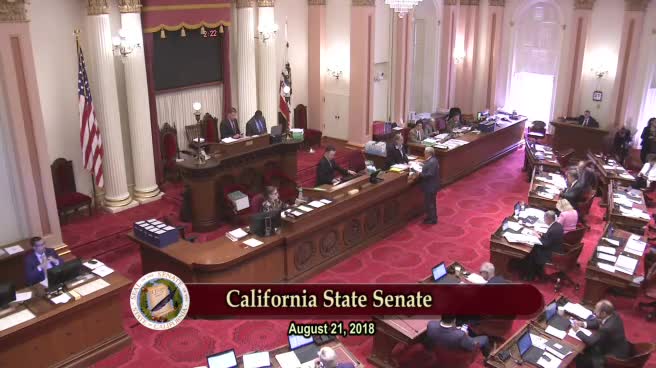 1MIN
Senate Floor
 1H
Senate Standing Committee on Appropriations
 5MIN
Senate Standing Committee on Public Employment and Retirement
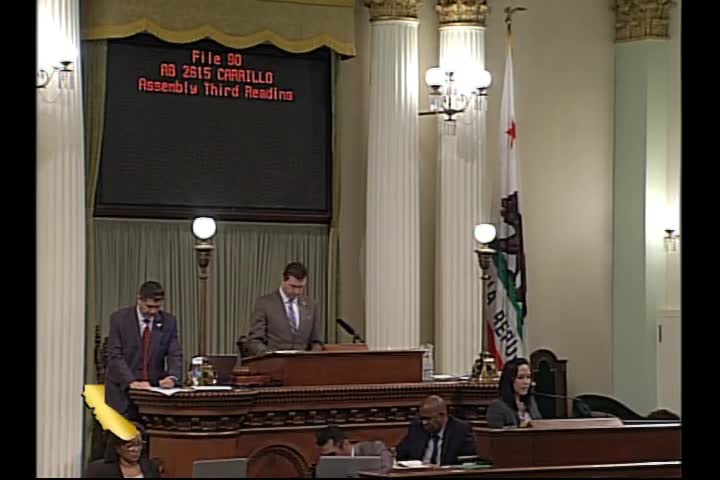 1MIN
Assembly Floor
 4MIN
Assembly Standing Committee on Judiciary
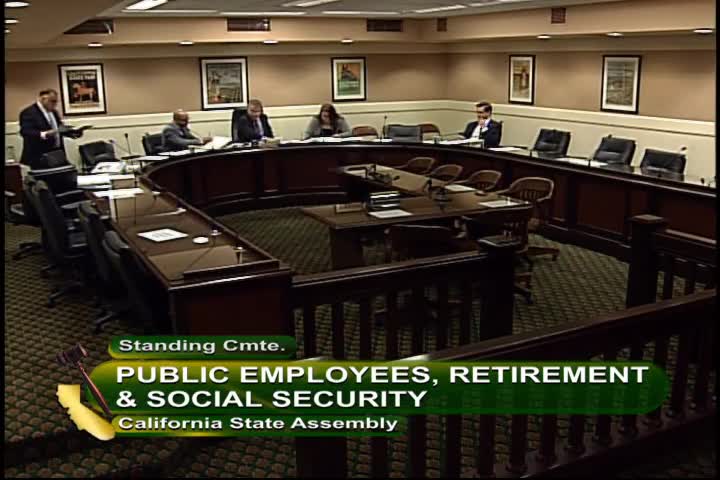 6MIN
Assembly Standing Committee on Public Employees, Retirement, and Social Security
Bill Author

Bill Co-Author(s):