AB 2730: Franchise Tax Board: collection of delinquent amounts: tolls.
- Session Year: 2017-2018
- House: Assembly
- Latest Version Date: 2018-06-11
Existing law requires the Franchise Tax Board to collect certain delinquencies related to vehicles, including, but not limited to, unpaid tolls, toll evasion penalties, and any related administrative or service fee, and allows those delinquent amounts to be collected in any manner authorized under law as though those delinquent amounts were a tax due under the Personal Income Tax Law.
This bill would remove the Franchise Tax Boards responsibility and authority to collect unpaid tolls, toll evasion penalties, and any related administrative or service fees.
Existing law requires the Franchise Tax Board to collect certain delinquencies related to vehicles, including, but not limited to, unpaid tolls, toll evasion penalties, and any related administrative or service fee, and allows those delinquent amounts to be collected in any manner authorized under law as though those delinquent amounts were a tax due under the Personal Income Tax Law, including by issuance of an order and levy for earnings withholding and by notice to a depository institution to withhold and transmit credit or property of a delinquent taxpayer in order to satisfy the tax obligations of that taxpayer. Law.
This bill would remove the Franchise Tax Boards responsibility and authority to collect unpaid tolls, toll evasion penalties, and any related administrative or service fees by issuance of an order and levy for earning withholding and by notice for withholding to a depository institution. fees.
Existing law requires the Franchise Tax Board to collect certain delinquencies related to vehicles, including, but not limited to, unpaid tolls, toll evasion penalties, and any related administrative or service fee, as though the delinquencies are taxes, as specified. and allows those delinquent amounts to be collected in any manner authorized under law as though those delinquent amounts were a tax due under the Personal Income Tax Law, including by issuance of an order and levy for earnings withholding and by notice to a depository institution to withhold and transmit credit or property of a delinquent taxpayer in order to satisfy the tax obligations of that taxpayer.
This bill would remove that requirement. the Franchise Tax Boards authority to collect unpaid tolls, toll evasion penalties, and any related administrative service fees by issuance of an order and levy for earning withholding and by notice for withholding to a depository institution.
Existing law requires the Franchise Tax Board to collect certain delinquencies related to vehicles, including, but not limited to, unpaid tolls, toll evasion penalties, and any related administrative or service fee, as though the delinquencies are taxes, as specified.
This bill would remove that requirement.
It is the intent of the Legislature to prohibit the Franchise Tax Board from garnishing wages or assets in bank accounts for the collection of unpaid tolls or toll evasion penalties, and instead have those amounts collected by other existing methods, such as offsets from income tax refunds.
SEC. 2.Section 10878 of the Revenue and Taxation Code is amended to read:10878.(a)Notwithstanding Sections 10877 and 10951, the responsibility and authority for the collection of the following delinquent amounts, and any interest, penalties, or service fees added thereto, shall be transferred from the department to the Franchise Tax Board:
(1)Registration fees.
(2)Transfer fees.
(3)License fees.
(4)Use taxes.
(5)Penalties for offenses relating to the standing or parking of a vehicle for which a notice of parking violation has been served on the owner, and any administrative service fee added to the penalty.
(6)Any court-imposed fine or penalty assessment, and any administrative service fee added thereto, that is subject to collection by the department.
(b)Any reference in this part to the department in connection with the duty to collect these amounts shall be deemed a reference to the Franchise Tax Board.
(c)The amounts collected under subdivision (a) may be collected in any manner authorized under the law as though they were a tax imposed under Part 10 (commencing with Section 17001) that is final, including, but not limited to, issuance of an order and levy under Article 4 (commencing with Section 706.070) of Chapter 5 of Division 2 of Title 9 of Part 2 of the Code of Civil Procedure in the manner provided for earnings withholding order for taxes. Part 10 (commencing with Section 17001), 10.2 (commencing with Section 18401), or 10.7 (commencing with Section 21001), or any other applicable law shall apply for this purpose in the same manner and with the same force and effect as if the language of Part 10, 10.2, or 10.7, or the other applicable law is incorporated in full into this authority to collect these amounts, except to the extent that the provision is either inconsistent with the collection of these amounts or is not relevant to the collection of these amounts.
(d)Even though the amounts authorized by this section are collected as though they are taxes, amounts so received by the Franchise Tax Board shall be deposited into an appropriate fund or account upon agreement between the Franchise Tax Board and the department. The amounts shall be distributed by the department from the appropriate fund or account in accordance with the laws providing for the deposits and distributions as though the moneys were received by the department.
(e)For any collection action under this section, the Franchise Tax Board may utilize the contract authorization, procedures, and mechanisms available either with respect to the collection of taxes, interest, additions to tax, and penalties pursuant to Section 19376, or with respect to the collection of the delinquencies by the department immediately prior to the time this section takes effect.
(f)The Legislature finds that it is essential for fiscal purposes that the program authorized by this section be expeditiously implemented. Accordingly, Chapter 3.5 (commencing with Section 11340) of Part 1 of Division 3 of Title 2 of the Government Code shall not apply to any standard, criteria, procedure, determination, rule, notice, or guideline established or issued by the Franchise Tax Board in implementing and administering the program required by this section.
(g)Any standard, criteria, procedure, determination, rule, notice, or guideline, that is not subject to the provisions of Chapter 3.5 (commencing with Section 11340) of Part 1 of Division 3 of Title 2 of the Government Code pursuant to subdivision (f), shall be approved by the Franchise Tax Board, itself.
(h)The Franchise Tax Board may enter into any agreements or contracts necessary to implement and administer the provisions of this section. The Franchise Tax Board in administering this section may delegate collection activities to the department. Any contracts may provide for payment of the contract on the basis of a percentage of the amount of revenue realized as a result of the contractors services under that contract. However, the Franchise Tax Board, in administering this part, may not enter into contracts with private collection agencies as authorized under Section 19377.
(i)The amendments made to this section by the act adding this subdivision shall not be construed to limit the responsibilities of the Department of Motor Vehicles imposed by Sections 4770 and 40267 of the Vehicle Code.
It is the intent of the Legislature to prohibit the Franchise Tax Board from garnishing wages or assets in bank accounts for the collection of unpaid tolls or toll evasion penalties, and instead have those amounts collected by other existing methods, such as offsets from income tax refunds.
SEC. 2.Section 10878 of the Revenue and Taxation Code is amended to read:10878.(a)Notwithstanding Sections 10877 and 10951, the responsibility and authority for the collection of the following delinquent amounts, and any interest, penalties, or service fees added thereto, shall be transferred from the department to the Franchise Tax Board:
(1)Registration fees.
(2)Transfer fees.
(3)License fees.
(4)Use taxes.
(5)Penalties for offenses relating to the standing or parking of a vehicle for which a notice of parking violation has been served on the owner, and any administrative service fee added to the penalty.
(6)Unpaid tolls, toll evasion penalties as described in Section 40252 of the Vehicle Code, and any related administrative or service fees.(7)(6)Any court-imposed fine or penalty assessment, and any administrative service fee added thereto, that is subject to collection by the department.
(b)Any reference in this part to the department in connection with the duty to collect these amounts shall be deemed a reference to the Franchise Tax Board.
(c)(1)Except as provided in paragraph (2), the The amounts collected under subdivision (a) may be collected in any manner authorized under the law as though they were a tax imposed under Part 10 (commencing with Section 17001) that is final, including, but not limited to, issuance of an order and levy under Article 4 (commencing with Section 706.070) of Chapter 5 of Division 2 of Title 9 of Part 2 of the Code of Civil Procedure in the manner provided for earnings withholding order for taxes. Part 10 (commencing with Section 17001), 10.2 (commencing with Section 18401), or 10.7 (commencing with Section 21001), or any other applicable law shall apply for this purpose in the same manner and with the same force and effect as if the language of Part 10, 10.2, or 10.7, or the other applicable law is incorporated in full into this authority to collect these amounts, except to the extent that the provision is either inconsistent with the collection of these amounts or is not relevant to the collection of these amounts.
(2)The amounts collected under paragraph (6) of subdivision (a) may not be collected by the issuance of an order and levy under Article 4 (commencing with Section 706.070) of Chapter 5 of Division 2 of Title 9 of Part 2 of the Code of Civil Procedure or by issuance of a notice to a depository institution under subdivision (a) of Section 18670.(d)Even though the amounts authorized by this section are collected as though they are taxes, amounts so received by the Franchise Tax Board shall be deposited into an appropriate fund or account upon agreement between the Franchise Tax Board and the department. The amounts shall be distributed by the department from the appropriate fund or account in accordance with the laws providing for the deposits and distributions as though the moneys were received by the department.
(e)For any collection action under this section, the Franchise Tax Board may utilize the contract authorization, procedures, and mechanisms available either with respect to the collection of taxes, interest, additions to tax, and penalties pursuant to Section 19376, or with respect to the collection of the delinquencies by the department immediately prior to the time this section takes effect.
(f)The Legislature finds that it is essential for fiscal purposes that the program authorized by this section be expeditiously implemented. Accordingly, Chapter 3.5 (commencing with Section 11340) of Part 1 of Division 3 of Title 2 of the Government Code shall not apply to any standard, criteria, procedure, determination, rule, notice, or guideline established or issued by the Franchise Tax Board in implementing and administering the program required by this section.
(g)Any standard, criteria, procedure, determination, rule, notice, or guideline, that is not subject to the provisions of Chapter 3.5 (commencing with Section 11340) of Part 1 of Division 3 of Title 2 of the Government Code pursuant to subdivision (f), shall be approved by the Franchise Tax Board, itself.
(h)The Franchise Tax Board may enter into any agreements or contracts necessary to implement and administer the provisions of this section. The Franchise Tax Board in administering this section may delegate collection activities to the department. Any contracts may provide for payment of the contract on the basis of a percentage of the amount of revenue realized as a result of the contractors services under that contract. However, the Franchise Tax Board, in administering this part, may not enter into contracts with private collection agencies as authorized under Section 19377.
It is the intent of the Legislature to prohibit the Franchise Tax Board from garnishing wages or assets in bank accounts for the collection of unpaid tolls or toll evasion penalties, and instead have those amounts collected by other existing methods, such as offsets from income tax refunds.
SEC. 2.Section 10878 of the Revenue and Taxation Code is amended to read:10878.(a)Notwithstanding Sections 10877 and 10951, the responsibility and authority for the collection of the following delinquent amounts, and any interest, penalties, or service fees added thereto, shall be transferred from the department to the Franchise Tax Board:
(1)Registration fees.
(2)Transfer fees.
(3)License fees.
(4)Use taxes.
(5)Penalties for offenses relating to the standing or parking of a vehicle for which a notice of parking violation has been served on the owner, and any administrative service fee added to the penalty.
(6)Unpaid tolls, toll evasion penalties as described in Section 40252 of the Vehicle Code, and any related administrative or service fees.
(7)Any court-imposed fine or penalty assessment, and any administrative service fee added thereto, that is subject to collection by the department.
(b)Any reference in this part to the department in connection with the duty to collect these amounts shall be deemed a reference to the Franchise Tax Board.
(c)The (1)Except as provided in paragraph (2), the amounts collected under subdivision (a) may be collected in any manner authorized under the law as though they were a tax imposed under Part 10 (commencing with Section 17001) that is final, including, but not limited to, issuance of an order and levy under Article 4 (commencing with Section 706.070) of Chapter 5 of Division 2 of Title 9 of Part 2 of the Code of Civil Procedure in the manner provided for earnings withholding order for taxes. Part 10 (commencing with Section 17001), 10.2 (commencing with Section 18401), or 10.7 (commencing with Section 21001), or any other applicable law shall apply for this purpose in the same manner and with the same force and effect as if the language of Part 10, 10.2, or 10.7, or the other applicable law is incorporated in full into this authority to collect these amounts, except to the extent that the provision is either inconsistent with the collection of these amounts or is not relevant to the collection of these amounts.
(2)The amounts collected under paragraph (6) of subdivision (a) may not be collected by the issuance of an order and levy under Article 4 (commencing with Section 706.070) of Chapter 5 of Division 2 of Title 9 of Part 2 of the Code of Civil Procedure or by issuance of a notice to a depository institution under subdivision (a) of Section 18670.
(d)Even though the amounts authorized by this section are collected as though they are taxes, amounts so received by the Franchise Tax Board shall be deposited into an appropriate fund or account upon agreement between the Franchise Tax Board and the department. The amounts shall be distributed by the department from the appropriate fund or account in accordance with the laws providing for the deposits and distributions as though the moneys were received by the department.
(e)For any collection action under this section, the Franchise Tax Board may utilize the contract authorization, procedures, and mechanisms available either with respect to the collection of taxes, interest, additions to tax, and penalties pursuant to Section 19376, or with respect to the collection of the delinquencies by the department immediately prior to the time this section takes effect.
(f)The Legislature finds that it is essential for fiscal purposes that the program authorized by this section be expeditiously implemented. Accordingly, Chapter 3.5 (commencing with Section 11340) of Part 1 of Division 3 of Title 2 of the Government Code shall not apply to any standard, criteria, procedure, determination, rule, notice, or guideline established or issued by the Franchise Tax Board in implementing and administering the program required by this section.
(g)Any standard, criteria, procedure, determination, rule, notice, or guideline, that is not subject to the provisions of Chapter 3.5 (commencing with Section 11340) of Part 1 of Division 3 of Title 2 of the Government Code pursuant to subdivision (f), shall be approved by the Franchise Tax Board, itself.
(h)The Franchise Tax Board may enter into any agreements or contracts necessary to implement and administer the provisions of this section. The Franchise Tax Board in administering this section may delegate collection activities to the department. Any contracts may provide for payment of the contract on the basis of a percentage of the amount of revenue realized as a result of the contractors services under that contract. However, the Franchise Tax Board, in administering this part, may not enter into contracts with private collection agencies as authorized under Section 19377.
(i)The amendments made to this section by the act adding this subdivision shall apply commencing with the effective date of the act adding this subdivision.SEC. 2.Section 10878 of the Revenue and Taxation Code is amended to read:10878.(a)Notwithstanding Sections 10877 and 10951, the responsibility and authority for the collection of the following delinquent amounts, and any interest, penalties, or service fees added thereto, shall be transferred from the department to the Franchise Tax Board:(1)Registration fees.(2)Transfer fees.(3)License fees.(4)Use taxes.(5)Penalties for offenses relating to the standing or parking of a vehicle for which a notice of parking violation has been served on the owner, and any administrative service fee added to the penalty.(6)Any court-imposed fine or penalty assessment, and any administrative service fee added thereto, that is subject to collection by the department.(b)Any reference in this part to the department in connection with the duty to collect these amounts shall be deemed a reference to the Franchise Tax Board.(c)The amounts collected under subdivision (a) may be collected in any manner authorized under the law as though they were a tax imposed under Part 10 (commencing with Section 17001) that is final, including, but not limited to, issuance of an order and levy under Article 4 (commencing with Section 706.070) of Chapter 5 of Division 2 of Title 9 of Part 2 of the Code of Civil Procedure in the manner provided for earnings withholding order for taxes. Part 10 (commencing with Section 17001), 10.2 (commencing with Section 18401), or 10.7 (commencing with Section 21001), or any other applicable law shall apply for this purpose in the same manner and with the same force and effect as if the language of Part 10, 10.2, or 10.7, or the other applicable law is incorporated in full into this authority to collect these amounts, except to the extent that the provision is either inconsistent with the collection of these amounts or is not relevant to the collection of these amounts.(d)Even though the amounts authorized by this section are collected as though they are taxes, amounts so received by the Franchise Tax Board shall be deposited into an appropriate fund or account upon agreement between the Franchise Tax Board and the department. The amounts shall be distributed by the department from the appropriate fund or account in accordance with the laws providing for the deposits and distributions as though the moneys were received by the department.(e)For any collection action under this section, the Franchise Tax Board may utilize the contract authorization, procedures, and mechanisms available either with respect to the collection of taxes, interest, additions to tax, and penalties pursuant to Section 19376, or with respect to the collection of the delinquencies by the department immediately prior to the time this section takes effect.(f)The Legislature finds that it is essential for fiscal purposes that the program authorized by this section be expeditiously implemented. Accordingly, Chapter 3.5 (commencing with Section 11340) of Part 1 of Division 3 of Title 2 of the Government Code shall not apply to any standard, criteria, procedure, determination, rule, notice, or guideline established or issued by the Franchise Tax Board in implementing and administering the program required by this section.(g)Any standard, criteria, procedure, determination, rule, notice, or guideline, that is not subject to the provisions of Chapter 3.5 (commencing with Section 11340) of Part 1 of Division 3 of Title 2 of the Government Code pursuant to subdivision (f), shall be approved by the Franchise Tax Board, itself.(h)The Franchise Tax Board may enter into any agreements or contracts necessary to implement and administer the provisions of this section. The Franchise Tax Board in administering this section may delegate collection activities to the department. Any contracts may provide for payment of the contract on the basis of a percentage of the amount of revenue realized as a result of the contractors services under that contract. However, the Franchise Tax Board, in administering this part, may not enter into contracts with private collection agencies as authorized under Section 19377.It is the intent of the Legislature to prohibit the Franchise Tax Board from garnishing wages for the collection of unpaid tolls or toll evasion penalties.
SEC. 2.Section 10878 of the Revenue and Taxation Code is amended to read:10878.(a)Notwithstanding Sections 10877 and 10951, the responsibility and authority for the collection of the following delinquent amounts, and any interest, penalties, or service fees added thereto, shall be transferred from the department to the Franchise Tax Board:
(1)Registration fees.
(2)Transfer fees.
(3)License fees.
(4)Use taxes.
(5)Penalties for offenses relating to the standing or parking of a vehicle for which a notice of parking violation has been served on the owner, and any administrative service fee added to the penalty.
(6)Unpaid tolls, toll evasion penalties as described in Section 40252 of the Vehicle Code, and any related administrative or service fees.(7)(6)Any court-imposed fine or penalty assessment, and any administrative service fee added thereto, that is subject to collection by the department.
(b)Any reference in this part to the department in connection with the duty to collect these amounts shall be deemed a reference to the Franchise Tax Board.
(c)The amounts collected under subdivision (a) may be collected in any manner authorized under the law as though they were a tax imposed under Part 10 (commencing with Section 17001) that is final, including, but not limited to, issuance of an order and levy under Article 4 (commencing with Section 706.070) of Chapter 5 of Division 2 of Title 9 of Part 2 of the Code of Civil Procedure in the manner provided for earnings withholding order for taxes. Part 10 (commencing with Section 17001), 10.2 (commencing with Section 18401), or 10.7 (commencing with Section 21001), or any other applicable law shall apply for this purpose in the same manner and with the same force and effect as if the language of Part 10, 10.2, or 10.7, or the other applicable law is incorporated in full into this authority to collect these amounts, except to the extent that the provision is either inconsistent with the collection of these amounts or is not relevant to the collection of these amounts.
(d)Even though the amounts authorized by this section are collected as though they are taxes, amounts so received by the Franchise Tax Board shall be deposited into an appropriate fund or account upon agreement between the Franchise Tax Board and the department. The amounts shall be distributed by the department from the appropriate fund or account in accordance with the laws providing for the deposits and distributions as though the moneys were received by the department.
(e)For any collection action under this section, the Franchise Tax Board may utilize the contract authorization, procedures, and mechanisms available either with respect to the collection of taxes, interest, additions to tax, and penalties pursuant to Section 19376, or with respect to the collection of the delinquencies by the department immediately prior to the time this section takes effect.
(f)The Legislature finds that it is essential for fiscal purposes that the program authorized by this section be expeditiously implemented. Accordingly, Chapter 3.5 (commencing with Section 11340) of Part 1 of Division 3 of Title 2 of the Government Code shall not apply to any standard, criteria, procedure, determination, rule, notice, or guideline established or issued by the Franchise Tax Board in implementing and administering the program required by this section.
(g)Any standard, criteria, procedure, determination, rule, notice, or guideline, that is not subject to the provisions of Chapter 3.5 (commencing with Section 11340) of Part 1 of Division 3 of Title 2 of the Government Code pursuant to subdivision (f), shall be approved by the Franchise Tax Board, itself.
(h)The Franchise Tax Board may enter into any agreements or contracts necessary to implement and administer the provisions of this section. The Franchise Tax Board in administering this section may delegate collection activities to the department. Any contracts may provide for payment of the contract on the basis of a percentage of the amount of revenue realized as a result of the contractors services under that contract. However, the Franchise Tax Board, in administering this part, may not enter into contracts with private collection agencies as authorized under Section 19377.
(i)The amendments made to this section by the act adding this subdivision shall apply commencing with the effective date of the act adding this subdivision.
|
Date
|
Status
|
|---|---|
| Jun 27, 2018 | In committee: Set, first hearing. Failed passage. Reconsideration granted. |
| Jun 11, 2018 | From committee chair, with author's amendments: Amend, and re-refer to committee. Read second time, amended, and re-referred to Com. on GOV. & F. |
| May 24, 2018 | Referred to Com. on GOV. & F. |
| May 10, 2018 | In Senate. Read first time. To Com. on RLS. for assignment. |
| May 10, 2018 | Read third time. Passed. Ordered to the Senate. |
| May 3, 2018 | Read second time. Ordered to Consent Calendar. |
| May 2, 2018 | From committee: Do pass. To Consent Calendar. (Ayes 17. Noes 0.) (May 2). |
| Apr 19, 2018 | Re-referred to Com. on APPR. |
| Apr 18, 2018 | From committee chair, with author's amendments: Amend, and re-refer to Com. on APPR. Read second time and amended. |
| Apr 2, 2018 | In committee: Set, first hearing. Hearing canceled at the request of author. |
| Apr 3, 2018 | From committee: Do pass and re-refer to Com. on APPR. (Ayes 7. Noes 0.) (April 2). Re-referred to Com. on APPR. |
| Apr 2, 2018 | Re-referred to Com. on REV. & TAX. |
| Mar 22, 2018 | From committee chair, with author's amendments: Amend, and re-refer to Com. on REV. & TAX. Read second time and amended. |
| Mar 8, 2018 | Referred to Com. on REV. & TAX. |
| Feb 16, 2018 | From printer. May be heard in committee March 18. |
| Feb 15, 2018 | Read first time. To print. |
|
Date
|
Description
|
Location
|
Votes
|
|
|---|---|---|---|---|
| Jun 27, 2018 | [06-28-2018] hearing: Motion to Reconsider. [Reconsideration Granted.] | Senate Standing Committee on Governance and Finance |
Passed |
|
| Jun 27, 2018 | Do pass, but first be re-referred to the Committee on [Appropriations] | Senate Standing Committee on Governance and Finance |
Failed |
|
| May 10, 2018 | AB 2730 HARPER Consent Calendar Second Day Regular Session | Assembly Floor |
Passed |
|
| May 2, 2018 | Do pass. To Consent Calendar. | Assembly Standing Committee on Appropriations |
Passed |
|
| Apr 2, 2018 | Do pass and be re-referred to the Committee on [Appropriations] | Assembly Standing Committee on Revenue and Taxation |
Passed |
This list shows positions taken on this bill by organizations on the date displayed, which is linked to the original source.
Positions by individuals are not included.
|
Organization
|
Position
|
Date
|
|---|---|---|
| California Bus Association | * Indeterminate | Apr 2, 2018 |
| California Bus Association. | ** Support | Jun 25, 2018 |
| Transportation Corridor Agencies. | ** Against | Jun 25, 2018 |
SENATE COMMITTEE ON GOVERNANCE AND FINANCE
Senator Mike McGuire, Chair
2017 - 2018 Regular
Bill No: | AB 2730 | Hearing Date: | 6/27/18 |
Author: | Harper | Tax Levy: | No |
Version: | 6/11/18 Amended | Fiscal: | Yes |
Consultant: | Grinnell | ||
Franchise Tax Board: collection of delinquent amounts: tolls
Revokes FTB’s authority to collect unpaid tolls, toll evasion penalties, as well as any administrative or service fee related to the toll or penalty.
Background
The Department of Motor Vehicles (DMV) regulates the sales of vehicles, and protects consumers purchasing vehicles. DMV also administers and collects vehicle license, registration, and transfer fees; use taxes from individuals registering vehicles purchased out of state; penalties for parking violations; as well as unpaid tolls and toll evasion penalties. DMV can collect unpaid tolls by placing a hold on a vehicle's registration.
While also administering the Personal Income and Corporation Tax, among others, the Legislature required the Franchise Tax Board (FTB) to also receive referrals from state and local agencies to collect fines, state or local penalties, forfeitures, restitution penalties, fines, or certain amounts that exceed $100 in the aggregate, and are more than ninety days delinquent (AB 3343, Hannigan, 1994). The Legislature subsequently expanded and extended this authority (SB 246, Escutia, 2004). To implement these collections responsibilities, FTB administers the Interagency Intercept Collection (IIC) program on behalf of the State Controller’s office, that allows a participating agency to intercept tax refunds, lottery winnings, or unclaimed property from individuals or business entities who owe delinquent amounts to state and local agencies.
FTB also collects delinquent vehicle license fees, registration fees, local vehicle license fees, and any other related penalties, after the Legislature shifted collections authority from DMV to FTB in 1993 (SB 452, Committee on Budget and Fiscal Review). That same year, the Legislature also added to this collections authority any penalties for offenses relating to standing or parking of a vehicle, as well as any other court-imposed fee or penalty assessment (AB 3032, Bustamente). While FTB can use private firms to collect taxes so long as it doesn’t displace its civil service employees, FTB cannot do the same to collect fines and penalties. FTB’s Vehicle Registration Collection program collects debts on behalf of DMV by wage garnishment, bank levy, and by participating in the IIC.
Agencies collecting tolls can attempt to collect the toll violation and associated penalties itself, or contract with the state, the county, a local authority, a Bridge and Highway district, or with a private vendor. When attempting to collect itself, the agency may file proof that the same person has more than $400 in unpaid penalties and fees with the court, which has the same effect as a civil judgment. The agency may then take action to collect the judgment in the same way as any other unpaid civil judgment. However, the agency must first send a notice by first-class mail to the person or registered owner indicating that a judgment shall be entered after 30 days from the date of the mailing of the notice, which has the same effect as an entry of judgment against a judgment debtor.
When contracting with the state, agencies can bring additional collection tools to bear. DMV can place a hold on the vehicle’s registration, or the Controller can deduct the violation and penalties from tax refunds or lottery winnings. In 2015, the Legislature added unpaid tolls and toll evasion penalties, as well as any administrative or service fees, to FTB’s authority to collect delinquent amounts referred by DMV as part of the agreement enacting the 2015-16 State Budget (SB 84, Committee on Budget and Fiscal Review). FTB collects these amounts under its Vehicle Registration Collection program, which collects by garnishing wages and imposing bank levies.
Arguing that FTB’s authority to garnish wages and impose levies on bank accounts is too harsh, the author wants to revoke FTB’s authority to collect unpaid tolls, toll evasion penalties, and any related administrative or service fee.
Proposed Law
Assembly Bill 2730 revokes the transfer from DMV to FTB of the responsibility and authority to collect unpaid tolls, toll evasion penalties, and any administrative or service fees related to the toll or penalty.
The bill states that it should not be construed to limit the responsibilities of DMV to refuse to renew registration of persons with unpaid toll penalties and fees, or the authority for toll agencies to refer persons with unpaid liabilities to DMV.
The measure makes a legislative declaration supporting its purposes.
State Revenue Impact
FTB estimates that AB 2730 does not directly impact state revenues.
Comments
1. Purpose of the bill. According to the author, “AB 2730 is needed to ensure California motorists are protected against wage and bank levies imposed by the Franchise Tax Board. With California being one of the most expensive states to live in, residents cannot afford their earned income to be forcefully taken from them because of honest mistakes. Wage and bank levies should be a last resort. Toll agencies should demonstrate existing collection procedures are insufficient before taking an individual’s livelihood.”
2. Free ride? The Legislature has repeatedly turned to FTB to collect debts, as the agency has proved itself very capable of collecting non-tax debts quickly, efficiently, and cost-effectively. The Legislature added authority for FTB to collect these tolls because toll agencies only have the ability to impose less intrusive means of collecting unpaid toll evasion penalties, such as placing a hold on the vehicle’s registration, obtaining a civil judgment, contracting with a collection agency, deducting penalties from tax refunds, and placing a lien on the vehicle. If agencies are limited to these less effective means, penalties will be repaid more slowly, if at all. Supporters argue that AB 2730 is needed to ensure California motorists are protected against wage and bank levies imposed by the FTB, but why should motorists with toll violations and associated penalties not be subject to the most modern and effective debt techniques? Individuals entering bridges, tunnels, and roadways should be aware that there’s no free ride, and that toll agencies will collect against those skirting the law. The Committee may wish to consider the merits of less-effective collections mechanisms on individuals who flout obligations to pay tolls, toll evasion penalties, and administrative fees.
3. Bridges and tunnels. AB 2730 responds to instances where California motorists have had wages garnished or bank accounts levied to pay for toll violations which were arguably incorrectly issued. Several Californians have accrued several thousand dollars in unpaid tolls and penalties, arguing that the penalties are issued by mistake, FasTrak transponders are broken or malfunctioning, that credit cards linked to FasTrak have been hacked or entered incorrectly, or as alleged in a recent lawsuit, signage is not clearly posted indicating that toll payment is required. Additionally, penalties compound, so penalty amounts can far exceed the toll violation amounts, and motorists must pay fines and penalties prior to administrative challenge. With maximum toll penalties at $100 for the first violation, $250 for a second within the same year, and $500 for each additional one, these amounts can add up. Additionally, toll agencies have made mistakes; in 2009, the Orange County Toll Authority and the Transportation Corridor Agencies agreed to waive $41 million in commuter penalties, and pay $1.4 million in restitution, to settle a class-action lawsuit brought on behalf of people who say they were charged excessive penalties for toll violations. However, AB 2730 does not seek to change toll agency behavior, penalty amounts, or signage requirements; instead, the measure disconnects an effective collections mechanism. The Committee may wish to consider whether revoking FTB’s collections authority is the best solution for the issues that bring rise to AB 2730.
Assembly Actions
Assembly Revenue and Taxation Committee 7-0
Assembly Appropriations Committee: 17-0
Assembly Floor: 73-0
Support and Opposition
(6/25/18)
Support: California Bus Association.
Opposition: Transportation Corridor Agencies.
-- END --
Date of Hearing: May 2, 2018
ASSEMBLY COMMITTEE ON APPROPRIATIONS
Lorena Gonzalez Fletcher, Chair
ABPCA Bill Id:AB 2730
Author:(Harper) – As Amended Ver:April 18, 2018
Policy Committee: | Revenue and Taxation | Vote: | 7 - 0 |
|
|
Urgency: No State Mandated Local Program: No Reimbursable: No
SUMMARY:
This bill eliminates the Franchise Tax Board’s (FTB’s) authority to collect delinquent amounts, interest, penalties, and fees related to unpaid tolls and toll evasion.
FISCAL EFFECT:
- Modest one-time administrative costs in the range of $50,000 to $75,000 for the Department of Motor Vehicles (DMV) to make programmatic adjustments to the data DMV sends to FTB. DMV sends other data related to delinquent vehicle registration and related fees, and AB 2730 requires DMV to separate unpaid tolls from this information.
- No additional costs to FTB.
- Unknown revenue loss to local governments by delaying and limiting one avenue for collecting unpaid tolls and related penalties and revenues.
COMMENTS:
- Background. The FTB, in addition to collecting personal income tax and corporate tax, also has the authority to collect certain vehicle-associated fees, including registration fees, license fees, parking violations, unpaid tolls, and other fines and penalties subject to collection by the DMV. FTB has this authority because it is a very efficient collector, which makes collecting unpaid fees, fines, and penalties cheaper and less administratively burdensome. The FTB may collect these amounts through wage garnishments and bank levies, if necessary.
Other state agencies have the authority to collect unpaid tolls. For example, the DMV may place a hold on an individual’s vehicle registration. The State Controller, through the Interagency Intercept Collection (IIC) Program, may collect unpaid tolls from personal income tax refunds or State Lottery winnings.
- Purpose. According to the author, AB 2730 will ensure California motorists are protected against wage and bank levies imposed by FTB. The author contends that such levies should be a last resort and that toll agencies should demonstrate existing collection procedures are insufficient before seeking wage garnishments and bank levies.
- Impact of bill. AB 2730 requires DMV to “unbundle” the information sent to FTB related to collections. While the FTB may use its authority to collect other types of vehicle-associated fines and penalties, other means will be required to collect unpaid tolls, such as a hold on vehicle registration.
Analysis Prepared by: Luke Reidenbach / APPR. / (916) 319-2081
Date of Hearing: April 2, 2018
ASSEMBLY COMMITTEE ON REVENUE AND TAXATION
Autumn R. Burke, Chairwoman
ABPCA Bill Id:AB 2730 (
Author:Harper) – As Amended Ver:March 22, 2018
Majority vote. Fiscal committee.
SUBJECT: Franchise Tax Board: collection of delinquent amounts: tolls
SUMMARY: Prohibits the Franchise Tax Board (FTB) from garnishing wages or bank accounts to collect unpaid tolls, toll evasion penalties, and associated fees. Specifically, this bill:
- Asserts legislative intent to prohibit the FTB from garnishing wages or assets in bank accounts for the collection of unpaid tolls or toll evasion penalties and instead have those amounts collected by other existing methods, such as offsets from income tax refunds.
- Provides that notwithstanding the authority of the FTB to collect unpaid tolls and toll evasion penalties as though they were taxes, the FTB is specifically prohibited from collecting unpaid tolls and toll evasion penalties by the issuance of a wage garnishment,[1] or by garnishing assets in a bank account[2].
EXISTING LAW:
- Vests the FTB with the authority to collect the following as though they were taxes:[3]
- Registration fees;
- Transfer fees;
- License fees;
- Use taxes;
- Penalties for parking violations;
- Unpaid tolls, toll evasion penalties; and,
- Any fines, penalties, and associated fees subject to collection by the Department of Motor Vehicles (DMV).
- Allows the DMV to collect unpaid tolls by placing a hold on a vehicle's registration.[4]
- Allows a toll agency to contract with a collection agency to collect unpaid toll fees and toll evasion penalties.[5]
- Allows the processing agency to file proof of unpaid fees and penalties, if more than $400, with the same effect as a civil judgement.[6] Enforcement and collection may be taken as authorized for the collection of an unpaid civil judgment entered against a defendant in an action on a debt.[7] Requires notice mailed to the debtor stating that the following actions may be taken to collect: execution of a levy on the debtor's assets, garnished wages, liens placed against debtor's property, and other steps as needed.[8] Requires the processing agency to pay the civil filing fee.[9]
- Provides that if the vehicle has not been registered for 60 days past its renewal date, and the amount owed is less than $400, the processing agency may obtain a civil judgement, but the filing fee shall be collected from the debtor.[10]
- Allows the State Controller to collect any unpaid and overdue toll fees and penalties from personal income tax, or corporate tax refunds.[11] Also allows the State Controller to collect from State Lottery winnings.[12]
- Bestows upon the Department of Transportation as a matter of law a lien against the vehicle, and the power to enforce that lien, to collect unpaid toll fees and penalties.[13]
- Vests the FTB with authority to, anytime within 10 years after the determination of liability for any tax or penalties, bring an action in the courts of California, or any other state, or United States, to recover the amount of unpaid taxes, penalties, and interest due.[14]
- Provides the FTB with the authority to contract with private debt collection agencies or services for taxes, interest, additions to tax, and penalties outside of the State of California.[15] The FTB is permitted to use the private debt collection services for out-of-state debts for the collection of, among other debts, unpaid toll fees and toll evasion penalties.[16]
- Provides the FTB with authority to contract with private debt collection agencies or services for taxes, interest, additions to tax, and penalties within California, so long as the agreements do not displace civil service employees.[17] Specifically prohibits the FTB from using private debt collection services to collect select unpaid debts, including toll fees and toll evasion penalties.[18]
- Provides that any time within which the FTB can bring an action in court to recover the amount of unpaid taxes, penalties, and interest due, the FTB can instead collect the tax by seizing the personal property of the debtor, and selling said property at public auction in satisfaction of the debt.[19]
- Empowers the State of California with the authority to garnish wages to satisfy a tax debt.[20]
FISCAL EFFECT: The FTB estimates no impact to the State's income tax revenue.
COMMENTS:
- The author has provided the following statement in support of this bill:
AB 2730 is needed to ensure California Motorists are protected against wage and bank levies imposed by the Franchise Tax Board. With California being one of the most expensive states to live in, residents cannot afford their earned income to be forcefully taken from them because of honest mistakes. Wage and bank levies should be a last resort. Toll agencies should demonstrate existing collection procedures are insufficient before taking an individual's livelihood.
- Supporters of this bill comment that:
Currently toll agencies have the ability to impose less intrusive means of collecting unpaid toll evasion penalties. These include, placing a hold on the vehicle's registration, obtaining a civil judgement, contracting with a collection agency, deducting from a tax refund, and placing a lien on the vehicle. The California Bus Association believes AB 2730 is needed to ensure California motorists are protected against wage and bank levies imposed by the FTB. With California being one of the most expensive states in which to live, people cannot afford their earned income to be forcefully taken from them because of honest mistakes.
- Committee Staff Comments:
- FTB's Collection Authority: As an administrative agency, the extent of the FTB's duties and collection authority is derived from the statues passed by the Legislature, as representatives of the people of California. In general, the FTB is primarily responsible for collecting taxes, namely personal income tax and corporate tax. However, the FTB has also been charged with the responsibility to collect certain vehicle associated fees, such as delinquent registration fees, parking violation penalties, and unpaid toll fees and toll evasion penalties. Even though these fees are not taxes, the FTB has been given the authority to collect them as though they were taxes.
- Authority to Collect as Though They Were Taxes: One reason for why the FTB has been given responsibility to collect non-tax fees as though they were taxes is that the FTB is a very efficient collector. Despite the authority to collect the fees and penalties as though they were taxes, the fees and penalties are not taxes. Therefore, as pointed out in the FTB analysis, removing this authority will not impact the State's tax revenue.
- Is the Most Efficient Collector the Most Desirable Collector? Lowering the transaction costs of a financial relationship can have the effect of benefitting both parties by making the entire transaction cheaper. Otherwise, increased costs imposed on one party are generally passed on, or shared among all involved parties.
Some may argue that the goals of efficiency, and administrative decongestion, have superseded fairness, and resident protection, as evidenced by a number of factors. In 2015, the Legislature vested the FTB with the authority to collect unpaid tolls and toll violation penalties as though they were taxes. As indicated above, the FTB has been given the responsibility to collect certain non-tax debts, with the ability to garnish wages and levy bank accounts without a court order. In general, the government is prohibited from bypassing the judicial process, including when taking property from citizens and residents. Additionally, the FTB is specifically prohibited from using the services of a private bill collector for the collection of vehicle-related debts, such as unpaid tolls and penalties, within California. Contracting the services of a debt collection service can be an efficient way for California to collect smaller amounts owed. While the phone calls and letters could be annoying, even distressing, to some debtors, the debt collector is accountable to the Fair Debt Collection Practices Act, as enforced by the Federal Trade Commission (FTC). Therefore, individuals facing unfair debt collection practices have avenues of recourse available to them. Also, the debt collector is not permitted to garnish wages or bank accounts without going through the protective process of a court order. When the FTB bypasses the judicial process, the debtor might be precluded from exercising similar recourse. Because the FTB is not permitted to use the services of a debt collector, the FTB is left with the options of pursuing the debt in court and receiving a judgement to garnish wages and levy bank accounts, or exercising its authority to garnish wages and levy bank accounts without proceeding through the court system. Between the choices of a more expensive or less expensive avenue, it makes more sense from the perspective of the FTB, for the FTB to choose the least expensive option.
On the other hand, the FTB is not like any other collection agency. The FTB is accountable to the Legislature and, to that end, the people of California. As an administrative branch of the State Government, the Legislature has found that vesting the FTB with the ability to collect, absent a court order, is an appropriate use of the FTB as a resource. By lowering the transaction cost, the FTB is able to collect very efficiently, and the expenses that are saved by not going through the judicial process are remitted to the State for the benefit of the people of California. Also, the unpaid toll violations and fees are referred to the FTB only after the administrative review process of the toll agency has been exhausted. Exhausting the administrative appeals process could mean active responses and appeals to the toll agency up to superior court, or complete nonresponse from the vehicle owner combined with the lapse of time. Supporters of this authority bestowed upon the FTB may argue that by being an efficient bill collector the FTB benefits the whole of California, by increasing the net revenues remitted to California. Furthermore, the toll violation is not a moving violation, and does not impact the motorist's insurance costs. Therefore, it is similar to a parking violation, and may not warrant the due process protection that would be expected when the motorist is accused of speeding or a stop sign violation.
- A Balance of Values and Resource Allocation: This bill asserts a preference for a more expensive, but motorist-friendly, publically accountable judicial process over a less expensive, less motorist-friendly, administrative, non-judicial process. This bill also expresses a preference for pursuing methods of collection other than wage garnishment or bank account levies when possible.
REGISTERED SUPPORT / OPPOSITION:
Support
California Bus Association
Opposition
None on file
Analysis Prepared by: Ken Conlan / REV. & TAX. / (916) 319-2098
Code of Civil Procedure (Commencing with Section 706.070) ↑
Rev & Tax Code (R&TC) Section 18670 ↑
R&TC Section 10878 ↑
Vehicle Code (VC) Section 40267(a) ↑
Vehicle Code (VC) Section 40267(d) ↑
VC Section 40267(b)(1) ↑
Id. ↑
Id. ↑
VC Section 40267(b)(2) ↑
VC Section 40267(c) ↑
Gov. Code 12419.12 ↑
Id. ↑
VC Section 23303 ↑
R&TC Section 19371(a) ↑
R&TC Section 19376 ↑
R&TC Section 10878(e) ↑
R&TC Section 19377 ↑
R&TC Section 10878(h) ↑
R&TC Section 19262 ↑
Code of Civil Procedure Section 706.074 ↑
Discussed in Hearing
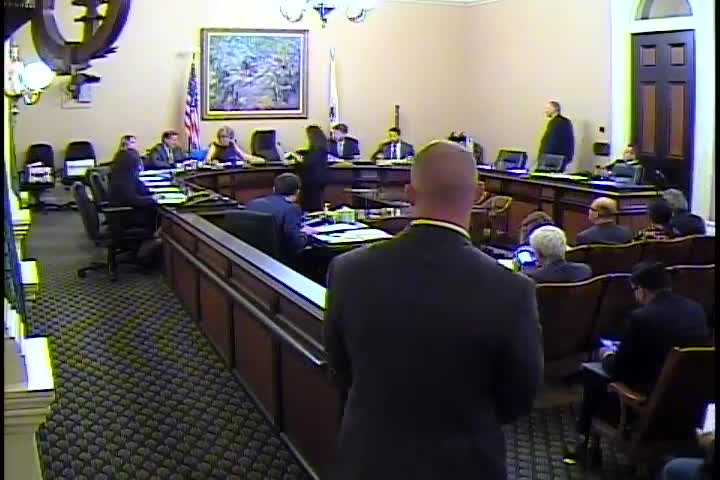 8MIN
Assembly Standing Committee on Revenue and Taxation
Bill Author

Bill Co-Author(s):