AB 2762: Public contracts: disabled veteran business enterprises: local small business enterprises: social enterprises.
- Session Year: 2017-2018
- House: Assembly
- Latest Version Date: 2018-09-21
Existing law authorizes a local agency in facilitating contract awards to small businesses to provide for a small business preference of 5% in construction, the procurement of goods, or the delivery of services, and establishes a subcontracting participation goal for small businesses on contracts with a 5% preference for those bidders who meet the goal. Existing law authorizes each local agency to define a small business for the purposes of these preferences and goals.
This bill would increase the above-described preference for small business to 7%. The bill, until January 1, 2024, would also establish preferences, in specified counties, for disabled veteran businesses and social enterprises, as defined, and would provide for the preferences to be a maximum of 7% for an individual preference and up to 15% for a single bid having 2 or more preferences. The bill would limit the value of a preference to a maximum of $150,000 under these provisions. The bill would authorize a prime contractor, with the approval of the local agency, and subject to meeting specified conditions, to substitute another subcontractor for the purpose of meeting specified goals. The bill would require that the policy under which a prime contractor may substitute a subcontractor contain, among other things, a requirement that construction subcontractors awarded construction subcontracts be afforded all the protections of the Subletting and Subcontracting Fair Practices Act and a requirement that the condition qualifying the substitution be verified with the subcontractor. The bill would require each local agency within specified counties that chooses to grant a preference under these provisions to define a small business, disabled veteran business, and social enterprise and to define their eligibility for the purposes of these preferences and goals and to establish a certification process for social enterprises using specified criteria. The bill would also authorize each local agency to define a disabled veteran business and social enterprise and to define their eligibility for the purposes of these preferences and goals.
This bill would make legislative findings and declarations as to the necessity of a special statute for the Counties of Alameda, Contra Costa, Lake, Los Angeles, Marin, Napa, San Francisco, San Mateo, Santa Clara, Solano, and Sonoma.
Existing law authorizes a local agency in facilitating contract awards to small businesses to provide for a small business preference of 5% in construction, the procurement of goods, or the delivery of services, and establishes a subcontracting participation goal for small businesses on contracts with a 5% preference for those bidders who meet the goal. Existing law authorizes each local agency to define a small business for the purposes of these preferences and goals.
This bill would increase the above-described preference for small business to 7%. The bill, until January 1, 2024, would also establish preferences, in specified counties, for disabled veteran businesses and social enterprises, as defined, and would provide for the preferences to be a maximum of 7% for an individual preference and up to 15% for a single bid having 2 or more preferences. The bill would limit the value of all combined preferences a preference to a maximum of $100,000. $150,000 under these provisions. The bill would authorize a prime contractor, with the approval of the local agency, and subject to meeting specified conditions, to substitute another subcontractor with the same preference category for the purpose of meeting specified goals. The bill would require that the policy under which a prime contractor may substitute a subcontractor contain, among other things, a requirement that construction subcontractors awarded construction subcontracts be afforded all the protections of the Subletting and Subcontracting Fair Practices Act and a requirement that the condition qualifying the substitution be verified with the subcontractor. The bill would require a each local agency within specified counties that grants chooses to grant a preference under these provisions to define a small business, disabled veteran business, and social enterprise and to define their eligibility for the purposes of these preferences and goals and to establish a certification process for social enterprises using specified criteria. The bill would also authorize each local agency to define a disabled veteran business and social enterprise and to define their eligibility for the purposes of these preferences and goals.
This bill would make legislative findings and declarations as to the necessity of a special statute for the Counties of Alameda, Contra Costa, Lake, Los Angeles, Marin, Napa, San Francisco, San Mateo, Santa Clara, Solano, and Sonoma.
Existing law authorizes a local agency in facilitating contract awards to small businesses to provide for a small business preference of 5% in construction, the procurement of goods, or the delivery of services, and establishes a subcontracting participation goal for small businesses on contracts with a 5% preference for those bidders who meet the goal. Existing law authorizes each local agency to define a small business for the purposes of these preferences and goals.
This bill would increase the above-described preference for small business to 7%. The bill, until January 1, 2024, would expand this preference to also establish preferences, in specified counties, for disabled veteran businesses and social enterprises, as defined, and would increase the preferences to provide for the preferences to be a maximum of 7% for an individual preference and up to 15% for a single bid having 2 or more preferences. The bill would limit the value of all combined preferences to a maximum of $200,000 $100,000. The bill would authorize a prime contractor, with the approval of the local agency, to substitute another subcontractor with the same preference category for the purpose of meeting specified goals. The bill would require a local agency that grants a preference under these provisions to establish a certification process for social enterprises using specified criteria. The bill would also authorize each local agency to define a disabled veteran business and social enterprise and to define their eligibility for the purposes of these preferences and goals.
This bill would make legislative findings and declarations as to the necessity of a special statute for the Counties of Alameda, Contra Costa, Lake, Los Angeles, Marin, Napa, San Francisco, San Mateo, Santa Clara, Solano, and Sonoma.
Existing law authorizes a local agency in facilitating contract awards to small businesses to provide for a small business preference of 5% in construction, the procurement of goods, or the delivery of services, and establishes a subcontracting participation goal for small businesses on contracts with a 5% preference for those bidders who meet the goal. Existing law authorizes each local agency to define a small business for the purposes of these preferences and goals.
This bill bill, until January 1, 2024, would expand this preference to disabled veteran businesses and social enterprises, as defined, and would increase the preferences to 15%. a maximum of 7% for an individual preference and up to 15% for a single bid having 2 or more preferences. The bill would limit the value of all combined preferences to a maximum of $200,000. The bill would authorize a prime contractor, with the approval of the local agency, to substitute another subcontractor with the same preference category for the purpose of meeting specified goals. The bill would require a local agency that grants a preference under these provisions to establish a certification process for social enterprises using specified criteria. The bill would also authorize each local agency to define a disabled veteran business and social enterprise and to define their eligibility for the purposes of these preferences and goals.
Existing law authorizes a local agency in facilitating contract awards to small businesses to provide for a small business preference of 5% in construction, the procurement of goods, or the delivery of services, and establishes a subcontracting participation goal for small businesses on contracts with a 5% preference for those bidders who meet the goal. Existing law authorizes each local agency to define a small business for the purposes of these preferences and goals.
This bill would expand this preference to disabled veteran businesses and social enterprises, as defined, and would increase the preferences to 15%. The bill would also authorize each local agency to define a disabled veteran business and social enterprise for the purposes of these preferences and goals.
Existing law establishes the California Disabled Veteran Business Enterprise Program to address the special needs of disabled veterans by assisting state procurement authorities in meeting or exceeding the disabled veteran enterprise participation goal of 3% of total contract value for procurement contracts.Existing law, the Small Business Procurement and Contract Act, grants a specified preference for small businesses and microbusinesses in the award of a contract for goods, services, or information technology to the state and in the construction of state facilities.This bill would state the intent of the Legislature to enact legislation pertaining to contracting opportunities for disabled veteran business enterprises, local small business enterprises, and social enterprises.Existing law establishes the California Disabled Veteran Business Enterprise Program to address the special needs of disabled veterans by assisting state procurement authorities in meeting or exceeding the disabled veteran enterprise participation goal of 3% of total contract value for procurement contracts.
Existing law, the Small Business Procurement and Contract Act, grants a specified preference for small businesses and microbusinesses in the award of a contract for goods, services, or information technology to the state and in the construction of state facilities.
This bill would state the intent of the Legislature to enact legislation pertaining to contracting opportunities for disabled veteran business enterprises, local small business enterprises, and social enterprises.
(a)Notwithstanding any other provision of law requiring a local agency to award contracts to the lowest responsible bidder, any local agency may do any of the following in facilitating contract awards to small businesses:
(1)Provide for a small business preference in construction, the procurement of goods, or the delivery of services where responsibility and quality are equal.
The local agency shall set the percent and financial value of a preference. The maximum percentage of a preference shall be 7 percent of the lowest responsible bidder meeting specifications and the maximum financial value shall be one hundred fifty thousand dollars ($150,000) for any bid.
(2)Establish a subcontracting participation goal for small businesses on contracts and grant a preference, pursuant to paragraph (1), to those bidders who meet the goal.
(3)(A)Require bidders to make good faith efforts to meet a subcontracting participation goal for small business contracts. Bidders that fail to meet the goal established by the local agency, shall demonstrate that they made good faith efforts to meet the goal.
(B)A prime contractor may, subject to the approval of the local agency, substitute a subcontractor with another small business as applicable. A local agency shall approve the substitution of a subcontractor only in the instance where the substitution meets the requirements of paragraph (6) of subdivision (d) and the local agencys adopted policy.
(4)Set additional guidelines for local preference purposes.
(b)(1)The local agency shall define the eligibility for a preference authorized pursuant to this section.
(2)In defining eligibility for a small business, a local agency shall, at a minimum, include businesses meeting the requirements of a small business enterprise certified pursuant to Article 1 (commencing with Section 14835) of Chapter 6.5 of Part 5.5 of Division 3 of Title 2 of the Government Code.
(c)Every local agency that offers a preference, pursuant to this section, shall, prior to offering a preference, adopt a procurement policy that includes, at a minimum, all of the following:
(1)A definition of an eligible entity for each preference category being utilized by the local agency.
(2)The percentage and maximum financial value of a single preference.
(3)A requirement that a preference only be awarded to a small business that performs a commercially useful function, as defined in subdivision (e).
(4)A policy regarding oversight and potential fraudulent behavior on the part of a contractor, subcontractor, or individual for the purpose of qualifying as a small business and being awarded a preference.
(5)A policy for determining whether a contractor has made a good faith effort, pursuant to paragraph (3) of subdivision (a).
(6)A policy on how a prime contractor may substitute a subcontractor, pursuant to subparagraph (B) of paragraph (3) of subdivision (a). This policy shall, at a minimum, include all of the following:
(A)The identification of the condition or conditions for which a substitution of subcontractors is authorized.
(B)A requirement that construction subcontractors awarded construction subcontracts under this section shall be afforded all the protections of the Subletting and Subcontracting Fair Practices Act (Chapter 4 (commencing with Section 4100)).
(C)A requirement that a subcontractor that served to qualify the bid package for a preference shall be replaced only with a subcontractor meeting the eligibility requirements of subdivision (b).
(D)A requirement that the condition qualifying the substitution be verified with the subcontractor.
(d)Every entity used to qualify a bid for a preference pursuant to this section shall perform a commercially useful function. A commercially useful function means:
(1)A contractor is deemed to perform a commercially useful function if the contractor, including a subcontractor, does all of the following:
(A)Is responsible for the execution of a distinct element of the work of the contract.
(B)Carries out its obligation by actually performing, managing, or supervising the work involved.
(C)Performs work that is normal for its business services and functions.
(D)Is responsible, with respect to products, inventories, materials, and supplies required for the contract, for negotiating price, determining quality and quantity, ordering, installing, if applicable, and making payment.
(E)Is not further subcontracting a portion of the work that is greater than that expected to be subcontracted by normal industry practices.
(2)A contractor or subcontractor shall not be considered to perform a commercially useful function if the contractors or subcontractors role is limited to that of an extra participant in a transaction, contract, or project through which funds are passed in order to obtain the appearance of a small business.
SEC. 2.Section 2003 is added to the Public Contract Code, to read:2003.(a)Notwithstanding Section 2002 or any other law requiring a local agency to award contracts to the lowest responsible bidder, any local agency located within the Counties of Alameda, Contra Costa, Lake, Los Angeles, Marin, Napa, San Francisco, San Mateo, Santa Clara, Solano, and Sonoma may do any of the following in facilitating contract awards to small businesses, disabled veteran businesses, or social enterprises:
(1)Provide for a small business, disabled veteran business, or social enterprise preference in construction, the procurement of goods, or the delivery of services where responsibility and quality are equal.
(A)The local agency shall set the percent and financial value of a preference. The maximum percentage of a preference shall be 7 percent of the lowest responsible bidder meeting specifications and the maximum financial value shall be one hundred fifty thousand dollars ($150,000) for any bid.
(B)If the local agency authorizes the use of more than one preference in a single bid, the local agency shall set the percentage and maximum financial value of the combined preferences. The maximum percentage of combined preferences shall be 15 percent of the lowest responsible bidder and the maximum combined financial value of all preferences shall be two hundred thousand dollars ($200,000).
(2)Establish a subcontracting participation goal for small businesses, disabled veteran businesses, or social enterprises on contracts and grant a preference, pursuant to paragraph (1), to those bidders who meet the goal.
(3)(A)Require bidders to make good faith efforts to meet a subcontracting participation goal for small business, disabled veteran business, or social enterprise contracts. Bidders that fail to meet the goal established by the local agency shall demonstrate that they made good faith efforts to meet the goal.
(B)A prime contractor may, subject to the approval of the local agency, substitute a subcontractor with another small business, disabled veteran business, or social enterprise, as applicable. A local agency shall approve the substitution of the subcontractor only in the instance where the substitution meets the requirements of paragraph (8) of subdivision (d) and the local agencys adopted policy.
(4)Set additional guidelines for local preference purposes.
(b)The local agency shall define the eligibility for a preference authorized pursuant to this section, which at a minimum, shall include businesses meeting the requirements of paragraph (1) of subdivision (c) as a small business, businesses meeting the requirements of paragraph (2) of subdivision (c) as a disabled veteran business, and an entity meeting the requirements of paragraph (3) of subdivision (c) as a social enterprise.
(c)For the purposes of this section:
(1)Small business includes, but is not limited to, a small business enterprise certified pursuant to Article 1 (commencing with Section 14835) of Chapter 6.5 of Part 5.5 of Division 3 of Title 2 of the Government Code.
(2)Disabled veteran business includes a disabled veteran business enterprise certified pursuant to Article 6 (commencing with Section 999) of Chapter 6 of Division 4 of the Military and Veterans Code.
(3)Social enterprise includes a nonprofit or for-profit business whose primary purpose is to benefit the economic, environmental, or social health of the community and which uses the methods and disciplines of business and the power of the marketplace to advance its social, environmental, and human justice agendas, wherein the organization applies commercial strategies to maximize improvements in human and environmental well-being that may include maximizing social impact rather than profits for external shareholders. A social enterprise shall be a business that has been in operation for at least one year providing transitional or permanent employment to a transitional workforce or providing social, environmental, or human justice services. A social enterprise shall only include a social enterprise certified by the administering local agency or by an entity the local agency identifies in the procurement policy adopted pursuant to subdivision (d).
(4)Transitional employment means short-term or long-term, wage-paying, subsidized, or nonsubsidized employment that combines real work, skill development, and supportive services to help a transitional workforce overcome barriers to employment and transition to unsubsidized competitive employment.
(5)Transitional workforce means underemployed or hard-to-employ persons who may be homeless, formerly incarcerated, or who either have not worked for an extended period of time or face significant barriers to employment, where applicable.
(d)Every local agency that offers a preference, pursuant to this section, shall, prior to offering a preference, adopt a procurement policy that includes, at a minimum, all of the following:
(1)A definition of an eligible entity for each preference category being utilized by the local agency.
(2)The percentage and maximum financial value of a single preference.
(3)If the local agency allows multiple preferences in a bid package, the percentage and maximum financial value of multiple preferences in a bid package, if authorized by a local agency.
(4)A requirement that a preference only be awarded to a small business, disabled veteran business, or social enterprise that performs a commercially useful function, as defined in subdivision (e).
(5)A policy regarding oversight and potential fraudulent behavior on the part of a contractor, subcontractor, or individual for the purpose of qualifying as a small business, disabled veteran business, or social enterprise and being awarded a preference.
(6)If the local agency offers a preference for social enterprise participation, a certification process for social enterprises, as defined in paragraph (3) of subdivision (c).
(7)A policy for determining whether a contractor has made a good faith effort, pursuant to paragraph (3) of subdivision (a).
(8)Policy on how a prime contractor may substitute a subcontractor, pursuant to subparagraph (B) of paragraph (3) of subdivision (a). This policy shall, at a minimum, include all of the following:
(A)The identification of the condition or conditions for which a substitution of subcontractors is authorized.
(B)A requirement that construction subcontractors awarded construction subcontracts under this section shall be afforded all the protections of the Subletting and Subcontracting Fair Practices Act (Chapter 4 (commencing with Section 4100)), including a provision that in addition to substitution conditions identified in Section 4107, a prime contractor may request substitution of a social enterprise or microbusiness, certified pursuant to Section 14837 of the Government Code, due to the subcontractors inability to execute the contract due to staffing or scheduling conflicts that have arisen since the submittal of the bid.
(C)A requirement that a subcontractor that served to qualify the bid package for a preference shall be replaced only with a subcontractor meeting the eligibility requirements of subdivision (b).
(D)A requirement that the condition qualifying the substitution be verified with the subcontractor.
(e)Every entity used to qualify a bid for a preference pursuant to this section shall perform a commercially useful function. A commercially useful function means:
(1)A contractor is deemed to perform a commercially useful function if the contractor, including a subcontractor, does all of the following:
(A)Is responsible for the execution of a distinct element of the work of the contract.
(B)Carries out its obligation by actually performing, managing, or supervising the work involved.
(C)Performs work that is normal for its business services and functions.
(D)Is responsible, with respect to products, inventories, materials, and supplies required for the contract, for negotiating price, determining quality and quantity, ordering, installing, if applicable, and making payment.
(E)Is not further subcontracting a portion of the work that is greater than that expected to be subcontracted by normal industry practices.
(2)A contractor or subcontractor shall not be considered to perform a commercially useful function if the contractors or subcontractors role is limited to that of an extra participant in a transaction, contract, or project through which funds are passed in order to obtain the appearance of a small business, a disabled veteran business, or a social enterprise.
(f)This section shall remain in effect only until January 1, 2024, and as of that date is repealed.
SEC. 3.The Legislature finds and declares that a special statute is necessary and that a general statute cannot be made applicable within the meaning of Section 16 of Article IV of the California Constitution because of the need to establish a pilot program for disabled veteran businesses and social enterprises in several counties that contain different demographic and socioeconomic conditions.
(a)Notwithstanding any other provision of law requiring a local agency to award contracts to the lowest responsible bidder, any local agency may do any of the following in facilitating contract awards to small businesses:
(1)Provide for a small business preference in construction, the procurement of goods, or the delivery of services where responsibility and quality are equal.
The local agency shall set the percent and financial value of a preference. The maximum percentage of a preference shall be 7 percent of the lowest responsible bidder meeting specifications and the maximum financial value shall be one hundred fifty thousand dollars ($100,000) ($150,000) for any bid.
(2)Establish a subcontracting participation goal for small businesses on contracts and grant a preference, pursuant to paragraph (1), to those bidders who meet the goal.
(3)(A)Require bidders to make good faith efforts to meet a subcontracting participation goal for small business contracts. Bidders that fail to meet the goal established by the local agency, shall demonstrate that they made good faith efforts to meet the goal.
(B)A prime contractor may, subject to the approval of the local agency, replace substitute a subcontractor with another small business as applicable. A local agency shall approve the substitution of a subcontractor only in the instance where the substitution meets the requirements of paragraph (6) of subdivision (d) and the local agencys adopted policy.
(4)Set additional guidelines for local preference purposes.
(b)(1)The local agency shall define the eligibility for a preference authorized pursuant to this section.
(2)In defining eligibility, eligibility for a small business business, a local agency shall, at a minimum, include businesses meeting the requirements of paragraph (1) of subdivision (c) as a small business.
(c)For the purposes of this section, small business includes, but is not limited to, a small business enterprise certified pursuant to Article 1 (commencing with Section 14835) of Chapter 6.5 of Part 5.5 of Division 3 of Title 2 of the Government Code.
(d)(c)Every local agency that offers a preference, pursuant to this section, shall, prior to offering a preference, adopt a procurement policy that includes, at a minimum, all of the following:
(1)A definition of an eligible entity for each preference category being utilized by the local agency.
(2)The percentage and maximum financial value of a single preference.
(3)A requirement that a preference only be awarded to a small business that performs a commercially useful function, as defined in subdivision (e).
(4)A policy regarding oversight and potential fraudulent behavior on the part of a contractor, subcontractor, or individual for the purpose of qualifying as a small business and being awarded a preference.
(5)A policy for determining whether a contractor has made a good faith effort, pursuant to paragraph (3) of subdivision (a).
(6)A policy on how a prime contractor may replace substitute a subcontractor, pursuant to subparagraph (B) of paragraph (3) of subdivision (a). This policy shall, at a minimum, include all of the following:
(A)The identification of the condition or conditions for which a substitution of subcontractors is authorized.
(B)A requirement that construction subcontractors awarded construction subcontracts under this section shall be afforded all the protections of the Subletting and Subcontracting Fair Practices Act (Chapter 4 (commencing with Section 4100)).
(C)A requirement that a subcontractor that served to qualify the bid package for a preference shall be replaced only with a subcontractor meeting the eligibility requirements of subdivision (b).
(D)A requirement that the condition qualifying the substitution be verified with the subcontractor.
(e)(d)Every entity used to qualify a bid for a preference pursuant to this section shall perform a commercially useful function. A commercially useful function means:
(1)A contractor is deemed to perform a commercially useful function if the contractor, including a subcontractor, does all of the following:
(A)Is responsible for the execution of a distinct element of the work of the contract.
(B)Carries out its obligation by actually performing, managing, or supervising the work involved.
(C)Performs work that is normal for its business services and functions.
(D)Is responsible, with respect to products, inventories, materials, and supplies required for the contract, for negotiating price, determining quality and quantity, ordering, installing, if applicable, and making payment.
(E)Is not further subcontracting a portion of the work that is greater than that expected to be subcontracted by normal industry practices.
(2)A contractor or subcontractor shall not be considered to perform a commercially useful function if the contractors or subcontractors role is limited to that of an extra participant in a transaction, contract, or project through which funds are passed in order to obtain the appearance of a small business.
SEC. 2.Section 2003 is added to the Public Contract Code, to read:2003.(a)Notwithstanding Section 2002 or any other law requiring a local agency to award contracts to the lowest responsible bidder, any local agency located within the Counties of Alameda, Contra Costa, Lake, Los Angeles, Marin, Napa, San Francisco, San Mateo, Santa Clara, Solano, and Sonoma may do any of the following in facilitating contract awards to small businesses, disabled veteran businesses, or social enterprises:
(1)Provide for a small business, disabled veteran business, or social enterprise preference in construction, the procurement of goods, or the delivery of services where responsibility and quality are equal.
(A)The local agency shall set the percent and financial value of a preference. The maximum percentage of a preference shall be 7 percent of the lowest responsible bidder meeting specifications and the maximum financial value shall be one hundred fifty thousand dollars ($100,000) ($150,000) for any bid.
(B)If the local agency authorizes the use of more than one preference in a single bid, the local agency shall set the percentage and maximum financial value of the combined preferences. The maximum percentage of combined preferences shall be 15 percent of the lowest responsible bidder and the maximum combined financial value of all preferences shall be two hundred thousand dollars ($200,000).
(2)Establish a subcontracting participation goal for small businesses, disabled veteran businesses, or social enterprises on contracts and grant a preference, pursuant to paragraph (1), to those bidders who meet the goal.
(3)(A)Require bidders to make good faith efforts to meet a subcontracting participation goal for small business, disabled veteran business, or social enterprise contracts. Bidders that fail to meet the goal established by the local agency shall demonstrate that they made good faith efforts to meet the goal.
(B)A prime contractor may, subject to the approval of the local agency, replace substitute a subcontractor with another small business, disabled veteran business, or social enterprise, as applicable. A local agency shall approve the substitution of the subcontractor only in the instance where the substitution meets the requirements of paragraph (8) of subdivision (d) and the local agencys adopted policy.
(4)Set additional guidelines for local preference purposes.
(b)(1)The local agency shall define the eligibility for a preference authorized pursuant to this section.
(2)In defining eligibility for a small business, disabled veteran business, and social enterprise, a local agency shall, section, which at a minimum, shall include businesses meeting the requirements of paragraph (1) of subdivision (c) as a small business, businesses meeting the requirements of paragraph (2) of subdivision (c) as a disabled veteran business, and an entity meeting the requirements of paragraph (3) of subdivision (c) as a social enterprise.
(c)For the purposes of this section:
(1)Small business includes, but is not limited to, a small business enterprise certified pursuant to Article 1 (commencing with Section 14835) of Chapter 6.5 of Part 5.5 of Division 3 of Title 2 of the Government Code.
(2)Disabled veteran business includes a disabled veteran business enterprise certified pursuant to Article 6 (commencing with Section 999) of Chapter 6 of Division 4 of the Military and Veterans Code.
(3)Social enterprise includes a nonprofit or for-profit business whose primary purpose is to benefit the economic, environmental, or social health of the community and which uses the methods and disciplines of business and the power of the marketplace to advance its social, environmental, and human justice agendas, wherein the organization applies commercial strategies to maximize improvements in human and environmental well-being that may include maximizing social impact rather than profits for external shareholders. A social enterprise shall be a business that has been in operation for at least one year providing transitional or permanent employment to a transitional workforce or providing social, environmental, or human justice services. A social enterprise shall only include a social enterprise certified by the administering local agency or by an entity the local agency identifies in the procurement policy adopted pursuant to subdivision (d).
(4)Transitional employment means short-term or long-term, wage-paying, subsidized, or nonsubsidized employment that combines real work, skill development, and supportive services to help a transitional workforce overcome barriers to employment and transition to unsubsidized competitive employment.
(5)Transitional workforce means underemployed or hard-to-employ persons who may be homeless, formerly incarcerated, or who either have not worked for an extended period of time or face significant barriers to employment, where applicable.
(d)Every local agency that offers a preference, pursuant to this section, shall, prior to offering a preference, adopt a procurement policy that includes, at a minimum, all of the following:
(1)A definition of an eligible entity for each preference category being utilized by the local agency.
(2)The percentage and maximum financial value of a single preference.
(3)If the local agency allows multiple preferences in a bid package, the percentage and maximum financial value of multiple preferences in a bid package, if authorized by a local agency.
(4)A requirement that a preference only be awarded to a small business, disabled veteran business, or social enterprise that performs a commercially useful function, as defined in subdivision (e).
(5)A policy regarding oversight and potential fraudulent behavior on the part of a contractor, subcontractor, or individual for the purpose of qualifying as a small business, disabled veteran business, or social enterprise and being awarded a preference.
(6)If the local agency offers a preference for social enterprise participation, a certification process for social enterprises, as defined in paragraph (3) of subdivision (c).
(7)A policy for determining whether a contractor has made a good faith effort, pursuant to paragraph (3) of subdivision (a).
(8)Policy on how a prime contractor may replace substitute a subcontractor, pursuant to subparagraph (B) of paragraph (3) of subdivision (a). This policy shall, at a minimum, include all of the following:
(A)The identification of the condition or conditions for which a substitution of subcontractors is authorized.
(B)A requirement that construction subcontractors awarded construction subcontracts under this section shall be afforded all the protections of the Subletting and Subcontracting Fair Practices Act (Chapter 4 (commencing with Section 4100)), including a provision that in addition to substitution conditions identified in Section 4107, a prime contractor may request substitution of a social enterprise or microbusiness, certified pursuant to Section 14837 of the Government Code, due to the subcontractor's inability to execute the contract due to staffing or scheduling conflicts that have arisen since the submittal of the bid.
(C)A requirement that a subcontractor that served to qualify the bid package for a preference shall be replaced only with a subcontractor meeting the eligibility requirements of subdivision (b).
(D)A requirement that the condition qualifying the substitution be verified with the subcontractor.
(e)Every entity used to qualify a bid for a preference pursuant to this section shall perform a commercially useful function. A commercially useful function means:
(1)A contractor is deemed to perform a commercially useful function if the contractor, including a subcontractor, does all of the following:
(A)Is responsible for the execution of a distinct element of the work of the contract.
(B)Carries out its obligation by actually performing, managing, or supervising the work involved.
(C)Performs work that is normal for its business services and functions.
(D)Is responsible, with respect to products, inventories, materials, and supplies required for the contract, for negotiating price, determining quality and quantity, ordering, installing, if applicable, and making payment.
(E)Is not further subcontracting a portion of the work that is greater than that expected to be subcontracted by normal industry practices.
(2)A contractor or subcontractor shall not be considered to perform a commercially useful function if the contractors or subcontractors role is limited to that of an extra participant in a transaction, contract, or project through which funds are passed in order to obtain the appearance of a small business, a disabled veteran business, or a social enterprise.
(f)This section shall remain in effect only until January 1, 2024, and as of that date is repealed.
SEC. 3.The Legislature finds and declares that a special statute is necessary and that a general statute cannot be made applicable within the meaning of Section 16 of Article IV of the California Constitution because of the need to establish a pilot program for disabled veteran businesses and social enterprises in several counties that contain different demographic and socioeconomic conditions.
(a)Notwithstanding any other provision of law requiring a local agency to award contracts to the lowest responsible bidder, any local agency may do any of the following in facilitating contract awards to small businesses, disabled veteran businesses, or social enterprises: businesses:
(1)Provide for a small business, disabled veteran business, or social enterprise business preference in construction, the procurement of goods, or the delivery of services where responsibility and quality are equal.
(A)TheThe local agency shall set the percent and financial value of a preference. The maximum percentage of a preference shall be 7 percent of the lowest responsible bidder meeting specifications and the maximum financial value shall be one hundred thousand dollars ($100,000) for any bid.
(B)If the local agency authorizes the use of more than one preference in a single bid, the local agency shall set the percentage and maximum financial value of the combined preferences. The maximum percentage of combined preferences shall be 15 percent of the lowest responsible bidder and the maximum combined financial value of all preferences shall be two hundred thousand dollars ($200,000).(2)Establish a subcontracting participation goal for small businesses, disabled veteran businesses, or social enterprises businesses on contracts and grant a preference, pursuant to paragraph (1), to those bidders who meet the goal.
(3)(A)Require bidders to make good faith efforts to meet a subcontracting participation goal for small business, disabled veteran business, or social enterprise business contracts. Bidders that fail to meet the goal established by the local agency, shall demonstrate that they made good faith efforts to meet the goal.
(B)A prime contractor may, subject to the approval of the local agency, replace a subcontractor with another small business, disabled veteran business, or social enterprise, business as applicable.
(4)Set additional guidelines for local preference purposes.
(b)(1)The local agency shall define the eligibility for a preference authorized pursuant to this section.
(2)In defining eligibility, for a small business, disabled veteran business, and social enterprise, small business a local agency shall, at a minimum, include businesses meeting the requirements of paragraph (1) of subdivision (c) as a small business, businesses meeting the requirements of paragraph (2) of subdivision (c) as a disabled veteran business, and an entity meeting the requirements of paragraph (3) of subdivision (c) as a social enterprise. business.
(c)For the purposes of this section:
(1)Small section, small business includes, but is not limited to, a small business enterprise certified pursuant to Article 1 (commencing with Section 14835) of Chapter 6.5 of Part 5.5 of Division 3 of Title 2 of the Government Code.
(2)Disabled veteran business includes a disabled veteran business enterprise certified pursuant to Article 6 (commencing with Section 999) of Chapter 6 of Division 4 of the Military and Veterans Code.(3)Social enterprise includes a nonprofit or for profit business whose primary purpose is to benefit the economic, environmental, or social health of the community and which uses the methods and disciplines of business and the power of the marketplace to advance its social, environmental, and human justice agendas, wherein the organization applies commercial strategies to maximize improvements in human and environmental well-being that may include maximizing social impact rather than profits for external shareholders. A social enterprise shall be a business that has been in operation for at least one year providing transitional or permanent employment to a transitional workforce or providing social, environmental, or human justice services. A social enterprise shall only include a social enterprise certified by the administering local agency or by an entity the local agency identifies in the procurement policy adopted pursuant to subdivision (d).(4)Transitional employment means short-term or long-term, wage-paying, subsidized or nonsubsidized employment that combines real work, skill development, and supportive services to help a traditional workforce overcome barriers to employment and transition to unsubsidized competitive employment.(5)Transitional workforce means underemployed or hard-to-employ persons who may be homeless, formerly incarcerated, or who either have not worked for an extended period of time or face significant barriers to employment, where applicable.(d)Every local agency that offers a preference, pursuant to this section, shall, prior to offering a preference, adopt a procurement policy that includes, at a minimum, all of the following:
(1)A definition of an eligible entity for each preference category being utilized by the local agency.
(2)The percentage and maximum financial value of a single preference.
(3)If the local agency allows multiple preferences in a bid package, the percentage and maximum financial value of multiple preferences in a bid package, if authorized by a local agency.(4)(3)A requirement that a preference only be awarded to a small business, disabled veteran business, or social enterprise business that performs a commercially useful function, as defined in subdivision (e).
(5)(4)A policy regarding oversight and potential fraudulent behavior on the part of a contractor, subcontractor, or individual for the purpose of qualifying as a small business, disabled veteran business, or social enterprise business and being awarded a preference.
(6)If the local agency offers a preference for social enterprise participation, a certification process for social enterprises, as defined in paragraph (3) of subdivision (c). (7)(5)A policy for determining whether a contractor has made a good faith effort, pursuant to paragraph (3) of subdivision (a).
(8)Policy(6)A policy on how a prime contractor may replace a subcontractor, pursuant to subparagraph (B) of paragraph (3) of subdivision (a).
(e)Every entity used to qualify a bid for a preference pursuant to this section shall perform a commercially useful function. A commercially useful function means:
(1)A contractor is deemed to perform a commercially useful function if the contractor, including a subcontractor, does all of the following:
(A)Is responsible for the execution of a distinct element of the work of the contract.
(B)Carries out its obligation by actually performing, managing, or supervising the work involved.
(C)Performs work that is normal for its business services and functions.
(D)Is responsible, with respect to products, inventories, materials, and supplies required for the contract, for negotiating price, determining quality and quantity, ordering, installing, if applicable, and making payment.
(E)Is not further subcontracting a portion of the work that is greater than that expected to be subcontracted by normal industry practices.
(2)A contractor or subcontractor shall not be considered to perform a commercially useful function if the contractors or subcontractors role is limited to that of an extra participant in a transaction, contract, or project through which funds are passed in order to obtain the appearance of a small business, a disabled veteran business, or a social enterprise. business.
(f)The authority in subdivision (a) to provide a preference to disabled veteran businesses and social enterprises shall expire on January 1, 2024, unless a later enacted statute extends the date.SEC. 2.Section 2003 is added to the Public Contract Code, to read:2003.(a)Notwithstanding Section 2002 or any other law requiring a local agency to award contracts to the lowest responsible bidder, any local agency located within the Counties of Alameda, Contra Costa, Lake, Los Angeles, Marin, Napa, San Francisco, San Mateo, Santa Clara, Solano, and Sonoma may do any of the following in facilitating contract awards to small businesses, disabled veteran businesses, or social enterprises:
(1)Provide for a small business, disabled veteran business, or social enterprise preference in construction, the procurement of goods, or the delivery of services where responsibility and quality are equal.
(A)The local agency shall set the percent and financial value of a preference. The maximum percentage of a preference shall be 7 percent of the lowest responsible bidder meeting specifications and the maximum financial value shall be one hundred thousand dollars ($100,000) for any bid.
(B)If the local agency authorizes the use of more than one preference in a single bid, the local agency shall set the percentage and maximum financial value of the combined preferences. The maximum percentage of combined preferences shall be 15 percent of the lowest responsible bidder and the maximum combined financial value of all preferences shall be two hundred thousand dollars ($200,000).
(2)Establish a subcontracting participation goal for small businesses, disabled veteran businesses, or social enterprises on contracts and grant a preference, pursuant to paragraph (1), to those bidders who meet the goal.
(3)(A)Require bidders to make good faith efforts to meet a subcontracting participation goal for small business, disabled veteran business, or social enterprise contracts. Bidders that fail to meet the goal established by the local agency shall demonstrate that they made good faith efforts to meet the goal.
(B)A prime contractor may, subject to the approval of the local agency, replace a subcontractor with another small business, disabled veteran business, or social enterprise, as applicable.
(4)Set additional guidelines for local preference purposes.
(b)(1)The local agency shall define the eligibility for a preference authorized pursuant to this section.
(2)In defining eligibility for a small business, disabled veteran business, and social enterprise, a local agency shall, at a minimum, include businesses meeting the requirements of paragraph (1) of subdivision (c) as a small business, businesses meeting the requirements of paragraph (2) of subdivision (c) as a disabled veteran business, and an entity meeting the requirements of paragraph (3) of subdivision (c) as a social enterprise.
(c)For the purposes of this section:
(1)Small business includes, but is not limited to, a small business enterprise certified pursuant to Article 1 (commencing with Section 14835) of Chapter 6.5 of Part 5.5 of Division 3 of Title 2 of the Government Code.
(2)Disabled veteran business includes a disabled veteran business enterprise certified pursuant to Article 6 (commencing with Section 999) of Chapter 6 of Division 4 of the Military and Veterans Code.
(3)Social enterprise includes a nonprofit or for-profit business whose primary purpose is to benefit the economic, environmental, or social health of the community and which uses the methods and disciplines of business and the power of the marketplace to advance its social, environmental, and human justice agendas, wherein the organization applies commercial strategies to maximize improvements in human and environmental well-being that may include maximizing social impact rather than profits for external shareholders. A social enterprise shall be a business that has been in operation for at least one year providing transitional or permanent employment to a transitional workforce or providing social, environmental, or human justice services. A social enterprise shall only include a social enterprise certified by the administering local agency or by an entity the local agency identifies in the procurement policy adopted pursuant to subdivision (d).
(4)Transitional employment means short-term or long-term, wage-paying, subsidized, or nonsubsidized employment that combines real work, skill development, and supportive services to help a transitional workforce overcome barriers to employment and transition to unsubsidized competitive employment.
(5)Transitional workforce means underemployed or hard-to-employ persons who may be homeless, formerly incarcerated, or who either have not worked for an extended period of time or face significant barriers to employment, where applicable.
(d)Every local agency that offers a preference, pursuant to this section, shall, prior to offering a preference, adopt a procurement policy that includes, at a minimum, all of the following:
(1)A definition of an eligible entity for each preference category being utilized by the local agency.
(2)The percentage and maximum financial value of a single preference.
(3)If the local agency allows multiple preferences in a bid package, the percentage and maximum financial value of multiple preferences in a bid package, if authorized by a local agency.
(4)A requirement that a preference only be awarded to a small business, disabled veteran business, or social enterprise that performs a commercially useful function, as defined in subdivision (e).
(5)A policy regarding oversight and potential fraudulent behavior on the part of a contractor, subcontractor, or individual for the purpose of qualifying as a small business, disabled veteran business, or social enterprise and being awarded a preference.
(6)If the local agency offers a preference for social enterprise participation, a certification process for social enterprises, as defined in paragraph (3) of subdivision (c).
(7)A policy for determining whether a contractor has made a good faith effort, pursuant to paragraph (3) of subdivision (a).
(8)Policy on how a prime contractor may replace a subcontractor, pursuant to subparagraph (B) of paragraph (3) of subdivision (a).
(e)Every entity used to qualify a bid for a preference pursuant to this section shall perform a commercially useful function. A commercially useful function means:
(1)A contractor is deemed to perform a commercially useful function if the contractor, including a subcontractor, does all of the following:
(A)Is responsible for the execution of a distinct element of the work of the contract.
(B)Carries out its obligation by actually performing, managing, or supervising the work involved.
(C)Performs work that is normal for its business services and functions.
(D)Is responsible, with respect to products, inventories, materials, and supplies required for the contract, for negotiating price, determining quality and quantity, ordering, installing, if applicable, and making payment.
(E)Is not further subcontracting a portion of the work that is greater than that expected to be subcontracted by normal industry practices.
(2)A contractor or subcontractor shall not be considered to perform a commercially useful function if the contractors or subcontractors role is limited to that of an extra participant in a transaction, contract, or project through which funds are passed in order to obtain the appearance of a small business, a disabled veteran business, or a social enterprise.
(f)This section shall remain in effect only until January 1, 2024, and as of that date is repealed.
SEC. 3.The Legislature finds and declares that a special statute is necessary and that a general statute cannot be made applicable within the meaning of Section 16 of Article IV of the California Constitution because of the need to establish a pilot program for disabled veteran businesses and social enterprises in several counties that contain different demographic and socioeconomic conditions.
(a)Notwithstanding any other provision of law requiring a local agency to award contracts to the lowest responsible bidder, any local agency may do any of the following in facilitating contract awards to small businesses, disabled veteran businesses, or social enterprises:
(1)Provide for a small business, disabled veteran business, or social enterprise preference in construction, the procurement of goods, or the delivery of services where responsibility and quality are equal. The preference to these businesses shall be up to 15 percent of the lowest responsible bidder meeting specifications.
(A)The local agency shall set the percent and financial value of a preference. The maximum percentage of a preference shall be 7 percent of the lowest responsible bidder meeting specifications and the maximum financial value shall be one hundred thousand dollars ($100,000) for any bid.
(B)If the local agency authorizes the use of more than one preference in a single bid, the local agency shall set the percentage and maximum financial value of the combined preferences. The maximum percentage of combined preferences shall be 15 percent of the lowest responsible bidder and the maximum combined financial value of all preferences shall be two hundred thousand dollars ($200,000).
(2)Establish a subcontracting participation goal for small businesses, disabled veteran businesses, or social enterprises on contracts and grant a preference, up to a maximum of 15 percent, pursuant to paragraph (1), to those bidders who meet the goal.
(3)(A)Require bidders to make good faith efforts to meet a subcontracting participation goal for small business, disabled veteran business, or social enterprise contracts. Bidders that fail to meet the goal established by the local agency, shall demonstrate that they made good faith efforts to utilize small business contractors. meet the goal.
(B)A prime contractor may, subject to the approval of the local agency, replace a subcontractor with another small business, disabled veteran business, or social enterprise, as applicable.
(4)Set additional guidelines for local preference purposes.
(b)The terms small business, disabled veteran business, and social enterprise, as used in this section, shall be defined by each local agency.(b)(1)The local agency shall define the eligibility for a preference authorized pursuant to this section.
(2)In defining eligibility, for a small business, disabled veteran business, and social enterprise, a local agency shall, at a minimum, include businesses meeting the requirements of paragraph (1) of subdivision (c) as a small business, businesses meeting the requirements of paragraph (2) of subdivision (c) as a disabled veteran business, and an entity meeting the requirements of paragraph (3) of subdivision (c) as a social enterprise.
(c)Notwithstanding subdivision (b), for For the purposes of this section:
(1)Small business shall include includes, but is not limited to, a small business enterprise certified pursuant to Article 1 (commencing with Section 14835) of Chapter 6.5 of Part 5.5 of Division 3 of Title 2 of the Government Code.
(2)Disabled veteran business includes a disabled veteran business enterprise certified pursuant to Article 6 (commencing with Section 999) of Chapter 6 of Division 4 of the Military and Veterans Code.
(3)Social enterprise includes a nonprofit or for profit business whose primary purpose is to benefit the economic, environmental, or social health of the community and which uses the methods and disciplines of business and the power of the marketplace to advance its social, environmental, and human justice agendas, wherein the organization applies commercial strategies to maximize improvements in human and environmental well-being that may include maximizing social impact rather than profits for external shareholders. Social enterprise A social enterprise shall include be a business that has been in operation for at least one year providing transitional or permanent employment to a transitional workforce or providing social, environmental, or human justice services. Social enterprise A social enterprise shall also only include a social enterprise certified by the administering local agency. agency or by an entity the local agency identifies in the procurement policy adopted pursuant to subdivision (d).
(4)Transitional employment means short-term or long-term, wage-paying, subsidized or nonsubsidized employment that combines real work, skill development, and supportive services to help a traditional workforce overcome barriers to employment and transition to unsubsidized competitive employment.
(5)Transitional workforce means underemployed or hard-to-employ persons who may be homeless, formerly incarcerated, or who either have not worked for an extended period of time or face significant barriers to employment, where applicable.
(d)Every local agency that offers a preference, pursuant to this section, shall, prior to offering a preference, adopt a procurement policy that includes, at a minimum, all of the following:
(1)A definition of an eligible entity for each preference category being utilized by the local agency.
(2)The percentage and maximum financial value of a single preference.
(3)If the local agency allows multiple preferences in a bid package, the percentage and maximum financial value of multiple preferences in a bid package, if authorized by a local agency.
(4)A requirement that a preference only be awarded to a small business, disabled veteran business, or social enterprise that performs a commercially useful function, as defined in subdivision (e).
(5)A policy regarding oversight and potential fraudulent behavior on the part of a contractor, subcontractor, or individual for the purpose of qualifying as a small business, disabled veteran business, or social enterprise and being awarded a preference.
(6)If the local agency offers a preference for social enterprise participation, a certification process for social enterprises, as defined in paragraph (3) of subdivision (c).
(7)A policy for determining whether a contractor has made a good faith effort, pursuant to paragraph (3) of subdivision (a).
(8)Policy on how a prime contractor may replace a subcontractor, pursuant to subparagraph (B) of paragraph (3) of subdivision (a).
(e)Every entity used to qualify a bid for a preference pursuant to this section shall perform a commercially useful function. A commercially useful function means:
(1)A contractor is deemed to perform a commercially useful function if the contractor, including a subcontractor, does all of the following:
(A)Is responsible for the execution of a distinct element of the work of the contract.
(B)Carries out its obligation by actually performing, managing, or supervising the work involved.
(C)Performs work that is normal for its business services and functions.
(D)Is responsible, with respect to products, inventories, materials, and supplies required for the contract, for negotiating price, determining quality and quantity, ordering, installing, if applicable, and making payment.
(E)Is not further subcontracting a portion of the work that is greater than that expected to be subcontracted by normal industry practices.
(2)A contractor or subcontractor shall not be considered to perform a commercially useful function if the contractors or subcontractors role is limited to that of an extra participant in a transaction, contract, or project through which funds are passed in order to obtain the appearance of a small business, a disabled veteran business, or a social enterprise.
(f)The authority in subdivision (a) to provide a preference to disabled veteran businesses and social enterprises shall expire on January 1, 2024, unless a later enacted statute extends the date.
(a)Notwithstanding any other provision of law requiring a local agency to award contracts to the lowest responsible bidder, any local agency may do any of the following in facilitating contract awards to small businesses: businesses, disabled veteran businesses, or social enterprises:
(1)Provide for a small business business, disabled veteran business, or social enterprise preference in construction, the procurement of goods, or the delivery of services where responsibility and quality are equal. The preference to a small business these businesses shall be up to 5 15 percent of the lowest responsible bidder meeting specifications.
(2)Establish a subcontracting participation goal for small businesses businesses, disabled veteran businesses, or social enterprises on contracts and grant a preference, up to a maximum of 5 15 percent, to those bidders who meet the goal.
(3)Require bidders to make good faith efforts to meet a subcontracting participation goal for small business business, disabled veteran business, or social enterprise contracts. Bidders that fail to meet the goal shall demonstrate that they made good faith efforts to utilize small business contractors.
(4)Set additional guidelines for local preference purposes.
(b)The term small business, terms small business, disabled veteran business, and social enterprise, as used in this section, shall be defined by each local agency.
(c)Notwithstanding subdivision (b), small for the purposes of this section:
(1)Small business shall include a small business enterprise certified pursuant to Article 1 (commencing with Section 14835) of Chapter 6.5 of Part 5.5 of Division 3 of Title 2 of the Government Code.
(2)Disabled veteran business includes a disabled veteran business enterprise certified pursuant to Article 6 (commencing with Section 999) of Chapter 6 of Division 4 of the Military and Veterans Code.
(3)Social enterprise includes a nonprofit or for profit business whose primary purpose is to benefit the economic, environmental, or social health of the community and which uses the methods and disciplines of business and the power of the marketplace to advance its social, environmental, and human justice agendas, wherein the organization applies commercial strategies to maximize improvements in human and environmental well-being that may include maximizing social impact rather than profits for external shareholders. Social enterprise shall include a business that has been in operation for at least one year providing transitional or permanent employment to a transitional workforce or providing social, environmental, or human justice services. Social enterprise shall also include a social enterprise certified by the administering local agency.
(4)Transitional employment means short-term or long-term, wage-paying, subsidized or nonsubsidized employment that combines real work, skill development, and supportive services to help a traditional workforce overcome barriers to employment and transition to unsubsidized competitive employment.
(5)Transitional workforce means underemployed or hard-to-employ persons who may be homeless, formerly incarcerated, or who either have not worked for an extended period of time or face significant barriers to employment, where applicable.
SECTION 1.It is the intent of the Legislature to enact legislation pertaining to contracting opportunities for disabled veteran business enterprises, local small business enterprises, and social enterprises.It is the intent of the Legislature to enact legislation pertaining to contracting opportunities for disabled veteran business enterprises, local small business enterprises, and social enterprises.
|
Date
|
Status
|
|---|---|
| Sep 21, 2018 | Chaptered by Secretary of State - Chapter 654, Statutes of 2018. |
| Sep 21, 2018 | Approved by the Governor. |
| Sep 12, 2018 | Enrolled and presented to the Governor at 12 p.m. |
| Aug 31, 2018 | Senate amendments concurred in. To Engrossing and Enrolling. |
| Aug 30, 2018 | From committee: That the Senate amendments be concurred in. (Ayes 5. Noes 0.) (August 30). |
| Aug 29, 2018 | Re-referred to Com. on J., E.D., & E. pursuant to Assembly Rule 77.2. |
| Aug 28, 2018 | In Assembly. Concurrence in Senate amendments pending. May be considered on or after August 30 pursuant to Assembly Rule 77. |
| Aug 28, 2018 | Read third time. Passed. Ordered to the Assembly. |
| Aug 27, 2018 | Read second time. Ordered to third reading. |
| Aug 24, 2018 | Read third time and amended. Ordered to second reading. |
| Aug 6, 2018 | Ordered to third reading. |
| Aug 1, 2018 | Ordered to special consent calendar. |
| Jun 27, 2018 | Read second time. Ordered to third reading. |
| Jun 26, 2018 | From committee: Do pass. (Ayes 6. Noes 0.) (June 26). |
| Jun 25, 2018 | Read second time and amended. Re-referred to Com. on V.A. |
| Jun 21, 2018 | From committee: Amend, and do pass as amended and re-refer to Com. on V.A. (Ayes 7. Noes 0.) (June 20). |
| Jun 12, 2018 | In committee: Set, first hearing. Hearing canceled at the request of author. |
| May 24, 2018 | Referred to Coms. on GOV. & F. and V.A. |
| May 10, 2018 | In Senate. Read first time. To Com. on RLS. for assignment. |
| May 10, 2018 | Read third time. Passed. Ordered to the Senate. |
| May 7, 2018 | Read second time. Ordered to third reading. |
| May 3, 2018 | Read second time and amended. Ordered returned to second reading. |
| May 2, 2018 | From committee: Amend, and do pass as amended. (Ayes 5. Noes 0.) (April 26). |
| Apr 16, 2018 | In committee: Hearing postponed by committee. |
| Apr 2, 2018 | Re-referred to Com. on J., E.D., & E. |
| Mar 22, 2018 | Referred to Com. on J., E.D., & E. |
| Feb 17, 2018 | From printer. May be heard in committee March 19. |
| Feb 16, 2018 | Read first time. To print. |
|
Date
|
Description
|
Location
|
Votes
|
|
|---|---|---|---|---|
| Aug 31, 2018 | AB 2762 CARRILLO Concurrence in Senate Amendments | Assembly Floor |
Passed |
|
| Aug 30, 2018 | With recommendation: That Senate amendments be concurred in. | Assembly Standing Committee on Jobs, Economic Development, and the Economy |
Passed |
|
| Aug 28, 2018 | Assembly 3rd Reading AB2762 Carrillo et al. By Beall | Senate Floor |
Passed |
|
| Jun 26, 2018 | Do pass | Senate Standing Committee on Veterans Affairs |
Passed |
|
| Jun 20, 2018 | Do pass as amended, but first amend, and re-refer to the Committee on [Veterans Affairs] | Senate Standing Committee on Governance and Finance |
Passed |
|
| May 10, 2018 | AB 2762 CARRILLO Assembly Third Reading | Assembly Floor |
Passed |
|
| Apr 26, 2018 | Do pass as amended. | Assembly Standing Committee on Jobs, Economic Development, and the Economy |
Passed |
This list shows positions taken on this bill by organizations on the date displayed, which is linked to the original source.
Positions by individuals are not included.
|
Organization
|
Position
|
Date
|
|---|---|---|
| BizFed | ** Support | Aug 27, 2018 |
| California Asian Chamber of Commerce | * Support | Apr 26, 2018 |
| California Association Of Local Conservation Corps | ** Support | Aug 27, 2018 |
| California Contract Cities Association | ** Support | Aug 27, 2018 |
| City Of Sacramento | * Support | Apr 26, 2018 |
| Council Of California Goodwill Industries | ** Support | Aug 27, 2018 |
| Kitchens for Good | ** Support | Aug 27, 2018 |
| Los Angeles County Board of Supervisors | ** Support | Aug 27, 2018 |
| Los Angeles County Business Federation | ** Support | Aug 27, 2018 |
| Los Angeles Gateway Chamber Of Commerce | ** Support | Aug 27, 2018 |
| Manhattan Beach Chamber Of Commerce | ** Support | Aug 27, 2018 |
| New Door Ventures | ** Support | Aug 27, 2018 |
| Palos Verdes Peninsula Chamber Of Commerce | ** Support | Aug 27, 2018 |
| REDF | ** Support | Aug 27, 2018 |
| Redondo Beach Chambers Of Commerce | ** Support | Aug 27, 2018 |
| Regional Chamber of Commerce - San Gabriel Valley | ** Support | Aug 27, 2018 |
| Rock Found | ** Support | Aug 27, 2018 |
| San Gabriel Valley Council Of Governments | ** Support | Aug 27, 2018 |
| South Bay Association of Chambers of Commerce | ** Support | Aug 27, 2018 |
| Unknown. | ** Against | Jun 18, 2018 |
CONCURRENCE IN SENATE AMENDMENTS
CSA2 Bill Id:AB 2762
Author:(Carrillo and Muratsuchi)
As Amended Ver:August 24, 2018
Majority vote
ASSEMBLY: | 70-0 | (May 10, 2018) | SENATE: | 38-0 | (August 28, 2018) |
COMMITTEE VOTE: | 5-0 | (August 30, 2018) | RECOMMENDATION: | concur |
(J., E.D., & E.)
Original Committee Reference: J., E.D., & E.
SUMMARY: Increases the maximum value of a small business procurement preference used by a local agency when awarding a contract based on the lowest responsible bidder from 5% to 7% and sets a maximum financial value of $150,000, as specified.
The bill also authorizes, effective January 1, 2019, through January 1, 2024, a specified local agency to establish a disabled veteran business preference and a social enterprise preference for use in a public contract awarded to the lowest responsible bidder. When more than one preference is applied to a bid package, the bill sets a maximum percentage value of multiple preferences at no more than 15% of the lowest responsible bidder and a maximum financial value of multiple preferences at no more than $200,000. These provisions only apply to a public contract awarded by a local agency within Los Angeles County and the Bay Area, as specified.
The Senate amendments:
- Expand the January 1, 2024, sunset provision on the social enterprise preference to also apply to a disabled veteran business preference.
- Increase the maximum financial value of a single preference from $100,000 to $150,000.
- Limit the use of the disabled veteran business preference and the social enterprise preference categories to contracts awarded by a local agency contracting in the following counties: Alameda, Contra Costa, Lake, Los Angeles, Marin, Napa, San Francisco, San Mateo, Santa Clara, Solano, and Sonoma.
- Limit the substitution of a subcontractor to only instances where the substitution meets the requirements of a local agency's adopted policy. Further, the amendments require a local agency's substitution policy, at a minimum, include:
- Identification of the reason for the substitution;
- A requirement that a subcontractor that served to qualify the bid package for a preference be replaced with a subcontractor meeting the eligibility requirements for the same preference;
- A requirement that the substitution of a subcontractor on a construction contract be afforded all the protections of the Subletting and Subcontracting Fair Practices Act of the California Public Contract Code. The substitution of a construction subcontractor that is a microbusiness or social enterprise may additionally be allowed based on a subcontractor's inability to execute the contract due to staffing or scheduling conflicts that have arisen since the submittal of the bid; and
- A requirement that the substitution condition be verified by the local agency with the subcontractor.
FISCAL EFFECT: None
COMMENTS: While California's overall economic growth has consistently outpaced that of most areas of the nation, individuals that live in some regions of the state and those that belong to certain population groups still face recession-related poor economic conditions. Business ownership among minorities and especially women of color is considered to be one policy path toward upward mobility and economic security. With net new job growth highest among businesses with less than 20 employees, supporting small business results in multiple positive outcomes for addressing the systemic challenges of income inequality.
Public procurement represents a significant source of potential business revenue. A growing number of local agencies are seeking ways to leverage these ongoing government expenditures with public procurement policies that result in reinvestments in local communities. The authors have introduced this measure to increase the number of small businesses, disabled veteran-owned businesses, and social enterprises participating in public contracting.
More specifically, this bill establishes two new preference categories for local agency procurement activities and increases the value of local preferences to help make bids that include small businesses, disabled veteran businesses, and social enterprises more competitive against other bids. In implementing these new preferences and increasing the overall value of preferences, the bill requires the local agency to establish a targeted procurement policy that reflects best public procurement practices, including policies that:
- Address potentially fraudulent behavior on the part of a contractor, subcontractor, or other individual committed for the purpose of qualifying for a preference;
- Provide a process for determining whether a bidder has made a good faith effort to meet a procurement participation goal;
- Require that substitutions of subcontractors only occur in instances where the qualifying conditions have been verified by local agency; and
- Require that any contractor or subcontractor that is used to meet a preference serves a commercially useful function, as defined.
The policy committee analysis includes more information on the public procurement process, including how bid preferences are used in evaluating bids, the challenges that the state is facing in administering an effective targeted procurement program for Disabled Veteran Business Enterprises, and the rise of new forms of businesses, such as social enterprises.
Analysis Prepared by: Toni Symonds / J., E.D., & E. / (916) 319-2090 FN: 0005186
CONCURRENCE IN SENATE AMENDMENTS
CSA1 Bill Id:AB 2762
Author:(Carrillo and Muratsuchi)
As Amended Ver:August 24, 2018
Majority vote
ASSEMBLY: | 70-0 | (May 10, 2018) | SENATE: | 38-0 | (August 28, 2018) |
Original Committee Reference: J., E.D., & E.
SUMMARY: Increases the maximum value of a small business procurement preference used by a local agency when awarding a contract based on the lowest responsible bidder from 5% to 7% and sets a maximum financial value of $150,000, as specified.
The bill also authorizes, effective January 1, 2019, through January 1, 2024, a specified local agency to establish a disabled veteran business preference and a social enterprise preference for use in a public contract awarded to the lowest responsible bidder. When more than one preference is applied to a bid package, the bill sets a maximum percentage value of multiple preferences at no more than 15% of the lowest responsible bidder and a maximum financial value of multiple preferences at no more than $200,000. These provisions only apply to a public contract awarded by a local agency within a Bay Area county, as specified.
The Senate amendments:
- Expand the January 1, 2024, sunset provision on the social enterprise preference to also apply to a disabled veteran business preference.
- Increase the maximum financial value of a single preference from $100,000 to $150,000.
- Limit the use of the disabled veteran business preference and the social enterprise preference categories to contracts awarded by a local agency contracting in the following counties: Alameda, Contra Costa, Lake, Los Angeles, Marin, Napa, San Francisco, San Mateo, Santa Clara, Solano, and Sonoma.
- Limit the substitution of a subcontractor to only instances where the substitution meets the requirements of a local agency’s adopted policy. Further, the amendments require a local agency's substitution policy, at a minimum, include:
- Identification of the reason for the substitution;
- A requirement that a subcontractor that served to qualify the bid package for a preference be replaced with a subcontractor meeting the eligibility requirements for the same preference;
- A requirement that the substitution of a subcontractor on a construction contract be afforded all the protections of the Subletting and Subcontracting Fair Practices Act of the California Public Contract Code. The substitution of a construction subcontractor that is a microbusiness or social enterprise may additionally be allowed based on a subcontractor's inability to execute the contract due to staffing or scheduling conflicts that have arisen since the submittal of the bid; and
- A requirement that the substitution condition be verified by the local agency with the subcontractor.
FISCAL EFFECT: None
COMMENTS: While California's overall economic growth has consistently outpaced that of most areas of the nation, individuals that live in some regions of the state and those that belong to certain population groups still face recession-related poor economic conditions. Business ownership among minorities and especially women of color is considered to be one policy path toward upward mobility and economic security. With net new job growth highest among businesses with less than 20 employees, supporting small business results in multiple positive outcomes for addressing the systemic challenges of income inequality.
Public procurement represents a significant source of potential business revenue. A growing number of local agencies are seeking ways to leverage these ongoing government expenditures with public procurement policies that result in reinvestments in local communities. The authors have introduced this measure to increase the number of small businesses, disabled veteran-owned businesses, and social enterprises participating in public contracting.
More specifically, this bill establishes two new preference categories for local agency procurement activities and increases the value of local preferences to help make bids that include small businesses, disabled veteran businesses, and social enterprises more competitive against other bids. In implementing these new preferences and increasing the overall value of preferences, the bill requires the local agency to establish a targeted procurement policy that reflects best public procurement practices, including policies that:
- Address potentially fraudulent behavior on the part of a contractor, subcontractor, or other individual committed for the purpose of qualifying for a preference;
- Provide a process for determining whether a bidder has made a good faith effort to meet a procurement participation goal;
- Require that substitutions of subcontractors only occur in instances where the qualifying conditions have been verified by local agency; and
- Require that any contractor or subcontractor that is used to meet a preference serves a commercially useful function, as defined.
The policy committee analysis includes more information on the public procurement process, including how bid preferences are used in evaluating bids, the challenges that the state is facing in administering an effective targeted procurement program for Disabled Veteran Business Enterprises, and the rise of new forms of businesses, such as social enterprises.
Analysis Prepared by: Toni Symonds / J., E.D., & E. / (916) 319-2090 FN: 0005118
Office of Senate Floor Analyses (916) 651-1520 Fax: (916) 327-4478 | AB |
THIRD READING
Bill No: AB 2762
: 8/24/18
SENATE GOVERNANCE & FIN. COMMITTEE: 7-0, 6/20/18
AYES: McGuire, Nguyen, Beall, Hernandez, Hertzberg, Lara, Moorlach
SENATE VETERANS AFFAIRS COMMITTEE: 6-0, 6/26/18
AYES: Roth, Nielsen, Dodd, Hueso, Nguyen, Wilk
ASSEMBLY FLOOR: 70-0, 5/10/18 - See last page for vote
SOURCE: Los Angeles County Board of Supervisors
DIGEST:
This bill authorizes, until January 1, 2024, a local agency in specified counties to offer two additional categories of procurement preferences, including a disabled veteran business preference and a social enterprise preference; and increases the maximum value of a single procurement preference from 5% to 7% of the lowest responsible bid statewide.
Senate Floor Amendments of 8/24/18 increase the maximum bid preference to $150,000 for a single preference and establish minimum conditions for substituting subcontractors on a project.
Existing law:
- Provides that, notwithstanding any other provision of law requiring a local agency to award contracts to the lowest responsible bidder, a local agency is allowed to do any of the following in facilitating contract awards to small businesses:
- Provide for a small business preference in construction, the procurement of goods, or the delivery of services where responsibility and quality are equal. The preference is authorized to be as high as 5% of the lowest responsible bidder meeting specifications.
- Establish a subcontracting participation goal for small businesses and grant a preference of up to 5% to those bidders who meet the goal.
- Require bidders to make good faith efforts to meet a subcontracting participation goal. Bidders that fail to meet the goal are required to demonstrate to the local agency that they made good faith efforts to utilize small business contractors.
- Authorizes a local agency to set additional guidelines for local preference purposes, including defining the term “small business.”
- Requires, notwithstanding the authority to set the definition of small business for the purpose of offering a preference, a local agency to include within that definition all state certified small business enterprises.
- Designates the Department of General Services as the administrator of the state Small Business Procurement and Contract Act (Small Business Procurement Act), which includes certifying and implementing targeted preference programs for certified small businesses, microbusinesses, and Disabled Veteran Business Entities (DVBEs).
- Applies a 3% DVBE participation goal on each awarding state agency, department, and officer that enters into a contract for materials, supplies, equipment, alteration, repair, or improvement. This requirement can be waived on a specific contract with the approval of the department director or another designated person.
- Authorizes a 5% preference for state contract bidders that are either a certified small business, microbusiness, or a larger business that commits to using a certified small business or microbusiness in undertaking the contract. This 5% is calculated based on the bid of the lowest responsible bidder, which may be a small or non-small business. The value of this preference, for the purpose of bid evaluation, is limited to $50,000 and may be up to $100,000 when combined with any other preferences in a single bid.
- Defines a small business as a business certified by the state as independently owned, not dominant in its field of operation, domiciled in California, employing 100 or fewer employees, and earning $10 million or less in average annual gross revenues for the three previous years. Effective January 1, 2019, maximum small business earnings increase to $15 million and for the purposes of public works contracts, the small business may have up to 200 employees and average annual gross receipts of up to $36 million over the preceding three years.
- Establish a subcontracting participation goal for small businesses and grant a preference of up to 5% to those bidders who meet the goal.
- Require bidders to make good faith efforts to meet a subcontracting participation goal. Bidders that fail to meet the goal are required to demonstrate to the local agency that they made good faith efforts to utilize small business contractors.
- Authorize a prime contractor to replace a subcontractor with another small business contractor with the approval of the governing body.
- Defines a DVBE as a business certified as being a sole proprietorship, corporation, or partnership with its home office located in the U.S. and which is not a branch or subsidiary of a foreign corporation, foreign firm, or other foreign-based business, as specified.
This bill:
- Allows local agencies in Counties of Alameda, Contra Costa, Lake, Los Angeles, Marin, Napa, San Francisco, San Mateo, Santa Clara, Solano, and Sonoma to offer additional contracting preferences by:
- Expanding the category of bidder which may be offered a procurement preference from only small businesses to also include DVBEs and social enterprises, as defined. These preferences may be applied to contracts for construction, the procurement of goods, or the delivery of services.
- Increasing the maximum value of a procurement preference from 5% to 7%. In instances where the local agency authorizes more than one preference in a bid package, preferences are authorized up to 15%. The maximum financial value of a single preference is set at $100,000 and $200,000 when two or more preferences are included in the same bid.
- Expanding the authority to set a subcontracting participation goal for small businesses to also include participation goals for DVBEs and social enterprises.
- Expanding the authority to require a bidder to make a good faith effort to meet a subcontracting participation goal for small businesses to also include DVBEs and social enterprises.
- Authorizing a local government to set its own definitions of a disabled veteran business and a social enterprise when establishing and applying preferences, setting subcontracting goals, and requiring good faith efforts. At a minimum, these definitions are required to include all state certified DVBEs.
- Sunsets the authority for local agencies in those specified counties to provide a preference to disabled veteran businesses and social enterprises in six years.
- Authorizes a prime contractor, with the approval of the local agency, to substitute another subcontractor within the same preference category.
- Allows the substitution of a subcontractor only in accordance with a policy adopted by the local government that contains specified minimum requirements, including:
- The identification of the condition or conditions for which a substitution of subcontractors is authorized.
- A requirement that construction subcontractors awarded construction subcontracts under this section shall be afforded all the protections of the Subletting and Subcontracting Fair Practices Act.
- A requirement that a subcontractor that served to qualify the bid package for a preference shall be replaced only with an eligible subcontractor.
- A requirement that the condition qualifying the substitution be verified with the subcontractor.
- Increases the maximum value of a procurement preference from 5% to 7% for local agencies statewide. The maximum financial value of a single preference is set at $100,000.
- Requires a small business, disabled veteran business, or social enterprise serve a commercially useful function, as defined, in order for a preference to be applied.
- Requires a local agency to set its own definitions of a disabled veteran business and a social enterprise when establishing and applying preferences, setting subcontracting goals, and requiring good faith efforts. At a minimum, these definitions are required to include all state certified small businesses and state certified DVBE within their related category.
- Requires a local agency to adopt a targeted procurement policy in advance of authorizing the use of these new bid preferences or increased preference values, as specified.
- Requires a local agency to establish a process for certifying social enterprises, which, at a minimum, includes a nonprofit or for-profit business whose primary purpose is to benefit the economic, environmental, or social health of the community. A social enterprise is also required to have been in operation for at least one year providing transitional or permanent employment to a transitional workforce or providing social, environmental, or human justice services, as specified.
Background
Current laws generally require state agencies and local governments to award public contracts to the lowest responsible bidder. State law also allows local agencies to require that contracts be awarded to the lowest responsible bidder who meets goals for contract participation by minority business enterprises and women business enterprises. If a bidder doesn't meet the local agencies' goals, the agency must evaluate the bidder's good faith efforts to meet those goals.
When the voters passed Proposition 209 (1996), they constitutionally banned discrimination or preferential treatment based on race, sex, color, ethnicity, or national origin in public employment, public education, or public contracting. Lawmakers responded with legislation allowing agencies to engage in public sector outreach programs, including recruitment of minority groups and women (SB 44, Polanco, 1999). Governor Davis vetoed that bill, saying that it violated Proposition 209, but appointed a 28-member Governor's Task Force on Diversity and Outreach to examine ways of conducting constitutionally permissible outreach programs. The Task Force's August 2000 report offered a list of legislative, budgetary, and administrative options. According to the Task Force, “most of the businesses adversely impacted by Proposition 209 were minority businesses and women-owned businesses. The vast majority of these businesses are, in fact, small businesses.”
Responding to the Task Force’s recommendations, the Legislature revised the existing Small Business Procurement and Contract Act in several ways (AB 1084, Wesson, Chapter 882, Statutes of 2001). Among other things, the Small Business Procurement and Contract Act permits local agencies to depart from the requirement to award contracts to the lowest responsible bidder by providing a five percent preference for small businesses in contracts for construction, goods, or services. Under this preference, bids from small businesses are reduced by the percentage of the preference multiplied by the lowest bid that the local agency receives—effectively lowering the price of a bid for purposes of awarding a contract. This preference can be extended to bidders that use small business contractors, and local governments can require bidders to make, and provide evidence of, good faith efforts to meet a subcontracting participation goal for small business contracts, as well as setting additional guidelines for local preference purposes. By focusing the preference on small businesses generally, these laws dodge the constitutional prohibitions in Proposition 209.
Los Angeles County solicitation preference programs. Los Angeles County (LA County) procures approximately $6.5 billion in contracts annually and has established several local preference programs. Specifically, in 2016, LA County adopted the Small Business, Disabled Veteran-Owned Business, and Social Enterprise Utilization Plan to support businesses that promote a positive social, public health, and environmental impact. LA County currently provides contract preferences for small businesses, DVBEs, and social enterprises of up to 15 percent, unless precluded by state or federal law. The LA County Preference Program is designed to enhance participation of DVBEs, small businesses, and social enterprises in county purchasing and contracting. LA County has established certain specifications for these entities to meet, including independent certification for the social enterprises.
However, state law limits local contracting preferences outside of the small business context to non-construction contracts. Accordingly, LA County cannot currently offer preferences for construction contracts to DVBEs or social enterprises.
Comments
- Purpose of the bill. A vibrant economy makes room for businesses of all sizes and kinds. While California is home to many enormous corporations, it is also the incubator for lots of small businesses and businesses that look beyond the bottom line as a driver of their work. Even when these enterprises can offer goods and services of comparable quality, they often lack the managerial experience, connections, and work experience to compete for public contracts. LA County alone estimates that nearly $4 billion of its $6.5 billion in contracting and purchasing could be supplied by small businesses, DVBEs, or social enterprises. AB 2762 builds off of two successful efforts: current law’s optional small business preference and LA County’s solicitation preference program for non-construction contracts that grants preferences to social justice enterprises and DVBEs. AB 2762 extends LA County’s preference program to construction contracts and allows local governments in many parts of the state to adopt LA County’s model. It allows local governments to offer DVBEs and social enterprise preferences in bidding and increases preference maximums to seven percent for a single preference or 15 percent for all combined preferences. By doing so, AB 2762 encourages further participation by these desirable business types, while capping the total preference that can be offers to reduce costs to taxpayers.
- Preferential treatment. LA County, which is the model for many of the provisions of the bill, has developed a strong program for non-construction contracting preferences for small businesses, DVBEs, and social enterprises that requires businesses to be certified by independent third parties. These requirements help prevent improper preferences in contracting by ensuring that eligibility requirements are not too loosely established to favor specific enterprises for potentially corrupt reasons. However, AB 2762 is written broadly enough, and grants enough local discretion, to potentially allow some abuses by other less scrupulous agencies. AB 2762 includes relatively few constraints on eligible businesses, aside from requirements that contractors eligible for a preference must perform commercially responsible activities and that small businesses and DVBEs certified under existing law must be eligible for a preference. Otherwise, the procurement policy adopted by the local agency governs which businesses qualify, particularly in the category of social enterprise, where any business that provides undefined social, environmental, or human justice services could potentially qualify. This flexibility allows local governments to tailor their programs to local conditions, but potentially allows preferential treatment for less deserving entities, or even outright cronyism.
FISCAL EFFECT: Appropriation: Fiscal Com.: Local:
Los Angeles County Board of Supervisors (source)
BizFed
California Association of Local Conservation Corps
California Contract Cities Association
Council of California Goodwill Industries
Kitchens for Good
Los Angeles County Business Federation
Los Angeles Gateway Chamber of Commerce
Manhattan Beach Chamber of Commerce
New Door Ventures
Palos Verdes Peninsula Chamber of Commerce
REDF
Redondo Beach Chambers of Commerce
Regional Chamber of Commerce – San Gabriel Valley
Rock Found
San Gabriel Valley Council of Governments
South Bay Association of Chambers of Commerce
One individual
OPPOSITION: (Verified 8/27/18)
None received
ASSEMBLY FLOOR: 70-0, 5/10/18
AYES: Acosta, Aguiar-Curry, Arambula, Baker, Berman, Bigelow, Bloom, Bonta, Brough, Burke, Caballero, Calderon, Carrillo, Cervantes, Chau, Chávez, Chen, Chiu, Chu, Cooper, Cunningham, Dahle, Daly, Eggman, Flora, Fong, Frazier, Gallagher, Eduardo Garcia, Gipson, Gloria, Gonzalez Fletcher, Gray, Grayson, Holden, Irwin, Jones-Sawyer, Kalra, Kamlager-Dove, Lackey, Levine, Limón, Low, Maienschein, Mathis, Mayes, McCarty, Medina, Melendez, Mullin, Muratsuchi, Nazarian, O'Donnell, Patterson, Quirk, Quirk-Silva, Reyes, Rodriguez, Rubio, Salas, Santiago, Steinorth, Mark Stone, Thurmond, Ting, Voepel, Waldron, Weber, Wood, Rendon
NO VOTE RECORDED: Travis Allen, Choi, Cooley, Friedman, Cristina Garcia, Harper, Kiley, Obernolte
8/27/18 18:53:25
**** END ****
Office of Senate Floor Analyses (916) 651-1520 Fax: (916) 327-4478 | AB |
THIRD READING
Bill No: AB 2762
:
SENATE GOVERNANCE & FIN. COMMITTEE: 7-0, 6/20/18
AYES: McGuire, Nguyen, Beall, Hernandez, Hertzberg, Lara, Moorlach
SENATE VETERANS AFFAIRS COMMITTEE: 6-0, 6/26/18
AYES: Roth, Nielsen, Dodd, Hueso, Nguyen, Wilk
ASSEMBLY FLOOR: 70-0, 5/10/18 - See last page for vote
SOURCE: Los Angeles County Board of Supervisors
DIGEST:
This bill authorizes, until January 1, 2024, a local agency in specified counties to offer two additional categories of procurement preferences, including a disabled veteran business preference and a social enterprise preference; and increases the maximum value of a single procurement preference from 5% to 7% of the lowest responsible bid statewide.
Existing law:
- Provides that, notwithstanding any other provision of law requiring a local agency to award contracts to the lowest responsible bidder, a local agency is allowed to do any of the following in facilitating contract awards to small businesses:
- Provide for a small business preference in construction, the procurement of goods, or the delivery of services where responsibility and quality are equal. The preference is authorized to be as high as 5% of the lowest responsible bidder meeting specifications.
- Establish a subcontracting participation goal for small businesses and grant a preference of up to 5% to those bidders who meet the goal.
- Require bidders to make good faith efforts to meet a subcontracting participation goal. Bidders that fail to meet the goal are required to demonstrate to the local agency that they made good faith efforts to utilize small business contractors.
- Authorizes a local agency to set additional guidelines for local preference purposes, including defining the term “small business.”
- Requires, notwithstanding the authority to set the definition of small business for the purpose of offering a preference, a local agency to include within that definition all state certified small business enterprises.
- Designates the Department of General Services as the administrator of the state Small Business Procurement and Contract Act (Small Business Procurement Act), which includes certifying and implementing targeted preference programs for certified small businesses, microbusinesses, and Disabled Veteran Business Entities (DVBEs).
- Applies a 3% DVBE participation goal on each awarding state agency, department, and officer that enters into a contract for materials, supplies, equipment, alteration, repair, or improvement. This requirement can be waived on a specific contract with the approval of the department director or another designated person.
- Authorizes a 5% preference for state contract bidders that are either a certified small business, microbusiness, or a larger business that commits to using a certified small business or microbusiness in undertaking the contract. This 5% is calculated based on the bid of the lowest responsible bidder, which may be a small or non-small business. The value of this preference, for the purpose of bid evaluation, is limited to $50,000 and may be up to $100,000 when combined with any other preferences in a single bid.
- Defines a small business as a business certified by the state as independently owned, not dominant in its field of operation, domiciled in California, employing 100 or fewer employees, and earning $10 million or less in average annual gross revenues for the three previous years. Effective January 1, 2019, maximum small business earnings increase to $15 million and for the purposes of public works contracts, the small business may have up to 200 employees and average annual gross receipts of up to $36 million over the preceding three years.
- Defines a DVBE as a business certified as being a sole proprietorship, corporation, or partnership with its home office located in the U.S. and which is not a branch or subsidiary of a foreign corporation, foreign firm, or other foreign-based business, as specified.
This bill:
- Allows local agencies in Counties of Alameda, Contra Costa, Lake, Los Angeles, Marin, Napa, San Francisco, San Mateo, Santa Clara, Solano, and Sonoma to offer additional contracting preferences by:
- Expanding the category of bidder which may be offered a procurement preference from only small businesses to also include DVBEs and social enterprises, as defined. These preferences may be applied to contracts for construction, the procurement of goods, or the delivery of services.
- Increasing the maximum value of a procurement preference from 5% to 7%. In instances where the local agency authorizes more than one preference in a bid package, preferences are authorized up to 15%. The maximum financial value of a single preference is set at $100,000 and $200,000 when two or more preferences are included in the same bid.
- Expanding the authority to set a subcontracting participation goal for small businesses to also include participation goals for DVBEs and social enterprises.
- Expanding the authority to require a bidder to make a good faith effort to meet a subcontracting participation goal for small businesses to also include DVBEs and social enterprises.
- Authorizing a local government to set its own definitions of a disabled veteran business and a social enterprise when establishing and applying preferences, setting subcontracting goals, and requiring good faith efforts. At a minimum, these definitions are required to include all state certified DVBEs.
- Sunsets the authority for local agencies in those specified counties to provide a preference to disabled veteran businesses and social enterprises in six years.
- Authorizes a prime contractor, with the approval of the local agency, to substitute another subcontractor within the same preference category.
- Increases the maximum value of a procurement preference from 5% to 7% for local agencies statewide. The maximum financial value of a single preference is set at $100,000.
- Requires a small business, disabled veteran business, or social enterprise serve a commercially useful function, as defined, in order for a preference to be applied.
- Requires a local agency’s definition of small bu to set its own definitions of a disabled veteran business and a social enterprise when establishing and applying preferences, setting subcontracting goals, and requiring good faith efforts. At a minimum, these definitions are required to include all state certified small businesses and state certified DVBE within their related category.
- Requires a local agency to adopt a targeted procurement policy in advance of authorizing the use of these new bid preferences or increased preference values, as specified.
- Requires a local agency to establish a process for certifying social enterprises, which, at a minimum, includes a nonprofit or for-profit business whose primary purpose is to benefit the economic, environmental, or social health of the community. A social enterprise is also required to have been in operation for at least one year providing transitional or permanent employment to a transitional workforce or providing social, environmental, or human justice services, as specified.
Background
Current laws generally require state agencies and local governments to award public contracts to the lowest responsible bidder. State law also allows local agencies to require that contracts be awarded to the lowest responsible bidder who meets goals for contract participation by minority business enterprises and women business enterprises. If a bidder doesn't meet the local agencies' goals, the agency must evaluate the bidder's good faith efforts to meet those goals.
When the voters passed Proposition 209 (1996), they constitutionally banned discrimination or preferential treatment based on race, sex, color, ethnicity, or national origin in public employment, public education, or public contracting. Lawmakers responded with legislation allowing agencies to engage in public sector outreach programs, including recruitment of minority groups and women (SB 44, Polanco, 1999). Governor Davis vetoed that bill, saying that it violated Proposition 209, but appointed a 28-member Governor's Task Force on Diversity and Outreach to examine ways of conducting constitutionally permissible outreach programs. The Task Force's August 2000 report offered a list of legislative, budgetary, and administrative options. According to the Task Force, “most of the businesses adversely impacted by Proposition 209 were minority businesses and women-owned businesses. The vast majority of these businesses are, in fact, small businesses.”
Responding to the Task Force’s recommendations, the Legislature revised the existing Small Business Procurement and Contract Act in several ways (AB 1084, Wesson, Chapter 882, Statutes of 2001). Among other things, the Small Business Procurement and Contract Act permits local agencies to depart from the requirement to award contracts to the lowest responsible bidder by providing a five percent preference for small businesses in contracts for construction, goods, or services. Under this preference, bids from small businesses are reduced by the percentage of the preference multiplied by the lowest bid that the local agency receives—effectively lowering the price of a bid for purposes of awarding a contract. This preference can be extended to bidders that use small business contractors, and local governments can require bidders to make, and provide evidence of, good faith efforts to meet a subcontracting participation goal for small business contracts, as well as setting additional guidelines for local preference purposes. By focusing the preference on small businesses generally, these laws dodge the constitutional prohibitions in Proposition 209.
Los Angeles County solicitation preference programs. Los Angeles County (LA County) procures approximately $6.5 billion in contracts annually and has established several local preference programs. Specifically, in 2016, LA County adopted the Small Business, Disabled Veteran-Owned Business, and Social Enterprise Utilization Plan to support businesses that promote a positive social, public health, and environmental impact. LA County currently provides contract preferences for small businesses, DVBEs, and social enterprises of up to 15 percent, unless precluded by state or federal law. The LA County Preference Program is designed to enhance participation of DVBEs, small businesses, and social enterprises in county purchasing and contracting. LA County has established certain specifications for these entities to meet, including independent certification for the social enterprises.
However, state law limits local contracting preferences outside of the small business context to non-construction contracts. Accordingly, LA County cannot currently offer preferences for construction contracts to DVBEs or social enterprises.
Comments
- Purpose of the bill. A vibrant economy makes room for businesses of all sizes and kinds. While California is home to many enormous corporations, it is also the incubator for lots of small businesses and businesses that look beyond the bottom line as a driver of their work. Even when these enterprises can offer goods and services of comparable quality, they often lack the managerial experience, connections, and work experience to compete for public contracts. LA County alone estimates that nearly $4 billion of its $6.5 billion in contracting and purchasing could be supplied by small businesses, DVBEs, or social enterprises. AB 2762 builds off of two successful efforts: current law’s optional small business preference and LA County’s solicitation preference program for non-construction contracts that grants preferences to social justice enterprises and DVBEs. AB 2762 extends LA County’s preference program to construction contracts and allows local governments in many parts of the state to adopt LA County’s model. It allows local governments to offer DVBEs and social enterprise preferences in bidding and increases preference maximums to seven percent for a single preference or 15 percent for all combined preferences. By doing so, AB 2762 encourages further participation by these desirable business types, while capping the total preference that can be offers to reduce costs to taxpayers.
- Preferential treatment. LA County, which is the model for many of the provisions of the bill, has developed a strong program for non-construction contracting preferences for small businesses, DVBEs, and social enterprises that requires businesses to be certified by independent third parties. These requirements help prevent improper preferences in contracting by ensuring that eligibility requirements are not too loosely established to favor specific enterprises for potentially corrupt reasons. However, AB 2762 is written broadly enough, and grants enough local discretion, to potentially allow some abuses by other less scrupulous agencies. AB 2762 includes relatively few constraints on eligible businesses, aside from requirements that contractors eligible for a preference must perform commercially responsible activities and that small businesses and DVBEs certified under existing law must be eligible for a preference. Otherwise, the procurement policy adopted by the local agency governs which businesses qualify, particularly in the category of social enterprise, where any business that provides undefined social, environmental, or human justice services could potentially qualify. This flexibility allows local governments to tailor their programs to local conditions, but potentially allows preferential treatment for less deserving entities, or even outright cronyism.
FISCAL EFFECT: Appropriation: Fiscal Com.: Local:
Los Angeles County Board of Supervisors (source)
BizFed
California Association of Local Conservation Corps
California Contract Cities Association
Council of California Goodwill Industries
Kitchens for Good
Los Angeles County Business Federation
Los Angeles Gateway Chamber of Commerce
Manhattan Beach Chamber of Commerce
New Door Ventures
Palos Verdes Peninsula Chamber of Commerce
REDF
Redondo Beach Chambers of Commerce
Regional Chamber of Commerce – San Gabriel Valley
Rock Found
San Gabriel Valley Council of Governments
South Bay Association of Chambers of Commerce
One individual
OPPOSITION: (Verified 8/20/18)
None received
ASSEMBLY FLOOR: 70-0, 5/10/18
AYES: Acosta, Aguiar-Curry, Arambula, Baker, Berman, Bigelow, Bloom, Bonta, Brough, Burke, Caballero, Calderon, Carrillo, Cervantes, Chau, Chávez, Chen, Chiu, Chu, Cooper, Cunningham, Dahle, Daly, Eggman, Flora, Fong, Frazier, Gallagher, Eduardo Garcia, Gipson, Gloria, Gonzalez Fletcher, Gray, Grayson, Holden, Irwin, Jones-Sawyer, Kalra, Kamlager-Dove, Lackey, Levine, Limón, Low, Maienschein, Mathis, Mayes, McCarty, Medina, Melendez, Mullin, Muratsuchi, Nazarian, O'Donnell, Patterson, Quirk, Quirk-Silva, Reyes, Rodriguez, Rubio, Salas, Santiago, Steinorth, Mark Stone, Thurmond, Ting, Voepel, Waldron, Weber, Wood, Rendon
NO VOTE RECORDED: Travis Allen, Choi, Cooley, Friedman, Cristina Garcia, Harper, Kiley, Obernolte
8/20/18 11:55:58
**** END ****
SENATE COMMITTEE ON VETERANS AFFAIRS
Senator Richard Roth, Chair
2017 - 2018 Regular
Bill No: AB 2762 Hearing Date: 6/26/18
Author: | |||
Version: | 6/25/18 Amended | ||
Urgency: | No | Fiscal: | No |
Consultant: | Wade Teasdale | ||
Subject: Public contracts: disabled veteran business enterprises: local small business enterprises: social enterprises
DESCRIPTION
Summary:
This bill modifies the local agency procurement program, which permits preferences to small businesses. In addition, this bill establishes a multi-county pilot procurement program in designated counties, which permits local contracting agencies to provide and combine preferences to small businesses, disabled veteran business enterprises (DVBE) firms, and social enterprises, as defined.
Existing law:
- Re procurement preferences and contracting by local agencies:
- Authorizes a local agency:
- To award contracts to the lowest responsible bidder.
- To do any of the following in facilitating contract awards to small businesses:
- Provide for a small business preference in construction, the procurement of goods, or the delivery of services where responsibility and quality are equal.
- Establish a subcontracting participation goal for small businesses and grant a preference of up to 5 percent to those bidders who meet the goal.
- Require bidders to make good faith efforts to meet a subcontracting participation goal. Bidders that fail to meet the goal are required to demonstrate to the local agency that they made good faith efforts to utilize small business contractors.
- To set additional guidelines for local preference purposes, including defining the term “small business;” however, the local agency is required to include within that definition all state certified small business enterprises.
- Authorizes a local agency:
- Re procurement preferences and contracting by state agencies:
- Designates the Department of General Services (DGS) as central administrator of the state Small Business Procurement and Contract Act, which includes certifying and implementing targeted preference programs for certified small businesses, microbusinesses, and DVBEs.
- Applies a 3-percent DVBE participation goal on each awarding state agency, department, and office that enters into a contract for materials, supplies, equipment, alteration, repair, or improvement.
- Authorizes a 5-percent preference, based on the bid of the lowest responsible bidder, for state contract bidders that are either a certified small business, microbusiness, or a larger business that commits to using a certified small business or microbusiness in undertaking the contract.
- Authorizes a 5-percent Target Area Contract Preference (TACPA) preference for a state contract bidder that agrees to perform the contract work in a designated "distressed area" and a second "local workforce" preference of 1-to-4 percent based on the amount of work on the contract being performed.
- Authorizes contracting departments to offer a DVBE incentive.
- Defines a small business in terms of its certification by the state.
- Defines a DVBE in terms of its certification by the state, including:
- The attributes of a participating disabled veteran, including that the veteran has a service-connected disability rated 10-percent or higher, and is domiciled within the state.
- The required levels of ownership, management and control by eligible disabled veterans.
- Geographic locational requirements.
This bill:
- Modifies the existing small business preference program for local agency procurement:
- Regarding preferences, provides that:
- The local agency shall set the percent and financial value of a local contracting preference for small businesses, except that:
- The maximum percentage of a preference shall be 7 percent of the lowest responsible bidder meeting specifications.
- The maximum financial value shall be $100,000 for any bid.
- The local agency shall set the percent and financial value of a local contracting preference for small businesses, except that:
- Permits a prime contractor, subject to the approval of the local agency, to replace a subcontractor with another small business.
- In defining eligibility for a preference under this program:
- Authorizes the local agency to define eligibility, and
- Directs the local agency, when defining eligibility for a “small business,” DVBE, and “social enterprise,” at a minimum, to include businesses meeting the standards for certification as small businesses by the California Department of General Services (DGS).
- Requires every local agency that offers a preference under this program, prior to offering a preference, to adopt a procurement policy that includes, at a minimum, all of the following:
- A definition of an eligible entity for each preference category being utilized by the local agency.
- The percentage and maximum financial value of a preference.
- A requirement that a preference only be awarded to small business that performs a commercially useful function (CUF), as defined.
- A policy regarding oversight and potential fraudulent behavior of the part of a contractor, subcontractor, or individual for the purpose of qualifying as a small business and being awarded a preference.
- A policy for determining whether a contractor has made a good faith effort, as specified.
- A policy on how a prime contractor may replace a subcontractor.
- Requires that every entity used to qualify a bid for a preference must perform a CUF in a manner that meets specified criteria:
- Provides that, to be deemed as performing a CUF, a contractor, including a subcontractor:
- Is responsible for a distinct element of the work of the contract.
- Carries out its obligation by actually performing, managing, or supervising the work involved.
- Performs work that is normal for its business services and functions.
- Is responsible, with respect to products, inventories, materials, and supplies required for the contract, for negotiating price, determining quality and quantity, ordering, installing, if applicable, and making payment.
- Is not further subcontracting a portion of the work that is greater than that expected to be subcontracted by normal industry practices.
- Provides that a contractor or subcontractor shall not be considered to perform a CUF if the role of the contractor/subcontractor is limited to that of an extra participant in a transaction, contract, or project through which funds are passed in order to obtain the appearance of a small business. (May not be a “pass through” entity.)
- Provides that, to be deemed as performing a CUF, a contractor, including a subcontractor:
- Regarding preferences, provides that:
- Establishes a multi-county pilot procurement preference program for local agencies by authorizing the local agencies to do any of the following in facilitating contract awards to small businesses, DVBE firms, or social enterprises:
- Authorizes the pilot program for the following counties only: Alameda, Contra Costa, Lake, Los Angeles, Marin, Napa, San Francisco, San Mateo, Santa Clara, Solano, and Sonoma.
- Sunsets the pilot program as of January 1, 2024.
- Provide for a preference (for small businesses, DVBEs, social enterprises) in construction, procurement of goods, or delivery of services where responsibility and quality are equal.
- Have the local agency set the percent and financial value of the preference, but:
- With a maximum preference percentage of 7 percent; and
- With a maximum financial value of $100,000 for any bid.
- If the local agency authorizes the use of more than one preference in a single bid, the local agency shall set the percentage of and maximum financial value of the combined preferences, but with the following constraints:
- The maximum percentage of combined preferences shall be 15 percent.
- The maximum combined financial value of all preferences shall be $200,000.
- The local agency shall establish a subcontracting participation goal for small businesses, DVBEs, or social enterprises on contracts and grant a preference to those bidders who meet the goal
- The local agency shall require:
- Bidders to make good faith efforts to meet a subcontracting participation goal for small businesses, DVBEs, or social enterprise contracts; and
- Bidders, which fail to meet the established goal, to demonstrate that they made a good faith effort to meet the goal.
- Defines a DVBE is a business that meets the requirements to be certified as a DVBE by DGS pursuant to the Military and Veterans Code.
- Defines a social enterprise as:
- Including a nonprofit or for-profit business, whose primary purpose is to benefit the economic, environmental or social health of the community, and which uses business and marketplace methods and disciplines to advance its social, environmental, and human justice agendas.
- A business that has been in operation for at least one year providing transitional or permanent employment, as defined, to a transitional workforce, as defined; or providing social, environmental, or human justice services, as defined.
BACKGROUND
Existing law generally requires state agencies and local governments to award public contracts to the lowest responsible bidder.
Local agency procurement preferences. The Small Business Procurement and Contract Act permits local agencies to depart from this requirement by providing a 5 percent preference for small businesses in contracts for construction, goods, or services. Under this preference, bids from small businesses are reduced by the percentage of the preference multiplied by the lowest bid that the local agency receives—effectively lowering the price of a bid for purposes of awarding a contract. This preference can be extended to bidders that use small business contractors, and local governments can require bidders to make, and provide evidence of, good faith efforts to meet a subcontracting participation goal for small business contracts, as well as setting additional guidelines for local preference purposes.
State agency procurement preferences. California has a 30-year history of using state contracting to support business development within targeted business populations. Statute sets an annual 3-percent DVBE procurement participation goal, and a 2006 executive order sets a 25-percent goal for small businesses and microbusinesses for state agencies, departments, boards, and commissions.
Statute defines “small business” and DVBE and directs DGS to certify and maintain a list of eligible small businesses and DVBEs; however, local agencies can also promulgate their own definitions of small business. In 2012, the Legislature updated the Act to align local agency procurement programs with the state's certified small business program in order to ensure that small businesses that were currently certified by the state to do contracting would be assured of being eligible to engage in procurement activities with local agencies.
Over the years numerous individuals have criticized the state’s DVBE program, alleging various types of fraud and waste. In response, the Joint Legislative Audit Committee (JLAC) in 2013 authorized an extensive audit of the program. In 2014 the State Auditor released Audit Report 2015-113, which identified numerous significant problems, including accountability-related deficiencies, and offered corrective recommendations.
In May 2018, the JLAC approved an audit request to have the State Auditor follow up on the previous audit to determine the effectiveness of the adopted recommendations and to investigate newly identified problems. The new audit’s report likely will be published in the first several months of 2019.
Los Angeles County programs. Los Angeles County procures approximately $6.5 billion in contracts annually and has established several local preference programs. Specifically, in 2016, LA County adopted the Small Business, Disabled Veteran-Owned Business, and Social Enterprise Utilization Plan to support businesses that promote a positive social, public health, and environmental impact.
LA County currently provides contract preferences for small businesses, DVBEs, and social enterprises of up to 15 percent, unless precluded by state or federal law. The LA County Preference Program is designed to enhance participation of DVBEs, small businesses, and social enterprises in county purchasing and contracting.
LA County establishes qualifications for businesses to participate, including that:
- Small businesses must have a Principal Place of Business located in LA County for at least the previous 12 months and be certified as such by either DGS or the Los Angeles County Metropolitan Transportation Authority and fall under specified revenue thresholds and employee count qualifications; and
- DVBEs must be certified as such by either DGS or the U.S Department of Veterans Affairs.
COMMENT
Related/Prior Legislation:
AB 1783 (Perea, Chapter 114, Statutes of 2012) requires DGS to publish on its Website, and make available to local agencies for their use, a list of small businesses and microbusinesses that have been certified as such by DGS. Specifically, this bill (1) allows local agencies to have access to the DGS list of certified small businesses for use as a reference for local programs; (2) eliminates the ability of the small business to be certified by local governments and have that made available for use by the State of California; and (3) allows local governments to set additional criteria for local preference purposes.
POSITIONS
Sponsor: Los Angeles County Board of Supervisors
Support:
BizFed
California Association of Local Conservation Corps
California Contract Cities Association
Kitchens for Good
Manhattan Beach Chamber of Commerce
New Door Ventures
Palos Verdes Peninsula Chamber of Commerce
REDF
Redondo Beach Chambers of Commerce
Regional Chamber of Commerce – San Gabriel Valley
Rock Found
South Bay Association of Chambers of Commerce
Oppose: None received.
-- END --
SENATE COMMITTEE ON GOVERNANCE AND FINANCE
Senator Mike McGuire, Chair
2017 - 2018 Regular
Bill No: | AB 2762 | Hearing Date: | 6/20/18 |
Author: | Carrillo | Tax Levy: | No |
Version: | 5/3/18 | Fiscal: | No |
Consultant: | Favorini-Csorba | ||
Public contracts: disabled veteran business enterprises: local small business enterprises: social enterprises
Authorizes, until January 1, 2024, a local agency to offer two additional categories of procurement preferences, including a disabled veteran business preference and a social enterprise preference; increases the maximum value of a single procurement preference from 5% to 7% of the lowest responsible bid and allows for multiple preferences.
Background
Current laws generally require state agencies and local governments to award public contracts to the lowest responsible bidder. State law also allows local agencies to require that contracts be awarded to the lowest responsible bidder who meets goals for contract participation by minority business enterprises and women business enterprises. If a bidder doesn't meet the local agencies' goals, the agency must evaluate the bidder's good faith efforts to meet those goals.
When the voters passed Proposition 209 (1996), they constitutionally banned discrimination or preferential treatment based on race, sex, color, ethnicity, or national origin in public employment, public education, or public contracting. Lawmakers responded with legislation allowing agencies to engage in public sector outreach programs, including recruitment of minority groups and women (SB 44, Polanco, 1999). Governor Davis vetoed that bill, saying that it violated Proposition 209, but appointed a 28-member Governor's Task Force on Diversity and Outreach to examine ways of conducting constitutionally permissible outreach programs. The Task Force's August 2000 report offered a list of legislative, budgetary, and administrative options. According to the Task Force, “most of the businesses adversely impacted by Proposition 209 were minority businesses and women-owned businesses. The vast majority of these businesses are, in fact, small businesses.”
Responding to the Task Force’s recommendations, the Legislature revised the existing Small Business Procurement and Contract Act in several ways (AB 1084, Wesson, 2001). Among other things, the Small Business Procurement and Contract Act permits local agencies to depart from the requirement to award contracts to the lowest responsible bidder by providing a 5 percent preference for small businesses in contracts for construction, goods, or services. Under this preference, bids from small businesses are reduced by the percentage of the preference multiplied by the lowest bid that the local agency receives—effectively lowering the price of a bid for purposes of awarding a contract. This preference can be extended to bidders that use small business contractors, and local governments can require bidders to make, and provide evidence of, good faith efforts to meet a subcontracting participation goal for small business contracts, as well as setting additional guidelines for local preference purposes. By focusing the preference on small businesses generally, these laws dodge the constitutional prohibitions in Proposition 209.
The Small Business Procurement and Contract Act also mandates that state agencies offer a similar small business preference, establish goals for the participation of small businesses in contracting, and offer a preference to disabled veteran business enterprises (DVBEs). The Act defines “small business” and DVBE and directs the Department of General Services (DGS) to certify and maintain a list of eligible small businesses and DVBEs. However, local agencies can also promulgate their own definitions of small business. In 2012, the Legislature updated the Small Business Procurement and Contracting Act to align local agency procurement programs with the state's certified small business program in order to ensure that small businesses that were currently certified by the state to do contracting would be assured of being eligible to engage in procurement activities with local agencies (AB 1783, Perea, 2012).
DVBE Audit. The state’s contracting preference programs are not without controversy. After years of concerns being raised by veterans and others over the policy, the State Auditor issued a report on the state’s DVBE preference program in February 2014. Among other findings, the State Auditor noted that:
- The state's current method of measuring the success of the DVBE program may distort an assessment of whether the program is meeting the legislative intent;
- Only a relatively small subset of DVBE firms enjoy the major part of the State's business—during fiscal year 2012-13, 83 percent of the DVBE contract award amounts went to only 30 DVBE firms; and
- The DGS has not provided clear guidance as to what level of support and documentation is sufficient to support their reported DVBE performance data nor how to report DVBE participation on multiyear contracts.
Los Angeles County solicitation preference programs. Los Angeles County (LA County) procures approximately $6.5 billion in contracts annually and has established several local preference programs. Specifically, in 2016, LA County adopted the Small Business, Disabled Veteran-Owned Business, and Social Enterprise Utilization Plan to support businesses that promote a positive social, public health, and environmental impact. LA County currently provides contract preferences for small businesses, DVBEs, and social enterprises of up to 15 percent, unless precluded by state or federal law. The LA County Preference Program is designed to enhance participation of DVBEs, small businesses, and social enterprises in county purchasing and contracting.
LA County establishes qualifications for businesses to participate, including that:
- Small businesses must have a Principal Place of Business located in LA County for at least the previous 12 months and be certified as such by either DGS or the Los Angeles County Metropolitan Transportation Authority and fall under specified revenue thresholds and employee count qualifications; and
- DVBEs must be certified as such by either DGS or the U.S Department of Veterans Affairs.
Social enterprises must have its Principal Place of Business or major office located in LA County and meet one of the following criteria:
- Have been in operation for at least one year providing transitional or permanent jobs and/or job training, skill building, and access to supportive services to a Transitional Workforce or employing at least 51% of a Transitional Workforce;
- Be incorporated as a Benefit Corporation or Social Purpose Corporation with the State of California;
- Be certified as a B-Corporation by B-Labs;
- Be certified "Green" by a city government located within LA County; or
- Have as its primary purpose the common good, as demonstrated through a published mission statement, and a principal business activity that is directly related to accomplishing that stated social mission.
However, state law limits local contracting preferences outside of the small business context to non-construction contracts. Accordingly, LA County cannot currently offer preferences for construction contracts to DVBEs or social enterprises.
Proposed Law
Assembly Bill 2762 creates, until January 1, 2024, two additional categories of preferences that local governments may offer when procuring contracts: DVBEs and social enterprises. These preferences may be applied to contracts for construction, the procurement of goods, or the delivery of services. AB 2762 defines DVBE for the purposes of the local agency preference to include the existing definition of DVBE and makes technical changes to the existing definition of small business. AB 2762 also defines social enterprise to include businesses that meet all the following conditions:
- The enterprise is a nonprofit or for-profit business whose primary purpose is to benefit the economic, environmental, or social health of the community, as specified;
- The enterprise has been in operation for at least one year providing: (1) transitional or permanent employment to a transitional workforce; or (2) social, environmental, or human justice services; and
- The enterprise is certified by the administering local agency or by an entity the local agency identifies in its procurement policy.
Local agencies offering a preference to small businesses, DVBEs, and social enterprises must define eligibility for a preference and must include in that eligibility those businesses that meet the definitions in the bill.
AB 2762 increases, from 5 percent to 7 percent of the lowest responsible bidder, the maximum value of a single preference for small businesses and extends this maximum value to DVBEs and social enterprises, but caps the total value of a single preference at $100,000 for any bid. It also allows local agencies to authorize more than one preference for a bid and caps the total value at 15 percent of the lowest responsible bidder, up to a $200,000 maximum, for all combined preferences. AB 2762 allows a prime contractor to replace a subcontractor with another entity from the same preference category upon approval of the local agency. The bill also extends existing provisions regarding good faith efforts by contractors and subcontracting participation goals for small businesses to also encompass DVBEs and social enterprises.
AB 2672 also requires local agencies to adopt a procurement policy that includes:
- The percentage and maximum financial value of a single preference, as well as multiple preferences if the program allows for multiple preferences;
- A requirement that a preference only be awarded to a small business, DVBE, or social enterprise that performs a commercially useful function, which is defined to mean that a contractor is responsible for and actually carries out a distinct element of the work of the contract and does not subcontract a greater portion of the work that is greater than is normal for that industry, among other conditions;
- A policy to exercise oversight and prevent fraud;
- If the local agency offers a preference for social enterprise participation, a certification process for social enterprises;
- A policy for determining whether a contractor has made a good faith effort; and
- A policy on how a prime contractor may replace a subcontractor.
AB 2762 defines additional relevant terms and makes technical and conforming changes.
State Revenue Impact
No estimate.
Comments
1. Purpose of the bill. A vibrant economy makes room for businesses of all sizes and kinds. While California is home to many enormous corporations, it is also the incubator for lots of small businesses and businesses that look beyond the bottom line as a driver of their work. Even when these enterprises can offer goods and services of comparable quality, they often lack the managerial experience, connections, and work experience to compete for public contracts. LA County alone estimates that nearly $4 billion of its $6.5 billion in contracting and purchasing could be supplied by small businesses, DVBEs, or social enterprises. AB 2762 builds off of two successful efforts: current law’s optional small business preference and LA County’s solicitation preference program for non-construction contracts that grants preferences to social justice enterprises and DVBEs. AB 2762 extends LA County’s preference program to construction contracts and allows local governments statewide to adopt LA County’s model. It allows local governments to offer DVBEs and social enterprise preferences in bidding and increases preference maximums to 7 percent for a single preference or 15 percent for all combined preferences. By doing so, AB 2762 encourages further participation by these desirable business types, while capping the total preference that can be offers to reduce costs to taxpayers.
2. Preferential treatment. LA County, which is the model for many of the provisions of the bill, has developed a strong program for non-construction contracting preferences for small businesses, DVBEs, and social enterprises that requires businesses to be certified by independent third parties. These requirements help prevent improper preferences in contracting by ensuring that eligibility requirements are not too loosely established to favor specific enterprises for potentially corrupt reasons. However, AB 2762 is written broadly enough, and grants enough local discretion, to potentially allow some abuses by other less scrupulous agencies. AB 2762 includes relatively few constraints on eligible businesses, aside from requirements that contractors eligible for a preference must perform commercially responsible activities and that small businesses and DVBEs certified under existing law must be eligible for a preference. Otherwise, the procurement policy adopted by the local agency governs which businesses qualify, particularly in the category of social enterprise, where any business that provides undefined social, environmental, or human justice services could potentially qualify. This flexibility allows local governments to tailor their programs to local conditions, but potentially allows preferential treatment for less deserving entities, or even outright cronyism. The Committee may wish to consider amending AB 2762 to expand the program only as a pilot program in certain parts of the state.
3. Let’s get technical. AB 2762 mistakenly references a “traditional workforce” on p. 4, line 9 of the bill, where all other references are to “transitional workforce.” The Committee may wish to consider amending AB 2762 to correct this reference.
4. Double-referred. The Senate Rules Committee has ordered a double referral of AB 2762: first to the Senate Governance and Finance Committee to hear issues related to local contracting, and second to the Senate Veterans Affairs Committee, which has jurisdiction over legislation affecting veterans.
Assembly Actions
Assembly Committee on Jobs, Economic Development, and the Economy: 5-0
Assembly Floor: 70-0
Support and Opposition
(6/15/18)
Support: Los Angeles County Board of Supervisors (sponsor); BizFed; Los Angeles County Business Federation; California Association of Local Conservation Corps; California Contract Cities Association; Council of California Goodwill Industries; Kitchens for Good; Los Angeles Gateway Chamber of Commerce; Manhattan Beach Chamber of Commerce; New Door Ventures; Palos Verdes Peninsula Chamber of Commerce; REDF; Redondo Beach Chambers of Commerce; Regional Chamber of Commerce – San Gabriel Valley; Rock Found; South Bay Association of Chambers of Commerce; 1 Individual.
Opposition: Unknown.
-- END --
SENATE COMMITTEE ON GOVERNANCE AND FINANCE
Senator Mike McGuire, Chair
2017 - 2018 Regular
Bill No: | AB 2762 | Hearing Date: | 6/13/18 |
Author: | Carrillo | Tax Levy: | No |
Version: | 5/3/18 | Fiscal: | No |
Consultant: | Favorini-Csorba | ||
Public contracts: disabled veteran business enterprises: local small business enterprises: social enterprises
Authorizes, until January 1, 2024, a local agency to offer two additional categories of procurement preferences, including a disabled veteran business preference and a social enterprise preference; increases the maximum value of a single procurement preference from 5% to 7% of the lowest responsible bid and allows for multiple preferences.
Background
Current laws generally require state agencies and local governments to award public contracts to the lowest responsible bidder. State law also allows local agencies to require that contracts be awarded to the lowest responsible bidder who meets goals for contract participation by minority business enterprises and women business enterprises. If a bidder doesn't meet the local agencies' goals, the agency must evaluate the bidder's good faith efforts to meet those goals.
When the voters passed Proposition 209 (1996), they constitutionally banned discrimination or preferential treatment based on race, sex, color, ethnicity, or national origin in public employment, public education, or public contracting. Lawmakers responded with legislation allowing agencies to engage in public sector outreach programs, including recruitment of minority groups and women (SB 44, Polanco, 1999). Governor Davis vetoed that bill, saying that it violated Proposition 209, but appointed a 28-member Governor's Task Force on Diversity and Outreach to examine ways of conducting constitutionally permissible outreach programs. The Task Force's August 2000 report offered a list of legislative, budgetary, and administrative options. According to the Task Force, “most of the businesses adversely impacted by Proposition 209 were minority businesses and women-owned businesses. The vast majority of these businesses are, in fact, small businesses.”
Responding to the Task Force’s recommendations, the Legislature revised the existing Small Business Procurement and Contract Act in several ways (AB 1084, Wesson, 2001). Among other things, the Small Business Procurement and Contract Act permits local agencies to depart from the requirement to award contracts to the lowest responsible bidder by providing a 5 percent preference for small businesses in contracts for construction, goods, or services. Under this preference, bids from small businesses are reduced by the percentage of the preference multiplied by the lowest bid that the local agency receives—effectively lowering the price of a bid for purposes of awarding a contract. This preference can be extended to bidders that use small business contractors, and local governments can require bidders to make, and provide evidence of, good faith efforts to meet a subcontracting participation goal for small business contracts, as well as setting additional guidelines for local preference purposes. By focusing the preference on small businesses generally, these laws dodge the constitutional prohibitions in Proposition 209.
The Small Business Procurement and Contract Act also mandates that state agencies offer a similar small business preference, establish goals for the participation of small businesses in contracting, and offer a preference to disabled veteran business enterprises (DVBEs). The Act defines “small business” and DVBE and directs the Department of General Services (DGS) to certify and maintain a list of eligible small businesses and DVBEs. However, local agencies can also promulgate their own definitions of small business. In 2012, the Legislature updated the Small Business Procurement and Contracting Act to align local agency procurement programs with the state's certified small business program in order to ensure that small businesses that were currently certified by the state to do contracting would be assured of being eligible to engage in procurement activities with local agencies (AB 1783, Perea, 2012).
DVBE Audit. The state’s contracting preference programs are not without controversy. After years of concerns being raised by veterans and others over the policy, the State Auditor issued a report on the state’s DVBE preference program in February 2014. Among other findings, the State Auditor noted that:
- The state's current method of measuring the success of the DVBE program may distort an assessment of whether the program is meeting the legislative intent;
- Only a relatively small subset of DVBE firms enjoy the major part of the State's business—during fiscal year 2012-13, 83 percent of the DVBE contract award amounts went to only 30 DVBE firms; and
- The DGS has not provided clear guidance as to what level of support and documentation is sufficient to support their reported DVBE performance data nor how to report DVBE participation on multiyear contracts.
Los Angeles County solicitation preference programs. Los Angeles County (LA County) procures approximately $6.5 billion in contracts annually and has established several local preference programs. Specifically, in 2016, LA County adopted the Small Business, Disabled Veteran-Owned Business, and Social Enterprise Utilization Plan to support businesses that promote a positive social, public health, and environmental impact. LA County currently provides contract preferences for small businesses, DVBEs, and social enterprises of up to 15 percent, unless precluded by state or federal law. The LA County Preference Program is designed to enhance participation of DVBEs, small businesses, and social enterprises in county purchasing and contracting.
LA County establishes qualifications for businesses to participate, including that:
- Small businesses must have a Principal Place of Business located in LA County for at least the previous 12 months and be certified as such by either DGS or the Los Angeles County Metropolitan Transportation Authority and fall under specified revenue thresholds and employee count qualifications; and
- DVBEs must be certified as such by either DGS or the U.S Department of Veterans Affairs.
Social enterprises must have its Principal Place of Business or major office located in LA County and meet one of the following criteria:
- Have been in operation for at least one year providing transitional or permanent jobs and/or job training, skill building, and access to supportive services to a Transitional Workforce or employing at least 51% of a Transitional Workforce;
- Be incorporated as a Benefit Corporation or Social Purpose Corporation with the State of California;
- Be certified as a B-Corporation by B-Labs;
- Be certified "Green" by a city government located within LA County; or
- Have as its primary purpose the common good, as demonstrated through a published mission statement, and a principal business activity that is directly related to accomplishing that stated social mission.
However, state law limits local contracting preferences outside of the small business context to non-construction contracts. Accordingly, LA County cannot currently offer preferences for construction contracts to DVBEs or social enterprises.
Proposed Law
Assembly Bill 2762 creates, until January 1, 2024, two additional categories of preferences that local governments may offer when procuring contracts: DVBEs and social enterprises. These preferences may be applied to contracts for construction, the procurement of goods, or the delivery of services. AB 2762 defines DVBE for the purposes of the local agency preference to include the existing definition of DVBE and makes technical changes to the existing definition of small business. AB 2762 also defines social enterprise to include businesses that meet all the following conditions:
- The enterprise is a nonprofit or for-profit business whose primary purpose is to benefit the economic, environmental, or social health of the community, as specified;
- The enterprise has been in operation for at least one year providing: (1) transitional or permanent employment to a transitional workforce; or (2) social, environmental, or human justice services; and
- The enterprise is certified by the administering local agency or by an entity the local agency identifies in its procurement policy.
Local agencies offering a preference to small businesses, DVBEs, and social enterprises must define eligibility for a preference and must include in that eligibility those businesses that meet the definitions in the bill.
AB 2762 increases, from 5 percent to 7 percent of the lowest responsible bidder, the maximum value of a single preference for small businesses and extends this maximum value to DVBEs and social enterprises, but caps the total value of a single preference at $100,000 for any bid. It also allows local agencies to authorize more than one preference for a bid and caps the total value at 15 percent of the lowest responsible bidder, up to a $200,000 maximum, for all combined preferences. AB 2762 allows a prime contractor to replace a subcontractor with another entity from the same preference category upon approval of the local agency. The bill also extends existing provisions regarding good faith efforts by contractors and subcontracting participation goals for small businesses to also encompass DVBEs and social enterprises.
AB 2672 also requires local agencies to adopt a procurement policy that includes:
- The percentage and maximum financial value of a single preference, as well as multiple preferences if the program allows for multiple preferences;
- A requirement that a preference only be awarded to a small business, DVBE, or social enterprise that performs a commercially useful function, which is defined to mean that a contractor is responsible for and actually carries out a distinct element of the work of the contract and does not subcontract a greater portion of the work that is greater than is normal for that industry, among other conditions;
- A policy to exercise oversight and prevent fraud;
- If the local agency offers a preference for social enterprise participation, a certification process for social enterprises;
- A policy for determining whether a contractor has made a good faith effort; and
- A policy on how a prime contractor may replace a subcontractor.
AB 2762 defines additional relevant terms and makes technical and conforming changes.
State Revenue Impact
No estimate.
Comments
1. Purpose of the bill. A vibrant economy makes room for businesses of all sizes and kinds. While California is home to many enormous corporations, it is also the incubator for lots of small businesses and businesses that look beyond the bottom line as a driver of their work. Even when these enterprises can offer goods and services of comparable quality, they often lack the managerial experience, connections, and work experience to compete for public contracts. LA County alone estimates that nearly $4 billion of its $6.5 billion in contracting and purchasing could be supplied by small businesses, DVBEs, or social enterprises. AB 2762 builds off of two successful efforts: current law’s optional small business preference and LA County’s solicitation preference program for non-construction contracts that grants preferences to social justice enterprises and DVBEs. AB 2762 extends LA County’s preference program to construction contracts and allows local governments statewide to adopt LA County’s model. It allows local governments to offer DVBEs and social enterprise preferences in bidding and increases preference maximums to 7 percent for a single preference or 15 percent for all combined preferences. By doing so, AB 2762 encourages further participation by these desirable business types, while capping the total preference that can be offers to reduce costs to taxpayers.
2. Preferential treatment. LA County, which is the model for many of the provisions of the bill, has developed a strong program for non-construction contracting preferences for small businesses, DVBEs, and social enterprises that requires businesses to be certified by independent third parties. These requirements help prevent improper preferences in contracting by ensuring that eligibility requirements are not too loosely established to favor specific enterprises for potentially corrupt reasons. However, AB 2762 is written broadly enough, and grants enough local discretion, to potentially allow some abuses by other less scrupulous agencies. AB 2762 includes relatively few constraints on eligible businesses, aside from requirements that contractors eligible for a preference must perform commercially responsible activities and that small businesses and DVBEs certified under existing law must be eligible for a preference. Otherwise, the procurement policy adopted by the local agency governs which businesses qualify, particularly in the category of social enterprise, where any business that provides undefined social, environmental, or human justice services could potentially qualify. This flexibility allows local governments to tailor their programs to local conditions, but potentially allows preferential treatment for less deserving entities, or even outright cronyism. The Committee may wish to consider amending AB 2762 to require local agencies to submit their procurement preference policies to DGS in order to provide for outside review, or alternatively, to limit the expansion of the program to a pilot project in LA County.
3. Let’s get technical. AB 2762 mistakenly references a “traditional workforce” on p. 4, line 9 of the bill, where all other references are to “transitional workforce.” The Committee may wish to consider amending AB 2762 to correct this reference.
4. Double-referred. The Senate Rules Committee has ordered a double referral of AB 2762: first to the Senate Governance and Finance Committee to hear issues related to local contracting, and second to the Senate Veterans Affairs Committee, which has jurisdiction over legislation affecting veterans.
Assembly Actions
Assembly Committee on Jobs, Economic Development, and the Economy: 5-0
Assembly Floor: 70-0
Support and Opposition
(6/8/18)
Support: Los Angeles County Board of Supervisors (sponsor); BizFed; Los Angeles County Business Federation; California Association of Local Conservation Corps; California Contract Cities Association; Kitchens for Good; Los Angeles Gateway Chamber of Commerce; Manhattan Beach Chamber of Commerce; New Door Ventures; Palos Verdes Peninsula Chamber of Commerce; REDF; Redondo Beach Chambers of Commerce; Regional Chamber of Commerce – San Gabriel Valley; Rock Found; South Bay Association of Chambers of Commerce; 1 Individual.
Opposition: Unknown.
-- END --
ASSEMBLY THIRD READING
ATR Bill Id:AB 2762
Author:(Carrillo and Muratsuchi)
As Amended Ver:May 3, 2018
Majority vote
Committee | Votes | Ayes | Noes |
Jobs | 5-0 | Quirk-Silva, Berman, Cervantes, Gonzalez Fletcher, Steinorth |
SUMMARY: Authorizes a local agency to offer two additional categories of procurement preferences, including a disabled veteran business preference and a social enterprise preference, and increases the maximum value of a single procurement preference from 5% to 7% of the lowest responsible bid, as specified. Specifically, this bill:
- Expands the actions a local agency is authorized to take to facilitate contract awards by:
- Expanding the category of bidder which may be offered a procurement preference from only small businesses to also include disabled veteran businesses and social enterprises, as defined. These preferences may be applied to contracts for construction, the procurement of goods, or the delivery of services.
- Increasing the maximum value of a procurement preference from 5% to 7%. In instances where the local agency authorizes more than one preference in a bid package, preferences are authorized up to 15%. The maximum financial value of a single preference is set at $100,000 and $200,000 when two or more preferences are included in the same bid.
- Expanding the authority to set a subcontracting participation goal for small businesses to also include participation goals for disabled veteran businesses and social enterprises.
- Expanding the authority to require a bidder to make a good faith effort to meet a subcontracting participation goal for small businesses to also include disabled veteran businesses and social enterprises.
- Authorizes a prime contractor, with the approval of the local agency, to substitute another subcontractor within the same preference category.
- Requires a small business, disabled veteran business, or social enterprise serve a commercially useful function, as defined, in order for a preference to be applied.
- Authorizes a local government to set its own definitions of a disabled veteran business and a social enterprise when establishing and applying preferences, setting subcontracting goals, and requiring good faith efforts. At a minimum, these definitions are required to include all state certified small businesses and state certified disabled veteran-owned business enterprises (DVBE), within their related category.
- Requires a local agency to adopt a targeted procurement policy in advance of authorizing the use of these new bid preferences or increased preference values, as specified.
- Requires a local agency to establish a process for certifying social enterprises, which, at a minimum, includes a nonprofit or for-profit business whose primary purpose is to benefit the economic, environmental, or social health of the community. A social enterprise is also required to have been in operation for at least one year providing transitional or permanent employment to a transitional workforce or providing social, environmental, or human justice services, as specified.
- Sunsets the authority to provide a preference to disabled veteran businesses and social enterprises in six years.
FISCAL EFFECT: None
COMMENTS: While California's overall economic growth has consistently outpaced most areas of the nation, individuals that live in some regions of the state and those that belong to certain population groups still face recession-related poor economic conditions. Business ownership among minorities and especially women of color is considered to be one policy path toward upward mobility and economic security. With net new job growth also highest among businesses with less than 20 employees, supporting small business results in multiple positive outcomes for addressing the systemic challenges of income inequality.
Public procurement represents a significant source of business revenue and many local agencies are seeking ways to leverage these ongoing government activities to reinvest in their local communities. The authors have introduced this measure to increase the number of small businesses, veteran-owned businesses, and social enterprises participating in public contracting.
More specifically, this bill establishes two new preference categories for local agency procurement activities and increases the value of local preferences to help make bids that include small businesses, disabled veteran businesses, and social enterprises more competitive against other bidders. In implementing these new preferences and increasing the overall value of preferences, the local agency is also required to establish a targeted procurement policy that reflects best public procurement practices, including policies that:
- Address potentially fraudulent behavior on the part of a contractor, subcontractor, or other individual for the purpose of qualifying for a preference;
- Provide a process for determining whether a bidder has made a good faith effort to meet a procurement participation goal; and
- Require that any contractor or subcontractor that is used to meet a preference serves a commercially useful function, as defined.
The policy committee analysis includes more information on the public procurement process, including how bid preferences are used in evaluating bids, the challenges that the state is facing in administering an effective targeted procurement program for DVBEs, and the rise of new forms of businesses, such as social enterprises.
Analysis Prepared by: Toni Symonds / J., E.D., & E. / (916) 319-2090 FN: 0002780
Date of Hearing: April 26, 2018
ASSEMBLY COMMITTEE ON JOBS, ECONOMIC DEVELOPMENT, AND THE ECONOMY
Sharon Quirk-Silva, Chair
ABPCA Bill Id:AB 2762 (
Author:Carrillo and Muratsuchi) – As Amended Ver:March 22, 2018
SUBJECT: Public contracts: disabled veteran business enterprises: local small business enterprises: social enterprises
SUMMARY: Increases the maximum value of a procurement preference from 5% to 15% and creates two additional categories of targeted procurement activities, including disabled veteran businesses and social enterprises. Specifically, this bill:
- Expands the actions a local agency is authorized to take to facilitate contract awards by:
- Expanding the category of bidder which may be offered a procurement preference from only small businesses to also include disabled veteran businesses and social enterprises, as defined. These preferences may be applied to contracts for construction, the procurement of goods, or the delivery of services.
- Increasing the maximum value of a procurement preference from 5% to 15%.
- Expanding the authority to set a subcontracting participation goal for small businesses to also include participation goals for disabled veteran businesses and social enterprises.
- Expanding the authority to require a bidder to make a good faith effort to meet a subcontracting participation goal for small businesses to also included disabled veteran businesses and social enterprises.
- Authorizes a local government to set its own definitions of a disabled veteran business and a social enterprise when establishing and applying preferences, setting subcontracting goals, and requiring good faith efforts.
- Notwithstanding the authority to set its own terms to define a qualifying disabled veteran business and social enterprise, each local agency is required to include in those definitions the following:
- A "disabled veteran business" includes a business meeting the state certification requirements for disabled veteran-owned business enterprises (DVBE);
- A "social enterprise" includes a nonprofit or for-profit business whose primary purpose is to benefit the economic, environmental, or social health of the community and which uses the methods and disciplines of business and the power of the marketplace to advance its social, environmental, and human justice agendas, wherein the organization applies commercial strategies to maximize improvements in human and environmental well-being that may include maximizing social impact rather than profits for external shareholders. Social enterprise shall include a business that has been in operation for at least one year providing transitional or permanent employment to a transitional workforce or providing social, environmental, or human justice services. Social enterprise is required to also include a social enterprise certified by the administering local agency;
- "Transitional employment” means a short-term or long-term, wage-paying, subsidized or nonsubsidized employment that combines real work, skill development, and supportive services to help a traditional workforce to overcome barriers to employment and transition to unsubsidized competitive employment; and
- "Transitional workforce” means underemployed or hard-to-employ persons who may be homeless, formerly incarcerated, or who either have not worked for an extended period of time or face significant barriers to employment, where applicable.
EXISTING LAW – Procurement Preferences and Contracting by Local Agencies:
- Notwithstanding any other provision of law requiring a local agency to award contracts to the lowest responsible bidder, a local agency is authorized to do any of the following in facilitating contract awards to small businesses:
- Provide for a small business preference in construction, the procurement of goods, or the delivery of services where responsibility and quality are equal. The preference is authorized to be as high as 5% of the lowest responsible bidder meeting specifications.
- Establish a subcontracting participation goal for small businesses and grant a preference of up to 5% to those bidders who meet the goal.
- Require bidders to make good faith efforts to meet a subcontracting participation goal. Bidders that fail to meet the goal are required to demonstrate to the local agency that they made good faith efforts to utilize small business contractors.
- Authorizes a local agency to set additional guidelines for local preference purposes, including defining the term “small business.”
- Notwithstanding the authority to set the definition of small business for the purpose of offering a preference, a local agency is required to include within that definition all state certified small business enterprises.
EXISTING LAW – Procurement Preferences and Contracting by State Agencies:
- Designates the Department of General Services (DGS) as the administrator of the state Small Business Procurement and Contract Act (Small Business Procurement Act), which includes certifying and implementing targeted preference programs for certified small businesses, microbusinesses, and DVBEs.
- Applies the 3% DVBE participation goal on each awarding state agency, department, and officer that enters into a contract for materials, supplies, equipment, alteration, repair, or improvement. This requirement can be waived on a specific contract with the approval of the department director or another designated person.
- Authorizes a 5% preference for state contract bidders that are either a certified small business, microbusiness, or a larger business that commits to using a certified small business or microbusiness in undertaking the contract. This 5% is calculated based on the bid of the lowest responsible bidder, which may be a small or non-small business. The value of this preference, for the purpose of bid evaluation, is limited to $50,000 and may be up to $100,000 when combined with any other preferences in a single bid.
- Authorizes a 5% Target Area Contract Preference (TACPA) preference for a state contract bidder that agrees to perform the contract work in a designated "distressed area" and a second "local workforce" preference of 1% to 4% based on the amount of work on the contract being performed. The value of each of these preferences, for the purpose of bid evaluation, is limited to $50,000 and $100,000 when combined with each other or any other preferences in a single bid.
- Authorizes contracting departments to offer a DVBE incentive. The application of an incentive varies from that of the small business and TACPA both in when it is incorporated into competitive solicitations and in how the incentive percentages are determined and calculated. Unlike preferences where there is a 5% standardized value included in determining competitive solicitations, discretion is left to departments to determine incentive percentages for a particular transaction based upon a business strategy to achieve their departments' annual 3% DVBE procurement participation goal.
- Defines a small business as a business certified by the state as independently owned, not dominant in its field of operation, domiciled in California, employing 100 or fewer employees, and earning $10 million or less in average annual gross revenues for the three previous years. Effective January 1, 2019 maximum small business earnings increase to $15 million and for the purposes of public works contracts, the small business may have up to 200 employees and average annual gross receipts of up to $36 million over the preceding three years.
- Defines a DVBE as a business certified as being a sole proprietorship, corporation, or partnership with its home office located in the US and which is not a branch or subsidiary of a foreign corporation, foreign firm, or other foreign-based business. In addition:
- The disabled veteran is a veteran of the military, naval, or air service of the US, including, but not limited to, the Philippine Commonwealth Army, the Regular Scouts, “Old Scouts,” and the Special Philippine Scouts, “New Scouts,” and those who have at least a 10% service-connected disability and are domiciled in the state.
- A sole proprietorship is at least 51% owned by one or more disabled veterans or, in the case of a publicly owned business, at least 51% of its stock is unconditionally owned by one or more disabled veterans; a subsidiary that is wholly owned by a parent corporation, but only if at least 51% of the voting stock of the parent corporation is unconditionally owned by one or more disabled veterans; or a joint venture in which at least 5% of the joint venture’s management, control, and earnings are held by one or more disabled veterans.
- The management and control of the daily business operations are by one or more disabled veterans. The disabled veterans who exercise management and control are not required to be the same disabled veterans as the owners of the business.
FISCAL EFFECT: None
POLICY FRAME: AB 2762 would establish two new preference categories for local agency procurement activities, including disabled veteran businesses and social enterprises. While a worthy public policy, the bill models the new preferences after the existing 5% small business preference and increases the value of each preference from 5% to 15%. This approach creates certain implementation issues and potentially significant costs to the constituents of local agencies, if local agencies haven't established clear guidelines and polices.
These issues, however, are implementation considerations and do not necessarily distract from the importance of using government procurement expenditures to address California's growing income inequality. The analysis includes information on the need to create a more inclusive economy, an example of how preferences work in procurement evaluation, a discussion on good faith effort when a contractor fails to meet participation goals, concerns with the state's DVBE program, and background on social enterprises, including previous legislation. Suggested amendments are included in Comment 8.
COMMENTS:
- Growing Income Inequality: California's overall economic growth and increase in jobs has outpaced the US in general, often ranking the state within the top five states in terms of its economic condition. Most recently, the Department of Finance has announced that California has the sixth largest economy in the world. This success, however, has not been consistent throughout the state with many regions and certain population groups still experiencing recession-related poor economic conditions.
According to the US Census Bureau, California's poverty rate is 14.3% as compared to a national rate of 12.7%. It is estimated that nearly a quarter of California’s children are living in households with annual incomes near or below the federal poverty line. Using the federal Supplemental Poverty Measure, which accounts for geographic differences, transfer payments, and out-of-pocket expenses, 20.4% of California residents live in poverty, as compared to 14.7% nationally averaged from 2014 to 2016. A significant contributing factor to these poverty rates are the education and basic skill deficit of many Californians from rural and inner city areas, historically underserved population groups, and those who are more recently encountering employment challenges, including returning veterans.
A review of the March 2018 unemployment numbers illustrates this expanding pattern of economic disparity between regions and population groups in California.
Unemployment March 2018 (not seasonally adjusted) | ||||
Unemployment Rate | Unemployment Rate | |||
California | 4.2% | California | 4.2% | |
Colusa County | 18.9% | Blacks | 7.0% | |
Imperial County | 15.3% | Hispanics | 5.4% | |
Los Angeles County | 4.1% | Whites | 4.5% | |
Orange County | 2.8% | 16 to 19 year olds | 16.7% | |
Riverside County | 4.2% | 20 to 24 year olds | 7.3% | |
Sacramento | 3.9% | 25 to 34 year olds | 4.9% | |
San Bernardino County | 3.9% | In March 2018 these were 11.7 million people not in the labor force. Source: California Employment Development Department | ||
San Mateo County | 2.2% | |||
Tulare County | 11% | |||
While the state's unemployment rate for March 2018 (not seasonally adjusted) was 4.2%, some areas of the state had lower rates, while others were considerably higher. San Mateo County recorded the lowest at 2.2% and Colusa County experienced the highest unemployment rate at 18.9% and Imperial County the second highest at 15.3%. Under the provisions of the federal Workforce Innovation and Opportunity Act, high unemployment is considered any rate above 6.5%.
Looking more specifically at different population groups, the data also shows the great discrepancies between the statewide rate and the rates of key subgroups, including unemployment among Blacks and Hispanics being 7.0% and 5.4% respectively. For the youngest members of the workforce obtaining quality jobs remains a significant issue, with unemployment among 16 to 19 year olds and 20 to 24 year olds being well above the state average, ranging from 16.7% to 7.3% respectively. According to March's figures, 11.7 million people of working age are not participating in the labor force.
AB 2762 is designed to increase public contracting with small businesses, disabled veteran businesses, and social enterprises that provide transitional or permanent employment to a transitional workforce.
- Small Business and DVBE Procurement Act: California has a 30 year history of using state contracting to support business development within targeted business populations. Statute sets an annual 3% DVBE procurement participation goal, and a 2006 executive order sets a 25% goal for small businesses and microbusinesses for state agencies, departments, boards, and commissions (state agencies).
The Small Business Procurement Act states that it is the policy of the State of California that the state aid the interests of small businesses in order to preserve free competitive enterprise and to ensure that a fair portion of the total purchases and contracts of the state be placed with these enterprises.
Statute further states that DVBE participation is strongly encouraged to recognize the sacrifices of California's disabled military veterans and to address the special needs of disabled veterans seeking rehabilitation and training through entrepreneurship.
In order to assist state agencies in reaching these goals, the state authorizes both a procurement preference for using a certified small business as a prime or subcontractor and a streamlined alternative procurement process for smaller size contracts ($5,000 and $250,000) where a state agency can contract directly with a certified small business after comparing the bid against two additional small businesses. The state also administers a DVBE incentive that allows a state agency to set an incentive percentage for a particular transaction based upon a business strategy to achieve their annual 3% DVBE procurement participation goal.
In the state's experience, a majority of DVBEs are smaller size firms with 75.4% having dual certifications as a DVBE and microbusiness and 9.6% having dual certifications as a DVBE and small business. The remaining 15% of DVBEs operate with only a single DVBE certification.
Given that small businesses are net job generators in the state, the state focuses considerable attention on supporting their procurement opportunities and meeting their other business development needs, including capital access, cyber security, and disaster preparedness. AB 2762 builds on a 2012 statute that is an example of that focus. AB 1783 (Perea) aligned local agency procurement programs with the state's certified small business program in order to ensure that small businesses that were currently certified by the state to do contracting would be assured of being eligible to engage in procurement activities with local agencies. [AB 1783 (Perea), Chapter 114, Statutes of 2012]
- How Procurement Preferences Work: AB 2762 proposes to expand the authority of local agencies to set their own procurement goals and provide preferences for the purpose of increasing disabled veteran business and social enterprise participation in local agency contracts.
Currently, local agencies are authorized to set a small business participation goal and offer a related 5% preference. Implementation of AB 2762 could result in a local agency reviewing bids with two to three preferences. Currently, the bill does not specifically address how those bids would be evaluated against other bid packages. Below is an example of how the state addresses these issues.
Bidders for state contracts may include procurement preferences as a means to strengthen their bids' competitiveness. The value of any single 5% preference is limited to $50,000 and the combined value of two or more preferences cannot exceed 15% or $100,000, whichever is lower.
The state currently recognizes two preferences based on the type of business and one preference based on the location of the business and the employees who undertake contract work. Business type preferences include a 5% preference for bids that include a small business or microbusiness as either a prime or subcontractor. The geographically-based TACPA provides a 5% preference for completing the contract in an economically distressed area and up to an additional 4% for hiring economically disadvantaged workers.
The state also offers a DVBE business incentive, which is similar to a preference, but the exact percentage value is determined by the contracting entity on a per bid basis and applied at a different point in the bid review process than the 5% procurement preference process. It is not uncommon for a bidder to apply a combination of preferences, as well as the DVBE incentive, in his or her bid package.
When a small business preference is claimed, it is calculated as 5% of the net bid price of the lowest responsible bidder. As an example, Bidder A is the lowest responsible bidder with a $5 million bid. Bidder A is not a small business and did not include small businesses as subcontractors.
When the bids are opened, Bidder A is identified as having submitted the lowest responsible bid. The contracting agency then multiplies $5 million by 0.05 (5%) to determine $250,000 as the maximum value of the preference. Because of the financial cap, the total value of the preference would be limited to $50,000.
Bidder B is a certified small business and submits a $5.1 million bid. In evaluating Bidder B's bid price, the contracting department would subtract the preference adjustment from the net bid price ($5.1 million - $50,000 = $5.05 million). In this example, under existing law, the non-small business bidder, Bidder A, would be awarded the contract because the value of the incentive is insufficient to compete with the lowest bid.
If, however, Bidder B also committed to complete the contract in an economically distressed area, an additional $50,000 preference would be added to the calculation of the adjusted bid price. This second preference would be sufficient to meet the value of the lowest responsible bidder. More specifically, Bidder B's adjusted bid would be $5 million ($5.1 million - $100,000), which is the same as Bidder A. All things being equal, the contract award goes to the lowest responsible small business bid. Please note the preference and incentive do not change the actual bid price, the calculations are performed in order to compare and rank bids.
While utilizing two 5% preferences was sufficient to have the small business be awarded the contract in this example, sometimes the differences between bids are larger. This is especially true on larger projects. Determining an appropriate balance between increasing small business participation in state procurement against increased costs to the General Fund has been the subject of several bills. In 2015, the committee heard and passed unanimously AB 1125 (Weber), which proposed to increase the value of the small business preference to $100,000 and to $150,000 when combined with other preferences.
With 75% of DVBEs having a dual certification as a small business, local agencies will likely encounter a bidder that qualifies for more than one preference. AB 2762 does not currently reflect how a local agency would allow a bidder to combine preferences, nor is there a financial cap on the value of an individual preference. The committee may wish to consider both of these provisions as part of this broader proposal to expand preferences.
- Good Faith Efforts: Existing law authorizes the use of "good faith effort" for a number of public contracting activities, including local government contracting with small businesses. The federal government also allows "good faith effort" to be a component of a bid package that would otherwise require small and disadvantaged business participation.
The state's use of good faith effort in contracts that required DVBE participation, however, was eliminated in July 2009. While there remains some good faith effort in transportation contracting, it is generally only in cases where the contract will be paid with blended state and federal funds. As a result of the 2009 policy change, bidders responding to state procurement solicitations are required to identify a DVBE subcontractor within their bid otherwise their bid will be rejected. According to a DGS Frequently Asked Questions Fact Sheet, "Good Faith Effort" was abolished for four reasons:
- To eliminate costs for bidders to preform and document "Good Faith Effort."
- To eliminate costs to the state relating to the review of "Good Faith Effort."
- To increase actual DVBE participation in state contracting.
- To enhance each state department's ability to meet the legislatively mandated 3% DVBE procurement participation goal.
AB 2762 proposes to extend the existing "Good Faith Effort" authority for local agency contracts with small businesses to contracts including subcontractor mandates for participation by disabled veteran businesses and social enterprises. Given the complexities of evaluating an individual contractor's efforts, the committee may wish to consider eliminating the "Good Faith Effort" provisions or requiring the local agency to adopt a specific policy on how this evaluation will be undertaken before extending it to disabled veteran businesses and social enterprises.
- Concerns with DVBE Program: AB 2762 is proposing to authorize local agencies to set disabled veteran participation goals and offer preferences to bidders to encourage disabled veteran participation. In providing this new authority, the committee may wish to consider the current challenges facing the state's DVBE program.
As the chart on the following page shows, the statewide DVBE participation rate has met or exceeded the 3% goal for each of the past five years. Programmatic challenges, however, continue to plague the program. Among other things, significant issues have been raised relative to fraudulent bidder practices and the accuracy of the reporting data. The Committee has repeatedly heard from veteran groups about bidders that fail to follow through on the DVBE commitments made in bid proposals, bidders that include DVBEs that haven't renewed their certification, and DVBEs being included within bid proposals but never actually performing a commercially useful function.
DVBE Five-Year Contracting Activity – Mandated Agencies (in millions) | ||||
Fiscal Year | Total Contract Dollars | Total DVBE Dollars | Total DVBE Percent | Total DVBE Contracts |
2015-16 | $5,855 | $274 | 4.67% | 18,638 |
2014-15 | $8,105 | $314 | 3.8% | 16,192 |
2013-14 | $6,566 | $241 | 3.67% | 12,777 |
2012-13 | $7,151 | $216 | 3.03% | 14,907 |
2011-12 | $7,173 | $340 | 4.74% | 16,246 |
Average | $6,970 | $277 | 4.00% | 15,752 |
DGS Consolidated Reports for the contracting periods | ||||
While some of these concerns have been addressed in legislation which increased penalties, defined commercially useful function, and strengthened bidder reporting requirements, other significant issues remain to be addressed. More specifically, concerns over slow payments to DVBE subcontractors, inconsistent reporting by contracting agencies, lack of enforcement tools to keep poor performing DVBEs from obtaining new awards, and challenges to increasing the number of certified DVBEs that participate in state contracting activities have not been comprehensively addressed in more than a decade.
In 2013-14, the Joint Legislative Audit Committee approved a program review of the DVBE Program. As part of the State auditor's 2013-14 review, five awarding departments were visited in order to evaluate the documentation used to support their reported DVBE participation data. According to the Auditor, "All five departments could not fully support the amounts reported, and four of the five had significant errors. In some cases, departments failed to maintain supporting records or manually counted their DVBE data incorrectly, such as double-counting DVBE contracts or taking credit for working with firms who were not DVBEs. The departments we visited also used different methodologies for reporting their DVBE data, thus limiting the public’s ability to compare the performance of different awarding departments."
Among other findings, the State Auditor found the following:
- The State’s current method of measuring the success of the DVBE program may distort an assessment of whether the program is meeting the legislative intent to increase DVBE participation in state procurement.
- The data in the State Contract and Procurement Registration System indicates that only a relatively small subset of DVBE firms is awarded contracts. During fiscal year 2012–13, 83% of the DVBE prime contract award amounts went to only 30 DVBE firms. No similar assessment was made regarding subprime contractors.
- Reporting methodologies differ by state agencies on DVBE participation.
- DGS has not provided clear guidance as to what level of support and documentation is sufficient to support their reported DVBE performance data nor how to report DVBE participation on multiyear contracts. Since the audit, DGS has modified training documents to clarify many of the issues raised in the audit.
Based on these findings, the Auditor's recommendations focused on taking actions to increase the overall number of different DVBEs that participate in state contracting, as well as more consistent reporting and documentation including a heightened role and accountability for CalVet. In response to the audit and their own review of the program, DGS and CalVet have committed a number of concrete changes, including to more closely oversee the payments to DVBE subcontractors and to modify training materials to ensure program requirements are being consistently followed.
While expanding contracting opportunities to disabled veteran businesses advances an important public policy, the committee may wish to consider proactively addressing the challenges state government is facing in authorizing a similar program at the local level.
- New Forms of Business: Demographic and economic shifts are giving rise to new forms of business development and new types of working relationships between owners, employees, contractors, and other businesses. AB 2762 proposes to authorize local agencies to set procurement participation goals and offer a financial preference for bids that include a social enterprise. The following is some preliminary research on this emerging form of "business."
Among other models, the social enterprise model combines entrepreneurial activity with a social purpose. Because they prioritize social impact over the need to maximize profit for owners or shareholders, a growing number of public entities are looking into how the model could be used in their communities to tackle what had previously been considered intractable problems.
To date, much of the work has been at the pilot level, but outcomes seem to be promising. One study by Mathematica, a US based research firm, looked at the outcomes from seven social enterprise programs assisting 282 workers. As part of the same study, Mathematica also undertook a comparative analysis of workforce outcomes for 154 social enterprise workers and 37 eligible workers who were not hired at a social enterprise. According to the report, the results suggest that “social enterprises may help workers gain employment and move toward economic self-sufficiency and life stability; however, the impact-study results are inconclusive, in part because of the small samples.”
Another recent study by Social Ventures in Australia, found that social enterprises have demonstrated that they can create jobs for people excluded from the mainstream workforce, particularly the long-term unemployed, and showed that this equity outcome is also efficient, as government investment in the creation of businesses is returned via taxation revenue and savings in social security expenditure. These findings are similar to the Mathematica study, which also found that the percentage of total income from government transfers decreased from 71% to 24% and that total monthly income for the workers increased by 91%.
The European Union regularly measures the economic impact of this evolving area of businesses' development and reports that the "social economy" employs over 11 million people in the EU, accounting for 6% of total employment.
- Procurement Preferences and Social Enterprises: In 2016, the Assembly Committee on Jobs, Economic Development, and the Economy heard and passed SB 1219 (Hancock), which proposed to establish a 5% state procurement preference for social enterprises that provided employment and training to individuals who face significant barriers to employment.
While the committee unanimously passed the measure (8 to 0), the committee made a number of operational amendments to assist government agencies in implementing the preference, including, but not limited to:
- Requiring a social enterprise to be organized as a Benefit Corporation, Social Purpose Corporation, or a nonprofit organization.
- Requiring third-party verification of workforce-related provisions, including, but not limited to, local workforce boards, and other state, local, regional, or government entities.
- Authorizing DGS to assign portions of the certification process, oversight, and auditing to another public entity in order to ensure that key management responsibilities would not be overlooked due to pre-existing workloads.
- Setting a framework for DGS to follow when investigating potentially fraudulent behavior by a mission driven organization that purports to help individuals who face barriers to employment receive training and work skills.
In authorizing the preference, SB 1219 limited the overall value of the preference to 5% with a limitation on the total financial value of the preference to be no greater than $50,000, or, when added to other preferences, the total value cannot exceed $100,000. These limitations are in line with the state program for small businesses and microbusinesses.
AB 2762 would allow for a procurement preference of up to 15% and has no limitation on financial value. In implementing the social enterprise preference, local agencies would likely benefit from considering how best to standardize certification, verify training and hiring by social enterprises, and investigate fraudulent behavior, within the context of their existing responsibilities.
- Proposed Amendments: Below is a list of amendments the committee may wish to pursue in addressing policy and implementation issues raised in the analysis:
- Limit an individual preference to be no greater than 7%. (Bill proposes an increase of 5% to 15%)
- Limit the value of a single preference to $100,000. (double small business state contracts GC §1438)
- Authorize a local agency to apply more than one preference in a single bid with a maximum of 15% for having two or more preferences.
- Limit the financial value of all combined preferences to be $200,000. (double small business state contracts GC §1438)
- Authorize a prime contractor, with the approval of the local agency, to substitute another subcontractor within the same preference category. (consistent with MC §999.5)
- Clarify that when a local agency determines the definition of a "small business," "veteran business," and "social enterprise," that those definitions, at a minimum, include state certified small businesses within the small business category, state certified DVBEs with the disabled veteran business category; and any social enterprise that meets the statutory requirements provided in this bill. (consistent with AB 1783, Chapter 114, Statutes of 2012)
- Require a local agency to establish a certification process for social enterprises.
- Require a small business, disabled veteran business, or social enterprise serve a commercially useful function in order for a preference to be applied. (consistent with GC §14837 and MVC §999)
- Require a local agency utilizing one or more preferences to adopt a targeted procurement policy prior to implementing the preference program. (consistent with GC 14847) The local agency policy is required to include, at a minimum:
- A definition of eligible bidder under each preference category the local agency intends to use, i.e. small business, disabled veteran business, and/or social enterprise.
- A set percentage and maximum financial value of an individual preference and, if applicable, of multiple preferences when two or more preferences are being applied to a bid.
- A policy to address potentially fraudulent behavior on the part of a contractor, subcontractor, or other individual for the purpose of qualifying for a preference (example GC §14842)
- A certification process for "social enterprise" if the local agency intends to offer a social enterprise preference.
- A policy for determining whether a bidder has made a good faith effort to meet a procurement participation goal. (more flexible than PCC 2000 which sets good faith effort)
- A policy for a prime contractor to replace a subcontractor in its bid with another qualifying subcontractor. (consistent with MC §999.5)
- A policy to require that any contractor or subcontractor that is used to meet a preference serves a commercially useful function. (consistent with GC §14837 and MVC §999)
- Sunset the authority to provide a preference to disabled veteran businesses and social enterprises in six years.
- Related Legislation: Below is a list of related legislation.
- AB 415 (Chiu) Employment Social Enterprise: This bill authorizes the California Department of Social Services to contract with employment social enterprises to provide CalFresh Employment and Training services. The bill also authorizes a county to contract with an employment social enterprise and designated intermediary to provide services to its CalFresh Employment and Training Program participants. Status: Signed by the Governor, Chapter 340, Statutes of 2017.
- AB 1084 (Wesson) Small Business and Micro Businesses: This bill establishes a subcategory of small businesses called microbusinesses and establishes a 5% small business preference for state and local agencies. The bill also allows for a non-small business to receive the preference when subcontracting to small businesses, as specified. Status: Signed by the Governor, Chapter 882, Statutes of 2001
- AB 1125 (Weber) Small Business Preference: This bill would have increased the maximum financial value of an individual bid preference from $50,000 to $100,000 and increases the maximum value of multiple preferences from $100,000 to $150,000. Status: Held in Senate Appropriations, 2015.
- AB 1783 (Perea) State Certified Small Businesses and Local Contracting: This bill aligned local agency procurement programs with the state's certified small business program in order to ensure that small businesses that were currently certified by the state to do contracting would be assured of being eligible to engage in procurement activities with local agencies. Status: Signed by the Governor, Chapter 114, Statutes of 2012.
- AB 2022 (Medina) Target Area Contract Preference Act: This bill changes the Target Area Contract Preference Act by redefining what qualifies as an economically distressed area. Specifically, a "distressed area" is in the top quartile of census tracts for having the highest unemployment and poverty in the state as determined by the Department of Finance. Status: Signed by the Governor, Chapter 780, Statutes of 2014.
- SB 21 (Evan) Eliminates Good Faith Effort: This bill requires awarding departments to award contracts to the lowest responsible bidder meeting specific statewide participation goals for disabled veteran business enterprise instead of making a good faith effort. The bill also requires state agencies report to the DGS and the Legislature on the impacts upon outreach efforts and the actual award of contracts to bidders meeting the statewide participation goals following the elimination of good faith effort as a means to meet state DVBE contracting goals. Status: Signed by the Governor, Chapter 19, Statutes of 2009, Fourth Extraordinary Session.
- SB 1219 (Hancock) Social Enterprise Preference: This bill would have authorized a 5% employment social enterprise preference for bid packages applying for a state contract, including a contract with the California State University. This is an identical provision to the small business and microbusiness preference: a single preference which may not exceed $50,000 or when added to other preferences, the total value cannot exceed $100,000. Status: Vetoed by the Governor in 2016. The Governor's veto message stated: "SB 1219 establishes a new procurement preference for employment social enterprises. While the goal of these bills are well-intentioned, the implementation of these bills require an expensive modification to FI$Cal at a time when the state must focus its resources on the project's successful deployment."
- SB 1179 (Newman) Reform of the Disabled Veteran Business Enterprise Program: This bill requires a contracting agency to give a prime contractor that fails to certify that all DVBE subs have been paid, as specified, a reasonable opportunity to comply. If the prime fails to comply, DGS shall suspend the prime from participating in a state contract for five years for a first violation and permanently suspend upon a second violation. Status: Pending in the Senate Veterans Committee.
REGISTERED SUPPORT / OPPOSITION:
Support
Los Angeles County Board of Supervisors (sponsor)
California Contract Cities Association
Kitchens for Good
Manhattan Beach Chamber of Commerce
New Door Ventures
Palos Verdes Peninsula Chamber of Commerce
REDF
Redondo Beach Chambers of Commerce
Regional Chamber of Commerce - San Gabriel Valley
Rock Found
South Bay Association of Chambers of Commerce
Opposition
None on File
Analysis Prepared by: Toni Symonds / J., E.D., & E. / (916) 319-2090
Date of Hearing: April 17, 2018
ASSEMBLY COMMITTEE ON JOBS, ECONOMIC DEVELOPMENT, AND THE ECONOMY
Sharon Quirk-Silva, Chair
ABPCA Bill Id:AB 2762 (
Author:Carrillo and Muratschi) – As Amended Ver:March 22, 2018
SUBJECT: Public contracts: disabled veteran business enterprises: local small business enterprises: social enterprises
SUMMARY: Increases the maximum value of a procurement preference from 5% to 15% and creates two additional categories of targeted procurement activities, including disabled veteran businesses and social enterprises. Specifically, this bill:
- Expands the actions a local agency is authorized to take to facilitate contract awards by:
- Expanding the category of bidder which may be offered a procurement preference from only small businesses to also include disabled veteran businesses or social enterprises, as defined. These preferences may be applied to contracts for construction, the procurement of goods, or the delivery of services.
- Increasing the maximum value of a procurement preference from 5% to 15%.
- Expanding the authority to set a subcontracting participation goal for small businesses to also include participation goals for disabled veteran businesses and social enterprises.
- Expanding the authority to require a bidder to make a good faith effort to meet a subcontracting participation goal for small businesses to also included disabled veteran businesses and social enterprises.
- Authorizes a local government to set its own definitions of a disabled veteran business and a social enterprise when establishing and applying preferences, setting subcontracting goals, and requiring good faith efforts.
- Notwithstanding the authority to set its own terms to define a qualifying disabled veteran business and social enterprise, each local agency is required to include in those definitions the following:
- A "disabled veteran business" includes a business meeting the state certification requirements for disabled veteran-owned business enterprises (DVEB);
- A "social enterprise" includes a nonprofit or for-profit business whose primary purpose is to benefit the economic, environmental, or social health of the community and which uses the methods and disciplines of business and the power of the marketplace to advance its social, environmental, and human justice agendas, wherein the organization applies commercial strategies to maximize improvements in human and environmental well-being that may include maximizing social impact rather than profits for external shareholders. Social enterprise shall include a business that has been in operation for at least one year providing transitional or permanent employment to a transitional workforce or providing social, environmental, or human justice services. Social enterprise is required to also include a social enterprise certified by the administering local agency;
- "Transitional employment” means a short-term or long-term, wage-paying, subsidized or nonsubsidized employment that combines real work, skill development, and supportive services to help a traditional workforce to overcome barriers to employment and transition to unsubsidized competitive employment; and
- "Transitional workforce” means underemployed or hard-to-employ persons who may be homeless, formerly incarcerated, or who either have not worked for an extended period of time or face significant barriers to employment, where applicable.
EXISTING LAW – Procurement Preferences and Contracting by Local Agencies:
- Notwithstanding any other provision of law requiring a local agency to award contracts to the lowest responsible bidder, a local agency is authorized to do any of the following in facilitating contract awards to small businesses:
- Provide for a small business preference in construction, the procurement of goods, or the delivery of services where responsibility and quality are equal. The preference is authorized to be as high as 5% of the lowest responsible bidder meeting specifications.
- Establish a subcontracting participation goal for small businesses and grant a preference of up to 5% to those bidders who meet the goal.
- Require bidders to make good faith efforts to meet a subcontracting participation goal. Bidders that fail to meet the goal are required to demonstrate to the local government that they made good faith efforts to utilize small business contractors.
- Authorize a local agency to set additional guidelines for local preference purposes, including defining the term “small business.”
- Notwithstanding the authority to set the definition of small business, the local agency is required to include all small business enterprises certified by the state as a small business.
- Requires a local agency, which requires contracts be awarded to the lowest responsible bidder meeting, or making a good faith effort to meet, participation goals for DVBEs, to provide in the general conditions under which bids will be received, that any person making a bid or offer to perform a contract shall, in his or her bid or offer, set forth the following information:
- The name and the location of the place of business of each subcontractor certified as a DVBE who will perform work or labor or render service to the prime contractor in connection with the performance of the contract and who will be used by the prime contractor to fulfill the disabled veteran business enterprise participation goal.
- The portion of work that will be done by each DVBE subcontractor included in the bid. The prime contractor is required to also list only one subcontractor for each portion of work.
EXISTING LAW – Procurement Preferences and Contracting by State Agencies:
- Designates the Department of General Services (DGS) as the administrator of the state Small Business Procurement and Contract Act (Small Business Procurement Act), which includes certifying and implementing targeted preference programs for certified small businesses, microbusinesses, and DVBEs.
- Applies the 3% DVBE participation goal on each awarding state agency, department, and officer that enters into a contract for materials, supplies, equipment, alteration, repair, or improvement. This requirement can be waived on a specific contract with the approval of the department director or another designated person.
- Authorizes a 5% preference for state contract bidders that are either a certified small business, microbusiness, or a larger business that commits to using a certified small business or microbusiness in undertaking the contract. This 5% is calculated based on the bid of the lowest responsible bidder, which may be a small or non-small business. The value of this preference, for the purpose of bid evaluation, is limited to $50,000 and may be up to $100,000 when combined with any other preferences in a single bid.
- Authorizes a 5% Target Area Contract Preference (TACPA) preference for a state contract bidder that agrees to perform the contract work in a designated "distressed area" and a second "local workforce" preference of 1% to 4% based on the amount of work on the contract being performed. The value of each of these preferences, for the purpose of bid evaluation, is limited to $50,000 and $100,000 when combined with each other or any other preferences in a single bid.
- Authorizes contracting departments to offer a DVBE incentive. The application of an incentive varies from that of the small business and TACPA both in when it is incorporated into competitive solicitations and in how the incentive percentages are determined and calculated. Unlike preferences where there is a 5% standardized value included in determining competitive solicitations, discretion is left to departments to determine incentive percentages for a particular transaction based upon a business strategy to achieve their departments' annual 3% DVBE procurement participation goal.
- Defines a small business as a business certified by the state as independently owned, not dominant in its field of operation, domiciled in California, employing 100 or fewer employees, and earning $10 million or less in average annual gross revenues for the three previous years. For the purposes of public works contracts, the small business may have up to 200 employees and average annual gross receipts of up to $36 million over the preceding three years.
- Defines a DVBE as a business certified as being a sole proprietorship, corporation, or partnership with its home office located in the US and which is not a branch or subsidiary of a foreign corporation, foreign firm, or other foreign-based business. In addition:
- The disabled veteran is a veteran of the military, naval, or air service of the United States, including, but not limited to, the Philippine Commonwealth Army, the Regular Scouts, “Old Scouts,” and the Special Philippine Scouts, “New Scouts,” and those who have at least a 10% service-connected disability and are domiciled in the state.
- A sole proprietorship is at least 51% owned by one or more disabled veterans or, in the case of a publicly owned business, at least 51% of its stock is unconditionally owned by one or more disabled veterans; a subsidiary that is wholly owned by a parent corporation, but only if at least 51% of the voting stock of the parent corporation is unconditionally owned by one or more disabled veterans; or a joint venture in which at least 5% of the joint venture’s management, control, and earnings are held by one or more disabled veterans.
- The management and control of the daily business operations are by one or more disabled veterans. The disabled veterans who exercise management and control are not required to be the same disabled veterans as the owners of the business.
FISCAL EFFECT: Unknown
POLICY FRAME: AB 2762 would establish two new preference categories for local agency procurement activities, including disabled veteran businesses and social enterprises. While a worthy public policy, the bill models the new preferences after the existing 5% small business preference and increases the value of each preference from 5% to 15%. This approach creates certain implementation issues and potentially significant costs to local agencies, if local agencies haven't established clear guidelines and polices.
These issues, however, are implementation considerations and do not necessarily distract from the importance of using government procurement expenditures to address California's growing income inequality. The analysis includes information on the need to create a more inclusive economy, an example of how preferences work in procurement evaluation, a discussion on good faith effort when a contractor fails to meet participation goals, concerns with the state's DVBE program, and background on social enterprises, including previous legislation. Suggested amendments are included in Comment 8.
COMMENTS:
- Growing Income Inequality: California's overall economic growth and increase in jobs has outpaced the US in general, often ranking the state within the top five states in terms of its economic condition. Most recently, the Department of Finance has announced that California has the sixth largest economy in the world. This success, however, has not been consistent throughout the state with many regions and certain population groups still experiencing recession-related poor economic conditions.
According to the US Census Bureau, California's poverty rate is 14.3% as compared to a national rate of 14.0%. It is estimated that nearly a quarter of California’s children are living in households with annual incomes near or below the federal poverty line. Using the federal Supplemental Poverty Measure, which accounts for geographic differences, transfer payments, and out-of-pocket expenses, 20.4% of California residents live in poverty, as compared to 14.7% nationally averaged from 2014 to 2016. A significant contributing factor to these poverty rates are the education and basic skill deficit of many Californians from rural and inner city areas, historically underserved population groups, and those who are more recently encountering employment challenges, including returning veterans.
A review of the February 2018 unemployment numbers illustrates this expanding pattern of economic disparity between regions and population groups in California.
Unemployment February 2018 (not seasonally adjusted) | ||||
Unemployment Rate | Unemployment Rate | |||
California | 4.5% | California | 4.5% | |
Colusa County | 20.0% | Blacks | 6.8% | |
Imperial County | 16.0% | Hispanics | 5.5% | |
Los Angeles County | 4.5% | Whites | 4.7% | |
Orange County | 3.0% | 16 to 19 year olds | 17.3% | |
Riverside County | 4.6% | 20 to 24 year olds | 7.4% | |
Sacramento | 4.2% | 25 to 34 year olds | 5.0% | |
San Bernardino County | 4.3% | In February 2018 these were 11.7 million people not in the labor force. Source: California Employment Development Department | ||
San Mateo County | 2.4% | |||
Tulare County | 12.1% | |||
While the state's unemployment rate for February 2018 (not seasonally adjusted) was 4.5%, some areas of the state had lower rates, while others were considerably higher. San Mateo County recorded the lowest at 2.4% and Colusa County experienced the highest unemployment rate at 20.0% and Imperial County the second highest at 16.0%. Under the provisions of the federal Workforce Innovation and Opportunity Act, high unemployment is considered any rate above 6.5%.
Looking more specifically at different population groups, the data also shows the great discrepancies between the statewide rate and the rates of key subgroups, including unemployment among Blacks and Hispanics being 6.8% and 5.5% respectively. For the youngest members of the workforce obtaining quality jobs remains a significant issue, with unemployment among 16 to 19 year olds and 20 to 24 year olds being well above the state average, ranging from 17.3% to 7.4% respectively. According to February's figures, 11.7 million people of working age are not participating in the labor force.
AB 2762 is designed to increase public contracting with small businesses, disabled veteran businesses, and social enterprises that provide transitional or permanent employment to a transitional workforce.
- Small Business and DVBE Procurement Act: California has a 30 year history of using state contracting to support business development within targeted business populations. Statute sets an annual 3% DVBE procurement participation goal, and a 2006 executive order sets a 25% goal for small businesses and microbusinesses for state agencies, departments, boards, and commissions (state agencies).
The Small Business Procurement Act states that it is the policy of the State of California that the state aid the interests of small businesses in order to preserve free competitive enterprise and to ensure that a fair portion of the total purchases and contracts of the state be placed with these enterprises.
Statute further states that DVBE participation is strongly encouraged to recognize the sacrifices of California's disabled military veterans and to address the special needs of disabled veterans seeking rehabilitation and training through entrepreneurship.
In order to assist state agencies in reaching these goals, the state authorizes both a procurement preference for using a certified small business as a prime or subcontractor and a streamlined alternative procurement process for smaller size contracts ($5,000 and $250,000) where a state agency can contract directly with a certified small business after comparing the bid against two additional small businesses. The state also administers a DVBE incentive that allows a state agency to set an incentive percentage for a particular transaction based upon a business strategy to achieve their annual 3% DVBE procurement participation goal.
In the state's experience, a majority of DVBEs are smaller size firms with 75.4% having dual certifications as a DVBE and microbusiness and 9.6% having dual certifications as a DVBE and small business. The remaining 15% of DVBEs operate with only a single DVBE certification. Given that small businesses are net job generators in the state, the state focuses considerable attention on supporting procurement opportunities and meeting other business development needs, including capital access, cyber security, and disaster preparedness.
AB 2762 builds on a 2012 statute that aligned local agency procurement programs with the state's certified small business program in order to ensure that small businesses that were currently certified by the state to do contracting would be assured of being eligible to engage in procurement activities with local agencies. [AB 1783 (Perea), Chapter 114, Statutes of 2012]
- How Procurement Preferences Work: AB 2762 proposes to expand the authority of local agencies to set their own procurement goals and provide preferences for the purpose of increasing disabled veteran business and social enterprise participation in local agency contracts.
Currently, local agencies are authorized to set a small business participation goal and offer a related 5% preference. Implementation of AB 2762 could result in a local agency reviewing bids with two to three preferences. Currently, the bill does not specifically address how those bids would be evaluated against other bid packages. Below is an example of how the state addresses these issues.
Bidders for state contracts may include procurement preferences as a means to strengthen their bids' competitiveness. The value of any single 5% preference is limited to $50,000 and the combined value of two or more preferences cannot exceed 15% or $100,000, whichever is lower.
The state currently recognizes two preferences based on the type of business and one preference based on the location of the business and the employees who undertake contract work. Business type preferences include a 5% preference for bids that include a small business or microbusiness as either a prime or subcontractor. The geographically-based TACPA provides a 5% preference for completing the contract in an economically distressed area and up to an additional 4% for hiring economically disadvantaged workers.
The state also offers a DVBE business incentive, which is similar to a preference, but the exact percentage value is determined by the contracting entity on a per bid basis and applied at a different point in the bid review process than the 5% procurement preference process. It is not uncommon for a bidder to apply a combination of preferences, as well as the DVBE incentive, in his or her bid package.
When a small business preference is claimed, it is calculated as 5% of the net bid price of the lowest responsible bidder. As an example, Bidder A is the lowest responsible bidder with a $5 million bid. Bidder A is not a small business and did not include small businesses as subcontractors.
When the bids are opened, Bidder A is identified as having submitted the lowest responsible bid. The contracting agency then multiplies $5 million by 0.05 (5%) to determine $250,000 as the maximum value of the preference. Because of the financial cap, the total value of the preference would be limited to $50,000.
Bidder B is a certified small business and submits a $5.1 million bid. In evaluating Bidder B's bid price, the contracting department would subtract the preference adjustment from the net bid price ($5.1 million - $50,000 = $5.05 million). In this example, under existing law, the non-small business bidder, Bidder A, would be awarded the contract because the value of the incentive is insufficient to compete with the lowest bid.
If, however, Bidder B also committed to complete the contract in an economically distressed area, an additional $50,000 preference would be added to the calculation of the adjusted bid price. This second preference would be sufficient to meet the value of the lowest responsible bidder. More specifically, Bidder B's adjusted bid would be $5 million ($5.1 million - $100,000), which is the same as Bidder A. All things being equal, the contract award goes to the lowest responsible small business bid. Please note the preference and incentive do not change the actual bid price, the calculations are performed in order to compare and rank bids.
While utilizing two 5% preferences was sufficient to have the small business be awarded the contract in this example, sometimes the differences between bids are larger. This is especially true on larger projects. Determining an appropriate balance between increasing small business participation in state procurement against increased costs to the General Fund has been the subject of several bills. In 2015, the committee heard and passed unanimously AB 1125 (Weber), which proposed to increase the value of the small business preference to $100,000 and to $150,000 when combined with other preferences.
With 75% of DVBEs having a dual certification as a small business, local agencies will likely encounter a bidder that qualifies for more than one preference. AB 2762 does not currently reflect how a local agency would allow a bidder to combine preferences, nor is there a financial cap on the value of an individual preference. The committee may wish to consider both of these provisions as part of this broader proposal to expand preferences.
- Good Faith Efforts: Existing law authorizes the use of "good faith effort" for a number of public contracting activities, including local government contracting with small businesses. The federal government also allows "good faith effort" to be a component of a bid package that would otherwise require small and disadvantaged business participation.
The state's authority to accept good faith effort in contracts that required DVBE participation was eliminated in July 2009. While there remains some good faith effort in transportation contracting, it is generally only in cases where the contract will be paid with blended state and federal funds. As a result of the 2009 policy change, bidders responding to state procurement solicitations are required to identify a DVBE subcontractor within their bid otherwise their bid will be rejected. According to a DGS Frequently Asked Questions Fact Sheet, "Good Faith Effort" was abolished for four reasons:
- To eliminate costs for bidders to preform and document "Good Faith Effort."
- To eliminate costs to the state relating to the review of "Good Faith Effort."
- To increase actual DVBE participation in state contracting.
- To enhance each state department's ability to meet the legislatively mandated 3% DVBE procurement participation goal.
AB 2762 proposes to extend the existing "Good Faith Effort" authority for local agency contracts with small businesses to contracts including subcontractor mandates for disabled veteran business and social enterprise participation. Given the complexities of evaluating an individual contractor's efforts, the committee may wish to consider requiring the local agency to have adopted a specific policy on how this evaluation will be undertaken prior to the issuing of contract solicitations that require social enterprises and disabled veteran businesses.
- Concerns with DVBE Program: AB 2762 is proposing to authorize local agencies to set disabled veteran participation goals and offer preferences to bidders to encourage disabled veteran participation. In providing this new authority, the committee may wish to consider the current challenges facing the state's DVBE program.
As the Chart below shows, the statewide DVBE participation rate has met or exceeded the 3% goal for each of the past seven years. Programmatic challenges, however, continue to plague the program. Among other things, significant issues have been raised relative to the accuracy of the reporting data and on fraudulent bidder practices. The Committee has repeatedly heard from veteran groups about bidders that fail to follow through on the DVBE commitments made in bid proposals, bidders that include DVBEs that haven't renewed their certification, and DVBEs being included within bid proposals but never actually performing a commercially useful function.
DVBE Five-Year Contracting Activity – Mandated Agencies (in millions) | ||||
Fiscal Year | Total Contract Dollars | Total DVBE Dollars | Total DVBE Percent | Total DVBE Contracts |
2015-16 | $5,855 | $274 | 4.67% | 18,638 |
2014-15 | $8,105 | $314 | 3.8% | 16,192 |
2013-14 | $6,566 | $241 | 3.67% | 12,777 |
2012-13 | $7,151 | $216 | 3.03% | 14,907 |
2011-12 | $7,173 | $340 | 4.74% | 16,246 |
Average | $6970 | $277 | 4.00% | 15,752 |
DGS Consolidated Reports for the contracting periods | ||||
While some of these concerns have been addressed in legislation which increased penalties, defined commercially useful function, and strengthened bidder reporting requirements, among other actions, other issues remain to be addressed. More specifically, concerns over slow payments to DVBE subcontractors, inconsistent reporting by contracting agencies, lack of enforcement tools to keep poor performing DVBEs from obtaining new awards, and challenges to increasing the number of certified DVBEs that participate in state contracting activities have not been comprehensively addressed in more than a decade.
In 2013-14, the Joint Legislative Audit Committee approved a program review of the DVBE Program. As part of the State auditor's 2013-14 review, five awarding departments were visited in order to evaluate the documentation used to support their reported DVBE participation data. According to the Auditor, "All five departments could not fully support the amounts reported, and four of the five had significant errors. In some cases, departments failed to maintain supporting records or manually counted their DVBE data incorrectly, such as double-counting DVBE contracts or taking credit for working with firms who were not DVBEs. The departments we visited also used different methodologies for reporting their DVBE data, thus limiting the public’s ability to compare the performance of different awarding departments."
Among other findings, the State Auditor found the following:
- The State’s current method of measuring the success of the DVBE program may distort an assessment of whether the program is meeting the legislative intent to increase DVBE participation in state procurement.
- The data in the State Contract and Procurement Registration System indicates that only a relatively small subset of DVBE firms is awarded contracts. During fiscal year 2012–13, 83% of the DVBE prime contract award amounts went to only 30 DVBE firms. No similar assessment was made regarding subprime contractors.
- Reporting methodologies differ by state agencies on DVBE participation.
- DGS has not provided clear guidance as to what level of support and documentation is sufficient to support their reported DVBE performance data nor how to report DVBE participation on multiyear contracts. Since the audit, DGS has modified training documents to clarify many of the issues raised in the audit.
Based on these findings, the Auditor's recommendations focused on taking actions to increase the overall number of different DVBEs that participate in state contracting, as well as more consistent reporting and documentation including a heightened role and accountability for CalVet. In response to the audit and their own review of the program, DGS and CalVet have committed a number of concrete changes, including to more closely oversee the payments to DVBE subcontractors and to modify training materials to ensure program requirements are being consistently followed.
While expanding contracting opportunities to disabled veteran businesses advances an important public policy, the committee may wish to consider proactively addressing the challenges state government is facing in authorizing a similar program at the local level.
- New Forms of Business: Demographic and economic shifts are giving rise to new forms of business development and new types of working relationships between owners, employees, contractors, and other businesses. AB 2762 proposes to authorize local agencies to set procurement participation goals and offer a financial preference for bids that include a social enterprise. The following is some preliminary research on this emerging form of "business."
Among other models, the social enterprise model combines entrepreneurial activity with a social purpose. Because they prioritize social impact over the need to maximize profit for owners or shareholders, a growing number of public entities are looking into how the model could be used in their communities to tackle what had previously been considered intractable problems.
To date, much of the work has been at the pilot level, but outcomes seem to be promising. One study by Mathematica, a US based research firm, looked at the outcomes from seven social enterprise programs assisting 282 workers. As part of the same study, Mathematica also undertook a comparative analysis of workforce outcomes for 154 social enterprise workers and 37 eligible workers who were not hired at a social enterprise. According to the report, the results suggest that “social enterprises may help workers gain employment and move toward economic self-sufficiency and life stability; however, the impact-study results are inconclusive, in part because of the small samples.”
Another recent study by Social Ventures in Australia, found that social enterprises have demonstrated that they can create jobs for people excluded from the mainstream workforce, particularly the long-term unemployed, and showed that this equity outcome is also efficient, as government investment in the creation of businesses is returned via taxation revenue and savings in social security expenditure. These findings are similar to the Mathematica study, which also found that the percentage of total income from government transfers decreased from 71% to 24% and that total monthly income for the workers increased by 91%.
The European Union regularly measures the economic impact of this evolving area of businesses' development and reports that the "social economy" employs over 11 million people in the EU, accounting for 6% of total employment.
- Procurement Preferences and Social Enterprises: In 2016, the Assembly Committee on Jobs, Economic Development, and the Economy heard and passed SB 1219 (Hancock), which proposed to establish a 5% state procurement preference for social enterprises that provided employment and training to individuals who face significant barriers to employment.
While the committee unanimously passed the measure (8 to 0), the committee made a number of operational amendments to assist state agencies in implementing the preference, including, but not limited to:
- Requiring a social enterprise to be organized as a Benefit Corporation, Social Purpose Corporation, or a nonprofit organization.
- Requiring third-party verification of workforce-related provisions, including, but not limited to, local workforce boards, and other state, local, regional, or government entities.
- Authorizing DGS to assign portions of the certification process, oversight, and auditing to another public entity in order to ensure that key management responsibilities would not be overlooked due to pre-existing workloads.
- Setting a framework for DGS to follow when investigating potentially fraudulent behavior by a mission driven organization that purports to help individuals who face barriers to employment receive training and work skills.
In authorizing the preference, SB 1219 limited the overall value of the preference to 5% with a limitation on the total financial value of the preference to be no greater than $50,000, or, when added to other preferences, the total value cannot exceed $100,000. These limitations are in line with the state program for small businesses and microbusinesses.
AB 2762 would allow for a procurement preference of up to 15% and has no limitation on financial value. In implementing the social enterprise preference, local agencies would likely benefit from considering how best to standardize certification, verify training and hiring by social enterprises, and investigate fraudulent behavior, within the context of their existing responsiblities.
- Proposed Amendments: Below is a list of amendments the committee may wish to pursue in addressing policy and implementation issues raised in the analysis:
- Limit an individual preference to be no greater than 7%.
- Allow up to a 15% preference for bids including two or more preferences.
- Limit the value of a single preference to $100,000 (double small business state contracts §1438 GC).
- Limit the value of all combined preferences to be $200,000 (double small business state contracts §1438 GC).
- Require the local agency to adopt a targeted procurement policy prior to establishing a preference program. Require the policy to include, at a minimum:
- A definition of eligible bidder under each preference category the local agency intends to use, i.e. small business, disabled veteran business, and social enterprise.
- A specified percentage and maximum financial value of an individual preference and of multiple preferences when two or more preferences are being applied to a bid.
- A policy to address fraudulent behavior on the part of a contractor, subcontractor, or other individual for the purpose of qualifying for a preference (example §14842 GC )
- A certification process for "social enterprise" if the local agency intends to offer a social enterprise preference.
- A policy for determining whether a bidder has made a good faith effort to meet a procurement participation goal.
- A policy for a prime contractor to replace a subcontractor in its bid or offer with another qualifying subcontractor. (consistent with MC §999.5)
- A policy to require that any contractor or subcontractor that is used to meet a preference serves a commercially useful function. (consistent with GC §14837 and MVC §999)
- Require the local agency to set a certification process for social enterprises prior to establishing a social enterprise preference.
- Authorize a prime contractor, with the approval of the local agency, to substitute another subcontractor. (consistent with MC §999.5)
- Clarify that the local agency is required to include all bidders who meet the requirements in statute as a "small business," "veteran business," and "social enterprise" when setting their own definitions of an eligible bidder in a preference category.
- Require small businesses, disabled veteran businesses, and social enterprises serve a commercially useful function in order for a preference to be applied. (consistent with GC §14837 and MVC §999)
- Sunset the authority to provide a preference to disabled veteran businesses and social enterprises in six years.
- Related Legislation: Below is a list of related legislation.
- AB 415 (Chiu) Employment Social Enterprise: This bill allows the California Department of Social Services to contract with employment social enterprises to provide CalFresh Employment and Training services. The bill also authorizes a county to contract with an employment social enterprise and designated intermediary to provide services to its CalFresh Employment and Training Program participants. Status: Signed by the Governor, Chapter 340, Statutes of 2017.
- AB 1125 (Weber) Small Business Preference: This bill would have increased the maximum financial value of an individual bid preference from $50,000 to $100,000 and increases the maximum value of multiple preferences from $100,000 to $150,000. Status: Held in Senate Appropriations, 2015.
- AB 2022 (Medina) Target Area Contract Preference Act: This bill changes the Target Area Contract Preference Act by redefining what qualifies as an economically distressed area. Specifically, a "distressed area" is in the top quartile of census tracts for having the highest unemployment and poverty in the state as determined by the Department of Finance. Status: Signed by the Governor, Chapter 780, Statutes of 2014.
- SB 21 (Evan) Eliminates Good Faith Effort: This bill requires awarding departments to award contracts to the lowest responsible bidder meeting specific statewide participation goals for disabled veteran business enterprise instead of making a good faith effort. The bill also requires state agencies report to the DGS and the Legislature on the impacts upon outreach efforts and the actual award of contracts to bidders meeting the statewide participation goals following the elimination of good faith effort as a means to meet state DVBE contracting goals. Status: Signed by the Governor, Chapter 19, Statutes of 2009, Fourth Extraordinary Session.
- SB 1219 (Hancock) Social Enterprise Preference: This bill would have authorized a 5% employment social enterprise preference for bid packages applying for a state contract, including a contract with the California State University. This is an identical provision to the small business and microbusiness preference: a single preference which may not exceed $50,000 or when added to other preferences, the total value cannot exceed $100,000. Status: Vetoed by the Governor in 2016. The Governor's veto message stated: "SB 1219 establishes a new procurement preference for employment social enterprises. While the goal of these bills are well-intentioned, the implementation of these bills require an expensive modification to FI$Cal at a time when the state must focus its resources on the project's successful deployment."
REGISTERED SUPPORT / OPPOSITION:
Support
Los Angeles County Board of Supervisors (sponsor)
Kitchens for Good
New Door Ventures
REDF
Opposition
None on File
Analysis Prepared by: Toni Symonds / J., E.D., & E. / (916) 319-2090
Discussed in Hearing
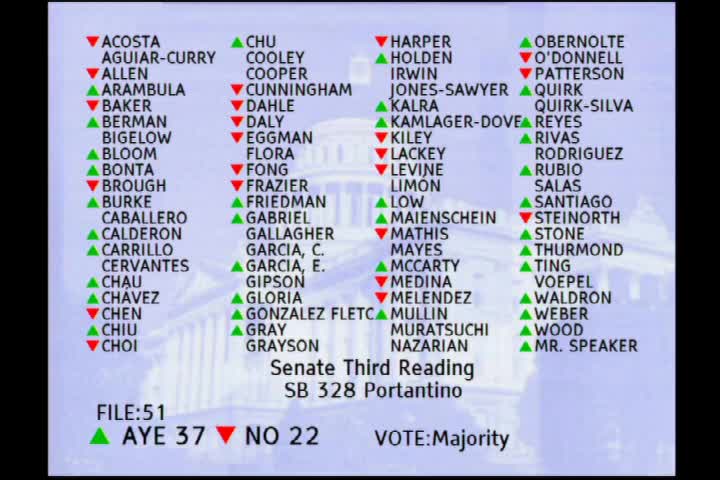 1MIN
Assembly Floor
 8MIN
Assembly Standing Committee on Jobs, Economic Development, and the Economy
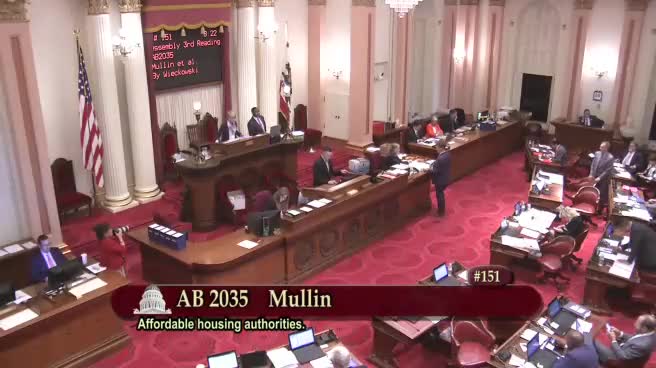 1MIN
Senate Floor
 3MIN
Assembly Floor
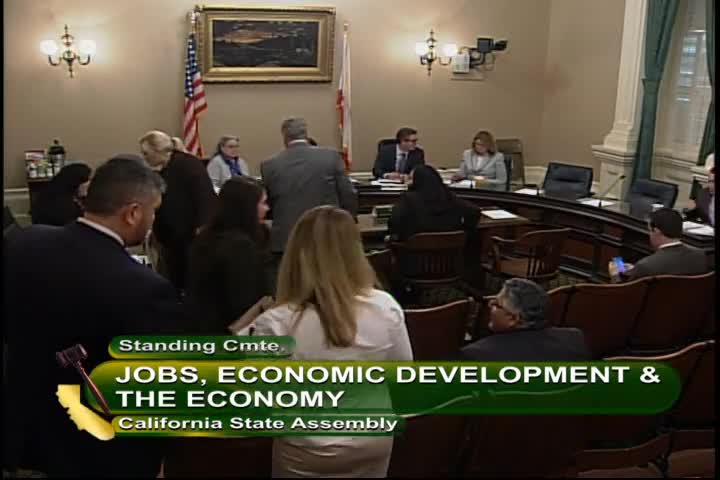 9MIN
Assembly Standing Committee on Jobs, Economic Development, and the Economy


Bill Co-Author(s):