AB 2768: Criminal Threats: schools and places of religious worship.
- Session Year: 2017-2018
- House: Assembly
- Latest Version Date: 2018-04-17
Existing law makes it a crime to willfully threaten to commit a crime that will result in death or great bodily injury to another person, with the specific intent that the statement, made verbally, in writing, or by means of an electronic communication device, is to be taken as a threat, even if there is no intent of actually carrying it out, which, on its face and under the circumstances in which it is made, is so unequivocal, unconditional, immediate, and specific as to convey to the person threatened, a gravity of purpose and an immediate prospect of execution of the threat, and thereby causes that person reasonably to be in sustained fear for his or her own safety or for his or her immediate familys safety.
This bill would make it a crime to willfully threaten to commit a crime that will result in death or great bodily injury to persons at any school or place of religious worship, with the specific intent that the statement, made verbally, in writing, or by means of an electronic communication device, is to be taken as a threat, even if there is no intent of actually carrying it out, which, on its face and under the circumstances in which it is made, is so unequivocal, unconditional, immediate, and specific as to convey a gravity of purpose and an immediate prospect of execution of the threat, and thereby causes the administration administrators of that school or place of religious worship reasonably to be in sustained fear for its their safety or the safety of its their immediate membership. By creating a new crime, this bill would create a state-mandated local program.
The California Constitution requires the state to reimburse local agencies and school districts for certain costs mandated by the state. Statutory provisions establish procedures for making that reimbursement.
This bill would provide that no reimbursement is required by this act for a specified reason.
Existing law makes it a crime to willfully threaten to commit a crime that will result in death or great bodily injury to another person, with the specific intent that the statement, made verbally, in writing, or by means of an electronic communication device, is to be taken as a threat, even if there is no intent of actually carrying it out, which, on its face and under the circumstances in which it is made, is so unequivocal, unconditional, immediate, and specific as to convey to the person threatened, a gravity of purpose and an immediate prospect of execution of the threat, and thereby causes that person reasonably to be in sustained fear for his or her own safety or for his or her immediate familys safety.
This bill would make it a crime to willfully threaten to commit a crime that will result in death or great bodily injury to persons at any school or place of religious worship, with the specific intent that the statement, made verbally, in writing, or by means of an electronic communication device, is to be taken as a threat, even if there is no intent of actually carrying it out, which, on its face and under the circumstances in which it is made, is so unequivocal, unconditional, immediate, and specific as to convey a gravity of purpose and an immediate prospect of execution of the threat, and thereby causes the administration of that school or place of religious worship reasonably to be in sustained fear for its safety or the safety of its immediate membership. By creating a new crime, this bill would create a state-mandated local program.
The California Constitution requires the state to reimburse local agencies and school districts for certain costs mandated by the state. Statutory provisions establish procedures for making that reimbursement.
This bill would provide that no reimbursement is required by this act for a specified reason.
Existing law provides that the common jails in the counties of this state are kept by the sheriffs of the counties in which they are respectively situated and are used for specified purposes, including, among others, for the confinement of persons sentenced to imprisonment in jail upon a conviction for a crime.This bill would state the intent of the Legislature to enact legislation relating to jails.Existing law provides that the common jails in the counties of this state are kept by the sheriffs of the counties in which they are respectively situated and are used for specified purposes, including, among others, for the confinement of persons sentenced to imprisonment in jail upon a conviction for a crime.
This bill would state the intent of the Legislature to enact legislation relating to jails.
(a)Any person who willfully threatens to commit a crime that will result in death or great bodily injury to another person, with the specific intent that the statement, made verbally, in writing, or by means of an electronic communication device, is to be taken as a threat, even if there is no intent of actually carrying it out, which, on its face and under the circumstances in which it is made, is so unequivocal, unconditional, immediate, and specific as to convey to the person threatened, a gravity of purpose and an immediate prospect of execution of the threat, and thereby causes that person reasonably to be in sustained fear for his or her own safety or for his or her immediate familys safety, shall be punished by imprisonment in the county jail not to exceed one year, or by imprisonment in the state prison.
(b)Any person who willfully threatens to commit a crime that will result in death or great bodily injury to persons at any school or place of religious worship, with the specific intent that the statement, made verbally, in writing, or by means of an electronic communication device, is to be taken as a threat, even if there is no intent of actually carrying it out, which, on its face and under the circumstances in which it is made, is so unequivocal, unconditional, immediate, and specific as to convey a gravity of purpose and an immediate prospect of the execution of the threat, and thereby causes the administration administrators of that school or place of religious worship reasonably to be in sustained fear for its their safety or the safety of its their immediate membership, shall be punished by imprisonment in the county jail not to exceed one year, or by imprisonment in the state prison.
(c)For purposes of this section, the following definitions apply:
(1)Administrators of a place of religious worship means the appointed leaders of a structure or space used primarily for religious worship and related religious activity, including, but not limited to, pastors, elders, priests, and rabbis.
(2)Administrators of a school means a principal, chief manager, superintendent, executive director, or highest ranking supervisor of a college, university, school facility, or of any group of these facilities.
(1)(3)Electronic communication device includes, but is not limited to, telephones, cellular telephones, computers, video recorders, fax machines, or pagers. Electronic communication has the same meaning as the term defined in Subsection 12 of Section 2510 of Title 18 of the United States Code.
(2)(4)Immediate family means any spouse, whether by marriage or not, parent, child, any person related by consanguinity or affinity within the second degree, or any other person who regularly resides in the household, or who, within the prior six months, regularly resided in the household.
(3)(5)Immediate membership means any student, school, personnel, or member of the religious organization.
(6)Place of religious worship means a structure or space used primarily for religious worship and related religious activities.
SEC. 2.No reimbursement is required by this act pursuant to Section 6 of Article XIIIB of the California Constitution because the only costs that may be incurred by a local agency or school district will be incurred because this act creates a new crime or infraction, eliminates a crime or infraction, or changes the penalty for a crime or infraction, within the meaning of Section 17556 of the Government Code, or changes the definition of a crime within the meaning of Section 6 of Article XIIIB of the California Constitution.
(a)Any person who willfully threatens to commit a crime which that will result in death or great bodily injury to another person, with the specific intent that the statement, made verbally, in writing, or by means of an electronic communication device, is to be taken as a threat, even if there is no intent of actually carrying it out, which, on its face and under the circumstances in which it is made, is so unequivocal, unconditional, immediate, and specific as to convey to the person threatened, a gravity of purpose and an immediate prospect of execution of the threat, and thereby causes that person reasonably to be in sustained fear for his or her own safety or for his or her immediate familys safety, shall be punished by imprisonment in the county jail not to exceed one year, or by imprisonment in the state prison.
(b)Any person who willfully threatens to commit a crime that will result in death or great bodily injury to persons at any school or place of religious worship, with the specific intent that the statement, made verbally, in writing, or by means of an electronic communication device, is to be taken as a threat, even if there is no intent of actually carrying it out, which, on its face and under the circumstances in which it is made, is so unequivocal, unconditional, immediate, and specific as to convey a gravity of purpose and an immediate prospect of the execution of the threat, and thereby causes the administration of that school or place of religious worship reasonably to be in sustained fear for its safety or the safety of its immediate membership, shall be punished by imprisonment in the county jail not to exceed one year, or by imprisonment in the state prison.
(b)(c)For purposes of this section, the following definitions apply: immediate family means any spouse, whether by marriage or not, parent, child, any person related by consanguinity or affinity within the second degree, or any other person who regularly resides in the household, or who, within the prior six months, regularly resided in the household.
(c)(1)Electronic communication device includes, but is not limited to, telephones, cellular telephones, computers, video recorders, fax machines, or pagers. Electronic communication has the same meaning as the term defined in Subsection 12 of Section 2510 of Title 18 of the United States Code.
(2)Immediate family means any spouse, whether by marriage or not, parent, child, any person related by consanguinity or affinity within the second degree, or any other person who regularly resides in the household, or who, within the prior six months, regularly resided in the household.
(3)Immediate membership means any student, school, personnel, or member of the religious organization.
SEC. 2.No reimbursement is required by this act pursuant to Section 6 of Article XIIIB of the California Constitution because the only costs that may be incurred by a local agency or school district will be incurred because this act creates a new crime or infraction, eliminates a crime or infraction, or changes the penalty for a crime or infraction, within the meaning of Section 17556 of the Government Code, or changes the definition of a crime within the meaning of Section 6 of Article XIIIB of the California Constitution.
SECTION 1.It is the intent of the Legislature to enact legislation relating to jails.It is the intent of the Legislature to enact legislation relating to jails.
|
Date
|
Status
|
|---|---|
| May 25, 2018 | In committee: Held under submission. |
| May 16, 2018 | In committee: Set, first hearing. Referred to APPR. suspense file. |
| Apr 25, 2018 | From committee: Do pass and re-refer to Com. on APPR. (Ayes 4. Noes 0.) (April 24). Re-referred to Com. on APPR. |
| Apr 18, 2018 | Re-referred to Com. on PUB. S. |
| Apr 17, 2018 | In committee: Set, second hearing. Hearing canceled at the request of author. |
| Apr 10, 2018 | In committee: Set, first hearing. Hearing canceled at the request of author. |
| Apr 2, 2018 | Re-referred to Com. on PUB. S. |
| Mar 22, 2018 | Referred to Com. on PUB. S. |
| Feb 17, 2018 | From printer. May be heard in committee March 19. |
| Feb 16, 2018 | Read first time. To print. |
|
Date
|
Description
|
Location
|
Votes
|
|
|---|---|---|---|---|
| Apr 24, 2018 | Do pass and be re-referred to the Committee on [Appropriations] | Assembly Standing Committee on Public Safety |
Passed |
This list shows positions taken on this bill by organizations on the date displayed, which is linked to the original source.
Positions by individuals are not included.
|
Organization
|
Position
|
Date
|
|---|---|---|
| California District Attorney's Association | * Support | Apr 24, 2018 |
| California Public Defender's Association | * Against | Apr 24, 2018 |
| Giffords Law Center to Prevent Gun Violence | * Support | Apr 24, 2018 |
| Herself | * Support | Apr 24, 2018 |
| Los Angeles County Professional Peace Officers Association | ** Support | Apr 23, 2018 |
| Riverside County District Attorney's Office | * Support | Apr 24, 2018 |
Date of Hearing: May 16, 2018
ASSEMBLY COMMITTEE ON APPROPRIATIONS
Lorena Gonzalez Fletcher, Chair
ABPCA Bill Id:AB 2768
Author:(Melendez) – As Amended Ver:April 17, 2018
Policy Committee: | Public Safety | Vote: | 4 - 0 |
|
| ||
|
|
Urgency: No State Mandated Local Program: Yes Reimbursable: No
SUMMARY:
This bill makes it a crime to willfully threaten to commit a crime that will result in death or great bodily injury to persons at any school or place of religious worship, as specified, and thereby causes the administrators of that school or place of religious worship reasonably to be in sustained fear for its safety or the safety of its immediate membership. This bill specifies that this crime is a “wobbler” punishable with imprisonment either in county jail or in state prison.
FISCAL EFFECT:
- Unknown, potentially significant GF costs, possibly in the hundreds of thousands of dollars, for the Department of Corrections and Rehabilitation (CDCR) to incarcerate individuals to the extent that the particularization of the crime of making threats results in additional offenders convicted and sentenced to CDCR. For example, if five offenders are admitted to CDCR annually for one year, assuming the $30,000 out-of-state contract rate, costs will reach $150,000.
- GF costs to the Department of Justice (DOJ) in the low tens of thousands of dollars annually for workload associated with arrest records, fingerprints, crime statistics, and outreach with criminal justice agency stakeholders. Specifically, DOJ reports annual costs of $17,000 in 2018-19 and $23,000 in 2019-20 and ongoing.
COMMENTS:
- Background. Current law makes it a crime for any person to willfully threaten to commit a crime that will result in death or great bodily injury to another person, with the specific intent that the statement, made verbally, in writing, or by means of an electronic communication device, is to be taken as a threat, even if there is no intent of actually carrying it out. Under current law a criminal threat is one that, on its face and under the circumstances in which it is made, is so unequivocal, unconditional, immediate, and specific as to convey to the person threatened a gravity of purpose and an immediate prospect of execution of the threat, and thereby causes that person reasonably to be in sustained fear for the person’s own safety or for the person’s immediate family’s safety. Criminal threats under current law are punishable by imprisonment in the county jail for up to one year, or by imprisonment in the state prison.
- Purpose. According to the author:
If we truly want to prevent these horrific acts of violence then we must be vigilant and proactive on identifying mental illness and people wishing to cause harm. If the signs are there, inaction should not be an option. The price is a matter of life and death.
Analysis Prepared by: Jessica Peters / APPR. / (916) 319-2081
Date of Hearing:
Counsel: David Billingsley
ASSEMBLY COMMITTEE ON PUBLIC SAFETY
Reginald Byron Jones-Sawyer, Sr., Chair
ABPCA Bill Id:AB 2768
Author:(Melendez) – As Amended Ver:April 17, 2018
SUMMARY: Makes it a crime to willfully threaten to commit a crime that will result in death or great bodily injury to persons at any school or place of religious worship, as specified, and thereby causes the administrators of that school or place of religious worship reasonably to be in sustained fear for its safety or the safety of its immediate membership. Specifically, this bill:
- States that any person who willfully threatens to commit a crime that will result in death or great bodily injury to persons at any school or place of religious worship, with the specific intent that the statement, made verbally, in writing, or by means of an electronic communication device, is to be taken as a threat, even if there is no intent of actually carrying it out, which, on its face and under the circumstances in which it is made, is so unequivocal, unconditional, immediate, and specific as to convey a gravity of purpose and an immediate prospect of the execution of the threat, and thereby causes the administration of that school or place of religious worship reasonably to be in sustained fear for its safety or the safety of its immediate membership, shall be punished by imprisonment in the county jail not to exceed one year, or by imprisonment in the state prison.
- Defines “Immediate membership” for purposes of this bill as any student, school personnel, or member of the religious organization.
- Defines “Administrators of a place of religious worship” as “the appointed leaders of a structure or space used primarily for religious worship and related religious activity, including, but not limited to pastors, elders, priests, and rabbis.”
- Defines “Administrators of a school” as “a principal, chief manager, superintendent, executive director, or highest ranking supervisor of a college, university, school facility, or of any group of these facilities.”
- “Place of religious worship” means a structure or space used primarily for religious worship and related religious activities.
EXISTING LAW:
- States that any person who willfully threatens to commit a crime which will result in death or great bodily injury to another person, with the specific intent that the statement, made verbally, in writing, or by means of an electronic communication device, is to be taken as a threat, even if there is no intent of actually carrying it out, which, on its face and under the circumstances in which it is made, is so unequivocal, unconditional, immediate, and specific as to convey to the person threatened, a gravity of purpose and an immediate prospect of execution of the threat, and thereby causes that person reasonably to be in sustained fear for his or her own safety or for his or her immediate family’s safety, shall be punished by imprisonment in the county jail not to exceed one year, or by imprisonment in the state prison. (Pen. Code, § 422.)
- States that any person who knowingly and willingly threatens the life of, or threatens serious bodily harm to, any elected public official, as specified, or the staff or immediate family of any of the specified elected public officials, with the specific intent that the statement is to be taken as a threat, and the apparent ability to carry out that threat by any means, is guilty of a public offense, punishable as either a misdemeanor or felony, as specified. (Pen. Code, § 76.)
- Provides that any person who knowingly threatens to use a weapon of mass destruction with the specific intent that the statement as defined or a statement made by means of an electronic communication device, is to be taken as a threat, even if there is no intent of actually carrying it out, which on its face and under the circumstances in which it is made, is so unequivocal, immediate, and specific as to convey to the person threatened, a gravity of purpose and an immediate prospect of execution of the threat, and thereby causes that person reasonably to be in sustained fear for his or her own safety shall be punished by either a misdemeanor or felony, as specified. (Pen. Code, § 11418.5, subd. (a).)
FISCAL EFFECT: Unknown.
COMMENTS:
- Author's Statement: According to the author, "After 17 people were killed in the Parkland, Florida, school shooting in February, nearly 50 schools reported violent threats that same month in Southern California alone:
- A 16-year-old Hemet High School student was arrested for writing, “Hemet High will be shot up on 2-28-18 by a sophomore girl.” No charges were pressed against her even though parents said their children wouldn’t be attending class because of the threat.
- A 15-year-old Mira Costa High School student (Manhattan Beach) was arrested after he posted a photo of himself pointing a gun at his classmates on Snapchat; no charges were pressed against him.
- A 17-year-old El Camino High School student (Whittier) was arrested after a security guard overheard him telling his friend he was going to “shoot up the school sometime within the next three weeks;” no charges were pressed against him even though they found AR-15 rifles at his house.
- A 16-year-old Hemet High School student was arrested for writing, “Hemet High will be shot up on 2-28-18 by a sophomore girl.” No charges were pressed against her even though parents said their children wouldn’t be attending class because of the threat.
AB 2768 makes it illegal for a person to make violent threats verbally, in writing, or by social media against schools and places of worship.
If we truly want to prevent these horrific acts of violence then we must be vigilant and proactive on identifying mental illness and people wishing to cause harm. If the signs are there, inaction should not be an option. The price is a matter of life and death.
- Elements Required for Criminal Threat Prosecutions: In order to convict a person under the current criminal threat statute, Penal Code section 422, the prosecutor must prove the following:
- that the defendant willfully threatened to commit a crime which will result in death or great bodily injury to another person;
- that the defendant made the threat;
- that the defendant intended that the statement is to be taken as a threat, even if there is no intent of actually carrying it out;
- that the threat was so unequivocal, unconditional, immediate, and specific as to convey to the person threatened, a gravity of purpose and an immediate prospect of execution of the threat;
- that the threat actually caused the person threatened to be in sustained fear for his or her own safety or for his or her immediate family's safety; and
- that the threatened person's fear was reasonable under the circumstances. (Pen. Code, § 422; CALCRIM No. 1300.)
The language in the current criminal threats statute was carefully crafted to avoid constitutional issues. In People v. Mirmirani, supra, 30 Cal. 3d 375, the California Supreme Court held that the former Penal Code section 422 was void for vagueness in violation of the due process clause of the California constitution. The Court's opinion noted that the federal circuit court decision in United States v. Kelner, supra, 534 F.2d 1020, held that a "threat can be penalized only if, 'the threat ' 'on its face and in the circumstances in which it is made . . . is so unequivocal, unconditional, immediate and specific as to the person threatened, as to convey a gravity of purpose and imminent prospect of execution . . . .'" (People v. Mirmirani, supra, 30 Cal. 3d at p. 388, fn. 10, quoting United States v. Kelner, supra, 534 F.2d at p. 1027; see also People v. Toledo (2001) 26 Cal. 4th 221.)
Following the Court's decision in People v. Mirmirani, the California Legislature repealed Penal Code section 422 and replaced it with a new criminal threats statute adopting the specific language referenced in the case in order to limit the type of threat covered by the statute.
Penal Code section 422 applies to all criminal threats which will result in death or great bodily injury regardless of location or the exact type of violence that is threatened. Existing law includes and covers threats involving death or bodily injury at schools and places of worship. The examples provided in the author’s statement would all fall within the scope of the existing criminal threats statute, as long as the elements that establish a criminal threat were present.
- First Amendment: Restrictions on Threatening Speech: The First Amendment to the United States Constitution states: "Congress shall make no law . . . abridging the freedom of speech . . . ." This fundamental right is applicable to the states through the due process clause of the Fourteenth Amendment. (Aguilar v. Avis Rent A Car System, Inc. (1999) 21 Cal. 4th 121, 133-134, citing Gitlow v. People of New York (1925) 268 U.S. 652, 666.) Article I, section 2, subdivision (a) of the California Constitution provides that: "Every person may freely speak, write and publish his or her sentiments on all subjects, being responsible for the abuse of this right. A law may not restrain or abridge liberty of speech or press."
While these guarantees are stated in broad terms, "the right to free speech is not absolute." (Aguilar v. Avis Rent A Car System, Inc., supra, 21 Cal. 4th at p. 134, citing Near v. Minnesota (1931) 283 U.S. 697, 708; and Stromberg v. California (1931) 283 U.S. 359.) As the United States Supreme Court has acknowledged: "Many crimes can consist solely of spoken words, such as soliciting a bribe (Pen. Code, § 653f), perjury (Pen. Code, § 118), or making a terrorist threat (Pen. Code, § 422)." In In re M.S. (1995) 10 Cal. 4th 698, 710, the court held that "the state may penalize threats, even those consisting of pure speech, provided the relevant statute singles out for punishment threats falling outside the scope of First Amendment protection." Nonetheless, statutes criminalizing threats must be narrowly directed against only those threats that truly pose a danger to society. (People v. Mirmirani (1981) 30 Cal. 3d 375, 388, fn. 10.)
The First Amendment permits states to ban a true threat. (Watts v. United States (1969) 394 U.S. 705, 708.) Consistent with these principles, the high court has made clear that any statute that “makes criminal a form of pure speech … must be interpreted with the commands of the First Amendment clearly in mind.” (Watts v. United States (1969), 394 U.S. 705, 707.)
The California’s current criminal threats statute was constructed to comply with constitutional requirements. - SB 110 (Fuller), of the 2015-2016 Legislative Session and SB 456 (Block), of the 2015-2016 Legislative Session Were Vetoed by the Governor: SB 110 (Fuller), would have made it an alternate felony-misdemeanor offense for any person to willfully threaten unlawful violence that will result in death or great bodily injury to occur on the grounds of a school, as defined, where the threat creates a disruption at the school. SB 110 was vetoed by the Governor.
SB 456 (Block), would have provided that any person who threatens to discharge a firearm on the campus of a school, as defined, or location where a school-sponsored event is or will be taking place, is guilty of an alternate felony-misdemeanor. SB 456 was vetoed by the Governor.
The Governor returned the following veto message as to both bills:
No one could be anything but intolerant of threats to cause great bodily injury, especially on school grounds. Certainly not legislators, who voted nearly unanimously for this bill.
While I'm sympathetic and utterly committed to ensuring maximum safety for California's school children, the offensive conduct covered by this bill is already illegal.
In recent decades, California has created an unprecedented number of new and detailed criminal laws. Before we keep enacting more, I think we should pause and reflect on the fact that our bulging criminal code now contains in excess of 5,000 separate provisions, covering almost every conceivable form of human misbehavior.
- Threats At Schools: An example illustrating the existing law's application to threats of violence on school grounds made by means of an electronic act, such as social media, can be found in an appellate court's recent ruling. (In re L.F. (June 3, 2015, A142296) [nonpub. opn.]; Egelko, Smiling Emojis Aside, Student's Threats Were Serious, Court Says, San Francisco Chronicle, (June 4, 2015) <http://www.sfgate.com/crime/article/Smiling-emojis-aside-student-s-threats-were-6307626.php> [as of June 8, 2015].) The adjudged minor was a Fairfield High School student who posted on her Twitter account that she planned to bring a gun to school and shoot people. While she did note specified areas of the school and one of the campus monitors by name in some of her posts, her Tweets were generally targeted at all of the students and staff at the school. The petition filed against the minor alleged that the minor had made criminal threats against "Fairfield High School students and staff" instead of listing specific persons. (Id. at p. 4.) The appellate court affirmed the juvenile court's ruling that the minor had violated the existing criminal threats statute, and found that the minor intended her comments to be taken as threats, even though she contended that she was only joking. (In re L.F., supra, A142296. at p. 8.)
- Threats Communicated to Third Parties Are Sufficient to Meet the Standard of Criminal Threats if They Are Communicated to the Victim: In the case of In re David L., 234 Cal. App. 3d 1655, 1657, the court held that the crime of criminal threats was committed when the threat was communicated by the threatener to a third party and by him conveyed to the victim, just as when the threat is communicated by the threatener personally to the victim. The extent that the threat is made to the administration of a school or religious organization, that otherwise meets the elements required for criminal threats, if the threat (1) pertains to conduct that will not result in death or great bodily injury for the administrator, but (2) will result in death or great bodily injury for the “immediate membership” of the school or religious organization, it is still constitutes a criminal threat under current law if anyone in the immediate membership becomes aware of the threat and is reasonably placed in sustained fear because of the threat. If the administrator is reasonably placed in sustained fear for their personal safety as a result of the threat, they would also qualify as a victim of the criminal threat.
Nor is it required the person that made the threat, know that the threat has been received by the person or persons threatened with death or great bodily injury. “If one broadcasts a threat intending to induce sustained fear, section 422(criminal threats) is violated if the threat is received and induces sustained fear--whether or not the threatener knows his threat has hit its mark.” - Attempted Criminal Threats: The crime of attempted criminal threat encompasses situations where a defendant intends to commit a criminal threat “but is thwarted from completing the crime by some fortuity or unanticipated event.” ( People v. Toledo (2001) 26 Cal.4th 221.) “For example, if a defendant takes all steps necessary to perpetrate the completed crime of criminal threat by means of a written threat, but the crime is not completed only because the written threat is intercepted before delivery to the threatened person, the defendant properly may be found guilty of attempted criminal threat. Similarly, if a defendant, with the requisite intent, orally makes a sufficient threat directly to the threatened person, but for some reason the threatened person does not understand the threat, an attempted criminal threat also would occur. Further, if a defendant, again acting with the requisite intent, makes a sufficient threat that is received and understood by the threatened person, but, for whatever reason, the threat does not actually cause the threatened person to be in sustained fear for his or her safety even though, under the circumstances, that person reasonably could have been placed in such fear, the defendant properly may be found to have committed the offense of attempted criminal threat.” (Id. at p. 231.) In such situations, “imposing criminal liability upon the defendant for attempted criminal threat in no way will undermine the legislative purpose of prohibiting threats of the specific nature and severity of those identified in section 422.” (Id. at p. 232.)
To the extent that threats of death or great bodily injury are being directed at schools or places of religious worship, existing law provides latitude to prosecute such cases. - Argument in Opposition: According to the California Public Defenders Association, “The current statute regarding criminal threats, Penal Code Section 422, is one of great concern for Public Defenders across the state. It is a statute that is often misused to penalize conduct that does not truly belong in the criminal justice system. This is particularly true for our clients with mental health conditions, who often suffer from crippling paranoia and delusions. The fear these clients experience can lead them to say things that are easily misinterpreted or are simply a product of their illness.
“Penal Code Section 422 is a statute that requires only words – no actions in furtherance of the threat – and it applies even if the person who is saying the words has ‘no intent to actually carrying it out.’ Further expanding this already expansive definition will, we fear, only ensnare more people with mental health conditions in the criminal justice system. We are certainly sympathetic to the intent behind this bill, but expansion of Penal Code Section 422 is not the answer, and it will end up creating more harm than it prevent.” - Prior Legislation:
- SB 110 (Fuller), would have made it an alternate felony-misdemeanor offense for any person to willfully threaten unlawful violence that will result in death or great bodily injury to occur on the grounds of a school, as defined, where the threat creates a disruption at the school. SB 110 was vetoed by the Governor.
- SB 456 (Block), would have specified that any person who threatens to discharge a firearm on the campus of a school, as defined, or location where a school-sponsored event is or will be taking place, is guilty of an alternate felony-misdemeanor. SB 456 was vetoed by the Governor.
- AB 2355 (Aghazarian), of the 2007-2008 Legislative Session, would have removed the requirement that a threat made against a public official must cause the person who is the target of the threat to reasonably fear for his or her safety or the safety of his or her immediate family. AB 2355 was held on the Assembly Appropriations Committee’s Suspense File.
- AB 140 (Hertzberg), Chapter 563, Statutes of 1999, among other provisions related to terrorism, made it a crime for any person to knowingly threaten to use a weapon of mass destruction, as specified, and resulting in an isolation, quarantine, or decontamination effort.
- SB 110 (Fuller), would have made it an alternate felony-misdemeanor offense for any person to willfully threaten unlawful violence that will result in death or great bodily injury to occur on the grounds of a school, as defined, where the threat creates a disruption at the school. SB 110 was vetoed by the Governor.
REGISTERED SUPPORT / OPPOSITION:
Support
California District Attorneys Association
Los Angeles County Professional Peace Officers Association
Opposition
California Public Defenders Association
Analysis Prepared by:
David Billingsley / PUB. S. / (916) 319-3744
Discussed in Hearing
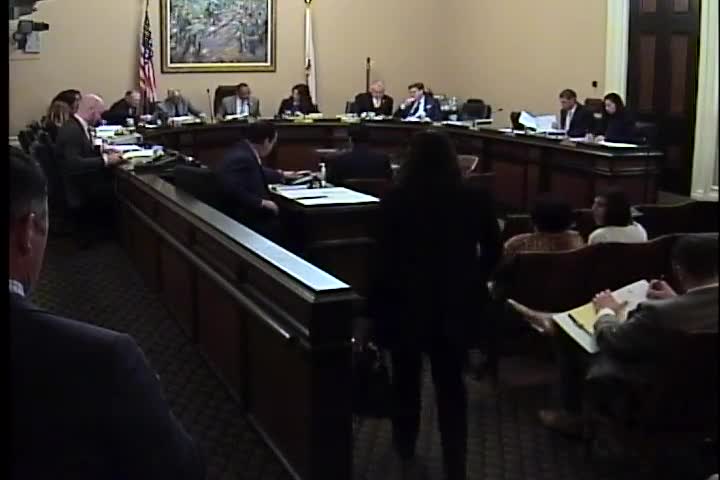 23MIN
Assembly Standing Committee on Public Safety
Bill Author

Bill Co-Author(s):