AB 2783: Controlled substances: hydrocodone combination products: schedules.
- Session Year: 2017-2018
- House: Assembly
- Latest Version Date: 2018-09-20
Existing law, the California Uniform Controlled Substances Act, classifies controlled substances into 5 designated schedules, with the most restrictive limitations generally placed on controlled substances classified in Schedule I, and the least restrictive limitations generally placed on controlled substances classified in Schedule V. Existing law classifies hydrocodone as a Schedule II controlled substance. Existing law classifies specified compounds, including some hydrocodone compounds, as Schedule III controlled substances. Existing law imposes stringent prescription requirements on drugs classified as Schedule II, including a limitation on refills, the violation of which are crimes.
This bill would reclassify specified hydrocodone combination products as Schedule II controlled substances. By expanding the scope of the existing crimes that apply to Schedule II controlled substances, this bill would impose a state-mandated local program.
This bill would incorporate additional changes to Section 11056 of the Health and Safety Code proposed by AB 2589 to be operative only if this bill and AB 2589 are enacted and this bill is enacted last.
The California Constitution requires the state to reimburse local agencies and school districts for certain costs mandated by the state. Statutory provisions establish procedures for making that reimbursement.
This bill would provide that no reimbursement is required by this act for a specified reason.
Existing law, the California Uniform Controlled Substances Act, classifies controlled substances into 5 designated schedules, with the most restrictive limitations generally placed on controlled substances classified in Schedule I, and the least restrictive limitations generally placed on controlled substances classified in Schedule V. Existing law classifies hydrocodone as a Schedule II controlled substance. Existing law classifies specified compounds, including some hydrocodone compounds, as Schedule III controlled substances. Existing law imposes stringent prescription requirements on drugs classified as Schedule II, including a limitation on refills, the violation of which are crimes.
Existing federal law classifies controlled substances into 5 designated schedules, similar to the state schedules. Federal law authorizes updates of the substances on the federal schedules administratively by the federal Drug Enforcement Agency.Existing law creates various crimes based on the schedule on which a controlled substance is placed, including prohibiting possession, transportation, and sale of a Schedule III, IV, or V controlled substance without a prescription. This bill would define controlled substances for the purposes of California law as any of the substances listed on the California and federal schedules, including substances that have been added to the federal schedules in regulations. The bill would provide that when the state and federal controlled substances schedules conflict, the schedule that is more closely regulated shall control. By expanding the definition of a crime, this bill would impose a state-mandated local program.The California Constitution requires the state to reimburse local agencies and school districts for certain costs mandated by the state. Statutory provisions establish procedures for making that reimbursement.This bill would provide that no reimbursement is required by this act for a specified reason.This bill would reclassify specified hydrocodone combination products as Schedule II controlled substances. By expanding the scope of the existing crimes that apply to Schedule II controlled substances, this bill would impose a state-mandated local program.
The California Constitution requires the state to reimburse local agencies and school districts for certain costs mandated by the state. Statutory provisions establish procedures for making that reimbursement.
This bill would provide that no reimbursement is required by this act for a specified reason.
Existing law, the California Uniform Controlled Substances Act, classifies controlled substances into 5 designated schedules, with the most restrictive limitations generally placed on controlled substances classified in Schedule I, and the least restrictive limitations generally placed on controlled substances classified in Schedule V.
Existing federal law classifies controlled substances into 5 designated schedules, similar to the state schedules. Federal law authorizes updates of the substances on the federal schedules administratively by the federal Drug Enforcement Agency.
Existing law creates various crimes based on the schedule on which a controlled substance is placed, including prohibiting possession, transportation, and sale of a Schedule III, IV, or V controlled substance without a prescription.
This bill would declare the intent of the Legislature to enact legislation to resolve discrepancies between Californias controlled substance schedules and the corresponding federal controlled substance schedules, as specified. define controlled substances for the purposes of California law as any of the substances listed on the California and federal schedules, including substances that have been added to the federal schedules in regulations. The bill would provide that when the state and federal controlled substances schedules conflict, the schedule that is more closely regulated shall control. By expanding the definition of a crime, this bill would impose a state-mandated local program.
The California Constitution requires the state to reimburse local agencies and school districts for certain costs mandated by the state. Statutory provisions establish procedures for making that reimbursement.
This bill would provide that no reimbursement is required by this act for a specified reason.
Existing law, the California Uniform Controlled Substances Act, classifies controlled substances into 5 designated schedules, with the most restrictive limitations generally placed on controlled substances classified in Schedule I, and the least restrictive limitations generally placed on controlled substances classified in Schedule V.
This bill would declare the intent of the Legislature to enact legislation to resolve discrepancies between Californias controlled substance schedules and the corresponding federal controlled substance schedules, as specified.
(a)The controlled substances listed in this section are included in Schedule II.
(b)Any of the following substances, except those narcotic drugs listed in other schedules, whether produced directly or indirectly by extraction from substances of vegetable origin, or independently by means of chemical synthesis, or by combination of extraction and chemical synthesis:
(1)Opium, opiate, and any salt, compound, derivative, or preparation of opium or opiate, with the exception of naloxone hydrochloride (N-allyl-14-hydroxy-nordihydromorphinone hydrochloride), but including the following:
(A)Raw opium.
(B)Opium extracts.
(C)Opium fluid extracts.
(D)Powdered opium.
(E)Granulated opium.
(F)Tincture of opium.
(G)Codeine.
(H)Ethylmorphine.
(I)(i)Hydrocodone.
(ii)Hydrocodone combination products with not more than 300 milligrams of dihydrocodeinone per 100 milliliters or not more than 15 milligrams per dosage unit, with one or more active nonnarcotic ingredients in recognized therapeutic amounts.
(iii)Oral liquid preparations of dihydrocodeinone containing the above specified amounts that contain, as its nonnarcotic ingredients, two or more antihistamines in combination with each other.
(iv)Hydrocodone combination products with not more than 300 milligrams of dihydrocodeinone per 100 milliliters or not more than 15 milligrams per dosage unit, with a fourfold or greater quantity of an isoquinoline alkaloid of opium.
(J)Hydromorphone.
(K)Metopon.
(L)Morphine.
(M)Oxycodone.
(N)Oxymorphone.
(O)Thebaine.
(2)Any salt, compound, isomer, or derivative, whether natural or synthetic, of the substances referred to in paragraph (1), but not including the isoquinoline alkaloids of opium.
(3)Opium poppy and poppy straw.
(4)Coca leaves and any salt, compound, derivative, or preparation of coca leaves, but not including decocainized coca leaves or extractions which do not contain cocaine or ecgonine.
(5)Concentrate of poppy straw (the crude extract of poppy straw in either liquid, solid, or powder form which contains the phenanthrene alkaloids of the opium poppy).
(6)Cocaine, except as specified in Section 11054.
(7)Ecgonine, whether natural or synthetic, or any salt, isomer, derivative, or preparation thereof.
(c)Opiates. Unless specifically excepted or unless in another schedule, any of the following opiates, including its isomers, esters, ethers, salts, and salts of isomers, esters, and ethers whenever the existence of those isomers, esters, ethers, and salts is possible within the specific chemical designation, dextrorphan and levopropoxyphene excepted:
(1)Alfentanyl.
(2)Alphaprodine.
(3)Anileridine.
(4)Bezitramide.
(5)Bulk dextropropoxyphene (nondosage forms).
(6)Dihydrocodeine.
(7)Diphenoxylate.
(8)Fentanyl.
(9)Isomethadone.
(10)Levoalphacetylmethadol, also known as levo-alpha-acetylmethadol, levomethadyl acetate, or LAAM. This substance is authorized for the treatment of narcotic addicts under federal law (see Part 291 (commencing with Section 291.501) and Part 1308 (commencing with Section 1308.01) of Title 21 of the Code of Federal Regulations).
(11)Levomethorphan.
(12)Levorphanol.
(13)Metazocine.
(14)Methadone.
(15)Methadone-Intermediate, 4-cyano-2-dimethylamino-4,
4-diphenyl butane.
(16)Moramide-Intermediate, 2-methyl-3-morpholino-1,
1-diphenylpropane-carboxylic acid.
(17)Pethidine (meperidine).
(18)Pethidine-Intermediate-A,
4-cyano-1-methyl-4-phenylpiperidine.
(19)Pethidine-Intermediate-B,
ethyl-4-phenylpiperidine-4-carboxylate.
(20)Pethidine-Intermediate-C,
1-methyl-4-phenylpiperidine-4-carboxylic acid.
(21)Phenazocine.
(22)Piminodine.
(23)Racemethorphan.
(24)Racemorphan.
(25)Sufentanyl.
(d)Stimulants. Unless specifically excepted or unless listed in another schedule, any material, compound, mixture, or preparation which contains any quantity of the following substances having a stimulant effect on the central nervous system:
(1)Amphetamine, its salts, optical isomers, and salts of its optical isomers.
(2)Methamphetamine, its salts, isomers, and salts of its isomers.
(3)Dimethylamphetamine (N,N-dimethylamphetamine), its salts, isomers, and salts of its isomers.
(4)N-Ethylmethamphetamine (N-ethyl, N-methylamphetamine), its salts, isomers, and salts of its isomers.
(5)Phenmetrazine and its salts.
(6)Methylphenidate.
(7)Khat, which includes all parts of the plant classified botanically as Catha Edulis, whether growing or not, the seeds thereof, any extract from any part of the plant, and every compound, manufacture, salt, derivative, mixture, or preparation of the plant, its seeds, or extracts.
(8)Cathinone (also known as alpha-aminopropiophenone, 2-aminopropiophenone, and norephedrone).
(e)Depressants. Unless specifically excepted or unless listed in another schedule, any material, compound, mixture, or preparation which contains any quantity of the following substances having a depressant effect on the central nervous system, including its salts, isomers, and salts of isomers whenever the existence of those salts, isomers, and salts of isomers is possible within the specific chemical designation:
(1)Amobarbital.
(2)Pentobarbital.
(3)Phencyclidines, including the following:
(A)1-(1-phenylcyclohexyl) piperidine (PCP).
(B)1-(1-phenylcyclohexyl) morpholine (PCM).
(C)Any analog of phencyclidine which is added by the Attorney General by regulation pursuant to this paragraph.
The Attorney General, or his or her designee, may, by rule or regulation, add additional analogs of phencyclidine to those enumerated in this paragraph after notice, posting, and hearing pursuant to Chapter 3.5 (commencing with Section 11340) of Part 1 of Division 3 of Title 2 of the Government Code. The Attorney General shall, in the calendar year of the regular session of the Legislature in which the rule or regulation is adopted, submit a draft of a proposed bill to each house of the Legislature which would incorporate the analogs into this code. No rule or regulation shall remain in effect beyond January 1 after the calendar year of the regular session in which the draft of the proposed bill is submitted to each house. However, if the draft of the proposed bill is submitted during a recess of the Legislature exceeding 45 calendar days, the rule or regulation shall be effective until January 1 after the next calendar year.
(4)Secobarbital.
(5)Glutethimide.
(f)Immediate precursors. Unless specifically excepted or unless listed in another schedule, any material, compound, mixture, or preparation which contains any quantity of the following substances:
(1)Immediate precursor to amphetamine and methamphetamine:
(A)Phenylacetone. Some trade or other names: phenyl-2 propanone; P2P; benzyl methyl ketone; methyl benzyl ketone.
(2)Immediate precursors to phencyclidine (PCP):
(A)1-phenylcyclohexylamine.
(B)1-piperidinocyclohexane carbonitrile (PCC).
SEC. 2.Section 11056 of the Health and Safety Code is amended to read:11056.(a) The controlled substances listed in this section are included in Schedule III.
(b) Stimulants. Unless specifically excepted or unless listed in another schedule, any material, compound, mixture, or preparation which contains any quantity of the following substances having a stimulant effect on the central nervous system, including its salts, isomers (whether optical, position, or geometric), and salts of those isomers whenever the existence of those salts, isomers, and salts of isomers is possible within the specific chemical designation:
(1) Those compounds, mixtures, or preparations in dosage unit form containing any stimulant substances listed in Schedule II which compounds, mixtures, or preparations were listed on August 25, 1971, as excepted compounds under Section 1308.32 of Title 21 of the Code of Federal Regulations, and any other drug of the quantitative composition shown in that list for those drugs or which is the same except that it contains a lesser quantity of controlled substances.
(2) Benzphetamine.
(3) Chlorphentermine.
(4) Clortermine.
(5) Mazindol.
(6) Phendimetrazine.
(c) Depressants. Unless specifically excepted or unless listed in another schedule, any material, compound, mixture, or preparation which contains any quantity of the following substances having a depressant effect on the central nervous system:
(1) Any compound, mixture, or preparation containing any of the following:
(A) Amobarbital
(B) Secobarbital
(C) Pentobarbital
or any salt thereof and one or more other active medicinal ingredients which are not listed in any schedule.
(2) Any suppository dosage form containing any of the following:
(A) Amobarbital
(B) Secobarbital
(C) Pentobarbital
or any salt of any of these drugs and approved by the federal Food and Drug Administration for marketing only as a suppository.
(3) Any substance which contains any quantity of a derivative of barbituric acid or any salt thereof.
(4) Chlorhexadol.
(5) Lysergic acid.
(6) Lysergic acid amide.
(7) Methyprylon.
(8) Sulfondiethylmethane.
(9) Sulfonethylmethane.
(10) Sulfonmethane.
(11) Gamma hydroxybutyric acid, and its salts, isomers and salts of isomers, contained in a drug product for which an application has been approved under Section 505 of the Federal Food, Drug, and Cosmetic Act (21 U.S.C. Sec. 355).
(d) Nalorphine.
(e) Narcotic drugs. Unless specifically excepted or unless listed in another schedule, any material, compound, mixture, or preparation containing any of the following narcotic drugs, or their salts calculated as the free anhydrous base or alkaloid, in limited quantities as set forth below:
(1) Not more than 1.8 grams of codeine per 100 milliliters or not more than 90 milligrams per dosage unit, with an equal or greater quantity of an isoquinoline alkaloid of opium.
(2) Not more than 1.8 grams of codeine per 100 milliliters or not more than 90 milligrams per dosage unit, with one or more active, nonnarcotic ingredients in recognized therapeutic amounts.
(3) Not more than 1.8 grams of dihydrocodeine per 100 milliliters or not more than 90 milligrams per dosage unit, with one or more active nonnarcotic ingredients in recognized therapeutic amounts.
(4) Not more than 300 milligrams of ethylmorphine per 100 milliliters or not more than 15 milligrams per dosage unit, with one or more active, nonnarcotic ingredients in recognized therapeutic amounts.
(5) Not more than 500 milligrams of opium per 100 milliliters or per 100 grams or not more than 25 milligrams per dosage unit, with one or more active, nonnarcotic ingredients in recognized therapeutic amounts.
(6) Not more than 50 milligrams of morphine per 100 milliliters or per 100 grams, with one or more active, nonnarcotic ingredients in recognized therapeutic amounts.
(f) Anabolic steroids and chorionic gonadotropin. Any material, compound, mixture, or preparation containing chorionic gonadotropin or an anabolic steroid (excluding anabolic steroid products listed in the Table of Exempt Anabolic Steroid Products (Section 1308.34 of Title 21 of the Code of Federal Regulations), as exempt from the federal Controlled Substances Act (Section 801 and following of Title 21 of the United States Code)), including, but not limited to, the following:
(1) Androisoxazole.
(2) Androstenediol.
(3) Bolandiol.
(4) Bolasterone.
(5) Boldenone.
(6) Chlormethandienone.
(7) Clostebol.
(8) Dihydromesterone.
(9) Ethylestrenol.
(10) Fluoxymesterone.
(11) Formyldienolone.
(12) 4-Hydroxy-19-nortestosterone.
(13) Mesterolone.
(14) Methandriol.
(15) Methandrostenolone.
(16) Methenolone.
(17) 17-Methyltestosterone.
(18) Methyltrienolone.
(19) Nandrolone.
(20) Norbolethone.
(21) Norethandrolone.
(22) Normethandrolone.
(23) Oxandrolone.
(24) Oxymestrone.
(25) Oxymetholone.
(26) Quinbolone.
(27) Stanolone.
(28) Stanozolol.
(29) Stenbolone.
(30) Testosterone.
(31) Trenbolone.
(32) Chorionic Gonadotropin (HGC).
(g) Ketamine. Any material, compound, mixture, or preparation containing ketamine.
(h) Hallucinogenic substances. Any of the following hallucinogenic substances: dronabinol (synthetic) in sesame oil and encapsulated in a soft gelatin capsule in a drug product approved by the federal Food and Drug Administration.
SEC. 2.5.Section 11056 of the Health and Safety Code is amended to read:11056.(a) The controlled substances listed in this section are included in Schedule III.
(b) Stimulants. Unless specifically excepted or unless listed in another schedule, any material, compound, mixture, or preparation that contains any quantity of the following substances having a stimulant effect on the central nervous system, including its salts, isomers (whether optical, position, or geometric), and salts of those isomers whenever the existence of those salts, isomers, and salts of isomers is possible within the specific chemical designation:
(1) Those compounds, mixtures, or preparations in dosage unit form containing any stimulant substances listed in Schedule II which compounds, mixtures, or preparations were listed on August 25, 1971, as excepted compounds under Section 1308.32 of Title 21 of the Code of Federal Regulations, and any other drug of the quantitative composition shown in that list for those drugs or that is the same except that it contains a lesser quantity of controlled substances.
(2) Benzphetamine.
(3) Chlorphentermine.
(4) Clortermine.
(5) Mazindol.
(6) Phendimetrazine.
(c) Depressants. Unless specifically excepted or unless listed in another schedule, any material, compound, mixture, or preparation that contains any quantity of the following substances having a depressant effect on the central nervous system:
(1) Any compound, mixture, or preparation containing any of the following:
(A) Amobarbital
(B) Secobarbital
(C) Pentobarbital
or any salt thereof and one or more other active medicinal ingredients
that are not listed in any schedule.
(2) Any suppository dosage form containing any of the following:
(A) Amobarbital
(B) Secobarbital
(C) Pentobarbital
or any salt of any of these drugs and approved by the federal Food and Drug Administration for marketing only as a suppository.
(3) Any substance that contains any quantity of a derivative of barbituric acid or any salt thereof.
(4) Chlorhexadol.
(5) Lysergic acid.
(6) Lysergic acid amide.
(7) Methyprylon.
(8) Sulfondiethylmethane.
(9) Sulfonethylmethane.
(10) Sulfonmethane.
(11) Gamma hydroxybutyric acid, and its salts, isomers and salts of isomers, contained in a drug product for which an application has been approved under Section 505 of the Federal Food, Drug, and Cosmetic Act (21 U.S.C. Sec. 355).
(d) Nalorphine.
(e) Narcotic drugs. Unless specifically excepted or unless listed in another schedule, any material, compound, mixture, or preparation containing any of the following narcotic drugs, or their salts calculated as the free anhydrous base or alkaloid, in limited quantities as set forth below:
(1) Not more than 1.8 grams of codeine per 100 milliliters or not more than 90 milligrams per dosage unit, with an equal or greater quantity of an isoquinoline alkaloid of opium.
(2) Not more than 1.8 grams of codeine per 100 milliliters or not more than 90 milligrams per dosage unit, with one or more active, nonnarcotic ingredients in recognized therapeutic amounts.
(3)Not more than 1.8 grams of dihydrocodeine per 100 milliliters or not more than 90 milligrams per dosage unit, with one or more active nonnarcotic ingredients in recognized therapeutic amounts.
(4)Not more than 300 milligrams of ethylmorphine per 100 milliliters or not more than 15 milligrams per dosage unit, with one or more active, nonnarcotic ingredients in recognized therapeutic amounts.
(5)Not more than 500 milligrams of opium per 100 milliliters or per 100 grams or not more than 25 milligrams per dosage unit, with one or more active, nonnarcotic ingredients in recognized therapeutic amounts.
(6)Not more than 50 milligrams of morphine per 100 milliliters or per 100 grams, with one or more active, nonnarcotic ingredients in recognized therapeutic amounts.
(f) Anabolic steroids and chorionic gonadotropin. Any material, compound, mixture, or preparation containing chorionic gonadotropin or an anabolic steroid (excluding anabolic steroid products listed in the Table of Exempt Anabolic Steroid Products (Section 1308.34 of Title 21 of the Code of Federal Regulations), as exempt from the federal Controlled Substances Act (Section 801 and following of Title 21 of the United States Code)), including, but not limited to, the following:
(1) Androisoxazole.
(2) Androstenediol.
(3) Bolandiol.
(4) Bolasterone.
(5) Boldenone.
(6) Chlormethandienone.
(7) Clostebol.
(8) Dihydromesterone.
(9) Ethylestrenol.
(10) Fluoxymesterone.
(11) Formyldienolone.
(12) 4-Hydroxy-19-nortestosterone.
(13) Mesterolone.
(14) Methandriol.
(15) Methandrostenolone.
(16) Methenolone.
(17) 17-Methyltestosterone.
(18) Methyltrienolone.
(19) Nandrolone.
(20) Norbolethone.
(21) Norethandrolone.
(22) Normethandrolone.
(23) Oxandrolone.
(24) Oxymestrone.
(25) Oxymetholone.
(26) Quinbolone.
(27) Stanolone.
(28) Stanozolol.
(29) Stenbolone.
(30) Testosterone.
(31) Trenbolone.
(32)Human clorionic gonadotropin (hCG), except when possessed by, sold to, purchased by, transferred to, or administered by a licensed veterinarian, or a licensed veterinarians designated agent, exclusively for veterinary use.
(g) Ketamine. Any material, compound, mixture, or preparation containing ketamine.
(h) Hallucinogenic substances. Any of the following hallucinogenic substances: dronabinol (synthetic) in sesame oil and encapsulated in a soft gelatin capsule in a drug product approved by the federal Food and Drug Administration.
SEC. 3.Section 2.5 of this bill incorporates amendments to Section 11056 of the Health and Safety Code proposed by both this bill and Assembly Bill 2589. That section shall only become operative if (1) both bills are enacted and become effective on or before January 1, 2019, (2) each bill amends Section 11056 of the Health and Safety Code, and (3) this bill is enacted after Assembly Bill 2589, in which case Section 2 of this bill shall not become operative.
SEC. 4.No reimbursement is required by this act pursuant to Section 6 of Article XIIIB of the California Constitution because the only costs that may be incurred by a local agency or school district will be incurred because this act creates a new crime or infraction, eliminates a crime or infraction, or changes the penalty for a crime or infraction, within the meaning of Section 17556 of the Government Code, or changes the definition of a crime within the meaning of Section 6 of Article XIIIB of the California Constitution.
(a)The controlled substances listed in this section are included in Schedule II.
(b)Any of the following substances, except those narcotic drugs listed in other schedules, whether produced directly or indirectly by extraction from substances of vegetable origin, or independently by means of chemical synthesis, or by combination of extraction and chemical synthesis:
(1)Opium, opiate, and any salt, compound, derivative, or preparation of opium or opiate, with the exception of naloxone hydrochloride (N-allyl-14-hydroxy-nordihydromorphinone hydrochloride), but including the following:
(A)Raw opium.
(B)Opium extracts.
(C)Opium fluid extracts.
(D)Powdered opium.
(E)Granulated opium.
(F)Tincture of opium.
(G)Codeine.
(H)Ethylmorphine.
(I)(i)Hydrocodone.
(ii)Hydrocodone combination products with not more than 300 milligrams of dihydrocodeinone per 100 milliliters or not more than 15 milligrams per dosage unit, with one or more active nonnarcotic ingredients in recognized therapeutic amounts.
(iii)Oral liquid preparations of dihydrocodeinone containing the above specified amounts that contain, as its nonnarcotic ingredients, two or more antihistamines in combination with each other.
(iv)Hydrocodone combination products with not more than 300 milligrams of dihydrocodeinone per 100 milliliters or not more than 15 milligrams per dosage unit, with a fourfold or greater quantity of an isoquinoline alkaloid of opium.
(J)Hydromorphone.
(K)Metopon.
(L)Morphine.
(M)Oxycodone.
(N)Oxymorphone.
(O)Thebaine.
(2)Any salt, compound, isomer, or derivative, whether natural or synthetic, of the substances referred to in paragraph (1), but not including the isoquinoline alkaloids of opium.
(3)Opium poppy and poppy straw.
(4)Coca leaves and any salt, compound, derivative, or preparation of coca leaves, but not including decocainized coca leaves or extractions which do not contain cocaine or ecgonine.
(5)Concentrate of poppy straw (the crude extract of poppy straw in either liquid, solid, or powder form which contains the phenanthrene alkaloids of the opium poppy).
(6)Cocaine, except as specified in Section 11054.
(7)Ecgonine, whether natural or synthetic, or any salt, isomer, derivative, or preparation thereof.
(c)Opiates. Unless specifically excepted or unless in another schedule, any of the following opiates, including its isomers, esters, ethers, salts, and salts of isomers, esters, and ethers whenever the existence of those isomers, esters, ethers, and salts is possible within the specific chemical designation, dextrorphan and levopropoxyphene excepted:
(1)Alfentanyl.
(2)Alphaprodine.
(3)Anileridine.
(4)Bezitramide.
(5)Bulk dextropropoxyphene (nondosage forms).
(6)Dihydrocodeine.
(7)Diphenoxylate.
(8)Fentanyl.
(9)Isomethadone.
(10)Levoalphacetylmethadol, also known as levo-alpha-acetylmethadol, levomethadyl acetate, or LAAM. This substance is authorized for the treatment of narcotic addicts under federal law (see Part 291 (commencing with Section 291.501) and Part 1308 (commencing with Section 1308.01) of Title 21 of the Code of Federal Regulations).
(11)Levomethorphan.
(12)Levorphanol.
(13)Metazocine.
(14)Methadone.
(15)Methadone-Intermediate, 4-cyano-2-dimethylamino-4,
4-diphenyl butane.
(16)Moramide-Intermediate, 2-methyl-3-morpholino-1,
1-diphenylpropane-carboxylic acid.
(17)Pethidine (meperidine).
(18)Pethidine-Intermediate-A,
4-cyano-1-methyl-4-phenylpiperidine.
(19)Pethidine-Intermediate-B,
ethyl-4-phenylpiperidine-4-carboxylate.
(20)Pethidine-Intermediate-C,
1-methyl-4-phenylpiperidine-4-carboxylic acid.
(21)Phenazocine.
(22)Piminodine.
(23)Racemethorphan.
(24)Racemorphan.
(25)Sufentanyl.
(d)Stimulants. Unless specifically excepted or unless listed in another schedule, any material, compound, mixture, or preparation which contains any quantity of the following substances having a stimulant effect on the central nervous system:
(1)Amphetamine, its salts, optical isomers, and salts of its optical isomers.
(2)Methamphetamine, its salts, isomers, and salts of its isomers.
(3)Dimethylamphetamine (N,N-dimethylamphetamine), its salts, isomers, and salts of its isomers.
(4)N-Ethylmethamphetamine (N-ethyl, N-methylamphetamine), its salts, isomers, and salts of its isomers.
(5)Phenmetrazine and its salts.
(6)Methylphenidate.
(7)Khat, which includes all parts of the plant classified botanically as Catha Edulis, whether growing or not, the seeds thereof, any extract from any part of the plant, and every compound, manufacture, salt, derivative, mixture, or preparation of the plant, its seeds, or extracts.
(8)Cathinone (also known as alpha-aminopropiophenone, 2-aminopropiophenone, and norephedrone).
(e)Depressants. Unless specifically excepted or unless listed in another schedule, any material, compound, mixture, or preparation which contains any quantity of the following substances having a depressant effect on the central nervous system, including its salts, isomers, and salts of isomers whenever the existence of those salts, isomers, and salts of isomers is possible within the specific chemical designation:
(1)Amobarbital.
(2)Pentobarbital.
(3)Phencyclidines, including the following:
(A)1-(1-phenylcyclohexyl) piperidine (PCP).
(B)1-(1-phenylcyclohexyl) morpholine (PCM).
(C)Any analog of phencyclidine which is added by the Attorney General by regulation pursuant to this paragraph.
The Attorney General, or his or her designee, may, by rule or regulation, add additional analogs of phencyclidine to those enumerated in this paragraph after notice, posting, and hearing pursuant to Chapter 3.5 (commencing with Section 11340) of Part 1 of Division 3 of Title 2 of the Government Code. The Attorney General shall, in the calendar year of the regular session of the Legislature in which the rule or regulation is adopted, submit a draft of a proposed bill to each house of the Legislature which would incorporate the analogs into this code. No rule or regulation shall remain in effect beyond January 1 after the calendar year of the regular session in which the draft of the proposed bill is submitted to each house. However, if the draft of the proposed bill is submitted during a recess of the Legislature exceeding 45 calendar days, the rule or regulation shall be effective until January 1 after the next calendar year.
(4)Secobarbital.
(5)Glutethimide.
(f)Immediate precursors. Unless specifically excepted or unless listed in another schedule, any material, compound, mixture, or preparation which contains any quantity of the following substances:
(1)Immediate precursor to amphetamine and methamphetamine:
(A)Phenylacetone. Some trade or other names: phenyl-2 propanone; P2P; benzyl methyl ketone; methyl benzyl ketone.
(2)Immediate precursors to phencyclidine (PCP):
(A)1-phenylcyclohexylamine.
(B)1-piperidinocyclohexane carbonitrile (PCC).
SEC. 2.Section 11056 of the Health and Safety Code is amended to read:11056.(a) The controlled substances listed in this section are included in Schedule III.
(b) Stimulants. Unless specifically excepted or unless listed in another schedule, any material, compound, mixture, or preparation which contains any quantity of the following substances having a stimulant effect on the central nervous system, including its salts, isomers (whether optical, position, or geometric), and salts of those isomers whenever the existence of those salts, isomers, and salts of isomers is possible within the specific chemical designation:
(1) Those compounds, mixtures, or preparations in dosage unit form containing any stimulant substances listed in Schedule II which compounds, mixtures, or preparations were listed on August 25, 1971, as excepted compounds under Section 1308.32 of Title 21 of the Code of Federal Regulations, and any other drug of the quantitative composition shown in that list for those drugs or which is the same except that it contains a lesser quantity of controlled substances.
(2) Benzphetamine.
(3) Chlorphentermine.
(4) Clortermine.
(5) Mazindol.
(6) Phendimetrazine.
(c) Depressants. Unless specifically excepted or unless listed in another schedule, any material, compound, mixture, or preparation which contains any quantity of the following substances having a depressant effect on the central nervous system:
(1) Any compound, mixture, or preparation containing any of the following:
(A) Amobarbital
(B) Secobarbital
(C) Pentobarbital
or any salt thereof and one or more other active medicinal ingredients which are not listed in any schedule.
(2) Any suppository dosage form containing any of the following:
(A) Amobarbital
(B) Secobarbital
(C) Pentobarbital
or any salt of any of these drugs and approved by the federal Food and Drug Administration for marketing only as a suppository.
(3) Any substance which contains any quantity of a derivative of barbituric acid or any salt thereof.
(4) Chlorhexadol.
(5) Lysergic acid.
(6) Lysergic acid amide.
(7) Methyprylon.
(8) Sulfondiethylmethane.
(9) Sulfonethylmethane.
(10) Sulfonmethane.
(11) Gamma hydroxybutyric acid, and its salts, isomers and salts of isomers, contained in a drug product for which an application has been approved under Section 505 of the Federal Food, Drug, and Cosmetic Act (21 U.S.C. Sec. 355).
(d) Nalorphine.
(e) Narcotic drugs. Unless specifically excepted or unless listed in another schedule, any material, compound, mixture, or preparation containing any of the following narcotic drugs, or their salts calculated as the free anhydrous base or alkaloid, in limited quantities as set forth below:
(1) Not more than 1.8 grams of codeine per 100 milliliters or not more than 90 milligrams per dosage unit, with an equal or greater quantity of an isoquinoline alkaloid of opium.
(2) Not more than 1.8 grams of codeine per 100 milliliters or not more than 90 milligrams per dosage unit, with one or more active, nonnarcotic ingredients in recognized therapeutic amounts.
(3) Not more than 1.8 grams of dihydrocodeine per 100 milliliters or not more than 90 milligrams per dosage unit, with one or more active nonnarcotic ingredients in recognized therapeutic amounts.
(4) Not more than 300 milligrams of ethylmorphine per 100 milliliters or not more than 15 milligrams per dosage unit, with one or more active, nonnarcotic ingredients in recognized therapeutic amounts.
(5) Not more than 500 milligrams of opium per 100 milliliters or per 100 grams or not more than 25 milligrams per dosage unit, with one or more active, nonnarcotic ingredients in recognized therapeutic amounts.
(6) Not more than 50 milligrams of morphine per 100 milliliters or per 100 grams, with one or more active, nonnarcotic ingredients in recognized therapeutic amounts.
(f) Anabolic steroids and chorionic gonadotropin. Any material, compound, mixture, or preparation containing chorionic gonadotropin or an anabolic steroid (excluding anabolic steroid products listed in the Table of Exempt Anabolic Steroid Products (Section 1308.34 of Title 21 of the Code of Federal Regulations), as exempt from the federal Controlled Substances Act (Section 801 and following of Title 21 of the United States Code)), including, but not limited to, the following:
(1) Androisoxazole.
(2) Androstenediol.
(3) Bolandiol.
(4) Bolasterone.
(5) Boldenone.
(6) Chlormethandienone.
(7) Clostebol.
(8) Dihydromesterone.
(9) Ethylestrenol.
(10) Fluoxymesterone.
(11) Formyldienolone.
(12) 4-Hydroxy-19-nortestosterone.
(13) Mesterolone.
(14) Methandriol.
(15) Methandrostenolone.
(16) Methenolone.
(17) 17-Methyltestosterone.
(18) Methyltrienolone.
(19) Nandrolone.
(20) Norbolethone.
(21) Norethandrolone.
(22) Normethandrolone.
(23) Oxandrolone.
(24) Oxymestrone.
(25) Oxymetholone.
(26) Quinbolone.
(27) Stanolone.
(28) Stanozolol.
(29) Stenbolone.
(30) Testosterone.
(31) Trenbolone.
(32) Chorionic Gonadotropin (HGC).
(g) Ketamine. Any material, compound, mixture, or preparation containing ketamine.
(h) Hallucinogenic substances. Any of the following hallucinogenic substances: dronabinol (synthetic) in sesame oil and encapsulated in a soft gelatin capsule in a drug product approved by the federal Food and Drug Administration.
SEC. 2.5.Section 11056 of the Health and Safety Code is amended to read:11056.(a) The controlled substances listed in this section are included in Schedule III.
(b) Stimulants. Unless specifically excepted or unless listed in another schedule, any material, compound, mixture, or preparation which that contains any quantity of the following substances having a stimulant effect on the central nervous system, including its salts, isomers (whether optical, position, or geometric), and salts of those isomers whenever the existence of those salts, isomers, and salts of isomers is possible within the specific chemical designation:
(1) Those compounds, mixtures, or preparations in dosage unit form containing any stimulant substances listed in Schedule II which compounds, mixtures, or preparations were listed on August 25, 1971, as excepted compounds under Section 1308.32 of Title 21 of the Code of Federal Regulations, and any other drug of the quantitative composition shown in that list for those drugs or which that is the same except that it contains a lesser quantity of controlled substances.
(2) Benzphetamine.
(3) Chlorphentermine.
(4) Clortermine.
(5) Mazindol.
(6) Phendimetrazine.
(c) Depressants. Unless specifically excepted or unless listed in another schedule, any material, compound, mixture, or preparation which that contains any quantity of the following substances having a depressant effect on the central nervous system:
(1) Any compound, mixture, or preparation containing any of the following:
(A) Amobarbital
(B) Secobarbital
(C) Pentobarbital
or any salt thereof and one or more other active medicinal ingredients which
that are not listed in any schedule.
(2) Any suppository dosage form containing any of the following:
(A) Amobarbital
(B) Secobarbital
(C) Pentobarbital
or any salt of any of these drugs and approved by the federal Food and Drug Administration for marketing only as a suppository.
(3) Any substance which that contains any quantity of a derivative of barbituric acid or any salt thereof.
(4) Chlorhexadol.
(5) Lysergic acid.
(6) Lysergic acid amide.
(7) Methyprylon.
(8) Sulfondiethylmethane.
(9) Sulfonethylmethane.
(10) Sulfonmethane.
(11) Gamma hydroxybutyric acid, and its salts, isomers and salts of isomers, contained in a drug product for which an application has been approved under Section 505 of the Federal Food, Drug, and Cosmetic Act (21 U.S.C. Sec. 355).
(d) Nalorphine.
(e) Narcotic drugs. Unless specifically excepted or unless listed in another schedule, any material, compound, mixture, or preparation containing any of the following narcotic drugs, or their salts calculated as the free anhydrous base or alkaloid, in limited quantities as set forth below:
(1) Not more than 1.8 grams of codeine per 100 milliliters or not more than 90 milligrams per dosage unit, with an equal or greater quantity of an isoquinoline alkaloid of opium.
(2) Not more than 1.8 grams of codeine per 100 milliliters or not more than 90 milligrams per dosage unit, with one or more active, nonnarcotic ingredients in recognized therapeutic amounts.
(3) Not more than 300 milligrams of dihydrocodeinone per 100 milliliters or not more than 15 milligrams per dosage unit, with a fourfold or greater quantity of an isoquinoline alkaloid of opium.(4) Not more than 300 milligrams of dihydrocodeinone per 100 milliliters or not more than 15 milligrams per dosage unit, with one or more active nonnarcotic ingredients in recognized therapeutic amounts. Additionally, oral liquid preparations of dihydrocodeinone containing the above specified amounts may not contain as its nonnarcotic ingredients two or more antihistamines in combination with each other. (5)(3)Not more than 1.8 grams of dihydrocodeine per 100 milliliters or not more than 90 milligrams per dosage unit, with one or more active nonnarcotic ingredients in recognized therapeutic amounts.
(6)(4)Not more than 300 milligrams of ethylmorphine per 100 milliliters or not more than 15 milligrams per dosage unit, with one or more active, nonnarcotic ingredients in recognized therapeutic amounts.
(7)(5)Not more than 500 milligrams of opium per 100 milliliters or per 100 grams or not more than 25 milligrams per dosage unit, with one or more active, nonnarcotic ingredients in recognized therapeutic amounts.
(8)(6)Not more than 50 milligrams of morphine per 100 milliliters or per 100 grams, with one or more active, nonnarcotic ingredients in recognized therapeutic amounts.
(f) Anabolic steroids and chorionic gonadotropin. Any material, compound, mixture, or preparation containing chorionic gonadotropin or an anabolic steroid (excluding anabolic steroid products listed in the Table of Exempt Anabolic Steroid Products (Section 1308.34 of Title 21 of the Code of Federal Regulations), as exempt from the federal Controlled Substances Act (Section 801 and following of Title 21 of the United States Code)), including, but not limited to, the following:
(1) Androisoxazole.
(2) Androstenediol.
(3) Bolandiol.
(4) Bolasterone.
(5) Boldenone.
(6) Chlormethandienone.
(7) Clostebol.
(8) Dihydromesterone.
(9) Ethylestrenol.
(10) Fluoxymesterone.
(11) Formyldienolone.
(12) 4-Hydroxy-19-nortestosterone.
(13) Mesterolone.
(14) Methandriol.
(15) Methandrostenolone.
(16) Methenolone.
(17) 17-Methyltestosterone.
(18) Methyltrienolone.
(19) Nandrolone.
(20) Norbolethone.
(21) Norethandrolone.
(22) Normethandrolone.
(23) Oxandrolone.
(24) Oxymestrone.
(25) Oxymetholone.
(26) Quinbolone.
(27) Stanolone.
(28) Stanozolol.
(29) Stenbolone.
(30) Testosterone.
(31) Trenbolone.
(32) Chorionic Gonadotropin (HGC).(32)Human clorionic gonadotropin (hCG), except when possessed by, sold to, purchased by, transferred to, or administered by a licensed veterinarian, or a licensed veterinarians designated agent, exclusively for veterinary use.
(g) Ketamine. Any material, compound, mixture, or preparation containing ketamine.
(h) Hallucinogenic substances. Any of the following hallucinogenic substances: dronabinol (synthetic) in sesame oil and encapsulated in a soft gelatin capsule in a drug product approved by the federal Food and Drug Administration.
SEC. 3.Section 2.5 of this bill incorporates amendments to Section 11056 of the Health and Safety Code proposed by both this bill and Assembly Bill 2589. That section shall only become operative if (1) both bills are enacted and become effective on or before January 1, 2019, (2) each bill amends Section 11056 of the Health and Safety Code, and (3) this bill is enacted after Assembly Bill 2589, in which case Section 2 of this bill shall not become operative.
SEC. 3.SEC. 4.No reimbursement is required by this act pursuant to Section 6 of Article XIIIB of the California Constitution because the only costs that may be incurred by a local agency or school district will be incurred because this act creates a new crime or infraction, eliminates a crime or infraction, or changes the penalty for a crime or infraction, within the meaning of Section 17556 of the Government Code, or changes the definition of a crime within the meaning of Section 6 of Article XIIIB of the California Constitution.
(a)The controlled substances listed in this section are included in Schedule II.
(b)Any of the following substances, except those narcotic drugs listed in other schedules, whether produced directly or indirectly by extraction from substances of vegetable origin, or independently by means of chemical synthesis, or by combination of extraction and chemical synthesis:
(1)Opium, opiate, and any salt, compound, derivative, or preparation of opium or opiate, with the exception of naloxone hydrochloride (N-allyl-14-hydroxy-nordihydromorphinone hydrochloride), but including the following:
(A)Raw opium.
(B)Opium extracts.
(C)Opium fluid extracts.
(D)Powdered opium.
(E)Granulated opium.
(F)Tincture of opium.
(G)Codeine.
(H)Ethylmorphine.
(I)(i)Hydrocodone.
(ii)Hydrocodone combination products with not more than 300 milligrams of dihydrocodeinone per 100 milliliters or not more than 15 milligrams per dosage unit, with one or more active nonnarcotic ingredients in recognized therapeutic amounts.
(iii)Oral liquid preparations of dihydrocodeinone containing the above specified amounts that contain, as its nonnarcotic ingredients, two or more antihistamines in combination with each other.
(iv)Hydrocodone combination products with not more than 300 milligrams of dihydrocodeinone per 100 milliliters or not more than 15 milligrams per dosage unit, with a fourfold or greater quantity of an isoquinoline alkaloid of opium.
(J)Hydromorphone.
(K)Metopon.
(L)Morphine.
(M)Oxycodone.
(N)Oxymorphone.
(O)Thebaine.
(2)Any salt, compound, isomer, or derivative, whether natural or synthetic, of the substances referred to in paragraph (1), but not including the isoquinoline alkaloids of opium.
(3)Opium poppy and poppy straw.
(4)Coca leaves and any salt, compound, derivative, or preparation of coca leaves, but not including decocainized coca leaves or extractions which do not contain cocaine or ecgonine.
(5)Concentrate of poppy straw (the crude extract of poppy straw in either liquid, solid, or powder form which contains the phenanthrene alkaloids of the opium poppy).
(6)Cocaine, except as specified in Section 11054.
(7)Ecgonine, whether natural or synthetic, or any salt, isomer, derivative, or preparation thereof.
(c)Opiates. Unless specifically excepted or unless in another schedule, any of the following opiates, including its isomers, esters, ethers, salts, and salts of isomers, esters, and ethers whenever the existence of those isomers, esters, ethers, and salts is possible within the specific chemical designation, dextrorphan and levopropoxyphene excepted:
(1)Alfentanyl.
(2)Alphaprodine.
(3)Anileridine.
(4)Bezitramide.
(5)Bulk dextropropoxyphene (nondosage forms).
(6)Dihydrocodeine.
(7)Diphenoxylate.
(8)Fentanyl.
(9)Isomethadone.
(10)Levoalphacetylmethadol, also known as levo-alpha-acetylmethadol, levomethadyl acetate, or LAAM. This substance is authorized for the treatment of narcotic addicts under federal law (see Part 291 (commencing with Section 291.501) and Part 1308 (commencing with Section 1308.01) of Title 21 of the Code of Federal Regulations).
(11)Levomethorphan.
(12)Levorphanol.
(13)Metazocine.
(14)Methadone.
(15)Methadone-Intermediate, 4-cyano-2-dimethylamino-4,
4-diphenyl butane.
(16)Moramide-Intermediate, 2-methyl-3-morpholino-1,
1-diphenylpropane-carboxylic acid.
(17)Pethidine (meperidine).
(18)Pethidine-Intermediate-A,
4-cyano-1-methyl-4-phenylpiperidine.
(19)Pethidine-Intermediate-B,
ethyl-4-phenylpiperidine-4-carboxylate.
(20)Pethidine-Intermediate-C,
1-methyl-4-phenylpiperidine-4-carboxylic acid.
(21)Phenazocine.
(22)Piminodine.
(23)Racemethorphan.
(24)Racemorphan.
(25)Sufentanyl.
(d)Stimulants. Unless specifically excepted or unless listed in another schedule, any material, compound, mixture, or preparation which contains any quantity of the following substances having a stimulant effect on the central nervous system:
(1)Amphetamine, its salts, optical isomers, and salts of its optical isomers.
(2)Methamphetamine, its salts, isomers, and salts of its isomers.
(3)Dimethylamphetamine (N,N-dimethylamphetamine), its salts, isomers, and salts of its isomers.
(4)N-Ethylmethamphetamine (N-ethyl, N-methylamphetamine), its salts, isomers, and salts of its isomers.
(5)Phenmetrazine and its salts.
(6)Methylphenidate.
(7)Khat, which includes all parts of the plant classified botanically as Catha Edulis, whether growing or not, the seeds thereof, any extract from any part of the plant, and every compound, manufacture, salt, derivative, mixture, or preparation of the plant, its seeds, or extracts.
(8)Cathinone (also known as alpha-aminopropiophenone, 2-aminopropiophenone, and norephedrone).
(e)Depressants. Unless specifically excepted or unless listed in another schedule, any material, compound, mixture, or preparation which contains any quantity of the following substances having a depressant effect on the central nervous system, including its salts, isomers, and salts of isomers whenever the existence of those salts, isomers, and salts of isomers is possible within the specific chemical designation:
(1)Amobarbital.
(2)Pentobarbital.
(3)Phencyclidines, including the following:
(A)1-(1-phenylcyclohexyl) piperidine (PCP).
(B)1-(1-phenylcyclohexyl) morpholine (PCM).
(C)Any analog of phencyclidine which is added by the Attorney General by regulation pursuant to this paragraph.
The Attorney General, or his or her designee, may, by rule or regulation, add additional analogs of phencyclidine to those enumerated in this paragraph after notice, posting, and hearing pursuant to Chapter 3.5 (commencing with Section 11340) of Part 1 of Division 3 of Title 2 of the Government Code. The Attorney General shall, in the calendar year of the regular session of the Legislature in which the rule or regulation is adopted, submit a draft of a proposed bill to each house of the Legislature which would incorporate the analogs into this code. No rule or regulation shall remain in effect beyond January 1 after the calendar year of the regular session in which the draft of the proposed bill is submitted to each house. However, if the draft of the proposed bill is submitted during a recess of the Legislature exceeding 45 calendar days, the rule or regulation shall be effective until January 1 after the next calendar year.
(4)Secobarbital.
(5)Glutethimide.
(f)Immediate precursors. Unless specifically excepted or unless listed in another schedule, any material, compound, mixture, or preparation which contains any quantity of the following substances:
(1)Immediate precursor to amphetamine and methamphetamine:
(A)Phenylacetone. Some trade or other names: phenyl-2 propanone; P2P; benzyl methyl ketone; methyl benzyl ketone.
(2)Immediate precursors to phencyclidine (PCP):
(A)1-phenylcyclohexylamine.
(B)1-piperidinocyclohexane carbonitrile (PCC).
SEC. 2.Section 11056 of the Health and Safety Code is amended to read:11056.(a) The controlled substances listed in this section are included in Schedule III.
(b) Stimulants. Unless specifically excepted or unless listed in another schedule, any material, compound, mixture, or preparation which contains any quantity of the following substances having a stimulant effect on the central nervous system, including its salts, isomers (whether optical, position, or geometric), and salts of those isomers whenever the existence of those salts, isomers, and salts of isomers is possible within the specific chemical designation:
(1) Those compounds, mixtures, or preparations in dosage unit form containing any stimulant substances listed in Schedule II which compounds, mixtures, or preparations were listed on August 25, 1971, as excepted compounds under Section 1308.32 of Title 21 of the Code of Federal Regulations, and any other drug of the quantitative composition shown in that list for those drugs or which is the same except that it contains a lesser quantity of controlled substances.
(2) Benzphetamine.
(3) Chlorphentermine.
(4) Clortermine.
(5) Mazindol.
(6) Phendimetrazine.
(c) Depressants. Unless specifically excepted or unless listed in another schedule, any material, compound, mixture, or preparation which contains any quantity of the following substances having a depressant effect on the central nervous system:
(1) Any compound, mixture, or preparation containing any of the following:
(A) Amobarbital
(B) Secobarbital
(C) Pentobarbital
or any salt thereof and one or more other active medicinal ingredients which are not listed in any schedule.
(2) Any suppository dosage form containing any of the following:
(A) Amobarbital
(B) Secobarbital
(C) Pentobarbital
or any salt of any of these drugs and approved by the federal
Food and Drug Administration for marketing only as a suppository.
(3) Any substance which contains any quantity of a derivative of barbituric acid or any salt thereof.
(4) Chlorhexadol.
(5) Lysergic acid.
(6) Lysergic acid amide.
(7) Methyprylon.
(8) Sulfondiethylmethane.
(9) Sulfonethylmethane.
(10) Sulfonmethane.
(11) Gamma hydroxybutyric acid, and its salts, isomers and salts of isomers, contained in a drug product for which an application has been approved under Section 505 of the Federal Food, Drug, and Cosmetic Act (21 U.S.C. Sec. 355).
(d) Nalorphine.
(e) Narcotic drugs. Unless specifically excepted or unless listed in another schedule, any material, compound, mixture, or preparation containing any of the following narcotic drugs, or their salts calculated as the free anhydrous base or alkaloid, in limited quantities as set forth below:
(1) Not more than 1.8 grams of codeine per 100 milliliters or not more than 90 milligrams per dosage unit, with an equal or greater quantity of an isoquinoline alkaloid of opium.
(2) Not more than 1.8 grams of codeine per 100 milliliters or not more than 90 milligrams per dosage unit, with one or more active, nonnarcotic ingredients in recognized therapeutic amounts.
(3) Not more than 300 milligrams of dihydrocodeinone per 100 milliliters or not more than 15 milligrams per dosage unit, with a fourfold or greater quantity of an isoquinoline alkaloid of opium.(4) Not more than 300 milligrams of dihydrocodeinone per 100 milliliters or not more than 15 milligrams per dosage unit, with one or more active nonnarcotic ingredients in recognized therapeutic amounts. Additionally, oral liquid preparations of dihydrocodeinone containing the above specified amounts may not contain as its nonnarcotic ingredients two or more antihistamines in combination with each other. (5)(3) Not more than 1.8 grams of dihydrocodeine per 100 milliliters or not more than 90 milligrams per dosage unit, with one or more active nonnarcotic ingredients in recognized therapeutic amounts.
(6)(4) Not more than 300 milligrams of ethylmorphine per 100 milliliters or not more than 15 milligrams per dosage unit, with one or more active, nonnarcotic ingredients in recognized therapeutic amounts.
(7)(5) Not more than 500 milligrams of opium per 100 milliliters or per 100 grams or not more than 25 milligrams per dosage unit, with one or more active, nonnarcotic ingredients in recognized therapeutic amounts.
(8)(6) Not more than 50 milligrams of morphine per 100 milliliters or per 100 grams, with one or more active, nonnarcotic ingredients in recognized therapeutic amounts.
(f) Anabolic steroids and chorionic gonadotropin. Any material, compound, mixture, or preparation containing chorionic gonadotropin or an anabolic steroid (excluding anabolic steroid products listed in the Table of Exempt Anabolic Steroid Products (Section 1308.34 of Title 21 of the Code of Federal Regulations), as exempt from the federal Controlled Substances Act (Section 801 and following of Title 21 of the United States Code)), including, but not limited to, the following:
(1) Androisoxazole.
(2) Androstenediol.
(3) Bolandiol.
(4) Bolasterone.
(5) Boldenone.
(6) Chlormethandienone.
(7) Clostebol.
(8) Dihydromesterone.
(9) Ethylestrenol.
(10) Fluoxymesterone.
(11) Formyldienolone.
(12) 4-Hydroxy-19-nortestosterone.
(13) Mesterolone.
(14) Methandriol.
(15) Methandrostenolone.
(16) Methenolone.
(17) 17-Methyltestosterone.
(18) Methyltrienolone.
(19) Nandrolone.
(20) Norbolethone.
(21) Norethandrolone.
(22) Normethandrolone.
(23) Oxandrolone.
(24) Oxymestrone.
(25) Oxymetholone.
(26) Quinbolone.
(27) Stanolone.
(28) Stanozolol.
(29) Stenbolone.
(30) Testosterone.
(31) Trenbolone.
(32) Chorionic Gonadotropin (HGC).
(g) Ketamine. Any material, compound, mixture, or preparation containing ketamine.
(h) Hallucinogenic substances. Any of the following hallucinogenic substances: dronabinol (synthetic) in sesame oil and encapsulated in a soft gelatin capsule in a drug product approved by the federal Food and Drug Administration.
SEC. 3.No reimbursement is required by this act pursuant to Section 6 of Article XIIIB of the California Constitution because the only costs that may be incurred by a local agency or school district will be incurred because this act creates a new crime or infraction, eliminates a crime or infraction, or changes the penalty for a crime or infraction, within the meaning of Section 17556 of the Government Code, or changes the definition of a crime within the meaning of Section 6 of Article XIIIB of the California Constitution.
SECTION 1.Section 4021 of the Business and Professions Code is amended to read:4021.(a)Controlled substance means a substance listed in Chapter 2 (commencing with Section 11053) of Division 10 of the Health and Safety Code and a substance listed in the controlled substance schedules in federal law and regulations, including sections 1308.11, 1308.12, 1308.13, 1308.14, and 1308.15 of Title 21 of the Code of Federal Regulations.(b)When there is a conflict between the federal and state schedules, the schedule that is more closely regulated shall control.SEC. 2.Section 11007 of the Health and Safety Code is amended to read:11007.(a)Controlled substance, unless otherwise specified, means a drug, substance, or immediate precursor that is listed in any schedule in Section 11054, 11055, 11056, 11057, or 11058 and a substance listed in the controlled substance schedules in federal law and regulations, including Sections 1308.11, 1308.12, 1308.13, 1308.14, and 1308.15 of Title 21 of the Code of Federal Regulations.(b)When there is a conflict between the federal and state schedules, the schedule that is more closely regulated shall control.SEC. 3.No reimbursement is required by this act pursuant to Section 6 of Article XIIIB of the California Constitution because the only costs that may be incurred by a local agency or school district will be incurred because this act creates a new crime or infraction, eliminates a crime or infraction, or changes the penalty for a crime or infraction, within the meaning of Section 17556 of the Government Code, or changes the definition of a crime within the meaning of Section 6 of Article XIIIB of the California Constitution.(a)Controlled substance means any a substance listed in Chapter 2 (commencing with Section 11053) of Division 10 of the Health and Safety Code. Code and a substance listed in the controlled substance schedules in federal law and regulations, including sections 1308.11, 1308.12, 1308.13, 1308.14, and 1308.15 of Title 21 of the Code of Federal Regulations.
(b)When there is a conflict between the federal and state schedules, the schedule that is more closely regulated shall control.
SEC. 2.Section 11007 of the Health and Safety Code is amended to read:11007.(a)Controlled substance, unless otherwise specified, means a drug, substance, or immediate precursor which that is listed in any schedule in Section 11054, 11055, 11056, 11057, or 11058. 11058 and a substance listed in the controlled substance schedules in federal law and regulations, including Sections 1308.11, 1308.12, 1308.13, 1308.14, and 1308.15 of Title 21 of the Code of Federal Regulations.
(b)When there is a conflict between the federal and state schedules, the schedule that is more closely regulated shall control.
SEC. 3.No reimbursement is required by this act pursuant to Section 6 of Article XIIIB of the California Constitution because the only costs that may be incurred by a local agency or school district will be incurred because this act creates a new crime or infraction, eliminates a crime or infraction, or changes the penalty for a crime or infraction, within the meaning of Section 17556 of the Government Code, or changes the definition of a crime within the meaning of Section 6 of Article XIIIB of the California Constitution.
SECTION 1.The Legislature finds and declares all of the following:(a)Although they are generally consistent, over the last several years discrepancies have arisen between the federal controlled substance schedules, contained in Sections 1308.11, 1308.12, 1308.13, 1308.14, and 1308.15 of Title 21 of the Code of Federal Regulations and Californias controlled substance schedules as set forth in Sections 11054, 11055, 11056, 11057, 11058 of the Health and Safety Code, both in terms of whether certain drugs are listed on those schedules at all, and in terms of the location of certain drugs on Schedule I, II, III, IV, or V.(b)For example, hydrocodone combination products (HCPs), those drugs that combine hydrocodone with nonnarcotic ingredients including acetaminophen or ibuprofen, were previously listed on Schedule III for both the federal and California schedules. Effective October 6, 2014, however, HCPs were moved at the federal level from Schedule III to Schedule II. A corresponding change was not made in California, where these drugs remain on Schedule III.(c)Similarly, whereas tramadol was added to the federal version of Schedule IV effective August 18, 2014 it remains an unscheduled drug under California law. Likewise, carisoprodol (Soma) was added to Schedule IV under federal law effective January 11, 2012, but California has not yet taken action to add carisoprodol to its schedules.(d)These discrepancies have become noticeable enough that since 2012, pursuant to language added by Senate Bill 360 (Ch. 418, Stats. 2012), the California Controlled Substance Utilization Review and Evaluation System (CURES), the state database of controlled substances dispensed pursuant to prescription, has specified that what constitutes a Schedule II, III, or IV controlled substance for purposes of reporting shall be determined according to the federal rather than the California schedules.(e)These discrepancies can also lead to confusion with respect to prescriber and dispenser responsibilities regarding the various controlled substances, and their obligations as to prescribing, handling, dispensing, and record-keeping, particularly as to certain duties under California law. For instance, Section 11200 of the Health and Safety Code provides that prescriptions for Schedule III and IV controlled substances may only be refilled five times and only up to a 120-day supply, while it prevents Schedule II prescriptions from being refilled at all. Thus, because HCPs are Schedule III under California law, this would seem to permit refills of prescriptions for this substance. However, federal law would prohibit refilling a prescription for what is a Schedule II controlled substance under federal law.SEC. 2.It is the intent of the Legislature to enact legislation to resolve discrepancies between Californias controlled substance schedules and the corresponding federal controlled substance schedules in a consistent manner that will clarify applicable law for prescribers, health practitioners, and others who rely on those schedules, and to allow for current and future scheduling of drugs that do not appear on the federal controlled substance schedule or are recognized as having a higher abuse potential than has been recognized at the federal level.The Legislature finds and declares all of the following:
(a)Although they are generally consistent, over the last several years discrepancies have arisen between the federal controlled substance schedules, contained in Sections 1308.11, 1308.12, 1308.13, 1308.14, and 1308.15 of Title 21 of the Code of Federal Regulations and Californias controlled substance schedules as set forth in Sections 11054, 11055, 11056, 11057, 11058 of the Health and Safety Code, both in terms of whether certain drugs are listed on those schedules at all, and in terms of the location of certain drugs on Schedule I, II, III, IV, or V.
(b)For example, hydrocodone combination products (HCPs), those drugs that combine hydrocodone with nonnarcotic ingredients including acetaminophen or ibuprofen, were previously listed on Schedule III for both the federal and California schedules. Effective October 6, 2014, however, HCPs were moved at the federal level from Schedule III to Schedule II. A corresponding change was not made in California, where these drugs remain on Schedule III.
(c)Similarly, whereas tramadol was added to the federal version of Schedule IV effective August 18, 2014 it remains an unscheduled drug under California law. Likewise, carisoprodol (Soma) was added to Schedule IV under federal law effective January 11, 2012, but California has not yet taken action to add carisoprodol to its schedules.
(d)These discrepancies have become noticeable enough that since 2012, pursuant to language added by Senate Bill 360 (Ch. 418, Stats. 2012), the California Controlled Substance Utilization Review and Evaluation System (CURES), the state database of controlled substances dispensed pursuant to prescription, has specified that what constitutes a Schedule II, III, or IV controlled substance for purposes of reporting shall be determined according to the federal rather than the California schedules.
(e)These discrepancies can also lead to confusion with respect to prescriber and dispenser responsibilities regarding the various controlled substances, and their obligations as to prescribing, handling, dispensing, and record-keeping, particularly as to certain duties under California law. For instance, Section 11200 of the Health and Safety Code provides that prescriptions for Schedule III and IV controlled substances may only be refilled five times and only up to a 120-day supply, while it prevents Schedule II prescriptions from being refilled at all. Thus, because HCPs are Schedule III under California law, this would seem to permit refills of prescriptions for this substance. However, federal law would prohibit refilling a prescription for what is a Schedule II controlled substance under federal law.
SEC. 2.It is the intent of the Legislature to enact legislation to resolve discrepancies between Californias controlled substance schedules and the corresponding federal controlled substance schedules in a consistent manner that will clarify applicable law for prescribers, health practitioners, and others who rely on those schedules, and to allow for current and future scheduling of drugs that do not appear on the federal controlled substance schedule or are recognized as having a higher abuse potential than has been recognized at the federal level.
|
Date
|
Status
|
|---|---|
| Sep 20, 2018 | Chaptered by Secretary of State - Chapter 589, Statutes of 2018. |
| Sep 20, 2018 | Approved by the Governor. |
| Sep 7, 2018 | Enrolled and presented to the Governor at 2:30 p.m. |
| Aug 29, 2018 | Senate amendments concurred in. To Engrossing and Enrolling. |
| Aug 27, 2018 | In Assembly. Concurrence in Senate amendments pending. May be considered on or after August 29 pursuant to Assembly Rule 77. |
| Aug 27, 2018 | Read third time. Passed. Ordered to the Assembly. |
| Aug 23, 2018 | Read second time. Ordered to third reading. |
| Aug 22, 2018 | Read third time and amended. Ordered to second reading. |
| Aug 17, 2018 | From committee: Do pass. (Ayes 7. Noes 0.) (August 16). |
| Jul 2, 2018 | In committee: Referred to APPR. suspense file. |
| Jun 13, 2018 | From committee: Do pass and re-refer to Com. on APPR. (Ayes 7. Noes 0.) (June 12). Re-referred to Com. on APPR. |
| May 30, 2018 | Referred to Com. on PUB. S. |
| May 17, 2018 | In Senate. Read first time. To Com. on RLS. for assignment. |
| May 17, 2018 | Read third time. Passed. Ordered to the Senate. |
| May 10, 2018 | Read second time. Ordered to Consent Calendar. |
| May 9, 2018 | From committee: Do pass. To Consent Calendar. (Ayes 16. Noes 0.) (May 9). |
| Apr 17, 2018 | From committee: Do pass and re-refer to Com. on APPR. with recommendation: To Consent Calendar. (Ayes 7. Noes 0.) (April 17). Re-referred to Com. on APPR. |
| Apr 12, 2018 | Re-referred to Com. on PUB. S. |
| Apr 11, 2018 | From committee chair, with author's amendments: Amend, and re-refer to Com. on PUB. S. Read second time and amended. |
| Apr 2, 2018 | Re-referred to Com. on PUB. S. |
| Mar 22, 2018 | Referred to Com. on PUB. S. |
| Feb 17, 2018 | From printer. May be heard in committee March 19. |
| Feb 16, 2018 | Read first time. To print. |
|
Date
|
Description
|
Location
|
Votes
|
|
|---|---|---|---|---|
| Aug 29, 2018 | AB 2783 O'DONNELL Concurrence in Senate Amendments | Assembly Floor |
Passed |
|
| Aug 27, 2018 | Assembly 3rd Reading AB2783 O'Donnell By Bates | Senate Floor |
Passed |
|
| Aug 16, 2018 | Do pass | Senate Standing Committee on Appropriations |
Passed |
|
| Jul 2, 2018 | Placed on suspense file | Senate Standing Committee on Appropriations |
Passed |
|
| Jun 12, 2018 | Do pass, but first be re-referred to the Committee on [Appropriations] | Senate Standing Committee on Public Safety |
Passed |
|
| May 17, 2018 | AB 2783 O'DONNELL Consent Calendar Second Day Regular Session | Assembly Floor |
Passed |
|
| May 9, 2018 | Do pass. To Consent Calendar. | Assembly Standing Committee on Appropriations |
Passed |
|
| Apr 17, 2018 | Do pass and be re-referred to the Committee on [Appropriations] with recommendation: To Consent Calendar | Assembly Standing Committee on Public Safety |
Passed |
This list shows positions taken on this bill by organizations on the date displayed, which is linked to the original source.
Positions by individuals are not included.
|
Organization
|
Position
|
Date
|
|---|---|---|
| Assembly Floor Vote: 73 - 0 | ** Against | Jun 11, 2018 |
| California Attorneys For Criminal Justice | ** Against | Jun 11, 2018 |
| California Board of Pharmacy | ** Support | Aug 23, 2018 |
| California Narcotic Officers Association | * Support | Jun 12, 2018 |
| California State Board of Pharmacy | ** Support | Apr 16, 2018 |
| Los Angeles County District Attorney'S Office | * Support | Jun 12, 2018 |
| PURPOSE | ** Against | Jun 11, 2018 |
CONCURRENCE IN SENATE AMENDMENTS
CSA1 Bill Id:AB 2783
Author:(O'Donnell)
As Amended Ver:August 22, 2018
Majority vote
ASSEMBLY: | 73-0 | (May 17, 2018) | SENATE: | 39-0 | (August 27, 2018) |
Original Committee Reference: PUB. S.
SUMMARY: Reschedules hydrocodone combination products (HCP) from a Schedule III drug to a Schedule II drug.
The Senate amendments double joint the provisions of this bill with AB 2589 (Bigelow), Chapter 81, Statutes of 2018.
EXISTING LAW:
- Lists controlled substances in five ''schedules'' - intended to list drugs in decreasing order of harm and increasing medical utility or safety - and provides penalties for possession of and commerce in controlled substances. Schedule I includes the most serious and heavily controlled substances, with Schedule V being the least serious and most lightly controlled substances.
- Provides that, except as specified, the term "controlled substance analog" means either of the following:
- A substance the chemical structure of which is substantially similar to the chemical structure of specified controlled substances; or
- A substance which has, is represented as having, or is intended to have a stimulant, depressant, or hallucinogenic effect on the central nervous system that is substantially similar to, or greater than, the stimulant, depressant, or hallucinogenic effect on the central nervous system of specified controlled substances.
- Requires the Department of Justice (DOJ) to maintain the Controlled Substance Utilization Review and Evaluation System (CURES) for the electronic monitoring of the prescribing and dispensing of Schedule II, III, and IV controlled substances by all practitioners authorized to prescribe or dispense these controlled substances.
- States that CURES shall operate under existing provisions of law to safeguard the privacy and confidentiality of patients.
- Provides that data obtained from CURES shall only be provided to appropriate state, local, and federal public agencies for disciplinary, civil, or criminal purposes and to other agencies or entities, as determined by DOJ, for the purpose of educating practitioners and others in lieu of disciplinary, civil, or criminal actions.
- Permits data to be provided to public or private entities, as approved by the Department of Justice, for educational, peer review, statistical, or research purposes, provided that patient information, including any information that may identify the patient, is not compromised.
- Requires pharmacies or clinics, in filling a prescription for a federally Scheduled II, III or IV drug, to provide information to DOJ including the patient's name, date of birth, the name, form, strength and quantity of the drug, and the pharmacy name, pharmacy number and the prescribing physician information, as soon as reasonably but not more than seven days after the date a controlled substance is dispensed.
- For each prescription for a Schedule II, Schedule III, or Schedule IV controlled substance, as defined in the controlled substances schedules in federal law and regulations, the dispensing pharmacy, clinic, or other dispenser shall report the specified information to DOJ as soon as reasonably possible, but not more than seven days after the date a controlled substance is dispensed, in a format specified by DOJ.
- Requires a health care practitioner authorized to prescribe, order, administer, or furnish a controlled substance to consult the CURES database to review a patient's controlled substance history, as specified.
- Requires health practitioners who prescribe or administer a controlled substance classified in Schedule II to make a record containing the name and address of the patient, date, and the character, name, strength, and quantity of the controlled substance prescribed, as well as the pathology and purpose for which the controlled substance was administered or prescribed.
- Requires every practitioner, other than a pharmacist, who prescribes or administers a controlled substance classified in Schedule II, III or IV to record specified information relating to the transaction. Requires that this information be provided to DOJ on a monthly basis.
AS PASSED BY THE ASSEMBLY, this bill rescheduled hydrocodone combination products (HCP) from a Schedule III drug to a Schedule II drug.
FISCAL EFFECT: According to the Senate Appropriations Committee:
- Court: Unknown, potentially-significant workload cost pressures to the court to adjudicate charges brought against defendants who are charged with crimes related to HCP as a Schedule II drug that would not apply to HCP as a Schedule III drug. While the courts are not funded on a workload basis, an increase in workload could result in delayed court services and would put pressure on the General Fund to fund additional staff and resources. (General Fund*)
- Prosecution & incarceration: Unknown potential increase in non-reimbursable local enforcement and incarceration costs to prosecute and incarcerate those charged with and found guilty of conduct proscribed by this bill. Costs would be offset, to a degree, by fee and assessment revenue. (Local funds)
*Trial Court Trust Fund
COMMENTS: According to the author, "While the federal Controlled Substances Act established the scheduling of prescription drugs most commonly referred to in the healthcare context, California has its own state-level schedule of drugs. The two schedules are generally consistent, though discrepancies have arisen over the last several years. Most notably, the opioid drug hydrocodone was rescheduled federally in 2014 from Schedule III to Schedule II; however it remains schedule III at the state level. Discrepancies such as this can be confusing for prescribers and dispensers who don’t know which schedule to refer to or what responsibilities they are required to meet by law. This is especially problematic for hydrocodone containing products, which are a category of opioids prescribed more frequently than all other medicinal opioids combined. AB 2783 seeks to reconcile discrepancies between federal and state controlled substance schedules by clarifying compliance with whichever schedule more closely regulates a particular drug. This will clarify applicable law for prescribers, dispensers, health practitioners, and others who rely on these schedules for compliance.''
Analysis Prepared by: David Billingsley / PUB. S. / (916) 319-3744 FN: 0004955
Office of Senate Floor Analyses (916) 651-1520 Fax: (916) 327-4478 | AB |
THIRD READING
Bill No: AB 2783
: 8/22/18 in Senate
SENATE PUBLIC SAFETY COMMITTEE: 7-0, 6/12/18
AYES: Skinner, Anderson, Bradford, Jackson, Mitchell, Stone, Wiener
SENATE APPROPRIATIONS COMMITTEE: 7-0, 8/16/18
AYES: Portantino, Bates, Beall, Bradford, Hill, Nielsen, Wiener
ASSEMBLY FLOOR: 73-0, 5/17/18 (Consent) - See last page for vote
SOURCE: California Board of Pharmacy
DIGEST:
This bill reschedules specified hydrocodone combination products (HCPs) from Schedule III to Schedule II controlled substances.
Senate Floor Amendments of 8/22/18 include double jointing language to deal with potential chaptering issues.
Existing law:
- Classifies controlled substances in five schedules according to their danger and potential for abuse. Schedule I includes the most serious and heavily controlled substances; Schedule V includes the most lightly controlled substances. (Health & Saf. Code, §§ 11054-11058.)
- Provides that, except as specified, the term “controlled substance analog” means either of the following:
- A substance the chemical structure of which is substantially similar to the chemical structure of a controlled substance classified in Section 11054 or 11055 or a synthetic cannabinoid compound defined in Section 11357.5.
- A substance that has, is represented as having, or is intended to have a stimulant, depressant, or hallucinogenic effect on the central nervous system that is substantially similar to, or greater than, the stimulant, depressant, or hallucinogenic effect on the central nervous system of a controlled substance classified in Section 11054 or 11055 or a synthetic cannabinoid compound defined in Section 11357.5. (Health & Saf. Code, § 11401, subd. (b).)
- Establishes the Controlled Substances Utilization Review and Evaluation System (CURES) within the Department of Justice (DOJ) for electronic monitoring of Schedule II, III and IV controlled substance prescriptions. (Health & Saf. Code, § 11165, subd. (a).)
- Requires a pharmacy or clinic, in filling a controlled substance prescription, to provide specified information to the DOJ. (Health & Saf. Code, § 11165, subd. (d).)
- Requires health care practitioner authorized to prescribe, order, administer, or furnish a controlled substance to consult the CURES database to review a patient’s controlled substance history before prescribing a Schedule II, Schedule III, or Schedule IV controlled substance to the patient for the first time and at least once every four months thereafter if the substance remains part of the treatment of the patient, with specified exemptions. (Health & Saf. Code, § 11165.4.)
- Requires health practitioners who prescribe or administer a controlled substance classified in Schedule II to make a record containing the name and address of the patient, date, and the character, name, strength, and quantity of the controlled substance prescribed, as well as the pathology and purpose for which the controlled substance was administered or prescribed. (Health & Saf. Code, § 11190, subds. (a) & (b).)
- Requires authorized prescribers who dispense Schedule II, III or IV controlled substance in their office or place of practice to record and maintain information for three years for each such prescription that includes the patient’s name, address, gender, and date of birth, prescriber’s license and license number, federal controlled substance registration number, state medical license number, National Drug Code number of the controlled substance dispensed, quantity dispensed, diagnosis code and original date of dispensing. Requires this information to be provided to the DOJ on a monthly basis. (Health & Saf. Code, §§ 11190, subd. (c) and 11191.)
- Provides that no prescription for a Schedule II substance may be refilled. (Health & Saf. Code, § 11200, subd. (c).)
- Provides that no prescription for a Schedule III or IV substance may be refilled more than five times and in an amount, for all refills of that prescription taken together, exceeding a 120-day supply. (Health & Saf. Code, § 11200, subd. (c).)
- Provides that a prescription for a controlled substance, except those appearing in Schedule II, may be refilled without the prescriber’s authorization if the prescriber is unavailable to authorize the refill and if, in the pharmacist’s professional judgment, failure to refill the prescription might present an immediate hazard to the patient’s health and welfare or might result in intense suffering. (Health & Saf. Code, § 11201.)
This bill reschedules HCPs from a Schedule III controlled substance to a Schedule II controlled substance.
Background
Controlled Substance Schedules
Through the Controlled Substances Act of 1970, the federal government regulates the manufacture, distribution, and dispensing of controlled substances. The Act groups drugs into five schedules with decreasing potential for physical or psychological harm, based on three considerations: (a) their potential for abuse; (b) their accepted medical use; and, (c) their accepted safety under medical supervision. Federal law includes relatively detailed explanations of the factors and standards for placement of drugs in the various schedules.
- Schedule I controlled substances, such as heroin, ecstasy, and LSD, have a high potential for abuse and no generally accepted medical use.
- Schedule II controlled substances have a currently accepted medical use in treatment, or a currently accepted medical use with severe restrictions, and have a high potential for abuse and psychological or physical dependence. Schedule II drugs can be narcotics or non-narcotic. Examples of Schedule II controlled substances include morphine, methadone, Ritalin, Demerol, Dilaudid, Percocet, Percodan, and Oxycontin.
- Schedule III and IV controlled substances have a currently accepted medical use in treatment, less potential for abuse but are known to be mixed in specific ways to achieve a narcotic-like effect. Examples include drugs include Vicodin, Xanax, Ambien and other anti-anxiety drugs.
- Schedule V controlled substances have a low potential for abuse relative to substances listed in Schedule IV and consist primarily of preparations containing limited quantities of certain narcotics.
Scheduling of Controlled Substances
California’s controlled substances schedules closely mirror the federal schedules, categorizing controlled substances into five schedules based on medical utility and potential for abuse. (Health & Saf. Code §§ 11054-11058.) Schedule I controlled substances have the greatest restrictions and penalties, including prohibiting the prescribing of a Schedule I controlled substance. California does not have a formal controlled substance classification procedure, and instead relies on the federal controlled substance schedule to determine the appropriateness of scheduling a particular substance.
21 United States Codes Section 811 authorizes the U.S. Attorney General to add a controlled substance to the schedule or transfer a controlled substance between the schedules according to specific criteria. Before initiating proceedings to control a drug or other substance or to remove a drug or other substance from the schedules, and after gathering the necessary data, the Attorney General requests from the Secretary of Health and Human Services a scientific and medical evaluation, and his or her recommendations, as to whether such substance should be controlled or removed. The recommendations must include a recommendation with respect to the appropriate schedule of the substance. If the Attorney General determines based on these facts and all other relevant data that control or removal of a substance is warranted, then proceedings for control or removal will be initiated.
The Attorney General is required to consider the following with respect to each drug or substance proposed to be controlled or removed from the schedules:
- Its actual or relative potential for abuse;
- Scientific evidence of its pharmacological effect, if known;
- The state of current scientific knowledge regarding the drug or other substance;
- Its history and current pattern of abuse;
- The scope, duration, and significance of abuse;
- What, if any, risk there is to the public health;
- Its psychic or physiological dependence liability; and,
- Whether the substance is an immediate precursor of a substance already controlled under this subchapter. (21 U.S.C. § 811(c).)
HCPs Were Placed on Federal Schedule II in 2014
Although the federal and state controlled substance schedules are generally consistent, there are discrepancies. HCPs are drugs that combine hydrocodone with non-narcotic ingredients, including acetaminophen or ibuprofen. Vicodin and Norco are examples of commonly prescribed HCPs. (https://medlineplus.gov/
druginfo/meds/a601006.html.) HCPs are classified as Schedule III controlled substances in the California schedule. (Health & Saf. §11056.) HCPs were previously Schedule III substances in the federal schedule, but were rescheduled from Schedule III to Schedule II effective October 6, 2014, in part because of the high potential for abuse. (79 Fed.Reg. 11037 (Feb. 27, 2014).) This bill reschedules HCPs from Schedule III to Schedule II. This change would not affect criminal penalties for drug offenses such as possession, possession for sale, or transport.
FISCAL EFFECT: Appropriation: Fiscal Com.: Local:
According to the Senate Appropriations Committee:
- Court: Unknown, potentially-significant workload cost pressures to the court to adjudicate charges brought against defendants who are charged with crimes related to HCP as a Schedule II drug that would not apply to HCP as a Schedule III drug. While the courts are not funded on a workload basis, an increase in workload could result in delayed court services and would put pressure on the General Fund to fund additional staff and resources. (General Fund*)
- Prosecution & incarceration: Unknown potential increase in non-reimbursable local enforcement and incarceration costs to prosecute and incarcerate those charged with and found guilty of conduct proscribed by this bill. Costs would be offset, to a degree, by fee and assessment revenue. (Local funds)
*Trial Court Trust Fund
California Board of Pharmacy (source)
OPPOSITION: (Verified 8/22/18)
None received
ASSEMBLY FLOOR: 73-0, 5/17/18
AYES: Acosta, Aguiar-Curry, Travis Allen, Arambula, Baker, Berman, Bigelow, Bloom, Bonta, Brough, Burke, Caballero, Calderon, Carrillo, Cervantes, Chau, Chávez, Chen, Chiu, Choi, Chu, Cooley, Cooper, Cunningham, Dahle, Daly, Eggman, Flora, Fong, Frazier, Friedman, Gallagher, Eduardo Garcia, Gipson, Gloria, Gonzalez Fletcher, Gray, Grayson, Harper, Holden, Irwin, Jones-Sawyer, Kalra, Kamlager-Dove, Kiley, Lackey, Levine, Limón, Low, Maienschein, Mathis, Mayes, McCarty, Medina, Mullin, Nazarian, Obernolte, O'Donnell, Patterson, Quirk, Quirk-Silva, Reyes, Rodriguez, Rubio, Salas, Mark Stone, Thurmond, Ting, Voepel, Waldron, Weber, Wood, Rendon
NO VOTE RECORDED: Cristina Garcia, Melendez, Muratsuchi, Santiago, Steinorth
Prepared by: Stephanie Jordan / PUB. S. /
8/23/18 16:24:28
**** END ****
Office of Senate Floor Analyses (916) 651-1520 Fax: (916) 327-4478 | AB |
THIRD READING
Bill No: AB 2783
:
SENATE PUBLIC SAFETY COMMITTEE: 7-0, 6/12/18
AYES: Skinner, Anderson, Bradford, Jackson, Mitchell, Stone, Wiener
SENATE APPROPRIATIONS COMMITTEE: 7-0, 8/16/18
AYES: Portantino, Bates, Beall, Bradford, Hill, Nielsen, Wiener
ASSEMBLY FLOOR: 73-0, 5/17/18 (Consent) - See last page for vote
SOURCE: California Board of Pharmacy
DIGEST:
This bill reschedules specified hydrocodone combination products (HCPs) from Schedule III to Schedule II controlled substances.
Existing law:
- Classifies controlled substances in five schedules according to their danger and potential for abuse. Schedule I includes the most serious and heavily controlled substances; Schedule V includes the most lightly controlled substances. (Health & Saf. Code, §§ 11054-11058.)
- Provides that, except as specified, the term “controlled substance analog” means either of the following:
- A substance the chemical structure of which is substantially similar to the chemical structure of a controlled substance classified in Section 11054 or 11055 or a synthetic cannabinoid compound defined in Section 11357.5.
- A substance that has, is represented as having, or is intended to have a stimulant, depressant, or hallucinogenic effect on the central nervous system that is substantially similar to, or greater than, the stimulant, depressant, or hallucinogenic effect on the central nervous system of a controlled substance classified in Section 11054 or 11055 or a synthetic cannabinoid compound defined in Section 11357.5. (Health & Saf. Code, § 11401, subd. (b).)
- Establishes the Controlled Substances Utilization Review and Evaluation System (CURES) within the Department of Justice (DOJ) for electronic monitoring of Schedule II, III and IV controlled substance prescriptions. (Health & Saf. Code, § 11165, subd. (a).)
- Requires a pharmacy or clinic, in filling a controlled substance prescription, to provide specified information to the DOJ. (Health & Saf. Code, § 11165, subd. (d).)
- Requires health care practitioner authorized to prescribe, order, administer, or furnish a controlled substance to consult the CURES database to review a patient’s controlled substance history before prescribing a Schedule II, Schedule III, or Schedule IV controlled substance to the patient for the first time and at least once every four months thereafter if the substance remains part of the treatment of the patient, with specified exemptions. (Health & Saf. Code, § 11165.4.)
- Requires health practitioners who prescribe or administer a controlled substance classified in Schedule II to make a record containing the name and address of the patient, date, and the character, name, strength, and quantity of the controlled substance prescribed, as well as the pathology and purpose for which the controlled substance was administered or prescribed. (Health & Saf. Code, § 11190, subds. (a) & (b).)
- Requires authorized prescribers who dispense Schedule II, III or IV controlled substance in their office or place of practice to record and maintain information for three years for each such prescription that includes the patient’s name, address, gender, and date of birth, prescriber’s license and license number, federal controlled substance registration number, state medical license number, National Drug Code number of the controlled substance dispensed, quantity dispensed, diagnosis code and original date of dispensing. Requires this information to be provided to the DOJ on a monthly basis. (Health & Saf. Code, §§ 11190, subd. (c) and 11191.)
- Provides that no prescription for a Schedule II substance may be refilled. (Health & Saf. Code, § 11200, subd. (c).)
- Provides that no prescription for a Schedule III or IV substance may be refilled more than five times and in an amount, for all refills of that prescription taken together, exceeding a 120-day supply. (Health & Saf. Code, § 11200, subd. (c).)
- Provides that a prescription for a controlled substance, except those appearing in Schedule II, may be refilled without the prescriber’s authorization if the prescriber is unavailable to authorize the refill and if, in the pharmacist’s professional judgment, failure to refill the prescription might present an immediate hazard to the patient’s health and welfare or might result in intense suffering. (Health & Saf. Code, § 11201.)
This bill reschedules HCPs from a Schedule III controlled substance to a Schedule II controlled substance.
Background
Controlled Substance Schedules
Through the Controlled Substances Act of 1970, the federal government regulates the manufacture, distribution, and dispensing of controlled substances. The Act groups drugs into five schedules with decreasing potential for physical or psychological harm, based on three considerations: (a) their potential for abuse; (b) their accepted medical use; and, (c) their accepted safety under medical supervision. Federal law includes relatively detailed explanations of the factors and standards for placement of drugs in the various schedules.
- Schedule I controlled substances, such as heroin, ecstasy, and LSD, have a high potential for abuse and no generally accepted medical use.
- Schedule II controlled substances have a currently accepted medical use in treatment, or a currently accepted medical use with severe restrictions, and have a high potential for abuse and psychological or physical dependence. Schedule II drugs can be narcotics or non-narcotic. Examples of Schedule II controlled substances include morphine, methadone, Ritalin, Demerol, Dilaudid, Percocet, Percodan, and Oxycontin.
- Schedule III and IV controlled substances have a currently accepted medical use in treatment, less potential for abuse but are known to be mixed in specific ways to achieve a narcotic-like effect. Examples include drugs include Vicodin, Xanax, Ambien and other anti-anxiety drugs.
- Schedule V controlled substances have a low potential for abuse relative to substances listed in Schedule IV and consist primarily of preparations containing limited quantities of certain narcotics.
Scheduling of Controlled Substances
California’s controlled substances schedules closely mirror the federal schedules, categorizing controlled substances into five schedules based on medical utility and potential for abuse. (Health & Saf. Code §§ 11054-11058.) Schedule I controlled substances have the greatest restrictions and penalties, including prohibiting the prescribing of a Schedule I controlled substance. California does not have a formal controlled substance classification procedure, and instead relies on the federal controlled substance schedule to determine the appropriateness of scheduling a particular substance.
21 United States Codes Section 811 authorizes the U.S. Attorney General to add a controlled substance to the schedule or transfer a controlled substance between the schedules according to specific criteria. Before initiating proceedings to control a drug or other substance or to remove a drug or other substance from the schedules, and after gathering the necessary data, the Attorney General requests from the Secretary of Health and Human Services a scientific and medical evaluation, and his or her recommendations, as to whether such substance should be controlled or removed. The recommendations must include a recommendation with respect to the appropriate schedule of the substance. If the Attorney General determines based on these facts and all other relevant data that control or removal of a substance is warranted, then proceedings for control or removal will be initiated.
The Attorney General is required to consider the following with respect to each drug or substance proposed to be controlled or removed from the schedules:
- Its actual or relative potential for abuse;
- Scientific evidence of its pharmacological effect, if known;
- The state of current scientific knowledge regarding the drug or other substance;
- Its history and current pattern of abuse;
- The scope, duration, and significance of abuse;
- What, if any, risk there is to the public health;
- Its psychic or physiological dependence liability; and,
- Whether the substance is an immediate precursor of a substance already controlled under this subchapter. (21 U.S.C. § 811(c).)
HCPs Were Placed on Federal Schedule II in 2014
Although the federal and state controlled substance schedules are generally consistent, there are discrepancies. HCPs are drugs that combine hydrocodone with non-narcotic ingredients, including acetaminophen or ibuprofen. Vicodin and Norco are examples of commonly prescribed HCPs. (https://medlineplus.gov/
druginfo/meds/a601006.html.) HCPs are classified as Schedule III controlled substances in the California schedule. (Health & Saf. §11056.) HCPs were previously Schedule III substances in the federal schedule, but were rescheduled from Schedule III to Schedule II effective October 6, 2014, in part because of the high potential for abuse. (79 Fed.Reg. 11037 (Feb. 27, 2014).) This bill reschedules HCPs from Schedule III to Schedule II. This change would not affect criminal penalties for drug offenses such as possession, possession for sale, or transport.
FISCAL EFFECT: Appropriation: Fiscal Com.: Local:
According to the Senate Appropriations Committee:
- Court: Unknown, potentially-significant workload cost pressures to the court to adjudicate charges brought against defendants who are charged with crimes related to HCP as a Schedule II drug that would not apply to HCP as a Schedule III drug. While the courts are not funded on a workload basis, an increase in workload could result in delayed court services and would put pressure on the General Fund to fund additional staff and resources. (General Fund*)
- Prosecution & incarceration: Unknown potential increase in non-reimbursable local enforcement and incarceration costs to prosecute and incarcerate those charged with and found guilty of conduct proscribed by this bill. Costs would be offset, to a degree, by fee and assessment revenue. (Local funds)
*Trial Court Trust Fund
California Board of Pharmacy (source)
OPPOSITION: (Verified 8/16/18)
None received
ASSEMBLY FLOOR: 73-0, 5/17/18
AYES: Acosta, Aguiar-Curry, Travis Allen, Arambula, Baker, Berman, Bigelow, Bloom, Bonta, Brough, Burke, Caballero, Calderon, Carrillo, Cervantes, Chau, Chávez, Chen, Chiu, Choi, Chu, Cooley, Cooper, Cunningham, Dahle, Daly, Eggman, Flora, Fong, Frazier, Friedman, Gallagher, Eduardo Garcia, Gipson, Gloria, Gonzalez Fletcher, Gray, Grayson, Harper, Holden, Irwin, Jones-Sawyer, Kalra, Kamlager-Dove, Kiley, Lackey, Levine, Limón, Low, Maienschein, Mathis, Mayes, McCarty, Medina, Mullin, Nazarian, Obernolte, O'Donnell, Patterson, Quirk, Quirk-Silva, Reyes, Rodriguez, Rubio, Salas, Mark Stone, Thurmond, Ting, Voepel, Waldron, Weber, Wood, Rendon
NO VOTE RECORDED: Cristina Garcia, Melendez, Muratsuchi, Santiago, Steinorth
8/18/18 14:48:42
**** END ****
SENATE COMMITTEE ON APPROPRIATIONS
Senator Anthony Portantino, Chair
2017 - 2018 Regular Session
AB 2783 (O'Donnell) - Controlled substances: hydrocodone combination products: schedules
Version: April 11, 2018 | Policy Vote: PUB. S. 7 - 0 |
Urgency: No | Mandate: Yes |
Hearing Date: July 2, 2018 | Consultant: Shaun Naidu |
This bill meets the criteria for referral to the Suspense File.
Bill Summary:
AB 2783 would reschedule hydrocodone combination products (HCP) from a Schedule III controlled substance to a Schedule II controlled substance.
Fiscal Impact:
- Court: Unknown, potentially-significant workload cost pressures to the court to adjudicate charges brought against defendants who are charged with crimes related to HCP as a Schedule II drug that would not apply to HCP as a Schedule III drug. While the courts are not funded on a workload basis, an increase in workload could result in delayed court services and would put pressure on the General Fund to fund additional staff and resources. (General Fund*)
- Prosecution & incarceration: Unknown potential increase in non-reimbursable local enforcement and incarceration costs to prosecute and incarcerate those charged with and found guilty of conduct proscribed by this bill. Costs would be offset, to a degree, by fee and assessment revenue. (Local funds)
*Trial Court Trust Fund
Background:
California, through the Uniform Controlled Substances Act, has enacted a schedule of controlled substances. A violation of the act or failure to comply with its provisions, generally (unless a different punishment is prescribed), is a misdemeanor crime that is punishable by imprisonment for between fifteen and 180 days, a base fine of between $30 and $500, or both the incarceration and fine.
The federal government also maintains schedules of controlled substances. Both California and the federal government have five categories of schedules intended to list drugs in decreasing order of harm and increasing medical utility or safety—and provide penalties for possession of and commerce in controlled substances. Schedule I includes the most serious and heavily-controlled substances, and Schedule V contains the least serious and most-lightly-controlled substances.
Schedule I: The drug has a high potential for abuse; the drug has no currently accepted medical use in treatment in the United States; there is a lack of accepted safety for use of the drug under medical supervision.
Schedule II: The drug has a high potential for abuse; the drug has a currently-accepted medical use in treatment in the United States or a currently-accepted medical use with severe restrictions; abuse of the drug may lead to severe psychological or physical dependence.
Schedule III: The drug has potential for abuse less than the drugs or other substances in Schedule I and II; the drug has a currently-accepted medical use in treatment in the United States; abuse of the drug or other substance may lead to moderate or low physical dependence or high psychological dependence.
Schedule IV: The drug has a low potential for abuse relative to the drugs in Schedule III; the drug has a currently accepted medical use in the United States; abuse of the drug may lead to limited physical dependence or psychological dependence relative to the drugs or other substances in Schedule III.
Schedule V: The drug has a low potential for abuse relative to the drugs or other substances in IV; the drug has a currently accepted medical use in treatment in the United States; abuse of the drug may lead to limited physical dependence of psychological dependence relative to the drugs or other substances in Schedule IV.
While the placement of drugs on the California and federal schedules largely are consistent, they are not the same in certain instances. Hydrocodone combination products are drugs that combine hydrocodone with non-narcotic ingredients, including acetaminophen or ibuprofen. Until October 6, 2014, HCPs were Schedule III controlled substances in both the federal and California schedules. Effective October 6, 2014, HCPs were rescheduled at the federal level Schedule II.
Proposed Law:
See Bill Summary.
Related Legislation:
AB 2405 (Patterson, 2018) would have classified carfentanil as a Schedule II controlled substance. AB 2405 failed passage in the Assembly Committee on Public Safety.
Staff Comments:
By rescheduling HCP as a Schedule II substance, this bill would result in the expansion of certain conditions and restrictions with the potential of attendant criminal actions that does not apply to HCP as a Schedule III substance. For example, under the Uniform Controlled Substances Act, a pharmacist is prohibited from dispensing any refills for prescriptions for a Schedule II substance but may refill a Schedule III substance up to five times so long as the refills do not exceed a 120-day supply. Additionally, a purchaser must forward to the Attorney General, within twenty-four hours and by registered mail, a copy of an order to an out-of-state wholesaler or manufacturer for orders of any Schedule II (but not Schedule III) controlled substance. As stated above, any violations of these or other Uniform Controlled Substances Act provisions is a misdemeanor offense.
The fiscal impact of this bill to the court cannot be known with certainty, as the actual impact will be dependent on numerous factors, including, but not limited to, judicial and prosecutorial discretion, the criminal history of a defendant, and the factors unique to each case. As the offenses expanded upon by this bill are punishable as a misdemeanor with the potential for incarceration, certain rights to the defendants are attached to the proceedings, including the right to a jury trial and the right to counsel (at public expense if the defendants are unable to afford the costs of representation) which could lead to lengthier and more complex court proceedings. Consequently, to the extent that the court adjudicates a dozen or more of these new crimes, on average, that otherwise would not have been filed or resulted in a criminal action but for the rescheduling of HCP, court costs of this bill would surpass the Suspense File threshold.
-- END --
SENATE COMMITTEE ON PUBLIC SAFETY
Senator Nancy Skinner, Chair
2017 - 2018 Regular
Bill No: AB 2783 Hearing Date: June 12, 2018
Author: | O'Donnell | ||
Version: | April 11, 2018 | ||
Urgency: | No | Fiscal: | Yes |
Consultant: | SJ | ||
Subject: Controlled Substances: Hydrocodone Combination Products: Schedules
HISTORY
Source: California Board of Pharmacy
Prior Legislation: SB 482 (Lara), Ch. 708, Stats. 2016
SB 809 (DeSaulnier), Ch. 400, Stats. 2013
SB 360 (DeSaulnier), Ch. 418, Stats. 2011
AB 3042 (Takasugi), Ch. 738, Stats. 1996
Support: Unknown
Opposition: California Attorneys for Criminal Justice
Assembly Floor Vote: 73 - 0
PURPOSE
The purpose of this bill is to reschedule specified hydrocodone combination products from Schedule III to Schedule II controlled substances.
Existing law classifies controlled substances in five schedules according to their danger and potential for abuse. Schedule I includes the most serious and heavily controlled substances; Schedule V includes the most lightly controlled substances. (Health & Saf. Code, §§ 11054-11058.)
Existing law provides that, except as specified, the term “controlled substance analog” means either of the following:
- A substance the chemical structure of which is substantially similar to the chemical structure of a controlled substance classified in Section 11054 or 11055 or a synthetic cannabinoid compound defined in Section 11357.5.
- A substance that has, is represented as having, or is intended to have a stimulant, depressant, or hallucinogenic effect on the central nervous system that is substantially similar to, or greater than, the stimulant, depressant, or hallucinogenic effect on the central nervous system of a controlled substance classified in Section 11054 or 11055 or a synthetic cannabinoid compound defined in Section 11357.5. (Health & Saf. Code, § 11401, subd. (b).)
Existing law establishes the Controlled Substances Utilization Review and Evaluation System (CURES) within the Department of Justice (DOJ) for electronic monitoring of Schedule II, III and IV controlled substance prescriptions. (Health & Saf. Code, § 11165, subd. (a).)
Existing law requires a pharmacy or clinic, in filling a controlled substance prescription, to provide specified information to the DOJ. (Health & Saf. Code, § 11165, subd. (d).)
Existing law requires health care practitioner authorized to prescribe, order, administer, or furnish a controlled substance to consult the CURES database to review a patient’s controlled substance history before prescribing a Schedule II, Schedule III, or Schedule IV controlled substance to the patient for the first time and at least once every four months thereafter if the substance remains part of the treatment of the patient, with specified exemptions. (Health & Saf. Code, § 11165.4.)
Existing law requires health practitioners who prescribe or administer a controlled substance classified in Schedule II to make a record containing the name and address of the patient, date, and the character, name, strength, and quantity of the controlled substance prescribed, as well as the pathology and purpose for which the controlled substance was administered or prescribed. (Health & Saf. Code, § 11190, subds. (a) & (b).)
Existing law requires authorized prescribers who dispense Schedule II, III or IV controlled substance in their office or place of practice to record and maintain information for three years for each such prescription that includes the patient’s name, address, gender, and date of birth, prescriber’s license and license number, federal controlled substance registration number, state medical license number, National Drug Code number of the controlled substance dispensed, quantity dispensed, diagnosis code and original date of dispensing. Requires this information to be provided to the DOJ on a monthly basis. (Health & Saf. Code, §§ 11190, subd. (c) and 11191.)
Existing law provides that no prescription for a Schedule II substance may be refilled. (Health & Saf. Code, § 11200, subd. (c).)
Existing law provides that no prescription for a Schedule III or IV substance may be refilled more than five times and in an amount, for all refills of that prescription taken together, exceeding a 120-day supply. (Health & Saf. Code, § 11200, subd. (c).)
Existing law provides that a prescription for a controlled substance, except those appearing in Schedule II, may be refilled without the prescriber’s authorization if the prescriber is unavailable to authorize the refill and if, in the pharmacist’s professional judgment, failure to refill the prescription might present an immediate hazard to the patient’s health and welfare or might result in intense suffering. (Health & Saf. Code, § 11201.)
This bill reschedules hydrocodone combination products (HCPs) from a Schedule III controlled substance to a Schedule II controlled substance.
COMMENTS
- Need for This Bill
According to the author:
The California Uniform Controlled Substances Act (Health and Safety Code (HSC) Sec. 11000 et seq.) is the state drug policy on acquiring, maintaining, storing, using and disposing of controlled substances. The law (HSC Sec. 11054-11058) classifies controlled substances into five distinct schedules according to their danger and potential for abuse. . . . The Controlled Substances Act (CSA) (Title 21 United States Code (USC) Sec. 801 et seq.) is the federal drug policy that regulates the manufacture and distribution of drugs, substances, and certain chemicals used to make drugs. The CSA also places all substances into one of five schedules (USC Sec. 812), based upon the substance’s medical use, potential for abuse, and safety or dependence liability. . . .
Existing state law (HSC Sec. 11165 et seq.) also includes the Controlled Substance Utilization Review and Evaluation System (CURES), which is California’s prescription drug monitoring program operated under the California Department of Justice. CURES provides for electronic transmission of Schedule II, III, and IV prescription data to the DOJ at the time the prescriptions are dispensed. . . . Licensed prescribers (physicians, dentists, optometrists, registered nurses, etc.) possessing a federal Drug Enforcement Administration Controlled Substance Registration Certificate and licensed pharmacists are both required to register for CURES.
Although the federal and state controlled substance schedules are generally consistent, discrepancies have arisen over the last several years. For example, hydrocodone combination products (HCPs), which are drugs that combine hydrocodone with non-narcotic ingredients including acetaminophen or ibuprofen, were previously Schedule III in both the federal and California schedules. Effective October 6, 2014, HCPs were rescheduled at the federal level from Schedule III to Schedule II in recognition of the drug’s abuse potential. However, no change was made in California and these drugs remain on Schedule III at the state level. This discrepancy can be confusing for prescribers and pharmacists who don’t know which schedule to refer to or what prescribing and/or dispensing responsibilities they are required to meet by law. It is also especially problematic for HCPs, which are a category of opioids prescribed more frequently than all other medicinal opioids combined.
AB 2783 aligns federal and state policy by rescheduling HCPs from a Schedule III drug to a Schedule II drug. This will clarify applicable law for prescribers, dispensers, health practitioners, and others who rely on these schedules for compliance.
- Controlled Substance Schedules
Through the Controlled Substances Act of 1970, the federal government regulates the manufacture, distribution, and dispensing of controlled substances. The Act groups drugs into five schedules with decreasing potential for physical or psychological harm, based on three considerations: (a) their potential for abuse; (b) their accepted medical use; and, (c) their accepted safety under medical supervision. Federal law includes relatively detailed explanations of the factors and standards for placement of drugs in the various schedules.
- Schedule I controlled substances, such as heroin, ecstasy, and LSD, have a high potential for abuse and no generally accepted medical use.
- Schedule II controlled substances have a currently accepted medical use in treatment, or a currently accepted medical use with severe restrictions, and have a high potential for abuse and psychological or physical dependence. Schedule II drugs can be narcotics or non-narcotic. Examples of Schedule II controlled substances include morphine, methadone, Ritalin, Demerol, Dilaudid, Percocet, Percodan, and Oxycontin.
- Schedule III and IV controlled substances have a currently accepted medical use in treatment, less potential for abuse but are known to be mixed in specific ways to achieve a narcotic-like effect. Examples include drugs include Vicodin, Xanax, Ambien and other anti-anxiety drugs.
- Schedule V controlled substances have a low potential for abuse relative to substances listed in Schedule IV and consist primarily of preparations containing limited quantities of certain narcotics.
- Scheduling of Controlled Substances
California’s controlled substances schedules closely mirror the federal schedules, categorizing controlled substances into five schedules based on medical utility and potential for abuse. (Health & Saf. Code §§ 11054-11058.) Schedule I controlled substances have the greatest restrictions and penalties, including prohibiting the prescribing of a Schedule I controlled substance. California does not have a formal controlled substance classification procedure, and instead relies on the federal controlled substance schedule to determine the appropriateness of scheduling a particular substance.
21 United States Codes Section 811 authorizes the U.S. Attorney General to add a controlled substance to the schedule or transfer a controlled substance between the schedules according to specific criteria. Before initiating proceedings to control a drug or other substance or to remove a drug or other substance from the schedules, and after gathering the necessary data, the Attorney General requests from the Secretary of Health and Human Services a scientific and medical evaluation, and his or her recommendations, as to whether such substance should be controlled or removed. The recommendations must include a recommendation with respect to the appropriate schedule of the substance. If the Attorney General determines based on these facts and all other relevant data that control or removal of a substance is warranted, then proceedings for control or removal will be initiated.
The Attorney General is required to consider the following with respect to each drug or substance proposed to be controlled or removed from the schedules:
- Its actual or relative potential for abuse;
- Scientific evidence of its pharmacological effect, if known;
- The state of current scientific knowledge regarding the drug or other substance;
- Its history and current pattern of abuse;
- The scope, duration, and significance of abuse;
- What, if any, risk there is to the public health;
- Its psychic or physiological dependence liability; and,
- Whether the substance is an immediate precursor of a substance already controlled under this subchapter. (21 U.S.C. § 811(c).)
- HCPs Were Placed on Federal Schedule II in 2014
Although the federal and state controlled substance schedules are generally consistent, there are discrepancies. HCPs are drugs that combine hydrocodone with non-narcotic ingredients, including acetaminophen or ibuprofen. Vicodin and Norco are examples of commonly prescribed HCPs. (https://medlineplus.gov/druginfo/meds/a601006.html.) HCPs are classified as Schedule III controlled substances in the California schedule. (Health & Saf. §11056.) HCPs were previously Schedule III substances in the federal schedule, but were rescheduled from Schedule III to Schedule II effective October 6, 2014, in part because of the high potential for abuse. (79 Fed.Reg. 11037 (Feb. 27, 2014).) This bill would reschedule HCPs from Schedule III to Schedule II. This change would not affect criminal penalties for drug offenses such as possession, possession for sale, or transport.
- Argument in Support
According to the California State Board of Pharmacy, the bill’s sponsor:
AB 2783…is an important step forward in California’s efforts to address the opioid crisis. . . .
The recent amendments to AB 2783 would reclassify hydrocodone combination products which are currently classified in California’s Controlled Substances Schedules from Schedule III drugs to Schedule II drugs. Currently these medications are classified in federal Schedule II. The reclassification of these drugs in California will aid practitioners in being compliant with the conditions for prescribing and refilling Schedule II medications, which are the most highly regulated tier of prescription medication.
- Argument in Opposition
According to California Attorneys for Criminal Justice:
[S]uch a change, in isolation from the overall scope of the schedules and the policies they reflect would be a mistake. Our experience strongly suggests that piecemeal changes to a comprehensive scheme like the schedules will produce unintended negative consequences.
We are also mindful of the fact that by statute and initiative over the last decade there has bene a shift away from severe criminal penalties for drug use and possession. This proposal in AB 2783 to increase the scheduling and penalties for prescription compounds which contain hydrocodone with non-narcotic
medications is the wrong direction for drug policy.
-- END --
Date of Hearing: May 9, 2018
ASSEMBLY COMMITTEE ON APPROPRIATIONS
Lorena Gonzalez Fletcher, Chair
ABPCA Bill Id:AB 2783
Author:(O'Donnell) – As Amended Ver:April 11, 2018
Policy Committee: | Public Safety | Vote: | 7 - 0 |
|
| ||
|
|
Urgency: No State Mandated Local Program: Yes Reimbursable: No
SUMMARY:
This bill reschedules hydrocodone combination products (HCP) from a Schedule III drug to a Schedule II drug.
FISCAL EFFECT:
Negligible fiscal effect.
COMMENTS:
- Background and purpose. The state tracks the prescriptions of Schedule II, III, and IV drugs through the Department of Justice’s Controlled Substance Utilization Review and Evaluation System (CURES) database. HCPs, which are drugs that combine hydrocodone with non-narcotic ingredients including acetaminophen or ibuprofen, were previously Schedule III in both the federal and California schedules. Effective October 6, 2014, HCPs were rescheduled at the federal level from Schedule III to Schedule II. This bill conforms state law to the recent federal change. According to the author:
While the federal Controlled Substances Act established the scheduling of prescription drugs most commonly referred to in the healthcare context, California has its own state-level schedule of drugs. The two schedules are generally consistent, though discrepancies have arisen over the last several years. Most notably, the opioid drug hydrocodone was rescheduled federally in 2014 from Schedule III to Schedule II; however it remains schedule III at the state level. Discrepancies such as this can be confusing for prescribers and dispensers who don’t know which schedule to refer to or what responsibilities they are required to meet by law. This is especially problematic for hydrocodone containing products, which are a category of opioids prescribed more frequently than all other medicinal opioids combined. AB 2783 seeks to reconcile discrepancies between federal and state controlled substance schedules by clarifying compliance with whichever schedule more closely regulates a particular drug.
- Related legislation.
AB 1572 (Low), of the current legislative session, adds Schedule V controlled substances to the CURES database. AB 1572 is awaiting hearing in the Assembly Public Safety Committee.
AB 2405 (Patterson), would add carfentanil to Schedule II of California’s drug schedule. AB 2405 failed passage in the Assembly Public Safety Committee. AB 2405 is pending a vote in this committee.
Analysis Prepared by: Jessica Peters / APPR. / (916) 319-2081
Date of Hearing:
Counsel: David Billingsley
ASSEMBLY COMMITTEE ON PUBLIC SAFETY
Reginald Byron Jones-Sawyer, Sr., Chair
ABPCA Bill Id:AB 2783
Author:(O'Donnell) – As Amended Ver:April 11, 2018
SUMMARY:
Reschedules hydrocodone combination products (HCP) from a Schedule III drug to a Schedule II drug.
EXISTING LAW:
- Lists controlled substances in five “schedules” - intended to list drugs in decreasing order of harm and increasing medical utility or safety - and provides penalties for possession of and commerce in controlled substances. Schedule I includes the most serious and heavily controlled substances, with Schedule V being the least serious and most lightly controlled substances. (Health & Saf. Code §§ 11054-11058.)
- Provides that, except as specified, the term "controlled substance analog" means either of the following:
- A substance the chemical structure of which is substantially similar to the chemical structure of specified controlled substances; or (Health & Saf. Code, § 11401, subd. (b)(1).)
- A substance which has, is represented as having, or is intended to have a stimulant, depressant, or hallucinogenic effect on the central nervous system that is substantially similar to, or greater than, the stimulant, depressant, or hallucinogenic effect on the central nervous system of specified controlled substances. (Health & Saf. Code, § 11401, subd. (b)(2).)
- A substance the chemical structure of which is substantially similar to the chemical structure of specified controlled substances; or (Health & Saf. Code, § 11401, subd. (b)(1).)
- Requires the DOJ to maintain the CURES for the electronic monitoring of the prescribing and dispensing of Schedule II, III, and IV controlled substances by all practitioners authorized to prescribe or dispense these controlled substances. (Health & Saf. Code, § 11165, subd. (a).)
- States that CURES shall operate under existing provisions of law to safeguard the privacy and confidentiality of patients. (Health & Saf. Code, § 11165, subd. (c)(2)(A).)
- Provides that data obtained from CURES shall only be provided to appropriate state, local, and federal public agencies for disciplinary, civil, or criminal purposes and to other agencies or entities, as determined by DOJ, for the purpose of educating practitioners and others in lieu of disciplinary, civil, or criminal actions. (Health & Saf. Code, § 11165, subd. (c)(2)(A).)
- Permits data to be provided to public or private entities, as approved by the Department of Justice, for educational, peer review, statistical, or research purposes, provided that patient information, including any information that may identify the patient, is not compromised. (Health & Saf. Code, § 11165, subd. (c)(2)(A).)
- Requires pharmacies or clinics, in filling a prescription for a federally Scheduled II, III or IV drug, to provide information to DOJ including the patient's name, date of birth, the name, form, strength and quantity of the drug, and the pharmacy name, pharmacy number and the prescribing physician information, as soon as reasonably but not more than seven days after the date a controlled substance is dispensed. (Health & Saf. Code, § 11165, subd. (d).)
- For each prescription for a Schedule II, Schedule III, or Schedule IV controlled substance, as defined in the controlled substances schedules in federal law and regulations, the dispensing pharmacy, clinic, or other dispenser shall report the specified information to DOJ as soon as reasonably possible, but not more than seven days after the date a controlled substance is dispensed, in a format specified by DOJ. (Health & Saf. Code, § 11165, subd. (d).)
- Requires a health care practitioner authorized to prescribe, order, administer, or furnish a controlled substance to consult the CURES database to review a patient's controlled substance history, as specified. (Health & Saf. Code, § 11165.4, subd. (a).)
- Requires health practitioners who prescribe or administer a controlled substance classified in Schedule II to make a record containing the name and address of the patient, date, and the character, name, strength, and quantity of the controlled substance prescribed, as well as the pathology and purpose for which the controlled substance was administered or prescribed. (Health & Saf. Code, § 11190, subd. (a) and (b).)
- Requires every practitioner, other than a pharmacist, who prescribes or administers a controlled substance classified in Schedule II, III or IV to record specified information relating to the transaction. Requires that this information be provided to DOJ on a monthly basis. (Health & Saf. Code, § 11190, subd. (c).)
FISCAL EFFECT:
Unknown
COMMENTS:
- Author's Statement: According to the author, "While the federal Controlled Substances Act established the scheduling of prescription drugs most commonly referred to in the healthcare context, California has its own state-level schedule of drugs. The two schedules are generally consistent, though discrepancies have arisen over the last several years. Most notably, the opioid drug hydrocodone was rescheduled federally in 2014 from Schedule III to Schedule II; however it remains schedule III at the state level. Discrepancies such as this can be confusing for prescribers and dispensers who don’t know which schedule to refer to or what responsibilities they are required to meet by law. This is especially problematic for hydrocodone containing products, which are a category of opioids prescribed more frequently than all other medicinal opioids combined. AB 2783 seeks to reconcile discrepancies between federal and state controlled substance schedules by clarifying compliance with whichever schedule more closely regulates a particular drug. This will clarify applicable law for prescribers, dispensers, health practitioners, and others who rely on these schedules for compliance.”
- California and Federal Drug Schedule: The California and Federal schedules mirror each other closely. Both have five schedules intended to list drugs in decreasing order of harm and increasing medical utility or safety - and provides penalties for possession of and commerce in controlled substances. Schedule I includes the most serious and heavily controlled substances, with Schedule V being the least serious and most lightly controlled substances. (Health & Saf. Code §§ 11054-11058.) The drugs on each schedule are largely consistent.
Schedule I – The drug has a high potential for abuse; the drug has no currently accepted medical use in treatment in the United States; there is a lack of accepted safety for use of the drug under medical supervision.
Schedule II – The drug has a high potential for abuse; the drug has a currently accepted medical use in treatment in the United States or a currently accepted medical use with severe restrictions; abuse of the drug may lead to severe psychological or physical dependence.
Schedule III – The drug has potential for abuse less than the drugs or other substances in Schedule I and II; the drug has a currently accepted medical use in treatment in the United States; abuse of the drug or other substance may lead to moderate or low physical dependence or high psychological dependence.
Schedule IV – The drug has a low potential for abuse relative to the drugs in Schedule III; the drug has a currently accepted medical use in the United States; abuse of the drug may lead to limited physical dependence or psychological dependence relative to the drugs or other substances in Schedule III.
Schedule V – The drug has a low potential for abuse relative to the drugs or other substances in IV; the drug has a currently accepted medical use in treatment in the United States; abuse of the drug may lead to limited physical dependence of psychological dependence relative to the drugs or other substances in Schedule IV. - Scheduling of Controlled Substances: California classifies controlled substances in five schedules according to their danger and potential for abuse. Schedule I controlled substances have the greatest restrictions and penalties, including prohibiting the prescribing of a Schedule I controlled substance. California does not have formal controlled substance classification procedure. Instead, California relies on the federal controlled substance schedule to determine the appropriateness of scheduling a particular substance.
21 United States Codes Section 811 gives the United States Attorney General the authority to add a controlled substance to the schedule or transfer a controlled substance between the schedules according to specific criteria. Before initiating proceedings to control a drug or other substance, remove a drug or other substance from the schedules, and after gathering the necessary data, the Attorney General requests from the Secretary of Health and Human Services a scientific and medical evaluation, and his or her recommendations, as to whether such drug or other substance should be so controlled or removed. The recommendations are required to include a recommendation with respect to the appropriate schedule. If the Attorney General determines if these facts and all other relevant data constitute substantial evidence of potential for abuse such as to warrant control or removal, he or she shall initiate proceedings for control or removal as the case may be.
The Attorney General is required to consider the following with respect to each drug or substance proposed to be controlled or removed from the schedules:
- Its actual or relative potential for abuse;
- Scientific evidence of its pharmacological effect, if known;
- The state of current scientific knowledge regarding the drug or other substance;
- Its history and current pattern of abuse;
- The scope, duration, and significance of abuse;
- What, if any, risk there is to the public health;
- Its psychic or physiological dependence liability; and,
- Whether the substance is an immediate precursor of a substance already controlled under this subchapter.
- Its actual or relative potential for abuse;
- HCPs Were Placed on Federal Schedule II in 2014: Although the federal and state controlled substance schedules are generally consistent, there are discrepancies. Hydrocodone combination products (HCPs), which are drugs that combine hydrocodone with non-narcotic ingredients including acetaminophen or ibuprofen, were previously Schedule III in both the federal and California schedules. Effective October 6, 2014, HCPs were rescheduled at the federal level from Schedule III (21 C.F.R.. 1308.13, subd. (e)(1)(iii) and (iv)) to Schedule II (21 C.F.R. 1308.12, subd. (b)(1)) in recognition of the drug’s abuse potential. Vicodin and Norco two commonly used HCPs. (https://medlineplus.gov/druginfo/meds/a601006.html#brand-name-2) To date, California has not made any change regarding HCPs and they remain on Schedule III at the state level. This bill would place HCPs on Schedule II. Placing HCPs on Schedule II will not change criminal penalties for drug offenses such as possession, possession for sale, or transportation.
- Argument in Support: According to the California State Board of Pharmacy, “The recent amendments to AB 2783 would reclassify hydrocodone combination products which are currently classified in California’s Controlled Substances Schedules from Schedule III drugs to Schedule II drugs. Currently these medications are classified in federal Schedule II. The reclassification of these drugs in California will aid practitioners in being compliant with the conditions for prescribing and refilling Schedule II medications, which are the most highly regulated tier of prescription medication.
- Related Legislation:
- AB 1572 (Low), would add Schedule V controlled substances to the CURES database. AB 1572 is awaiting hearing in the Assembly Public Safety Committee.
- AB 2405 (Patterson), would add carfentanil to Schedule II of California’s drug schedule. AB 2405 failed passage in the Assembly Public Safety Committee. AB 2405 is pending a vote in this committee.
- Prior Legislation:
- SB 176 (Bates), of the 2017-2018 Legislative Session, would have classified carfentanil in Schedule II. Would have applied the weight enhancement to a substance containing carfentanil or fentanyl. SB 176 failed passage in the Senate Public Safety Committee.
- SB 1323 (Bates), of the 2015-2016 Legislative Session, would have applied the weight enhancement for possession for sale, or sale, of specified drugs, to fentanyl. SB 1323 was held on the Assembly Appropriations Committee Suspense File.
- SB 360 (De Saulnier), Chapter 418, Statutes of 2011, updated CURES to reflect the new Prescription Drug Monitoring Program, authorized DOJ to initiate administrative enforcement actions to prevent the misuse of confidential information collected through CURES, and specified that what constitutes a Schedule II, III, or IV controlled substance for purposes of reporting in CURES shall be determined according to federal rather than California schedules.
- AB 1414 (Hill), Chapter 76, Statutes of 2010, removed apomorphine from the controlled substance schedules.
- AB 1141 (Anderson), Chapter 292, Statutes of 2008, added Khat and Cathinone to the controlled substances listed in Schedule II and added Cathine to the controlled substances listed in Schedule IV.
REGISTERED SUPPORT / OPPOSITION:
Support
California State Board of Pharmacy
Opposition
None
Analysis Prepared by:
David Billingsley / PUB. S. / (916) 319-3744
Discussed in Hearing
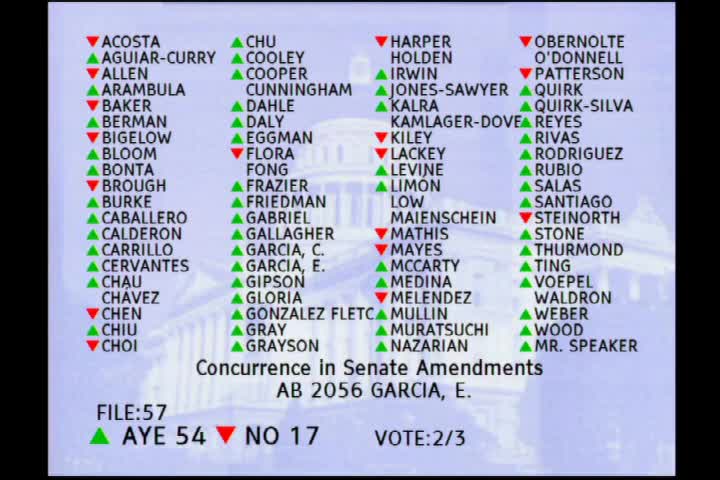 43SEC
Assembly Floor
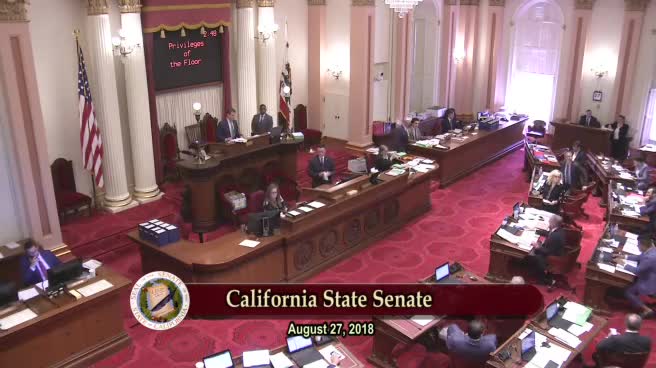 2MIN
Senate Floor
 1H
Senate Standing Committee on Appropriations
 7MIN
Senate Standing Committee on Public Safety
Bill Author

Bill Co-Author(s):